



Tan skin and fine hair can be a tricky pair, and the right color has to do two jobs at once. It needs to flatter your undertone, and it needs to make the hair look like it has more structure than it actually does. A flat, single-process brown can sink into the ends. A harsh blonde can do the opposite and make the hair look see-through.
That’s why these hair color ideas for tan skin with fine hair lean on clean lines, soft contrast, and shades that add depth without swallowing the cut. The smartest looks keep the silhouette solid, then place brightness where it does the most work: around the face, along the part, or in a narrow ribbon that reads as shine instead of striping. Tan skin can take warm caramel, copper, bronze, beige, mushroom, and rich brunette tones beautifully — but the undertone has to be right. Golden tan skin wants warmth. Olive tan skin usually prefers beige or muted brown. Neutral tan skin can go either way if the contrast stays gentle.
I’ve left out the shades that ask a lot and give little back. Chunky streaks, over-layered cuts that fray at the ends, and icy blonde pieces that fight warm skin can all make fine hair look smaller than it is. The looks below keep the shape believable. Some are low-maintenance, some are a little bolder, and a few sit in that sweet spot where the cut does half the styling for you.
Why These Hair Color Ideas Work So Well on Tan Skin and Fine Hair
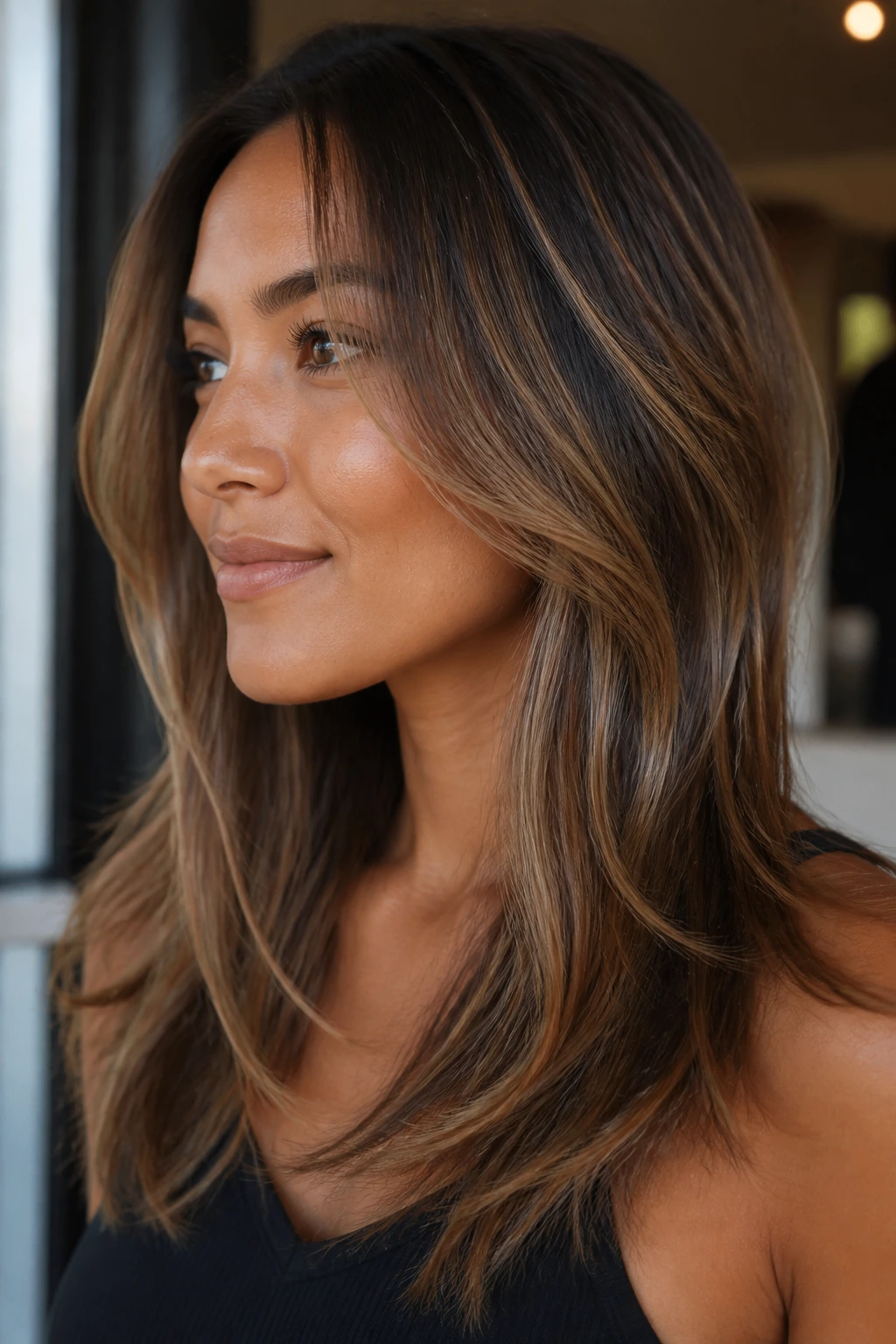
-
Blunt edges do the heavy lifting: A clean bob or lob makes the ends read denser, which matters when your strands are fine and your color is light enough to show every gap.
-
Warm brunette and beige tones suit tan skin fast: Honey, caramel, bronze, and mushroom shades keep the face from looking washed out and give the hair a little shimmer without loud contrast.
-
Low-contrast dimension looks richer than stripey highlights: A root shadow or balayage ribbon keeps the color soft so the haircut still reads as one shape.
-
Short and midlength cuts keep fine hair from collapsing: Collarbone and jaw-length lines hold up better than long, heavy layers that taper into transparent ends.
-
A gloss changes everything: A demi-permanent glaze adds shine and a firmer sense of color, which makes fine hair look healthier even when the cut is simple.
1. Cream Beige Lob with a Soft Center Part
A cream beige lob is one of those quietly smart choices that never feels overworked. The color sits between blonde and brunette, which keeps tan skin bright without turning brassy, and the collarbone length gives fine hair enough swing to move without going sparse at the ends.
Why it works
The blunt edge is the real star here. On fine hair, a solid perimeter makes the whole head read fuller, even if the strands themselves are light and airy. Beige tones also behave better than icy ones on tan skin, especially if your undertone leans neutral or golden.
Ask for a lob that grazes the collarbone, a soft center part, and only the lightest internal layering near the bottom. You want the surface to look smooth. Not shredded.
2. Honey Balayage Bob with Blunt Ends
Honey balayage on a blunt bob is the kind of move that makes fine hair look intentional instead of delicate. The honey pieces sit above a slightly deeper base, so the hair keeps depth at the roots and brightness where the face needs it most.
This works especially well if your tan skin leans warm or golden. The honey doesn’t fight your skin tone; it echoes it. And because the ends stay blunt, the bob holds a thicker outline than a heavily layered cut would.
What to ask for:
- A jaw-to-chin-length bob with a clean edge
- Honey balayage painted in narrow ribbons, not chunky stripes
- A root shade that stays about half a level deeper than the mids
- Very light texturizing only if the ends feel too heavy
3. Chestnut Chin-Length Bob with a Deep Side Part
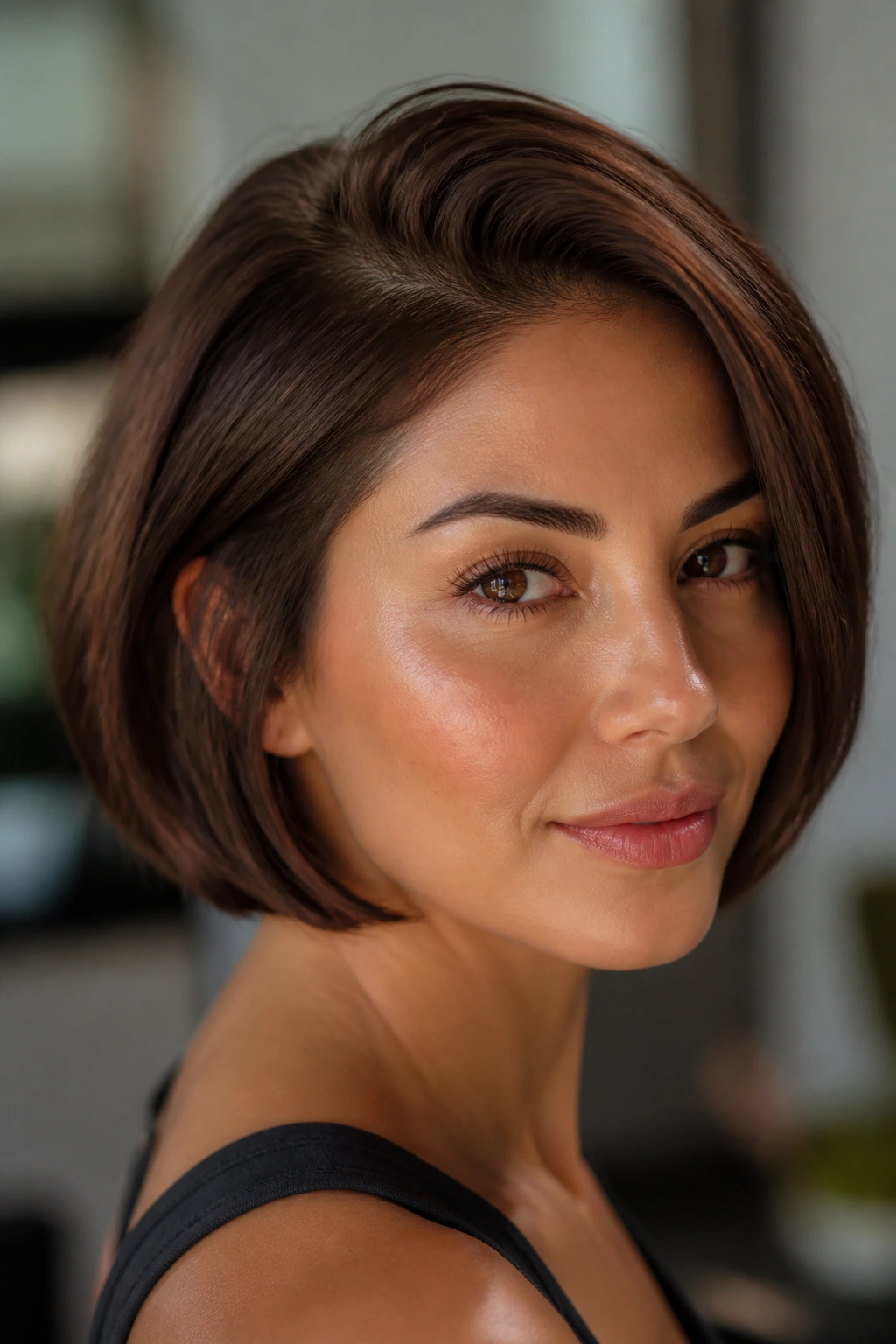
Want something that looks fuller the second you change your part? This is it. A deep side part creates lift at the crown, and chestnut has enough warmth to keep tan skin from looking dull without pushing the whole look into red territory.
The chin-length cut matters. Fine hair can get wispy fast once it passes the shoulders, and a tighter length keeps the outline crisp. Chestnut also gives a nice shadow around the face, which is handy if your skin leans olive and you do not want a too-yellow blonde sitting next to it.
How to wear it
Blow-dry the root opposite your part first, then flip it back once it’s cool. That little move gives the crown a bit of memory. Keep the finish smooth, not stiff, and let the cut do the shaping.
4. Dark Chocolate Pixie with Tapered Sides
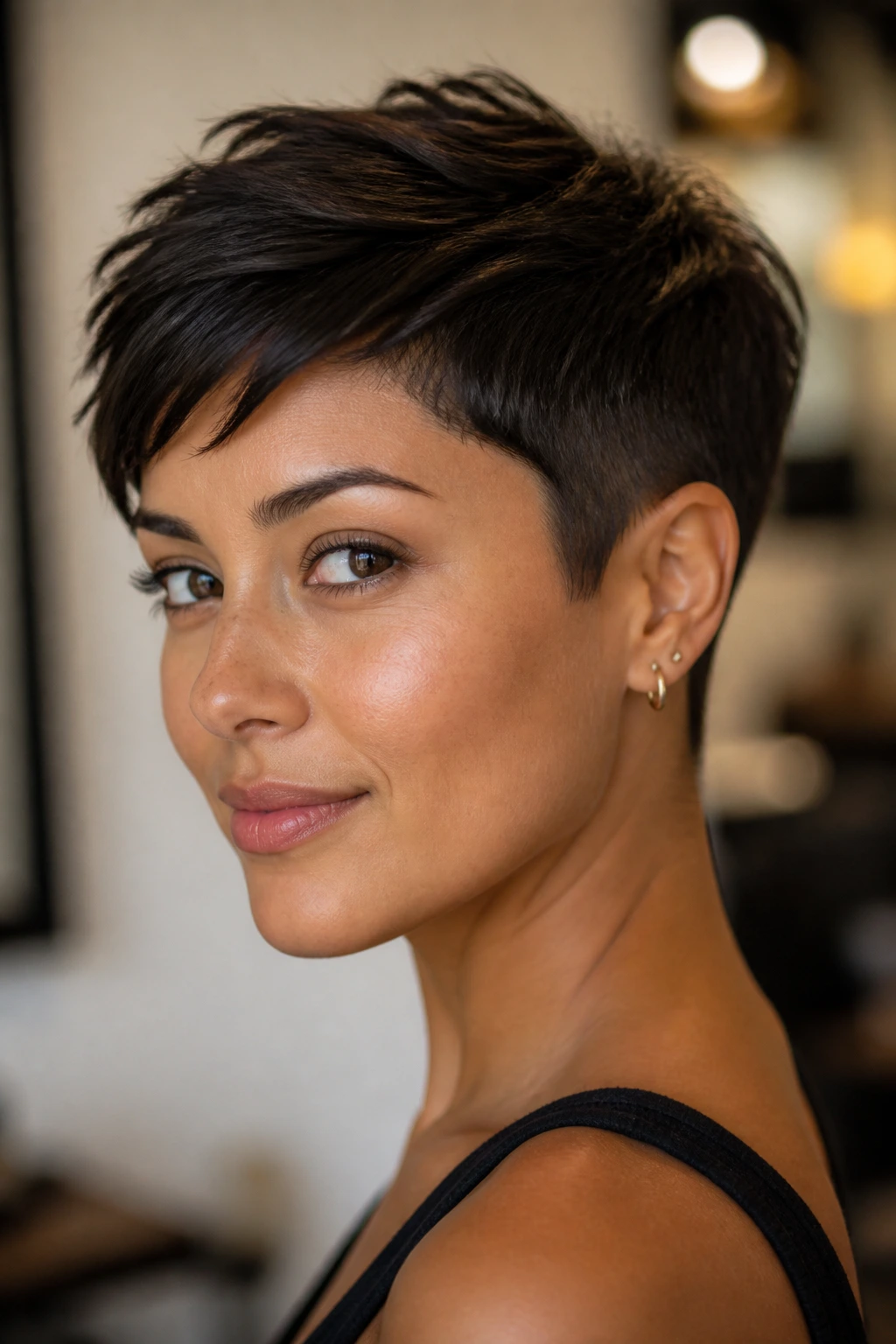
A dark chocolate pixie is blunt, clean, and a little bit sharp in the best way. It’s also one of the fastest ways to make fine hair look thicker, because the shorter length removes the see-through ends that can plague longer cuts.
The color does a lot of quiet work here. Dark chocolate adds depth around the hairline, which makes tan skin look warmer and the eyes look brighter. On warmer tan skin, it can feel rich and polished. On deeper tan skin, it reads especially clean.
The key is keeping the top slightly longer than the sides. You want texture through the crown, not a helmet. If the top is cut too short, the shape goes flat fast and there’s nowhere for the style to breathe.
5. Copper-Glaze Shaggy Bob
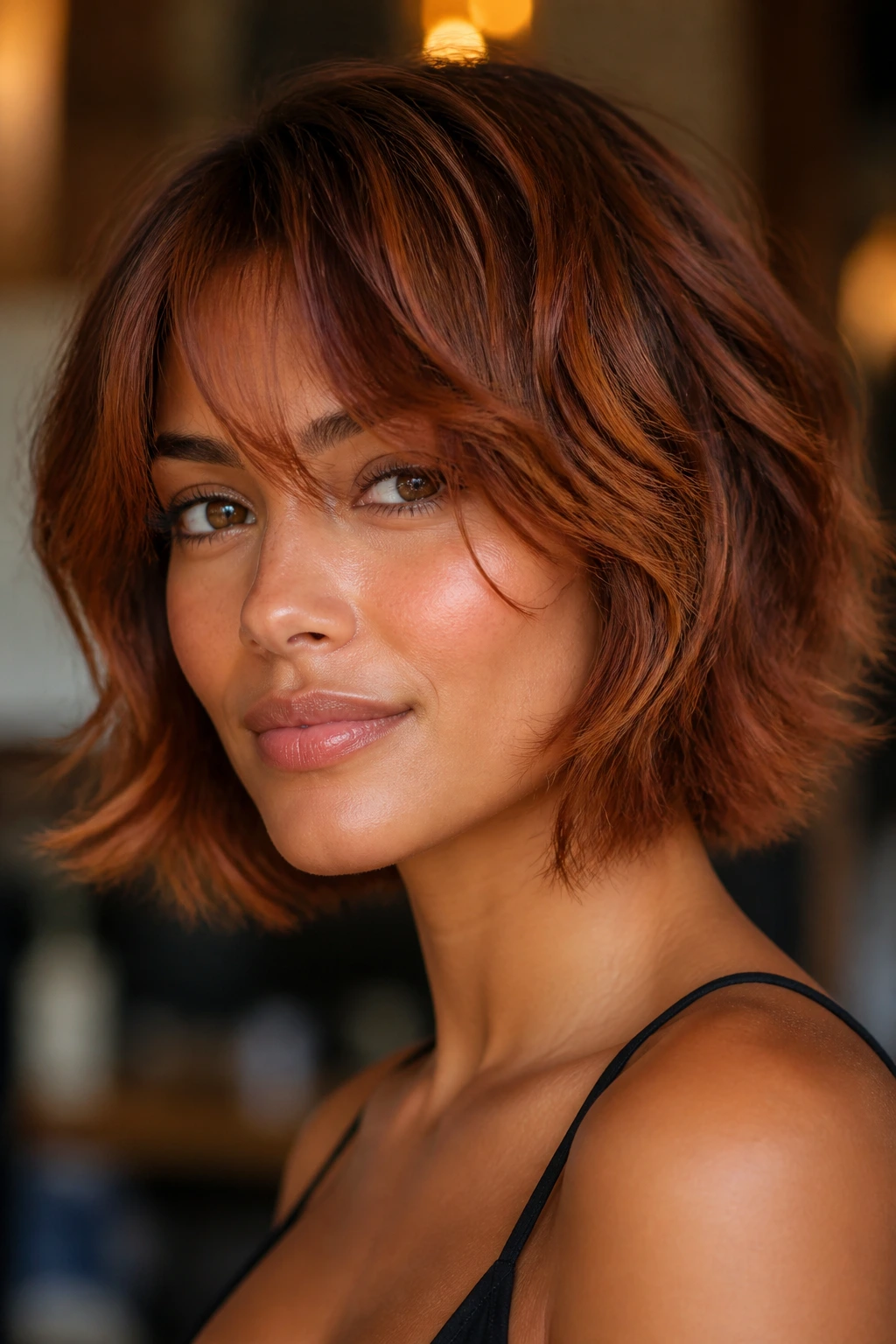
Copper can be a gamble, but a glaze over a brunette bob is a different story. This version keeps the base dimensional and adds copper where it counts, which gives tan skin a lively warmth without forcing the whole head into full red.
The shaggy part needs restraint. Fine hair can wear soft movement well, but too many short layers make the ends look thin and frayed. Ask for a bob with long, feathered movement around the cheekbones and a copper glaze that stays translucent rather than opaque.
A quick note: this look works best when the copper is more glaze than dye job. You want a shine-heavy finish that looks like warmth came through the hair, not color sitting on top of it.
6. Mushroom Brown Collarbone Cut
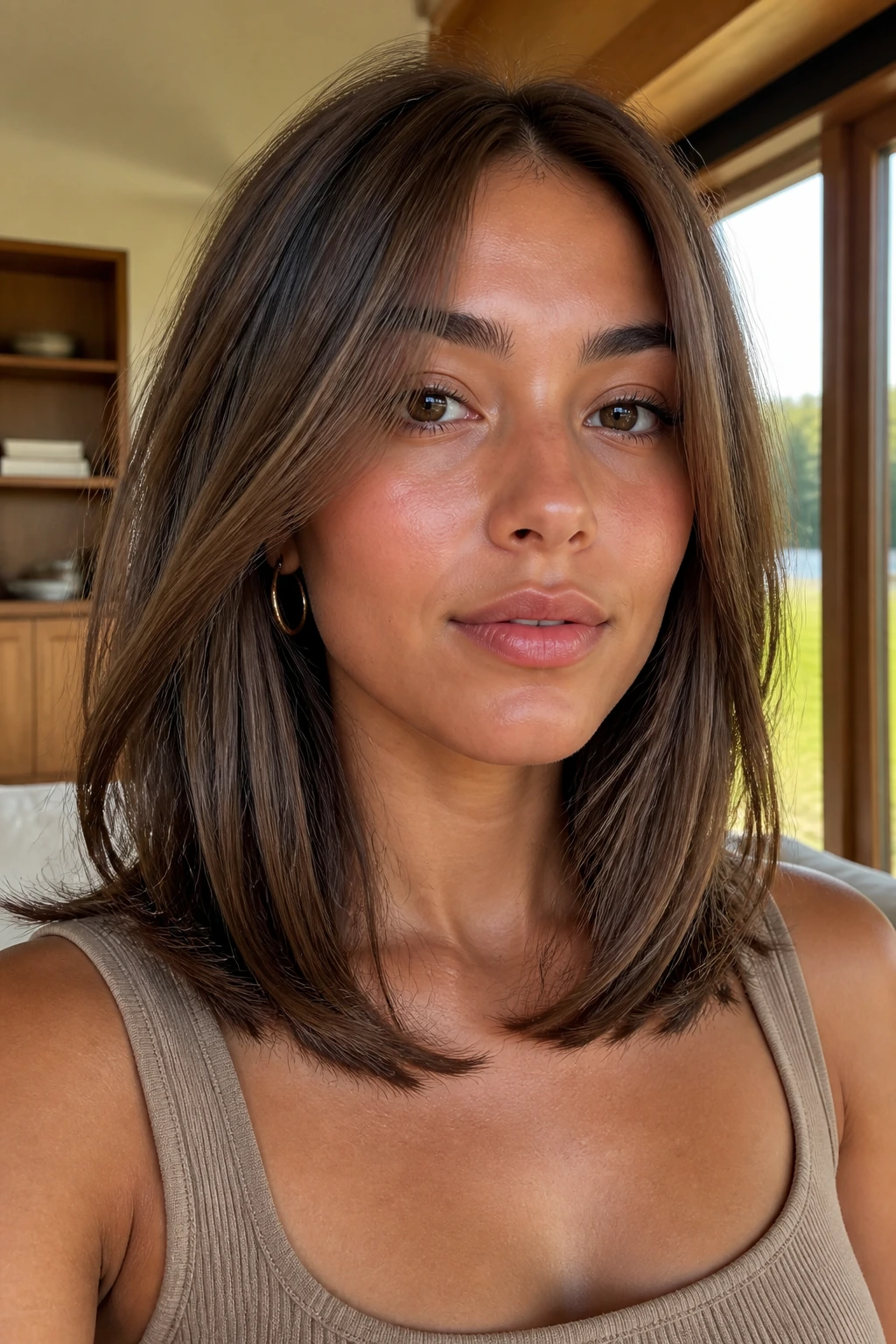
Mushroom brown is the shade people overlook until they see it on the right skin tone. On tan skin with neutral or olive undertones, that muted brown-gray blend can be gorgeous because it doesn’t fight the skin for attention. It just sits there, cool and expensive-looking, without shouting.
The collarbone cut is there for balance. Fine hair needs a perimeter with enough weight to hang properly, and that length lets the color look rich instead of flat. Keep the layers long and sparse. The second you start overtexturizing, you lose the density that makes this color feel expensive.
If your skin leans warm gold, you may want to soften the mushroom with a beige gloss. Otherwise the tone can look a touch dusty. Tiny shift, big difference.
7. Toffee Face-Framing Layers on a Midlength Cut
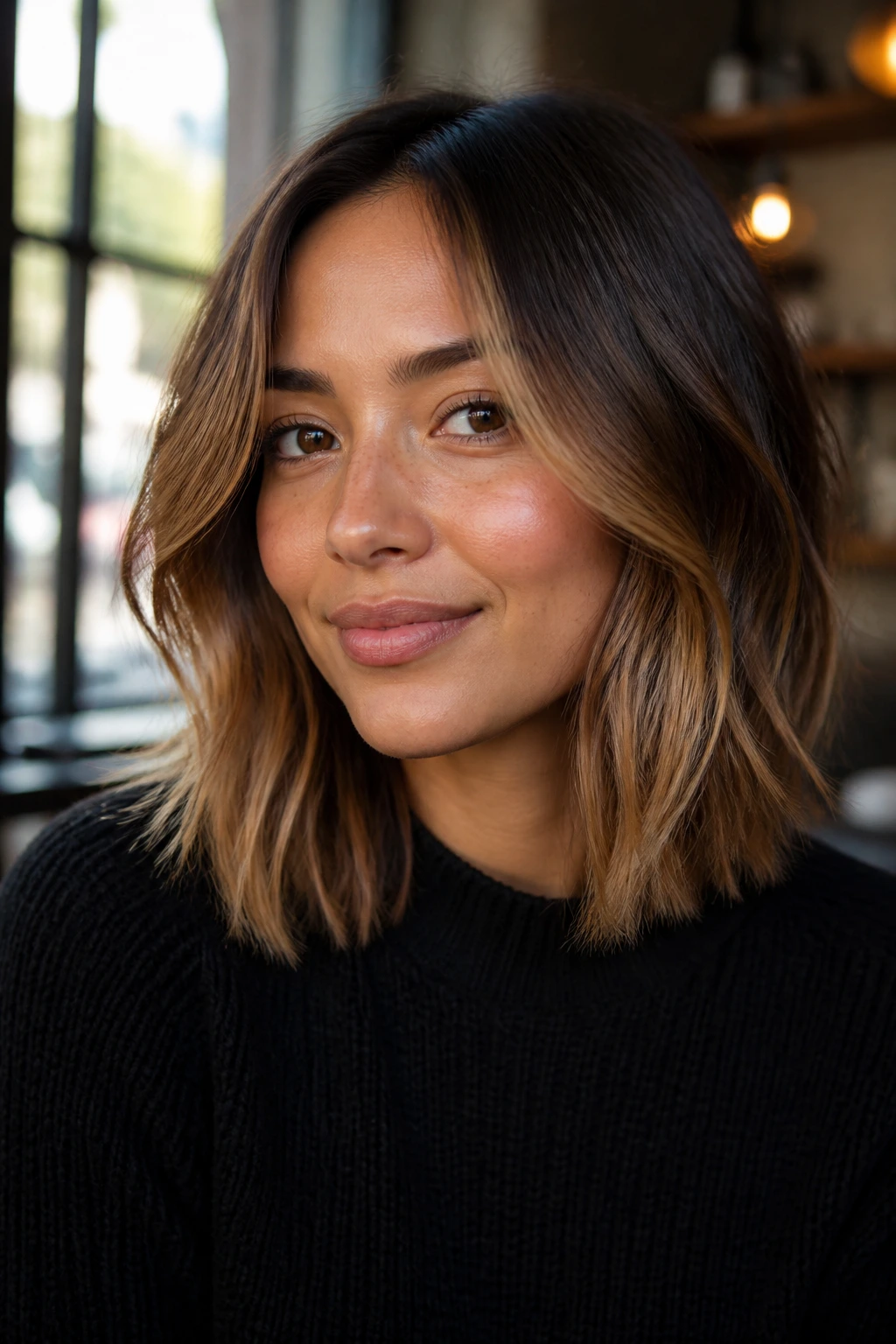
Toffee around the face is one of the easiest ways to wake up tan skin without going full highlight-heavy. The color brings warmth to the cheek area, which is exactly where tan complexions often benefit from a little extra light.
What makes this work on fine hair is the cut beneath it. Keep the midsolid enough to hold shape, then add face-framing pieces that start below the cheekbone. That way the brighter bits feel deliberate, not broken up. If the layers are too short, the ends can start to look stringy by the second shampoo.
A midlength cut with toffee ribbons is a good middle ground if you want color that shows but still grows out gracefully. It’s one of those styles that looks polished even when you have not round-brushed every strand into submission.
8. Warm Auburn French Bob
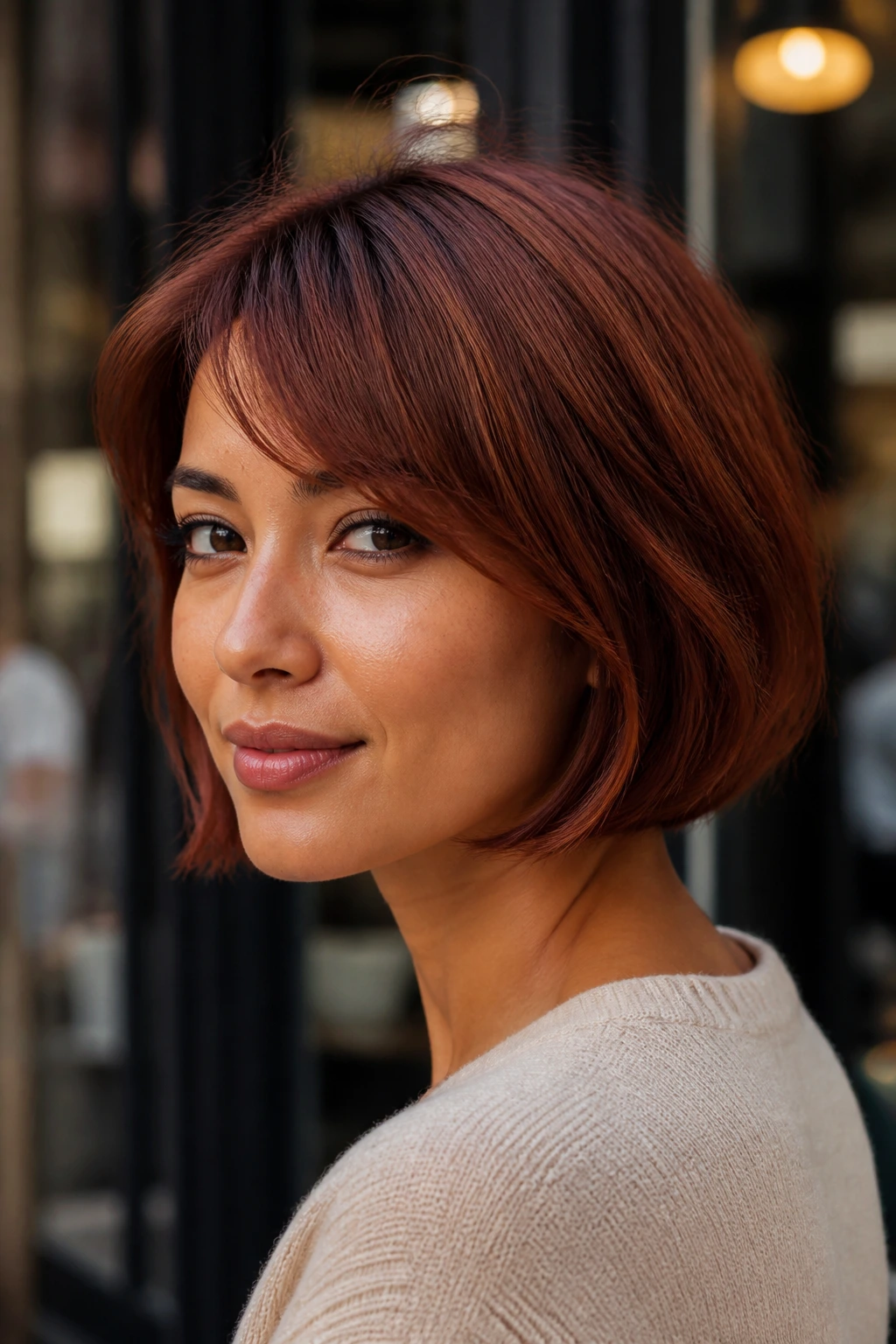
A French bob already has attitude. Add warm auburn, and the whole thing turns a little more lived-in, a little more stylish, and a lot better for tan skin that can handle richer red tones.
The cut should stop around the jaw, maybe a hair below. That crisp line is what gives fine hair its visual density. The auburn does not need to be bright cherry red. In fact, I’d skip that. A warm auburn with brown in the base looks better next to tan skin and does not fade into a coppery mess after a few washes.
This is a good pick if you like low styling but want the result to look finished. A quick bend at the ends and a side-swept fringe or loose part are enough.
9. Butterscotch Layered Lob
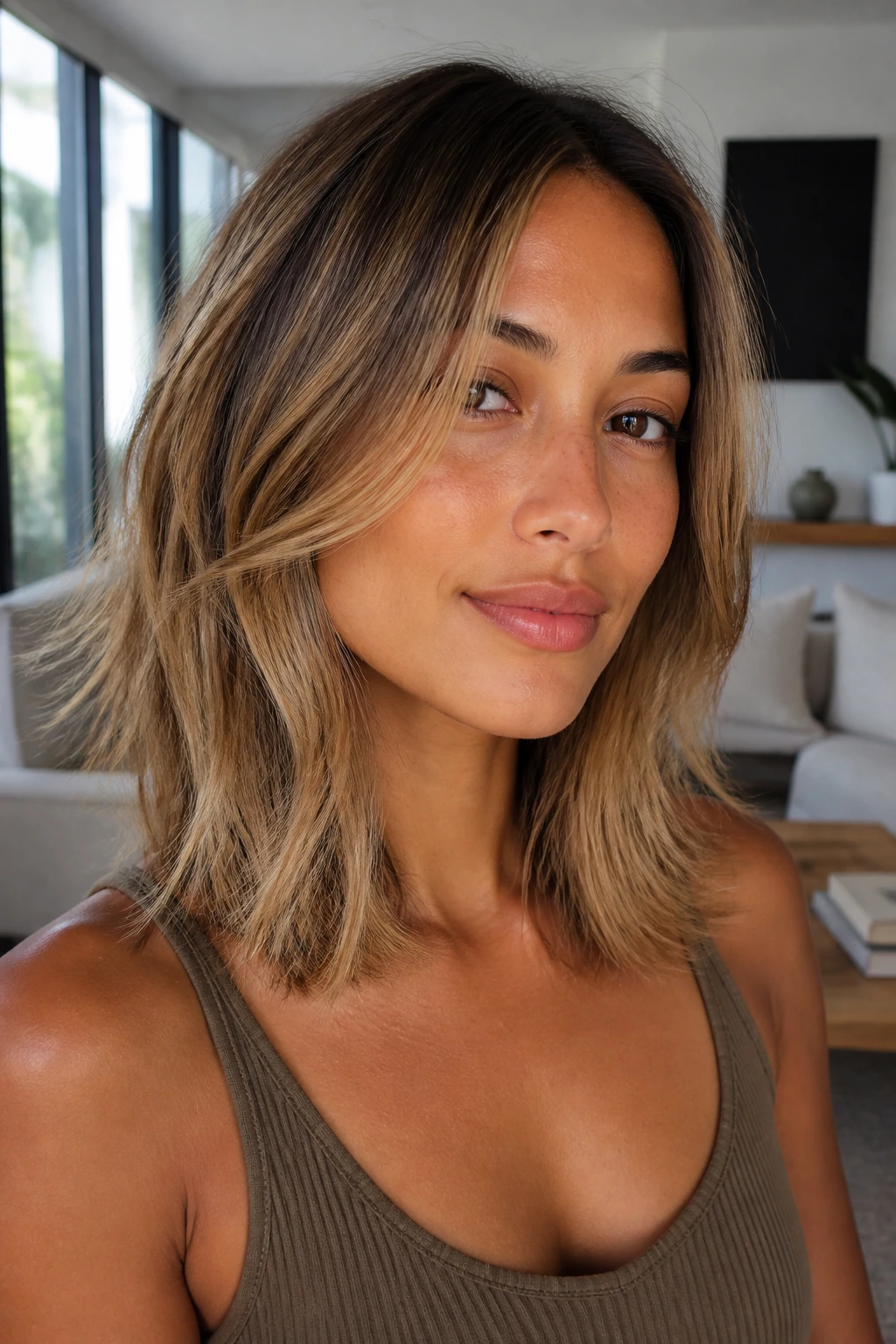
Butterscotch reads sunny without going pale, which is a useful distinction for tan skin. On a layered lob, it adds movement at the mids and a little lift near the face, while the deeper base keeps the whole thing grounded.
The layers should be long and soft. Fine hair does not need a stair-step haircut to move. It needs enough separation that the color can show, but not so much that the ends start looking feathery. That balance matters more here than people realize.
This is a nice option if you want a shade that feels friendly in daylight and softer indoors. Butterscotch can be sweet; it can also veer a bit yellow if the toner is too warm. Ask for beige in the formula if your skin already leans golden.
10. Espresso Sleek Midi Cut
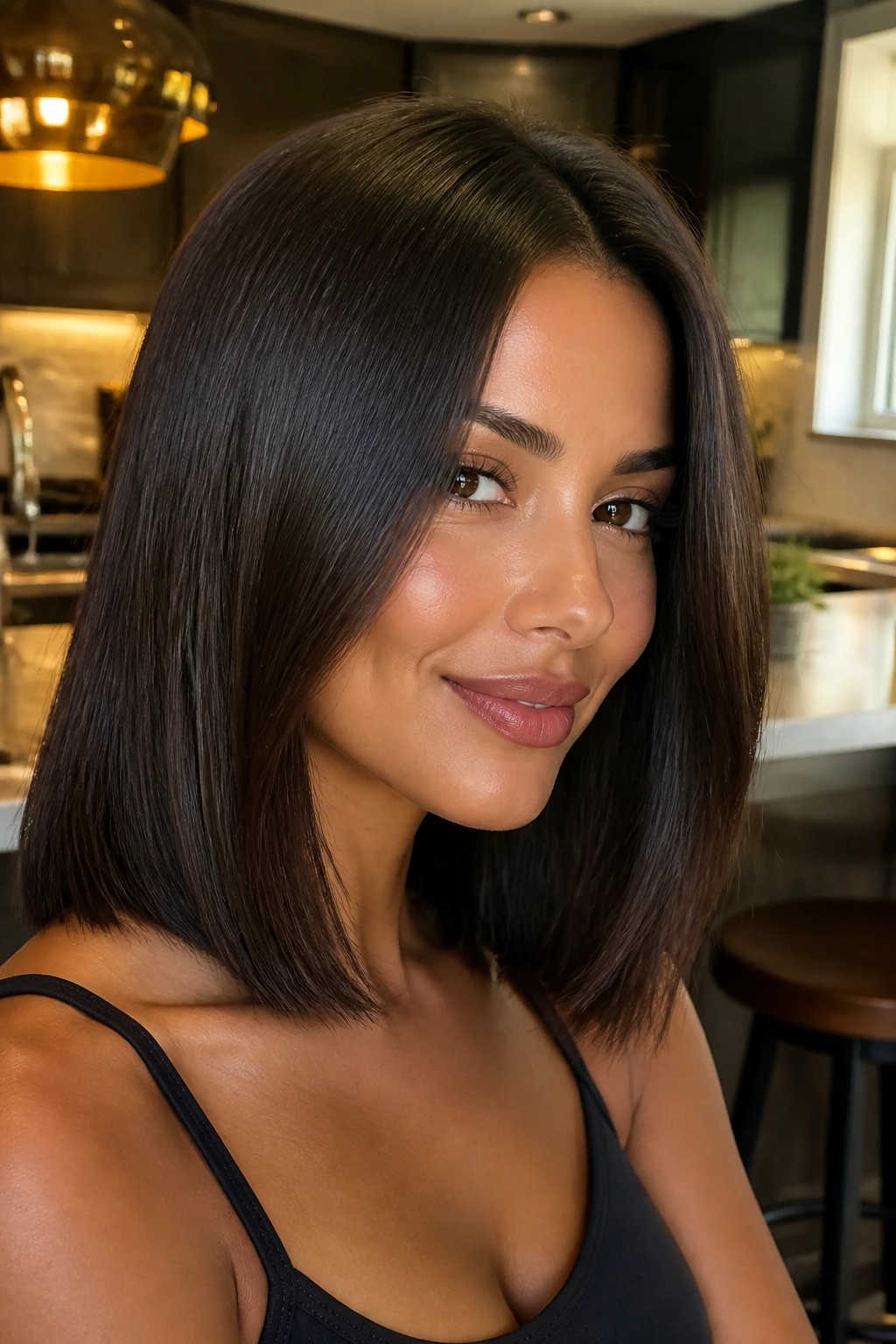
Sometimes the smartest answer is a rich dark shade and a clean edge. Espresso on a sleek midi cut creates the strongest sense of density of almost any look in this list, because dark color absorbs less attention at the ends and the blunt shape keeps the silhouette full.
This is especially good for deeper tan skin or tan skin with a warmer undertone that can carry depth well. The trick is shine. Fine hair can look flat in dark shades if the finish is dull, so a gloss or a light serum on the mids and ends makes a real difference.
Best if you want
- A low-maintenance color that grows out softly
- A cut that doesn’t depend on lots of layers
- A polished look that still feels believable on fine strands
11. Bronde Curtain Bang Lob
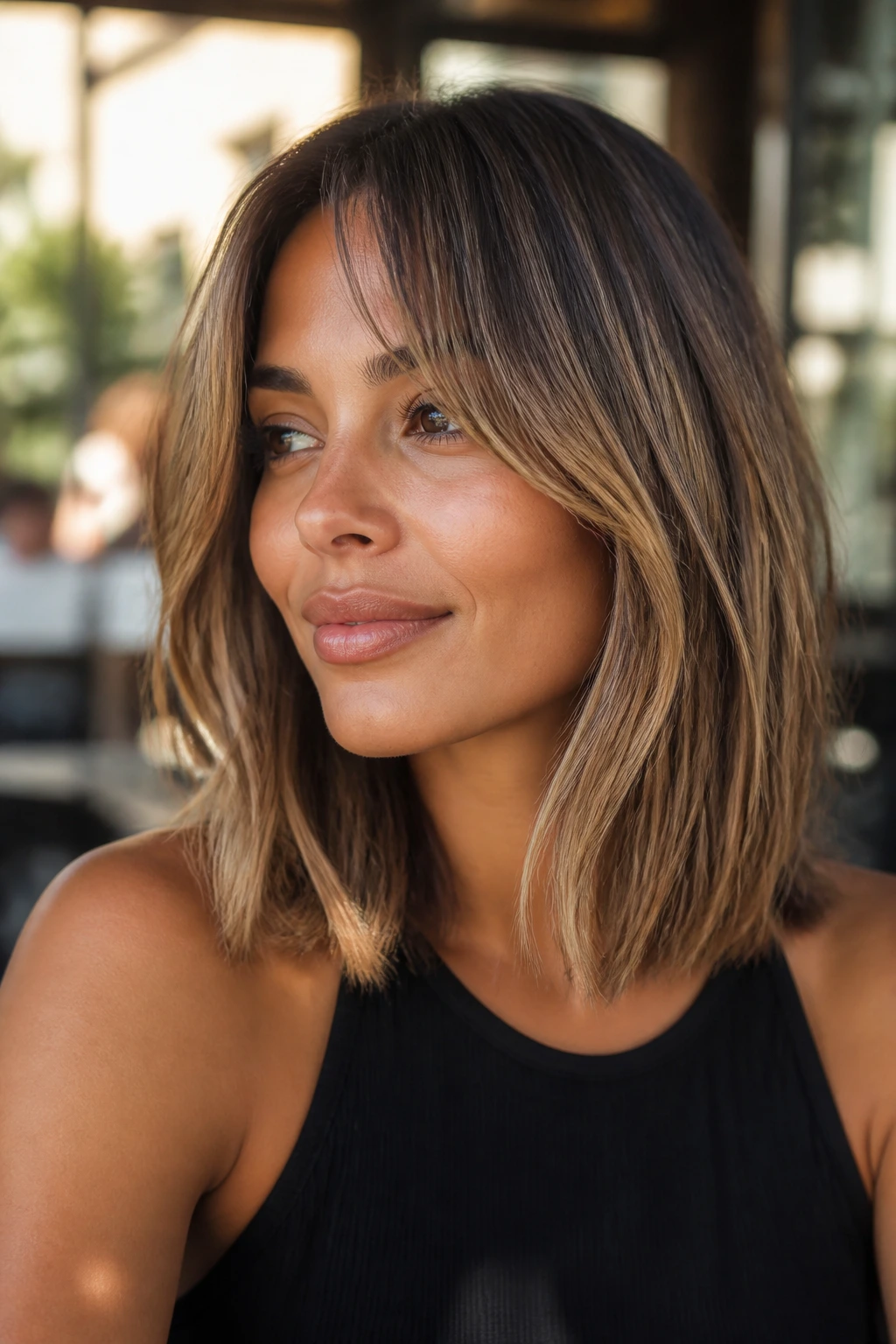
Bronde is a useful word here because it means the hair doesn’t have to choose sides. It sits between brunette and blonde, which makes it a nice match for tan skin that wants brightness without high contrast. Add curtain bangs, and the face gets lift without the ends taking a beating.
The lob should stay full at the bottom. Curtain bangs can already create movement near the front, so you don’t need aggressive layering through the rest of the cut. In fact, too much layering can make the back look thin and disconnected from the front.
This one is best when you want lightness around the face and a softer grow-out. It has a relaxed feel, but not a sloppy one. There’s a difference, and the blunt-ish outline is what keeps it together.
12. Cinnamon Copper Shag
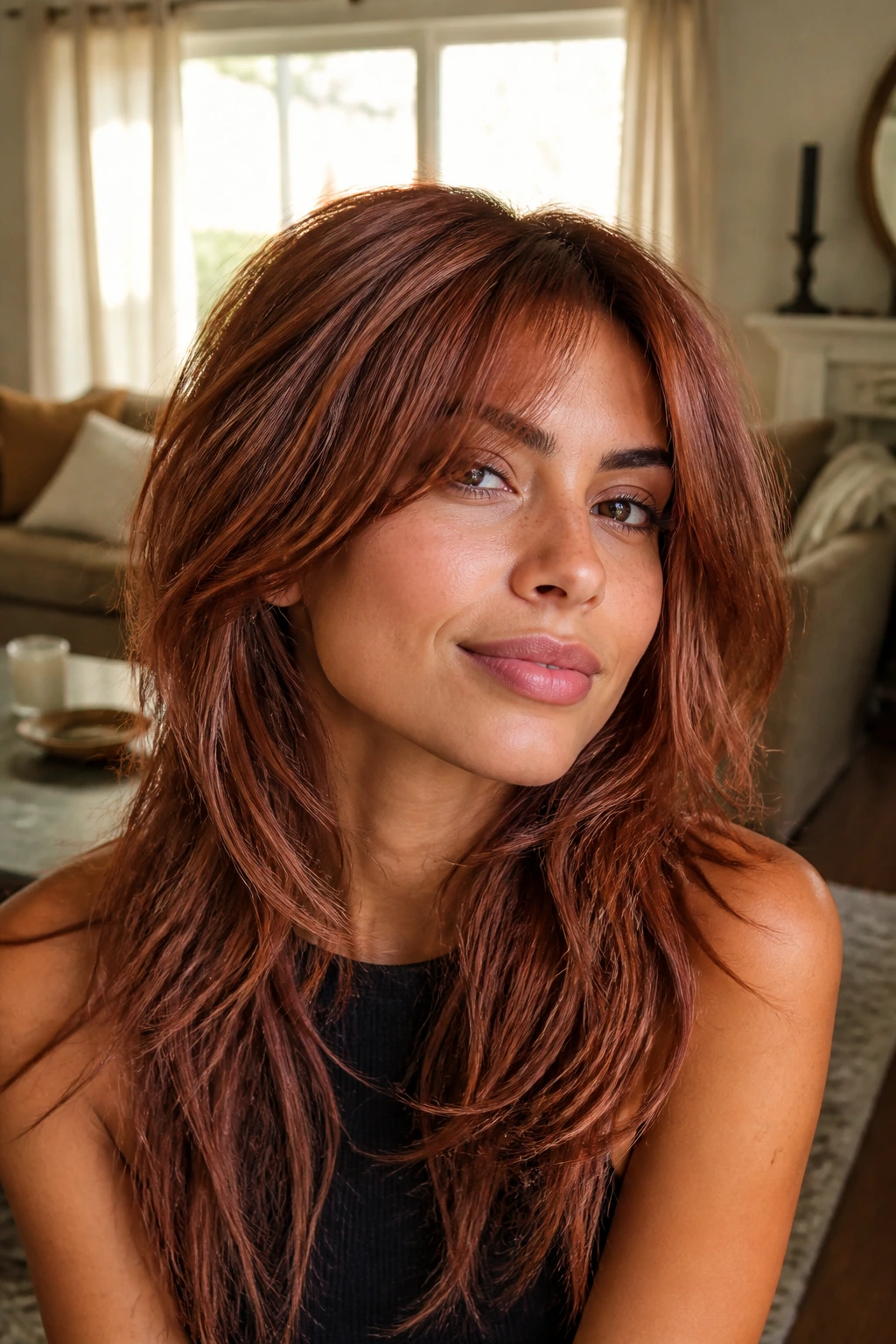
A cinnamon copper shag can look fantastic on tan skin, but only if the layers stay long enough to support the ends. Think airy, not choppy. Think movement, not shredded ribbon ends.
The cinnamon part matters because it softens copper into something wearable. Pure copper can feel a little loud on some tan skin tones; cinnamon pulls it back toward brunette, which gives the color more depth and less glare. That is also why it works on fine hair. The shade itself creates the movement when the cut doesn’t need to overdo it.
If your hair has even a slight wave, this gets easier. If it’s pin-straight, ask for longer internal layers and a diffuse finish rather than a razor-heavy shape. Razor cuts on fine hair can be a mess if the stylist goes too far.
13. Golden Honey Pixie
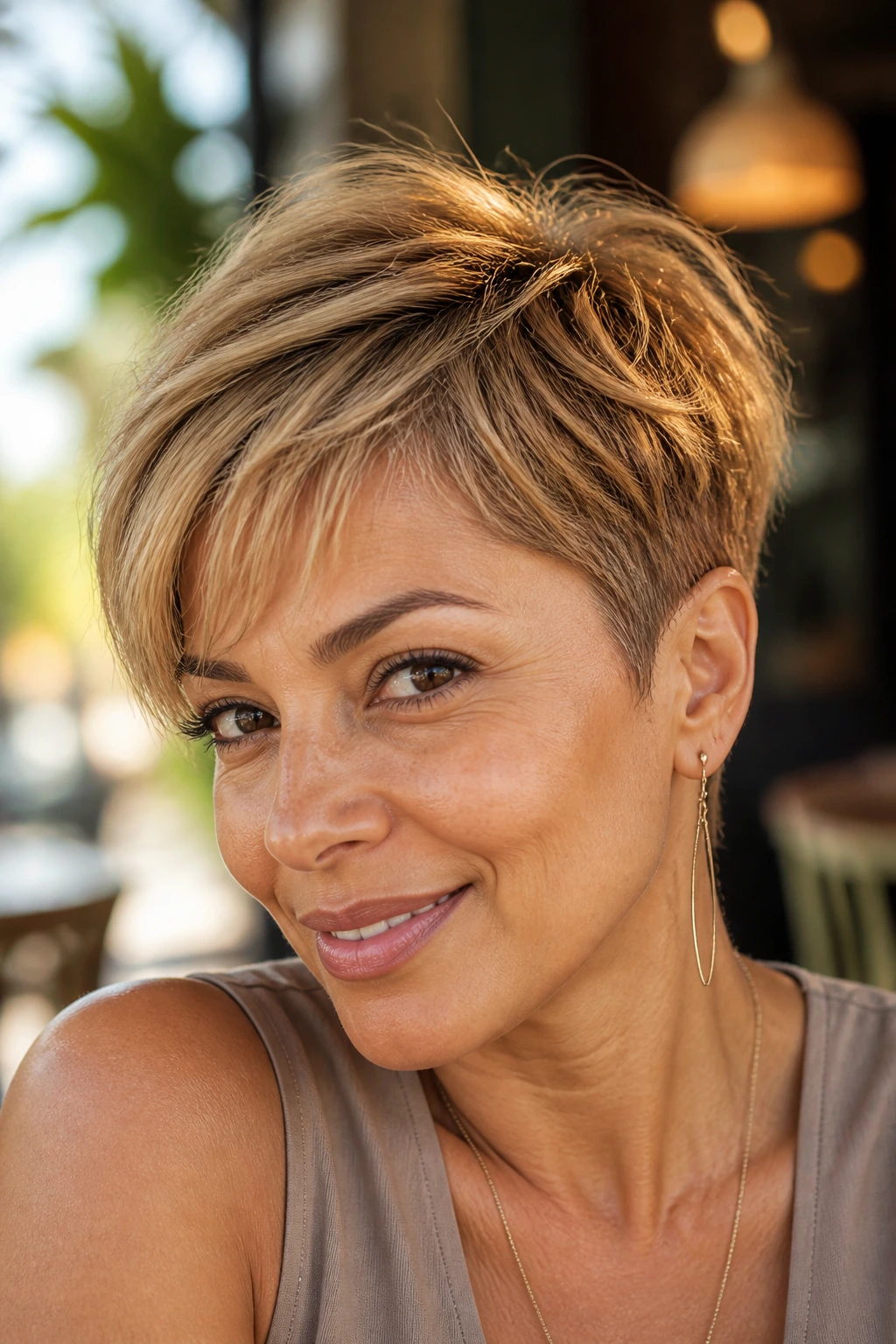
A golden honey pixie is a smart way to add lightness without leaving fine hair exposed. The brighter honey sits mostly on the top layers and around the fringe, while the sides stay a little deeper, so the shape keeps its outline.
This is especially flattering on warm tan skin. The golden tone doesn’t turn harsh, and the shorter cut means the color can look concentrated instead of scattered. That concentration is what makes the hair seem thicker.
What to tell your stylist
Ask for more length at the crown, lighter honey pieces in the top section only, and tight tapering around the ears and nape. Too much lightness all over the head can make a pixie look fuzzy. Controlled brightness is the point.
14. Mocha Mushroom Asymmetrical Bob
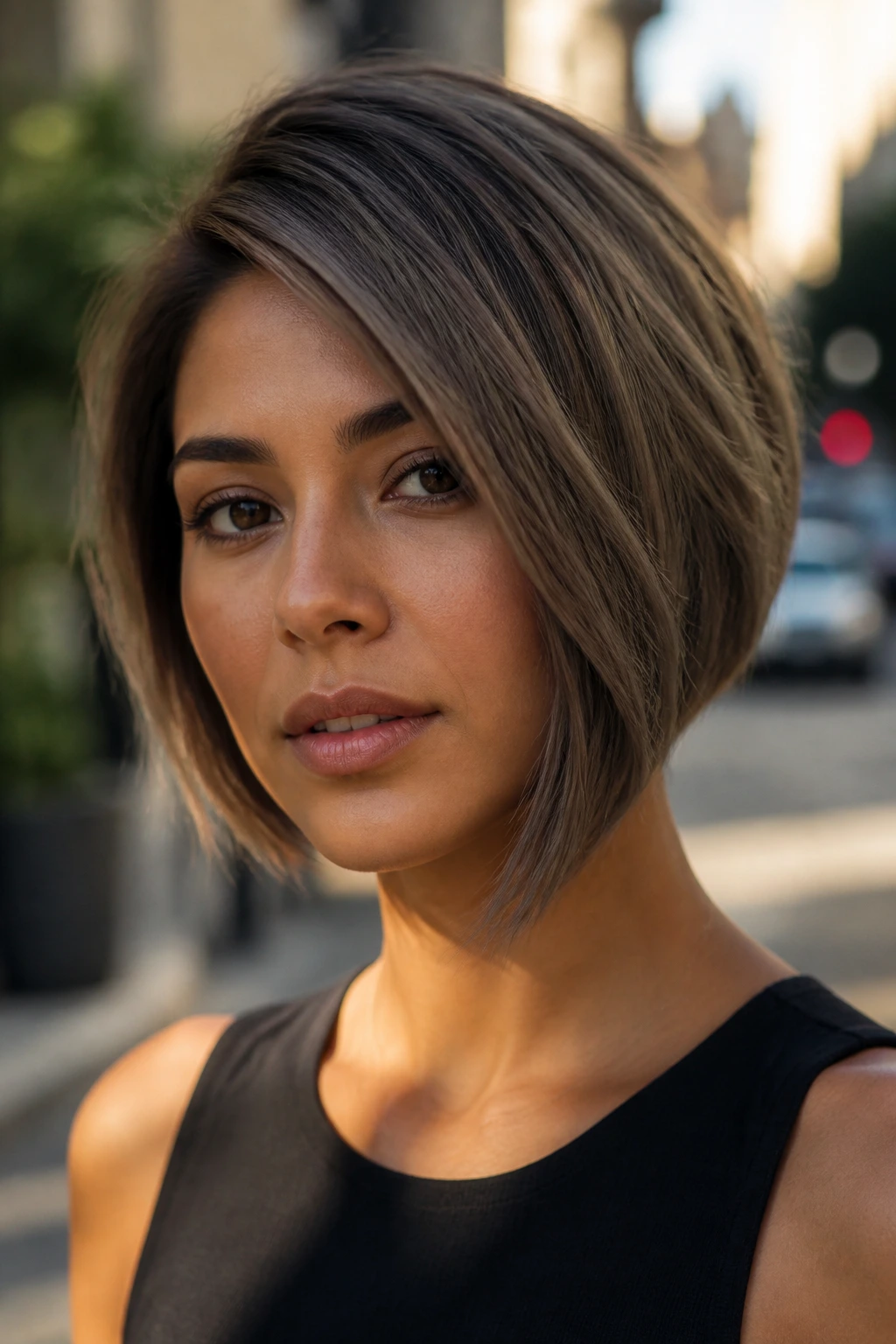
If regular bobs feel a little too safe, an asymmetrical bob can do interesting things for fine hair. The diagonal line gives the eye somewhere to go, which means the hair appears to have more shape even before you style it. Add a mocha-mushroom color blend, and tan skin gets a soft muted contrast that doesn’t shout.
This shade is especially nice for olive or neutral tan skin. It sits in that middle ground where warmth and coolness meet, and it keeps the ends from looking too dark or too pale. The asymmetry should be subtle, not dramatic enough to look edgy for the sake of it.
Wear this tucked behind one ear or with a side part if you want the angle to show. The shape does more work than the styling, which is exactly the point when your hair is fine.
15. Rose Brown Textured Lob
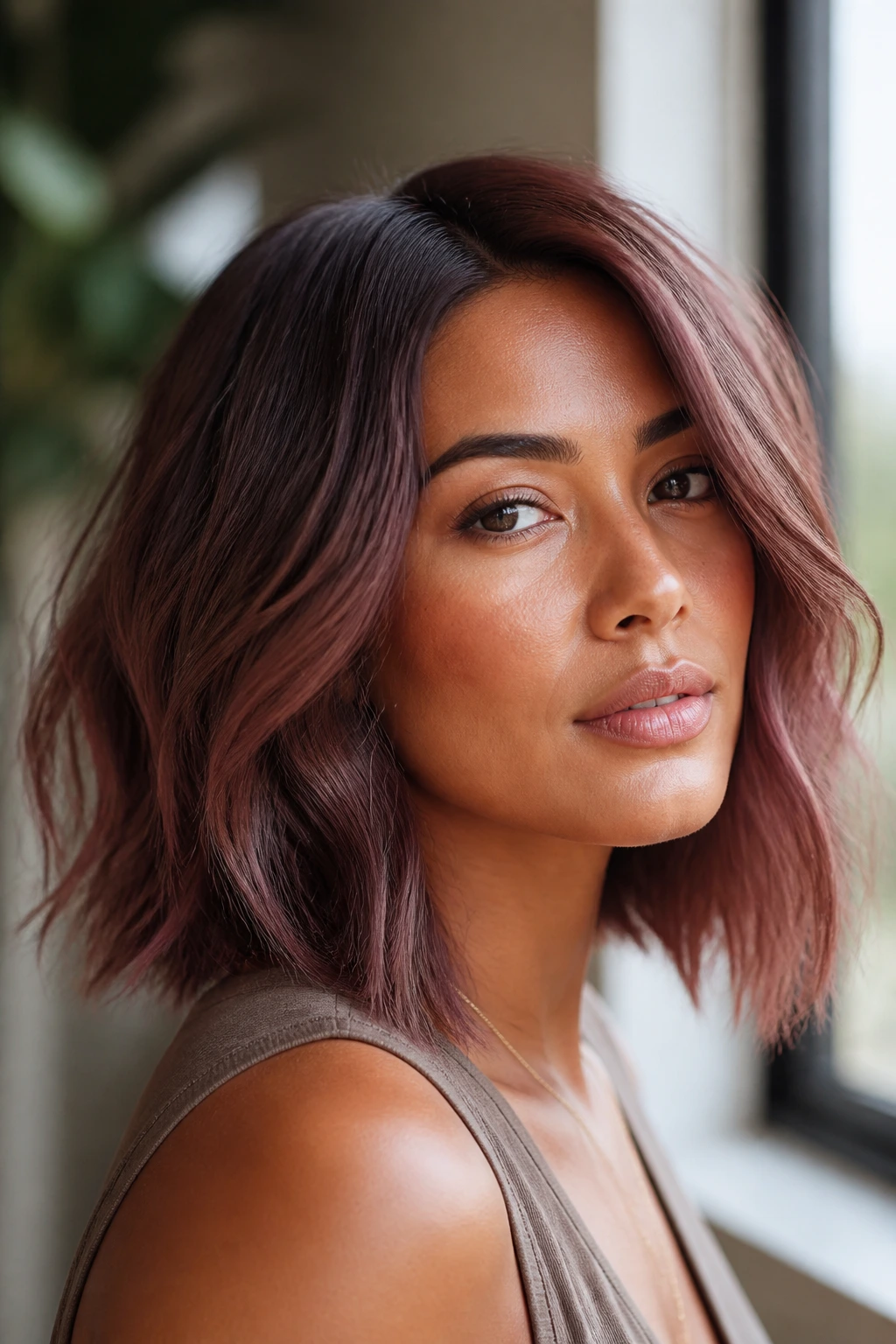
Rose brown is one of the more underrated choices for tan skin because it doesn’t lean yellow, red, or flat brown. It has a muted warmth that reads soft on the skin and keeps the hair from looking one-note.
A textured lob gives the color room to move. The texture should be enough to break up the surface, but not so much that the ends look frayed. Fine hair can wear rose brown beautifully when the cut stays controlled at the bottom and the color is kept glossy.
This is a good choice if you want something a little less expected than caramel or copper. It still lives in the warm family, but it has a calmer finish. Think soft clay, not candy pink.
16. Sandy Beige Layered Bob
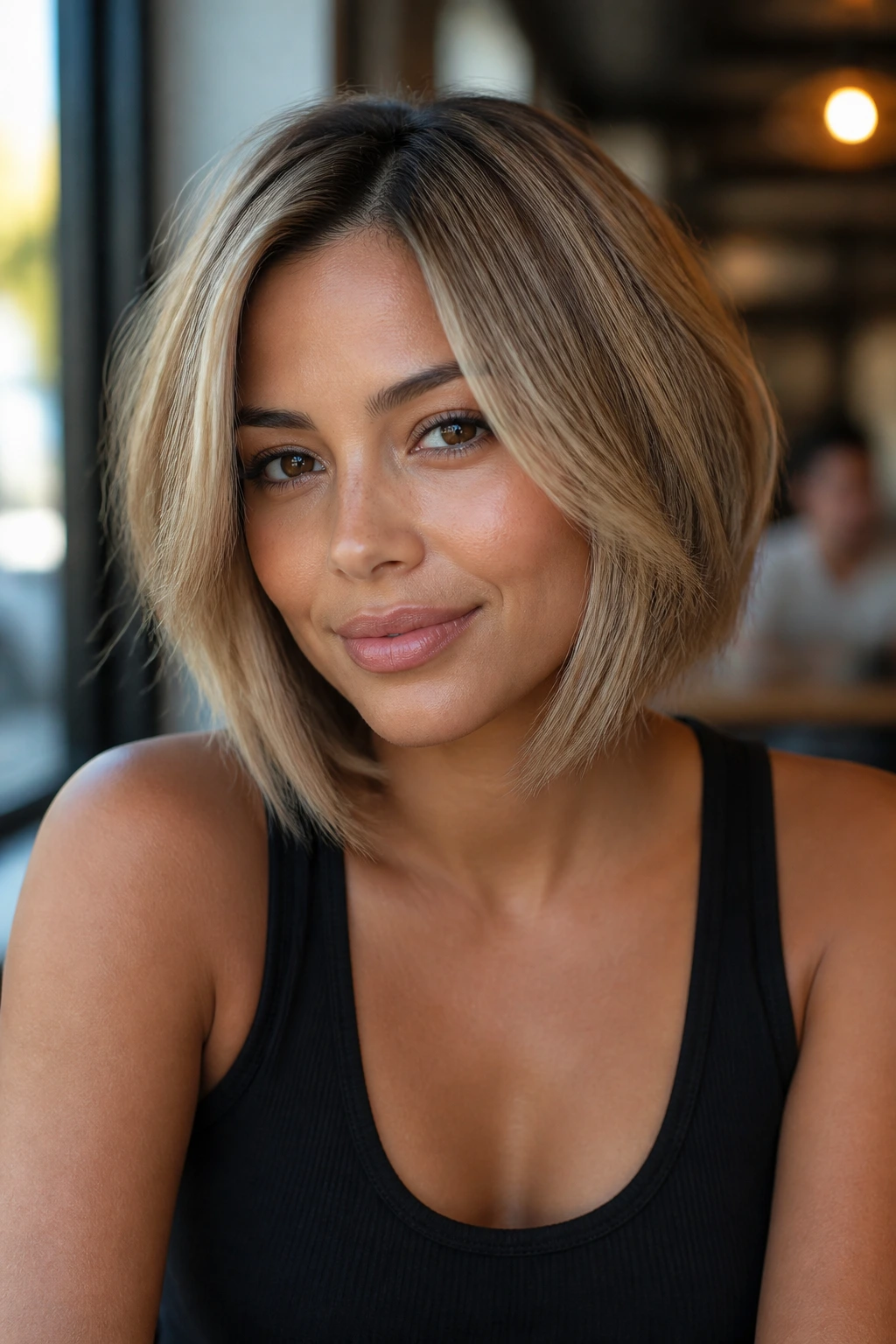
A sandy beige bob can look nearly effortless, but the trick is in the layering. Keep the layers light and the perimeter clean so the hair still reads as one solid shape. The sandy beige tone gives tan skin a soft, sun-touched feel without going gold-heavy.
This color is a good match for people who want dimension but hate harsh regrowth. Beige tends to age more gracefully than very bright blonde on fine hair because it doesn’t throw a hard line at the roots. It also works well if your strands are naturally medium brown and you want a lighter look that still feels believable.
The cut should stay at the jaw or just under it. That keeps the whole shape crisp and avoids the see-through look that can happen once fine hair gets too long.
17. Rich Walnut Tapered Crop
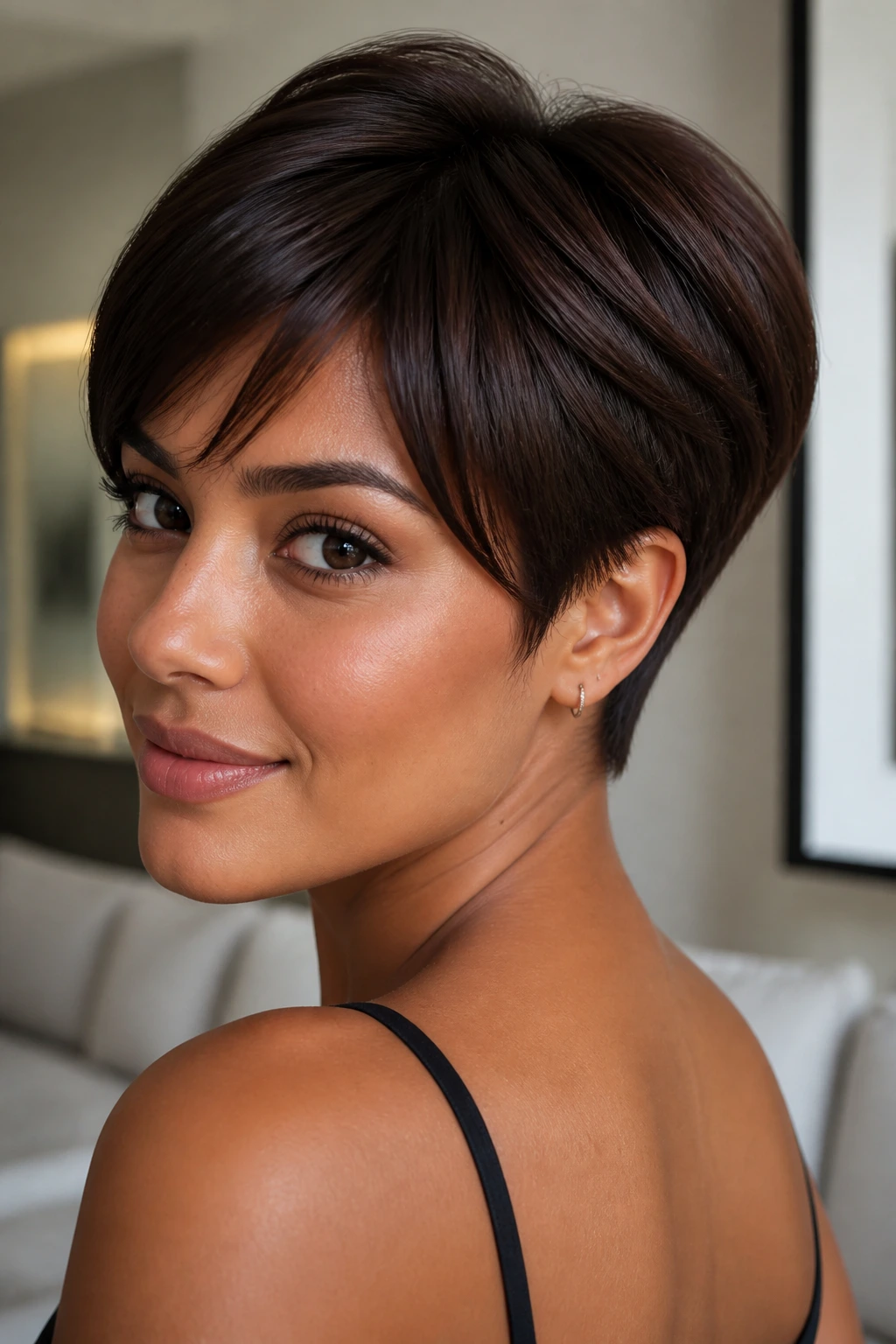
A walnut crop is one of the cleanest ways to make fine hair look dense. The tapered nape keeps the shape close to the head, the crown gets a little lift, and the darker walnut tone gives tan skin a rich, grounded frame.
This is not the cut for someone who wants a lot of fluffy movement. It’s better for someone who likes structure. The shape should feel compact, almost tailored, and the color should stay glossy rather than matte. Walnut can get muddy if the toner is too cool, so a touch of warmth in the formula helps.
If you have deeper tan skin, this can look especially polished. The contrast between skin and hair is enough to define the face, but not so much that the hairline feels harsh.
18. Caramel Money-Piece Lob
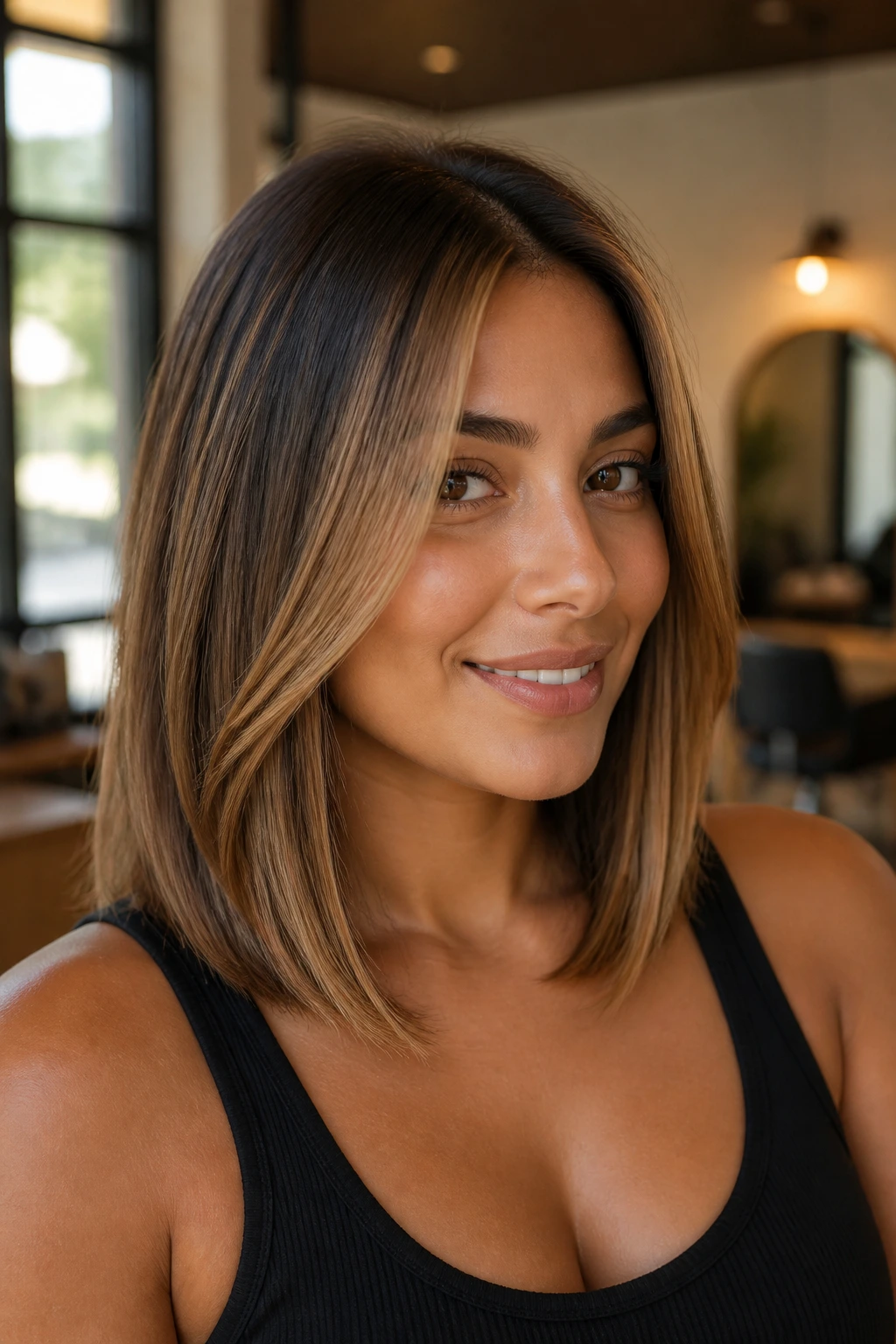
A caramel money piece can do more for the face than a full head of highlights, especially when the hair is fine. The lighter front pieces pull attention upward, while the rest of the lob stays deeper and fuller-looking.
The key is softness. You don’t want a stripey front section that looks pasted on. A few caramel ribbons that blend into a brunette base look more expensive and less obvious. That matters on tan skin, where too much contrast can start to look loud fast.
This style is good if you want brightness near the face but don’t want to commit to all-over lightening. The lob length keeps the shape thick enough at the bottom to balance the lighter front.
19. Smoky Brunette Butterfly Cut
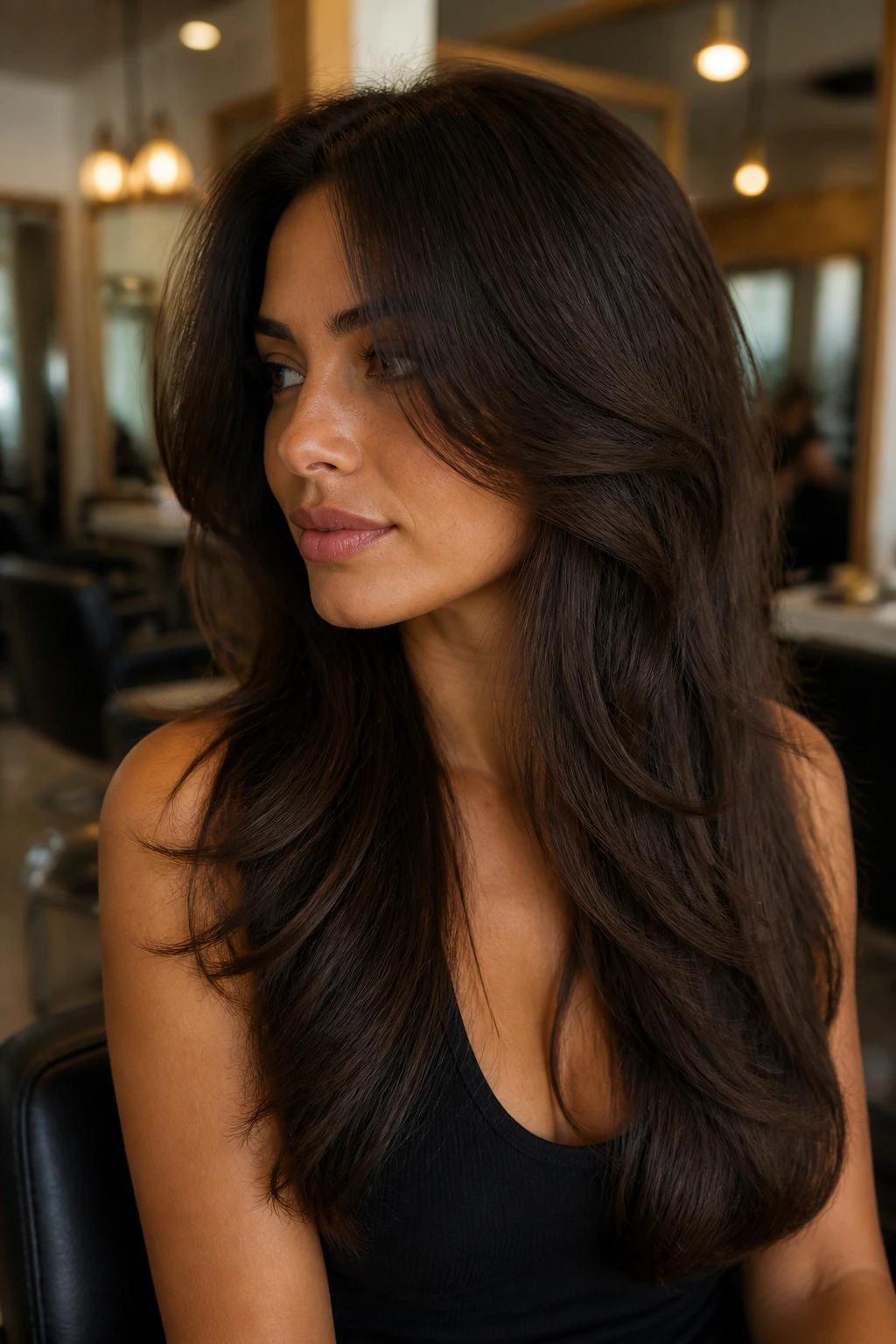
A butterfly cut can work on fine hair, but only when the layers are kept long and controlled. A smoky brunette version helps because the muted tone adds depth without making the ends look see-through. The shorter face frame gives lift, while the longer back section keeps the perimeter from disappearing.
This is not the version for someone who wants huge, fluffy volume. It’s better for someone who wants movement and softness while still keeping the overall shape intact. On tan skin, smoky brunette can be especially flattering if your undertone is neutral or olive.
Ask the stylist to avoid over-thinning the crown. That’s where butterfly cuts go sideways on fine hair. You want movement, not gaps.
20. Soft Cinnamon Bob with a Side Part
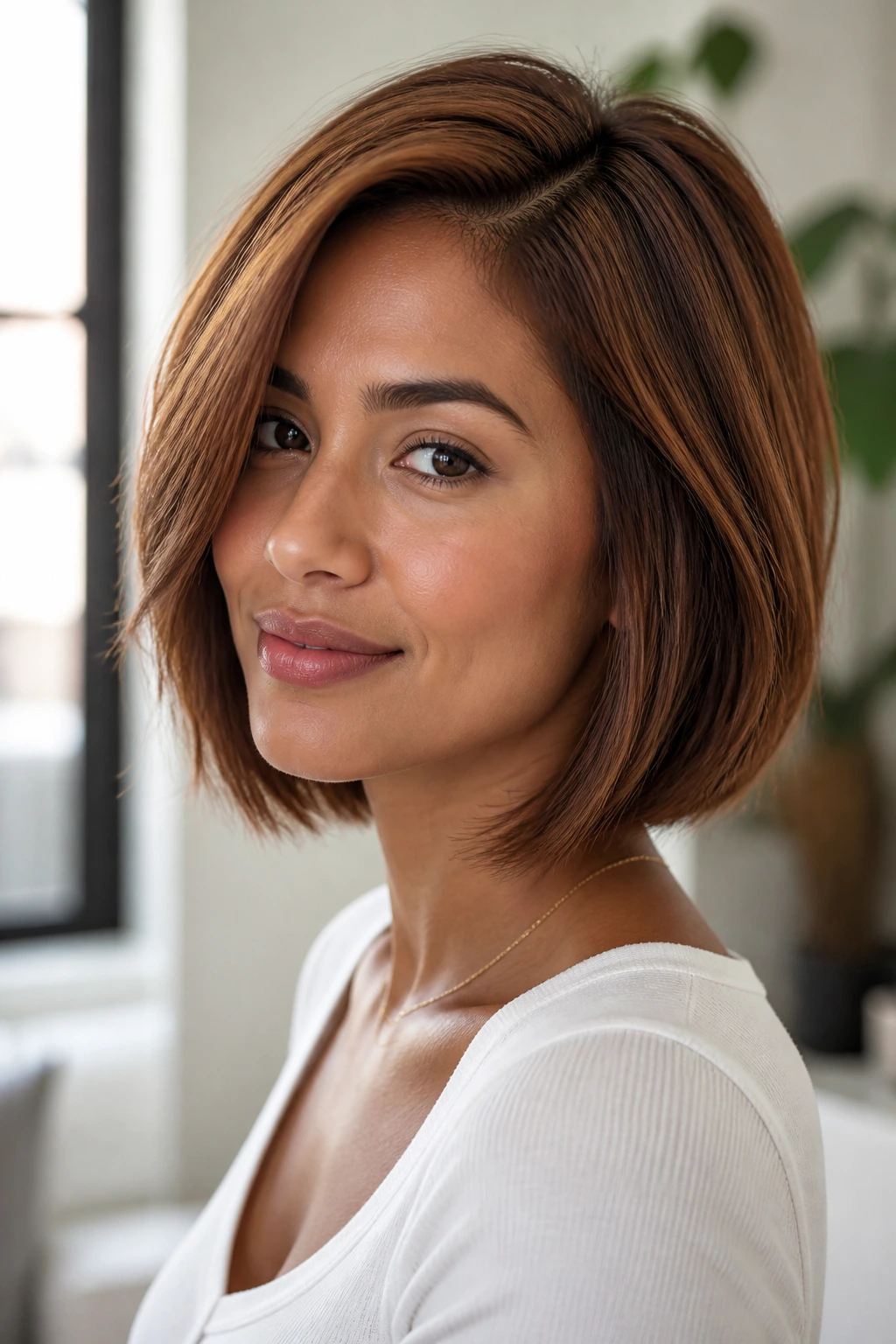
A soft cinnamon bob is warm, rich, and a little bit spicy without going red-red. The side part gives it lift, and the bob length keeps the shape dense enough to survive daily styling on fine hair.
This look works because cinnamon sits between brown and copper. That middle ground tends to flatter tan skin better than a bright red or an ashy brunette when you want warmth. The side part also helps the color show across the front panel of the hair, which gives the style more presence around the face.
I like this on people who want a simple cut with just enough personality. It’s neat, but not boring. And on fine hair, neat often beats busy.
21. Deep Mahogany Blunt Cut
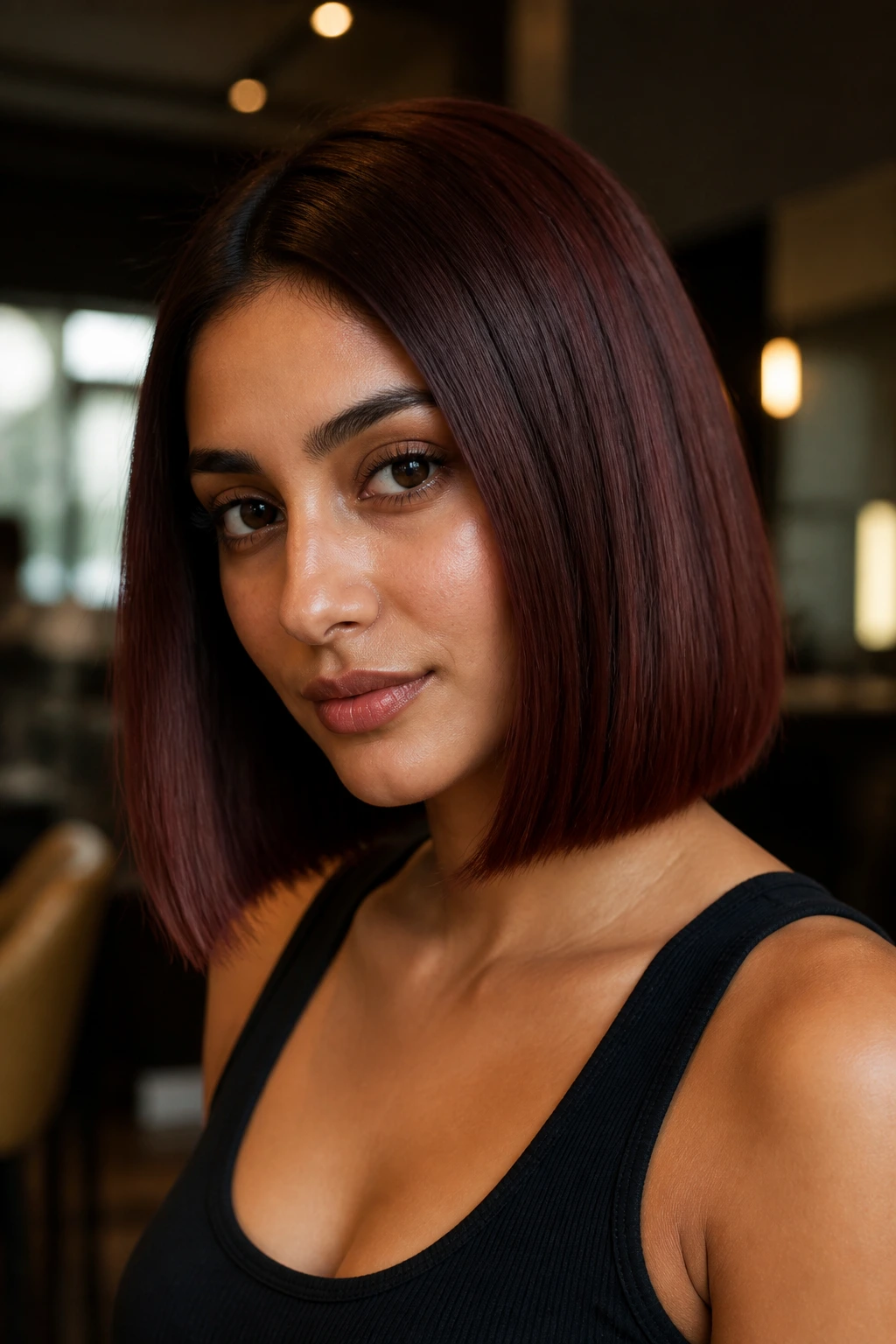
Mahogany on a blunt cut brings out the richer side of tan skin. There’s a red-brown depth here that can make the complexion look more even and the hair look thicker, mostly because the color stays solid from root to end.
The blunt cut is non-negotiable. Without that edge, mahogany can start looking soft in the wrong way, and fine hair loses the shape that keeps it looking dense. Keep the ends clean and the layers minimal.
This is a strong option if you’re tired of lightness and want something deeper with more attitude. Mahogany can look luxe, but only if the finish is smooth. Dry, fuzzy strands will kill the effect fast.
22. Sunlit Chestnut Shag
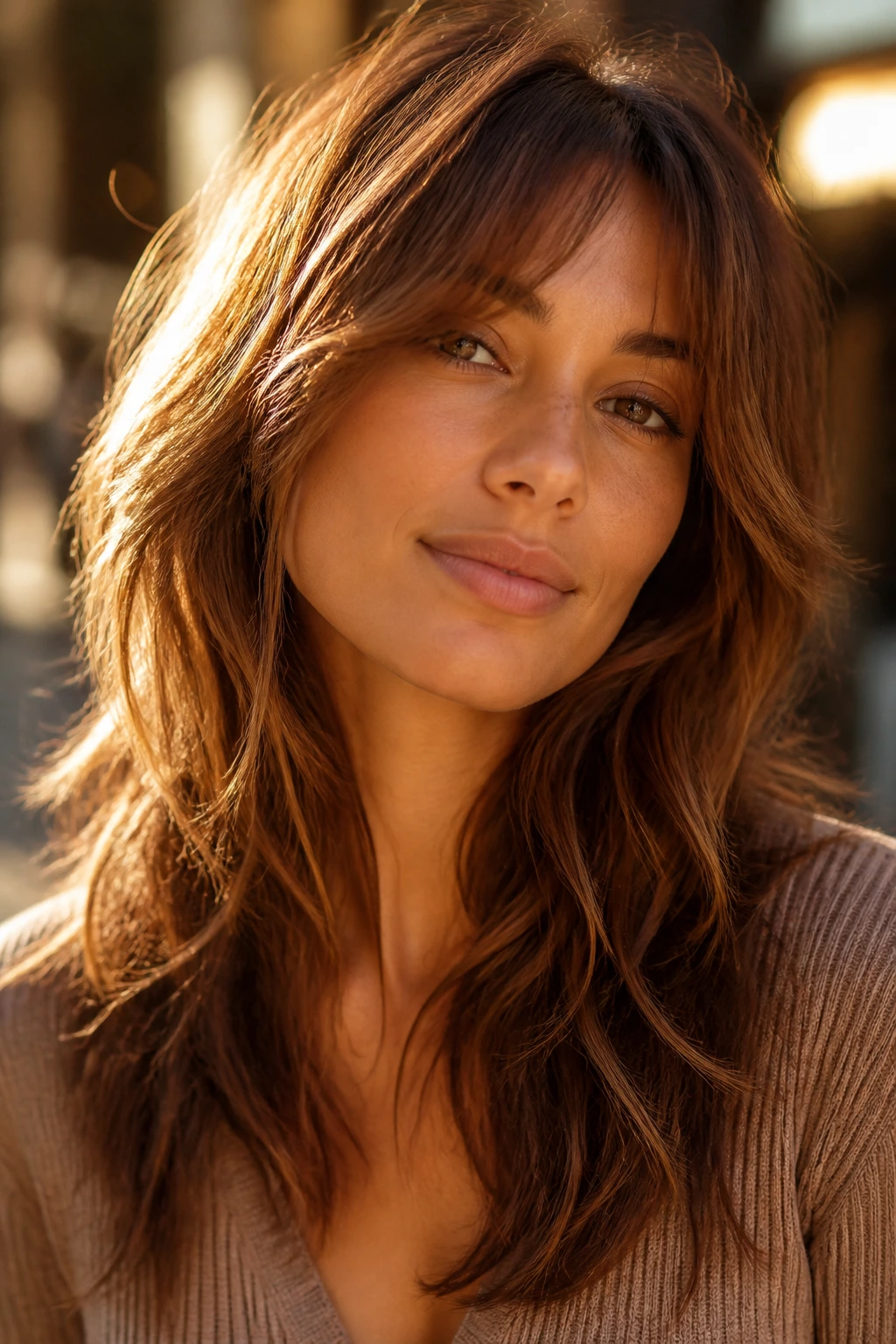
A chestnut shag with subtle golden pieces gives tan skin a warm lift without turning the whole head blonde. The shag structure gives the hair movement, and chestnut keeps the base grounded so fine strands don’t disappear at the tips.
The better version of this cut uses long layers and loose face framing. Short, choppy layers can make the ends look broken. Long layers keep the shape soft while still giving the top some height and the sides some bend.
This one works best if your hair has natural wave or takes a bend easily with a brush and dryer. If your hair is pin-straight, the style still works, but you’ll need a little more effort to keep the shape from going limp.
23. Bronze Balayage Long Bob
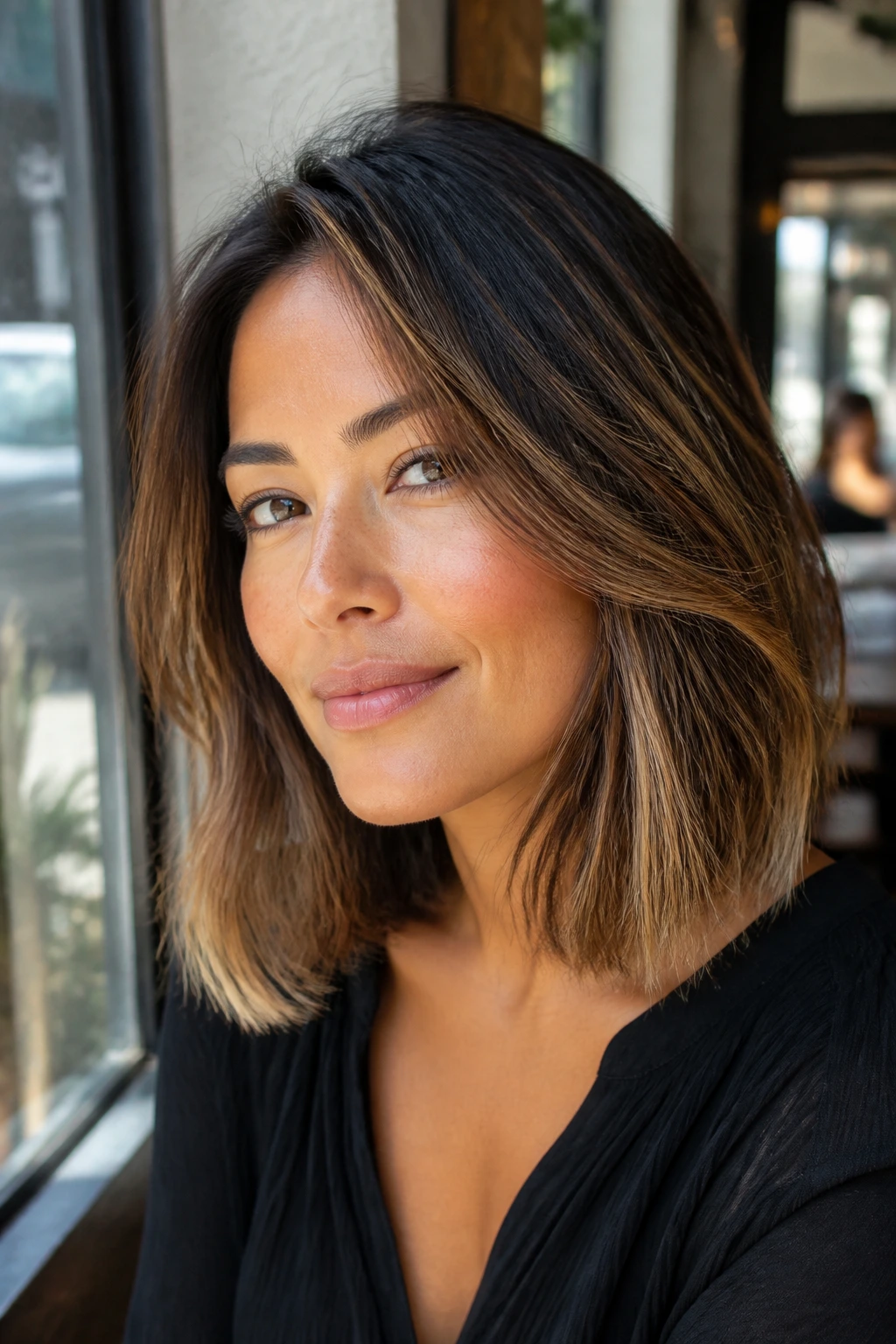
Bronze balayage is a nice answer for anyone who wants depth plus brightness in one look. The bronze ribbons give tan skin warmth, and the long bob keeps enough weight at the ends to make fine hair look less fragile.
The important part is placement. Bronze should live around the face, crown, and upper mids, not scattered all through the bottom inch. That bottom section is where fine hair starts to look sparse first, so leaving it deeper helps the cut keep its line.
This is one of the more forgiving choices in the whole list. It grows out softly, it suits warm tan skin well, and it doesn’t need to be blown out into perfection to look finished.
24. Cool Taupe Bob with a Soft Fringe
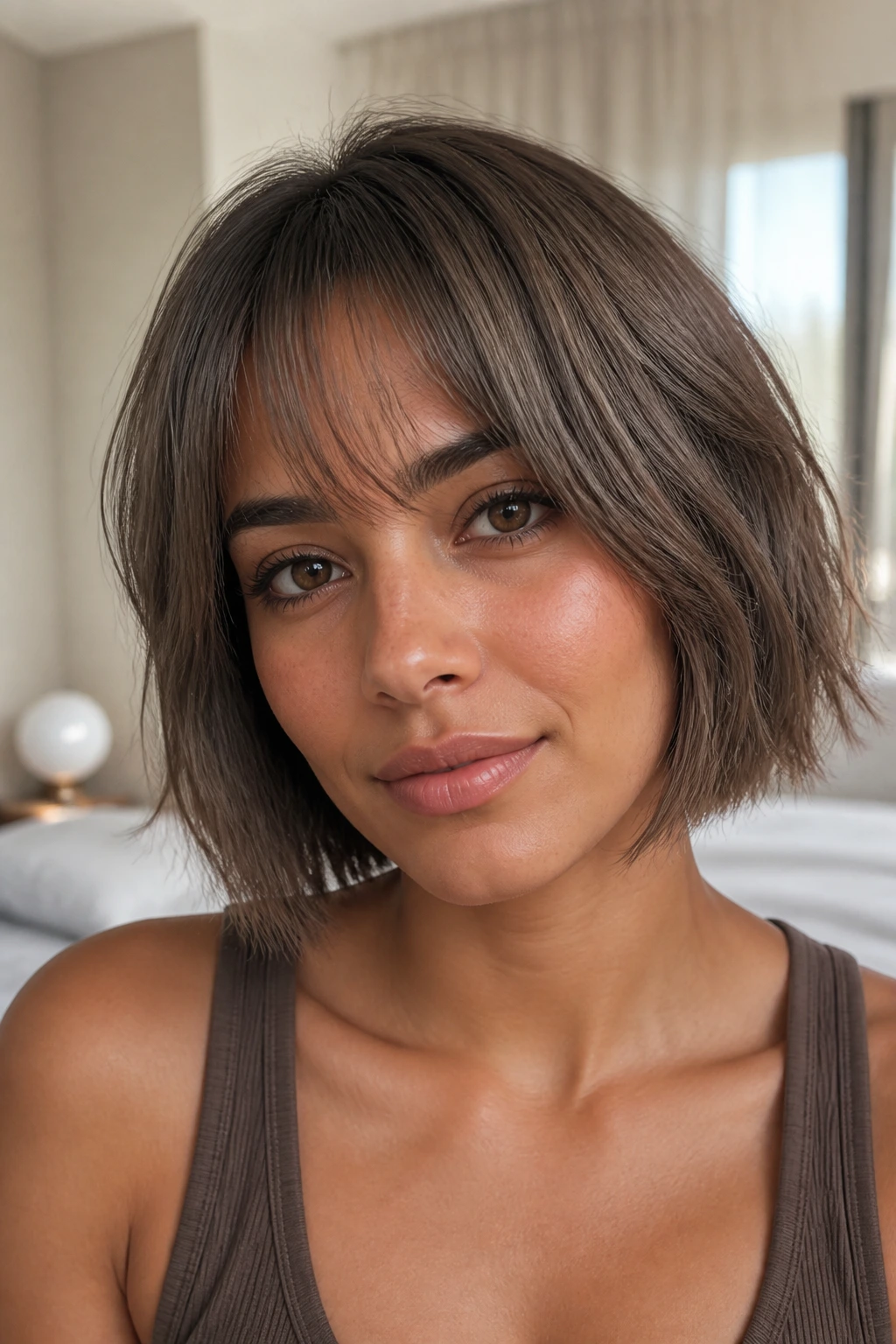
If your tan skin leans olive or neutral, taupe can be a very good move. It’s cooler than caramel but softer than ash blonde, so it avoids that muddy, gray look that can happen when cool tones go too far on warm skin.
The soft fringe helps the bob feel fuller up front. That matters on fine hair because the front section is the first place people notice any thinness. A fringe gives you built-in density around the forehead and a little texture without needing heavy layering.
This is the pick for someone who wants something muted and modern. Not loud. Not brassy. Just a restrained shade that makes the haircut look sharper than it has any right to.
25. Glossy Toffee Blunt Lob
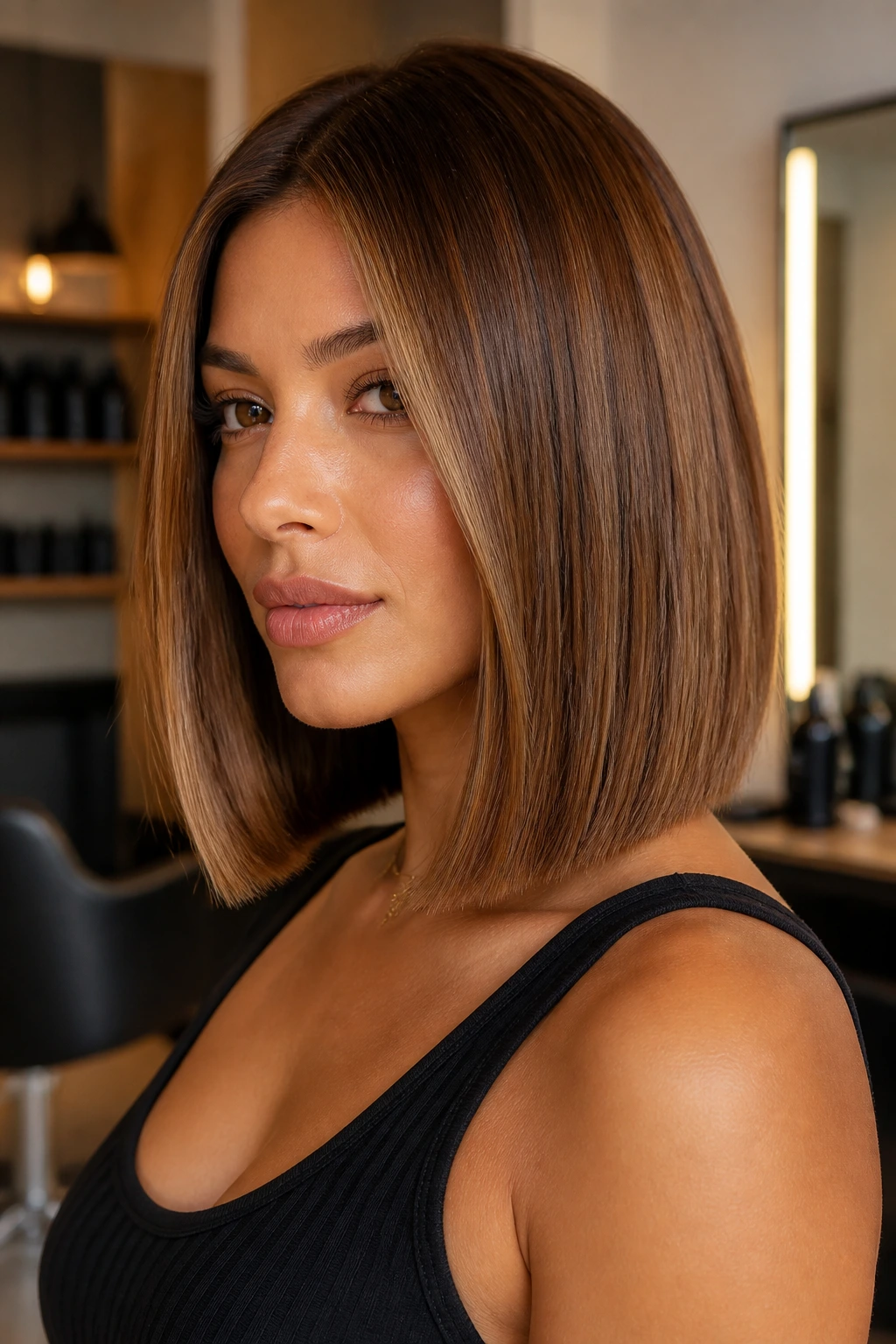
Toffee is a safe word in the best sense. It’s warm enough for tan skin, soft enough for fine hair, and rich enough to make the ends read thicker than a pale blonde would. On a blunt lob, that warmth becomes even cleaner because the cut gives the color a strong edge to sit on.
This is the version I’d hand to someone who wants a reliable first step. It doesn’t ask for dramatic upkeep. It doesn’t need tons of styling tricks. It just needs a glossy finish and a clean perimeter.
If you want a look that sits between brunette and blonde without wobbling into either extreme, this is the one to keep on the shortlist.
What Makes Tan Skin and Fine Hair Need Different Color Rules
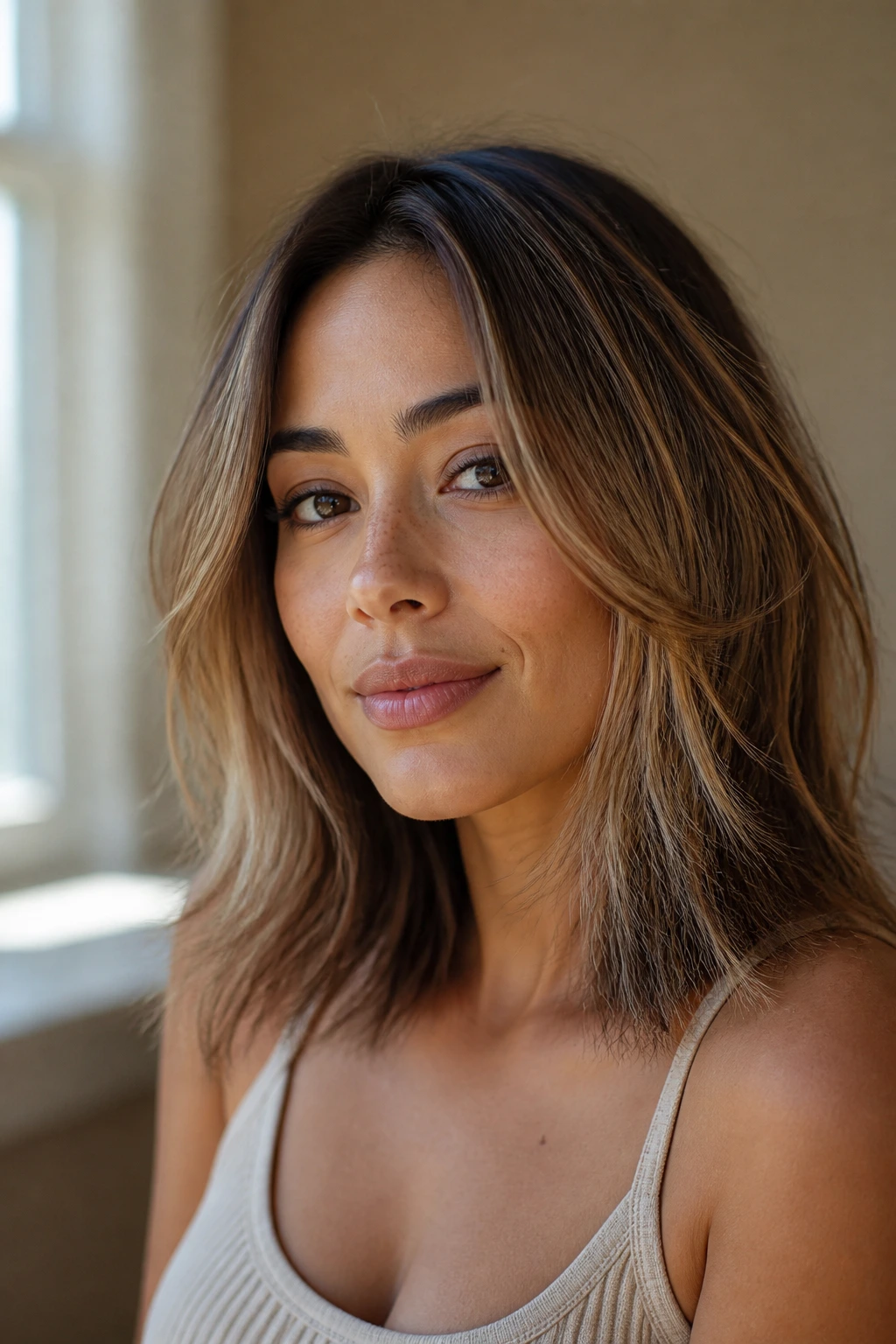
Tan skin does not behave like one single shade, and that’s where people get tripped up. Some tan complexions lean golden and take warm caramel or copper without blinking. Others lean olive and suddenly look better in beige, mushroom, or soft brunette because the color sits closer to the skin’s own muted notes. A few are neutral enough to wear either side, as long as the contrast stays controlled.
Fine hair brings its own set of rules. The strand width is smaller, so every highlight stripe, every heavy layer, and every dull patch at the ends shows faster. That is why very pale blonde can be a rough fit if the cut is too thin. The color can look expensive in theory and patchy in daylight.
The best hair color ideas for tan skin with fine hair use dimension like seasoning, not sauce. You want enough brightness to lift the face, enough depth to keep the body of the hair visible, and enough edge in the cut to stop the whole thing from collapsing into a soft blur. Clean lines matter. So does gloss. So does keeping the root a shade or half-shade deeper than the mids.
Cuts That Keep Fine Hair Looking Dense Instead of Wispy
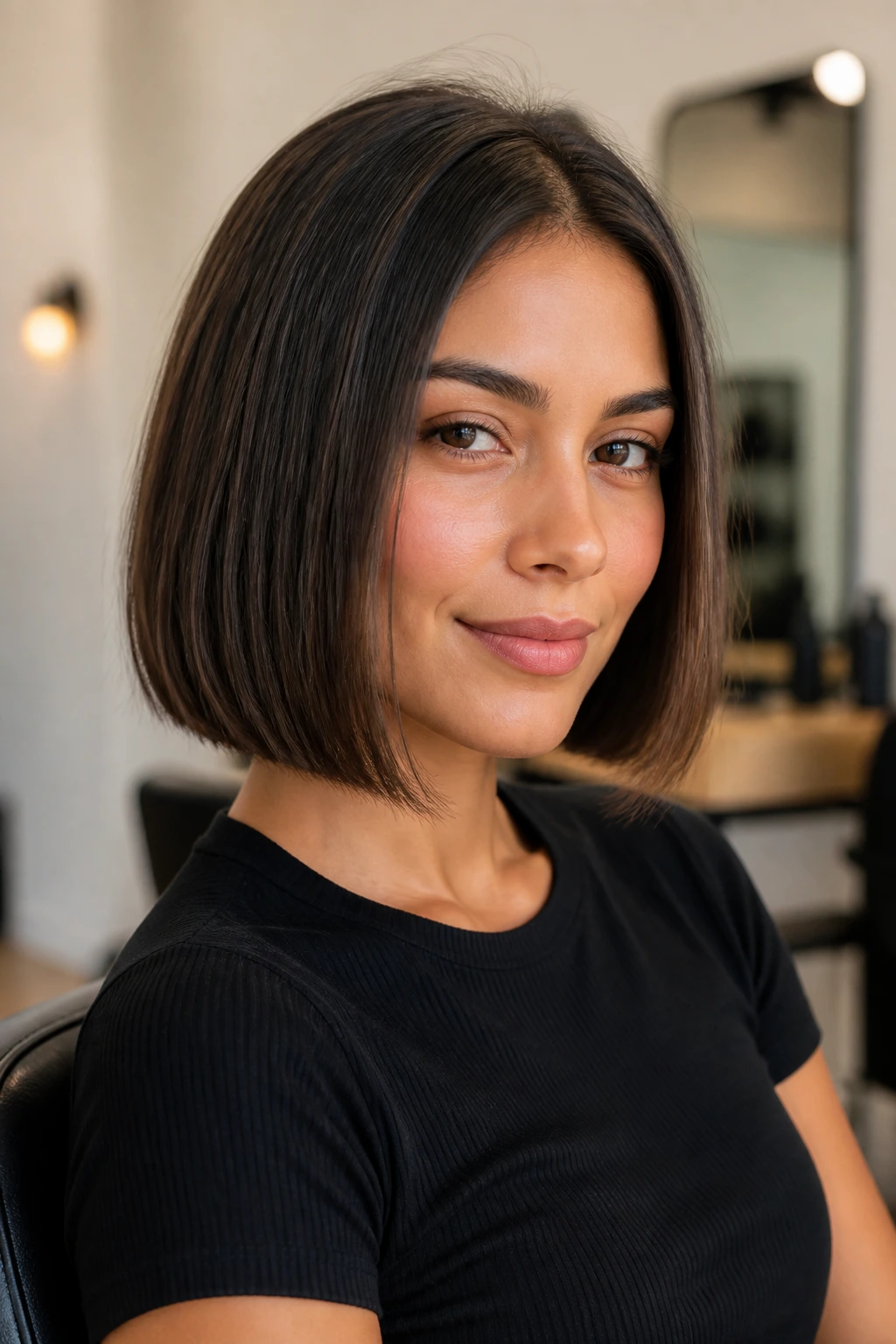
The haircut is doing more than people give it credit for. A great color on a weak cut still looks weak. A good cut can make an ordinary color look twice as expensive.
Blunt bobs and lobs
These are the workhorses. The straight edge gives fine hair a visual perimeter, which is the easiest way to fake density. If you want softness, add it through color or a slight bend, not through slicing away the outline.
Pixies and crops
Short cuts are excellent when you want the hair to look fuller at the crown and cleaner around the neck. Ask for length where the movement should live and tightness where bulk would make the shape droop.
Midlength cuts with restraint
If you prefer more length, collarbone cuts and long bobs are the safest middle ground. Keep the layers long. Use face-framing pieces sparingly. Too much internal cutting can make the ends read like a broom.
Fine hair is not the problem. Overcutting it is.
Tools and Products That Matter at Home
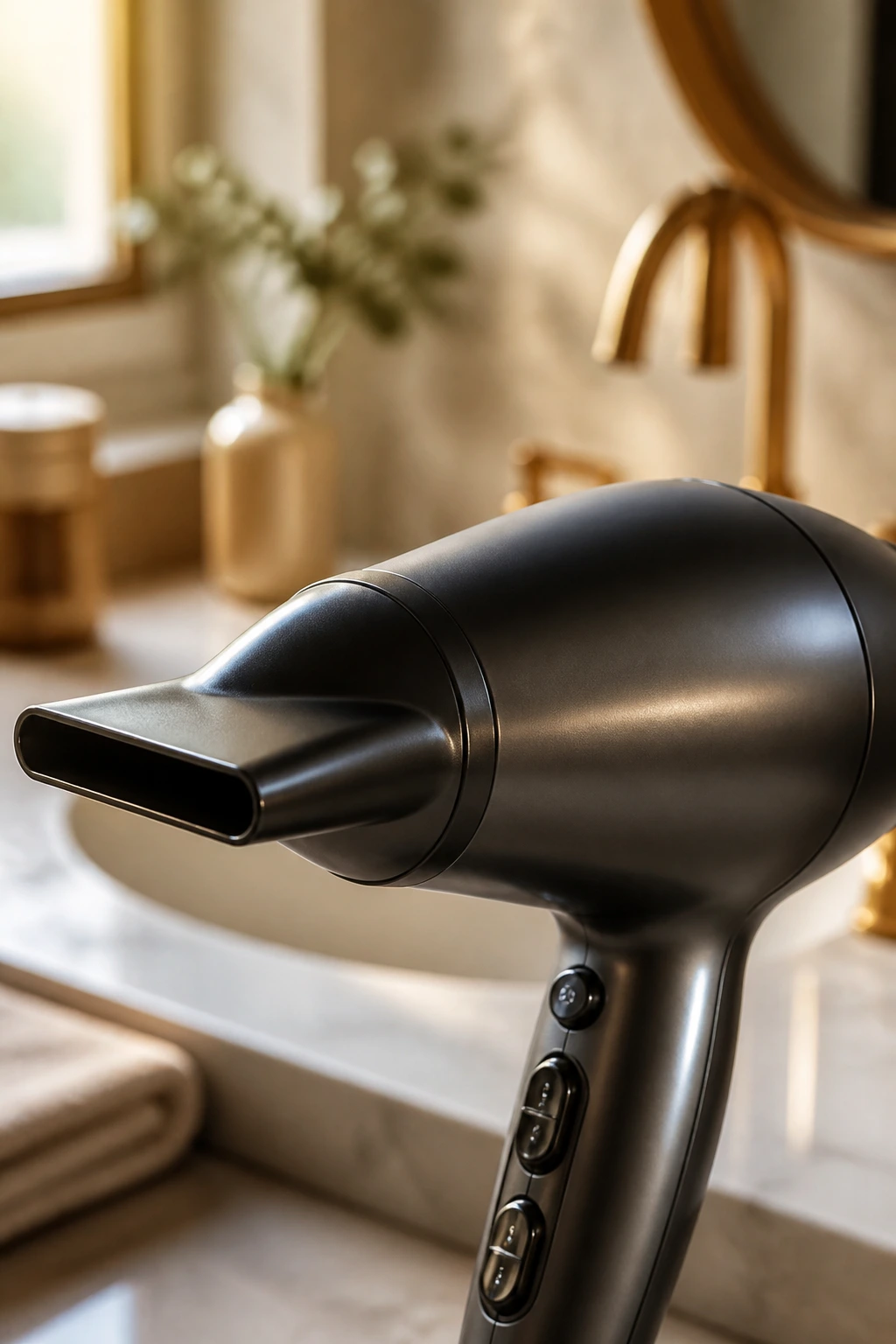
- A blow dryer with a narrow nozzle: It helps aim the airflow at the roots so they lift instead of puffing out.
- A small round brush, about 1 to 1.5 inches: This is the sweet spot for bending fine hair without overexpanding the ends.
- Volumizing mousse: Use a golf-ball-sized amount on damp roots and mids for hold without stickiness.
- Heat protectant spray: Fine hair scorches fast, especially if it’s been lightened.
- Color-safe shampoo: Keeps beige, caramel, copper, and brunette tones from fading into dullness too fast.
- Lightweight conditioner: Apply it from mid-length to ends only. Heavy masks at the roots can flatten everything.
- Root-lift spray or mousse: Good for crown lift on bob, lob, and pixie cuts.
- A clear or tinted gloss: Useful for keeping warm brunettes rich and beige blondes from going cloudy.
- Dry shampoo: Works best as a pre-style texture product on day-one hair, not only after the scalp gets greasy.
How to Ask for These Looks at the Salon
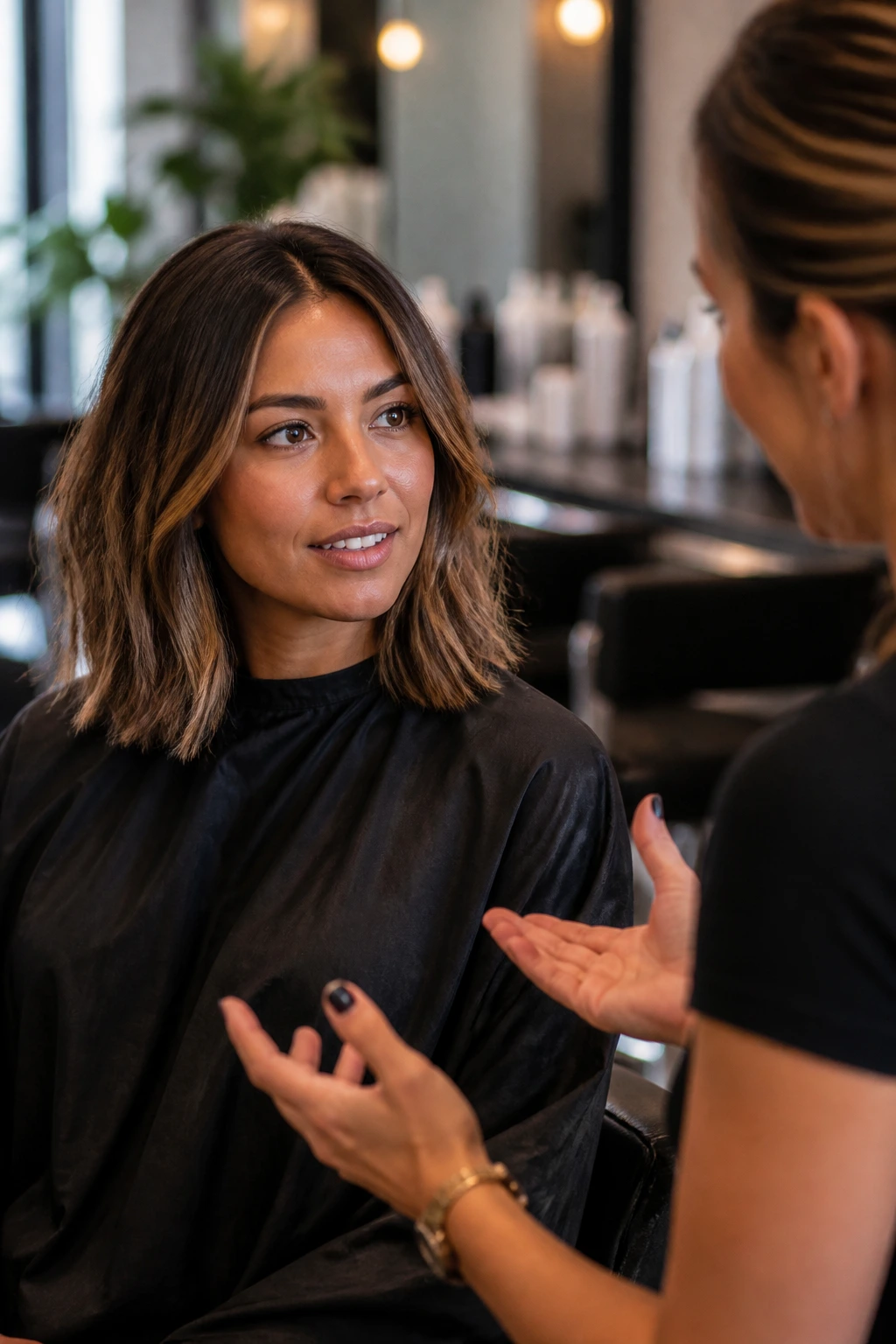
Bring photos, but bring the right photos. One picture of the cut and one of the color is better than a single dream image that mixes six different things. Stylists can read intent fast. They also appreciate a clear request.
Use plain language. Say things like, “I want the ends to look fuller, so I’m looking for a blunt perimeter,” or “I want low-contrast dimension, not stripy highlights.” Those two sentences do more work than a rambling explanation. If your tan skin leans olive, say that too. If your hair gets flat at the crown, say that before the scissors come out.
A useful script sounds like this: “My hair is fine, so I want movement without thinning out the bottom. Keep the length around the collarbone or jaw, and place brightness near the face and part.” That gives the colorist a map. And if the style needs upkeep you do not want, mention that directly. A good haircut should fit your life, not the other way around.
Styling Moves That Keep Fine Hair from Falling Flat
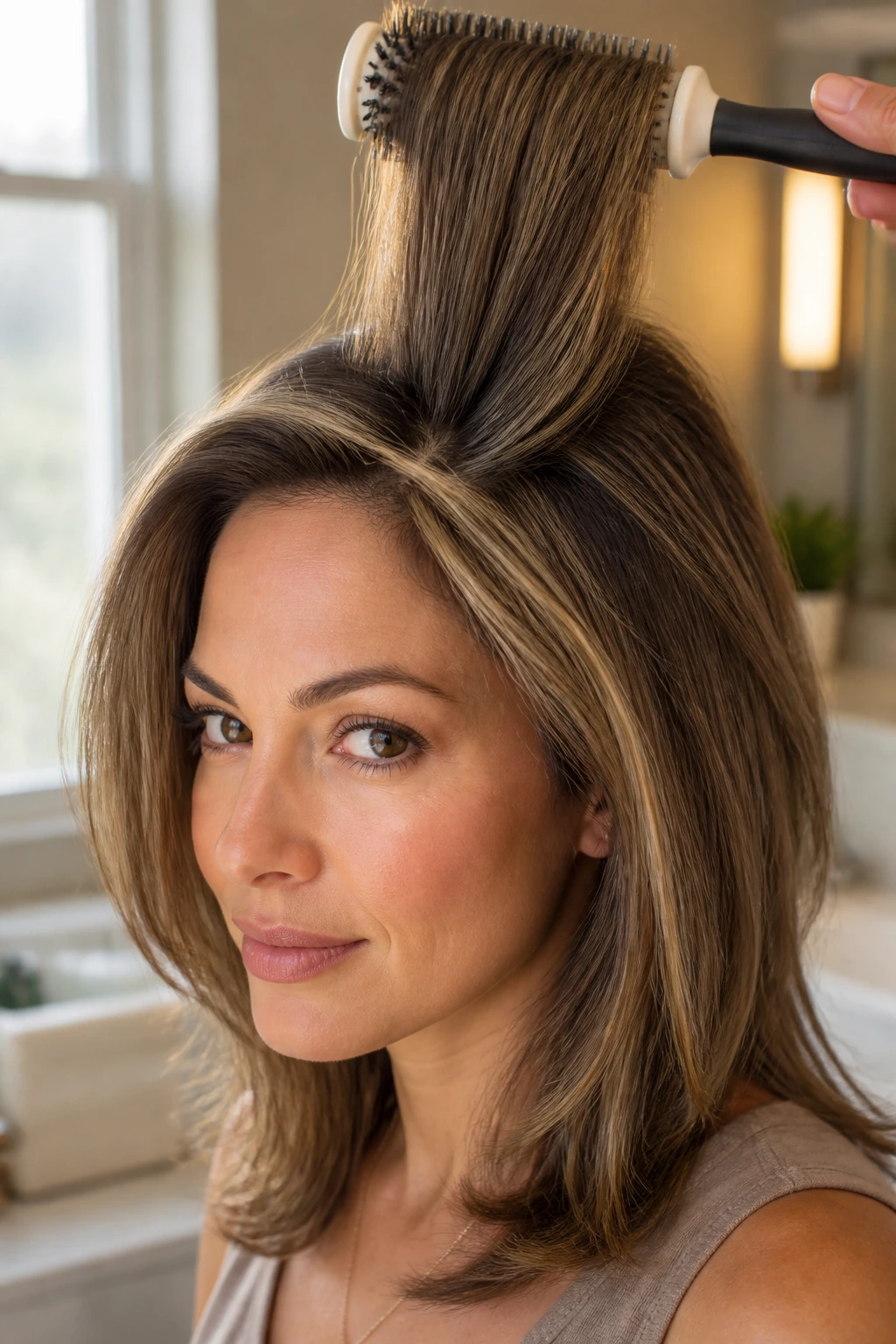
Fine hair usually needs a little root memory. Not a lot. A little. Start with mousse on damp roots, then blow-dry the crown while lifting the hair up and away from the scalp. Don’t soak the mids in heavy product. That’s where the collapse begins.
Once the hair is about 80 percent dry, switch to a round brush for the top section and the front pieces. Use tension, not heat overload. You’re shaping, not baking. Then let the hair cool in place for a minute or two before you touch it. That cooling step matters more than people think.
A side part or a slightly off-center part can help too. It gives the crown an instant bump and keeps the color from sitting too evenly across the head. If the look is a bob or lob, tuck one side behind the ear for a second during styling. That tiny asymmetry makes the whole thing look fuller.
Additional Tweaks That Make the Whole Look Better
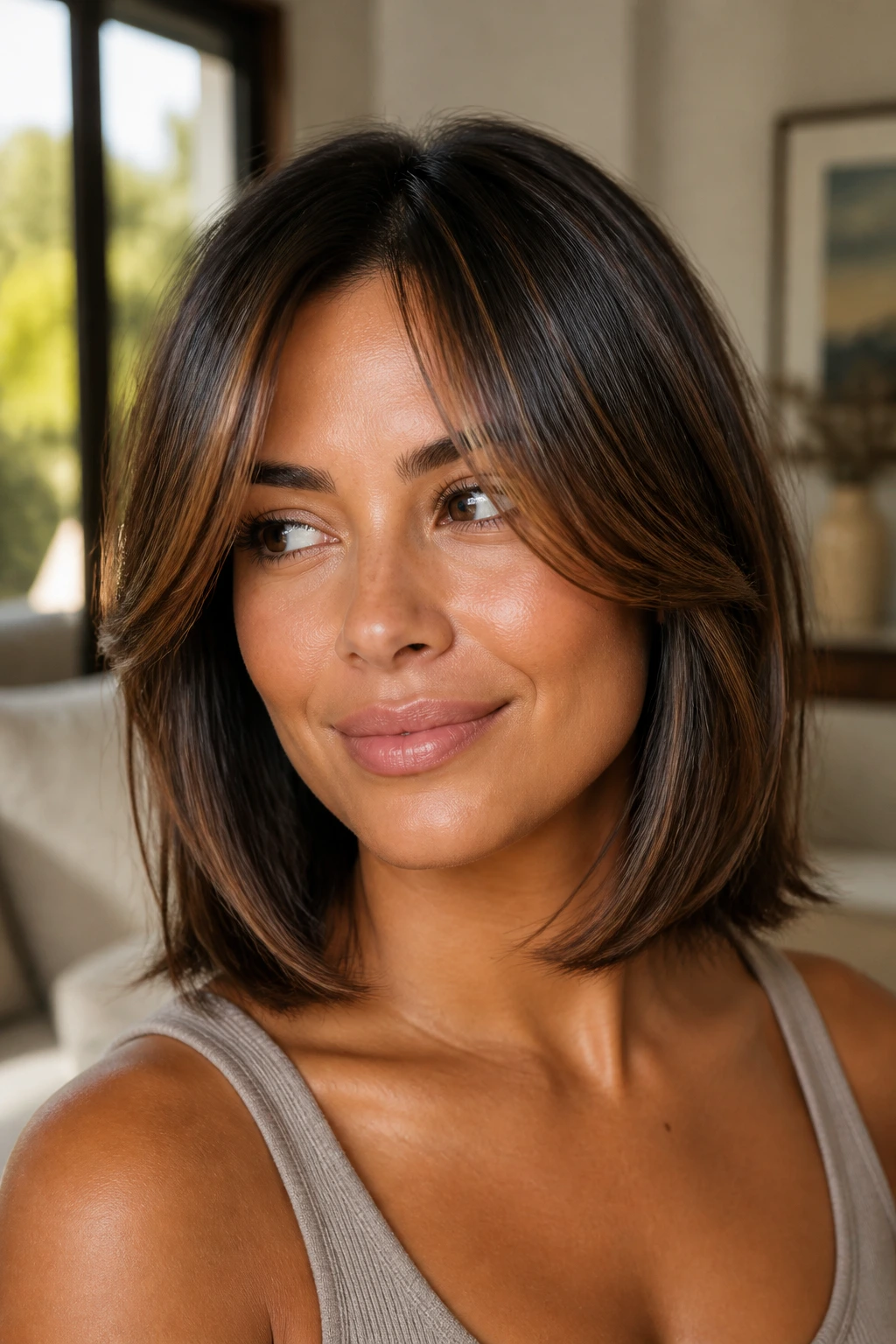
Tone Boost: Ask for a demi-permanent gloss between full color appointments. It keeps beige, caramel, and brunette shades from drifting muddy, and it gives fine hair a smoother finish without adding weight.
Shape Boost: Keep the perimeter blunt at the jaw, chin, or collarbone. Fine hair looks densest when the ends have a clear line. It looks wispy when the stylist keeps “softening” the bottom for no good reason.
Placement Trick: Brightness around the face and part line usually beats all-over lightening. Those two zones show first in real life, and they’re easier to maintain when the regrowth starts showing.
Texture Fix: If you need movement, bend only the mid-lengths and leave the last inch straighter. That keeps the ends from looking thin, which is a common problem on fine strands.
Common Mistakes That Make the Whole Look Flatter
-
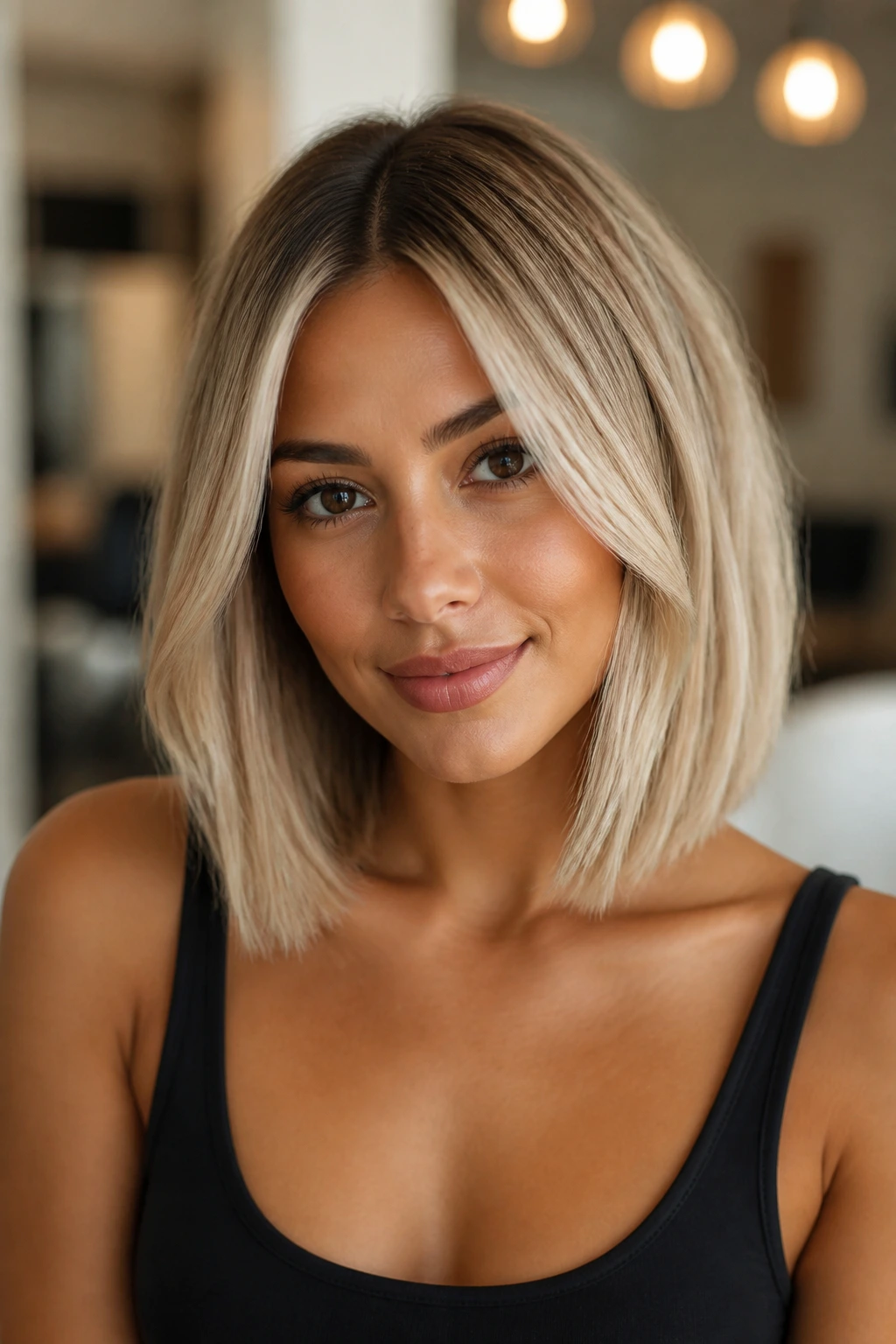
Going too pale too fast: A very light blonde can wash out tan skin and make fine hair look transparent at the ends. Ask for beige, honey, or bronze if you want lift without the chalky finish.
-
Adding too many short layers: Short layers can feel lively for a week and then go fuzzy. The fix is longer layers or a cleaner perimeter that holds the shape.
-
Using chunky highlights: Bold stripes can make fine hair look sparse because the dark spaces between the pieces become obvious. Soft balayage or micro-weaving blends better.
-
Plastering product at the roots: Heavy oils and thick creams on the crown flatten the cut in minutes. Keep richer products on the mids and ends only.
-
Skipping glosses and toners: Warm colors fade fast into orange or dull brown if nobody keeps the tone in check. A quick gloss helps the color stay intentional, not tired.
-
Choosing a cut that’s too long for the density: Long hair is beautiful, but fine hair past the shoulders can lose its outline unless the density is strong. A collarbone cut often gives better results than extra inches.
Shade Variations for Warm, Olive, and Neutral Tan Skin
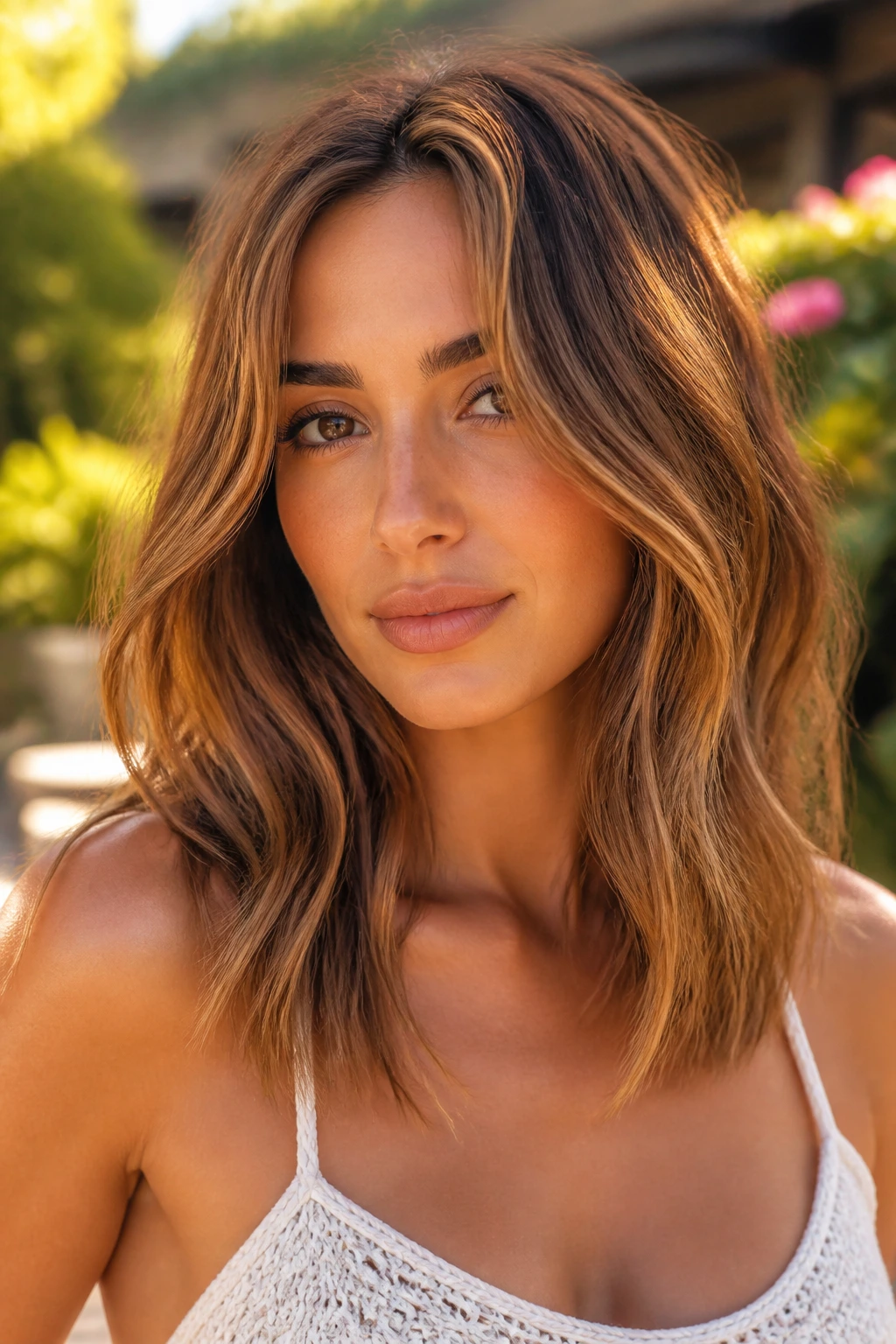
Golden Glow: Honey, caramel, bronze, and warm auburn work best when your tan skin has a sunny undertone. They reflect the warmth already in your complexion, so the hair reads lively instead of forced.
Olive Balance: Mushroom brown, taupe brunette, smoky mocha, and soft beige are better when your skin leans olive. The cooler restraint keeps the complexion from going too yellow while still giving the hair shape.
Neutral Softness: Rose brown, creamy beige, and bronde land nicely on neutral tan skin because they don’t push too hard in either direction. They are especially useful if you like a low-contrast look that still feels polished.
Deeper Tan Richness: Espresso, walnut, mahogany, and dark chocolate add a clean frame around deeper tan skin. The trick is keeping the finish glossy so the dark color looks rich, not flat.
Maintenance and Regrowth Timing That Actually Works
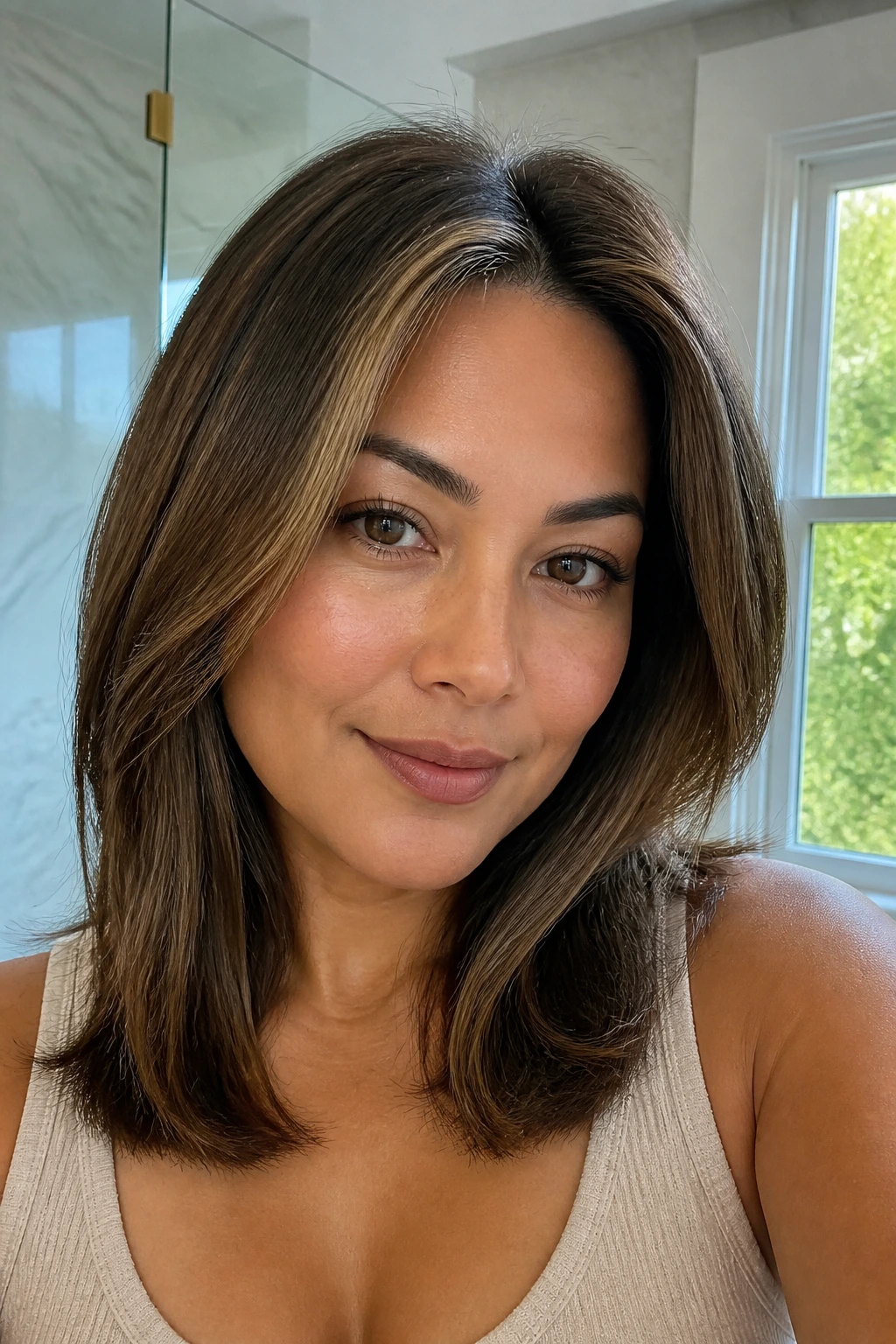
Maintenance depends on how much contrast you choose. A blunt bob or lob with one rich tone can often go 6 to 8 weeks between cuts, sometimes a bit longer if the edge still looks strong. Pixies need more frequent trims, usually every 3 to 5 weeks, because the shape shows loss of structure fast.
Color timing is a little different. Brunette glosses and beige toners usually look best refreshed every 4 to 8 weeks if you want the tone to stay crisp. Balayage can stretch longer, often 8 to 12 weeks, because the grow-out is softer. Copper and auburn shades fade faster, so they usually need more frequent toning or a at-home color mask to keep them from slipping muddy.
Use purple shampoo sparingly if you have beige or honey pieces. Once a week is enough for most people. Too much and the hair starts to look dull. For brunettes, a color-depositing gloss or a shine mask can be more useful than trying to fight warmth with harsh cleanser.
Frequently Asked Questions
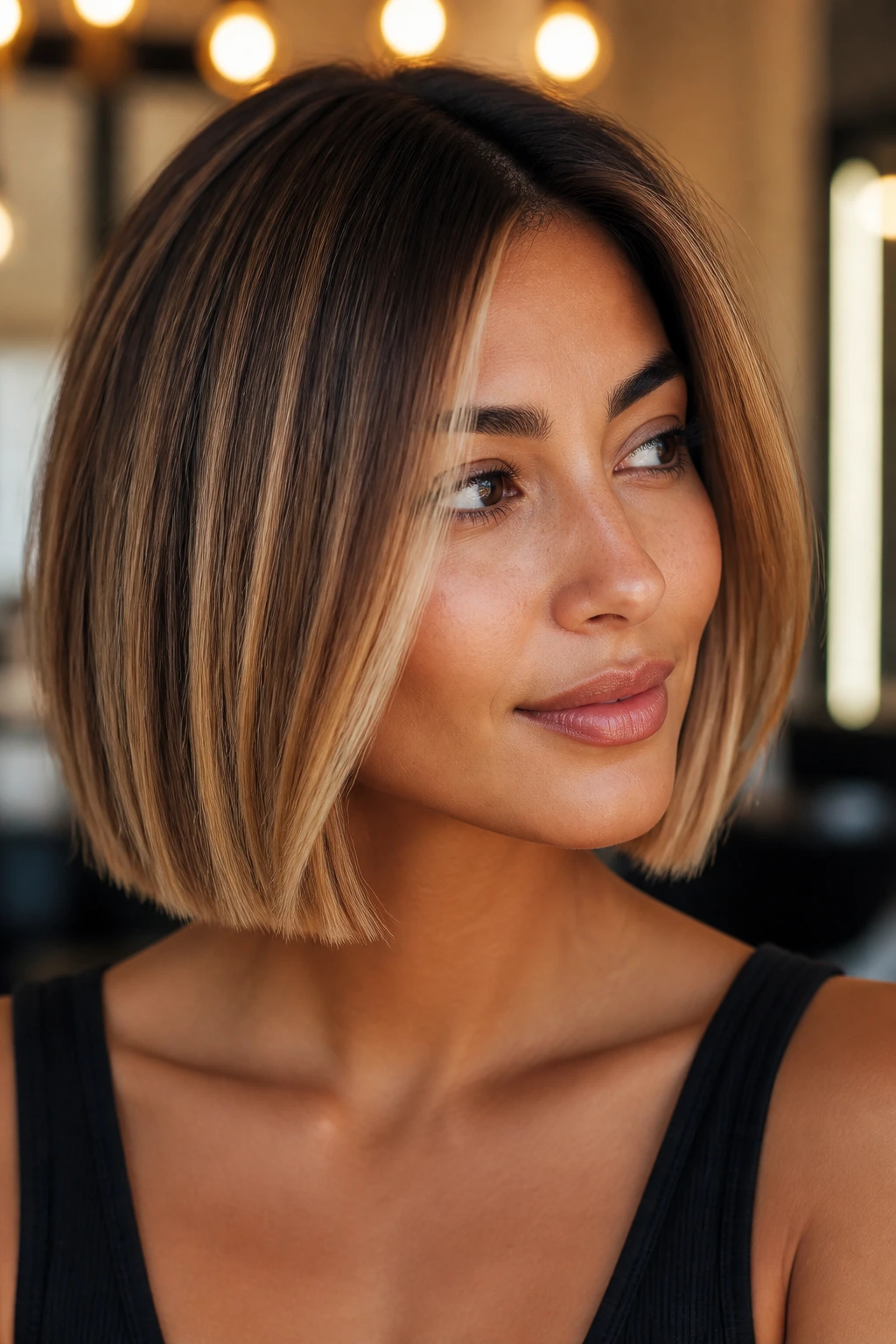
Which of these shades works best if my tan skin leans olive?
Mushroom brown, taupe brunette, mocha, chestnut, and soft beige are usually the safest bets. Olive skin can look strange with too much yellow warmth, so muted tones tend to sit better against it.
Should fine hair go lighter or darker?
Usually, neither extreme wins on its own. A soft brunette with beige or caramel dimension often looks thicker than an all-over pale blonde or a very flat dark brown. The cut matters just as much as the color.
Is balayage better than highlights for fine hair?
Balayage often looks softer on fine hair because it avoids hard striping. Highlights can still work, but they need to be fine, blended, and spaced carefully so the scalp and ends don’t show too much contrast.
What haircut makes fine hair look the fullest?
A blunt bob, blunt lob, or compact crop usually gives the strongest sense of density. The clean edge at the bottom is what makes the hair read thicker.
Can I wear copper if my tan skin isn’t super warm?
Yes, but keep the copper softened with brown or cinnamon so it doesn’t turn loud. A copper glaze over brunette usually sits better than a bright orange-red.
How often should I trim a lob or bob on fine hair?
Every 6 to 8 weeks is a good range if you want the edge to stay crisp. If the ends start to look thin before then, move the appointment up a bit.
What if my hair gets flat by noon?
Start with less conditioner at the roots, use mousse before drying, and give the crown more lift while styling. A tiny change in product placement often fixes more than a new haircut.
Can I ask for this kind of look if my hair has been damaged by bleach?
Yes, but keep the lightening gentle and the cut clean. If the hair is fragile, a richer brunette or a softer beige gloss usually looks better than pushing for more blonde right away.
The Look That Holds Its Shape
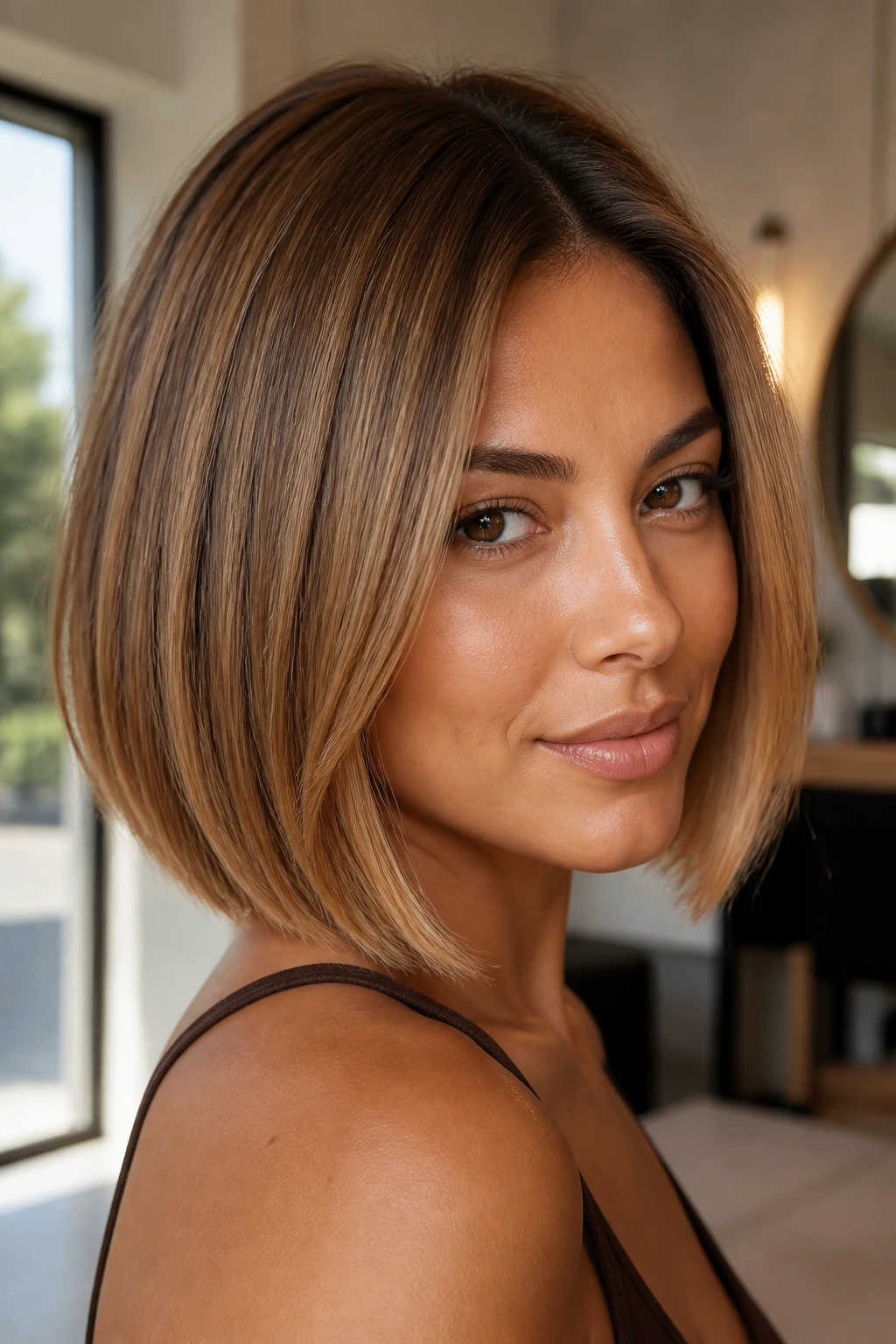
The nicest thing about these color-and-cut pairings is that they don’t depend on one perfect styling day. A blunt edge, a warm or muted tone that suits tan skin, and a little lift at the root can carry a lot of the visual load for you. That matters on fine hair, where overwork almost always shows faster than smart restraint.
If you’re torn between two options, pick the one that gives you the cleanest outline first. Color can be adjusted. A good shape is harder to fake. And once the haircut and shade line up, the whole thing starts doing that rare, useful thing: it makes the hair look fuller, the skin look brighter, and your morning routine a lot less annoying.