



Bright buttery blonde on olive skin has a particular kind of glow when it’s done right. Not white-blonde, not orange, not the sort of flat beige that disappears in daylight. The good version has cream in it, a little gold, a little beige, and enough depth at the root that the whole head still looks like hair instead of a cotton-candy experiment.
That balance matters more on olive skin than people like to admit. Olive undertones can read green, golden, neutral, or a mix of all three, and the wrong blonde can make the face look tired in a second. The right buttery blonde does the opposite. It gives the skin a cleaner, brighter edge, especially when the color is placed around the face instead of painted everywhere with the same force.
These 30 bright buttery blonde hairstyles for olive skin are not a pile of identical beach waves with a different caption. Some are blunt and polished. Some are shaggy and lived-in. Some lean heavy on ribbons of light, others keep the blonde tucked into money pieces, ends, or bright halos. That mix is the whole point.
Why This Collection Feels Different on Olive Skin
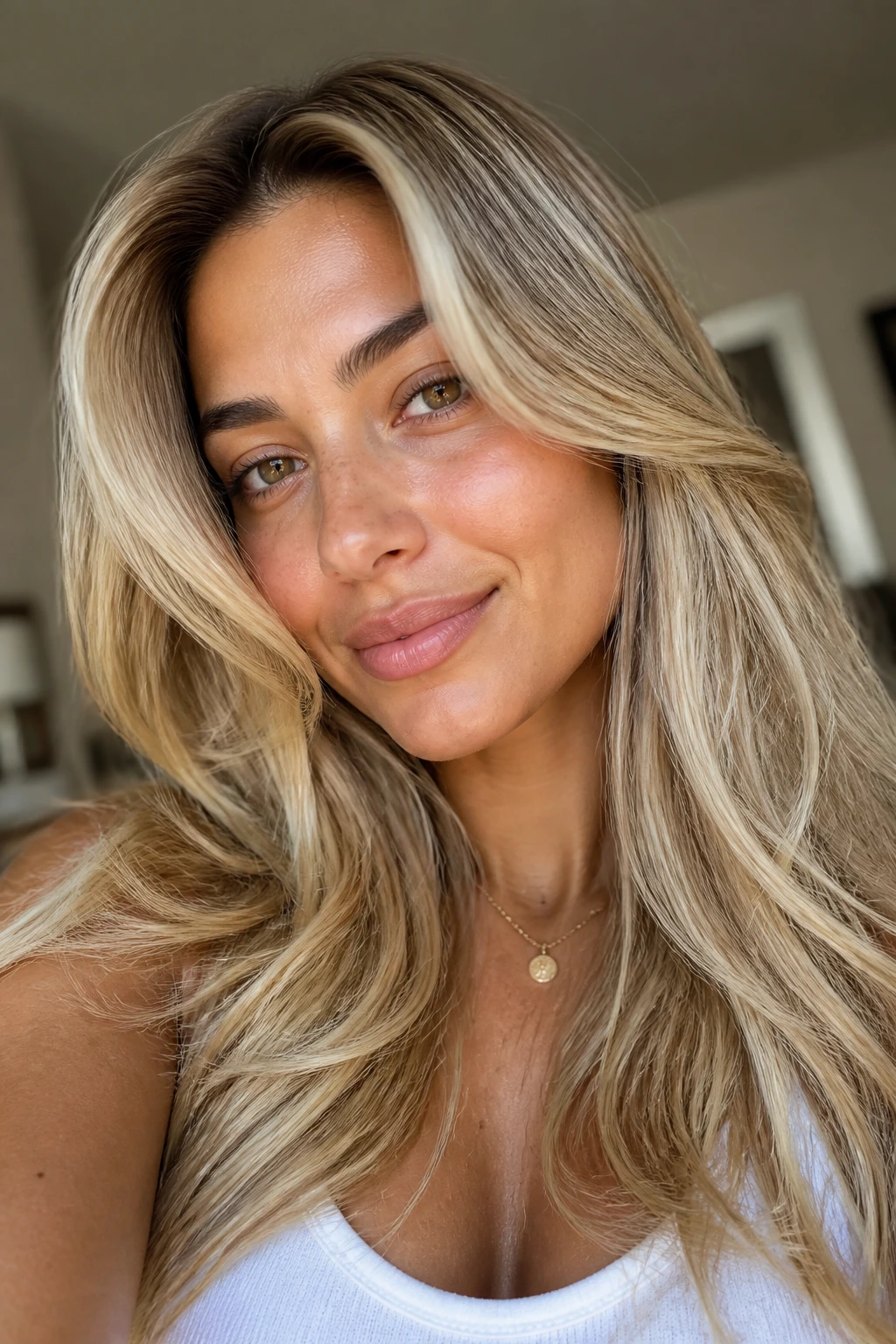
- The warmth is deliberate: Buttery blonde sits in that sweet spot between gold and beige, so it flatters olive undertones without turning the hair yellow or the skin green.
- There’s real range here: You’ll find bobs, lobs, pixies, curls, buns, and long layers, which means the color isn’t locked to one haircut or one hair texture.
- Face-framing placement does the heavy lifting: Several of these looks use money pieces, bright ends, or soft root shadows to keep the brightness near the face where it matters most.
- Grow-out is built in: Balayage, lowlights, and shadow roots keep the color wearable past the first salon visit, and that’s worth more than an all-over blonde that screams for a touch-up.
- The blonde stays soft, not chalky: The looks here favor cream, biscuit, honey, champagne, and beige tones instead of icy white or harsh yellow.
- They work with real-life styling: A lot of these styles still look good when you air-dry, bend the ends with a wand, or throw the hair into a clip for the afternoon.
1. Collarbone Lob with Butter Ribbon Balayage
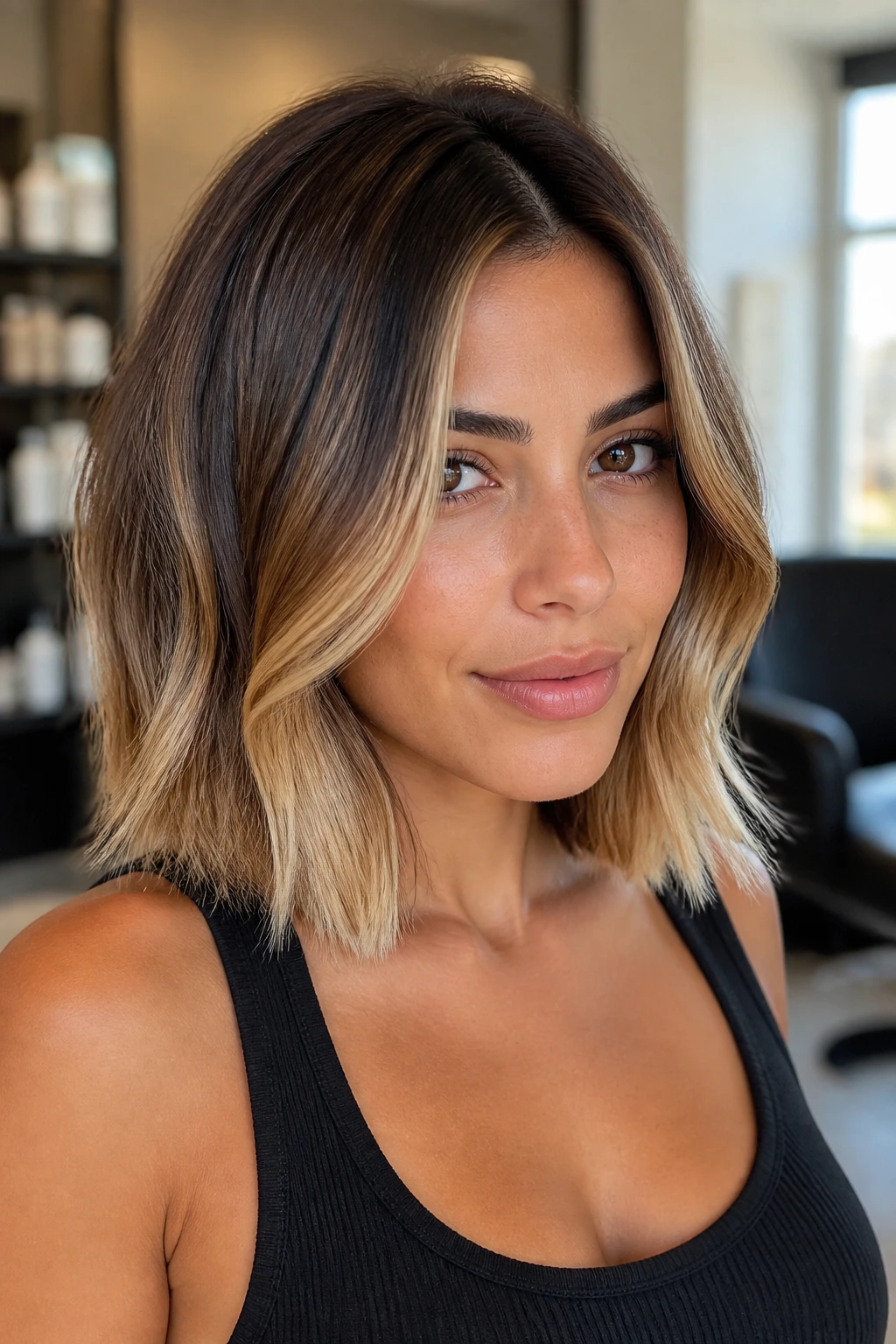
A collarbone lob gives buttery blonde somewhere to breathe. On olive skin, that extra length matters because it lets the light pieces move around the jaw and neck without crowding the face. The result is clean and bright, but not loud. The ribbons should look painted, not striped.
Why it flatters olive skin
The trick here is contrast. Keep the base one or two levels deeper than the lightest pieces, then thread in beige-gold ribbons through the mid-lengths and ends. That stops the color from flattening out against olive undertones.
A blunt-ish edge keeps the haircut looking polished, while the balayage softens it. It’s one of those styles that looks casual in a T-shirt and sharp with a blazer. Not many colors pull that off.
2. Soft Curtain Bangs with Warm Money Pieces
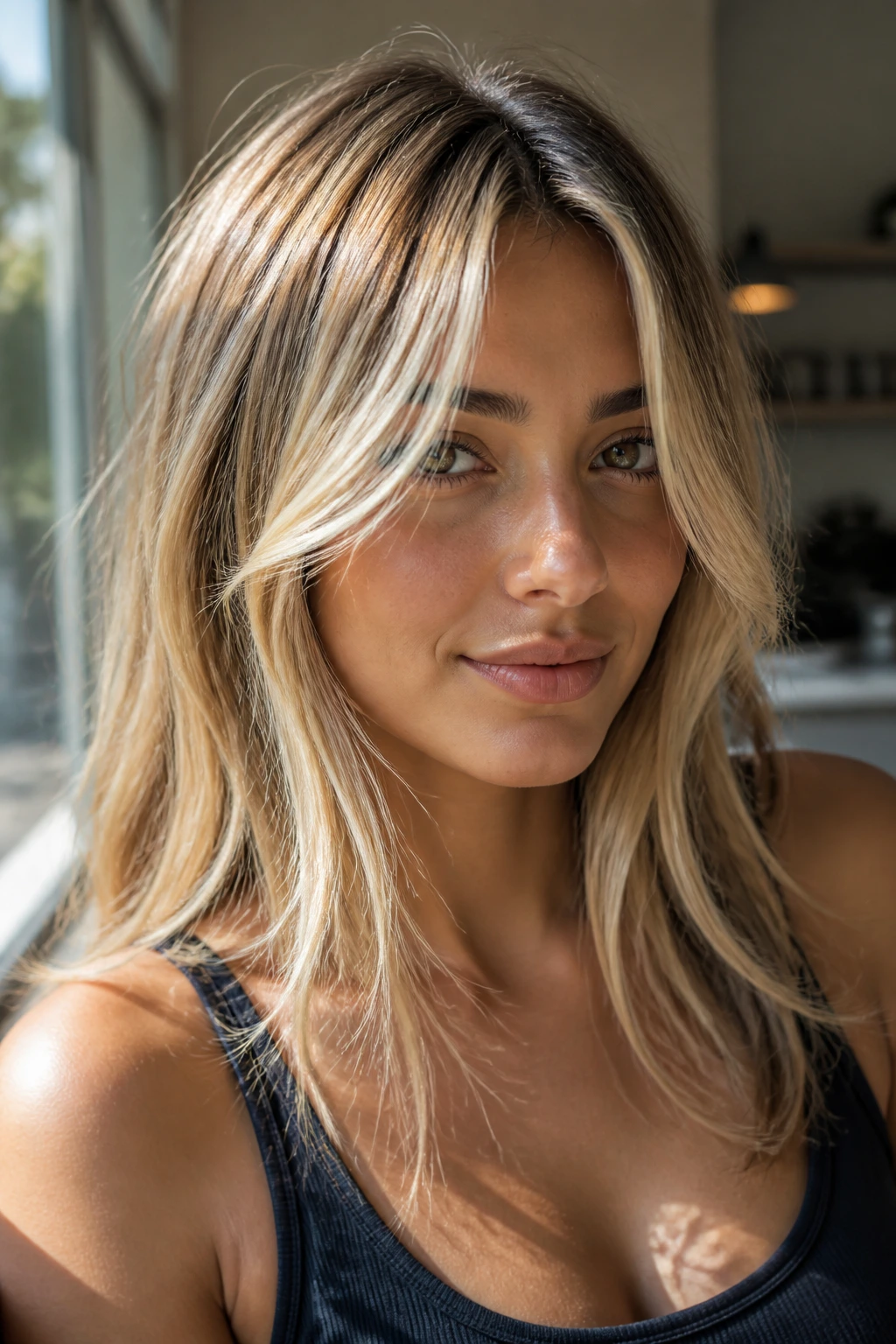
Curtain bangs are almost unfair on olive skin when they’re paired with buttery blonde money pieces. The split fringe opens the face, and the brighter front sections pull the eyes upward. You get brightness right where it counts, without committing the whole head to high maintenance blonde.
This version works especially well if your natural color sits in the dark blonde to light brown range. Ask for creamy front highlights that stay a shade softer than the lightest ends. The bangs should not be frosted. Frosted bangs are a fast way to make the hair look detached from the rest of the cut.
3. Blunt Chin Bob with Creamy Blonde Ends
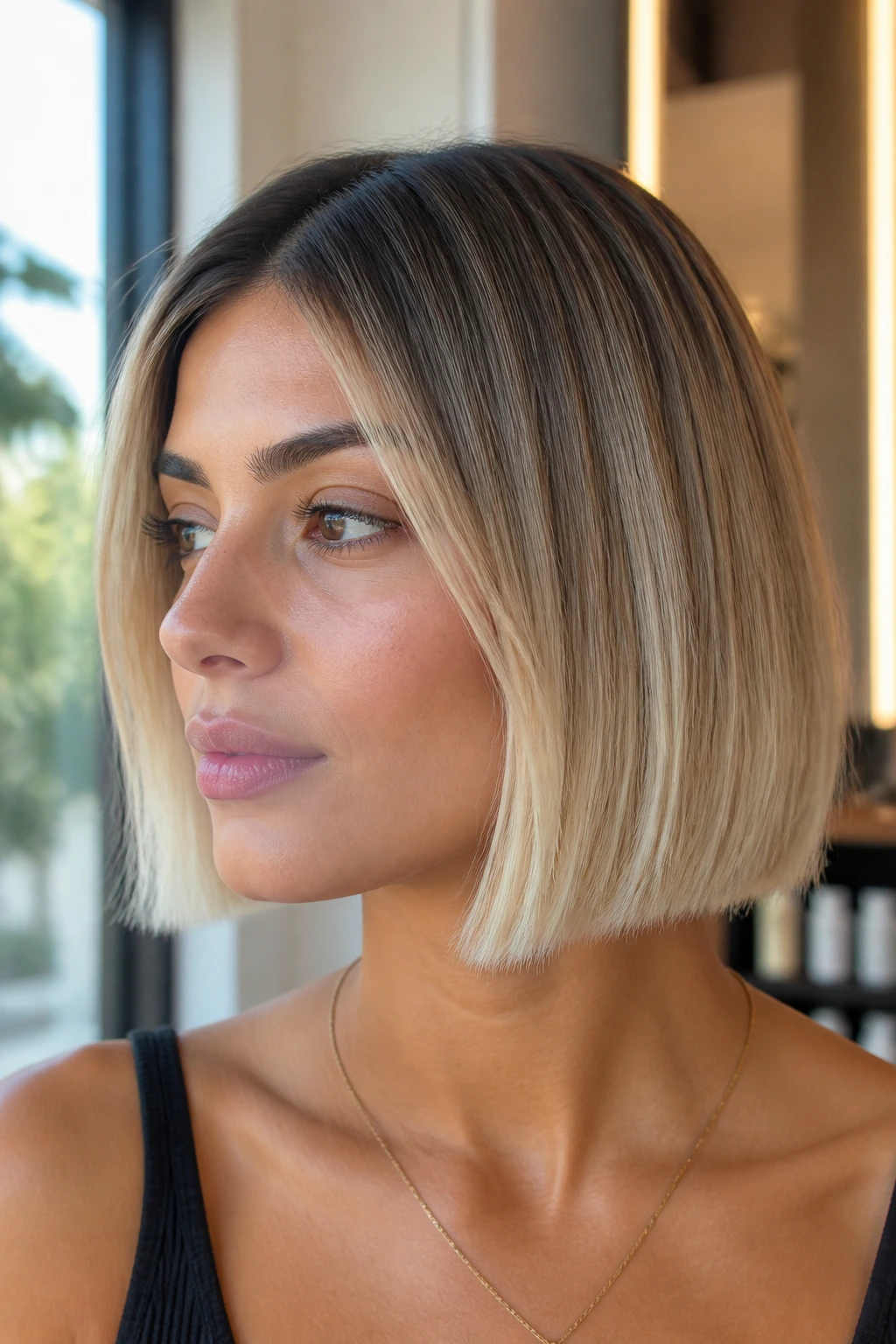
A chin-length bob can look severe in the wrong color. Buttery blonde changes the mood fast. When the ends are softly lightened and the interior keeps a slightly deeper beige, the cut gains shape instead of hardness.
The best version for olive skin keeps the top a touch shadowed and lets the brightness gather around the cheekbone area. That creates a subtle frame, and it’s especially good if your skin leans warm-neutral. If your hair is fine, this bob is a gift because the clean line makes the color look denser, not thinner.
4. Long Beach Waves with Honey-Beige Dimension
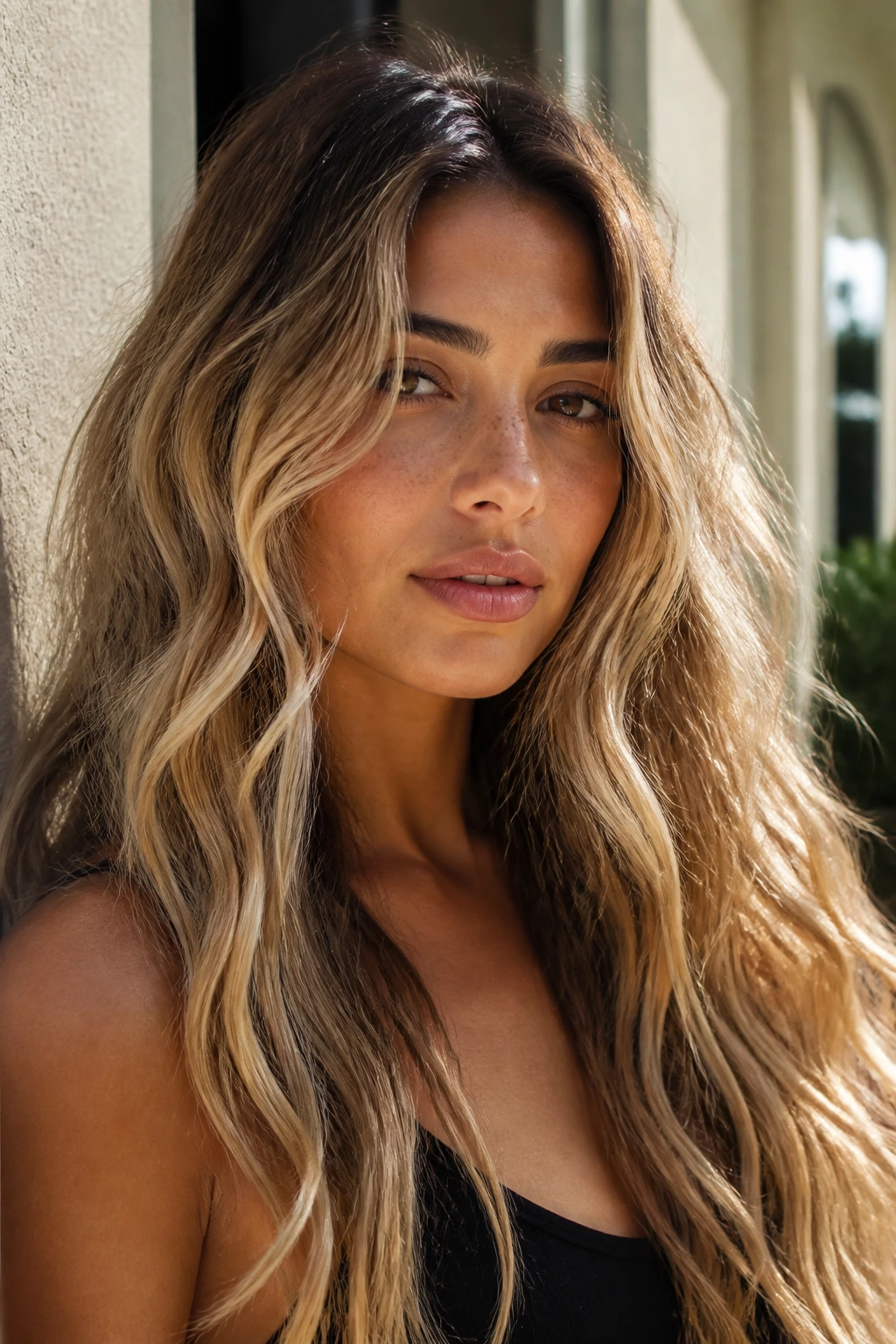
Loose waves love buttery blonde, but not every wave should be the same shade. Long hair can swallow color if you don’t vary the placement. Honey-beige dimension—lighter around the top layers, deeper through the underside—keeps the length from going flat.
What makes it work
The movement matters as much as the tone. A long wave lets the blonde flash and retreat as you turn your head, which gives olive skin a soft glow rather than a harsh hit of light.
This is the kind of style that looks expensive when the curl pattern is relaxed, not barrel-tight. Let the waves bend around the mid-lengths and stay smoother at the ends. That little detail keeps the blonde from reading brassy.
5. Butterfly Layers with Bright Face Frame
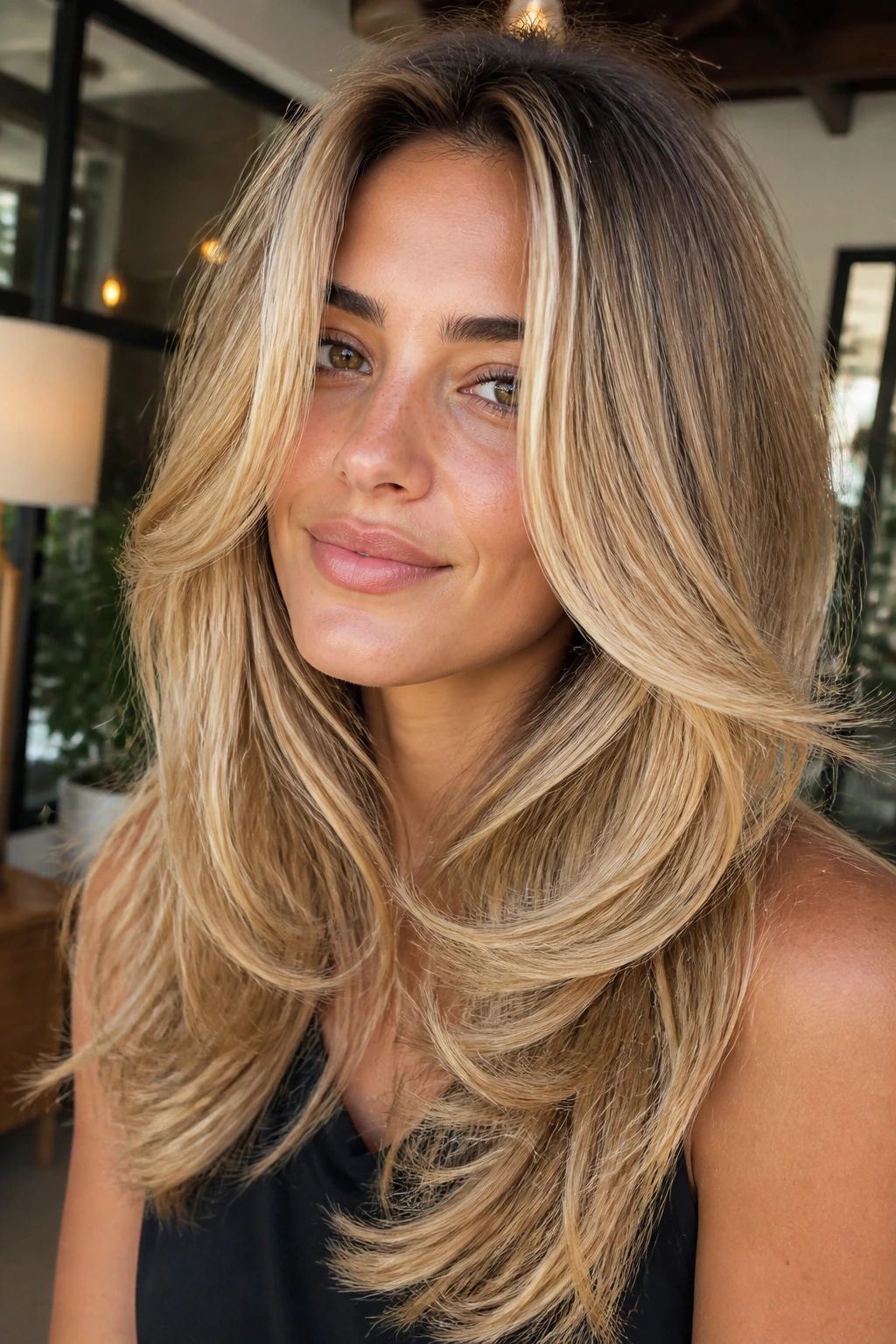
Butterfly layers are made for people who want movement without losing length. Add bright buttery blonde around the front pieces, and the cut starts to look almost lit from the inside. Olive skin handles that brightness well because the layers keep the light from sitting in one flat sheet.
A good colorist will leave the crown a bit deeper and spend the brightest color near the eyes and cheekbones. That makes the face frame feel intentional. Too much lift everywhere and the whole thing starts to look airy in the wrong way.
6. Textured Pixie with Golden Crown Light
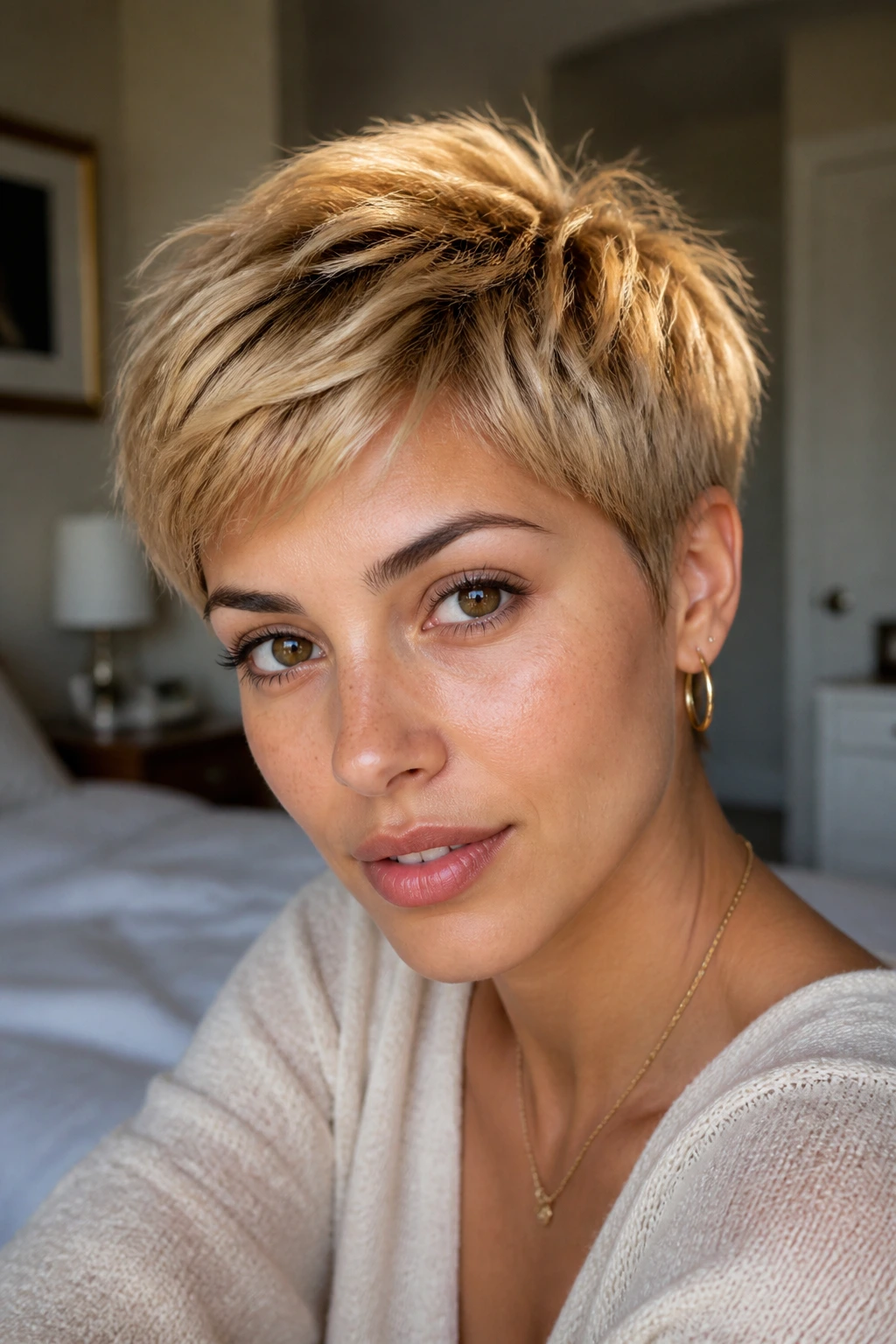
Short hair can wear buttery blonde with more confidence than people expect. A textured pixie with golden crown light puts brightness on the top and front, which gives olive skin a clean contrast. The trick is to keep the sides softer and the top slightly brighter so the cut has shape.
It’s a sharp look, yes, but not sterile. The golden warmth stops the pixie from looking icy or flat, and the texture keeps it from feeling too precious. If your hair tends to be dense, this cut opens everything up. If it’s fine, the lightness makes the shape feel fuller.
7. French Bob with Soft Side Part
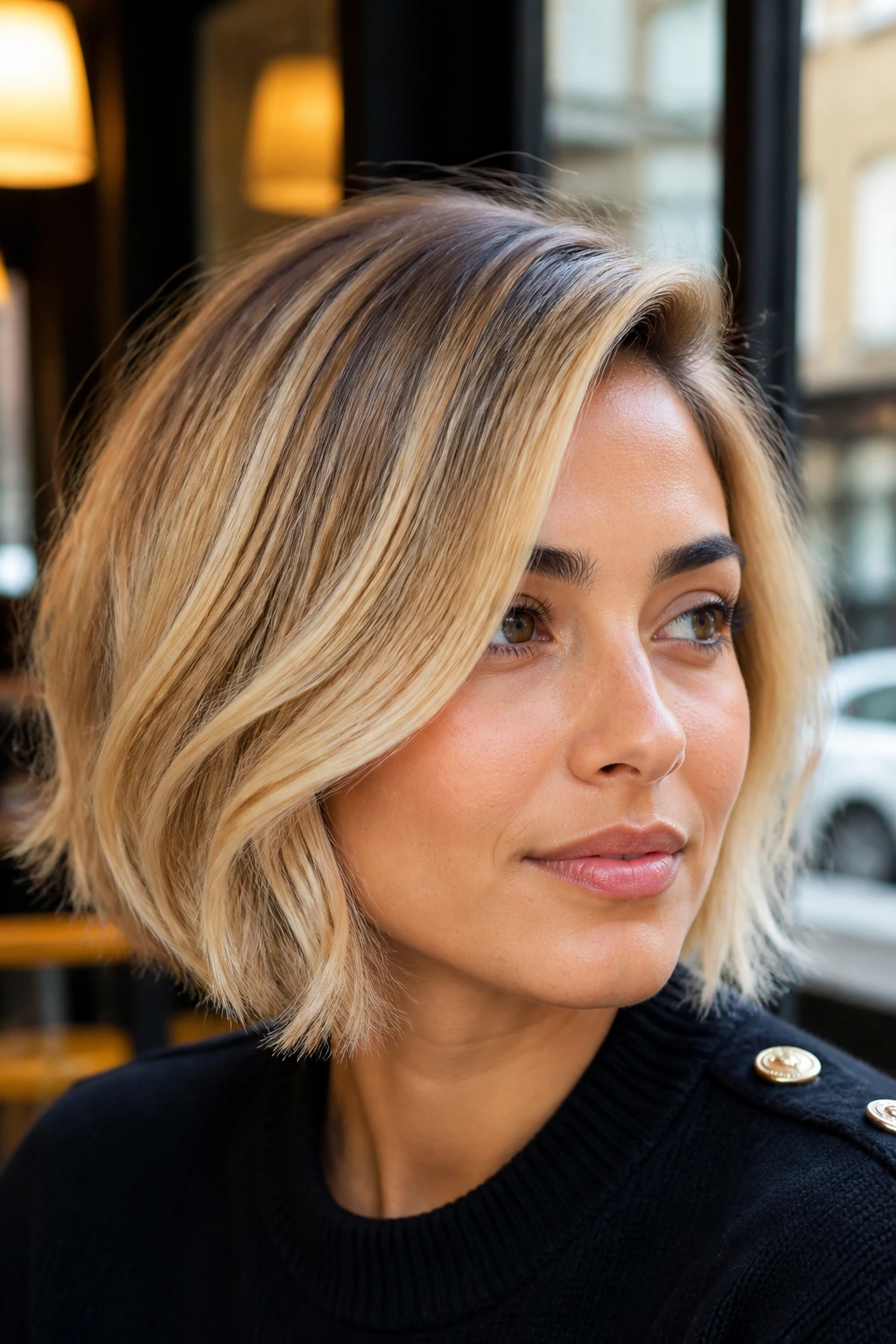
A French bob carries buttery blonde like it was built for it. The side part keeps the cut from feeling too symmetrical, and the creamier tone makes the jawline look softer on olive skin. You get a chic result without the color doing all the talking.
Keep the blonde slightly deeper near the roots and brighter at the curve of the bob. That tiny shift matters. It keeps the style from turning into one block of color, which is where a lot of blond bobs go wrong.
8. Feathered Midlength Cut with Sunlit Ribbons
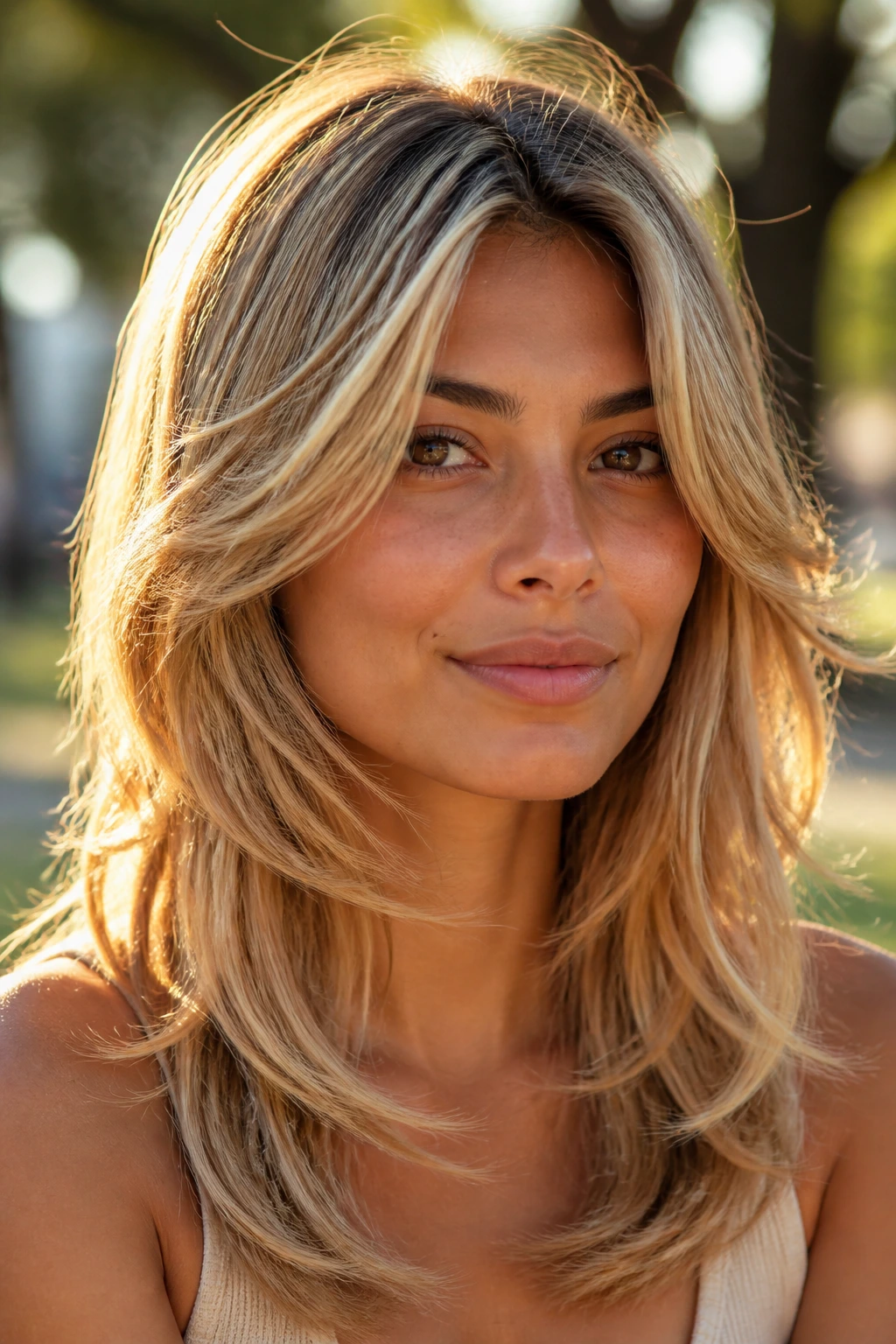
Feathered layers are underrated. They take buttery blonde and break it into little flashes that move through the hair instead of sitting on top of it. On olive skin, that kind of placement can be better than a very bright solid blonde because it gives the face warmth without flooding it.
This cut likes a blowout brush or a big round brush, nothing too tight. The ends should flick softly away from the face, not stick straight out. That little motion lets the highlights catch the light in a way that feels relaxed, not staged.
9. Shaggy Wolf Cut with Buttery Lift
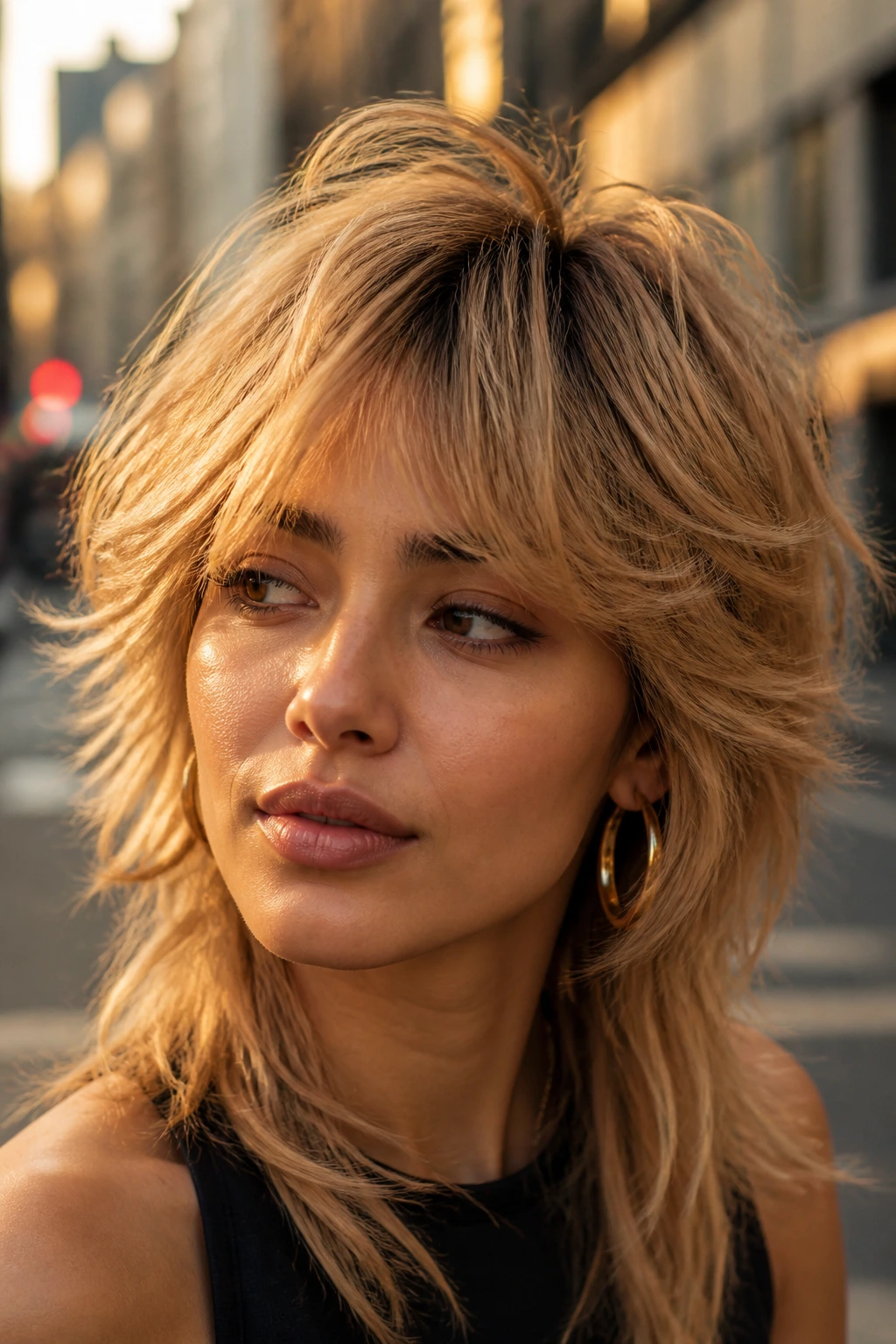
A shaggy wolf cut is a little messier, a little sharper, and much better than people give it credit for when the blonde tone is right. Butter-yellow blonde would ruin it. Beige-gold with soft dimension gives it attitude without making it look fried.
The layers around the crown keep the shape from drooping, while brighter pieces around the cheekbones keep olive skin from looking too shadowed. If your hair is wavy, this is one of the easiest ways to make the texture do something useful instead of just frizzing on its own.
10. Glossy Old-Hollywood Waves for Olive Skin
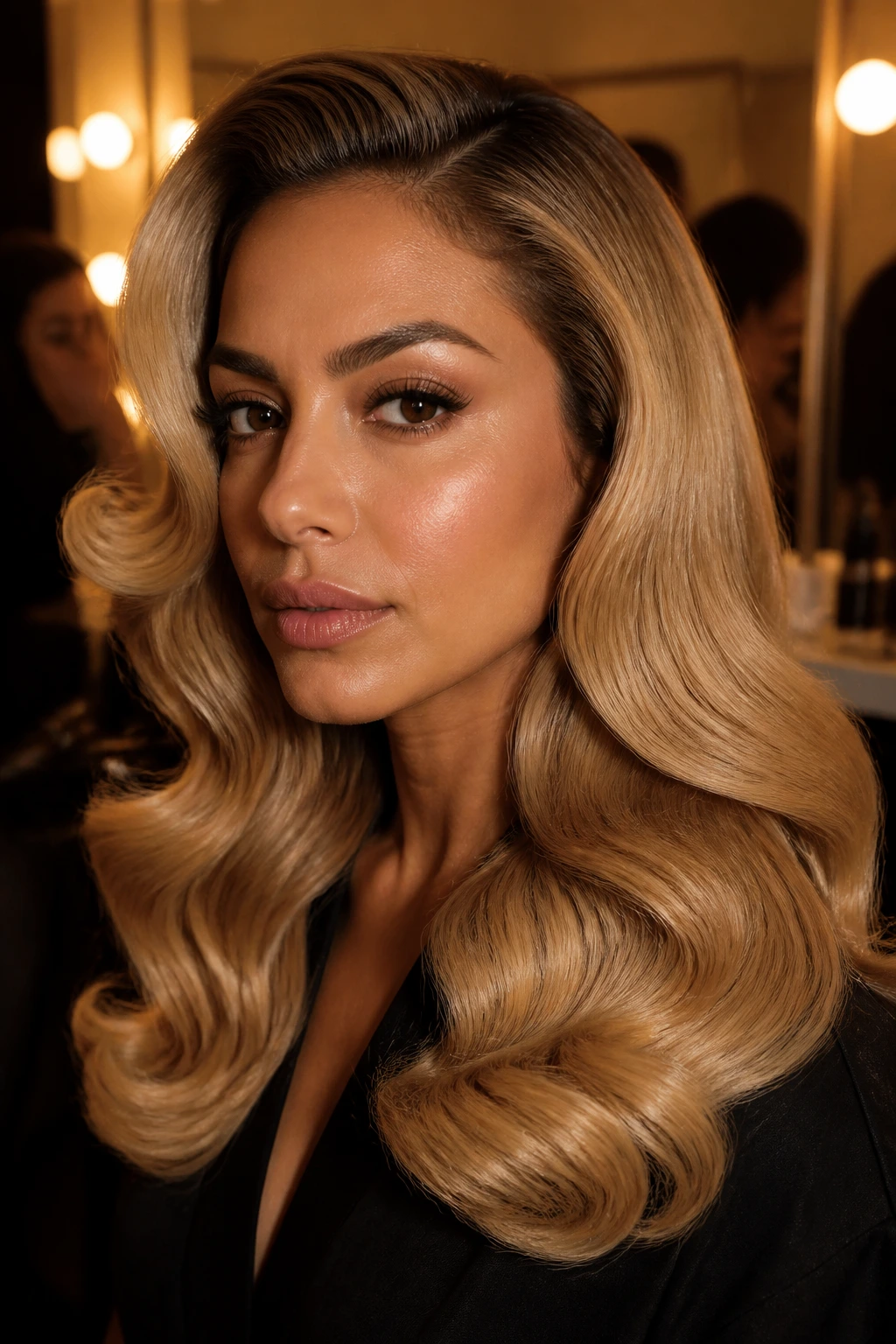
Old-Hollywood waves need a color with enough richness to hold the style. Buttery blonde does that beautifully because it has shine built in. On olive skin, the polished wave pattern and the warm blonde tone work together; neither one tries too hard.
Ask for a beige-gold gloss if your hair pulls yellow, and keep the root area slightly deeper. The shine should look creamy, not metallic. When the wave is brushed into that soft S-shape, the whole style reads elegant without becoming stiff.
11. Sleek Straight Cut with Candlelight Ends
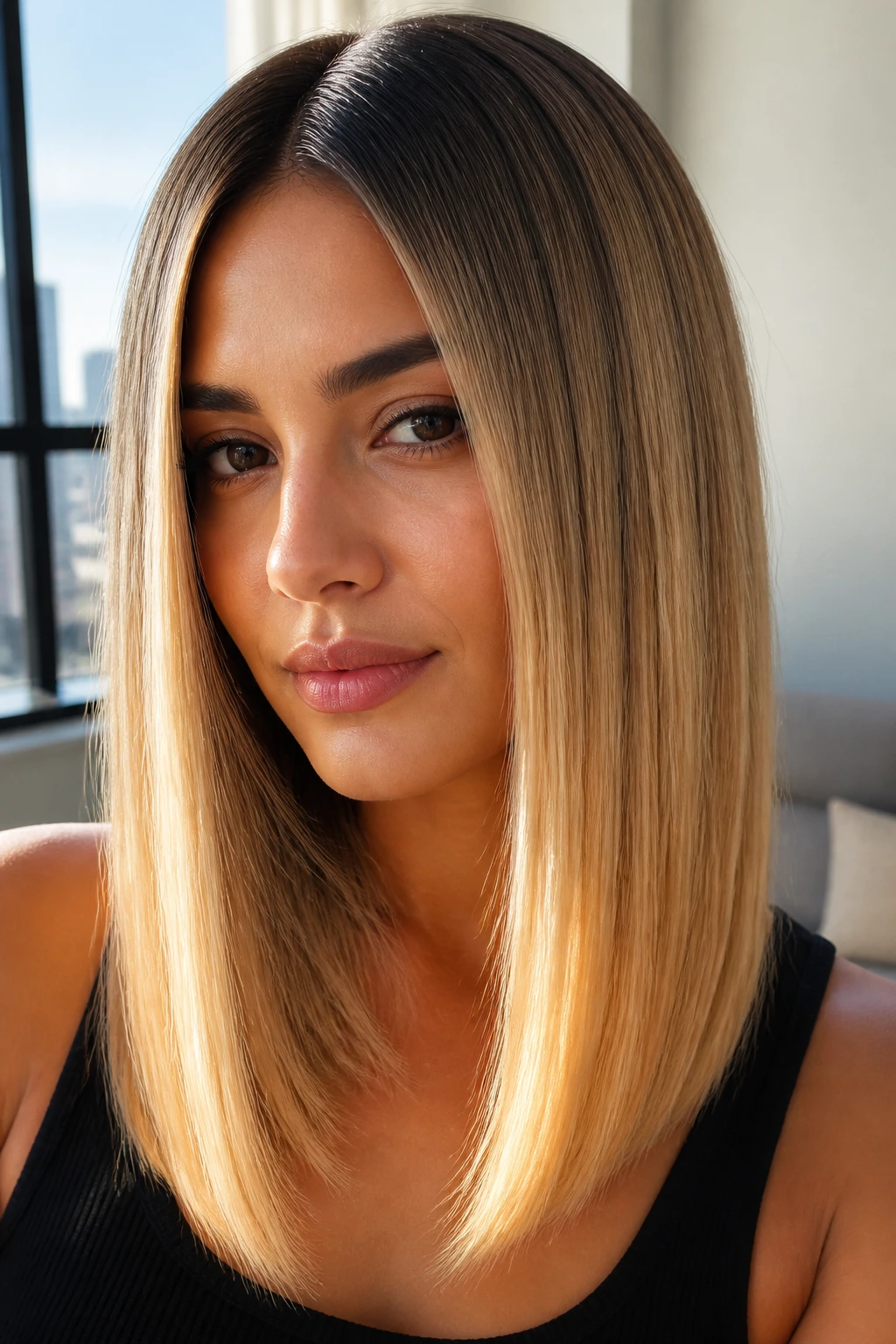
A sleek straight cut can be a little unforgiving, which is exactly why the color placement matters. Bright buttery blonde at the ends turns the haircut into a frame, while a subtle shadow at the roots keeps it wearable on olive skin. That contrast gives the style depth even when the hair is bone straight.
This is a good choice if you like your hair to look neat without looking overworked. Use a flat iron only when the hair is fully dry, and finish with a light serum on the mid-lengths. The ends should glow, not look dipped.
12. Voluminous Curls with Warm Brightness
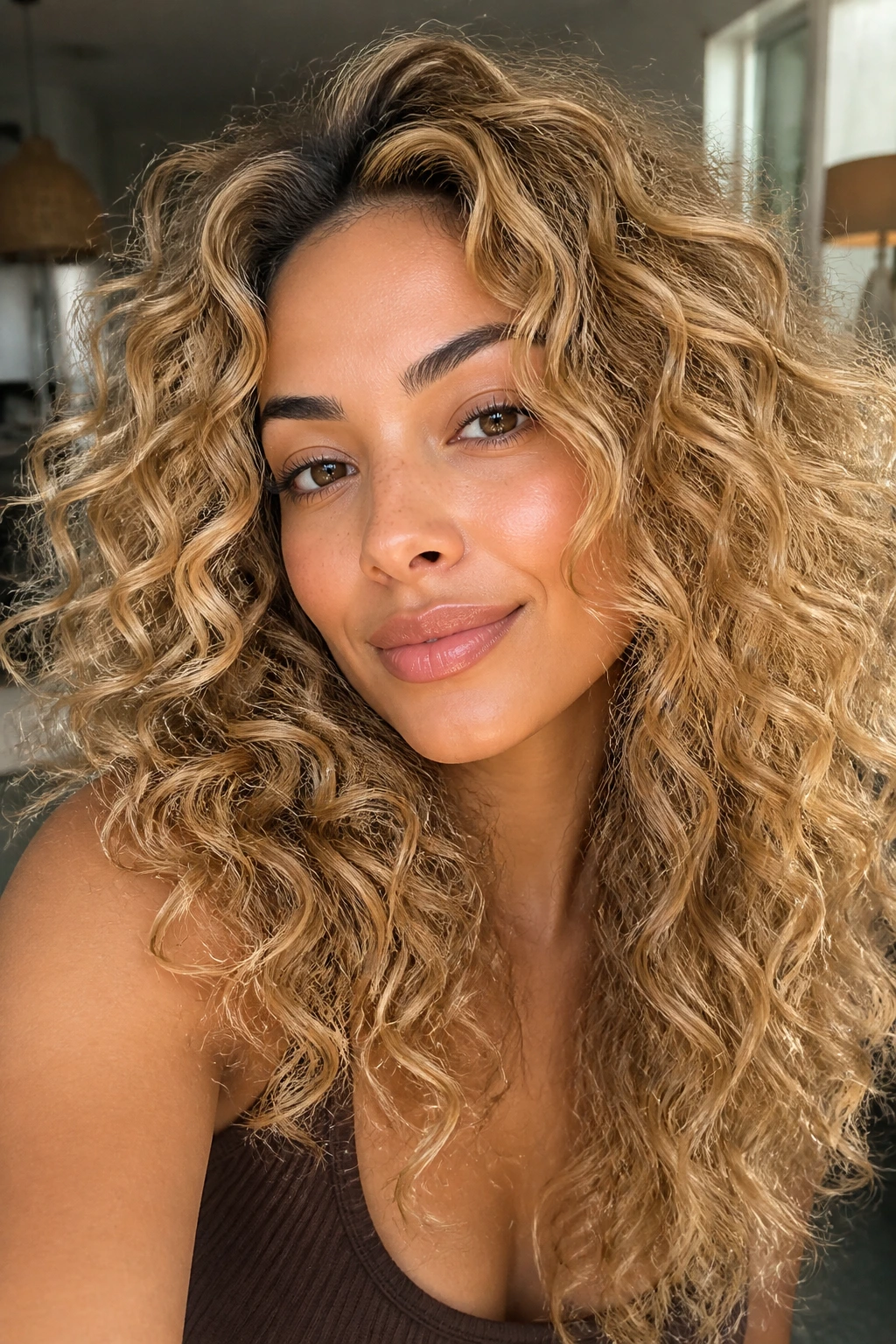
Big curls and buttery blonde are a strong pair because the curl pattern breaks up the color naturally. On olive skin, that means the blonde never sits too harshly against the face. Instead, it moves in soft warm pieces that feel lively.
The key is keeping some depth between the brightest curls. If every curl is light, you lose the contrast that makes olive undertones look fresh. Leave a few warmer strands underneath and around the back. It gives the whole style a richer finish.
13. Bixie Cut with Soft Root Shadow
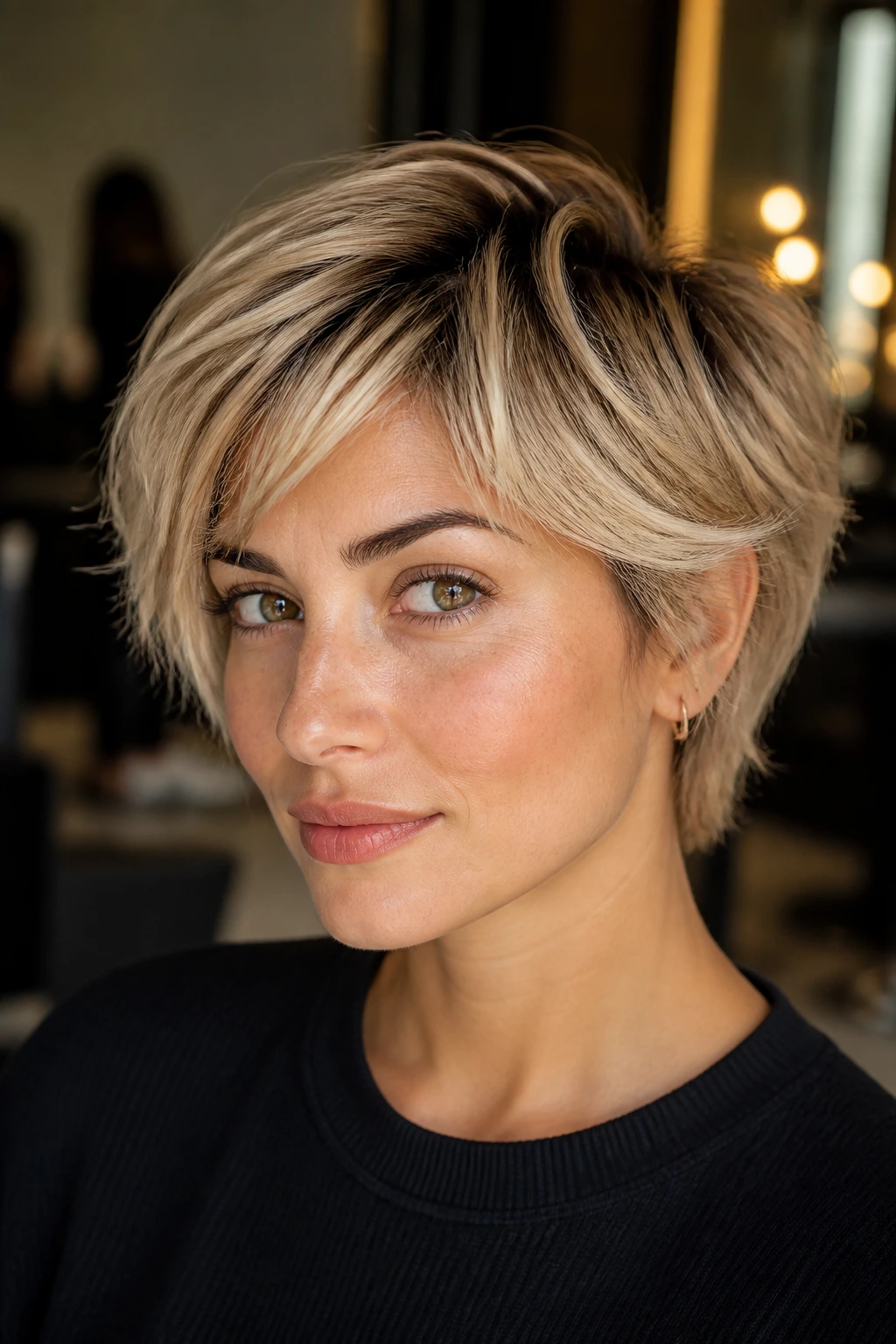
The bixie sits between a bob and a pixie, which is a fancy way of saying it can go wrong fast if the color is too flat. A soft root shadow solves that. It gives buttery blonde a place to start, then lets the lighter pieces brighten the edges and fringe.
This style works well on olive skin because it keeps the face awake without needing a lot of length to do the job. The best version has piecey texture at the crown and lighter ends around the temples. That little bit of lift makes the cut feel airy, not helmet-like.
14. Half-Up Twist with Bright Halo Pieces
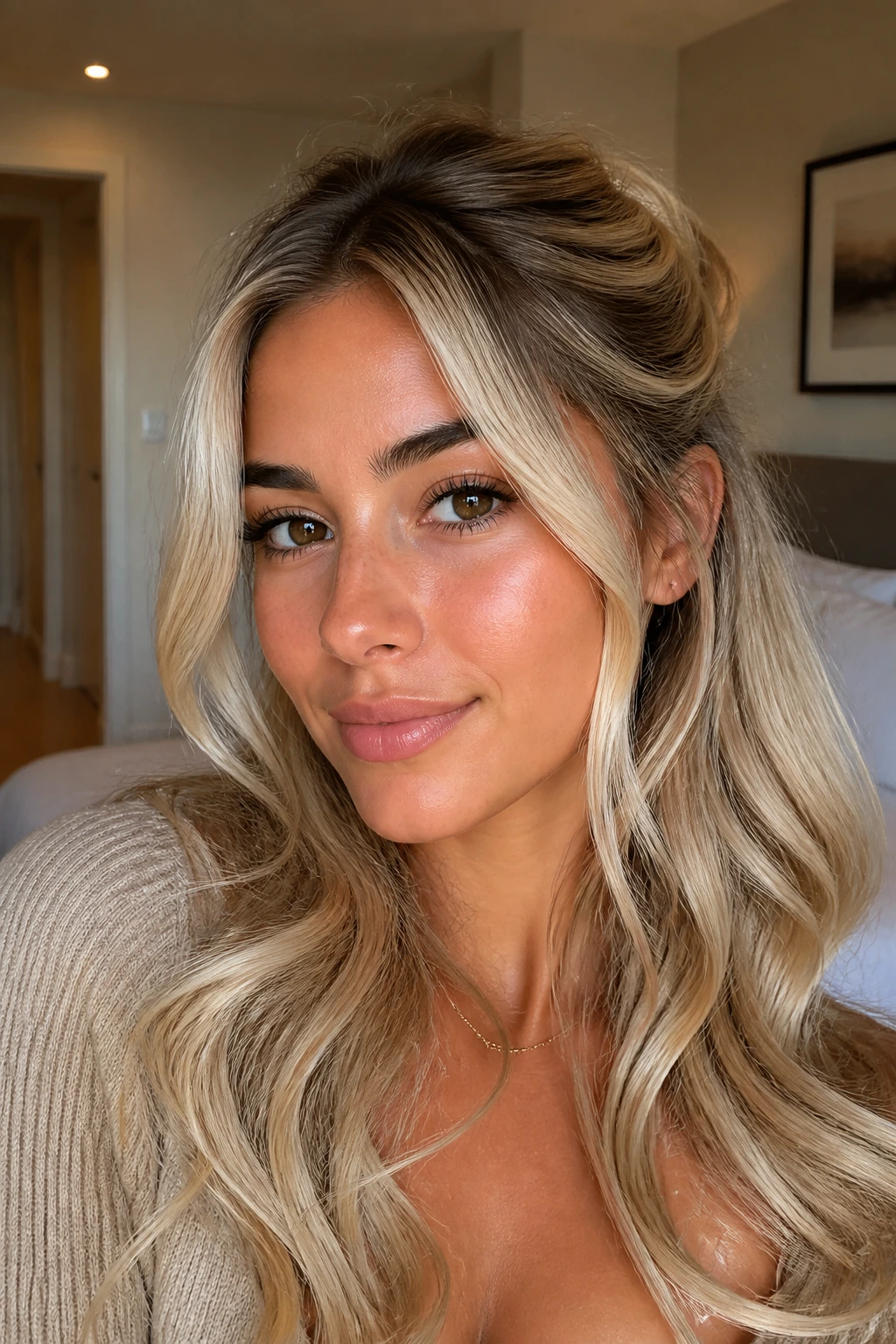
Half-up styles are a sneaky good match for buttery blonde. They let the brightest pieces hang around the face while the top section stays lifted and controlled. On olive skin, that halo effect brings a soft glow without demanding a full updo.
The color placement matters here. Brighten the front and top layers, but keep the underside a little deeper so the style doesn’t look washed out when it’s twisted back. It’s one of those hairstyles that looks good from the front, which is the only angle most people are actually seeing.
15. Deep Side-Part Lob with Lived-In Glow
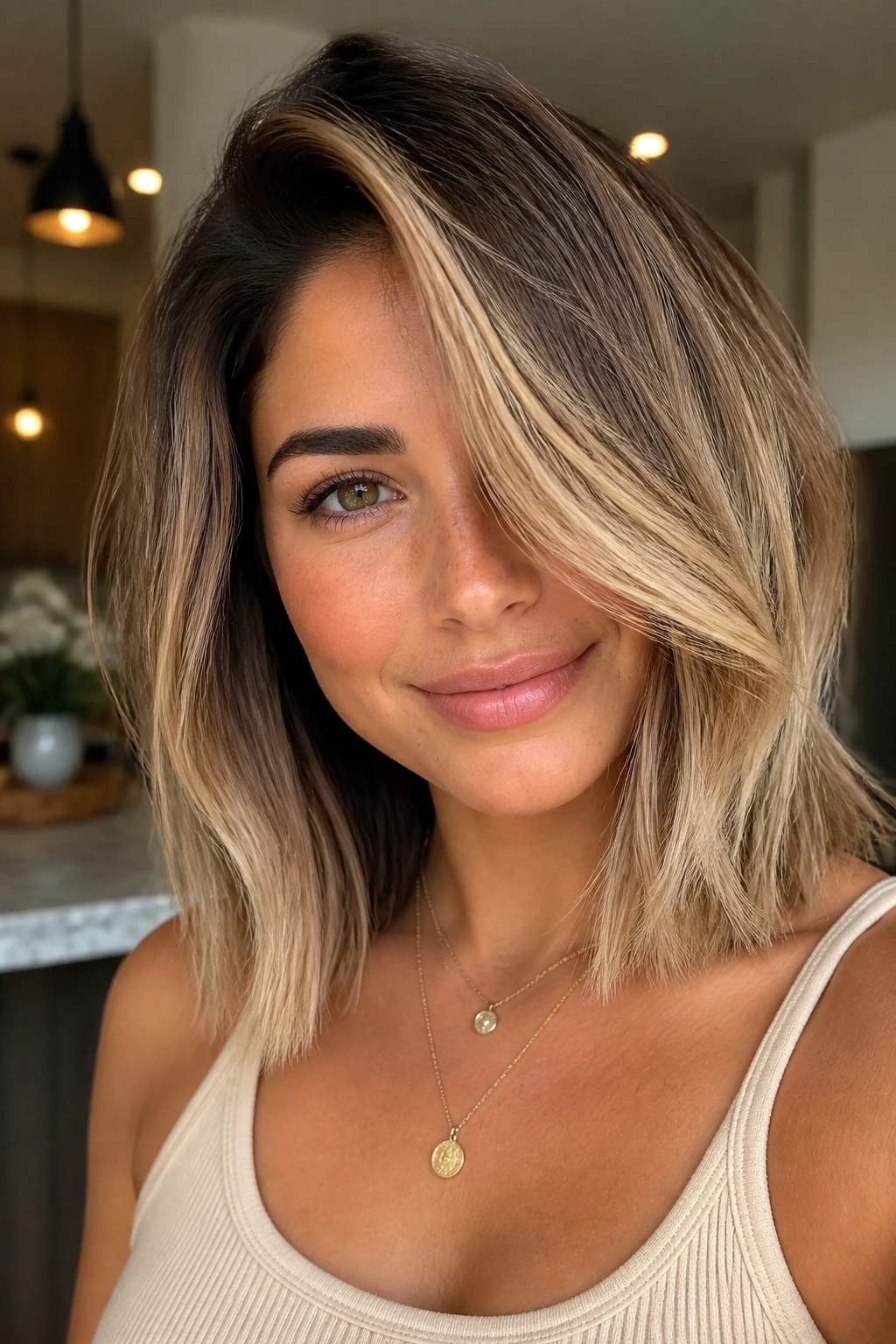
A deep side part can make buttery blonde feel richer in a second. The extra sweep across the forehead gives olive skin a little drama, and the lived-in glow keeps the style from feeling too formal. This is a very good option if you like blonde but not that brittle, freshly-bleached look.
Let the brighter pieces sit just below the part and around the face. The rest can stay a shade softer. That contrast keeps the lob modern, and it also gives you better grow-out because the root line is working with the haircut instead of against it.
16. Razored Midi Cut with Piecey Blonde Texture
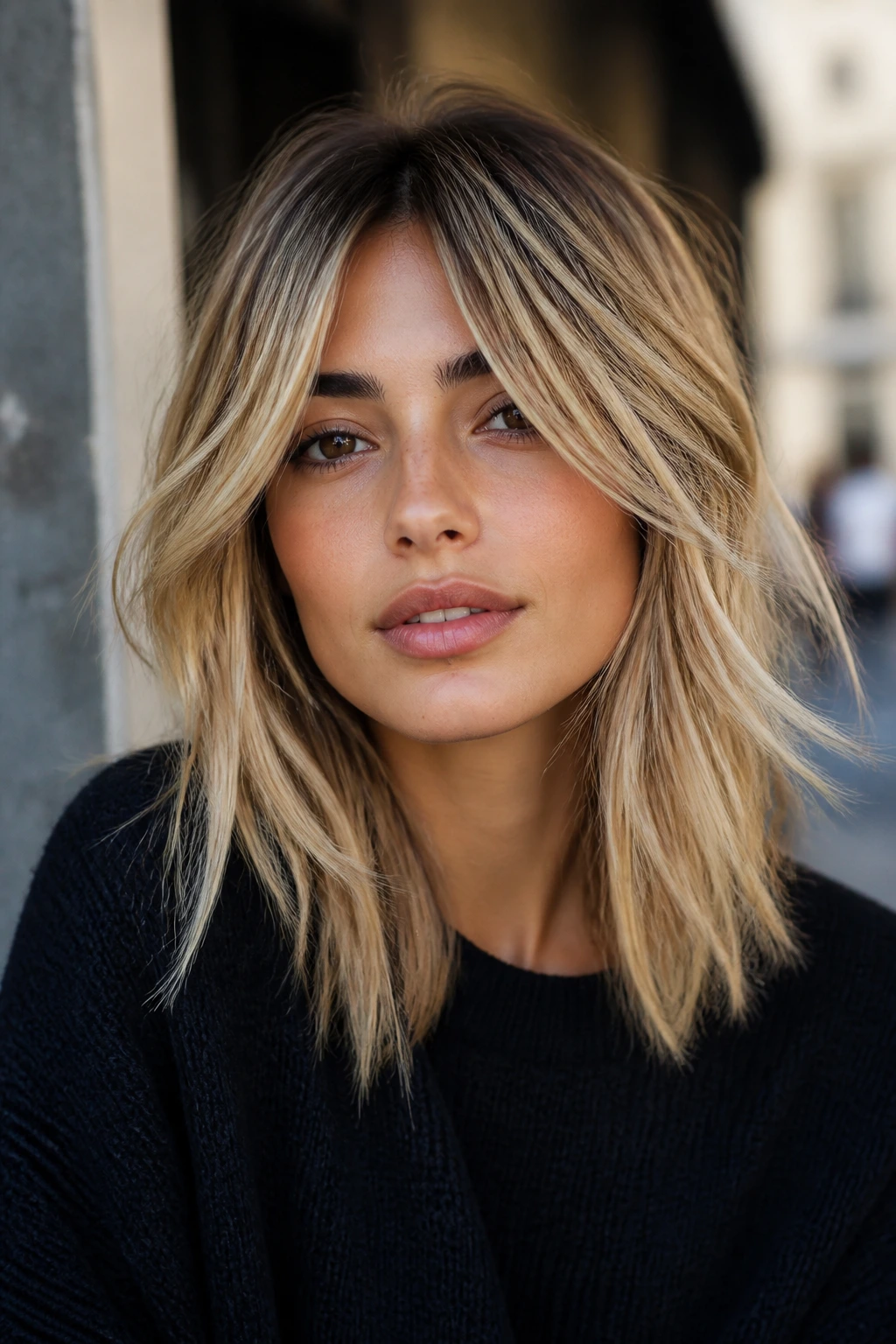
Razor-cut ends give buttery blonde a slightly airy finish that works well on medium-length hair. The cut breaks up the weight, and the blonde appears more textured because the pieces are separated. On olive skin, that separation matters; it keeps the warmth from turning dense or muddy.
Use a matte texture spray or a light wave cream if your hair goes limp. The goal is to make the pieces move, not clump. If you like a cool-girl finish, this is one of the easiest ways to get it without going ash.
17. Braided Crown with Buttery Strands
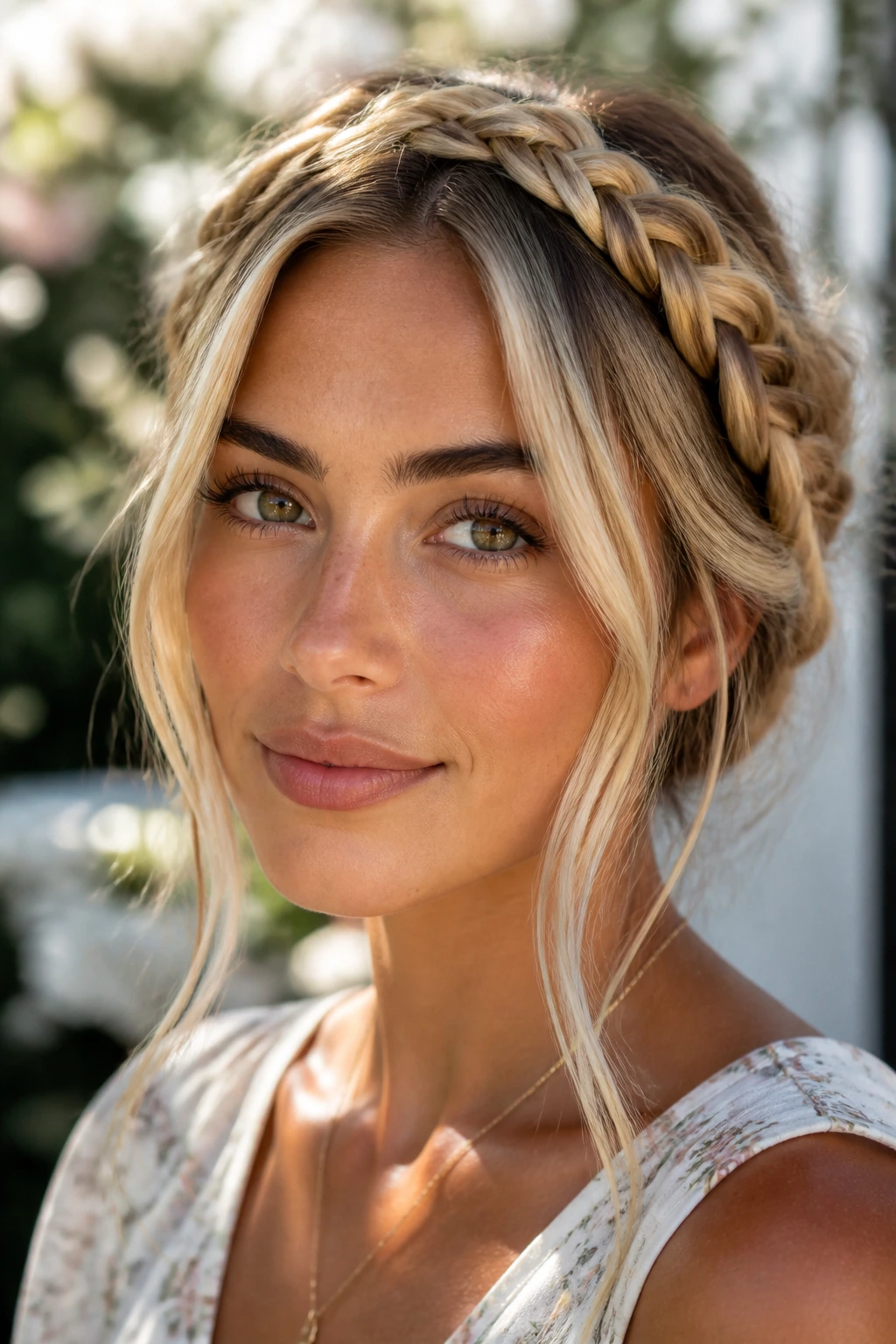
Braids show off color placement better than almost any loose style. A braided crown with buttery blonde strands woven through it gives olive skin a soft, luminous edge. The braid itself does the shaping, while the blonde supplies the glow.
This style is smarter than it looks. If your color is highlighted in ribbons, the weave turns those ribbons into a pattern. Keep the front pieces slightly brighter so the braid doesn’t pull everything backward and away from the face.
18. High Ponytail with Bright Underlayer
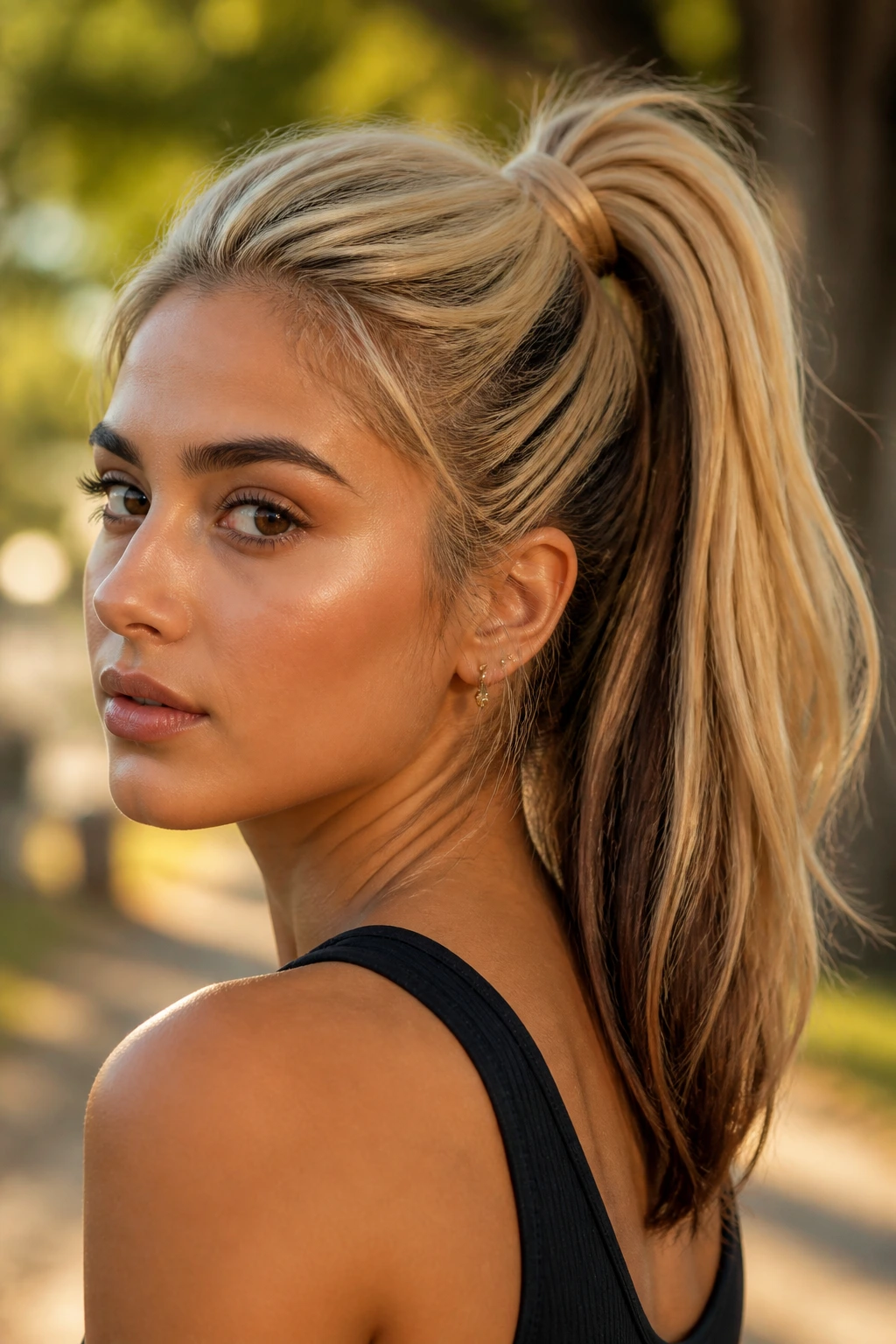
A high ponytail is rarely just a ponytail when the blonde is bright and the underlayer is deeper. That contrast gives the style some movement, even when it’s tight. On olive skin, a warm buttery blonde ponytail can look sporty and polished at the same time.
Pull a few face-framing pieces loose if you want to soften the edges. The underlayer should stay a bit darker so the ponytail doesn’t disappear into a single pale mass. That hidden depth is what keeps the whole thing from looking flat.
19. A-Line Bob with Soft Vanilla Tone
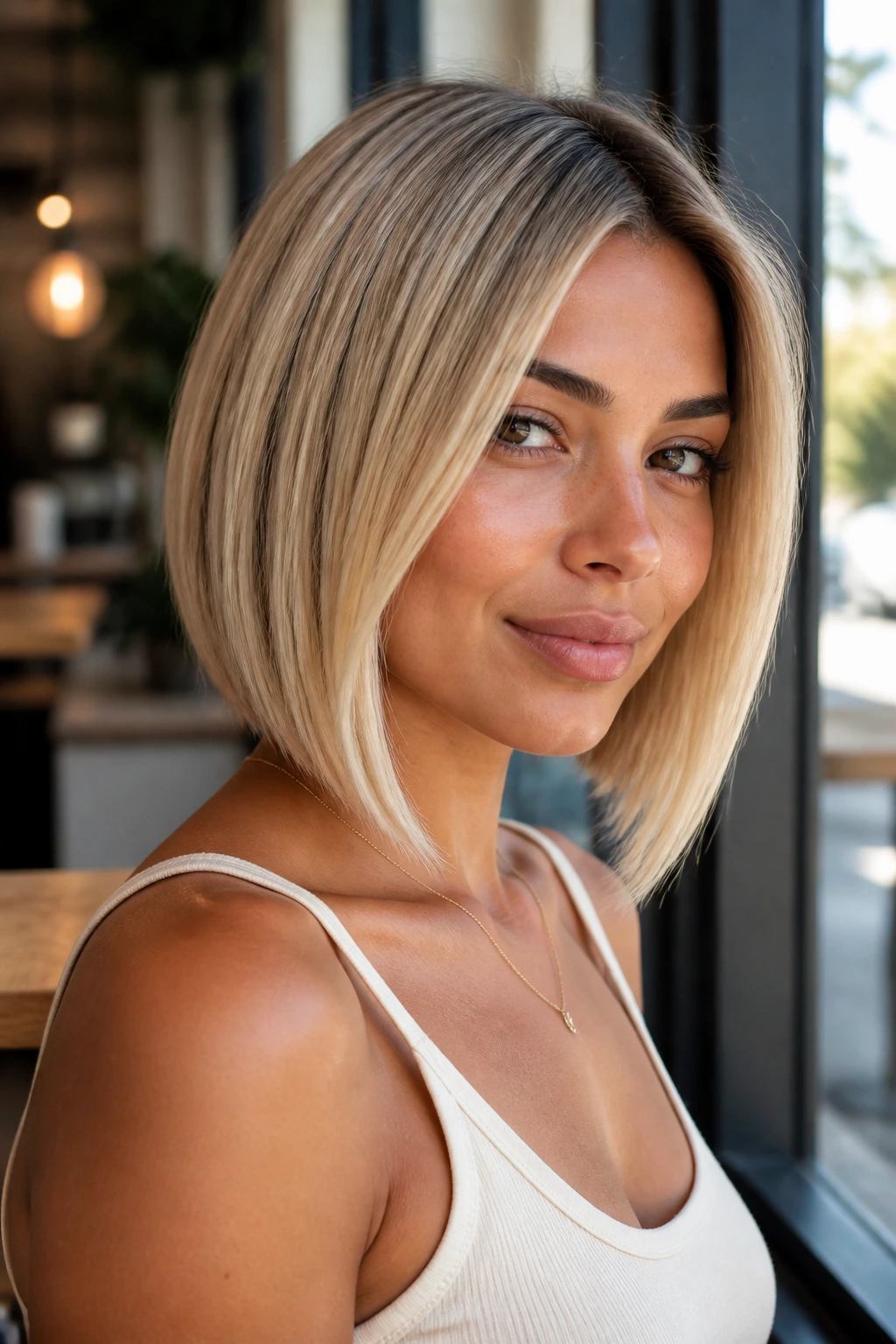
An A-line bob has a built-in angle, which is perfect for buttery blonde because the color can follow the shape of the haircut. Keep the back slightly shorter and the front a touch brighter, and the whole style starts to lean forward in a flattering way on olive skin.
The quiet advantage
This is a cut that doesn’t need a lot of styling to look finished. A round brush under the front sections and a little bend at the ends can be enough. Vanilla-toned blonde works better than overly gold tones here because the line of the bob already gives you enough visual force.
20. Long Layers with Champagne-Butter Balayage for Olive Skin
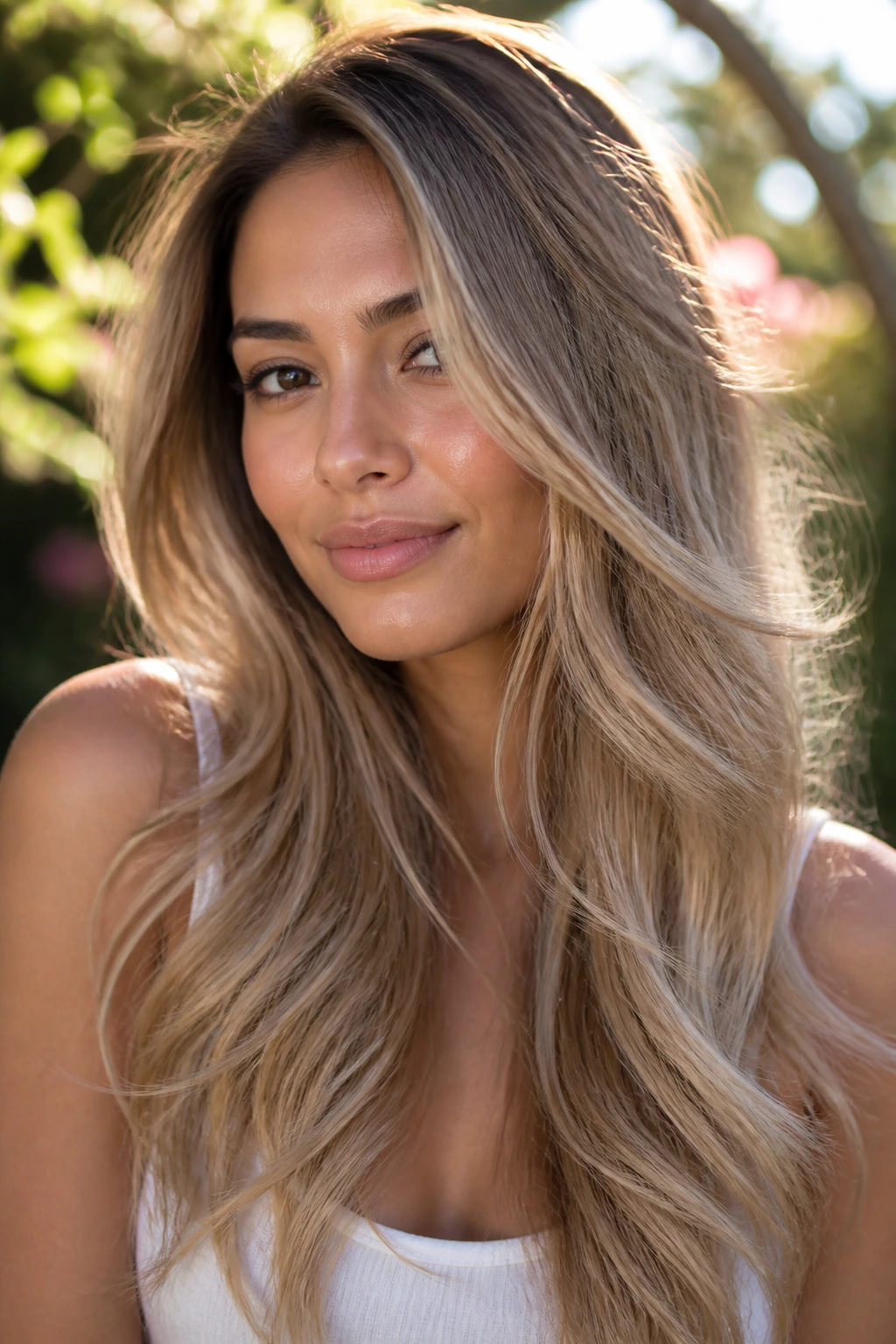
Champagne-butter blonde is one of the nicest directions for olive skin when you want brightness without heaviness. Long layers spread that color around the head so it catches in different places instead of sitting like a cap. The finish should feel airy, not sugary.
Ask for a blend that keeps the underside a bit deeper. That way, when the layers move, you get flashes of light rather than a flat wash. It’s a smarter version of blonde for long hair because it holds shape even when the weather or your styling goes a little sideways.
21. Air-Dried Shoulder Cut with Sun Kissed Ends
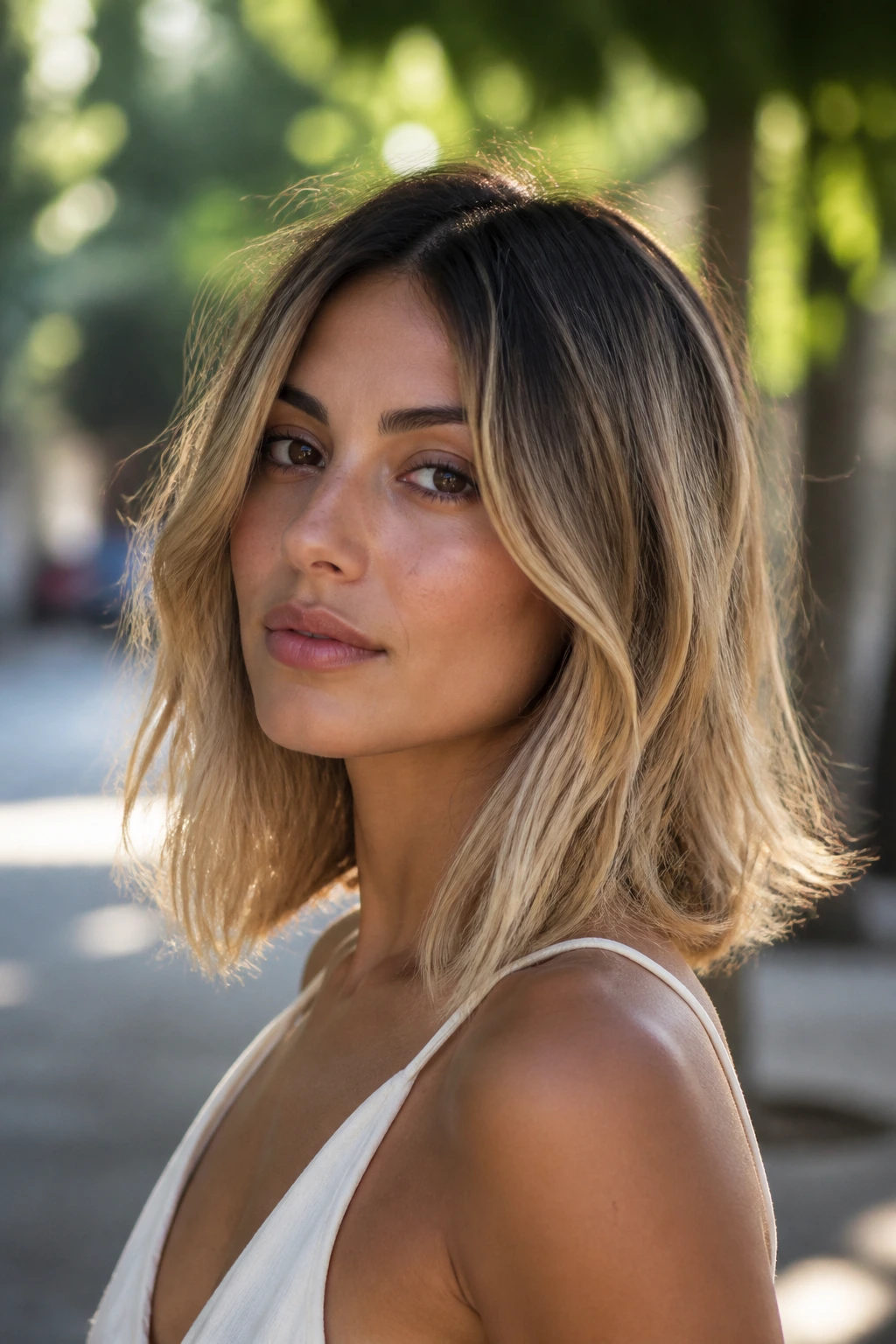
Not every buttery blonde hairstyle needs a blowout. A shoulder-length cut that air-dries well can look better when the color lives mostly at the ends and around the face. On olive skin, that lighter perimeter keeps the complexion bright while the center of the hair stays grounded.
Use a leave-in cream, scrunch the ends, and let the texture do what it wants. If your wave pattern is loose, this style can look especially good because the blonde breaks up in a natural way. It’s calm, but not dull.
22. Slick Bun with Face-Framing Blonde Strands
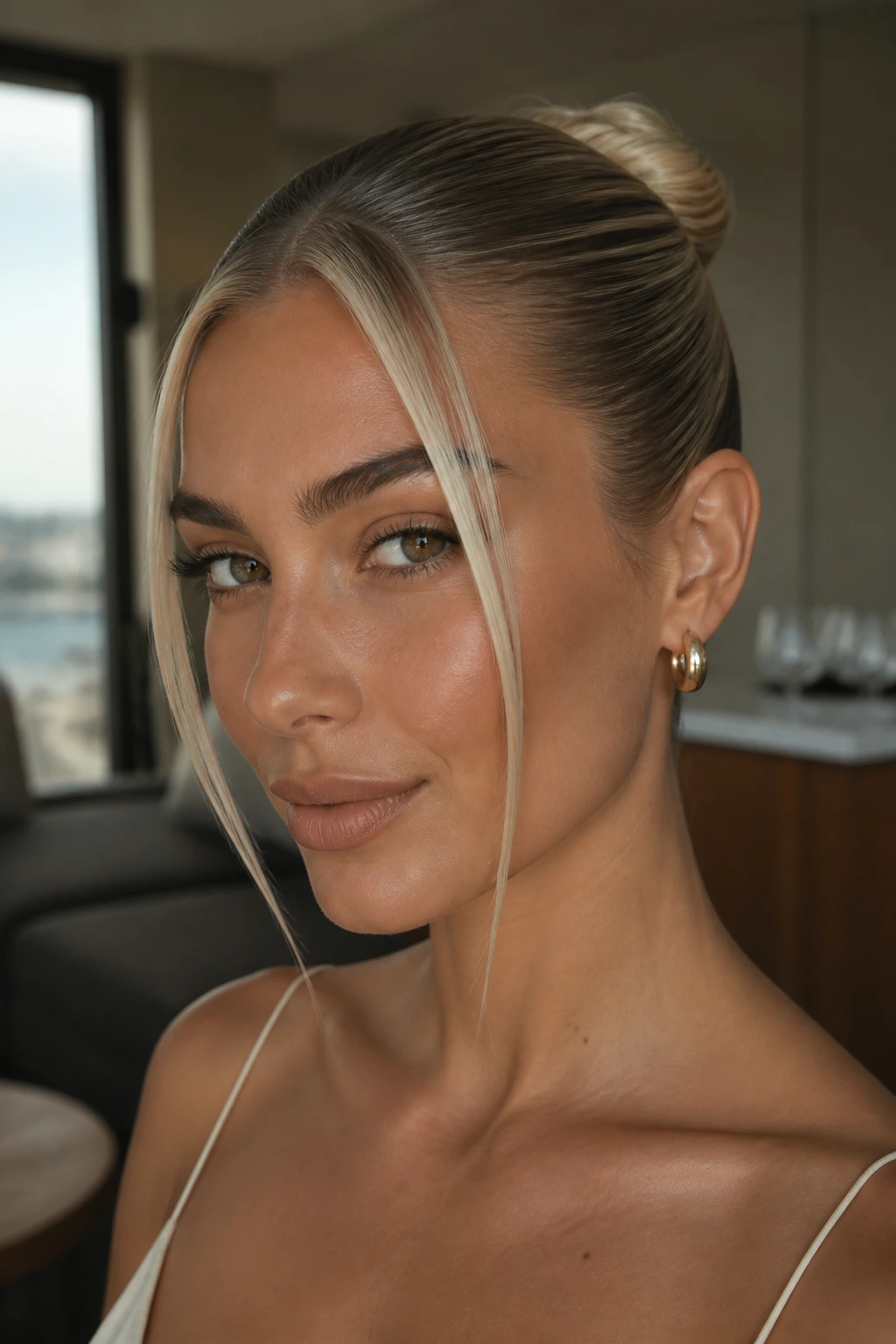
A slick bun is a bit of a cheat code. Pull the hair back, leave two bright buttery strands in front, and olive skin suddenly looks more sculpted. The contrast between the sleek bun and the lighter front pieces does the work that a lot of styling sprays try to fake.
Keep the face-framing sections soft, not chunky. They should skim the cheekbones and stop around the jaw. A glossy finish on the bun makes the blonde pieces stand out even more, and that little bit of shine keeps the whole look from feeling too severe.
23. Curly Shag with Golden Halo Highlights
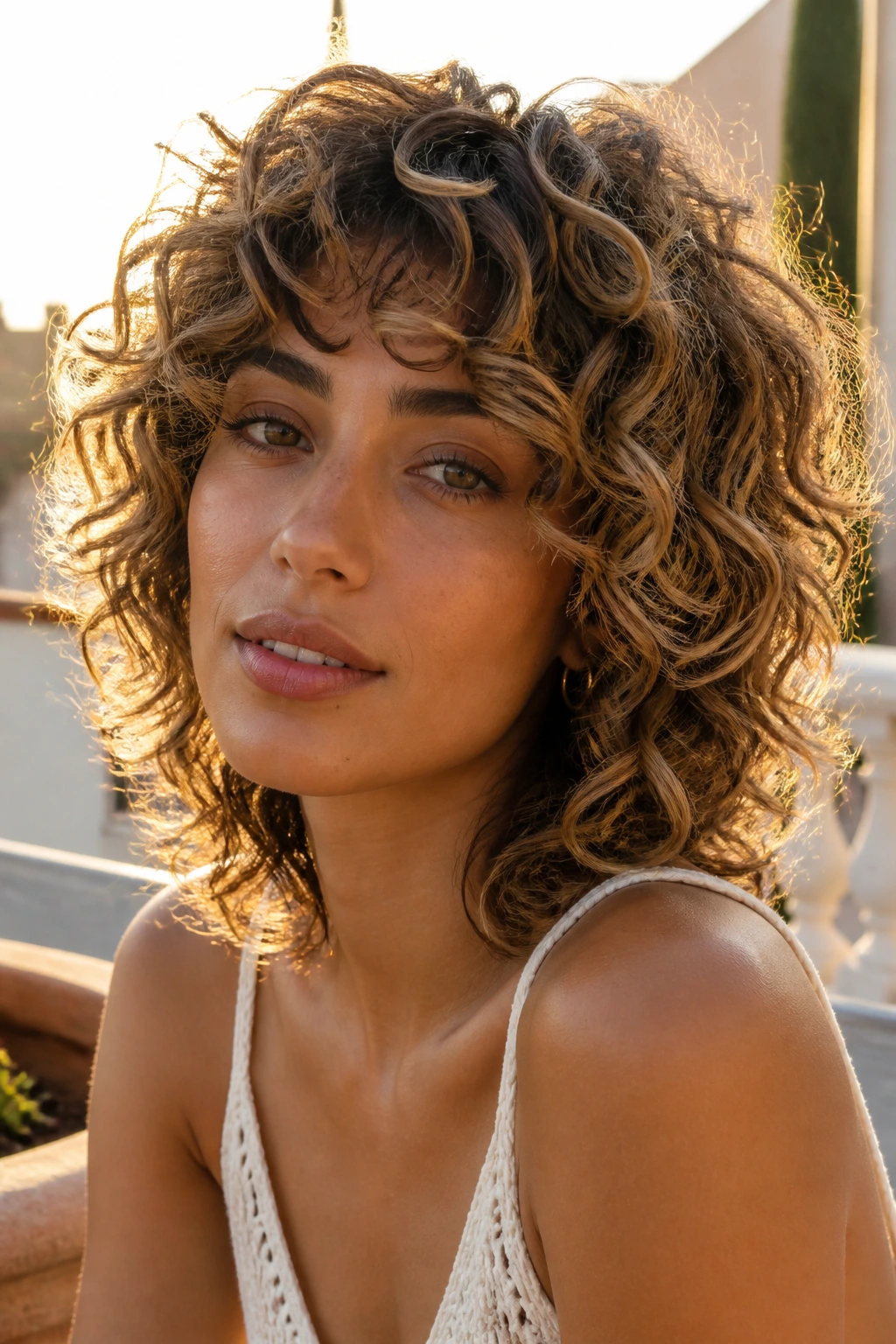
Curly hair loves dimension, and buttery blonde can make that dimension visible from across a room. A curly shag with golden halo highlights keeps the lighter pieces around the top layers and the outer curve of the curls, which is where olive skin gets the most lift.
The biggest mistake with curly blonde is painting everything the same. Don’t. Keep some warmer depth underneath, then let the bright pieces appear where the curls naturally spring. That gives the cut shape and keeps the blonde from puffing out in the wrong places.
24. Modern Mullet with Beige Blonde Texture
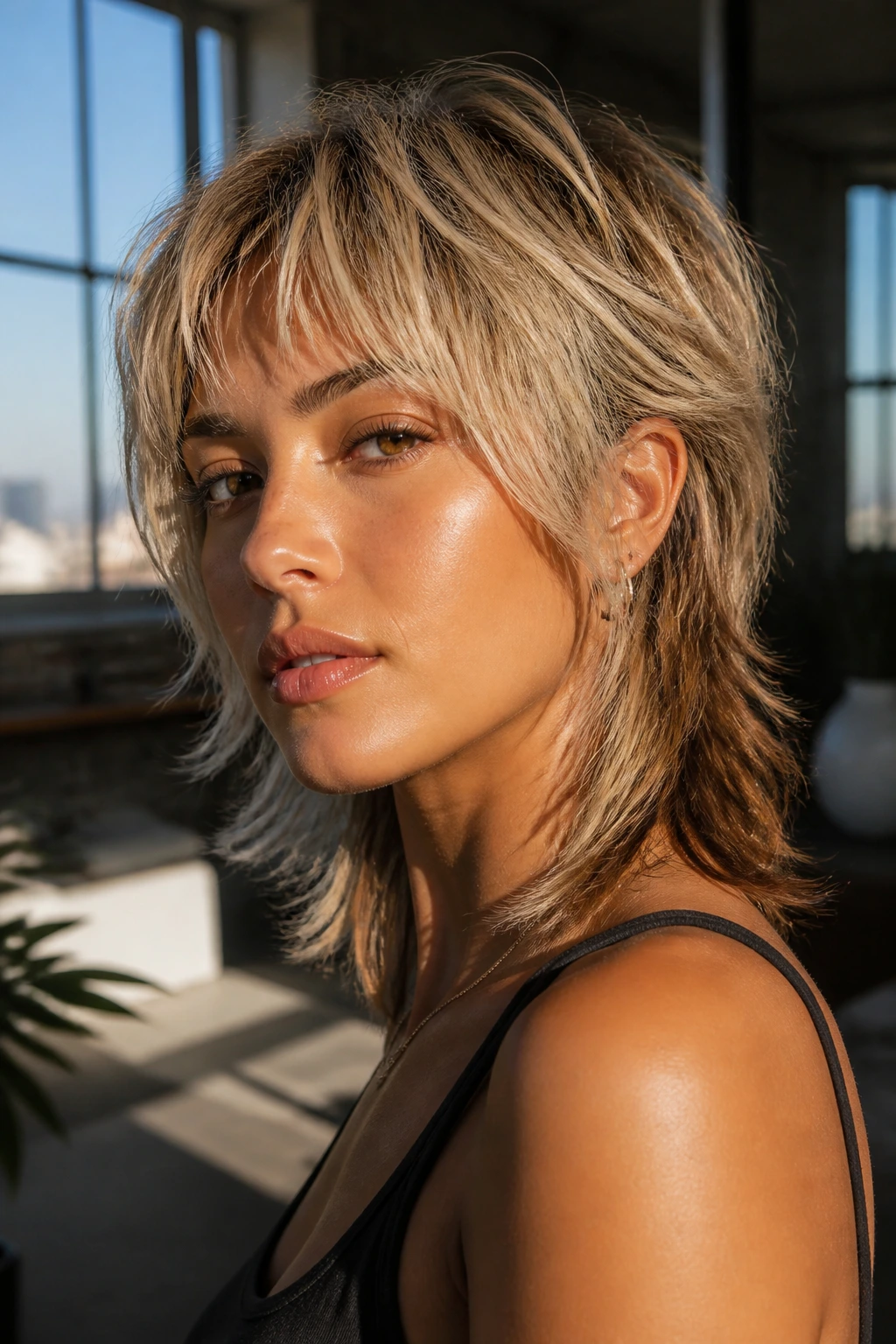
The modern mullet has enough edge that the color needs to stay refined. Beige blonde texture does that job well. It softens the sharpness of the cut and keeps olive skin from looking washed out against the shorter front.
This style is all about intention. The front should be piecey, the top a little lighter, and the back slightly softer and darker so the silhouette stays readable. If you want a style with personality but not too much preciousness, this one delivers.
25. Low Chignon with Melted Blonde Ribbons
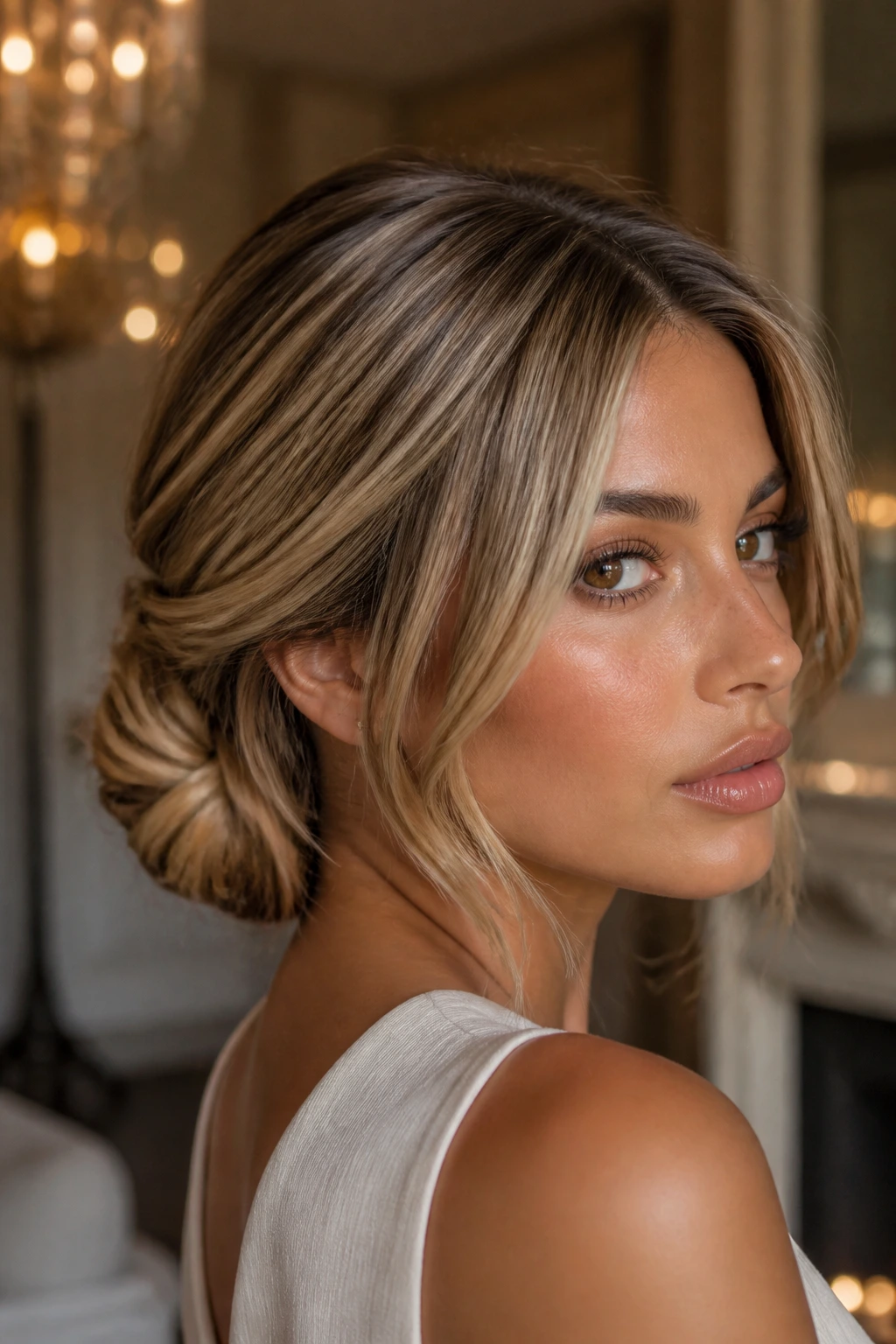
A low chignon can look plain if the color isn’t doing anything. Melted buttery ribbons change that. They make the twist look richer and more layered, especially when the blonde shifts from beige at the root to soft gold through the ends.
This is a good choice for olive skin when you want a formal style that still feels warm. Keep a few lighter pieces around the face if you can, even if they’re tiny. Those little details stop the style from reading too stiff.
26. Side-Swept Crop with Cream Soda Light
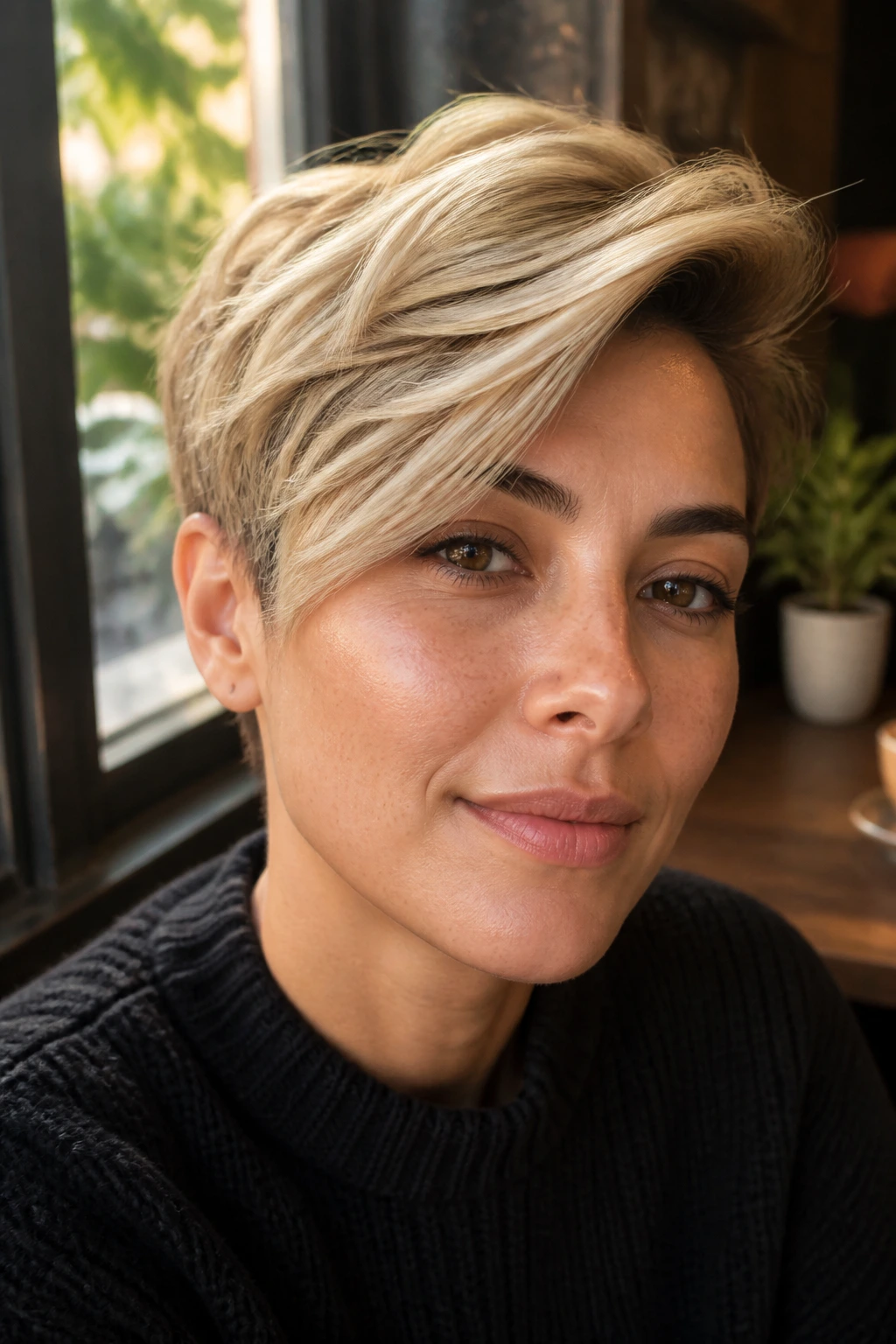
A short crop with a side sweep gives buttery blonde a place to shine without overpowering the face. Cream soda tones—soft beige with a hint of warmth—are especially good on olive skin because they brighten without going orange.
The side sweep should fall across the forehead in a soft arc. That line softens the cut and keeps the blonde from looking too severe. If your hair is fine, this look can make it appear fuller; if it’s thick, the shape helps keep everything from puffing up.
27. Feathered Pixie with Dimensional Highlighting
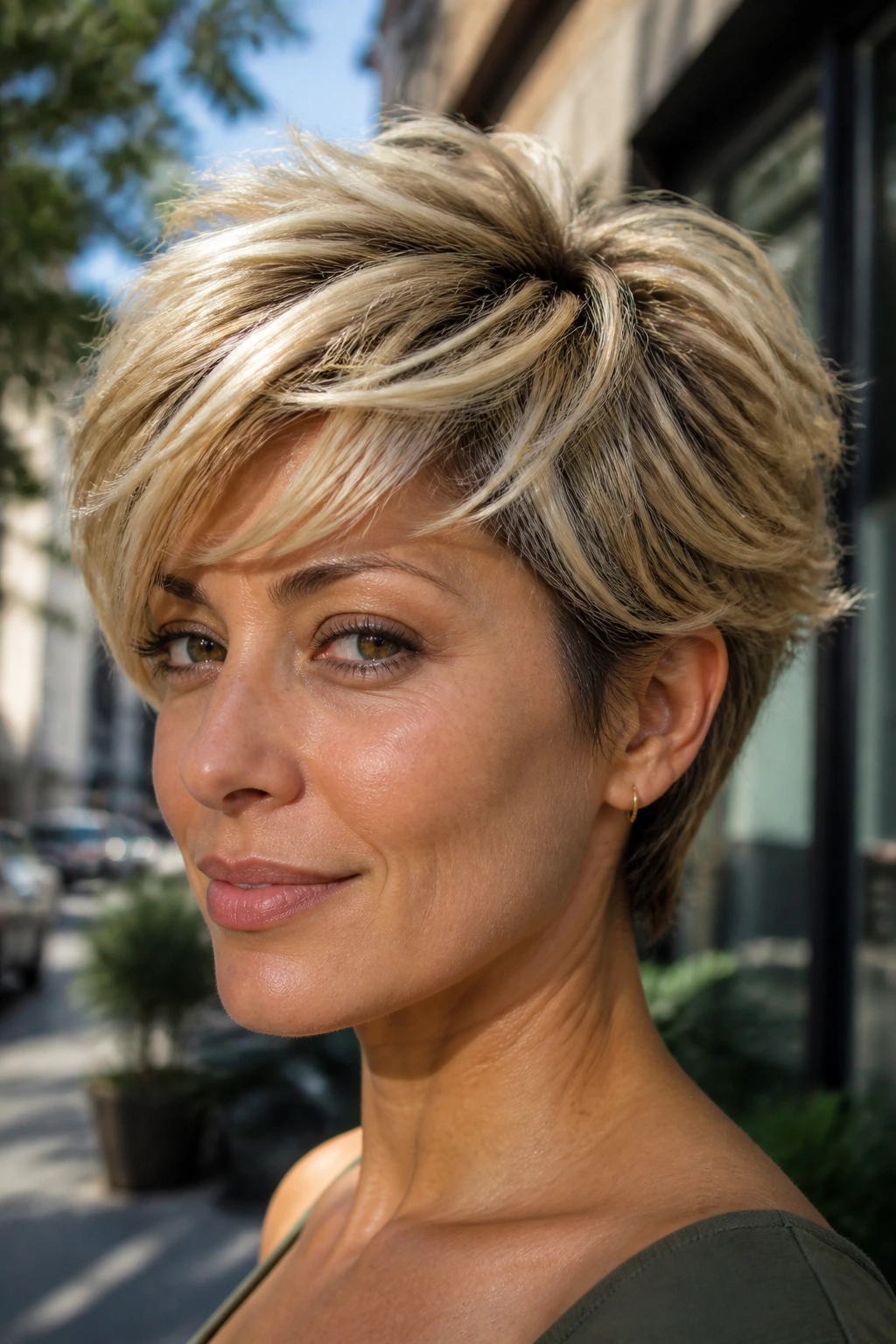
A feathered pixie needs dimension. Otherwise it can look like a single colored cap, which is the fastest way to make blonde feel dated. Dimensional buttery highlights on olive skin give the cut movement and lift, especially around the crown and temples.
The feathers should be visible, not overstyled. A little lift at the roots, a little separation at the ends, and the blonde does the rest. It’s a short cut that still feels soft, and that softness matters on olive skin.
28. Wavy Bob with Warm Pearl Blonde
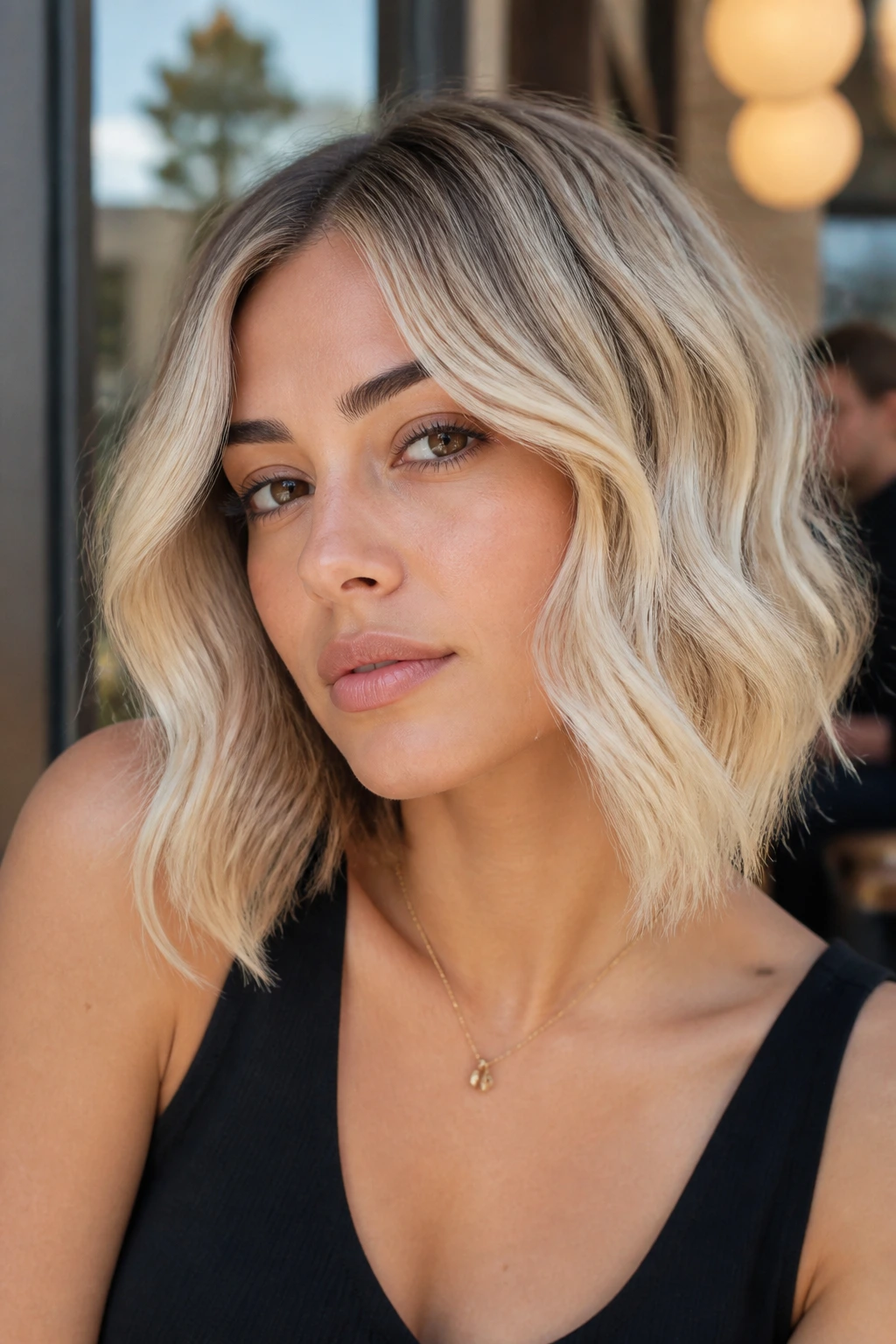
Warm pearl blonde is a nice pivot if you want brightness but don’t want the warmth to tip into orange. On a wavy bob, it reads creamy and clean. The waves help the color shift in and out of view, which is exactly what makes it flattering on olive undertones.
This look likes a soft bend more than a tight curl. Keep the ends slightly airy and let a few brighter pieces sit near the front. That gives the bob a light edge without making it look over-processed.
29. Layered V-Cut with Bright Butter Sweep
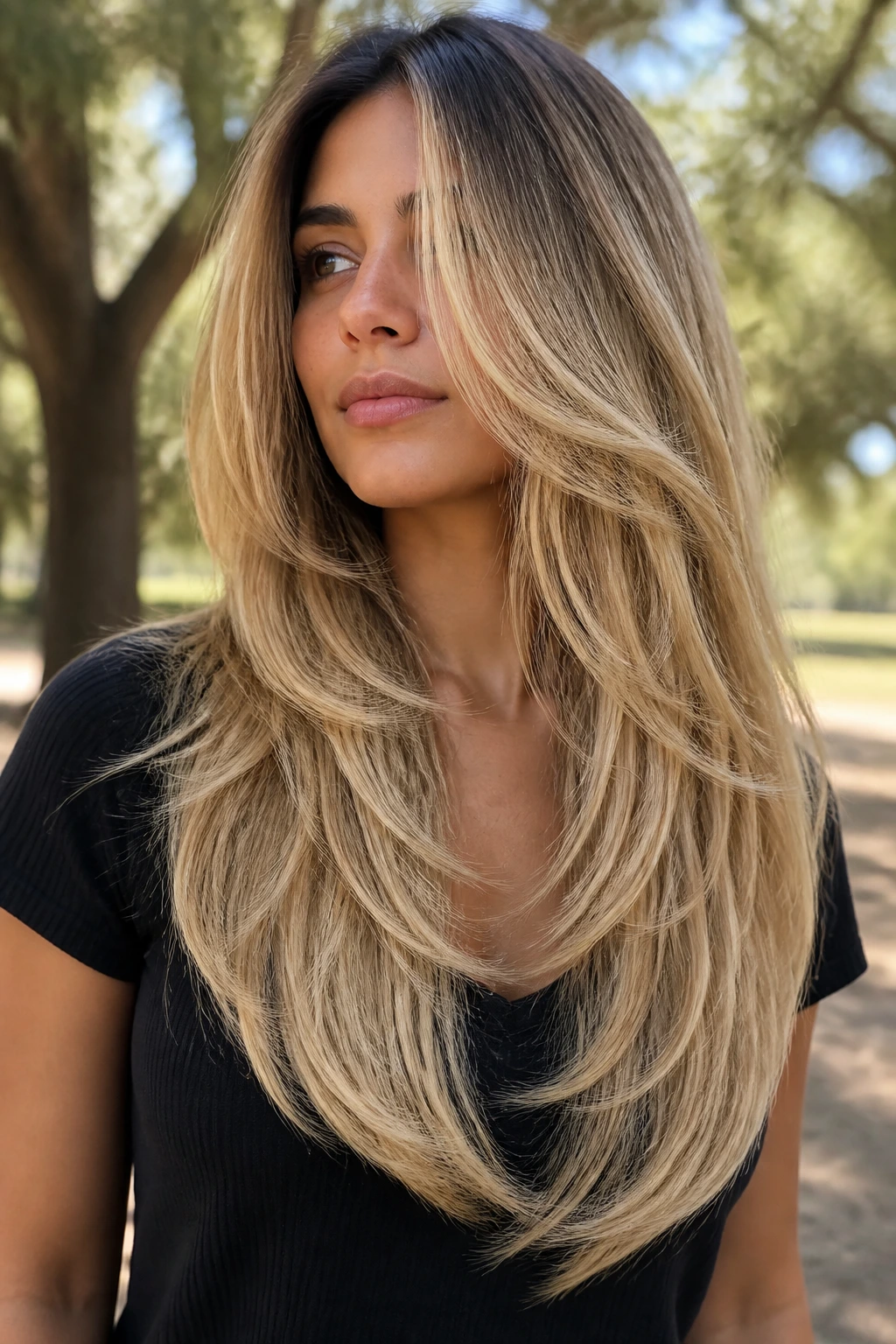
A V-cut lets long hair keep its length while still showing movement, and bright butter sweep highlights the taper of the shape. On olive skin, the V shape can feel dramatic in a good way because the color narrows toward the ends and pulls the eye downward.
The bright pieces should begin below the cheekbones, not right at the root. That gives the face enough breathing room. If your hair is thick, the layers stop the blonde from getting swallowed up; if it’s fine, the shape adds a little visual weight where you want it.
30. Extra-Long Blowout with Satin Blonde Finish
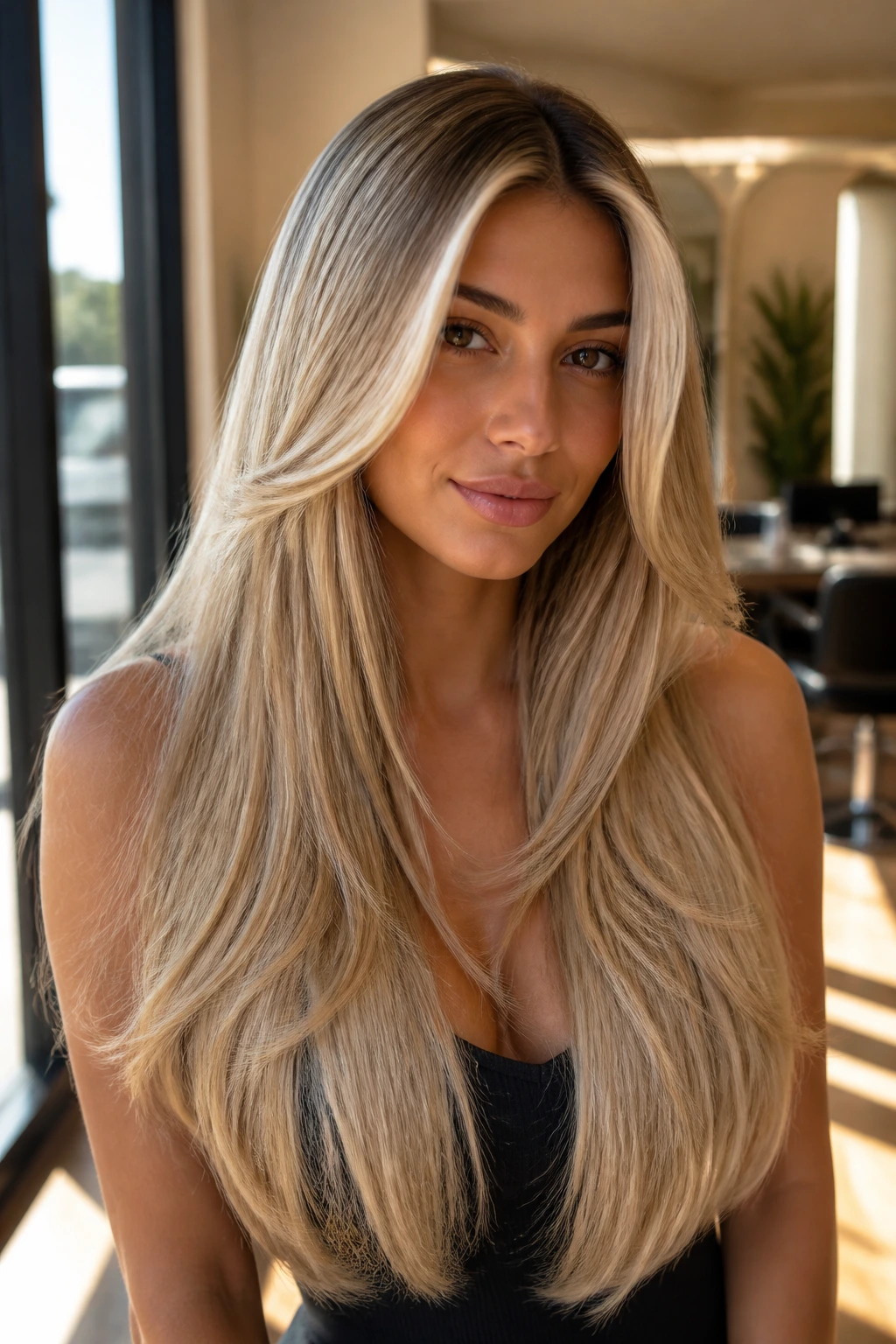
Extra-long hair can become a wall of blonde if you’re not careful. A satin finish—soft, warm, and slightly reflective—keeps it elegant instead of flat. On olive skin, a long blowout like this works best when the face frame is brighter and the lengths stay a shade deeper.
The blowout itself should be smooth through the top and softly curved at the ends. No stiff curls. No crunchy volume. Just enough bend for the light to move. That’s what makes the length look intentional instead of heavy.
Why Bright Buttery Blonde Works So Well on Olive Skin
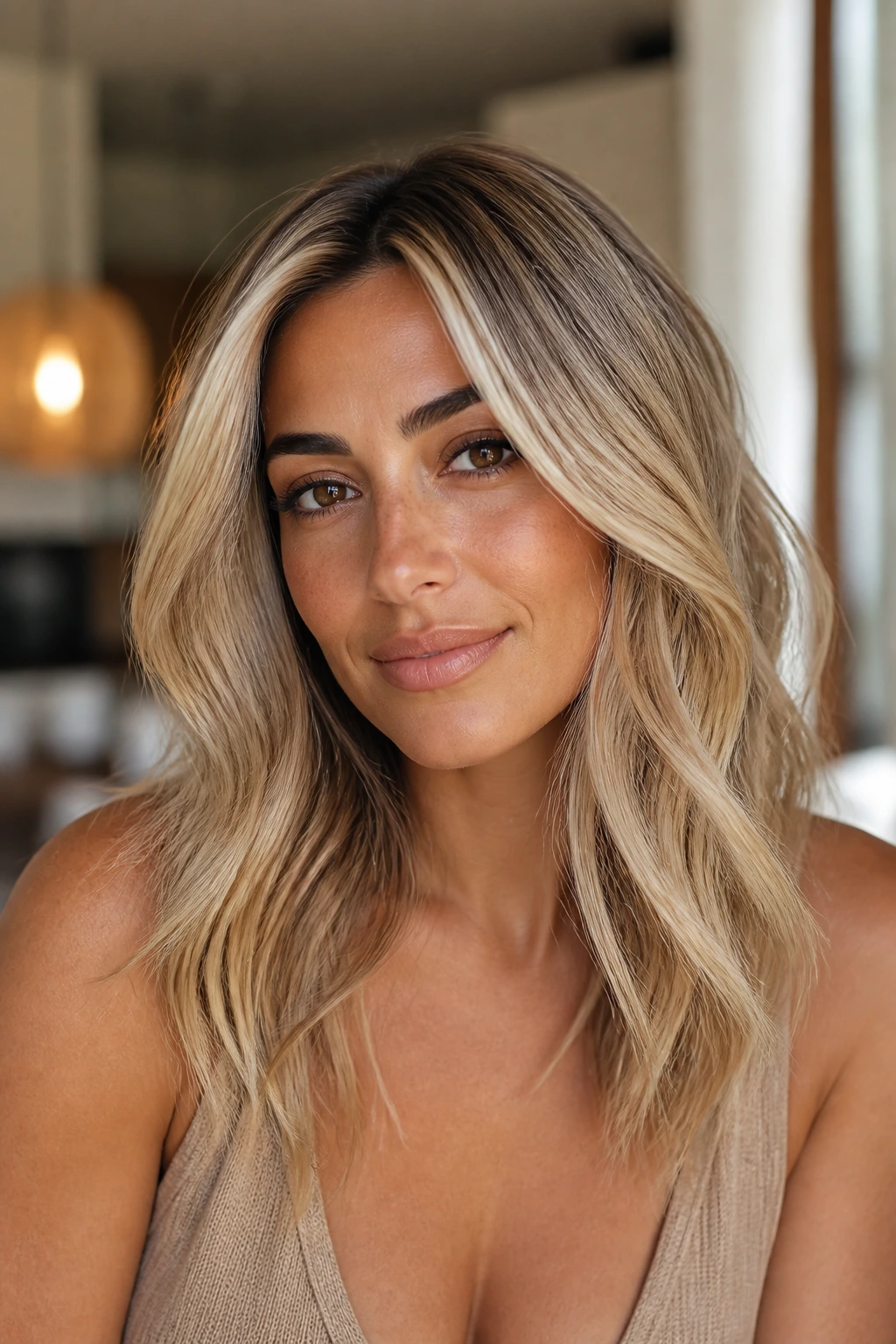
Olive skin has a habit of changing the mood of a blonde the second the tone shifts. Too icy, and the skin can look greenish or flat. Too yellow, and the hair starts carrying the whole problem on its own. Buttery blonde sits between those extremes, which is why it keeps showing up in flattering color stories for olive undertones.
The best buttery blondes are not one-note gold. They mix beige, cream, and a touch of warm honey, then let the root stay slightly deeper. That shadow gives the blonde a base to stand on. Without it, the color can look pasted on. With it, the whole head feels softer and more expensive, if I can use a blunt word for it.
Placement matters almost as much as tone. Face-framing highlights brighten the skin near the eyes and cheekbones, while ribbons through the mid-lengths keep the hair from collapsing into a single pale sheet. That’s the real reason this color works on olive skin: the contrast is controlled, not shouty.
Asking for the Right Shade at the Salon
The easiest mistake is saying “buttery blonde” and leaving it there. A good colorist needs more than a mood word. Bring a few photos, then point out what you want from each one: the brightness, the root depth, the face frame, the shine level. The haircut matters too, because a bob and a long layered cut do not take blonde the same way.
If your skin leans warm-olive, ask for beige-gold blonde with a soft root shadow. If your olive skin runs more neutral, you can usually push the blonde a touch creamier or slightly cooler at the ends, but not to the point of ash. Ashy blonde on olive skin can go dull fast. That’s the part people find out the hard way.
A useful phrase at the salon is: “I want a level 8 to 9 blonde with warmth, dimension, and no yellow brass.” That gives the colorist room to work without leaving the tone vague. If you have darker hair, ask how many sessions it’ll take. A one-visit fantasy is often how damaged blonde happens.
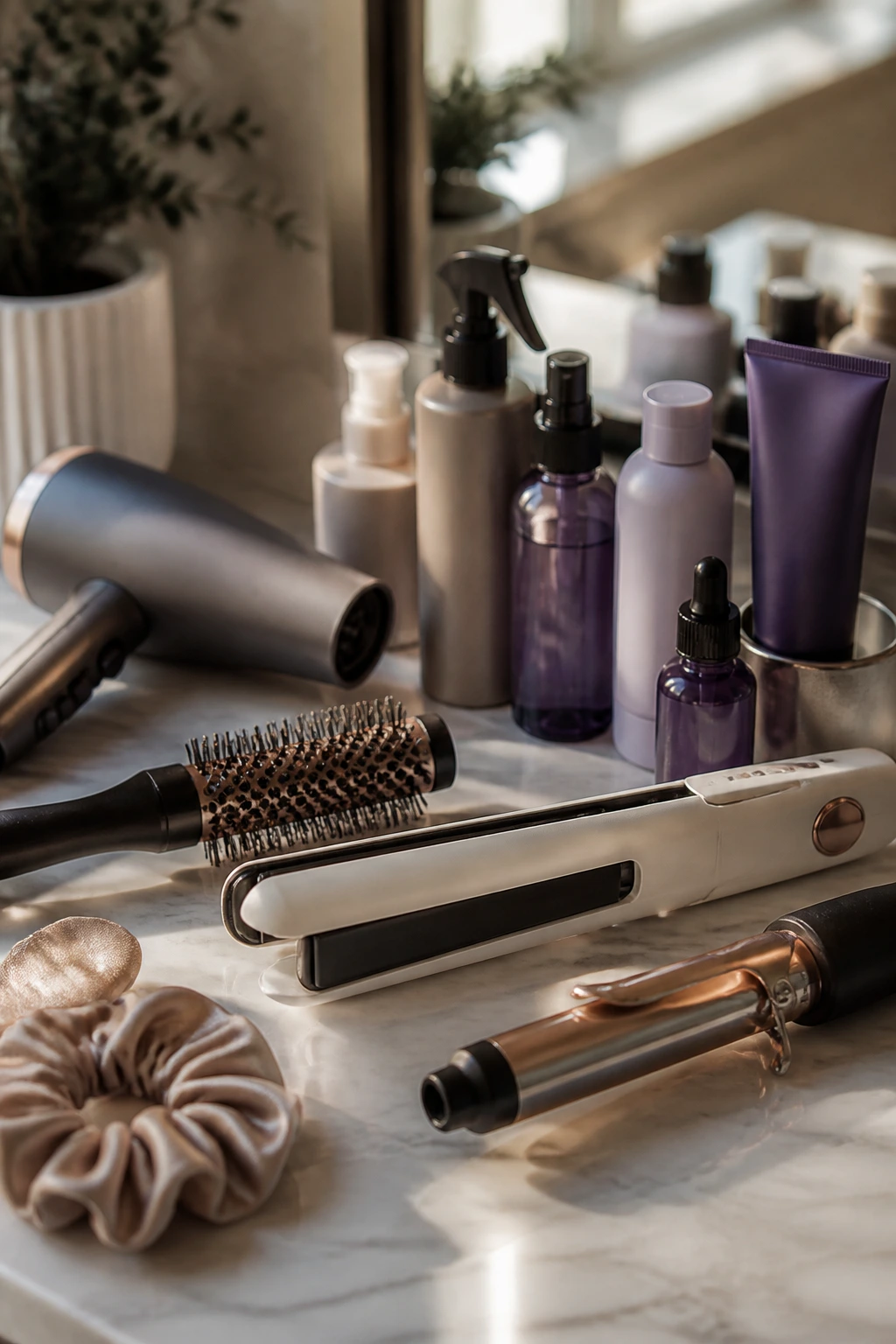
Essential Tools for Styling and Tone Maintenance
- Heat protectant spray: Use it before any blow-dry, flat iron, or wand work; blonde hair shows heat damage fast.
- Round brush, 1.5 to 2 inches: Best for soft bend, volume at the root, and that brushed-out buttery finish.
- 1-inch curling iron or wand: Good for loose waves, especially on lobs, long layers, and shoulder-length cuts.
- Blow dryer with nozzle attachment: Helps smooth the cuticle so the blonde looks shinier and less fuzzy.
- Duckbill clips or sectioning clips: Make root lifts, wave setting, and salon-style blowouts much easier.
- Wide-tooth comb: Safer than a brush on wet highlighted hair, especially if the ends feel dry.
- Color-safe shampoo and conditioner: Choose formulas made for color-treated hair so the blonde doesn’t fade dull and muddy.
- Purple or blue-tinted shampoo: Use sparingly to control brass; too much can strip the warmth right out of buttery blonde.
- Hair oil or serum: A pea-sized amount on the ends adds shine without making the color greasy.
- Microfiber towel or cotton T-shirt: Cuts down frizz when you’re blotting wet hair before styling.
How to Wear These Looks With Makeup, Earrings, and Necklines
Makeup: Olive skin and buttery blonde usually look best with warm-neutral makeup: peach blush, bronze shadow, taupe liner, and a lip color that has a little rose or terracotta in it. The hair is already giving warmth, so you do not need to stack orange on top of orange.
Jewelry: Gold, brushed brass, and mixed metals tend to sit well with these shades. If your blonde leans more creamy than gold, silver can still work, but very icy jewelry sometimes pulls the whole look cooler than you meant it to.
Necklines: Open collars, scoop necks, and square necks show off face-framing blonde pieces without crowding them. High necks can work too, but they make the hairstyle feel more deliberate, so the cut needs enough shape to hold its own.
Eyes and brows: Keep brows defined, not harsh. Buttery blonde around olive skin can make very pale brows disappear, and that drains the face. A soft brow pencil or tinted gel usually does the job without turning the expression sharp.
Keeping the Blonde Bright Without Turning It Chalky
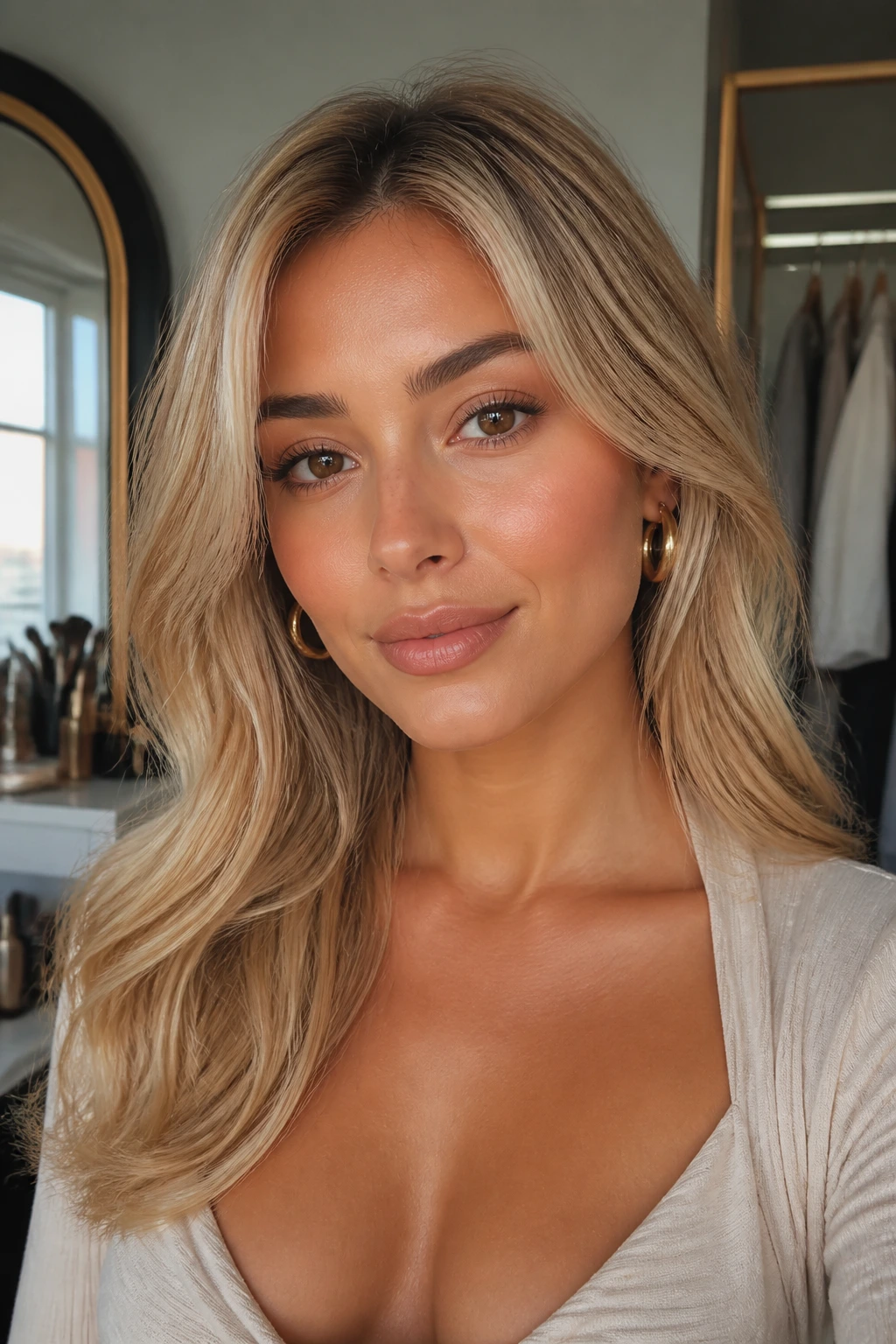
Buttery blonde lives or dies by maintenance. A purple shampoo used once every 7 to 10 days can keep brass under control, but if you overdo it, the color starts looking dusty. That chalky finish is the fastest way to ruin the warm glow you worked for.
Glosses and toners matter more than most people think. Plan on a toner refresh every 4 to 8 weeks if your hair pulls gold too quickly, and expect root touch-ups or balayage refreshes every 8 to 12 weeks depending on how fast your hair grows and how much contrast you like. Shorter cuts often need tighter trim schedules too—about every 6 to 8 weeks if you want the shape to stay crisp.
Heat is another quiet enemy. Use a heat protectant every single time, and keep hot tools on the lower end of the range that still smooths the hair. Fine blonde hair fries faster than people expect. It doesn’t announce itself, either. One day the ends just start looking fuzzy and thin, and then you’re in repair mode.
Additional Tips and Tone Boosters
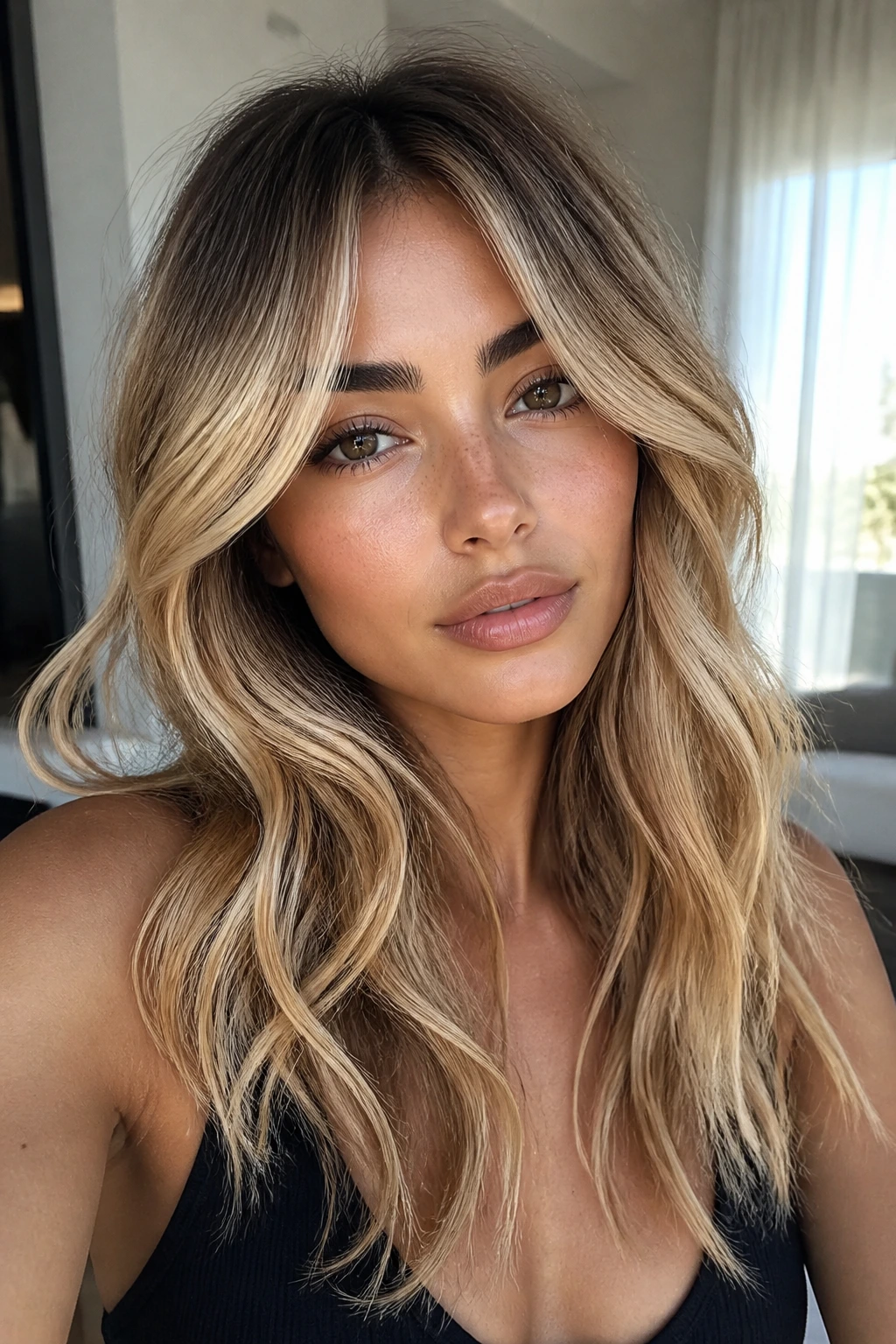
Glow Boost: A clear or beige gloss after your color service can soften any leftover harshness and make buttery blonde look creamier under indoor light.
Dimension Boost: Keep one or two lowlights in the formula if your hair is fine or very light naturally. That tiny bit of depth makes the blonde look thicker and stops it from washing out olive skin.
Time-Saver: Ask for a root shadow if you do not want to live at the salon every few weeks. The grow-out is softer, and the color still reads deliberate.
Face-Frame Boost: One level brighter around the front pieces is usually enough. More than that, and the eye goes straight to the hair instead of the face.
Make-It-Yours: If your olive skin leans warm, keep the blonde in the honey-beige family. If it leans neutral, cream and biscuit tones often look cleaner. If it leans cool-olive, the warmth should stay controlled and the beige should do more of the work.
Common Mistakes That Flatten Olive Skin
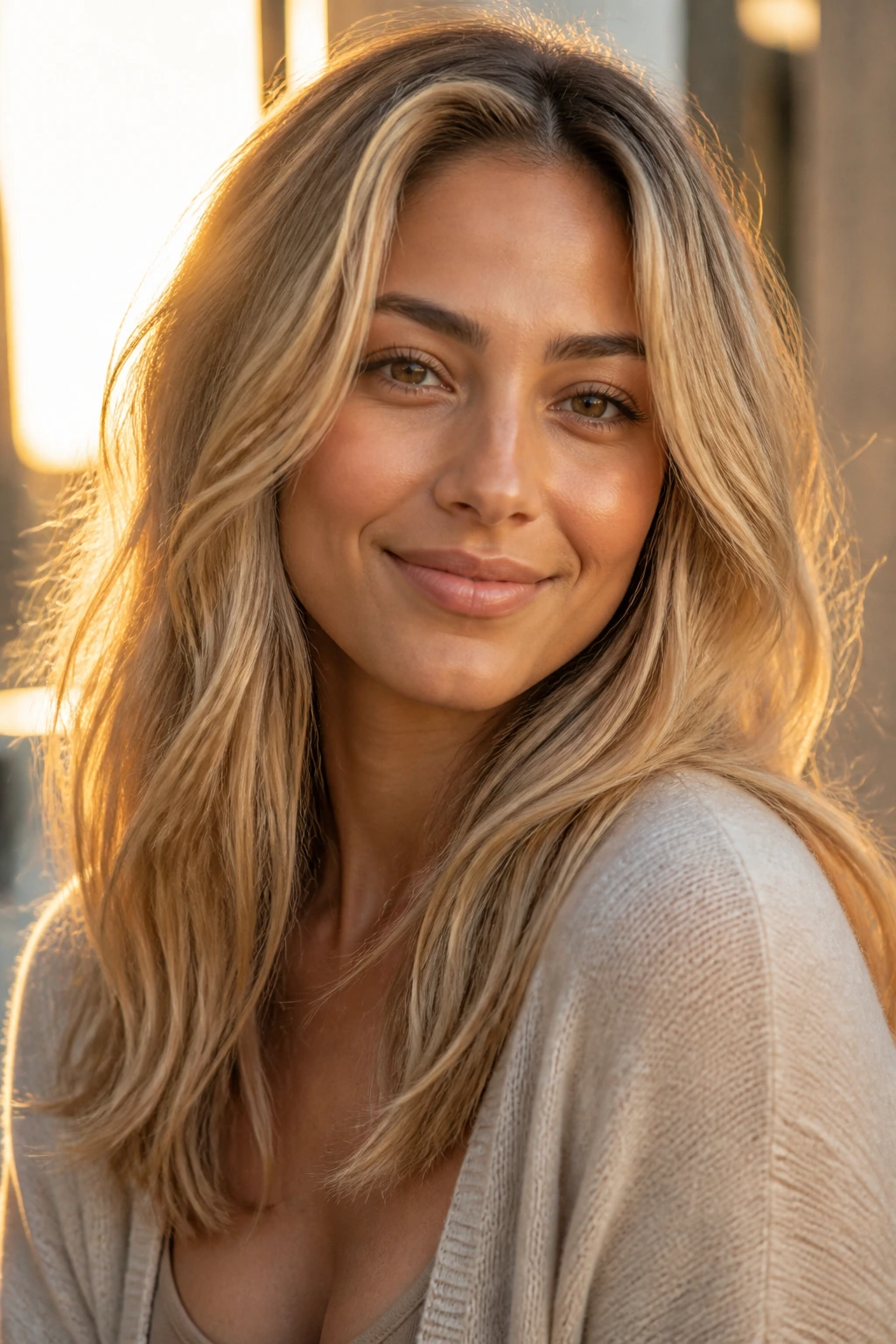
- Going too pale too fast: A near-white blonde can make olive skin look sallow or washed out. Fix it with depth at the root and softer beige in the mid-lengths.
- Overusing purple shampoo: The hair turns dry, dull, and slightly gray-looking. Use it less often and follow with a rich conditioner, especially on highlighted ends.
- Skipping dimension: A single flat blonde shade can blur the face. Add lowlights, a shadow root, or a softer underside so the color has a little structure.
- Placing highlights too high everywhere: If the brightness starts at the scalp all the way around, the color can look streaky. Keep the lightest pieces near the face and through the parts where movement shows.
- Ignoring the haircut: Blonde on a bad shape just makes the bad shape brighter. A blunt bob, layered shag, or clean lob gives the color something to sit on.
- Using hot tools without protection: The color may still look okay for a week, then the ends start looking fried. One heat protectant spray costs less than fixing brittle blonde.
Variations and Adaptations to Try
Honey-Butter Melt: Push the tone warmer and keep the base deeper. This is the version for olive skin that leans golden and looks best with soft, sunlit richness.
Creamy Beige Balayage: Reduce the gold and lean into beige. It’s a good pick if your skin is neutral-olive and you want brightness without obvious warmth.
Rooted Champagne Blonde: Keep a soft shadow root and brighten the ends with a champagne gloss. The grow-out is gentler, and the finished look has that lived-in salon feel without being flat.
Buttery Brunette Blend: Leave more natural depth in the hair and place blonde only around the face and ends. This is smart if you want to flirt with blonde instead of going full blonde.
Short-Cut Glow-Up: Take any pixie, bixie, or bob and shift the blonde to the crown and fringe. Short hair can carry a lot of brightness, but it looks best when the placement is precise.
Frequently Asked Questions
Will buttery blonde work on dark olive skin?
Yes, but the placement matters more than the tone. Darker olive skin usually looks best when the blonde is woven through the face frame, ends, or top layers instead of painted all over in a single flat sheet.
Is balayage better than highlights for olive skin?
Balayage usually gives a softer finish, which is useful if you want buttery blonde to blend into olive undertones instead of sitting on top of them. Highlights can still work well, especially if you want more brightness near the face.
Can I wear buttery blonde if my hair naturally pulls very yellow?
You can, but you’ll need a colorist who understands toning. Ask for beige and cream rather than extra gold, and use purple shampoo sparingly so the warmth stays soft instead of brassy.
How often should I refresh the tone?
Most people need a gloss or toner every 4 to 8 weeks, depending on porosity, washing habits, and how bright the blonde is. If the hair starts looking too warm or muddy, that’s usually your cue.
Will a root shadow make the color look darker than I want?
Not if it’s done well. A root shadow is there to soften the transition and make grow-out easier, not to bury the blonde. The best version still looks bright around the face.
What if my hair is curly or wavy?
That texture can make buttery blonde look even better because the movement breaks up the color. Keep the brightest pieces where the curls or waves naturally open, and leave some depth underneath so the pattern stays visible.
Can I go buttery blonde in one appointment if my hair is dark brown?
Sometimes, but not always without damage. Darker hair often needs a staged process, especially if you want a soft blonde rather than an orange in-between step. A good colorist will tell you if your hair needs more than one visit.
How do I stop blonde from looking flat indoors?
Keep some contrast. A shadow root, a few lowlights, and a brighter face frame all help the hair move under indoor light, where flat blonde can suddenly look lifeless.
The Glow That Stays Soft
Butter blonde works on olive skin because it respects the skin instead of fighting it. The warmth gives glow, the beige keeps it civilized, and the depth at the root makes the whole thing feel lived-in rather than painted on. That balance is why these looks hold up so well across short hair, long hair, curls, and sleek cuts alike.
If you’re choosing between a blonde that looks bright in theory and one that actually flatters when you step outside, I’d take the second one every time. Olive skin likes blonde with a little nuance. Give it cream, give it dimension, and give it a cut that can carry the color. The result is easier on the face and, frankly, easier on your patience.