



Blonde hair color ideas for fair skin with thin hair can go wrong fast if you treat blonde like one giant category. On a full, dense head of hair, a slightly icy toner or a chunky highlight pattern has room to breathe. On finer strands, the same choice can make the scalp show sooner, the ends look wispy, and the face lose color it can’t spare.
The shades that work here usually do one of three things: they soften the root, they mix in enough beige or pearl to keep the complexion alive, or they place brightness where the eye actually lands first — around the cheekbones, not just everywhere at once. That’s the game. Not louder. Smarter.
I use “thin hair” the everyday way here: hair that looks sparse, drops flat by noon, or reads transparent at the ends. Sometimes that’s fine strands. Sometimes it’s lower density. Sometimes it’s both, which is a little annoying and very common. Blonde can help, but only when the color respects what the hair is already doing.
Why These Blonde Shades Earn Their Spot
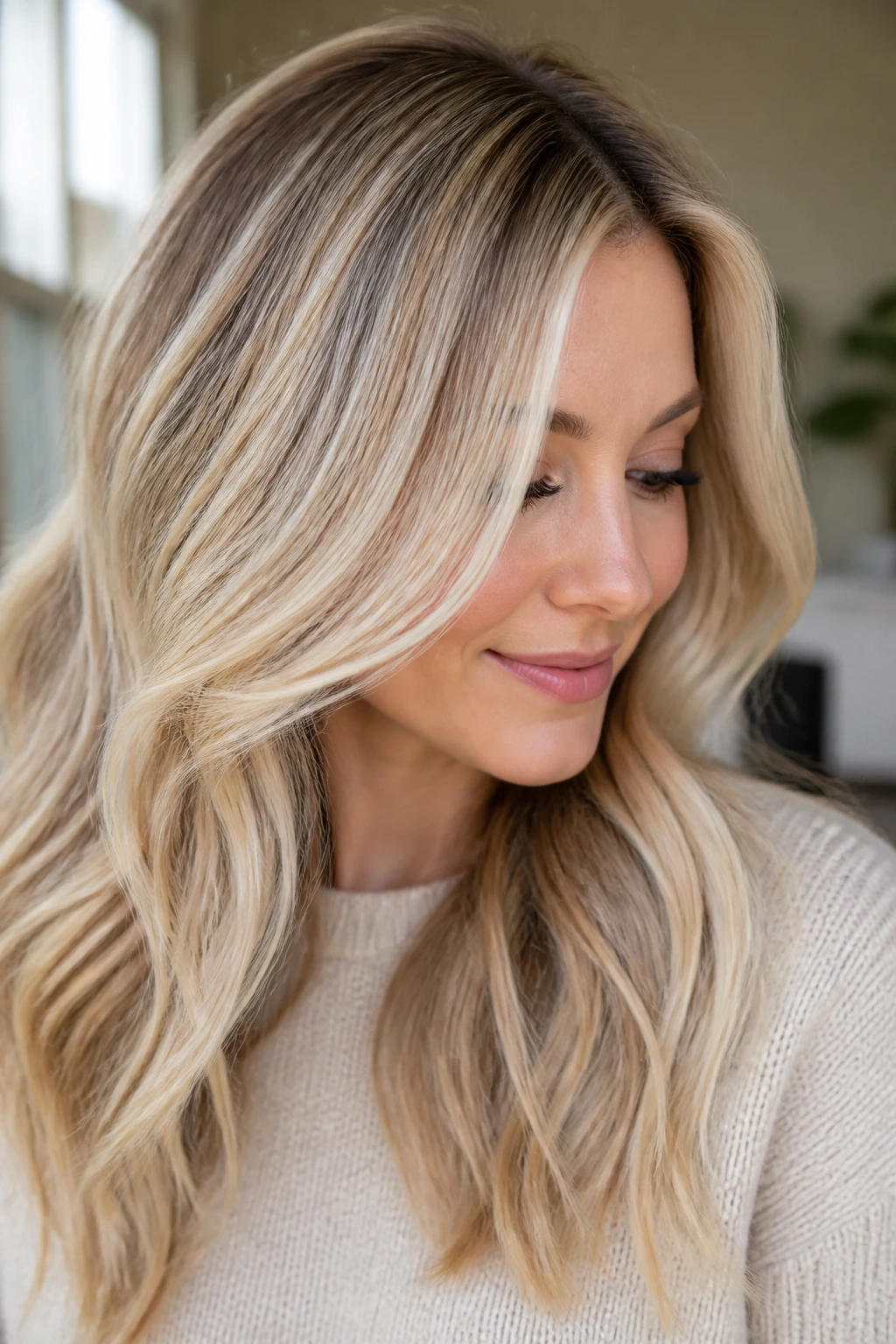
- Soft roots keep the scalp from stealing the show: A root shadow that’s one to two levels deeper than the mids makes fine hair look fuller because your eye reads depth instead of a bright line at the part.
- Beige, pearl, and cashmere tones flatter fair skin without flattening it: Those tones reflect light without turning the face chalky, which is where a lot of icy blondes miss.
- Babylights beat chunky highlights on thin hair: Tiny woven pieces spread brightness across more strands, so the color looks airy instead of striped.
- Face-framing brightness does more than full saturation: Two lighter pieces around the front can lift the whole head of hair and save the crown from looking over-processed.
- Gloss matters more than people think: A beige, pearl, or soft gold glaze keeps blonde from turning brassy after a few washes, and brass is brutal on pale skin.
- The right cut changes the color story: A blunt bob, a clean lob, or even a pixie can make blonde look denser because the ends hold a stronger outline.
How Fine Hair Changes the Blonde Rulebook
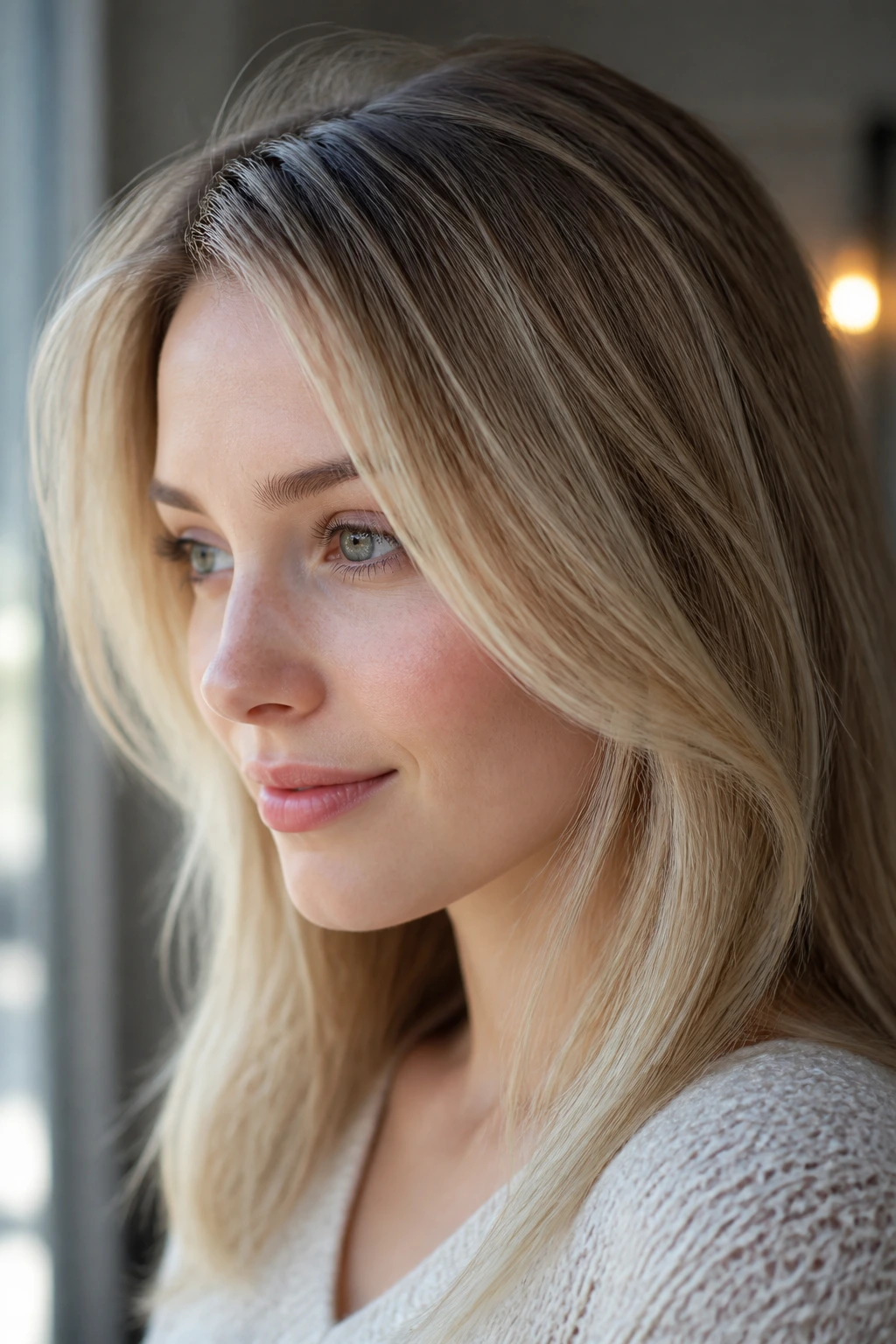
Thin hair is not one thing. Fine strands and low density are different problems, and they do not ask for the same blonde. Fine strands need gentler lightening because they’re more fragile. Low density needs more visual depth because the scalp can peek through between sections. If you know which one you’re dealing with, the color choice gets easier.
That’s why a single flat blonde often disappoints. It can be pretty in a photo and strangely revealing in daylight. A little root shadow, a few lowlights under the top layer, or a soft weave of babylights creates interruption — and interruption is what makes hair look fuller. The eye can’t measure volume, but it does respond to contrast.
Fair skin adds another layer. Pink-leaning skin usually needs pearl, beige, or rose-beige tones. Peach or golden fair skin often handles honey, champagne, and apricot better. Neutral fair skin can move either way. The point is not to force every pale complexion into icy platinum. The point is to make the blonde sit on the face, not wash over it.
1. Soft-Rooted Platinum
Platinum can look clean and expensive on fair skin, but only if it keeps a little shadow at the root. A level 10 blonde through the mids and ends with a level 8 or 9 smudge at the crown stops the color from reading like one solid sheet of white. On thin hair, that tiny shift matters a lot.
I like this best when the toner leans pearl-beige instead of hard silver. Silver can look sharp in salon light and a little brittle outside. Pearl keeps the finish bright without making the ends look hollow.
2. Champagne Beige Blonde
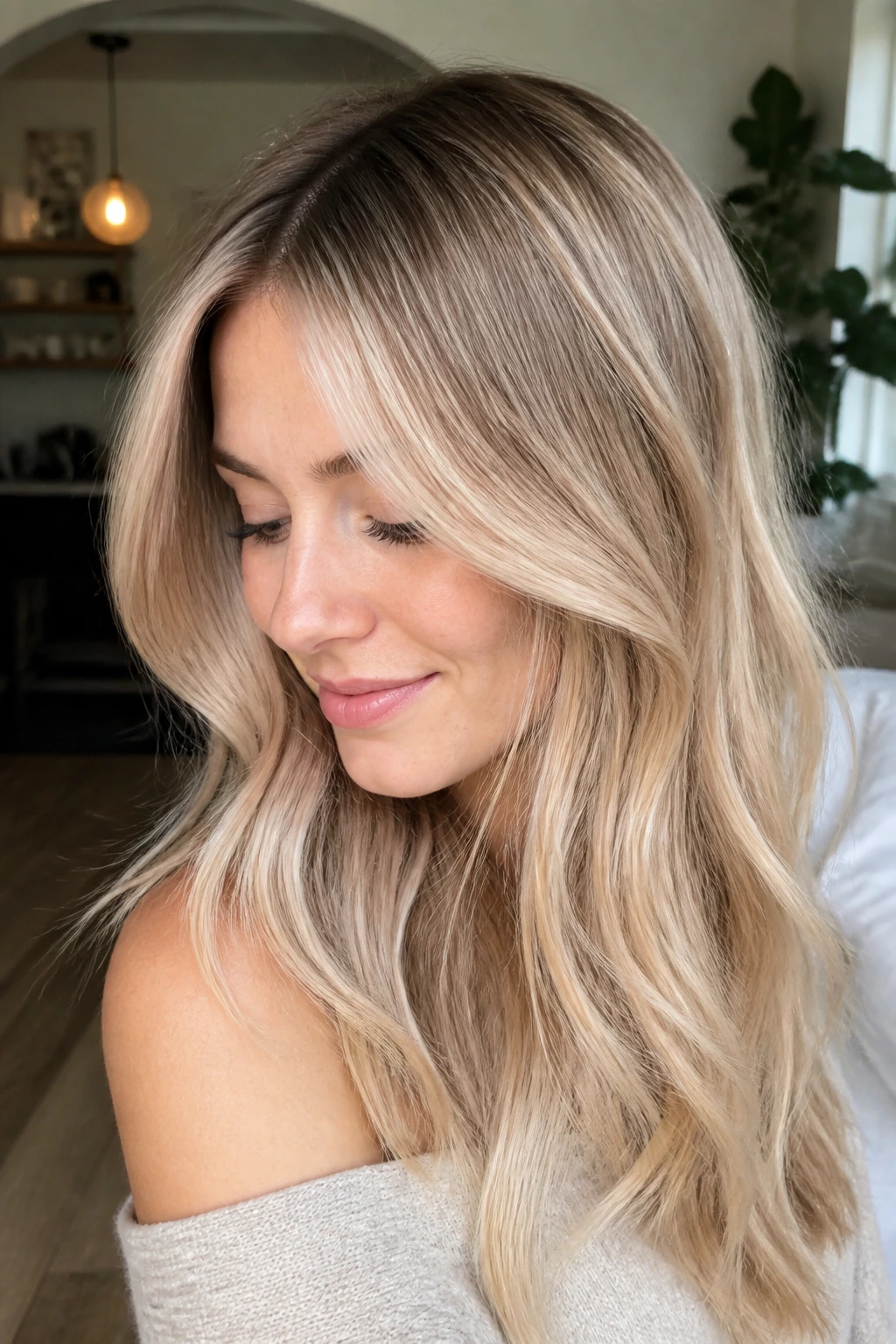
Champagne beige is the shade I reach for when fair skin needs glow, not glare. It sits between gold and neutral, which makes it kinder to pink undertones than a straight ash blonde and softer than a sunny gold.
Because the tone is mixed, the hair catches light in more than one way. That gives fine strands a little extra visual texture. Ask for soft babylights and a root melt rather than big, obvious foils. The result should look like light drifting through the hair, not sitting on top of it.
3. Creamy Vanilla Blonde
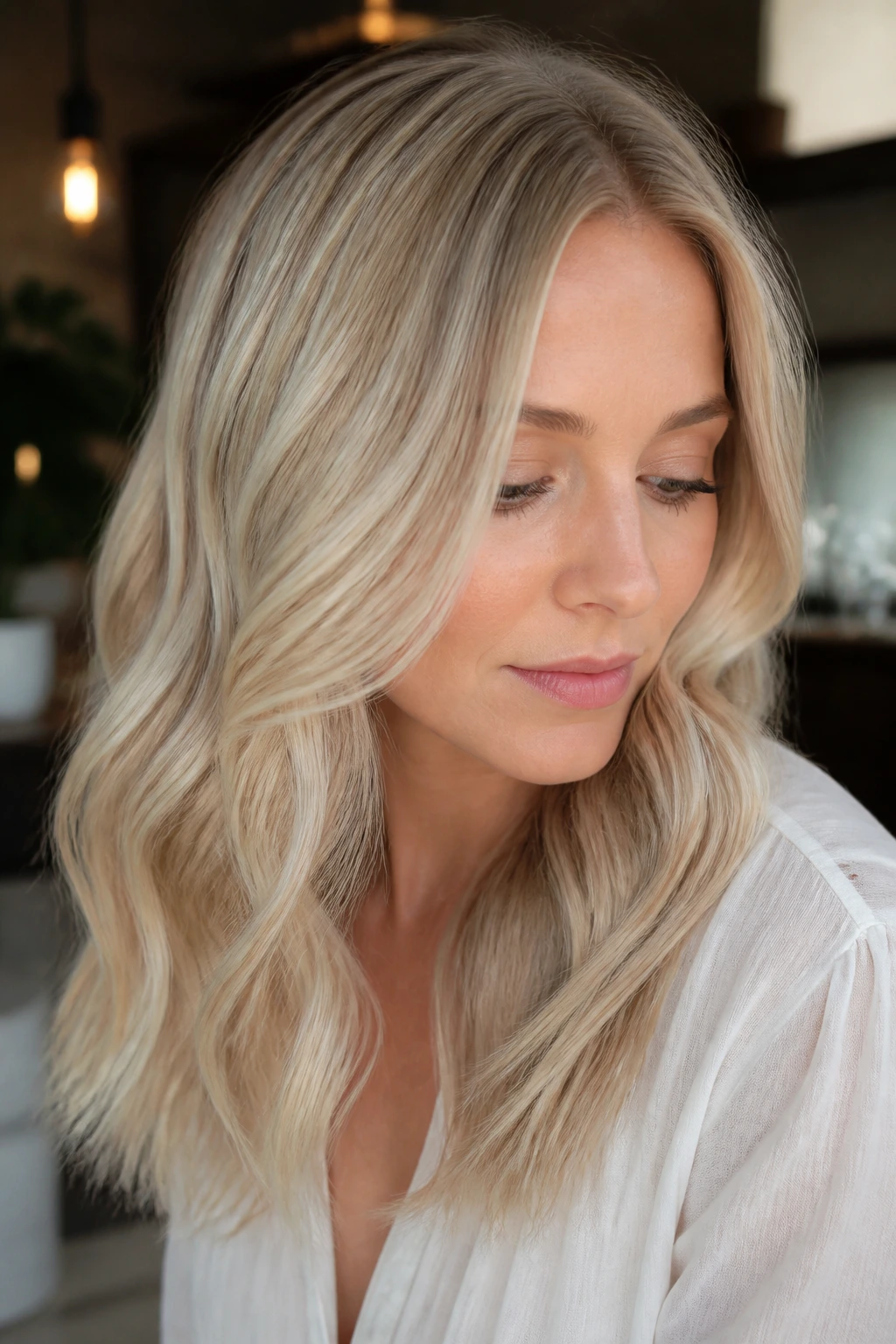
If your skin goes a little flat under cool tones, creamy vanilla usually does better. It has enough warmth to keep the face from looking pale, but not so much gold that the blonde starts shouting.
This is one of my favorite choices for thin hair because the color reads smooth. Smooth hair often looks fuller than overtextured hair when the strand count is low. Ask for a level 9 vanilla base with just a whisper of beige lowlight underneath. It should look like soft custard, not yellow frosting.
4. Pearl Blonde
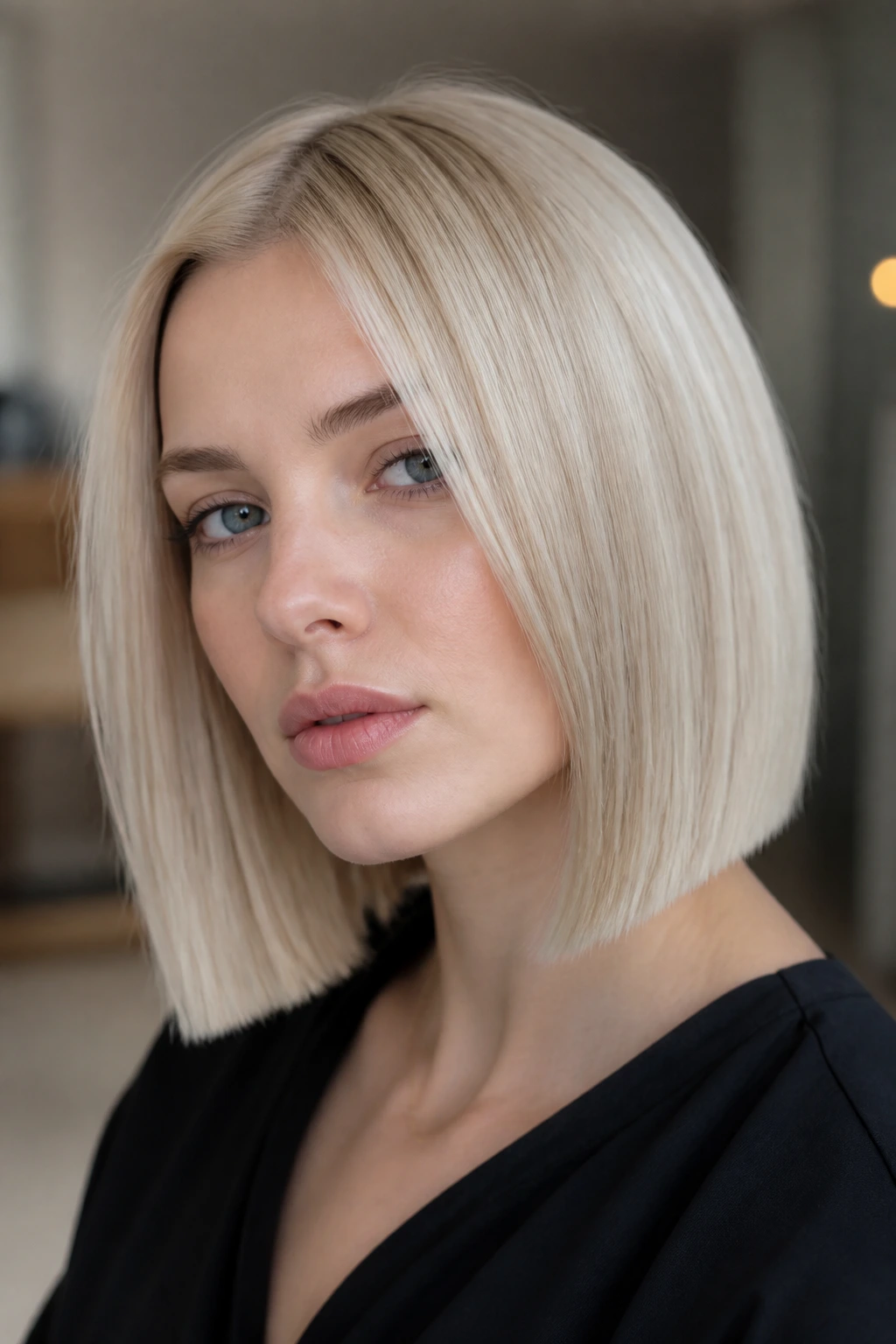
Pearl blonde is the quiet cool blonde that still looks soft on fair skin. It has a luminous, almost satiny finish, which keeps pale complexions from turning gray the way some ash tones do.
I’d keep the cut clean here — a blunt lob or a short crop works especially well. Pearl blonde on wispy, overlayered hair can lose shape fast. On a strong outline, though, it looks polished and full of light. A gloss every four to six weeks keeps the pearl note from fading into dull blond.
5. Baby Beige Babylights
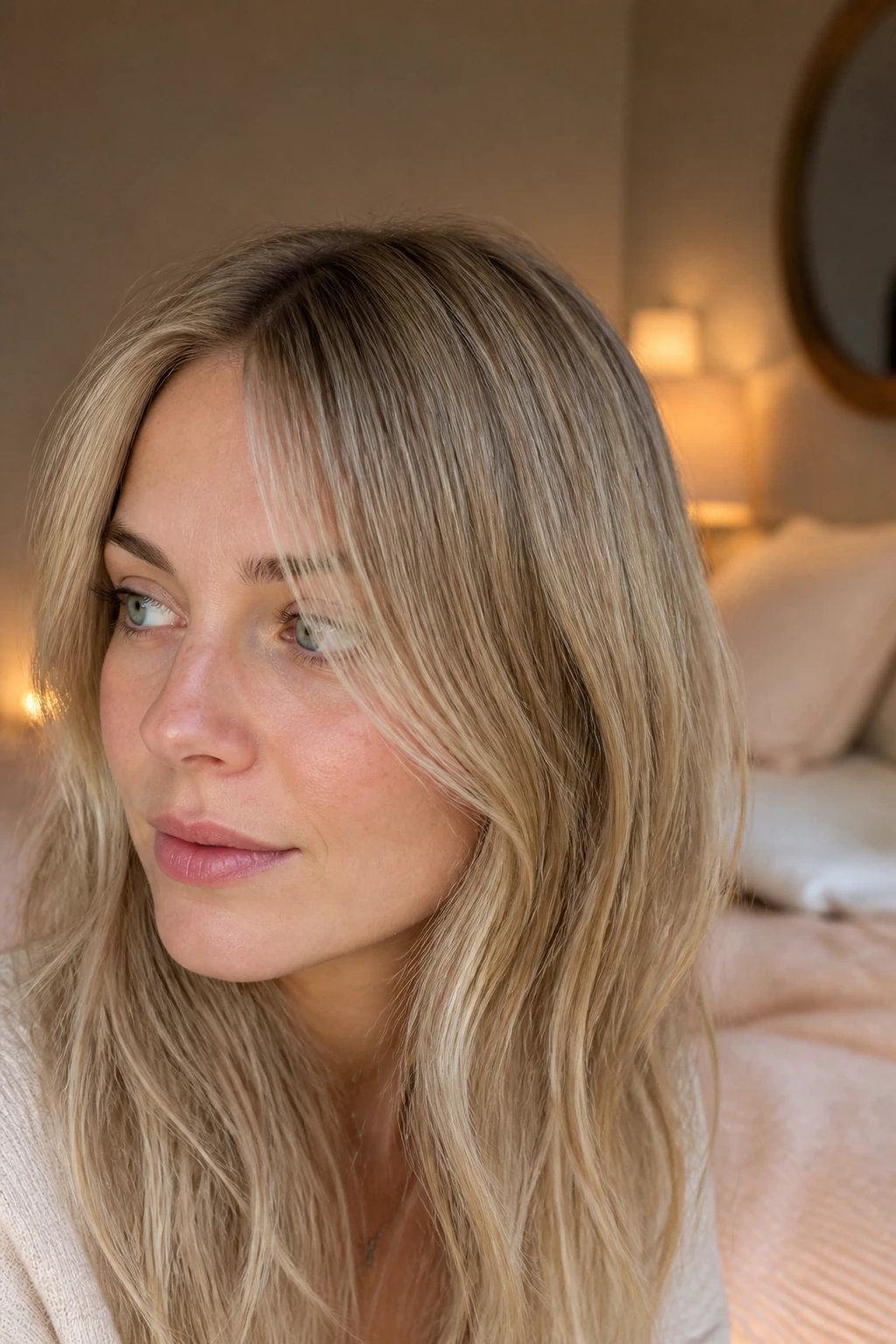
This one is all about placement. Baby beige babylights are tiny, close-set highlights that barely announce themselves as individual pieces. That’s exactly why they’re so useful on thin hair.
The smaller weave means the color spreads across more strands without creating chunky gaps. Ask for beige toner, not straight gold, so the blonde stays soft against fair skin. If you wear your hair down most of the time, this is a smart move because it grows out quietly and doesn’t leave a hard root line staring back at you.
6. Scandinavian Ice Blonde
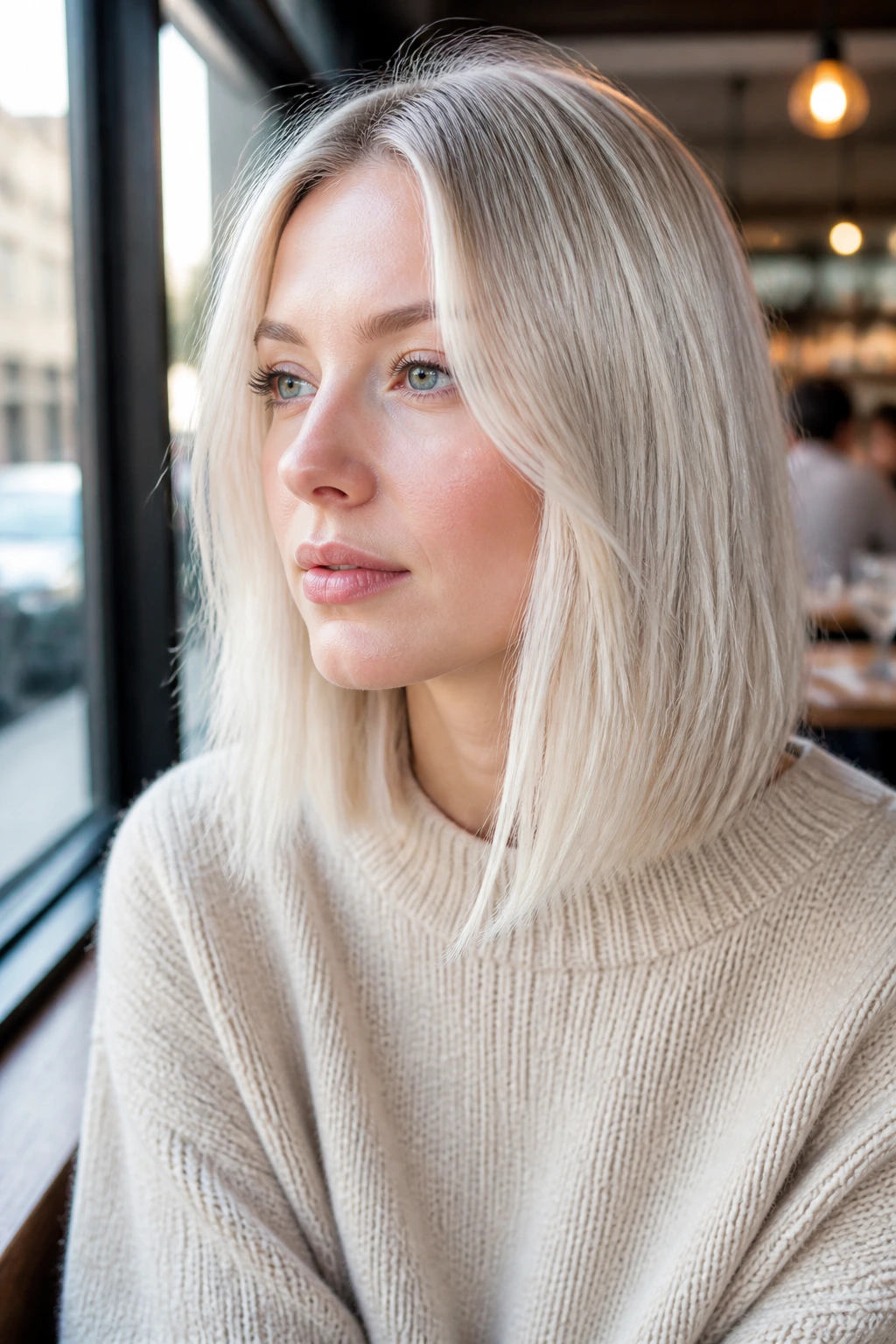
Scandinavian ice blonde is for the fair-skinned person who loves a cooler, almost white finish — but it needs discipline. A level 10 ice tone with a soft shadow root keeps the look from turning harsh or washed out.
This shade is strongest on a blunt bob, a pixie, or a dense-looking lob. On very long, very fine hair, it can make the ends feel transparent if the cut is too wispy. I’d skip heavy ash and aim for crisp, clean brightness with just enough beige at the root to keep the face alive.
7. Mushroom Blonde
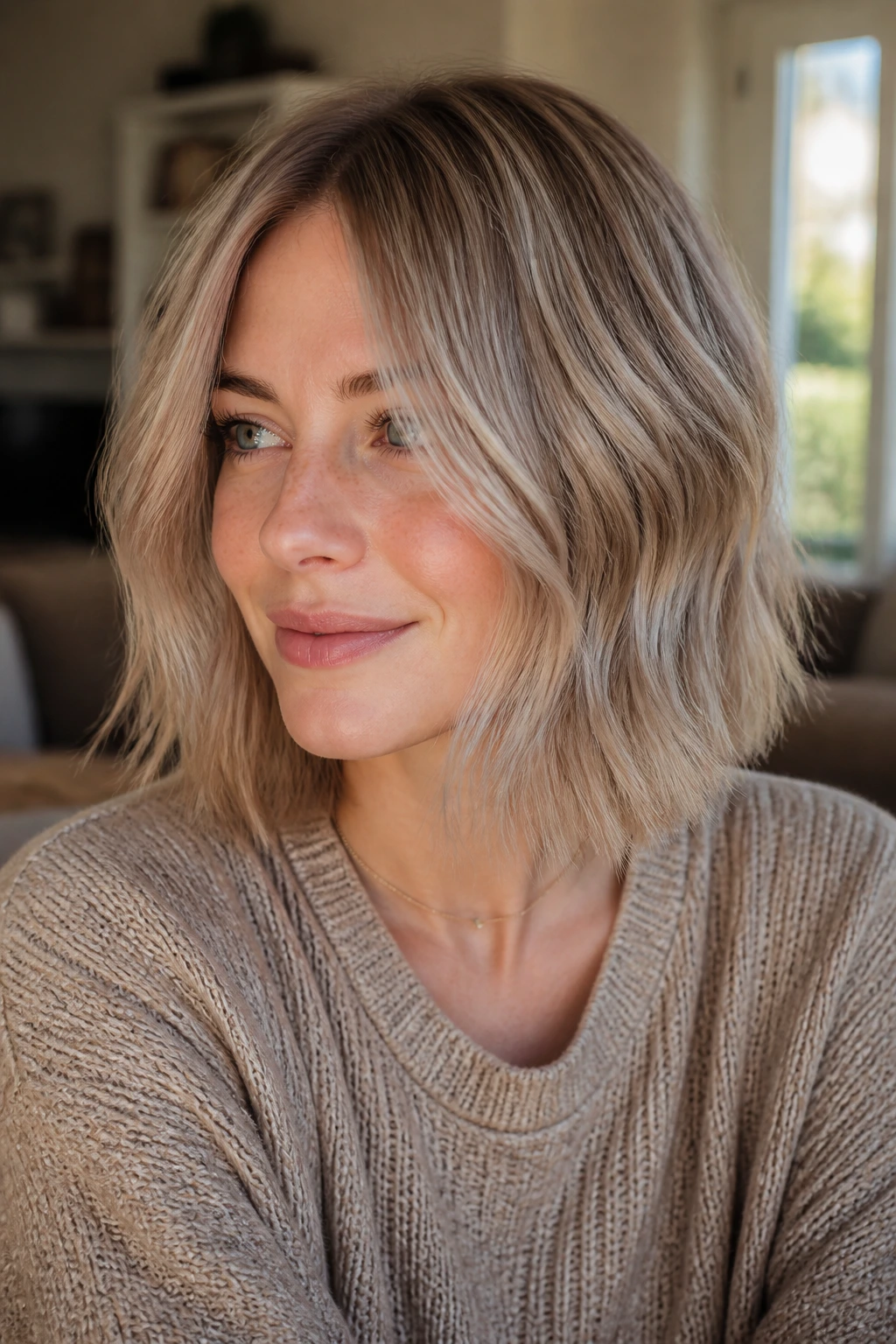
Mushroom blonde sounds unglamorous until you see it on fair skin. Then it makes sense. The taupe-beige tone softens redness, and the slight smokiness gives fine hair a thicker, denser read because the contrast stays gentle.
This is the blonde I suggest when someone wants lighter hair but hates brass. Ask for a cool-neutral brunette-to-blonde blend, not a bright highlight pattern. The best versions of mushroom blonde look like they belong on the hair, not pasted onto it.
8. Honey Butter Blonde
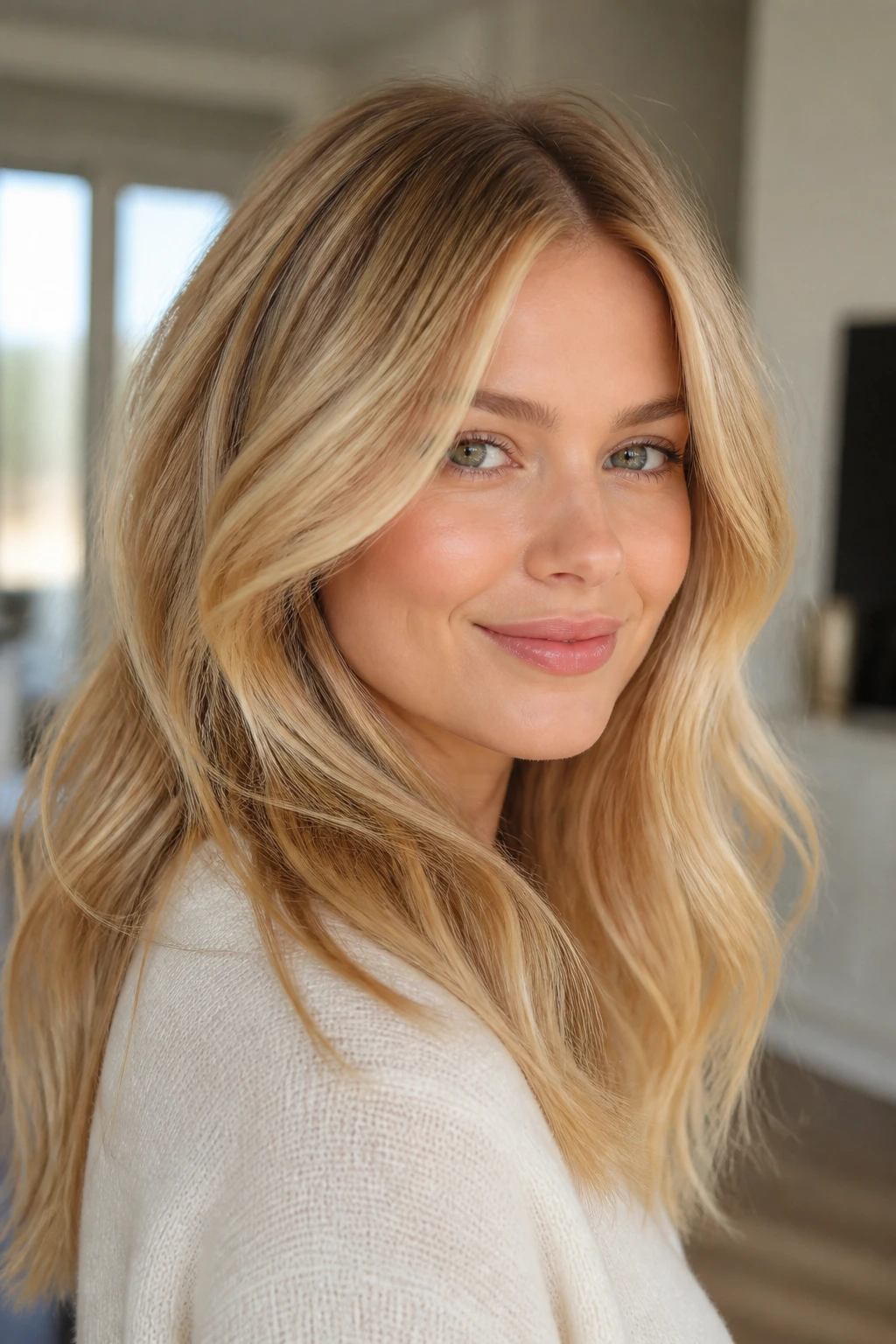
Honey butter blonde is warm, soft, and easy on fair skin with freckles or a peach cast. The trick is to keep the honey narrow and airy. Thick golden stripes can go brassy fast on thin hair and look louder than the hair can support.
A few honey ribbons through a buttery base give the hair movement without tearing up the outline. If your complexion leans warm, this shade can make the skin look more alive in a way icy blondes never will. I’d pair it with loose waves or a polished blowout, not a heavily tousled texture.
9. Strawberry Cream Blonde
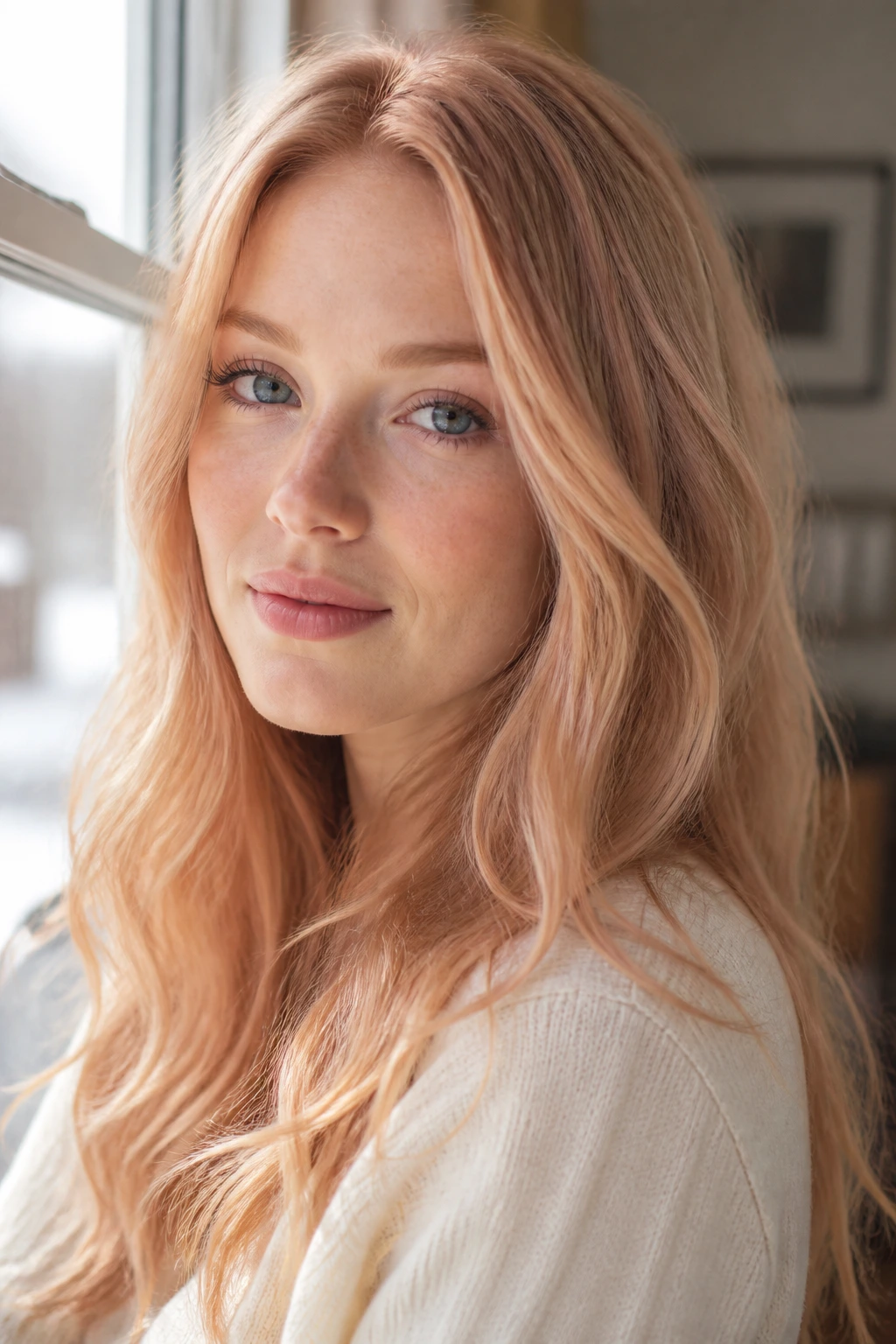
Strawberry cream blonde lives between blonde and the softest blush of copper. It’s lovely on fair skin that looks too pale under cool beige blondes, especially if the face has green or blue eyes that need a little warmth nearby.
The key is restraint. You want peach, rose, and pale gold, not orange. A rose-gold glaze over a light blonde base usually does the job without pushing into full copper territory. On thin hair, that gentle warmth adds dimension without needing a lot of lift.
10. Cashmere Blonde
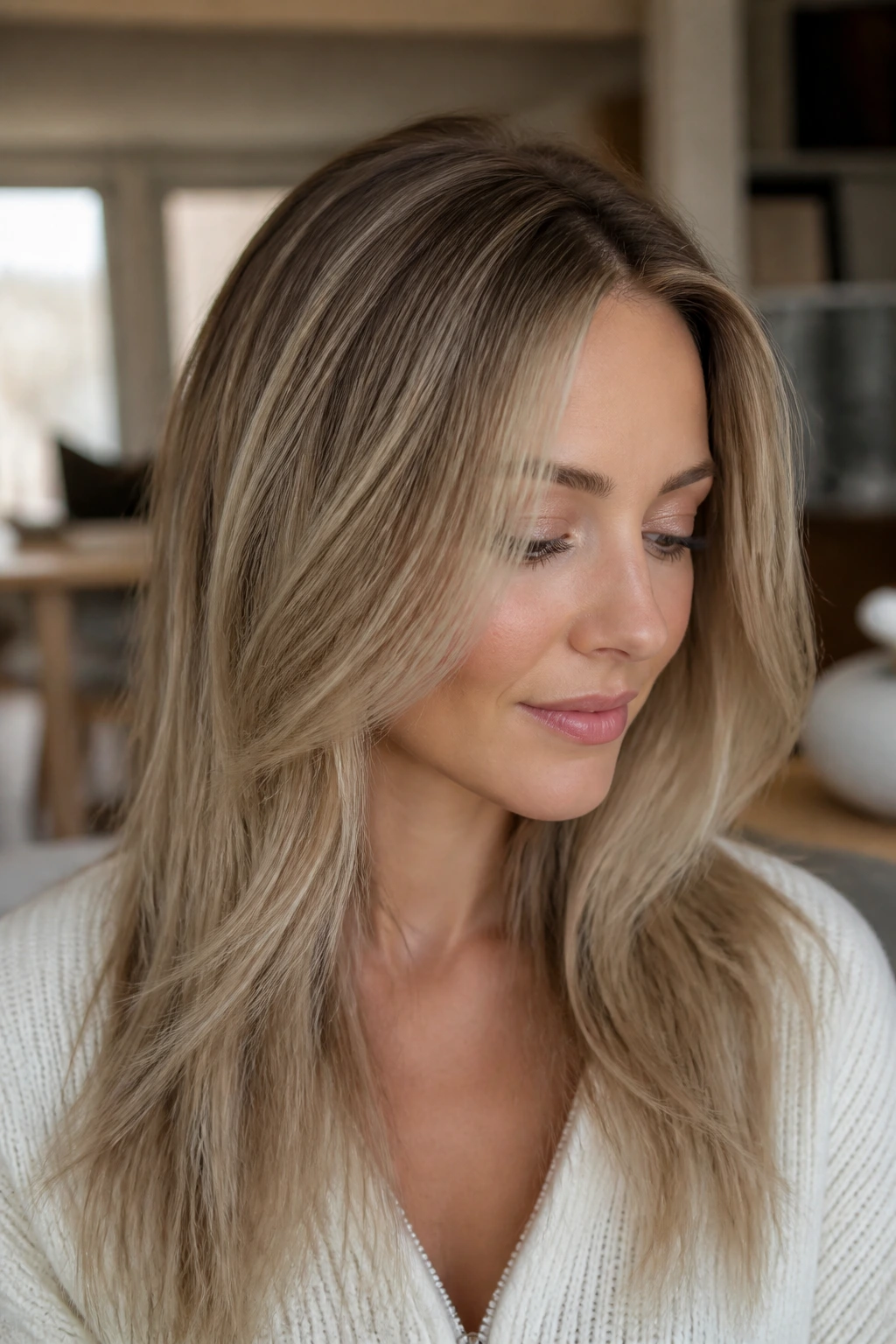
Cashmere blonde is the one I point to when someone wants blonde but doesn’t want to look bleached. It’s a neutral beige with a soft brown undertone, almost like a light sweater color translated into hair.
Because the base stays a touch deeper, cashmere blonde helps fine hair look fuller. The color isn’t trying to be the lightest thing in the room; it’s trying to be the softest. That makes it a good bridge shade if you’re moving from brunette to blonde and don’t want a hard jump.
11. Buttercream Balayage
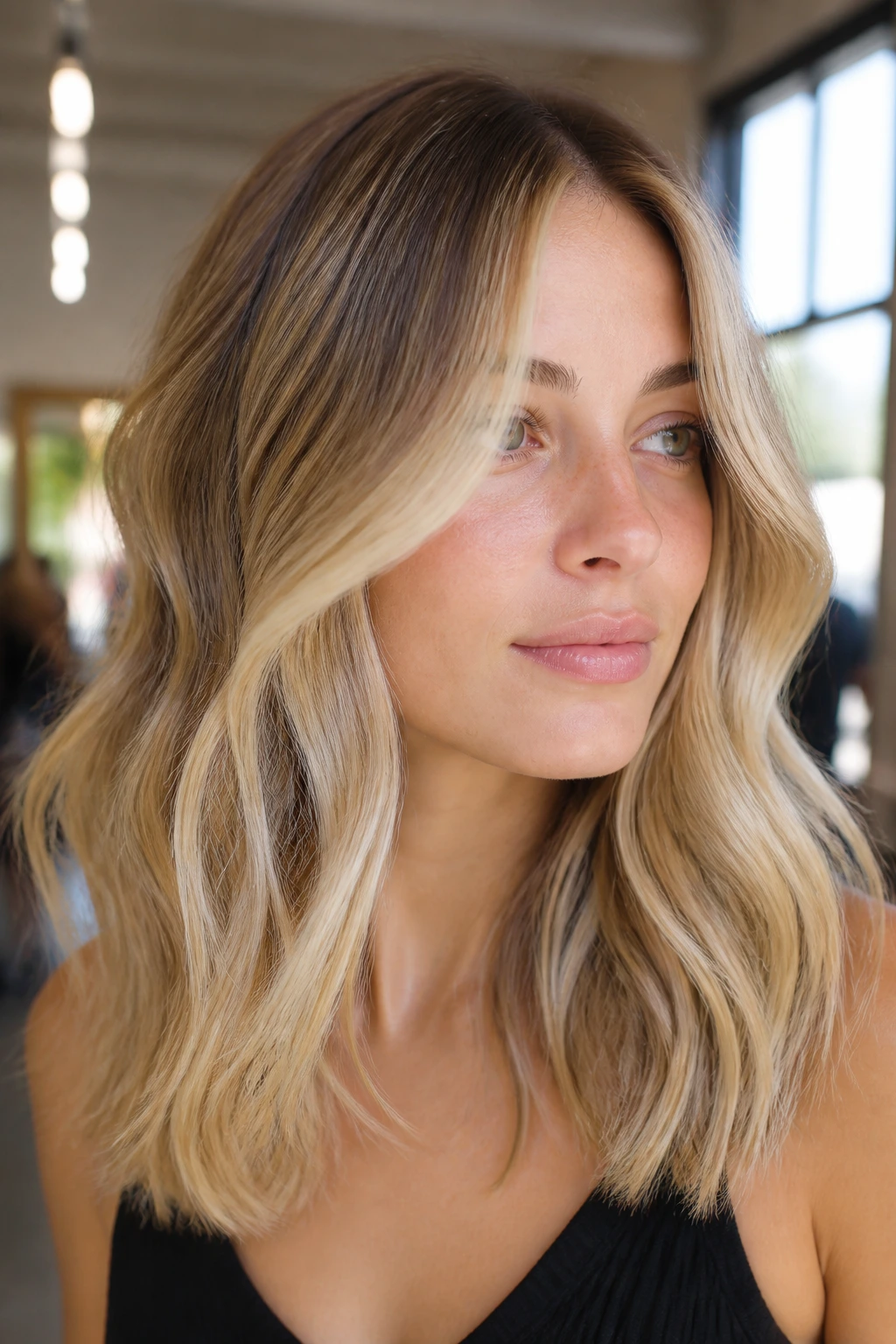
Buttercream balayage keeps the brightness where it matters. The face-framing pieces get lifted first, the mids stay buttery, and the interior keeps enough depth that thin hair doesn’t look stripped.
I like this especially on longer bobs and collarbone cuts. The movement comes from placement, not from bleaching every strand to the same level. Ask for lighter pieces around the cheekbones and jaw, then keep the back a little softer. That way the color reads bright without flattening the crown.
12. Sandy Beige Blonde
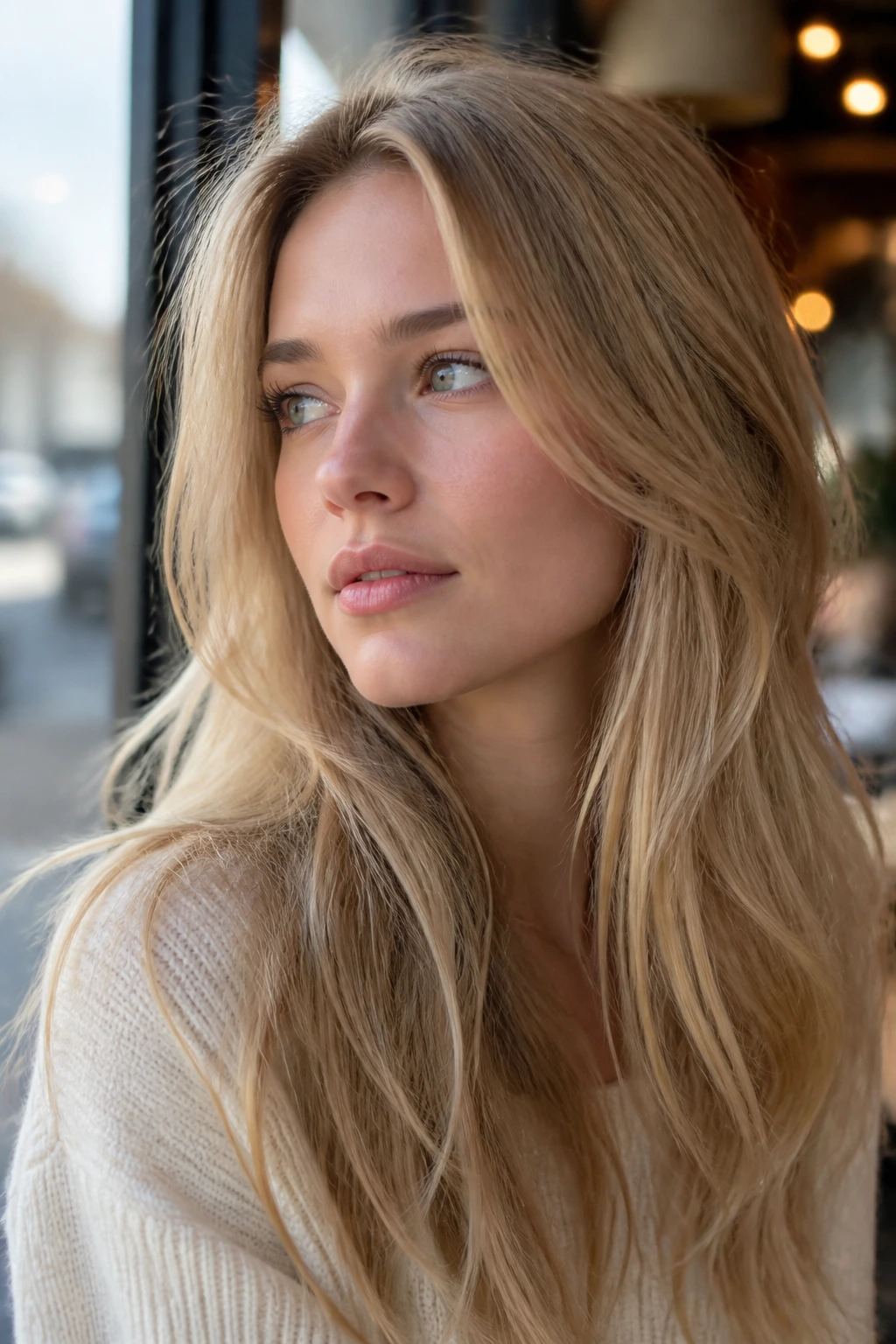
Sandy beige blonde is one of those shades that sounds plain and looks expensive. It sits in the middle of cool and warm, which makes it forgiving if you’re not sure whether your fair skin leans pink, peach, or neutral.
The muted tone also helps fine hair because it doesn’t break into harsh stripes. You get a soft wash of light instead of obvious sections. If you want blonde that won’t fight with your skin tone, this is one of the safest bets in the whole bunch.
13. Rose Beige Blonde
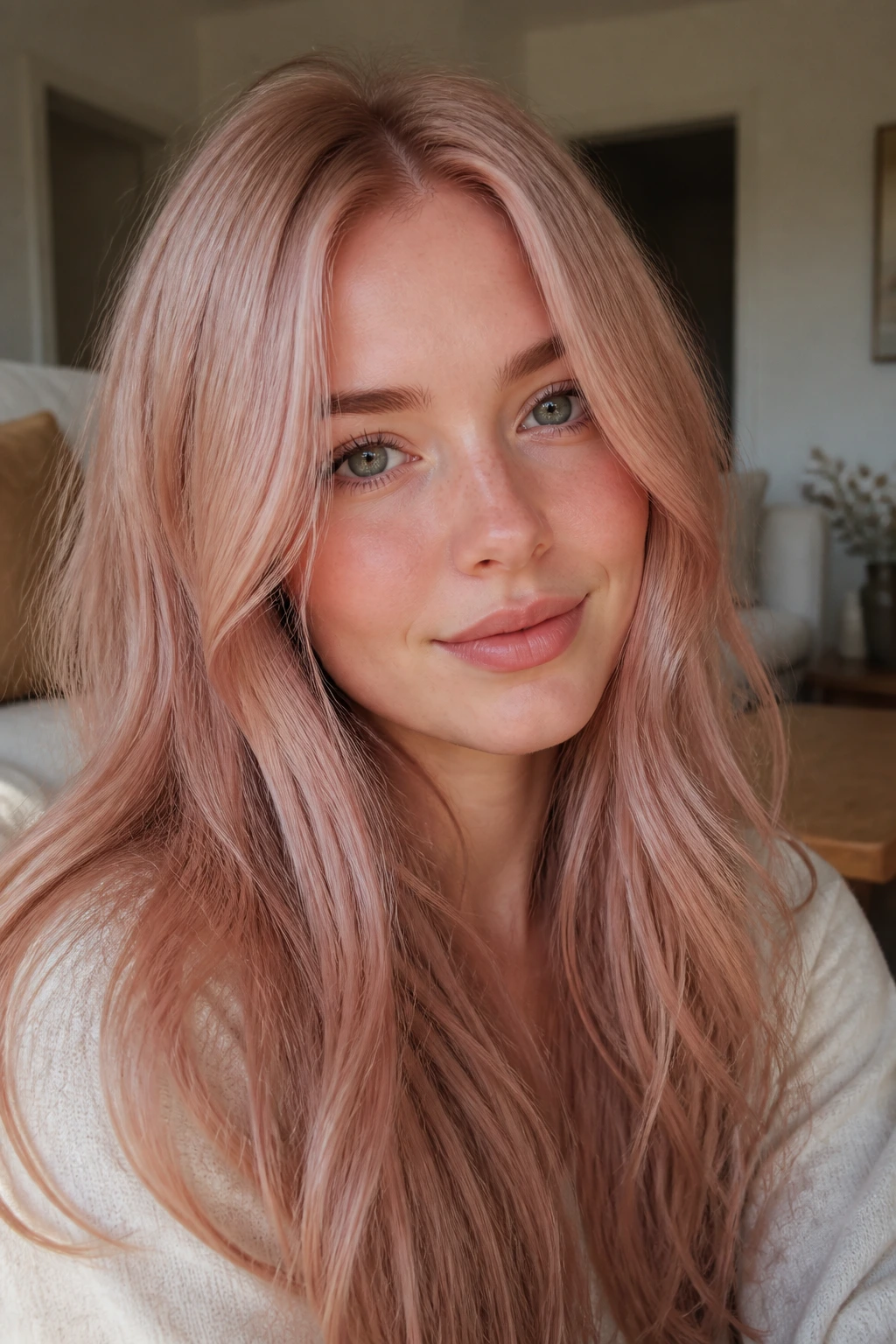
Rose beige is the blonde for fair skin that flushes easily. It has a blush-tinted softness that can make redness look intentional instead of accidental, which is a nice trick when your cheeks go pink in cold weather or under hot lights.
Keep the rose subtle. If it goes too pink, it starts to look fashion-colorish instead of wearable. On thin hair, the beige base keeps the color from floating away from the ends. A soft lob or face-framing layers help the tone look controlled.
14. Vanilla Latte Blonde
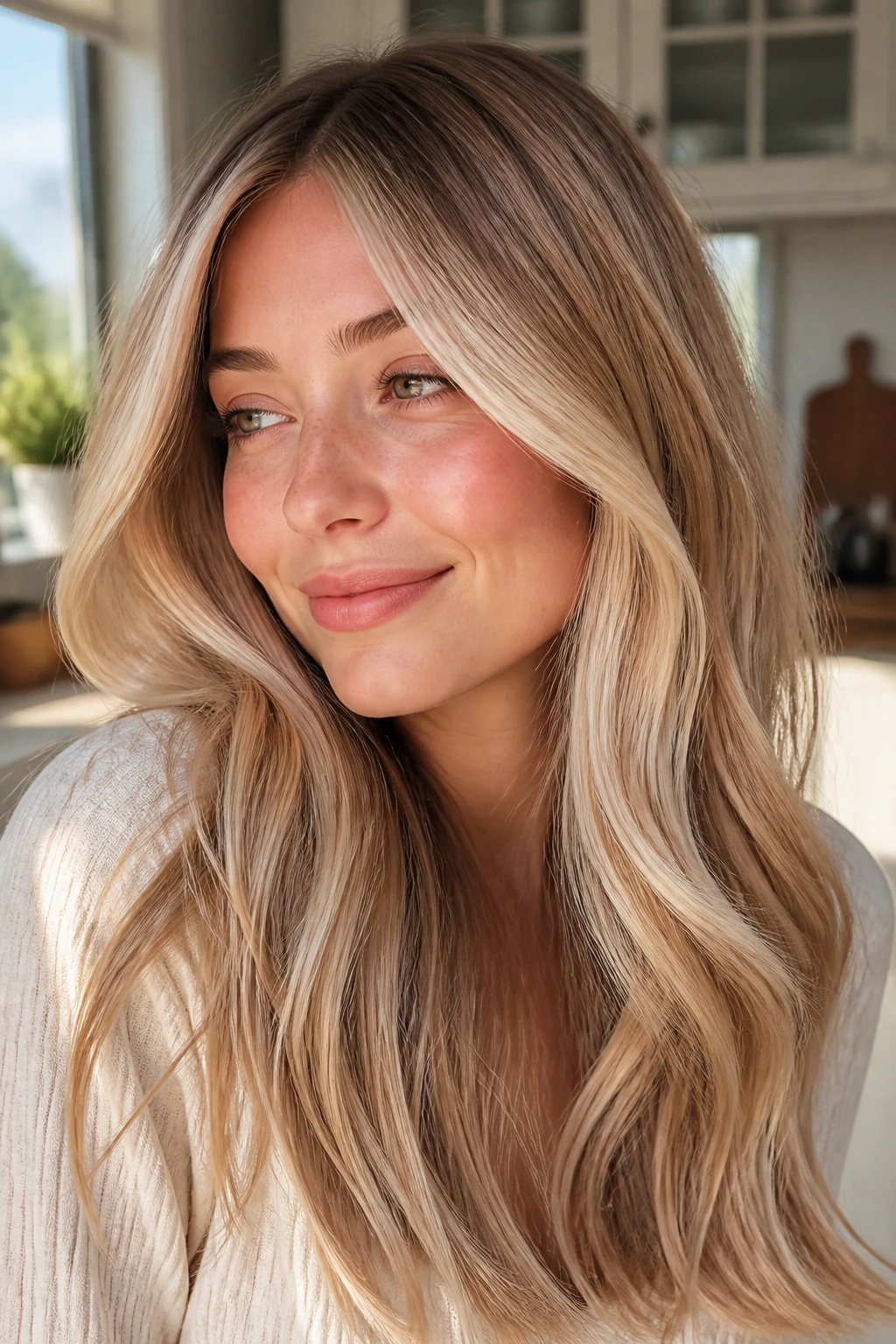
Vanilla latte blonde is a creamy blonde with a coffee-tinted root melt. That little bit of depth at the top is the whole point. It gives fair skin contrast and gives thin hair a stronger shape at the scalp.
This one is low-maintenance in the best way. The root grows out softly, and the blonde mids stay bright enough to keep the face lifted. If you wear your hair straight a lot, the vanilla latte effect can look especially smooth because the color gradation mimics shine.
15. Bright Money Piece Blonde
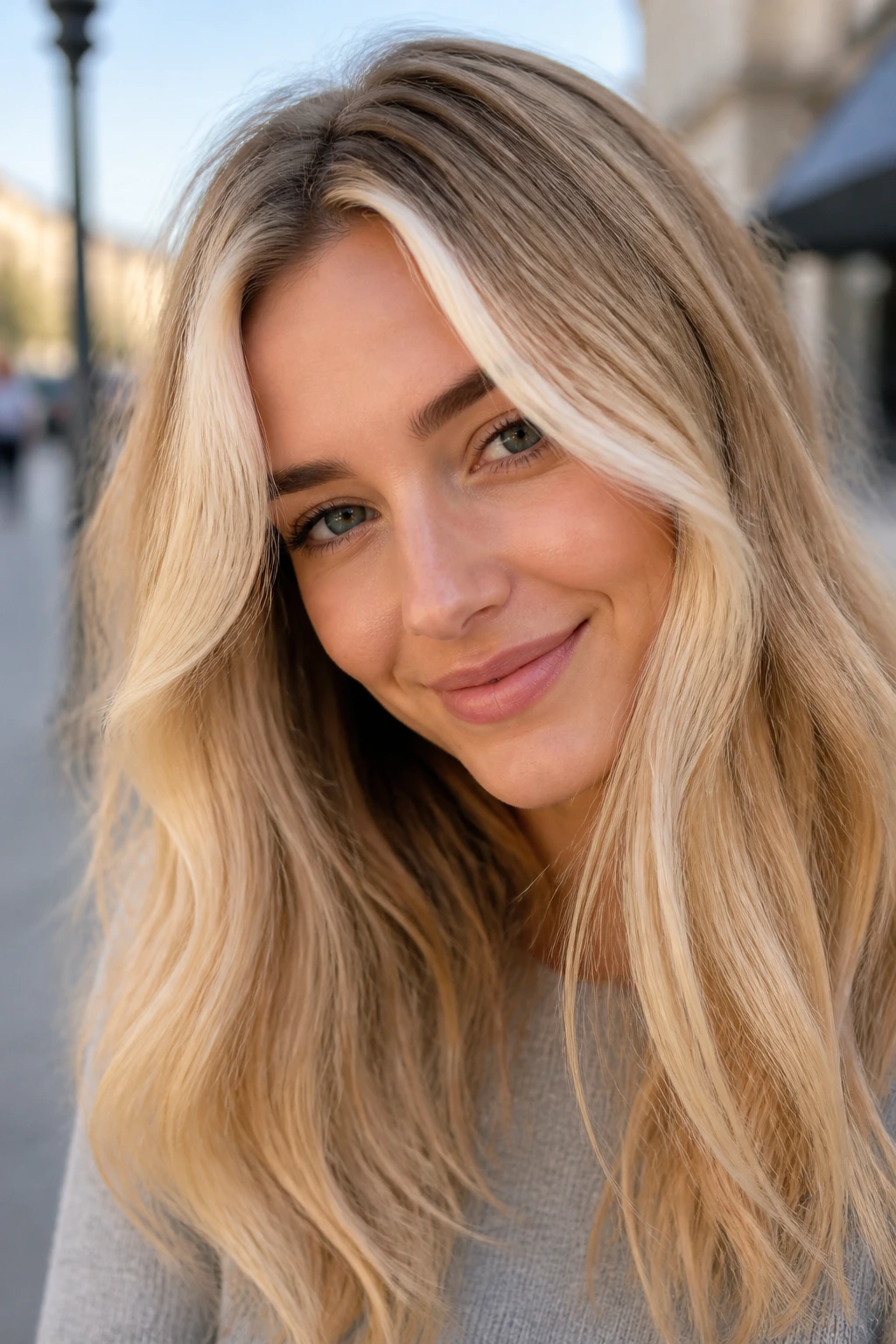
Sometimes you do not need more blonde everywhere. You need more blonde in the front. Bright money pieces around the face can change the whole mood of fine hair without bleaching the crown to death.
That front brightness draws the eye to the cheekbones and eyes, while the deeper midsection keeps the style from looking thin. I like this when the rest of the hair stays beige, sandy, or cashmere. It gives you contrast where you want it and softness where you need it.
16. Bronde Melt
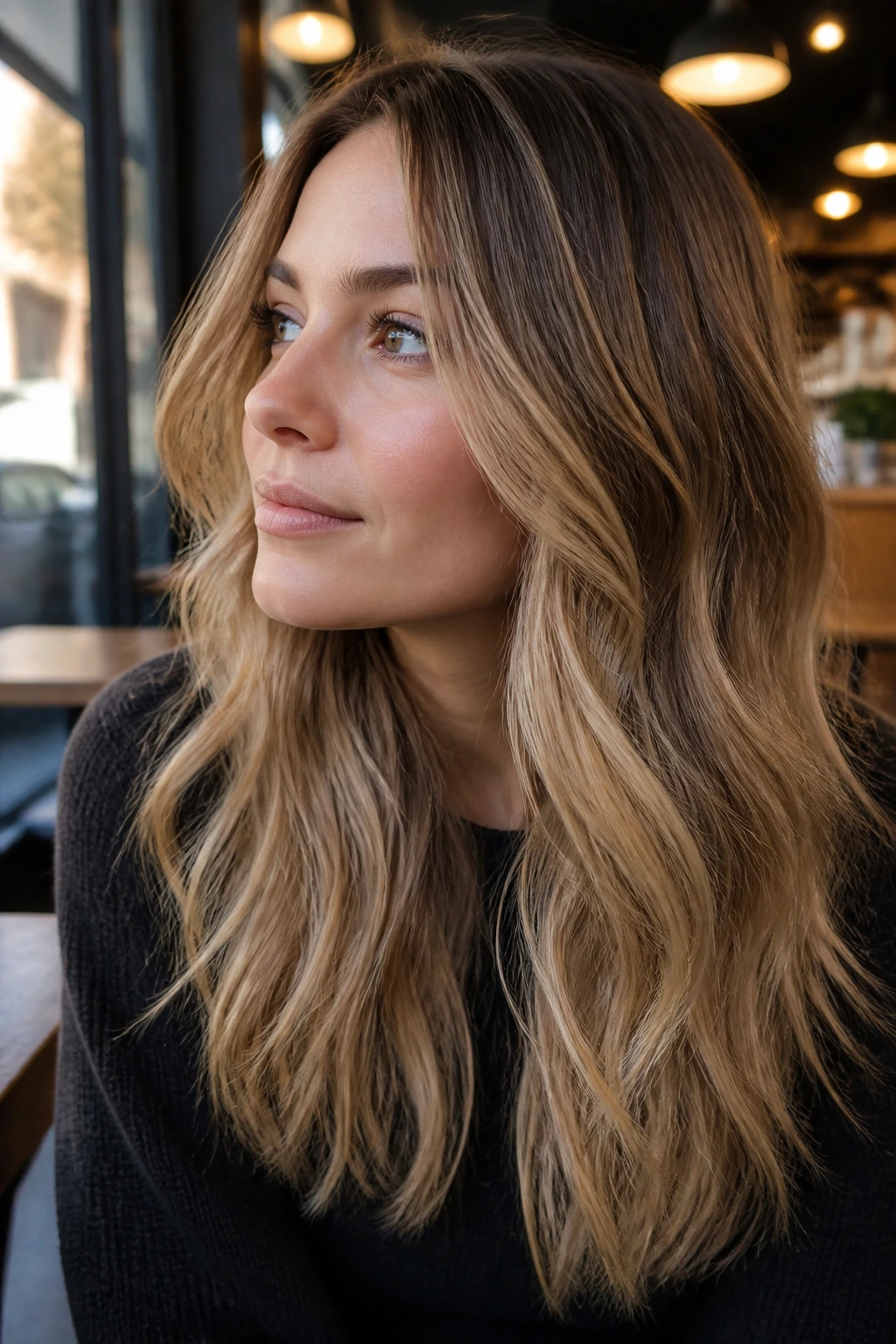
Bronde melt is the answer for anyone who likes blonde but hates the look of a hard line. It’s a light brown-to-beige-blonde transition that keeps fair skin from looking washed out while protecting the hair’s visual density.
This shade is especially useful if your natural color isn’t very dark. You can keep the root close to your base and let the lighter mids do the work. On thin hair, that gradual change is better than dramatic contrast, because the eye reads the whole head as fuller and softer.
17. Cream Soda Blonde
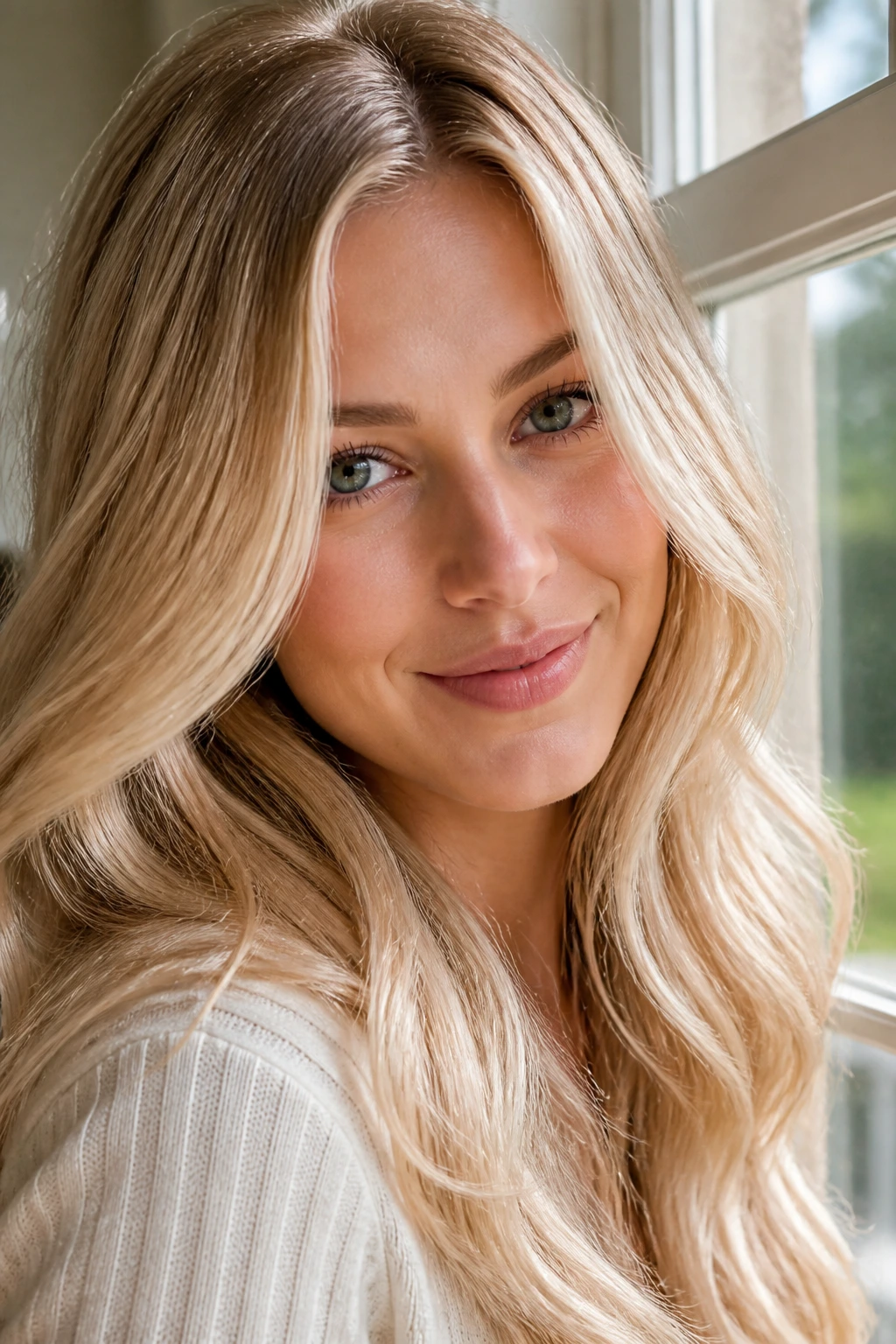
Cream soda blonde has a little sparkle in it. The tone is creamy, but there’s a hint of gold that makes the hair feel lively instead of flat. Fair skin with a neutral or lightly warm cast usually wears this well.
It’s also a good choice if you dislike ash completely. Ash can look dusty on some pale faces. Cream soda keeps the blonde bright, glossy, and slightly playful without leaning yellow. A gloss every few weeks helps keep that soft, fizzy quality.
18. Frosted Beige Bob
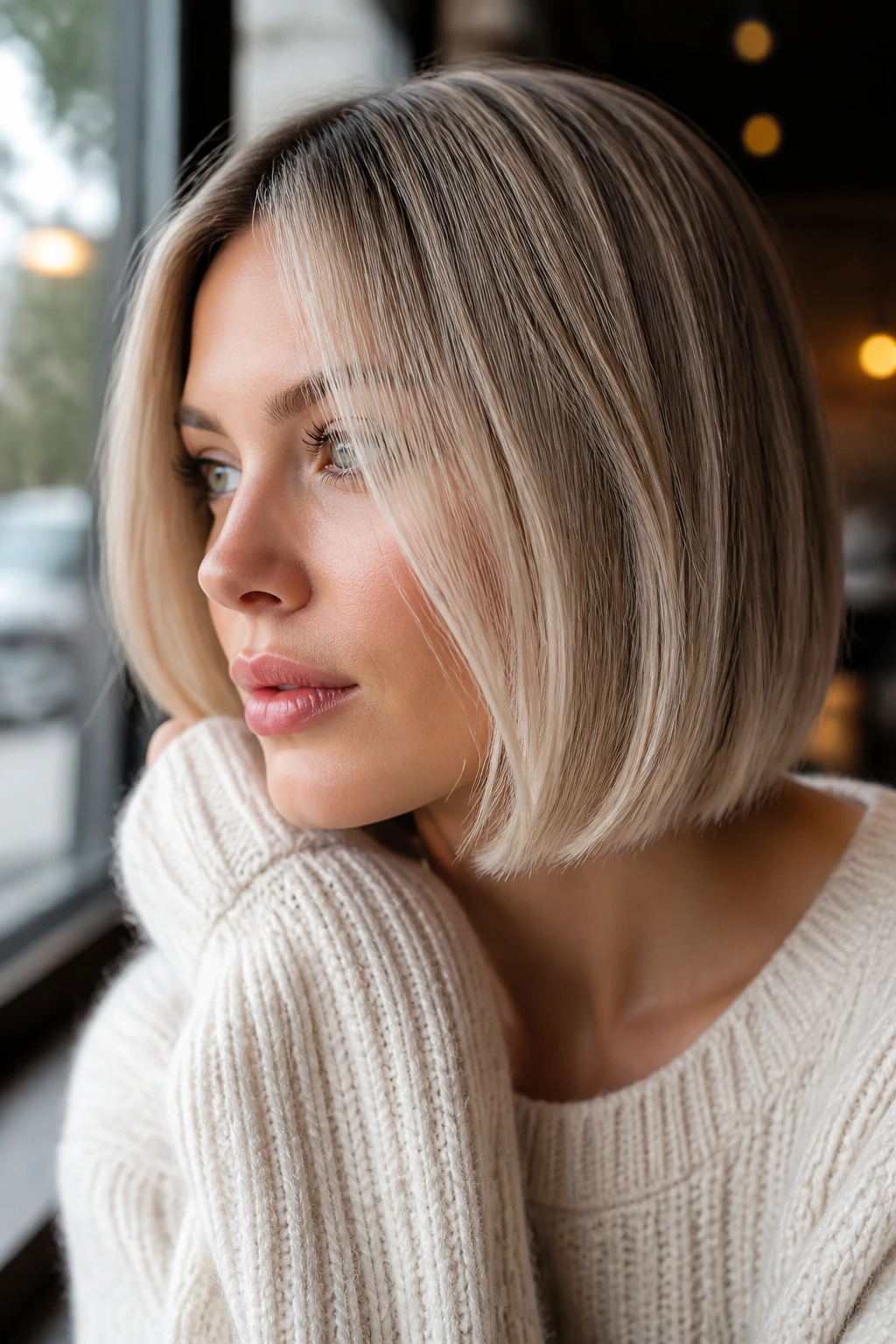
A blunt bob and frosted beige color are a stronger pair than people expect. The cut keeps the outline full, and the frosted beige highlights add lightness without breaking up the ends too much.
This is one of my favorite looks for thin hair because the haircut is doing half the work. The color just adds lift. Ask for lighter pieces concentrated on the top layer and around the face, then keep the underside a shade deeper so the bob reads dense from every angle.
19. Apricot Blonde
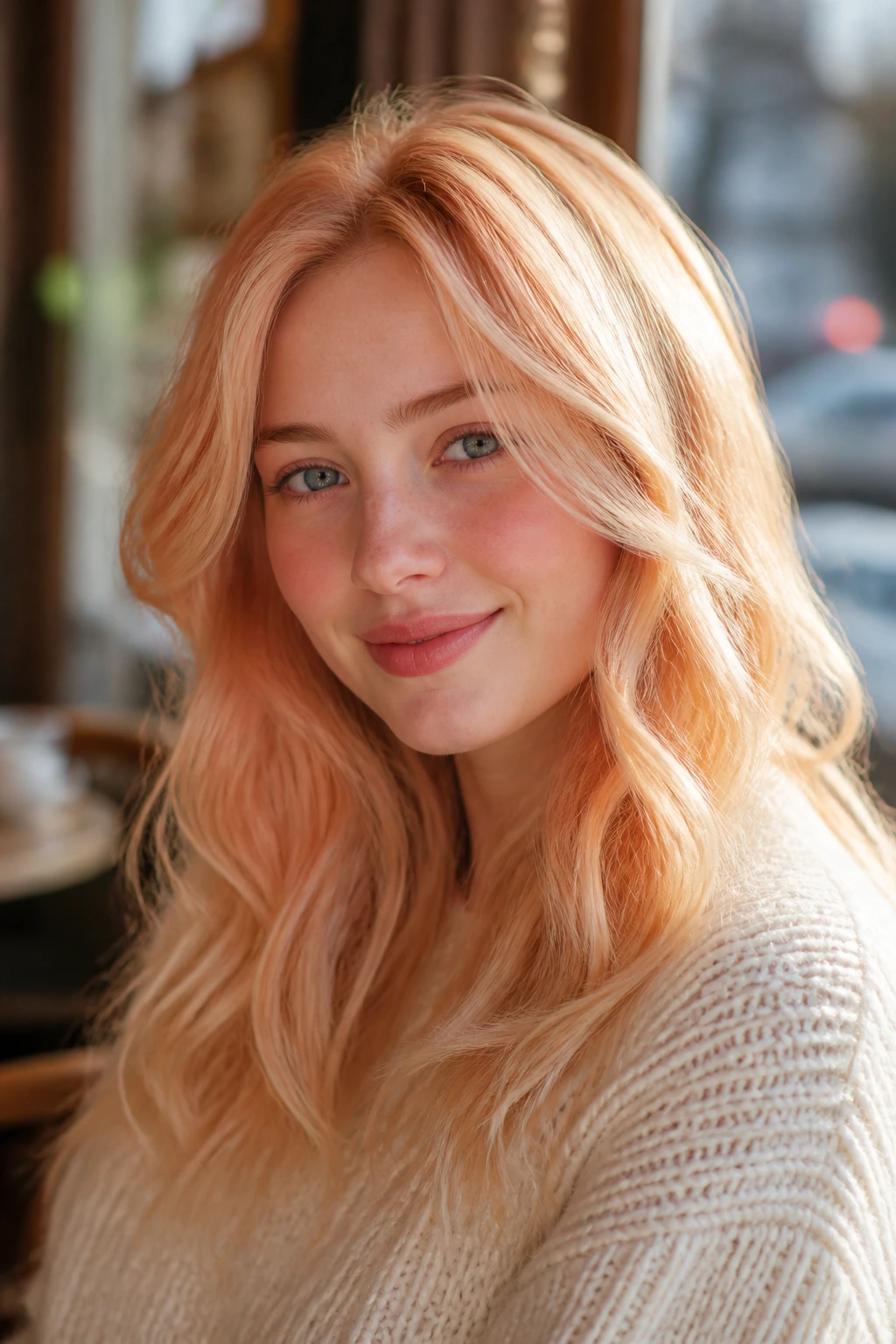
Apricot blonde sits warmer than strawberry blonde and softer than copper. On fair skin with a little peach in it, that can be gorgeous. It wakes the face up without turning the whole head into a red shade.
The main caution is overdoing the warmth. If apricot gets too strong, it can flip into orange fast. Keep the base blonde creamy and let the apricot live in the glaze or the fine highlights. Thin hair likes that kind of controlled warmth because it still looks light.
20. Smoky Beige Blonde
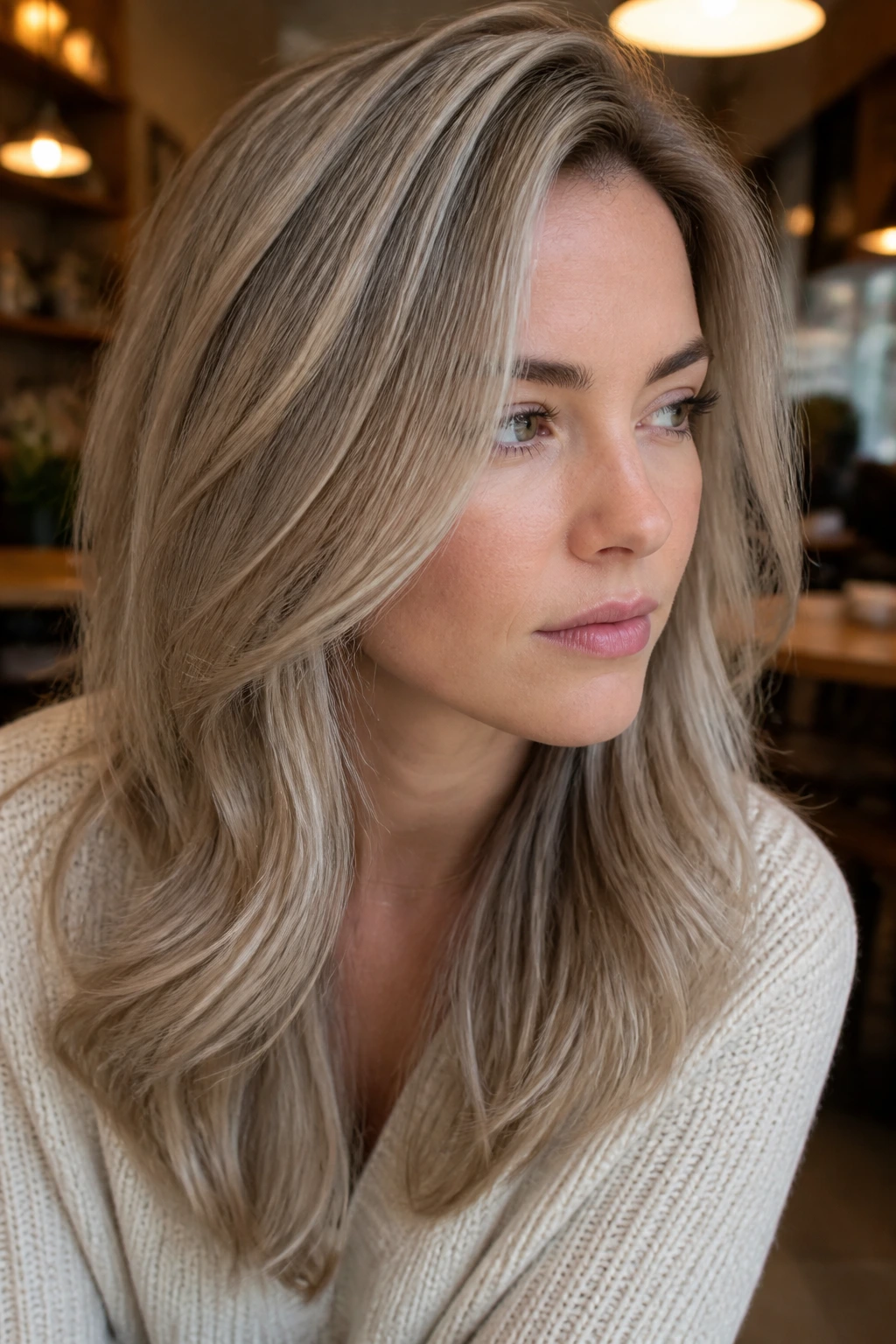
Smoky beige blonde is beige with a faint ash veil over it. Not gray. Not muddy. Just a little smoke. That tiny cool note helps if your fair skin gets red easily or if pure gold makes you look more flushed.
I’d describe this shade as calm. It does not fight the face. It softens it. On finer hair, smoky beige also adds the illusion of thickness because the tone has depth without sharp contrast. If you want a blonde that feels grown-up and understated, this is one to keep on the list.
21. Golden Veil Highlights
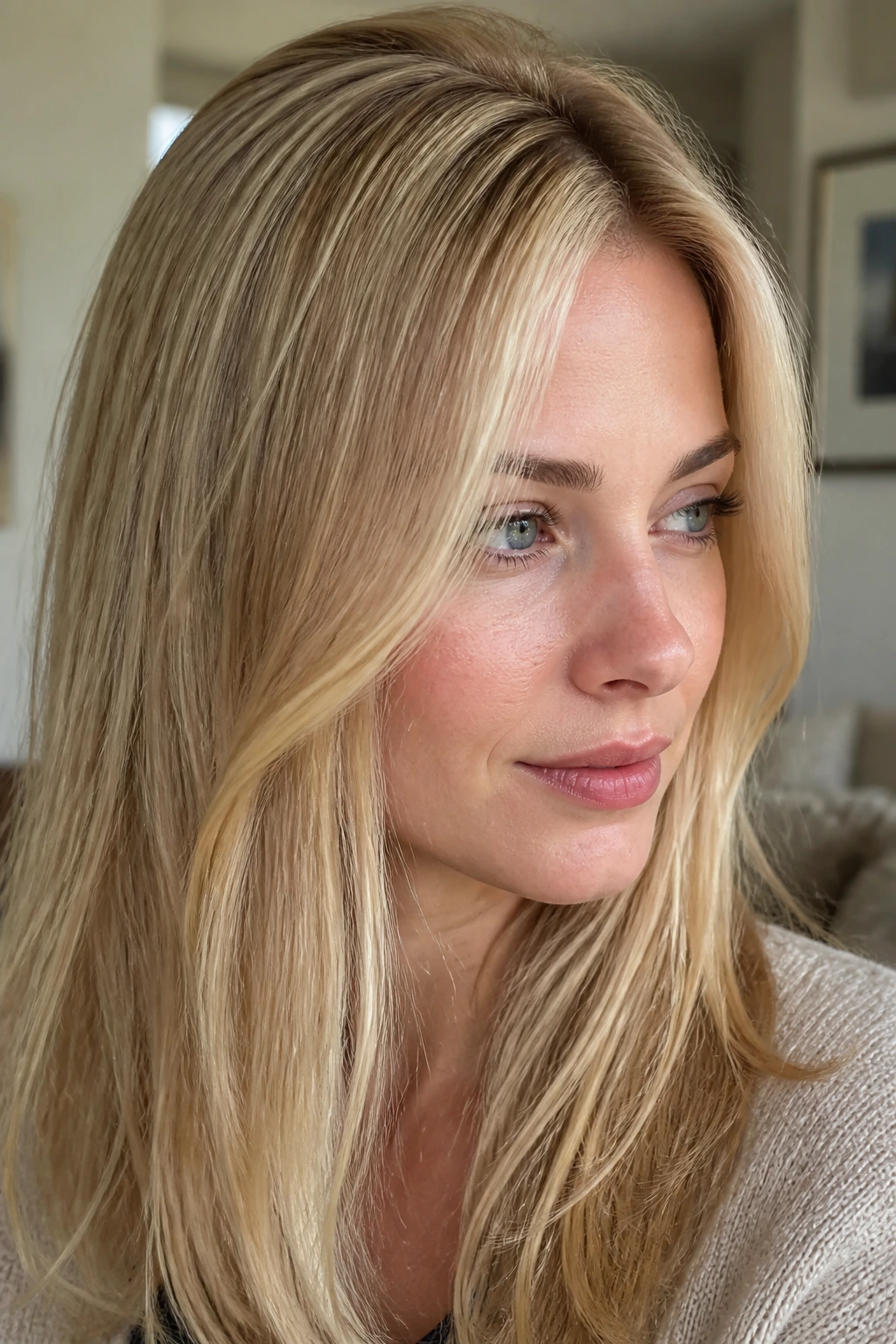
Golden veil highlights are tiny, warm ribbons placed so lightly they almost disappear into the base. The effect is less “highlighted” and more “lit from within,” which is a good place to be when your hair is thin and your skin is fair.
This style works because the gold is spread thin. You get movement without stripes. The veil-like placement keeps the top layer airy while letting the lower layers stay a bit deeper. That combination makes the hair look textured without looking busy.
22. Pearly Beige Lob
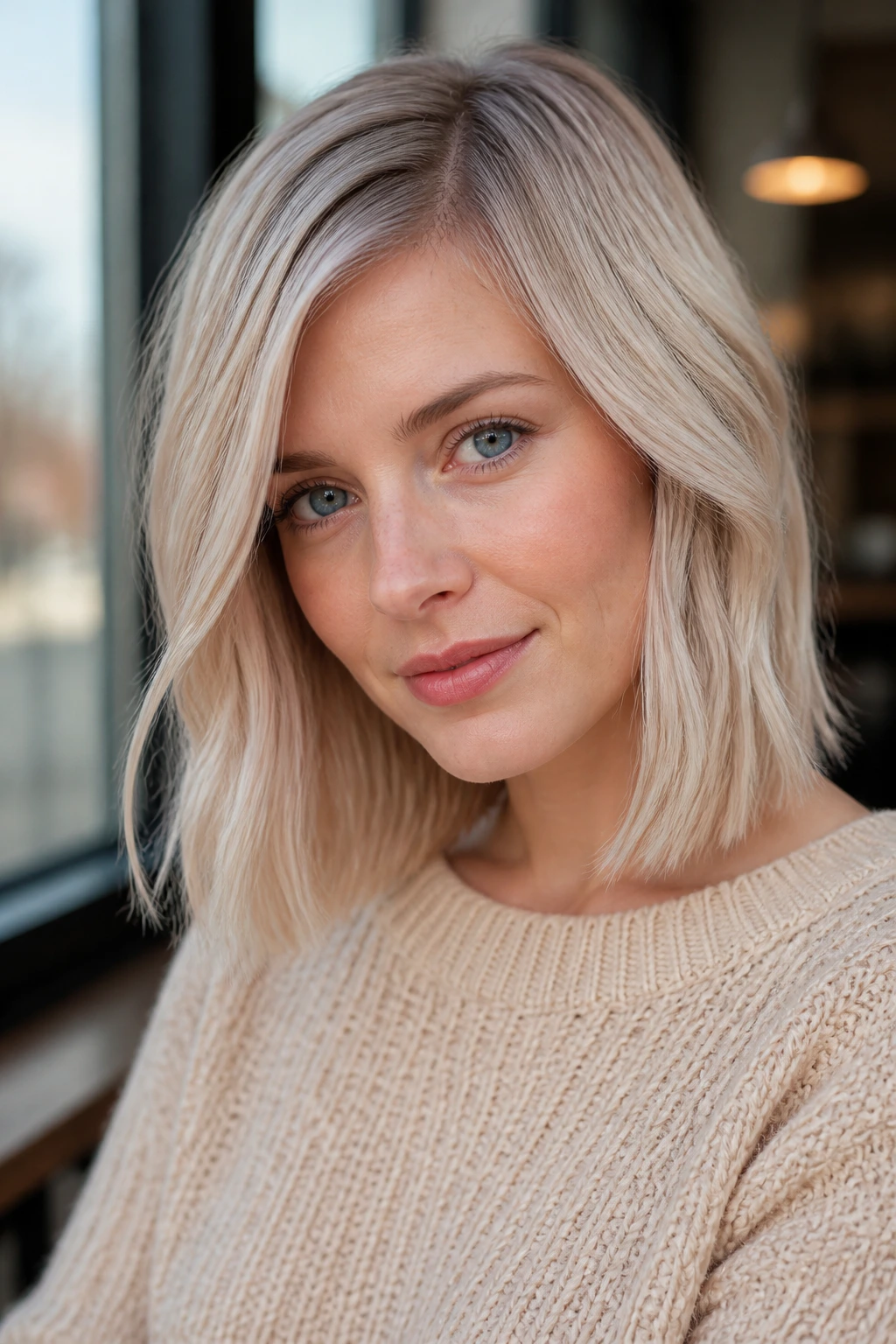
A pearly beige lob is one of the easiest ways to make fine hair look intentional. The collarbone length gives the ends enough weight to hold a shape, and the pearl-beige tone keeps the blonde soft against fair skin.
The cut matters here almost as much as the color. If the lob is blunt or only softly layered, the color looks thicker. If it’s too shredded, the pearl tone can drift into transparency. I prefer a side part with a loose bend through the mid-lengths; it keeps the whole thing from collapsing flat.
23. Honey Ribbon Blonde
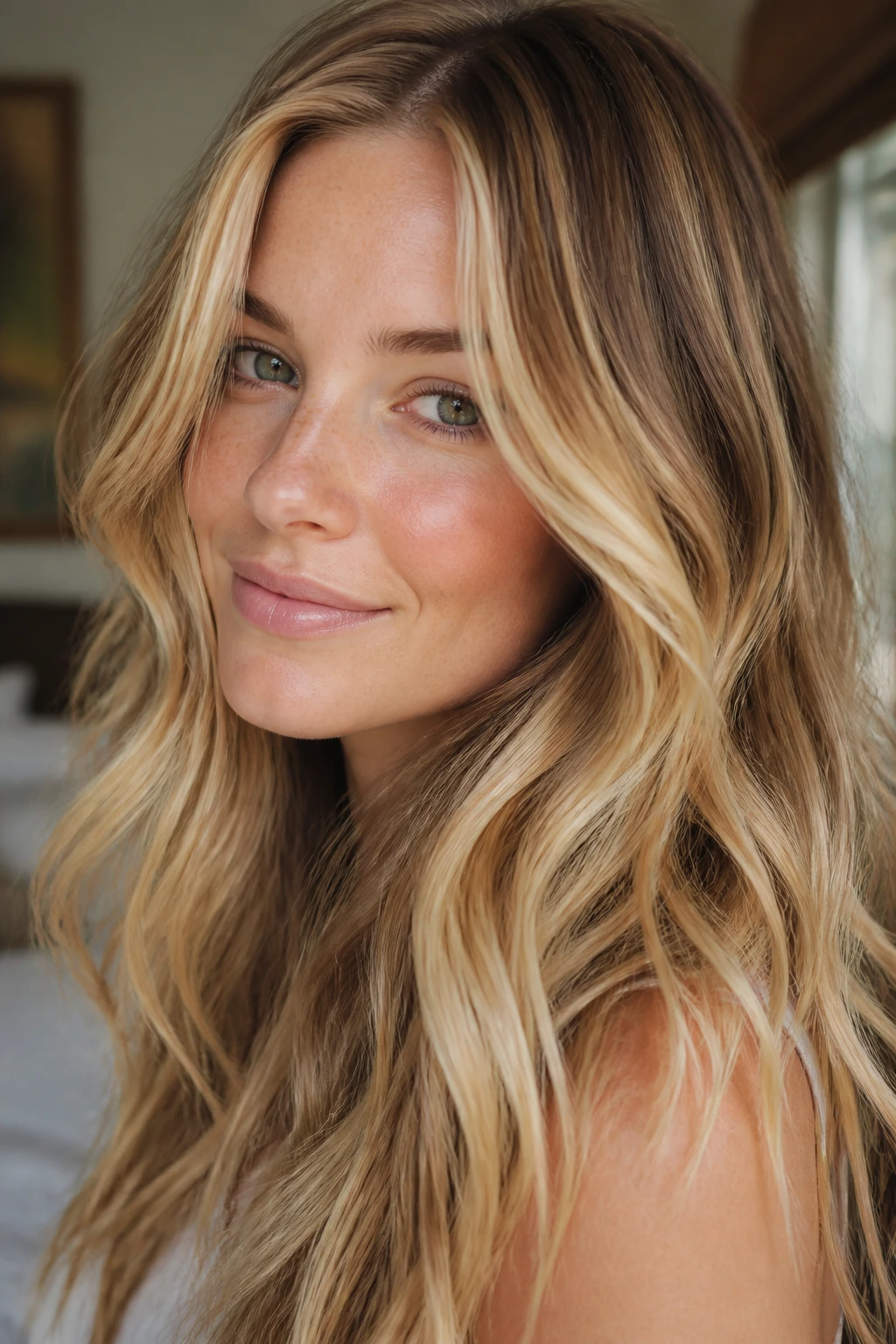
Honey ribbon blonde uses narrow bands of warmth instead of one giant warm blanket. That’s the move on fair skin that can wear gold but not yellow. The ribbons should follow the movement of the hair, not sit on top of it like a stripe.
This is especially pretty on waves because the honey catches the bends. Thin hair benefits because the ribbons create motion without making the head look overcolored. If you want warmth but still want softness, this lands in the right place.
24. Satin Vanilla Blonde
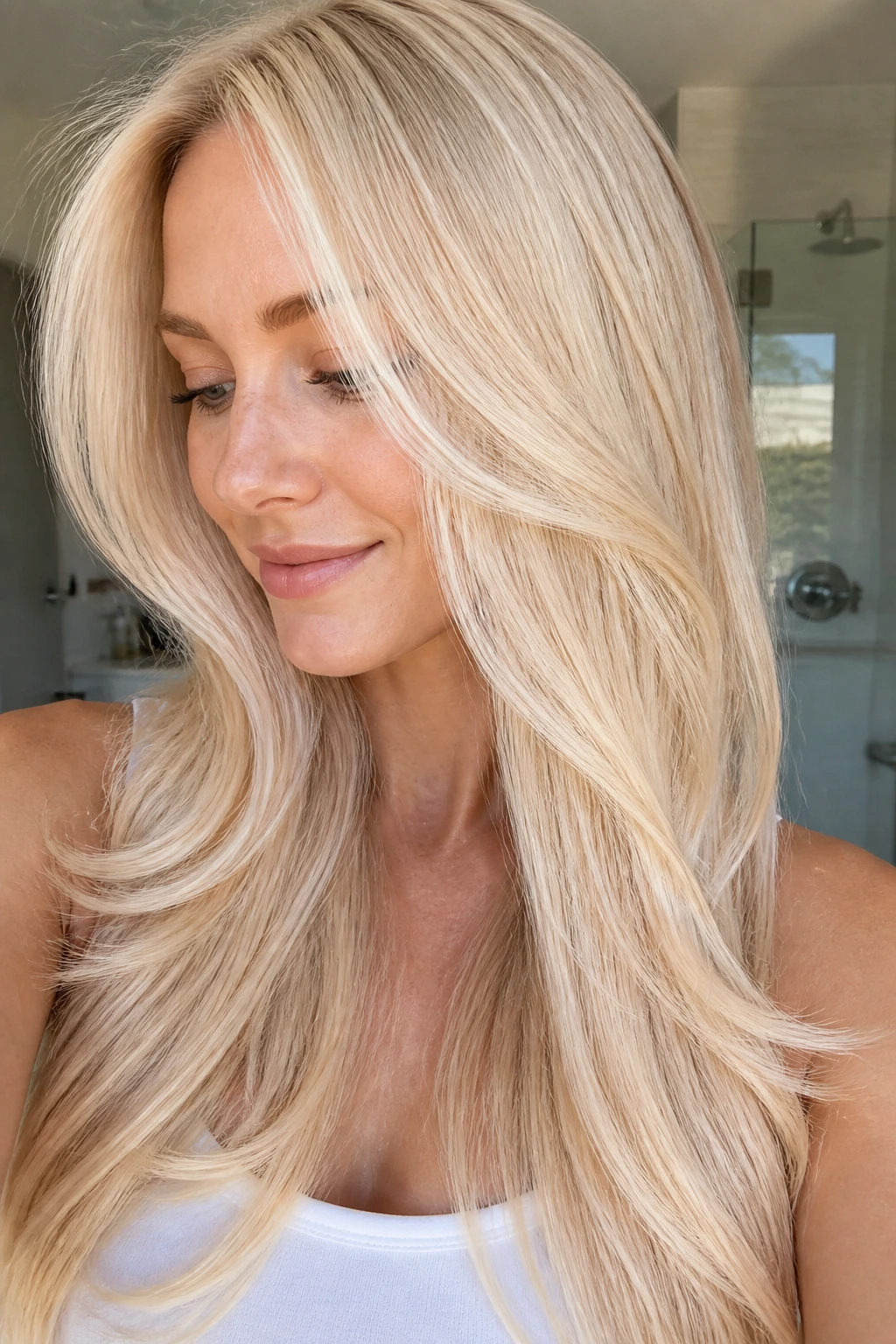
Satin vanilla blonde is creamy, muted, and glossy in a way that feels smooth rather than loud. The color itself is soft enough for fair skin, but the real appeal is the finish. Thin hair often looks better when it shines than when it’s teased into texture.
Ask for a vanilla base with a satin-toned gloss — not heavy gold, not icy silver. The result should look polished and a little cushioned. I like this on straight or softly waved hair because the shine gives the illusion of more strands than are actually there.
25. Soft Oyster Blonde
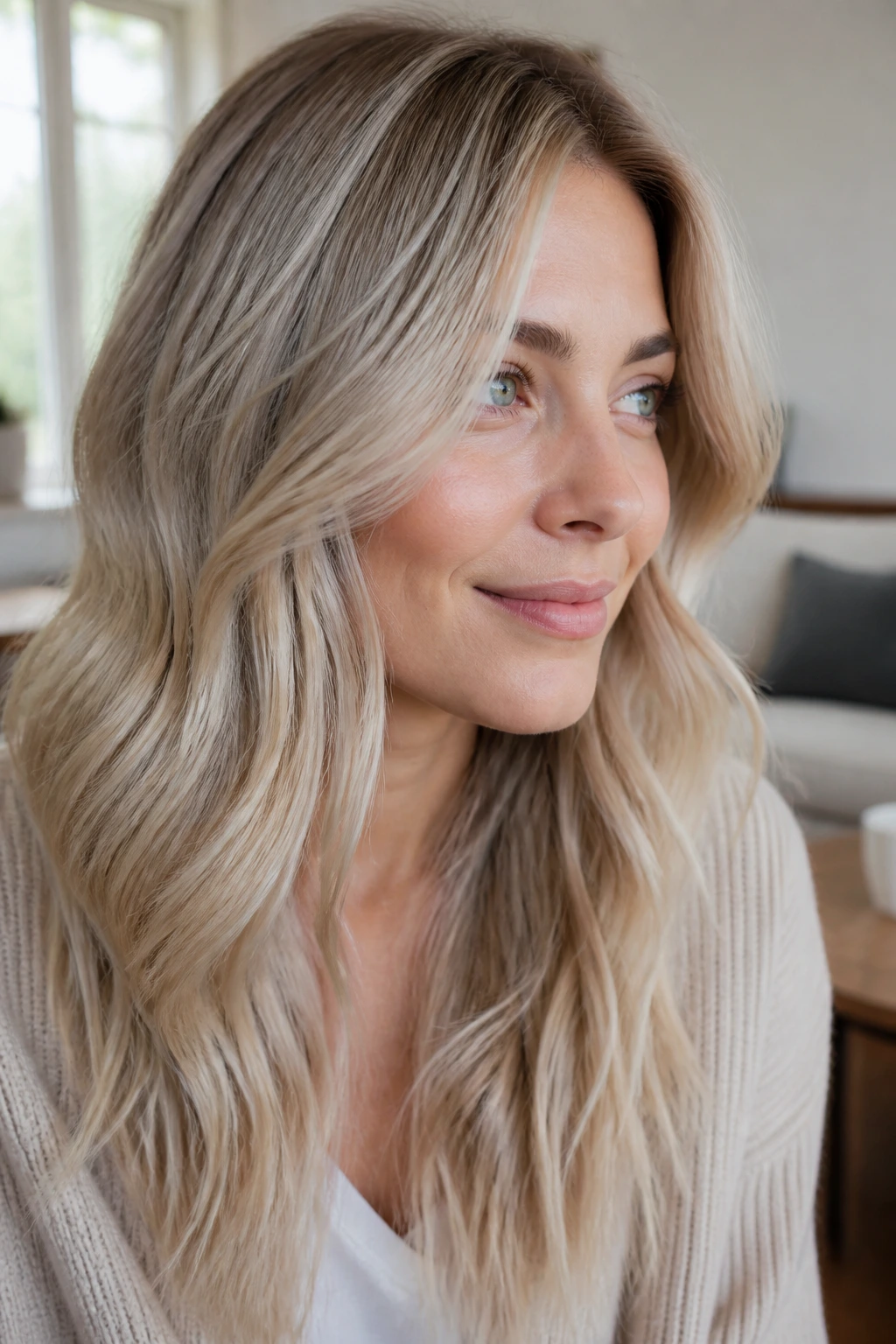
Soft oyster blonde is my final pick because it threads the needle so neatly. It mixes pearl, beige, and a whisper of smoke into one quiet, wearable blonde that flatters fair skin without washing it out.
On thin hair, the color’s real strength is that it never looks one-note. The soft tonal shift from root to mid-length to end gives the eye places to land, which helps the hair read fuller. If you want one blonde that can sit between cool and warm and still feel easy to wear, this is the one I’d hand to most people first.
Why Dimensional Blonde Gives Fine Hair More Presence
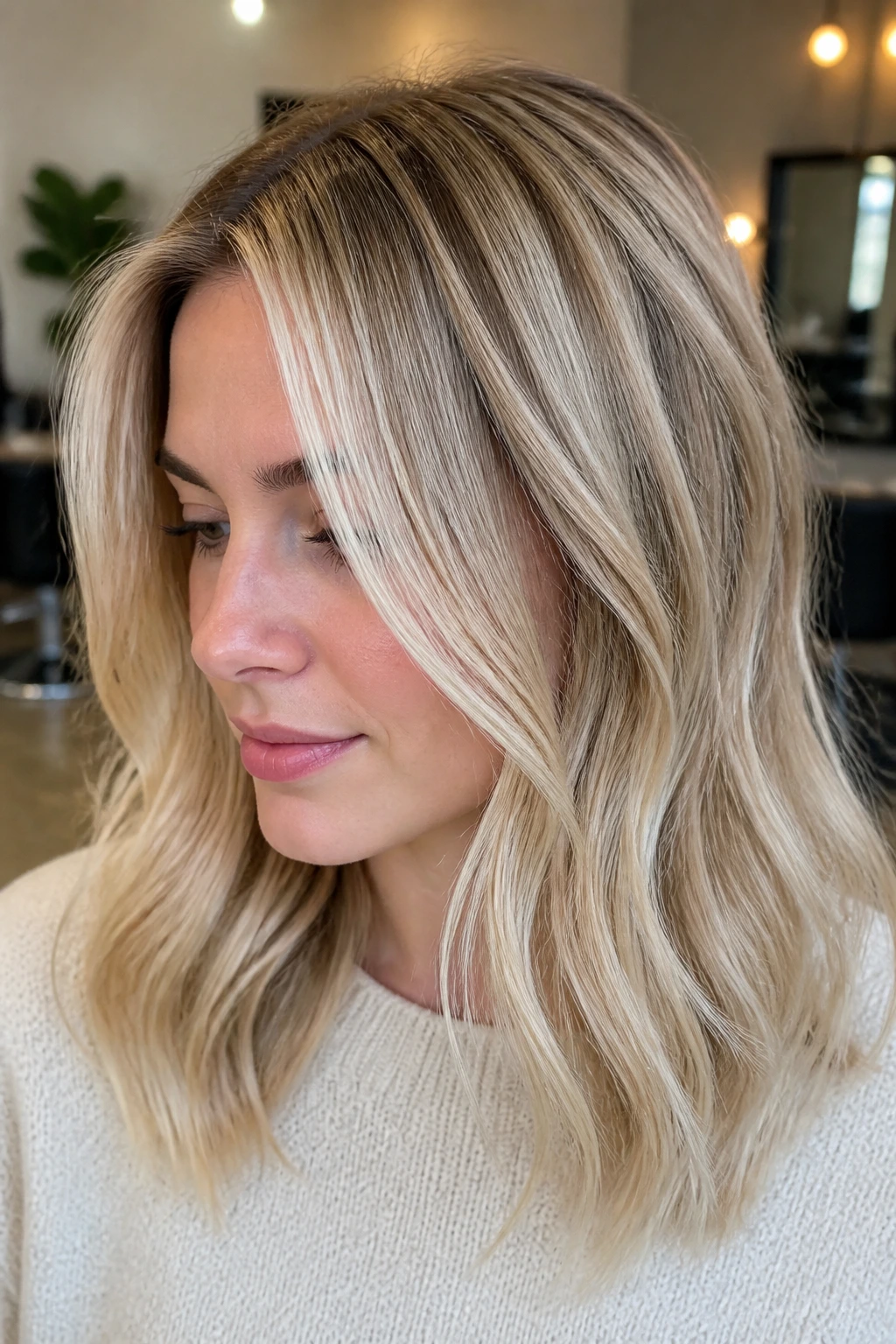
Flat color is the enemy here. Not because flat color is ugly — it can be gorgeous on the right haircut — but because thin hair does not have much room to hide a mistake. If every strand is lifted to the same pale level, the eye can start to see scalp, see gaps, and see the ends before it sees the shape.
Dimension gives the hair a stronger outline. A soft root shadow, a few lowlights, and babylights woven through the top layer create depth that looks like thickness. The color doesn’t have to be dark to do this. It just needs contrast in the right places. A level 8 root against a level 9 or 10 blonde is enough to make the hair feel less transparent.
That’s also why beige, pearl, cashmere, and mushroom shades keep showing up. They do not flatten fair skin, and they do not fight with the limited density that fine hair gives you. I like those shades better than a stark single-process platinum for most people, because they hold up longer between appointments and they forgive a bad hair day better.
Tools and Products That Help the Color Look Finished
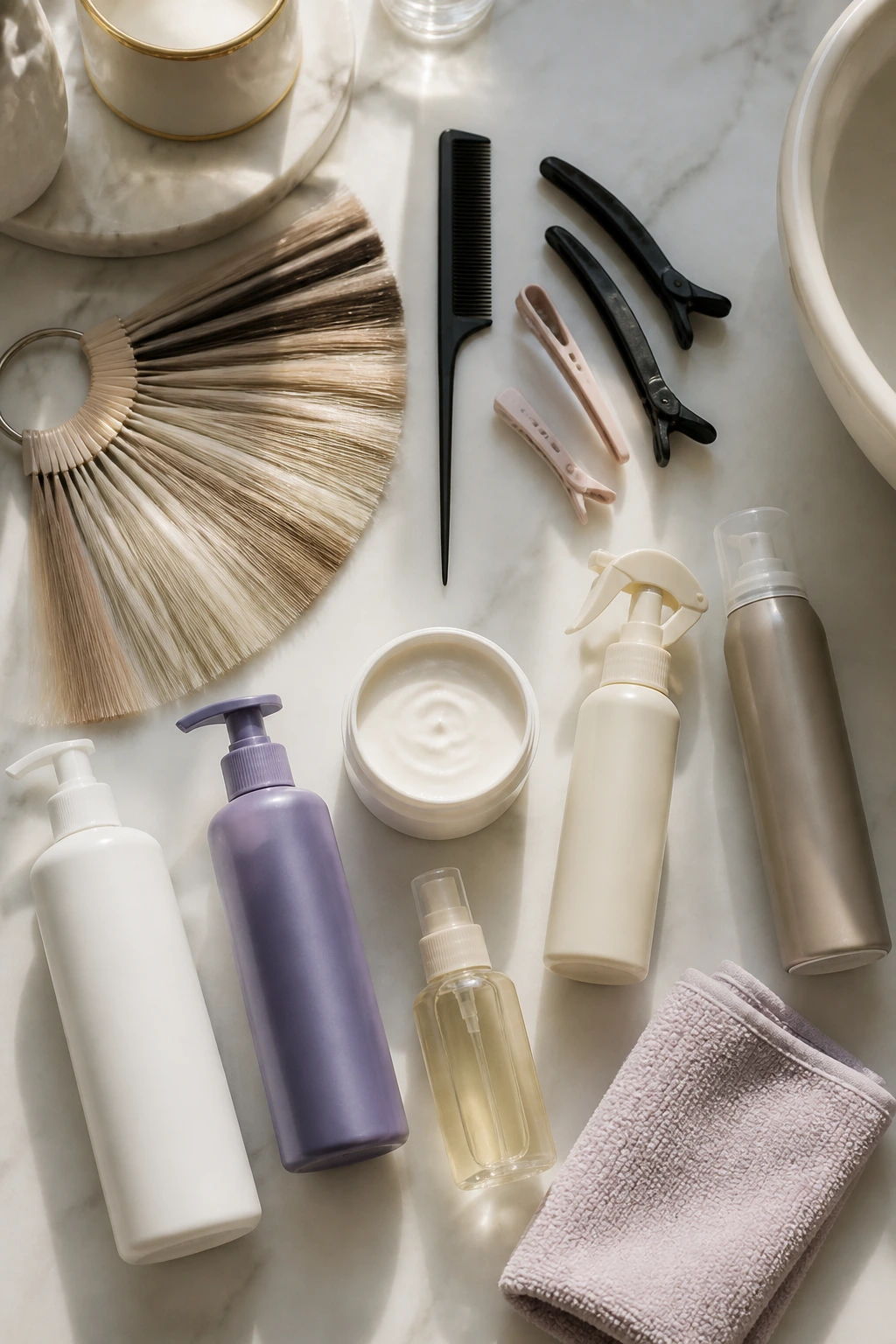
- A good level chart or salon swatch ring: It helps you explain how light or dark you want the blonde without arguing over words like “icy” or “beige.”
- A fine-tooth tail comb: Useful for sectioning and for seeing where a part is sitting if you’re styling at home.
- Sectioning clips: These keep the top layer out of the way when you dry, gloss, or tone your hair.
- Color-safe shampoo: Pick one that’s sulfate-free or at least gentle enough that it won’t strip gloss after two washes.
- Purple shampoo: Keep it for brass, not for every wash. Fine hair can get dull fast if you overuse it.
- Bond-building mask: Hair that’s been lightened likes a weekly repair treatment, especially if it’s fine or fragile.
- Heat protectant spray: Blonde fades faster when it gets cooked by flat irons and curling irons.
- Root-lift mousse: A little lift at the crown makes fine hair look denser without needing a lot of tease.
- Lightweight shine spray or serum: Use a small amount on mids and ends only; heavy oils collapse thin hair in minutes.
- Microfiber towel or soft T-shirt: Rough drying swells the cuticle and makes pale blonde look frizzy instead of glossy.
How to Talk to Your Colorist Without Getting Lost in the Words
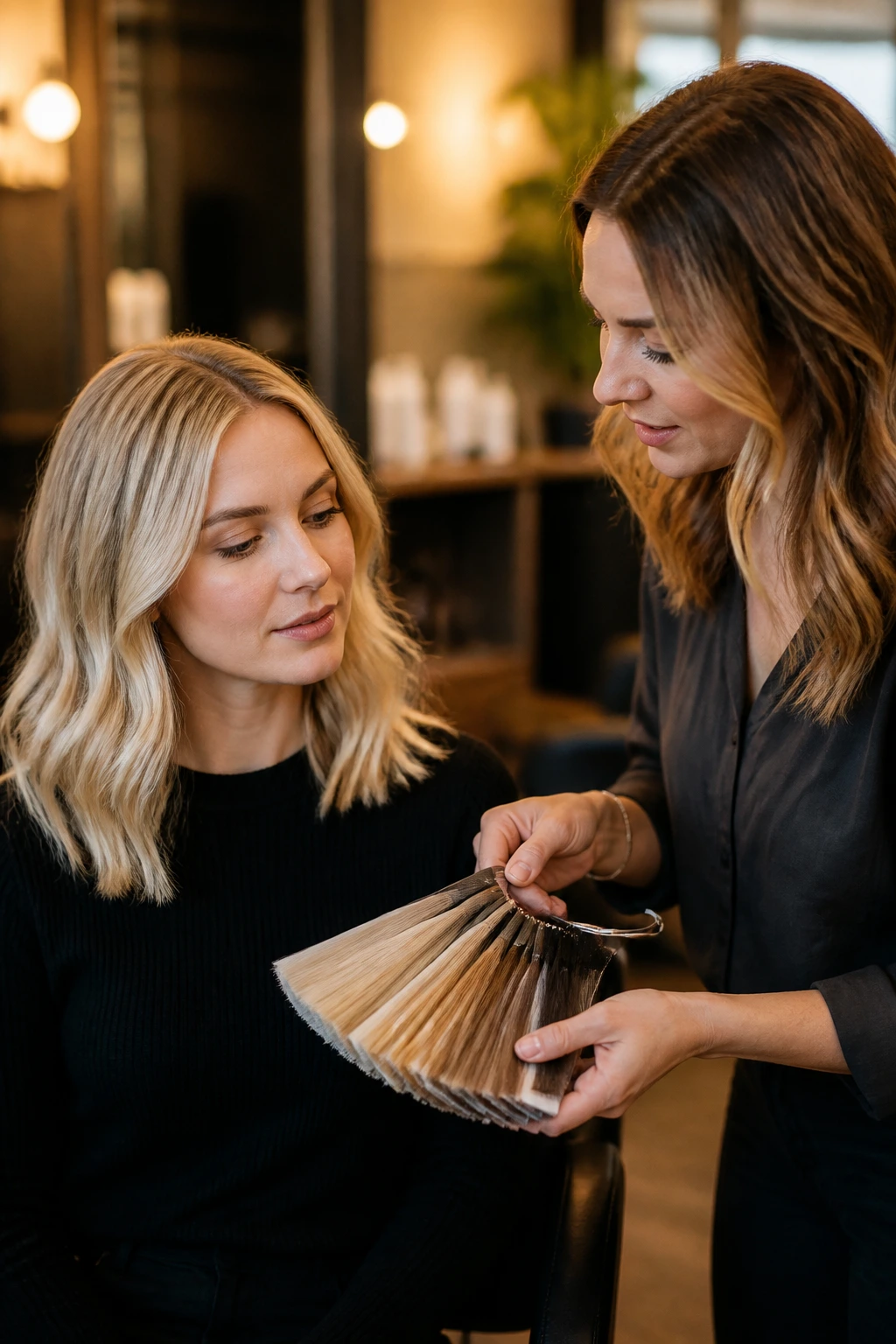
The easiest way to get a good blonde is to stop using only shade names. Bring photos, yes, but bring the right photos. One for tone. One for placement. Those are not the same thing. A picture of champagne beige on a blunt bob does not tell the colorist whether you want the same tone in babylights, balayage, or a root melt.
Say what your fair skin actually does in daylight. Does it read pink? Peach? Neutral? Do you burn fast? Do you go dull next to ash? Those little details matter more than whether you say “blonde” or “bright blonde.” If you have thin hair, say that too. A good colorist will usually adjust the weave size, the placement, and the root depth before they ever touch toner.
I also like to be blunt about maintenance. If you can handle a gloss every four to six weeks, say so. If you want eight weeks between appointments, say that too. The answer changes the shade. A rooted beige blonde and a full ice blonde are not maintenance twins, and pretending they are only sets you up for regret.
How to Style Blonde Hair So It Reads Fuller
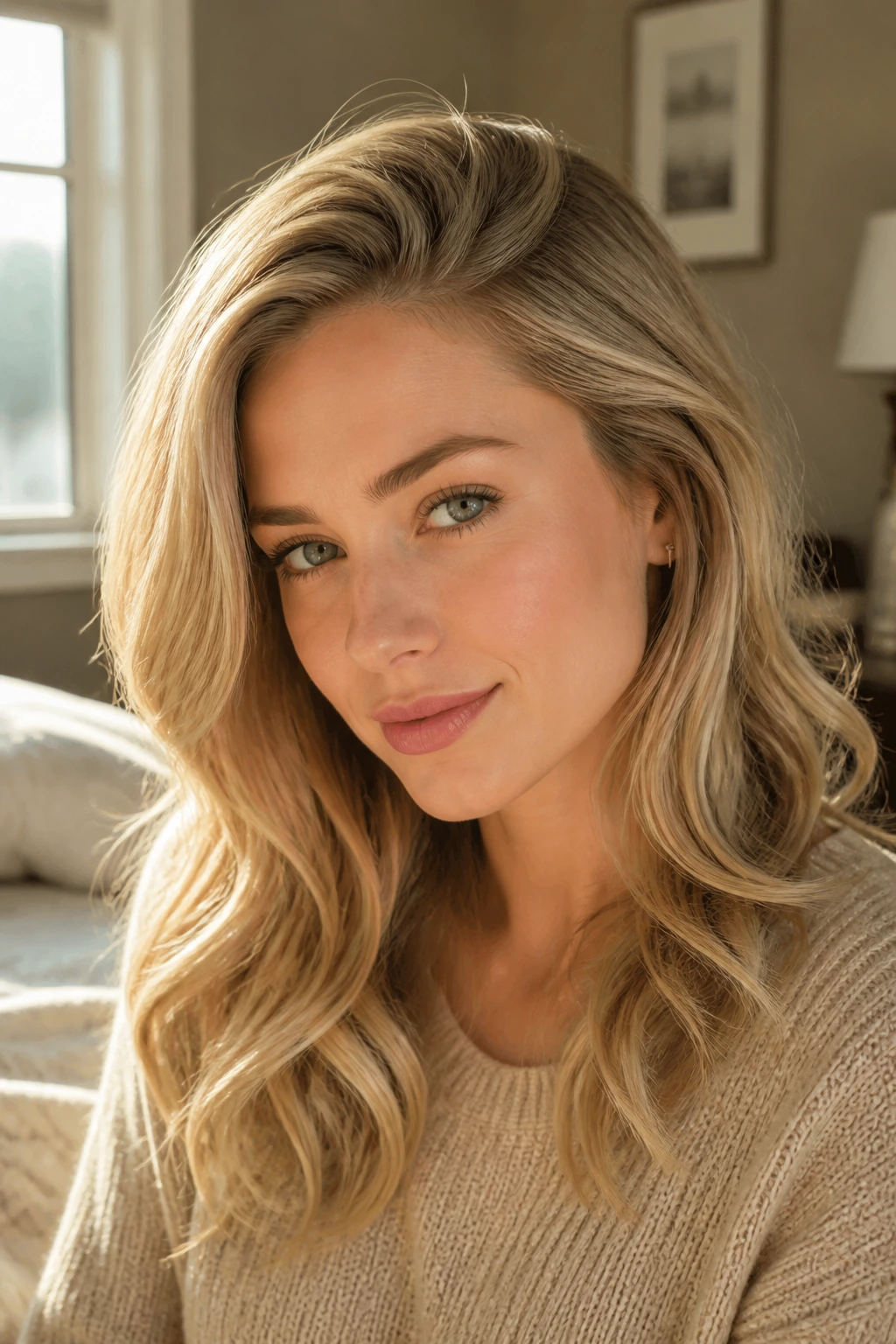
Parting matters. A deep side part or a soft off-center part can keep the scalp from sitting in one bright line. If you always wear a center part and your hair is very thin, a zigzag part can break that line up without looking fussy.
Cut matters even more. A blunt bob, a clean lob, or a pixie with shape holds color better than wispy ends. Long layers can work, but they need to be deliberate. Choppy thinning shears on already fine hair are a bad joke.
Texture should be soft, not crimped. Loose bends with a 1- to 1.25-inch iron make blonde reflect light across several curves. Tight curls can make thin hair look smaller. Pin-straight hair can expose every gap if the density is low. Soft bends hit the middle.
Finish with restraint. Root-lift mousse at the crown, a light heat protectant, and a pea-sized amount of serum on the ends is enough. Heavy oil near the root is a mistake. It makes thin hair collapse. And once the roots go flat, the blonde loses the shape that was helping it look full in the first place.
Brightness Boosters That Won’t Flatten the Hair
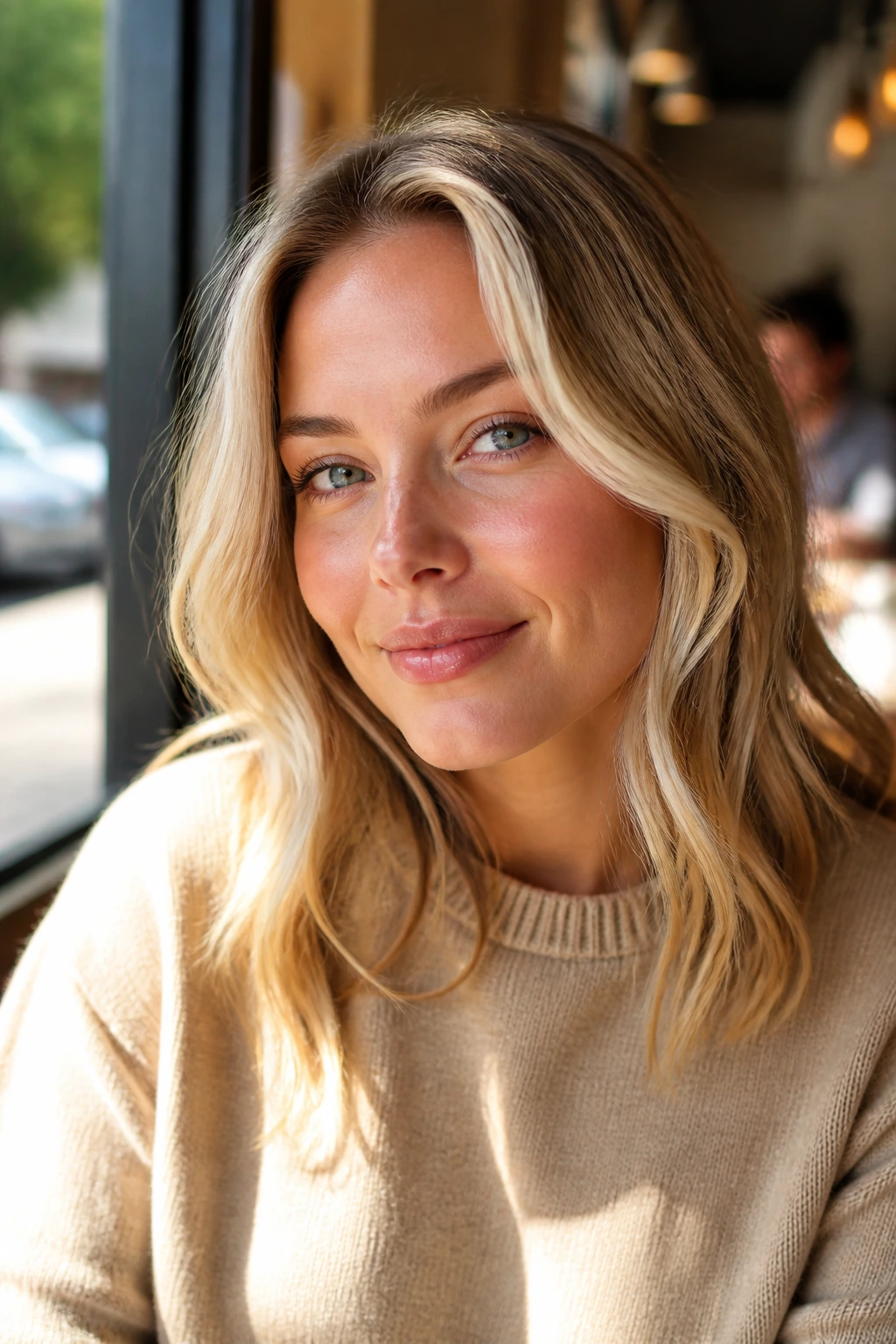
Face-Framing Pieces: Brighten the first few pieces around the face and keep the rest a half-shade softer. That gives fair skin a little lift without bleaching the entire head to the same level.
Soft Lowlights: Add a few ribbons that are only one level deeper than the base. They do not need to be obvious. Their job is to create shadow, which is what makes thin hair look less transparent.
Gloss, Not More Bleach: A beige, pearl, or soft gold gloss can refresh tone without extra damage. If the blonde is already light enough, toner is often the smarter fix.
Shadow Root: A root shadow one or two levels deeper keeps regrowth from turning harsh. On fine hair, it also makes the part look less bare.
Fringe or Curtain Bangs: These can add the illusion of density around the face. Just keep them soft. A thick blunt fringe on very thin hair can be a commitment you may not want.
Maintenance, Toner, and Grow-Out Care
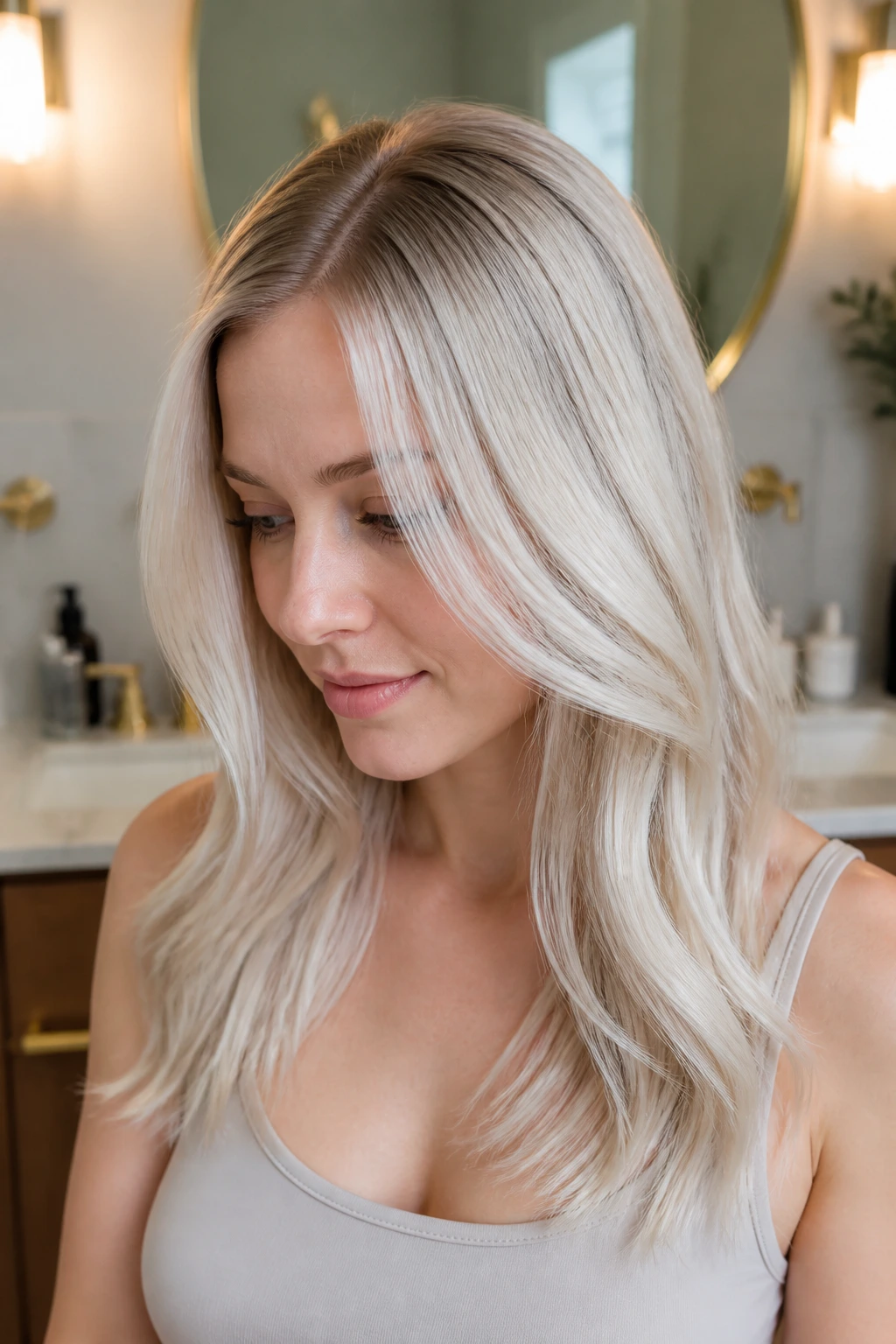
Platinum and icy shades need the most attention. Expect a toner or gloss refresh about every four to six weeks if you want the tone to stay clean. Rooted beige blondes, cashmere blondes, and bronde melts can usually stretch farther — often six to ten weeks, depending on how fast your roots grow and how clean you want the line to look.
Purple shampoo is useful, but too much of it drags blonde into a dull, dusty lane. Once every one to two weeks is enough for most people. If your blonde goes brass fast, use it once, leave it on for the time the bottle says, and move on. Don’t make it a daily habit.
If your hair has been lightened, a bond treatment once a week is worth it. Fine hair notices damage quickly. It gets stringy, sheds more easily when wet, and loses its shine fast. A regular trim every eight to ten weeks helps too. Thin ends on pale blonde can look even thinner if they split and fray.
Variations and Adaptations to Try
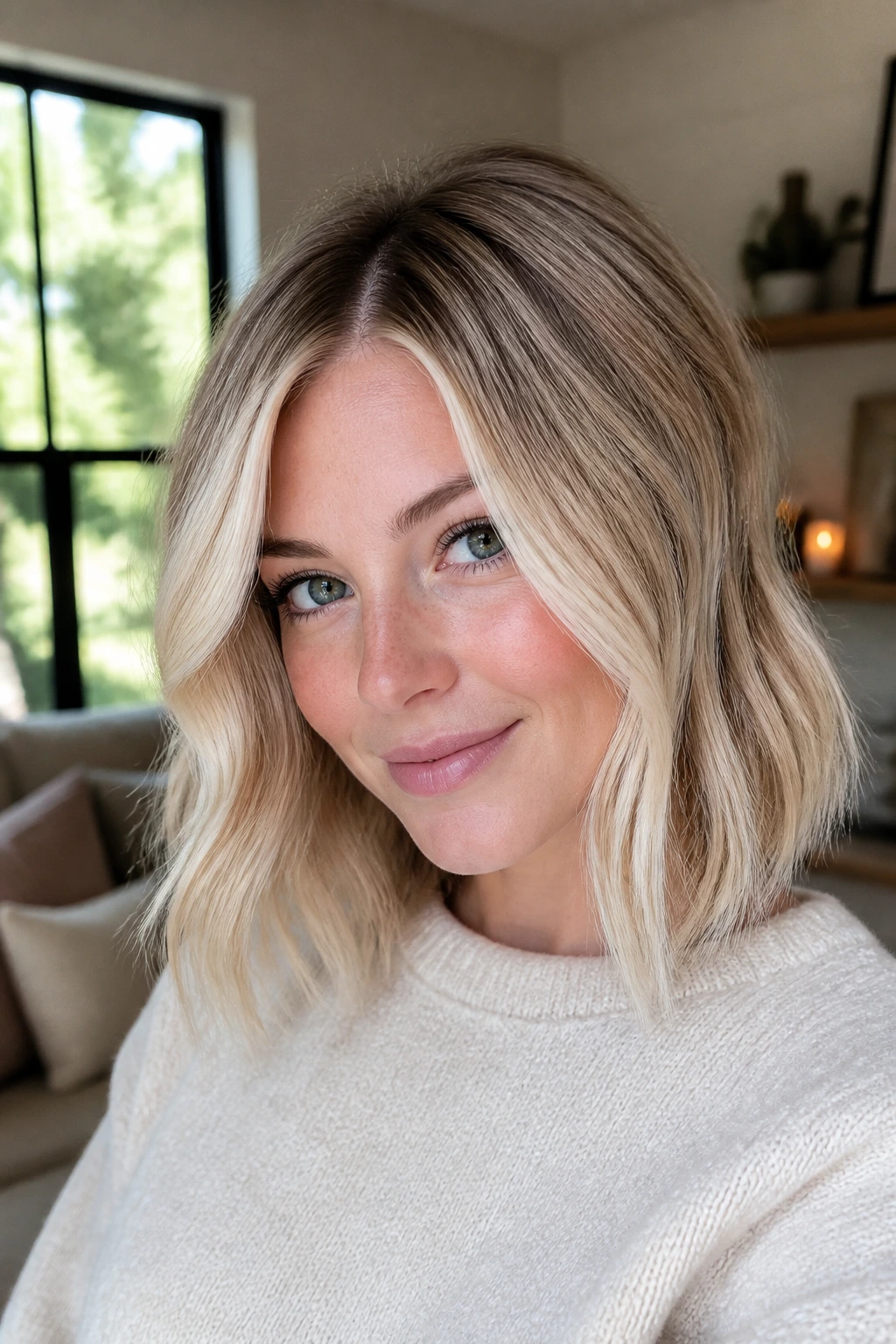
The Low-Maintenance Root Melt: Keep the root a shade deeper and let the blonde brighten slowly through the mids. This is the easiest version to live with if you do not want obvious regrowth. It’s especially kind to fine hair because it gives the illusion of fullness at the crown.
The Bright Front, Soft Body Version: Make the money pieces around the face the brightest part of the color and keep the rest in champagne or beige. This works well if your skin needs a lift but you do not want a full-head bleach-out. I like it on shoulder-length cuts and lobs.
The Warm Freckle-Friendly Version: Shift the tone toward honey, apricot, or buttercream if your fair skin has freckles or a peach cast. The warmth makes the face look less washed out. Just keep the yellow tones controlled so they don’t go brassy.
The Cool Pearl Version: Lean into pearl, smoky beige, or oyster if your complexion is pink or cool. This version reads clean and soft, not icy and hard. On fine hair, it’s stronger when paired with a blunt cut or a smooth blowout.
The Short-Cut Version: A pixie or bob can handle brighter blonde than longer, finer hair can. The cut keeps the shape dense, so you can be bolder with platinum, frosted beige, or pearl. That’s a smart trade if your hair refuses to hold volume.
The Wavy Dimension Version: If your hair has natural bend, keep the highlights woven and soft instead of stripey. Waves love honey ribbons, baby beige lights, and cashmere roots because the movement makes the color look richer.
Mistakes That Make Blonde Look Harsh or Flat
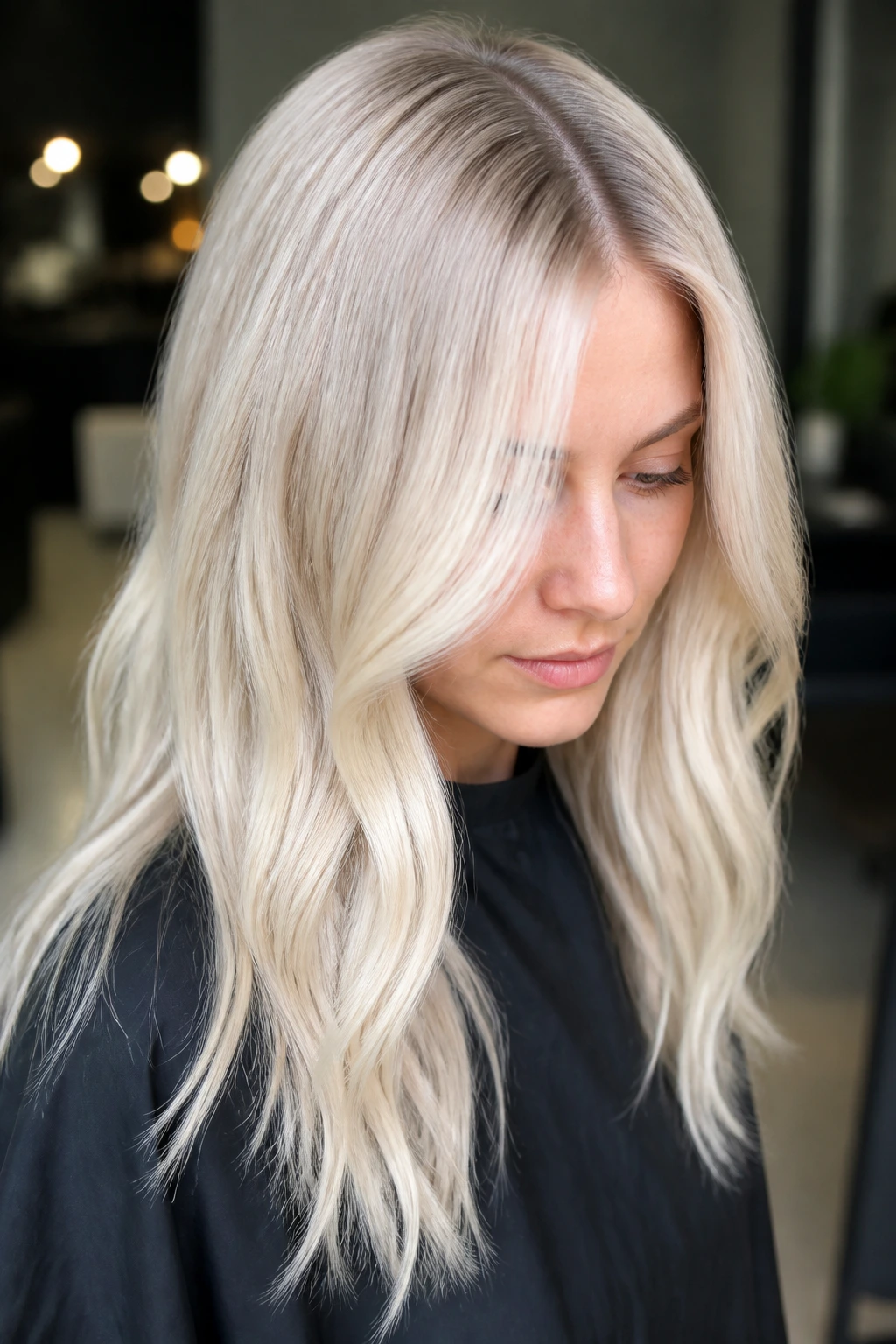
Going too ash, too fast: Ash can be useful, but on fair skin it can also erase warmth and make the face look tired. If the first photo you save is almost silver, make sure you’re not skipping beige or pearl that would keep the tone softer.
Using chunky highlights on thin hair: Big, separated pieces can expose the scalp and make the hair look patchy. Ask for babylights or a fine weave instead. The smaller the section, the more seamless the blonde looks.
Bleaching every strand to the same level: A single flat blonde often reads thinner than a dimensional one. Keep some softness at the root or underlayer so the eye has places to land.
Overdoing purple shampoo: If the blonde starts looking dull, gray, or faintly lavender, you’ve used too much. Pull back and switch to a gentle color-safe shampoo most washes.
Forgetting the haircut: Pale blonde with flimsy ends can look see-through even when the color is good. A blunt bob, a tidy lob, or a shape with controlled layers usually helps more than another round of lightening.
Skipping the gloss: Toner fades. It always does. If the blonde goes brassy, the whole look can turn flat on fair skin. A gloss schedule keeps the color soft and readable.
Questions People Usually Ask
What blonde shade is most flattering for fair skin with thin hair?
Champagne beige, cashmere blonde, and pearl blonde are the ones I reach for most often because they balance softness and brightness. They flatter pale skin without making the hair look stripped. If you want a little more drama, a rooted platinum or a bright money-piece blonde can work too.
Is platinum blonde too harsh for fine hair?
Not automatically, but it needs the right structure. A soft root shadow, a pearl-beige toner, and a cut with enough shape can keep platinum from looking brittle. If your hair is already fragile, I’d be cautious about going all the way to white.
Should thin hair get highlights or one all-over blonde color?
Highlights usually give more visual depth, which helps thin hair look fuller. An all-over blonde can work if it has a shadow root or a gloss with dimension, but flat one-tone color is less forgiving. Babylights and balayage are usually the safer starting points.
How often should blonde hair be toned?
Most blonde shades need a toner or gloss refresh every four to six weeks if you want the tone to stay clean. Rooted beige blondes can stretch a little farther. If the blonde starts looking yellow, dull, or muddy, that’s your sign.
What if my blonde turns brassy fast?
Use purple shampoo sparingly, not every wash, and add a gloss appointment sooner rather than later. Brass usually shows fastest on pale fair skin, so a beige or pearl toner often fixes the problem better than more shampoo. If it keeps happening, your toner may be too warm to begin with.
Can I go blonde without making thin hair look worse?
Yes, but the method matters. Soft weaving, root shadowing, and lighter pieces concentrated around the face are kinder than full saturation from scalp to ends. The haircut matters too; thin hair does better with a shape that keeps the outline strong.
What haircut makes blonde hair look fuller?
A blunt bob, a collarbone lob, or a clean pixie usually creates the strongest outline. Those cuts make pale blonde look denser because the edge is visible. Wispy layers can work, but they need to be controlled or the ends may disappear.
What should I tell my colorist if I want a soft blonde, not a harsh blonde?
Say you want beige, pearl, or cashmere softness with a shadow root and fine woven highlights. Bring one photo for tone and another for placement. That’s much more useful than just saying “I want blonde.”
A Softer Blonde Still Has Room to Stand Out
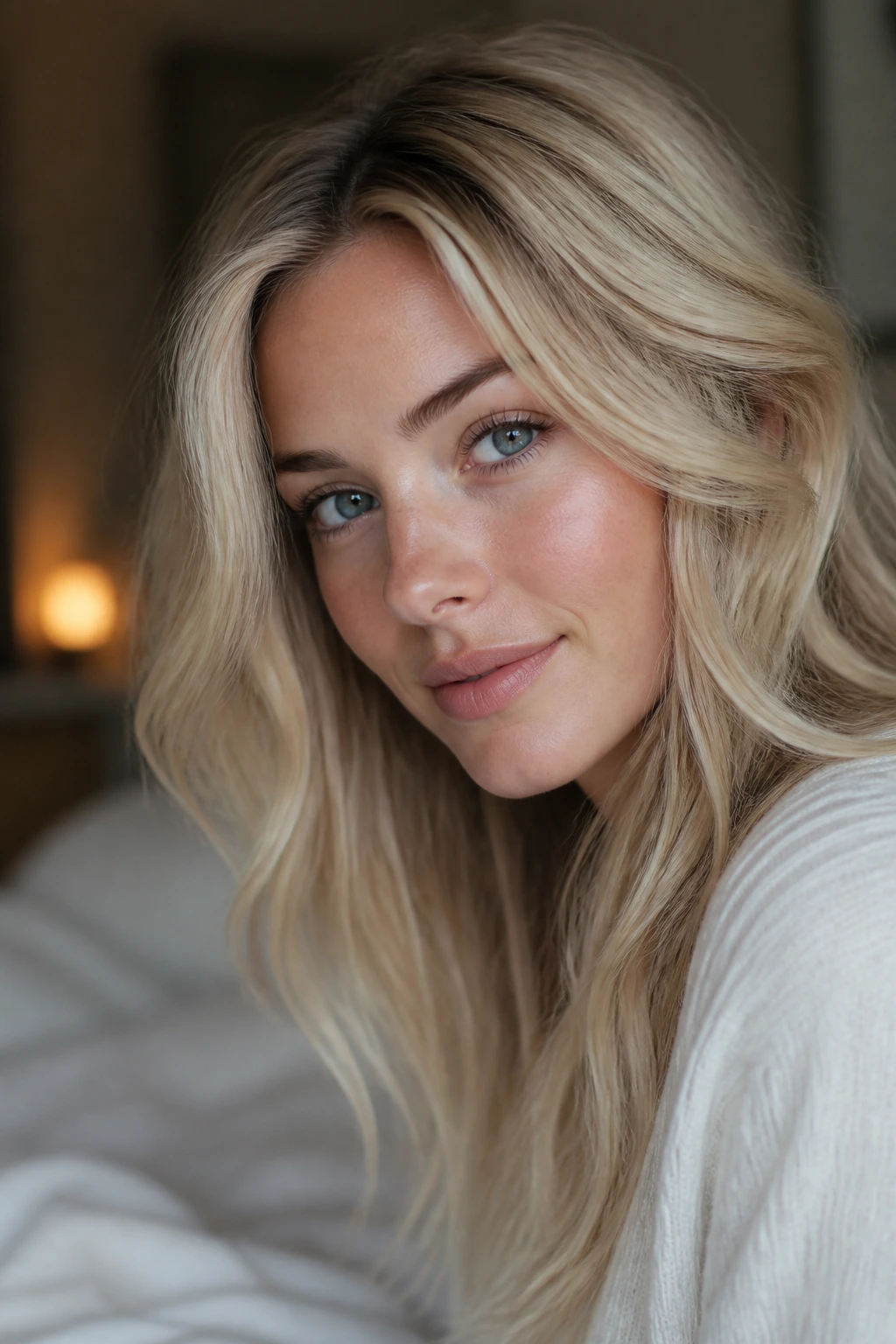
The prettiest blonde on fair skin with thin hair usually isn’t the loudest one. It’s the one that keeps a little depth near the root, a little softness in the toner, and enough movement in the placement that the hair still looks like hair. That’s the part people miss when they chase one-note brightness.
If you choose one of these shades and pair it with the right cut, you get something better than a pretty color swatch. You get shape. And shape is what keeps fine hair from disappearing into the background.