



A blond bob on straight hair can look razor-clean in a way that wavy hair never quite matches. There’s nowhere to hide. Every line shows up, every corner matters, and on a heart-shaped face that can be a blessing or a headache depending on where the cut lands. Too short around the chin and the lower half of the face can start to look pinched. Too blunt at the forehead and the whole thing starts shouting up top.
The sweet spot is usually some mix of balance and movement: a little more weight near the jaw, a front section that softens the temples, and a blond tone that keeps the cut from feeling heavy. Straight hair makes those details obvious. That’s why a blond bob can look expensive and sharp on one person, then oddly flat on another with only a half-inch difference in length. Tiny choices matter here. A center part, a bevel at the ends, a root shadow, a side-swept fringe — each one changes how the face reads.
And that’s the fun of it. Some of these cuts are crisp and architectural. Others are softer, more forgiving, and easier to live with when you’re not in the mood to wrestle a flat iron for twenty minutes. The right bob doesn’t fight your face shape. It works with the width of the forehead, the narrower chin, and the clean fall of straight hair. The details below are the ones worth paying attention to.
Why These Blond Bobs Work on Straight Hair and Heart-Shaped Faces
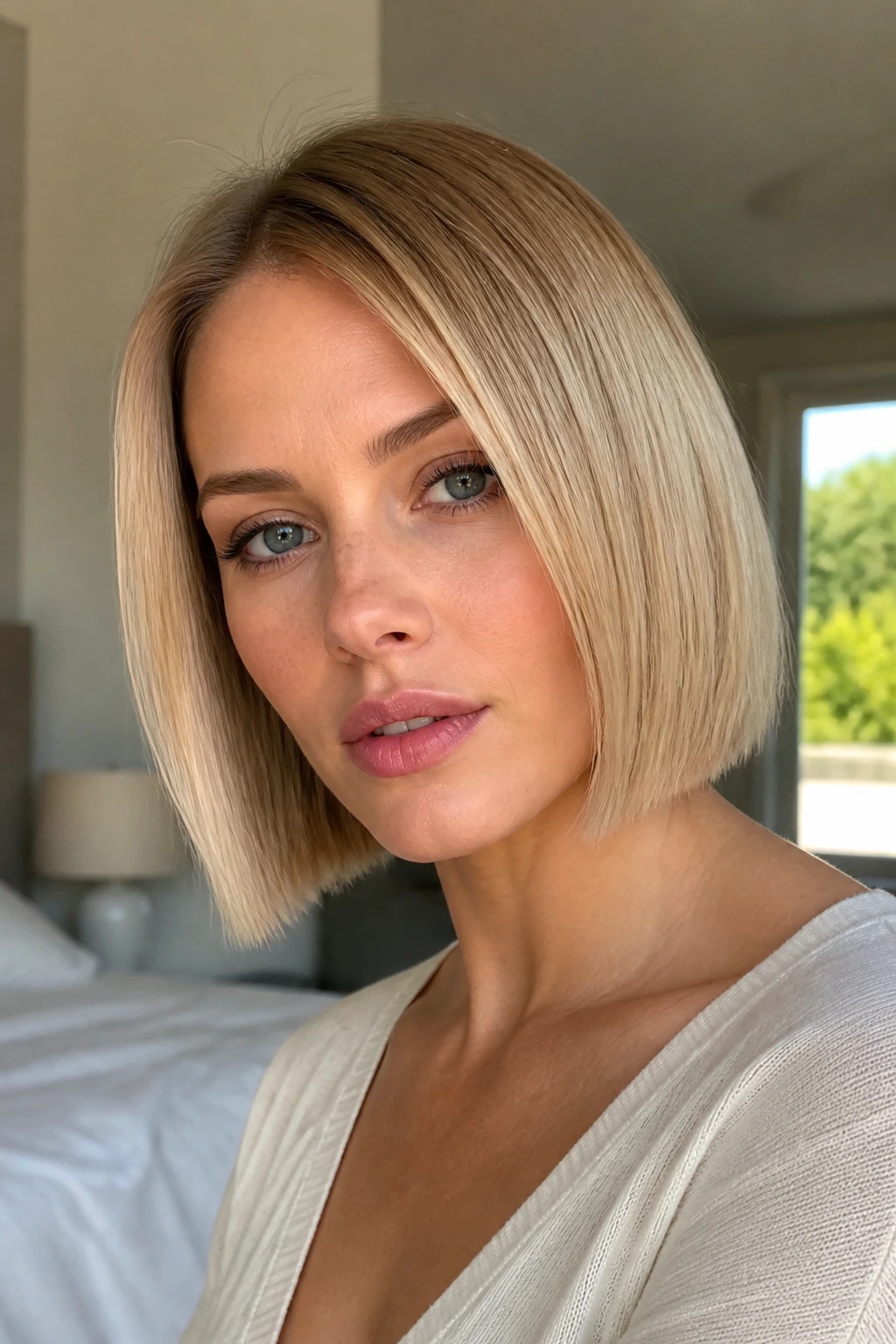
-
The straight-hair payoff: Straight strands show off blunt edges, bevels, and color placement without the fuzz that can blur the outline. That means a good bob looks deliberate instead of accidental.
-
The face-shape balance: Heart-shaped faces usually carry more width through the forehead and cheekbones, then narrow toward the chin, so the best cuts add softness or width lower down.
-
The color advantage: Blond lightens the visual weight of a bob. A warm honey or beige blonde can soften hard lines, while an icy shade sharpens them.
-
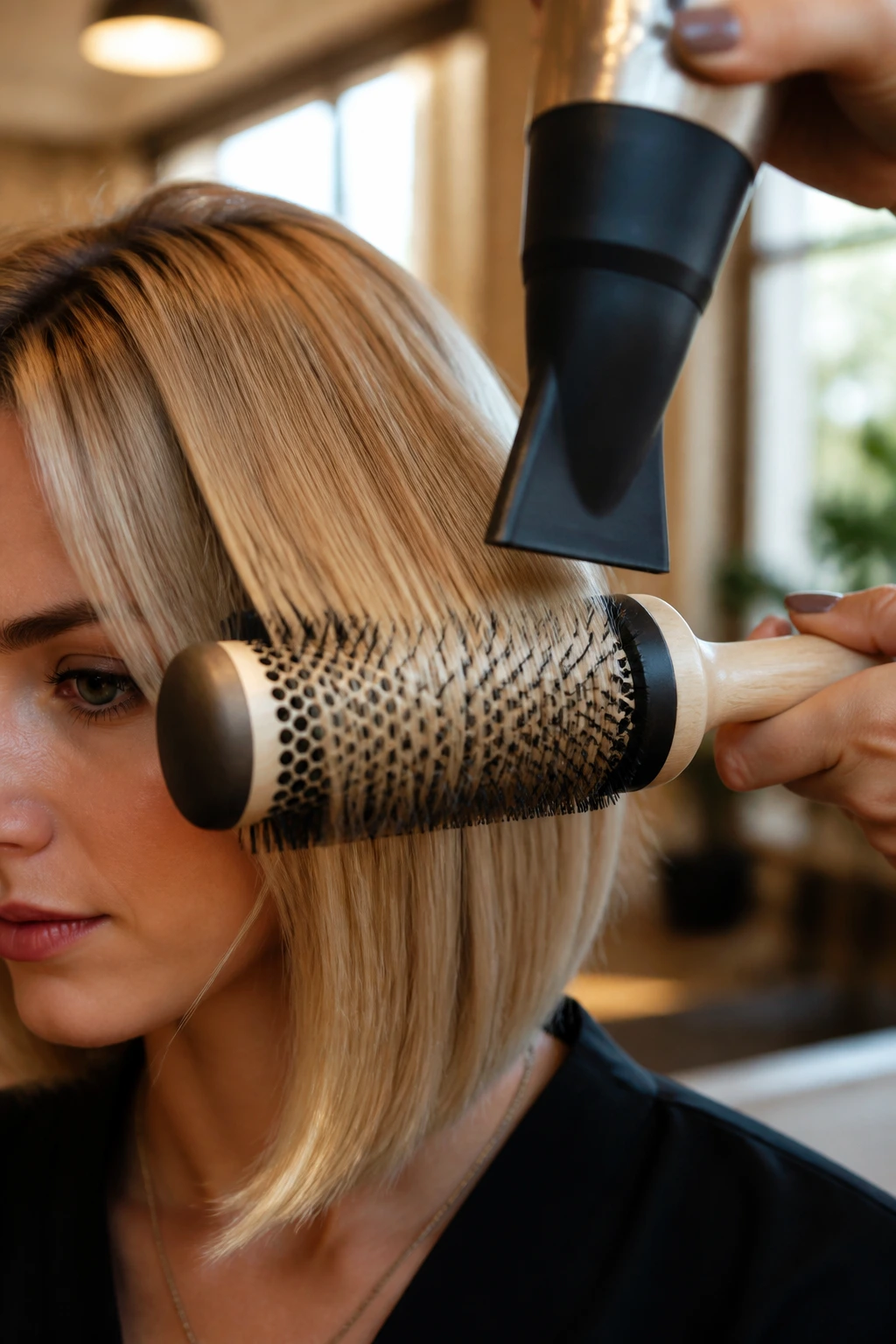
The styling math stays simple: A bob that falls cleanly can be dried in under 15 minutes with the right brush and a nozzle, which is part of why this shape keeps winning.
-
The grow-out is manageable: Even the sharper cuts here can survive a few extra weeks between trims if the perimeter is cut with some thought.
1. Chin-Skimming Blunt Bob
A chin-skimming blunt bob is the cleanest, most graphic version of the whole family. On straight hair, it reads like a line drawn with a ruler, which is exactly why it can look so polished. For a heart-shaped face, though, the chin is the danger zone. If the cut ends right on the narrowest part of the face, the lower half can look too light.
I like this cut best when it lands a half-inch below the chin, not on top of it. That tiny bit of extra length keeps the jaw from disappearing and lets the blond color reflect light all the way around the perimeter. If your hair is fine, ask for a blunt edge with almost no layering. If it’s thick, the interior can be lightly debulked, but the outside line needs to stay full.
Why It Flatters
The blunt edge creates width where heart-shaped faces often need it most. Straight hair keeps the line honest. No puff, no chaos, no guessing.
2. Deep Side-Part Bob with Tucked Ends
The deep side part is a cheat code for heart-shaped faces. It shifts the visual weight away from the widest point at the forehead and breaks up symmetry in a way that feels easy, not fussy. On straight hair, the tucked ends keep the shape neat instead of stiff.
Ask for the longer side to skim the cheekbone and the shorter side to sit just below the ear. That small asymmetry pulls attention diagonally across the face, which is exactly what a wider forehead likes. If you tuck one side behind the ear, leave enough length at the front so the bob still reads as a bob and not a grown-out pixie.
A deep side part plus a blond gloss is one of the simplest ways to make a plain bob look expensive. It doesn’t need a lot of product. It needs direction.
3. Collarbone Lob with Face-Framing Pieces
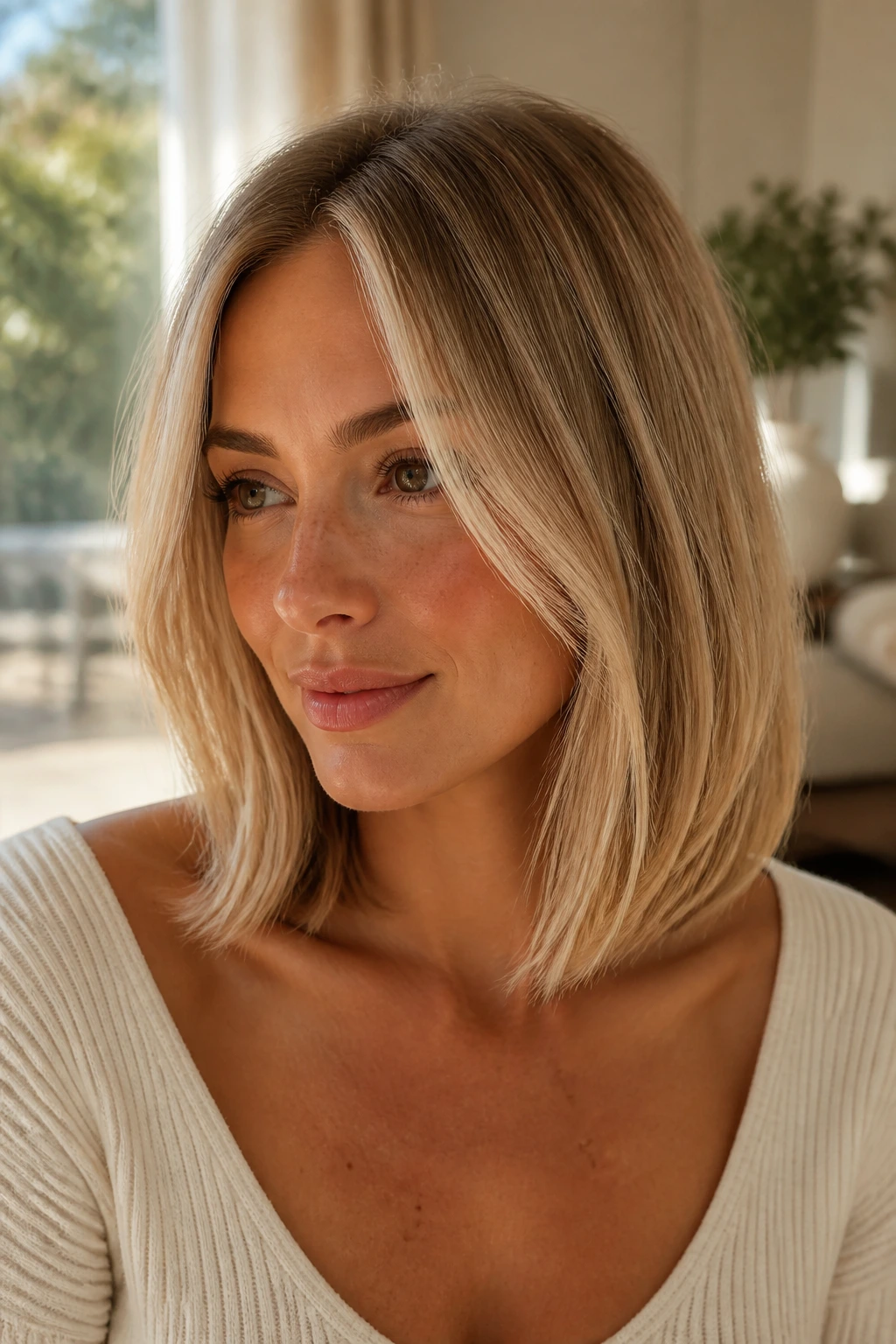
A collarbone lob is the safest starting point if you want movement without giving up length too fast. It lands below the chin and above the chest, which means the face gets breathing room. For heart-shaped faces, that extra length at the bottom keeps the proportions from feeling top-heavy.
What makes this version work is the face-framing pieces. Keep them soft and long enough to start near the cheekbone or lip, then let them angle down toward the collarbone. On straight hair, those front pieces make the cut feel lighter without turning it shaggy.
I prefer this look in a beige or honey blond because the color adds dimension where the cut is otherwise quiet. If you want a bob that can be straight, tucked, or bent under with a brush, this is the one I’d put near the top of the list.
4. French Bob with Wispy Micro Fringe

A French bob can be charming or a little precious, and the difference is all in the length and fringe. On a heart-shaped face, the safest version sits just below the cheekbone rather than slicing off at the chin. The fringe should be wispy, not dense. Heavy micro bangs can make the forehead feel even broader.
The reason this cut works on straight hair is simple: the texture doesn’t have to do much. The shape itself carries the look. That leaves the blond tone to do the softening. A warm champagne blond is better here than a harsh platinum because it keeps the fringe from looking severe.
Best detail: keep the fringe airy at the center and slightly longer at the temples. That tiny taper makes the forehead less dominant and gives the bob a little lift.
5. A-Line Bob That Angles Toward the Jaw
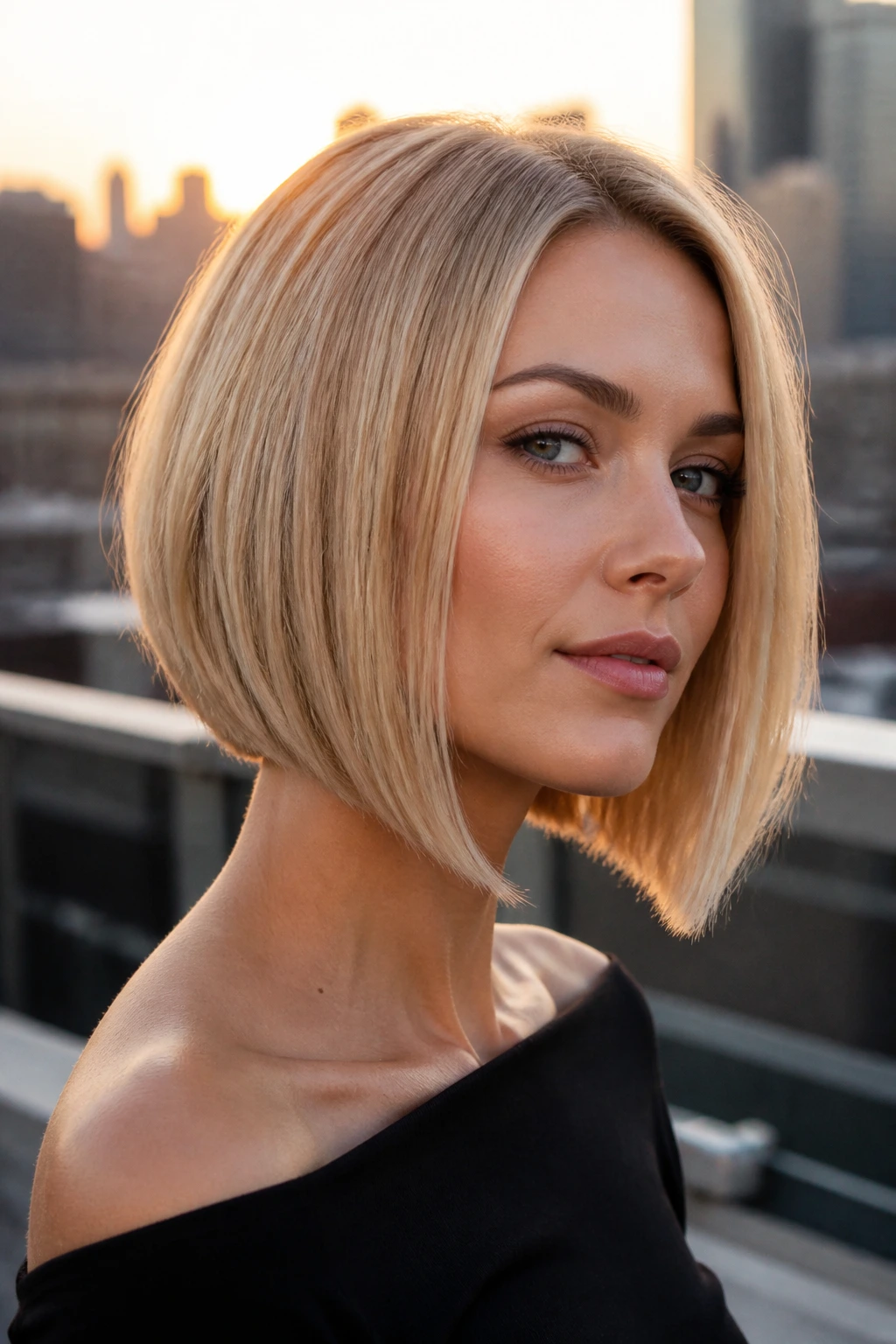
An A-line bob is one of the smartest choices for a heart-shaped face because it builds toward the jaw instead of stopping above it. The back is shorter, the front is longer, and straight hair shows that slope clearly. If the line is clean, it looks sharp. If the angle is too steep, it can look dated fast.
I like a subtle version better than a dramatic one here. Let the front corners drop just enough to graze the jawline, then keep the back snug but not stacked. That shape gives the narrower lower face a little more presence without making the forehead look bigger.
Quick notes
- Best with a side part or soft off-center part.
- Works well if your hair falls flat in the back.
- Ask for the front to be point-cut only at the very ends if you want a softer finish.
6. Sleek Center-Part Bob
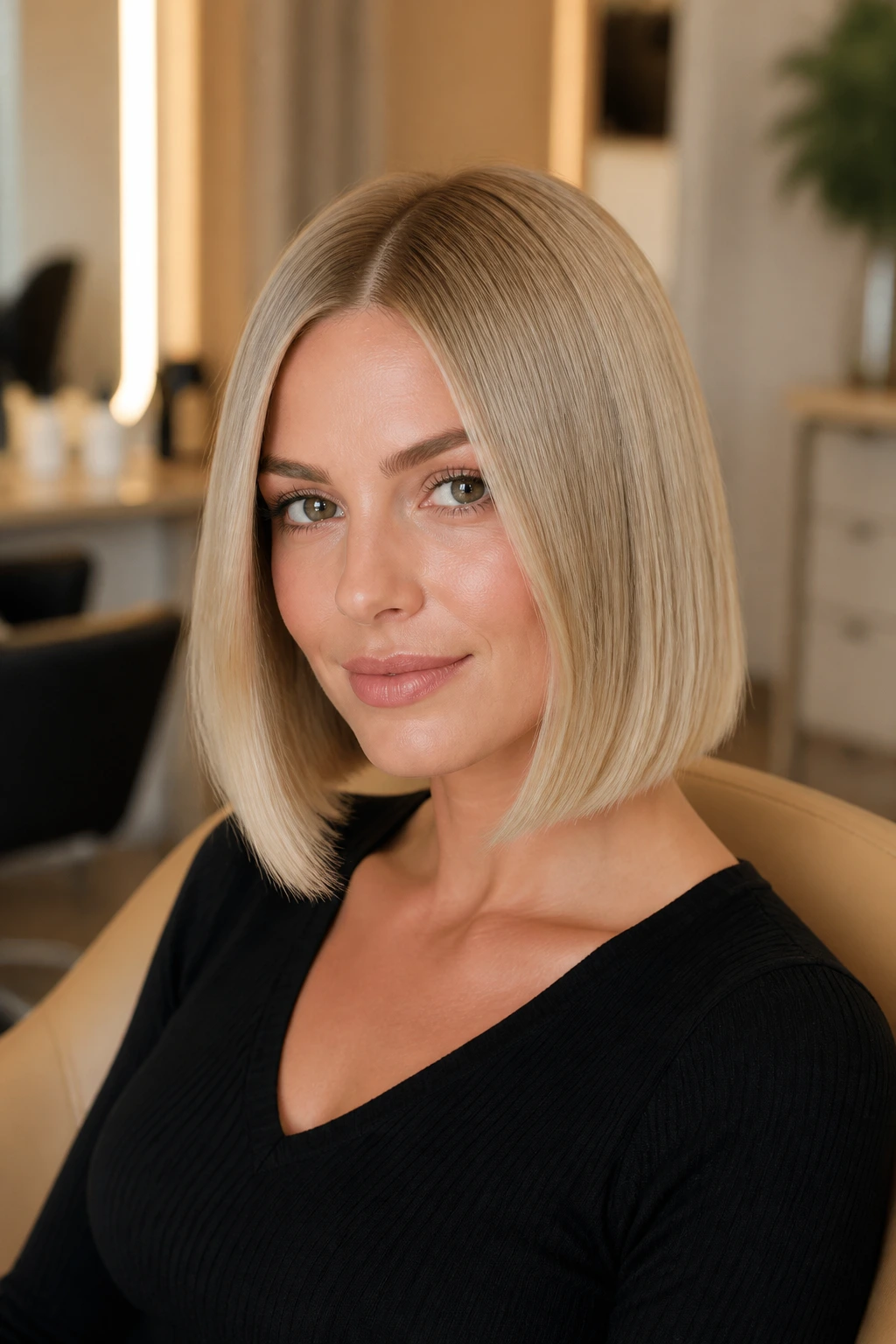
A center part on a heart-shaped face can be unforgiving if the bob is too short. It can also look brutally chic when the cut sits at the right length. The trick is keeping the perimeter below the chin and slightly beveled toward the front so the lines soften as they move down.
Straight hair is the reason this cut works at all. There’s no wave to interrupt the symmetry, so the part and the cut do the work together. I’d skip this if your forehead feels like the widest part of your face and the bob would end right at chin level. Go a touch longer. A touch.
If you want a sleek blond bob that feels calm rather than severe, this is the move. A cool beige blond keeps the shape clean, while a high-gloss finish helps the hair fall in one smooth sheet.
7. Jaw-Length Bob with Soft Underbevel
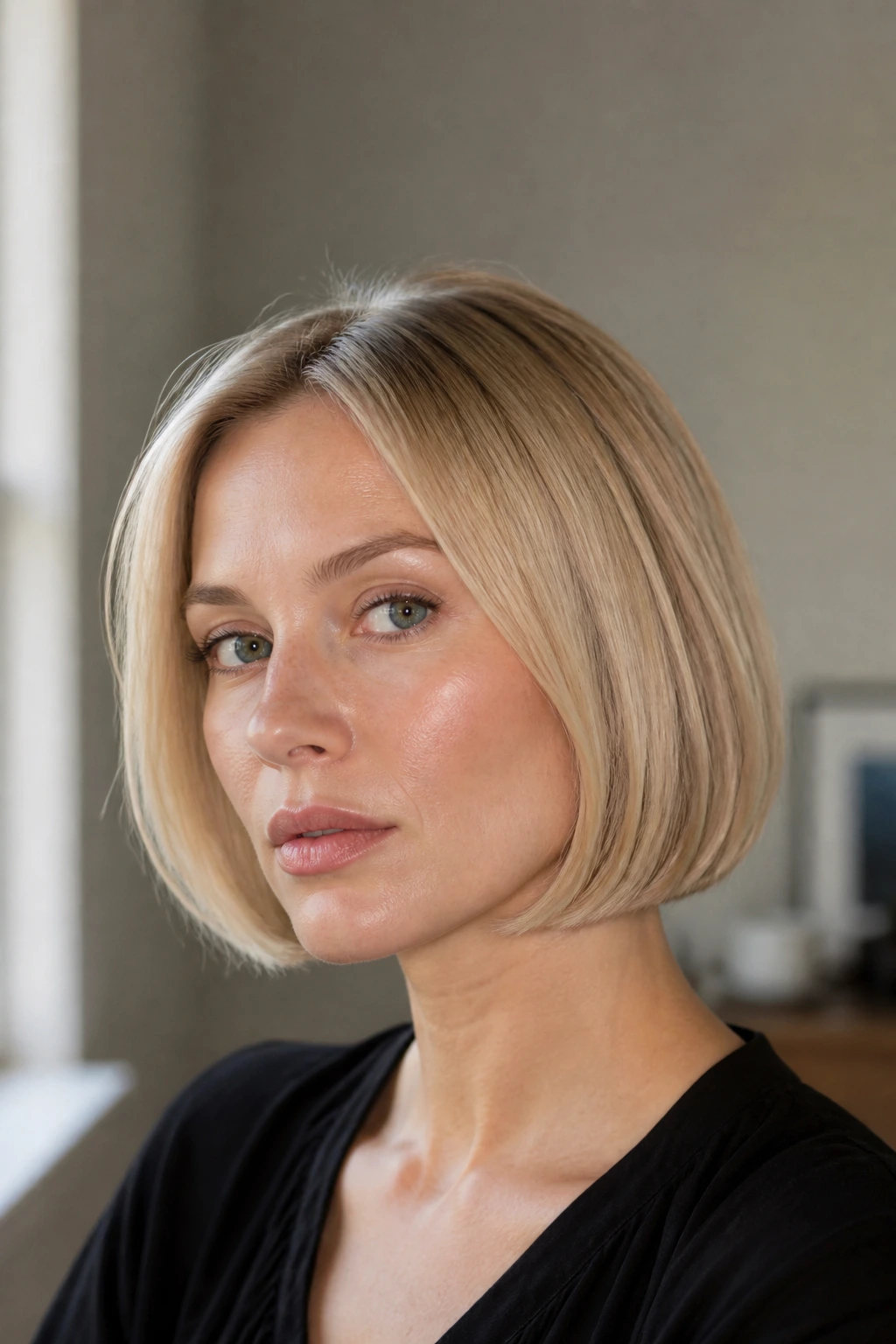
A jaw-length bob with a soft underbevel is one of my favorite ways to keep a straight bob from looking boxy. The underbevel means the ends tuck inward a little instead of hanging in a hard shelf. On straight hair, that curve matters. It keeps the shape close to the face and helps the jaw look fuller.
For a heart-shaped face, the cut should be kept at or just below the jawline, never above it. That’s the whole trick. You want the perimeter to support the lower half of the face, not float above it like a helmet. A side part adds more give, but the underbevel does most of the work.
This is a good choice if you like polished hair but do not want obvious layers. It gives you structure without shouting about it.
8. Bottleneck Bang Bob

Bottleneck bangs are a smart fix for the wide-forehead part of a heart-shaped face. They’re shorter in the center, then open out toward the temples, which softens the upper face without burying it under a wall of fringe. On straight hair, the bangs lie neatly and keep their shape.
Keep the bob itself in the chin-to-jaw zone. If the cut is too short, the bangs and the perimeter start competing with each other. The whole look gets busy. A soft beige or buttery blond works better here than a stark platinum, because the fringe already creates contrast.
A small word of warning: bottleneck bangs need a little upkeep. If you ignore them for too long, they lose the taper that makes them useful in the first place. Still, they’re worth it if your forehead has always seemed like the loudest part of the face.
9. Platinum Box Bob
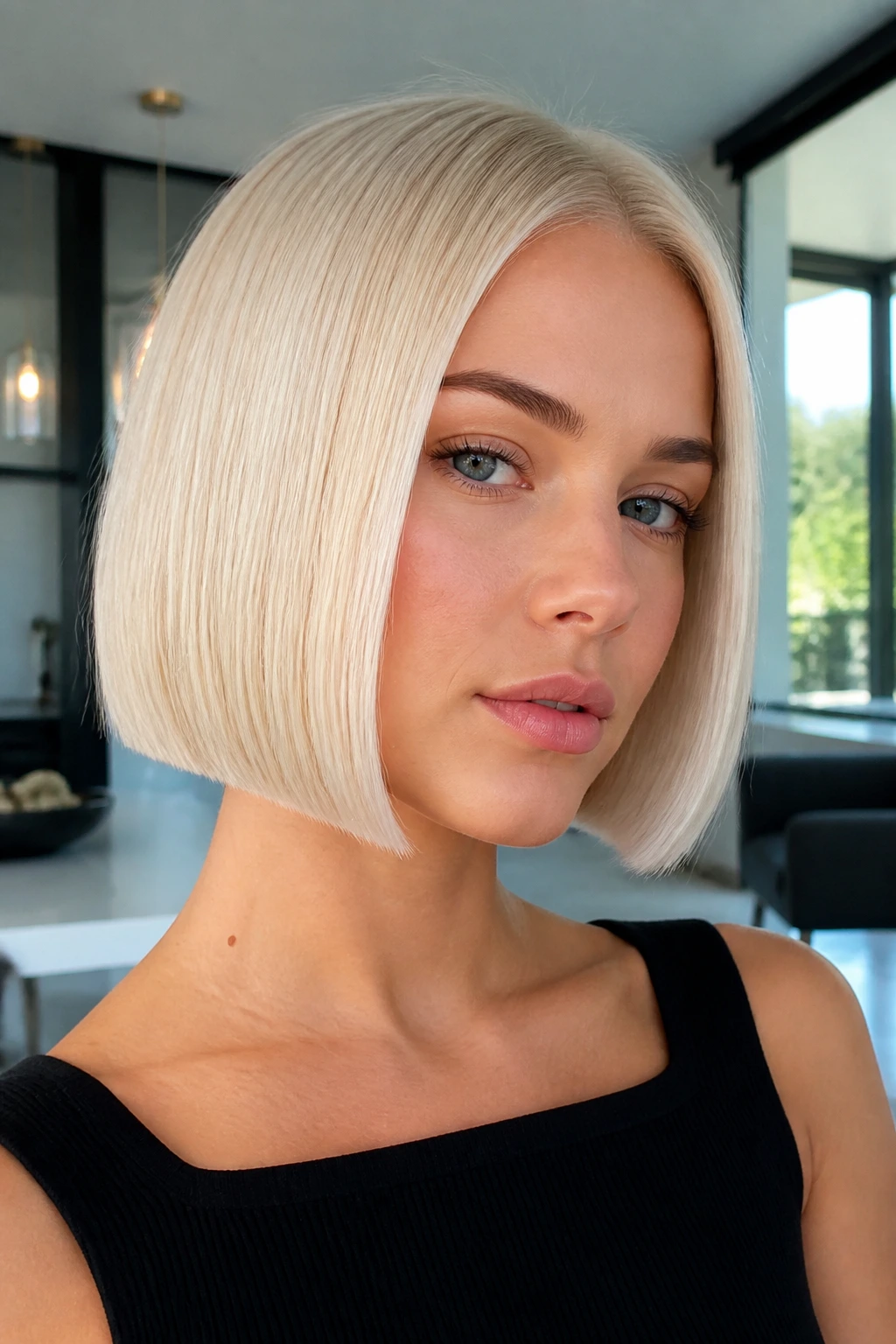
A box bob with a platinum finish is unapologetically sharp. Straight hair loves the geometry, and the cool blond makes the outline look even cleaner. For a heart-shaped face, though, the edges need a bit of softness. Not much. Just enough so the chin doesn’t vanish under a wall of brightness and bluntness.
I like this cut best when the length sits between chin and jaw, with the perimeter slightly beveled so the sides don’t stick out. The box bob is about presence. It can handle a strong forehead if the lower half has enough weight.
What to ask for
- A clean, blunt line through the back.
- Soft beveling at the front corners.
- A bright platinum tone with a pale root shadow if you want less maintenance.
It’s not the easiest bob to live with, but it may be the best one if you like a strong shape and a crisp finish.
10. Honey Blonde Rounded Bob
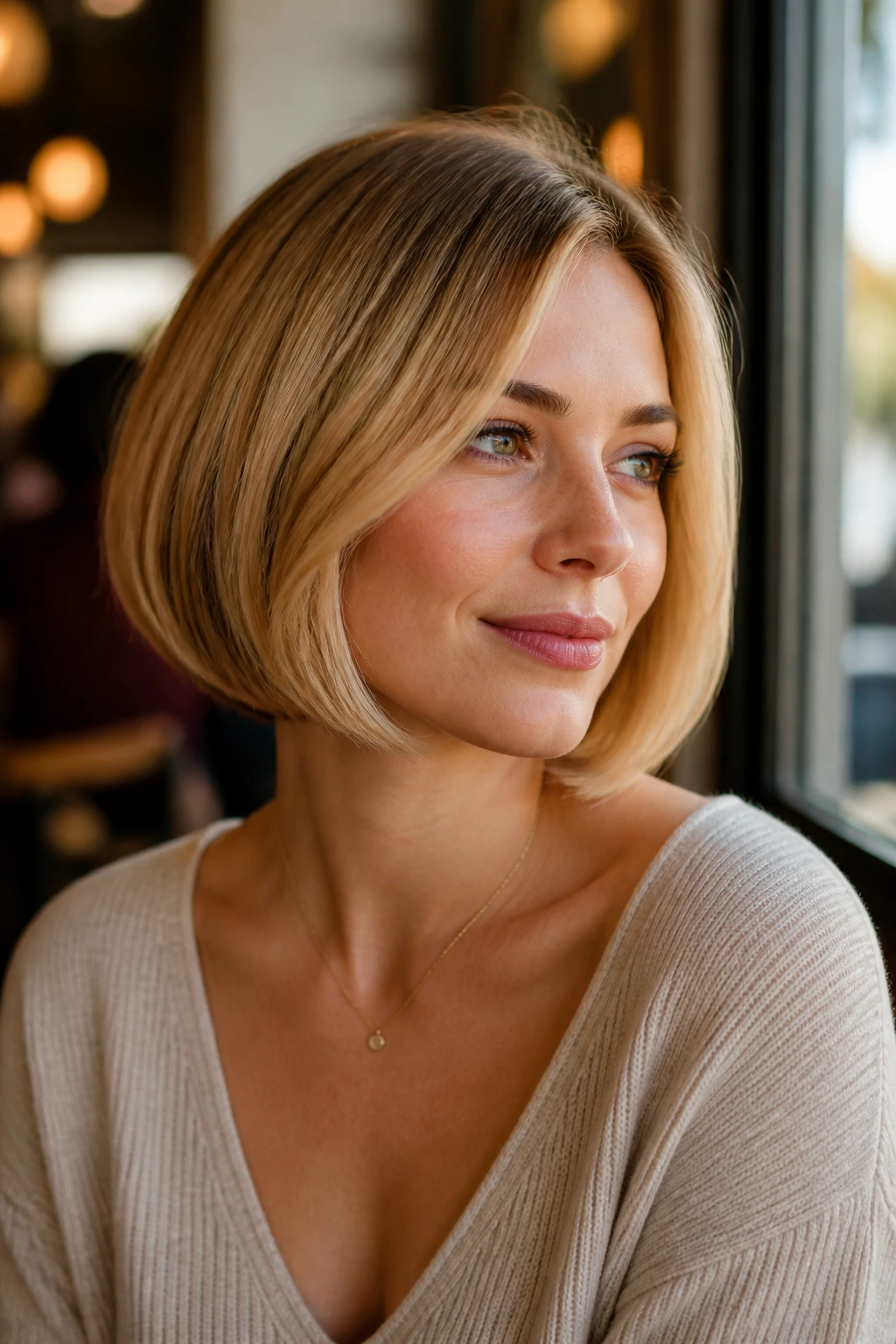
Warm blond makes a big difference on a straight bob. Honey tones soften the look in a way a cooler blond sometimes can’t. On a heart-shaped face, that warmth helps the cut feel less angular through the temples and cheekbones.
The rounded bob should curve gently under the jaw, not flip under in a cartoonish way. That curve is subtle. The ends should move toward the neck, and the crown should stay smooth. If your hair is very straight, a round brush and a medium heat setting are enough to create the bend without turning the style stiff.
This is the bob I’d pick for someone who wants shape but does not want to fuss with styling every morning. It’s forgiving. It also grows out nicely, which is not a small thing when you’re living with a blonde tone that needs touch-ups anyway.
11. Beveled Lob with Invisible Layers
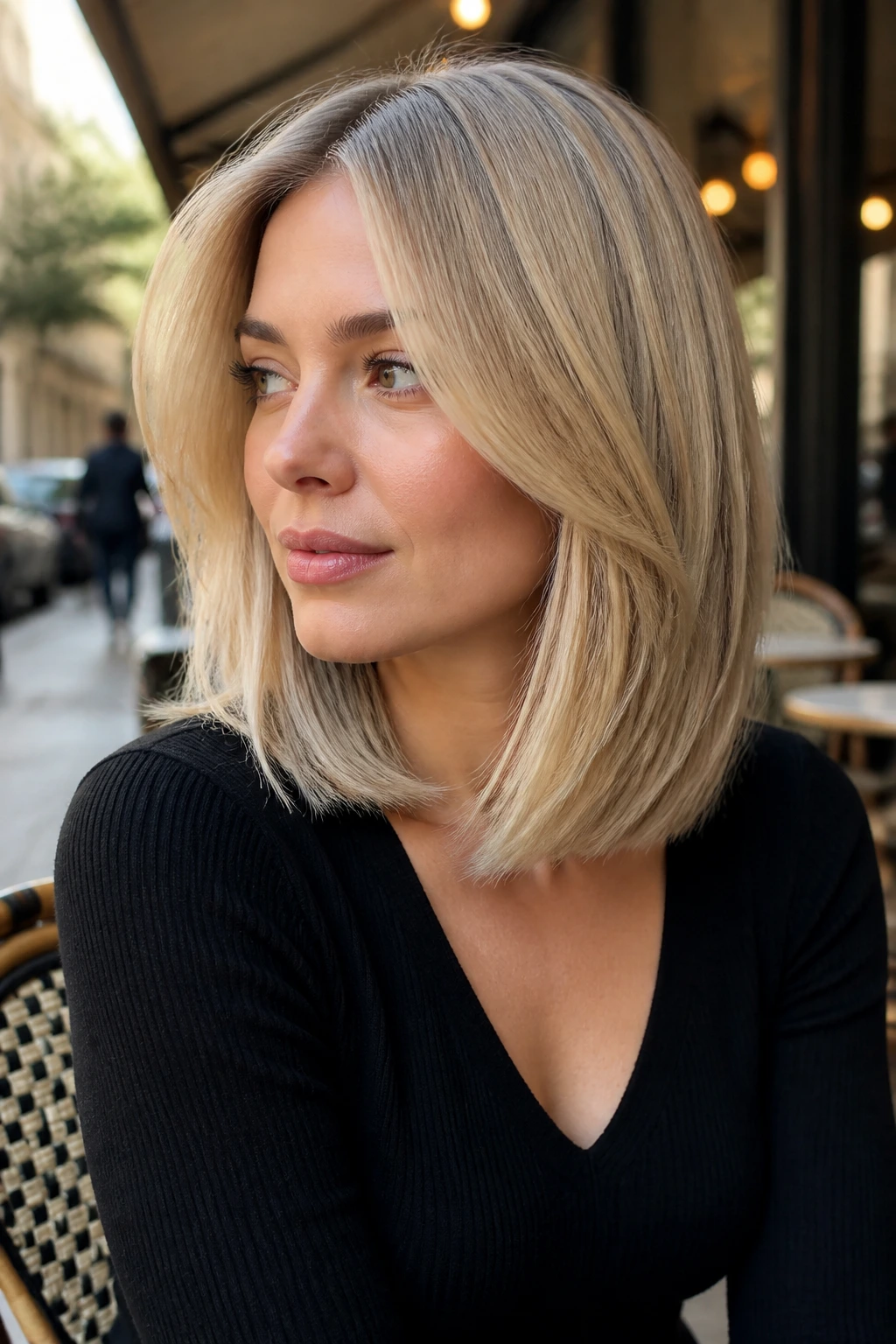
Invisible layers are exactly what they sound like: layers that support the shape without announcing themselves. On straight hair, that can be the difference between a lob that hangs flat and one that moves when you walk. For heart-shaped faces, the length keeps the balance easy, while the beveled ends keep the outline from looking chopped.
Ask for the shortest layer to stay well below the cheekbone. If the layers start too high, the front can get wispy in a way that makes the upper face feel wider. That’s the opposite of what you want. A soft beige blond or neutral blonde works well here because the cut already has subtle dimension.
This is one of those cuts that looks plain from a distance and excellent up close. That’s a compliment.
12. Side-Swept Bang Bob
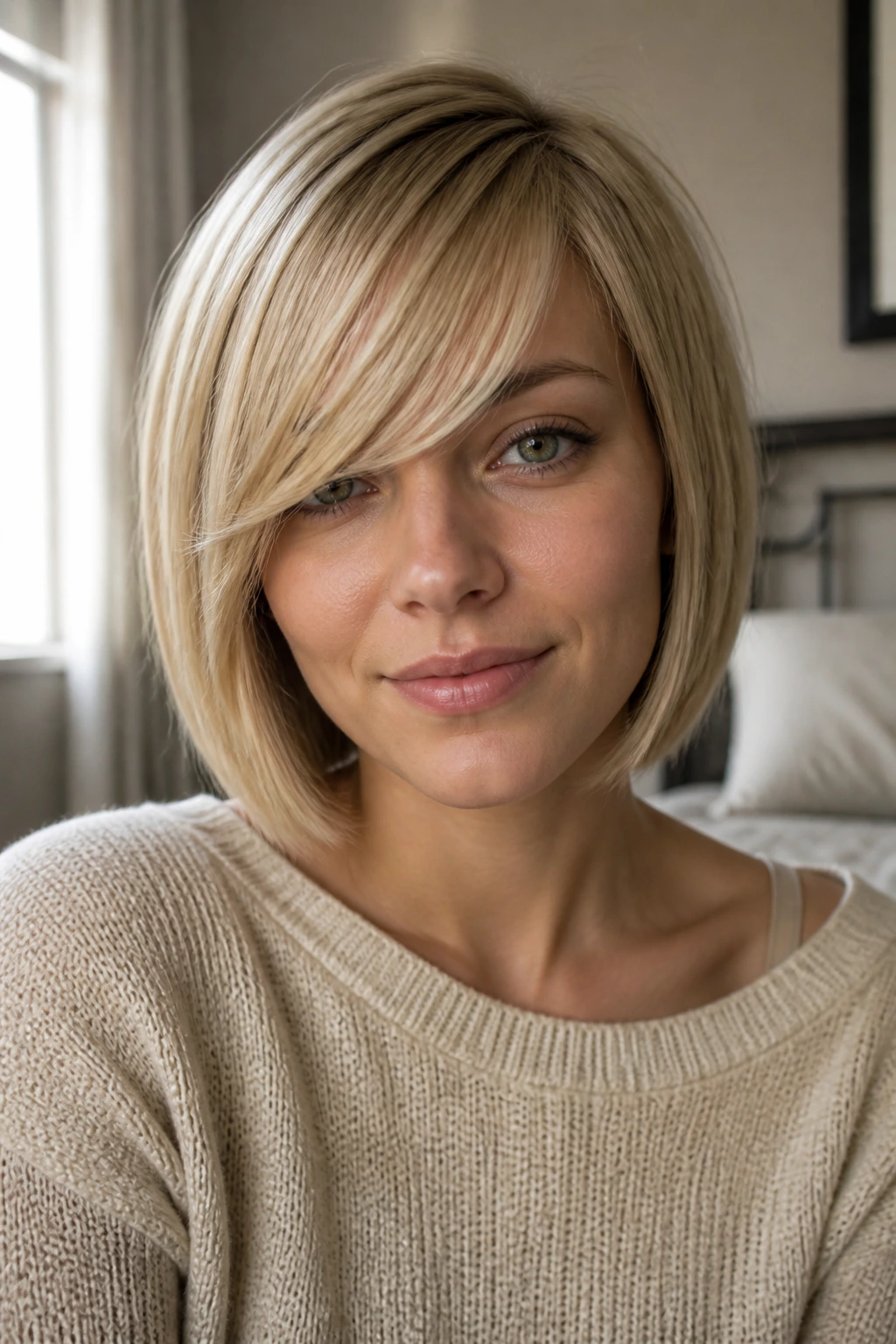
Side-swept bangs are still one of the cleanest fixes for a heart-shaped face, partly because they break up the forehead without closing it off. On straight hair, they lie smoothly and can be tucked, flipped, or brushed forward depending on the day.
Keep the bob just above the shoulder or at the jaw. Too short and the bangs can overpower the cut. Too long and the side sweep starts to look like an afterthought. The best version has enough weight at the front to keep the fringe from flying apart.
Best use case: if your forehead feels broad and your chin feels narrow, this is the balance point. The sweep softens the top, and the bob adds substance below. Simple. Clean. It works.
13. Curved Bob with Cheekbone-Length Front Pieces
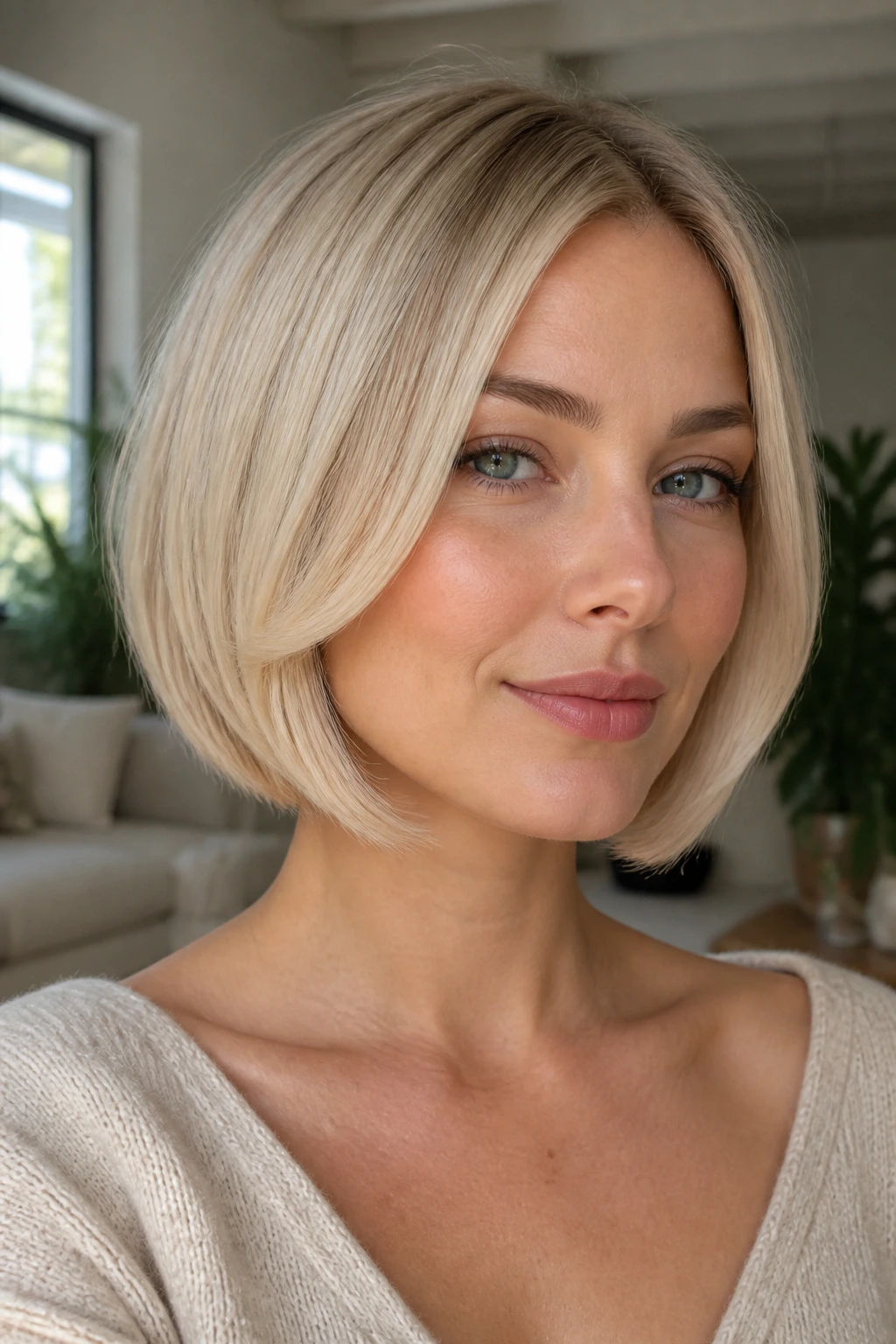
This is the bob for someone who wants visible shape without the hardness of a blunt perimeter. The front pieces start around the cheekbone and curve down toward the jaw, which keeps the face looking open but not overly wide. Straight hair makes those curves more legible, especially if the ends are cut with a slight underbend.
The reason it flatters heart-shaped faces is all about direction. The front pieces guide the eye downward instead of leaving it parked at the forehead. If your cheekbones are strong, this cut can be excellent because it lets them show without making the lower face disappear.
I’d choose a pale beige blond here. The tone should look soft, not icy. The whole point is to get shape without making the hair feel severe.
14. Rooted Beige Blonde Bob
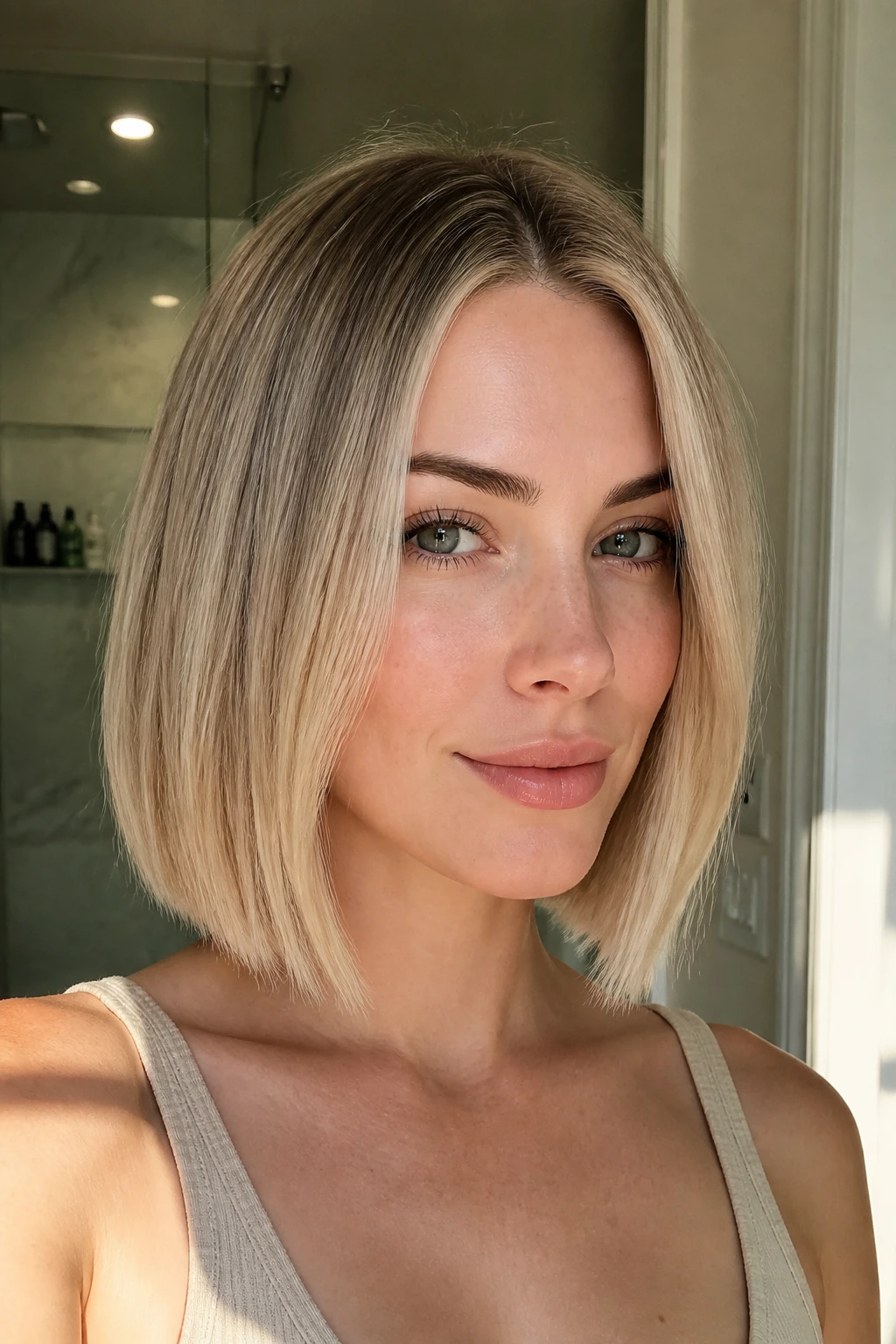
A rooted beige blond bob is the practical answer to upkeep. The darker root gives the cut depth, which helps straight hair look fuller and saves you from touching up regrowth every time the smallest shadow appears. For heart-shaped faces, the deeper root also keeps the focus lower, which is useful if the forehead already gets enough attention.
The cut itself can be simple: a chin-length or slightly longer bob with a clean edge and maybe a small bevel at the ends. The color is doing the heavy lifting. Rooted blond looks less “done” in the best way. It gives the hair a lived-in dimension that a flat one-tone blond sometimes lacks.
Quick details
- Beige tones soften strong facial angles.
- A root shadow makes the grow-out more graceful.
- Works especially well with a center or soft off-center part.
15. Ear-Tucked Bob with Subtle Graduation
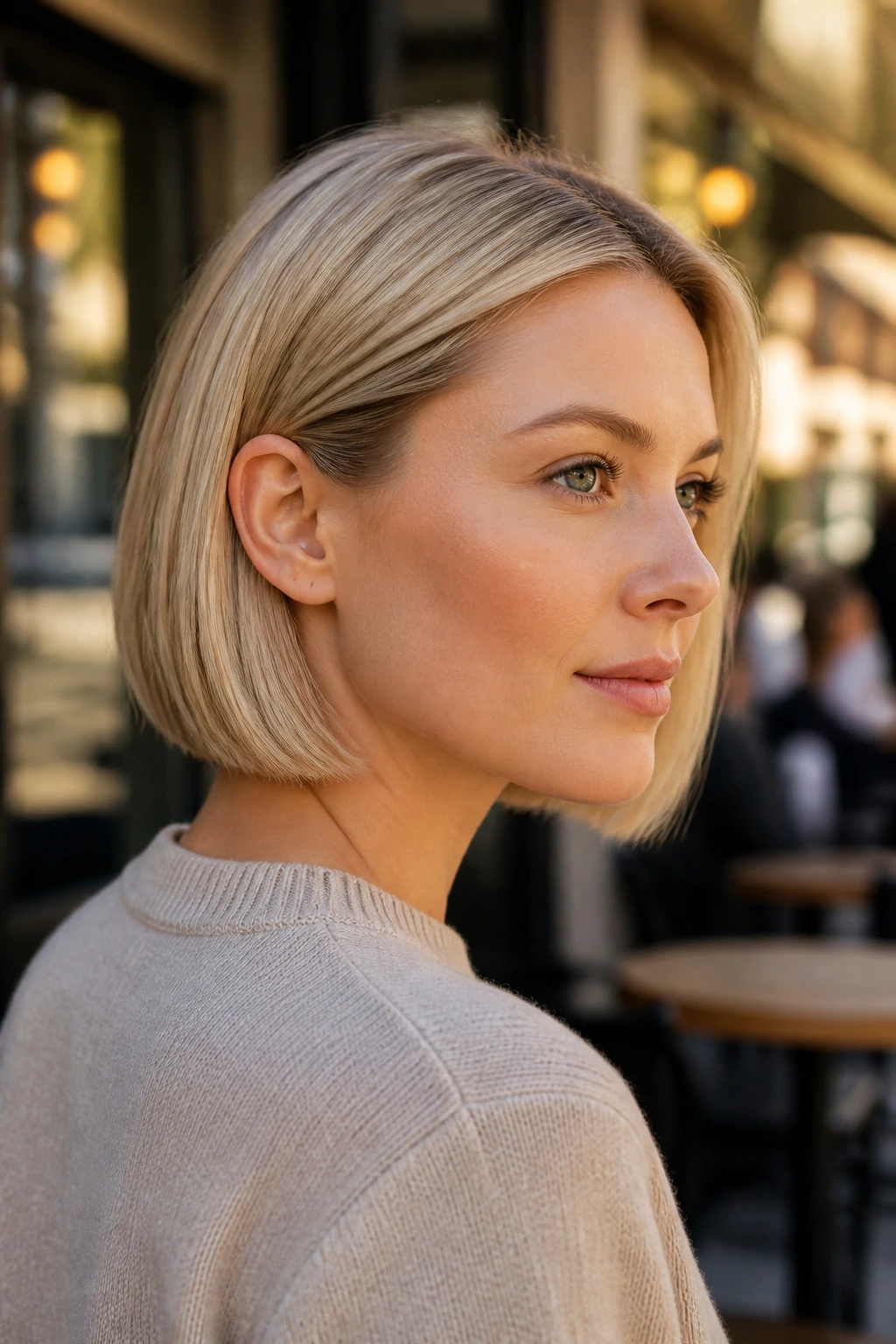
Some bobs are meant to be worn loose. This one is meant to be tucked behind the ear and still look intentional. The graduation at the back keeps the shape from collapsing, while the front stays long enough to frame the cheek and jaw. On a heart-shaped face, that matters because the tuck reveals structure without adding width across the forehead.
Straight hair behaves nicely with this cut. It sits close to the head, and the blond tone picks up light at the ears and temples, which keeps the look from becoming flat. If you wear glasses, this is especially useful. The lines sit cleanly around frames instead of fighting them.
I’d keep the color soft — champagne, beige, or honey. Bright platinum can make the tucked shape feel a little too crisp unless that’s your whole point.
16. Silver-Blond Jaw Bob
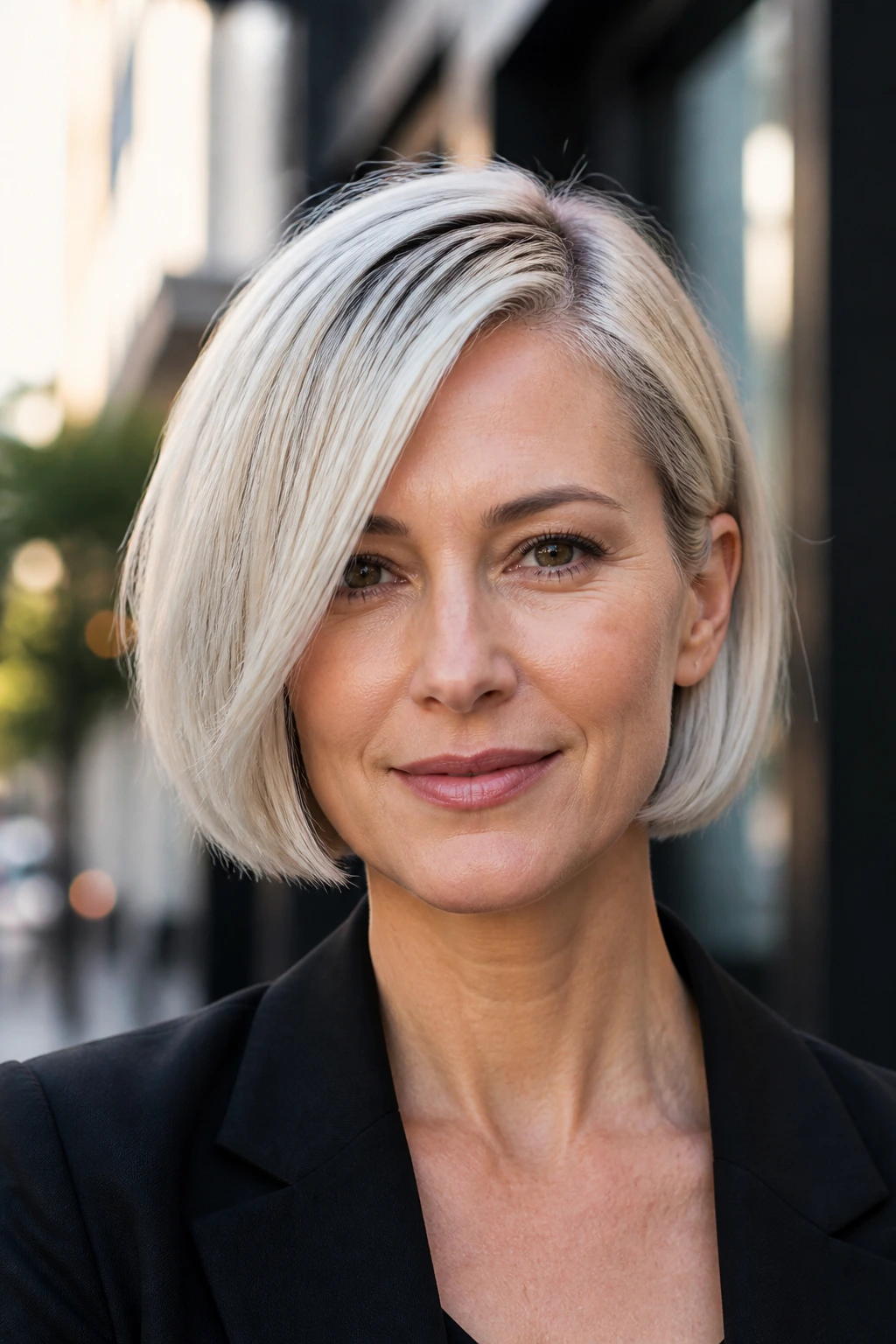
Silver-blond can be stunning on a jaw-length bob because it amplifies the shape. It’s not a forgiving color. That’s part of the appeal. On straight hair, the shine and the cool tone make the cut look sharp enough to cut paper.
For a heart-shaped face, the bob should hit right at the jaw or a hair below it. If it sits above the jaw, the face can look top-heavy. If it’s too long, the clean punch of the color gets lost. This cut likes precision.
What works here
- A blunt or lightly beveled perimeter.
- Minimal layering.
- A deep side part if you want a little more softness around the forehead.
This is not the easiest bob to maintain, but it has a clear point of view. Some haircuts whisper. This one doesn’t.
17. The Glass-Hair Bob
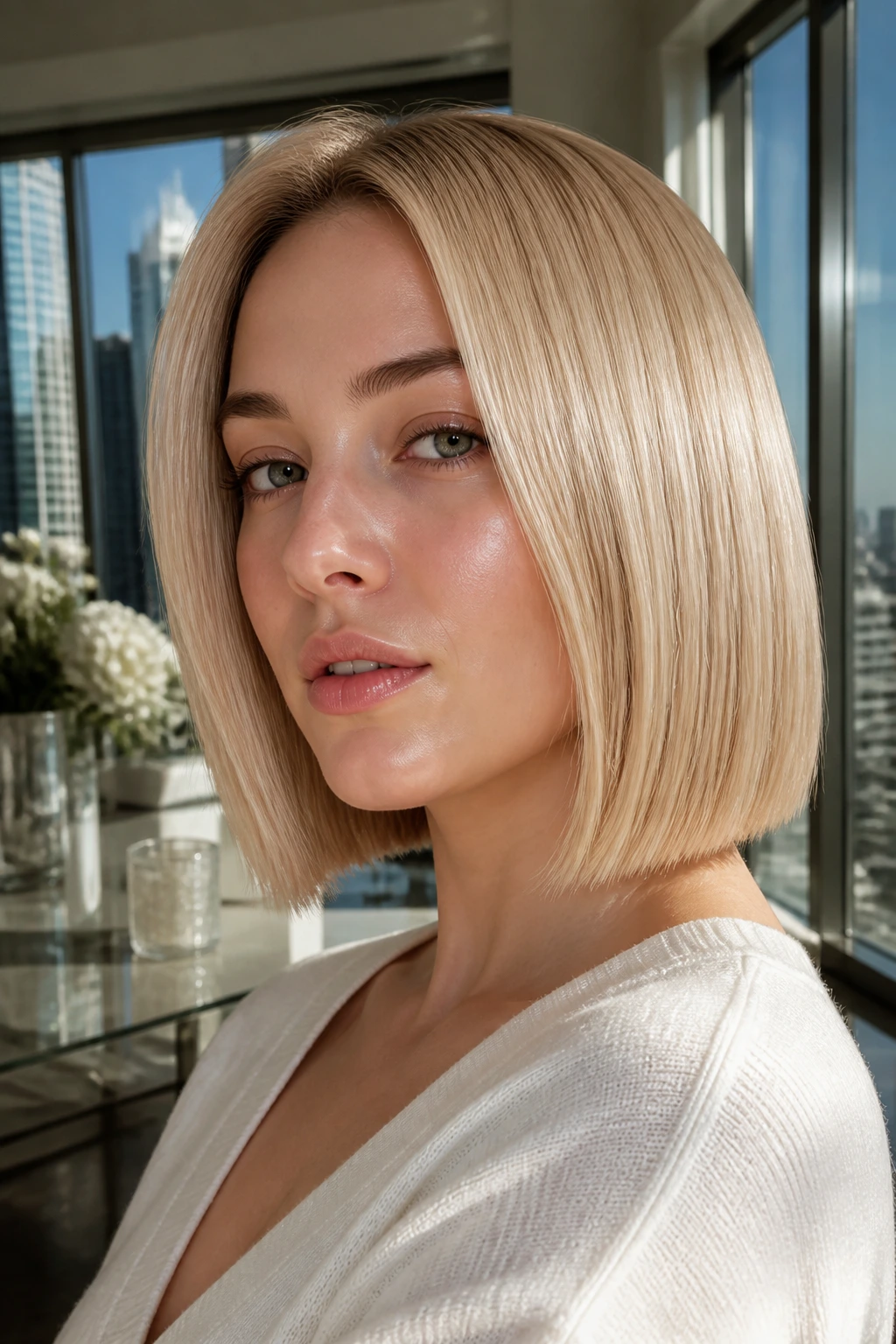
Glass hair is less a cut than a finish, and on straight hair that matters. The bob should be trimmed with a clean line, then styled into a smooth, reflective sheet. On a heart-shaped face, the shine helps draw the eye down the length of the bob instead of leaving it stuck at the forehead.
I like this best at collarbone or jaw length, not ultra-short. Longer lengths give the light more surface to travel across, and they keep the lower half of the face from looking narrow. A clear blond tone — beige, pearl, or pale champagne — works beautifully here because the light bounce is the whole point.
Use a heat protectant and a flat iron with a quick, soft pass rather than repeated heat. Too much ironing and the hair starts to look fried instead of glossy. One pass. Maybe two. That’s enough.
18. Warm Champagne Lob
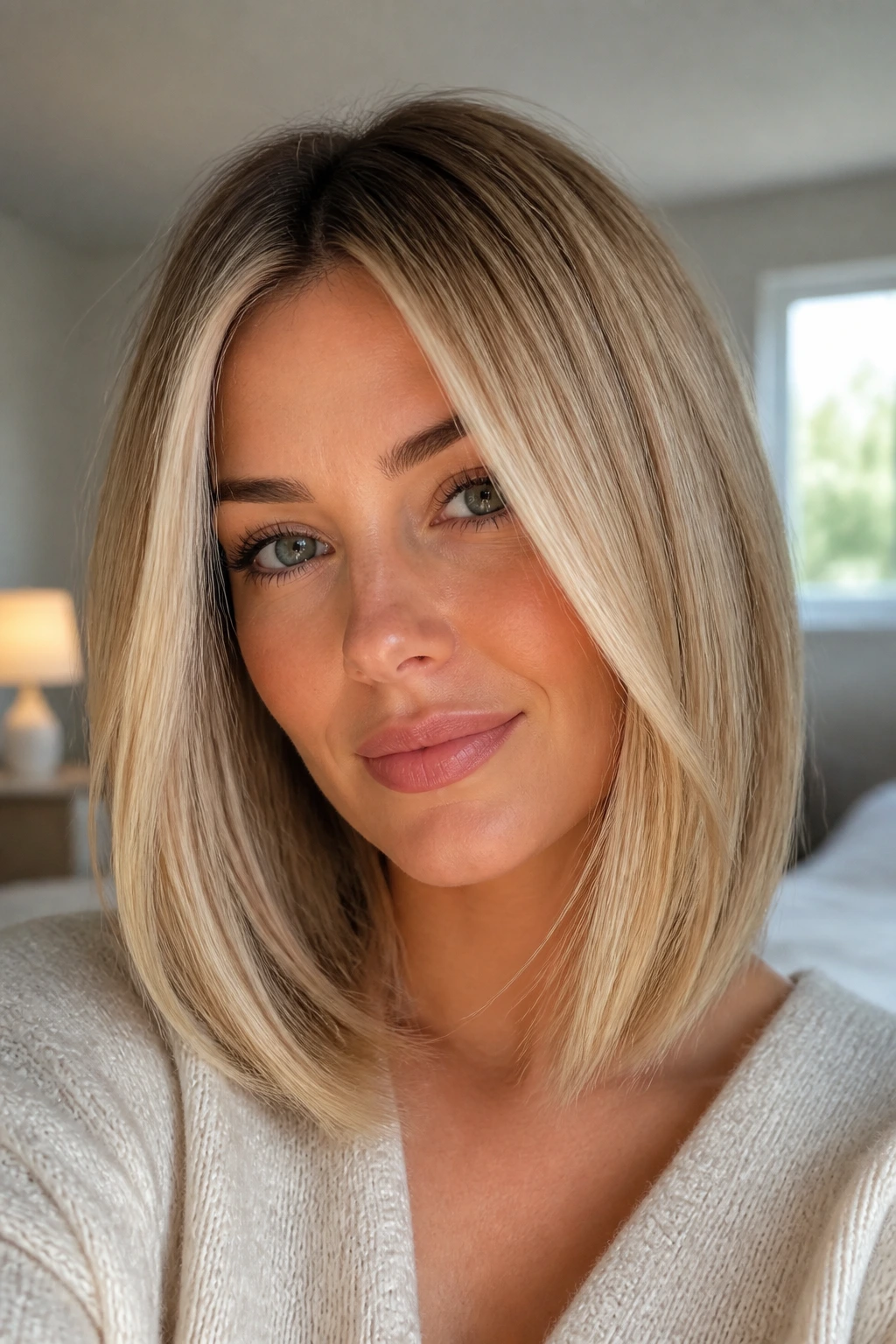
Champagne blond has enough warmth to soften a heart-shaped face without turning brassy. That’s the sweet spot. On a lob, the tone keeps the hair looking luminous while the length keeps the face balanced. Straight strands make the color placement easy to read, especially if there’s a subtle root shadow.
The cut can be almost one-length, with only a whisper of face-framing at the front. I like this because the softness comes from the color and the length together, not from layers that may or may not cooperate. If you want something that feels light but not wispy, this is it.
Best for: anyone who likes a polished look but hates a fussy fringe. The lob does the balancing work quietly.
19. Choppy Bob with Airy Ends
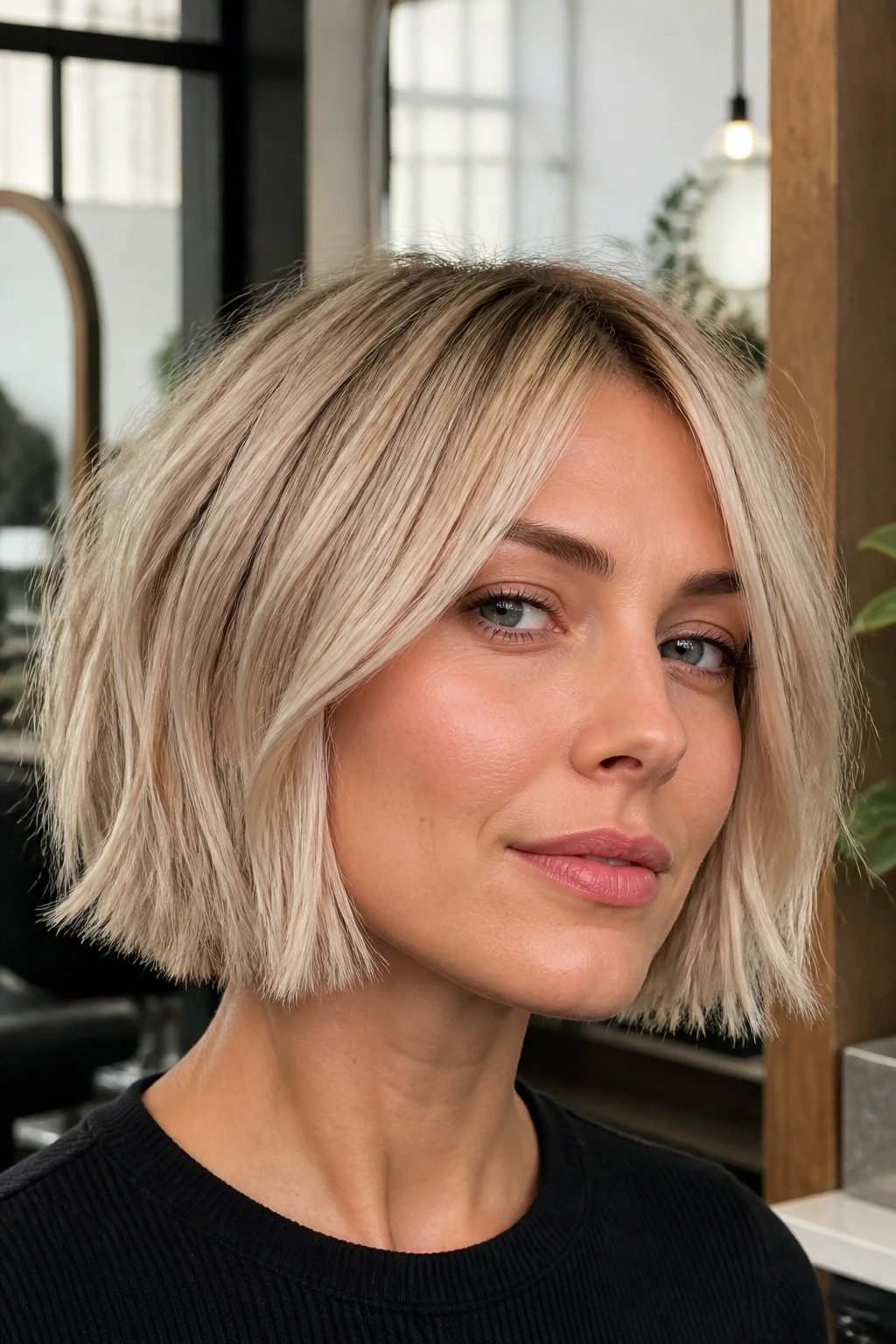
A little texture can save a straight bob from looking too rigid. The trick is not to overdo it. Airy ends mean soft point-cutting at the perimeter, not shredded layers that leave the hair with a choppy, uneven bottom. On a heart-shaped face, this version helps soften the upper width by making the overall shape feel less boxy.
I’d keep the length in the chin-to-neck zone and avoid making the ends too thin. Thin ends on straight hair can look stringy fast. The better move is a light, broken edge that still has weight. A golden blond or creamy beige blond makes the texture read softer than a high-contrast platinum would.
If your hair falls flat and you want a bob with a little more attitude, this is a smart place to land.
20. Soft Curtain-Fringe Lob
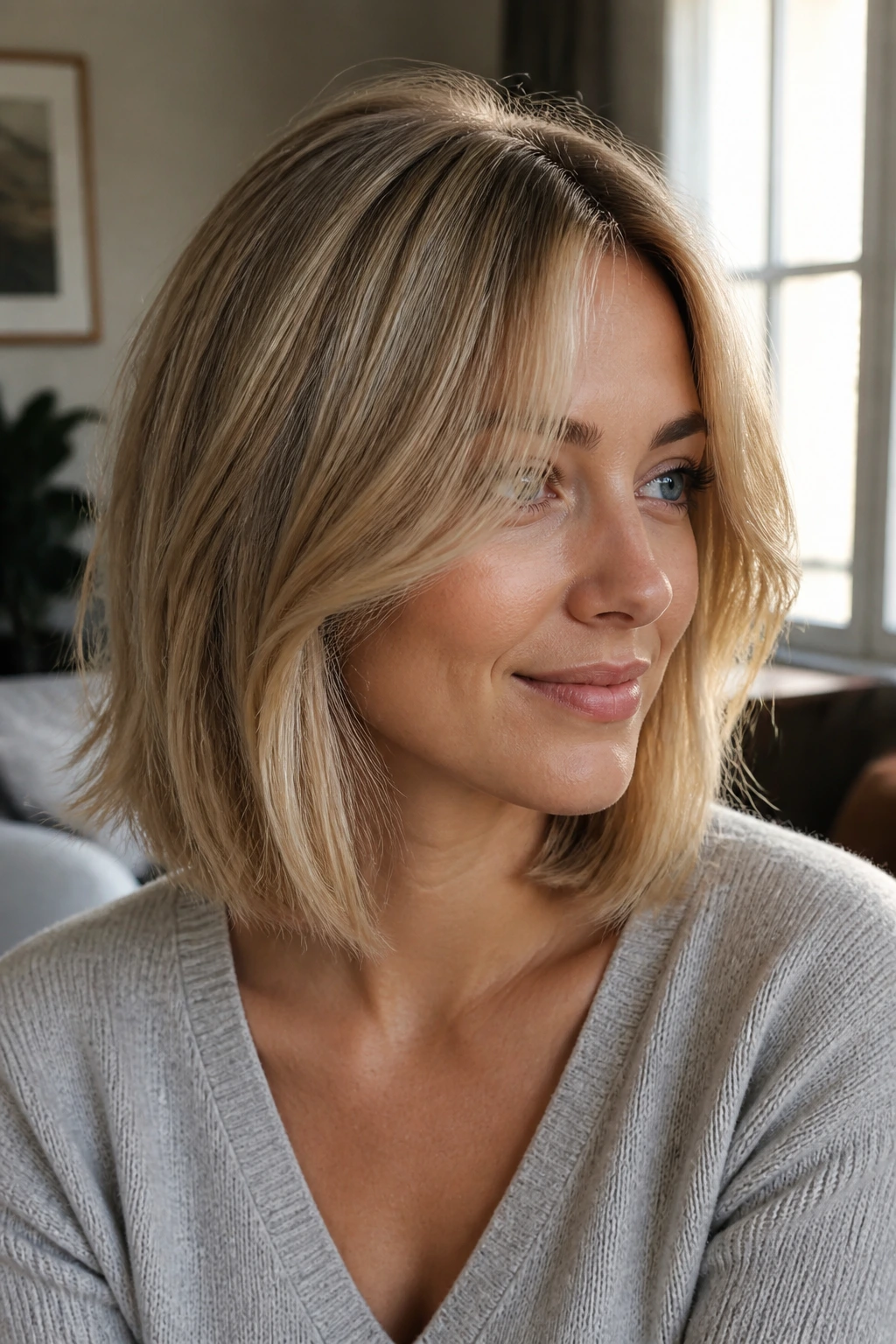
Curtain bangs and a lob are a natural pair, but on a heart-shaped face the fringe length matters. The center should open early enough to avoid crowding the forehead, then blend into the sides around cheekbone level. Straight hair makes that transition smooth and easy to wear.
The lob itself should stay below the jaw, which gives the fringe room to breathe. If the cut is too short, the bangs do too much. If it’s too long, the face can feel stretched. The middle ground is where this one shines.
A warm blond with a little depth at the root is especially nice here. It keeps the fringe from looking heavy and gives the whole cut a softer frame. This is one of the more flattering choices if you like movement around the face but not a full fringe.
21. Polished Inverted Bob
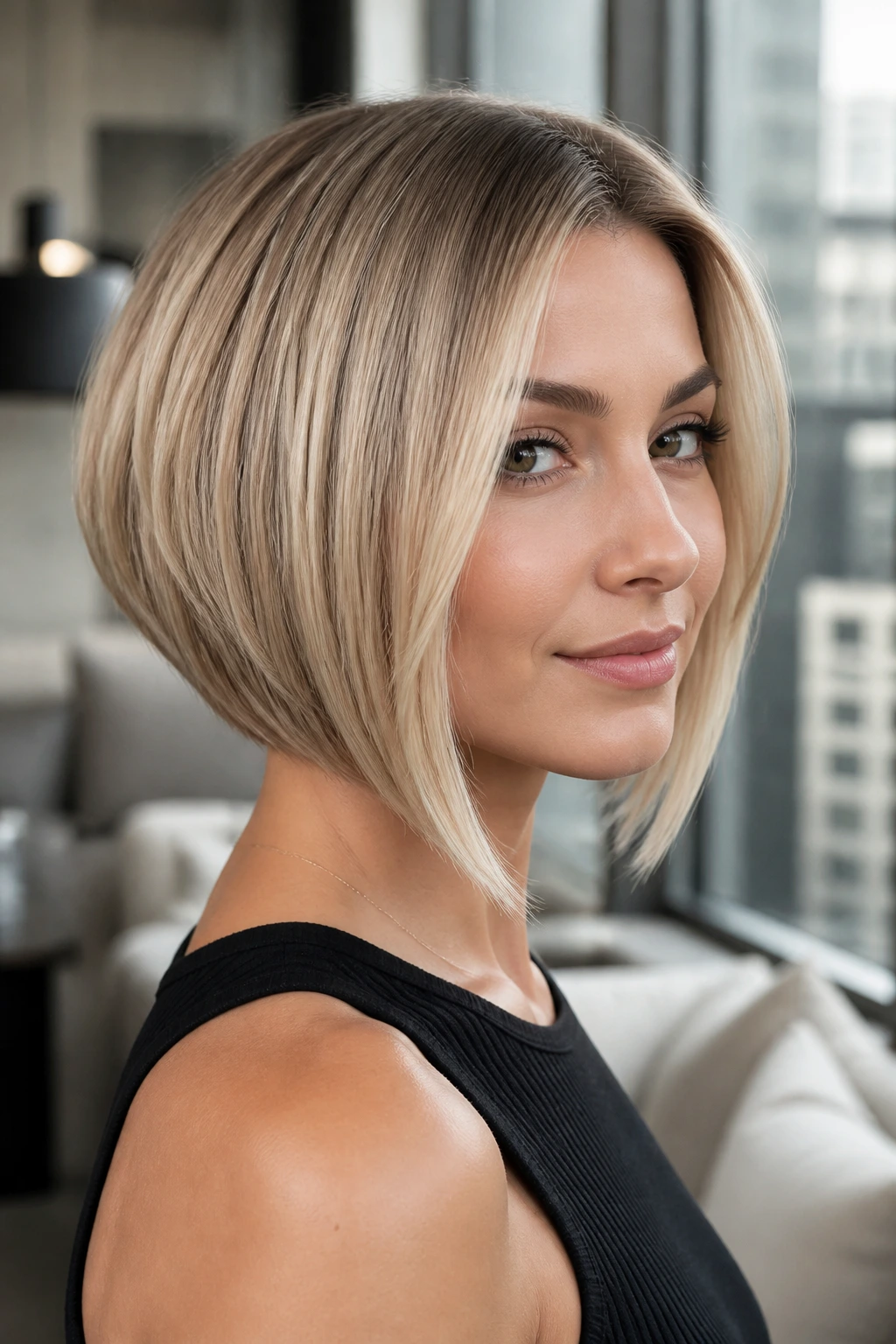
The inverted bob is a strong shape, and I mean that in the literal sense. Shorter in back, longer in front, it creates a clear slope that straight hair shows off well. For heart-shaped faces, the longer front pieces help balance the narrower chin, while the shorter back keeps the neckline clean.
The key is not to push the stack too hard. A giant nape stack can feel dated fast. Keep the gradient subtle and the front corners soft. The effect should be sleek, not angular for the sake of being angular.
This cut loves a cool beige blond or pearl blond because the color highlights the slope. It’s a little more styled than some of the others here, but if you like structure, it’s worth the effort.
22. Straight Lob with a Bent Finish
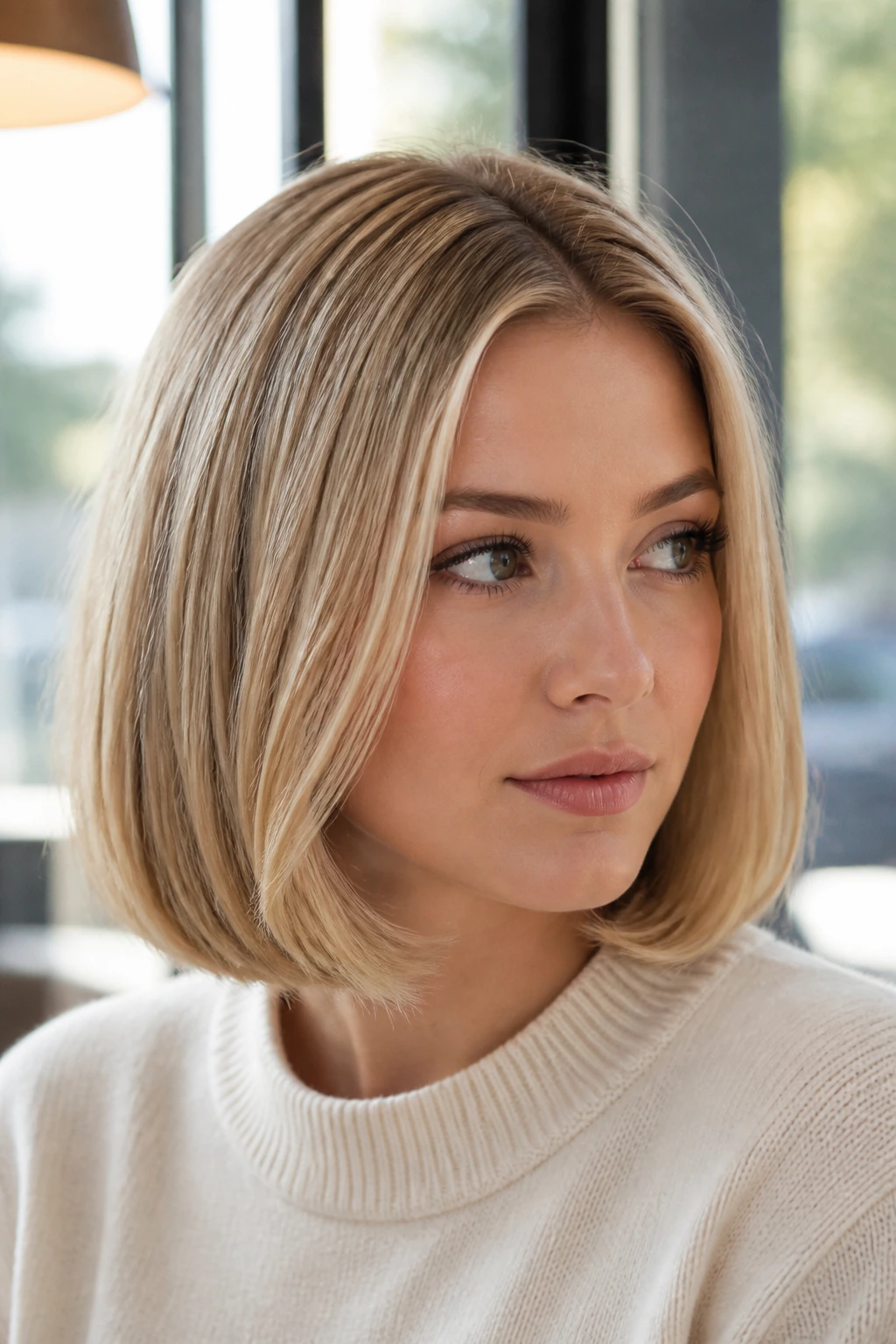
A straight lob with a bent finish is for people who want movement without layers or waves. The hair is still straight, but the ends are turned slightly inward with a brush or iron. That tiny bend helps the face feel less severe and gives the bob a softer landing around the jaw.
For a heart-shaped face, the length should stay below the chin, preferably around the collarbone. The bent finish keeps the cut from hanging flat against the neck. It also makes blond color look richer because light catches the curve instead of stopping at a blunt edge.
A small note
If your hair has a stubborn cowlick near the crown, this is easier to live with than a severe blunt bob. The bend hides a bit of movement that would otherwise stick out.
23. Micro-Stacked Bob
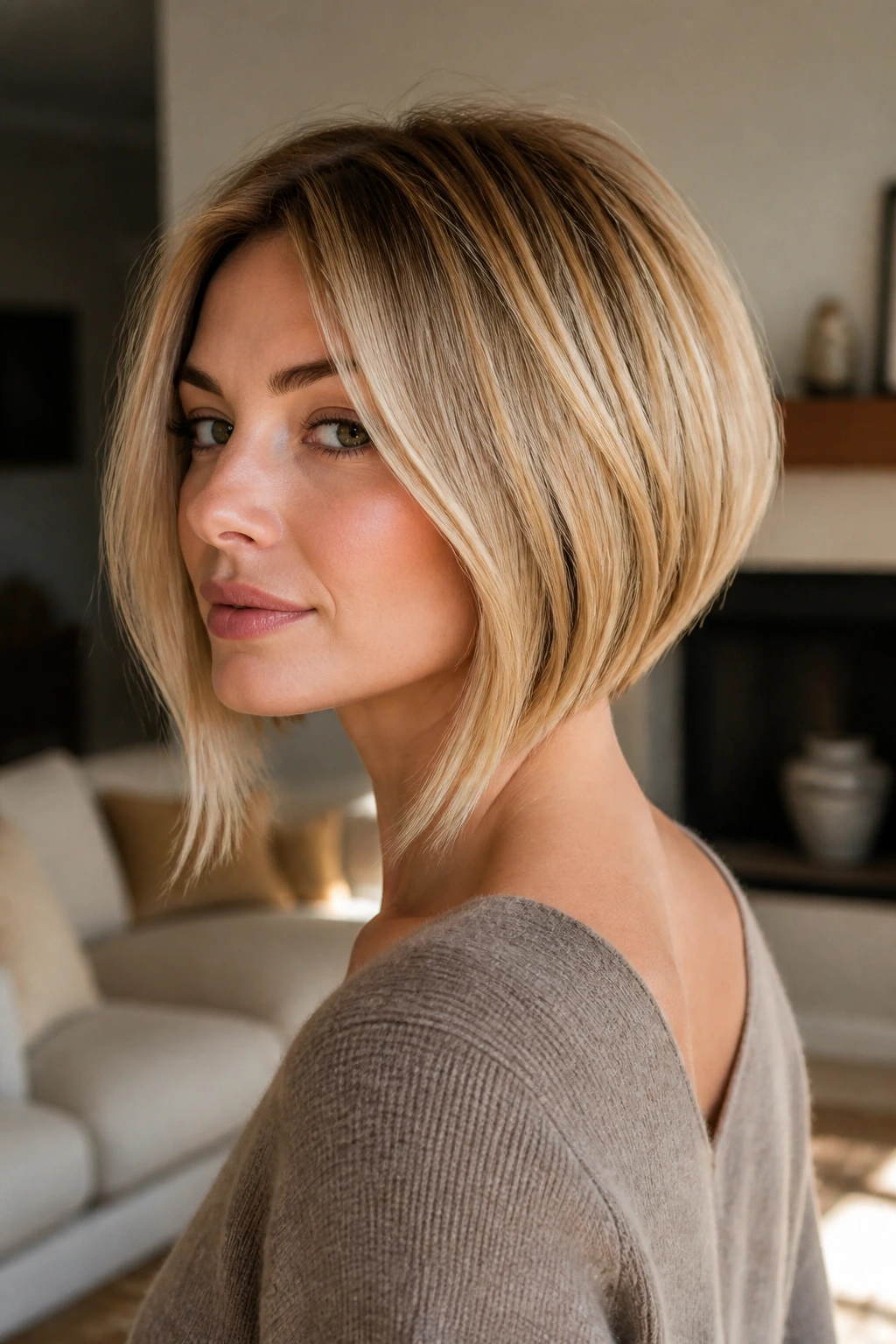
A micro-stacked bob gives a little lift at the back without turning into a full retro wedge. That smaller stack can be useful on straight hair that tends to collapse at the nape. For heart-shaped faces, the extra shape in back keeps the cut from looking top-heavy.
I’d keep the front fairly long and soft. The back should support the style, not steal the show. If the stack gets too dramatic, the head starts to look narrow at the crown and wide at the ends — an odd balance on this face shape.
A buttery or honey blond helps here because the warmth softens the geometry. Cool blond can make the stack feel sharper than you intended. This is a good cut if you want a little body without lots of daily styling.
24. Buttery Blonde Layered Bob
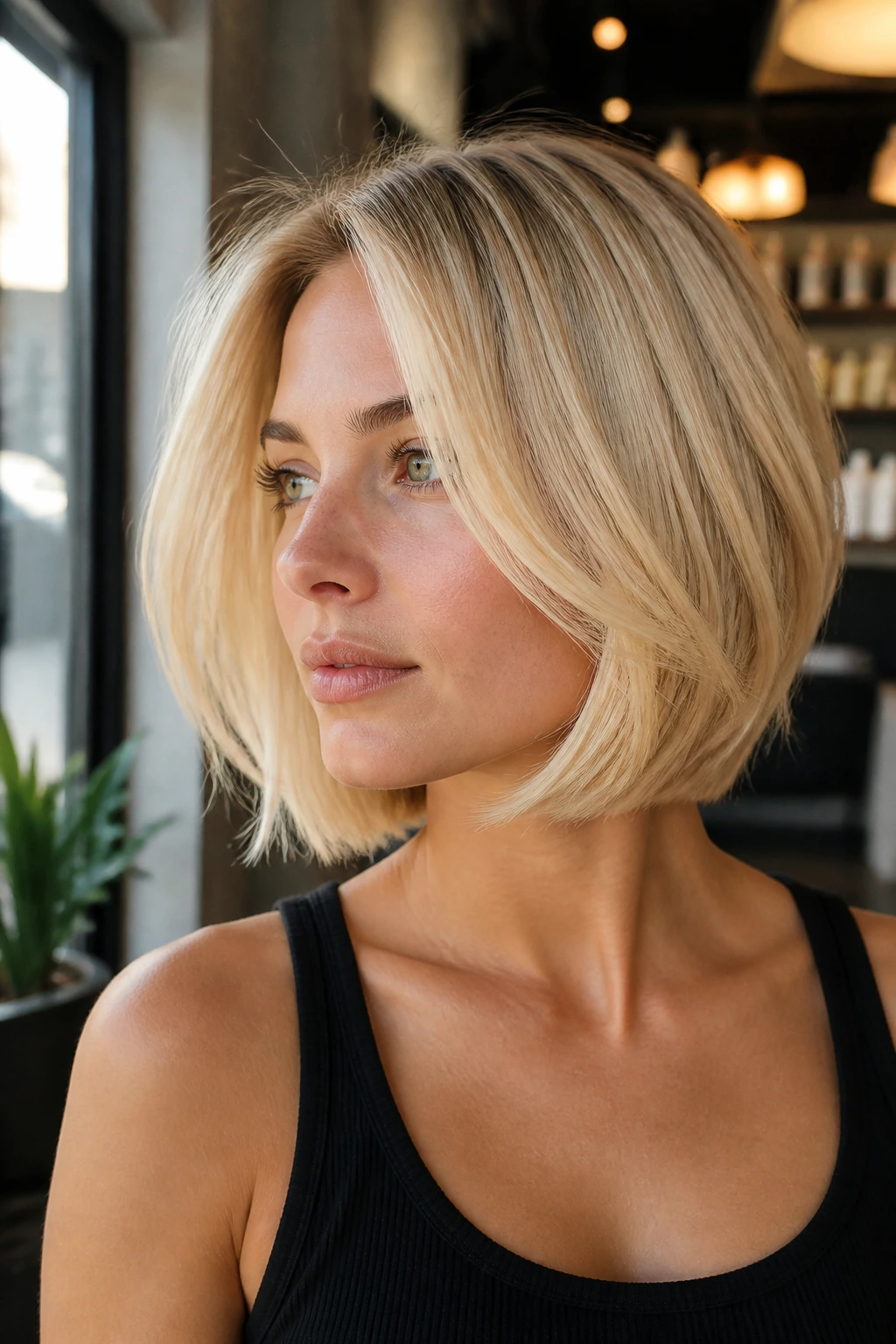
Buttery blonde is one of the easiest shades to wear because it feels soft even when the cut is blunt. Add gentle layers to a bob and straight hair gets a little more movement through the mid-lengths. For heart-shaped faces, that movement can keep the cheeks from looking too dominant and the jaw from looking too narrow.
The layers should be subtle. I’m talking about interior shaping, not feathered ends that break the perimeter apart. The bob still needs a line. If the line disappears, so does the structure that makes the haircut flattering in the first place.
This is a good option when your hair is medium to thick and you want the blond to feel warm rather than icy. It’s easy to maintain and even easier to style with a round brush or a quick flat-iron bend.
25. Neck-Grazing Long Bob with a Money Piece
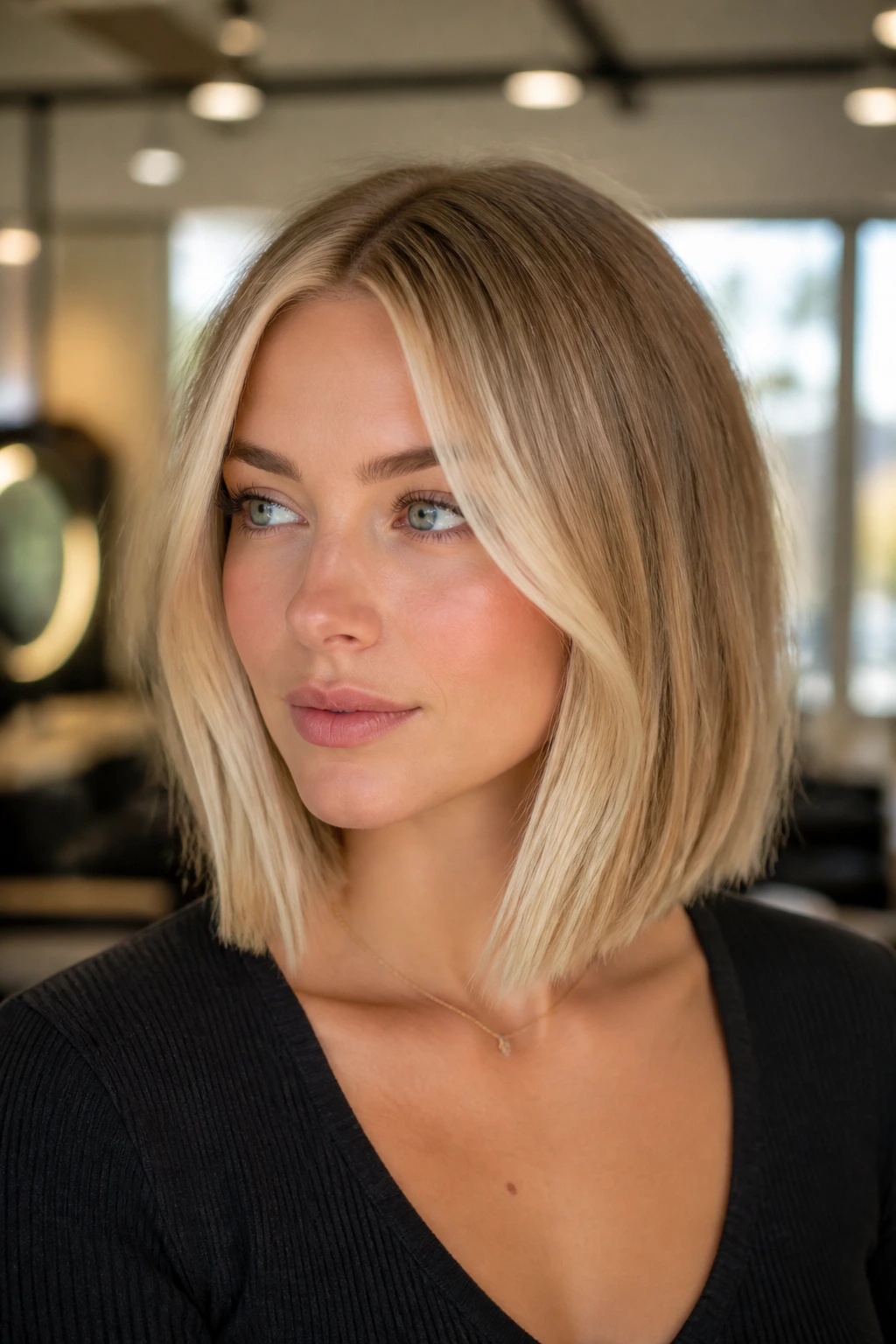
The longest version in this group is also one of the safest. A neck-grazing lob gives a heart-shaped face enough length to balance the forehead while the money piece — those brighter front strands — lightens the area around the temples and cheekbones. Straight hair makes the contrast look crisp.
I like this cut for anyone who wants a blond bob but isn’t ready to lose too much length. The front can be a touch longer than the back, but not enough to feel dramatic. The money piece should be bright, not stripy. Two face-framing ribbons are enough.
It’s forgiving. It’s flexible. And if you’re unsure about going shorter, this is the one that lets you test the water without diving in.
Why Straight Hair Makes the Shape So Honest
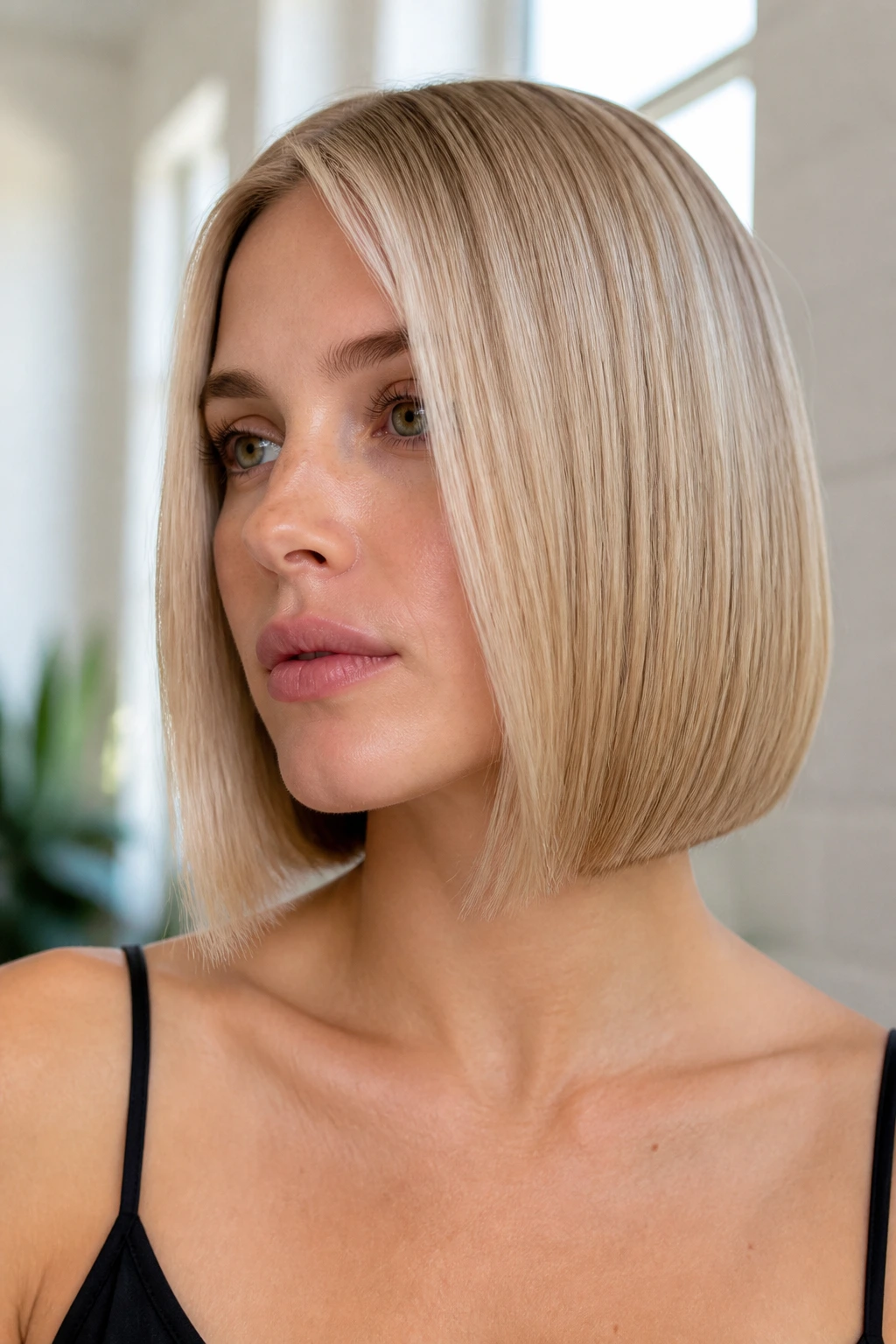
Straight hair does not blur the haircut. That’s the whole story, really. With waves or curls, a bob can get a little forgiving around the edges. Straight hair shows the line, the weight, the bevel, the parting, the color placement — all of it. If the perimeter is off by even half an inch, you’ll see it in the mirror by lunch.
That honesty is useful. It means a bob can be tailored with precision. A blunt line can widen the jaw. A slight underbevel can keep the ends from floating away from the neck. A deep side part can take pressure off the forehead, which is a small mercy for a heart-shaped face that already carries width up top. The shape does not need to be complicated. It needs to be intentional.
Blond color makes the honesty easier to wear. Light blond tones soften heavy lines, while deeper roots and lowlights keep the cut from looking flat. The right tone doesn’t just sit on top of the haircut — it changes how big the shape feels. That part matters more than people think.
What to Tell Your Stylist Before the First Snip
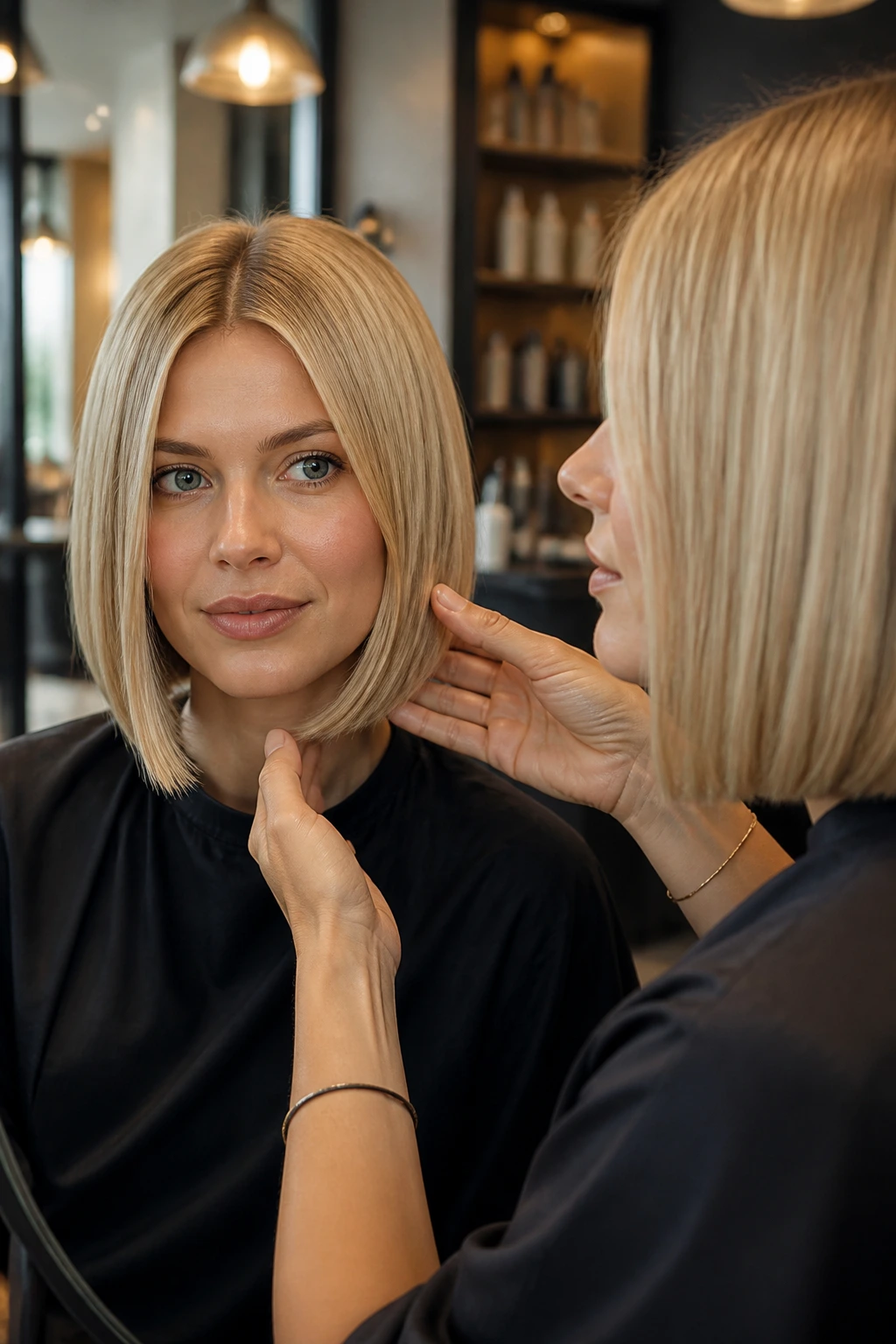
A good bob starts with better words than “shorter.” That’s too vague. Tell your stylist exactly where you want the perimeter to land: chin, jaw, neck, or collarbone. If you have a heart-shaped face, say whether you want the cut to add width at the jaw or soften the forehead. Those are not the same goal, and the haircut should be built around one of them.
Bring photos from the front and the side. Side views matter more than most people expect. A bob can look lovely from the front and then turn into a triangle from the profile. If you wear your hair behind your ears, say that. If you want a middle part, say that too. Those habits change how much front length you need.
Straight hair also needs a different layering plan than wavy hair. Ask your stylist not to over-thin the ends. If your hair is fine, too much texturizing makes the bob look see-through. If it’s thick, the bulk should come out from inside the shape, not from the edges. That distinction saves a lot of regret.
Essential Tools for Styling and Toning These Bobs
-
Blow dryer with a nozzle: The nozzle keeps airflow directed downward so the cut dries smooth instead of frizzy at the ends.
-
1-inch to 1.5-inch round brush: Small enough to bend the ends under, large enough to keep a bob from turning into a curl.
-
Flat iron with adjustable heat: Useful for glass-hair finishes and soft bends; keep the temperature as low as your hair allows.
-
Tail comb: Makes clean parts and helps section the hair when you’re blow-drying or applying toner.
-
Heat protectant spray or cream: Straight hair still burns. The shine on blond hair disappears fast if you skip this.
-
Lightweight smoothing serum: A pea-sized amount through the mids and ends keeps the bob polished without making it greasy.
-
Purple shampoo or color-safe toning mask: Helps keep blonde shades from drifting yellow, especially on paler blondes.
-
Sectioning clips: Necessary if your hair is dense or if you’re trying to dry the bob in neat sections.
Picking the Blond Shade That Fits the Cut
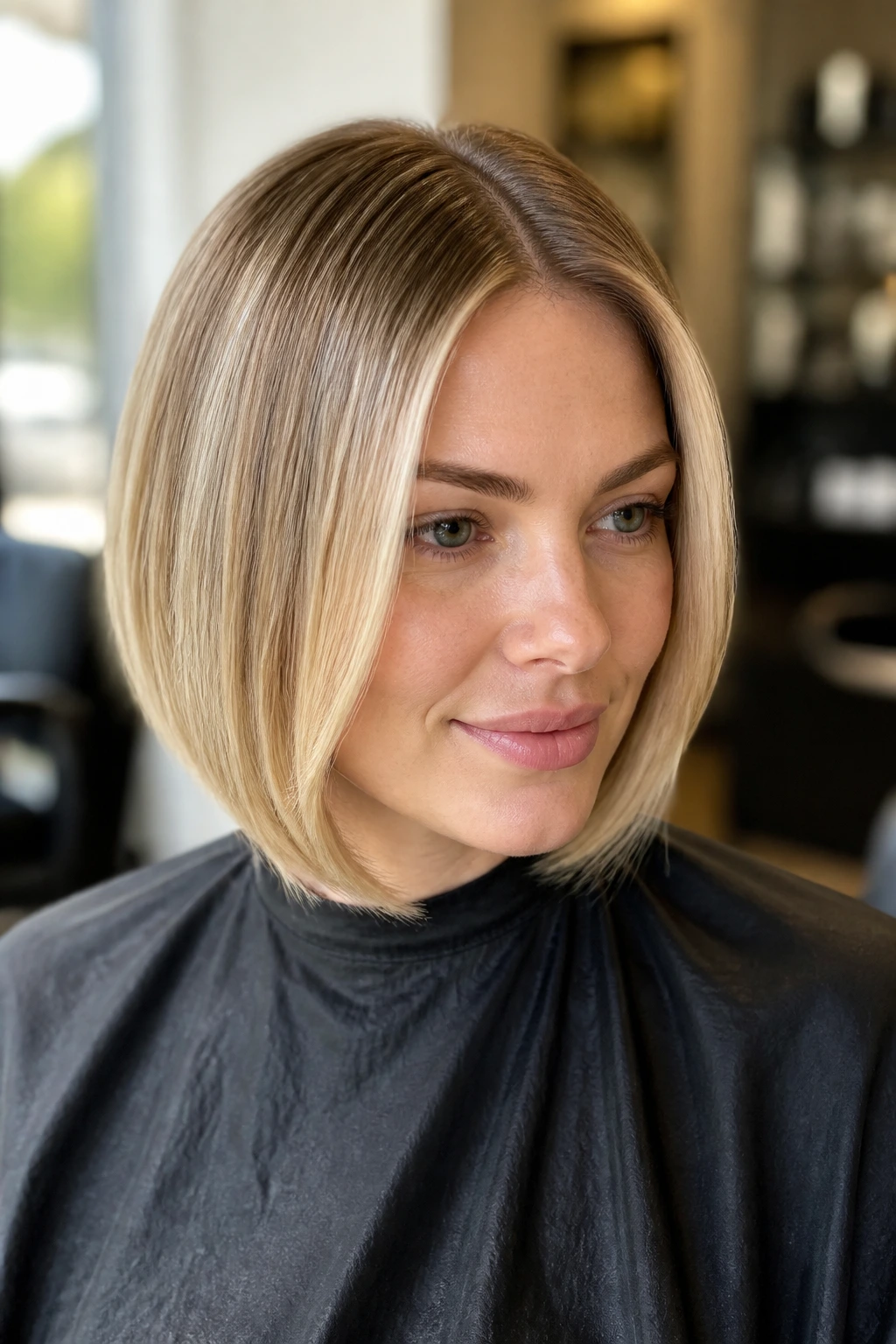
The blond tone changes the whole mood of a bob. Cool silver and platinum shades make the outline harder, sharper, and more graphic. Warm honey, butter, and champagne tones soften the face and make the cut feel less severe. Beige blond sits right in the middle and is often the easiest place to start if you’re unsure.
For heart-shaped faces, I usually like a little dimension at the root. A root shadow or lowlight keeps the forehead from feeling too bright and draws the eye downward. That can be as subtle as half an inch of depth at the base. You do not need a dramatic ombré. A small shift is enough.
If your hair lifts warm when lightened, ask for a toner that keeps the blond from turning orange or gold in the wrong way. If your blonde tends to go dull, a gloss every few weeks brings the shine back without changing the cut. The color should support the shape. If it starts competing with the shape, tone it back.
Daily Styling Moves for Heart-Shaped Faces
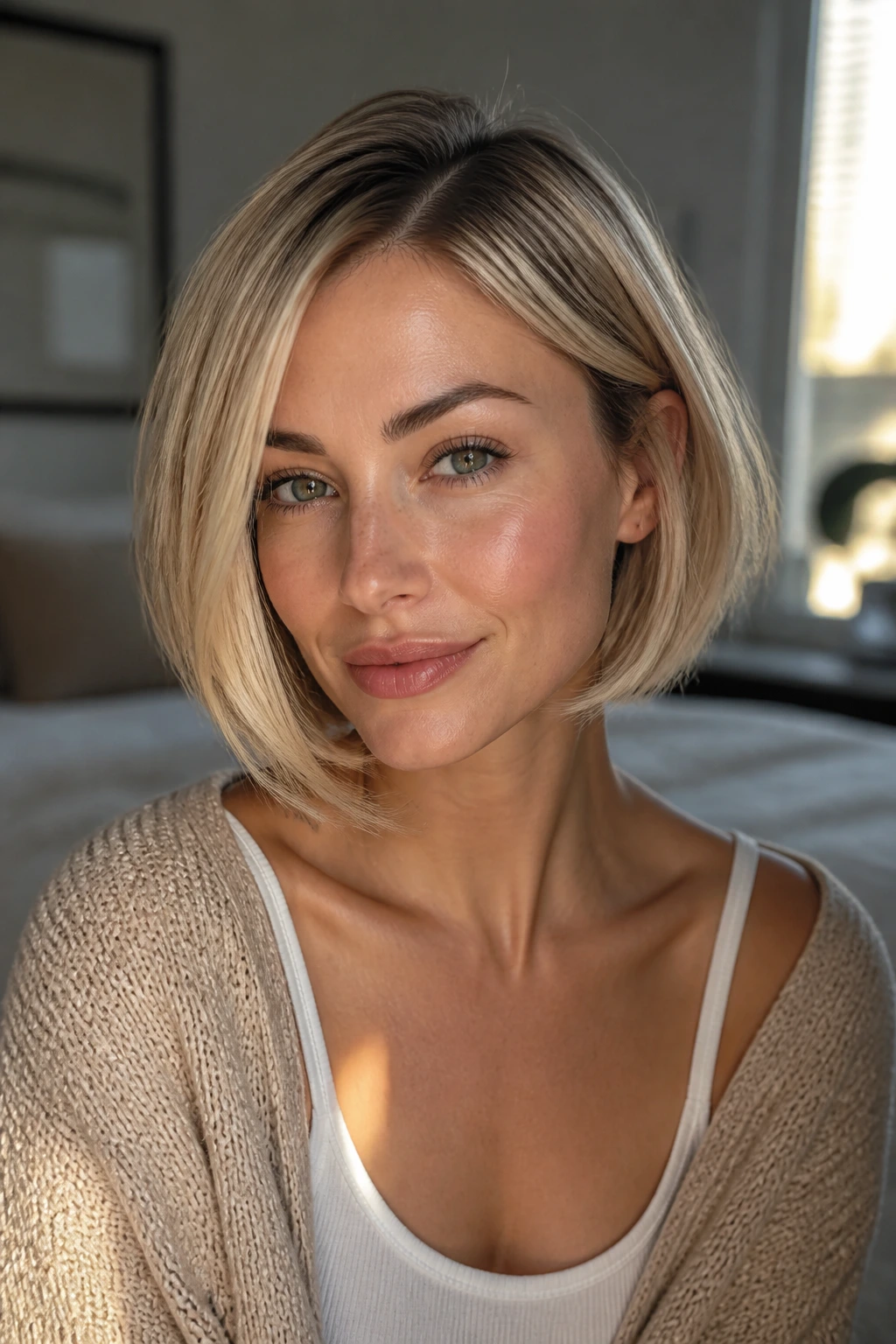
Part placement: Start with the part before anything else. A soft off-center part works for most heart-shaped faces because it keeps the forehead from feeling too wide. A deep side part adds even more balance if the front of the face needs breaking up.
Volume placement: Keep volume lower, closer to the jaw and collarbone, not piled high at the crown. Straight hair can go flat fast, so the trick is to lift just enough at the roots and let the ends do the rest. Too much crown height makes the top of the face feel taller.
Front pieces: The front should either skim the cheekbones or bend toward the jaw. That’s the zone that matters. If the front pieces stop too high, the cut loses its balancing job.
Finish: A soft bend looks better than stiff curl on straight hair. Use a round brush or a flat iron to turn the ends under by about half an inch. That small move keeps the bob clean without making it look rigid.
The Mistakes That Make a Blond Bob Look Off
-
Ending the bob exactly at the chin: That’s the fastest way to make a heart-shaped face look bottom-light. Shift the length slightly below the chin or build some softness into the front corners.
-
Over-thinning the ends: Straight hair needs a solid perimeter. If the ends get shredded too much, the bob starts to look wispy and unfinished.
-
Choosing a fringe that’s too heavy: Thick bangs can swallow the forehead in a bad way, especially if the rest of the cut is short. Softer fringe lines usually work better.
-
Ignoring the part: A bob with no parting plan can sit awkwardly on the face. Decide whether the cut wants a center, side, or deep side part before the first styling pass.
-
Letting platinum get brassy: Bright blond looks polished only when the tone stays clean. If it starts yellowing, the whole shape looks less precise.
-
Making the back too stacked: A huge stack at the nape can age the cut fast. Keep the graduation subtle unless you want a very specific silhouette.
Variations and Adaptations to Try
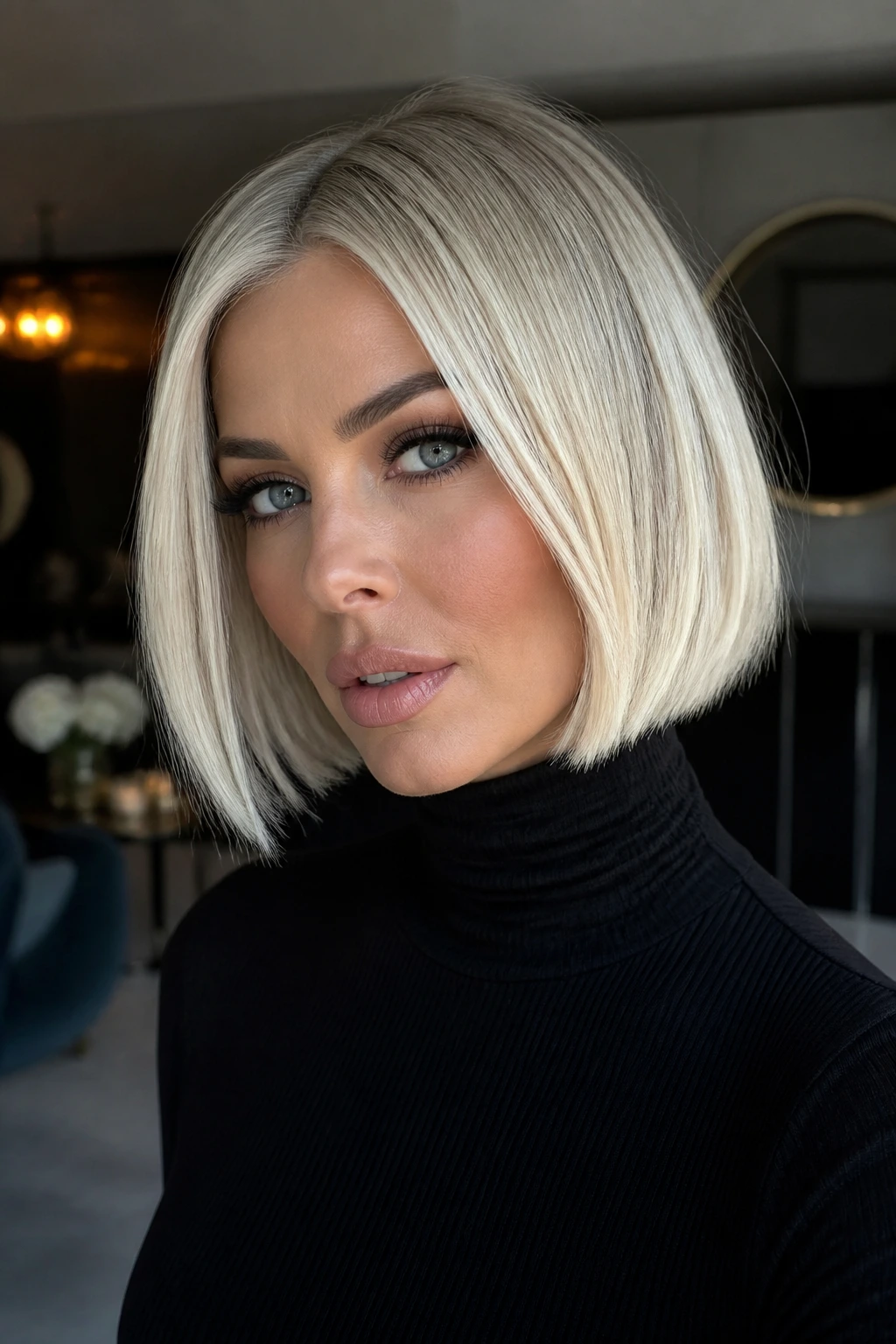
The Soft Grow-Out Bob: Keep the length at the collarbone and use a rooted beige blond. This one is for people who want fewer salon visits and a shape that can survive a few extra weeks without looking sloppy.
The Ice Frame Bob: Go platinum with brighter money pieces at the front. It’s sharper, colder, and stronger around the eyes, which can work beautifully if you like contrast and don’t mind more toning upkeep.
The Honey Hug Bob: Use a warm honey blond and a rounded jaw-length line. The warmth softens a strong forehead and makes the cut feel less severe on straighter, denser hair.
The Fine-Hair Lift Bob: Ask for a blunt perimeter with hidden interior support. No visible shredding, no messy layering. The goal is fullness at the edge, which is what fine straight hair usually loses first.
The Fringe-Forward Bob: Choose bottleneck bangs or curtain bangs and keep the bob below the chin. This is the safest route if your forehead feels wide and you want that area softened without committing to a full bang.
The Thick-Hair Polish Bob: Keep the line blunt, use internal debulking, and finish with a bevel under the ends. Thick straight hair can look heavy fast, so the structure has to stay clean.
Maintenance, Toning, and Grow-Out Care

A blond bob lives or dies by maintenance. The cut itself can go a few weeks between trims if it’s well-shaped, but the color usually needs more attention. Most blond tones stay cleaner with a purple shampoo once a week, not every wash. Overusing it can make the hair dull or slightly lavender at the ends, which is not the point.
Trims every 6 to 8 weeks keep the perimeter honest. If you’re wearing a blunt or beveled bob, stretching much beyond that usually shows at the corners first. The line starts to drift. The back can puff out or the front can lose its edge. If you’re growing the cut out, ask for dusting trims rather than chopping off fresh length.
Heat protection matters more than people admit. Straight hair on a blond bob often gets styled with a dryer, a brush, and sometimes a flat iron. That’s a lot of heat. Keep the temperature as low as possible and use a protectant every single time. A silk pillowcase and a loose clip at night also help preserve the bend and reduce the morning mess around the face.
Frequently Asked Questions
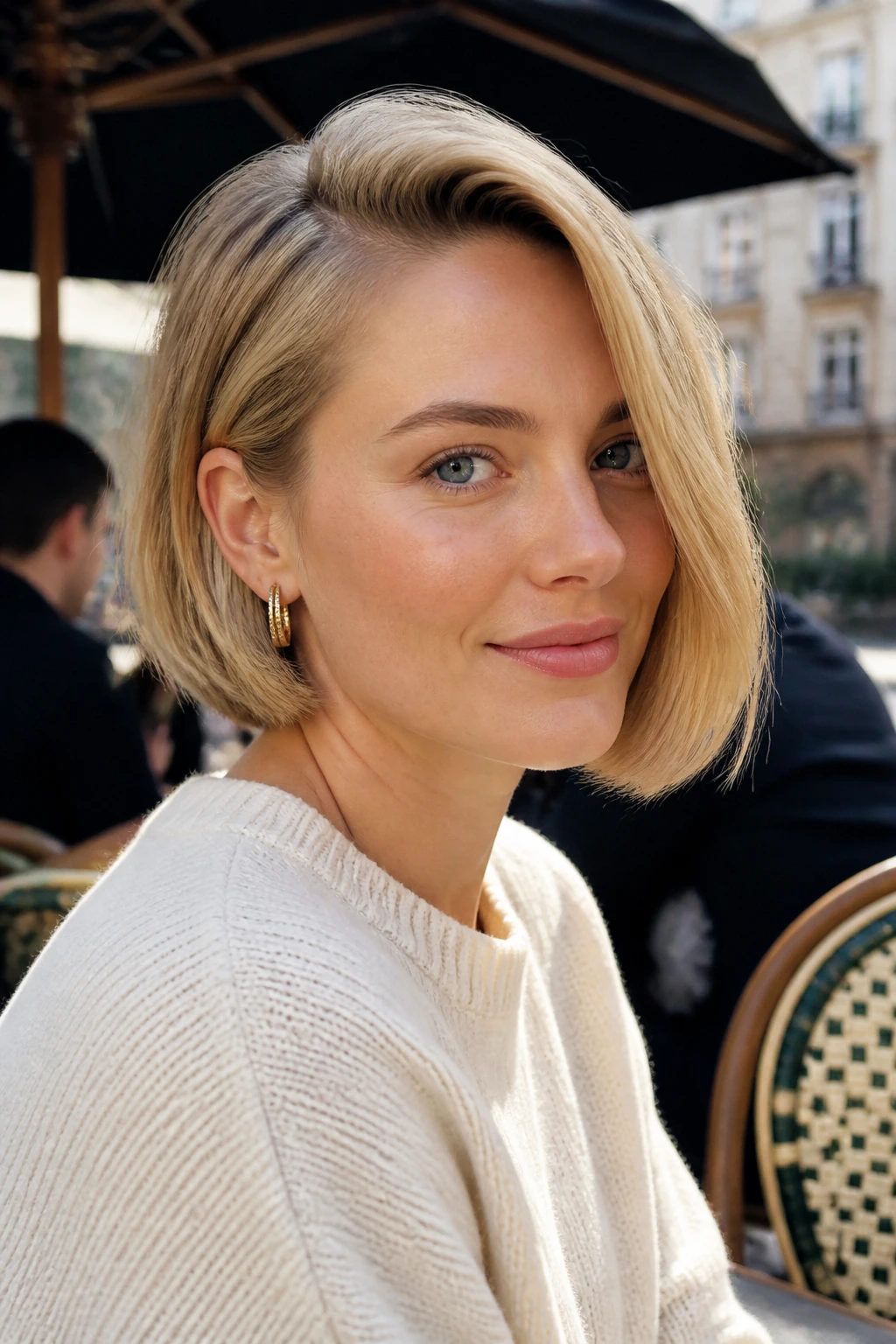
Does a chin-length bob work on a heart-shaped face?
Yes, but only if the cut doesn’t stop exactly at the chin. A half-inch below the chin or a softly beveled front edge usually flatters more because it keeps the lower face from looking too narrow.
Should I choose a side part or a center part?
A side part is usually easier on a heart-shaped face because it softens the forehead. A center part can work if the bob is long enough and the front pieces are shaped to fall near the jaw.
Will layers ruin a straight blond bob?
Not if they’re hidden well. The problem is over-layering the perimeter until the ends look thin and broken. For straight hair, subtle internal shaping is usually better than obvious stacked layers.
What blond shade is easiest to maintain?
A rooted beige or honey blond tends to be more forgiving than high-contrast platinum. It grows out more softly and doesn’t need toner quite as often to look intentional.
Can fine hair wear a bob without looking flat?
Absolutely. Fine straight hair often looks better in a blunt or lightly beveled bob than in a heavily layered one. The perimeter gives the illusion of fullness, which is the part that matters.
How short is too short for a heart-shaped face?
If the cut rises above the chin and there’s no fringe or front softness, it can make the face feel top-heavy. Shorter bobs work best when they add width near the jaw or open up the forehead with some kind of fringe.
What if my hair flips out at the ends?
That usually means the perimeter is too blunt for your hair’s natural bend or it needs a slightly longer bevel. A round brush and a soft underbend during drying usually fix it faster than more product does.
Can I tuck a bob behind my ears and still keep the shape?
Yes, if the front is left a little longer. A tucked bob looks intentional when the sides are cut with enough length to frame the cheek and jaw even after the tuck.
The Shape That Does the Work
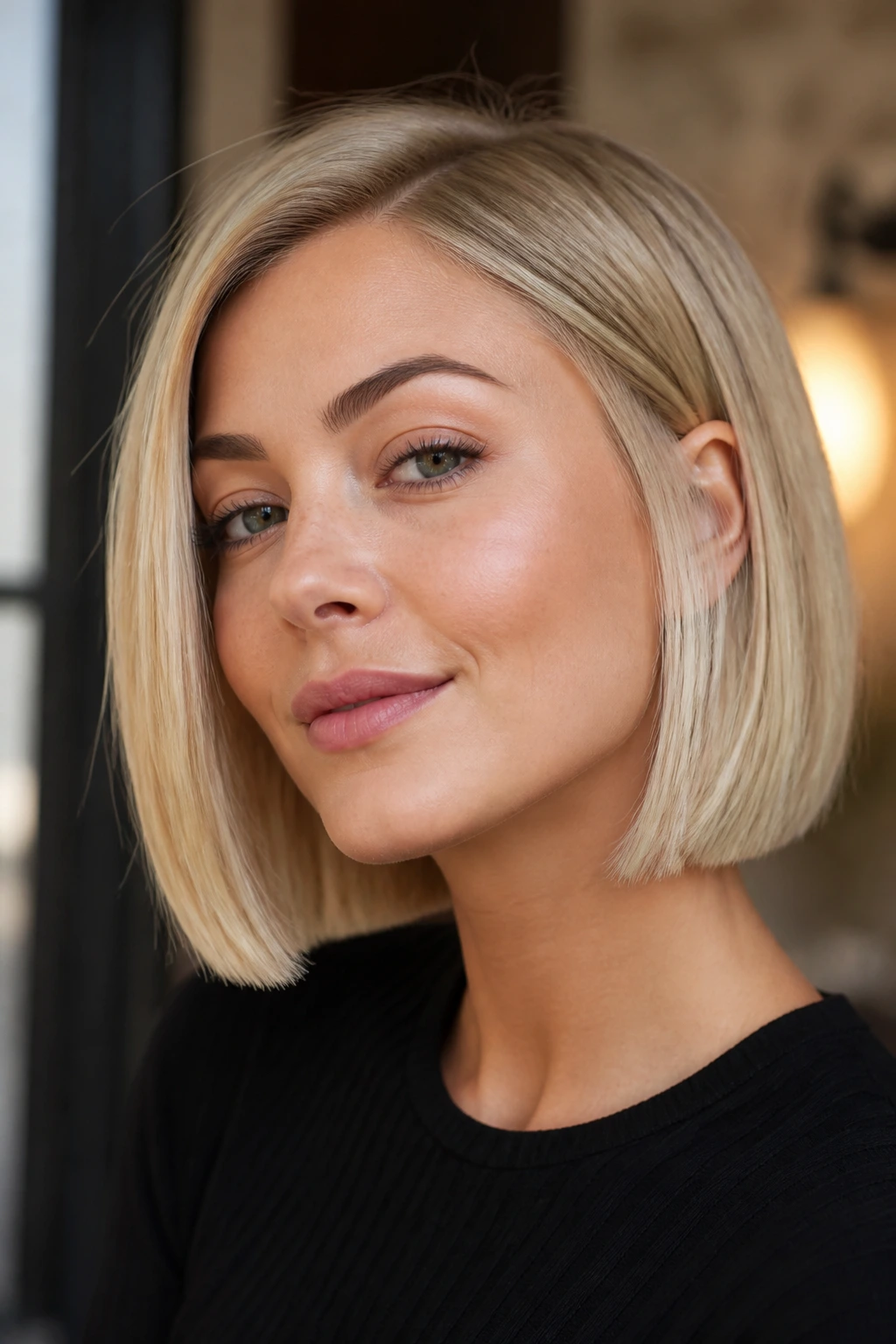
The best blond bob for a straight-haired, heart-shaped face is the one that balances rather than fights. That may mean a blunt jaw-grazer, or it may mean a collarbone lob with a side sweep and a soft root shadow. The right answer depends on where your face needs the most help — forehead, cheekbones, jawline — and how much styling you’re willing to do.
I’d still take a clean line over a fussy one. Every time. Straight hair rewards precision, and blond color makes that precision visible in the nicest possible way. If you get the length, part, and tone working together, the haircut stops looking like a haircut and starts looking like the face has been framed on purpose.
Pick the shape that gives your jaw a little more presence, keeps the forehead from taking over, and lets the blond do its bright, reflective work. Then let the bob settle into place. It usually knows what to do from there.