



A short cut on fine hair can look sharp at 8 a.m. and limp by lunch. The crown collapses, the part widens, and the front pieces start clinging to your forehead like they’ve given up on the day.
That’s why daily hairstyles for short hair with fine hair need a different kind of thinking. You’re not trying to force huge volume out of a strand that doesn’t want to hold it. You’re building shape in smaller, smarter ways: a deeper part, a cleaner tuck, a bend at the ends, a little grit at the roots, and enough structure that the style still reads after a scarf, a coat collar, or a bad commute.
Fine hair is light. That’s the whole story and also the trick. Light hair moves easily, which sounds nice until you realize it also forgets its shape quickly. Give it the wrong cream and it lies flat. Give it some friction and a clear silhouette, and suddenly the cut looks intentional instead of apologetic.
The styles below all work with that reality instead of fighting it. And that’s what makes them worth keeping around.
Why These Looks Earn Their Keep
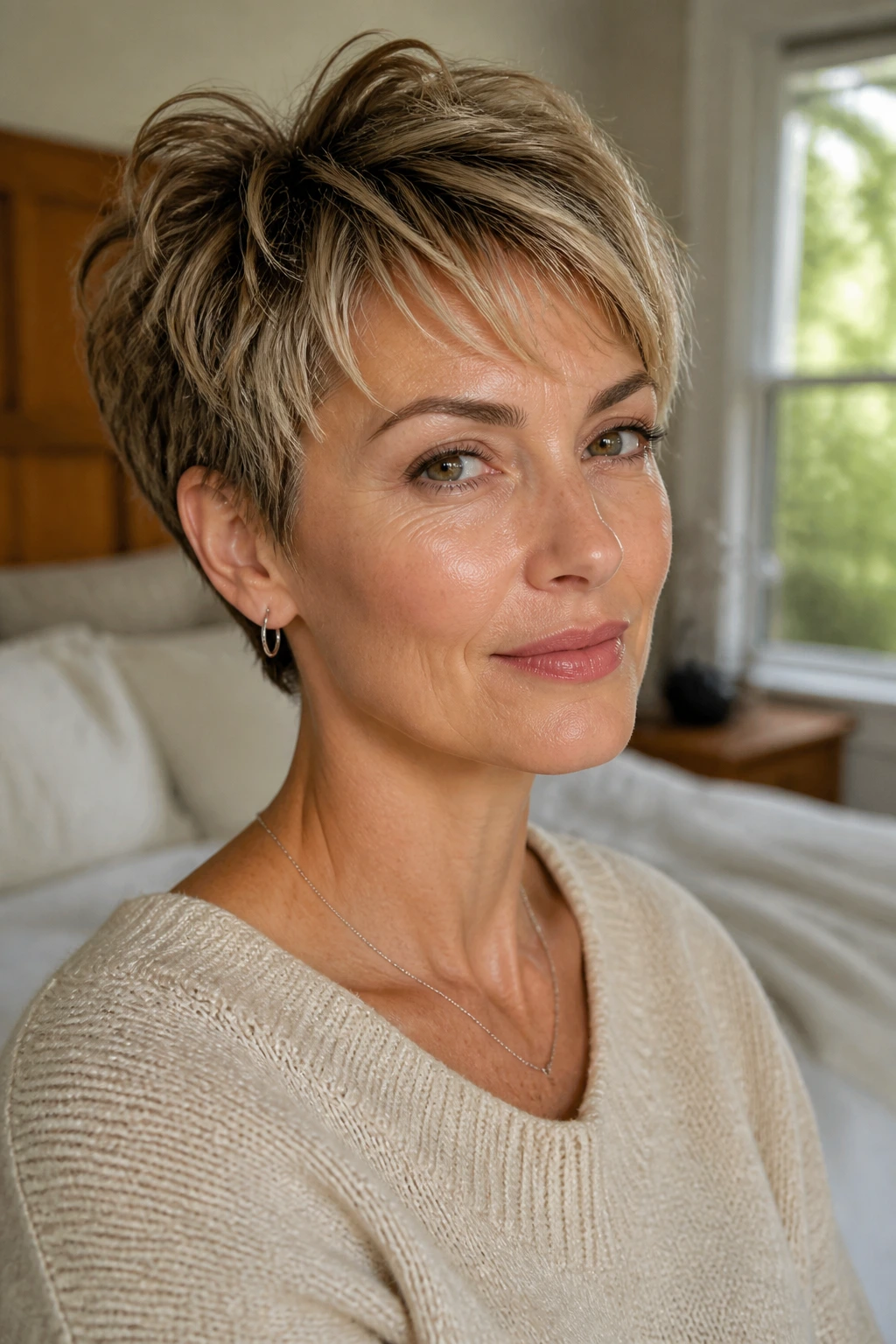
-
Built for short length: These styles use the cut you already have, not a fantasy version that needs shoulder-length hair and twenty extra minutes.
-
Root lift without helmet hair: The best tricks here lift the crown and front line while leaving the ends soft enough to move.
-
Fast to reset: Most of these can be revived with fingers, a touch of dry shampoo, and one clip. No full redo required.
-
Friendly to day-two hair: Fine hair often looks better with a little lived-in grip. A lot of these styles actually improve after the first wash day.
-
Works with tiny accessories: Bobby pins, mini claw clips, slim headbands, and scarves pull their weight here because the hair itself doesn’t need much bulk.
-
Less product, more shape: Heavy creams and thick oils are the enemy of short fine hair; these styles rely on placement and texture instead.
Why Daily Hairstyles for Short Hair with Fine Hair Need Root Lift More Than Heavy Product
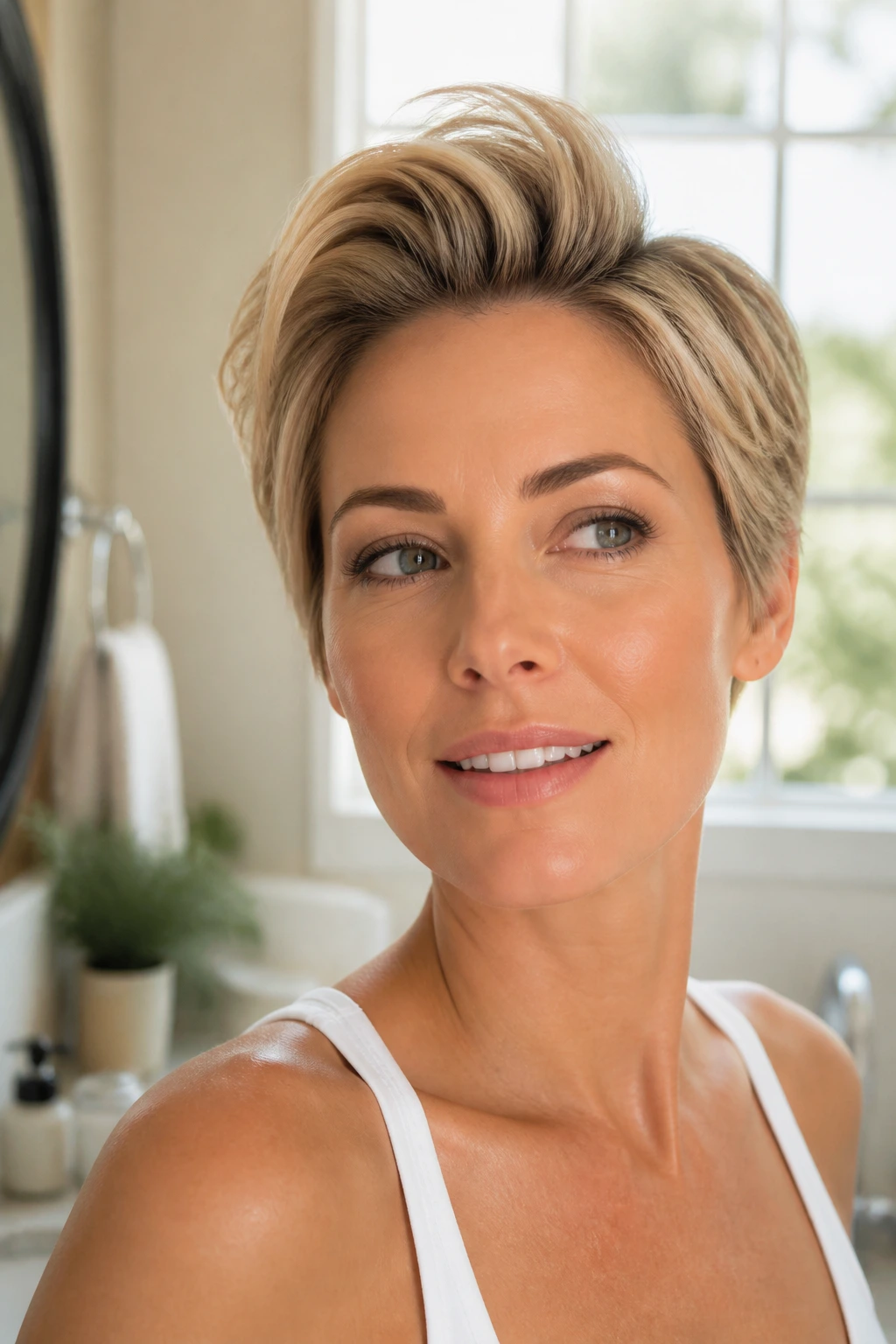
Fine hair is not the problem. Heavy styling is.
The mistake I see over and over is treating fine short hair like it needs rescue. It usually doesn’t. It needs a cleaner part, a little lift at the scalp, and products that give the strands some grab. Once you stop loading the roots with slippery cream, the hair suddenly has a chance to keep the shape you give it.
The scalp line matters more on short cuts than people expect. With long hair, weight can hide a sloppy product choice. On a pixie or a bob that sits at the jaw, the crown, temples, and fringe are the whole show. A half-inch of lift at the part can change the way the entire cut reads in the mirror.
Where the shape starts
A blow-dryer aimed against the natural fall of the hair can do more than a whole shelf of styling goop. So can a side part that shifts the bulk to one side, or a little bend at the front pieces. Fine hair often needs friction, not more softness.
Why product choice matters so much
Creams, butters, and heavy oils slide fine strands together. That sounds smooth, but smooth usually means flat. Mousse, dry shampoo, light texture spray, and flexible hairspray leave just enough roughness for pins and fingers to hold onto.
One more thing. Short fine hair rarely needs more than a pea-sized amount of anything at the roots. Start there, and only add more if the style truly needs it. Most of the time, less is the reason it works.
1. Deep Side-Part Pixie Lift
A deep side part can change a pixie in five seconds flat. On fine hair, it creates the illusion of a thicker front line because the hair stops falling evenly across the scalp and starts building one stronger side.
How to set it
- Blow-dry the front section in the opposite direction of your natural part.
- Flip it back while it’s still warm.
- Tuck the heavier side slightly behind the ear or pin it just above the temple.
- Finish with a light mist of flexible hairspray from about 8 inches away.
Use a pea-sized dab of mousse at the roots, not the lengths. If the ends get sticky, the style turns gummy instead of lifted.
2. The Tuck-Behind-One-Ear Sweep
This is the simplest trick on the list, and I mean that in the nicest way. Tucking one side behind the ear opens the face, makes the cut look cleaner, and gives fine hair a direction without demanding volume that it can’t realistically hold all day.
The magic is in the asymmetry. Leave a soft bend on the untucked side and keep the tucked side sleek enough to stay put. If your hair is just long enough to graze the cheekbone, this style gives you structure without making the whole head look over-styled.
I like this one with glasses, hoop earrings, or a sharp collar. It keeps the whole look from disappearing into the frame of your face. And if one side keeps slipping out, a single flat bobby pin placed under the top layer usually solves it.
3. Mini Crown Twist With Hidden Pins
Why does a tiny twist matter so much on short fine hair? Because it gives the eye a place to land without needing a lot of length. Two small twists pulled from the temples and pinned into the crown create the feeling of a more built-out style, even when the hair itself is barely past a pixie.
How to pin it so it stays
Start with dry shampoo or texture spray at the roots so the hair has some grip. Take a 1-inch section from each temple, twist it back, and pin the ends under the top layer with crossed bobby pins. Crossed pins hold better than one straight pin, especially on slippery fine hair.
A little looseness is fine. A too-tight twist on short hair can look stiff and show every scalp line. The goal is a soft lift at the sides, not a school-uniform braid job from a bad memory.
4. Piecey Air-Dried Crop
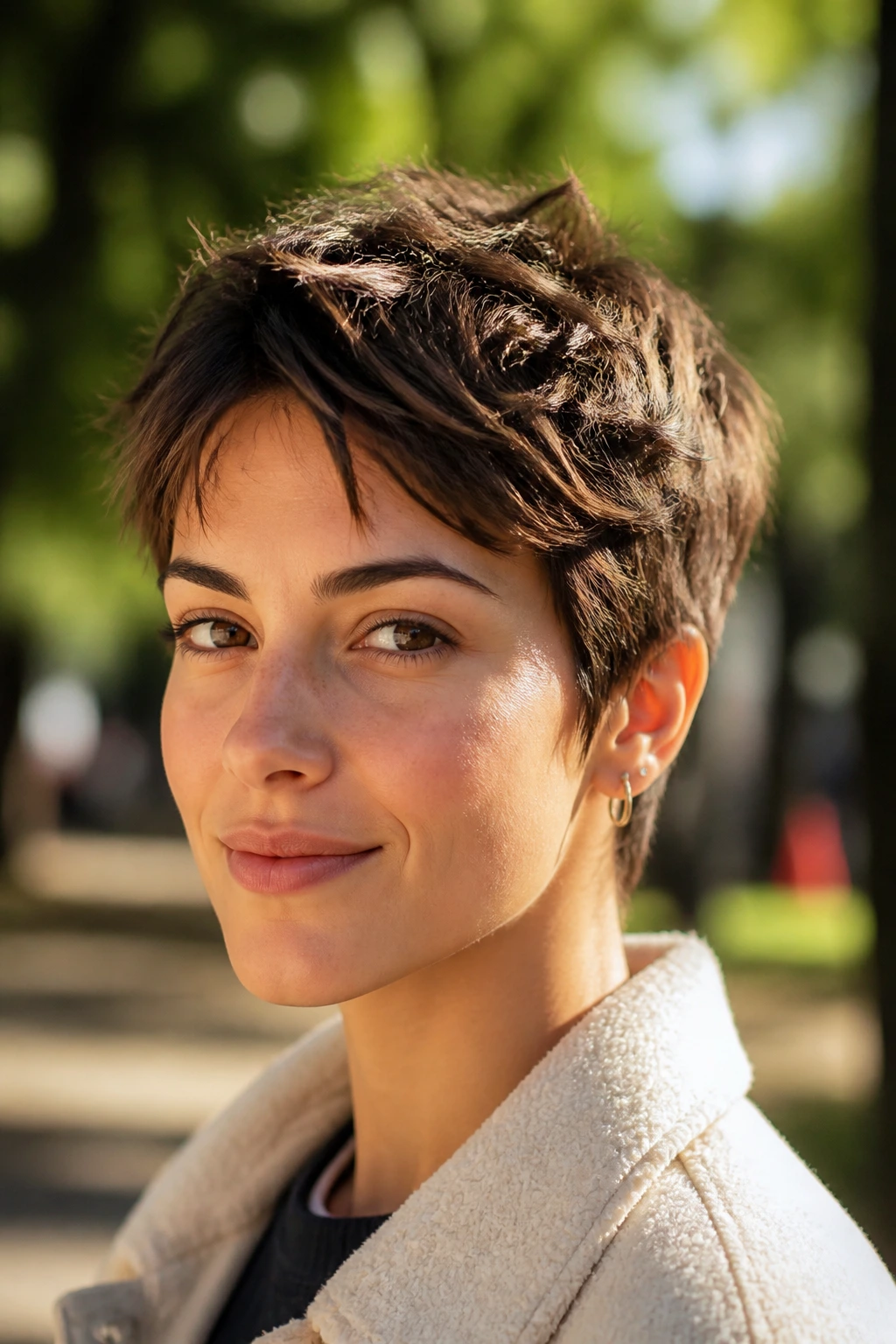
There’s a big difference between “air-dried” and “forgotten.” This one should look deliberate, with separate little pieces and a touch of lift at the roots, not a dry, fluffy puff that goes nowhere.
- Work a lightweight mousse through damp hair.
- Scrunch the top lightly, then use fingers to nudge the front pieces into place.
- Let the hair dry with the part where you want it, not where it lands on its own.
- Break up any crunchy spots with dry hands once the hair is fully dry.
Fine hair usually does well with separation. The trick is keeping the pieces soft, not stringy. If the hair is too soft after drying, a very small pinch of texture spray near the crown gives it enough grit to stop sliding flat.
5. Half-Pinned Bob
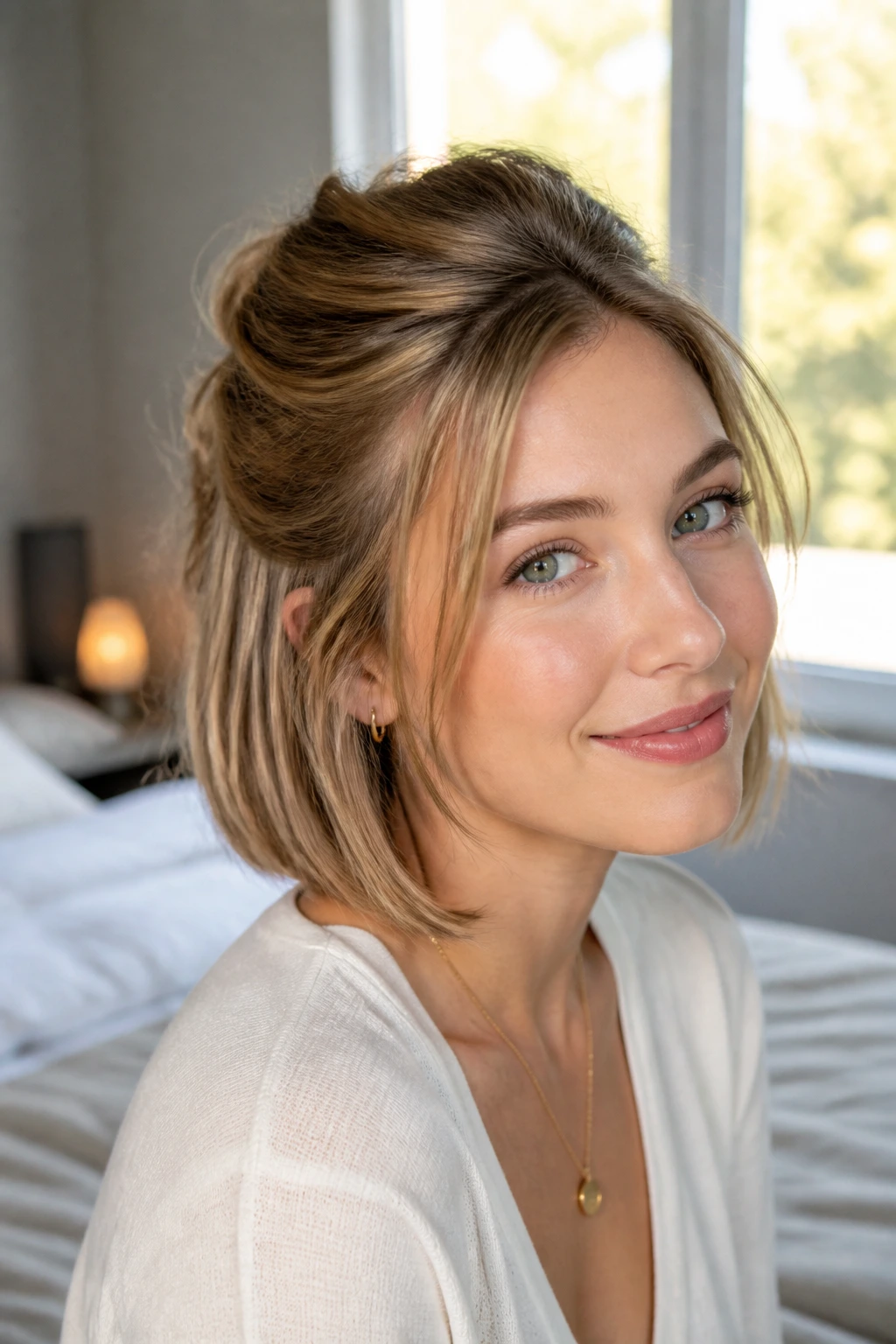
A half-pinned bob is what I reach for when short hair needs to look done but not precious. It pulls the top section off the face, lifts the crown a little, and leaves the bottom layers free so the cut still reads as light.
If your bob skims the chin or the top of the neck, this is a good daily move. Gather the top third of the hair from temple to temple, twist it once or twice, and pin it just behind the crown. The hair should still look like hair, not a shell.
It’s especially useful on second-day hair, when the roots already have a little grip. One small clip is usually enough. If you’re using bobby pins, place them in a crossed shape so they don’t slide out of the fine strands.
6. Headband Push-Back Style
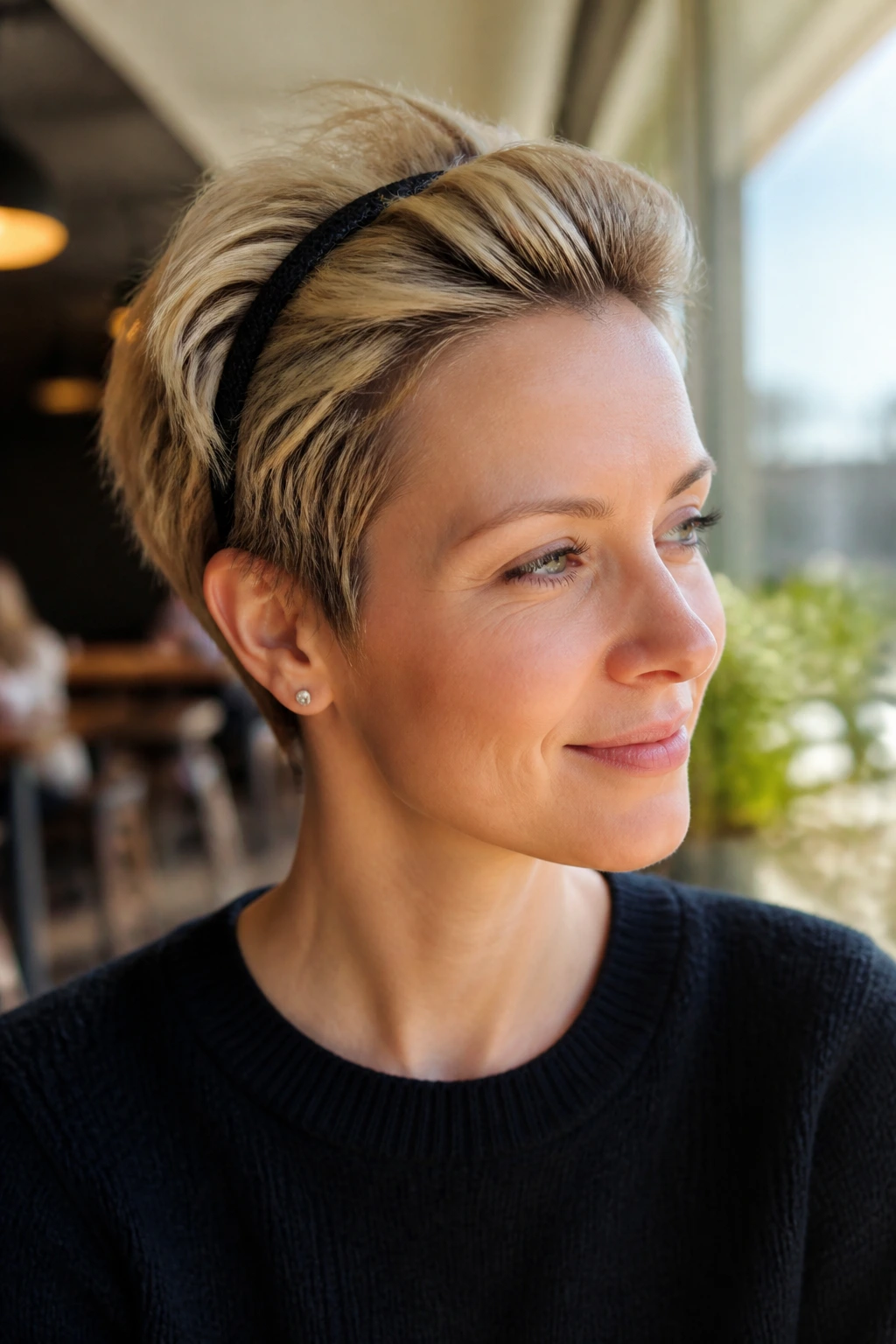
A headband can be lazy in the best way. It pushes the front up, keeps short fine hair off the face, and gives the crown a little lift without needing hot tools.
What matters is the band itself. Thin plastic bands often slip on fine hair. A lightly padded fabric band or a narrow grippy one stays in place and doesn’t squeeze the crown flat. Put it on after a light mist of texture spray, then nudge the front hair forward a touch so it doesn’t look glued back.
This style is a lifesaver for straight fine hair that falls into the eyes by noon. It also works if you’re growing out bangs. The band hides the awkward stage and makes it look like a choice.
7. Soft Front Quiff
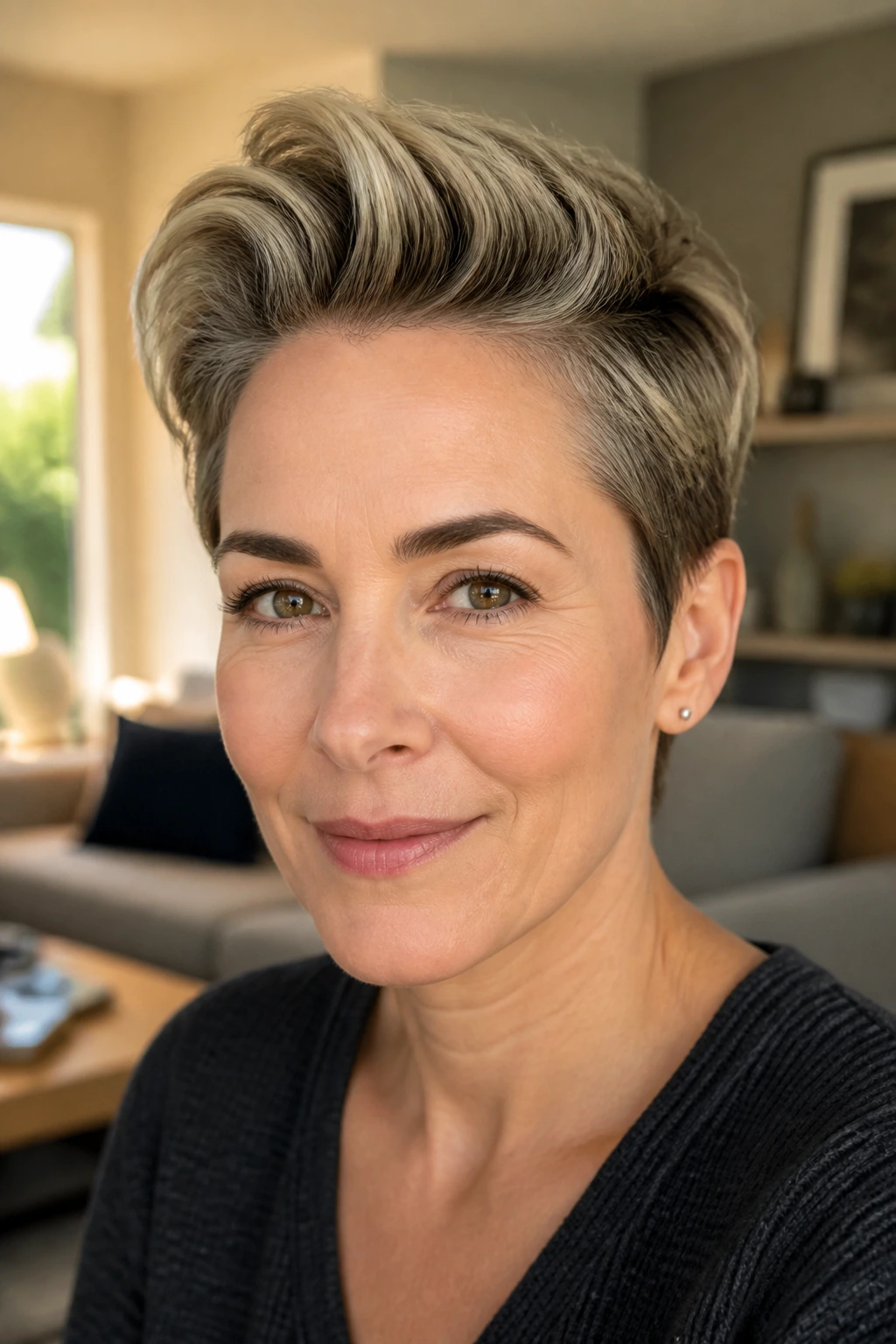
A soft quiff on short hair is basically a controlled lift at the front, and that control is what keeps it from looking costume-y. The front section gets a little height, the sides stay close, and the whole cut suddenly feels more sculpted.
Why it works on fine hair
Fine hair can’t hold a giant teased bump for long, but it can hold a small lift if you give it structure. Blow-dry the front section upward with a round brush or just your fingers, then sweep it slightly back and to one side. A quick shot of cool air helps lock the shape.
Use a touch of lightweight spray wax or pomade on the very tips if they keep separating too much. Not much. If the product shines under bathroom light, you’ve probably used too much already.
8. Side-Swept Fringe With Bent Ends

A side-swept fringe is one of the easiest ways to make short fine hair look fuller around the face. The diagonal line creates movement, and the bent ends keep the style from feeling too straight or too delicate.
The piece to watch is the fringe itself. If it’s too flat against the forehead, the whole style loses energy. If it’s too curled, it starts shouting. A single bend with a flat iron or mini round brush is enough. Let the ends curve under just a little, then comb the section sideways while it cools.
This is a strong choice if your temples look sparse or if you wear glasses and want the hair to sit around the frames instead of fighting them. It’s tidy, but not stiff. That’s the sweet spot.
9. Tiny Hairline Braids
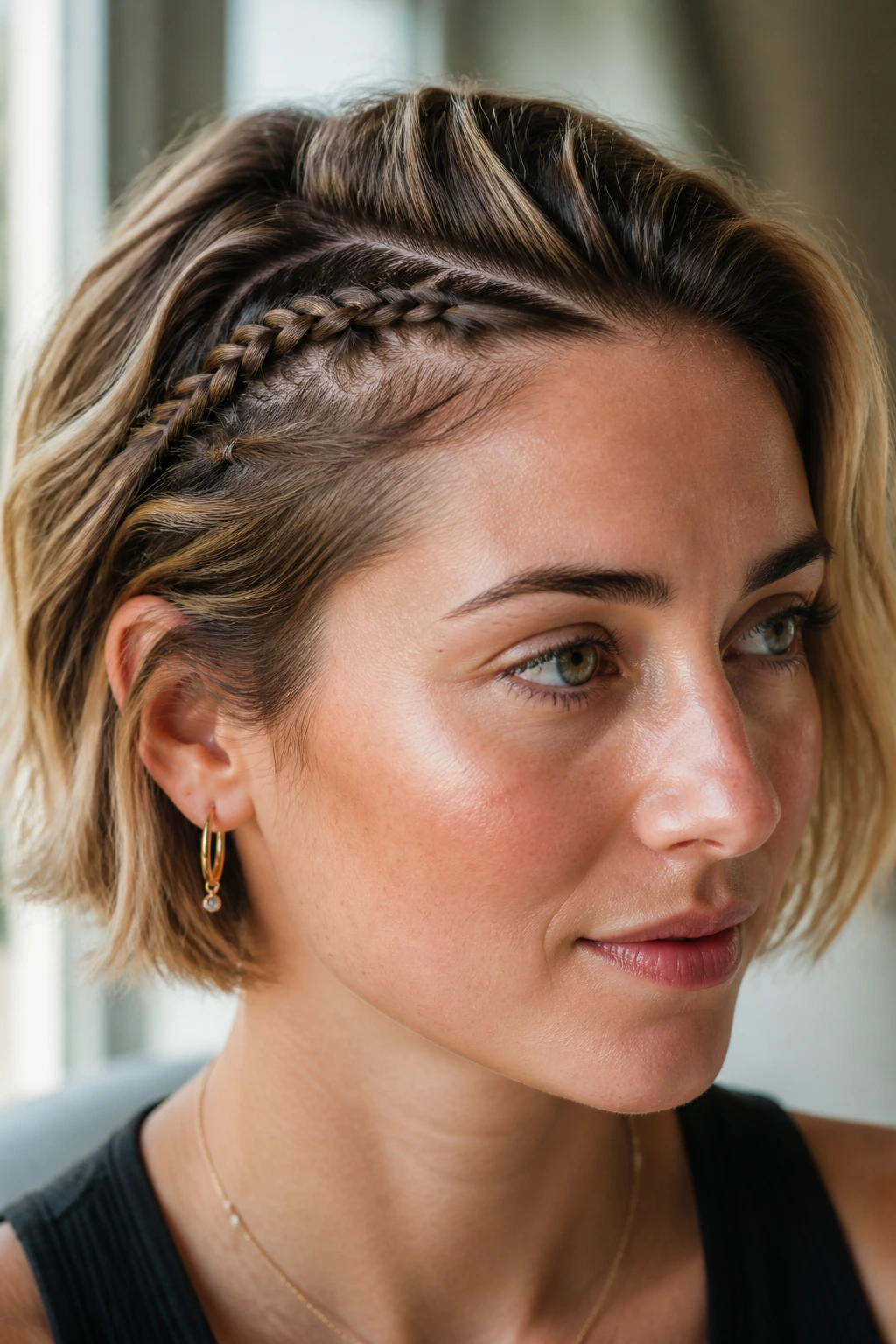
Can you braid short fine hair? Sometimes. Just not the big dramatic kind people pin to mood boards. Tiny braids along the hairline work because they anchor the front pieces and add texture right where fine hair tends to slip apart.
Start with hair that has a little dryness or grip. Clean, freshly conditioned hair can be too slick for this. Take two very small sections near the temples and make tight little braids or rope twists, then pin them back into the side or toward the crown.
How to use them
- Keep the braids narrow.
- Use a clear elastic only if the ends are long enough.
- Pin the braid flat under the top layer so it looks like part of the cut.
- Finish with a mist of light spray, not a hard shell.
If the hair is too short to braid, rope twists do the same job with less length.
10. Inward-Bent Bob

A bob with ends bent under always looks denser than a bob left straight and airy. Fine hair especially benefits from that clean edge, because the eye reads the curve as weight.
This is the one I like for workdays. The shape is tidy, the ends sit close to the jaw, and the whole haircut looks intentional even when the rest of the morning was chaos. Use a round brush under the ends or a flat iron to make a soft inward turn. Don’t overdo the curve. A small bend at the bottom of each section is enough.
If your hair tends to flip out on its own, this style helps bring it back under control. If the hair is very straight and slippery, a tiny bit of texture spray at the mid-lengths gives the bend something to hold onto.
11. Flipped-Out Ends Bob

The flipped-out bob is the cousin of the inward bend, only looser and a touch more playful. Instead of hiding the ends, it lets them kick out a little, which adds width and motion around the jaw.
That little outward flick matters more than people think. Fine hair often looks thinner when every strand hangs straight. A flip at the ends breaks that line and makes the cut feel fuller. It’s especially nice on a bob with a blunt perimeter or just a little layering.
Keep the flip small. A sharp retro curl can be fun, but for daily wear you usually want a softer kick, not a full swing. One pass with a flat iron at the last inch of hair is often enough.
12. Messy Pompadour Pixie
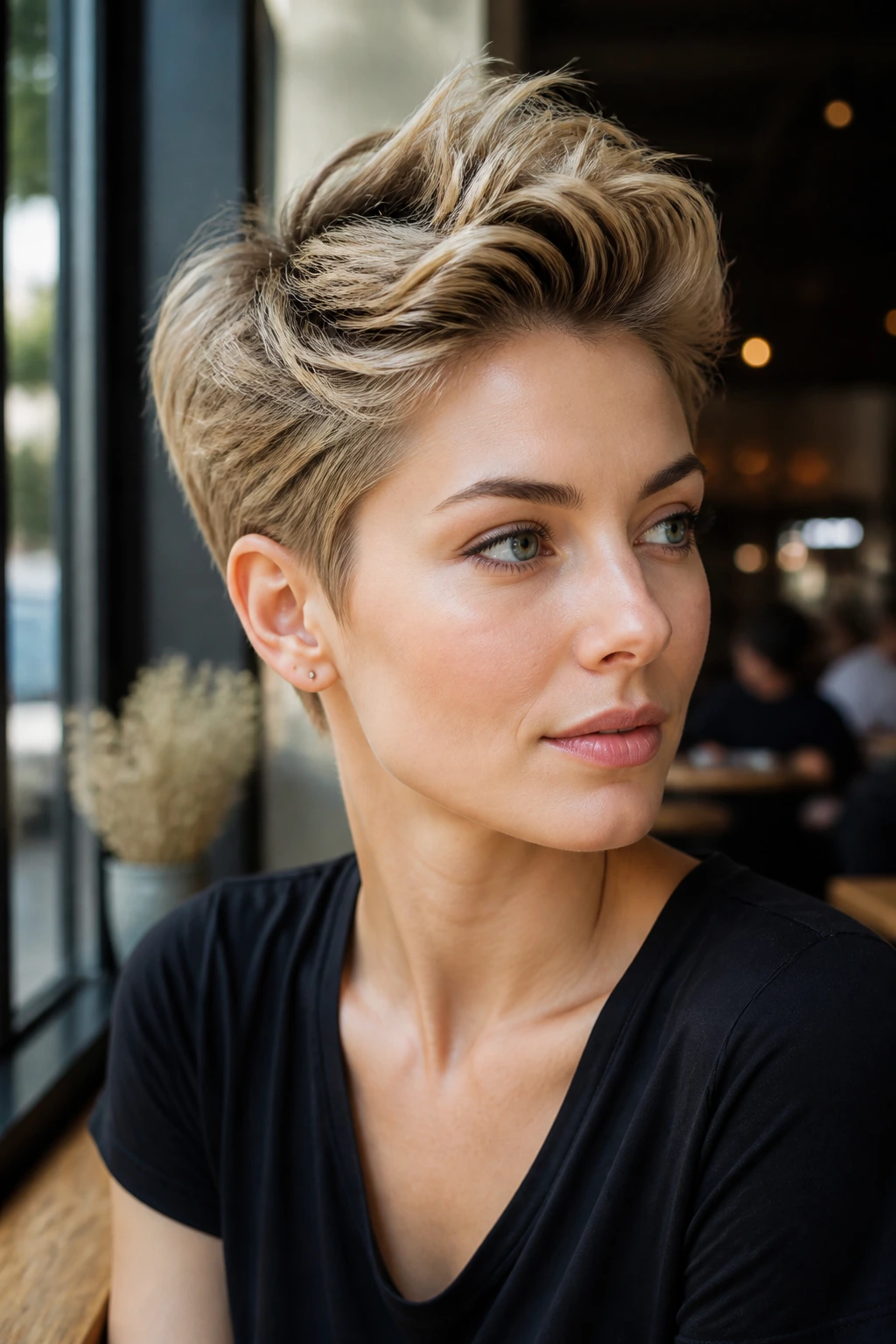
A messy pompadour gives short hair attitude without asking it to become something it isn’t. The front lifts up and back, the sides stay tighter, and the crown gets the kind of shape that fine hair usually loses on its own.
This style is better than it sounds on a rushed morning. Work a bit of mousse through damp roots, blow-dry the front section upward, then pinch the ends with a tiny amount of paste. The key is keeping the sides close to the head so the top can read as fuller.
It’s one of the few short-fine-hair looks that can handle a slightly edgy finish without looking overworked. If the front piece collapses, clip it up for five minutes while it cools. That little set makes a real difference.
13. Low Nape Twist
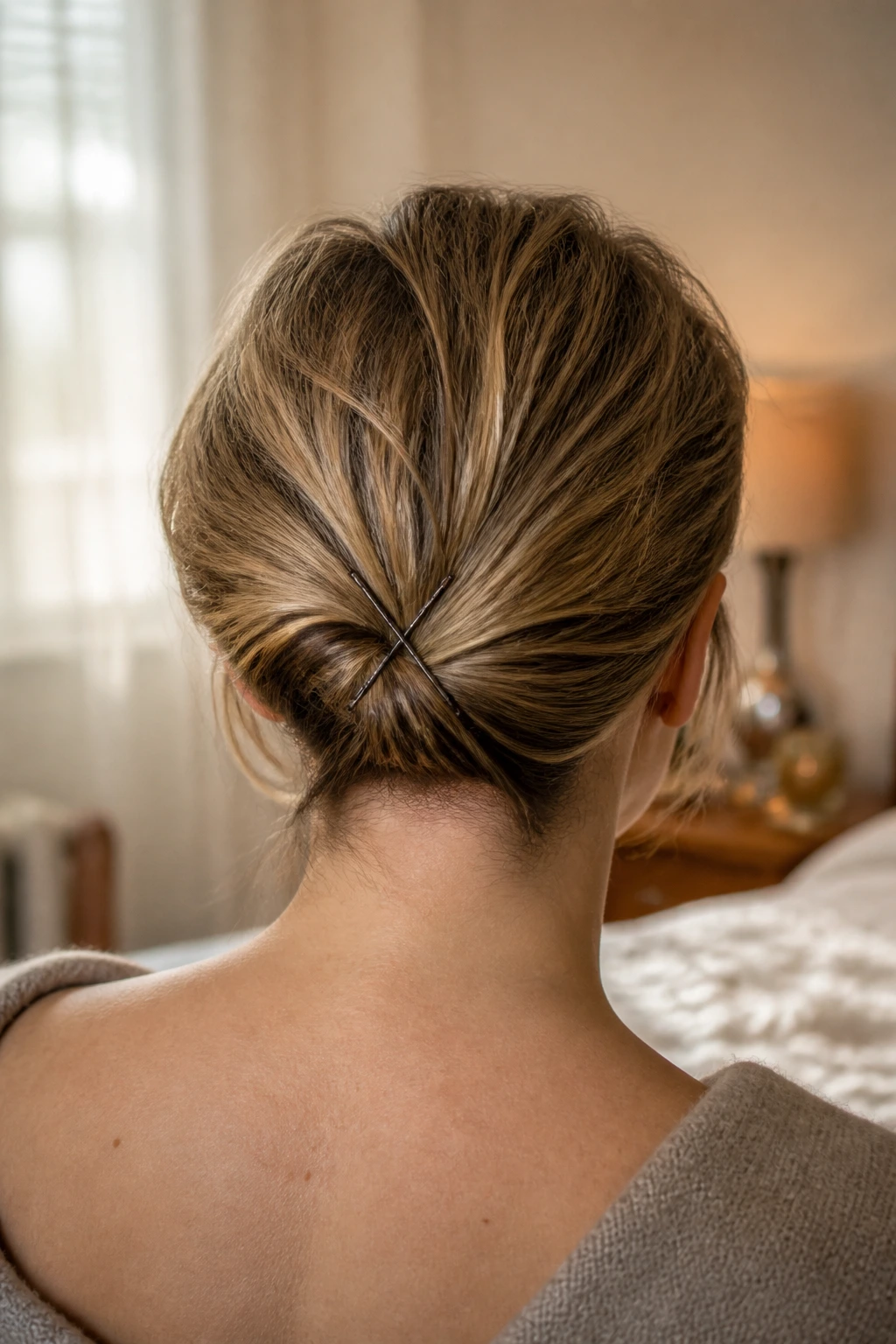
When a pixie grows out, the nape often becomes the part that refuses to behave. A low twist tames that area and turns it into a feature instead of a nuisance.
The shape to aim for
Gather the longest bits at the nape, twist them upward toward one side, and pin them flat against the head. The result should look soft and tucked, not tightly wound. On very fine hair, two pins crossed into an X hold better than one pin alone.
This style is practical on days when the back wants to stick out in funny directions. It also works if the top is clean and the nape feels fuzzy. You’re not hiding the haircut. You’re giving the mess a smaller job.
14. Zigzag Part With Lift
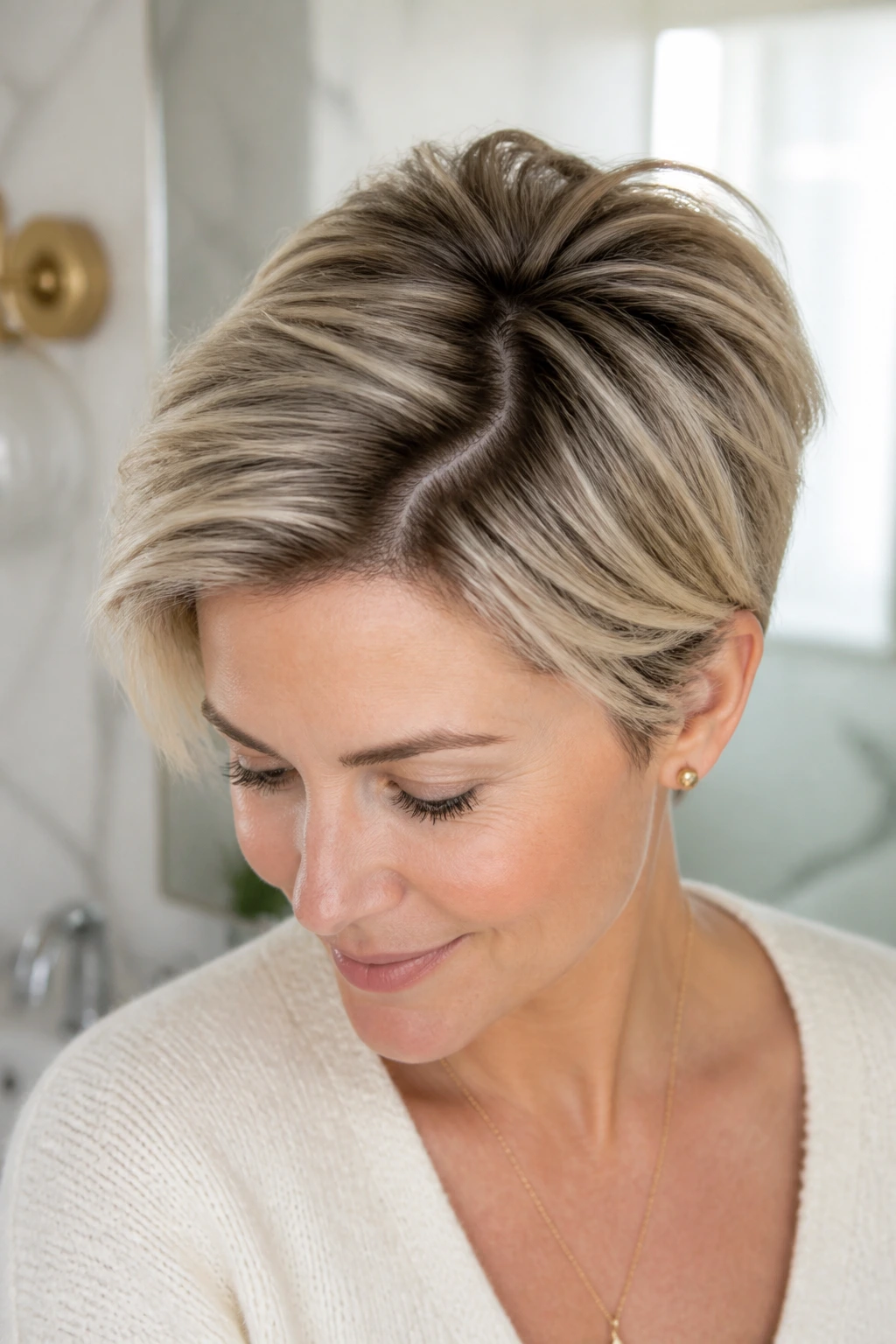
A zigzag part does two useful things at once: it breaks up the scalp line and creates the sense of more density. On fine hair, that can be the difference between “flat” and “interesting” without adding any product at all.
Why it matters
Straight parts can expose a wide line of scalp, especially at the crown. A zigzag pattern interrupts that line so the hair looks fuller at the root. It’s a small change, but it changes the whole reading of the cut.
Use the tail of a comb and make the part while the hair is still damp or lightly misted. Then add a little root lift at the crown with your fingers. If you like a simple daily style and hate spending time fussing, this is one of the easiest wins on the list.
15. Scarf-Backed Pixie
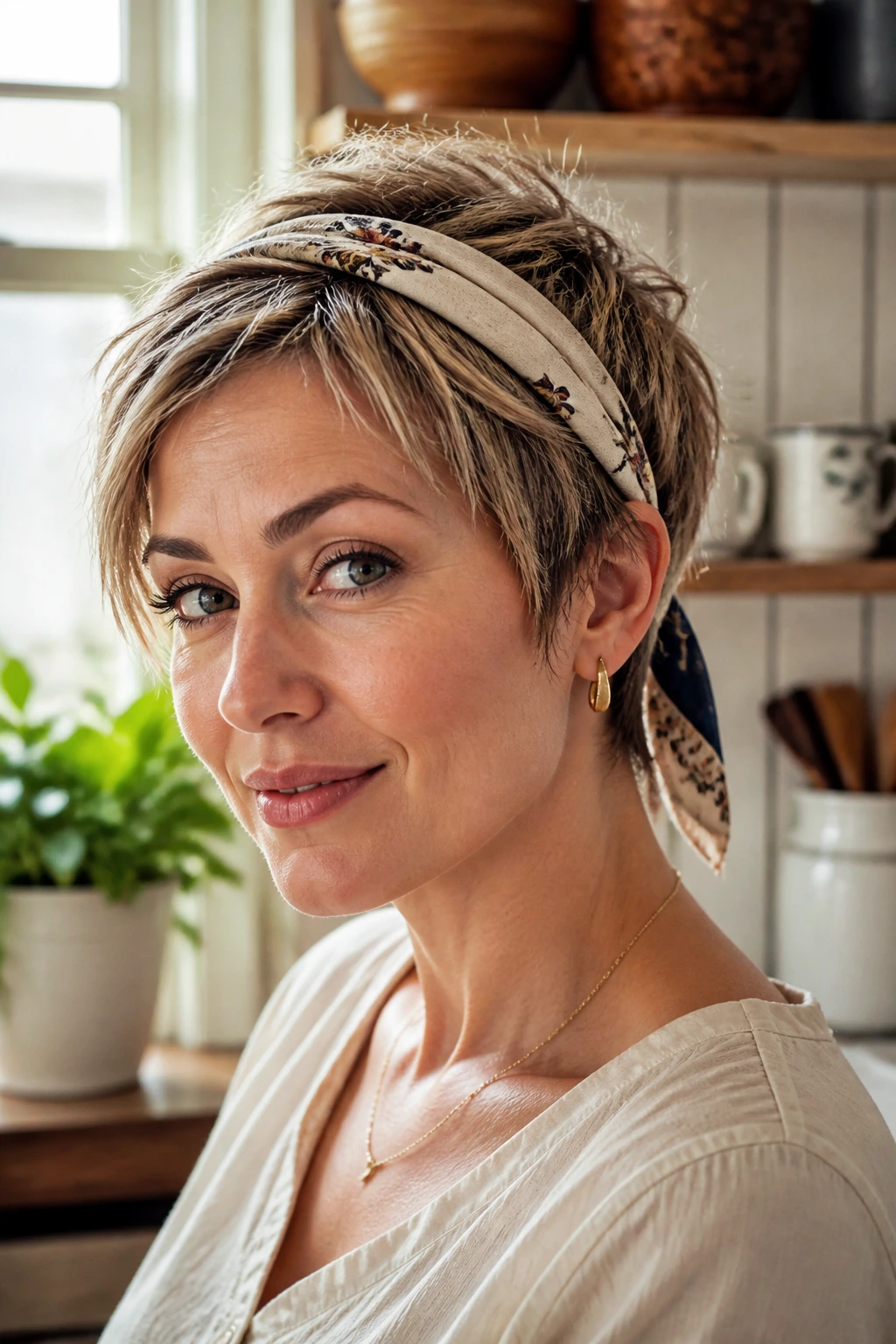
A scarf can be more useful than another product bottle. Wrapped low and light, it holds the front pieces back, adds a little visual interest near the face, and keeps fine short hair from flopping into your eyes.
Choose a slim scarf, not a thick one. A bulky knot can flatten the crown and overwhelm a pixie. Tie it softly at the back or slightly off-center, then let the top stay piecey. If the hair is very fine, a tiny puff at the front before placing the scarf keeps the whole look from going too smooth.
This is one of those styles that earns points for being forgiving. If the hair is slightly dirty, even better. A scarf-style day usually wants grip, not perfect clean shine.
16. Faux Hawk Sweep
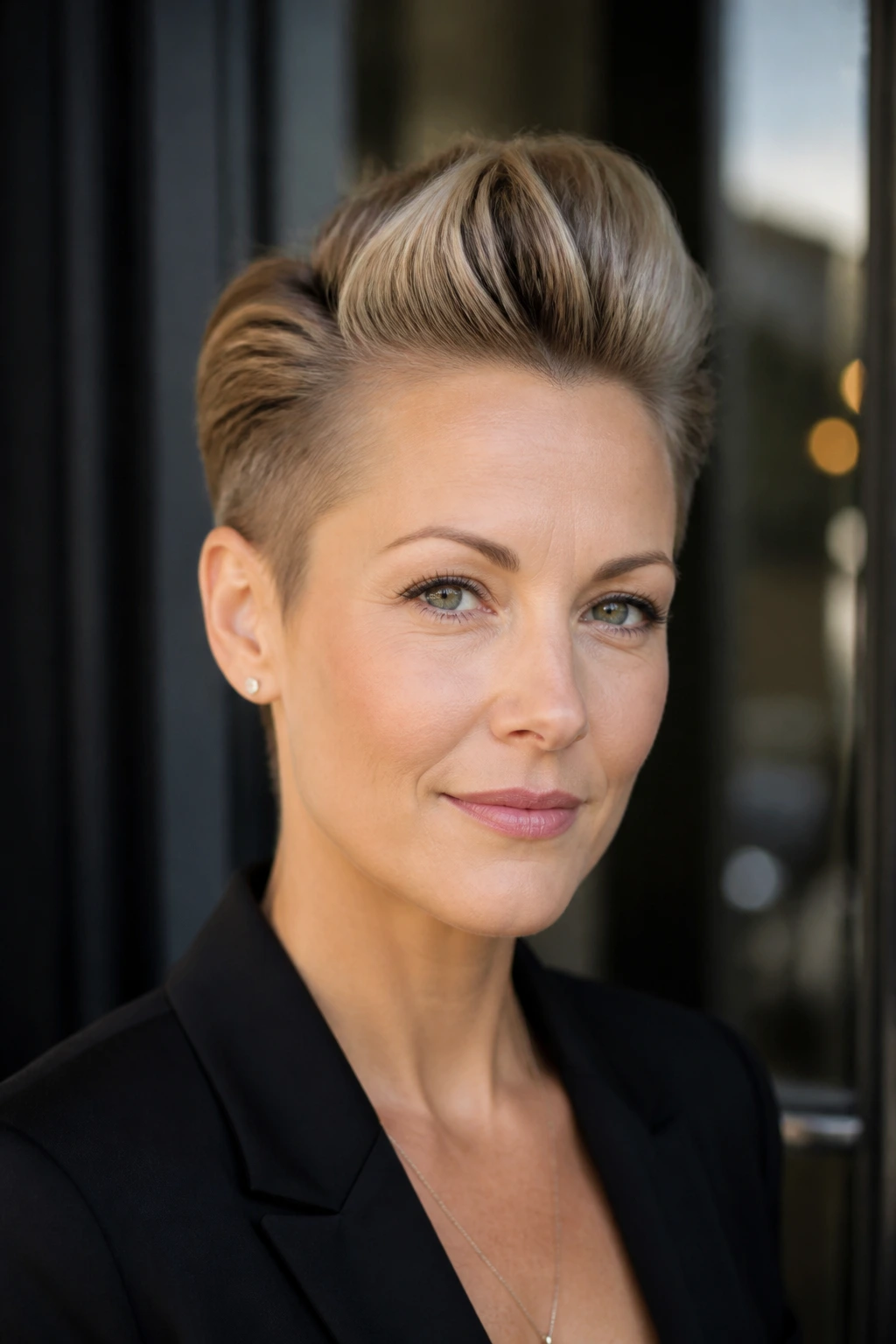
A faux hawk on short fine hair sounds bold, but the daily version is much gentler than the name suggests. You’re lifting the center line, keeping the sides sleek or tucked, and letting the shape do the work.
The center section should be the highest point, not a tall spike. Push it up with your fingers, secure the sides behind the ears or with small pins, and mist the top with a flexible spray. The fine hair gives you a nice advantage here: it can sit close to the head while still holding the ridge.
This one is a good answer when plain hair feels boring but a full glam style feels like too much. It has attitude without asking for a complicated routine.
17. Clipped Side Sweep
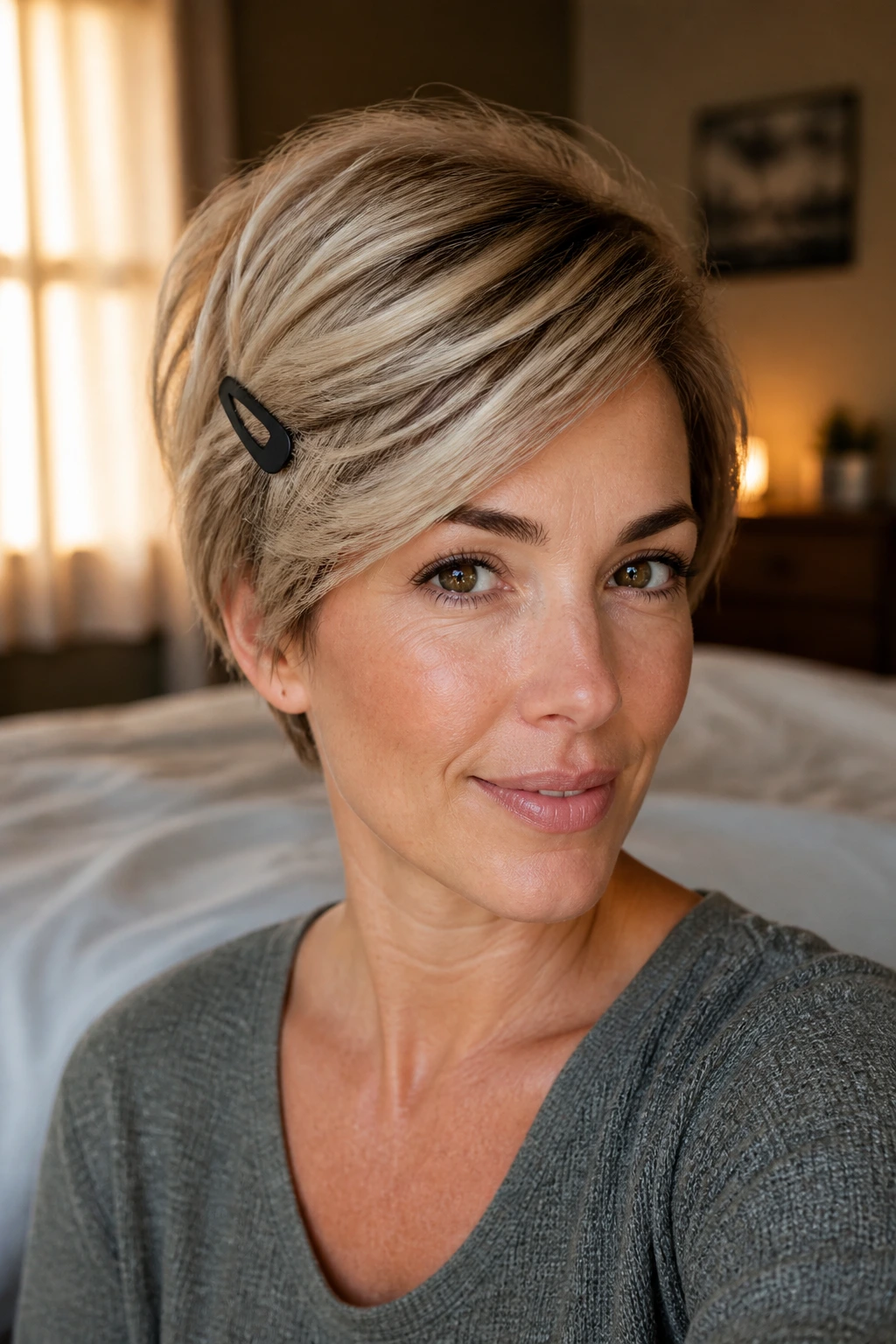
A strong clip can do more for short fine hair than a lot of people expect. It holds one side back, creates a clear diagonal, and makes the haircut look deliberate with almost no fuss.
I like this style because the clip becomes part of the design rather than an afterthought. Slide the hair across the forehead or temple, secure it with a barrette or matte clip, and leave the other side soft. The contrast makes the hair look fuller on top and cleaner at the face.
If your hair slips out of clips all the time, rough up the section first with a dry shampoo spray. Fine hair needs a little bite to stay where you put it. No bite, no hold.
18. Rope-Twist Crown Accent
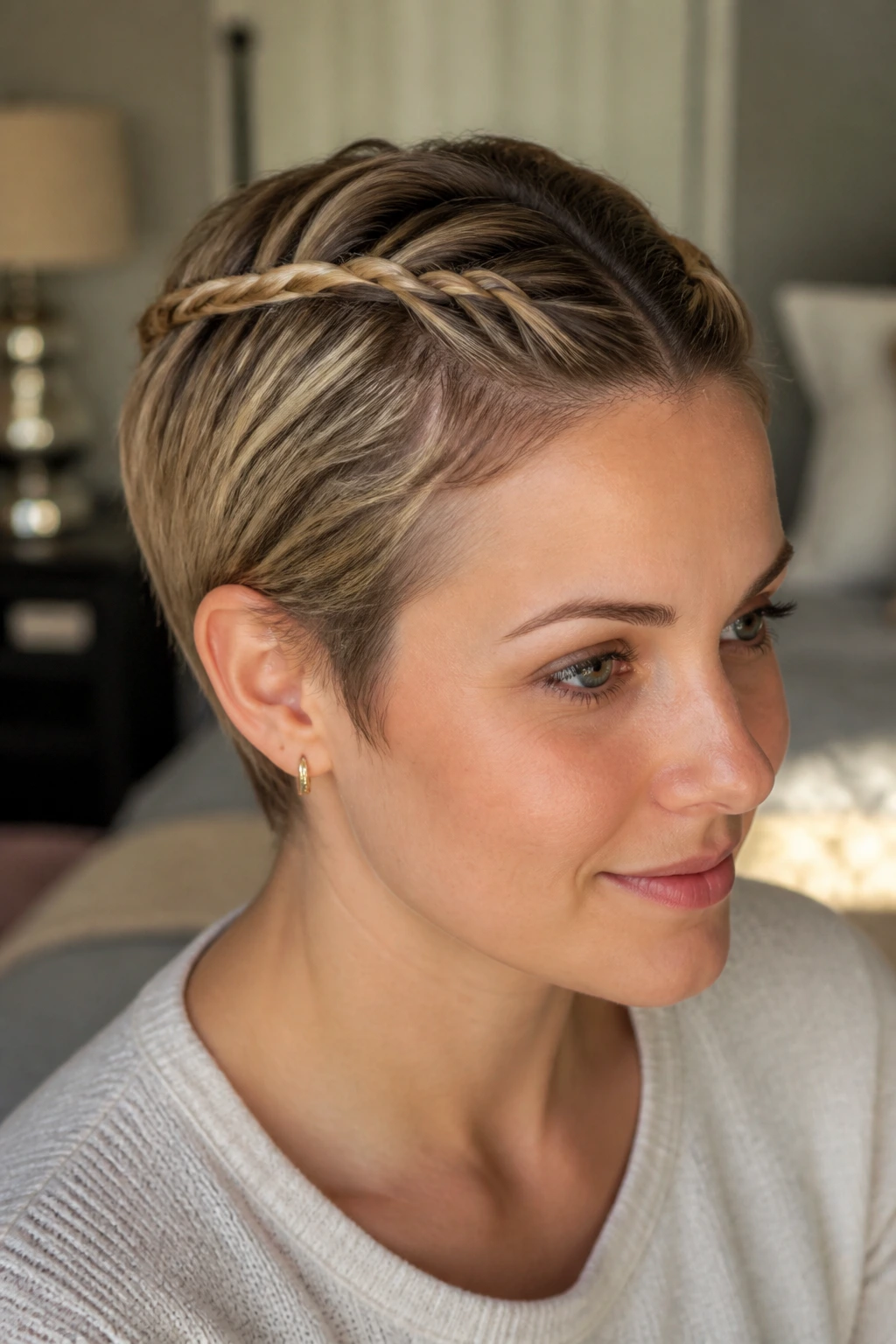
Why not use a twist instead of a braid when the hair is short? Rope twists need less length, they’re faster to build, and they still give the crown a lifted, put-together shape.
Take two narrow front sections, twist each one backward, then cross them or pin them toward the crown. The style should sit close to the head and draw attention upward, not outward. That upward direction matters, because fine hair reads fuller when the eye moves vertically instead of spreading sideways.
A small drop of texture spray before twisting makes the strands less slippery. If your hair is especially smooth, pin the ends underneath another section so the twist doesn’t unravel by dinner.
19. Glasses-Friendly Feathered Fringe

A feathered fringe that skims the brows can make short fine hair feel lighter and more balanced, especially if you wear glasses. The fringe softens the forehead, while the side pieces tuck around the frames instead of bumping into them.
How to keep it from collapsing
Trim matters here. A fringe that’s too long will drag the whole front down; one that’s too short can stand up in awkward little spikes. Keep the ends feathered and use a small round brush or fingers to guide them into a soft curve.
This is a good daily style if you want something that looks finished without needing a lot of shaping. It also plays well with very short bobs and grown-out pixies. The hair doesn’t need much bulk to make the face look balanced.
20. Pinned-Back Bangs and Piecey Top
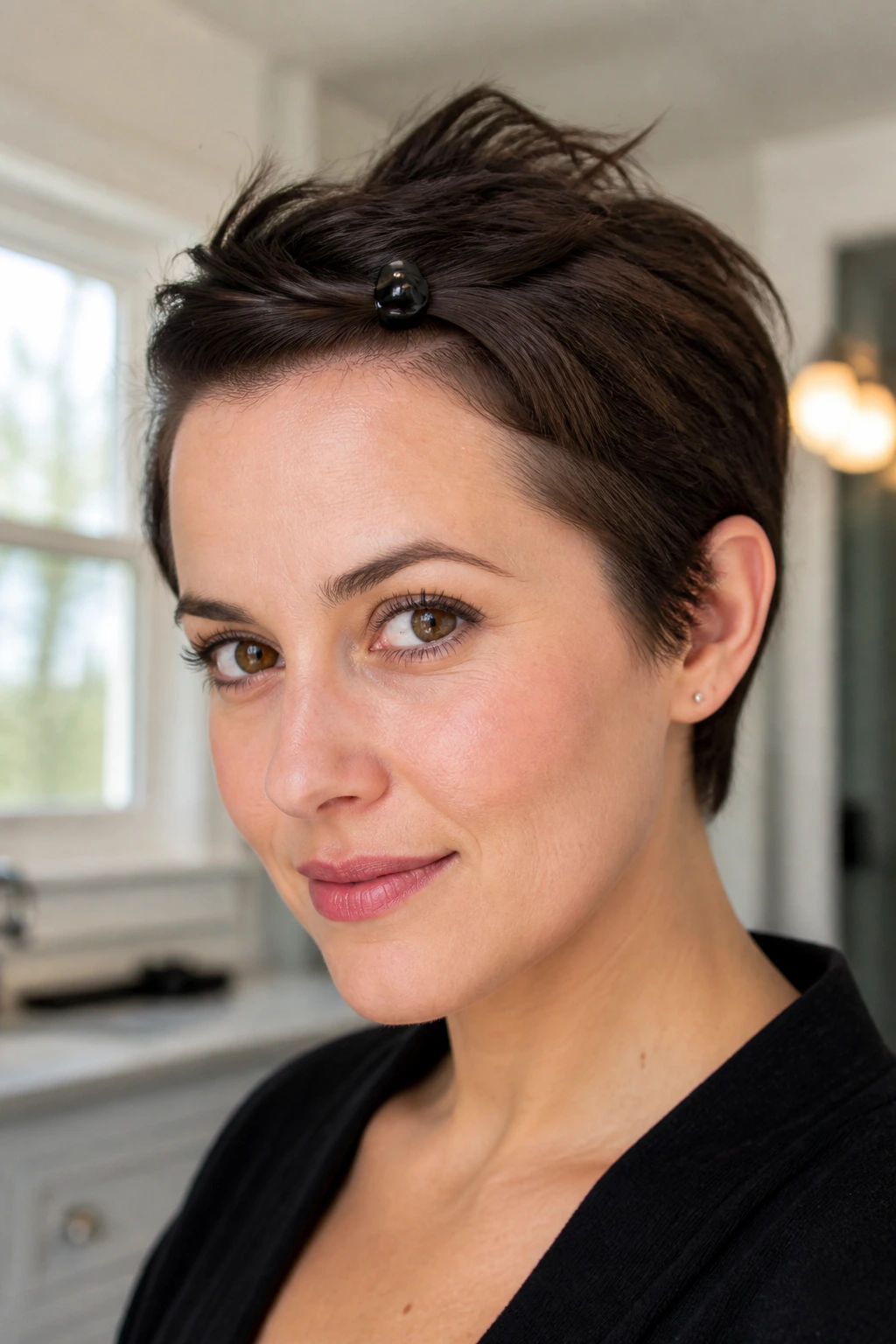
Sometimes the best style is the one that gets the bangs out of the way and lets the rest of the cut breathe. Pinned-back bangs and a piecey top section are a clean, honest fix for short fine hair that won’t cooperate.
Use a tiny clip, a slim barrette, or two crossed bobby pins to hold the fringe back. Then separate the top with your fingers instead of a brush so the hair keeps a little texture. The result should look relaxed, not slicked back hard.
I like this one when the cut is growing out and the front refuses to sit. It’s also useful on oily roots, because the style looks better with a little lived-in texture. Sometimes that’s all the hair wants to give, and honestly, that’s enough.
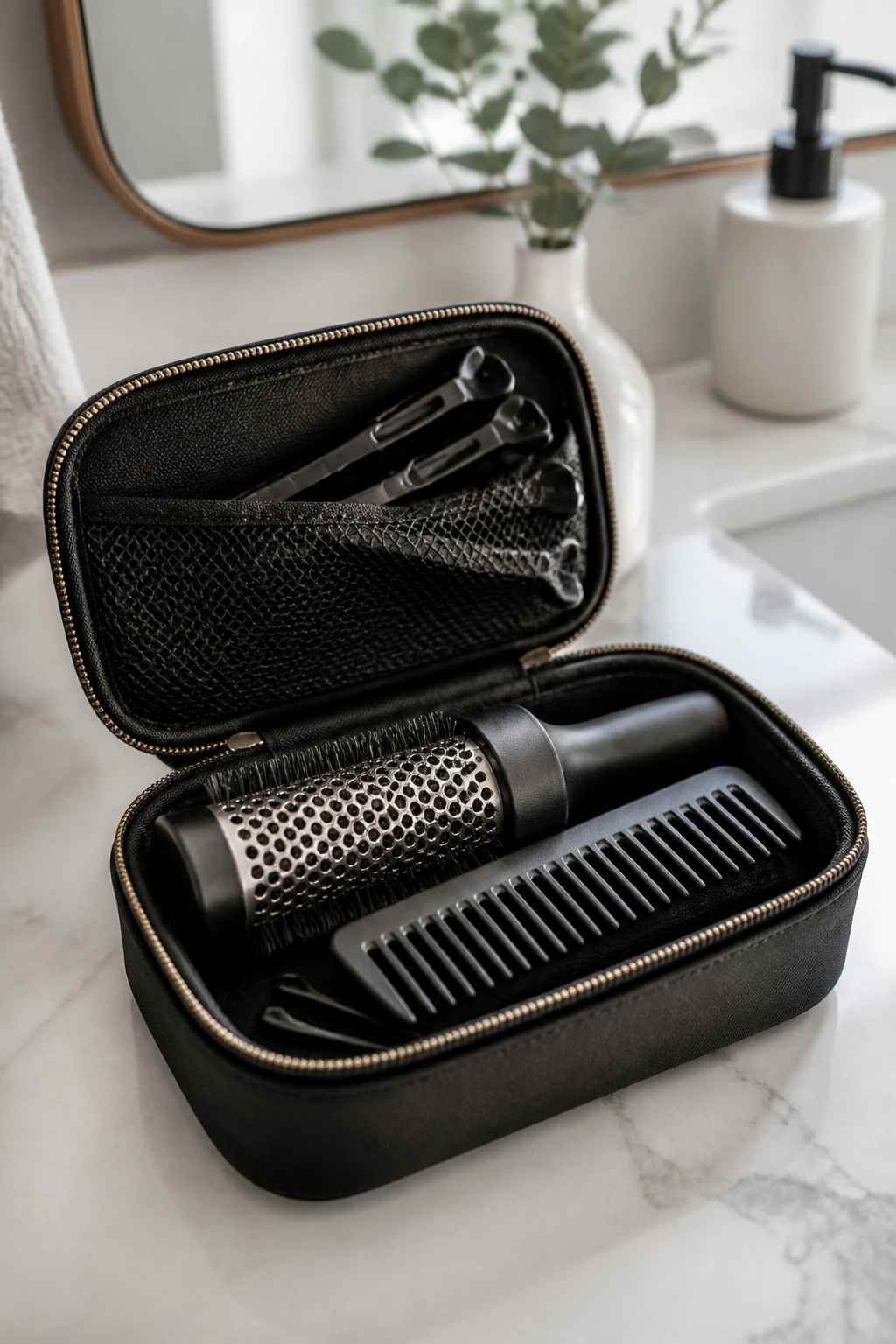
The Small Tool Kit That Makes These Styles Easier
-
Fine-tooth tail comb: Best for clean parts, zigzags, and small sections that need precision.
-
Bobby pins with a strong grip: Look for pins with a slightly rough finish; they stay put better in fine hair than shiny slip-prone ones.
-
Mini claw clips and slim barrettes: These are the quickest way to create half-up shapes, side sweeps, and casual twists.
-
1-inch curling iron or flat iron: A small barrel or narrow plate gives you enough bend without making short hair look curled to death.
-
Blow dryer with a concentrator nozzle: Helpful for directing root lift and smoothing the crown without flattening it.
-
Lightweight mousse: Good on damp hair before air-drying or blow-drying, especially when the roots need a little body.
-
Dry shampoo: Not only for oil. The starch gives fine strands some friction, which makes pins and clips hold better.
-
Texture spray: Adds grip and a slightly rough finish that helps piecey styles stay piecey.
-
Flexible-hold hairspray: Keeps shape without turning the hair into a helmet.
-
Heat protectant: If you’re using any hot tool, put this on first. Fine hair gets fried faster than people expect.
Picking Products That Won’t Flatten Fine Hair
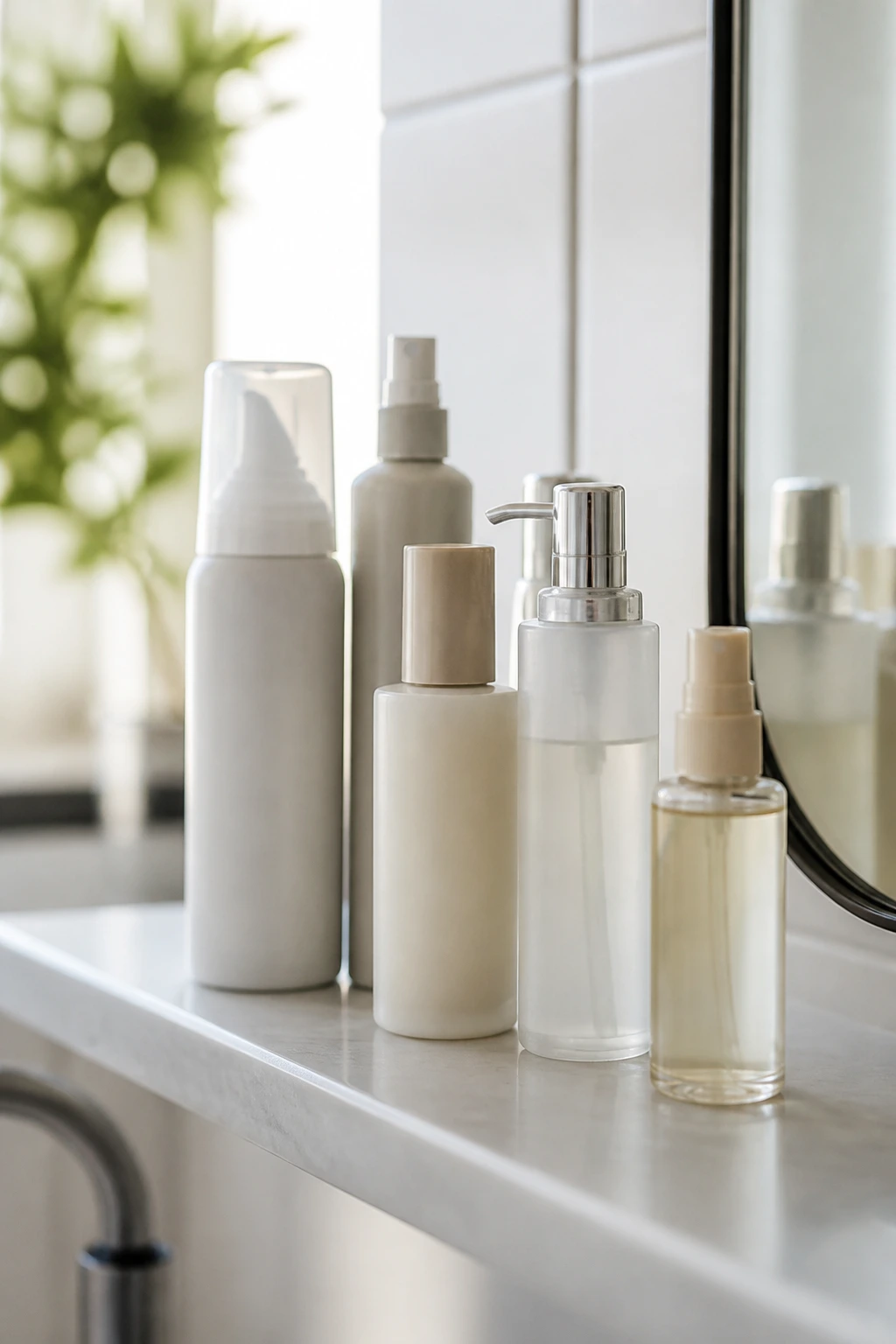
The best products for fine short hair are the ones that disappear after they do their job. You want grip, not slime. You want lift, not a slick coat that turns the crown into a slide.
Mousse is usually the first thing I’d reach for. It gives damp hair some body before it dries, and a small amount goes a long way. Root-lift spray does a similar job, especially around the part and crown, where short fine hair tends to collapse first. Dry shampoo belongs in the bathroom even when your hair is clean, because the texture alone helps.
What I would skip, or keep far from the roots, is anything buttery or rich enough to survive a winter storm. Thick creams, heavy oils, and dense smoothing serums are the fastest route to flatness. If you need shine, use a tiny amount on the ends only. A drop. Not a squeeze.
Hairspray should stay flexible. If it turns the hair crunchy before you’ve left the mirror, it’s too strong for most daily fine-hair styles. The finish should hold shape and still let you run your fingers through it.
How to Wear These Styles Through a Long Day
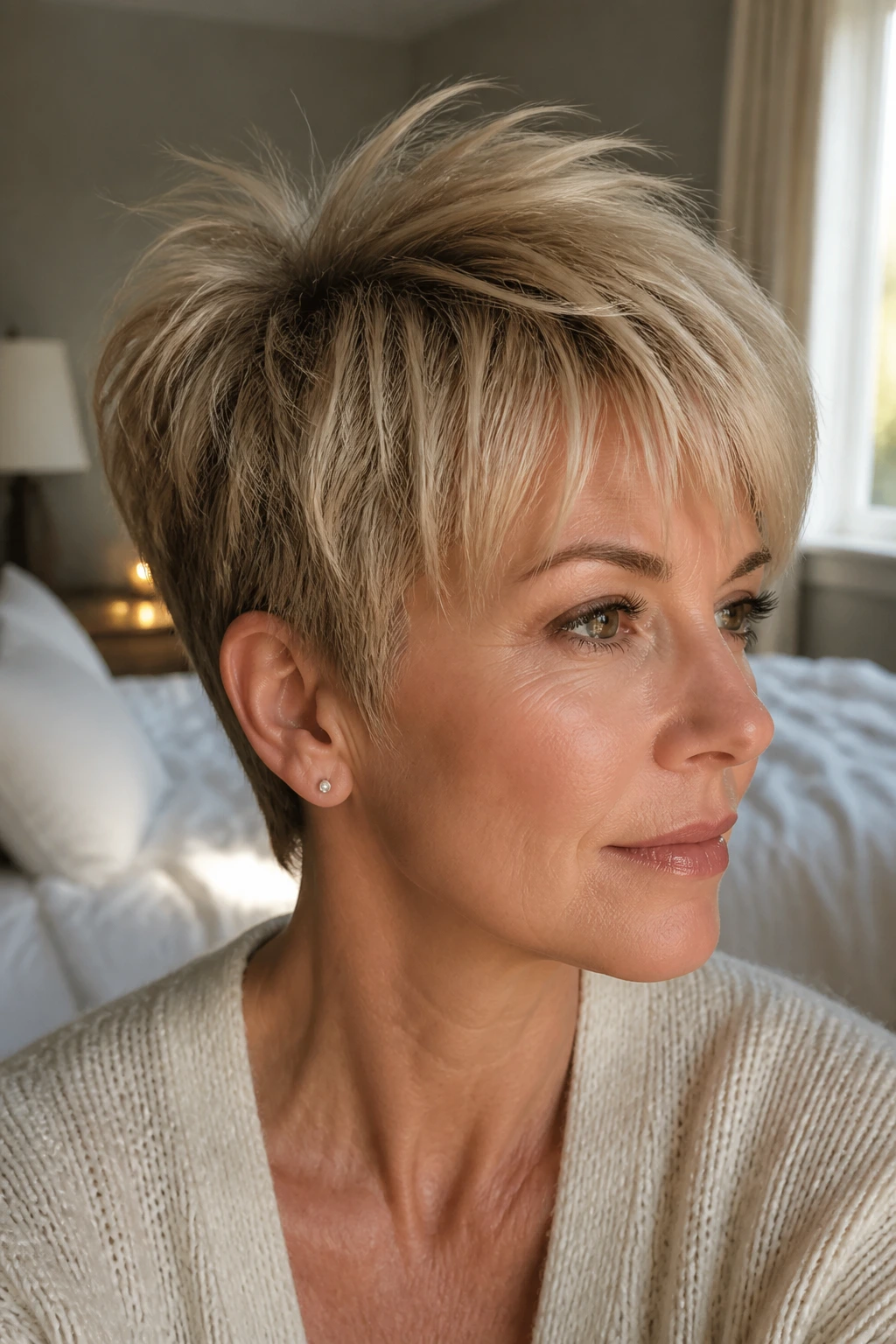
Shape: Start with lift near the roots, not the ends. Fine hair looks fuller when the crown and front line hold their height, even if the lower half stays soft.
Best pairings: Keep the accessory count low. A single clip, one scarf, or one set of earrings is usually enough. Too many extras pull the eye away from the shape of the haircut, which is the whole point here.
Quick refresh: At lunch, tip your head forward, shake out the roots, and tap a little dry shampoo along the part if things are getting slick. Then pinch the front pieces back into place with clean fingers. That’s often all it takes.
For hard-wearing days: Choose tucked styles, pinned styles, or headband styles when you know you’ll be moving around, wearing a hood, or dealing with humidity. Save the softer quiffs and twist accents for days when you can glance at a mirror once or twice.
Extra Tricks for More Lift and Texture

Root Lift: Blow-dry the roots in the opposite direction of the part, even if only for 30 seconds. That one move gives short fine hair more staying power than most people expect. Let it cool before you flip it back.
Texture: Use product in smaller amounts than you think you need. A pea-sized dab of mousse, a few sprays of texture mist, and a light finger-rake usually beat one big application that weighs the whole cut down.
Softness: If a style starts looking too stiff, brush the ends once and stop. Fine hair often looks better with a little looseness near the perimeter. Too much combing breaks the shape and makes it wispy.
Make-It-Yours: Change the part, the pin color, or the placement of the clip. A style can look new with the same haircut if the shape shifts half an inch to the left or right.
Common Styling Mistakes That Flatten Short Hair
-
Using heavy conditioner at the roots: The symptom is a crown that goes flat before you’ve left the house. Keep conditioner from the ears down unless your scalp is very dry.
-
Putting oil everywhere: Fine strands separate into oily ribbons fast. If you want shine, use one tiny drop on the ends only.
-
Brushing after the style is set: That turns piecey hair into soft fluff with no shape. Use fingers for most of the day and a comb only when you truly need it.
-
Skipping grip before pins or clips: Smooth hair slides. A little dry shampoo or texture spray first gives the pins something to catch.
-
Overdoing hairspray: Too much spray makes the style stiff and weirdly fragile. Light layers from a distance hold better than one heavy blast.
-
Choosing accessories that are too bulky: Oversized clips can drag fine short hair down instead of holding it up. Small, grippy pieces usually do the job better.
Style Swaps and Mood Variations for Different Days
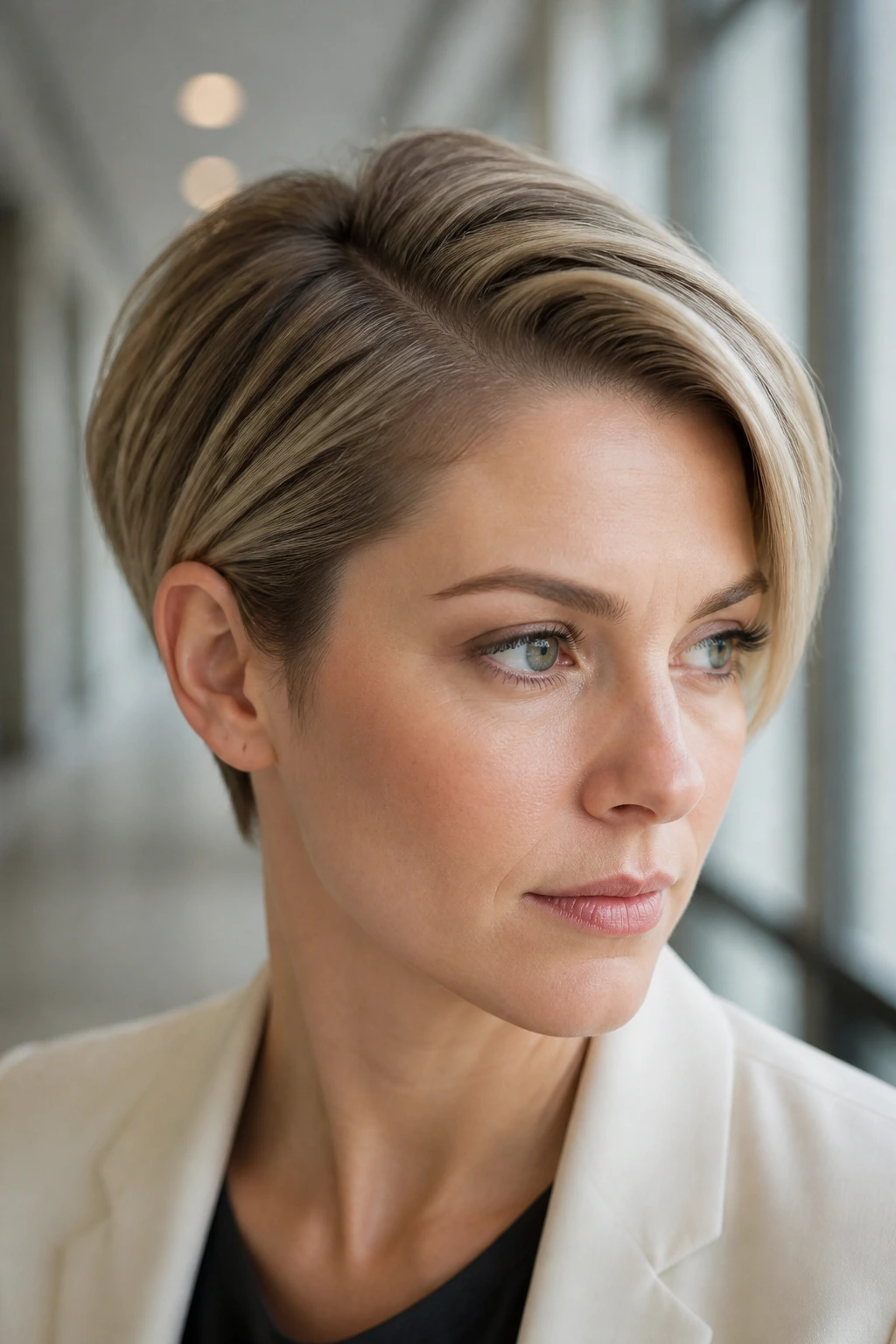
Office-Clean Side Part: Keep the line crisp, tuck one side neatly, and finish with a light mist of flexible spray. This version reads polished without looking stiff, and it’s especially good if your hair sits close to the scalp.
Weekend Piecey Texture: Add a little extra dry shampoo at the roots and separate the top with your fingers. Let the ends stay a bit rough. The cut will look more lived-in, which is useful when you want movement instead of neatness.
Soft Clip-Back Version: Swap the bobby pins for a matte barrette or a small decorative clip. Pull the front pieces back loosely and leave one bend near the temple. It softens the face without turning the style fussy.
Humidity-Ready Tuck: Use a headband, scarf, or stronger side clip and keep the shape close to the head. This version survives weather better because there’s less hair exposed to frizz and less height for the air to mess with.
Natural-Texture Version: If your fine hair has a wave, work with it instead of flattening it. Scrunch in mousse, let the hair air-dry halfway, and shape only the front and crown. The wave gives you volume for free, which is a lovely thing when the morning is already busy.
Keeping Short Fine Hair Fresh Between Washes
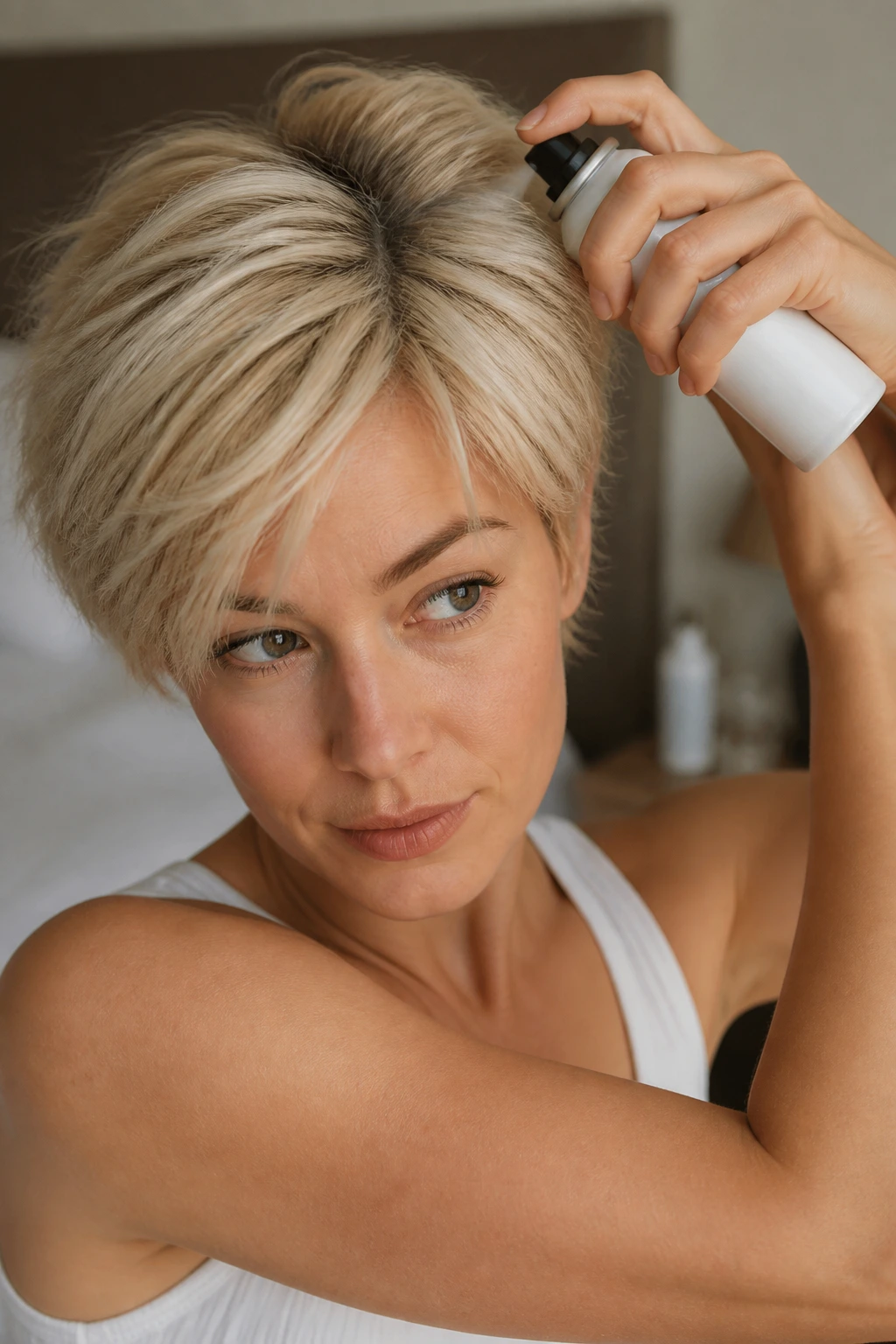
Short fine hair often needs more frequent washing than thicker hair, but not always for the reason people assume. The roots may get oily faster, yet the ends can dry out if you wash too hard or use heavy shampoo every day. A gentle cleanser on the scalp and conditioner only from the ears down keeps the balance saner.
The second day is where a lot of these styles shine. Dry shampoo at the roots gives the hair friction, and a quick re-part can make the whole cut look fresh again. If the front pieces have gone limp, a few seconds with a blow dryer and your fingers usually brings the shape back.
Sleeping on a silk or satin pillowcase helps more than it sounds like it should. It cuts down on friction, which means less frizz and fewer crushed roots in the morning. For very short hair, a loose clip at the front can also keep bangs or fringe from taking a weird crease.
Trim schedule matters too. A pixie can lose its shape fast, so many people need a trim every 4 to 6 weeks. A short bob can stretch a little longer, often around 6 to 8 weeks, before the ends start flipping in odd directions or the line turns soft in the wrong way. If the cut stops looking like itself, it’s time.
Clarifying shampoo has a place here, but not every day. If you use dry shampoo, texture spray, and flexible hairspray often, a clarifying wash every 2 to 4 weeks keeps buildup from smothering the roots. Too much buildup is one of the sneakiest reasons fine hair starts to look tired.
Questions People Ask Before They Try These Looks
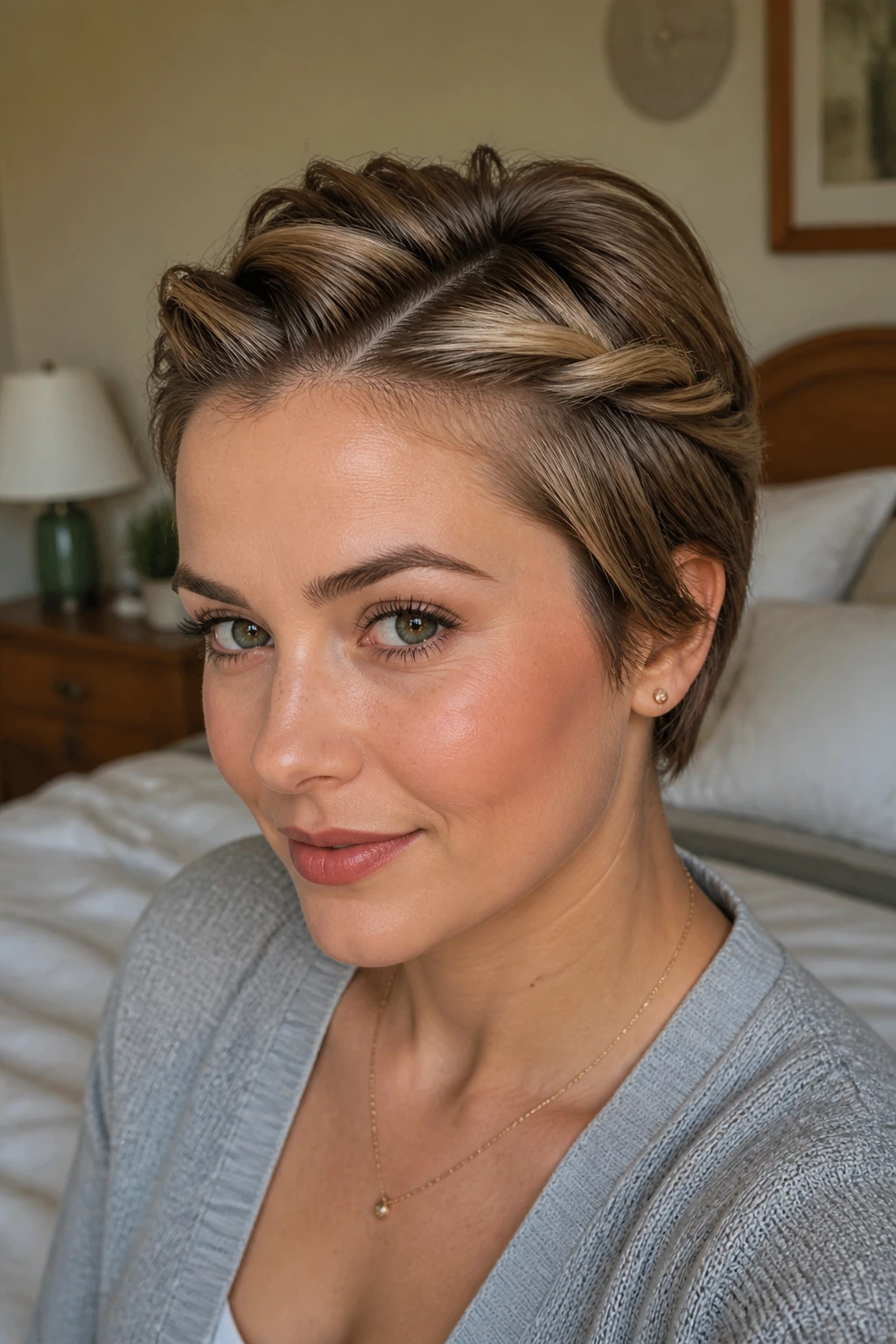
Which short hairstyle makes fine hair look thickest?
A deep side-part pixie or a tidy inward-bent bob usually creates the strongest illusion of density. Both styles give the eye a cleaner line and keep the crown from spreading flat across the scalp.
Can I do these styles on a very short pixie?
Yes, but the focus shifts from twisting to tucking, parting, and directing the front pieces. Tiny clips, a side sweep, and a bit of root lift will do more than trying to force a braid where there isn’t enough hair.
What product helps the most without making hair stiff?
A lightweight mousse or dry shampoo tends to do the most useful work. Mousse gives body at the start, and dry shampoo gives grip later. Heavy creams usually do the least good on fine short hair.
How do I keep bobby pins from slipping out?
Use them on hair that has a little texture, not hair that’s freshly coated in conditioner or oil. Slide the pin in with the ridged side against the scalp, and cross two pins if the section keeps slipping.
Can these styles work on day-two hair?
Often, yes, and sometimes they work better on day-two hair than on clean hair. Fine hair usually holds pins and texture a little better once the roots have some natural oil and the strands have more friction.
What if my hair is too short for twists or braids?
Use a tuck, a clip, or a micro-pullback instead. Even a tiny section pinned above the temple can create the same visual lift without needing long pieces.
How often should I wash short fine hair?
That depends on oiliness, but many people land somewhere between every day and every 2 or 3 days. If the roots get limp fast, wash more often. If the ends feel rough, keep conditioner off the scalp and use less heat.
Will these styles still work with glasses or a fringe?
Yes, and some are better with glasses than without them. Side sweeps, tucked sides, feathered fringes, and clipped sections all play nicely around frames without crowding the face.
Short Hair, Better Shape
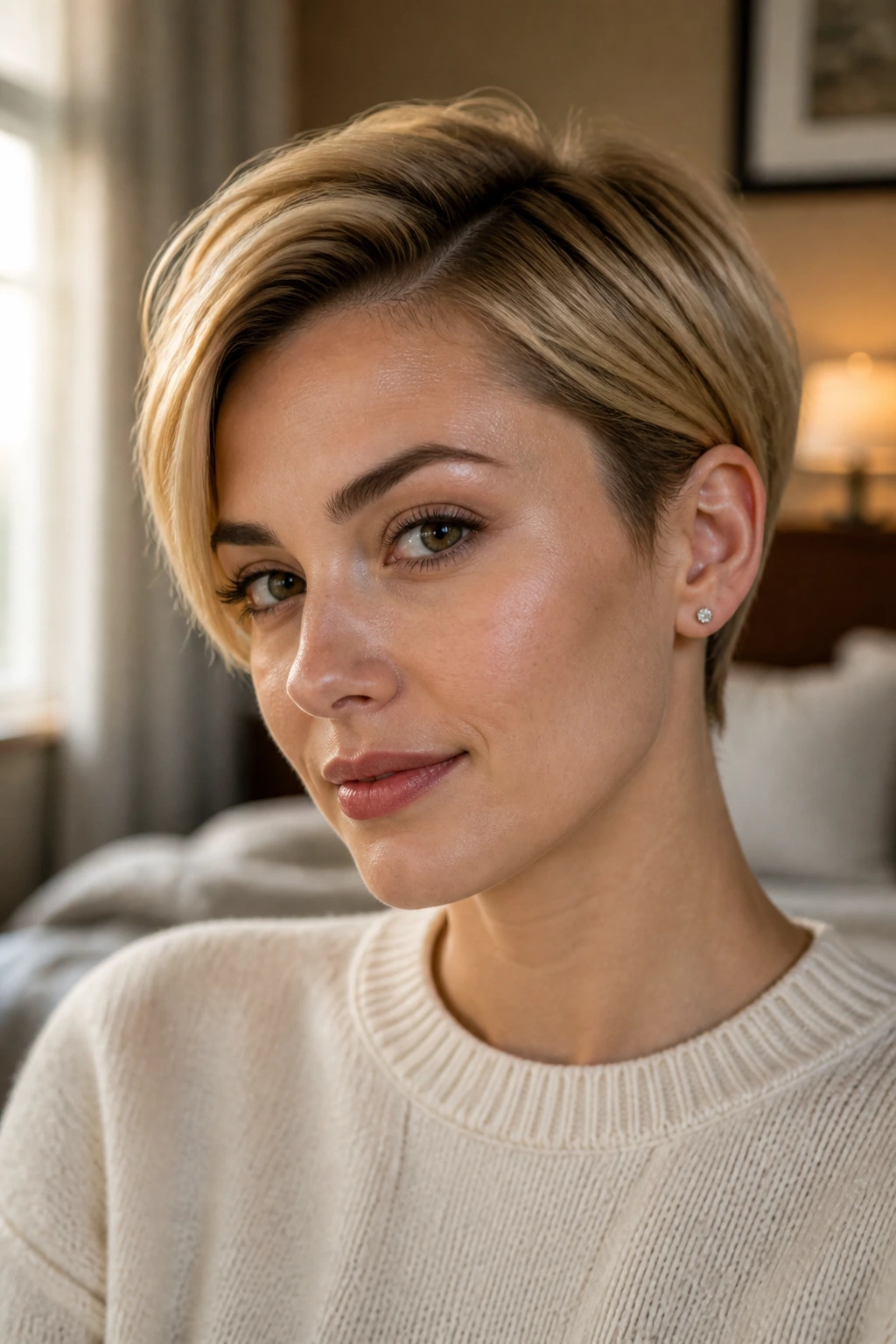
Fine short hair does not need to be bigger than it is. It needs better lines, a little grip, and styles that understand how light hair actually behaves. Once you stop asking it to act like thick hair, the whole routine gets easier.
Start with the style that asks the least from your hair. A deep side part, a tuck behind one ear, or a small clip at the temple can do more than a bottle full of promises. From there, the rest is just choosing the shape you want to see in the mirror and giving it a reason to stay there.