



Black hair color ideas for olive skin with lowlights work best when the black isn’t a single flat block. Olive skin has enough green-gold, green-gray, or muted neutral tone in it that the wrong black can look heavy in one light and washed in another, while the right one makes the face look clearer and the hair look like it has actual shape.
Pure jet black is rarely the enemy. Boring black is.
That’s where lowlights earn their keep. A ribbon of espresso, blue-black, plum, charcoal, or smoky brown gives the color somewhere to move, so the eye sees depth instead of a helmet effect. On curly hair, the payoff is even better; the bends catch the darker pieces and turn them into texture instead of stripey streaks.
Why These Black Shades Work on Olive Skin
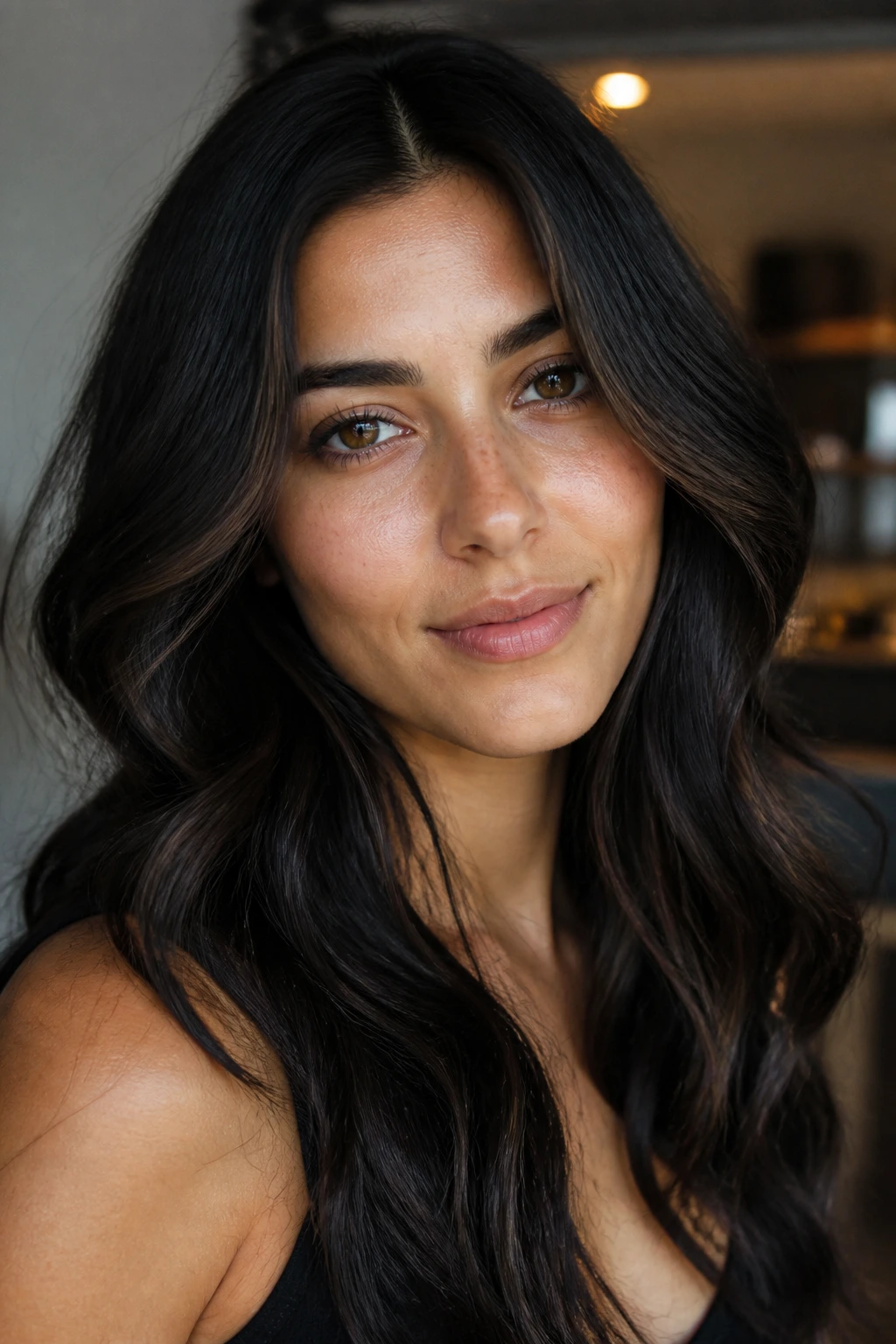
Undertone first, color second: Olive skin can lean warm, cool, or neutral, and the right black should answer that undertone instead of fighting it.
Lowlights create shape: Dark ribbons around the crown, part, and ends keep black hair from looking like one solid paint swatch under indoor lighting.
Small changes matter a lot: A shift from true black to blue-black, smoky brown, or plum-black can change how fresh your skin looks without making the hair feel lighter.
They age better: A soft lowlight pattern grows out more gracefully than a single harsh all-over black dye, especially if your natural color isn’t far off from the final look.
You can make them bold or subtle: The same basic black base can read glossy and soft, edgy and cool, or rich and romantic depending on where the lowlights sit.
1. Jet Black with Blue-Black Lowlights
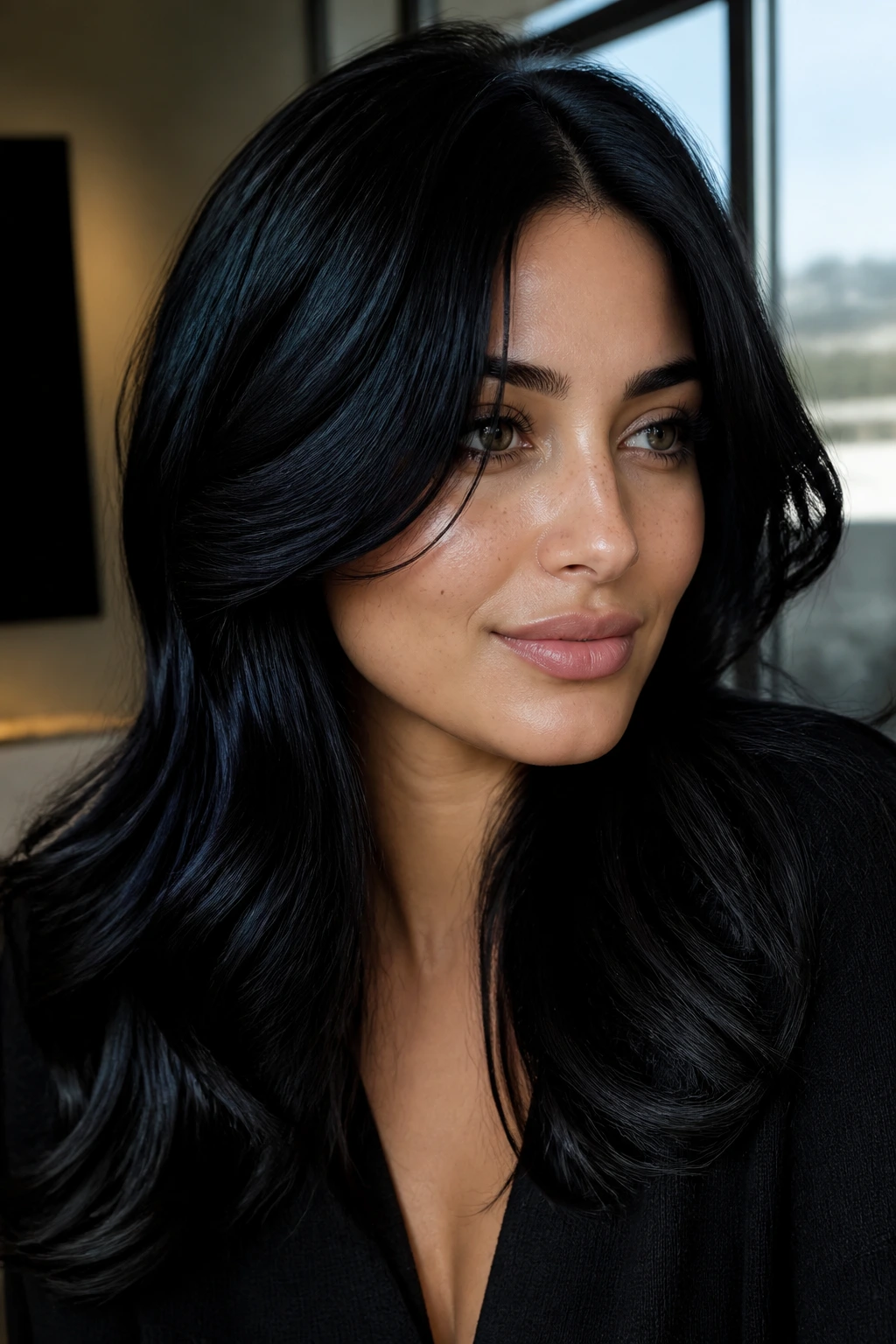
Jet black can be gorgeous on olive skin when it has a cool echo underneath it. The blue-black lowlights stop the color from turning chalky or flat, and they give the hair a slick, almost liquid finish in daylight. On neutral or cool olive skin, this is one of the safest dramatic choices because the blue note keeps the black from swallowing the face.
I like this look on straight hair and glossy blowouts. The lowlights don’t need to be chunky. In fact, the best version uses fine, woven ribbons through the crown and around the temples so the black still reads black, just with depth that shows when you turn your head.
2. Soft Black with Espresso Veil
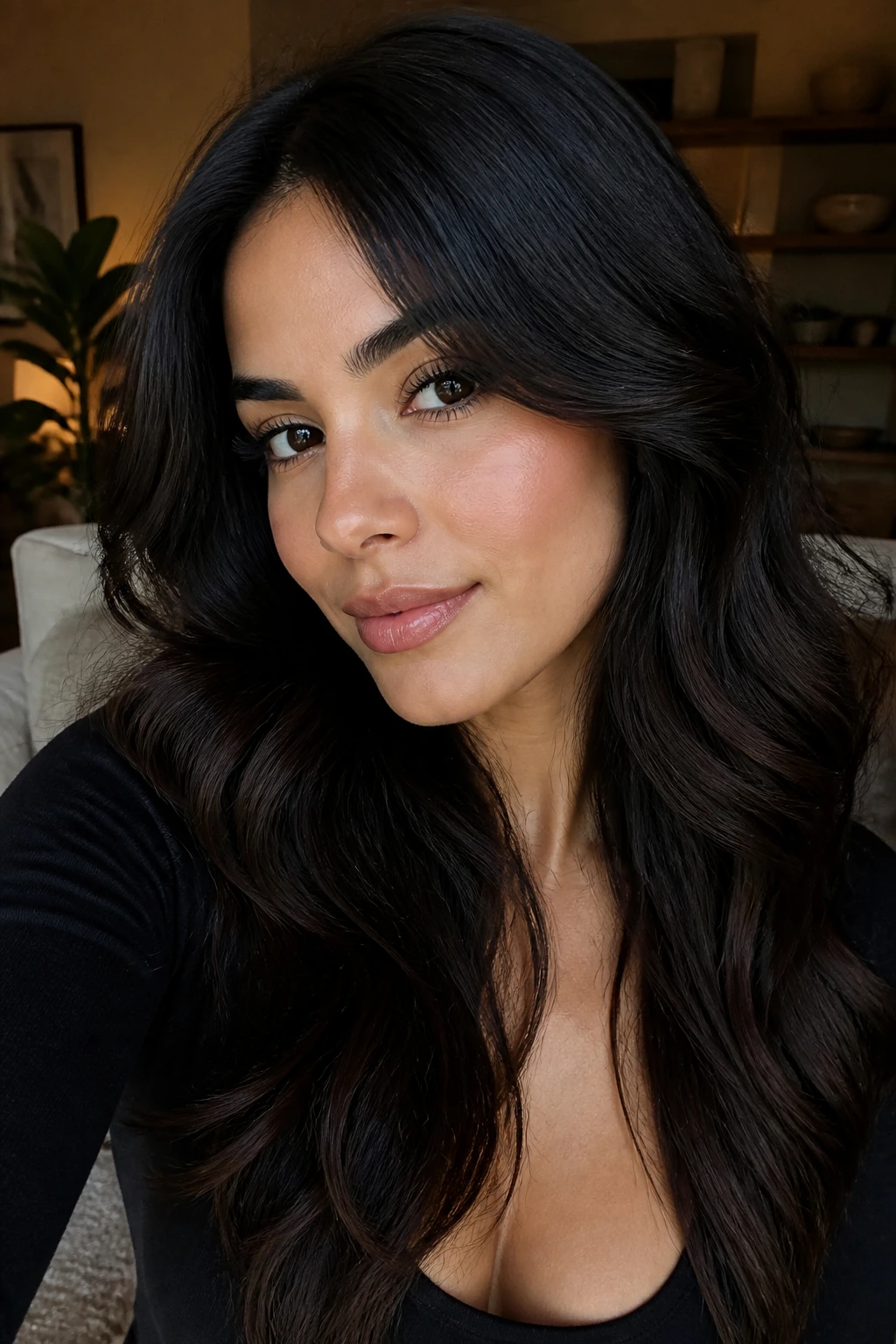
Why does soft black feel easier on olive skin than a hard jet black? Because it leaves a little breathing room. Espresso lowlights stitched through a soft black base keep the shade deep, but not severe, and that matters if your olive skin leans muted or golden.
What makes it work
- Best for: Fine to medium hair that needs dimension without obvious stripes.
- Tone to ask for: A base that sits between level 2 and level 3, with espresso lowlights one shade deeper through the mid-lengths.
- Why it helps: The subtle brown note keeps the color from looking like a block under office lights.
This one is especially good if you want black hair that still looks soft around the jawline. It doesn’t shout. It just makes the whole head look fuller.
3. Raven Black with Mushroom Brown Ribbons
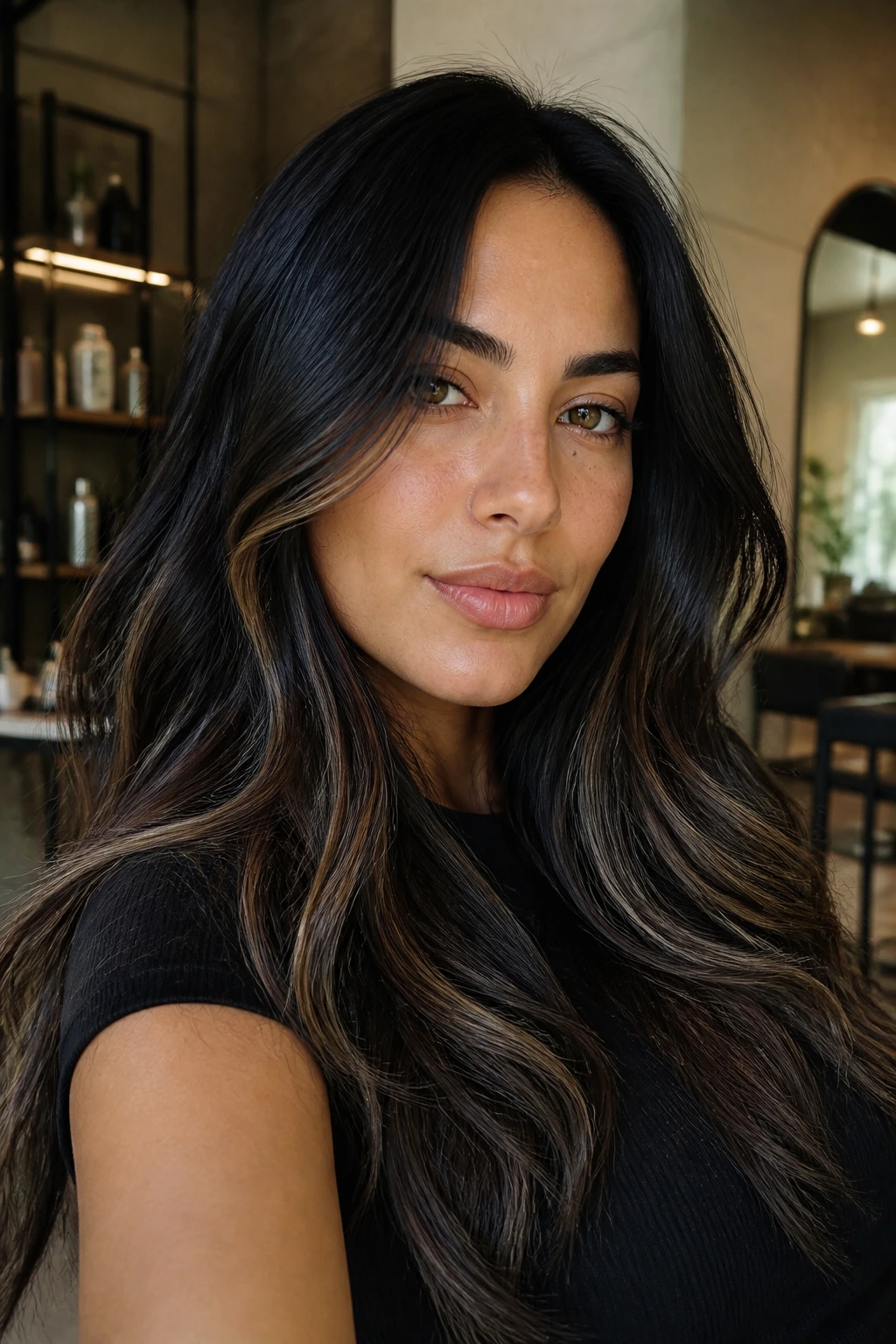
Raven black has a little more movement than true ink black, and mushroom brown lowlights are what keep it from drifting warm. The brown is smoky, not reddish, so it sits well against olive skin that has a green-gray cast. That cool, earthy middle ground is the whole point.
I’m partial to this on layered cuts because the ribbons show up when the ends flip or separate. On blunt cuts, it can feel more subtle, which is fine if you want a low-contrast result. If you want more visible dimension, ask for the mushroom brown pieces to be concentrated beneath the top layers and at the back of the head.
4. Ink Black with Charcoal Contouring
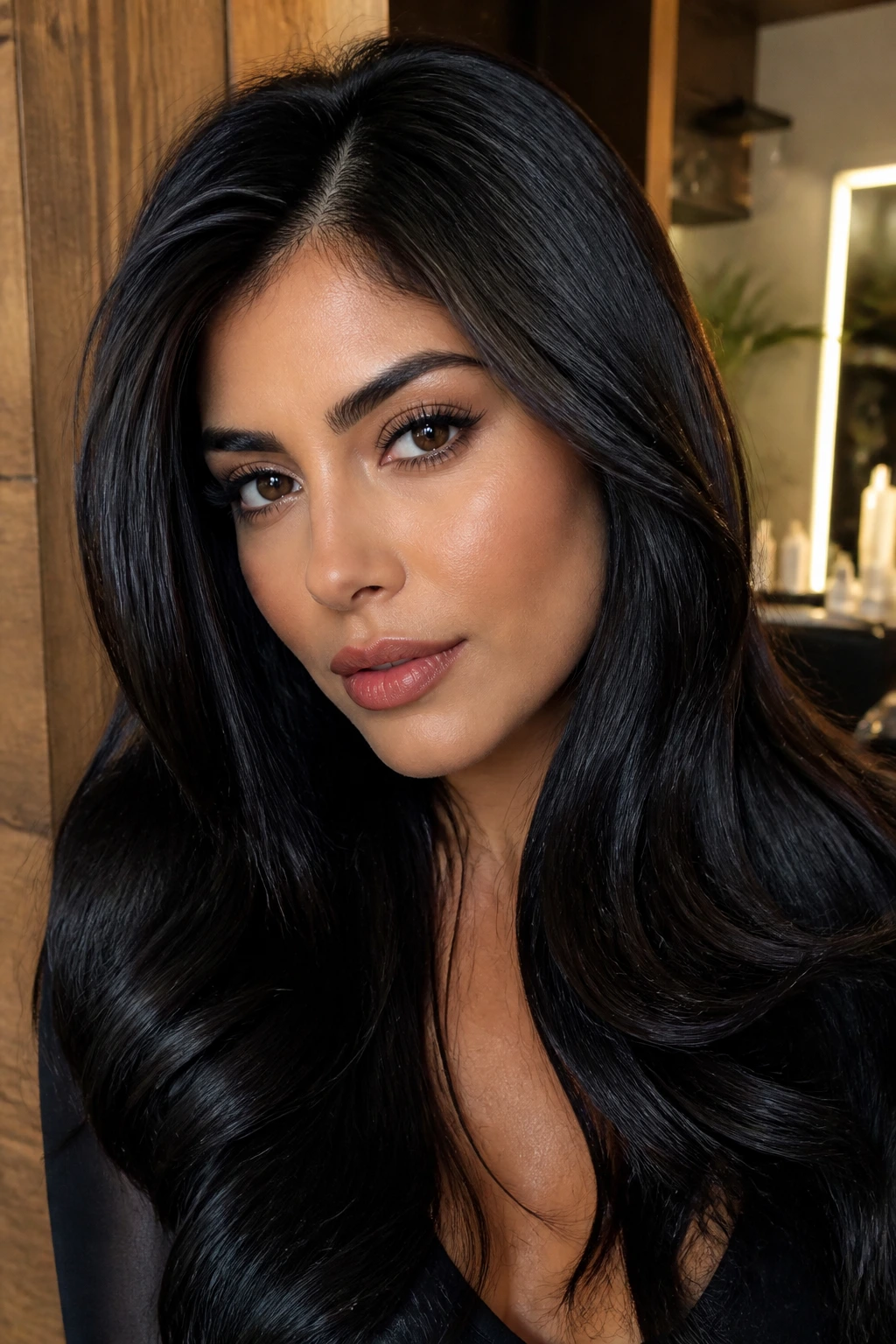
This one is for anyone who likes a sharper look. Ink black is already deep, but charcoal contouring around the hairline and part gives it shape, almost like a subtle frame for the face. On olive skin, that contrast can be really clean, especially if your features are strong and you wear brows and liner with a little definition.
Ask for it like this
- Front zone: Charcoal lowlights around the temples, fringe, and top layer.
- Side panels: A few deeper pieces near the cheekbones so the face doesn’t get swallowed by one heavy shade.
- Finish: A gloss, not a flat matte dye job.
This is not the look for someone who wants barely-there dimension. It’s for someone who wants black hair that looks intentionally cut and sculpted.
5. Black Cherry with Merlot Lowlights
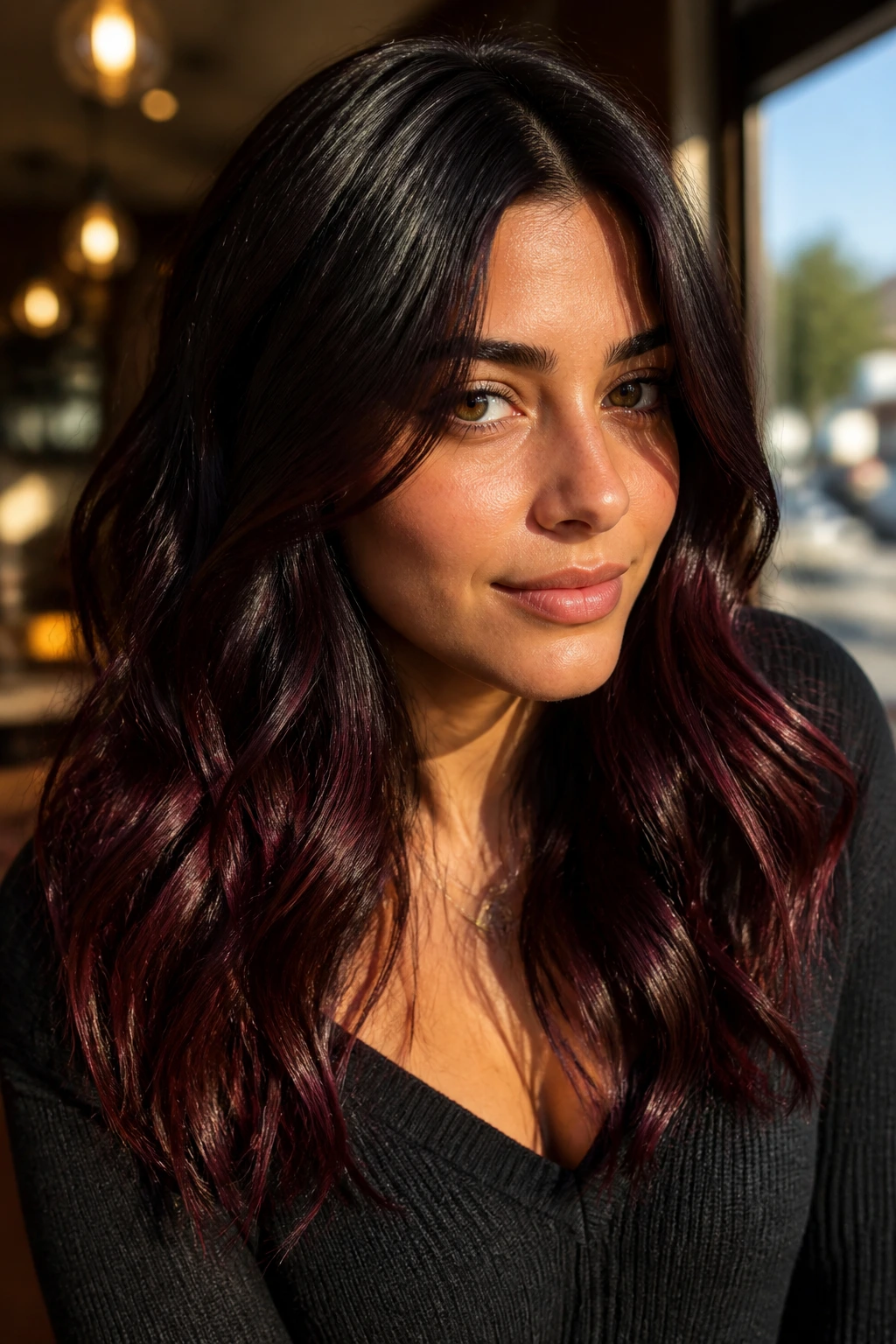
Black cherry has enough red wine tone to warm olive skin without tipping into orange. Merlot lowlights deepen that effect, so the black base feels richer instead of colder. If your olive skin looks a little golden in sunlight, this is one of the easiest ways to make black hair feel harmonious rather than stark.
The red note is there, but it’s tucked inside the hair, not sitting on top like a bright cherry dye. That matters. You want depth, not candy color. On wavy hair, the merlot pieces appear and disappear as the curls shift, which gives the whole look a slow, glossy movement I never get tired of seeing.
6. Midnight Black with Violet Smoke
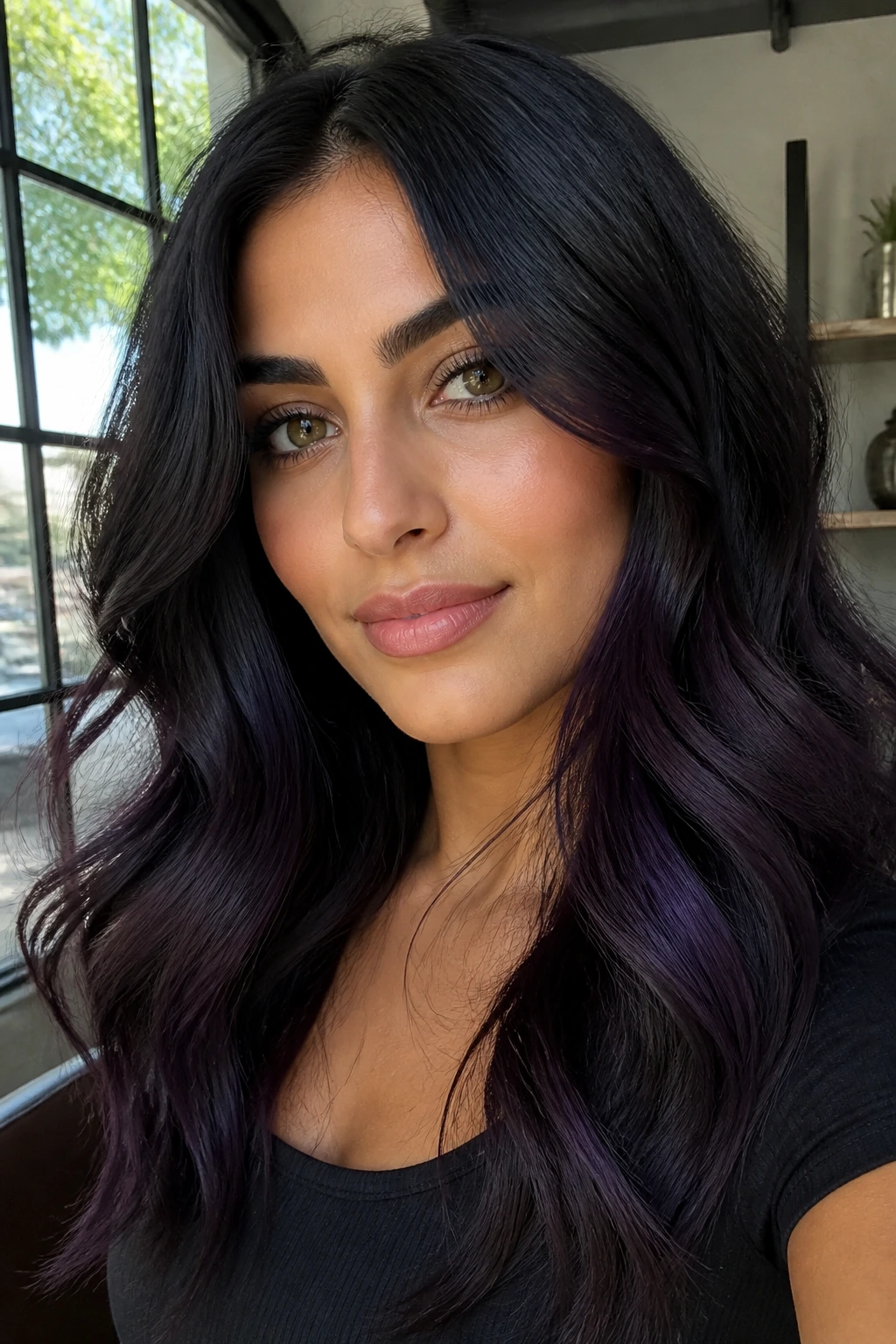
A little violet goes a long way in black hair. Midnight black with violet smoke reads cool, polished, and slightly moody, but it still works on olive skin because the violet softens the yellow-green cast that some complexions carry. The trick is keeping the violet dark enough that it looks like smoke, not purple streaks.
This one is especially good if your hair lives in a low bun, a wave set, or a smooth blowout. The violet shows up most when light hits the curve of the hair shaft. Under fluorescents, it stays quiet. In sunlight, it flashes just enough to make the black look expensive instead of flat.
7. Glossy Black with Cocoa Babylights
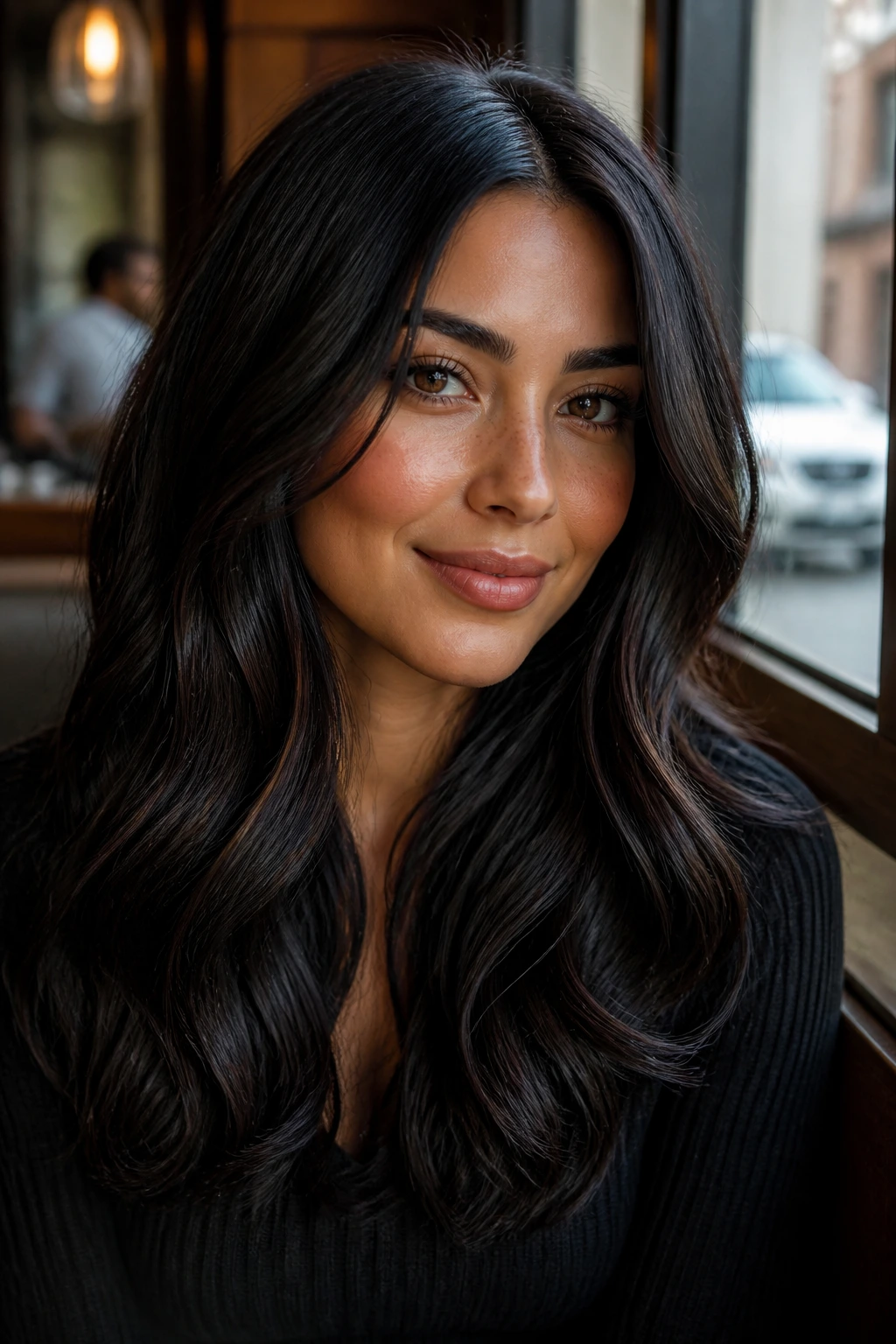
Cocoa babylights are tiny. That’s the whole charm. Instead of obvious ribbons, you get delicate dark-brown threads that break up the black base without shouting across the room. On olive skin, especially skin that leans neutral, this is a smart way to soften black hair while keeping the overall color deep and polished.
I like this for thick hair, curly hair, and anything with lots of movement. The tiny pieces keep the mass of black from looking too dense near the roots, and they make the ends look lighter without actually being light. If you want a black shade that feels wearable every day, this is one of the least fussy options on the list.
8. Smoky Black with Ash Brown Underlayers
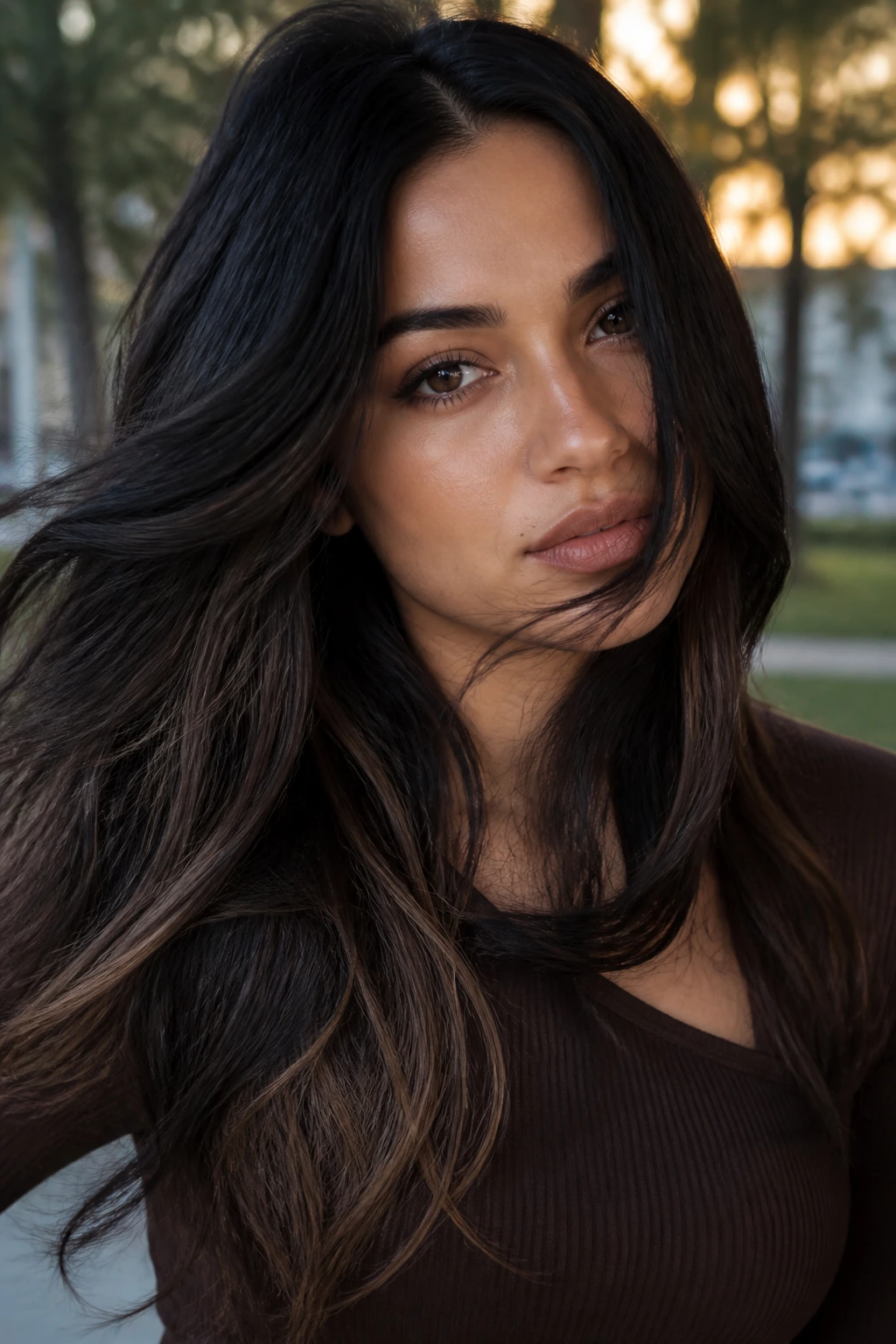
Could black hair have hidden depth and still look work-appropriate? Absolutely. Smoky black with ash brown underlayers is a good answer when you want dimension that shows mostly when you flip your hair, tuck it behind your ear, or pull it into a loose clip. The ash brown keeps the look cool and grounded.
That underlayer placement is what saves this from looking ordinary. The top stays smoky and dark, while the hidden pieces create movement underneath. It’s a nice choice for longer hair because the lowlights have space to stack and separate.
9. Black with Chestnut Face-Framing Lowlights
Chestnut around the face is one of my favorite ways to soften a black base on olive skin. The warmth sits near the cheeks and temples, where it can make the skin look less shadowed. If your olive skin has a golden cast or your face tends to lose color in indoor light, chestnut lowlights can help.
I’d keep these fine and diffused, not thick. Chestnut that’s too bold can edge into highlight territory, which defeats the point. Ask for pieces that are just a touch lighter than the black base and woven close to the front layers. The result should look like the black is opening up, not changing into brown.
10. Blue-Black with Denim Underpainting
Blue-black already carries a crisp edge, and denim underpainting takes that feeling even further without making the hair look neon. The lowlights sit beneath the top layer, so the blue reads like a shadow rather than a color block. Olive skin, especially the cooler kind, usually handles this beautifully because the blue keeps the complexion from looking dull.
This look is especially good on straight hair, lobs, and blunt cuts. The underpainting peeks out when the hair swings or separates at the nape. If you want something edgier than soft black but less dramatic than a full fashion color, this sits in a very useful middle lane.
11. Black Silk with Walnut Shadowing
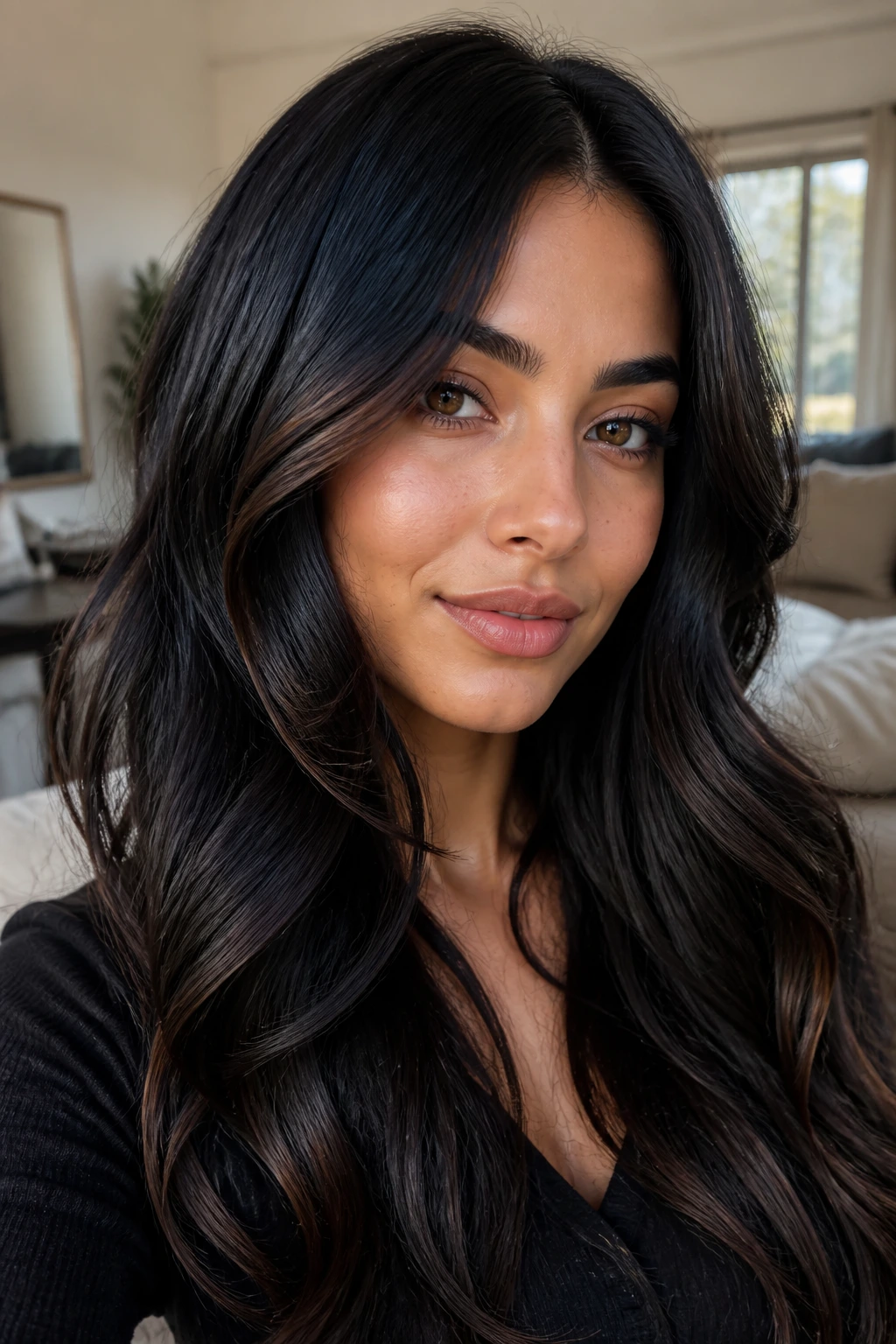
Black silk is a name I use for a black that has shine before it has contrast. Walnut shadowing gives it that extra layer of brown depth, but the brown stays muted, earthy, and close to the base. On olive skin, that creates an easy kind of balance — not too cool, not too warm, just rich.
This is the kind of color that works on almost every length. It’s especially good if your wardrobe leans neutral and you don’t want your hair fighting your clothes. A walnut shadow also fades gracefully, which matters because harsh grow-out on black hair is a nuisance nobody needs.
12. Black Plum with Berry Lowlights
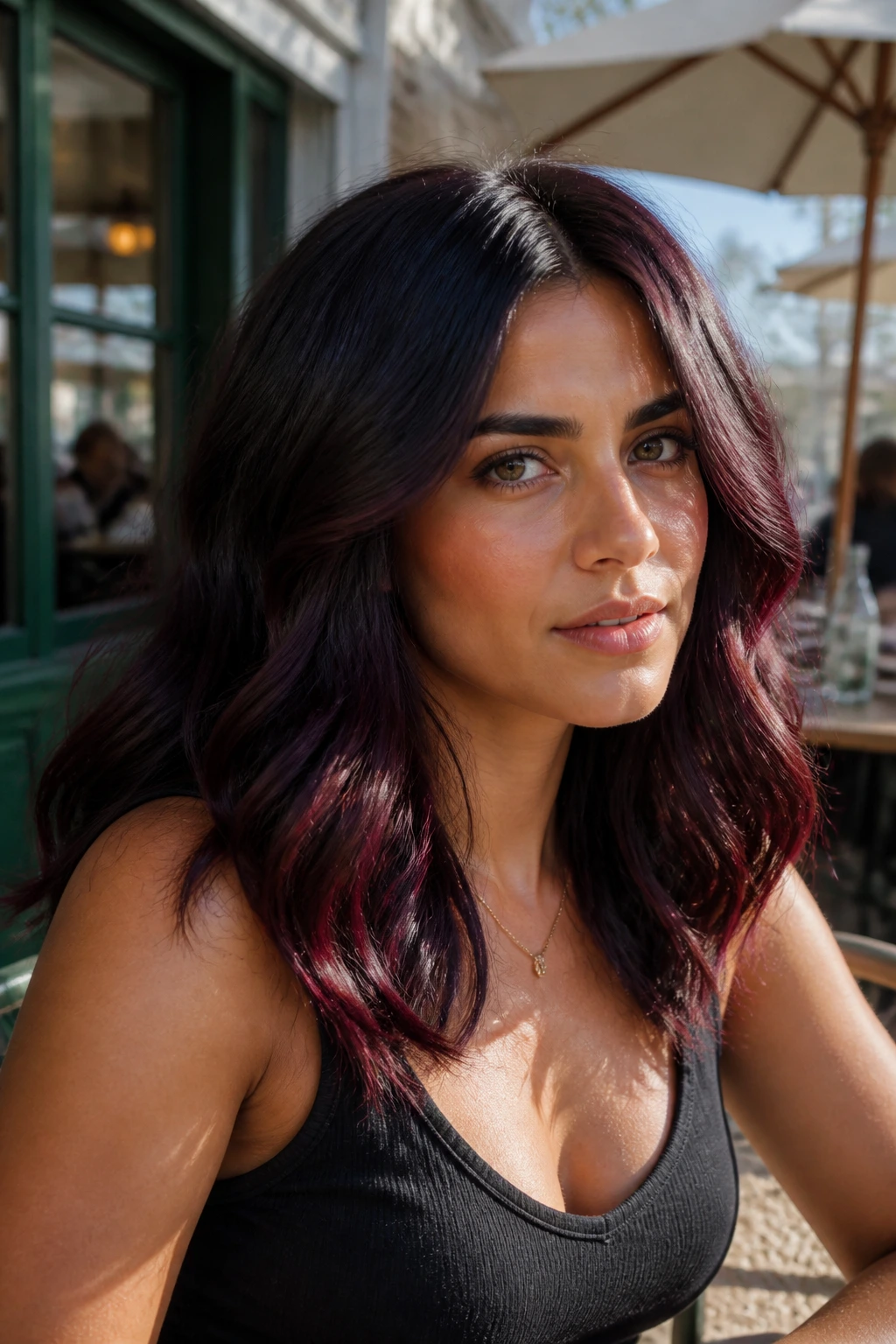
Black plum leans romantic without drifting into obvious violet. Berry lowlights tucked through the lengths add a dark wine shimmer that can make olive skin look more awake, especially if your undertone is muted or slightly green-gold. The effect is stronger in sunlight and softer in shadow, which gives the whole look a nice range.
Where it shines
- Best placement: Mid-lengths and ends, especially on wavy cuts.
- Best styling: Loose bends or layered waves.
- Best mood: Soft but not sweet.
This is the shade I’d pick for someone who wants black hair with a little personality and doesn’t mind a richer undertone showing through the movement.
13. Satin Black with Taupe Lowlights
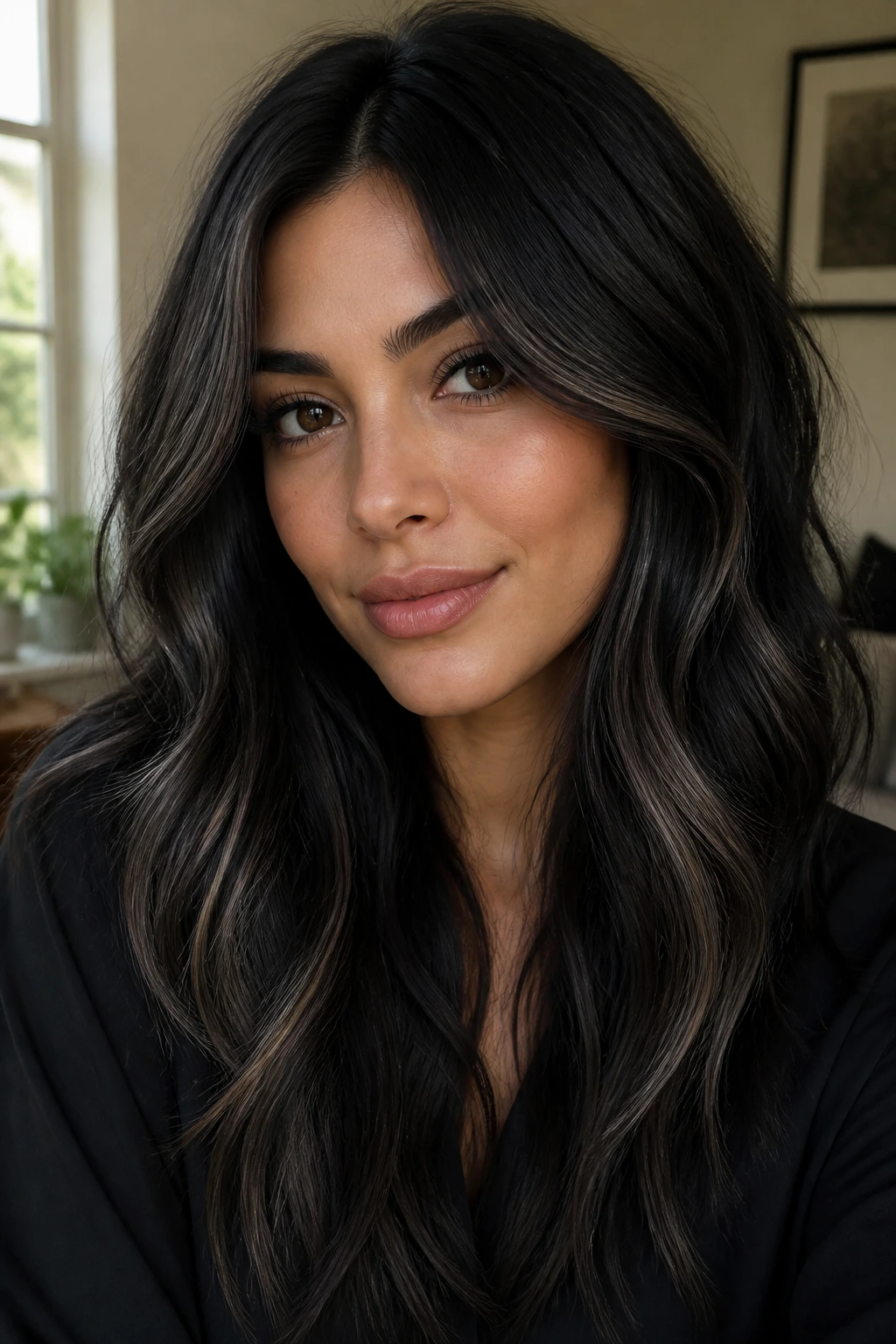
Taupe lowlights are underrated because they’re quieter than chestnut and less stark than ash. On satin black hair, they create a soft, powdered effect that can be very flattering on olive skin, especially if the skin leans neutral or if you want a gentler frame around the face.
This look also behaves well on mature hair, where the goal is often depth without harshness. Taupe pieces can make the black feel softer near the part and around the ends, which helps a lot if your natural texture is fine or if your hair has a few silver strands coming in. It’s calm, but not boring.
14. Black with Mahogany Underlights
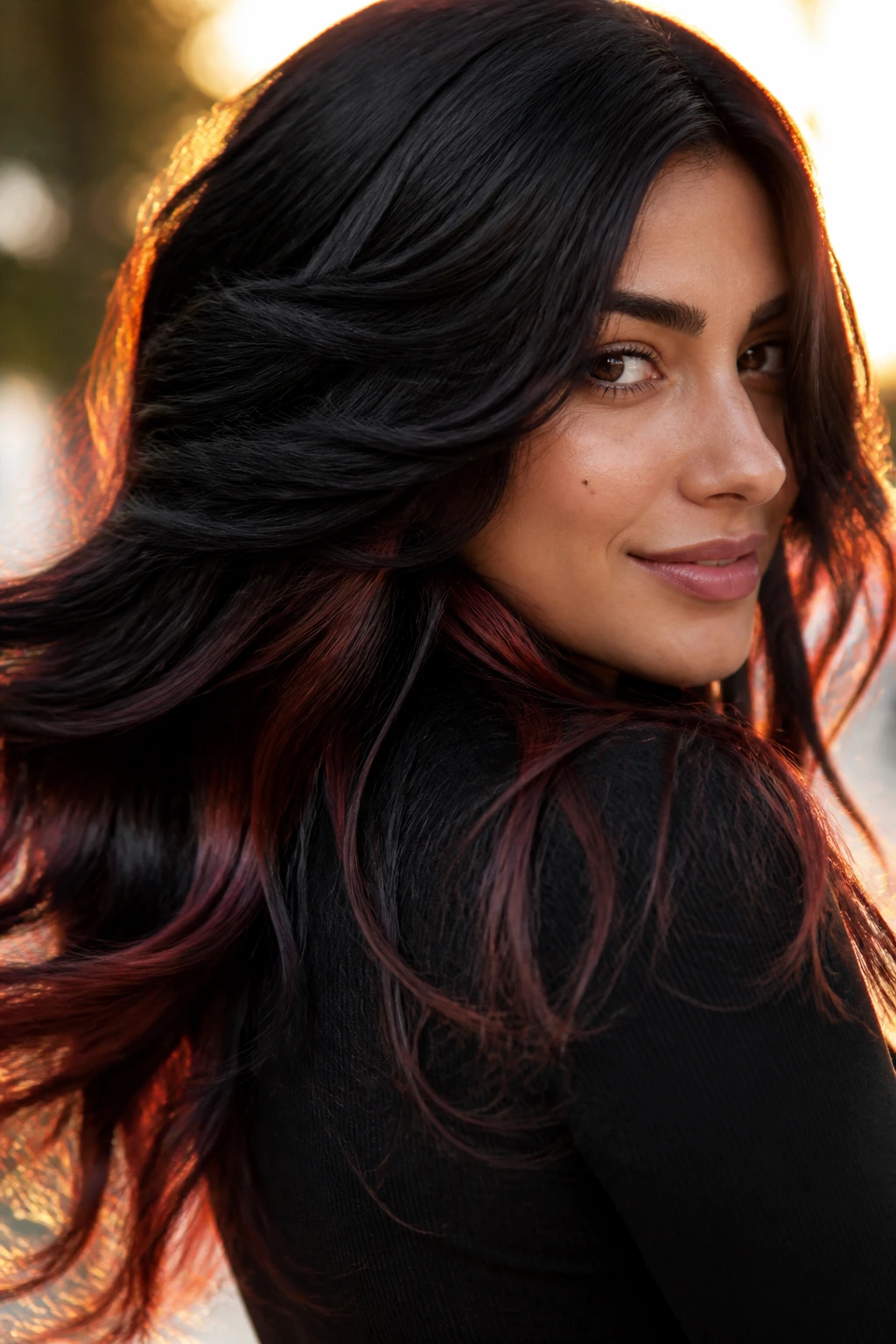
Mahogany underlights bring a red-brown depth that looks especially good against warm olive skin. The key is keeping the mahogany deep enough that it reads as shadow, not auburn. When it’s done right, the hair looks fuller and slightly warmer in a way that makes the face feel less drained.
I like this on medium to long hair because the underlights peek out when the hair moves. Half-up styles are especially good here; the mahogany gets just enough visibility to matter. If your hair has been lightened before, tell your colorist to keep the mahogany rich and controlled so it doesn’t turn overly bright on porous ends.
15. Black Velvet with Copper-Brown Flickers
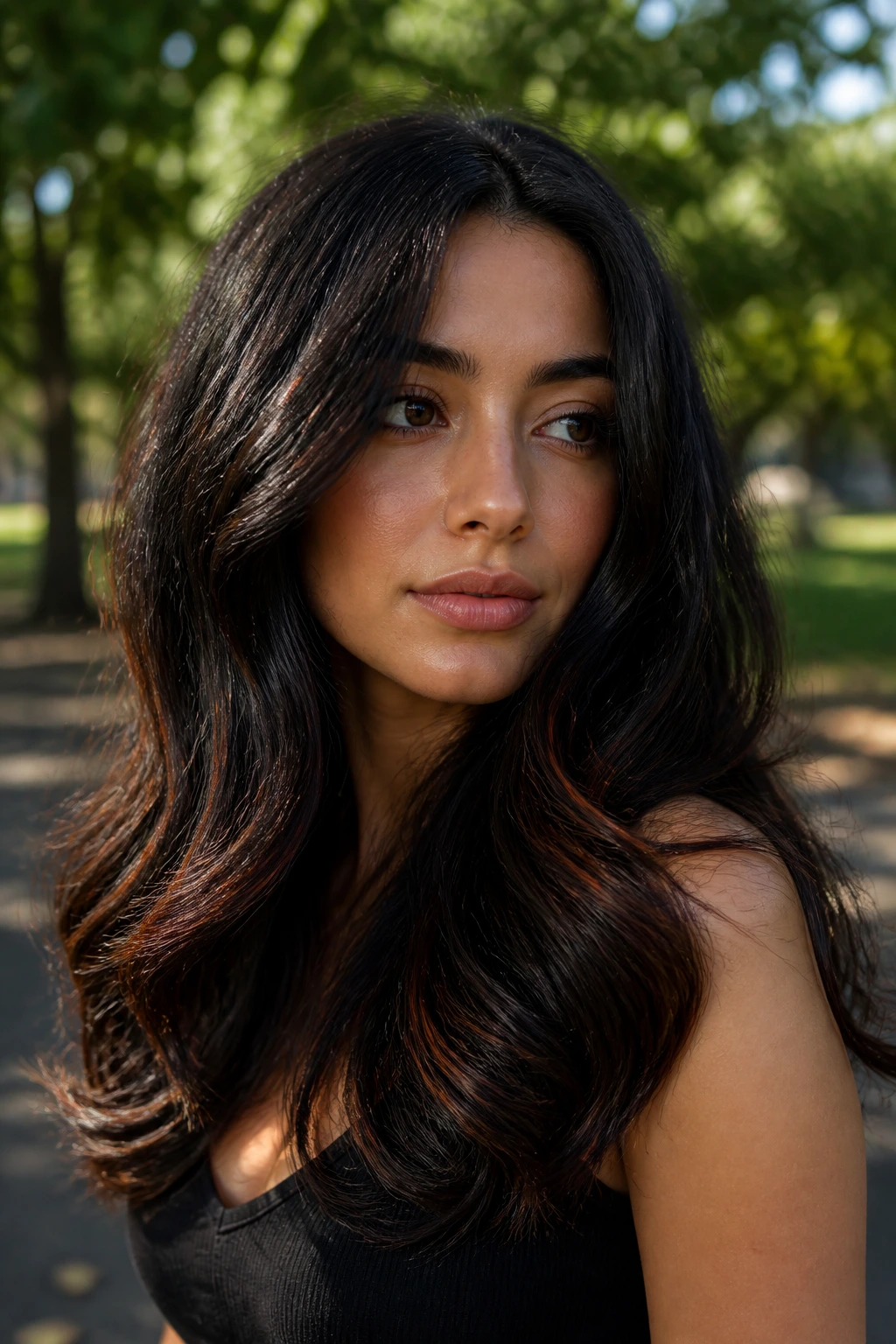
Copper on black hair can go wrong fast, so this version keeps the copper-brown flickers fine, dark, and scarce. On warm olive skin, the result is a little spark rather than a full warm wash. That matters because too much copper can drag the whole look into orange territory.
This is one of those shades that benefits from movement. Waves, curls, or even a rough blowout help the flickers appear in pieces. If your hair is sleek and pin-straight all the time, you may want a subtler version. The color is prettier when it moves.
16. Graphite Black with Slate Ribbons
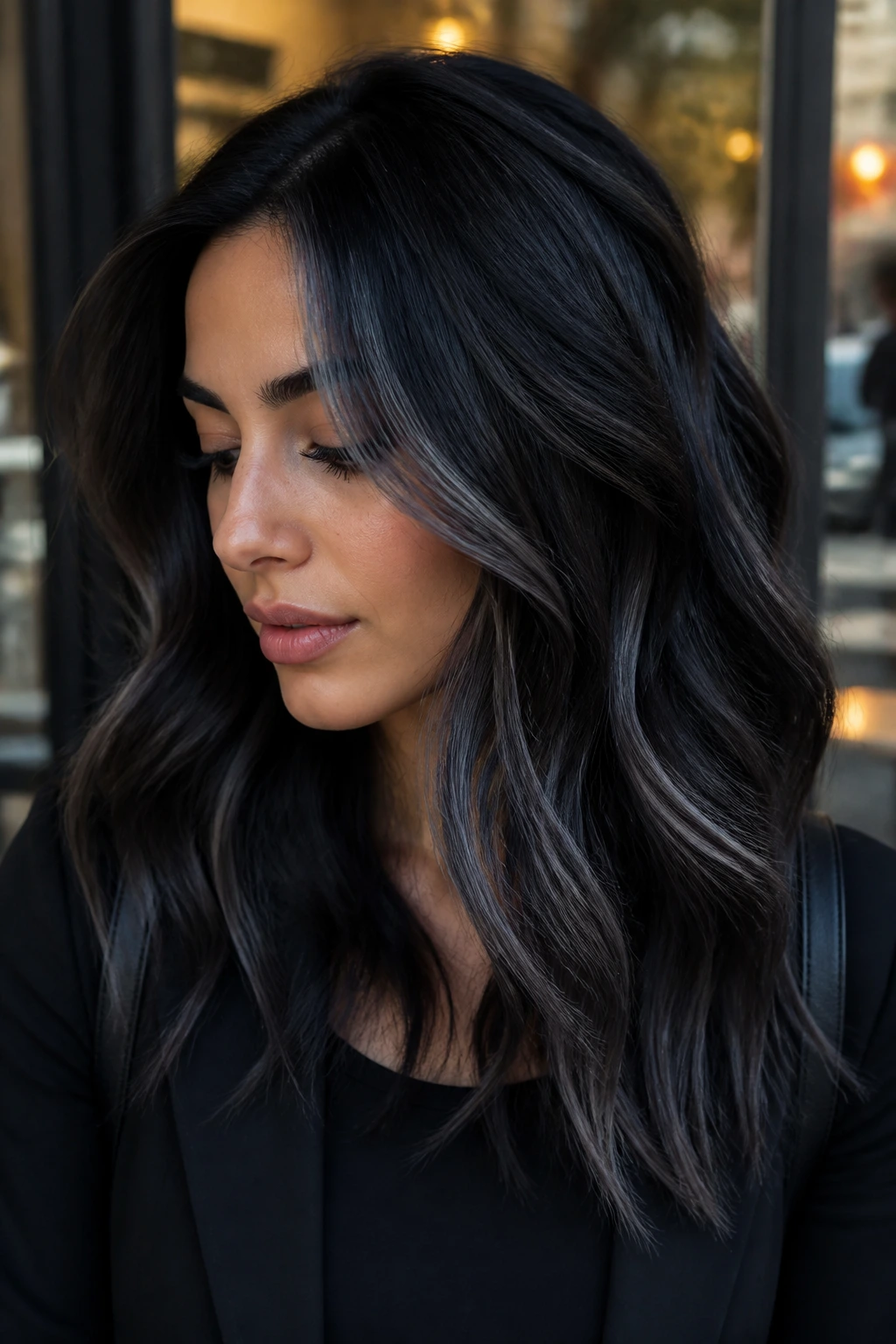
Graphite black has that cool, polished edge that makes olive skin with a cooler undertone look cleaner. Slate ribbons threaded through the lengths keep the base from collapsing into one dense block. The whole effect is dark, modern, and just a little smoky.
What to ask for
- Base: A deep black with cool undertones, not a red-black.
- Ribbons: Slate or gray-brown lowlights placed through the mid-lengths.
- Goal: A reflective finish that still has visible depth.
This is a strong choice if you like blunt cuts, polished makeup, and hair that looks sharp without needing loud contrast.
17. Soft Jet Black with Mocha Ends
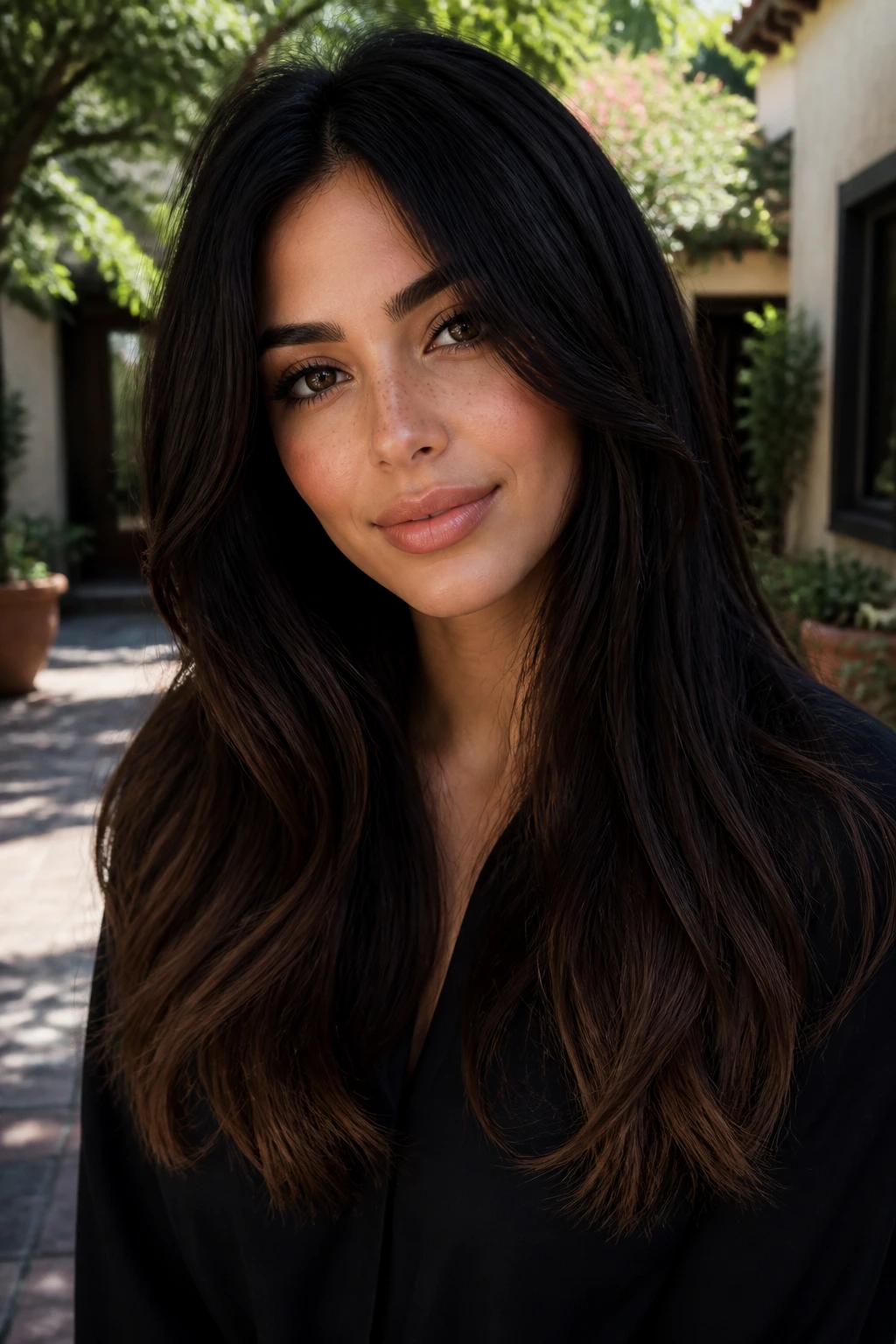
Mocha ends are a smart way to soften jet black without changing the root area too much. The root stays serious and dark, while the lower half melts into a warmer brown that gives the hair shape. On olive skin, that gradual shift can feel much easier than a hard line of black from root to tip.
This is one of the most grow-out-friendly black color ideas on the list. It works especially well on long layers because the ends have enough weight to show the melt. If you’re trying to avoid frequent salon touch-ups, this is a good place to land.
18. Raven Black with Burgundy Peekaboo Panels
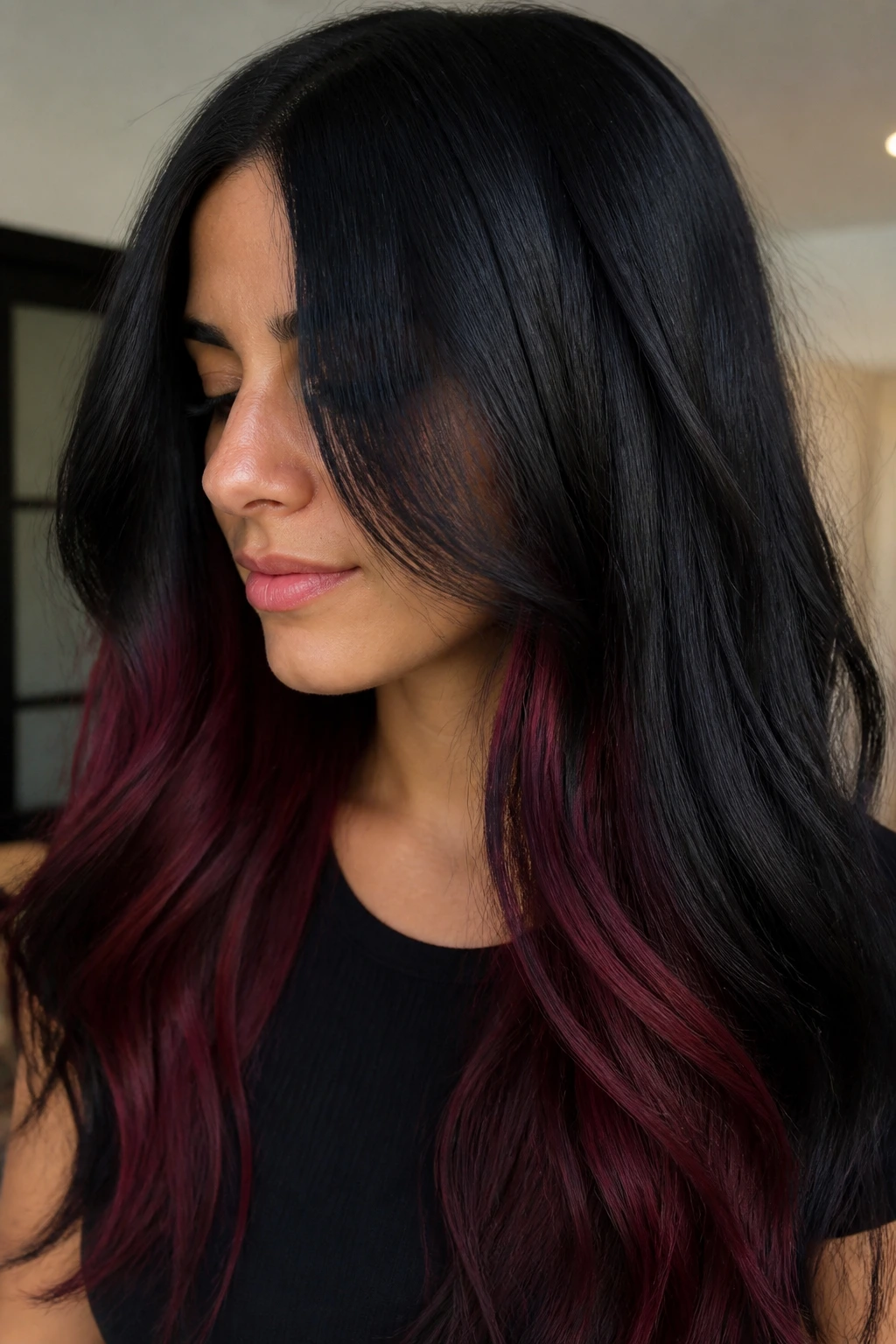
Peekaboo color is for people who want their black hair to have a second life. Burgundy panels hidden underneath a raven black top layer stay discreet most of the time, then show when you curl the hair, tuck it, or flip it off the shoulder. Olive skin can wear this especially well if you want something a little playful without committing to a loud all-over red.
The hidden placement is the trick. From the front, it still reads as black hair. From the back or side, it gets much more interesting. This is one of the few options here that feels office-safe but not boring.
19. Black with Cinnamon-Chestnut Lowlights
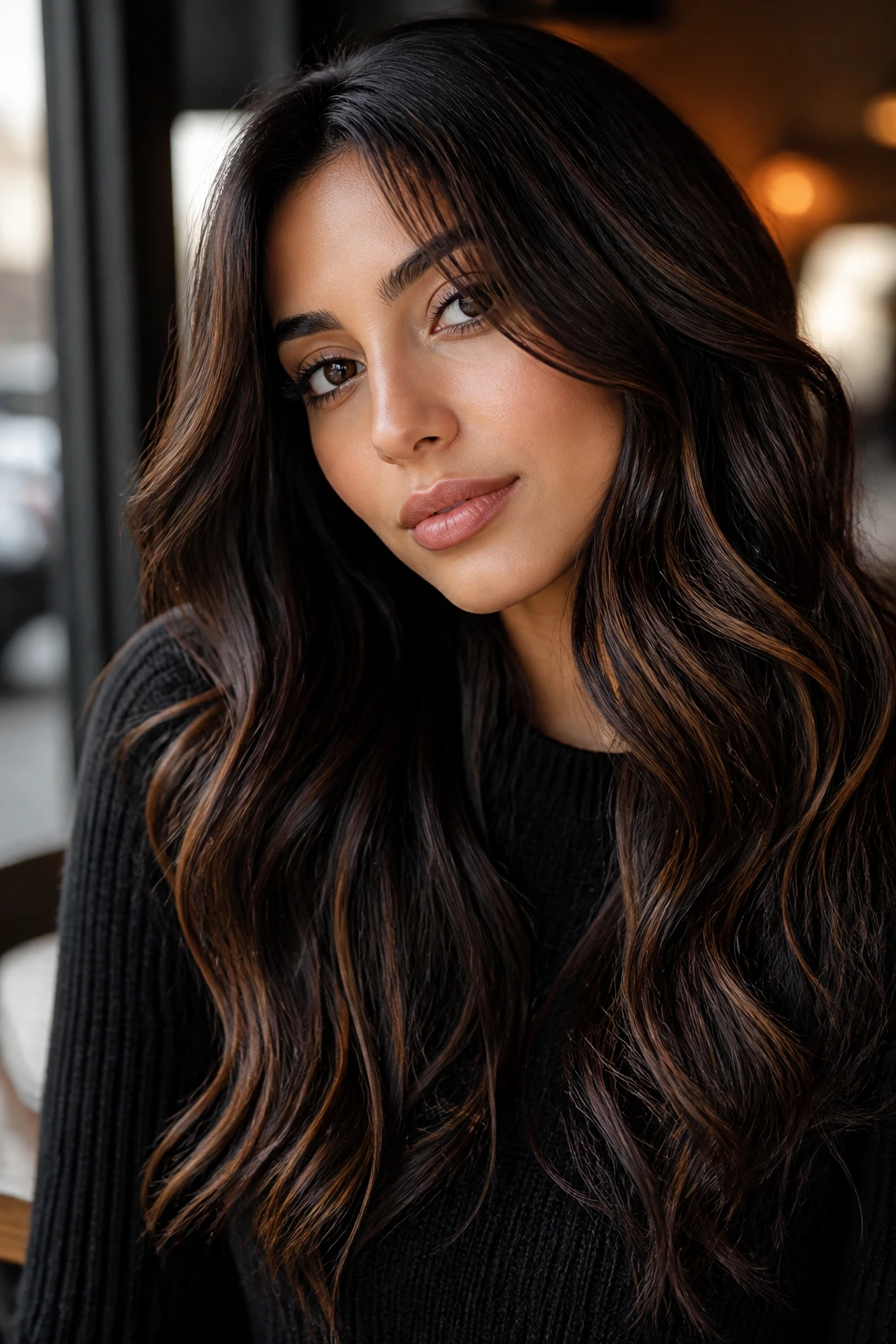
Cinnamon-chestnut is warmer than ash, but not so warm that it turns orange if it’s kept thin. On golden olive skin, this can wake the complexion up fast. The black base stays dominant, while the lowlights create a warm, earthy movement that feels easy and natural.
Keep the cinnamon pieces soft. Thick orange-brown panels will fight the black and look dated fast. Fine weaving and a glossy finish are what make this work. On wavy or layered hair, the contrast shows in the nicest way: enough to notice, not enough to shout.
20. Midnight Black with Smoky Teal Ends
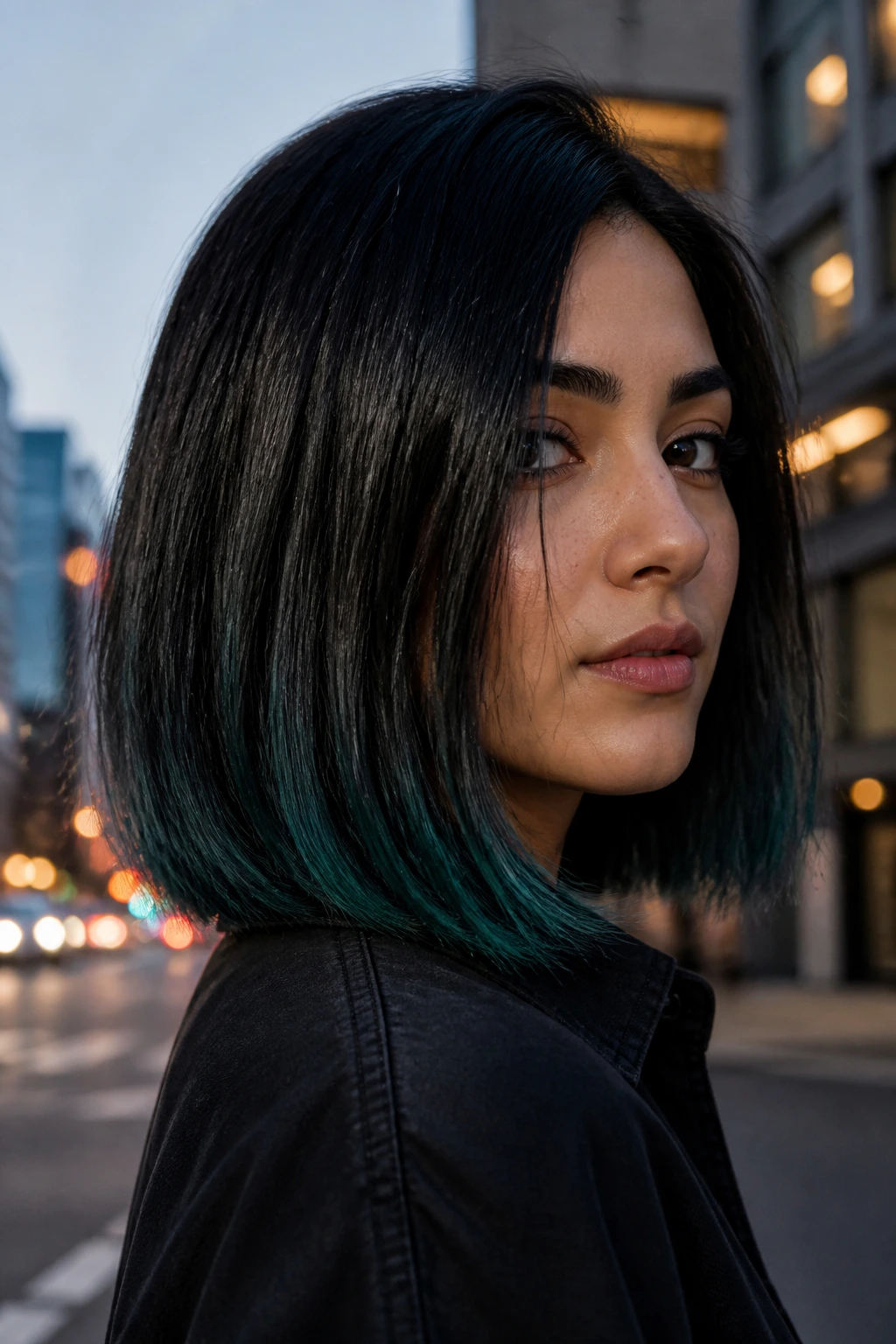
Smoky teal ends are for the person who wants black hair with a little edge and doesn’t mind people noticing. The teal should stay dark and muted, almost like ink mixed with green smoke, so it still flatters olive skin instead of turning cartoonish. Done right, it reads as a shadowed jewel tone.
This one works best on blunt bobs, lobs, or hair that’s already slightly textured. The color is strongest at the ends, which means the root area can stay black and low-maintenance. If you like a dark wardrobe and silver jewelry, this look has a lot of attitude without needing extra length.
21. Black with Cool Toffee Lowlights
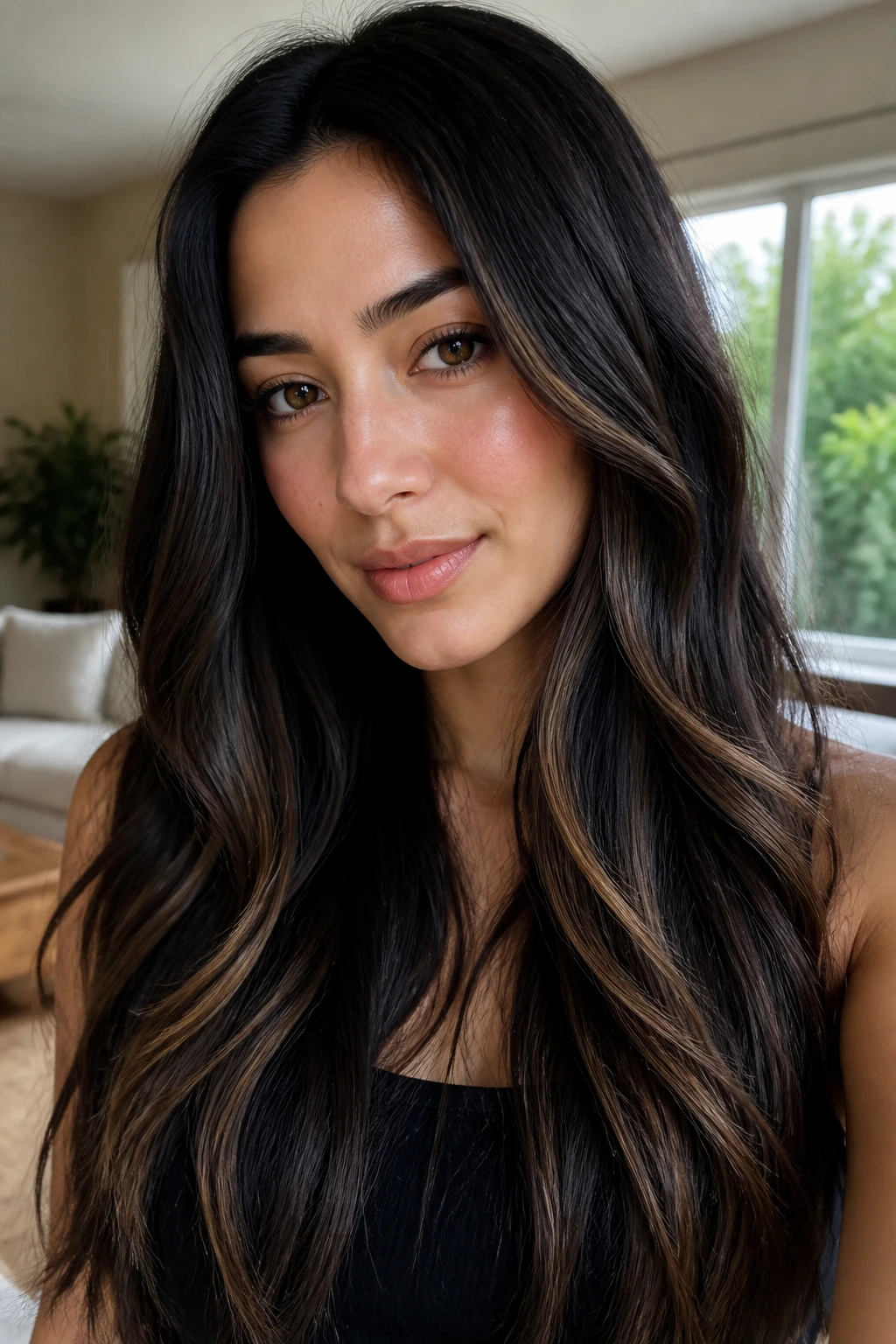
Cool toffee sounds contradictory, and that’s exactly why it works. It sits between warm brown and smoky neutral, which makes it useful for olive skin that wants a touch of warmth but not brass. The black base stays deep, and the toffee lowlights round out the color so it doesn’t look too severe.
I like this on longer hair, where the lowlights can stretch and blend. It’s also good for people who want black hair that still feels approachable. The difference between this and a flat black is subtle, but on olive skin, subtle can be the whole game.
22. Ebony Black with Cocoa Root Melt
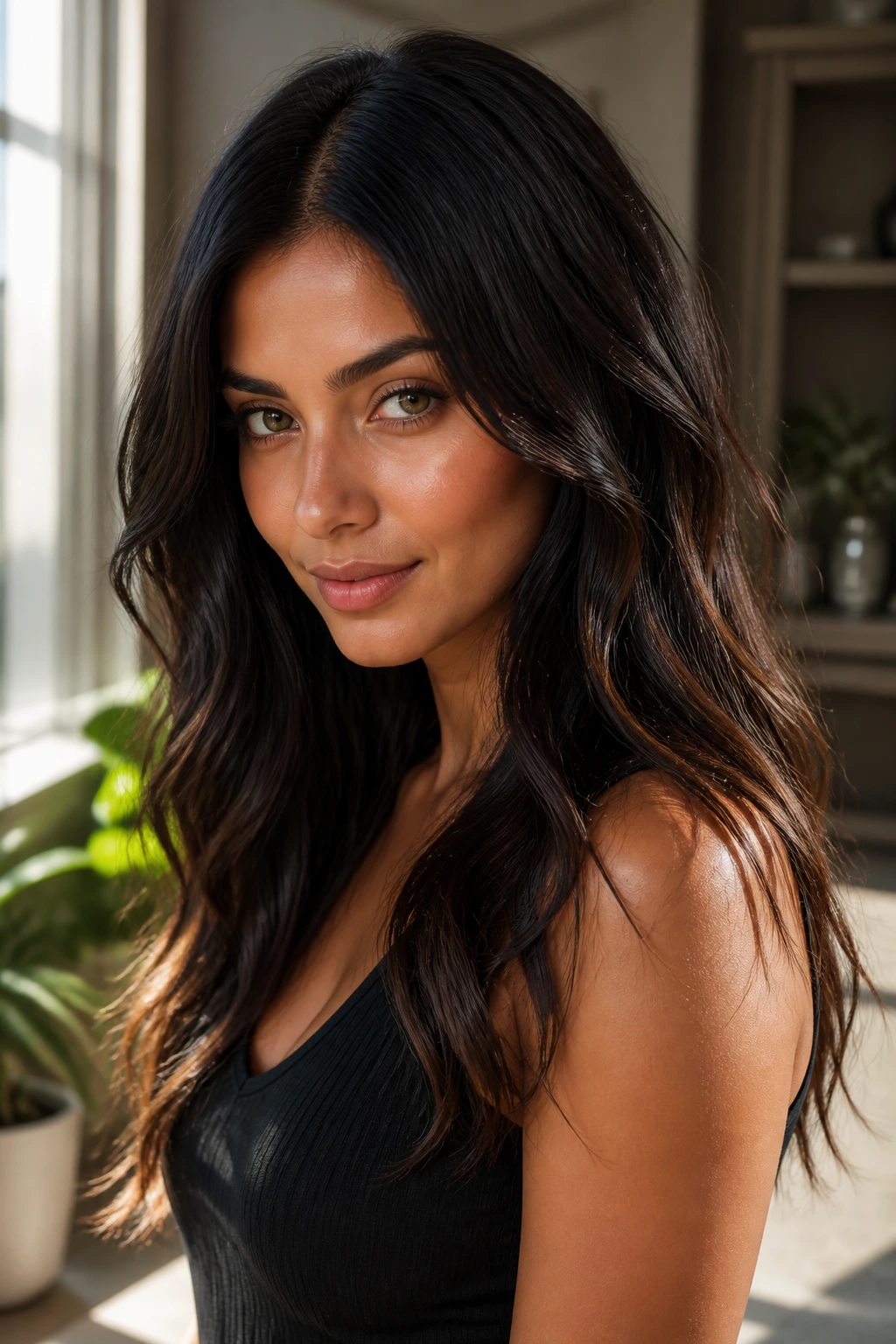
If your natural hair is already dark and you want less fuss, a cocoa root melt is a clever move. The ebony base keeps the crown deep, while cocoa lowlights melt through the lengths so the regrowth line doesn’t look so stark. On olive skin, the effect is soft and grounded, which is useful if you dislike high-contrast roots.
This is one of the quieter black hair color ideas for olive skin with lowlights, but it’s not dull. It just behaves well. That’s a bigger compliment than people think. For anyone who wants to stretch salon visits a little farther, this is a shade pattern worth keeping on the shortlist.
23. Black with Espresso Contour and Face Softening
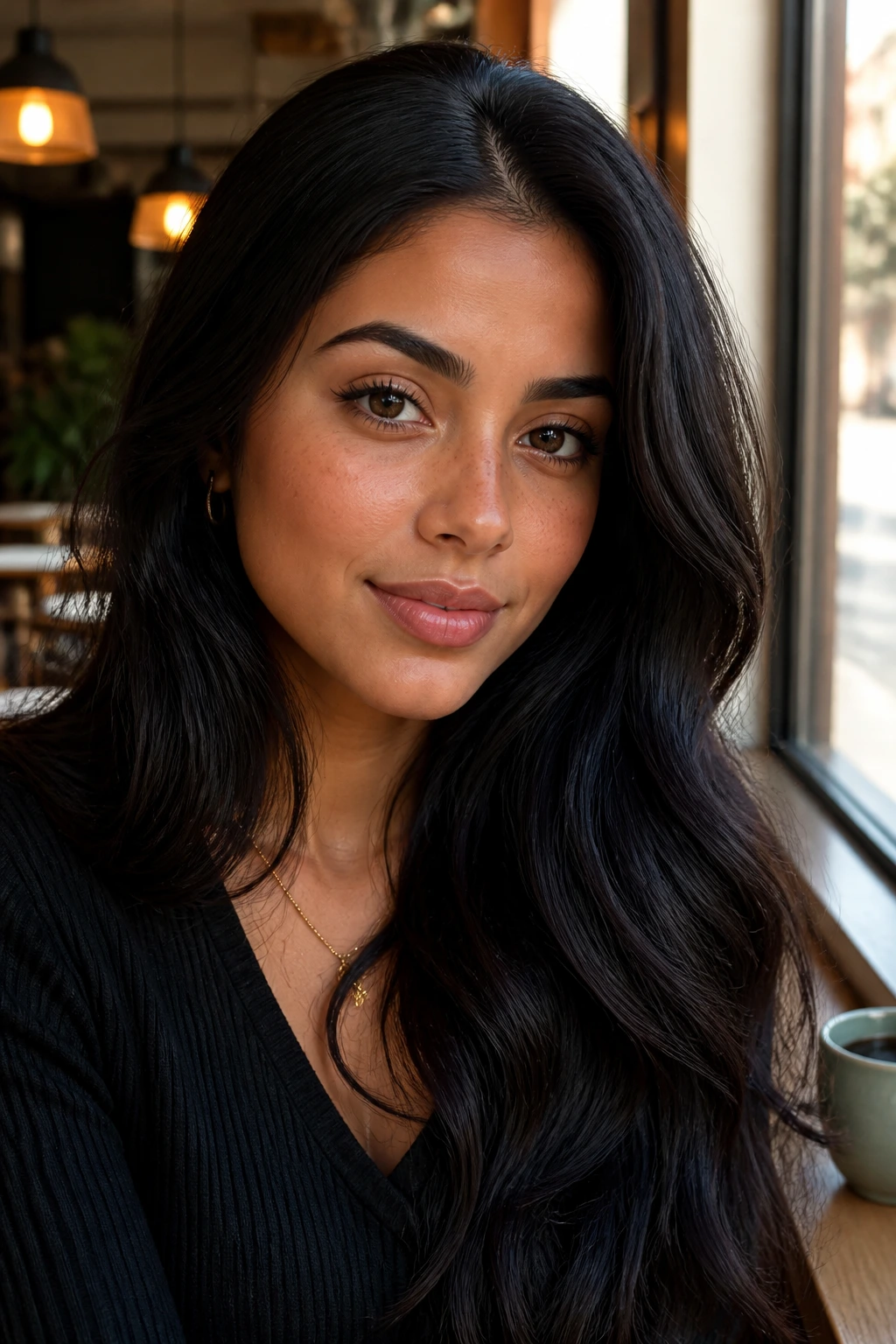
Think contour, not stripes. Espresso pieces around the hairline, part, and upper cheek area can soften the edge of a black base and stop the color from feeling like one dark cap. Olive skin often looks better when there’s a little light-and-shadow play near the face, and this technique does exactly that.
It’s a smart choice if you wear your hair pulled back often. The contour still shows when the hair is down, but it doesn’t rely on a full-head transformation. If your black hair is already in place and you just want it to feel less harsh, this is one of the fastest fixes.
24. Black with Smoke-Brown Curly Ribbons
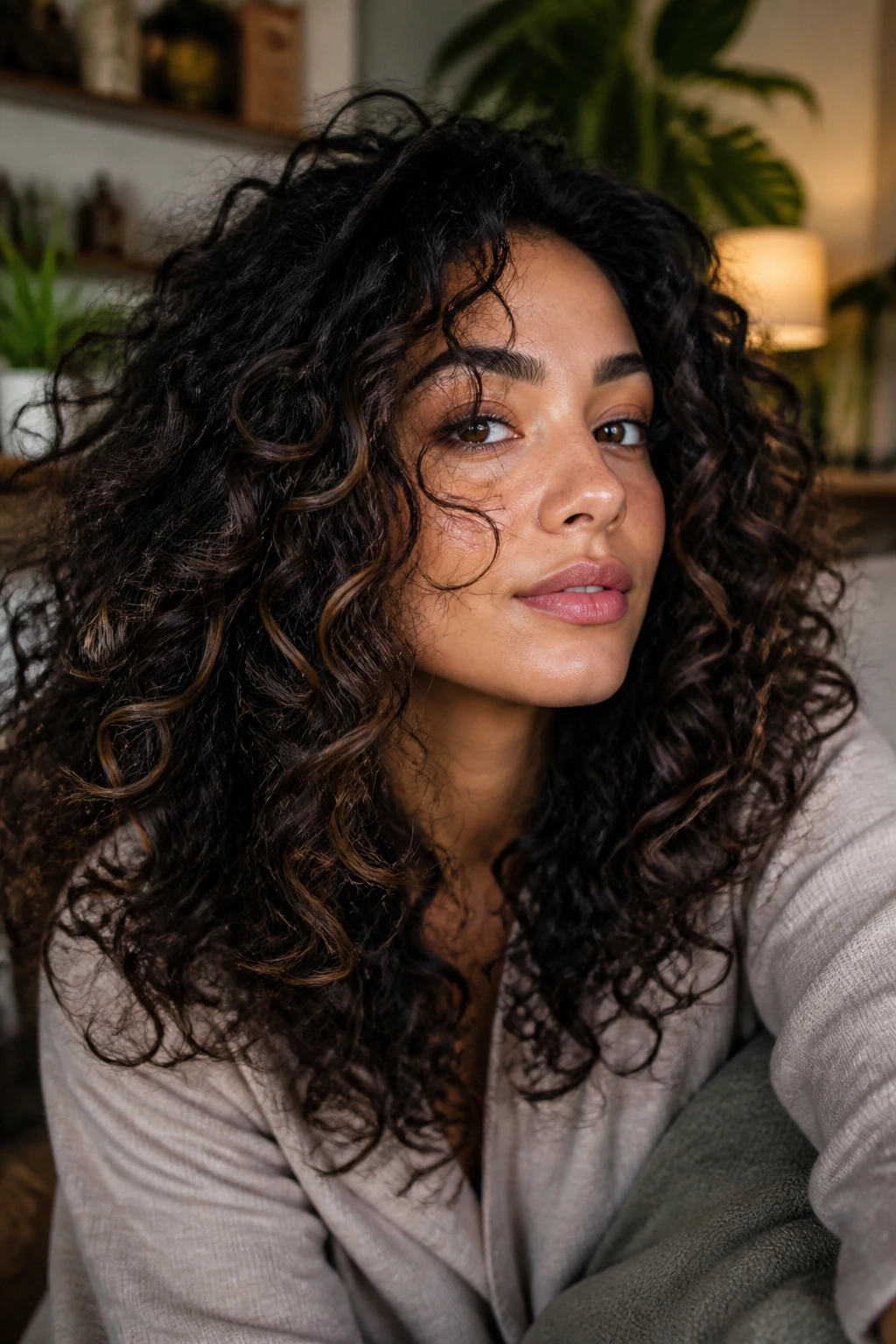
Curly hair needs a different kind of thinking. Smoke-brown ribbons painted along curl families can bring out the shape without creating obvious striping, and olive skin tends to love the soft contrast. The brown has to stay muted, though; too much warmth and the curls start to look brassy instead of dimensional.
Best for curl patterns that need shape
- Loose waves: Fine ribbons through the mid-lengths.
- Coils: Painted sections that follow the curl pattern, not straight foil lines.
- Dense textures: Slightly wider placement so the lowlights don’t disappear.
This one is about movement. Each bend catches the darker piece differently, which is why it looks richer on curly hair than on a straight swatch.
25. Ultra-Gloss Black with Plum-Black Sheen
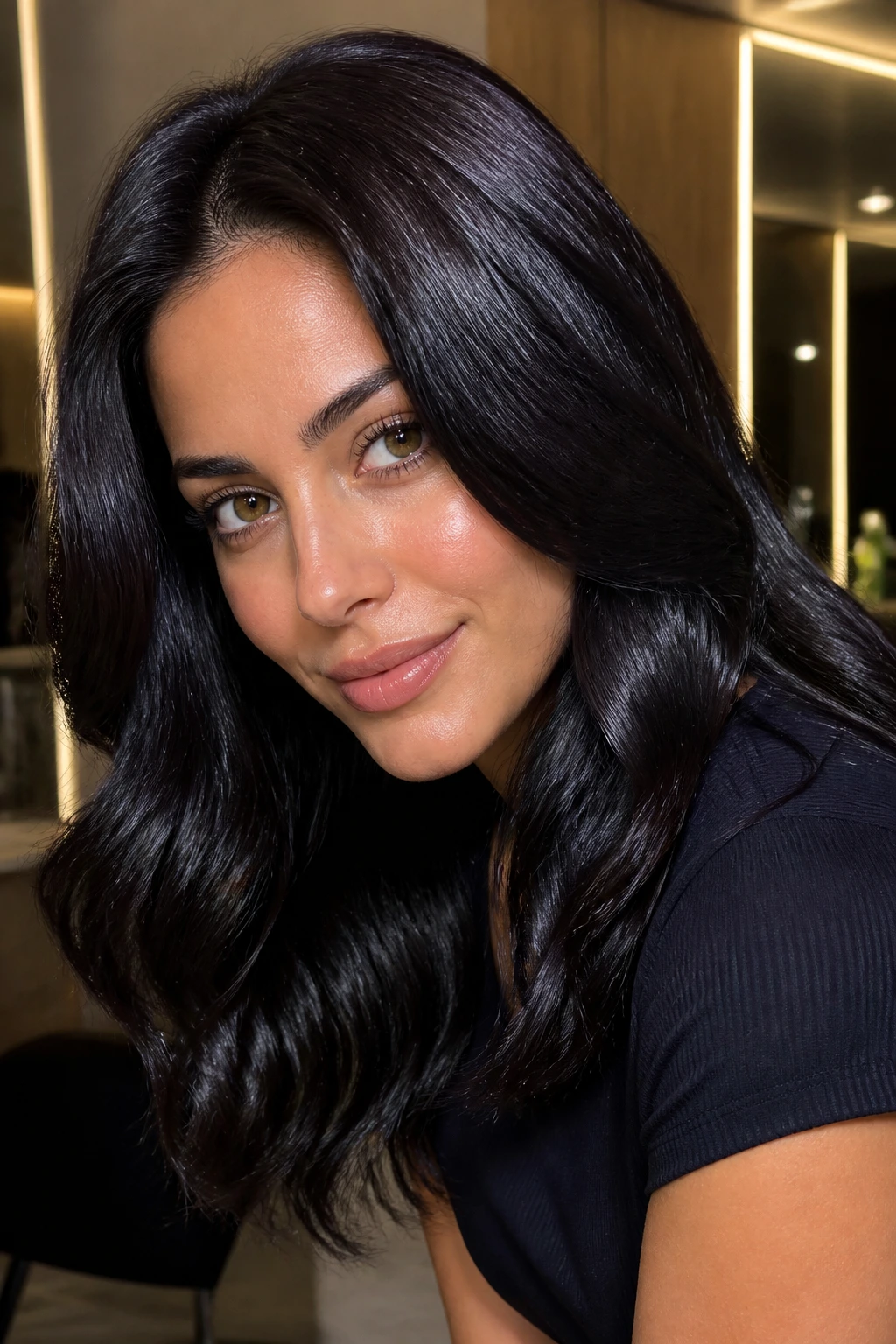
This is the cleanest black on the list, but it is not flat. The plum-black sheen sits just under the surface and keeps the color from looking one-note, especially on medium to deep olive skin. The effect is subtle enough that people may not name the color, but they’ll notice that it looks rich.
I like this for someone who wants black hair, full stop, but still wants a little life in it. A gloss finish makes the plum-black tone show in the right light and disappear in bad light, which is a good trick. The color ends on a note of shine, not loudness, and that’s a pretty good place to finish the shade map.
Why Olive Skin Needs a Shade Map, Not a Guess
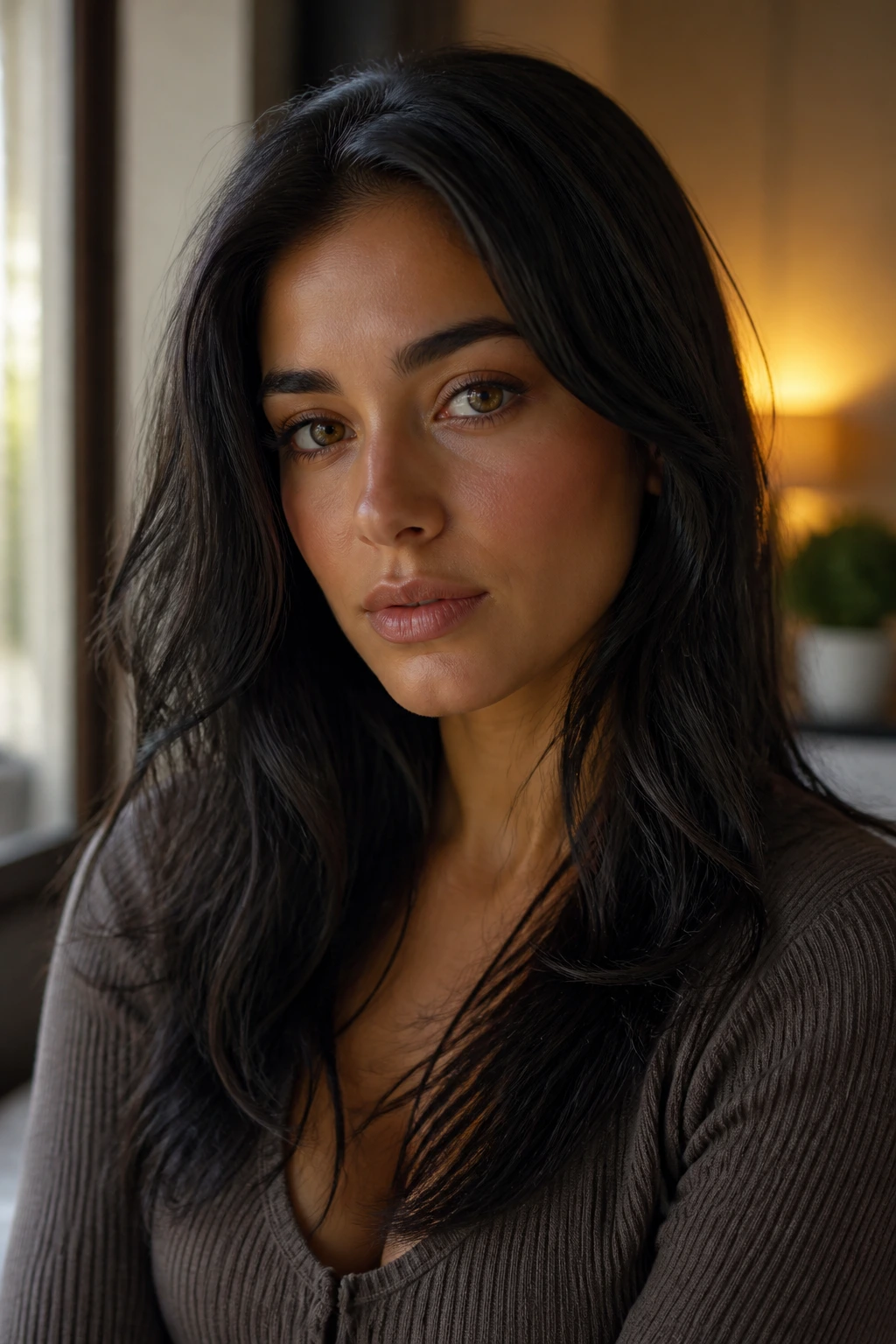
Olive skin is not one single undertone. Some faces lean green-gold, some lean green-gray, and some sit in the middle with a muted neutral cast that changes depending on the light. That’s why one black hair color can look expensive on one person and stern on another.
Read your undertone in daylight
Stand by a window, not under a bathroom bulb. If your skin looks happiest with espresso, walnut, or mahogany nearby, you’re probably in the warmer olive camp. If blue-black, graphite, and plum make your complexion look cleaner, you’re likely cooler. Neutral olives usually have the easiest time moving between smoky brown, mushroom, and soft black without the face looking startled by the change.
The part people miss is that black hair doesn’t need to be shiny and solid to be striking. Sometimes the best version is the one with the quietest depth.
How to Explain the Shade to a Colorist
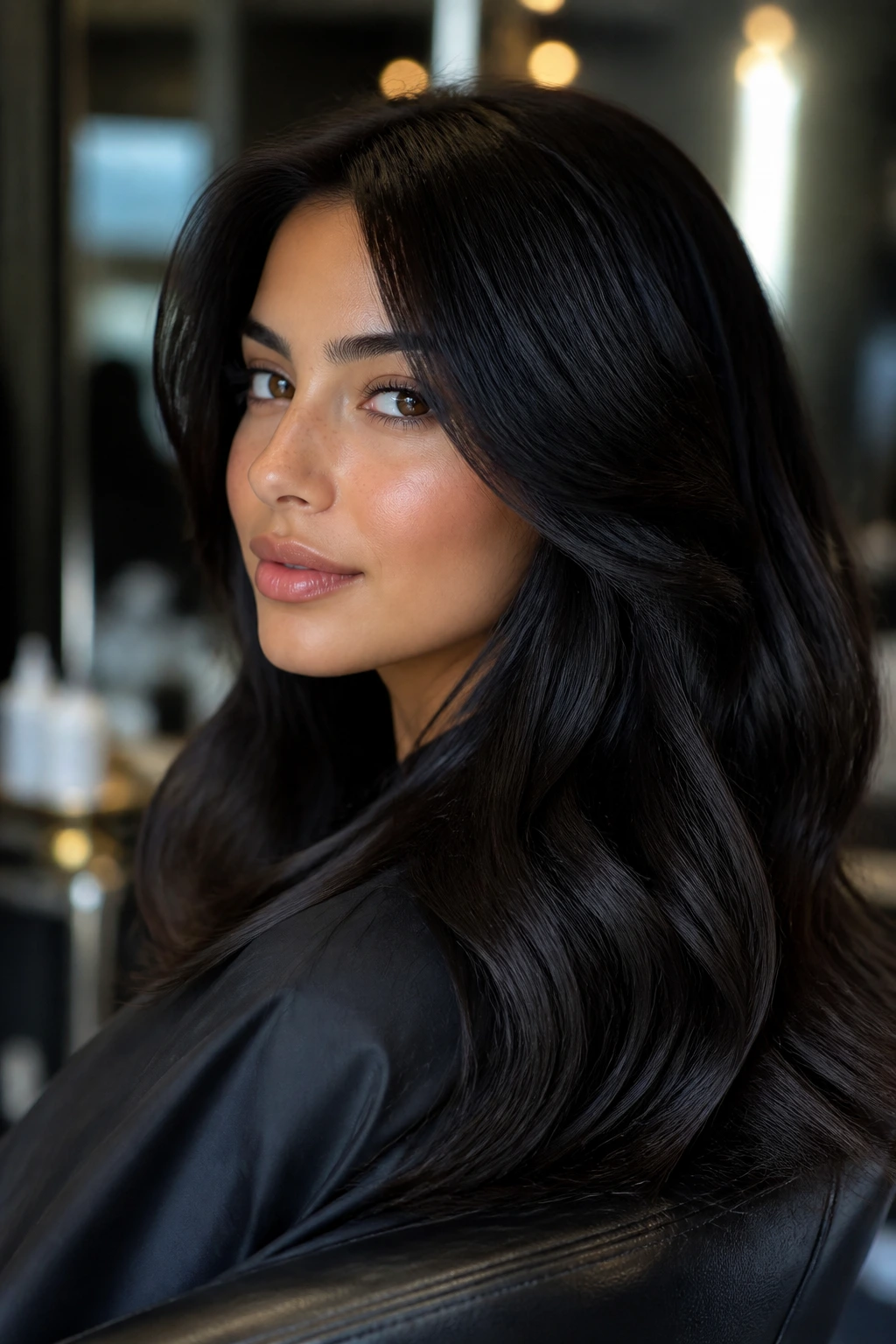
A lot of bad black hair starts with bad language in the chair. Saying “I want black” is too vague. Say what kind of black you mean, where you want the lowlights, and how much contrast you can live with when the salon lights turn off and real life begins.
Bring photos that show the hair in daylight and indoor light. One picture on a phone screen in a dim room isn’t enough. I’d also tell the colorist whether your olive skin leans warm or cool, because that changes whether espresso, blue-black, plum, taupe, or mahogany should do the heavy lifting.
Useful phrases to use
- “I want a black base with soft lowlights, not chunky streaks.”
- “Keep the lowlights in the level 2 to 4 range.”
- “I’d like the front softened a bit so the color doesn’t sit too hard against my skin.”
- “Please keep the finish glossy rather than matte.”
That sounds simple, but it saves a lot of awkward correction later.
The Tools and Products That Keep the Look Honest
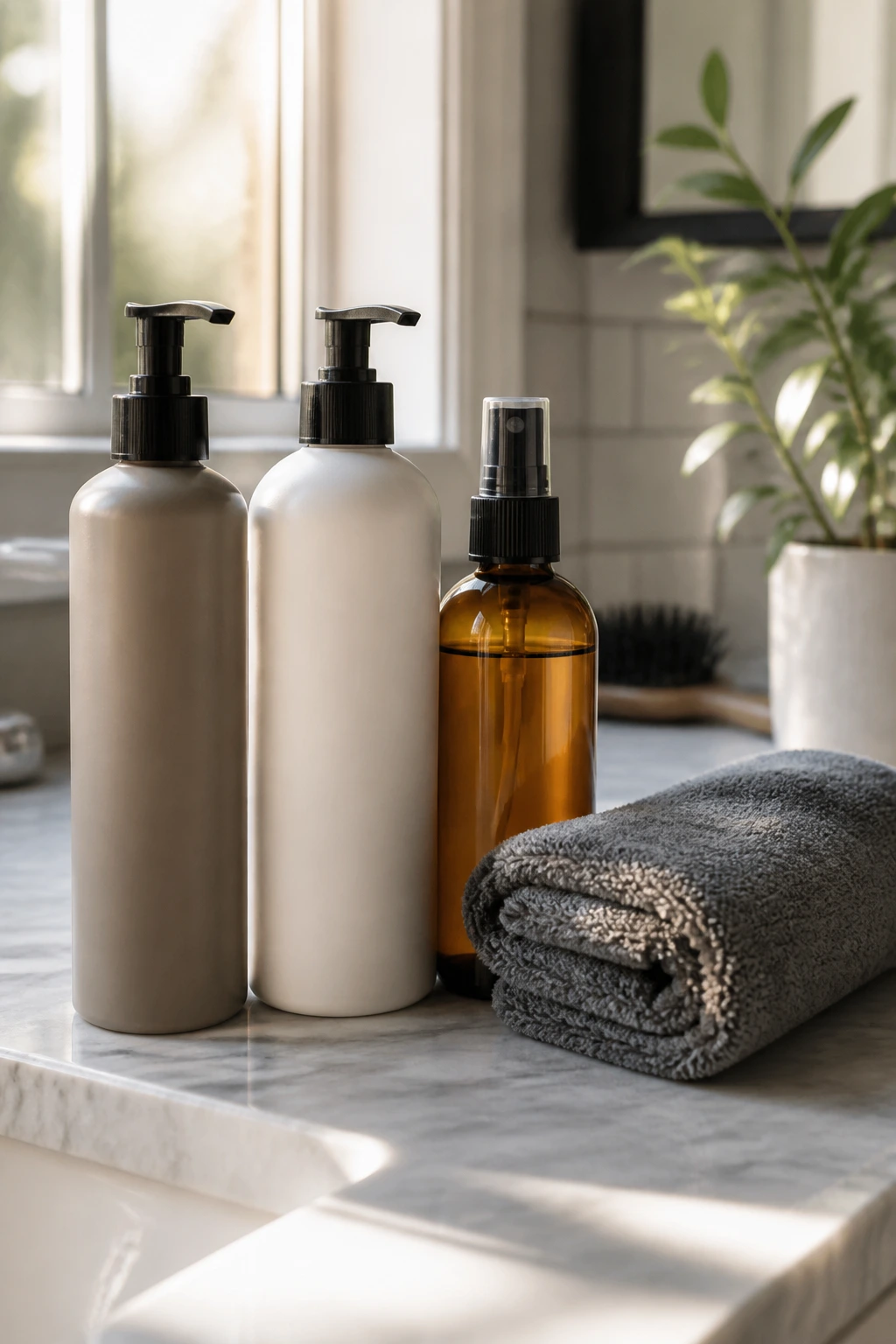
You do not need a drawer full of gadgets, but a few specific things make black hair with lowlights behave better. A daylight mirror is the first one. If you only judge the color under warm bathroom bulbs, you’ll miss the undertone shift that happens outside.
A color-safe shampoo matters too. Black dyes and dark glosses lose their sharpness fast when you wash them with harsh cleansing formulas. A sulfate-free cleanser, a good conditioner, a microfiber towel, and a heat protectant are the boring basics, and boring basics are usually what keep the color looking expensive. If your shade leans cool, a blue-based gloss or mask can help keep the black from going muddy. If your color leans warm, a color-depositing mask in brown or plum can stop it from fading flat.
Useful kit:
- Daylight mirror or window space: Check the tone where it will actually be seen.
- Color-safe shampoo: Protects dark pigment from fast fade.
- Sulfate-free conditioner: Keeps the hair cuticle smoother, which makes black reflect better.
- Microfiber towel: Less friction, less roughness, less frizz.
- Heat protectant spray: Black hair shows dullness fast if the ends get cooked.
- Wide-tooth comb: Helpful for distributing conditioner without roughing up the surface.
- Color-depositing mask or gloss: Best for cool blue-black, plum-black, or brown-black upkeep.
If you’re doing the color at home, add gloves, sectioning clips, and a tint brush. If you’re in a salon chair, bring photos and leave the brush behind.
How to Wear the Shade So It Shows Up in Real Life
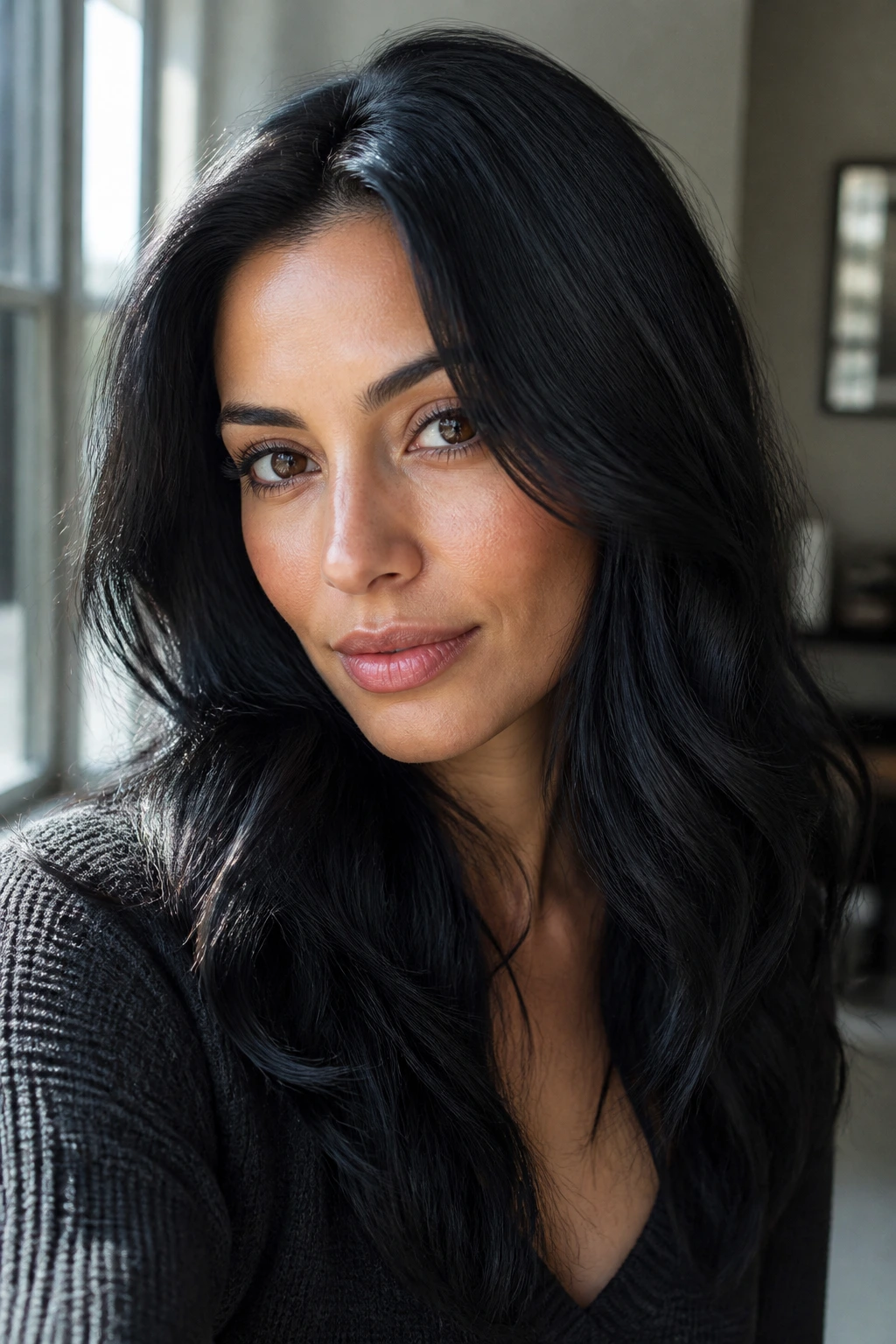
Presentation: Sleek styles show off blue-black, graphite, and plum-black tones best because the light glides over the surface. Waves and curls bring out cocoa, chestnut, burgundy, and smoke-brown lowlights because the color breaks across the bends.
Accompaniments: Olive skin usually looks calm next to muted berry lips, soft bronze eyeshadow, deep taupe liner, and gold or silver jewelry chosen by undertone rather than trend. A cool olive face often likes silver, graphite, and wine tones. A warmer olive face usually looks better with gold, espresso, and deep rose.
Intensity: If you want the shade to feel quiet, keep the lowlights narrow and close to the base. If you want the color to read from across the room, ask for more visible ribbons around the face and through the mid-lengths. The contrast should live near your comfort zone, not where the bottle label says it should be.
Finish: Black hair shows shine best when the cuticle is smooth. A gloss or glaze every few weeks does more for the look than most people expect.
Additional Tips for Depth, Shine, and Grow-Out
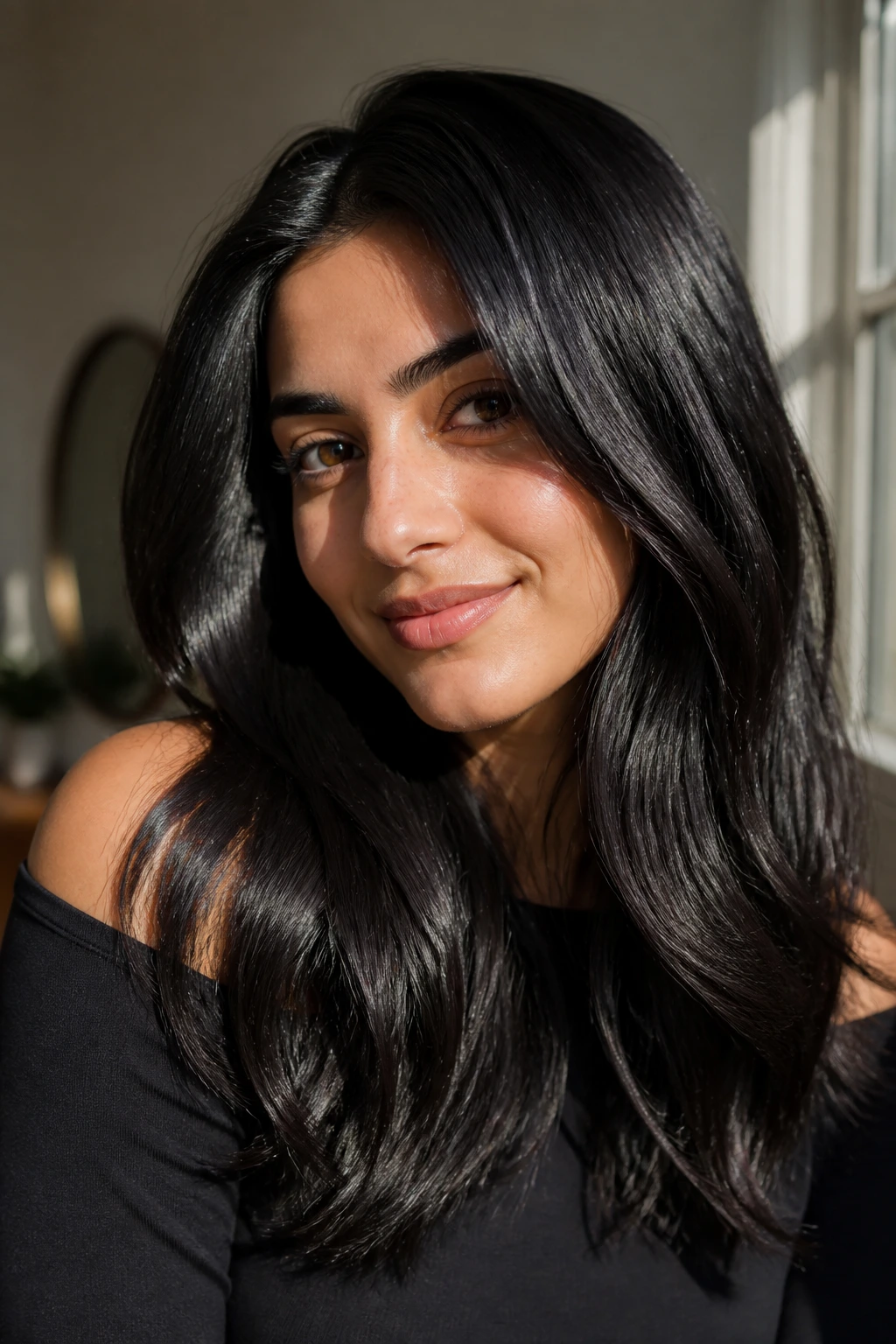
Sheen matters more than people think: A clear gloss over black hair changes how the whole color reads. It makes blue-black look cleaner, plum-black look deeper, and soft black look more intentional.
Part placement changes the story: Moving your part a little off-center can expose lowlights that disappear under a straight middle part. If your hair feels too dark at the crown, try shifting the part before you book more color.
Texture decides contrast: On curls and waves, fine ribbons can look richer than thick ones because the curl pattern breaks the line. On straight hair, you can usually handle a touch more contrast without the color reading striped.
Make-it-yours: Warm olive skin tends to like espresso, mahogany, and chestnut better than icy ash. Cool olive skin usually benefits from blue-black, graphite, slate, and plum. Neutral olive skin can go either way, which is a lucky break, but I’d still keep the lowlights soft rather than blocky.
Common Mistakes That Make Black Hair Look Harsh or Flat
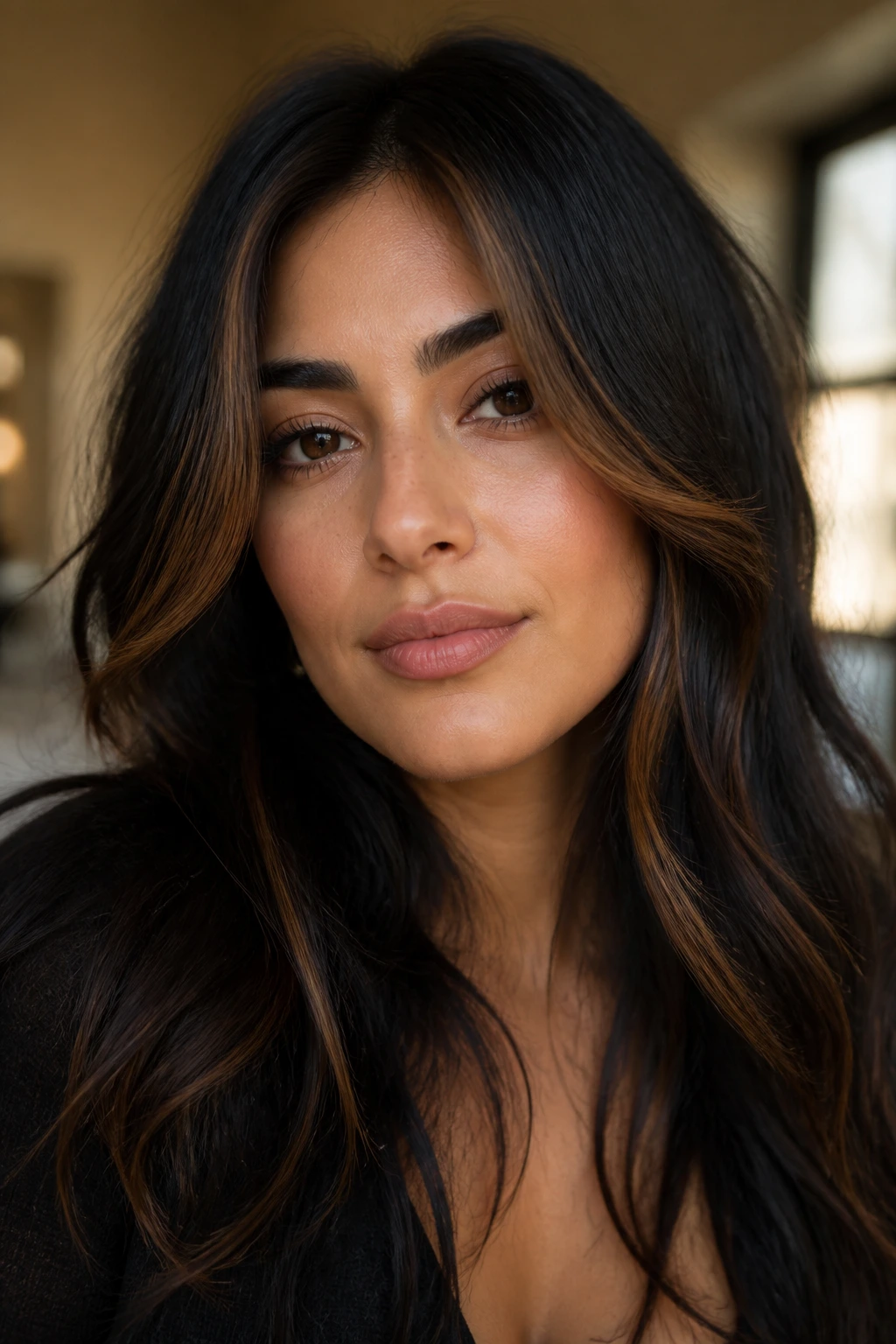
Choosing one flat black with no undertone: The color can look inky in the salon and dead by the time you step into daylight. Fix it by adding blue, brown, plum, or ash depth through lowlights or a gloss.
Using chunky lowlights: Big panels of dark brown or red-brown can look striped, especially on straight hair. Fine weaving or painted ribbons solve that problem.
Putting all the depth at the ends: If the crown is flat and the ends are busy, the hair feels disconnected. Spread the lowlights through the part, upper sides, and mid-lengths so the color moves as a whole.
Ignoring porosity: Hair that’s been lightened, bleached, or overprocessed grabs dark dye fast and can turn too matte or muddy. A filler, gloss, or gentler lowlight formula helps control that grab.
Skipping maintenance: Black can fade warm, blue-black can lose its cool edge, and plum can dry out into brown if you never refresh it. A color-safe routine and a gloss schedule keep the shade from drifting.
Variations and Alternate Routes to Try
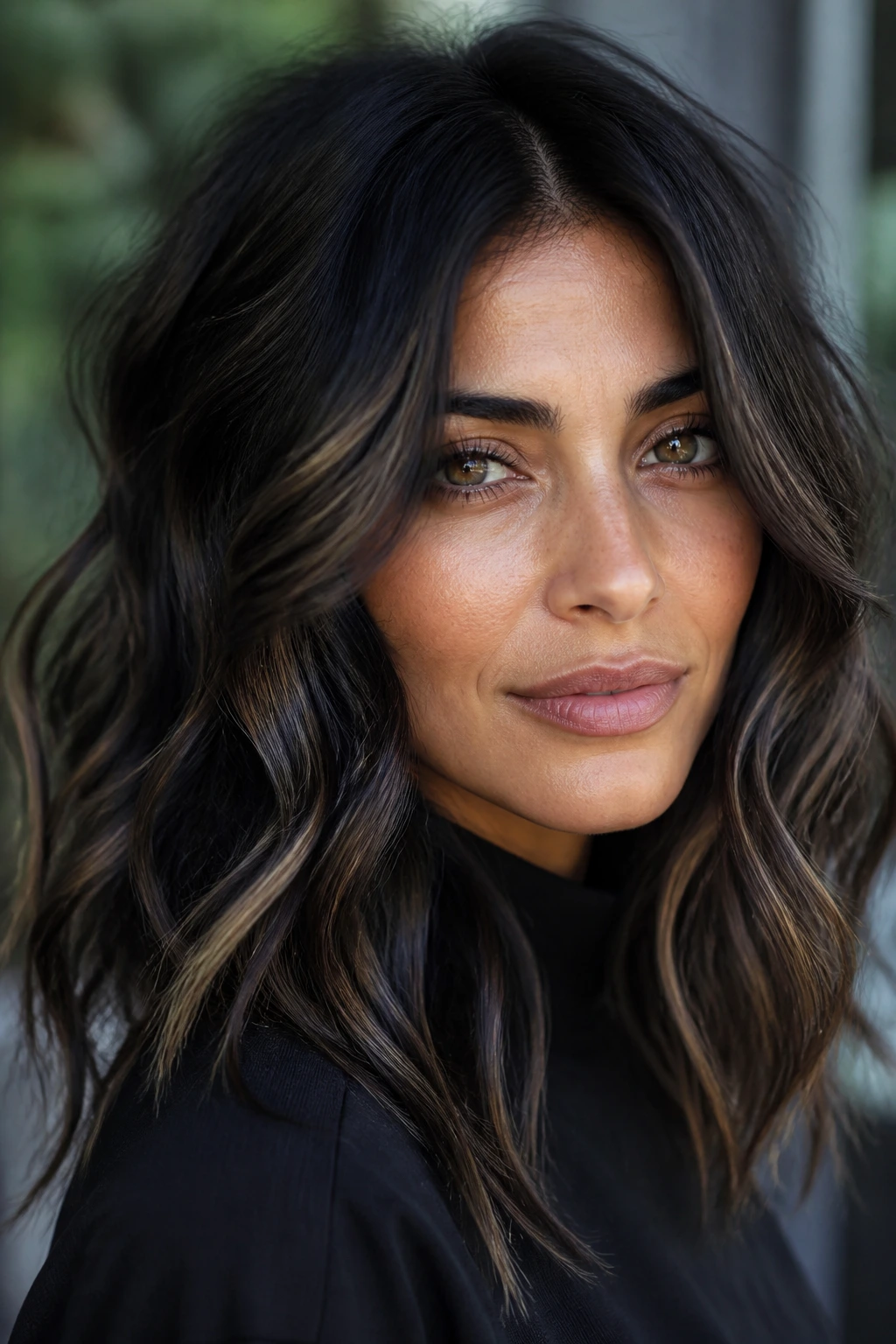
Cool Olive Contour: Keep the base in blue-black or graphite and ask for slate or mushroom lowlights around the hairline. This version sharpens features and works especially well if your skin reads green-gray in daylight.
Warm Olive Glow: Go for soft black with chestnut, mahogany, or cinnamon-chestnut lowlights. The warmth stays deep and earthy, which helps golden olive skin look less muted.
Curly Coil Definition: Use smoke-brown or cocoa ribbons painted along curl families instead of straight sections. The result is softer movement and less stripe risk, which matters on dense or tightly curled hair.
Gray-Blending Shadow Melt: Ask for a black base that melts into taupe, walnut, or cocoa lowlights at the root and mid-lengths. This is a good option if you want to blend early gray without obvious regrowth lines.
Editorial Midnight: Add burgundy, plum-black, or smoky teal in hidden panels or underlayers. This version keeps the hair black from the front but gives you a little motion and drama when the hair moves.
Low-Maintenance Grow-Out: Keep the root deeper and place the lowlights mainly through the mids and ends. This works best if you do not want salon visits every few weeks and you’d rather let the color settle into itself.
Frequently Asked Questions
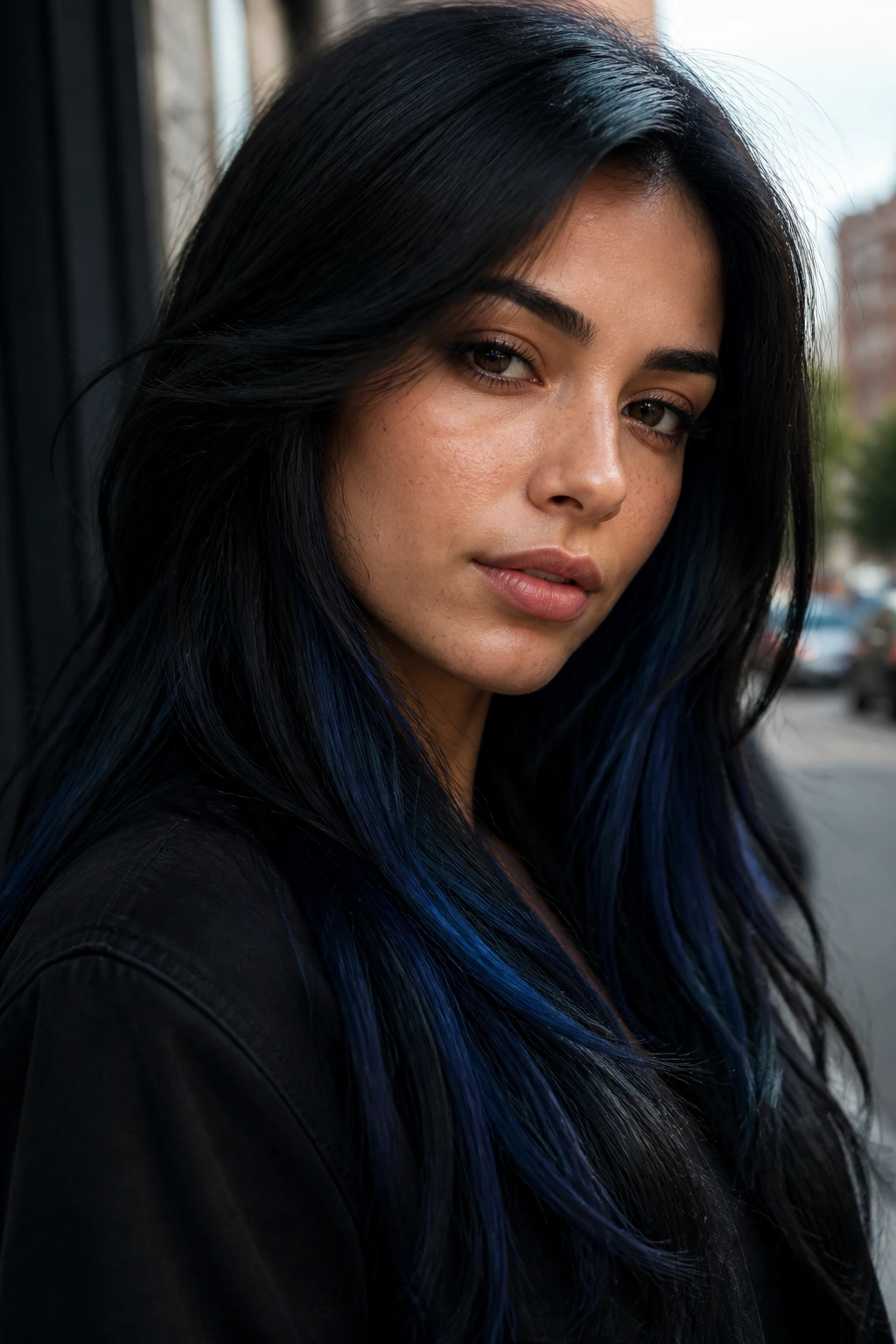
Will black hair wash olive skin out?
It can, if the black is too flat or too cool for your undertone. The fix is not to avoid black altogether; it’s to choose the right version of black. Blue-black, espresso, plum-black, and smoky brown lowlights usually keep olive skin looking cleaner than a flat, one-note dye.
Are lowlights better than highlights for olive skin?
For a black base, lowlights usually make more sense because they create movement without turning the hair bright. Highlights can still work, but they often push the look away from the deep, dark family that makes olive skin look polished and grounded.
What black shade is best for warm olive skin?
Soft black with espresso, mahogany, or chestnut lowlights is usually a safer bet than icy blue-black. Warm olive skin tends to like brown-red depth more than heavy ash because the warmth keeps the face from looking drained.
What black shade works best for cool olive skin?
Blue-black, graphite, slate, and plum-black usually flatter cool olive skin because they echo the undertone instead of fighting it. If you’re not sure where you land, compare how your face looks next to cool silver fabric versus warm brown fabric in daylight.
Can I get black hair with lowlights if my hair is curly?
Yes, and curls often make the color look better. The coil pattern breaks up the dark pieces and keeps the lowlights from reading like stripes. Ask for painted ribbons that follow the curl shape rather than sharp foil lines.
How often do black lowlights need refreshing?
A gloss or tone refresh every 4 to 8 weeks is common, depending on how often you wash and heat-style your hair. Blue-black and violet-based shades usually need more maintenance than espresso or walnut because cool pigment fades faster.
Can I do this at home?
You can handle a soft black or root refresh at home if your hair is already dark and healthy, but precision lowlights are harder to fake well. If you want fine placement around the face or a complex melt, a colorist is usually worth the money.
What if I already have highlights or balayage?
You may need to fill those lighter pieces before going black so the final result doesn’t turn hollow, greenish, or overly muddy. That’s especially true on porous hair. A salon gloss or filler step can save you from a flat finish.
The Shade That Fits Best
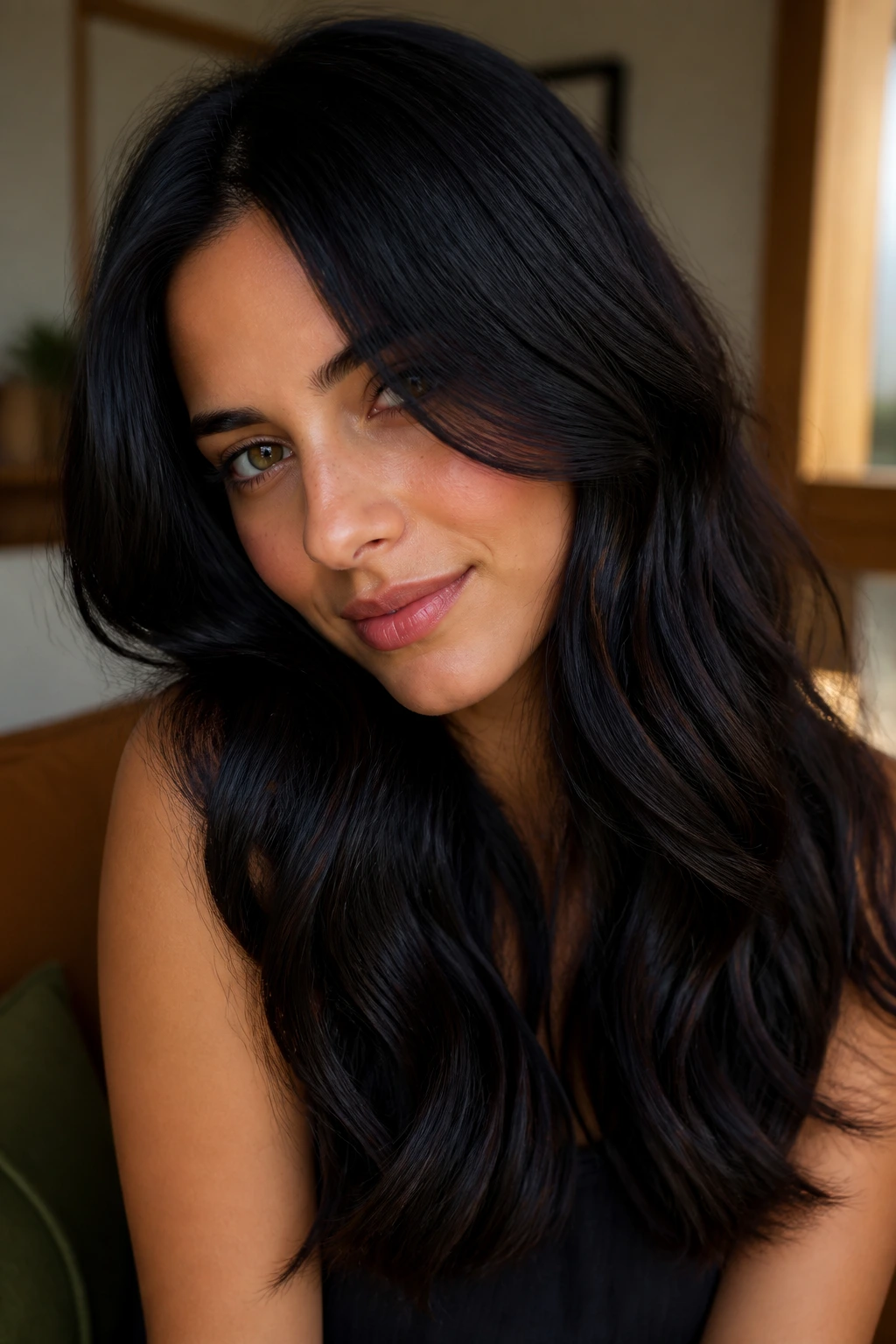
The best black hair color ideas for olive skin with lowlights are the ones that respect undertone first and drama second. A hard black with no depth can make olive skin look stern, while a black with blue, espresso, plum, smoke, or walnut underneath usually makes the face look clearer and the hair look fuller.
If you’re stuck between two options, choose the one that looks the least obvious on paper. Black hair gets more interesting when it’s not trying too hard. Start with your undertone, pick the kind of depth that supports it, and let the lowlights do the quiet work.