



A French bob can make wavy hair look like it has a better editor. The cut lands close to the jaw, lets the bend do some of the talking, and skips the fussy polish that often makes shorter hair feel stiff. On a heart-shaped face, that matters even more. You want softness near the chin, not extra bulk at the temples, and you want the forehead area to feel balanced instead of boxed in.
That’s where this cut earns its reputation. When the length sits right, the wave pattern does half the work: it breaks up the line, adds movement, and keeps the bob from looking helmet-flat or too severe. When the length misses by even an inch, though, the whole thing can turn heavy, triangular, or wider at the wrong spot. Small difference. Big mood.
The best French bob for wavy hair and heart-shaped faces is rarely the most obvious one. Sometimes it’s chin-grazing and blunt. Sometimes it’s longer in the front, softer around the cheekbones, or paired with a fringe that stops right where the face needs it most. The versions below cover the good stuff — the cuts that keep the jawline in the game, let your waves breathe, and grow out without turning into a haircut you have to apologize for.
Why You’ll Love This Collection

- Jawline balance: These bobs put visual weight where heart-shaped faces usually want it most, right around the chin and lower cheek.
- Wave-friendly structure: The lengths are short enough to show off your bend, but not so short that loose waves pop into a puffball.
- Bang options that actually help: You’ll see curtain fringe, side fringe, micro fringe, and no-bang versions, so the forehead area can be softened or kept clean.
- Low-drama styling: Most of these cuts work with air-drying, a diffuser, or a quick pass of a brush and round brush combo.
- Grow-out grace: A French bob should still look deliberate when it’s grown an inch past the salon chair. These do.
- Texture over perfection: The best versions here look better with a little separation and movement. Stiff ends are the enemy.
1. The Chin-Grazing Classic
The chin-grazing French bob is the one people picture first, and for good reason. It sits right at the point where a heart-shaped face usually wants a little visual weight, so the narrower chin does not feel lost under too much length. On wavy hair, the perimeter gets a soft break from the wave pattern, which keeps the cut from reading like a hard box.
Why It Works
The length lands at the jaw, which gives the face a little more width where it needs it. That’s the whole trick. If your waves are loose, the ends will flip in a way that looks deliberate rather than overstyled.
- Keep the line just at the chin if your hair is fine.
- Ask for soft point cutting at the ends, not heavy layering through the top.
- Use a side or off-center part if your forehead is broad and you want a gentler frame.
A quick mist of texturizing spray at the mids is enough. No need to drown it in product and crush the movement.
2. The Curtain-Fringe Bob
If you have a wider forehead and love a little softness near the eyes, this is the one that earns its keep. Curtain fringe opens in the center and bends away from the face, so the top half feels lighter while the cheekbones get a little stage time. It also plays nicely with waves that want to split and fall on their own.
The best version of this cut keeps the fringe long enough to tuck behind the ear or sweep aside. Too short, and it starts to feel awkward fast. Keep the bob at or just below the chin, then let the front pieces graze the cheekbones. That shape does a quiet bit of balancing without looking overly styled.
A round brush or a medium-barrel brush gives the fringe that soft bend. After that, let the rest of the hair rough-dry a little. The contrast is the point.
3. The Side-Part Soft Bob
This cut is a small masterclass in asymmetry. A deep or even a modest side part shifts the weight away from the widest part of the forehead and lets one side fall with a little more drama than the other. On heart-shaped faces, that tiny move can make the whole haircut feel more relaxed and less front-loaded.
The soft bob version keeps the ends broken up rather than blunt and strict. That matters with wavy hair, because the wave pattern already creates movement. If the cut is too rigid, the texture starts fighting the shape.
Best For
- Loose 2A to 2B waves that collapse if over-brushed.
- Heart-shaped faces with a pronounced forehead.
- Anyone who wants a bob that looks intentional after a nap.
One good tuck behind the ear on the fuller side is enough to show the face without exposing everything.
4. The Blunt Micro-Bob
This one is for the bold end of the haircut spectrum. A micro-bob can look sharp and chic on wavy hair, but only if the wave is respected instead of ironed flat. The cut should still sit around the jaw or just below it, because a heart-shaped face needs some softness near the lower half to keep the proportions in line.
The mistake people make here is going too short and too precise. Then the waves puff out, and the shape gets boxy around the cheeks. Keep the perimeter blunt, yes, but let the interior stay a little airy. That balance is what saves it.
This version works best when you style it with a small amount of smoothing cream at the front and a touch of texture spray through the ends. Clean line. Slight bend. Done.
5. The Tucked Ear Bob
Sometimes the smartest styling move is not a new cut at all. It’s a bob that looks better because you can tuck one side behind the ear and let the other side stay loose. That little asymmetry is gold on heart-shaped faces, since it opens the cheekbone area and keeps the cut from feeling too wide at the temples.
The length here usually sits at the chin or just a hair below. The front needs enough weight to tuck neatly, but not so much that it drags. Wavy hair gives this style its personality, because the tucked side stays sleek while the loose side keeps some bend.
Wear it with a small hoop earring or a slim stud. It sounds minor. It changes the whole read of the haircut.
6. The Piecey Layered Bob
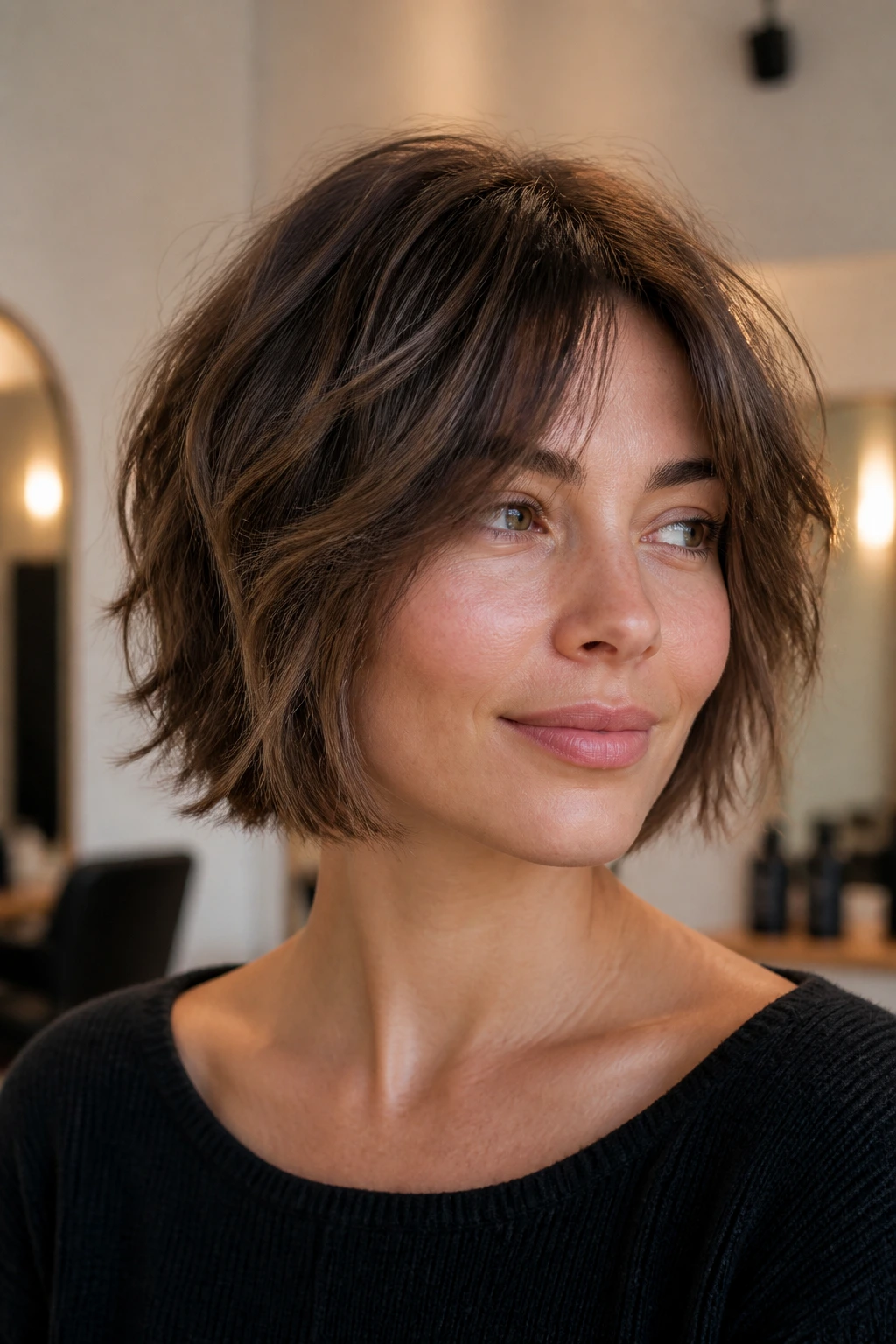
If your waves are the kind that form little bends and spirals rather than a single smooth S-shape, this bob can look almost custom-made. The key is piecey layering near the lower half, not a whole lot of interior chopping near the crown. You want separation, not fluff.
A good stylist will point-cut the ends and remove just enough weight to let the pieces move. That keeps the bob from sitting like one heavy sheet. On a heart-shaped face, the pieces around the jaw soften the lower half without making the forehead look wider.
The Sweet Spot
- Best for medium-density waves that like to clump.
- Works well with mousse on damp hair and scrunching by hand.
- Skip heavy oils at the top; they collapse the definition fast.
This one looks especially good the day after wash day, when the waves are less clean and a little more honest.
7. The Air-Dried Undone Bob

Some cuts demand a blowout. This is not one of them. The air-dried undone bob leans into what wavy hair already wants to do: bend, swell slightly, and separate in a way that feels casual rather than planned within an inch of its life. On a heart-shaped face, the relaxed shape keeps the forehead from dominating and lets the chin area stay soft.
A little mousse goes a long way here. Work it through damp hair, scrunch the ends, and let the roots stay loose so they do not dry stiff. If your hair tends to dry in a strange shape, clip the front sections away from the face for the first 15 minutes, then release them once the wave starts to set.
What Keeps It Looking Good
- Don’t touch it while it dries.
- Use a microfiber towel, not a rough bath towel.
- Break up only the ends once the hair is fully dry.
That last step matters. Pulling apart damp waves creates frizz where you wanted definition.
8. The Cheekbone-Skimming Bob

This one sits a touch higher and feels a bit more sculpted. The line skims the cheekbones before dropping toward the jaw, which is a useful move for heart-shaped faces because it brings the focus up and out without making the chin area disappear. The effect is light, airy, and slightly lifted.
Wavy hair gives this bob a built-in softness, so it never feels harsh even when the length is compact. That’s why it works especially well for people who want a shorter cut but still want movement around the face. You get shape, not severity.
If you ask your stylist for this, mention the front length in relation to the cheekbone rather than only the chin. That keeps the conversation precise. Precision helps with bobs.
9. The Swoopy Fringe Bob

A swoopy fringe is one of the easiest ways to make a French bob feel expensive without being stiff. The fringe starts with a soft bend and sweeps away from the forehead, which is a clean fix for heart-shaped faces that need less emphasis at the top and more softness near the eyes.
The bob itself can stay fairly simple. Let the fringe do the talking. The best version keeps the fringe long enough to push aside on lazy days and styled enough to curve when you want the full effect. Wavy hair usually gives you a little help here, because the bend in the fringe blends into the bend in the bob.
A small round brush and a cool shot from the dryer are enough. Not everything needs a curling iron. This is one of those cases.
10. The Jawline Curve Bob
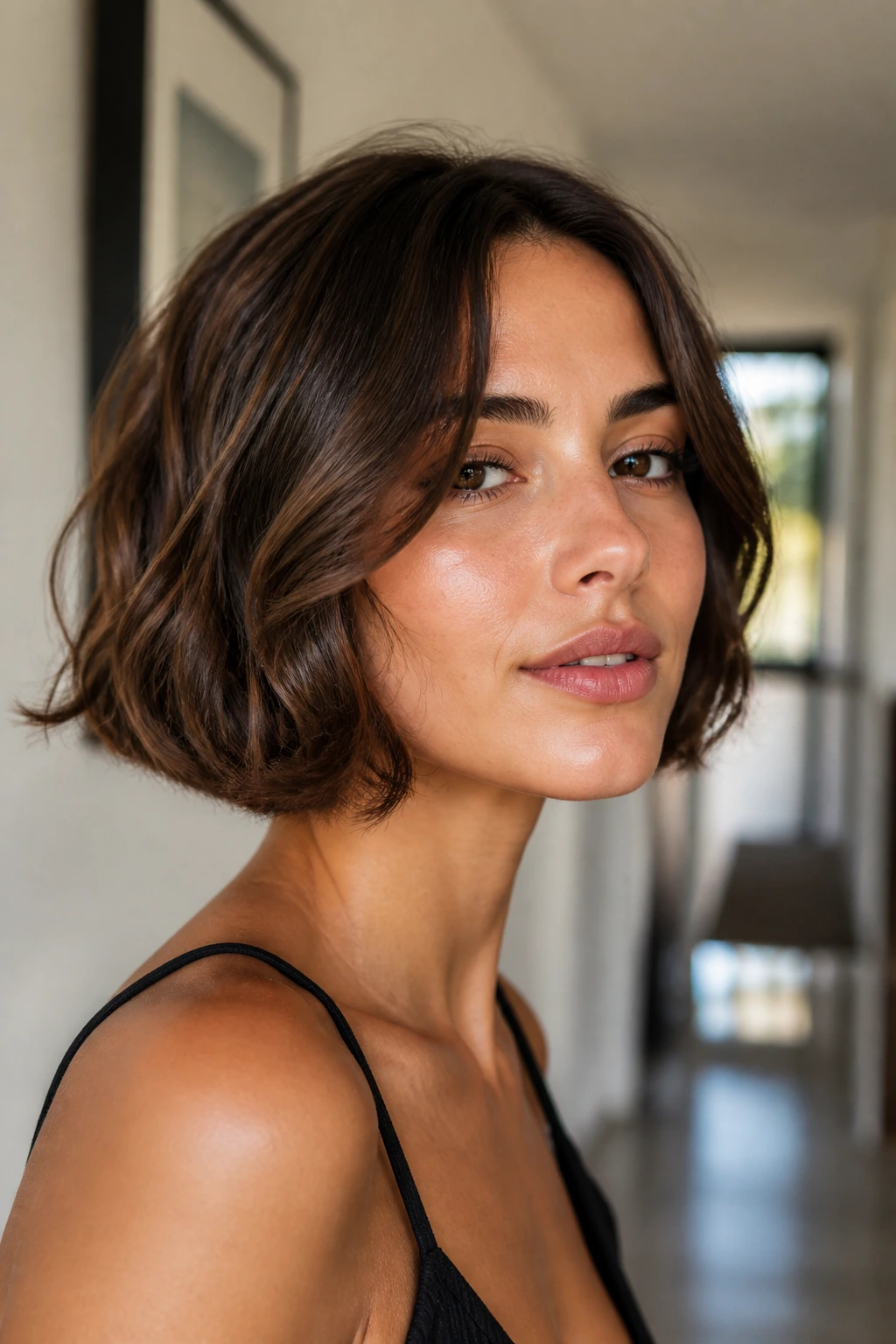
A curve around the jaw can be a lifesaver if your face shape is already top-heavy. Instead of a straight perimeter that stops abruptly, this bob arcs gently toward the chin and cheek. It softens the lower edge of the haircut and helps the face feel more even from top to bottom.
On wavy hair, that curve gets a little movement from the natural texture, which keeps it from looking overly engineered. The hair bends, the line loosens, and the whole thing reads as polished but not frozen.
This style is especially good if your waves have some body but not a ton of volume. The curve creates shape even on lower-volume hair, and the jawline gets the definition it was missing.
11. The Razor-Soft Bob

A razor-soft bob is a good choice when you want edges that feel airy rather than blunt. The ends are softened with a razor or a very light slide-cut, which gives wavy hair room to move without building up too much weight at the bottom. On heart-shaped faces, that softer edge keeps the bob from crowding the chin.
There’s a catch. If your hair is very coarse, porous, or prone to frizz, a razor can make the ends look fuzzy fast. In that case, point cutting is usually safer. So this one is not about the tool alone. It is about the hair type.
The prettiest version has a little separation at the ends and a clean line near the face. Air-dry it halfway, then finish the front pieces with a brush if needed. That mixed finish is what makes it feel modern without getting fussy.
12. The Deep Side-Part Bob
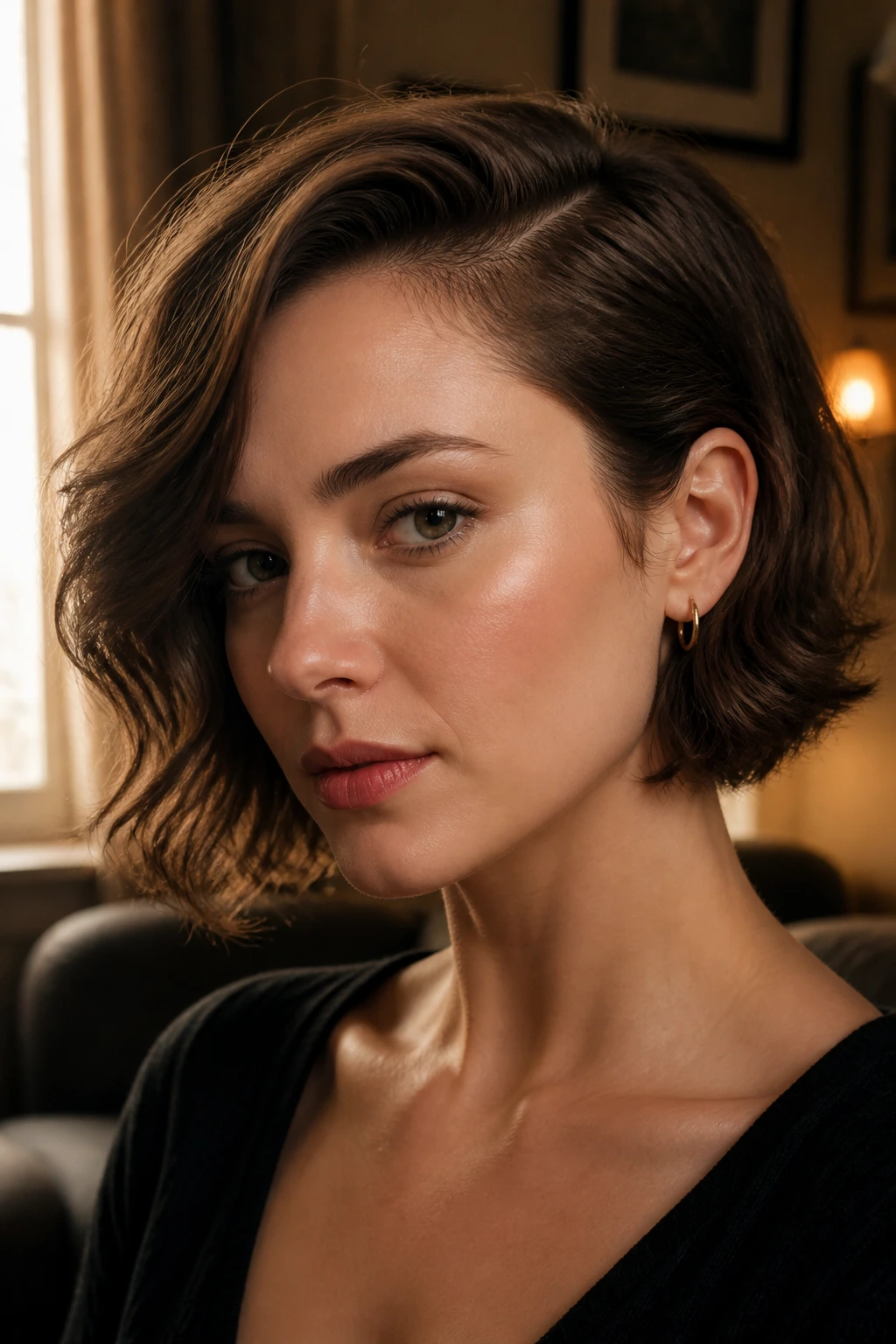
A deep side part can change everything. It adds lift on one side, brings a little shadow and softness on the other, and makes the forehead area feel less open. For heart-shaped faces, that asymmetry is useful because it keeps the top half from drawing all the attention.
The bob itself should stay relatively simple. Think chin length, soft ends, and enough weight at the perimeter to hold the shape. Wavy hair loves this cut because the texture stops the part from looking too formal. The wave breaks up the line just enough.
How It Wears
- Pin the heavier side behind one ear for a cleaner profile.
- Let the lifted side fall across the brow for softness.
- Use a root spray only at the lifted side if you want more height.
The whole look has an easy old-movie feel, but without the helmet.
13. The Grown-Out French Bob

This is the version for people who love the French bob idea but do not want to chase a trim every few weeks. It sits a little lower, usually skimming just under the chin or brushing the top of the neck, which gives heart-shaped faces a softer lower frame and buys you some grow-out room.
The nice part is that wavy hair keeps it from looking boring at the longer length. There is enough bend to create movement, but not so much that the cut loses its outline. That’s the sweet spot if you like a bob that still behaves after a month.
This one is practical in a way that style editors sometimes pretend not to care about. I care about it. A lot. A haircut that survives real life is worth more than one that only looks good on the appointment day.
14. The Rounded Bubble Bob
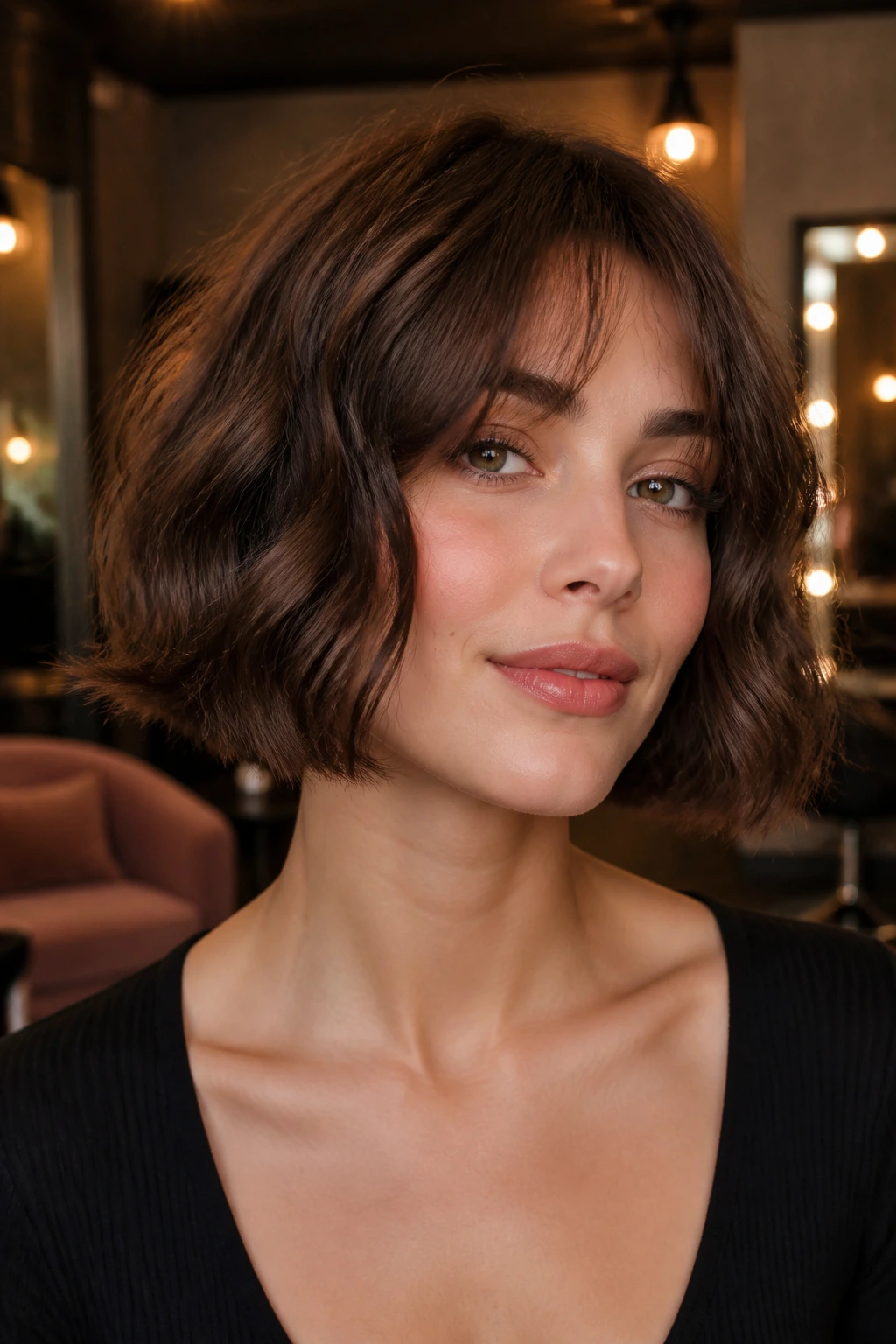
The rounded bubble bob takes a softer approach, with fullness near the bottom and a gentle curve that makes the silhouette feel plush. For thick wavy hair, that roundness can be a relief. Instead of fighting the bulk, the cut turns it into shape.
Heart-shaped faces need a little caution here. You want the fullness low, around the jaw and ends, not high at the temples. If the stylist rounds the top too much, the forehead area can feel even wider. Keep the curve controlled and the top cleaner.
This cut works well when you want something a little more finished than a rough bob. Blow-dry the roots smooth, then let the waves hold the body through the mid-lengths and ends. The result is soft, full, and not at all flat.
15. The Wavy Collarbone Bob

If chin length feels too daring, the collarbone bob is the gentler way in. It still reads French because the texture stays loose and the outline stays deliberate, but the added length gives you a little security. That matters if your waves shrink or if you want your jawline to stay softly framed.
Heart-shaped faces do well with this length when the front pieces are slightly shorter than the back. That keeps the hair from sitting like a rectangle and brings a little movement toward the face. Wavy hair gives the ends natural shape, so the cut does not need much styling to look awake.
This is the one I recommend to people who say they want a bob but keep reaching for just a bit more length. That instinct usually means collarbone is the right compromise.
16. The Cropped Fringe Bob

A cropped fringe is not for everyone. But when it works, it really works. The fringe draws attention to the eyes and upper face, while the bob keeps the lower half from feeling narrow. On a heart-shaped face, that can create a nice counterbalance if the fringe is soft and not cut too bluntly.
Wavy hair helps here because a tiny bit of movement in the fringe keeps it from looking severe. The fringe should not sit like a hard wall. Feather the ends, keep the bob chin length, and let the texture bend the line just enough to soften the whole thing.
If you hate forehead exposure, skip this one. There is no shame in that. A haircut should not make you feel boxed into makeup and styling every morning.
17. The Invisible-Layer Bob
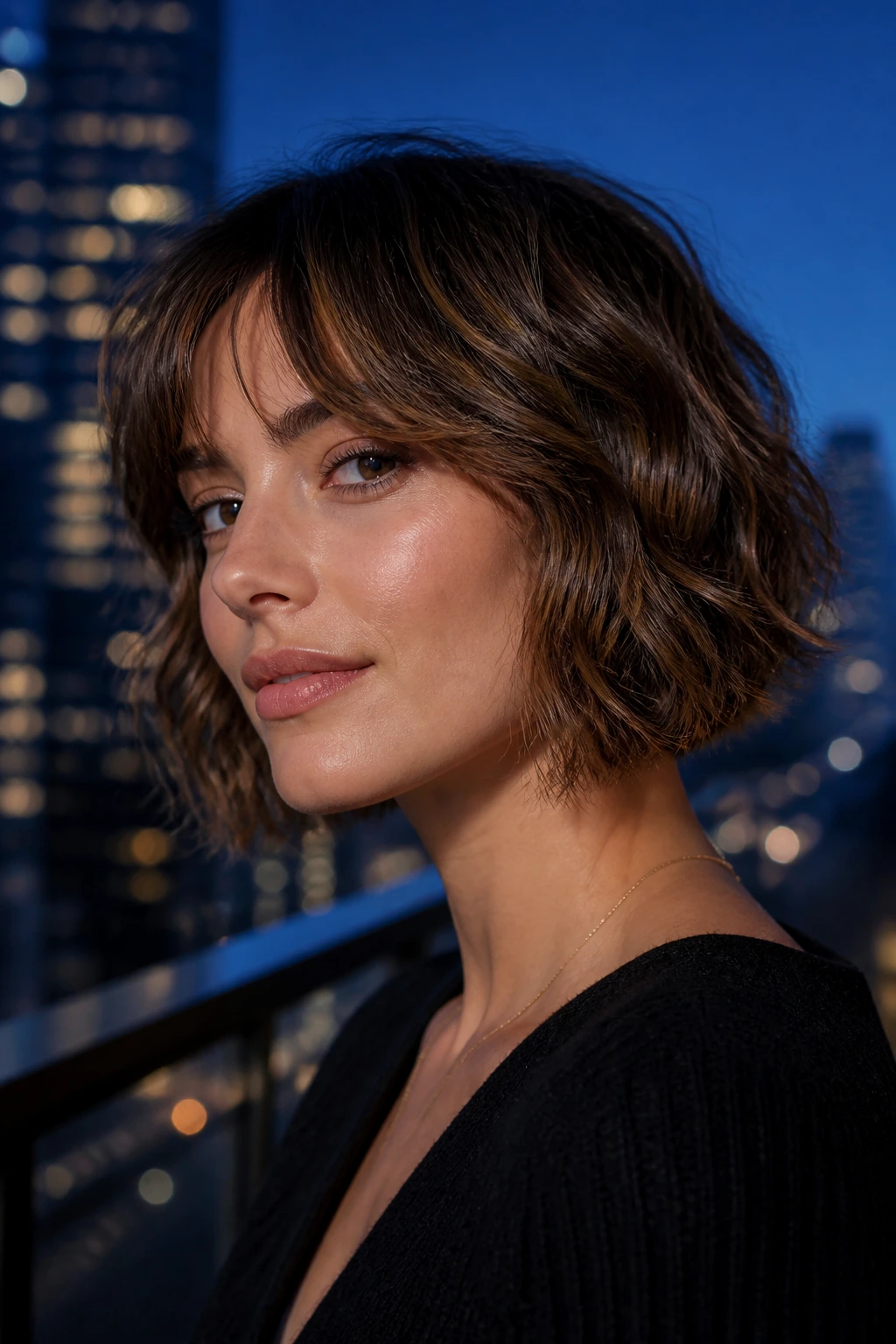
Invisible layers are the quiet fix for a lot of bob problems. They remove bulk under the surface without turning the top layer into a shredded mess. That’s especially useful on wavy hair, which can turn triangular if too much weight is removed in the wrong place.
For heart-shaped faces, this is a smart move because the silhouette stays clean around the chin while the front does not balloon out. The cut looks blunt from the outside, but it moves better than a completely one-length bob. That little contradiction is what makes it good.
Ask for internal weight removal below the upper third of the head, not high near the crown. That wording helps prevent the “why is my bob suddenly wide?” problem.
18. The Vintage-Inspired Chin Bob

This one has a little old-world polish without the stiffness of a formal set. Think chin length, a clean line, and a shape that can be tucked, waved, or slightly curved under with a brush. It nods to classic Parisian style without pretending you live in a movie.
Heart-shaped faces usually like the lower balance this cut gives. The chin gets a little help, the forehead stays soft, and the waves keep the whole thing from feeling too neat. If your hair is naturally wavy, a small amount of smoothing cream at the ends can give the bob that slightly controlled finish.
A narrow barrette on one side can make this cut feel even more deliberate. Tiny detail. Big payoff.
19. The Tousled Bedhead Bob

Some bob cuts try too hard to look undone. This one doesn’t. The tousled bedhead bob works because it expects a little mess and builds the shape around it. On wavy hair, that means the natural bends and kinks become the style instead of a problem to flatten.
For heart-shaped faces, the looseness around the lower half keeps the chin area from disappearing. The key is to leave enough weight at the ends so the shape still reads as a bob and not a puff. Texture spray, a quick scrunch, and a little finger-combing are usually enough.
This is probably the easiest version for people who hate spending time on their hair. It still needs a decent cut. It just forgives a sloppy morning.
20. The Sleek-Root Wavy Bob

This cut is a nice compromise if you like a controlled top and a little wave through the lengths. The roots are smoothed with a blow-dryer and nozzle, while the mids and ends stay soft and bendy. On heart-shaped faces, that smoother root area keeps the forehead from feeling too prominent.
The trick is not to over-flatten the whole head. Leave the wave in the lower half so the bob still has life. If everything is straight, the haircut loses the French part of the French bob. You want contrast, not uniformity.
This style works well for office days, dinners, or any moment when you want a little more polish without giving up texture. It is the neat cousin in the family.
21. The Face-Framing Tendril Bob

Sometimes the best answer is to keep a few longer front pieces in the game. Face-framing tendrils soften the temples and cheeks, which is useful on heart-shaped faces where the forehead can dominate if the cut is too open. The rest of the bob can stay short and airy.
Wavy hair makes these tendrils look intentional with almost no effort. A little bend around the cheekbone, a little movement near the jaw, and the whole face reads more balanced. This is one of those cuts that quietly solves a lot of problems without looking like it tried.
If you wear glasses, these front pieces can be especially flattering. They keep the line from getting crowded at the temples.
22. The Soft Off-Center French Bob

This is the least fussy version of the whole bunch, and maybe the easiest to live with. The part sits just off center, the perimeter stays soft, and the wave gets to do its thing without heavy styling. On a heart-shaped face, the off-center part softens the forehead while the length keeps the chin in focus.
It is not trying to be dramatic. That’s the point. The cut grows out well, works air-dried, and still looks like you meant to wear it that way after a full day of moving around, tying your hair back, and taking it down again.
If you want one French bob that stays friendly in real life, this is the one I’d hand over first.
Why French Bobs for Wavy Hair and Heart-Shaped Faces Work So Well

The shape works because it does two jobs at once. It gives wavy hair room to bend and separate, and it puts visual weight low enough on the face to balance a wider forehead and a narrower chin. That combination is the whole story. A bob that stops too high can make the top half feel bigger; a bob that goes too long can drag the face down and lose the airy edge that makes the style feel French instead of generic.
The balance point lives at the jaw
For heart-shaped faces, the jawline is where the cut earns its keep. Chin-grazing lengths, soft curves, and small front pieces help the lower face feel intentional. If the cut is too blunt across the temples, the forehead can take over. If the ends are too wispy, the chin loses definition.
Wavy texture changes the outline
Loose waves add width, but they also add softness. That’s why a French bob can look better on wavy hair than on poker-straight hair, which sometimes needs more styling to keep the cut from looking severe. Waves make a blunt line feel broken up. They give the haircut a little motion even on a lazy day.
The biggest mistake is fighting your texture into submission. Let the wave move. Shape it, yes. Smother it, no.
The Tools That Make These Bobs Behave
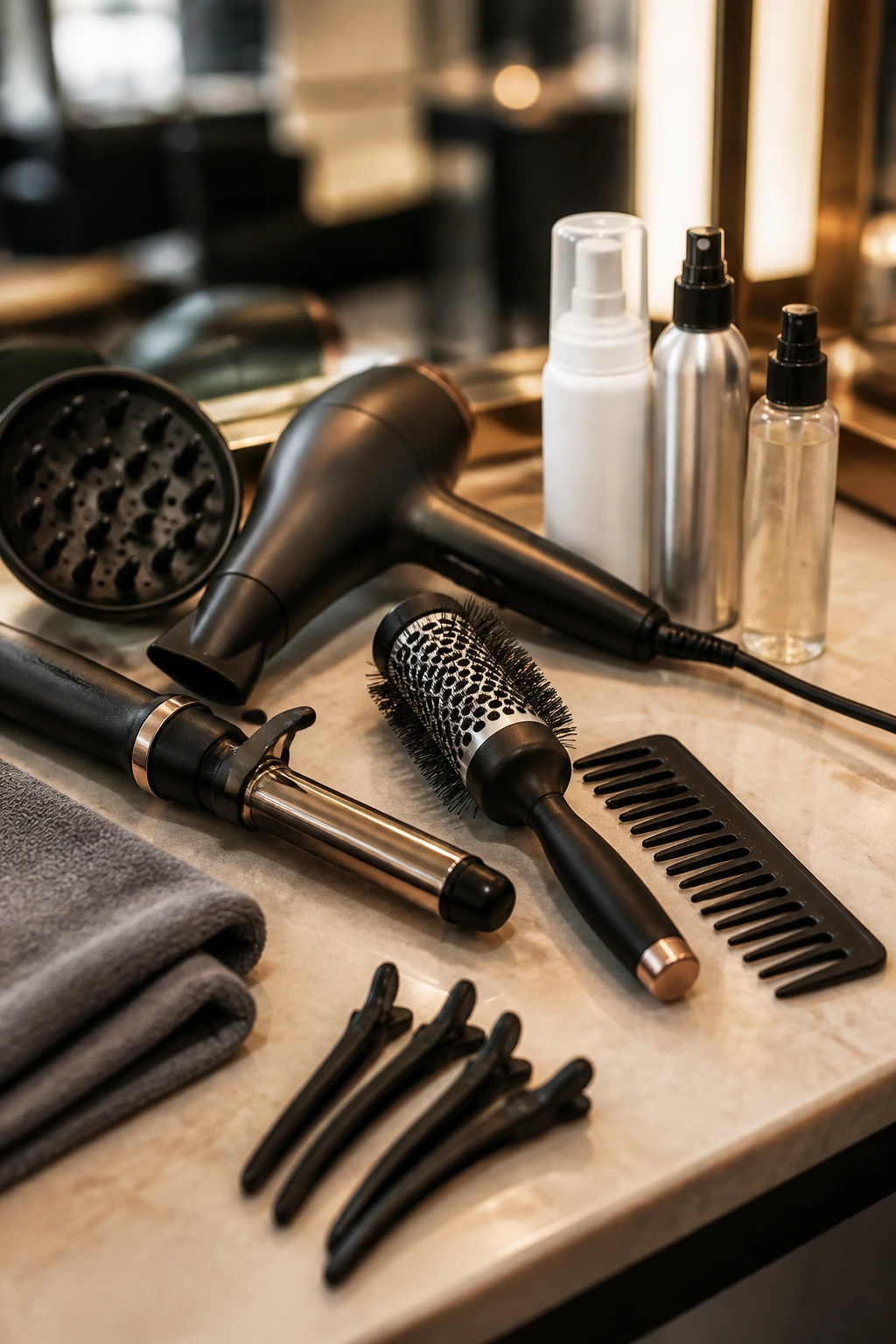
- Blow dryer with a nozzle: Smooths the roots and directs the hair without blowing every wave out of place.
- Diffuser attachment: Keeps wavy hair from puffing while it dries and helps the bend set in a softer shape.
- 1-inch curling iron or wand: Useful for just the front pieces or any section that dries strangely.
- Medium round brush: Helps create that soft inward curve at the ends.
- Wide-tooth comb: Better than a brush for damp waves when you want to keep clumps intact.
- Microfiber towel or T-shirt: Cuts down on frizz and rough drying marks.
- Lightweight mousse: Gives the cut some hold without making the ends sticky.
- Texturizing spray: Adds separation after drying, especially on fine or medium hair.
- Heat protectant: Non-negotiable if you plan to touch the front pieces with hot tools.
- Duckbill clips: Useful for setting fringe or clipping front sections while they cool.
How to Style a French Bob Without Fighting the Wave

The easiest path is usually the right one. Start with damp hair, work in a small palmful of mousse from roots to ends, and scrunch just enough to wake up the wave pattern. If your roots go flat, lift them with your fingers while drying rather than blasting them straight down. That one change saves the shape.
For a smoother finish, rough-dry the roots first, then use a round brush only on the front pieces and the ends. You do not need a blowout on every section. The bob looks better when some parts stay a little lived-in.
Air-Dry Plan
Apply mousse, twist the front sections away from the face, and let the hair dry in its own time. Once fully dry, break the cast lightly with your hands and add a mist of texture spray at the ends.
Heat-Style Plan
Dry the roots with a nozzle, then use a 1-inch tool to bend just the face-framing pieces and the tips. Keep the curls loose. Tight ringlets kill the French bob mood fast.
Second-Day Refresh
Mist the mids with water, pinch in a pea-sized amount of leave-in, and re-scrunch. If the part went flat overnight, flip it while you dry the roots for 30 seconds with the dryer.
Fringe Control
Fringe needs its own plan. Clip it out of the way while the rest of the hair dries, then style it last so it does not get steamed limp.
Small Tweaks That Make These Cuts Look Better in Real Life

Crown lift: A touch of root spray at the crown keeps the bob from collapsing into the forehead area, which matters on heart-shaped faces where balance is everything.
Cleaner ends: If the ends look fuzzy, swap heavy cream for a lighter smoothing lotion. Too much product at the perimeter makes wavy hair hang in strange strings.
Soft front pieces: The line around the face should stay the softest part. That is where the eye goes first, and that is where a French bob earns its easy feel.
Shine without flatness: A tiny drop of serum on the mid-lengths gives the hair a healthier finish, but keep it off the roots. Glossy roots can make the whole cut lose lift.
A lot of people keep reaching for more product when the real fix is less product, placed better.
Common Mistakes to Avoid With This Shape

- Cutting it too short for your wave pattern: Wavy hair shrinks more than it looks like it will in the chair. If the stylist cuts to the exact length you want while the hair is wet, you may end up with a bob that sits above the jaw instead of at it. Ask for a bit of breathing room.
- Thinning the top too much: If the crown gets over-thinned, the ends can flare out and make the head look wider. The fix is to remove bulk lower down, not strip the top layer bare.
- Cutting bangs too blunt or too high: Heart-shaped faces usually need softness around the forehead, not a hard line that stops mid-forehead unless you want a very specific look. Keep fringe longer, feathered, or curtain-shaped if you want easier balance.
- Using too much smoothing product: Heavy cream or oil can flatten the wave and make the bob look limp around the roots. Use the smallest amount that controls frizz, then stop.
- Ignoring the part: A dead-center part on the wrong face shape can make the forehead feel wider than it already is. Move the part an inch over and see how fast the whole haircut changes.
- Letting the ends go triangular: If the outline gets too wide at the bottom, the bob stops flattering the chin. A trim or a little internal weight removal fixes that fast.
Variations and Adaptations to Try

Curtain-Soft French Bob: This version keeps the fringe long and airy, with front pieces that fold away from the face. It is the easiest option if you want forehead softness without a heavy bang commitment.
No-Fringe Minimal Bob: Clean, simple, and very easy to style. The focus stays on the jawline and the wave pattern, which suits heart-shaped faces that already have strong cheekbones.
Thick-Hair French Bob: Built with a little more internal removal under the surface, but not enough to make the shape frizzy. The goal is to control width while keeping the perimeter full.
Fine-Hair Lifted Bob: Slightly shorter, with a root-lifting product and less weight at the ends. This one looks best when the hair is rough-dried and lightly tucked behind one ear.
Long-French Lob Hybrid: Falls between the chin and collarbone, which helps if you love the French mood but want a gentler grow-out. This is the easiest adaptation for people nervous about going short.
Statement Fringe Bob: A stronger fringe paired with a clean bob line. It works if you want the eyes to be the focal point and are willing to style the fringe on purpose most days.
Smart Salon Notes Before You Book the Cut

Bring photos, yes, but bring the right ones. Show your stylist examples of bobs on hair that bends the way yours bends, not a pin-straight cut that will behave completely differently on your head. One good photo of the length and one good photo of the fringe will tell the story faster than ten random screenshots.
Say where you want the shortest point to land. Chin? Just below the chin? Top of the neck? That one detail matters more than asking for “a French bob,” because the phrase means different things to different stylists. If your waves are loose, ask for a cut that allows for shrinkage. If your hair is thick, ask where the weight will be removed and how much.
Product matters, too. A light mousse, a flexible hold spray, and a heat protectant are usually the main trio. Heavy creams and thick oils can work on coarse waves, but they can flatten fine hair fast. Choose based on how your hair actually behaves, not on what looks nicest in the bottle.
Keeping the Shape Between Cuts
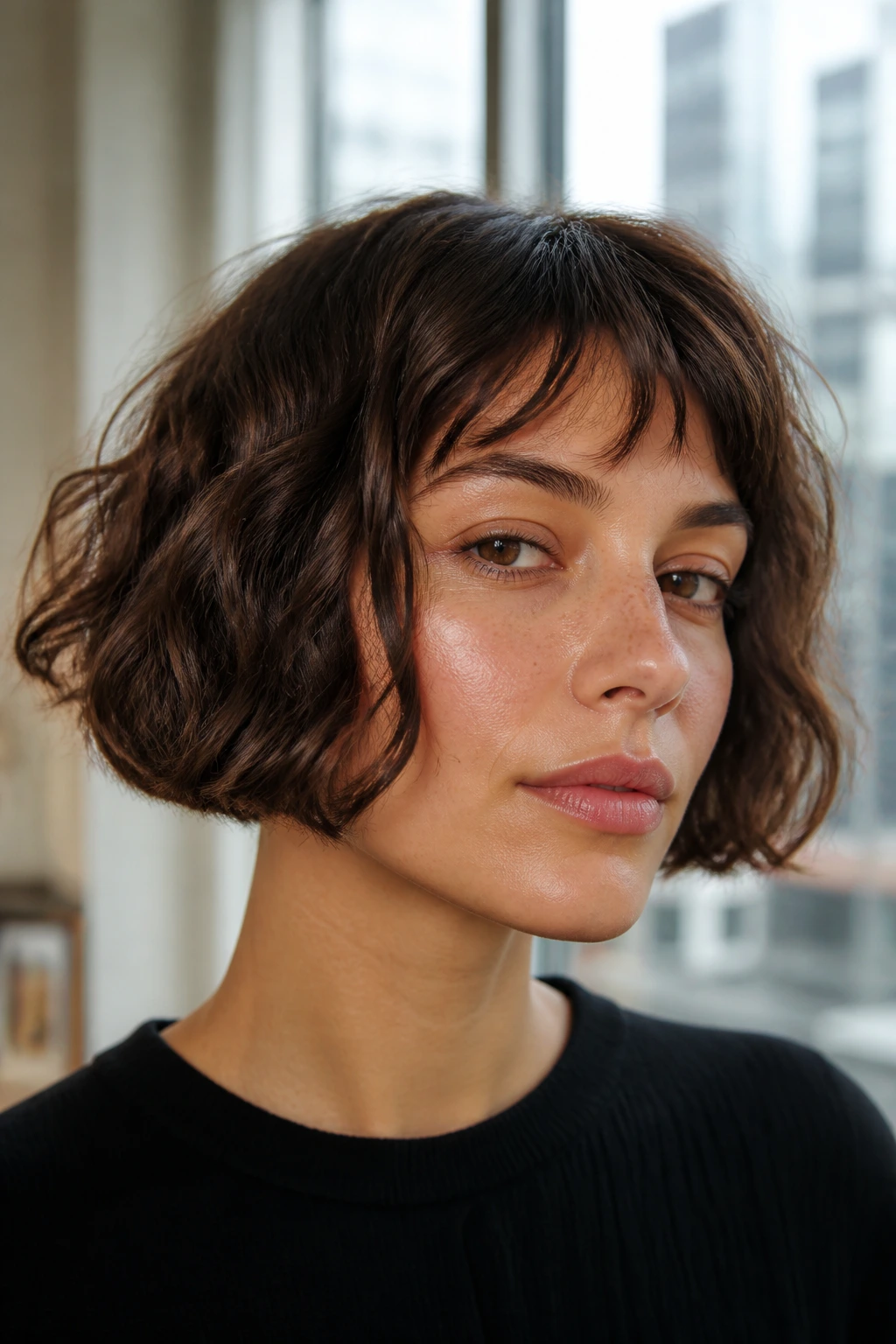
Short hair needs a rhythm. A French bob usually looks best with trims every 6 to 8 weeks if you want the outline to stay crisp. Fringe often needs attention sooner, around every 2 to 3 weeks, because even a quarter inch can change how it sits on the face.
Wash timing depends on your scalp, not on some magical rule. Many wavy heads do well washing every 2 to 4 days, with a dry shampoo refresh at the roots on day two or day three. Keep the dry shampoo off the ends. That chalky build-up can make the haircut feel dusty.
At night, a satin pillowcase helps a lot. So does clipping the front pieces away from your face if they tend to bend in odd directions while you sleep. If the shape starts going flat, mist the roots lightly with water, rework the part, and dry just the scalp area for a minute or two. Fast fix. No full restyle needed.
Questions People Ask Before Getting This Cut
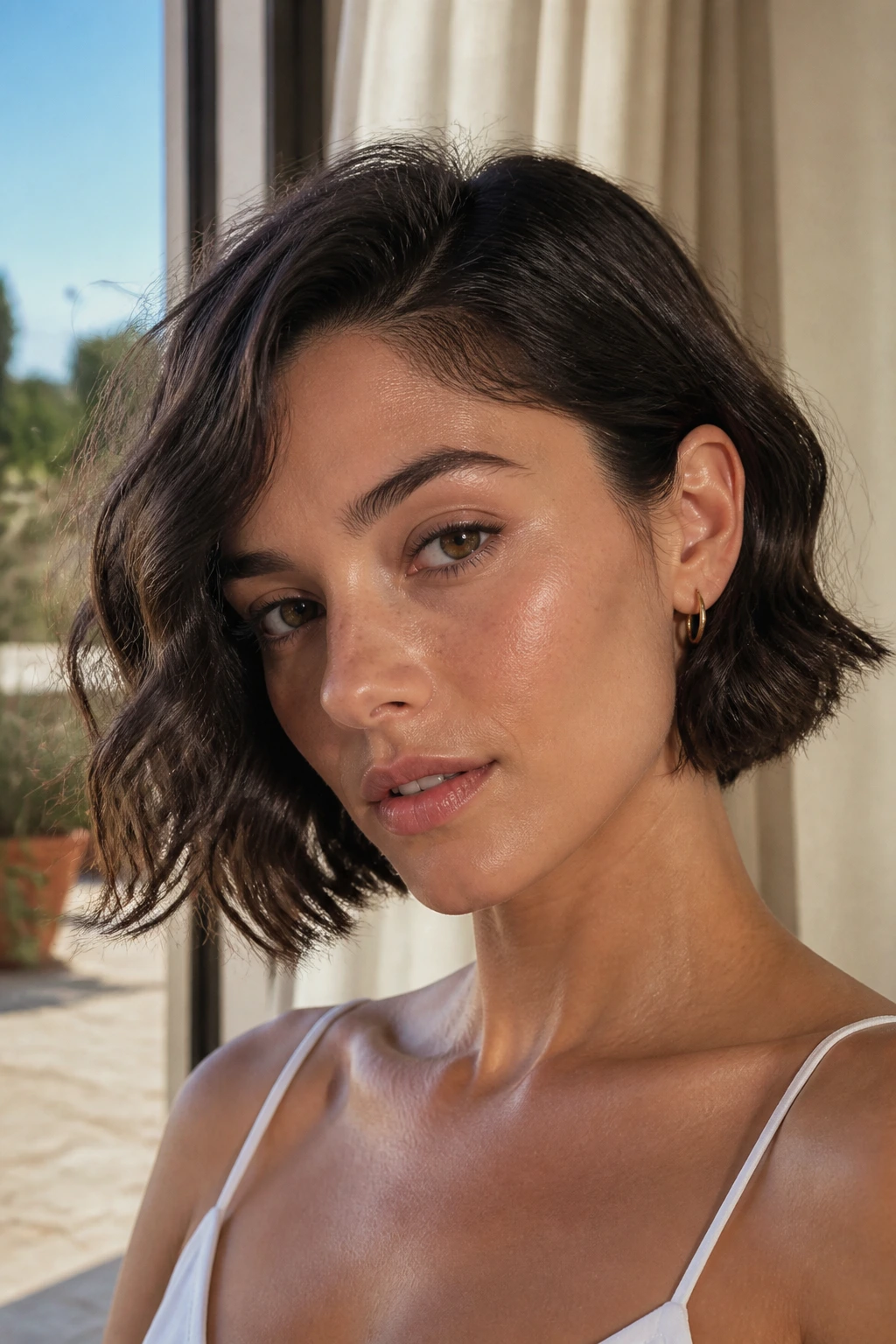
Will a French bob work if my waves are loose, not curly?
Yes, and loose waves are often the easiest texture for this shape because they create movement without swallowing the cut. The main thing is not to over-layer the top, or the bob can puff at the sides.
Should heart-shaped faces avoid blunt bangs?
Not always, but blunt bangs need care. If the fringe is too heavy or too short, it can make the forehead feel larger by contrast. Softer fringe, curtain fringe, or a longer wispy edge tends to be easier to wear.
How short is too short for wavy hair?
If your hair shrinks a lot, anything above the chin can get risky unless you want a very compact look. For most wavy textures, chin length or just below is the safer zone.
Can I wear this cut without heat styling?
Absolutely. A good French bob should survive air-drying. You may need a little product at the roots and a small amount of shaping around the front, but you should not need a full blowout every time.
What if my hair goes fluffy on humid days?
Use less product at the roots and more at the mids and ends. A light anti-frizz cream or smoothing lotion on damp hair can help, but too much will flatten the wave and leave the cut limp by noon.
Is this shape good for thick hair?
Yes, if the weight is removed in the right places. Thick hair usually needs bulk taken out underneath, not lots of feathering on the top layer.
How do I keep the bob from flipping weirdly at the ends?
Dry the ends with a round brush or a small bend from a curling iron so they all move in the same direction. Random flips usually come from uneven drying, not from the haircut itself.
Does this cut grow out badly?
Not if the length is planned well. A slightly longer French bob often grows into a tidy bob-lob hybrid, which is one reason it’s such a practical shape for people who hate sudden awkward stages.
The Shape That Keeps Showing Up

There’s a reason the French bob keeps hanging around while other short cuts come and go. It does something rare: it flatters texture instead of sanding it off, and it gives a heart-shaped face a softer lower frame without burying the features that make that face shape interesting in the first place.
The versions that work best are never the ones trying too hard. They sit where the chin can still be seen, where the wave can still move, and where the front can be softened without being fussed over. That’s the whole trick, and it’s a good one.
If you’re taking one thing to the salon, make it this: bring a photo of the length you want and a second photo of the fringe shape you can live with on a boring Tuesday. That’s usually where the real haircut begins.