



The best bangstyle long layers for oval faces with curly hair are the ones that look almost too easy until the curls dry and the shape clicks into place. An oval face gives you room to play. Curly hair changes the math fast. A fringe that lands at the eyebrow in the chair can spring up a full inch, sometimes more, and a layer that looks soft and airy when wet can become a puffed-out shelf if it starts too high.
That shrinkage is not a problem. It’s the whole game. A good curly cut leaves enough length for the fringe to settle, enough weight in the long layers to keep the outline from turning into a triangle, and enough movement around the cheeks to keep the face open. I like that balance because it feels honest. Nothing is fighting the curl pattern, and nothing is pretending the curl pattern will behave like straight hair.
A lot of hair inspiration gets this wrong. It shows a perfect center part, a feathered fringe, and those sleek little tendrils that sit exactly where they’re told to sit. Curly hair does not sit. It leans, springs, bends, and changes shape hour by hour. The styles below work because they respect that chaos instead of sanding it down.
Why You’ll Love This Collection
- Oval-face balance: An oval face already has even proportions, so these cuts can focus on movement and framing instead of trying to “fix” anything.
- Curl shrinkage built in: The fringe and layers are described with real curl behavior in mind, which helps keep the final shape from landing too short.
- Long grow-out: These looks usually soften rather than fall apart, so you can live with them longer between trims.
- Flexible styling: Several of the cuts can be worn center-parted, side-parted, diffused, or air-dried without losing their outline.
- Good for density shifts: The styles below include options for fine curls, thick curls, loose waves, and tighter coils.
- Easy salon language: Each look gives you a concrete shape to ask for, which is far more useful than saying “something face-framing.”
1. Center-Split Curtain Bangs with Collarbone Layers
A clean center split keeps curly bangs from swallowing the face. On an oval face, that open middle line feels balanced instead of severe, and the collarbone layers keep the bottom from puffing into a wide triangle. The whole cut reads soft, but not vague. That matters.
Why It Works
The shortest point of the fringe should live around eyebrow level when dry, then drift longer toward the cheekbones. Curly hair will shorten as it dries, so a half-inch of extra length in the chair is often the difference between “soft curtain” and “tiny bangs I can’t smooth out.” Collarbone layers keep the weight low enough for the curls to move in ribbons.
- Best for loose to medium curls that need face opening without a heavy fringe.
- Ask for the sides to angle down toward the lips or collarbone, not the chin.
- A center part keeps the face looking open and the curl pattern from collapsing toward one side.
My favorite detail: this cut looks better on day two than a lot of straighter fringe styles, because the curls settle into the frame instead of sitting on top of it.
2. Bottleneck Fringe with Cheekbone-Softening Curves
Bottleneck bangs are the sweet spot between blunt fringe and full curtain bangs. They stay narrower in the middle, then flare out near the temples, which is a nice move on oval faces because it gives the eye something to follow without closing the forehead off. Curly hair loves this shape if you give it enough length to spring.
The narrow center section should be long enough to touch the brow or sit just above it when dry. The wider side pieces can sweep toward the cheekbones and melt into the first long layer. That curve is what keeps the fringe from looking chopped or boxy.
This style works especially well if your curls have a little bounce but not a ton of width. It gives shape without turning the front into a wall. If your hair is dense, ask the stylist to keep the center lighter and the edges longer. If your curls are looser, let the fringe sit a touch fuller so it doesn’t disappear.
3. Curly Shag Layers with a Feathered Front
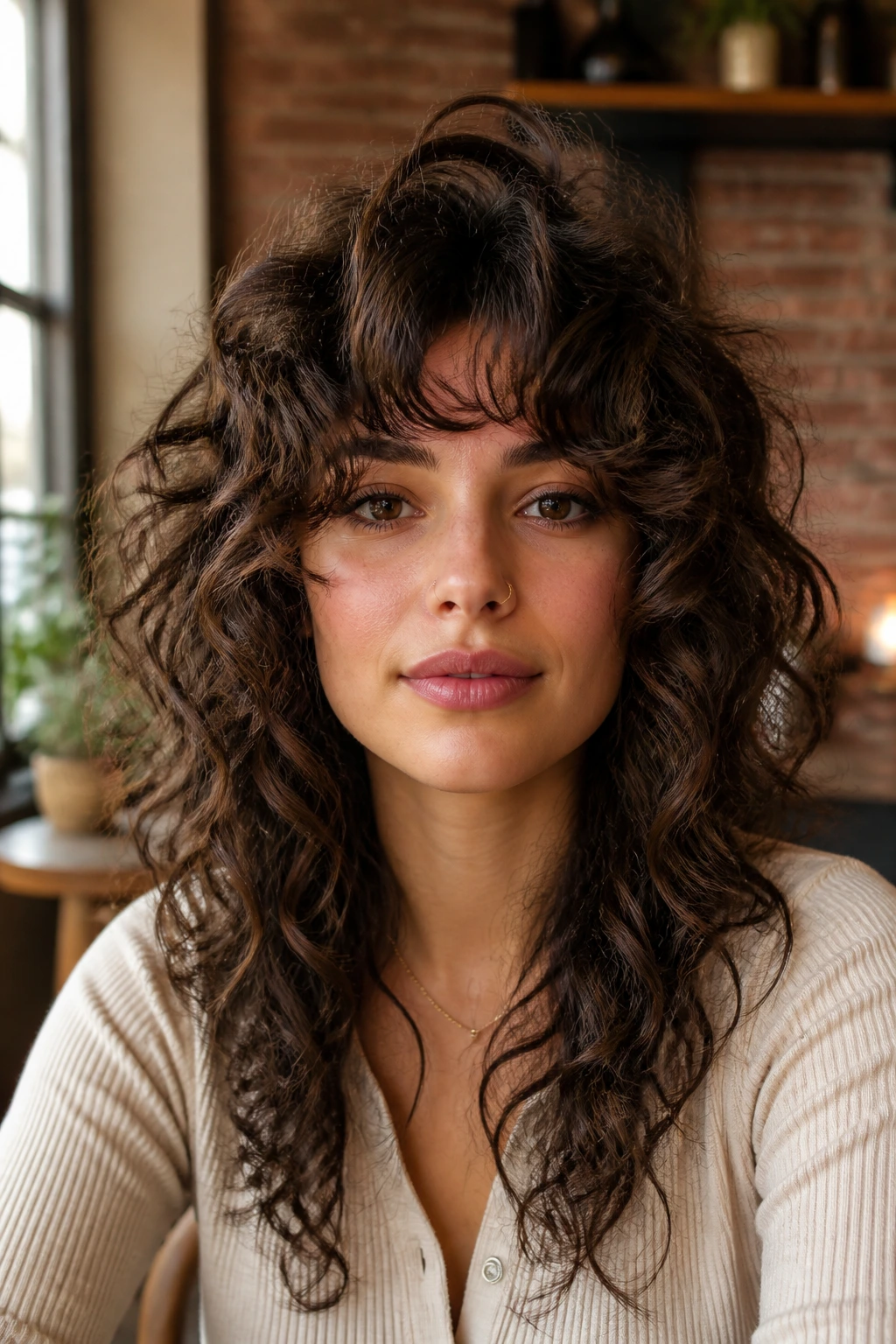
What happens when you want height at the crown, movement in the lengths, and a fringe that doesn’t need to behave like a straight bang? You get a curly shag. On an oval face, the shag’s built-in softness keeps the shape from looking too long, and the feathered front breaks up the forehead in a nice, casual way.
Why It Works
The cut relies on long internal layers, not a blunt outline. That’s why it keeps curls from stacking into a heavy shelf around the jaw. The front pieces can start around the brow and blend down into cheekbone layers, which gives the face a little lift without stealing too much length from the rest of the hair.
How to Wear It
Use a light mousse or foam at the root, then scrunch a small amount of gel through the fringe only. Let the crown dry with a couple of clips lifted at the roots for 10 to 15 minutes. This cut likes a little mess. If you try to polish it too hard, you flatten the whole point of it.
Best for: thick curls, medium to high density, and anyone who wants the bangs to feel lived-in instead of precise.
4. Side-Swept Bangs and Waterfall Ends
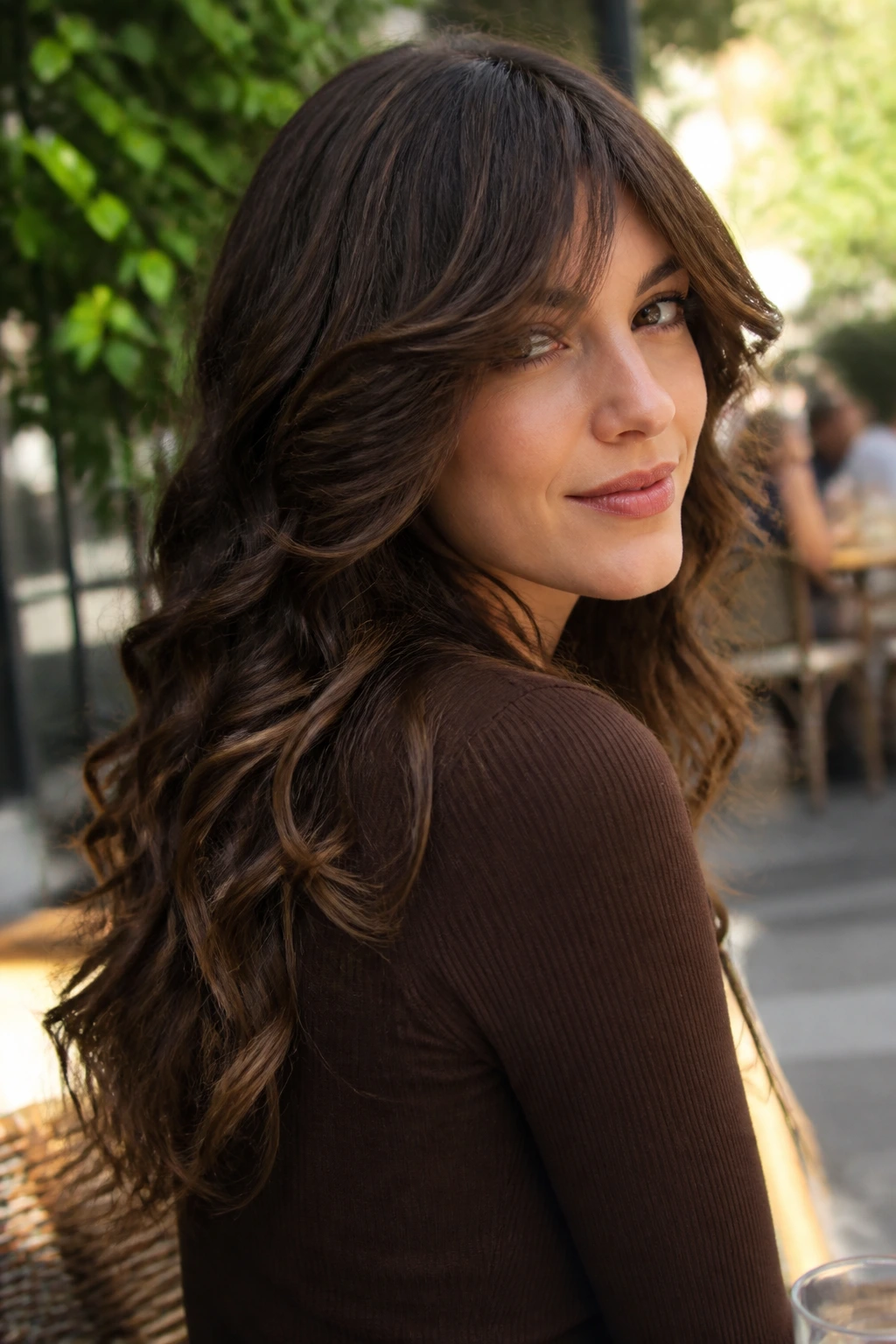
If your curls naturally lean to one side, make that work for you instead of fighting it. Side-swept bangs create a diagonal line across the forehead, which gives oval faces a little asymmetry in the best way. The long layers underneath can fall like a waterfall, especially if the hair has some length past the shoulders.
The trick is not to sweep the bang too low. Once it drops below the cheekbone, it stops reading like fringe and starts acting like a stray front layer. Keep the shortest pieces around eyebrow height when dry, then let the sweep travel toward the cheek and jaw.
This is one of the easiest styles to live with if you change your part often. It also plays nicely with curls that are tighter on one side of the head than the other. A side-swept fringe gives you permission to stop pretending the hair is symmetrical. Good. It probably isn’t.
- Great if one temple area lies flatter than the other.
- Works well with a deep side part or a loose off-center part.
- Ask for the front to be cut in a diagonal line, not a hard corner.
5. Rounded Fringe That Follows the Brow Line
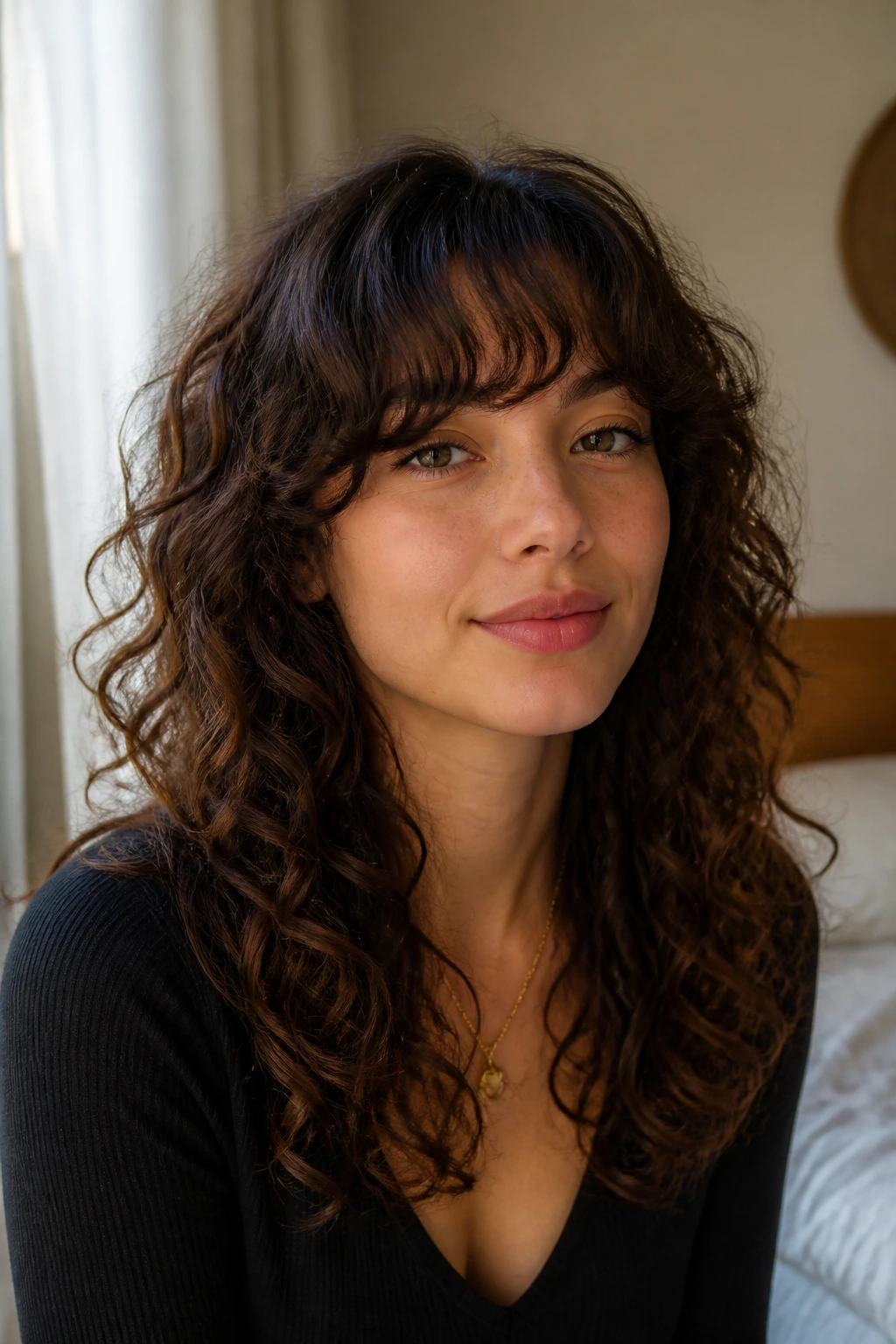
A rounded fringe on curly hair can be lovely when it’s cut with patience. The shape follows the arc of the brow instead of sitting flat across it, which gives oval faces a soft frame without losing the natural curve of the curls. It feels a little romantic, a little old-school, and not at all stiff.
The most important part is length. Rounded bangs should stay long enough to curl inward or outward on their own, not so short that they spring above the forehead like a tiny hedge. The sides should blend into long face-framing layers that hit around the cheekbones or just below.
This style is especially good for tighter curl patterns that need a clear shape near the face. The curve keeps the fringe from spreading too wide, and the long sides help the hair fall back into place after a full day. If you like definition near the eyes but don’t want the center of the forehead fully covered, this is a strong pick.
6. Ghost Bangs with Invisible Front Layers
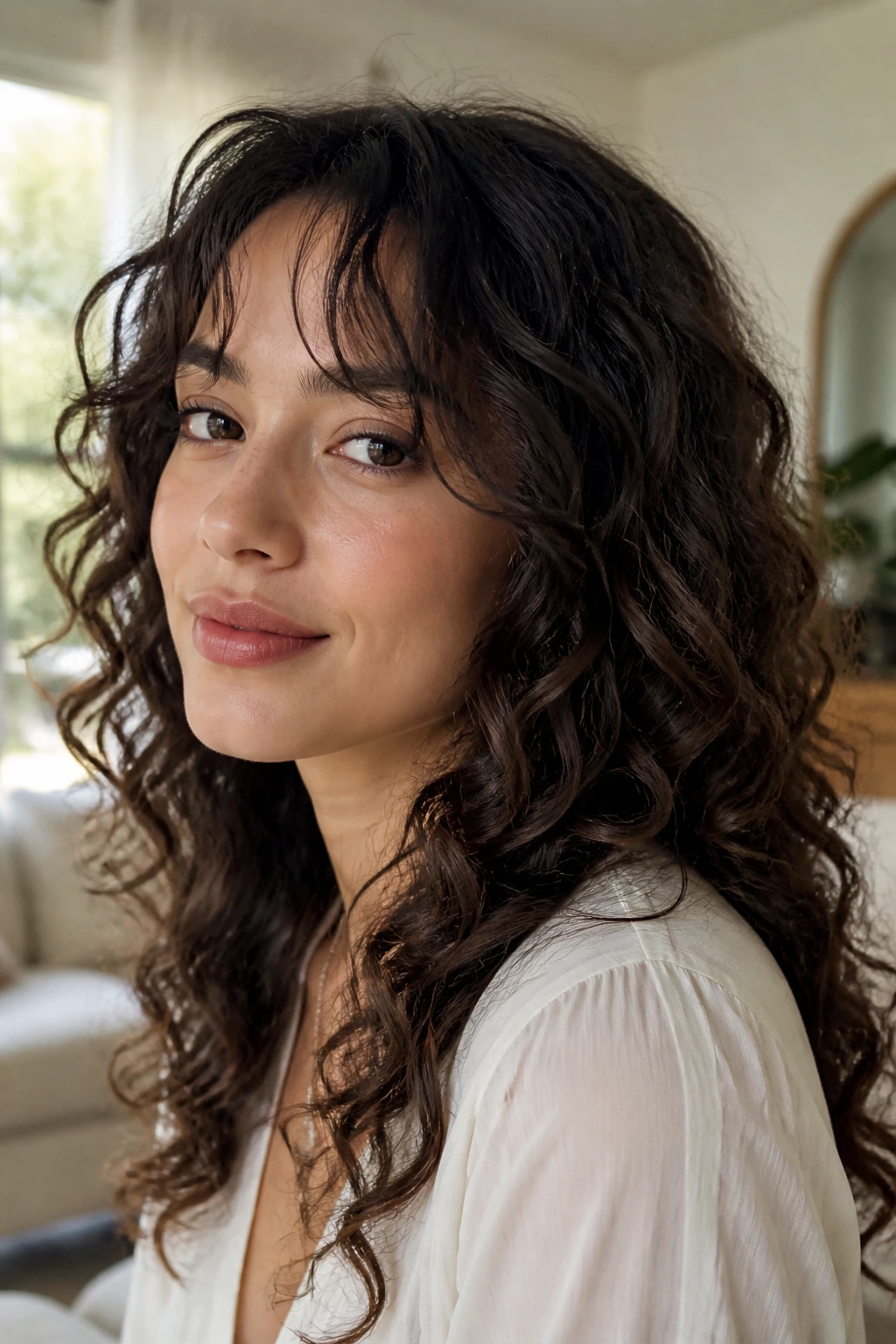
Unlike a blunt fringe, ghost bangs barely announce themselves. They live inside the front of the haircut, so they give you the feeling of bangs without the obvious bang line. On an oval face, that subtle front piece can sharpen the eyes and soften the forehead at the same time. Curly hair gets to stay curly. Nobody has to negotiate with a flat iron.
This is the move for someone who wants to try fringe without a full commitment. The front pieces are cut long enough to melt into the first layer, usually somewhere around the cheekbones or lips, and the rest of the hair keeps its long, flowing shape. The effect is more whisper than shout.
I like this option for looser curls and waves because it lets the texture stay airy. It also grows out gracefully, which is the main reason people end up loving it. Nothing about ghost bangs looks awkward when they get a little long. They just become part of the cut.
7. Ribbon Curtain Bangs and a Middle Part
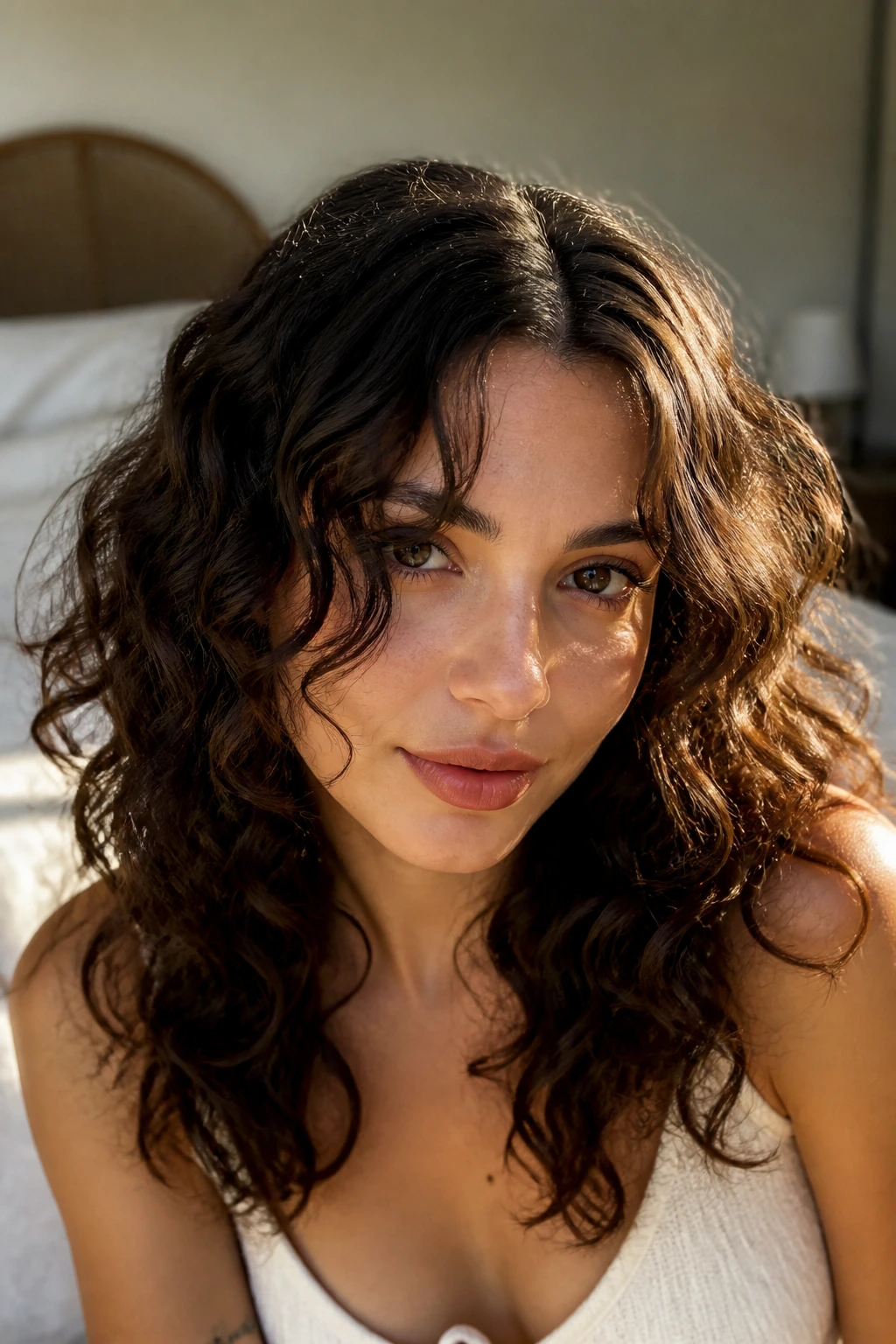
Ribbon curtain bangs work when you want the front to split into soft, separate pieces instead of one connected curtain. The pieces fall like narrow ribbons over the forehead, which keeps the face open and gives oval proportions a bit of vertical movement. It’s a tidy, pretty look without feeling fussy.
How to Make It Work
Ask for the center pieces to start around the brow and angle longer toward the lips. The key is separation. You do not want the front cut so blunt that the curls bunch together into one thick lump. A little internal softness lets each curl bend on its own.
This style looks especially good when the hair has a loose or medium curl pattern and you want to keep the sides long. It is also a nice choice if you like to tuck a few pieces behind one ear. That small shift changes the whole mood of the cut.
Watch this: if the bangs are cut too short in the middle, the ribbon effect disappears and the curls pop straight up. Leave room for the spring.
8. Brow-Skimming Bangs with Tapered Side Pieces
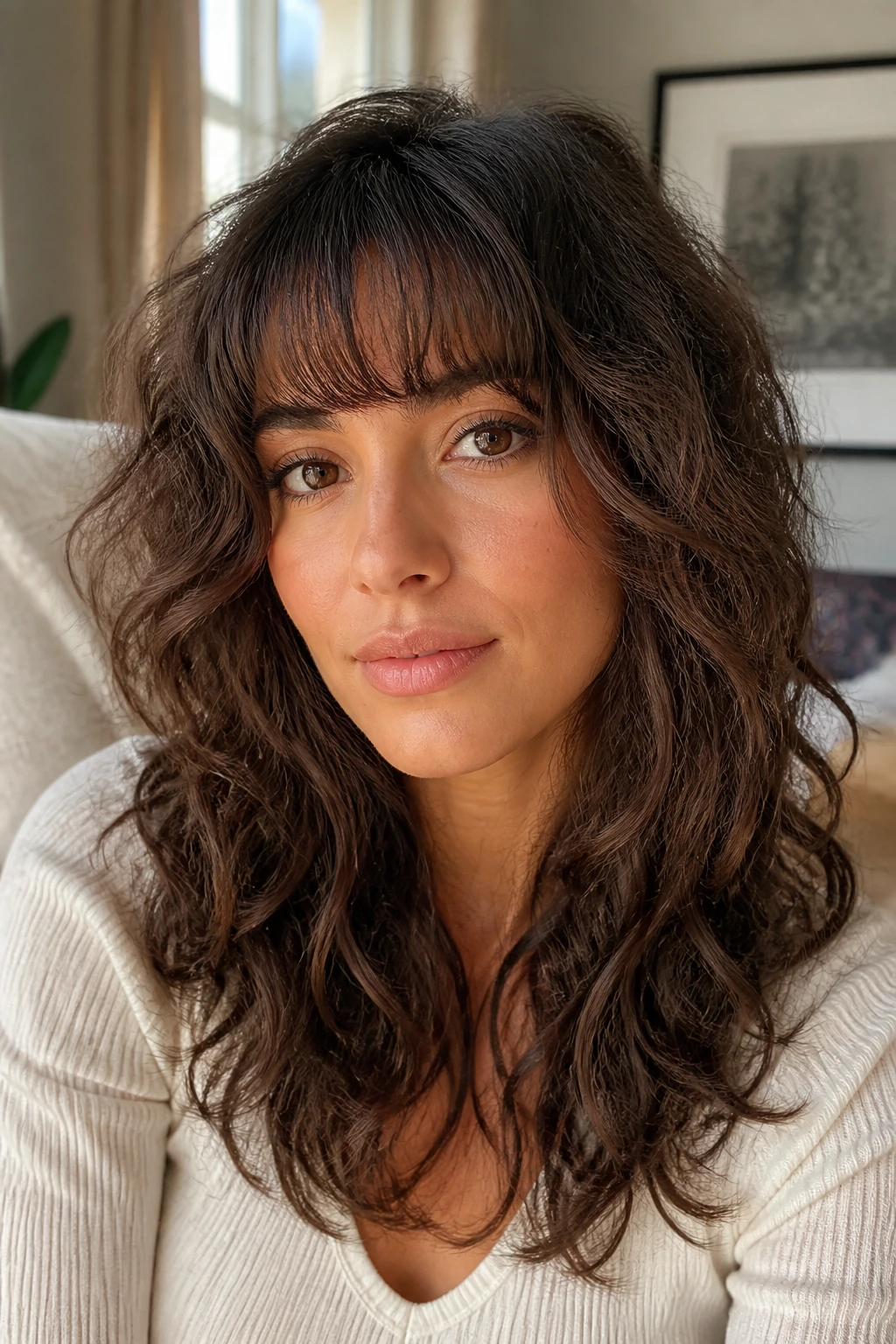
Brow-skimming bangs are for people who want the front to feel present. Not heavy. Present. On curly hair, that usually means a slightly longer cut than you think you need, because the dry finish will rise, bend, and soften. Oval faces can carry this shape well because the face already has balance; the fringe just gives it a stronger focal point.
The tapered side pieces matter as much as the center. If the bangs stop abruptly at the temples, the front can look like a rectangle sitting on the forehead. Let the edges drift into the first long layers around the cheekbones, and the whole haircut relaxes.
This cut is one of my favorites for medium-density curls. It feels intentional without demanding daily heat styling. If you like a polished front but want the rest of the hair to stay natural, this is a nice compromise. It’s also one of the easiest looks to pinch back into shape with a little water and gel on busy mornings.
9. Chin-Skimming Face Framing and a Loose Fringe

What if you don’t want the bangs to be the main event? Then let the face-framing layers do most of the talking. Chin-skimming pieces create a long, elegant line that narrows gently under the cheekbones, while a loose fringe just hints at the forehead instead of covering it.
This shape is useful on oval faces because it adds structure without changing the face too much. The bangs can be kept airy, almost like a suggestion, and the long front pieces carry the style. The result is quiet but not boring. That’s a hard line to walk, and this cut does it well.
It’s especially good if your curls are soft and loose or if you wear glasses. Stronger bangs can compete with frames; a loose fringe sits better around them. Ask for the chin pieces to be curved, not chopped, so they blend into the rest of the layers when the hair moves.
10. Long Side-Part Bangs with Safety Layers
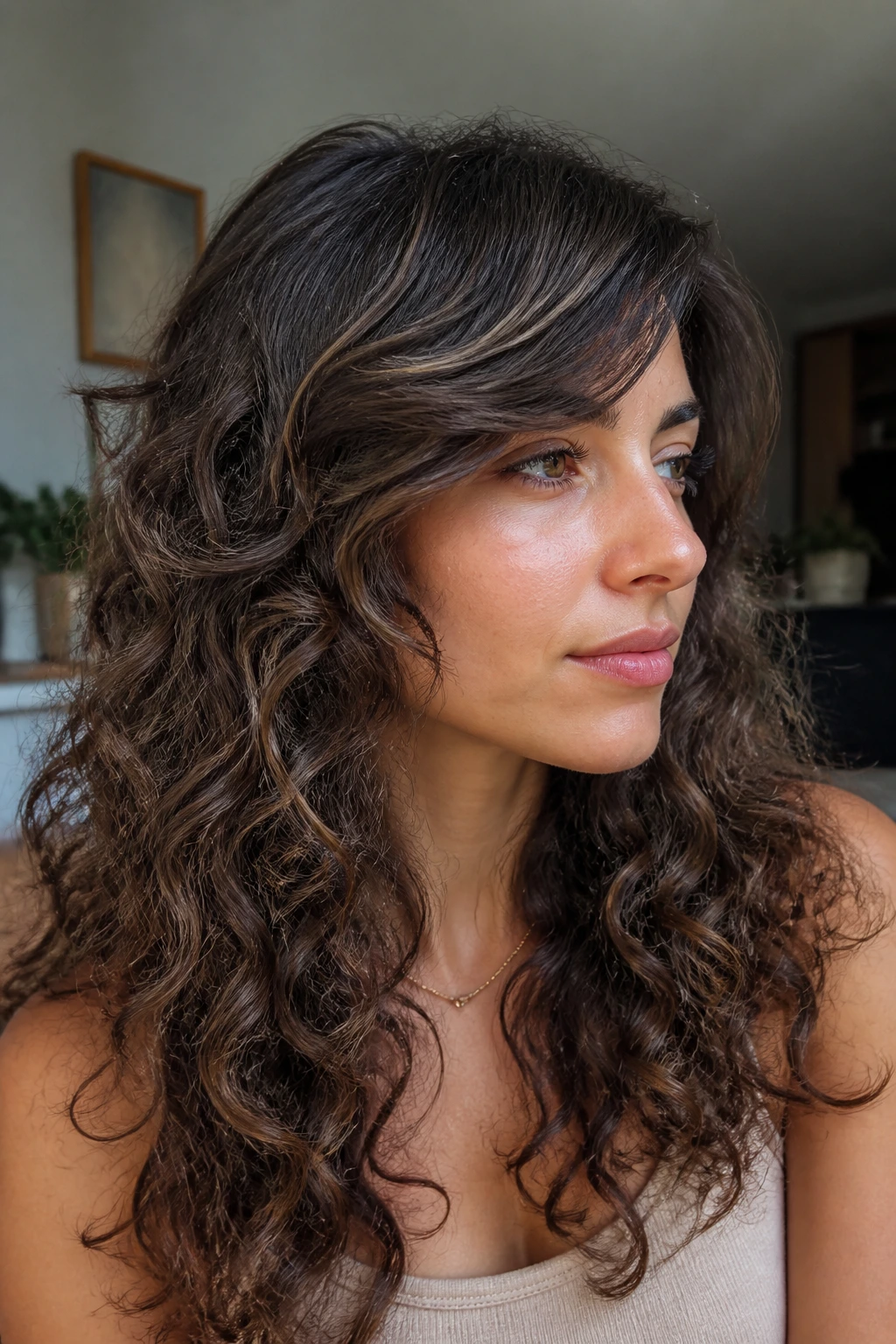
A deep side part gives curly hair a little instant drama, and long side-part bangs make the most of it. On an oval face, the angled line breaks up the symmetry just enough to feel modern, while the long layers underneath keep the silhouette from getting too heavy on one side. It’s a smart cut if you change your part depending on the day.
The “safety layers” matter here. That’s the longer material beneath the bang area that keeps the front from flipping out weirdly once the curls dry. Without them, the fringe can look detached from the rest of the cut. With them, it looks like the haircut was built that way from the start.
This is a good option for curls that have one flat side and one more lifted side. The side part lets the stronger side show off and gives the weaker side a job. I love a haircut that works with your hair’s habits instead of making you apologize for them.
11. Soft Wolf Cut Layers with a Curly Fringe
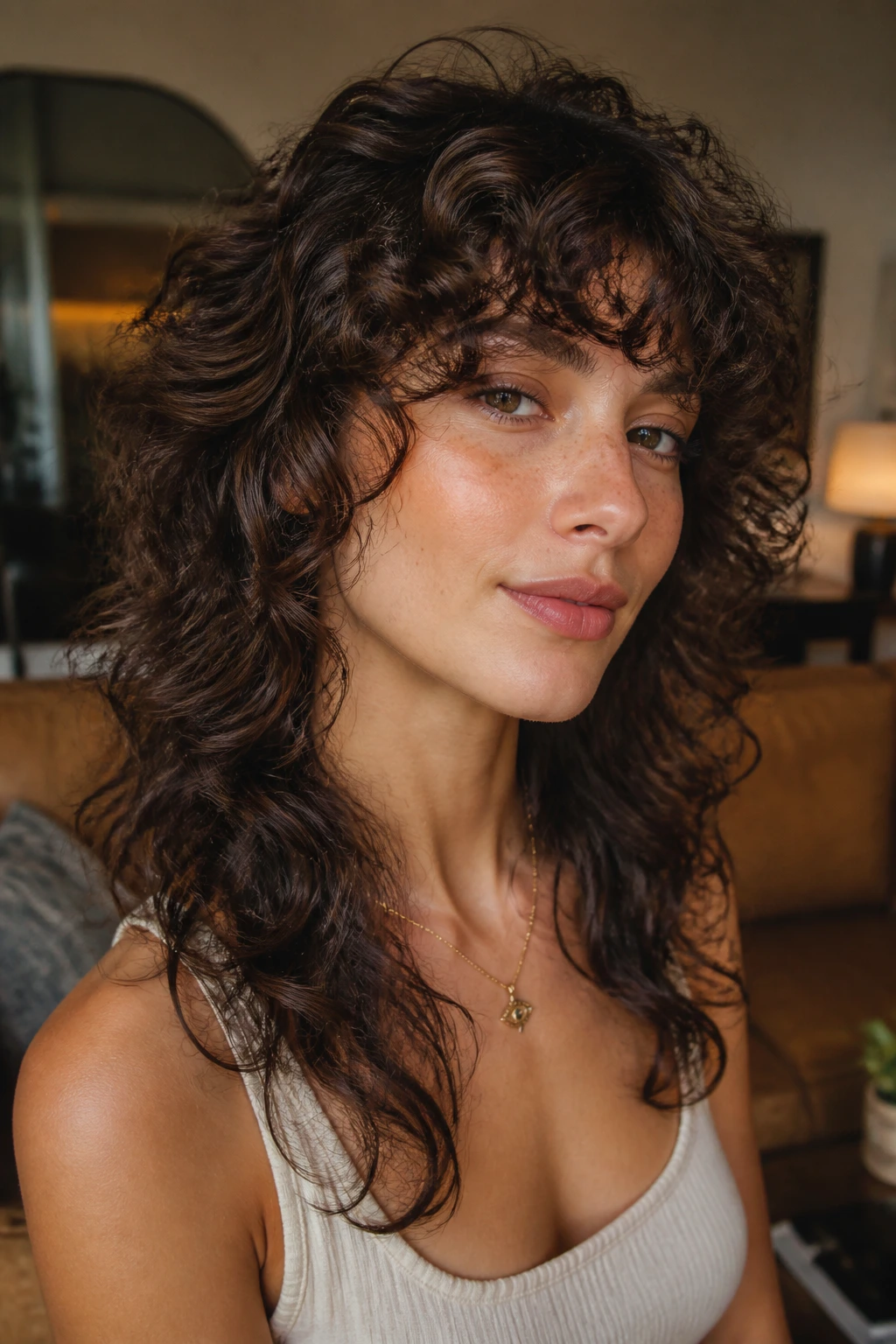
The wolf cut gets a bad reputation when it’s pushed too far, but the softer curly version can be excellent. It gives the crown some lift, keeps the nape a little longer, and lets the front fringe stay loose enough to move. On oval faces, that layered shape adds energy without making the face look longer.
The trick is control. You want shorter crown layers, yes, but not so many that the top becomes puffy while the ends go flat. The fringe should stay long enough to curl into the face, not sit above it. That keeps the whole look from drifting into costume territory.
This style sings on dense curls that need space to breathe. If your hair tends to feel heavy at the root, the wolf shape can take some of that weight off without chopping away length. Ask your stylist to keep the face pieces soft and the transition gentle. Hard disconnects can be a mess on curly hair unless the curl pattern is very consistent.
Best Use Case
If you like texture, volume, and a little edge, this is a strong one. If you want sleek and tidy, skip it.
12. Temple-Opening Layers and a Narrow Front
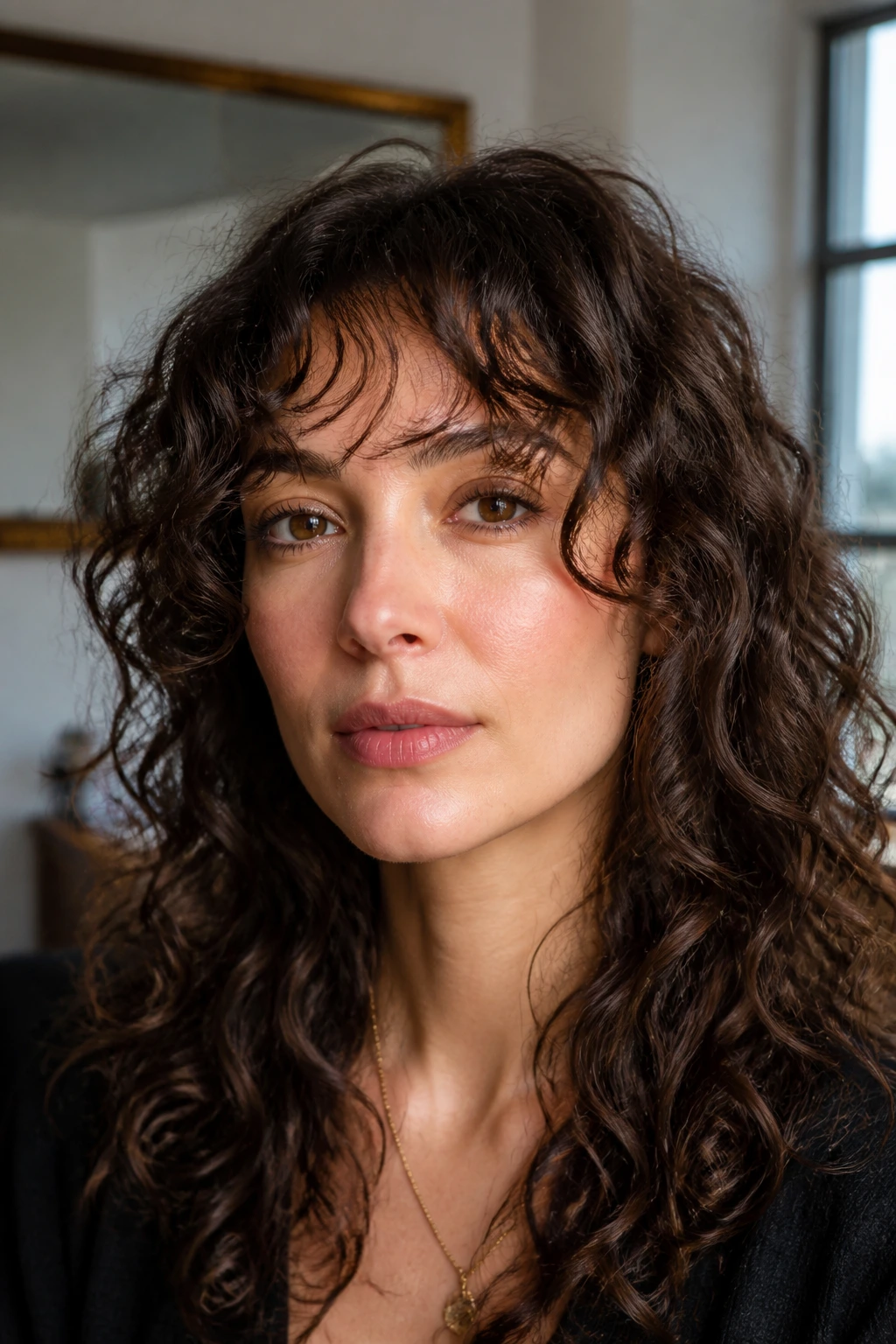
Temple-opening layers are underrated. They remove bulk right where a lot of curly hair gets wide, which keeps the face shape cleaner and lets the oval proportions stay visible. A narrower front, cut with enough length to bend naturally, prevents the forehead from being crowded.
The best version of this cut starts the layers a little later than people expect. You’re not trying to carve the whole front away. You’re trying to create breathing room at the temples and cheekbones so the curl can fall instead of mushrooming outward.
This works beautifully if your curl pattern is dense or if your hair gets puffy near the sides before it does anywhere else. It’s also a practical choice for people who wear their hair down often and don’t want to spend every morning reworking the front. A narrow front can look polished even when the rest of the curls are doing their own thing.
13. U-Shape Layers with Soft Face Pieces
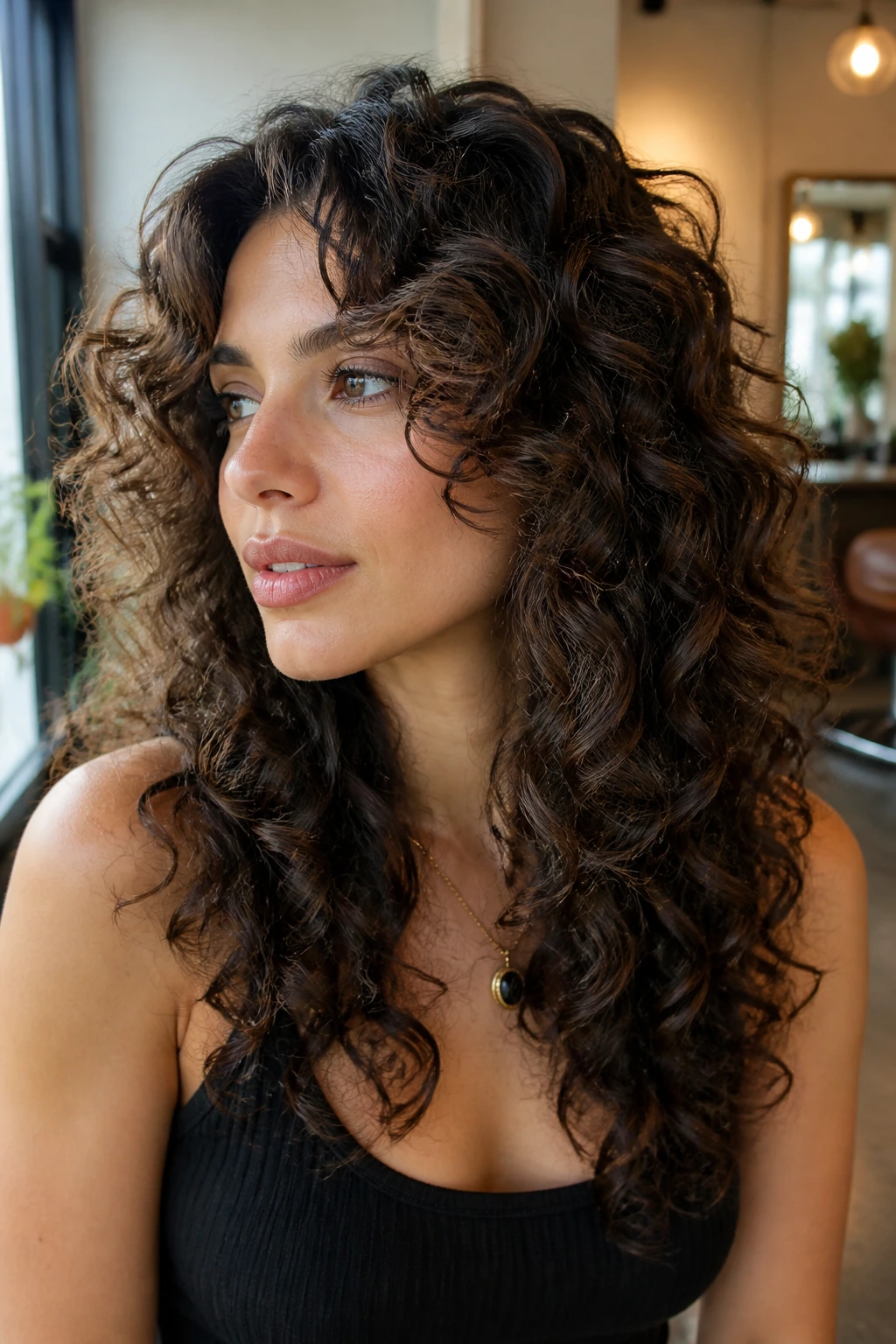
A U-shape cut is one of those shapes that quietly makes curly hair look expensive without trying too hard. The hemline stays rounded, not blunt, which keeps the long layers flowing instead of sitting in one heavy block. On an oval face, the U shape keeps the length elegant while the soft face pieces stop the front from feeling severe.
The face pieces should be long enough to skim the cheekbones and drift toward the jaw. That gives the front movement without taking all the attention. If the curls are tighter, the pieces can be left a little longer so they do not bounce too high.
This is the style I’d point someone toward if they want bangs but do not want to commit to a full fringe. The front pieces can act like invisible bangs when you wear the hair forward, then disappear into the cut when you tuck one side back. Flexible cuts matter. Hair changes mood more often than people admit.
14. Piecey Bangs with Crown Lift
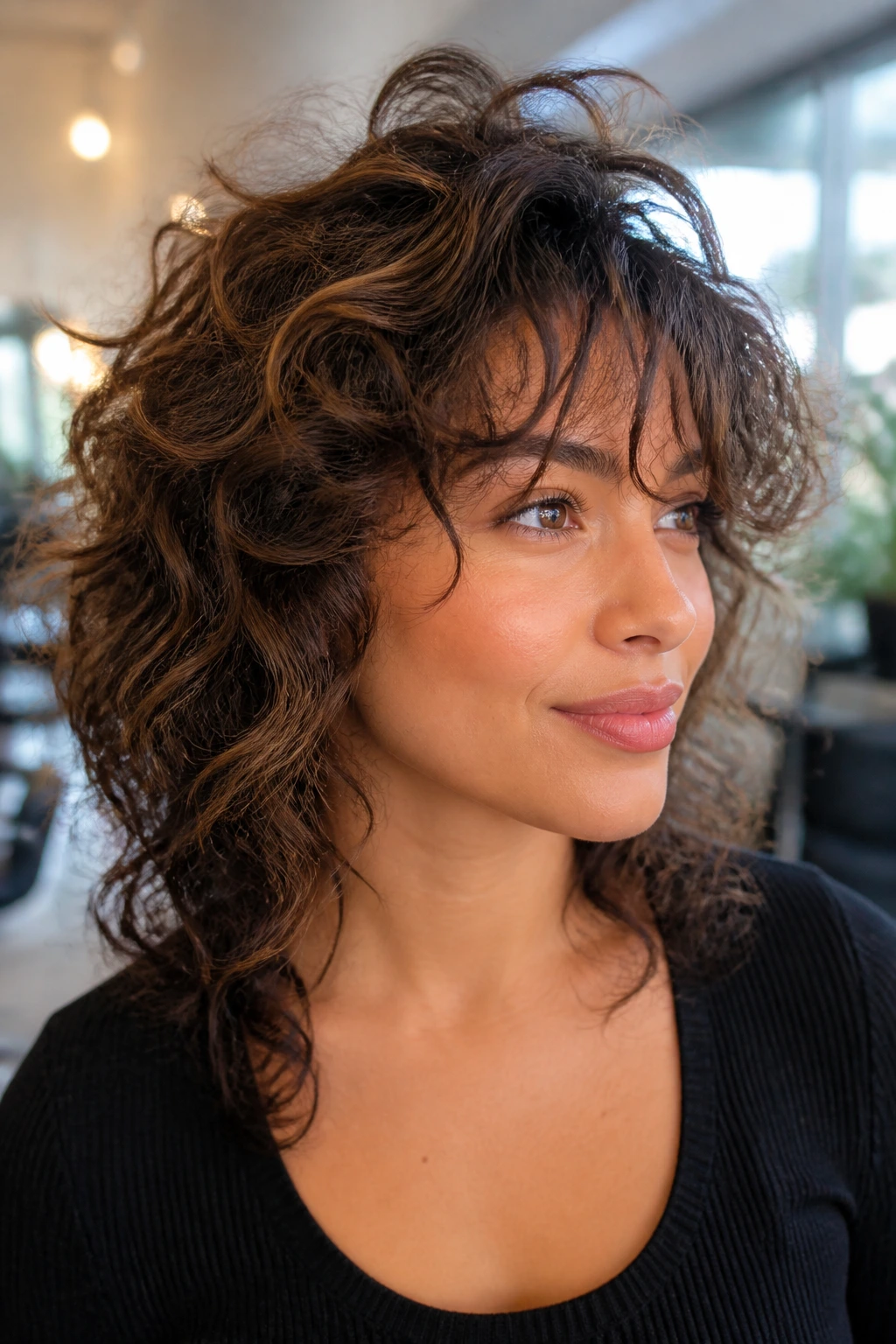
Piecey bangs look best when the curls are allowed to separate a little. That separation keeps the front from turning into one thick sheet and gives oval faces a more playful line across the forehead. The crown lift helps the whole style feel light, not flattened by the weight of the fringe.
This cut depends on hold. A small amount of mousse at the roots and a touch of gel through the bang area will help the pieces stay defined as they dry. Then you leave them alone. Touching them too much makes the pieces frizz apart.
It’s a smart choice for medium to thick curls that need some direction at the front. If your hair tends to collapse at the crown, ask for the top layers to stay slightly shorter so the root can stand up a bit. The bang area will look better if the hair behind it has some lift to support it. Front and top have to work together. They always do.
- Best for people who like a little separation and texture in the fringe.
- Ask for a light crown lift, not aggressive thinning.
- Keep the front long enough to be reworked after washing.
15. Air-Dried Micro Fringe and Long Ends
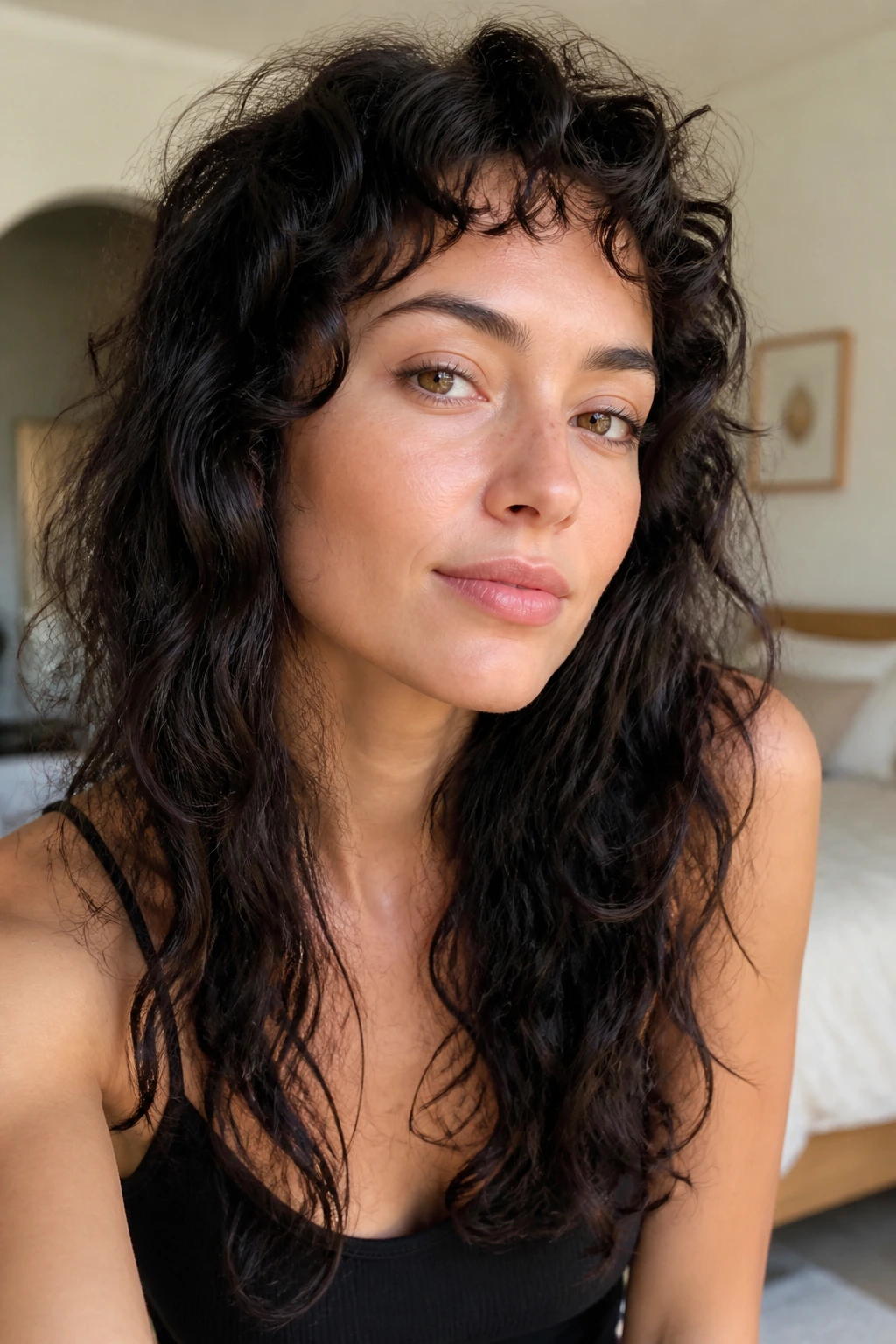
A micro fringe on curly hair is not for the faint of heart, but the softer air-dried version can be striking. The key is to keep it just long enough that the curls settle into a line instead of springing into a tiny shelf. On an oval face, that small edge at the forehead can create a nice contrast with the long ends.
The long ends are what save this look. They balance the short front so the cut doesn’t read as severe. If the bangs are very short, the hair needs a long, flowing body underneath to keep the whole thing from looking abrupt. The contrast is part of the appeal.
I would only suggest this if you like a little attitude and you’re happy to maintain the front often. Curly micro fringe does not go dormant and behave itself. It wakes up, it lifts, it frizzes, and then it needs a quick reset. If that sounds annoying, choose a longer fringe and save yourself the trouble.
16. Halo Fringe with Graduated Length
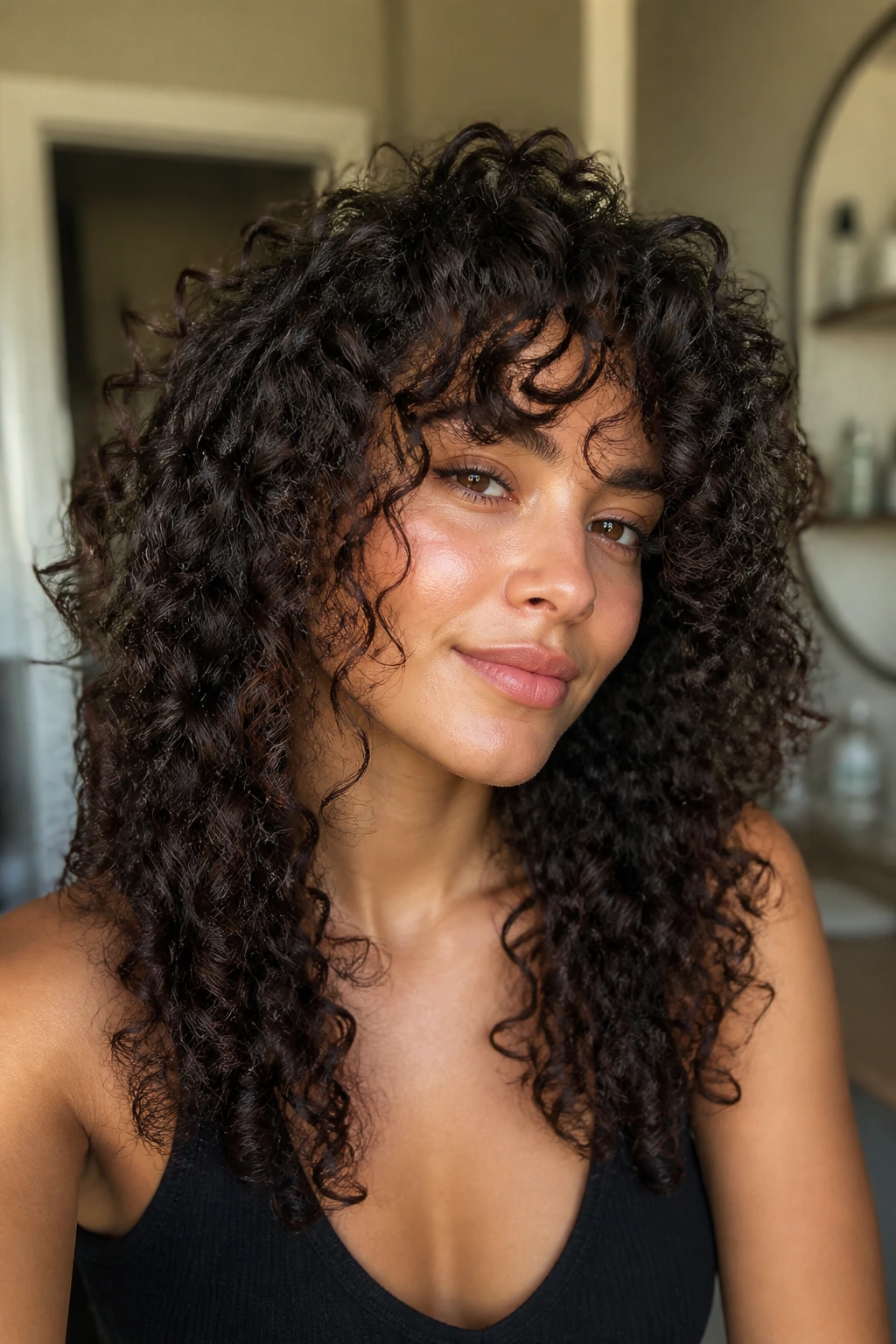
A halo fringe wraps the face in a soft curve, which is lovely on oval features because it adds roundness without hiding the balance of the face. The bangs are longer near the temples and a touch shorter in the center, but the whole thing should feel gentle, not carved.
This cut does best on tighter curl patterns, where the hair can actually hold that rounded idea without looking flat. The graduated length keeps the fringe from sitting as one line across the forehead. Instead, it bends with the curl and moves like a frame.
The layers underneath should stay long enough to support the curve. If the rest of the hair is cut too short, the halo effect gets lost and the front starts to float. I like this style for people who want their bangs to look finished even when they haven’t styled the whole head perfectly. That’s a useful kind of grace.
17. Collarbone Layers and Peekaboo Bangs
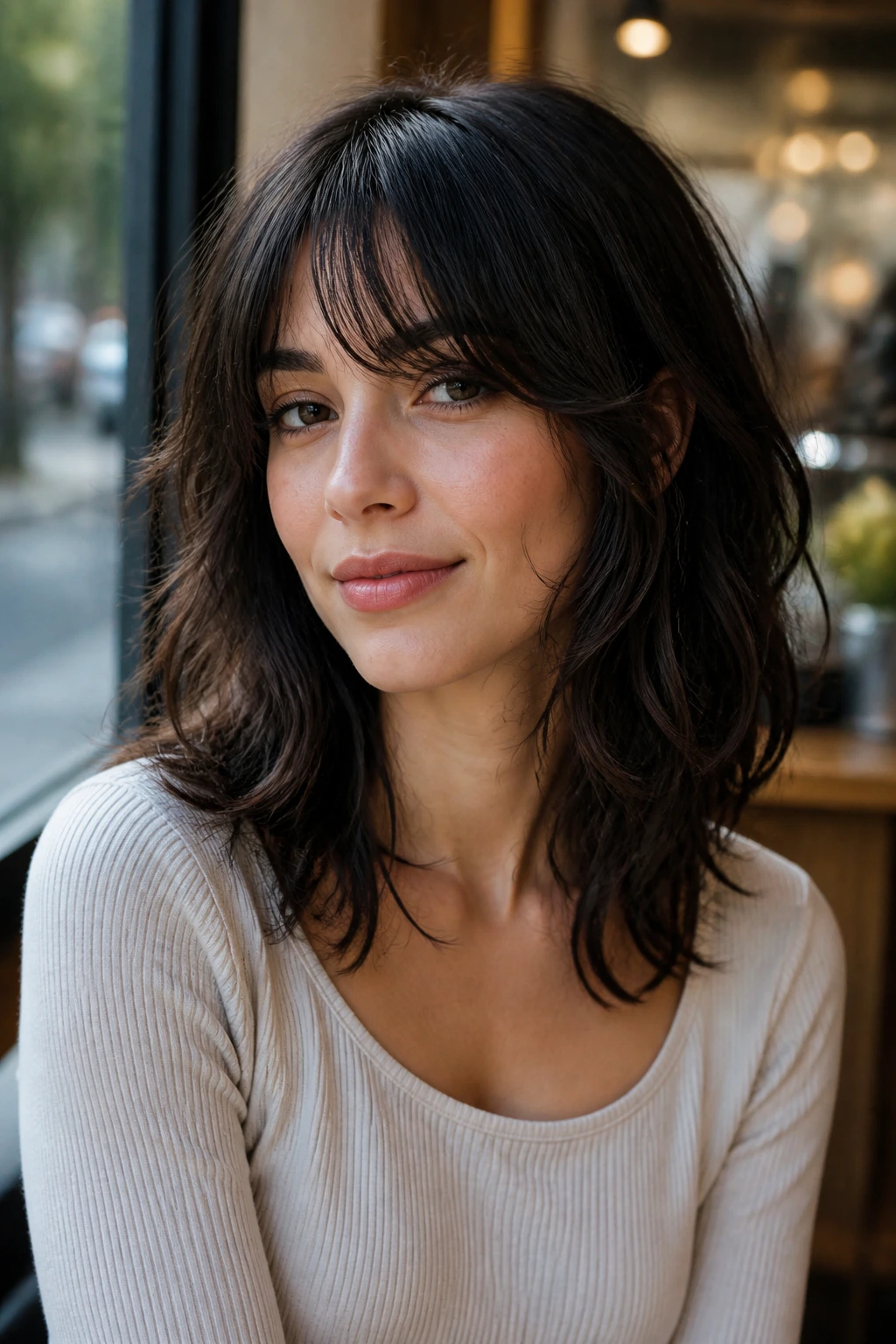
Peekaboo bangs are the low-commitment cousin of a true fringe. They hide in the front of the haircut and only reveal themselves when the hair shifts. On an oval face, that works well because the face already has enough balance; the bang just adds interest instead of doing all the framing.
The collarbone layers are what make this cut feel complete. They give the hair a long vertical line, so the front pieces can stay subtle and still matter. If the bangs are too short or the layers too high, the style loses its easy shape and starts looking unfinished.
This is a good choice if you want to flirt with bangs without handing your whole forehead over to them. It also grows out gracefully, which I value more than I should probably admit. A haircut that can morph with your mood is worth keeping around.
18. Crescent Bangs with Sculpted Side Pieces
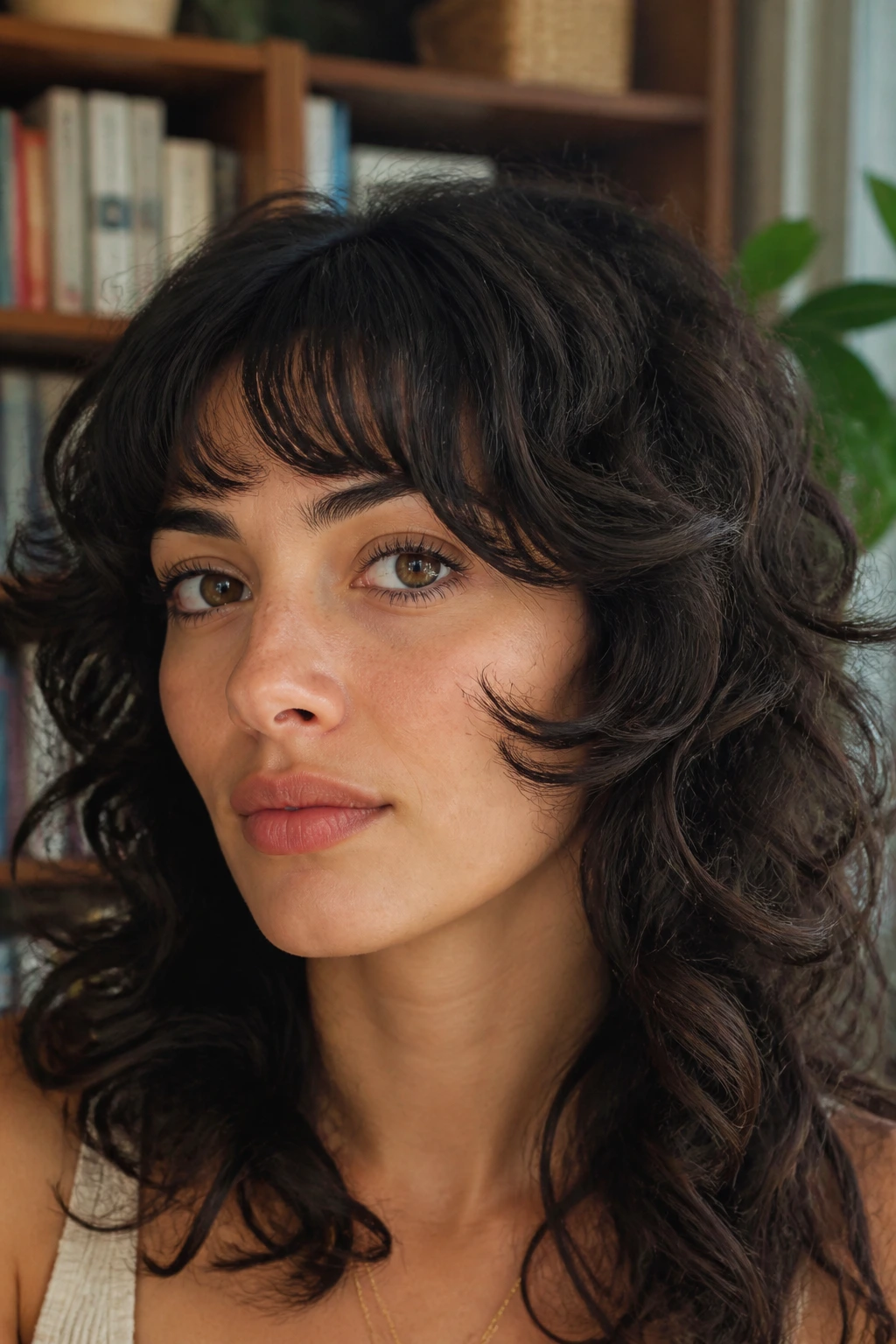
Crescent bangs curve like a shallow moon across the forehead, and that shape can be gorgeous on curly hair when the sides are sculpted correctly. Oval faces can handle the stronger line because the proportions stay even, but the curve keeps the look soft enough to move. It’s a little more polished than a curtain fringe and a little less rigid than blunt bangs.
The side pieces should be long and deliberate. If they stop too abruptly, the crescent loses its shape and turns into a disconnected fringe. Let the front pieces taper toward the cheekbones, and the whole haircut starts to feel intentional.
This style is especially nice for people who like their curls to look dressed up even on ordinary days. It has a gentle formal feel. Not stiff. Just finished. If your hair is very dense, ask the stylist to keep the interior light so the front doesn’t balloon after drying.
19. Softly Shaped Layers with Defined Curl Clumps
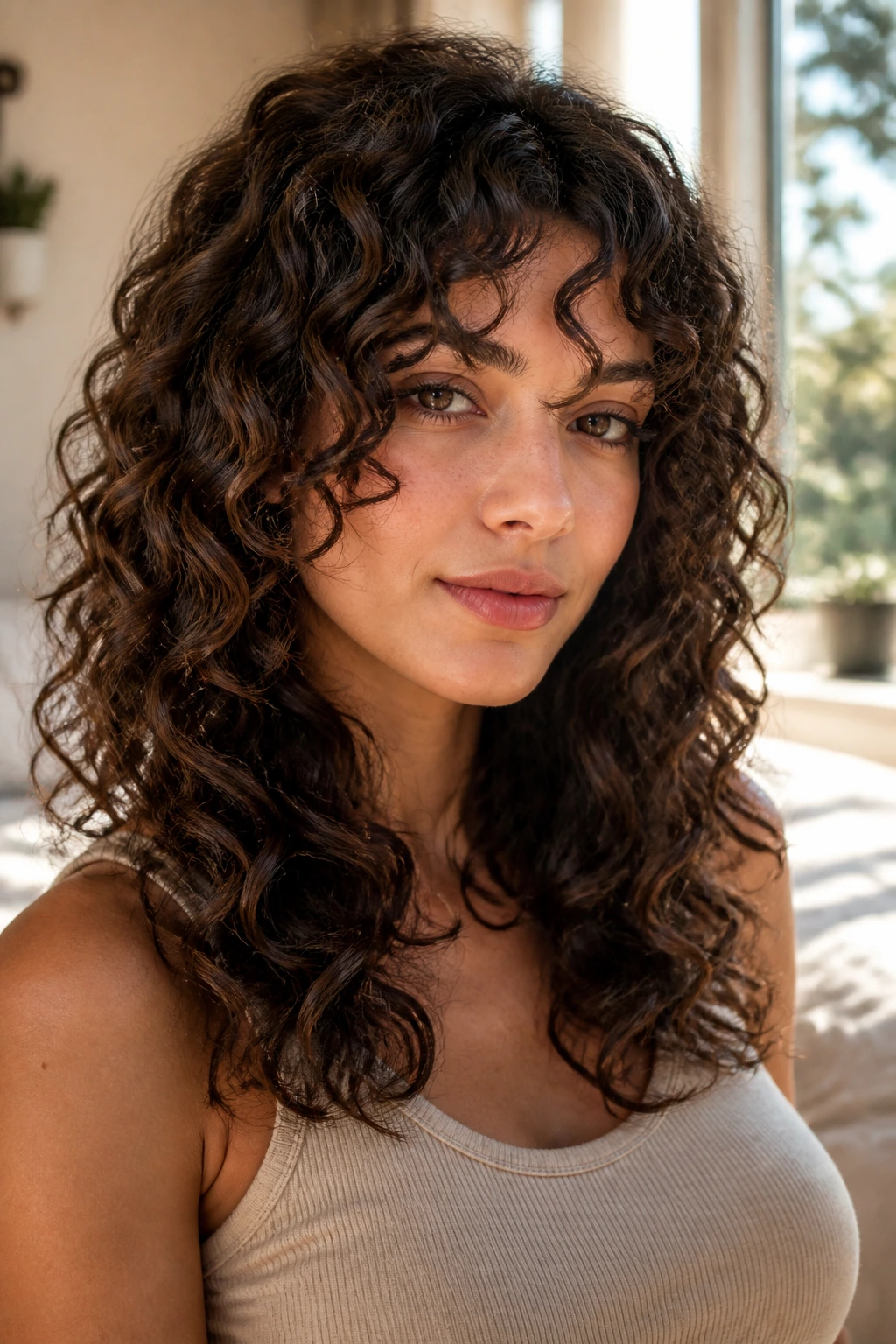
Some curly cuts look better when the curl clumps are protected instead of broken up. This is one of them. The front pieces should be shaped around the clumps, not against them, so the bangs and long layers keep their natural groupings. On an oval face, that creates a clean outline without flattening the hair’s own texture.
The cut works because it leaves the curls alone in the places where they want to make sense. A stylist who understands clump patterns will often cut less than expected and let the hair show its own structure. That restraint is a good thing. People try to over-edit curly hair all the time. The result is usually frizz.
This look fits almost any density if the curl pattern is consistent. It’s especially useful for people who want the cut to hold up after a rough night’s sleep, a humid walk, or one too many times pulling it behind the ears. The clumps do the work. The layers just keep them moving.
20. Feathered Fringe Sweep with Long Cascades
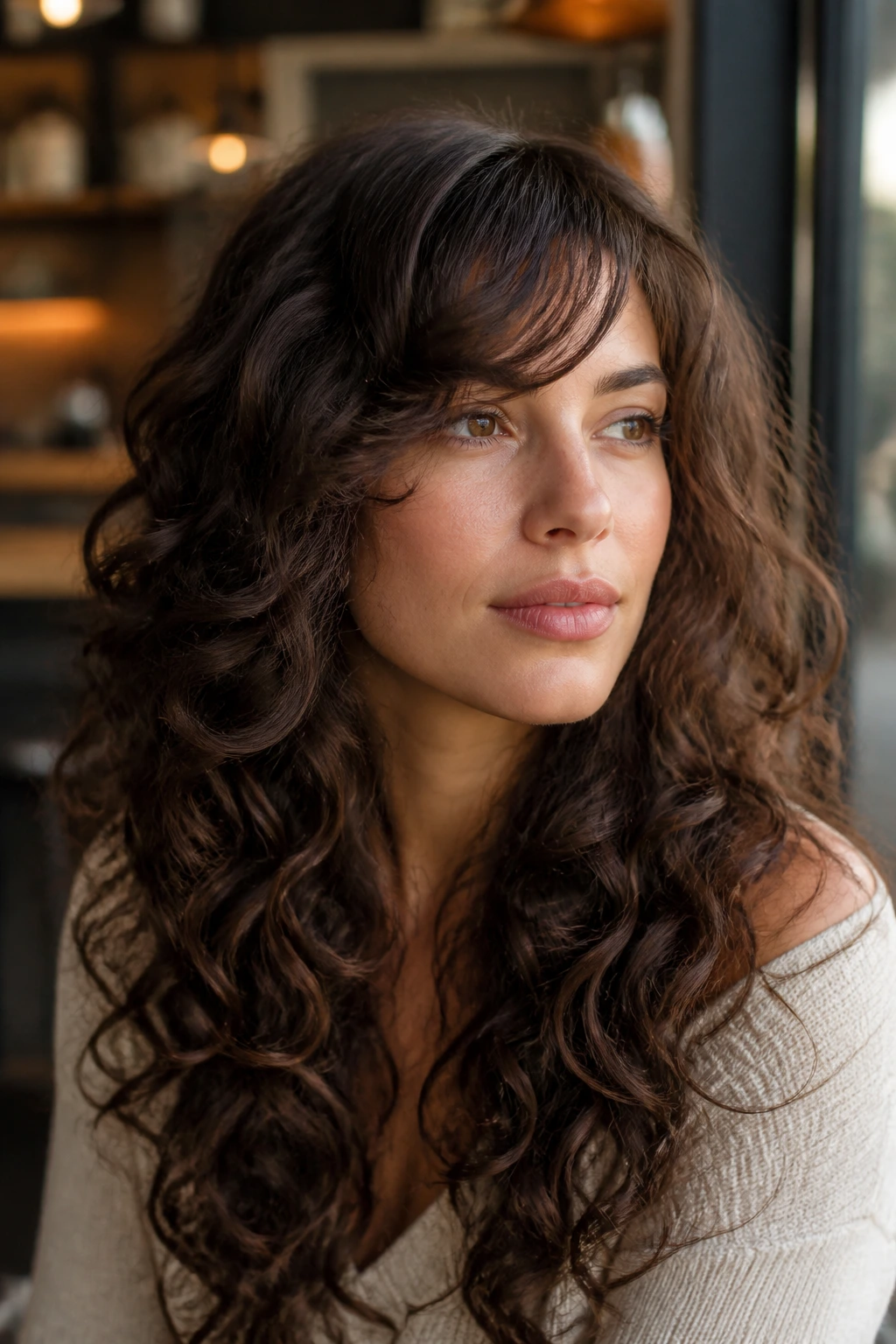
A feathered fringe sweep gives you a little air around the forehead without committing to a full curtain or a blunt bang. The front moves to one side, then melts into long cascades that keep the rest of the hair flowing. On an oval face, that diagonal motion makes the features feel lively instead of static.
This cut is useful if you like your hair to look softer than sculpted. The front should not be too short or too dense. It needs room to bend. Curly hair does that beautifully when the front is left long enough to settle into its own direction.
I’d use this shape for medium curls or loose curls that need a bit of refinement around the face. It’s easy to push back, clip back, or reshape with water and a dab of gel. That flexibility matters on mornings when you do not want to think too hard.
21. Barely-There Bangs and Expansive Layers
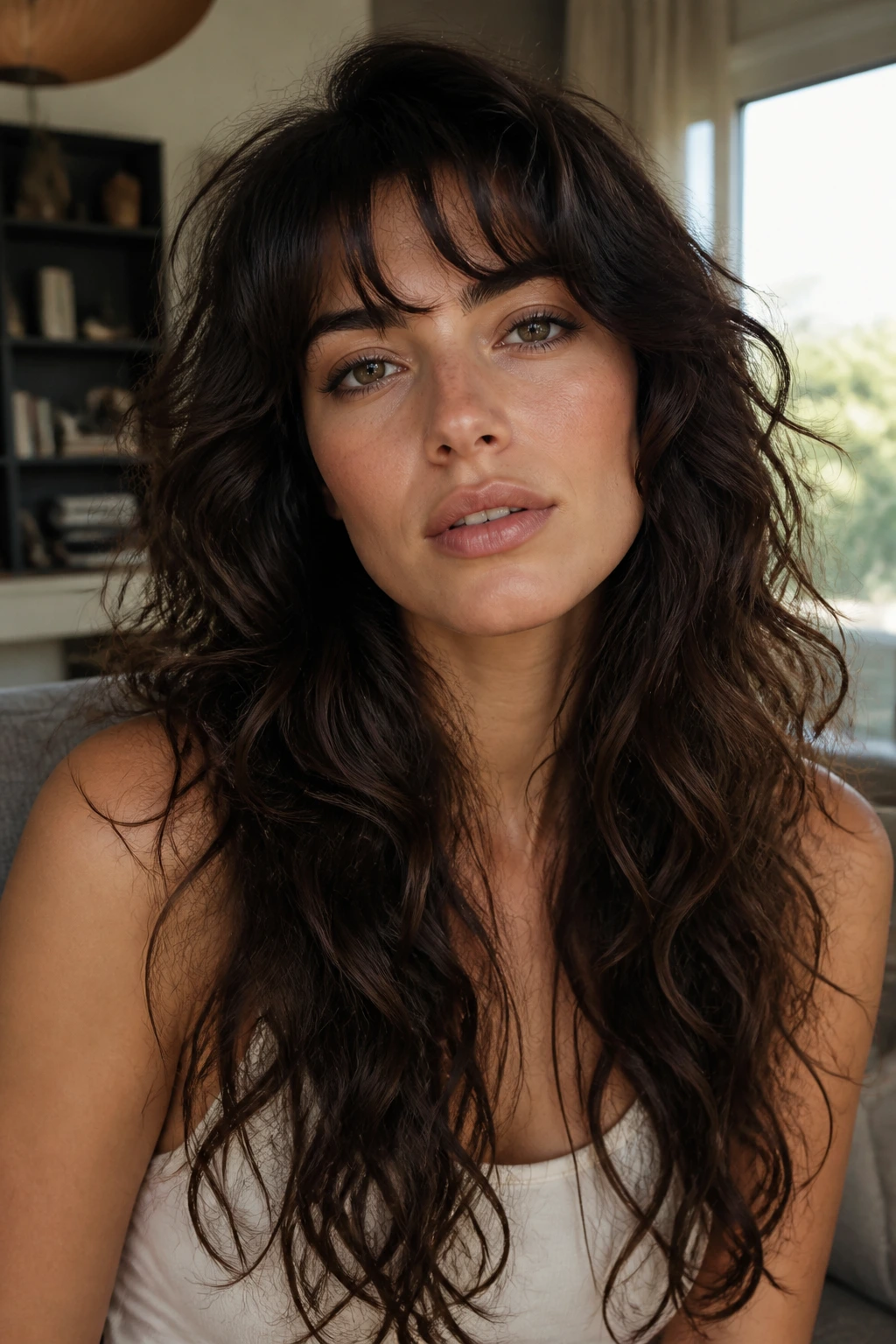
Barely-there bangs are a smart option if you want the idea of fringe without a bold cut line. The front pieces sit so lightly that they just graze the forehead and then disappear into the long layers. On an oval face, that keeps the natural balance intact while adding a little softness around the eyes.
The expansive layers are the real show here. They need to start low enough to keep the hair full from cheekbone to chest, not high enough to make the cut frilly. The bangs act like a detail, not the headline.
This is a calm choice for people who have been curious about bangs but nervous about maintenance. It’s also forgiving if your curl pattern changes from season to season or from wash day to wash day. The style won’t demand that everything land in the same place every single morning. That’s its charm.
22. Deep Side Flip with Temple Volume
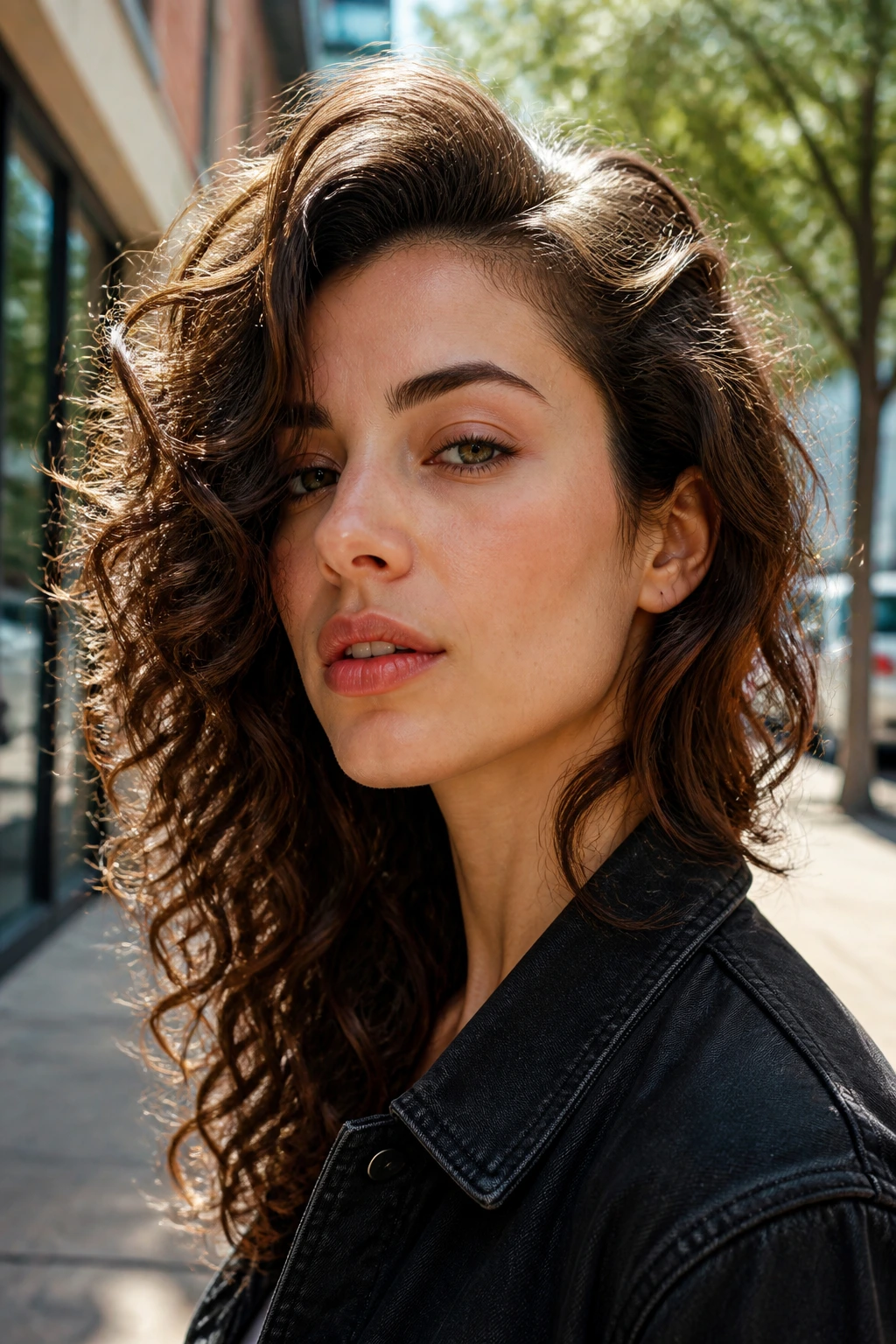
A deep side flip changes the whole mood of curly hair. It creates lift at the roots, volume at the temples, and a long front sweep that works especially well on oval faces because it gives the face a diagonal line. The cut should support the style, not fight it.
The temple volume matters. Without it, the side flip can look like hair that simply drifted over and got stuck there. Ask for layers that keep the side strong and the front long enough to swing. That gives the style a proper shape even when the curls loosen up.
This one is a favorite if you like dramatic part changes. It can look polished, sultry, or casual depending on how much root lift you build at the front. A little clip at the base while drying goes a long way. So does not overloading the bang area with cream.
23. Ribbon Layers with a Low-Drama Fringe
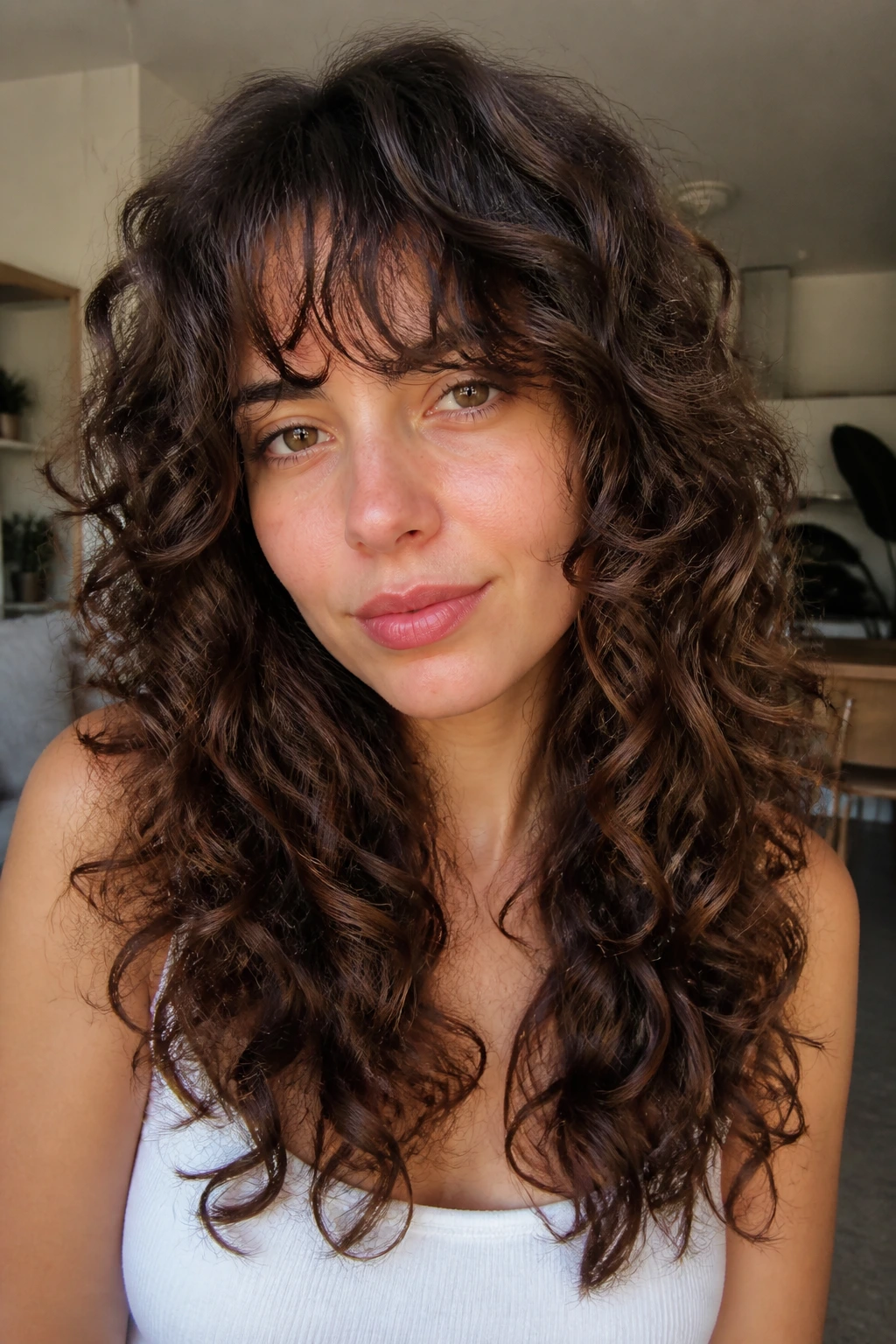
Ribbon layers are long, smooth curves of curl that sit one over another instead of stacking into a block. Add a low-drama fringe and you get a cut that feels soft from every angle. Oval faces suit this shape well because the face keeps its balance while the curl movement does the styling for you.
The fringe should be long enough to disappear when it wants to, which is part of why the style feels calm. No hard line. No blunt break across the forehead. Just a front section that joins the rest of the haircut with a little more intention than the lengths around it.
This is one of those styles that works on ordinary life. Humidity, a long day, a quick bun, a late-night scrunch with water — it survives all of it. I like haircut ideas that don’t need ceremonial handling. This is one of them.
24. Brushable Bangs and Full-Length Curves
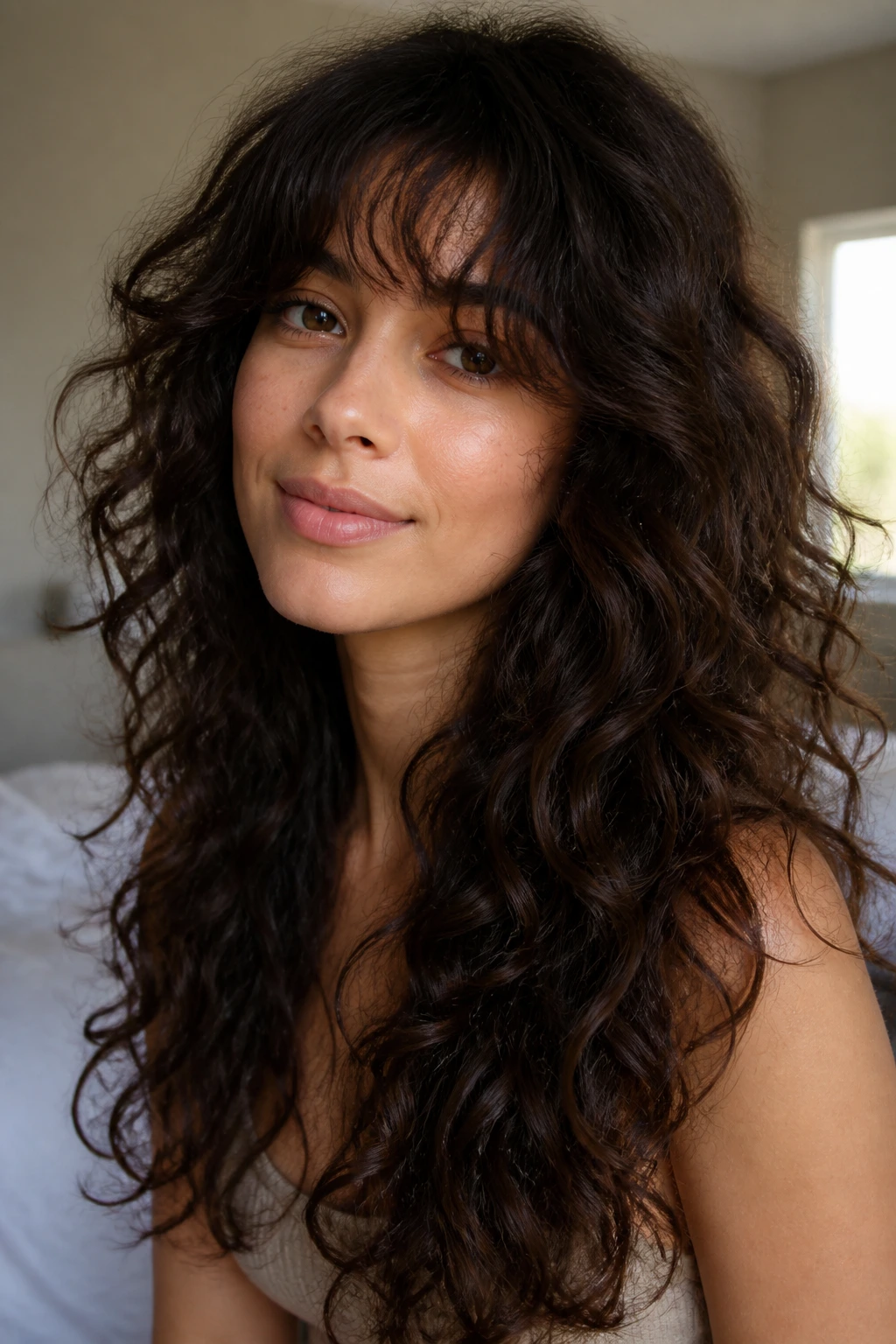
Brushable bangs are for people who occasionally smooth the front with a round brush or diffuser comb while leaving the rest of the curls intact. The haircut gives you enough length in the fringe to style it either way, which is useful if you want a little polish around the forehead without flattening the whole head.
The full-length curves underneath keep the shape from turning too formal. Long layers are still doing the heavy lifting, so the bangs can be brushed, air-dried, or finger-shaped depending on the day. That flexibility makes this cut feel more wearable than a pure blowout fringe.
On an oval face, brushable bangs can sharpen the eyes and add structure without making the face look longer. Keep the shortest point long enough that the curls have room to swing. If you cut them too short, the brushable part disappears and you’re left fighting the front every time you wash it.
25. Minimal Front Pieces with a Blended Curl Finish
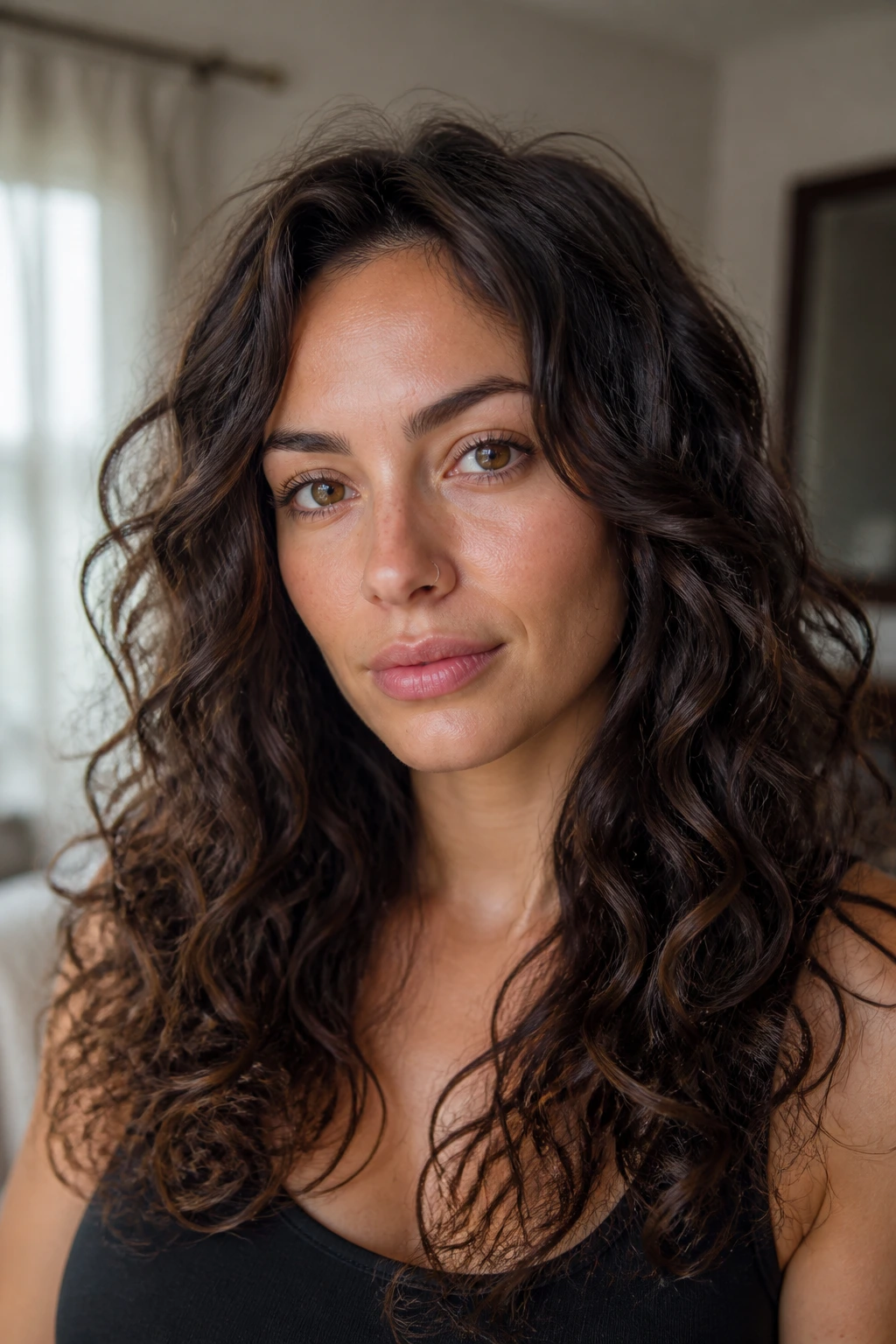
Minimal front pieces are the quietest way to wear bangstyle long layers. The front sits close to the hairline, slips into the longer layers, and keeps the forehead open while still softening the face. On oval faces, that kind of restraint can be more flattering than a big statement fringe because it lets the proportions stay clean.
The blend is what makes this cut work. The front pieces should not look separated from the rest of the hair. They should merge into the long layers so that, when the curls dry, the haircut reads as one shape instead of a stack of ideas. That’s harder to pull off than it sounds.
If you’re unsure about bangs, start here. It gives you the feeling of fringe without the maintenance spike. And if you decide later that you want more drama, it’s easy to move from this kind of blended front into a fuller curtain or bottleneck shape.
Why Bangstyle Long Layers Suit Oval Faces with Curly Hair
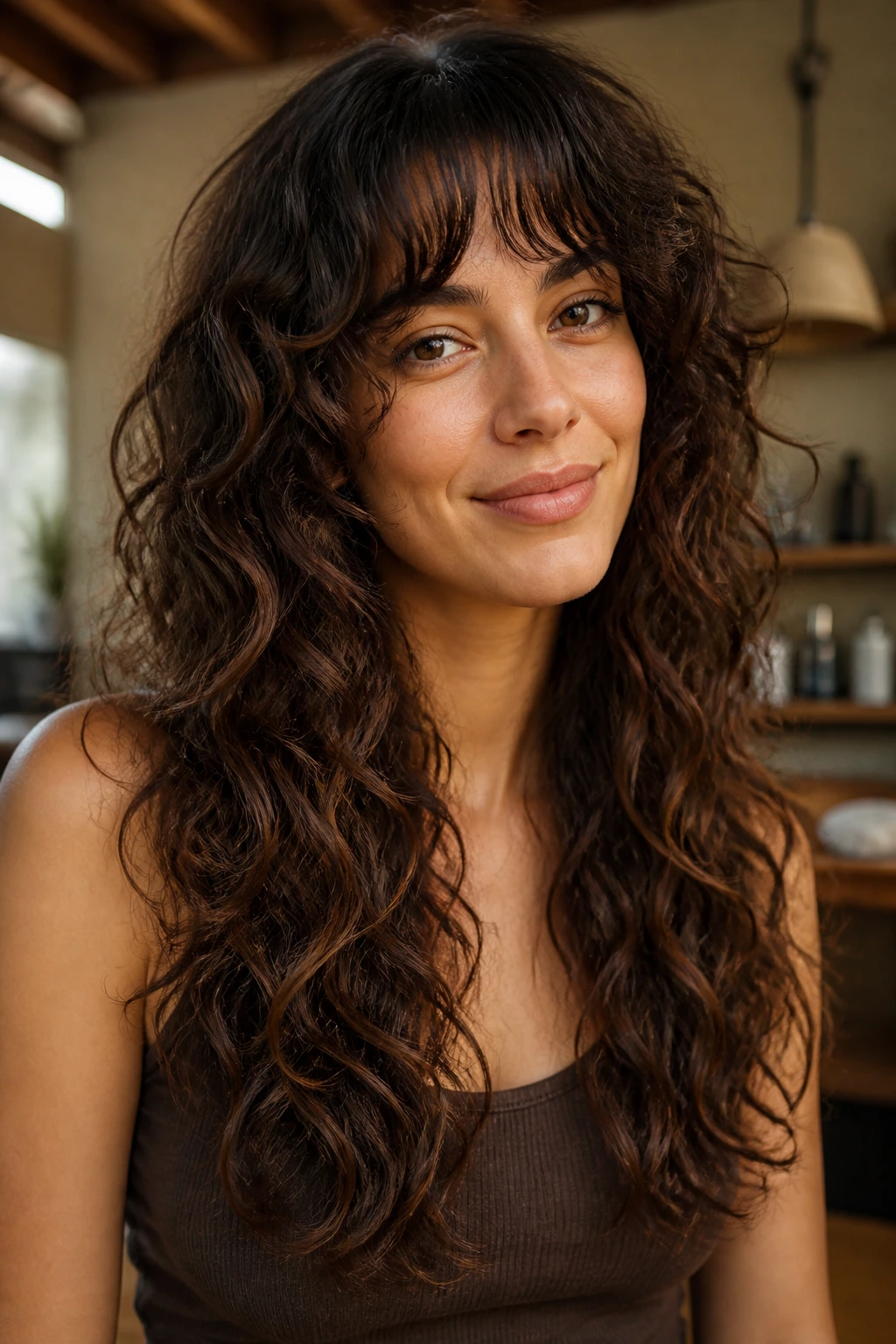
Oval faces have one big advantage: the proportions are already balanced, so the haircut doesn’t need to correct anything. That freedom is a gift, but it can also make a salon conversation weirdly vague. “Anything” is not a plan. Bangstyle long layers work because they give you places to spend that freedom. A fuller fringe can shorten the face a bit. A longer curtain can open it. A side sweep can break symmetry. The face shape can handle all of it.
Curly hair adds another layer of planning. The same cut behaves differently once the hair dries, and the difference is not subtle. A 3A curl can move an inch or more. Tighter textures can move even farther. That’s why the cleanest curly cuts are usually a little longer and a lot more thoughtful around the front. If the bangs are cut to the exact dry length while wet, they will probably bounce too high and sit awkwardly above the brow.
Long layers keep the silhouette from getting wide at the bottom. That triangle shape is the enemy here. You know it when you see it: a pile of volume around the cheeks, then a heavy, blunt bottom that just hangs there. Long layers start lower, often around the chin or collarbone, so the curl pattern can keep moving instead of stacking. The fringe then acts like a frame, not a helmet.
If you remember one thing, make it this: the best version of this cut respects both the face and the curl. Ignore either one, and the haircut starts to work against you.
The Tools That Make Curly Fringe Easier to Live With
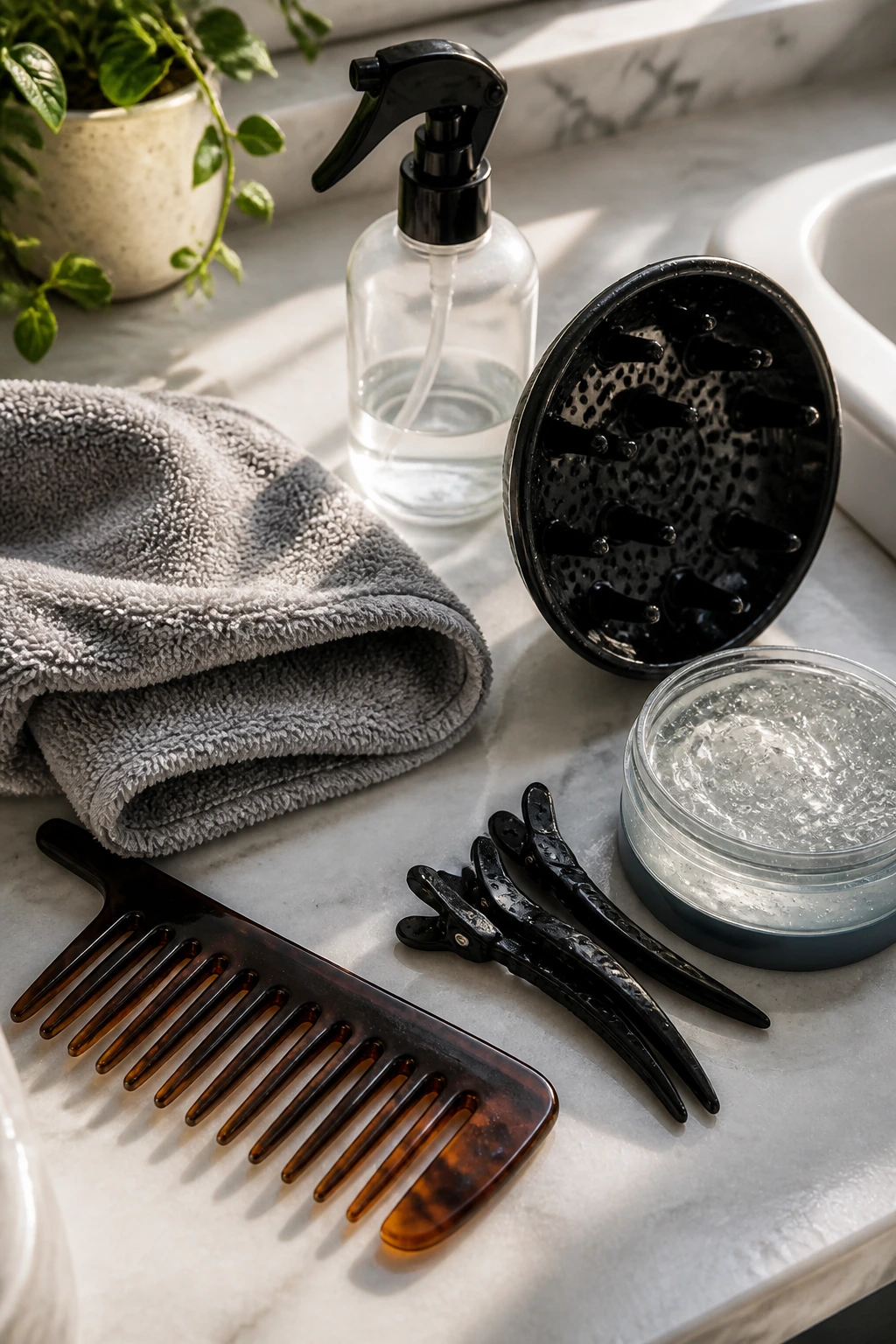
A good haircut helps. The right tools keep it from turning into a daily argument. Curly bangs and long layers need a small kit, not a shelf full of gadgets.
- Wide-tooth comb: Use it on wet hair to distribute conditioner without breaking up curl clumps.
- Microfiber towel or cotton T-shirt: This cuts down on rough frizz around the fringe and the temples.
- Spray bottle: A light mist is enough to reset bangs without soaking the whole head.
- Diffuser attachment: Low heat and low airflow help the front dry with shape instead of flattening.
- Duckbill or root clips: Clip the crown for 10 to 15 minutes if you want lift at the top.
- Lightweight gel or mousse: The front usually needs a little hold so it doesn’t separate into fuzzy bits by lunchtime.
- Hair shears: If you trim bangs at home, use real shears. Kitchen scissors chew the ends and make the fringe frizz faster.
- Hand mirror: Check the sides. Curly fringe often looks fine from the front and strange from the side.
I’d also keep a small satin scrunchie nearby. It’s useful when the bangs start annoying you halfway through the day and you want to pin the front back without denting the rest.
How to Ask for Bangstyle Long Layers at the Salon
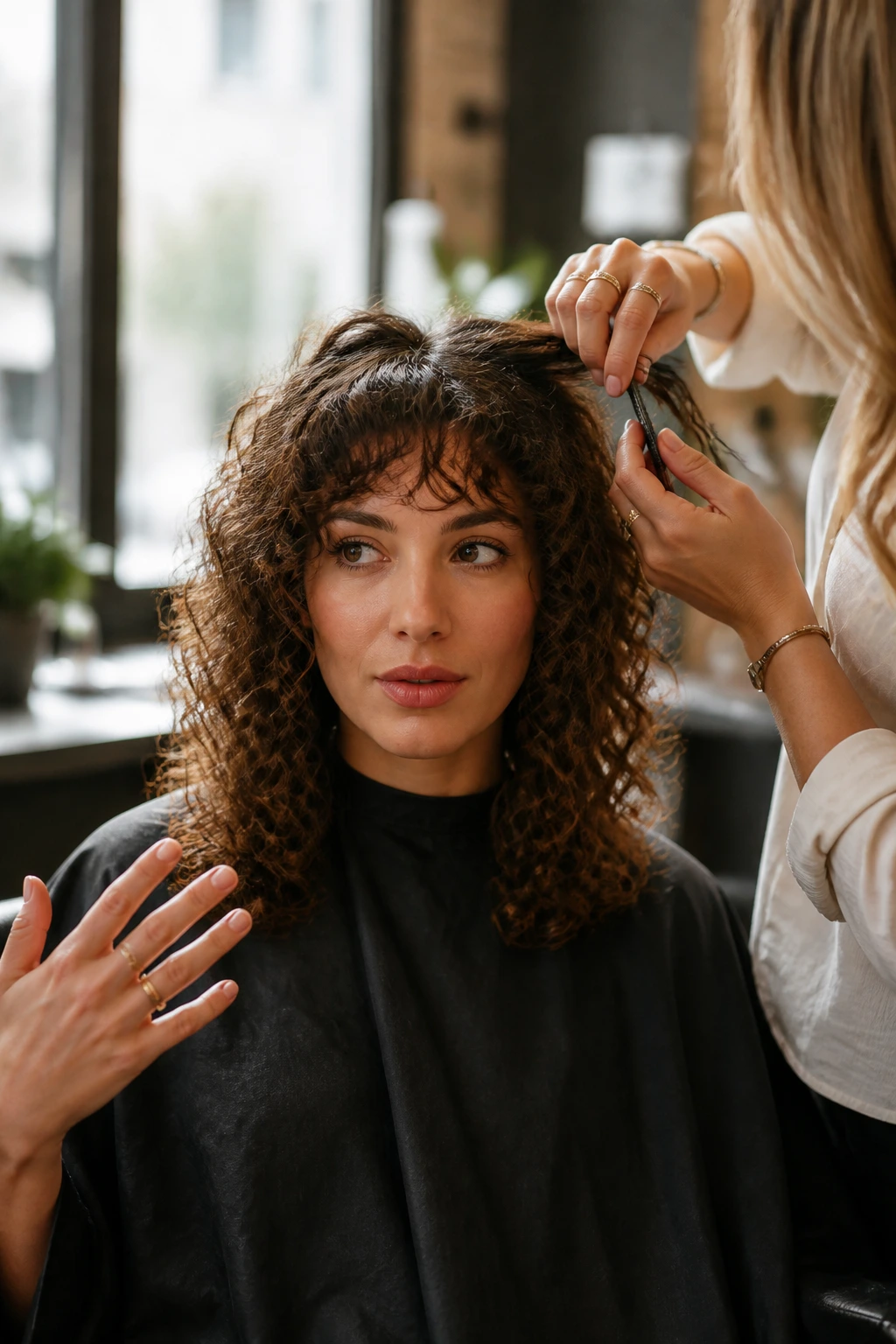
The fastest way to miss this haircut is to ask for it in general terms. “Long layers with bangs” can mean almost anything to a stylist, and on curly hair that vagueness can get expensive. Bring photos, yes, but bring the right ones: one front view, one side view, and one picture showing how the fringe sits when dry.
Tell the stylist where your natural part falls. If you always wear a center part, say so. If your curls prefer a side part and fight the center one, say that too. The part changes how the bangs frame the face, and an oval face can wear both, but the cut should still respect the way you actually style it.
Ask for the fringe to be cut with shrinkage in mind. That usually means leaving the shortest pieces longer than you think you want. You can also ask where the fringe should land when dry: brow, just below the brow, cheekbone, or lip. Those anchors are more useful than vague words like “face-framing.” They give the cut a map.
If the stylist works with curls, ask whether they prefer a dry cut, curl-by-curl shaping, or a hybrid approach. Not every curly cut has to be dry cut to work, but the person holding the shears should understand what your curls do when they wake up.
How to Style the Shape on Wash Day and Day Two

Curly fringe needs its own routine. The front dries differently from the rest of the head, and if you treat it like the back of your hair, it tends to frizz or split.
Wash Day: Start with soaking-wet hair and use a small amount of leave-in through the mids and ends. The fringe usually needs less product than the rest of the head, not more. If you load the front with cream, it can collapse before it fully dries.
Drying: Use a diffuser on low speed and low heat. Hover first, then cup the curls once they begin to form. If you want lift at the crown, clip the roots for 10 to 15 minutes while the hair is still damp. That tiny step often makes the whole cut look more intentional.
Day Two: The fringe often needs its own reset. Mist the front lightly, pinch in a pea-size bit of gel, and let it dry without constant touching. If the curls have gone flat on one side, flip the part or clip the opposite side up for a few minutes while the front dries again.
Heat Styling: If you smooth just the bang area with a brush or a small round brush, stop once the section is controlled. You do not need to blow out the whole head. Mixed texture can look better than forcing the entire style into one finish.
Practical Shape Boosters That Make the Cut Behave
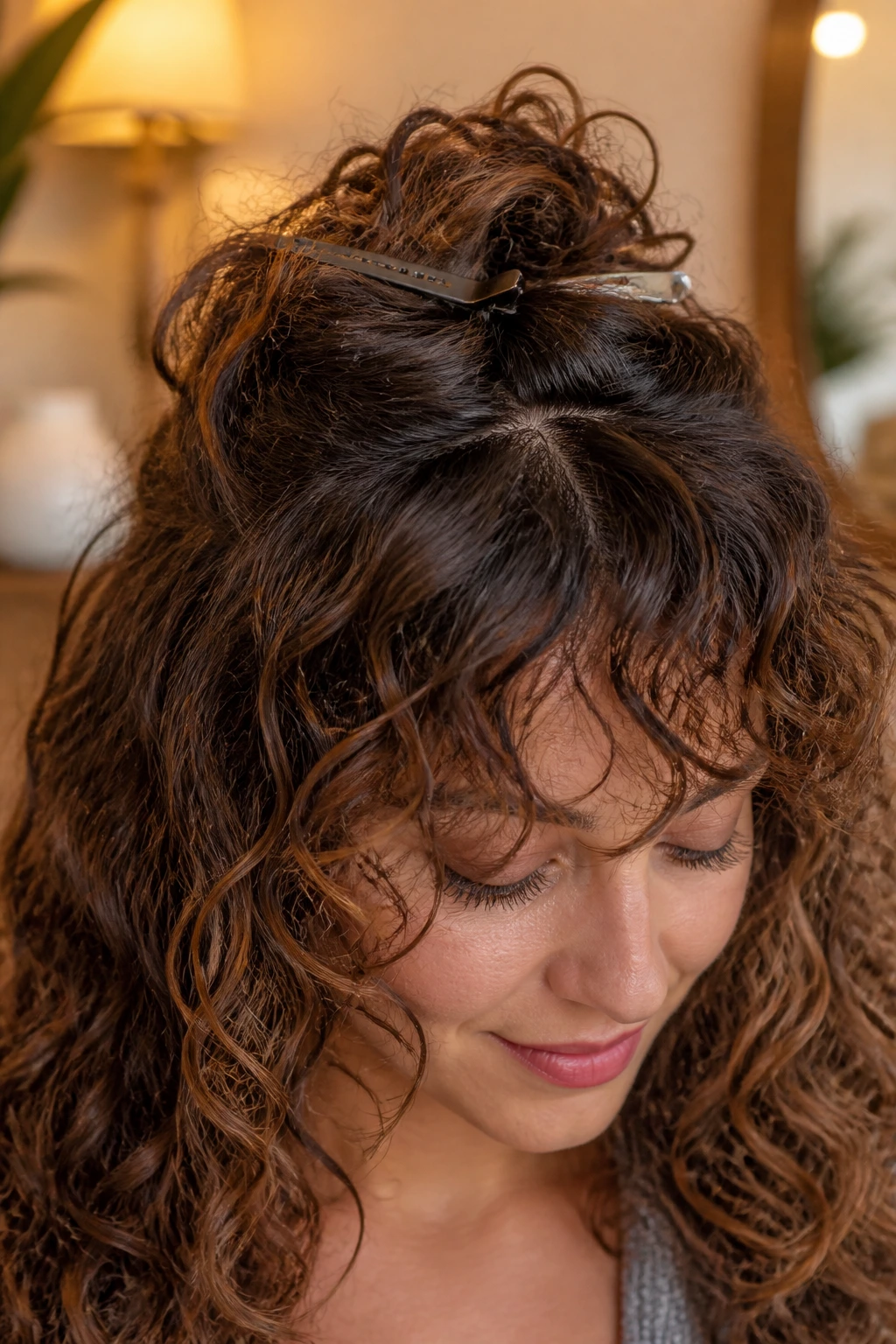
Shape Boost: Use root clips only at the crown, not all over the head. Too many clips make the hair look puffy in a weird way; two or three at the top are usually enough.
Fringe Fix: If the bangs split in the middle, mist them lightly, twist each side once, and let them dry as separate pieces for a minute or two. That usually resets the line without needing a full restyle.
Humidity Plan: A light-hold spray over the front can keep the bangs from puffing open. Do not drown them. A mist is enough. Heavy spray can turn curl definition into a crusty mess.
Make-It-Yours: If your curls are fine, ask for fewer internal layers and a slightly fuller fringe. If your curls are dense, keep the fringe a touch longer and let the layers remove bulk from below the cheekbone. If your curls are tight, stay away from a fringe that sits too high on the forehead; it will shrink and look accidental.
My opinion: the most flattering curly bangs usually look a little long in the chair. That is not a flaw. It is insurance.
Common Mistakes That Break the Shape
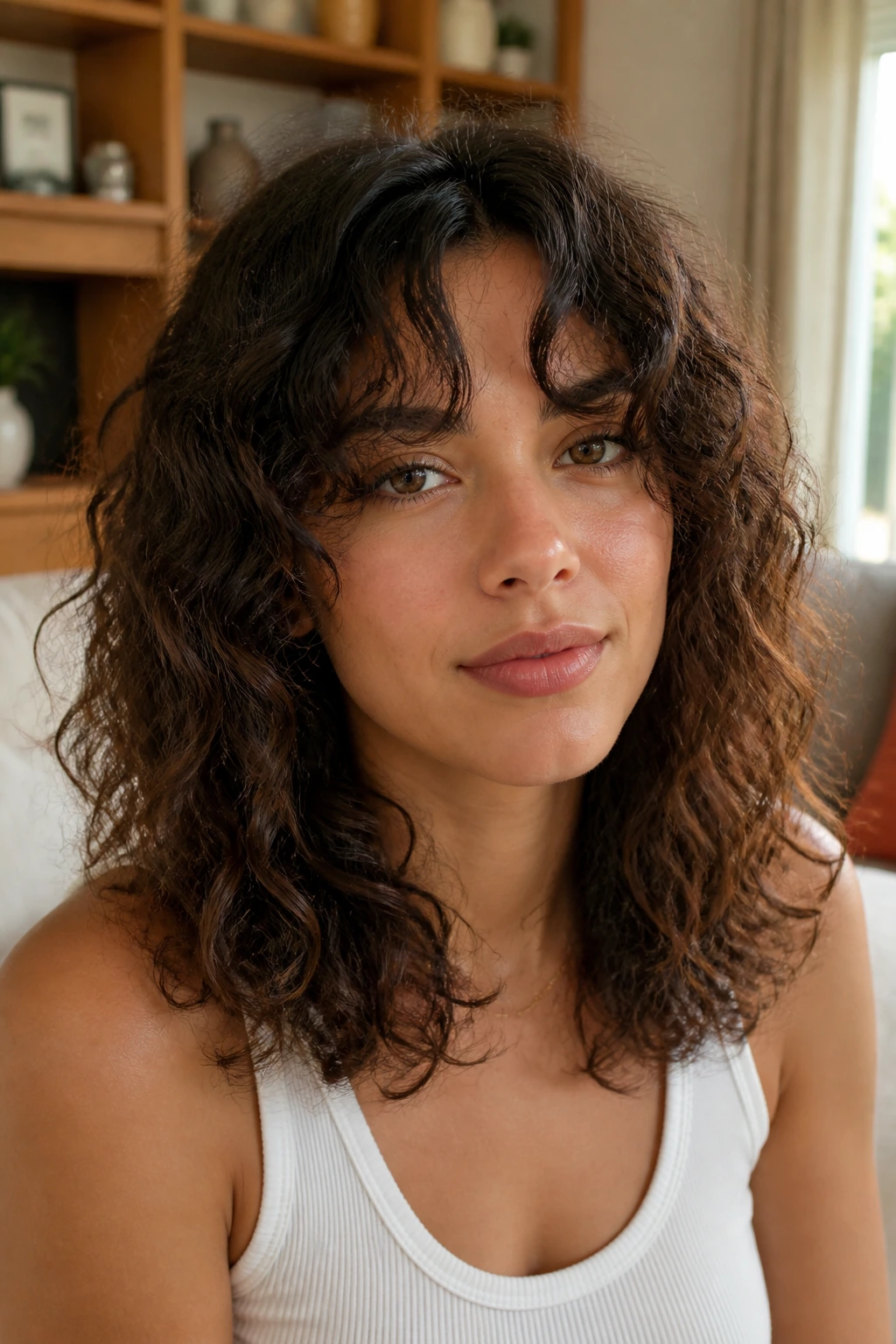
- Cutting the bangs to the dry finish while the hair is wet: Curly fringe springs up after it dries, so a “perfect” wet cut often ends up too short. The fix is simple: leave more length and trim in small passes.
- Starting layers too high around the cheeks: This creates the triangle effect, where the top expands and the ends look thin. Ask for long layers that begin lower, often near the chin or collarbone.
- Thinning the front too aggressively: A razor-heavy fringe can frizz fast and lose its line. The front usually behaves better with gentle shaping than with aggressive texturizing.
- Using heavy creams on the bangs: The fringe gets oily faster than the rest of the hair because it sits on the forehead. A light gel or foam often works better than a thick butter.
- Brushing dry curls to “fix” the bangs: That usually makes the front bigger, not better. Use damp fingers, a spray bottle, or a diffuser instead.
- Ignoring your part line: A cut built for a center part can look wrong if you wear a deep side part every day. Tell the stylist how you actually style it.
Fresh Variations to Try If You Want More Edge or Less Fringe
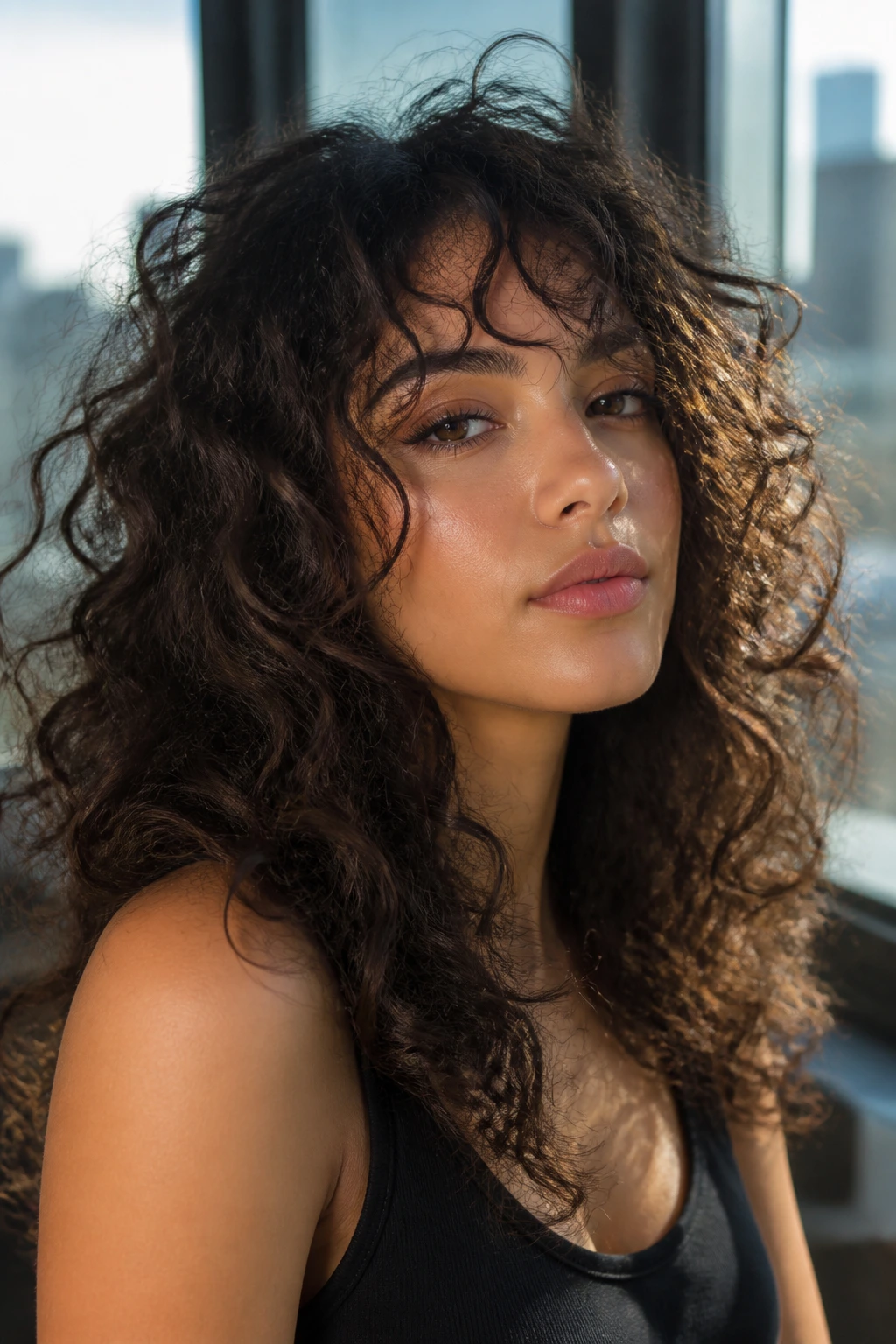
For Loose 2C Waves: Keep the fringe longer and softer, and let the layers start closer to the collarbone. Loose waves can lose their shape fast if the front is cut too short, so this version stays easier to wear.
For Dense 3B Curls: Leave more length in the bang area and remove bulk below the cheekbones. This keeps the front from puffing out while the layers still give you movement.
For Tight 4A Coils: Shape the front on dry hair and keep the shortest pieces longer than brow level. Tight coils spring more, and they usually look better with a little extra room.
For Fine Hair: Skip heavy internal thinning. Ask for long, clean layers and a softer fringe so the hair keeps enough body to look full at the ends.
For a More Polished Finish: Choose brushable bangs with long face pieces and smooth just the front with a round brush. The rest of the hair can stay curly. That contrast often looks sharper than trying to straighten everything.
For the Least Maintenance: Choose ghost bangs, barely-there fringe, or peekaboo front pieces. They give you the feeling of bangs without forcing a trim every few weeks.
Keeping Bangstyle Long Layers in Shape Between Trims
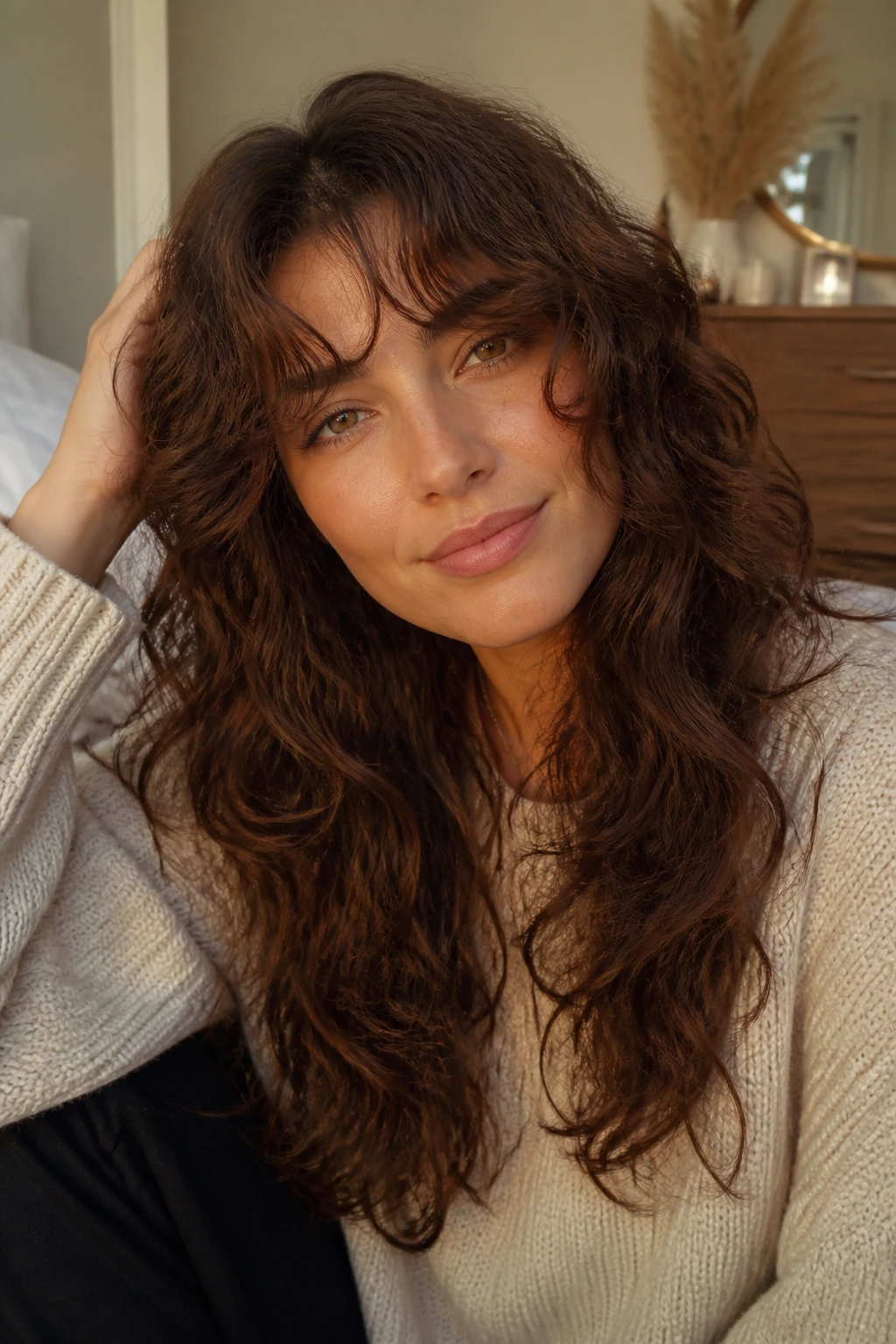
Curly bangs and long layers need a rhythm. Not a lot. Just a rhythm. If you want the fringe to stay crisp, plan on a trim every 3 to 5 weeks. If you’re happy with a softer, grown-in look, you can stretch that to 6 or even 8 weeks, but the front will start to read more like face-framing layers than bangs.
The long layers usually need less frequent attention. Around every 10 to 14 weeks is a practical window, depending on how fast your hair grows and how much shape you want to keep. If the hair is very dense, you may need the interior refreshed sooner so the outline does not bulk up at the sides.
At home, clip the bangs away from your forehead before bed if they get oily fast. A satin pillowcase helps, and so does not sleeping directly on the front section. If the fringe bends funny overnight, a light mist in the morning usually brings it back faster than a full wash.
One small trick: if the bangs start separating in a way you do not like, wash just the front section in the sink with diluted shampoo, rinse, and re-shape that piece only. That saves a full wash day when the rest of the curls still look fine.
Frequently Asked Questions
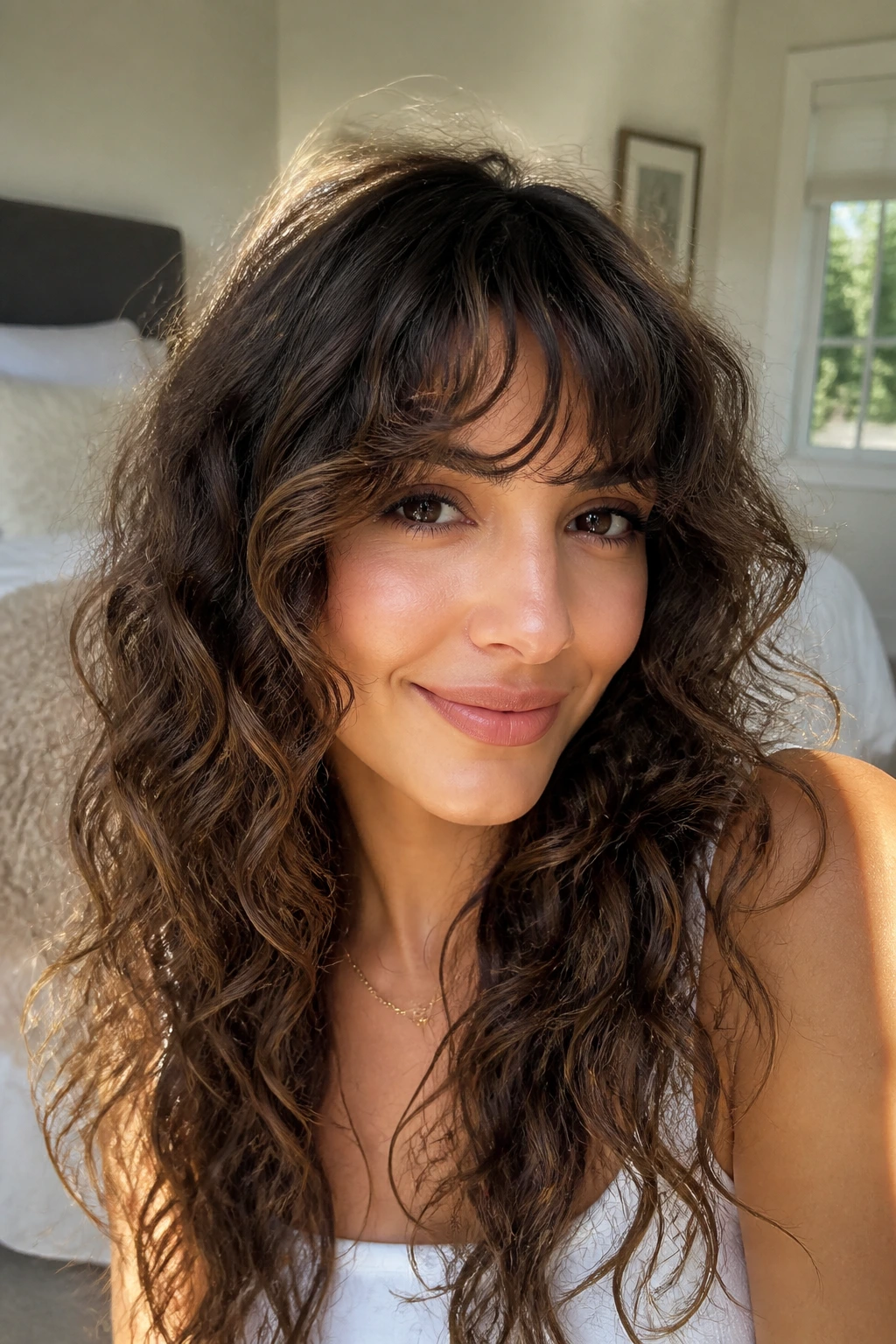
Can oval faces wear blunt bangs with curly hair?
Yes, but the bangs usually need to be longer and softer than a straight-haired blunt fringe. Curly texture changes the line, so a “blunt” version often works better when the edges are slightly rounded and the shortest point leaves room for shrinkage.
How short should curly bangs be cut?
Longer than you think. A good starting point is around the brow or slightly below it when dry, with the understanding that tighter curls may need even more length. The exact length depends on curl pattern, density, and how much you like your bangs to move.
Should long layers start above the chin?
Usually not if you want a true long-layer shape. Starting too high can create width around the cheeks and make the ends look thin. Chin or collarbone is often a safer starting point for the first major layer on curly hair.
Can I air-dry these styles, or do I need a diffuser?
You can air-dry them, but a diffuser gives you more control over the fringe and crown. Air-drying works well for softer, looser looks; diffusing helps when you want the bangs to settle with more shape and less frizz.
What if my bangs split in the middle every time?
That usually means the natural growth pattern or part line is strong. Try a slight off-center part, clip the fringe to one side while damp, or ask for a longer curtain shape instead of a short front piece. Fighting the split is usually a waste of time.
Are these styles good for fine curly hair?
Some are, but not the heaviest layered ones. Fine curls usually do better with long layers, a softer fringe, and less aggressive thinning. Ghost bangs, curtain pieces, and side-swept fronts tend to be easier than big shag cuts.
How often should I trim the bangs?
If you want the fringe to stay distinct, every 3 to 5 weeks is a practical schedule. If you like a softer, grown-out look, stretch the trims a bit longer and let the front blur into the layers.
Can I straighten just the bangs and leave the rest curly?
Absolutely. That mixed finish can look very polished on oval faces. Keep the rest of the hair curly, smooth the fringe with a round brush or small flat iron, and stop once the front is controlled. Full-head straightening is not required.
The Shape That Keeps Growing
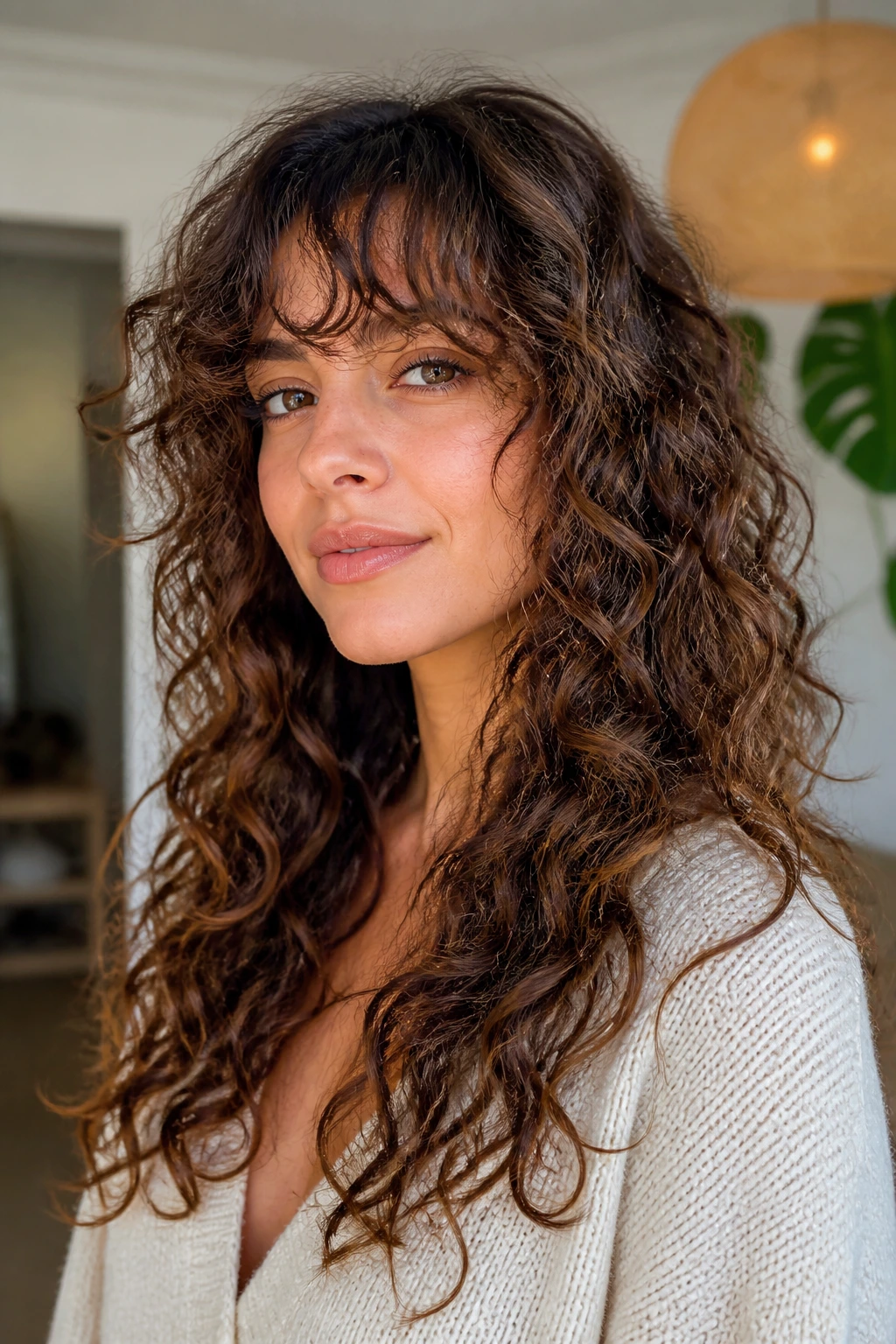
Oval faces give you room, but curly hair asks for honesty. That’s why these bangstyle long layers work so well: they leave space for shrinkage, keep the outline moving, and let the front shape the face without boxing it in. Some of the looks are soft enough to fade into the background. Others bring a little more edge. All of them depend on the same idea — cut for the curl, not against it.
If you’re sitting on the fence, start with the styles that keep the fringe longer and the layers lower. Those tend to be the easiest to live with, and they still give you room to push bolder later. Bring a photo, mention how your curls behave when dry, and ask for the front to be left a touch longer than you think you need. That one request saves a lot of bad bang decisions.