



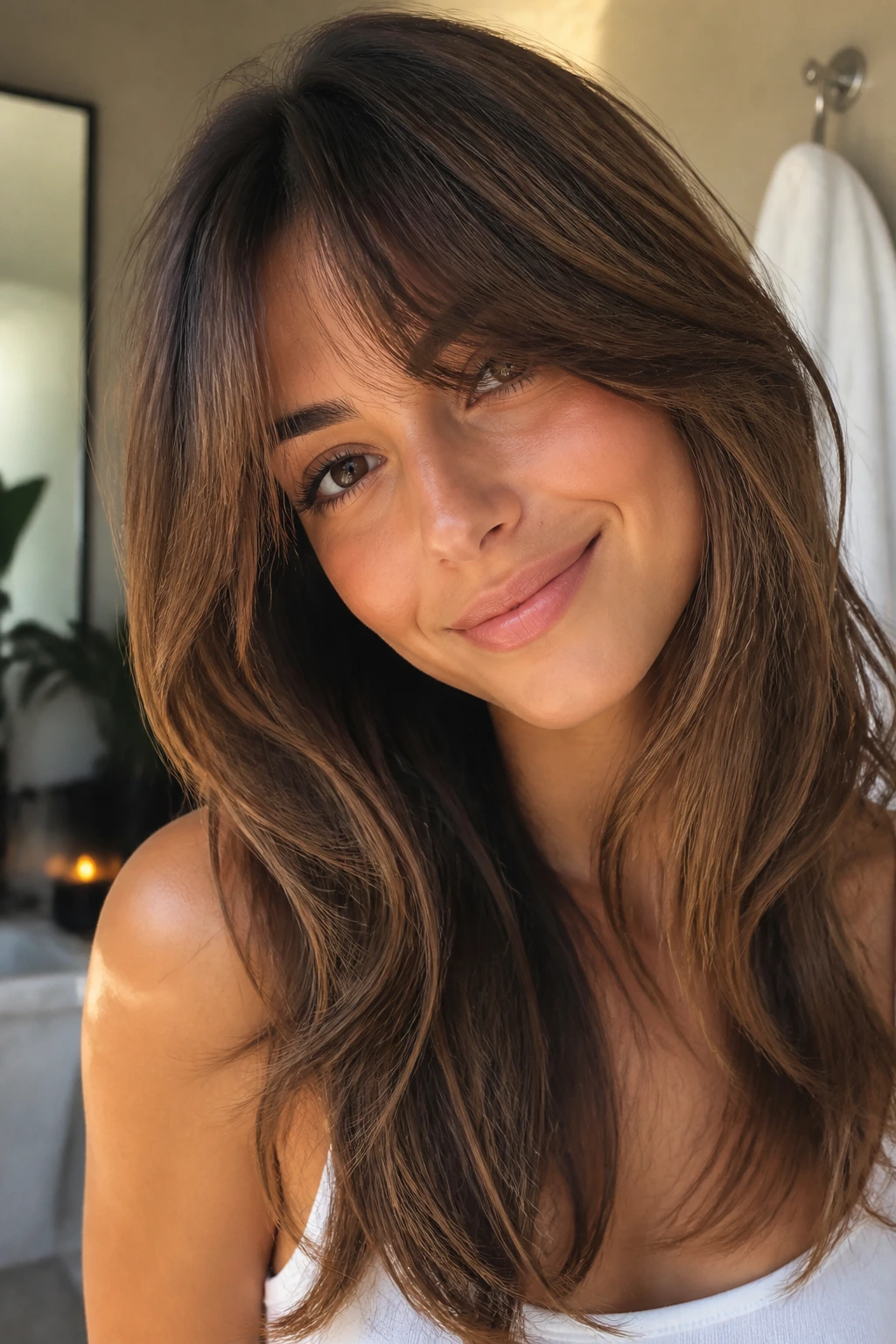
Side-swept long layers with bangs are the haircut equivalent of a shirt that still looks put together after a long day: a little bend, a little movement, and enough shape that you do not have to fight it in the mirror at 7:12 a.m. The front pieces soften the forehead, the layers keep the ends from hanging like one heavy sheet, and the whole cut gives you room to skip a full blowout when the morning is already bossy enough.
What I like about this shape is that it does not demand perfect styling to look intentional. A blunt fringe can be fussy. A one-length cut on long hair can go flat and sleepy. Side-swept bangs with long layers sit in the middle, which is where most real life happens. They can be smoothed with a round brush, bent with a flat iron, or left to air-dry if your hair has any natural wave at all.
The trick is the geometry. Diagonal fringe pulls the eye across the face instead of stopping it dead, and long layers break up weight so the ends move instead of hanging like a curtain rod. If your hair gets clipped up for chores, lives in a low ponytail, or spends half its life getting shoved behind one ear, that matters more than a cute salon photo ever could.
Why These Cuts Earn Their Keep on Busy Mornings
-
Fast Reset: The front can be reworked in under three minutes with a brush, a clip, or a quick pass of a mini flat iron, while the lengths mostly take care of themselves.
-
Forgiving Grow-Out: Side-swept bangs drift into the layers more softly than straight-across fringe, so you do not get that hard “I need a trim today” line.
-
Face Framing Without a Helmet: The diagonal line opens the face, but the longer pieces still leave enough hair to tuck, pin, or sweep back when you need it out of the way.
-
Works With Real Hair: A little wave, a cowlick, a bend from sleeping on it, even a halfway messy ponytail — the cut keeps those things from looking accidental.
-
Less Time Fighting Volume: Long layers remove weight where hair tends to puff or collapse, which is why these shapes are easier to reset than dense, blunt ends.
-
Better Second-Day Hair: Oil and texture show up in the right places, mostly at the root and around the fringe, so a little dry shampoo goes farther than it does on a one-length cut.
1. Feathered Blowout Layers That Fall Back Into Place
A feathered blowout is the classic answer when you want your hair to look like you spent time on it, even if you did not. The layers start softly around the cheekbone and sweep down the length with a bit of bend at the ends, so the whole cut moves when you turn your head. It has that light, brushed-out swing that still reads polished after a rough sleep.
What makes this one fast
The feathering does half the work. A 1.25-inch round brush, a heat protectant, and a quick blast from a dryer are usually enough to make the side-swept fringe sit where it belongs. The layers do not need to be curled into perfect spirals; they just need a little direction.
If your hair tends to stick to your face or collapse at the crown, this cut gives it enough air to behave. It is also one of the few shapes that looks better when the ends are not overstyled. Too much curl makes it feel dated. A soft bend feels current and much easier to live with.
Morning shortcut
- Dry the fringe first while it is still damp.
- Roll it away from the face for 10 to 15 seconds, then let it cool.
- Brush the rest with a paddle brush and stop before every strand is perfectly smooth.
That tiny bit of looseness keeps the cut from looking stiff. A feathered blowout should move when you move.
2. Air-Dried Waves With a Soft Side Sweep
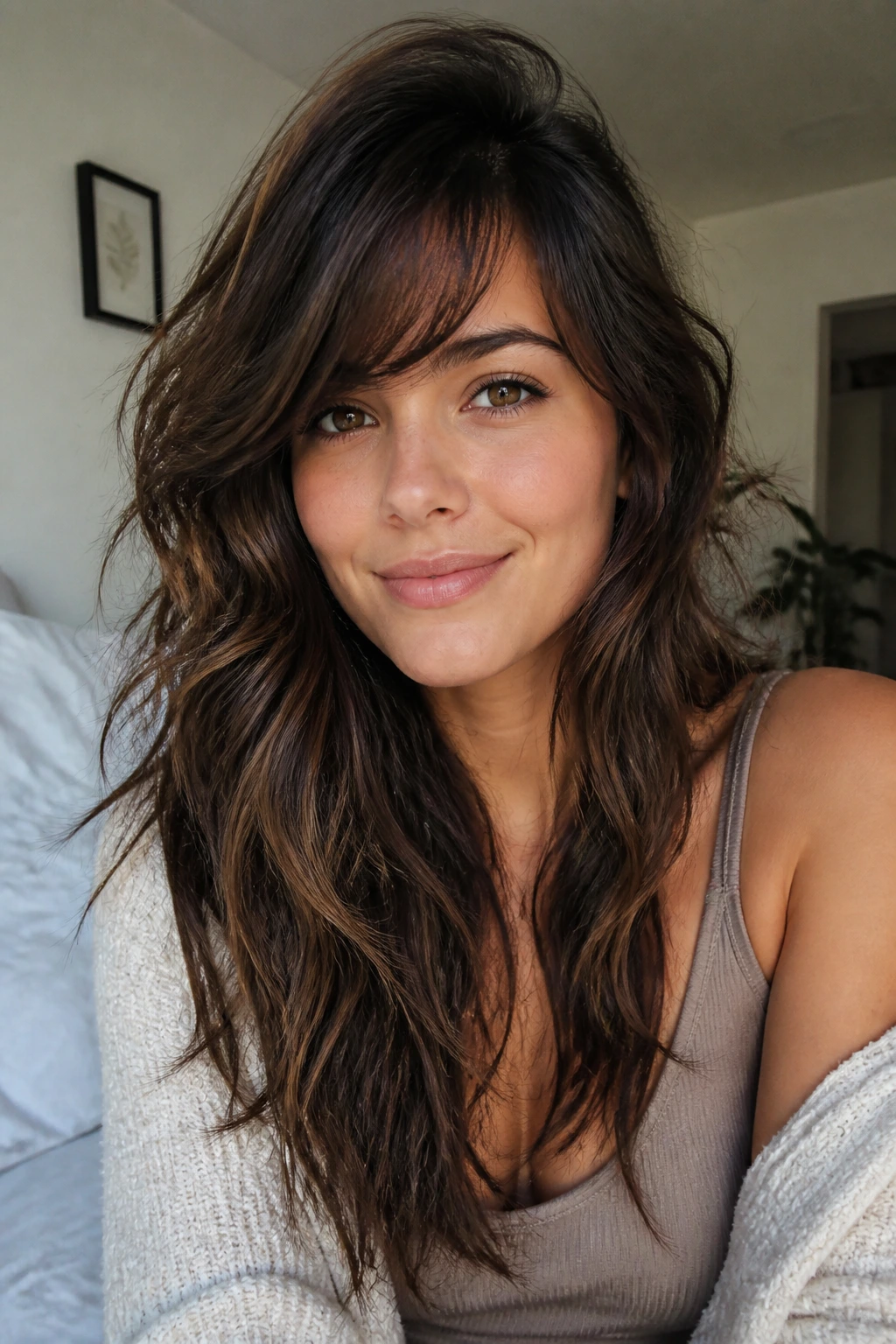
If your hair already has bend in it, this is the lazy-smart version of side-swept long layers with bangs. The cut is set up so the shorter front pieces fall to one side instead of puffing straight out, and the long layers encourage your natural wave to clump in a good way. You get shape without having to wrestle with a brush.
The key is restraint. Do not over-comb the wave out of it. Scrunch in a light mousse or cream, part the hair on the side that suits your cowlick, and let the fringe dry in the direction you want it to live. Once it dries, a little oil on the ends is enough.
This version is best when mornings feel rushed and the humidity is doing whatever it wants. The wave does not need to be perfect. It just needs a direction. If you like hair that looks lived-in rather than shellacked, this is one of the easiest shapes to keep looking decent all day.
3. Deep Side Part for Straight Hair That Needs Movement
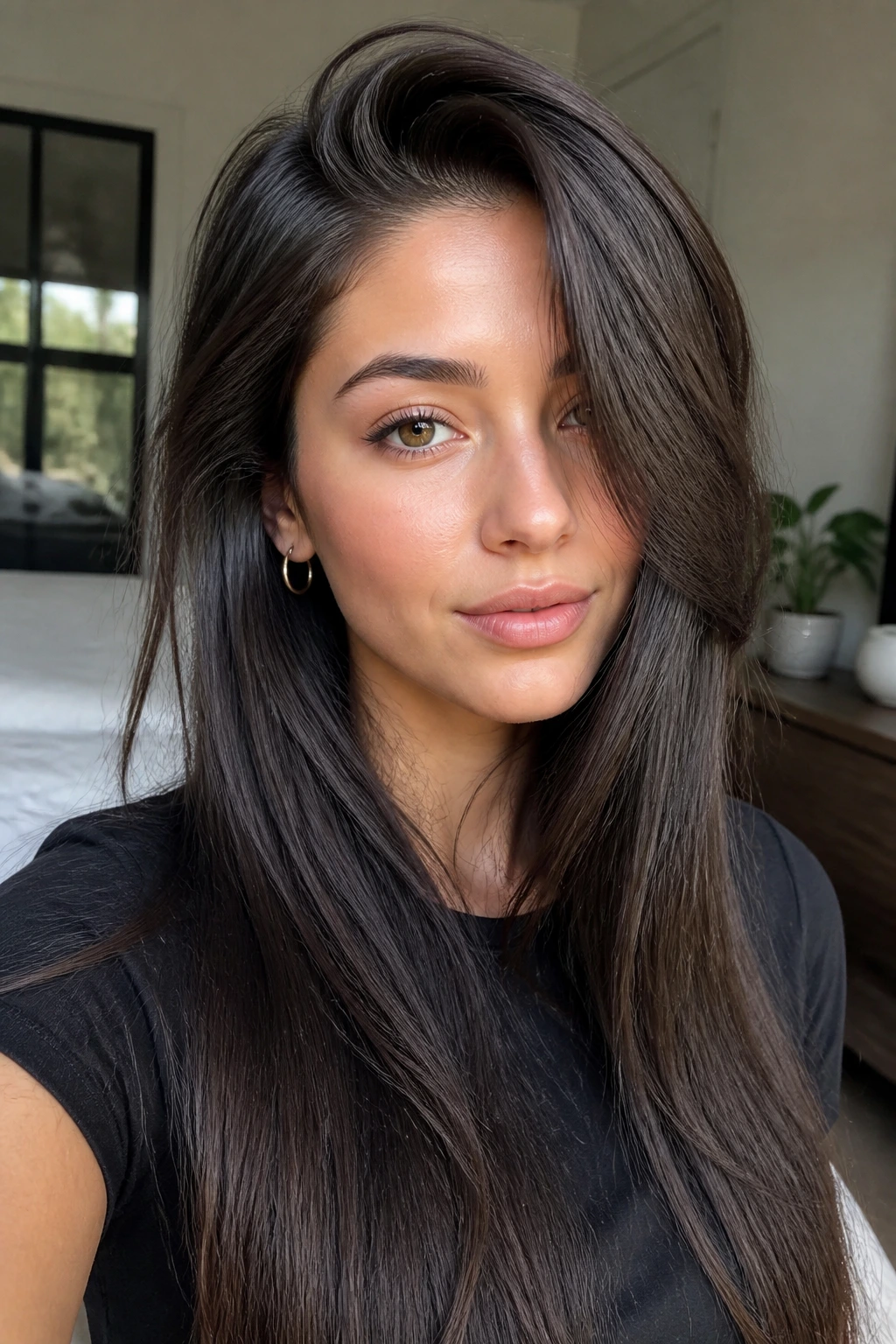
Straight hair can look flat fast, especially when it is long and one-length. A deep side part fixes that in a way that feels almost unfair. The longer front section gives you a real sweep across the forehead, while the layers keep the ends from hanging like a blade.
The important part is where the front shortest piece lands. If it stops around the cheekbone or lip, it has enough weight to fall naturally instead of flipping outward. That matters. Too short and the strand sticks up. Too long and it disappears into the rest of the cut.
Why it works
A deep side part creates a built-in root lift at the crown. That little ridge of volume is the whole point. It takes maybe five extra seconds to draw the part and clip the front away from your face while you finish getting ready, but the payoff is a style that looks deliberate with almost no heat.
If your straight hair resists curl, stop trying to force it into one. Let the cut do the talking. A sleek side sweep with clean ends looks better than a badly curled one every single time.
4. Thick Hair Layers That Remove Weight Without Chopping
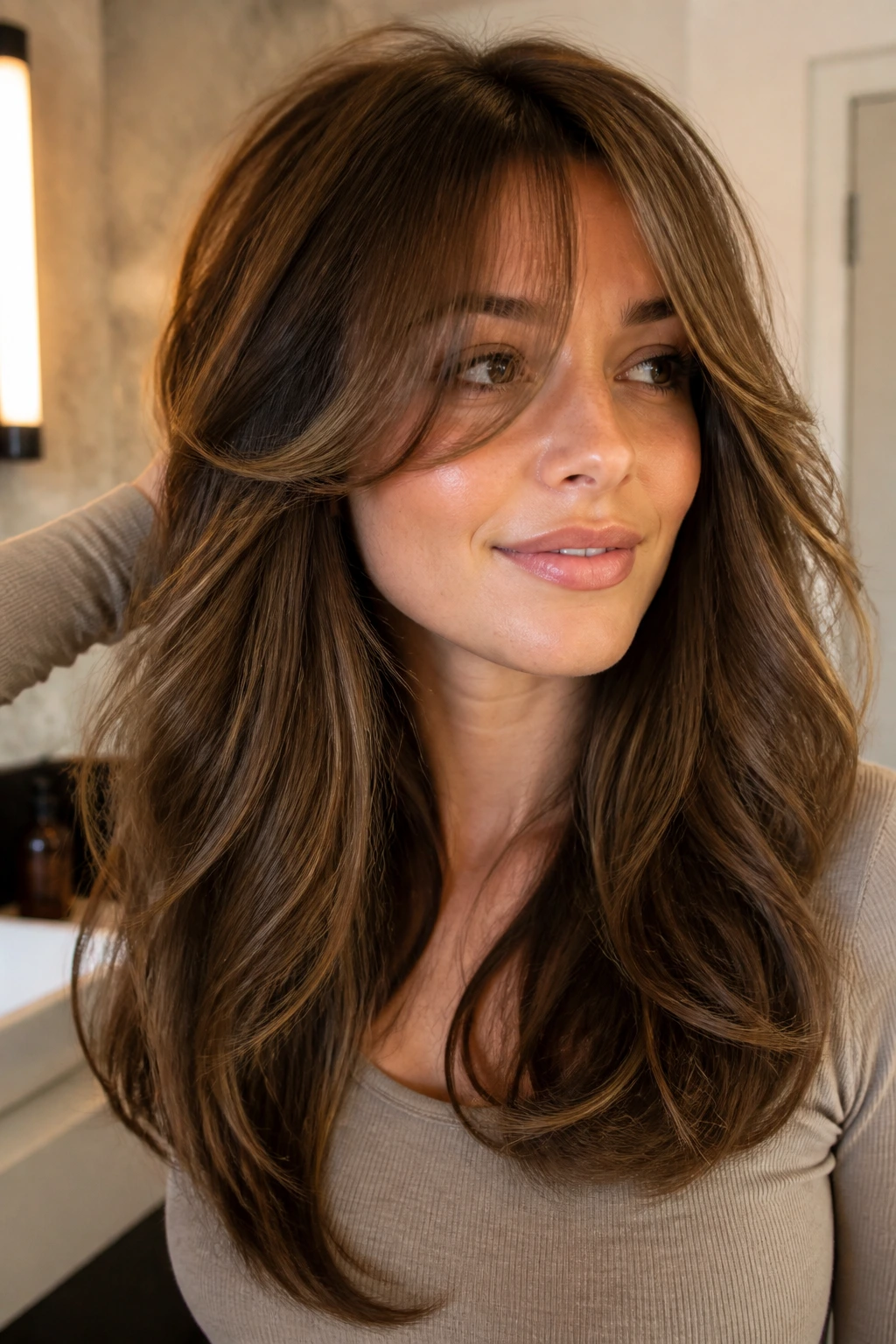
Thick hair can swallow a morning schedule. It takes longer to dry, the fringe gets heavy, and the shape turns into a triangle if the layers start in the wrong place. This version solves that by removing bulk from the mid-lengths and keeping the sides soft enough to move.
The best thick-hair version does not rely on aggressive thinning shears. I like internal layering and long, gliding face-framing pieces better, because they reduce the bulk without turning the ends wispy. You still want enough weight at the bottom that the hair swings instead of frizzing into a cloud.
If you need to throw your hair up fast, this cut helps there too. The front pieces stay loose around the face, so even a messy claw-clip twist looks intentional. It is one of those haircuts that makes “I was in a hurry” look a little more elegant than it has any right to.
5. Fine Hair Layers That Keep the Crown From Going Flat
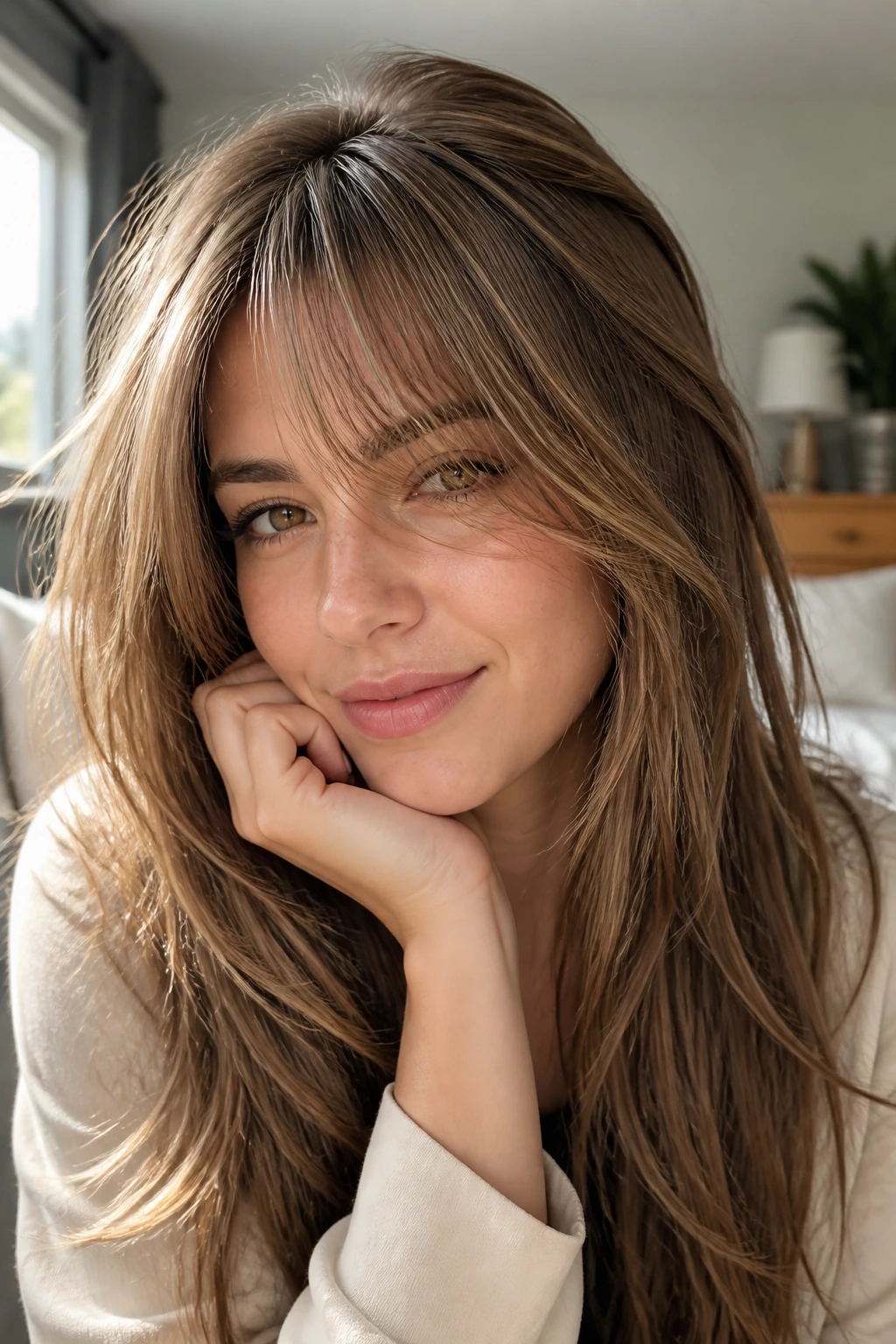
Fine hair needs a different kind of layer. Too much texturizing and you end up with see-through ends that look thin the minute the wind touches them. The better move is to keep the layers long, soft, and slightly staggered, with the side-swept bang doing the visible shaping.
What matters most here is root lift. Use a lightweight mousse at the crown, not a heavy cream at the ends. A small round brush can bend the front pieces away from the face, but the hair should still look like hair, not teased toast. The goal is movement, not volume for volume’s sake.
This shape is especially nice if your hair goes limp by lunchtime. The diagonal fringe gives the eye a line to follow, which makes the whole style look fuller than it is. That is one of the better tricks in haircutting: not more hair, just smarter placement.
6. Curly Long Layers With Bangs That Slide to the Side
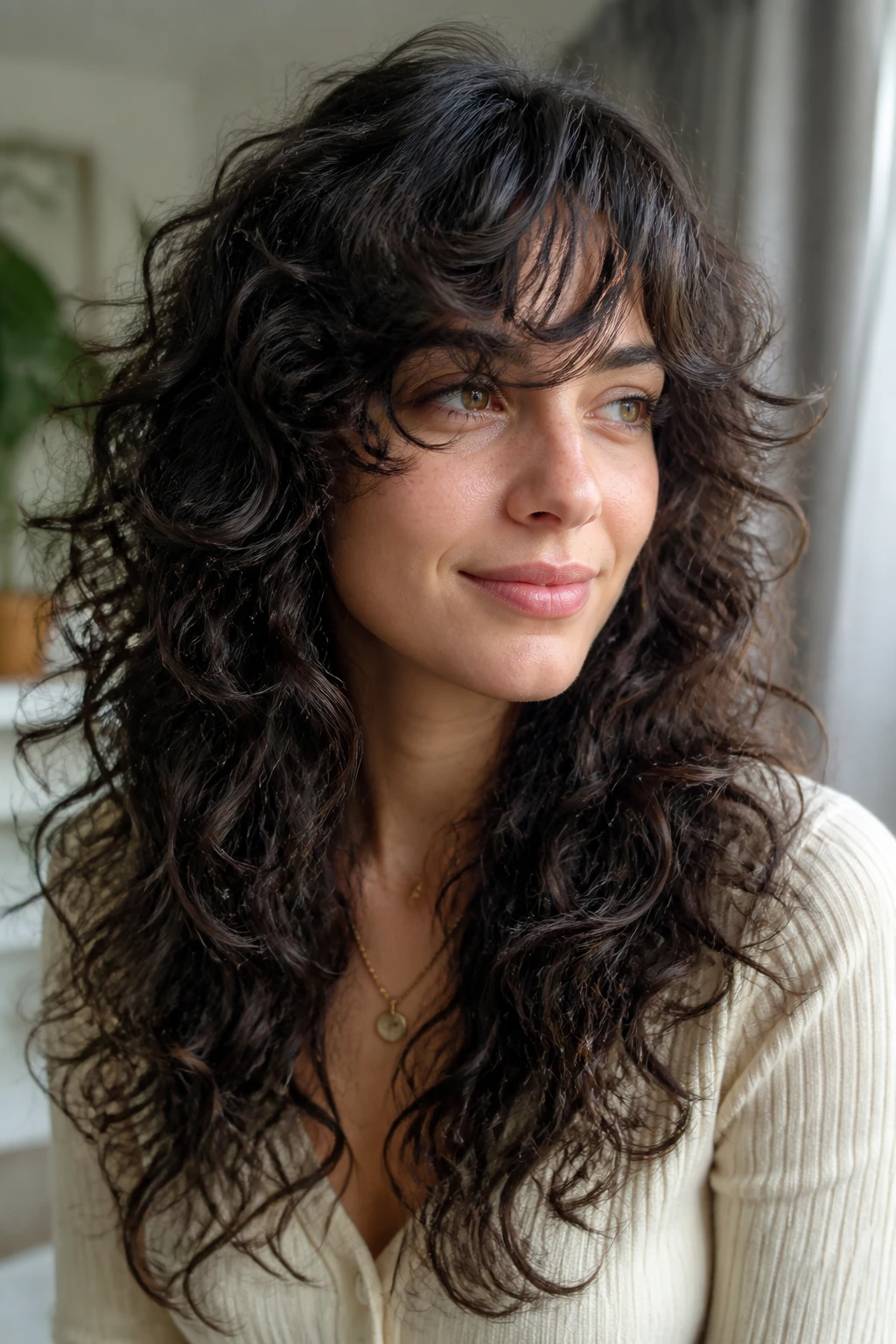
Curly hair and side-swept bangs can be a very good match if the cut respects shrinkage. The front pieces need to be longer than you think, and the layers should be cut to let the curl spring into a side fall instead of building a triangle around the face. When that is done well, the front looks soft, not puffy.
A curly version works best when the bang is dry-cut or cut close to dry curl pattern. Wet curls lie. They always do. If you cut them too short while they are stretched out, the fringe ends up parked halfway up your forehead once the curls wake up.
The morning routine is mercifully low-key. A little water on the front, a palm of curl cream, and finger shaping is often enough. If you need a cleaner finish, clip the fringe to the side while it dries. That one tiny move can save ten minutes of rework.
How to wear it
Let the front section dry in a shallow diagonal, not straight down. That gives the bang room to blend into the layers instead of sitting like a separate event.
7. Round Face Frame With Cheekbone-Breaking Layers
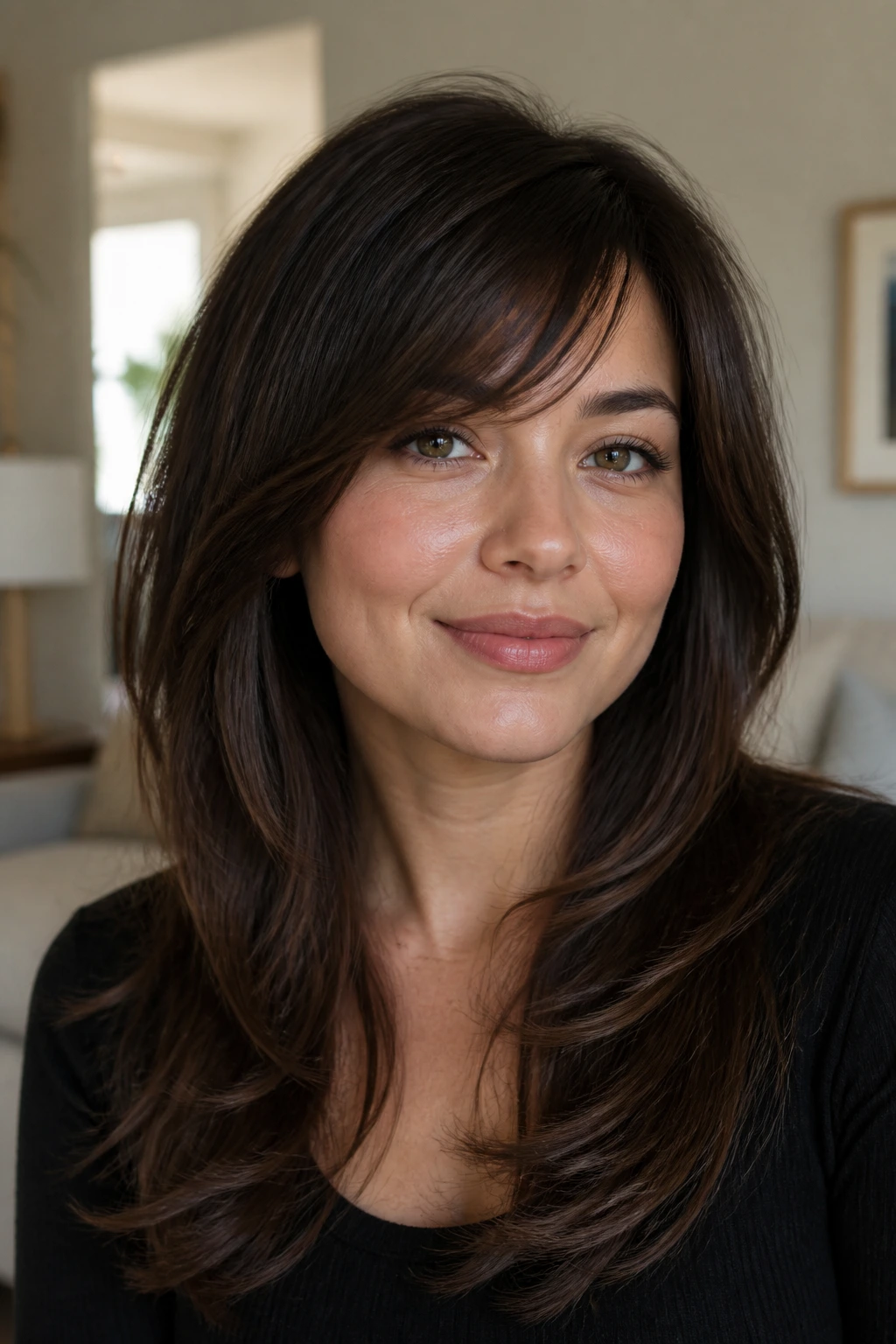
Round faces usually look best with hair that adds vertical line and a little angle. Side-swept bangs do both. They break the symmetry just enough, and long layers that start below the chin keep the shape from widening at the cheeks.
I prefer this version when the shortest face-framing pieces land near the cheekbone or just below it. That point is useful because it cuts across the widest part of the face without sitting too high. The hair feels lighter around the face, but not chopped up.
The styling part is easy. Lift the roots at the crown, then sweep the fringe across with a brush or fingers. Keep the ends looser than you think you need. If every strand bends inward, the shape gets round again. A little movement past the jaw does the work.
8. Square Face Softeners With Long Front Pieces
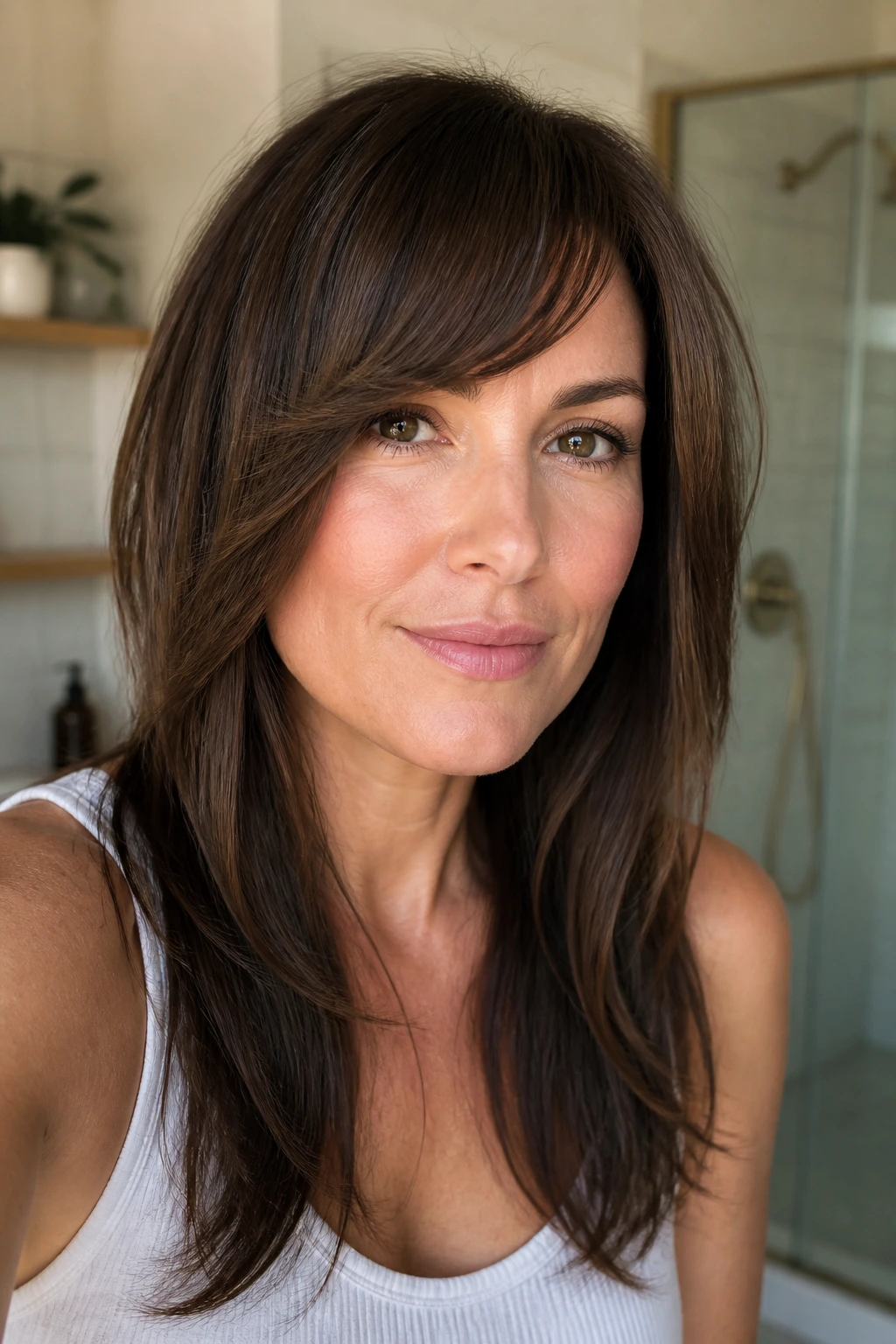
Square jaws can look stunning with side-swept layers, but the cut needs a soft hand. Hard, blunt edges fight the face shape. Long, airy front pieces that start around the cheek and taper as they drop work much better because they blur the corners without hiding the bone structure.
A softer side fringe helps here too. It should curve, not carve. If you want the forehead a little less dominant, this is the move. A heavy side bang that swoops across and then melts into the rest of the layers looks less severe than a crisp line.
This one tends to photograph well on ordinary days, which sounds odd but matters. Hair that keeps a slight bend and some edge softness makes the whole face read calmer. Not flatter. Calmer. That is a better goal.
9. Heart-Shaped Balance With Chin-Length Starts
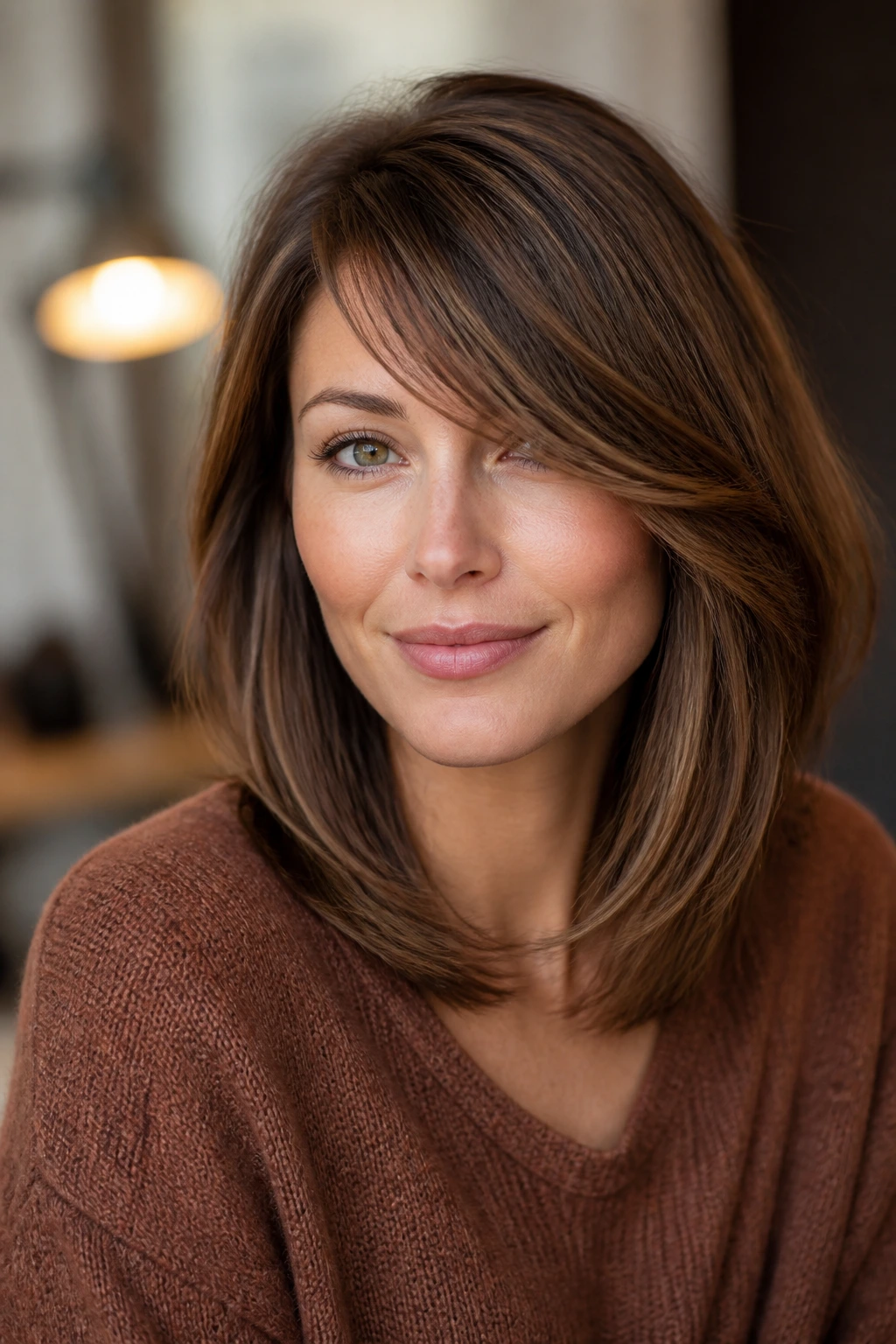
Heart-shaped faces can carry a lot of visual weight at the top, especially if the forehead is broader than the chin. The fix is not to hide it. The fix is to redirect it with layers that start near the chin and a side sweep that lands softly across the brow.
This cut is especially good when the front pieces curve inward just a touch at the jaw. That gives the lower face some presence, which balances a wider forehead without looking fussy. Too much layering around the temples can make the top half feel busier than it needs to be, so keep the upper layers long and calm.
A quick side blow-dry or a bend from a flat iron is enough. You want the hair to move past the cheeks, not sit on top of them. That tiny difference changes the whole shape.
10. Oval Face Undone Sweep With Extra Movement
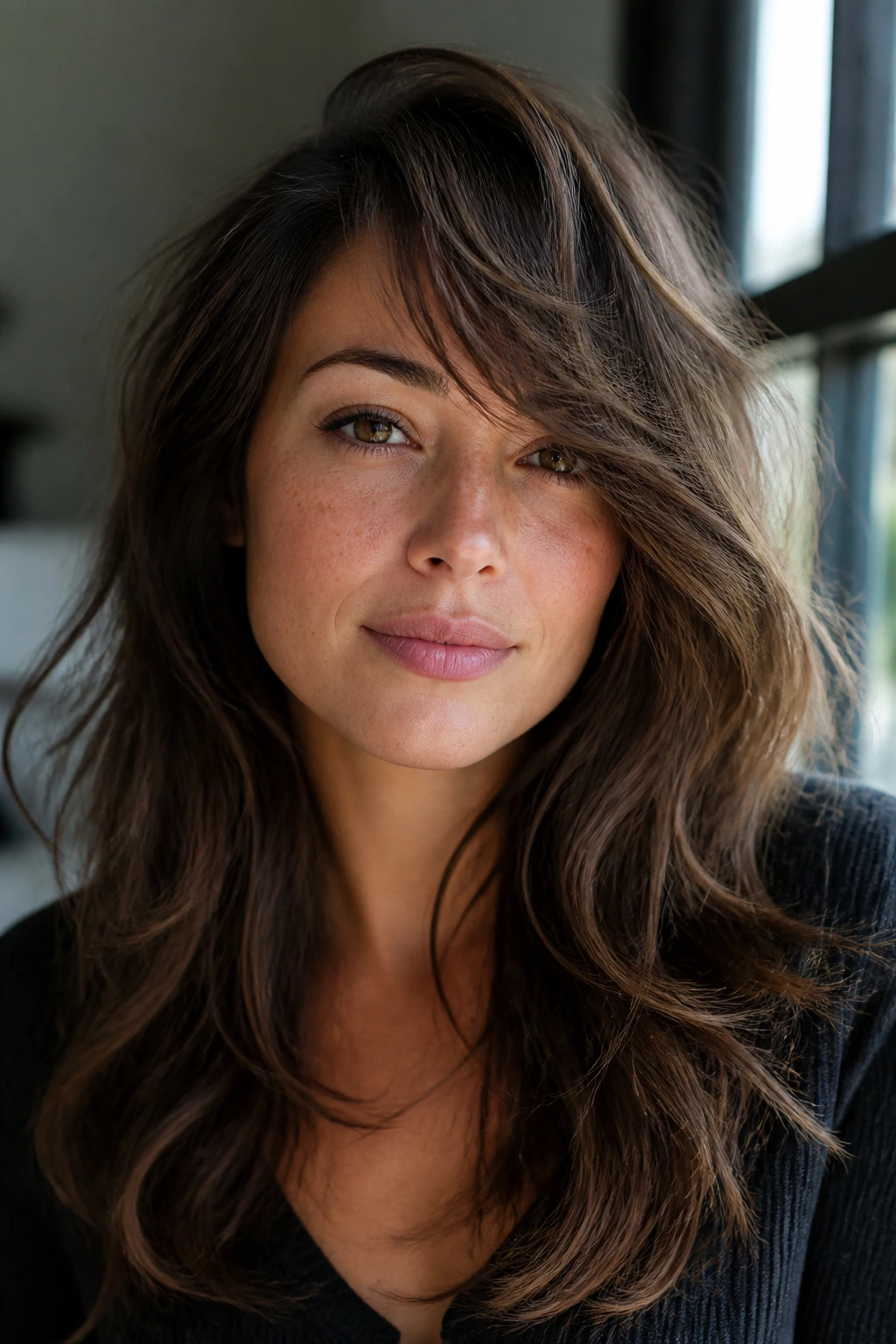
Oval faces can wear a lot of fringe styles, which is both a blessing and a trap. The trap is overthinking it. For an oval face, the best side-swept long layers are the ones with a little looseness — enough structure to frame, enough slack to keep the face open.
This version works nicely when the layers are staggered through the mid-lengths, not stacked too high. That way the hair keeps its length and swings rather than puffing. The bang can be styled with a flat brush or just tucked behind one ear after a quick pass of heat.
The benefit here is subtle. You do not need the haircut to reshape your face. You need it to keep long hair from going limp and straight. This cut does that without looking engineered.
11. Grown-Out Fringe That Still Looks Deliberate
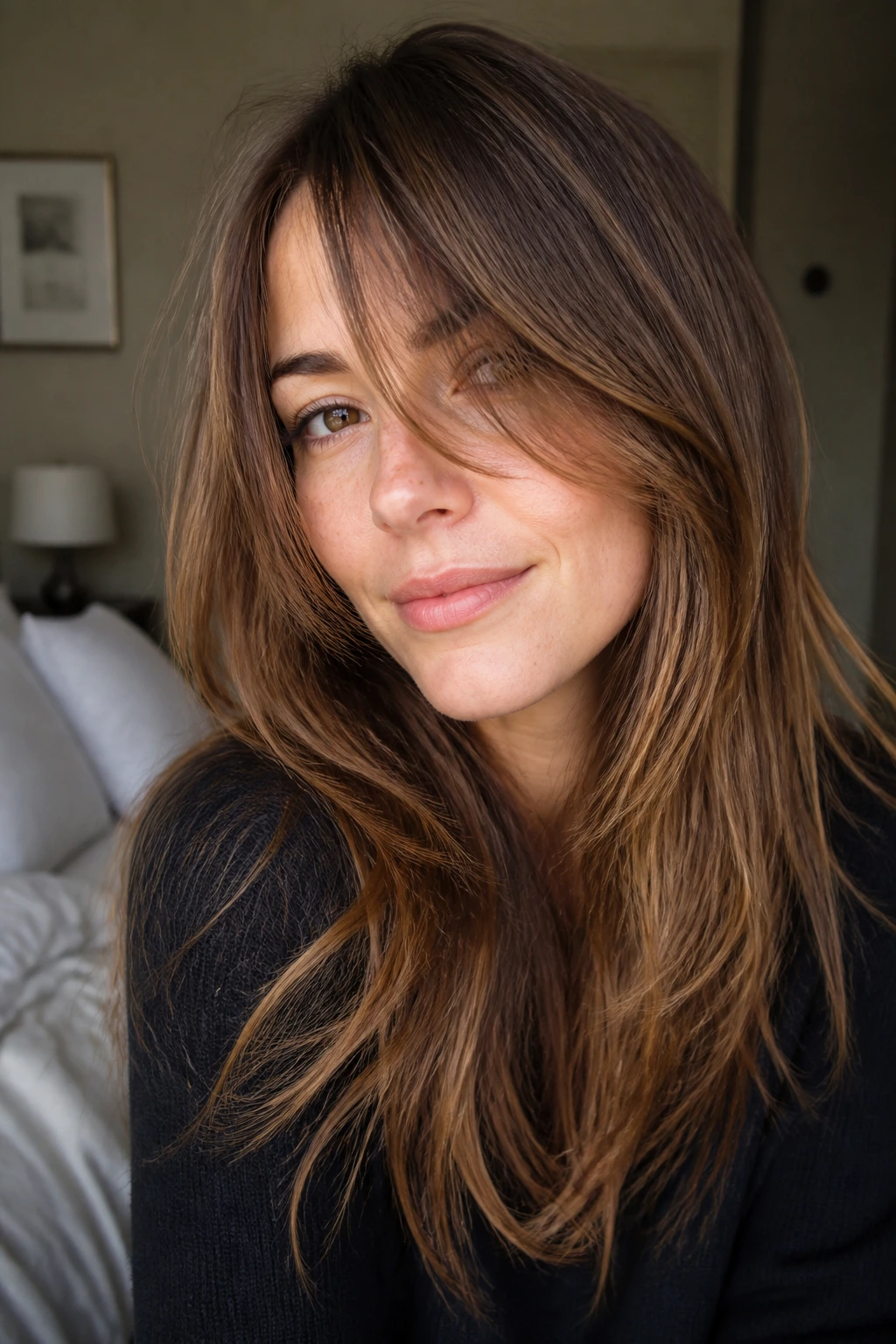
A grown-out fringe is useful when you are between salon visits and patience is thin. Side-swept long layers let that grow-out look intentional instead of awkward because the front pieces can blur into the rest of the cut. That is the whole magic.
The key is keeping the shortest pieces long enough to blend, even as they grow. If your fringe starts to split down the center or poke into your eyes, a side part and a little root lift usually save it. I like this stage more than straight-across bangs because it feels like the haircut is evolving, not failing.
No heavy styling needed. A bend at the base and a tuck behind the ear can make the fringe cooperate for the whole day. Sometimes grown-out hair is a problem. Here, it is the point.
12. Second-Day Hair Revival Layers
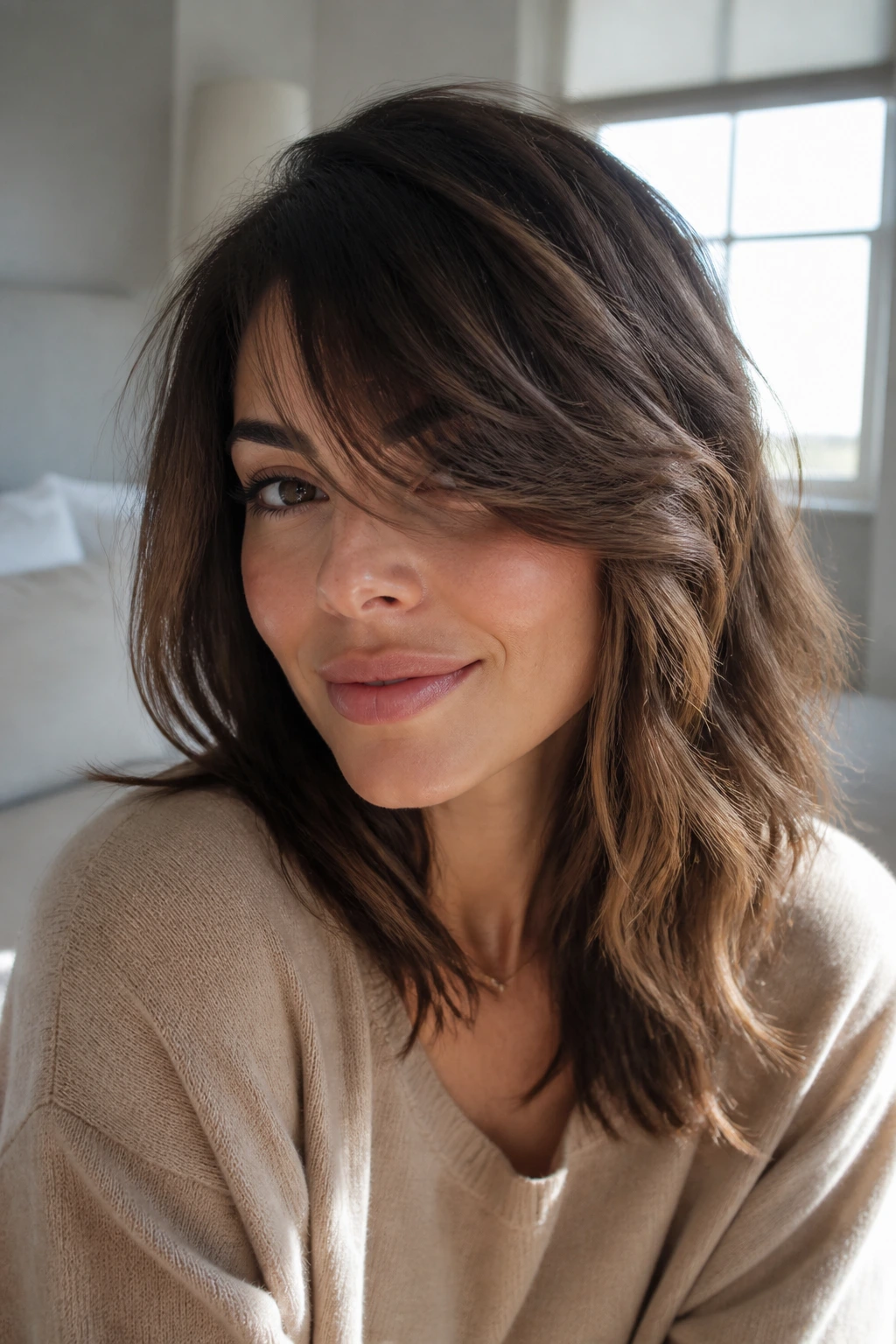
Second-day hair is where this cut earns its keep. The layers keep oil from settling into one flat curtain, and the side-swept fringe can be refreshed on its own without redoing everything else. That saves time and sanity.
A little dry shampoo at the root, followed by a quick blast of cool air, is enough for many heads of hair. If the fringe has gone crooked overnight, mist it with water lightly — not drenched — and wrap it around a round brush for 20 seconds. Cool it down before you let go. That cooling step matters more than most people think.
This is the cut for people who do not want to wash their hair daily. The shape stays readable on day two or three. That is a much nicer problem to have than a style that gives up the moment pillow texture shows up.
13. Humidity-Smart Layers That Bend Instead of Puff
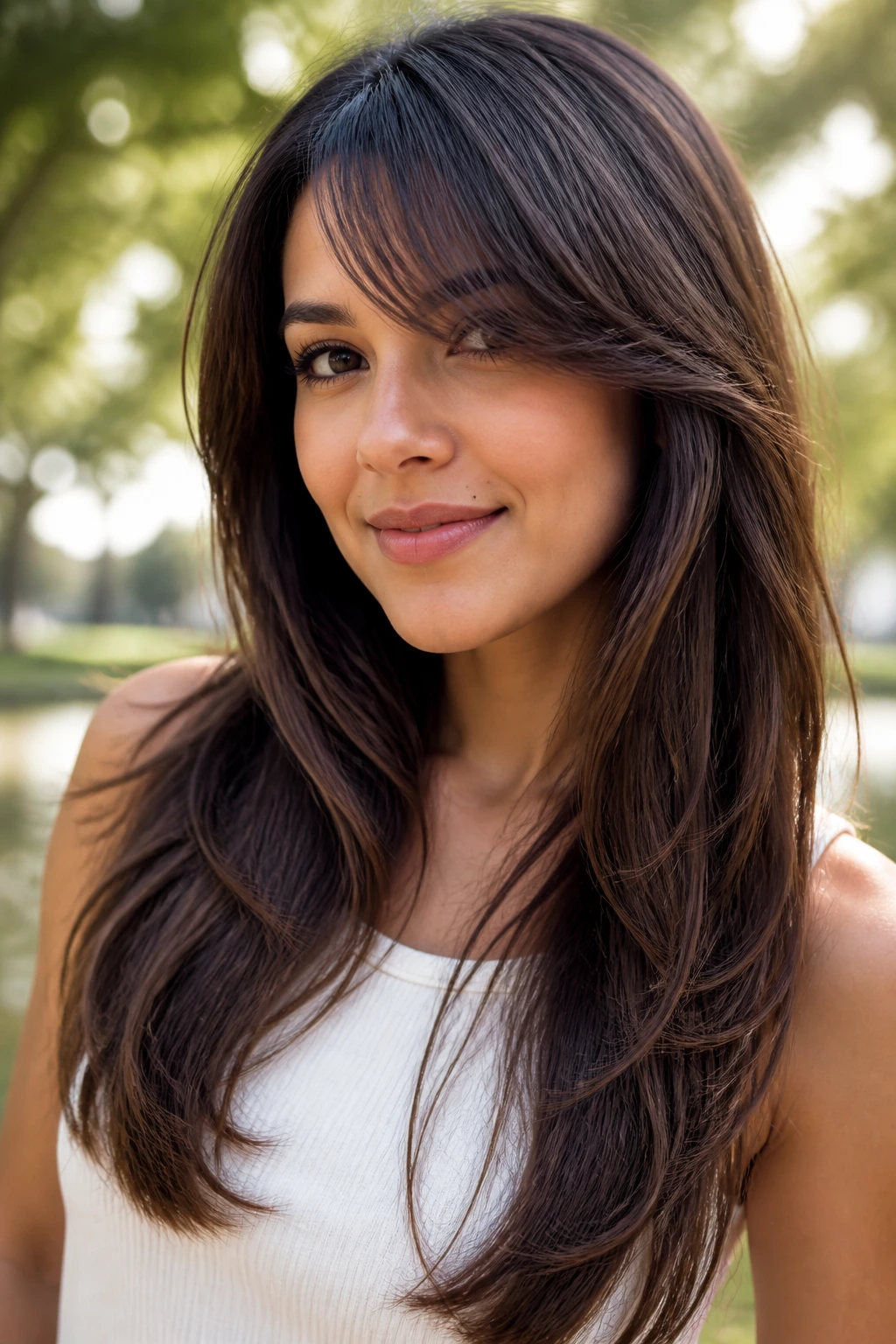
Humidity exposes bad layering fast. The hair expands, the bangs separate, and the ends go fuzzy. A humidity-smart version keeps the long layers a little heavier at the bottom and the side fringe long enough to settle instead of springing outward.
A light smoothing cream on damp hair helps, but do not drown the fringe in product. Too much weight makes it stringy. A nickel-sized amount is usually enough if the hair is fine or medium; thick hair may need a touch more, spread only through the lengths.
I like this shape because it accepts a little roughness. If the air changes halfway through the day, the haircut still looks like hair. Not a halo. Not a science experiment. Just hair that chose not to fight the weather.
A good humidity check
If your front pieces keep flipping at the ends, they are probably too short or too heavily layered. Length buys you stability.
14. Office-Ready Polish With Smooth Ends
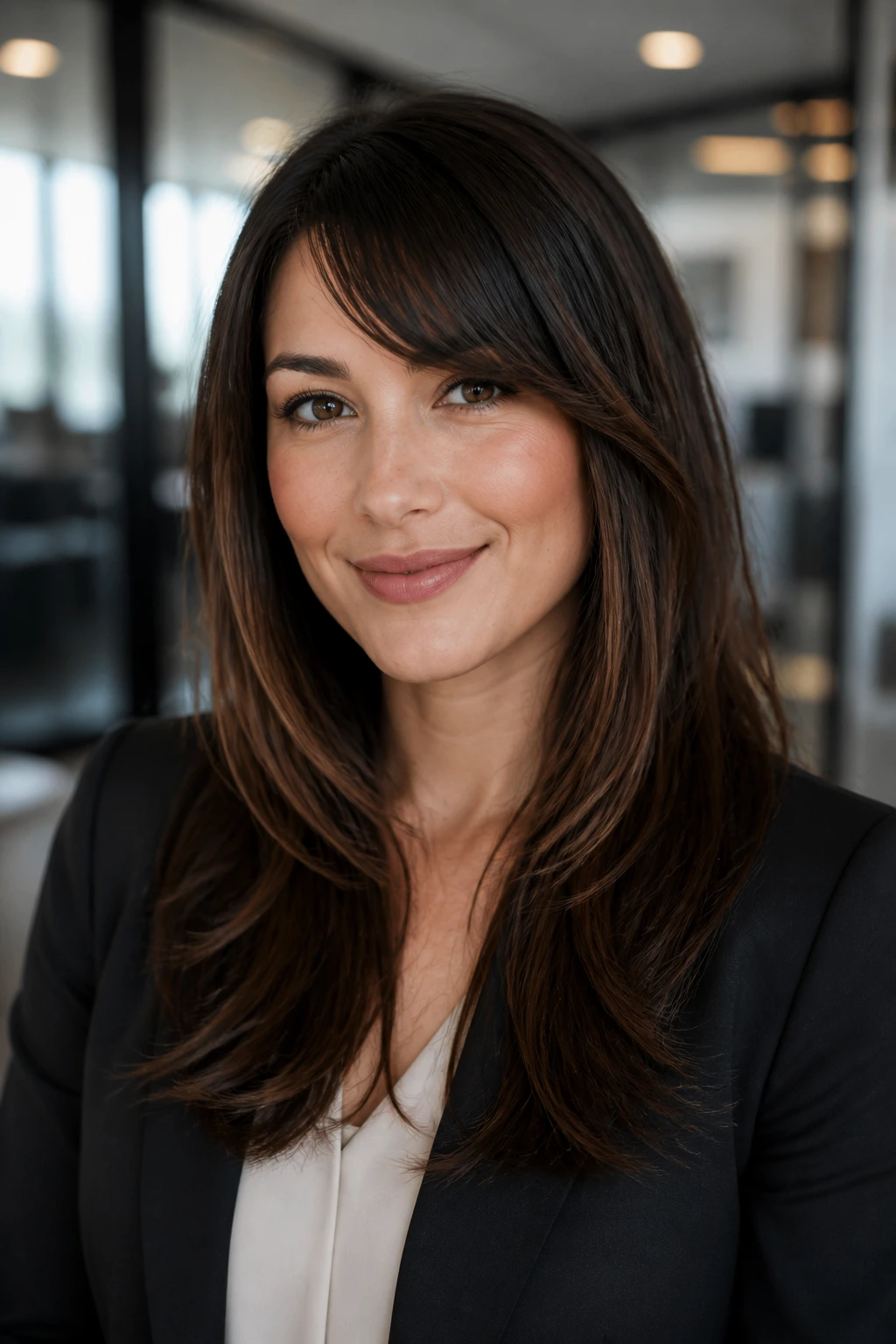
Some mornings need hair that looks calm, not casual. This version gives you that. The layers stay long and tidy, the side-swept bangs are smooth rather than fluffy, and the ends are beveled just enough to sit neatly against a blazer collar or sweater neckline.
The styling here is simple: blow-dry the fringe first, then chase the lengths with a paddle brush and a nozzle attachment. A tiny bit of serum on the mid-lengths — not the roots — keeps the shine even. If you use too much, it turns slick fast, and nobody needs that.
This is the look I reach for when the schedule is packed and I need the haircut to behave in a room with overhead lights. It reads clean from across the table and still soft close up. That combination is harder to get than people think.
15. Textured Weekend Layers for a Little Grit
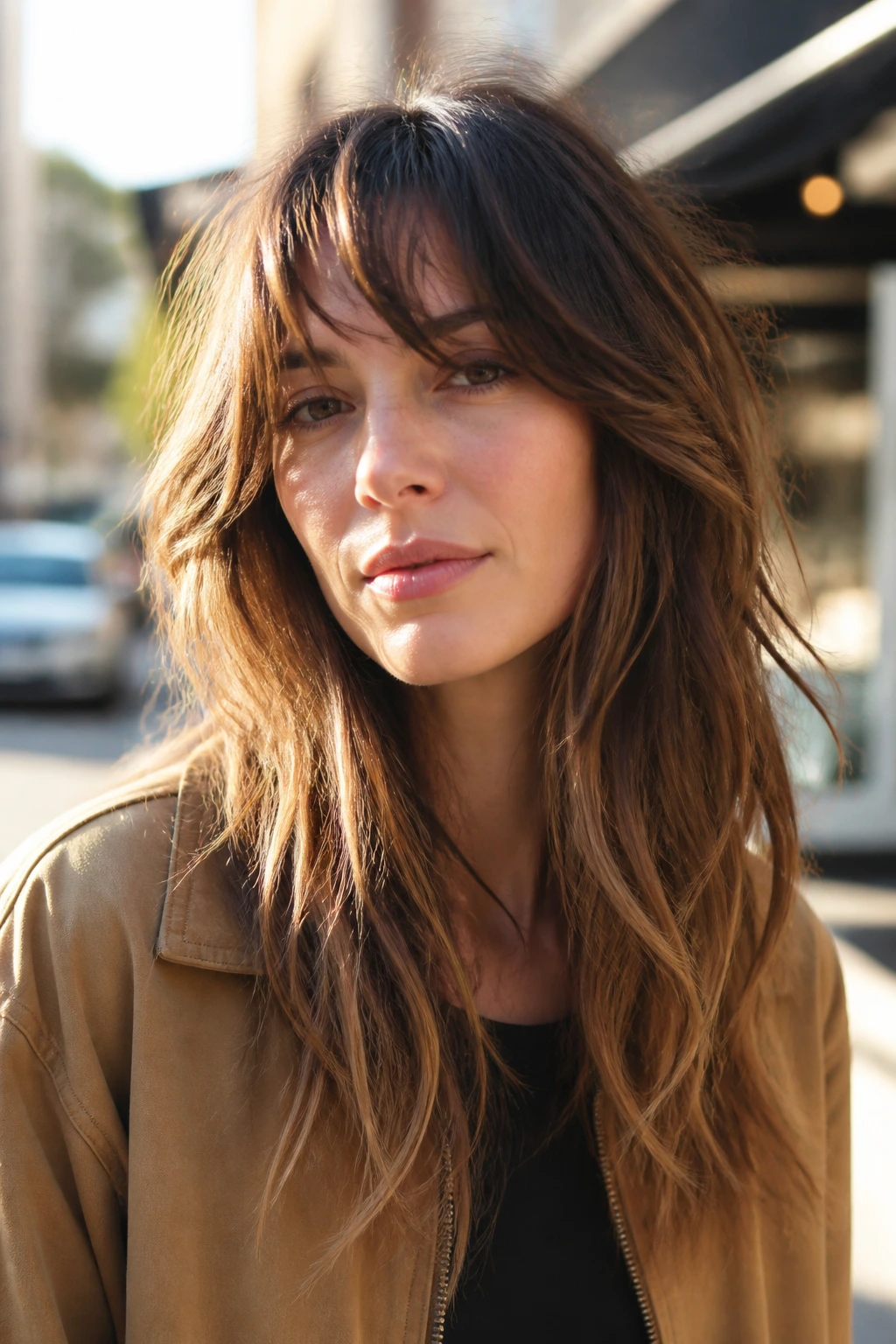
Not every side-swept cut needs to be brushed into submission. This version leans into texture: a little roughness at the ends, a lived-in fringe, and long layers that look better with a salt spray or dry texture mist than with a polished round-brush finish.
The point is separation. You want the layers to show, but not in a choppy, overdone way. A couple of bends with a flat iron and some finger-raked spray give it enough grit to look deliberate. If your hair is naturally wavy, even better. Half the battle is already won.
This cut is good for days when you want your hair to look like you had a plan, then abandoned part of it. That sounds flippant, but it is a real style category. Some mornings call for glossy. Others call for believable.
16. Razor-Textured Ends for Very Straight Hair
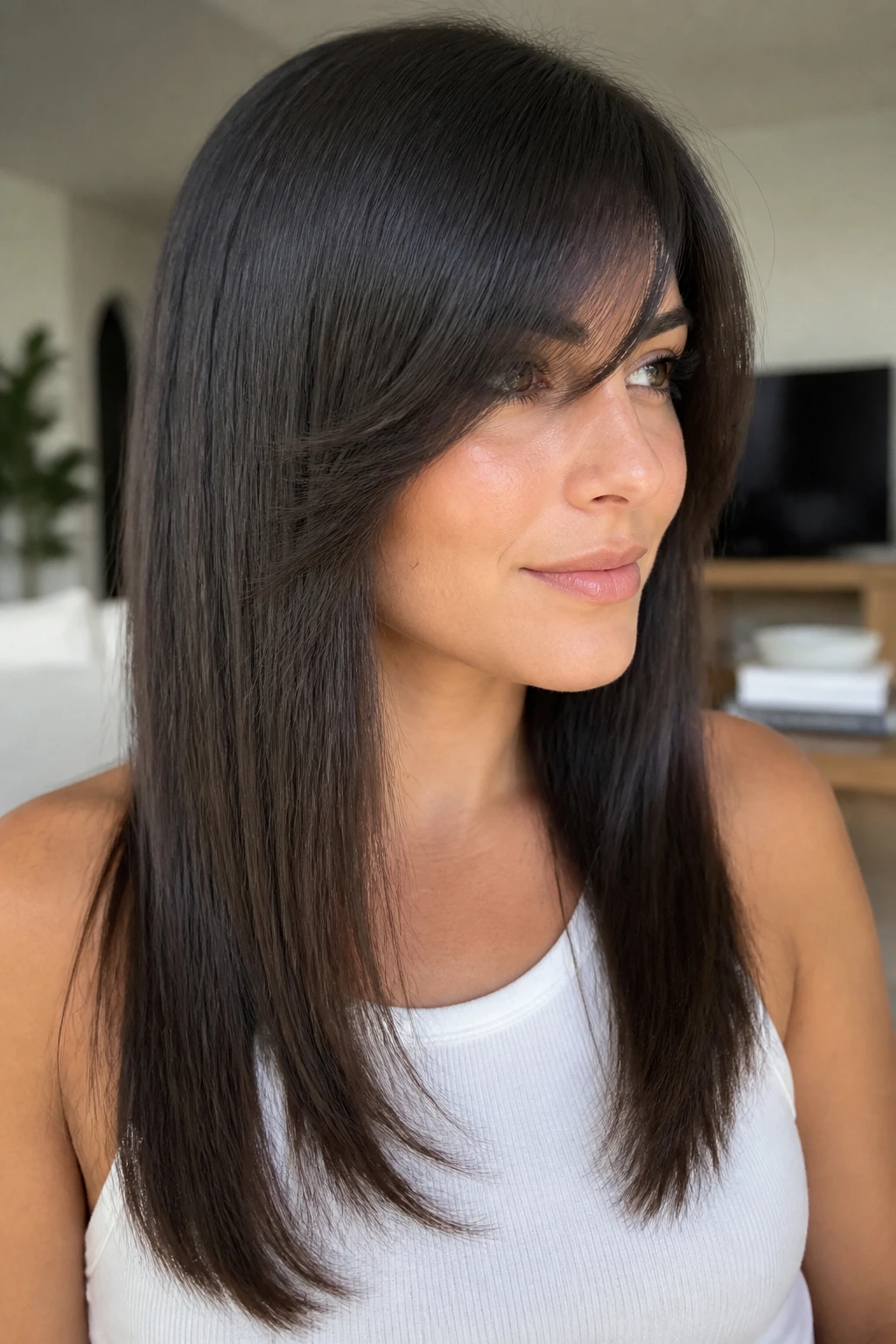
Very straight hair can look a little severe if every end is blunt and heavy. Razor-textured ends soften that, and the side-swept bang helps keep the shape from turning boxy. The cut needs a light hand, though. Too much razor work and the hair gets fuzzy at the edges.
I like this version best when the hair is dense but not coarse. The razor can remove just enough weight to make the lengths swing. Then the side fringe breaks the line so the hair does not hang in one hard sheet.
Styling is fast because the cut already carries movement. A quick blow-dry with a round brush at the front, then a flat brush through the lengths, is enough. Straight hair does not need a lot of persuasion. It just needs a cut that stops it from looking severe.
17. Internal Layers for Heavy, Dense Hair
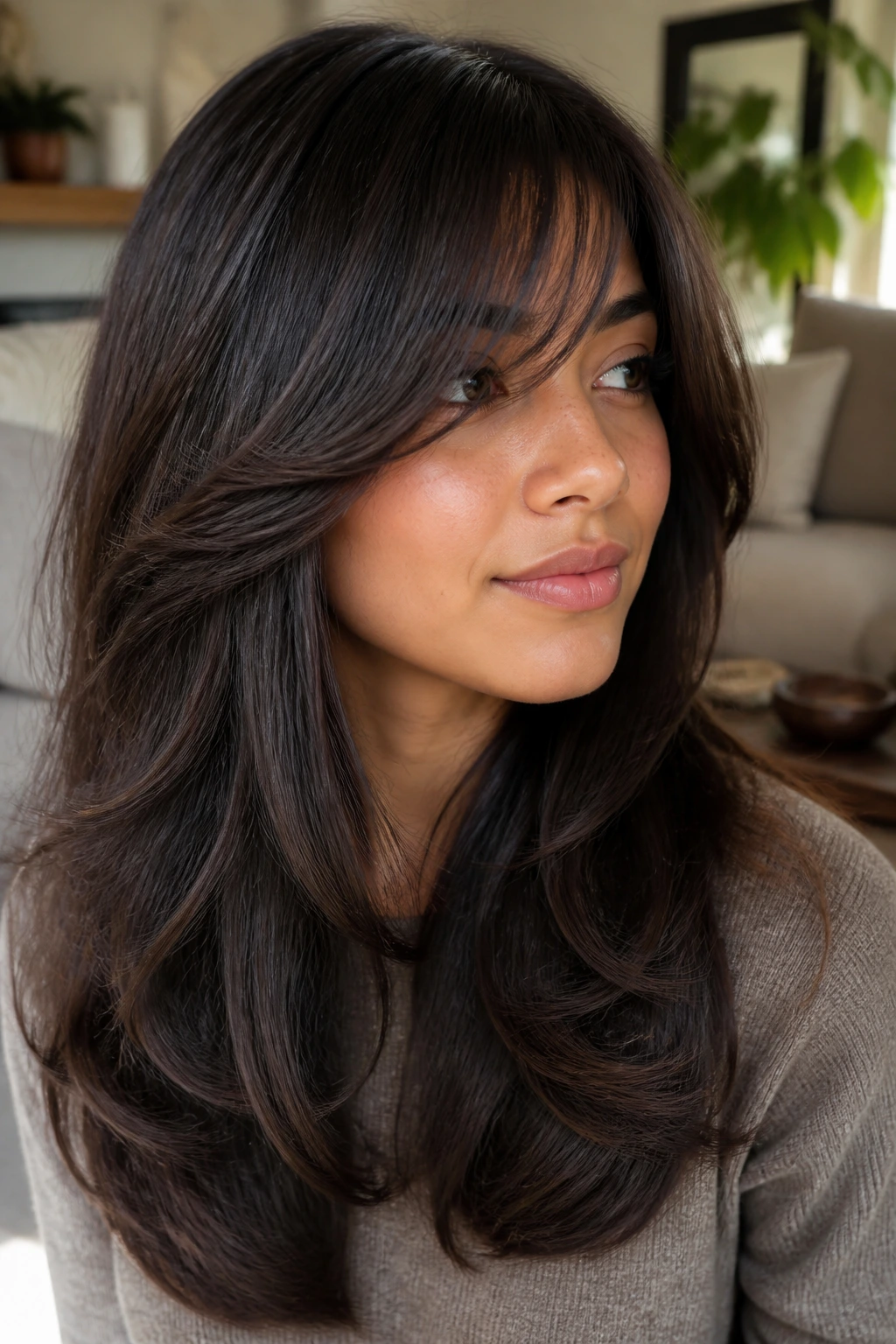
Heavy hair needs internal layers more than it needs drama at the perimeter. That is the quiet trick here. The outer shape still looks long and full, but the inside carries some of the weight so the style does not feel like a blanket draped over your head.
The side-swept bangs keep the front from feeling bottom-heavy. If you have dense hair, that front sweep can be a lifesaver because it gives you shape without forcing the rest of the hair to do too much. The cut dries faster too, which is not a small thing when your hair normally takes forever.
A lot of people ask for “layers” when what they really need is weight removal in the right places. This is the version for that. It does the boring job well. Haircuts that do boring jobs well tend to age better than flashy ones.
18. Low-Heat Air-Dry Cut for People Who Hate Styling
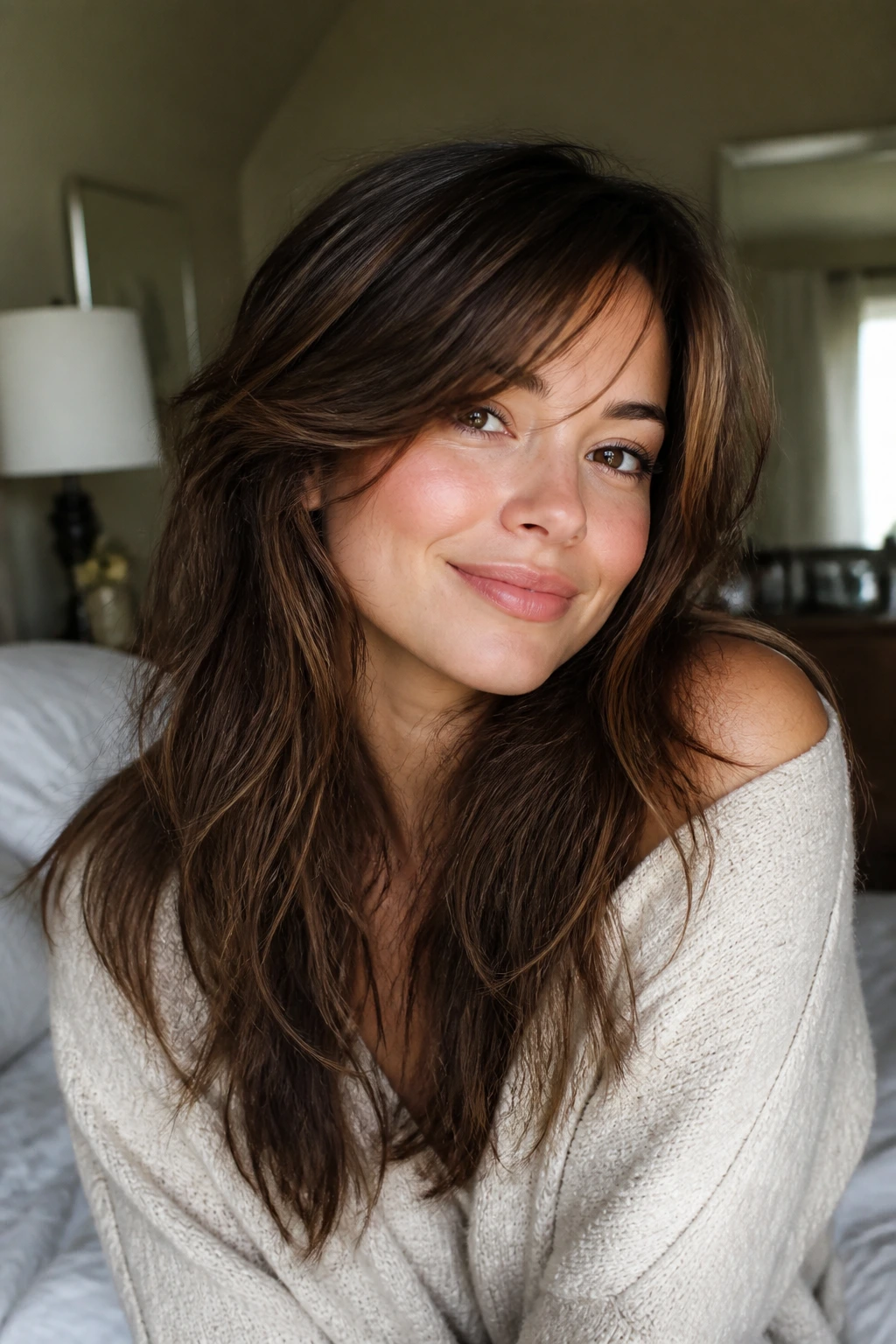
Some people are never going to be round-brush people. Fair enough. This cut is built for that. The layers fall in a way that still makes sense without heat, and the side-swept fringe can be pinned or clipped while the hair dries so it lands off the face instead of straight into the eyes.
A leave-in cream, a rough side part, and a little scrunching are enough for many textures. If the front wants to split, set it with a duckbill clip until it dries halfway. That tiny bit of training helps the bang remember where it is supposed to go.
This version is one of my favorites for real life because it lowers the stakes. You are not trying to build a salon finish at home every day. You are getting a cut that already knows how to behave.
19. Half-Up Friendly Layers That Leave a Face Frame
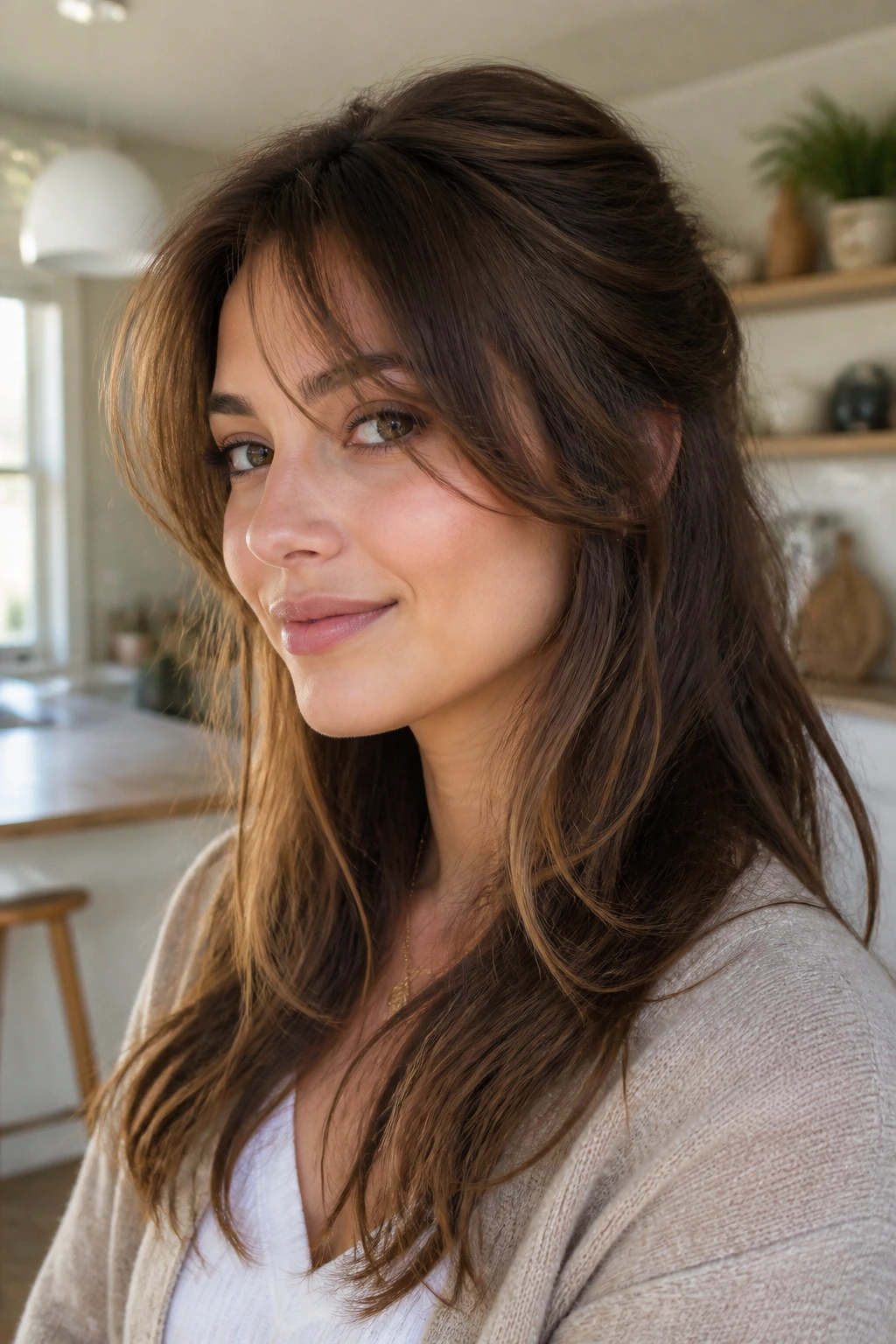
If you live in half-up clips, messy twists, or quick topknots, this one is worth a look. The front pieces stay long enough to fall out on purpose, which means the style still has softness even when the back is out of the way. That matters on busy mornings when you need your hair off your neck by nine.
The layer placement is the key. Too many short pieces around the temples and the style starts escaping in all the wrong places. Keep the shortest pieces around cheekbone level, and the rest can stay long enough to tuck behind an ear or loop into a clip without awkward bumps.
It is a practical haircut, which sounds dull until you realize practical haircuts save you time every week. This one does. A lot.
20. Romantic Side Sweep With Loose Bends
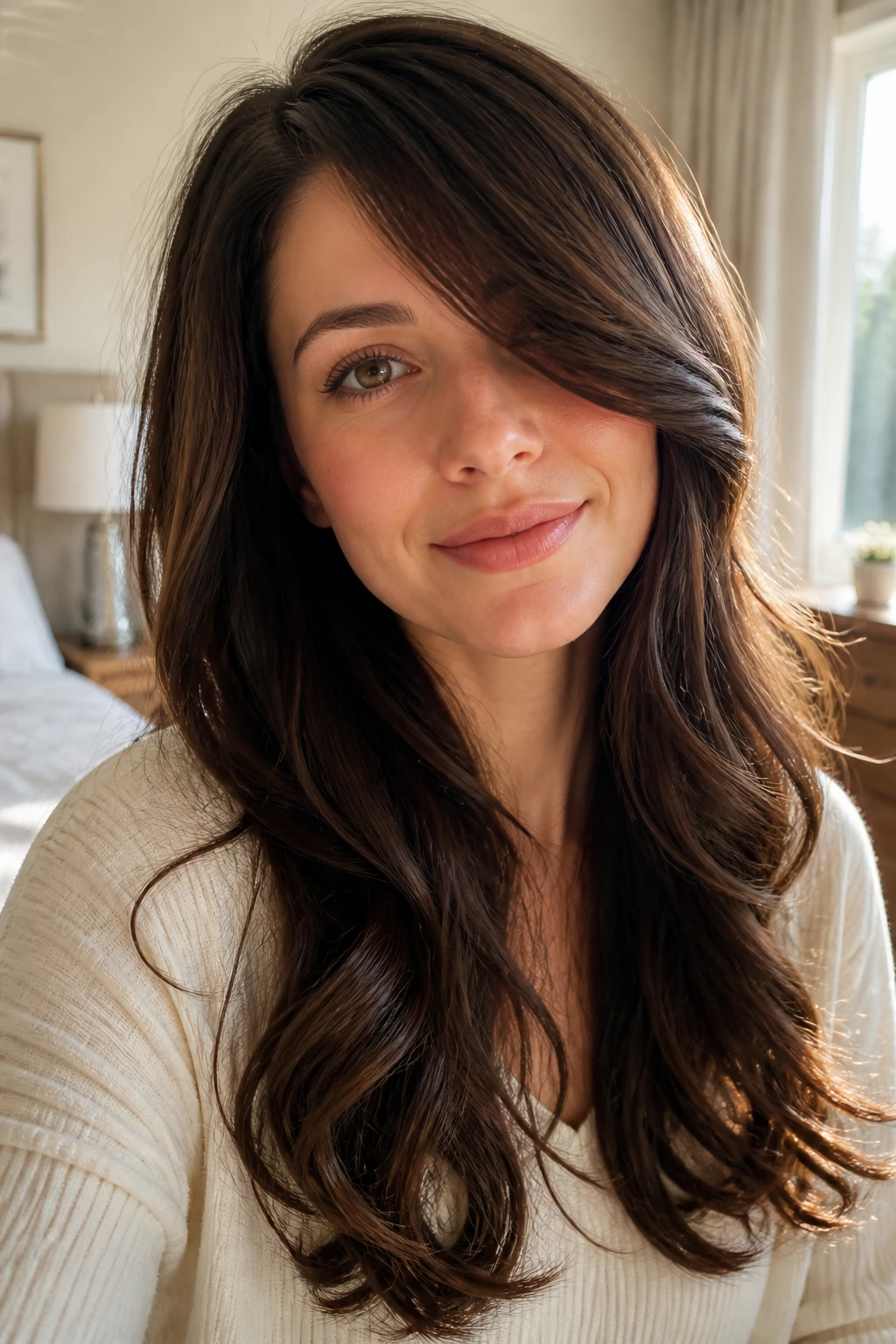
Romantic does not have to mean high-maintenance. This version uses loose, soft bends through the lengths and a side sweep that lands with a little curve at the cheek. It has a gentler feel than a polished blowout, but it still looks shaped.
The curls, if you make them at all, should be wide and soft. A 1.5-inch iron or a flat-iron wave gives you enough motion without turning the style into prom hair. Break it up with fingers, not a brush, and let a bit of the fringe fall across the brow.
This is the style I think people reach for when they want softness more than volume. It flatters long hair without overwhelming it. That restraint is the whole charm.
21. Long Ribbon-Like Layers for Very Long Hair
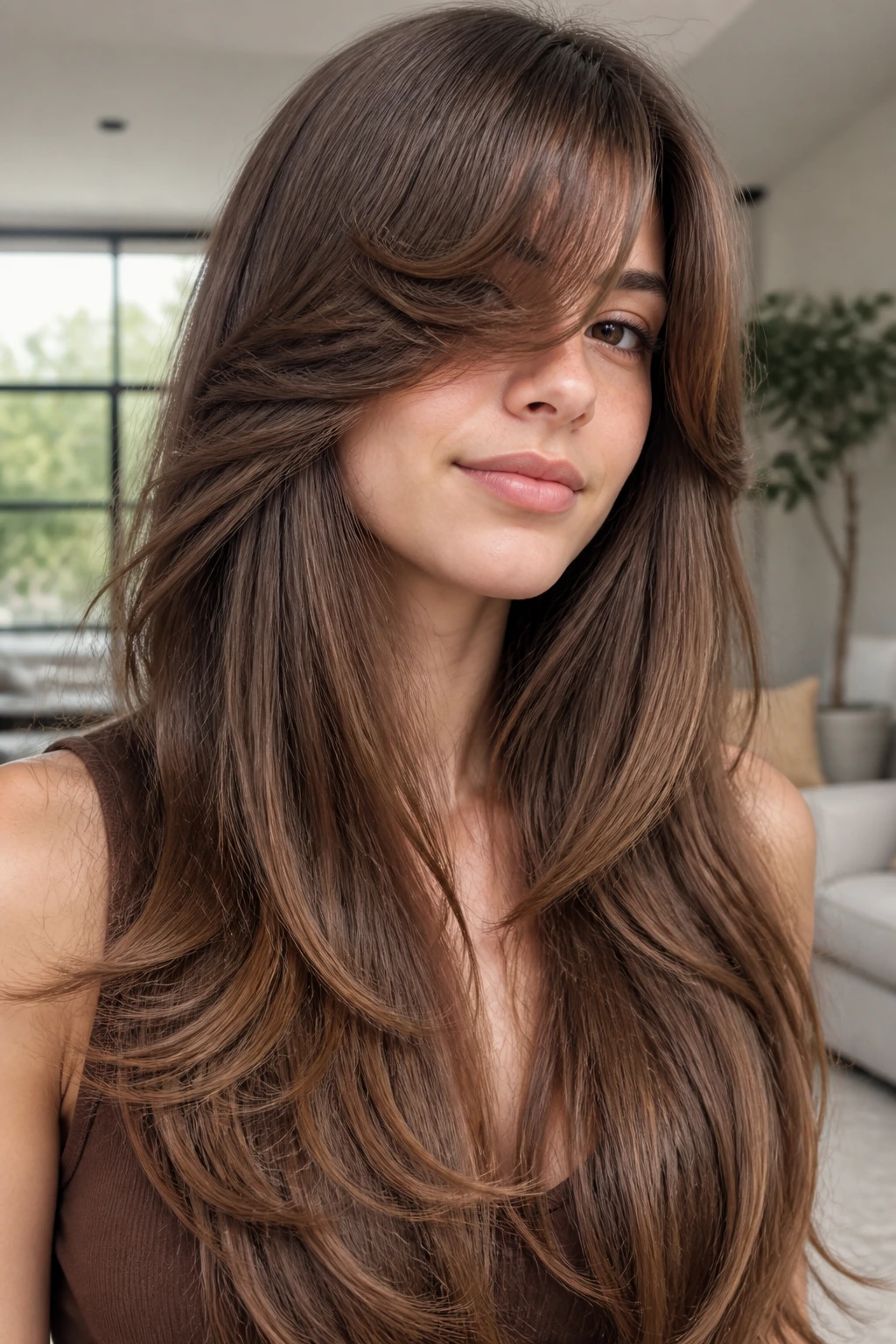
Very long hair can go limp or heavy at the ends unless the layers are placed with care. Ribbon-like layers fix that by keeping the length, then carving in soft movement so the hair swings in sections rather than hanging as one solid block. The side fringe keeps the front from feeling flat against a long frame.
This version is especially good if you like to wear your hair down but still want it to move when you walk. The layers should be long enough to preserve the sweep of the length. Cut too high, and you lose the clean line that makes very long hair feel elegant rather than overworked.
There is a nice thing about this shape: even a quick brush-through looks considered. That is rare in very long hair, where tangles and weight usually win the argument.
22. Glossy Photo-Ready Finish With Soft Fringe
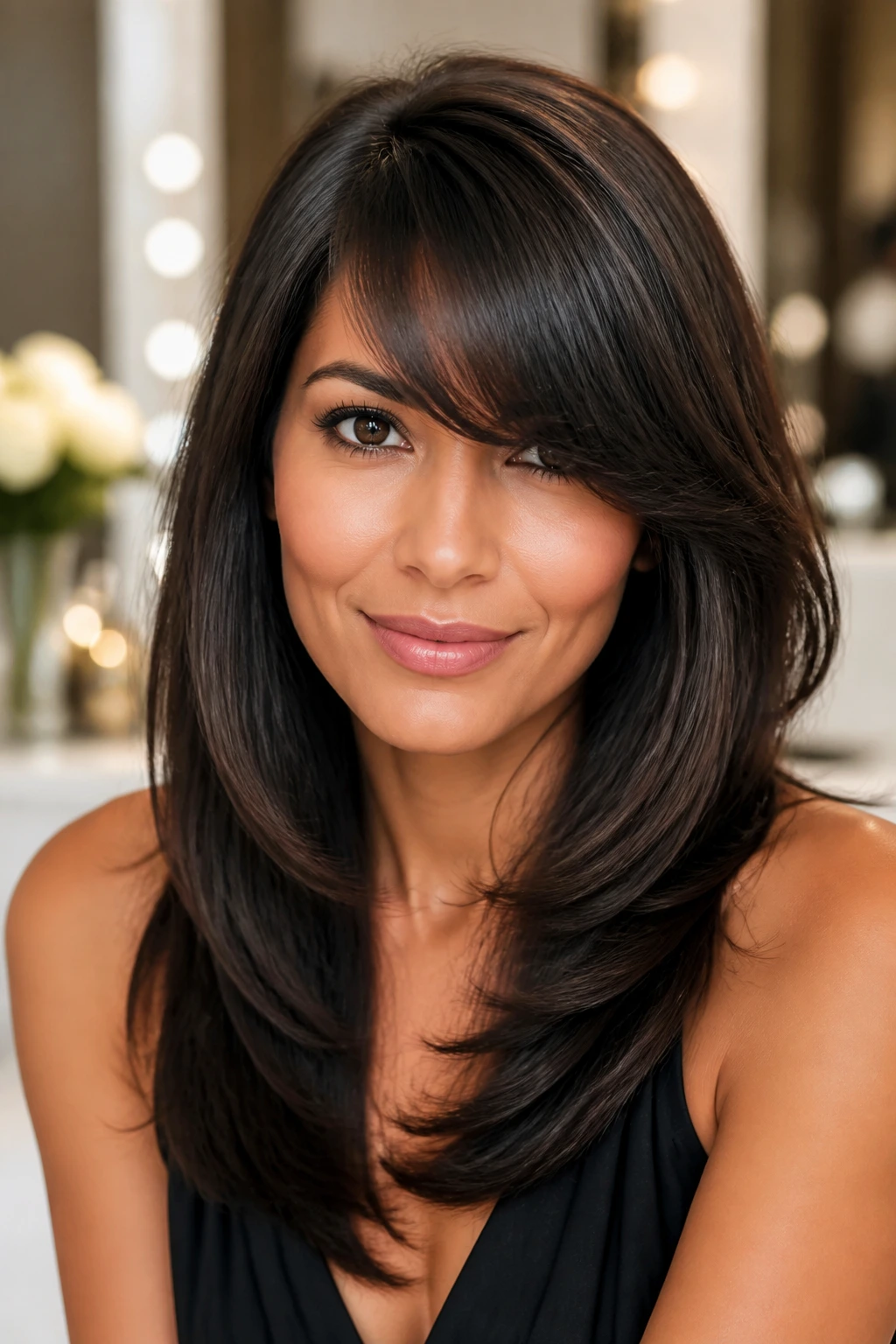
This is the polished end of the spectrum. The layers are still soft, but the finish is smoother, shinier, and more controlled than the air-dried or textured versions. Think clean side sweep, beveled ends, and enough shine spray to catch the light without making the hair greasy.
A good version of this style starts with a proper blow-dry. Use a concentrator nozzle, smooth the fringe with a round brush, and finish the lengths with a cool shot. Do not overdo the gloss product. A little on the mid-lengths and ends is enough; too much near the roots ruins the shape fast.
It is a good choice for days when you want the haircut to look expensive without acting precious. That is the sweet spot. Hair should be able to show up for you.
Why Side-Swept Long Layers Work Better Than a Blunt Fringe When Mornings Are Messy
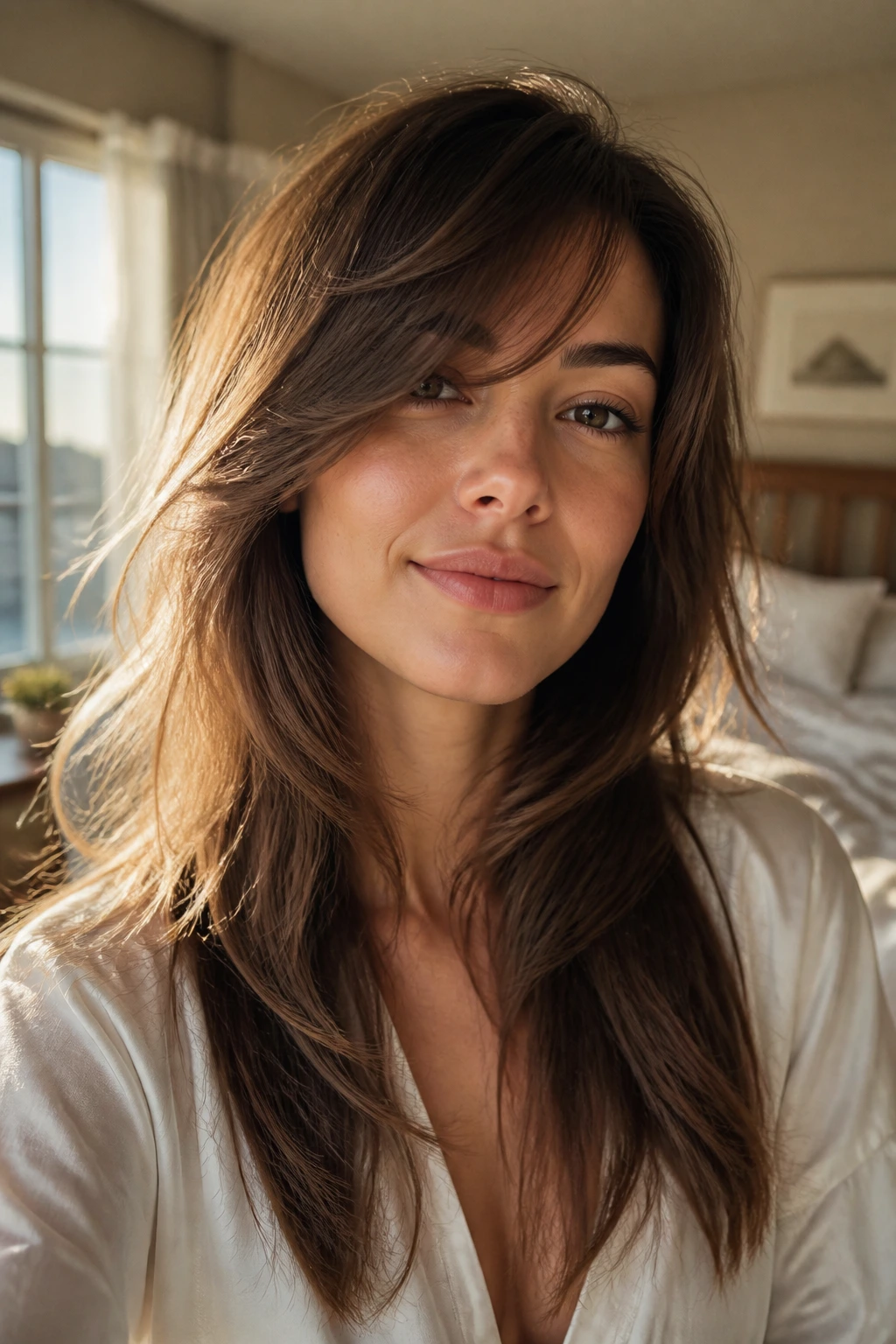
A blunt fringe can look sharp, but it asks for more from you. It needs more drying, more trimming, and more honesty about your cowlicks. Side-swept bangs are easier to live with because they can slide a little. That flexibility is the whole point.
Long layers help too. They take weight off the hair so the front does not have to carry the whole style. When the layers are cut with the face in mind, the shape keeps moving even if you only gave it five minutes and a brush that has seen better days.
I also think side-swept cuts age better over the life of the haircut. They do not scream for attention on day one, and they do not collapse into a weird middle stage the way some bangs do. They just keep cooperating, which is a small joy and not a small thing.
How to Ask for Side-Swept Long Layers with Bangs at the Salon
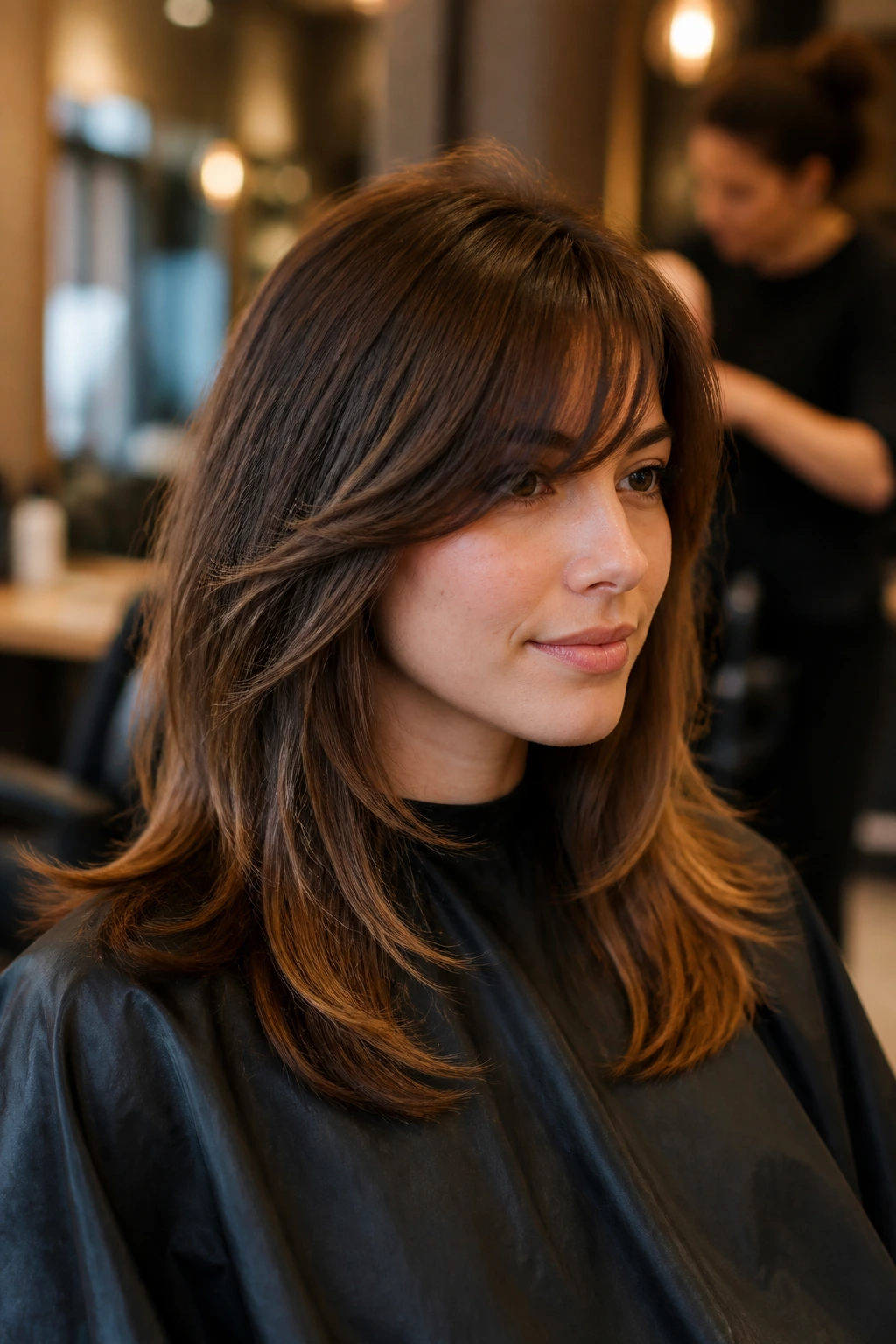
Bring one or two photos, but do not stop there. Say where you part your hair, whether your fringe has a cowlick, and how much time you are willing to spend styling on a weekday. Those three details matter more than the photo angle.
Use clear language. Ask for long layers that start around the collarbone or below, depending on your density, and say where you want the shortest face-framing pieces to land — cheekbone, lip, or chin. For the fringe, ask for a side-swept bang that can blend into the front layers, not a blunt piece chopped straight across and pushed sideways.
If your hair is thick, ask for internal weight removal rather than aggressive thinning. If your hair is fine, ask them to keep the ends fuller so the layers do not look stringy. And if you wear glasses, mention that too; a bang that sits too low will end up living on your lenses, which is not the sort of relationship anyone needs.
One more thing. Ask for the bang to be cut with the way your hair falls in mind, not just the way it looks when brushed over by hand. That sounds small. It is not.
The Tools That Actually Make the Morning Faster
-
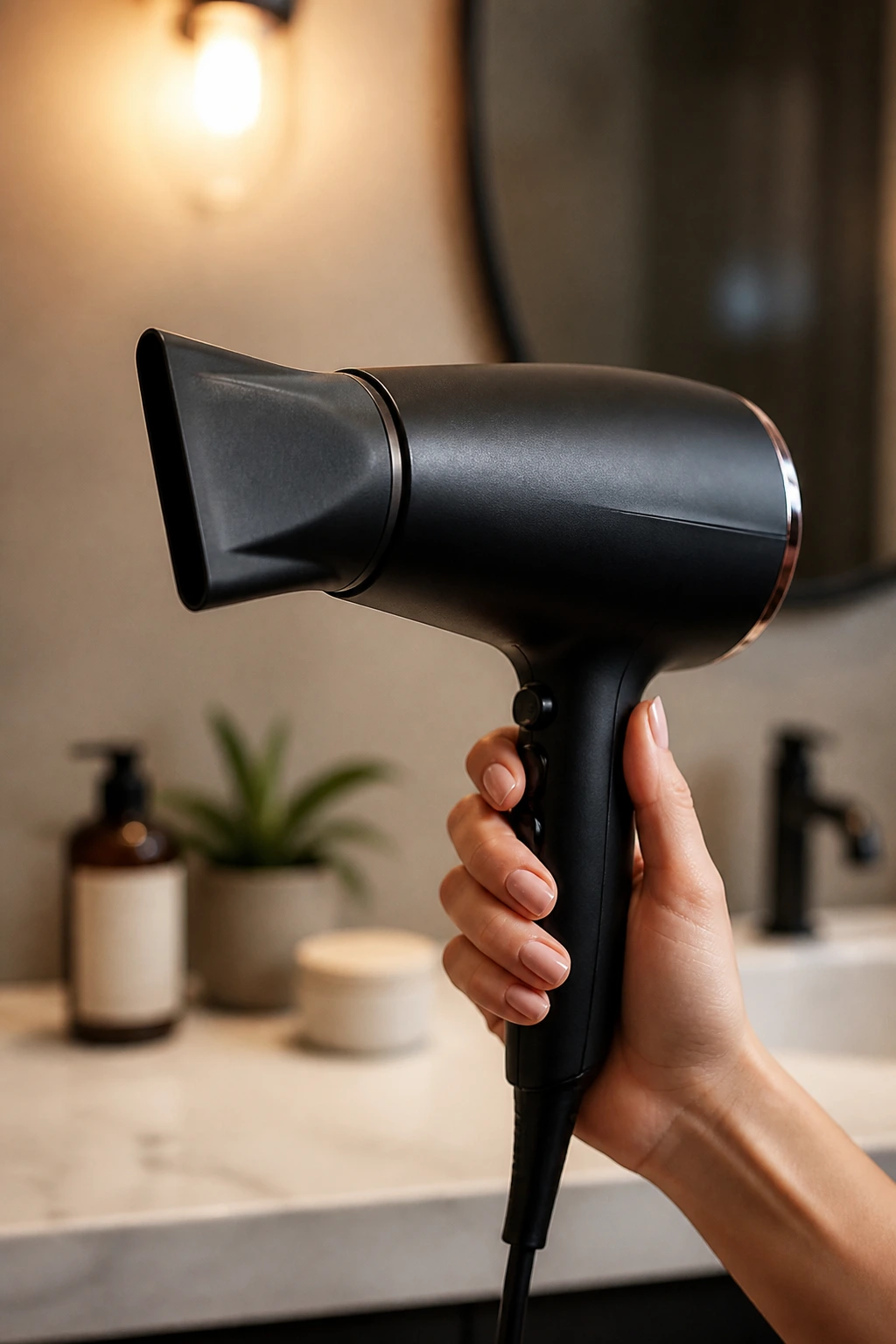
Blow dryer with a concentrator nozzle — Keeps the front section smooth and directs air where you want it instead of blasting the fringe all over your forehead.
-
1 to 1.5-inch round brush — Big enough to create bend, not so big that it fights the side sweep.
-
Paddle brush — Useful for the lengths when you want them sleek without a lot of curve.
-
Duckbill clips or sectioning clips — Help train the fringe while it cools, which is half the battle.
-
Dry shampoo — Best for the roots and the fringe on day two, where a little oil shows fast.
-
Lightweight mousse or root-lift spray — Gives the crown some air if your hair falls flat by noon.
-
Heat protectant spray — Non-negotiable if you use a brush, flat iron, or curling iron, even lightly.
-
Mini flat iron or small curling wand — Handy only for the front pieces when they refuse to cooperate.
-
Microfiber towel or soft T-shirt — Blots water from the fringe without roughing it up.
-
Fine-tooth comb — Draws a clean side part and helps place the bang without over-brushing.
The Five-Minute Morning Reset That Saves the Fringe
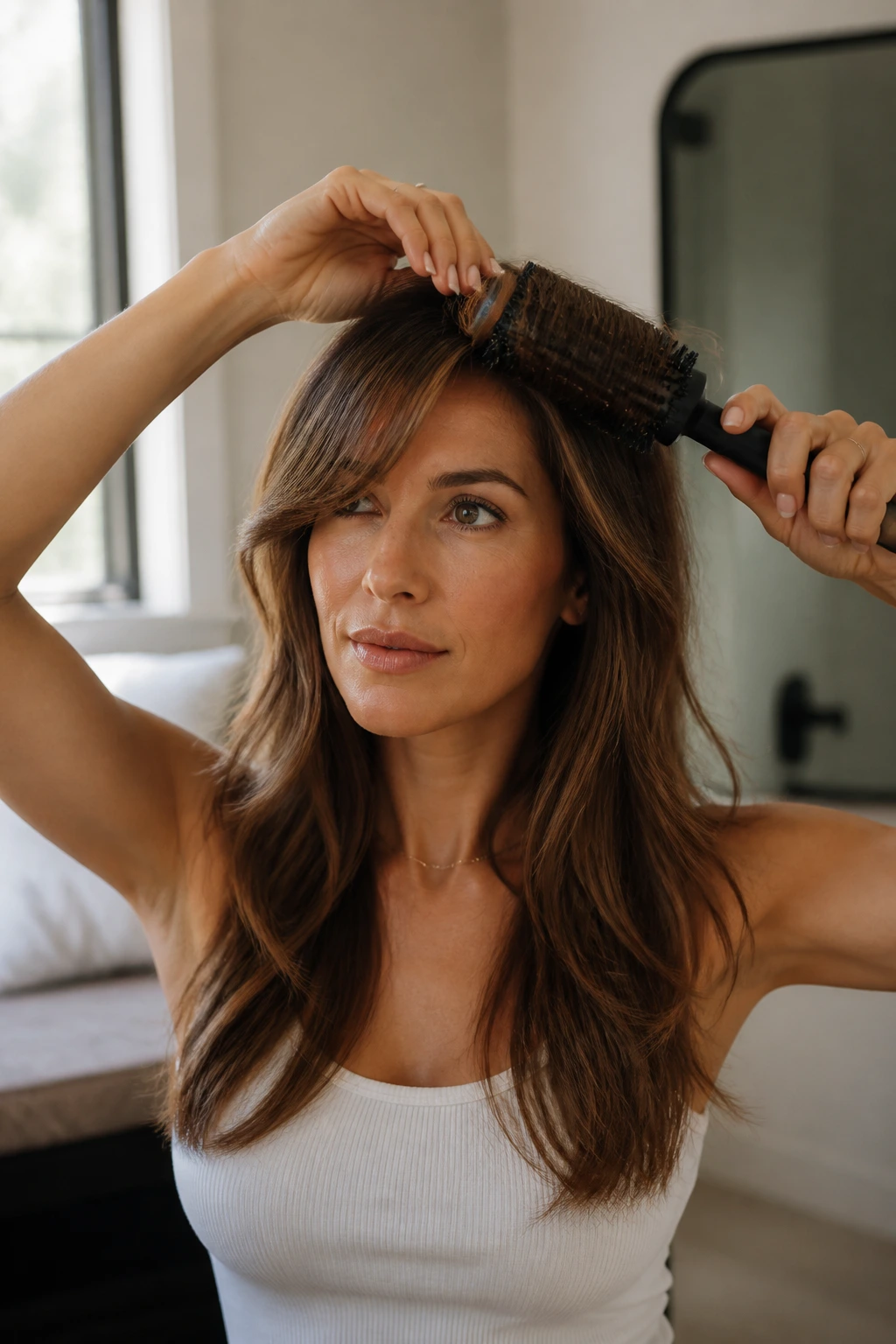
Start with the front pieces. Always. They set the mood for the rest of the cut. If the fringe is damp, mist it lightly and brush it across the forehead in the direction it should fall. Then hit it with a round brush or a quick pass of a mini flat iron, just enough to bend it away from the face.
Next, check the roots at the part. If they have gone sleepy, lift them with a little dry shampoo or root spray and finger-shake the hair instead of brushing it flat again. A side-swept cut likes a bit of lift at the crown; that is what keeps the shape from collapsing into a flat sheet.
Finally, smooth the ends only where they need it. You do not need to re-blow-dry the whole head every morning. If the back is fine, leave it alone. The best thing about this haircut is that the front can be reset without waking up the entire style.
Common Mistakes That Make the Style Work Too Hard
-
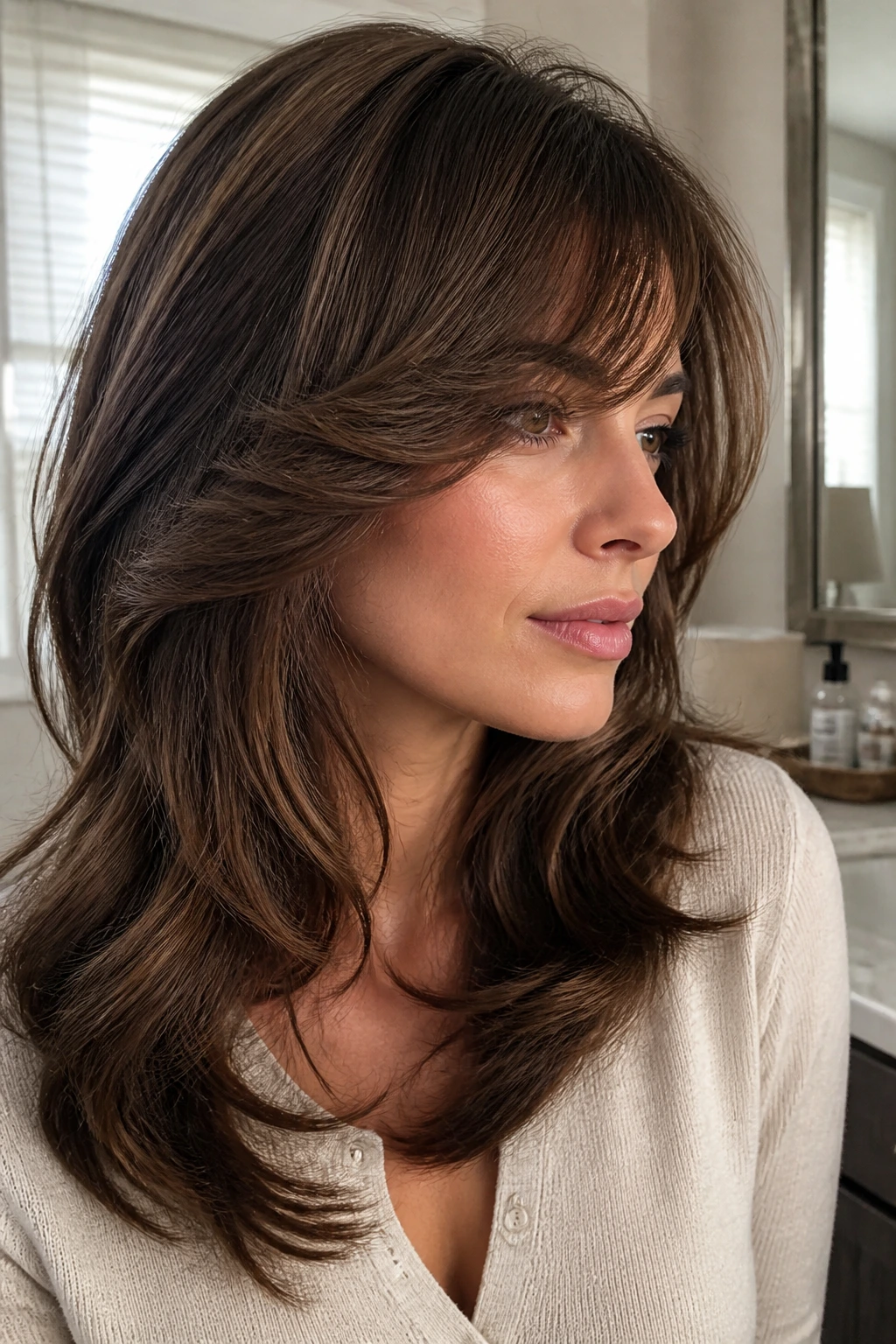
Cutting the bang too short. The symptom is a fringe that flips up, sits above the brow, or refuses to sweep. The fix is to keep the shortest pieces long enough to tuck into the layers, especially if your hair has any natural wave.
-
Starting the layers too high. If the cut turns puffy around the cheeks, the layers may be kicking off too much weight at the top. Ask for lower, longer layers that begin around the collarbone or lower.
-
Using heavy serum on the fringe. It makes the bang stringy and separates the front in a greasy way. Keep heavy products off the roots and use them only through the mid-lengths or ends.
-
Ignoring your part and cowlick. A bang cut against the grain will fight you every single morning. The fix is to cut and style in the direction the hair already wants to go, not against it.
-
Over-texturizing fine hair. Fine hair needs movement, not gaps. If the ends look see-through, too much razoring or thinning has probably been done.
-
Leaving the fringe untrained after washing. If the front dries however it wants, it usually chooses chaos. Clip it in place for a few minutes while it cools.
Variations and Adaptations to Try

The Fine-Hair Feather: Keep the layers long and the ends full, then ask for a soft side sweep that hits the cheekbone. It gives the illusion of density without turning the perimeter wispy.
The Thick-Hair Softener: Add internal weight removal and keep the front pieces long enough to tuck behind the ear. This version cuts dry time and keeps the hair from ballooning at the sides.
The Curly Glide: Let the fringe follow the curl pattern instead of fighting it. Cut longer than you think, then sweep and clip while drying so it falls diagonally instead of straight across.
The Glasses-Friendly Sweep: Shift the bang slightly higher and lighter so it clears the frame. The side angle should open the face without dropping onto your lenses every ten minutes.
The Heat-Free Weekday Version: Use a side part, a dab of leave-in cream, and a clip at the front while the hair dries. Once the shape sets, you can remove the clip and let the bang fall naturally.
Maintenance, Trims, and Between-Wash Care
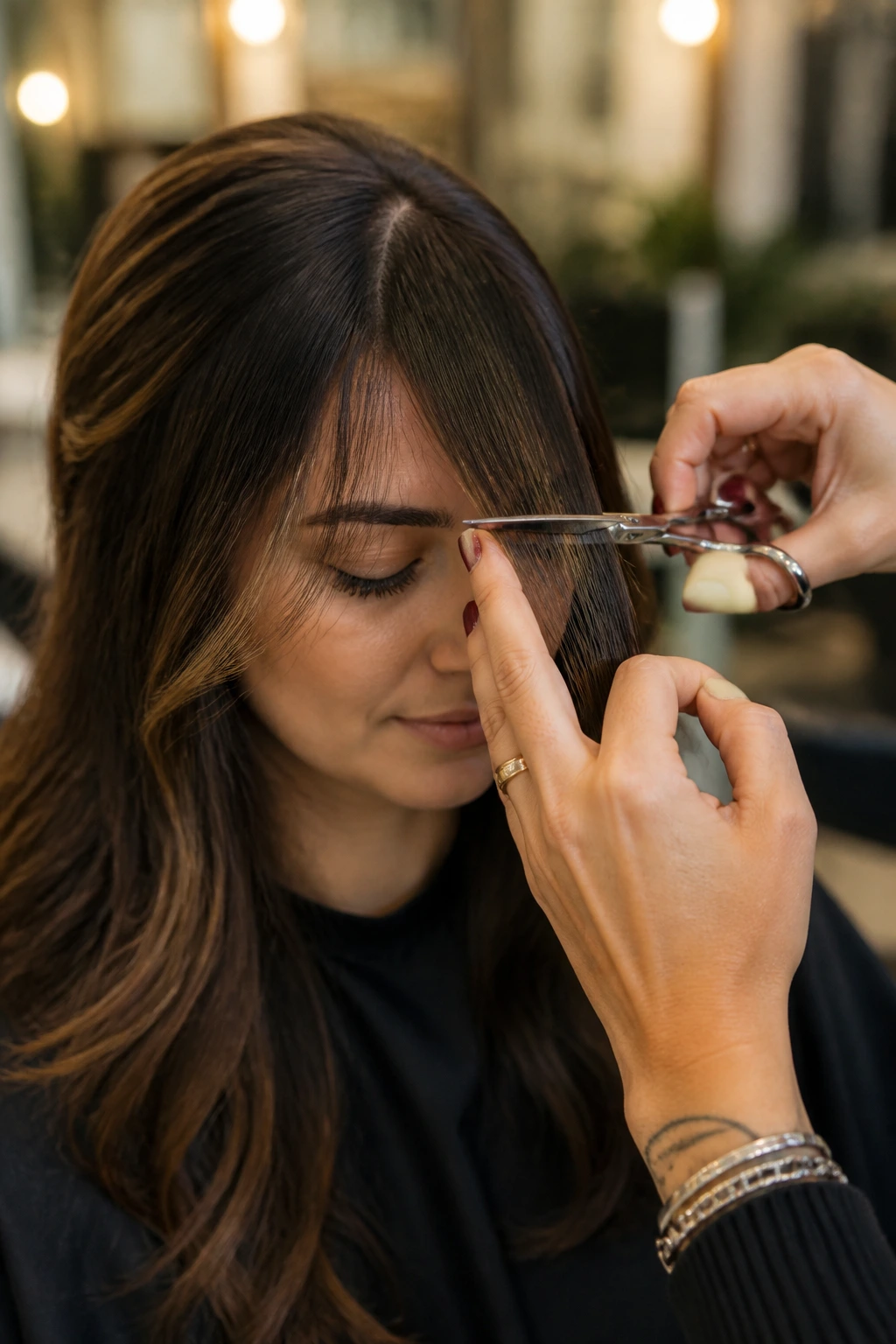
Side-swept bangs are forgiving, but they still like a little upkeep. Fringe trims every 3 to 5 weeks keep the front from swallowing your eyes or losing the diagonal line. Long layers can go longer — usually 8 to 12 weeks — unless your ends start to split or the shape around the face looks heavy.
Between washes, dry shampoo is your friend, but use it at the root, not all over the fringe. A light mist at the roots absorbs oil without turning the front chalky. If you use too much, it can make the bang stiff, and stiff fringe is rude before coffee.
Sleeping habits matter too. If your front pieces kink overnight, pin them loosely to one side or set them on a soft roller for a few minutes before bed. A silk pillowcase helps, but I would not call it a magic trick. It just reduces the morning argument.
If you wash your hair often, keep the fringe dryer than the rest of the cut. Bangs tell on excess moisture first. That is why a quick root lift, a clean side part, and a controlled blast of air can save you from starting from scratch.
Questions People Ask Before They Book the Cut
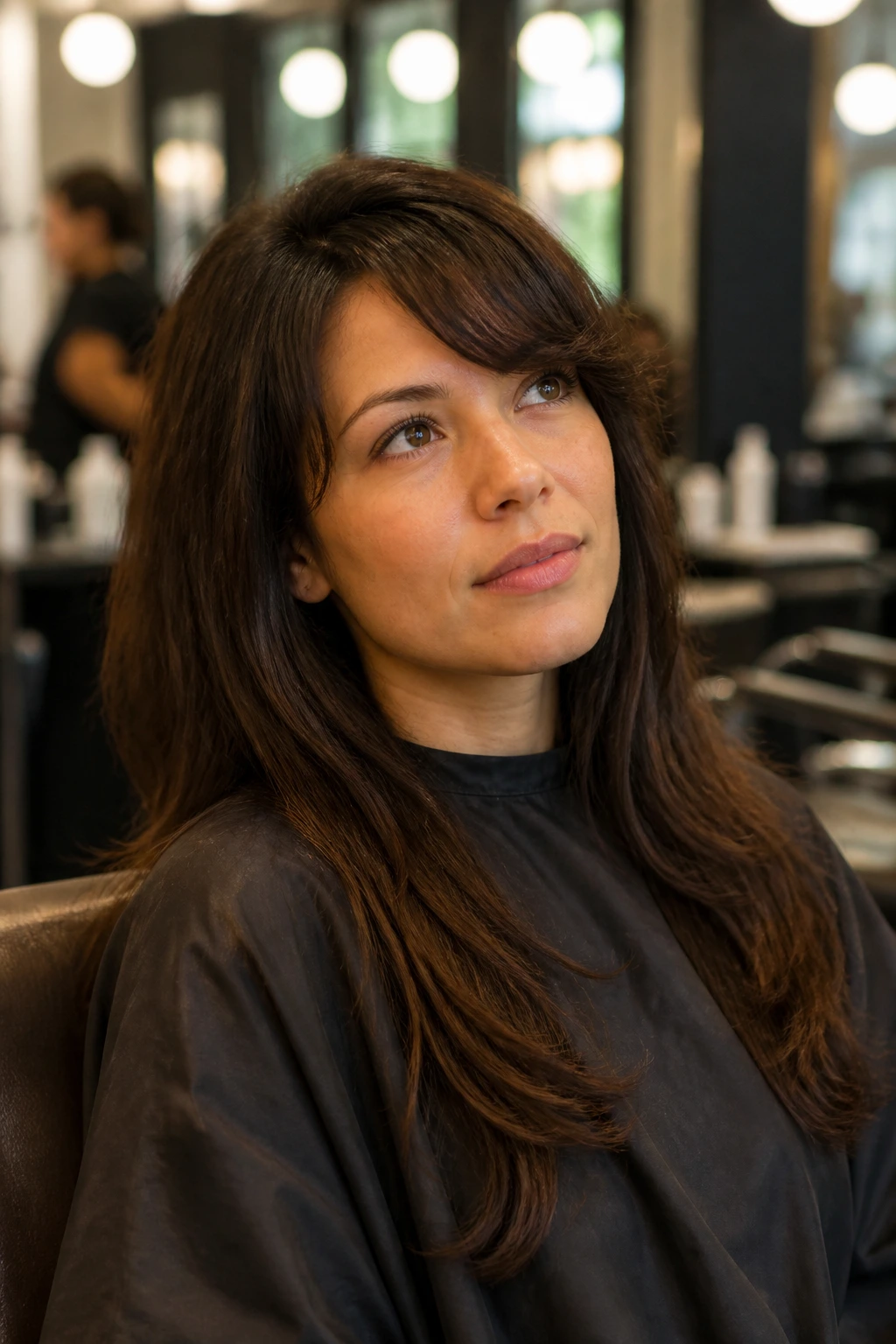
Will side-swept bangs work if my hair has a strong cowlick?
Usually, yes, but the cut has to respect the growth pattern. Ask your stylist to work with the direction your hair already falls and be prepared to use a clip or roller while the front cools into place.
How often do side-swept bangs need trimming?
Most people need a fringe touch-up every 3 to 5 weeks if they want the sweep to stay clean. If you like a softer grow-out, you can stretch that longer, but the bang will start falling into your eyes sooner.
Are these layers good for fine hair?
Yes, if the layers stay long and the ends stay full. Fine hair usually looks better with movement at the front and not too much texturizing through the bottom.
Can I air-dry this haircut and still look polished?
Absolutely, if your texture has even a little bend. Use a small amount of cream or mousse, direct the fringe to the side while it dries, and resist the urge to keep touching it once it starts setting.
What if my bangs split in the middle after an hour?
That usually means the front is too short, too heavy, or sitting against an off-center cowlick. Wet the fringe lightly, clip it in the direction you want, and let it cool there; if the split keeps happening, ask for a longer side sweep next trim.
Do side-swept long layers work with glasses?
They can, and often they’re nicer with glasses than blunt bangs are. Keep the fringe above the frame line or soft enough to skim past it, and avoid heavy product near the brow.
How do I grow out side bangs without the awkward stage?
Let the bang blend into the front layers instead of keeping a hard fringe line. Tucking, clipping, and side-parting do most of the work while the pieces get longer.
Can I still wear my hair up?
Yes, and that is one of the best things about this cut. The front pieces can stay loose around the face while the rest goes into a clip, bun, or ponytail without looking unfinished.
The Cut That Does the Work for You
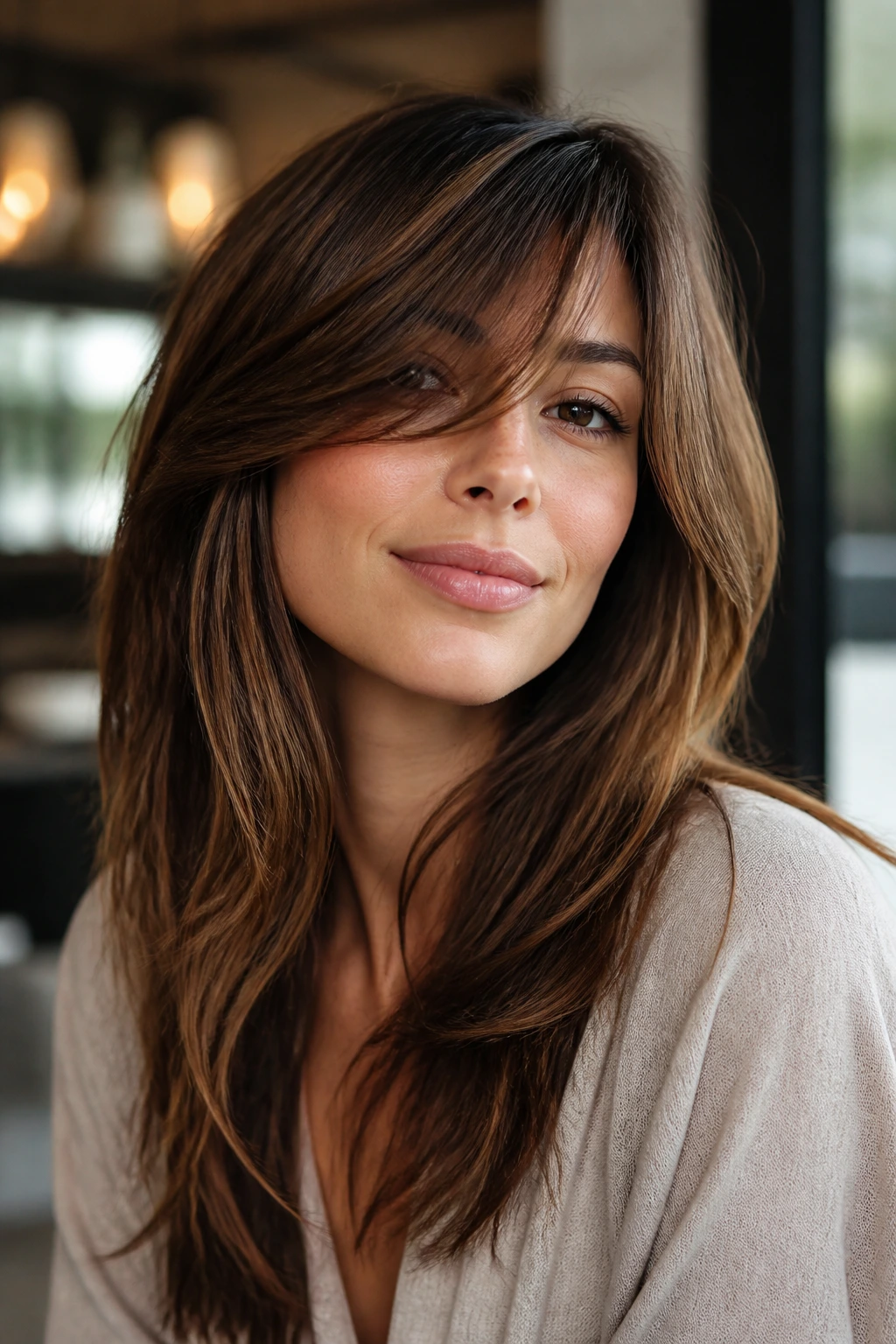
The best thing about side-swept long layers with bangs is not that they look polished on a perfect day. It is that they still look arranged when the day is not. The front pieces soften the face, the layers keep the length moving, and the whole cut gives you enough structure to skip the full production when time is short.
If you want a haircut that can air-dry, blow-dry, clip up, grow out, and survive a busy morning without falling apart, this shape earns its place. Bring a clear reference photo, tell your stylist how much time you actually spend on your hair, and ask for the front to be cut in the direction it already wants to live. That part matters more than the photo on your phone.