



Fringe on natural hair is one of those ideas that looks simple in the salon chair and gets complicated the second shrinkage enters the room. A layered cut can give curls room to fall, but only if the front is shaped for the way your hair actually behaves once it dries — not for the length you see when it’s wet and stretched out.
That’s why a lot of bangs on natural hair miss the mark. They’re cut too blunt, too short, or too dense at the front, and the whole shape starts fighting the face instead of framing it. The better versions have movement. They leave room for curl pattern, density, and that little bit of unpredictability that makes natural texture look alive instead of forced.
The 22 fringe-and-layer ideas below lean into that reality. Some are soft and wearable. Some are bold. A few are a little dramatic in the best way. All of them make sense on curls, coils, and waves because they’re built around shape, not just length.
Why This Collection Works on Natural Hair
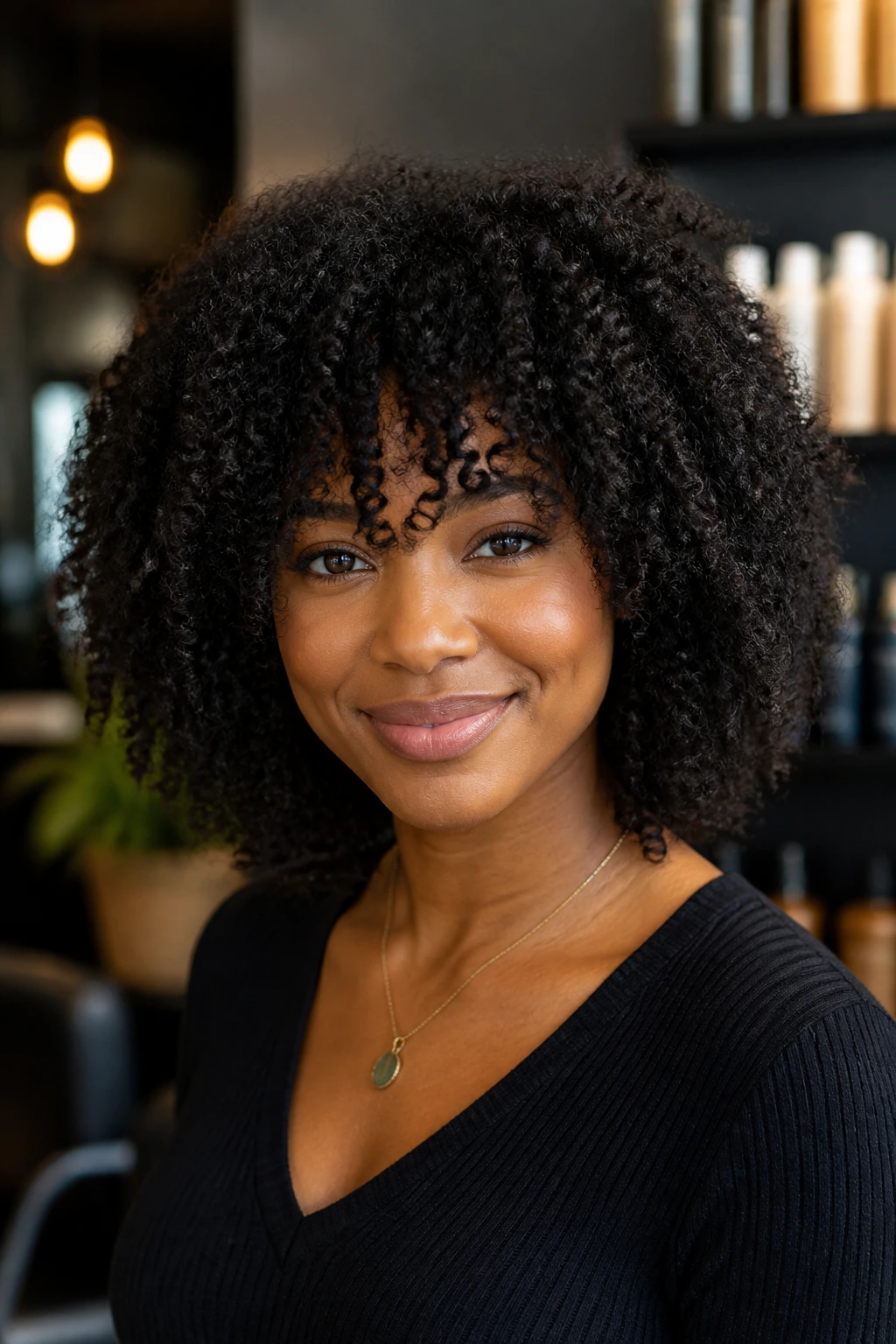
- Shrinkage-friendly length: These cuts leave enough room for curls to spring up without the fringe landing halfway to the hairline.
- Less triangle, more shape: Layers stop the ends from stacking into that wide, bottom-heavy outline natural hair can get when it’s all one length.
- Bang options for every curl pattern: From curtain fringe to side-swept pieces to tighter coily bangs, there’s a version here that fits different densities and textures.
- Better grow-out: A layered fringe grows in softer stages, which matters when you do not want a harsh line sitting in the middle of your face for months.
- Salon language that makes sense: These cuts are easy to describe to a stylist without using vague “make it cute” language and hoping for the best.
- Styling that respects texture: Most of these shapes work with twist-outs, wash-and-gos, diffusing, or air-drying rather than fighting for a pin-straight finish.
Why Natural Hair Changes the Fringe Equation
A fringe on natural hair is not just a forehead detail. It changes the whole silhouette.
Shrinkage is the first thing that gets people into trouble. A bang that looks cheekbone-length when wet can pop up by an inch or two once it dries, and tighter textures can swing even more. That is why dry cutting — or at least cutting on hair that’s fully stretched into its normal dry pattern — matters so much more here than on straight hair.
Density is the other big factor. Thick front sections can sit heavy and block light from the face, while finer textures can look stringy if a stylist removes too much bulk. The sweet spot is usually a front shape that stays soft at the edges but still has enough weight to move as a group.
Layers do a different job on natural hair than they do on smoother textures. They are not there to make the hair “less.” They are there to create room between sections so curls can stack without turning into a triangle. When the front is cut with intention, the bangs stop looking like an afterthought and start acting like part of the haircut.
1. Curly Curtain Fringe with Cascading Layers
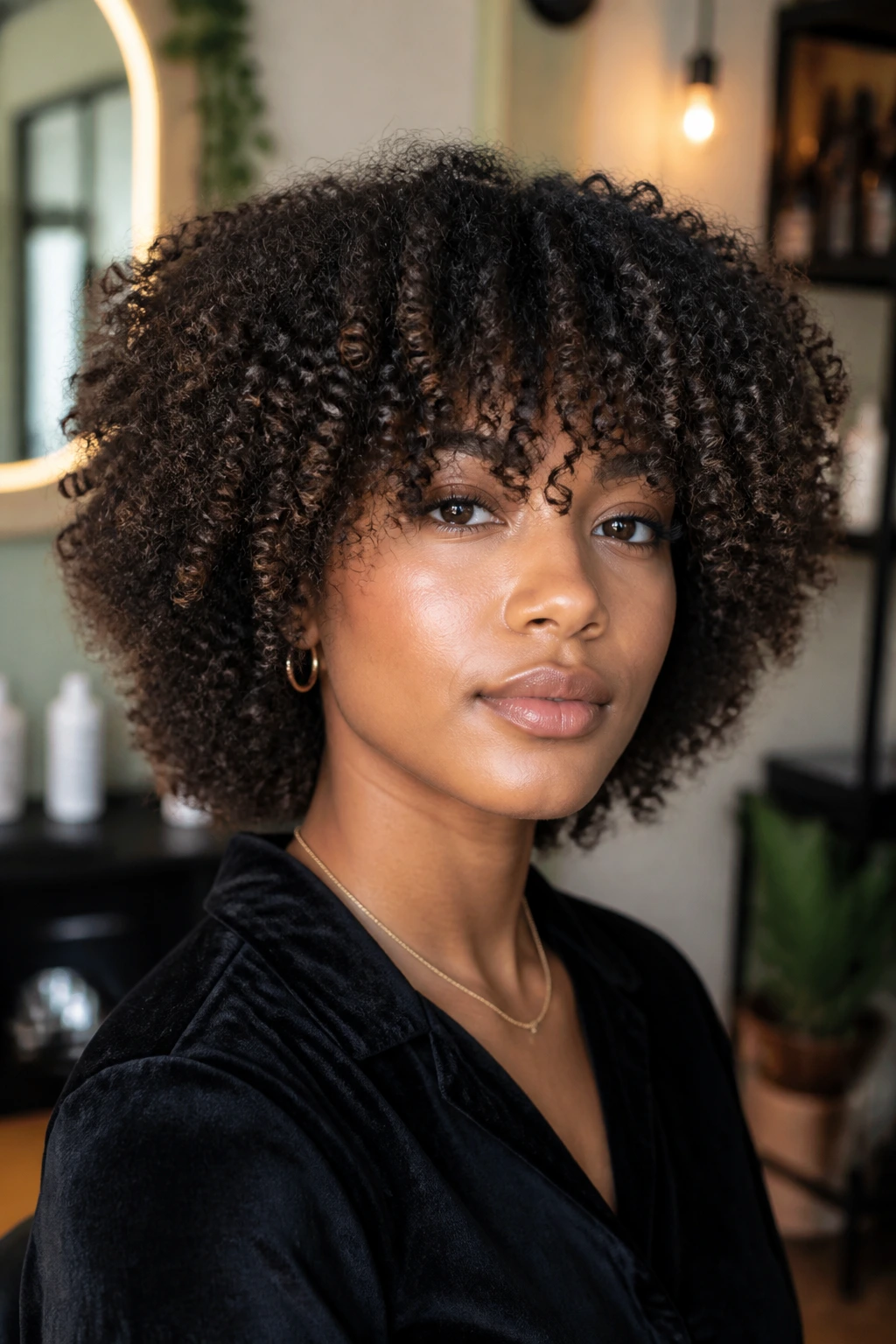
A curtain fringe is one of the easiest ways to ease into bangs on natural hair, and I mean that in the practical sense, not the lazy one. The part opens the face, the front pieces fall away from the center, and the layers behind them give the curls a place to land instead of puffing outward.
The trick is length. Ask for the shortest pieces to sit longer than you think you need when stretched — usually just below the brow or even skimming the bridge of the nose if your curl pattern shrinks hard. That gives you room for the curls to spring up without turning into a tiny, accidental fringe. This shape works especially well on 3A to 3C hair, but looser 4A coils can wear it too if the front is cut with enough length.
Where it shines
This cut is strong on round and heart-shaped faces because it breaks up the center without hiding the cheekbones. It also grows out quietly, which matters if you hate regular bang trims. Air-dry it with a middle part and a little mousse at the front, or diffuse the fringe forward and then split it with your fingers once it sets.
2. Soft Curly Shag with Airy Bangs
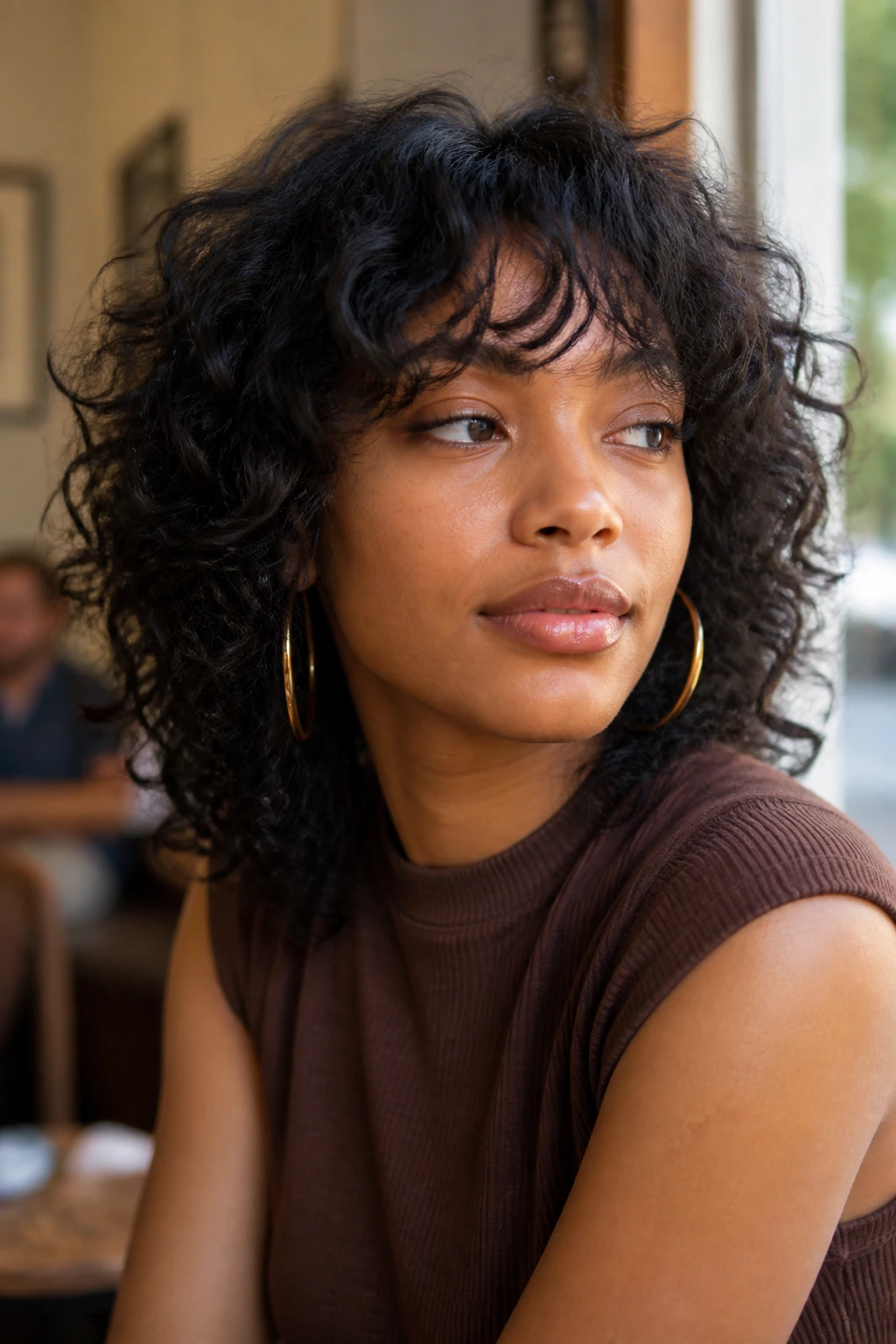
The shag is for people who want their hair to move when they turn their head. Not stiff movement. Not polished movement. Real, bouncy, slightly wild movement that makes curls look like they belong there instead of being arranged like a display.
This version keeps the bangs light and the layers irregular. The crown has a little lift, the sides stay feathered, and the ends are never all the same length. That unevenness is the point. A curly shag keeps dense hair from turning into a helmet, and it takes some of the visual weight off the lower half of the face.
It’s a smart pick for anyone who wears wash-and-gos or diffused curls most of the time. A little curl cream and a light gel are enough. Too much product kills the shape fast, and on a shag, limp bangs are more obvious than frizzy ones. I’d rather see a touch of texture than a front that hangs like wet string.
3. Rounded Afro with Feathered Fringe
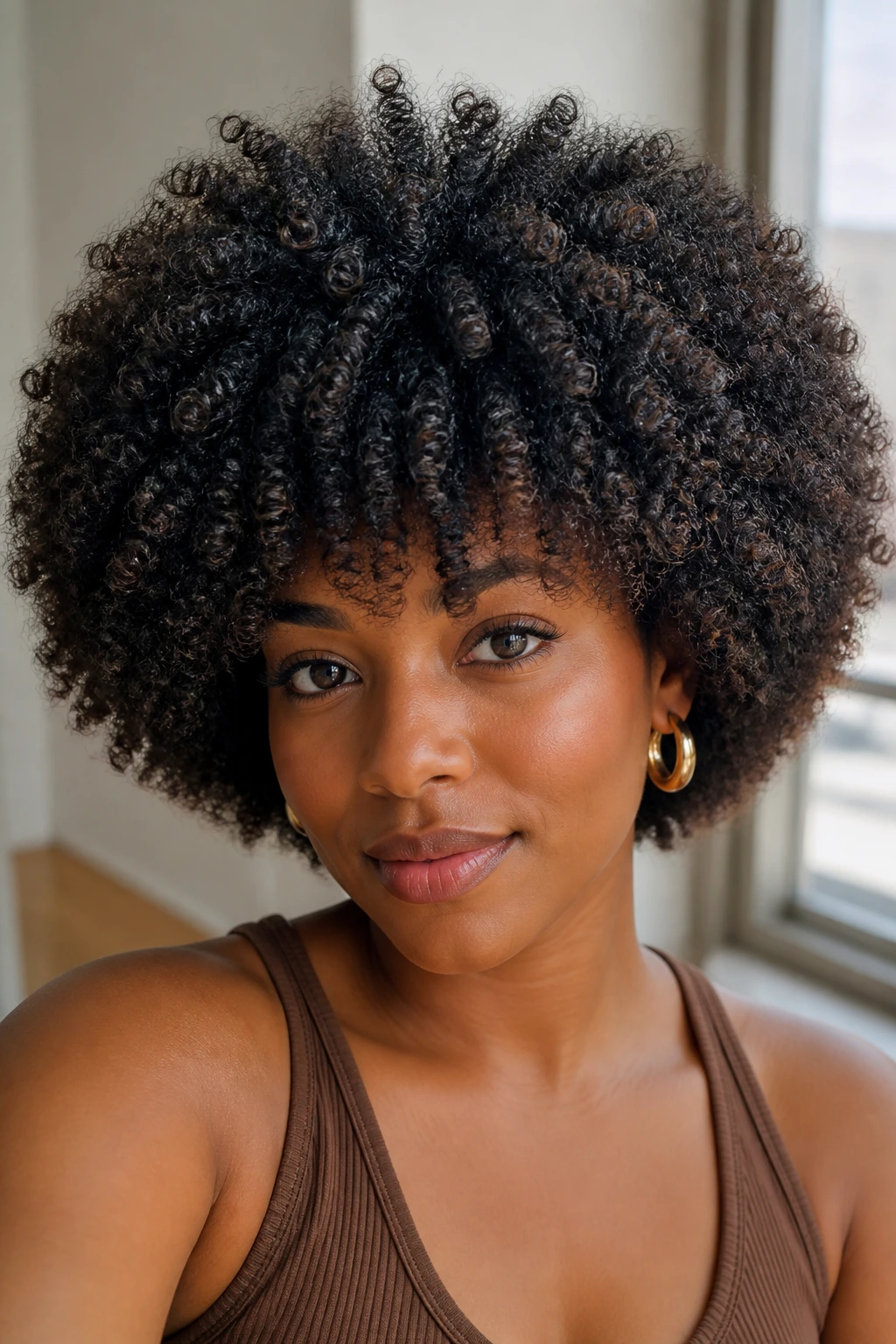
A rounded afro with fringe has a very specific energy: clean shape, soft front, no wasted bulk. It works because the outline is intentional from every angle, not because the hair has been thinned to death. The fringe usually sits in the same family as the rest of the cut, which means the front reads as part of the halo instead of a separate piece pasted on top.
This is a good place for 4A through 4C textures that like to hold shape. The cut should respect the way the hair grows outward and upward, which is why the front often looks best when it’s trimmed dry and shaped in layers that follow the curl groupings. If the fringe is too blunt, the face can feel boxed in. If it’s too sparse, it disappears.
A soft pick at the roots and a little edge control along the hairline are usually enough. I like this shape on square and oval faces, but it can work almost anywhere if the fringe is left soft at the temples.
4. Wolf Cut with Piecey Bangs
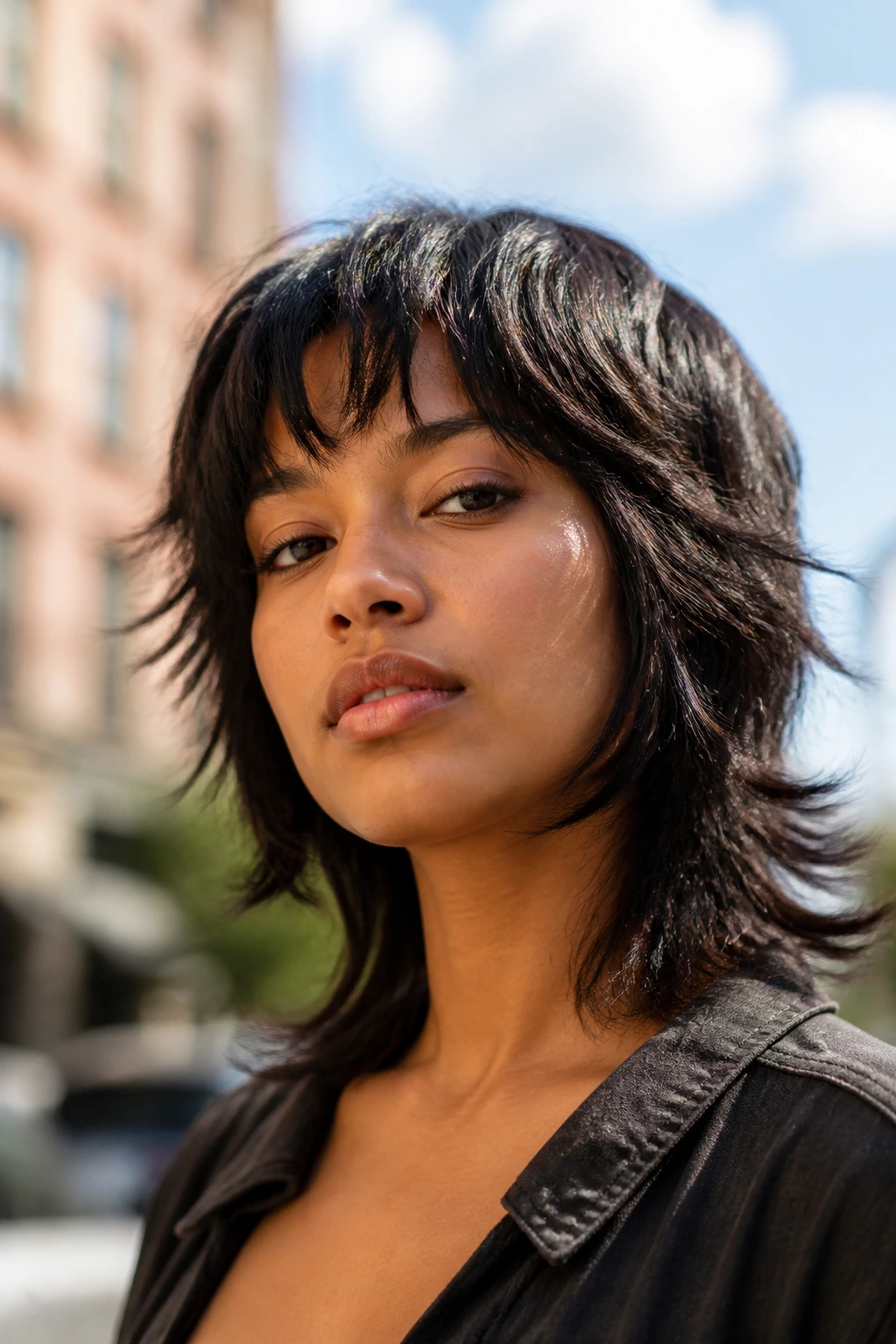
The wolf cut is the one people ask for when they want edge but don’t want a mullet that screams for attention. On natural hair, it works best when the layers are choppy but not shredded, with bangs that break into pieces instead of sitting in one solid curtain.
That piecey front is the whole story. It lets curls separate naturally, which looks better than trying to force a perfect ribbon of hair across the forehead. The crown gets lift, the lengths keep some density, and the overall shape feels current without being fussy.
This cut is not for someone who wants zero styling. It needs definition near the front — a finger coil or two, a touch of gel at the roots, maybe a diffuser if the bangs refuse to cooperate. But if you like texture and do not mind a shape that changes a little from day to day, this is one of the most interesting options on the list.
5. Collarbone Lob with Long Face-Framing Layers
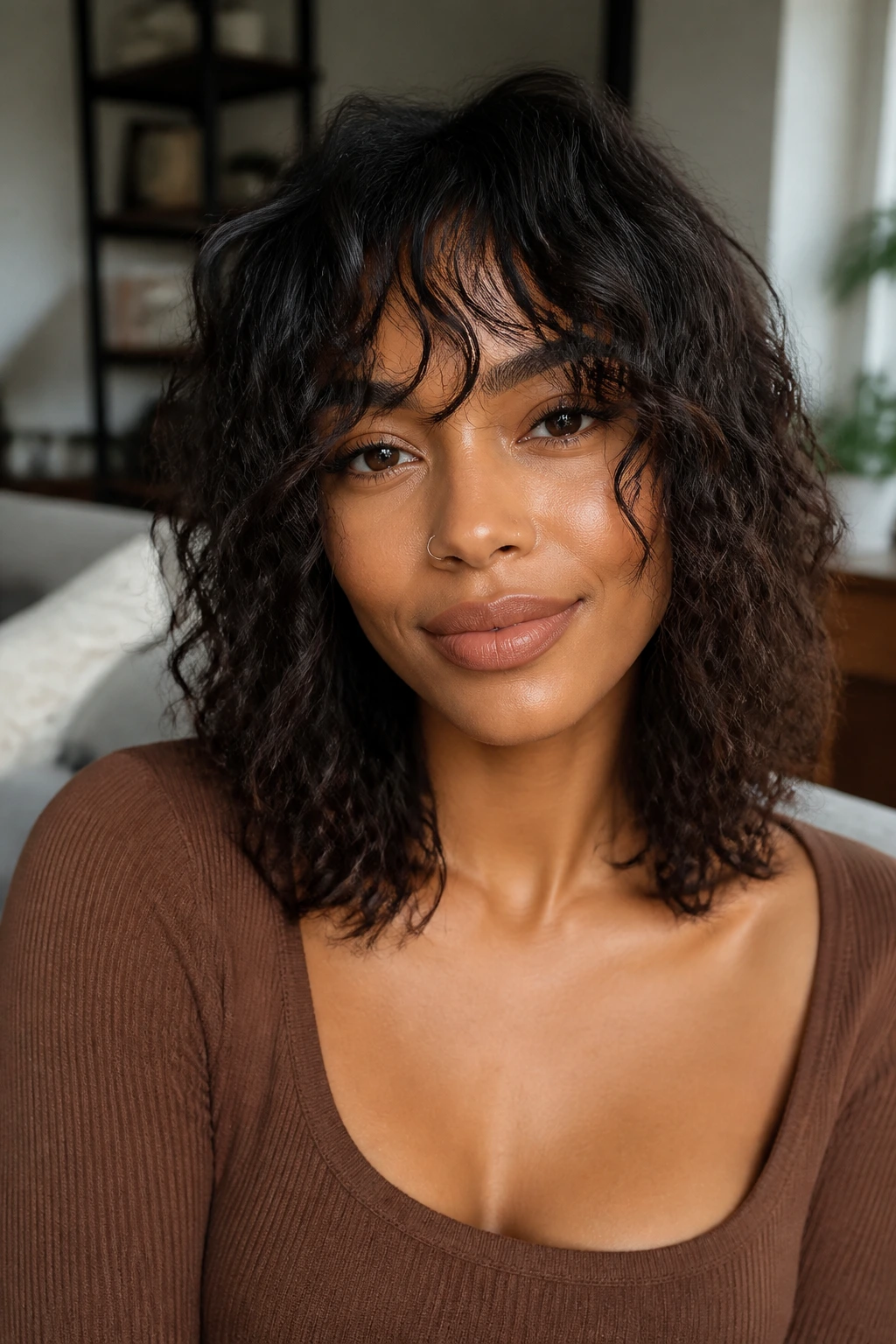
A collarbone lob with fringe is the safe-looking option that is secretly doing a lot of work. It keeps enough length to pull back on lazy days, but the layers around the face stop it from sitting flat and dull. The bangs can be worn as a soft split fringe, or they can blend into the front layers if you want something quieter.
This cut is especially good for people who are nervous about chopping too much length off natural hair. The lob gives you shape without sacrificing the ability to stretch, tuck, twist, or pin the front. And because the layers start around the cheekbone or chin, they pull attention upward without making the cut feel too heavy.
Best when you want options
If your routine changes from day to day, this one makes life easier. Wear it diffused and defined on wash day, then stretch the front with clips or a loose twist at night so the fringe sits where you want it the next morning.
6. Coily Midi Cut with Springy Fringe
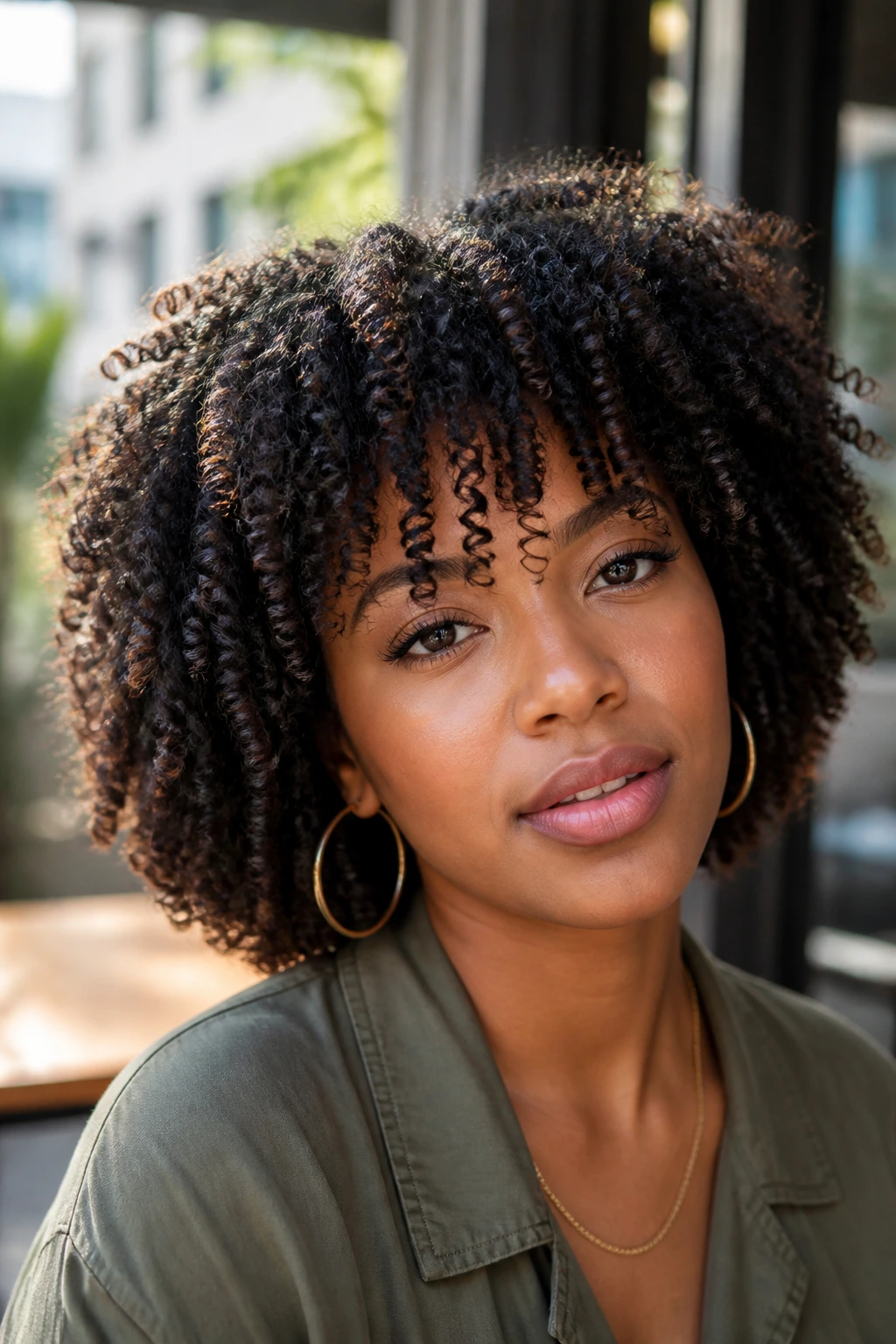
Tight coils look especially good in a midi shape because the layers can stack without swallowing the face. The fringe in this cut is short enough to register, long enough to keep its bounce, and usually shaped in small sections so it does not collapse into one flat strip.
This is a smart cut for dense hair that tends to spread outward. The layers remove some of the weight from the sides, which lets the front sit forward instead of flaring wide. If your hair shrinks hard, ask the stylist to leave the front pieces longer than the rest and check the shape once it’s dry and fully springy.
The finish matters here. A little foam or light curl cream helps the fringe clump in a flattering way, and a satin scarf for ten minutes can settle the front without crushing it. The result should look lively, not overworked.
7. Side-Swept Bangs on a Layered Halo Shape
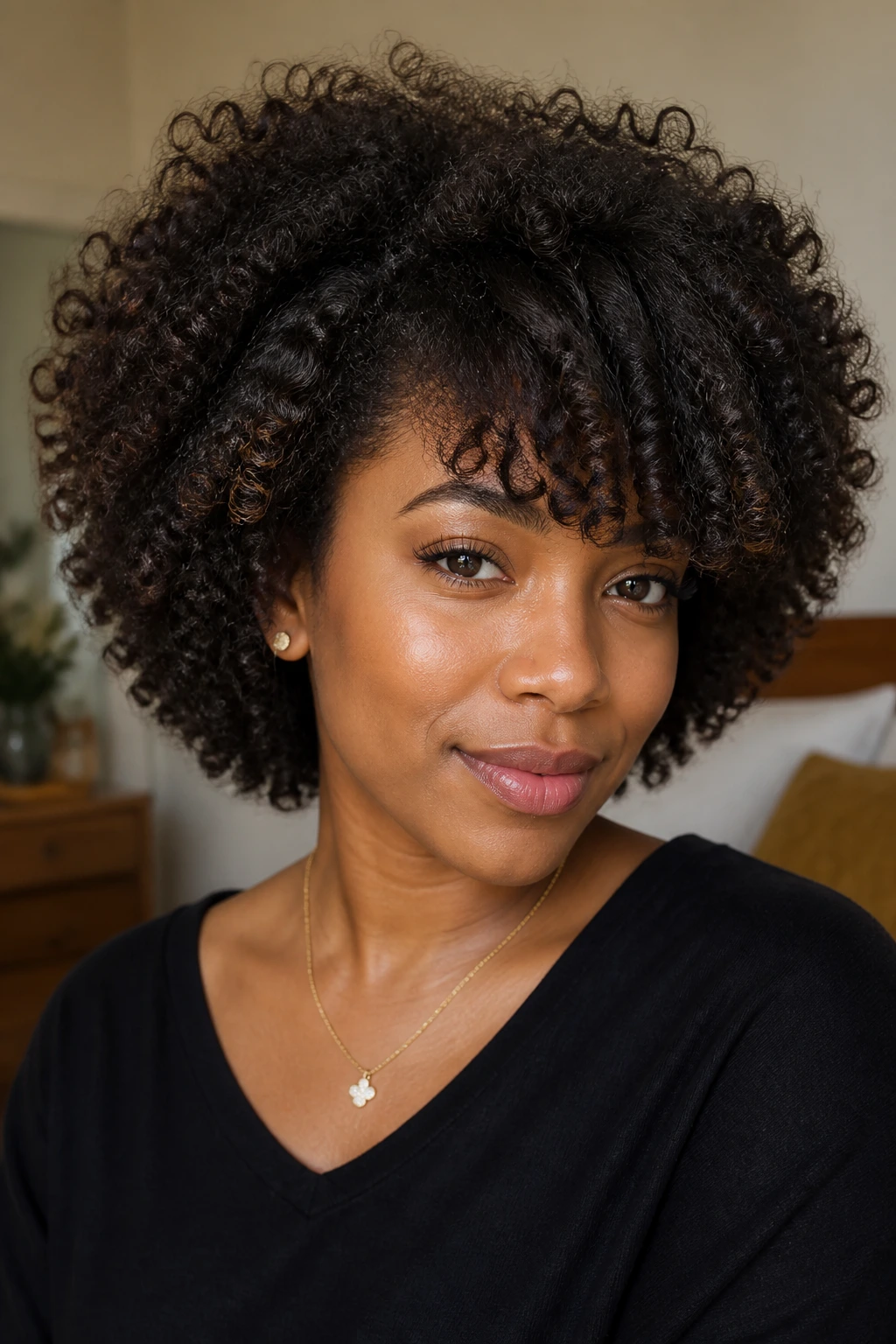
Side-swept bangs are a quieter answer for anyone who likes the idea of fringe but does not want hair sitting directly on the forehead. On natural hair, they make the most sense when the rest of the cut has a rounded halo shape, because the sweep needs a soft place to disappear into.
This style is especially good for cowlicks or uneven growth at the front. Instead of fighting the hairline, it follows it. That makes the bang easier to style on day two and less likely to split in the middle after a humid commute. The layers should start high enough to support the sweep, but not so high that the whole cut looks over-thinned.
A deep side part gives this shape a little drama. A looser curl pattern can wear it with a diffuser and a round brush at the roots; tighter coils can get the same effect with a stretch-and-set method. Either way, the front should fall like part of the haircut, not like a separate piece that needs constant rescuing.
8. Blunt Bob Softened by Internal Layers
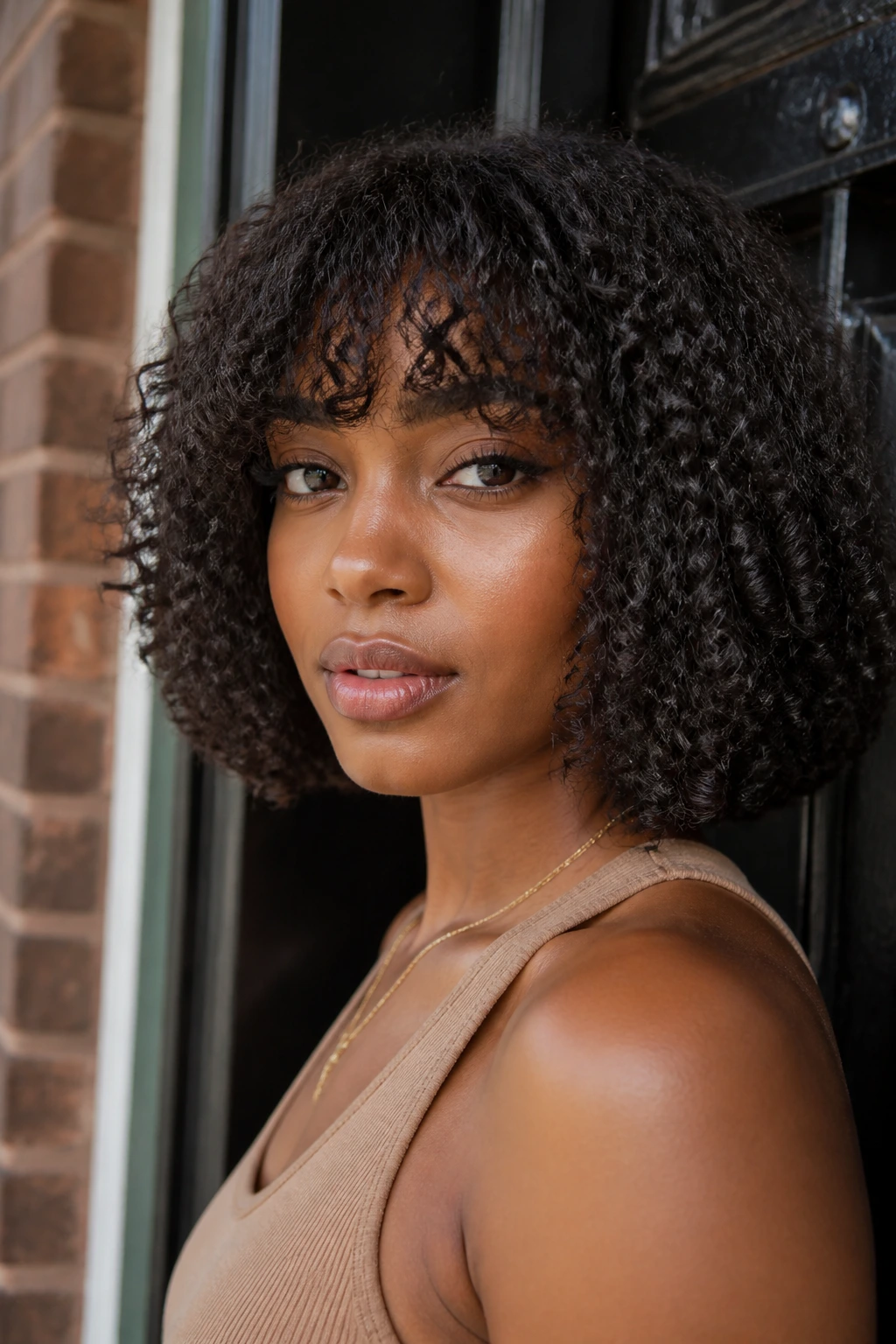
A blunt bob on natural hair can go very wrong if it is cut like a helmet. Internal layers fix that. They sit inside the shape, remove bulk where the hair piles up, and leave the outer line clean so the bob still reads sharp at the ends.
The fringe softens the whole thing. It can be full and brow-grazing, or it can split into two shorter front pieces that curve around the eyes. Either way, the goal is to stop the bob from feeling boxy. That matters especially on dense textures, where a one-length bob can look wider at the sides than the person expected.
Why it stays modern
A lot of bobs on natural hair fail because the front is too tidy. This version keeps the front alive. The layers move when you turn your head, the bangs break up the line of the forehead, and the cut has enough structure to hold up even when the curls get bigger on day two.
9. Micro Fringe with Soft Volume Around the Crown
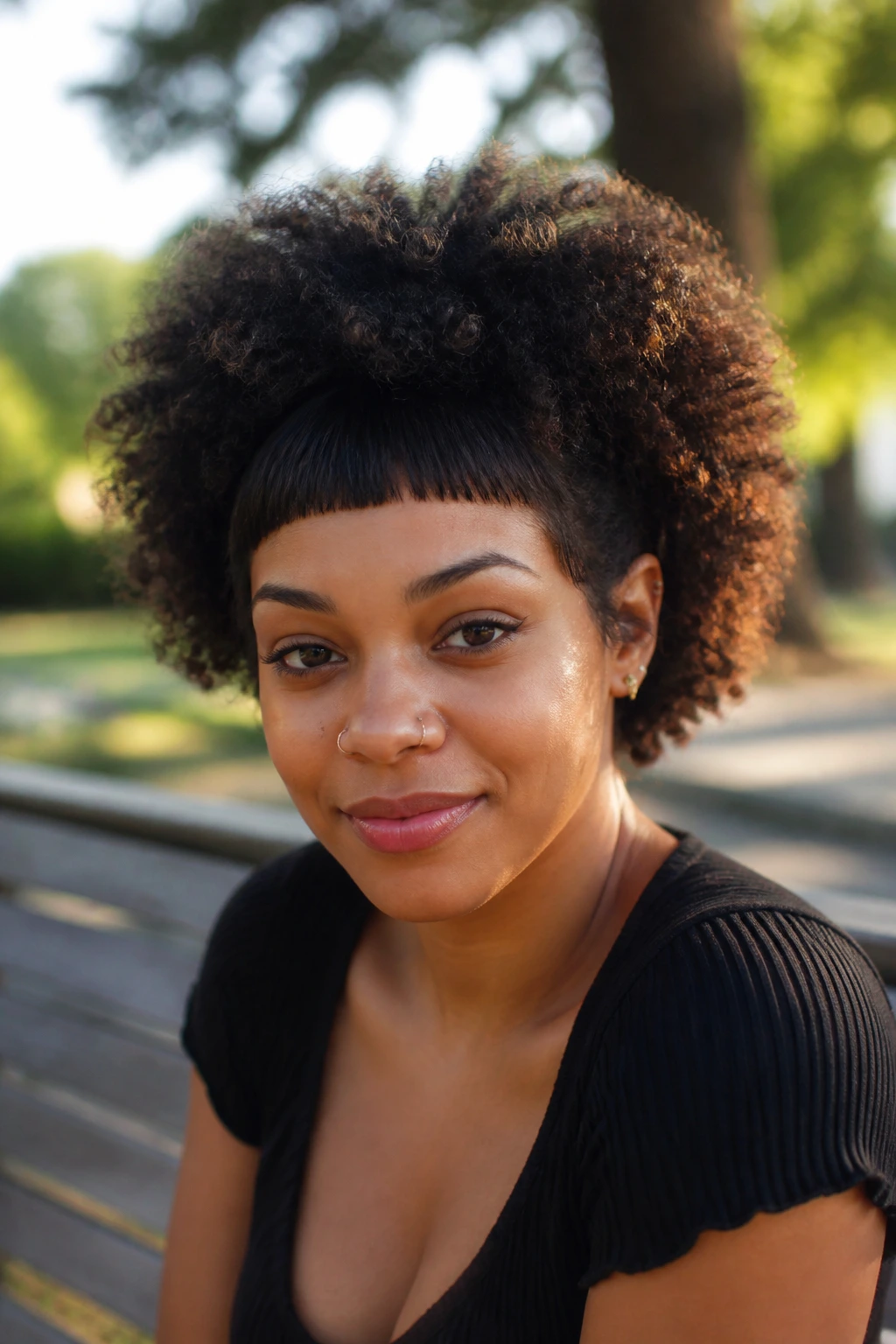
Micro fringe is a bold move on natural hair, and I would not recommend it to anyone who hates regular trims. But when it works, it really works. The short bang creates a strong line at the front while the rest of the cut stays rounded and soft, so the contrast becomes the point.
The secret is leaving the crown with enough volume to balance the tiny fringe. If the top goes flat, the cut can look top-heavy. If the front is cut too short, shrinkage turns it into a little ledge above the brow. That is why this is one of the rare styles that needs to be discussed in dry form before the first snip.
It suits confident wearers, especially those with tight coils or dense curls that hold shape well. Think of it as a fashion cut with a real maintenance schedule. The upside is a sharp, memorable frame. The downside is that there’s nowhere for a bad trim to hide.
10. Layered Pixie with Textured Bangs
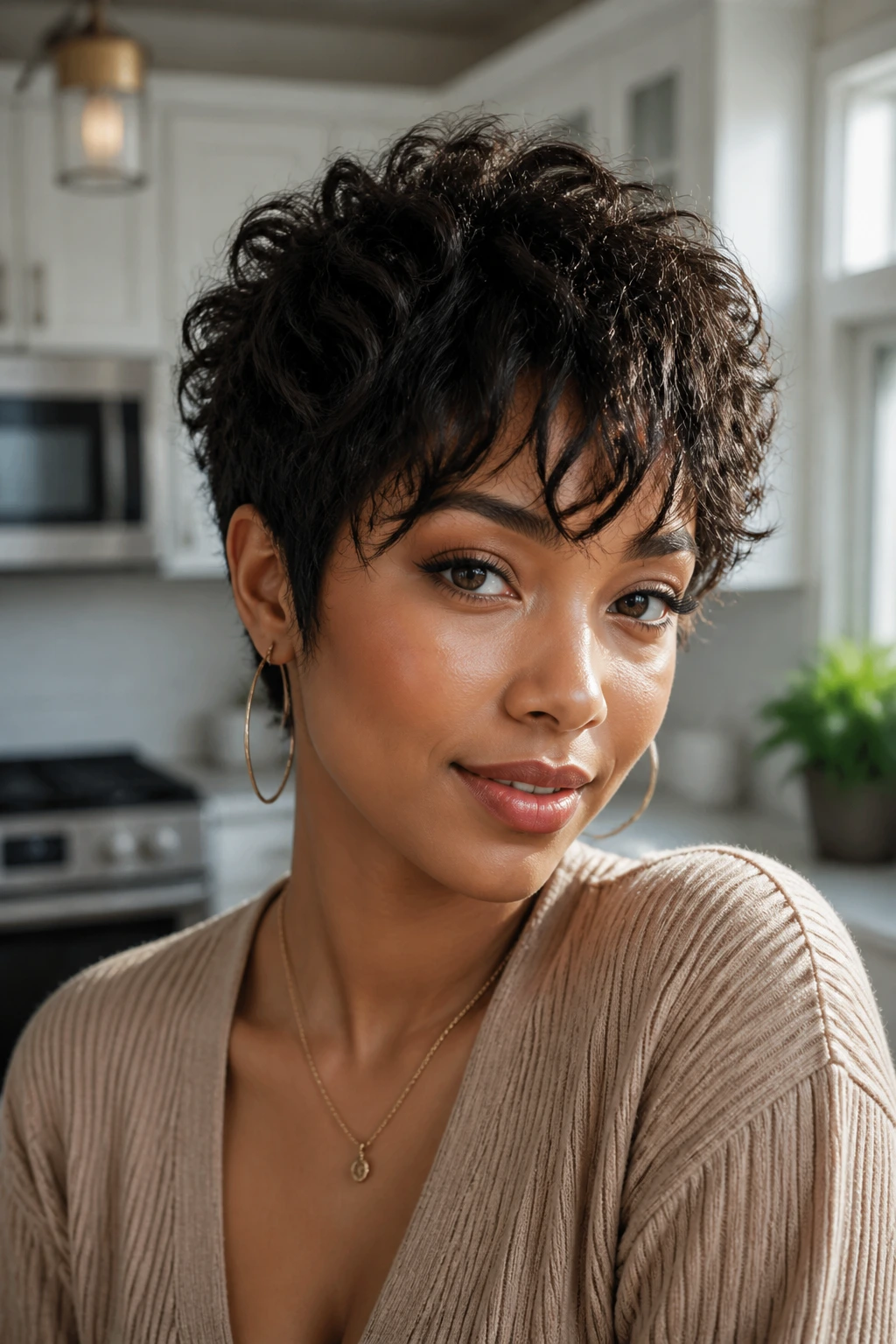
A pixie on natural hair is not a tiny haircut. It is a sculpted shape. The textured bangs are what keep it from turning severe, and the layers on top give the style room to show off curl pattern instead of flattening it down.
This cut works best when the top has enough length to twist, define, or scrunch into place. The fringe can be worn forward, pushed slightly to one side, or lifted at the roots for a soft, airy finish. That flexibility matters because short natural hair changes character fast depending on humidity, product, and how much time you gave it in the morning.
I like this cut on people who want less bulk around the neck and ears but still want texture on display. It also grows out in a flattering way if the stylist keeps the crown layered. The shape is clean, but never stiff.
11. U-Shaped Long Layers with Curtain Fringe
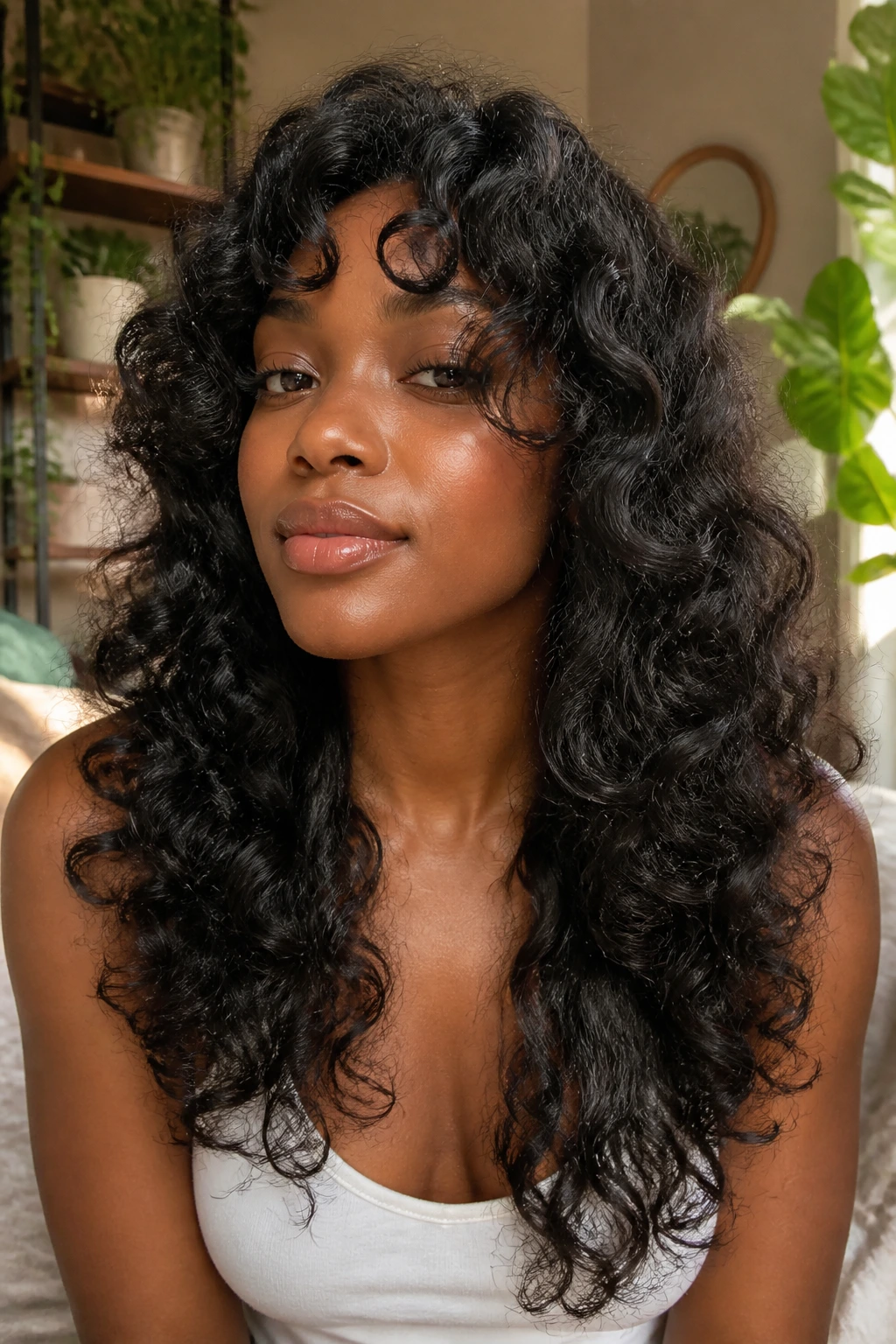
Long hair does not have to mean one endless sheet of curls hanging from the scalp. A U-shaped cut gives the back a gentle curve, and the layers around the front create movement without chopping away the length you worked for.
The curtain fringe is the reason this style feels modern. It breaks up the front without turning the whole haircut into a shag. The front pieces should be long enough to tuck behind the ears or blend into a twist-out, which is useful when you want to change the look without re-styling the whole head.
This is a strong option for people who wear stretched styles, braid-outs, or twist-outs and want the front to stay soft. If your ends are prone to dryness, keep the layers long enough that you still have enough density for protective styling. Long curls need shape too. Not just length.
12. Tapered Fro with Sculpted Bangs
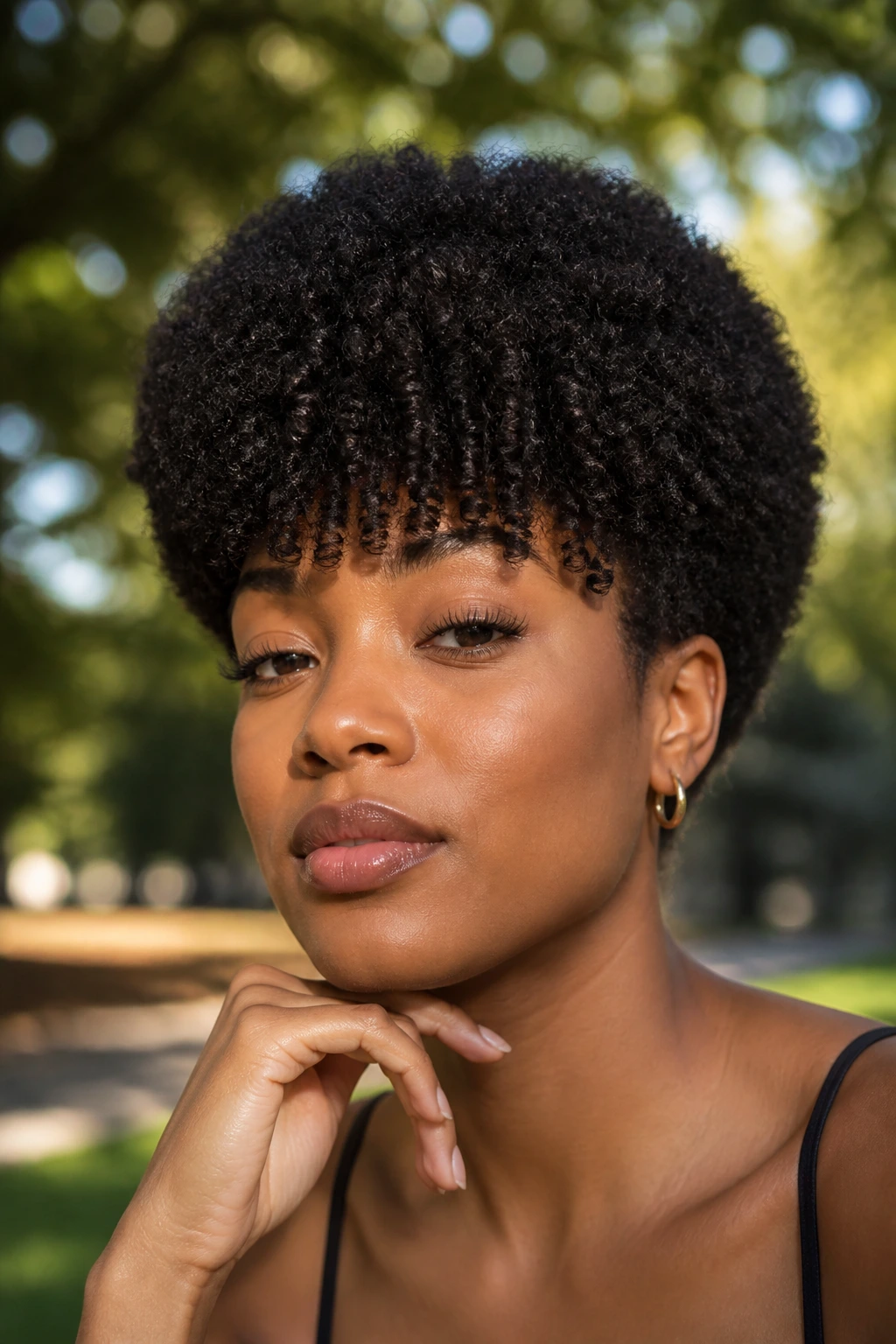
A tapered fro has clean sides, a fuller top, and enough structure to make the bangs feel deliberate instead of accidental. The fringe usually sits slightly longer at the center and tapers at the temples, which helps the shape follow the face instead of dropping straight across it.
This cut is excellent for coils that like to grow upward. The sides stay tidy, the crown stays visible, and the bangs become part of the architecture rather than a separate feature. If you want definition, the front can be shingled or finger-styled. If you want softness, a pick at the roots and a light cream are enough.
Shape note
This one looks strongest when the taper is not too aggressive. Too much removal at the sides can make the head look narrow and the fringe feel disconnected. Leave enough mass around the temples to connect the front to the rest of the silhouette.
13. Deep Side Part with Long Bangs
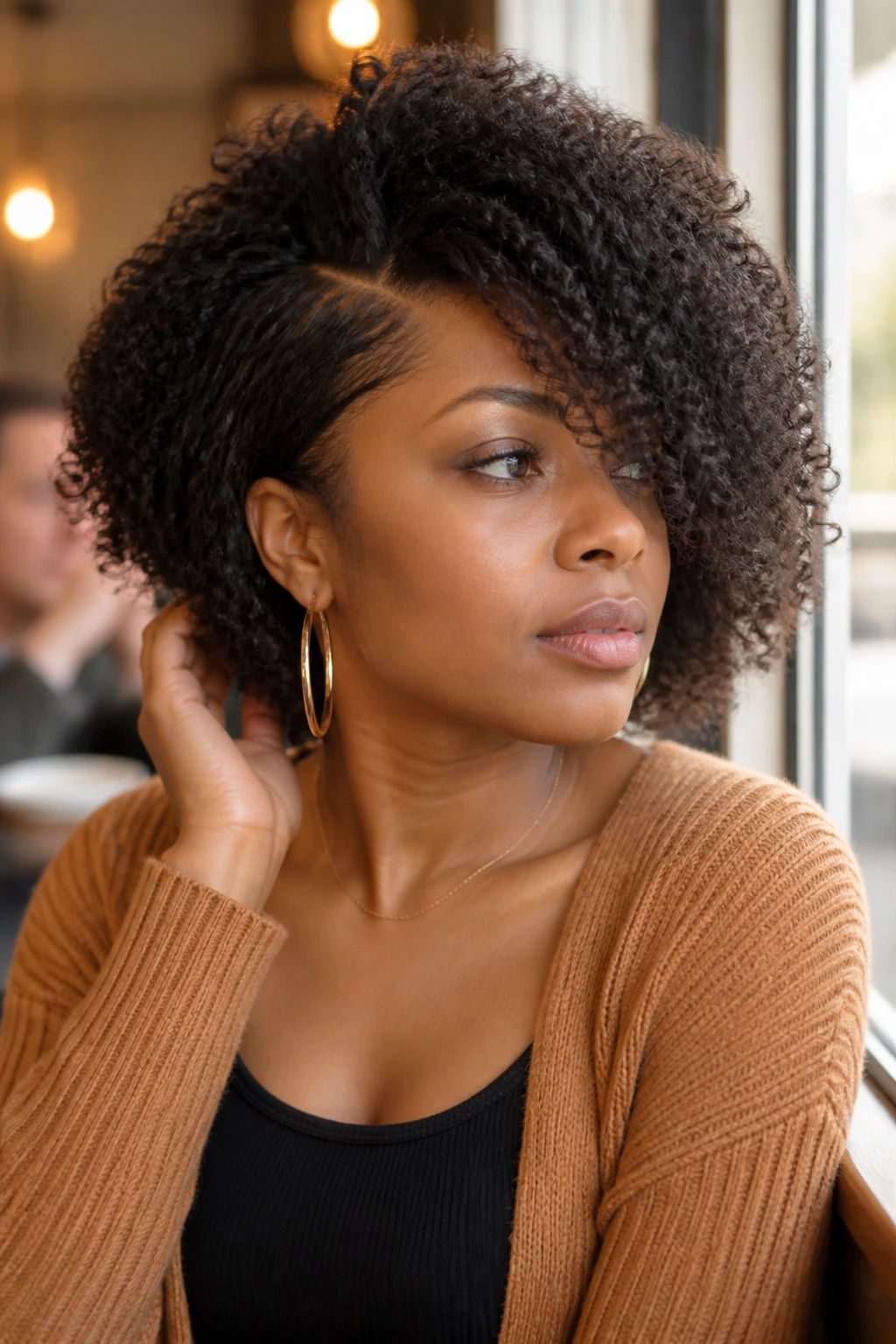
A deep side part can change a haircut more than people expect. On natural hair, it creates an off-center frame that feels easy to wear, especially when the bangs are left long enough to sweep across the brow and settle into the rest of the layers.
This is one of the easiest ways to work around a front cowlick. Instead of trying to force a middle-part fringe into submission, you let the hair fall where it wants and shape the bang around that movement. The long front pieces can blend into the sides, which gives you face-framing without a hard bang line.
It also buys time between trims. Because the front is longer, it can be tucked, pinned, or twisted away from the face on hot days. That makes it a good fit for anyone who likes the idea of bangs but needs them to behave like grown-up hair, not a full-time project.
14. Invisible Layers and Airy Fringe
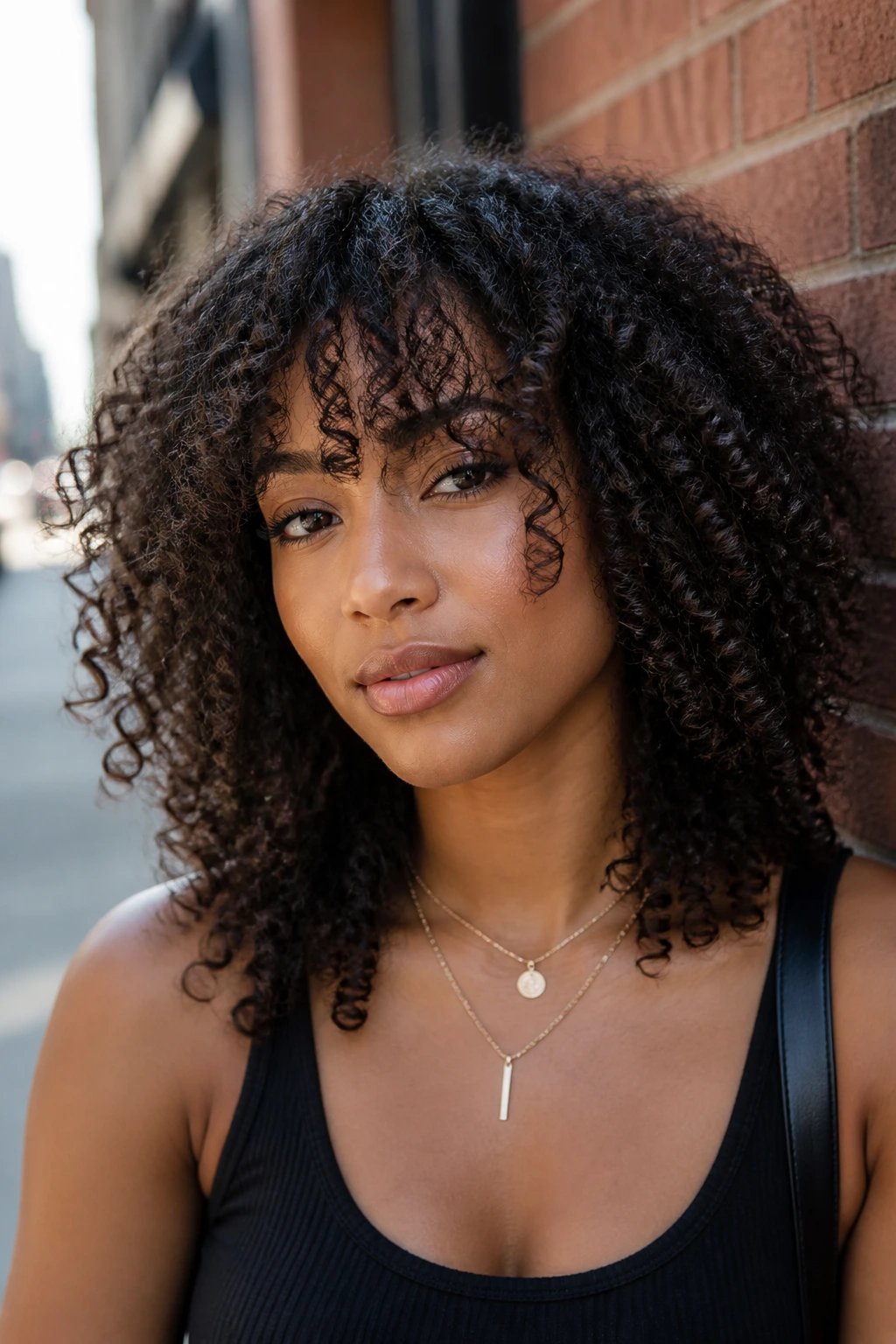
Invisible layers are for people who want movement without an obvious stepped haircut. The layers sit inside the shape, so the ends still look full, but the hair does not stack in a heavy block. On natural hair, that can make a huge difference in how the front falls.
The airy fringe keeps the look from getting too plain. It is light enough to separate, but not so thin that it disappears. This is a solid choice for lower-density curls because it adds swing without exposing too much scalp or making the front look see-through. It also behaves well in humidity, which is worth more than people think.
If your hair tends to feel bulky but looks sparse when over-layered, this cut sits in a good middle ground. It gives shape without slicing the ends to pieces. That balance is hard to get right, and a lot of stylists go too far. Here, restraint is the whole trick.
15. Twist-Out Layers with Longer Front Pieces
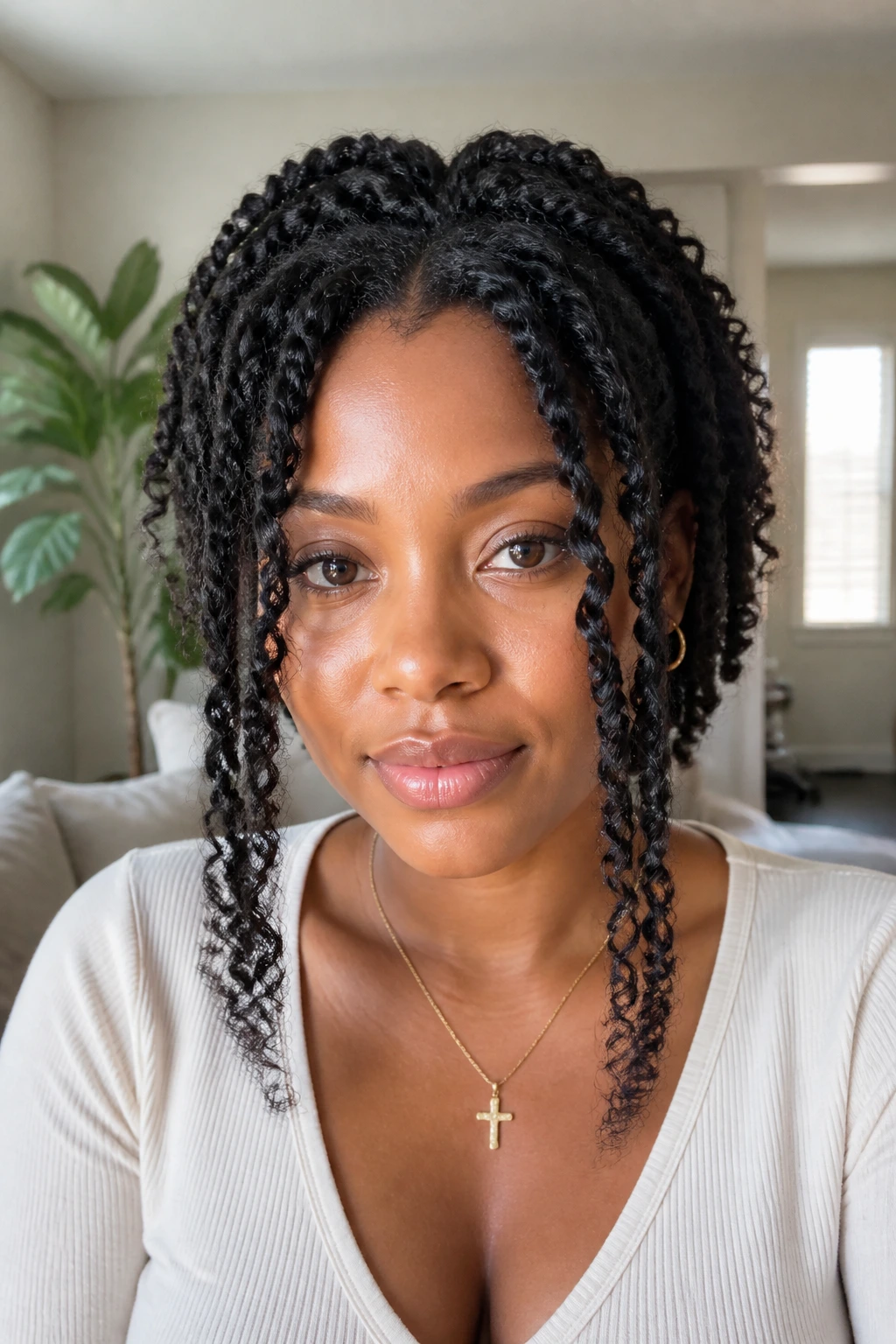
Some haircuts are designed for the way hair looks on day one. This one is built for a twist-out.
The longer front pieces help the style hold its face-framing shape once the twists are taken down. That means the bangs can be styled with a side part, a soft middle part, or a gentle sweep that follows the twist-out pattern. The layers behind them keep the silhouette from turning into one big fluffy shape.
This is a good cut if your styling routine already includes stretch-and-set methods. It gives you a front section with enough length to play with, and the rest of the layers keep the texture light around the shoulders. I’d pick this for someone who likes definition but does not want to redo their whole head every day.
16. Butterfly Cut with Curly Bangs
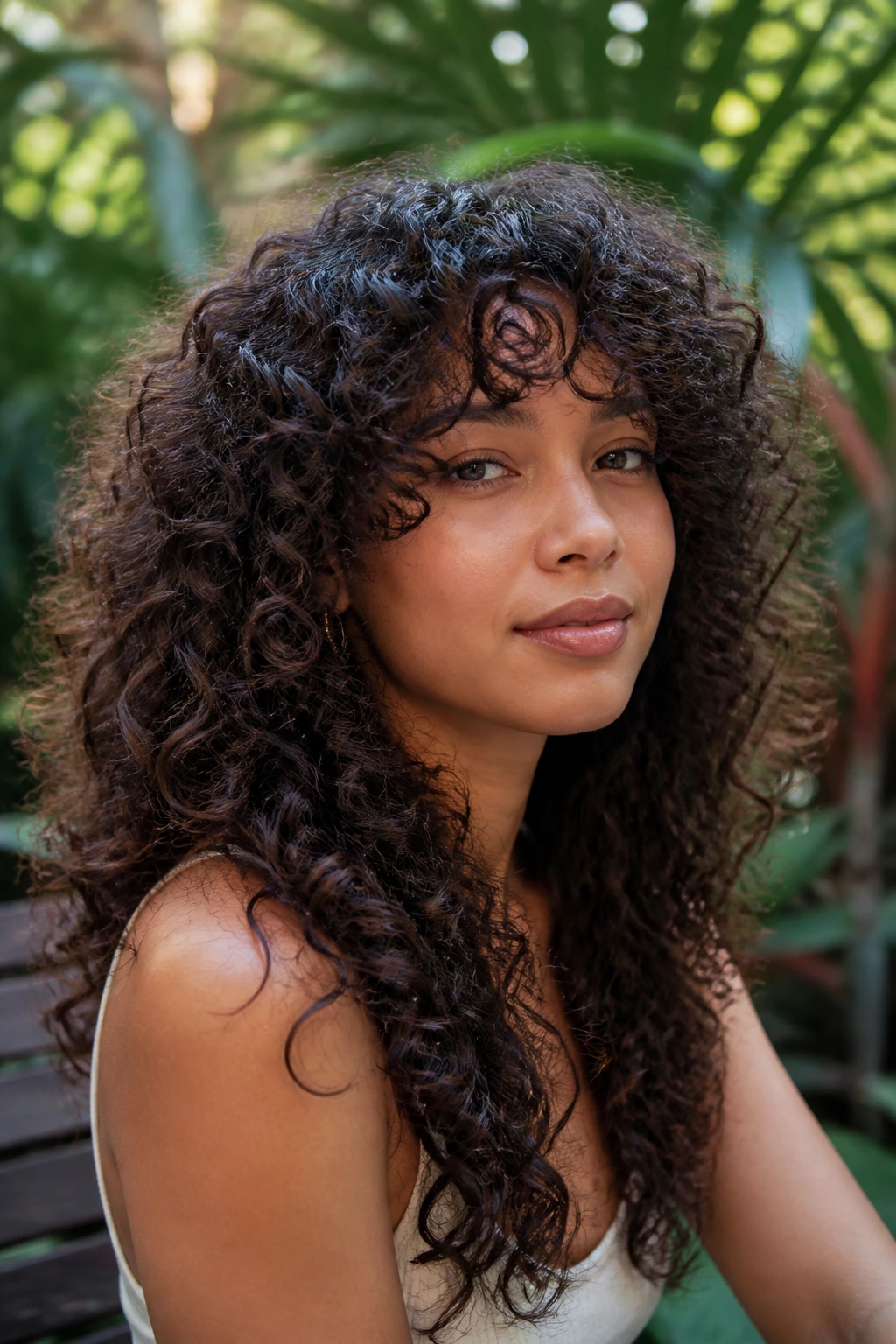
The butterfly cut is popular for a reason: it gives you a lot of face-framing without sacrificing the sense of length in the back. On natural hair, the layered front sections can look especially good because the curl pattern breaks up the long arcs and makes the shape feel softer.
The curly bangs should be part of that front cascade, not a separate chunk cut too short at the center. Ask for the fringe to melt into the shortest front layers. That way, when the hair springs up, the bang still reads as part of the whole shape rather than a lone piece sitting above your eyes.
This is a nice choice if you like volume around the face but still want your hair to swing when stretched. It can be dramatic in the best sense. Big front movement, longer back, no heavy shelf at the ends.
17. Rounded Volume Cut with Full Fringe
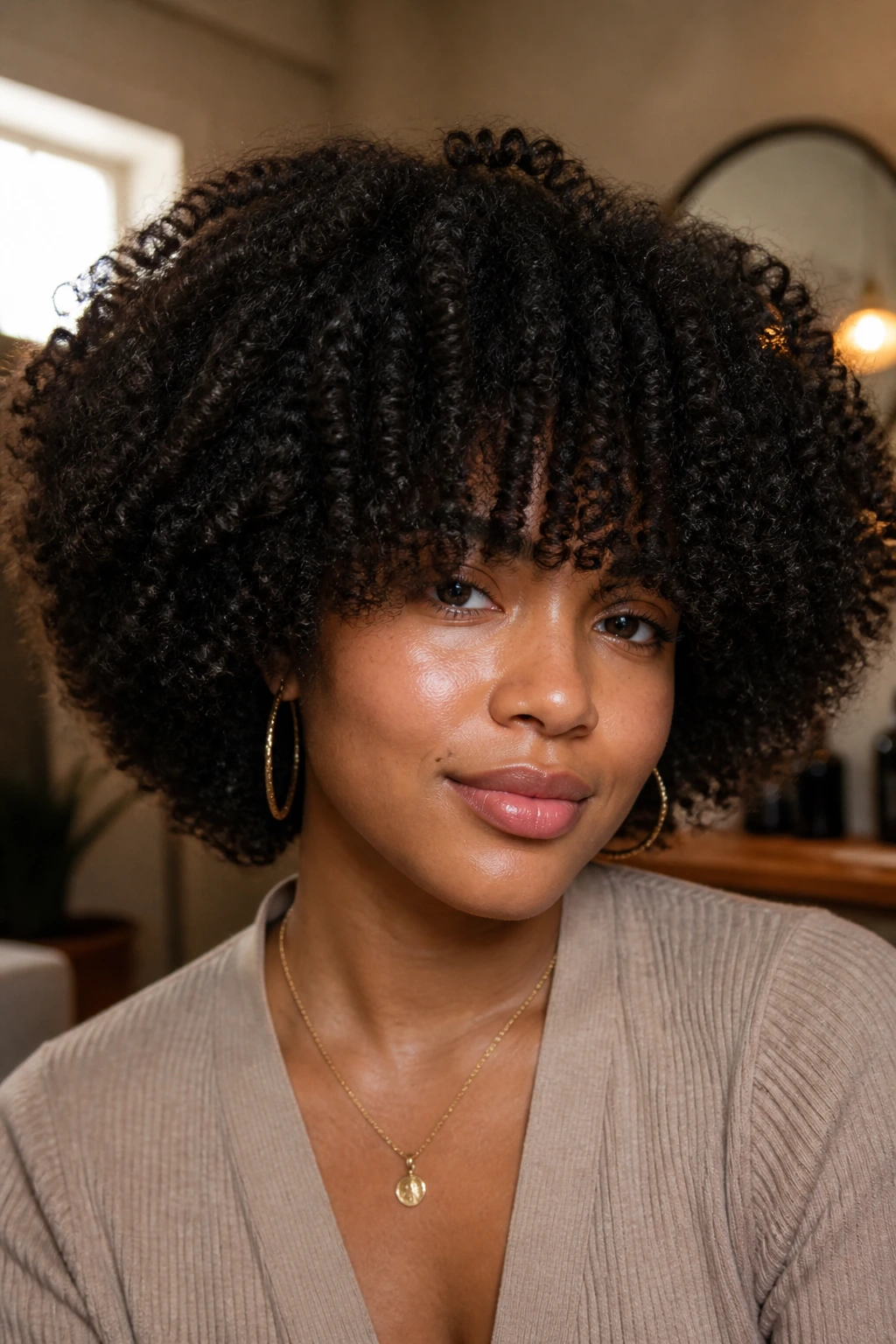
This is the cut for people who want presence. A rounded volume shape gives the hair room to expand evenly, and the full fringe makes the front feel strong rather than wispy. On dense curls, that combination can look expensive in the plain old sense of the word: full, healthy, and deliberate.
The fringe needs careful weight control. Too much, and it turns into a heavy curtain that sits on the brows. Too little, and the round shape loses its balance. The sweet spot is a bang with enough density to show up, but enough layering at the ends to move with the rest of the cut.
It works especially well when worn stretched just a bit, then allowed to curl back up. A light stretch can keep the fringe from floating too high, while the rounded shape stays full around the sides. This is not a shy haircut. That is part of its charm.
18. Soft Mullet with Choppy Bangs
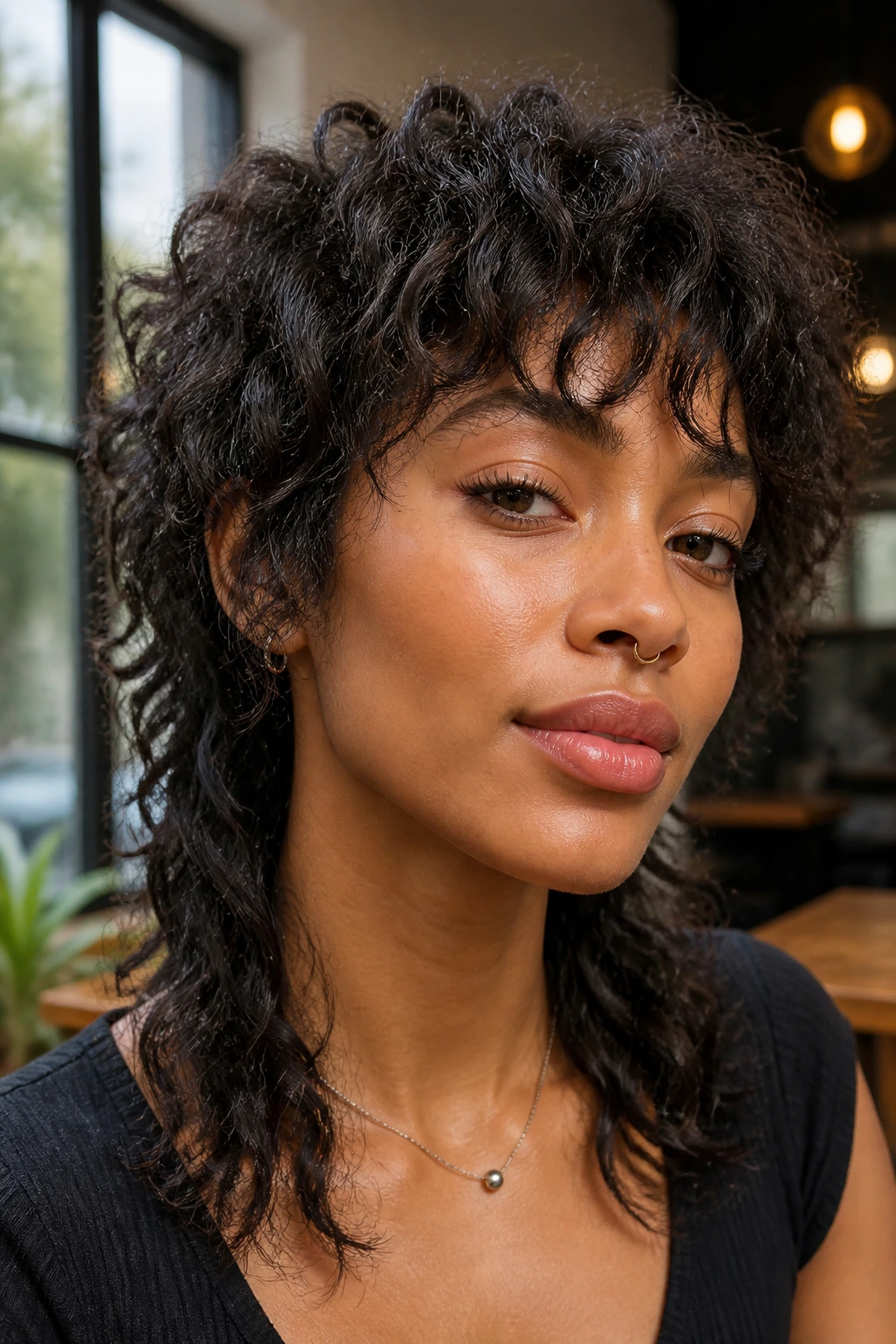
A soft mullet on natural hair has more range than people give it credit for. The front stays shorter and choppier, the crown stays active, and the back keeps some length so the cut doesn’t feel like a costume version of itself.
The bangs do a lot of work here. They should be textured, not blocky, and long enough to blend into the top layers when needed. If the fringe is too blunt, the whole style turns harsh. If it’s too wispy, the mullet shape loses its edge. The middle ground is where it lives.
This cut suits people who like shape with personality. It’s especially good on curls that hold definition at the front and a little extra movement at the nape. You do need to be okay with a haircut that people notice. Quiet is not the point here.
19. Tapered Crop with Longer Crown Fringe
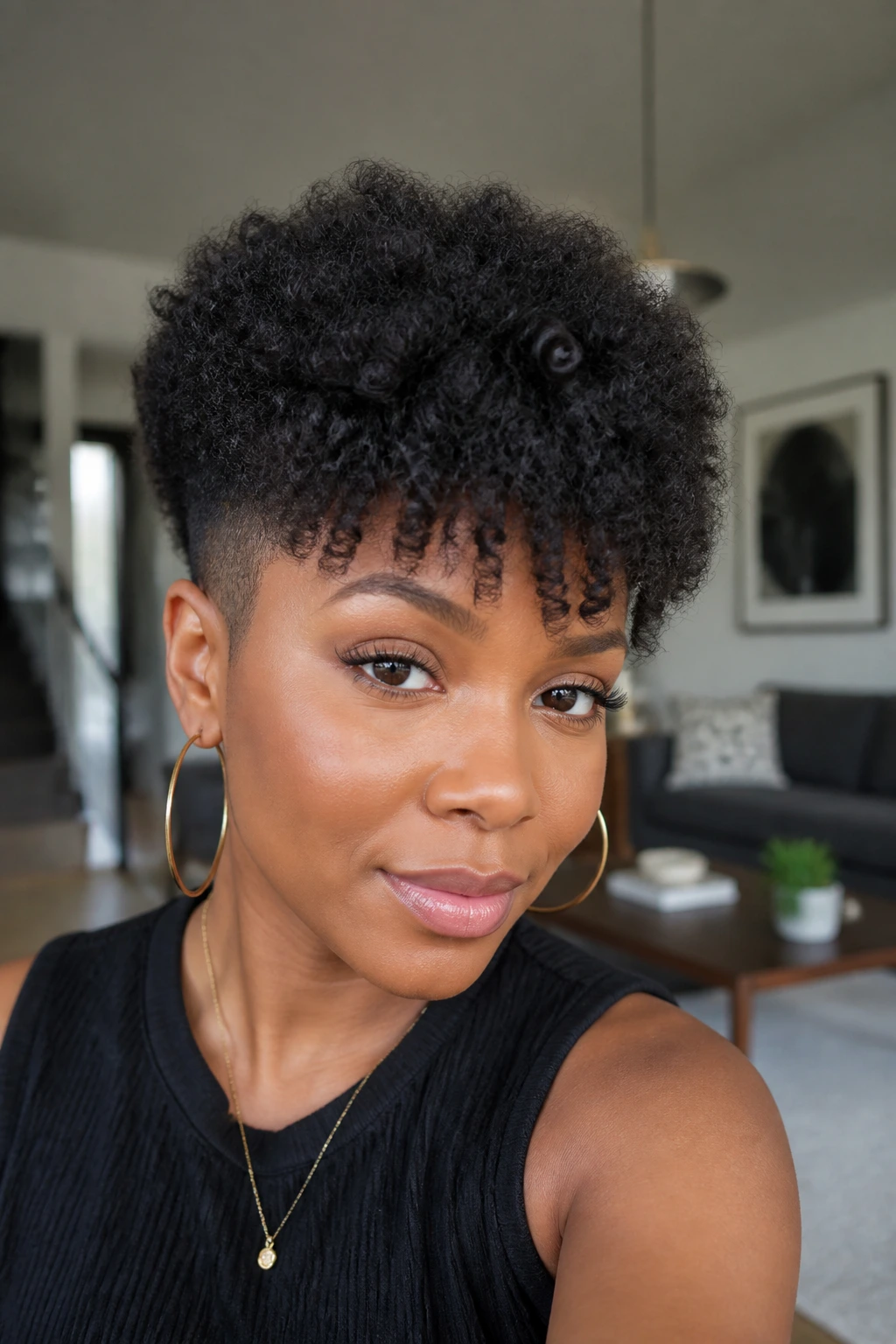
A tapered crop keeps the neckline and sides clean while leaving enough length on top for a forward-swept fringe. That contrast is what makes it work on natural hair. You get structure without losing texture, which is harder to do than it sounds.
The longer crown fringe can be shaped with fingers, a little mousse, or a quick diffused dry. Because the sides are shorter, the eye naturally goes to the front, so the bang has to be cut with care. Leave enough length to move. Too short and the crop turns severe. Too long and the top overwhelms the taper.
This is one of the easiest short styles to live with if you want a polished outline without spending half the morning on your hair. It grows out in stages that still look intentional, which is a very underrated quality in short natural cuts.
20. Protective-Style-Friendly Layers with Face-Frame Bangs
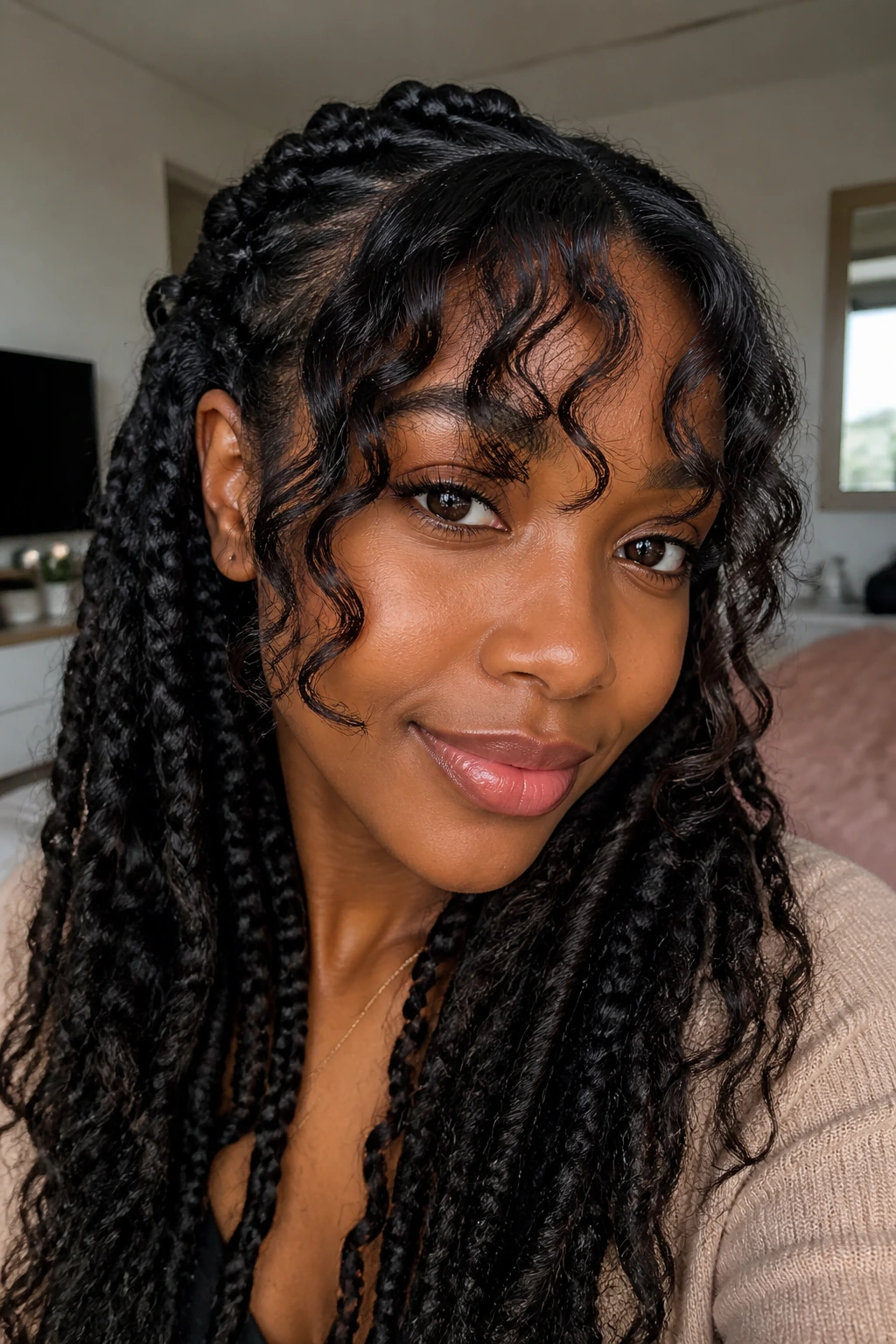
If you wear braids, twists, or locs and still want a little softness around the face, this is the lane. The layers live in the loose hair around the perimeter or in the shape of the front pieces, while the actual styling can stay protective and low-tension.
The face-framing bangs can be worn as a few loose curls, a small twist set, or thin braided pieces that sit at the temple. The point is to soften the line of the style, not to add a full fringe that fights the protective shape. That makes the haircut far more wearable across long installs and in-between weeks.
I like this option for people who want something practical but not plain. It lets the front area stay expressive while the rest of the hair gets a break. You still need a clean edge and a plan for the front pieces, though. Random loose strands are not a style.
21. Long Coils with Skimming Fringe and Face-Framing Layers
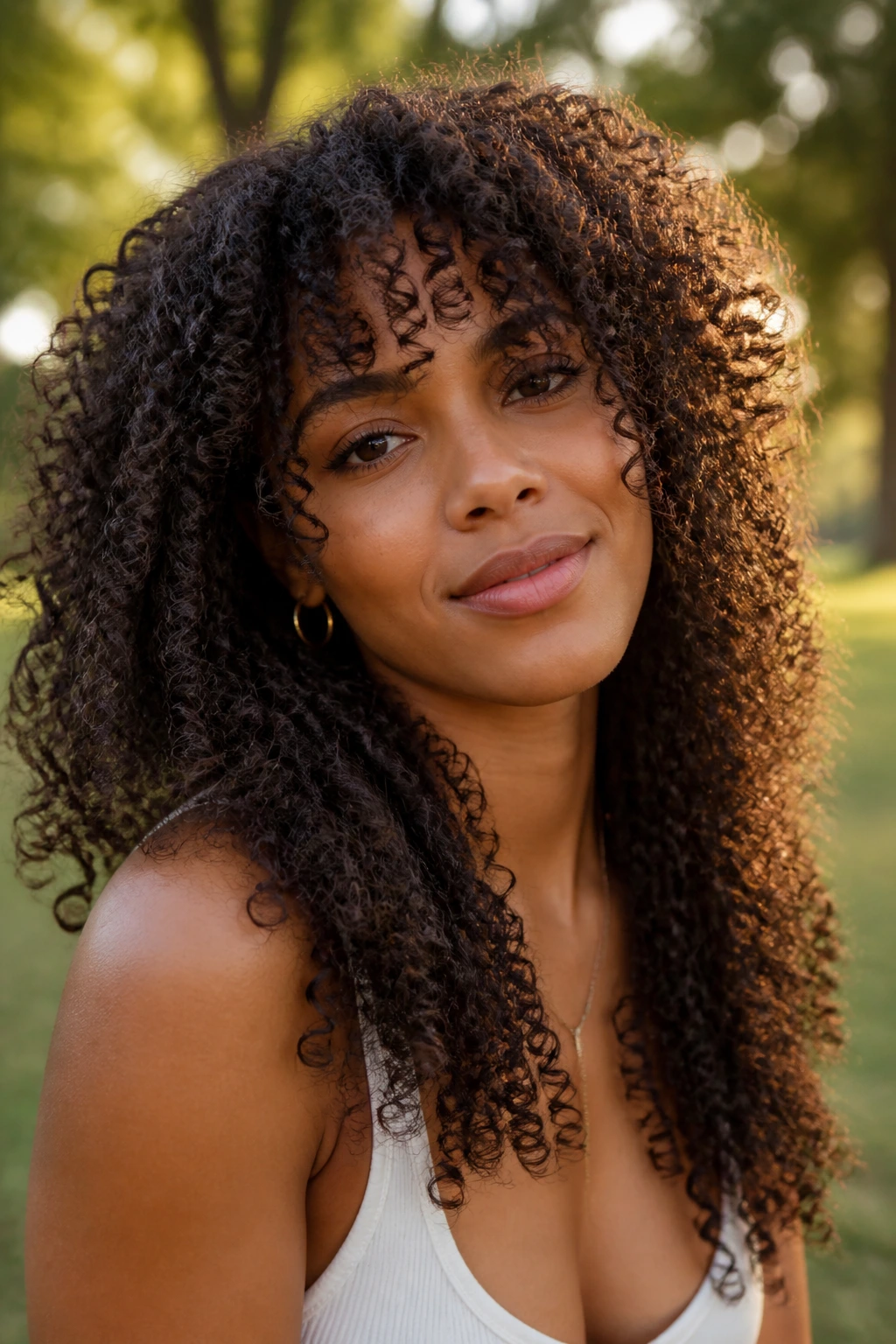
Long coils can look heavy if the front is all one length, and that’s where a skimming fringe helps. It does not cover the forehead fully. It just softens the line so the length around the face feels intentional instead of hanging there by default.
The layers should start around the cheekbones and fall through the jaw and collarbone. That gives the hair a little breathing room without taking away the fullness that makes long coils so satisfying. If your texture is tight, the fringe should be left longer than you think. A tiny curl sits much shorter once it dries.
This shape works for people who like length but don’t want the front to feel flat. It also pairs well with half-up styles, pineapple clips, and loose low puffs because the fringe still gives the front some life. Small detail. Big difference.
22. Shoulder-Grazing Layers with a Soft Split Bang
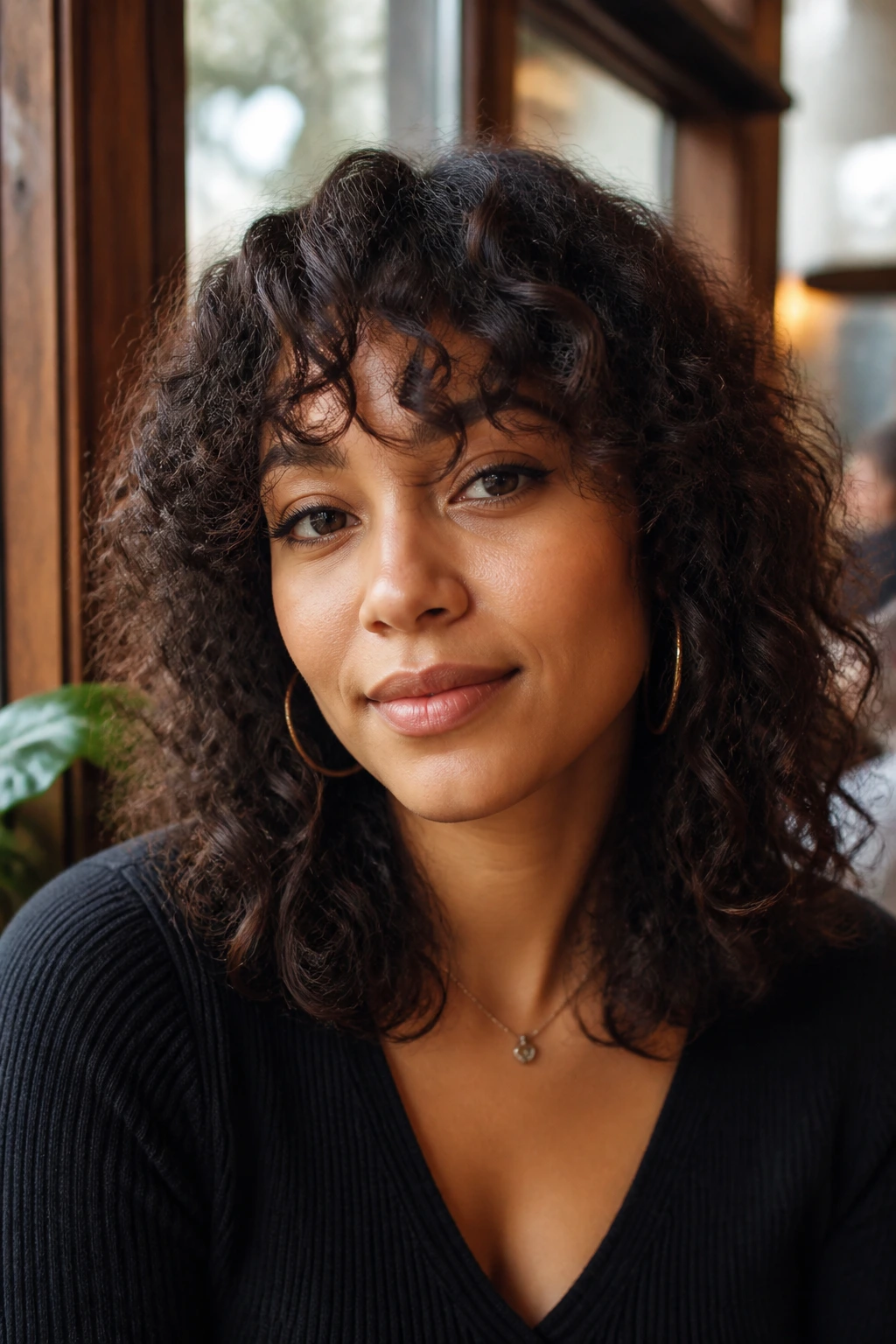
Shoulder-grazing length is one of the most forgiving places to play with fringe and layers. The hair has enough weight to stay put, enough movement to swing, and enough length to tuck away when the bangs need a break.
A soft split bang is a little gentler than a classic curtain fringe. The front pieces part around the center but stay loose enough to blend into the layers. That makes the cut feel easy instead of overly styled. It also grows out well, which matters more than people admit.
This is a strong everyday choice for anyone who wants a modern shape without a haircut that demands attention every single morning. The split bang gives you face-framing on wash day and a quick tuck-behind-the-ear option by day three. That kind of flexibility is worth more than a fancy name.
How to Ask for the Cut Without Ending Up With a Surprise Micro Fringe
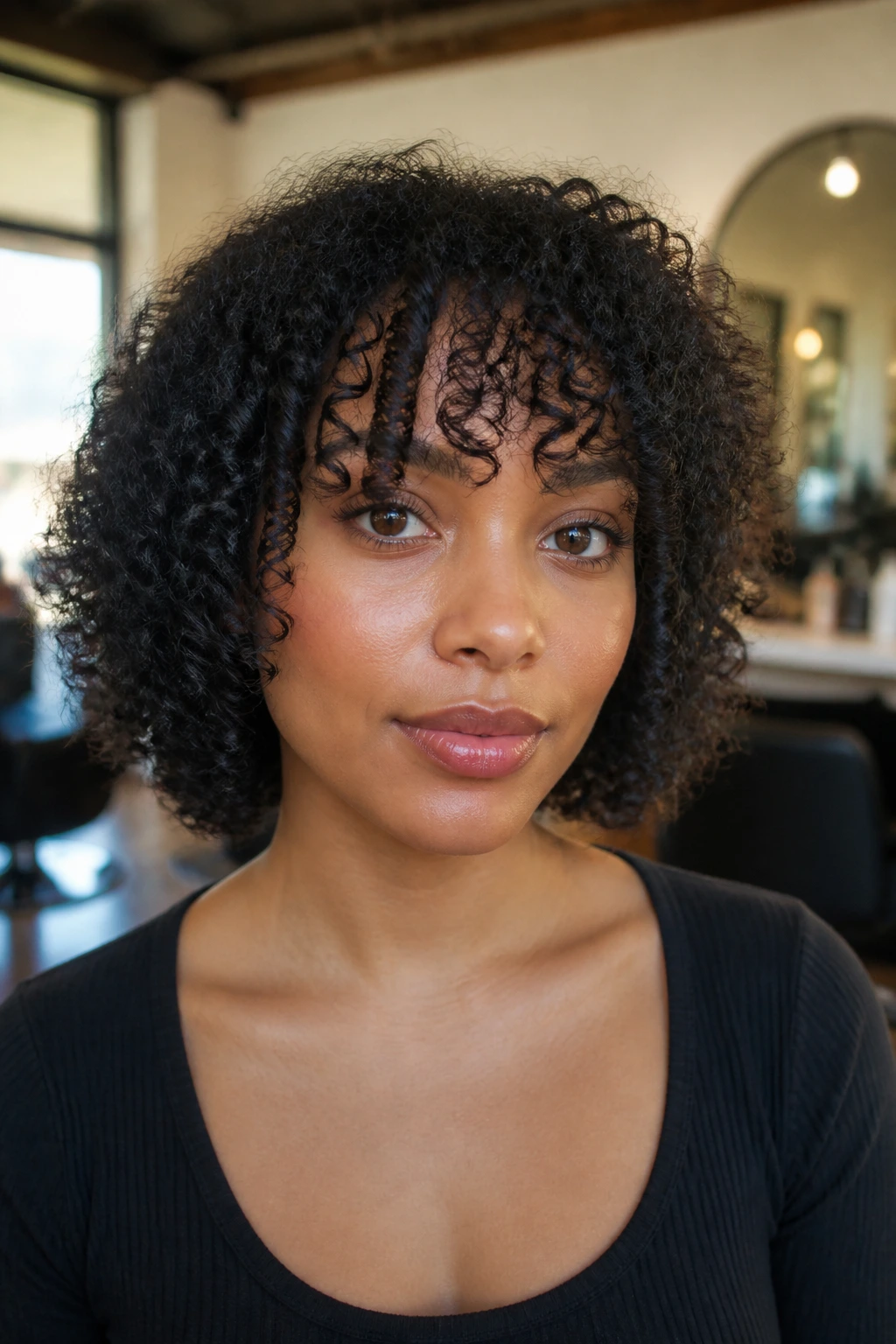
A stylist can only work with the language you give them, and bangs on natural hair need clearer language than most people use. Bring photos with hair that’s close to your texture, density, and length. A picture of sleek straight hair is not useful if your curls spring up three inches the moment they dry.
Say where you want the fringe to land when it’s dry. Not wet. Not stretched to the moon. Dry. If you want curtain bangs, point to the cheekbone area. If you want a soft split fringe, show where the shortest pieces should open around the center and how far they should blend into the sides.
Also say whether you want weight removed or shape preserved. Those are not the same thing. A good stylist knows the difference, but the word “layers” means too many things in the wild. If you have dense hair, ask for movement without stripping out the ends. If your hair is finer, ask for layers that keep the outline full.
Tools That Make Styling Fringe on Natural Hair Easier
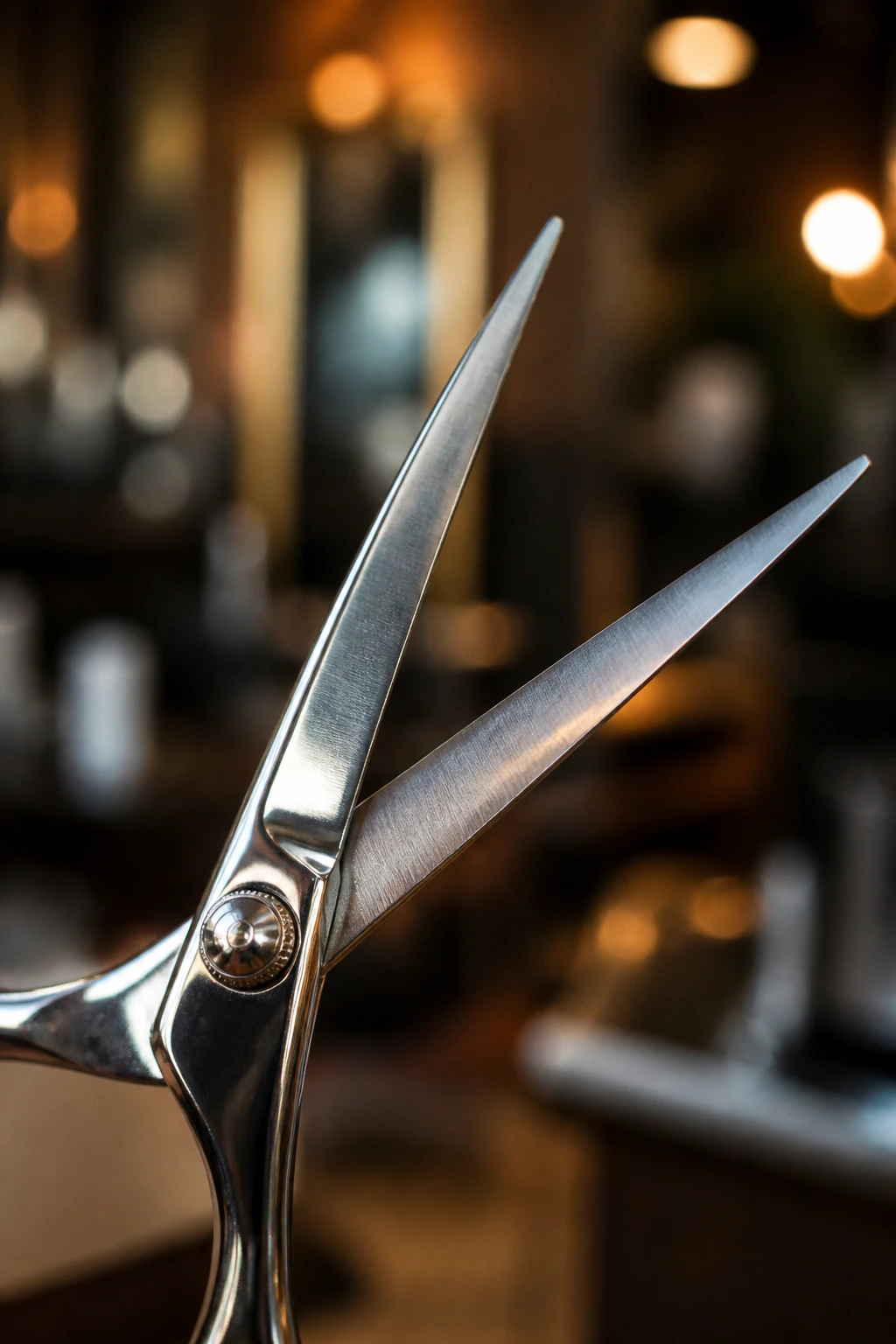
- Sharp haircutting shears: Needed for the actual cut; kitchen scissors will chew the ends and leave the fringe ragged.
- Wide-tooth comb: Good for detangling without pulling curls apart before styling.
- Rat-tail comb: Useful for clean parts, sectioning the front, and setting the split in curtain fringe.
- Water spray bottle: Handy for reactivating the front without soaking the whole head.
- Curl cream or leave-in conditioner: Adds slip and keeps the fringe from looking dry at the ends.
- Light mousse or foam: Gives the front some shape without making it stiff.
- Gel with flexible hold: Helps bangs stay grouped in humid weather.
- Diffuser attachment: Worth owning if your bangs need directional drying without frizzing the whole front.
- Duckbill clips or root clips: Great for lifting roots at the bang line while the hair sets.
- Satin bonnet or scarf: Keeps the fringe from mashing flat overnight.
Styling Moves That Keep Bangs From Splitting or Puffing
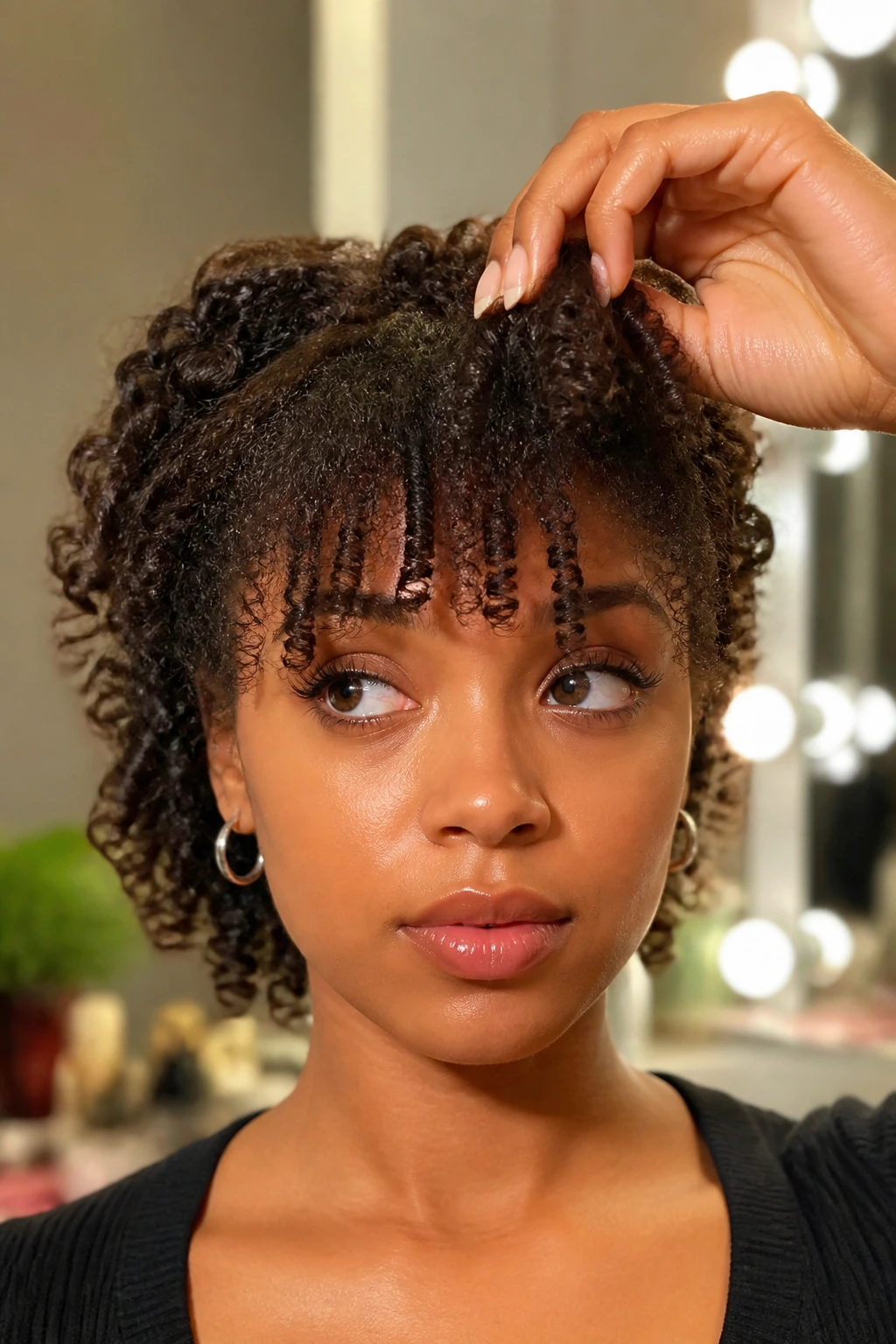
The front of natural hair usually needs a little more attention than the back, and that’s normal. It gets touched more, sweated into more, and pushed around by glasses, foreheads, and hands. If you want the fringe to stay intact, dry the front first or at least give it its own mini styling session before you move on.
Root clips help more than most people expect. A few minutes of lift at the base can keep curtain bangs from collapsing into the forehead and can stop a full fringe from sticking straight out. Do not bury the front in heavy cream either. The bangs are the first place product buildup shows up, and once they get sticky, they separate in weird little ropes.
A quick refresh routine saves a lot of frustration on day two. Mist the fringe lightly, smooth in a pea-sized amount of product, then diffuse or air-dry with the hair set in the direction you want it to live. If the front splits badly, twist the bang section for ten minutes while you get dressed, then let it fall.
Common Mistakes That Flatten the Front
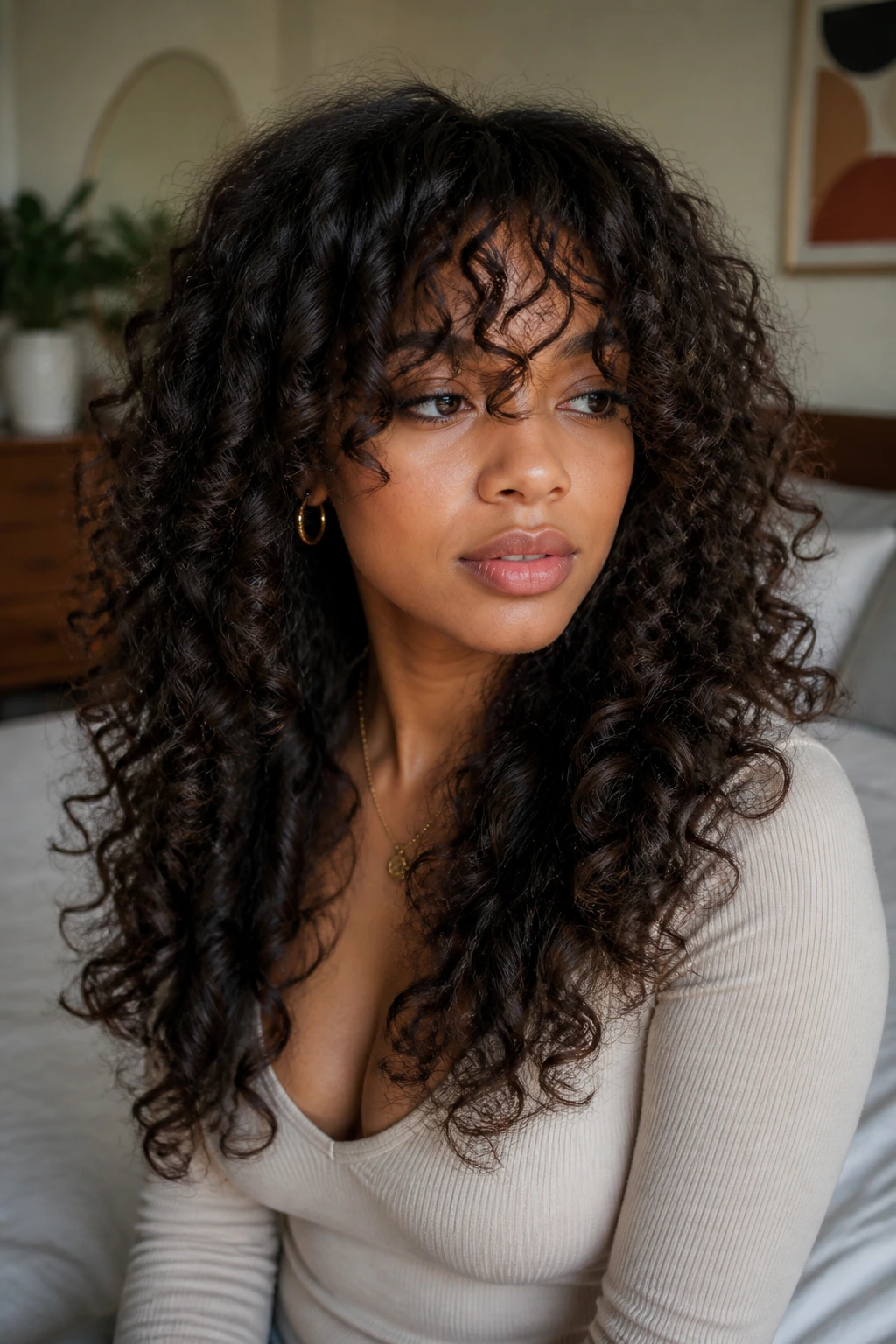
- Cutting bangs too short on stretched hair: The fringe looks right in the chair and jumps up way too high once dry. Ask for the dry finish length, not the stretched length.
- Putting too much product on the bang area: The front gets greasy or stringy first, then separates into little strands. Use less cream there than you use on the back.
- Skipping face-frame layers: A bang with no support around it can look pasted on. The front needs side pieces to blend into.
- Cutting all the layers at the same point: That usually creates a shelf or triangle shape, especially on denser textures. Let the layers start at different heights.
- Ignoring the curl pattern at the hairline: Many people have looser, tighter, or uneven curls at the front. If the stylist cuts all the front pieces the same, one side often behaves better than the other.
- Blowing out the fringe every single day: Heat can flatten the curl memory fast. If you want shape, save full blowouts for the rare days that call for them.
Variations and Adaptations to Try
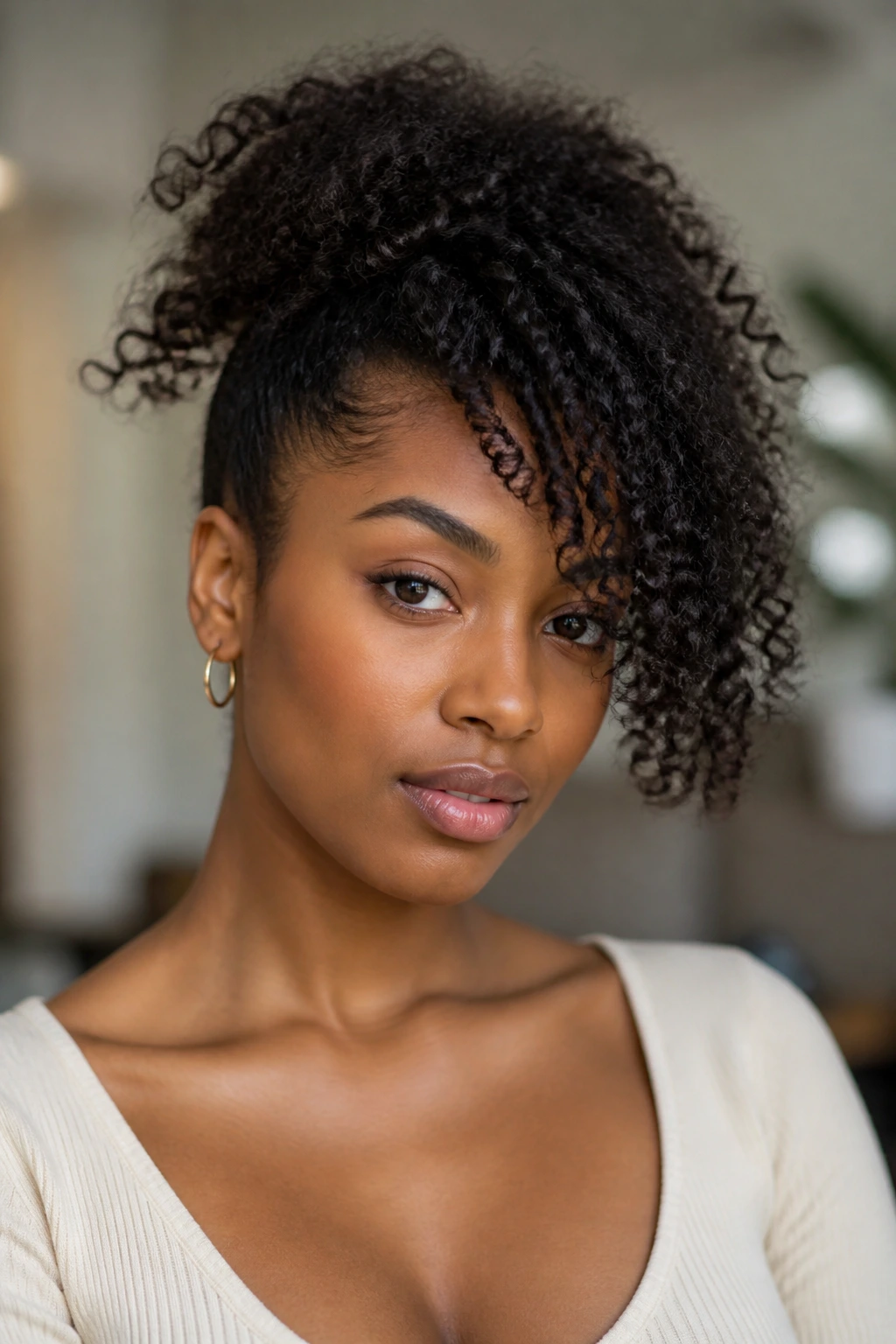
- Stretch First, Shape Later: Wear the fringe in a stretched set — twist-outs, banding, or a gentle blow-dry — then trim the final shape after you know where the curls fall. This is the safest path for people with major shrinkage.
- Low-Density Halo: Keep the layers soft and avoid too much removal at the front. A light fringe with face-framing pieces keeps the hair from looking see-through.
- Extra-Volume Cloud Cut: Push the crown higher with more rounded layers and a fuller fringe. This works best for dense curls that need space to expand.
- Protective-Style Front Pieces: Leave a few front curls or small twists loose while the rest of the hair goes into braids or a puff. It softens the style without giving up low-tension styling.
- Soft Heat-Straightened Fringe: Straighten only the bang area for a sleeker shape, then keep the rest textured. This can be useful for a special event, but the contrast should be intentional, not a random mix of textures.
- Short Bang, Long Grow-Out Plan: If you love fringe but hate constant trims, choose a longer bang at first and ask for a shape that still works once it grows past the brow. You’ll get more mileage out of the cut.
Trim, Refresh, and Night-Care Habits That Keep the Shape Clean
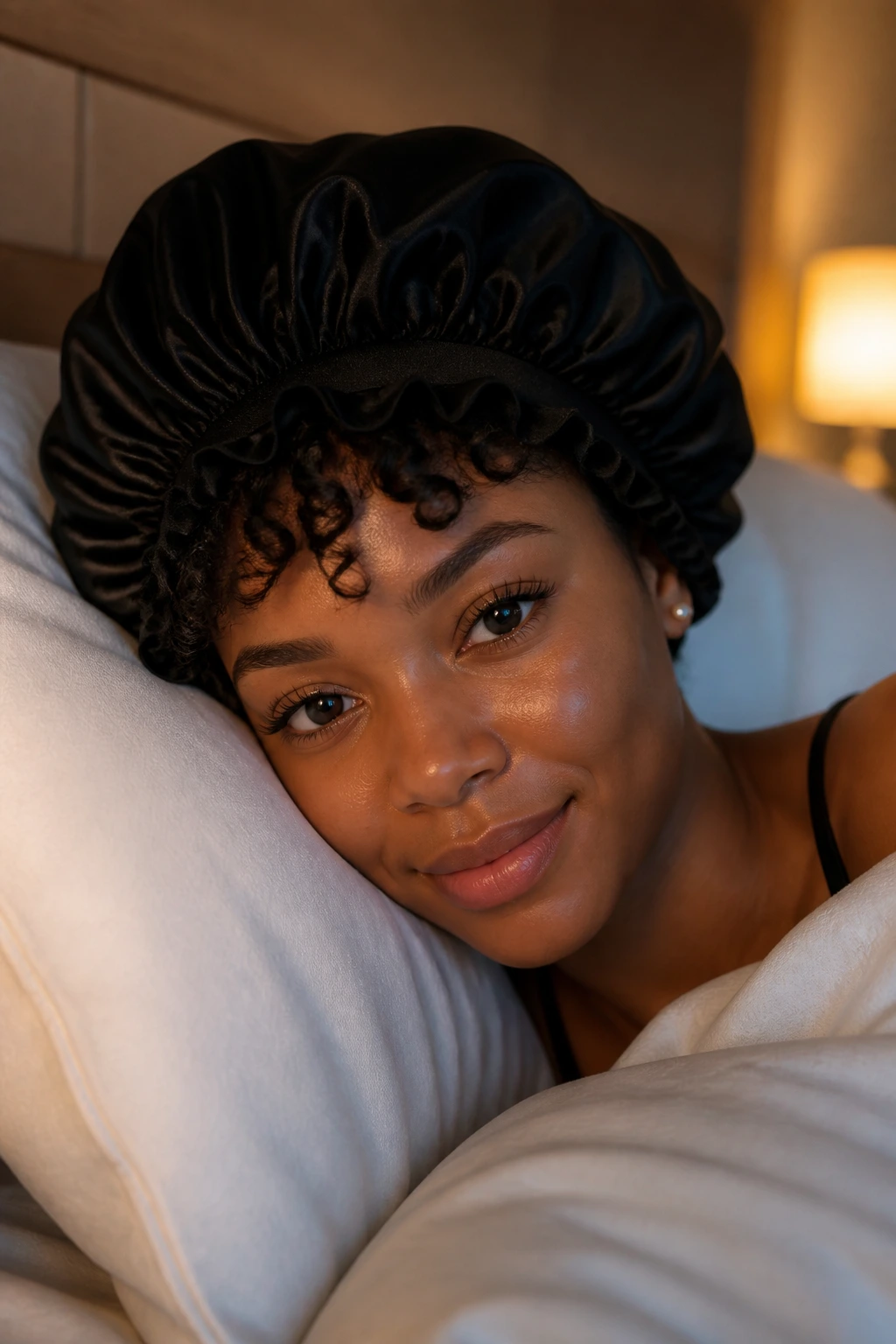
Bangs on natural hair usually need more attention than the rest of the cut. That does not mean every week, but they do benefit from regular dusting. A fringe can start losing its line after six to eight weeks, while the layers might be fine a little longer. If you like a precise bang shape, keep the front on a shorter trim cycle than the back.
Night care matters too. A satin scarf or bonnet keeps the bangs from flattening into odd angles, and if the fringe is long enough to hit your eyes, a loose twist or a tiny clip can stop it from getting mashed. For twist-out or braid-out fringes, retwist the front section before bed if the curl pattern is supposed to stay defined.
Wash-day refreshes are easier when you do not overload the front. A light mist, a small amount of product, and a quick dry in the direction you want are usually enough. If the bangs are starting to separate, that is often a sign they need a wash more than a rescue. Sometimes the fix is not more styling. It is less buildup.
Questions People Ask Before Getting Fringe on Natural Hair
Will bangs make my face look shorter?
Sometimes, yes, if the fringe is cut too full or too high. A softer curtain or side-swept bang usually keeps the face open while still giving you that front shape.
Should my stylist cut bangs on dry or wet natural hair?
Dry is safer, or at least very close to the final dry state. Wet cutting can work if the stylist knows your texture well, but shrinkage makes it easy to overshoot.
Do layers make natural hair look thinner?
Only if too much bulk is removed in the wrong places. Good layers create movement while leaving enough density at the ends so the hair still looks full.
What if my bangs split in the middle all the time?
That usually means the front needs either a different parting pattern, a little root lift, or a shape that follows the cowlick instead of fighting it. A soft side part often fixes more than product does.
Can I get fringe if I wear wash-and-gos most of the time?
Yes, but the bang shape needs to be chosen for curl memory. Curtain fringe, soft split bangs, and airy textured bangs usually behave better than blunt front cuts.
Which texture handles micro fringe best?
Tighter curls and coils tend to support shorter fringe better because they hold shape, but the cut still needs to respect shrinkage. The shorter the bang, the more exact the trim has to be.
How do I grow out bangs without looking awkward?
Blend them into longer face-framing layers early. Once the fringe reaches the cheekbones, it starts acting like part of the cut instead of a separate problem.
Can protective styling and bangs live together?
Yes, if you keep a few face-framing pieces out or leave the fringe section small and intentional. Random loose hairs are a mess; planned front pieces are a style.
A Shape That Grows Gracefully
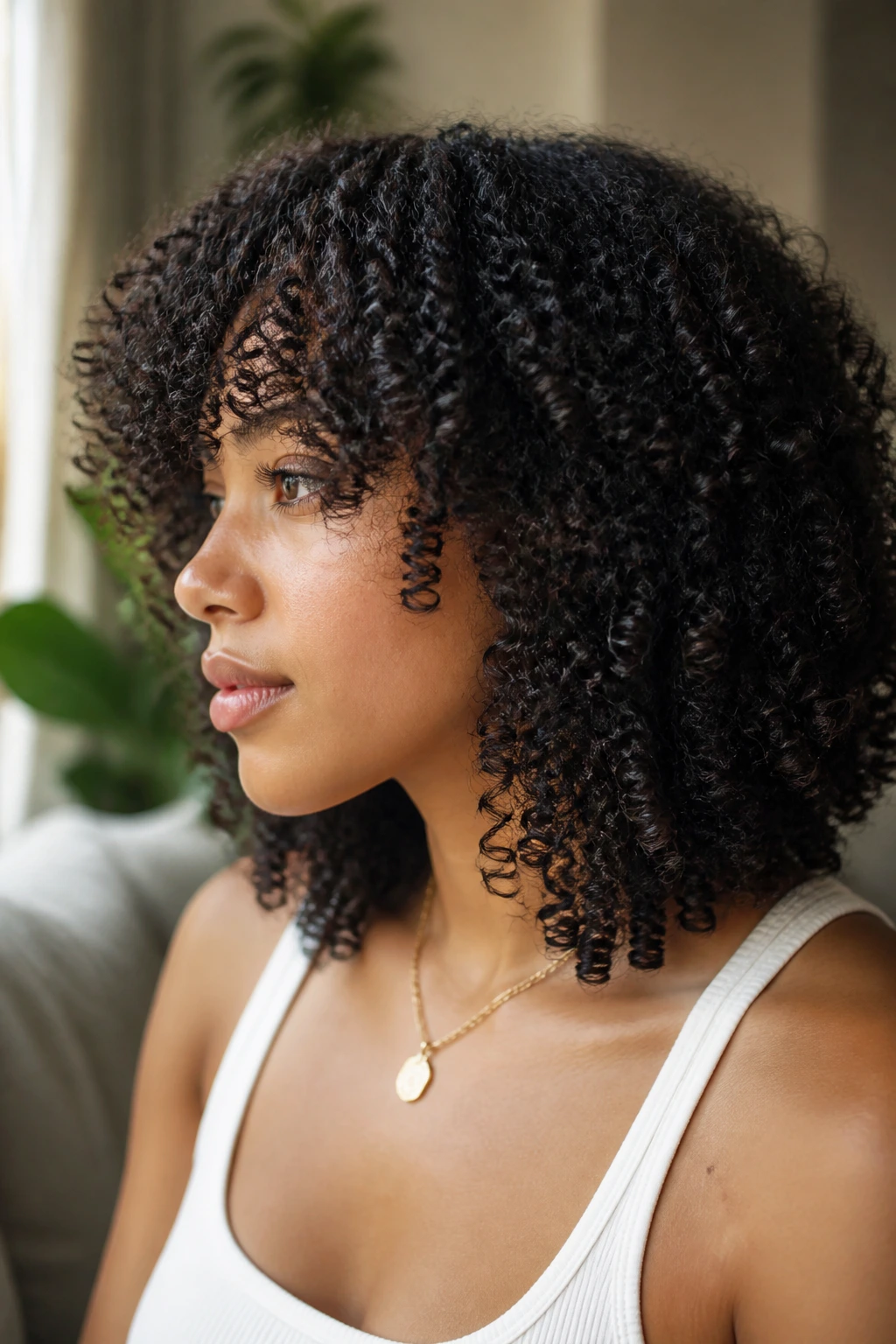
The nicest thing about a good fringe on natural hair is that it keeps doing its job as it grows. The line softens, the layers catch more movement, and the front stops feeling like a haircut experiment. That only happens when the cut respects shrinkage, density, and the curl pattern at the hairline.
Pick the shape that matches how you actually wear your hair. If you live in twist-outs, choose front pieces that can stretch with them. If you love wash-and-gos, keep the fringe soft and flexible. If you want the least amount of drama, go for a curtain shape or a side-swept front and let the layers handle the rest.
The best fringe is the one you do not have to wrestle every morning. Choose the cut that moves with your texture, and the whole hairstyle starts behaving a lot more like yours.