



Straight hair is brutally honest. Every foil line shows, every toner shift shows, and on olive skin the wrong brown can tip muddy, orange, or flat in a single wash. That is why brown fall straight highlights for olive skin work best when they stay controlled: fine enough to blend, rich enough to keep depth, and cool or warm in a way that matches the face instead of fighting it.
The best versions don’t scream “highlight.” They look like the hair picked up a little extra light in the right places and kept the rest of its weight. On straight hair, that matters even more, because there’s nowhere for the color to hide. A chunky ribbon that might look soft on waves can turn into a stripe on pin-straight lengths.
Olive skin gives you room to play, which is half the fun here. You can go smoky and muted, or chestnut and caramel, or deep mocha with a face frame that barely lifts the whole look. The sweet spot is usually brown, not blonde, and that is a blessing if you like shine, depth, and grow-out that doesn’t become a monthly drama. The styles below move from nearly invisible babylights to richer ribbons and face-framing pieces, because straight hair needs options, not one-size-fits-all color.
Why Brown Fall Highlights Work on Olive Skin
-
Olive Undertones Like Depth: Deep brunette bases, chestnut ribbons, and smoky mushroom tones keep olive skin from looking washed out the way pale ash blonde sometimes can.
-
Straight Hair Shows Fine Placement Best: When the hair hangs smooth, micro-weaves, babylights, and thin ribbons read as dimension instead of obvious strips.
-
Fall Browns Age Better Between Appointments: Mocha, cocoa, walnut, and toffee soften as they grow out, so the regrowth line looks intentional instead of harsh.
-
Warmth Needs Guardrails: Caramel and amber can look gorgeous on olive skin, but they need to stay grounded with beige, chestnut, or neutral gloss so they do not turn yellow.
-
Low Contrast Often Wins: A shade that sits one to three levels above your base usually looks richer on straight hair than a loud jump to blonde.
-
Placement Matters as Much as Tone: A thin face frame, a soft money piece, or a few lighter ends changes the whole read of the haircut without flooding the head with light pieces.
1. Espresso Babylights
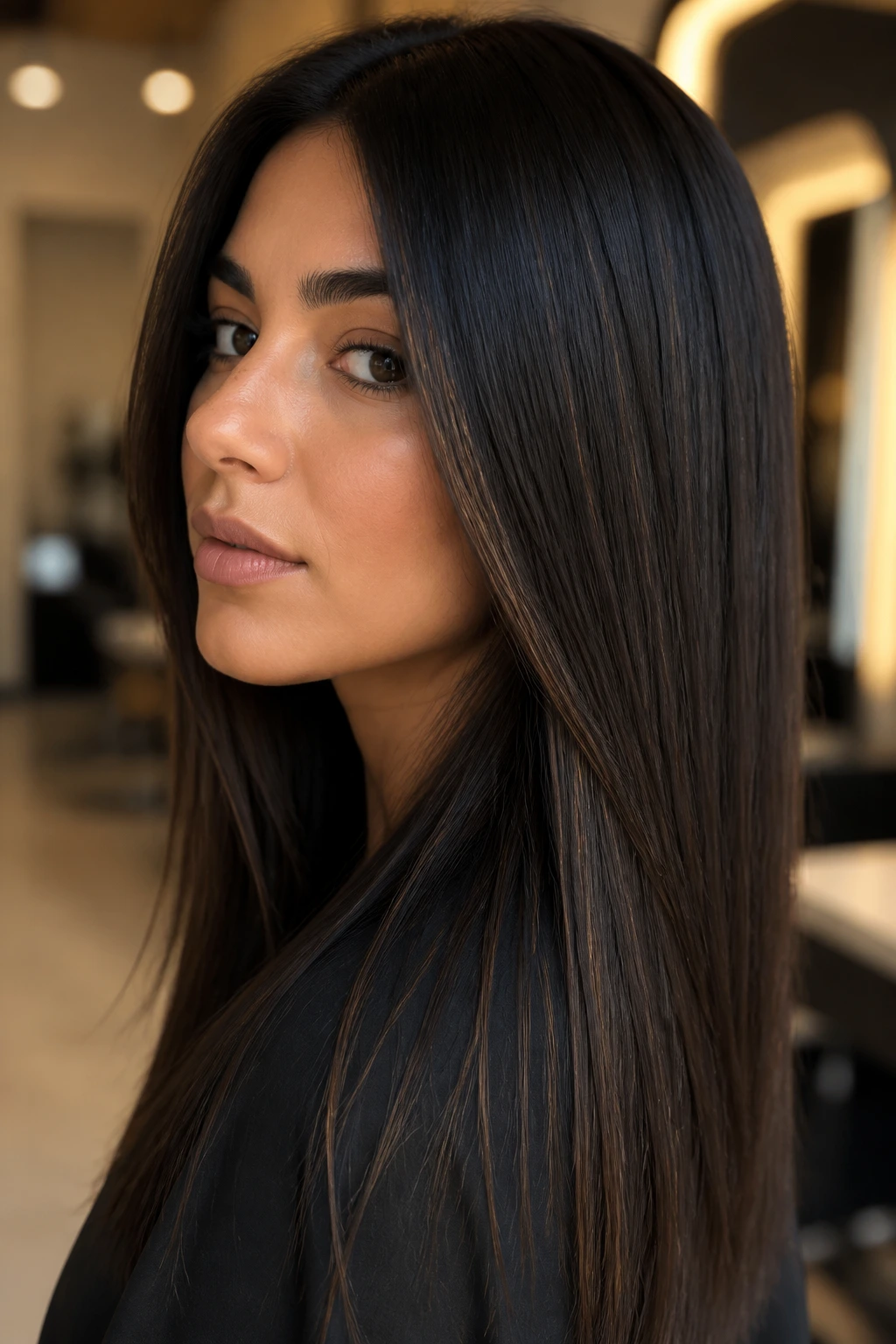
Espresso babylights are the quietest option on this list, and that is the appeal. On straight hair, ultra-fine threads of nearly black brown create a satin effect instead of visible streaks, so the color moves when you turn your head but never looks busy. If your olive skin leans neutral or slightly cool, this is one of the safest ways to add depth without making the complexion look sallow.
Why It Fits
Babylights placed one-eighth inch apart keep the contrast soft enough for pin-straight hair. A level 4 or 5 espresso tone sits close to many natural brunettes, which means the grow-out is gentle and the finish stays polished instead of striped. Ask for a neutral or cool gloss, not a red-brown one.
- Keep the lightest pieces around the part and front hairline.
- Leave the ends only one shade lighter than your base.
- Use a soft side part if you want the dimension to catch more light.
Best if you want: a change that people notice as “your hair looks better” without being able to name the color.
2. Chestnut Balayage
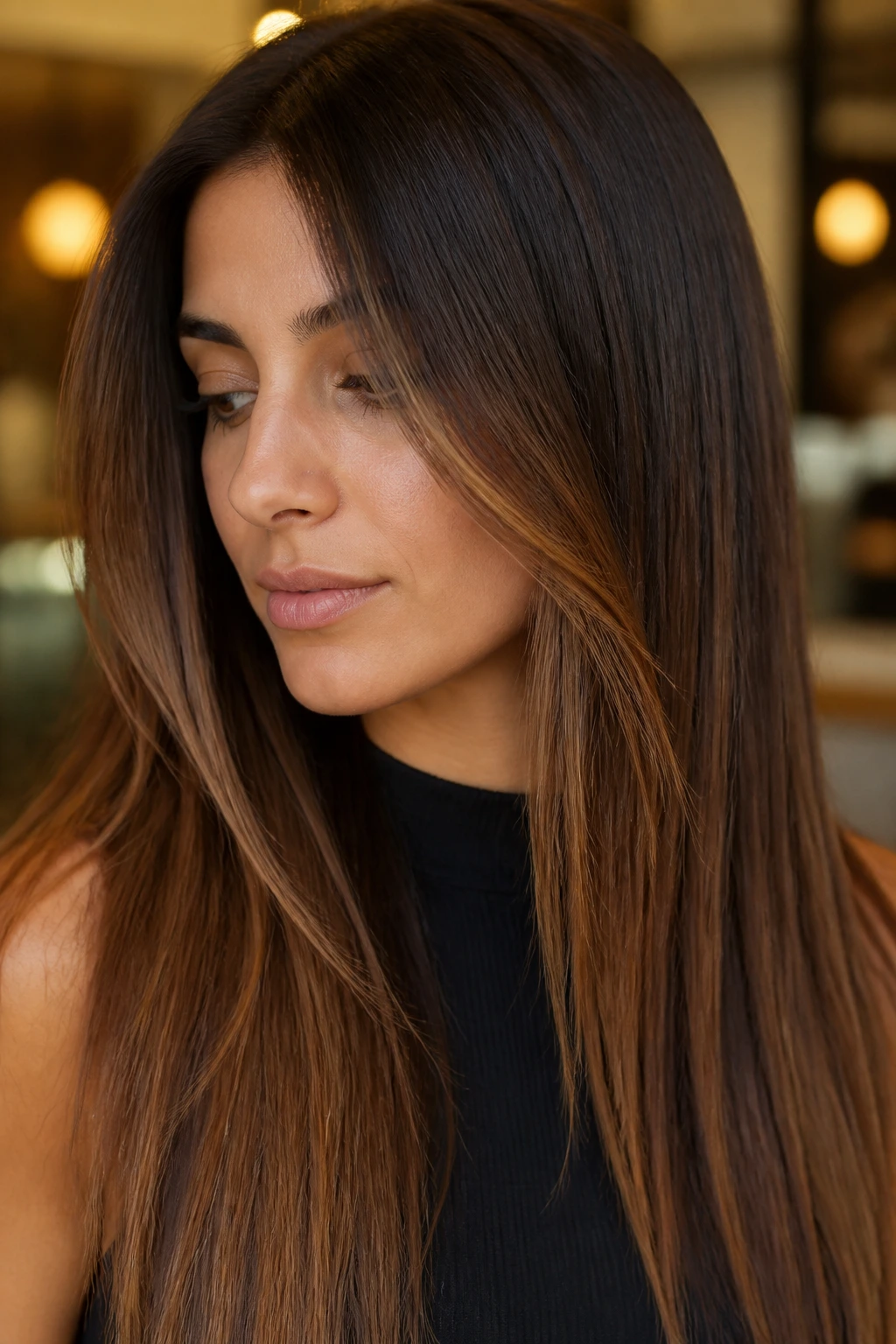
Chestnut balayage is the classic middle ground. It gives olive skin a warm brown glow without drifting into copper overload, and on straight hair the hand-painted placement reads smoother than traditional strip foils. The trick is to keep the chestnut rich and earthy, not honeyed.
Why This One Works
Why does chestnut sit so well on olive skin? Because it lands in that brown-red zone that adds life without going orange. On straight hair, balayage should start lower, usually around the cheekbone or just below, so the lighter sections do not look like a hard band when the hair is flat against the head.
How to Wear It
Ask your colorist for a soft sweep through the mid-lengths and fewer bright pieces at the roots. That keeps the grow-out clean and avoids the “root line” problem straight hair loves to advertise.
If you like a center part, chestnut balayage frames the face nicely without needing a big money piece. If you wear a side part, even better; the color falls into natural pockets and looks a little richer each time the hair moves.
3. Mushroom Brown Melt
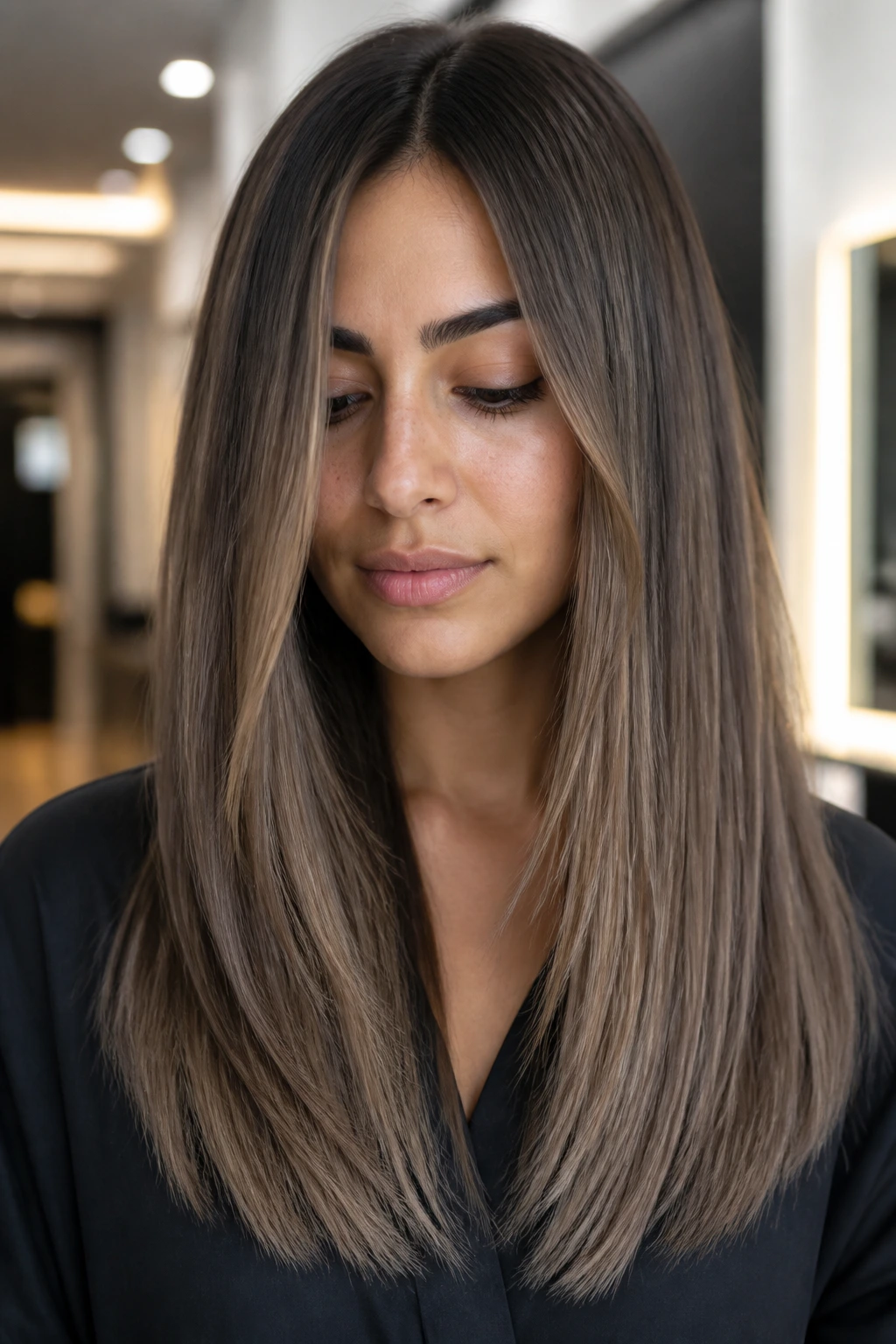
Mushroom brown is for people who like their color smoky, cool, and a little moody. It has beige, taupe, and ash-brown notes that sit beautifully on olive skin with gray-green undertones, and straight hair makes that tonal shift look expensive instead of muddy when the formula is right. The word “melt” matters here.
A good mushroom brown melt doesn’t jump from dark to light in obvious steps. It slides. The root stays grounded, the mid-lengths pick up a muted beige-brown, and the ends soften into a cooler brown haze. On straight hair, that gradual shift keeps the whole look from turning into a checkerboard.
If your current hair pulls orange when lifted, this is a smart choice because it gives the stylist room to neutralize warmth with gloss or toner. It is also one of the better styles if you want something chic that does not need constant brightening to feel finished.
4. Caramel Face-Frame
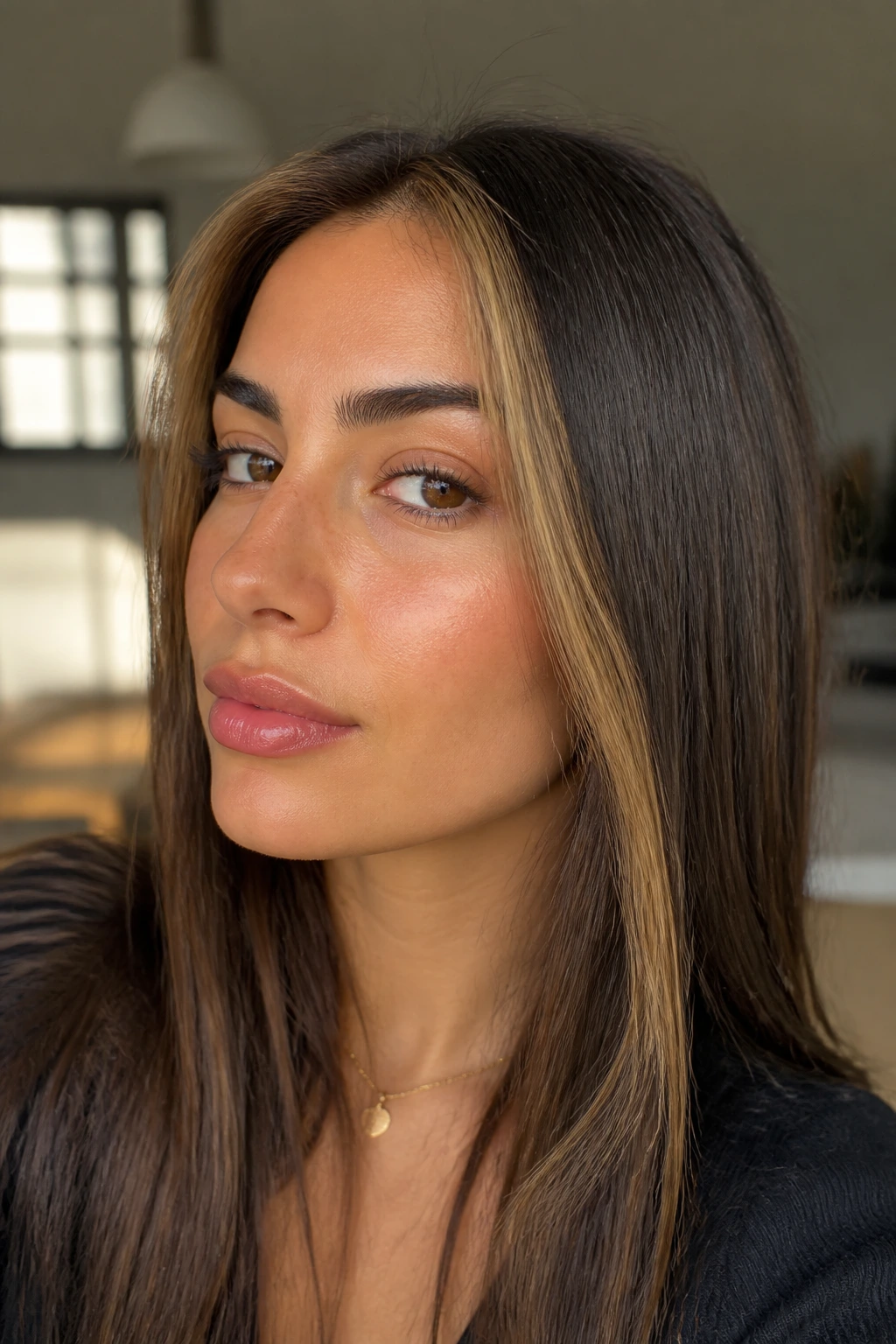
Caramel around the face can wake up olive skin fast, but it needs restraint. A thick money piece can be too much on straight hair, where every line is crisp; a narrow, blended frame through the cheekbone area is far prettier. Think of it as a highlight that traces the face rather than shouting around it.
Quick Placement Notes
- Keep the brightest caramel within 1 to 1.5 inches of the hairline.
- Leave the first quarter-inch at the root slightly darker for softness.
- Ask for beige caramel, not yellow gold.
The reason this works is simple. Straight hair does not blur the transition for you, so the colorist has to do that work with placement. A soft face frame catches light when you tuck one side behind the ear, and olive skin usually likes that contrast because it brings out warmth in the cheeks without making the skin look flat.
This is also the easiest style to grow out if you like the look of color but do not want full-head maintenance every few weeks.
5. Cocoa Ribbon Lights
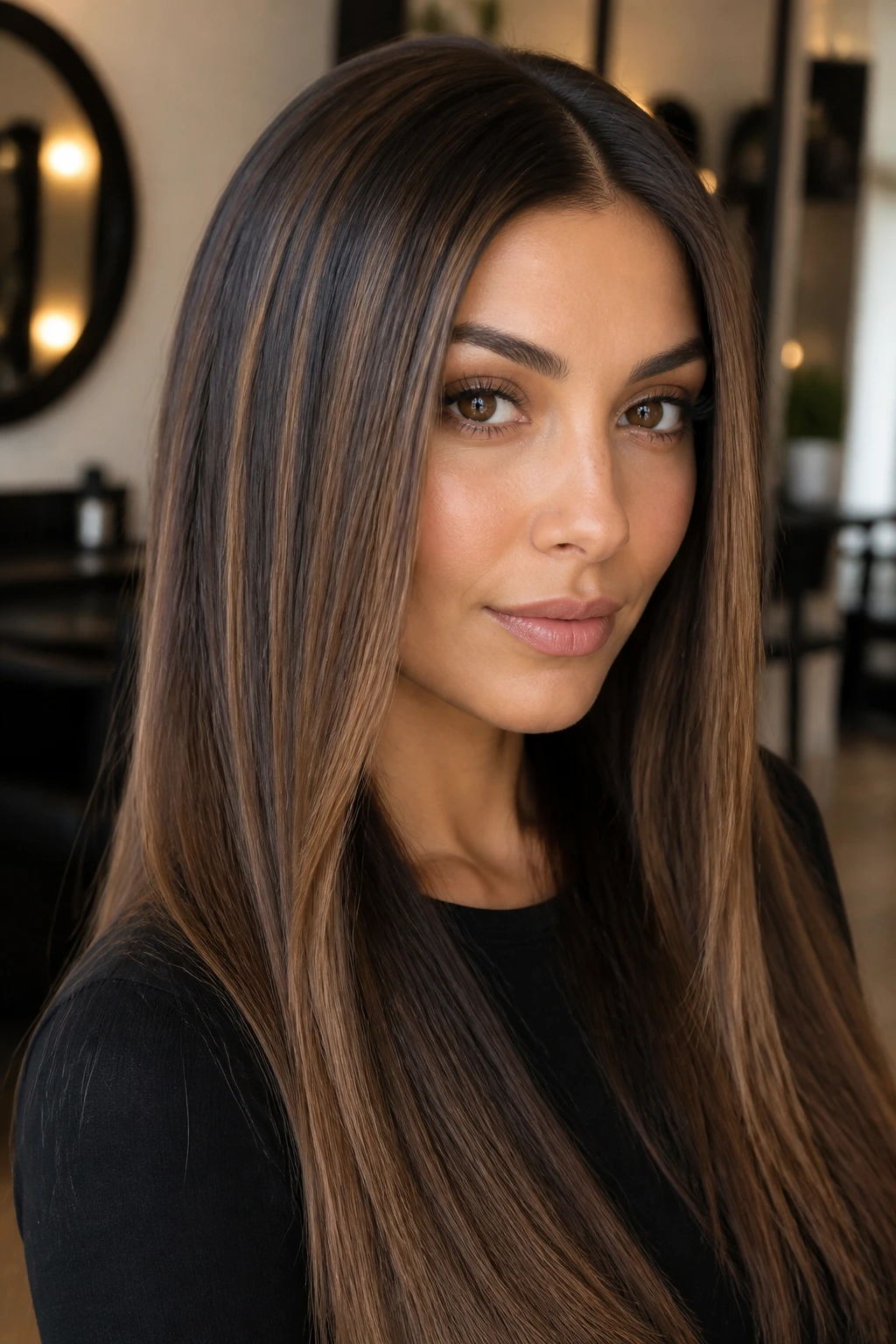
Cocoa ribbon lights are for the person who wants dimension, not drama. They add a little movement through the body of the hair, and on straight strands the effect looks like soft satin bands rather than obvious stripes. The base stays brown; the ribbons stay one shade lighter, maybe two if the hair starts very dark.
What Makes It Different
A lot of people ask for “highlights” and end up with too much contrast. Cocoa ribbons solve that by keeping the lifted pieces inside the brunette family. On olive skin, that means the hair can brighten the face without introducing a blonde note that may fight the undertone.
A middle part shows these ribbons cleanly. A subtle bend with a flat iron, even just one pass turned away from the face at the ends, makes the lighter pieces appear and disappear in a way that feels alive. Straight hair likes movement on purpose.
If you want a salon look that still feels adult and grounded, this is a very safe place to land.
6. Toffee Slices
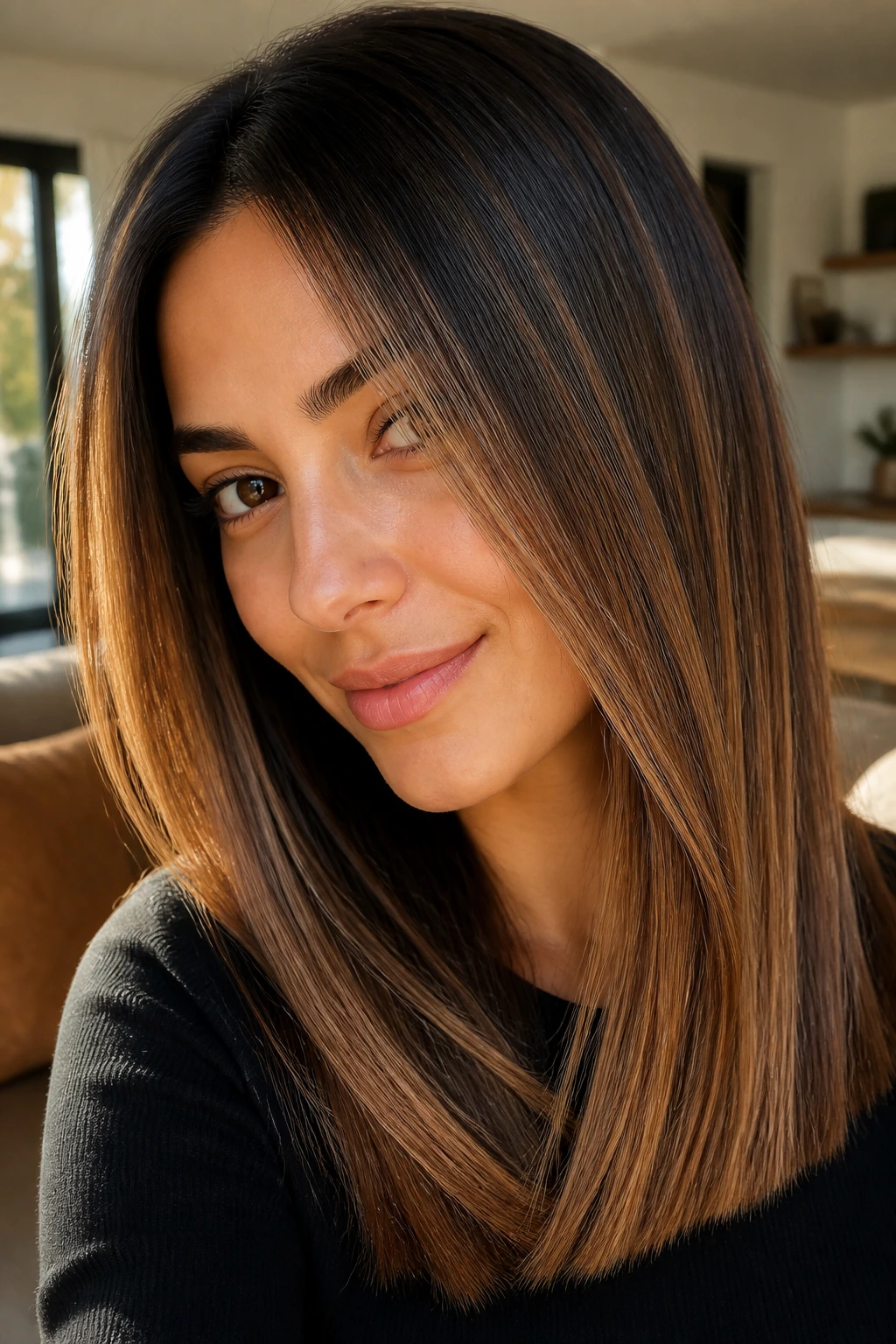
Toffee slices bring a little more sugar into the mix. The shade is warmer than cocoa and softer than caramel, which makes it a nice fit for olive skin that leans golden or tan. On straight hair, the key is slicing the color into thin, deliberate panels so it never becomes a chunky block of warmth.
Toffee looks best when it sits mostly through the mid-lengths and only grazes the ends. The result is a light-catching effect that feels autumnal instead of summer-bright. That distinction matters. Too much pale gold on straight brown hair can pull the eye in all the wrong ways; toffee, kept at a deeper level 6 or 7, stays flattering.
If you wear glossy, smooth styles, toffee is one of the easiest browns to show off because the shine does half the work. The hair looks like it has a built-in filter. Not fake. Just warmer.
7. Cinnamon Veil
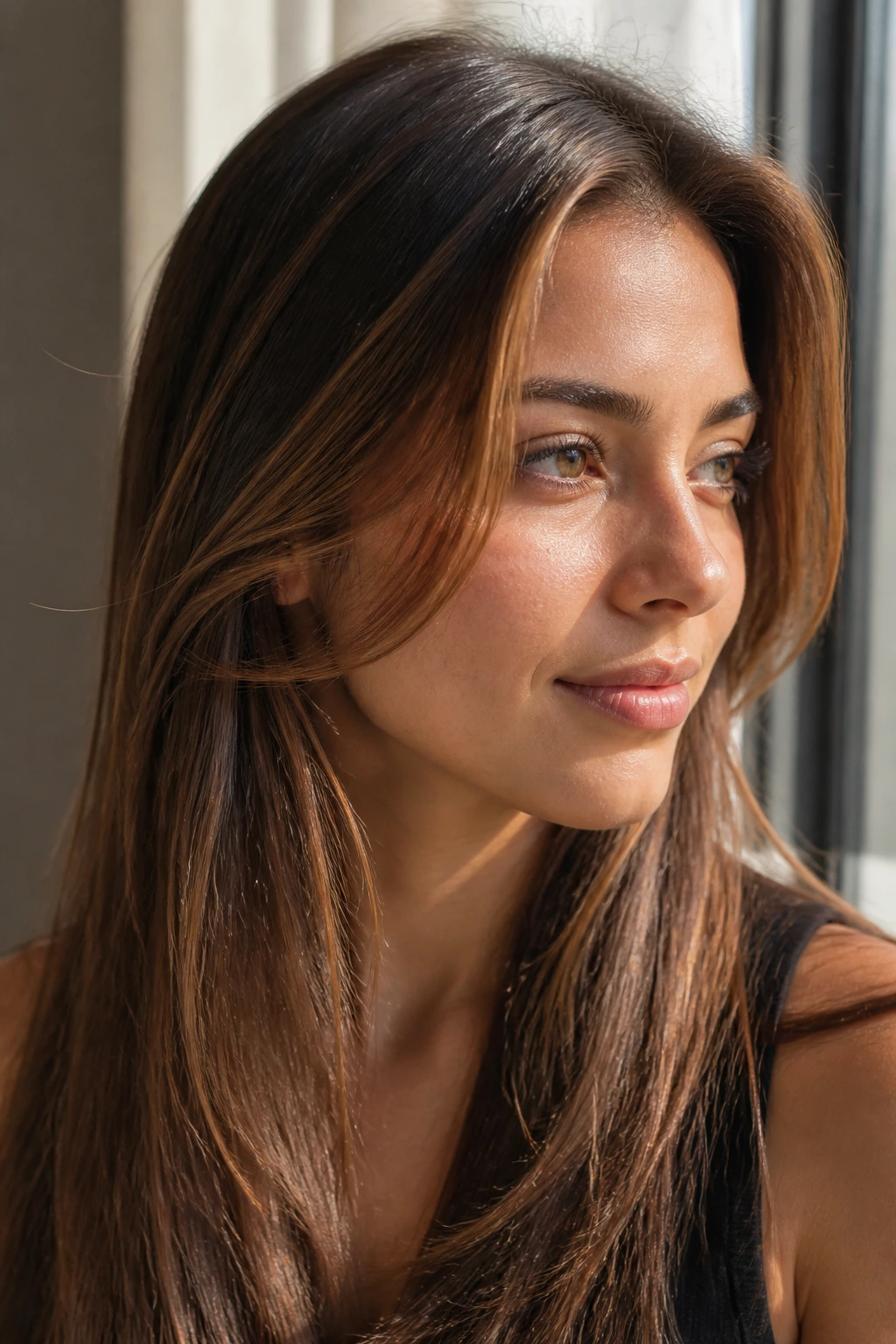
Cinnamon veil is a softer, warmer idea for olive skin that can carry red-brown tones without turning pink. The name fits because the highlight should feel like a thin layer of warmth over the brown, not a separate color sitting on top. On straight hair, that veil effect is what keeps the look from getting harsh.
The best version uses narrow pieces around the temples and a few soft passes through the ends. Nothing too chunky. A cinnamon veil shines when the hair swings or when daylight hits from the side, and because olive skin often likes a touch of warmth near the face, the whole look can make the complexion look less tired.
If your natural hair is level 5 or 6, cinnamon can be lovely. If you are darker than that, ask for a brown gloss that keeps the red from taking over.
8. Hazelnut Contour
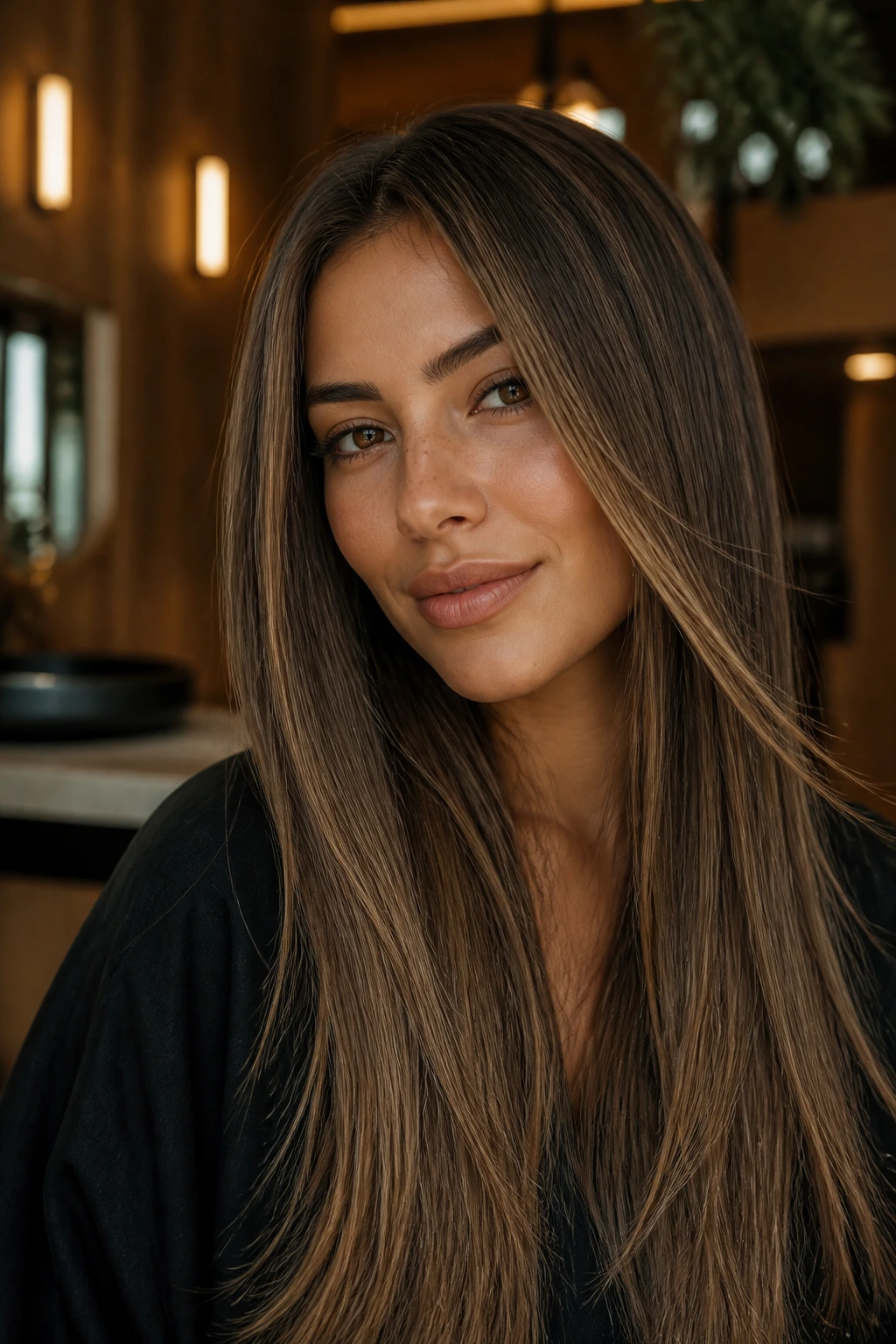
Hazelnut contour is like face contouring, but for hair. The lighter pieces sit where you want the eye to go: around the cheekbones, at the jawline, and just under the top layer so straight hair still has movement when it lies flat. Olive skin benefits from the soft contrast because hazelnut is warm enough to add life but grounded enough to avoid brass.
Why It Works Better Than Random Highlights
Straight hair punishes random placement. There is no curl pattern to hide a clumsy foil. Hazelnut contour solves that by being strategic: lighter where the face needs lift, darker where the hair needs depth.
That means a little more maintenance near the front, but the payoff is worth it. When the front pieces are cut cleanly, the highlight lines mirror the haircut instead of fighting it.
If you like sleek blowouts, this one earns its keep. It looks planned.
9. Bronze Brunette Glow
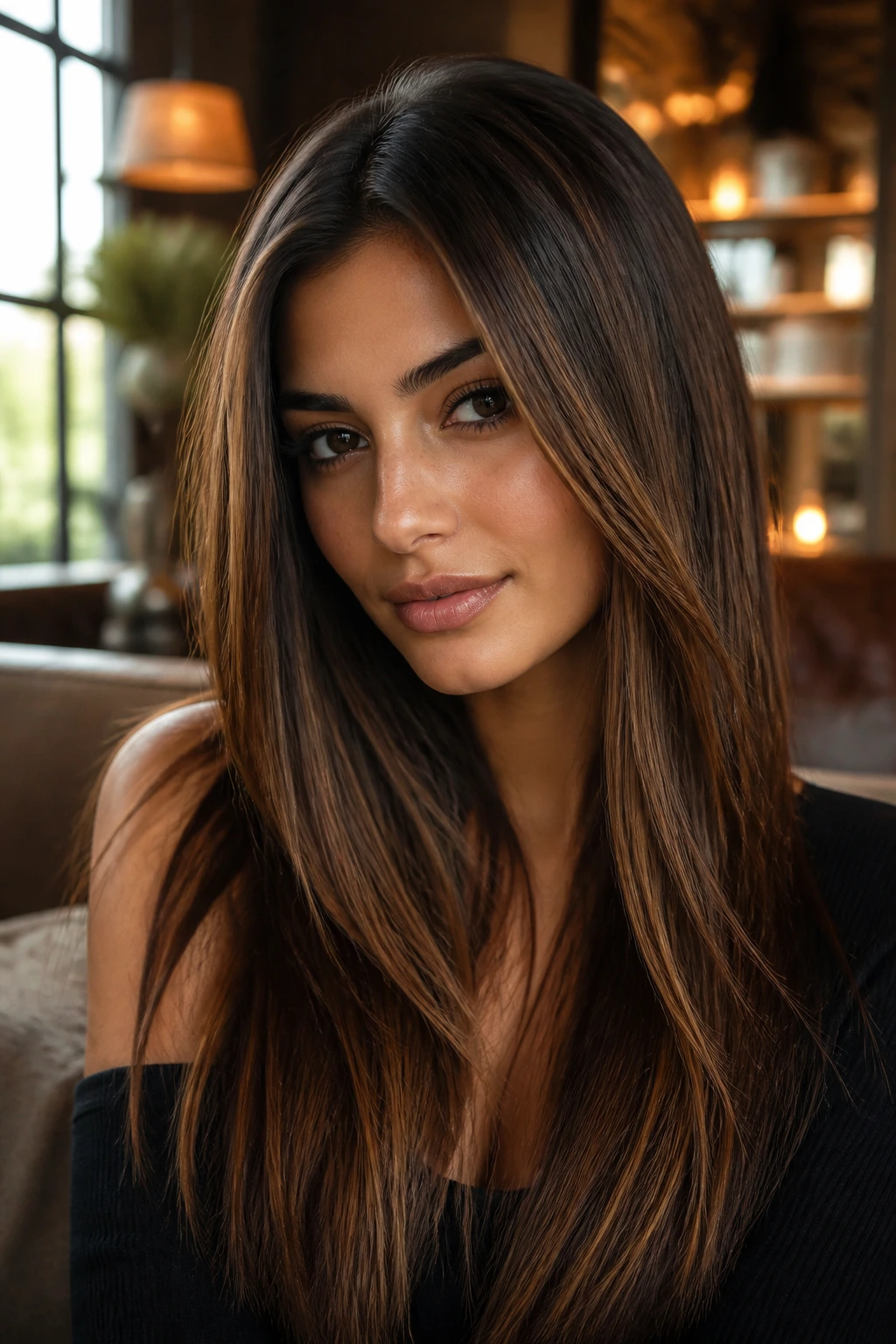
Bronze brunette glow leans warm, but it stays within brown territory. That is the key difference between bronze and blonde on olive skin. Bronze gives you shine and a little sun-touched richness, while keeping the base dark enough that straight hair still looks full.
I like this look best when the brightest pieces land through the top layer and around the part, with a few softer lights underneath so the hair does not go flat when tucked behind the shoulders. Straight hair can look one-note fast if all the light sits on top. Bronze fixes that by giving the hair a layered shine.
The finish matters. A clear or beige gloss can keep bronze from looking orange after a few washes. If you like warm makeup — terracotta blush, brown liner, soft gold shadow — this shade tends to tie the whole face together without much effort.
10. Walnut Depth Lights
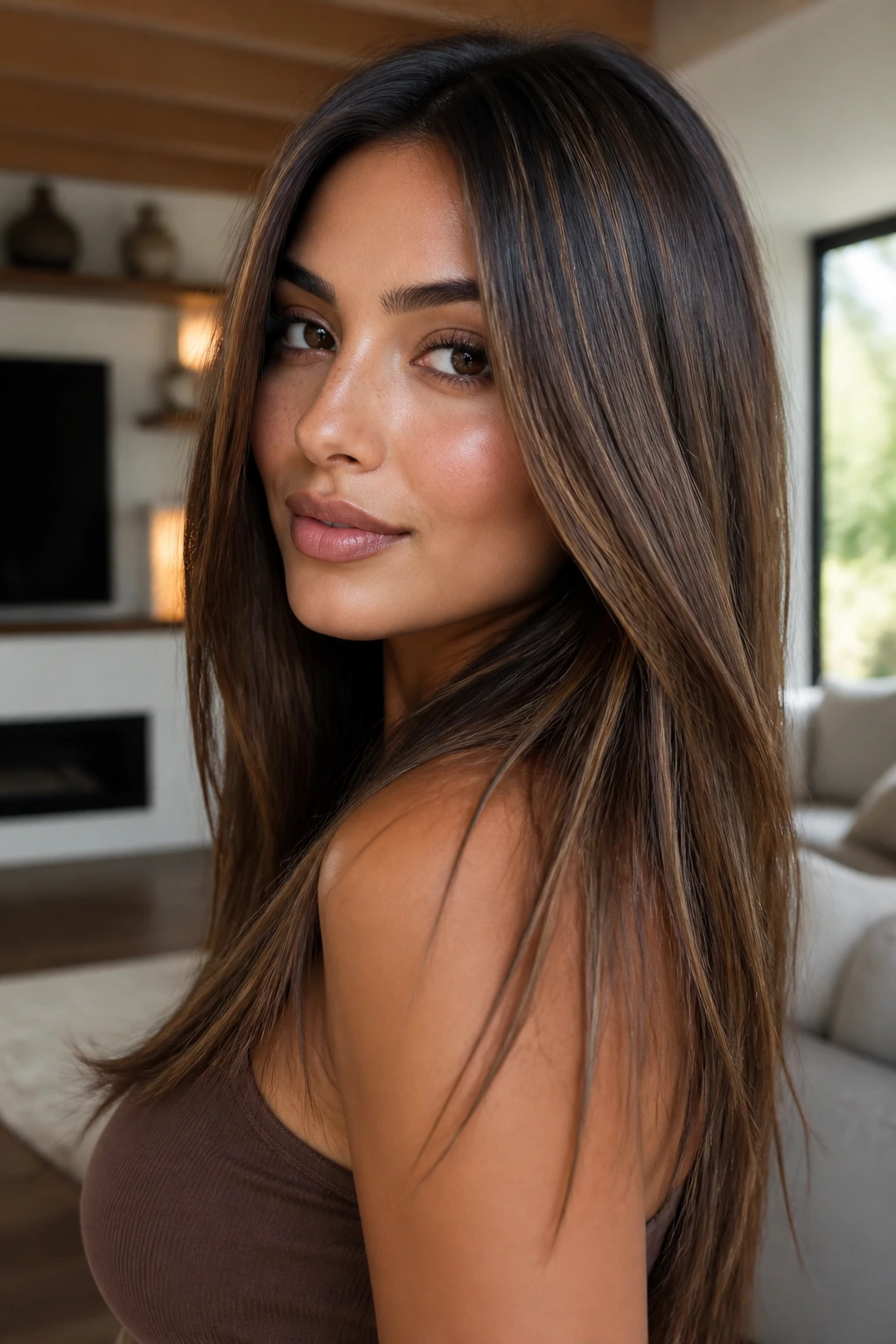
Walnut depth lights are for people who want dimension without a visible lightening jump. The walnut note keeps the highlight earthy, and that earthy quality flatters olive skin because it echoes the muted undertone instead of competing with it. On straight hair, depth is the thing that saves you from a flat curtain effect.
What to Ask For
- Fine highlights through the top layer, not chunky panels.
- A darker lowlight between brighter pieces if your hair is very dense.
- A beige-brown gloss that keeps the final finish neutral.
This look is especially good if your hair is naturally thick and straight. Dense hair can swallow color, and walnut depth lights stop that by creating tiny shifts rather than one obvious stripe of brightness. It is the kind of color that looks better after a few weeks, when the tones settle and the grow-out starts to soften.
11. Mocha Halo
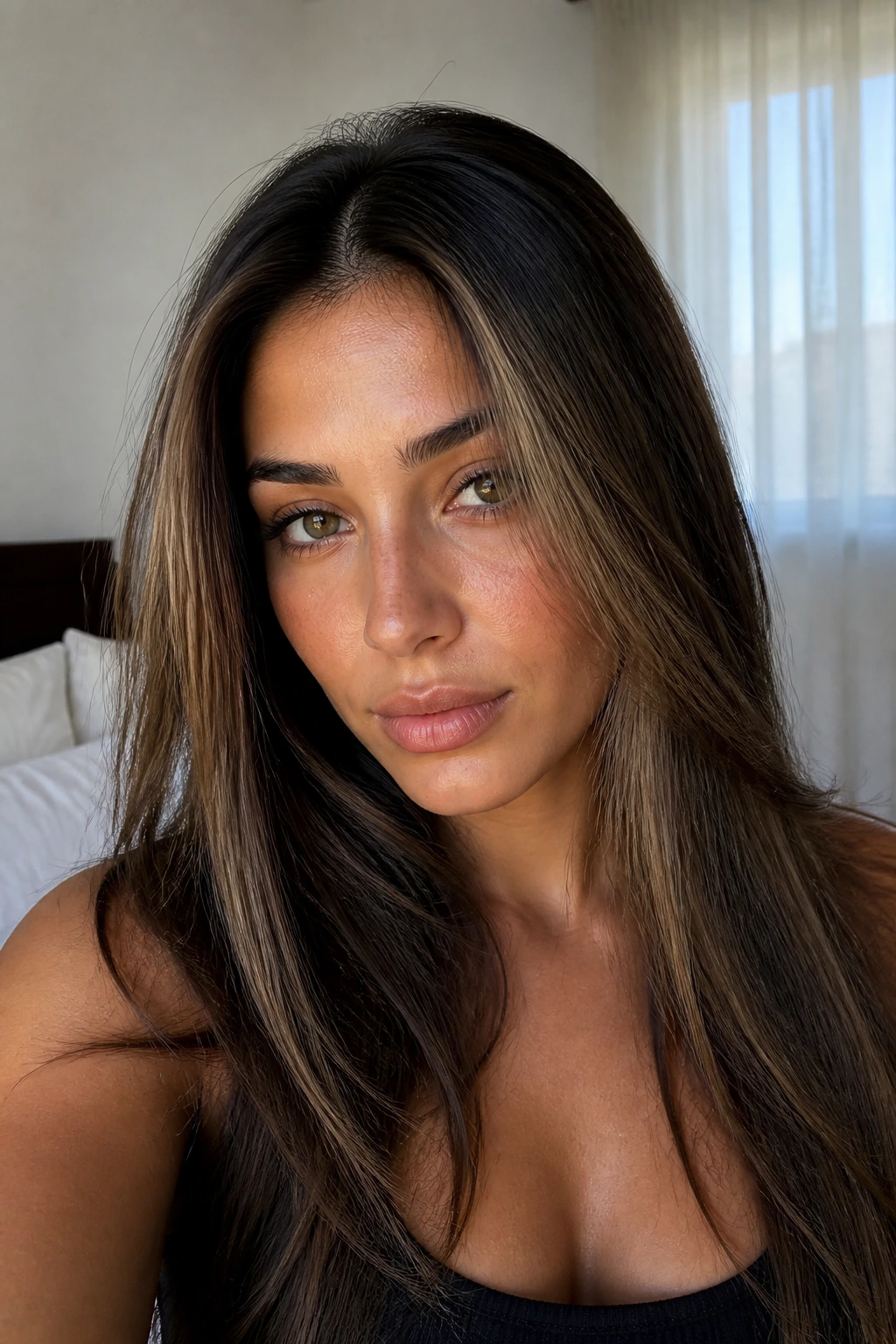
Mocha halo lights ring the face with a quiet, creamy brown brightness. Unlike a heavy money piece, the halo spreads the light across the top and front in a soft arc, which is kinder to straight hair because the line stays blended. On olive skin, mocha is one of those shades that rarely feels wrong.
The reason is simple: mocha carries enough warmth to keep the complexion from looking hollow, but it does not lean golden in a way that turns loud. If your natural hair is dark brown and you want a visible change without crossing into blonde territory, this style gives you that lift. It is also useful if you wear your hair tucked behind the ears a lot.
A good mocha halo should look smooth at the root and slightly brighter as it descends. If the highlight starts too high and too thick, it can look like a helmet line. Keep it soft.
12. Amber Brown Ribbons
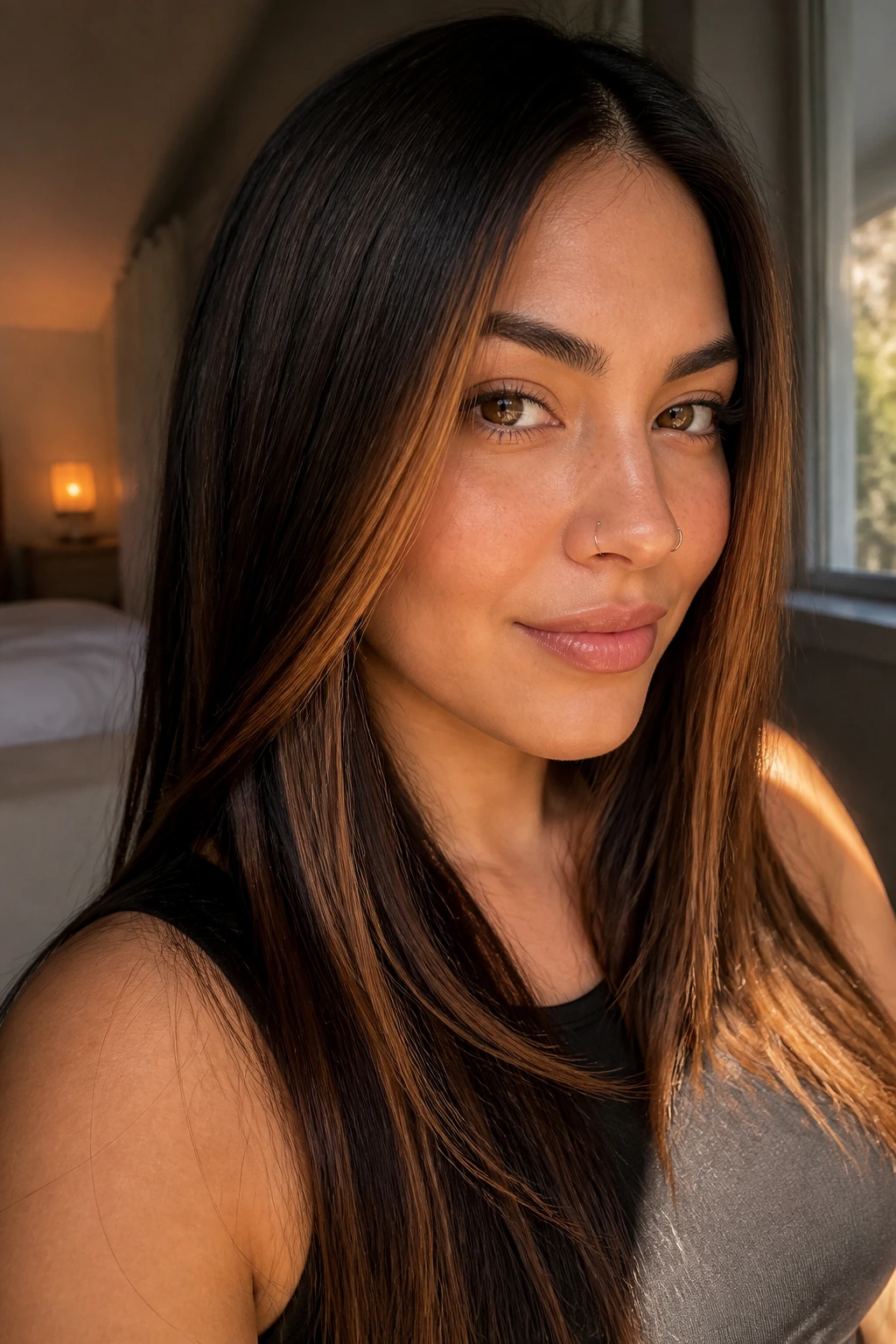
Amber brown ribbons are warmer than chestnut and more reflective than cocoa. They can be beautiful on olive skin that has a golden cast, especially if the hair is straight and glossy. The trick is to keep the amber deep enough that it still looks brown in indoor light and only glows amber when sunlight or warm lamps hit it.
Why They Stand Out
Amber brings a little fire to brown hair, but straight hair will expose any brassiness fast. That means toner matters here more than people expect. A beige or neutral glaze keeps the ribbons rich, while a too-golden formula can go yellow within a few washes.
These ribbons work well through the lower half of the hair and around the face, where the movement creates contrast. If you tend to wear warm-toned clothes — rust, olive, camel — this shade fits the wardrobe neatly. It is one of the few warmer looks that can still feel grown-up instead of sugary.
13. Burnt Sugar Ends
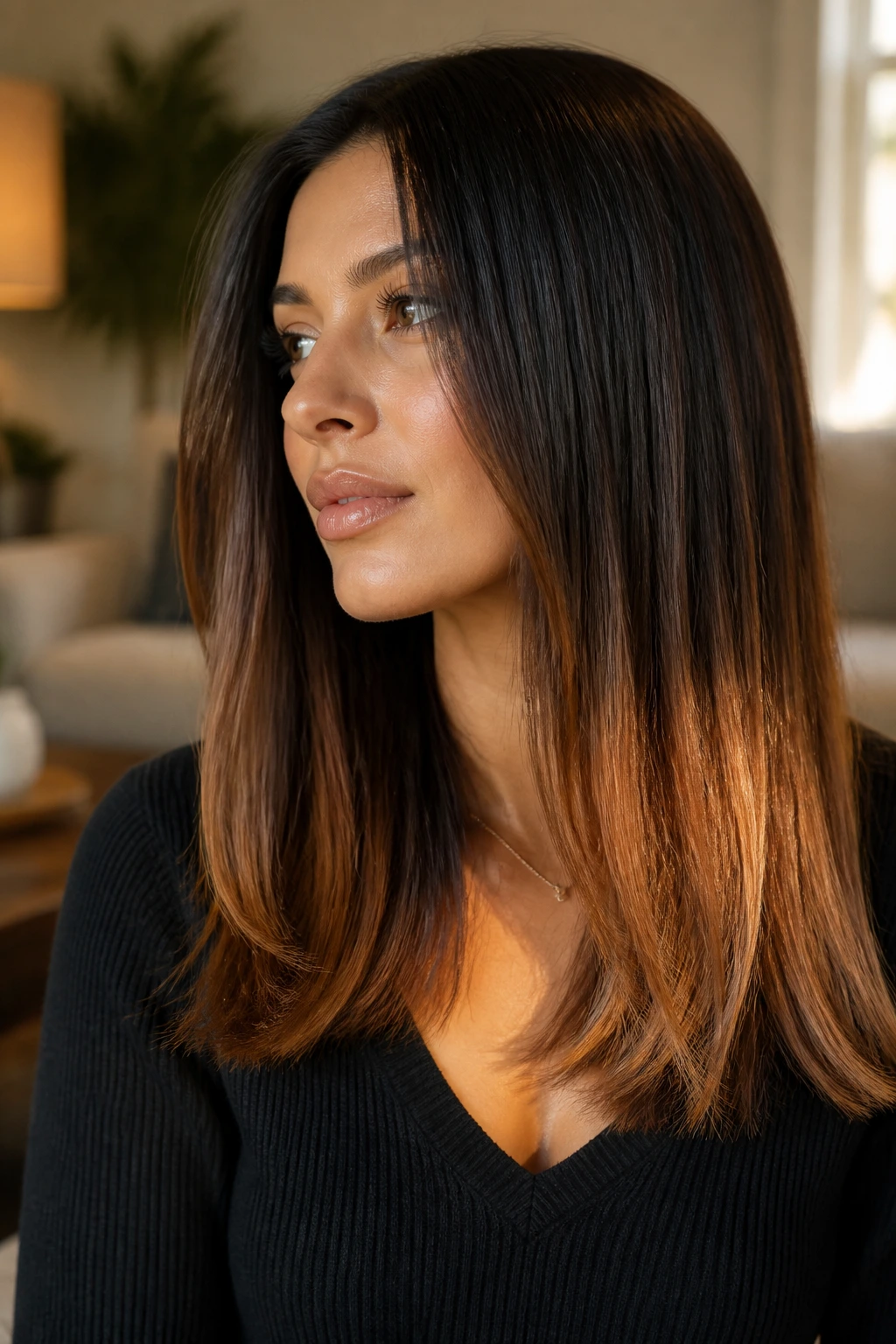
Burnt sugar ends give straight hair a little drama without touching the roots too much. The color concentrates on the last third of the length, where it looks richest and least risky on olive skin. I like this one because it respects the haircut. The roots stay dark, the mids stay brown, and the ends get the glow.
The effect is not subtle, but it is controlled. That is the difference between a grown-out ombré and a deliberate brunette finish. Burnt sugar is deeper than caramel and slightly toasted, which helps olive skin because the warmth arrives as shine, not as a yellow flash.
If your ends are already a bit porous from heat or past color, talk with your stylist about keeping the lift gentle. Straight hair shows dry ends more quickly than waves do, so too much lightening can make the last few inches look brittle. Better a soft burnished finish than straw.
14. Maple Chestnut Blend
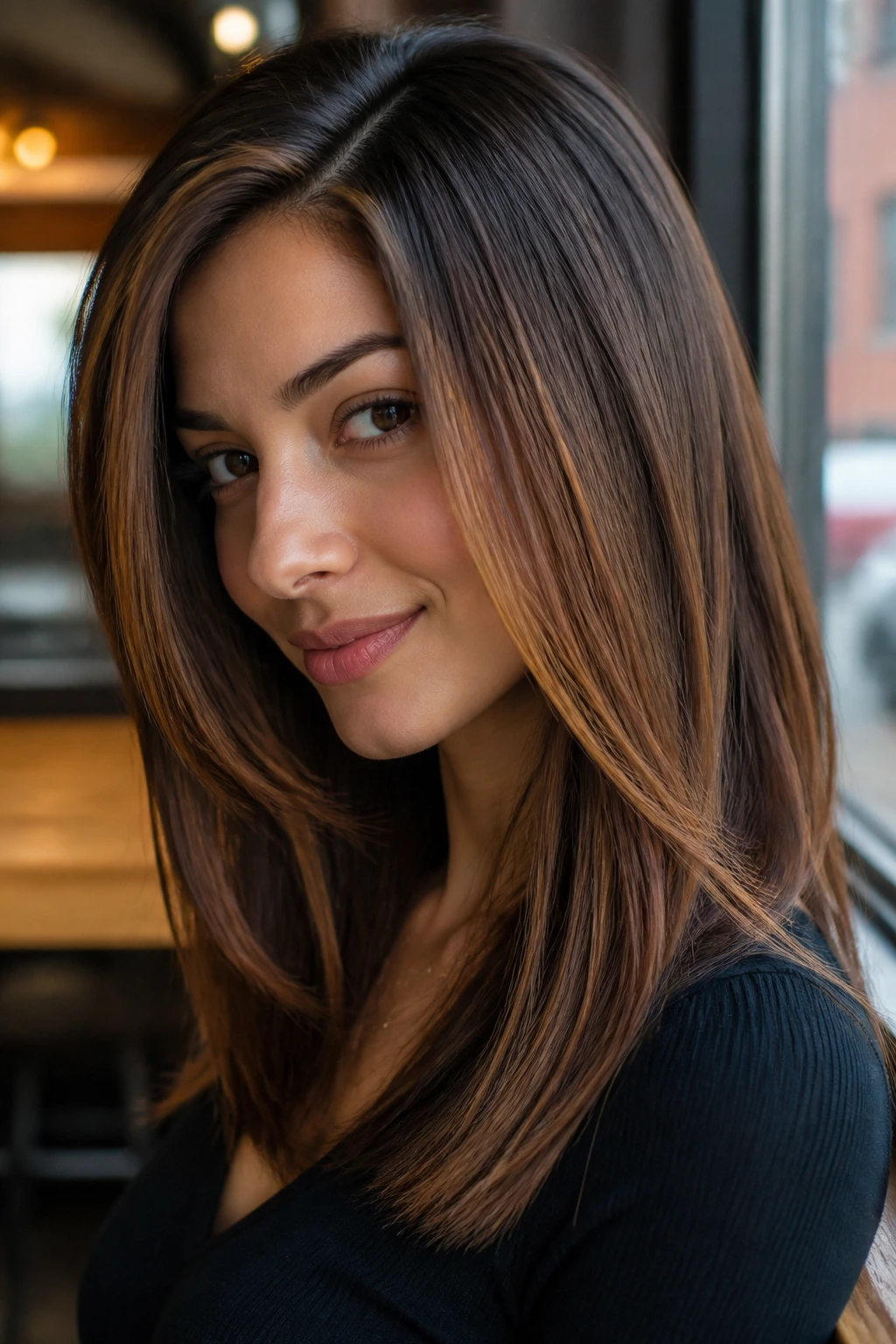
Maple chestnut is where cozy and glossy meet. It is warmer than mocha, deeper than caramel, and a little softer than cinnamon, which makes it a strong choice for olive skin that can handle warmth but still wants brown depth. Straight hair likes this kind of blend because the transitions are easy to read.
This is one of those shades that works best when the colorist keeps the root shadow intact and lets the brighter brown appear in the mid-lengths and around the face. If the whole head is lifted equally, the result can look too busy on straight hair. Maple chestnut does not need that. It wants movement, not uniformity.
A side part makes the blend feel even richer. So does a smooth blowout with the ends tucked under just a little. Tiny styling choices matter more here than people think.
15. Tawny Sable Sweep
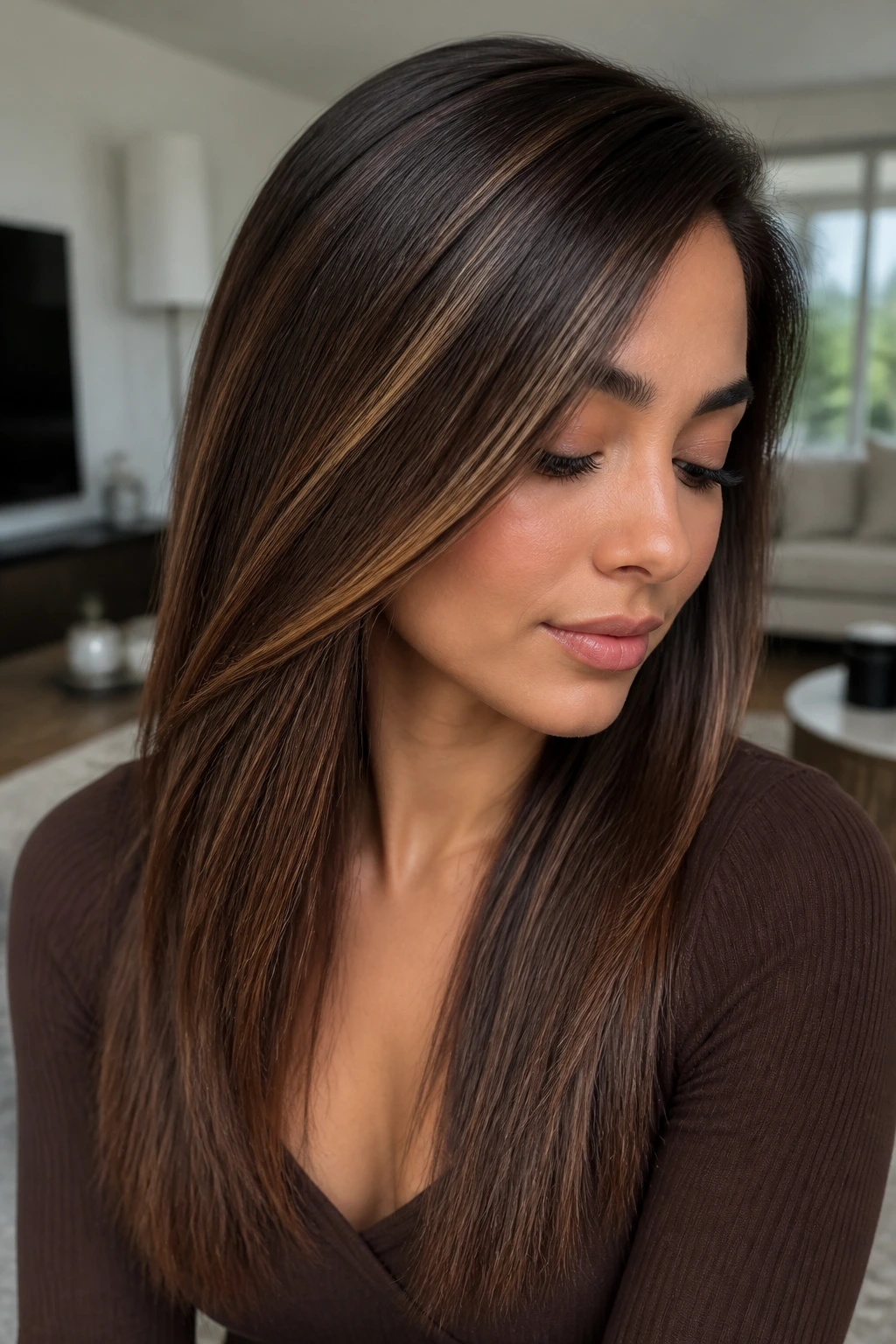
Tawny sable is a deeper, drier-looking brown that sits somewhere between warm taupe and muted chestnut. It is quietly flattering on olive skin because it never goes orange, yet it does not turn flat ash either. The sweep part matters: the lighter pieces should move diagonally through the hair, not straight across in bands.
That diagonal placement is a gift for straight hair. It breaks up the visual line and gives the cut some motion even when the strands are pinned smooth. If you have blunt ends or a lob that hangs like a sheet, tawny sable can make the whole haircut feel more expensive without touching the shape.
A soft matte lip or a berry gloss tends to play well with this shade. It is not the flashiest look on the board. It might be one of the nicest.
16. Warm Bronde Strands
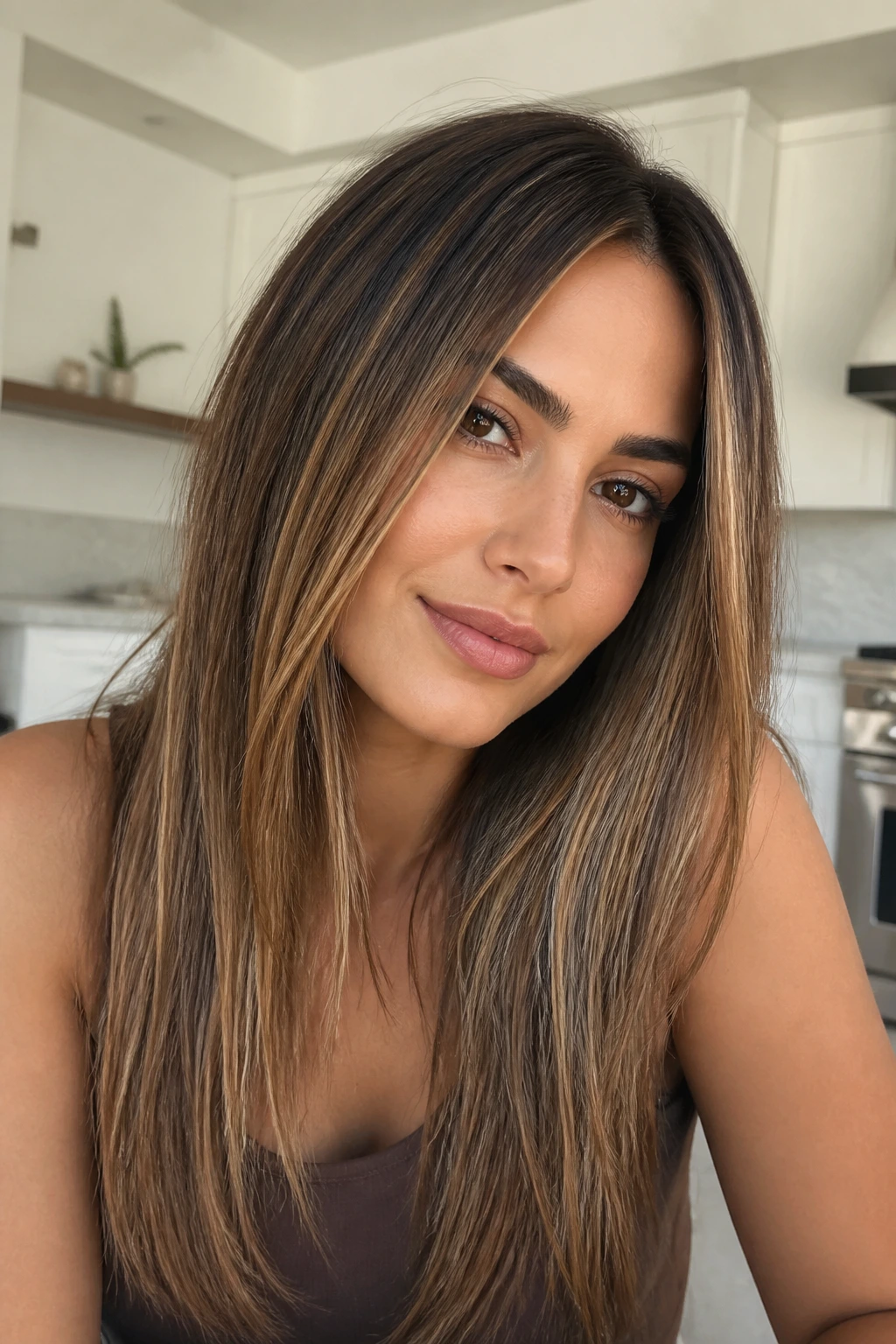
Bronde can go wrong fast on olive skin if it drifts too golden, but a warm brunette version is a different animal. The best warm bronde strands stay closer to light brown than blonde, with beige-gold touches that only brighten when the light lands. On straight hair, that controlled shimmer looks cleaner than a big color jump.
What Makes It Different
Unlike true blonde highlights, warm bronde strands do not fight dark brows or olive undertones. They stay in the family. That means you can get brightness around the face and through the top layer without making the skin look pale or the hair look heavily processed.
This is a strong choice if your hair is a level 6 and you want to move one step lighter, not three. It also helps if your wardrobe leans cream, tan, or rust, because the shade sits comfortably beside those colors. On straight hair, the strands should remain narrow. Thick bronde panels lose the point.
17. Smoky Chocolate Veil
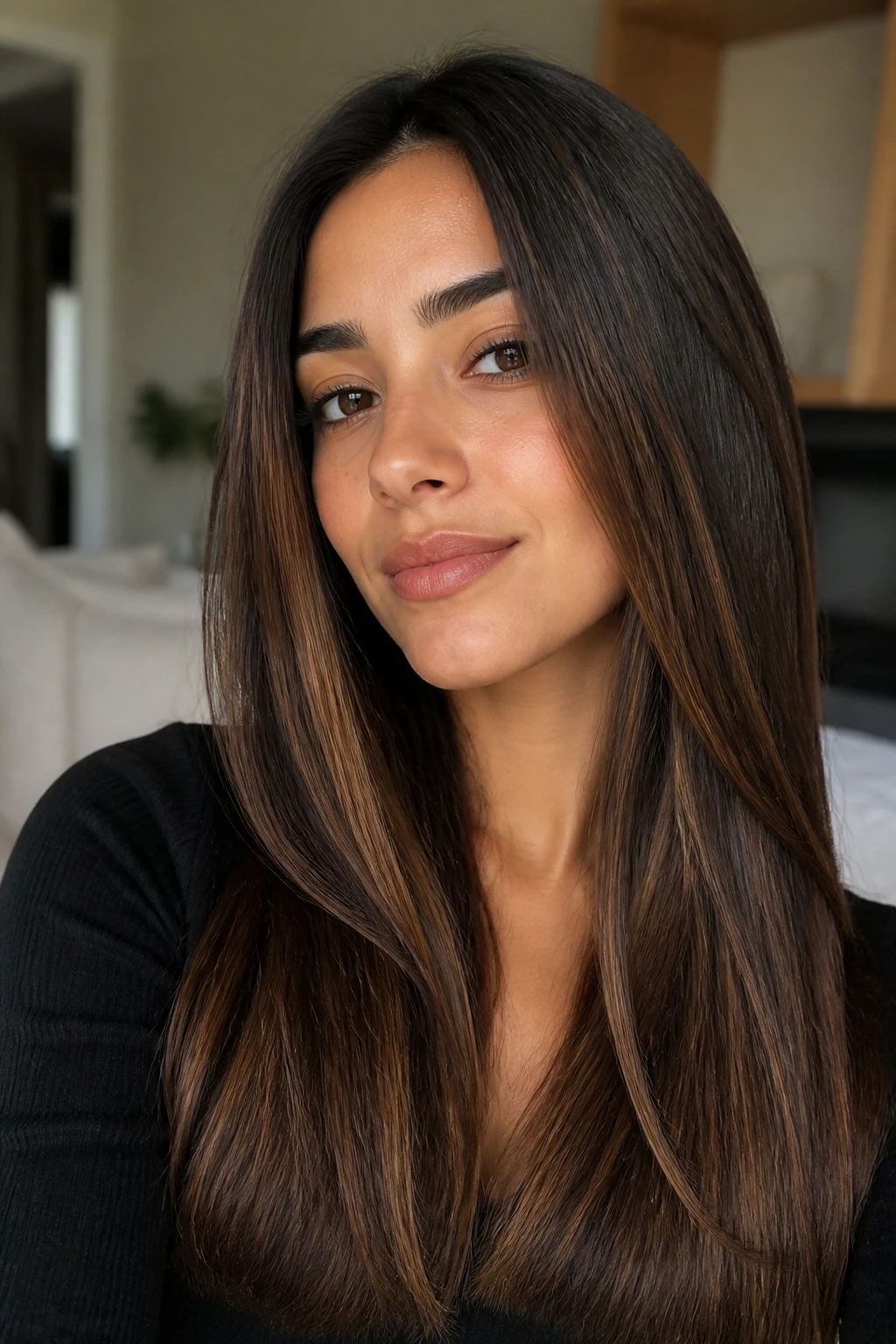
Smoky chocolate is one of the best brown highlight ideas for olive skin with cooler undertones. It has just enough ash to keep the tone grounded, but it still looks rich and shiny on straight hair. The veil concept keeps it from feeling too heavy.
If the highlights sit in a soft haze through the mids and ends, the hair looks fuller and more textured without screaming for attention. That’s useful on straight hair, where a one-tone brown can look like a block if you do not interrupt it. Smoky chocolate breaks that block up.
This look pairs nicely with a blunt cut, a sharp bob, or long straight layers. The finish is sleek, not airy. If you prefer your brunette color to feel polished and a little modern, this one is easy to wear.
18. Golden Brown Flickers
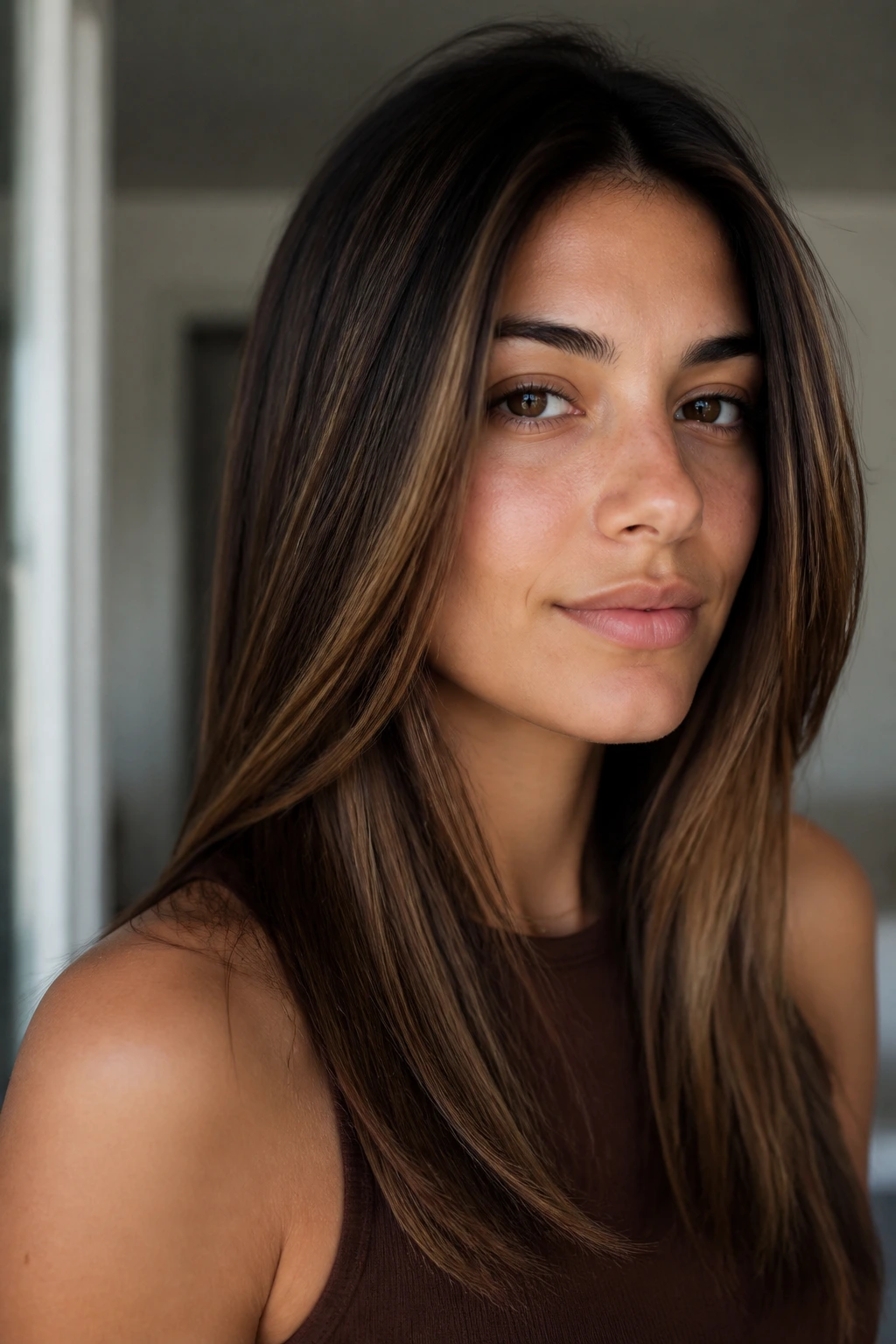
Golden brown flickers are the warmest version on this list, and they can be gorgeous on olive skin when the gold stays deep. Think soft sunlit brown, not yellow blonde. On straight hair, flickers work because they are small and scattered, so the light pieces appear in motion rather than as a fixed stripe.
Quick Notes
- Keep the lightest pieces around the front and crown.
- Stay around level 6 or 7, not pale blonde.
- Use a gloss every few weeks if your water runs hard.
Golden brown flickers are lovely when you want the hair to look animated in daylight. They are not the best choice if your olive skin leans very cool, because too much yellow can make the complexion look off. But on warm olive or tan skin, they can give the face a soft, lit-from-within kind of glow.
19. Rooted Cocoa Melt
Rooted cocoa melt is practical and pretty, which is a better combination than people give it credit for. The root stays dark cocoa, then the mid-lengths melt into a lighter brown that never strays too far from the base. On straight hair, the root shadow is doing real work; it keeps the whole head from looking like a hard line at the scalp.
That matters if your hair grows fast or if you do not want to sit in the salon every few weeks. The melt gives you softness around the face and through the body of the hair while making the grow-out less obvious. Olive skin usually likes this kind of brown because it frames the complexion without bleaching it out.
If you want something that looks good even when tucked behind a scarf, behind the ears, or flat under a coat collar, rooted cocoa is a smart pick. It stays put visually.
20. Coffee Bean Veil
Coffee bean veil is dark, glossy, and low-key. It is ideal if you want barely-there dimension on straight hair and still want the hair to look dense. The lights are so subtle that the effect is mostly visible in movement, which is exactly how a lot of people with olive skin prefer their color to behave.
The veil should be placed in thin, diffused sections through the top and outer layers. Nothing chunky. Coffee bean tones can be cooled slightly with a beige gloss, or warmed a bit if your olive undertone runs golden. Either way, the color stays brunette first, dimensional second.
This is one of the easiest looks to pair with a blunt cut. The geometry of the haircut and the softness of the veil play well together.
21. Sienna Ribbon Lights
Sienna ribbon lights have more warmth than cocoa and more richness than copper. They give olive skin a little rust-brown glow, which can be stunning on straight hair when the formula stays brown enough. The ribbon placement is the important part; too much sienna all at once starts looking like red dye, not brunette dimension.
The best version uses thin slices through the top layer and a few brighter bits at the ends. That creates motion without flooding the whole head with warmth. If you wear earthy makeup — peach blush, brown mascara, brick lipstick — sienna can make the whole face look connected in a way that is hard to fake.
This is one of the more expressive options on the list, but it still belongs in brunette territory. That balance is the point.
22. Almond Brown Lift
Almond brown lift sits in a soft neutral zone that flatters olive skin across a wide range of undertones. It is lighter than cocoa, quieter than caramel, and cooler than honey. On straight hair, that middle ground matters because it avoids the sharp highlight lines that can show up when you push contrast too far.
Why It Reads So Cleanly
Almond has a creamy quality without looking pale. That makes it one of the easiest shades for straight hair because the transition from base to highlight can stay blurred even when the strand lies flat. If your cut is precise — a lob, long layers, or a blunt cut — almond lift adds movement without stealing the shape.
It also wears well with simple styling. A smooth blowout, a tucked-behind-the-ear finish, or a low ponytail still shows enough color to keep the look alive. Some shades disappear when you pull the hair back. Almond usually does not.
23. Mahogany Shine Ribbons
Mahogany shine ribbons are deeper and richer than the rest of the warm-brown family. They bring a wine-brown note that can look striking on olive skin, especially if your complexion has a little depth or your eyes are dark. Straight hair makes mahogany look sleek and deliberate because the red-brown shine runs in long clean lines.
The trick is restraint. Mahogany should not take over the whole head unless you want a much richer, darker finish. A few ribbons through the mid-lengths, plus a gloss that keeps the red muted, is usually enough. Too much mahogany can push the color too red in daylight, and straight hair will not hide that.
If you want your brunette to feel more dressed up without going lighter, mahogany is one of the strongest choices.
24. Biscotti Brown Sweep
Biscotti brown is a softer, milky brunette that sits between beige and chestnut. It can be very flattering on olive skin when the goal is lightness without blonde. On straight hair, the sweep technique matters because the shade is gentle enough that heavy placement would make it disappear into one pale band.
What to Watch For
If your hair is very dark, biscotti may need a little pre-lightening to show. Keep the pieces fine. If the lift is too broad, the whole thing can turn one-dimensional instead of softly dimensional.
This shade is a good fit for people who like clean styling, simple makeup, and neutral clothing. It does not demand a lot from the rest of the look. It just sits there and makes the hair look lighter, smoother, and a bit more expensive than it did before.
25. Soft Tawny Curtain Highlights
Soft tawny curtain highlights are the most wearable final stop on this list. They frame the face, soften the part, and keep the color in a brown range that almost always plays well with olive skin. On straight hair, curtain placement gives you light where the eye lands first and keeps the rest of the hair from getting visually crowded.
The beauty of this style is how little it asks for. The highlights should start around the cheekbone, stay fine through the front sections, and fade back into the base without a hard line. That makes the haircut feel lighter without making the whole head look overworked.
If you like long straight hair that falls neatly over the shoulders, soft tawny curtains are hard to beat. They add movement, they grow out well, and they leave the brunette depth intact.
Why Straight Hair Changes the Color Story
Straight hair does not forgive sloppy placement. Curly and wavy textures can hide a thick foil line or a patchy transition because the bend of the hair breaks up the light. Straight strands do the opposite. They put every section on display, which is why babylights, teasylights, and finely woven balayage usually look better here than chunky blocks of color.
That also changes the way shine behaves. A smooth, straight surface reflects light more directly, so a brown highlight can look richer than it does on textured hair if the tone is right. Chestnut glows. Cocoa looks glossy. Mushroom looks expensive in a very low-key way. The catch is that brass shows faster too, so the gloss formula matters more than most people expect.
Olive skin and straight hair also have a strange little partnership. Olive undertones can handle depth, and straight hair likes depth because it makes the shape look denser. The safest move is usually to keep the light pieces narrow and let the darker base do some of the work. That is where the dimension lives.
Essential Tools for Brown Highlights at Home or in the Chair
- Tail comb: Useful for slicing fine sections and creating the tiny weaves straight hair needs.
- Sectioning clips: Keep the top, sides, and back separated so the placement stays even.
- Foils or meche strips: Helpful for isolating brighter brown pieces and controlling lift.
- Tint brush and mixing bowl: Necessary if you are applying a toner, gloss, or root smudge.
- Color-safe shampoo: Keeps the brown from washing out and turning dull too fast.
- Sulfate-free conditioner: Helps the highlighted lengths stay smooth instead of frayed at the ends.
- Heat protectant spray: Straight styles usually involve heat, and highlighted brown hair needs that buffer.
- Shine serum or lightweight oil: A pea-sized amount on the ends keeps straight hair from looking dry after processing.
- Purple or blue shampoo, optional: Blue is useful if your brown highlight pulls orange; purple is better if it leans yellow.
How to Choose the Right Brown for Olive Undertones
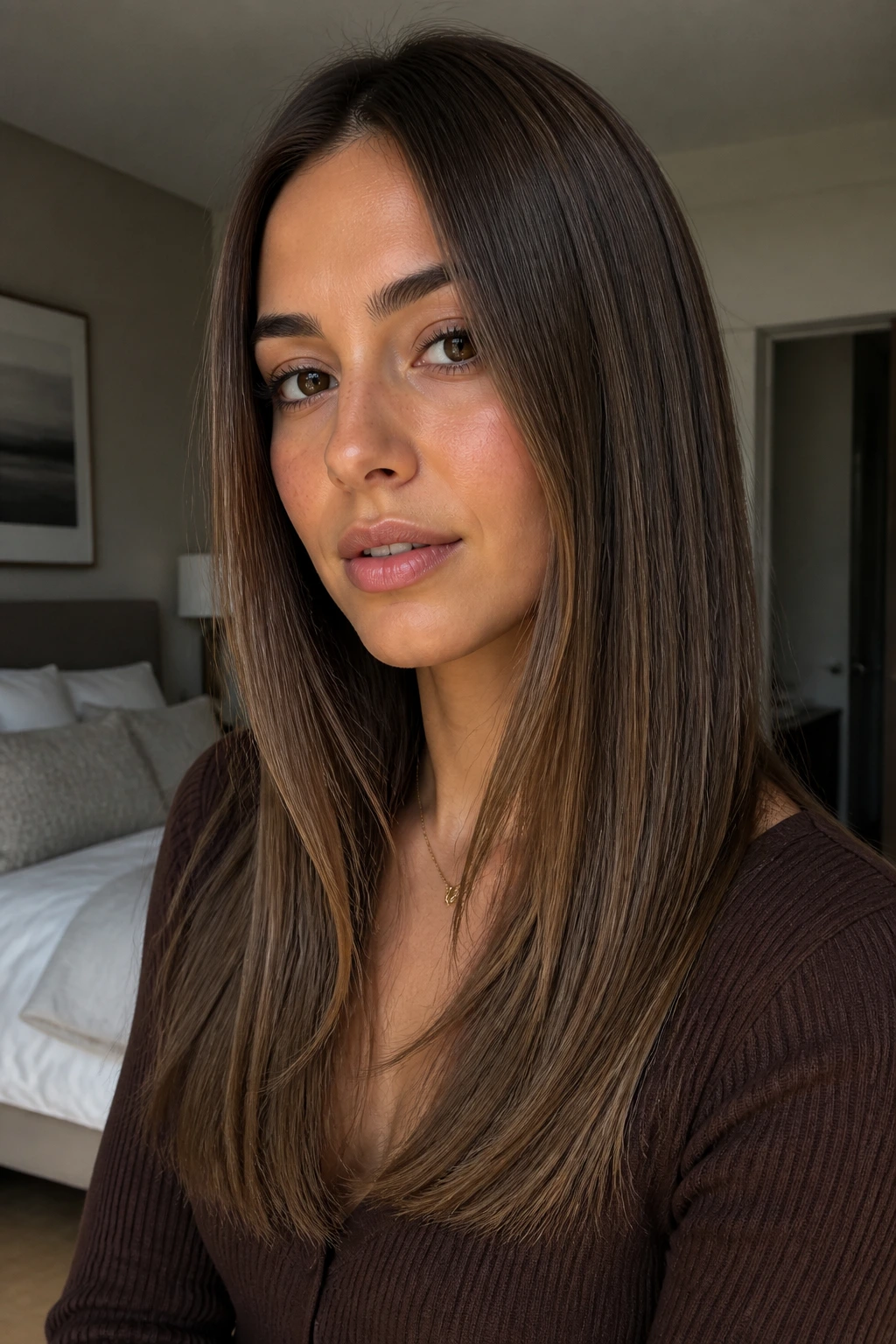
Start with the undertone, not the trend photo. Olive skin can lean green-gray, golden, muted beige, or deep and warm, and the highlight tone should answer to that first. If your skin looks happiest in silver jewelry and muted colors, mushroom, mocha, smoky chocolate, and walnut tend to stay honest. If camel, rust, and gold flatter you most, chestnut, caramel, amber, and sienna are easier bets.
Level matters too. A level 5 to 7 brown usually sits in the sweet spot for most olive skin because it creates lift without turning into blonde territory. The higher you go, the more the hair begins to read as light rather than dimensional. On straight hair, that shift happens fast, so it is smarter to move in small steps.
Ask your stylist for a neutral gloss if you are unsure. Neutral can be a lifesaver. It gives the hair a brown finish that doesn’t lean too gold or too ash, and that middle ground is often what makes olive skin look calm instead of drained. If your hair pulls warm no matter what, a cooler toner can pull it back into line. If it goes flat and gray, warm it just a touch.
How to Style the Finished Color So the Dimension Shows
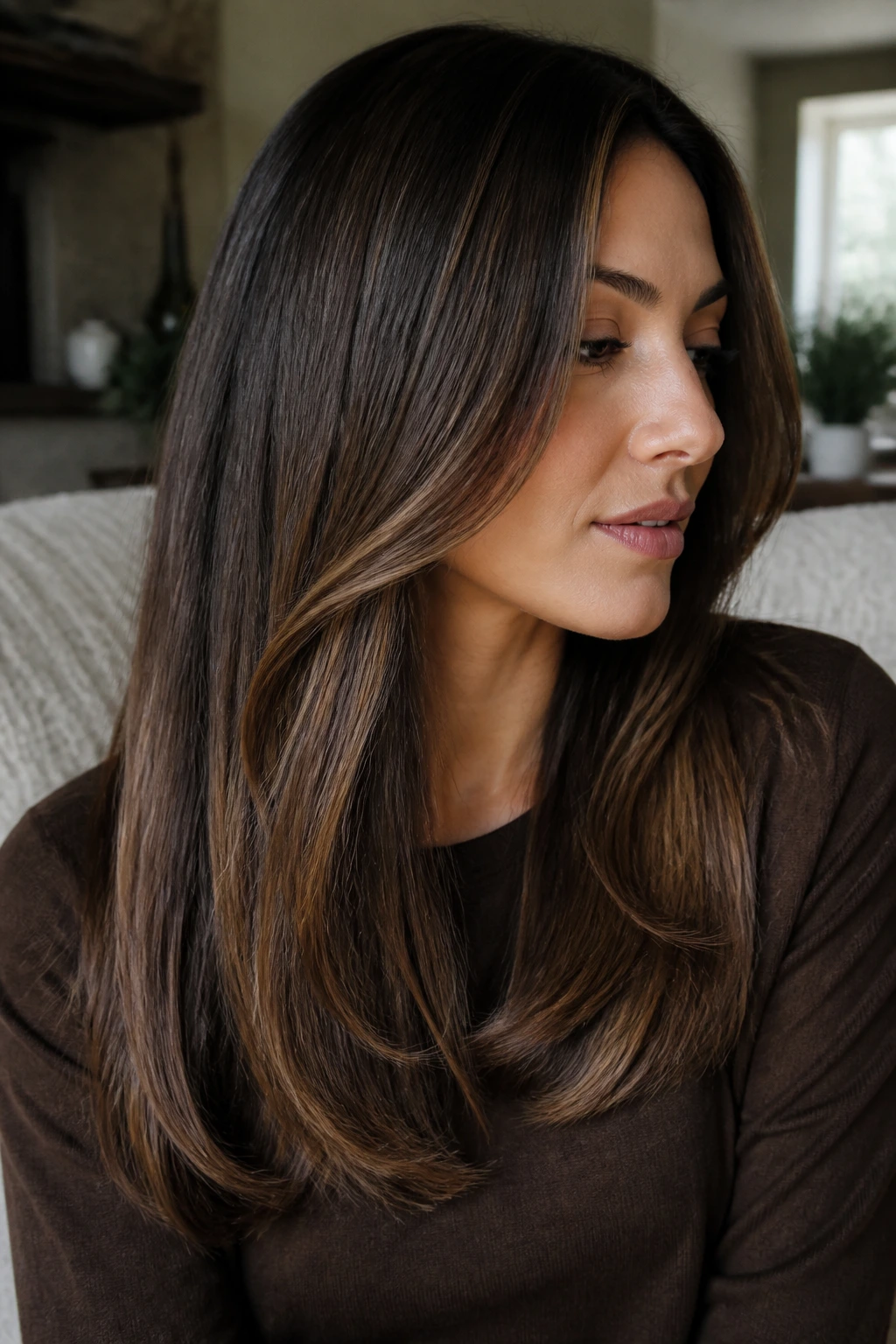
Parting: A clean center part shows off even placement, while a soft side part makes a face frame look richer. If the highlights sit around the front, move the part a half-inch off center and see what happens. It changes the whole face.
Texture: Straight hair can be too smooth after a fresh blowout, so bend only the last two inches away from the face with a flat iron or give the mid-lengths a loose pass with a large barrel iron. You do not need curls. A little movement is enough to make the brown ribbons wake up.
Makeup: Olive skin usually holds up well with muted peach, terracotta, bronze, or berry tones, depending on how warm the highlight is. If the brown leans smoky, keep the makeup soft and matte. If it leans caramel or amber, a bit more warmth in the cheek and lip keeps the whole face connected.
Wardrobe: Cream, camel, olive green, rust, deep navy, and soft black all tend to sit nicely beside these brunette highlights. Harsh neon can make the color look flatter than it is. Quiet colors let the hair do its job.
Practical Tips for Better Placement and Tone
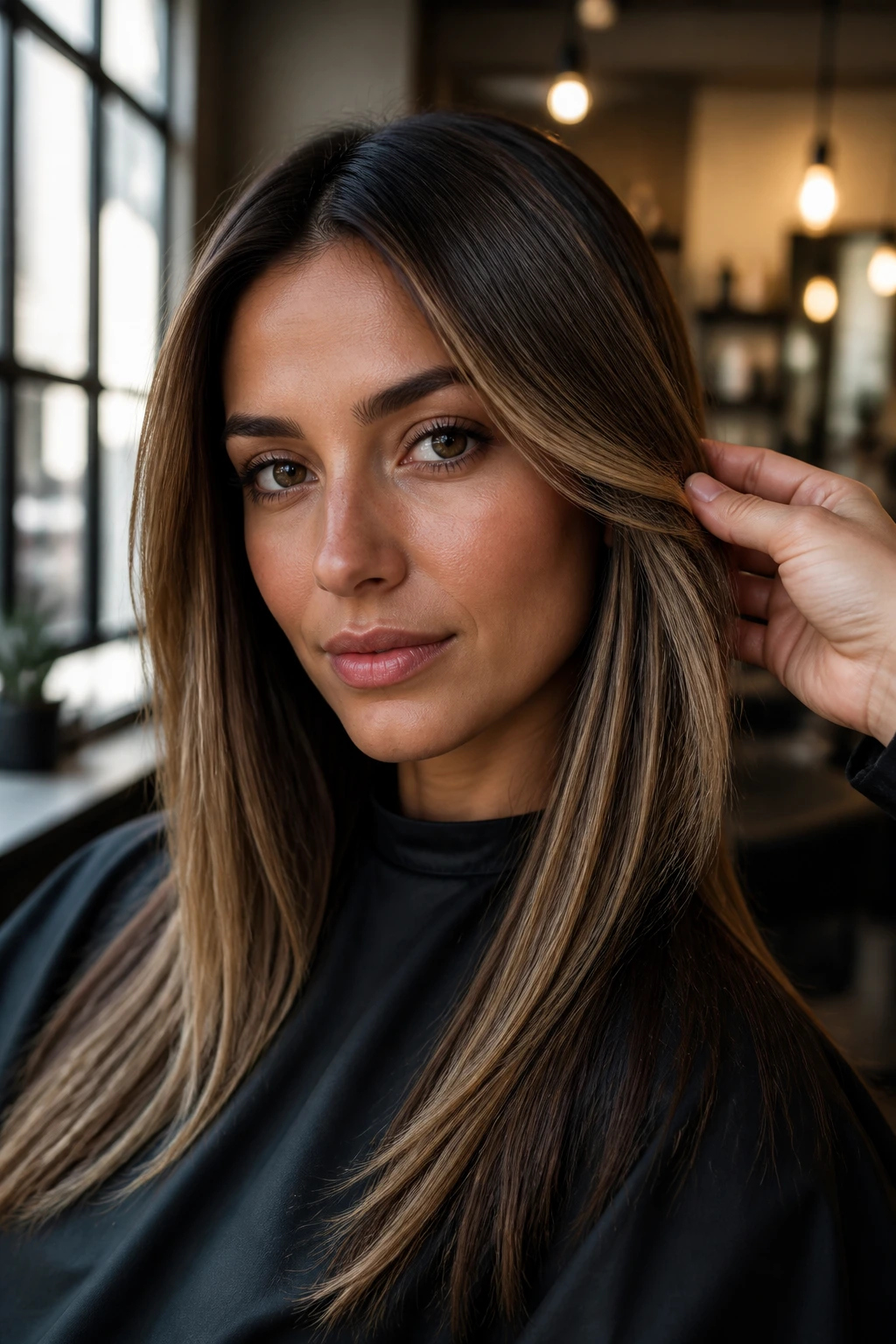
Face-Frame Control: Keep the brightest pieces near the cheekbone and jawline, not the crown, if you want the eyes to go to the face first. That is especially useful on straight hair, where the top layer can swallow lighter pieces if they are too scattered.
Gloss Move: Ask for a glaze or demi-permanent gloss every 4 to 6 weeks if you want the brown to stay rich. That is the easiest way to keep caramel from turning too yellow and cocoa from turning dull.
Depth Trick: Leave a few darker strands between the lighter ones. Straight hair needs those darker rails or the whole thing can look washed out. A little shadow gives the highlight something to sit against.
Budget-Saver: If you are trying to stretch salon visits, choose a rooted style like cocoa melt, walnut depth lights, or rooted caramel. The grow-out is gentler, and a quarter-inch of regrowth will not wreck the look.
Common Mistakes That Flatten Olive Skin
-
Going too light too fast: Pale blonde strips can make olive skin look gray or green, especially on straight hair where the contrast is unforgiving. Ask for one or two levels of lift first, then reassess.
-
Using chunky placement on smooth hair: Big foils and wide ribbons are easier to see than to love. On straight strands, they can look zebra-like. Fine weaves and soft balayage are usually safer.
-
Ignoring brass control: Warm browns can turn orange in sunlight if the toner is wrong. A neutral or blue-based gloss fixes more than people think.
-
Skipping root shadow: If the highlight starts at the scalp with no blur, regrowth shows fast and the color looks disconnected. A soft shadow root keeps the line gentle.
-
Overusing heat: Highlighted brown hair gets dry at the ends faster than natural hair. If you flat iron every day without heat protectant, the color loses shine and starts looking flat.
Variations and Adaptations to Try
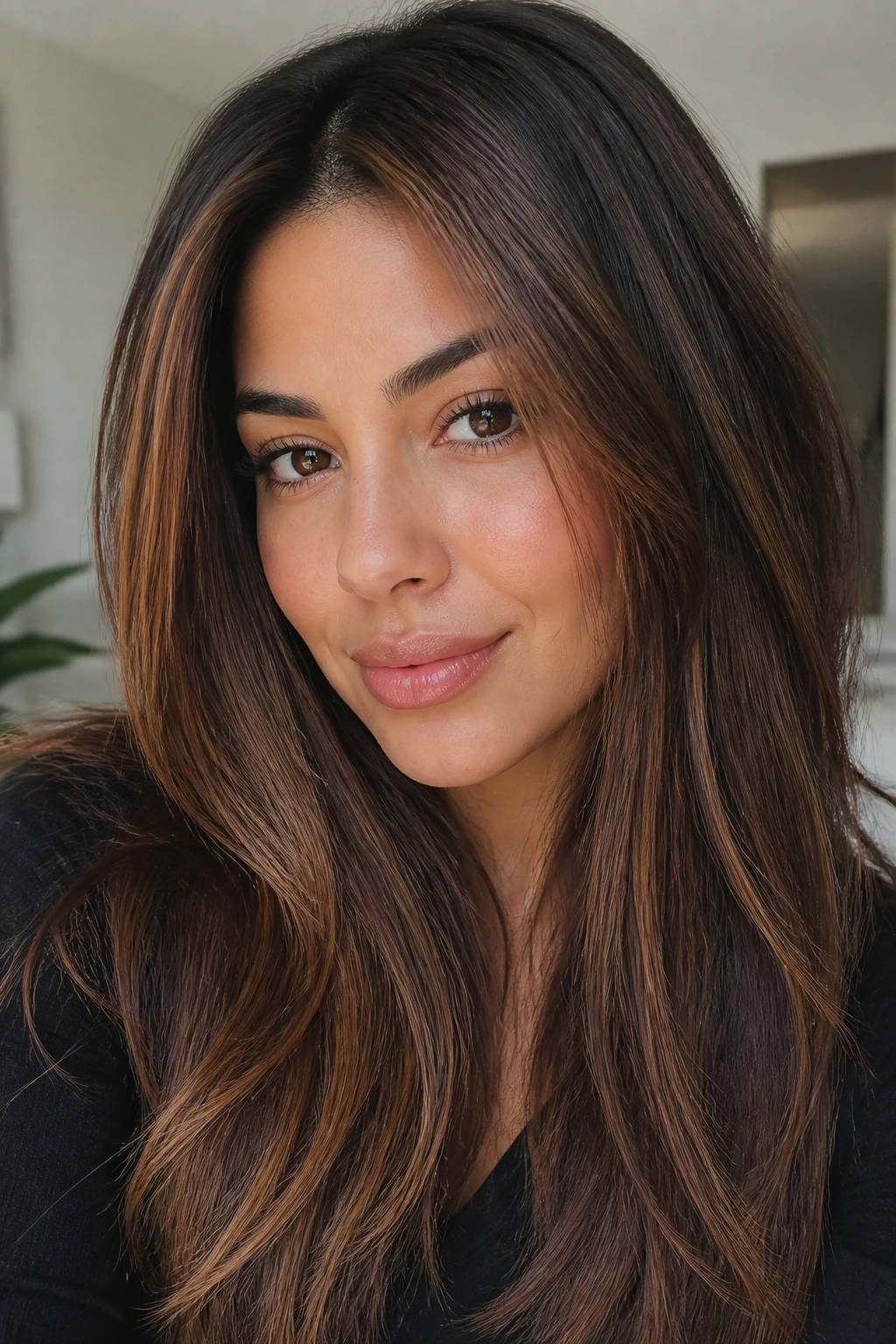
Cool Smoke Brown: Push the formula toward mushroom, mocha, and smoky chocolate if your olive skin leans cool. This version keeps the highlights muted and slightly ash-brown, which is useful if gold tones make your skin look flushed.
Copper-Kissed Walnut: Add a whisper of cinnamon or sienna to walnut ribbons if your olive undertone runs golden. It gives the hair warmth without moving into red territory.
Rooty Grow-Out Blend: Ask for a deeper root smudge and finer lights through the mids if you want the longest stretch between appointments. The hair will look lived-in, not neglected, which is the whole point.
Soft Mocha Halo: Brighten only the front half-inch around the part and temples, then keep the rest of the head close to your base. This is the easiest version to wear with straight hair because the face gets lift while the length stays full.
Gray-Blend Brunette: If you are covering gray, mix chestnut or cocoa highlights with a few deeper lowlights. Straight hair often exposes gray roots faster, so this blend helps break up the line instead of making every silver strand stand out.
Keeping the Tone Fresh Between Appointments
Brown highlights on straight hair need less drama than blonde, but they still need care. Wash 2 to 3 times a week if you can, because every extra wash strips a little more gloss from the brown. If your scalp runs oily, use a gentle shampoo at the roots and let the suds slide through the ends rather than scrubbing the lightened pieces hard.
Gloss is the real hero here. A salon glaze every 4 to 6 weeks can keep chestnut chestnut, caramel beige, and cocoa rich instead of faded. If you use hard water, a clarifying shampoo once every 2 to 3 weeks helps stop dull mineral buildup from making the color look dusty.
Heat protection is not optional on straight hair. Flat irons, blowouts, and hot brushes all make the highlight finish look smoother for a day, then drier over time if you skip the spray. Use a lightweight protectant from mid-length to ends before any heat. A silk pillowcase helps too. It won’t change the shade, but it can keep the ends from frizzing in a way that steals the shine.
If the color starts pulling brassy, blue shampoo once a week can help brown highlights that lean orange. If they are going too muted or gray, step away from toner-heavy products and let the warmth return a little. Brown hair has more room to shift than people think. The trick is steering it, not fighting it.
Frequently Asked Questions
Will brown highlights make olive skin look dull?
Not if the tone is chosen well. Mushroom, mocha, chestnut, and cocoa usually add life because they stay in the brunette family, while very pale blonde can flatten olive undertones.
Are caramel highlights too warm for olive skin?
They can be if they go too yellow or too light. A deep caramel or beige caramel usually works better than a bright honey shade, especially on straight hair where the color line is more obvious.
What highlight placement looks best on straight hair?
Fine babylights, teasylights, and soft face-framing pieces usually look cleaner than chunky foils. Straight hair shows hard lines fast, so blended placement matters more than dramatic width.
Can I do these looks if my hair is dark brown?
Yes, but the lift has to be controlled. Dark brown hair usually looks best with one to two levels of lightening, or with tonal highlights that stay close to cocoa, chestnut, or walnut.
How often should I refresh the color?
A gloss every 4 to 6 weeks keeps the tone rich, while a full highlight touch-up often stretches to 8 to 12 weeks depending on how visible you want the grow-out to be.
What if my highlights turn orange after a few washes?
That usually means the toner was too warm or faded too fast. A blue shampoo can help calm the orange cast, but a salon gloss is the cleaner fix if you want the brown to stay balanced.
Should I choose highlights or lowlights?
If your straight hair already looks flat, highlights add lift around the face and through the part. If it already feels too light or porous, a few lowlights can restore depth and make the highlights look richer.
Can I keep the look low-maintenance?
Yes. Rooted styles like mushroom brown melt, rooted cocoa, and walnut depth lights grow out more softly than high-contrast caramel pieces. Ask for a shadow root and fewer bright foils near the scalp.
Soft Contrast Wins
The best brown fall straight highlights for olive skin are rarely the brightest ones in the room. They are the ones that sit close enough to the base to feel believable, yet lighter enough to catch the eye when the hair moves. That balance is what keeps straight hair from looking striped and keeps olive skin from going flat.
If you remember one thing, make it this: ask for dimension first, brightness second. Bring photos that show both tone and placement, not just the color word, and insist on a gloss that keeps the brown inside the brunette family. That tiny bit of discipline saves a lot of regret.
And if you’re torn between two shades, choose the one that looks a touch deeper in the bowl. Straight hair shows everything. A richer brown usually grows out better, wears better, and leaves you with the kind of color that still looks good three weeks after the appointment, which is where the real test begins.