



Auburn brown highlights on medium skin can look sun-warmed in the best possible way — not flat, not orange, not like your hair tried to become copper and gave up halfway. The sweet spot sits between red and brown, and when that balance is right, it makes medium skin look clearer, richer, and a little more awake. That’s the part most people miss: auburn isn’t one color. It’s a whole range, from cinnamon and chestnut to mahogany, maple, and cherry-brown, and each one behaves differently against golden, olive, or neutral undertones.
Medium skin gives you room to play. Too much room, honestly. Go too bright and the red can shout. Go too dark and the whole look can sink into the base. The good versions keep some brown in the mix, use placement with a little restraint, and let the color move in the light instead of sitting there like a stripe. On a layered cut, especially, auburn picks up the ends first and then flashes through the mids when you turn your head. That movement matters more than people think.
A good auburn highlight plan is less about chasing one “right” shade and more about choosing the version that fits your base color, your undertone, and how much upkeep you’re willing to do. A soft balayage, a face frame, a ribbon highlight, a gloss, a money piece — they all tell a different story on medium skin. Some whisper. Some walk into the room first. Either way, the details make the difference, and that’s where the fun starts.
Why These Auburn Brown Ideas Work So Well on Medium Skin
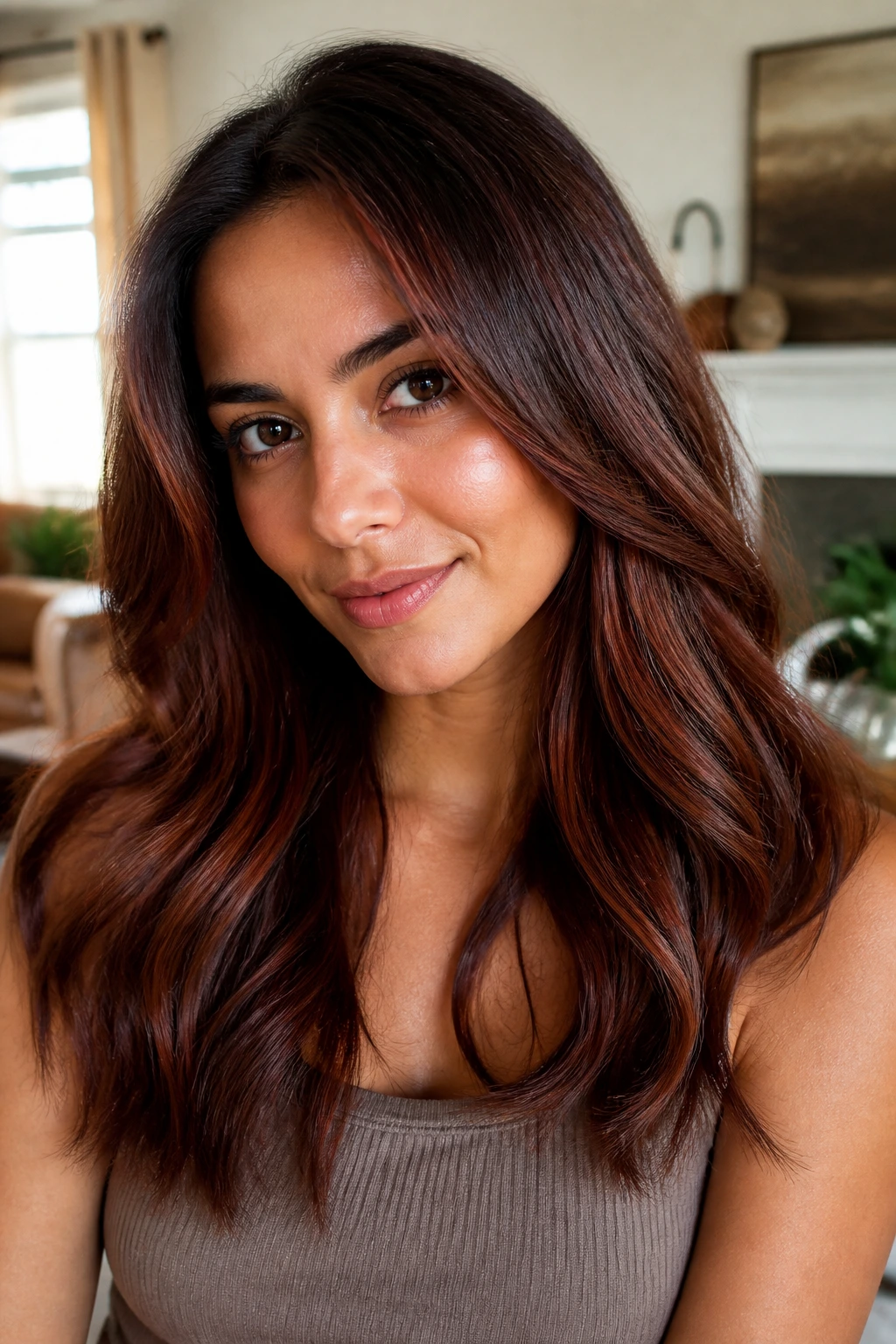
- The red-brown balance is forgiving: Medium skin usually has enough warmth to handle copper, but enough depth to keep chestnut and mahogany from looking harsh.
- Placement changes everything: Auburn painted through the mids and ends reads soft; the same shade in chunky front pieces reads bold and a little dramatic.
- You can control the level of contrast: If your base is level 4 or 5, you can stay close to the brunette side. If your hair is lighter, the auburn can lean more copper without looking loud.
- Grow-out can be gentle: Balayage, babylights, and root-smudged money pieces leave a softer line as the hair grows.
- It works on straight, wavy, and curly textures: The light catches bends, coils, and layers differently, so the same shade can look richer on one cut than on another.
- There’s room for maintenance choices: Some versions need a gloss every 4 to 6 weeks. Others can coast longer if the color is placed deeper and less diffusely.
1. Cinnamon Auburn Balayage
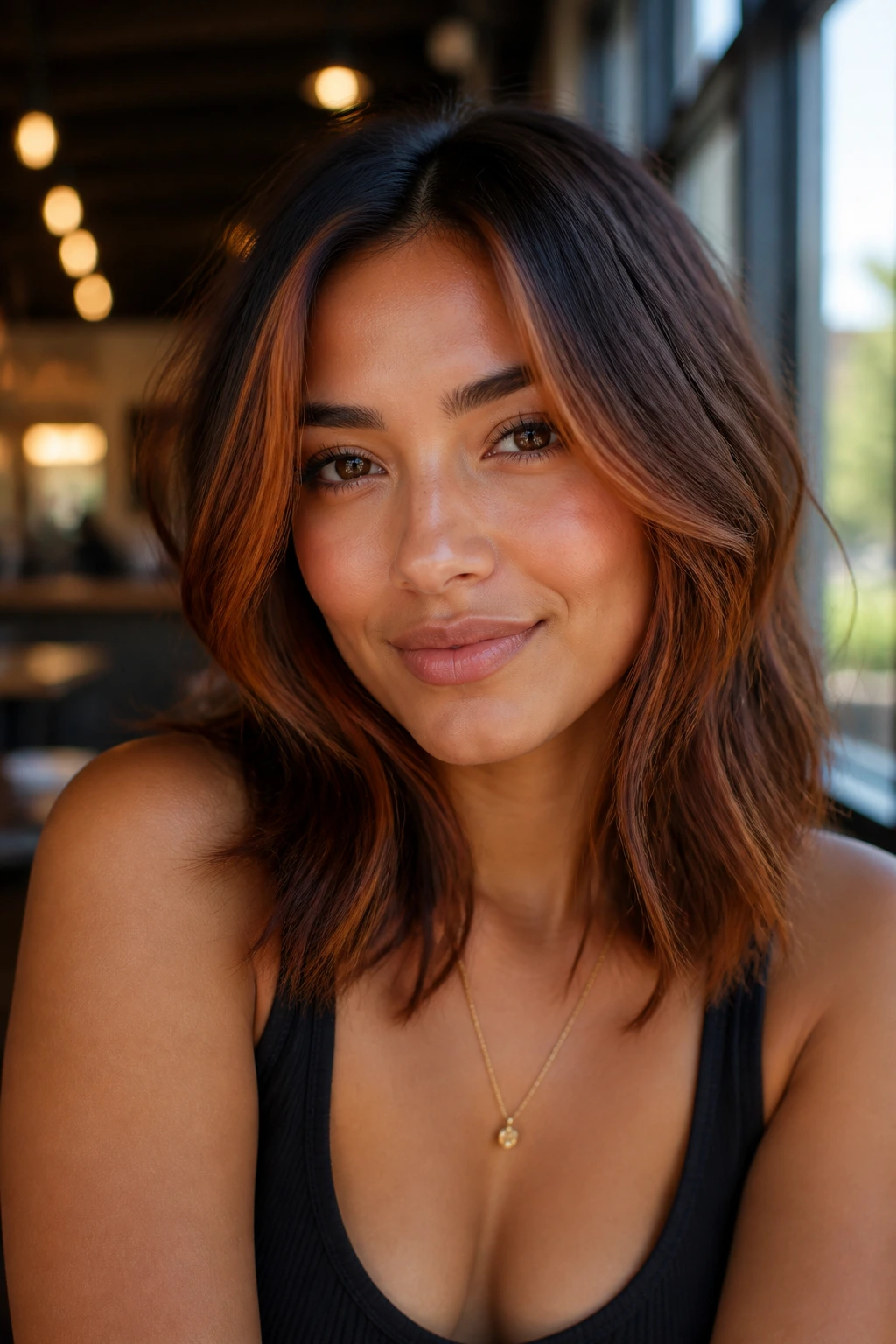
Cinnamon auburn balayage is the shade I reach for when someone wants warmth without the “I just dyed my hair red” feeling. It sits on a medium brunette base like a fine dusting of spice, then opens up into softer ribbons through the mid-lengths and ends. On medium skin, especially golden or neutral skin, it gives the face a warmer edge without tipping into bright copper.
The trick is keeping the ribbons irregular. If every streak starts at the same spot, the whole thing turns stripy. Painted low and feathered upward, cinnamon auburn catches the light when the hair moves, which is exactly why it feels more expensive than a blunt all-over color.
Best if you want:
- a soft grow-out line
- warmth that still reads brown
- movement on layered cuts or beach waves
Ask for a balayage with a neutral brunette base and cinnamon-auburn ends that stay a shade or two deeper than true copper. That keeps it wearable, not flashy.
2. Chestnut Ribbon Highlights
Chestnut ribbon highlights are the quietest version in the bunch, and I mean that as a compliment. They slip through the hair in thin, smooth bands that are only a little lighter than the base, which is why they look polished rather than loud. On medium skin, chestnut has a nice way of sharpening the jaw and cheekbones without making the hair the only thing anyone notices.
This is the option for someone who hates obvious highlight lines. The ribbons should be narrow enough that the eye sees movement before it sees color. In daylight, the hair reads dimensional; indoors, it settles back into a rich brunette with a red-brown edge.
If you wear your hair straight more often than wavy, this shade works especially well. The ribbons show in a clean, elegant way when the hair swings, and they don’t need a lot of styling to make sense.
3. Copper-Kissed Face-Framing Pieces
Why does this one work so fast? Because color close to the face changes everything. A few copper-kissed pieces around the front can pull medium skin forward in the nicest way, especially if the skin has golden or olive undertones and the base color is a soft brown.
Keep the pieces chunky enough to matter, but not so broad that they look like a money piece from five years ago. Two to four front sections, blended into the crown, usually do the trick. I like this on shoulder-length cuts because the color lands right where the hair flips at the collarbone.
What to ask for
- a soft front frame, not a blocky stripe
- copper with brown underneath, not pure orange
- a melt at the root so the grow-out doesn’t look abrupt
If you want one change that feels obvious but not chaotic, this is the one.
4. Mahogany Melt
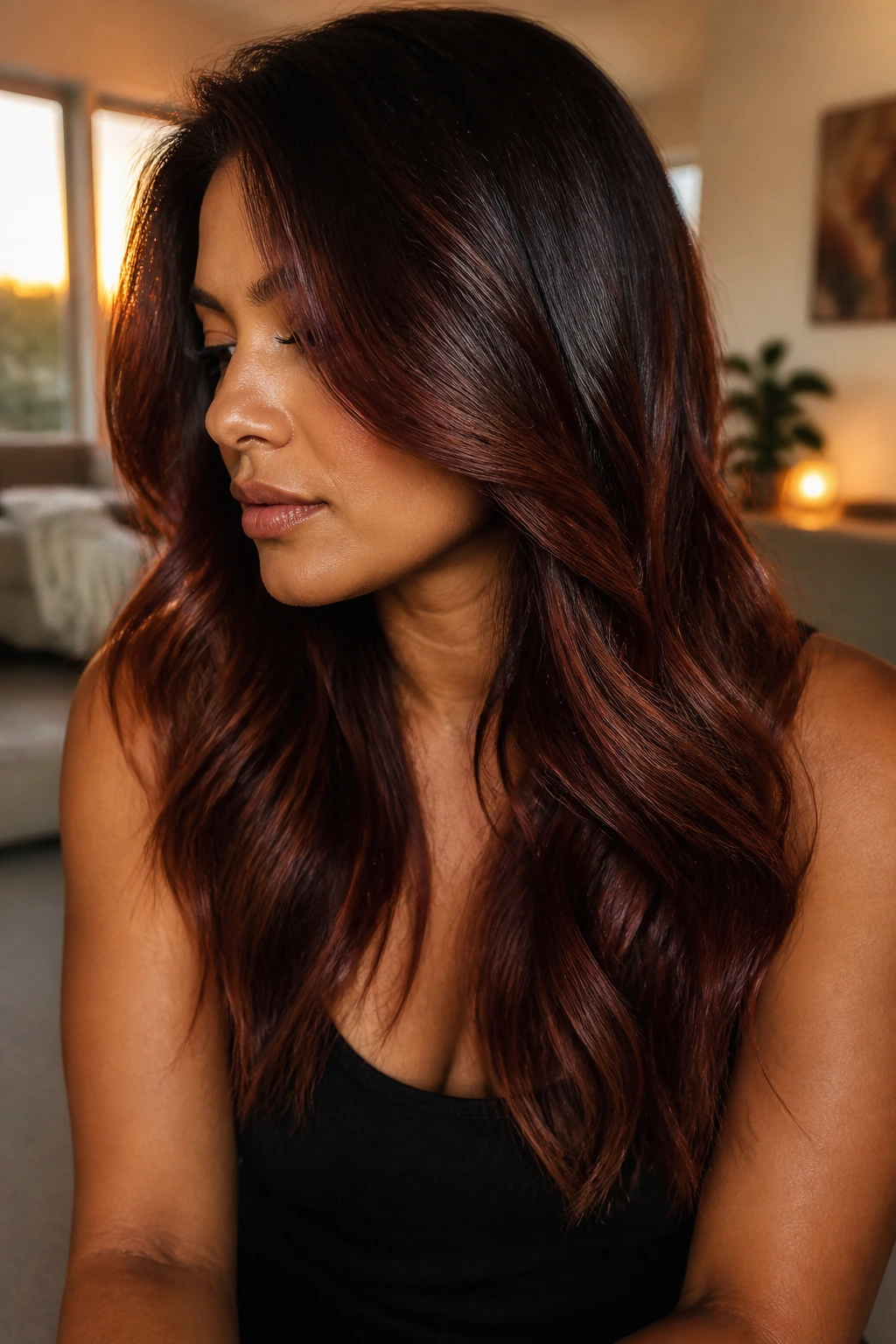
Mahogany melt is deeper, cooler, and a little moodier than the cinnamon looks above it. The red is still there, but it hides under brown and wine tones, which keeps the whole thing elegant on medium skin. If your skin leans olive or has a slightly tan cast, this shade can make the complexion look steadier and less sallow.
The melt part matters. You want the root zone to stay close to your natural brunette base, then ease into mahogany through the mids. When it’s done right, the color doesn’t announce itself in chunks. It moves from dark brown to red-brown in one smooth slide.
This is one of those shades that looks better after a few washes, not worse. The slight softening lets the brown come forward and keeps the red from reading too fresh.
5. Auburn Money Piece
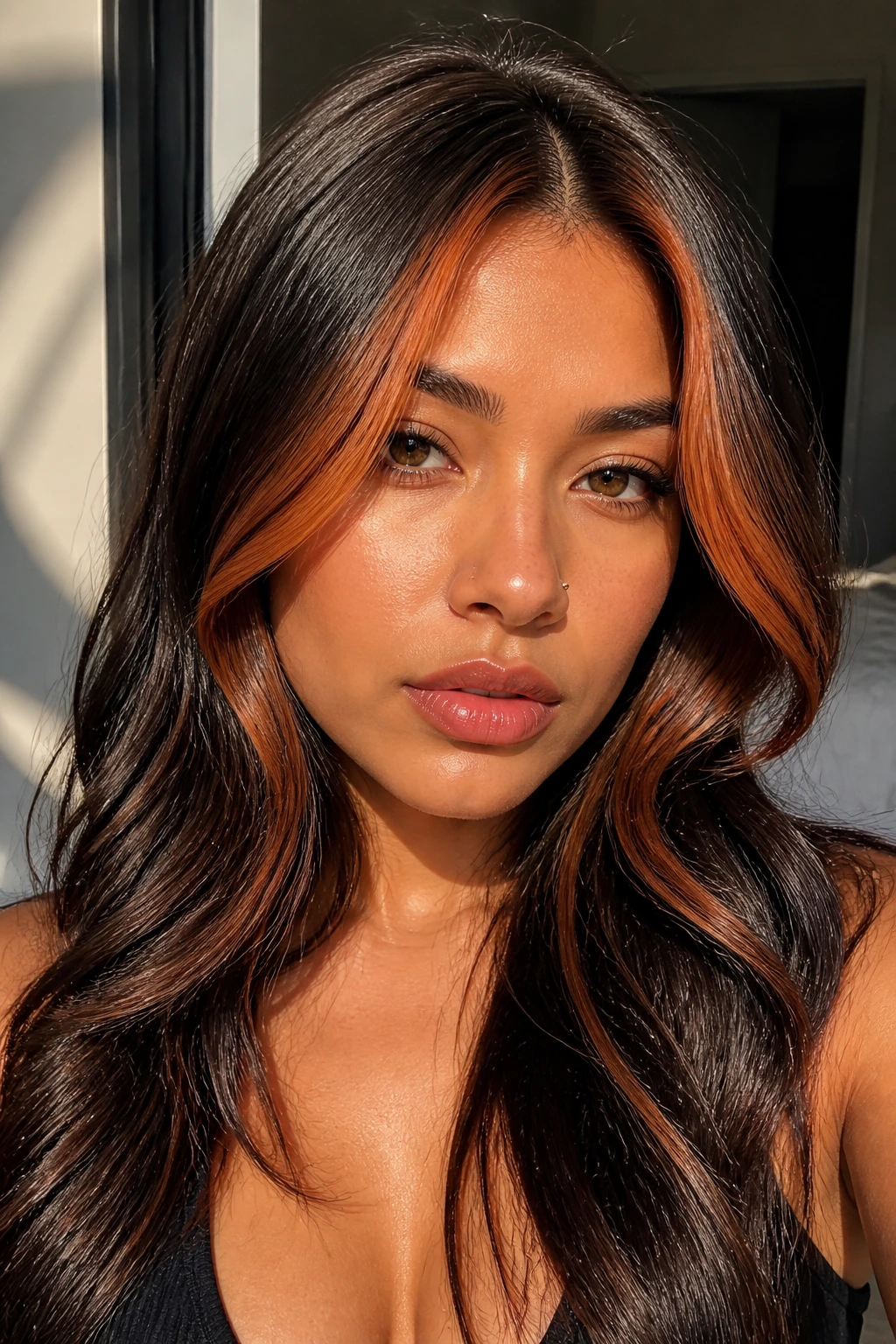
The auburn money piece is for days when subtle isn’t the goal. Two bright face-framing sections, placed just off the hairline, can wake up medium skin in a way that’s hard to ignore. The contrast is the whole point. Your base stays brunette, and the front gets the auburn attention.
I like this best when the rest of the hair stays calm. If every section is lifted and colored, the face frame loses its punch. Leave the mids and ends darker, and let the front do the talking. On medium skin, that red-brown pop makes freckles stand out, makes eyes look brighter, and gives even a simple blowout a little more attitude.
Good when you want:
- a dramatic change without coloring the whole head
- lowlighter depth in the back
- something that shows up in photos and in real life
It’s the least shy option in the set. That’s the appeal.
6. Soft Espresso Base with Auburn Veils
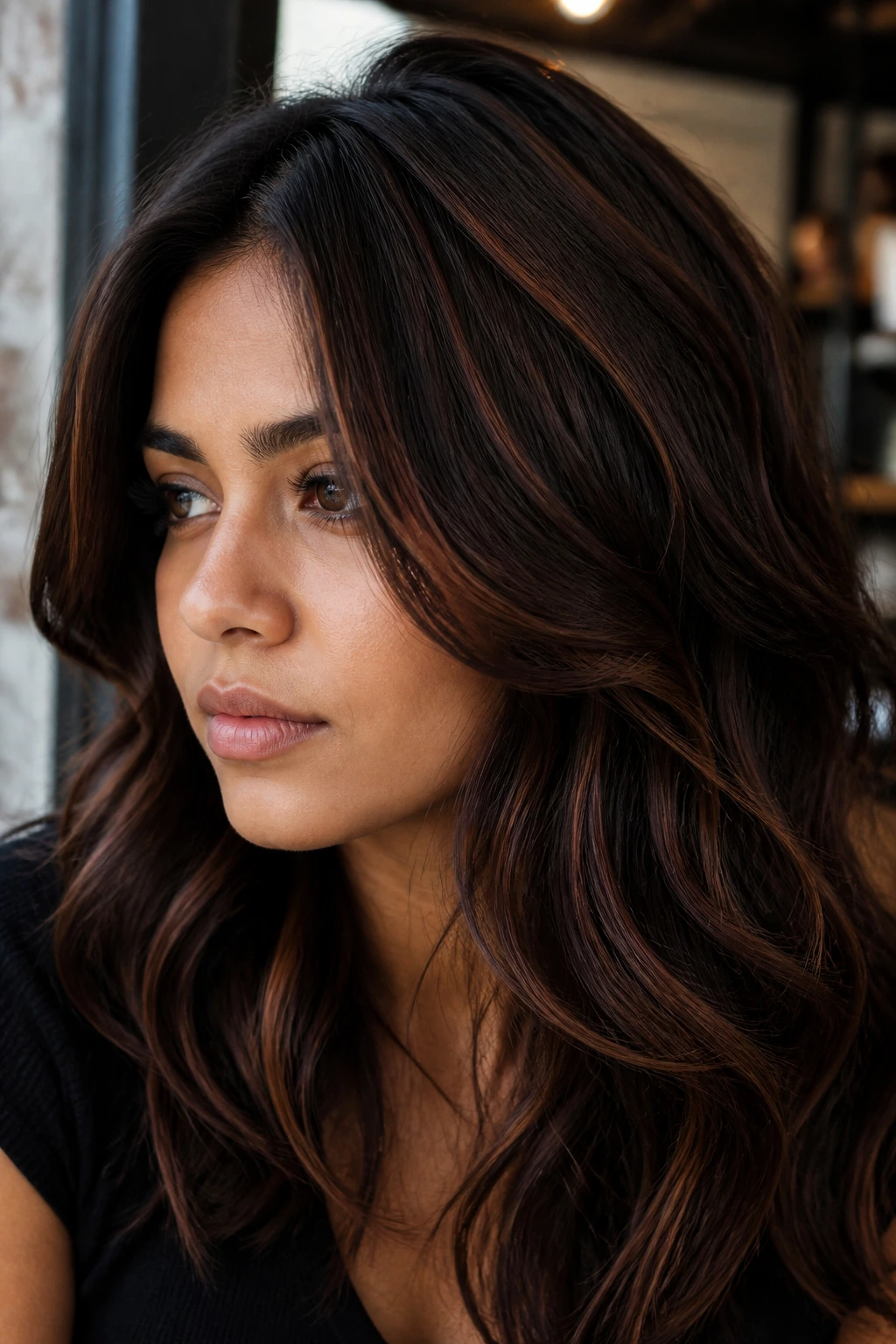
This is for the person who wants auburn to feel like a secret. The veils are thin, almost hidden until the light hits them, and the espresso base keeps the whole look grounded. On medium skin, that contrast is flattering because the face still reads warm, but the hair doesn’t take over the entire scene.
The veils should be spread through the top layers and around the crown rather than packed through the ends. That placement gives you the sense of depth from above, where people actually look first. If the highlights are too low, they disappear under the outer layer and you lose the point.
This version wears well in professional settings because it doesn’t scream color change. It just looks like your brunette decided to wake up with better lighting.
7. Toffee-Auburn Lived-In Balayage
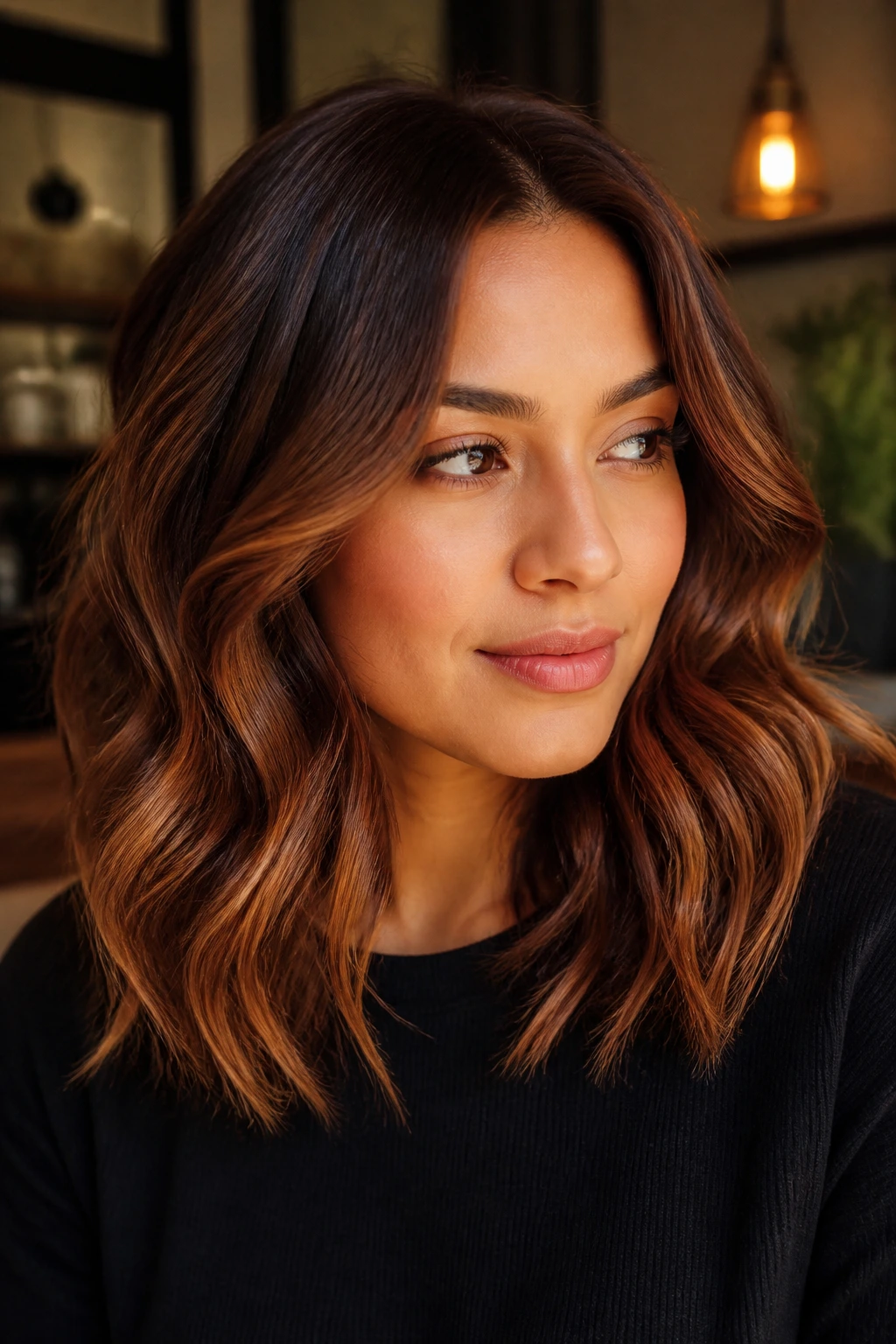
Toffee-auburn is the friendliest version of a warm brunette. It borrows the softness of toffee brown and folds in enough auburn to keep the hair from going flat. On medium skin, it has a gentle glow that leans warm without edging into brass.
Why it works
The balayage placement keeps roots darker and lets the lighter pieces stay a little lower on the head, so the color grows out in a way that doesn’t need constant rescue. I like it on medium-length cuts because the waves show off the brown-red shift at the ends.
If your hair is naturally dark and you don’t want a heavy lift, this is one of the easiest auburn paths. It doesn’t need to be bright to be noticeable. Sometimes the best color is the one that looks like it has lived in your hair for months, even when it hasn’t.
8. Burgundy Auburn Lowlights
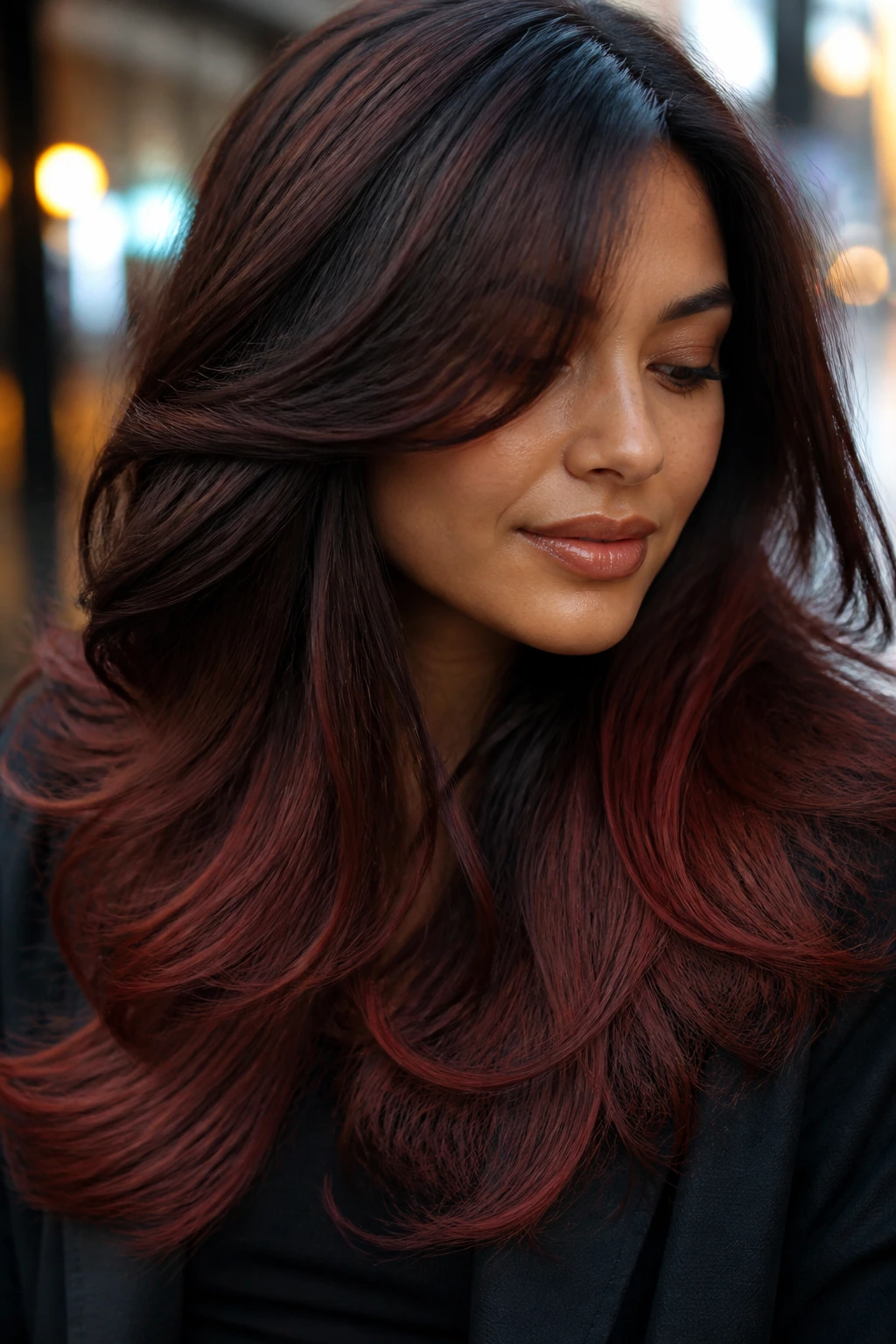
Most people chase highlights first. I’m a fan of lowlights when the hair already feels a little washed out. Burgundy auburn lowlights drop richer red-brown strands into a lighter brunette base, which deepens the color story instead of brightening it. On medium skin, that can be a smart move if you’re trying to avoid an over-lightened look.
The lowlights should be placed under the outer layers and through the underside of the hair. That gives you shadow and depth without making the whole head dark. When the hair moves, the burgundy tone flashes through in a way that feels deliberate, not muddy.
This is especially good if your highlights have gone too pale or too yellow and you want the color to feel dressed again. A few darker auburn strands can pull the whole look back together.
9. Gingered Ends Ombré
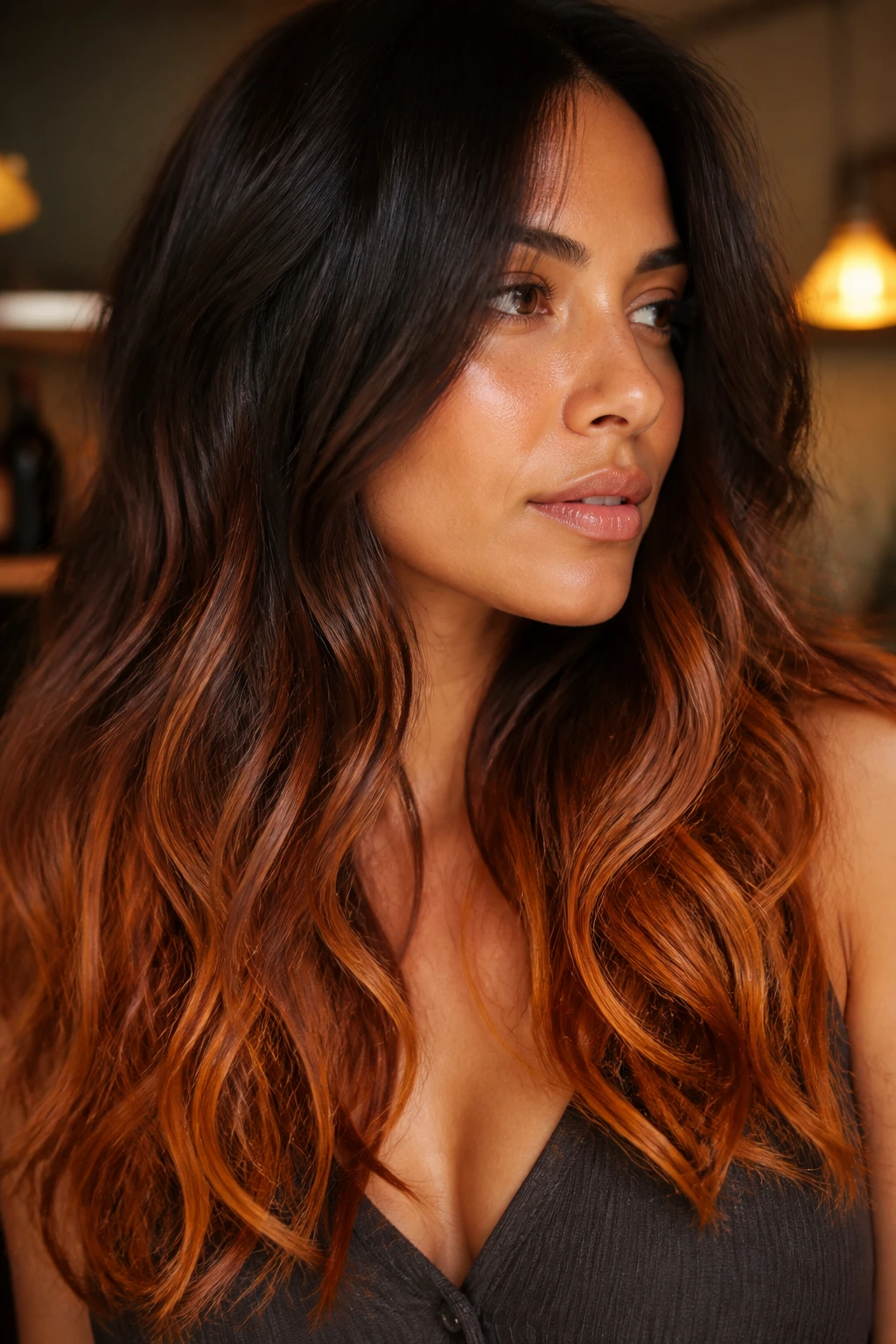
Gingered ends ombré is playful, but it still needs a brown anchor at the root. The transition should start soft and get brighter only near the bottom third of the hair. On medium skin, that contrast can make the complexion look warmer and the eyes more vivid, especially if the haircut has movement.
Don’t let the fade begin too high. If the auburn starts near the roots, the effect loses its ombré shape and begins to feel like a full color correction. Keep the top half brunette and let the warmth bloom toward the ends. That keeps the look modern and easy to wear.
This is one of the better choices if you like waves, curls, or textured ends. The lighter tips catch the bends in the hair and make the whole style look fuller.
10. Rosewood Brown Highlights
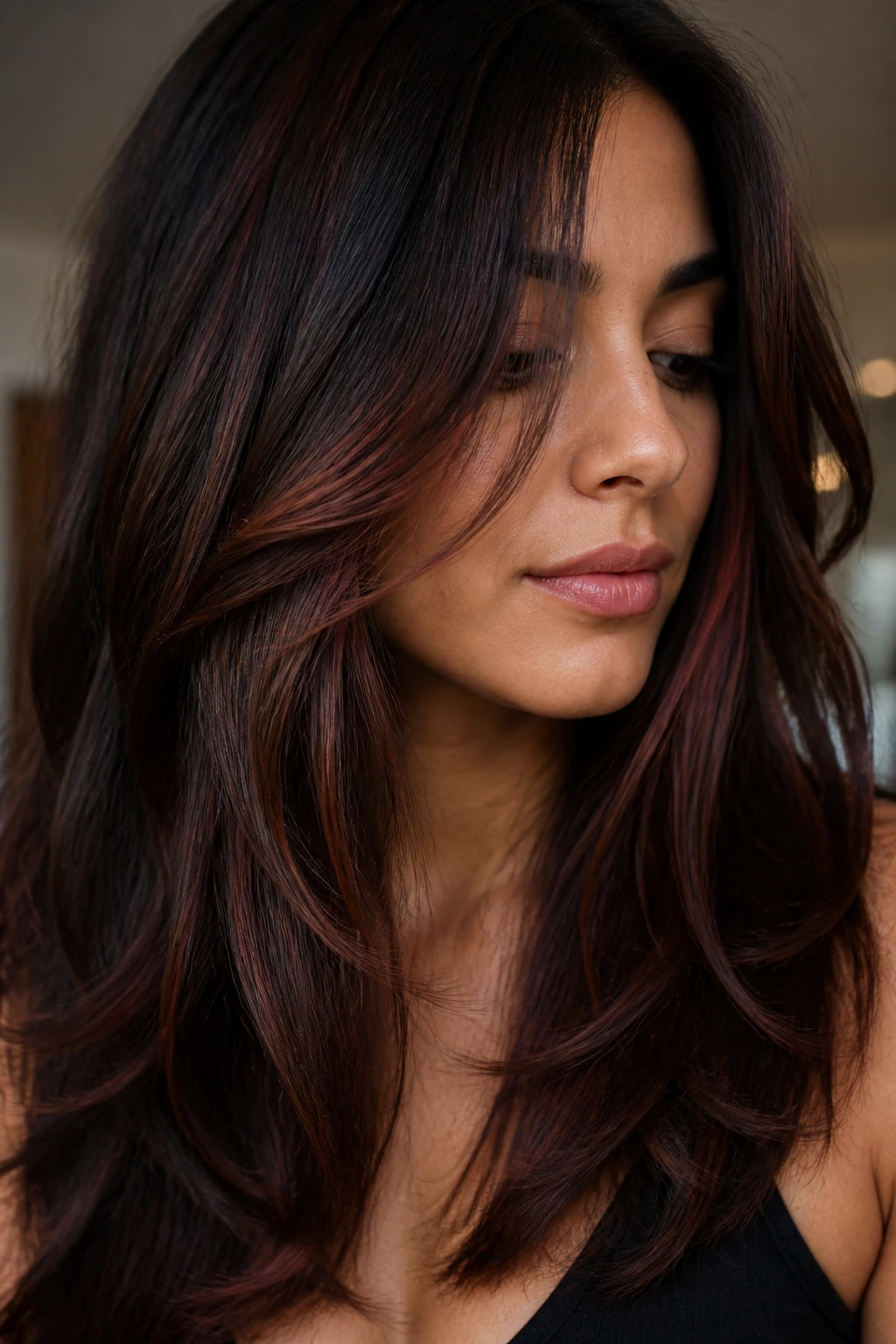
Rosewood brown is the softer, blush-tinged cousin in the auburn family. It brings in red-brown with a faint rosy edge, which can look lovely on medium skin with neutral or slightly cool undertones. The effect is subtle enough to feel wearable, but different enough that people notice the hair before they can explain why.
I’d avoid making rosewood too bright. The color is best when it sits in that mid-range zone between chestnut and muted berry. On a layered cut, the highlights peek through in thin slices rather than large streaks, which keeps the finish polished.
If you’re tired of standard copper but don’t want to go deep mahogany, rosewood is a nice middle lane. It’s softer. Less expected. And it looks especially good when the hair is glossy and smooth.
11. Smoky Auburn Gloss
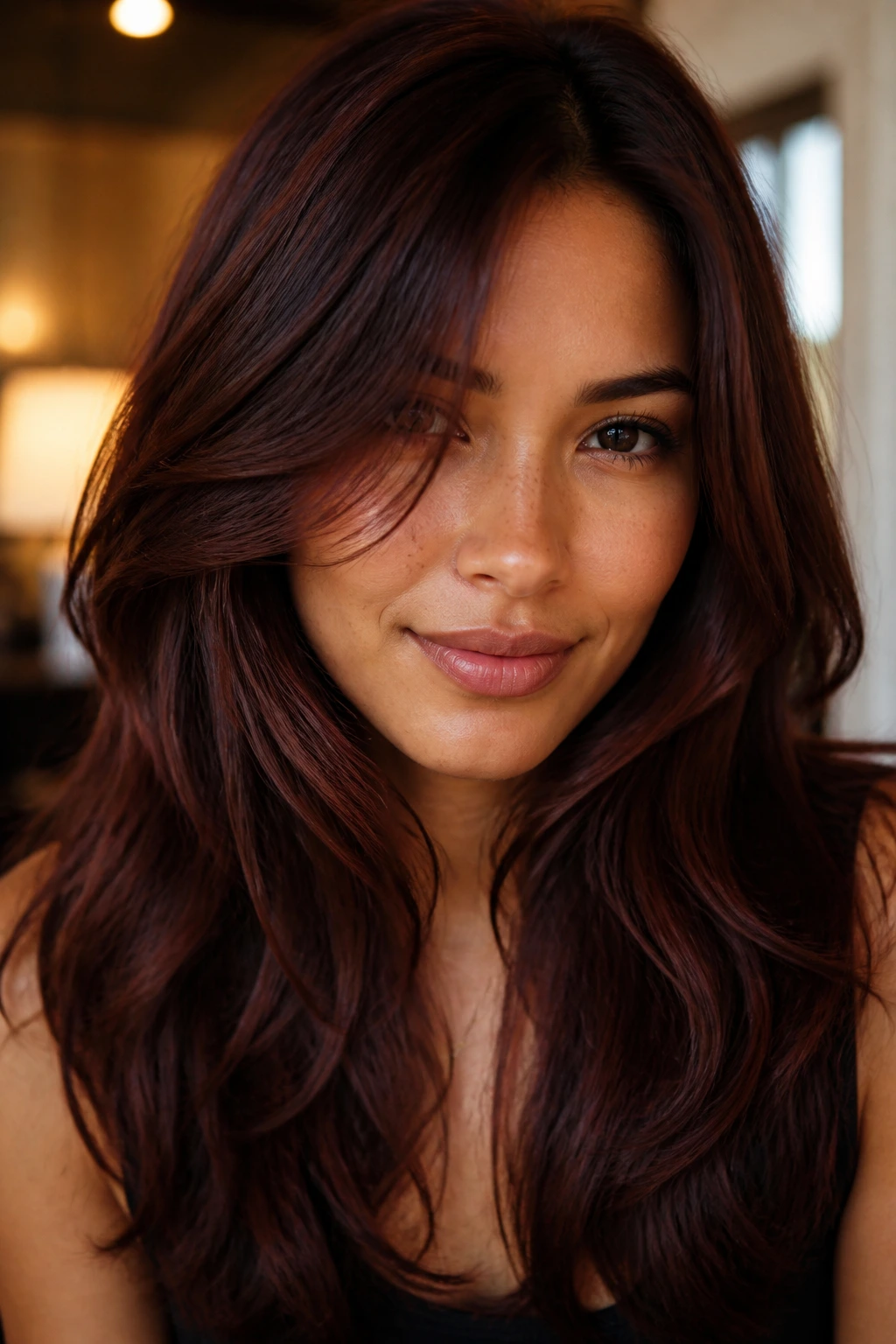
Sometimes the best auburn isn’t a highlight at all. A smoky auburn gloss can shift the entire brunette base toward red-brown without carving obvious light pieces into the hair. That’s useful on medium skin when you want color that looks rich in sunlight but restrained in an office or under indoor lighting.
This approach works best on hair that already has some warmth underneath. The gloss deposits tone rather than building a new shape, so it’s more about hue than placement. The result feels velvety, and yes, that’s the right word here. The surface looks softer because the hair reflects light in a deeper way.
This is also one of the smartest low-commitment options. If you’re nervous about red tones turning loud, a gloss lets you test the water without jumping into full highlights.
12. Sunlit Auburn Babylights
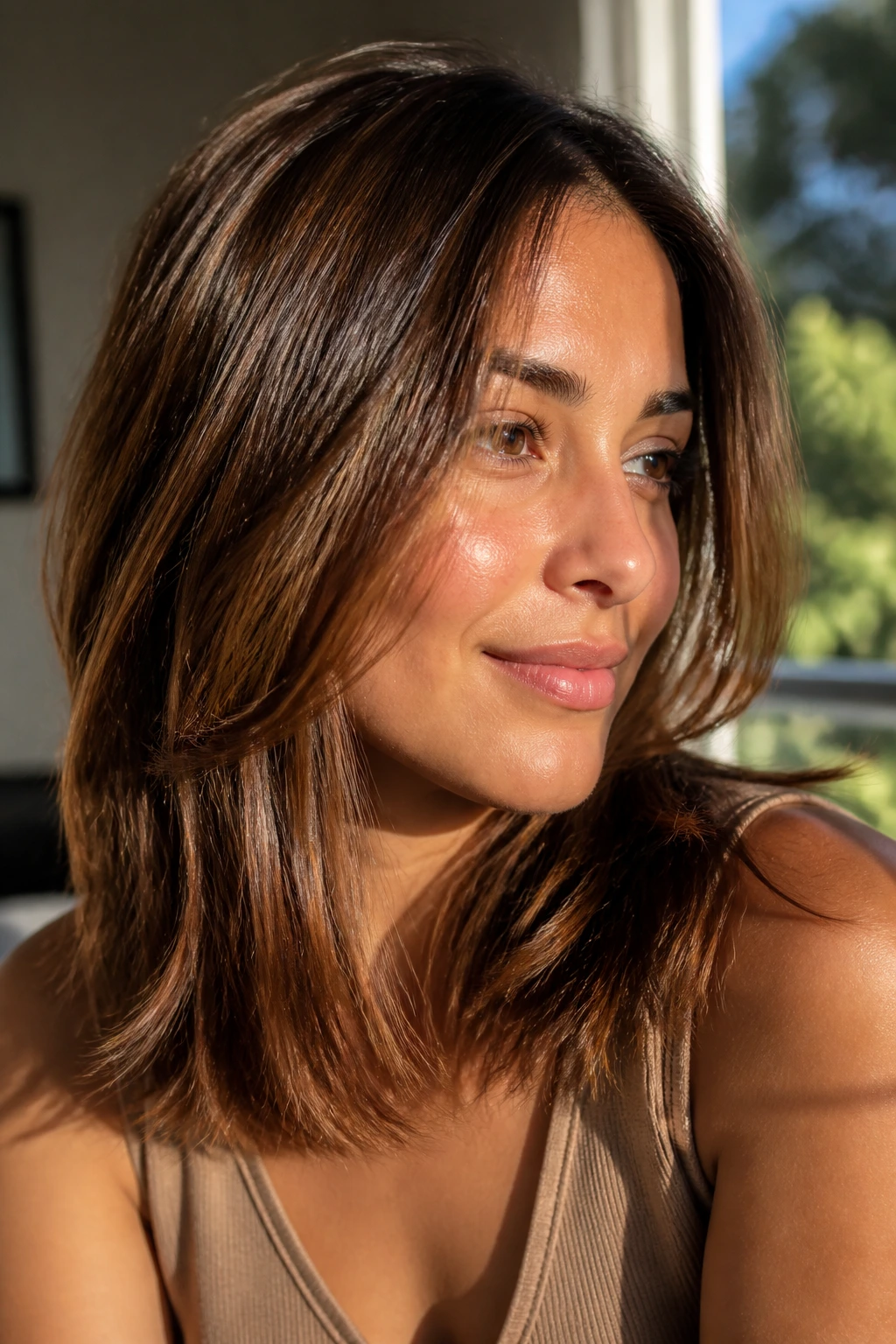
Babylights are tiny. Tiny is the point. Sunlit auburn babylights use very fine sections to create a delicate shimmer through the hair, and on medium skin that shimmer can make the complexion look fresh without obvious color blocks. Think of it as a whisper of red-brown rather than a statement.
The smaller the sections, the softer the overall effect. That means the grow-out line stays less noticeable, which is a gift if you don’t live at the salon. These highlights are especially pretty on straight-to-wavy hair because they catch in thin flashes instead of broad panels.
What they’re best at
- softening a dark brunette base
- adding movement to fine hair
- keeping the color change subtle from root to end
If you like the idea of auburn but not the maintenance of a strong highlight, start here. You can always add more later.
13. Chocolate Brown with Copper Threads
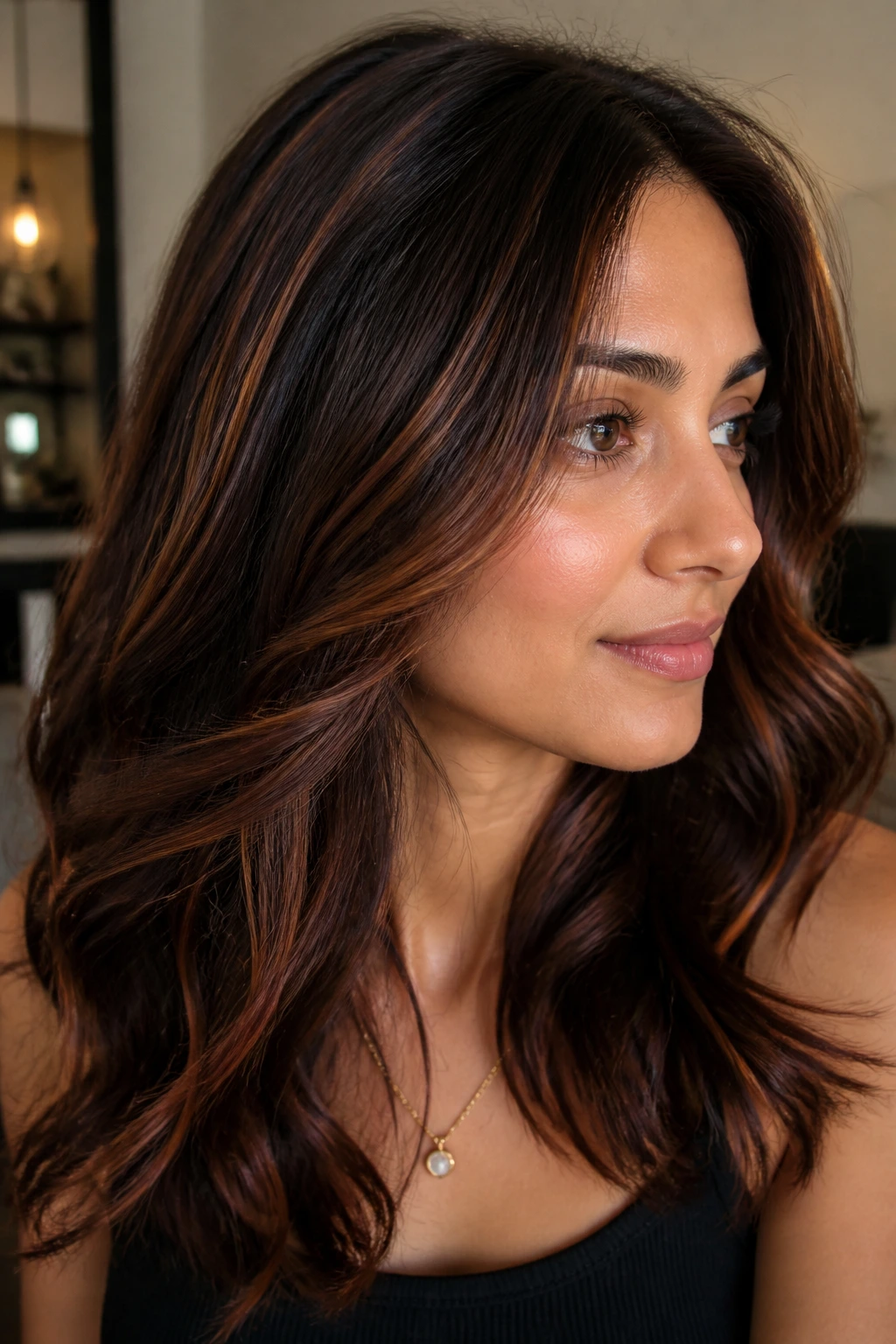
Chocolate brown with copper threads is one of my favorite “look closer” colors. It stays dark enough to read as brunette, but the copper threads pull light through the surface when the hair shifts. On medium skin, that keeps the whole look warm and lively without the need for a dramatic lift.
The copper should be thin, scattered, and placed mostly through the top layer and near the face. If the threads are too thick, the chocolate base gets crowded and the color starts looking busy. Small sections are better. A little copper goes a long way.
This is a good pick if you want color that shows up most in motion. Static hair makes it look darker; movement makes it wake up. That’s a nice trick if you’re not trying to be photographed from a hundred angles every day.
14. Cherry Cola Auburn Streaks
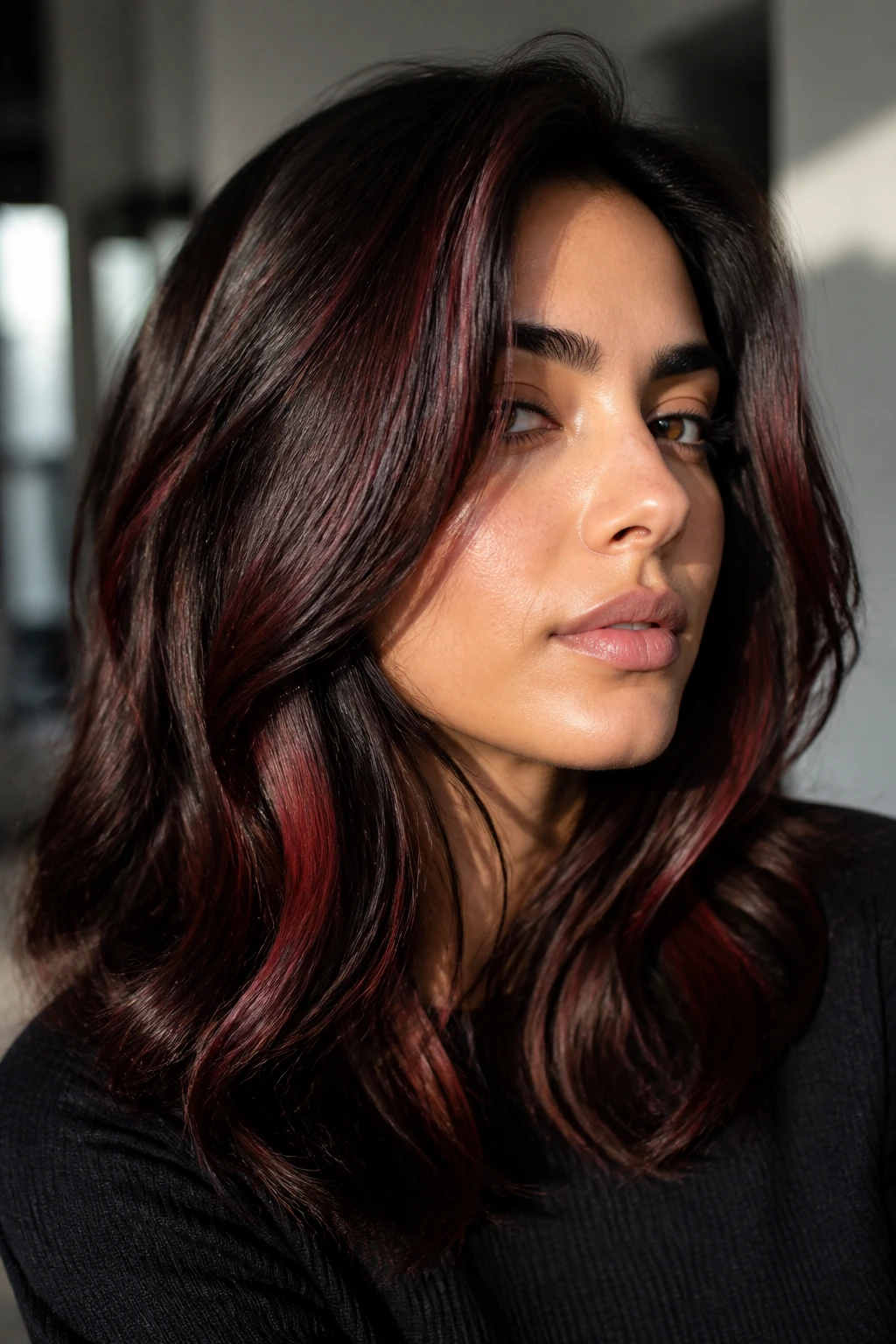
Cherry cola auburn sits on the deeper, cooler edge of the family. It has red, brown, and a faint berry note that gives medium skin a richer frame, especially if the skin leans olive or neutral. The color can look almost plum in shade and then turn red-brown when sunlight lands on it.
This is not the place for airy, sun-kissed placement. Cherry cola looks better with deliberate streaks or a concentrated panel through the mid-lengths. A looser, softer placement can make the shade lose its character. Let it be a little bold. That’s why people pick it.
If you wear black, charcoal, or cream a lot, this tone has a clean contrast that looks intentional rather than fussy. It’s one of the few auburns that can feel almost edgy.
15. Warm Walnut Auburn Melt
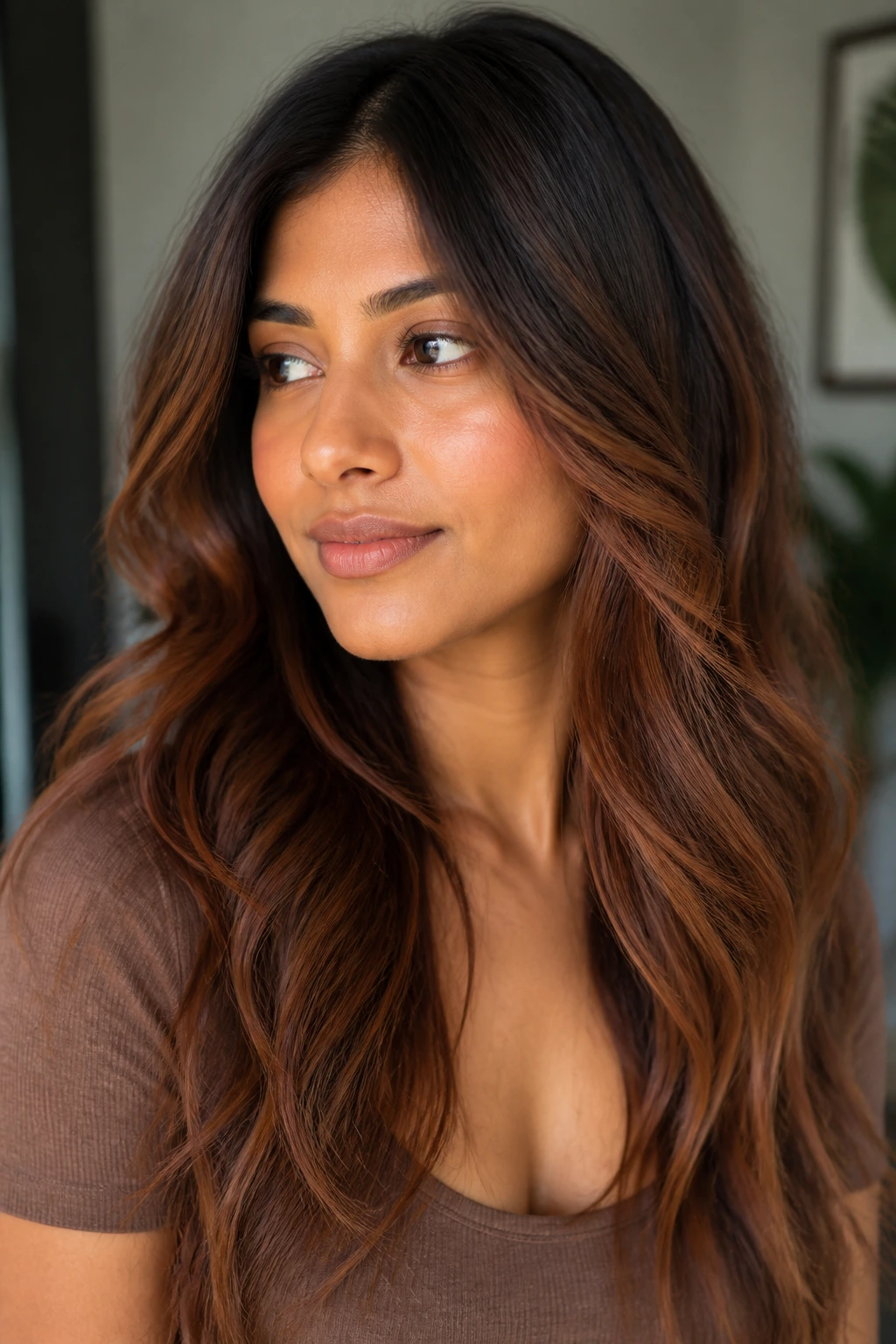
Warm walnut auburn is the shade for someone who wants brown first and red second. The walnut keeps the base grounded, while the auburn adds enough warmth to make medium skin look less flat. It’s a calmer version of copper-brown, and I think that calm is underrated.
The melt should start with a deeper root and open gradually through the mids. If the transition is too abrupt, the style loses its richness and starts looking painted on. The softer the move, the better this looks.
This is a solid choice for medium-length layered cuts and for anyone who likes hair that looks good even when it’s barely styled. You don’t need perfect waves for it to make sense. A clean blowout and some shine spray are enough.
16. Brunette-to-Auburn Color Block
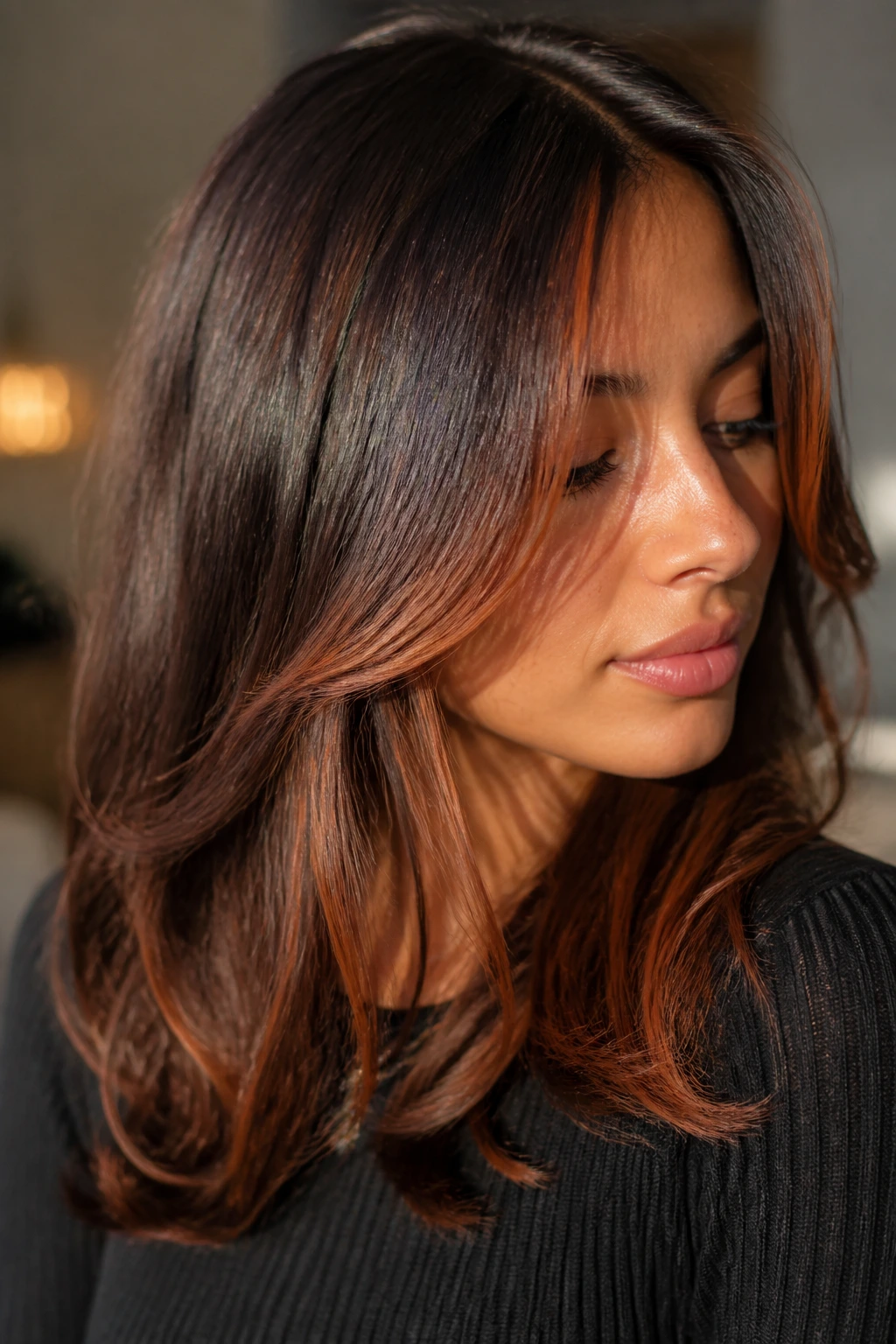
Color block auburn is the most fashion-forward version here, and it’s not for everyone. Big, deliberate sections of auburn against brunette create contrast you can see from across the room. On medium skin, that contrast can look sharp and modern if the tones stay in the same warm family.
The key is placement. Color-blocked auburn should look deliberate, not accidental. I like it best when the blocks follow the haircut — one panel near the face, another through the lower half, maybe a third underneath if the hair is thick. That makes the color feel architectural rather than chaotic.
If you’re tired of soft balayage and want something with more edge, this one has personality. It also gives you a clearer sense of where the red-brown shade sits before you commit to a full head of it.
17. Auburn Peekaboo Panels
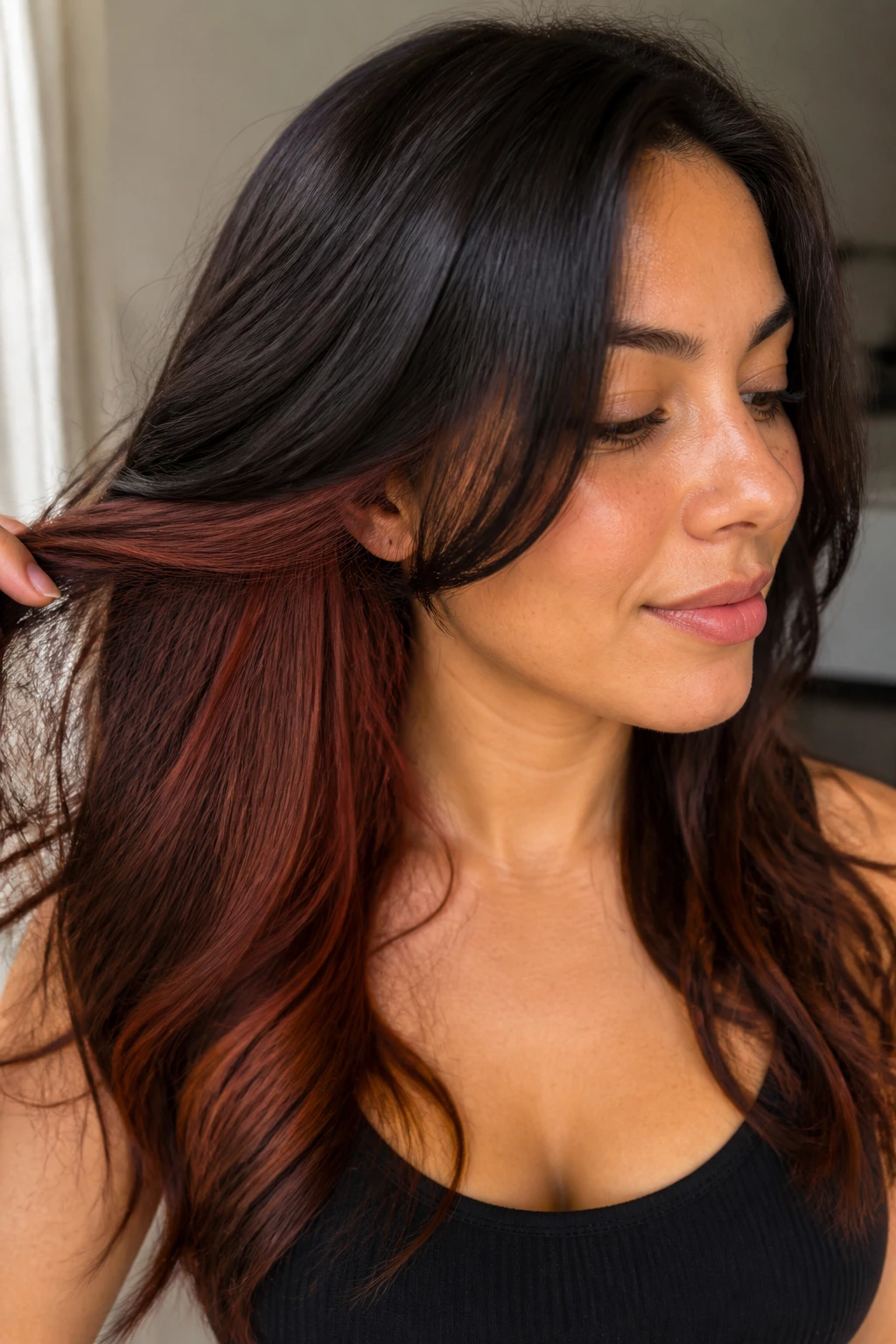
Peekaboo panels are the color equivalent of a private joke. The auburn sits underneath the outer layer, so it shows only when the hair moves, gets tucked behind the ear, or is pulled into a half-up style. On medium skin, that hidden flash can be flattering because it doesn’t compete with the face all day long.
This is a nice option if you need something a little restrained in daylight but still want a bit of color drama when the hair is up. The panels can be copper, mahogany, or maple-brown, depending on how warm you want the reveal to feel.
I’ve always liked peekaboo color on thicker hair because it gives you a surprise layer without making the whole shape heavy. The underneath dimension makes braids and ponytails look more interesting too. Not flashy. Just clever.
18. Bronze-Auburn Dimension
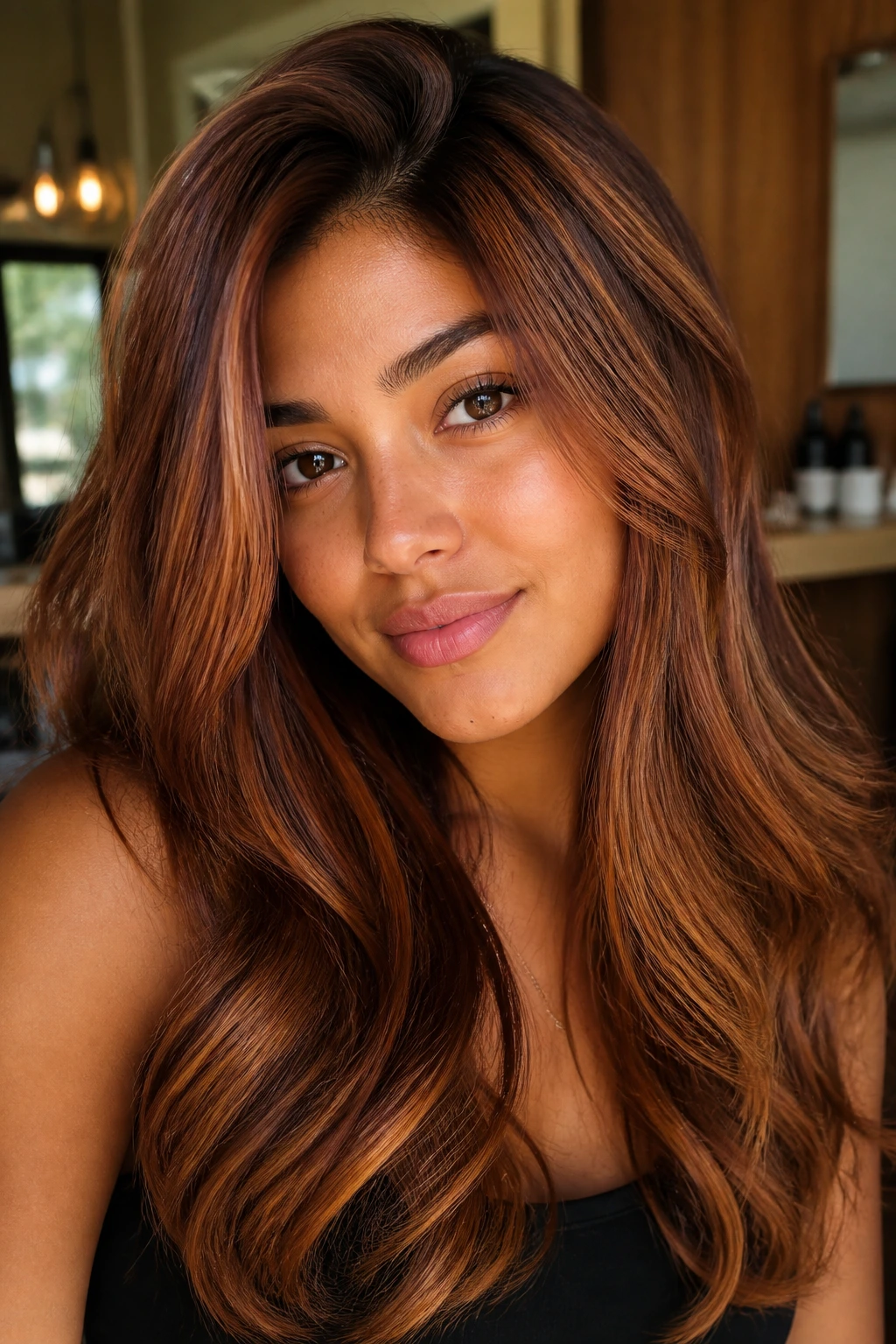
Bronze and auburn together can be excellent on medium skin, especially when the undertones are golden. Bronze brings a metallic warmth that sits beside auburn’s red-brown notes, and the two shades give the hair a reflective finish that feels rich rather than loud.
The best bronze-auburn looks don’t use equal amounts of both. One should lead while the other supports. Usually I’d let the brown-red auburn stay the anchor and thread bronze through the lighter sections. That keeps the color from turning too shiny in a costume-y way.
If your hair is layered, this shade picks up the cut in a nice, easy way. Every bend gives you another glimpse of gold-brown warmth. It’s a good one for people who like a softer alternative to copper.
19. Soft Maple Ribbon Highlights
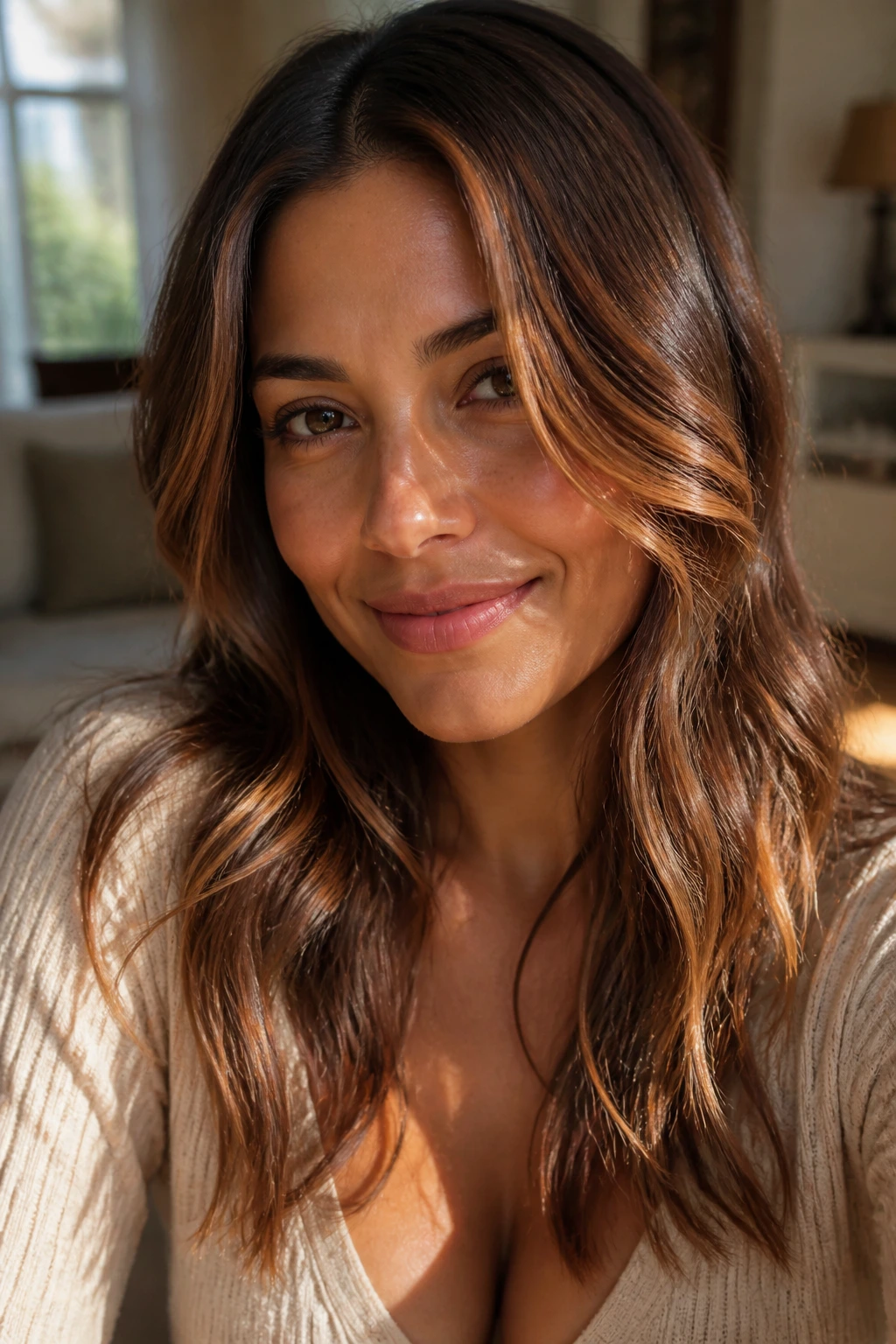
Maple is one of those shades people underestimate until they see it on real hair. Soft maple ribbons lean warm and brown with a gentle red lift, which makes them especially flattering on medium skin that already has a bit of golden color in it. The result is sweet, but not sugary.
How to wear it
Ask for thin ribbons around the face and a few wider ones through the mids. The mix keeps the color from looking too uniform. On a shoulder-length cut, maple ribbons can give the hair a warm outline without turning the whole head red.
This is a good choice if you want something softer than copper but brighter than chocolate brown. There’s a real middle ground here, and it’s a good one.
20. Burnt Sienna Face Framing
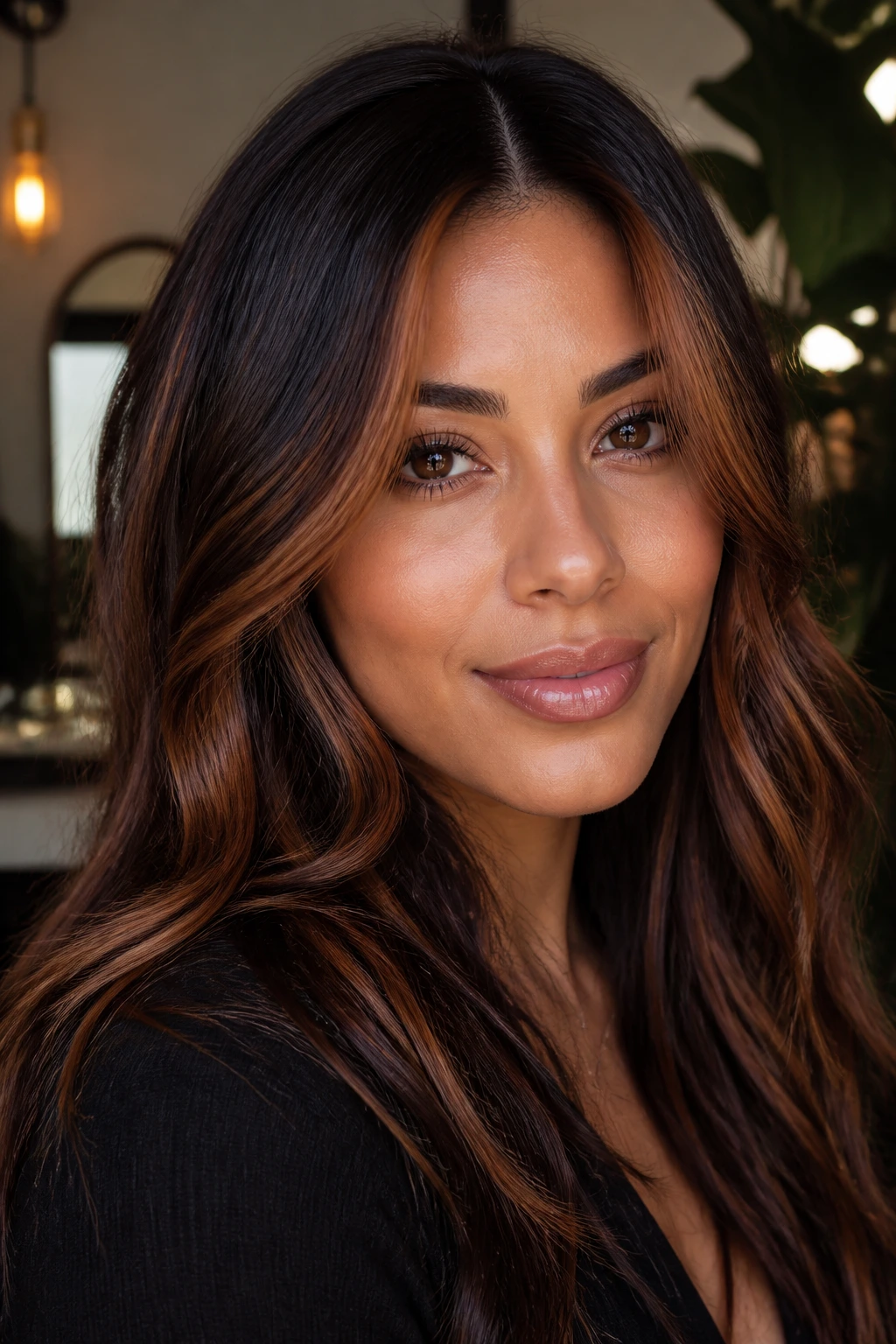
Burnt sienna is earthy, deep, and a little rustic in the best sense. As a face-framing color on medium skin, it gives the front sections enough warmth to light up the complexion, but the red is grounded by brown so it doesn’t jump too far out of the brunette lane.
This works especially well if the rest of your hair stays dark and glossy. The face frame becomes the focal point, and the deeper base keeps the style from looking overdone. I’d place the lighter pieces just off the hairline and blend them back into the crown with a soft transition. That keeps the color from stopping abruptly beside the cheek.
If you like a natural makeup look, this color tends to pair well with it. The hair does the warming for you.
21. Curly-Coil Auburn Accents
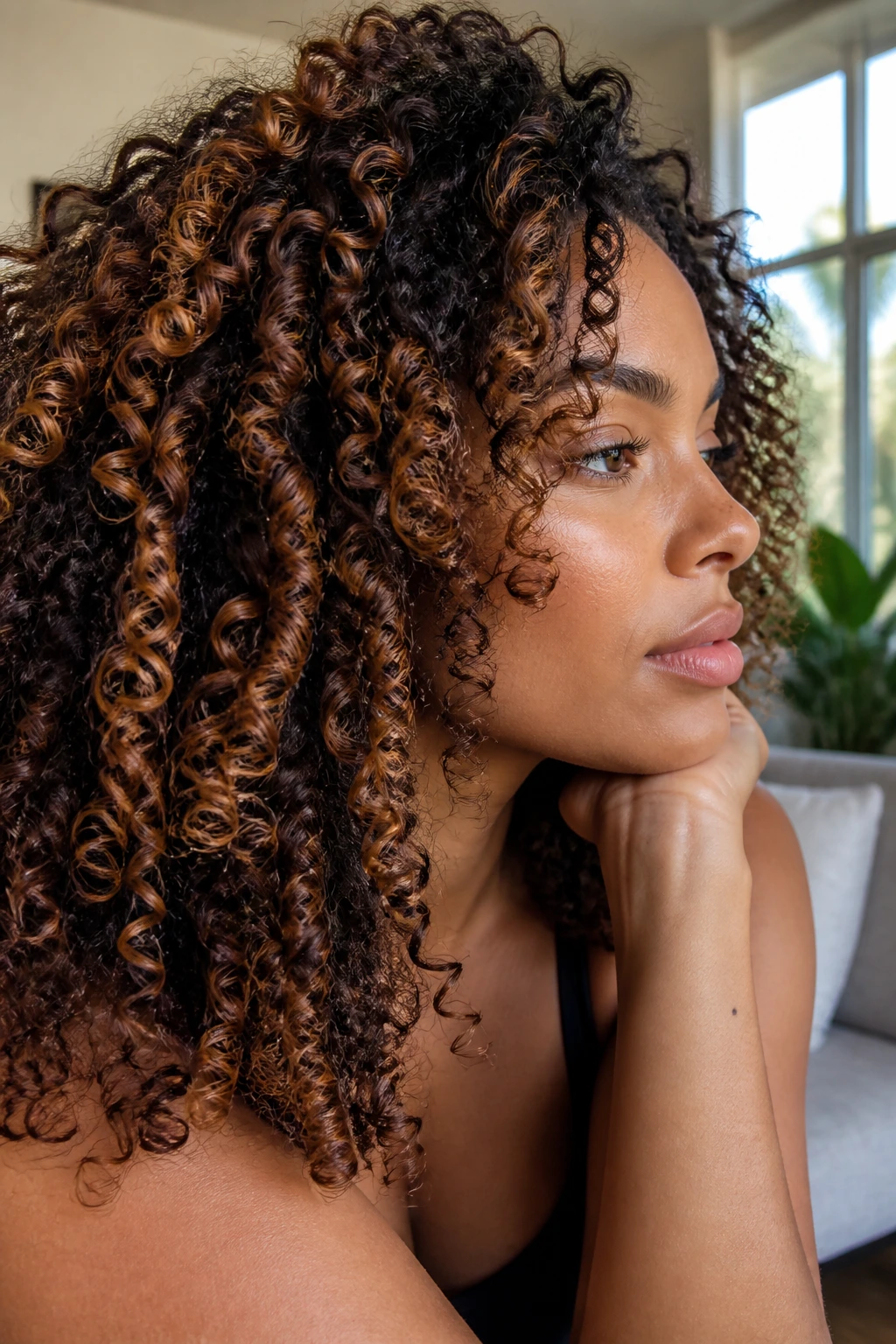
Curly and coily hair takes auburn in a different direction, and that’s part of what makes it so good. The color doesn’t sit on the surface the same way it does on straight hair; it wraps around each curl and shows up in little flashes along the bend. On medium skin, that movement can make the whole look feel fuller and more alive.
The placement matters more than the exact red. Highlights should follow the curl pattern and concentrate where the hair naturally opens up to light. Thin pieces near the face, a few through the crown, and some hidden below the top layer can give you depth without making the hair look patchy.
This is one of the best places to lean into a warm auburn gloss between highlight sessions. The gloss keeps the curls from looking flat and helps the tone read consistent across different sections of the coil.
22. Auburn Halo Highlights
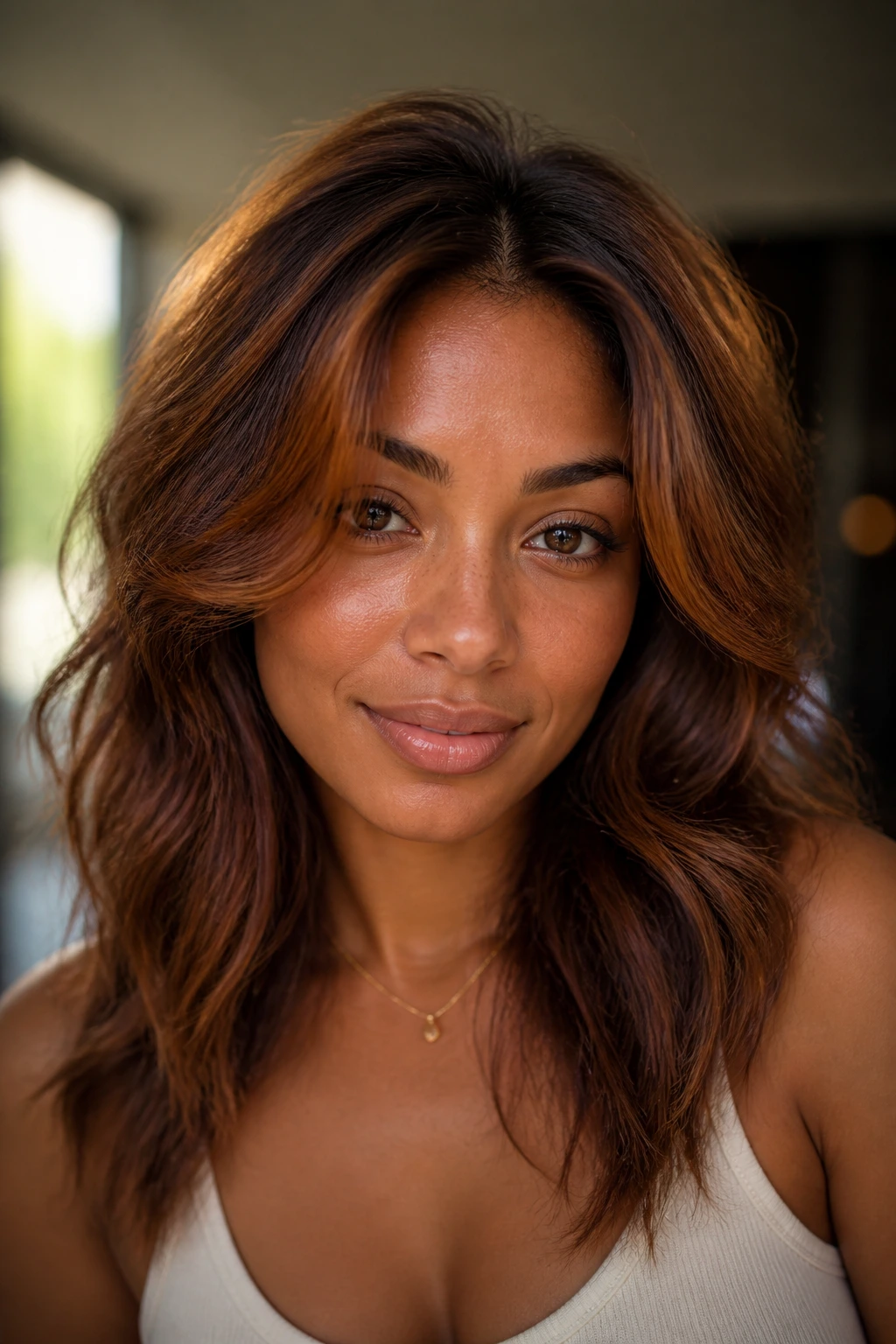
A halo highlight concentrates brightness around the crown and upper layer, which can be a smart move if you want auburn to show when the hair is worn down or tied back. The color sits like a ring of warmth near the top, then fades into a darker base underneath. On medium skin, that can make the face look lit from above in a way that feels polished.
This style is less about random streaks and more about strategic placement. The halo needs to follow the curve of the head so it doesn’t look like a flat band. When the hair is styled with volume at the roots, the shade gets even better because the light can move through the top layer.
If you have a layered blowout or soft curls, the halo effect shows up fast. It’s a nice option for someone who wants visible color without full-head lightening.
23. Deep Mocha with Ruby Auburn
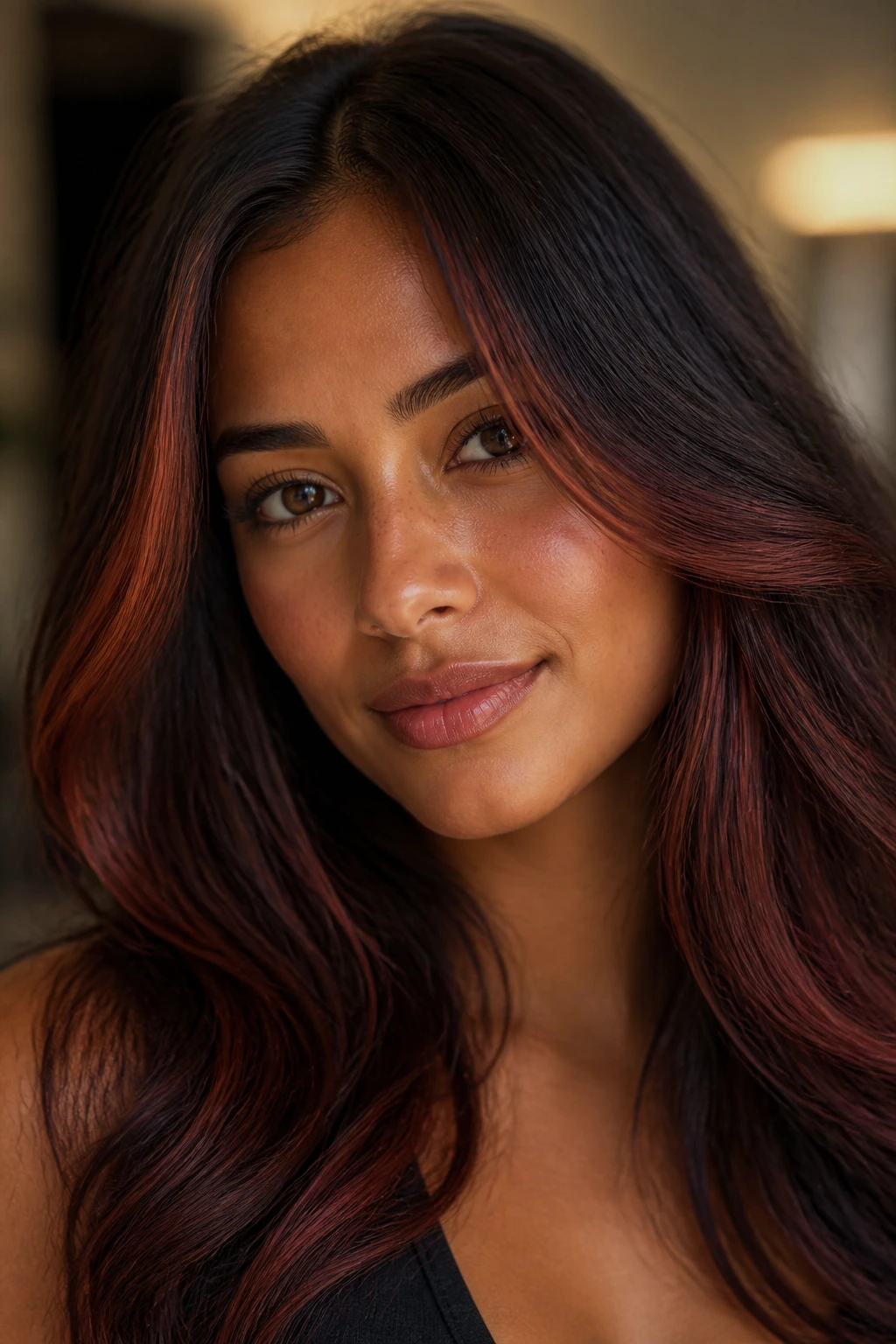
Deep mocha with ruby auburn is moody and rich, and it suits medium skin that can handle deeper, cooler color stories. The mocha keeps the base dark, while the ruby auburn gives the hair a red note that stays inside the brunette family. It doesn’t scream. It smolders a bit.
I like this when the goal is richness more than brightness. The ruby should live inside the hair, not sit on top of it. That’s why this shade looks best when the light catches it in pieces — a few streaks near the front, a few hidden under the top layer, maybe a soft melt through the ends.
This is one of the stronger choices for evening wear, though that sounds fancier than it is. Really, it just looks especially good under warm indoor light.
24. Golden Auburn Sombré
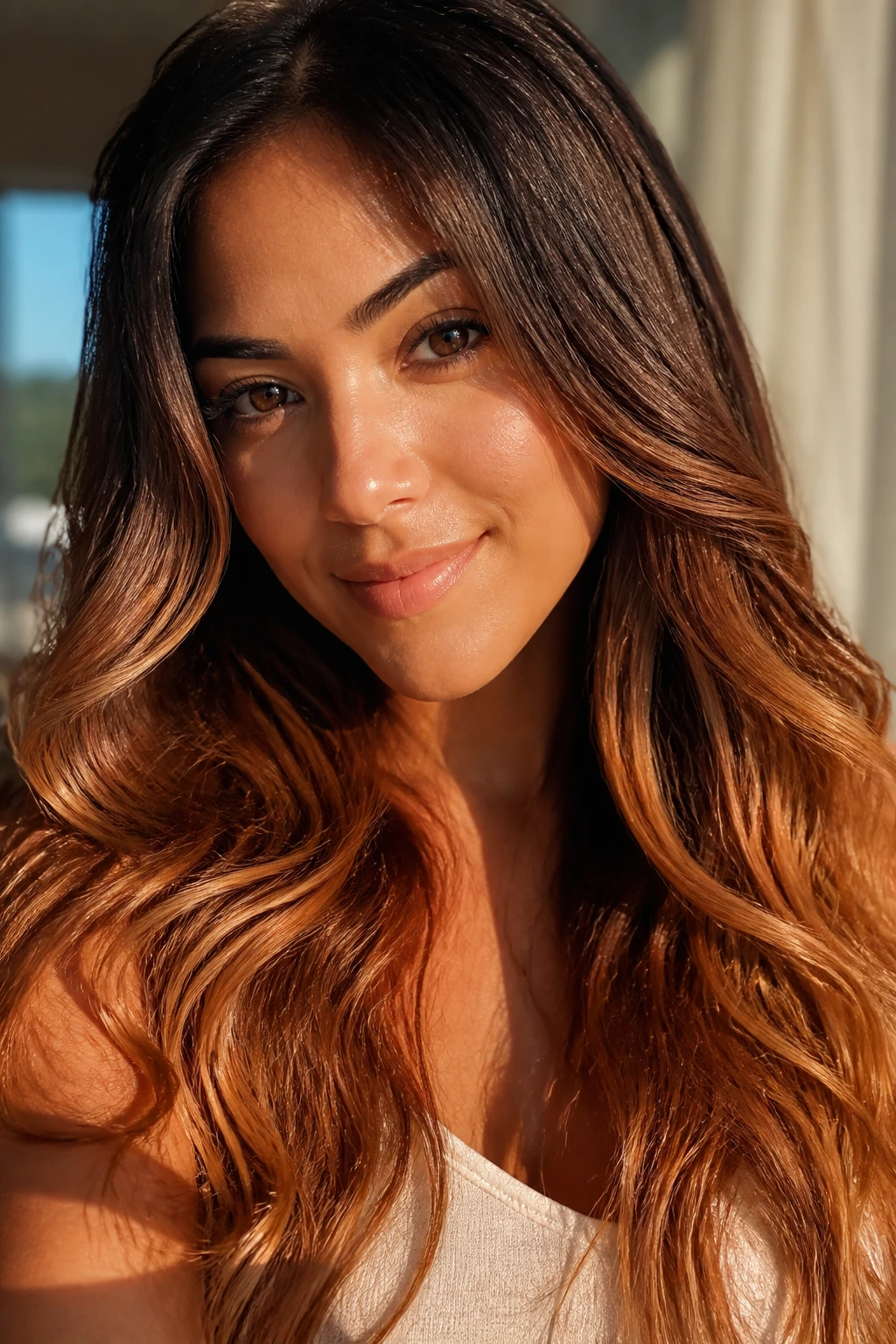
Sombré is the softer cousin of ombré, and that softness matters here. A golden auburn sombré keeps the root deep and lets the ends lighten gradually into a warm red-brown-gold mix. On medium skin, it gives a glow that can feel almost sun-finished, even when the weather has nothing to do with it.
The transition should be slow. If the fade is too fast, the style becomes an obvious color block, and that’s not what this shade wants. Keep the upper half brunette and let the gold-auburn tone show later, mostly around the lower lengths and tips.
This is a nice fit for waves and loose curls because the bend in the hair lets the fade show up without you needing to over-style it. The movement does half the work.
25. Cool Chestnut with Red-Auburn Accents
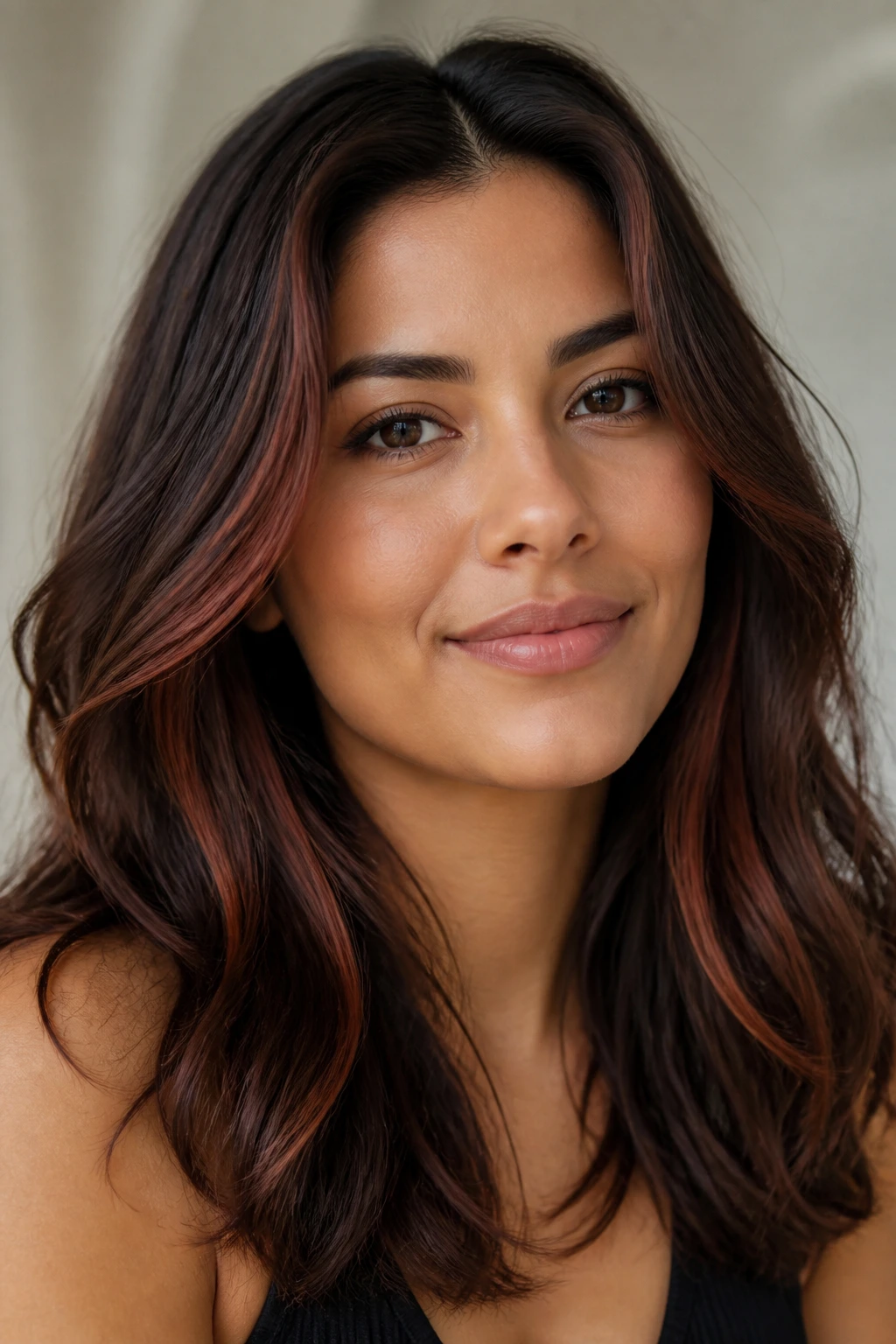
Cool chestnut with red-auburn accents is the one I’d suggest if you’re nervous about anything that might veer orange. The base stays chestnut and a little smoky, while the accents bring in red-brown flashes that read intentional rather than hot. On medium skin, that balance can be cleaner than full copper, especially if your undertone leans olive.
The accents should be sparse enough to let the chestnut stay in charge. A few ribbons near the face, a couple through the mids, and a touch around the lower layers is often enough. You get warmth. You keep control.
It’s also a good way to test the auburn family before going louder. If you love the look, you can always add more copper in the next round. If not, you’re already living in the brown-red lane.
How to Choose the Right Auburn Brown for Your Undertone
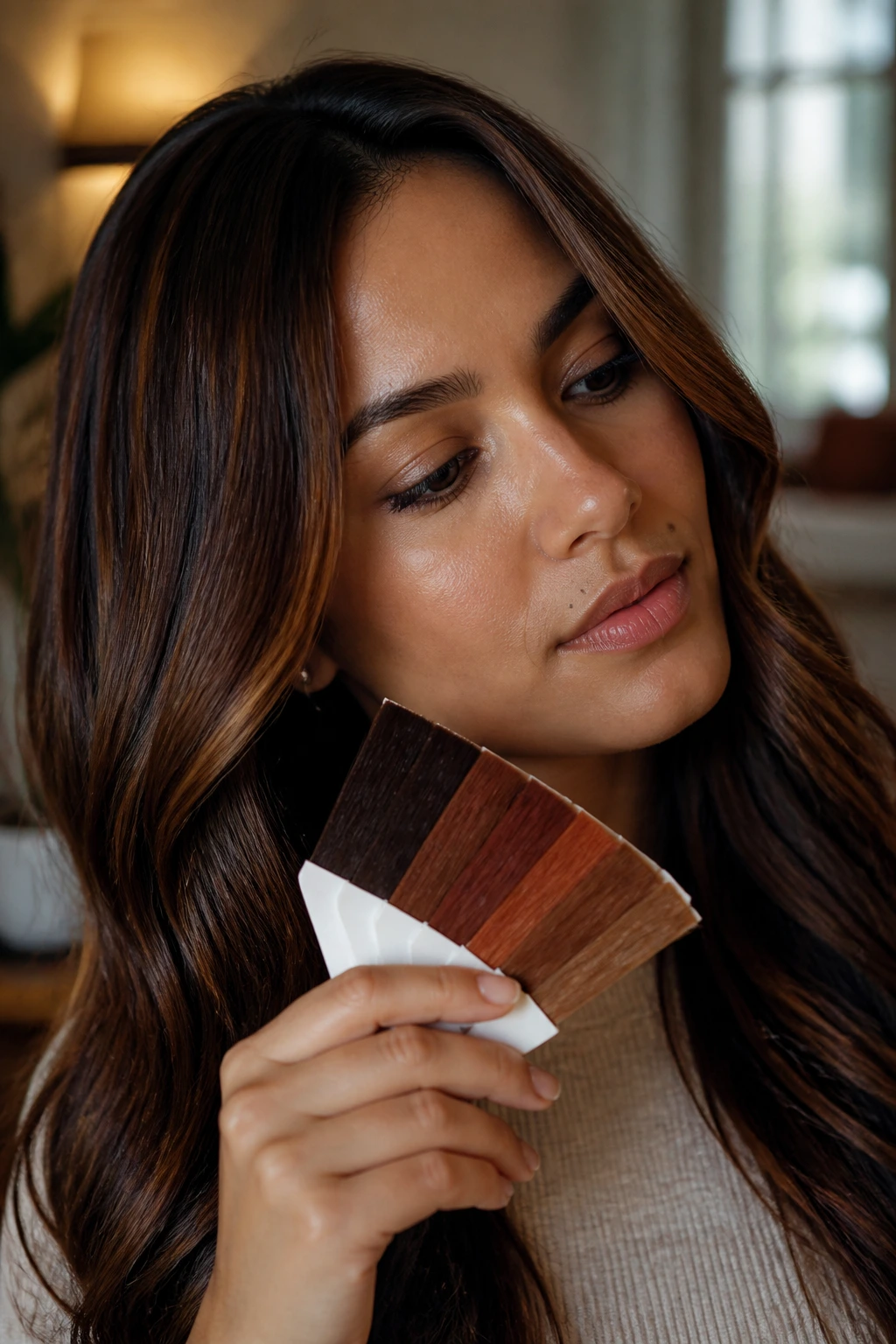
Medium skin isn’t one thing. That’s where a lot of color advice goes sideways. A warm golden medium skin tone can hold cinnamon, maple, and copper without looking overwhelmed. An olive medium skin tone usually looks better with chestnut, mahogany, smoky auburn, or anything that keeps some brown in the mix. Neutral medium skin has the most room, so rosewood, bronze, cherry cola, and true auburn can all work if the placement is thoughtful.
Start with your base color, not the fantasy color on a mood board. If you’re sitting at a level 4 or 5 brunette, a big leap to bright copper will need more lift, more upkeep, and more toner. If your hair is already lighter, a auburn gloss or babylights might be enough to get the same richness with less damage.
Ask for a color test strand if you’re unsure. That tiny patch can save you from the two worst outcomes: orange roots and muddy ends. Neither is fun.
What to Bring to the Color Appointment
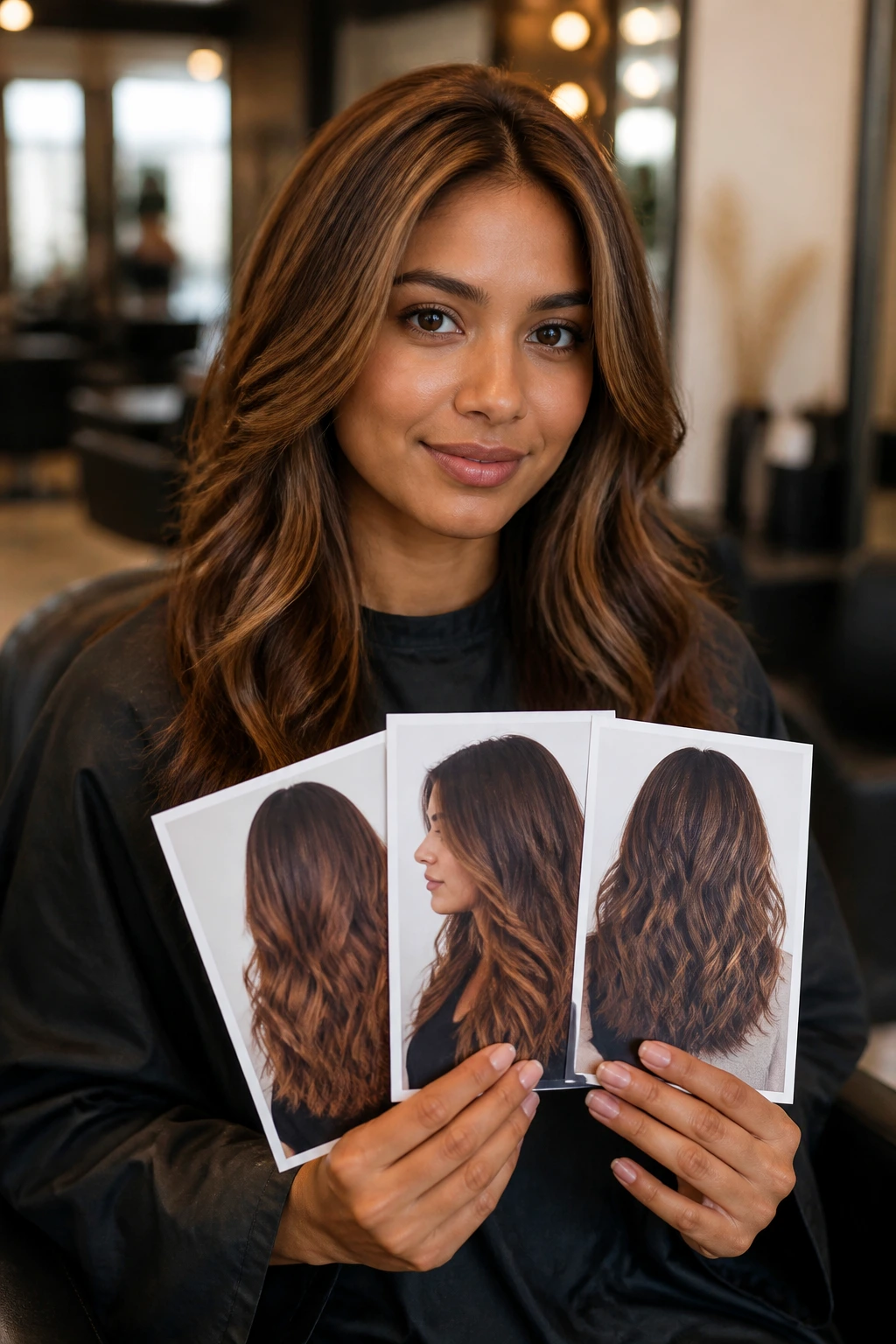
A good color appointment is half communication and half evidence. Bring 2 to 3 photos that show the exact placement you like, not just the shade. One close-up, one in daylight, one from the side. Those three angles tell a stylist more than twenty vague saved images.
Bring a note about your hair history too. Box dye, black dye, previous red toner, old bleach, henna — all of that matters because auburn sits differently over each one. If your ends are porous, the red pigment can grab harder there and go darker than you expected.
And bring honesty. If you want low upkeep, say so. If you heat-style every day, say that too. That helps the colorist choose between face-framing pieces, balayage, glossing, or deeper lowlights.
Tools, Products, and Salon Notes That Save the Finish
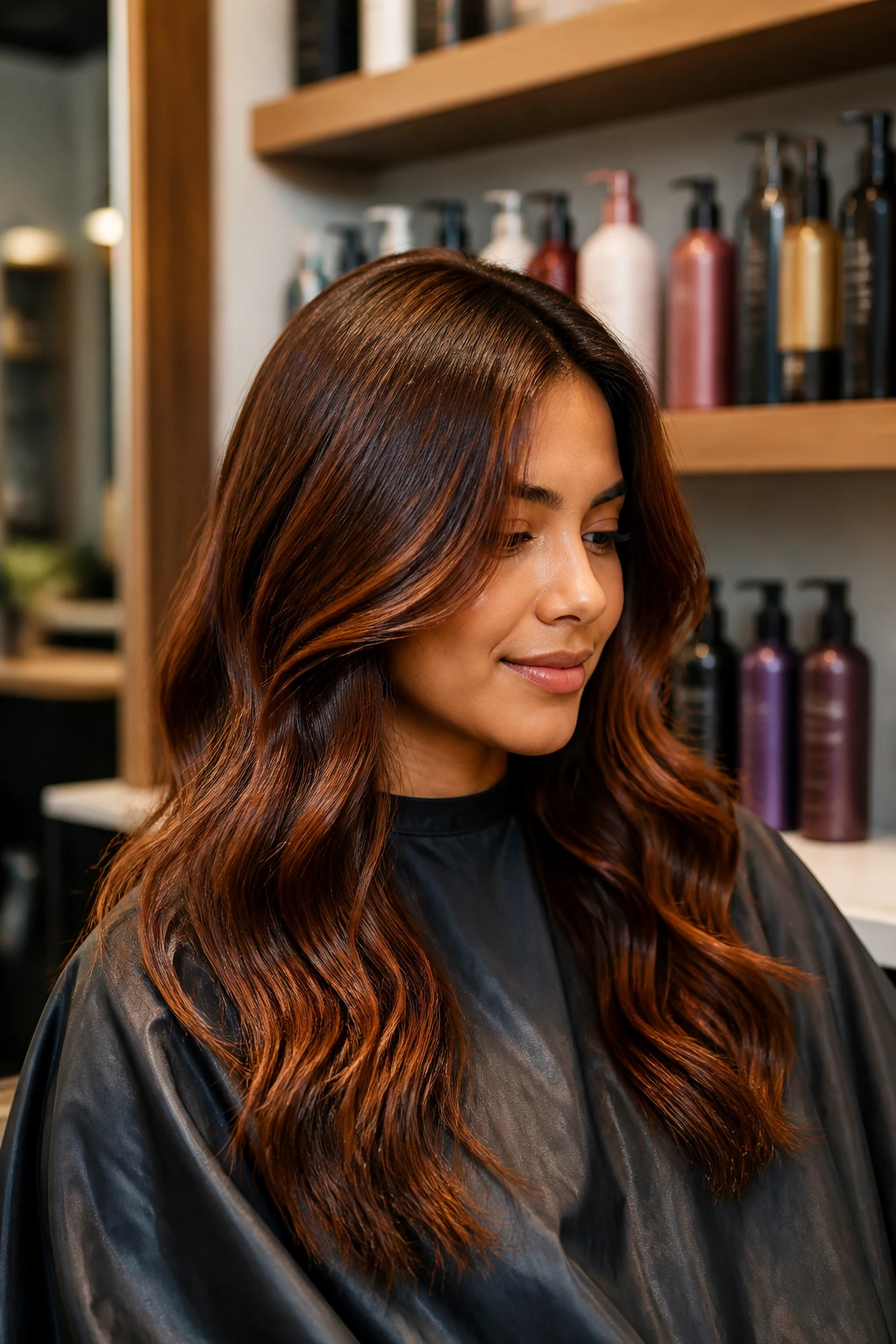
- Color-safe, sulfate-free shampoo: Keeps the red-brown pigment from stripping out too fast; use it 2 to 3 times a week.
- Rich conditioner or mask: Auburn shows patchiness fast on dry hair, so a smoother surface helps the color look even.
- Heat protectant up to 450°F: Flat irons and curling irons can dull red tones fast if you skip this.
- Microfiber towel or soft T-shirt: Rough towel rubbing makes porous ends frizz and fade faster.
- Wide-tooth comb: Useful for distributing conditioner and gloss without breaking up curls or snagging highlighted sections.
- Shower filter, if your water is hard: Mineral-heavy water can make auburn lean dull or muddy after a few weeks.
- Silk or satin pillowcase: Less friction means less fade at the ends, which is where auburn often disappears first.
- Reference photos in daylight: Not a product, but worth carrying. Salon lights can hide how bright a shade really is.
Keeping Auburn Brown Glossy Between Visits
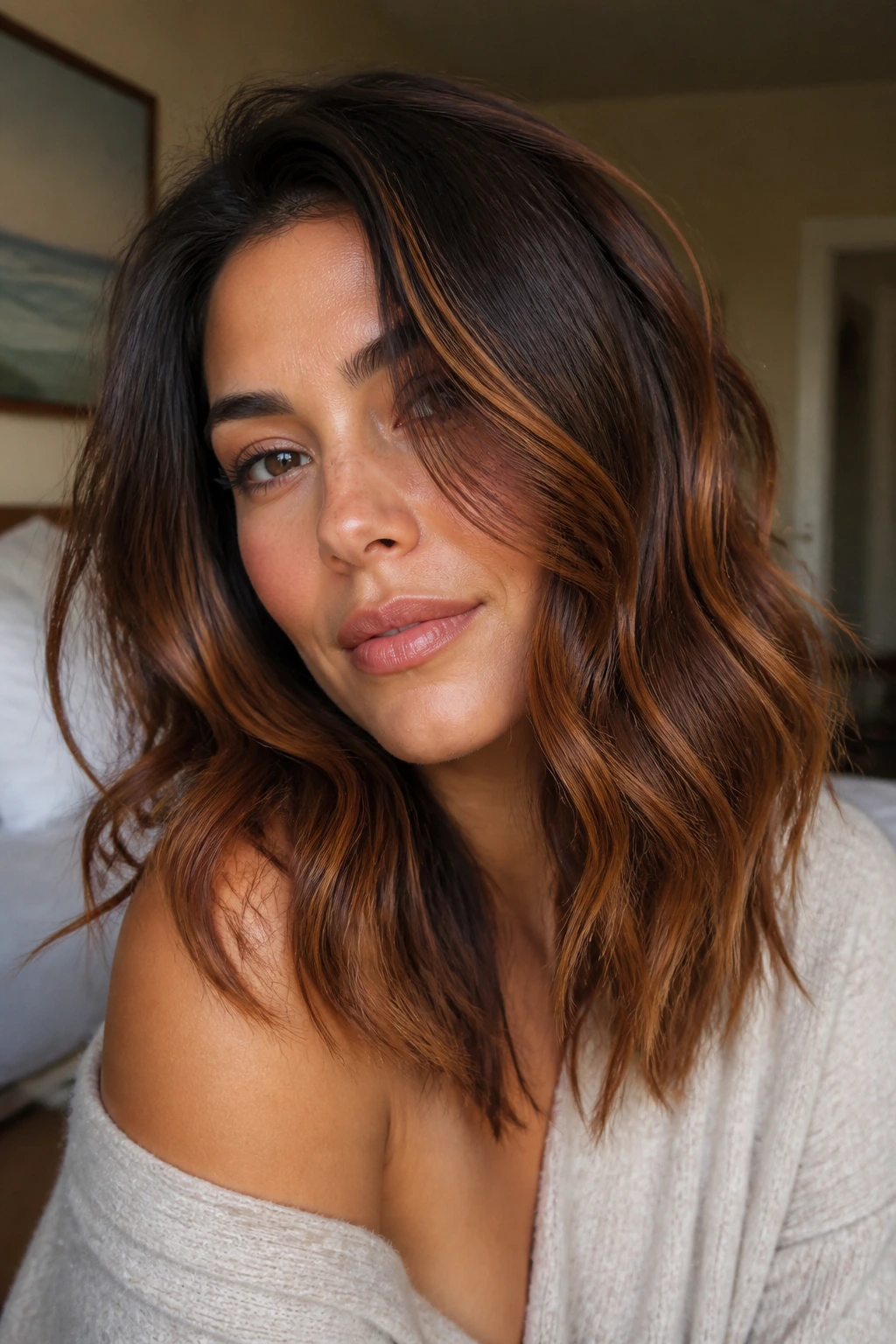
Auburn fades. That’s the deal. Red pigment molecules are smaller than many brunette dyes, so they slip out faster, especially if you wash often or lean hard on hot tools. A realistic maintenance rhythm for auburn brown highlights is a gloss every 4 to 6 weeks and a highlight refresh roughly every 8 to 12 weeks if the placement is traditional, or a little longer if you chose balayage or babylights.
Hot showers are sneakier than people think. Turn the water down a notch for the final rinse, even if only for the last 20 seconds. That small change helps the cuticle lie flatter and keeps the warm tones from rinsing away so fast.
If you swim, wet the hair with clean water first and add a little conditioner before the pool. Chlorine is rude to red-brown shades. So is too much clarifying shampoo. Use clarifier only when you need to remove buildup — usually every 2 to 4 weeks, not every wash.
Common Mistakes That Make Auburn Look Muddy
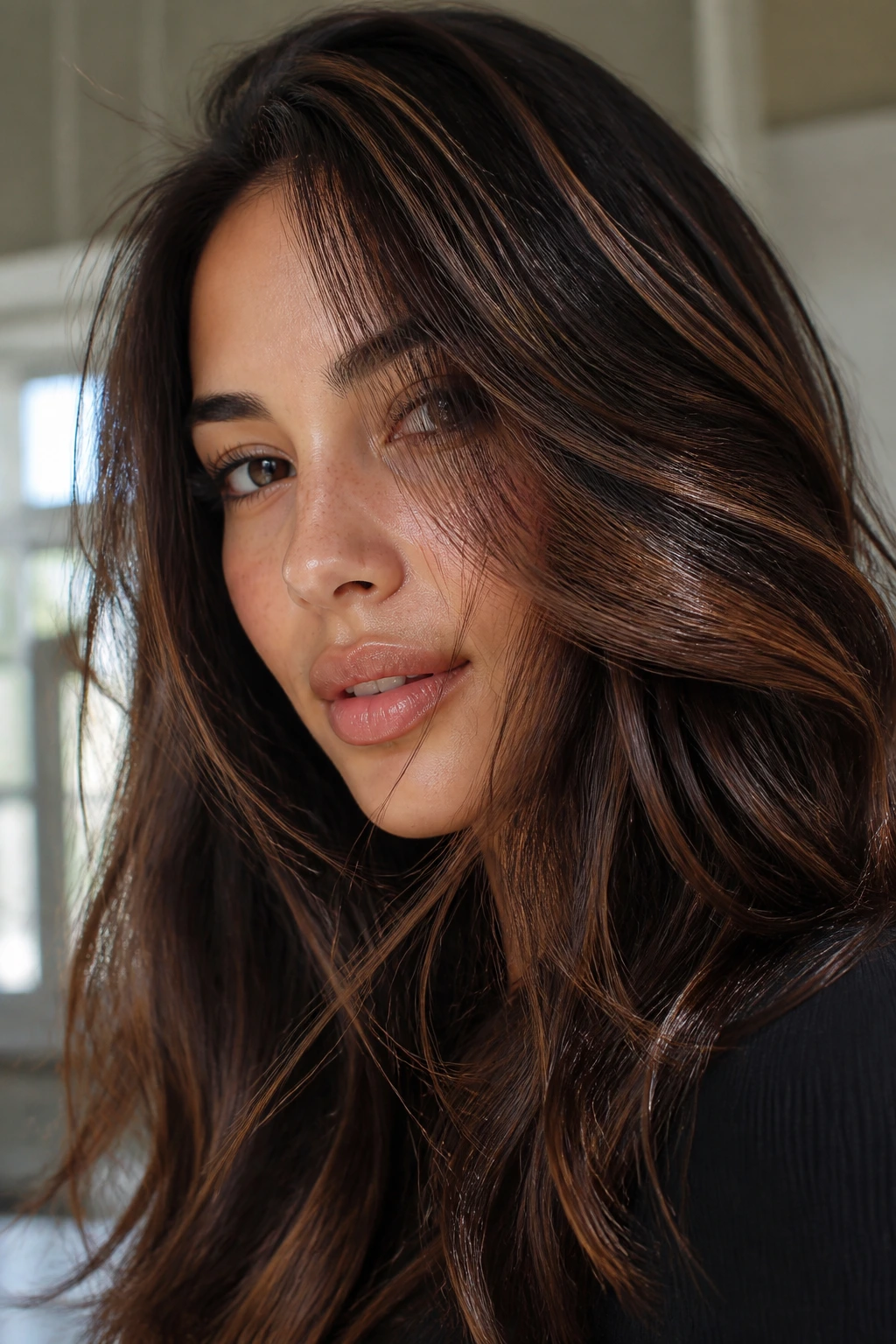
- Picking a copper that’s too bright for your undertone: On olive medium skin, a screaming orange-brown can look harsh in daylight. Ask for more chestnut or mahogany in the mix.
- Letting the highlights start in the wrong place: If auburn begins too high on the head, it can look like a helmet of color instead of a soft transition. Placement should follow the cut.
- Overwashing the hair: Red fades fast. Shampooing daily can strip the pigment out before it settles.
- Skipping gloss appointments: Highlights can turn dull and brownish if the warm tone isn’t refreshed. A quick gloss brings the red-brown back without redoing the whole head.
- Going too light too fast: Medium skin can wear brightness, but pale auburn streaks over a dark base sometimes look disconnected. A little depth in the roots keeps the color believable.
- Using heavy oils on highlighted sections before styling: Too much oil can make auburn look flat and greasy in the wrong light. Use a small amount and keep it on the ends.
Variations and Alternatives to Try
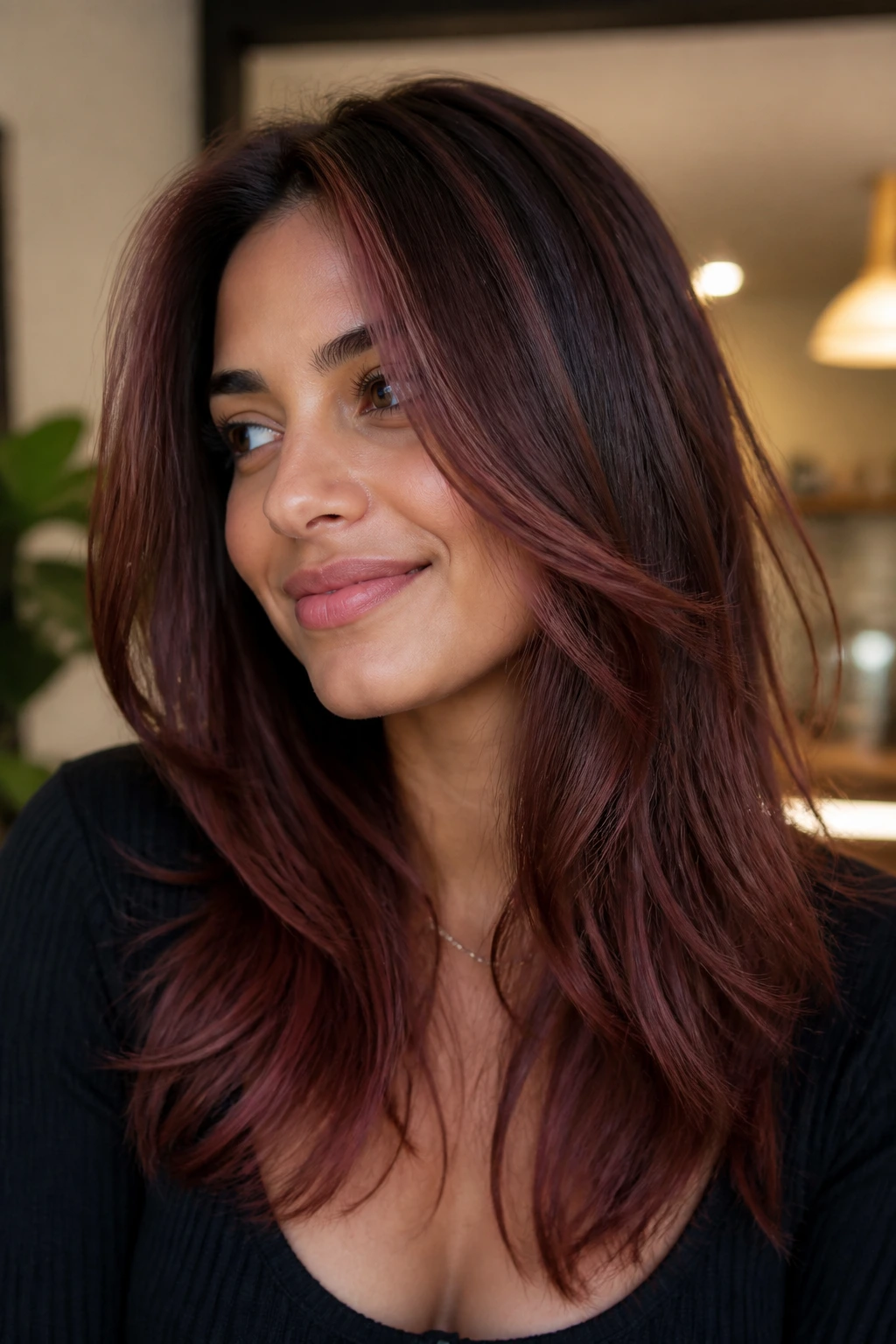
Smokier Spice: Swap bright copper for mahogany, chestnut, and a hint of plum. This version is better if you want auburn to feel deeper and more polished, especially on medium skin with olive undertones.
Brighter Ember: Push the front pieces lighter and warmer, then keep the rest of the hair softly brown. This is the one to choose if you want obvious brightness around the face without coloring everything else.
Soft Rosewood: Add a faint rosy note to the auburn and keep the base neutral. It’s a lovely shift if plain copper feels too warm and cherry cola feels too dark.
Honeyed Auburn: Mix golden brown and auburn so the result lands warmer and sunnier. This works best on medium skin that already has golden undertones and wants a softer glow.
Gloss-Only Auburn: Skip permanent highlights and ask for a deposit-only auburn gloss. It won’t give you the same lightness, but it’s a good test run if you’re cautious about commitment or damage.
Questions People Ask Before Booking Auburn Highlights
Will auburn brown highlights suit medium skin with olive undertones?
Yes, but the tone matters. Olive skin usually looks better with auburn that keeps a brown base, like chestnut, mahogany, or smoky auburn, rather than bright copper that can skew orange.
Do auburn highlights need bleach?
Not always. On lighter brunettes, a strong gloss or gentle lightening may be enough. On darker bases, especially level 4 and below, a colorist may need to lift the hair first so the auburn shows instead of disappearing into brown.
How often should I touch up auburn highlights?
Glosses usually need refreshing every 4 to 6 weeks if you want the tone to stay rich. Traditional highlights can go about 8 to 12 weeks between salon visits, while balayage often stretches longer.
What’s the difference between auburn highlights and auburn balayage?
Highlights are usually more defined and placed in sections. Balayage is hand-painted, so the grow-out looks softer and the color tends to melt through the hair rather than sitting in clear stripes.
How do I stop auburn from turning orange?
Start with a shade that has enough brown in it, and don’t over-lift the hair. Orange usually shows up when the base isn’t lightened enough or the toner leans too bright for your undertone.
Can I do auburn highlights over previously dyed black hair?
You can, but it’s rarely a simple one-step job. Black dye often needs correction, and that can take multiple salon sessions if you want auburn to show cleanly instead of looking patchy or dull.
Do auburn tones fade fast?
They do fade faster than many brunette shades, especially if the hair is porous or heat-styled often. A color-safe wash routine, cooler rinses, and a regular gloss appointment help a lot.
The Shade Range That Actually Holds Up
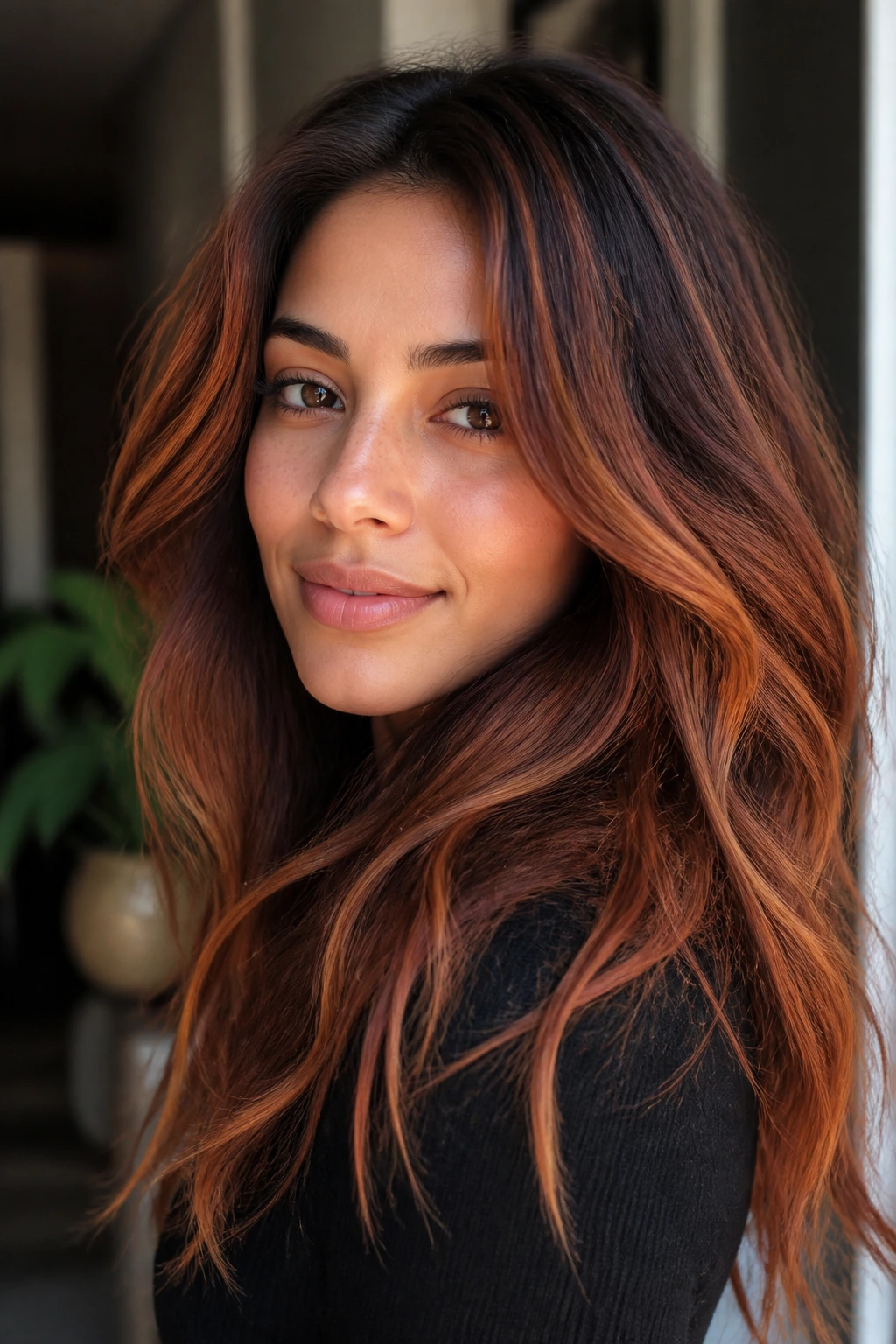
Auburn brown highlights work best when they’re treated like a color family, not a single box label. That’s the part worth remembering. Cinnamon, chestnut, mahogany, maple, copper, rosewood, cherry cola — each one gives medium skin a different edge, and the right choice depends on how warm, deep, or bold you want the hair to feel.
If you’re hovering between shades, start softer than you think. A face frame, a few babylights, or a gloss can show you how the tone sits against your skin before you commit to a full head of red-brown color. That’s the smarter move, and usually the prettier one too.
Once the placement is right, auburn does something plain brunette never quite does: it catches motion. That little flash of warm red-brown when the hair swings is the whole point.