



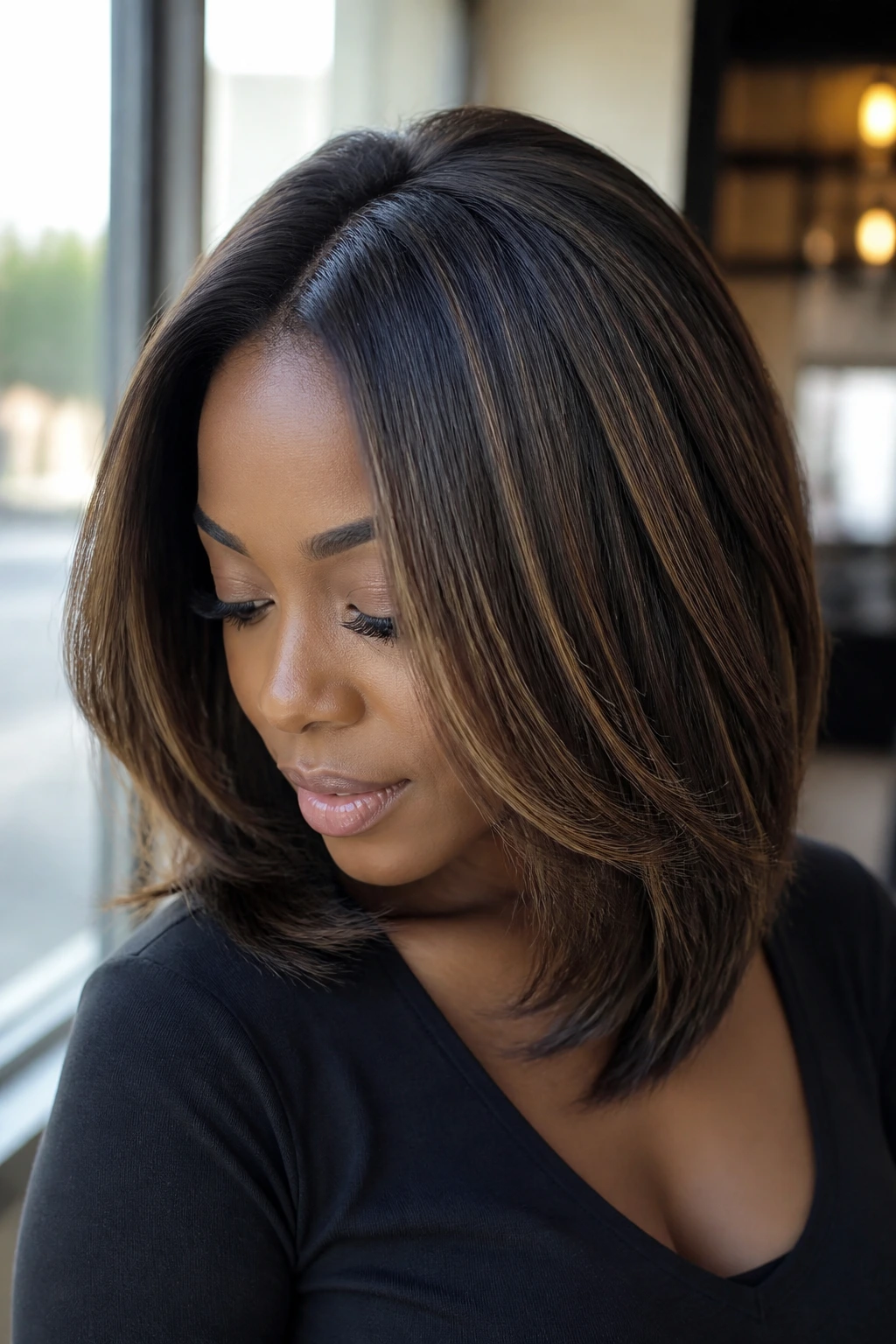
Long layered bobs for Black women with babylights have a very specific kind of presence. The cut gives the hair swing; the babylights give it a soft, expensive-looking flicker; and together they keep dark hair from reading as one solid block. That matters more than people think. On Black hair, a bob can go from sharp to heavy fast, and the difference is usually in the layering, not the length.
Babylights are the quiet part of the equation. They’re ultrafine highlights, placed in narrow slices so the color looks threaded through the hair instead of painted on top of it. On deep brown or near-black bases, that thin placement is doing a lot of work: brightening the face, showing off the movement in the layers, and keeping the grow-out line soft instead of stripey. Done badly, the result looks busy. Done well, the hair looks like it has more motion than it did five minutes ago.
The best versions of this cut don’t chase drama for its own sake. They pay attention to where the hair bends at the jaw, how the ends sit on the collarbone, and whether the front pieces catch light when you turn your head. Some are sleek and polished. Some are tousled and loose. Some lean warm and golden, others stay deep with just a trace of bronze or chestnut. The trick is matching the layer pattern and the babylight tone to the way your hair actually lives, not just the way it looks in a photo.
Why These Long Layered Bobs Work So Well on Black Hair
- The length stays useful: A long bob that lands around the collarbone or just above it gives you enough hair to curl, tuck, or press, while the layered shape keeps it from feeling boxy.
- Babylights soften the dark base: Tiny ribbons of color show movement without turning the whole cut into a high-contrast stripe pattern.
- The shape survives real life: Whether you wear a silk press, a loose bend, or defined curls, the layers still make sense when the hair shifts.
- Grow-out looks calmer: Fine highlights blend more quietly than chunky foils, which is a relief if you do not want obvious root lines every few weeks.
- Warm tones usually read richer: Honey, caramel, bronze, and chestnut tend to sit beautifully on deep bases without washing out the hair’s natural depth.
What Babylights Change in a Layered Cut
Babylights do one thing chunky highlights often miss: they show the cut instead of stealing the show. On Black hair, that matters because density can swallow weak placement. If the light pieces are too broad or too scattered, the hair starts to look patched. If they’re ultrafine and placed where the hair actually bends, the whole bob moves better.
The smartest placement usually sits around the part, the temples, and the top layers that swing forward. Leave the underlayers darker, and the cut keeps depth at the nape and around the back of the head. That contrast is what keeps a layered lob from looking flat in daylight. A little lowlight in the interior can help too. It stops the color from turning one-note, especially when the base is very dark.
Warm Tones vs. Cool Tones
Honey and caramel are the easiest reads on deep brown hair. They brighten without screaming for attention. Cool beige or ash babylights can look sleek, but they need careful toning or they can turn muddy against a warm undertone. If your natural color is close to espresso, warm ribbons usually give the cleanest result with the least fight.
1. Espresso Bob with Honey Babylights
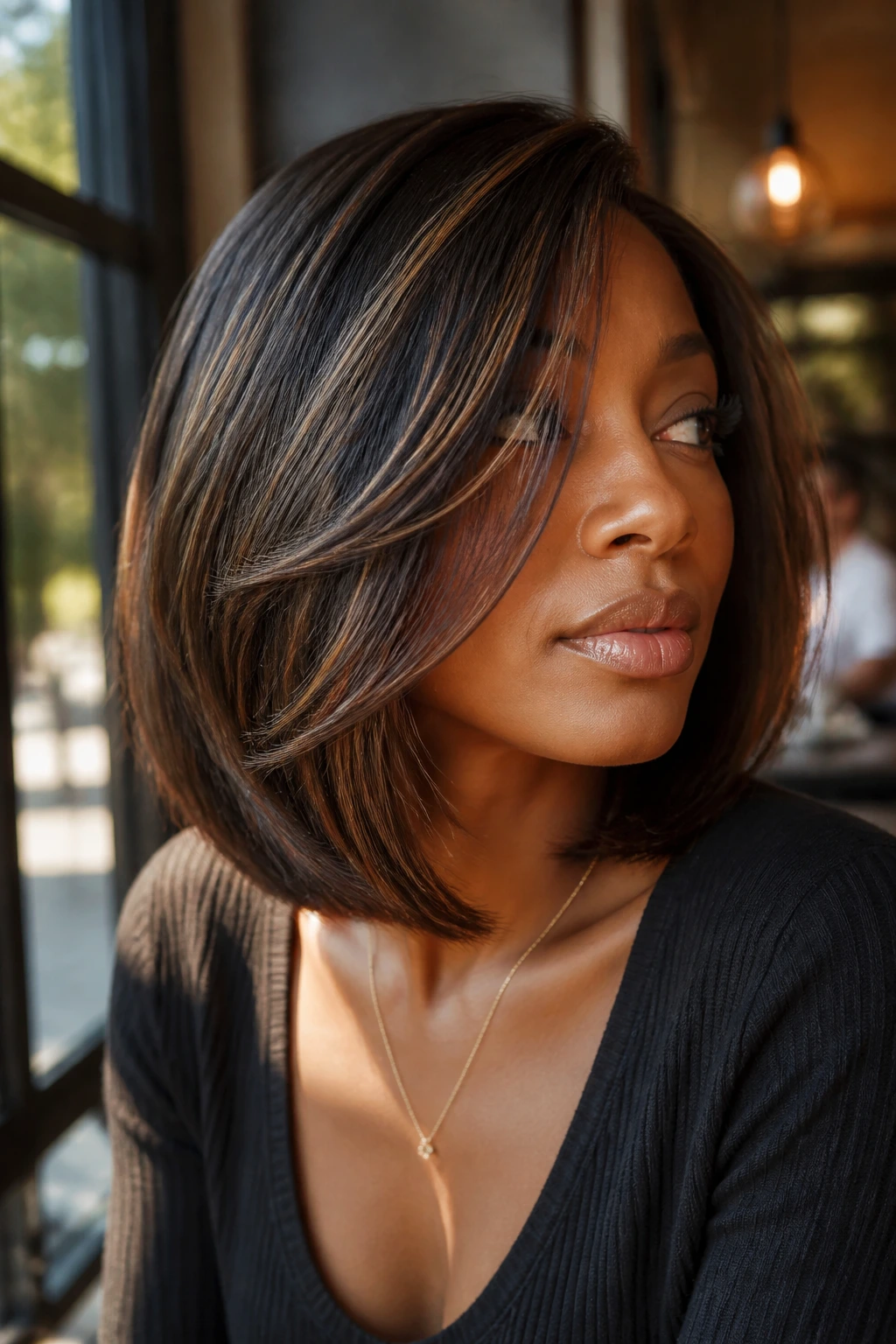
This is the safe bet that still looks like you made a choice. The base stays deep and glossy, the layers skim the collarbone, and the honey babylights thread through the face-framing pieces so the whole cut catches light when you move.
Why It Works
Honey sits close to the warm side of the color wheel, so it blends into dark brown or black hair without looking harsh. Keep the lightest pieces near the part and around the front, and leave the nape richer for depth. That keeps the bob from reading as one flat sheet.
- Best for: Dense hair that needs shape without losing length.
- Texture match: Silk press, blowout, or stretched natural hair.
- Color note: Ask for babylights no wider than a pencil line.
- Quick tip: A clear gloss on top keeps the espresso base from looking dull.
2. Side-Swept Lob with Caramel Face-Framing Ribbons
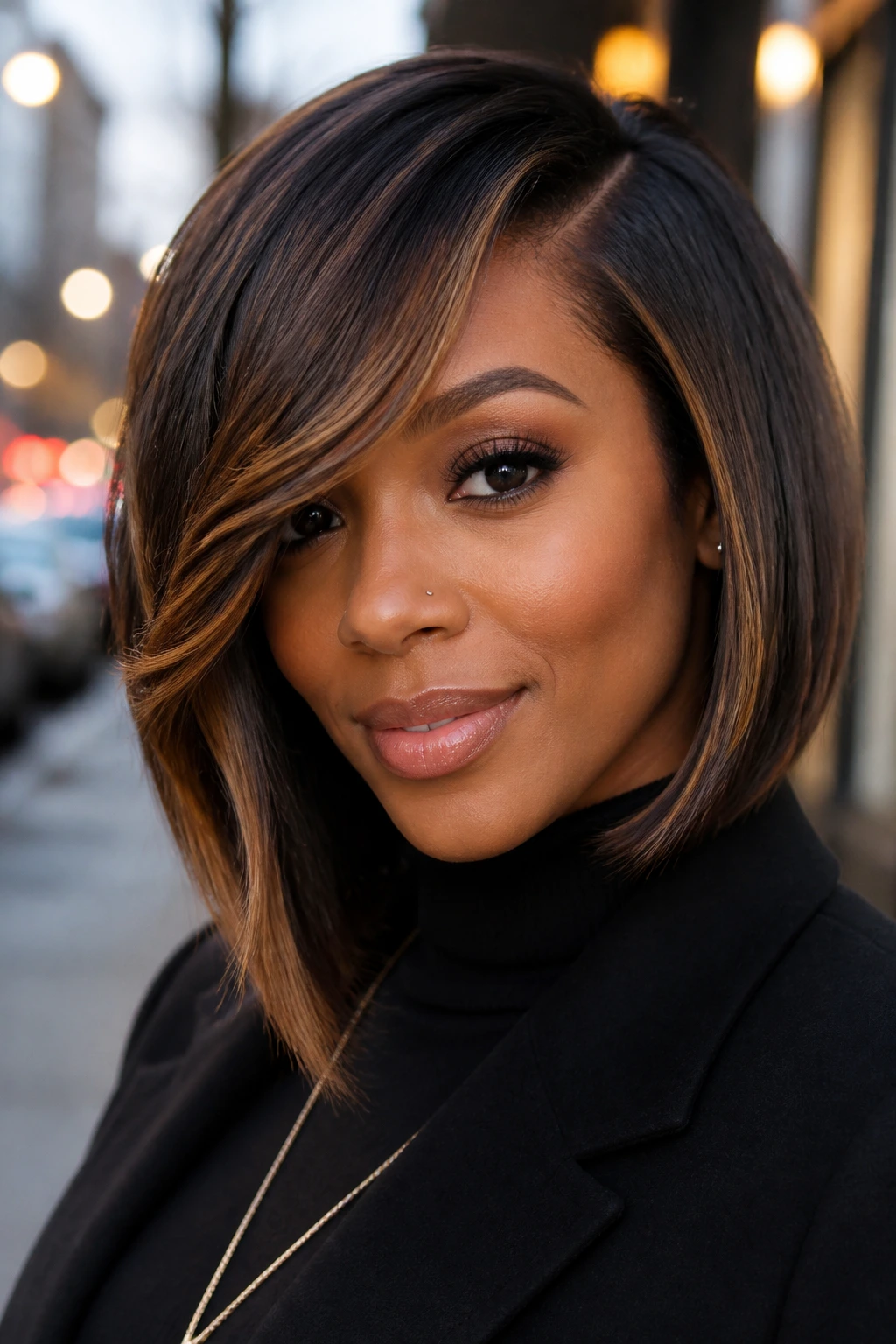
The side part does most of the talking here. It gives the hair a little lift at the crown, and the caramel ribbons landing near the cheekbone make the face look brighter without pushing the whole head lighter.
A cut like this is especially good if your hair likes to fall forward on one side anyway. Let it. The babylights should sit where the hair naturally folds, not fight the movement. That’s why this one looks expensive even when you don’t spend much time on it.
If your hair is thick, keep the layers long and soft. Short, choppy layers can get fluffy fast on the wrong density. This bob wants bend, not puff.
3. Feathered A-Line Bob with Champagne Threads
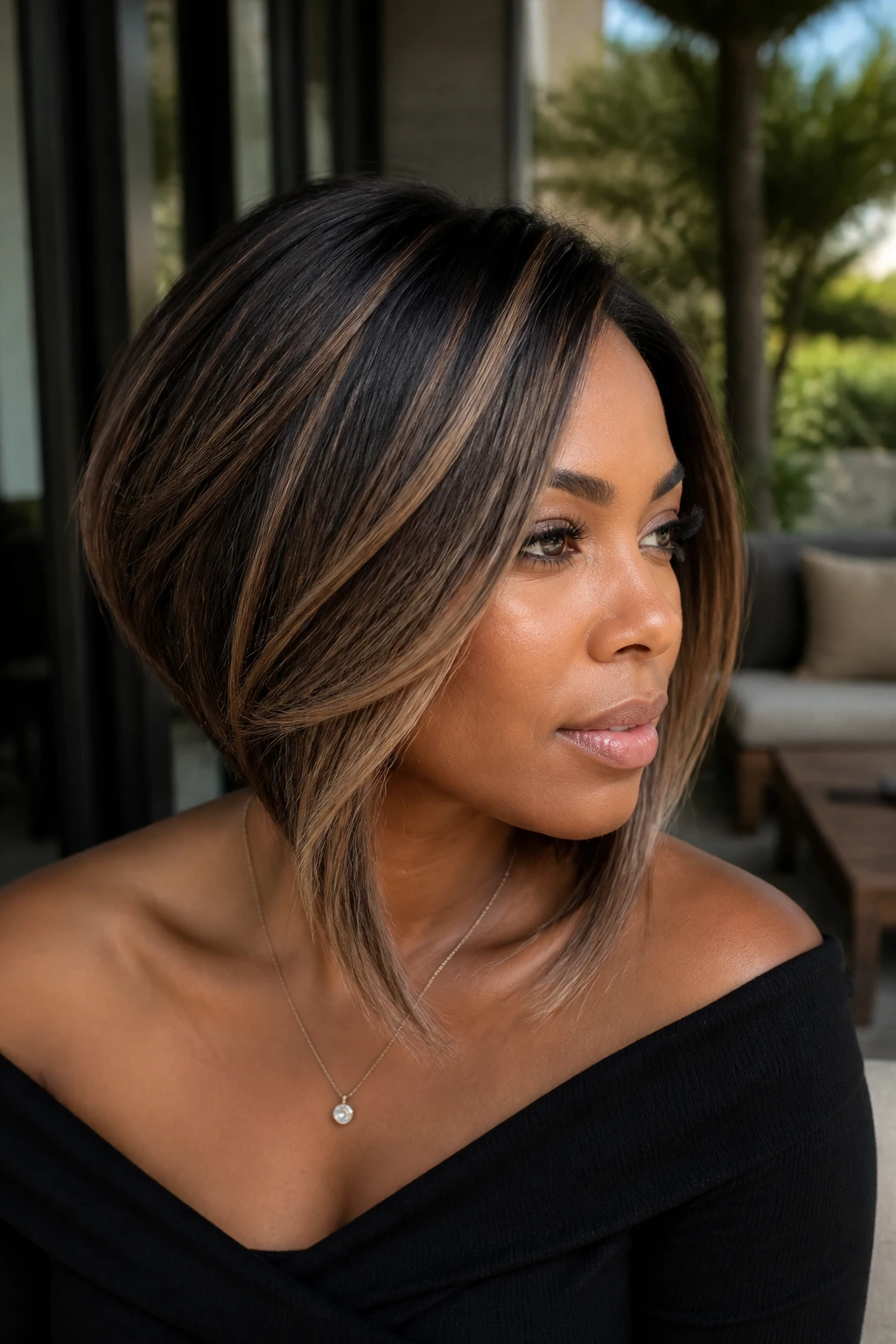
Why does this version feel so clean? Because the front pieces are just a touch longer than the back, and the babylights trace that angle instead of ignoring it. You get a shape that feels lifted without looking severe.
How to Wear It
Brush the front down and away from the face, then bend the ends under with a round brush or curling iron. Champagne threads work best when they sit on the top layer and around the part, where they can catch light without turning brassy. If your undertone is cooler, ask for a beige-toned gloss so the brightness stays soft.
This one flatters oval and heart-shaped faces especially well, but it can work on a round face too if you keep the front a little longer. The angle does the slimming work.
4. Curled-Under Lob with Mocha Babylights
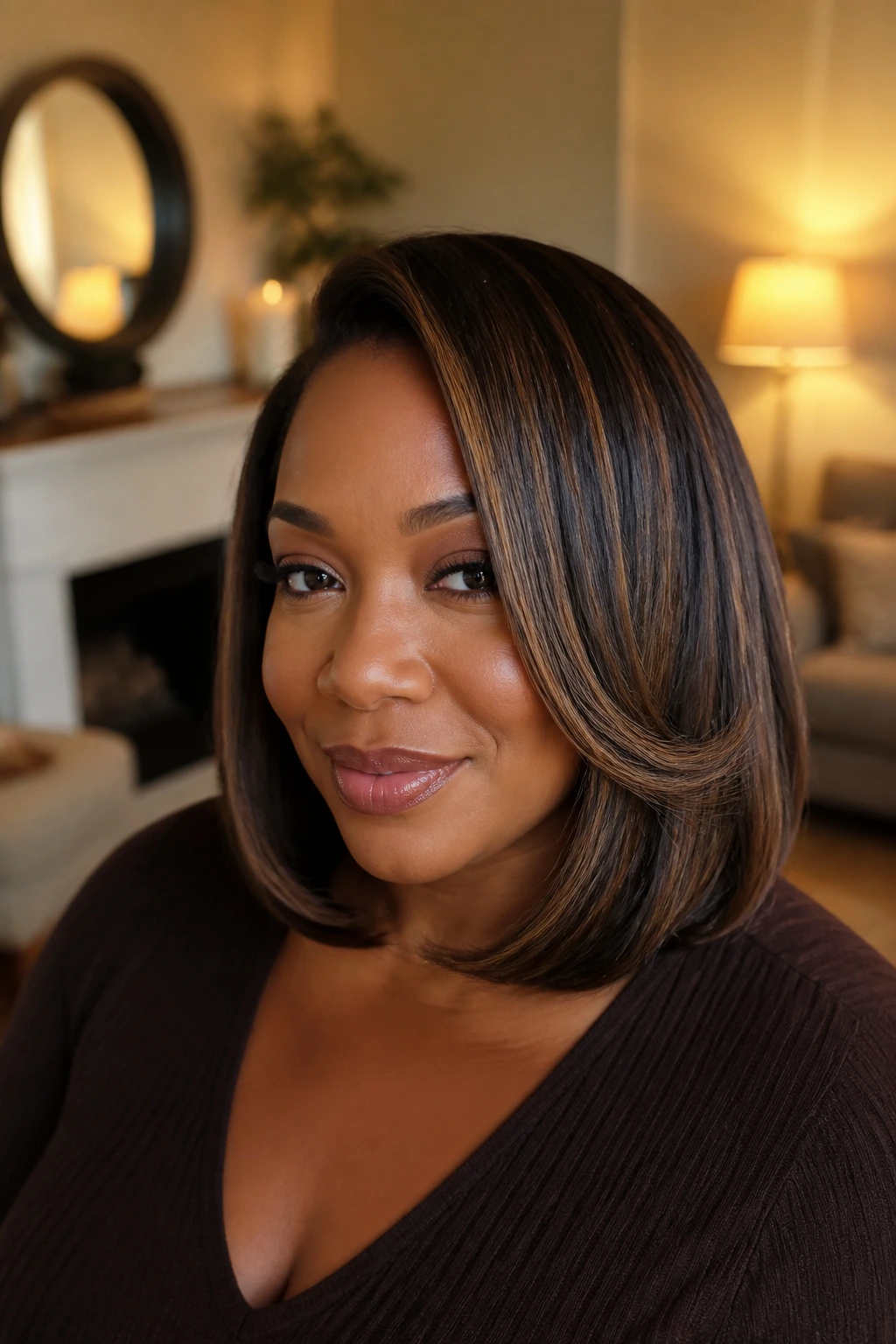
Picture a bob that sits neatly at the shoulders, then folds under at the ends like it’s been set on purpose. That curved finish is the whole point here, and mocha babylights keep the shape from feeling too stiff or too heavy.
The color placement should stay fine and close to the surface. You want those soft streaks peeking through the bend, not lining the entire head. It gives the impression of movement even when the hair is still.
- What it does well: Hides rough ends while keeping the line polished.
- Best finish: A smooth blowout with a medium round brush.
- Styling note: Wrap the ends under in one direction for a cleaner silhouette.
- Color note: Mocha babylights are better than pale blonde if your base is very dark.
5. Deep Side-Part Lob with Chestnut Ribbons
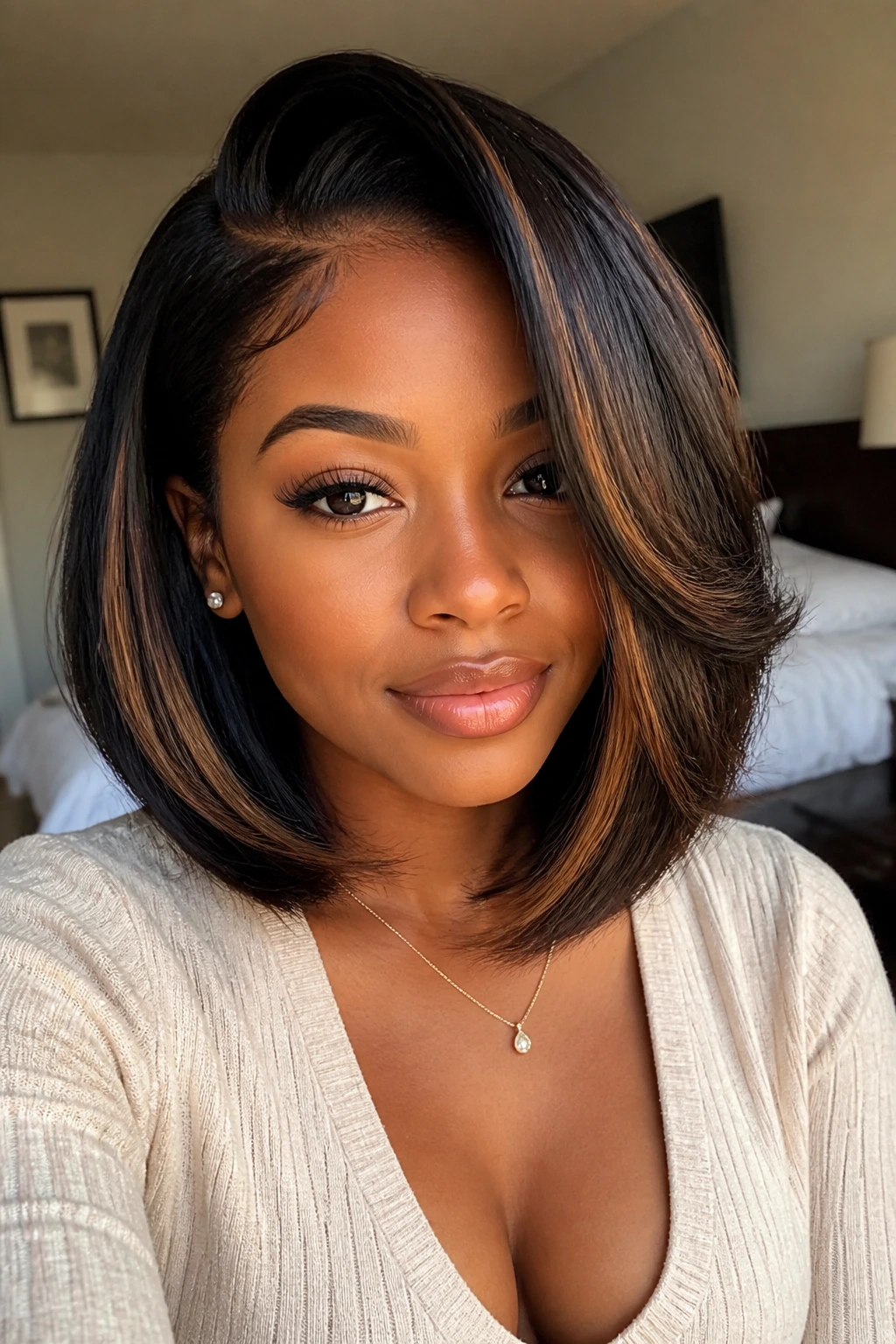
A deep side part on a layered bob is one of those simple changes that does a lot. It adds height at the roots, shifts the weight to one side, and gives the chestnut ribbons a chance to show off along the front panel.
This cut is good for days when you want the hair to look fuller without teasing it or piling on product. Chestnut sits in that sweet spot between brown and warm red, so it adds life without shouting. On Black hair, that small glow near the face can be enough.
If your hair is fine, don’t over-layer the ends. Keep the shape fuller at the bottom and let the color create the dimension. Thin hair and too many short layers are a messy combination.
6. Silk-Pressed Center-Part Lob with Beige Babylights
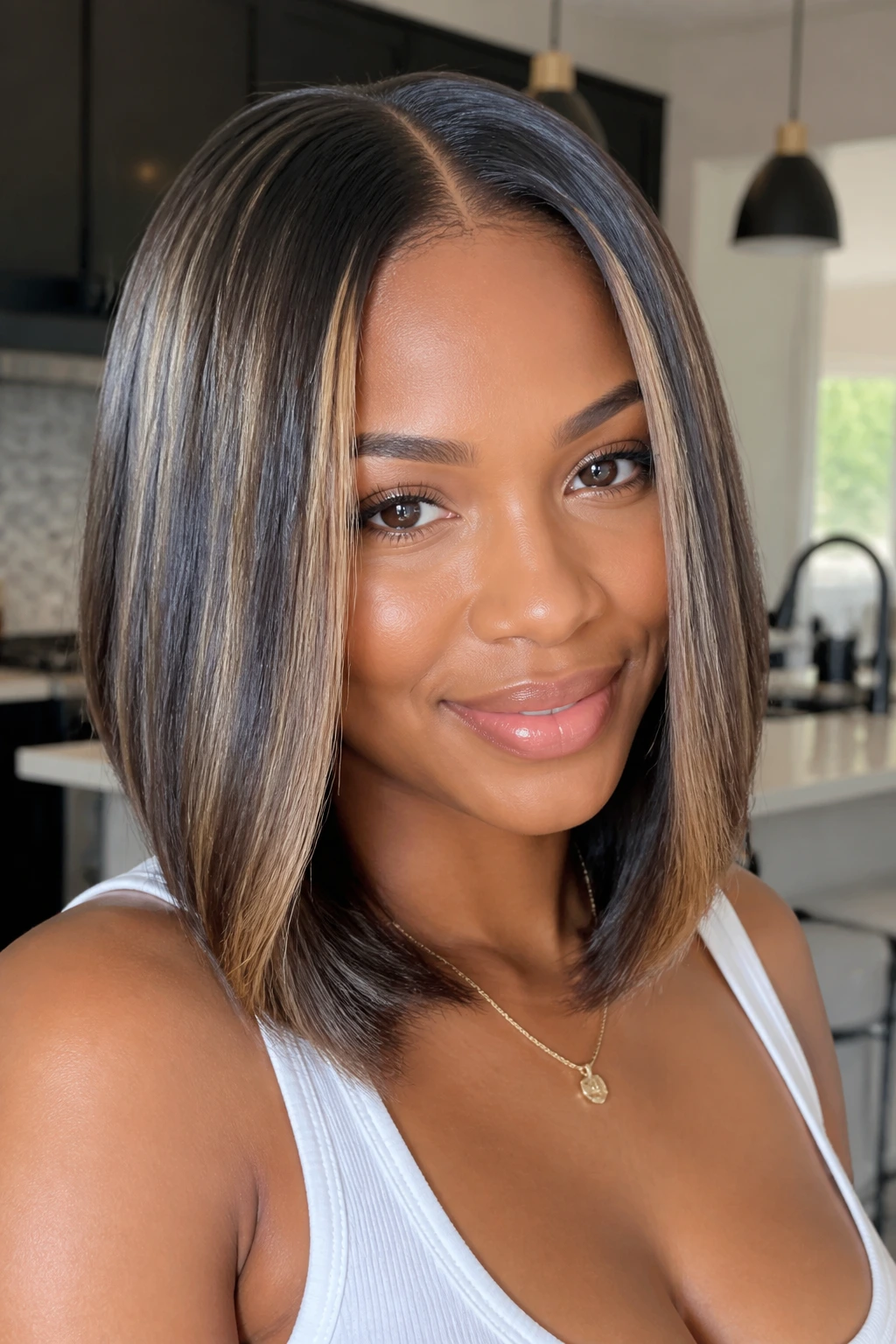
A center part gives this cut a cleaner, sharper line, and the beige babylights keep it from feeling severe. On a silk press, the layers fall like ribbons, which is exactly why this style works so well on medium to dense hair.
The key is restraint. Beige babylights should live mostly on the upper layers and around the face, where they add brightness without making the whole bob look pale. If you go too cool with the tone, the cut can lose the warmth that makes Black hair look rich in the first place.
This is the one to pick if you like a sleek finish but don’t want the hair to look flat. The babylights give the surface just enough lift.
7. Voluminous Blowout Bob with Cinnamon Lights
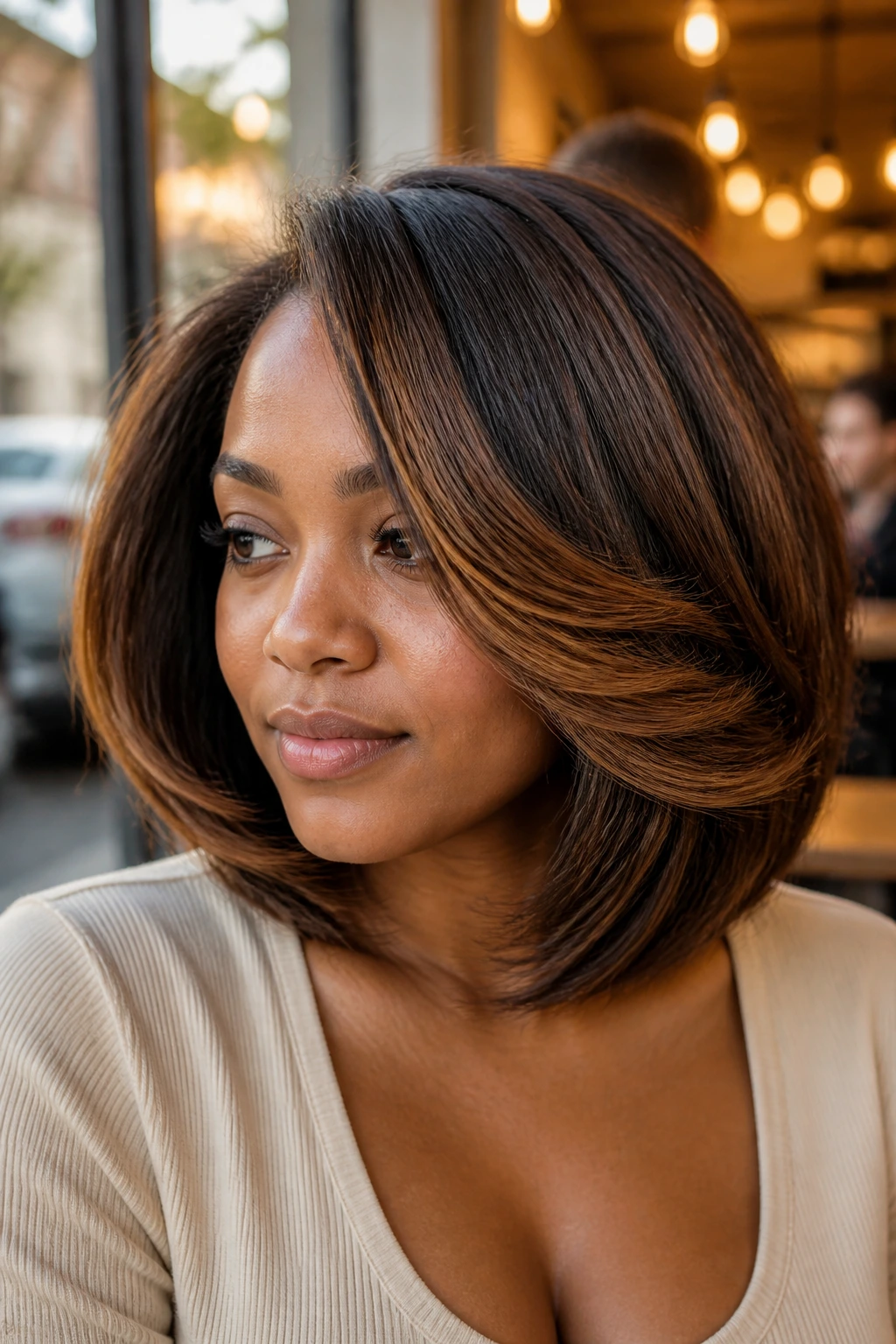
This one looks like it was made for a round brush and a little confidence. The layers are cut to hold body, and the cinnamon lights bring a warm, spiced tone that shows best when the hair has a soft bend.
The Shape Behind It
The blowout gives the ends lift, which means the layers separate instead of clumping together. Cinnamon babylights work especially well when they’re placed through the top third of the hair and feathered around the front. Keep the back darker and the whole shape stays grounded.
If you wear your hair straight most of the week, this style is a good break from pin-straight polish. It has movement without looking messy. And yes, that matters.
8. Tapered Lob with Bronze Peekaboo Streaks
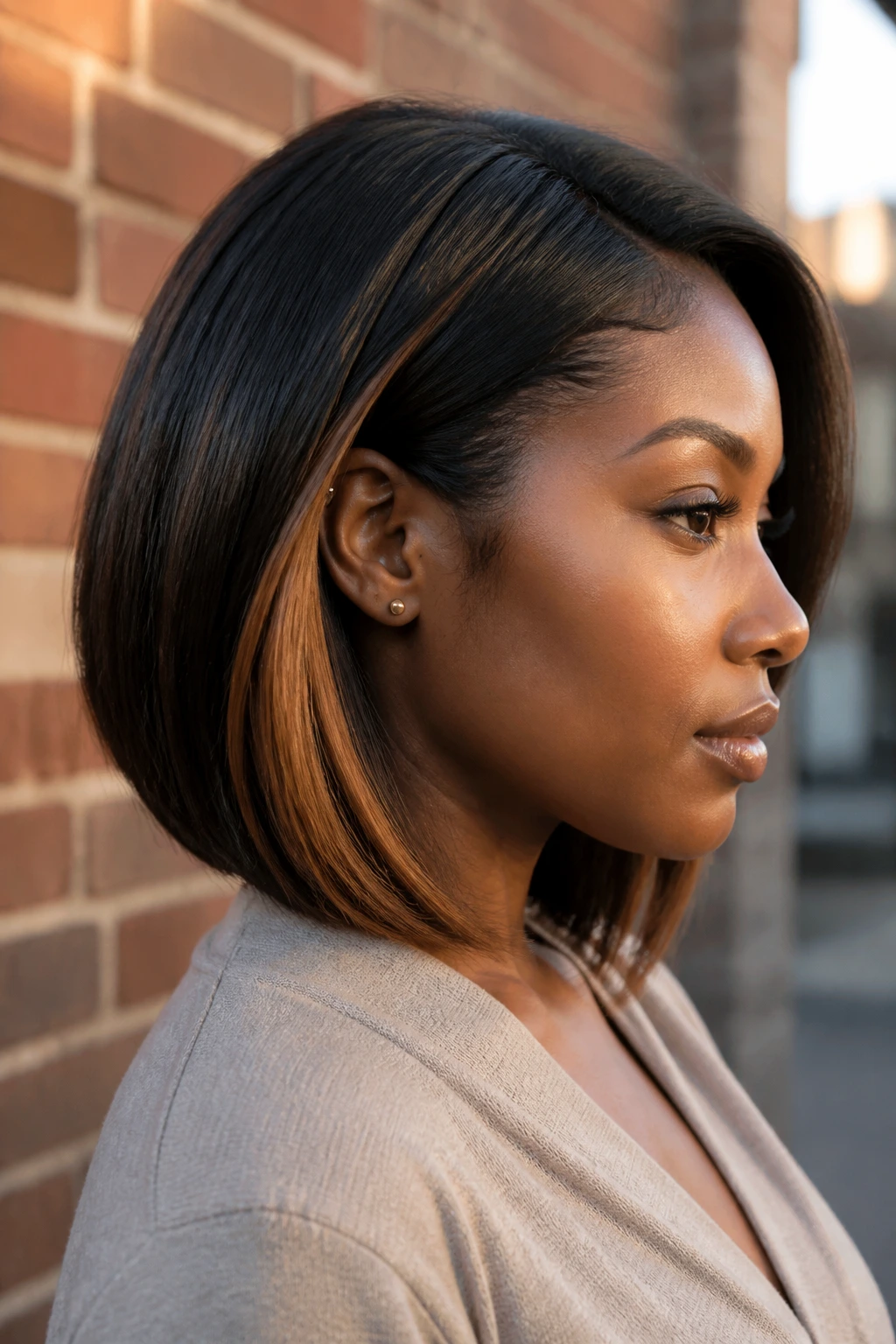
What makes this one different is the color hiding under the surface. Bronze peekaboo streaks sit underneath the top layer, so when the hair swings or tucks behind the ear, you get a flash of warmth.
That kind of placement is smart on dark hair because it avoids the over-lightened look that can happen when every strand is trying to announce itself at once. The taper keeps the back neat, while the longer front pieces soften the face. It’s a bob with a little secret.
How to Use It
Wear it smooth when you want the cut to read clean. Add a loose wave when you want the bronze to show more. If your hair is dense, ask the stylist not to remove too much weight near the nape, or the shape can puff out.
9. Tousled Wave Bob with Sandy Babylights

This is the version for hair that looks better with a little bend in it. Loose waves break up the layers, and sandy babylights land softly between the curls so the style looks sun-kissed without turning beachy in a forced way.
A lot of people overdo wave texture on a bob. Don’t. The best version has a bend, not a crimp. A 1.25-inch iron, brushed out once, is usually enough. Sandy babylights work best when they’re narrow and irregular, not lined up like bars.
- Good for: Medium-density hair that holds curl well.
- Styling cue: Let the ends stay straighter than the midlengths.
- Color note: Sandy tones look best when toned to avoid brass.
- Pro move: Flip the front piece away from the face for a softer line.
10. Angled Bob with Auburn Veins
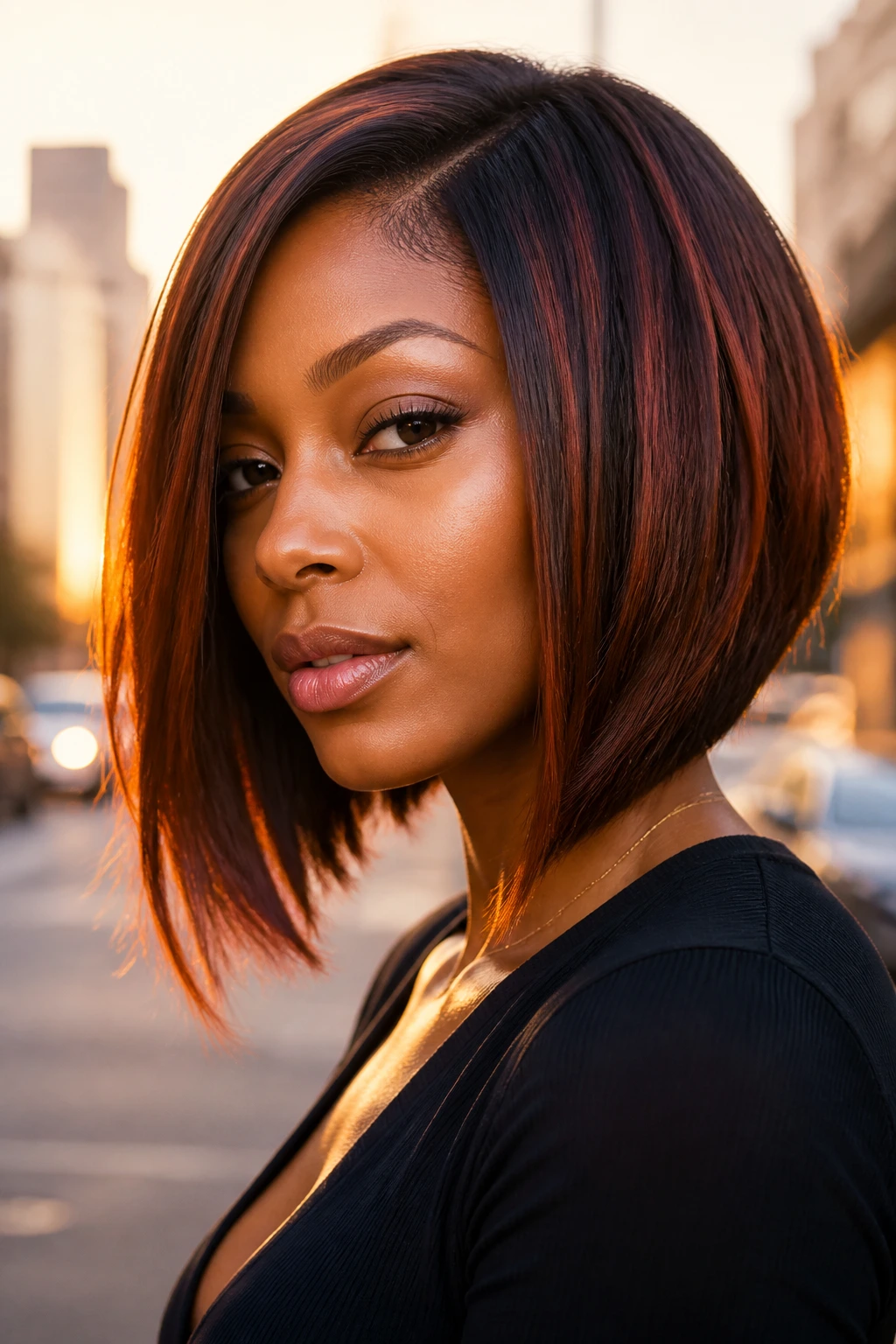
Auburn on black hair can go one of two ways: rich and dimensional, or too red and loud. The trick here is the layer map. The angled front lets the color show in slivers, so the auburn reads like veins of warmth instead of a solid red block.
This cut has a little attitude. The front drops lower than the back, which gives the jawline a crisp edge, but the layers keep it from feeling hard. If you like a bob that does not sit politely, this is a good one.
Keep the styling sleek enough to show the angle. Too much curl and the shape disappears. A clean blowout with a soft bend at the ends is usually the sweet spot.
11. Choppy Lob with Golden Brown Dimension
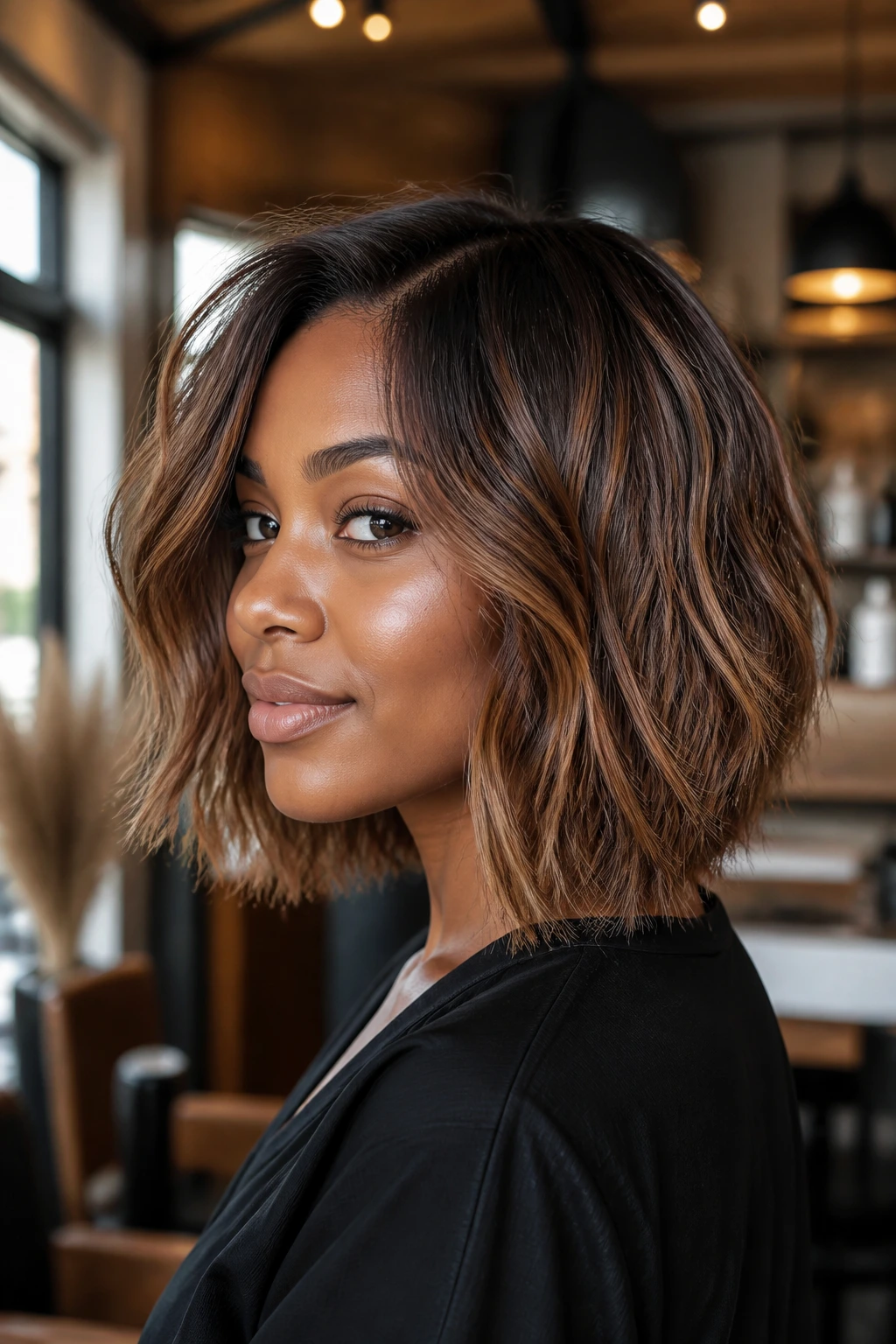
Unlike a smooth, polished lob, this one leans piecey. The layers are cut to separate, and the golden brown babylights sit in that broken texture so the style looks lived-in rather than overly finished.
That separation is useful on black hair because it breaks up bulk. It also gives the highlights more room to breathe. Golden brown is a forgiving tone, too. It reads warm without pushing into yellow.
If your hair tends to hold product and collapse, keep the finish light. A touch of mousse or foam at the roots is enough. Too much cream and the choppiness disappears, which defeats the whole point.
12. U-Shaped Lob with Mocha Lowlights and Babylights
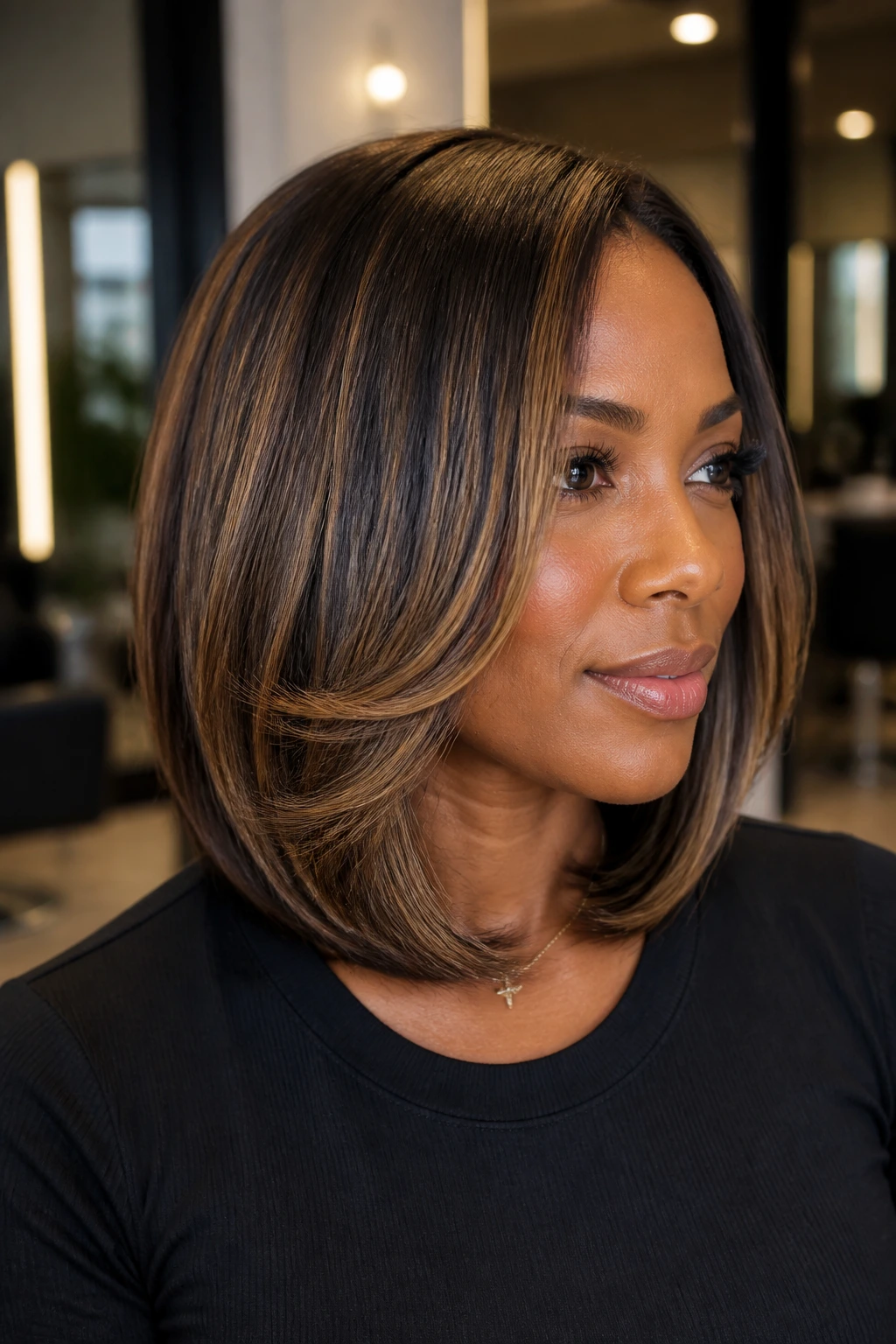
This cut has depth from both directions. The U shape keeps the back a little shorter and the front a little longer, while mocha lowlights and babylights play against each other so the color never looks one-dimensional.
That balance is especially nice on thick black hair. The darker lowlights stop the lighter pieces from floating away from the base, and the babylights brighten the parts that actually move. It feels fuller at the same time it looks lighter. Strange, but true.
Best if You Want:
- More visual depth through the midlengths.
- A shape that still looks full when straightened.
- A color story that grows out softly.
- Less of a high-contrast stripe effect.
13. Curly Layered Lob with Sunlit Caramel Threads
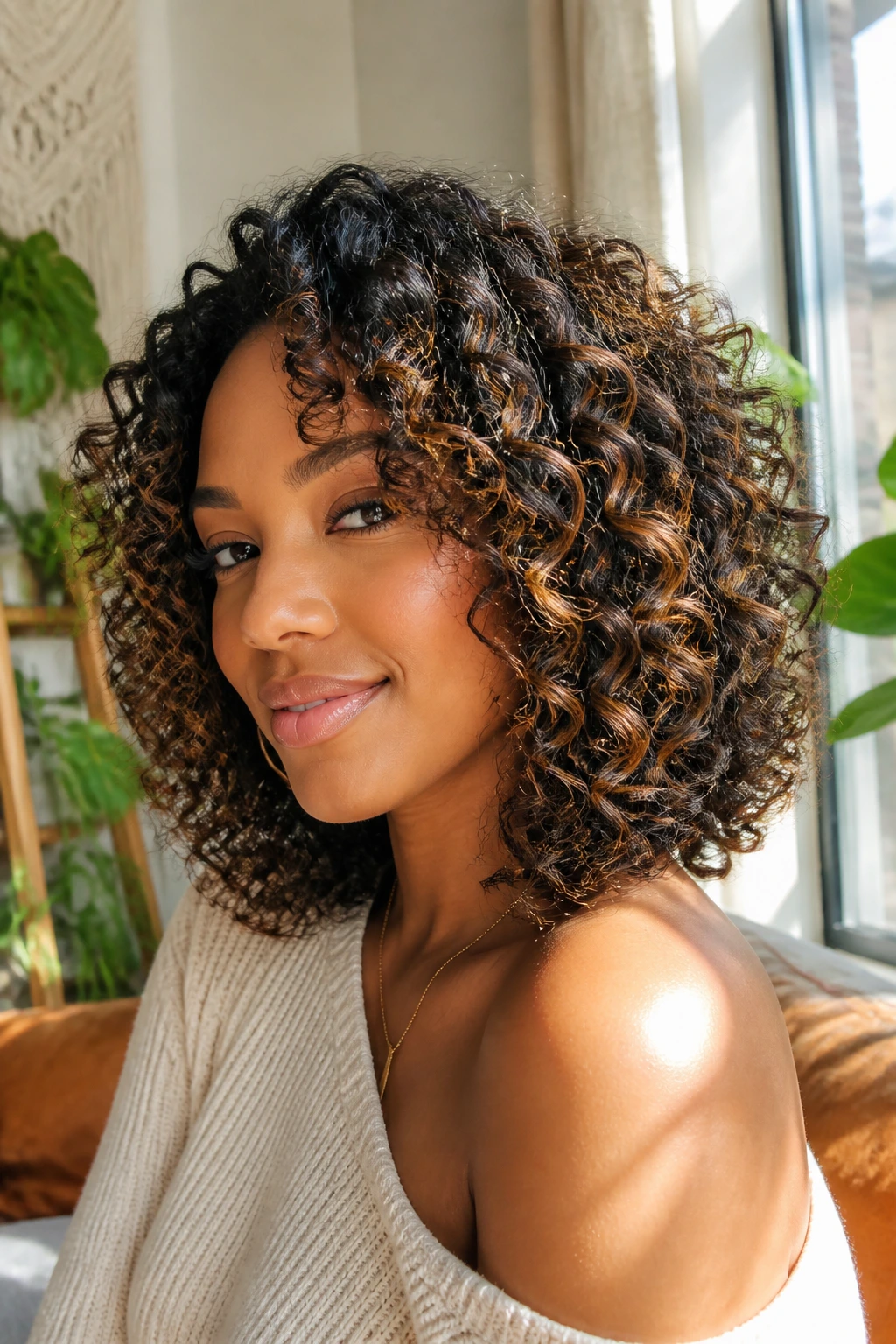
Curly hair changes the bob story completely. The layers have to be long enough to respect shrinkage, and the caramel threads need to live where the curls separate naturally, not only on the surface.
If you wear your hair curly most days, this style is one of the smartest choices in the whole set. It creates shape without forcing the curls into a fake straight-line silhouette. The caramel reads soft in the bends and bright at the outer edges.
Ask your stylist to check the cut dry if possible, or at least compare stretched and natural length. Shrinkage can fool people into cutting too much off. That mistake is expensive.
14. Rounded Bob with Buttery Babylights
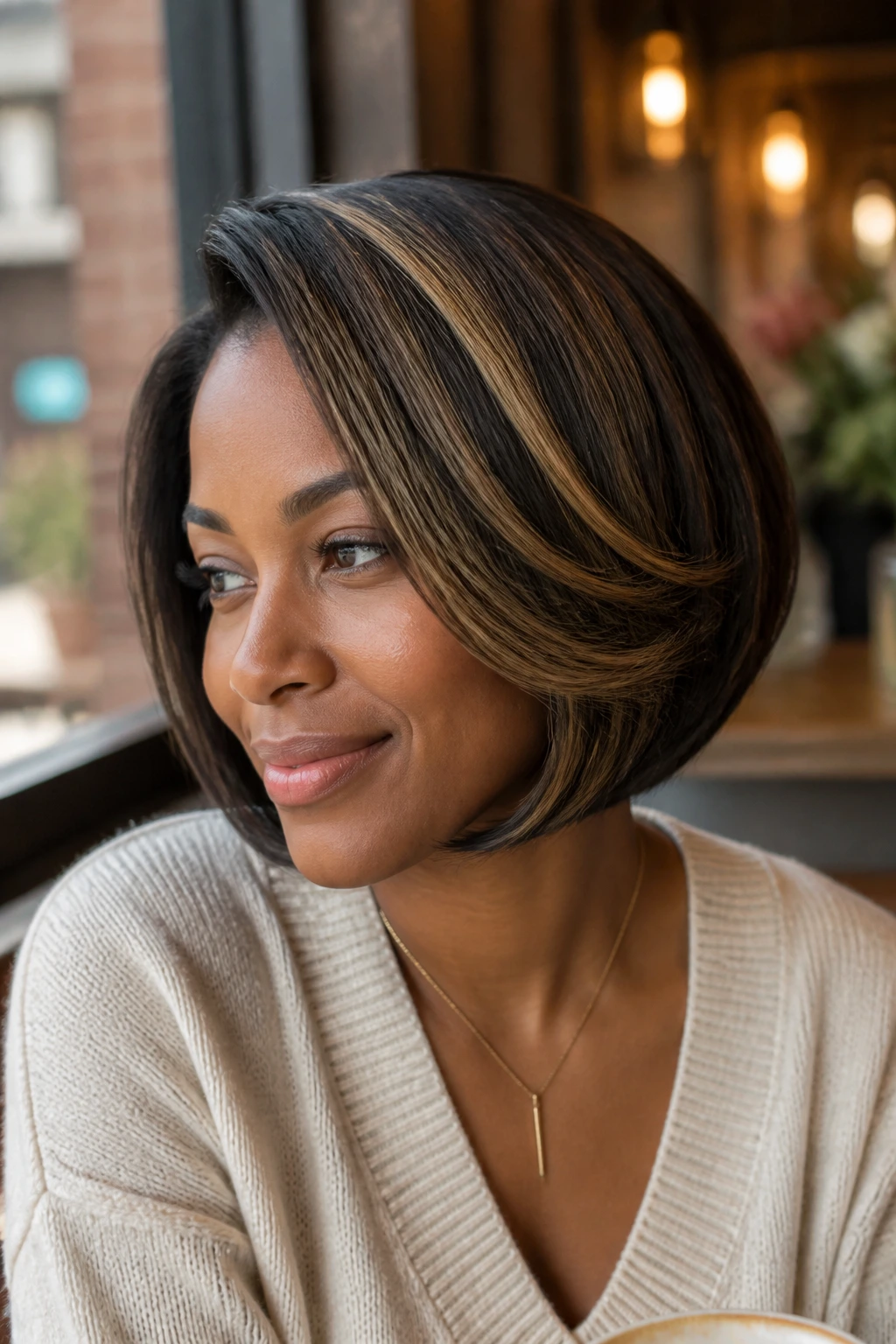
A rounded bob hugs the head a little more closely, which makes the hair look plush rather than angular. Buttery babylights lift the crown and the upper sides so the shape keeps some air in it.
This is a nice option if you like softness around the jaw. The rounding helps black hair sit neatly, and the babylights stop the style from turning into one dark dome. You do not want the color at the very bottom to do all the work.
The ends should still be light enough to move, but not so thin that they look wispy. That line matters. A good rounded bob should have weight.
15. Shoulder-Skimming Bob with Burgundy Babylights
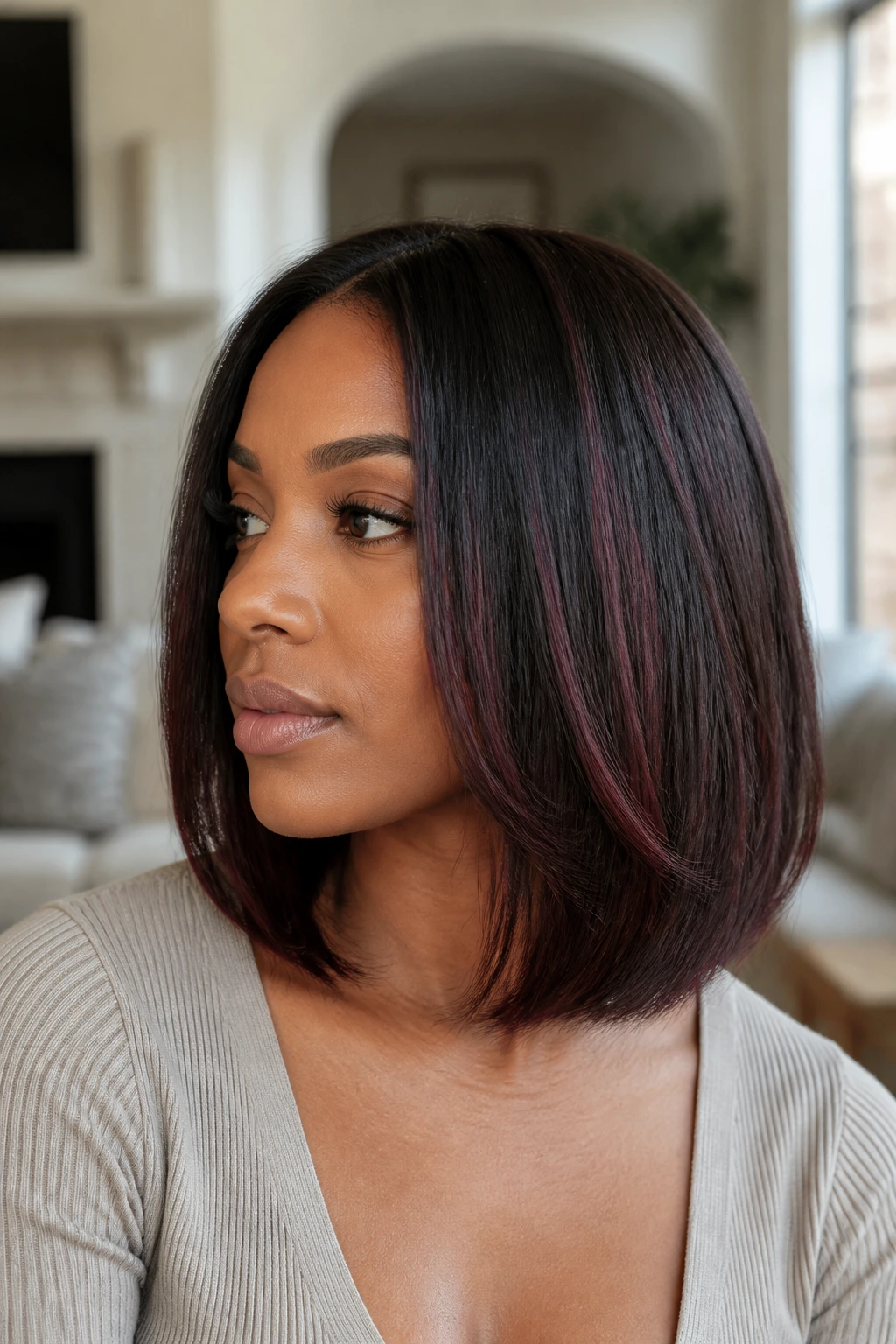
Burgundy is a smart choice when you want color that shows in indoor light but still feels grounded. On a shoulder-skimming lob, those fine red-violet threads can appear deep and wine-like, then brighten when the light hits the surface.
It works best when the babylights stay sparse and the base stays dark. Too much burgundy on black hair can turn the style costume-y. A little goes farther than most people think.
This one feels especially good in fall tones, but it’s not tied to any season. The color simply gives the haircut a bit more attitude. If you like lipstick tones on your hair, this is your lane.
16. Blunt-Base Lob with Dimensional Mocha Ends
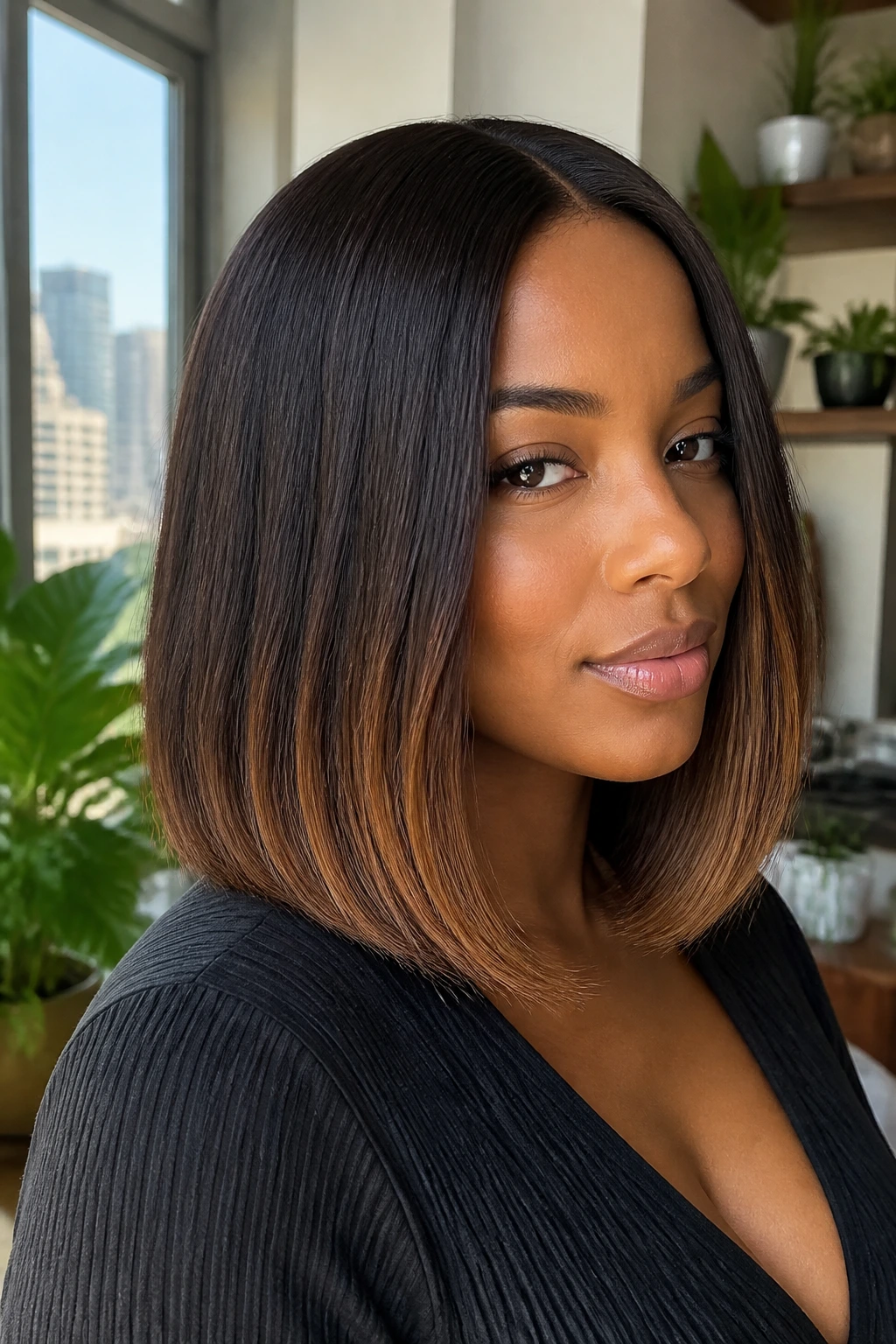
This is the disciplined version. The perimeter stays clean, almost blunt, but the ends are softened with long layers and mocha dimension so the bob doesn’t look heavy.
A lot of people think black hair must always be heavily layered to move. Not true. Sometimes a cleaner line with color at the ends is sharper, especially if your hair is medium density and you like structure. The mocha babylights keep the bottom from looking like a dark block.
What Makes It Different
The eye reads the clean line first, then notices the color movement second. That order is why this style feels expensive in person. It’s tidy, but not stiff.
17. Flipped-End Lob with Cinnamon Sugar Lights
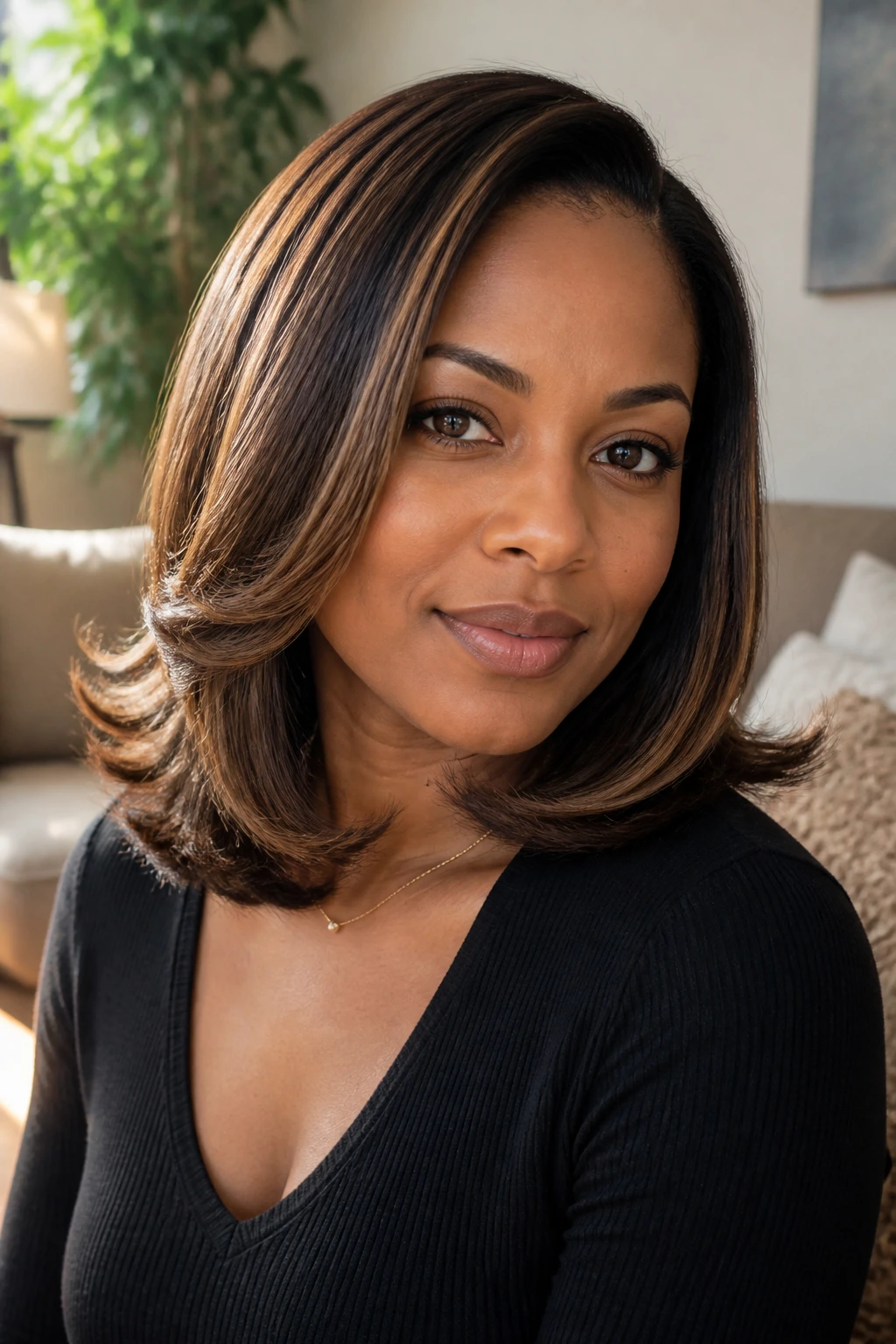
If you want a bob that feels playful without turning into a retro costume, this is the one. The ends flip out just a little, and the cinnamon sugar lights sit right where that movement happens.
The flipped finish works well on black hair because it adds width at the bottom without adding bulk. That sounds contradictory, but it isn’t. The layers create lift; the flip gives the cut motion. Put them together and you get a bob with personality.
A small-barrel iron or a quick brush-and-wrap blowout can create the finish. Don’t overflip the ends. One half-turn is enough.
18. Side-Part Glam Bob with Amber Babylights
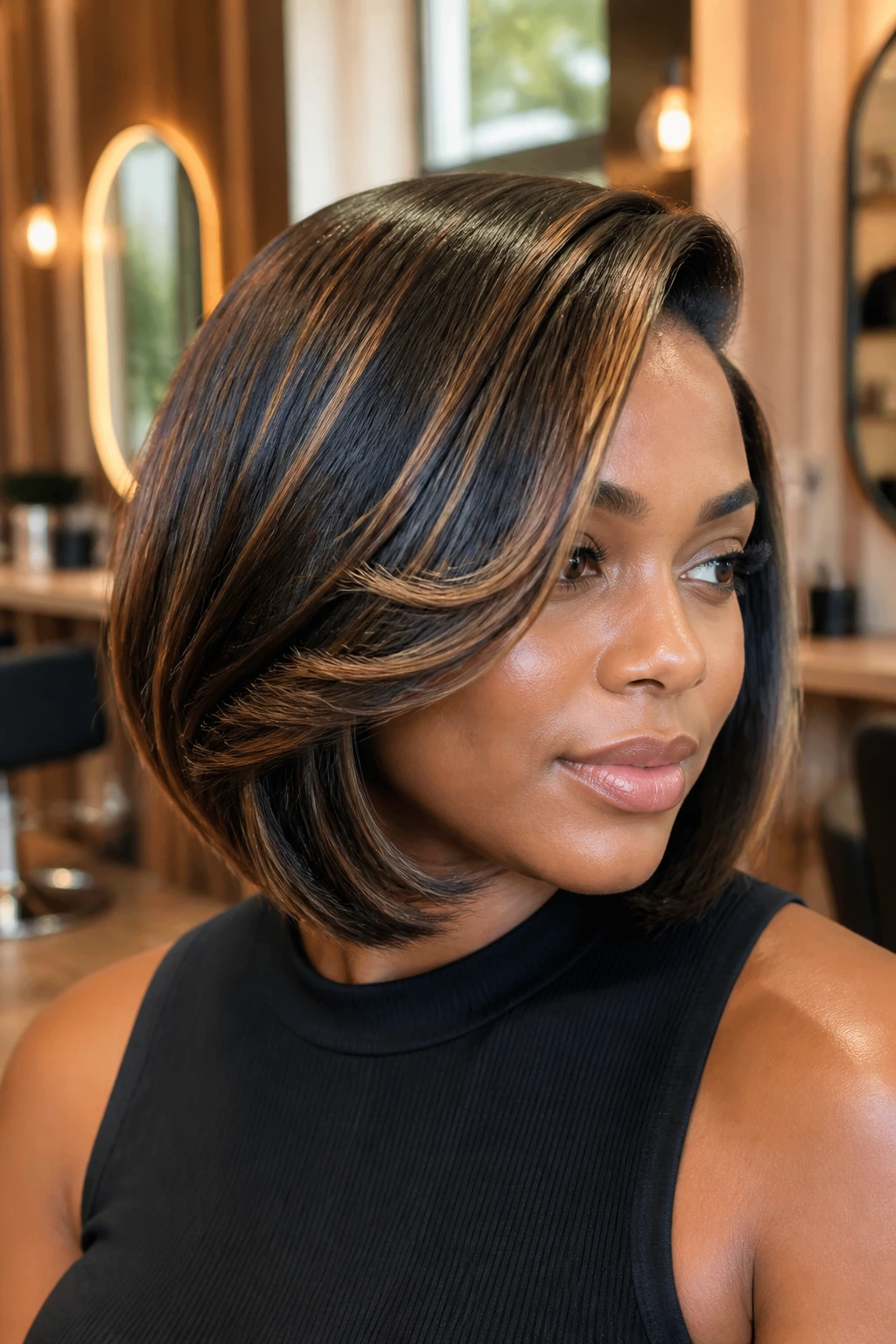
This style knows exactly what it’s doing. The side part builds height, the layered ends add swing, and the amber babylights warm up the face without washing out the base.
If you like a little evening energy in your everyday hair, this is a solid pick. Amber reads rich on dark hair, especially when it sits near the cheekbones and the top layer. You do not need a lot of brightness for this look to land.
How to Wear It
Keep the crown smooth and the ends lightly curled under or waved. A satin wrap at night will help preserve the shape, because once the side part loses its lift, the style loses some of its charm. It’s a simple haircut, but it likes structure.
19. Soft Shag Lob with Caramel and Copper Mix
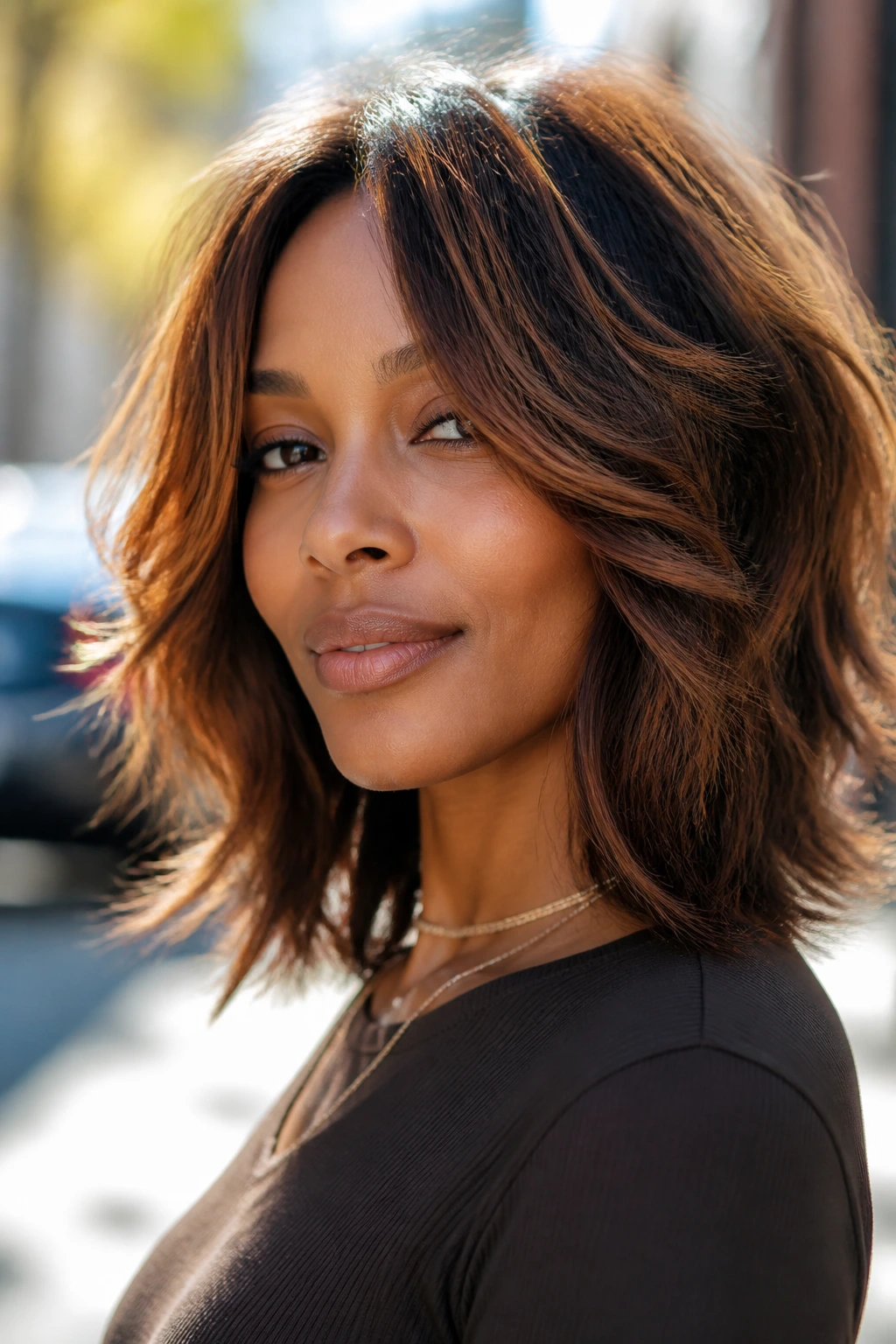
This is the loosest, airiest option in the group. The layers are more feathered, the ends are less precise, and the caramel-copper mix gives the hair a warm, slightly undone feel.
A soft shag on Black hair can be gorgeous when the layers are kept long enough to avoid puffing. That’s the catch. You want movement, not a triangle. The babylights help break up the shape, especially around the top and front.
If your hair has a lot of natural texture, this can be a very flattering cut because it works with bend instead of fighting it. The color is there to catch light, not to carry the whole style.
20. Wet-Look Wave Bob with Bronze Lights
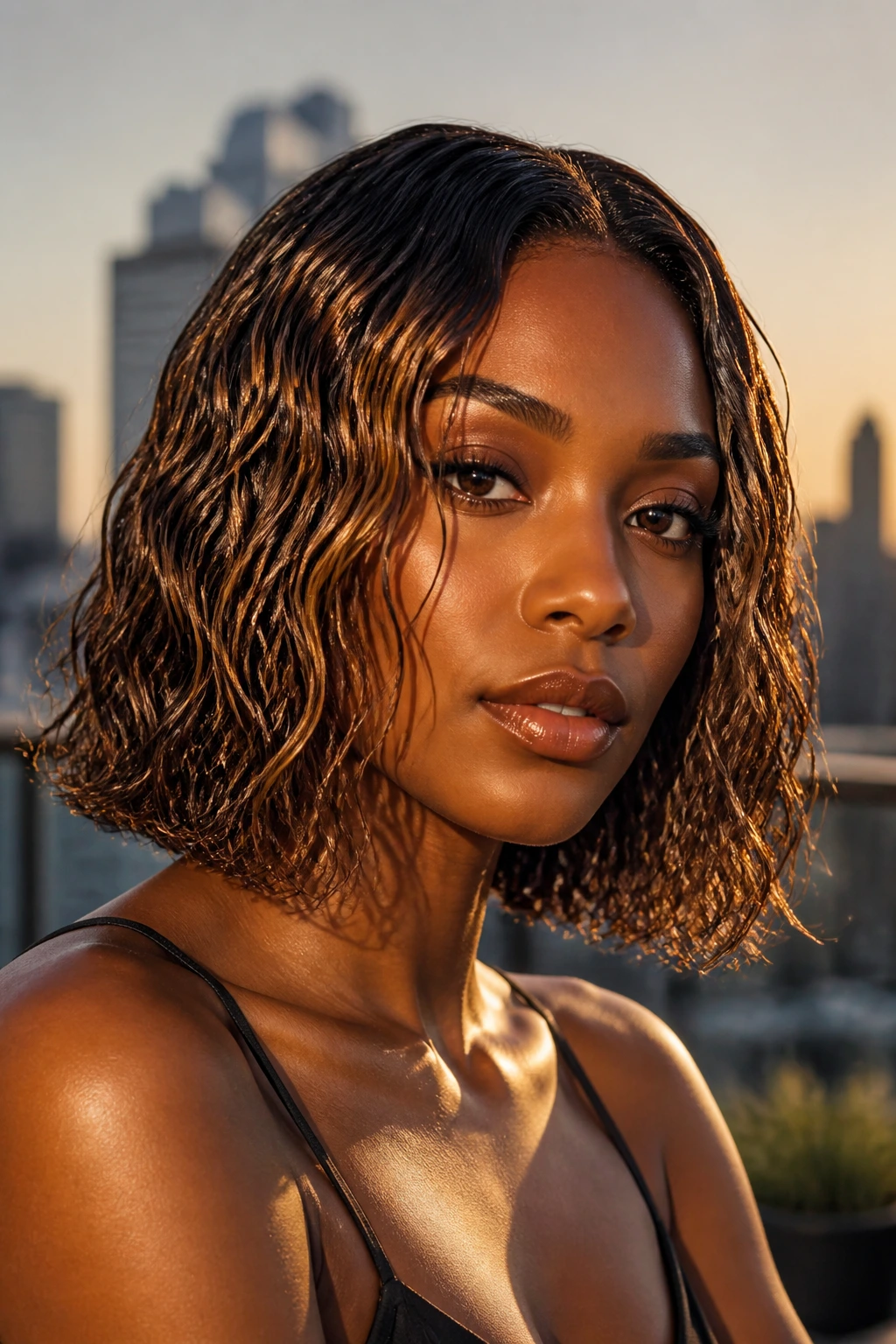
Wet-look waves on a bob are not for everyone, but they do something special with babylights. The bronze pieces gleam against the darker base, and the layered shape keeps the hair from looking pasted to the head.
The trick is to keep the product placement controlled. You want shine on the wave, not grease at the roots. A lightweight gel or curl cream, used sparingly, gives the hair that glossy finish without weighing down the layers.
This style suits a sharper cheekbone or a strong parting line. It has a little editorial attitude. Just don’t overdo the product. That’s how you turn bronze into residue.
21. Inverted Lob with Ash Brown Babylights
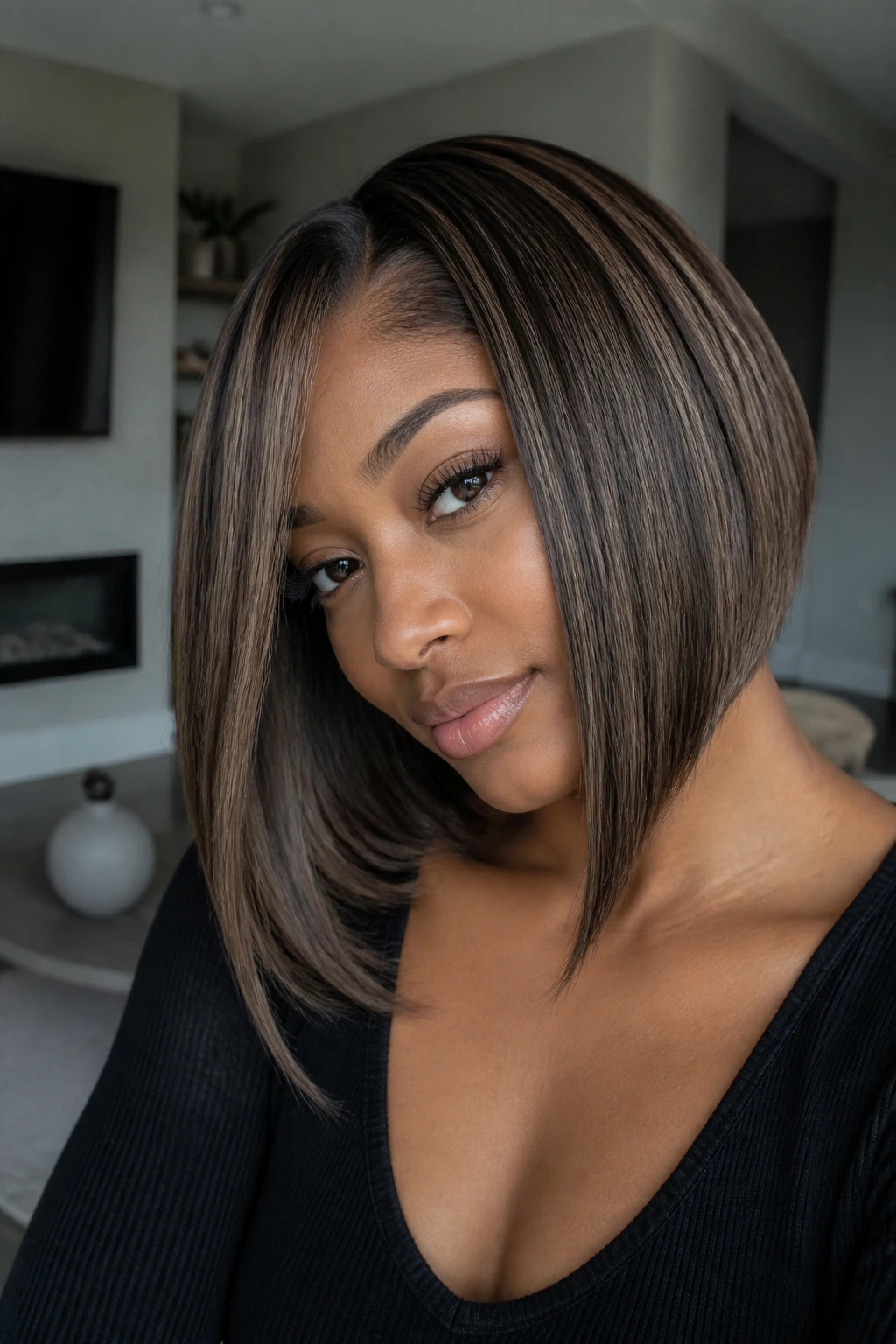
An inverted lob is all about structure: shorter in the back, longer in the front, with a clean curve that frames the neck and jaw. Ash brown babylights cool the whole shape down, which can look very sharp on deep hair if the tone is handled well.
The cool tone is the challenge and the appeal. Ash can look elegant, but if your base is warm, you need careful toning or the color can go flat. Ask for fine placement and a soft gloss, not a loud lift.
This cut works best when you like a sharper silhouette. It is not a messy, tousled haircut. It’s for the days when you want the line to do the talking.
22. Fringe Bob with Toffee Ribbons
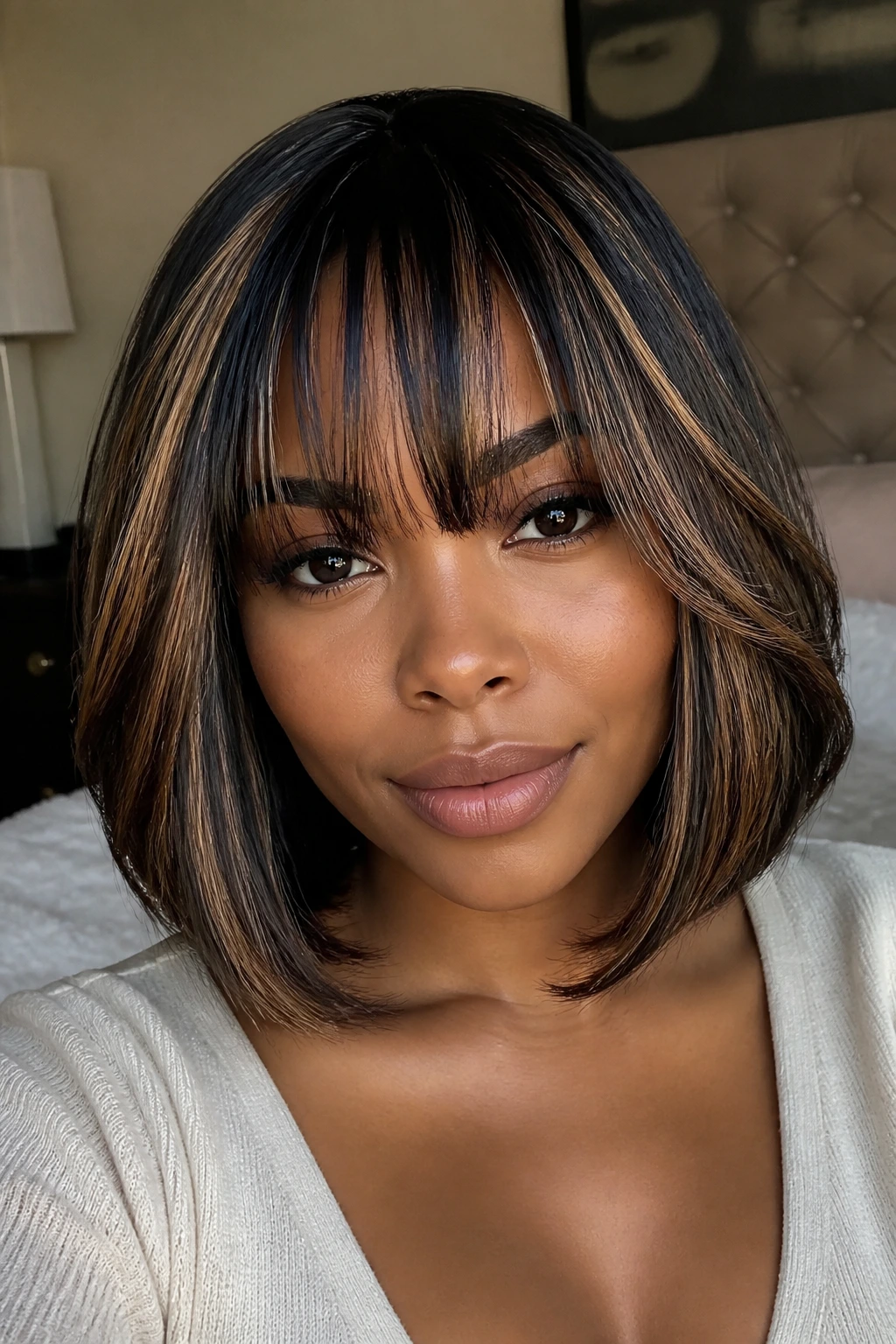
A fringe changes everything. A bob with bangs and long layers has a lot more movement around the face, and the toffee ribbons keep the front from looking heavy or dark.
The bangs should be soft, not thick and helmet-like. On Black hair, especially dense hair, a fringe can get bulky fast if the layers are cut too bluntly. Keep the ends airy and let the toffee babylights sit through the fringe edges and front pieces.
Who This Suits
It flatters people who want the eyes to do more work than the jawline. It also plays well with a side-swept finish if you don’t want to commit to the fringe every day.
23. Long Layered Bob with Soft Curls and Rose-Brown Lights
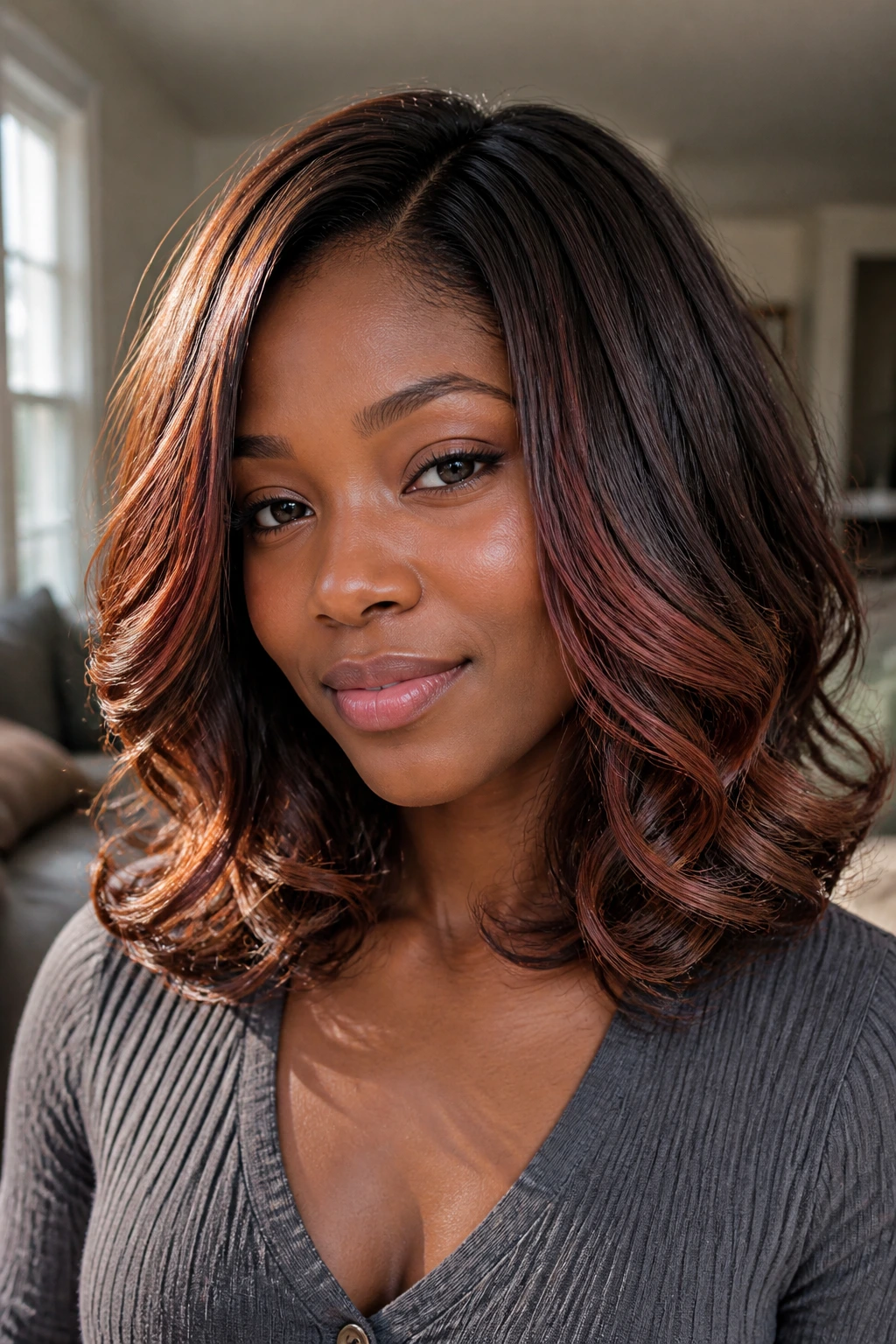
Rose-brown sounds delicate, and it is, but on dark hair it can look deeper than you’d expect. The curls help the shade catch in little pockets, so the color moves between warm brown and muted berry depending on the light.
This is one of the more romantic versions of the cut. The layers are long enough to let the curls fall, not stack. That keeps the silhouette smooth around the shoulders. If your hair holds curl for a while, this one can stretch between wash days without losing its shape.
It’s also a good choice if you want something softer than red but more interesting than straight brown.
24. Two-Tone Lob with Cool Brown Shadow and Warm Babylights
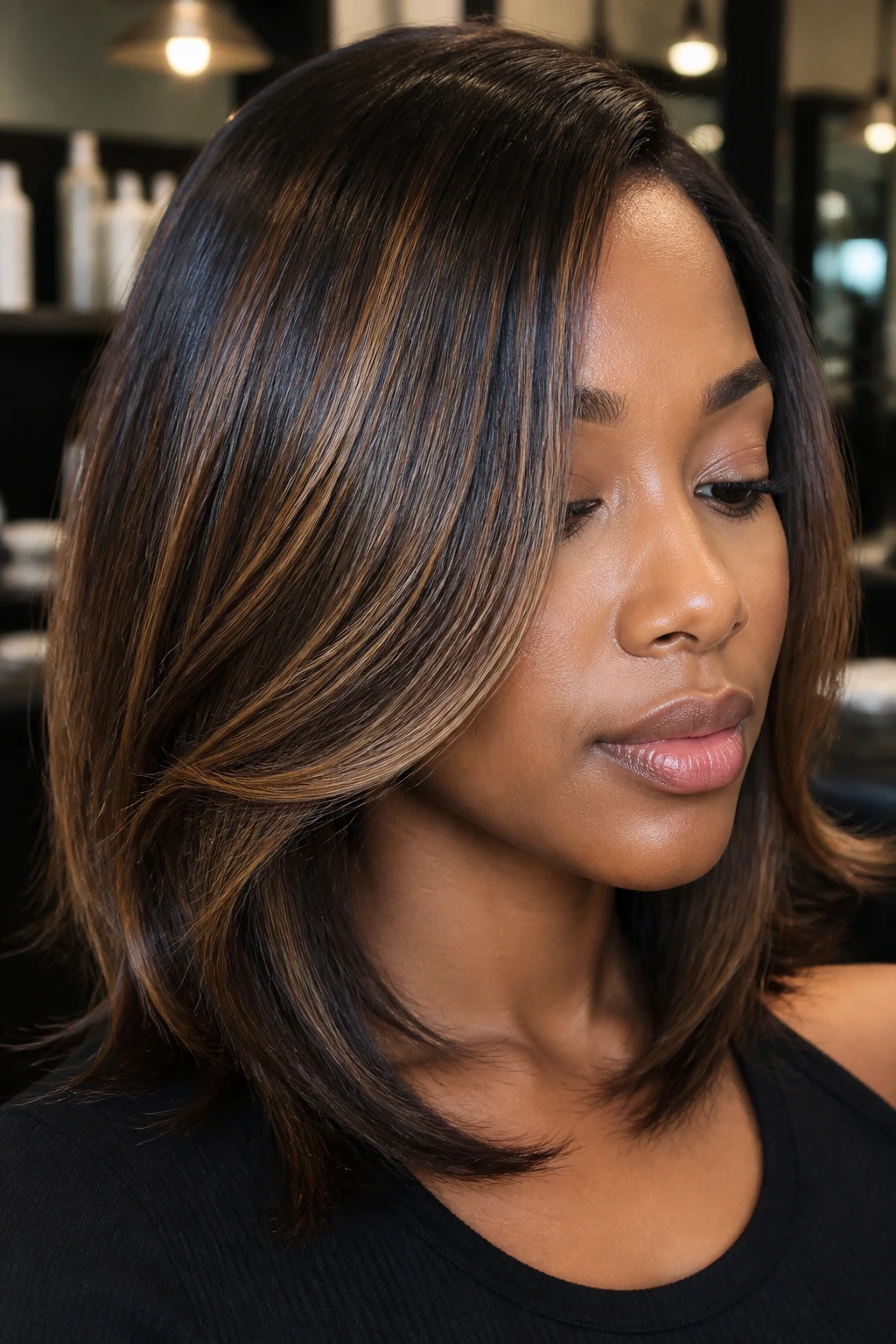
This is where contrast gets smart. The cooler shadow color underneath gives the cut depth, while the warm babylights on top keep the hair from looking flat or smoky.
That mix works because it copies what good color naturally does on dark hair: some pieces read warmer, some cooler, and the whole thing feels dimensional instead of painted on. The long layers help the two tones blend at the edges rather than separate into blocks.
If you like depth more than brightness, this is one of the strongest options in the whole set. It looks intentional without being loud. A rare combination.
25. Long Layered Bob with Airy Ends and Mocha-Bronze Babylights
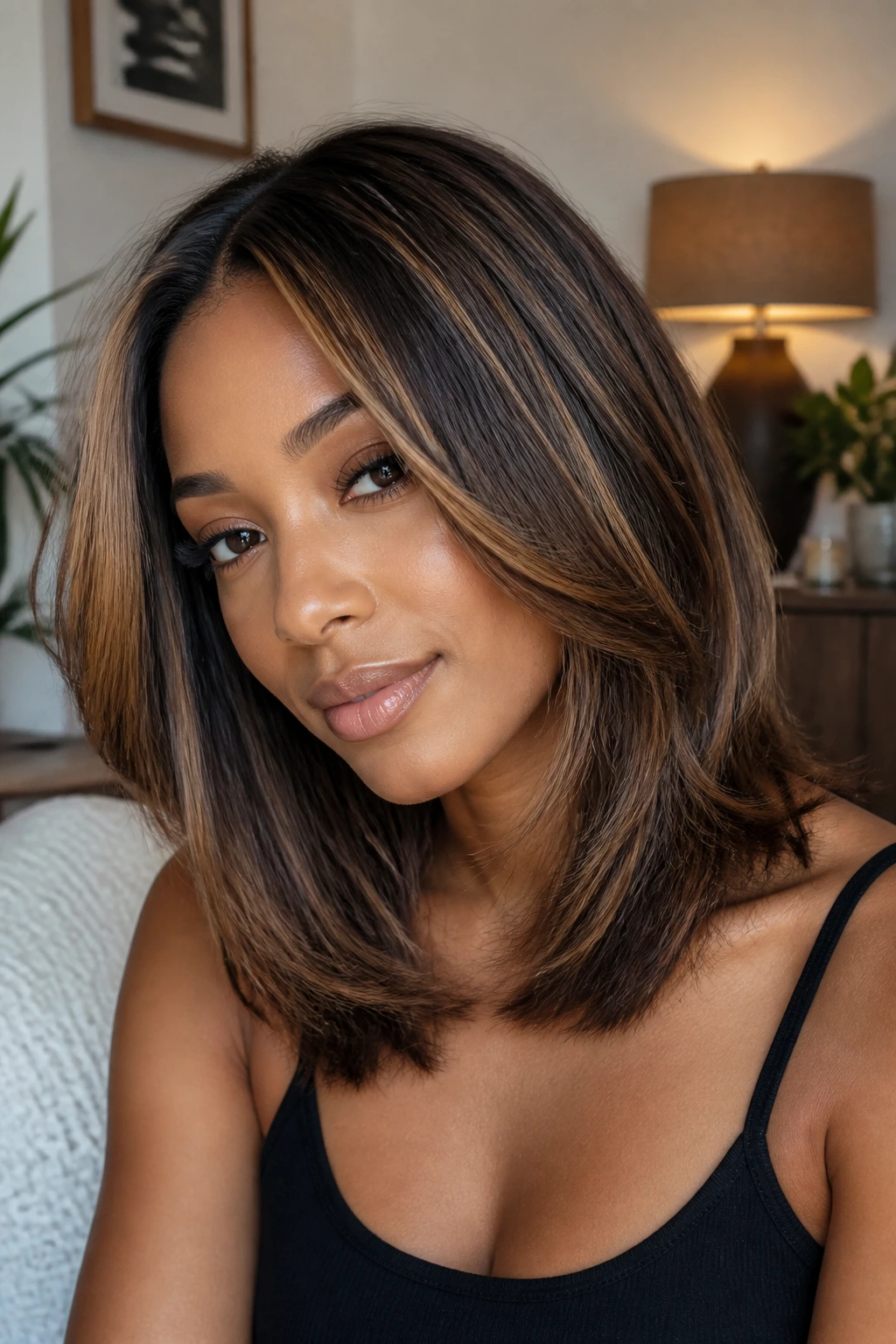
This final version is the most flexible one. The ends stay airy, the layers are long enough to move, and the mocha-bronze babylights sit right in that sweet spot between warm and deep.
If you want one style that can handle a flat iron, a loose wave, or a blown-out bend, this is it. The color is rich enough to read on dark hair, but not so bright that you get stuck maintaining it constantly. On Black hair, that matters. A style should fit your week, not just your camera roll.
The best part is how forgiving it is. Even on a tired morning, the shape still holds.
The Cut-and-Color Rhythm That Makes These Bobs Move
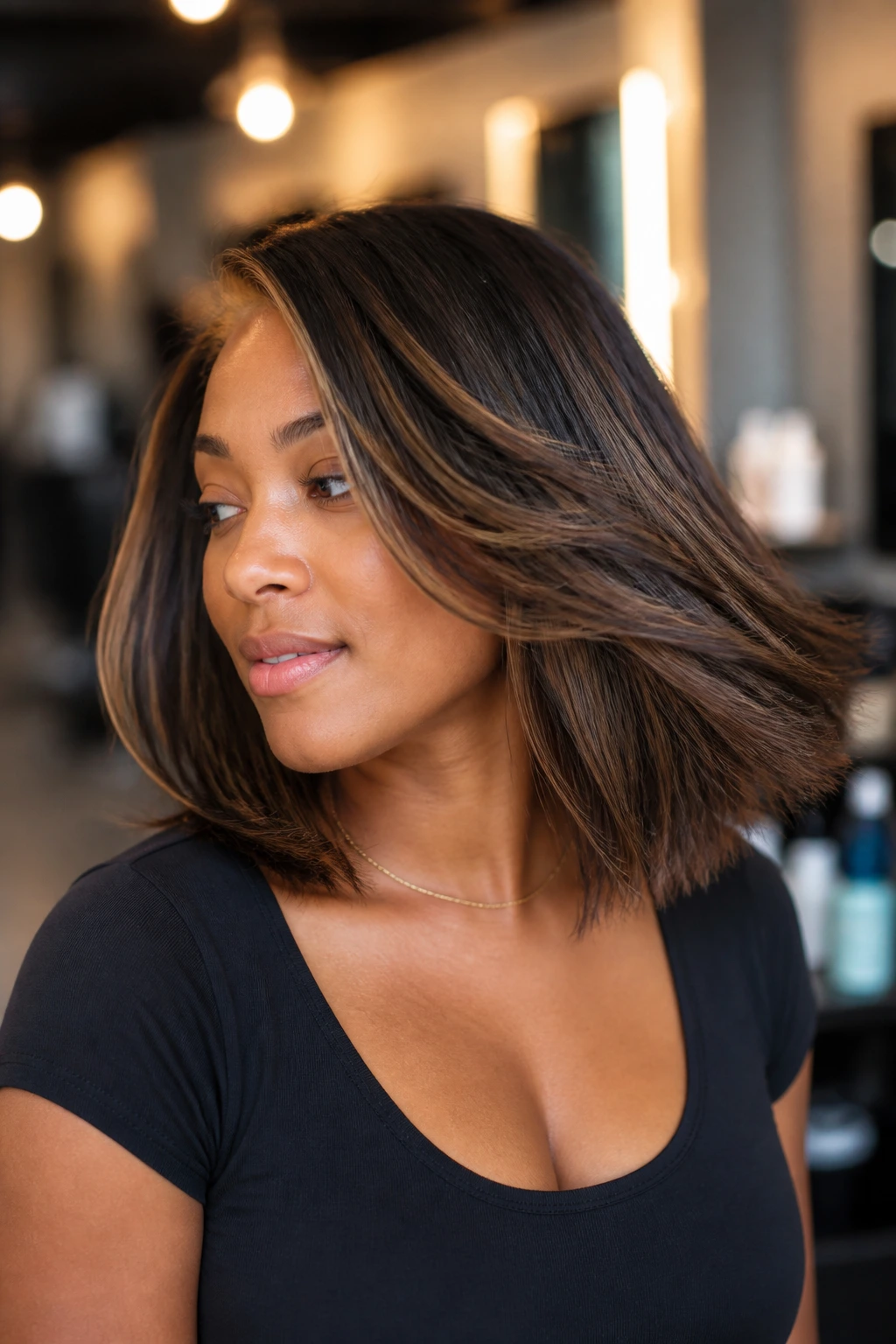
Long layered bobs with babylights work when the haircut and the color are doing two different jobs. The layers remove weight, bend the silhouette, and keep the ends from feeling square. The babylights sit on top of that shape and give it lift where the eye naturally lands — around the face, the crown, and the top layer that moves first.
Black hair rewards restraint here. Too much light turns the head into a patchwork. Too many short layers turn the shape into a puff. The sweet spot is usually long, controlled layers with a little depth left underneath. That lets the hair keep its body while still showing motion. If you’ve ever looked at a bob and thought, “Why does this one feel expensive and the other one feels heavy?” that’s usually the answer.
Where the Brightness Belongs
A good babylight placement keeps the brightest pieces close to the part, the temples, and the front edge of the cut. Those are the places the eye sees first. The back can stay a shade deeper. It gives the bob a spine.
And yes, lowlights matter too. They keep the lighter pieces from floating off the base and make the color look richer in natural light. On deep hair, that kind of contrast looks more believable than trying to brighten every strand.
Essential Tools for Styling and Care
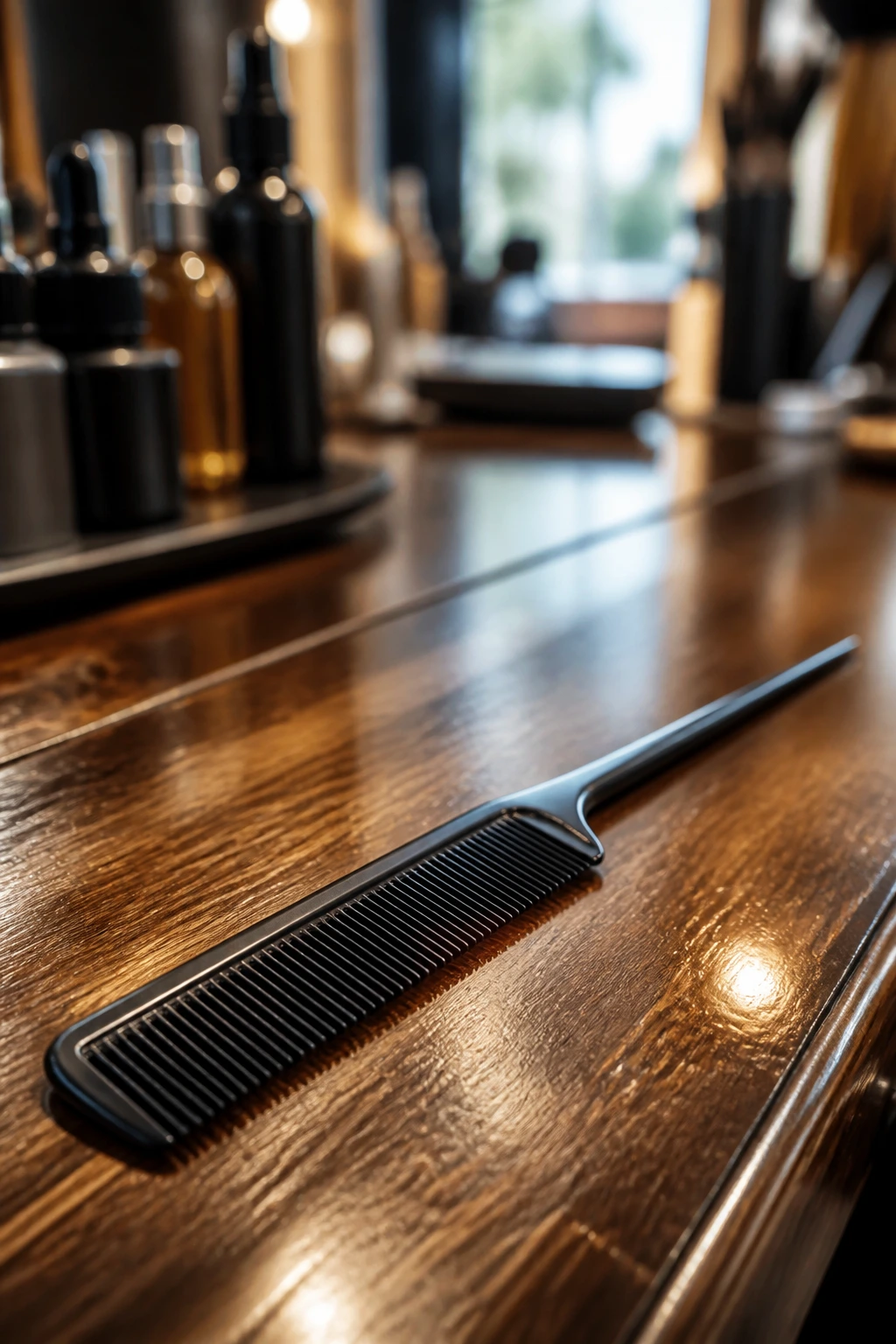
- Tail comb: Makes clean parts and helps section the hair for curls, heat styling, or detangling.
- Sectioning clips: Keep layers separated while you blow-dry or flat-iron, which matters when the hair is dense.
- Blow-dryer with a concentrator nozzle: Pushes the hair in the direction you want instead of blowing the layers into a puff.
- Round brush, 1.5 to 2 inches: Useful for curved ends, volume at the roots, and a smoother bob shape.
- 1.25-inch curling iron or wand: Good for loose bends that show off babylights without turning the style into tight curls.
- Flat iron with adjustable heat: Necessary for silk-pressed looks; lower settings are safer for color-treated hair.
- Heat protectant spray: Use it every time hot tools touch the hair, especially around the lightened pieces.
- Color-safe shampoo and conditioner: Helps the babylights stay brighter for longer and keeps the base from looking stripped.
- Deep conditioning mask: Keeps the ends from getting dry and rough, which shows fast on a bob.
- Satin bonnet or scarf: Keeps the shape intact overnight and cuts down on friction.
How to Brief Your Stylist and Choose the Right Tone
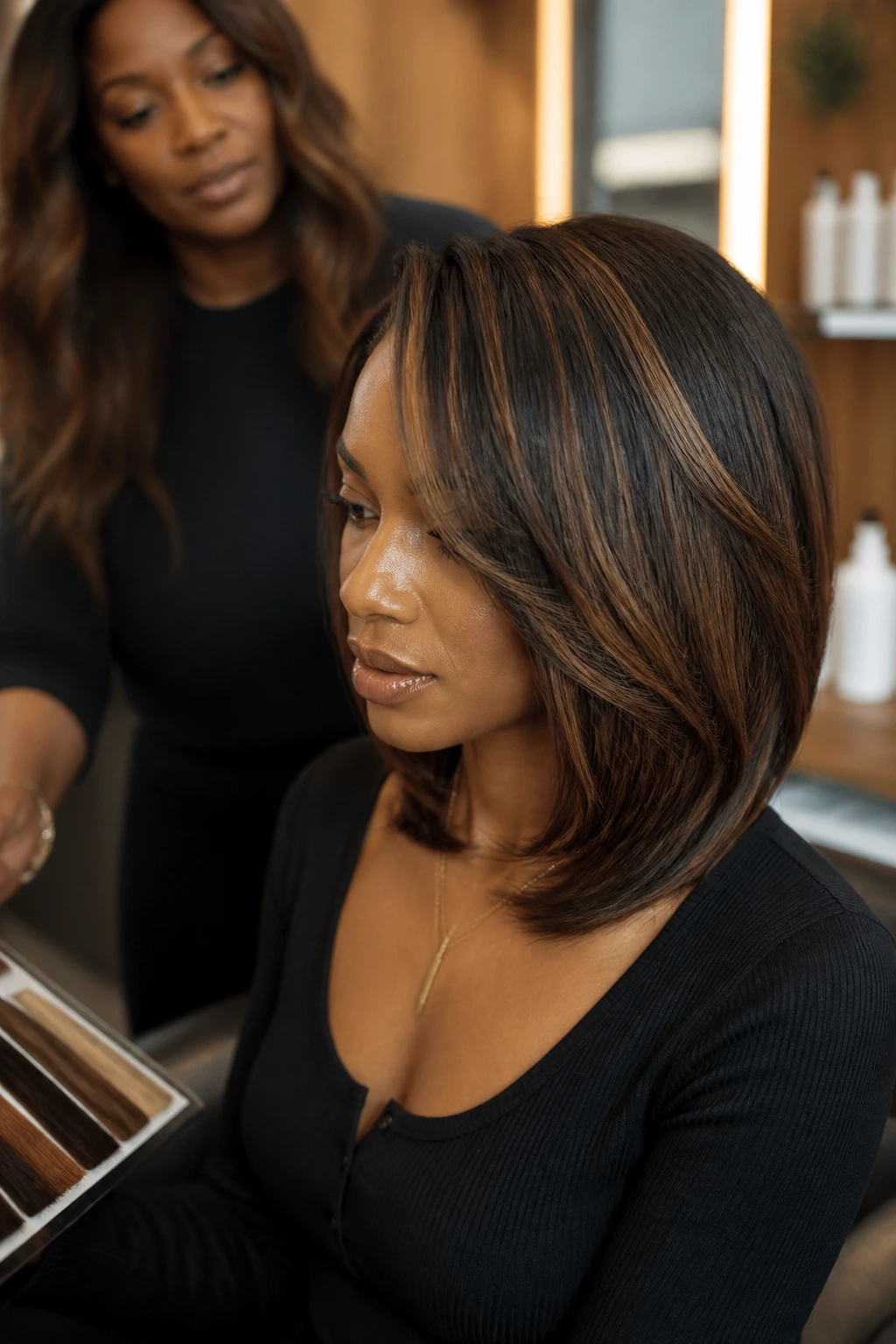
Bring more than one photo. One should show the shape you want, and one should show the finish you actually wear most of the time. If you live in curls, a picture of a bone-straight silk press will not help much. If you press your hair every two weeks, a tightly coiled reference won’t either. The shape changes with texture.
Ask for long layers with weight left at the perimeter. That one sentence matters. It tells the stylist not to cut so aggressively that the bob loses its body. For babylights, ask for ultrafine placement around the part, the front, and the upper layers, with the underlayer kept deeper for contrast. If you want low maintenance, say so. That usually pushes the tone a little closer to your base.
Warm shades — honey, caramel, chestnut, bronze, amber — usually read best on deep bases. Cool shades can work too, but they need more careful toning. If your hair has been relaxed, henna-dyed, or previously lightened, say that up front. That affects how the color lifts and how clean the final tone looks.
How to Wear These Bobs from Daytime to Evening
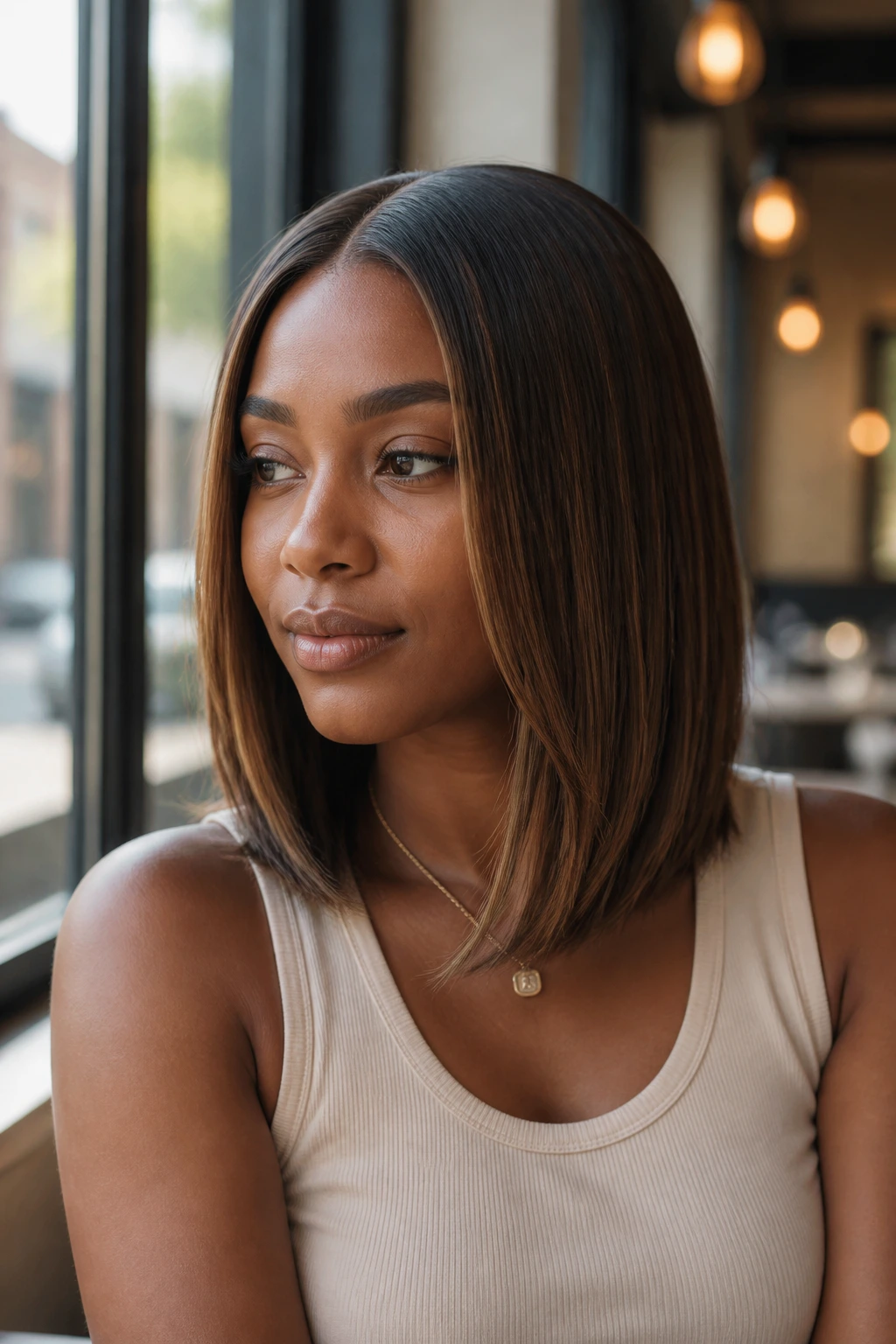
Straight and Sleek: A center part or deep side part, a light serum, and softly curled ends make the cut look polished without becoming stiff. This finish is where beige, honey, and chestnut babylights show their cleaner edges.
Soft Bend: Loose waves brushed apart once give the layers more room to move. It’s the easiest way to make caramel, bronze, or cinnamon ribbons show up without needing a lot of product.
Defined Curl: If your hair naturally curls, keep the shape longer and let the babylights sit where the curls separate. A diffuser can help, but don’t blast the hair until it frizzes out. That just hides the color.
Pinned Back or Tucked: One ear tucked or one side clipped back makes the face-framing pieces more visible. It’s a small trick, but on a bob, small tricks matter.
Small Tweaks That Make the Style Feel More Personal
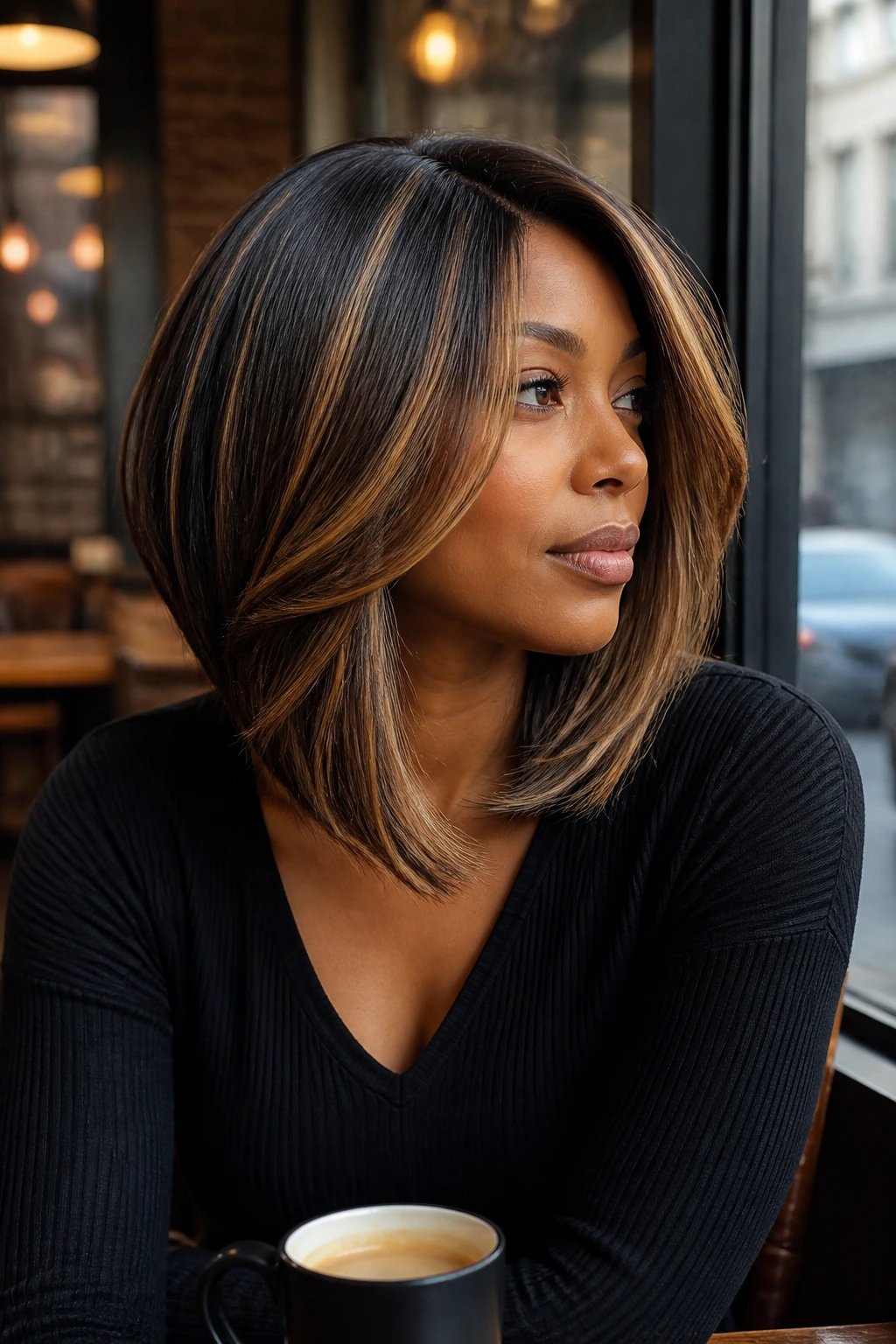
- Shine Boost: A pea-sized amount of serum on the midlengths and ends makes babylights reflect more cleanly, especially on silk-pressed hair.
- Customization: Move the part, deepen the side frame, or add a little asymmetry if you want the cut to feel less standard.
- Texture Switch: Wear the same bob straight one week and with a bend the next. The babylights will read differently each time.
- Heat Control: Keep the flat iron or curling iron only hot enough to do the job. Blazing heat makes color-treated ends look tired fast.
- Face-Frame Lift: If you want more brightness without going lighter everywhere, ask for the lightest pieces to sit from temple to cheekbone, not through the entire head.
Keeping the Layers Sharp and the Color Fresh
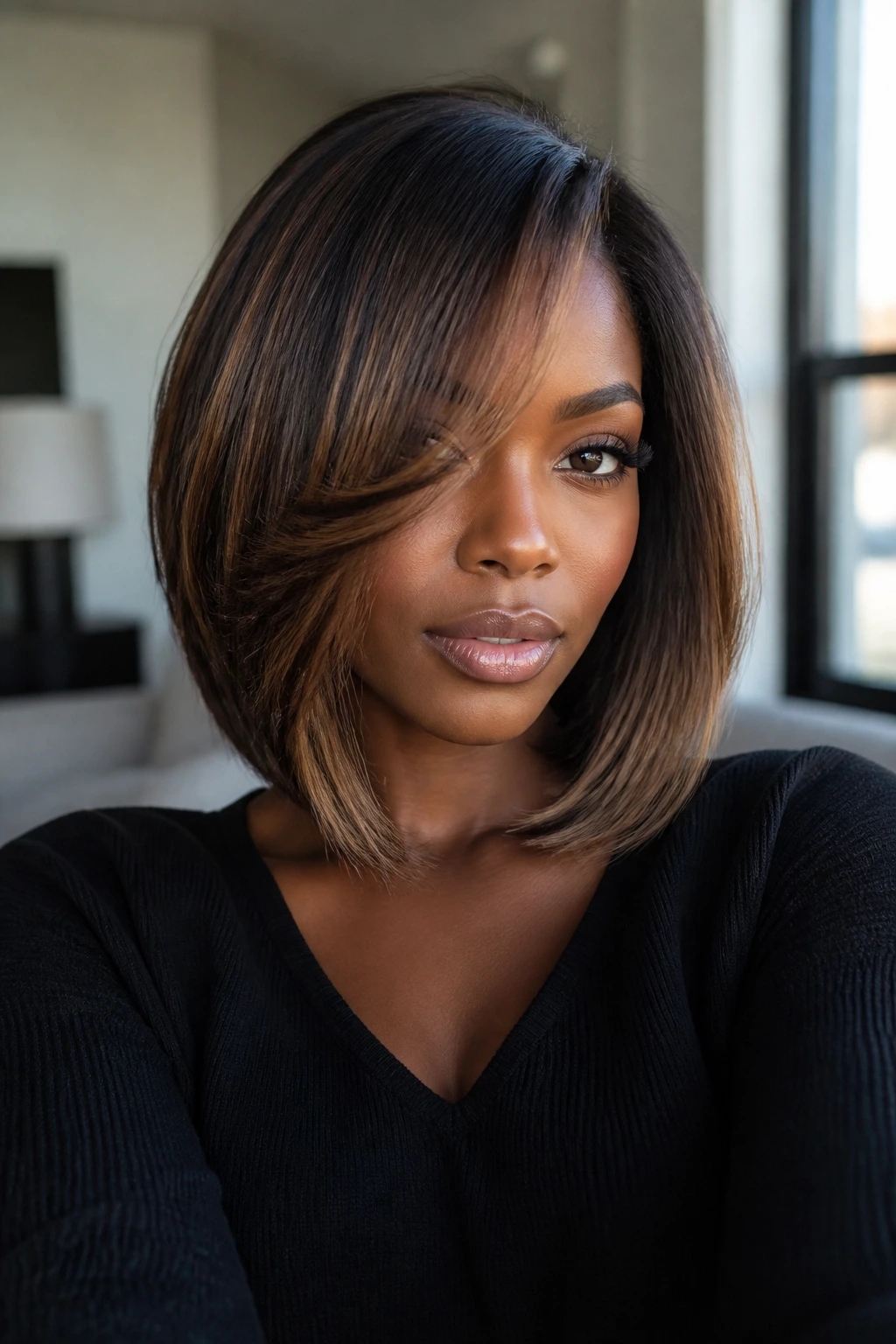
A long layered bob needs trims more often than a blunt cut. Plan on a shape cleanup every 8 to 10 weeks if you want the layers to keep their swing. If the ends start flipping weirdly or the front pieces lose their curve, that’s your sign.
Babylights usually need a tone refresh before they need a full recolor. Depending on how light they are, a gloss or toner every 6 to 8 weeks can keep the warmth from going brassy or the cool tones from turning flat. The American Academy of Dermatology’s basic advice on heat is boring, but useful: use heat protectant every time, and keep hot tools on the lowest setting that still does the job. That matters more on color-treated ends, which dry out faster.
Wash with a color-safe shampoo, and if your babylights are warm caramel or honey, skip purple shampoo unless the colorist specifically told you to use it. Purple shampoo can dull warm tones in a hurry. A deep mask once a week helps, especially if you press the hair often. At night, satin or silk is not optional if you want the layers to keep their shape.
Variations and Adaptations to Try
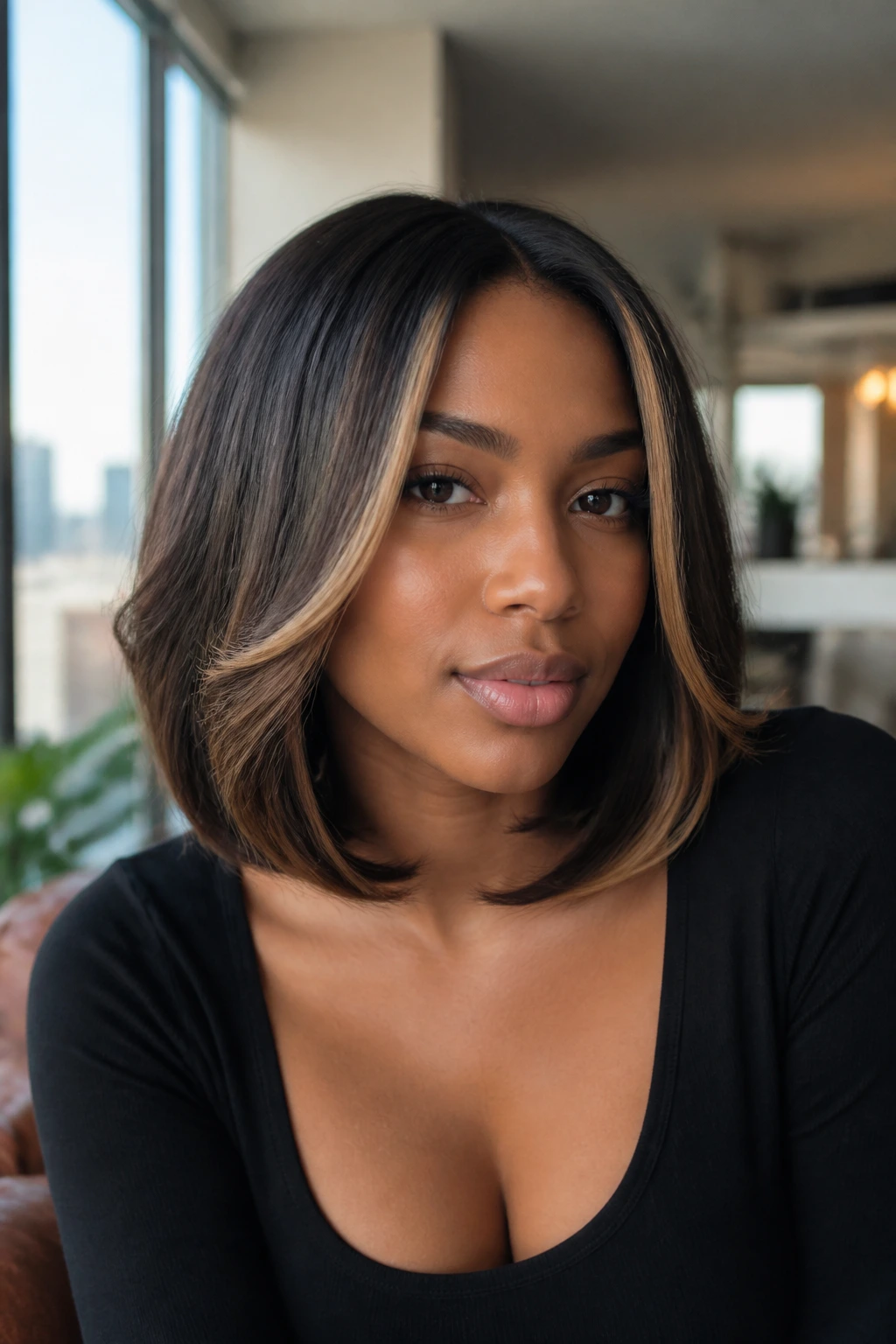
Silk-Press Sleek Mode: Keep the layers long and the babylights narrow, then wear the cut with a smooth middle or side part. This version shows the color cleanly and works well if you prefer a crisp finish over volume.
Defined-Curl Version: Ask for longer layers and babylights placed where the curls separate instead of all over the head. That keeps the shape readable when shrinkage kicks in.
Warm Glow Edit: Choose honey, caramel, or amber babylights with a little gloss on top. This is the easiest path if you want brightness without a high-contrast color jump.
Low-Contrast Brunette Version: Stay close to the base with mocha, chestnut, and soft bronze pieces. The result is subtler, grows out quietly, and tends to look especially good on very dark hair.
Bold Front Frame: Keep most of the hair deep and put the lightest pieces just around the face. That gives you the lift of babylights without needing to brighten the whole bob.
Common Mistakes That Flatten the Shape
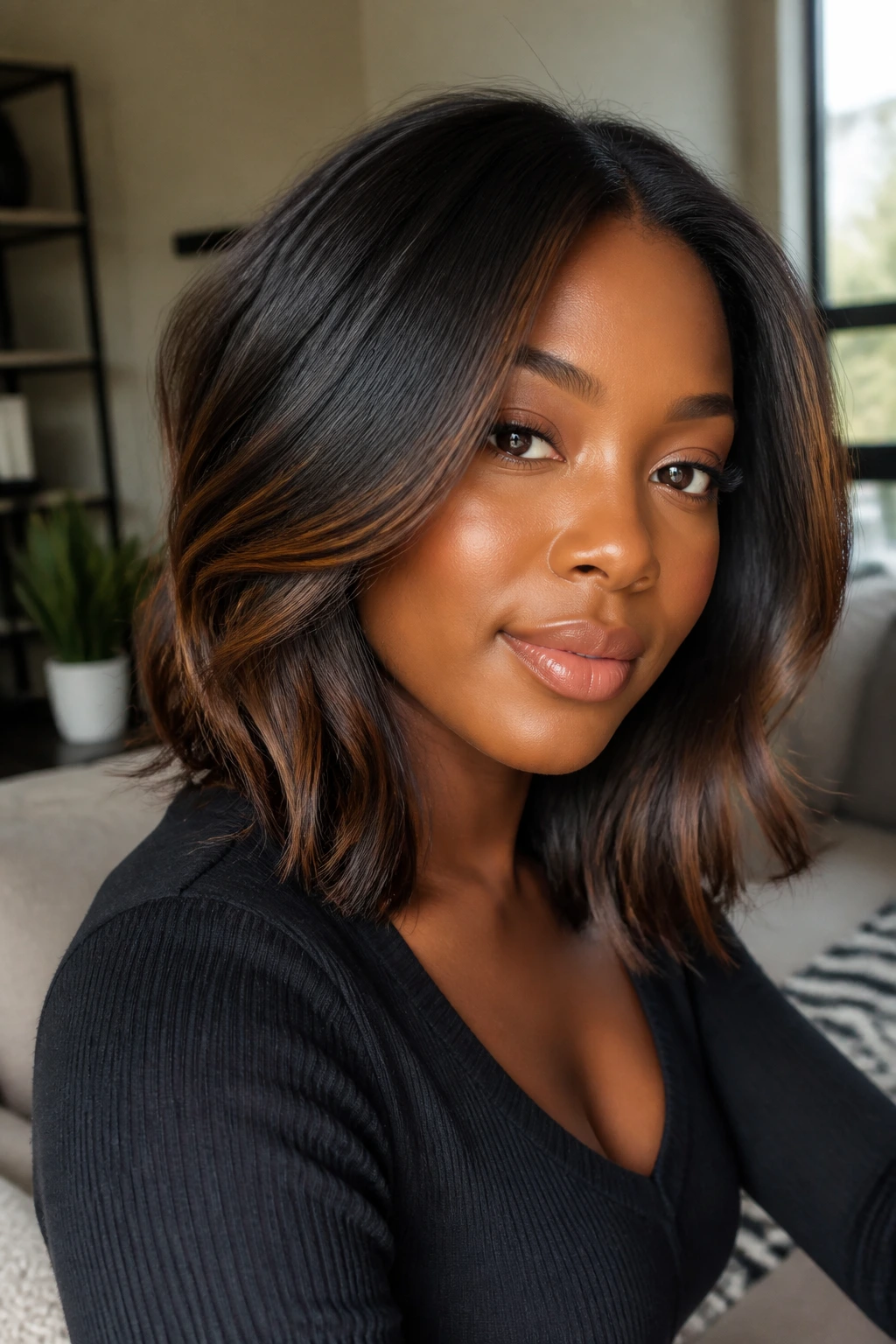
- Too many chunky highlights: Thick stripes can fight the cut and make dark hair look busy. The fix is finer placement — babylights, not broad foils.
- Layers cut too high: If the shortest layers sit too far up the crown, the bob can puff outward and lose its line. Keep the shortest face-framing layers long enough to move, not short enough to spike.
- Ignoring undertone: A cool ash tone on a warm base can look muddy; too much gold on a cool base can look brassy. Ask for a tone that matches your skin and base color, then gloss it if needed.
- Skipping trims: Once the ends fray, the color looks thinner and the whole bob loses its shape. A trim every 8 to 10 weeks keeps the edge clean.
- Using too much oil or cream: Heavy products make layered bobs collapse, especially around the front. Use a light hand and keep richer creams away from the roots.
Frequently Asked Questions About Long Layered Bobs with Babylights
Can Black women wear babylights on natural hair without straightening it?
Yes, but the layers should be cut with shrinkage in mind. A stylist who understands textured hair will usually leave the shape longer and place the babylights where the curls and coils actually show movement.
What babylight colors look best on dark brown or black hair?
Honey, caramel, chestnut, bronze, amber, and soft cinnamon are the easiest matches. They brighten the hair without making the contrast look harsh.
Will a long layered bob work on very dense hair?
It can work very well, as long as the layers remove weight in the right places. The mistake is taking too much hair off the crown and leaving the bottom too thin.
How often should I refresh the color?
A gloss or toner every 6 to 8 weeks keeps the babylights looking clean. A full color refresh usually comes later, depending on how light the highlights are and how often you heat-style.
Can I wear this cut both straight and curly?
Yes, and that’s one of the best things about it. The same layer map can look sleek in a silk press and softer in curls if the cut was planned for both finishes.
What if my hair is fine and tends to fall flat?
Keep the layers longer and ask for babylights near the top and front instead of all over. Too much thinning or too much product will make fine hair collapse faster than the color can save it.
How do I stop the ends from looking thin?
Don’t let the layers creep too short, and don’t over-process the babylights on the ends. A small trim, a good mask, and light styling products keep the bottom line looking full.
Can this style work with a sew-in or wig?
Yes, if the install or unit has a layered perimeter and soft face-framing pieces. Ask for babylight placement around the part and front so the color still reads as dimensional.
The Shape That Keeps Its Edge
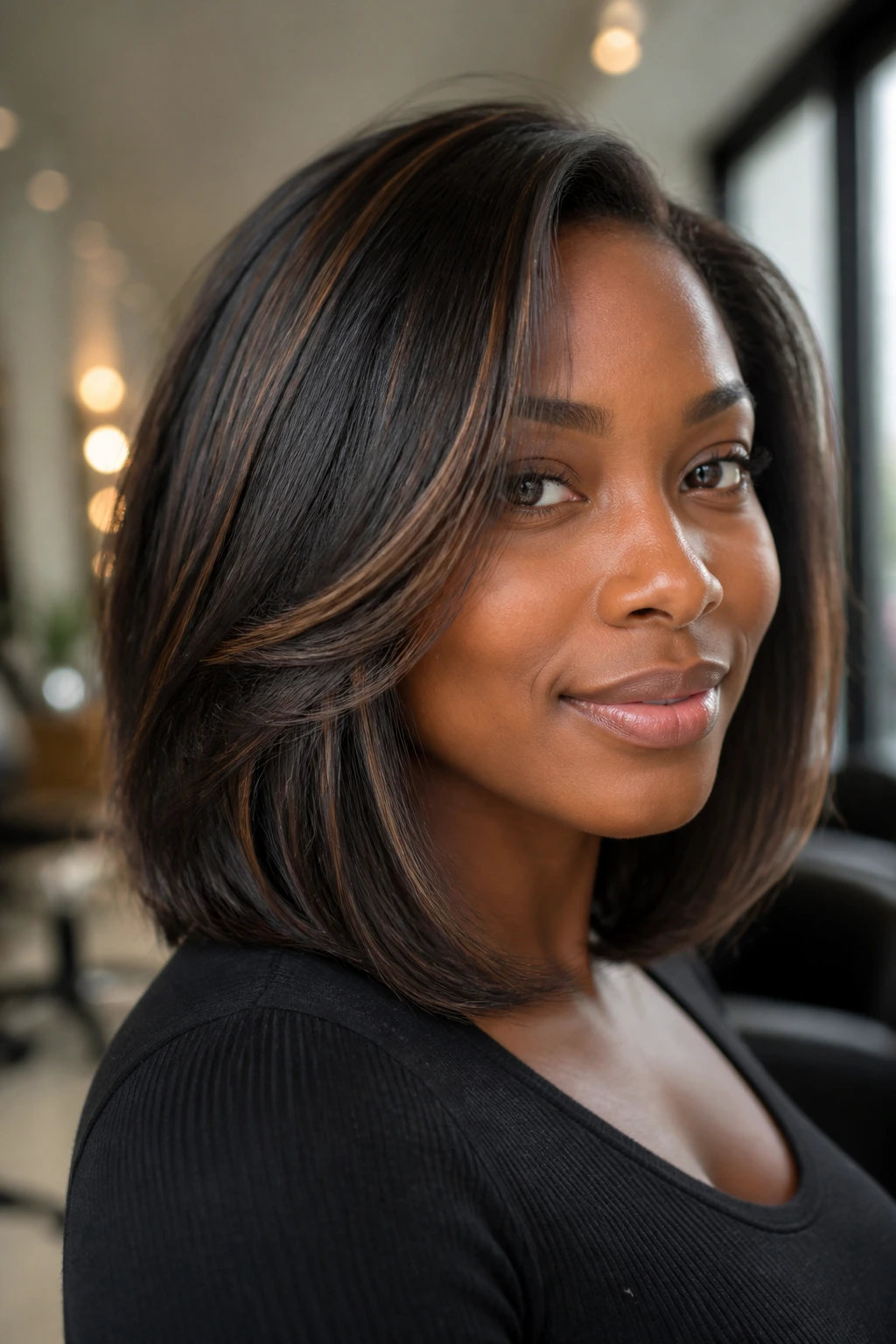
A good long layered bob on Black hair should do two things at once: hold its outline and move when you move. Babylights help with the second part, but only if the cut gives them a place to land. Thin light pieces, a thoughtful layer map, and a tone that respects the base color will do more than a loud color job ever could.
That’s the part people miss. The shine is not the whole story. The real win is when the bob still looks right after a long day, a little humidity, and one too many hands running through it. Pick the version that matches how you wear your hair most often, and the style will keep paying rent long after the salon chair.