



Thin medium-length hair has a way of looking flat at the roots and a little see-through at the ends, especially when the cut is too tidy. Choppy shag haircuts for medium hair with thin hair solve that problem by breaking the silhouette up before anyone notices the missing density.
The trick is not to shred the hair until it looks wispy. That’s the mistake people make when they hear “shag” and picture a heavy razoring session from the nape to the fringe. A good shag on thinner hair keeps enough shape at the perimeter to look full, then adds movement higher up where the eye needs it most.
Medium length is the sweet spot here. Long enough to wear up, short enough to hold some bounce, and just heavy enough to avoid that stringy, over-layered look that can happen when thin hair is pushed too far. The best versions below lean soft, choppy, feathered, or a little rebellious—but they all have one thing in common: they make the hair look like it has a job to do.
Why These Cuts Earn Their Keep
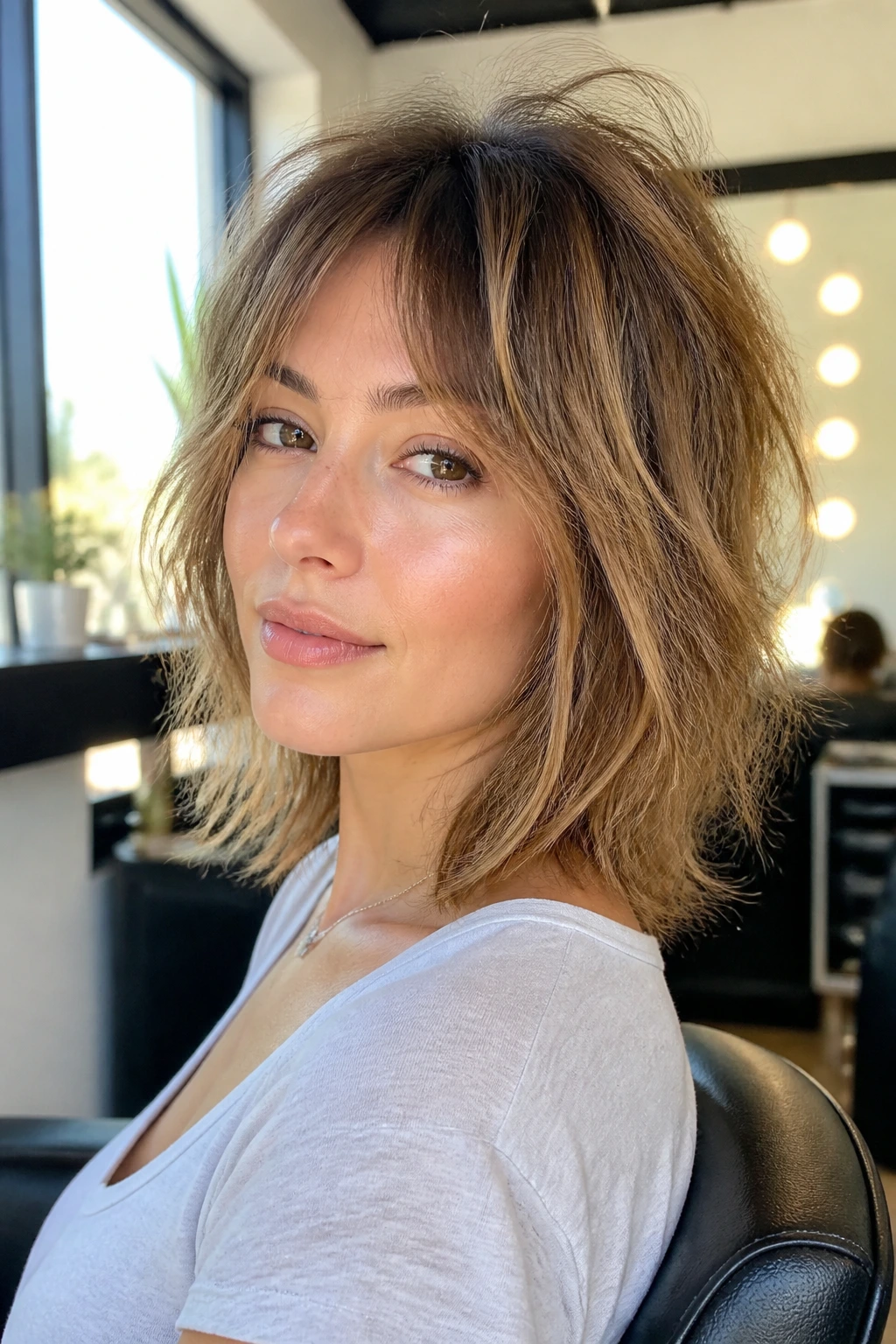
-
They build lift where thin hair usually collapses: Shorter crown pieces and cheekbone layers keep the top from lying like a sheet against the head.
-
They protect the ends from looking sparse: A stronger bottom line means you get movement without that ratty, see-through hemline.
-
They work with lazy styling: A shag that’s cut well still looks intentional after a rough-dry, a little mousse, and a scrunch.
-
They make medium length feel lighter: The hair moves when you turn your head instead of hanging in one heavy block.
-
They can be tuned up or down: The same haircut can read soft and airy or edge-forward, depending on how much texture your stylist builds in.
Why Choppy Shags Make Thin Medium Hair Look Intentional
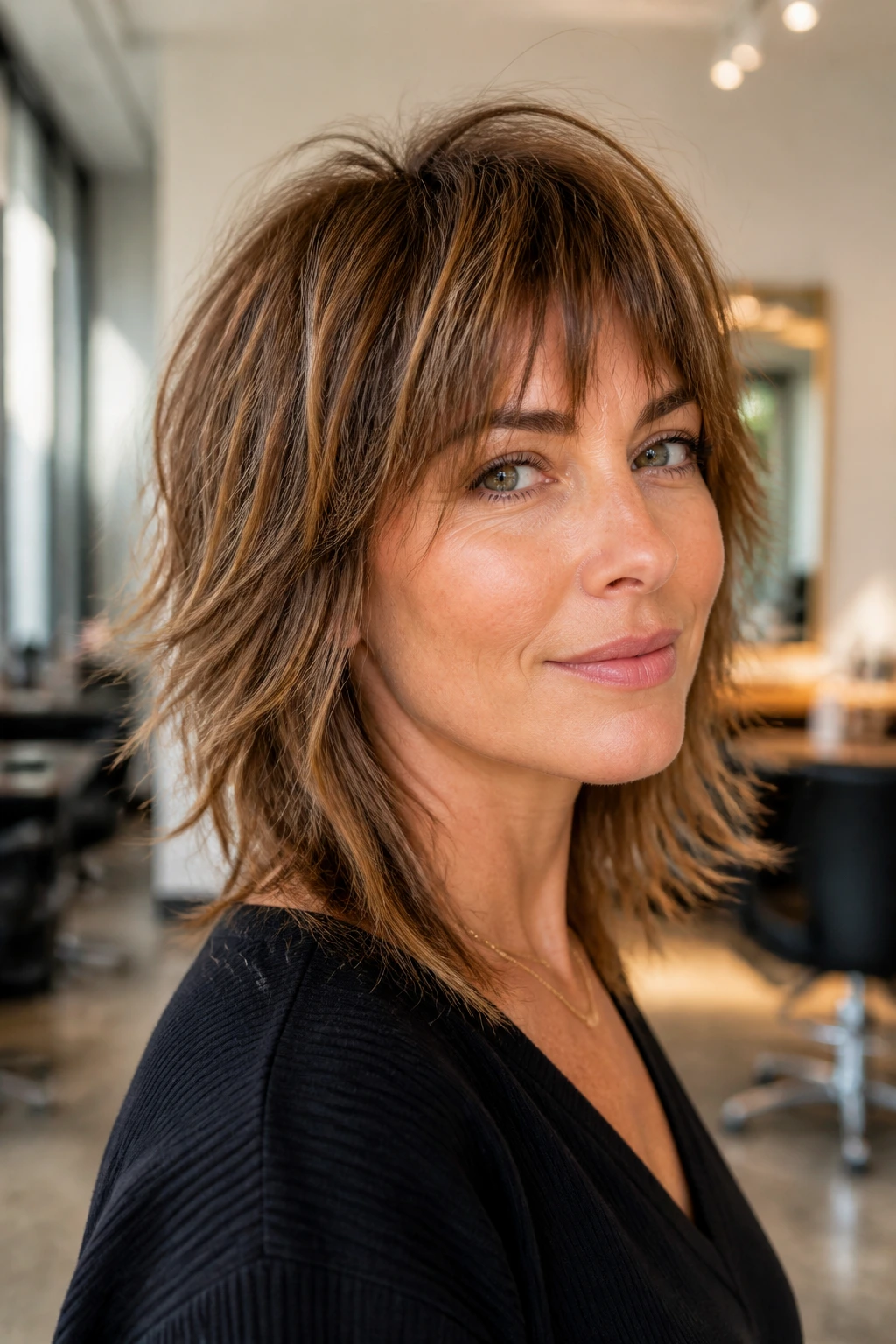
A blunt lob can be handsome on thick hair. On thinner medium hair, though, it often turns into a curtain with a weak bottom edge. The eye goes straight to the ends, and if those ends are sparse, the whole cut looks flatter than it should.
Keep the Hemline Dense
The best shag still needs a line at the bottom. That line can be soft, feathered, or slightly curved, but it should exist. When the perimeter has enough weight, the eye reads fullness first and texture second.
Let the Crown Do the Lifting
Thin hair usually needs help at the top, not a lot of help at the bottom. A few shorter crown pieces, cut with restraint, can create that little puff at the roots that makes the whole head look fuller. Too much of it, though, and the top starts to look chopped up in a bad way. There’s a fine line.
Put Movement Where the Eye Wants It
Cheekbone layers, curtain bangs, side-swept fringe, and face-framing pieces all work because they create motion around the face. That movement distracts from lack of density at the ends. It’s a neat trick, and it works best when the layers are soft enough to move, not so short that they separate into strings.
1. Collarbone Shag with Curtain Bangs
This is the safest, easiest place to start if you want choppiness without a lot of drama. The collarbone length gives thin hair enough weight to hang properly, while the curtain bangs split the front and keep the cut from feeling heavy around the face.
Why It Works
The length lands in that useful middle zone where medium hair still feels like medium hair. You keep enough heft at the ends to avoid the hollow look, but the face-framing pieces give movement every time the hair shifts. Ask for soft point cutting through the front, not a lot of razoring through the bottom.
Quick details
- Best for hair that goes flat at the crown but still has decent length through the ends.
- Works well with a center part or a slight off-center part.
- Looks especially good when the bangs fall around cheek level and graze the lashes.
Tip: Keep the layers below the chin line if your ends are fine. That one choice changes the whole cut.
2. Razor-Cut Shag with Cheekbone Layers
A razor cut can be lovely on thin hair when the stylist uses a light hand. The movement is airy, the edges are soft, and the cheekbone layers give the face a little lift without asking the whole head to do too much.
The key is restraint. If the razor goes all the way through the ends, the cut can fray fast and start to look fluffy in the wrong way. Tell your stylist you want texture through the mid-lengths and face frame, but you want the perimeter to stay clean enough to keep its shape.
This one is for someone who likes a slightly undone finish. It looks best with a quick blow-dry and a bit of texture spray, not a pin-straight pass with a flat iron.
3. Soft Wolf Cut with Full Ends
A wolf cut can scare people off because the word sounds aggressive, but the soft version is more wearable than its reputation suggests. On medium thin hair, the trick is keeping the nape tapered while leaving the ends full enough to read as a shape, not a wispy tail.
What makes it different
- The top has more lift than a classic shag, but the bottom stays usable.
- The layers are shorter around the crown and longer around the jaw.
- The whole cut looks better a little messy than overly polished.
If your hair naturally bends or kinks a little, this one can look great with almost no effort. If your hair is pin-straight, you’ll need a round brush or a bend from a curling iron to keep the shape alive.
4. Invisible-Layer Shag

This is the shy one in the group. It gives you shag energy without screaming “I got layers” every time you walk into a room.
The idea is to build movement inside the haircut instead of carving obvious steps into it. That makes a lot of sense for thinner hair, because the top gets some lift and the ends still look dense. The result reads soft and easy, not chopped to pieces.
Best when you want:
- A cut that grows out neatly
- Texture without obvious chunking
- A shape that still works in a ponytail
Ask for invisible layers or internal layering, and make sure the stylist doesn’t over-thin the lower half. That bottom line is the difference between “airy” and “see-through.”
5. Bottleneck Bang Shag
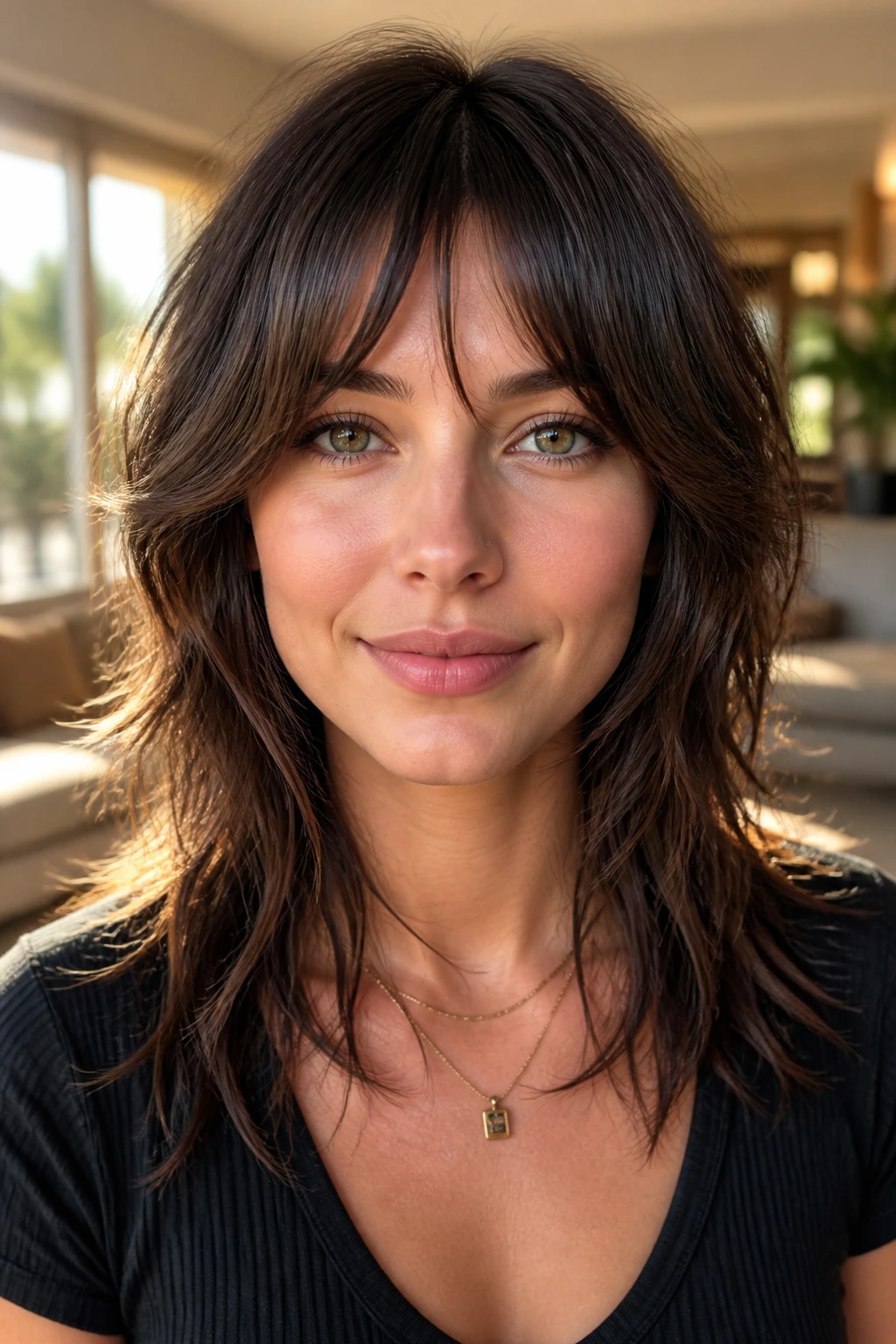
Bottleneck bangs are one of those small changes that can make the whole haircut look more expensive without changing the length much. They’re a little shorter in the center, longer at the edges, and they blend into the shag instead of sitting on top of it like a separate piece.
This is a smart choice for thin hair because the fringe creates focus where the hair might otherwise disappear. The shape around the eyes and cheekbones makes the medium-length cut feel fuller through the front, which is where people notice flatness first.
If you wear glasses, this cut can be excellent. The bangs have enough air in them to avoid crowding the frame.
6. Piecey Midi Shag with Flipped-Out Ends

This one has a little retro attitude without drifting into costume territory. The flipped-out ends keep the silhouette lively, and on thin medium hair that matters because motion at the bottom line makes the whole cut feel thicker.
The cut works best when the ends are point-cut and the layers stay light through the mid-lengths. You want little pieces that move, not a pile of shattered texture. A 1-inch round brush or a quick pass with a medium barrel iron gives the flip that old-school, slightly cheeky finish.
It’s especially good if your hair falls flat when it’s too straight. The flip creates a stronger outline, and that helps the cut hold its shape on day two.
7. Side-Swept Fringe Shag
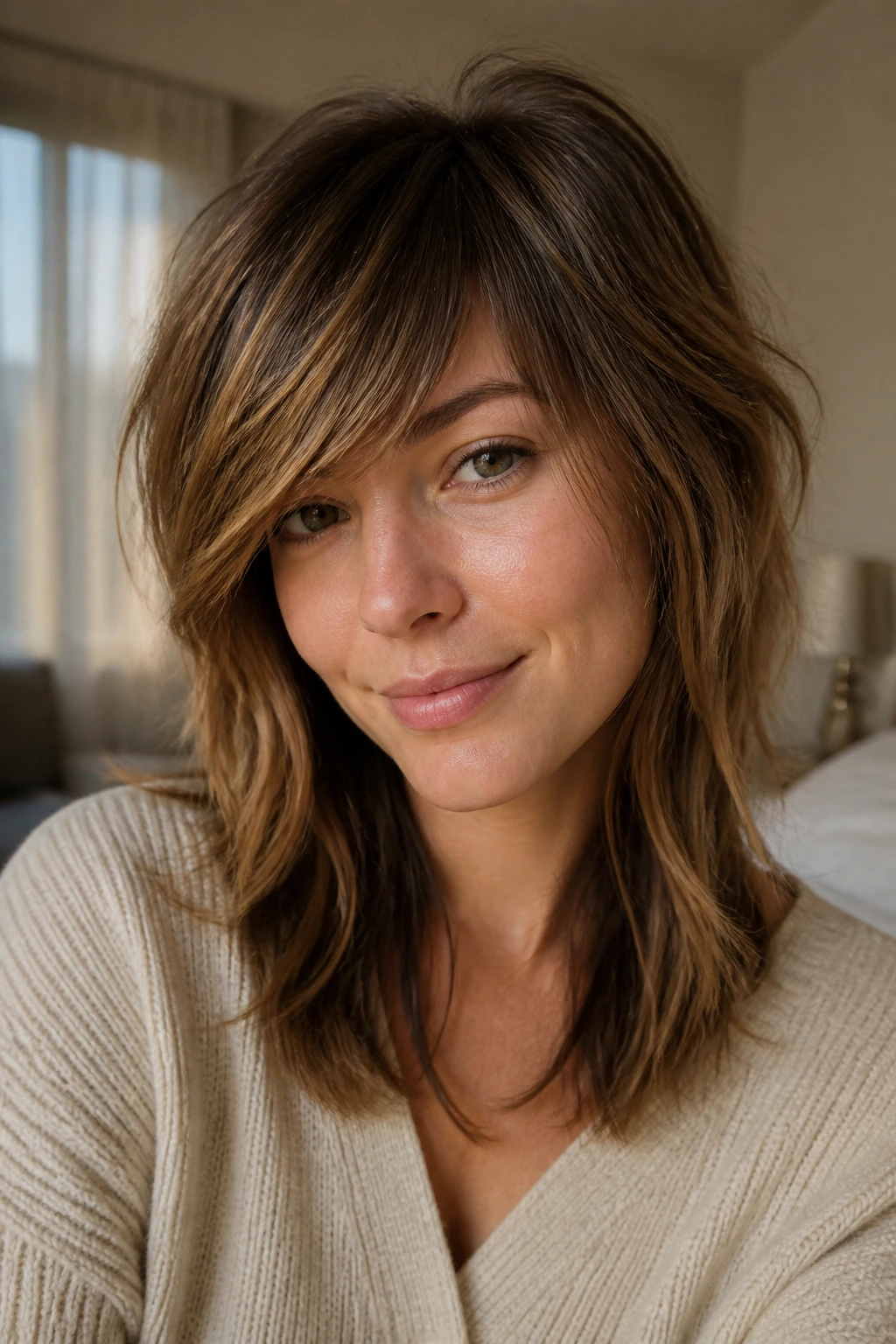
A side-swept fringe can save a medium cut that feels a little too plain. It pushes one side of the face open, creates a diagonal line across the forehead, and gives thin hair some built-in asymmetry so it doesn’t hang in a boring, even sheet.
The best version isn’t thick or helmet-like. You want a fringe that starts soft near the part and gets a little longer as it moves across the brow. That keeps the front light and lets the rest of the shag carry the body.
This is one of the easier cuts to grow out. When the fringe gets long, it just becomes face-framing layers.
8. Crown-Lift Shaggy Lob
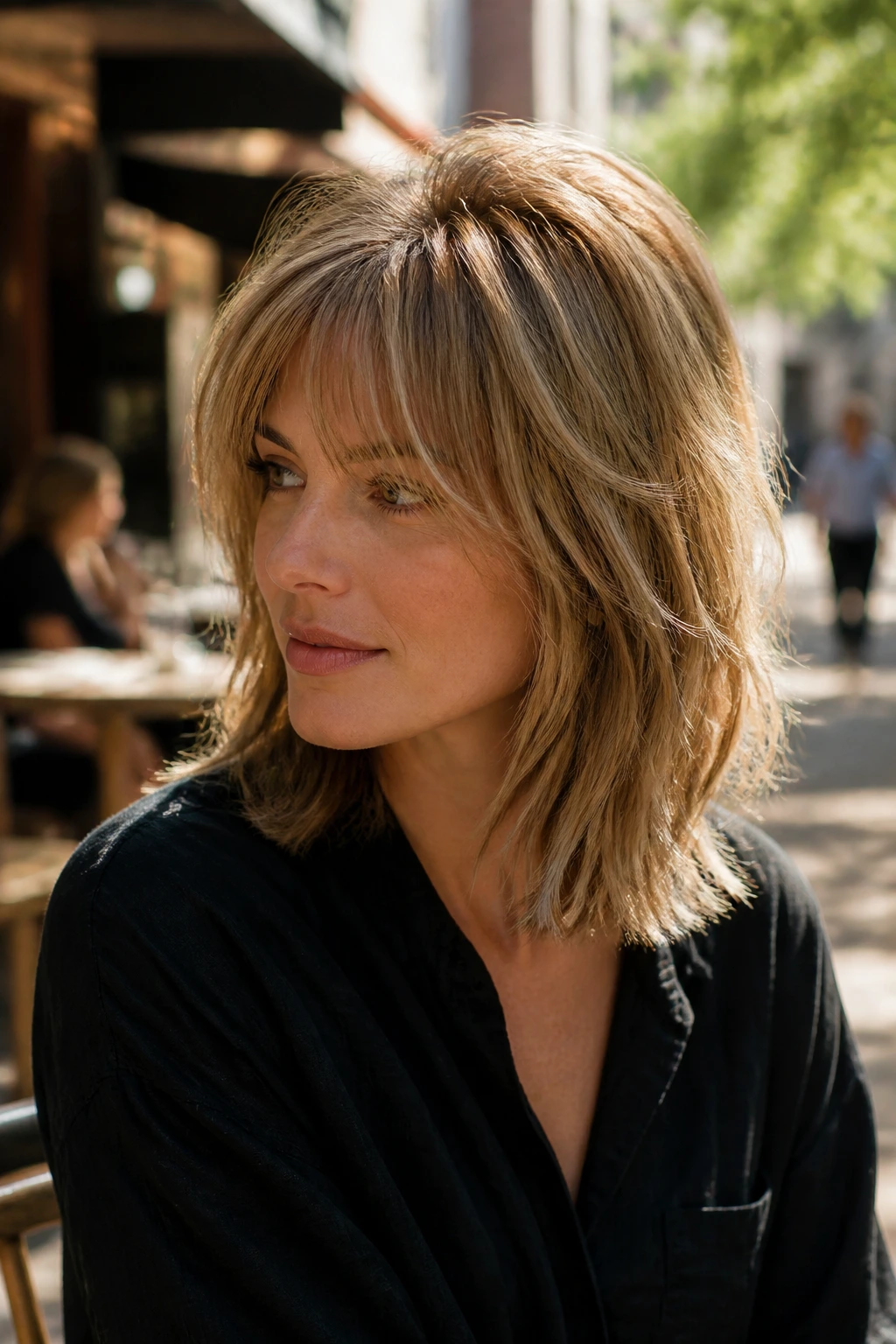
If the crown of your head lies flat no matter what you do, this is the cut to ask about. The shaggy lob keeps the length around the shoulders or just above them, but the crown gets a little more attention so the whole shape doesn’t drag downward.
Why the crown matters
A lot of thin-hair cuts fail because all the interest is at the bottom. This one flips the logic. Lift starts near the top, then the outline stays clean enough to look full at the ends.
Use a root spray or mousse at the base and blow-dry with the nozzle aiming up and away from the scalp. Small move. Big difference.
9. Mullet-Lite Shag with a Tapered Nape
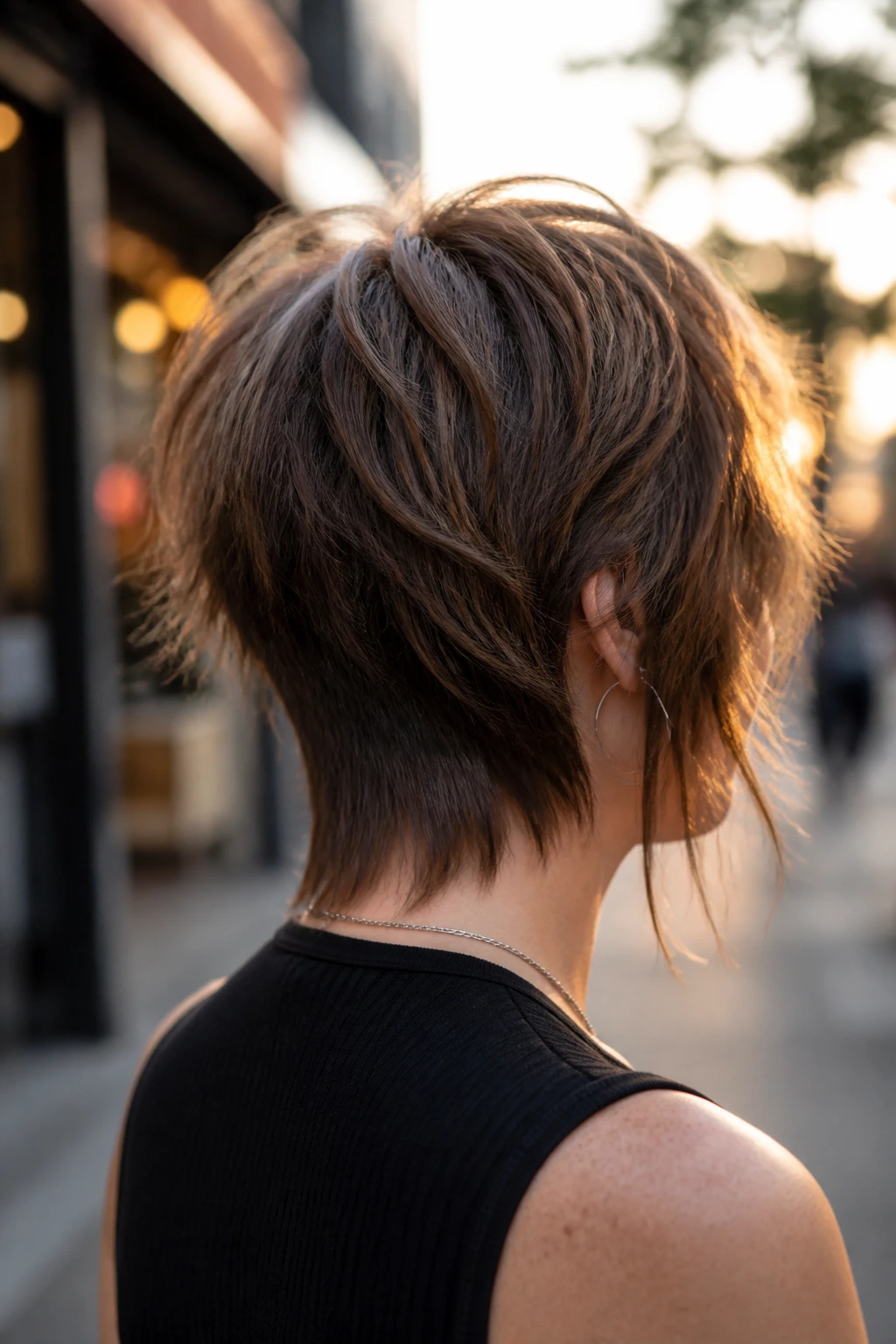
This is the edgier sibling in the group, but it doesn’t have to go full mullet to work. The nape is tapered a little shorter, the sides stay longer, and the top has that unmistakable shaggy lift that makes the shape feel current.
Thin hair likes this version because the lighter back removes bulk where it’s not needed, while the front keeps enough length to frame the face. The contrast can make medium hair look much more styled than it is.
If you’re nervous about going too far, tell the stylist you want a “mullet-lite” shape with soft blending. That usually keeps the cut wearable instead of costume-y.
10. Air-Dried Wave Shag

This one is built for people who don’t want to wrestle with a blow dryer every morning. The layers are placed so the hair can dry with its own bend and still look finished, not fuzzy.
The best air-dried shag keeps the longest pieces around the collarbone and the shortest texture pieces around the cheekbones. That way, when the hair dries on its own, the shape falls around the face instead of puffing out from the sides. A light mousse on damp hair helps a lot here; so does scrunching with a microfiber towel instead of rubbing the lengths raw.
If your hair is naturally straight, this cut still works, but it likes a little twist added with your fingers while it dries.
11. Feathered 70s Shag

There’s a reason feathered cuts keep coming back. They make thin hair look lighter without making it look flimsy, which is a tricky line to walk. The layers swoop instead of slice, and that creates a softer, more feminine finish around medium-length hair.
This version is best when you want the shag to feel a little romantic rather than punky. Ask for feathering around the face, especially near the cheekbones and jaw, and keep the bottom edge blunt enough to hold the outline.
A round brush helps here, but only at the front and top. If you try to curl every section under, the cut loses the easy, swinging look that gives it life.
12. Shoulder-Grazing Shag with See-Through Bangs

Shoulder-grazing length is a sweet spot for thin hair because it still has movement without dragging itself flat. Add see-through bangs, and the whole cut gets lighter around the face without losing the feeling of having a fringe at all.
The bangs are the detail that keeps this cut from looking plain. They should be soft enough that you can see a little forehead through them, but not so sparse that they seem accidental. That transparency keeps the front airy and stops the cut from swallowing the face.
This version grows out gracefully. That matters more than people admit. A lot of medium cuts look great on day one and awkward by week six. This one behaves better.
13. Deep Side-Part Shag
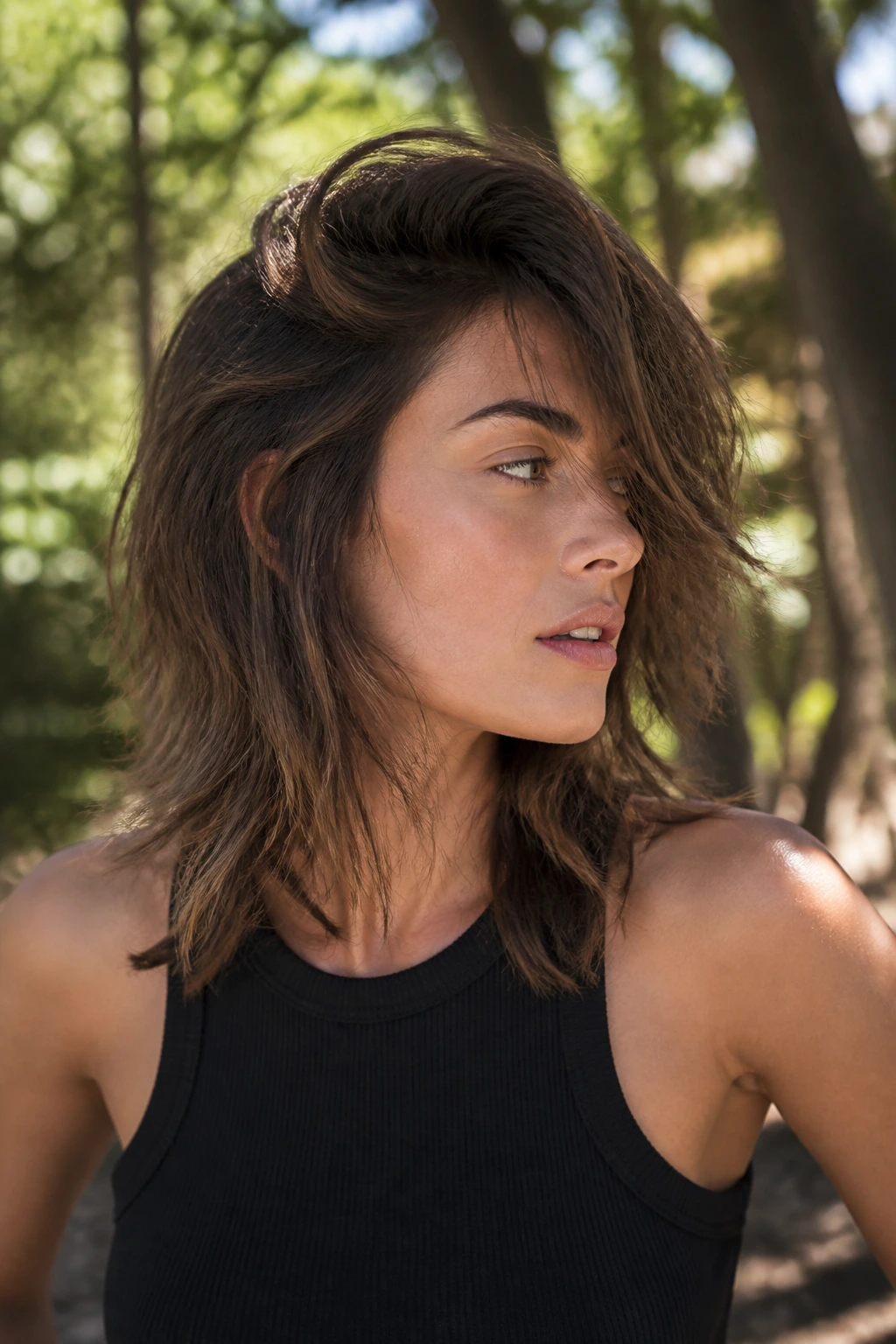
A deep side part can do more for thin hair than a lot of extra layering. It creates built-in height at the crown, pushes one side up, and gives the other side a softer fall that reads fuller because of the contrast.
The haircut itself can stay fairly simple. What changes the mood is where the hair sits. A shag with a deep side part looks more dramatic, a little more editorial, and often thicker because the eye sees asymmetry instead of a flat sheet.
How to wear it
- Blow-dry the roots opposite the part first.
- Pin the front section up while it cools if you want more bend.
- Use a light texture spray, not a heavy oil.
This is the cut I’d reach for when someone says their hair “needs something,” but they don’t want bangs.
14. Rounded Perimeter Shag
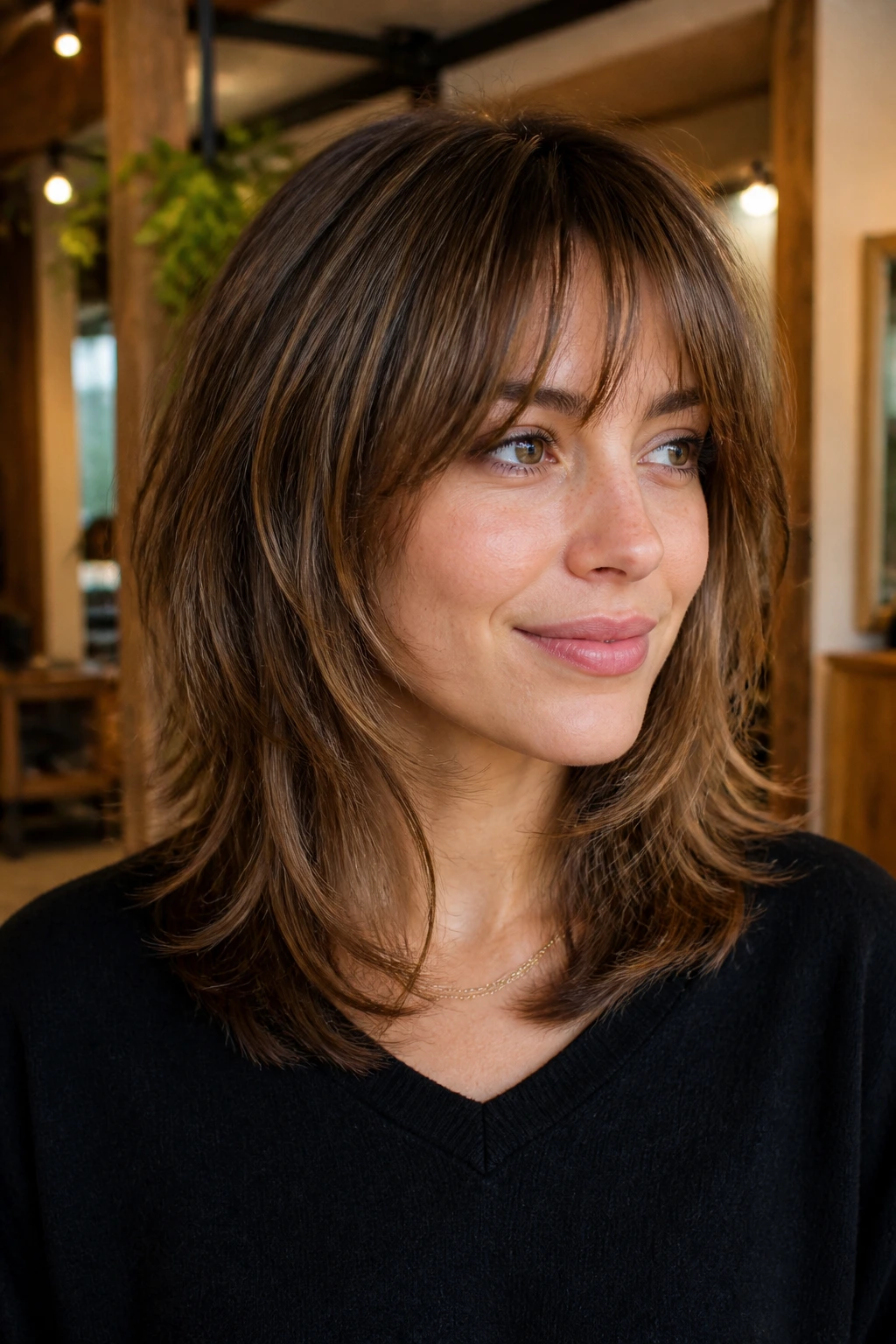
Most people think shag means angles everywhere. Not always. A rounded perimeter can keep thin medium hair from looking too shredded by preserving a soft curve around the shoulders while the texture happens above it.
That roundness matters. It makes the ends look richer, especially if your hair is naturally straight and prone to hanging limp. The layers can still be choppy, but the bottom line gives the whole cut a fuller finish.
It’s a good option if you like softness more than edge. There’s still movement, but nothing feels jagged. The shape falls into place with less styling than a more heavily textured wolf cut.
15. Textured-Ends-Only Shag
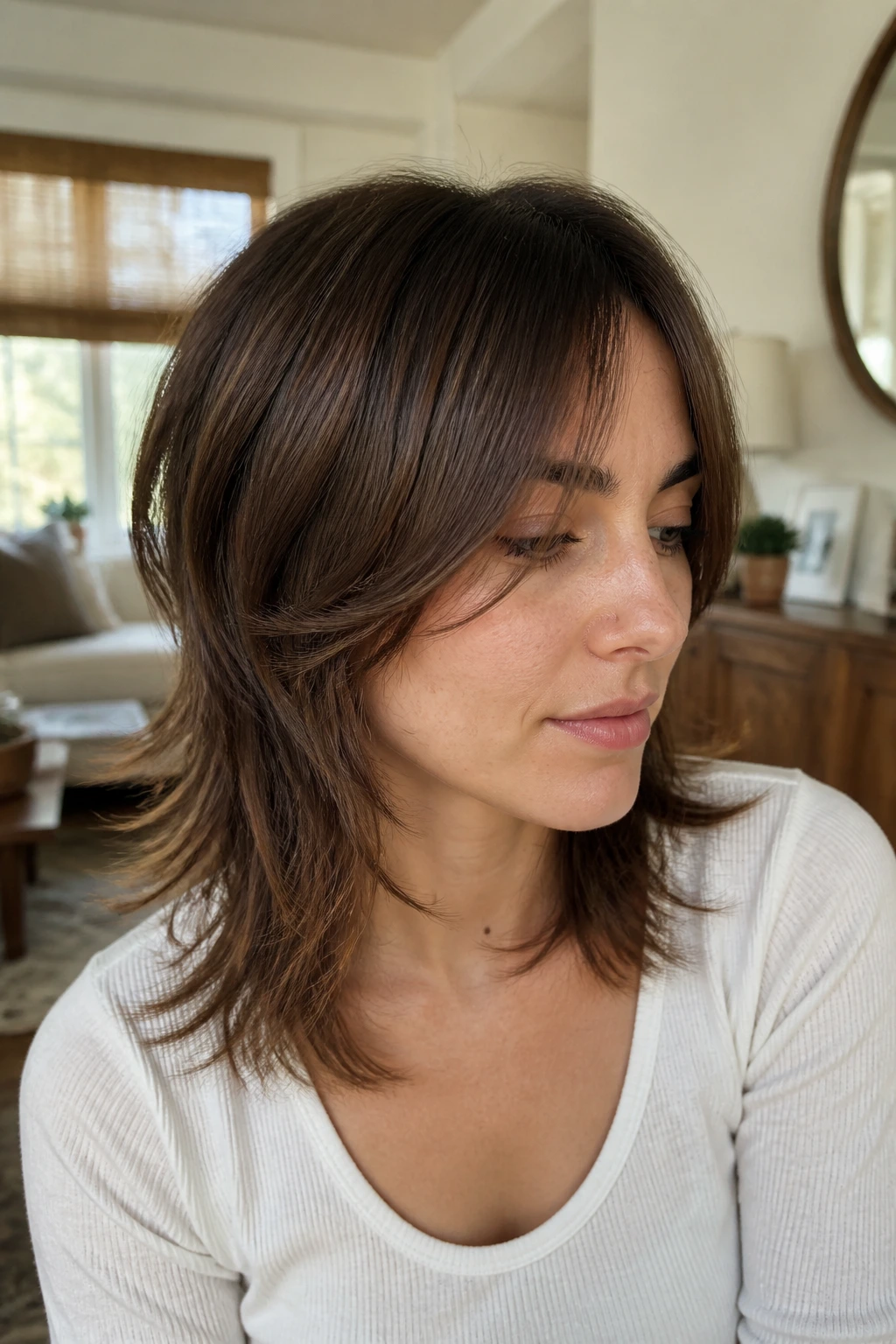
Some people do not want short layers near the crown. Fair enough. If that sounds like you, this version keeps the texture mostly at the ends and around the face, which is a gentler way to wear the shag trend on thin hair.
The effect is subtle. You still get movement, but the top stays smoother and the bottom looks a little more alive. That makes it a smart choice if your hair is fragile, if you bleach it, or if you’ve had one too many over-layered cuts that looked cool in the chair and awful after three shampoos.
This is the least “stylistic statement” of the bunch, but sometimes that’s the point.
16. Grown-Out Bob Shag Hybrid
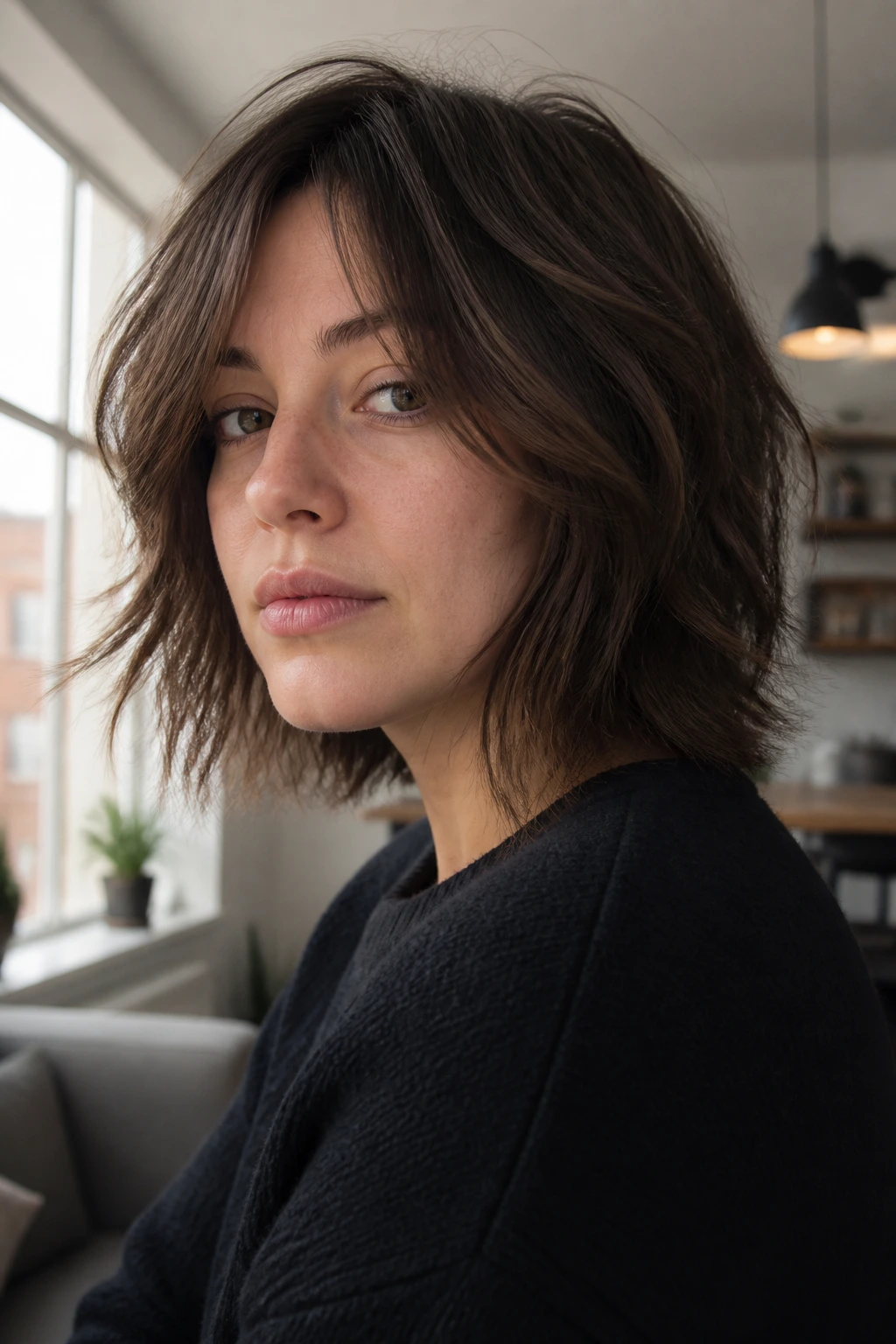
If you’re between a bob and a lob, this hybrid gives you the best parts of both. The bottom line stays bob-like enough to hold shape, but the layers and fringe keep it shaggy so it doesn’t feel stiff.
Thin hair often looks thicker at this length because the ends don’t have to support too much weight. A grown-out bob shag is especially good if you’ve been pushing your hair longer because you want more styling options, but you don’t want to lose the dense look a shorter cut gives you.
It’s a clever compromise. Not glamorous in a flashy way. Just smart.
17. Balayage-Boosted Shag
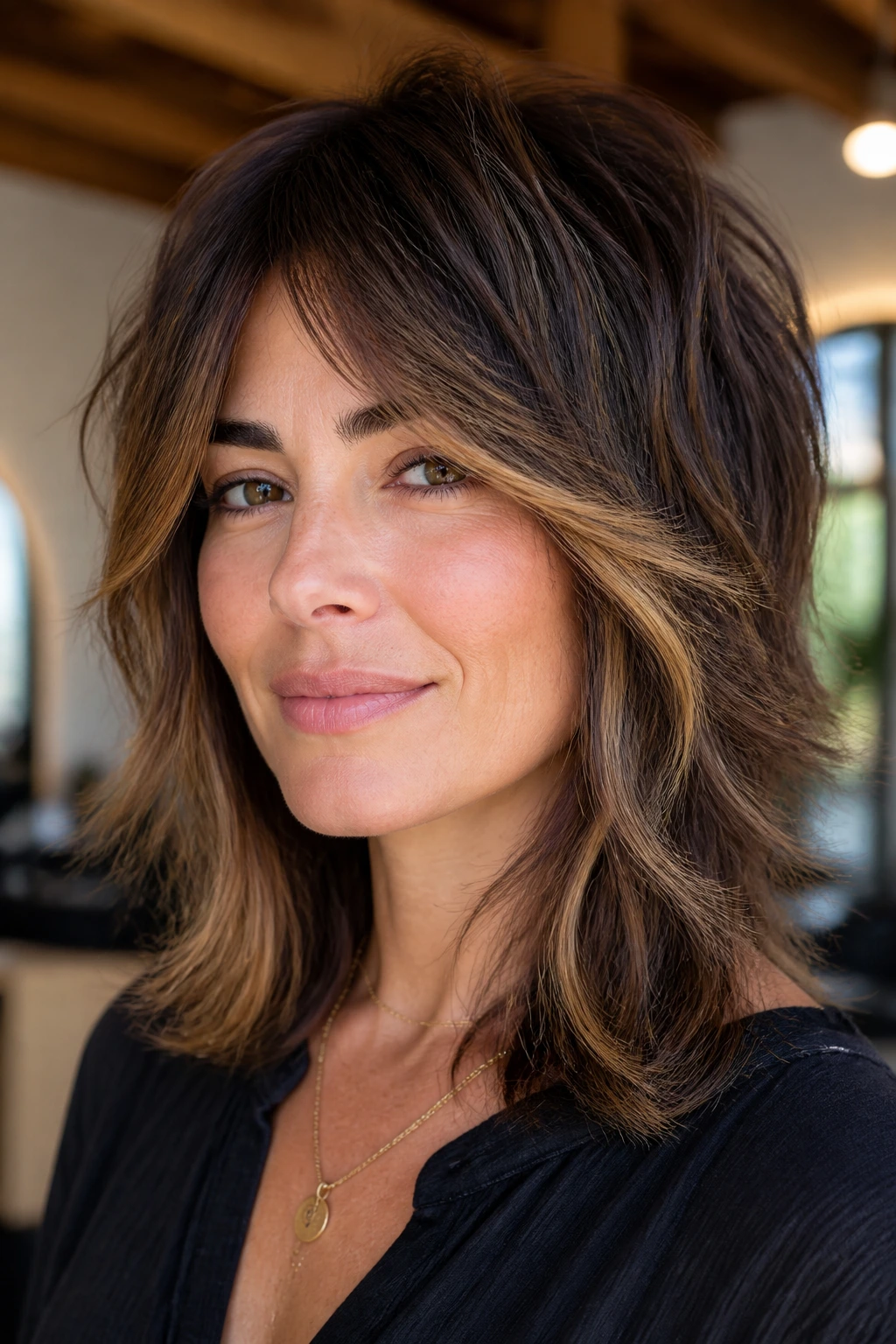
Color doesn’t change density, but it changes how the eye reads density. A little balayage through a shag can make thin medium hair look more layered because the light pieces catch the movement and separate the shape.
The cut matters first. Always. But a few lighter ribbons around the face and mid-lengths can make the choppiness easier to see, especially on darker hair. That can help a shag feel less heavy and more dimensional without adding more actual layers.
If you go this route, keep the lightening soft and placed around the places you want to see movement: fringe, cheekbones, and the upper mid-lengths.
18. Root-Lift Shag with Short Crown Pieces
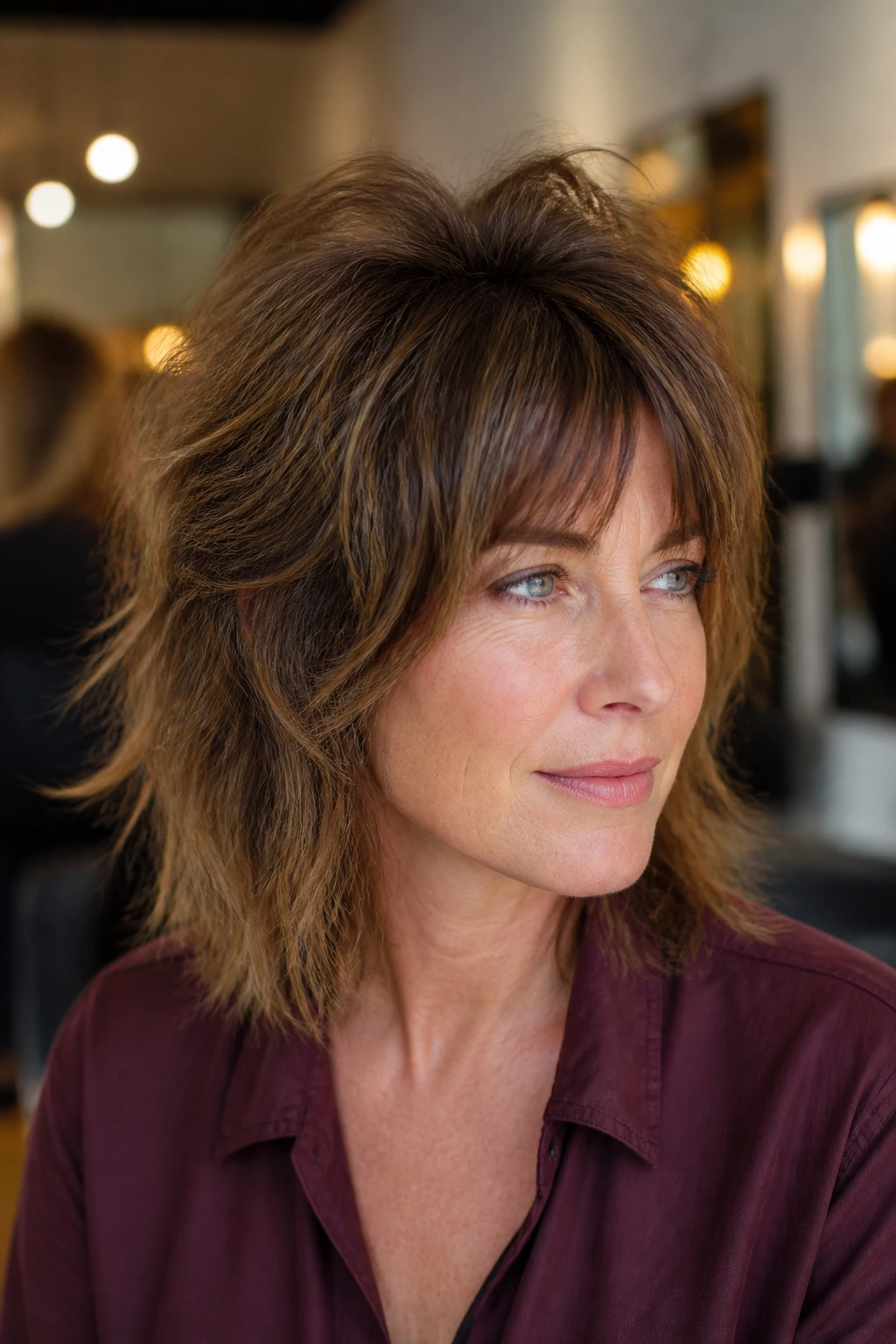
This is the more lifted cousin of the crown-lift lob. The crown pieces are cut short enough to make the roots stand up a little, which is useful if your hair collapses the second it dries.
The catch is obvious: too much of this can make thin hair look frayed. So the short pieces need to be balanced by a denser perimeter and clean face-framing layers. Done well, though, the whole head looks more animated, as if the hair has air built into it.
A volumizing mousse at the roots and a blow-dry with a small round brush make this cut come alive fast.
19. Soft Micro-Fringe Shag
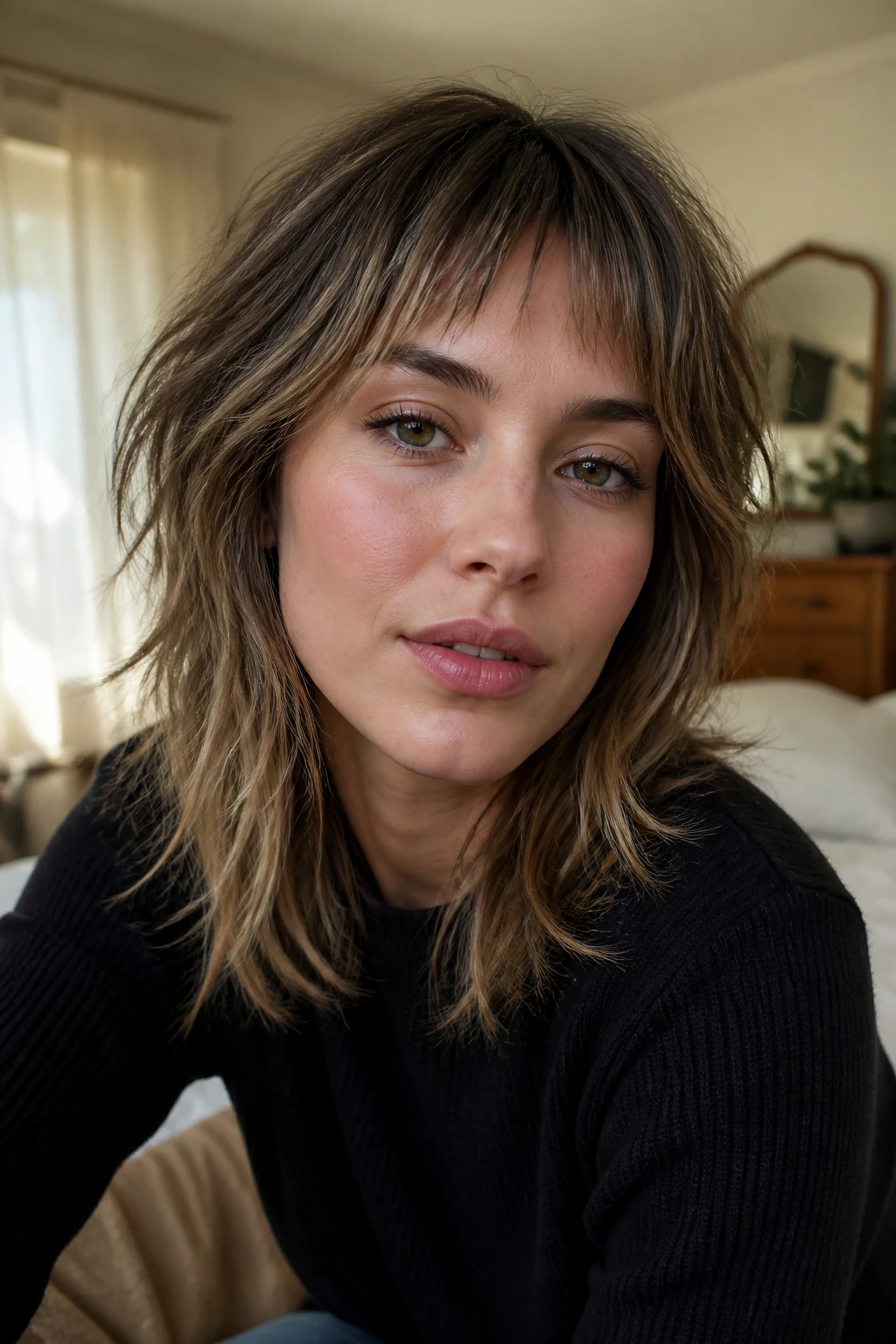
Micro bangs can be tricky on thin hair, but the soft version can work if the fringe stays wispy and the rest of the haircut has enough weight. The goal here is not a hard, blunt line. It’s a little flick of fringe that makes the face look more open and the cut feel more intentional.
This suits someone who wants edge without a heavy bang commitment. The short fringe brings attention to the eyes, while the shaggy medium-length body keeps the rest from looking too severe. If your forehead is short or your hair grows fast, ask the stylist to keep the fringe feathered and slightly longer at the temples.
It’s a small detail, but small details are what save this kind of cut.
20. Chin-Skimming Face-Frame Shag

A chin-skimming frame can make the face look slimmer and the hair look denser at the same time. The layers hover around the jaw, which helps break up a long, flat line without making the whole haircut feel short.
This one works well if you want medium hair that still swings. The face-framing pieces should start around the cheekbone and taper softly through the jaw, so the movement feels natural instead of cut into the head. It’s a good bridge between a traditional shag and a more polished medium cut.
If you like tucking hair behind one ear, this is a very good cut. It leaves enough shape to show when you do.
21. Long Fringe Shag
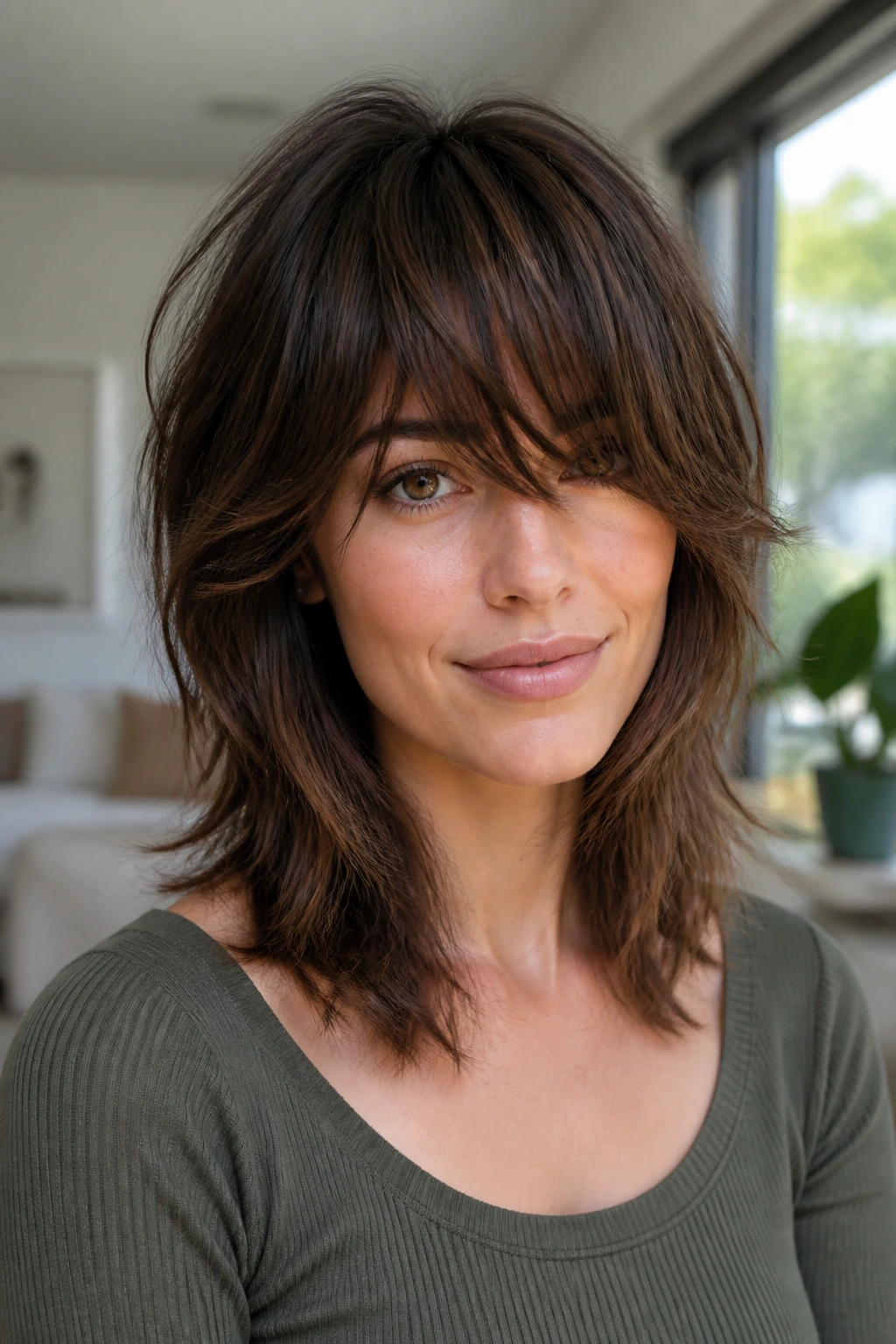
A long fringe gives thin hair a useful focal point. Instead of chopping into the forehead with a short bang, you get a longer sweep that can be parted, tucked, or worn forward depending on the day.
The fringe does a lot of visual work here. It fills out the front, blends into the sides, and keeps the medium-length body from feeling heavy. Ask for the fringe to connect into the cheekbone layers so it doesn’t sit like a separate piece.
This is one of the easiest shags to live with if you’re not a regular bang person. It grows out without making a mess.
22. Bluntish Shag with Feathered Top
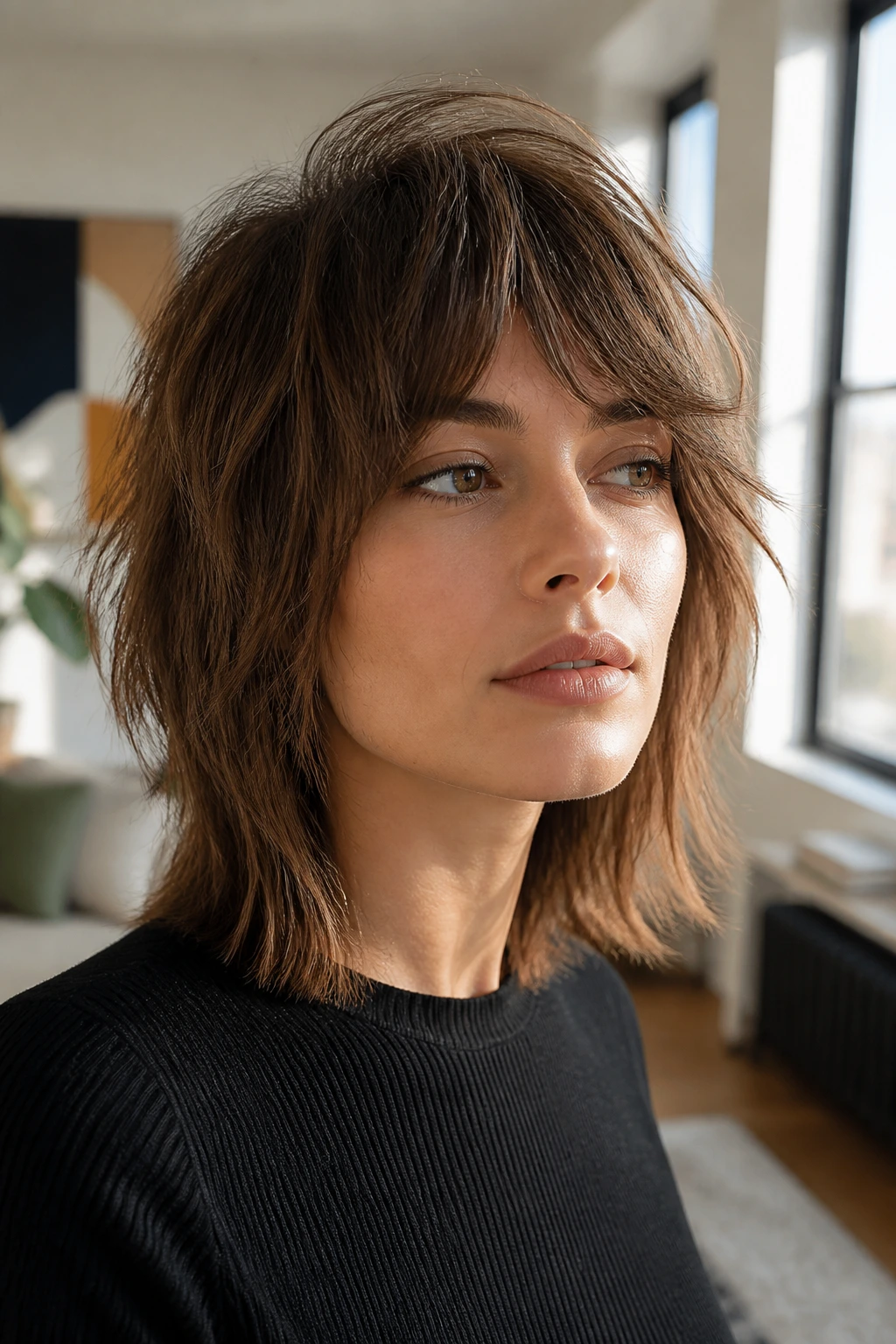
This is my favorite choice for people who want texture but hate the see-through ends that too much layering can cause. The bottom edge stays fairly strong, almost blunt, while the top and front get feathered enough to keep the cut from feeling blocky.
That contrast is the whole point. Thin medium hair looks better when it has one part that feels anchored. The feathered top adds movement; the firmer hemline keeps the shape from evaporating.
If your hair is straight, this cut is especially useful because it gives you texture without asking you to curl the whole head every day. It’s tidy, but not stiff. And that’s a rare balance.
How to Ask for the Right Amount of Choppiness
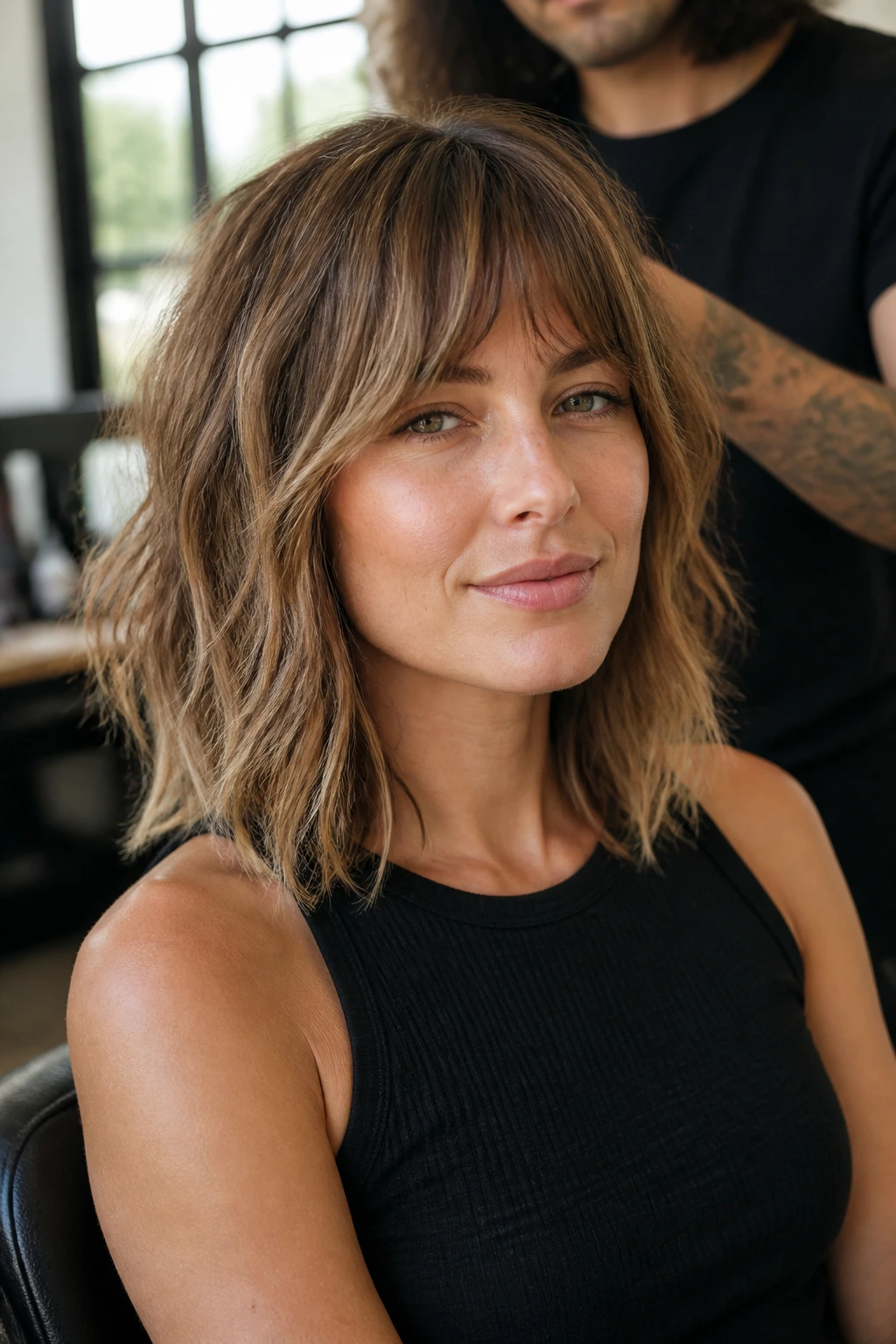
A good shag for thinner medium hair starts with one blunt truth: the stylist needs to know where not to overcut. If you walk in saying “give me lots of layers,” you may get a pretty disaster. What you want is movement that starts above the collarbone or cheekbone, plus enough weight left in the bottom line to keep the shape full.
Bring two or three photos that show the same density level as your own hair. That matters more than the celebrity’s face shape. A cut that looks gorgeous on thick hair can turn wispy fast on fine strands, and the difference is often in the perimeter, not the bangs.
Say these things at the chair
- “Keep the ends dense.”
- “I want texture, not thinning.”
- “Can we start the shortest layers around the cheekbone instead of the jaw?”
- “Please keep the crown light, not chopped away.”
That last one matters a lot. Crowns can be over-layered in a hurry. And once the top gets too short, you’re chasing volume every morning instead of enjoying the haircut.
Essential Tools for Styling These Shags
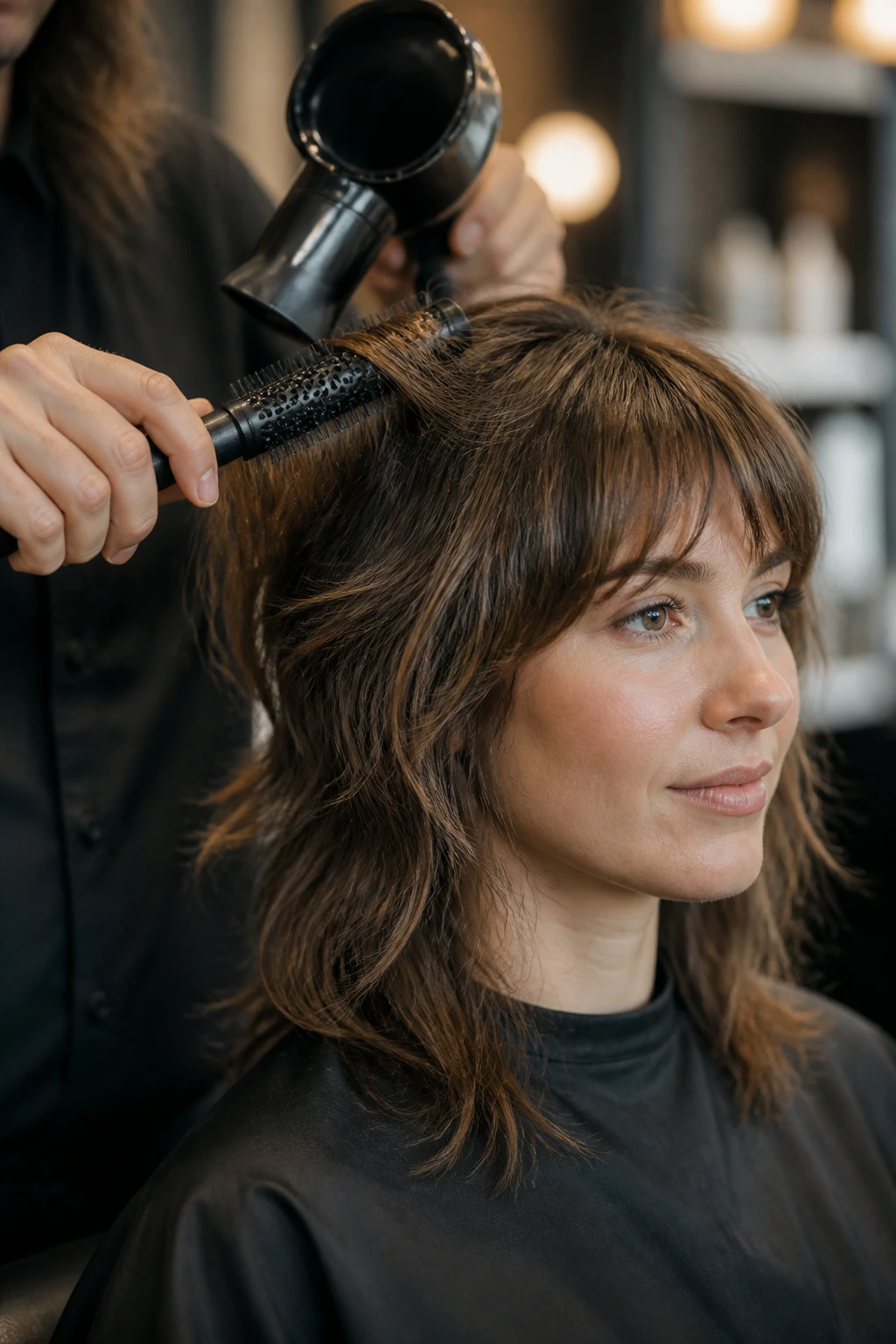
The right tools don’t need to be fancy. They just need to let thin hair dry with some bend and hold that bend long enough to matter.
-
Blow dryer with a concentrator nozzle: Keeps the airflow aimed where you want it and helps the roots lift instead of blowing every strand apart.
-
Small round brush, 1 to 1.5 inches: Useful for flipping the ends, bumping the crown, and giving curtain bangs a soft curve.
-
Vent brush or flat brush: Good for rough-drying medium hair fast without creating too much frizz.
-
Wide-tooth comb: Helps detangle thin hair gently when it’s damp and less likely to break.
-
Microfiber towel or soft T-shirt: Better than a bath towel for scrunching; it roughs up the hair less.
-
Dry shampoo: A light dusting at the roots on day two or three can bring the shag back to life fast.
-
Texture spray or lightweight mousse: Adds grip so the layers separate in a nice way instead of collapsing.
-
Heat protectant: Non-negotiable if you use a dryer, wand, or iron even a few times a week.
Smart Product Notes for Fine, Medium-Length Hair
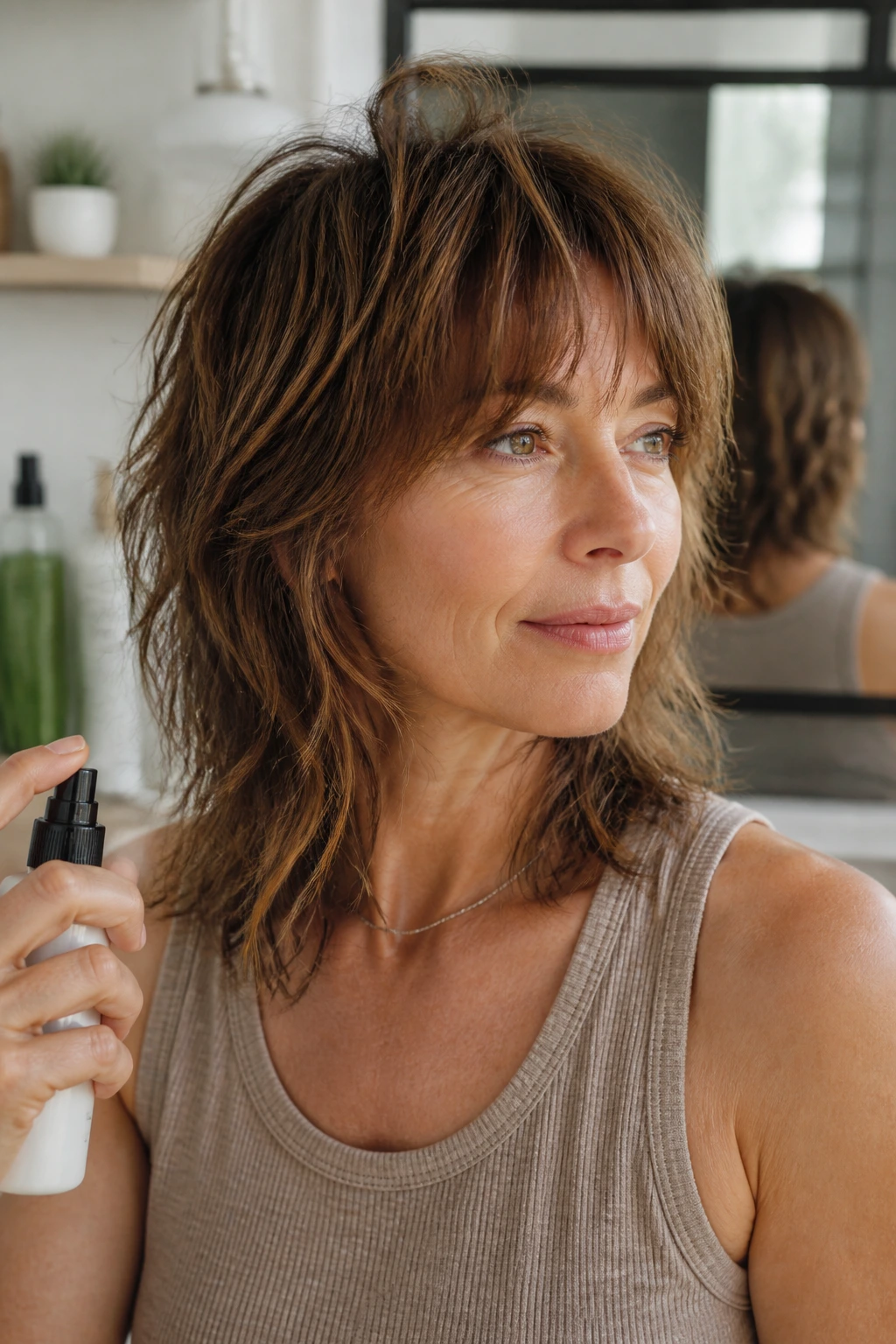
Thin hair gets flattened by heavy creams faster than people expect. A rich curl butter that works wonders on coarse hair can turn a shag limp in twenty minutes. That’s why lightweight mousse, root-lift spray, and dry texture spray are the better bets here.
What to look for
- Mousse: A foam that dries touchable, not crunchy, is ideal for roots and mids.
- Texture spray: Choose one that says light or airy; the gritty, sticky versions can make fine hair feel dirty too fast.
- Root spray: Best for the crown and part line, especially if your hair goes flat by noon.
- Serum: Use a tiny amount only on the last two inches if the ends are dry.
Skip the heavy oil at the root. Skip thick masks right before styling. And if your hair is prone to frizz, use smoothing cream only from mid-length to ends, never from scalp to shoulder.
How to Style It Without Flattening the Crown
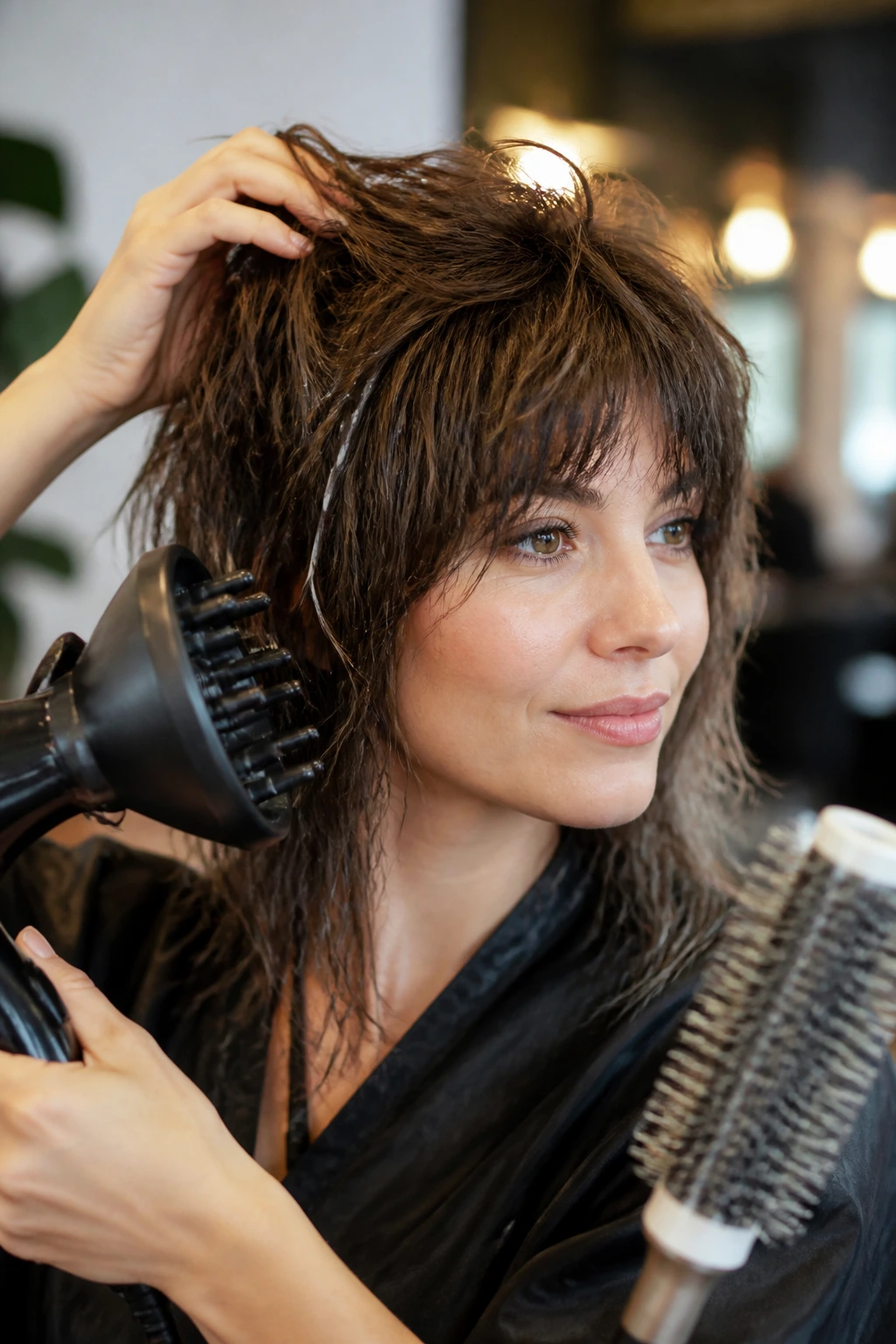
The crown is where these cuts live or die. If it falls flat, the whole shag loses the shape that makes it useful in the first place.
Start with damp hair, not soaking wet. Work mousse into the roots and through the top layer, then rough-dry upside down for the first few minutes if your hair needs lift. After that, stand upright and use the nozzle to direct the air from roots to ends so the cuticle lays flatter and the shape stays cleaner.
A simple routine that works
- Apply heat protectant and root lift.
- Blow-dry the crown first.
- Add bend to the fringe and face frame.
- Let the ends flip or curve slightly on their own.
- Finish with a light mist of texture spray.
For wavy hair, a diffuser can help keep the bend without frizzing the layers apart. For straighter hair, a round brush around the front and top is usually enough. Do not chase perfect smoothness everywhere. That tends to erase the cut’s best parts.
Common Mistakes That Make Thin Hair Look Thinner
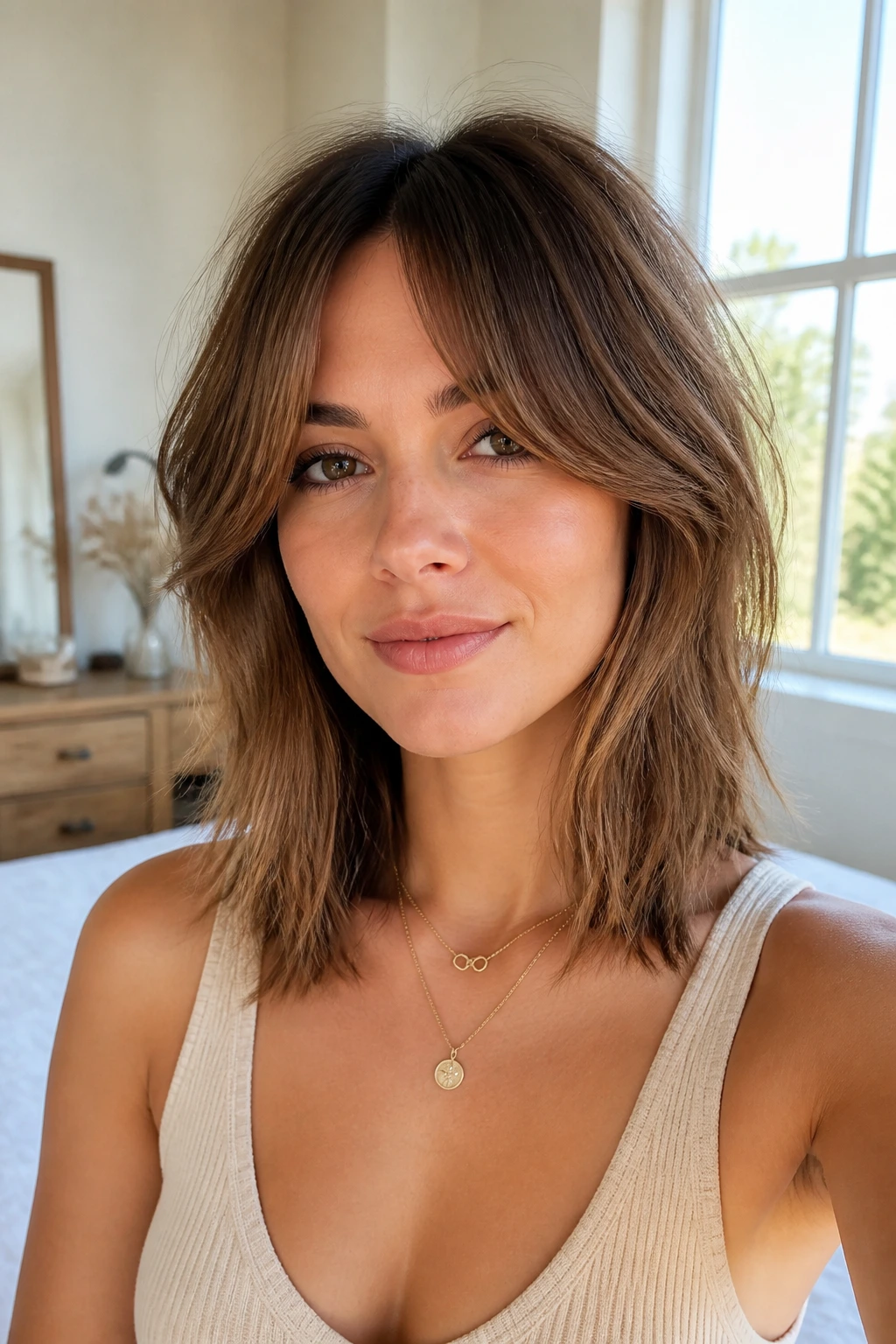
A shag can rescue thin medium hair, but it can also make things worse if the wrong things happen in the chair or in front of the mirror.
-
Layers cut too high at the crown: The top goes fuzzy and the ends look empty. Ask for the shortest pieces to start lower, around the cheekbone or jaw, unless your hair is unusually dense at the root.
-
Over-thinning the perimeter: The ends start to look stringy, especially in bright light. Keep the hemline a little stronger so the eye reads fullness first.
-
Using heavy styling products: Creams and oils can flatten the roots within an hour. Switch to mousse or a light spray, and keep anything rich off the scalp.
-
Trying to iron every wave out: That polished, pin-straight finish often removes the very movement that makes the cut look full. A small bend is your friend.
-
Bangs cut too dense or too short: Heavy fringe can drag the face down and make the crown seem flatter. Airy, longer bangs are usually safer.
One more thing: if a shag starts looking tired after the second wash, that’s often a sign the layers were too aggressive, not that your hair failed.
Variations and Alternative Takes
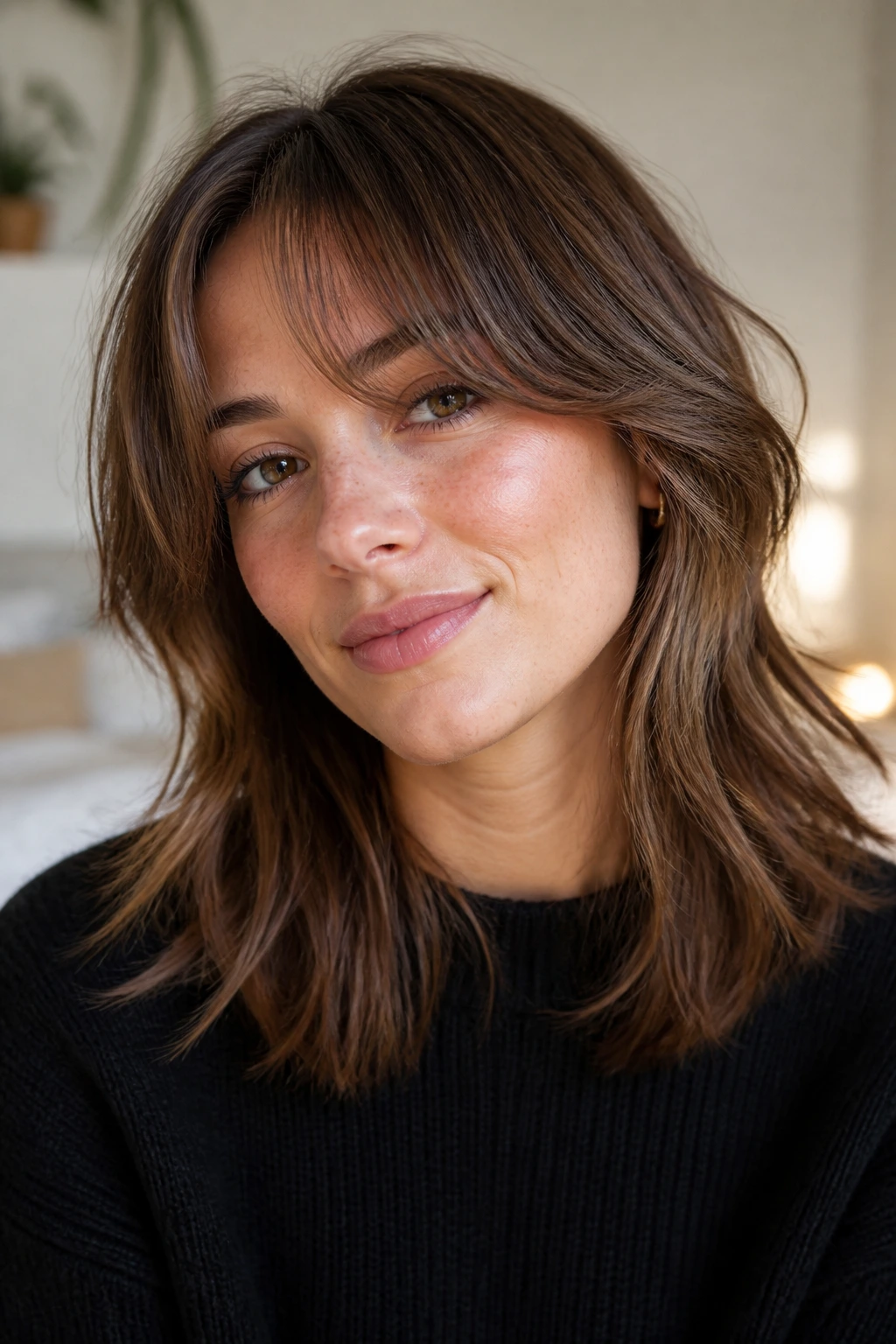
Soft Curtain Version
Keep the fringe loose, the layers below the cheekbone, and the ends denser. This version suits anyone who wants movement without the edge-forward feel of a wolf cut.
Wolfier Edge
Ask for shorter crown pieces, a more tapered nape, and a slightly messier finish. It reads bolder and works best if you don’t mind a style that wants a little texture spray.
Barely-There Layering
If your hair is fragile or very fine, keep the layering subtle and focus on face-framing pieces. This gives you shape without losing the visual weight that thin hair needs.
Straight-Hair Version
For pin-straight hair, build the shag around a cleaner perimeter and use blow-dried bend instead of relying on natural texture. The haircut needs a little help, but it can still look soft rather than stiff.
Wavy-Hair Version
If your hair already has movement, ask for longer layers and less thinning through the ends. That keeps the waves from breaking into frizz and lets the shag fall into place more naturally.
Grow-Out Friendly Version
Keep the bangs long, blend the side pieces carefully, and avoid a hard nape shape. This is the one to choose if you hate awkward grow-out phases more than you love a dramatic first-day haircut.
Keeping the Shape Fresh Between Salon Visits
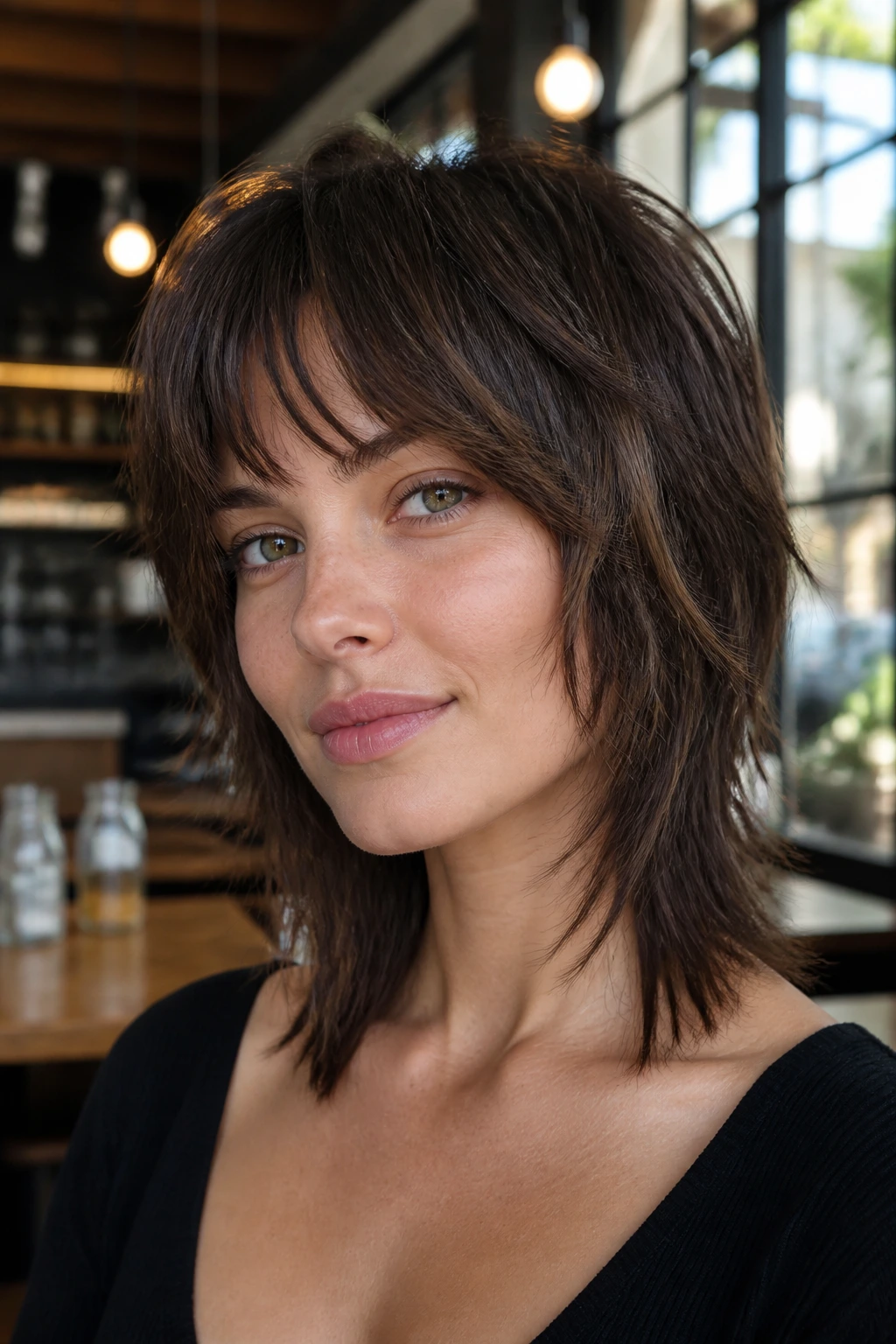
These cuts usually hold their shape for about 6 to 8 weeks before the layers start to blur or the fringe stops sitting where you want it. Bangs may need a tiny dusting sooner, often around 3 to 4 weeks, if they hit your lashes or split awkwardly.
On wash days, use a light mousse or root spray while the hair is damp. On the second day, a small hit of dry shampoo at the roots and a quick bend with a round brush or iron can bring the shape back fast. On the third day, you may need a little water mist at the fringe and crown, because those are usually the first places to collapse.
A simple maintenance rhythm
- Wash days: Use lightweight product, not heavy cream.
- Between washes: Refresh roots and fringe with dry shampoo.
- Before bed: Clip the top loose or sleep on a satin pillowcase.
- At the salon: Ask for dusting, not a full reshaping, if you still like the silhouette.
If your hair grows out oddly, don’t wait until it feels hopeless. A tiny trim at the front can buy the whole cut another few weeks.
Frequently Asked Questions
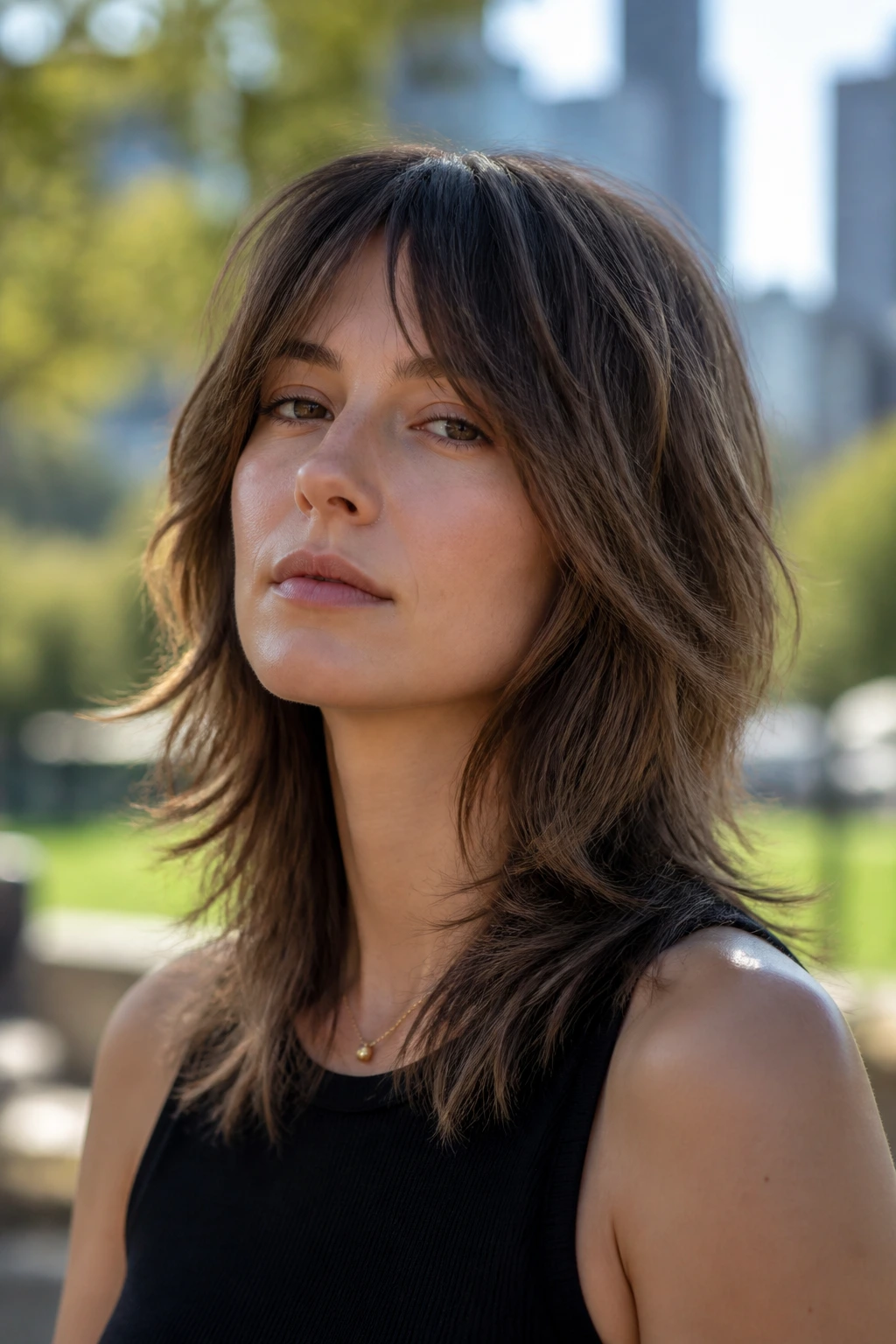
Will a shag make thin hair look thinner?
Not if the cut is done with restraint. A shag only looks thin when the ends are over-thinned or the layers are cut too high, leaving the perimeter weak. A good version keeps a solid bottom line and puts the movement where the eye wants it.
Should I ask for scissors or a razor?
For very fine hair, scissors and point cutting are often safer because they leave the ends cleaner. A razor can work, but it can also fray delicate strands if the stylist gets too aggressive. If your hair already feels fragile, say so.
Do curtain bangs work on thin medium hair?
Yes, and they’re often one of the better choices because they frame the face without taking too much density out of the sides. Keep them soft and slightly longer at the edges so they blend into the haircut instead of sitting like a separate chunk.
How often do these cuts need trimming?
Most of them look best with a trim every 6 to 8 weeks. If you wear bangs, expect to tidy those up more often, especially if they hit your lashes or split down the middle before the rest of the haircut is ready.
Can I still tie my hair back?
Usually, yes. Shags, lob shags, and the softer wolf cuts all pull back into a low ponytail or clip with no trouble. The shorter face-framing pieces will fall out, though, and that’s part of the look.
What if my hair is straight and doesn’t hold texture?
Then you need shape plus a little help from styling. A root-lift spray, a round brush, and a small bend at the ends will do more for the cut than heavy layers ever will. Straight hair can wear a shag well; it just needs the edges to be placed carefully.
Is a wolf cut too much for medium thin hair?
A full-on wolf cut can be if the crown is cut too short or the nape gets too stripped out. The softer versions work better because they keep enough weight at the bottom to stop the hair from looking sparse.
Can I ask for a shag without bangs?
Absolutely. A good shag can lean on side-swept face-framing pieces, a deep part, or a long fringe that blends back into the sides. Bangs are helpful, not mandatory.
The Cut That Keeps Moving
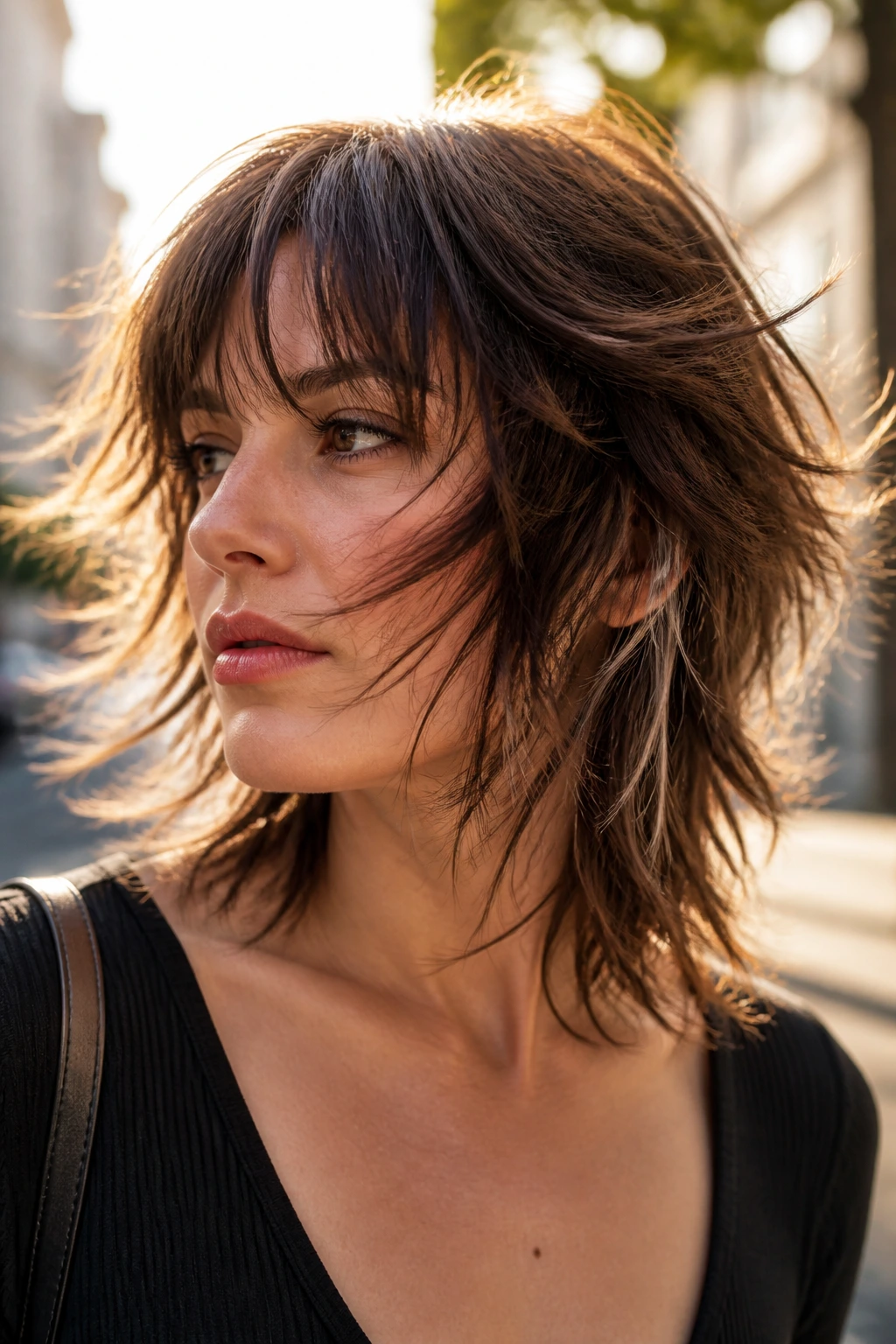
The nicest thing about a good shag on thin medium hair is that it doesn’t need to pretend. It knows where the density is, it knows where the movement belongs, and it stops there. That’s why the best versions look fuller than they should without looking stuffed or overworked.
If your hair has been hanging around in that awkward middle ground—too long for a bob, too flat for a blunt lob, too thin to survive a heavy layer job—one of these shapes can give it a cleaner job to do. Pick the one that matches how much edge you actually want, then let the cut carry more of the work than your styling tools do.