



A shoulder-length cut with loose curls can go two ways. It can skim the collarbone and keep moving, or it can land like a wide little shelf that makes the whole head look boxy. The difference is rarely the curl cream. It’s the line.
That’s why angled haircuts matter so much here. Loose curls have enough spring to show shape, but not so much gravity that they automatically fall into place. If the perimeter is blunt, the ends can sit heavy and flat. If the angle is too steep, the front starts bossing the rest of the hair around. The sweet spot lives in the middle — enough diagonal to give the curls a direction, enough length to keep the finish soft.
And shoulder length is the perfect arena for that kind of haircut. You get the collarbone sweep, the cheekbone frame, the little flick of movement at the ends, and all the easy grow-out benefits that make a style feel lived-in instead of precious. The cuts below aren’t clones of one another. Some are subtle. Some are sharper. Some lean polished, some lean shaggy, and a few are for people who want the haircut to do most of the work before styling even starts.
Why These Angled Cuts Work Better Than a Straight Line
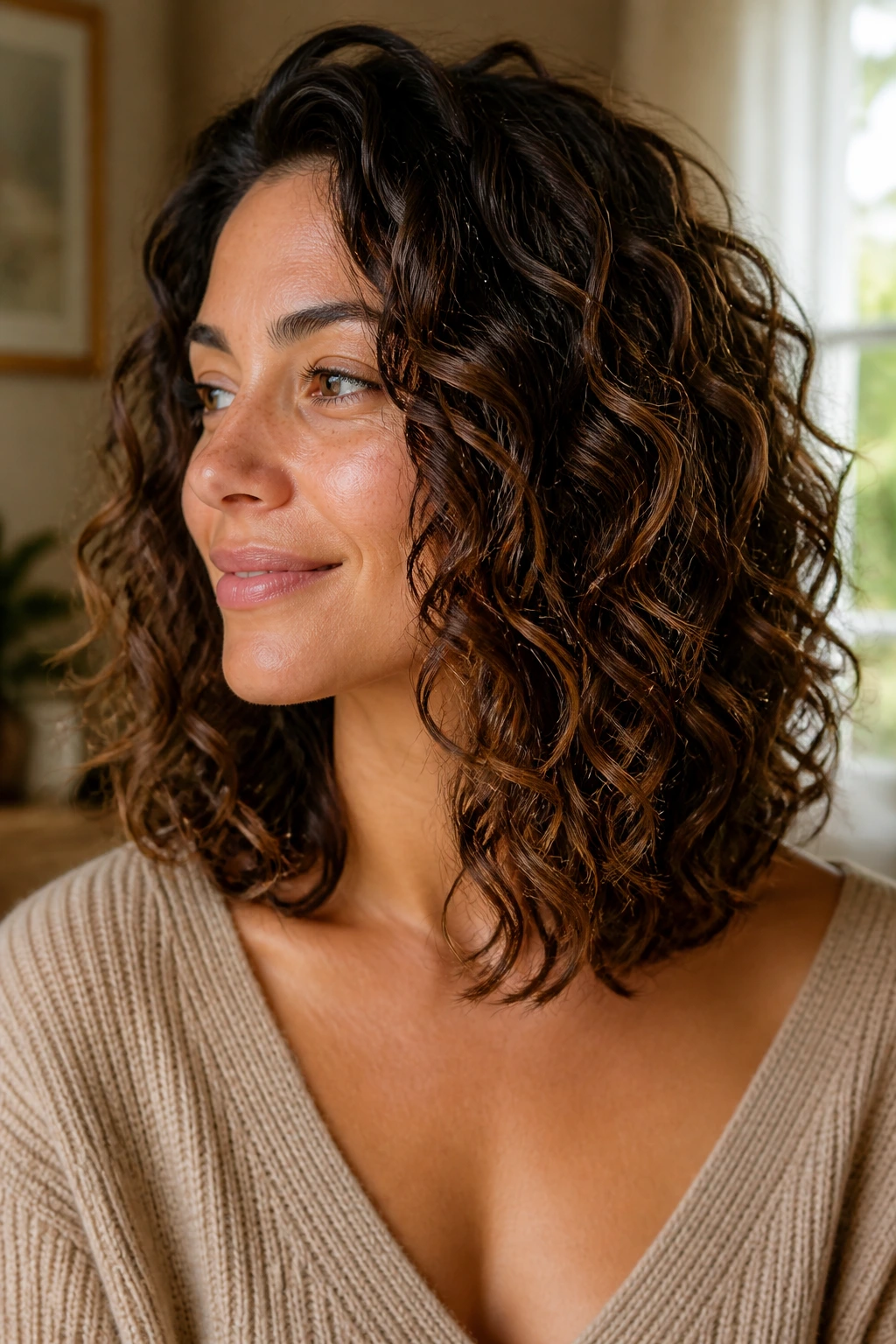
The shape changes everything. Loose curls have enough bend to show a diagonal line, which means the haircut can actually guide the eye instead of letting the hair fall into one broad mass. A small difference in length — sometimes just 1 to 2 inches between front and back — changes how the curl pattern stacks at the shoulders.
They’re forgiving in real life. The curls don’t need to be perfect for an angled cut to look intentional. On day one, the line is visible. On day three, after sleeping on it and pinning one side back, the shape still reads clearly because the front has a job to do.
They can be tuned to your density. Fine loose curls usually need a softer slope and less weight removed from the ends. Thick curls can take a deeper angle because the extra density fills in the silhouette instead of leaving see-through gaps. That’s the part many salon consultations miss.
They tend to grow out cleanly. A straight shoulder-length cut can become a mushroom if it’s left too long. Angled cuts blur a little more gracefully. The front doesn’t suddenly look wrong just because the back gained an inch.
The right angle is not loud. It doesn’t need to scream “new haircut.” The best ones just make the curls sit better.
1. Soft Collarbone A-Line Lob
This is the version I’d hand to someone who wants shape without shock. The front lands at the collarbone, the back sits slightly shorter, and the whole cut keeps a clean diagonal that shows up the minute loose curls dry. It’s the safest angled haircut in the bunch, which is not the same thing as boring.
The best part is how quietly it frames the face. On loose curls, a soft A-line gives you movement around the jaw without throwing the whole silhouette off balance. Ask for the front to be about 1 to 1½ inches longer than the back if your hair is fine to medium; if your curls are dense, a 2-inch difference often reads better because the curl pattern adds visual width.
Ask for a soft perimeter, not a sharp wedge. You want the line to read from the side, not from across the room. That distinction saves you from the dated, triangular look that happens when the back is too aggressively stacked.
2. Inverted Lob with Feathered Front Pieces
Want a little more lift in the back without losing the swing in front? This is the one. The inverted lob gives the crown and nape a subtle rise, while the front pieces get feathered long enough to sit near the mouth or jawline, depending on your face shape. On loose curls, that feathering keeps the front from looking like a blunt curtain.
What makes this cut work is contrast. The back lifts the silhouette. The front softens it. Together, they give shoulder-length curls a little architecture without turning them stiff. I like this especially on round faces, because the longer front pieces create a vertical line that opens the cheeks and keeps the cut from widening at the sides.
Ask the stylist to keep the nape stacked gently, not spiked up. A stack that’s too high can make loose curls puff around the crown and feel retro in a bad way. A modest lift is enough.
3. Graduated Shoulder Curve
This is the haircut for people who hate obvious layers but still want movement. The graduation lives underneath the perimeter, so the top layer looks smooth while the underlayers take the extra bulk. On loose curls, that creates a round, controlled curve instead of a hard geometric corner.
It’s especially useful when the hair is medium to thick and tends to balloon at the shoulders. A graduated shoulder curve lets the curls stack on themselves a little more neatly, which keeps the shape from looking wide in profile. The trick is that the curve should be gentle. If the graduation is too steep, the back starts reading like a wedge again.
What to ask for
- Keep the front grazing the collarbone.
- Let the back sit about 1 inch shorter.
- Build the shape from underneath, not through the top.
- Leave enough length for the curls to spring without exposing the neck too much.
That last point matters more than people think. Loose curls shrink in odd little ways, and a haircut that looks balanced wet can land much shorter once it dries.
4. Deep Side-Part Angle
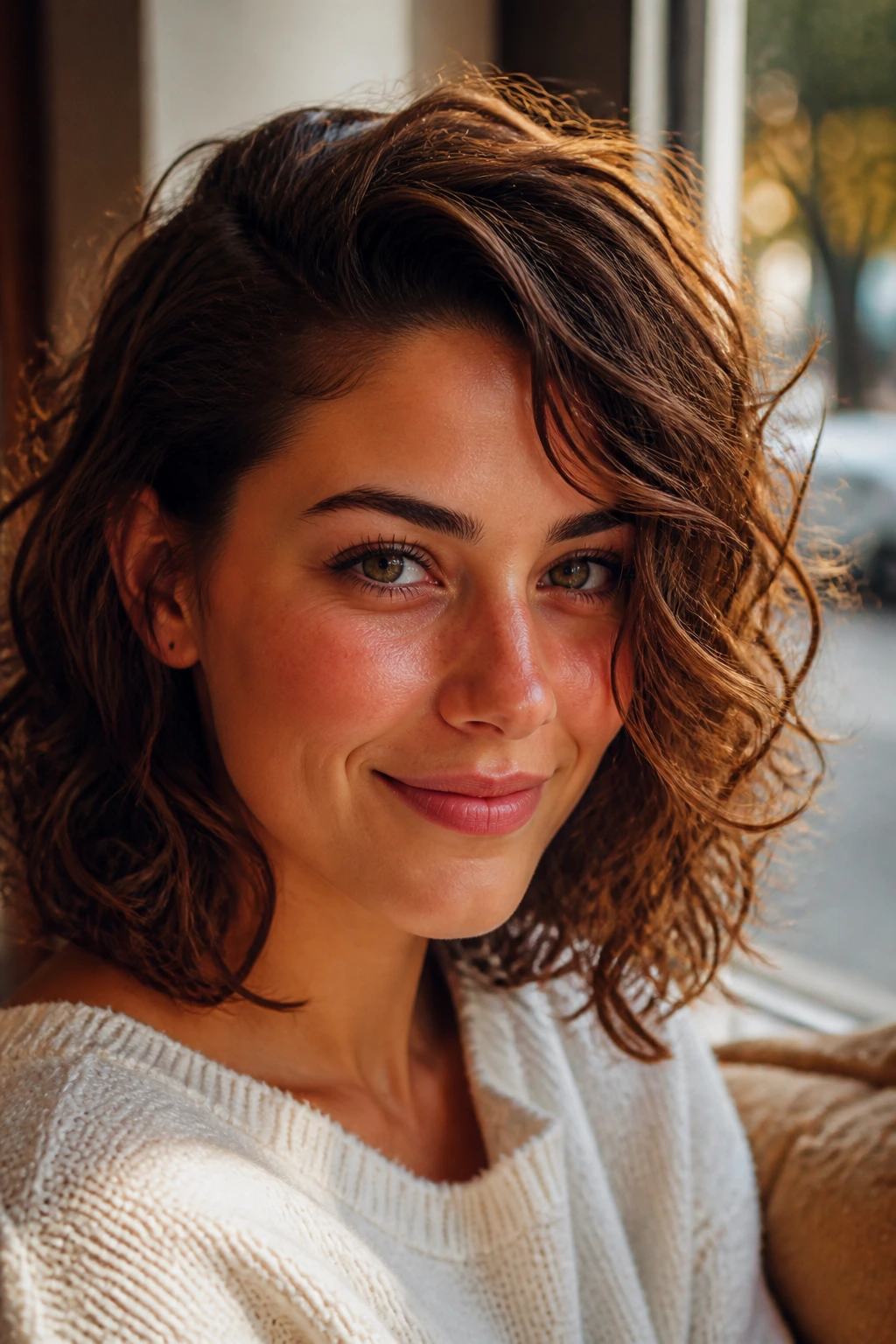
A side part changes the haircut more than a lot of people realize. With loose curls, a deep side part adds a strong diagonal line before the scissors even come out. The result is a cut that feels richer and more dramatic without needing a lot of actual length difference between front and back.
This shape is a favorite of mine for people with oval or heart-shaped faces. One side can tuck behind the ear, the other can fall forward in a soft sheet of curls, and suddenly the whole shoulder-length shape has a little motion in it. It’s also a very good option if you don’t want bangs but still want something around the face.
The cut itself doesn’t need to be extreme. Even a 1-inch slope from back to front can feel larger when the part is deep. That’s the little trick. The part does half the work.
5. Razored Angle for Fine Loose Curls
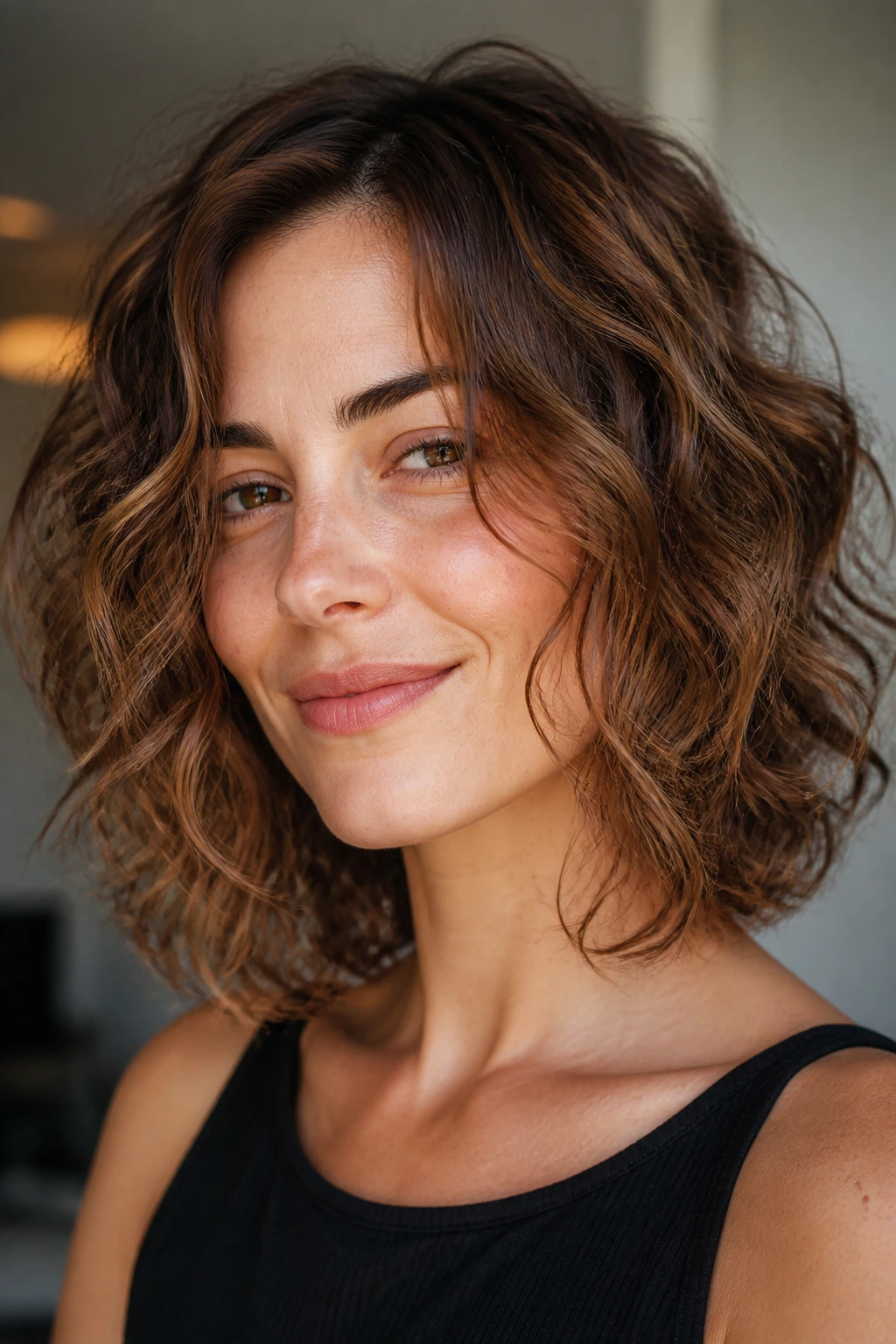
Fine loose curls can get limp at the ends if the perimeter is too heavy. A slightly razored angled cut helps break up that hard edge so the curls separate a little instead of clumping into one flat line. I’m not talking about shredding the hair with a razor from root to tip. That’s a fast way to make ends look dry.
The good version is subtle. Think point cutting or very light razor work only on the last half-inch to inch of the perimeter, just enough to stop the line from feeling blunt. On fine curls, that softness gives the hair a little lift and a little texture, which helps the angle stay visible even when the curls relax.
Best for hair that looks flatter on the second day. The feathered edge keeps the shape from collapsing into a pancake at the shoulders. If your hair is fragile or already prone to frizz, ask for scissors instead of a razor and let the stylist soften the ends by hand.
6. Rounded Front Angle for Dense Waves
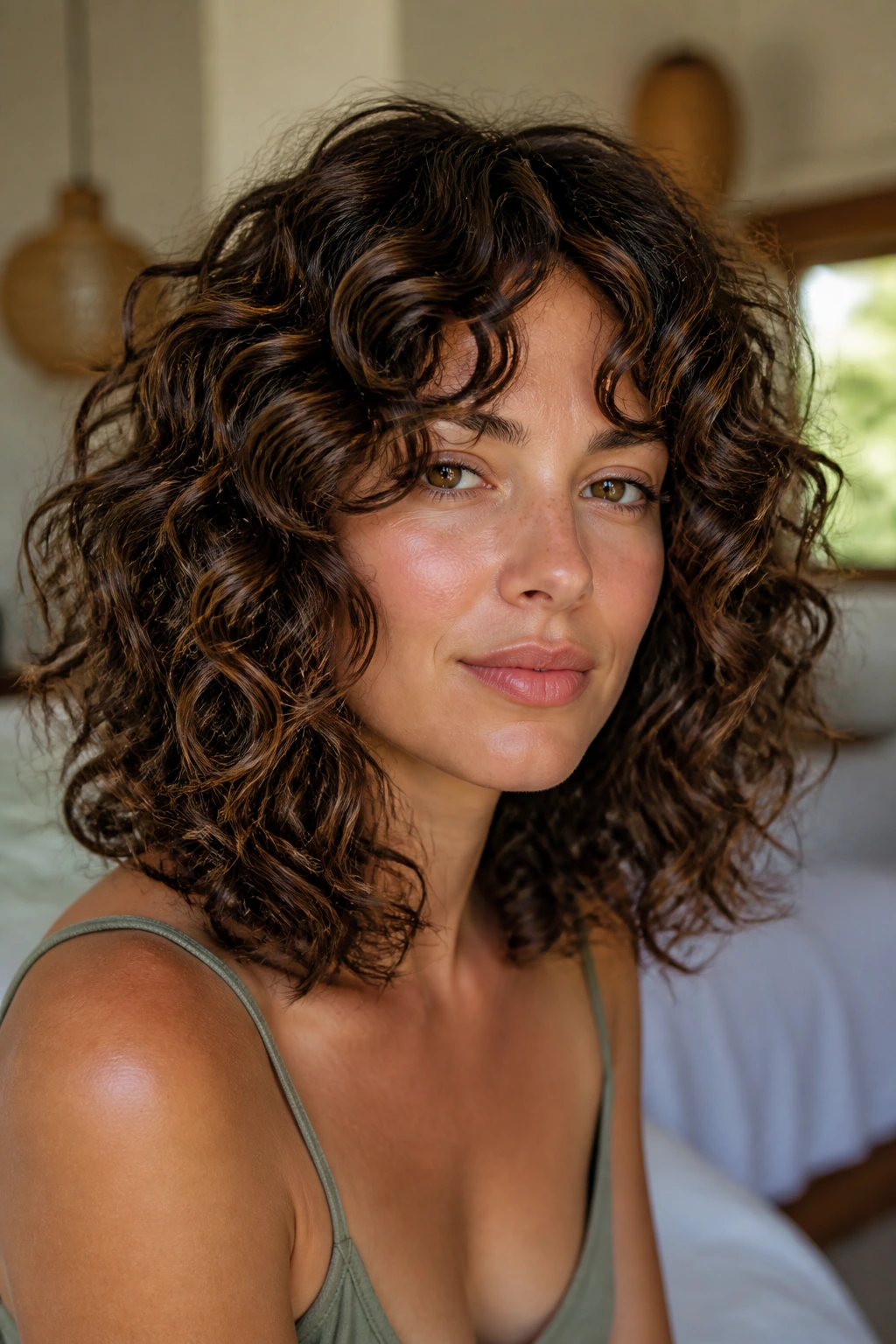
Dense loose curls need room to move, but they do not always need more layers. Sometimes a rounded front angle is the better answer. It gives the face a curved frame while keeping the body of the cut heavier, which stops the whole style from puffing out at ear level.
Why the rounded perimeter matters
The rounded shape keeps the front pieces from making a hard corner at the jaw. That matters a lot if your curls are wide or springy, because a squared-off front can look boxy the second it dries. A rounder front softens the outline and lets the shoulder-length shape follow the contour of the head instead of fighting it.
What to tell the stylist
- Keep the longest front pieces around collarbone length.
- Avoid short crown layers that lift the top too much.
- Use internal shaping instead of obvious chopping.
- Let the front curve gently inward toward the chin.
This one is good when you want fullness without bulk. It keeps the hair from looking like a triangle, which is a very real risk with dense curls at shoulder length.
7. Long-Front, Short-Back Lob
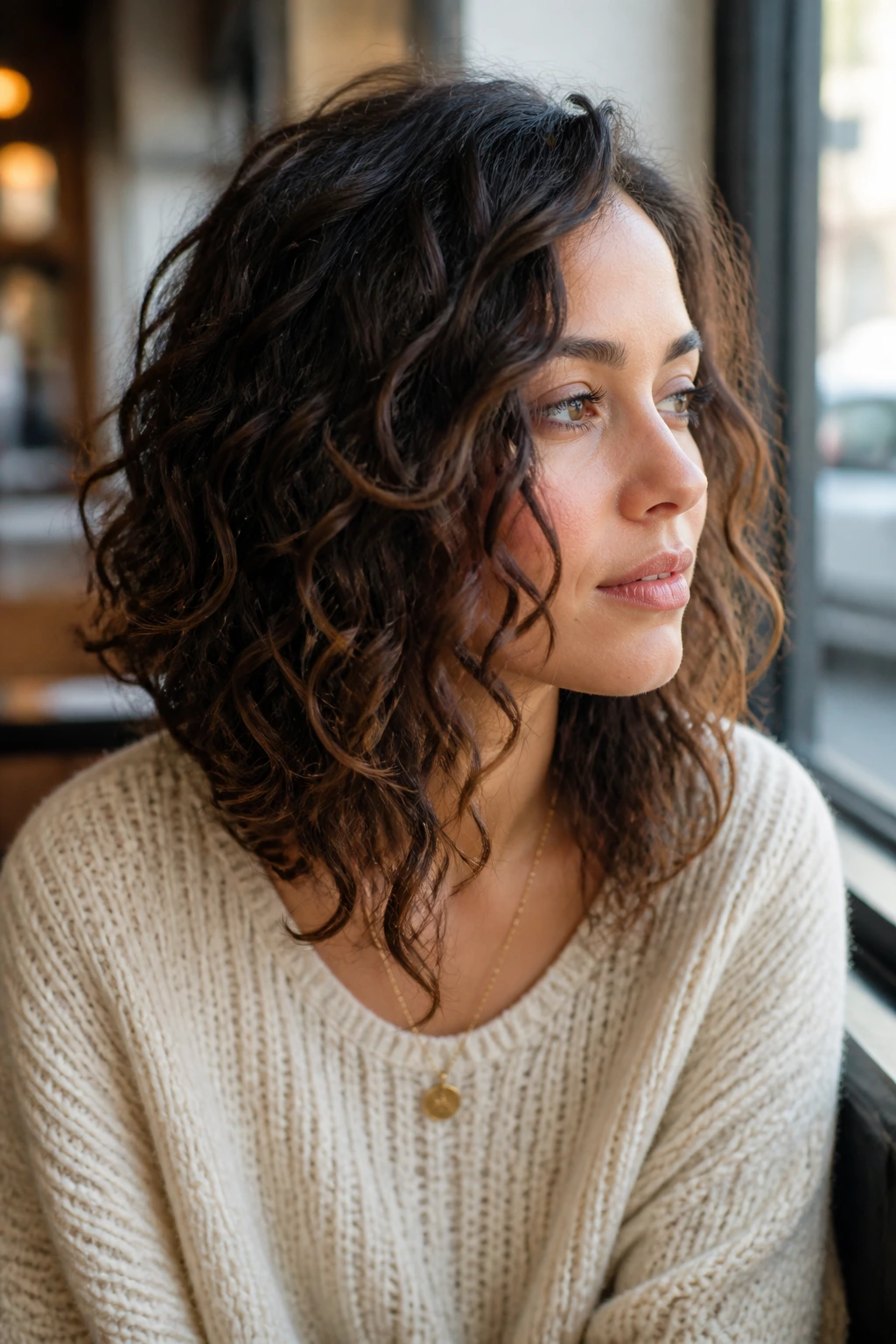
This is the cut for someone who likes the idea of a lob but wants a little drama. The front gets to live longer — sometimes brushing the upper chest — while the back stays 2 to 3 inches shorter. On loose curls, that gives the whole style a clean forward motion, almost like the hair is leaning into the room.
It’s also one of the smartest options for people who wear their hair tucked behind one ear or swept over one shoulder. The long front pieces get a little swing when you move, and the shorter back keeps the weight line from dragging. If your curls are loose enough to fall open, this cut can look expensive without needing much styling beyond a diffuser and a soft hold product.
I’d call this a stronger angle, not a harsh one. If the back is cut too short, the shape turns into a wedge. Keep the difference visible, but not severe.
8. Curtain Bang Angle
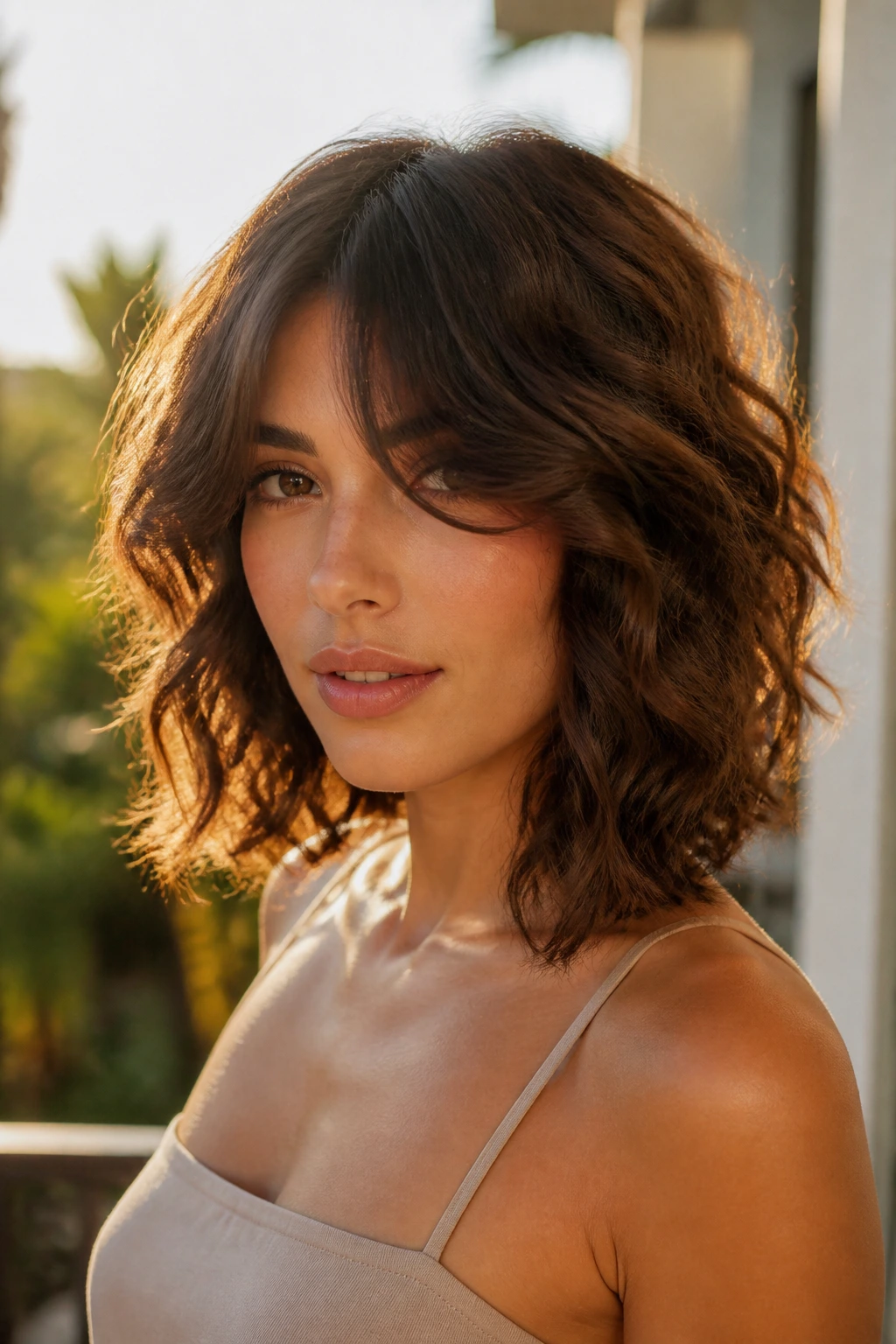
Curtain bangs change the whole personality of shoulder-length curls. Pair them with an angled lob and you get a haircut that frames the cheeks, narrows the forehead a bit, and still leaves length through the rest of the style. Loose curls are good at this because they soften the bang line instead of making it look chopped.
The key is length. Curtain bangs on curlier hair should usually be cut a little longer than on straight hair, because they spring up once they dry. If the shortest pieces are too ambitious, they can hover above the brow in an awkward way. Ask for the center pieces to graze the bridge of the nose when dry, then taper them out toward the cheekbones.
This cut is especially nice if you don’t want full fringe maintenance. The bangs blend into the angled front, so they grow out more gracefully than a blunt bang. One more thing: if you wear glasses, keep the side pieces a touch longer. They need room to move.
9. Shoulder-Grazing Shag Angle
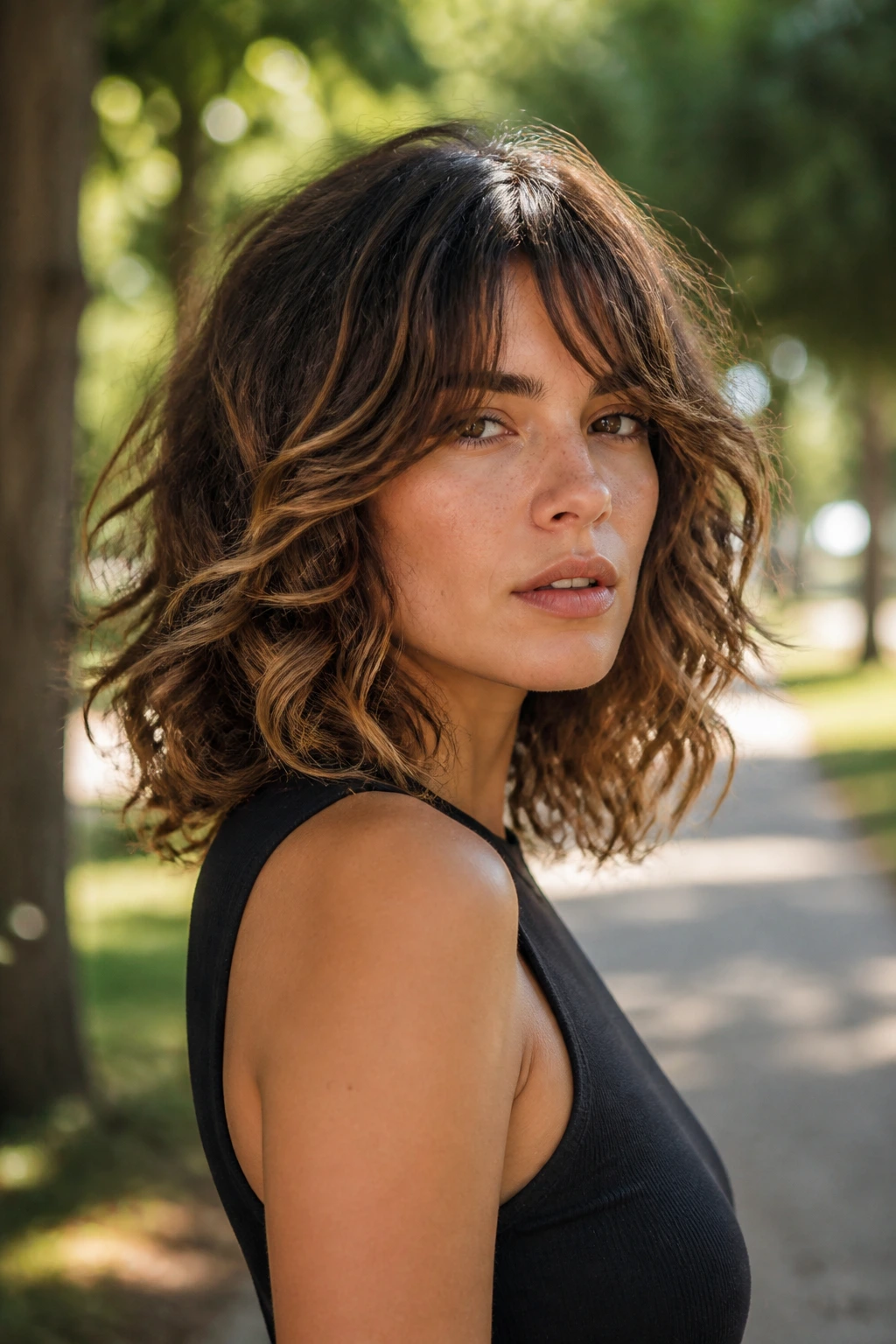
Can an angled cut be a little messy on purpose? Absolutely. The shoulder-grazing shag angle takes the diagonal line and softens it with airy layers, so the whole cut looks lived-in rather than exact. Loose curls are good at carrying this off because they already have enough texture to keep the layers visible.
This shape suits people who air-dry a lot and don’t mind a little irregularity in the finish. The front still needs to hit a specific landmark — collarbone or just below — but the rest of the cut can be looser, with shorter internal pieces that boost movement around the cheekbones and crown. It is not the cut for someone who wants every strand in order.
The charm here is in the looseness. You get the angle, but you also get that slightly windblown look that loose curls do so well when they’re not over-styled.
10. Minimal-Layer A-Line
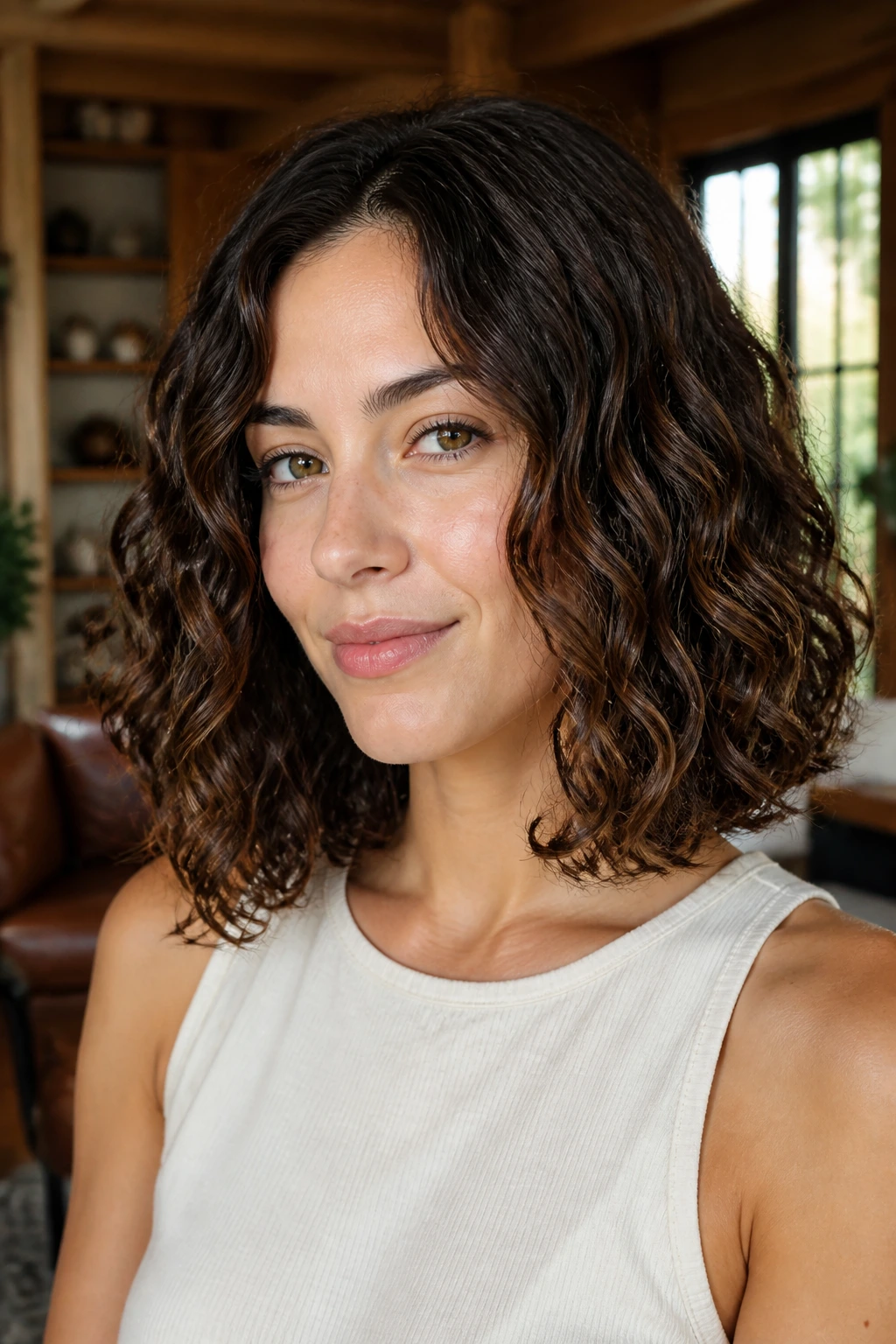
If you hate layers, start here. A minimal-layer A-line keeps most of the weight at the perimeter and uses the angle itself to build the shape. On loose curls, that can be a relief. Too many layers often make the ends frizzier and the middle puffier, which is the opposite of what most people want at shoulder length.
The haircut still has enough slope to show movement, just not enough to become choppy. The front should be a little longer than the back, but the internal structure stays calm. This is a good option for anyone with medium density who wants to keep the ends looking full and the curl clumps intact.
Best for
- People who like a clean outline.
- Curls that frizz when over-layered.
- Hair that needs to look polished with minimal styling.
- Anyone growing out old layers but not ready for a blunt cut.
A little angle goes a long way here. That’s the whole point.
11. Heavier Perimeter Angle for Frizz-Prone Hair
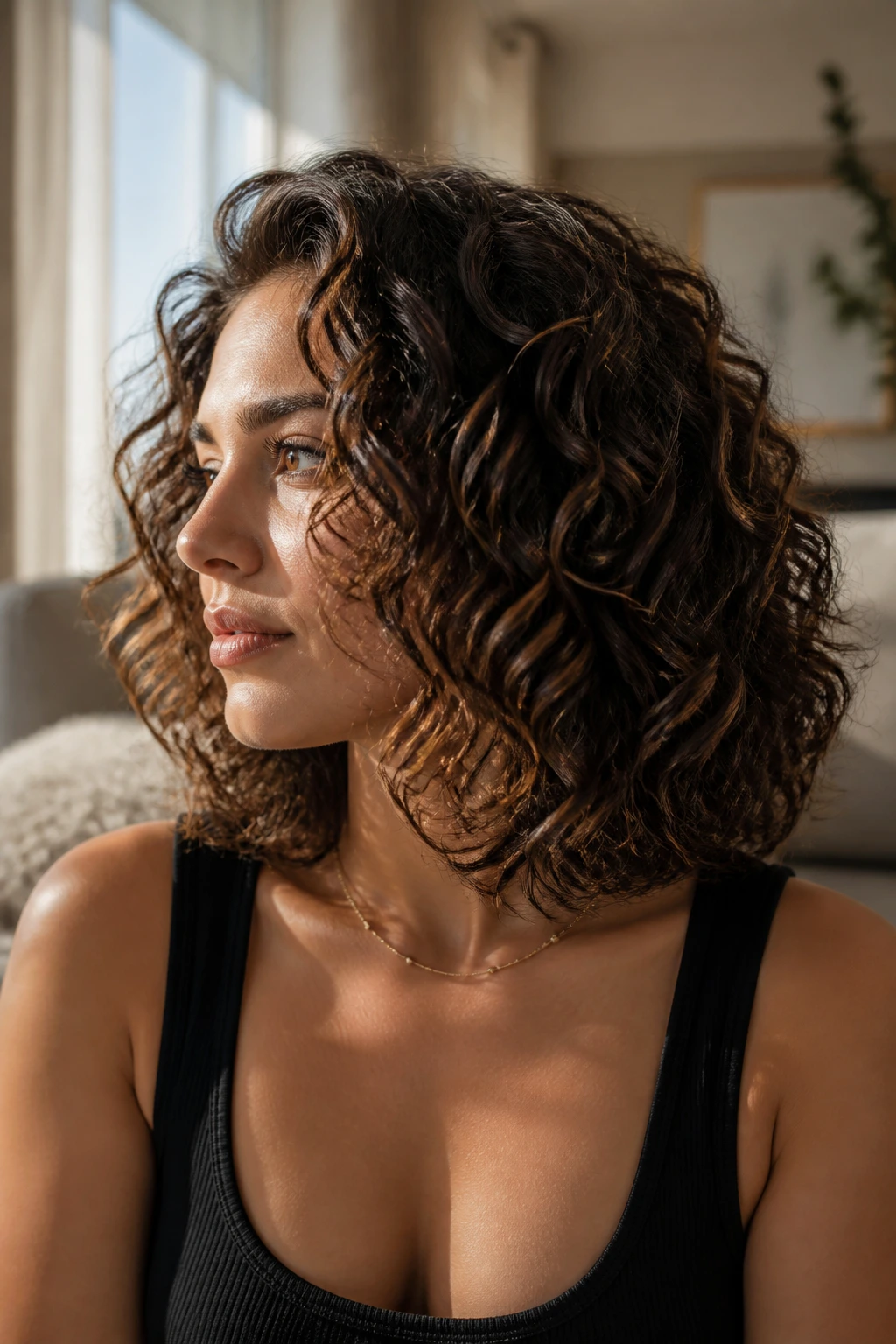
Frizz-prone curls usually do better with a heavier outline, not a thinner one. A heavier perimeter angle keeps more weight at the bottom, which helps the curls settle instead of floating apart. You still get the diagonal line, but the ends remain substantial enough to resist puffiness.
This cut is a favorite in humid weather because it holds its shape better than a super-layered style. Ask for the back to stay full and the angle to come mostly from the front pieces rather than from aggressive reduction in the body of the hair. The hair should look sleek at the ends even when the crown gets a little fuzzy. That contrast is not a flaw. It’s the sign that the perimeter is doing its job.
If your hair expands at the shoulders, this is usually the smarter choice than chasing more texture. Sometimes the fix is more weight, not less.
12. Stacked Nape with Soft Ends
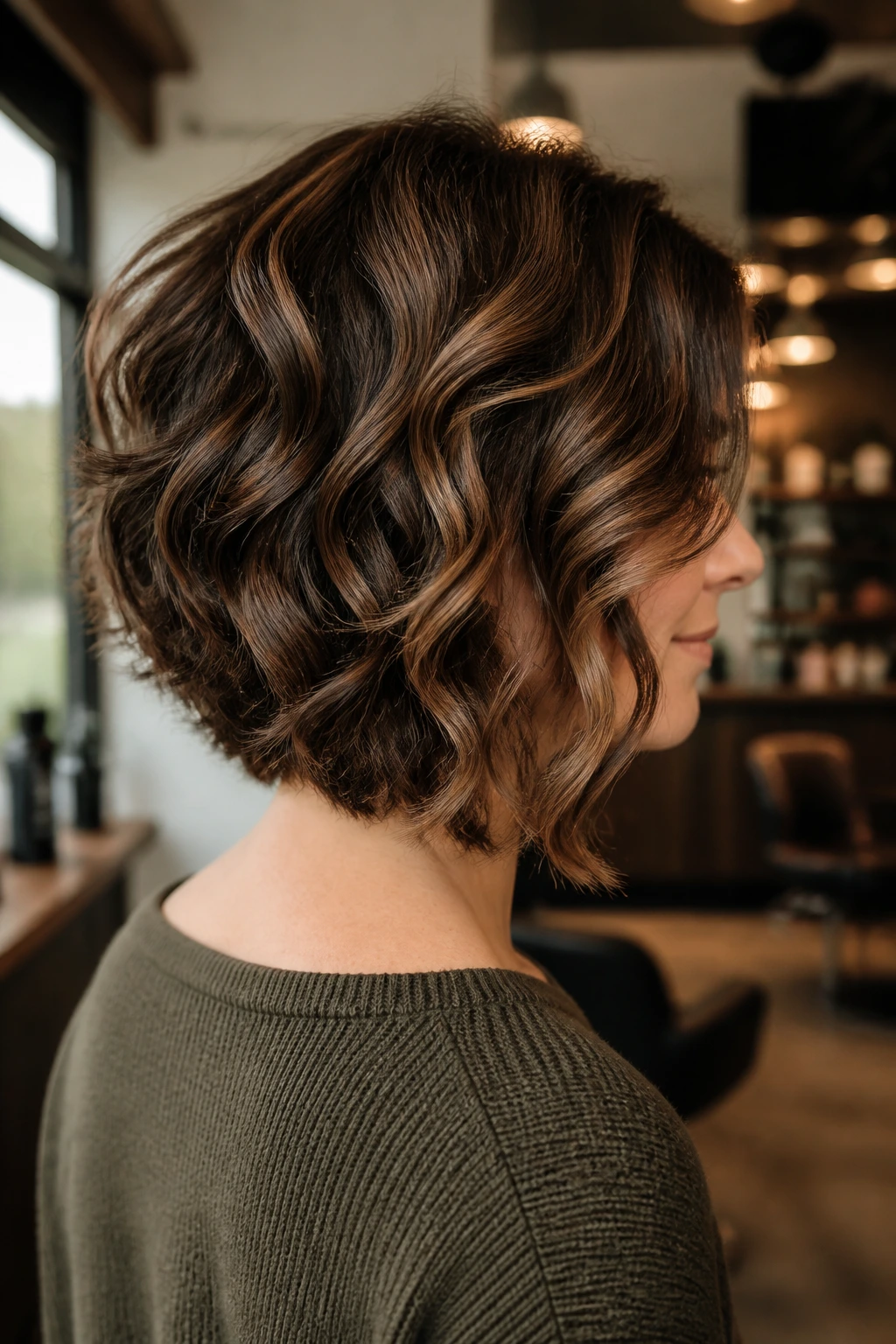
There’s a fine line between a modern stacked lob and a haircut that feels stuck in another decade. Soft ends are what keep this version current. The nape gets a gentle stack for lift, but the perimeter isn’t chopped into a sharp shelf. It bends.
Loose curls like this shape because the back gets enough lift to avoid collapsing, while the front still drops forward with a little softness around the jaw. It works especially well if your hair has a slightly flatter crown and you want the back to sit up instead of hugging the neck.
Do not over-stack the nape. That’s the trap. A heavy stack on curlier hair can make the haircut feel too round at the back and too narrow in the front. Keep it subtle, and let the curls carry the movement.
13. Chevron Face Frame Angle
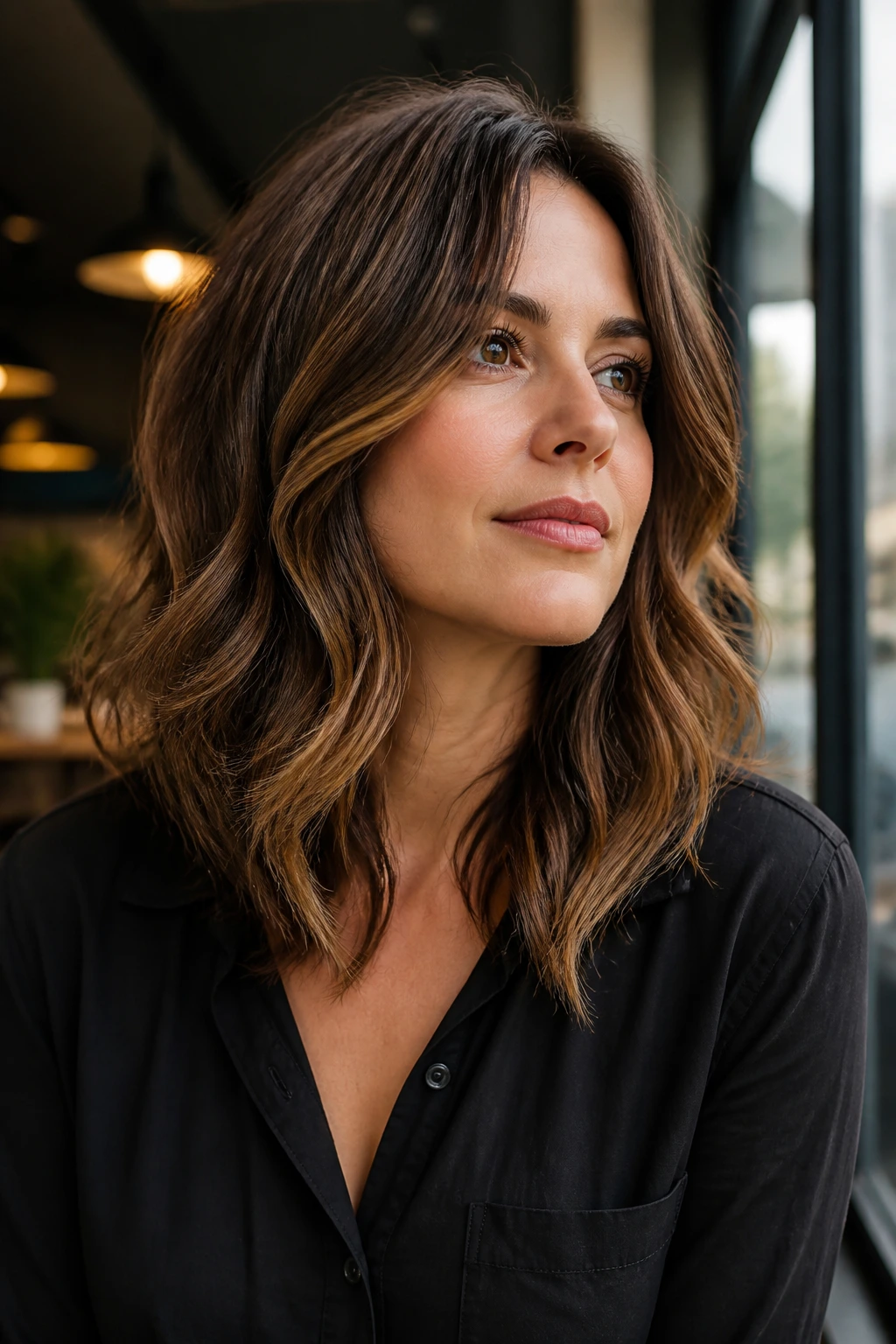
This one is for people who want the haircut to open the face up a little more than a standard lob does. The front pieces are cut into a soft chevron, longer at the outer edges and shorter near the center, then they flow into the angled body of the cut. On loose curls, that creates a nice lift around the cheekbones.
What makes it different
The chevron isn’t just a bang shape. It becomes part of the perimeter, which means the face frame and the angle talk to each other instead of competing. That keeps the haircut from feeling piecemeal. I like this on square or heart-shaped faces, because it can soften the jaw while still keeping the line clean.
Ask for this
- Center front pieces that land around nose to lip length when dry.
- Outer pieces that blend into the collarbone area.
- Soft point cutting, not blunt slicing.
- A dry check before the final trim.
The result is a face frame with a little direction. Not fussy. Just deliberate.
14. Collarbone Flip Angle
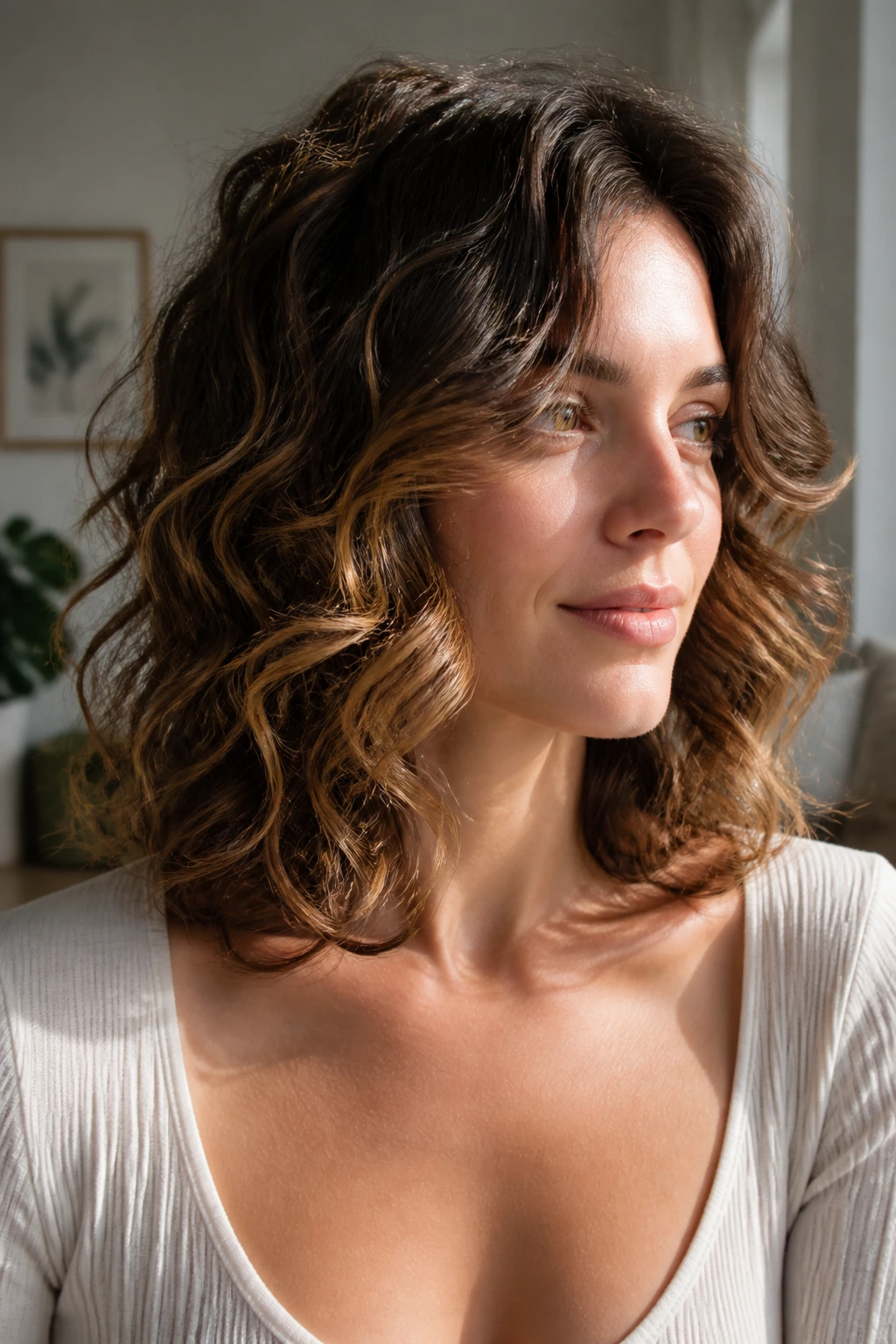
Loose curls love to flip when they hit the collarbone, and this cut leans into that instead of pretending it isn’t happening. The front pieces are long enough to brush the collarbone, which encourages a small outward bend or inward turn depending on how you dry them. The back stays just short enough to keep the shape lifted.
This haircut is sneaky in the best way. It can look almost straight in the mirror, then catch a little flip at the ends once the curls dry and separate. That movement gives the cut personality without demanding much from you.
If you’re the kind of person who likes hair that looks slightly better when it’s been lived in for an hour, this is a strong pick. The collarbone becomes part of the styling. Use it.
15. Soft Wedge for Air-Dry Styling
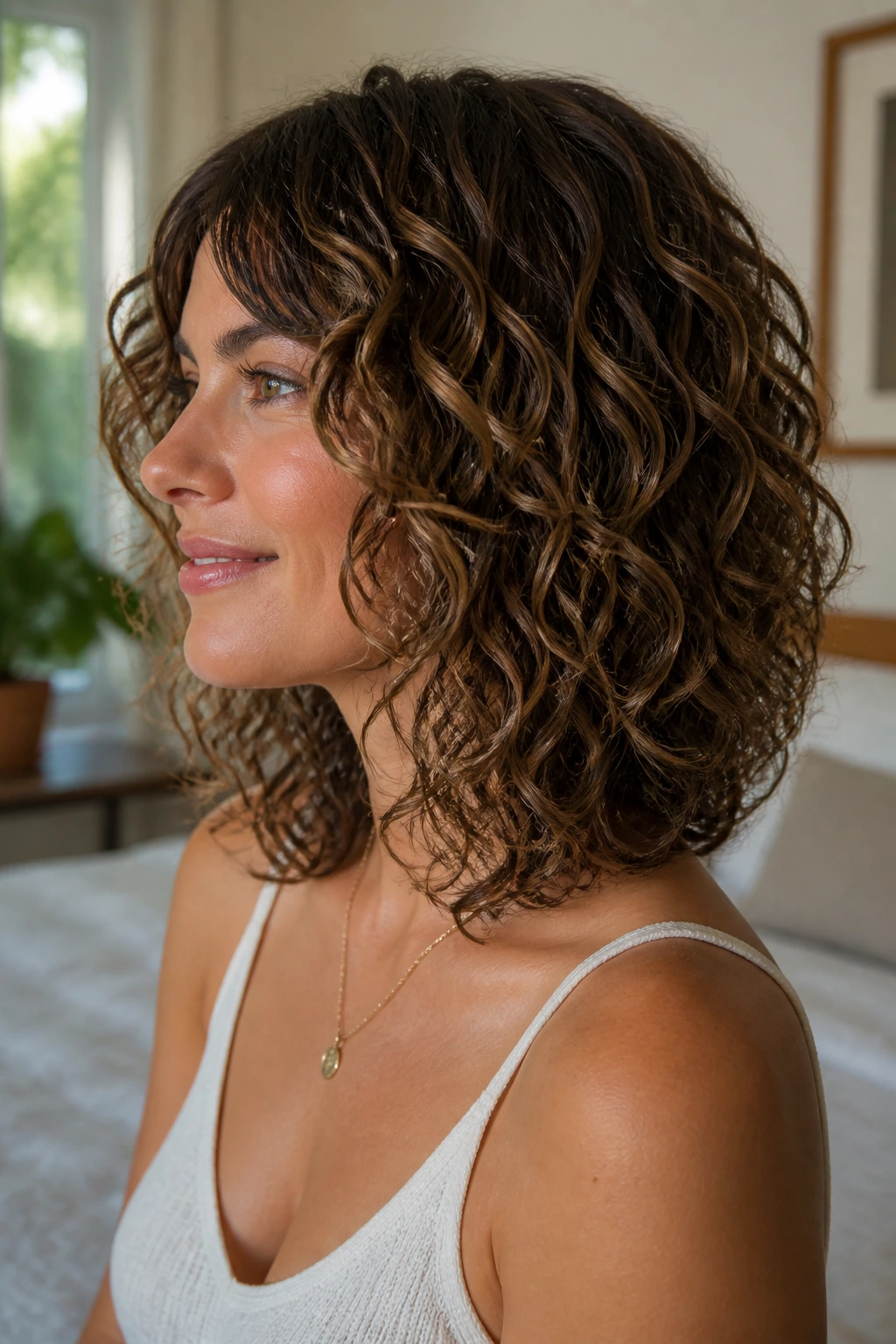
A soft wedge is the angle’s more relaxed cousin. It borrows the lifted back and forward motion of a wedge, then softens everything enough that loose curls can air-dry without turning stiff or retro. The back is still shorter than the front, but the outline stays rounded.
This works well for people who do not want to fuss with heat. A good air-dry cut should still have enough structure to look intentional before you touch it with product. Here, the angle should be visible even if you just scrunch in cream and let it go. That’s the test.
No hard corners. If the nape ends up too blunt, the cut will sit on the neck like a shelf. Keep the lines smooth and the transition gradual, especially if the curls are loose enough to open up as they dry.
16. Subtle Asymmetrical Lob
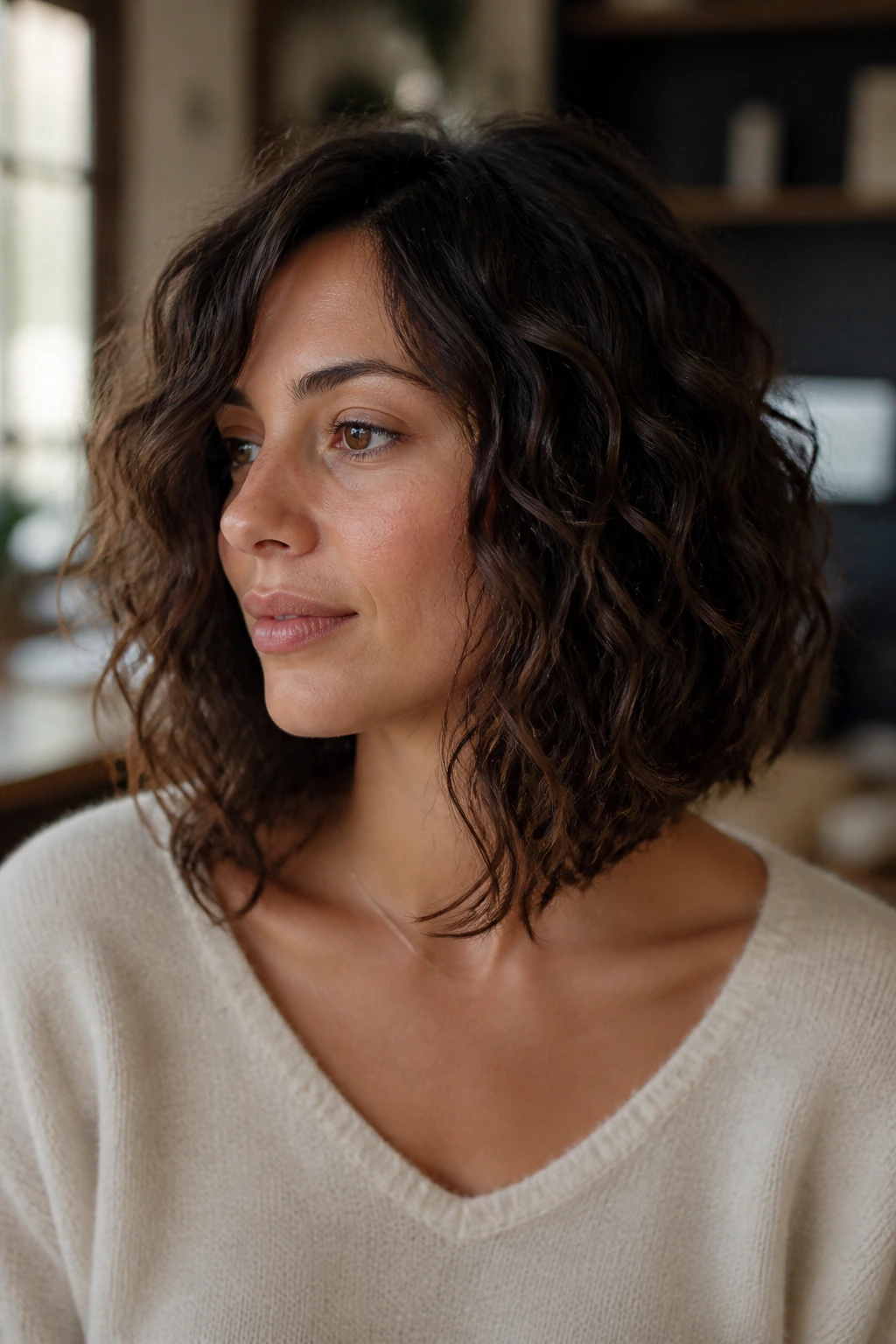
A little asymmetry can make loose curls look richer without turning the haircut into a statement piece. One side sits maybe half an inch to 1 inch longer than the other, and the front still follows a soft angle. The difference is slight enough that it reads as movement, not mistake.
This cut is good if you always part your hair the same way and want the shape to follow that habit. The longer side can frame the face or tuck behind the ear, while the shorter side keeps the line from feeling too even. It’s especially useful for people who like a bit of edge but don’t want a dramatic undercut or shaved detail.
The danger here is going too far. A big asymmetry on shoulder-length curls can look lopsided fast. Keep it quiet, and let the curl pattern do the talking.
17. Tousled Mid-Length Angle with Hidden Layers
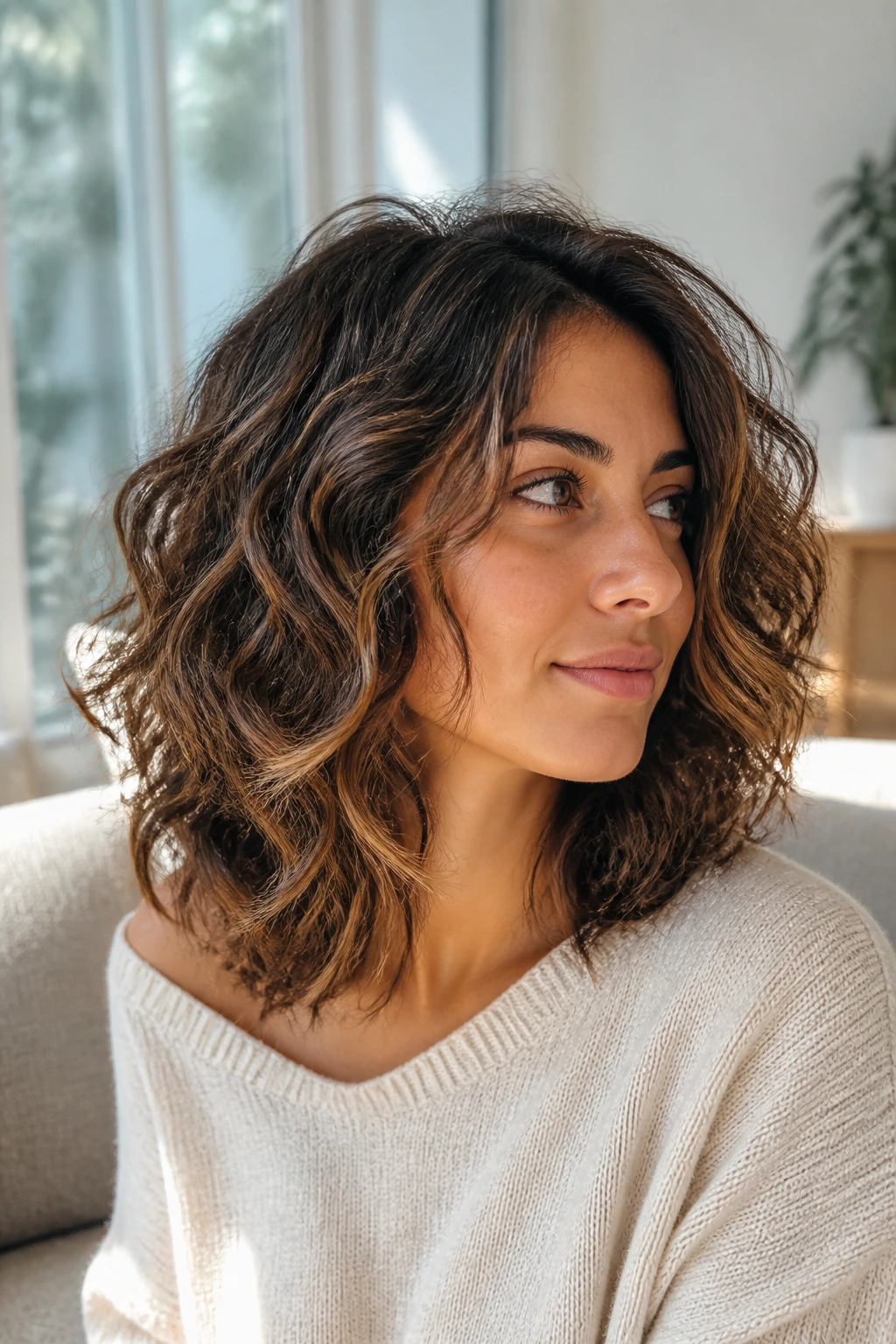
This cut looks simple from the outside, which is partly why it works. The angle is there, but most of the movement comes from hidden layers placed underneath the surface. Loose curls spring over them and create a soft, tousled finish that still has a visible shape from the front.
It’s a good choice for thick hair that needs weight taken out without looking chopped. The hidden layers stop the mid-lengths from ballooning, while the perimeter keeps its line. Ask your stylist to avoid carving up the top layer too much; if the surface gets too broken, the haircut loses its clean shape and starts reading messy instead of textured.
A lot of people want texture. What they actually need is controlled texture. There’s a difference.
18. Heavy Front, Light Back Angle
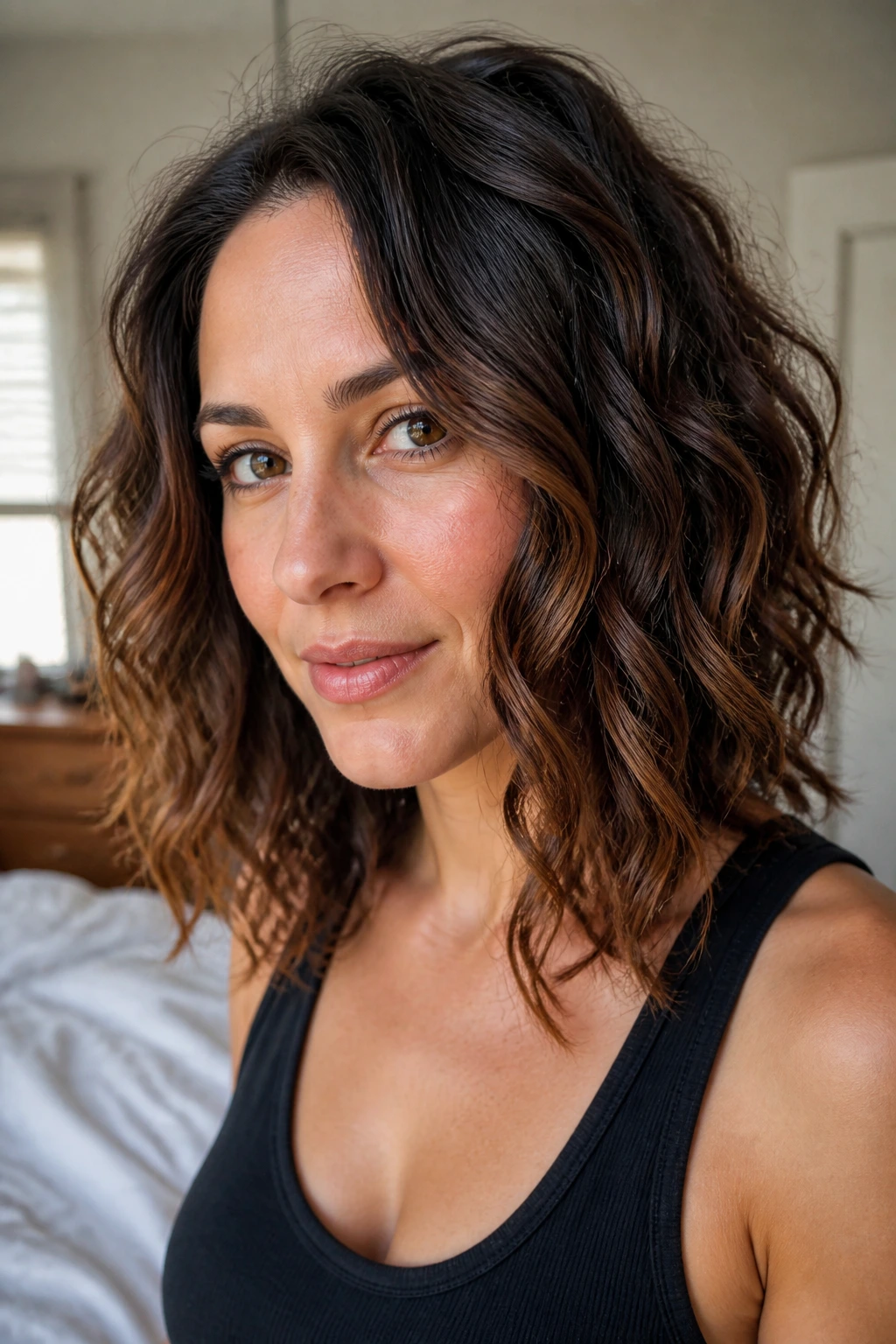
Here’s a shape that puts the visual focus right where you want it: around the face. The front stays a little fuller and longer, while the back is trimmed lighter so the hair doesn’t drag at the shoulders. On loose curls, that makes the front pieces feel almost like a soft frame that moves with your head.
This is especially good for square or broad jawlines, because the heavier front softens the outline without burying the cheekbones. The back doesn’t disappear, though. It just recedes enough to keep the front from getting lost in the rest of the hair.
If you wear your hair forward most of the time, this one is worth a look. It reads polished without trying to be formal.
19. Low-Maintenance Grow-Out Angle
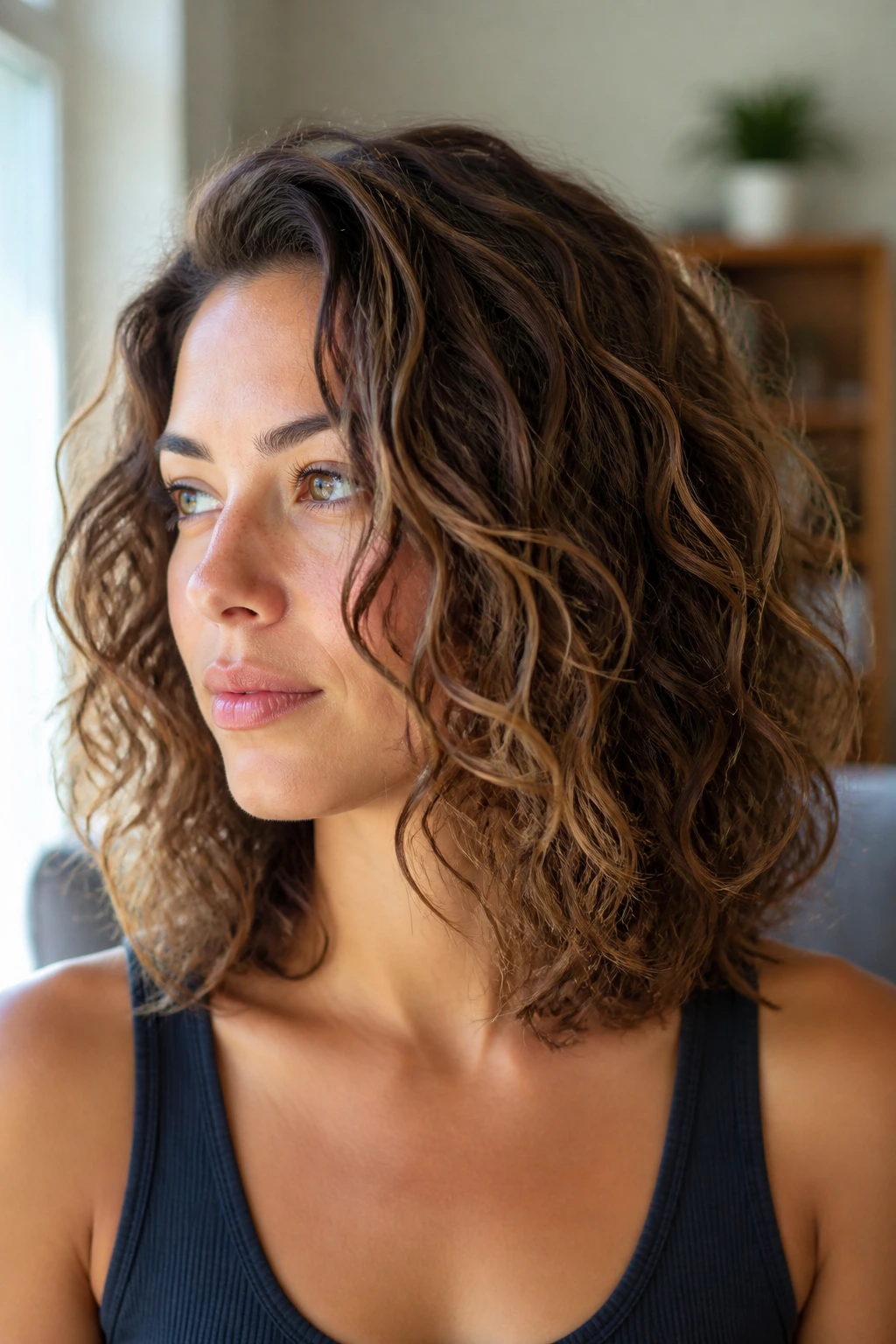
Not every angled haircut needs to stay razor sharp. Some are built to look good after eight weeks, not just on the day you leave the salon. This version keeps the angle soft, with rounded corners and a gentle difference between the back and the front, so the cut grows without developing a weird shelf.
That matters a lot for loose curls, because the pattern already disguises some of the grow-out. A subtle slope keeps the shape alive longer than a dramatic angle would. If you hate frequent trims, tell your stylist you want a grow-out friendly line and ask them to avoid short, hard layers around the neck.
This is the cut for people who want to get on with their lives and still have hair that behaves.
20. Center-Part Curl-Enhancing Angle
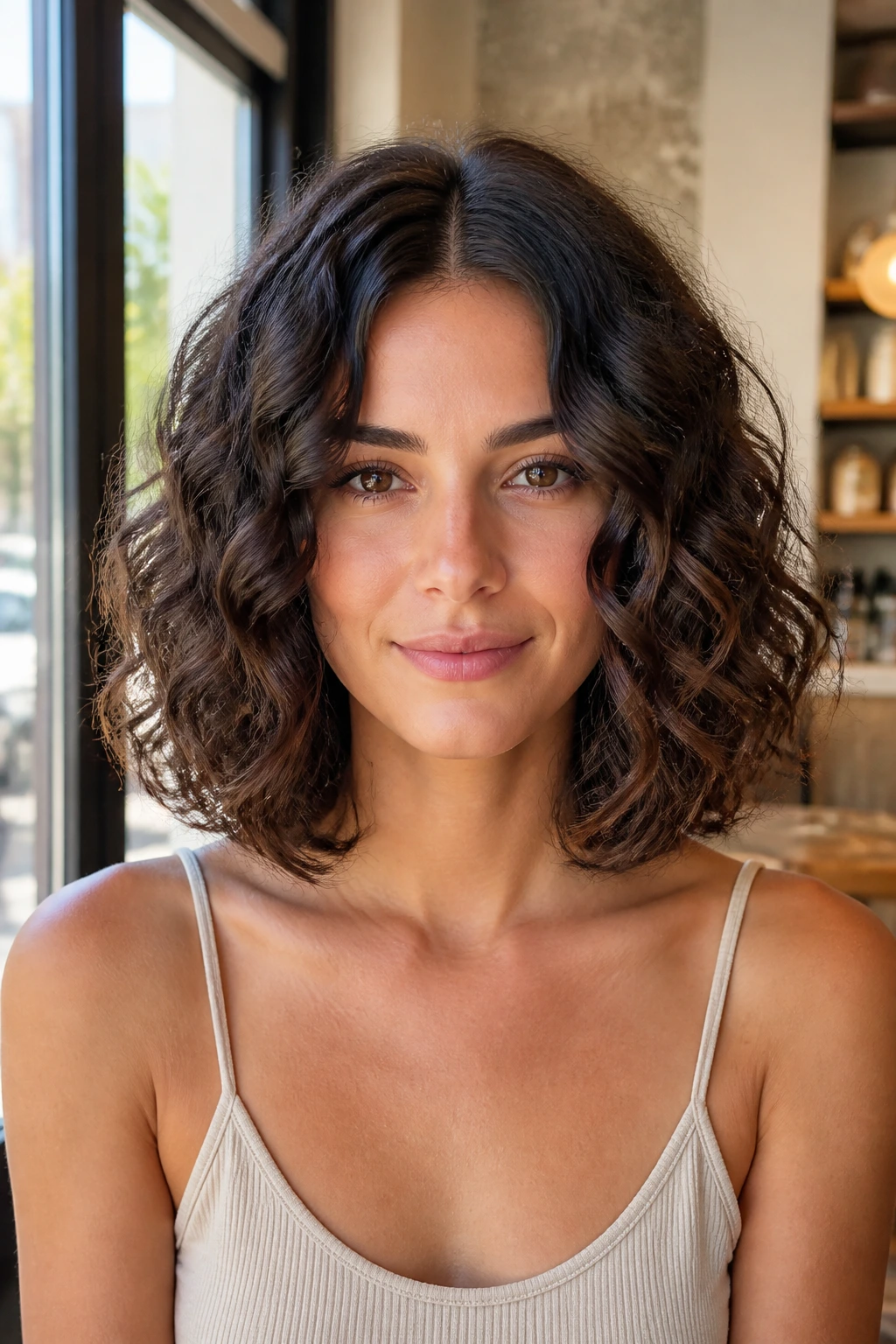
A center part can make loose curls look more balanced, but only if the cut supports it. This angled shape mirrors on both sides, so the front pieces fall evenly while the back stays slightly shorter. The result is clean and calm, with the curl pattern sitting like it’s supposed to be there.
Why this works
Loose curls often split awkwardly when the cut has too much weight on one side. A centered angle solves that by giving both halves the same visual anchor at the collarbone. It also makes the neck look longer, which is useful if your curls naturally spread wide at the shoulders.
How to wear it
- Keep the part exact or almost exact.
- Diffuse the roots upward for height.
- Let the front pieces dry fully before touching them.
- Trim the front if one side begins to drift lower.
It’s a simple shape. That’s why it lasts.
21. Side-Swept Slope Lob
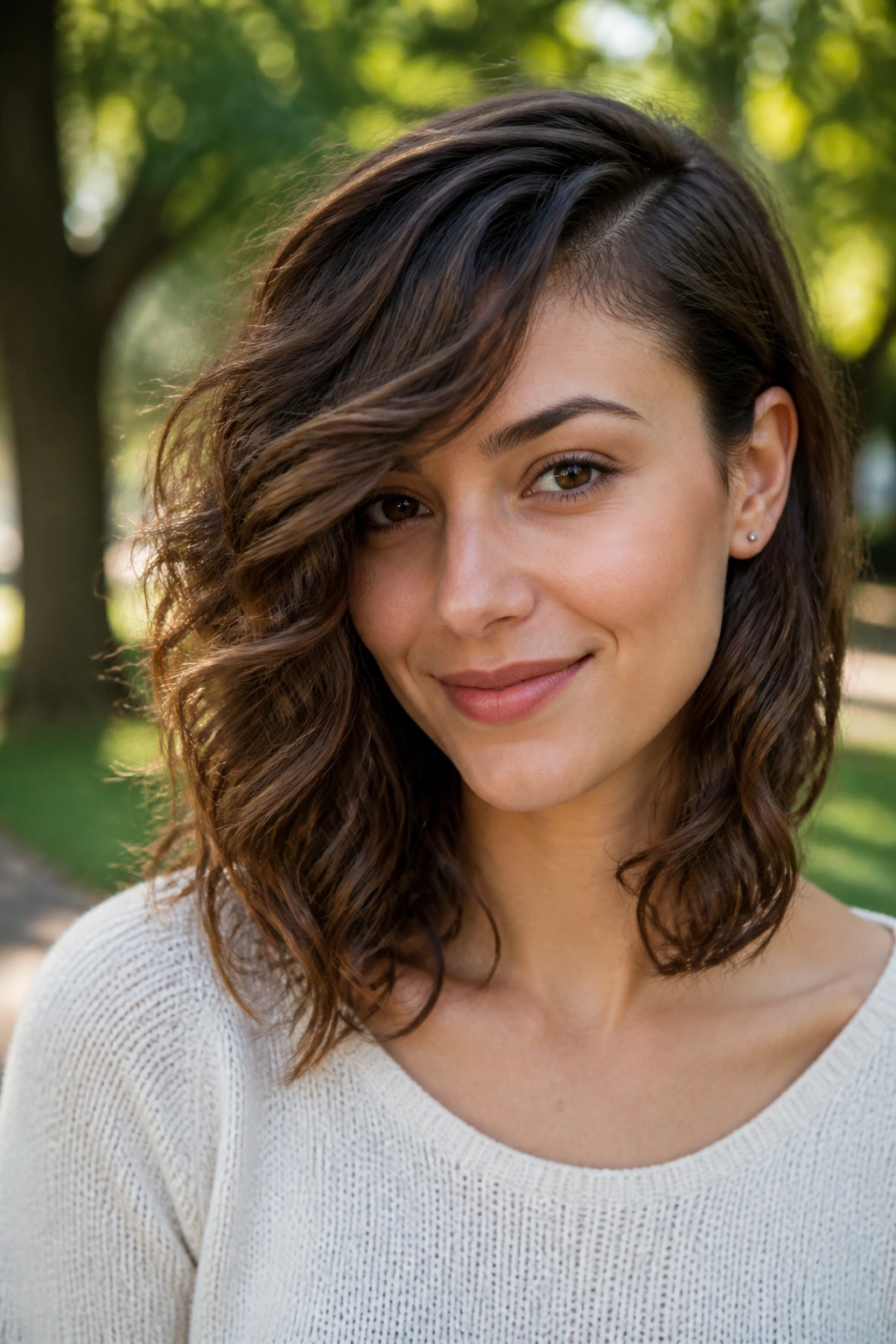
If a center part feels too neat, a side-swept slope lob gives the curls more personality. The front begins higher on one side and drops gradually across the face, creating a visible diagonal that feels soft instead of severe. On loose curls, this can be gorgeous because the bend of each curl reinforces the slope.
This shape is good when you want a little volume at the crown but don’t want a full side shave or dramatic undercut feeling. One side can be tucked behind the ear, the other can drape forward, and the whole cut looks slightly windswept even when you haven’t touched it much.
Keep the slope gentle if your hair is fine. A hard drop can make the shorter side look too short once the curls spring up.
22. Invisible Layers Angle for Thick Hair
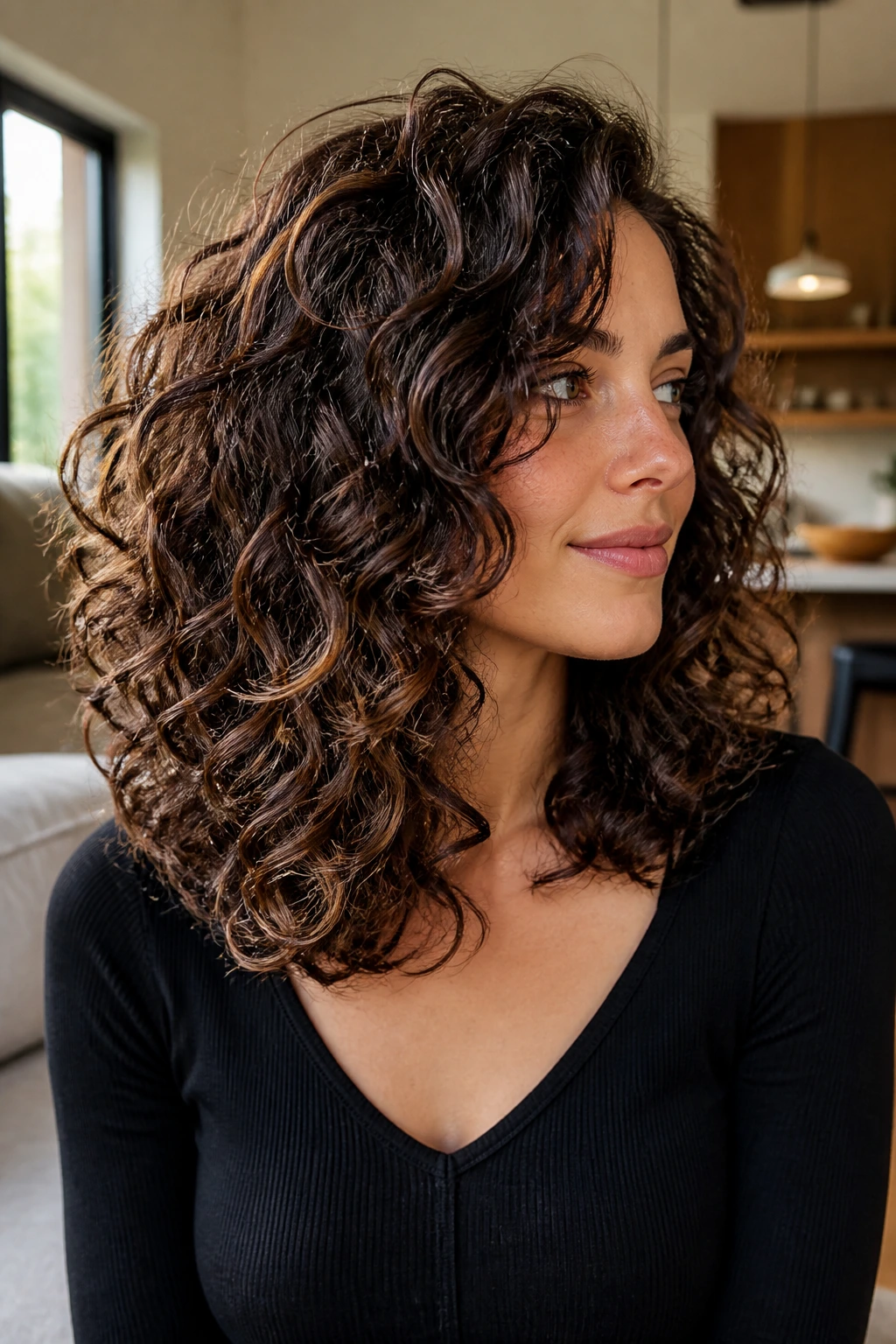
Thick loose curls need weight removed somewhere, but not always where people expect. Invisible layers sit under the surface so the top still looks smooth and the angle stays clean. The haircut keeps its body, but the interior becomes easier to manage.
This is one of the best ways to keep shoulder-length thick curls from puffing out into a pyramid. Ask the stylist to take bulk out beneath the outer layer and leave the perimeter substantial. If they start chopping up the top too much, the cut can become frizzy and broken, and the angle loses its line.
The goal here is control without obvious layering. That’s the sweet spot.
23. Side-Volume Angle with a Tucked Nape
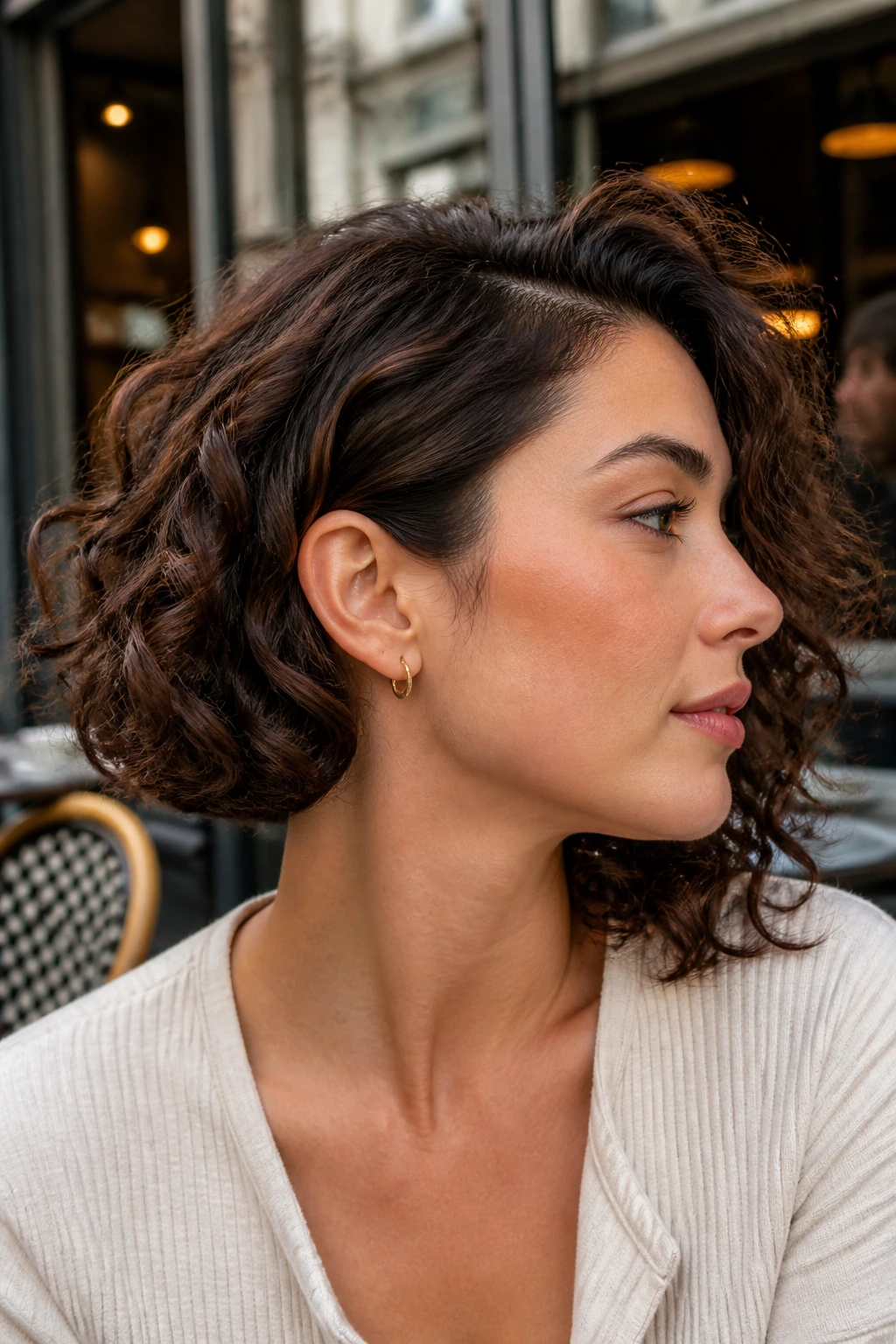
Some cuts are about opening the neck. This one does that while still keeping the side volume alive. The nape sits a touch tighter, the sides stay fuller, and the angle leads the hair forward in a smooth, slightly lifted shape. On loose curls, that can look elegant without becoming stiff.
It’s a strong option if you like wearing earrings, collared shirts, or anything that benefits from a clear neckline. The hair doesn’t have to be short to feel light. It just needs a nape that’s trimmed with a bit of intention. A tucked nape does that.
Just don’t overdo the tuck. If the back is cut too close, the style can start to bulge at the sides. Keep the transition soft and the curls loose.
24. Polished Angled Lob for Workdays
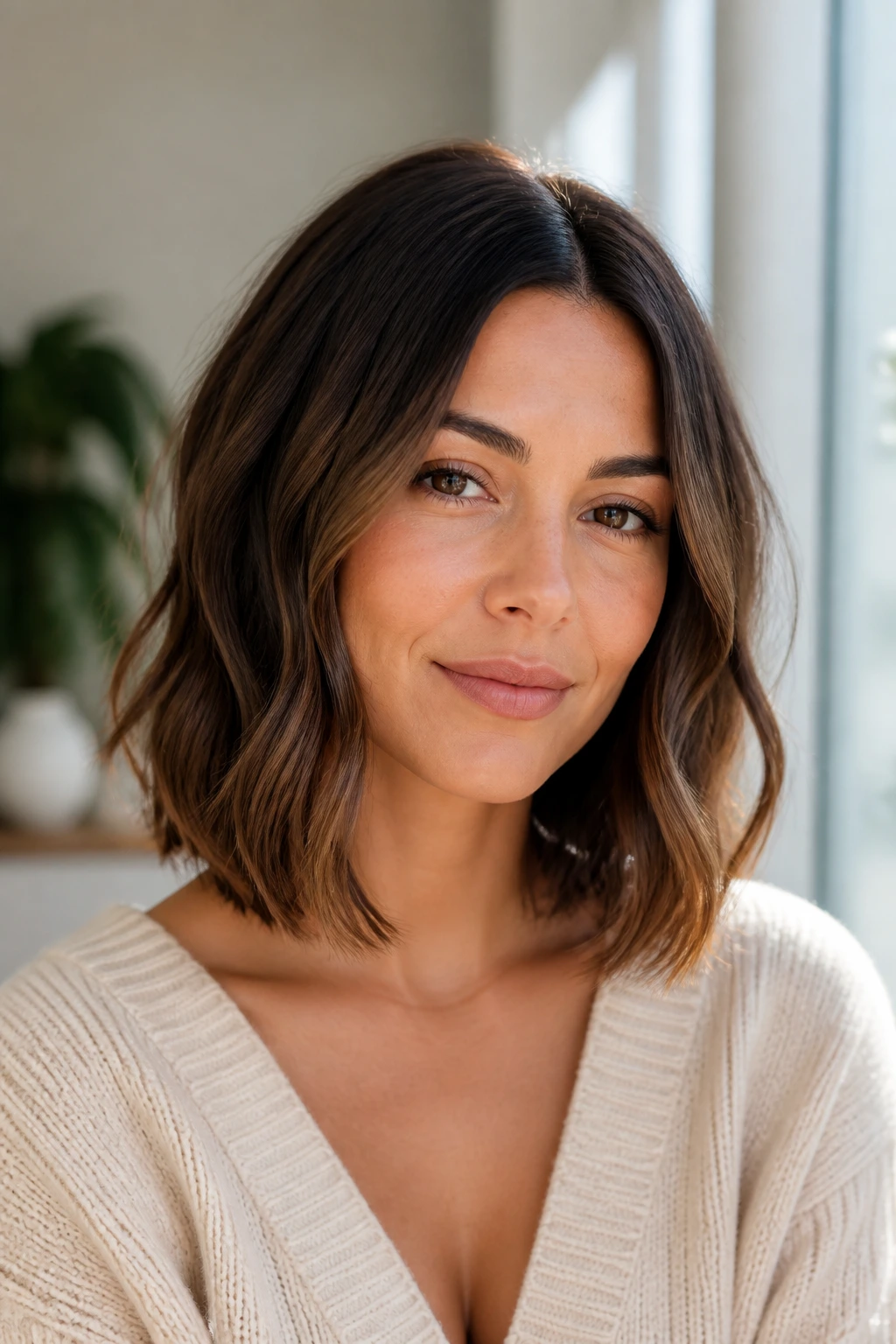
This is the cleanest version of the whole bunch. The perimeter is neat, the angle is subtle, and the finish looks especially good with a quick brush-dry or a diffuser followed by a round brush on the front pieces. Loose curls still bring texture, but the haircut reads orderly enough for days when you want your hair to look put together with very little argument.
I like this cut for anyone who spends part of the week in a polished setting and part of it in sweatshirts and sneakers. It bridges both moods without needing two separate haircuts. The angle keeps the shoulder-length shape from flattening out, and the smoother perimeter makes the curls feel deliberate instead of accidental.
A tiny bend at the ends is enough. It does not need perfect ringlets. It just needs a clean line.
25. Beachy, Wind-Caught Angle
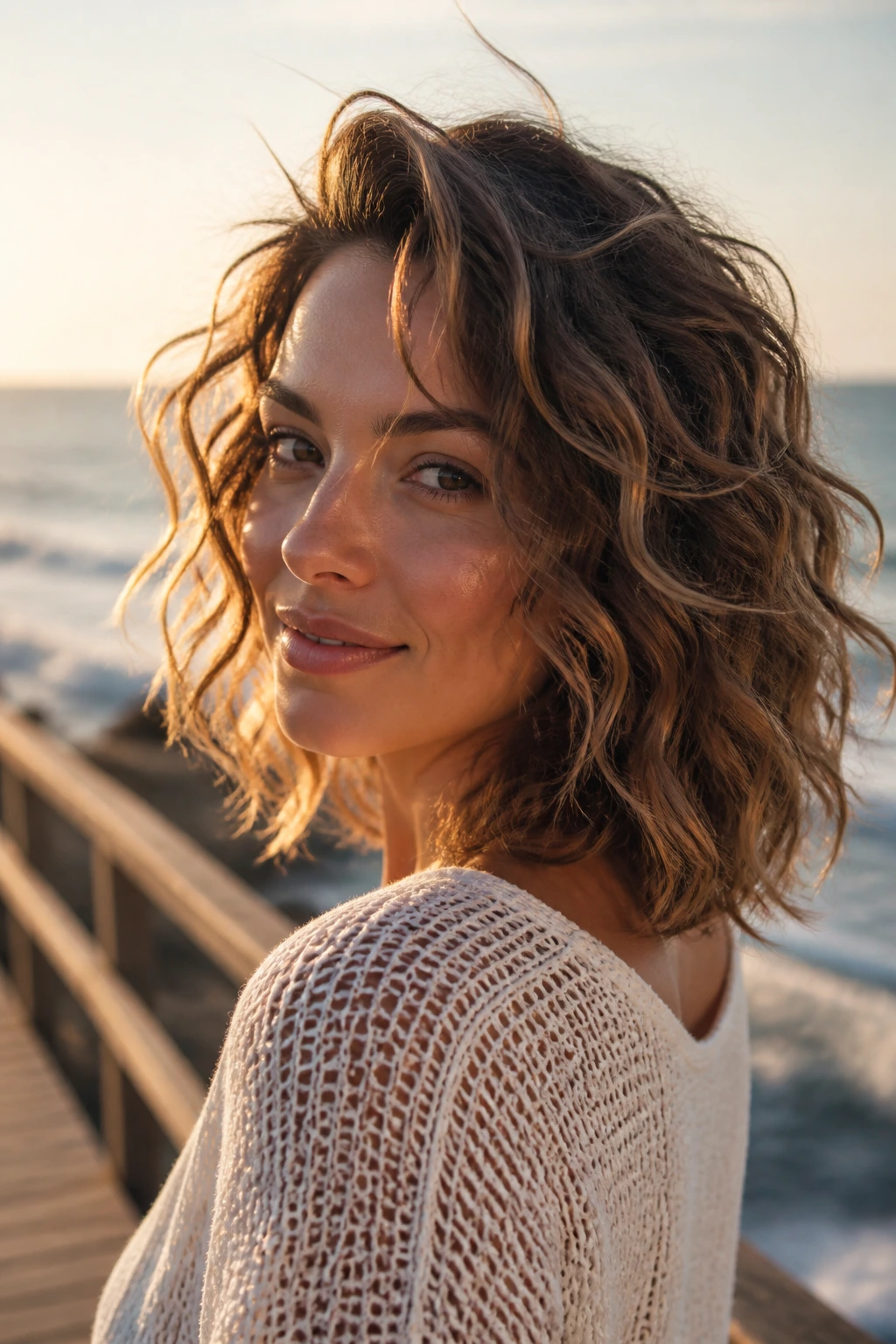
This one is for the person who wants the haircut to look like it has already lived a little. The angle is there, but it’s softened by piecey ends and a relaxed front that falls forward just enough to frame the cheekbones. Loose curls are ideal for this because they already have that moving-water quality.
The trick is to keep the shape intentional underneath all that looseness. The front should still have a longer line, the back should still sit slightly shorter, and the curls should not be thinned to the point of looking wispy. Think soft movement, not neglect.
This is a strong finish for the list because it shows where angled cuts can go when you stop trying to over-control them. A good beachy angle looks like you meant it. A great one keeps looking good after the curls have been slept on, shaken out, and touched once or twice with your fingers.
Why the Angle Matters More Than the Curl Cream
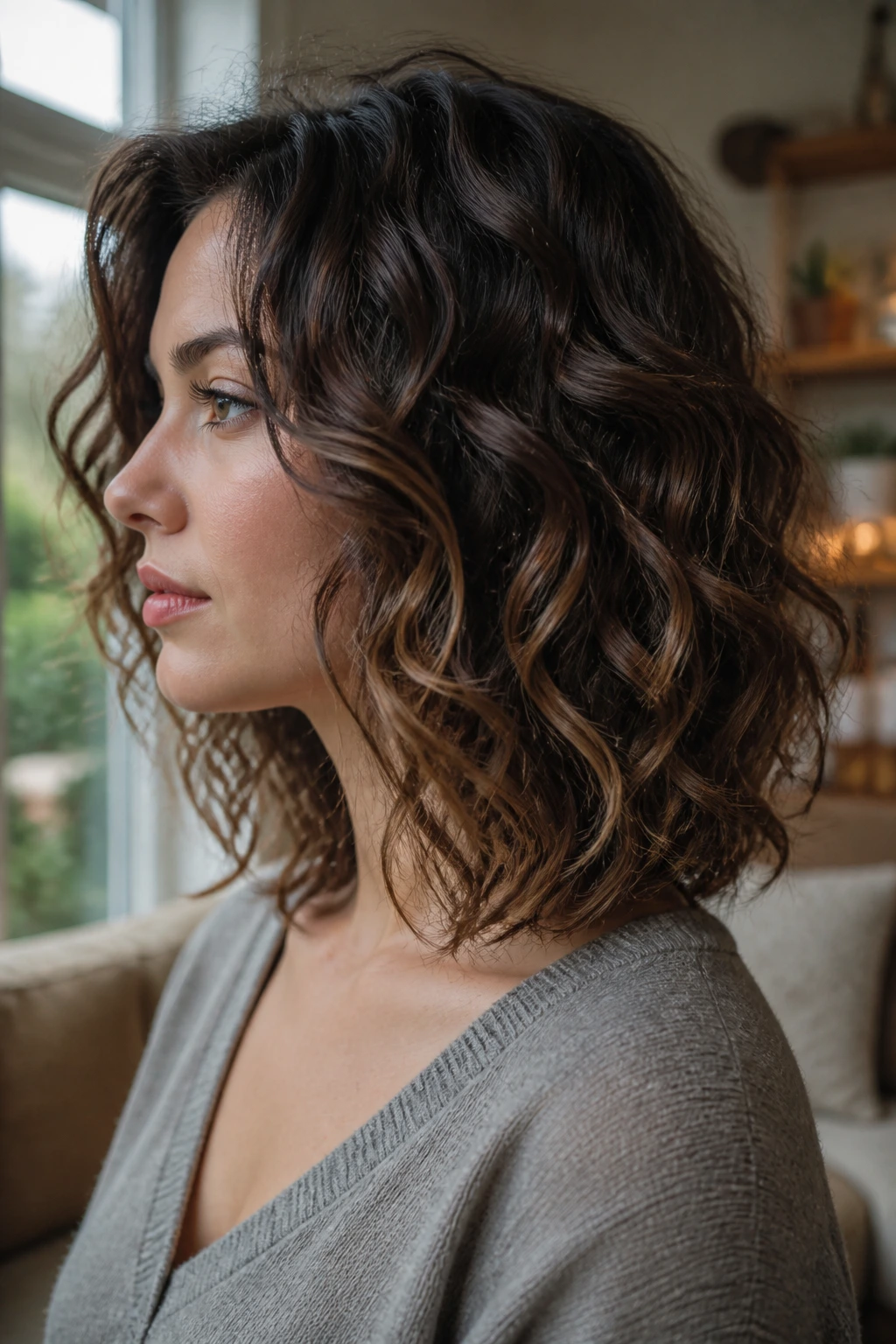
The haircut does a lot of the heavy lifting here. That’s the part people often miss when they blame the product shelf. Loose curls at shoulder length can look fine with almost any decent conditioner, but a bad shape will still fight you. The angle is what tells the curls where to fall.
A blunt perimeter can make the ends sit like they’ve been cut off with a ruler. A steep stacked back can make the style puff at the crown and collapse at the neck. A thoughtful angle, though, gives the curls a path. The front follows the cheekbone, the back supports the shape, and the shoulders stop becoming a landing pad.
The difference between those outcomes is not abstract. You can see it in the profile. You can feel it when you tuck hair behind one ear. You can see it again on day two, when the curls have loosened and the line is still there.
The Tools That Make These Shapes Easier to Wear
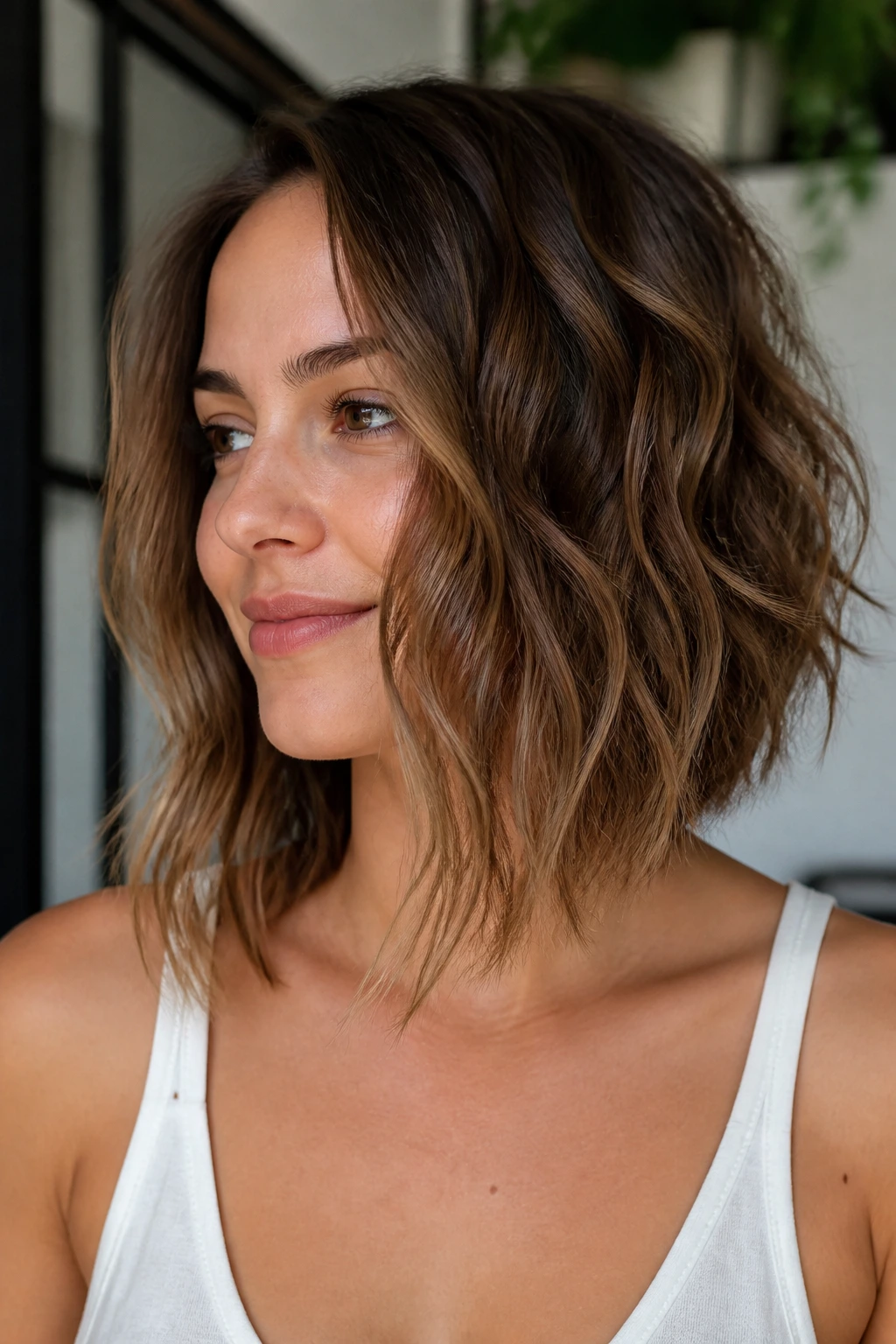
- Spray bottle — A light mist helps you wake up one section at a time without soaking the whole head before a trim or restyle.
- Tail comb — Useful for drawing a sharp center part or deep side part so the angle falls the way you want it to.
- Sectioning clips — Keep the crown out of the way while you diffuse or dry the lower layers.
- Microfiber towel or cotton T-shirt — Better than a rough bath towel when you want to keep the curl clumps intact.
- Diffuser attachment — Helps the roots lift while the ends keep their shape, especially on a stacked or graduated cut.
- Wide-tooth comb — Best for spreading product through loose curls without breaking up the curl pattern too much.
- Duckbill or root clips — Handy if you want a little lift at the crown while the hair dries.
- Light mousse or foam — Gives shoulder-length loose curls body without turning the front pieces heavy.
- Curl cream — Good for drier ends, but use a small amount so the angle doesn’t collapse.
- Heat protectant — Necessary if you smooth the front with a brush or use hot tools on the ends.
- Hand mirror — The back of an angled cut can fool you fast; the side view tells the truth.
How to Ask for the Right Cut at the Salon
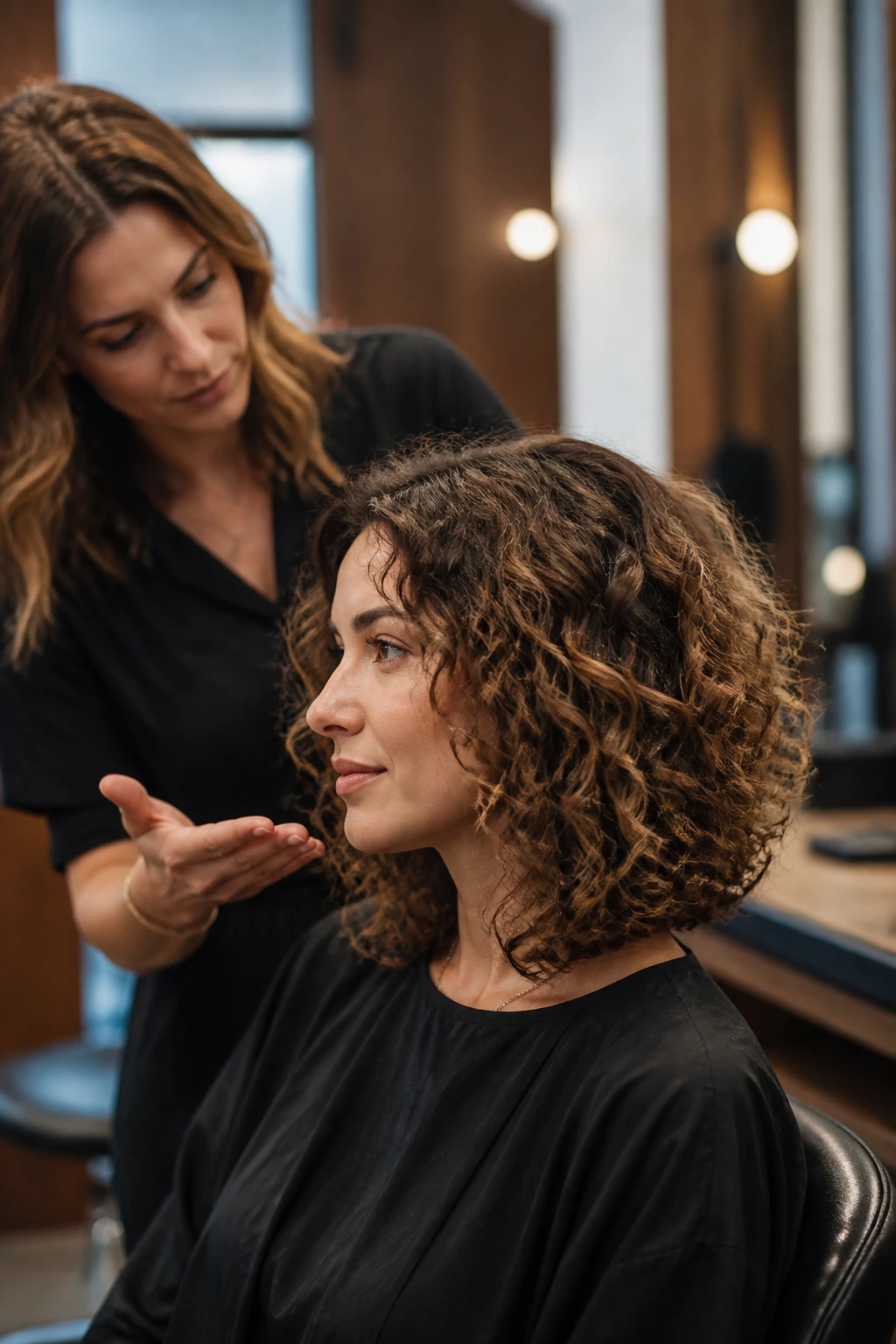
A stylist can’t read your mind, and “angled” is one of those words that can mean three different haircuts depending on who hears it. Say where you want the front to fall. Say where you want the back to sit. Say whether you want a clean A-line, a gentle graduation, or a bit of stack at the nape. That little extra language saves a lot of regret.
Bring the right photos
Bring at least two images: one from the front and one from the side. If you can, bring a back view too. Curls hide bad assumptions, and a side photo shows the actual slope much better than a straight-on selfie ever will.
Use landmarks, not vague adjectives
“Collarbone,” “top of shoulder,” “just below the chin,” and “cheekbone” are useful words. “A little shorter” is not. The more the stylist knows your landmarks, the more likely the haircut lands where your curls need it to land once they dry.
Talk about your routine
If you air-dry, say so. If you diffuse, say that too. A cut that looks beautiful with a round brush can fall apart if you never touch a hot tool, and a wash-and-go cut usually needs a softer internal shape than a blowout-friendly one.
One more thing: tell them how often you’re willing to trim. A sharper angle needs more maintenance. A softer angle can stretch farther between salon visits.
How to Wear and Style the Shape
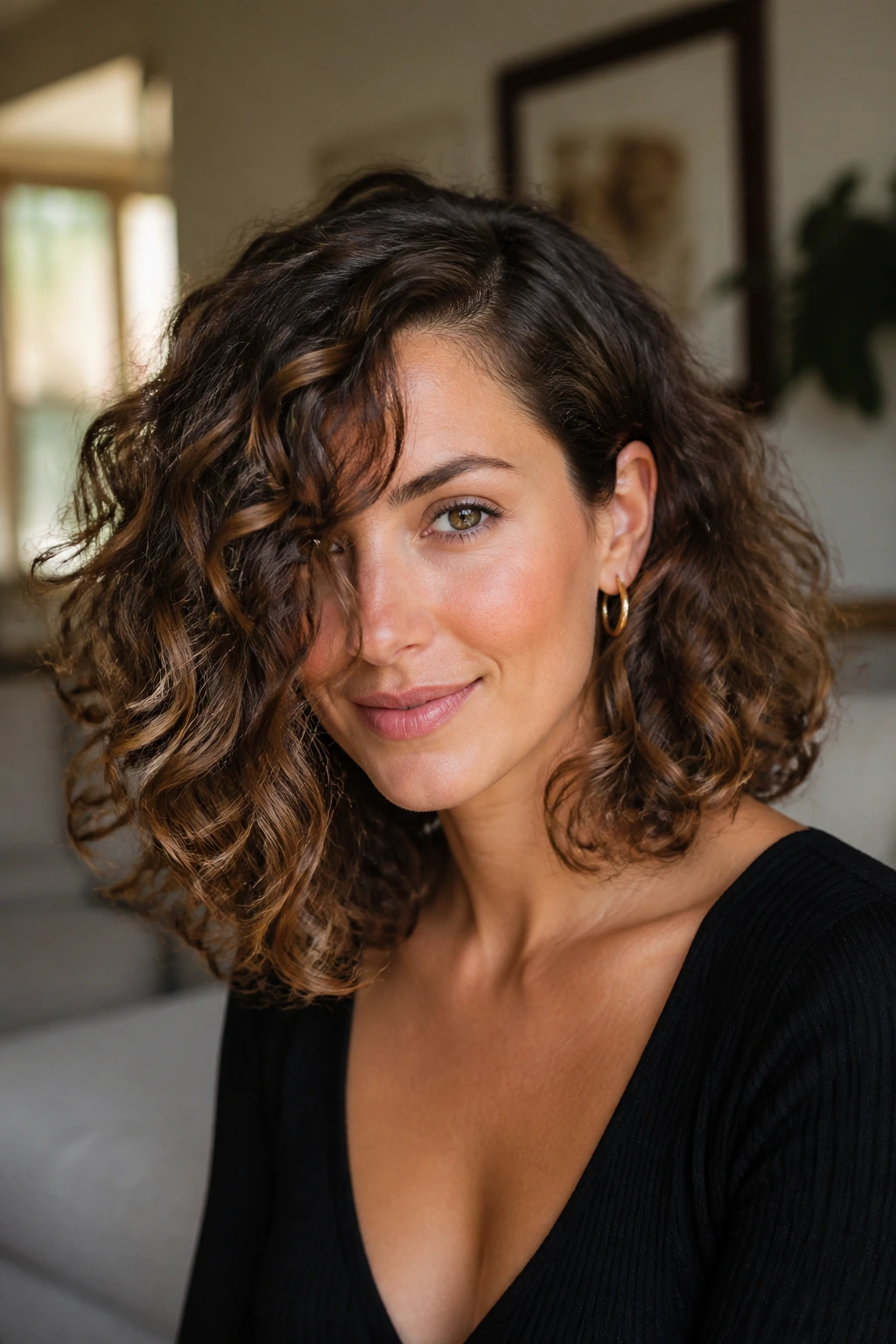
Presentation: Let the front pieces fall forward first, then decide whether you want one side tucked behind the ear. That small move changes the entire read of the haircut, especially on loose curls where the ends want to bend on their own.
Accompaniments: A deep side part sharpens the angle, a center part calms it down, and curtain bangs soften the whole silhouette. Slim clips, plain barrettes, and tucked sides all work; bulky accessories usually fight the line.
Portions: Keep the front and back difference modest if you want a softer look — about 1 to 1½ inches. Go closer to 2 or 3 inches only if your curls are dense enough to hold the shape after they dry. More than that and the haircut starts behaving like a statement wedge.
Finish: Air-dry for a softer, beachier slope. Diffuse if you need root lift and cleaner definition. If you want the front to look polished, brush-dry only the first few inches around the face and leave the rest alone.
The best finish is the one that keeps the angle visible without making the curls stiff. That line should still move when you turn your head.
Extra Styling Moves and Texture Boosters
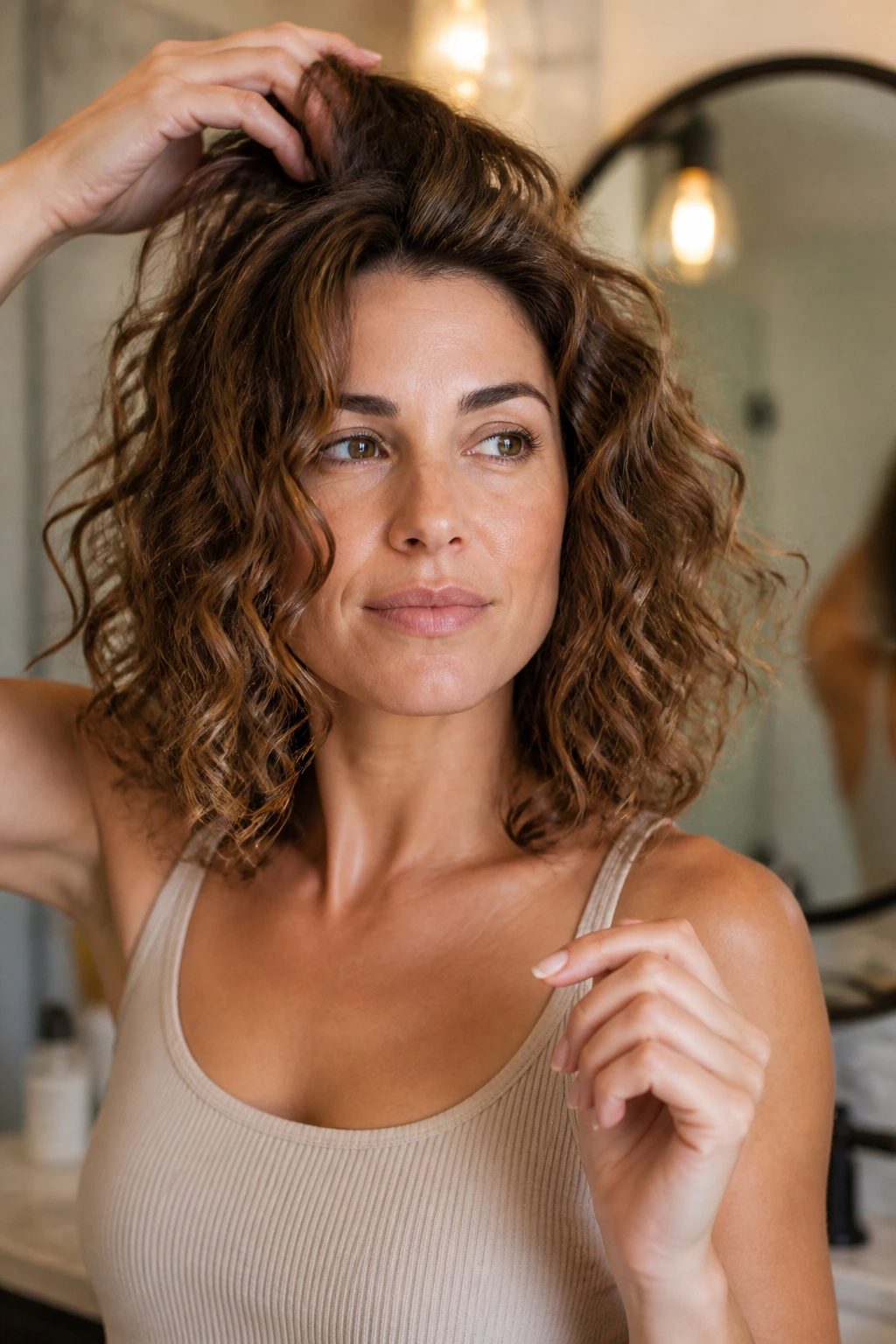
Root Lift: Clip the crown while the hair is about 70% dry, then remove the clips once the roots cool. That little pause keeps the top from collapsing into the rest of the haircut.
Definition: Work a light mousse or foam through the mid-lengths before adding any cream. Loose curls often need structure more than moisture, and mousse gives the front pieces enough body to hold the angle.
Frizz Control: Put oil only on the last inch or two of the ends. If you coat the roots, the cut can lose its lift and start sticking to the head in the wrong places.
Quick Refresh: Mist the front sections, scrunch once, and let them dry before touching them again. If one side has gone flat, flip the part for 10 minutes while it dries; that often wakes the angle up faster than adding more product.
A small side note: if your curls tend to separate at the ends, use a pea-sized bit of gel on wet hair and then scrunch out the cast after it dries. That keeps the perimeter neat without making it crunchy.
Keeping the Shape Sharp as It Grows
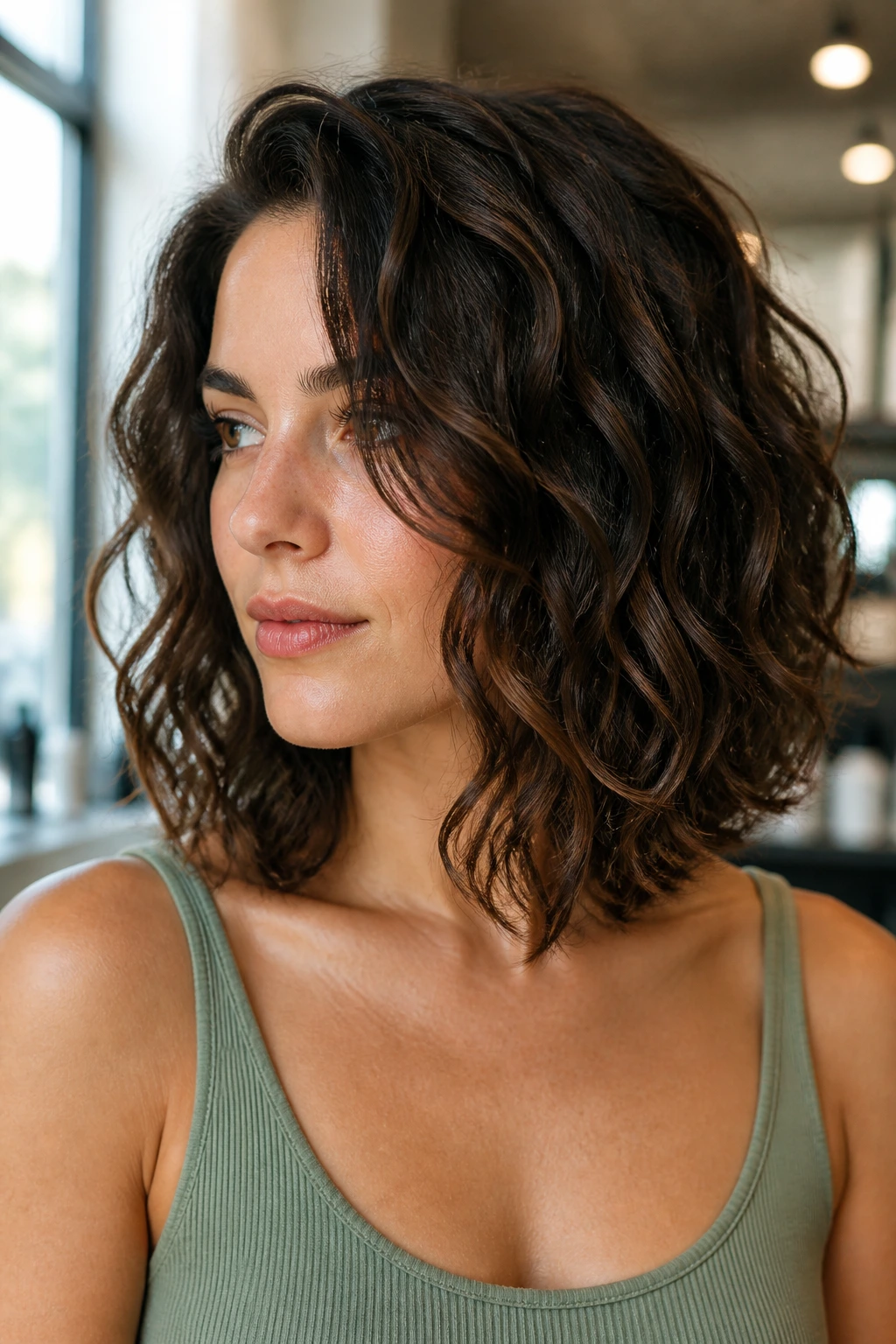
Angled shoulder-length cuts do not all age the same way. A subtle A-line can grow out for 10 to 12 weeks before it looks tired. A sharper inverted lob usually wants a clean-up around 6 to 8 weeks, especially if the front starts dropping past the collarbone while the back sits where it’s supposed to.
The smartest maintenance move is to ask for small trims, not full resets. If you like the length, tell the stylist to dust the perimeter and keep the front pieces in the same zone. That way the angle stays visible without losing too much hair each visit. Loose curls blur the shape a bit as they grow, which helps, but the front still needs attention if you want the cut to keep reading as angled.
If you wear a side part most of the time, check both sides before the appointment. One side often wears faster than the other because it gets tucked, pinned, or stretched more often. A tiny correction there can make the whole haircut feel fresh again. And if your hair is heavy in humidity, clarify every 2 to 4 weeks so product buildup does not drag the ends down.
Variations and Adaptations to Try
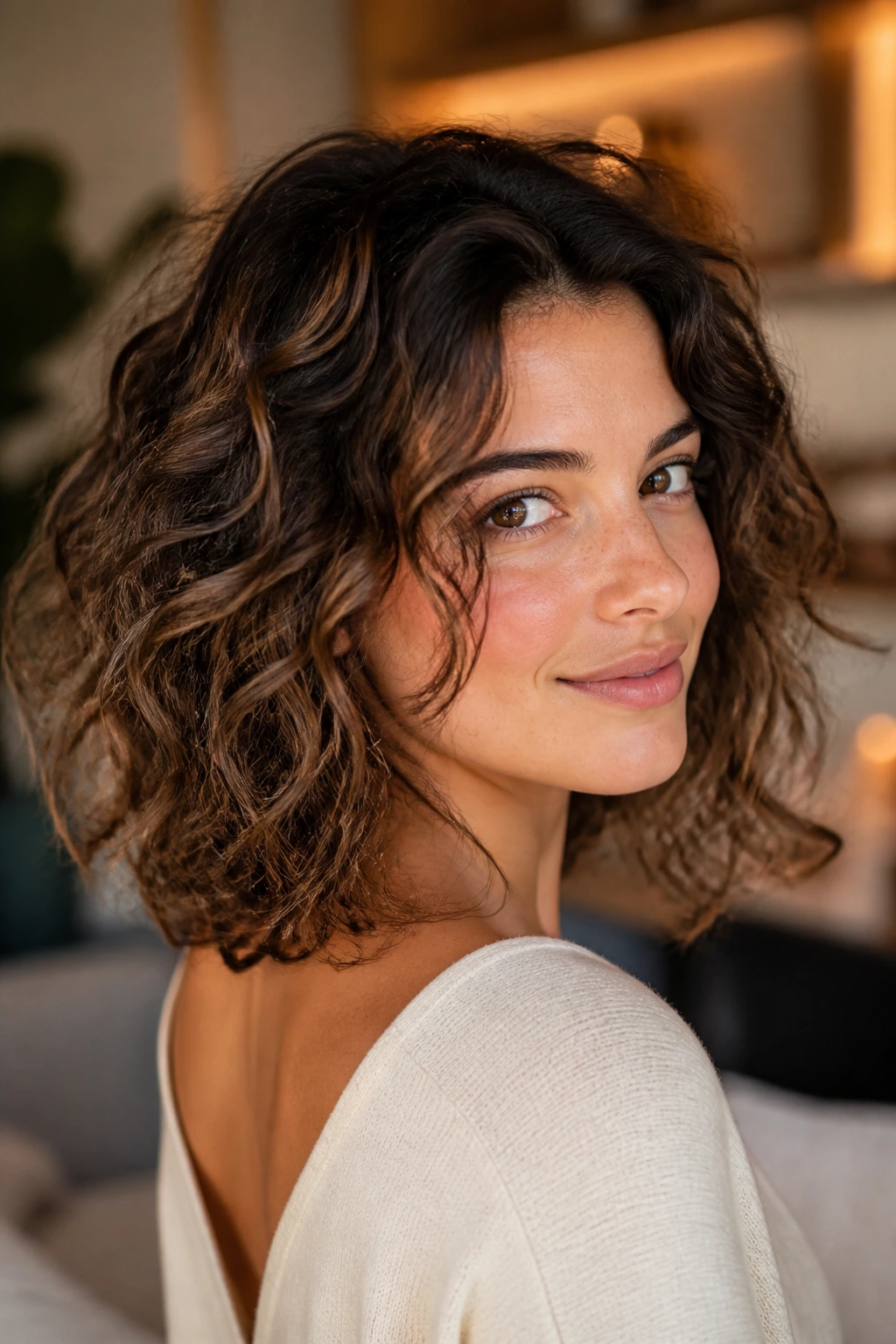
Soft Landing Angle: This is the mild version, with only a small difference between front and back. It’s ideal if you like to wear your hair loose and hate obvious layers.
Thick-Hair Weight Relief: Keep the perimeter longer, then remove bulk underneath with hidden internal layers. The cut stays full at the ends but stops ballooning at the sides.
Fine-Hair Lift Version: Use a shallow angle and lightly feather the perimeter so the ends don’t look see-through. This version needs body, not lots of chopping.
Curtain-Frame Hybrid: Add curtain bangs or long face-framing pieces that blend into the front of the lob. This is a good move if you want the haircut to feel softer around the eyes and cheekbones.
Humid-Weather Shape: Keep more weight at the bottom and skip aggressive layering. The extra length at the perimeter helps loose curls resist frizz and puff.
Grow-Out Friendly Version: Ask for rounded corners and a gentle slope instead of a dramatic stack. It will still look angled, but it won’t fall apart the second it gets a little longer.
Common Mistakes to Avoid
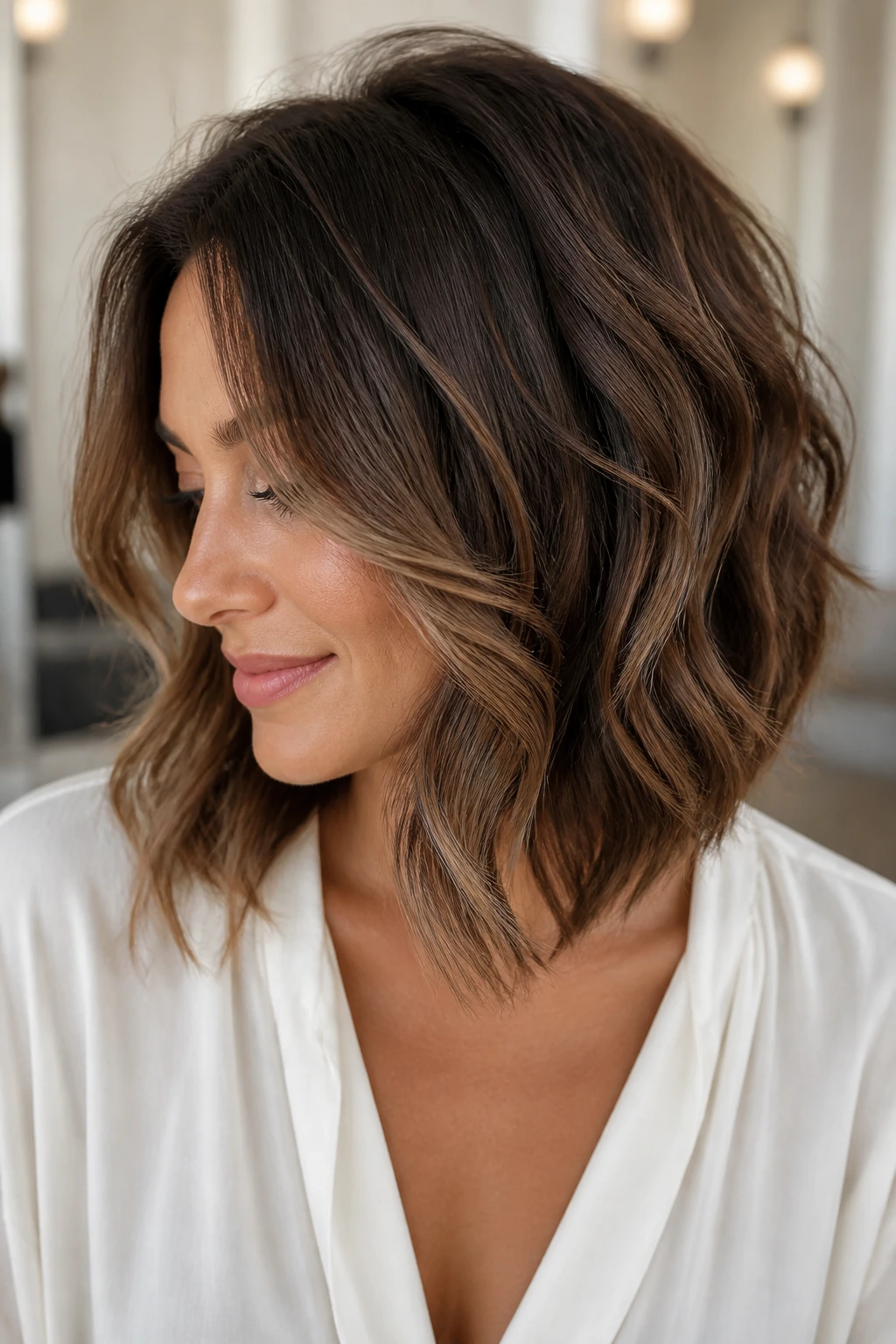
Asking for “angled” and nothing else. That usually leads to a haircut that misses your actual goal. Say where the front should land and how short the back can get.
Cutting the back too aggressively. Loose curls shrink, and a short nape can turn into a wedge very fast. Keep the back slightly longer than you think you need, then check it dry.
Over-layering the top. If the crown gets stripped of too much weight, the hair can puff out at the sides and look hollow at the ends. Hidden layers usually help more than obvious chopping.
Using heavy creams on fine curls. The front pieces can droop and erase the angle. Swap in mousse or foam first, then add a tiny bit of cream only where the hair feels dry.
Skipping the dry check. Wet curls lie. They always do. Let the hair dry before final detailing, or you can end up with one side shorter than the other and no easy fix.
Ignoring your part. If you always wear a deep side part and the cut was designed around a center part, the balance will feel off from day one. Match the haircut to the way you actually wear it.
Questions People Ask About Angled Shoulder-Length Curls
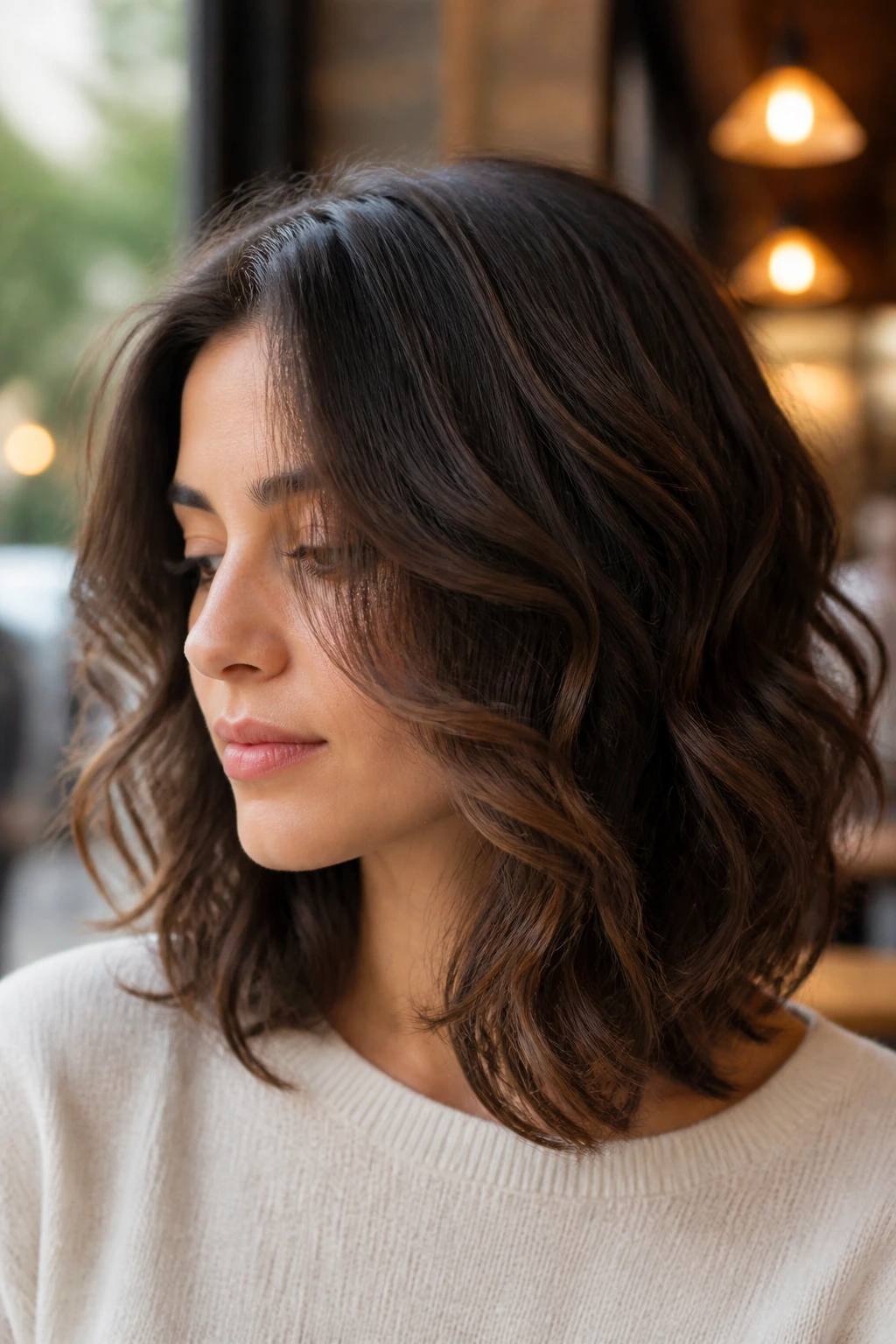
Will an angled haircut make my loose curls look thinner?
It can, if the angle is too steep or the stylist removes too much weight from the ends. A softer A-line usually keeps the perimeter full while still giving you movement.
Should loose curls be cut dry or wet?
Dry or mostly dry is safer, especially if your curls spring a lot. Wet cutting can work, but the stylist needs to check the shape once the hair is dry or they may cut the front too short.
How much shorter should the back be than the front?
For a subtle shape, 1 to 1½ inches is often enough. For a more visible angle, 2 to 3 inches can work, but dense curls need that extra room more than fine hair does.
What face shapes suit angled shoulder-length curls best?
Round and heart-shaped faces often benefit from longer front pieces, while oval faces can wear almost any version. Square faces usually look good with softer face-framing and rounded corners.
Can I still pull this haircut into a ponytail or clip?
Yes, but keep the front pieces long enough if you rely on updos. If the shortest layers are too high, they’ll slip out and stick around your temples in a way that feels messy, not soft.
Is this a good cut for fine hair?
Yes, but only if the angle is mild and the layering stays light. Fine curls need a line they can support; too much internal cutting makes the ends look weak.
What if my hair is more wavy than curly?
Then keep the layers even more conservative. Wavy hair often needs the angle to do the heavy lifting, because too many layers can make it lose structure and spread out.
How do I keep the ends from flipping awkwardly?
Use a diffuser or a round brush to guide the last inch of hair while it dries. If you air-dry, scrunch the ends under once, then leave them alone until they set.
A Cut That Keeps Its Swing
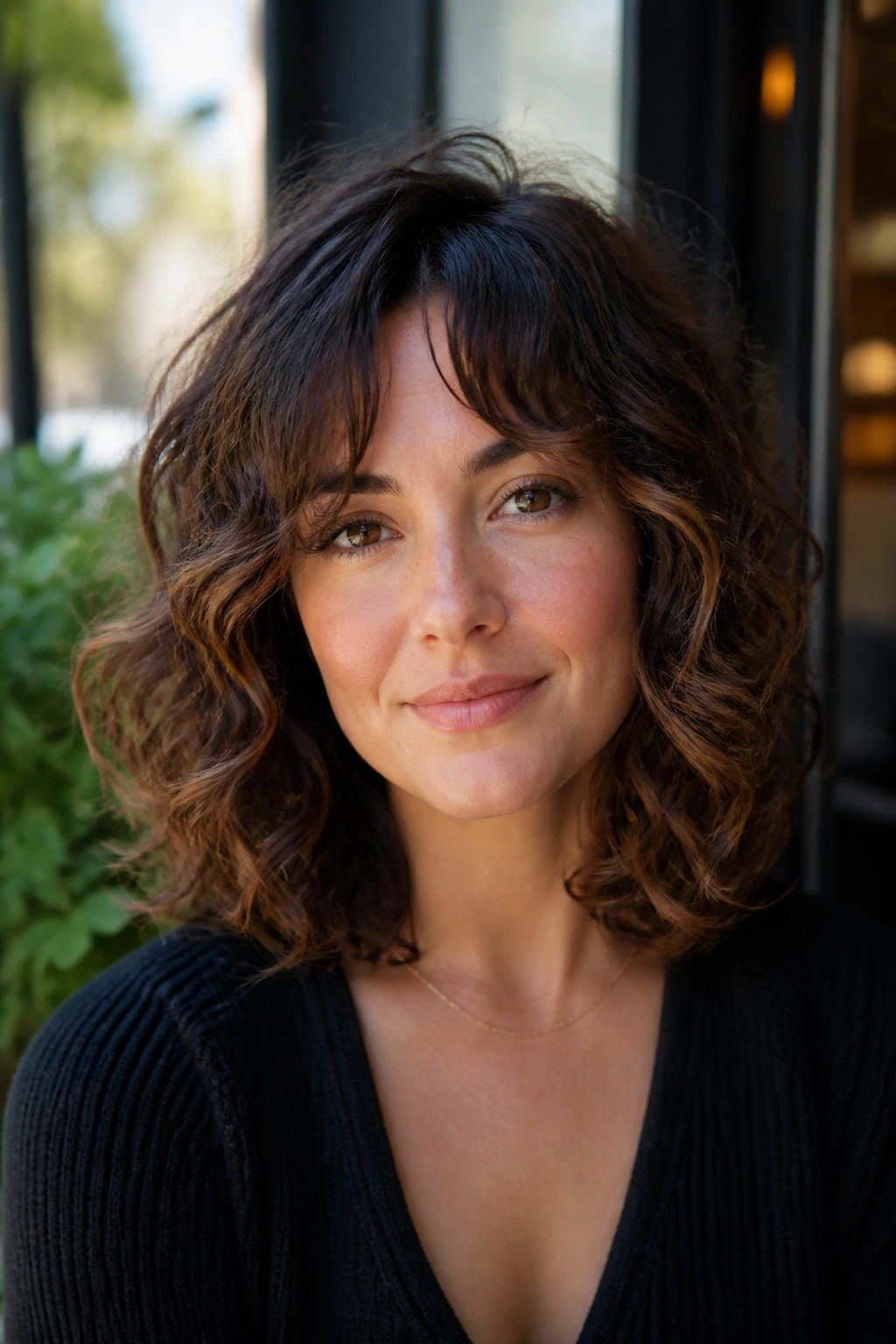
The best angled cuts for shoulder-length loose curls do not fight the texture. They give it a lane. That’s the whole trick, really. The front can frame, the back can support, and the curl pattern can stay loose without turning shapeless.
What I like about these cuts is how many of them stay useful after the first perfect salon blow-dry has faded. They still make sense when the curls are softer, flatter, or a little tired from a pillow. That’s what makes a haircut worth keeping around.
A good angle is quiet in the best way. It keeps the hair moving, keeps the shoulders from looking crowded, and leaves you with a shape that still feels deliberate when the day has done its work.