



A softball helmet does not care about your curl pattern. It presses the crown flat, fuzzes up the hairline, and leaves the nape damp if you’ve been running bases in warm weather or sitting in the dugout under a bright sky. That’s why the best softball hairstyles for game day with curly hair have to do a little more than look cute in the parking lot.
They need to clear the neck, sit cleanly under a helmet, and still look like hair once the helmet comes off. That last part matters more than people admit. Curly hair can shrink, puff, and shift shape the second sweat hits it, which means a style that looks neat at home can feel messy by first pitch if it’s not built with the right tension and placement.
There’s a sweet spot here: not so tight that your temples ache after warmups, not so loose that the style falls apart the minute you sprint to first. The styles below lean into that middle ground, because that’s where game-day hair actually lives.
Why These Styles Stick When the Helmet Goes On
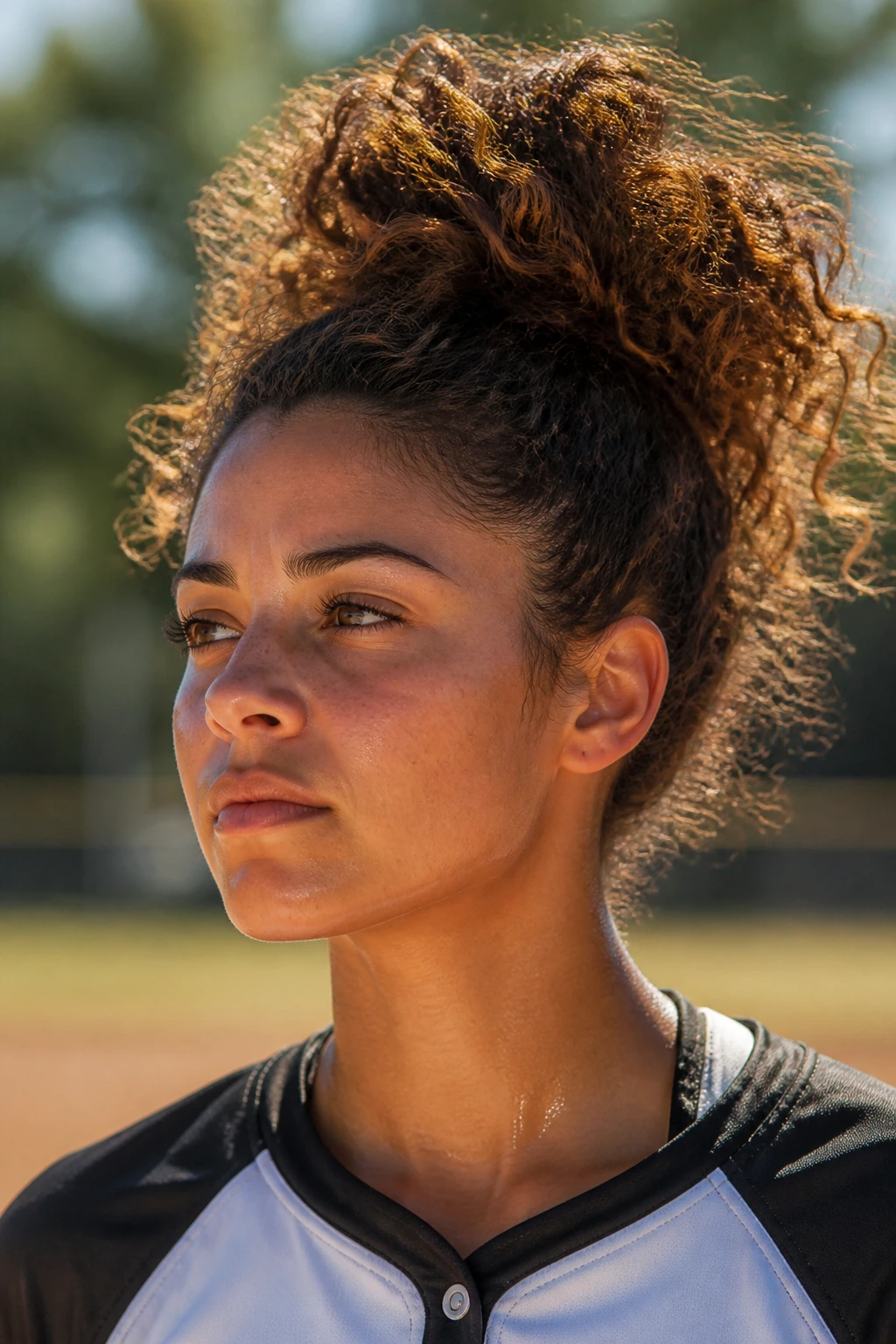
- Helmet-Friendly Shape: These styles keep volume where a helmet can tolerate it, not where it gets crushed into a flat, sore mess.
- Curl Respect: They work with shrinkage, frizz, and texture instead of fighting every coil into submission.
- Fast Morning Setup: Most can be done in 10 to 15 minutes once your curls are detangled and sectioned.
- After-Game Recovery: A good game-day style should still look decent when the helmet comes off and your hair has had a little sweat and friction.
- Bag-Friendly Gear: You do not need a drawer full of salon tools; a few reliable elastics, clips, and a spray bottle do most of the work.
- Comfort First: The strongest style is useless if the crown feels pinched by the third inning.
1. High Pineapple Ponytail
A high pineapple ponytail is the classic “my curls want to be seen” answer, and it works best when your hair is long enough to gather without dragging at the nape. The trick is keeping the base high enough to preserve curl shape, but not so tall that the helmet sits awkwardly. If your league helmet has a back opening, this style gets even easier.
Why It Holds Up
The pineapple keeps the bulk at the top of the curls, so the ends keep their spring instead of getting crushed into your collar. It also makes postgame refresh easy: take the elastic out, shake the roots, and the shape comes back fast.
- Use a soft, no-slip hair tie so the base doesn’t snag.
- Smooth only the crown with a little leave-in; don’t slick the whole head flat.
- Leave the ponytail loose enough that the curls can bounce instead of forming one stiff rope.
Best for: shoulder-length curls and longer, especially if your hair gets big fast.
2. Two Dutch Braids into a Curly Puff
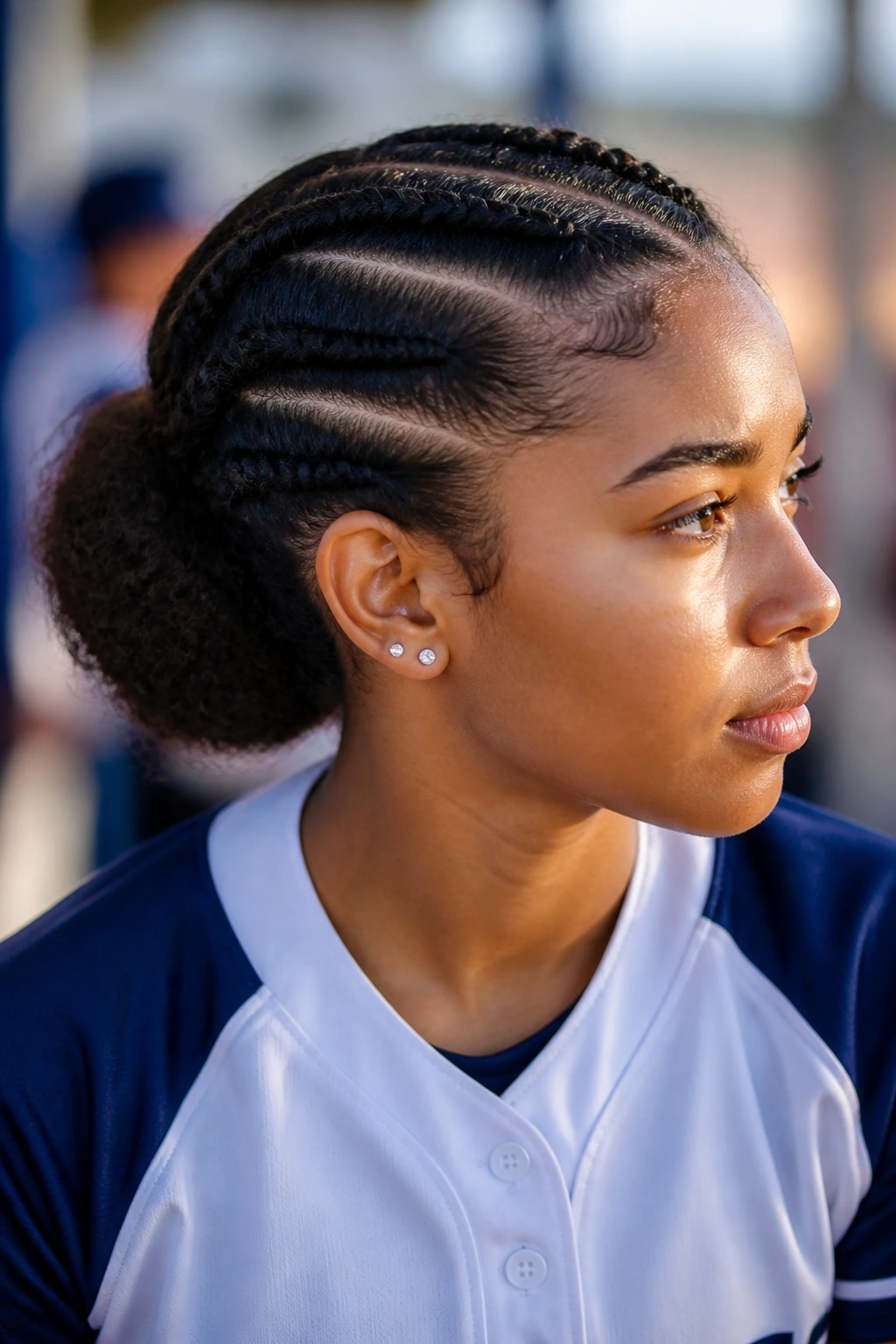
This one is a workhorse. Two Dutch braids along the scalp keep the front tidy, while the back stays gathered into a puff that still shows curl texture instead of hiding it. It looks more polished than a simple ponytail and handles a long inning better than loose curls ever will.
If you want a style that stays secure without a pile of pins, this is one of the safest bets. The braids sit close to the head, so the helmet has less bulk to fight, and the puff gives you a little movement once the game is over.
What Makes It Practical
The braids keep the hairline in place, which matters on humid days when the front section wants to frizz first. The puff at the back can be adjusted lower if your helmet runs snug.
- Part the hair cleanly down the middle before braiding.
- Keep the braids snug, not tight enough to tug at the scalp.
- Use a satin scrunchie for the puff so the curls don’t get a hard crease.
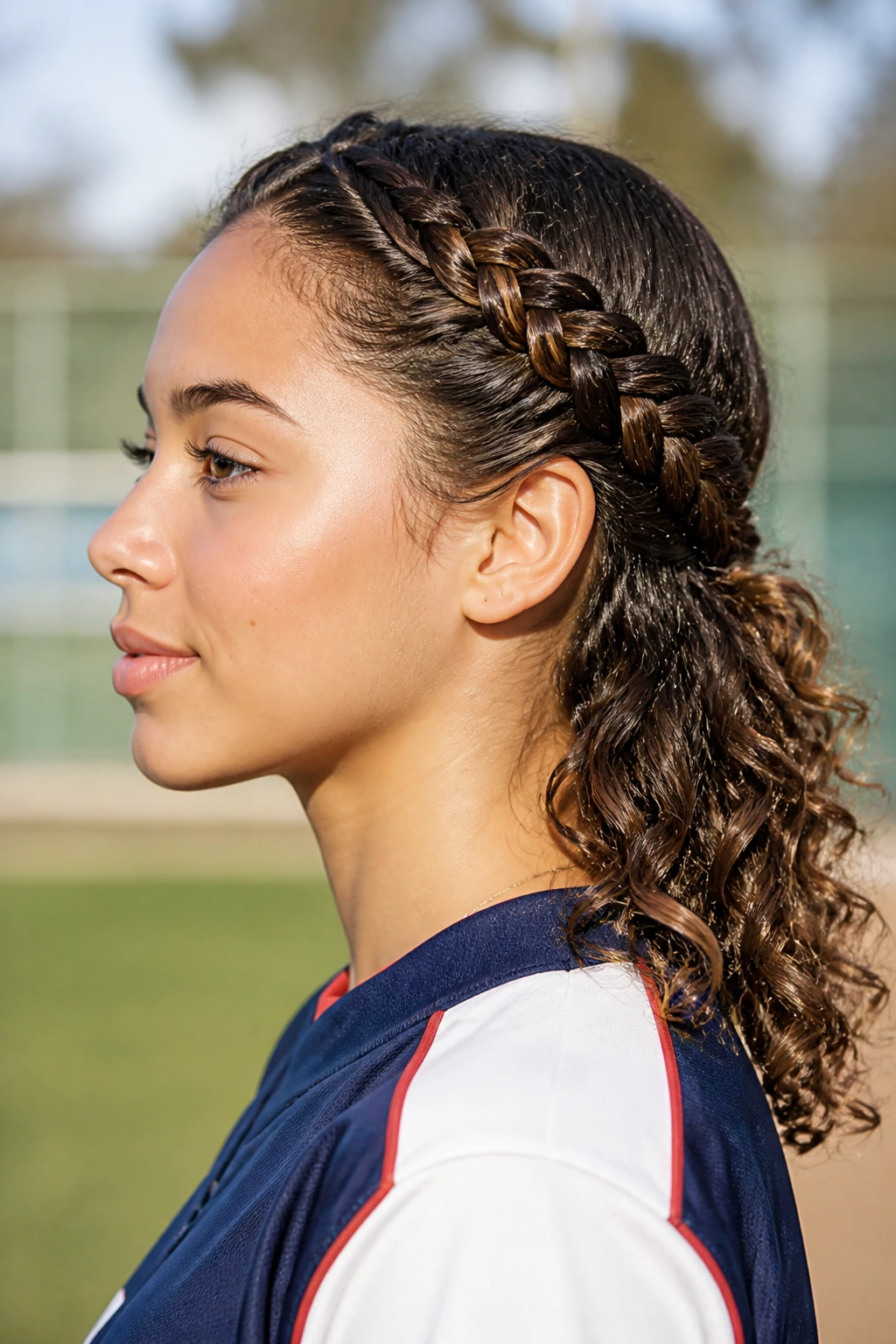
3. Braided Halo with Free Ends
A braided halo is one of those styles that looks much harder than it is. You braid around the head like a crown, then leave the ends curly at the back or tuck them into a low knot if the weather is sticky and hot.
It’s a smart pick when you want the front of your hair completely controlled. The braid gives the helmet a smooth surface to rest against, which helps if your curls tend to frizz at the temples after a few rounds of sliding into base.
How to Wear It
The braid should sit just above the ears and curve behind them, not ride so high that it gets mashed at the crown. If your curls are fine or medium density, you can leave the ends free for a softer finish. If they’re thick, tuck the length into a small low bun.
Best for: players who hate loose flyaways at the hairline.
4. Mini Front Braids and a High Puff
If you want some face detail without pulling everything back, this is a smart middle ground. Two or four mini braids at the front take pressure off the forehead, while the rest of the curls stack into a puff at the back or higher up on the crown.
It gives you structure where you need it and volume where you want it. That split matters on game day because the front sections usually get the most sweat and helmet rub.
Quick Notes
- Make the front braids only 1/2 inch to 1 inch wide so they lie flat.
- Keep the puff soft; don’t crank the elastic down until it leaves a deep dent.
- A light edge brush pass at the temples is enough. No need to glue the whole hairline down.
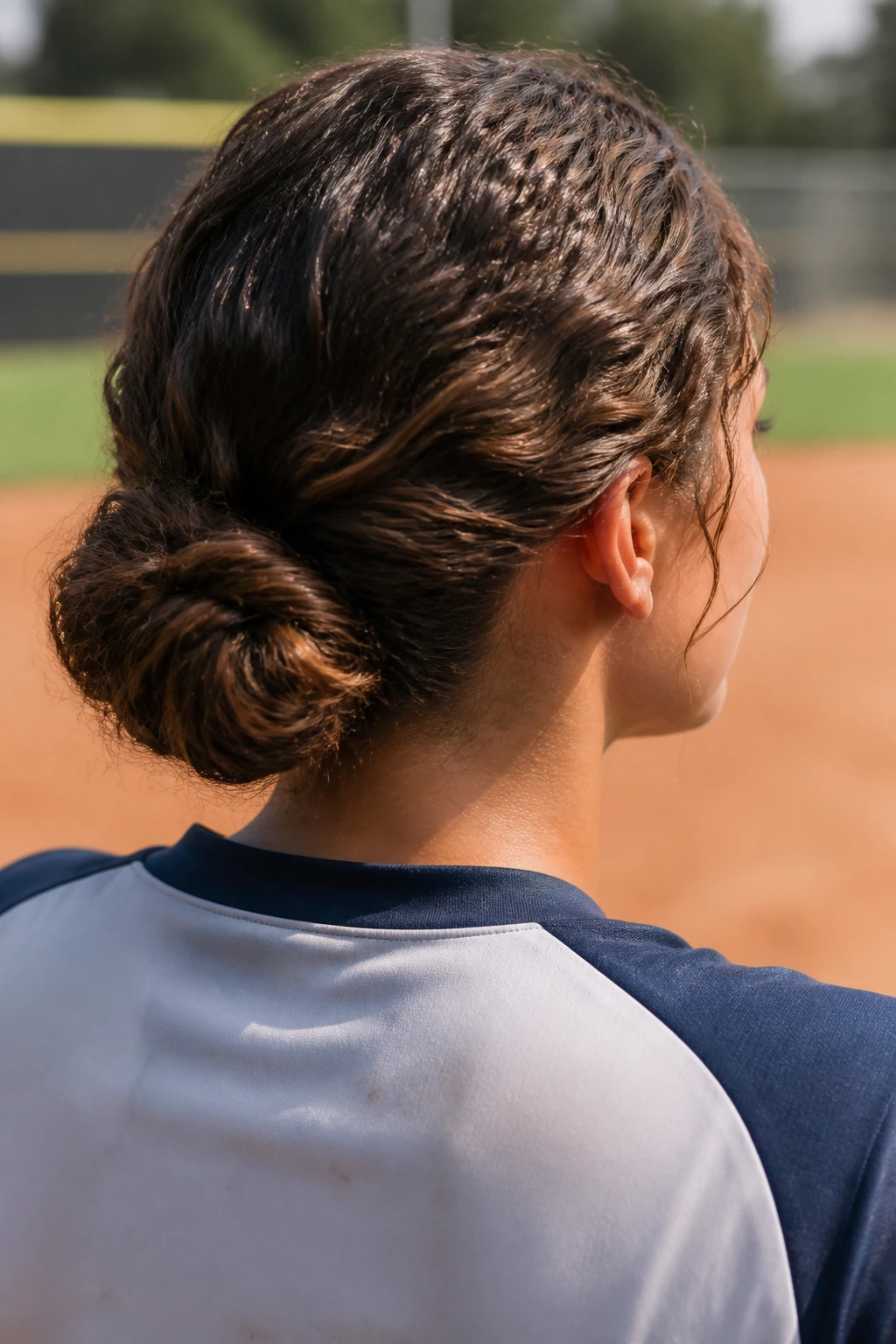
5. Low Twisted Bun
A low twisted bun is one of the least dramatic styles in the bunch, and that’s the reason it works so well. Everything sits below the helmet line, which means no awkward bump at the crown and less pulling when you put the gear on and off between innings.
This style shines when your curls are already stretched from a wash day twist-out or braid-out. You gather the hair low, twist it into a bun, and let a few ends peek out if you want a softer finish.
Why It’s a Smart Choice
The low placement protects the top of the head from pressure. It also keeps sweat from collecting in a big knot near the nape, which is the part of the scalp that gets annoying fast during a doubleheader.
A few bobby pins are enough. Use the kind with a coated finish if your hair slides easily.
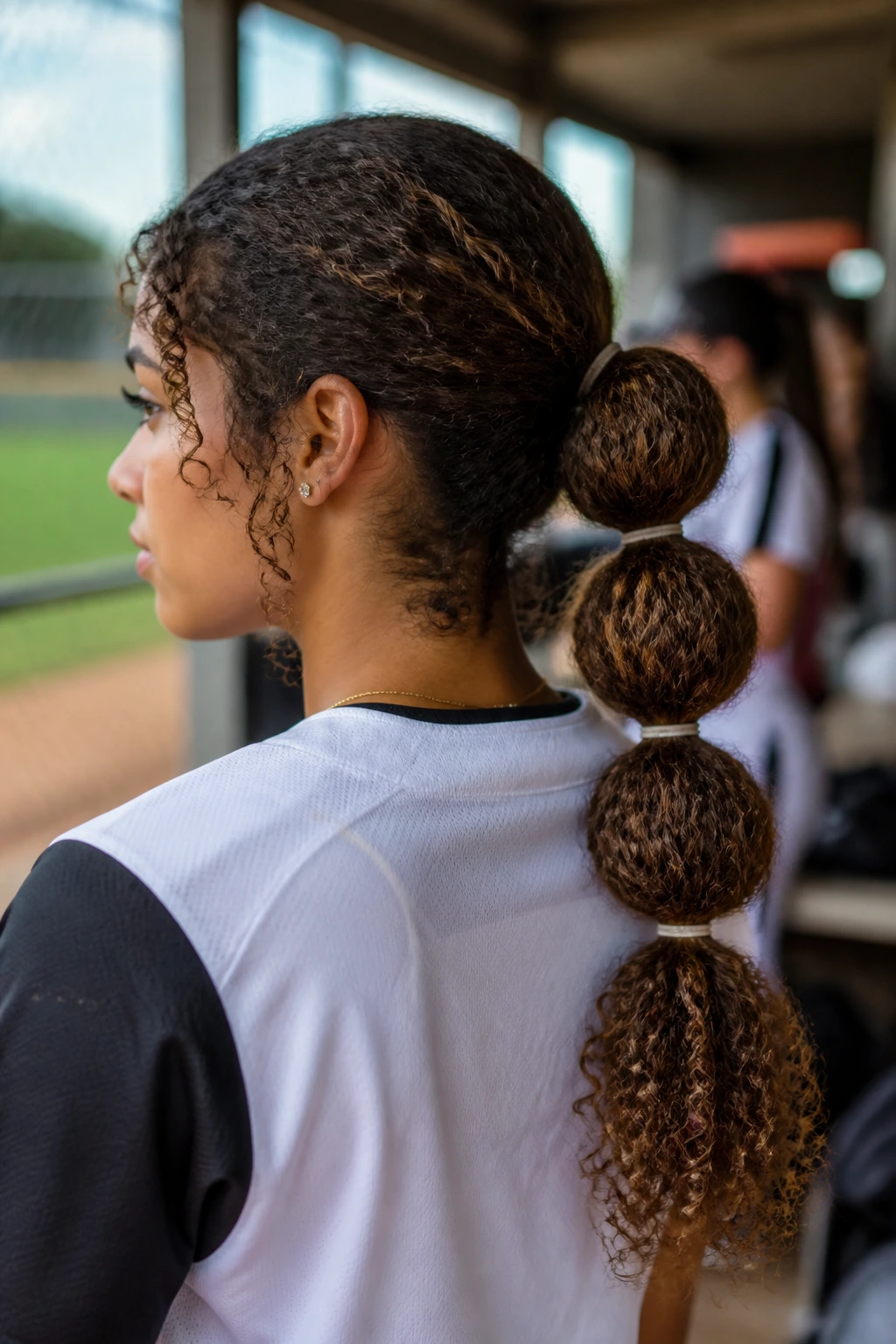
6. Bubble Ponytail with Coil Ends
Bubble ponytails look playful, but they’re not just for kids’ birthday photos. On curly hair, each “bubble” can hold texture in a way that straight hair can’t, so the whole style feels fuller and more alive.
This version works best when the ponytail starts low or mid-back, then gets sectioned with elastics every few inches. If your hair is dense, the bubbles help keep weight distributed instead of pulling at one point.
How to Build It
Start with a ponytail secured with a soft elastic. Add another tie about 3 to 4 inches down, then gently pull each section outward to puff the bubble. Repeat until you run out of length.
- Keep the ties soft so they don’t cut into curl clumps.
- If your ends are dry, smooth a pea-sized bit of cream just on the last 2 inches.
- This one is best for players who like movement and don’t mind a little volume under a helmet.
7. Deep-Side Puff
A deep-side puff gives curly hair a different shape without making the style complicated. Sweep the part low and heavy to one side, then gather the rest into a puff at the opposite back corner or center-back, depending on where your helmet sits.
It’s a good option when the top of your head needs to stay flatter than usual. The side part shifts bulk away from the center line, which can make a helmet feel less cramped.
A Small Detail That Helps
Brush the part while the hair is slightly damp so it stays clean longer. If you do it on dry, fluffy curls, the part will collapse fast and the whole style starts looking fuzzy before warmups end.
8. French Braid into a Curly Tail
A French braid down the center or slightly off-center keeps the scalp neat for the first part of the game, then hands the rest of the length off to your curls. It’s a nice compromise for people who want some polish but don’t want all the texture pinned up.
The braid should stop around the nape so the tail can sit low and safe under a helmet. If you braid too far down, the end gets bulky and can press into your neck.
Best Use Case
This style is especially useful when your curls are second-day hair and a full wash-and-style would be overkill. The braid controls the roots, and the tail gives the rest of the hair room to move.
9. Flat Twists into a Tucked Puff
Flat twists are a quiet little lifesaver on thick curly hair. Two or three twists along the top keep the front section tidy, and the back gets tucked into a puff that stays soft instead of stiff.
Compared with braids, twists can feel gentler on the scalp. That matters if you’re going to spend two or three hours in a helmet and don’t want any extra pulling at the hairline.
What to Watch
Twists loosen more quickly than braids if they’re done too loosely, so take your time at the roots. Use a little gel or curl custard on the first inch of each section, then stop. Too much product at the root can make the twists feel heavy and greasy.
10. Half-Up Top Knot
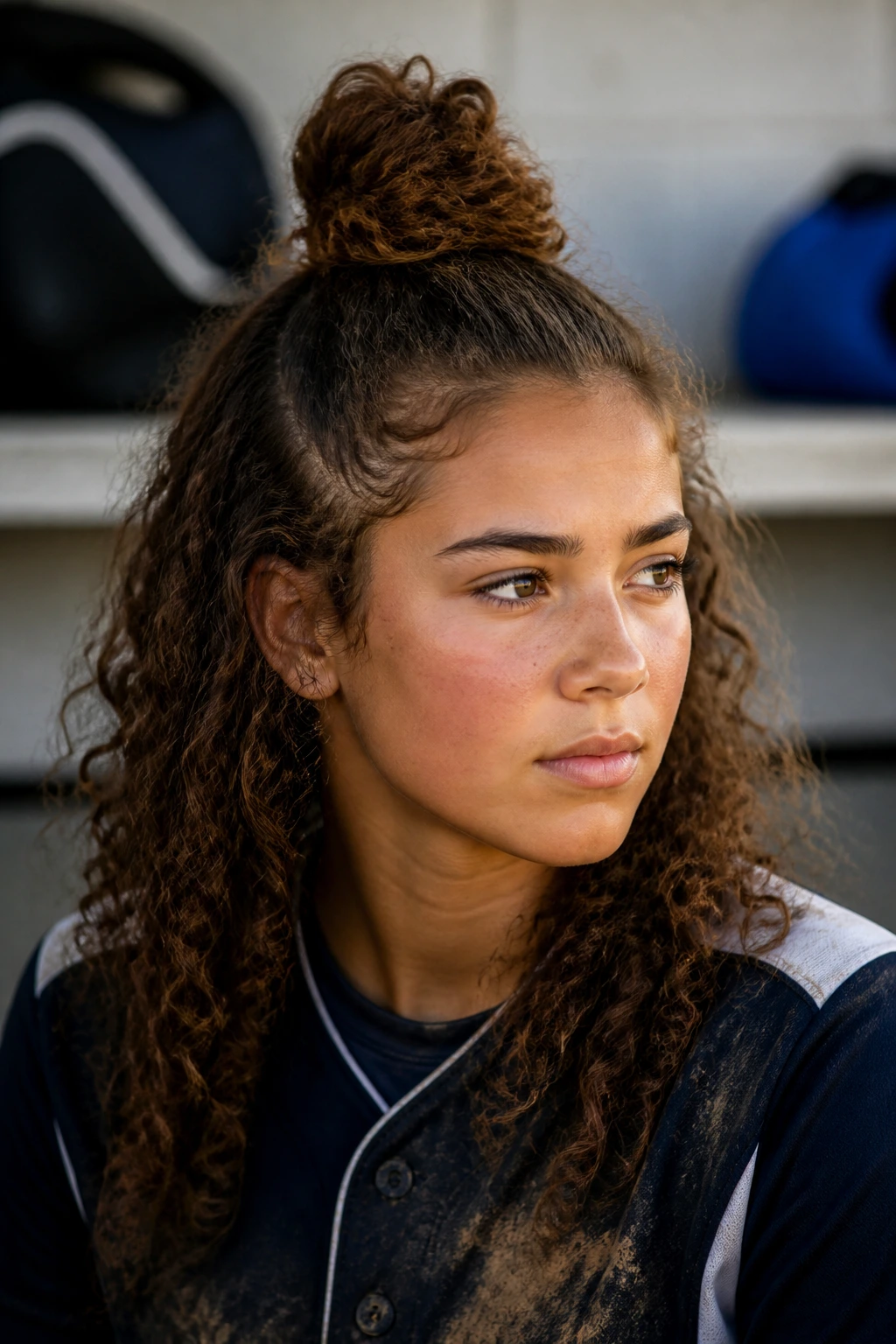
A half-up top knot is one of the fastest ways to get curls off your face while keeping the bottom half free. On game day, that makes sense for players who want a style they can finish in under 10 minutes and still leave some curl shape showing after the helmet comes off.
The knot should be small and secure, not a giant bun perched on top of the head. If it’s too bulky, the helmet has to sit around it, and that’s where pressure starts.
A Better Version for Softball
Gather only the top third of your curls, twist once, and anchor with a soft elastic. Leave the rest down or lightly pinned back if the length is getting in the way.
Tip: If the top layer is frizzy, smooth it with damp hands and a dab of leave-in before tying it up.
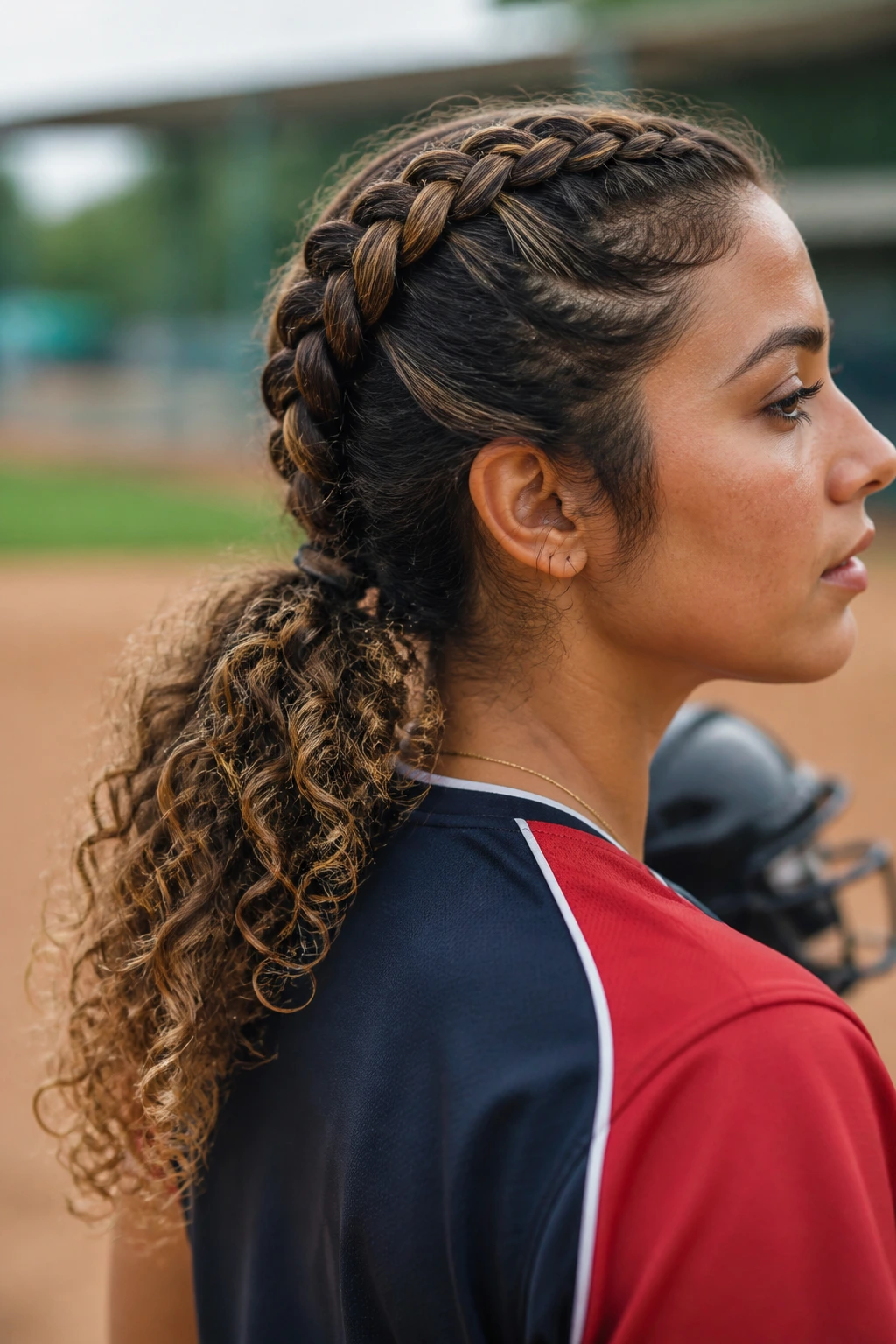
11. Boxer Braids into a Low Pony
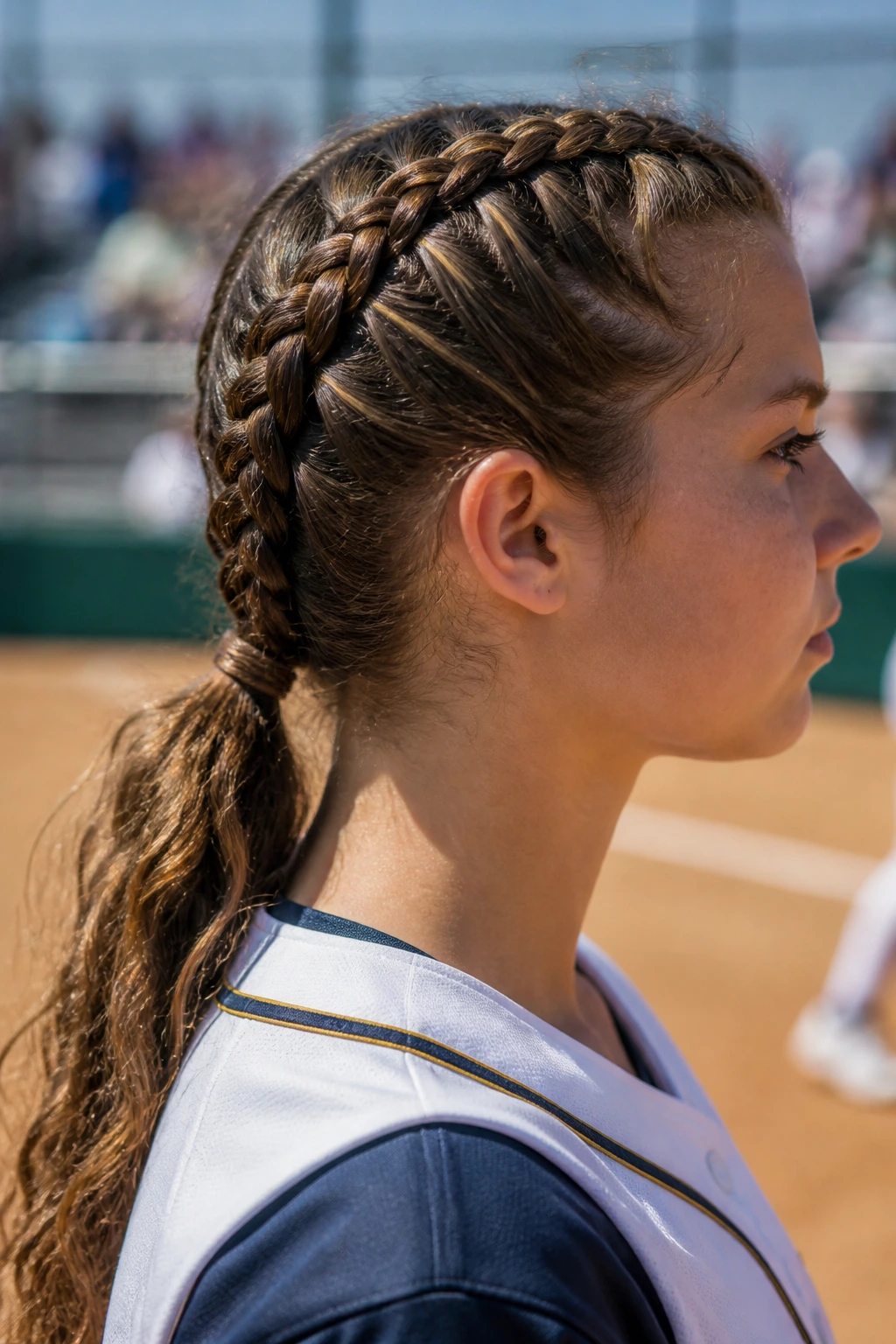
Boxer braids, done with curly hair, bring order to the whole head. The braids keep the roots controlled, then everything finishes in a low pony that sits under the helmet line instead of fighting it.
This is one of the more secure styles on the list. If you run hard, slide often, or play in heat, the braids keep the style from exploding into a halo of frizz by the fourth inning.
Best For
Players with thick hair who need the front of the style locked down. It also works well if your curls are densely packed and a loose puff tends to swell up too much.
A center part looks sharper, but a slight side part can ease pressure if your scalp is sensitive.
12. Crown Braid Bun
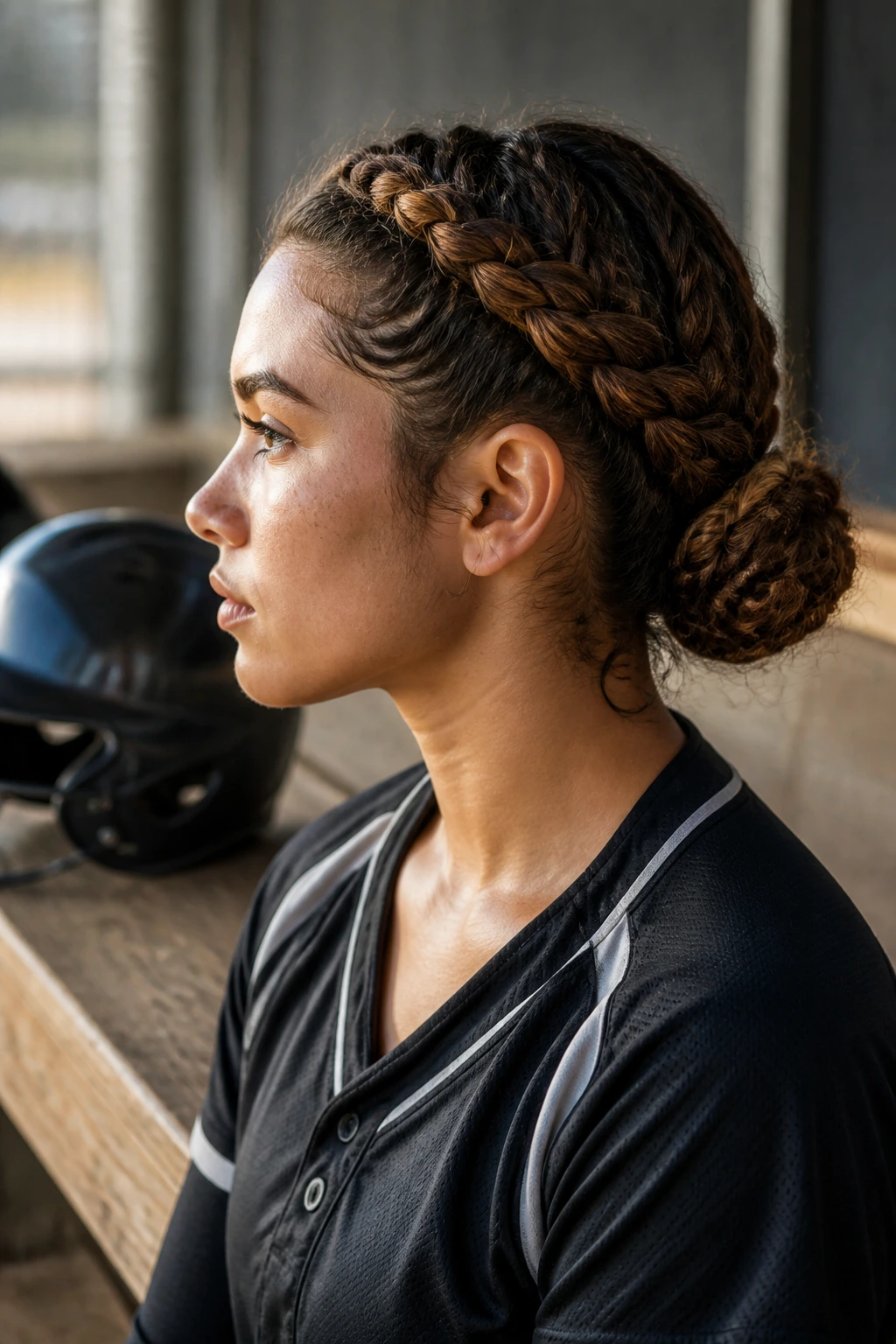
A crown braid bun gives off a tidy, almost formal look, which sounds fancy until you remember it’s also one of the better ways to keep curls secure under repeated motion. The braid wraps the head, and the bun stays low enough to avoid helmet trouble.
The real value here is control. Once the braid is in place, the rest of the hair has fewer chances to spring loose in random directions.
How It Helps in the Dugout
You can keep this style in for warmups and still feel put together when the helmet comes off. If the bun sits at the nape, it stays out of the way when you lean back on the bench.
13. Wrapped High Curly Ponytail
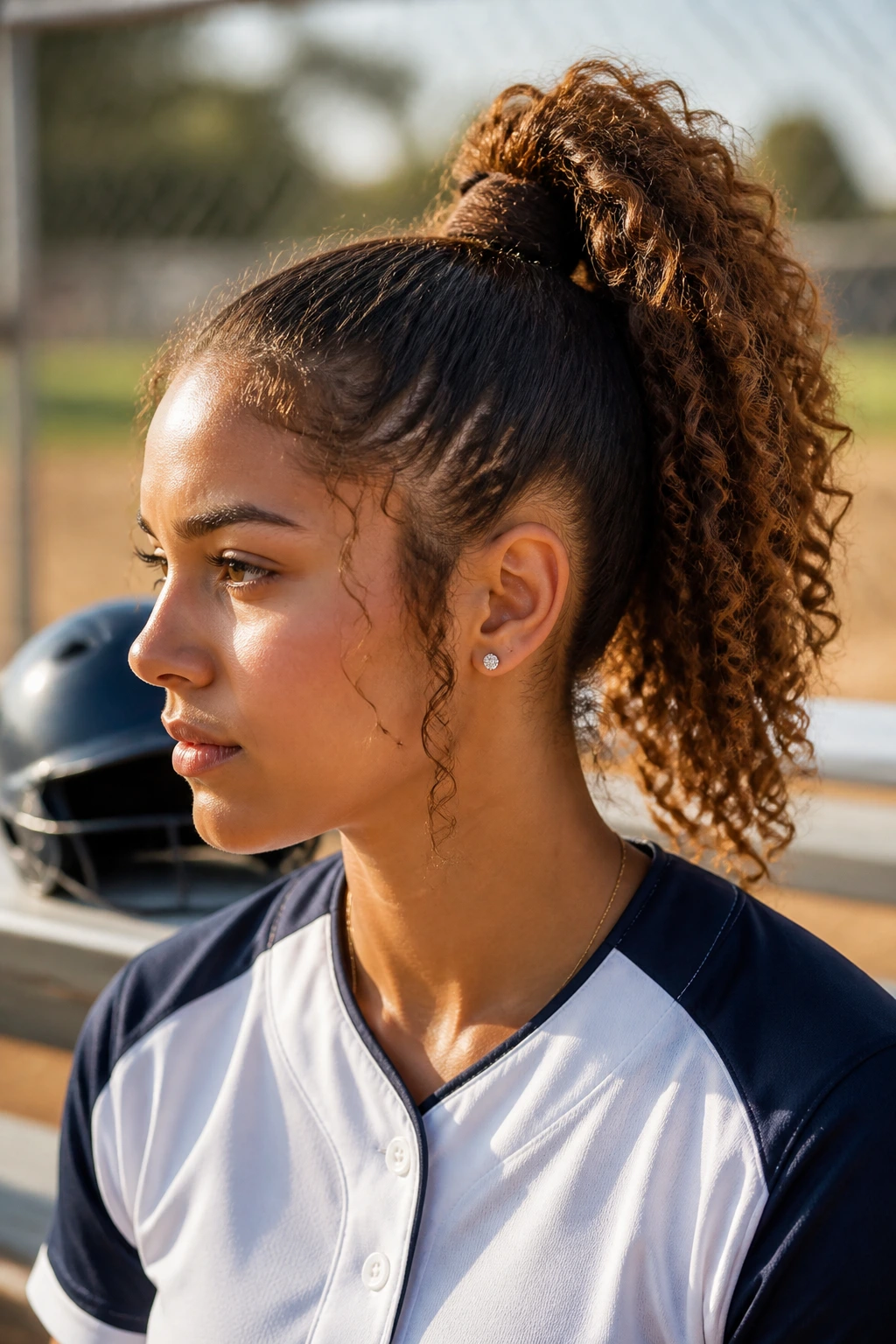
A wrapped high ponytail is the sleek cousin of the pineapple. You gather the curls high, then wrap a small section of hair around the elastic so the base looks cleaner and less thrown together.
It’s a good choice when you want something that reads a little sharper than a plain tie-back. The wrapped base also keeps the elastic from digging into the same patch of hair all day.
Why It Works
The wrap disguises the tie, but it also smooths the pressure point where breakage tends to start. That’s useful if you wear ponytails often and your hairline gets tired quickly.
Use one bobby pin to hold the wrap section in place. Any more than that and you’ll feel the pins against the helmet.
14. Rope Braid Side Tail
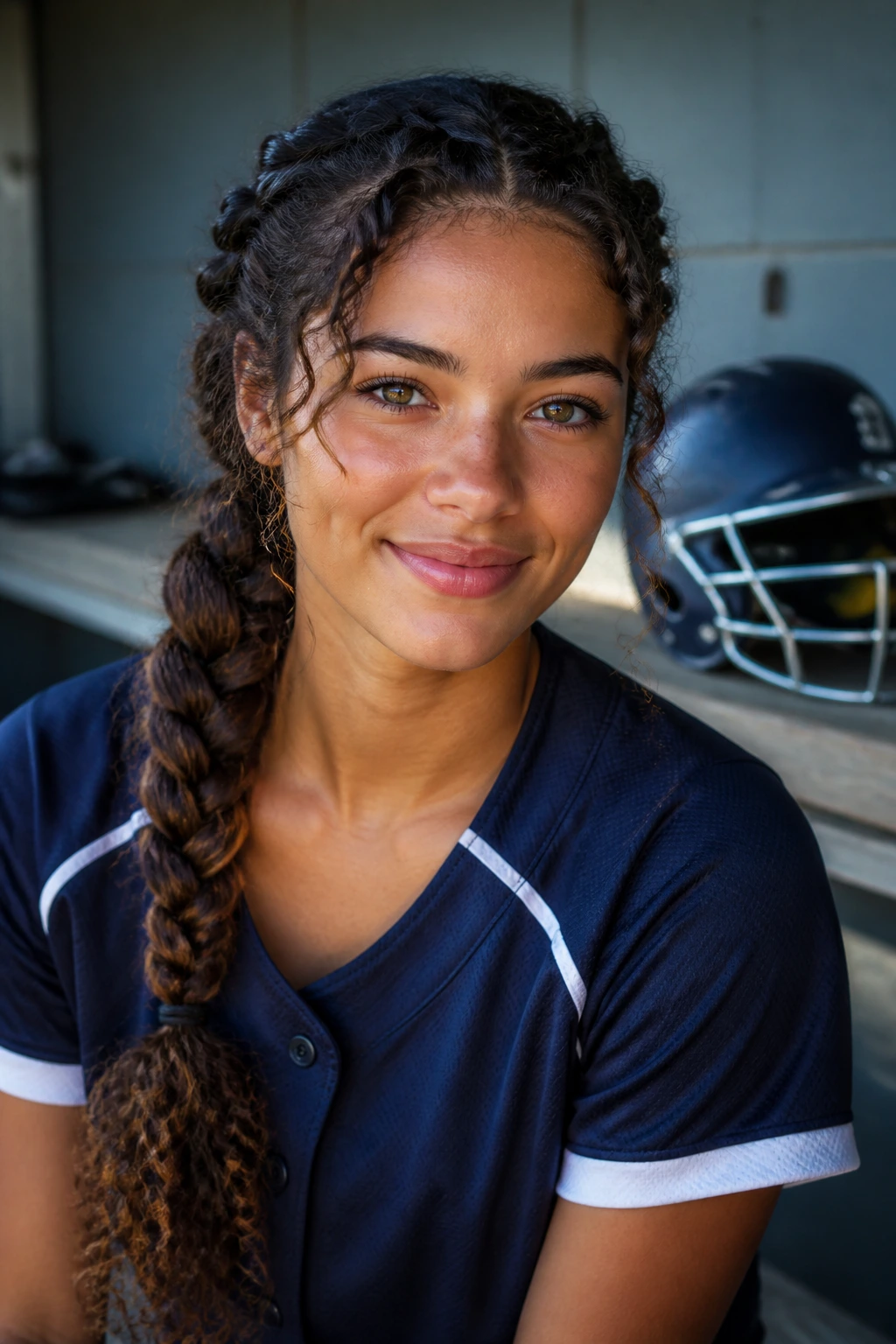
A rope braid is fast once you get the hand motion, and it gives curly hair a neat twist without flattening the whole head. Pull the hair to one side, twist two sections around each other, and let the tail fall low and controlled.
The side placement helps if the center part is getting irritated by sweat or if the helmet tends to sit more comfortably off-center. It also keeps the neck free, which never hurts during summer games.
Small Advantage
Rope braids hold a little better than loose twists when the ends are slippery. If your curls are fine or heavily layered, that extra grip matters.
15. Split Pigtails with Defined Ends
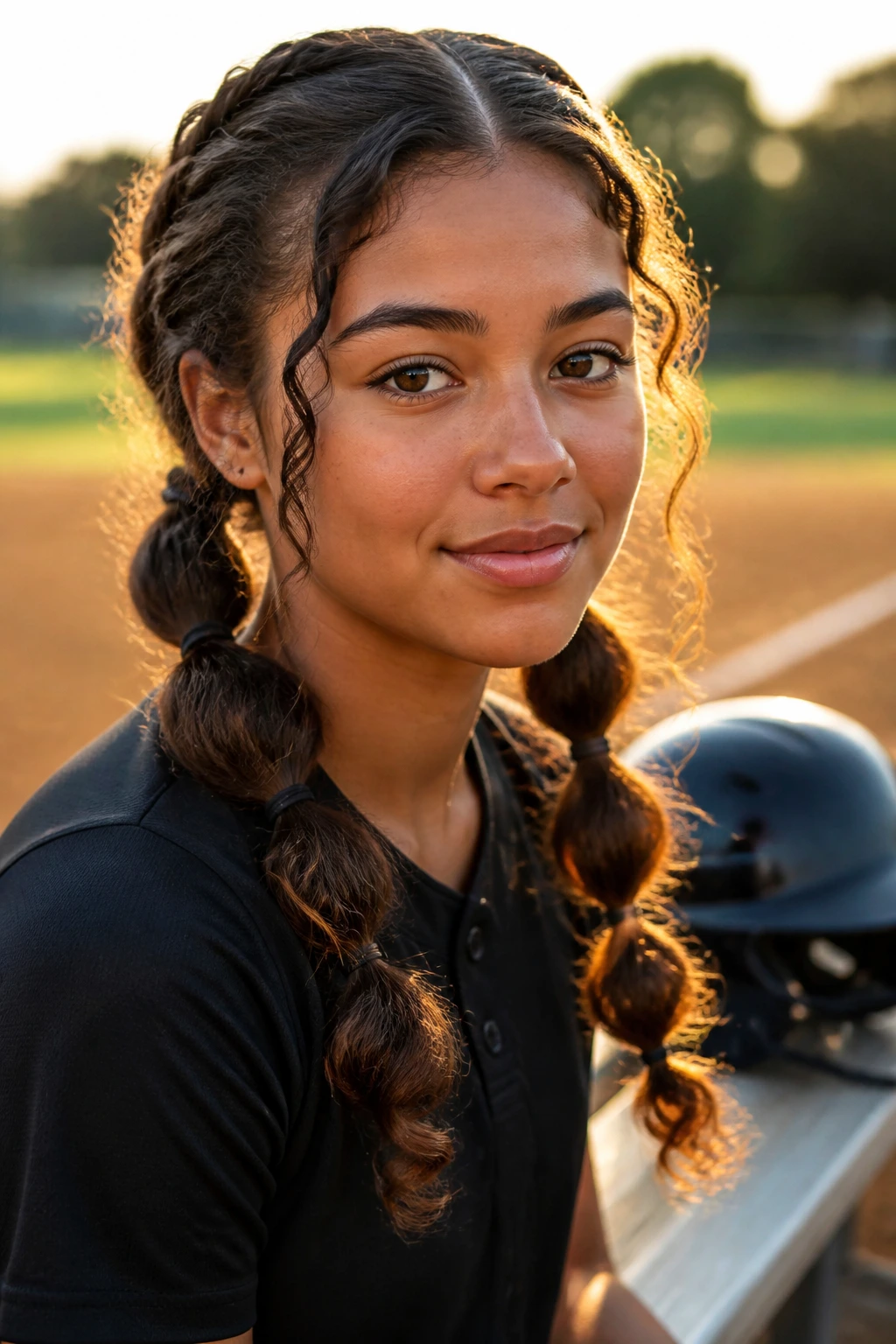
Pigtails are not just for little kids, and on curly hair they can be unexpectedly smart. Split the hair down the center, then secure each side low so the weight is distributed instead of hanging from one point.
If you want the ends to stay defined, add a small amount of curl cream only on the last third of each pigtail. That keeps the shape without making the roots greasy.
When to Pick This Style
Choose it when you want low tension and easy postgame cleanup. Two smaller tails can feel lighter under a helmet than one big ponytail, especially if your hair is dense or long.
16. Clipped-Back Front Curls with a Low Puff
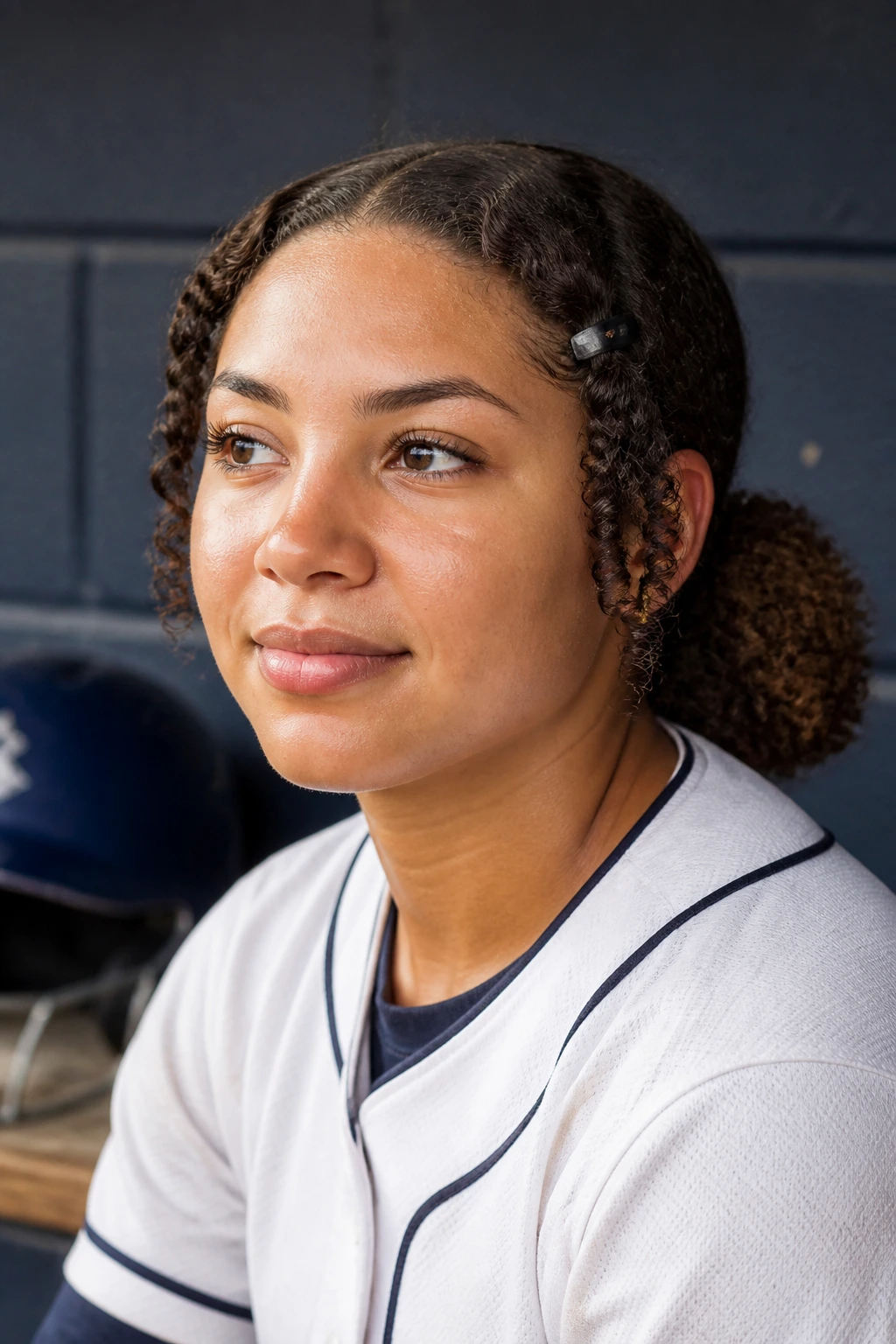
Sometimes the best softball hairstyle is the one that stops trying to do too much. Clip the front curls back with two small flat clips or twist them behind the ears, then gather the rest into a low puff.
This style keeps your face open without forcing the curls into a rigid shape. It’s also a friendly option on days when your hair is not cooperating and you don’t want to fight it before first pitch.
Keep It Neat
Use clips with a smooth underside so they don’t snag. If your helmet sits low, place the clips slightly behind the hairline, not right at the temples.
A little frizz at the front is fine here. Too much polish actually makes this style feel less natural.
17. Tiny Space Buns
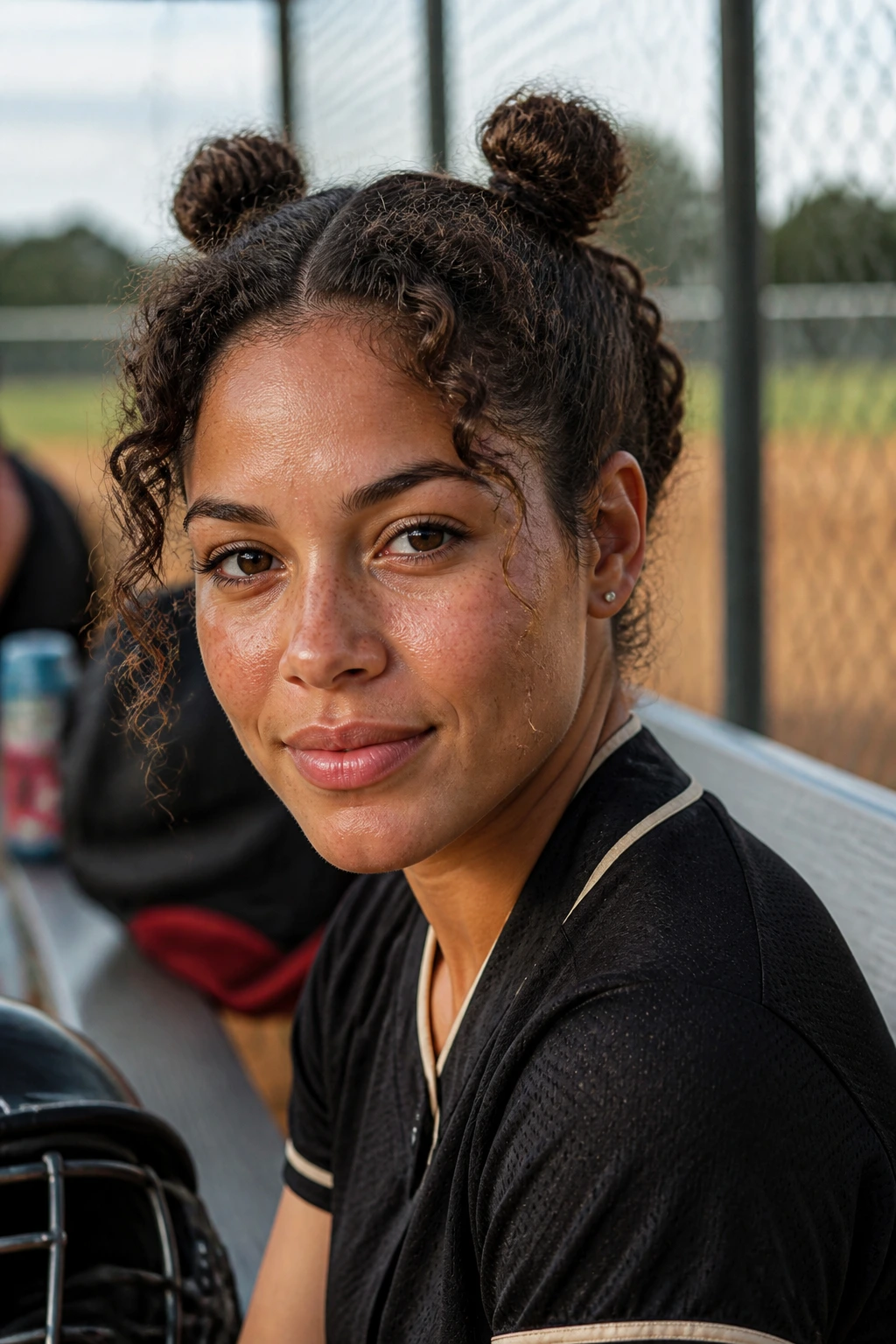
Tiny space buns can be cute, sure, but the real reason they make this list is that they split the bulk into two smaller shapes instead of one large knot. On curly hair, that can make the helmet fit feel less lopsided.
Keep the buns low enough that the helmet doesn’t press directly on them. If you place them too high, they’ll flatten fast and may leave you with two weird dents by the third inning.
Best Use
This is more of a playful game-day style than a pure performance style. It works best when you know your helmet gives you a little room and you’re okay refreshing the curls afterward.
18. Waterfall Braid Half-Up
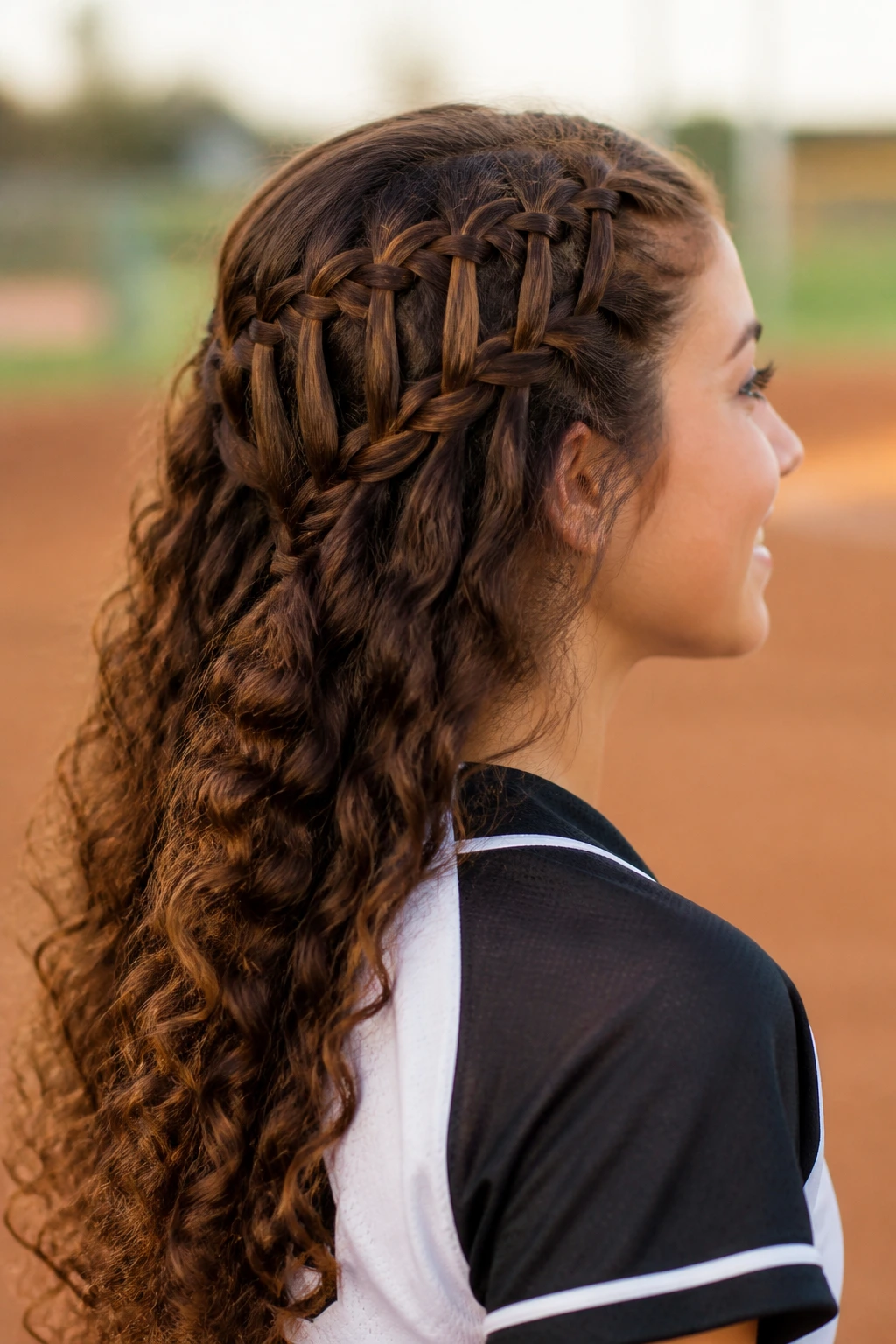
A waterfall braid half-up keeps the front and crown partially controlled while leaving plenty of curl volume below. It has a softer feel than a full braid, and that softness helps if you hate the look of hair pulled tight against the head.
The braid also gives the top layer some structure, which is the part that usually frizzes first. The lower curls stay free, so you still get movement after the helmet comes off.
A Good Middle Ground
If you want a style that looks deliberate without being severe, this is a strong option. It’s especially nice for medium-length curls that need control at the top but still have enough length to show off below.
19. Cornrow Front, Free Curls Back
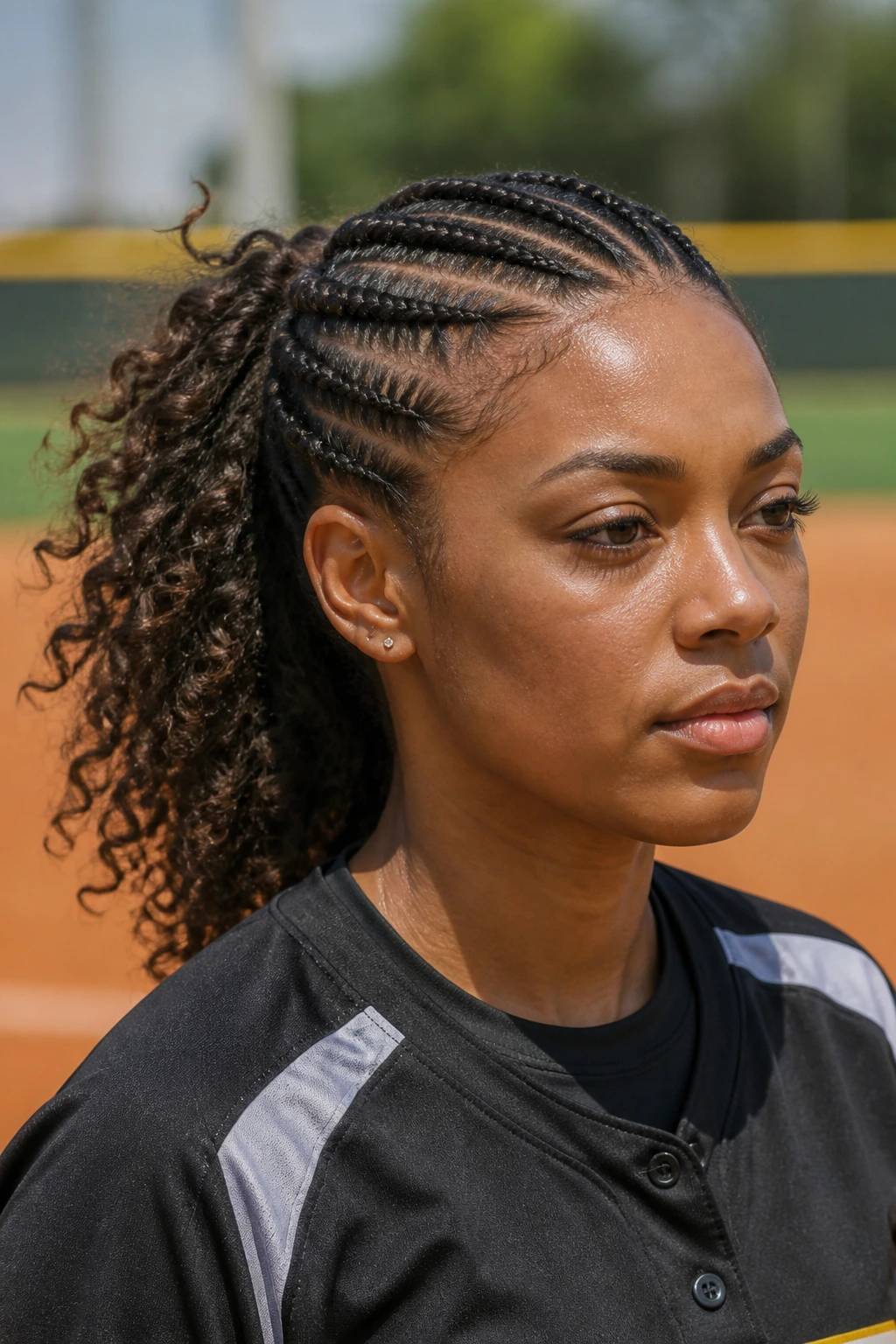
Cornrowing just the front section is a practical move when you want the hairline locked down but don’t want to commit to a full head of braids. The back stays curly and loose, which keeps the style from looking overly tight or heavy.
This is one of the best hybrids for game day. The front is protected, the helmet has a smooth landing zone, and the back still feels like your hair instead of a fully tucked-up style.
Why It’s Useful
If your edges frizz first, this style addresses that exact problem. Keep the cornrows small and clean, then let the back part do its own thing.
20. Side Braid into a Side Puff
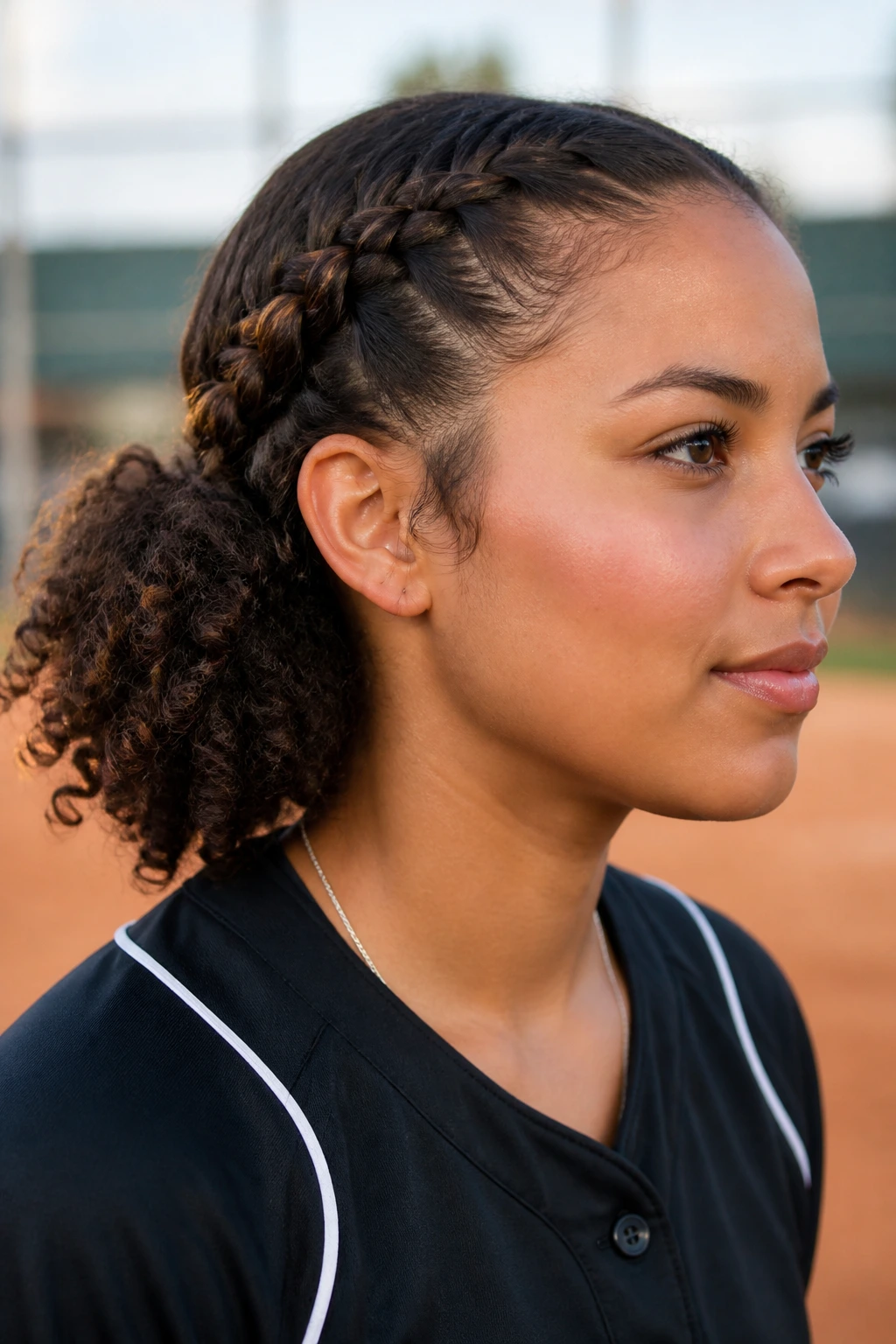
A side braid into a puff is a nice fix for hair that refuses to sit neatly in the middle. The braid starts near the temple or hairline, then feeds into a side puff at the back or just behind the ear.
It’s a little asymmetrical in a good way. The shape keeps the style interesting without adding a lot of bulk under the helmet.
Best For
Players who wear a side part almost every day. If your natural part already leans to one side, this style feels easier than forcing a center line that won’t stay.
21. Twisted Mohawk Ponytail
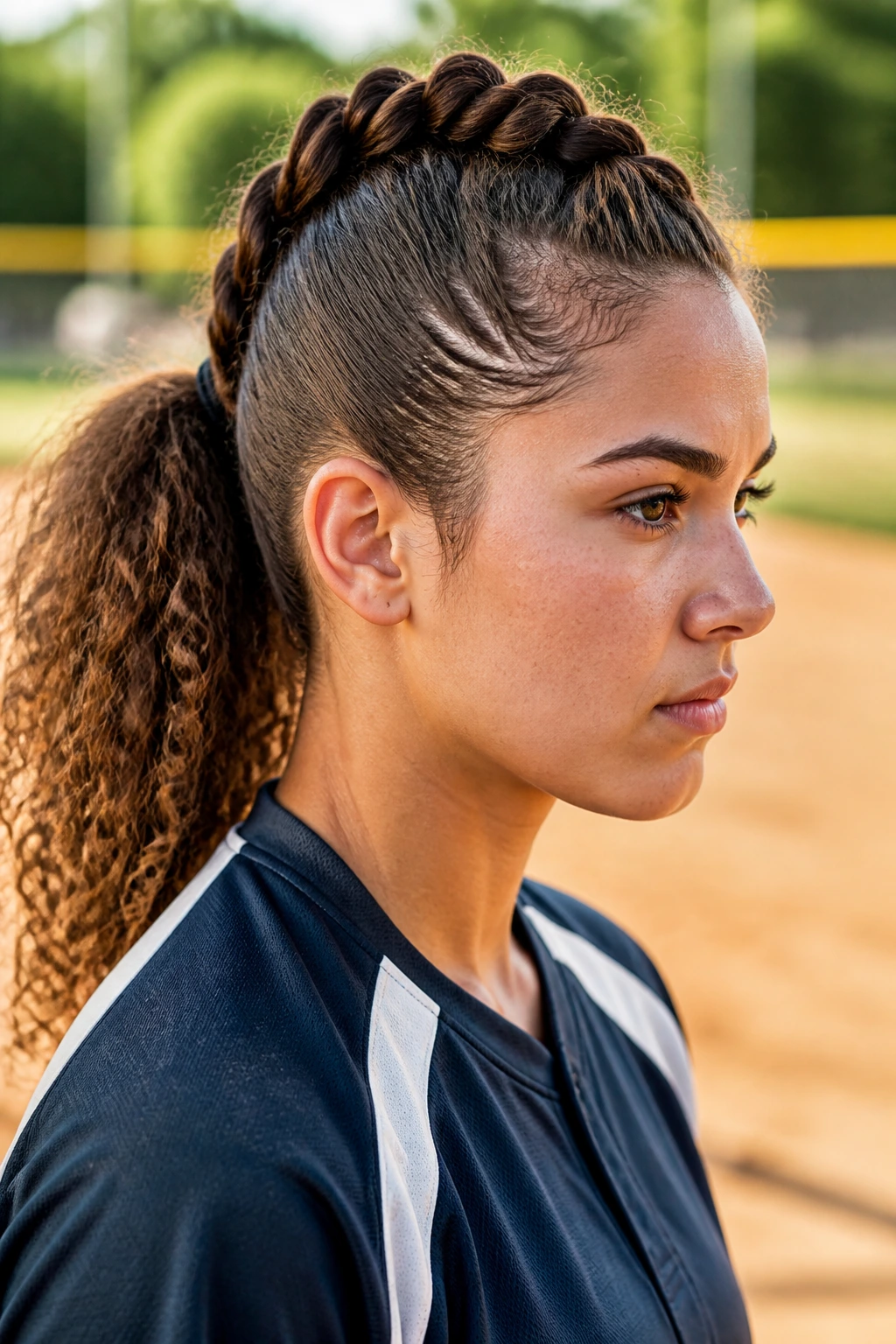
A twisted mohawk ponytail gives you a little height through the middle while keeping the sides controlled. It’s a bold look, but it’s also functional because the side twists keep the hair from puffing out where the helmet rubs hardest.
The ponytail can sit low or mid-back depending on your helmet fit. Just avoid making the center section too tall; the shape should be clean, not extreme.
When It Works Best
This one is for players who like a little edge and don’t mind a style that takes a few more minutes. The twist line through the middle is also a good way to show off curl pattern without leaving everything loose.
22. Low Bun with Braided Sides
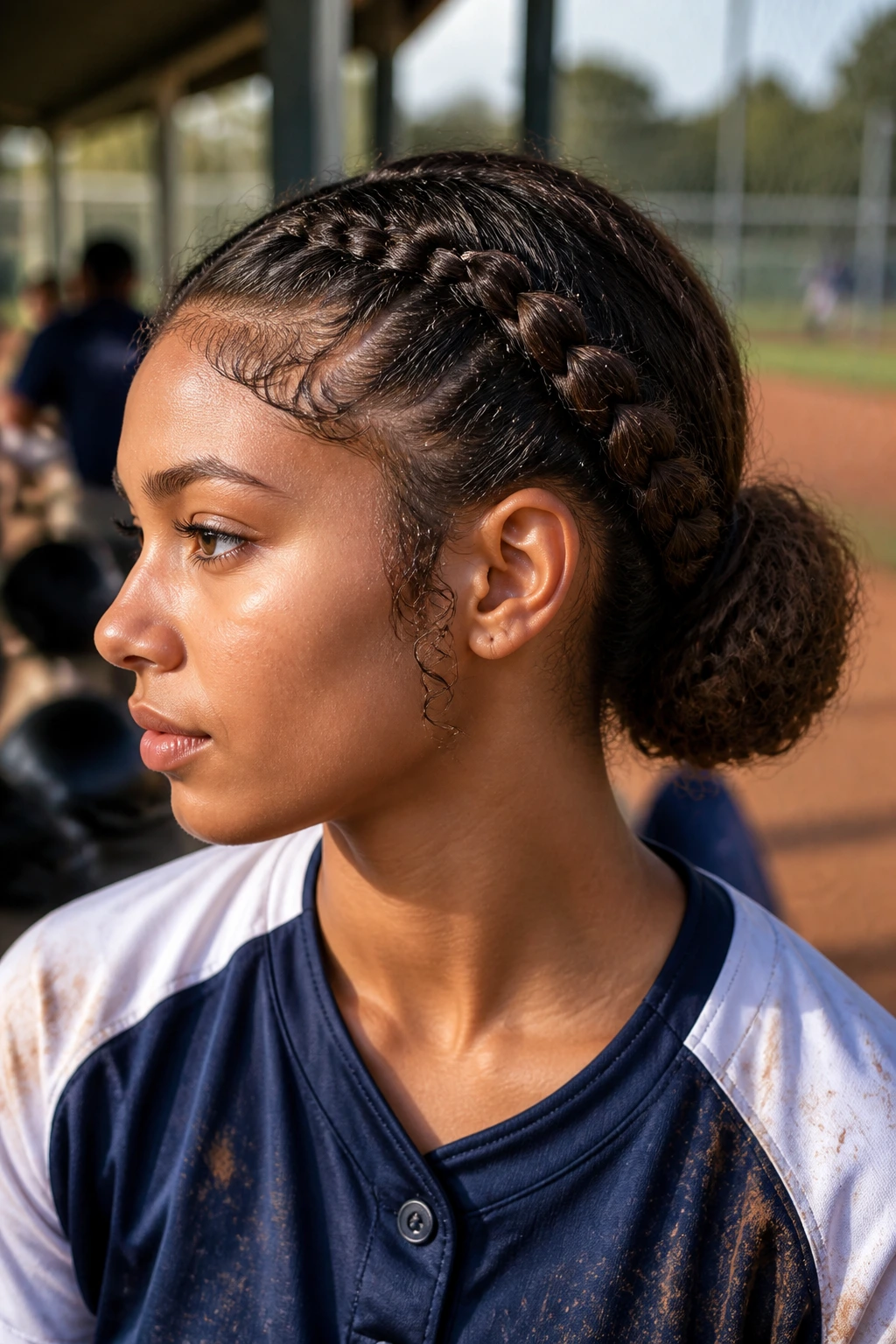
Braided sides feeding into a low bun are as tidy as they sound. The braids keep the top section flat, and the bun stays low enough that the helmet doesn’t fight it every time you adjust your stance.
This is one of the most dependable styles for longer games. It keeps everything in one place, which is a relief when you’re tired and don’t want to think about your hair between innings.
A Simple Upgrade
Wrap the bun loosely so it doesn’t become a hard knot. A softer bun sits better under gear and is easier to undo later without stretching the curls too much.
23. Headband Tuck with Defined Curls
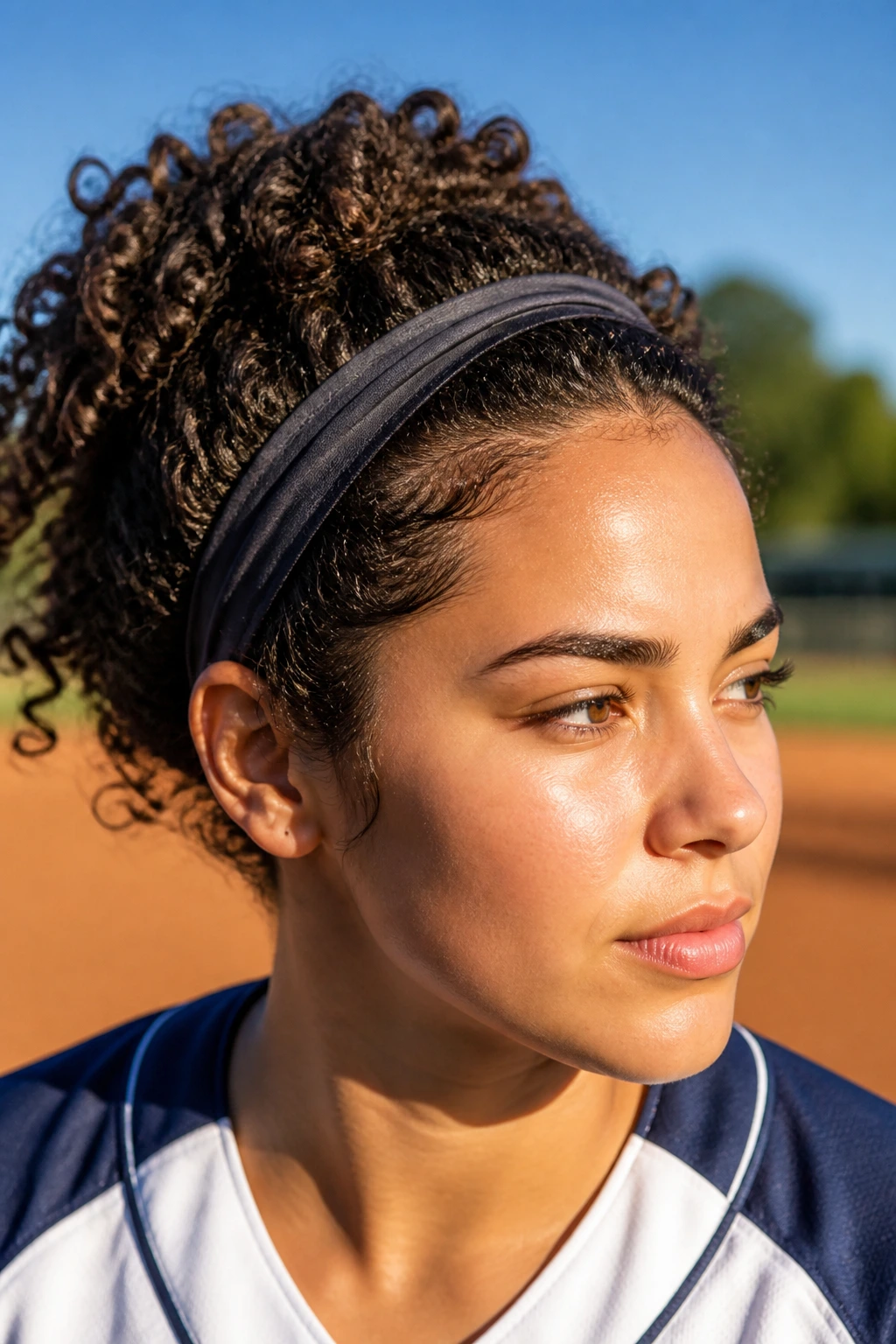
A headband tuck uses a stretchy band to push the front curls back while letting the rest stay defined and visible. On game day, it can be a fast answer when you want to stop touching your hair every thirty seconds.
The key is choosing a headband that grips without squeezing. If it’s too tight, you get a headache. If it’s too loose, it slides backward and turns into a nuisance.
Best for Quick Mornings
This is one of the fastest styles on the list. It’s especially handy if you’re short on time and only need the front section controlled before heading out.
24. Braided Low Pony with a Scrunchie Stack
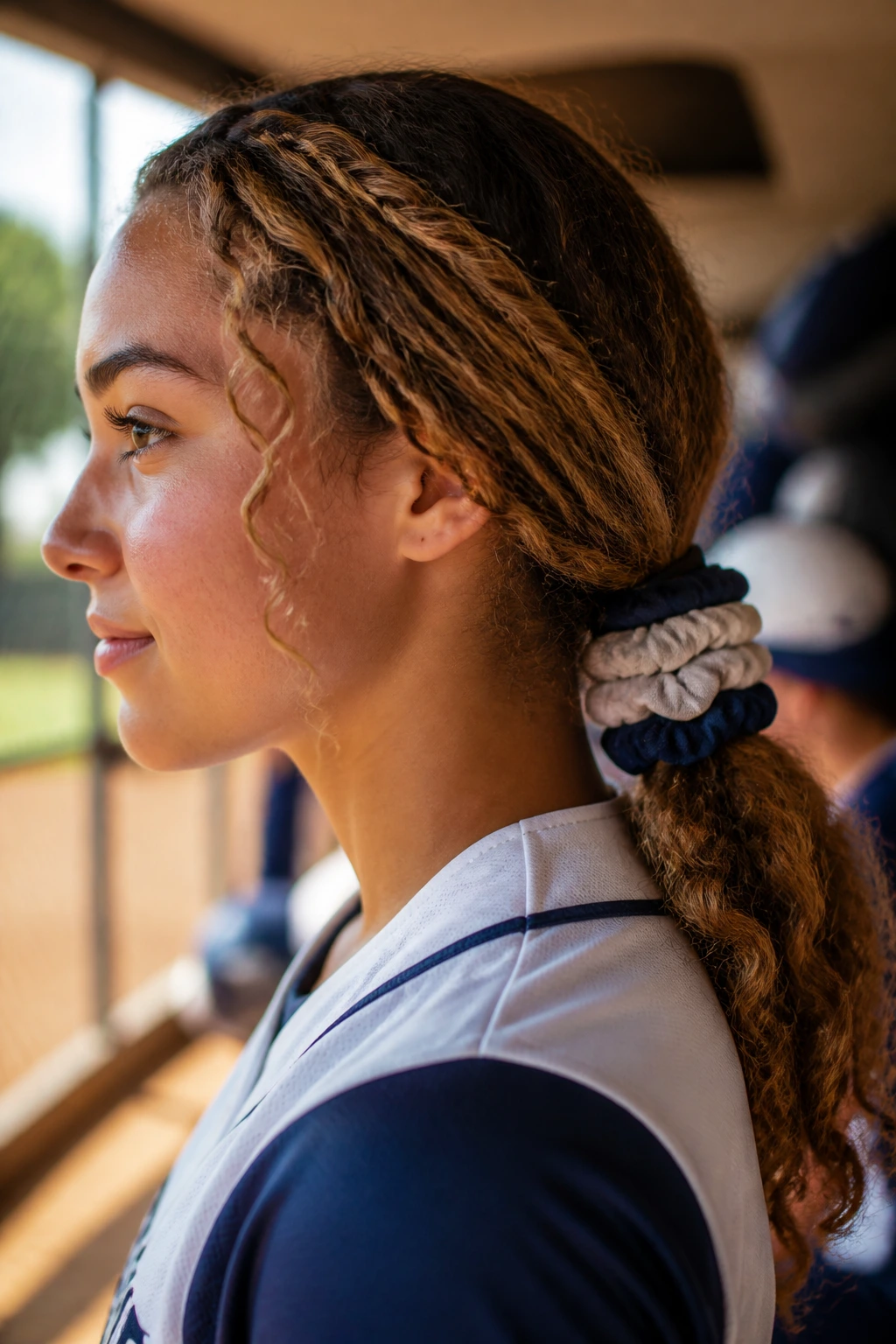
A braided low pony gets extra grip from the braid itself, and the scrunchie stack at the base softens the look while helping hold the length. The whole style sits low, which makes it easier to wear under a helmet than a high, bouncy pony.
The stacked scrunchies also spread tension out a little. That can help if your hair is thick and one elastic tends to dig in too hard.
Small Detail, Big Difference
Pick scrunchies with a smooth seam and a soft inner band. Rough fabric can snag the ends, especially if your curls are dry from washing the day before.
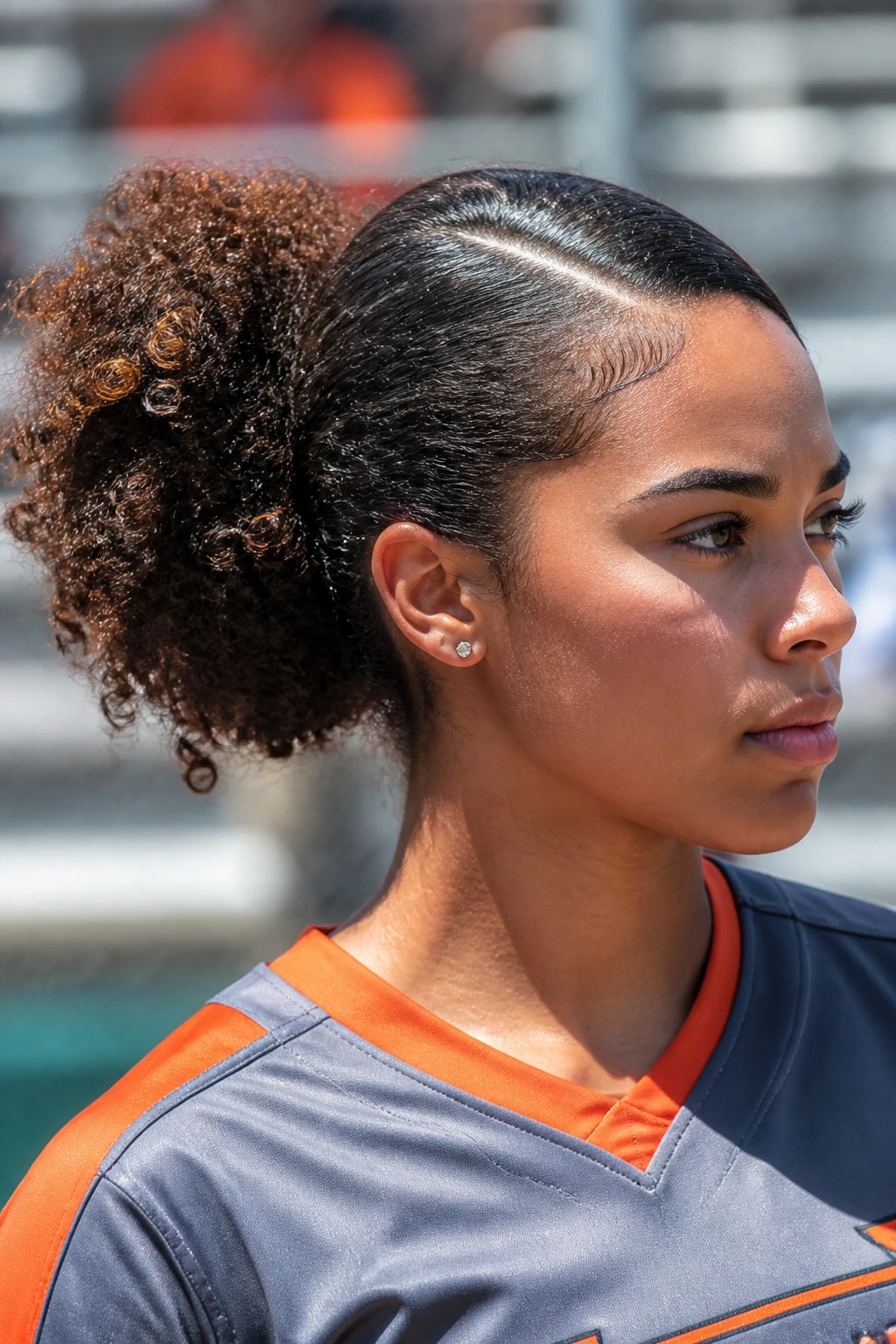
25. Polished Low Puff with Soft Face-Framing Pieces
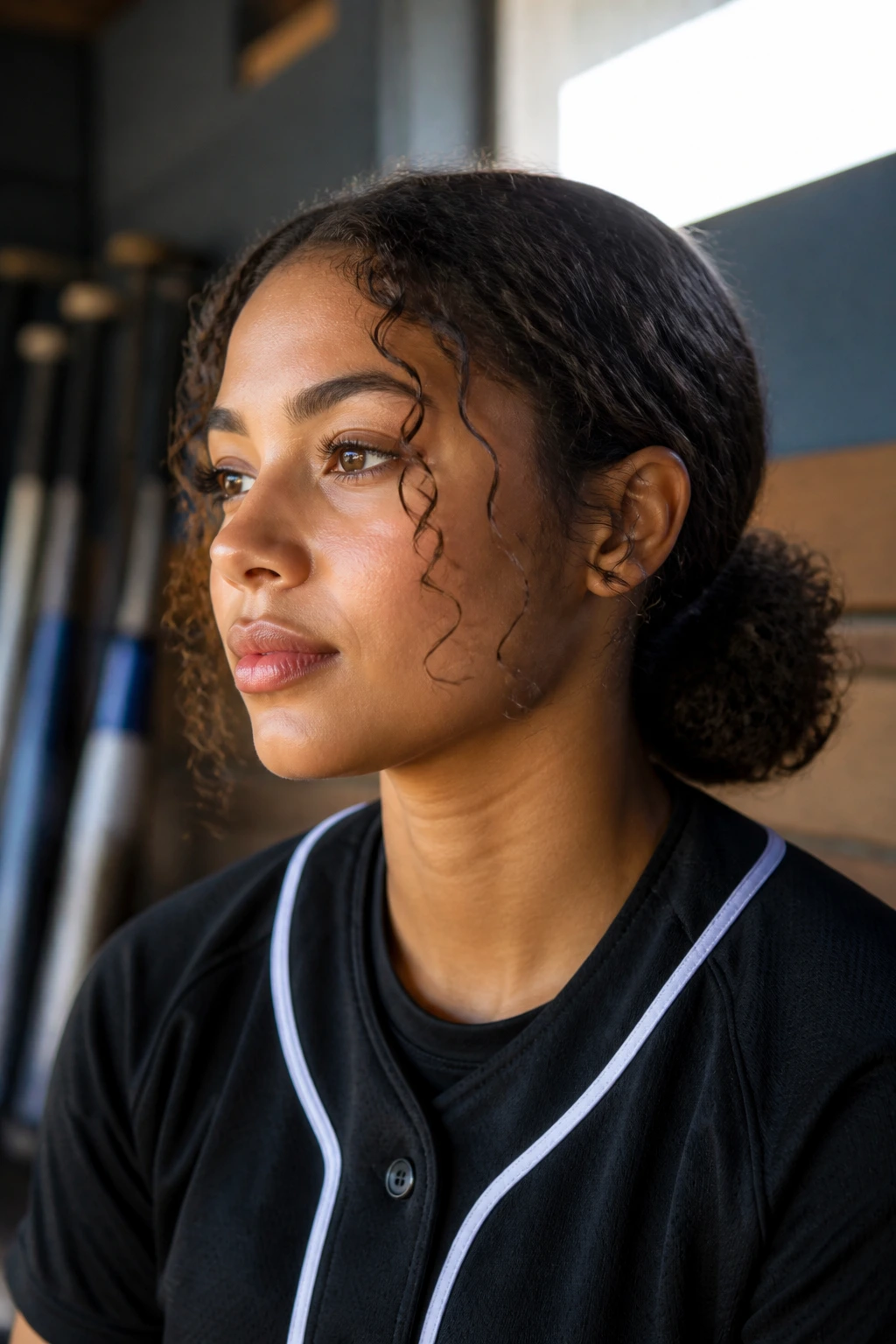
A polished low puff is the style I’d hand to anyone who wants clean lines without looking over-styled. The puff sits low, the face-framing pieces stay soft, and the whole shape plays well with a helmet because the bulk stays below the pressure zone.
You can leave two small curls out at the front, or sweep everything back if you want a cleaner line. The important part is keeping the puff low enough that it doesn’t get flattened into the nape.
Why It’s a Strong Finish
It’s fast, comfortable, and easy to redo if the game runs long. That’s hard to beat on a day when you need your hair to cooperate and not argue.
What Makes Curly Hair Behave Better Under a Softball Helmet
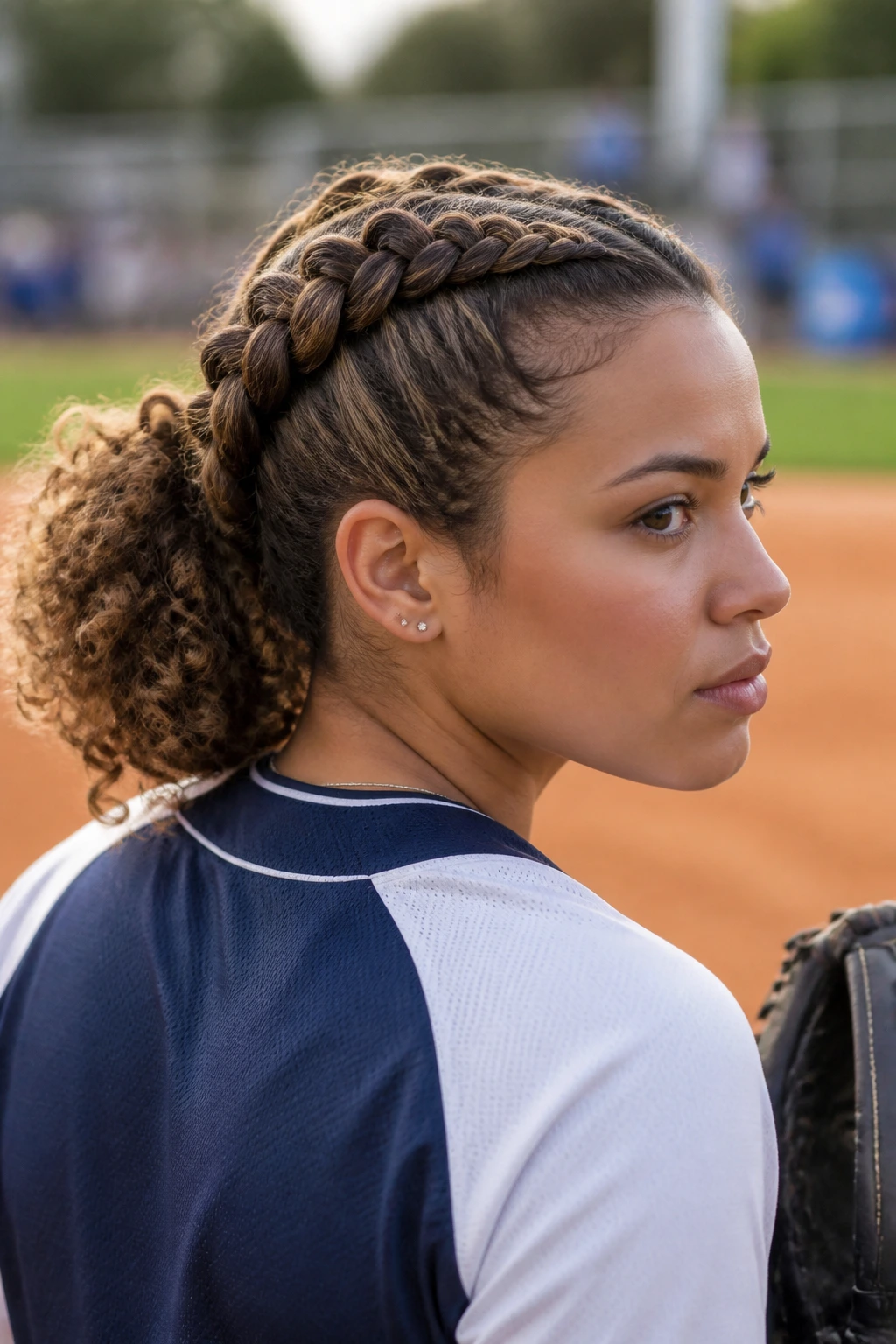
Curly hair and a helmet are not enemies, but they do have different priorities. Your curls want shape, lift, and a little moisture. The helmet wants a smooth surface and as little bulk as possible where it presses at the crown and sides.
That means the winning styles all do the same basic thing: they control the roots without choking the texture. Braids, twists, low puffs, and soft ponytails are the useful players here because they keep the top from ballooning while letting the length stay curled.
Humidity changes the whole picture. If the air is heavy and your hair frizzes at the first sign of sweat, styles with clean roots and soft ends tend to look better than styles that rely on every curl staying perfectly defined. A little controlled mess is better than a hard, crunchy helmet line.
Essential Tools for These Hairstyles
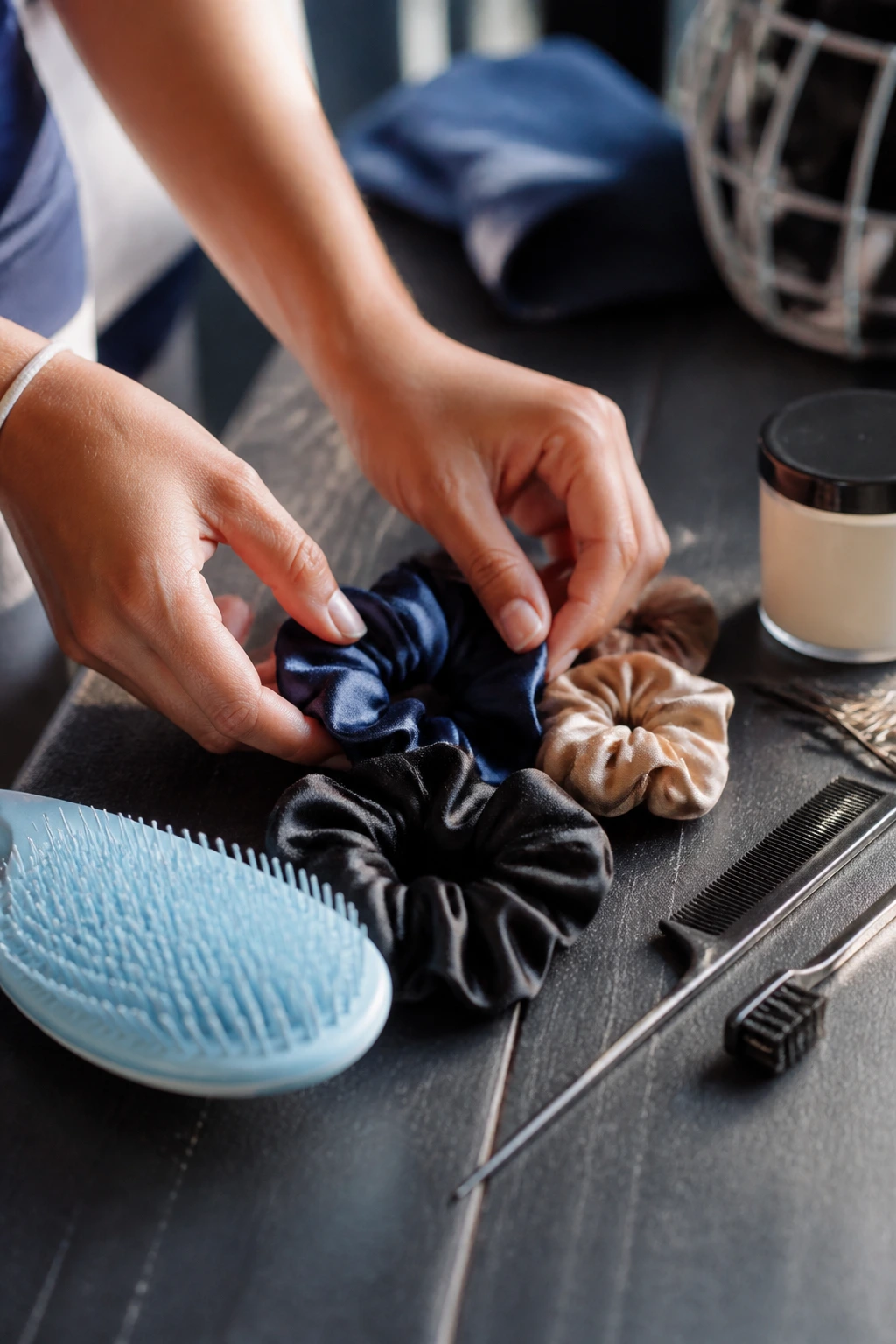
- Rat-tail comb: Best for clean parts, especially center parts and side parts that need to stay visible.
- Wide-tooth comb: Use this on damp curls to detangle before styling without ripping through the curl pattern.
- Detangling brush: Handy for smoothing the outer layer if you’re doing a puff or ponytail.
- Soft hair ties: Choose snag-free elastics that won’t leave a sharp crease or pull at the ends.
- Spiral elastics: Good for ponytails and puffs because they grip without digging in as much.
- Satin scrunchies: These reduce friction at the base of the style and are kinder to curly ends.
- Bobby pins or U-pins: Useful for buns, braids, and tucked styles; choose coated pins when possible.
- Edge brush: A small brush helps smooth the hairline without flattening the whole front.
- Curl cream or leave-in conditioner: A small amount keeps the hair flexible and less dry under the helmet.
- Mousse or light gel: Good for holding parts, braids, and twists without making the hair feel helmet-hard.
- Spray bottle with water: A few spritzes can wake up curls before styling; damp hair usually behaves better than dry, fuzzy hair.
- Satin scarf: Useful for setting the front while you get dressed, or for refreshing curls after the game.
Smart Product and Hair-Tie Picks
The cheapest elastic in the drawer is usually fine for one low ponytail, but curly hair on game day asks for more than that. Look for ties that stretch without losing shape, because you’ll probably be taking them off and redoing them more than once. If the elastic feels rough in your hand, it’ll feel rough in your hair.
For styling products, the order matters more than the label. A light leave-in or curl cream first, then a small amount of mousse or gel if you need hold. Heavy oils at the root can make the hair slide around under a helmet, and that’s a headache you do not need before first pitch.
If your curls are tight and dense, stronger hold at the roots helps. If your curls are looser or finer, go lighter and keep product mostly on the outer layer and the ends. The goal is control, not shellac.
How to Wear These Styles on Game Day
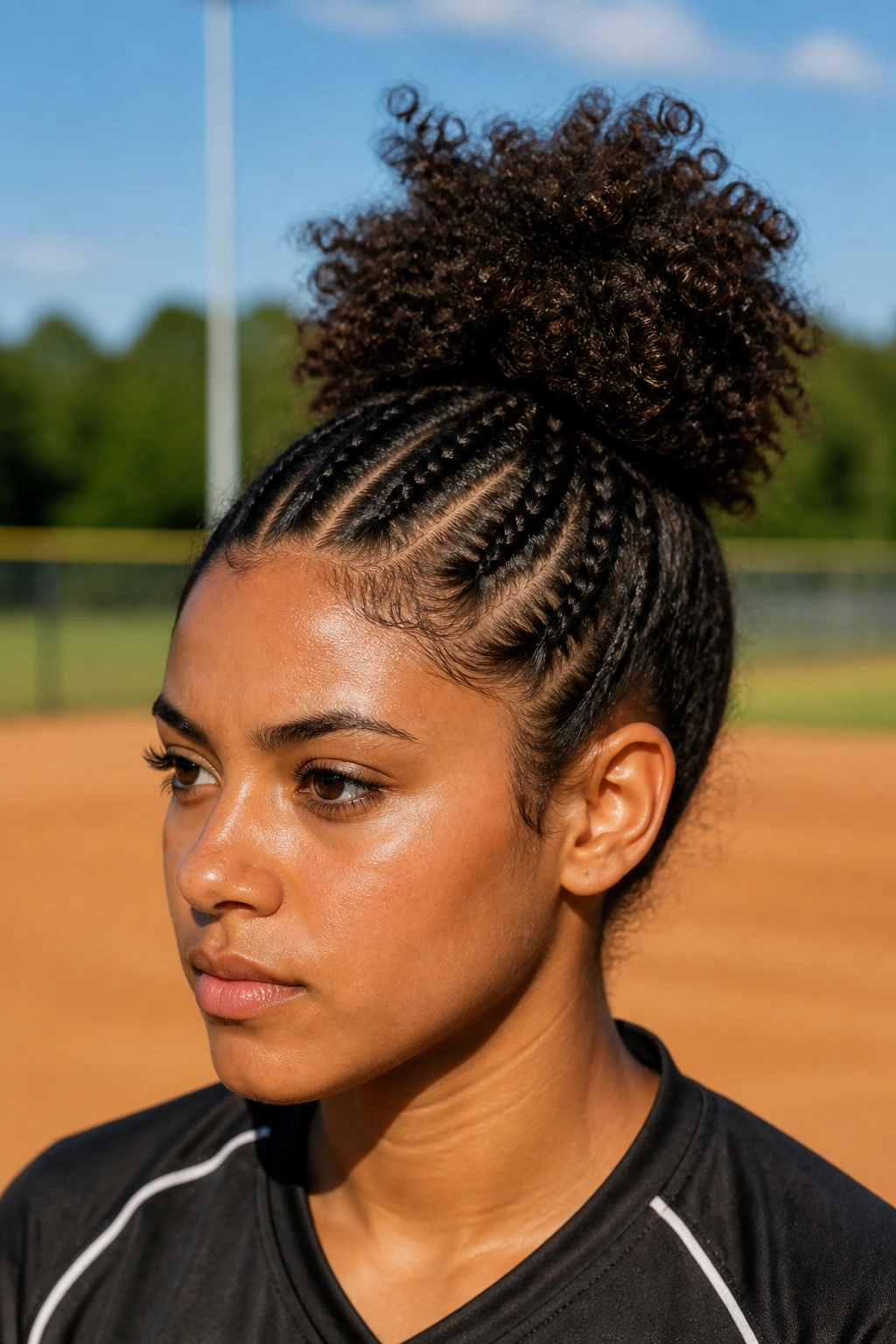
Placement: Keep the bulk below the helmet line whenever you can. Low buns, low puffs, and low braids usually sit cleaner than tall knots, and they won’t fight the helmet every time you adjust it.
Comfort: Don’t pull the hairline so tight that it feels sharp by warmups. If your temples start aching while you’re still in the parking lot, the style is already too tight.
Accessories: Soft scrunchies, narrow headbands, and team-color ribbons are enough. Skip anything with hard plastic edges near the crown; the helmet will find those edges fast.
After the First Inning: Pack a small spray bottle, one extra elastic, and a wide-tooth comb in your bag. A few spritzes and a quick finger-scrunch can bring curls back to life between games better than piling on more product.
Best timing: Build the style after the hair is fully detangled and lightly damp or fully dry with a little leave-in. Half-dry curls are the fussiest ones on earth.
Extra Tips That Make the Styles Hold Longer
Moisture Prep: Start with hair that has a little slip. A mist of water and a pea-sized amount of leave-in on the mid-lengths keeps curls from turning rough under heat and friction.
Hold Layering: If you need the style to stay put, use a light mousse or gel only at the roots and braid sections. Don’t coat the whole head unless you want crunchy ends and a helmet that feels sticky.
Helmet Trick: If your style is low but the top still feels bulky, loosen the crown by a quarter inch before putting the helmet on. That tiny bit of slack can make the fit much more comfortable.
Finish Smart: Smooth just the hairline and the ends. The middle of the style can be imperfect and still look good. Chasing every flyaway is where people waste time.
Common Mistakes That Make Game-Day Hair Fall Apart
Making the style too tight. The symptoms are headaches, red marks at the temples, and hair that looks flattened by the second inning. The fix is simple: loosen the base a little and move the pressure lower, closer to the back of the head.
Using heavy oil at the roots. That usually turns into slipping, greasy roots, and a helmet that feels like it’s sliding around. Keep oils on the ends only, and use a lighter leave-in instead of a thick serum near the scalp.
Skipping the detangle. Curly hair that’s styled while knotty will puff in weird places and snag when you redo it. Detangle with a wide-tooth comb or brush while the hair is damp and coated with a little slip.
Choosing a style that sits too high. If the bun or ponytail is perched on the crown, the helmet has to crush it down, and the result is discomfort plus a lumpy silhouette. Move the style lower unless your helmet is specifically designed for a higher opening.
Relying on metal clips under the helmet. They can dig in, slide, or just feel bad after twenty minutes of movement. Use smooth pins only where they’re needed, and keep them away from direct pressure points.
Variations and Adaptations to Try
Humidity Shield Version: Add a little more gel to the hairline and choose braided styles over loose puffs. In heavy humidity, the less exposed curl surface you have near the front, the better the style holds.
Short-Curl Game Plan: If your hair does not reach a ponytail, lean on half-up styles, mini front braids, and clipped-back curls. Shorter curls can still look clean; they just need smaller sections and softer ties.
Extra-Long Hair Version: Break the hair into two low tails, braids, or a braided pony instead of forcing everything into one giant bundle. Splitting the weight makes the helmet feel less crowded.
Protective-First Version: Flat twists, braided crowns, and low buns are the safest shapes when you want the ends tucked away. This is the version to reach for if your hair gets dry easily or you’ll be wearing the style for several hours.
Team-Color Version: Swap in a ribbon or scrunchie that matches your uniform. Keep the accessory soft and narrow so the color pop doesn’t turn into an uncomfortable bump under the helmet.
How to Keep the Style Alive Between Practice and the Next Game
Most of these styles can survive one game and a decent amount of postgame chaos if you treat them gently. Once you’re done, loosen the elastic instead of yanking it out, then separate the curls with your fingers rather than a brush. A brush at the wrong moment can turn a decent ponytail into a frizz cloud.
If you’re heading to another practice or game later, mist the curls lightly, add a touch of leave-in to the ends, and put the hair into a loose pineapple or low braid. That keeps the shape from collapsing overnight. A satin pillowcase helps too, and it’s one of those cheap purchases that earns its keep fast.
For styles with braids or twists, you can usually stretch them another day if the roots still look clean. For puffs and ponytails, though, the base usually tells the story. Once the elastic line starts to bend and swell, it’s time to rebuild rather than patch it.
Frequently Asked Questions
What’s the easiest softball hairstyle for curly hair if I’m in a hurry?
A low puff or a half-up top knot is the fastest route. Both take less than 10 minutes once your hair is detangled, and they keep the front off your face without needing a full braiding session.
Can I wear braids under a softball helmet?
Yes, and braids are often one of the better choices because they lie flatter than loose curls. Keep them snug enough to stay neat, but not so tight that your scalp feels sore after a few innings.
Should curly hair be wet or dry before styling for game day?
Slightly damp hair usually behaves best. Fully wet hair can stay cold and heavy, while bone-dry hair tends to frizz and resist shaping; a light mist and a bit of leave-in hits the middle ground.
How do I stop my curls from puffing up in humidity?
Choose styles with braided or twisted roots and keep the loose ends lightly coated with curl cream or mousse. You’re not trying to seal every strand; you’re trying to give the front less room to frizz first.
What if my helmet makes my bun hurt?
Move the bun lower and make it smaller. The pain usually comes from the bun sitting right under the helmet’s pressure point, so shifting it closer to the nape solves more than tightening ever will.
Can I use gel every game?
Yes, but keep it to the roots, the part, and the hairline. A small amount is useful; coating the whole head can leave curls stiff and dry once the sweat dries out.
What style works best for very thick curly hair?
Low braided ponytails, boxer braids, and low buns handle thick hair better than one giant high ponytail. Those styles spread the weight out and keep the helmet fit from feeling jammed.
How do I refresh my hair after the game without washing it?
Mist the curls lightly, smooth a little leave-in on the ends, and scrunch the shape back with your hands. If the roots are flattened, flip your hair forward for a few seconds and let it fall back into place.
The Styles I’d Trust at First Pitch
The smartest softball hairstyles for game day with curly hair are the ones that solve a real problem: helmet fit, sweat, and curl shrinkage all at once. If a style ignores one of those, it usually falls apart by the middle innings.
Pick the shape that matches your hair length, your curl density, and how your helmet actually sits on your head. That’s the part a lot of people skip. A style that looks cute in the bathroom mirror is one thing; a style that still feels comfortable after sprints, slides, and a long dugout wait is the one worth repeating.
Choose one or two of these, test them at practice, and keep the best one in your back pocket for busy mornings. The next time first pitch sneaks up on you, your hair will already know what to do.