



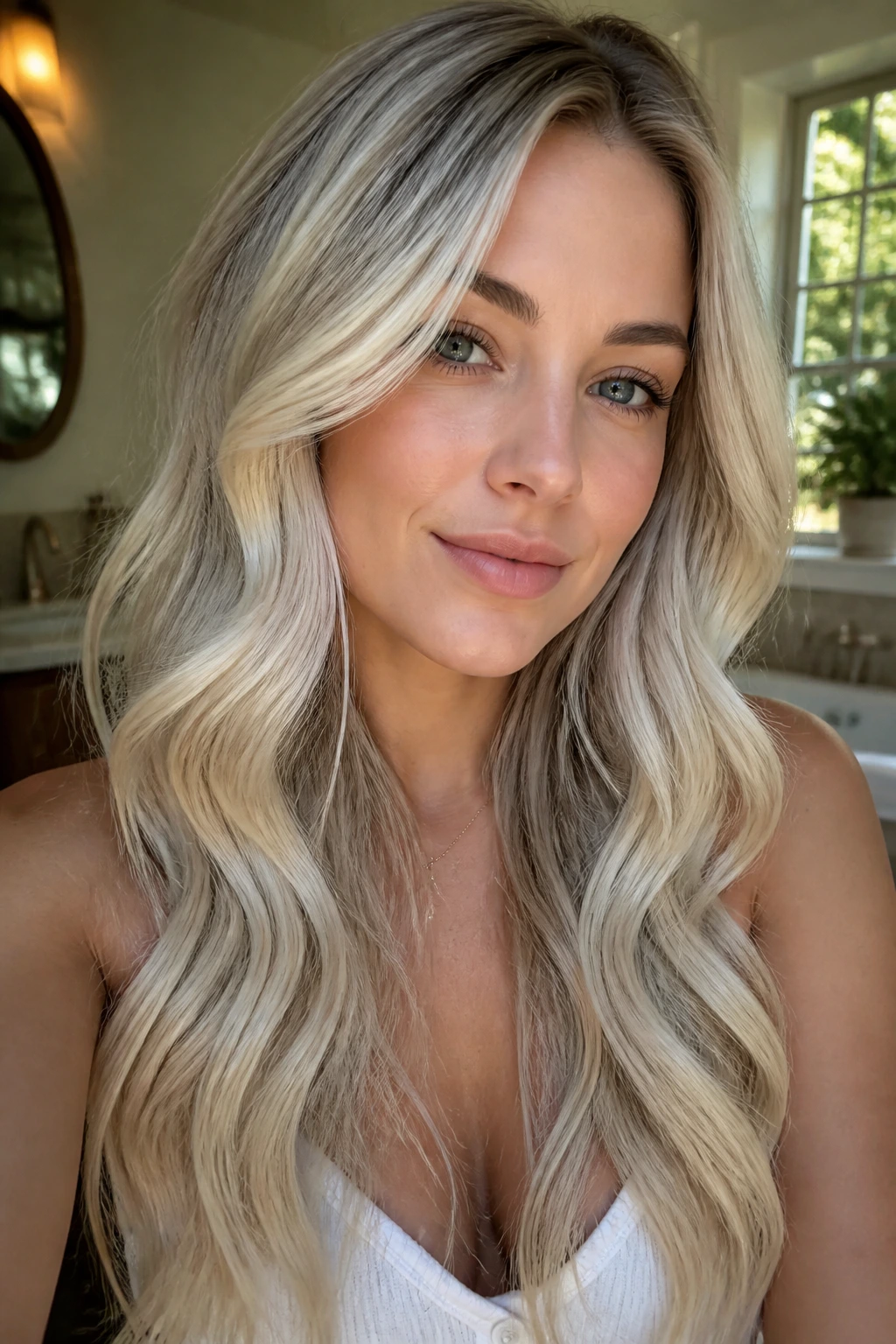
Arctic blonde hairstyles can look almost glassy on fair skin, but only when the tone is controlled. Too white, and the hair starts to flatten out the face. Too yellow, and the whole point goes missing in a hurry. The sweet spot is a cool, bright blonde with enough softness around the cheekbones that your skin still looks like skin — not a paper cutout under office lights.
Loose curls are the part people underestimate. A brushed wave breaks up the brightness, lets silver and pearl tones move through the hair, and keeps the color from feeling severe. Tight curls can work, sure, but that softer bend is usually the better call here because it gives the blonde somewhere to breathe. You can see the difference immediately in daylight. The lighter pieces stop shouting and start reflecting.
Fair skin can handle more contrast than most people assume. The trick is choosing where that contrast lives: in the roots, in the face-framing pieces, in the shape of the wave, or in the shine on the ends. A center part with level-10 platinum reads one way. A side sweep with a shadow root and loose, brushed-out bends reads another. That range is what makes this color family so useful.
Why These Icy Waves Work on Fair Skin
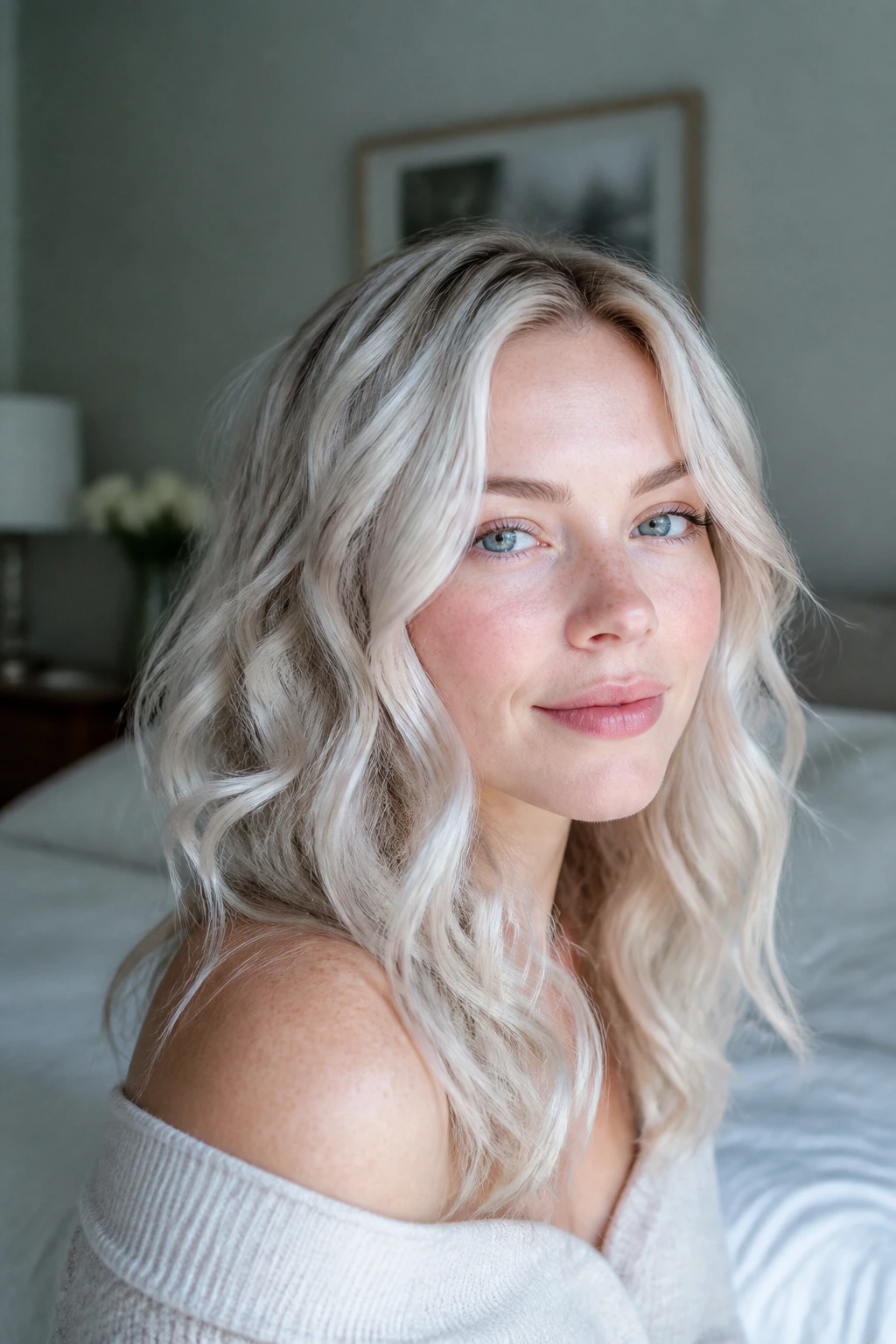
-
Cool tones echo pale complexions instead of fighting them: Silver, pearl, and blue-violet blonde shades sit next to fair skin without turning the face muddy or yellow.
-
Loose curls soften the brightness: A soft wave keeps arctic blonde from looking hard, which matters even more on very light skin where harsh lines show quickly.
-
Root depth adds shape: A small shadow root gives the eye a place to land and keeps the style from reading like one flat sheet of color.
-
You can tune the contrast up or down: Some looks in this collection lean nearly white; others use pearl, champagne, or lowlights so the face doesn’t disappear.
-
The styles work at different lengths: Long hair, collarbone lobs, bobs, and shag cuts all take this shade well when the wave pattern matches the cut.
-
They look polished without a heavy styling routine: A 1-inch or 1.25-inch iron, a good heat protectant, and a clean brush-out do most of the work.
1. Frosted Middle-Part Waves
Want the cleanest version of arctic blonde? Start here. A middle part and loose, brushed waves create a calm frame for fair skin, especially if your complexion leans pink or porcelain. The color has room to show off its silver-white edges, and the shape keeps it from feeling too ornate.
How to Ask for It
Ask for a level-10 lift with a soft shadow root, then tone the mids and ends toward pearl-silver rather than stark white. The wave pattern matters too — a 1.25-inch iron, curled away from the face, gives you that long ribbon shape instead of a tight spiral.
A tiny root melt, even half an inch, makes this style easier to live with. Flat one-tone platinum can look harsh near the hairline. This version keeps the brightness, but it gives the face some breathing room.
2. Platinum Ribbon Curls
Platinum ribbon curls have a slicker, shinier feel than beach waves, and that shine does a lot of work on fair skin. The curls are loose, but they’re defined enough that the lighter strands fall like ribbons instead of frizzing out into a halo. I like this one when the haircut has long layers and the ends are in good shape.
The styling trick is simple: alternate curl directions, let the hair cool completely, then brush it once with a soft paddle brush. That single brush-out changes everything. The curls become long, fluid bends, and the platinum stops looking stiff.
3. Silver Money Piece Layers
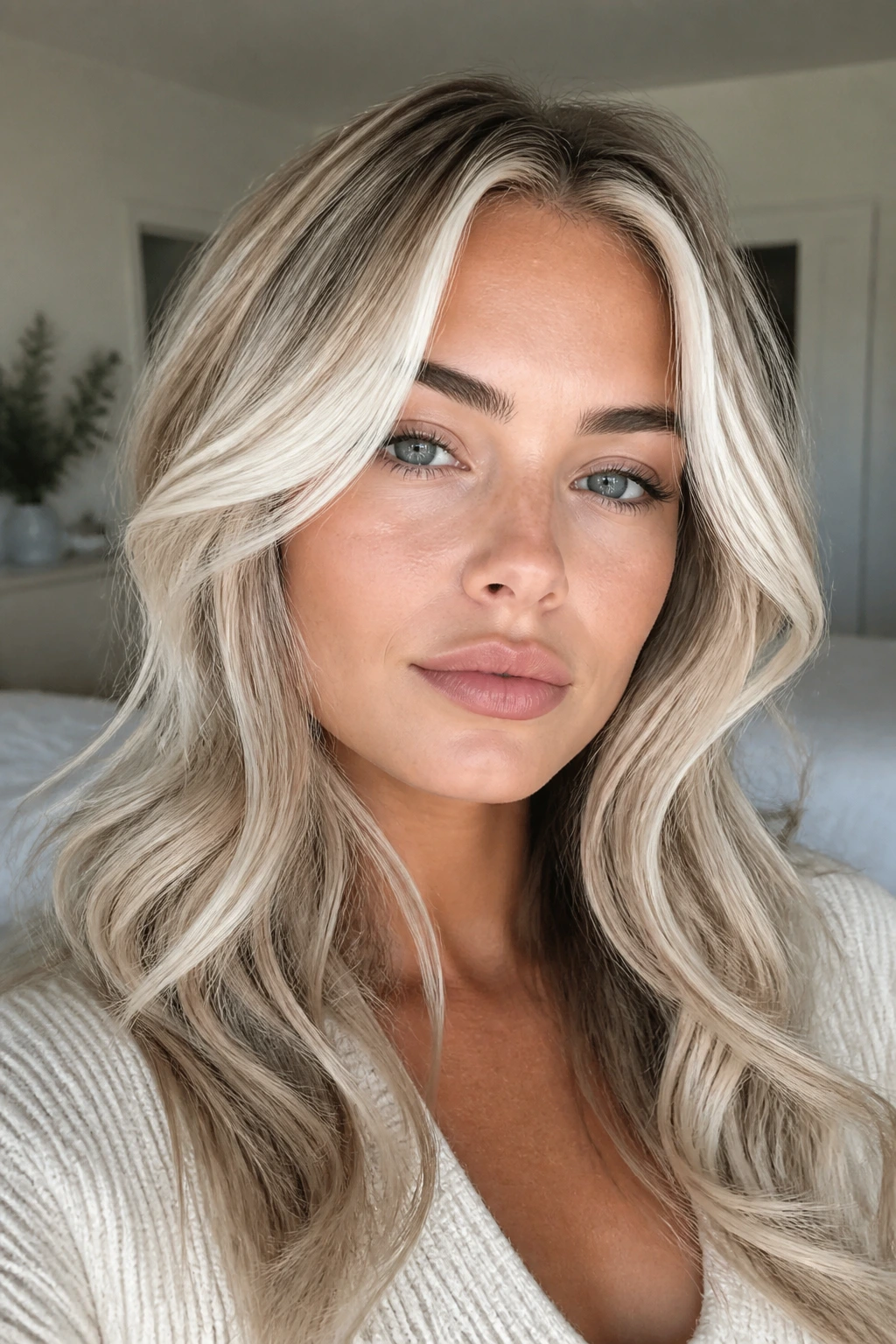
If you do not want to bleach the whole head right away, this is the place to start. A bright silver money piece around the face gives fair skin a cool glow without forcing the rest of the hair to go full arctic. It’s especially smart if you wear little makeup and want the front of the style to do the talking.
Why It Stands Out
The face-framing panels should sit one or two shades brighter than the rest of the hair, not five. That little shift creates movement when the loose curls fall forward. It also makes grow-out less painful, which is worth saying plainly because many platinum looks are gorgeous on day one and a headache by week six.
Keep the rest of the blonde a touch softer — pearl or frosted beige works — so the money piece feels intentional, not disconnected. That balance is the whole point.
4. Icy Lob with Soft Ends
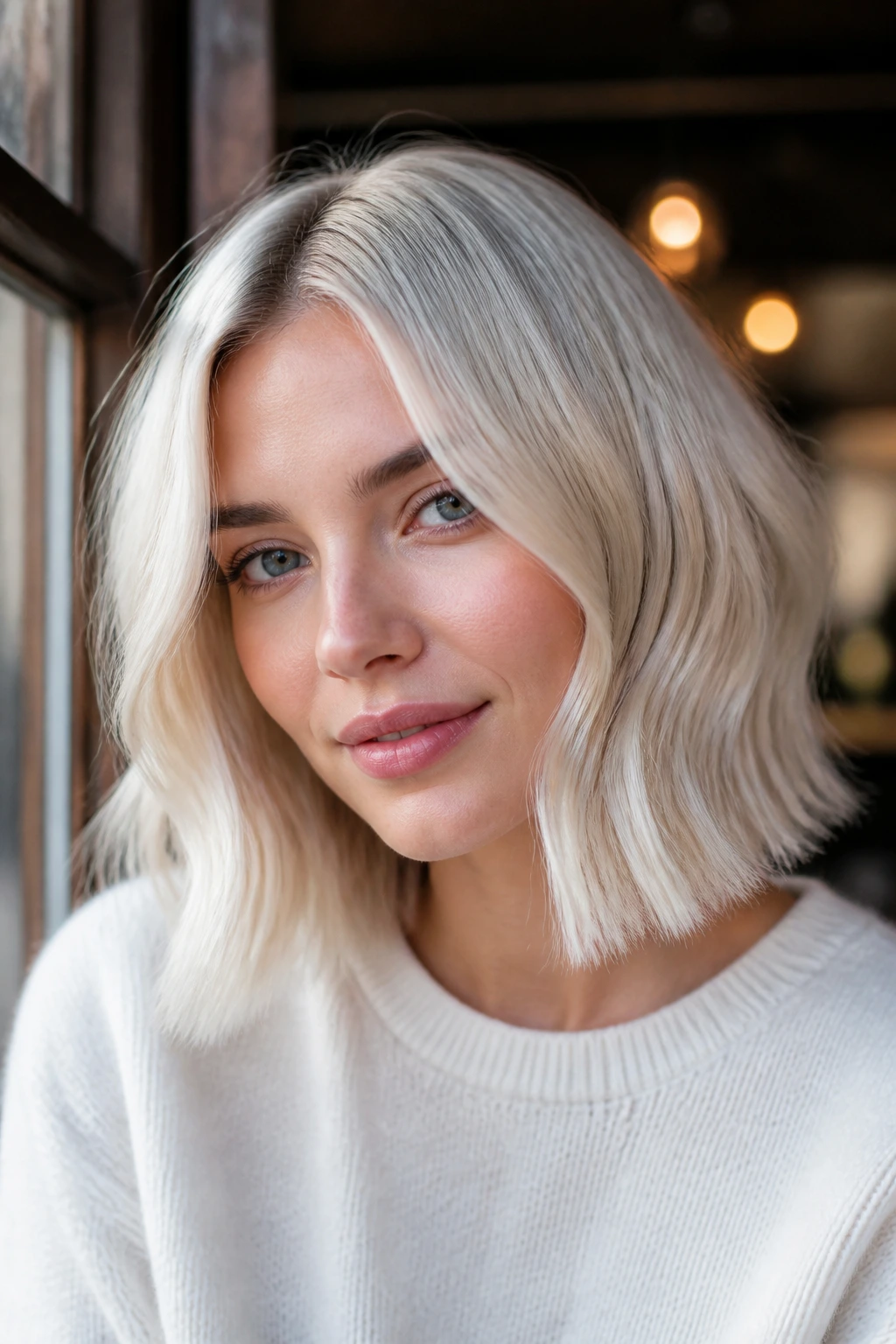
The collarbone lob is the cut I reach for when someone wants arctic blonde without long-hair maintenance. It keeps the brightness close to the face, where fair skin can use it, and the slightly blunt ends stop the style from getting wispy. Add loose bends through the mid-lengths and leave the last inch straighter if you want the cut to look crisp.
This one is better than you’d think on fine hair. The shorter shape gives the illusion of thickness, and the cool blonde makes the line of the lob read sharply in good light. It’s a tidy, modern look. Not fussy. Not overstyled.
5. Pearl Blonde Side Sweep
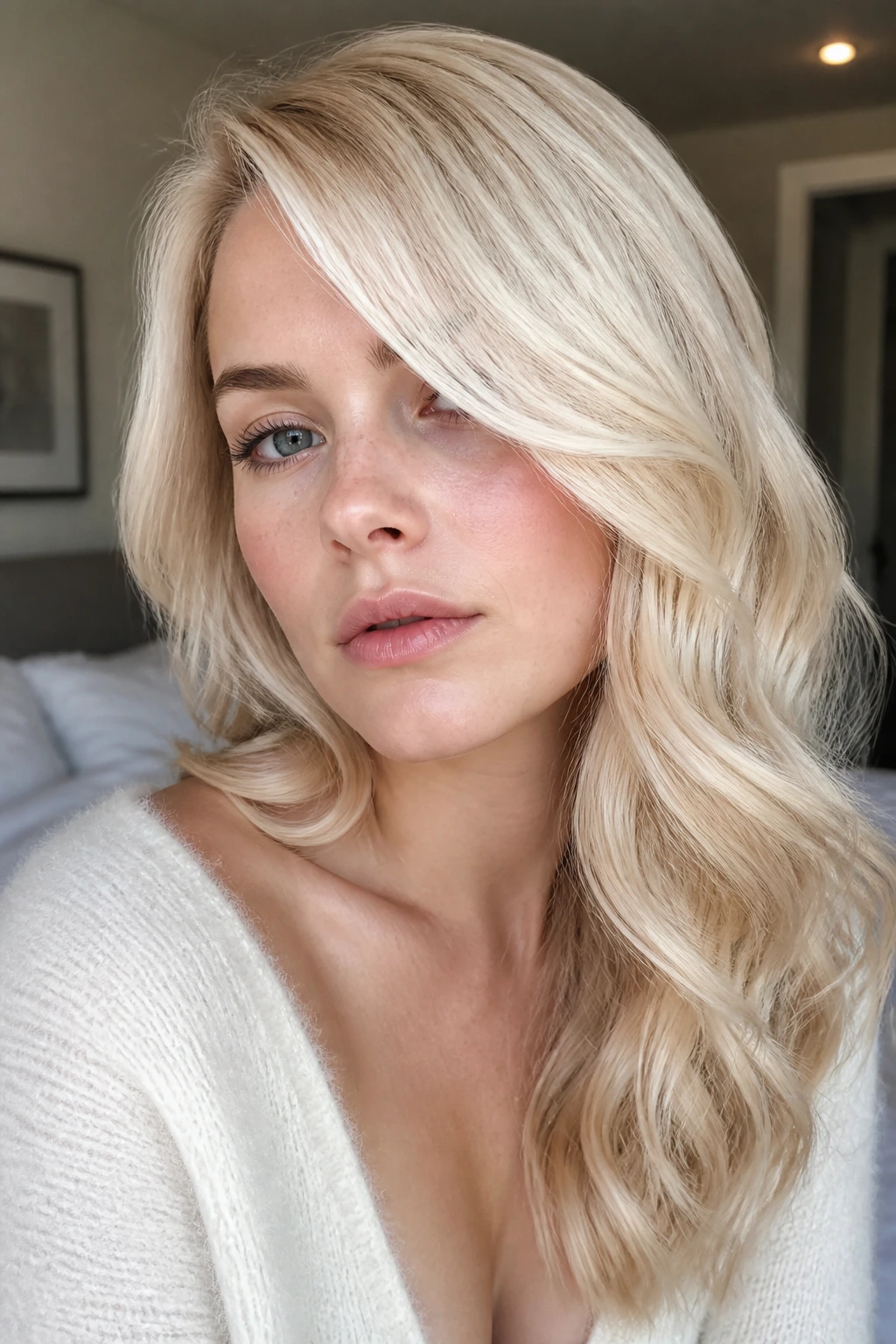
A side part changes the whole mood. On fair skin, a pearl-blonde side sweep feels softer than a center part because it breaks the face into less symmetrical pieces and gives the hair a little lift at the crown. That lift matters if your skin is very light and your features are delicate.
The best version has loose waves that begin below the cheekbone, so the front section stays smooth and the sweep falls cleanly across one side. If your brows are naturally pale, this is the kind of style that can use a little balance from a soft taupe brow pencil or a rosy lip. Not heavy makeup. Just enough structure.
6. Arctic Butterfly Cut Curls
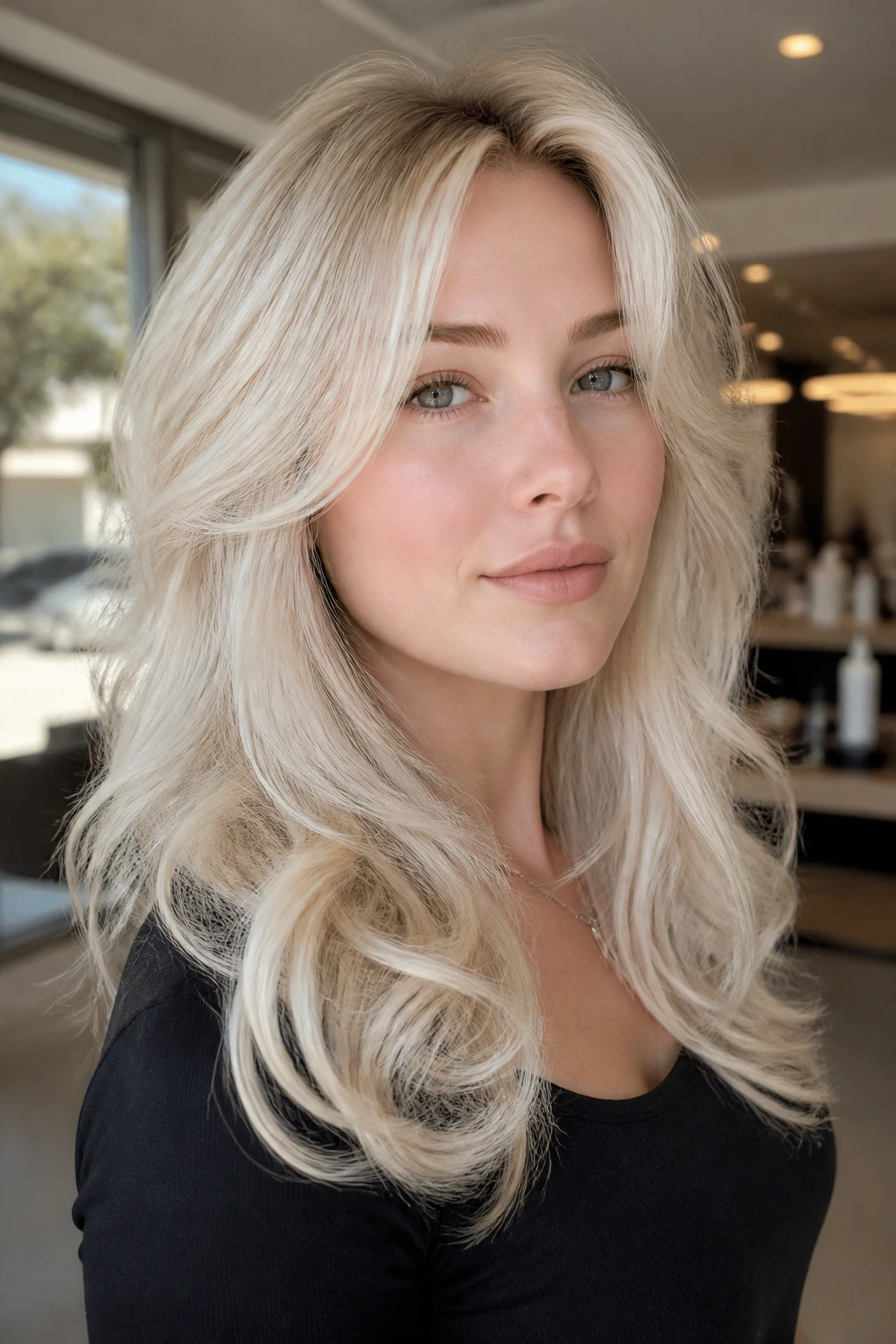
Butterfly cuts are having a long run for a reason: the layers around the face and crown create movement without sacrificing length. On an icy blonde, that movement keeps the color from sitting in one flat sheet. Loose curls exaggerate the layer contrast in a way that almost looks feathered.
Best When You Want Volume
This cut works especially well if your hair falls flat at the roots. Blow-dry the crown up and away from the scalp, then curl only the lower three-quarters of each section with a 1.25-inch wand. The top stays airy. The ends get that soft curve that keeps the whole style from feeling heavy.
7. Scandinavian Curtain Bangs
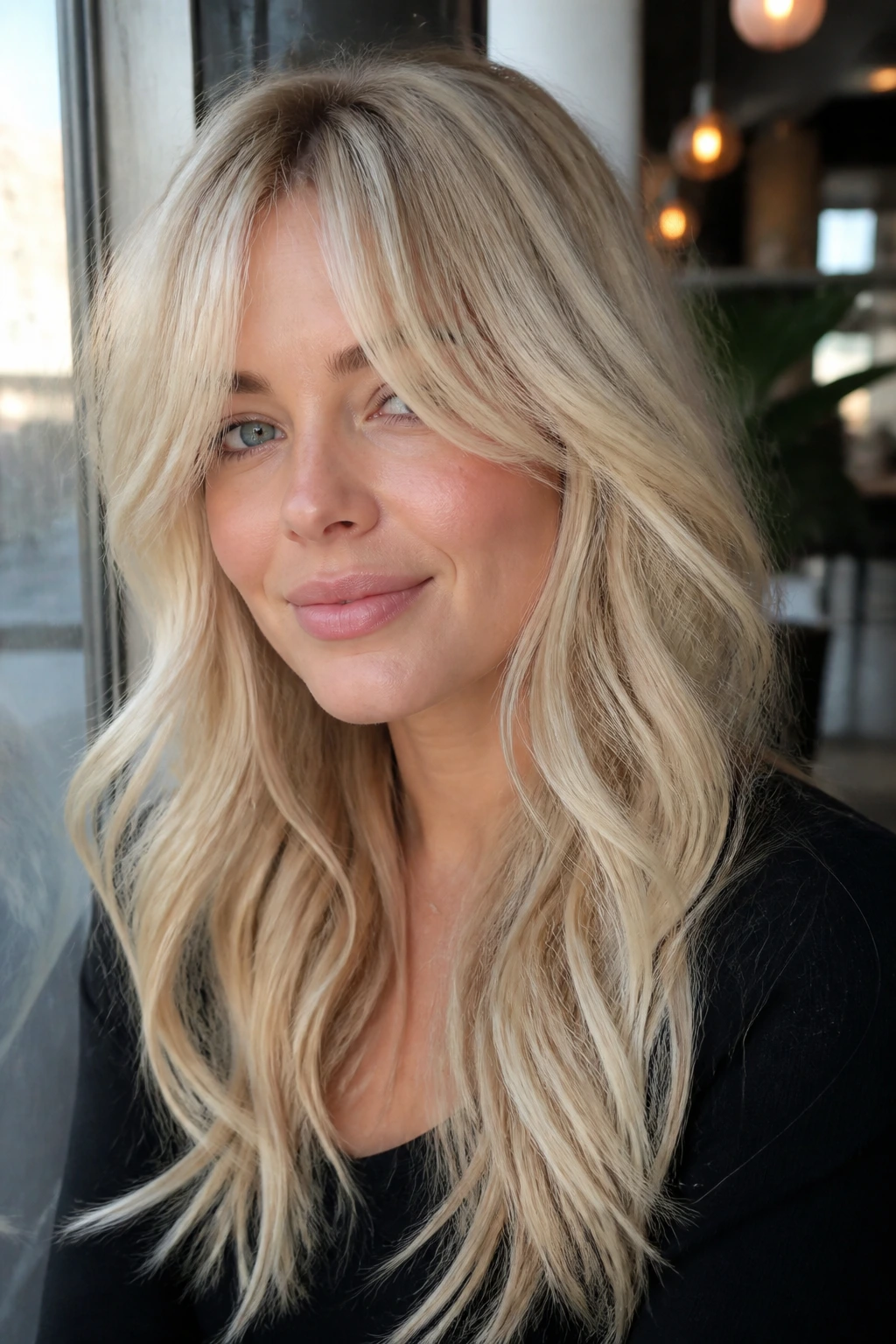
Curtain bangs are a smart choice when you want to soften a very cool blonde around the face. They break up the brightness at the forehead and blend into loose waves instead of cutting the look into hard lines. Fair skin with cool undertones tends to wear this well because the fringe creates shape before the color ever has a chance to look stark.
The key is keeping the bangs long enough to tuck back on a bad hair day. Short, choppy fringe can get dramatic fast. Long curtain bangs fall better with arctic blonde because they borrow movement from the rest of the hair.
8. Ghost Root Melt Waves
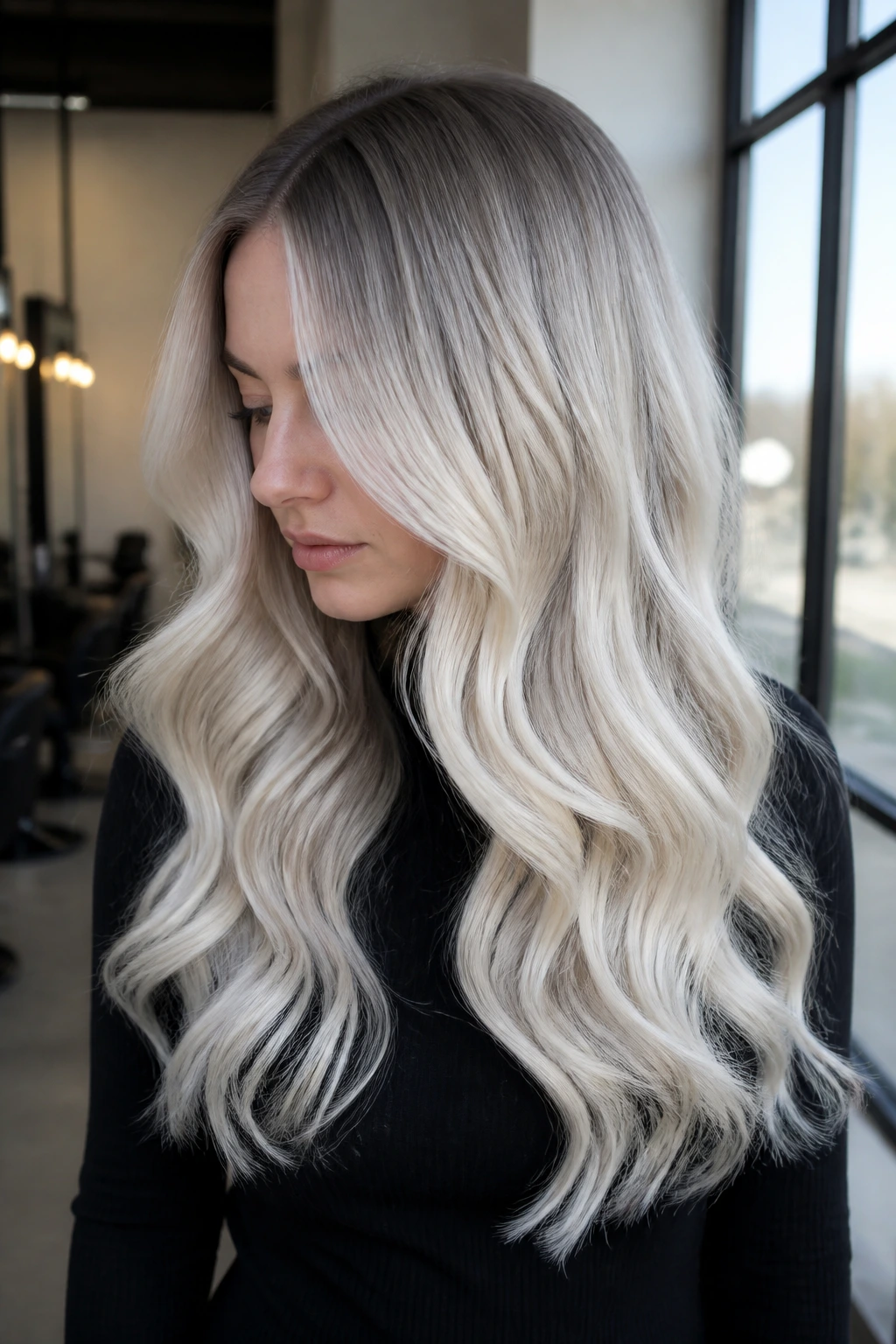
This is the low-maintenance blonde in the group, and I mean that in the best way. A ghost root melt fades from a soft smoky root into icy lengths, so the grow-out line stays blurred for weeks. On fair skin, it avoids the washed-out effect that pure white hair can create near the face.
The curls should be loose and brushed, not tight. Rooted blondes need movement. If the wave is too set, the whole look can tip into pageant territory. If the wave is soft, the color looks expensive without trying too hard.
9. Snowlight Shag
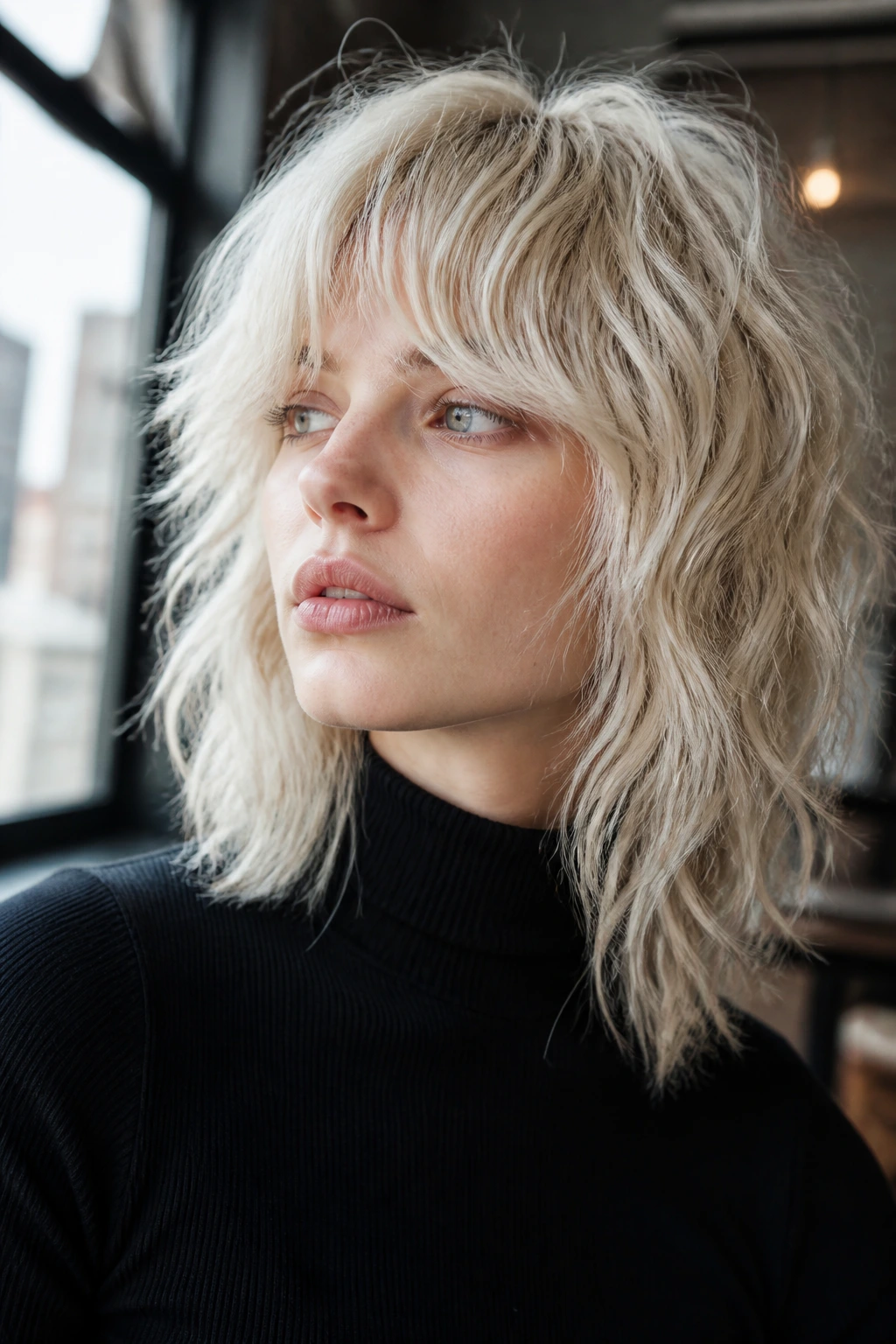
A shag cut gives arctic blonde a little grit, which is useful when you don’t want the color to feel fragile. The texture keeps the silver-blonde pieces separate enough to catch light in different places. Loose curls or a rough bend with a diffuser suit this style better than a neat iron curl.
I like this on fair skin because the shag adds shadow under the layers. That shadow matters. It keeps the face from getting swallowed by brightness and makes the white-blonde ends look deliberate rather than accidental. A little texturizing spray at the ends is enough. Too much, and the hair starts to look dusty.
10. Crystal-Glass Ringlet Ends
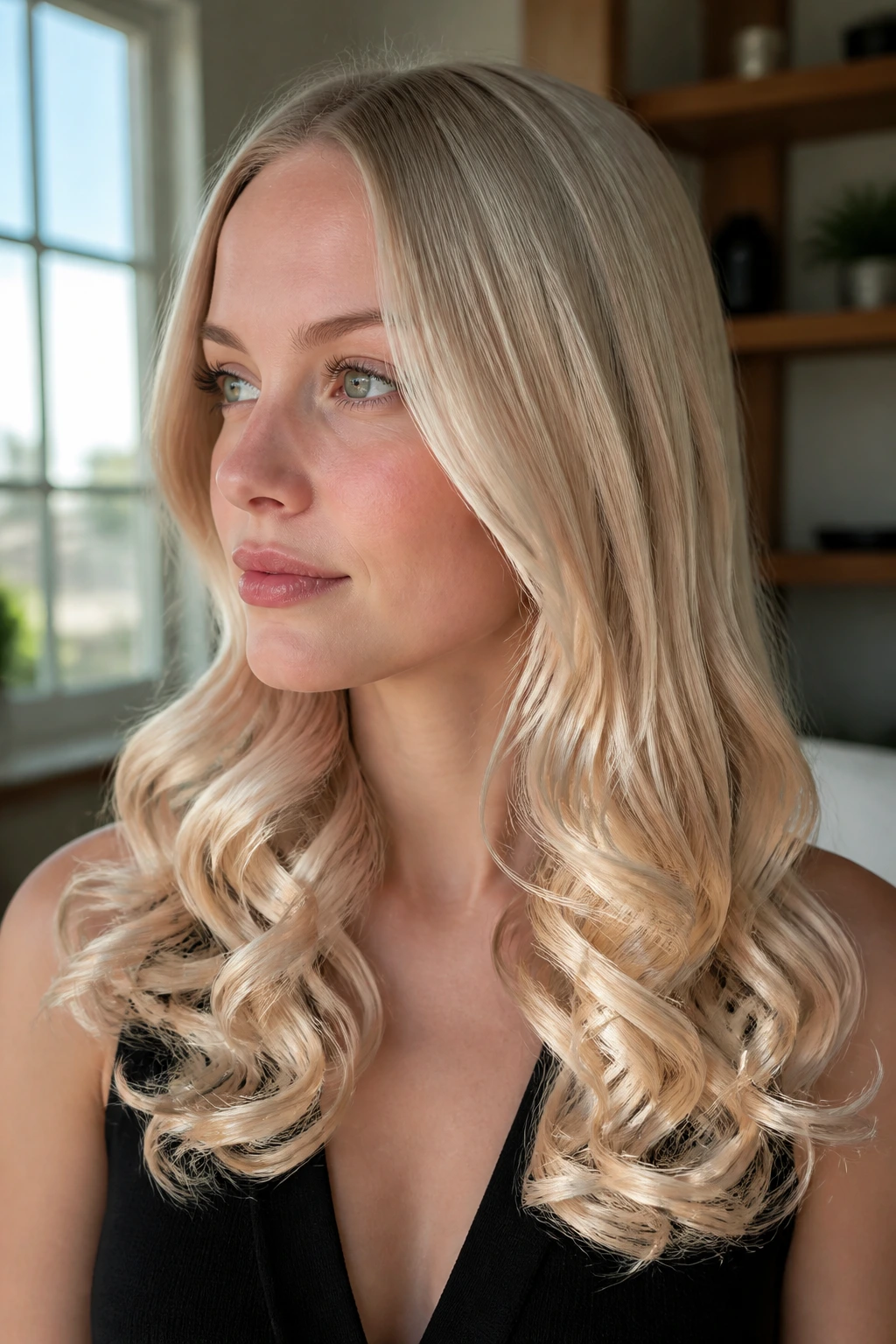
This one is for people who like a more polished finish. The top stays smooth, while the lower half bends into soft ringlets that read almost like polished glass. On fair skin, that contrast between sleek roots and luminous ends gives the face a bright frame without making every strand compete for attention.
What Makes It Different
The trick is to curl only the bottom third of the hair, not the whole head. That leaves the crown calm and the ends active. It also keeps the style from expanding too much, which matters if your hair is thick or has a rough texture after lightening.
11. Soft Crop with Tucked Waves
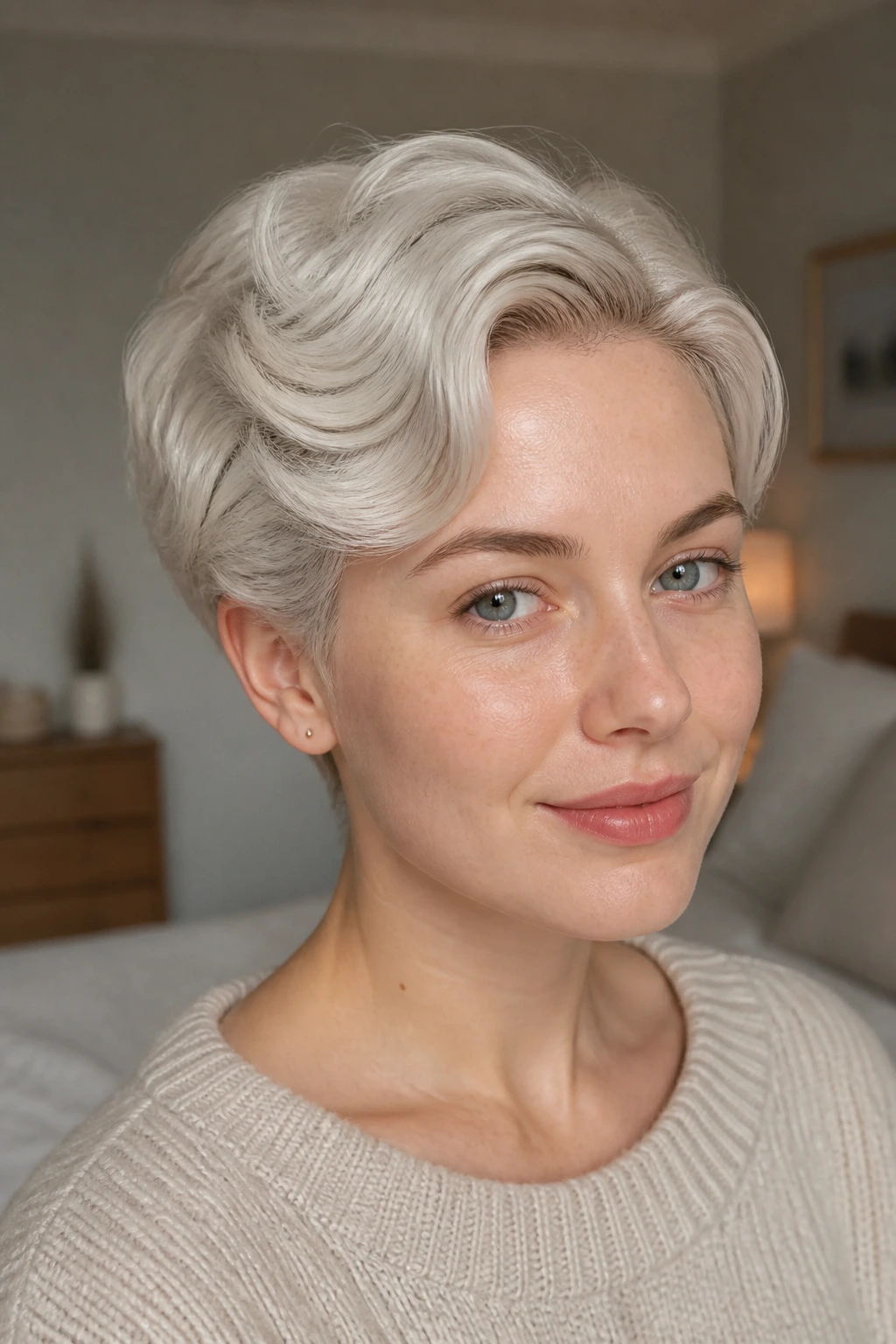
Short hair can take arctic blonde just fine if the shape has enough curve. A soft crop with tucked waves sits between a bob and a longer pixie, with loose bends around the temples and a side tuck behind one ear. That little tuck keeps the style open around fair skin instead of weighing the face down.
This is one of my favorite options for people who hate long styling sessions. The finish is fast, and the cool blonde does the rest. A dab of lightweight cream on the ends, a bend from a flat iron, and you’re done. No pile of product. No overthinking.
12. Glacier Balayage Long Layers
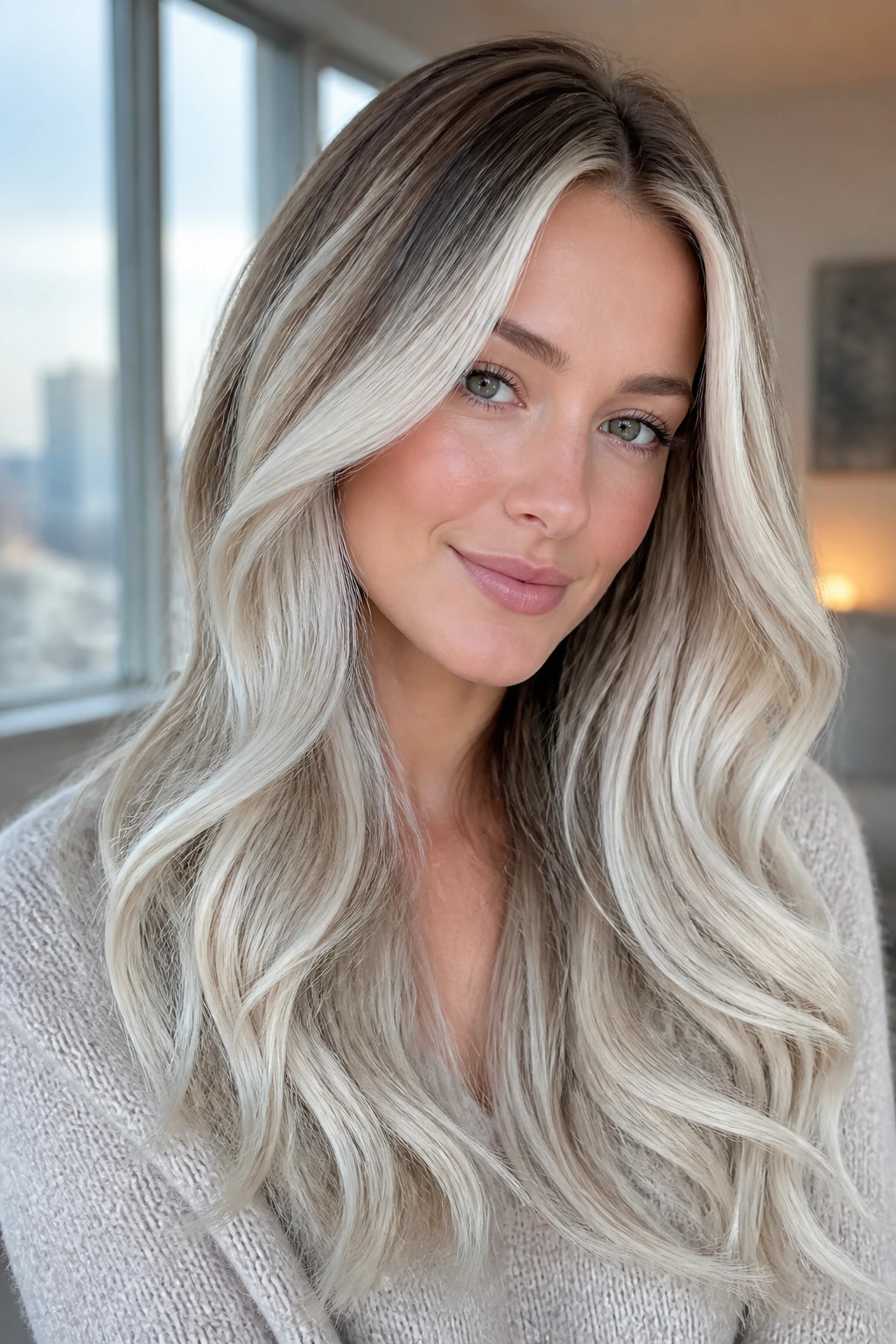
Balayage lets arctic blonde breathe. Instead of one blanket of pale color, you get painted ribbons through long layers, which makes loose curls look fuller and less static. On fair skin, that kind of dimension is useful because it keeps the face from disappearing into a single bright plane.
The best version has brighter pieces around the face and slightly cooler, softer sections underneath. That contrast looks especially good when the hair moves. You turn your head, and the pieces shift. That’s the entire effect. It’s quiet, but it holds up in daylight, which is where a lot of flat blondes fall apart.
13. Cool Champagne Arctic Blonde
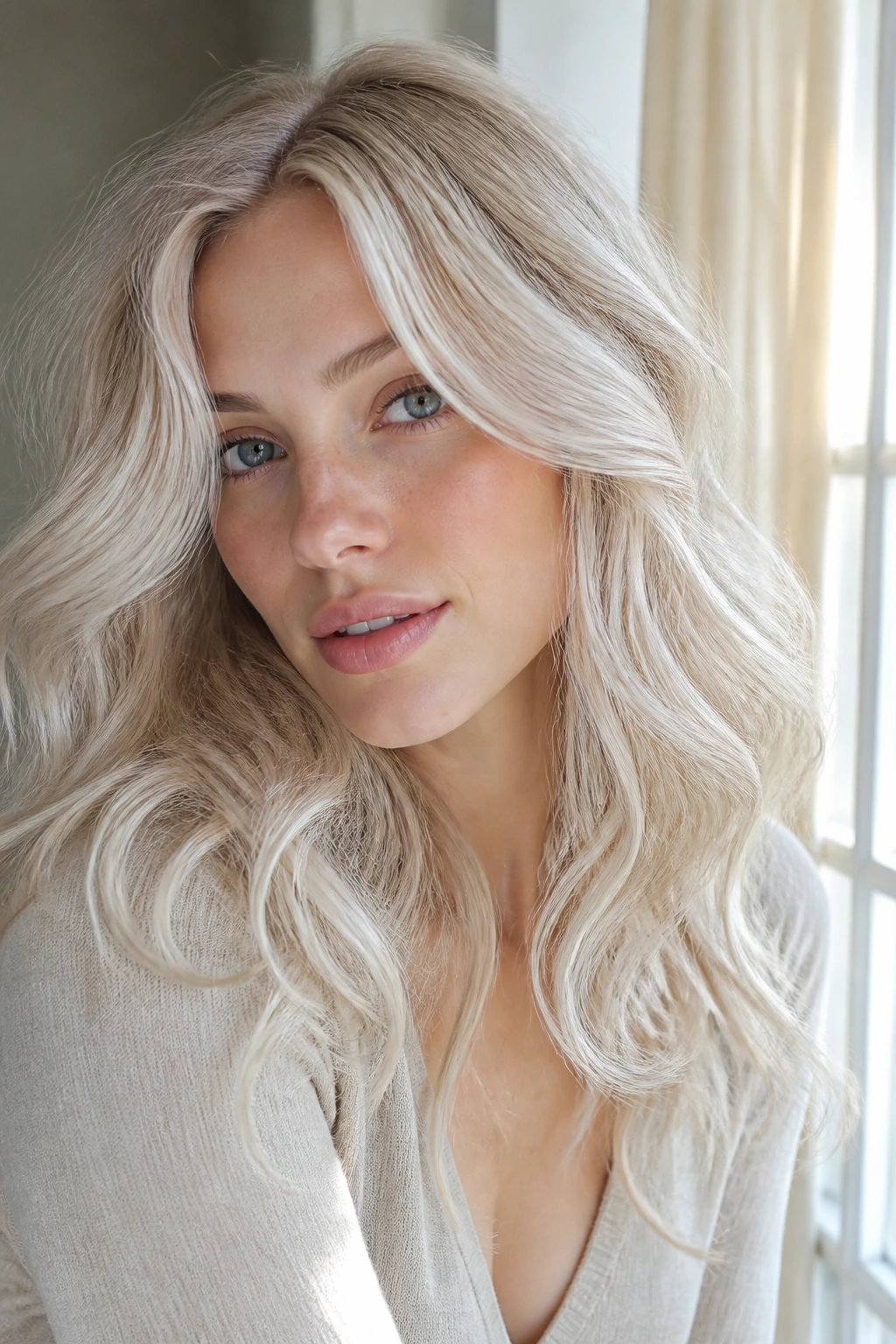
Not every fair-skinned person needs a near-white blonde. Some complexions, especially very pale skin with a peach cast, look better with a cooler champagne shade than a hard silver-white. It still reads icy, just with a whisper more warmth in the middle of the strand.
This version is easier on the eye if your brows are light or your natural hair isn’t extremely pale. The loose curls make the champagne finish sparkle instead of going dull. I like this one when someone wants the arctic vibe but keeps saying, “I don’t want to look blank.” That’s a real concern. This solves it.
14. Halo Curls with Face-Framing Lift
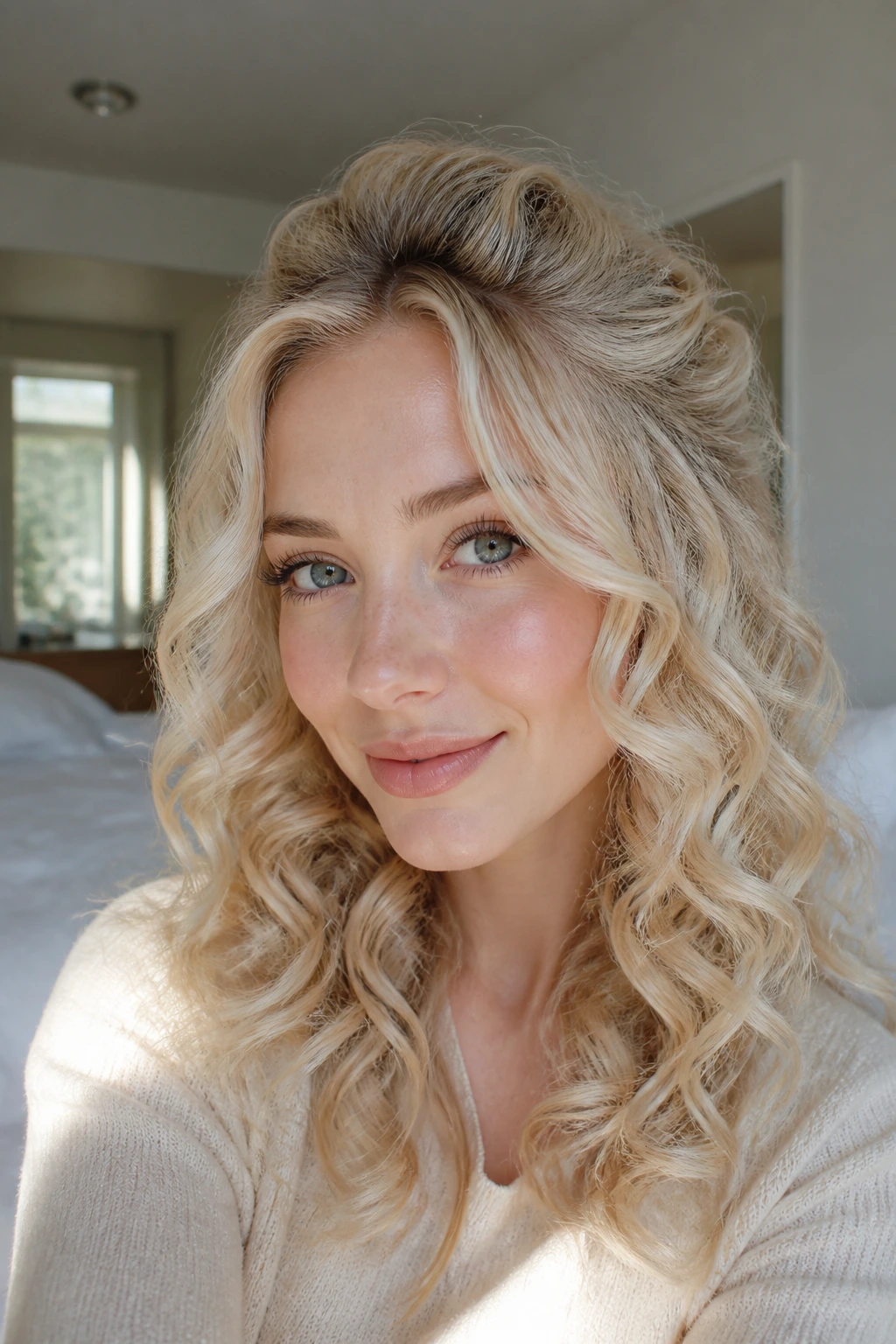
Halo curls put volume around the head in a circle, then leave the front pieces a little higher and lighter. On fair skin, that crown lift prevents the blonde from looking flat against the scalp. It also makes the cheekbones look more defined, which is handy if your features are soft.
The color works best when the brightest strands sit just off the face, not directly on the hairline. That tiny move keeps the look airy. And because the curl is loose, not ringleted, the style feels modern instead of formal.
15. Frosted French Bob
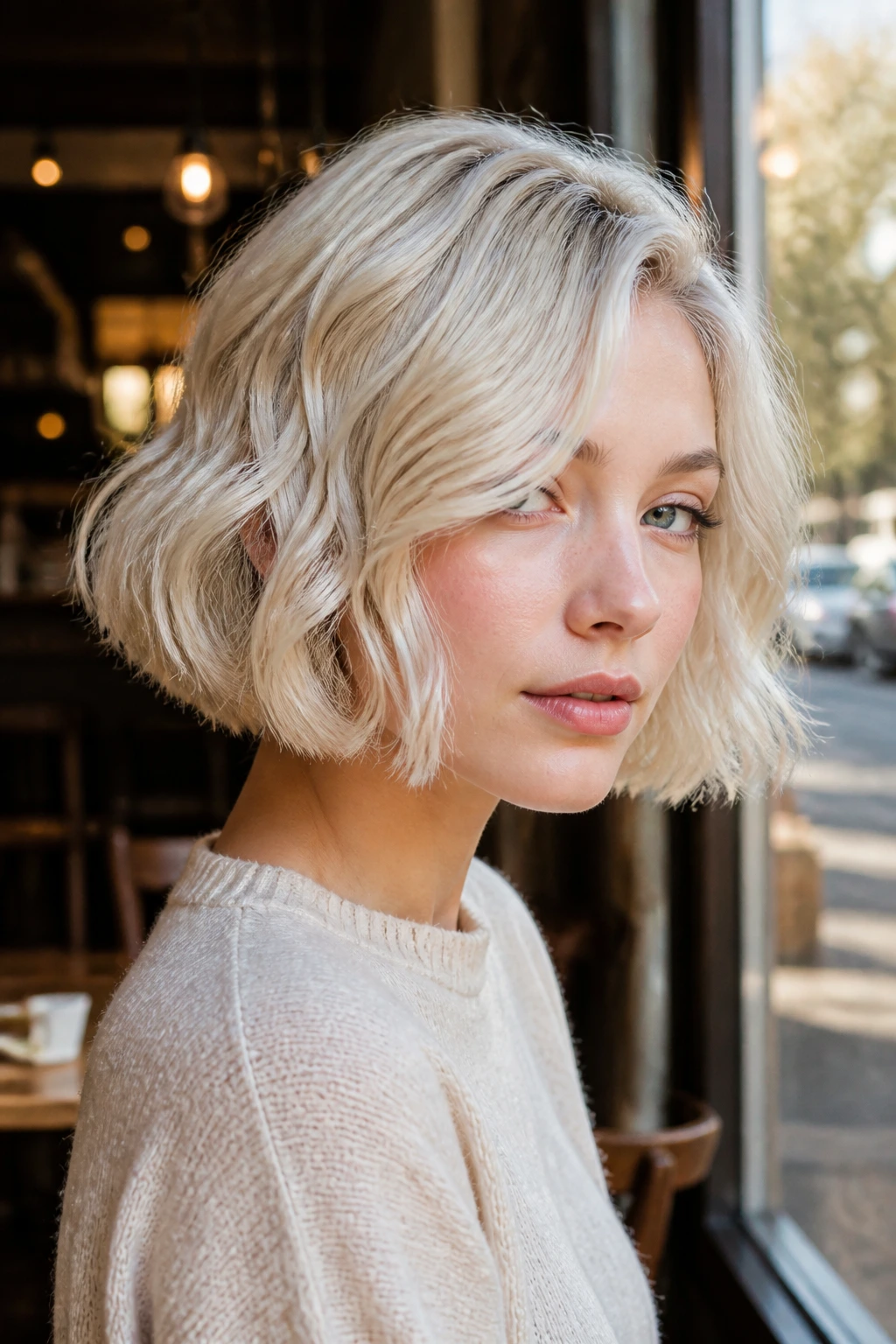
The French bob and arctic blonde are a sharper pair than people expect. The jaw-length cut keeps the ends thick, while the loose wave gives the whole shape a bent, lived-in feel. Fair skin can handle the brightness here because the cut itself gives the face a frame.
When to Pick This One
Choose this if your hair is straight, fine, or naturally easy to smooth. The bob doesn’t need much curl to work. A few soft bends and a side part are enough. The result is compact, bright, and a little bit cheeky — not fussy, not sweet, just clean.
16. Rooted Blizzard Waves
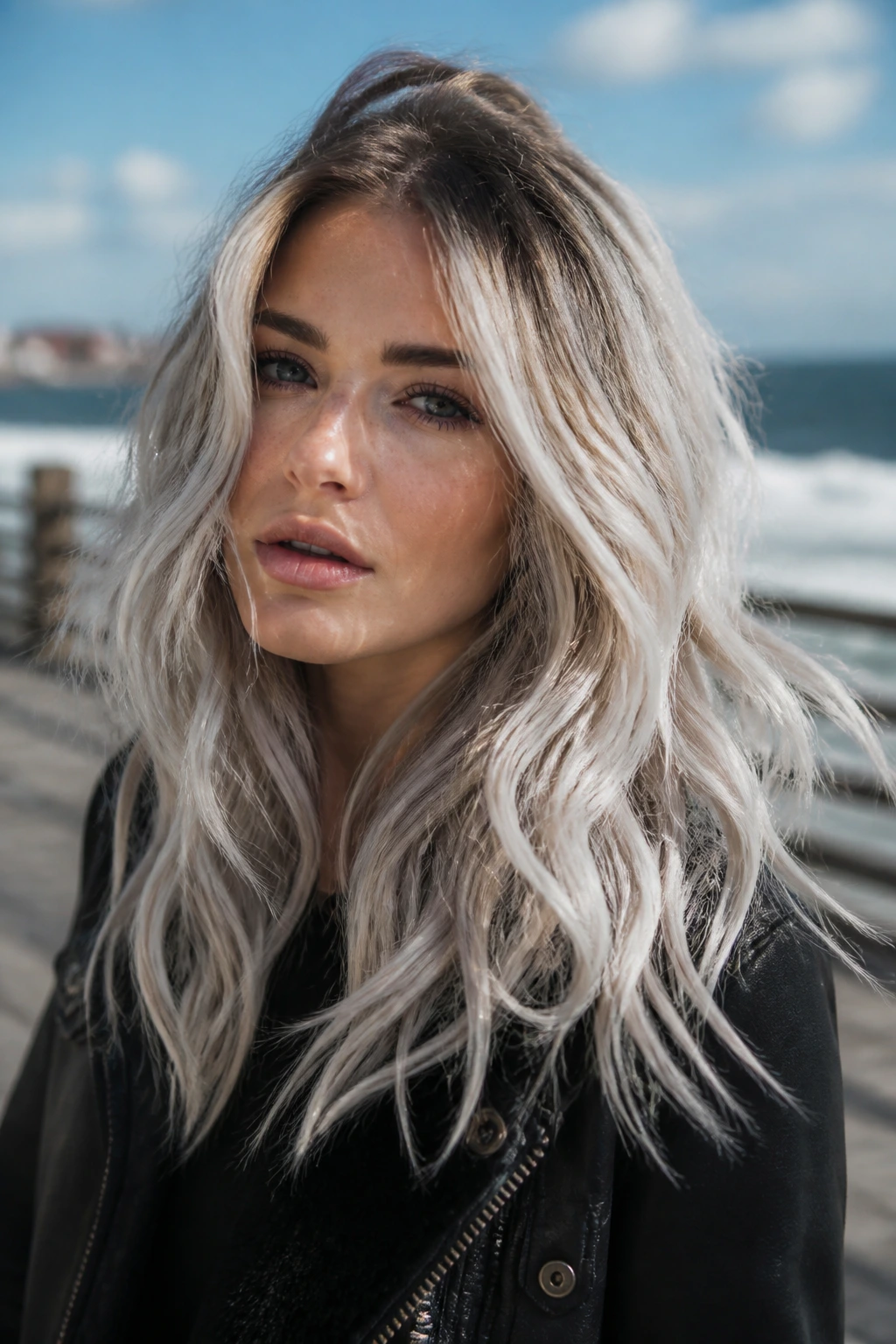
This is the high-contrast version, and it’s not for people who want quiet hair. Darker roots melting into pale ends create a blizzard effect that looks sharp on fair skin, especially if your brows and lashes are naturally darker than your complexion. The contrast pulls the eye downward and makes the wave pattern more obvious.
It also helps with maintenance. A full platinum root line grows out fast and can look severe. A rooted blizzard wave buys you time and gives the style shape. I prefer this on medium-long lengths where the waves can fall in long S-curves.
17. Airy Mermaid Waves
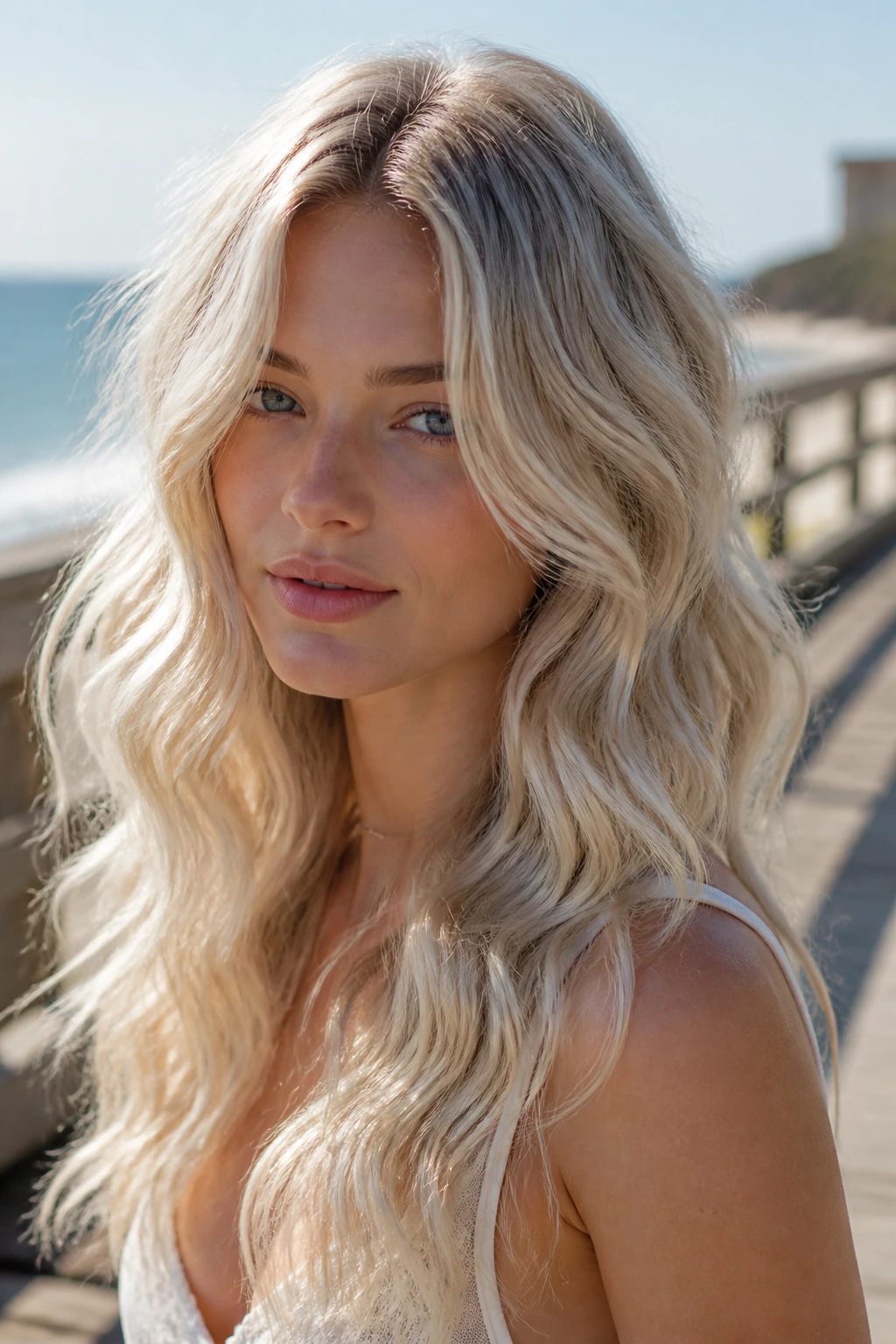
Long, airy mermaid waves let arctic blonde move in bigger pieces. The hair falls past the shoulders, but the wave itself stays soft and loose, almost like it was wrapped around a giant iron and then brushed half out. On fair skin, the long length can be a blessing because it gives the color more space to transition from root to tip.
This style looks best when the ends are slightly lighter than the mid-lengths. That gradient gives the wave a floating effect. It’s pretty, yes, but more importantly it stops the color from looking dense. Dense platinum is where the trouble starts.
18. Soft Wolf Cut with Icy Ends
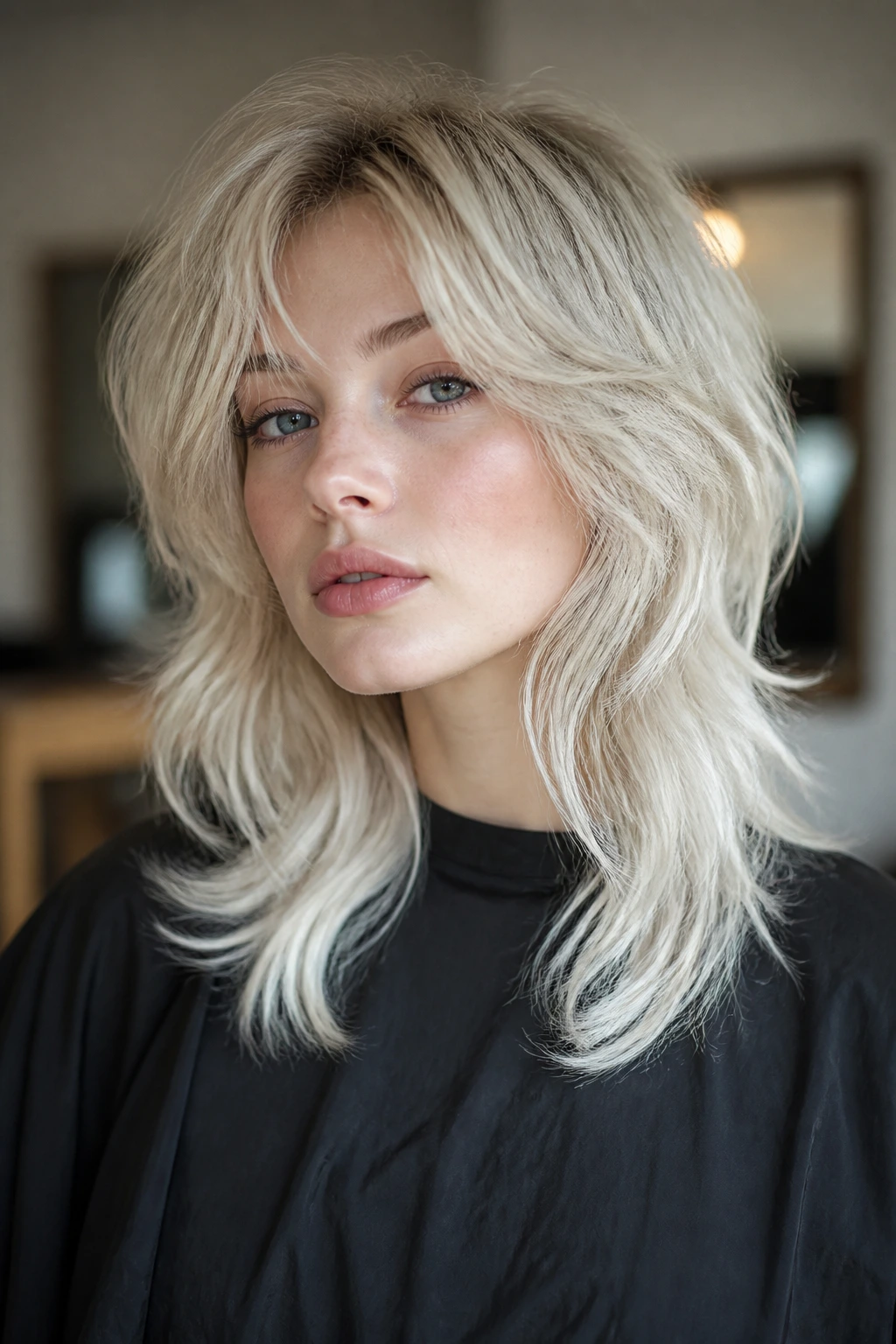
The wolf cut has enough texture to keep pale blonde from looking too sweet. That’s why it works here. The crown stays fluffy, the layers around the face break up the brightness, and the ends can be dipped in a cooler platinum for a slightly lived-in finish.
You don’t want crunchy separation. You want movement. Use a light mousse on damp hair, then air-dry or diffuse until the waves settle into place. The result is a little rebellious, a little shaggy, and far less precious than a glassy one-length blonde.
19. Cool Vanilla Blonde Curl Set
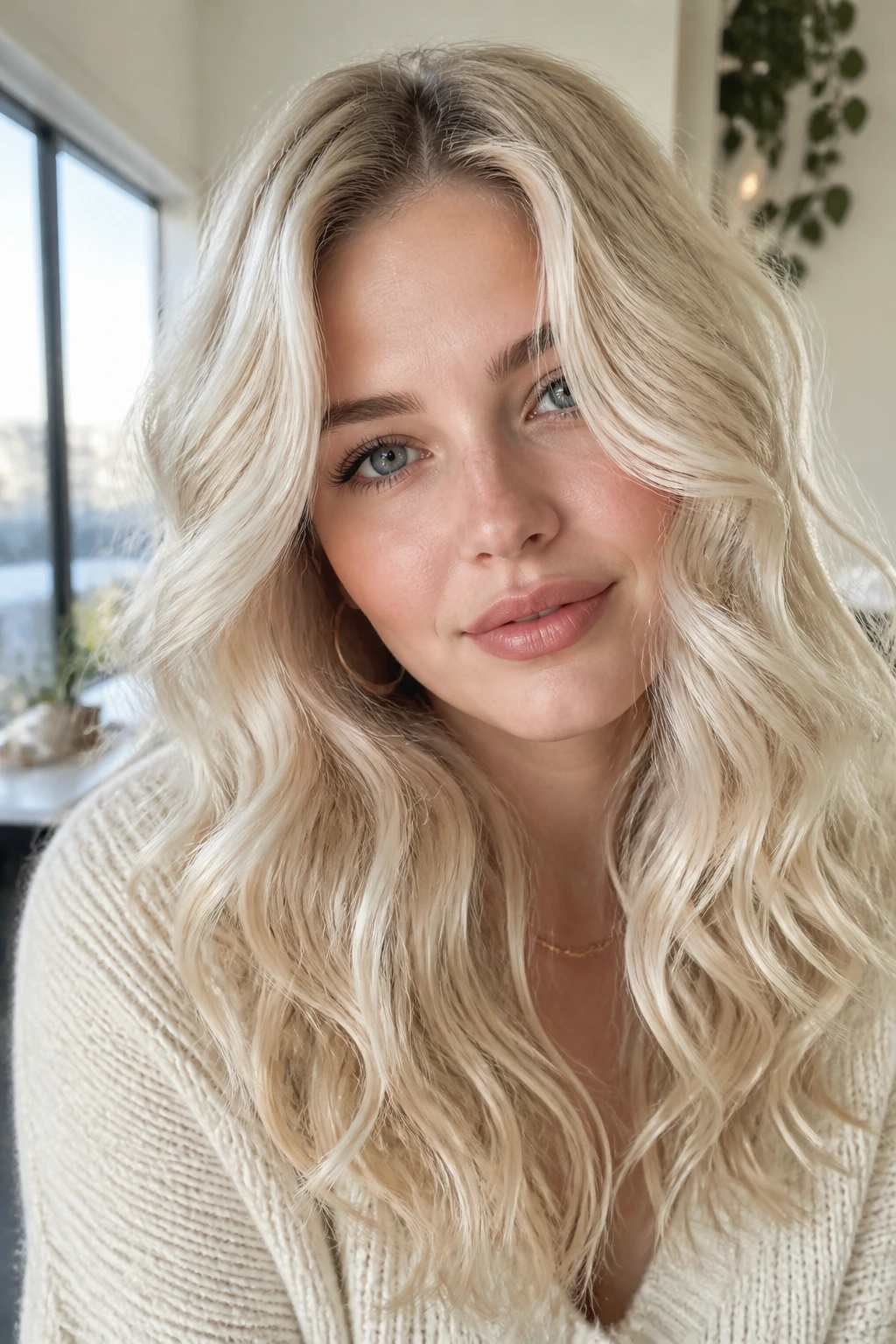
Vanilla blonde is the softest version in this group, and it can be the smartest one for very fair skin that gets washed out by silver-white shades. The tone still lives in the cool family, but it has enough cream to feel gentle around the face. Loose curls make that creaminess look intentional instead of flat.
How It Reads in Real Life
Under indoor light, this shade looks calm. Outside, the blonde catches more white than gold. That middle ground is why it works so well with loose curls: the wave gives the shade a little shadow, and the shade gives the wave a soft glow. If platinum feels too much, vanilla blonde is the safer, prettier lane.
20. Ice Queen Old-Hollywood Waves
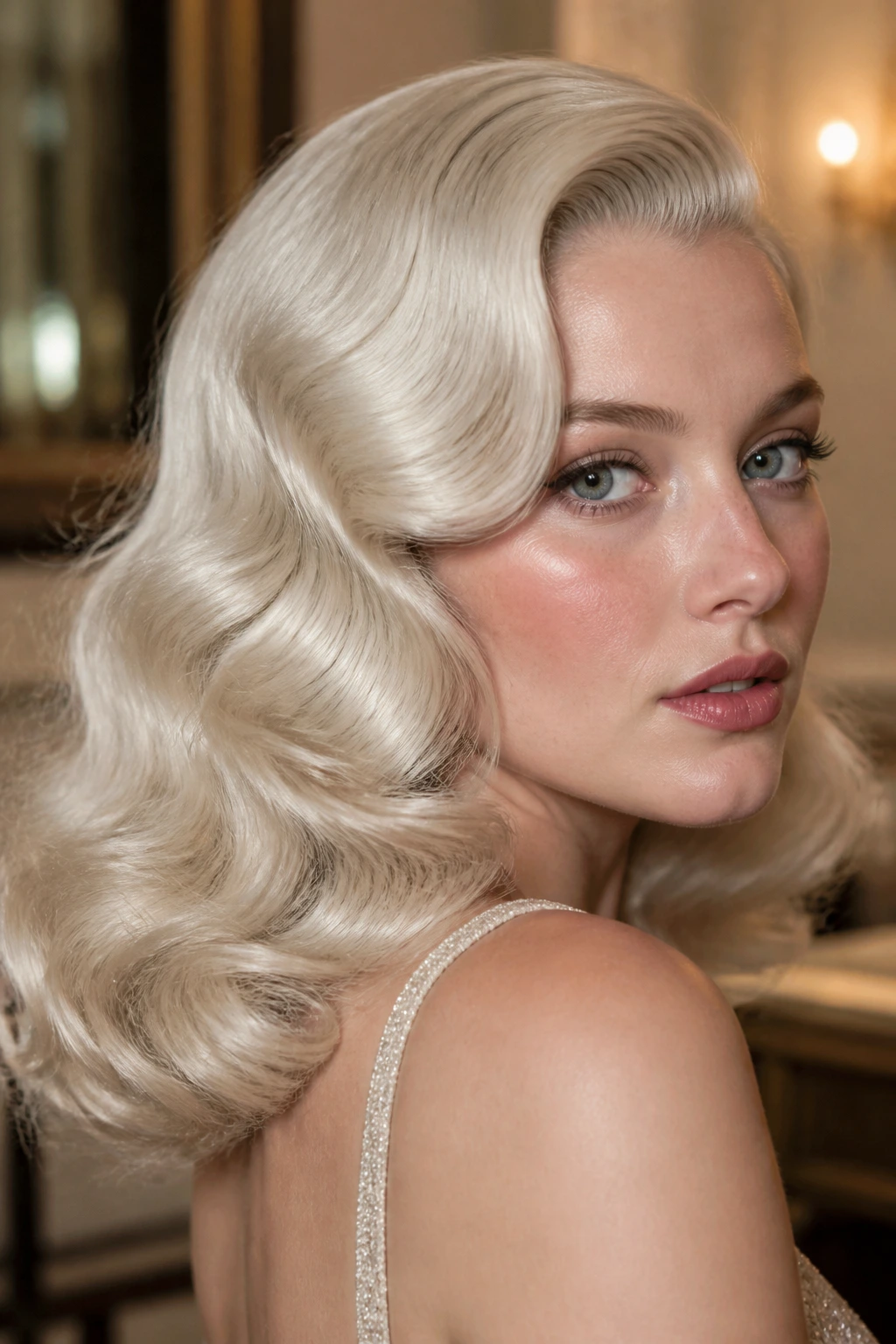
Old-Hollywood waves bring polish to arctic blonde, and the side part helps the style stay grounded. On fair skin, this is one of the most flattering formal looks because the wave is broad, soft, and reflective instead of sharp. The shape draws attention to the eyes and cheekbones, not just the color.
The wave needs clean brush-out and a touch of shine spray at the ends. Not a lot. Too much gloss can make pale blonde look greasy, which is a look nobody asked for. When it’s done well, this style has that smooth, expensive finish people keep trying to describe and usually get wrong.
21. White-Blond S-Waves with a Deep Side Part
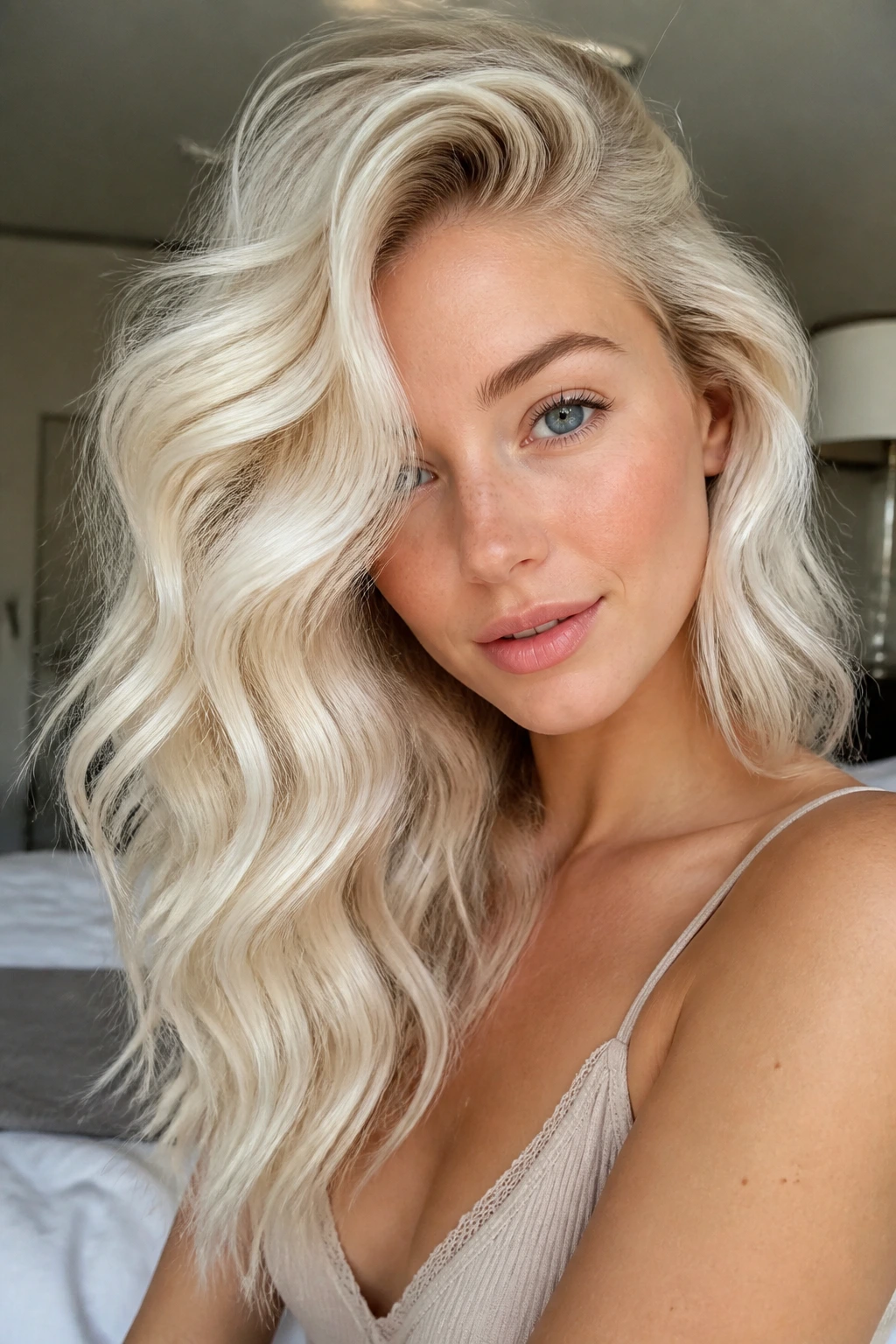
If you want maximum brightness, this is the loudest option in the set. White-blond S-waves throw a lot of light across fair skin, so the deep side part becomes part of the shape. It gives the eyes a line to follow and keeps the hair from sitting too evenly on both sides of the face.
This style asks for confident brows and a little makeup balance. A touch of blush and a defined brow usually make the difference between striking and washed out. The curls should stay loose and wide, not tight or springy. Think sweeping movement, not prom-night spiral.
22. Choppy Lob with Frosted Ends
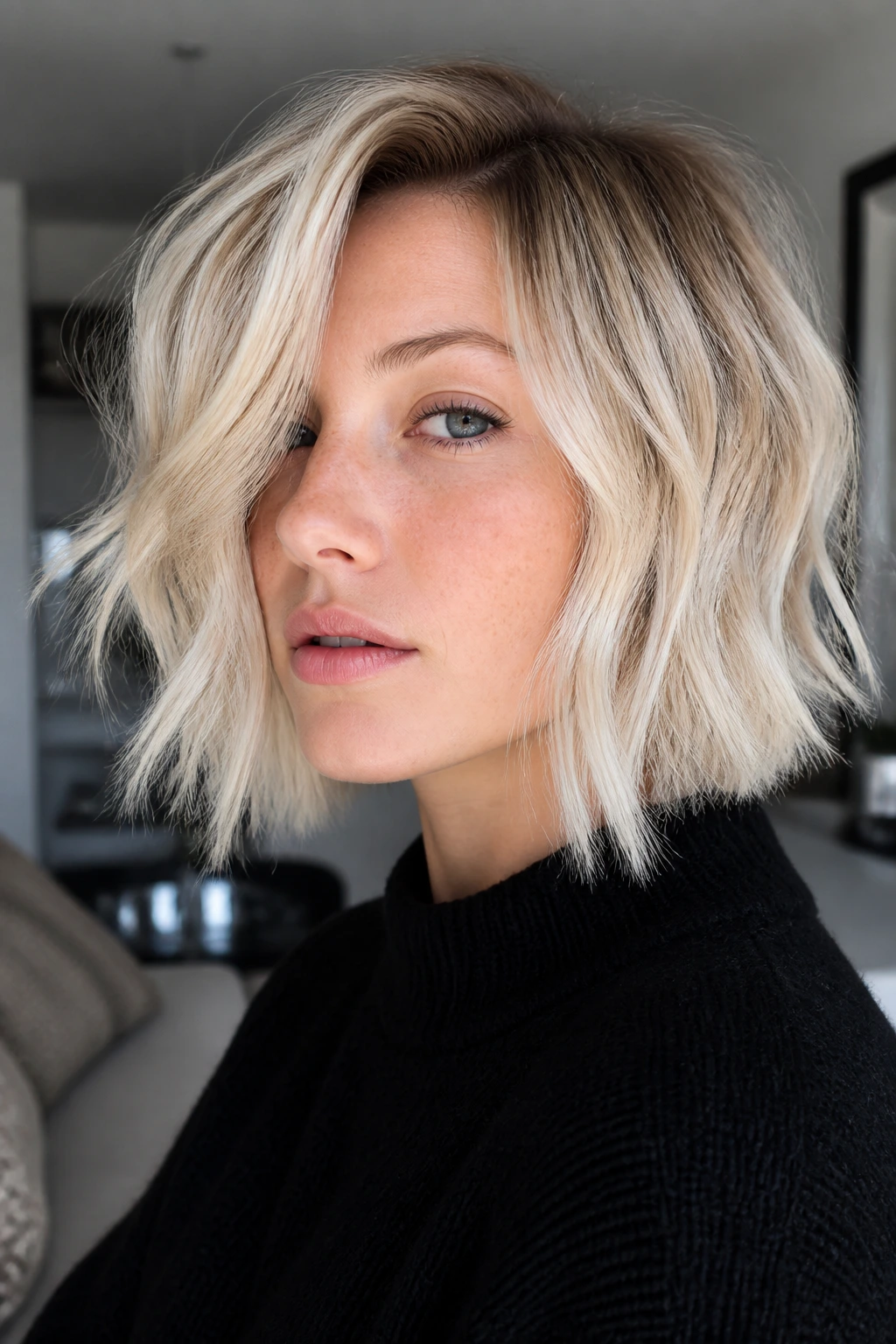
A choppy lob gives icy blonde some edge. The ends are piecey, the layers are slightly uneven, and the overall shape looks modern even when the hair is curled. On fair skin, that extra texture keeps the brightness from swallowing the features.
This cut is a solid choice for finer hair because the choppiness creates the illusion of density. A little dry texture spray at the ends is enough. You do not need much else. In fact, too much product will make the frosted ends clump, and then the whole thing loses its airy feel.
23. Frost-Swept Half-Up Waves
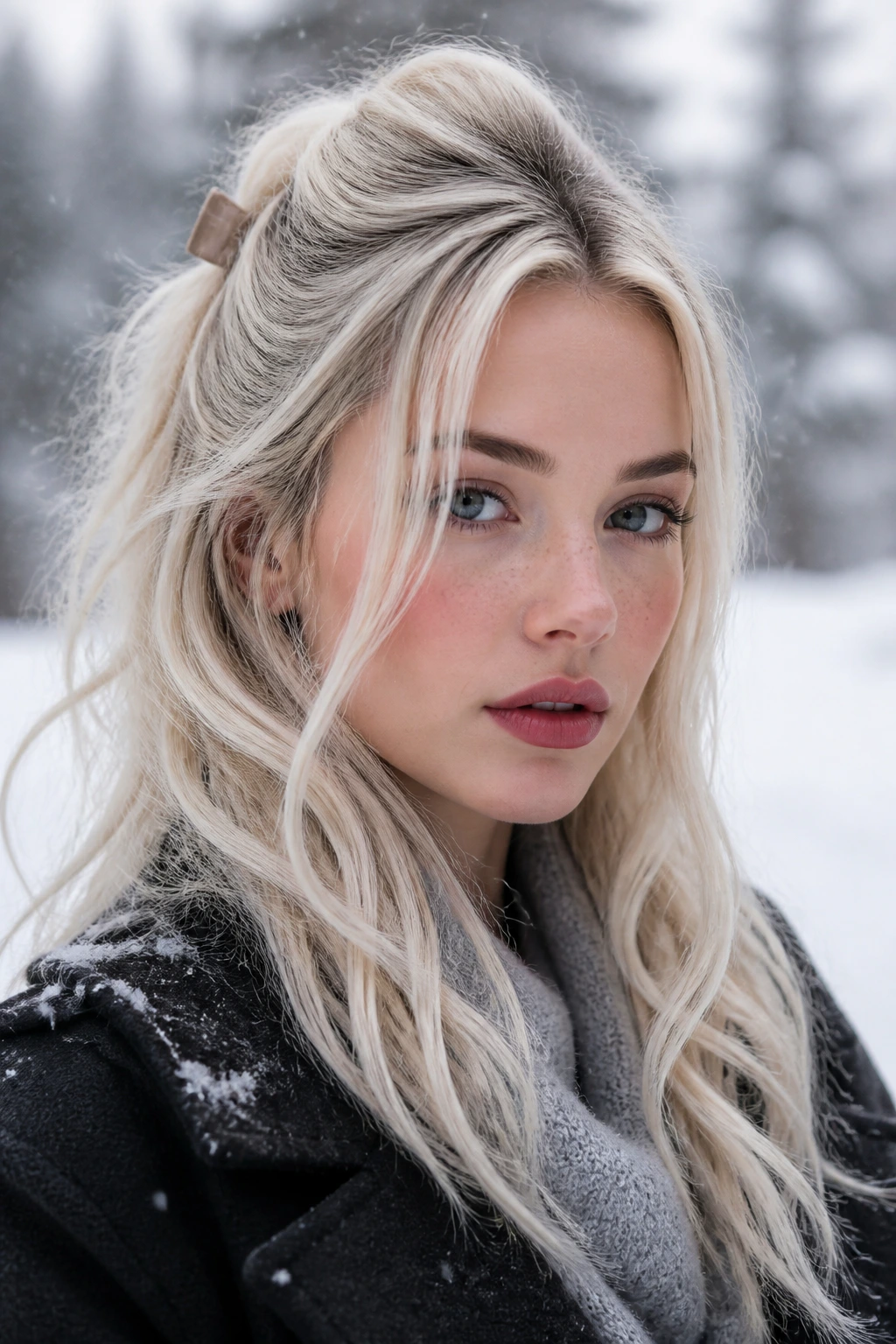
A half-up style is underrated for arctic blonde. Pulling back the top section shows off the cool roots and still leaves the loose curls to frame the face and shoulders. It’s one of the easier ways to keep bright blonde hair looking intentional on a day when the texture is a little unruly.
Best For Busy Days
I like this one when the hair has already been worn down once. Twist the sides back, secure them with a matte clip or a small clear elastic, then pull a few face pieces loose. That tiny bit of mess keeps the style soft. It also keeps the fair complexion from getting overwhelmed by too much bright hair all at once.
24. Dimensional Arctic Blonde with Peekaboo Lowlights
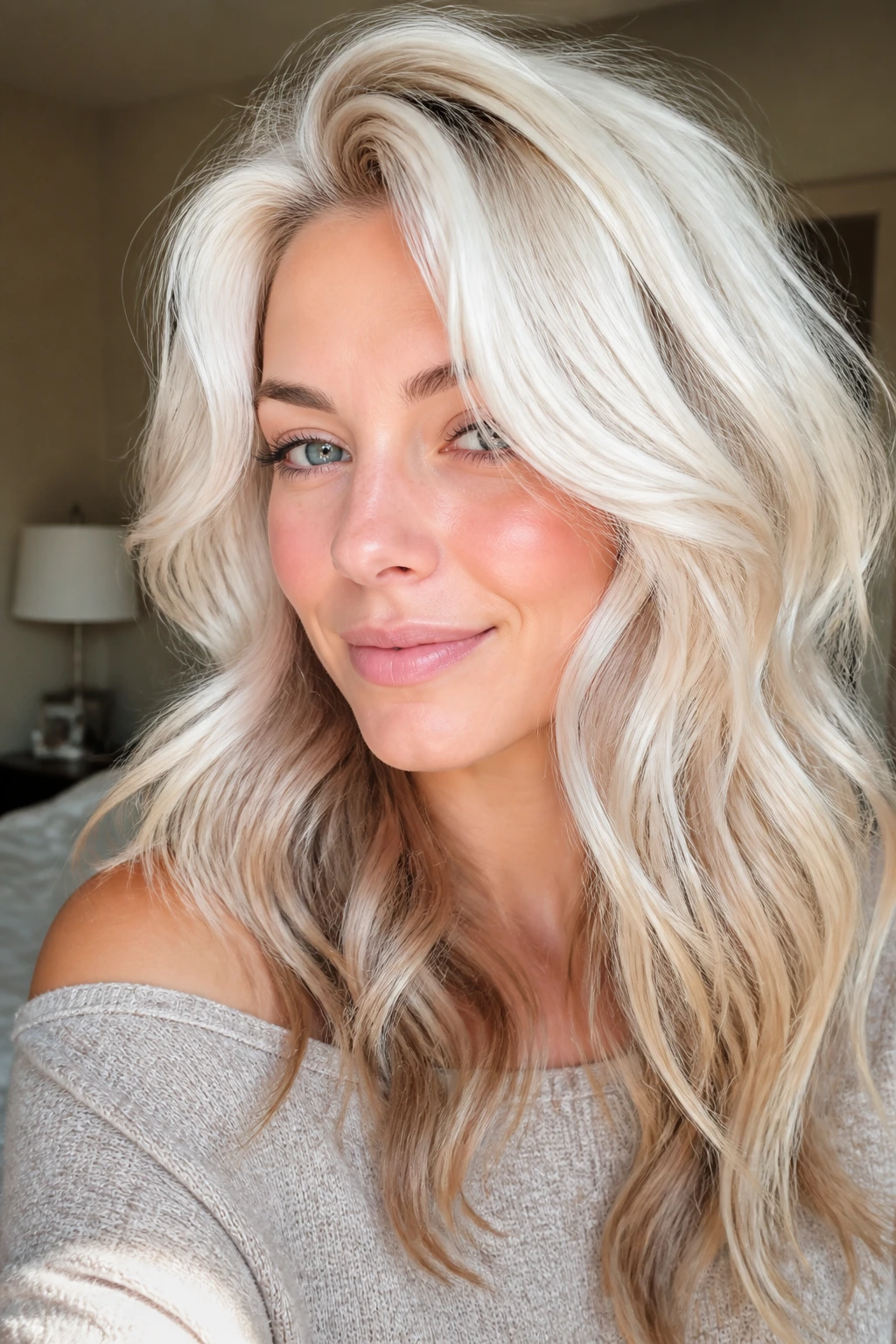
Peekaboo lowlights are the secret weapon when white blonde starts looking flat. Hidden ribbons of beige, ash, or smoky blonde underneath the top layer create depth you only notice when the curls move. On fair skin, that hidden contrast makes the brighter pieces pop harder.
This is the right answer for thick hair, especially hair that can go puffy after lightening. The lowlights stop the shape from turning into one big halo. And because they’re tucked underneath, the look still reads as icy first, dimensional second. That order matters.
25. Ultra-Light Platinum with Floating Ends

This is the boldest version here, and it rewards precise styling. Ultra-light platinum can look almost white against fair skin, so the floating ends — slightly bent, lifted, and separated — keep the whole style from collapsing into a single block. You want movement at the edges. That movement is what saves it.
Use a heat protectant, a small round brush, and the lightest touch you can manage when setting the bend. Heavy product will make this style droop fast. I’d also avoid piling too much color-correcting shampoo on it. Too much violet and the platinum turns dull, which defeats the point entirely.
Why Loose Arctic Blonde Waves Flatters Pale Complexions
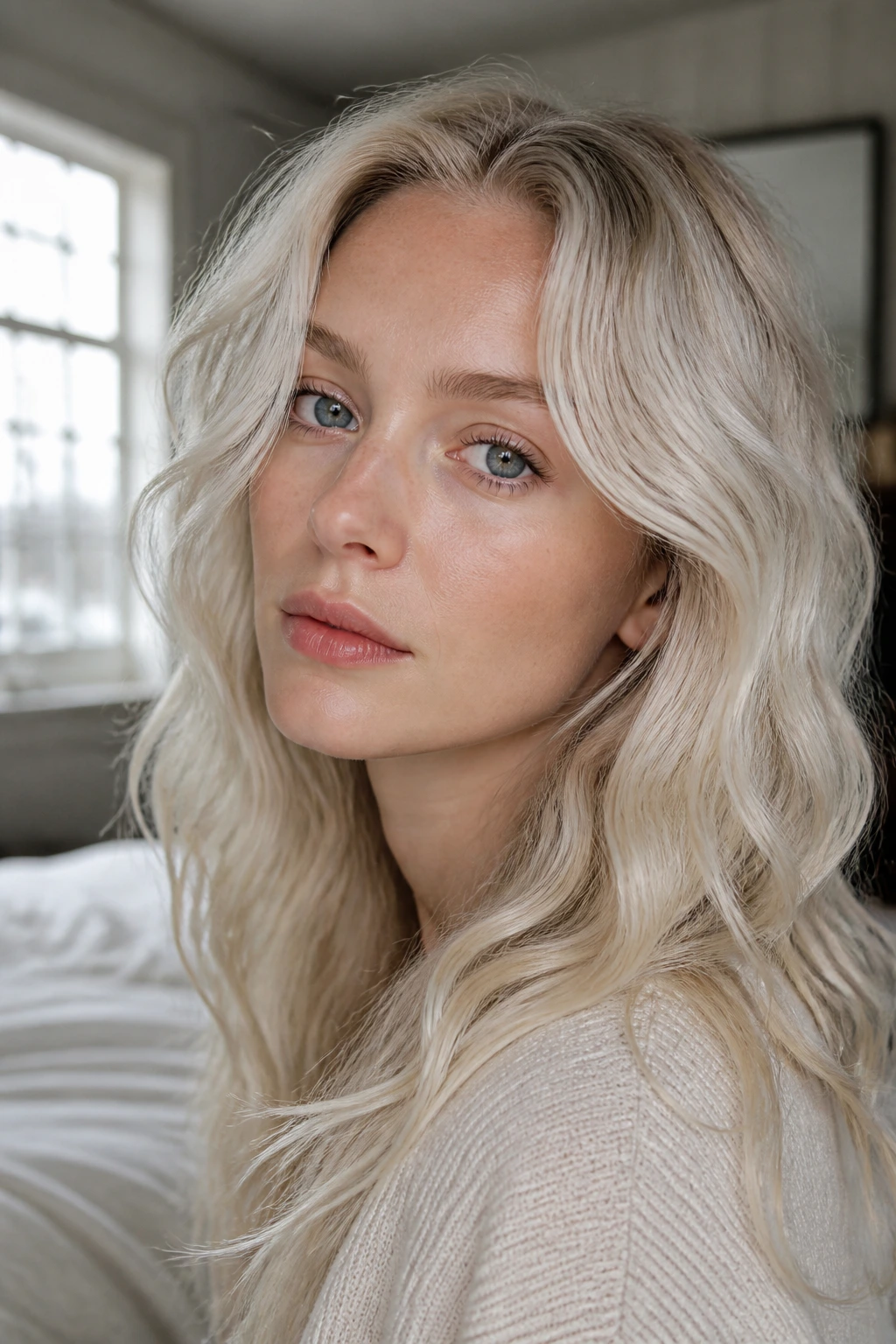
Fair skin often looks best with shape, not just brightness. That’s why arctic blonde hairstyles can be so effective when the cut has movement and the wave stays loose. The color reflects light, but the curl pattern decides where that light goes. Around the cheekbones, through the ends, across a side part — that’s where the style starts to feel intentional.
The biggest mistake people make is assuming lighter hair always means a lighter, softer look. Not true. A flat sheet of white blonde can make a pale face look drained. Add a root shadow, a pearl toner, or a brushed-out wave, and the whole thing changes. The face gets frame. The hair gets depth. The finish stops feeling severe.
Essential Tools for Loose Icy Waves
-
1.25-inch curling iron or wand: The sweet spot for loose curls on medium and long hair; smaller barrels can make arctic blonde look too tight.
-
1-inch iron: Useful for bobs, lobs, and shorter layered cuts where a wider barrel won’t wrap cleanly.
-
Heat protectant spray: Pick one that can handle high heat and doesn’t leave the hair sticky or shiny in the wrong way.
-
Sectioning clips: Clean sections matter when the hair is light and every bend shows.
-
Paddle brush or soft boar-bristle brush: This is what turns curls into soft waves instead of leaving them too set.
-
Wide-tooth comb: Good for detangling bleached hair before styling so you don’t stretch the ends.
-
Purple or blue-violet shampoo: Use sparingly to keep brass from creeping in.
-
Lightweight shine serum: One pea-size amount on the mids and ends keeps the blonde from looking dry.
-
Silk pillowcase or bonnet: Saves the wave pattern and reduces friction on fragile lightened hair.
Smart Shade, Toner, and Product Choices for Arctic Blonde Hair
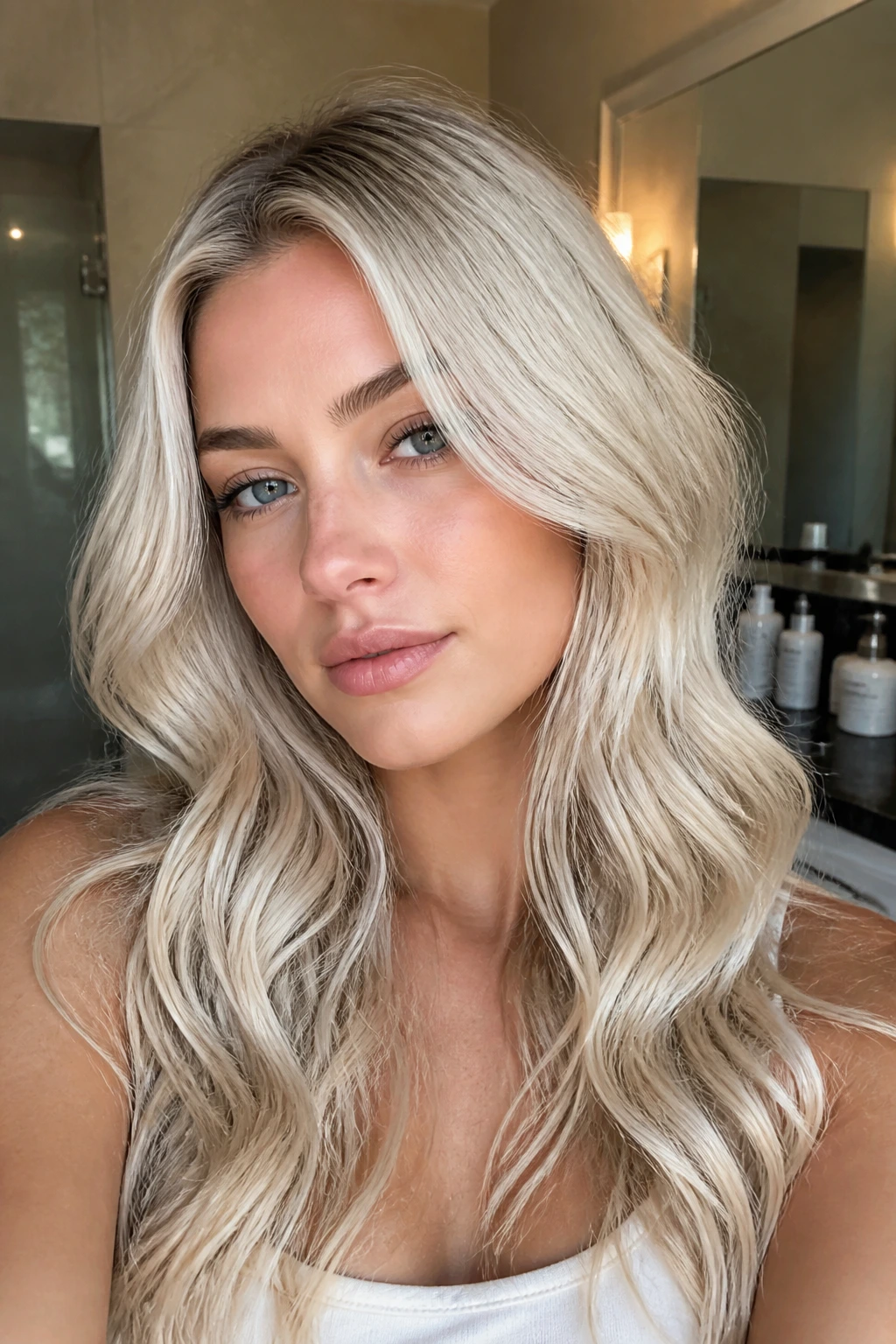
The cleanest arctic blonde starts with the right tone, not the right curling iron. For fair skin, I usually lean toward silver, pearl, violet, or smoky beige-blonde toners instead of pure white. Pure white sounds dramatic, but on the wrong complexion it can flatten the face. Pearl keeps the lightness and gives the hair a little depth.
If your skin is very pink or easily flushed, a slightly softer icy blonde often looks better than a blue-white finish. If your complexion is cool and your brows are naturally ash or taupe, the brighter silver end of the spectrum can look sharp in a good way. The point is not to match skin and hair exactly. The point is to create enough contrast that the face still has shape.
On the product side, keep the routine simple. Use a sulfate-free shampoo if the hair is bleached, because harsh cleansers strip toner fast and leave the blonde rough. A weekly mask with protein and moisture helps, but do not overdo protein if the hair is already stiff. That’s where a lot of blondes go sideways. They chase strength, then wonder why the hair feels like straw.
How to Style These Looks So They Stay Soft
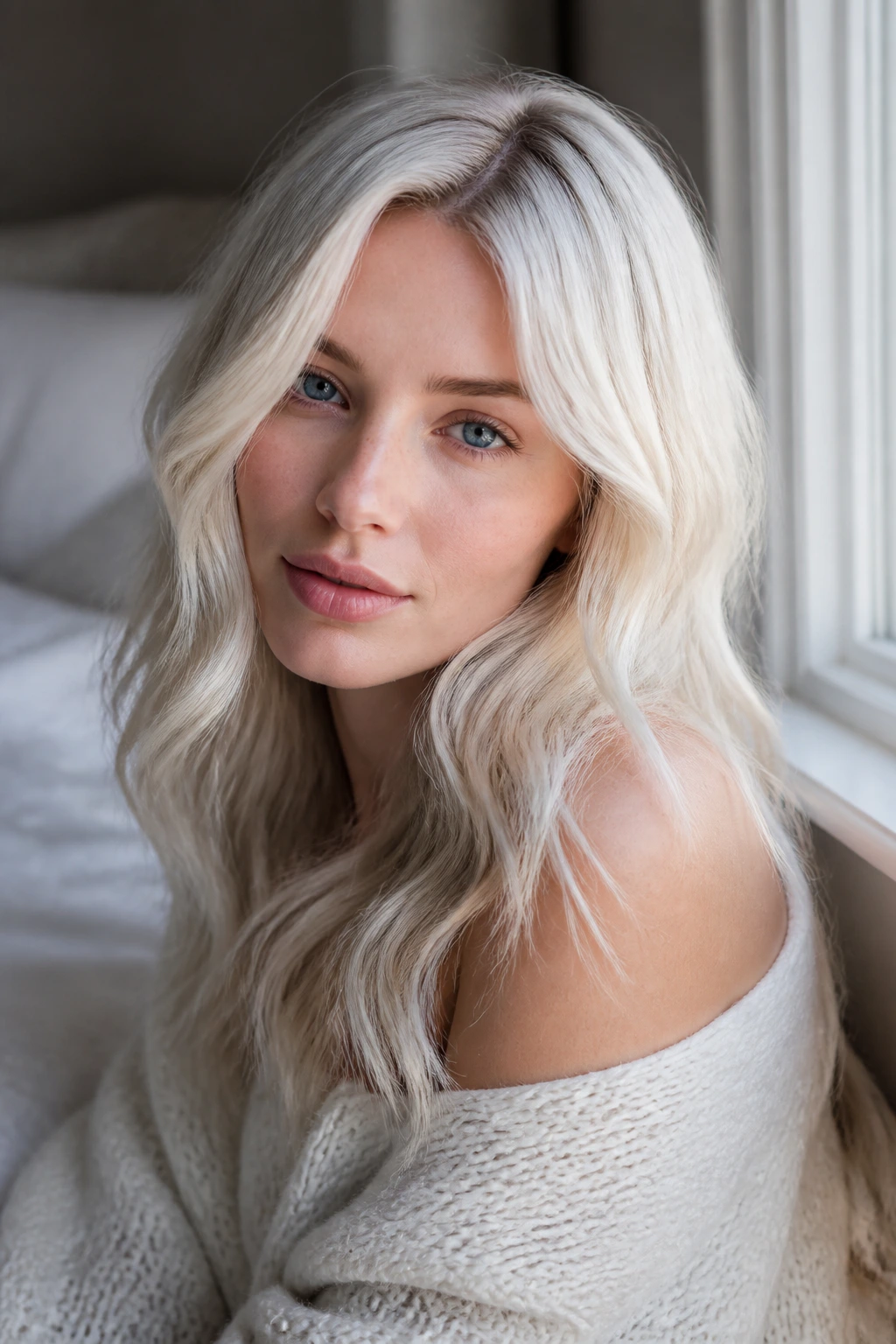
Parting: A center part makes icy blonde look modern and clean. A deep side part softens a very pale face and adds lift where you need it most. Try both in the mirror before you commit; the difference is bigger than people expect.
Curl size: Loose waves beat tight curls almost every time here. Use a 1.25-inch iron for shoulder-length hair and long lengths, then brush the curls out after they cool. If the wave still looks too perfect, run your fingers through it once more. Once. Not twenty times.
Finish: Keep serum off the roots. Arctic blonde hair gets greasy-looking fast, especially near the crown. Apply the shine product only to the last third of the length, and use a mist of flexible hairspray instead of a hard shell.
Color balance: Pale brows, silver earrings, and cool-toned makeup usually support this look better than warm bronzes. You don’t need a full face of makeup. A soft blush and defined brow can do more than a heavy contour ever will.
Common Mistakes That Flatten the Look
-
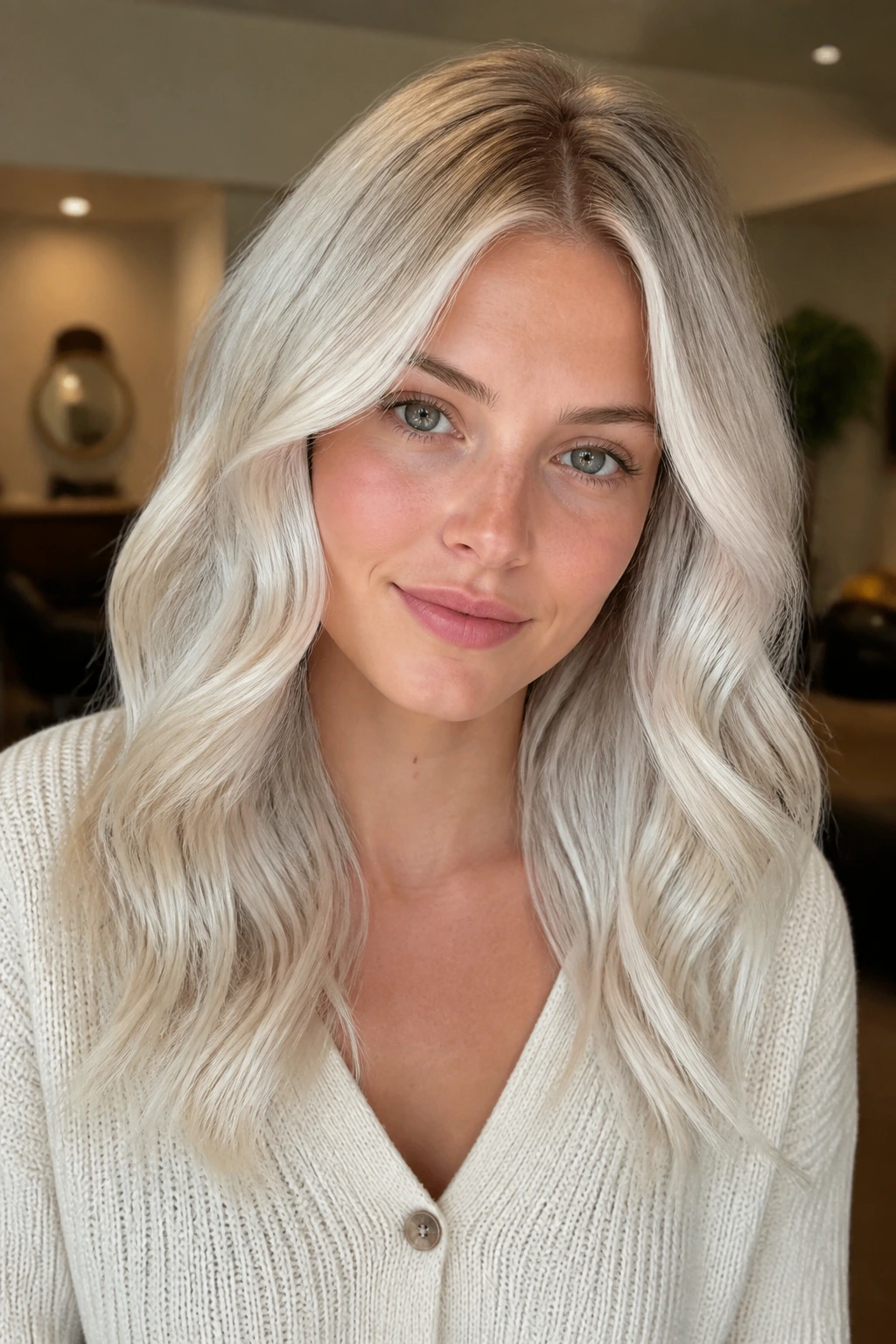
Going too white around the face: Pure white pieces can drain very fair skin. Ask for pearl, silver, or a soft shadow root near the hairline so the face still has dimension.
-
Curling the hair too tightly: Tight curls turn arctic blonde into a pageant style fast. Use a larger barrel, leave the ends loose, and brush the curl out after it cools.
-
Overusing purple shampoo: Too much violet shampoo can leave the hair smoky or dull. Use it once every few washes, and watch the tone under daylight, not bathroom lighting.
-
Skipping heat protection on bleached hair: Lightened hair burns faster than most people think. Keep the iron lower, around 275-300°F for fragile strands, and never skip the protectant.
-
Loading on heavy oils: A few drops on the ends are fine. Too much and the blonde goes limp, especially on fine hair. The roots should stay clean and airy.
-
Ignoring brows and complexion balance: Arctic blonde can look severe if the brows are too light and the skin has no color at all. A soft brow pencil and a little blush solve more problems than another round of toner.
Variations and Adaptations to Try
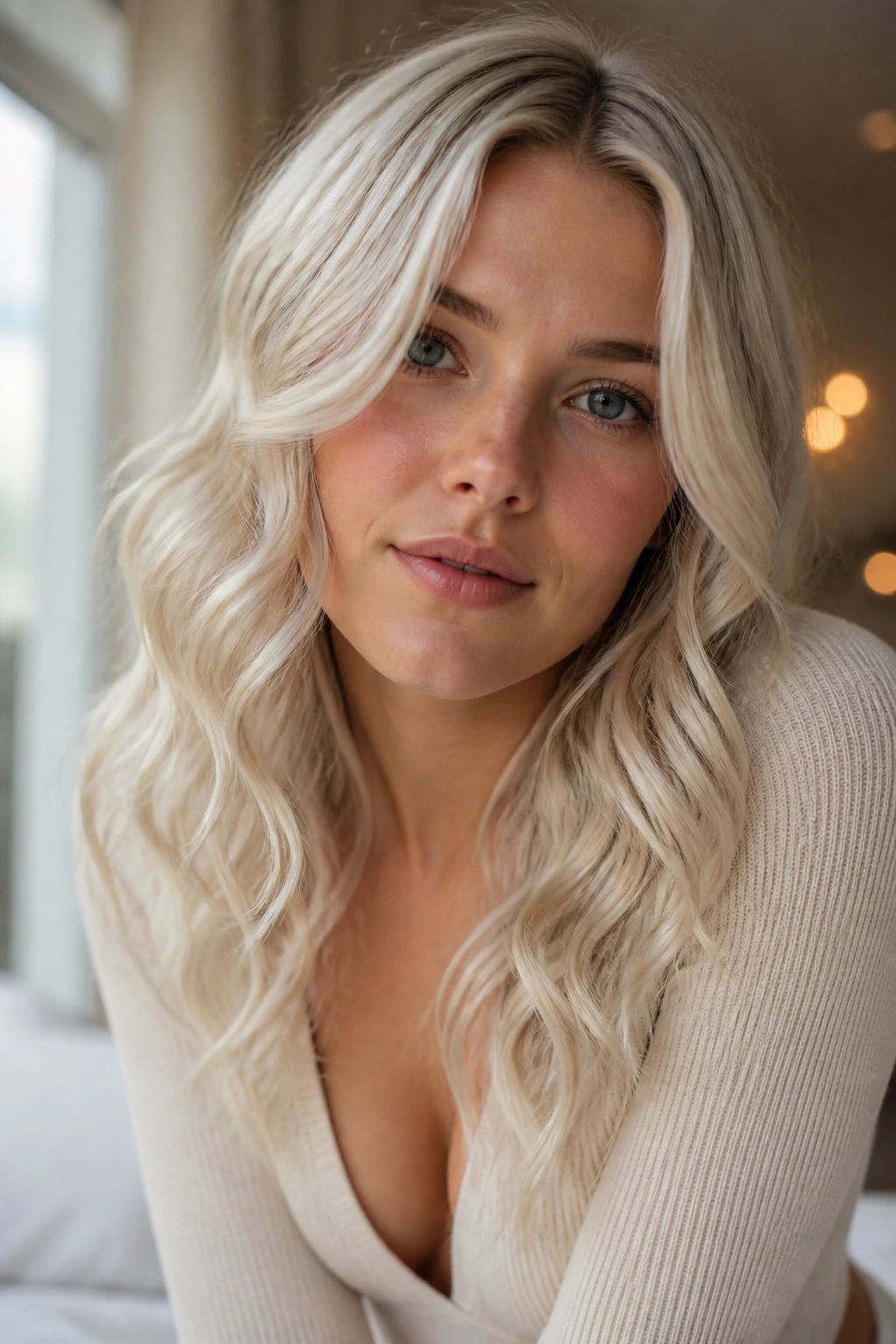
Pearl-Ice Softening: If silver feels too stark, shift the toner toward pearl and add a little beige to the mids. This keeps the blonde cool but gives fair skin a softer landing near the face.
Root-Shadow Grow-Out: For anyone who hates constant salon visits, ask for a deeper root melt. The color still reads arctic, but the grow-out line stays blurred for weeks instead of days.
Short-Hair Translation: Want the look on a bob or crop? Keep the wave loose and the ends blunt. Short arctic blonde can get fluffy if the layers are too feathered, so the shape should stay tidy.
Thick-Hair Blizzard Blend: Thick hair benefits from hidden lowlights and a soft texturizing cut. That extra depth keeps the style from turning into a bright block and helps the curls fall in cleaner sections.
Low-Commitment Ice: If full platinum is too much, keep the base slightly darker and brighten only the face frame and ends. You still get the arctic effect, just with less upkeep and fewer tears if you change your mind later.
Evening Gloss Finish: For formal wear, add a shine mist and a deep side part, then pin one side behind the ear. The same color suddenly feels sleeker and more deliberate, which is handy when you want the blonde to look polished instead of casual.
Maintenance, Refresh, and Appointment Timing
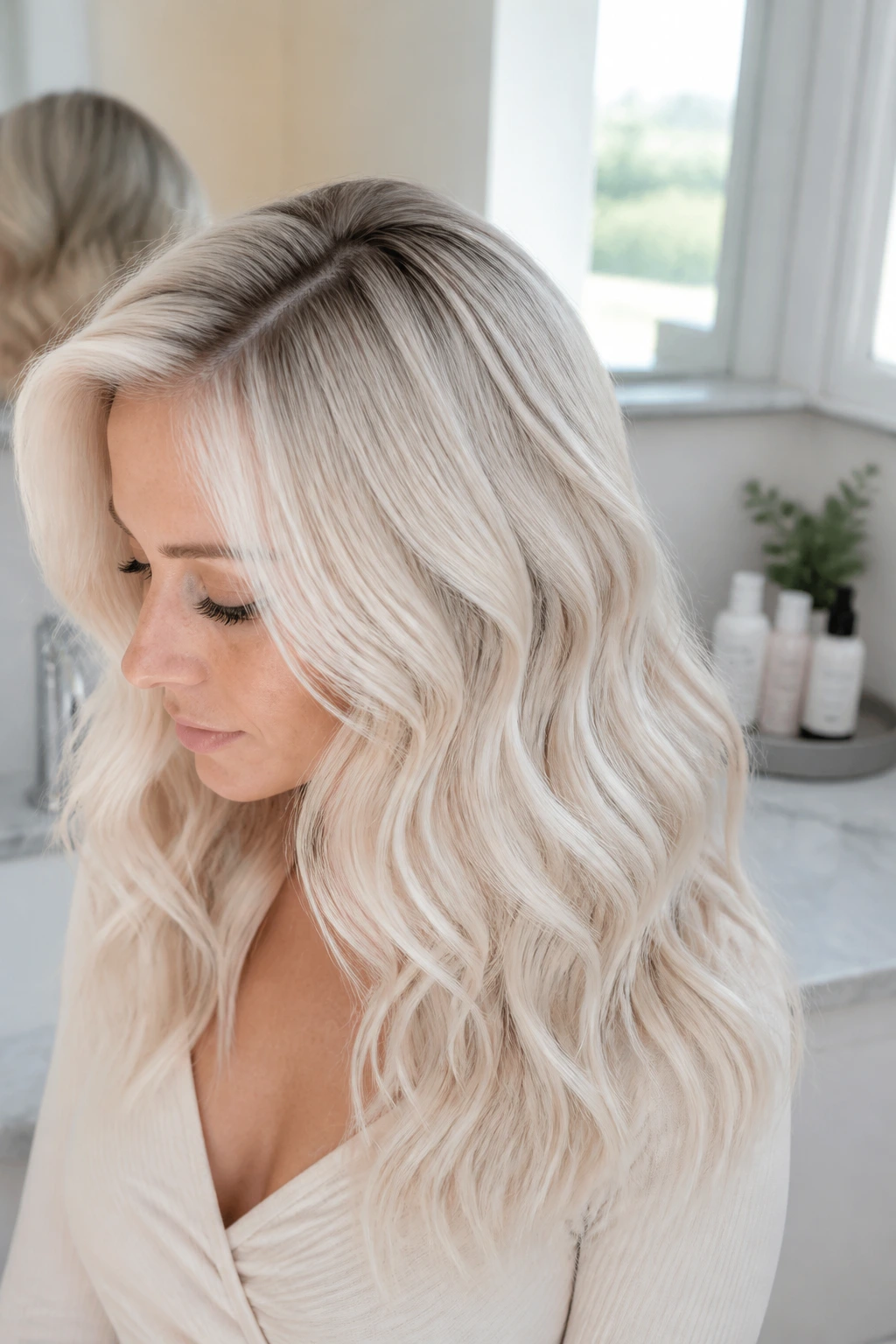
Daily Care
Bleached blonde hair needs a little routine, or it starts looking tired fast. Sleep on a silk pillowcase if you can. If not, gather the hair loosely at the crown with a soft scrunchie so the curls don’t get smashed flat overnight.
Keep dry shampoo for the roots only. Arctic blonde shows oil near the scalp earlier than darker hair does, and a light mist at the crown keeps the style from collapsing. Don’t spray the lengths unless they truly need it.
Weekly Care
Use a purple shampoo or blue-violet shampoo once every 5 to 7 washes, not every time you clean the hair. Leave it on for 2 to 4 minutes and watch the tone. More time is not better here. It can make the blonde gray or dull.
A deep conditioner or bond-building mask once a week helps the ends stay soft. If the hair feels gummy or stretchy, back off the protein-heavy masks and choose something more moisturizing. Bleached hair gets weird when it’s overfed in the wrong way.
Between Salon Visits
A toner refresh every 4 to 6 weeks keeps the shade clean. Root touch-ups usually run 6 to 8 weeks if the contrast is obvious, though a shadow root can stretch that longer. If the ends start looking dry, book a trim around 8 to 12 weeks so the wave pattern still falls neatly.
Heat styling should stay on the modest side. For fragile blonde, 275-300°F is enough most days. If the hair is coarse and healthy, you can nudge a little higher, but don’t let high heat become your default. That’s how the ends turn brittle and the curls stop holding.
Frequently Asked Questions
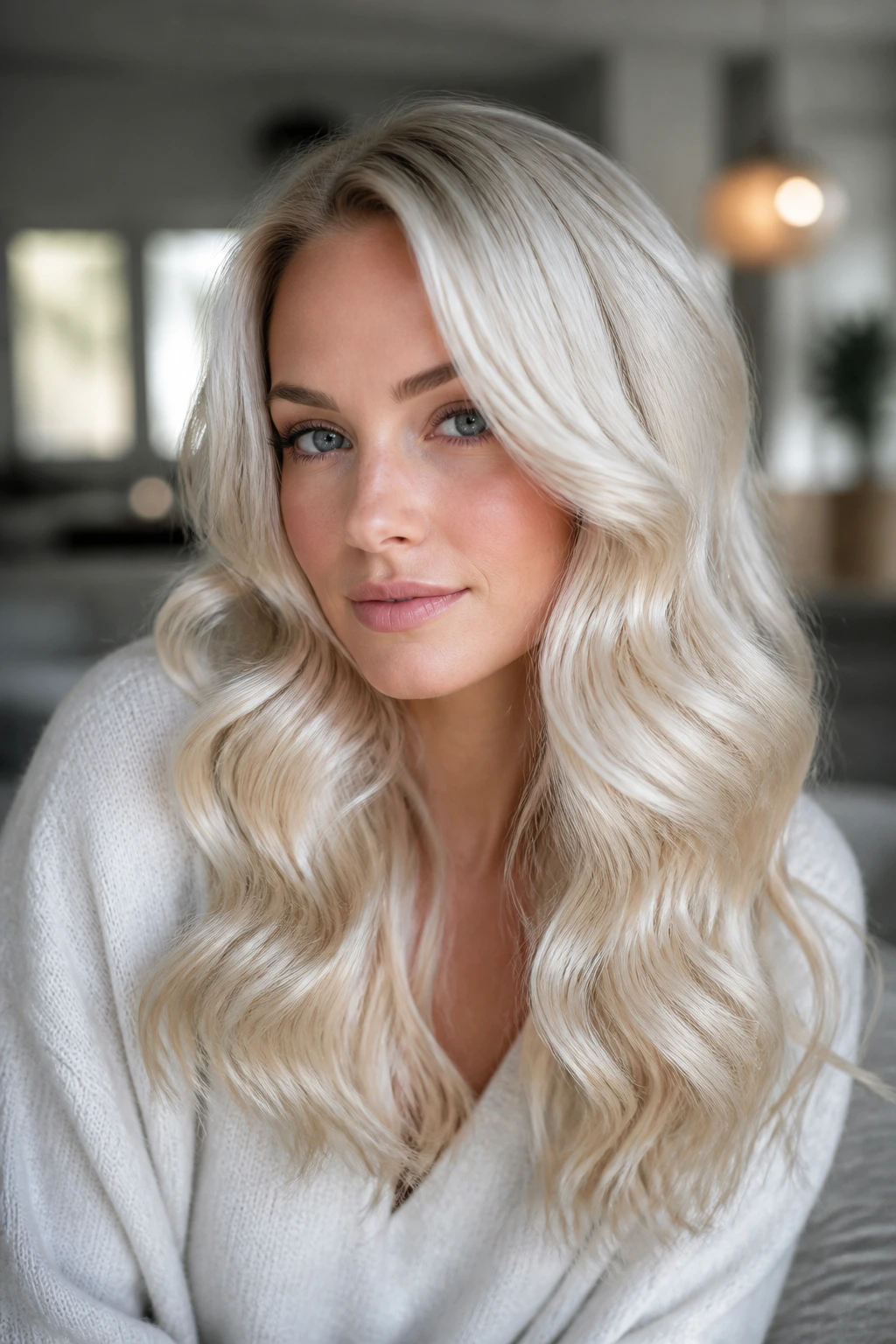
Will arctic blonde wash me out if I have very fair skin?
It can, if the tone is too flat or too white. The fix is adding a root shadow, pearl toner, or a little dimension through the lengths so the hair frames the face instead of erasing it.
What undertone looks best with icy blonde?
Cool and neutral fair skin usually takes the brightest silver and platinum shades well. If your skin leans pink or peach, a pearl or champagne-ice tone often looks softer and more flattering than a blue-white finish.
Can I wear loose curls if my hair is bleached and fragile?
Yes, but keep the heat low and the barrel large. Loose bends are easier on compromised hair than tight spirals, and a good heat protectant plus a gentle brush-out helps the style hold without snapping the ends.
How do I keep the curls from dropping?
Let each section cool fully before brushing it out, and use a lightweight flexible hairspray instead of a heavy lacquer. If the hair is very slippery, a little volumizing mousse at the roots can help the style hold shape without feeling crunchy.
Do I need a full bleach job to get this look?
Not always. A strong face frame, balayage, or partial highlight can create an arctic feel if the tone is cool enough. Full bleach gives the most brightness, but it is not the only route.
What if my brows are naturally dark?
That can work in your favor. Dark brows give icy blonde a strong frame, especially on fair skin. The key is keeping the hair soft enough — loose curls, a slight root shadow, and a clean toner — so the contrast feels deliberate.
How often should I tone arctic blonde hair?
Many people need a toner refresh every 4 to 6 weeks, though hard water and heat styling can shorten that window. If the blonde starts drifting yellow or smoky, that’s your cue to book a gloss or toner instead of trying to fix it with more purple shampoo.
Can I air-dry these styles instead of using hot tools?
Sometimes, yes. If your hair has natural bend, a curl cream or light mousse can give you a soft wave without heat. The shape will be looser and a little less polished, which can actually suit the color nicely.
Keeping the Frost Soft
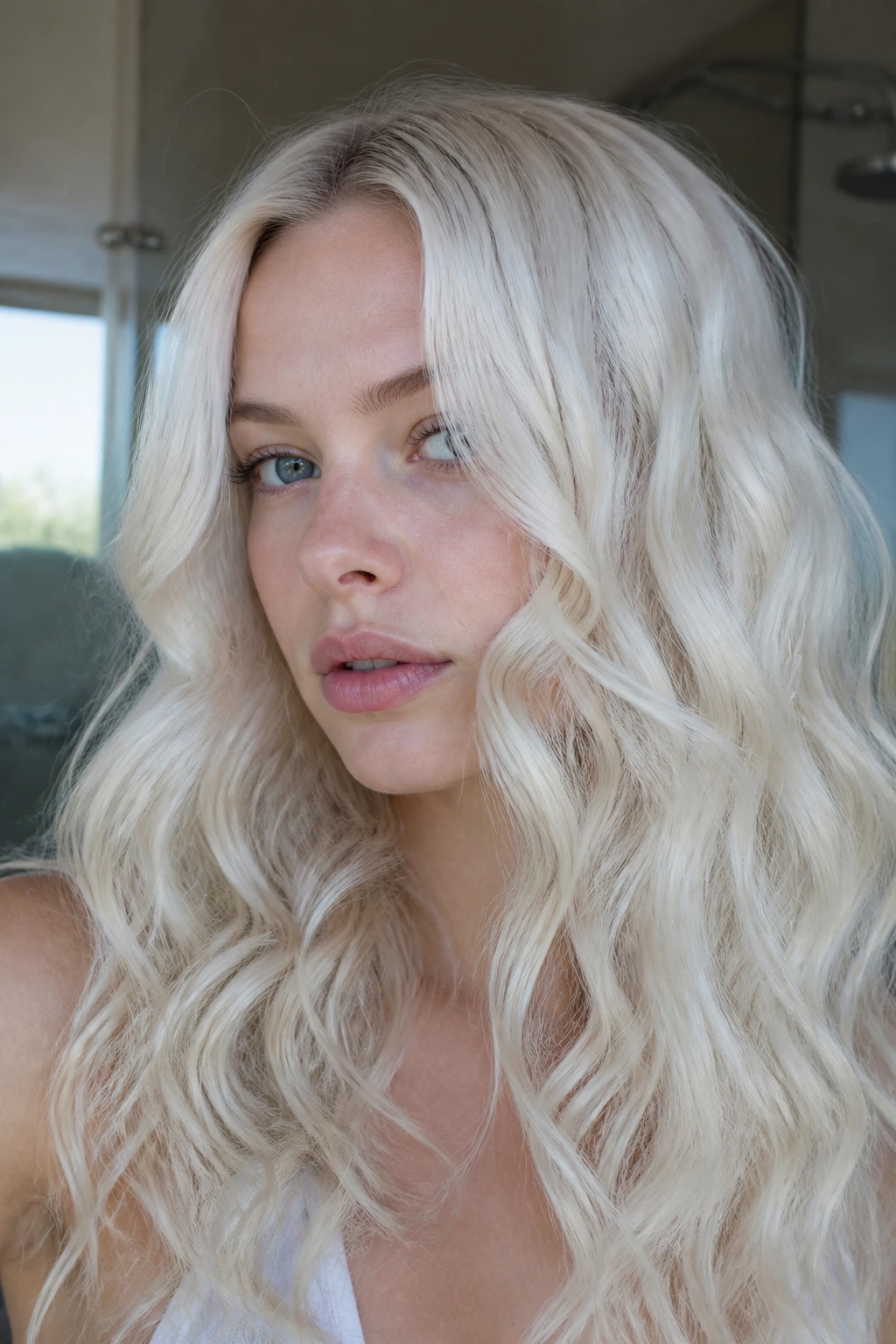
Arctic blonde on fair skin works best when the hair still has movement. That’s the part I keep coming back to. The shade can be nearly white, silver, pearl, or smoky, but if the wave is too tight or the root too flat, the whole thing loses its shape.
Loose curls are what keep the color alive. They let the brightness shift as you move, and they give the face enough softness that the blonde feels intentional instead of harsh. Pick the version that fits your maintenance tolerance, not just the one that looks brightest in a photo. The best icy blonde is the one that still looks good when you catch it in a bathroom mirror under bad light.
If you want the style to stay flattering, think in terms of tone, texture, and contrast. Get those three right, and the rest falls into place.