



Curly hair and beachy waves do something straight hair never quite manages on its own: they break light into little flashes. One bend catches honey. The next bend goes deeper, almost smoky. That is why hair color ideas for curly hair with beachy waves need more thought than a single shade slapped on from root to tip.
A flat color can look decent on a smooth blowout and disappointing the minute the hair moves. On curls and waves, the stakes are different. Placement, contrast, and undertone matter more than the name on the color tube, because texture is doing half the work for you. A good colorist knows this. A good home touch-up plan does too.
The best shades here aren’t the loudest ones. They’re the ones that keep showing you something new when the curls separate, bunch up, and fall back into place. That little bit of movement is the whole point, and the right color should lean into it instead of fighting it.
Why Curly Hair and Beachy Waves Change the Color Game
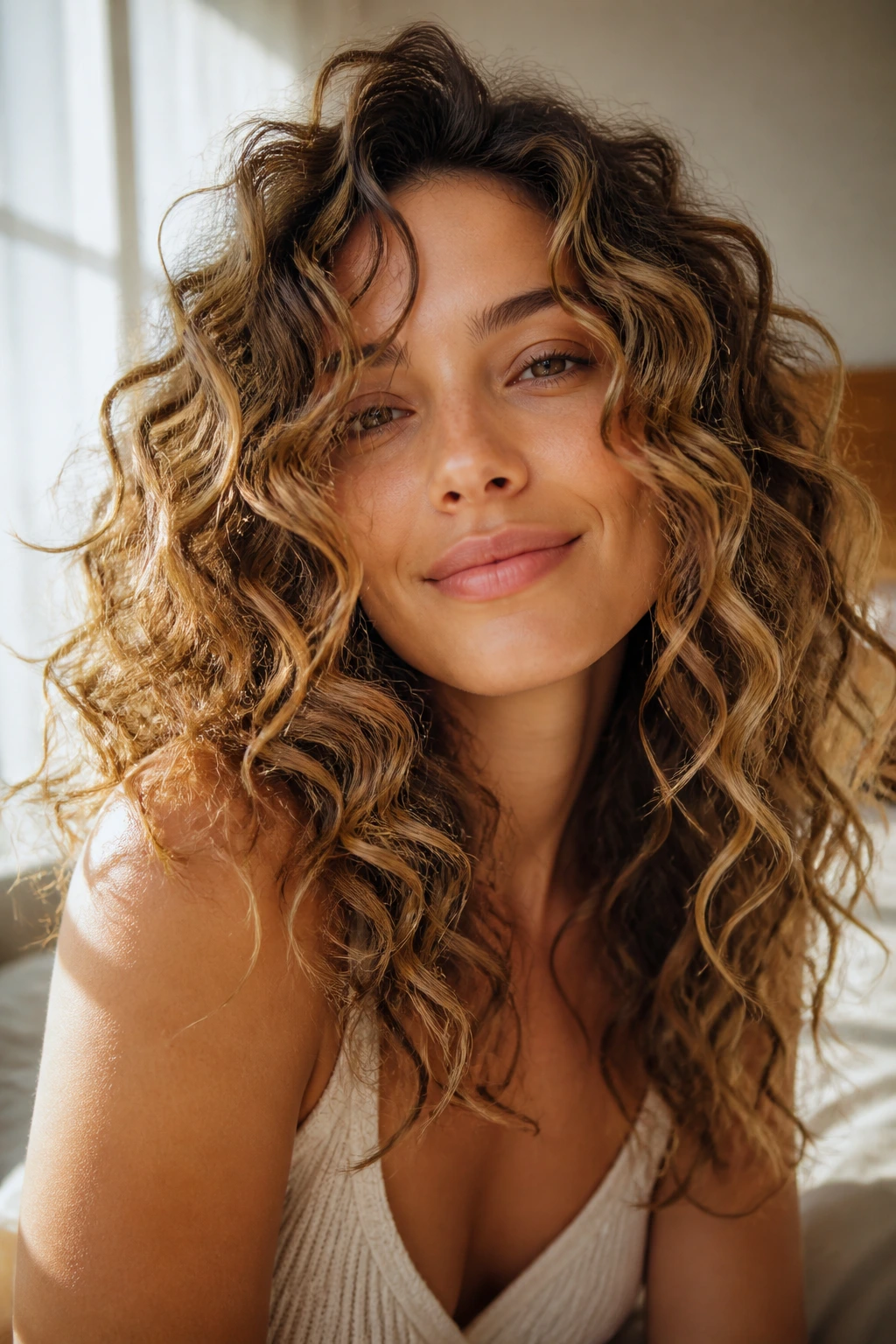
Dimension does the heavy lifting: Curly hair already creates built-in shadow and highlight, so a few carefully placed ribbons can look richer than a full head of one flat tone.
Soft grow-out matters more here: Root shadow, balayage, and lowlights blur into bends and waves, which keeps regrowth from drawing a hard line across the head.
Warmth shows fast: Beachy texture tends to pull warmth forward, so overly ashy shades can go muddy if they’re not balanced with enough gold or beige.
Placement beats volume: A bright money piece around the face or a lighter curl cluster near the crown can change the whole read of the color without over-lightening the ends.
Contrast needs restraint: Too much stripe-like contrast can make curls look pieced out instead of airy, while softer transitions keep the pattern looking expensive and natural.
1. Sun-Kissed Caramel Balayage
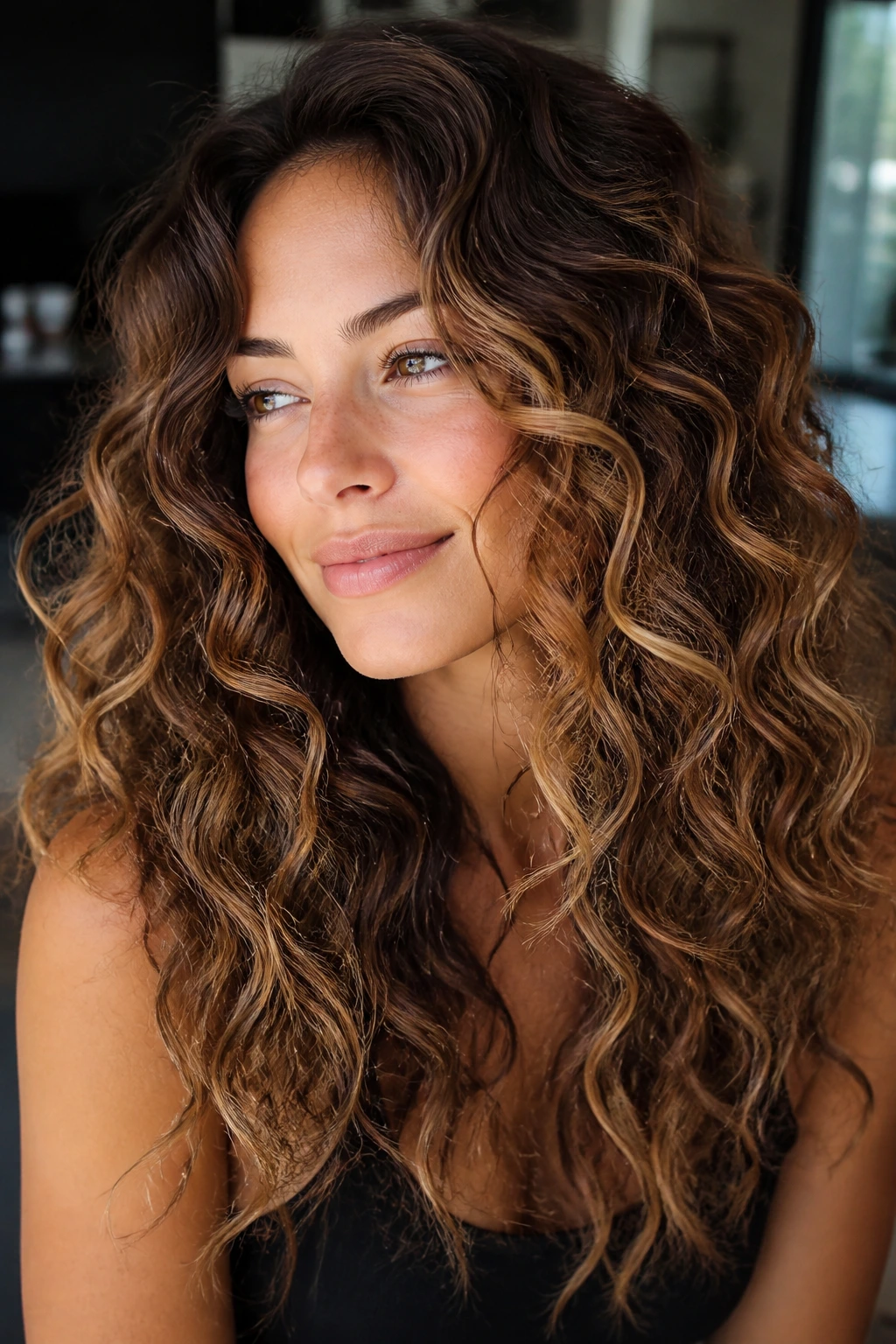
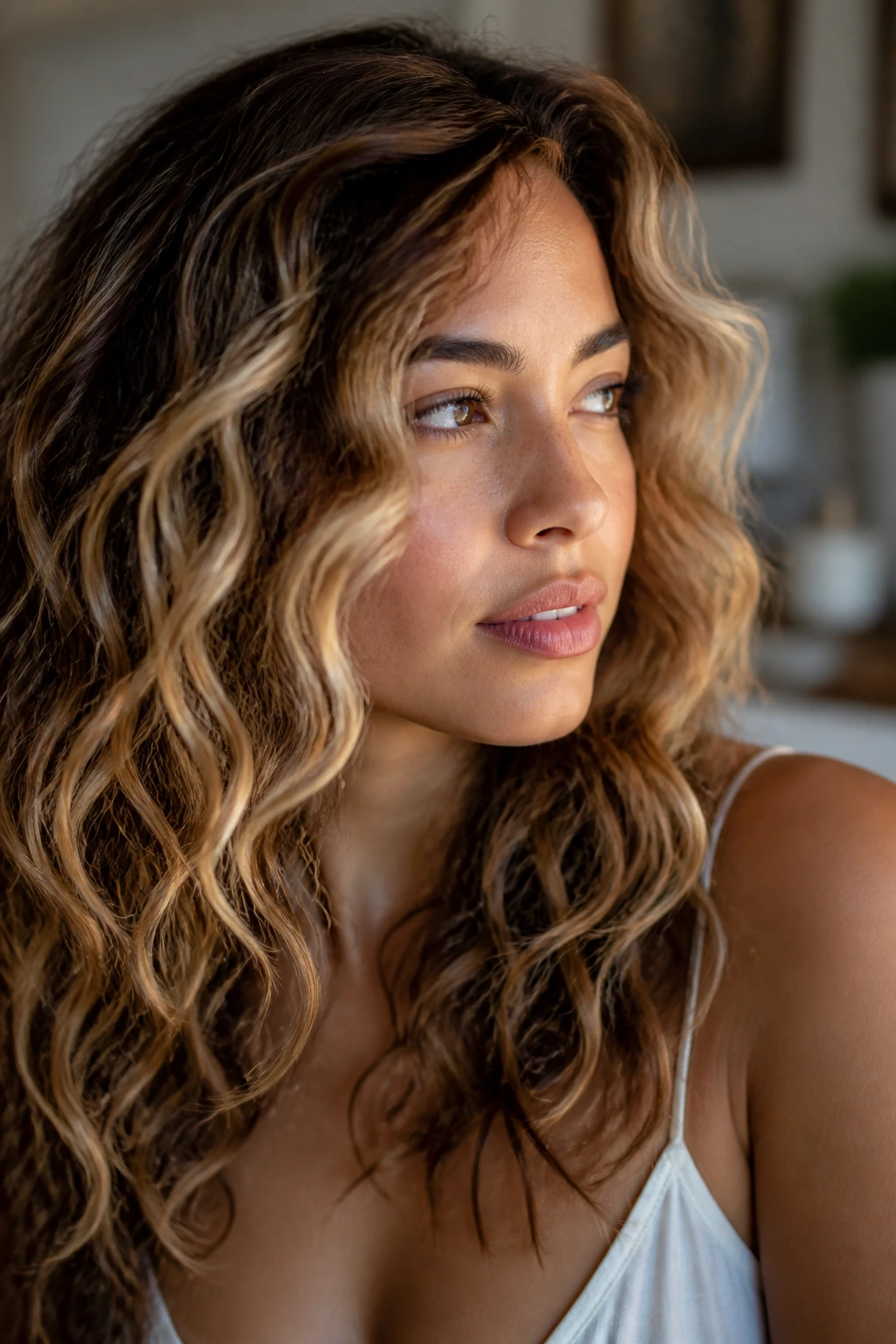
Caramel balayage on curls is the shade I reach for when someone wants movement without drama. It sits right between brown and blonde, which makes it forgiving on beachy waves that don’t always fall in the same place twice. The result looks like the color got warmed up in the sun, not painted on in a salon chair.
Why It Works on Curls
On a medium brown base, caramel ribbons catch the outer curve of each wave and leave the inside bend a little deeper. That tiny difference is what makes the hair look fuller.
- Best base: level 4 to level 6 brunette.
- Best placement: mids and ends, with a few brighter pieces near the face.
- Maintenance: low to medium; a gloss every 6 to 8 weeks keeps the caramel from turning dull.
- Watch for: over-lightening the ends, which can make curls look frayed.
Best tip: Ask for ribbons, not blocks. Curly hair hates chunky stripes.
2. Honey Blonde Ribbons
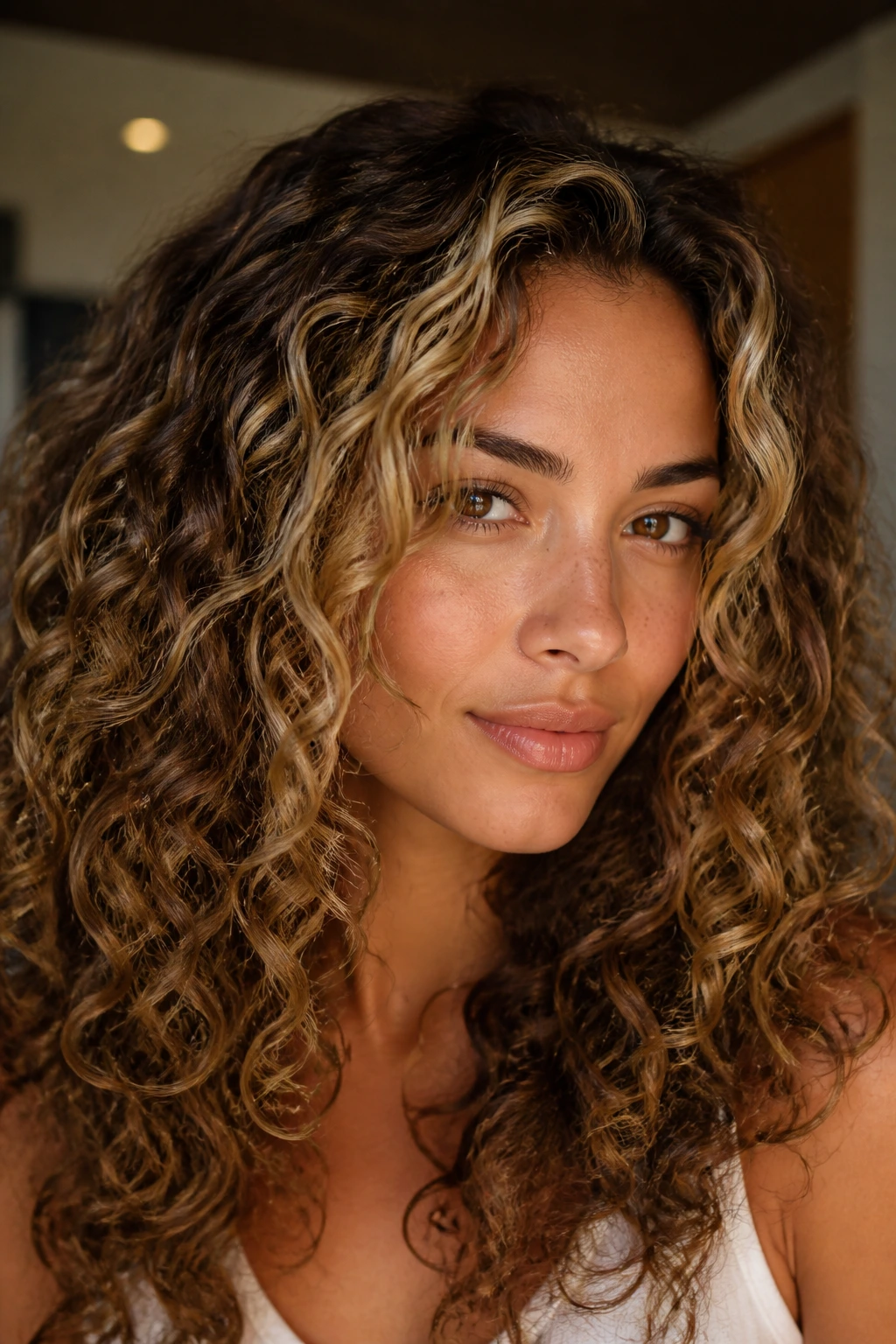
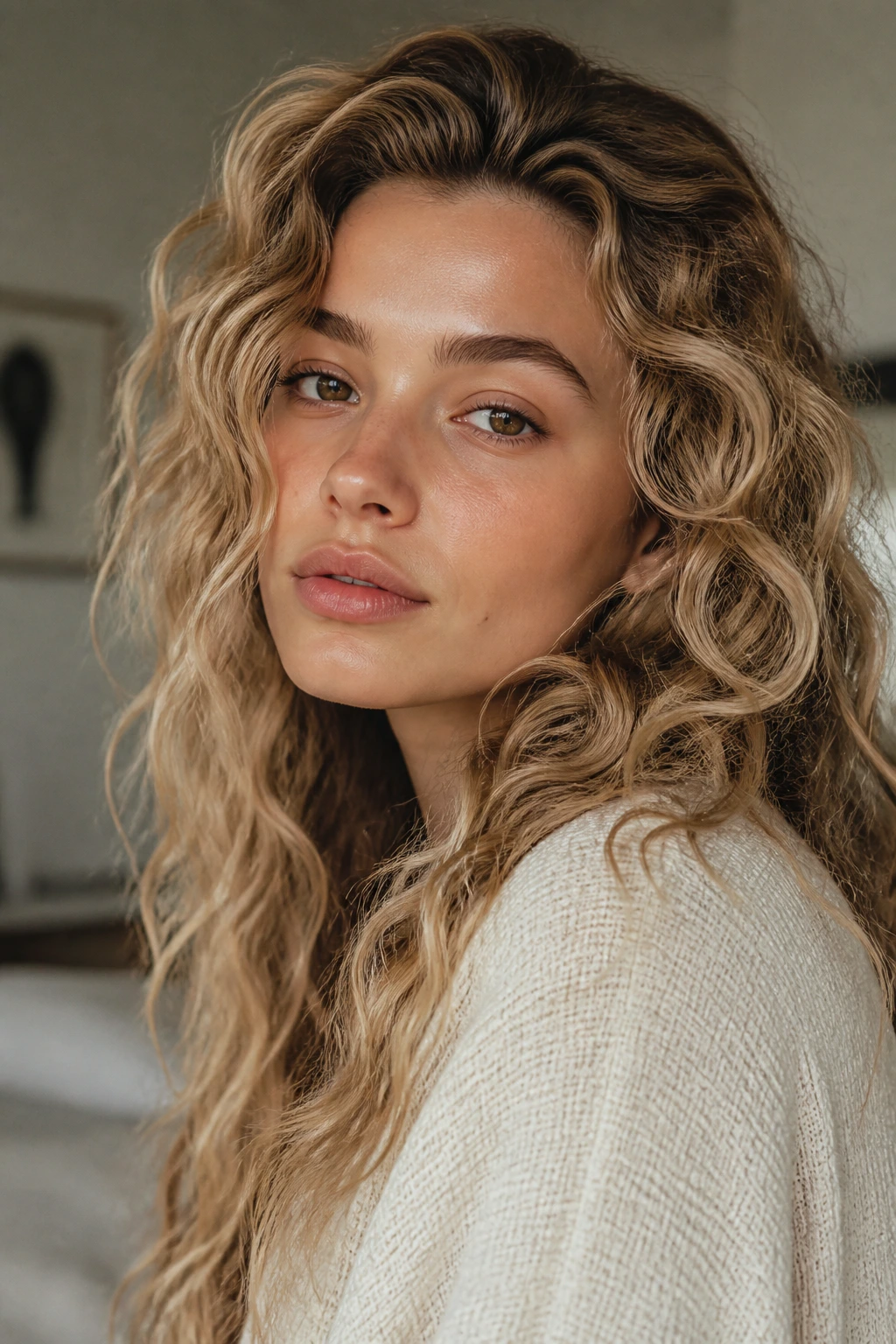
Honey blonde has a softer glow than icy blonde, and on beachy waves that warmth feels deliberate instead of brassy. The color sits in that sweet spot where the curls look light but still touchable.
The trick is keeping the blonde narrow enough that the pattern stays airy. If the ribbons are too wide, the curl clumps separate and the whole head starts to look heavy. Keep the lightest pieces around the top layer and the front, then let the lower sections stay a little deeper. It gives the style some breathing room.
For anyone with a naturally medium base, honey blonde is a smart way to go lighter without paying the price of a full platinum upkeep schedule. It also photographs in a kinder way than ashier blondes, which can go flat under soft indoor light.
3. Mocha Melt
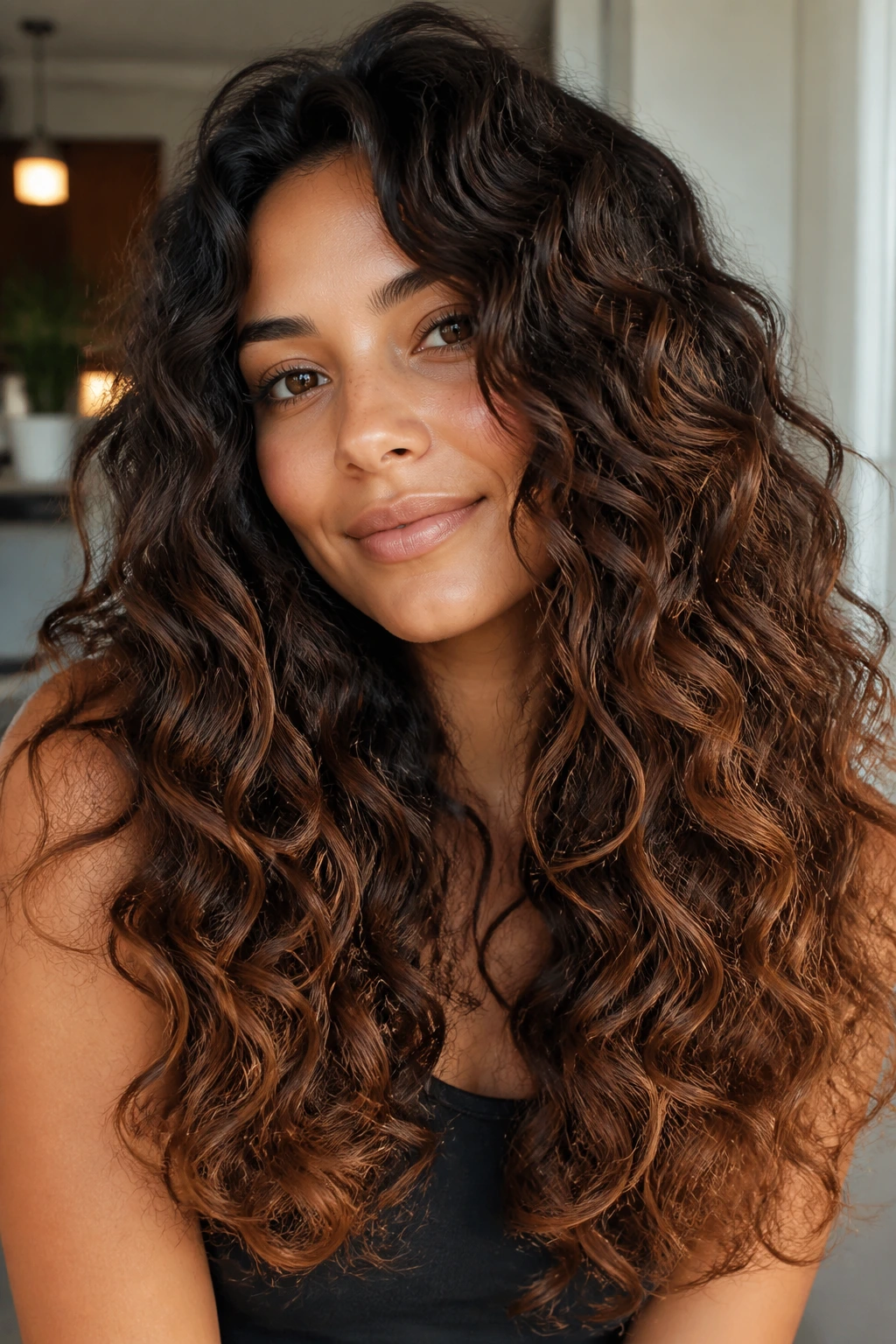
Why do so many brunette colors fall flat? Because they stop at one tone. Mocha melt fixes that by moving from deep brown roots into softer chocolate lengths and then into a whisper of neutral lightness at the ends.
How to Wear It
This is one of those shades that makes beachy waves look thicker than they are. The mix of cool and warm brown tones gives the curls enough contrast to separate, but not enough to look streaky. On tighter waves, the color reads smooth and glossy; on looser curls, it gets that soft ribbon effect people keep chasing.
If your hair is already dark, this is a low-risk way to add interest without heavy bleach. Keep the face frame a touch lighter than the rest, then let the back stay a shade or two deeper.
4. Copper Cinnamon Glow
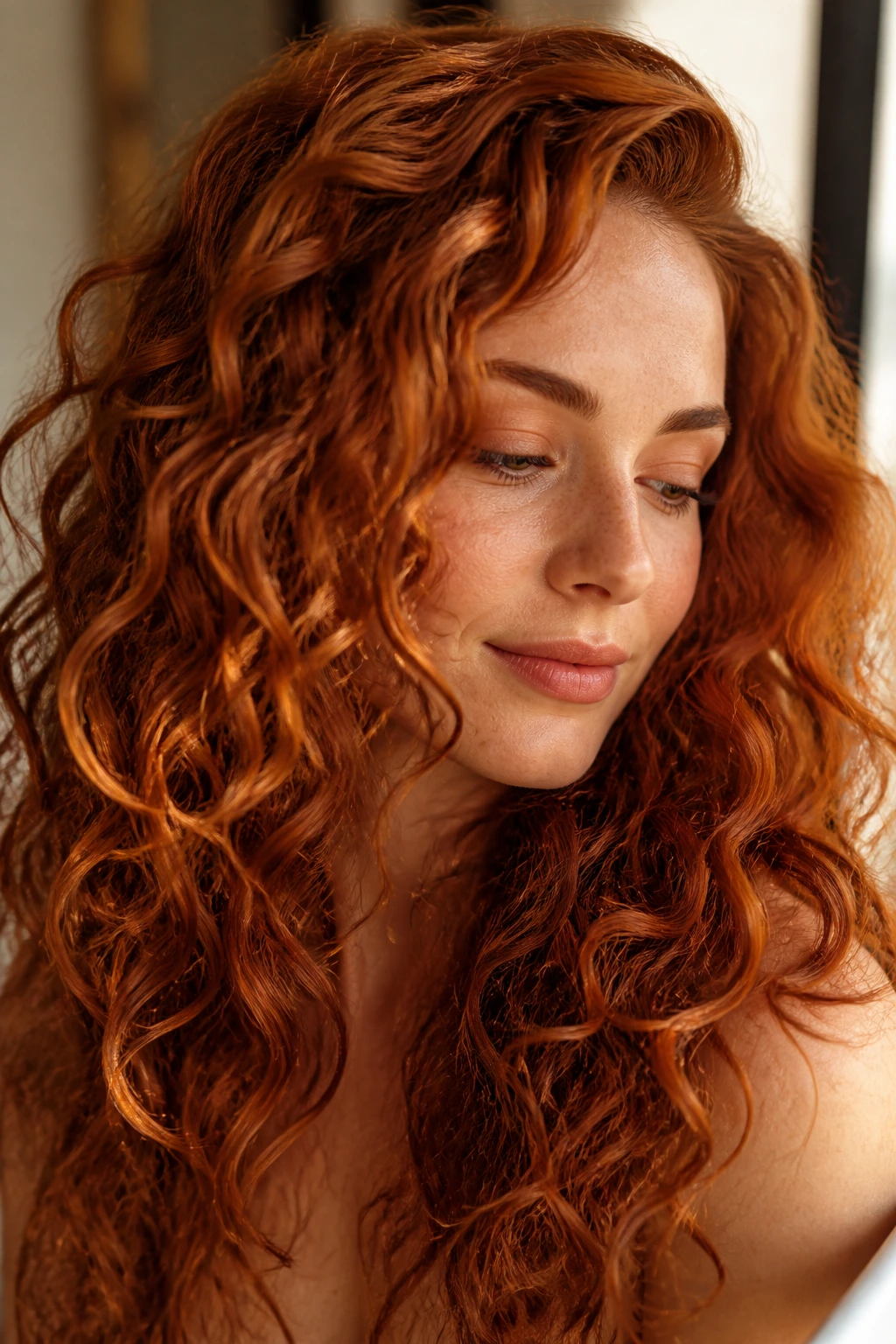
Copper cinnamon is for the person who wants warmth that can be seen across the room. It’s not orange for the sake of being orange. It sits closer to spiced cider, with a brown-red base that makes curls look lit from inside.
Anecdotally, this one can be gorgeous on beachy texture because the bends catch the copper at different angles. A soft wave will flash gold at the outer edges and burnished red in the deeper grooves. That movement keeps the color from feeling costume-like.
- Works especially well on pale to medium skin with warm or neutral undertones.
- Looks strongest on curls that already have some natural warmth.
- Needs a color-safe shampoo that doesn’t strip red pigment too quickly.
- A copper gloss every 4 to 6 weeks helps keep the shine sharp.
5. Golden Bronde
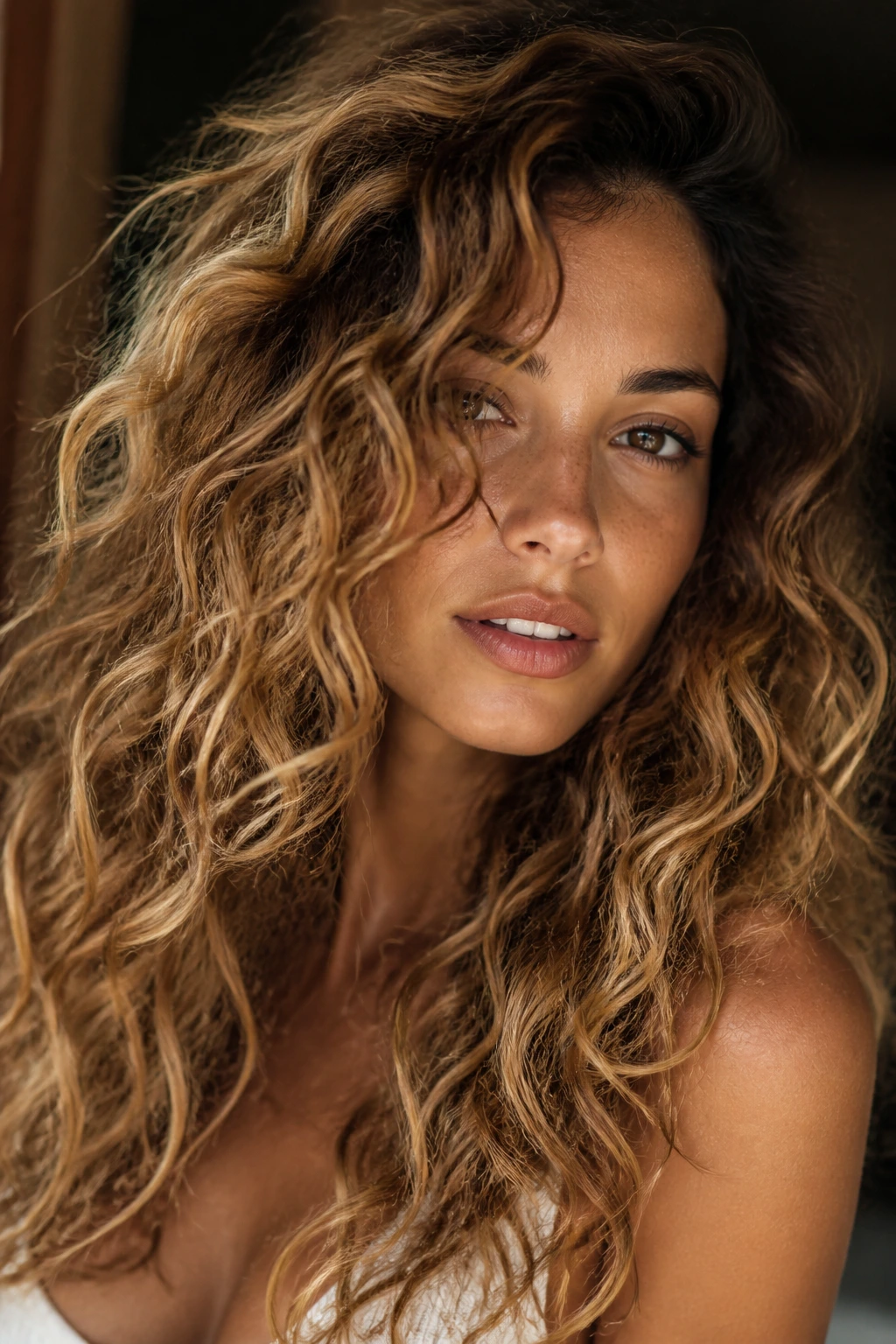
Bronde is the shade people ask for when they want to look lighter, but not blonde-blonde. Golden bronde does that job with a little more warmth and a little less contrast, which is exactly why it flatters beachy waves so well.
It sits right in the middle: brown at the roots, honey-gold through the mids, and a soft glow at the ends. That gradient keeps the curl pattern visible from top to bottom, even when the weather or humidity changes the shape of the wave. It’s a practical color choice, which is not a boring thing at all. Practical often looks best.
If your hair has a natural level 6 or 7 base, this shade usually feels believable fast. On darker hair, it needs a bit more lift and a gentler toner.
6. Espresso with Chestnut Face-Framing
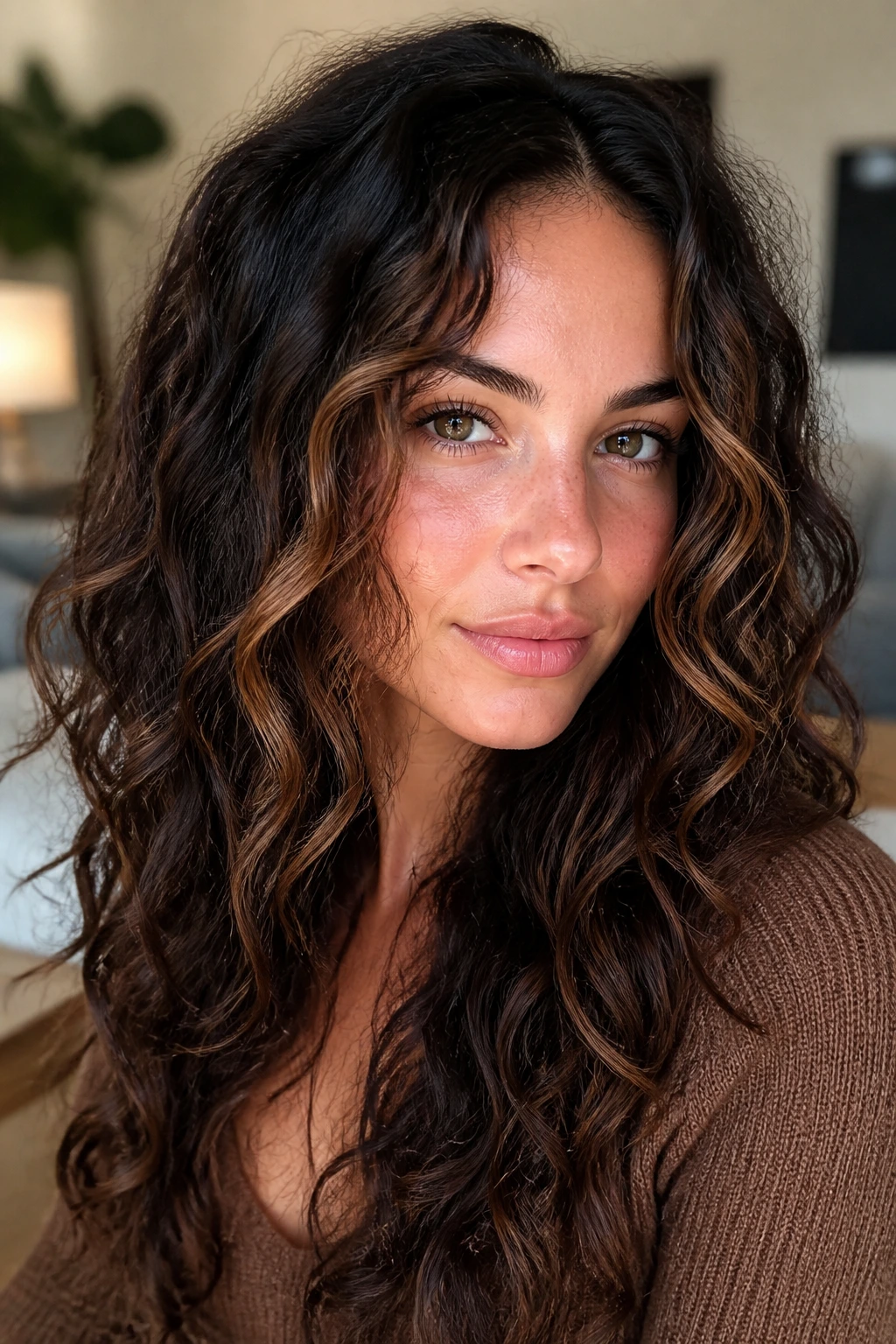
A dark base with chestnut framing is one of the cleanest ways to wake up curly hair without turning the whole head into a highlight project. The root stays rich and serious, while the front pieces carry enough warmth to keep the face from disappearing into the depth.
This one is about contrast control. The chestnut should be lighter than the base, but not so much lighter that it reads as stripey. Around curls, especially loose beach waves, a subtle face frame can move like jewelry: visible when it needs to be, quiet when it doesn’t.
If you live in dark shades and hate maintenance, this is a strong choice. It grows out softly because the color shift happens in the front and through the surface, not in a hard horizontal line.
7. Strawberry Blonde Soft Fade
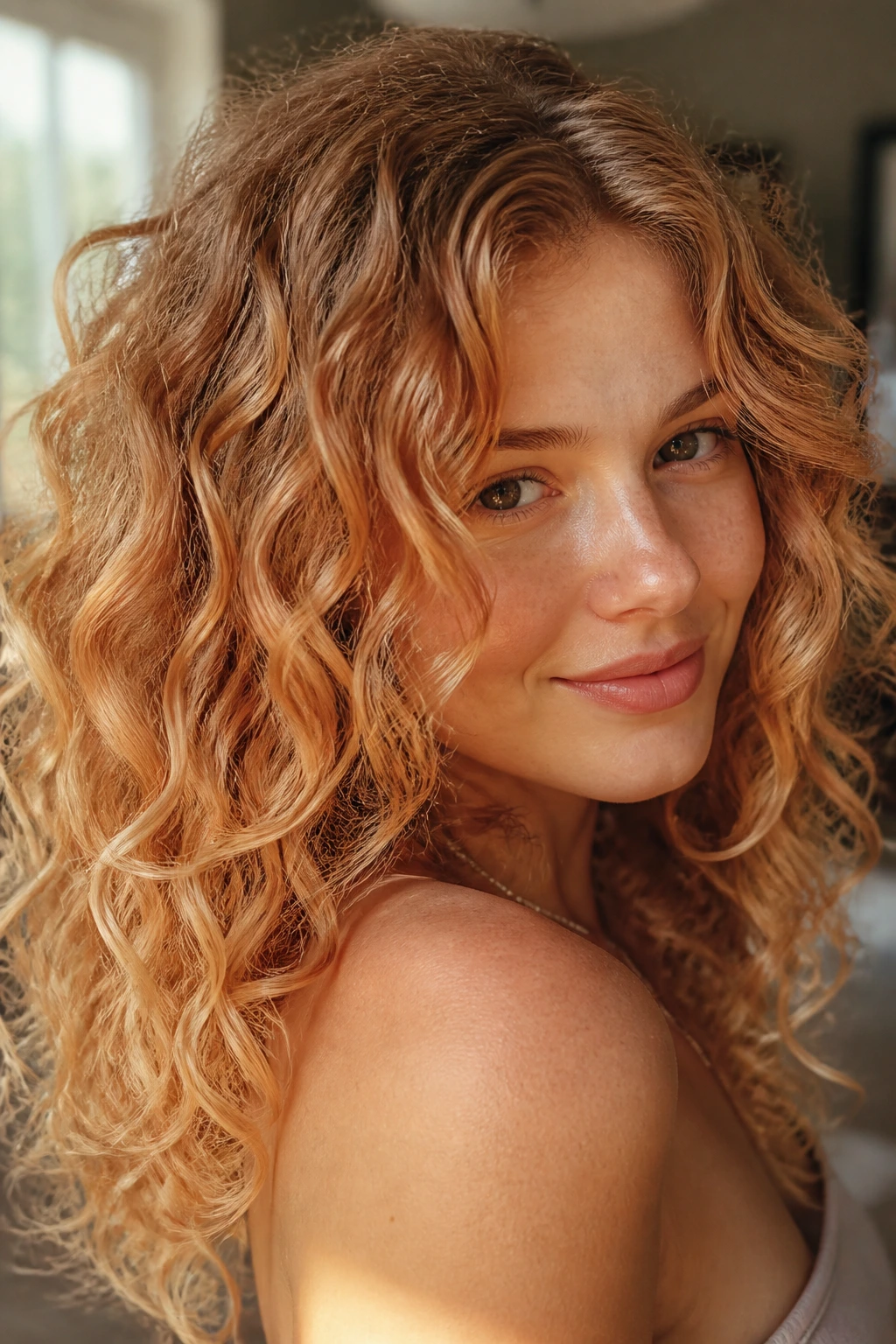
Strawberry blonde works when it’s treated like a blush, not a spotlight. On curls, that soft red-gold blend gives the ends and outer bends a warm shimmer that looks especially good in natural light.
What Makes It Different
The soft fade keeps the strawberry tone from sitting all over the head. Roots can stay a little more neutral, while the mids and ends carry the peachy gold-red mix. That prevents the color from turning into a solid block, which is the fastest way to make curly hair lose its shape.
For loose waves, this is one of the prettiest shades on a neutral skin tone. It also softens a strong curl pattern, which can be nice if your hair tends to look harsh under cooler blonde tones.
8. Sandy Beige Blonde
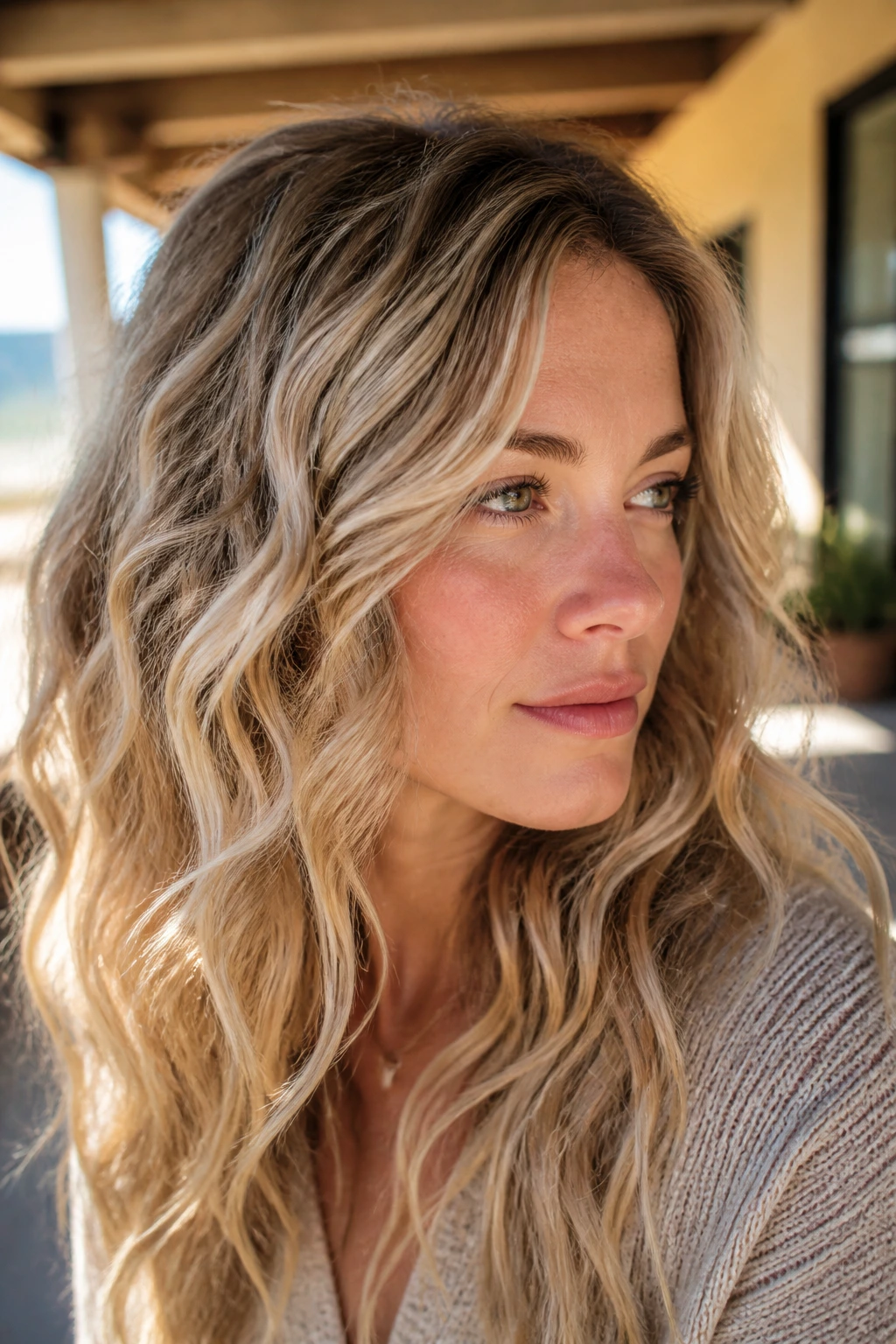
Sandy beige blonde has that dry, sun-washed look people usually want from a beachy wave style. The color is lighter than bronde but less icy than platinum, which gives it a believable, lived-in feel.
The beige piece is what keeps it from reading yellow. Too much yellow and the whole style can look like it needs toner. Too much ash and it turns flat. Sandy beige lives in the middle, with a quiet matte softness that pairs well with loose curls and air-dried bends.
If your skin tone leans cool-neutral, this is usually easier to wear than a warm golden blonde. Keep the roots soft and shadowed so the grow-out doesn’t fight the wave pattern.
9. Rose Gold Ends
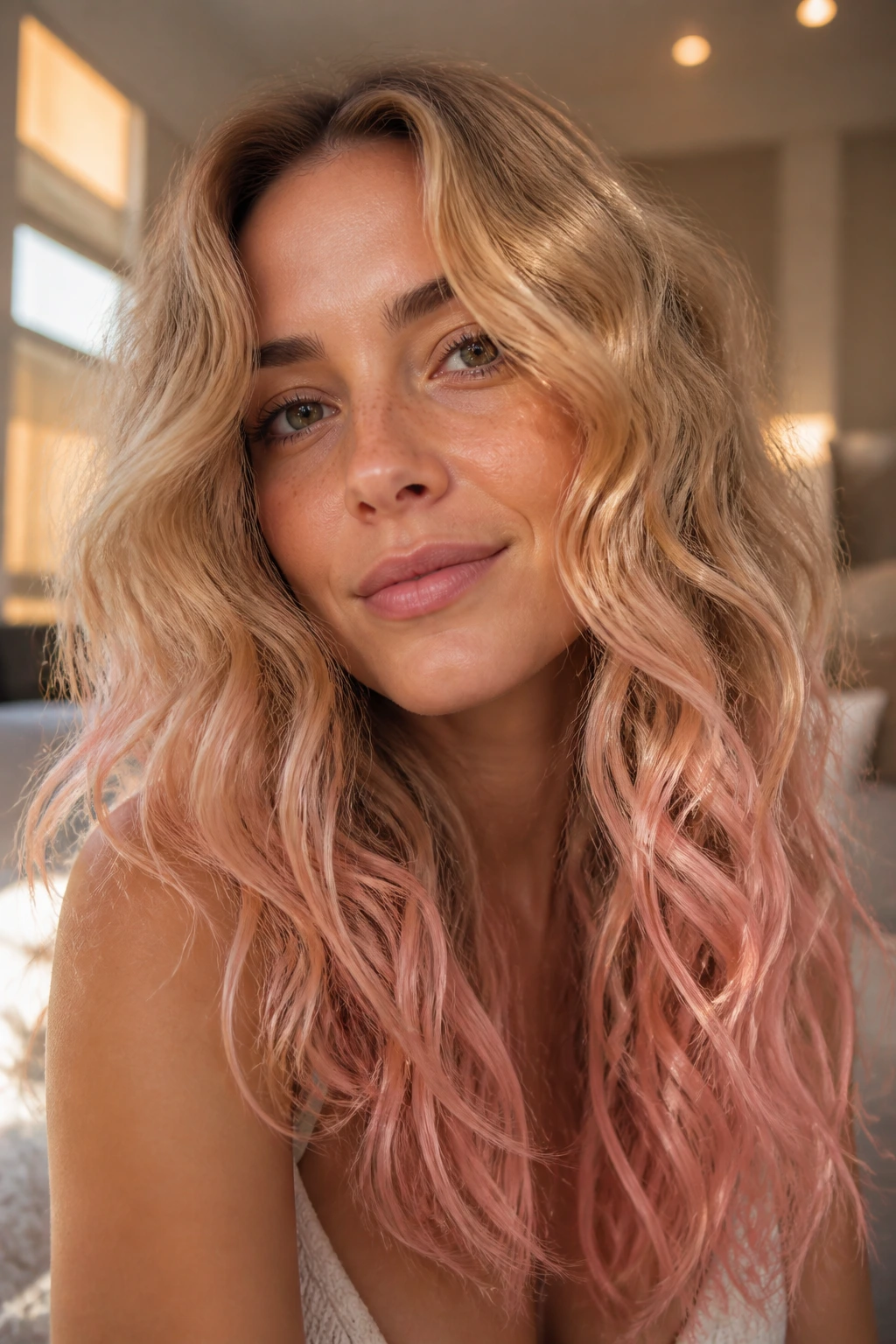
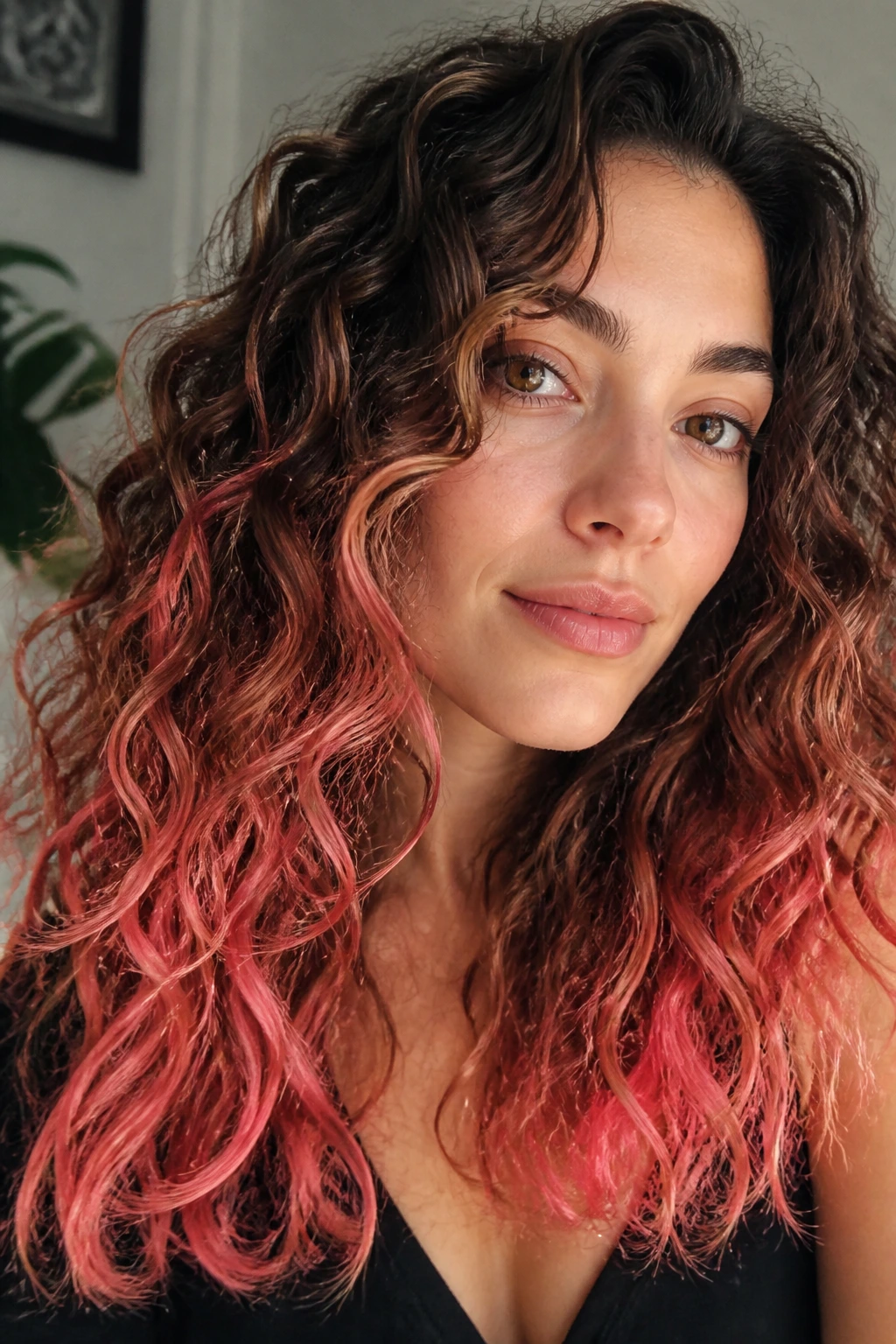
Rose gold on the ends is a playful move, but it works best when the root area stays grounded. That contrast keeps the style from drifting into costume territory.
The pink-gold tone catches the curved edge of a wave in a way that’s hard to ignore. On beachy hair, the color can look like a sunset reflecting in water — a little bit peach, a little bit blush, a little bit metallic. The key is restraint. A few inches at the ends are enough.
How to Use It
Keep the rose gold more muted than bright. The best version has a soft champagne base with a pink cast rather than a candy-pink finish. It fades well into lighter blondes and medium blondes, and it’s easier to refresh with a tint mask or gloss than with permanent color every time.
10. Mushroom Brown Balayage
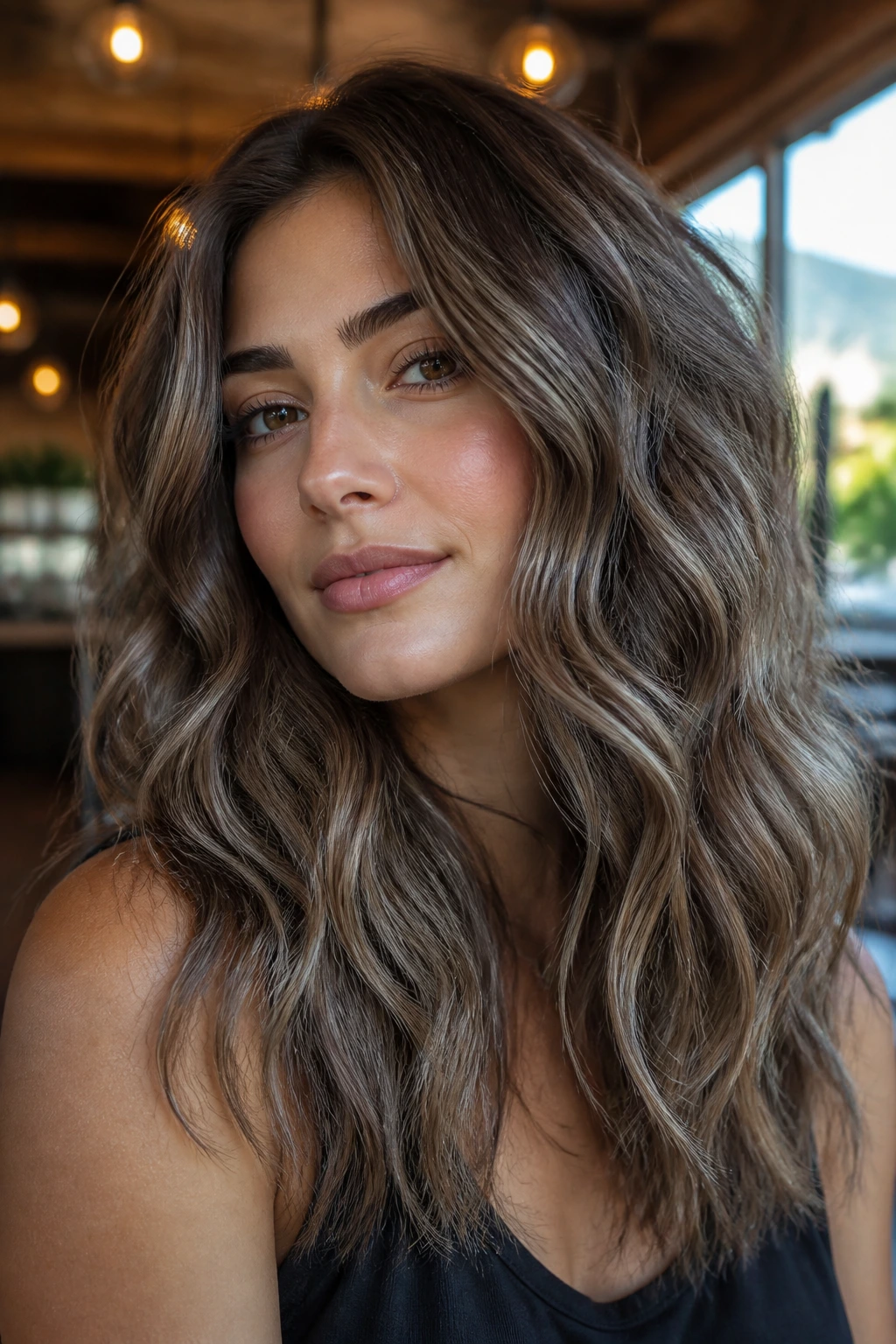
Mushroom brown is for people who like cool neutrals and refuse to be bullied into warmth. It sits in that smoky brown family with taupe, ash, and beige notes layered together, which gives curly hair a more modern, subdued look.
It’s especially nice on beachy waves because the pattern of the curls keeps the ash from looking flat. A plain straight style can make mushroom brown feel dull. Waves give it texture and enough reflection to stay interesting.
This shade suits naturally cool brunettes, especially if you want a sophisticated grow-out without copper creeping in at the roots. A blue or purple-toning shampoo can help, but don’t overuse it. Too much toning product and you can drain the life out of the finish.
11. Toffee Ombré
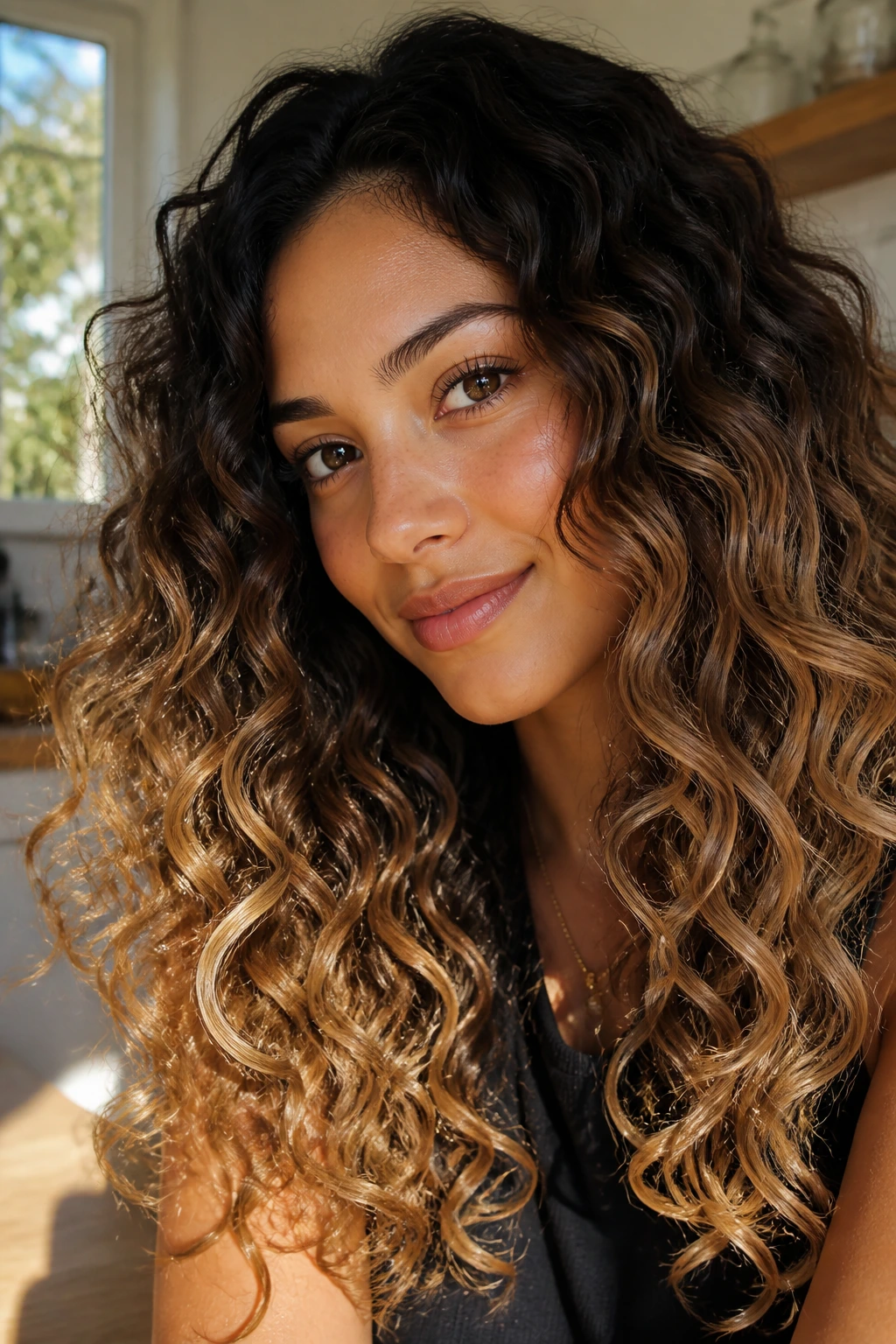
Toffee ombré makes sense on curly hair because it gives the eye a clear path from darker roots to sweeter, lighter ends. That kind of structure helps beachy waves read as intentional instead of sun-faded in a random way.
The toffee shade should live in the warm brown-to-light caramel family. Not orange. Not pale blonde. You want depth near the scalp and a creamy, almost melted finish through the lower third.
It’s a smart choice if you’re nervous about a full highlight service. The grow-out is forgiving, and the lighter ends still look good when the curls shrink up. That matters. A lot of color ideas only look good when the hair is stretched out.
12. Auburn Ribbon Highlights
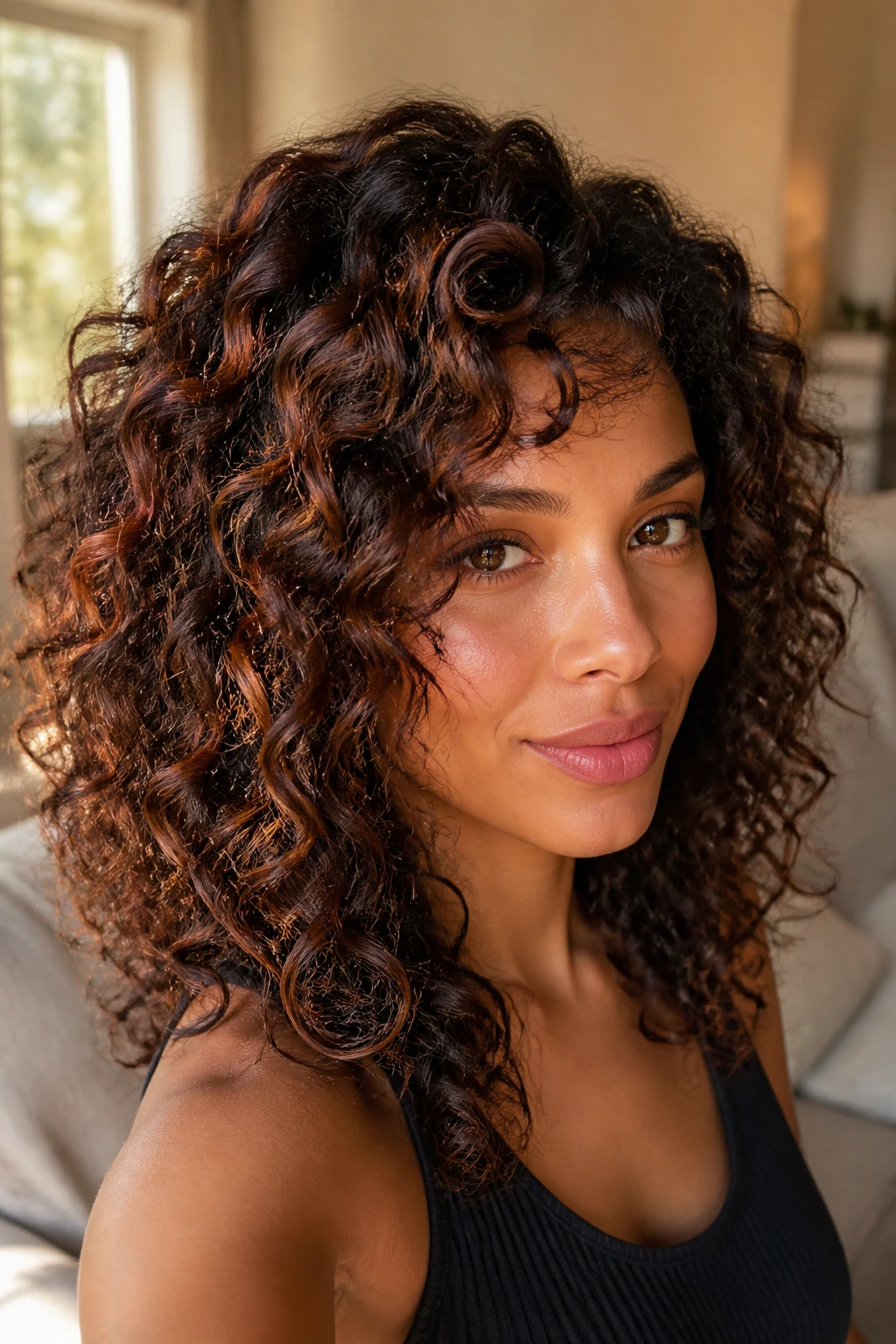
Auburn ribbons are what I recommend when someone wants red without the full intensity of copper. The tone is deeper, richer, and a little more brunette-friendly, which helps the color stay wearable in curls and waves.
The ribbons should be narrow and scattered through the outer layers. That placement lets the waves flash red in motion instead of sitting as one solid band. On a layered curly cut, auburn catches the pieces that move the most, which makes the color feel alive even on second-day hair.
This is a solid choice for medium to deep brown hair, especially if you want a warm shift for the cooler months without going bright. Pair it with a gloss that leans red-brown, not orange-red.
13. Platinum Money Piece with Dark Roots
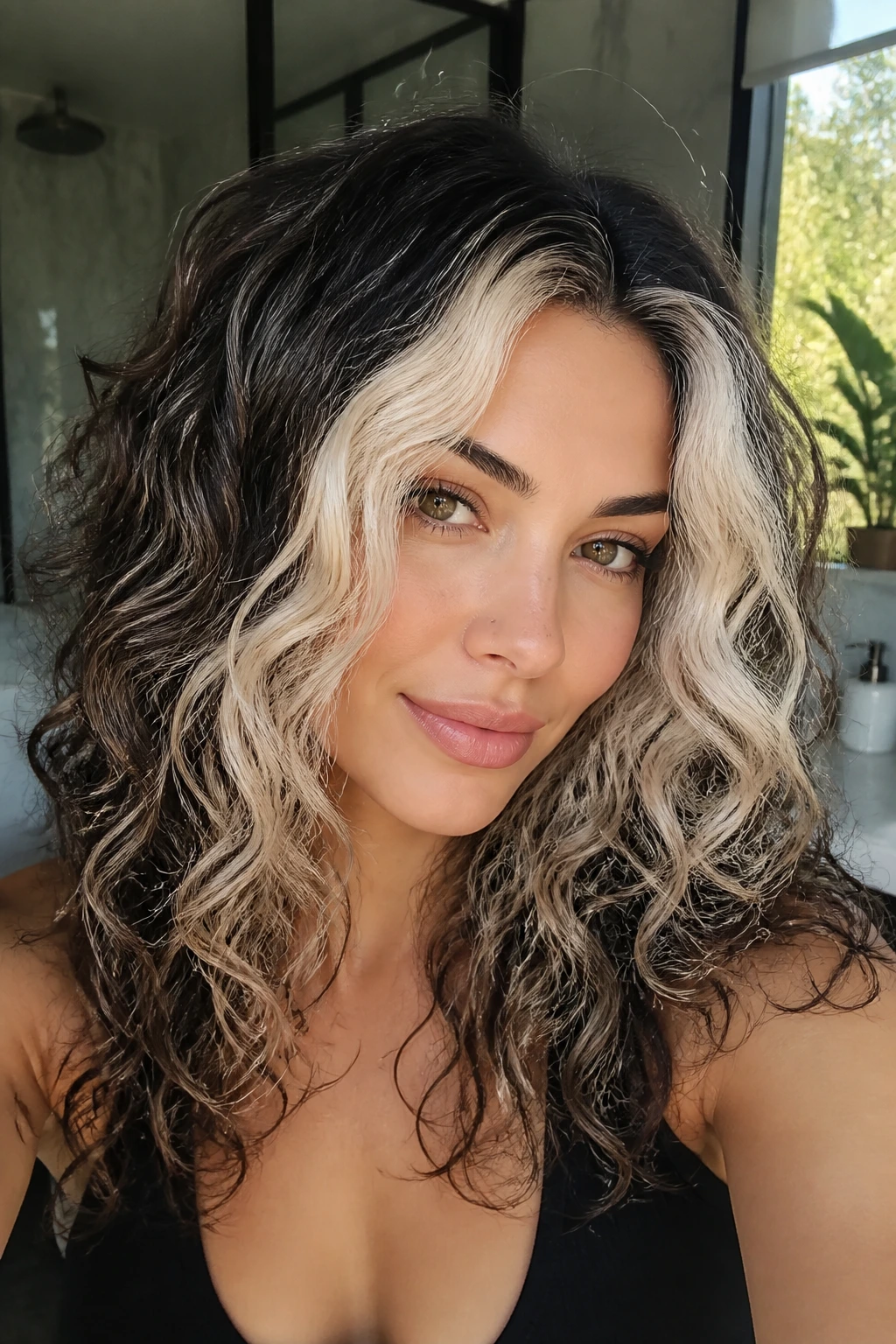
A platinum money piece can be bold, but the idea works because the rest of the hair stays grounded. Dark roots keep the whole look from feeling over-processed, and the bright front pieces give the face instant lift.
On curly hair, this is a high-contrast style that needs clean placement. If the money piece is too wide, the shape can overpower the curls. Keep it focused around the front bend of the face and let the platinum stay bright through the top layer only. The result feels sharp, not harsh.
If you like a little edge in your beachy waves, this is one of the strongest options. It does ask for more maintenance than the softer shades, though. Toner and purple shampoo become part of the deal, and there’s no elegant way around that.
14. Icy Champagne Balayage
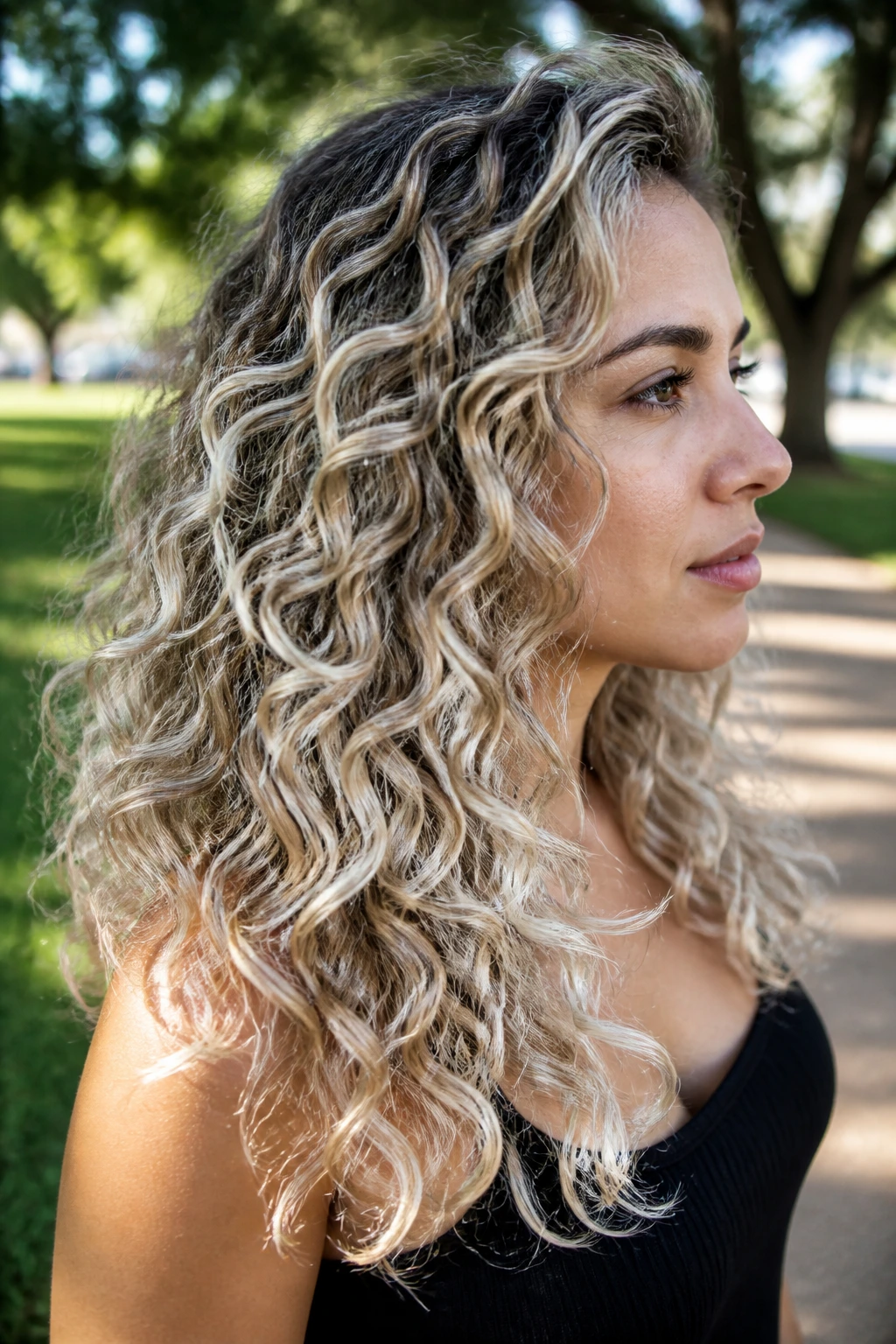
Champagne blonde is softer than platinum but cleaner than beige blonde, and that middle ground looks especially good when curls need a little polish. Add a cool icy note, and the shade turns crisp without going silver.
What makes this shade work is the way it reflects light on the raised edges of a wave. The curls don’t need to be perfectly defined. They just need a little bend and a touch of product, and the champagne tones do the rest.
This one is best on lighter natural bases or on hair that has already been lifted. If you have warmth in your skin tone, ask for a champagne finish rather than an all-over icy toner, which can make the face look washed out.
15. Chocolate Cherry Dimension
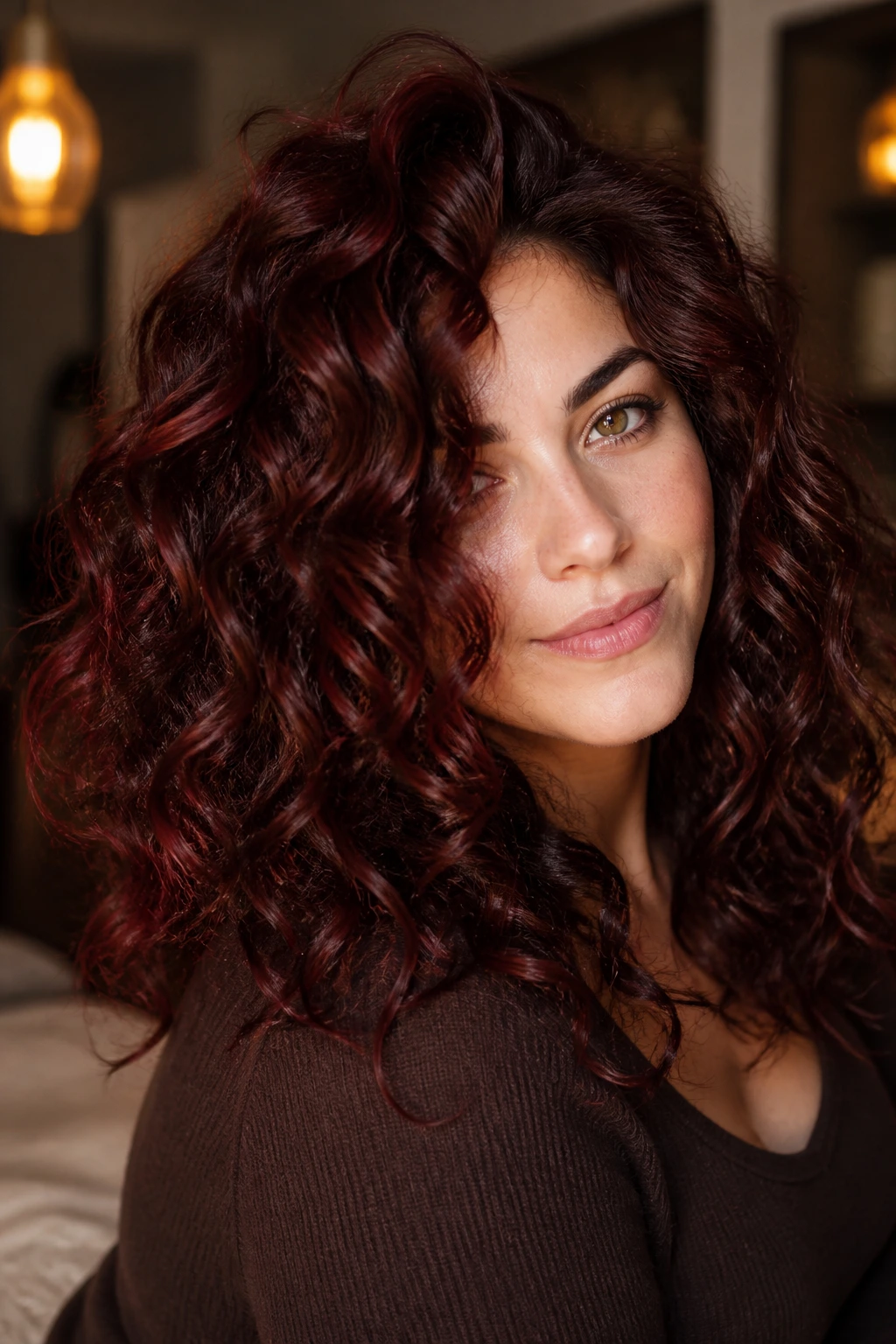
Chocolate cherry is a gorgeous answer for anyone who wants color that shifts between dark and bright depending on the light. The brunette base keeps it grounded, while the cherry tones bring a deep red shimmer into the curls.
Why It Stands Out
The magic here is subtle. In indoor light, it can look like a rich dark brown with a slight wine cast. Outside, the red comes forward and the wave pattern starts to look more sculpted because the color changes from bend to bend.
That makes it one of the better dramatic colors for curls. It gives you personality without needing neon brightness. I’d choose this for thick curls or medium waves that can hold color contrast well.
16. Bronze and Bronze-Gold Melt
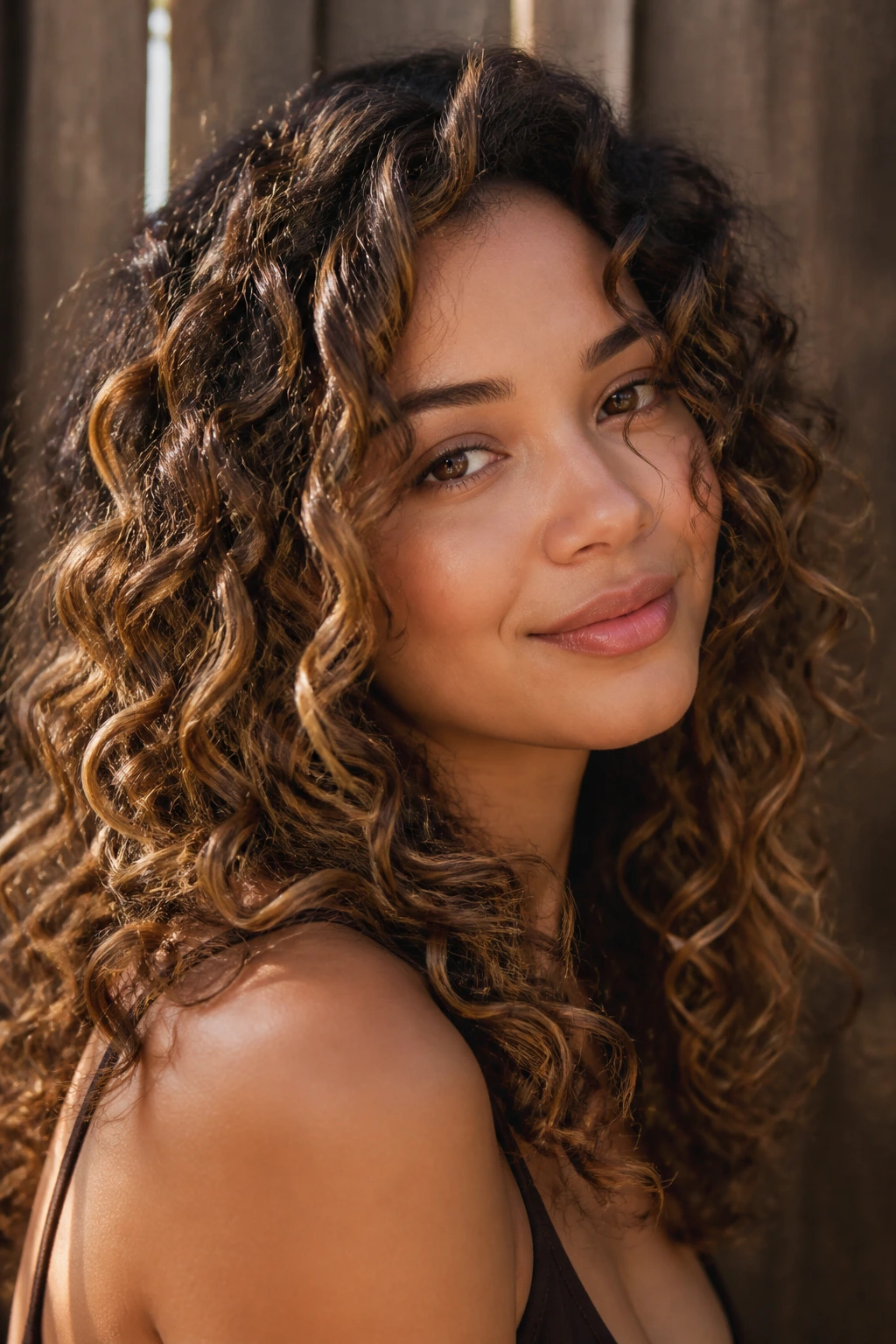
Bronze is one of those shades that seems to have been made for beachy texture. It has enough depth to keep curls from disappearing, but enough metallic warmth to make each wave catch light in a different spot.
Compared with caramel, bronze reads richer and a little more expensive-looking. It’s less sweet, more polished. If caramel is fresh toast, bronze is baked maple with a pinch of salt.
This shade suits warm or neutral undertones and works beautifully on medium brunettes who want dimension without going too light. Keep the base deep and layer the bronze-gold pieces on top where the wave pattern is most visible.
17. Peachy Coral Tips
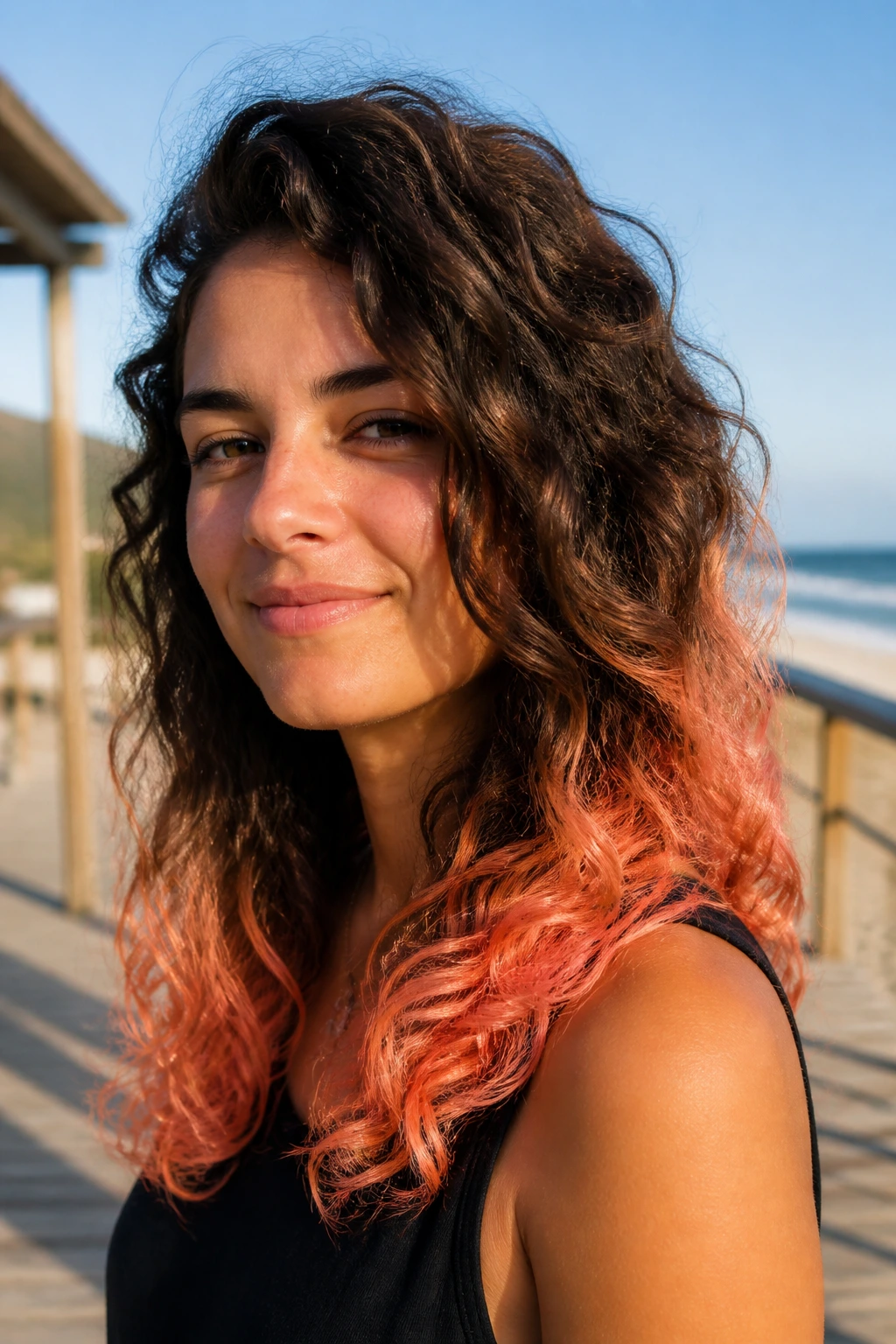
Peachy coral tips are for the person who likes color but does not want to commit to an all-over fashion shade. A little coral at the ends of beachy waves can look cheerful, airy, and oddly wearable when the rest of the hair stays natural.
The best thing about this idea is how little it needs to work. Two to four inches at the bottom are often enough. The curls do the rest of the work, especially if the color fades gradually from peach into a softer golden blonde or light brown.
This is a smart option if you want to test fantasy color without taking the whole head there. It also grows out more softly than a full pastel panel, which matters when the ends get frizzy or dry.
18. Walnut Brown with Warm Lows
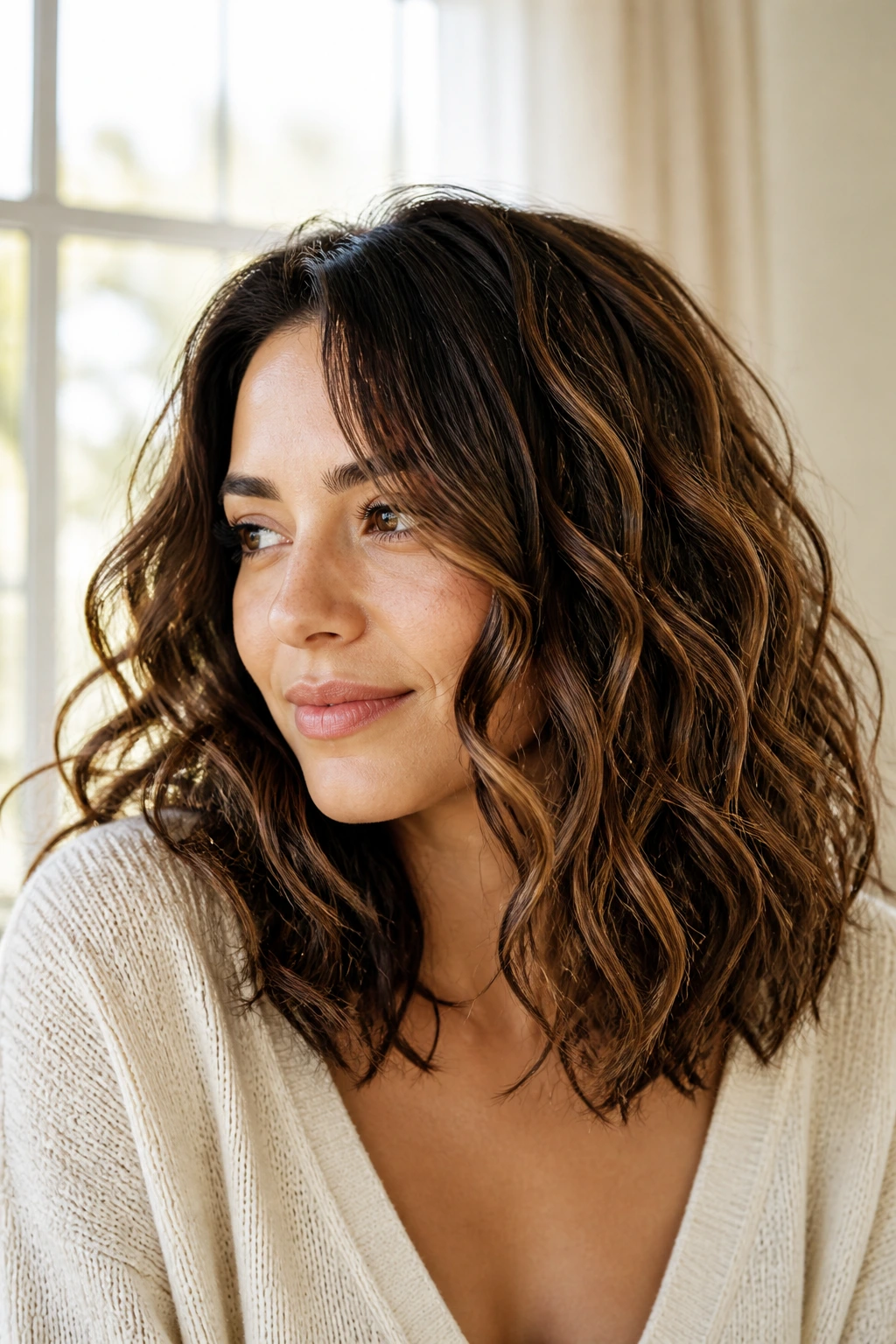
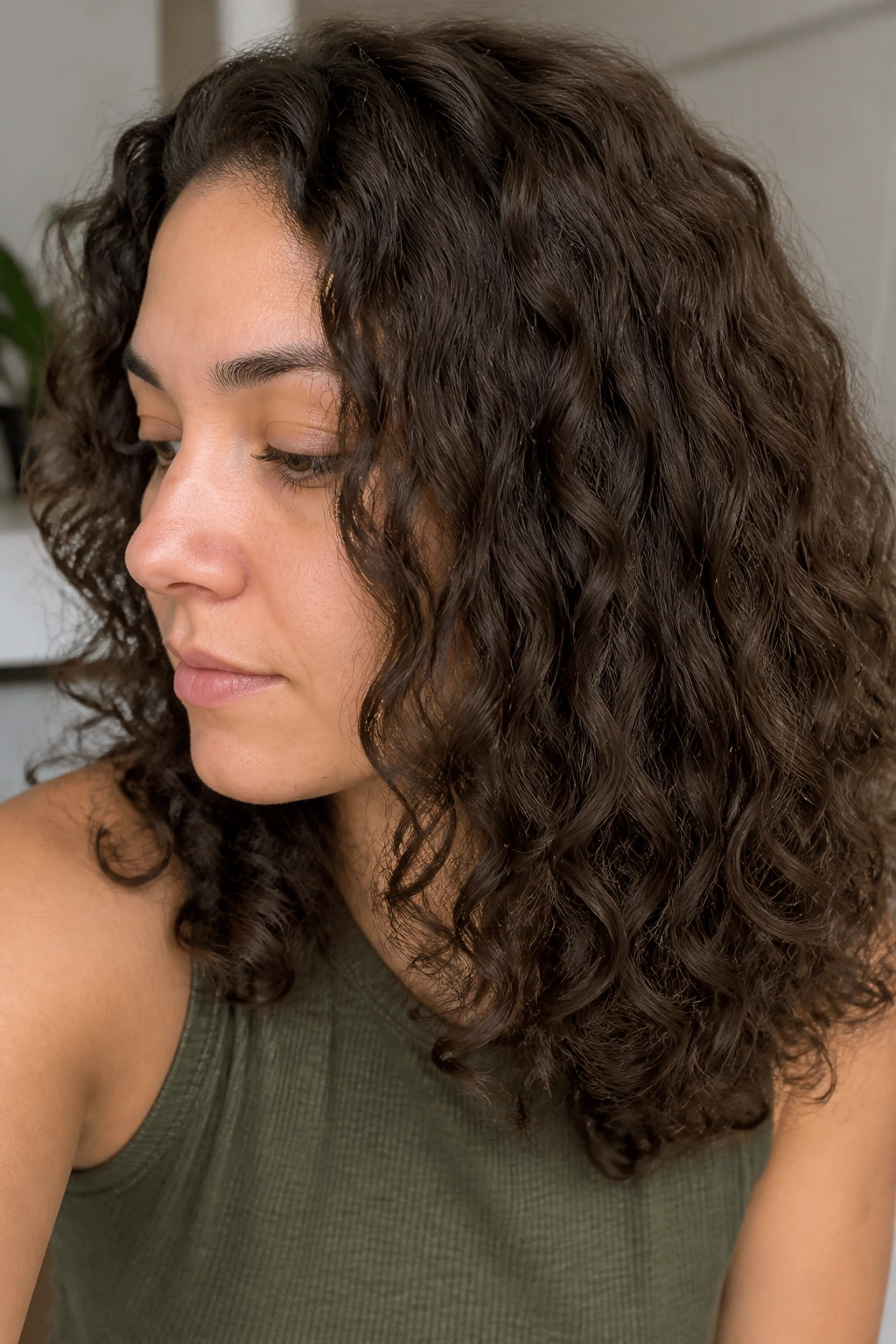
Walnut brown sounds plain until you see it moving. Then the depth starts to show: deep brown, soft warmth underneath, and a hint of richness in the shaded parts of the curl.
The warm lowlights are what keep this color from going flat. On beachy waves, lowlights create little pockets of depth, and those pockets make the lighter pieces on top look brighter by comparison. That’s the old trick, and it still works because it respects the texture instead of covering it up.
This is a strong choice if your hair is already lightened and you want to bring it back down a bit without losing dimension. It also grows out beautifully on layered cuts.
19. Soft Black with Blue-Black Shine
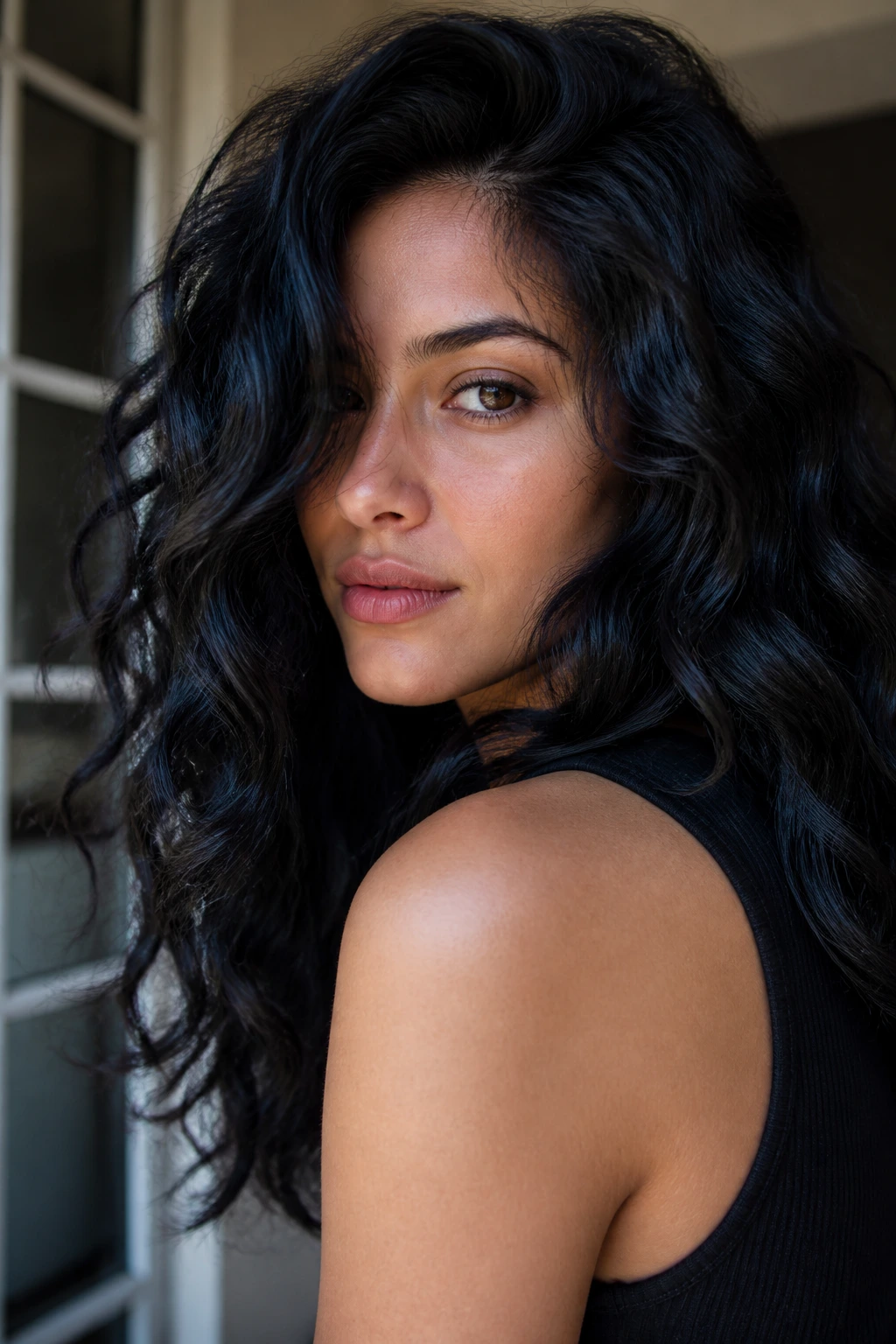
Soft black is not the same thing as harsh black box color, and it’s worth saying out loud. A soft black with blue-black shine has depth, light, and a slightly cooler edge that makes curls look glossy instead of coated.
The blue note matters more than people think. It keeps the black from reading flat under daylight and gives the finish a cleaner outline along the curls. On beachy waves, that can be stunning in a restrained way — dark, reflective, and not muddy.
If you’re naturally dark, this is one of the easiest ways to make curls look rich without changing the overall level much. If you’re lighter, it requires more commitment and a careful consult. Black is not the shade to wing.
20. Mulberry Waves
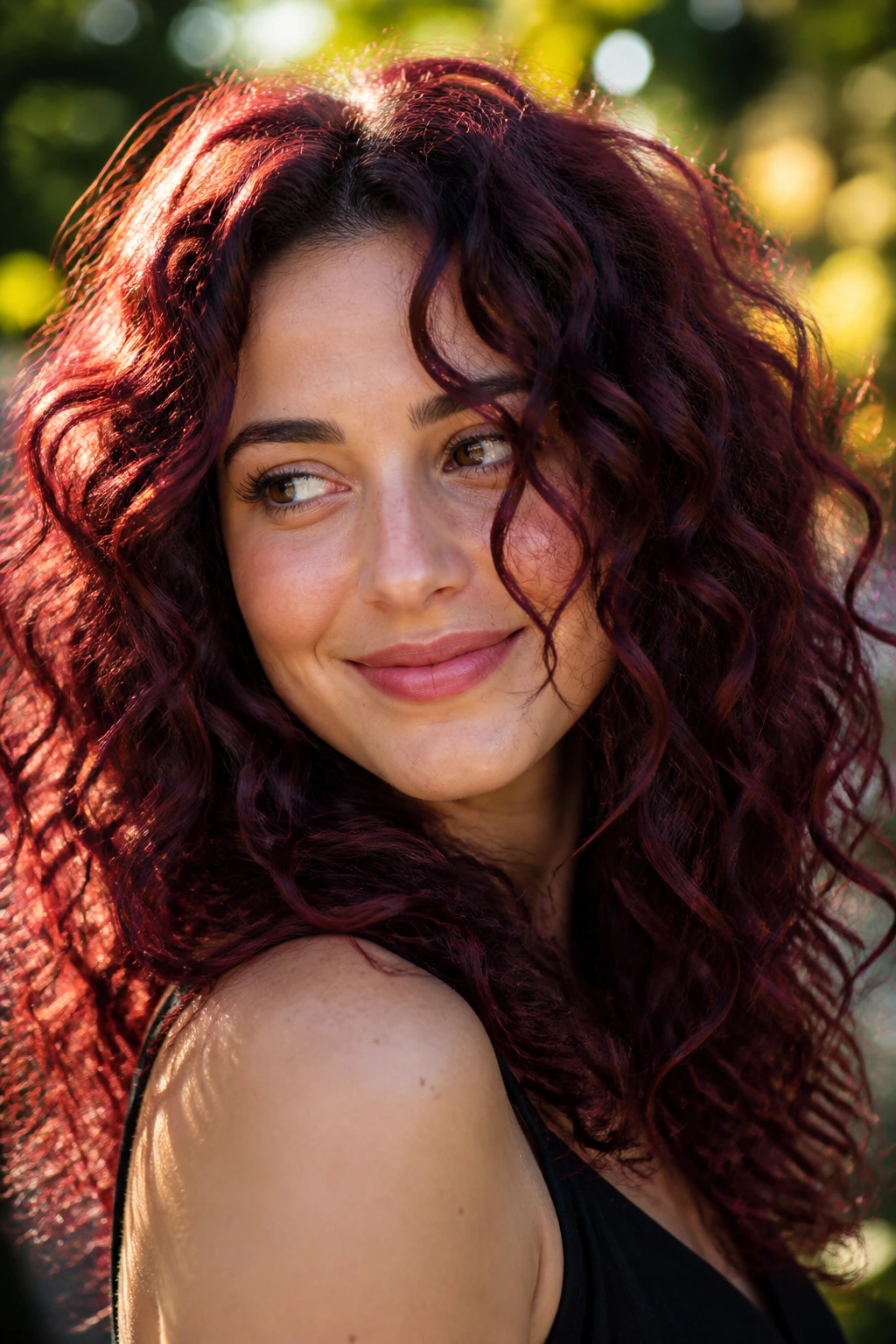
Mulberry is a dark berry tone with enough red and violet in it to stay interesting. On curls, it looks especially good because the bends pick up the cooler purple notes while the outer layers show a deep wine sheen.
This is one of the best choices for anyone who wants a fashion color that still feels moody rather than loud. The beachy wave pattern keeps it soft. You get color movement, not a solid plum helmet.
Best for this shade
- Naturally deep brunettes who want a berry shift.
- Curly cuts with layers, since the movement helps the violet tones show.
- People willing to refresh the color with a tint or gloss every few weeks.
- Anyone who wants something darker than rose but less severe than black.
21. Beige Brunette with Babylights
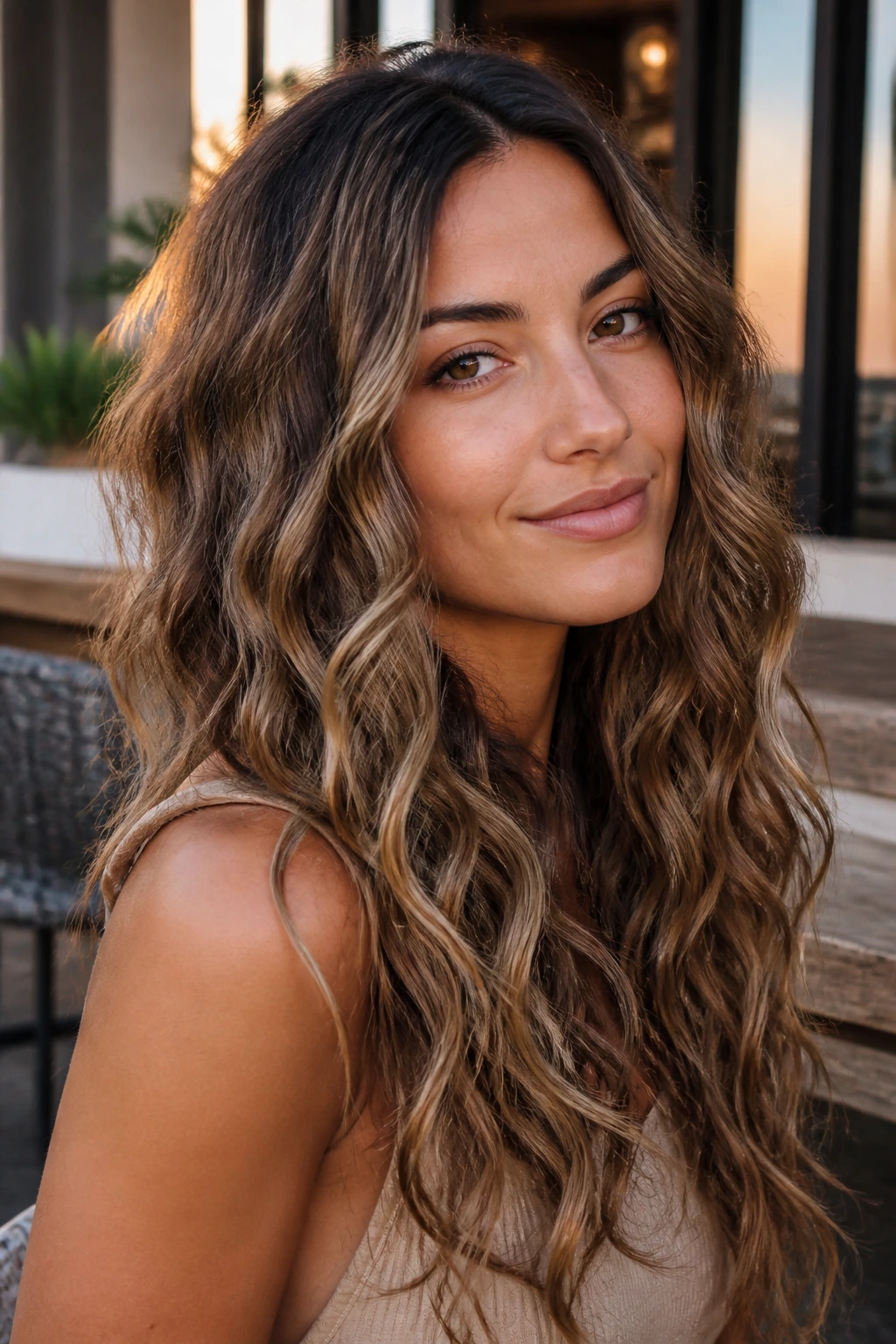
Beige brunette is what happens when brown hair gets a careful, very soft lightening pass and no one tries to turn it into blonde. The babylights are tiny, which is why this style looks so believable on curly texture.
The light pieces live all over the surface, almost like sun scattered through the top layer. That tiny placement matters because beachy waves don’t need big chunks to show dimension. They need finesse. A light hand gives the hair movement without making the pattern busy.
This is one of the easiest colors to wear if you want something polished but not obvious. It also grows out quietly, which is a blessing when your curl pattern changes from day to day.
22. Buttercream Blonde with Root Shadow
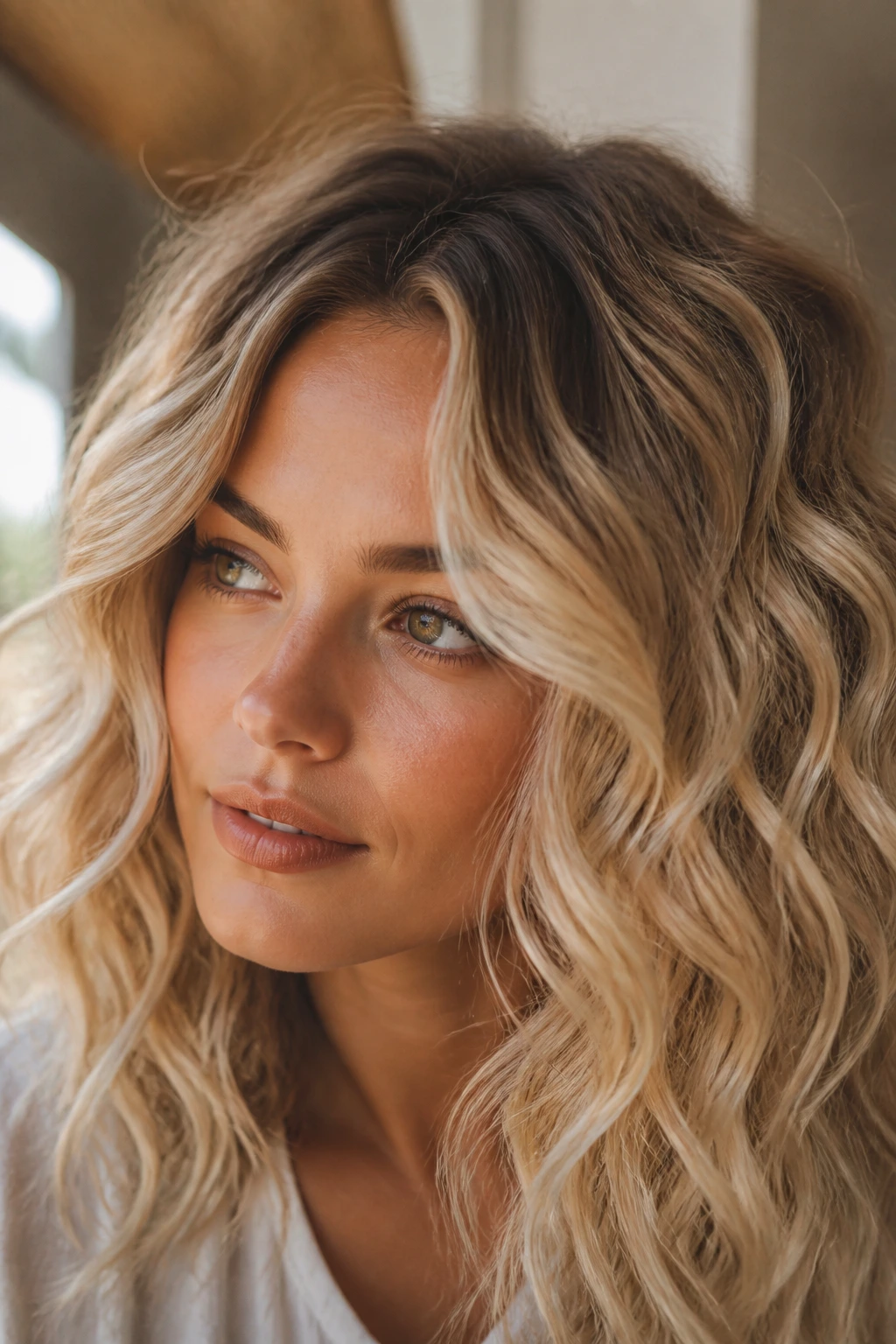
Buttercream blonde is warm, creamy, and a little softer than bright golden blonde. Add a root shadow, and the style suddenly becomes much easier to live with on curly hair.
The shadowed root does two jobs. It keeps regrowth from looking harsh, and it gives the blonde a base so it doesn’t float away from the face. On beachy waves, that little bit of darkness at the scalp makes the lighter pieces feel attached to the haircut instead of sitting on top of it.
If you want blonde that still looks gentle in natural light, this is a strong option. It does need toning, but the warm cream finish ages better than cold platinum on textured hair.
23. Cinnamon Toast Copper
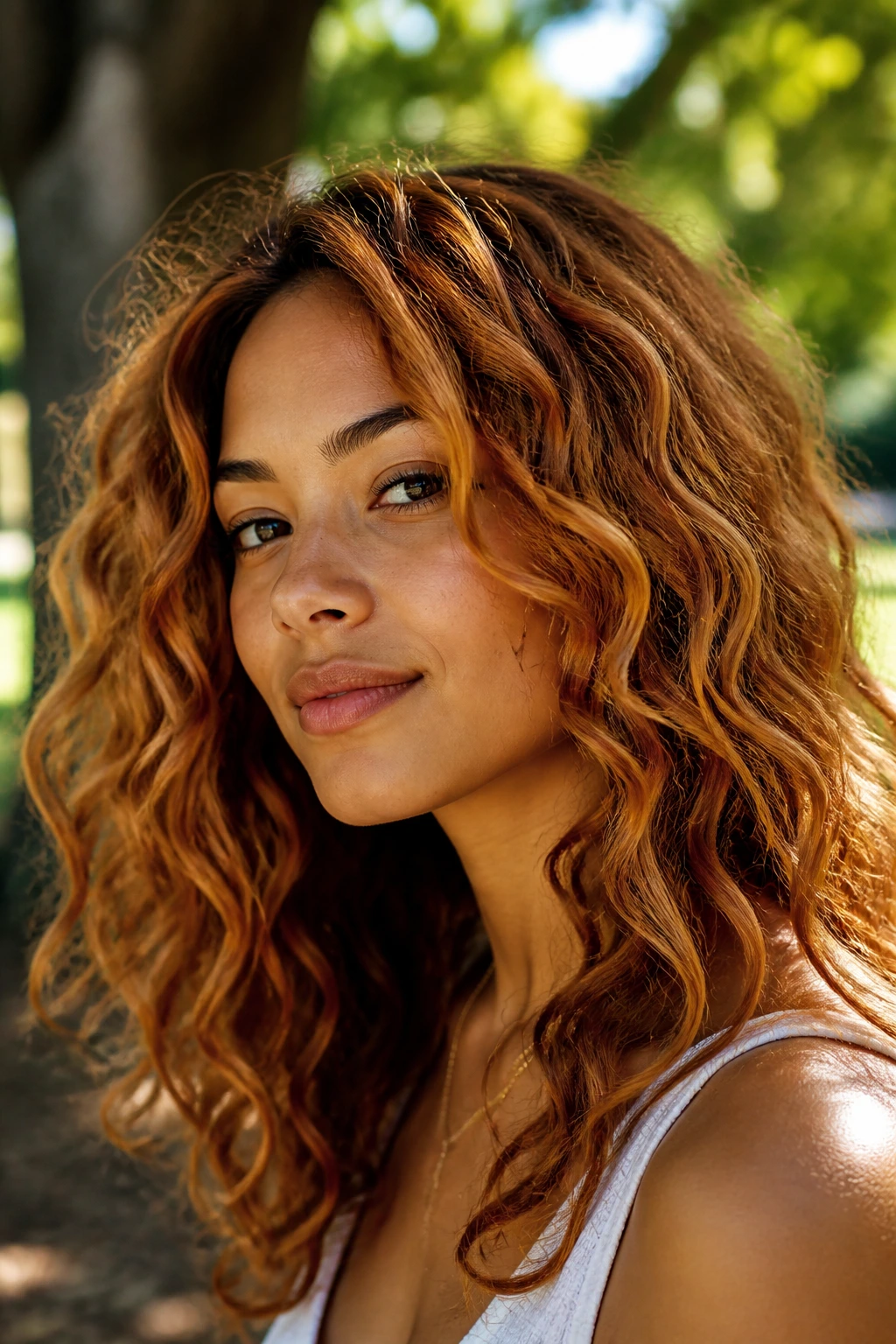
Cinnamon toast copper is warmer and toastier than classic copper, which is why I like it on curls that already lean golden or auburn. The tone has baked warmth, not neon heat.
It’s especially good on layered waves because the lighter cinnamon pieces can sit on the surface while deeper copper stays tucked underneath. That makes the color move. In sunlight, the whole thing reads as a glow rather than a single block of red.
This shade works best when the copper stays softened with brown and gold. Too much brightness and it starts to fight the curl texture. Keep it rich. Keep it spiced.
24. Smoky Lilac Ends
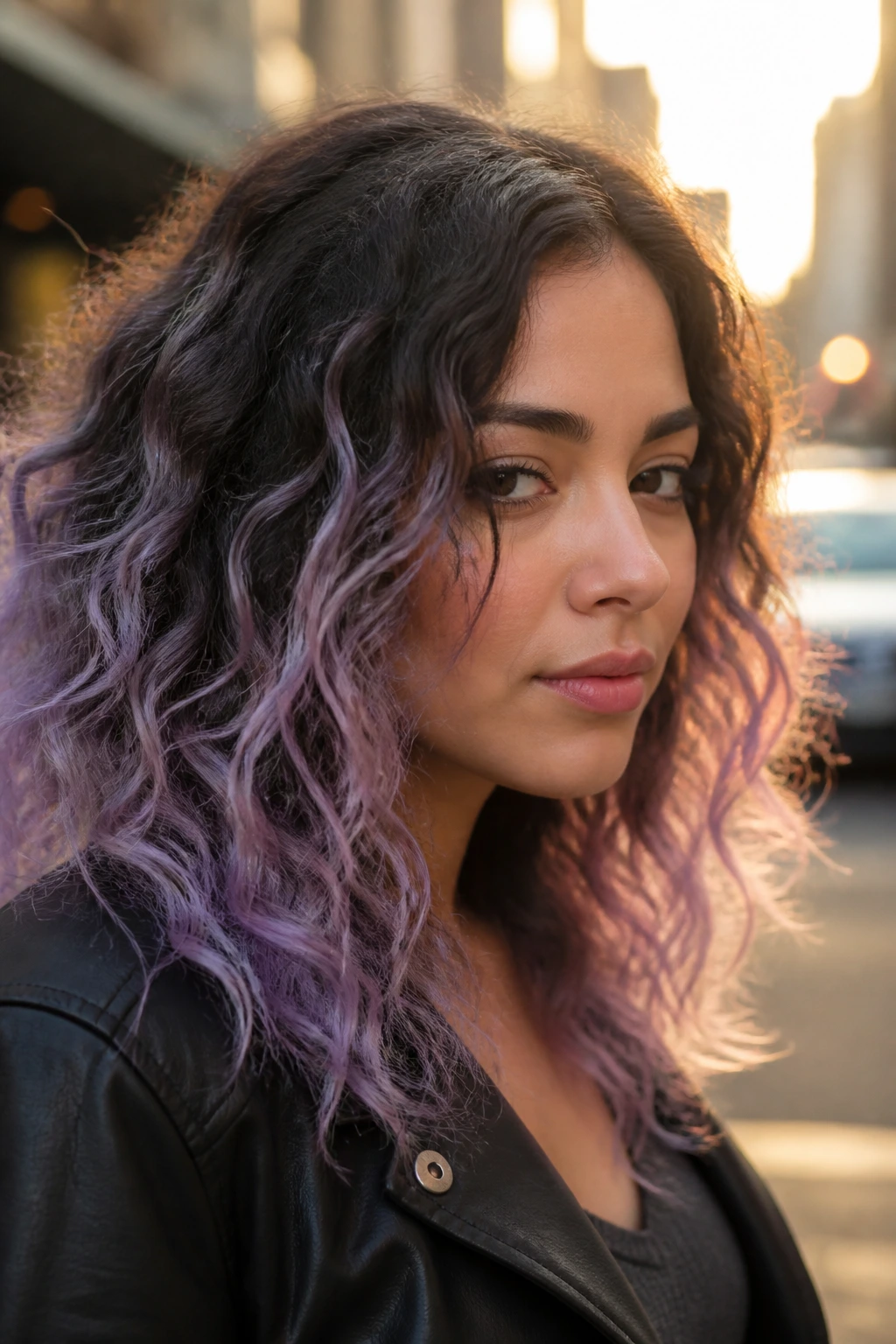
Smoky lilac is the cool-girl version of pastel color, and on beachy waves it has a moody softness that plain lavender often lacks. The smoky base keeps it from looking like candy, which is half the battle.
The color is best kept at the ends or in a faded ombré section, where the curl pattern can show off the transition from natural roots to lilac haze. Because textured hair already hides some of the line, you can keep the finish more diffuse and less engineered.
If you want fashion color without going full bright, this is one of my favorite options. It does fade, and it will fade into something gentler rather than cleaner. That’s part of the charm.
25. Ink Black with Espresso Gloss
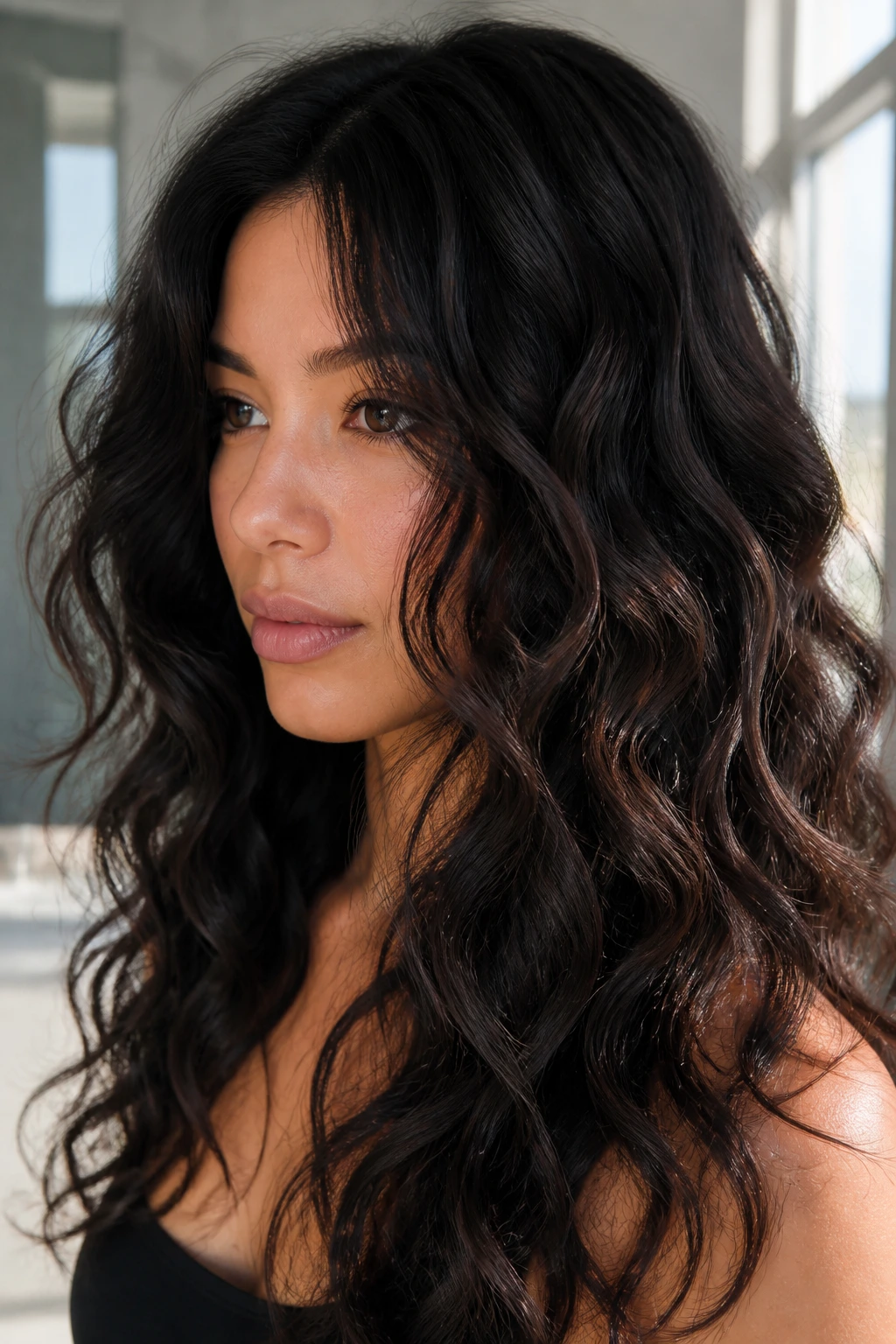
Ink black with espresso gloss is for anyone who wants deep, polished dark hair with a little more movement than flat black. The espresso sheen softens the darkest pieces just enough to show the curl pattern.
It’s a subtle choice, but not a boring one. On beachy waves, the gloss creates tiny points of reflection along the bends, and that makes the hair look healthier even when it’s plain and dark. It’s a shade that respects thickness. It doesn’t try to fight it.
If your goal is depth, shine, and low maintenance, this is a strong final stop. A clear or espresso-toned gloss every so often keeps the finish alive without dragging the whole head through another round of permanent color.
Why Texture Makes These Shades Look Richer
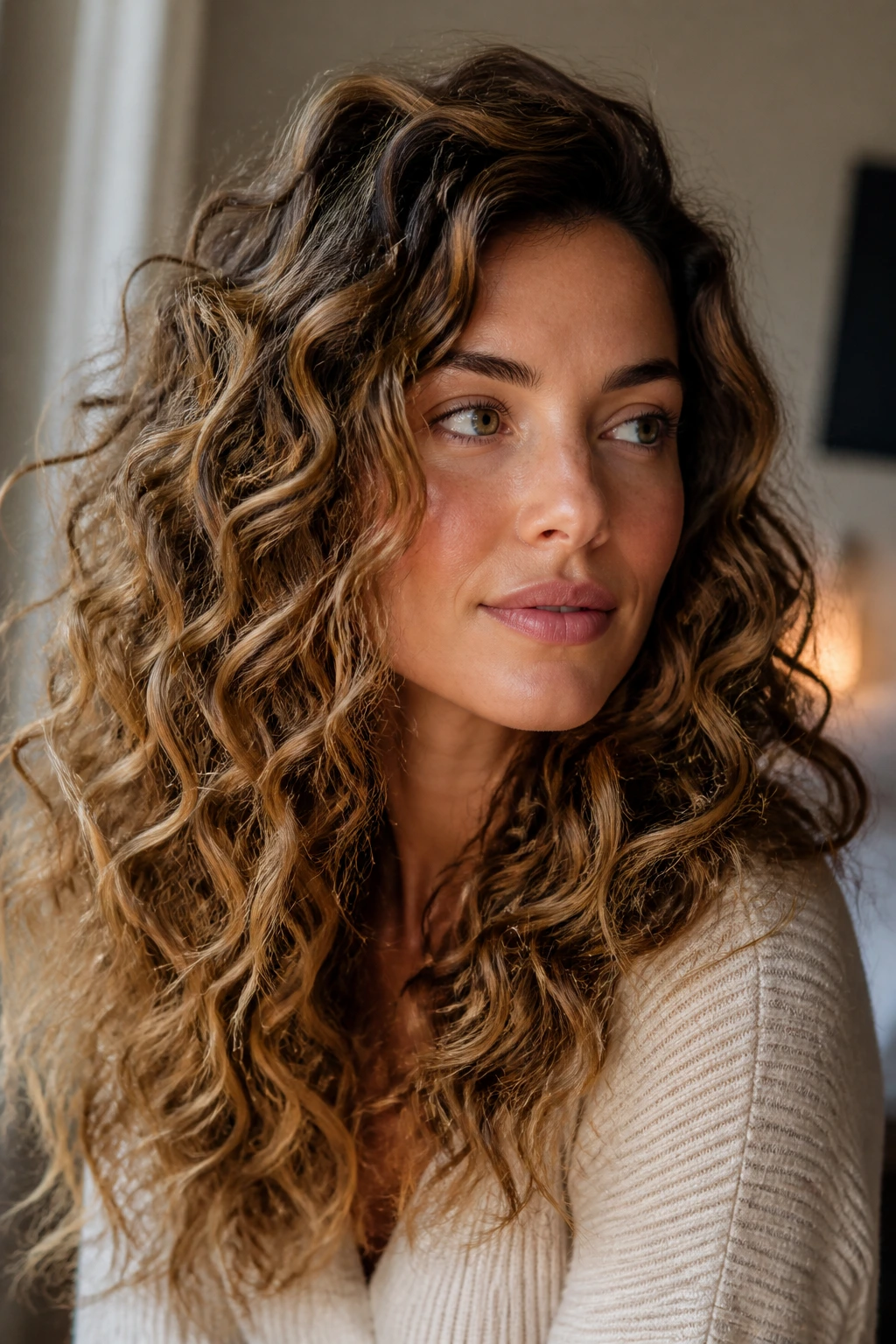
Curly hair and beachy waves change how color lands because the surface is never one smooth plane. Light catches the top of a curl, drops into the groove, then flashes again on the next bend. That’s why a tiny amount of balayage can look bigger here than on straight hair.
The best color placement follows the haircut, not the theory chart. Pieces around the face, the crown, and the outer curve of the wave usually matter more than a heavy back section that nobody sees until the hair moves. If you’ve ever looked at a curl pattern in a mirror and thought one side seemed lighter than the other, that was probably the point. Intentional imbalance reads softer.
One more thing: beachy waves can make warm tones look sunnier and cool tones look smokier, so the finish changes with styling products too. Sea-salt spray, mousse, and a diffuser can all shift how the color reads. That’s not a problem. It’s part of the fun.
Tools That Keep Curly Color Looking Clean
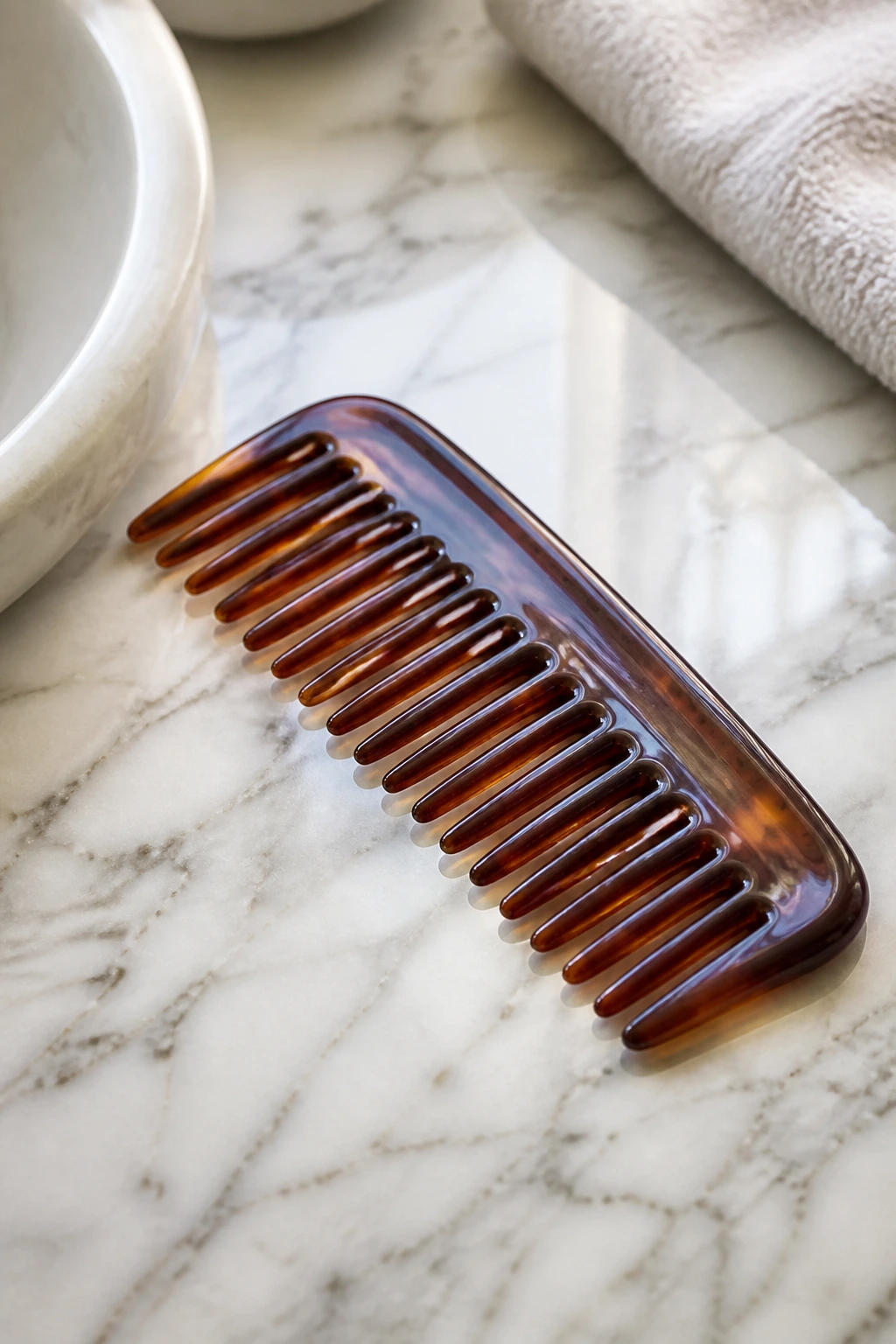
You do not need a drawer full of gadgets, but a few good tools save a lot of frustration.
- Wide-tooth comb: Detangles wet curls without ripping apart the pattern or pulling color through too aggressively.
- Sectioning clips: Keep highlight sections clean if you’re doing any at-home glossing or root work.
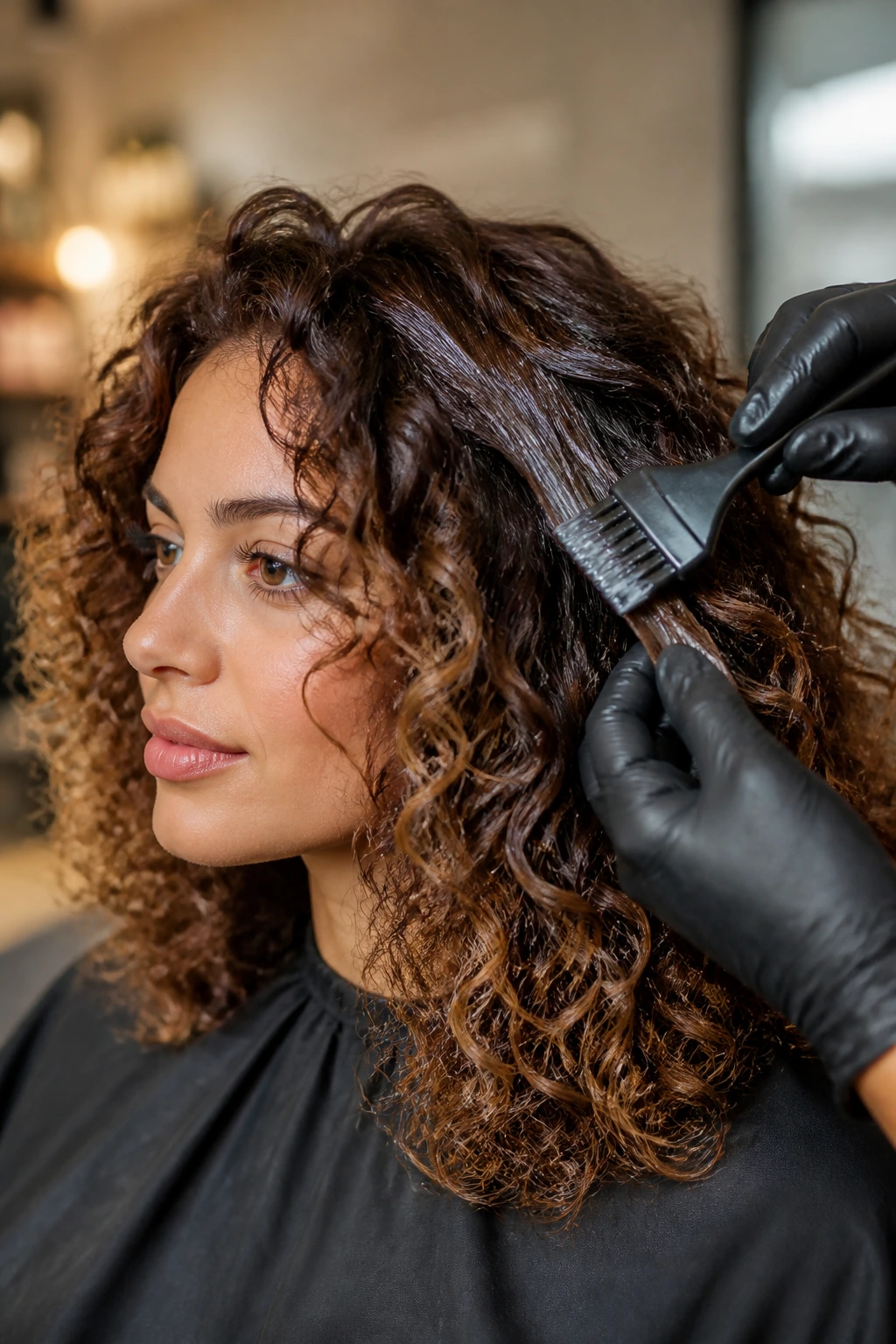
- Tint brush and bowl: Helpful for precise root shadow, face-framing pieces, or a quick color-refresh mask.
- Color-safe shampoo: Cleans without stripping the tone out of lighter ribbons or red and copper shades.
- Deep conditioner: Keeps highlighted curls from feeling rough and puffy after lightening.
- Microfiber towel or cotton T-shirt: Cuts down on frizz when you’re scrunching out water after a wash.
- Heat protectant spray: Necessary if you diffuse or use a curling wand to refresh the wave pattern.
- Silk pillowcase or bonnet: Helps preserve the shape and shine so the color shows up evenly the next day.
- Purple or blue toning product: Useful for blonde or brunette shades that drift yellow or orange.
- Bond-building treatment: Worth it when you lighten curly hair; the texture usually needs the extra help.
How to Choose the Shade That Won’t Fight Your Hair
Base level matters first. If your natural color sits around a level 4 or 5, caramel, bronze, mocha, auburn, and chocolate cherry are usually easier to wear than pale blonde ideas. If you’re already lighter, buttercream, champagne, rose gold, beige blonde, and sandy tones can slide in without a heavy lift.
Porosity matters too. Curly hair often grabs color fast at the ends and slower near the root, which can create uneven tone if the formula isn’t adjusted. High-porosity hair can go darker, cooler, or brighter faster than you expect. That means timing, toner strength, and aftercare all matter more than the pretty inspo photo.
Skin tone is part of it, but not the whole story. Warm undertones can carry copper, gold, bronze, and cinnamon with little effort. Cooler undertones often look clean in mushroom brown, beige blonde, mulberry, smoky lilac, and blue-black shades. Neutral undertones get the widest lane, which is mildly unfair but useful.
And then there’s the curl pattern. Loose beach waves can handle stronger contrast than a tighter curl cluster because the wave itself already gives a softer read. Tight curls usually look best with ribbons, lowlights, or glazes that preserve movement. Heavy block color tends to flatten the pattern. That’s the part many color charts ignore.
Practical Ways to Get More Out of These Shades
Placement: Ask for the lightest pieces where your hair naturally opens up — around the face, the top layer, and the outer curve of the wave. That’s where the color shows first.
Tone control: If the shade runs warm, use a gloss or toner to keep it in the right family instead of letting it drift yellow or brassy. If it runs cool, don’t over-tone it into ash sludge. Hair can go dead fast when the toner is too heavy-handed.
Low-maintenance move: Root shadows and soft balayage are your friend if you don’t love salon upkeep. They grow out better than full foils, and they keep the curl pattern from looking boxed in.
Styling trick: Diffuse or air-dry with a light mousse or curl cream, then break up the cast once the hair is fully dry. Color shows best when the waves stay soft and separated, not crunchy.
Finishing touch: A clear gloss can make almost any of these shades look richer for a few weeks without changing the whole head. That tiny shine pass is often more useful than chasing a whole new color formula.
Mistakes That Make Curly Color Look Flat
Too much block color: Solid panels can make curls look like one heavy shape instead of a layered one. The fix is ribbon placement or softer paint-through pieces.
Ignoring undertone drift: Blonde can go yellow, red can go coppery-orange, and brunettes can go muddy. If the tone starts to drift, correct it with the right gloss instead of piling on more pigment.
Lifting too far on fragile curls: Lightening damaged curls until they turn stretchy and rough is a terrible trade. Stop at a healthier lift and build the brightness with placement, not bleach pressure.
Putting brightness only underneath: Hidden highlights sound smart until you realize nobody sees them unless the hair flips. The top layer and face frame need at least some of the lighter pieces.
Choosing the wrong contrast level: Super high contrast can look choppy on some curl patterns. If your hair is tight or dense, softer contrast usually reads better and grows out better too.
Other Ways to Wear the Same Idea
Soft Gloss-Only Refresh: If you already have a good base color, a gloss in caramel, beige, copper, or chocolate can change the mood without a full color service. It’s the low-commitment route and a very underrated one.
Chunkier Retro Highlights: Wider ribbons can look cool on beachy waves when they’re placed sparingly and blended well. Too many, and the style turns stripey fast.
Money-Piece Focus: Keep the brightness mostly around the face and let the rest stay deeper. This works when you want visible payoff without lightening the whole head.
Warm-to-Cool Melt: Start with caramel or bronze near the roots and move into beige, champagne, or smoky tones at the ends. The shift gives curls a lot of movement.
Fashion-Color Ends: Coral, rose, lilac, or berry can live just on the ends if you want color that fades out cleanly. This is the easiest way to test a bolder look.
Maintenance, Toning, and Refresh Timing
Curly color lasts longer when you stop washing it like it owes you money. A gentle shampoo schedule, a color-safe formula, and cooler water all help keep the cuticle calmer so the color doesn’t disappear fast. For lighter shades, I’d keep clarifying shampoo rare — think once every couple of weeks at most, and only if the hair is getting coated with product.
Glosses and toners are your best friends for keeping the tone on track. Warm blondes, beige brunettes, and caramel shades usually need a refresh every 6 to 8 weeks if you want them to stay clean. Reds and coppers can fade faster, sometimes needing touch-up masks or a glaze closer to the 4 to 6 week mark. Dark shades like espresso, mocha, and soft black often hold longer, but they still lose shine if you skip conditioning.
If you lighten curly hair, treat moisture like part of the color service, not an optional extra. A weekly deep conditioner and occasional bond-building treatment can help the curls keep their shape while the color stays smoother. Dry, puffy hair makes even good color look tired.
Heat tools can be used, but they need a reason. Diffusing is fine. A hot wand every day is not. If the ends start to look frayed or the color starts to look matte, back off on the heat and add a gloss before you go hunting for a new shade.
Frequently Asked Questions
Which hair color ideas for curly hair with beachy waves are the lowest maintenance?
Mocha melt, caramel balayage, beige brunette with babylights, and espresso with chestnut face-framing are some of the easiest to live with. They grow out softly and don’t depend on a perfect root line to look finished.
What shades are best if my curls are fine and easy to weigh down?
Keep the contrast light and the placement airy. Honey blonde ribbons, sandy beige blonde, and soft caramel highlights usually create movement without making fine curls look packed down.
Can I do a fashion color on beachy waves without bleaching the whole head?
Yes, but the result depends on your starting level. Mulberry, rose gold ends, smoky lilac, and peachy coral often work best on pre-lightened sections or on lighter natural bases, so the whole head doesn’t need the same amount of lift.
How do I stop blonde on curly hair from looking brassy?
Use a toner that matches your goal shade, not just a purple shampoo and hope. Purple and blue products help maintain the tone, but they do not replace proper salon toning or a color deposit mask when the hair starts drifting warm.
Is it better to color curly hair before or after the haircut?
Usually after the cut, especially if you’re changing shape. The placement can follow the layers more cleanly once the curl pattern is visible, and that keeps the bright pieces from sitting in the wrong place.
Do darker colors make curly hair look heavier?
Sometimes, yes, if the shade is flat and one-note. That’s why mocha melt, chocolate cherry, walnut brown, and soft black with shine do better than a solid block of dark dye. Depth matters more than darkness.
How often should I refresh red or copper tones?
Plan on a gloss, color mask, or salon refresh every 4 to 6 weeks if you want the warmth to stay lively. Red pigment fades fast, and curls tend to expose that fade because they catch the light from so many angles.
What if my hair is damaged and I still want a lighter look?
Go for placement, not full-head lift. A few caramel ribbons, a root shadow, or beige babylights can give you brightness without pushing fragile curls into that dry, straw-like zone.
The Shade That Holds Its Shape
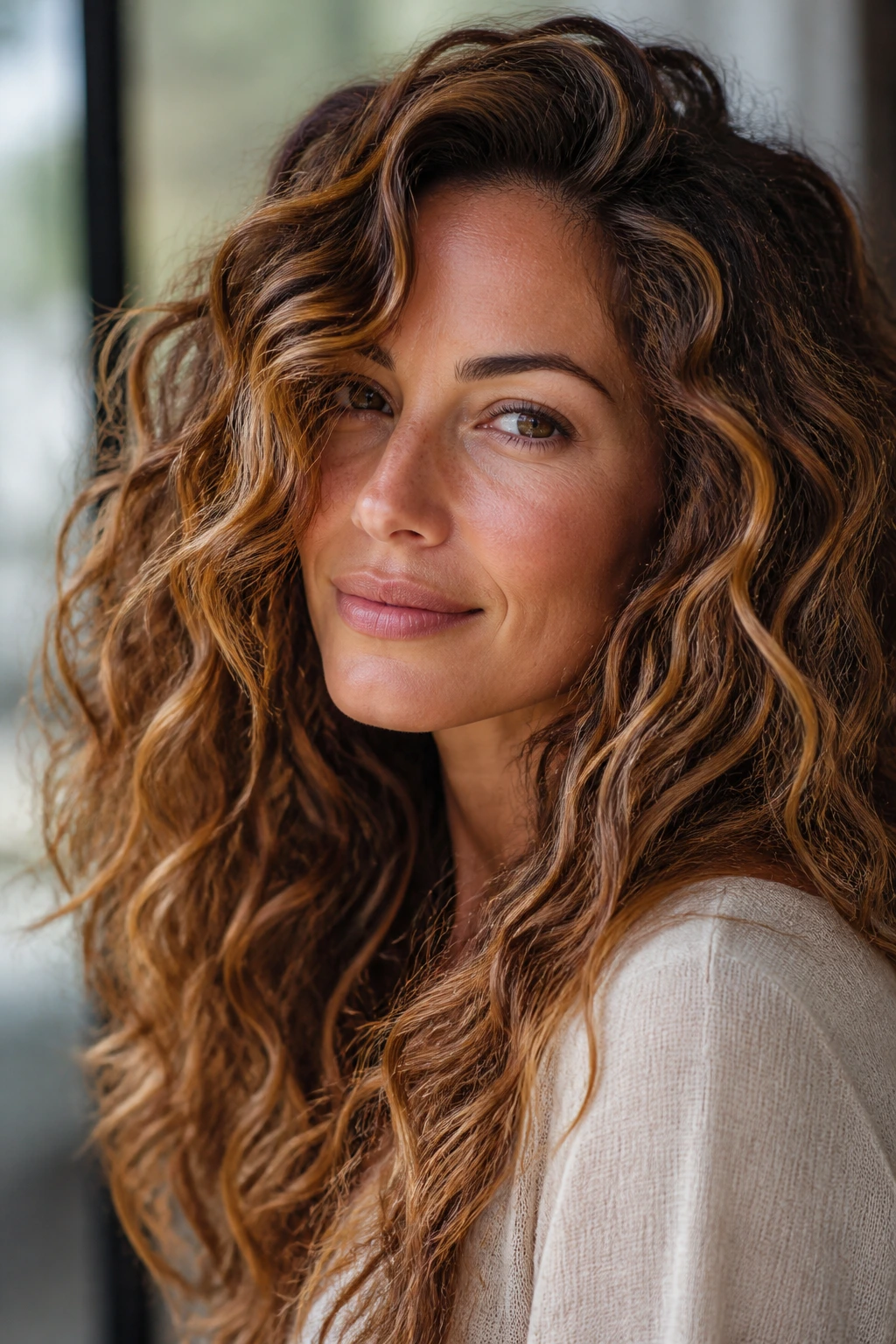
The best color on curly hair doesn’t just look nice on day one. It still looks like a good decision after the curls have fallen a little, after the beach spray has dried down, after the root starts to show. That’s the real test.
A good shade works with the wave pattern instead of flattening it. Sometimes that means warm caramel. Sometimes it means a smoky brunette. Sometimes it means being brave with copper, lilac, or platinum and then keeping the placement tight enough that the texture can still do its job.
If you keep one idea in your head, make it this: choose color that moves when your hair moves. That’s where curly hair and beachy waves stop being a challenge and start being the whole point.