



The quickest way to make medium hair look more deliberate is to give the front shape some work to do. When face-framing layers with bangs for medium hair are cut well, the whole style stops hanging like one flat sheet and starts bending toward the cheekbones, the jaw, and the collarbone where the eye naturally wants to go.
Medium length is a sweet spot for that reason alone. It has enough weight to keep bangs from flying apart at the first sign of humidity, but not so much length that every layer gets dragged straight by gravity. That’s why curtain bangs, bottleneck fringe, wispy brows, side-swept pieces, and shaggy fronts behave better here than they do on very long hair.
The catch is balance. Cut the layers too high and you get a fluffy triangle by the second week. Leave too much weight in the front and the bangs sit there like damp paper. The good versions below all solve that problem in different ways, and the differences matter more than people think.
Why You’ll Love This Collection
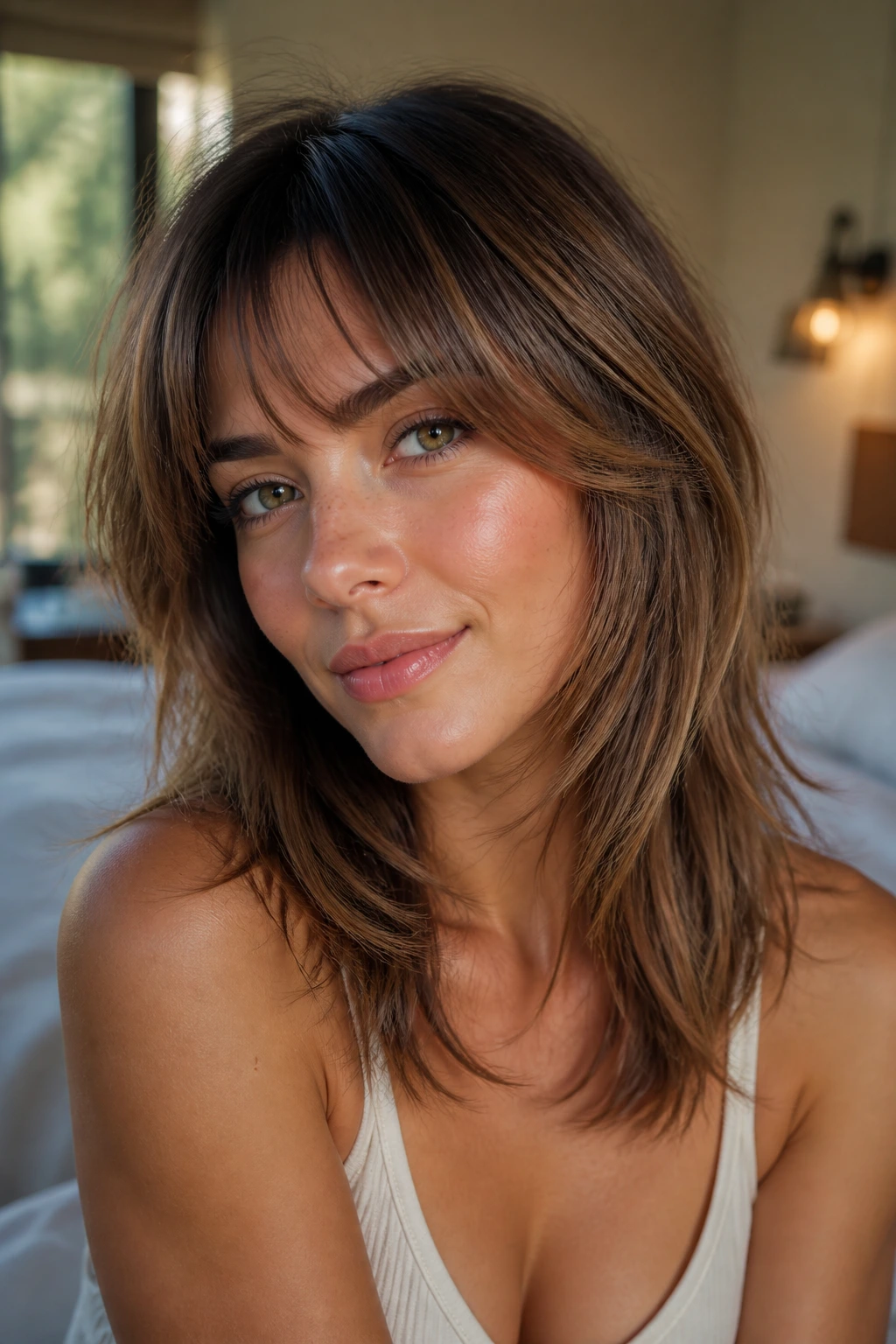
-
Cheekbone lift without a hard line: The front pieces can start at the chin, lips, or cheekbones, which changes where the eye lands and keeps the shape from feeling heavy.
-
Bangs with different upkeep levels: Some of these need a round brush and five minutes; others can be roughed dry and still look intentional by lunch.
-
Medium hair gives the layers room to move: This length holds a bend better than long hair and doesn’t collapse as fast as shorter cuts, so the shape lasts.
-
You can match the cut to your texture: Straight, wavy, curly, fine, thick — there’s a version here that works with the pattern you already have instead of fighting it.
-
The salon description is easier than it sounds: Once you know where the shortest front piece should hit, the rest of the conversation gets much clearer.
1. Curtain Bangs with Chin-Grazing Layers
Curtain bangs are the easy answer for a reason: they open the forehead without stealing the whole show. On medium hair, the best version starts with a soft split at the bridge of the nose and then falls into chin-grazing layers that move when you turn your head. It’s the kind of cut that looks better when the ends aren’t too perfect.
What makes it work is the balance between soft fringe and steady length. If the shortest pieces land around the cheekbone and the rest tapers to the chin, the face gets shape without the feeling of a heavy curtain hanging in front of it. I like this cut on round and heart-shaped faces because it draws the eye downward and out, not straight across.
What to ask for
- Keep the center of the bang around the nose bridge or just below it.
- Let the side pieces fall to the cheekbone and chin.
- Ask for soft point-cut ends, not a blunt edge.
- Style with a round brush or a large Velcro roller if you want more bend.
The best part is the grow-out. Curtain bangs don’t punish you when life gets busy. They just become longer face-framing layers, which is a much kinder outcome than a fringe that suddenly looks chopped off.
2. Bottleneck Fringe with a Collarbone Sweep
Bottleneck bangs sit in that nice middle ground between full fringe and curtain bangs, and medium hair gives them room to breathe. The center is a little shorter, the sides are longer, and the whole thing narrows through the middle before opening near the temples. Pair that with collarbone-length front layers and the result feels clean without looking severe.
The shape matters because it avoids the thick, straight line that can make medium hair feel boxed in. I’m partial to this version when someone wants bangs but hates the feeling of hair sitting in their eyes by noon. The narrower center keeps the fringe light, while the longer sides blend into the front layers instead of stopping suddenly.
This cut is especially good if your hair has a bit of wave. The bend gives the bottleneck shape a softer fall, and the collarbone sweep keeps the sides from flipping out in odd directions. Ask your stylist to leave the temples longer than you think you need. That extra inch is what makes the grow-out look deliberate instead of accidental.
3. French Girl Fringe with Airy Cheek Layers
French-inspired fringe on medium hair lives or dies by one thing: softness. The bangs should skim the brows, but not sit like a hard shelf. The face-framing layers should feather around the cheekbones and blend into the rest of the cut so the front feels light, not chopped into pieces.
This one works best when you want movement without the polished blowout look. There’s a little casual looseness to it. A bit of separation. The kind of fringe that looks good when the ends are barely bent under and the hair has a faint piece-y finish instead of a round, brushed-out wave.
Styling note
If your hair is naturally straight, a flat brush and a quick bend at the ends are enough. If it’s wavy, don’t overwork it. A pea-sized amount of styling cream through the fringe and front layers is usually enough to keep the shape from puffing up.
The one caveat is density. Very thick bangs can lose the airy feel fast, so this cut works best when the fringe is texturized lightly and kept on the softer side. Otherwise it turns from chic to bulky in a hurry.
4. Long Side Bangs with Feathered Layers
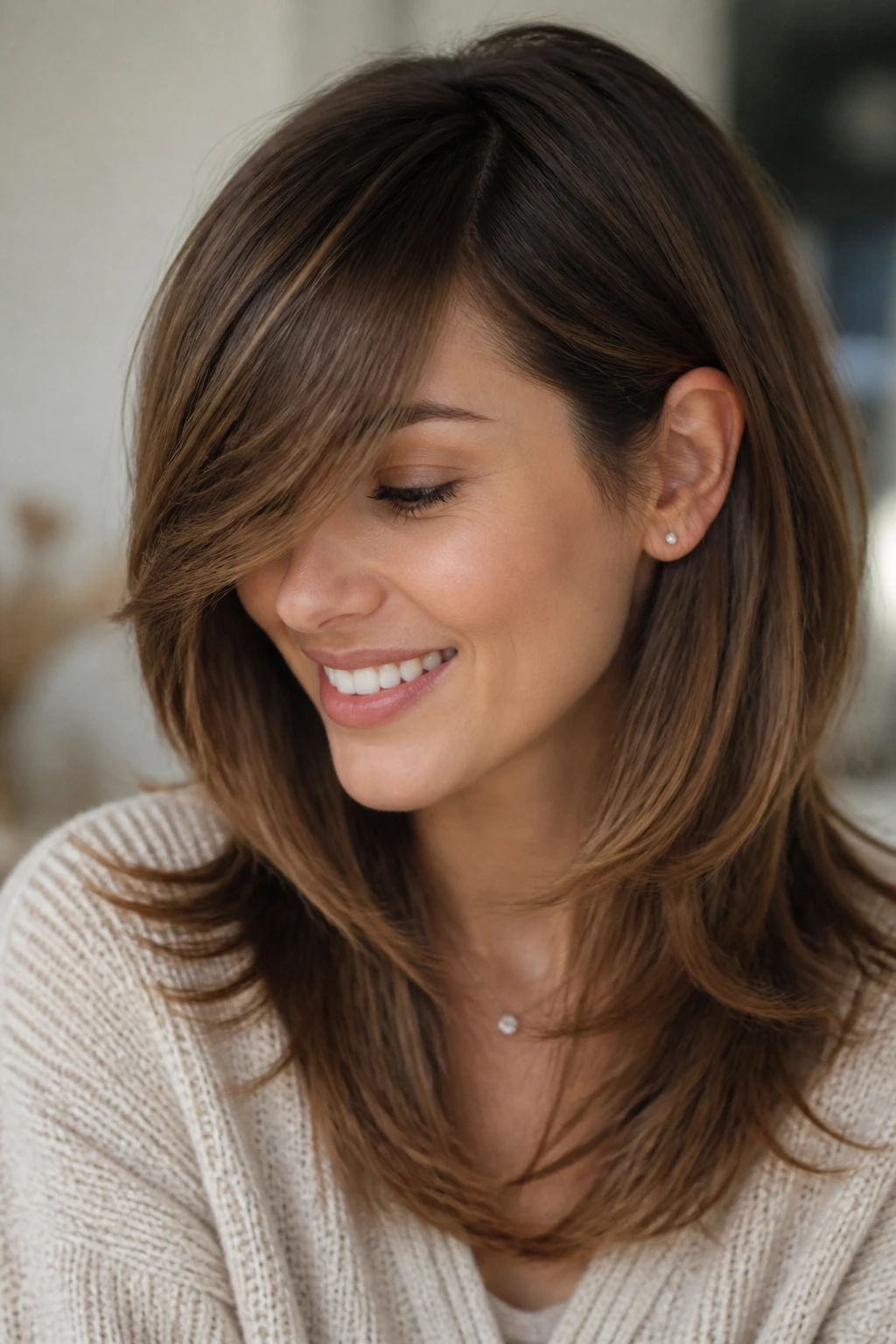
Long side bangs are for people who want movement but don’t want to commit to a center-split fringe. Swept from a deep side part, the bang moves diagonally across the forehead and merges into feathered layers around the cheek and jaw. On medium hair, that diagonal line can make the whole cut feel longer and lighter.
The magic here is how the layers follow the direction of the fringe. You’re not just cutting bangs and then hoping the rest of the hair cooperates. The front pieces are feathered so they support the side sweep, which keeps the cut from looking chopped up when you tuck one side behind the ear. It’s a good one if you wear glasses, too, because the bang can be placed to sit above or just beside the frame.
This style also handles awkward grow-out better than a blunt fringe. As the bangs get longer, they just become a broader face frame. Not glamorous. Very useful. If you’ve ever wanted bangs but hated the maintenance, this is one of the least fussy ways in.
5. Wispy Brow-Skimming Bangs with Rounded Ends

There’s a difference between a soft fringe and a weak one. Wispy brow-skimming bangs should still have shape; they just shouldn’t be dense enough to block the whole forehead. On medium hair, rounded ends around the face keep that lightness going, which makes the whole cut feel open instead of heavy.
I like this version for finer hair because it gives the illusion of fullness without creating a thick block across the brow. The ends curve slightly inward around the cheek and jaw, which makes the haircut feel finished even if you let it air-dry. That curve matters. Straight, blunt face-framing layers on fine hair can look a little stringy by comparison.
This is also one of the easier cuts to live with if you don’t want a lot of styling tools on the counter. A small round brush, a lightweight mousse, and a quick dry at the roots will carry it a long way. Skip heavy oils near the fringe. They make wispy bangs separate in clumps, and nobody needs that.
6. Shaggy Layers with Piecey Bangs
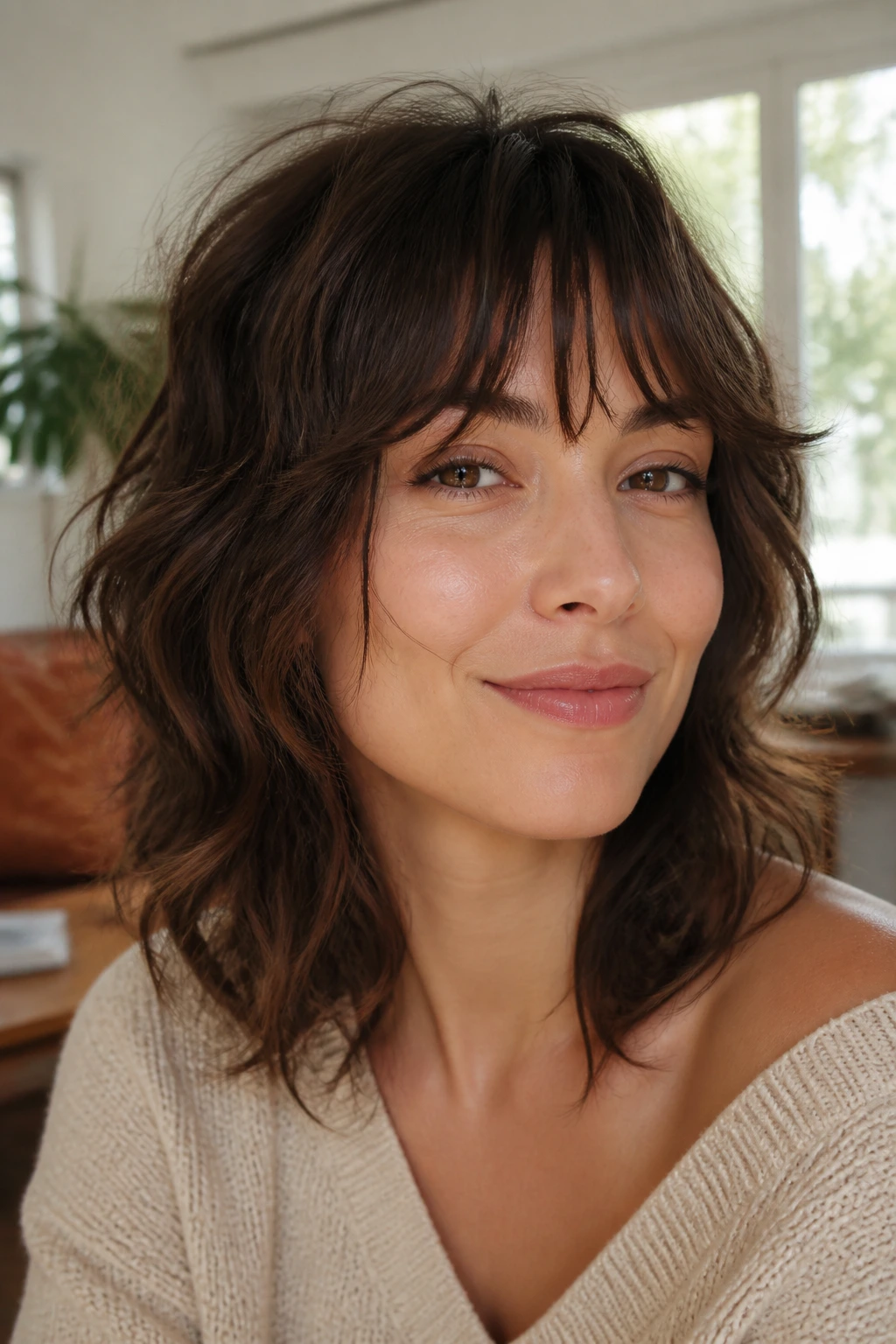
A shag on medium hair is not for people who want everything to lie neatly in place. Good. The point is movement. Piecey bangs break up the forehead line, while shaggy face-framing layers create that rough, modern texture that looks a little better when it’s not over-managed.
What gives this cut its shape is the distribution of weight. The front is broken into shorter sections around the eyes and cheekbones, then the rest of the layers stay loose enough to keep the silhouette from ballooning. That’s why this works so well on wavy hair. The wave can do part of the styling for you, which is always the nicest kind of haircut.
The key is not to over-gloss it. Use a salt spray or a light texture spray on damp hair, squeeze the fringe with your fingers, and let a few pieces land unevenly. The imperfection is the point. If you try to brush it into symmetry, you erase the whole effect.
7. Blunt Fringe with Soft Face Frames
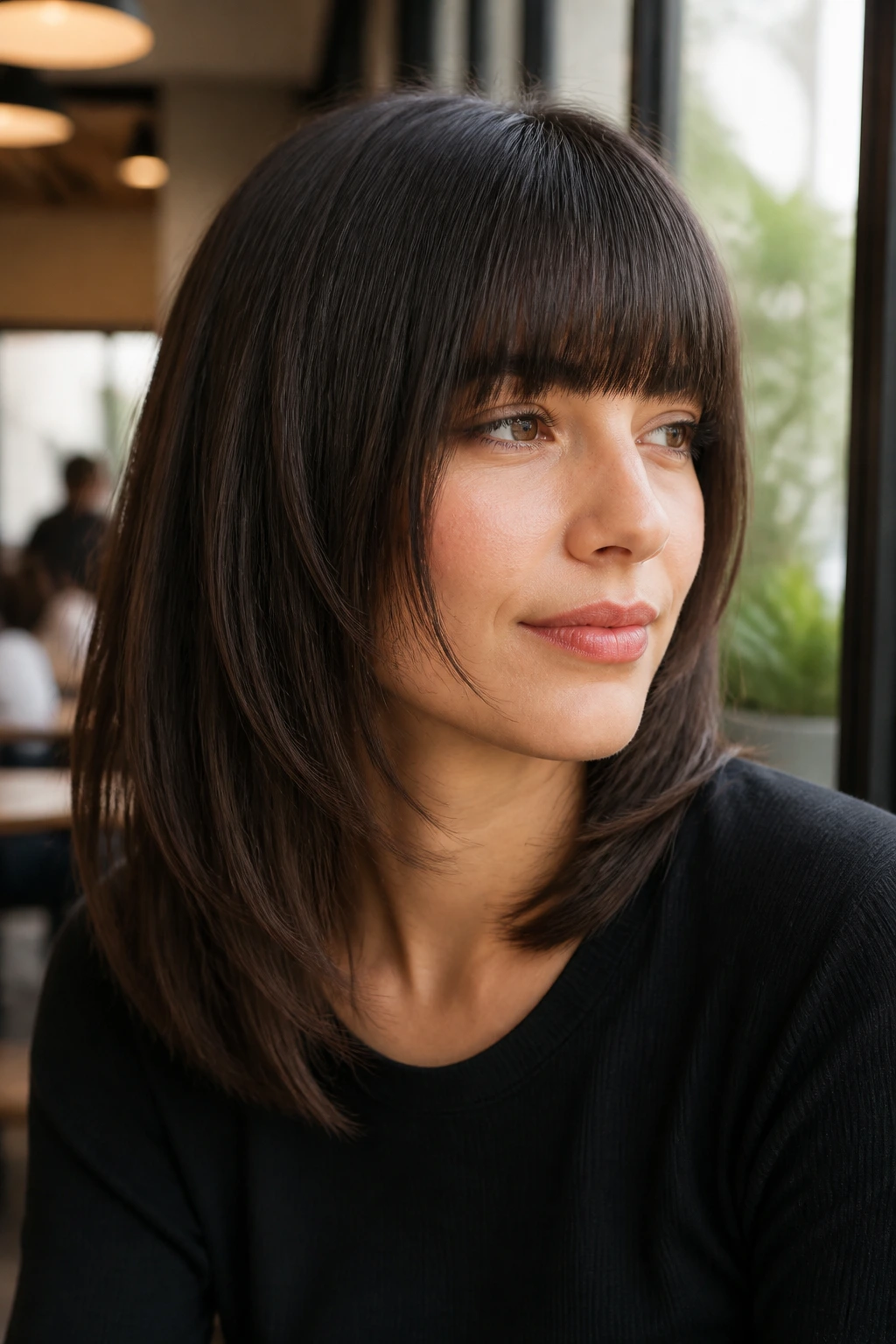
A blunt fringe on medium hair is a bolder move, and I’m glad it still has a place. The trick is not to let the front look too boxy. You need soft face-framing layers starting around the cheekbone or just below it so the heavy line of the bangs doesn’t stop the whole haircut cold.
This version works especially well on straight, dense hair because the fringe can hold a clean line. The rest of the cut needs to be softer, though. A blunt bang paired with blunt ends on medium hair can start to look helmet-like fast, and that’s a shape problem, not a styling problem. You want the bangs to feel deliberate and the rest to move.
Maintenance is the price of admission. A blunt fringe needs regular trims, and humidity will show no mercy. If you hate touching up your bangs every few weeks, skip this one. If you like the crisp look of straight-across fringe and don’t mind a little upkeep, this cut has real presence.
8. U-Shape Layers with Bottleneck Bangs
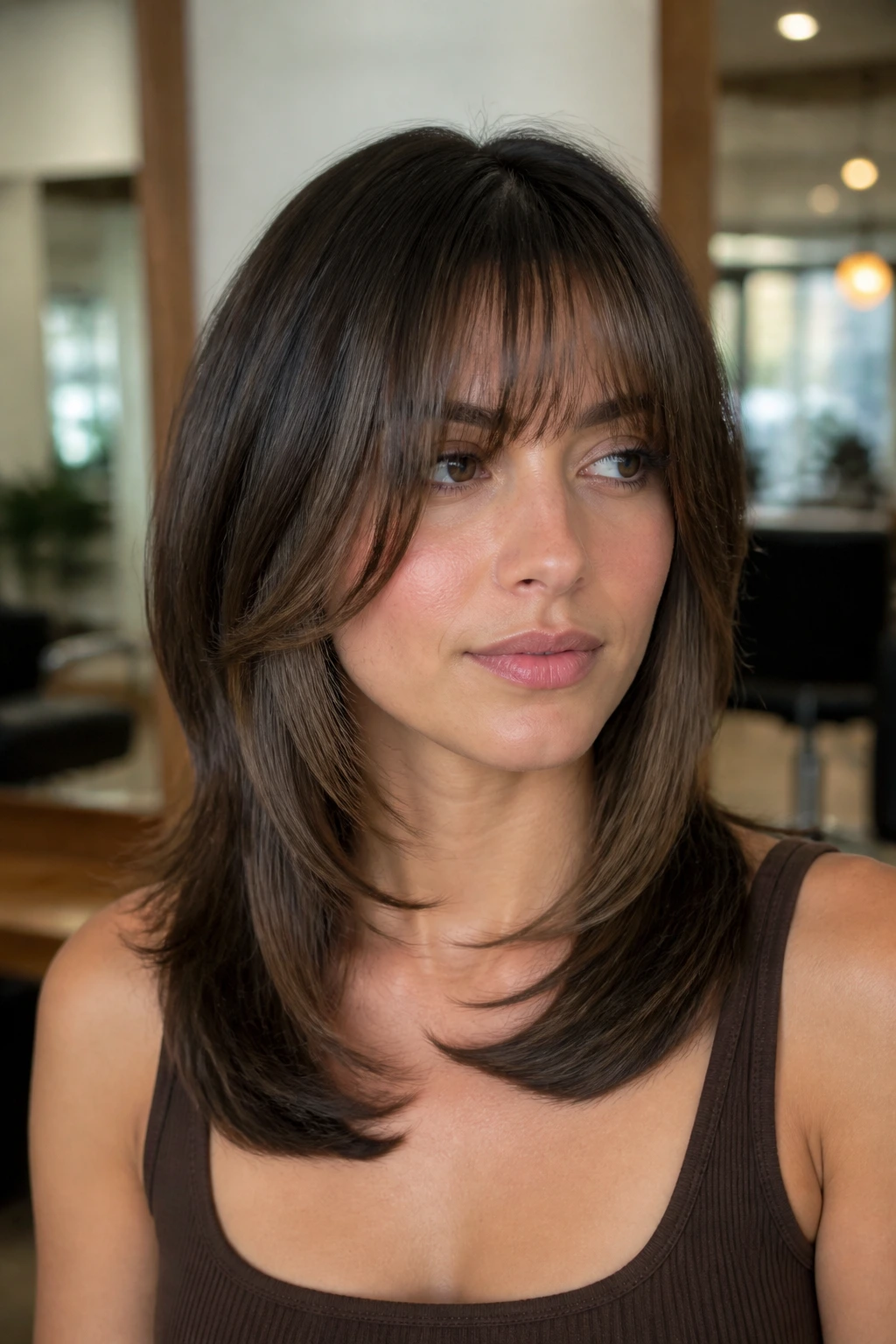
The U-shape is one of those cuts that quietly does a lot of work. The front stays longer, the back sits a bit shorter, and the whole outline curves gently rather than dropping in a hard line. Add bottleneck bangs and the front gets enough softness to keep the shape from feeling overdrawn.
I like this on medium hair because it keeps length around the face while still showing movement. The side pieces can fall just below the chin and skim the collarbone, which is one of the most flattering places for medium hair to land. It gives the face a frame without crowding it.
Best for
- People growing out a shorter cut.
- Anyone who tucks hair behind one ear and still wants the front to fall nicely.
- Medium-density hair that needs shape, not a lot of layering.
If you want the front to look thicker, ask for a very gentle U instead of a deep curve. Too much taper can make the hair feel thin at the ends. A little curve goes a long way here.
9. Razor Layers with See-Through Fringe
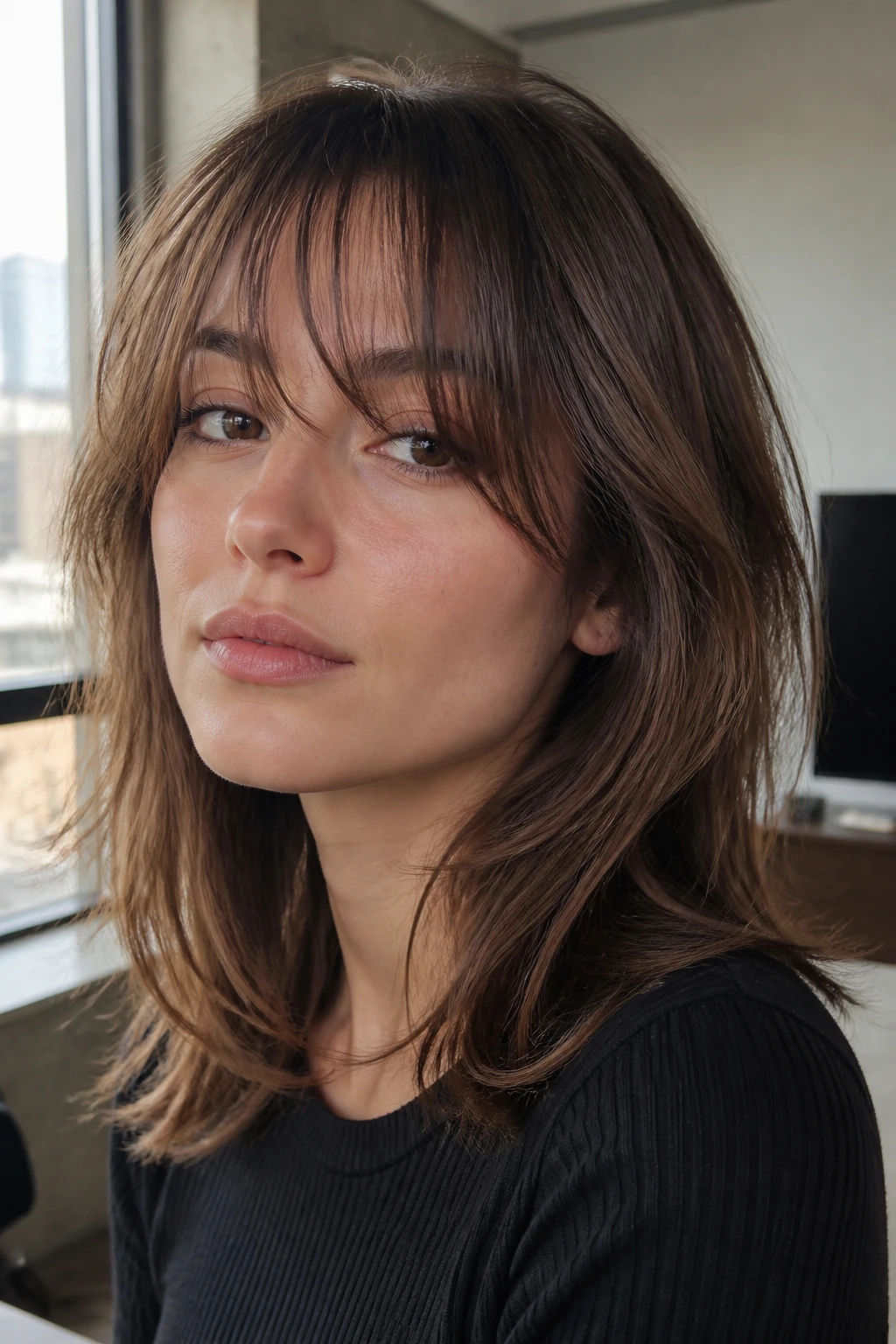
Razor-cut layers have a very specific feel: airy, broken-up, and slightly undone. On medium hair, that can be a good thing when the ends need movement but you don’t want visible steps. Pair that with a see-through fringe and the haircut starts to look lighter around the face almost immediately.
This cut is best on straight or softly wavy hair. The razor gives the front pieces a feathery edge, which helps the fringe sit without a blunt wall. But here’s the catch: if your ends are dry or frayed already, a razor can make that texture look worse. In that case, point-cutting is kinder.
A see-through fringe also needs a steady hand at home. A touch of blow-dry cream, a quick bend away from the face, and a few seconds at the roots are enough. Don’t drown it in product. The whole point is to keep the front light enough that it moves when you do.
10. Curved Layers with Side-Swept Bangs
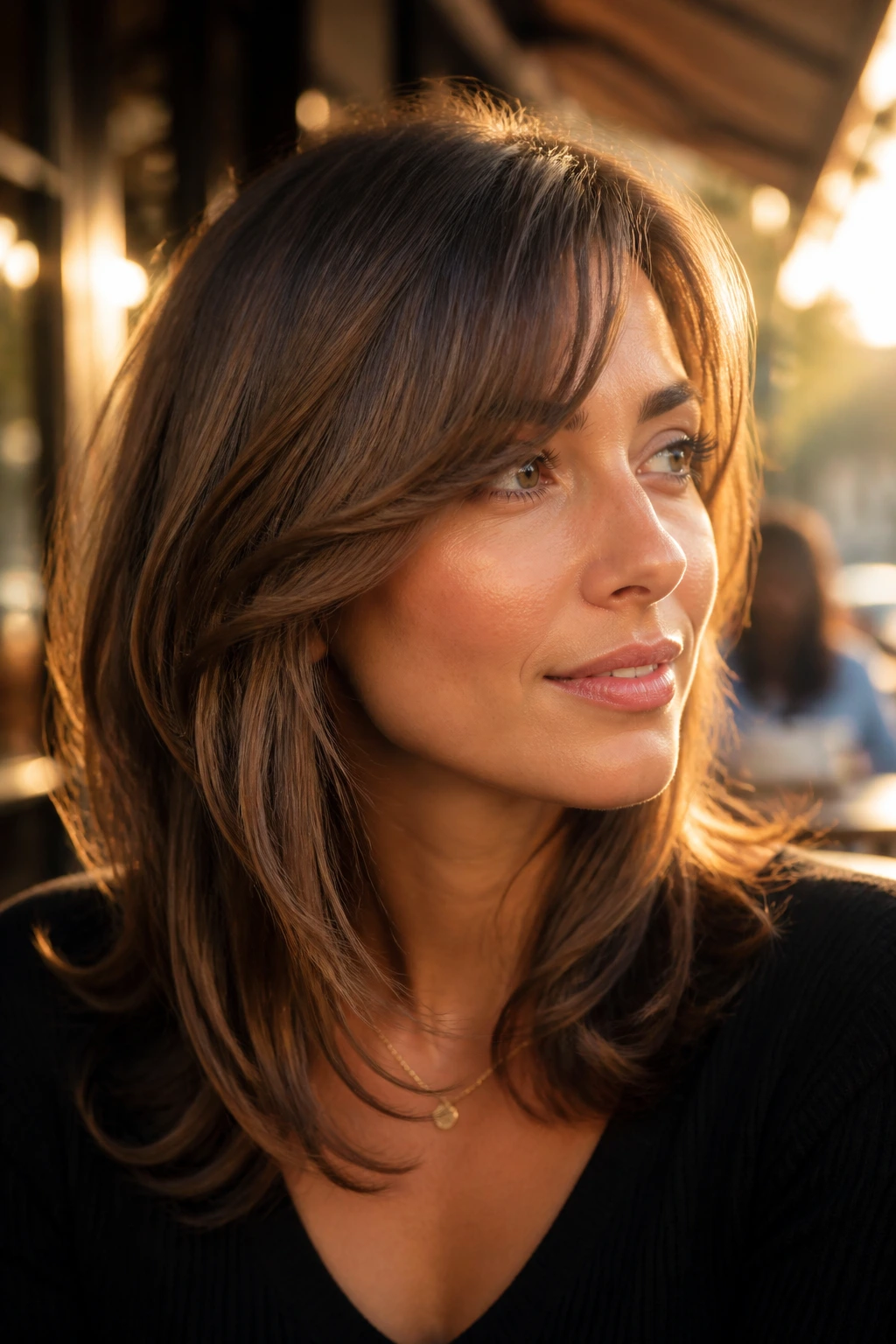
If you like a blowout finish, this is one of the cleaner ways to get it on medium hair. The layers curve from the cheek down toward the collarbone, and the side-swept bang follows that same bend so the whole haircut feels connected. Nothing sits abruptly in the middle of the face.
The shape is especially flattering if your hair naturally flips under at the ends. Instead of fighting that bend, this cut uses it. The side-swept fringe softens a strong forehead, while the curved layers keep the outline smooth through the jaw. On square or round faces, that diagonal motion can be a very useful thing.
A round brush helps here, but not in a fussy way. You only need enough lift to create a clean arc through the front. If you over-round the ends, the haircut starts to feel dated. Keep the bend soft and the finish slightly loose. That’s the sweet spot.
11. Light Wolf Cut with a Long Fringe
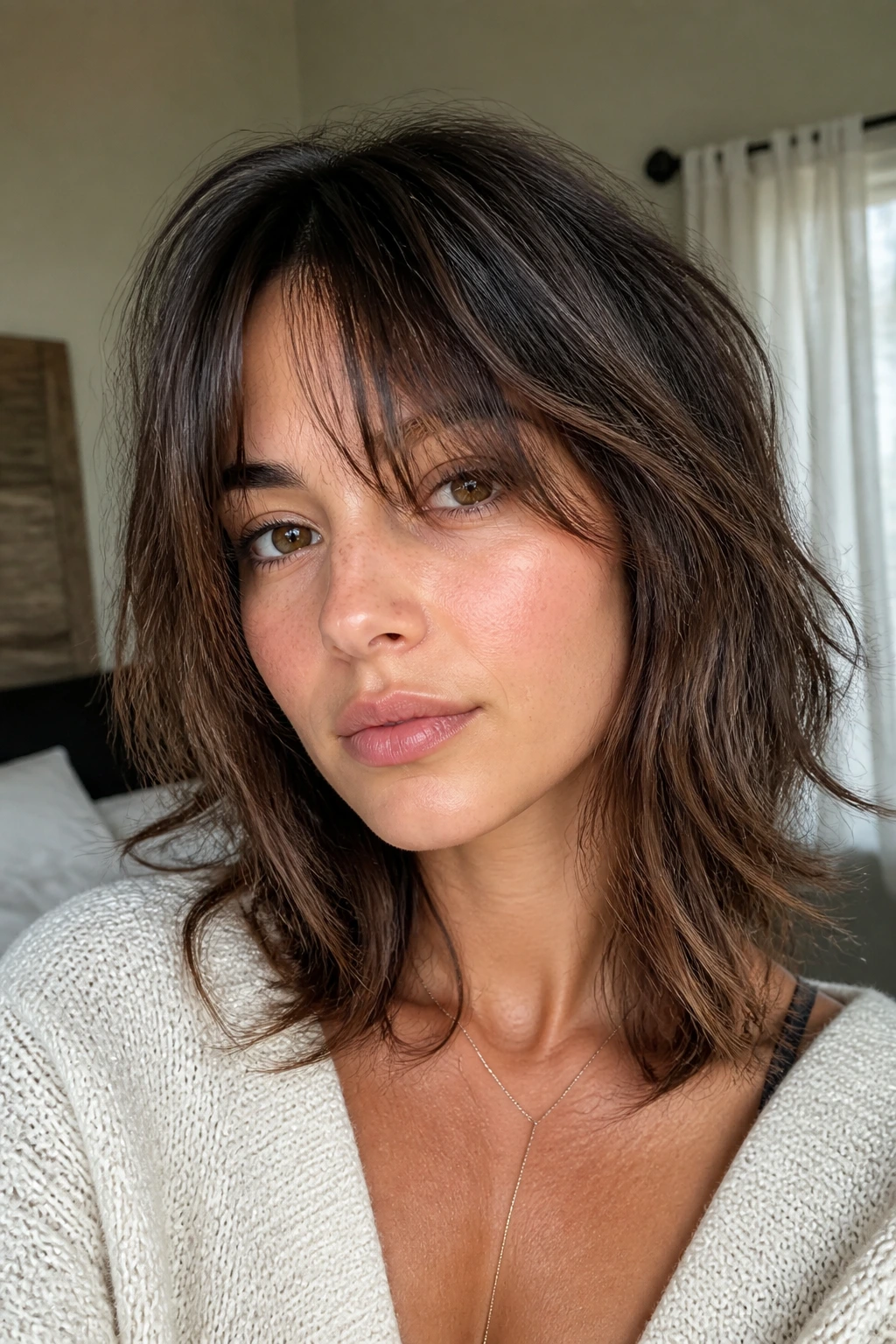
A wolf cut can be too much on medium hair if it’s pushed hard, but a light version is a different story. The crown gets a bit more texture, the face-framing pieces stay long, and the fringe can split or fall center if you want it to. It has edge without looking like you borrowed it from a costume rack.
The reason this cut works is that it uses contrast carefully. You get lift up top, movement through the sides, and a longer fringe that stops the front from feeling over-chopped. On thick wavy hair, that can be a real relief. The weight gets removed where it builds too much, but the ends still hold enough shape to look full.
This is not the haircut for someone who wants every strand to behave. It likes texture. It likes a little mess. If you can live with that, it’s one of the most forgiving cuts in the whole group because a slightly rumpled finish actually helps it.
12. Grown-Out Bangs with Tousled Mid-Length Layers
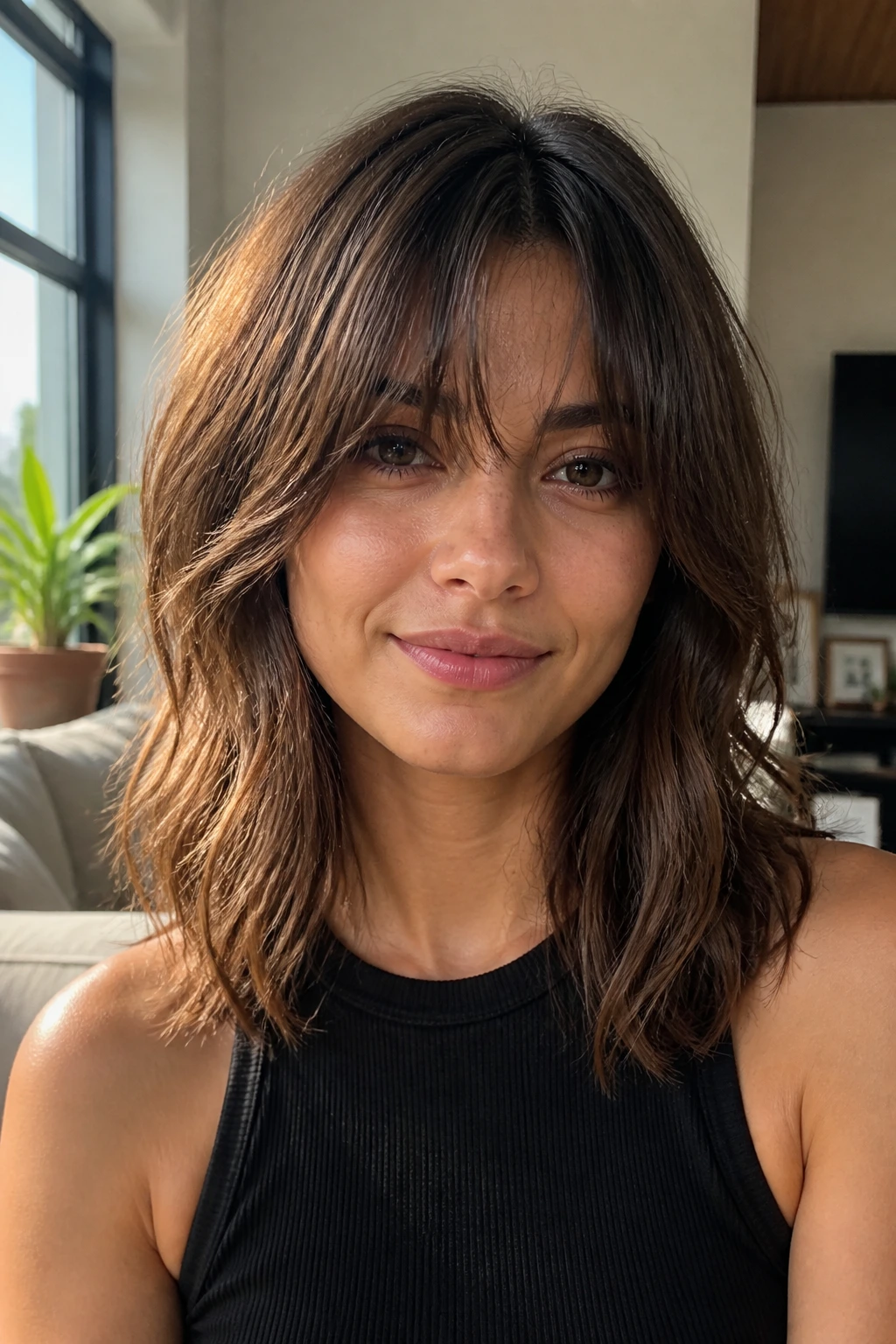
Sometimes the smartest haircut is the one that looks like it already has some history. Grown-out bangs on medium hair sit right in that awkward-but-useful zone where they can brush the lashes, split at the center, or tuck into the front layers without much drama. The tousled length behind them keeps the shape casual.
This cut is a good choice if you’re tired of chasing a strict fringe. The bangs start to act like face-framing pieces instead of a separate feature, which makes morning styling much easier. The layers should stay loose through the ends so the front doesn’t feel heavy once the bangs pass the brow line.
A practical note
If you’re growing out previous bangs, ask for the shortest front pieces to stay around the cheekbone rather than chopping them back up. That gives you a soft landing instead of another hard reset.
It’s also one of the better cuts for second-day hair. A little dry shampoo at the roots, a finger twist at the fringe, and a quick bend with a flat iron are usually enough. Not glamorous. Very livable.
13. Heavy Fringe with Hidden Internal Layers
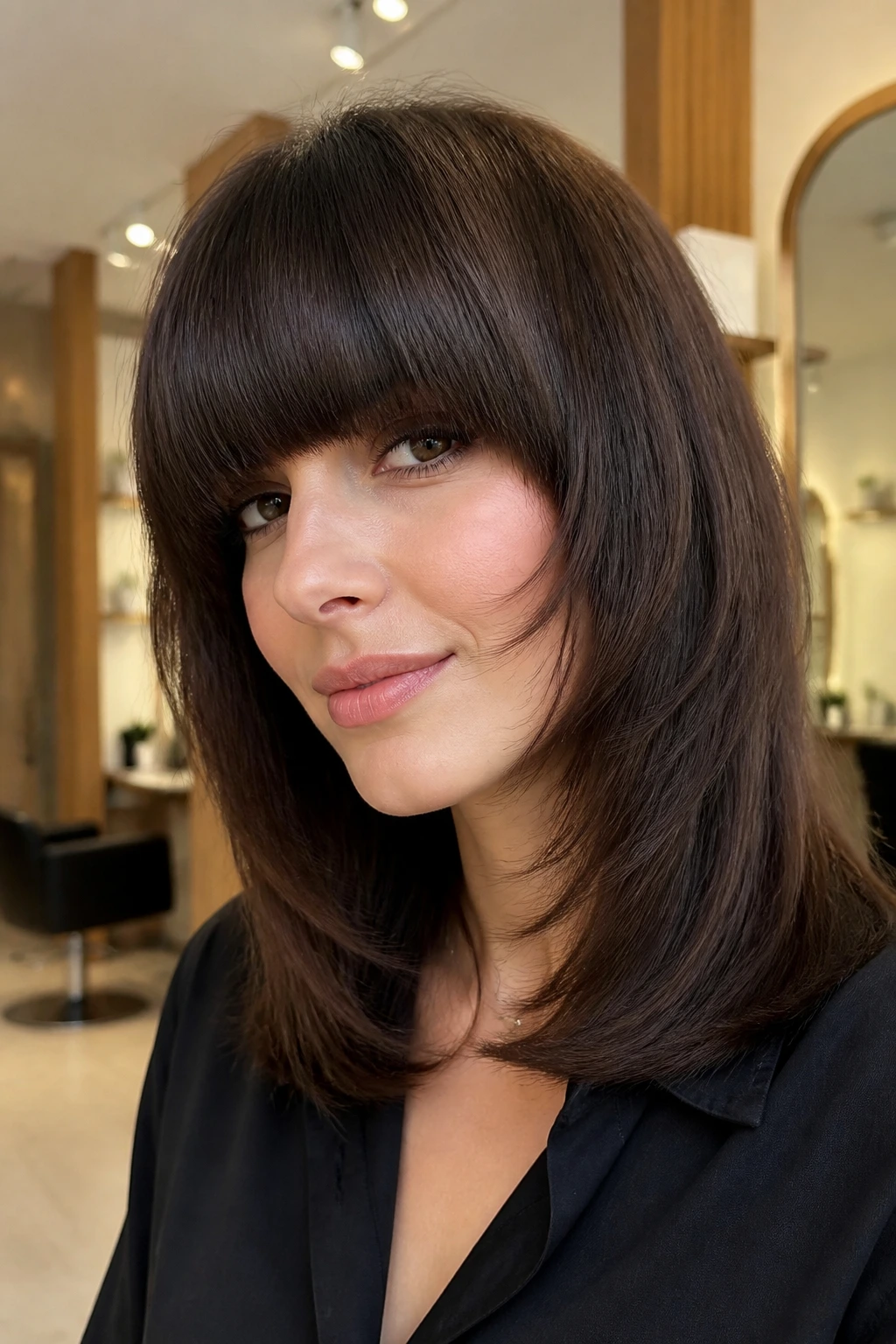
Thick hair can carry a fuller fringe, and sometimes it looks better that way. A heavy bang on medium hair gives you a clean front line, while hidden internal layers keep the body from blowing outward into a triangle. That hidden work is what makes the cut move.
The important part is the balance between visible density and invisible removal of weight. You want the fringe to feel intentional and substantial, but you do not want the sides to puff up around the cheeks. Internal layering, done well, removes bulk from underneath without making the surface look chopped apart.
This cut needs a good blow-dry. Thick hair rarely lies politely on its own, and a smoothing brush or a dryer nozzle will help the fringe sit flat enough to show the line. If your hair is coarse, use a smoothing cream only through the mids and ends, not the roots. Otherwise the fringe gets greasy faster than you’d like.
14. Center-Part Bangs with Sleek Face Frames
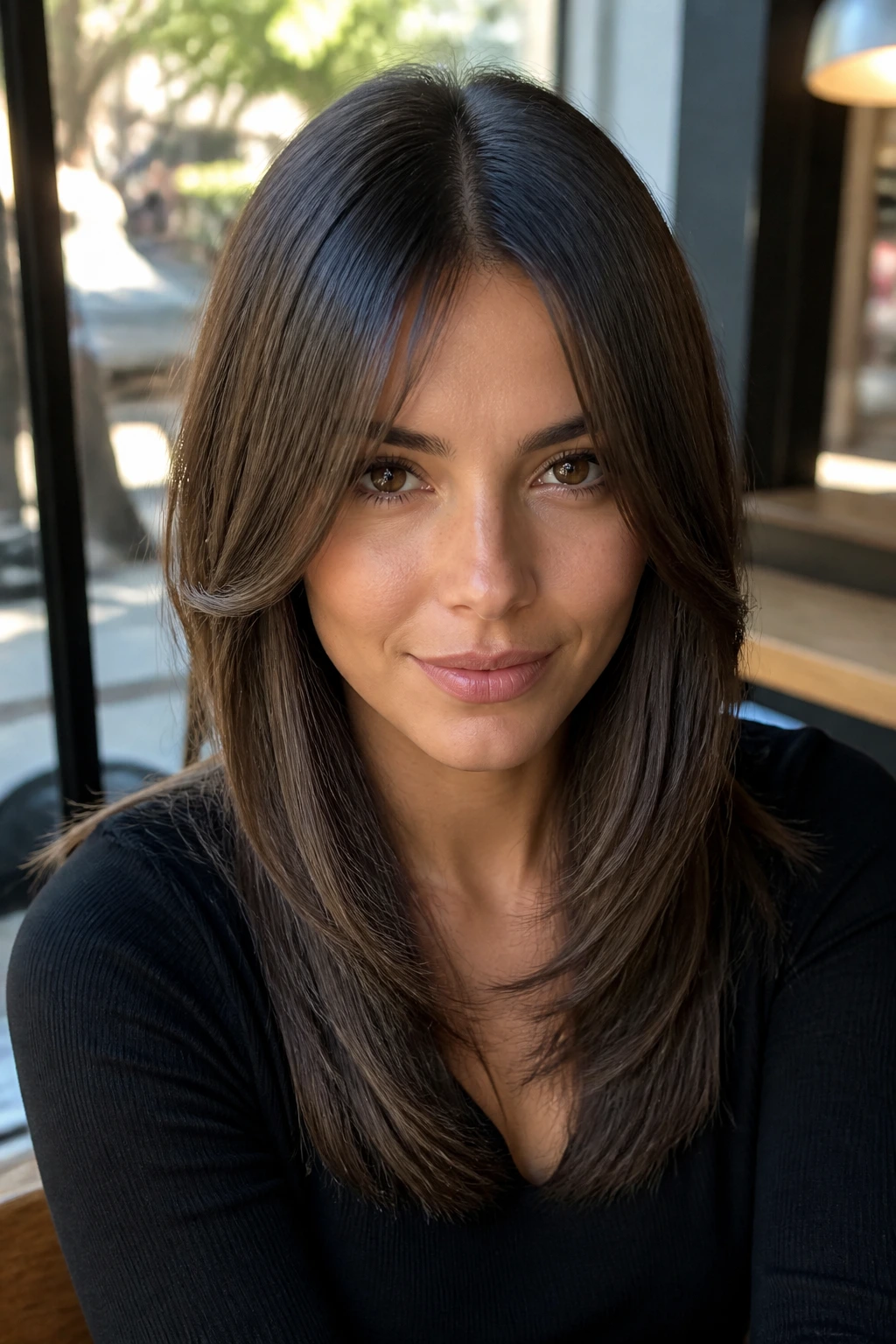
A center-part bang doesn’t always mean curtain bangs. On medium hair, it can also mean shorter pieces that part in the middle and sit closer to the brows before tapering into sleek face-framing layers. The result is more geometric and a little sharper than a traditional curtain shape.
This cut works when you want the face frame to look polished rather than loose. It’s clean. The center split draws a straight line, then the side pieces bend inward just enough to keep the haircut from feeling rigid. If your hair is naturally straight, this shape is easy to maintain with a small round brush and a touch of serum on the ends.
I’d call this a good choice for people who wear their hair down more often than up. The front stays intentional even when the rest of the cut is simple. And if you like a middle part, this is one of the easiest ways to keep that part from looking too plain.
15. Arched Bangs with Layered Lob Ends
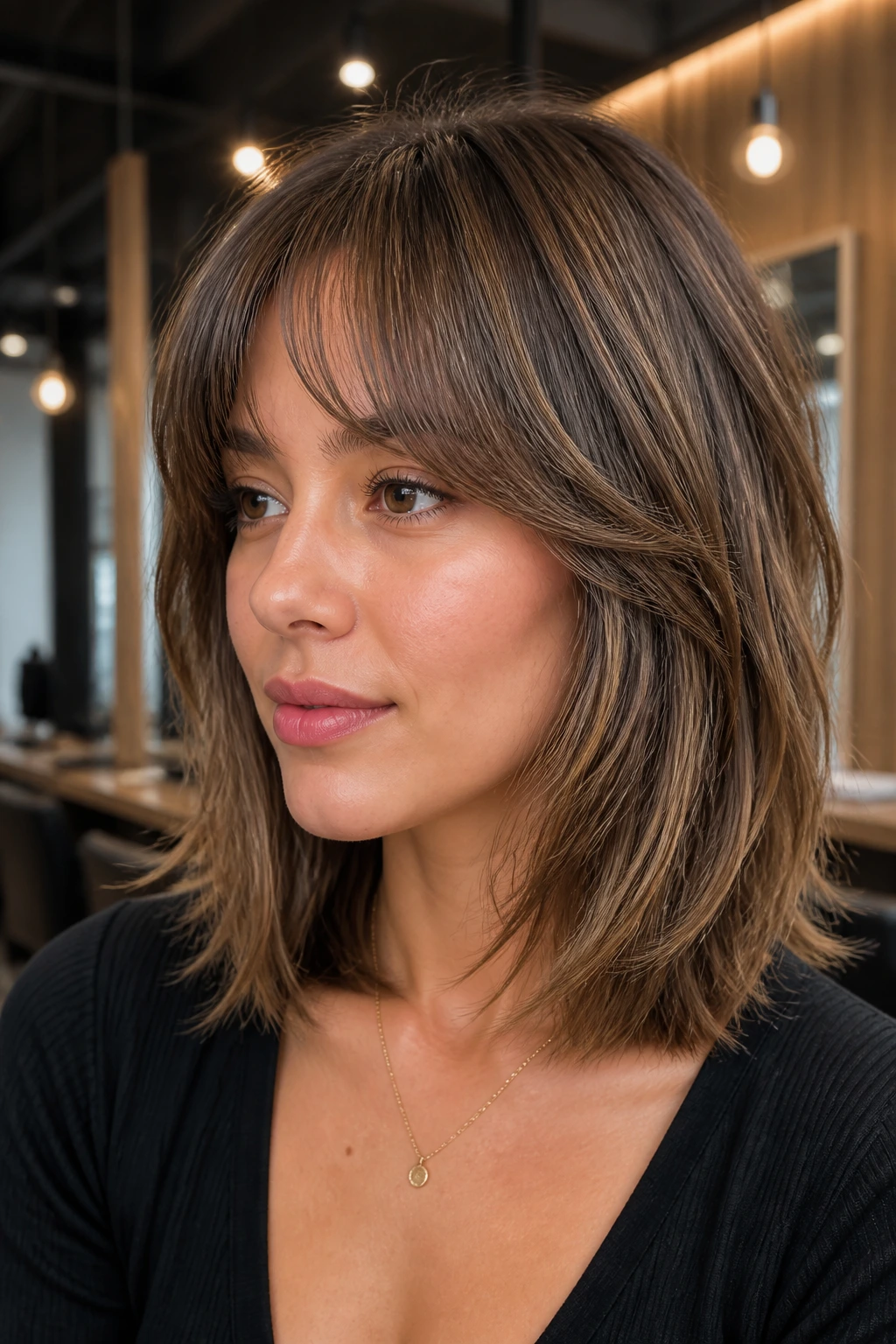
Arched bangs rise slightly in the center and fall longer toward the temples, which makes them a quieter cousin of blunt fringe. On a layered lob, that arch can be very flattering because it follows the natural line of the brow without flattening the forehead completely. The ends can turn under softly or flip out a touch, depending on how you style.
What I like here is the way it plays with proportion. The arch of the bang pulls the eye upward, while the layered ends keep the lower half of the haircut from feeling too boxy. It’s a smart option if you want your face to look a little longer or you don’t want a heavy line cutting across the top of the face.
You do need some control at the front. If the bang is cut too sharply, the arch can start to look cartoonish. Keep it soft, with the corners feathered into the layers. That keeps the whole thing from looking too engineered.
16. Medium Shag with a Brow-Grazing Fringe
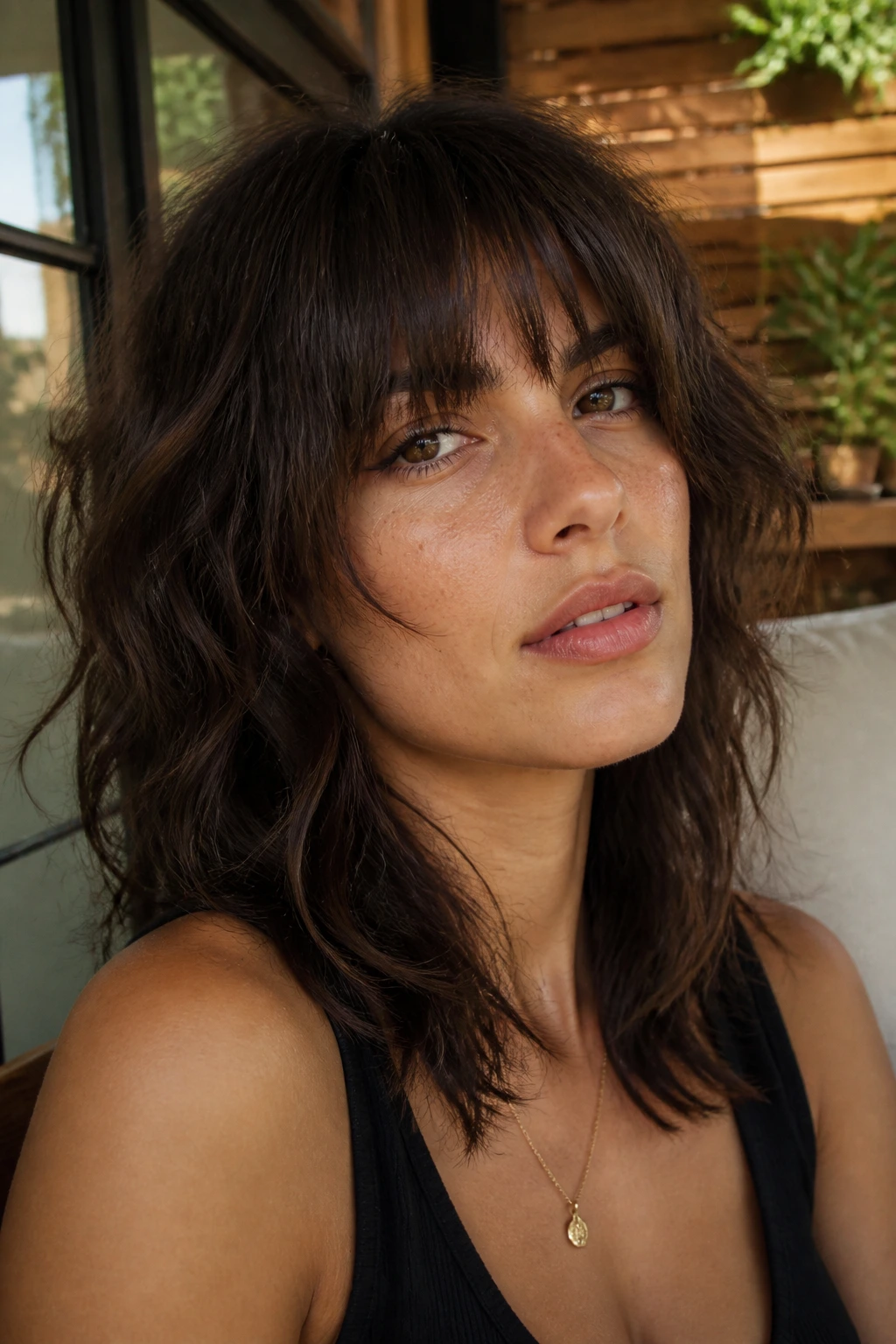
The medium shag is the cut that tells you not to fuss too much, and honestly, that’s part of its charm. The fringe grazes the brows, the layers break up the sides, and the whole shape looks better with a little lift and a little mess. On medium hair, it gives you shape without the heaviness of a full, blunt fringe.
This version is especially good if your hair has a natural wave or a bend that never dries the same way twice. The shag embraces that instead of trying to smooth it out. The face-framing pieces should fall in soft, uneven lengths around the cheek and jaw, not in a perfectly matched pair.
Air-drying is often enough. A touch of mousse at the roots, a scrunch through the mids, and maybe a diffuser if you need more lift. The fringe will likely need a quick finger-style or a tiny round brush touch-up, but that’s still less effort than a sleek cut that fights your texture every morning.
17. Invisible Layers with Air-Dried Waves
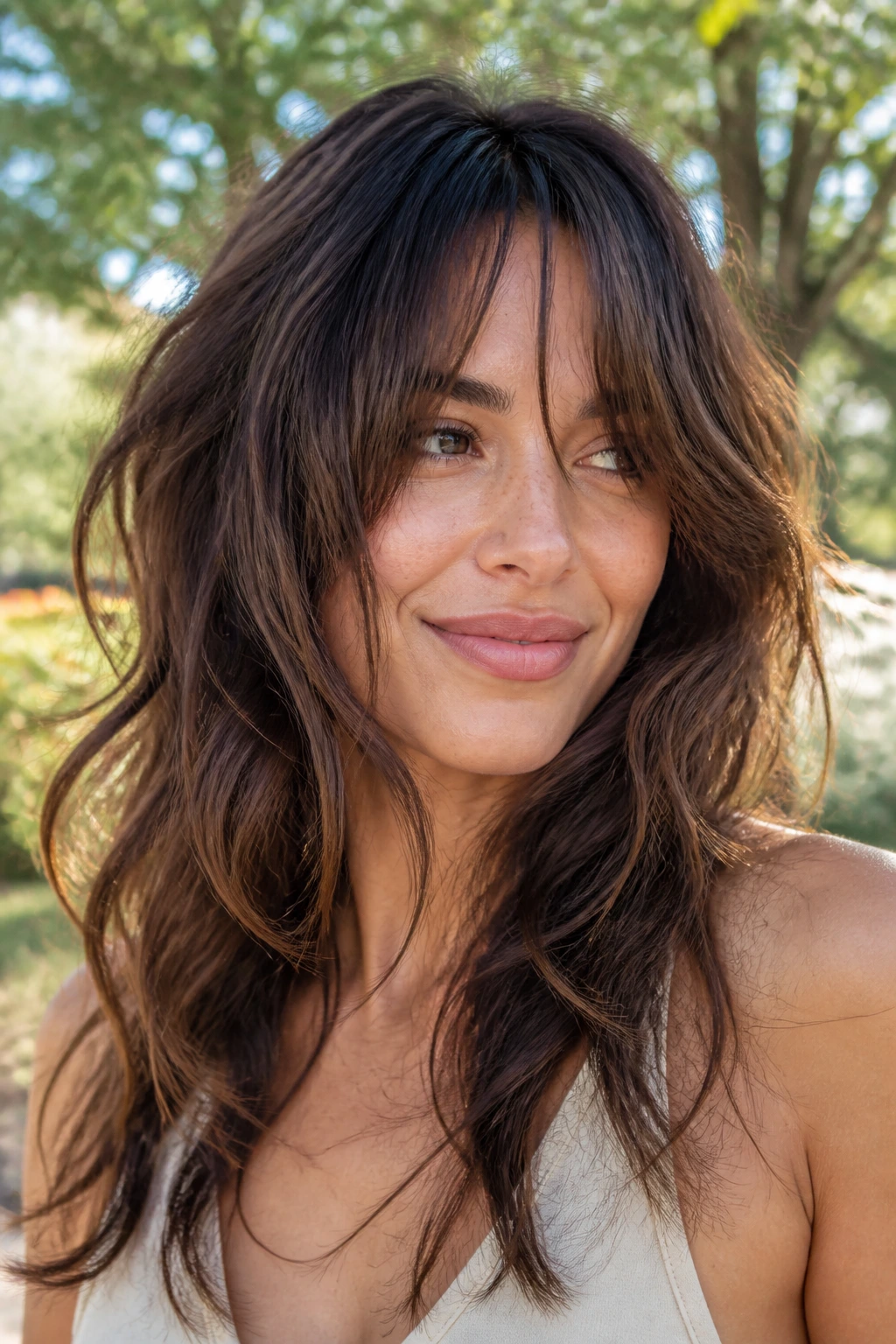
Invisible layers are the quiet ones, and they’re underrated. The cut removes weight from inside the hair rather than carving obvious steps into the surface, so the outside line still looks full and smooth. On medium hair, that means the front can keep a soft frame while the rest moves without looking overcut.
This is a strong choice if you like air-drying and hate obvious layer marks. The face-framing pieces can still land at the cheekbone or chin, but they blend so gradually that the haircut reads as one shape instead of a stack of pieces. That’s useful when you want movement without a shaggy look.
Why it works
- The surface keeps its thickness.
- The interior loses bulk where it builds.
- Waves have room to bend instead of puffing at the ends.
It’s a quietly good option for office life, casual wear, or anyone who wants their hair to look finished without looking styled. If that sounds boring, fair. But boring hair that behaves is often the thing people keep wearing the longest.
18. Debulked Layers for Thick Hair with Long Bangs
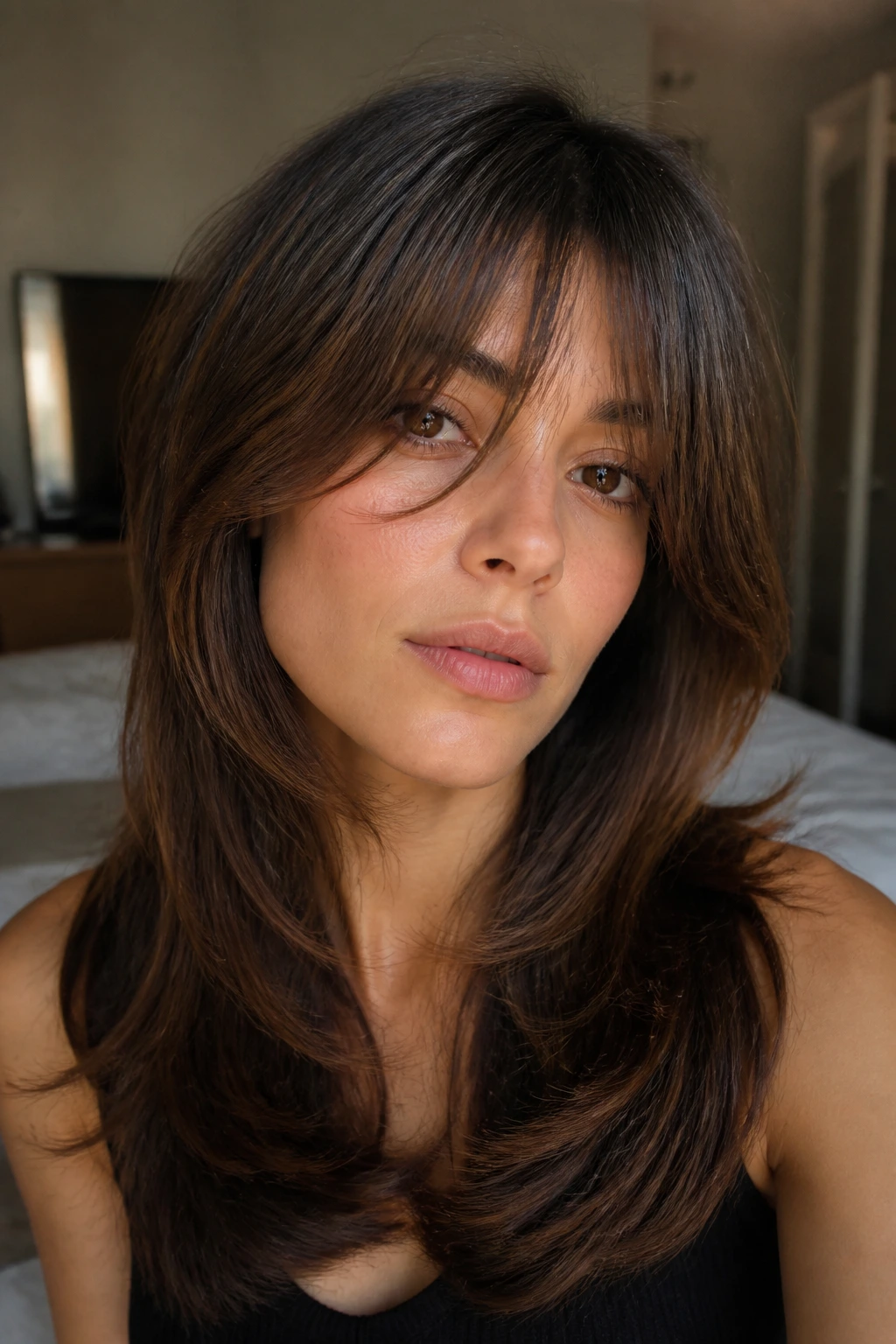
Thick medium hair can get wide through the sides in a hurry, and this cut is built to stop that. The layers are debulked from the interior so the shape sits closer to the head, while the long bangs keep the front soft and wearable. You still get presence, but not that pyramid outline thick hair can fall into.
The long bang matters here because it gives you control. You can wear it split, sweep it sideways, or let it fall around the eyes without needing to trim it every three weeks. The sides should be cleaned up enough to move, but not so thin that the haircut loses its body.
I’d avoid aggressive thinning on the ends. That’s where thick hair can start to look frayed instead of lighter. Ask for weight removal inside the cut, not a hacked surface. There’s a big difference, and you can see it the first time the hair dries.
19. Short Face Layers with Soft Fringe for Fine Hair

Fine hair needs a careful hand. Too many layers too high up and the front starts to look sparse fast, especially around the temples. A better version starts the shortest face layers around the cheekbone or lip, then lets a soft fringe add shape without stripping away the fullness.
This cut is about creating the look of movement without removing the structure that fine hair relies on. The bangs should stay light, but not see-through to the point where the forehead dominates the haircut. A little density at the front helps the whole shape read as a style rather than a compromise.
Best tools for this cut
- A small round brush for root lift.
- Lightweight mousse or volumizing spray.
- Dry shampoo for the second day.
- A blow dryer with a nozzle, if you want the fringe to sit flat.
If your fine hair tends to fall flat by midday, this version can still work. Just keep the layers conservative and avoid over-smoothing the roots with heavy serum. Fine hair usually needs a little air in it, not a lot of polish.
20. Curly Bangs with Halo Layers
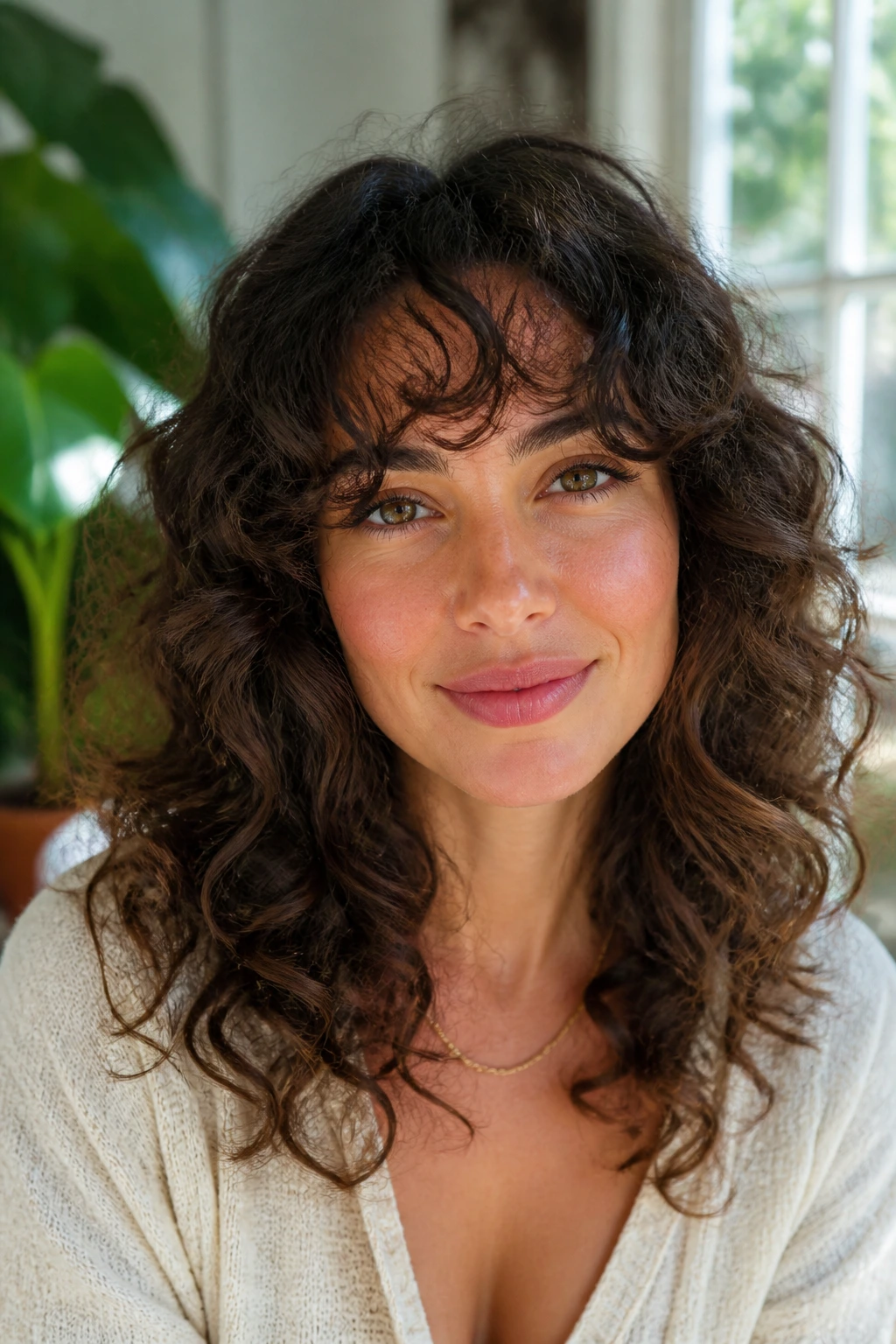
Curly bangs are one of the most misunderstood parts of this whole haircut family. They do work on medium hair, but they need room to spring. The bangs should be cut longer than straight bangs so the curl can bounce up without jumping too short, and the halo layers should follow the curve of the face instead of fighting it.
What makes this version so good is that it respects the curl pattern. The layers should keep the volume around the face balanced, not pull everything into a triangle. If the hair is 2C, 3A, or somewhere in that range, this cut can give you shape without requiring a full straightening routine.
Dry cutting often helps here because curls behave differently wet and dry. That’s not a trendy statement; it’s just the reality of curls. The front pieces need to be checked in their natural pattern so the bang doesn’t end up an inch shorter than expected once it dries.
21. Birkin Bangs with Airy Medium Layers
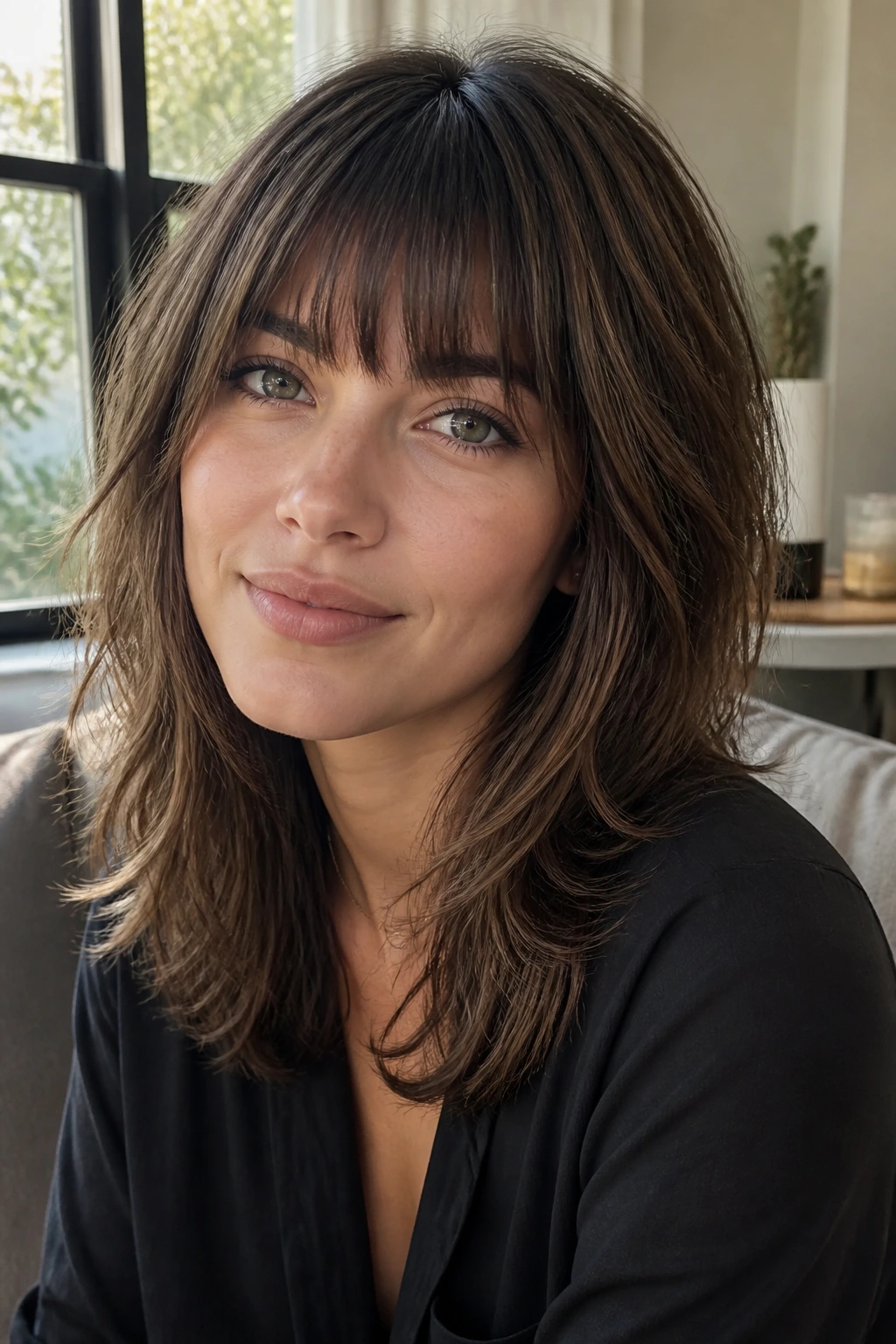
Birkin bangs have that slightly undone, broken-up feel that reads more relaxed than a hard fringe. On medium hair, they sit softly across the forehead, usually a little longer at the sides, and the airy layers keep the haircut light around the face. It has structure, but not much stiffness.
This is a good choice if you like fringe but don’t want your whole haircut to be about the fringe. The face frame should feel like it belongs to the rest of the cut, not like a separate accessory pasted onto the front. A little separation in the bangs is part of the appeal, so don’t chase a perfectly smooth line.
I like this cut on hair that already has a bit of movement. Straight hair can wear it, sure, but a soft bend makes the style feel more lived-in. If your styling routine is short, this one is friendly. If you’re after a crisp, immovable fringe, it’s probably not your match.
22. Curved Layers with a Side-Pivot Fringe
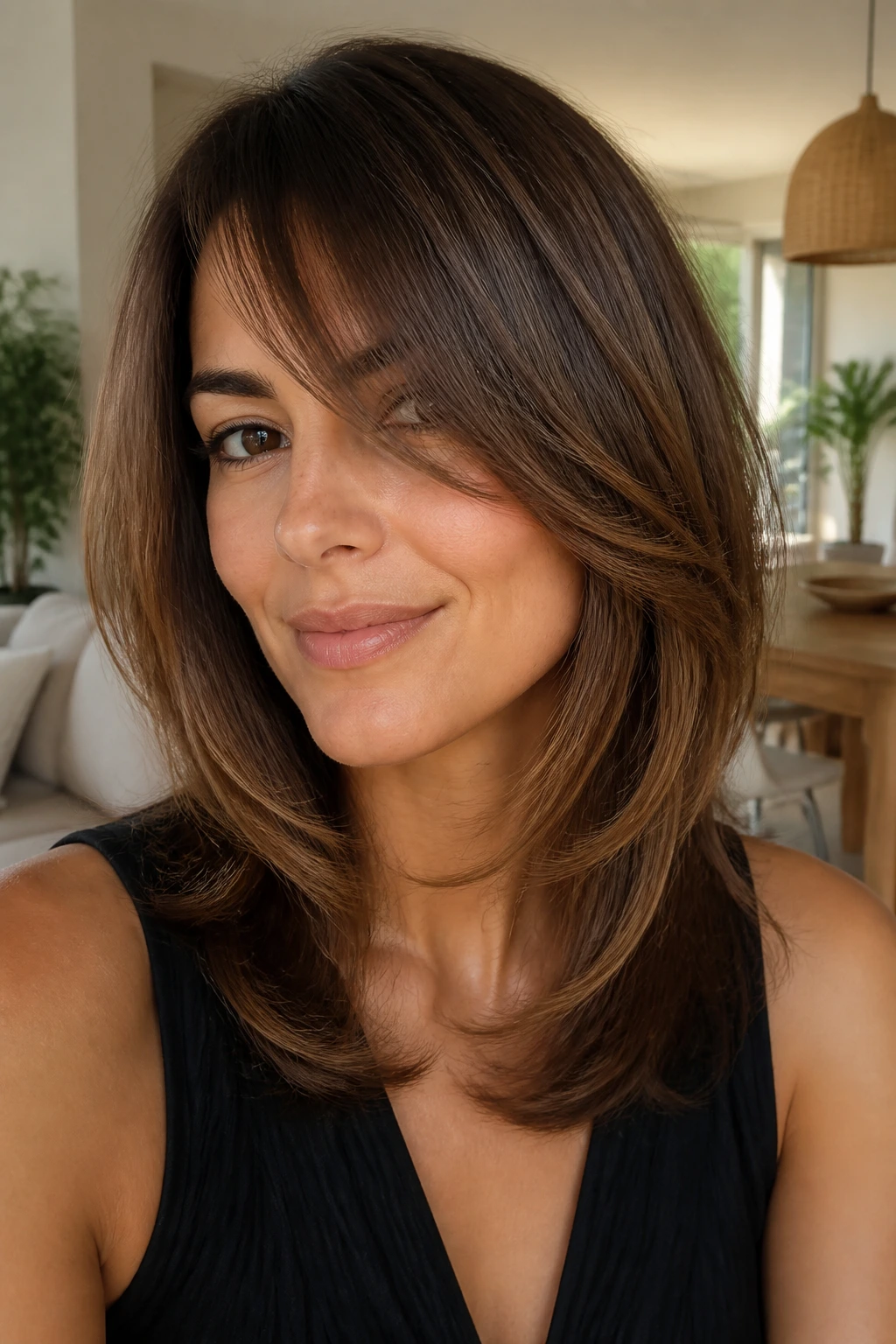
This is the one I’d hand to someone with a stronger jaw or a face that feels a little too square to them. The curved layers fall around the chin and collarbone, while the side-pivot fringe starts near the brow and sweeps off to one side in a way that softens the lower face. It’s gentle without disappearing.
The reason it works is the diagonal movement. The layers don’t stop at the jaw, which is where a lot of medium cuts go wrong on square faces. They curve past it. That keeps the outline from feeling boxy and gives the haircut a softer fall when you move.
Ask for the shortest front piece to sit near the brow with the side length extending to the cheekbone, then let the layers bend down toward the collarbone. A bit of round-brush work or a flat-iron bend keeps the front from drying straight and stiff. That small curve is the thing that makes the whole cut feel intentional.
Why Medium Hair Loves This Kind of Shape
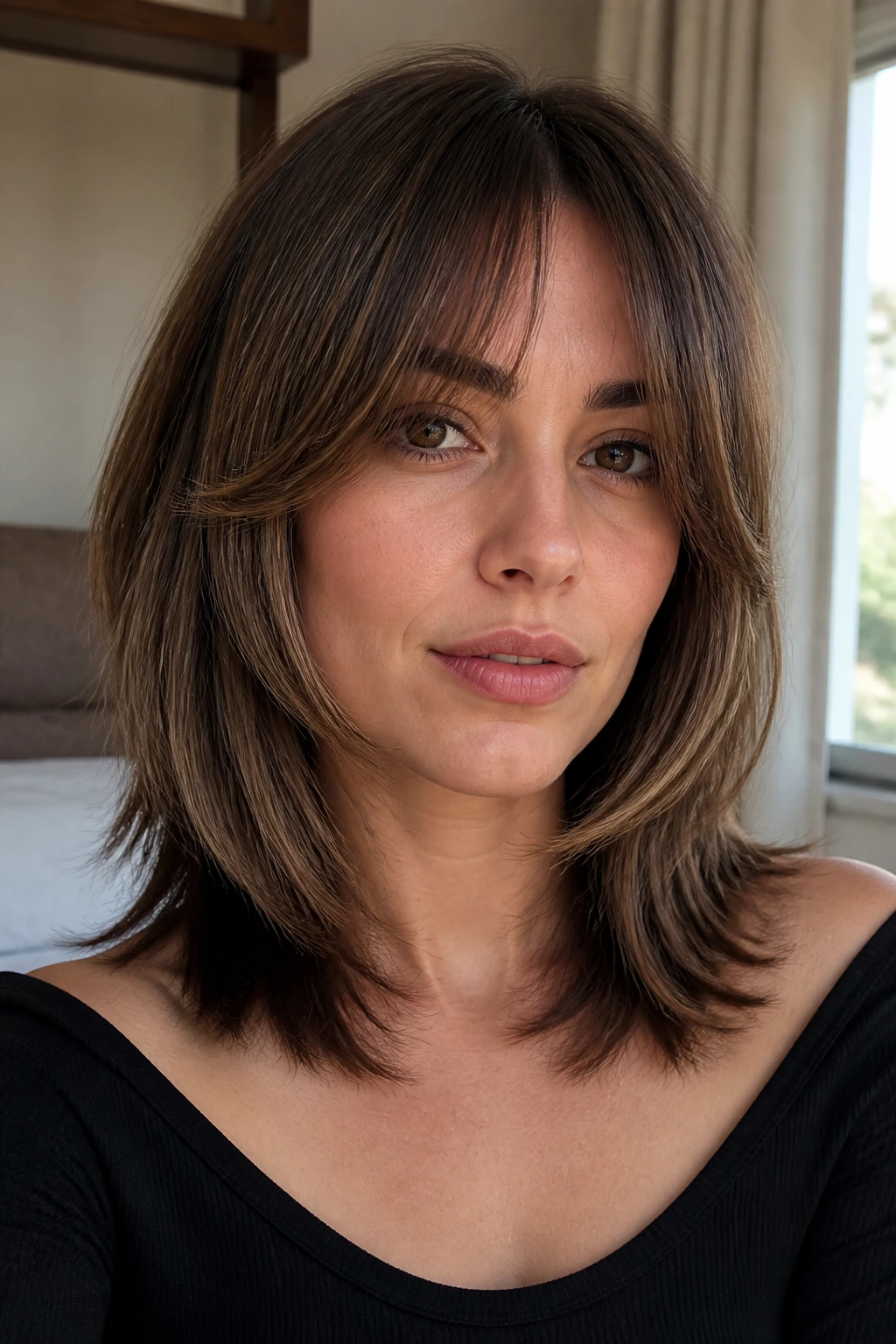
Medium hair gives face-framing layers room to do their job without getting bullied by gravity. Long hair can drag bangs flatter than you want, and very short hair can make layers feel abrupt. Medium length sits in the middle, so the front can move, the ends can swing, and the silhouette still has enough weight to hold together through the day.
There’s also a practical reason people keep returning to this length. It’s long enough to tuck behind the ears, clip back, or sweep into a low bend, but short enough that a few well-placed layers change the whole outline. That means the haircut can look polished after a blowout and still make sense when you rough-dry it.
The smartest versions of these cuts use weight where the hair needs calm and movement where the eye needs interest. Around the face. At the collarbone. Through the bang line. That balance is the whole trick.
How to Ask for the Cut Without Hand-Waving
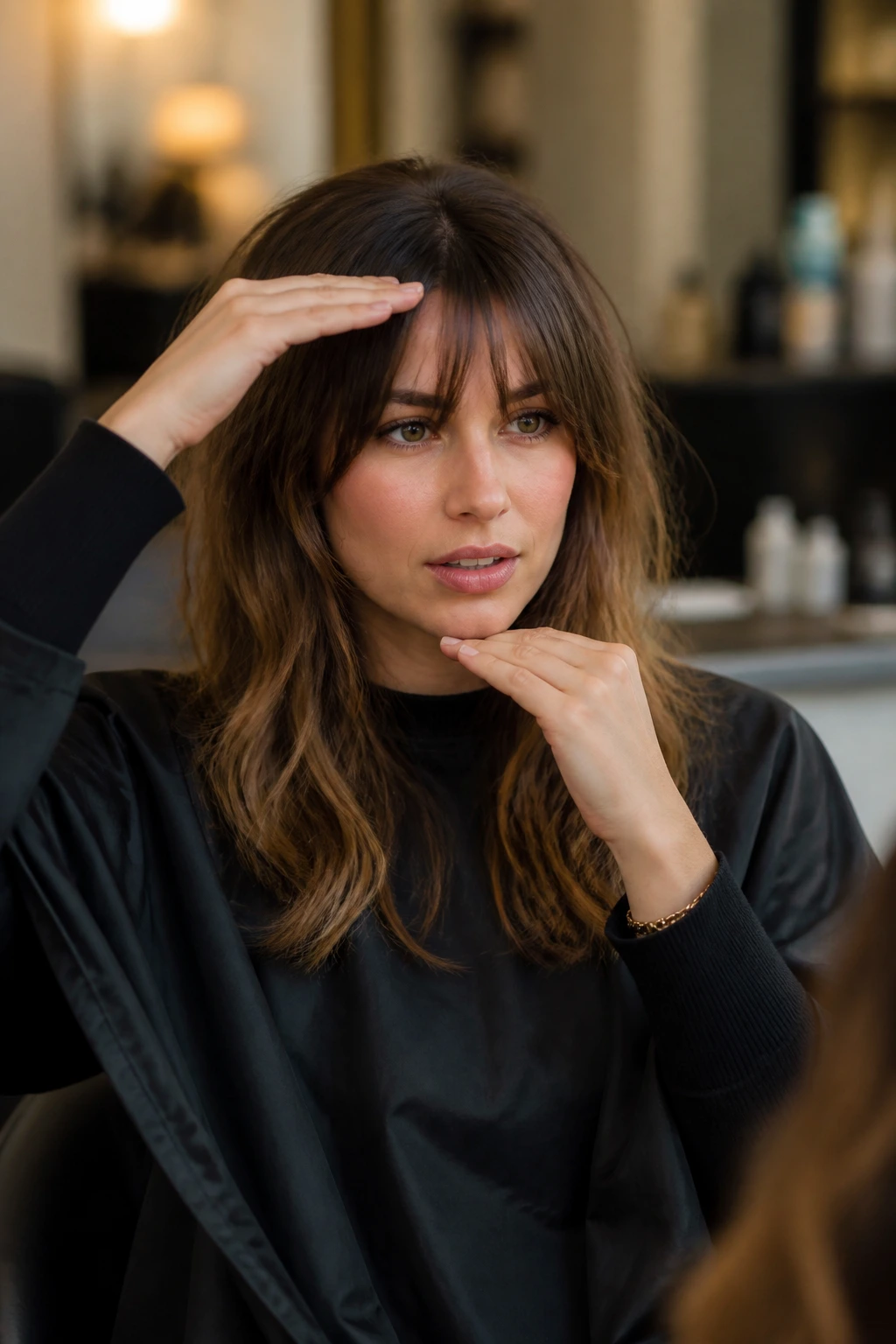
Bring photos, yes, but bring the right ones. A picture of a cut on pin-straight hair won’t tell your stylist much if your own hair waves at the first hint of moisture. Choose images that match your texture, density, and part, then point to the exact bit you like — the bang length, the cheekbone piece, the way the ends bend under.
Say where your shortest front piece should land. Cheekbone. Lip. Chin. Brow. Those landmarks matter more than vague words like “soft” or “light.” Tell the stylist how much time you want to spend styling, because a blunt fringe and an air-dry routine do not always get along.
If you have a cowlick, say so before the scissors come out. Same with glasses, a strong side part, or hair that flips out at the ends. Those details change where the bang should sit and where the first layer should start, and that can save you from a haircut that looks good only in the chair.
Tools That Make These Styles Easier
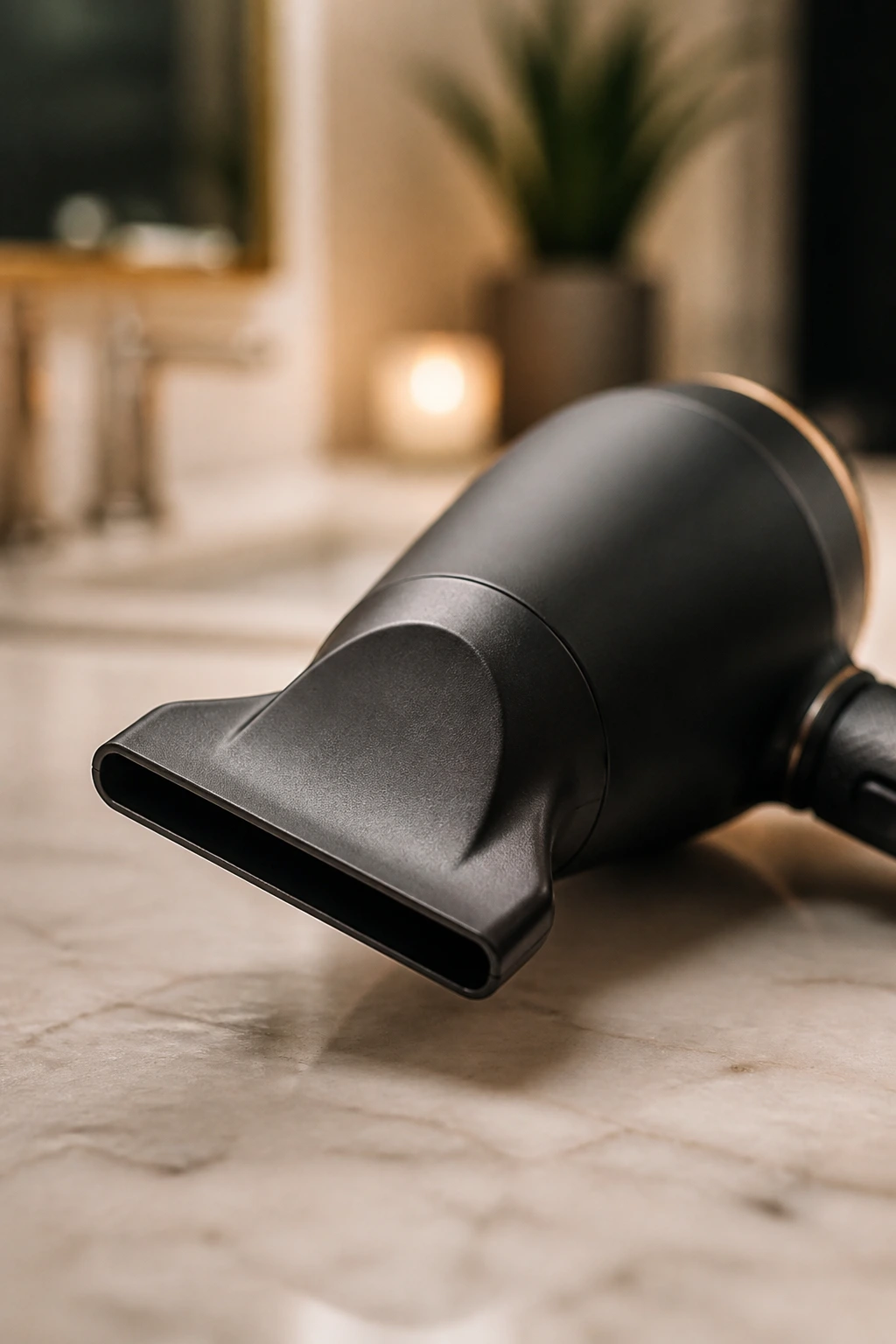
- Blow dryer with a nozzle: Direct airflow is the difference between a smooth fringe and a fuzzy one.
- Small to medium round brush: Best for curtain bangs, bottleneck fringe, and any front piece that needs a little bend.
- Wide-tooth comb or tail comb: Useful for parting and for keeping the fringe from getting crushed while it dries.
- Duckbill clips: Handy for pinning side pieces away while you blow-dry the bangs.
- Lightweight mousse or volumizing spray: Gives medium hair lift at the root without making the ends sticky.
- Heat protectant spray: Non-negotiable if you’re using hot tools on the fringe.
- Dry shampoo: Good for bang maintenance between washes, especially if your forehead gets oily fast.
- Texturizing spray: Helps shaggy, wolf, and Birkin-style cuts keep separation.
- Flat iron with rounded edges: Better for a soft bend than a hard crease.
How to Style It So the Shape Keeps Its Line
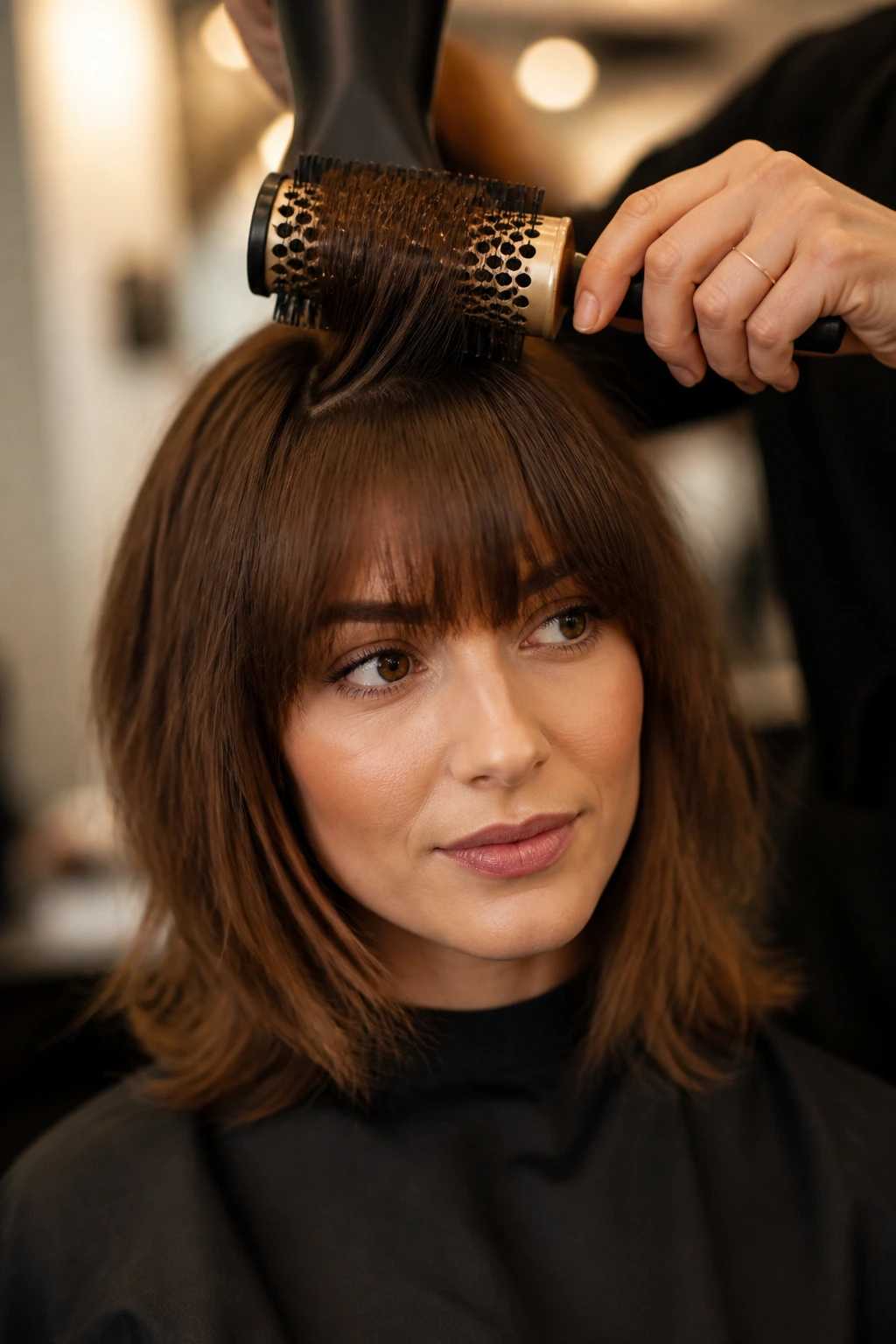
Round-Brush Blowout:
Start with the fringe first while it’s still damp. A couple of extra seconds at the roots matter more than a long pass over the ends, because bangs lose shape fastest where they sit against the forehead. Use medium heat, keep the brush moving, and let the front cool on the brush before you release it.
Air-Dry Bend:
For shags, curly cuts, and softer layers, scrunch in a little mousse and leave the hair alone. If the fringe needs help, twist it lightly away from the face and clip it for ten minutes while the rest dries. That small bend can keep the front from sticking straight down.
Flat-Iron Curve:
For blunt, arched, or side-pivot bangs, a flat iron with rounded plates gives a more controlled finish than a brush if your hair is stubborn. One slow pass with a slight wrist turn is enough. Don’t clamp and yank. That’s how the front gets too flat.
Second-Day Reset:
Mist only the fringe and the front layers with a little water, then re-dry the roots for 30 to 45 seconds. Add dry shampoo at the scalp if the roots are oily, not on the ends. The mistake most people make is trying to rescue bangs with more oil. That just makes them hang.
The Small Adjustments That Change Everything
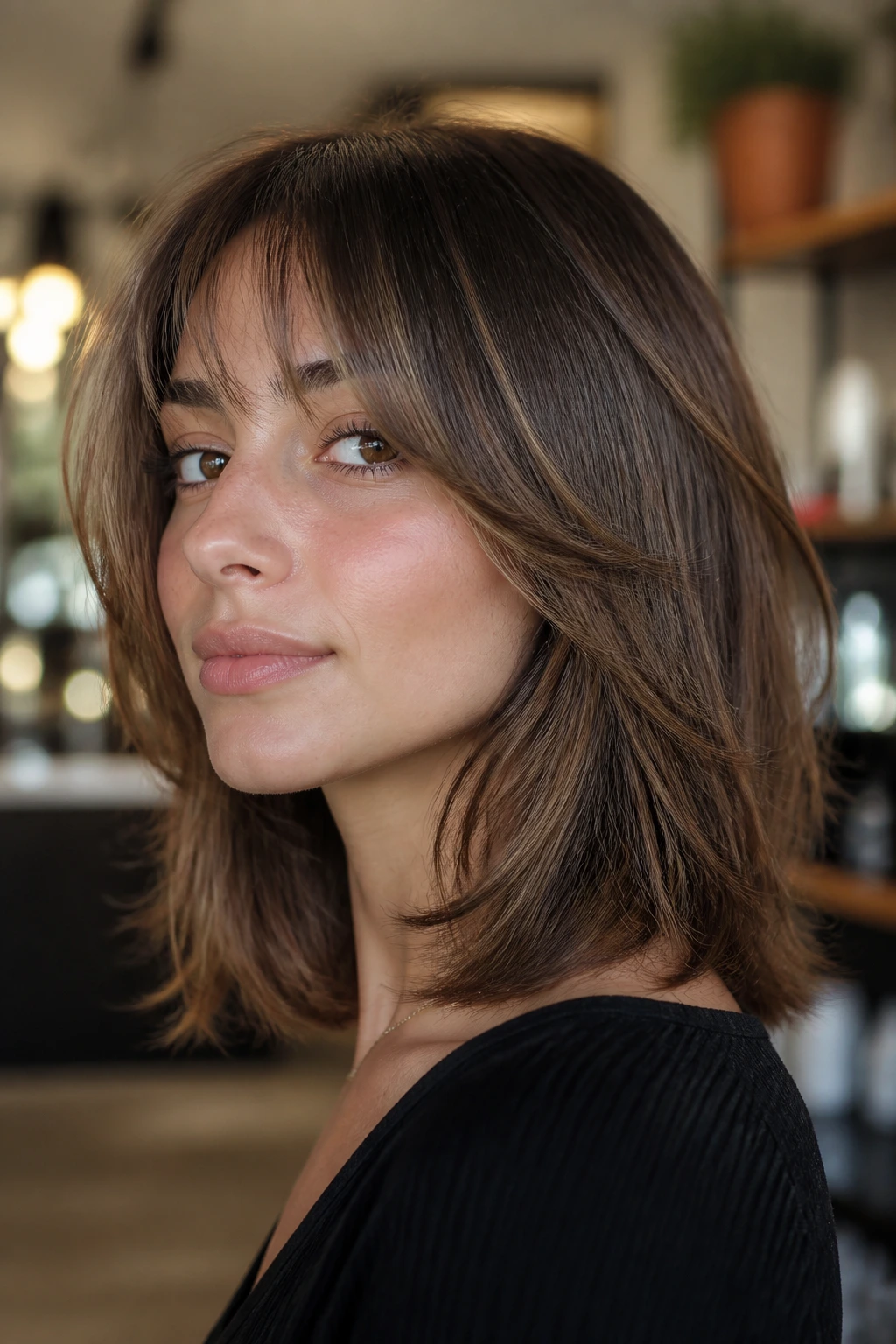
The first one is layer height. A chin-length face frame gives a different read than a cheekbone-length one, even when the rest of the haircut is the same. If your face feels long, start the shortest piece higher. If you want to soften a strong jaw, let the front fall lower and curve inward a little more.
Thickness changes the whole conversation too. Fine hair usually needs fewer layers and more strategic placement near the front. Thick hair can handle more weight removal, but that removal should live inside the cut, not fray the surface. That’s one of those small distinctions that people ignore right up until the haircut looks too puffy or too thin.
Part placement matters as well. A center part can make curtain and bottleneck bangs feel balanced. A side part can ease a stronger fringe into the rest of the cut. If you already know how your hair falls when it air-dries, use that fact instead of pretending you’ll change it forever. You probably won’t, and that’s fine.
Mistakes That Throw the Shape Off

Starting the shortest front piece too high:
If the first layer lands too far above the cheekbone, medium hair can spring up and leave the front looking wispy in a bad way. Ask for a lower starting point if you want fullness.
Treating every bang like curtain bangs:
Curtain bangs are popular because they’re forgiving, but they’re not the answer for every texture. Very dense hair can swallow them, and very straight hair can make them fall flat. Match the fringe to the hair, not the reference photo.
Over-thinning fine hair:
A razor-heavy cut can make fine medium hair look stringy by week two. Keep the layers conservative and let the front hold some density.
Ignoring the cowlick:
A fringe that fights a forehead swirl will split no matter how nice the cut is. Either work with the growth pattern or choose a longer bang that can be guided sideways.
Making bangs too short on the first try:
This one is brutal because bangs always look shorter once they dry. Leave yourself more length than you think you need. You can always trim again. You cannot glue hair back on.
Variations and Adaptations to Try
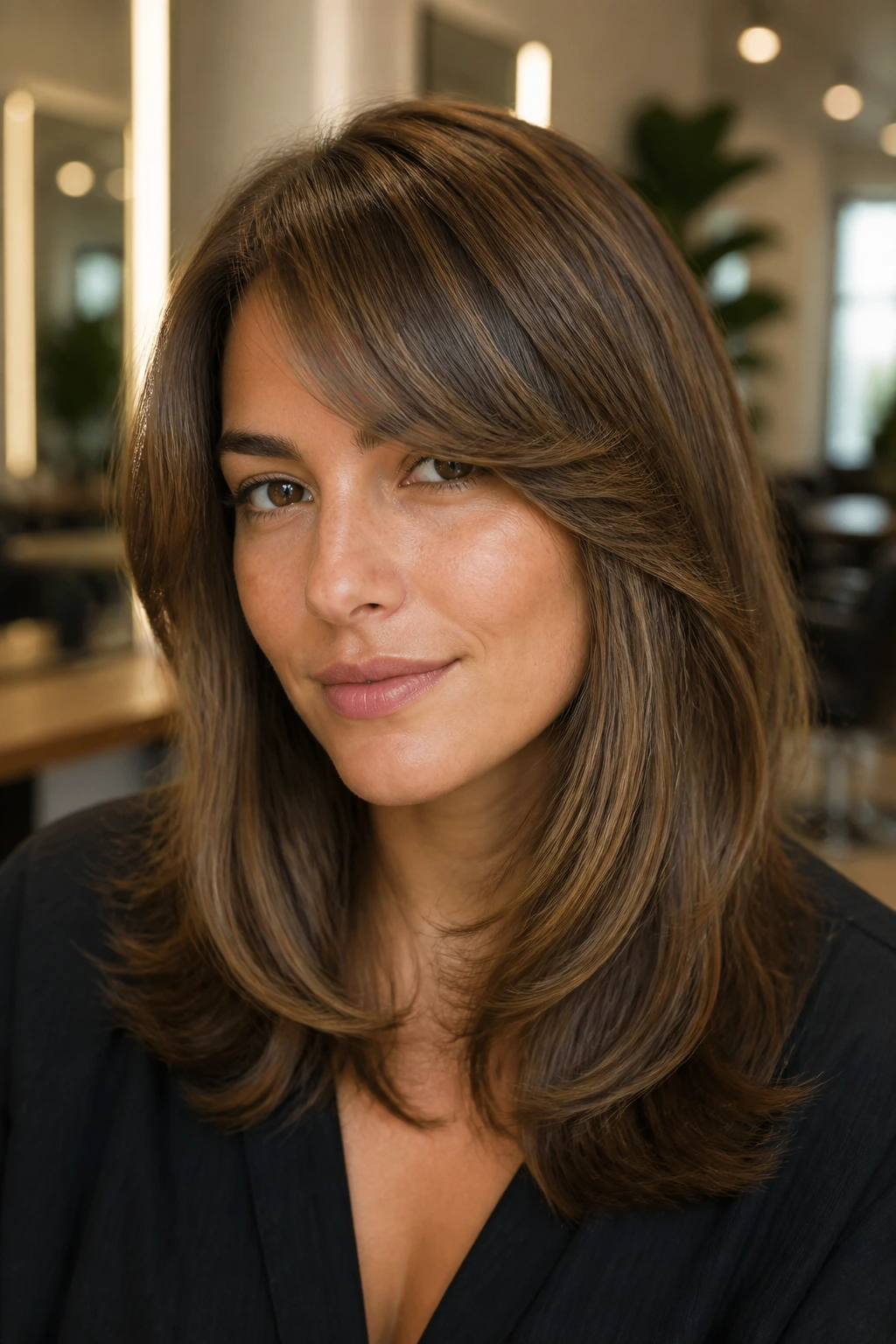
The Low-Maintenance Grow-Out:
Keep the front pieces at cheekbone length and let the bangs sit just below the brow. This version is for people who want the look of fringe without committing to regular trims. It grows into a face frame instead of a dramatic awkward phase.
The Curl-First Version:
For wavy or curly medium hair, cut the bangs longer and shape the face layers dry or nearly dry. The fringe should spring, not shrink. This version leans into the texture you already have, which is usually the smartest move with curls.
The Fine-Hair Lift:
Use shorter face layers only at the front, keep the rest of the cut light, and avoid heavy texturizing. The goal is to create lift at the eyes and cheekbones without stripping the body from the ends.
The Thick-Hair Control Cut:
Ask for internal weight removal and a longer fringe that can be split, swept, or pinned back. This keeps the shape from expanding outward. It’s a good choice if your hair gets bigger the longer you wear it.
The Polished Blowout Version:
Choose curved layers, side-swept bangs, or a centered fringe that bends softly at the ends. This version is made for round-brush styling and looks especially clean on medium-length hair with a smooth finish.
The Texture-Heavy Version:
Shag layers, wolf-light shaping, or Birkin fringe all live here. They’re rougher, looser, and happier when they’re not over-styled. If you like hair that moves and doesn’t look too done, this is the lane.
Keeping the Shape Fresh Between Salon Visits
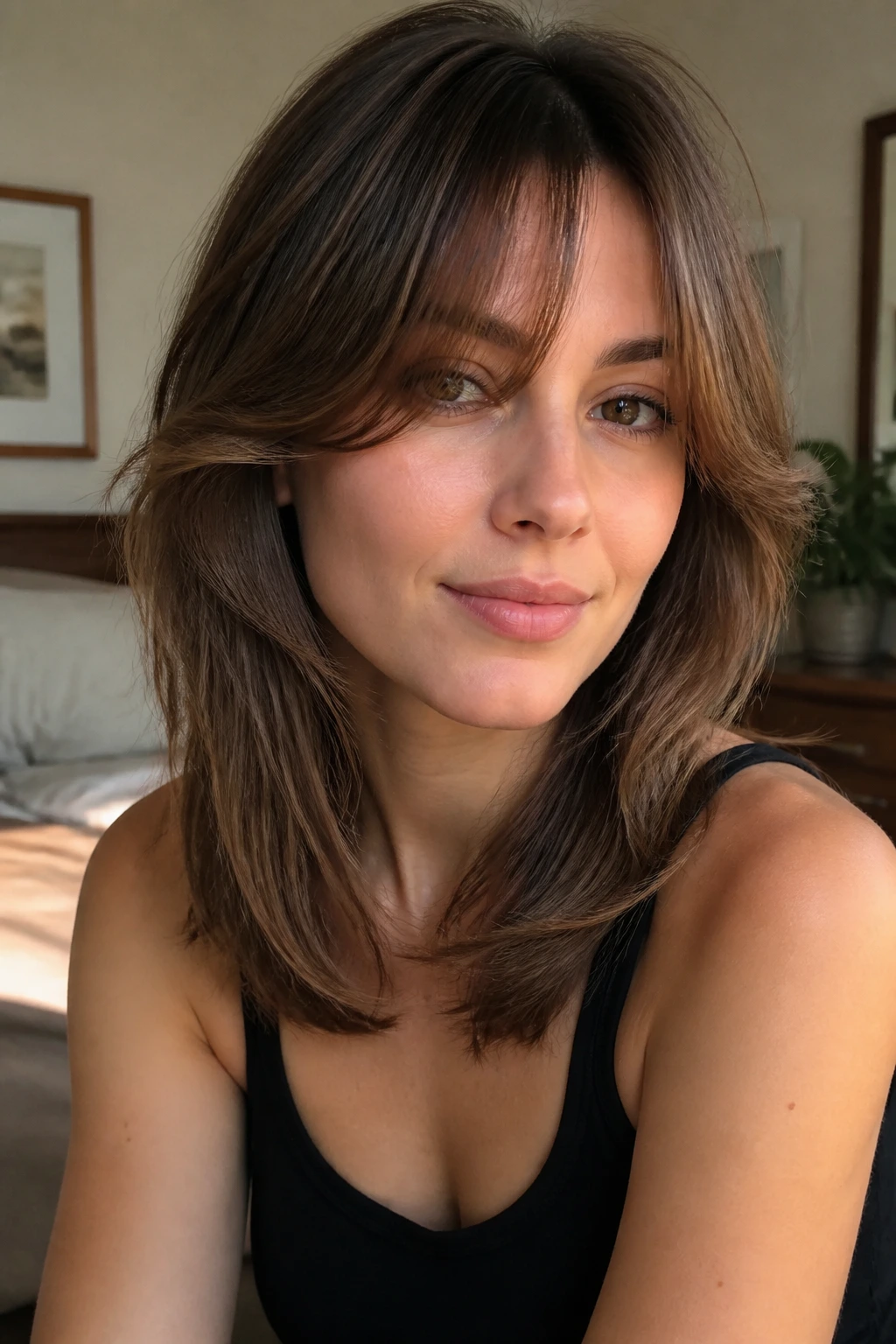
Bang trims are the first thing to schedule. Blunt fringe may want attention every 3 to 4 weeks, while curtain, bottleneck, and Birkin-style bangs can usually stretch to 5 or 6 weeks before they start hanging in your eyes. Curly fringe often needs less frequent cutting, but it still needs checking in its natural pattern.
The rest of the haircut usually holds for 8 to 12 weeks, depending on the density and how fast your hair grows. If you have thick hair or a lot of internal weight removed, you may feel the shape go bulky at the sides before the ends look long. That’s your cue for a tidy-up, not a total reset.
At home, keep the fringe dry at night if you can. Clip it up loosely, part it where you usually wear it, or tuck it under a soft headband for a few minutes while you get ready. Sleeping with damp bangs is a fast way to wake up with a bend you didn’t choose.
Questions People Ask Before Booking
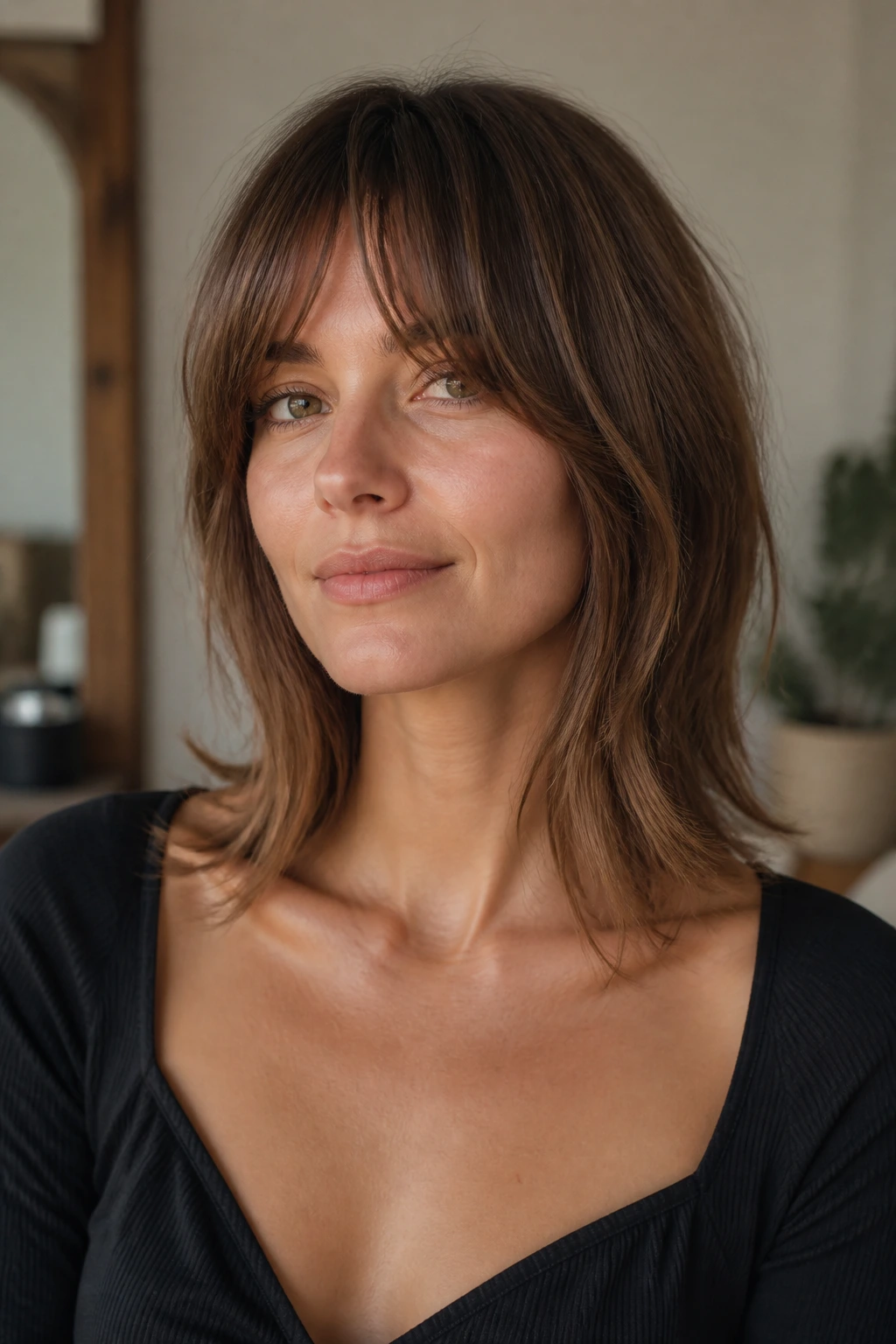
Will face-framing layers make medium hair look thinner?
They can, if the layers start too high or if the hair is already very fine and gets over-thinned. Kept lower around the chin or cheekbone, the front frame usually makes the hair look fuller because it gives the eye a shape to follow.
Which bangs need the least daily effort?
Curtain bangs, bottleneck fringe, and longer side bangs tend to be the easiest because they can bend, split, or grow into the rest of the haircut. Blunt fringe asks for more regular attention.
Can curly hair wear bangs with face-framing layers?
Yes, but the fringe should be longer than a straight bang and shaped in its natural curl pattern. If it’s cut like straight hair, it usually shrinks too much once it dries.
What if my bangs separate in the middle all day?
That usually means the cut is fighting your growth pattern or the fringe is too heavy at the center. A little dry shampoo, a round-brush blow-dry at the roots, or a shift to curtain or bottleneck bangs can help.
Should the shortest layer hit the cheekbone or the chin?
Cheekbone gives more lift and works well for round faces. Chin gives more softness and can be better if you want to lengthen the face or keep the frame calmer.
Can I air-dry this kind of haircut?
Some versions, yes. Shags, invisible layers, curly bangs, and softer curtain shapes do well with air-drying, while blunt fringe and polished center-part bangs usually need some heat to stay in line.
What if I hate bangs after a week?
Choose the grown-out or long side-bang versions and let them blend forward. They’re much easier to live with than a short, hard fringe, and they grow into face-framing pieces fast.
Is this cut okay if I wear glasses?
Absolutely, but the bang length matters. Keep the fringe high enough to clear the frames or long enough to sweep around them; the awkward zone is the one that lands right on the top edge of the glasses.
The Shape Worth Keeping
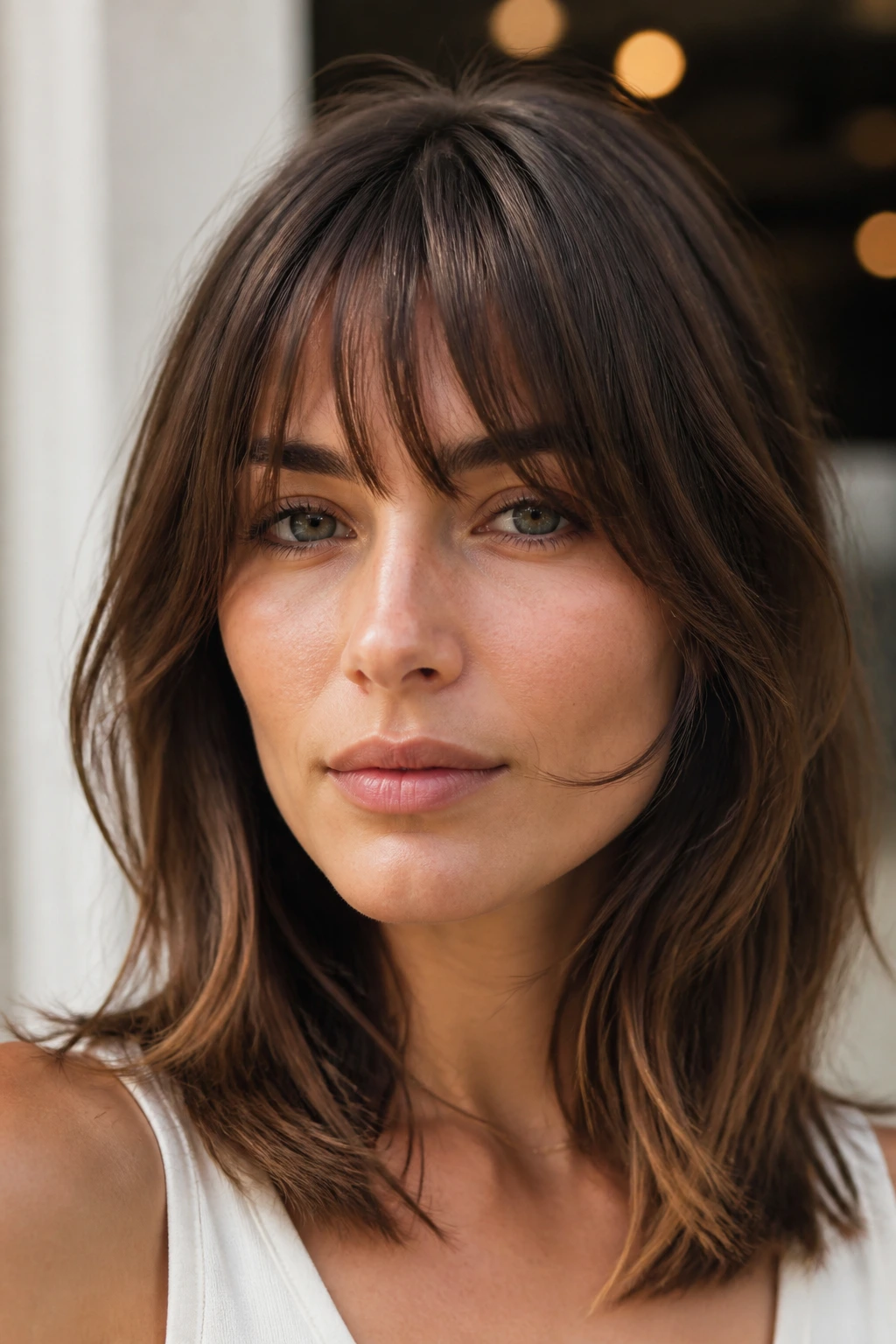
Medium hair gets interesting when the front is doing more than sitting there. That’s the whole appeal of face-framing layers with bangs for medium hair: the haircut moves with your face instead of against it, and the right version can make even a plain blow-dry look considered.
The smartest choice is the one that matches your texture, your part, and your patience. If you want softness, pick curtain or bottleneck. If you want edge, go shaggy or Birkin. If you want polish, the curved and center-part versions are hard to beat.
Pick the shape that fits your mornings, not just the mirror in the salon chair. That’s the cut you’ll keep reaching for.