



Round faces and thin hair don’t need more hair. They need better geometry.
That’s the part people miss when they go straight for volume. Black hairstyles for round faces with thin hair work best when the shape pulls the eye upward, skims past the cheeks, and leaves the jawline with a little breathing room. If the fullness sits exactly at cheek height, the face looks wider. If the crown is flat, the whole style falls heavy. The fix is usually simple, but it has to be deliberate.
There’s another wrinkle here: thin hair can mean low density, fine strands, or both. Those are not the same thing, and the difference matters. Fine hair needs gentle layering and lightweight hold. Low-density hair needs smart placement so the scalp doesn’t show through in awkward spots. You can absolutely wear braids, curls, pixies, bobs, twists, and protective styles. You just want the kind that work with the face, not against it.
Why These Styles Earn Their Place
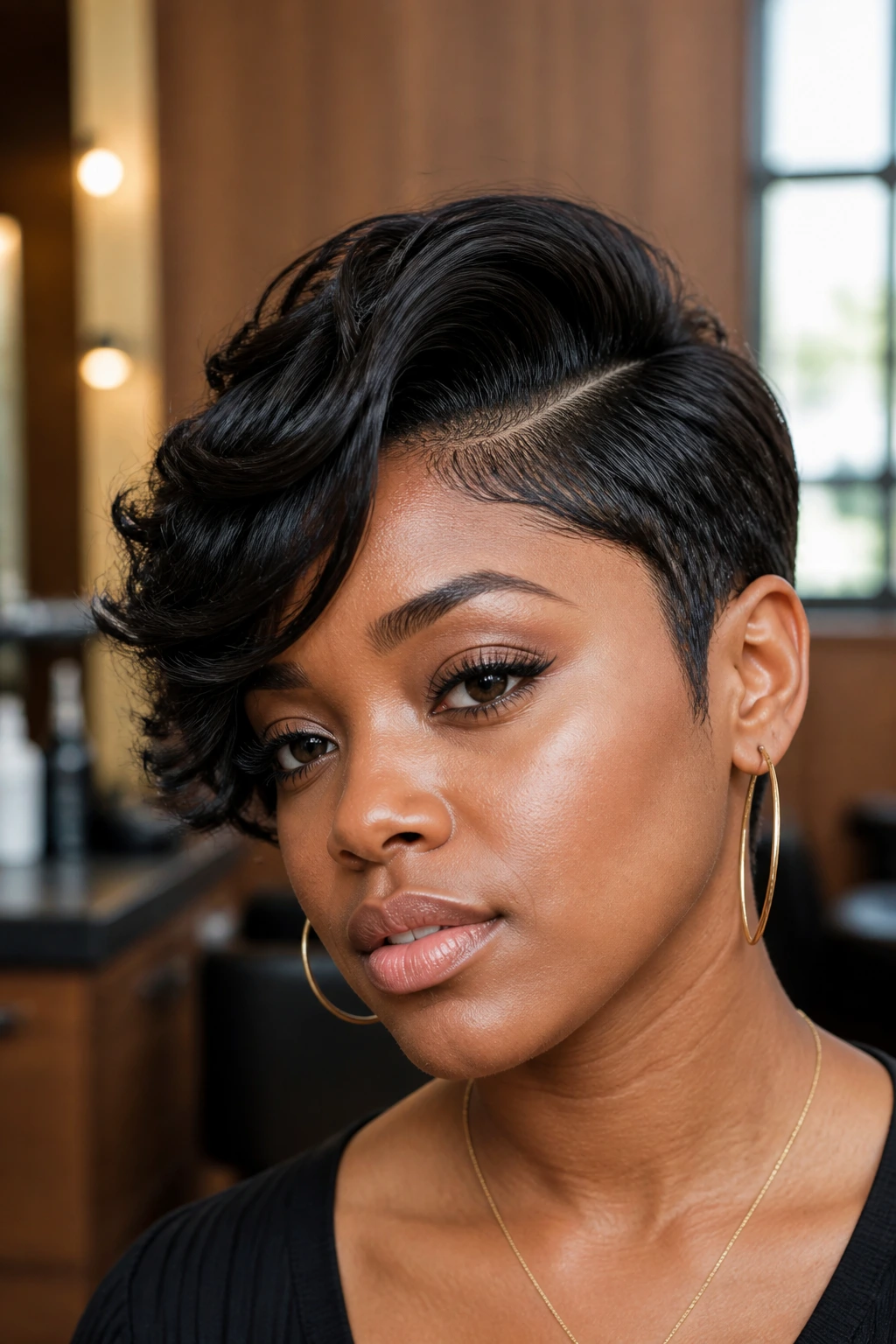
-
Crown Lift: A little height at the top stretches a round face visually, especially when the sides stay closer to the head.
-
Side Movement: A deep side part or a soft sweep breaks up the widest part of the face and keeps the style from reading too symmetrical.
-
Controlled Volume: Thin hair looks fuller when the body is placed in the right spots; piling it out at the cheeks is the fastest way to get the wrong effect.
-
Protective Options: Braids, twists, sew-ins, and wigs can add density, but the best versions stay light near the temples and don’t drag on the edges.
-
Soft Edges, Clean Shape: A little face-framing detail matters more than people think. One loose curl or a feathered bang can change the whole line of the cut.
-
Low-Stress Styling: These looks are chosen because they can be refreshed, pinned, or reshaped without starting from zero every morning.
The Shape Rules That Make Round Faces Look Longer
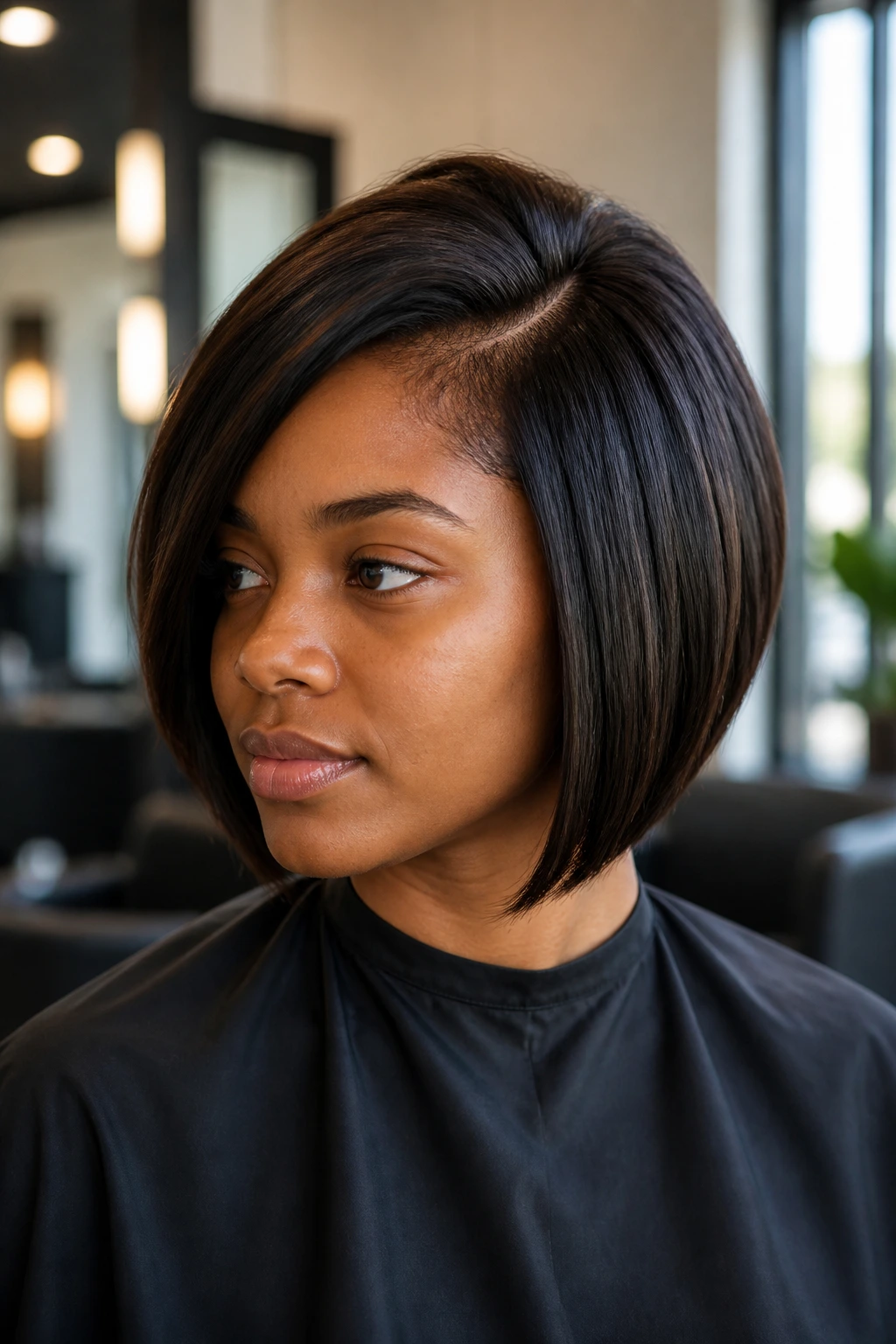
A round face has width, yes, but that doesn’t mean it has to be hidden. The trick is deciding where the eye lands first. If the first thing people see is a wide horizontal line at the cheeks, the face reads rounder. If the eye lands on height, length, or a strong diagonal, the whole look feels more balanced.
Thin hair changes the equation again. Heavy layering can expose too much scalp. A blunt line in the wrong place can make the ends look see-through. The sweet spot is usually movement without collapse. That means a bob can work, but it should sit below the jaw or be angled. A curl style can work, but it needs lift at the roots, not just fluffy ends. A braid style can work, but it should not balloon at the sides like a helmet.
There’s also the matter of texture. Black hair can do a lot: coils, silk presses, stretched styles, braids, twists, wigs, and sew-ins all create different silhouettes. The best choice depends on where you want the height, how much upkeep you can stand, and whether you want the look to feel polished, soft, or protective. None of this is mysterious. It’s mostly about line, weight, and where the volume lives.
1. Angled Pixie With Feathered Side Bangs
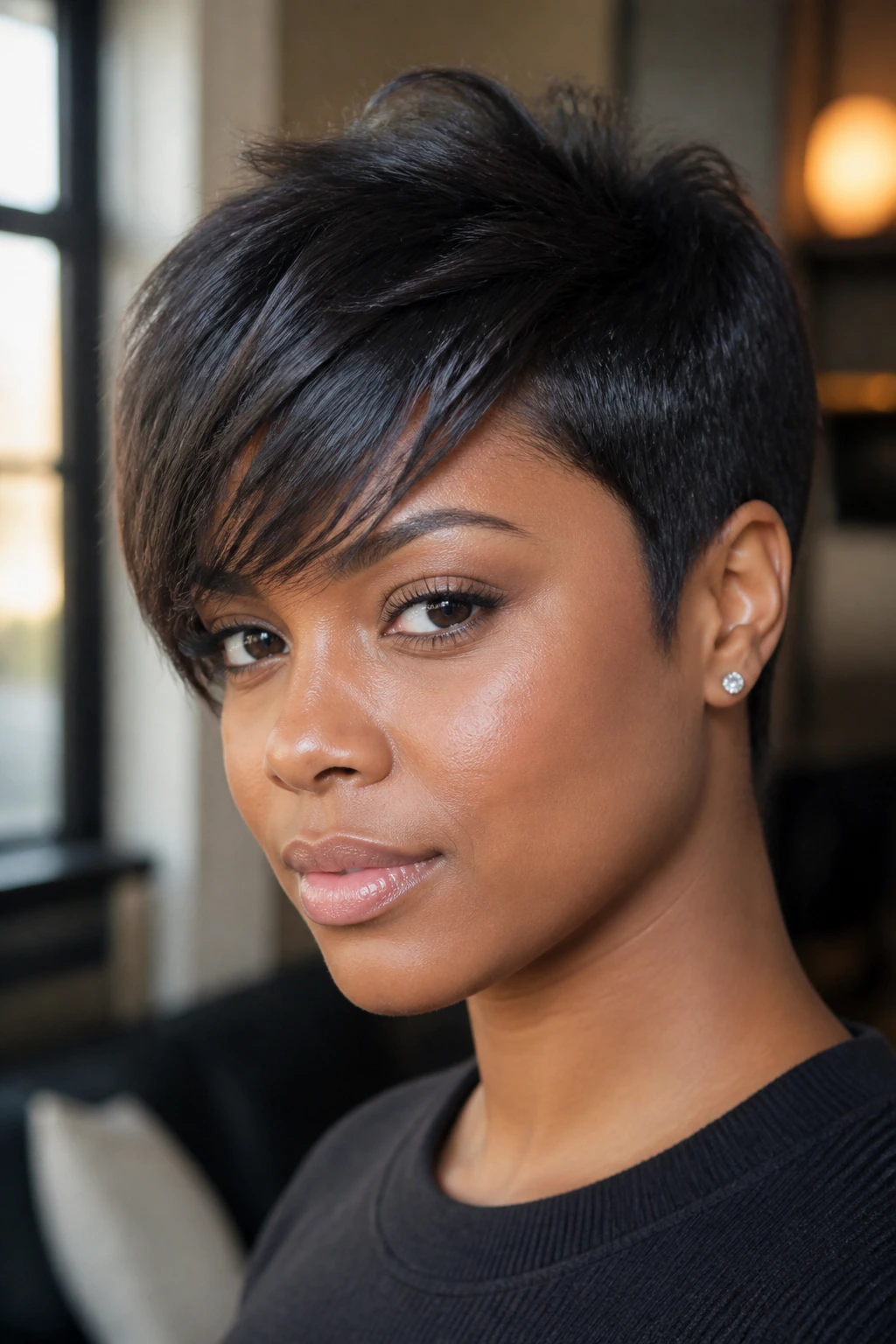
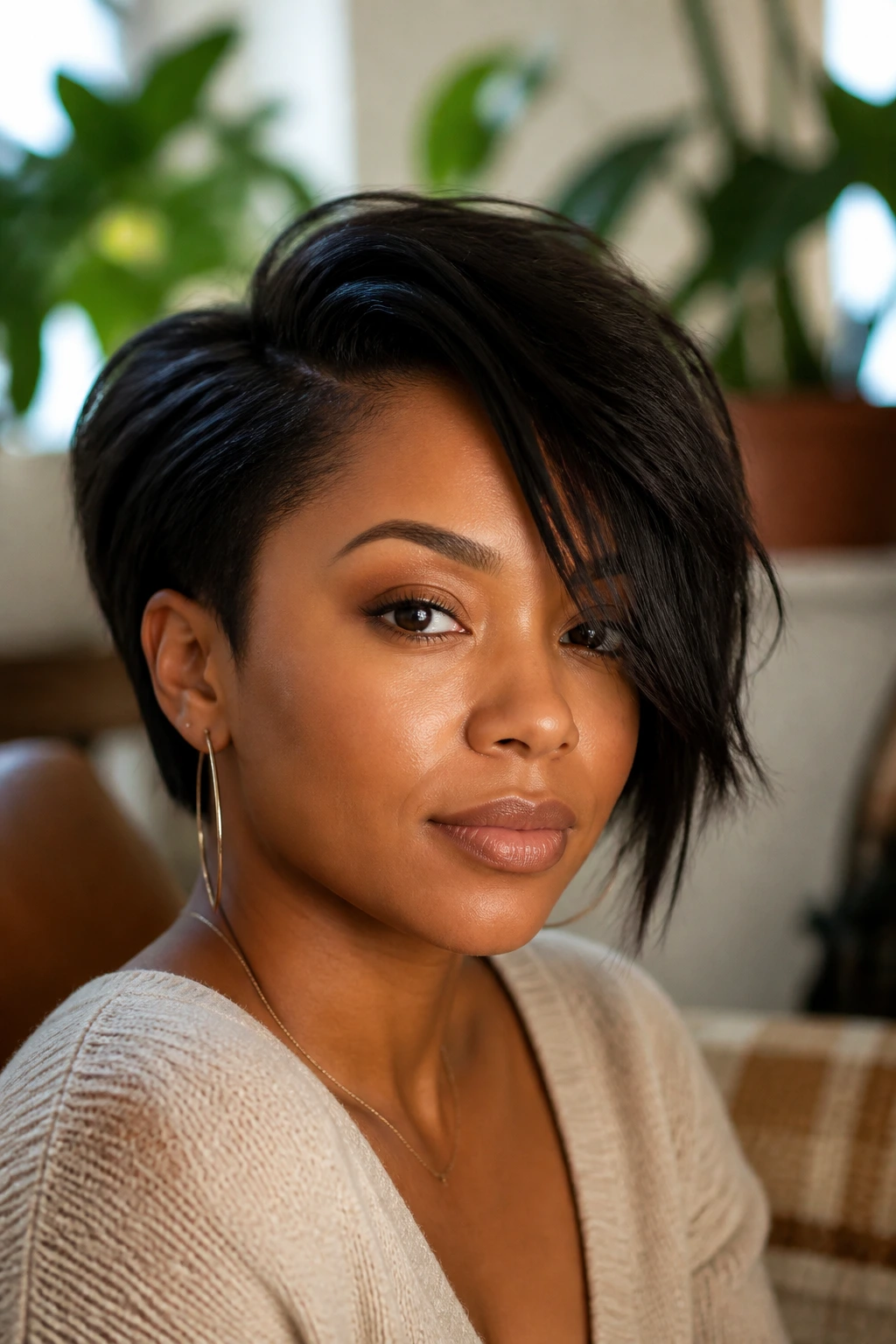
An angled pixie is one of the cleanest ways to flatter a round face when the hair is thin. The shorter sides remove bulk near the cheeks, and the longer top gives you a little lift without needing a lot of density. I like this cut best when the fringe falls across one brow instead of stopping straight across the forehead. That diagonal line does real work.
Ask for 2 to 4 inches on top, tapered sides, and soft feathering through the front. If the stylist razors the top too hard, thin hair can start to look wispy in the wrong way, so point-cutting is usually safer. A small round brush and a pea-sized dab of mousse are enough to push the top forward and then up. No heavy cream. That stuff weighs the cut down fast.
This style is sharp, low-fuss, and far kinder to a round face than a blunt short crop. The shape shows the bone structure instead of sitting on top of it.
2. Chin-Skimming Bob With a Deep Side Part
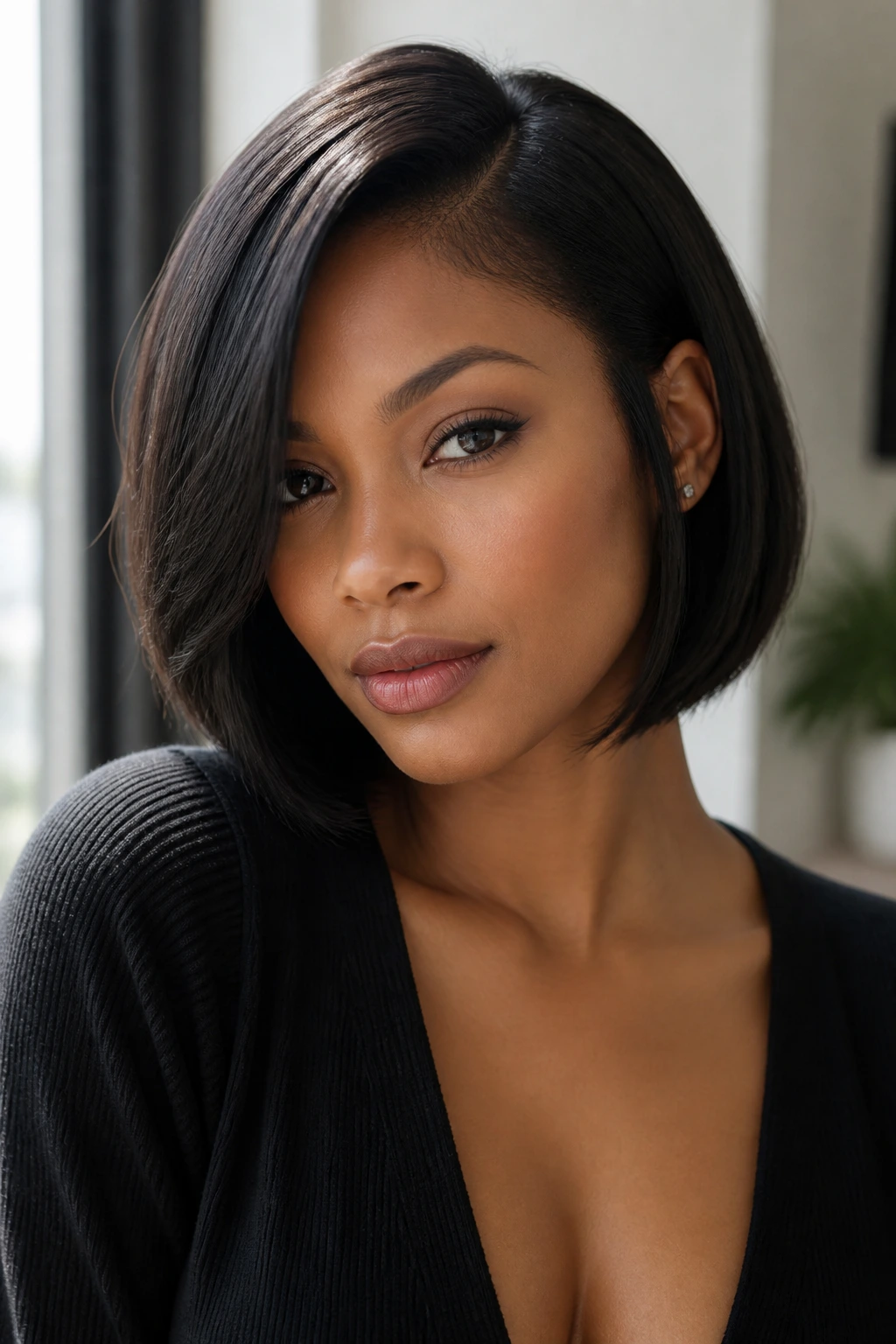
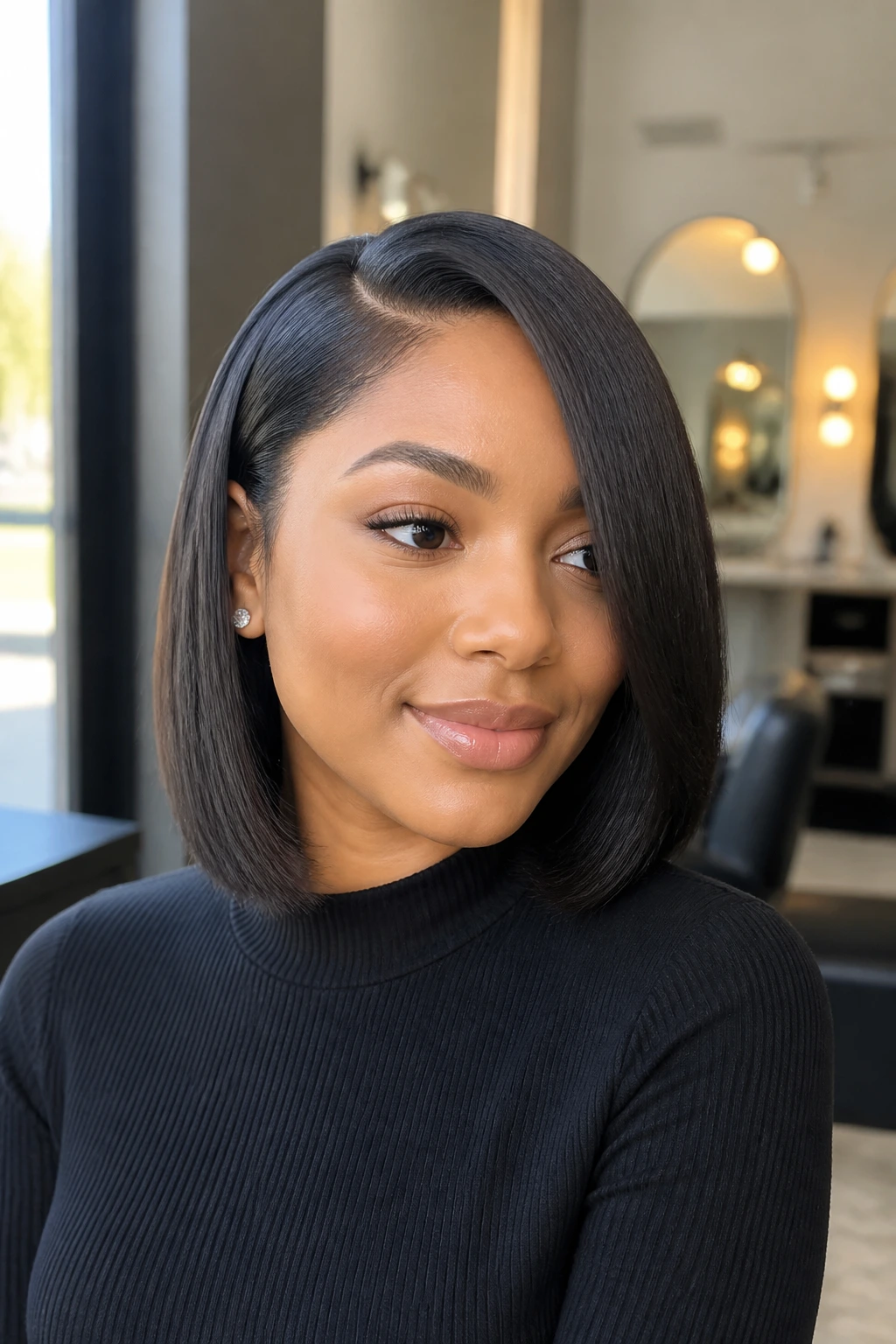
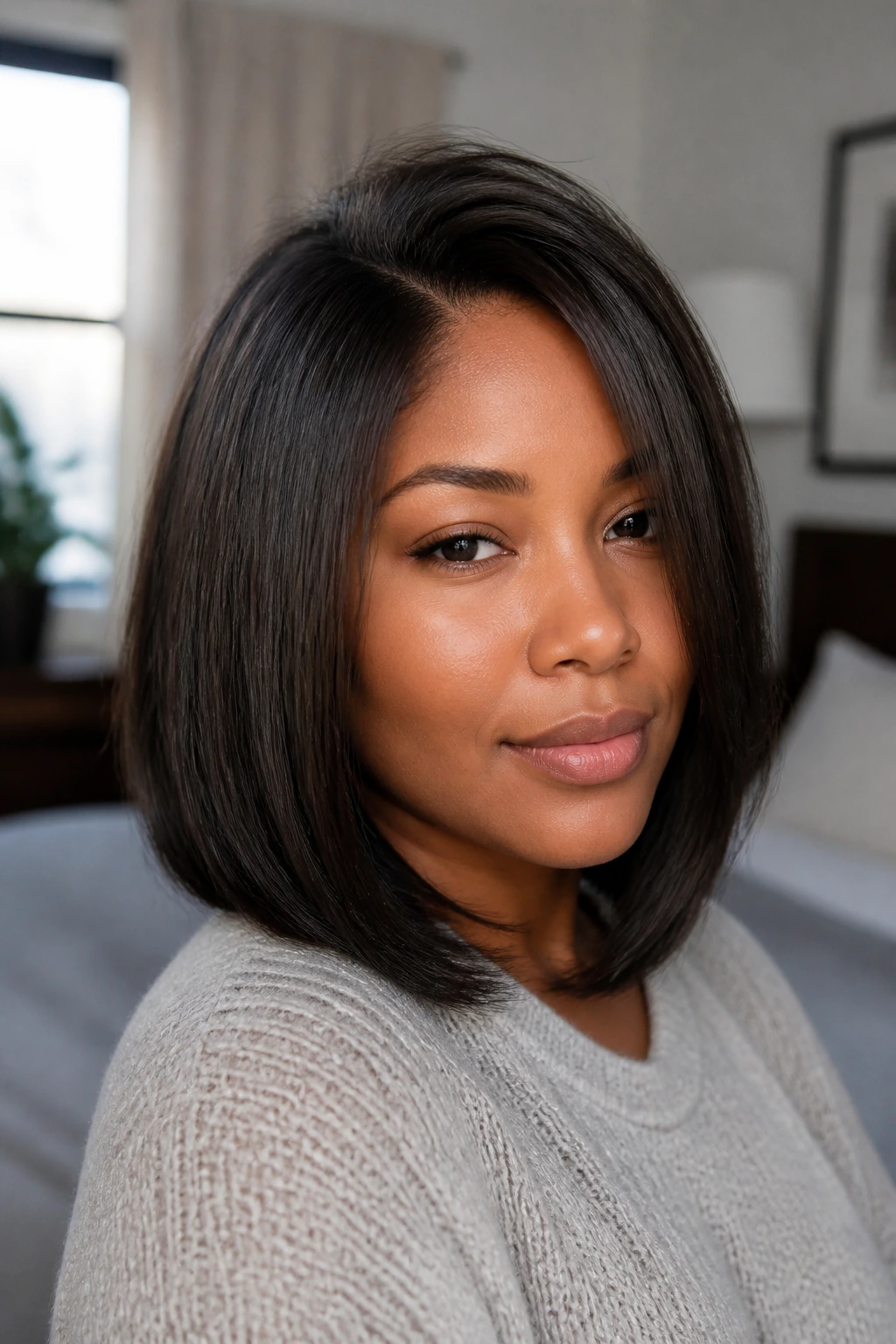
If you want a bob, don’t stop it exactly at the widest part of the jaw. That’s the trap. A chin-skimming bob with a deep side part is better because the front pieces fall just below the jaw and the side part breaks up the symmetry. The result feels longer, not wider.
The bob should be slightly angled, with the back a touch shorter and the front pieces brushing the collarbone or the space just under the chin. Thin hair gets a boost from subtle internal layering, but not so much that the ends fray into nothing. On blown-out or silk-pressed hair, a bend at the ends keeps the shape from going stiff. On curled hair, let the side part carry the style and keep the roots lifted with mousse.
I’m not a fan of chin-length bobs that hit dead center on a round face. They can make the cheeks look fuller than they are. A little angle fixes that immediately.
3. Tapered Natural Cut With Lift at the Crown
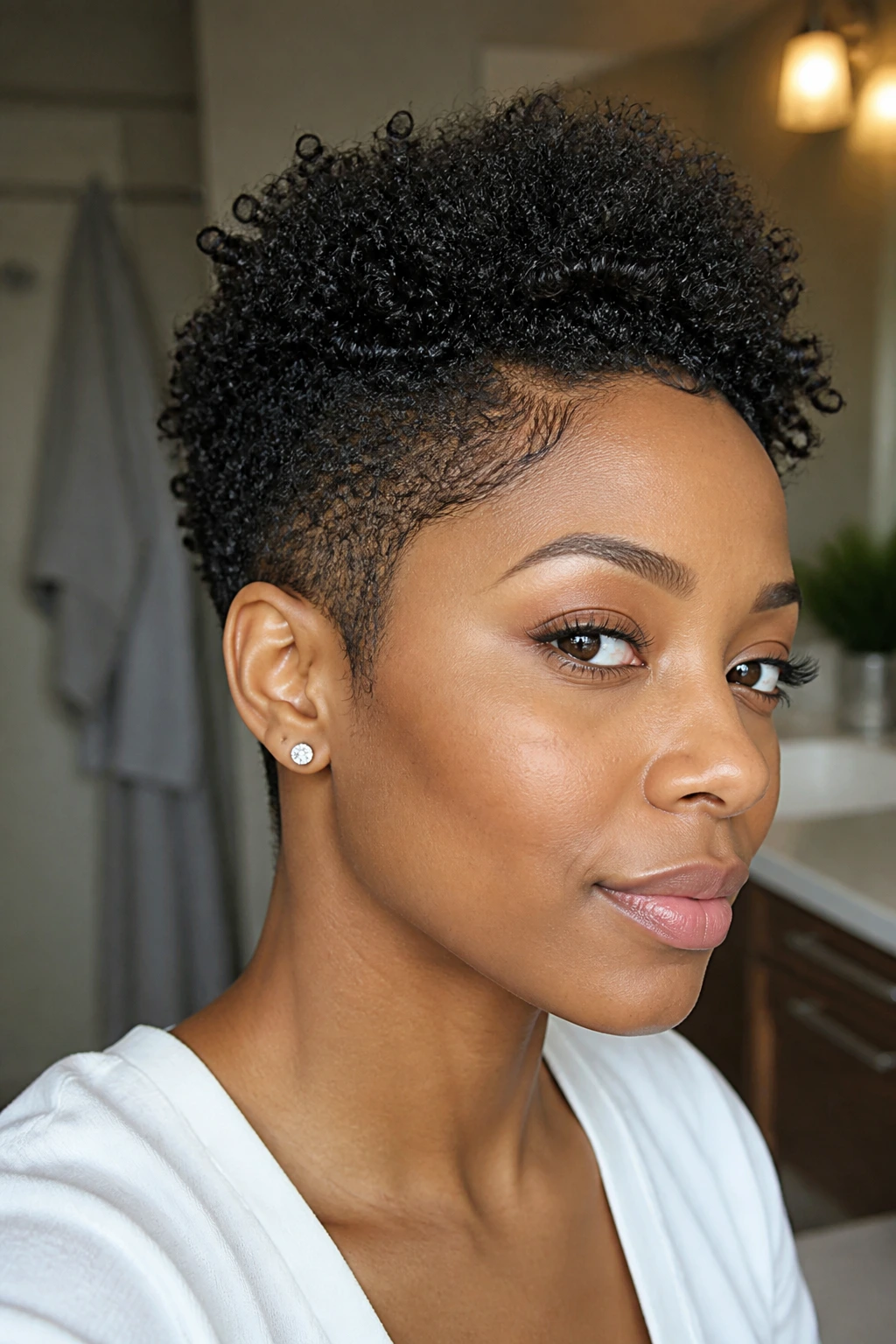
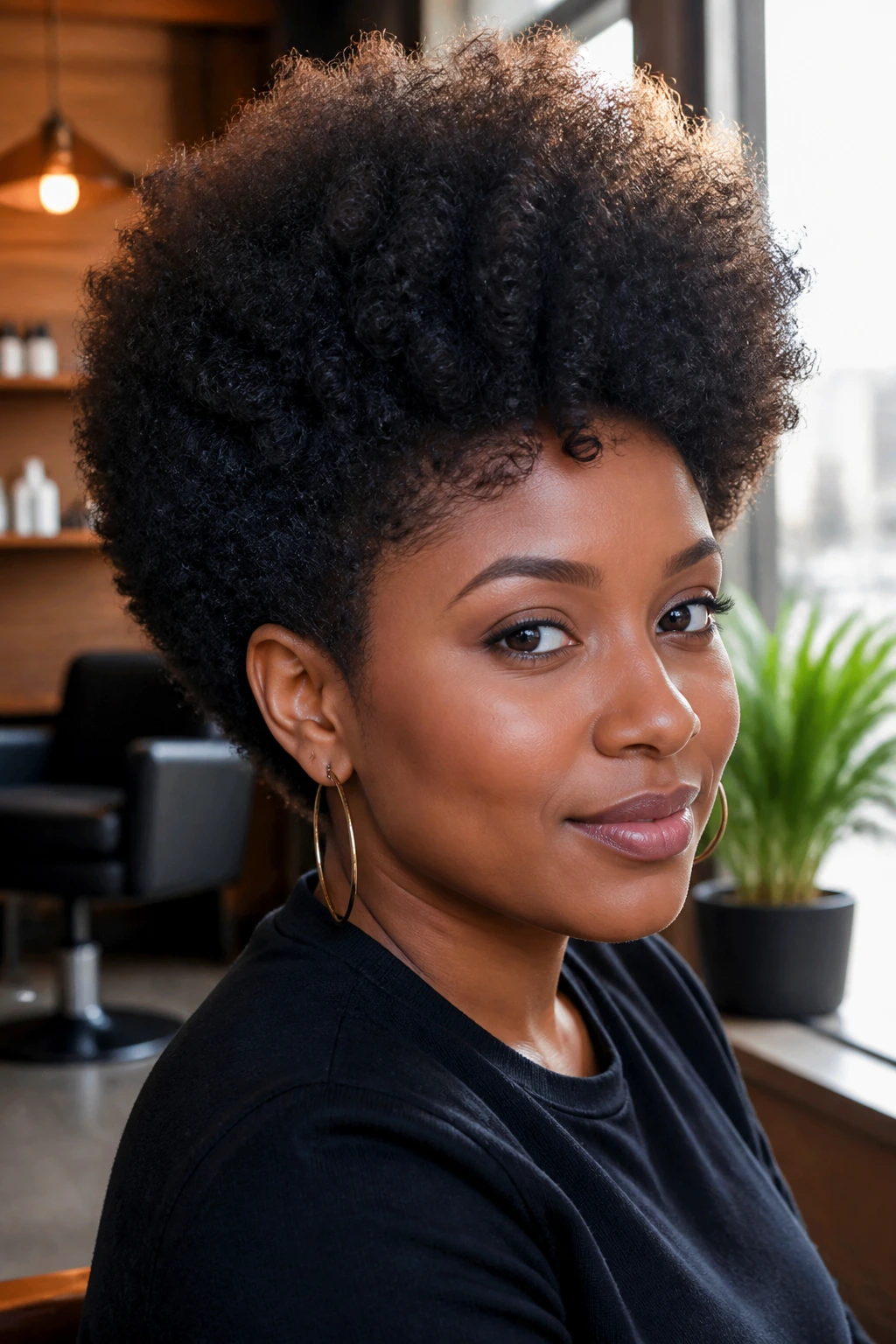
A tapered cut works because it narrows the sides and leaves the top with enough room to rise. On a round face, that vertical line matters. On thin hair, the taper also keeps the shape from ballooning around the ears, which is where too many cuts go wrong.
Keep the crown a little longer—roughly 4 to 6 inches if your curls shrink a lot—and let the nape and sides hug closer to the head. The shape should feel neat at the edges and full on top, not shaped like a mushroom. That’s the line to watch. A mousse or styling foam applied while the hair is damp will help the top stand up a bit once it dries. If your curls are looser, a diffuser on low heat can encourage the lift without creating frizz.
This is one of those cuts that looks confident without trying too hard. It shows off the face, and it gives low-density hair a shape that reads fuller than it is.
4. Layered Curly Lob With Face-Framing Pieces
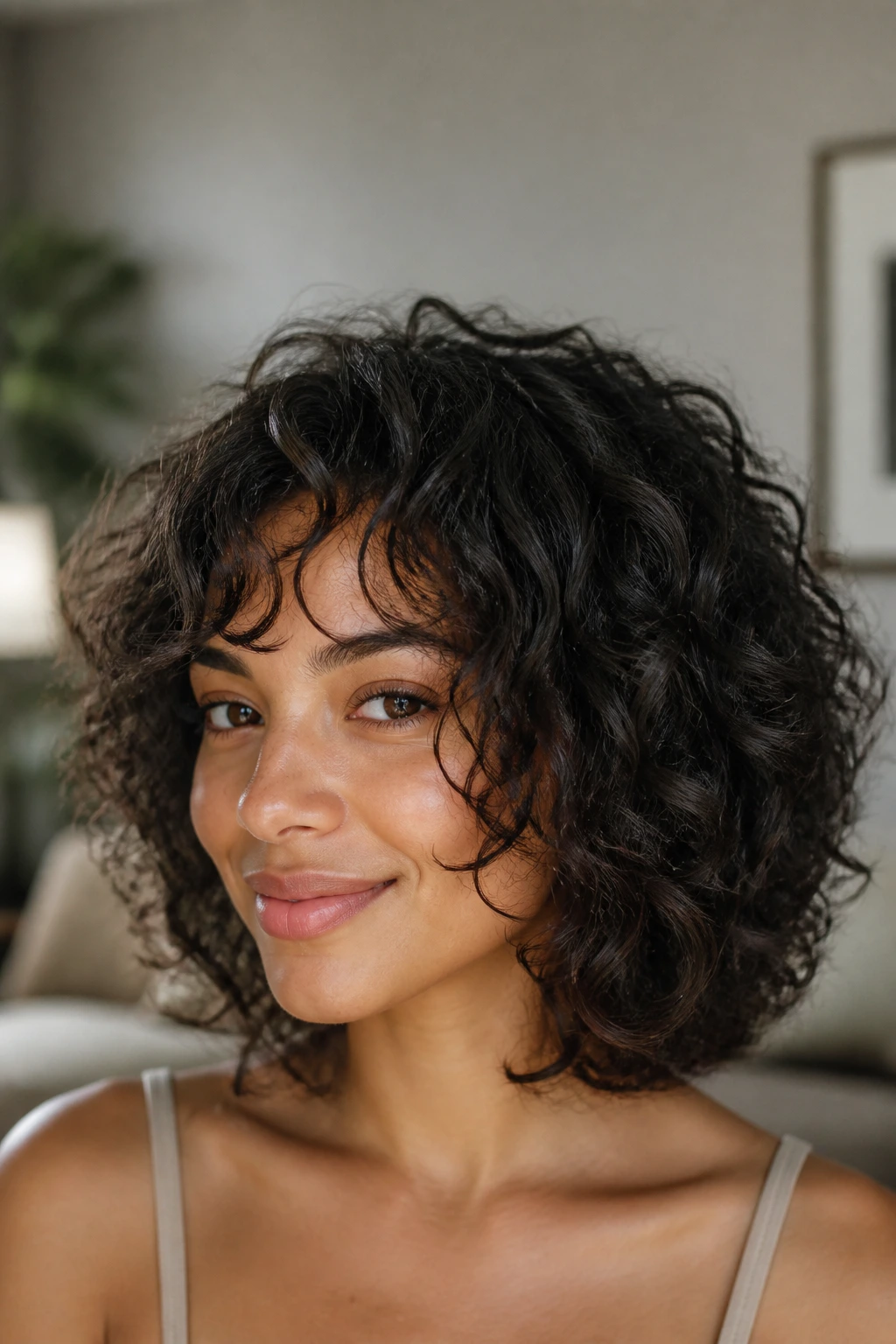
A lob can be a gift to a round face, but only if it’s layered with some discipline. A blunt lob that ends right at the chin can feel boxy. A layered lob that sits around the collarbone gives the face room and keeps the hair from sitting in one heavy curtain.
Ask for layers that begin around the cheekbone to mouth level and keep the longest length near the collarbone. That keeps the volume from clumping low. Thin curly hair loves this shape because the layers create movement without making the ends look stringy. If the curls need help, a light gel cast and a scrunch-out later will keep the curl pattern defined without that crunchy helmet look.
This one works especially well if your curls are loose to medium. The face-framing pieces soften the cheeks, and the extra length prevents the style from widening the face. It’s one of the easiest shapes to wear over the long haul.
5. Knotless Braids Pulled Into a High Half-Up
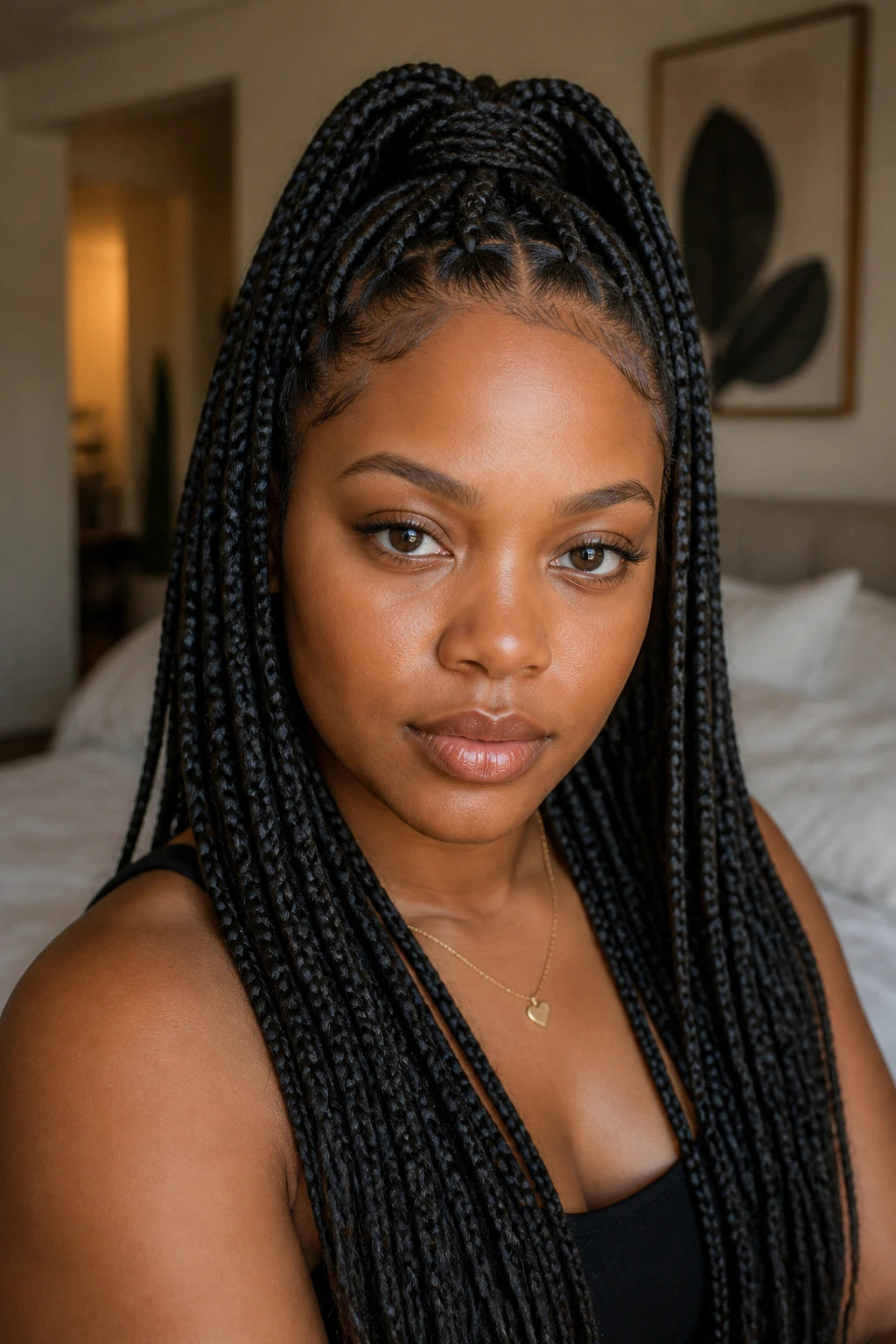
Braids can be flattering on a round face if you stop them from hanging all the weight at cheek level. Knotless braids pulled into a high half-up style do exactly that. The top section gives height, while the loose braids fall below the cheeks and lengthen the line of the face.
Go for small to medium knotless braids rather than oversized ones. Thick braids can overwhelm thin hair at the roots, especially if the added hair is too heavy. The half-up portion should sit high enough to create a vertical line, not halfway down the head like a sad ponytail. A little braid jewelry is fine, but keep it sparse. Too much hardware near the sides drags the shape down.
This look is a smart option when you want protective styling without a flat, heavy outline. It gives thin hair more visual density, and it keeps the face open.
6. Faux Hawk With Tapered Sides
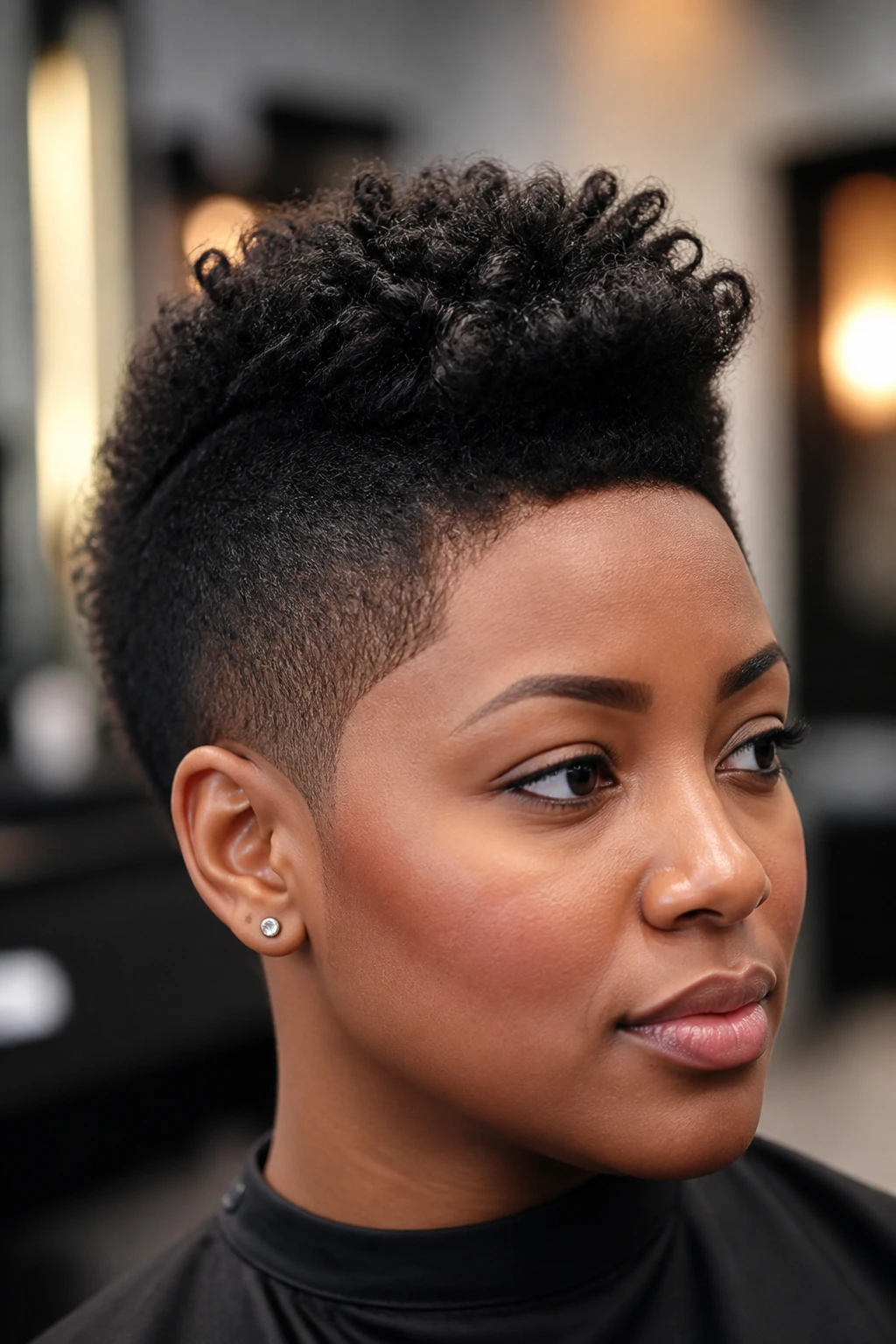
A faux hawk is a blunt little trick, and I mean that in a good way. It pulls all the attention to the center of the head, which is exactly where a round face can use some height. The sides stay pinned, braided, or tapered close to the scalp, and the top gets the drama.
On black hair, this can be built with natural curls, a silk press, or flat twists that feed into a higher ridge. Thin hair does better here when the top is lightly teased at the roots and misted with flexible hold spray rather than soaked in gel. You want lift, not stiffness. If the style is worn for a night out or a photo-heavy event, a few hidden bobby pins can keep the ridge from flattening halfway through the evening.
It’s not soft. That’s the point. A faux hawk gives the face a cleaner outline and keeps the widest part of the silhouette away from the cheeks.
7. Side-Parted Twist-Out Bob
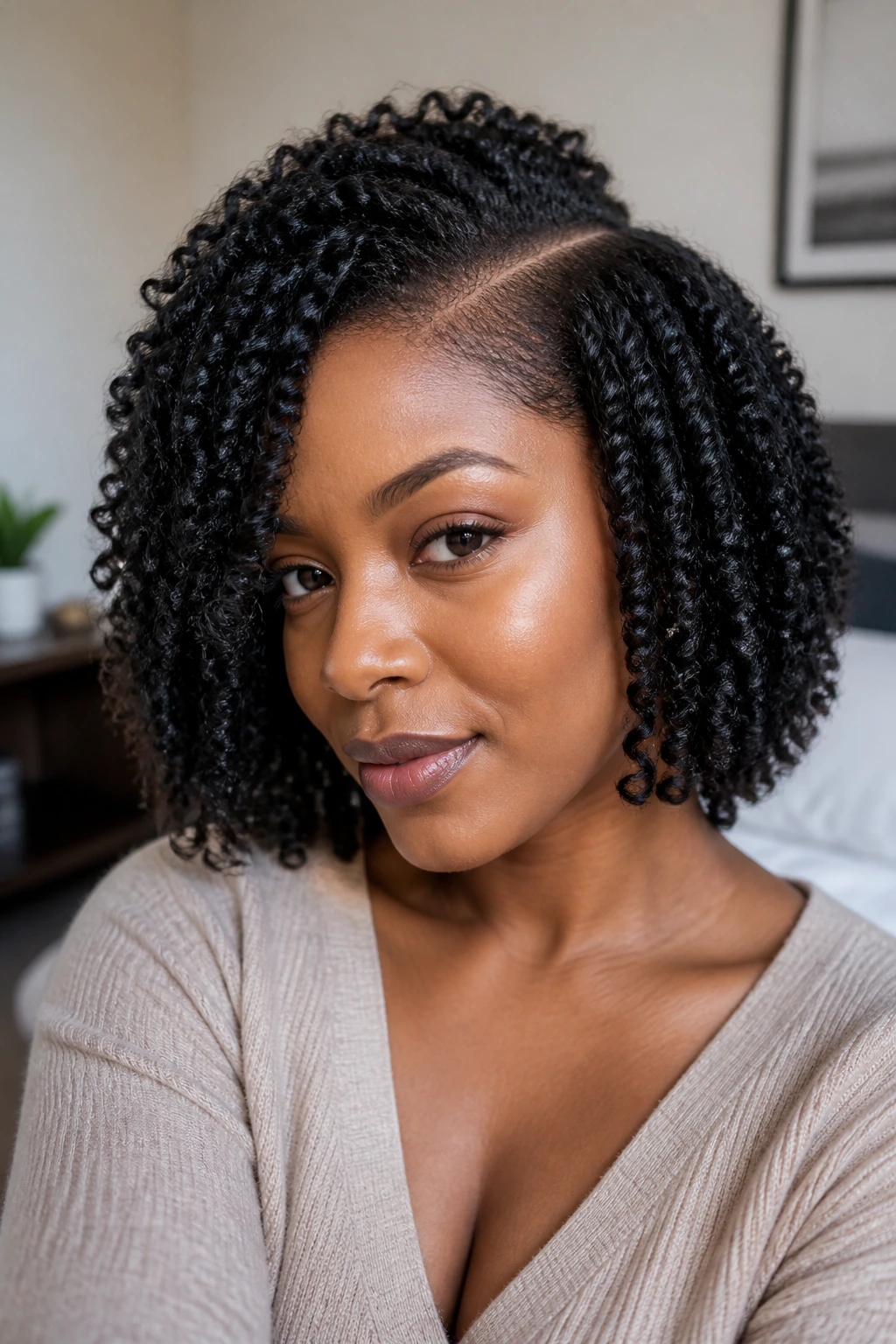
A twist-out bob has one job: give texture a shape that doesn’t puff out in every direction. The side part matters as much as the twist-out itself. With a round face, the diagonal line of the part pulls the eye off-center, and the bob length keeps the hair from expanding too low.
For thin hair, work with smaller sections when twisting so the curl pattern holds better. A medium-hold foam or cream set on damp hair is usually enough. Once dry, separate the curls only once or twice. If you go wild with separation, you’ll get frizz and lose the shape. The bob should sit around the jaw to collarbone area, depending on shrinkage.
What I like here is the balance: enough volume to feel full, enough structure to keep the face looking longer. It’s a good middle ground if you want softness but not width.
8. Senegalese Twists With Flipped Ends
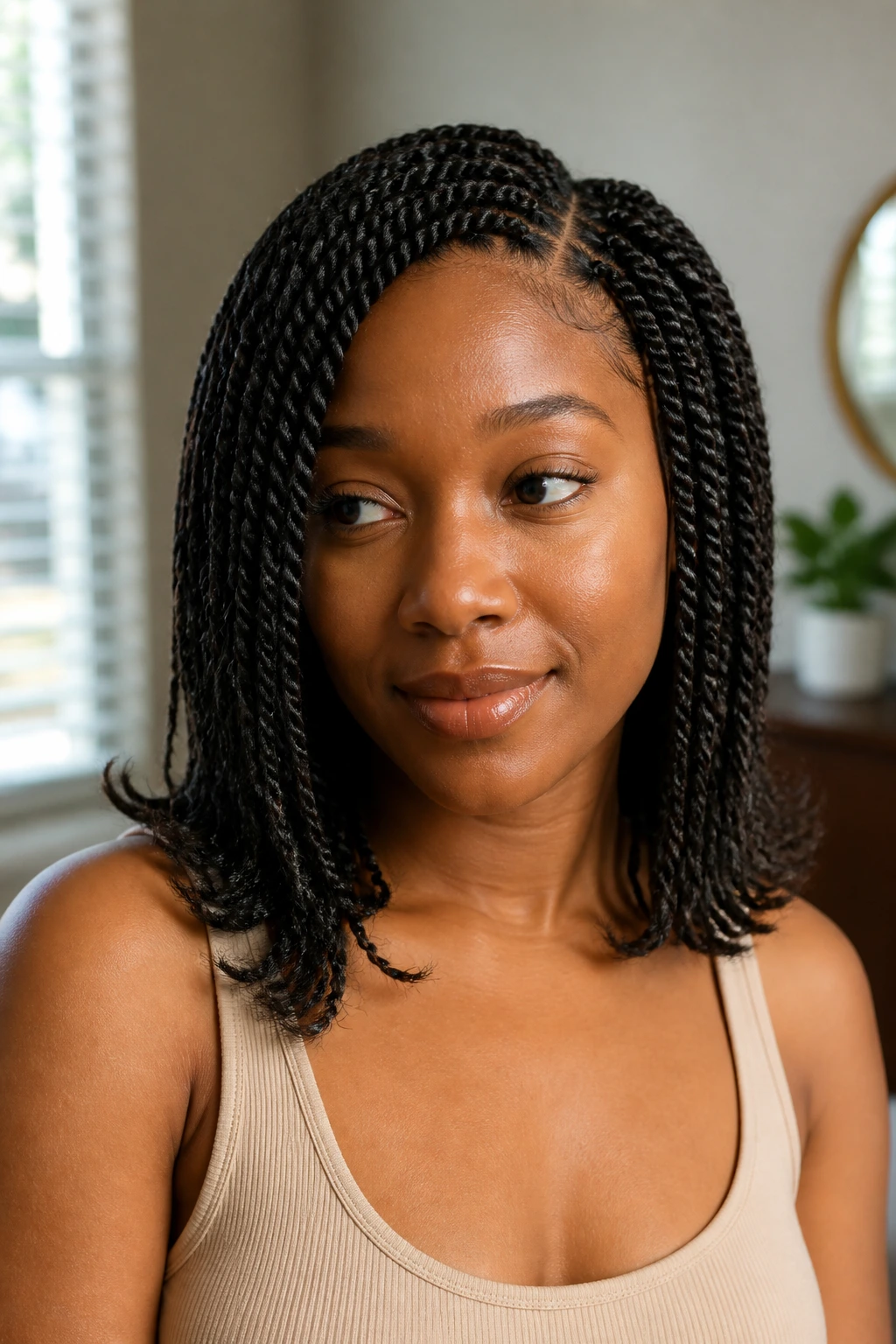
Long twists can drag a round face down if they’re too thick and too straight. The version that works better is shoulder-length or collarbone-length Senegalese twists with ends that kick out a little. That tiny bit of movement at the bottom keeps the silhouette from feeling heavy.
Use medium-size twists and ask for a side part if your forehead is broad or your cheeks are full. A center part can work too, but it should be soft, not razor-straight. Thin hair benefits from twists that aren’t oversized, because heavy added hair can pull on the scalp and flatten the roots. If you do them with a little shape at the crown, even better.
This style lasts well, stays neat, and gives the face length through the vertical line of the twists. The flipped ends keep it from reading severe. A good compromise.
9. Sleek Puff With Sculpted Edges
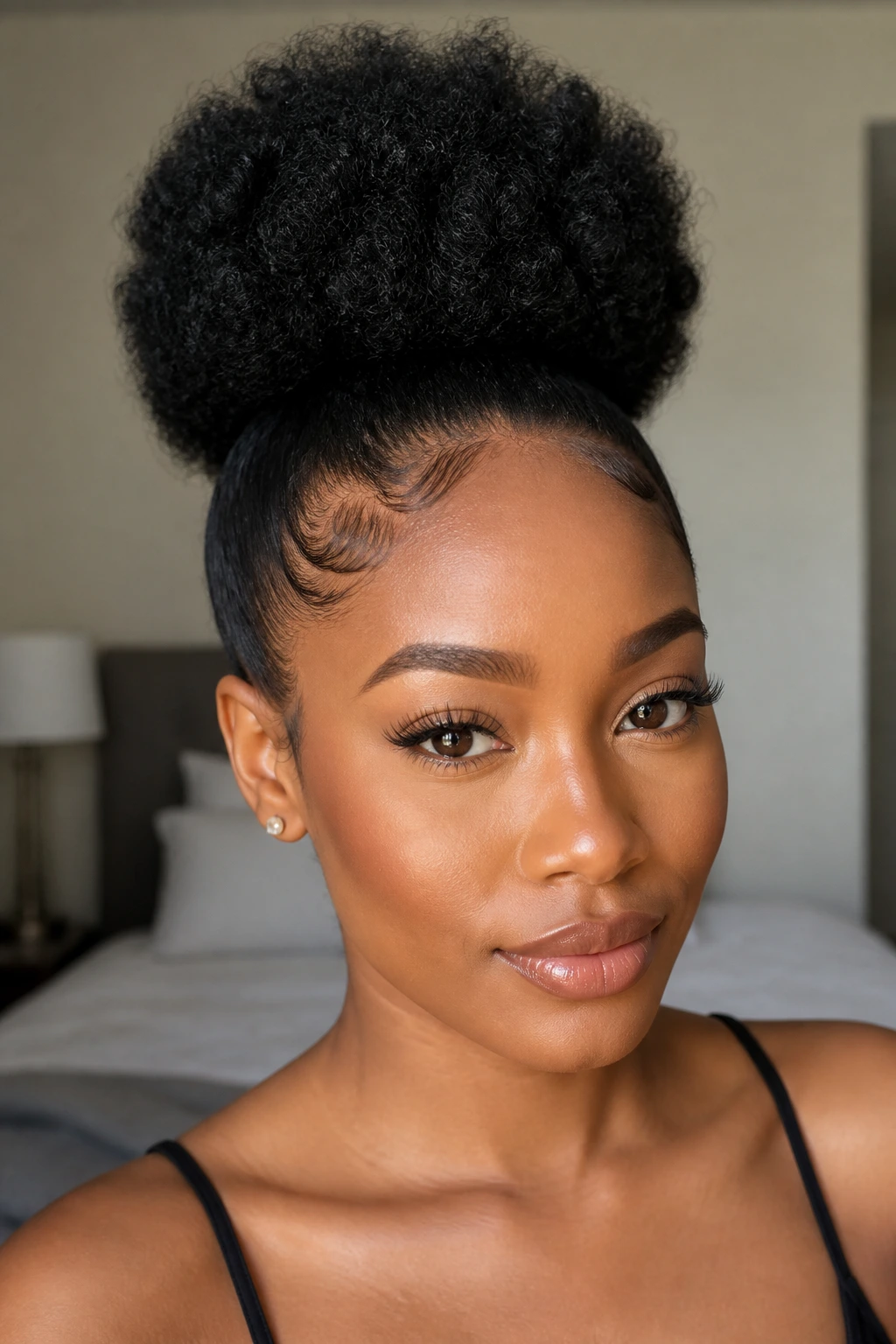
A puff can be one of the best looks for a round face, provided it sits high enough. The old mistake is making the puff wide and low, which just adds bulk where you don’t want it. A sleek puff at the crown stretches the face upward and gives thin hair a more dramatic outline.
Pull the sides smooth with a soft brush and a light gel or styling cream. The puff itself should sit on top, not behind the head. If your hair is low-density, stretch the curls first with twists or banding so the puff looks fuller without needing a mountain of product. Edges can be laid lightly, but they should not become the whole point of the style. A clean hairline is nice. A stiff shell around the face is not.
This one is quick, flattering, and honest. It shows the hair you have, but it places it where it helps the face most.
10. Curly Shag With Curtain Bangs
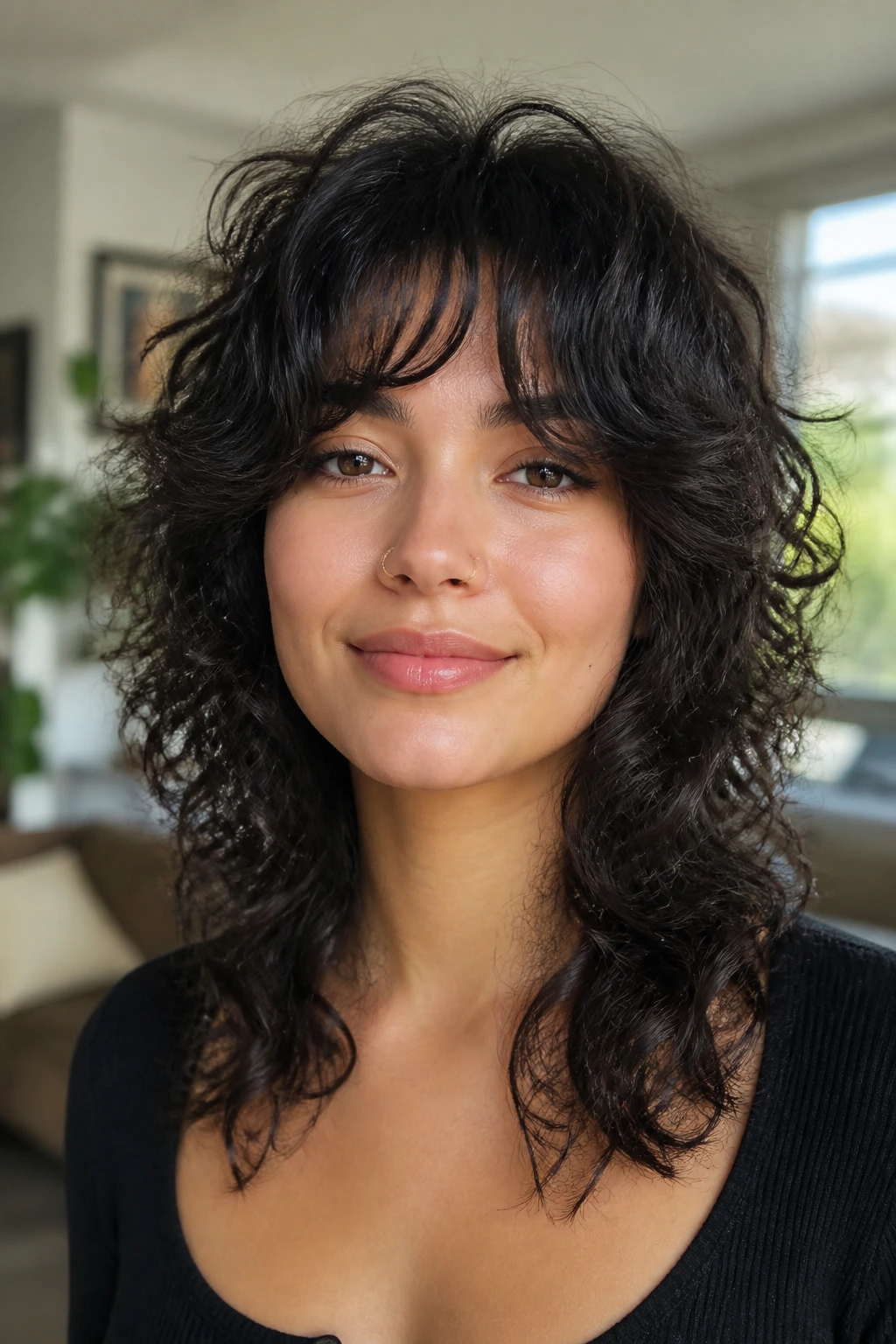
A shag can be a lifesaver for thin curly hair because it breaks up the mass into pieces that move. On a round face, curtain bangs help because they open in the middle and fall away from the cheeks instead of sitting straight across them. The shape feels softer, but it still has structure.
The important detail is layer placement. Keep the shortest pieces around the cheekbone or just below, not at the broadest point of the face. On looser curls, a styling mousse or curl cream with a light hand keeps the texture airy. On tighter curls, a diffused dry can give you that airy lift without puffing the roots too wide. If the shag gets too round at the sides, it stops helping. The shape should feel broken-up and vertical, not puffy and circular.
I like this cut because it doesn’t try to force one curl pattern into one outline. It lets the hair move, but it still understands the face.
11. Flat Twists Into a Low Side Bun
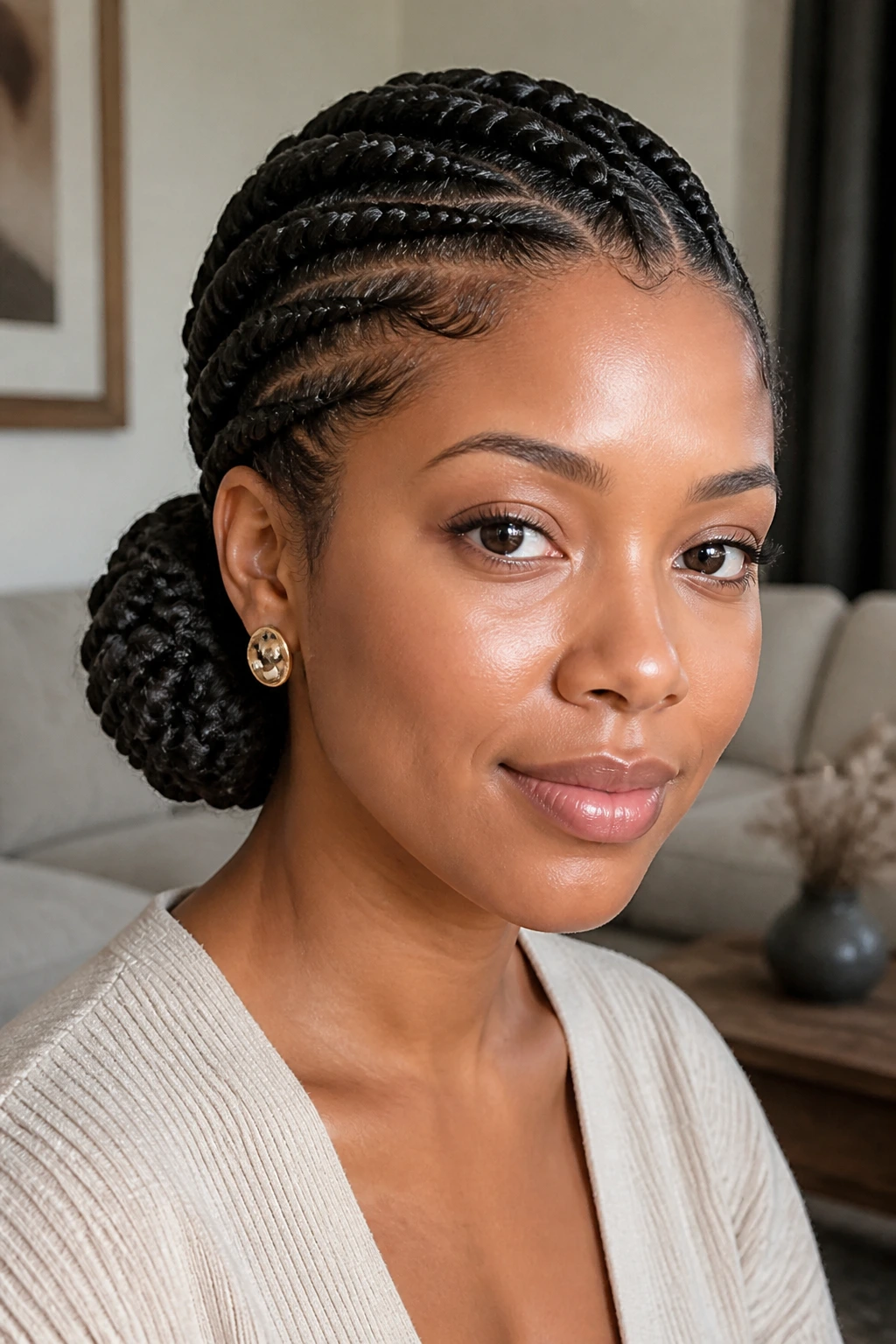
This is one of the more understated options, and it works better than people expect. Flat twists drawn into a low side bun create a diagonal line across the head, which is useful for a round face. The bun sits below the cheekbones, and the twists keep the style neat without creating width at the temples.
Thin hair does well here because the style can be tightened just enough to stay put without needing extra bulk. The trick is to keep the bun compact and slightly off-center. If it’s too large, it starts to look lumpy. A little shine on the twists helps the style read polished, and a few soft baby hairs can keep the hairline from looking severe.
This is a good one for work, events, or any day you want the face to look a touch longer without wearing something loud. It’s calm. Clean. Smart.
12. Micro Bob Wig or Sew-In With Root Lift
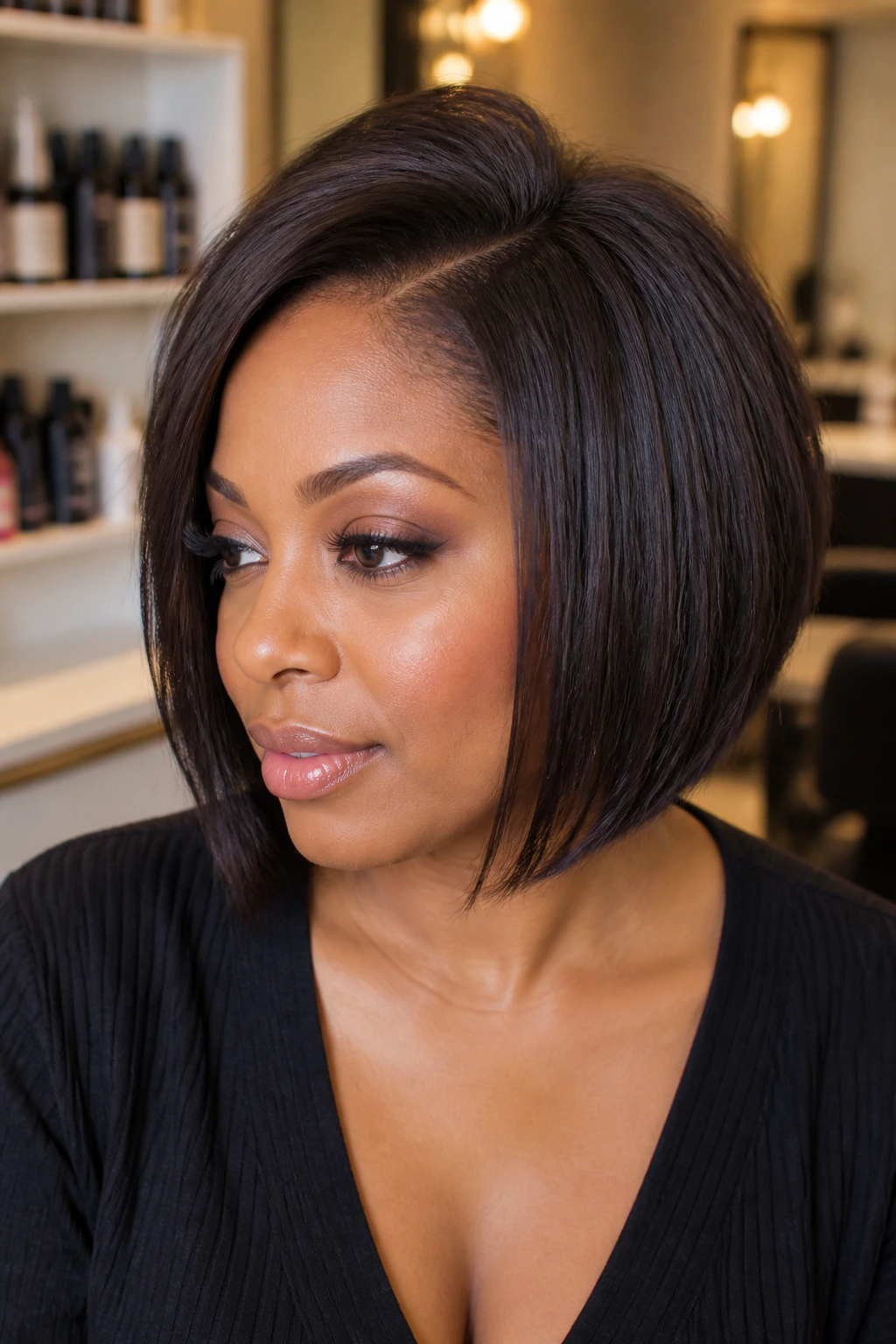
A micro bob can be a very smart move for low-density hair, especially if you want density without daily manipulation. Wigs and sew-ins let you control the outline, and a chin-to-collarbone bob with root lift gives a round face a longer line. The best versions don’t sit flat at the crown. They have a little lift where the part starts, so the style doesn’t look pasted on.
Keep the bob slightly angled or softly layered, not pin-straight and blunt. A wig that hits exactly at the jaw can make the face look wider, and a sew-in with too much density around the sides can do the same thing. If you choose a closure or leave-out, ask for a part that isn’t dead center unless the cut has strong front layers. A side part usually flatters more.
This is the cleanest route when you want a fuller look with very little stress on your natural strands. It’s not the most playful option, but it is efficient.
13. Asymmetrical Bob With One Side Tucked
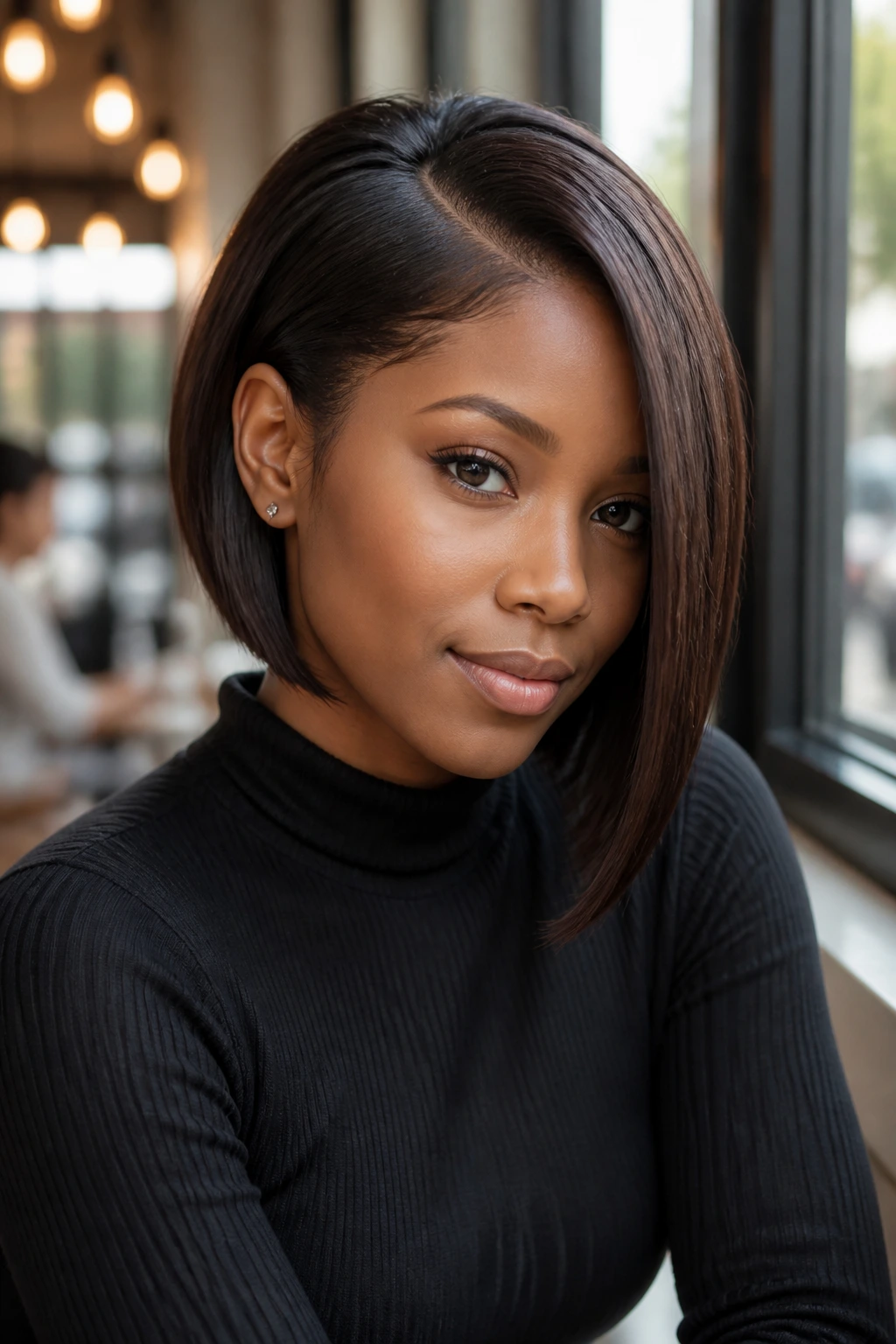
Asymmetry does what symmetry can’t: it keeps the eye moving. A bob that’s a little longer on one side gives a round face a diagonal line to follow, and that line takes pressure off the cheeks. Thin hair likes this shape because it feels intentional even when the density is modest.
The shorter side should tuck neatly behind the ear, while the longer side brushes the jaw or collarbone. You don’t need a dramatic angle unless you want one. Even a small difference in length can change the silhouette. This cut works especially well on straightened hair or a light bend, because the line stays visible. Add a side part and you’ll get a little extra lift at the roots too.
This is one of my favorites for people who want a bob but don’t want anything fussy. It has enough shape to flatter the face and enough edge to feel modern without chasing a trend.
14. Half-Up, Half-Down Braids With Crown Height
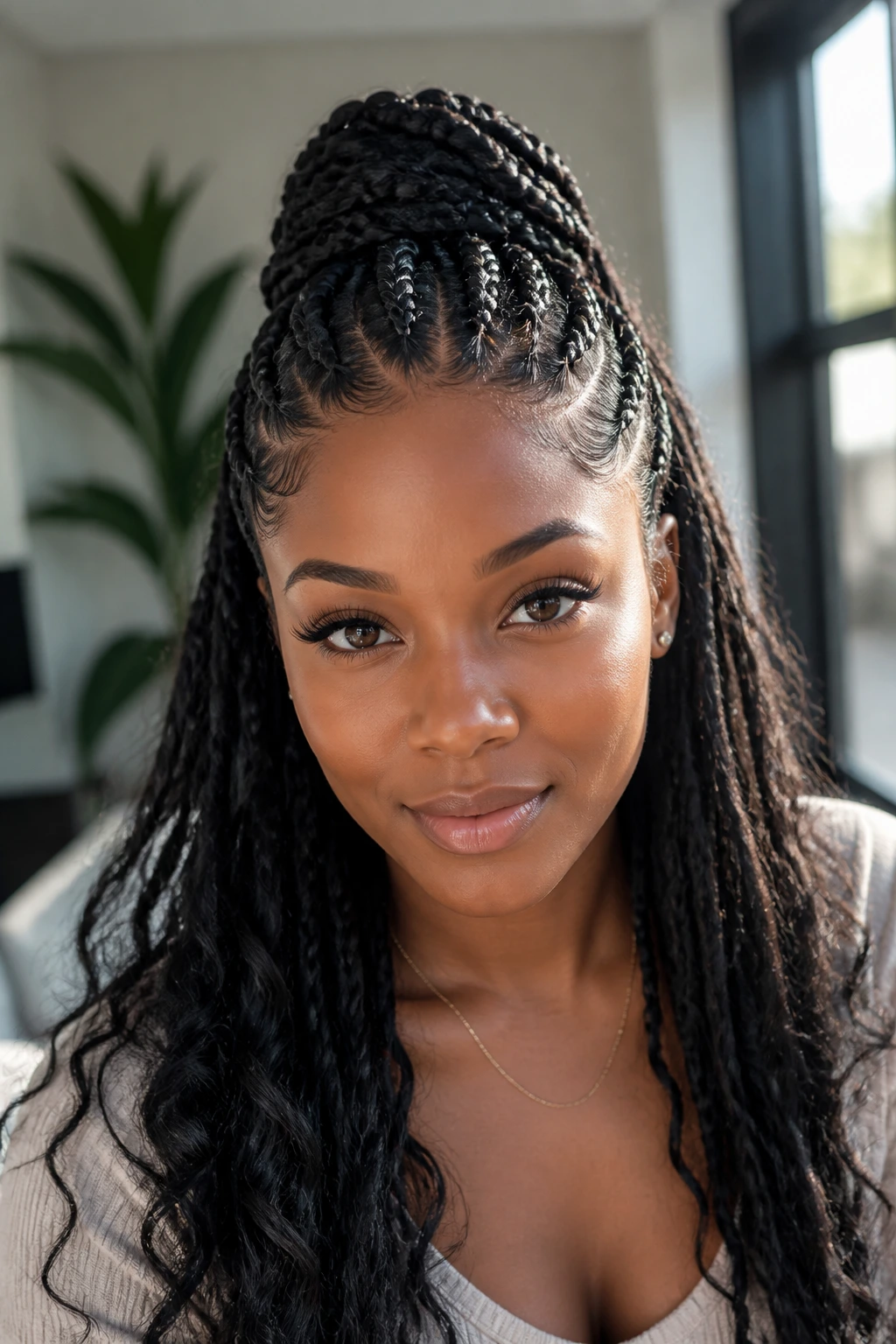
Half-up, half-down styles can go flat fast, which is why the crown matters. For a round face and thin hair, the top section needs to sit high enough to create a vertical line. The loose braids below then lengthen the look instead of widening it.
Use small to medium braids and gather the upper section at the crown or slightly above it. If the braids are too thick, the style starts to droop. A little wrapped hair around the base helps the bun or knot look intentional. I also like a few face-framing braids left loose near the temples, because they soften the face without crowding it.
This is one of the easiest braid looks to wear when you want movement. The top gives height. The bottom gives length. Simple. Effective.
15. Bantu Knot-Out on a Medium Cut
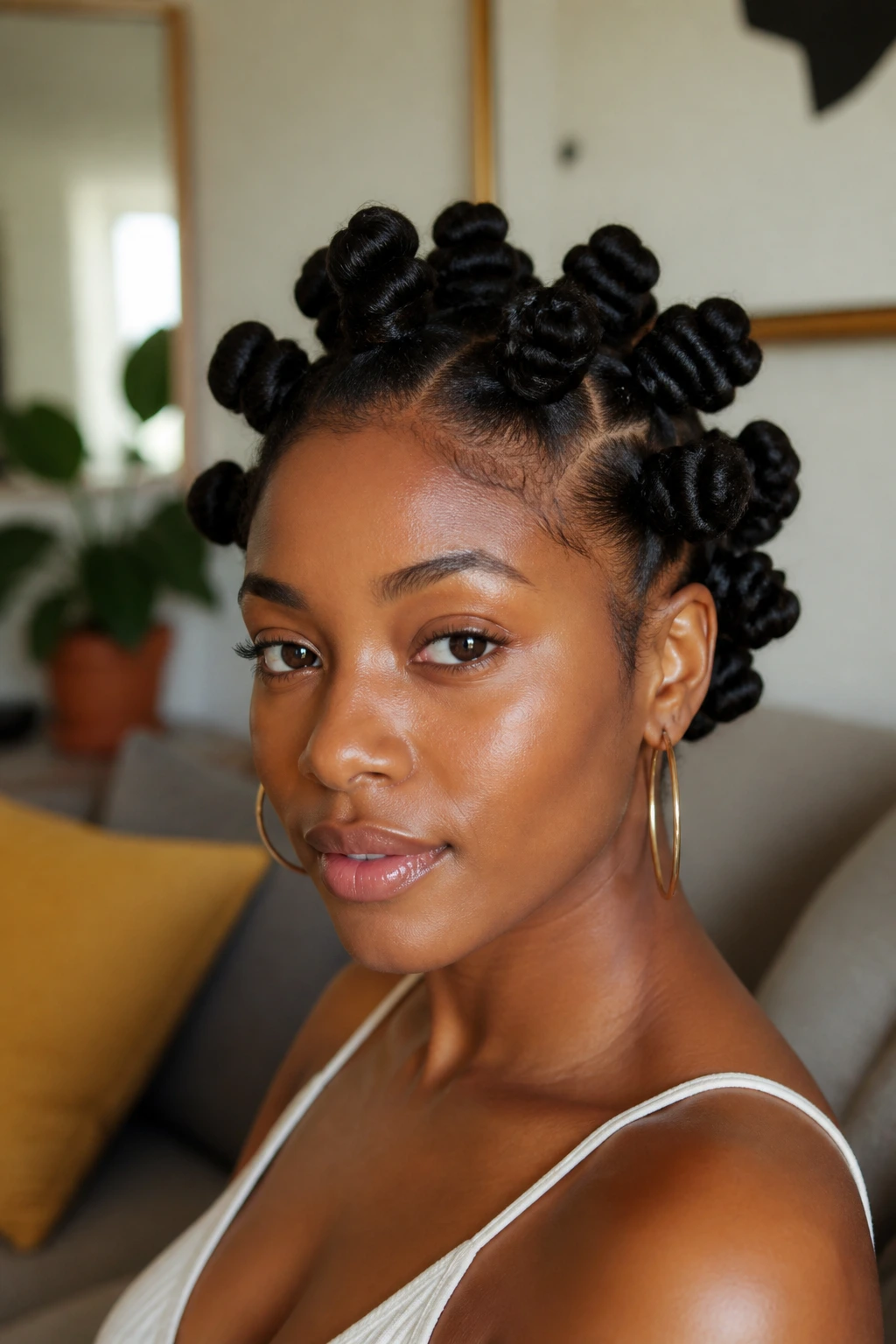
A Bantu knot-out gives thin hair texture that actually has some visual body, and on a round face, the trick is to keep the widest part of the shape above the cheeks. The knots themselves create a lifted root pattern, which is gold if your hair likes to collapse on the sides.
Set the knots in medium sections, not tiny ones that create too much frizz or huge ones that make the style look patchy. Once they’re dry, separate the coils only enough to build fullness. Don’t drag them apart until they lose shape. A side part or a slightly off-center part helps the style read longer. On a medium cut, this one has enough bounce to feel fun without making the face look broader.
It’s a good choice when you want texture that doesn’t depend on a blowout or a press. The shape comes from the set itself.
16. Finger-Coil Crop With a Tapered Nape
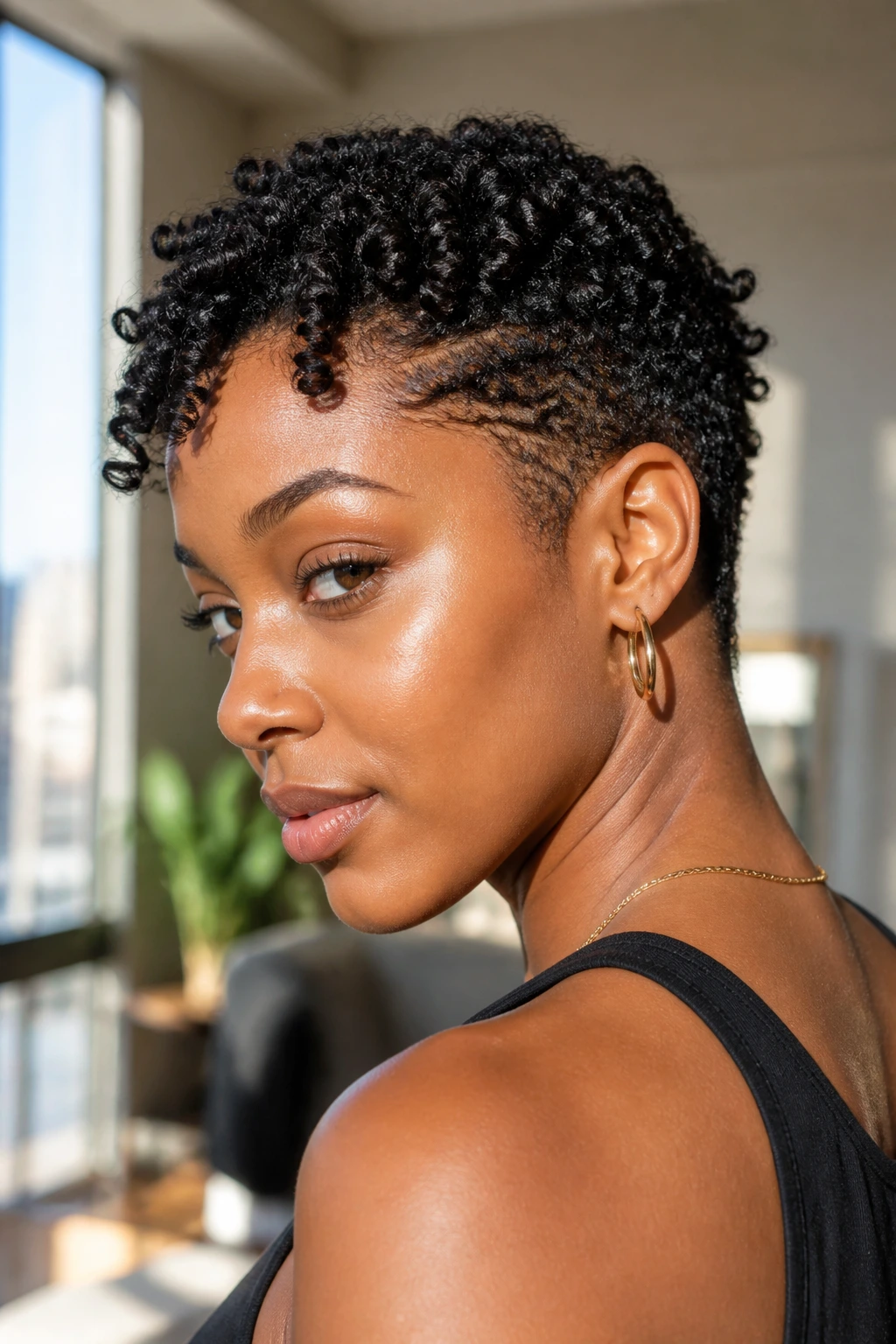
Finger coils are tidy, but they’re not dull when they’re cut correctly. A crop with a tapered nape and a little extra length at the top gives a round face more height than width. Thin hair benefits because coils create visible definition even when the density is on the lighter side.
Keep the coils a little looser at the front if you want softness around the forehead. Tight, uniform coils all over can sometimes make the head read more circular. A styling gel with a decent hold keeps the coil shape intact, and a side part can sharpen the line without making the look stiff. The nape should stay snug so the whole cut lifts upward.
This is a neat, controlled style for people who want to wear their texture short but not flat. It has structure, and structure matters a lot here.
17. Long Box Braids With a Strong Side Part
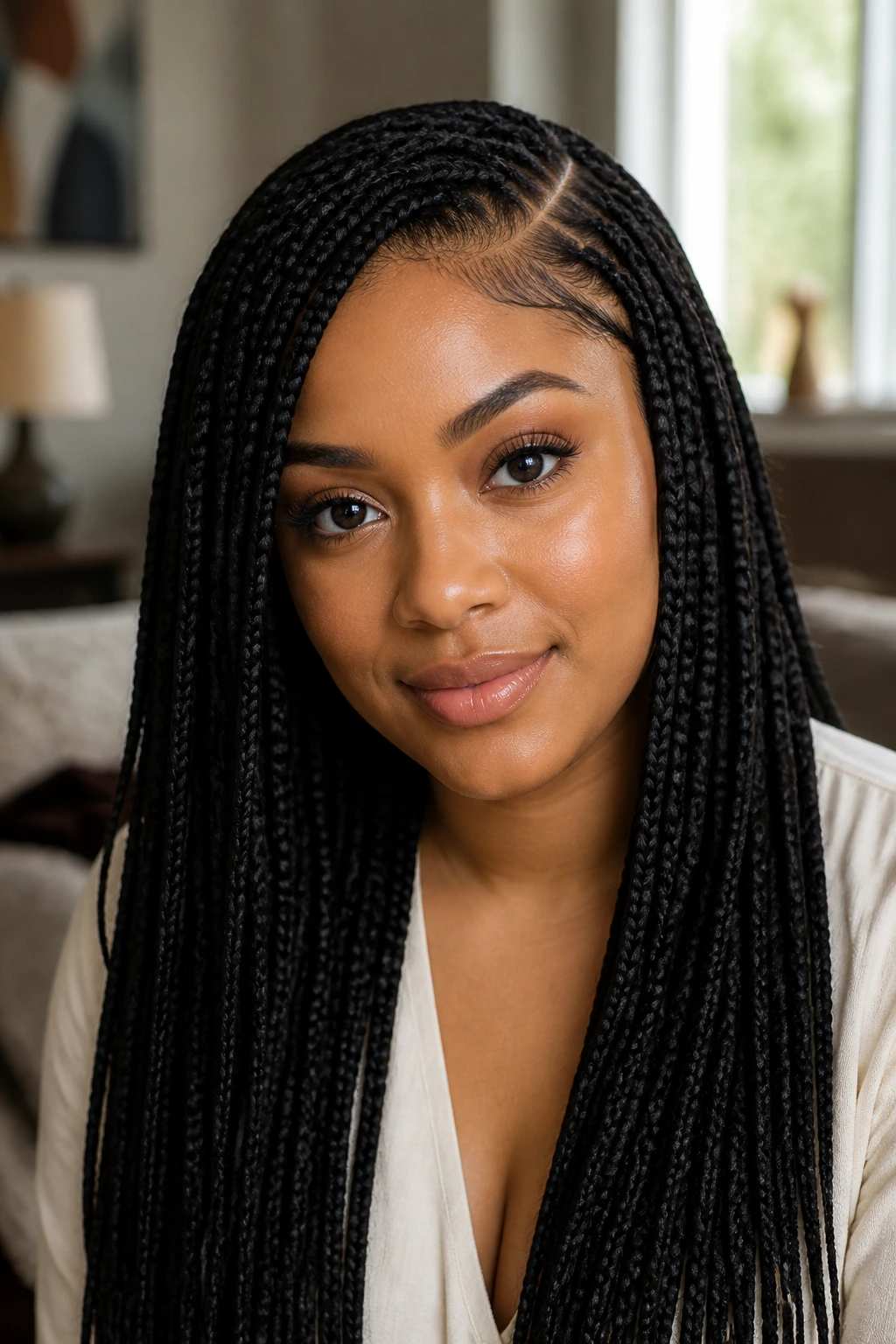
Long box braids can work beautifully on a round face, but only if the part and the weight are handled well. A strong side part breaks up the symmetry, and keeping the braids around medium thickness avoids that overstuffed look that can swallow thin hair at the roots.
Length matters too. Braids that fall well past the shoulders create a long line that helps balance the face, but if they’re too heavy, they’ll pull the scalp and flatten the crown. I usually prefer a length that lands between the upper chest and mid-back rather than braids that drag all the way down. Keep the roots neat, not bulky. A tiny bit of lift at the part can make a big difference.
This style is practical, protective, and flattering when it’s not overdone. The face gets length. The hair gets a break. That’s a fair trade.
18. Silk-Pressed Lob With Soft Waves
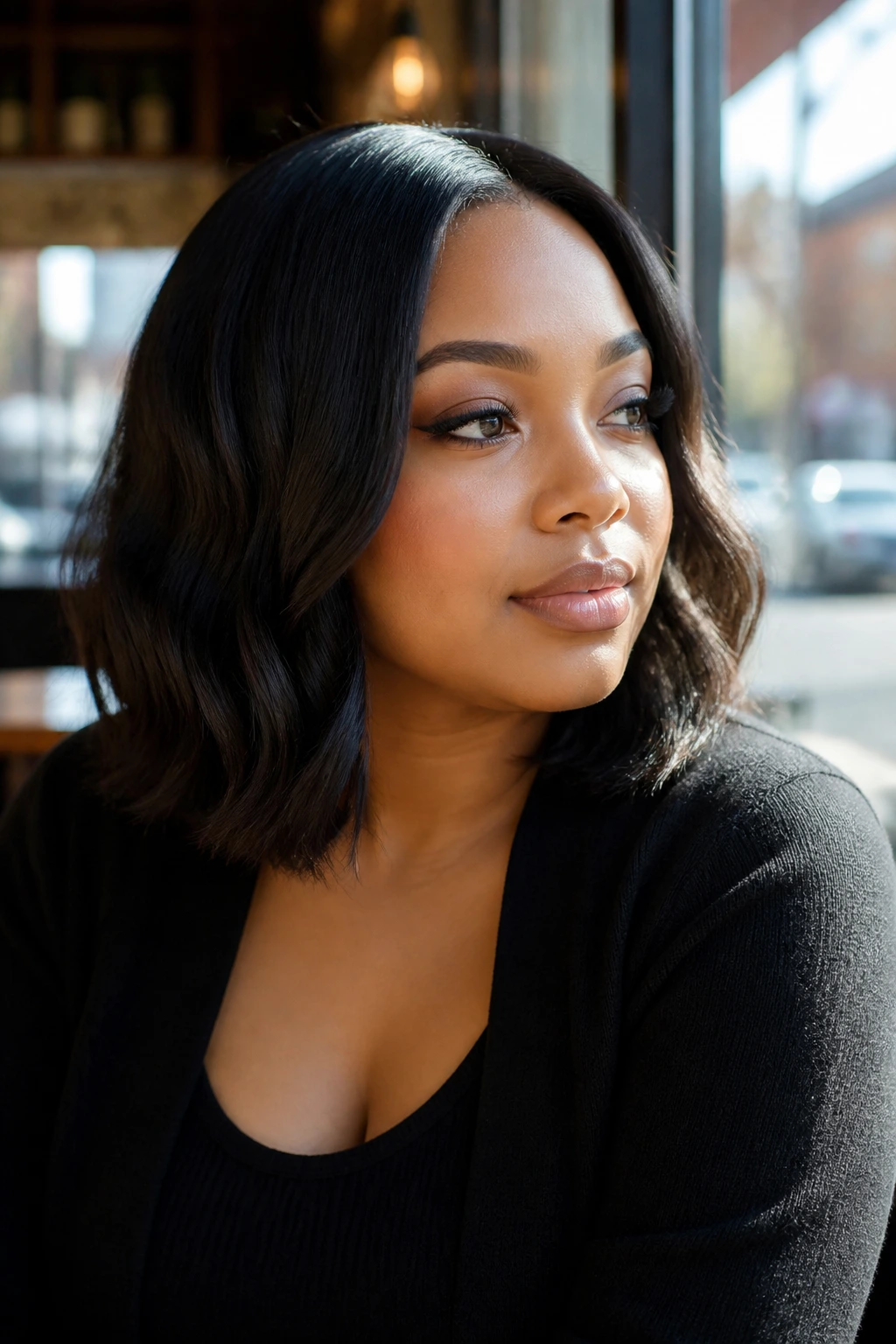
A silk-pressed lob can be a lovely option when you want polished movement without losing softness. On a round face, the collarbone length helps the hair skim past the jaw, and the waves keep the outline from feeling too hard. Thin hair likes this shape because the bend adds body without requiring massive layering.
Use a 1-inch curling iron or wand to create loose bends from midshaft to ends, then brush them out lightly once they cool. That gives you movement without the puffy curl look. The roots should stay a little lifted, either with a root spray or a quick round-brush blow-dry before pressing. If the hair is too flat at the crown, the lob can make the face seem wider than it is.
I like this look when the goal is sleek, but not stiff. It sits in that useful middle space.
19. Halo Braid With a Little Crown Lift
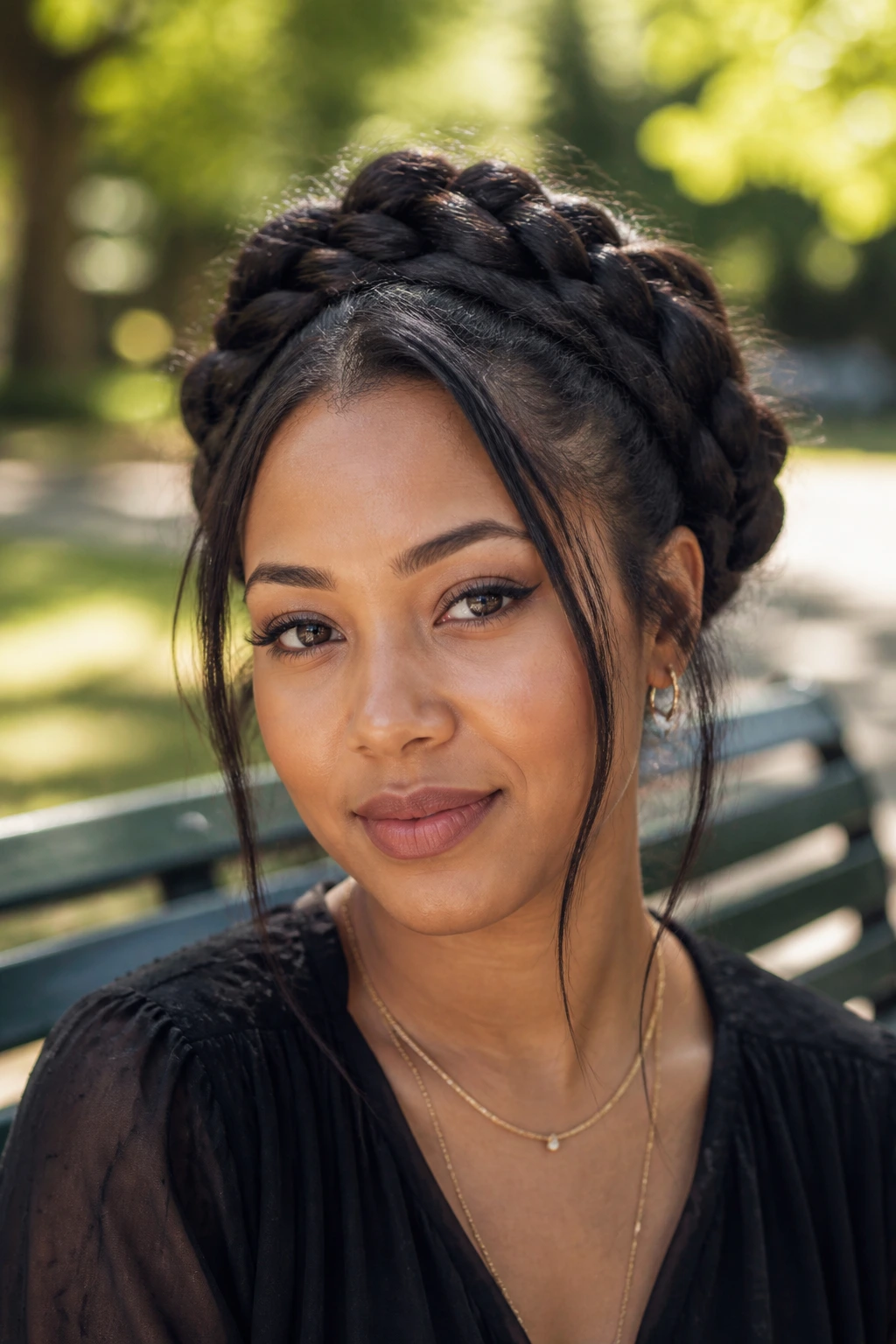
A halo braid can be tricky on a round face because it wraps the head in a circle. The version that works adds height at the crown and keeps some softness near the temples. That keeps the braid from drawing a perfect line around the face, which is the wrong effect.
If your hair is thin, braid the halo a little looser and leave a few small face-framing pieces out. Those loose strands keep the style from feeling sealed shut. The crown should lift slightly before the braid curves around, almost like a small ridge at the top. That ridge is what saves the shape. A halo braid with no lift can look lovely, but it can also make a round face feel even rounder.
This is a better choice when you want something elegant and controlled, not bulky. It’s a neat style, but it still needs a little air.
20. Messy Top Knot With Face-Framing Pieces
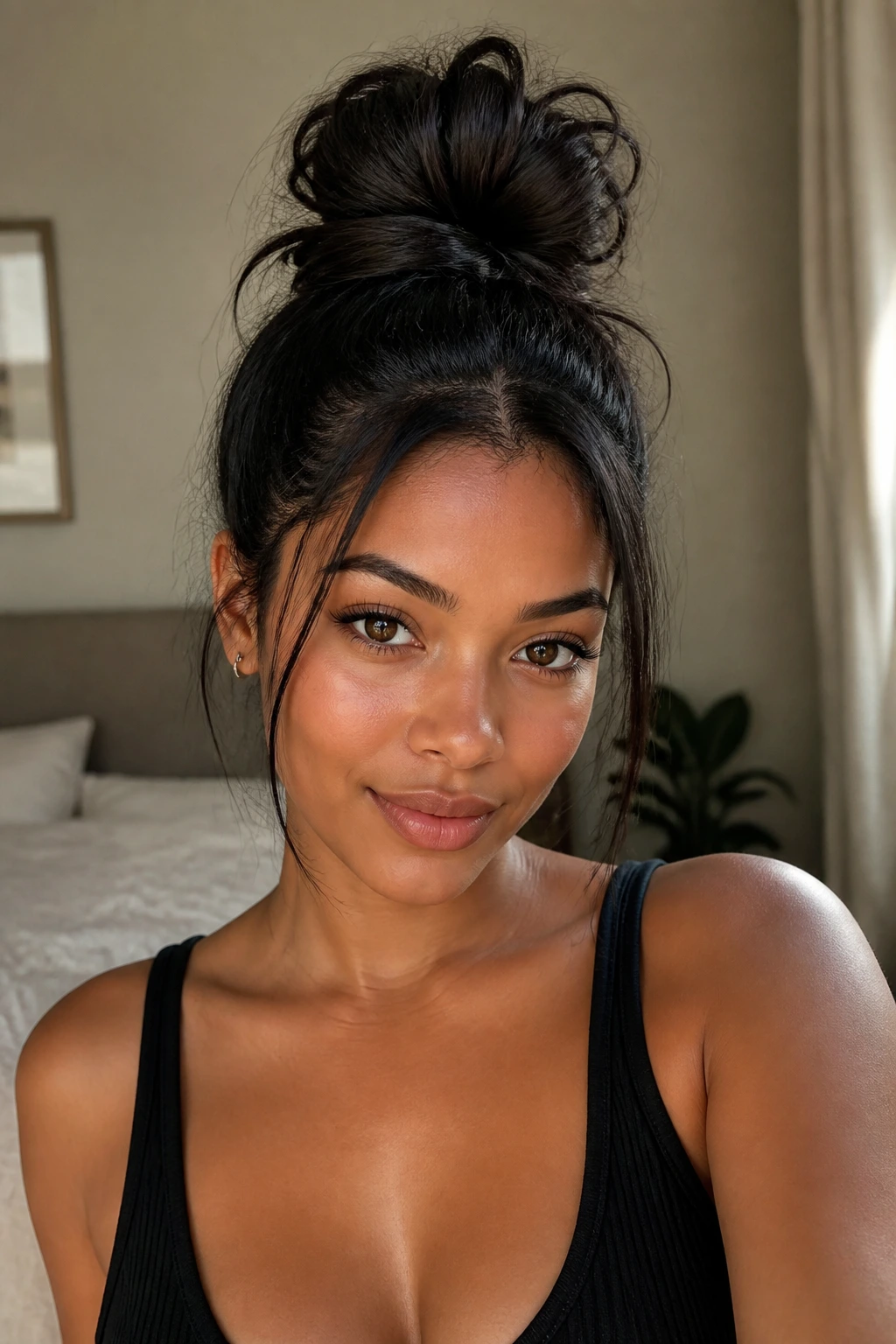
A top knot works on a round face only when it sits high and the front is softened. That messy little detail near the temples matters more than people admit. Without it, the style can feel severe and short. With it, the face looks longer and more open.
Thin hair can use a little padding, teasing, or a wrapped ponytail base to make the knot look fuller. Keep the bun loose enough that it has shape, not a hard ball. The face-framing pieces should skim the cheeks and jaw, not hang in long tired strands. You want softness, not accidental frizz.
This is a fast style that survives a busy day better than it has any right to. It’s one of those looks that can go from errands to evening with one or two pins.
21. Shaped High-Volume Afro
A high-volume afro is not the same as a wide afro. That distinction matters. For a round face, the shape should go up and slightly outward at the crown, while the sides stay a little closer in. That vertical bias keeps the face from looking broader than it is.
Thin hair can still wear this shape if the curls are stretched a bit first and then picked from the roots. A curl sponge, twist-out, or wash-and-go with a strong root set can help create the outline. The sides should be shaped, not left to balloon on their own. A little tapered edge at the nape or temples can make the whole cut look intentional. It’s bold, but not sloppy.
This style has presence. If you like your hair to say something when you walk into a room, this is the one.
22. Shoulder-Length Layered Curls With a Side Sweep
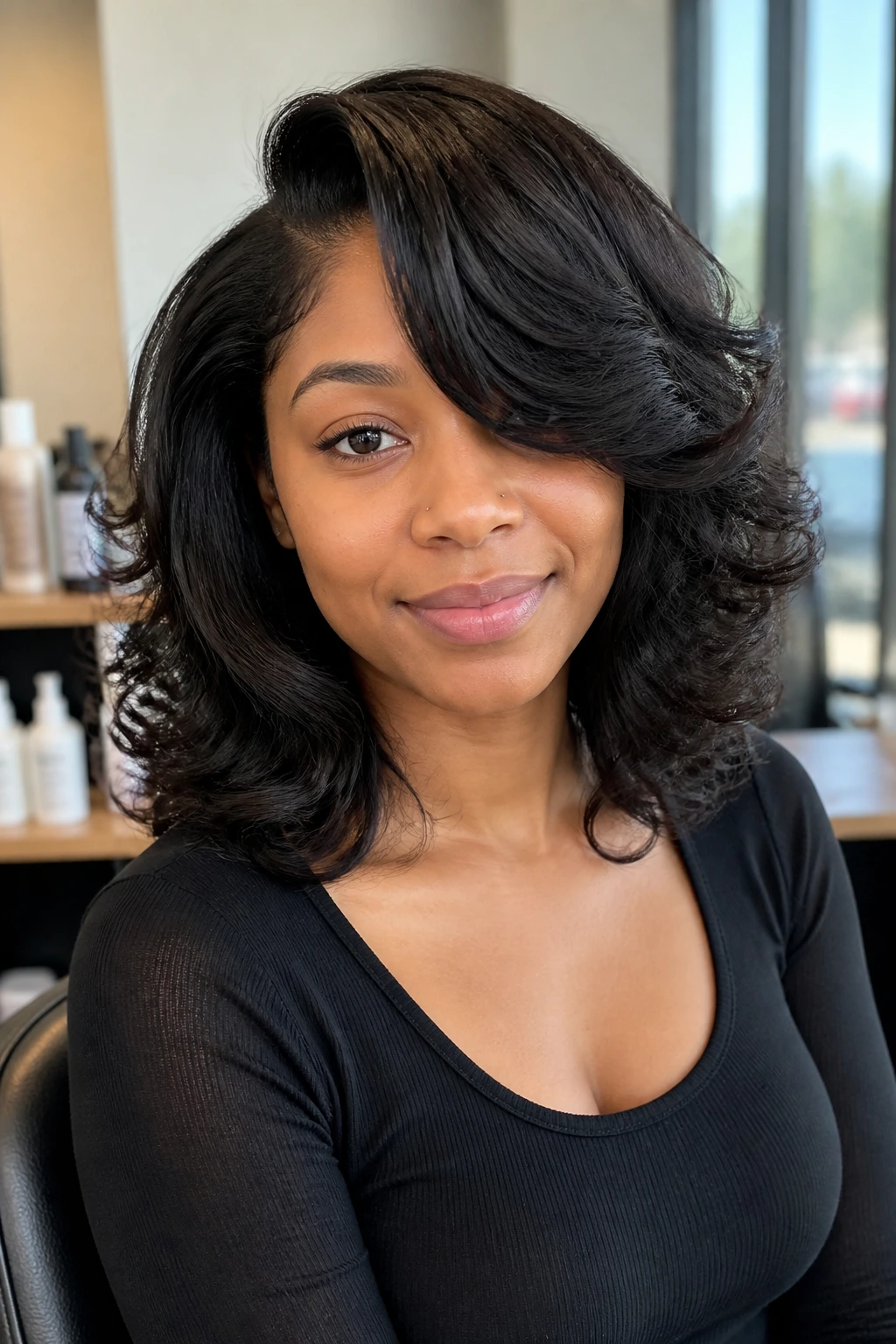
Shoulder-length layered curls are one of the safest bets for round faces with thin hair, because they give you shape without crowding the face. The side sweep keeps the front from sitting straight across the cheeks, and the layers stop the curl mass from dropping into one flat shape.
Ask for layers that begin around the cheekbone and continue through the ends so the curls stack lightly instead of bunching. On thin hair, too many layers can make the ends see-through, so the stylist should keep the interior clean. A side-swept front section, especially if it starts near the temple, gives the face a long line and makes the whole style feel softer. Use a light curl cream or mousse—nothing sticky.
This is the kind of style that doesn’t need much explaining. It just works, and that’s usually a sign the structure is doing its job.
The Shape Tricks That Keep These Styles Flatters-Round-Face Friendly
A few rules keep showing up across the whole list, and they’re worth naming because they save bad haircuts. First, put the fullness above the cheek line when you can. That can mean a lifted crown, a higher knot, a top-heavy braid pattern, or a side sweep that starts before the widest part of the face. If the volume sits at the exact mid-cheek point, the shape gets wider fast.
Second, avoid blunt horizontal lines at jaw level unless the cut is angled or broken up by texture. A straight line at the broadest part of a round face is a stubborn little thing. It doesn’t help.
Third, thin hair usually looks better with controlled movement than with heavy product. A lot of people reach for cream after cream, thinking they need moisture or hold, but too much product just flattens the root and makes the ends separate in ugly ways. A little mousse, a little foam, a little root lift. That’s usually enough.
And finally, the best black hairstyles for round faces with thin hair tend to do one of two things: stretch the face vertically, or create a diagonal line across it. When a style does both, you’ve probably found a keeper.
Tools, Products, and Salon Notes That Make Life Easier
-
Rat-tail comb: Clean parts matter more than people think, especially on side-parted bobs, braids, and twist sets.
-
Duckbill clips: These hold sections flat while you set curls, smooth roots, or pin up a faux hawk without leaving bulky dents.
-
Lightweight mousse or setting foam: Great for twist-outs, Bantu knots, finger coils, and silk-press waves when you want shape without grease.
-
Root-lift spray: Use this at the crown or part line if the hair tends to collapse by noon.
-
Small round brush: Useful for pixies, silk presses, and bob styles that need a little bend near the ends.
-
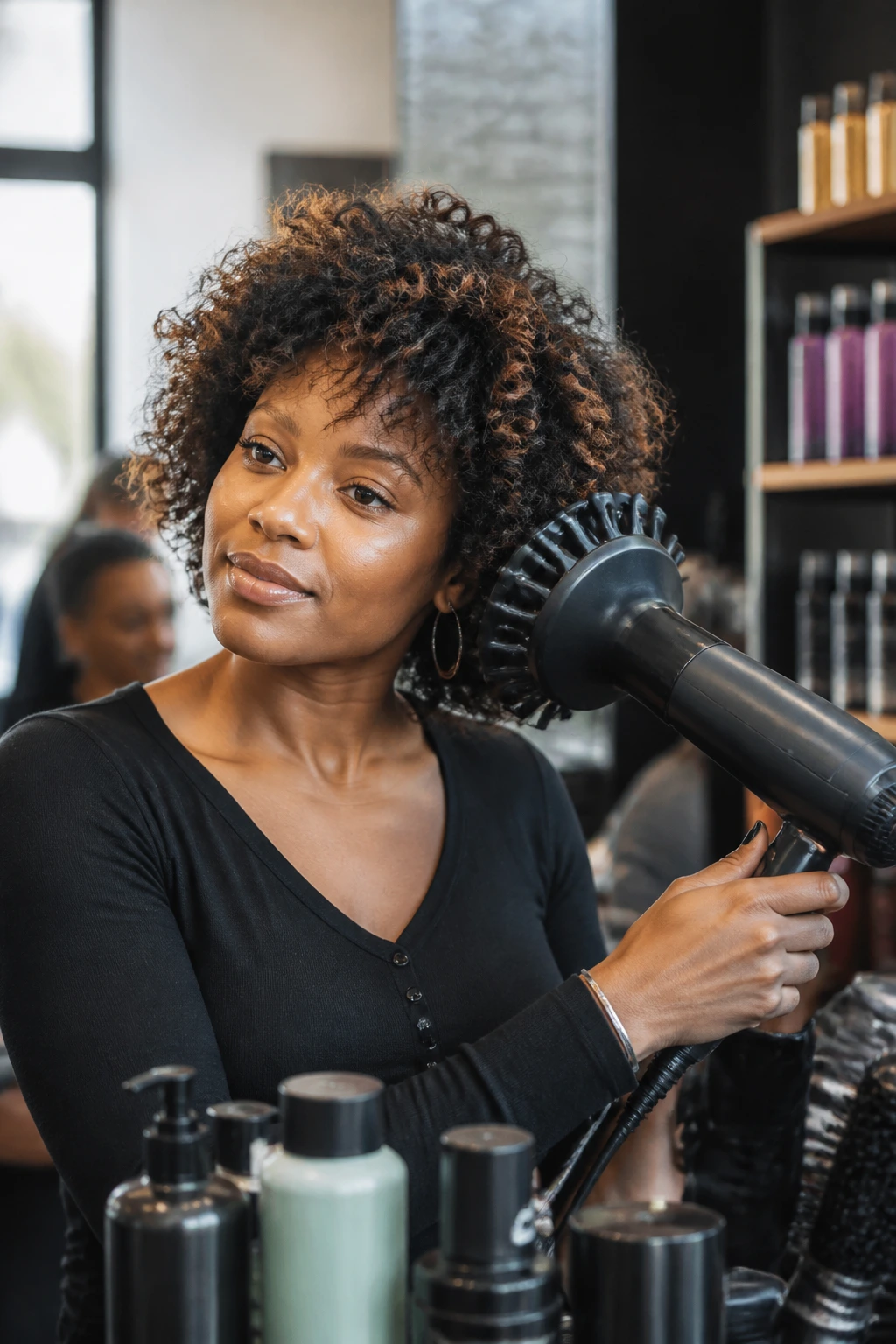
Diffuser attachment: A must if you wear curls and need volume without blasting the pattern apart.
-
Edge brush and soft gel: Handy for sleek puffs, buns, and flat twists, but don’t make the hairline stiff.
-
Bobby pins and U-pins: These are the quiet heroes for faux hawks, buns, halo braids, and half-up styles.
-
Satin scarf or bonnet: Thin hair shows breakage fast, so protecting the shape overnight matters more than it does on dense hair.
-
Lightweight braid hair or extensions: Choose pieces that don’t feel heavy in the hand; if they tug before they’re installed, they’ll tug worse on your scalp.
How to Ask for These Looks Without Getting Guesswork
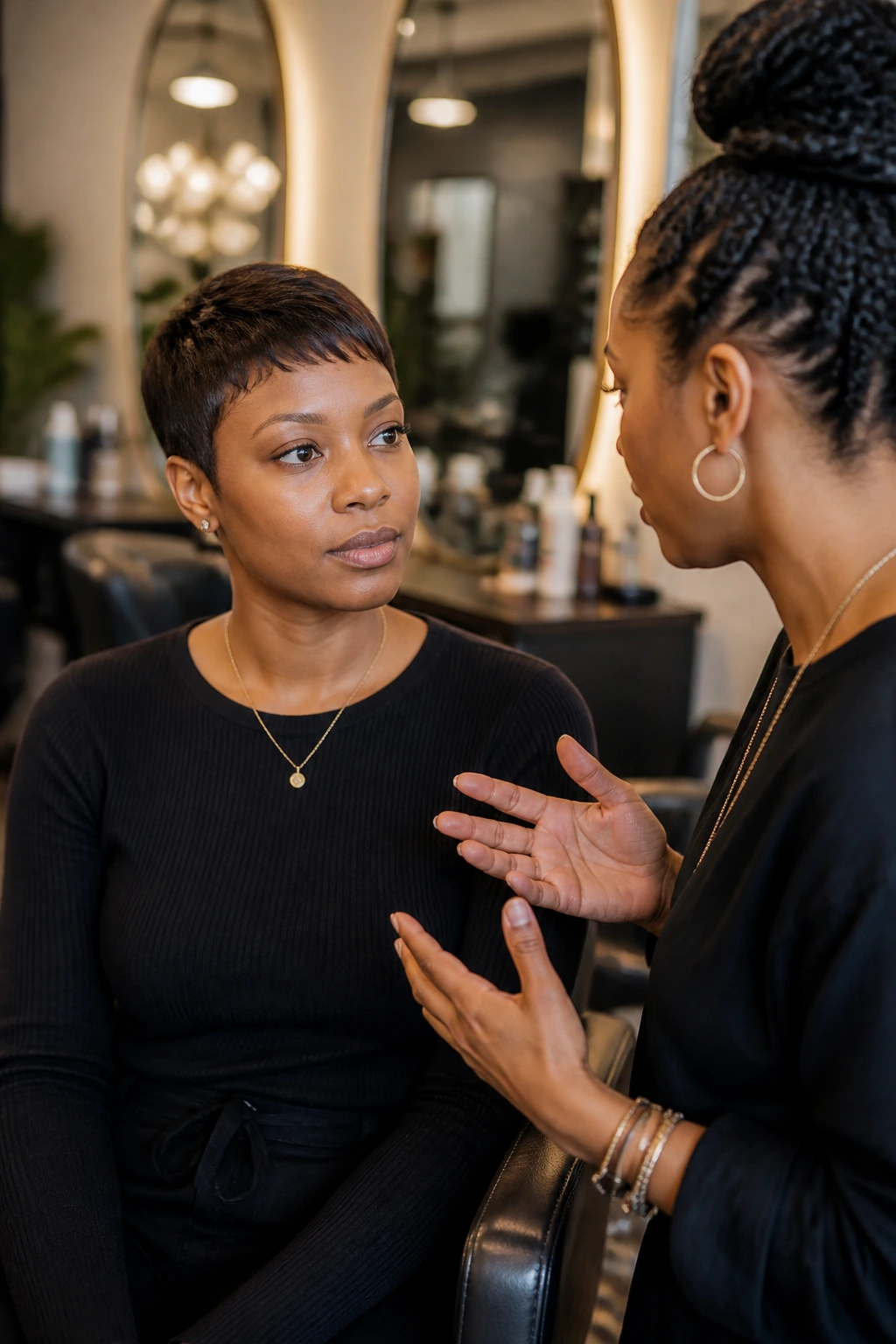
The easiest way to miss a good haircut is to ask for a style name and stop there. A stylist can hear “bob” and still give you the wrong bob. A stylist can hear “pixie” and still leave too much width at the sides. The better move is to describe the shape in plain language.
Say where you want the longest point to land. Say whether you want the crown lifted. Say whether the sides should tuck in. That’s the good stuff. If you’re asking for braids, mention how much weight you’re comfortable wearing and whether you need the style to stay off the cheeks. If you’re asking for curls or a silk press, show where you want the front pieces to fall—just under the jaw, at the collarbone, or below it.
Bring photos, sure, but talk through them. Photos can hide a lot. A bob that looks soft on one person can be a face-widening disaster on another. Tell the stylist what you want the face to do: look longer, look slimmer at the cheek area, show more crown height, or keep the sides close. That’s clearer than saying “make it flattering,” which sounds vague because it is.
Styling Moves That Stop Thin Hair From Falling Flat
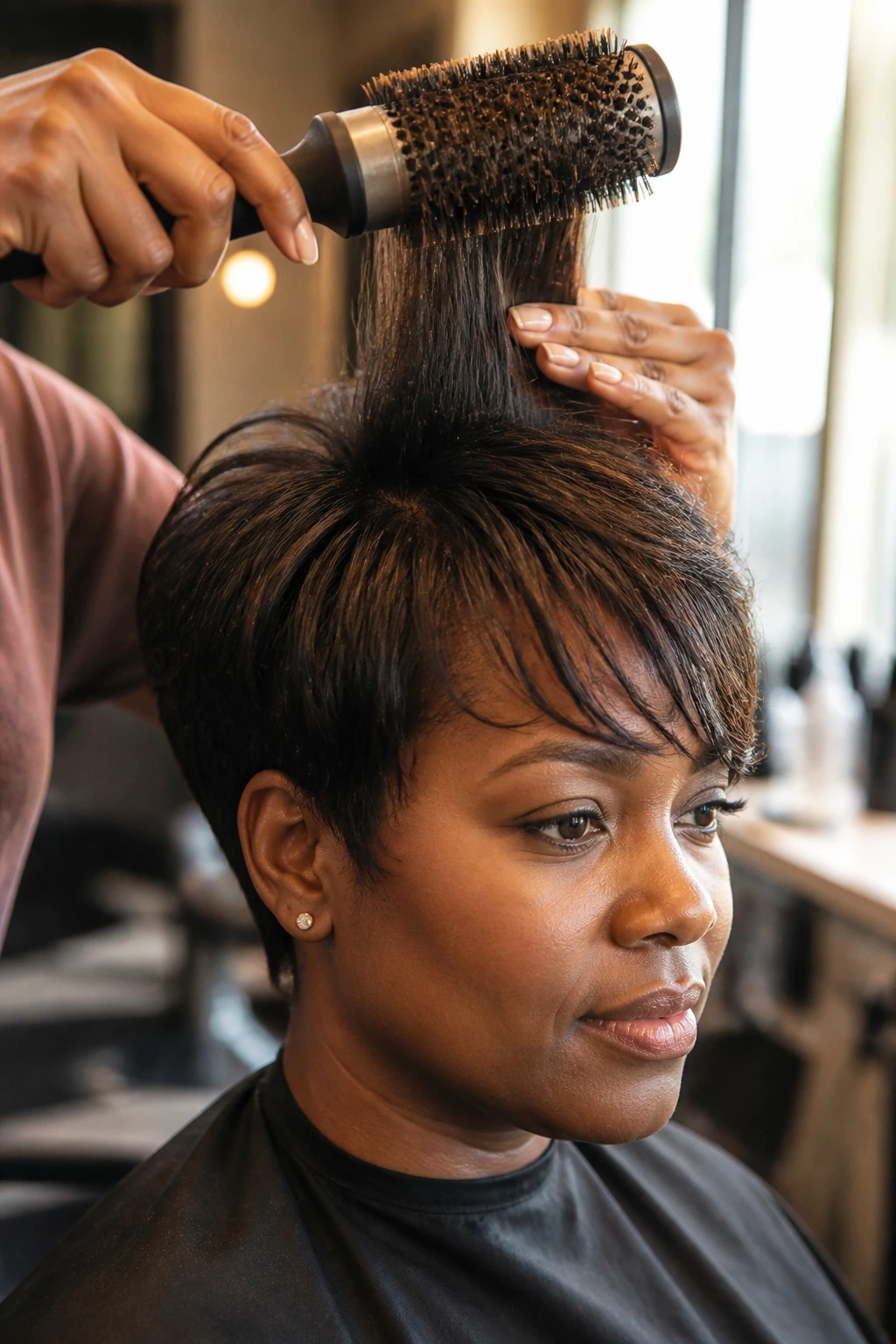
Thin hair does not need a wall of product. It needs support in the right places. If you pile conditioner, cream, gel, and oil on top of each other, the roots go limp and the style collapses before lunch. Start lighter than you think you should, then add only what’s missing.
Root work matters. A little lift at the crown can change a whole style, whether you’re wearing a twist-out, a bob, or a puff. Use a round brush, a diffuser, or a small amount of root spray to build that lift before you touch the ends. The ends can be soft. The root cannot be sleepy.
Drying technique matters too. For curls and sets, dry the roots first or at least get them 80 percent dry before you move them around. If the roots stay damp too long, the style drops and the face gets wider. That’s just how gravity works.
And one small thing people ignore: don’t over-separate curls or twist-outs. Thin hair can go from full to frayed in two minutes if you separate too much. Stop while the shape still looks clean.
Common Mistakes That Make Thin Hair Look Flatter
-
Picking a blunt line at jaw height: A straight bob or one-length cut that ends at the cheeks can make a round face look wider. Ask for angle, layers, or length that drops below the jaw.
-
Building width at the sides: Big side volume is the wrong kind of volume here. Keep the sides smoother and put the lift at the crown or center ridge.
-
Using too much product: Heavy creams, oils, or thick gels weigh fine strands down and make the scalp show sooner. Start with less and build slowly.
-
Tight braid tension near the temples: Protective styles are supposed to protect. If the install pulls at the edges or makes the face look ballooned at the sides, the tension is wrong.
-
Skipping the part plan: A deep side part can change the whole shape of the face. A center part is not evil, but it needs the right cut behind it.
-
Letting extensions overpower the natural hair: Extra hair should add shape, not become the whole shape. If the braids, twists, or sew-in pieces are too thick, the style can swallow a thin hairline.
Variations That Fit Different Hair Habits and Budgets
Heat-Free Shape: If you avoid heat, choose twist-outs, Bantu knot-outs, flat twists, tapered cuts, or puff styles with root lift. These all build shape without a blowout or flat iron, and they’re kinder to hair that breaks easily.
Protective-Style Route: Knotless braids, Senegalese twists, halo braids, and half-up braid styles give thin hair a break while still creating the longer line round faces need. Keep the install light and the tension low, or the “protective” part stops being true.
Silk-Press Polish: If you like a smoother finish, the angled pixie, side-part bob, silk-pressed lob, and asymmetrical bob are the cleanest options. A little bend at the ends keeps them from feeling stiff.
Natural Texture First: For coils and curls, tapered crops, curly shags, finger coils, layered lobs, and shaped afros give the hair room to move without making the face look wider.
Low-Maintenance Rotation: If you don’t want to restyle daily, a sew-in bob, long braids, or a twist set with a good nighttime wrap will stay in shape longer than loose curls. The tradeoff is upkeep at the scalp and edges, so don’t pick one just because it looks pretty on day one.
Frequently Asked Questions
Can thin hair wear box braids without looking sparse?
Yes, but the braid size matters. Small to medium braids usually work better than oversized ones because they don’t stress the roots or make the hairline look thin. Keep the parting clean and the style light enough that the crown doesn’t flatten out.
Is a center part bad for a round face?
Not always, but it’s less forgiving than a side part. A center part works better when the style has height at the crown, length past the jaw, or face-framing layers that stop the face from reading too wide.
What haircut length is most flattering for a round face with thin hair?
Collarbone length is a sweet spot for a lot of people because it gives length without sitting right on the jaw. Shorter cuts can work too, especially when they’re tapered or angled. The one length I’d be careful with is a blunt cut that ends exactly at the cheek line.
Do layers help thin hair or make it look thinner?
Both can happen. Soft layers placed well add movement and keep the style from looking heavy, but too many short layers can expose the ends and make the hair look wispy. Ask for controlled layers, not a choppy shred-fest.
Can I wear a puff if my face is round?
Absolutely. Put the puff high, keep the sides smooth, and avoid letting the shape balloon out at cheek level. A high puff lifts the face; a low wide puff can do the opposite.
Are wigs better than haircuts for this face shape?
They can be, if you want quick density and a controlled silhouette. A wig or sew-in gives you instant shape, but the cut underneath still matters if you wear your own hair out often. The best result is usually a style that fits both.
What if my edges are sparse?
Choose styles that don’t pull tight at the temples, and avoid heavy braid installs or slicked-back looks that scrape the hairline every day. Soft side parts, loose face-framing pieces, tapered cuts, and low-tension protective styles are safer bets.
How often should I refresh curls or twist-outs?
Usually every 2 to 4 days, depending on humidity, product weight, and how much you sleep on the style. Thin hair often loses lift faster, so a small root refresh with water, foam, or a diffuser can help without starting over.
Can I make a bob work if my hair is very fine?
Yes, but the bob should have structure. Go for a slight angle, some internal support, and a part that gives lift. A one-length chin bob with no body is the version that tends to misbehave.
The Styles That Keep Working
A round face and thin hair are not a styling problem. They’re a shape problem, and shape is something you can control. The right cut or style gives you height where you need it, softness where you want it, and enough movement to keep the hair from looking stuck to the head.
The best part is that you have options. Short, long, natural, pressed, braided, twisted, protective, sleek—none of those are off-limits. You just have to be a little ruthless about where the volume sits. Keep it off the cheeks. Lift it at the crown when you can. Let the face breathe a bit.
That’s the whole game, honestly. Pick a style that knows where to stand, and your face does the rest.