



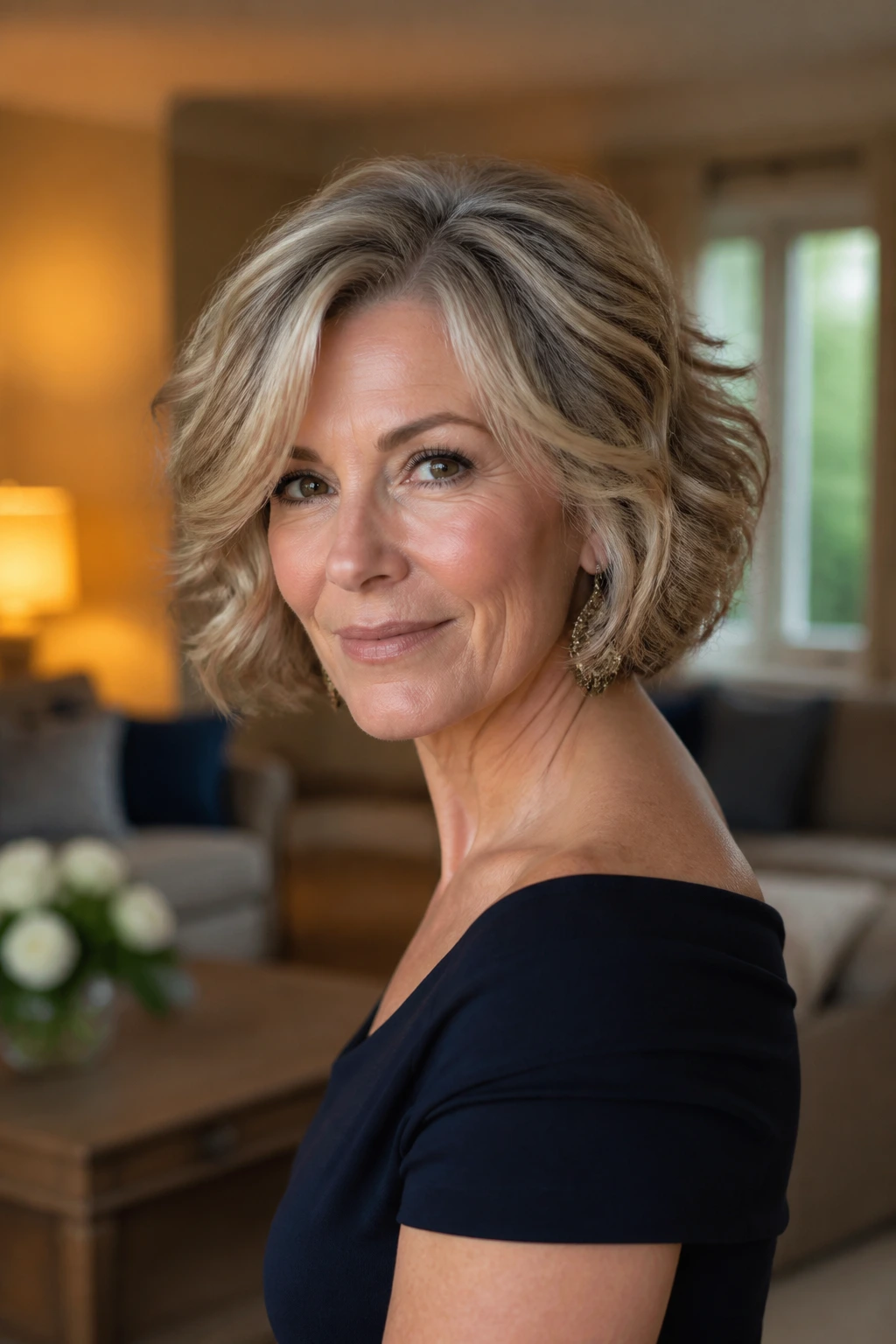
Wavy hair has a habit of looking best when it is given a shape, not a fight. That matters even more for evening hairstyles for women over 50 with wavy hair, because the sweet spot is usually somewhere between polished and touchable — enough control to look intentional, enough movement that it still feels like your own hair.
The old rule that says dressy hair has to be stiff, sprayed, and a little uncomfortable? I’d happily retire it. Wavy texture has built-in softness, which means you can get a face-friendly lift at the crown, a clean line at the neck, and still let the bends and curves do some of the work. The trick is choosing a style that respects the wave pattern instead of flattening it into obedience.
And that’s where the good choices live: low twists that don’t look fussy, side parts that open up the face, half-up styles that keep the front tidy, and brushed-out waves that feel finished rather than overworked. The first style below is the one I reach for when the outfit is already making a statement and the hair needs to behave without going dull.
Why This Collection Works So Well
-
Wave-Friendly Shape: Wavy hair already has movement, so these styles steer the bend instead of forcing it into a rigid mold, which keeps the finish softer around the jaw and temples.
-
Face-Framing Without Noise: A few loose pieces near the cheekbone can soften a strong neckline, a tailored collar, or a statement necklace without making the whole style look undone.
-
Evening-Ready Hold: These looks rely on pins, clips, and flexible spray instead of helmet-hard shellac, so the hair still moves when you turn your head.
-
Works With Real Texture: Fine waves, thick waves, gray waves, and second-day waves all show up differently at 50, and these styles leave room for that instead of pretending hair behaves the same forever.
-
Less Mirror Drama: A style that survives dinner, dancing, and a little humidity is worth more than one that looks perfect for six minutes and then collapses at the crown.
-
Easier to Personalize: Swap a side part for a center part, trade a barrette for pins, loosen one front section, or tuck an ear on one side. Small changes make a big difference here.
How to Choose the Right Shape for Your Hair, Face, and Outfit
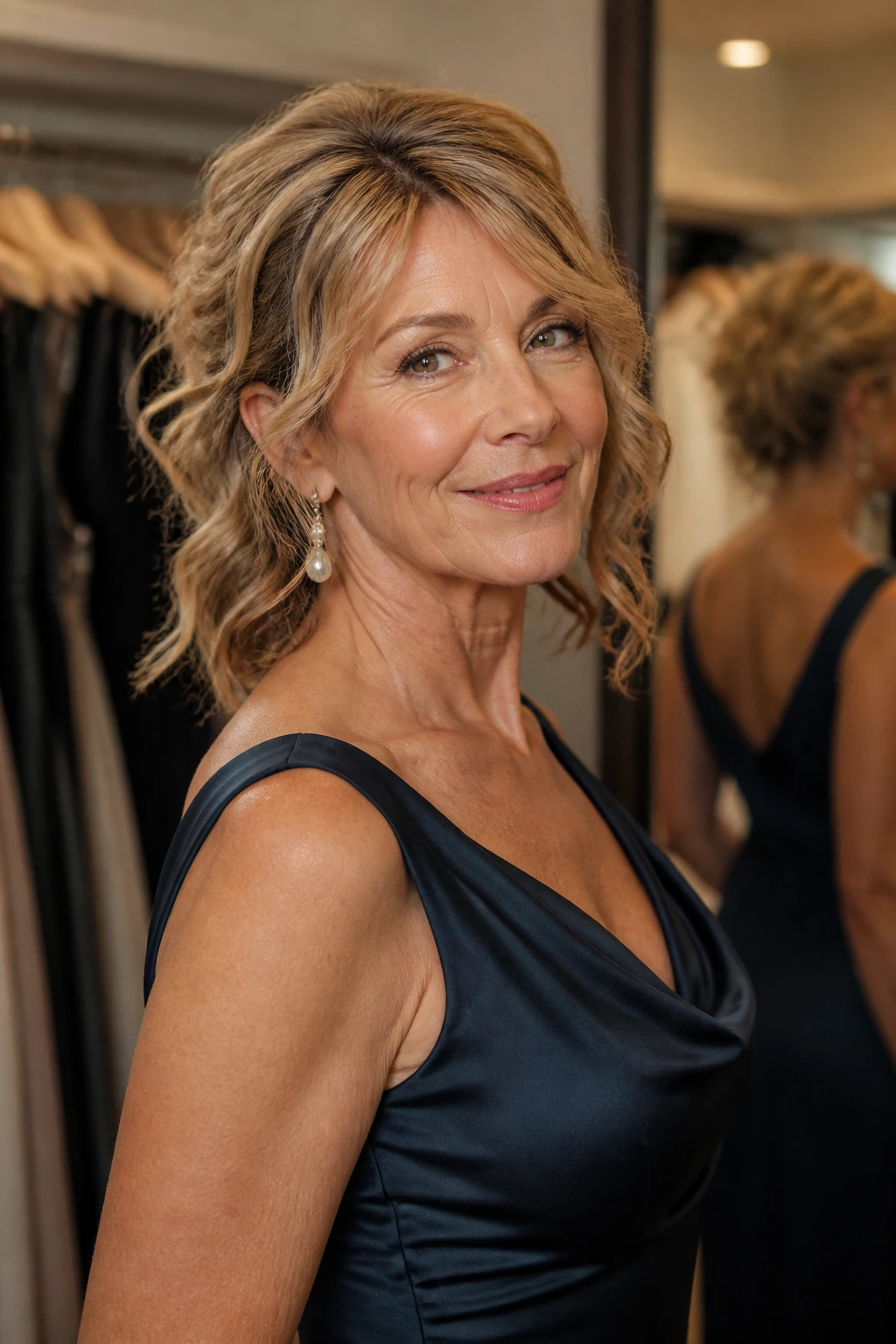
A dressy style looks better when it answers the outfit instead of arguing with it. A high neckline usually wants hair lifted off the shoulders. A one-shoulder dress wants one side of the hair cleared so the fabric can do its job. A V-neck can take more movement around the face, which is why soft waves or a side-swept style often land so well.
If your hair is fine or tends to fall flat
Start with root lift at the crown and choose shapes that hold their own with pins: half-up styles, tucked lob styles, and low buns with a little height at the back. Heavy braids and oversized knots can drag fine hair down faster than you expect. A little dry shampoo at the roots can help even when the hair is clean.
If your hair is thick, coarse, or very wavy
You have more structure to work with, which sounds convenient until the style starts growing sideways. Low buns, French twists, wrapped ponytails, and side-swept shapes can tame that bulk without flattening the texture. Section the hair before you twist it; thick waves rarely behave well if you try to handle all of them at once.
If the event is formal, not casual
Pick a style with a clean silhouette: a chignon, French twist, rolled side bun, or brushed-out Hollywood wave. These read dressier because the outline is controlled, even if the texture stays soft. Save the messier knot or loosened braid for events where you want relaxed elegance instead of full polish.
1. Soft Side-Swept Waves
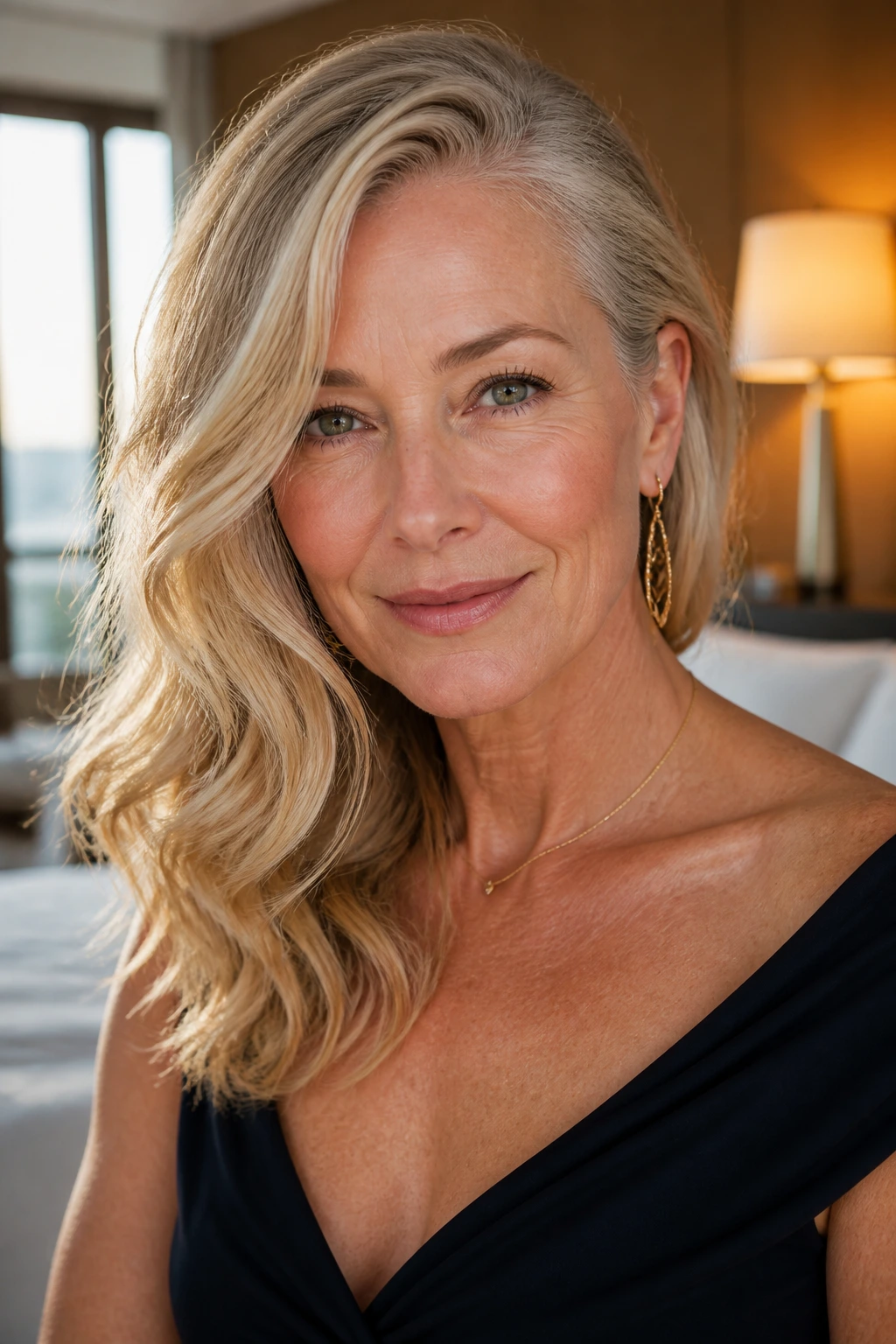
A side-swept wave is the easiest way to make wavy hair look deliberate without making it feel overworked. The whole shape leans in one direction, which gives the face a gentle frame and leaves room for earrings, makeup, or a neckline that already has a lot going on. I like this look when the outfit has a strong shoulder line. It keeps the hair from competing.
Why it works with wavy hair
Wavy hair already wants to curve. A deep side part gives that bend a place to go, and a 1.25-inch curling iron or wand can help tighten only the front sections while leaving the ends loose. Brush once, not five times, or you’ll blow the shape apart.
- Best with open necklines and one-shoulder dresses
- Good for shoulder-length hair through long hair
- Keep one side pinned behind the ear with a flat clip or two bobby pins crossed in an X
- Finish with a light mist of flexible hairspray, not a heavy lacquer
My favorite detail: let one front piece fall slightly in front of the cheekbone. It softens the whole line of the face without looking like an accident.
2. Low Chignon with Face-Framing Pieces
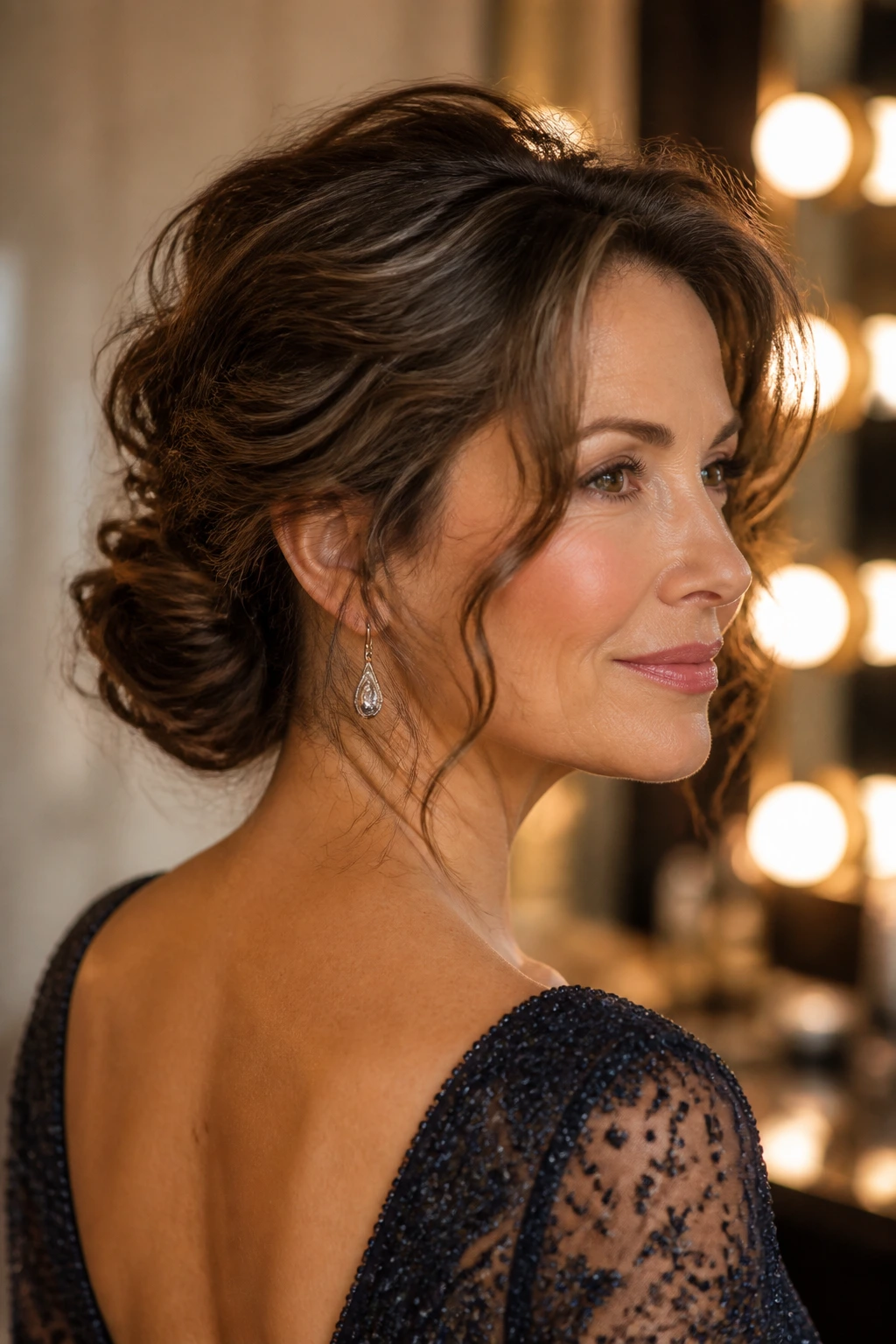
Want something quieter than loose waves but softer than a slick bun? This is the one. A low chignon sits at the nape and gives you structure, while the face-framing pieces stop it from looking stern. On wavy hair, that tiny bit of bend around the temples changes everything.
Pull the hair back loosely first, twist the length into a compact knot, and pin it low and close to the neck. Don’t chase perfection. If one section is a little thicker than the other, the bun will still read as elegant; if you try to make it too neat, you lose the life in the wave.
Where it shines
This style works especially well with pearls, a high neckline, or a dress that has detailed fabric near the collarbone. It also lets the hairline stay soft, which matters when you want the face to look open rather than dragged backward.
A few wisps around the ears help, but keep them intentional. Loose does not mean unfinished. That distinction matters.
3. Half-Up Twist Crown
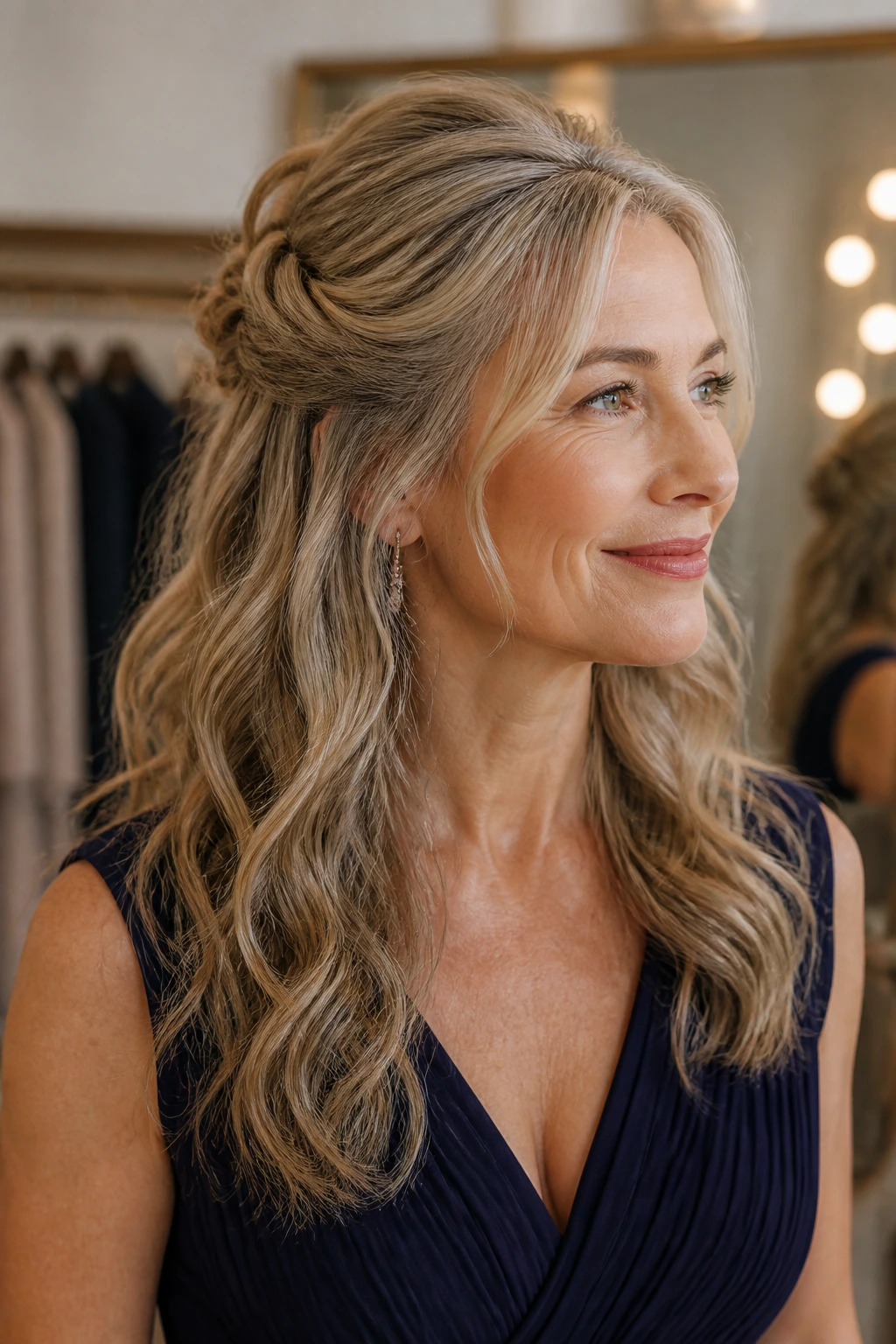
If you want lift without a full updo, this is the style I’d put near the top of the list. The half-up twist crown takes the top section back from both temples and pinches the hair into a soft lift at the crown while leaving the length down. On wavy hair, the lower half keeps its texture, so the whole look feels balanced rather than forced.
A small twist on each side is usually enough. Bring them to the back of the head, cross them once, and anchor them with two or three bobby pins hidden under the twists. If the crown is flat, clip it up for five minutes while you do your makeup. That little pause matters more than people think.
This is one of the best evening hairstyles for women over 50 with wavy hair when the face benefits from height but you still want movement near the shoulders. It’s also a good choice if you know you’ll be taking off and putting on glasses during the night. The top stays neat, and the rest doesn’t need constant fixing.
4. Deep Side Part with Glossy Waves
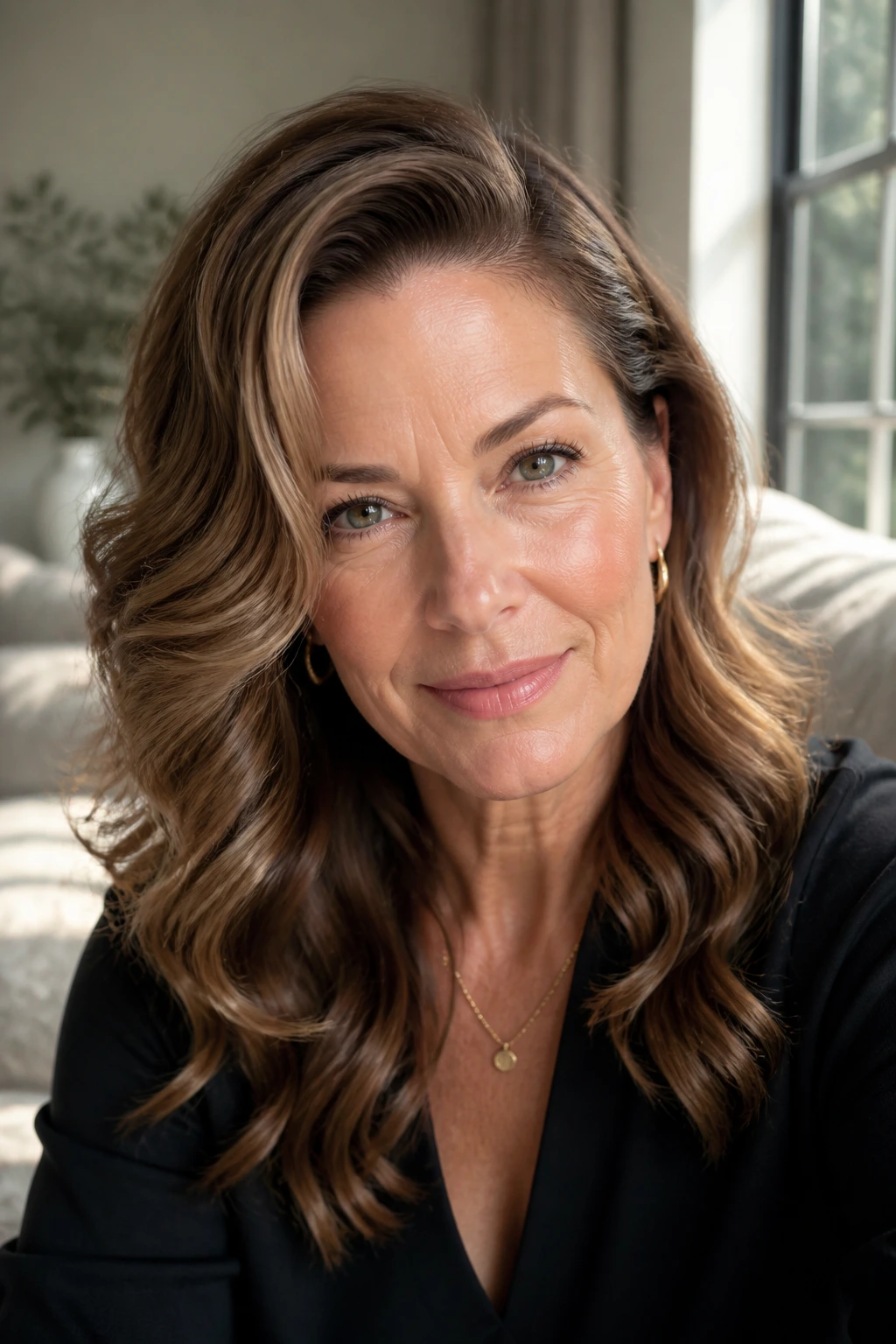
A deep side part changes the whole mood of wavy hair. The line gives the face a slightly more dramatic frame, then the waves do the softer work below it. I like this style when the jewelry is clean and simple and the dress has enough shape on its own. The hair should add polish, not noise.
The key is gloss. Use a small amount of smoothing cream or shine serum on the mid-lengths and ends, then make the part while the hair is still flexible. If you part it after everything dries, the wave pattern can fight the shape and puff at the top. A blow dryer with a concentrator nozzle helps flatten only the root area; the rest can keep its bend.
What to watch for
If your hair has a few shorter layers, they may spring up around the part. That’s normal. Tuck those pieces back with a bobby pin near the temple or let them sit with intention. A deep side part looks best when it seems chosen, not forced into place.
5. Twisted Low Bun with Texture at the Crown
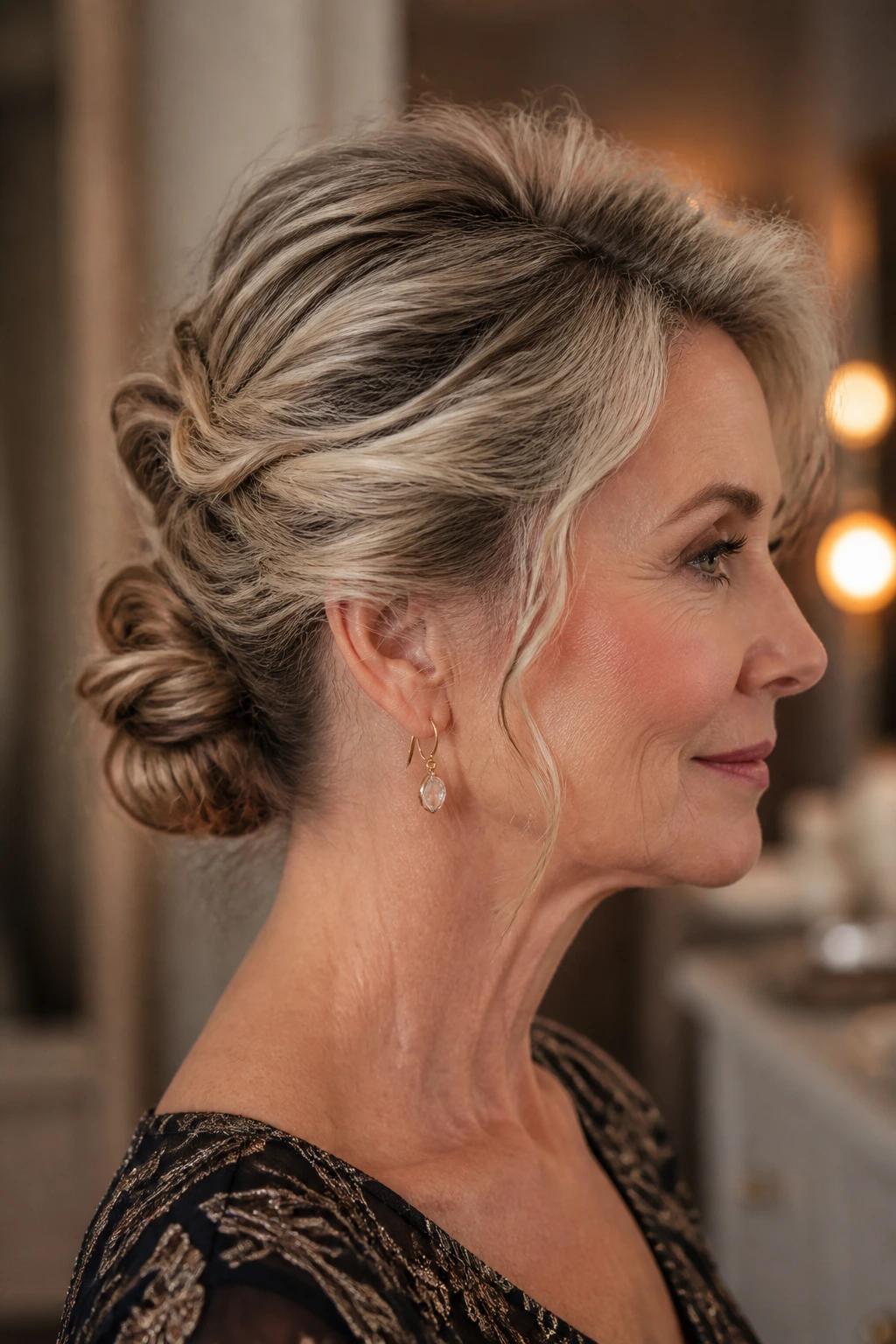
On nights when the hair feels a little too busy at the ends, I like to let the crown breathe and tuck the rest low. The twisted low bun gives you that clean line at the neck without flattening the top of the head. Wavy hair helps here because the texture keeps the bun from looking like a hard ball.
Separate the hair into two sections before twisting. Twist each side loosely toward the nape, then wrap them together into a low knot and pin diagonally. The diagonal pins hold better than straight ones, and they disappear more easily into the waves. Leave the crown with a small amount of lift so the profile doesn’t collapse.
This works especially well for thicker hair that needs a firmer base. It also plays nicely with a dress that shows the back of the neck. You get shape, not severity.
6. Old-Hollywood Waves
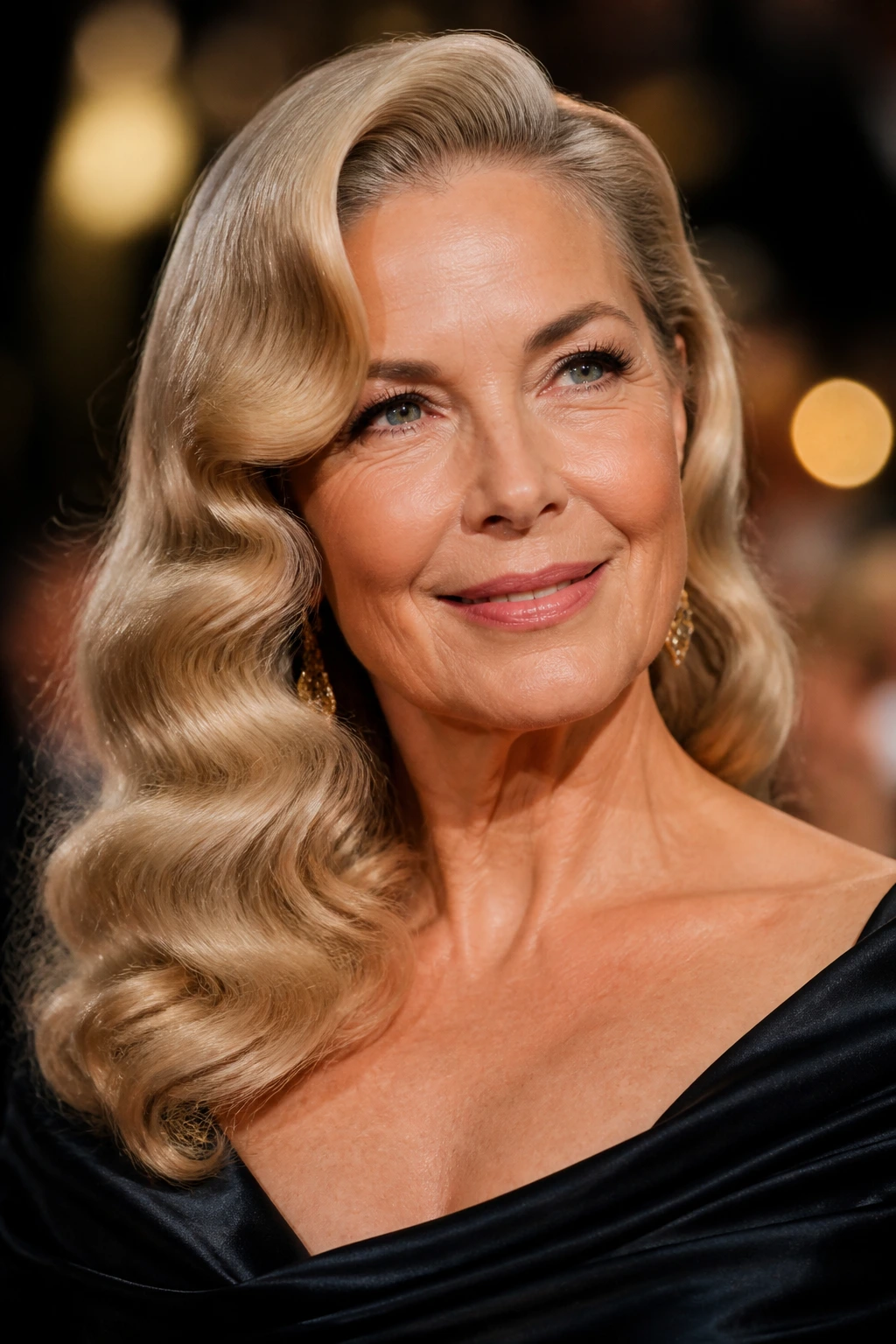
Brushed-out waves are a different animal from casual beachy waves. They sit smoother, fall in a more deliberate S-shape, and catch light in long, clean curves. That makes them one of the best choices for a formal dinner, a gala, or any evening where you want the hair to feel polished without looking sprayed into place.
Set the hair with a 1-inch curling iron, curling all sections in the same direction on each side of the face. Let the curls cool completely. Then brush them out with a soft boar-bristle brush until the shape becomes one continuous wave. That brushing step is where the style either comes alive or turns into fluff, so do it gently.
This look can be gorgeous on gray or silver hair because the wave pattern shows off the tone changes along the strands. The finish should look smooth and plush, not crunchy. If you are going to wear it, commit to the gloss.
7. Half-Up Barrette Clip
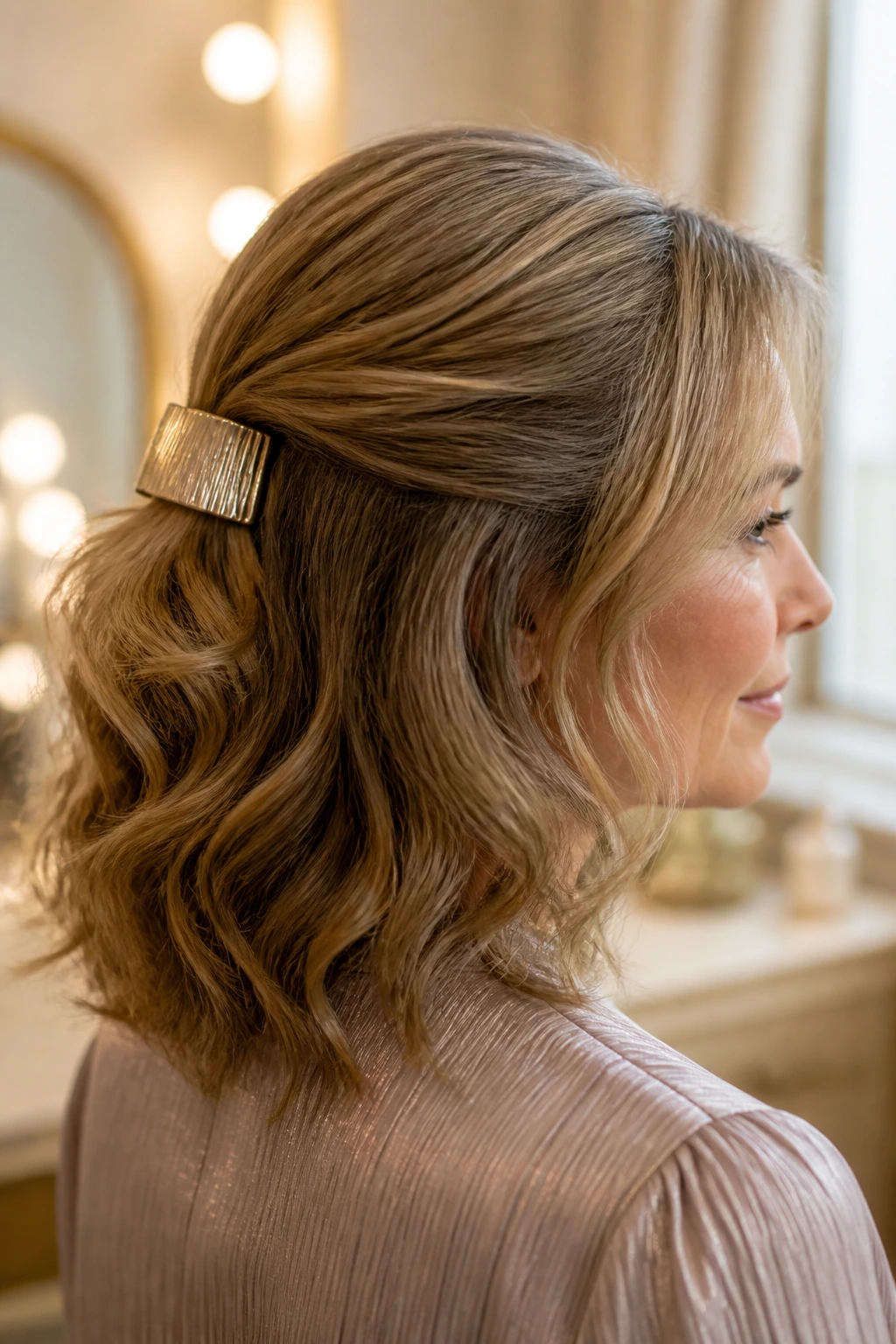
A good barrette can do a surprising amount of work. The half-up barrette clip gives you a clean lift at the crown, keeps the front pieces out of the eyes, and still leaves the ends loose enough to show off the wave pattern. It is one of the easiest options on the list, which is not a minor detail when you’re getting dressed and the clock is moving.
The clip matters. I prefer a substantial barrette with a real grip rather than a decorative piece that slides around the second the hair gets a little smoother. Gather the top half of the hair from temple to temple, twist it once, and pin or clip it just above the occipital bone. That spot gives the style structure.
Shoulder-length hair looks especially good in this shape because the loose section has enough length to fall nicely but not so much that the style gets heavy. Add a soft wave to the bottom half if it needs more shape. Done right, it looks casually finished, not borrowed from a teenager.
8. Sleek Top with Wavy Ends
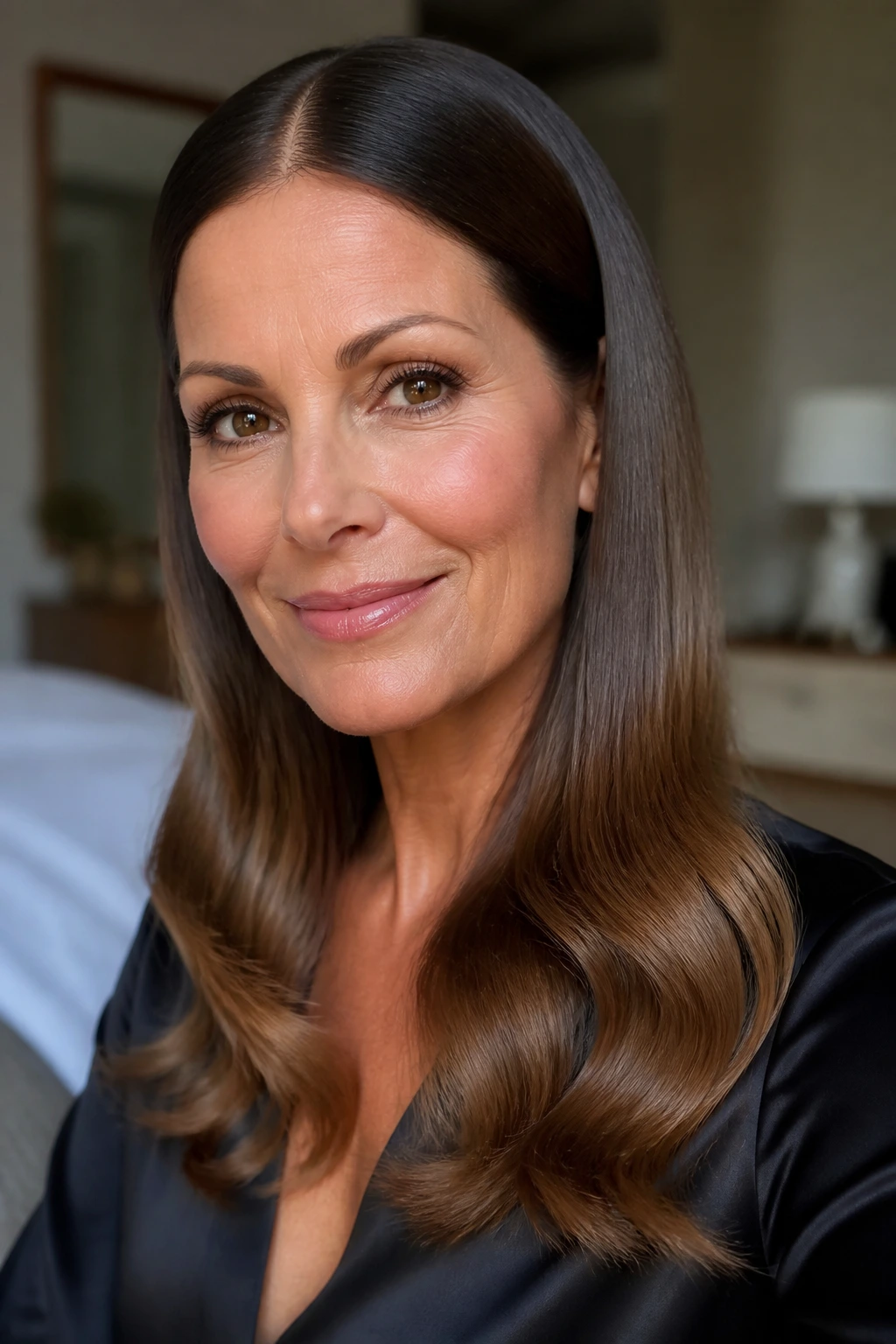
This style is all about contrast. The top stays smooth and controlled, while the ends keep their natural bend. It works because the eye gets two textures at once, and that keeps the hair from feeling flat or over-curled. The sleek top also makes earrings and neckline details much easier to see.
Use a tail comb to create a clean part, then smooth the top section with a little styling cream or gel. Stop at mid-length. Leave the lower half wavy and touch only the outer layer with a curling iron if the ends need definition. Too much smoothing all the way down kills the point of the style.
I especially like this for dresses with sharp shoulders or a square neckline. The top half creates order, the bottom half brings softness. That’s a good pairing.
9. Braided Crown with Loose Waves
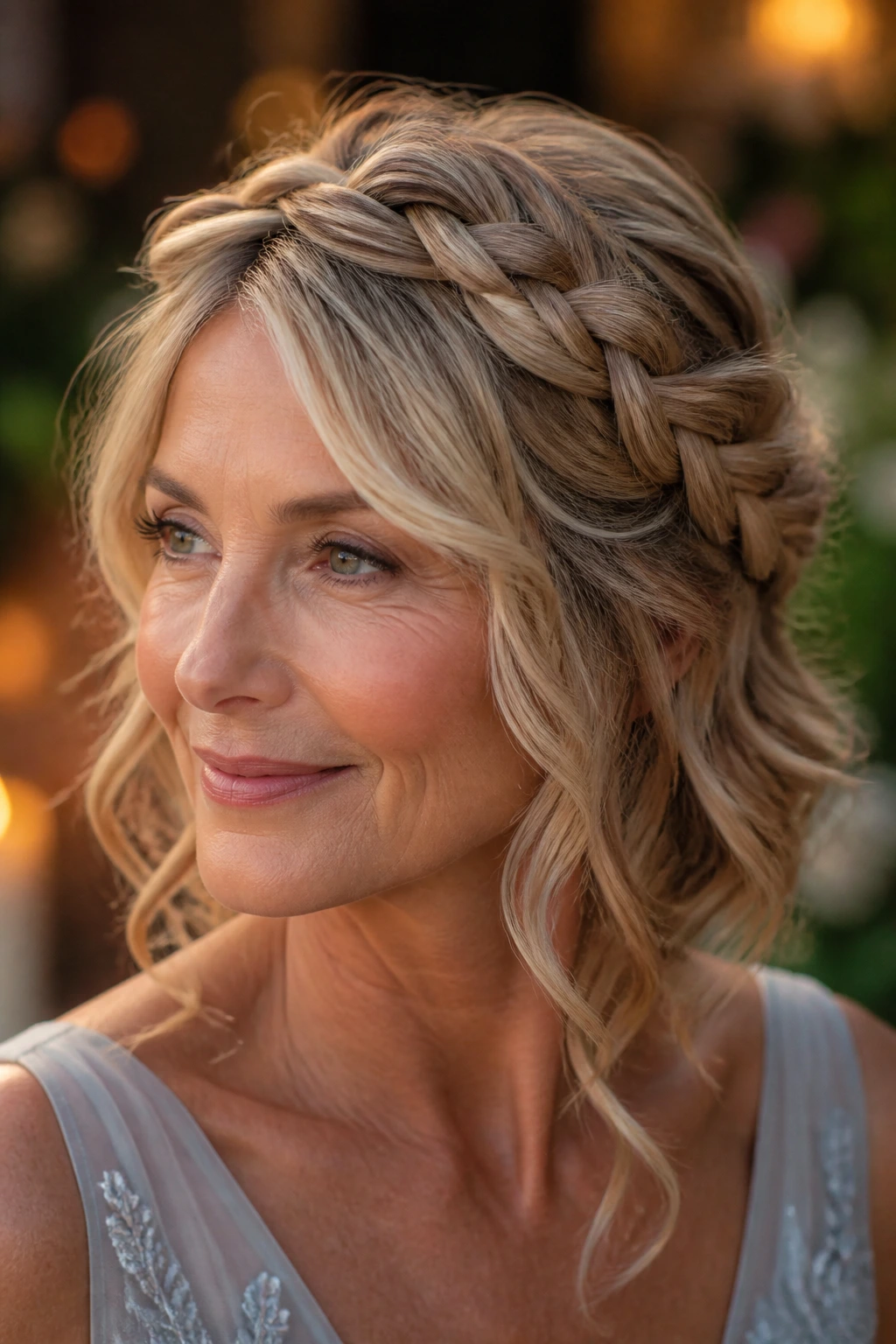
A braided crown can look formal, but it depends on the braid. Keep it wide, loose, and a little imperfect, and it starts reading more like a soft frame than a school-day braid. On wavy hair, the braid blends into the texture better than straight hair, which gives the style an easy richness.
Take a small section near one temple and braid it across the top or around the front hairline. Pin it behind the opposite ear or let it meet a second braid in back. Leave the rest of the hair in loose waves. The braid should feel like an accent, not the whole headline.
This is a good choice if you want your hair to feel romantic without getting too sweet. It also keeps shorter layers under control, which is useful if the hair has been cutting loose from previous style attempts. A few face-framing pieces stop the crown from looking too tight.
10. French Twist with Soft Texture
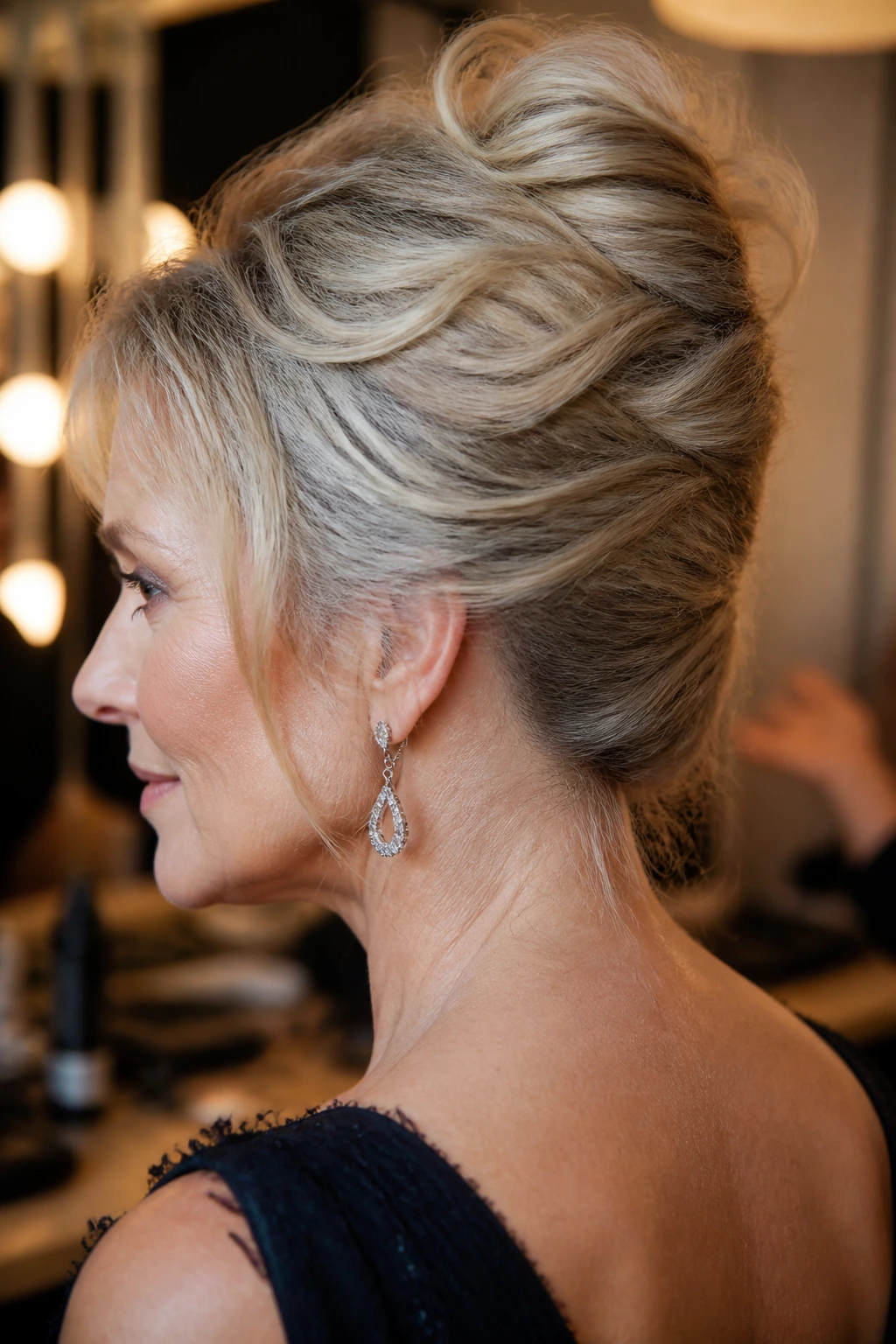
The French twist can go stiff in a hurry. Nobody needs that. The version I like for wavy hair keeps the vertical line of the twist but softens the edges, so it still feels graceful when the hair moves.
Start with dry texture spray or a little mousse on the mid-lengths. Gather the hair low at the back, roll it upward, and tuck the ends into the twist. Leave a few wisps near the temples and the nape. Pin the shell in place with long bobby pins or U-shaped pins, and don’t yank the top smooth enough to erase the wave pattern entirely.
This is the kind of style that looks best with a clean neckline and slightly longer earrings. It also rewards hair that has a bit of second-day grip. Freshly washed, silky hair can be slippery here. Give it some texture first, or the twist will slide.
11. One-Shoulder Cascade
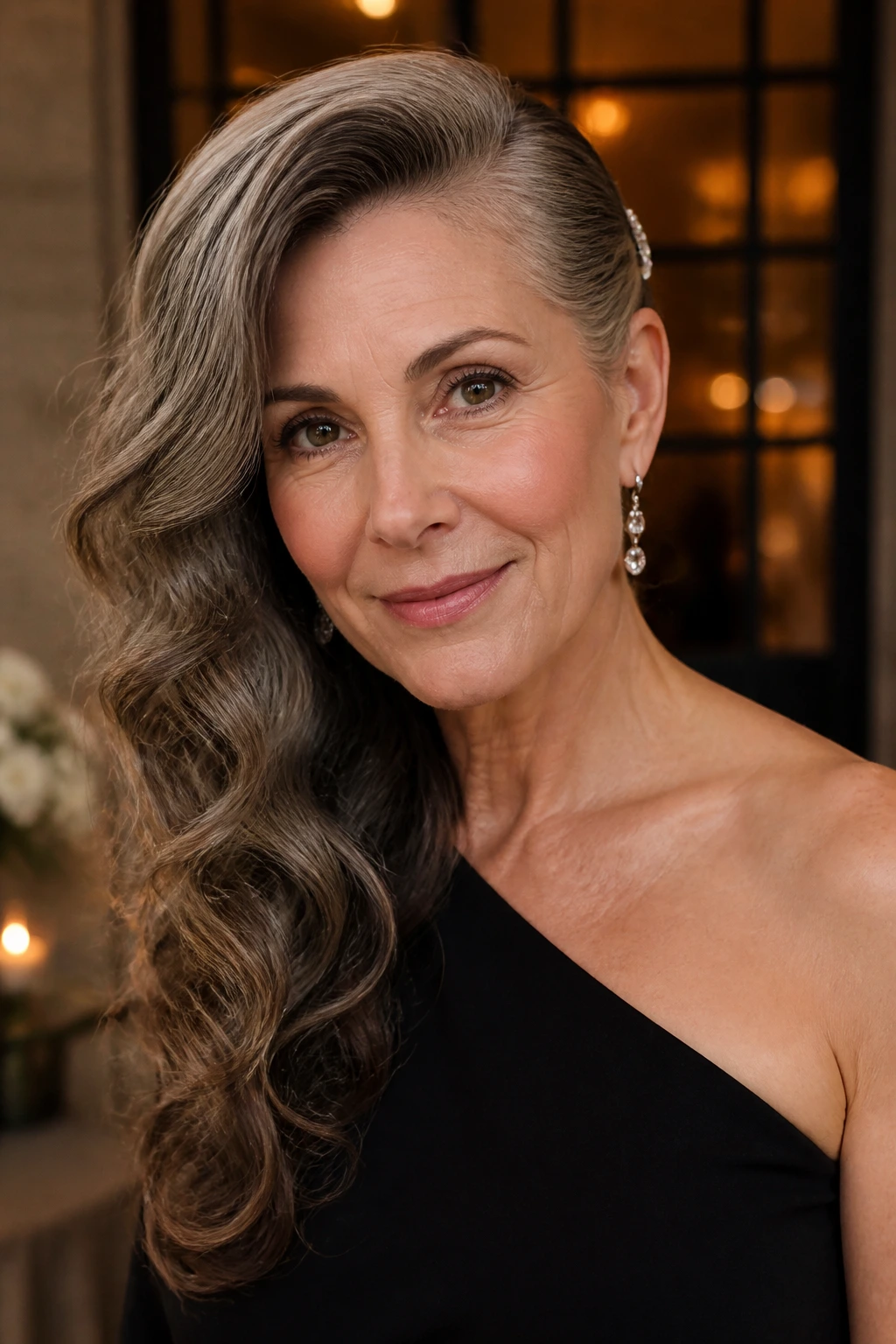
If the dress already has one bare shoulder, the hair should answer that line instead of covering it up. A one-shoulder cascade sweeps all the wave and movement to the opposite side, leaving the exposed side clean and intentional. It is dramatic in a quiet way, which is my favorite kind of dramatic.
The easiest way to do it is with a deep part and a side pin behind the ear on the opposite side of the bare shoulder. Let the waves fall forward in a single cascade, then guide the front section over the shoulder with your fingers instead of a brush. A brush can make the shape too uniform and steal the softness.
This style works beautifully for women who want the length down but still need the hair to feel dressed up. It frames the collarbone in a way that photographs well in real life, not just in a mirror. You can stop there, or add one decorative pin near the temple if the outfit feels too minimal.
12. Messy Low Knot with Lift at the Crown
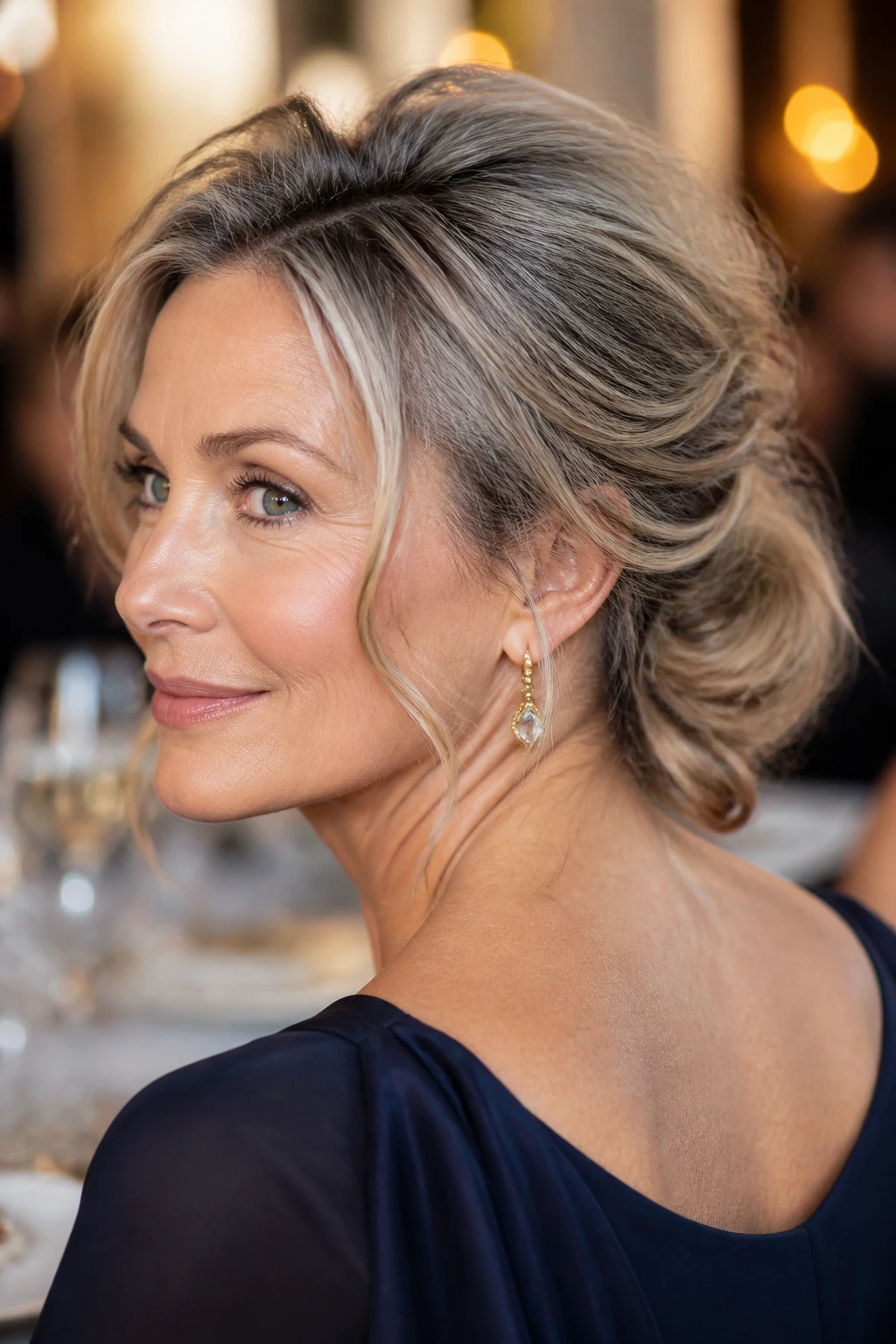
Messy can be the wrong word if the hair is left to do whatever it wants. The version worth wearing starts with lift at the crown and a low knot that looks pinned on purpose, not collapsed by accident. This is one of the best moves for second-day wavy hair, because the texture already has some grip.
Pull the hair back loosely, tease the crown just a bit, and twist the lengths into a low knot at the nape. Pin the knot in three places, then pull two tiny pieces loose around the face. That’s enough. If you open it up much more than that, the style can start looking unfinished.
I like this for dinners where you want to look elegant but not formal. It has that slightly undone energy that works with knit dresses, satin tops, or anything with a softer shape. A little dry shampoo at the roots can keep the lift from sinking halfway through the night.
13. Rolled Side Bun
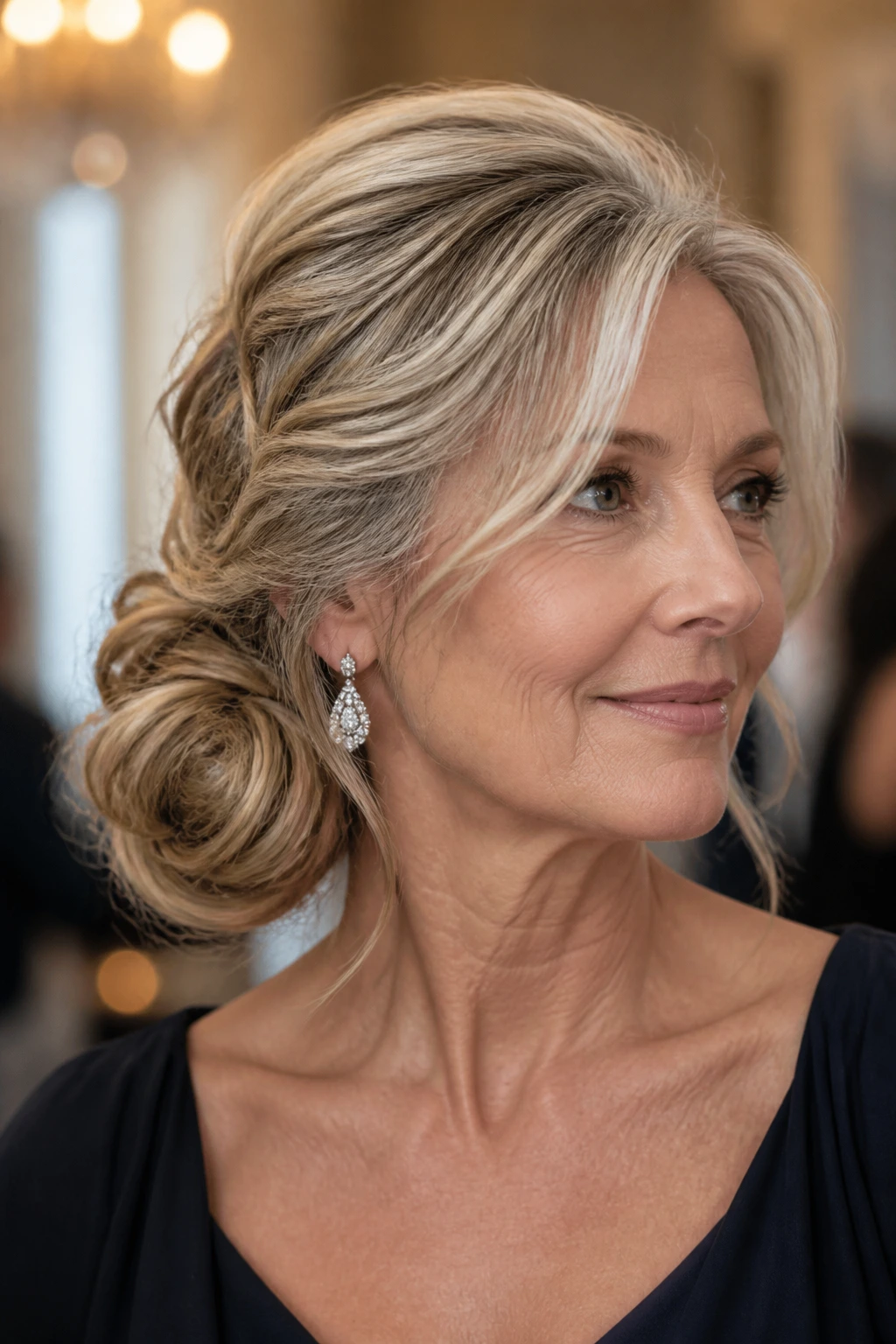
The rolled side bun has old-school charm, but it doesn’t have to feel costume-like. The trick is to keep the roll soft and to place it low and slightly off-center. On wavy hair, the texture gives the roll some body so it doesn’t look too narrow or hard.
Sweep the hair to one side, roll the length inward toward the nape, and pin it so the bun sits just below the ear. Leave a few pieces around the face, but keep the edges tidy. The bun should look like it was shaped with fingers, not smashed into place.
This style works well with dresses that have a little structure in the bodice. It also gives earrings room to show. If your hair is layered, tuck the shorter pieces into the roll rather than trying to force them into a perfect shape; the imperfect edges often make it better.
14. Shoulder-Length Flip-Out Waves
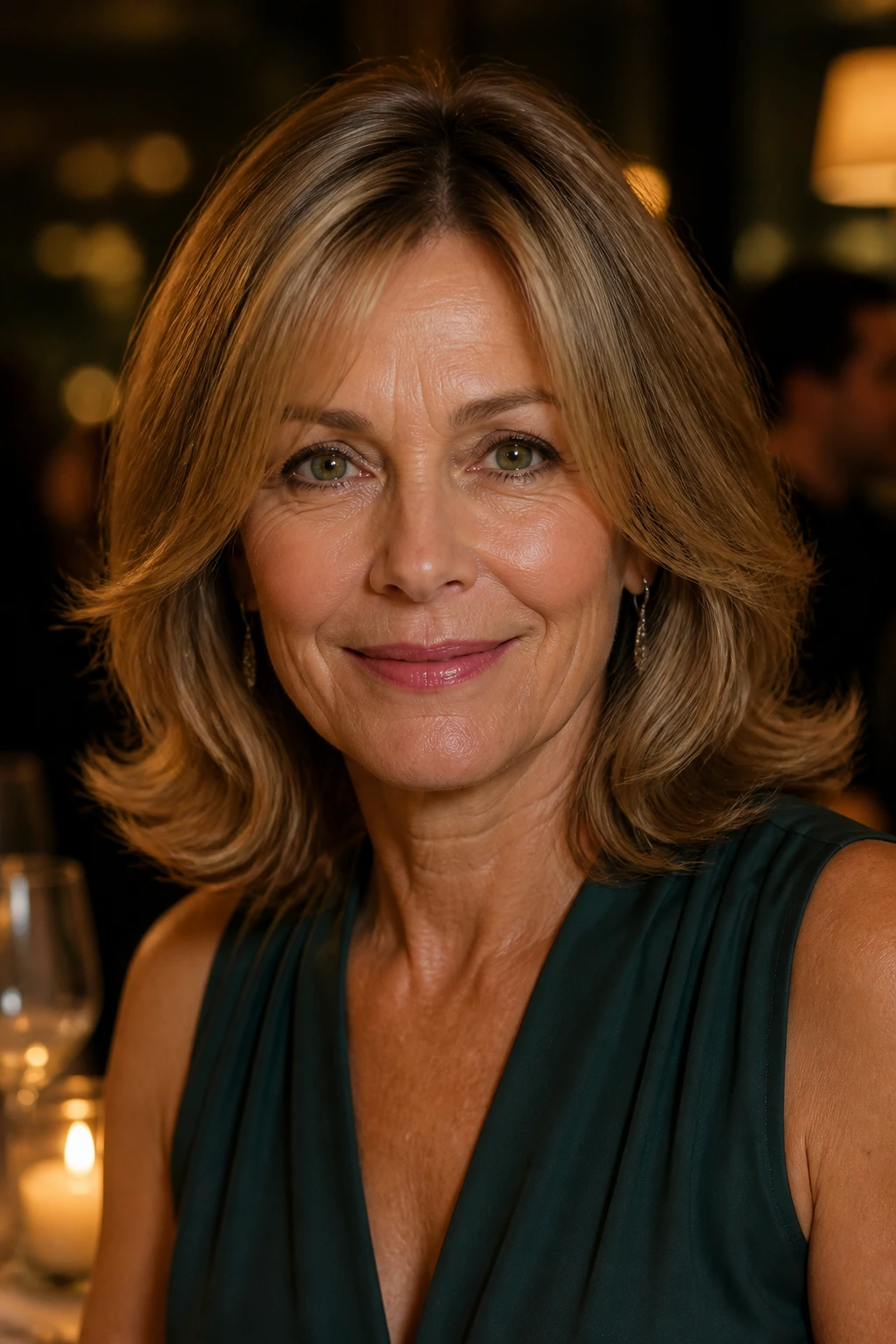
Shoulder-length hair can feel awkward when it’s left to hang with no plan. Flip-out waves fix that fast. The ends turn outward just enough to create motion, which gives the whole cut more life and keeps it from sitting flat against the neck.
Use a round brush or a 1-inch curling iron to bend only the bottom two inches of hair away from the face and slightly out. The goal is not a full curl. You want a soft flip that opens the line of the collarbone and keeps the shape lively. A center or slight side part both work here, depending on the dress.
This style is especially useful when you want hair down but still styled. It feels lighter than a full wave set and less severe than a pin-straight blowout. Small change, big payoff.
15. Loose Waterfall Braid into Waves
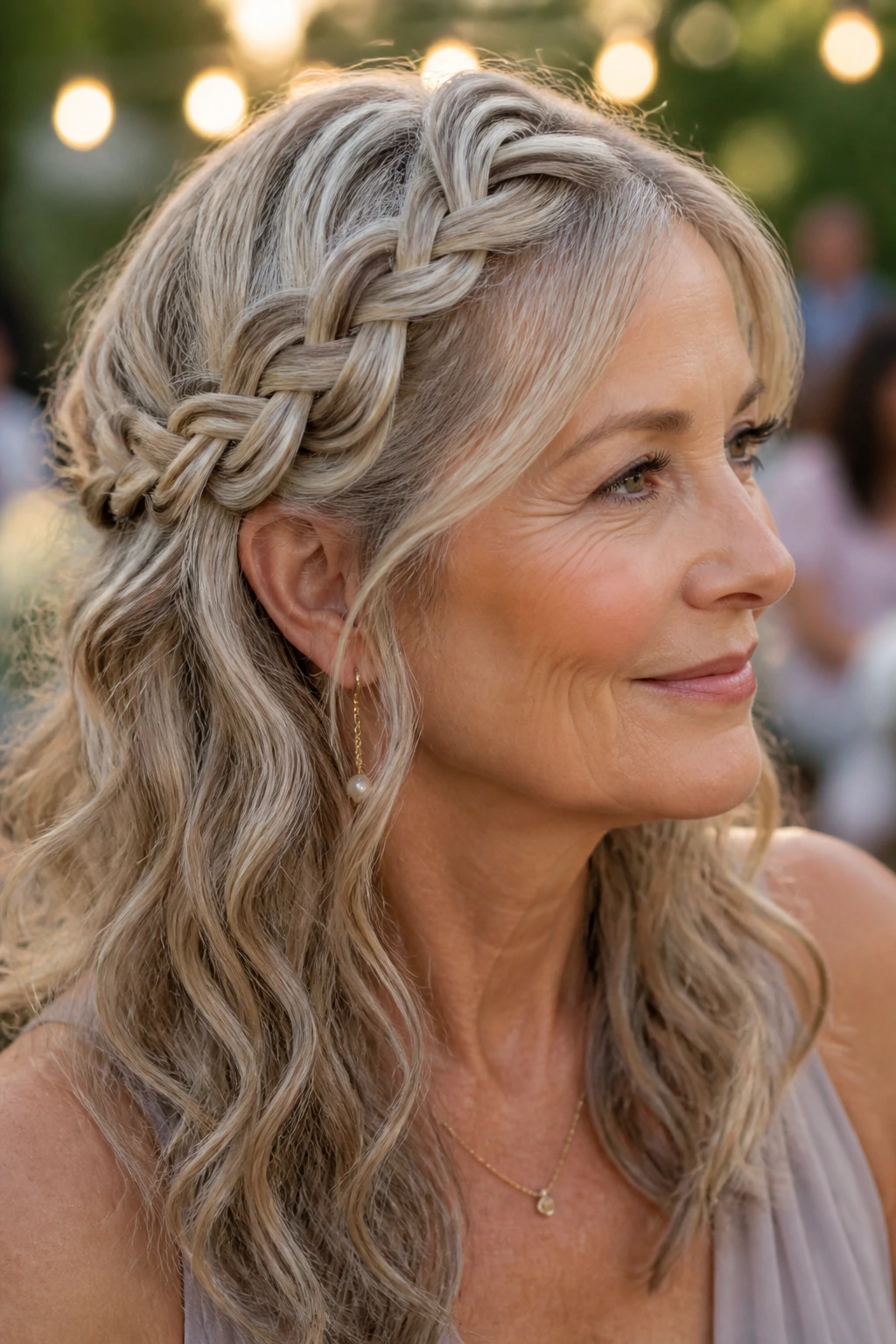
A waterfall braid adds detail without taking over the whole head. The braid sweeps across the top, then drops pieces into the loose waves below, which gives the style motion and a little romance. It works especially well when the hair is layered and you want those layers to look intentional instead of messy.
Keep the braid loose and fairly wide. If it gets too tight, it loses the softness that makes it flattering on wavy hair. Pin it securely behind the ear or at the back, and let the rest fall naturally. A light curl through the ends helps the braid blend into the lower section.
This is a nice choice for events where you want more interest than a simple half-up style but less structure than a chignon. It feels detailed from a few feet away and still relaxed up close. That balance is rare.
16. Tucked-Behind-the-Ear Lob
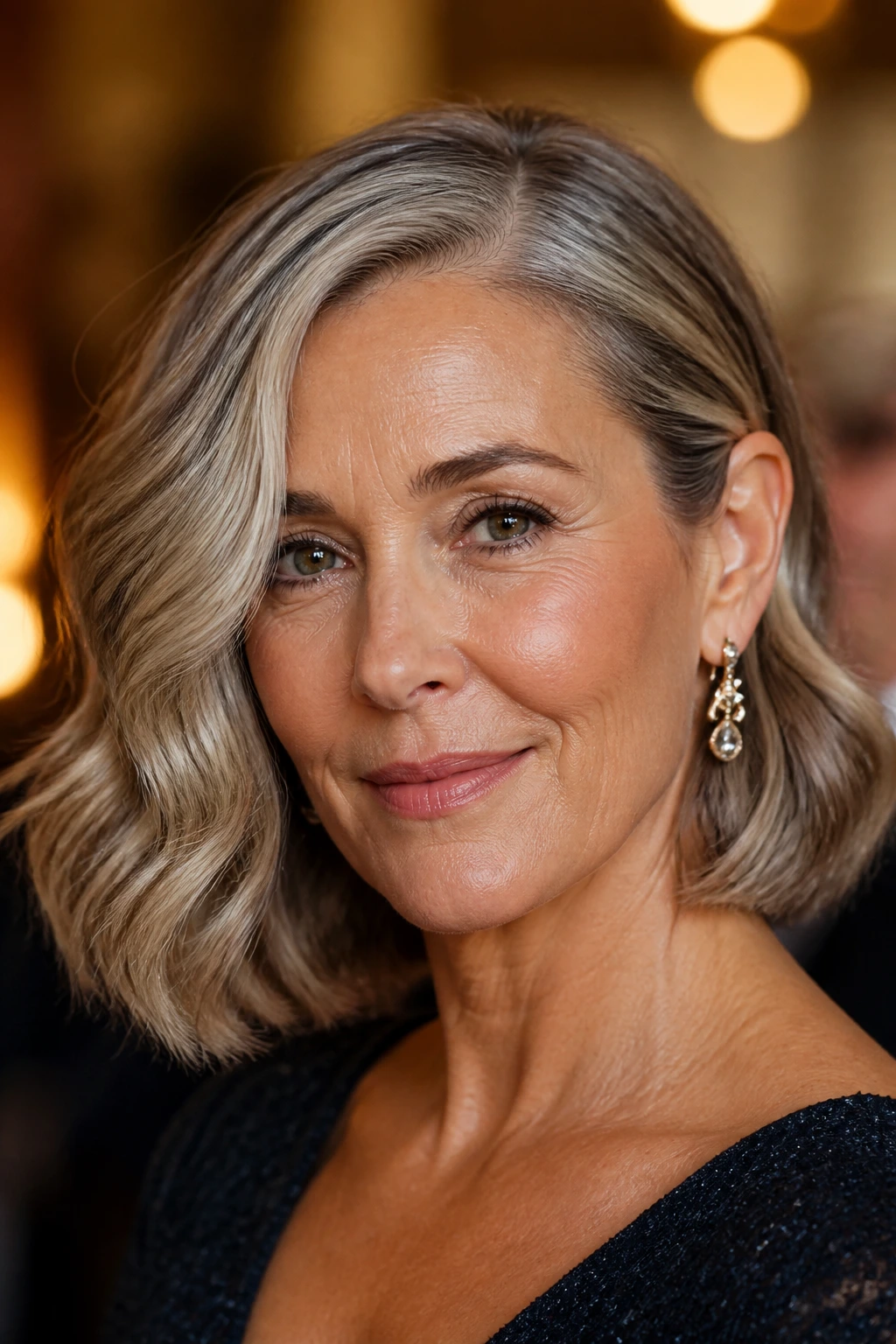
For shorter hair, this is one of the cleanest evening moves. A lob tucked behind one ear opens the face, shows off earrings, and keeps the wave pattern visible without needing a big style shift. It’s subtle. That’s the point.
Work a small amount of smoothing cream through the top layers, then tuck one side cleanly behind the ear and secure it with a flat pin if the hair slips. Leave the opposite side loose and wavy. If the front pieces keep falling forward, bend them slightly away from the face with a curling iron so they sit where you want them.
I like this look when the dress or top already has a strong detail near the neckline. It doesn’t fight for attention. It just clears the frame.
17. Textured Ponytail with Wrapped Base
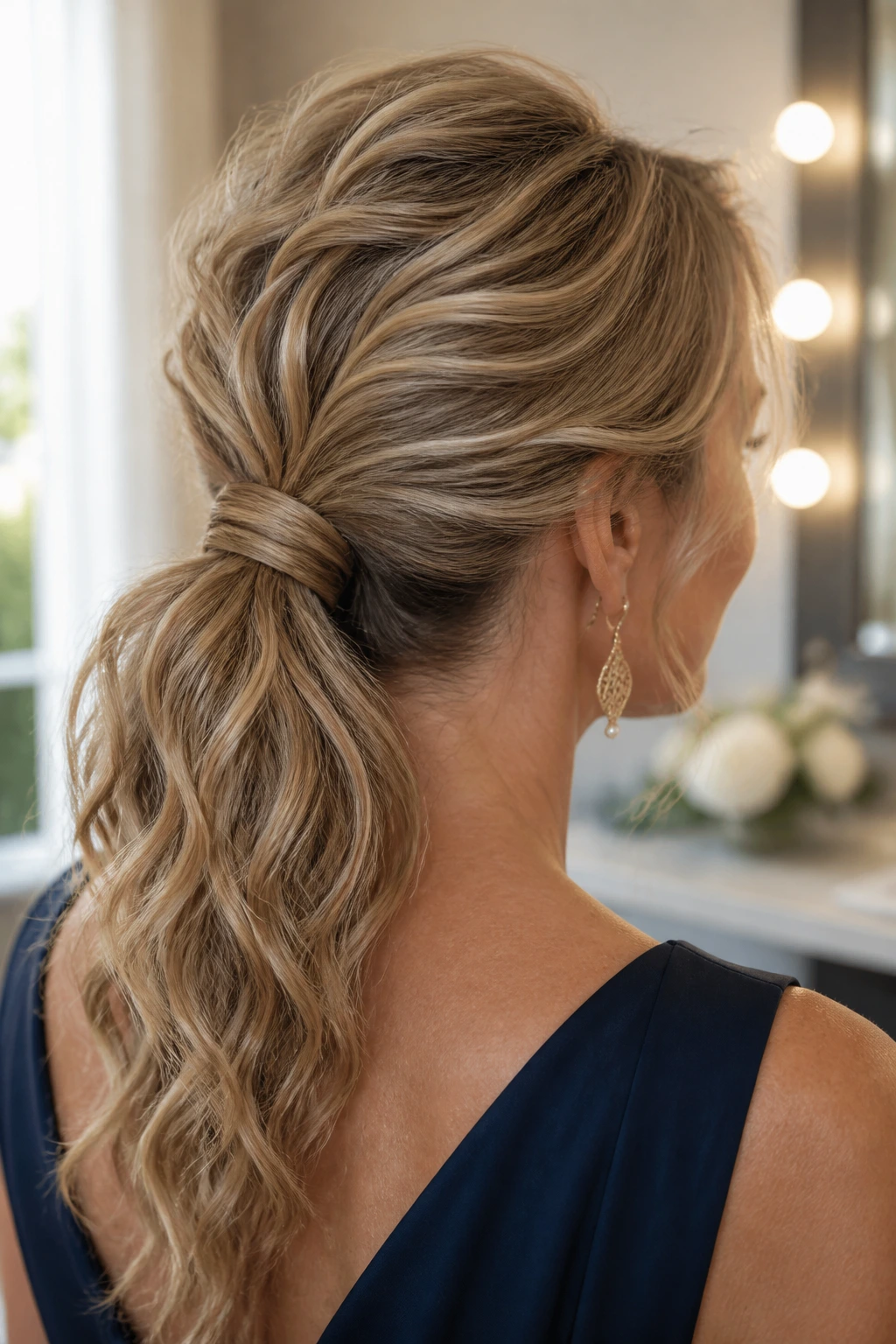
A ponytail can be evening hair if the shape is right. The polished version starts with texture at the crown, a low or mid-height placement, and a wrapped base that hides the elastic. Wavy hair gives the length enough movement that the ponytail doesn’t look gym-bound.
Lift the crown a little, gather the hair loosely, and secure it with an elastic. Take a small strand from underneath, wrap it around the elastic, and pin it out of sight. Leave the tail wavy, or add a few gentle bends to the lower half so it drapes instead of hanging straight.
This is a smart option when the hair is long enough to feel heavy in a bun. The ponytail keeps the neck clear, shows off earrings, and still looks deliberate. If the waves are very soft, a few passes with a large-barrel iron can keep the tail from losing shape too fast.
18. Sculpted Faux Bob
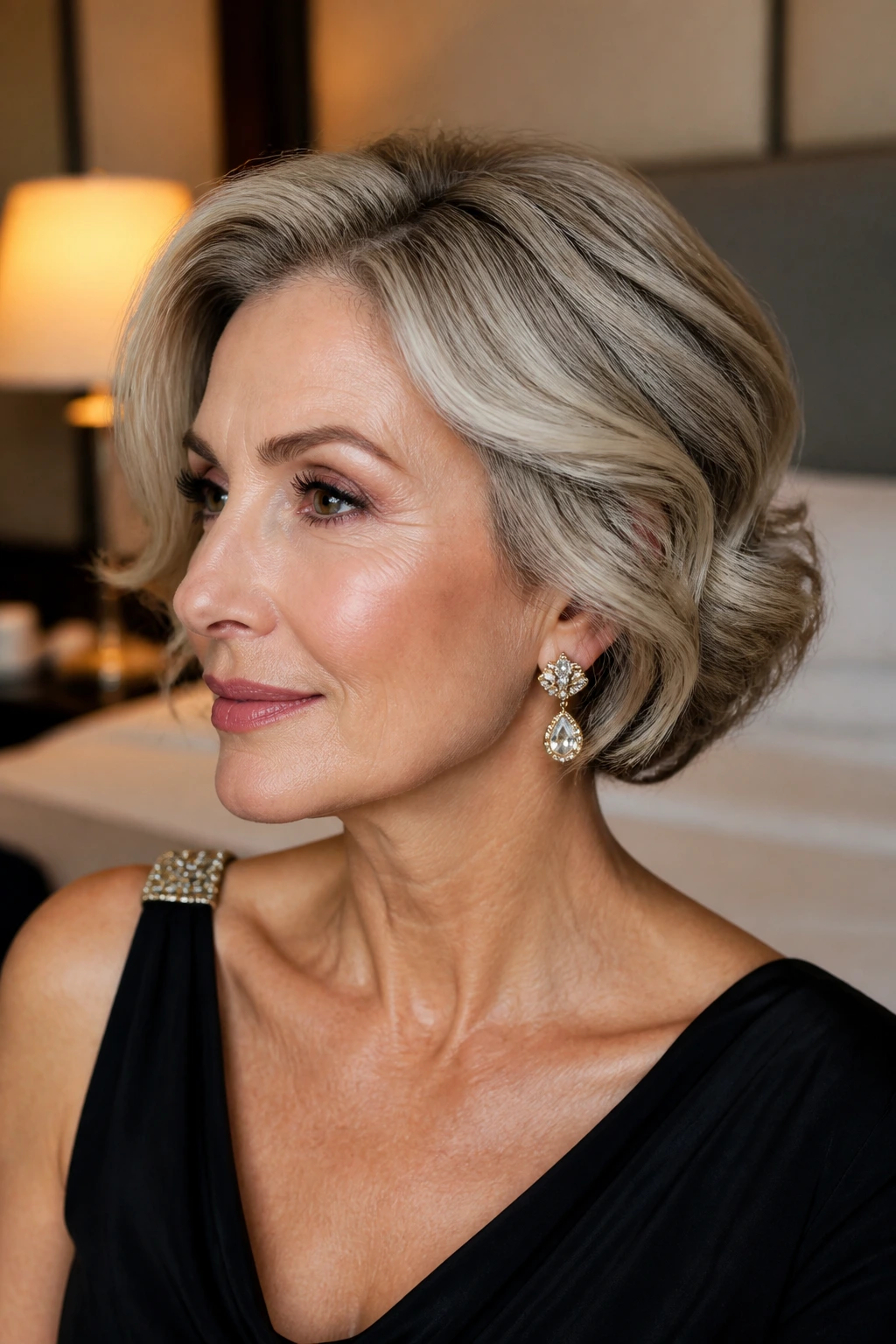
The faux bob is for nights when you want the energy of shorter hair without cutting a single inch. Tuck the ends under at the nape, pin them flat, and let the upper layers create the shape of a shorter cut. On wavy hair, this can look especially chic because the bends soften the tucked ends.
It takes a little patience. Smooth the top into a side or soft center part, then fold the length inward in sections and pin hidden from the outside. The end result should sit around the jaw or just below it, with enough movement that it does not look packed into place. If the pins show, adjust them. That’s not a style detail; that’s a fixable mistake.
I save this one for evenings when the outfit has sharp lines or the event feels more formal. It has a bit of theater to it, but the good kind — the kind that lets the hair become part of the look rather than just background.
Matching the Style to Necklines, Earrings, and Makeup
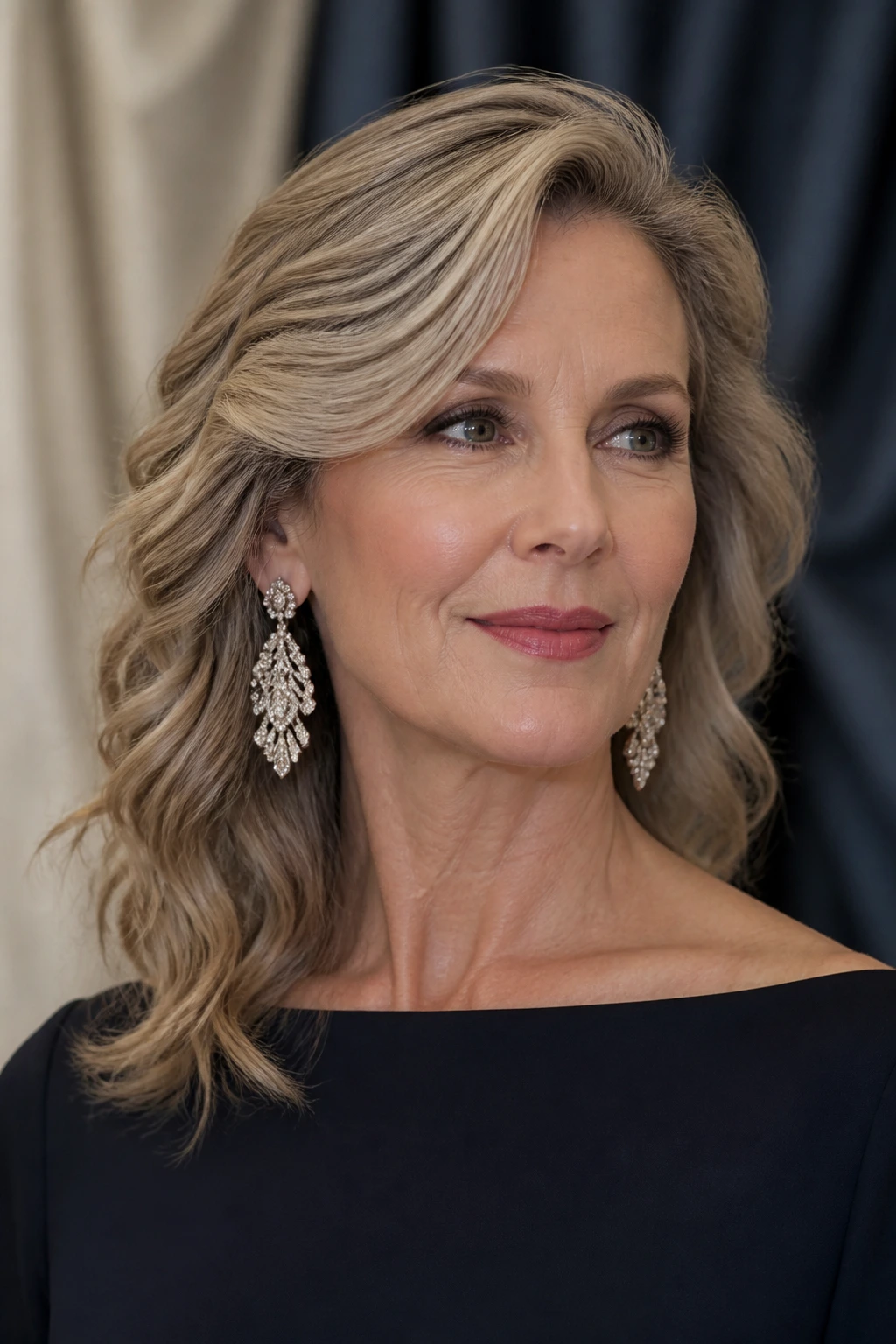
Hair does not live by itself at night. It sits next to fabric, jewelry, and makeup, and those things either get along or they don’t. A clean neckline — think boat neck, mock neck, or tailored collar — usually wants the hair up or pinned back so the top of the outfit can breathe. A soft sweep over one shoulder works better with open necklines because it adds movement without covering the cut of the dress.
When the earrings are the statement
Choose a style that clears the ears: tucked lob, half-up barrette clip, side-swept waves, or one-shoulder cascade. Those shapes let the earrings do real work instead of disappearing into the hair. Large drop earrings need room. Small studs can live with nearly any style.
When the neckline is already detailed
If the dress has beading, ruffles, lace, or a strong collar, keep the hair simpler. A low chignon, French twist, or sleek top with wavy ends leaves the clothing room to show. Too many textures at once can look busy in a way that is hard to fix once you’ve left the house.
When makeup is the focus
More graphic makeup can sit nicely with a cleaner hairstyle. A deep side part, rolled side bun, or sculpted faux bob gives the face a little space and keeps the overall effect sharp. Soft makeup, on the other hand, pairs well with loose waves, braids, and face-framing pieces. The balance matters more than the category of style.
Essential Tools for Evening Styling
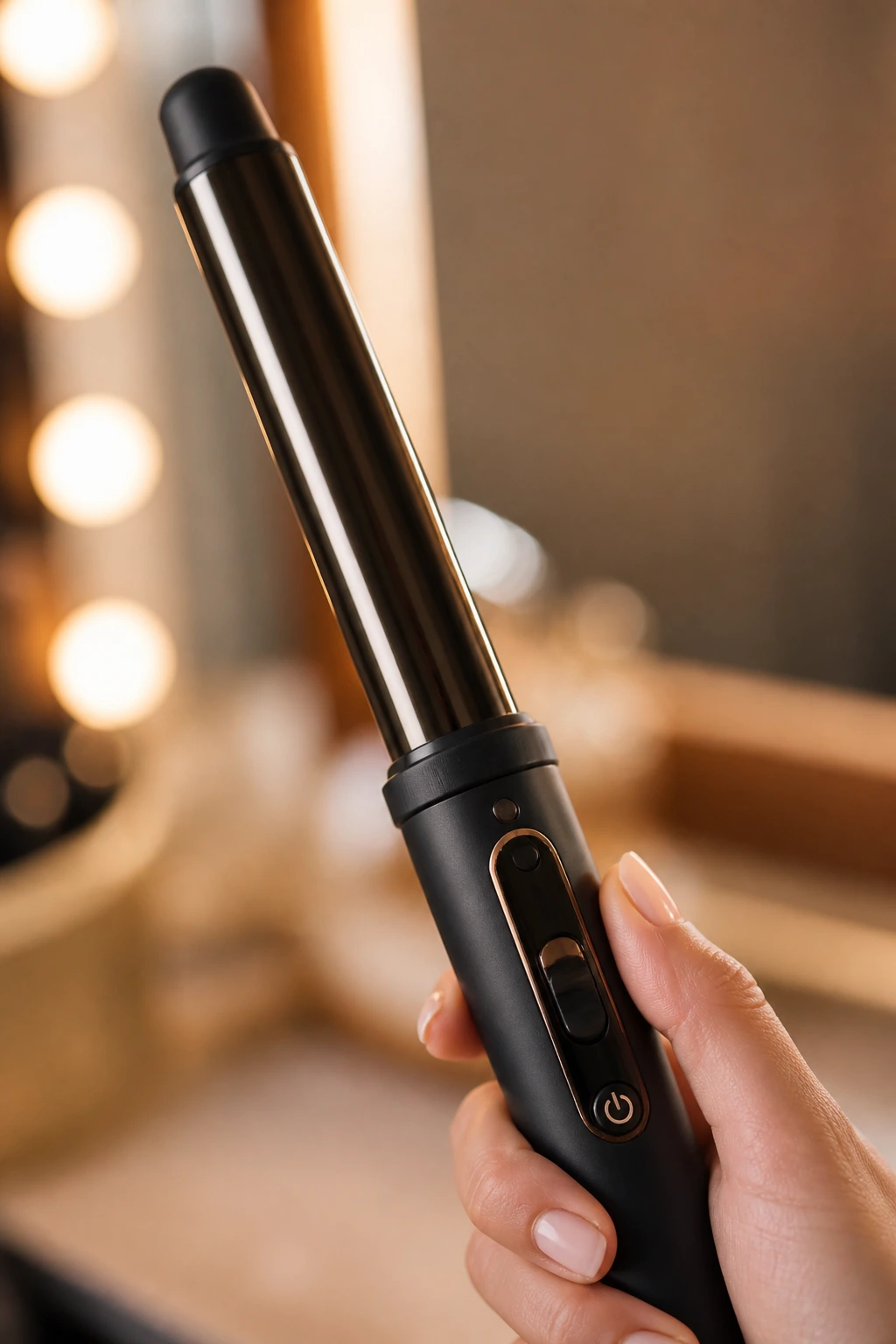
- 1-inch curling iron or wand — Best for shaping defined bends and softening front pieces without making the hair look too curly.
- 1.25-inch curling iron — A little better for brushed-out waves and longer hair that needs looser shape.
- Blow dryer with concentrator nozzle — Helps smooth the roots and control frizz without blowing the wave pattern apart.
- Diffuser attachment — Useful if you want to dry natural waves with less puff at the crown.
- Sectioning clips — Make it easier to build updos and half-up styles without losing control of the top layer.
- Long bobby pins — Better than tiny pins for twists, buns, and faux bobs because they anchor more hair.
- U-shaped pins — Great for chignons and French twists when you want less visible hardware.
- Tail comb — Good for clean parts and lifting the crown in small, neat sections.
- Soft-bristle or mixed-bristle brush — Handy for brushing out waves into a smoother evening finish.
- Flexible-hold hairspray — Keeps the style in place without freezing the hair into one shape.
- Texturizing spray or dry shampoo — Adds grip for braids, buns, and styles that need a little friction.
- Shine serum or smoothing cream — Use a tiny amount on the ends or top layer for a cleaner finish.
How to Prep Wavy Hair Before You Start
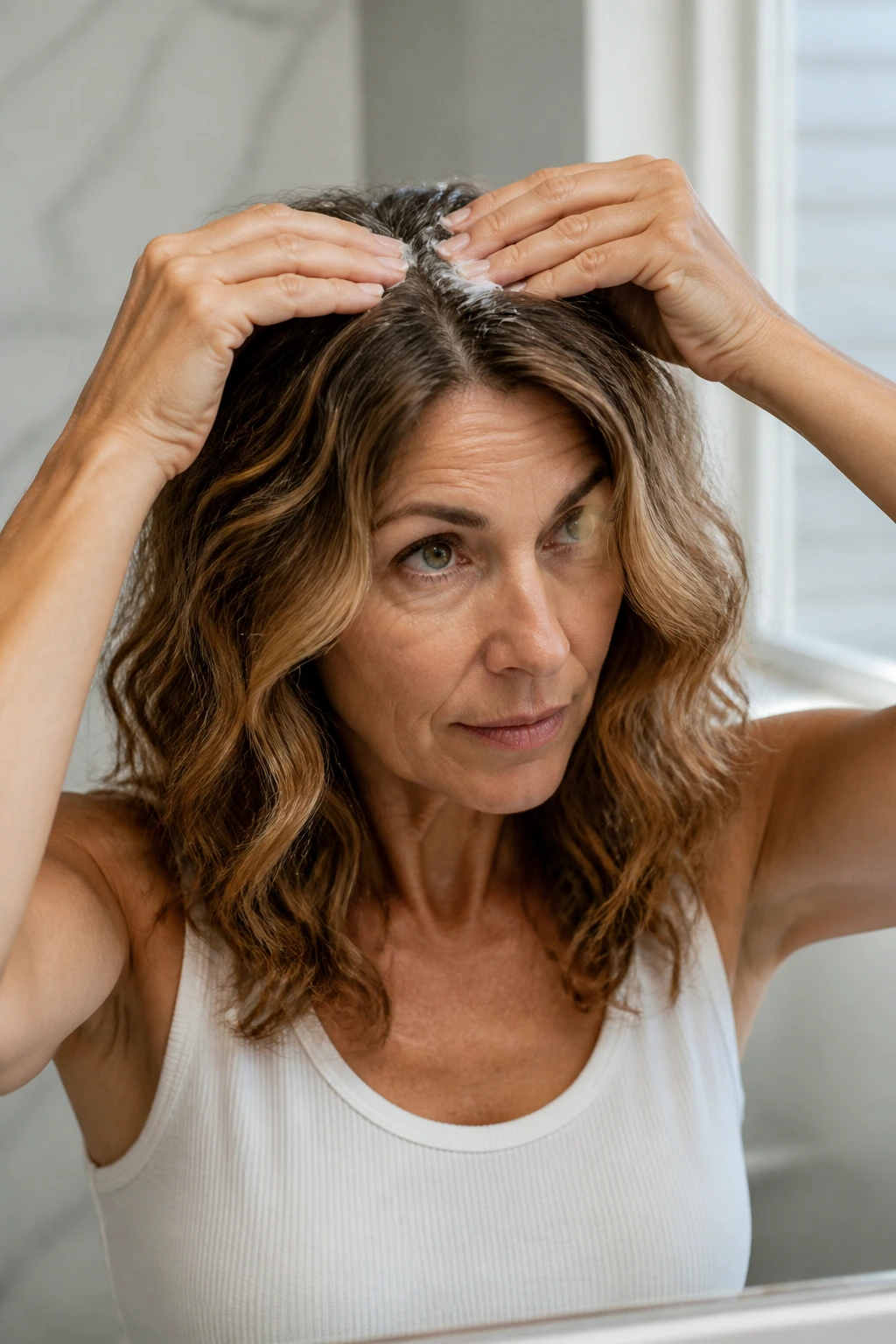
A strong evening style starts before the pins come out. If the hair is freshly washed, it usually needs more help at the roots and a little less product on the ends. If it’s second-day hair, you often get better grip and less slip, which is a gift when you are building a bun or twist. The trick is reading the hair you have in front of you.
Clean hair versus second-day hair
Fresh hair tends to be softer and smoother, which is nice for glossy waves but not great for styles that need staying power. Second-day hair usually holds braids, pins, and curls more easily because the strands have a little texture. If the roots are too soft, add dry shampoo at the crown before you style.
Heat or no heat
Both can work. Heat helps when you want a polished bend or a brushed-out wave, especially around the face. No-heat methods are better for softness and less damage, and they can work well for braids, twists, and buns if the hair has already dried into its natural pattern.
Where to put product
Put the strongest hold at the roots and the lightest finishing product on the ends. That keeps the style from getting greasy at the base. I’d rather see a slightly dry end than a greasy crown; the crown is what the eye notices first when a style starts to droop.
Practical Ways to Keep the Style in Place Through Dinner and Dancing
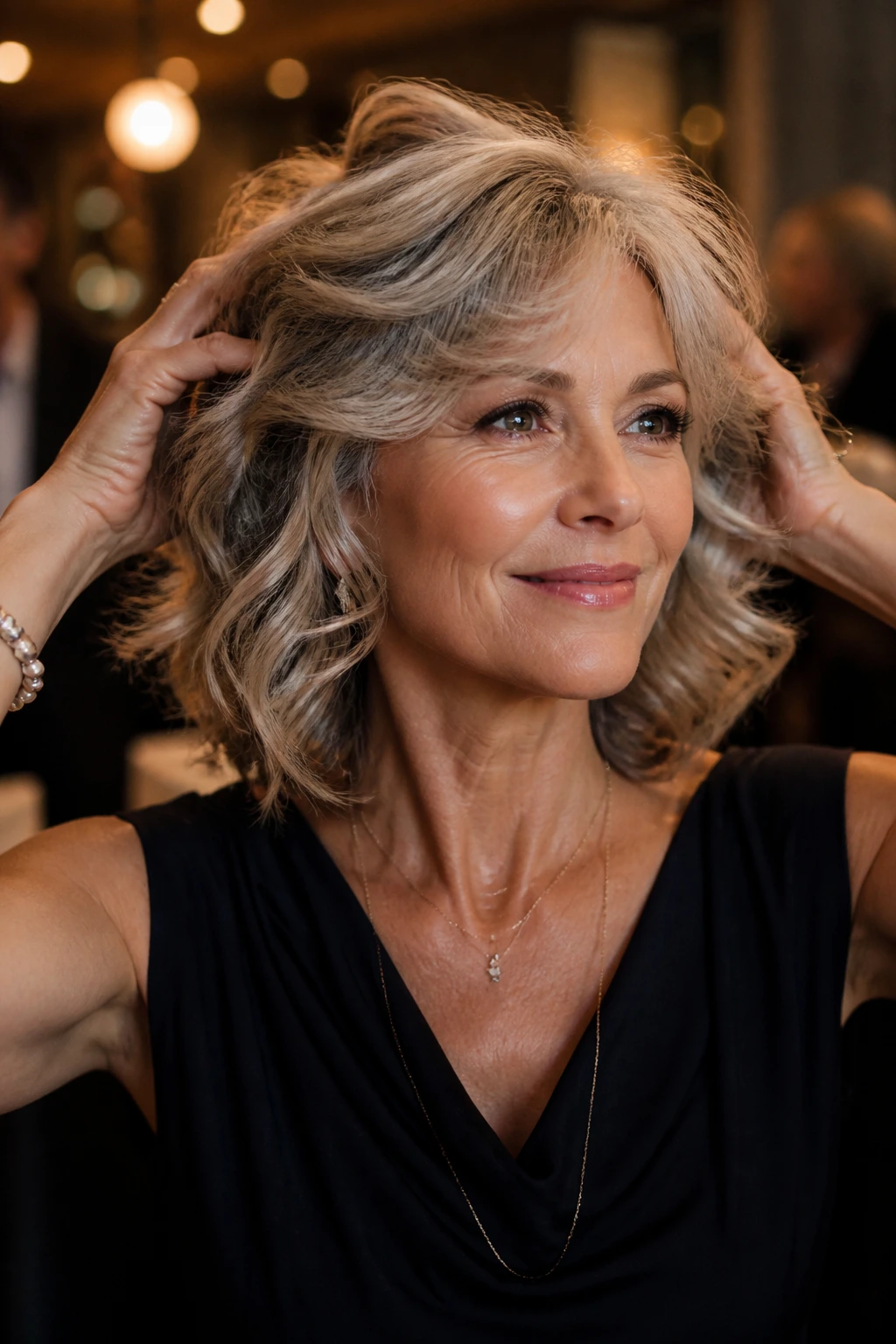
Root Lift: Clip the crown for five to ten minutes after shaping it. That small pause gives the roots a memory, and it helps prevent the top from falling flat the second the room warms up.
Pin the Hidden Spots: One pin at the top of a twist is never enough if the hair is thick or slippery. Add a second pin from a different angle. Cross them if you need to. Pins disappear better when they’re anchored into the direction the hair is already moving.
Use Less Product Than You Think: Heavy cream, too much oil, or a thick layer of spray will weigh down wavy hair and make it look tired by dessert. Start with a little, then add only if the front pieces need it.
Pack a Tiny Rescue Kit: A few bobby pins, a mini spray, and a small comb will save you from having to redo the whole style in a restaurant bathroom. That is the boring kind of preparedness that pays off.
Touch the Front, Not the Whole Head: If the style starts to soften, fix the crown and the face-framing pieces first. Most people keep checking the whole length, but the front line is what defines the style.
Common Mistakes That Make These Styles Fall Flat
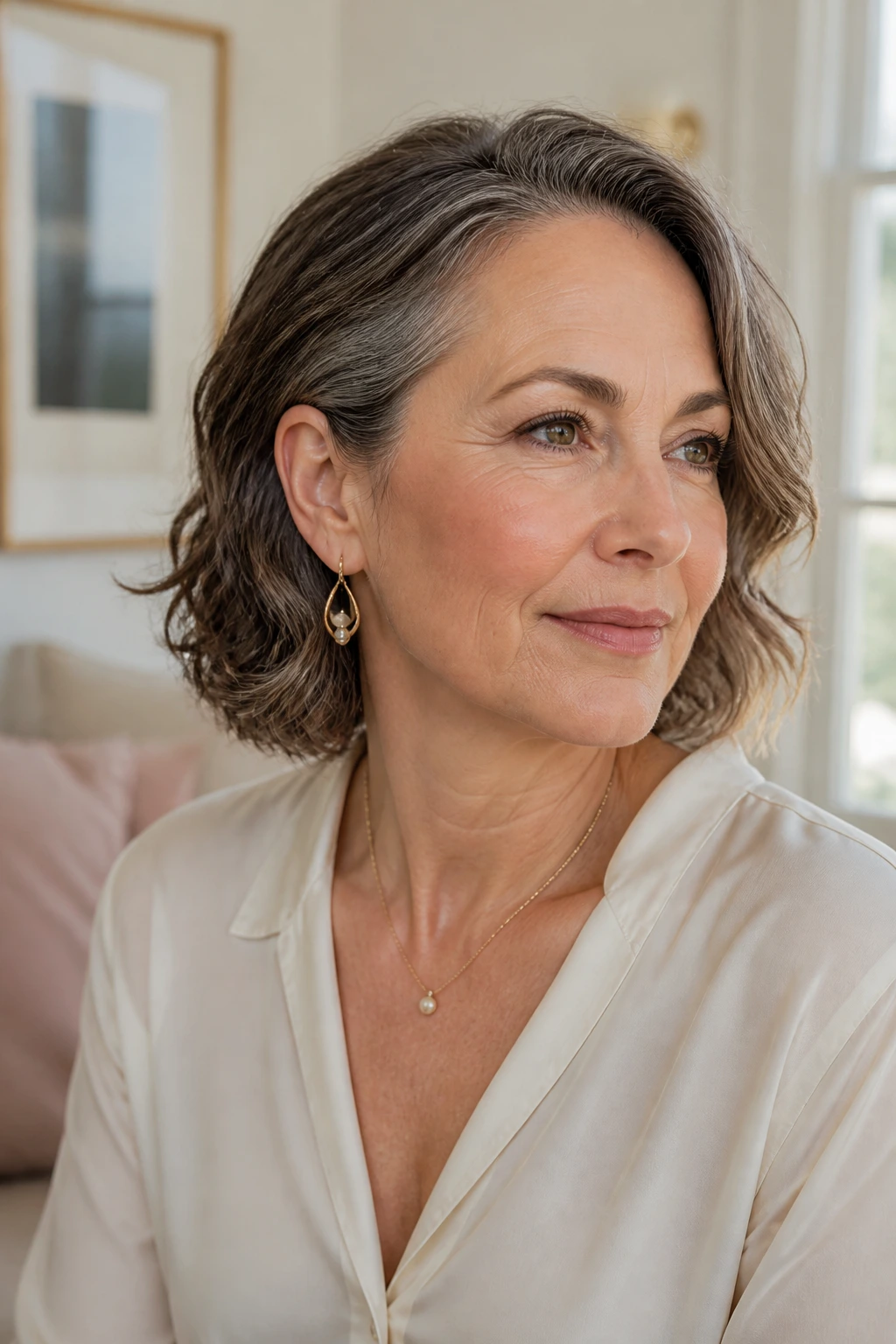
Pulling everything too tight is the fastest way to lose the softness that makes wavy hair work at night. The face can look harsher, the crown can flatten, and the style starts to read as stiff instead of elegant. Leave a little give around the hairline and the base of the bun.
Using heavy product all over is another classic mistake. You end up with limp roots and sticky ends, and the waves lose their shape before the evening is over. Keep the heavier cream near the mid-lengths, and use sprays in light layers rather than one wet blast.
Skipping the cool-down step ruins a lot of curls and twists. If you pin hair while it’s still warm, the shape hasn’t set yet, so it slips and unfolds. Let each section cool before you brush or pin it. That one habit changes the hold more than any fancy product.
Choosing a style that fights the outfit causes a strange kind of imbalance. A dramatic braid with an already busy dress can feel crowded. A very sleek style with a plain neckline can feel too severe. Let one thing speak loudly and the rest stay quieter.
Variations and Adaptations to Try
The Short-Lob Shortcut: If your hair barely reaches the collarbone, skip the bigger buns and choose tucked-behind-the-ear lob, half-up barrette clip, or soft side-swept waves. Those styles give shape without needing extra length for wrapping and pinning.
The Fine-Hair Lift Edit: Use a root-lift spray, set the crown with a clip, and choose half-up shapes or loose waves instead of heavy knots. Fine hair looks best when the base has lift and the ends are not overloaded with product.
The Thick-Hair Control Version: Divide the hair into smaller sections before twisting or pinning, and use more anchors than you think you need. Thick waves can hold beautiful shape, but only if the base is secure and the weight is spread out.
The Heatless Evening Set: Twists, braids, and pin curls can create a softer finish without hot tools. Start damp, add a little mousse, set the hair, and let it dry fully before you take it down. The result is less polished, more relaxed, and often easier on hair that already feels dry.
The Formal-Event Finish: Add a stronger side part, a glossing serum, and a cleaner silhouette. The style should look a touch more refined, not harder. Even a low bun can look dressy if the line at the nape is clean and the top has controlled lift.
How to Keep the Style Fresh Overnight and the Next Day
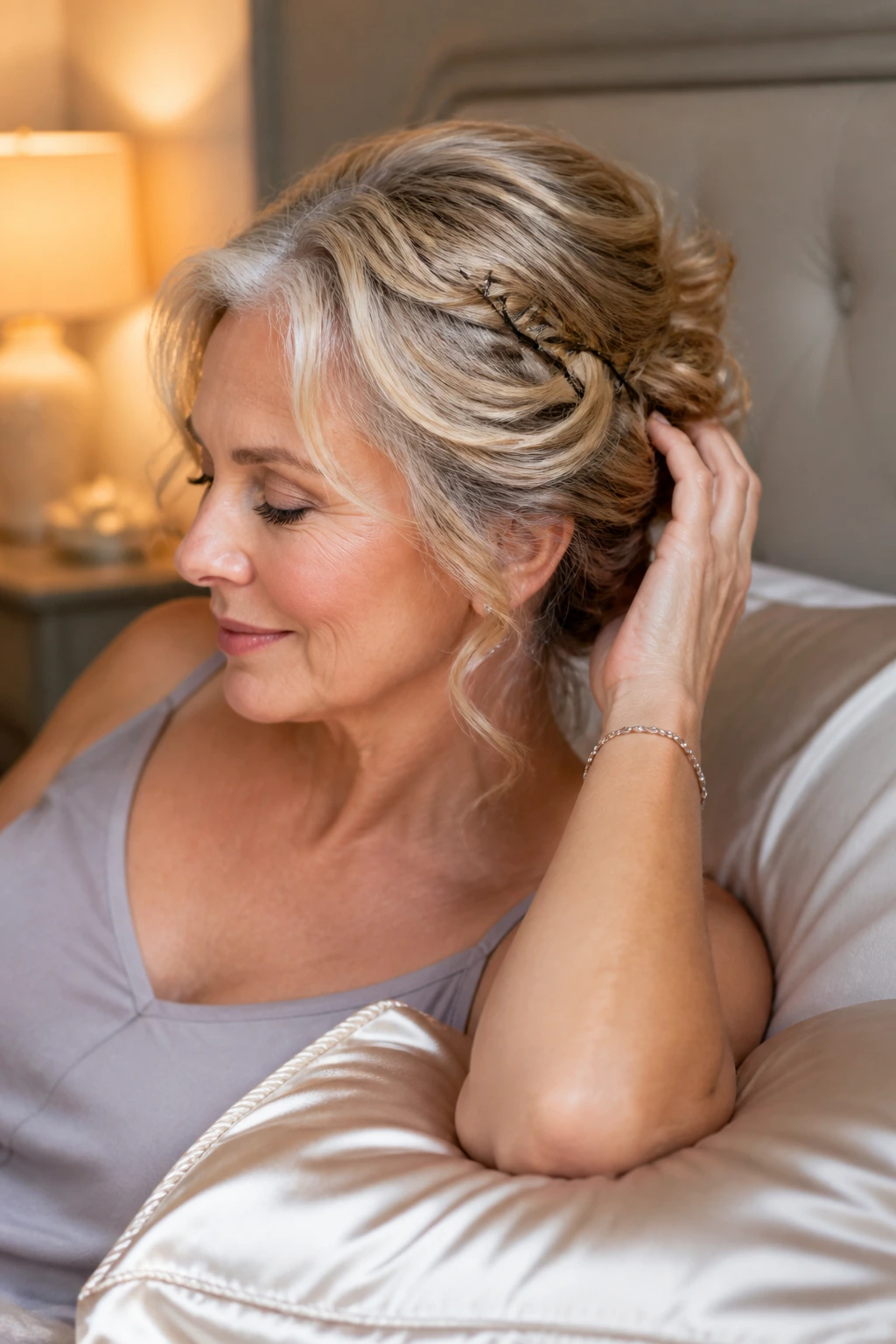
Evening styles are usually built to last a few hours, not sleep through the whole night and wake up perfect. If you need to preserve one, a satin pillowcase helps reduce frizz, and a loose silk scrunchie can keep low styles from getting crushed. Do not sleep in a tight bun. That’s how you wake up with a dented crown and two sections that refuse to cooperate.
For updos, the safest move is to remove the pins before bed and re-pin the next day if you need the shape again. For waves, twist the hair loosely into one or two sections and pin them flat against the head. In the morning, release them, mist the mid-lengths lightly with water, and shape the front pieces with your fingers.
If the hair feels dry or stale the next day, use a tiny bit of leave-in spray on the ends. Not the roots. The roots need lift, not shine. Most styles with a good base can be refreshed once, sometimes twice, before they need a full reset.
Frequently Asked Questions
Which of these styles is easiest for shoulder-length hair?
The half-up barrette clip, tucked-behind-the-ear lob, soft side-swept waves, and rolled side bun are the easiest places to start. Shoulder-length hair can be slippery for bigger updos, so styles that use part of the hair instead of all of it usually hold better.
What if my waves frizz before I leave the house?
Smooth the outer layer with a tiny amount of serum, then lightly press the hair into shape with your palms. Don’t keep brushing; that makes frizz spread. A small hand-held spray and a cool blow-dryer blast near the crown can also settle the top layer fast.
Can I do these styles without hot tools?
Yes. Braided crown, half-up twist crown, messy low knot, and low chignon all work well with air-dried wave texture. If your hair is too soft, add mousse before drying so the style has enough grip to stay in place.
Is a side part better than a center part for evening hair?
A side part is usually easier when you want lift and softness around the face. A center part can look clean and modern, but if your wave pattern fights it or your roots are flat, the style can split awkwardly. A slightly off-center part is often the sweet spot.
How do I make an updo look soft instead of severe?
Leave a little height at the crown, pull out one or two narrow face-framing pieces, and keep the bun or twist low. The goal is a controlled outline, not a tightly pulled shell. Softness comes from placement, not from making everything loose.
What if my hair is thick and the style keeps slipping?
Build the style in smaller sections and anchor it with more pins. Thick wavy hair often needs a hidden base pin, then a second pin from the opposite direction. If the hair is very clean, use dry shampoo or texturizing spray first so the pins have something to grip.
Can these styles work with gray or silver hair?
Absolutely. Wavy texture often shows silver strands in a flattering way because the bends catch light differently across the surface. A little shine serum on the ends can make the color look richer, but keep it light so the roots don’t go flat.
How long should styling take before an evening out?
Loose styles like side-swept waves or a half-up clip can take 15 to 20 minutes once the hair is dry. More detailed looks like a French twist or faux bob often take 20 to 30 minutes because the pinning matters. Rushing is where most styles unravel later.
The Styles That Feel Finished, Not Fussy
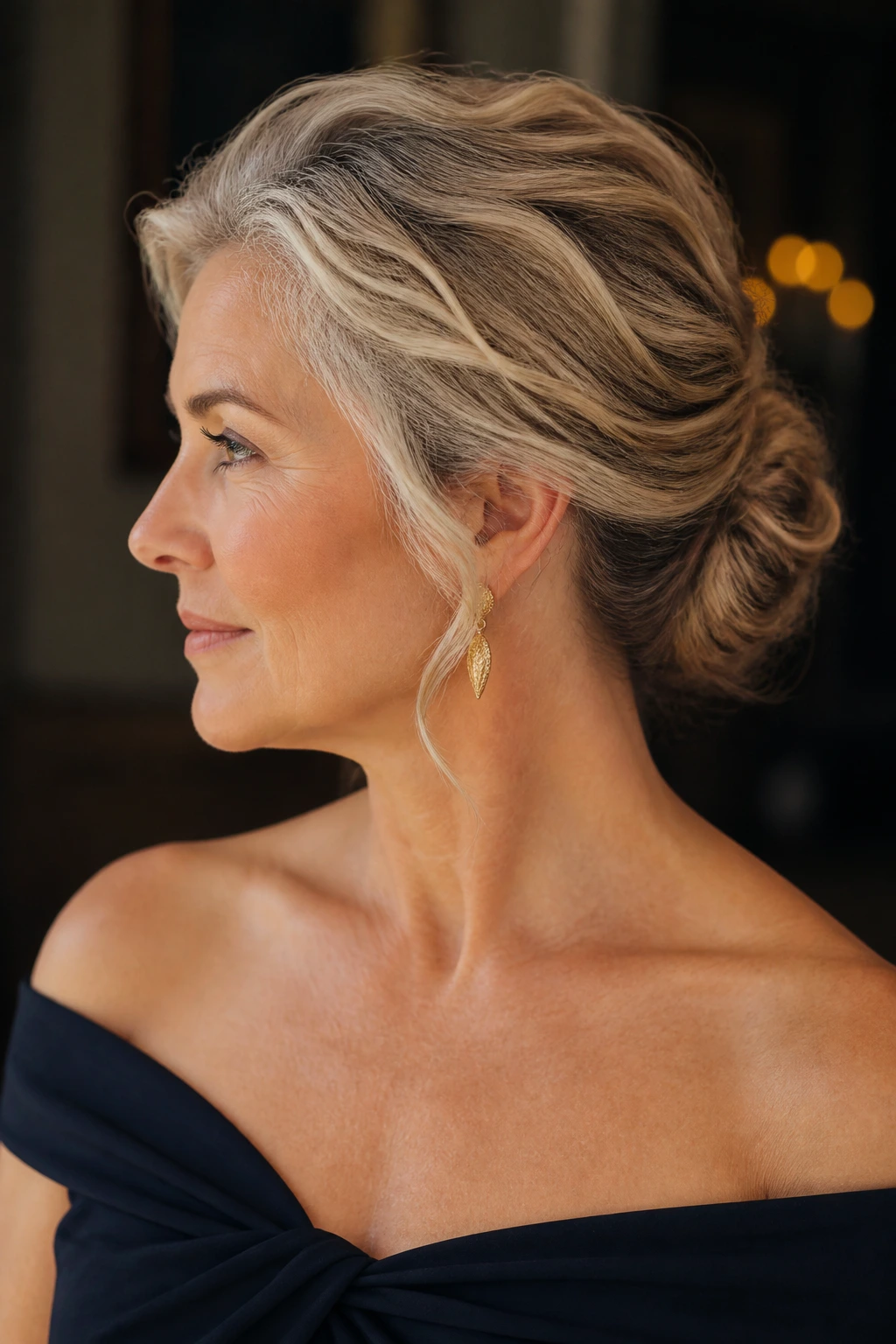
The best evening hair for wavy texture does not erase the wave. It gives it a better shape. That’s the whole game, really. A little crown lift, a clean line at the neck, and a face frame that sits where it should can do more than a lot of hot tools and a wall of spray.
What I like most about these looks is that they leave room for the rest of the outfit. The dress gets to be a dress. The earrings get to shine. The hair still looks like hair, which is a better outcome than trying to turn it into lacquered sculpture.
Pick one style that suits the neckline and the length you have tonight, then pin it with confidence. Wavy hair almost always looks better when it’s guided, not bullied.