



A wolf haircut on fine hair and a round face can look like two different haircuts depending on who holds the shears. In the right hands, it gives you lift at the crown, movement through the mid-lengths, and enough length around the face to stop everything from puffing out at the cheeks. In the wrong hands, it turns into a soft halo with no shape and no mercy.
That’s the whole game here. Fine strands need structure without bulk, while round faces usually need vertical lines, not extra width at the widest part of the cheek. The sweet spot is a cut that feels a little wild, but is actually controlled in all the right places: the crown, the fringe, and the front corners. You want air, not emptiness. You want layers, not a shredded mop.
I’ve always thought the wolf cut works best when it behaves a little. Let it move. Let it flick. But don’t let it eat its own density. The best versions look like the hair was cut with a purpose, then worn loosely, not hacked at and prayed over. For this face-and-hair pairing, that distinction matters more than people think.
Why These Wolf Haircuts Keep Working

-
They build height where a round face needs it: Shorter crown layers create lift above the temples, which visually stretches the face instead of widening it.
-
They protect fine hair from going see-through: The better versions keep enough weight through the perimeter so the ends still look full, even after styling.
-
They don’t demand a perfect blowout: A little mousse, a rough dry, and a bend at the ends can be enough if the cut is balanced.
-
They give you a softer edge than a blunt bob: That softness matters when your hair is thin enough to go flat in one spot but fluffy in another.
-
They grow out in stages, not in one ugly block: A good wolf cut usually turns into a shaggy lob or layered bob before it ever looks sloppy.
-
They let you choose your drama level: You can wear it airy and quiet, or piecey and edgy, without changing the whole blueprint.
Why the Wolf Cut Flatters Fine Hair and Round Faces

A wolf cut is not one fixed shape. That’s the part people miss. It’s a family of layered cuts with a short crown, longer length through the bottom, and some kind of face-framing movement in between. On fine hair, that structure matters because the cut has to fake density without carving away too much of it. On a round face, it matters because the line of the cut has to pull the eye upward and downward, not sideways.
Crown lift changes the silhouette.
If the top stays flat, the face looks wider by comparison. A little height at the root and a few shorter layers around the crown create a taller outline, and that does more for a round face than a hundred photos of “texture” ever will.
The cheek line is the danger zone.
This is where lots of wolf cuts go wrong. If the shortest face-framing pieces land right at the fullest part of the cheeks, the whole head reads wider. Better versions keep the shortest visible pieces either above the cheekbone with soft movement, or below the chin so the front falls in a clean vertical line.
Fine hair needs a perimeter that still feels solid.
Too much point-cutting and too many aggressive razor passes can leave the ends wispy in a bad way. The best wolf haircuts for fine hair leave enough bluntness at the edges to hold their own, then use internal layers to create motion where you actually see it.
1. Collarbone Wolf Cut with Curtain Bangs
This is the version I recommend most often. The collarbone length gives fine hair enough weight to look intentional, while the curtain bangs split the face and create that vertical movement round faces need. It’s soft, not fussy. And it doesn’t collapse the second you stop styling it.
Why It Works
The collarbone sits in a sweet spot: long enough to keep the ends from looking thin, short enough to give the crown some lift. Curtain bangs help because they open away from the center and skim the cheekbones instead of stopping dead at the widest part of the face. That little bit of airflow around the front makes a bigger difference than people expect.
What to Ask For
- Ask for soft internal layers starting just below the crown, not a heavy layer stack through the sides.
- Keep the front pieces long enough to hit the cheekbone or slightly below.
- Ask for a fringe that splits easily in the middle and blends into the side layers.
- Skip aggressive thinning at the cheeks; that’s where fine hair starts looking tired.
A 1.25-inch round brush and a light mousse at the roots usually do the job. Don’t overthink the finish. A little bend, a little lift, and you’re done.
2. Chin-Length Mini Wolf Bob
Shorter can work, but only if the cut doesn’t balloon out at the sides. A chin-length mini wolf bob keeps the perimeter compact, then uses tiny layers at the crown and nape to stop fine hair from lying like a napkin. It’s a sharper silhouette, which helps a round face more than a fluffy one does.
The key is restraint. The front should not end exactly at the cheekbone unless you want the widest part of your face on display. Ask for the front to brush the jawline, with the shortest layers sitting a touch higher in the crown and a touch lower at the nape. That offset creates movement without building width.
This cut looks especially good with a rough dry and a quick pass of texture spray at the ends. It’s not a “wash, air-dry, and hope” haircut. It likes a little direction. But if your hair is fine and you want more body without keeping a long length, this is one of the strongest moves on the board.
3. Long Wolf Cut with Cheekbone Layers
Long hair can still wear a wolf cut well, but the layering has to earn its keep. With fine hair, the biggest mistake is cutting too much from the mid-lengths and leaving the bottom scraggly. The better approach is to keep the length, carve soft layers around the cheekbone, and leave the ends full enough to hold shape.
What I like about this version is the balance. The long bottom line keeps the hair from puffing out, while the upper layers give just enough lift near the crown. For round faces, cheekbone layers work if they angle downward and away from the face, not inward like a helmet.
This cut is especially good if you hate the feeling of short hair but still want visible shape. It moves when you walk. It drapes instead of poofs. And if your hair naturally bends a little, the long wolf cut will usually show that bend in a way a blunt cut never does.
4. Razor-Soft Wolf Cut with Airy Ends
A razor can be a friend here, but only if the stylist knows when to stop. Razor-soft ends give the wolf cut that wispy, feathered look people associate with the style, and on fine hair that softness can be lovely. Too much razor work, though, and the ends start looking thirsty.
This version works best when the perimeter is still supported by some length. You want the ends to move, not disappear. Ask for light slicing through the face-framing pieces and soft refinement at the bottom edge, not a full shred from roots to ends.
Round faces benefit because the shape stays narrow through the cheek area and softer through the jaw. Fine hair benefits because the cut creates the illusion of texture without depending on a ton of product. Use a pea-sized amount of lightweight cream on damp hair, then finish with a mist of dry texture spray once it’s dry. That last step matters. A lot.
5. Bottleneck Bang Wolf Cut
If curtain bangs feel too open and blunt bangs feel too heavy, bottleneck bangs are the middle road. They sit narrower in the center, then widen and soften toward the temples. On a round face, that shape is smart because it draws attention to the center of the face and then releases it outward without adding bulk across the cheeks.
Fine hair likes this fringe because it usually stays lighter than a dense curtain bang. The fringe should feel airy, almost insubstantial when you first dry it, then settle into a soft frame. It shouldn’t sit like a shelf. If it does, the whole haircut gets boxy.
This is one of those cuts that looks far more deliberate than it sounds on paper. The front has a little attitude, the rest of the hair stays lived-in, and the face opening is narrow enough to flatter without feeling severe. If you wear glasses, this can be especially good, because the fringe can sit above or around the frames without swallowing them.
6. Deep Side-Part Wolf Cut
A deep side part is one of the fastest ways to break up a round face without changing the cut itself. The asymmetry creates a diagonal line, and diagonal lines are your friend when you want to make the face appear a touch longer. On fine hair, the side part also helps create lift where a center part sometimes lets everything sink.
The wolf layers here should be soft, not overbuilt. One side can fall a little closer to the cheekbone while the other drops lower toward the jaw. That difference gives the shape movement. It also keeps the haircut from reading too symmetrical, which is exactly what can make round faces look broader than they are.
I like this version for people who already wear their hair one-sided without thinking about it. If that sounds like you, don’t fight it. Build the cut around the way the hair wants to fall. Use a root-lifting spray at the part line and blow-dry the roots in the opposite direction first. Then flip back. The bend lasts longer that way.
7. Feathered Crown Wolf Cut

This is the cut for hair that goes flat at the top and then puffs at the bottom. Fine hair often needs help at the crown more than anywhere else, and a feathered crown wolf cut puts that lift where it belongs. The upper layers are softened and overdirected so they stand away from the scalp without creating a hard step.
For round faces, the crown height changes the whole profile. It adds visual length above the widest part of the face, which is the trick you keep seeing repeated here because, frankly, it works. The front pieces can stay long and soft, but the crown needs enough internal lift to keep the whole cut from drooping into one round shape.
This version is not the laziest wolf cut, though. It usually wants a round brush or a couple of hot rollers at the crown for five to ten minutes. That’s not a deal-breaker. It’s the price of having volume where your hair naturally refuses to hold it.
8. Wavy Wolf Lob with Hidden Layers

A lob is a safe landing strip for fine hair, and the wolf treatment keeps it from feeling too polite. The hidden layers sit inside the shape instead of slicing into the perimeter, which means the hair still looks full from the outside. That matters. A lot of layered lobs fail because the ends start looking like they were cut with a pair of paper scissors.
The best part of this version is that it keeps the line below the cheeks. That alone helps a round face more than a shorter cut that fans out at the jaw. If your hair has a little natural wave, the hidden layers let the wave rise without turning into a triangle.
A quick note
This cut is one of the easiest to grow out. It tends to drift into a relaxed, shoulder-grazing shape instead of losing its structure all at once. If you want something that can survive a skipped trim without a crisis, this is a strong candidate.
9. Curly Wolf Cut with a Longer Perimeter

Curly hair and fine hair can sound like a weird combination, but plenty of people have both. The rule here is simple: do not over-thin the shape. A curly wolf cut needs a longer perimeter so the curls can stack without turning into a puffball, and the round face needs those curls to fall lower than the cheekline.
The front should be carved with the curl pattern in mind, not against it. Ask for longer face-framing pieces that open the face without sitting directly on the cheeks. If the curls are springy, the stylist may need to cut them longer than you expect, because they bounce up once dry. That’s not a mistake. That’s physics.
This version shines when it’s diffused with low heat and a curl cream that doesn’t turn the hair sticky. Skip heavy oils at the root. They crush the lift you’re paying for.
10. Bixie Wolf Hybrid

A bixie already sits between a bob and a pixie. Add wolf texture, and you get a short, choppy shape with enough edge to keep it from looking cute in a childish way. On fine hair, the short length can actually help the strands look denser, because there’s less weight dragging them down.
Round faces need the front pieces to stay a little longer than the back and sides. That’s the part to protect. Let the nape be short and airy, but keep some movement through the temples and around the forehead so the face still reads narrow. If the top goes too short, the cut can widen the cheeks. No thanks.
This is not a haircut for people who want to forget about styling. It usually needs a touch of paste, a bit of root lift, and a finger-combed finish. But if you like a sharp outline with soft texture, it’s one of the most interesting options on this list.
11. Browskimming Fringe Wolf Cut
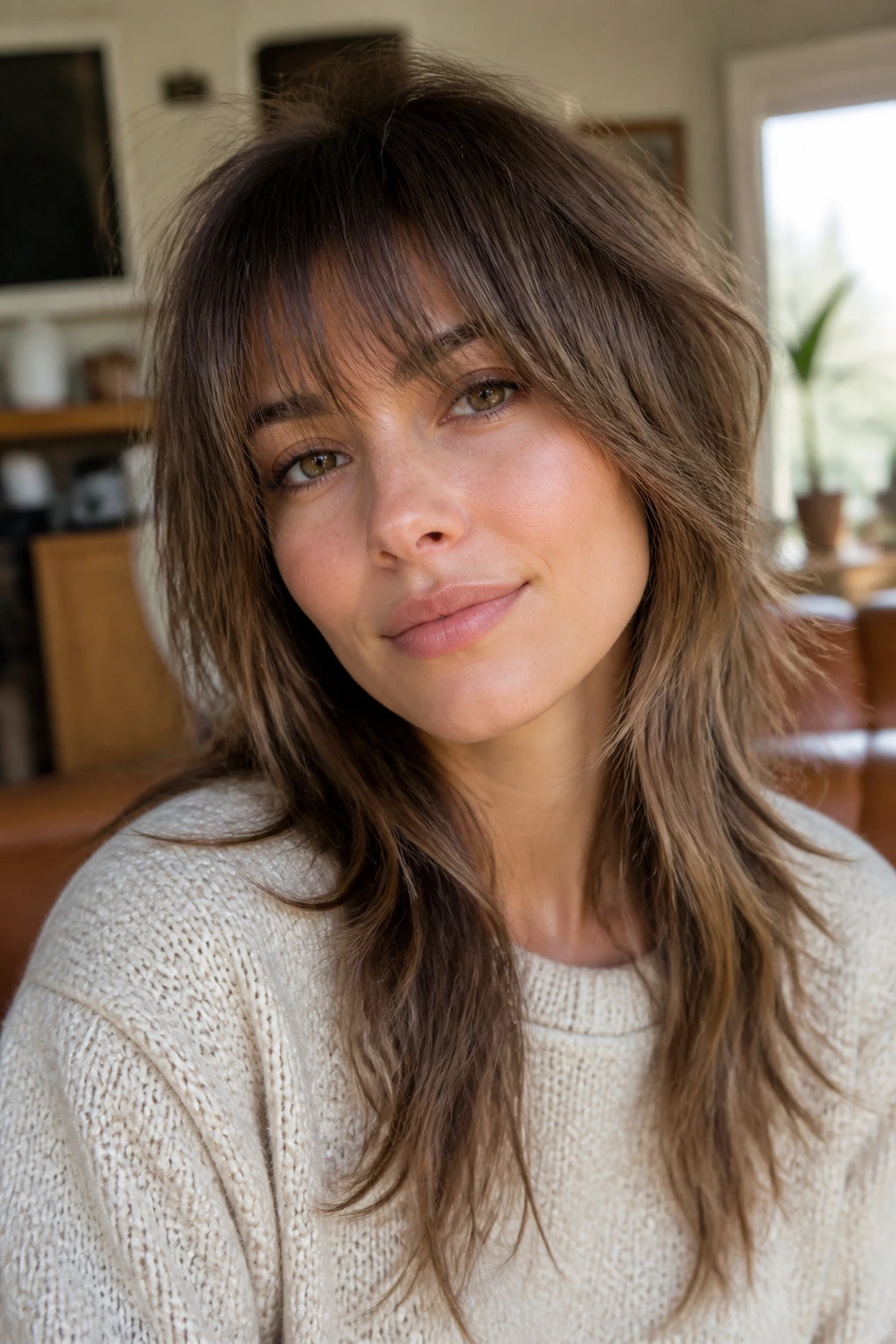
A browskimming fringe can look heavy on fine hair unless the rest of the cut is light and balanced. In a wolf cut, though, it works because the fringe gives the face a clear horizontal anchor while the rest of the layers move up and down around it. That contrast helps round faces more than a fringe that floats too far apart.
The fringe should be wispy enough to see some forehead through it. If it’s opaque, it tends to make fine hair look sparse everywhere else. The side pieces should blend into longer front layers that drop below the cheekbone. That keeps the face from getting boxed in.
This version is especially good if you like a slightly more editorial look but still need the haircut to behave on a school-run or office day. Dry the fringe first, from side to side, before finishing the rest of the hair. If you skip that step, the bangs usually dry in the wrong direction and steal the whole morning.
12. Rounded Wolf Cut with a U-Shaped Back
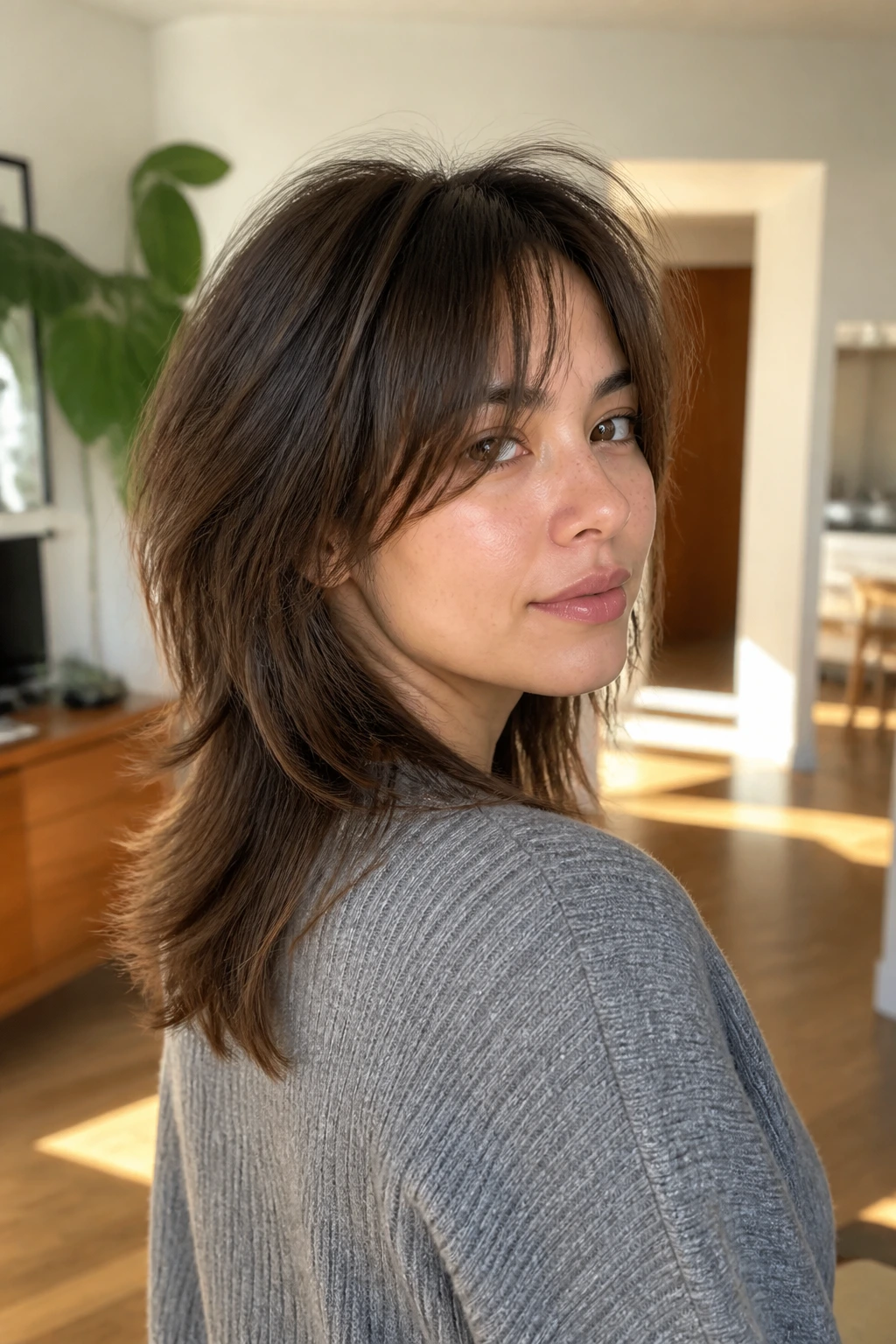
The U-shape in the back is the quiet hero here. It leaves a fuller line through the perimeter while the top and sides get the wolf texture. Fine hair often looks better when the bottom edge has some shape left in it, and the U-shaped back prevents the ends from looking chopped too high.
For a round face, this shape works because the front can stay long and narrow while the back curves softly downward. That keeps the overall outline from widening at the cheeks. You get movement without a blunt shelf. You get softness without turning the whole thing into a puff.
It’s a good choice if you want your hair to look thicker from behind, which is something a lot of layered cuts fail to do. If you wear your hair half up a lot, the U-shape also helps the top layers fall in a cleaner arc instead of sticking out in odd little spikes.
13. Chin-Length Face-Framing Wolf Cut
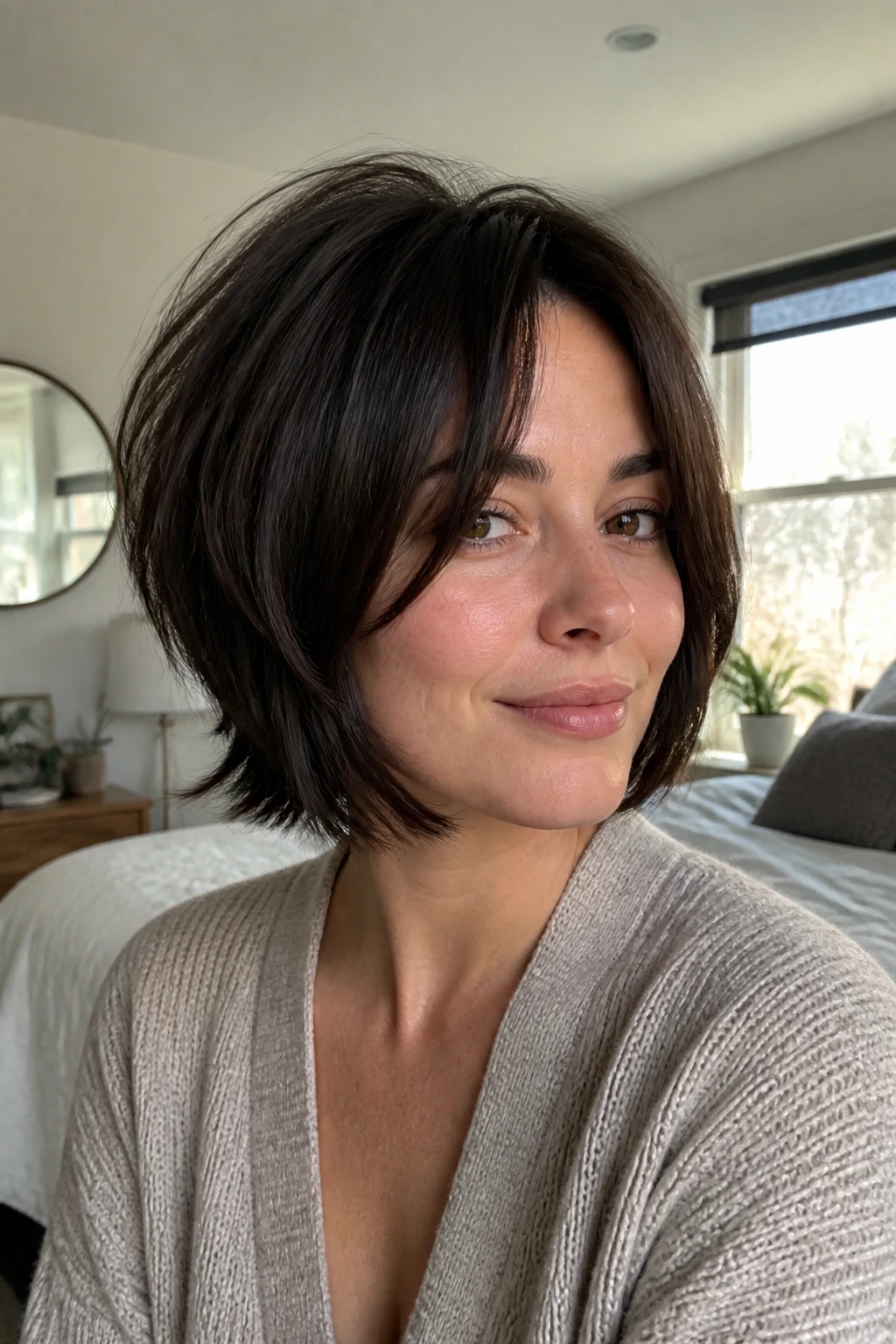
This one sounds simple, but the details are everything. The chin-length front pieces need to skim, not sit on, the widest part of the face. That makes the front feel intentional and gives the round face a vertical line to follow. Fine hair likes this because the shape stays compact and doesn’t ask the ends to carry too much weight.
The back should stay slightly longer or at least equally supported, so the cut doesn’t flare out at the sides. If the shortest pieces hit exactly at the chin and the hair is very fine, the ends can flick outward in a way that reads wider. A tiny bit of elongation below the jaw usually fixes that.
This is one of those cuts that looks better with a little bend than with pin-straight perfection. A flat iron pass that curves the ends inward at the front and outward at the back gives it life. Don’t over-style it. The line should feel casual, not engineered.
14. Sleek Wolf Cut with Tapered Ends

Not every wolf haircut has to be shaggy and messy. On fine hair, a sleeker version can actually look denser because the outline stays cleaner. Tapered ends help the haircut move, but the surface remains smooth enough that the hair doesn’t separate into thin strands by lunchtime.
Round faces usually do well with this version when the front layers are long and the taper starts lower, around the collarbone or below the jaw. That keeps the face from getting boxed in by a bunch of short, floating pieces. The shape is more polished, less piecey, and easier to wear in professional settings.
A smoothing cream and a medium round brush are usually enough. If you want texture, add it at the ends, not the roots. The roots need lift, yes, but the rest of the hair should still look like one continuous shape instead of ten little sections arguing with each other.
15. Piecey Wolf Cut with Micro-Layers

Micro-layers are delicate, and on the right head of hair they’re lovely. The crown gets tiny increments of lift, the ends get soft separation, and the whole cut stays light without losing its backbone. Fine hair that has a little natural body can handle this really well.
The catch is that it can tip too airy if the hair is extremely sparse. That’s where a lot of people get into trouble. If your hair already needs help looking full, the micro-layers should stay minimal and stay away from the sides of the face. The round face needs a line that falls downward, not a cloud that floats outward.
Use this version if you like texture spray and finger styling. It’s made for that. A little grit at the ends gives the cut its shape, and the internal layering keeps it from falling flat after an hour.
16. Shoulder-Grazing Wolf Cut with Fringe

Shoulder length is underrated on fine hair. It keeps enough body to look substantial, and when you add a fringe to a shoulder-grazing wolf cut, the whole shape gets a little drama without going full shag. For round faces, the shoulder line helps lengthen the profile in a way shorter cuts often can’t.
The fringe should be soft and movable, not a dense block. I like this version when the bangs are cut to split easily and blend into the side layers. That makes the front feel open instead of heavy. If the fringe is too thick, the cut can get top-heavy fast.
This is a solid choice if you want the wolf feel but don’t want your hair to read as edgy. It’s probably the most wearable version for someone who wants to test the waters before going shorter or choppier.
17. Air-Dry Wolf Cut for Fine Waves
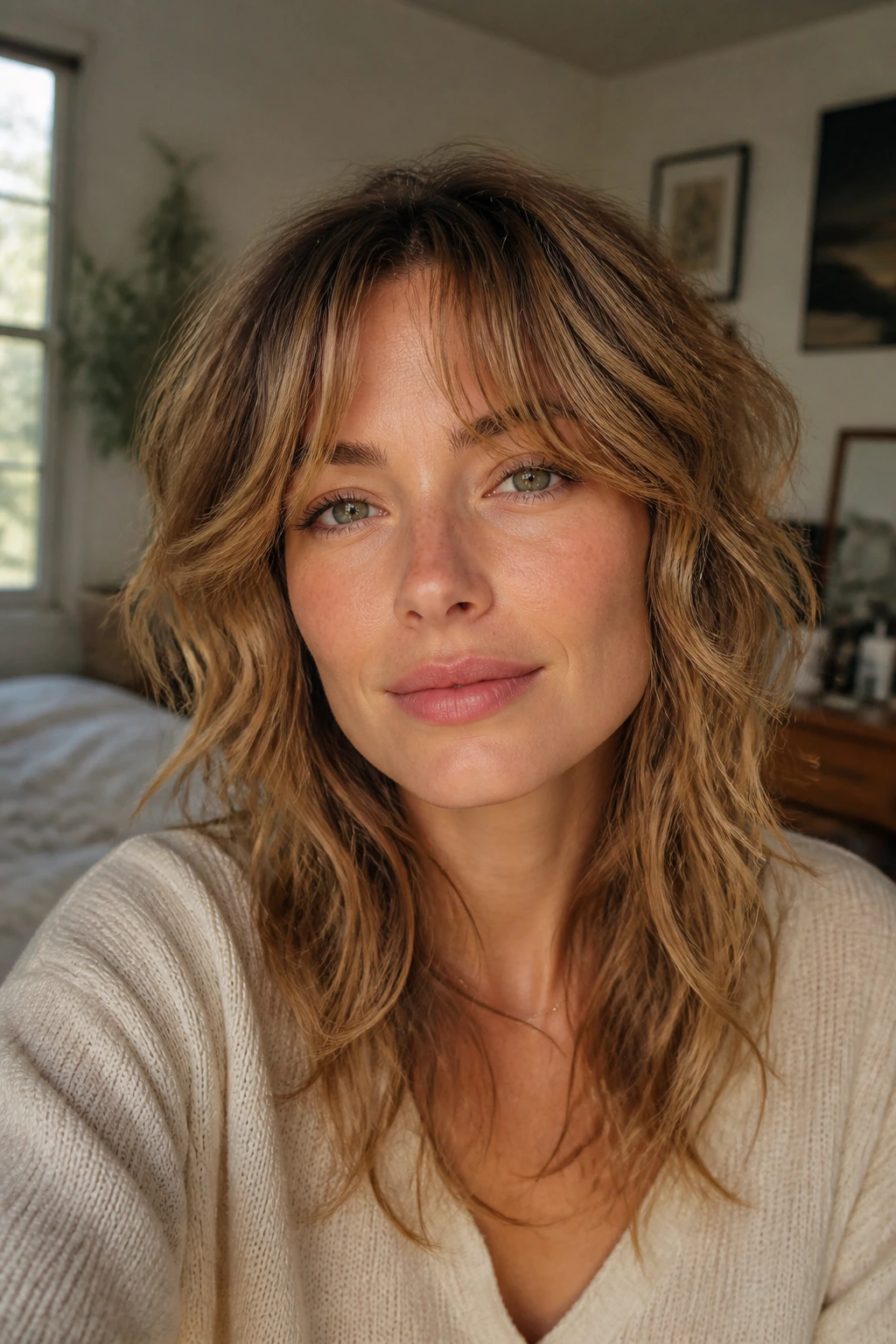
If your hair has a mild wave and you’re not interested in a round brush relationship, this is the cut to ask about. The layers are placed so the wave lands in the right spots on its own, which means you don’t have to fight your texture every morning. Fine hair likes that. Less tugging usually means less breakage.
The front pieces should stay long enough to frame the face without bouncing up too high. Round faces need that low, vertical movement. The crown can be lightly layered, but the goal is a shape that dries into a soft outline instead of a frizzy halo.
A leave-in mist, a dab of foam, and a scrunch is often enough. If your hair dries flat at the roots, clip-lift the crown for ten minutes while it air-dries. Small tricks matter with this cut. They change the whole silhouette.
18. Mullet-Lite Wolf Cut
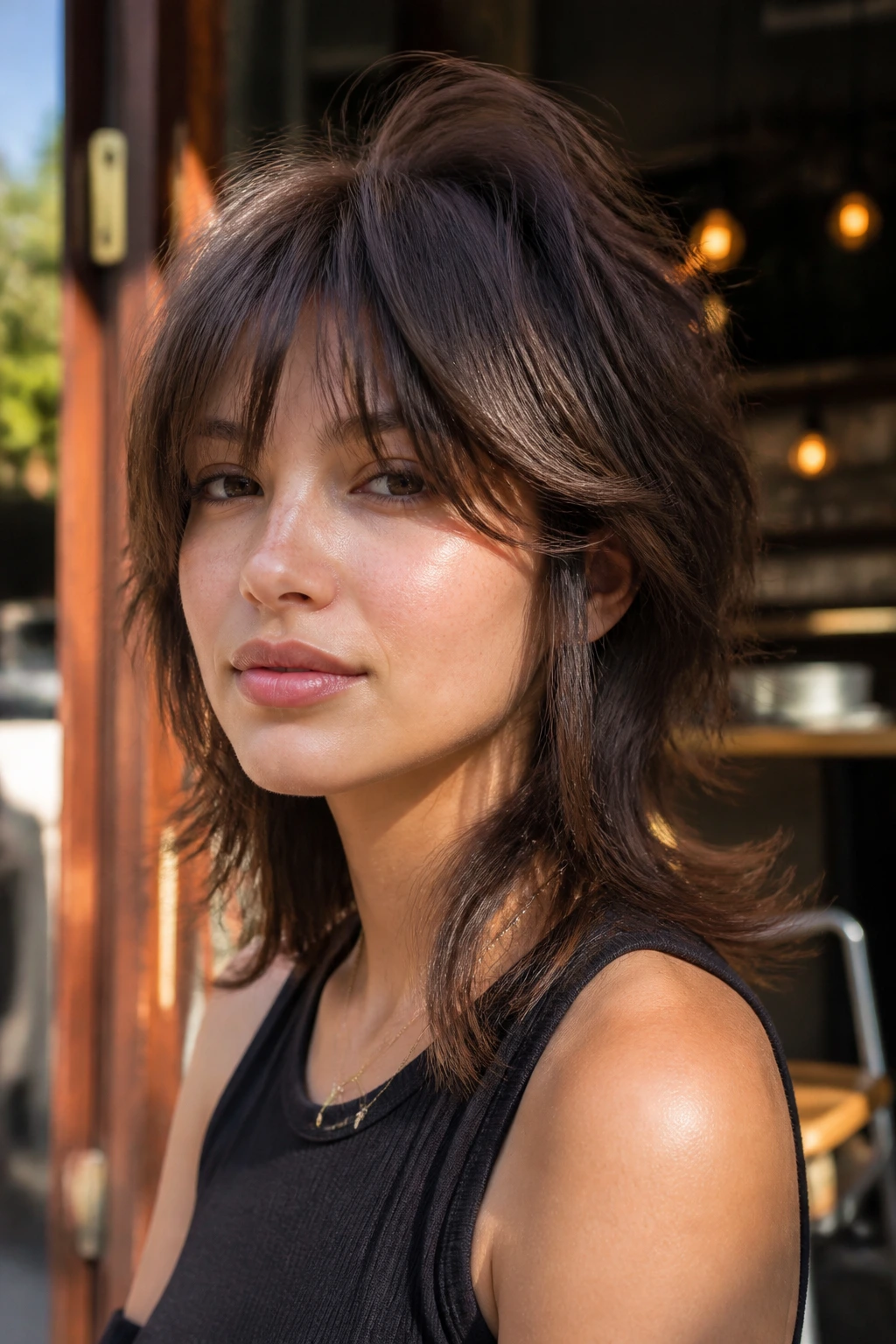
A full mullet can be a lot. A mullet-lite wolf cut keeps the spirit of the shape without turning the nape into the whole story. The front stays long enough to slim the face, the crown gets some lift, and the back has enough texture to keep things interesting.
This version is good for fine hair because it doesn’t ask too much density from the sides. The length is concentrated where it matters, and the contrast between top and bottom stays soft instead of severe. Round faces benefit when the front pieces fall past the cheekbone and the back doesn’t puff out at the base of the neck.
It’s also a smart pick if you want your haircut to have a bit more attitude. Not cartoonish. Just enough edge that it doesn’t look like every layered cut at the grocery store checkout.
19. Disconnected Wolf Bob
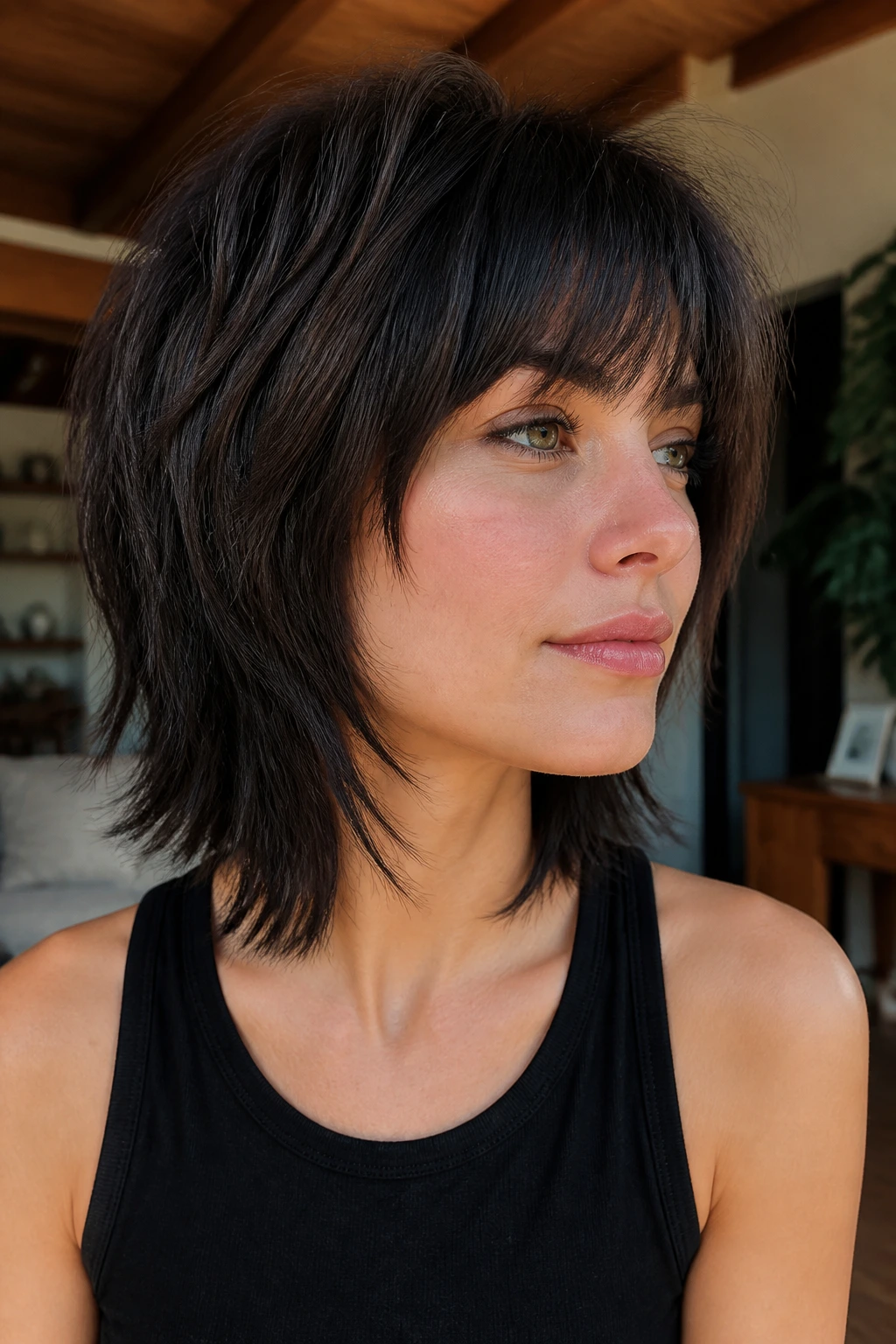
A disconnected wolf bob uses a stronger shift between the top layers and the perimeter. That separation gives fine hair shape without needing a lot of bulk. It can look especially good when the bottom line stays blunt-ish and the top is lightly shattered for movement.
Round faces tend to like this because the vertical difference between top and bottom draws the eye up and down. The cut looks more architectural than fluffy. That said, it does need styling, because disconnected shapes can collapse into odd islands if you let them air-dry with no help.
Use a volumizing mousse at the roots and a flat brush or round brush to guide the top layers. If you’re lazy with styling, this one will expose you. If you like a clean shape with visible texture, it can look brilliant.
20. Butterfly-Wolf Hybrid
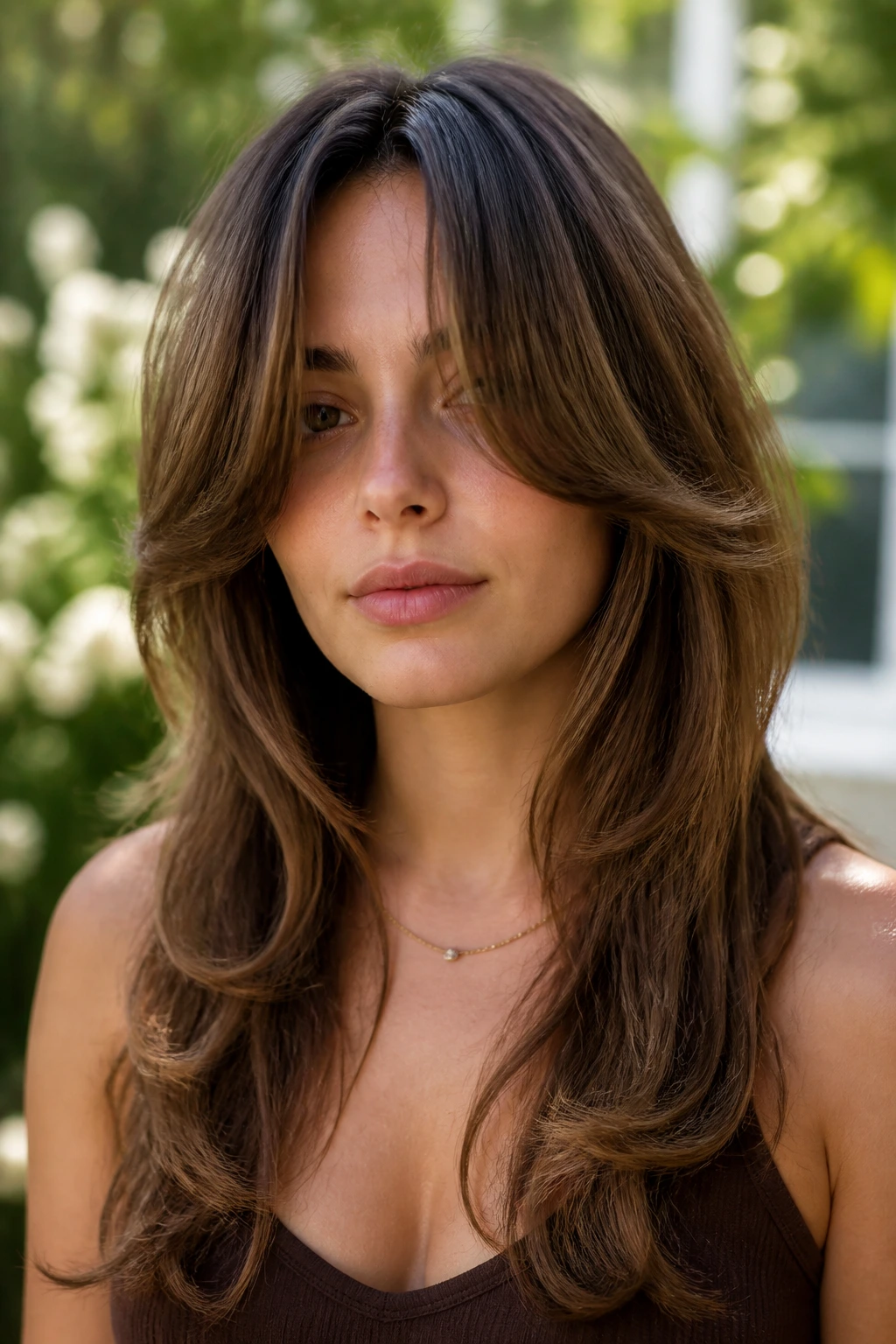
The butterfly cut and the wolf cut already have a lot in common: movement, face framing, and layered lift. Put them together, and you get a shape that gives fine hair body through the top without sacrificing length at the bottom. For round faces, the long front wings help carve the cheeks in a more flattering way than a shorter, wider layer set.
The top layers should start high enough to create that lifted crown, but the front pieces need to keep falling below the cheekbone. That’s the real trick. If the wings stop too high, they can make the face look rounder. If they fall lower, the effect is longer and softer.
This is a good option if you want something romantic rather than punky. It still has movement, but it leans a little more polished. I like it most on medium to long hair that needs shape without losing much length.
21. Overdirected Wolf Cut with Wispy Corners

Overdirection sounds fussy, but it’s one of the smartest ways to keep a round face from looking wider. The stylist cuts the layers by pulling them away from their natural fall, which leaves more length at the corners of the face. Those wispy corners act like little curtains, drawing the eye down instead of out.
Fine hair benefits because the cut can keep the perimeter fuller while still creating soft movement inside. The corners should feel delicate, not sparse. That balance matters. If the corners are too thin, the hair looks disconnected. If they’re too heavy, the face gets boxed in.
This is a good cut when you want shape but hate the idea of obvious shaggy layers. It looks subtle in a mirror and more interesting from the side. That’s often where a good haircut earns its keep anyway.
22. Layered Wolf Cut with a Soft Flip

The soft flip is a sneaky detail. It gives the ends a little kick without turning them into a retro blowout. On fine hair, that bend keeps the haircut from lying limply against the shoulders, and on round faces it adds vertical movement through the lower half of the hair.
This version works best when the front layers are long enough to flip away from the face and the bottom stays strong enough to hold the shape. The flip should feel accidental, almost like the hair settled there on its own after drying. That’s the goal. Not a pageant curl.
I like this cut for anyone who wants some polish without a lot of upkeep. A quick round-brush pass at the ends and a light mist of flexible spray is enough. If your hair is too thin for dramatic layering, this is a gentler way to get the wolf effect without going all the way into shag territory.
What to Ask Your Stylist Before the First Snip

You need to be specific at the chair. “Wolf cut” means different things to different stylists, and the version that works on thick hair can be a disaster on fine hair. Bring reference photos, yes, but also say what you need the cut to do: create height, keep the ends full, and avoid widening the cheeks.
A useful script sounds something like this: “I want soft crown layers, but I need the perimeter to stay full. Please keep the shortest face-framing pieces below my cheekbone or blended higher so they don’t widen my face.” That’s the kind of direction that helps. It tells the stylist where the problems usually show up.
A few more good notes:
- Tell them if your hair is fine but dense, or fine and sparse. Those are not the same thing.
- Mention whether you air-dry, diffuse, or blow-dry most days.
- If you wear your hair parted a certain way, say so early.
- If you want bangs, talk about how much forehead you want covered and how often you’ll trim them.
Do not say “give me lots of layers” and stop there. That sentence has ruined more fine haircuts than I care to count.
Essential Tools and Products for Styling These Cuts
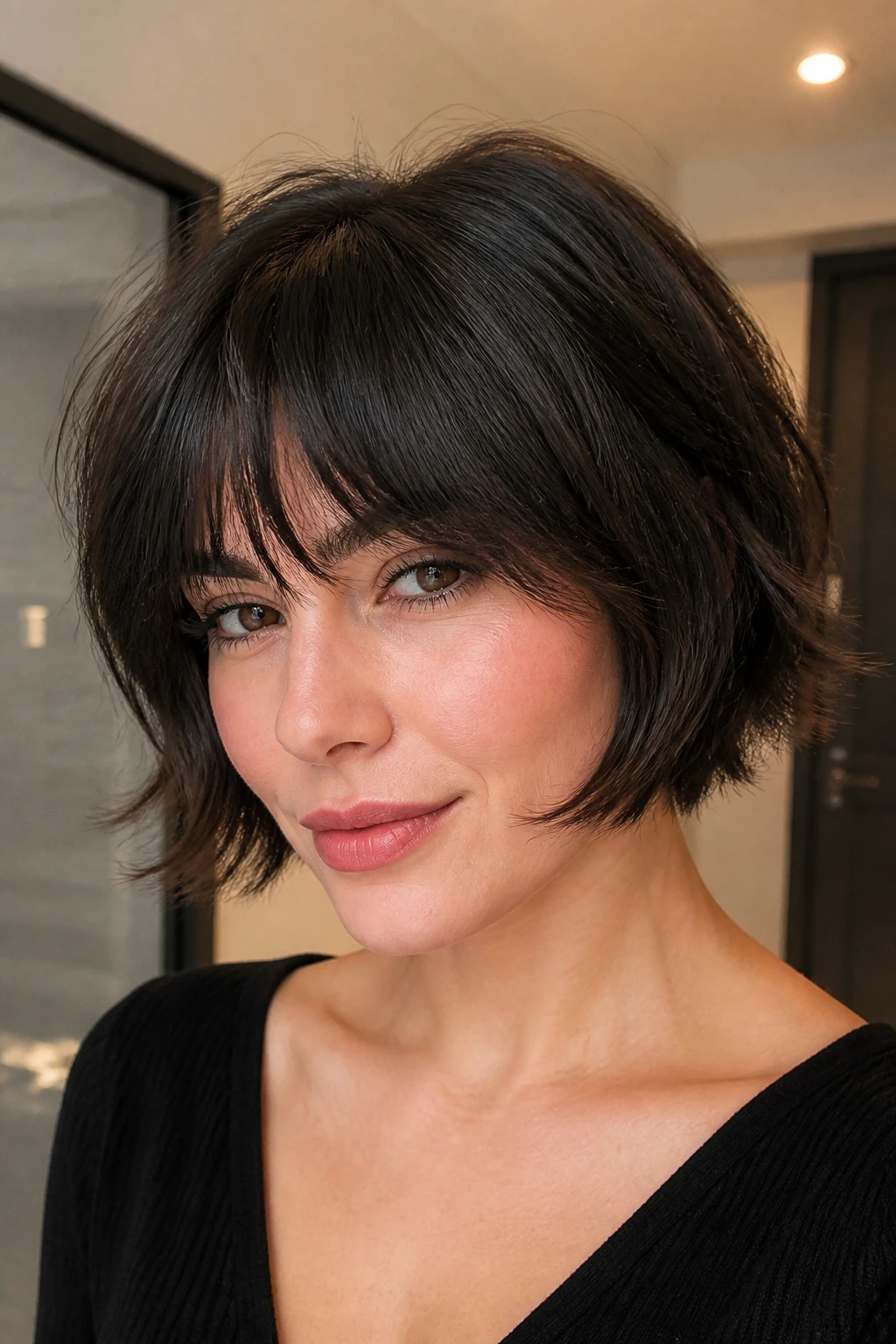
You do not need a bathroom shelf packed with things. You need a few tools that do specific jobs and don’t make fine hair limp by noon.
- 1.25-inch round brush: Good for building bend at the ends and lifting the crown without making the hair too curly.
- Blow dryer with a nozzle attachment: The nozzle matters; it keeps air focused so you can shape the roots instead of blasting them flat.
- Sectioning clips: These keep the top layers separate while you dry the underside, which is where a lot of volume gets lost.
- Tail comb: Useful for clean parts and for lifting small root sections where you want more height.
- Volumizing mousse or foam: Use a small amount at the roots on damp hair; too much will make fine hair sticky.
- Heat protectant spray: Non-negotiable if you’re using a brush, iron, or diffuser.
- Texturizing spray: Best for the mid-lengths and ends, not the scalp.
- Dry shampoo: Helpful on day two or three, especially if the crown starts dropping.
- Small flat iron or curling wand: Optional, but useful for bending the front pieces away from the cheeks.
- Diffuser: If you have wave or curl, this keeps the cut from frizzing while preserving lift.
How to Style a Wolf Cut Without Flattening It
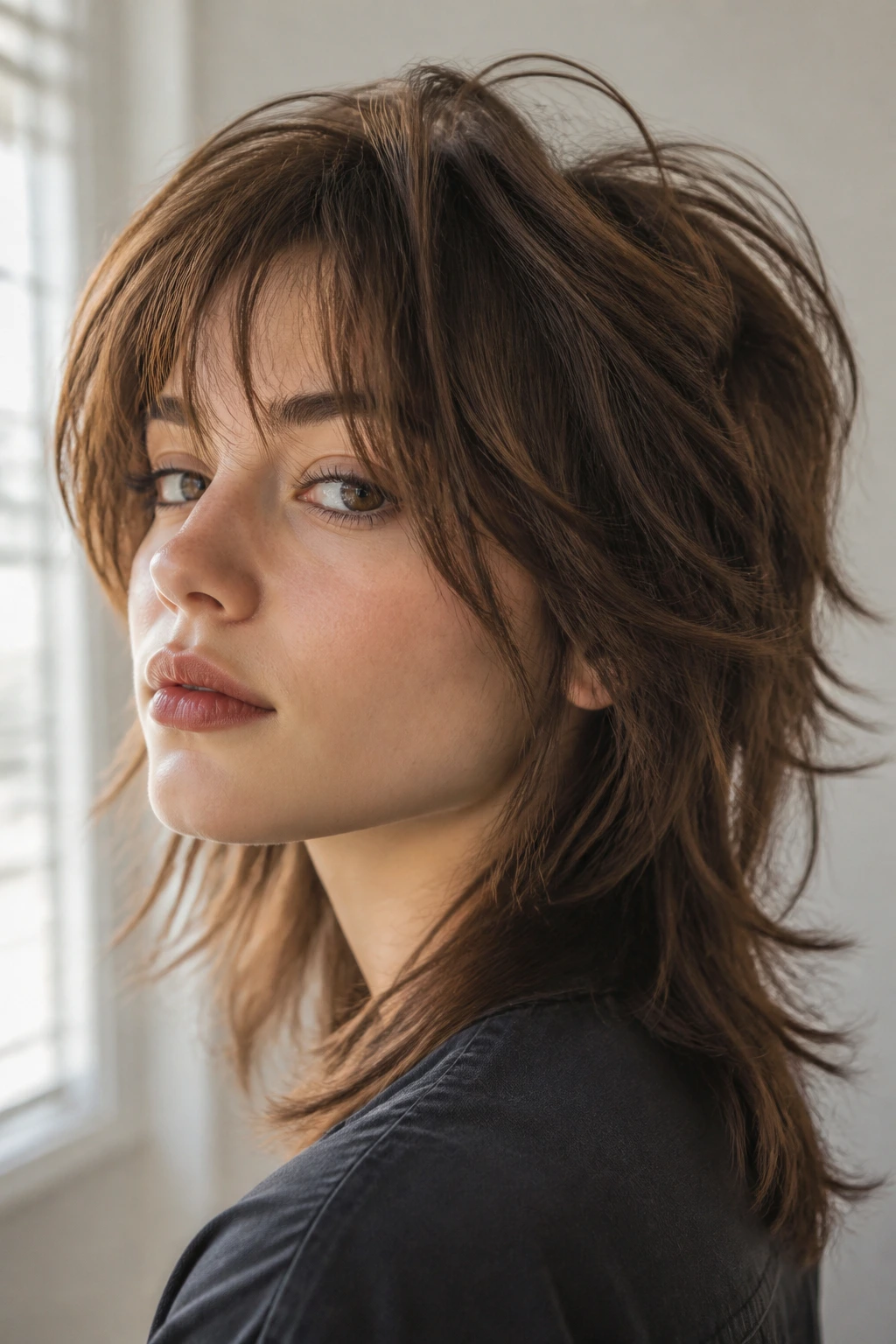
The styling goal is not “big hair.” It’s shape. There’s a difference, and the difference shows up fast on fine hair.
Shape:
Start by rough-drying the roots in the opposite direction of your part. That gives you lift before you even pick up a brush. Then direct the top layers up and away from the scalp for a few seconds at a time. The crown is where the cut lives or dies.
Products:
Use mousse on damp roots, not heavy cream all over the head. Fine hair gets weighed down fast, and the wolf cut loses its edge if the texture turns slippery. A small mist of texture spray through the ends is usually enough after drying.
Finish:
The front pieces should either curve away from the cheeks or fall below them in a clean line. That’s the whole point on a round face. If they puff outward, pin them down with a cool shot from the dryer or a quick pass of the flat iron.
Second-day reset:
Flip your part, mist the roots with water or dry shampoo, and scrunch the ends with your fingers. Don’t soak the whole head. You’re waking the shape back up, not starting over.
Additional Tips for Better Lift and Softer Framing
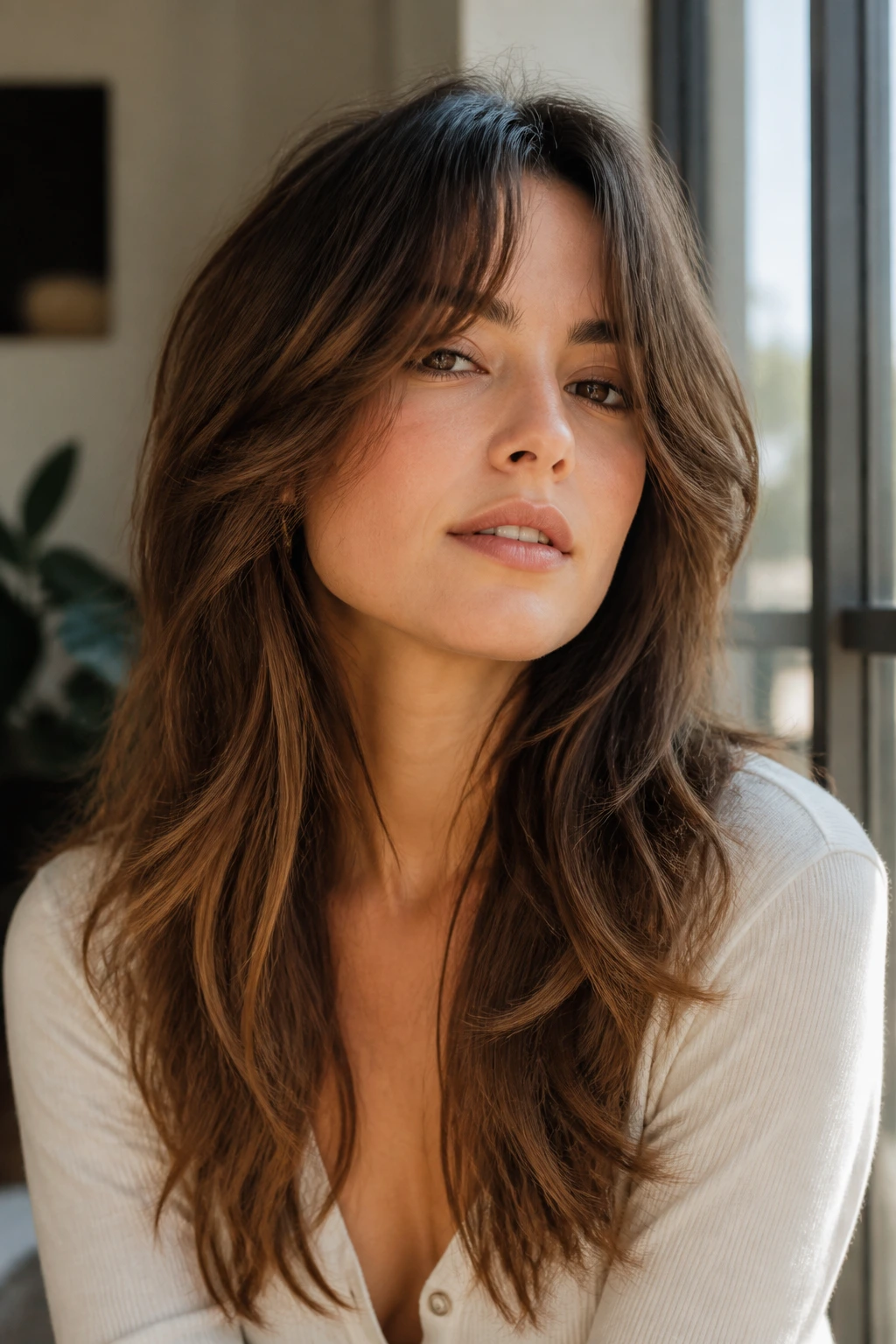
Root Lift:
Dry the crown first. Always. If you wait until the rest of the hair is done, the roots have already settled into whatever shape they wanted, and that shape is usually flat. A lift spray at the part line plus a round brush at the top section can buy you hours.
Weight Control:
Keep conditioner off the top third of your hair. Fine strands near the roots do not need help feeling soft. They need room. Put conditioner from the ears down, and use a lighter rinse-out formula if your hair gets greasy fast.
Fringe Handling:
Bang sections should be dried on their own before the rest of the head. Bangs decide the mood of the cut. If they dry crooked or too dense, the whole style looks off, even if the rest of the hair is fine.
Make-It-Yours:
If you like a softer look, keep the ends feathered and use a flexible spray. If you want edge, add a little grit and let the layers separate. Same cut. Different personality. That’s one reason the wolf family has lasted.
Common Mistakes That Flatten the Cut
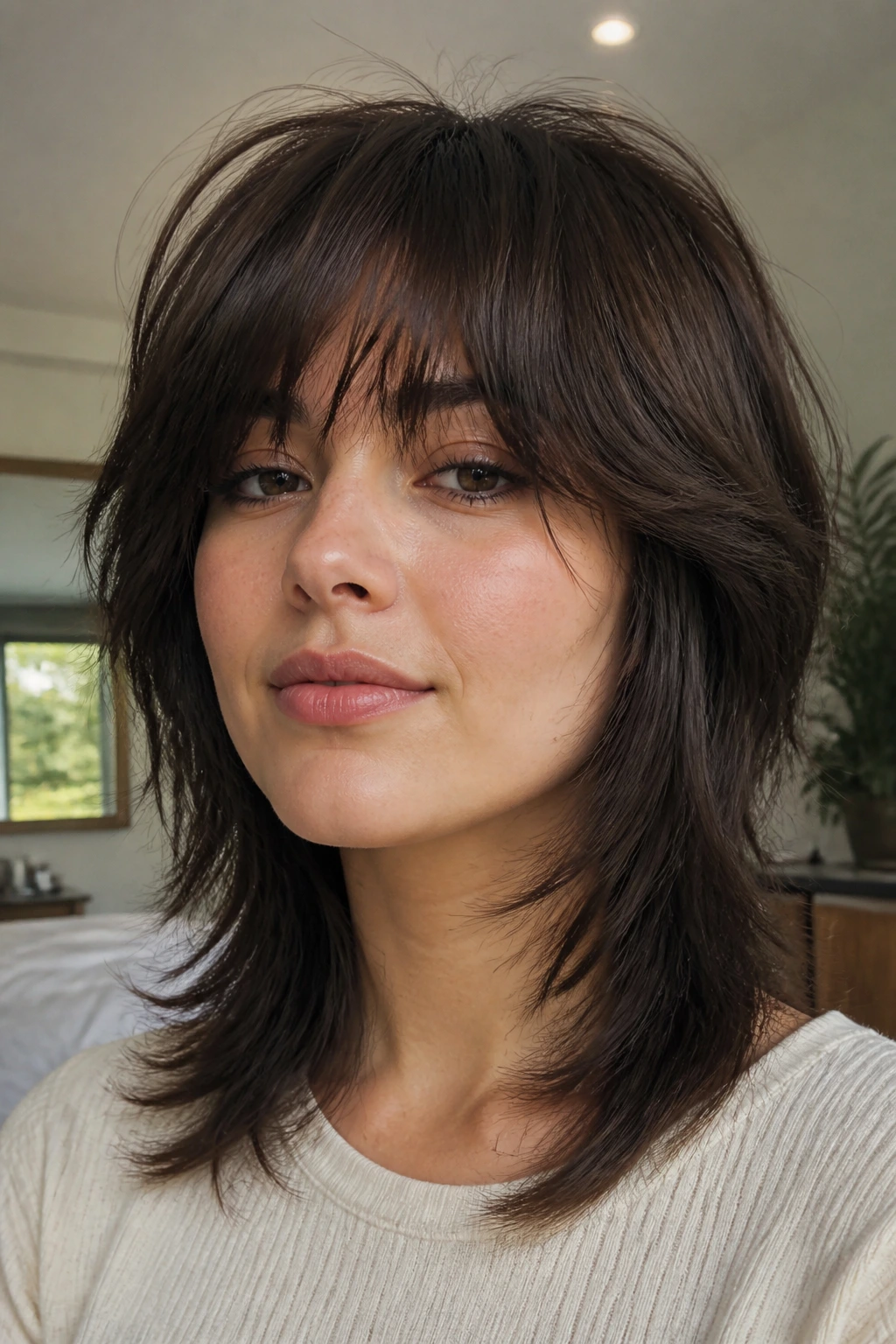
Cutting the shortest layers too high.
The symptom is obvious: the top goes fluffy, but the face looks wider. The fix is to keep the shortest visible layers controlled and make sure the face-framing pieces still fall in a vertical line.
Over-thinning fine hair.
This is the fast track to stringiness. The ends start looking wispy in a sad way, especially when the hair is dry. Ask for internal shaping, not aggressive texturizing, and make sure the perimeter keeps some substance.
Letting bangs stop at the cheekbone on a round face.
That’s where a lot of wolf cuts go wrong. The hair sits right on the widest part of the face and adds width you do not want. Move the shortest pieces higher or longer, depending on the shape, and keep them soft.
Using too much product at the root.
Mousse, cream, oil, and dry shampoo all fighting for space is a bad idea. Fine hair collapses fast under too much buildup. Use less than you think you need, then add only if the hair still feels empty.
Choosing a cut that needs constant heat when you never style your hair.
Some wolf cuts are forgiving. Some are not. If you live in air-dry land, pick a version with longer layers and hidden structure, not a heavy fringe and a high crown that demand a brush every morning.
Variations and Alternatives to Try

The Soft Shag Detour
If the wolf cut feels a little too sharp, the soft shag keeps the crown lift but blurs the edges more. It’s a touch easier to wear on fine hair because the transition between layers is gentler. This works well if you want movement without obvious disconnection.
The Layered Lob Escape Hatch
A lob with hidden layers gives you most of the shape benefits without the choppier wolf outline. It’s a smart move if your hair is very fine and you want to keep the perimeter looking thick. I’d pick this over a dramatic wolf cut if you wear your hair straight most of the time.
The Bixie With Longer Fringe
If short hair appeals to you but you need something softer around the cheeks, a bixie with a longer fringe can do the trick. It gives lift at the crown and keeps the front from widening the face. It’s bolder than a lob, but less committed than a full pixie.
The Butterfly Cut With Softer Corners
This is the polished cousin of the wolf cut. It keeps longer layers through the bottom and dramatic face-framing pieces, but the edges stay softer and more controlled. Good for people who want length and shape without the shaggy edge.
The Rounded Bob With Micro-Movement
When fine hair is very sparse, a rounded bob can be kinder than lots of layers. Add a little internal movement and a soft fringe, and you still get a lift-forward shape that flatters round faces. Sometimes the gentler answer is the better one.
Keeping the Shape Between Salon Visits

Wolf haircuts do not need weekly emergencies, but they do need a little maintenance. Fine hair loses shape quickly when the ends split or the crown gets heavy, so a regular trim rhythm matters more here than it does with dense hair.
A good target is every 8 to 10 weeks for the main shape. If you wear bangs or a short fringe, those often need a tidy-up every 3 to 4 weeks because they change the look of the whole cut so fast. If your hair is extremely fine, you may prefer a slightly shorter cycle because the ends start to look transparent before they actually split.
Product buildup matters too. Dry shampoo and texture spray are helpful, but they can make the roots heavy if you never reset them. A clarifying shampoo every 2 to 4 weeks keeps the crown from getting dull and flat. If your hair is colored or fragile, choose a gentler clarifier and follow with a light conditioner only on the ends.
Sleep can flatten the shape, which sounds minor until you notice how fast a wolf cut loses its lift after one bad night. A loose clip at the crown, a silk pillowcase, or a quick root refresh in the morning can buy you another day of shape. Small habits, not heroic styling, keep this cut looking awake.
Frequently Asked Questions

Is a wolf haircut actually good for fine hair?
Yes, if the layers are placed with restraint. Fine hair needs shape and lift, but it also needs enough perimeter weight to keep the ends from looking see-through. The best wolf cuts for fine hair use internal layering and a strong outline.
Will a wolf cut make my round face look wider?
It can, if the shortest layers land at the cheekline or the bangs are too dense. A better version keeps the face-framing pieces longer, adds lift at the crown, and avoids adding width exactly where the face is already fullest.
What bangs work best with a wolf cut on a round face?
Curtain bangs, bottleneck bangs, and wispy brow-skimming fringes usually work best. They split the face or leave room around the cheeks instead of cutting across the widest part. Heavy blunt bangs are the riskiest option.
Can I get a wolf cut if my hair is straight and flat?
You can, but the cut needs more support from styling. Ask for crown lift, a clean perimeter, and softer internal layers rather than heavy thinning. A little mousse and a round brush can make the shape hold.
How often will I need to trim it?
Plan on 8 to 10 weeks for the main shape and 3 to 4 weeks for bangs if you keep them. If you let the layers grow too far, the haircut can drift into a shapeless mop instead of a soft shag.
Should I ask for a razor cut or scissors?
That depends on your hair texture. Fine hair can benefit from careful razor work on the ends, but too much razor cutting can leave it wispy and fragile. If your hair is already sparse, scissors with light point-cutting are often safer.
Can a wolf cut be low-maintenance?
Some versions can. A longer wolf lob, a layered bob with hidden structure, or a soft shag variant usually needs less daily work than a short, choppy version. If you want true low maintenance, avoid very short fringe and very high crown layers.
What if my hair is too thin for lots of layers?
Then choose a more restrained version: longer layers, a fuller perimeter, and just enough face-framing to slim the face. You do not need a lot of layers to get the wolf effect. You need the right ones in the right spots.
The Shape That Gets Better in Real Life

The best wolf haircuts for fine hair and round faces do one thing very well: they make the hair look like it has a plan. That plan usually includes a little lift at the crown, a little length through the front, and enough structure at the bottom that the ends still look full when you leave the house.
Bring that idea to the salon, not a vague mood board. Tell your stylist where your hair goes flat, where your face feels widest, and how much styling you’re willing to do on a normal morning. That conversation changes the cut more than the photo ever will.
A good wolf cut should look even better after it settles. If it improves on day two, bends softly at the cheek, and still has some shape after a week of dry shampoo, you got the right version.