



Thick hair on a round face can look lush and expensive—or it can balloon out at the cheeks and make the whole face feel wider than it is. The difference usually comes down to shape, not length. A few inches in the wrong place can turn a promising cut into a helmet.
That is why hairstyles for round faces with thick hair need a different kind of thinking. You want vertical movement, controlled side volume, and layers that start where the face can handle them. Too much fullness at the jawline? Wider. Too much bluntness at the chin? Wider. A little lift at the crown and some softness below the cheekbones? Much better.
The best looks for this combo don’t fight the hair’s density. They use it. Thick hair gives you body, hold, and the kind of shape that does not collapse by lunch—if you place the weight correctly. Some of these styles are polished enough for work or a formal dinner. Others are the lazy-day versions that still make the face look longer and the hair look intentional.
Why These Hairstyles Make Thick Hair Behave
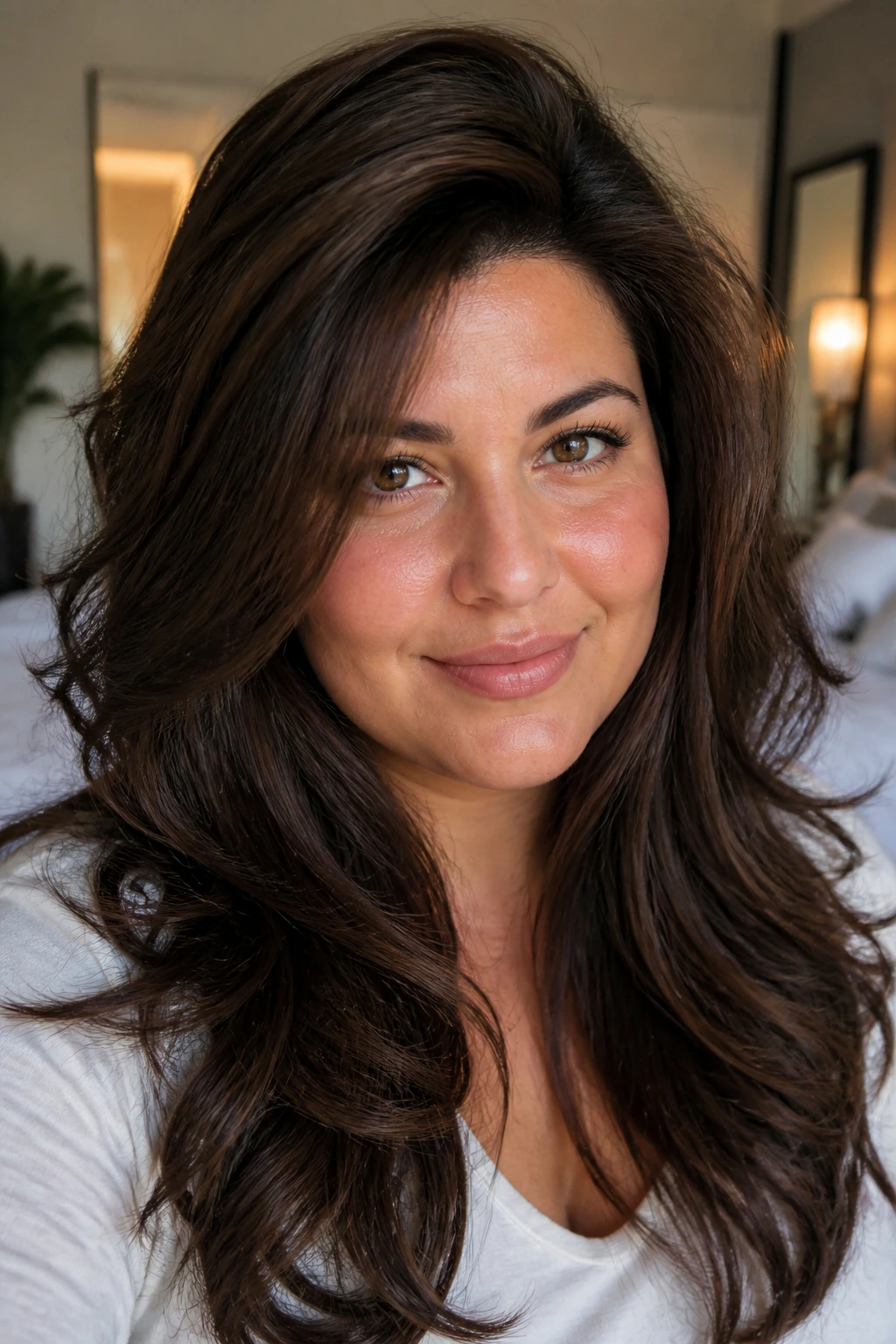
- They build height where it helps most: A little lift at the crown draws the eye upward and keeps the face from reading extra wide through the cheeks.
- They keep bulk away from the jawline: Thick hair loves to puff at the sides, so the better styles move the fullest part lower or break it up with layers.
- They add diagonal lines: A side part, angled lob, or swept bang gives the eye a path to follow instead of a flat circle to stare at.
- They use length with purpose: Hair that falls below the chin usually works harder for a round face than a blunt cut that stops right at it.
- They respect density instead of flattening it: The goal is not to make thick hair look thin. It’s to stop it from looking boxy.
The Shape Rules Behind a Flattering Cut
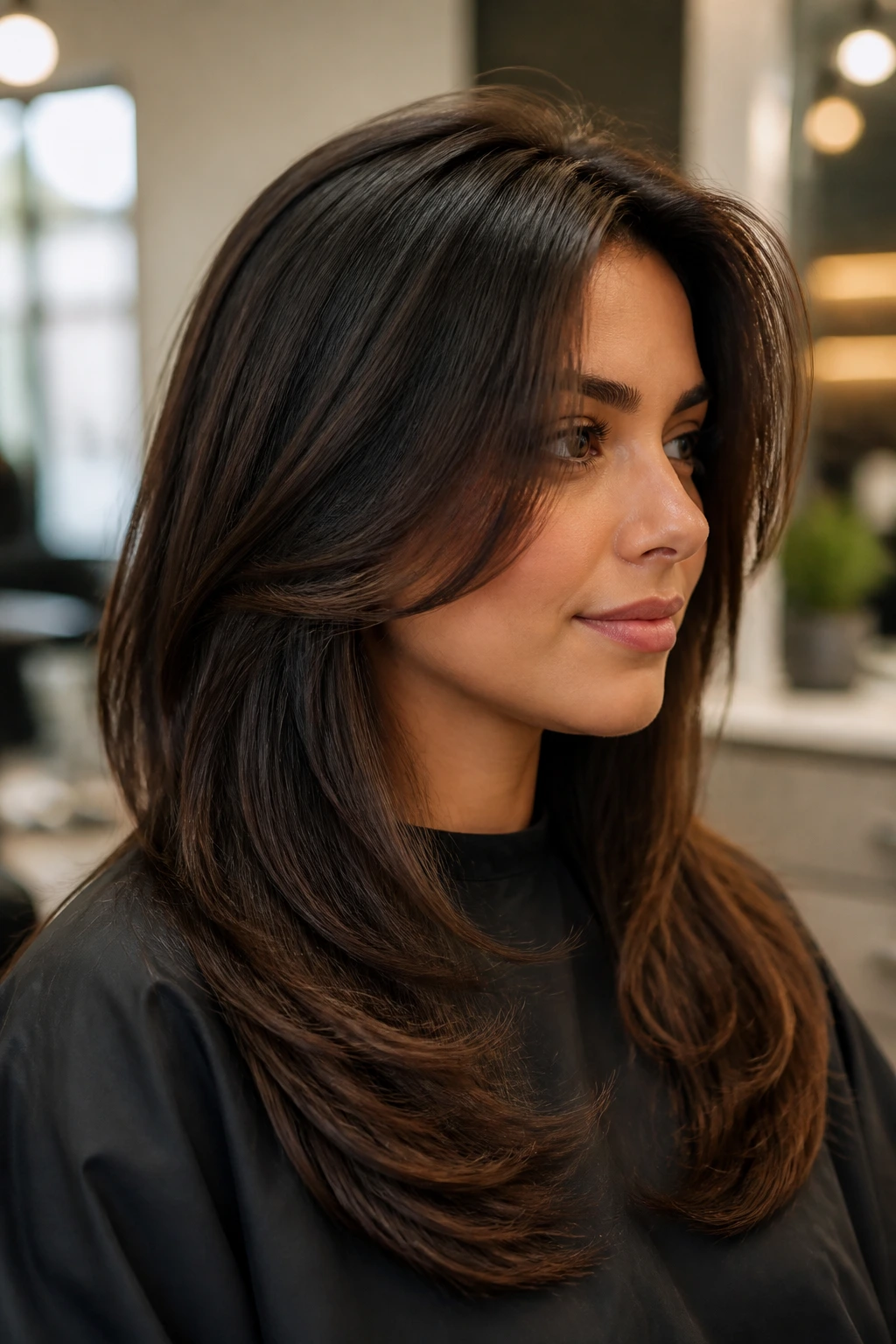
Round faces usually read widest at the cheeks, with a softer jaw and less visual length from forehead to chin. That means the most flattering styles create the illusion of vertical space. Not a lot. Just enough to stop the face from feeling compressed.
Height at the Crown Beats Width at the Sides
A little lift on top changes everything. If the roots sit flat and the sides are full, thick hair can make a round face feel almost perfectly circular. If the crown has a bit of lift—whether from a blowout, a roller, or a smart cut—the whole look stretches upward. It’s a small trick with a big payoff.
The First Face-Framing Layer Should Not Hit the Cheekbone
This is where a lot of cuts go sideways. If the shortest layer lands exactly at the cheek, the hair can throw a spotlight on the widest part of the face. Start a touch lower—near the mouth or just under it for longer hair—and the frame guides the eye down instead of out.
Internal Weight Removal Matters More Than Thinning the Ends
Thick hair often gets the wrong kind of haircut. Chopping the perimeter too much can make the ends kick out like a triangle. A better cut removes weight from inside the shape, so the outline stays clean while the bulk gets lighter.
How to Talk to Your Stylist Without Guessing
Bring photos, yes, but bring specifics too. A photo of a pretty haircut is not enough if the model has a longer face, finer hair, or a different curl pattern. Your stylist needs to know where your hair tends to swell, which side parts better, and how much time you’re willing to spend with a brush.
Say What You Do Every Morning
If you air-dry 80% of the time, say so. If you only use heat on weekends, say that too. A cut that looks gorgeous with a round brush and a 1.5-inch iron can turn bossy if you plan to scrunch and go.
Use Salon Language That Actually Helps
Try phrases like “keep the width off my cheeks,” “leave the longest face frame below the cheekbone,” and “remove bulk inside the shape, not at the perimeter.” Those words tell the stylist what the haircut needs to do.
Mention Where You Want the Style to Sit
If you like to tuck hair behind your ears, say it. If you always wear one side forward, say that too. Little habits matter more than most people think.
1. Long Layered Blowout With Face-Framing Ends
This is the style I reach for when thick hair needs movement without losing length. The layers start low enough to dodge the cheekbones, then the ends bend softly away from the face. On a round face, that little outward sweep at the bottom buys you shape; on dense hair, it keeps the silhouette from turning square.
The secret is restraint. Ask for layers that begin around the collarbone, not halfway up the head, and keep the front pieces a touch longer than the rest. When you blow-dry, use a concentrator nozzle and a medium round brush, rolling the front sections away from the face for 10 to 15 seconds at a time. It sounds fussy. It isn’t. It’s the difference between “big hair” and good big hair.
This style works especially well if your hair is heavy enough to hold a bend. A light mist of root-lift spray at the crown and a flexible spray at the ends is usually enough.
2. Deep Side Part Beach Waves
Why does a side part change so much? Because it breaks the face into uneven halves. That asymmetry interrupts the circle effect that round faces can fall into, and thick hair gives the waves enough body to stay visible instead of drooping.
Keep the part at least an inch or two off center. Then curl 1-inch sections away from the face with a 1.25-inch iron, leaving the last inch straight so the ends do not look stiff. Once the curls cool, rake them apart with your fingers or a wide-tooth comb. No brushing them into a giant cloud. That’s the mistake.
What Makes It Work
- The part shifts visual weight upward and sideways at once.
- Soft waves create movement without adding blunt width.
- Thick hair keeps the texture from collapsing by noon.
A little salt spray on damp hair helps if your hair naturally leans straight. If it’s already wavy, skip the heavy product and use a light cream instead. Heavy creams can make thick hair look greasy at the roots and puffy at the ends, which is a cursed combination.
3. Curtain Bangs With Long Layers
Curtain bangs are one of the few fringe styles that can play nicely with a round face and thick hair, but only if they’re cut with room to move. The shortest point should sit around the bridge of the nose or the top of the cheekbone, then blend outward into the longer sides. Anything shorter and heavier can make the face look boxed in.
The nice thing about thick hair here is that the bangs have enough weight to fall in a soft arc instead of separating into wisps. Blow-dry them with a round brush or a velcro roller, pushing the center slightly up and the sides outward. That creates the open, curtain-like shape instead of a blunt bang line.
The Bang Length That Works
If your hairline is dense, ask for the bangs to be texturized from the inside, not thinned from the bottom. That keeps the ends from looking stringy. And if you wear glasses, this style usually plays better than you’d expect because it sits around the frames rather than fighting them.
4. Angled Lob That Skims the Collarbone
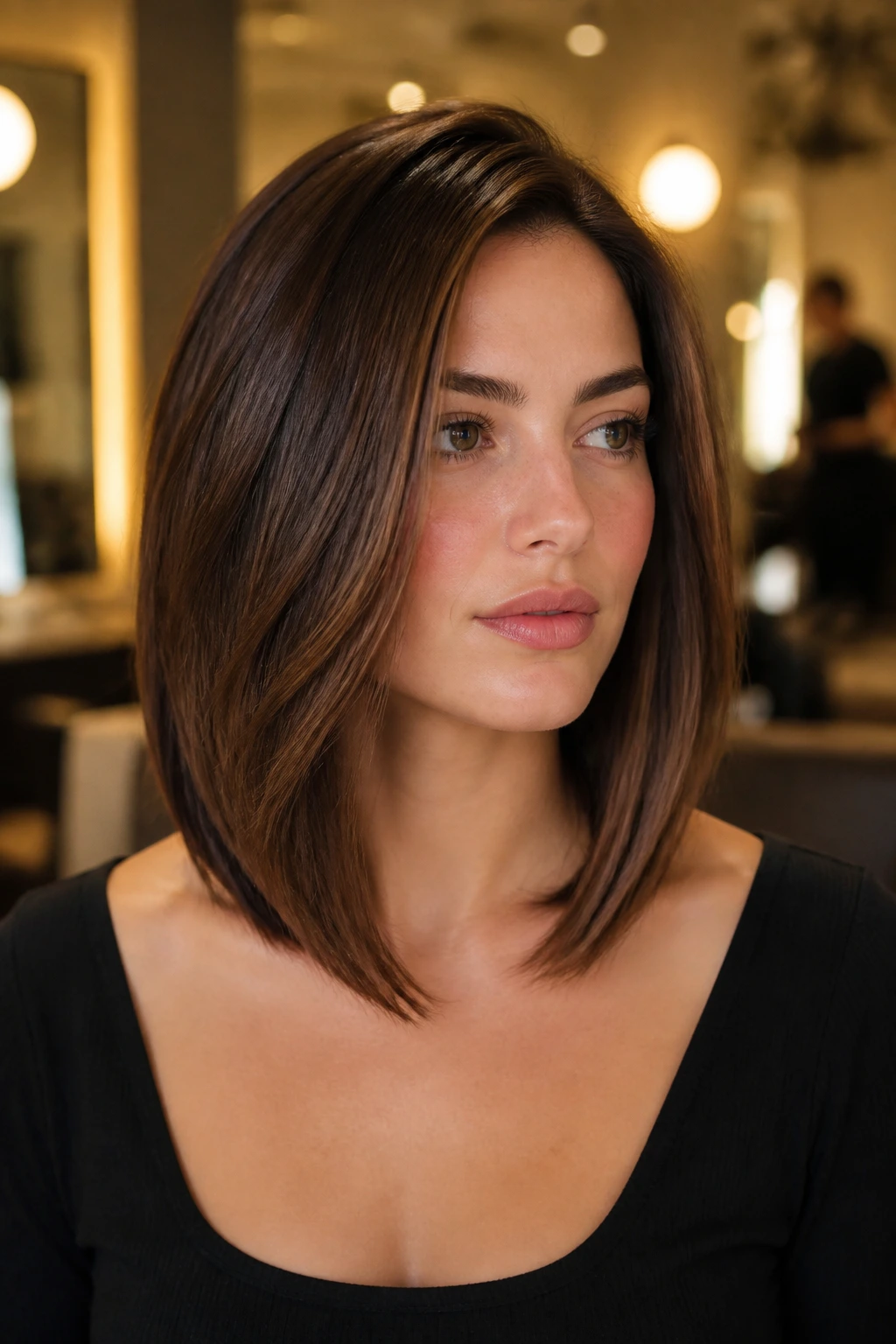
A blunt bob at the jaw can make a round face look wider. An angled lob does the opposite. The front pieces land at or just below the collarbone while the back sits a little shorter, which creates a clean diagonal line that the eye follows downward.
Thick hair is a good match for this shape because it gives the angle some weight. A fine-haired lob can look flimsy if the cut is too dramatic. With dense hair, the outline stays sharp. Ask for internal debulking so the ends don’t flip outward like a triangle.
If you wear it sleek, use a paddle brush and a light smoothing cream. If you wear it wavy, keep the bend loose and focus the texture from the mid-lengths down. The jawline is not the place to pile on movement.
5. Butterfly Cut With Lift at the Crown
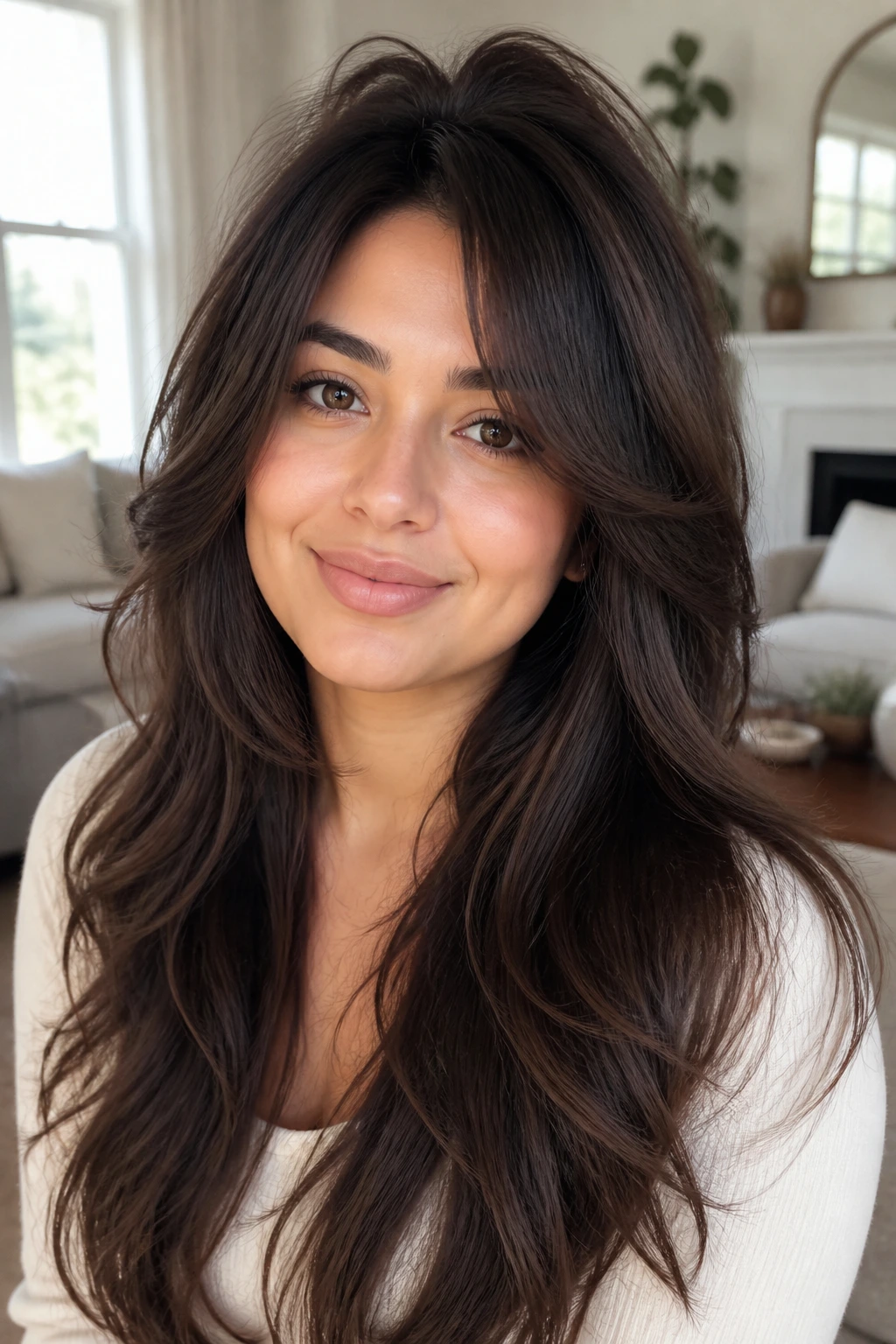
The butterfly cut has a bit of theater to it, and I mean that in a good way. Shorter layers sit around the crown and cheek area, while the overall length stays long, so thick hair gets lift without losing the dramatic swing people actually want.
For a round face, the crown layers are the useful part. They create height on top and keep the shape from spreading sideways. The trick is to keep the shorter layers soft enough that they blend, not so choppy that they turn into a shelf.
A big round brush or large velcro rollers makes this cut behave. Blow-dry the crown up and away from the scalp, then turn the front pieces slightly back. It gives you that airy, lifted finish without the helmet effect. If your hair is very dense, this is one of the few layered cuts that can remove weight and still feel luxurious.
6. Soft Shag With Cheekbone Layers
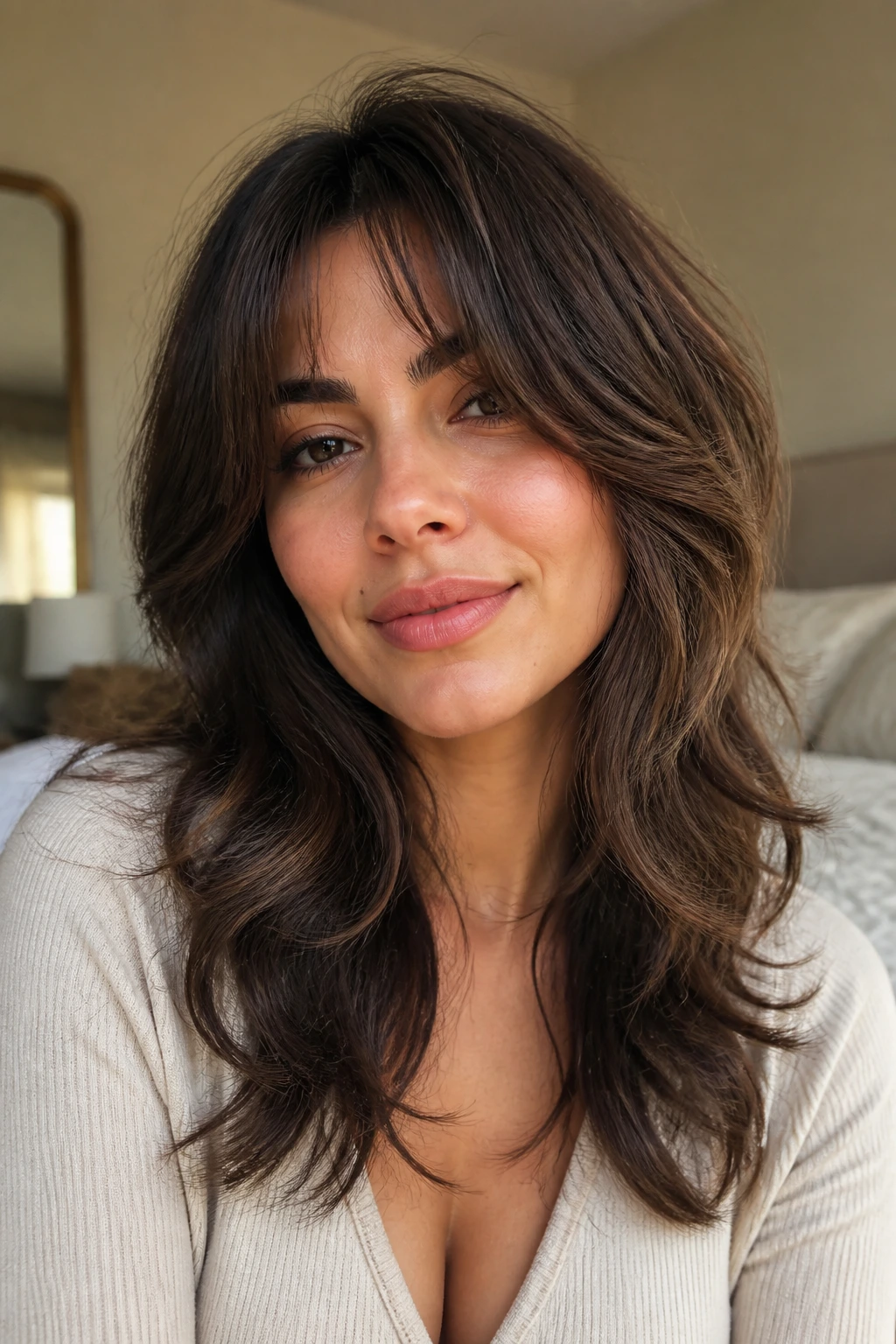
A shag can go wrong fast on thick hair if the layers are too aggressive. You end up with fuzz around the cheeks and a wide shape that fights the face. A soft shag is different. The layers are visible, but they’re not jagged for the sake of it.
This version works best with a little wave, natural or heat-made. Ask for layers that start around the cheekbone but don’t stop there; they should flow down into the length so the shape stays long, not boxy. A piecey fringe or curtain fringe helps, but it should be light enough that you can part it and move it around.
Why It’s Worth Trying
- Thick hair gives the shag texture without looking thin.
- The layers break up bulk around the sides.
- Air-drying works if you use mousse and scrunch lightly.
If your hair likes to frizz, use a pea-sized amount of cream only on the ends. Too much product near the roots kills the lift this cut needs.
7. Sleek High Ponytail With Wrapped Base
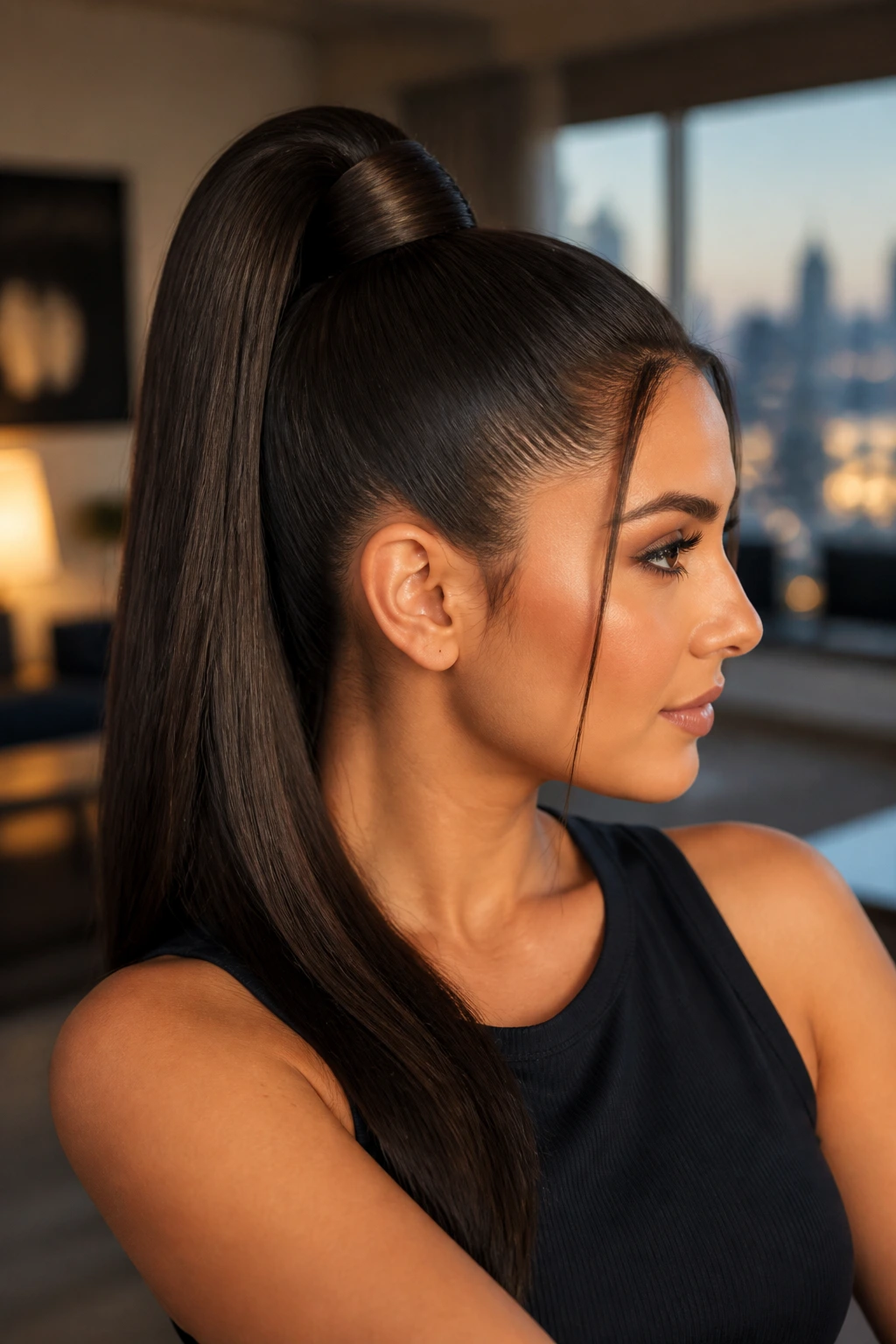
A high ponytail is one of the fastest ways to lengthen a round face. Put the elastic at the highest point of the head, not halfway back, and the face instantly looks a bit longer. Thick hair helps here because the ponytail has enough mass to look deliberate instead of flimsy.
The sides should be smoothed back with a light gel or cream, but don’t pull them so tight that the face loses all softness. Leave two slim front pieces if you like a gentler finish. For a cleaner look, wrap a one-inch strand around the elastic and pin it underneath.
This style is underrated because it does so much with so little. It lifts the face, clears the neck, and keeps dense hair from spreading across the shoulders. If you need a style that survives humidity or a long day, this one earns its keep.
8. Half-Up Claw-Clip Twist
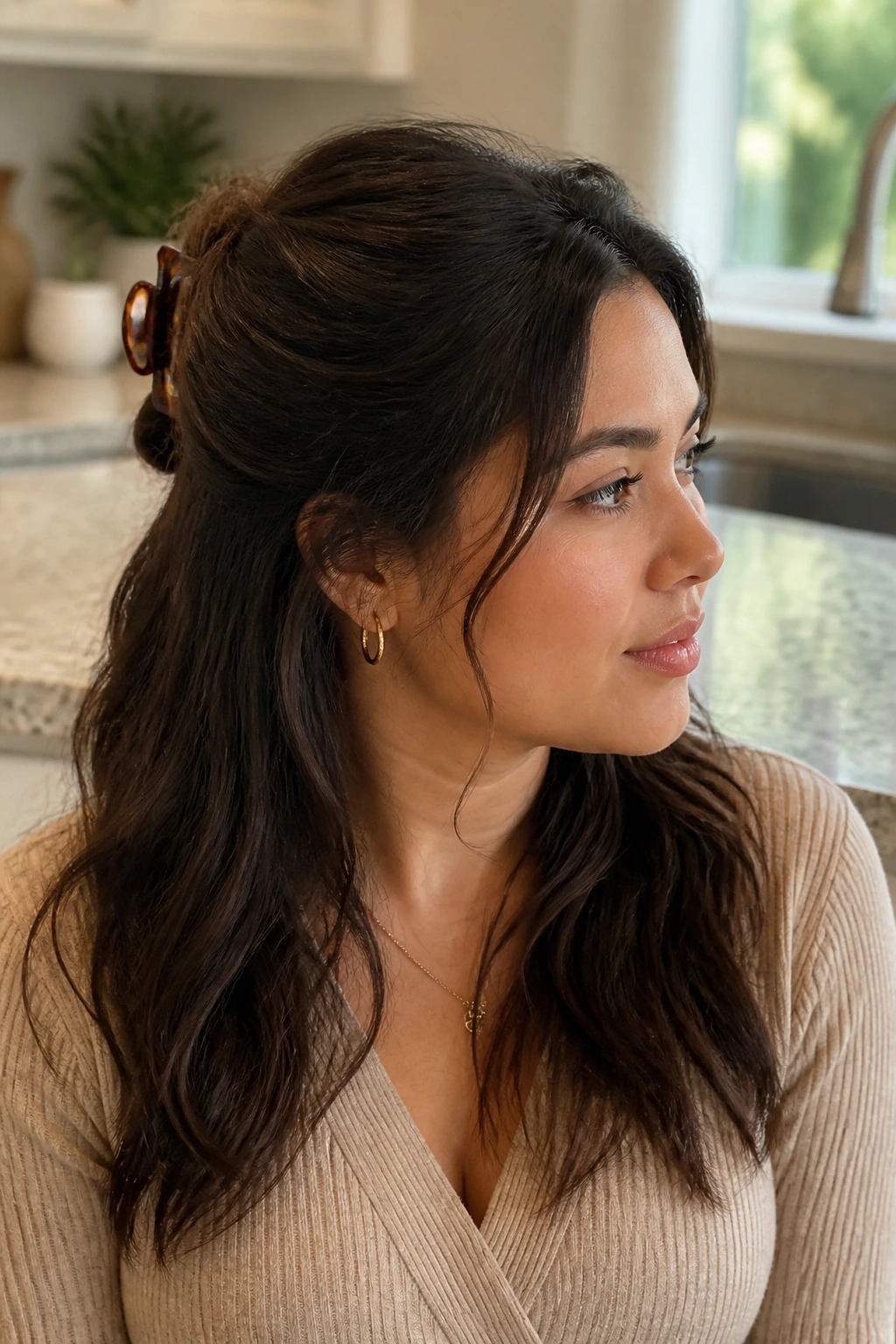
Half-up styles are a smart compromise for thick hair because they control the top half without pinning every strand down. On a round face, the top section should sit high enough to add height, not low enough to sit like a shelf at the back of the head.
Use a claw clip or a pair of strong pins to twist the top section up and back. Leave the lower half loose and slightly stretched over the shoulders. That contrast is what works: a little lift above, movement below. If your hair is curly, this keeps the top from becoming too big. If it’s straight, it stops the style from falling flat.
The best version of this look has a few soft pieces around the temples. Too many and it gets messy fast. Too few and the face can feel too exposed.
9. Voluminous Top Knot With Loose Front Pieces
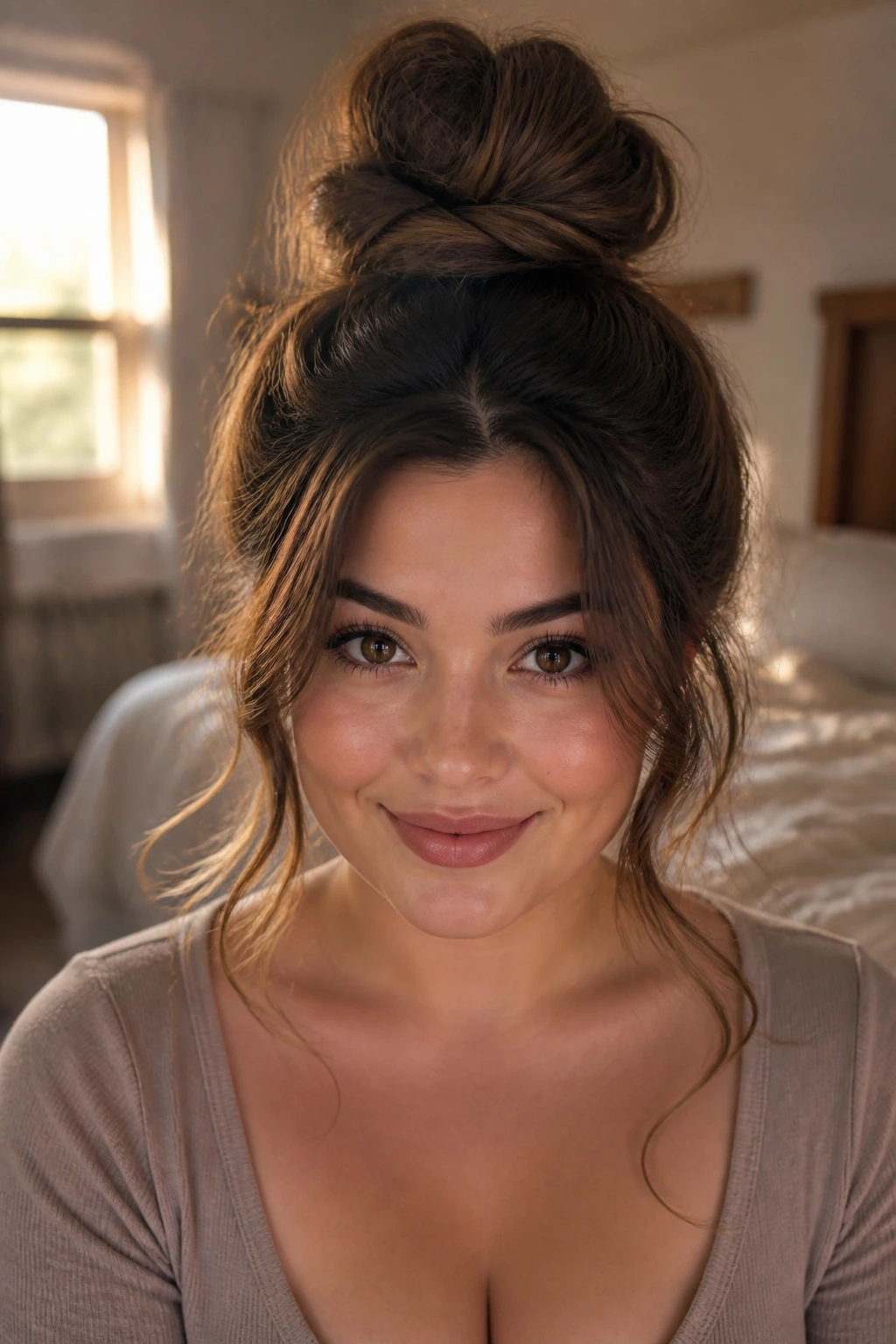
A top knot sounds simple, but placement matters more than most people realize. If the bun sits too low, it shortens the neck and leaves the face feeling broader. If it sits at the crown, it pulls the eye upward and gives thick hair a place to compress without looking bulky.
Twist the ponytail into a knot and secure it with pins rather than one overworked elastic. That keeps the knot from flattening oddly. Leave a pair of face-framing pieces out in front, but keep them narrow and soft. Big curtain pieces around the cheeks can widen the face all over again.
This is the style for days when your hair wants to be in charge and you want to win anyway. It’s quick, but it still gives shape.
10. Side-Swept Pixie With Height on Top
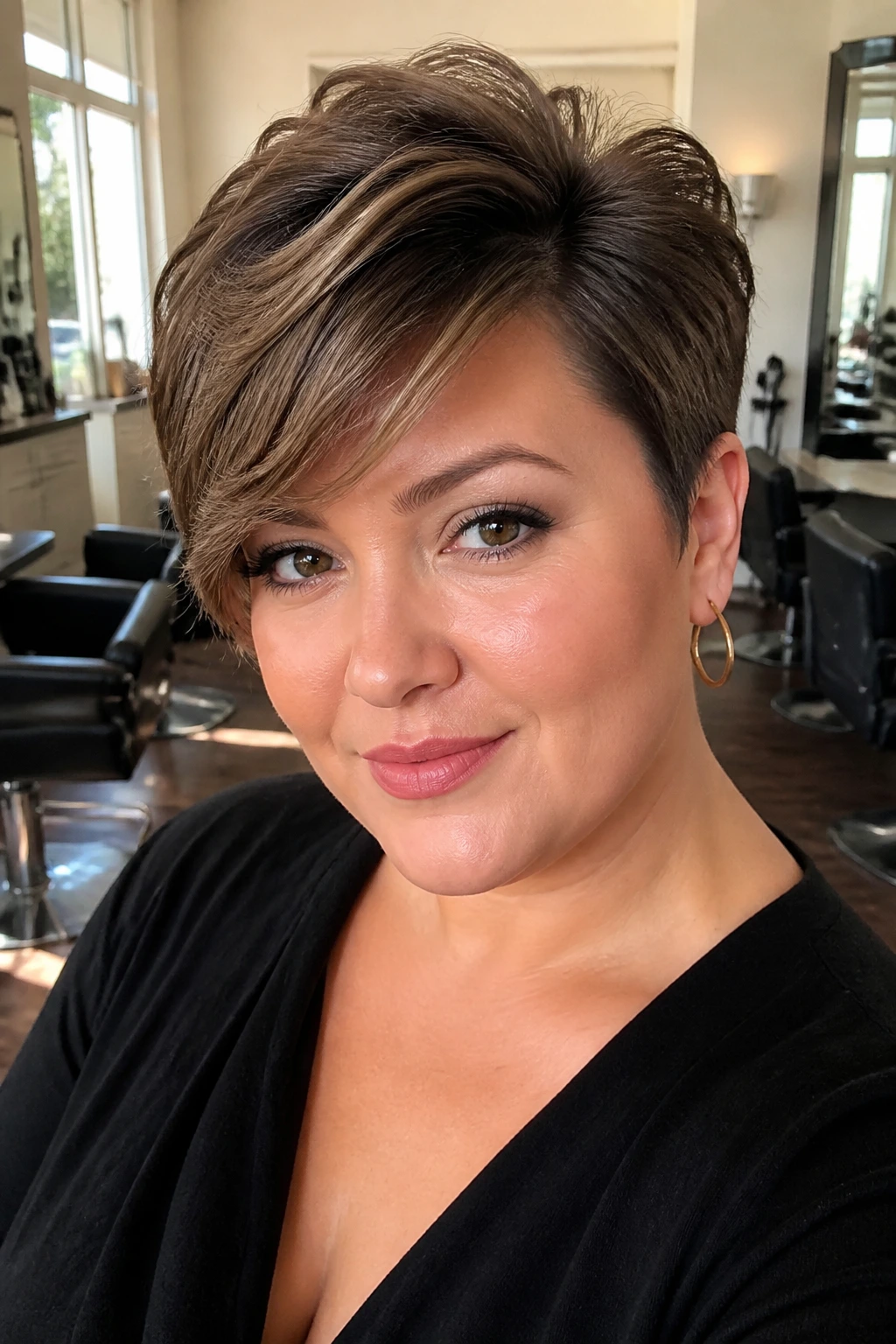
Short hair on a round face is not banned. It just needs the right geometry. A side-swept pixie with length left on top and around the fringe can look sharper than a longer cut if the shape is built upward instead of outward.
The sides should stay tapered and close, while the top has enough length to sweep across the forehead. That diagonal line matters. Thick hair gives this cut body, so your stylist should texturize the top in a controlled way rather than shaving off too much bulk at once.
A Few Things to Ask For
- Keep the fringe long enough to sweep, not sit straight across.
- Leave height at the crown.
- Taper the sides without making them puffy.
This is one of those cuts that looks expensive when it’s cut well and awkward when it isn’t. There is no middle ground.
11. Layered Curly Lob

For curly hair, the curly lob is often the sweet spot. It gives the curls enough length to hang and stretch a little, but not so much that the shape turns into a triangle. Round faces usually do better when the curl volume sits below the cheekbones instead of exploding right beside them.
The layers should follow the curl pattern, not fight it. A good curly cut lets the curls stack without building a wide shelf at the sides. Diffuse on low heat or air-dry with clips at the roots if you need a little extra lift. And please, do not brush it dry. That’s chaos.
A curl cream or gel that keeps the curl clumped will do more for this style than a shelf full of oils. Thick curly hair can take product, but it doesn’t need a lot of product near the scalp.
12. Long Braided Ponytail With a Crown Lift
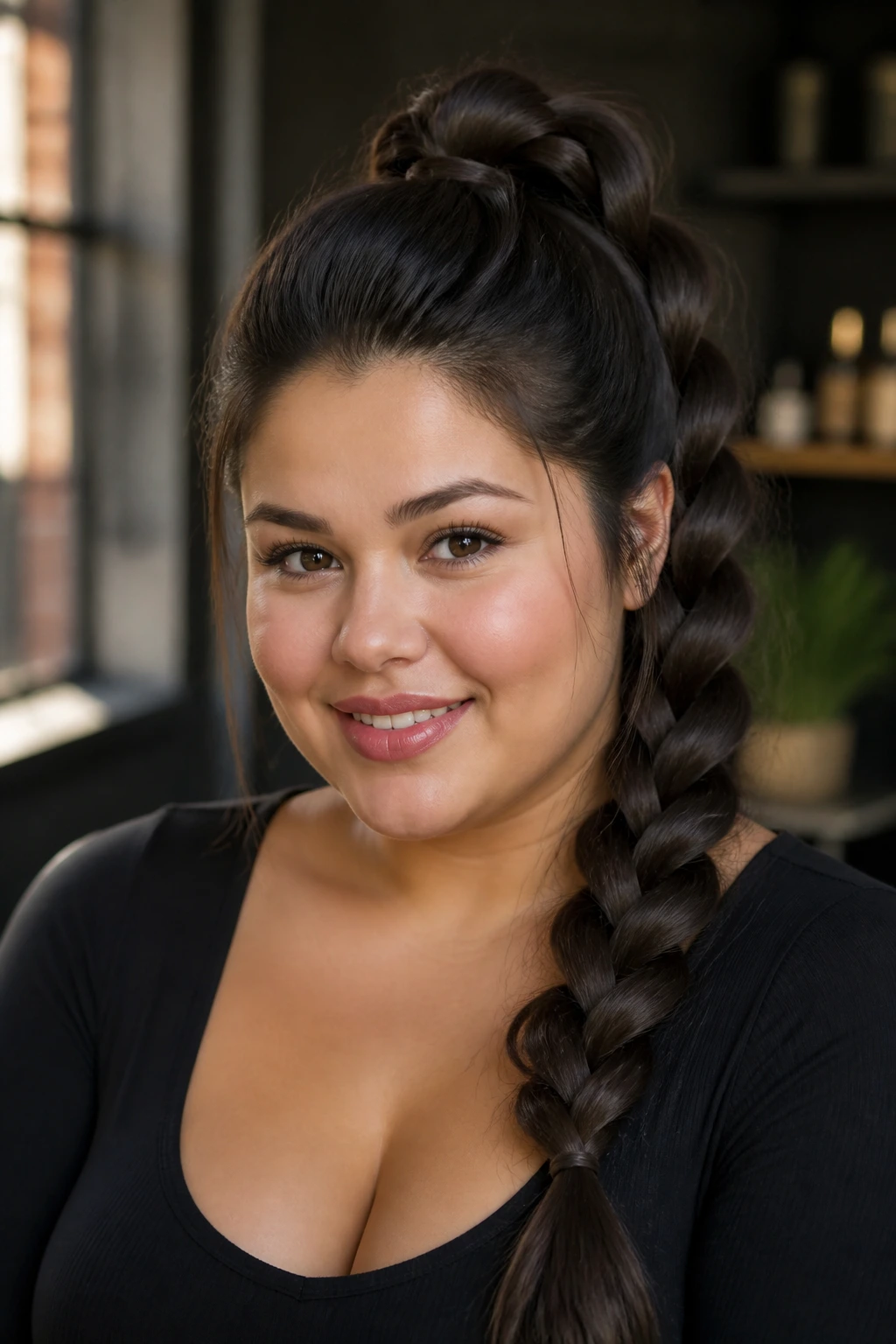
A braided ponytail is a strong move when thick hair needs control but you do not want it pinned flat. Put the ponytail high enough to stretch the face, then braid it loosely so the braid keeps some width without adding side bulk.
A slight tease at the crown or a hidden root clip can make the top area rise just enough to balance the face. Keep the braid centered, not drifting to one side, unless you want a side-swept finish. Tight braids work on clean lines, but they can also make the head feel severe, so leave a little softness at the hairline.
This style is especially good if your hair is too thick for a standard ponytail to stay neat. The braid controls the length, the crown lift handles the face shape, and the result lasts longer than a loose style.
13. Low Sleek Bun With a Center Part
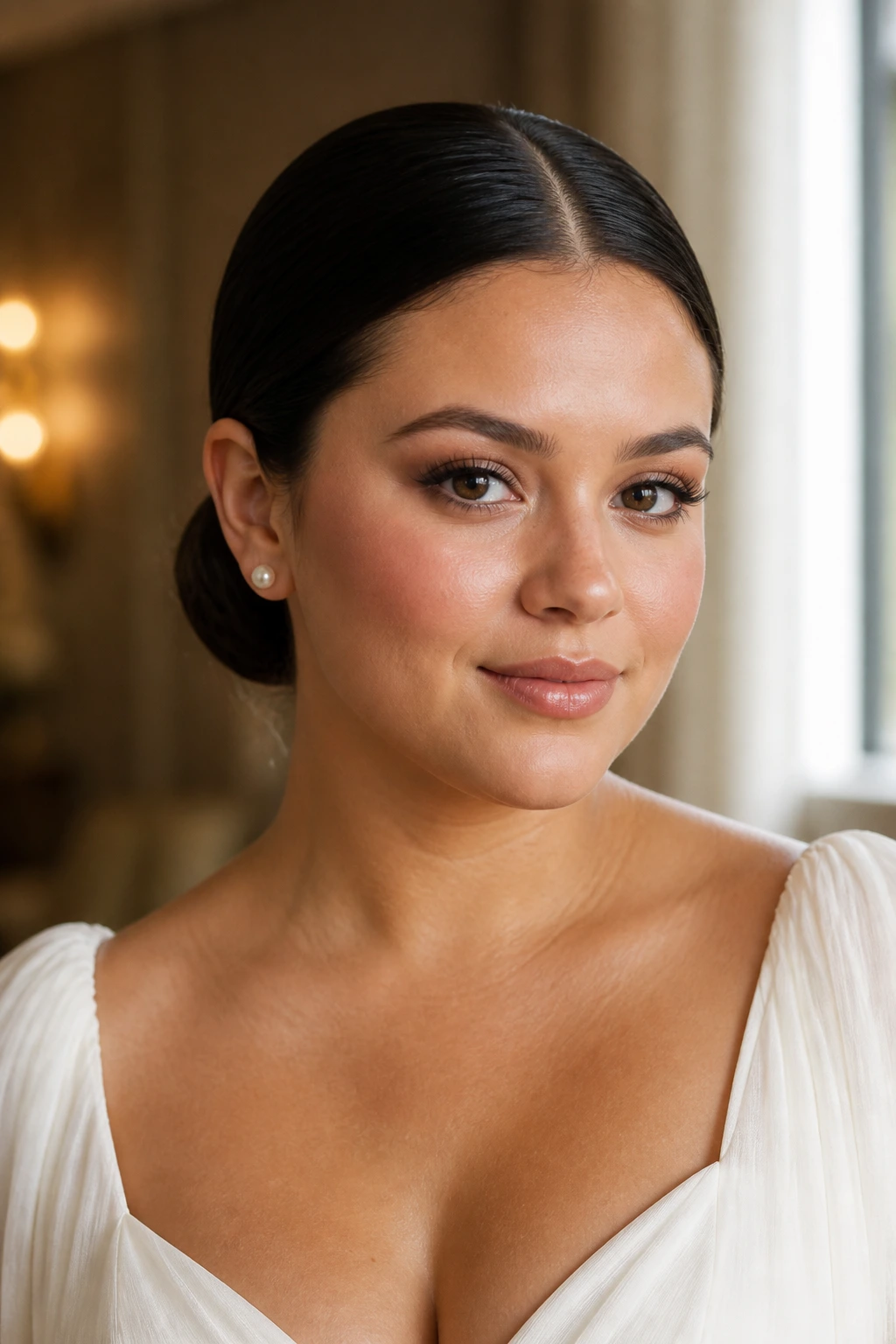
A low bun sounds severe until you pair it with a clean center part and a little crown lift. The center part creates symmetry, but the low placement keeps the style from widening the cheeks. On a round face, the neck becomes part of the silhouette, and that usually helps.
The key is smoothness at the sides and softness at the bun itself. Pull the hair back with a brush and a small amount of gel or cream, then twist it into a bun at the nape. If the hair is very thick, use pins instead of one giant elastic so the bun doesn’t bulge out awkwardly.
This is a clean, grown-up look. It’s also a good reminder that round faces do not need to hide from polished hairstyles. They just need the right line.
14. Shoulder-Length Cut With Internal Layers
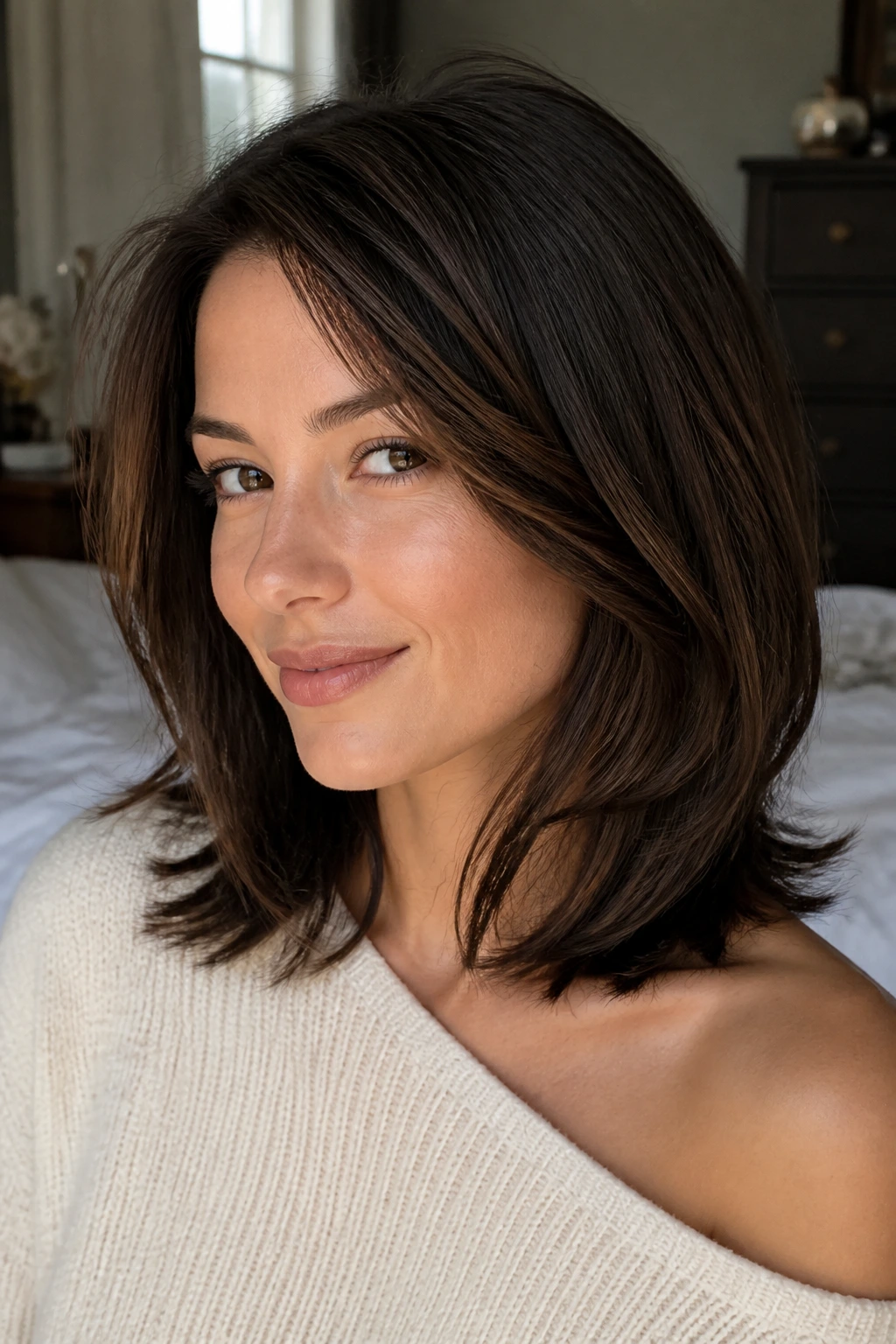
Shoulder-length hair can be tricky on thick strands because it can turn into a broad block if it’s cut too bluntly. Internal layers change that. They remove weight from inside the shape while keeping the outer edge full enough to swing.
The length should land below the jaw, ideally brushing the tops of the shoulders or a little past them. That keeps the cut from cutting across the widest part of the face. A center part or slight off-center part both work here, but the volume should sit higher at the roots than at the sides.
This is one of the more practical cuts in the whole list. It can air-dry, blow-dry, curl, or tuck behind the ears without falling apart. If you want one haircut that doesn’t demand a different mood every morning, this is a strong candidate.
15. Old-Hollywood Side Swoop
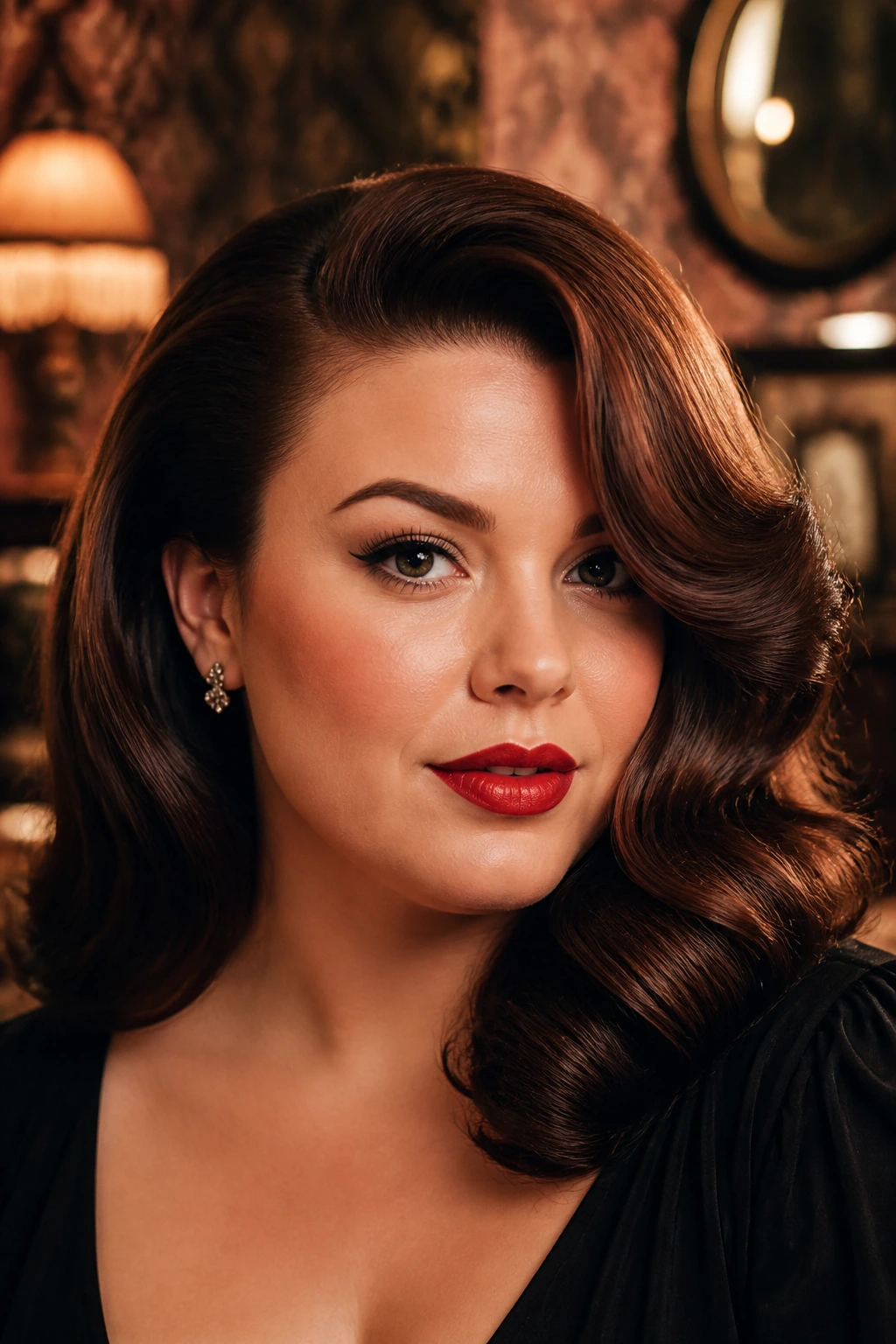
This style is about line, not volume. A deep side part and one big sweep of hair across the forehead create a diagonal that visually lengthens a round face. Thick hair holds the shape well, which is half the battle.
Use large barrel curls or a round brush to create soft bends, then brush them into one flowing side sweep. Pin the smaller side behind the ear if needed so the cheekbone stays visible. The result should feel sculpted, not crunchy.
This is a dinner, wedding, or photo-day style, but it also works whenever you want your hair to look like it had a plan. The diagonal line is the whole game.
16. Textured Midi Cut With Soft Ends
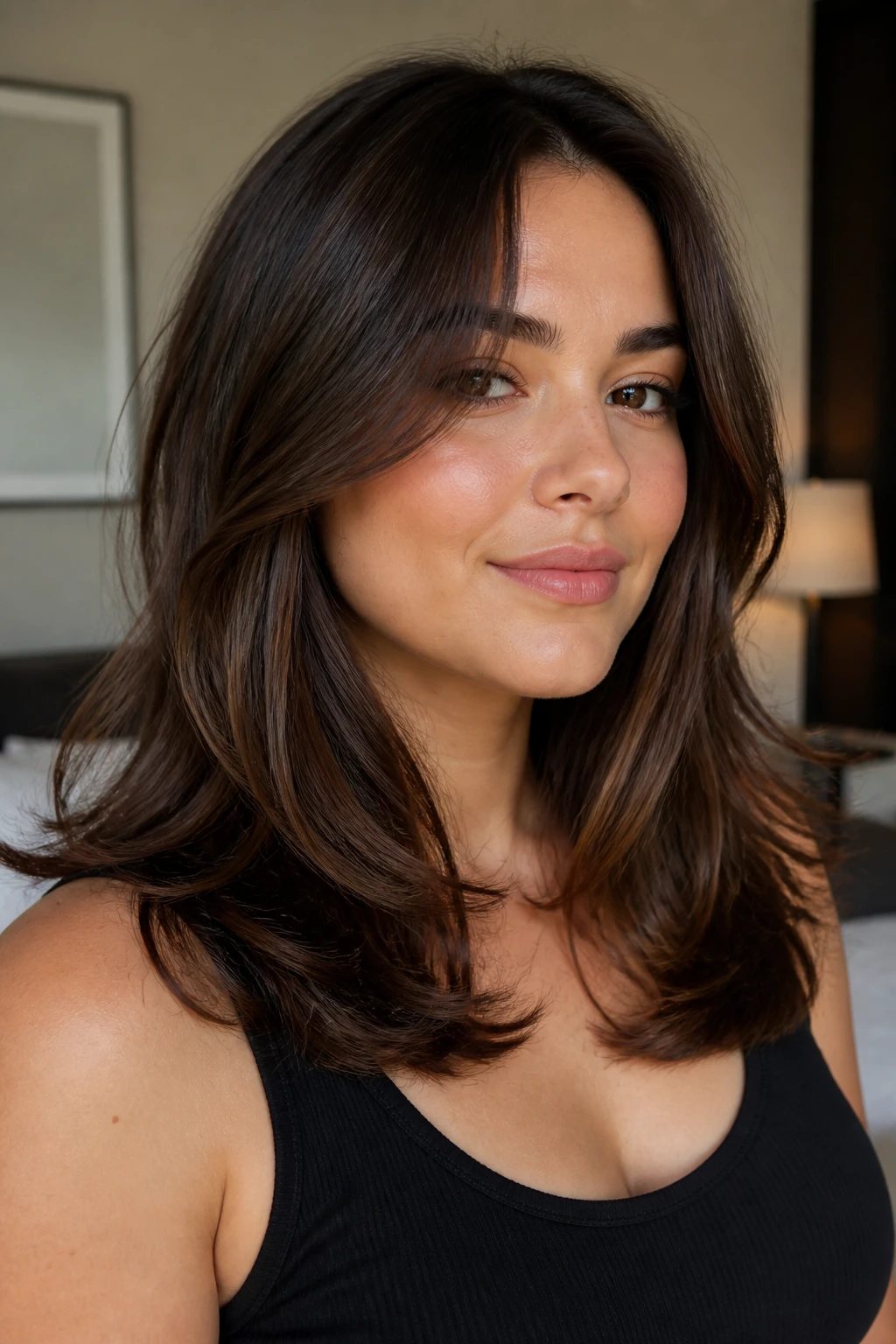
A midi cut sits between the shoulders and the mid-back, which gives thick hair room to move without dragging everything down. The soft ends matter. If the edges are too blunt, the style turns heavy; if they’re too shredded, the shape can look thin at the bottom and wide at the sides.
Ask for texture that lives in the mid-lengths and slightly beveled ends that curve inward or softly outward, depending on how you wear it. A round face gets a cleaner line when the hair falls in a long, controlled curtain rather than a broad, flat sheet.
This cut is a good middle road if you want the ease of long hair with less bulk. It behaves well with clips, waves, and loose twists, which means you won’t have to reinvent your routine.
17. Soft A-Line Bob
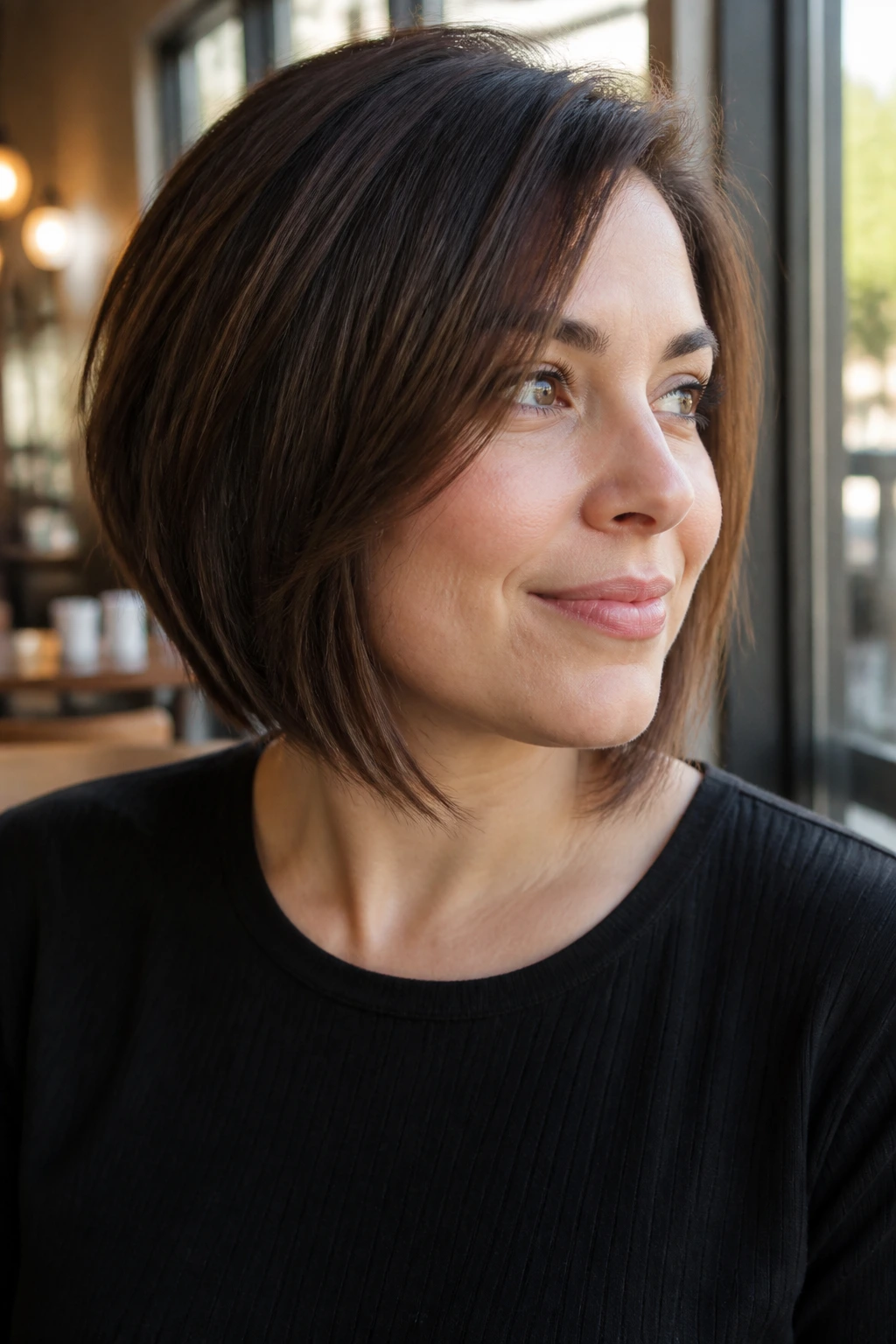
A blunt chin-length bob can be rough on a round face. A soft A-line bob is the better version because it drops a little longer in the front and keeps the back lighter. That slant creates length. Angle buys you shape.
The front should usually land just below the chin, maybe closer to the top of the neck if your features are very soft. Thick hair benefits from point-cut ends or a bit of internal removal so the bob doesn’t puff outward. Keep the sides tucked or lightly curved inward, not widened with too much bend.
This is a crisp style without being stiff. It suits people who want short hair that still leaves room for movement around the face.
18. Crown-Volume Twist-Out
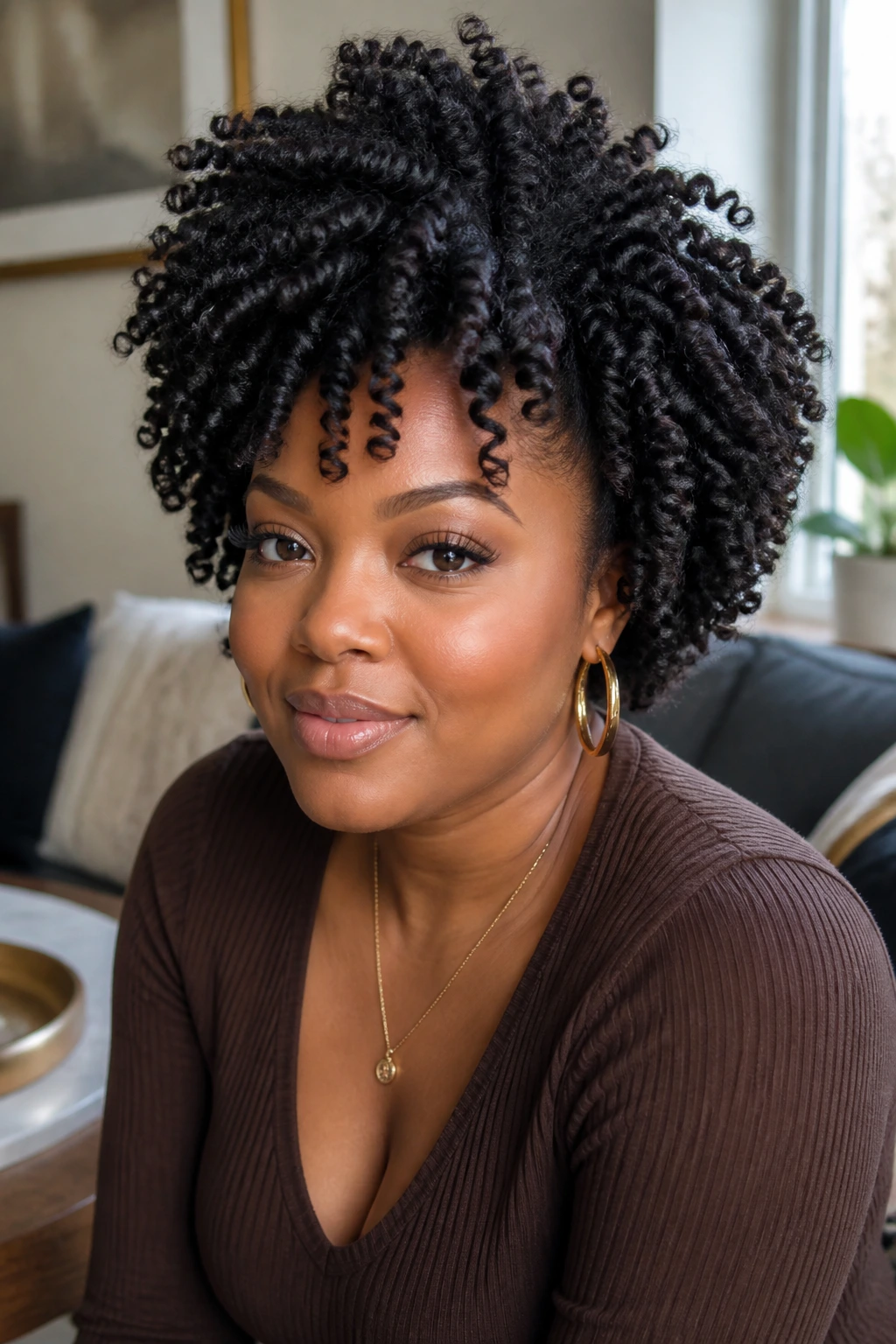
Natural texture loves a little height, and a twist-out is one of the easiest ways to build it. For thick hair, the crown volume helps a round face read longer, while the twist definition stops the style from turning into a puffball. That balance matters.
Do your twists on damp hair with a setting cream or butter that holds without freezing the strands. Let them dry fully—fully—before separating. If you take them down while they’re still damp, you’ll lose definition and gain frizz. Separate with oiled fingertips, then lift the roots gently at the crown.
The Part That Matters Most
The shape should be taller at the top and softer at the cheeks. If the sides spread too much, pin a few outer pieces back for an hour or two while the hair settles.
19. Long Straight Layers With a Subtle Flip
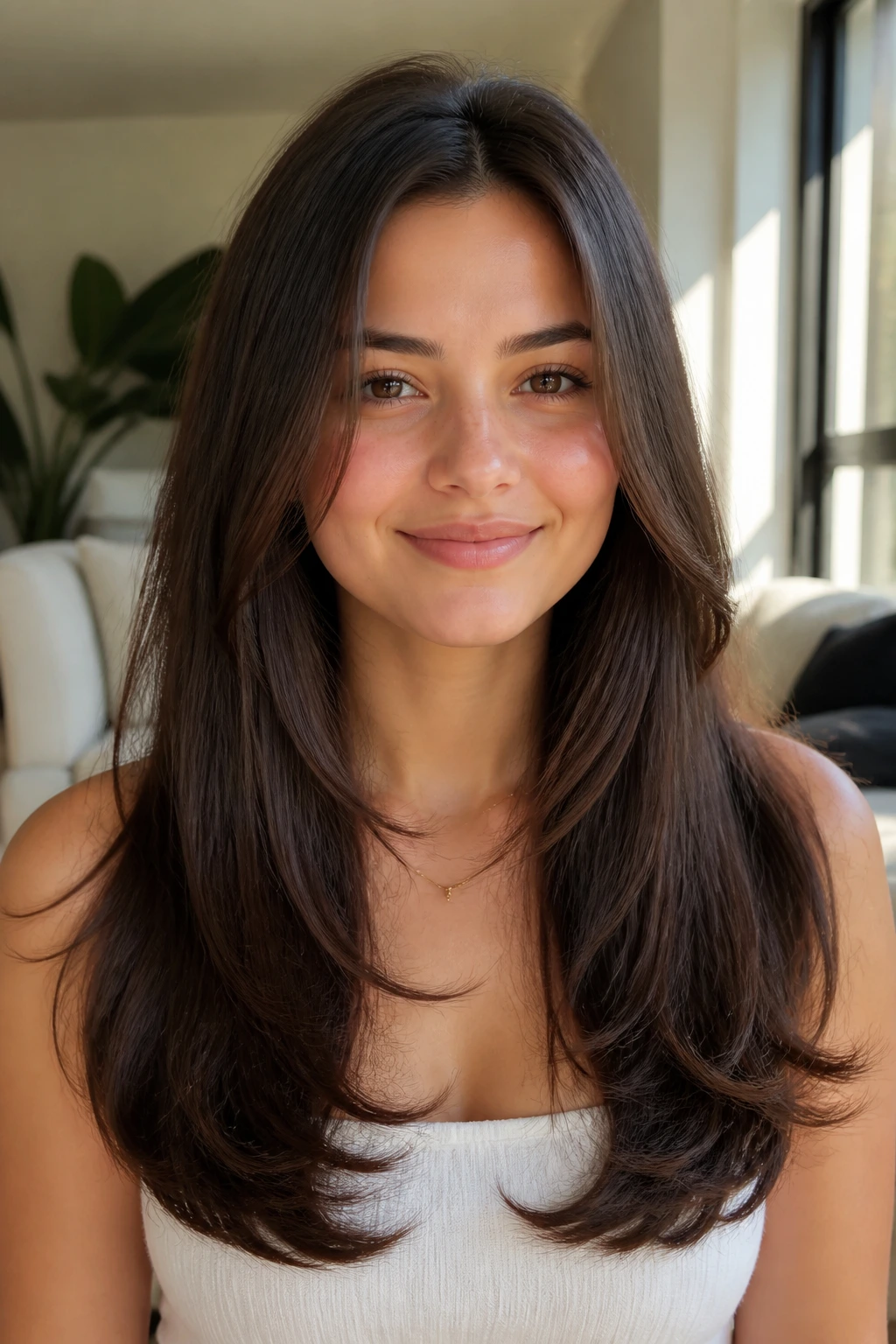
Straight hair on a round face can feel flat if it hangs in one heavy curtain. Long layers fix that by adding movement while keeping the length. Thick hair holds a subtle bend at the ends better than fine hair, which makes this style easier than it sounds.
The trick is not to over-smooth it. A pin-straight finish can make the face look even rounder if all the visual weight stays at the sides. Instead, create a slight flip outward near the ends or a soft bend away from the face. A paddle brush and a flat iron with wide plates are usually enough.
This look is polished, but not stiff. It’s the kind of style that can go from office to dinner without a full reset.
20. Box Braid Ponytail With Tapered Edges
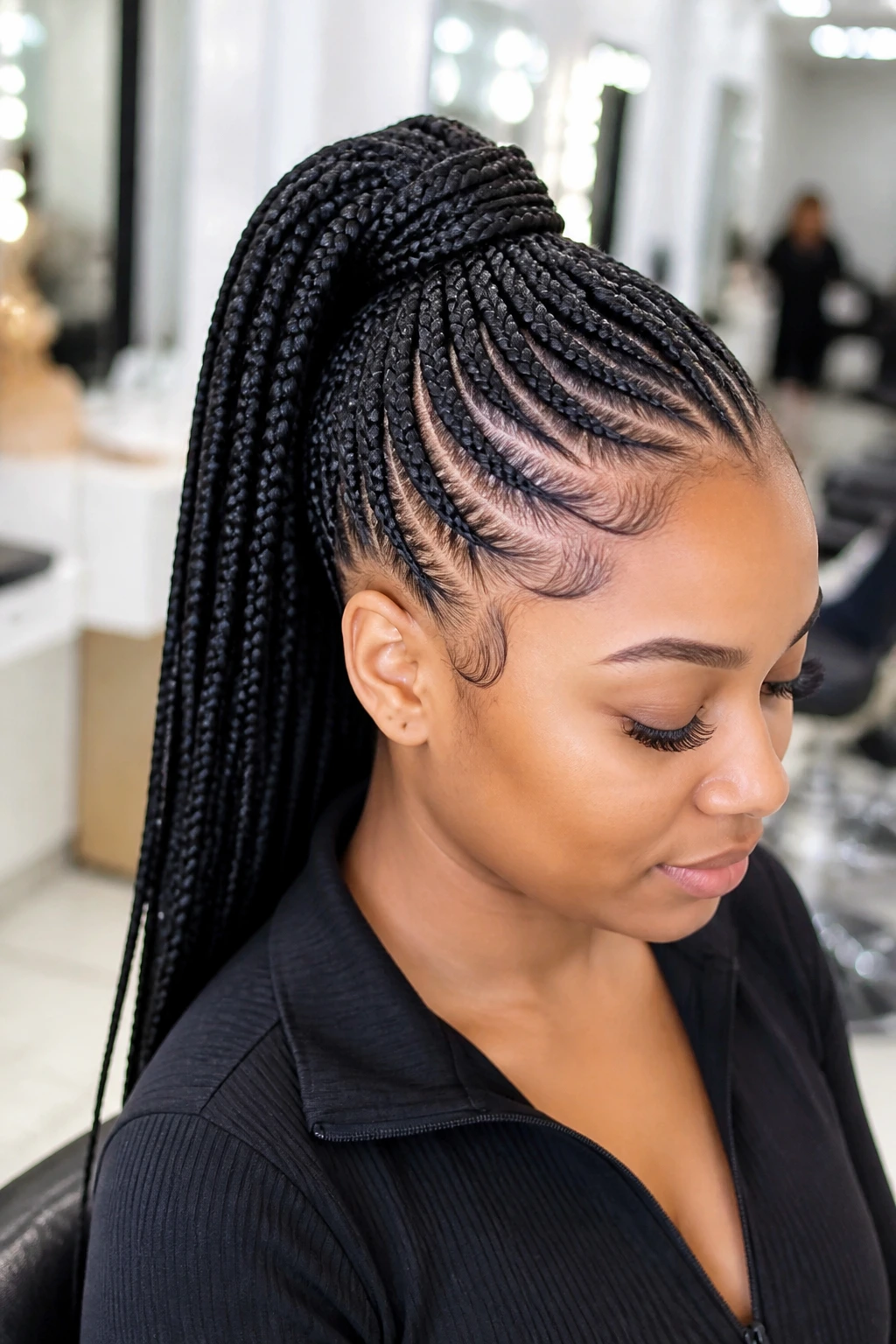
Protective styles can be very flattering on round faces when the height and direction are right. A box braid ponytail pulls the hair up instead of out, which helps the face look longer. Thick hair makes the base feel secure, but the braid size should stay moderate so the ponytail does not become too heavy.
Keep the edges neat but not scraped back so hard that the forehead looks larger by contrast. A slightly lifted crown or a few soft baby hairs around the hairline can keep the shape from feeling severe. The braid itself should hang cleanly down the back, not flare out at the sides.
This is practical, tidy, and surprisingly elegant when done well. The line from crown to braid does a lot of work for you.
21. Loose Bubble Braid
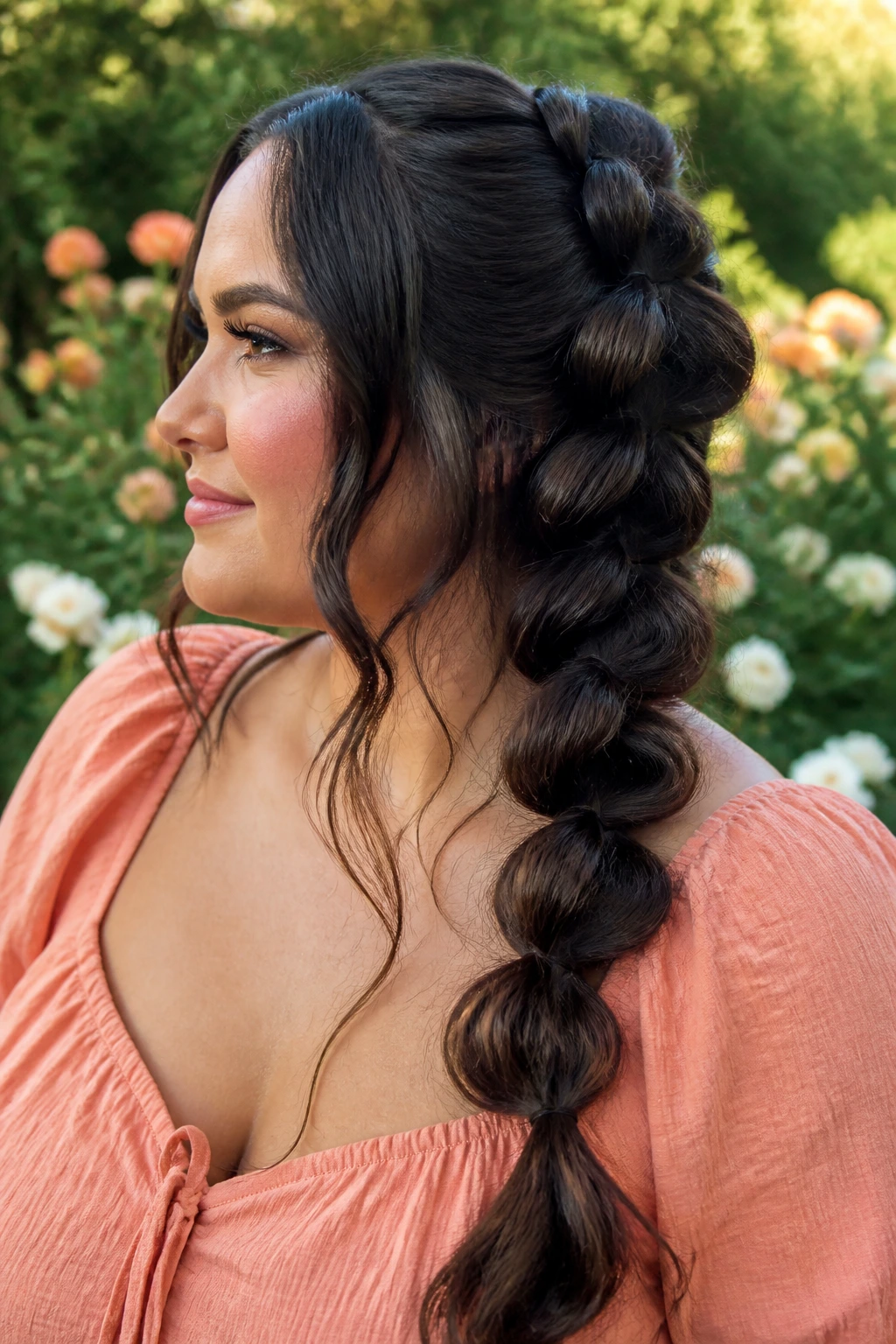
Bubble braids are fun, but they also solve a real shape problem. Instead of letting thick hair spread across the shoulders, the sections are cinched into a vertical line. That lengthens the silhouette, which helps round faces immediately.
Tie the ponytail high or mid-high, then add elastics every 2 to 3 inches down the length. Gently tug each segment to puff it into a rounded bubble, but keep the sides of the head smoother than the braid itself. If the top is too flat, the style loses its lift.
This one feels playful without being childish. It works well for long hair that would otherwise get heavy by the third hour of wear.
22. Face-Frame Pin Back With Cascading Length
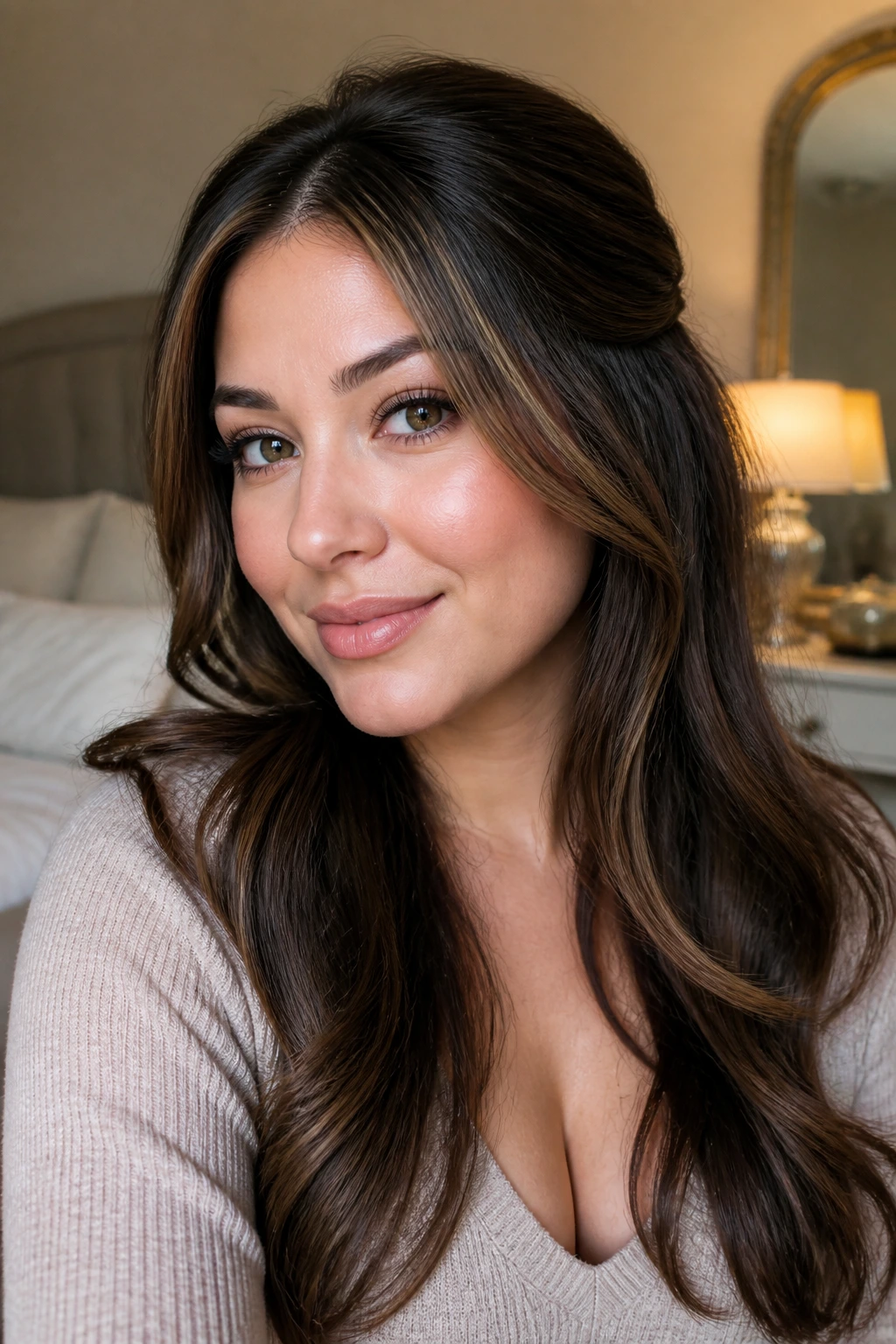
Sometimes the best style is barely a style at all. Pull just the front sections back with two bobby pins or a small clip, leave the rest down, and the face gets instant openness around the cheeks. On a round face, that exposed space matters more than most people expect.
The pinned sections should sit just behind the temples, not at the ears. That keeps the shape lifted while letting the length fall over the shoulders. Thick hair helps because the loose section stays full and glossy instead of limp.
I like this look because it doesn’t ask the hair to do anything dramatic. It simply puts the volume where it helps and clears the rest away from the face.
How to Style Thick Hair Without Letting the Sides Take Over
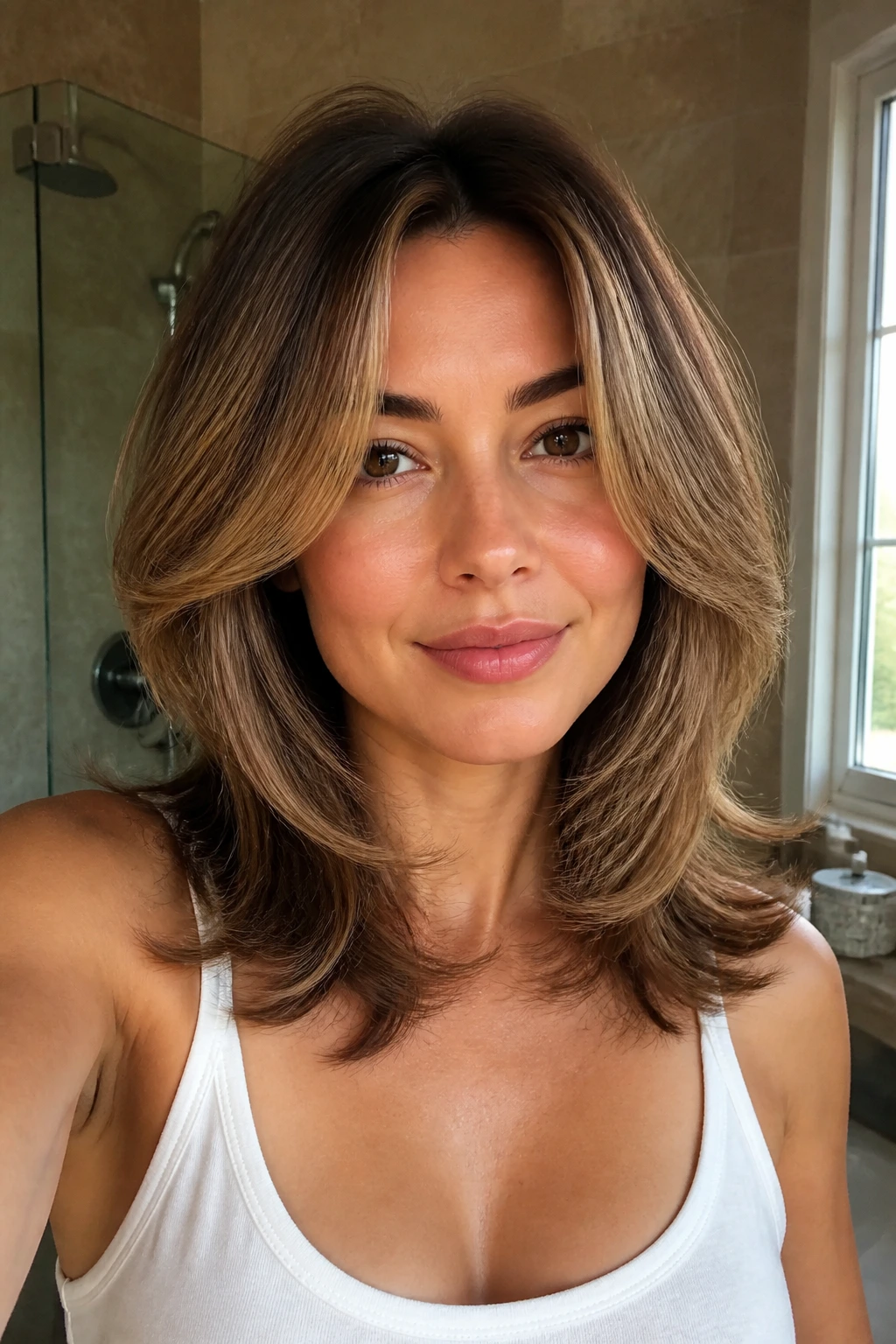
Root lift first, always. Thick hair can be smooth and still feel wide if the roots sit flat. Put mousse or root spray on damp hair at the crown, then blow-dry that area upward before you do anything else. If you start with the sides, the shape usually collapses into itself.
Keep product away from the cheeks. Cream, oil, and heavy leave-ins belong on the mid-lengths and ends, not the hair right beside the face. That area needs movement and a bit of air, or it starts to sit like a curtain.
Use the right bend. Curls that begin too high near the cheeks can make a round face look broader. Start the wave lower, around the mouth or collarbone, and keep the top smoother. It’s a small placement change, but it matters.
Finish with flexible hold. Thick hair can handle a stronger spray than fine hair, but a helmet finish is still a bad idea. Spray, let it set, then break it up with your fingers. The goal is shape that moves, not shape that cracks.
If you wear hair up a lot, vary the anchor point. High pony, high knot, or a lifted half-up twist all help. Low and flat styles have their place, but they do the face no favors when worn every day.
Mistakes That Make a Round Face Look Wider
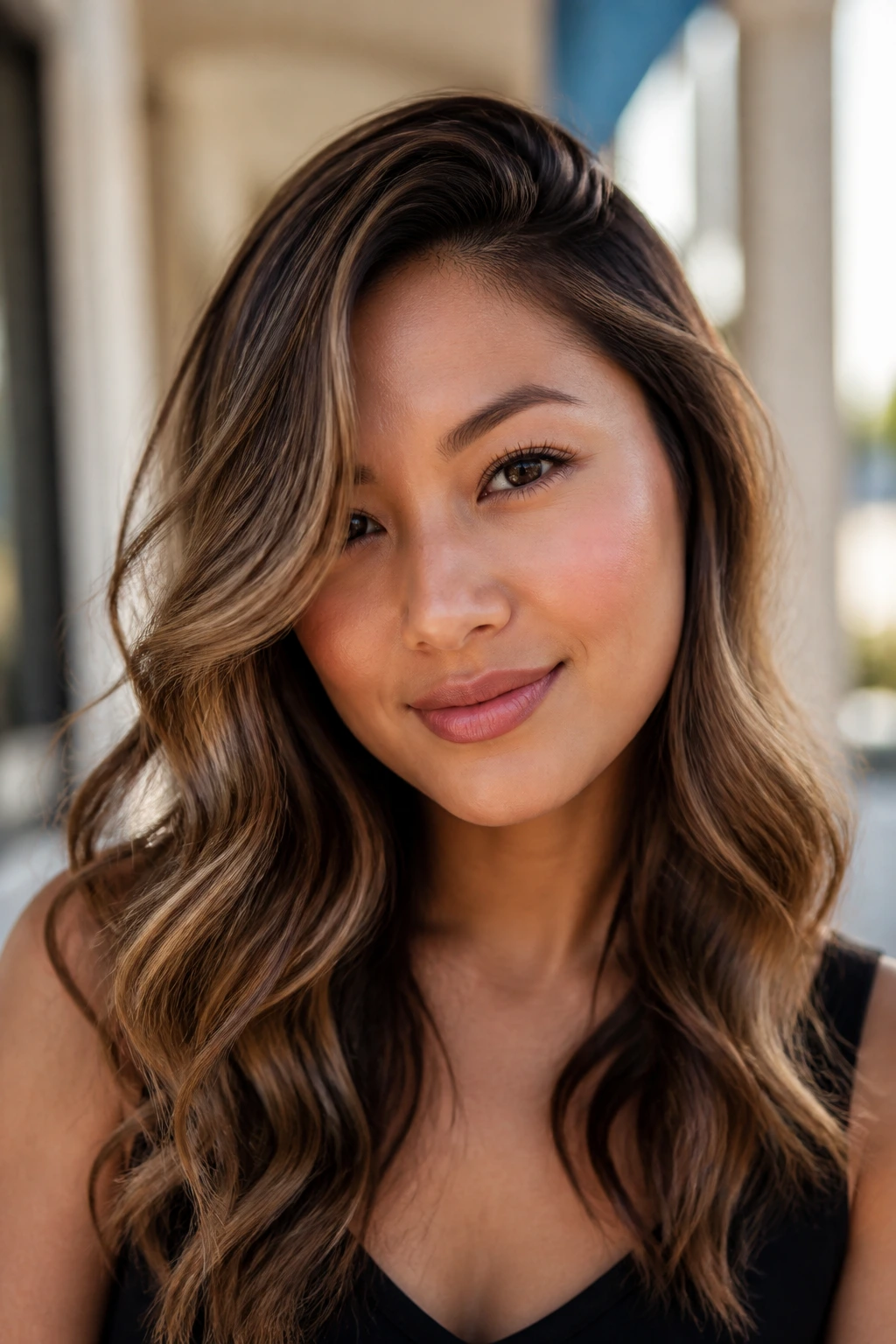
- Blunt cuts that stop at the chin: The eye lands right on the widest part of the face, and thick hair makes the line feel even heavier. Ask for length that falls past the chin or an angle that moves away from it.
- Layers that start too high: Short face-framing layers can open up the cheeks in the wrong way. The fix is simple: start the shortest layer lower, then blend it into the length.
- Too much side volume: Thick hair can puff at the temples and cheeks if it’s blown outward. Direct the air down and away from the face instead.
- A dead-flat crown: Round faces need some lift on top. Even a little root volume changes the silhouette.
- Center parts with equal volume on both sides when the hair is wide: A perfect split can make the face feel broader. Shifting the part just a bit often solves the problem immediately.
- Over-thinning the ends: This is a sneaky one. The hair can look wispy at the bottom and bulky at the sides, which is not a flattering trade.
Variations and Alternatives to Try
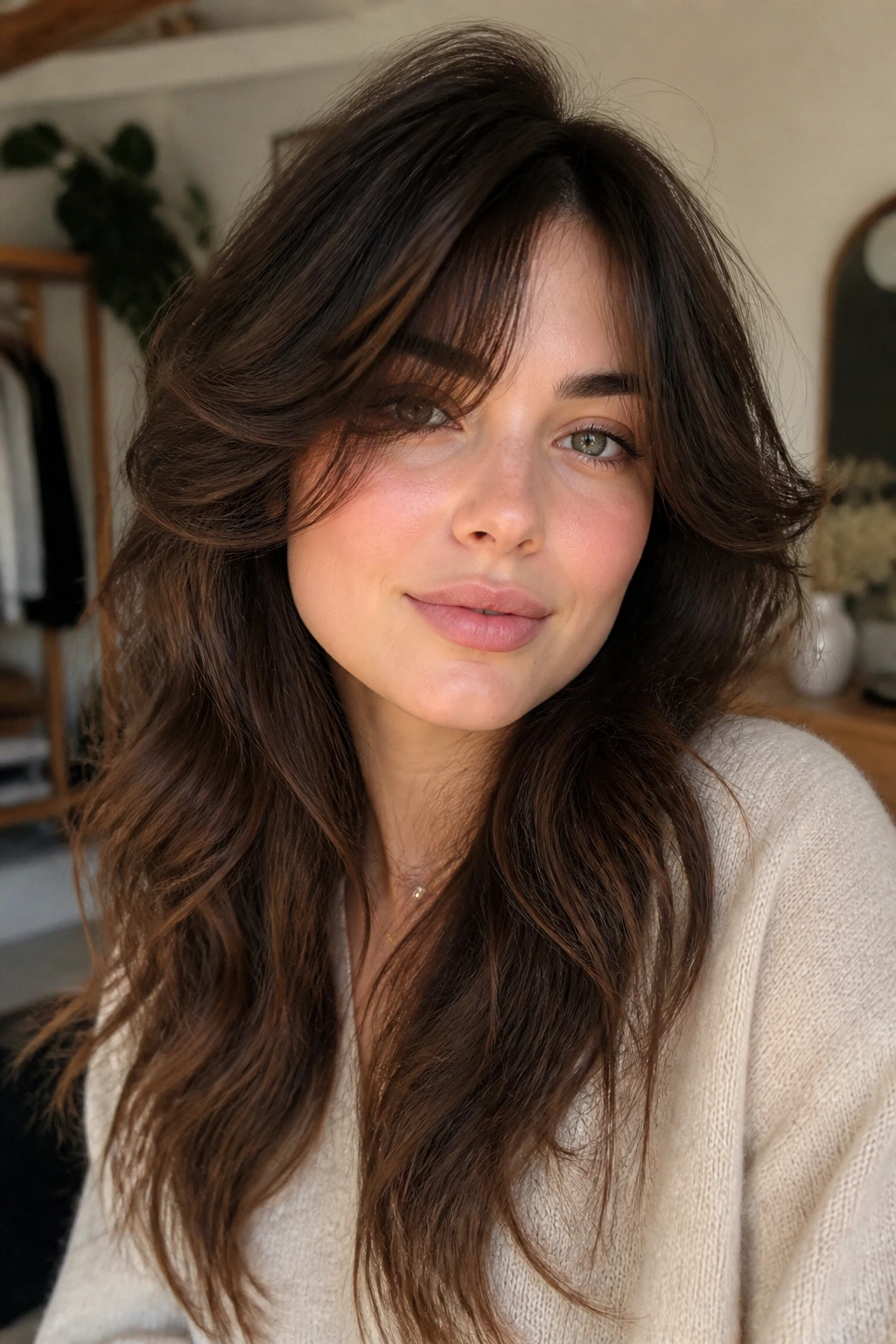
The Air-Dry Curve: If heat styling is a nonstarter, choose cuts with built-in shape: curtain bangs, long layers, or a soft shag. Scrunch in mousse, twist a few front sections away from the face, and let the length dry with the crown clipped up for the first 20 minutes.
The Sleek-Only Version: If you like polished hair, lean into angled lobs, low buns, and long straight layers. Use a smoothing cream on the mid-lengths, then keep the root area light so the style stays close to the head without going limp.
The Curly Definition Plan: For curls and coils, the best answer is often a layered lob, twist-out, or braided style with controlled height. Shape matters more than length here, and heavy side volume needs to be balanced by lift at the top.
The Protective Style Route: Box braids, braid ponytails, and twist-based updos work well if you need the hair off your shoulders. Just keep the anchor point high and avoid overly tight sides that pull the face outward.
The Short Hair Compromise: If you want short hair but worry about width, pick a pixie with height or a soft A-line bob. Both keep the sides close enough to the face to preserve length.
Tools and Products That Make These Styles Easier to Live With
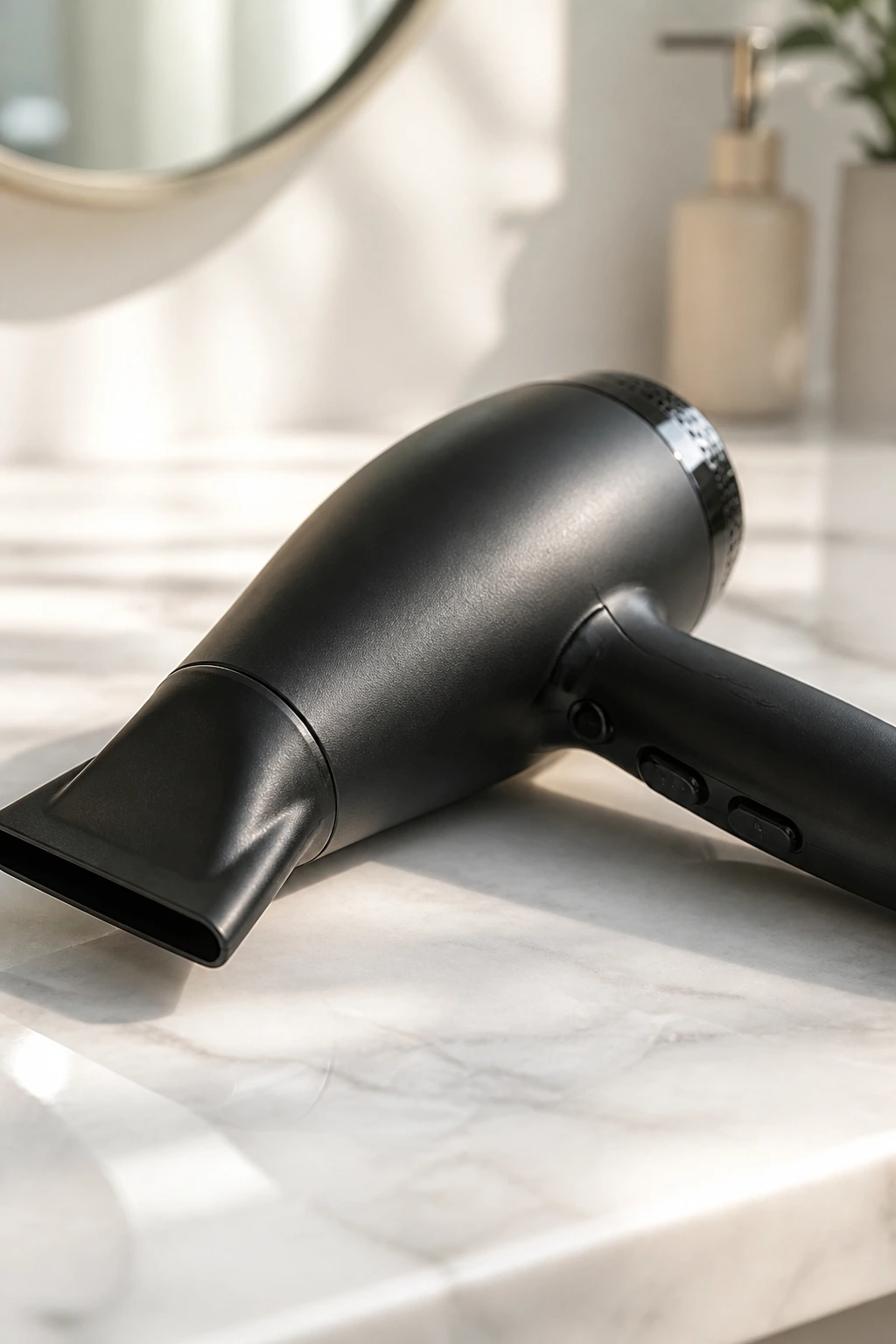
- Blow-dryer with a concentrator nozzle — Directs airflow where you want it and keeps the sides from puffing out.
- 2-inch or 1.5-inch round brush — Good for lifting the crown and bending the front pieces away from the face.
- 1.25-inch curling iron or wand — A sweet spot for soft waves that do not look too tight.
- Paddle brush — Useful for sleek ponytails, buns, and straight styles on dense hair.
- Duckbill clips — Handy for sectioning thick hair without a fight.
- Root-lift mousse or spray — Gives the crown a little backbone.
- Light smoothing cream — Keeps the ends polished without making the hair greasy.
- Flexible-hold hairspray — Holds the shape while letting the hair move.
- Dry shampoo — Keeps root lift alive between washes.
- Wide-tooth comb — Better than a brush for soft waves and curly styles.
Keeping the Shape Between Washes
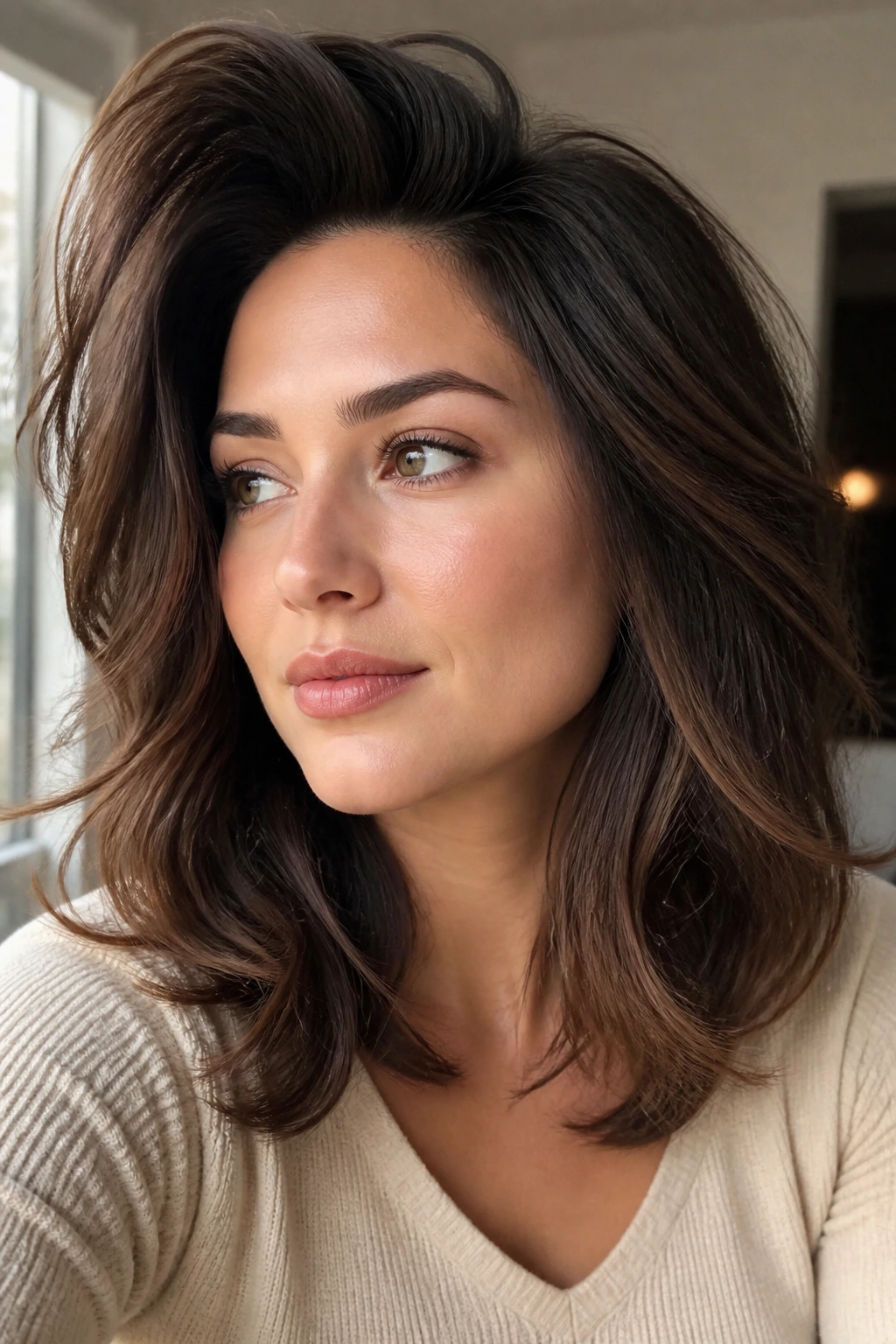
Thick hair usually holds shape longer than fine hair, but the sides can still widen as the day goes on. A quick reset at the roots goes a long way. If the crown falls flat, mist the top lightly with water, lift with your fingers, and blow-dry just that area for 30 to 60 seconds.
For wavy or curly styles, sleep with the hair loosely gathered at the top of the head or clipped into a soft pineapple if the length allows it. A silk pillowcase cuts down on frizz, which matters more than people think when the style depends on clean lines. If the front starts to collapse into your cheeks, re-bend just the face-framing pieces with a curling iron on a low setting.
Trims matter too. Shorter styles usually need attention every 4 to 6 weeks. Long layered cuts can often go 8 to 12 weeks, but bangs and face-framing sections may need a touch-up sooner if they start sitting too high on the cheek. Thick hair grows out with authority. That’s the blessing and the annoyance.
Frequently Asked Questions About Hairstyles for Round Faces with Thick Hair
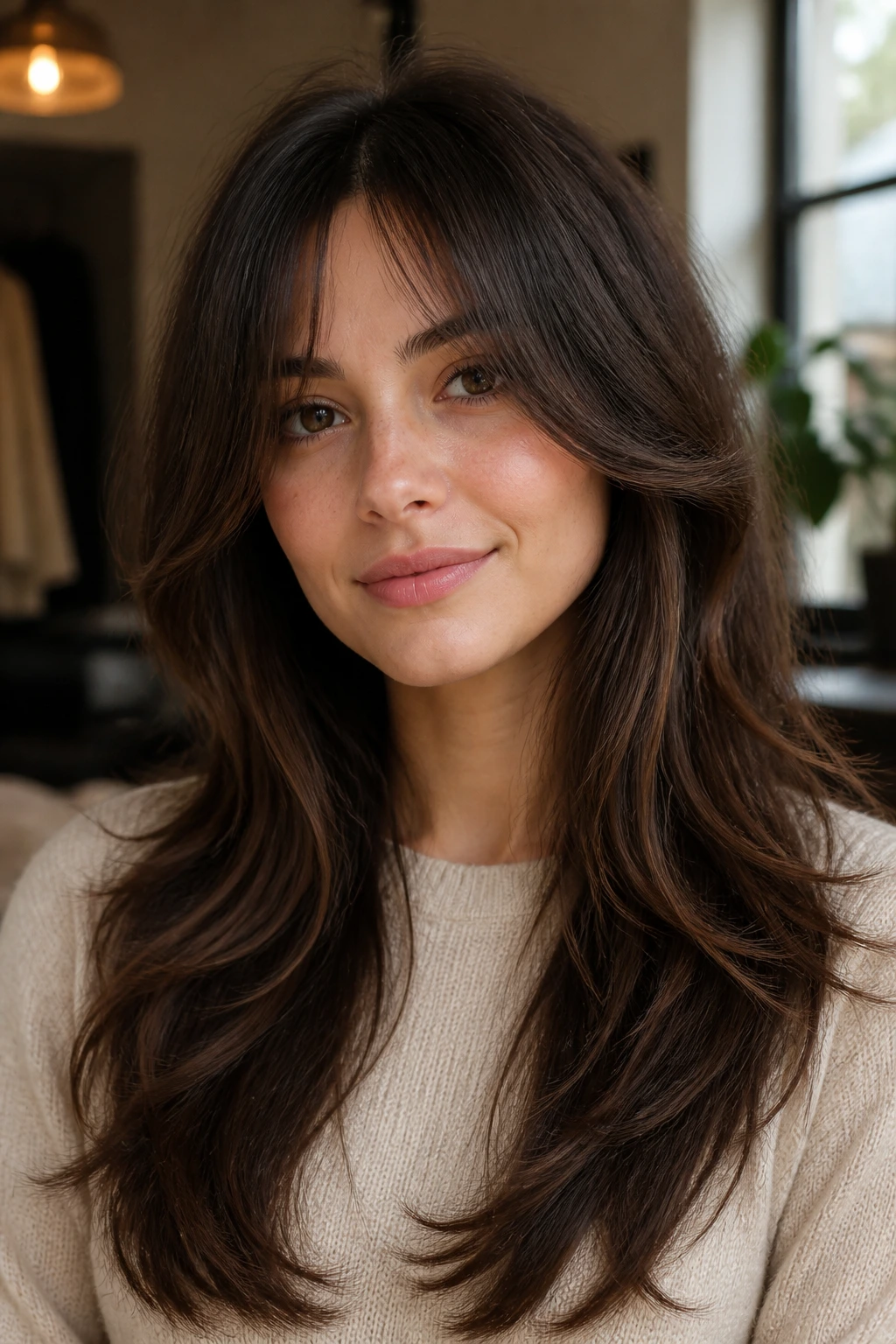
What haircut length is usually most flattering for a round face with thick hair?
Length below the chin tends to work best because it creates a longer vertical line. Shoulder length, collarbone length, and longer all give you room to control the sides without letting the face feel boxed in.
Can I wear bangs if my face is round?
Yes, but the type of bang matters. Curtain bangs, side-swept bangs, and soft fringe work better than heavy blunt bangs that sit straight across the forehead.
Is a center part a bad idea?
Not always. A center part can work with long layers, crown lift, or a low bun, but it usually looks better when the hair on each side is not equally wide at the cheeks.
Should thick hair be layered heavily or left blunt?
Neither extreme is ideal. Too blunt and it can look like a block; too layered and it can get fluffy in the wrong spots. Internal weight removal and controlled face-framing usually do the job better.
What if my hair is curly or wavy?
Then the shape needs to follow the curl pattern, not fight it. Layered lobs, twist-outs, and curly shags can work well as long as the volume stays higher at the crown and lower around the cheeks.
Can a short haircut ever flatter a round face with thick hair?
Absolutely. A side-swept pixie or soft A-line bob can be sharper than long hair if the lines are clean and the top has enough height. The bad version is a short cut that flares at the sides.
How do I stop my hair from puffing out at the cheeks?
Dry the roots upward, not sideways, and keep heavy product off the side sections. If the hair still expands, ask for internal removal in the mid-lengths so the perimeter can sit closer to the head.
How often should I trim thick hair so the shape stays good?
For most layered styles, every 8 to 10 weeks keeps the shape tidy. Bobs, pixies, and bangs usually need more frequent cleanup because thick hair grows out fast and changes the outline quickly.
The Styles That Keep Working
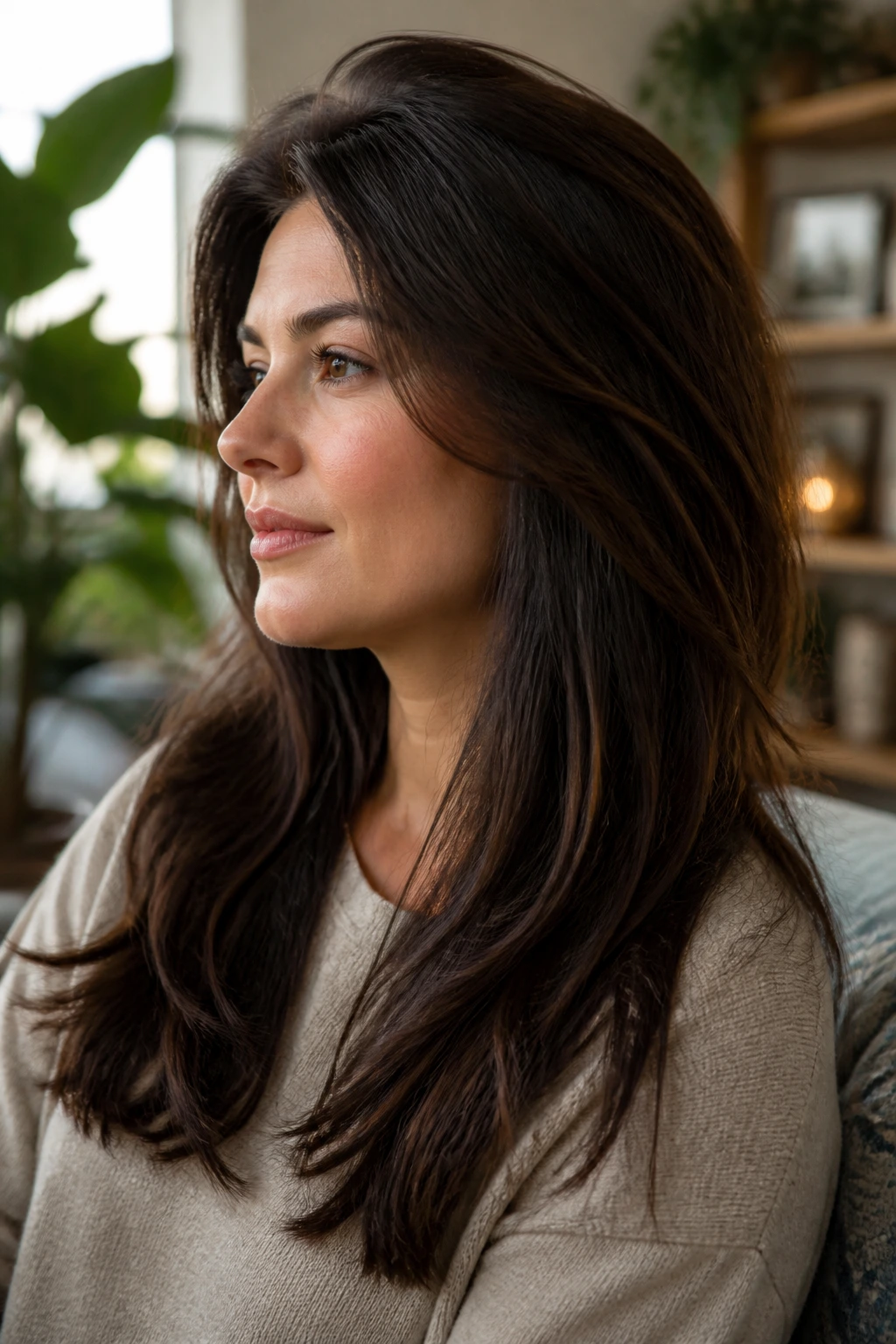
The best styles for a round face with thick hair do not fight the face or the texture. They make both a little smarter. That usually means more height on top, less width at the cheeks, and enough length or angle to keep the eye moving downward.
Some people want a long blowout. Some want a blunt-looking bun. Some want curls, braids, or a cut they can air-dry and forget. Fine. The point is not to chase one perfect shape. It’s to pick the one that gives your hair a place to land without expanding the widest part of your face.
Choose the style that matches how you actually live, then ask for the shape details that make it flatter. That’s where the good hair days start.