



Short hair can be merciless with waves. One blunt line and the whole head goes puffy; one over-layered chop and the ends flip out like they have somewhere better to be.
Oval faces have room to play, which is why short hairstyles for wavy hair and oval faces can swing from cheekbone-skimming pixies to jaw-length bobs without fighting the face shape. The sweet spot is usually somewhere between structure and movement: enough shape to keep the cut from turning fuzzy, enough softness that the wave still looks like a wave.
The cuts that work best here do one of three things. They either open the face with a clean fringe or side sweep, tuck the width at the cheekbone, or keep the neck and jaw light so the bend in the hair can do the talking. That sounds simple. It isn’t always simple in the chair.
Why These Cuts Hit the Sweet Spot
-
Oval faces can handle contrast: A blunt edge, a choppy crown, or a deep side part all sit comfortably on an oval face because the proportions stay balanced instead of fighting each other.
-
Waves need room, not chaos: A good short cut keeps enough weight in the right places so the hair doesn’t explode at the sides by midday.
-
Short length makes the wave look fuller: When the ends sit above the shoulders, the bend shows up faster and with less effort, especially if your hair tends to go flat when it gets long.
-
Fringe placement changes everything: A curtain fringe, side sweep, or soft micro-bang can shift attention to the eyes and cheekbones without dragging the face down.
-
The right cut cuts styling time in half: You’re not trying to force a slick finish every morning. You’re aiming for a shape that air-dries with a little mousse and still looks deliberate.
-
These styles grow out well: That matters more than people admit. A short wavy cut that still looks decent six weeks later is worth more than one that needs a rescue blow-dry every three days.
1. Soft Textured Pixie
A pixie on wavy hair can look crisp, but the softer version is the one that usually wins. Keep the top at about 2 to 3 inches, leave a little bend around the crown, and taper the sides close enough that the shape reads clean from the front.
What makes this cut work on an oval face is the lift. You get height where the face can handle it, and the nape stays neat so the whole thing doesn’t puff outward. The wave adds a broken-up edge that keeps a pixie from looking too severe.
Ask for piecey texture, not a shredded top. That difference matters. Too much razor work and the wave starts frizzing into a halo; enough internal shaping and you get movement without the fluff. A dab of mousse on damp hair and a quick scrunch is usually enough. If your waves are coarse, a pea-size cream under the mousse keeps the finish less dry.
Styling sweet spot
Wear this one with a side fringe if you want a little softness, or sweep the top back with fingers if you like a sharper outline. Either way, it should feel lived-in, not shellacked.
2. Curly-Edged French Bob
This bob sits around the jawline and looks especially good when the wave hits the end with a small flip or curl. It has the clean outline of a classic bob, but the edge is softer, a little less polite. That softness is the point.
Oval faces can carry this cut because the jaw-length line lands in a flattering place without widening the cheeks. The hair brushes the face instead of hiding it. If your waves are loose, the bob reads chic and tidy. If your waves are stronger, it gets a bit more Paris-café energy, which is fine by me.
The key is restraint. Don’t over-layer the back. A couple of subtle interior layers are enough to stop the bottom from turning into a shelf. I like this cut best with a middle part when the hair is pretty even, or a shallow off-center part when one side needs a little lift. Air-dry it almost all the way, then tuck the ends under or let them kick out on their own. Both can work.
3. Chin-Length Shag
Why does the shag keep showing up for wavy hair? Because it respects the bend instead of sanding it down. Chin length keeps the shape close to the face, while the layers take the weight off the sides so the cut doesn’t balloon.
On an oval face, a chin-length shag makes the eyes and cheekbones do more of the work. The shorter front pieces add motion near the jaw, and that little bit of choppiness keeps the cut from feeling flat or dated. If your hair is thick, this is a relief. If it’s finer, the layers need to stay soft so you don’t end up with see-through ends.
How to wear it
A light fringe helps. Curtain bangs, longer piecey bangs, even a cheekbone-grazing side sweep all fit here. Blow-dry the fringe first if you’re doing any heat styling; wet bangs are the part that will betray you fastest.
4. Grown-Out Crop with Side Sweep
A crop with some length left on top feels easy because it doesn’t demand a perfect finish. The side sweep gives the face a diagonal line, which oval faces tend to wear well, and the short sides keep the shape from getting boxy.
This is the cut for somebody who wants short hair but not a “styled” look every day. Let the top land around 3 to 4 inches so the wave has somewhere to bend, then taper the sides close enough that the profile stays tidy. The side sweep should fall softly across the forehead, not sit like a comb-over. That sounds like a small difference. It isn’t.
A tiny amount of matte paste on dry hair is enough to pull this together. Use less than you think. The goal is separation, not control. On windy days, this cut still looks intentional because the movement is part of the shape.
5. Layered Wavy Bob with Curtain Fringe
This is the one I’d hand to someone who wants a short cut but still wants to feel like they have hair. The bob sits around the cheekbone to jawline zone, and the curtain fringe opens the center while the layers keep the sides from looking too dense.
The magic here is the balance between softness and structure. Oval faces can take a fringe without getting overwhelmed, and wavy hair gives the fringe a little bend instead of a stiff curtain effect. When the fringe is cut to graze the brow and cheekbone, it pulls attention upward in a quiet, flattering way.
If your waves are loose, keep the layers longer and ask for just enough removal to prevent the ends from hanging heavy. If your waves are stronger, the stylist may need to carve some shape under the top layer so the bob doesn’t puff. I’d rather see this cut slightly longer than too short. A bob that sits a bit below the jaw tends to move better as it grows.
6. Asymmetrical Jawline Bob
A slight asymmetry can wake up a short haircut fast. One side sits maybe half an inch to an inch longer, and that tiny shift creates a diagonal line that oval faces usually handle without fuss.
What I like about this cut on wavy hair is how it catches movement. The wave on the longer side gets a little more room to swing, while the shorter side keeps the whole shape from drifting into mush. It’s a clean look, but not a stiff one. That matters.
Ask for a controlled asymmetry, not a dramatic angle unless you want people to notice the cut before they notice you. A dramatic angle can be fun, but it can also fight natural wave patterns if one side flips more than the other. The softer version is easier to live with. It can be tucked behind one ear, pushed to the side, or worn loose without requiring a lecture from your mirror.
7. Tapered Crop with Long Top
This cut has a bit of attitude. The sides and back are kept short and close, while the top stays longer so the wave can rise, fall, and separate in pieces. It looks especially sharp if your hairline at the nape grows fast and you don’t want a bulky outline.
Oval faces can take the extra height on top without looking stretched, which is why this cut works better here than on many other face shapes. The taper keeps the silhouette neat, and the longer top gives you styling room. You can push it forward, part it hard to one side, or let it fall with a loose ridge.
What makes it different
It’s not a pixie, and it’s not a bob pretending to be edgy. It sits in that useful middle ground where the head shape stays visible and the wave becomes the feature, not the problem.
A light blow-dry at the roots helps if your hair collapses fast. If it already holds volume, air-dry and finger-shape the top instead.
8. Piecey Bixie
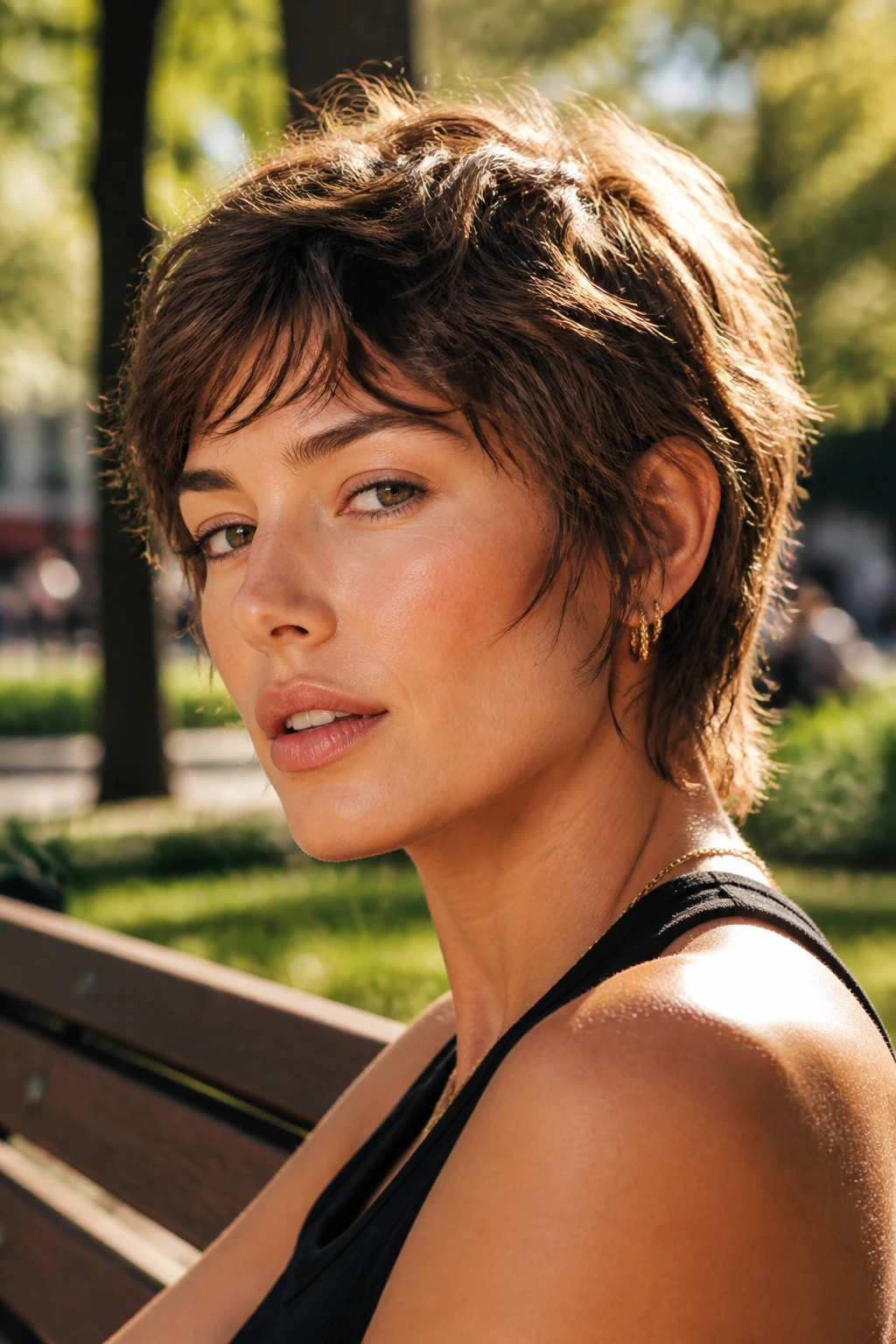
The bixie is what happens when a bob and a pixie stop arguing. For wavy hair, that middle zone can be gold: short enough to feel fresh, long enough to keep the wave visible, and choppy enough that the texture looks deliberate.
The face-framing pieces usually skim the cheekbone or just below it, which is why oval faces wear this cut so easily. You get movement without the weight of a full bob. You also avoid the harshness that some very short pixies can have if the top is cut too tight.
This cut likes a bit of product, but not a lot. A mousse at the roots and a soft cream through the mids will keep the pieces separated once they dry. If you want more definition, twist a few front sections around your fingers while they’re damp. Just a few. Don’t turn the whole head into a project.
The bixie is one of those cuts that looks better slightly undone. That’s not laziness. That’s the point.
9. Collarbone-Grazing Lob
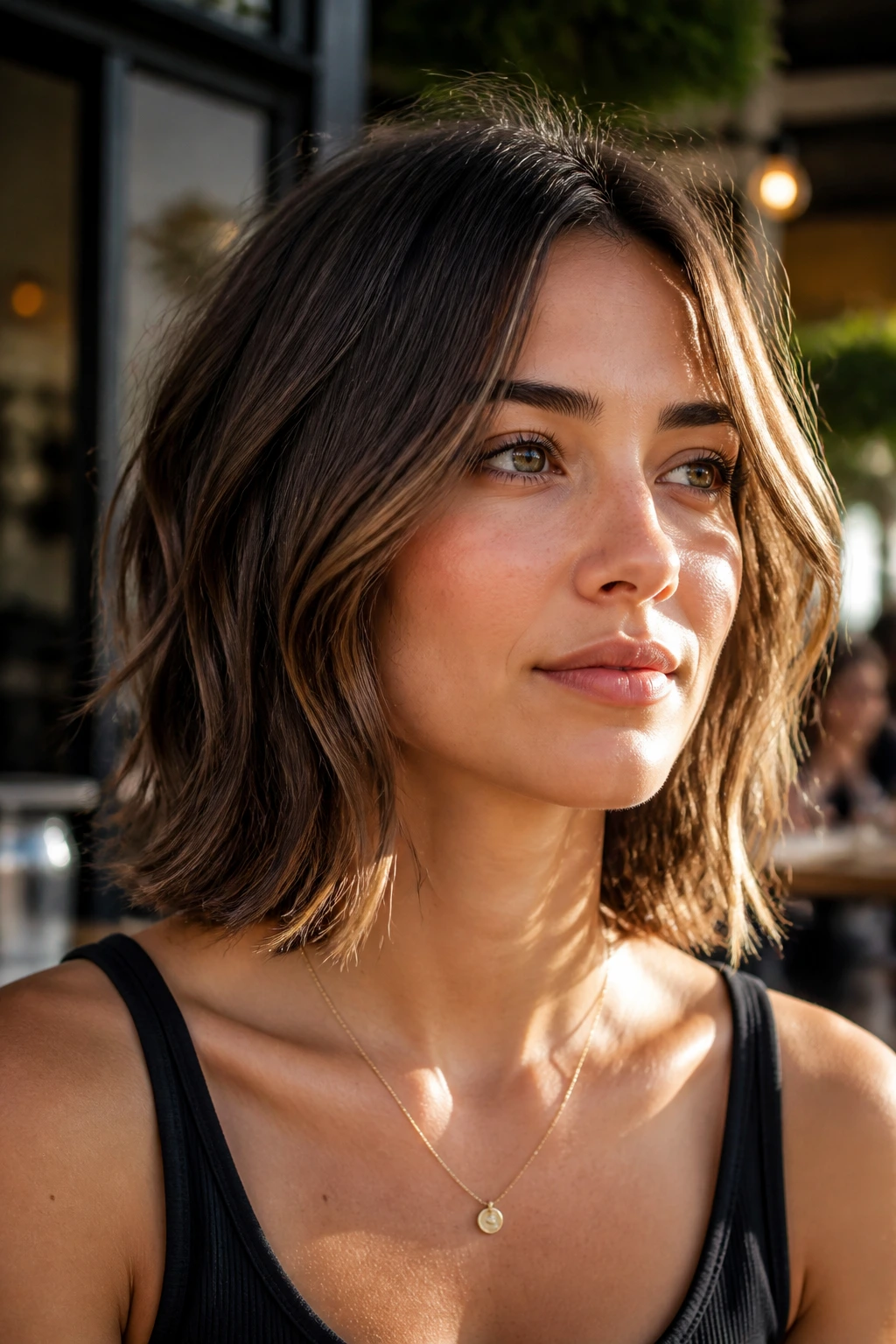
Technically, this is the longest cut in the group, and yes, it still counts. If you want to keep some length while testing shorter hair, a lob that brushes the collarbone is a smart place to start. Waves show up well at this length because there’s enough weight to stop the ends from flaring.
Oval faces usually wear this shape beautifully because the line lands below the chin and doesn’t crowd the face. The lob can be center-parted for a balanced look or pushed off to one side for a little movement around the cheek. The cut is forgiving, which is probably why stylists keep recommending it. They’re not wrong.
How to use it
If your waves are fine, ask for soft layers around the front only. If your waves are thick, ask for interior debulking so the lower half doesn’t turn into a triangle. A collarbone lob with a clean edge and a little bend at the ends is one of the easiest ways to look like you spent more time on your hair than you did.
10. Rounded Bob with Hidden Layers
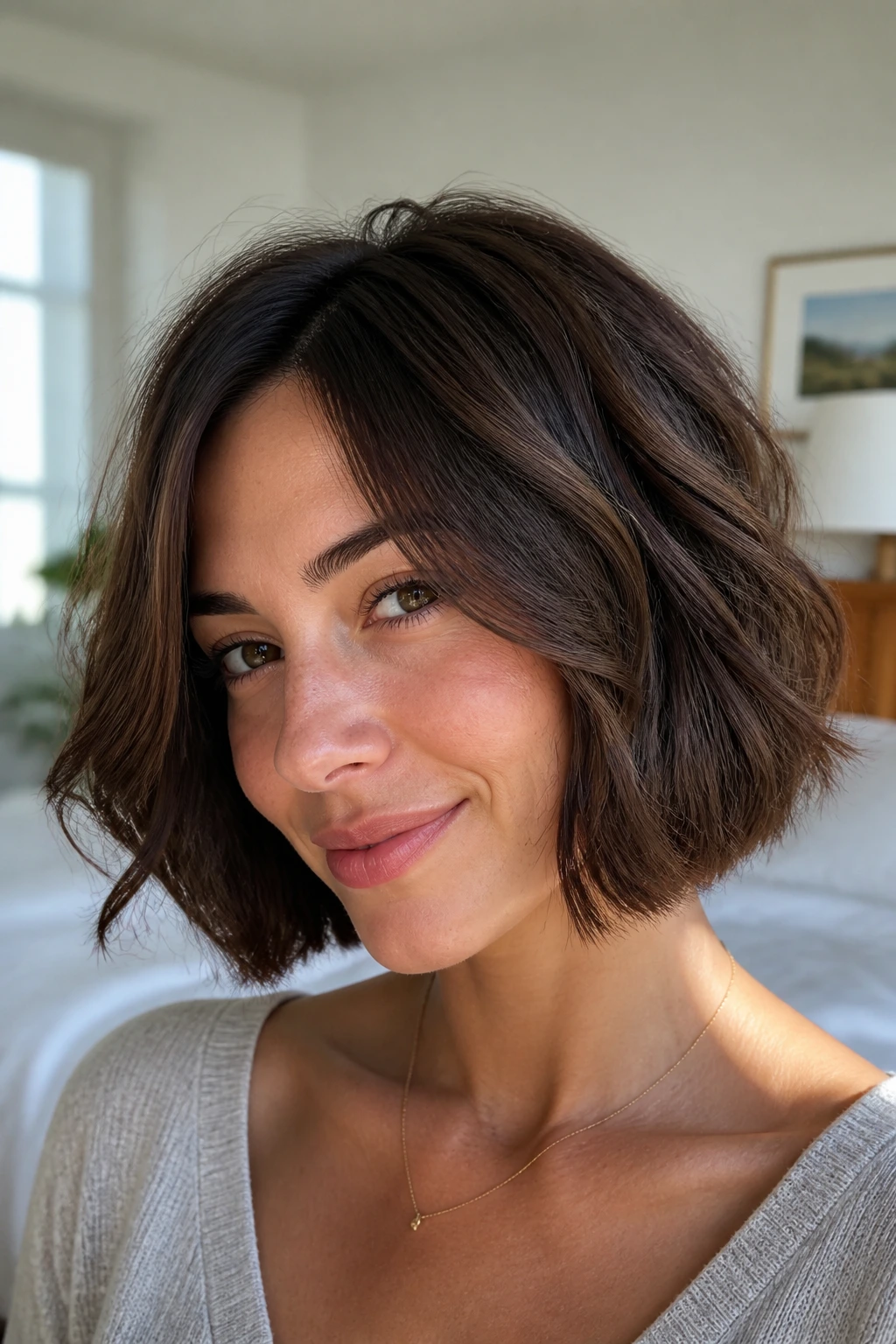
A rounded bob sounds formal until you see it on wavy hair. Then it makes sense. The shape follows the curve of the head, which keeps the haircut tidy, and the hidden layers stop the bottom from sitting like a block.
Oval faces can carry the roundness because the proportions stay gentle. The curve around the jaw and cheekbone softens the face rather than closing it in. If your hair tends to puff at the sides, this bob can be a lifesaver, but only if the layers stay internal. A visible, choppy layer stack can make the whole thing look too busy.
I like this cut with a side part when you want a little lift at the crown. A middle part works too, especially if your waves naturally fall evenly. The finish should look curved, not helmet-like. That distinction is the entire point. If you can see the shape of the cut but not the mechanics of the cut, the stylist did it right.
11. Wavy Mixie

The mixie is the wild cousin of the pixie. It keeps the short crown and fringe energy of a pixie, then lets the back and sides grow a bit longer, closer to a soft mullet shape. On wavy hair, that extra length becomes movement instead of mess.
Oval faces can wear the mixie because the face stays open while the nape gets a little attitude. The top can be tousled, the fringe can be piecey, and the back can fall in soft layers that flick out as they dry. It’s not for someone who wants invisible hair. It is for someone who likes shape with a little bite.
This cut tends to look best when the wave pattern is left alone. Scrubbing it straight defeats the whole thing. A light cream, a bit of root lift, and air-drying with your hands out of it will usually do more than a round brush ever will. There’s something pleasingly blunt about it. Short hair, yes. But with enough softness to keep it from looking severe.
12. Mini Wolf Cut

The wolf cut gets talked about like a costume, but the mini version is much easier to wear. On wavy hair, it gives you a little crown volume, face-framing layers, and a bit of rebellious texture without dragging the whole haircut into mullet territory.
Oval faces work well with the mini wolf because the layers can be positioned to skim the cheekbones and chin instead of widening the jaw. That matters. Put the shortest face-framing pieces too high and the whole thing can feel puffy. Keep them low enough to break up the face shape, and it starts to look sharp in a good way.
What makes it different from a shag
A shag often feels softer and more layered through the sides. The mini wolf keeps more drama at the crown and nape, which means the shape reads a little bolder, especially when the hair dries with natural bend.
I’d choose this for wavier hair that already has some grit and shape. Very soft waves can wear it, too, but they may need a touch more mousse at the roots.
13. Slick Side-Part Bob

This one is for the days you want polish without flattening everything into a straight style. A deep side part creates a strong diagonal line, and the bob sits between jaw and cheekbone length so the wave can show even when the top is smoothed down a bit.
Oval faces are friendly to this look because the side part changes the balance without making the face look long or narrow. The result feels clean, a little dramatic, and less fussy than people expect. If your waves have a natural bend, you do not need to fight them. Just smooth the roots, keep the mids soft, and let the ends hold their own shape.
A little shine cream on the surface is enough. Too much product turns this style greasy fast, especially on shorter lengths. The trick is to make it look intentional, not lacquered. Tuck one side behind the ear and leave the other side loose if you want a small asymmetry without changing the cut.
14. Feathered Crop with Nape Clean-Up
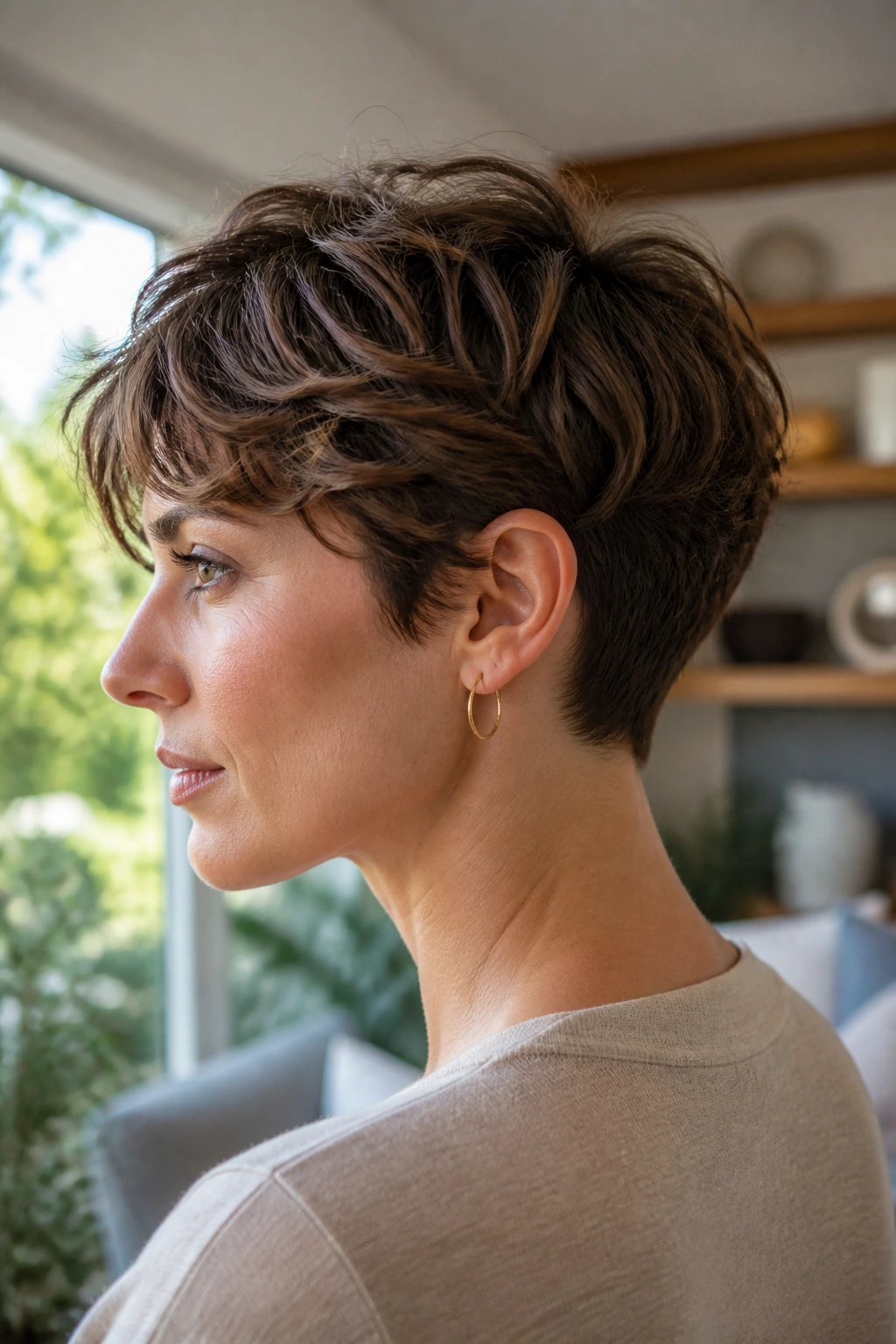
A feathered crop sounds old-school until you see it on modern waves. The feathers are soft, not wispy in a dated way. They’re there to remove bulk, especially around the back of the head and near the ears, where short wavy hair often gets bulky fast.
Oval faces can wear this shape because it leaves enough softness around the front while keeping the nape neat. That clean-up at the back matters more than people think. A tidy nape makes the whole haircut look expensive, even when the style itself is low-key. The front can be a touch longer, with bits that fall over the forehead or temple.
Key thing to ask for
Ask for feathering through the top and a tapered neckline, not a uniform clipper cut all the way up. That keeps the cut feminine if that’s the look you want, but it also works for anyone who just wants the shape to move.
This is a good cut for thick waves that puff quickly at the base.
15. Bubble Bob for Waves
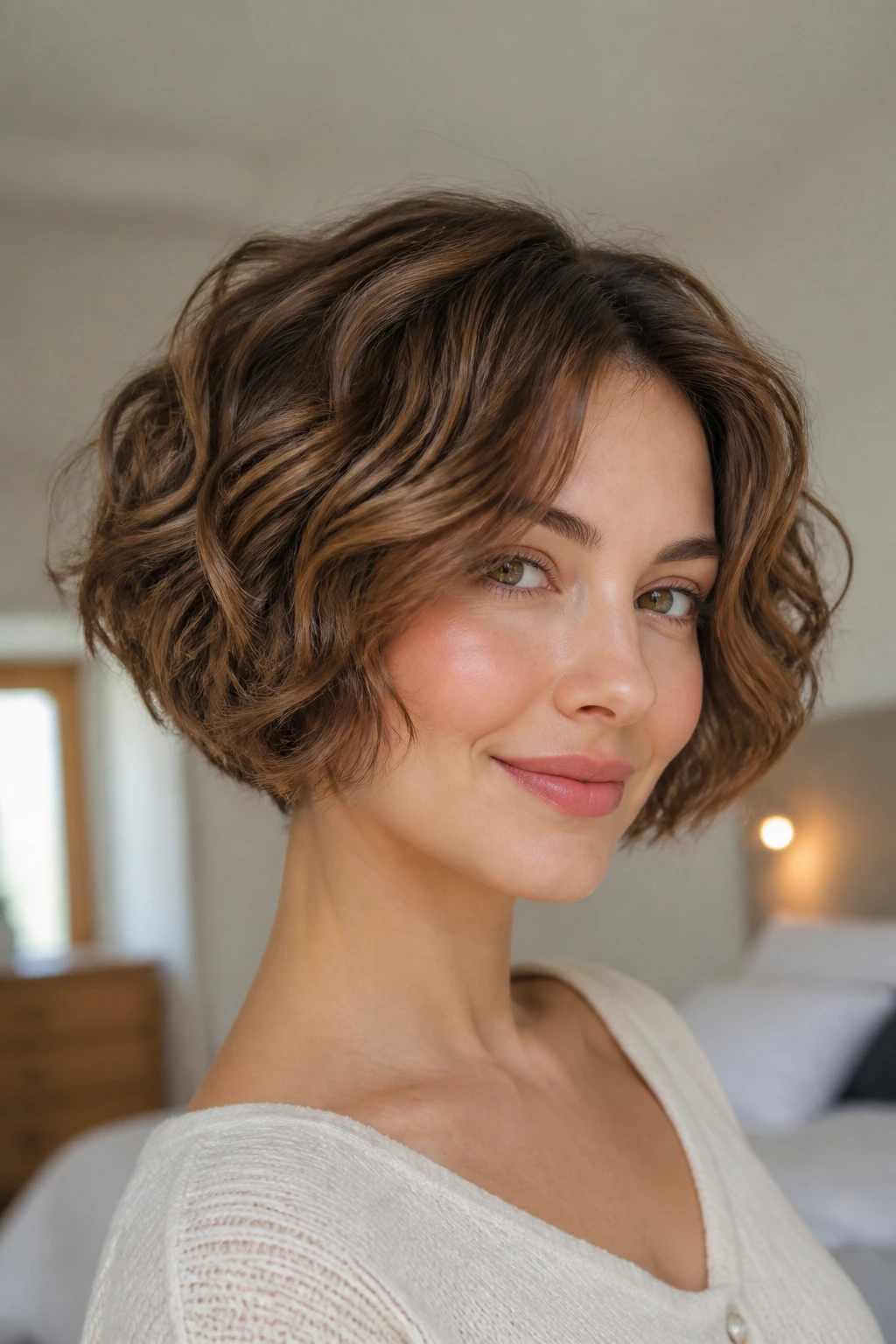
The bubble bob has a rounded, slightly lifted shape that sits away from the neck and curves under at the bottom. On wavy hair, it creates a soft dome effect that feels playful rather than stiff when the layers are handled carefully.
Oval faces can wear the bubble shape because the roundness doesn’t crowd the face. The bob frames the jaw and cheekbones with a smooth line, and the wave keeps it from reading too neat. If the ends are cut blunt and the interior is lightly shaped, the bob holds that floating effect better than a heavily layered version.
How to style it
A round brush at the ends can help if you want a tidier curve, but air-dried waves with a touch of cream can look better if you’re after something less polished. The cut likes lift at the crown and softness at the jaw. That combination is the whole game.
This is a solid choice if you want short hair that still feels a little feminine and rounded without going full retro.
16. Tousled Ear-Length Cut
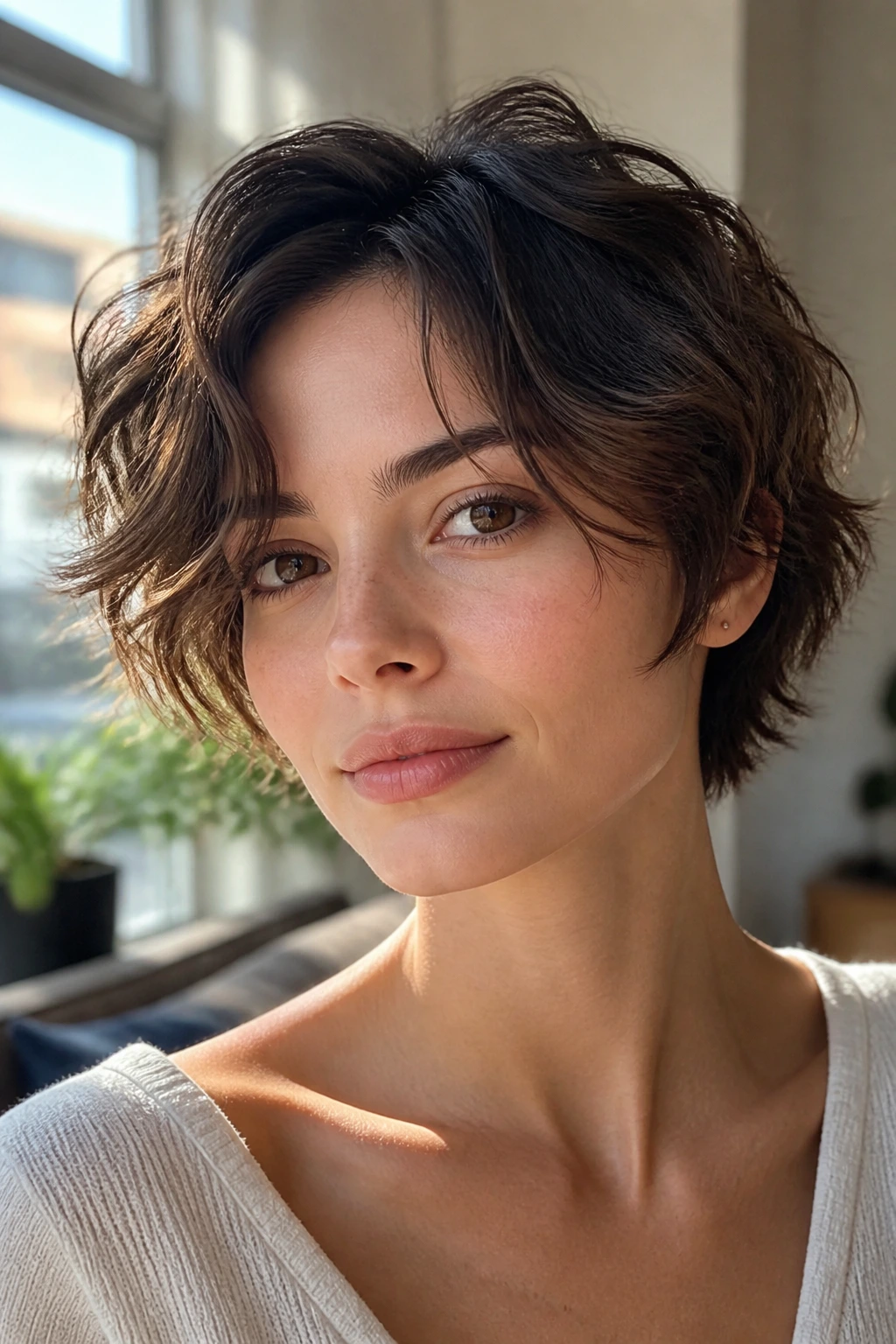
Ear-length hair is short enough to feel bold, but on wavy texture it can still look soft if the lines are handled right. The best version has a little movement around the temples and a bit of space at the crown so it doesn’t cling to the head.
Oval faces are one of the easiest matches for this length because the cut reveals the face without making it feel bare. The cheekbones get room. The jaw stays visible. You’re not hiding anything, and that can be a relief when the hair is naturally doing most of the work anyway.
I like this cut with slightly longer pieces in front, just enough to brush the cheek or sit near the ear. That small extra length helps the transition from face to hair. If the sides are clipped too tight, the wave has nowhere to go and the shape can feel severe. Give it a little breathing room and it softens fast.
17. Modern Pageboy with Bend
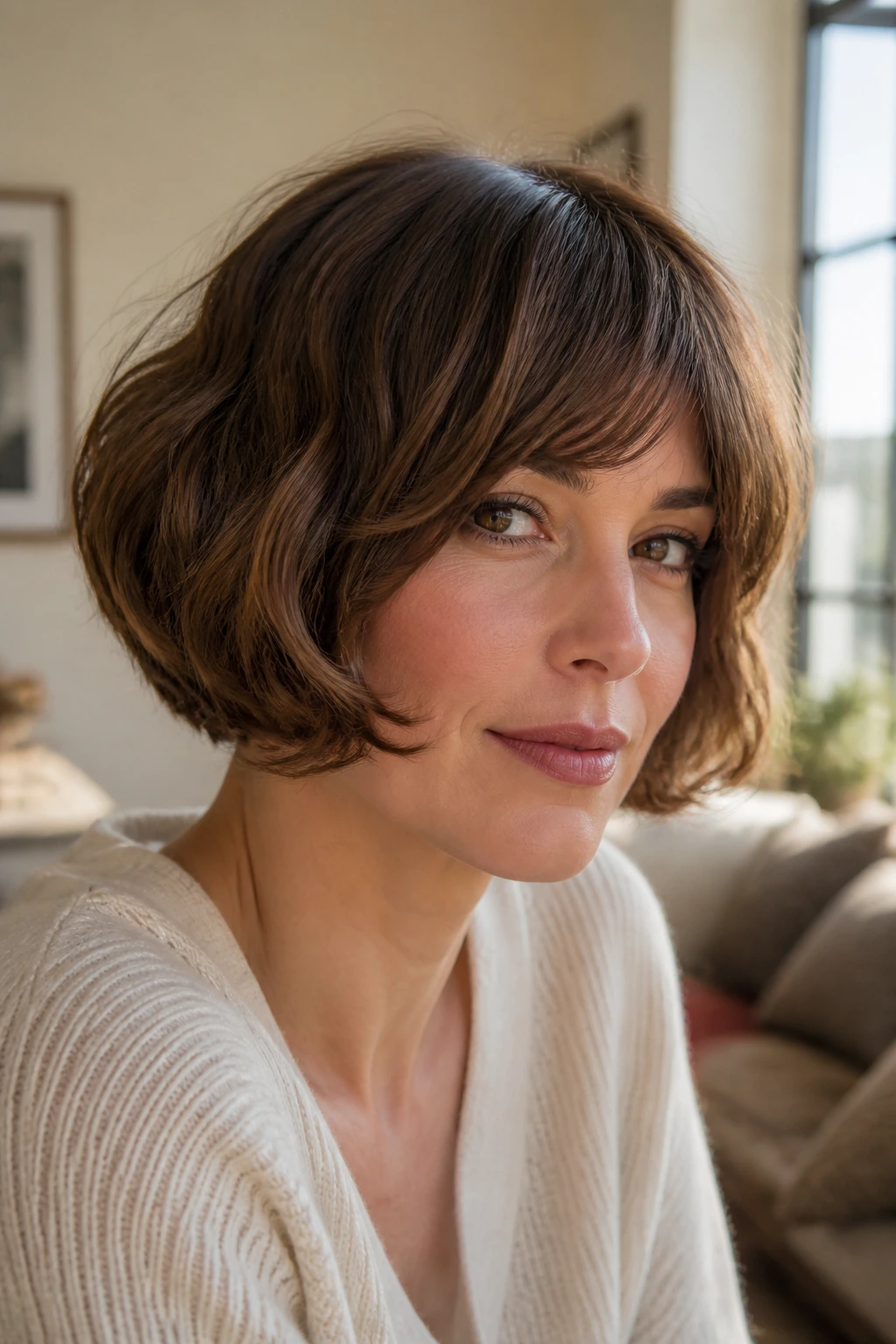
The pageboy used to mean one thing: a smooth, curved shape with tucked-under ends. The modern version is less rigid and more forgiving, especially on wavy hair. You keep the rounded outline, but the bend is softer and the layers are hidden.
Oval faces are a good match because the pageboy sits around the jaw and cheek area without making the face feel too long. If the front pieces are cut slightly longer, the line sweeps instead of stopping abruptly. That tiny change makes a big difference. The haircut goes from severe to elegant in one snip.
Why it works now
Wavy hair keeps the pageboy from looking too polished. The bend at the ends breaks the formality, and the round silhouette becomes more wearable. I’d avoid over-texturizing this one. You want the curve to be visible. The wave is the accent, not the excuse for a shaggy finish.
18. Sculpted Pixie-Bob
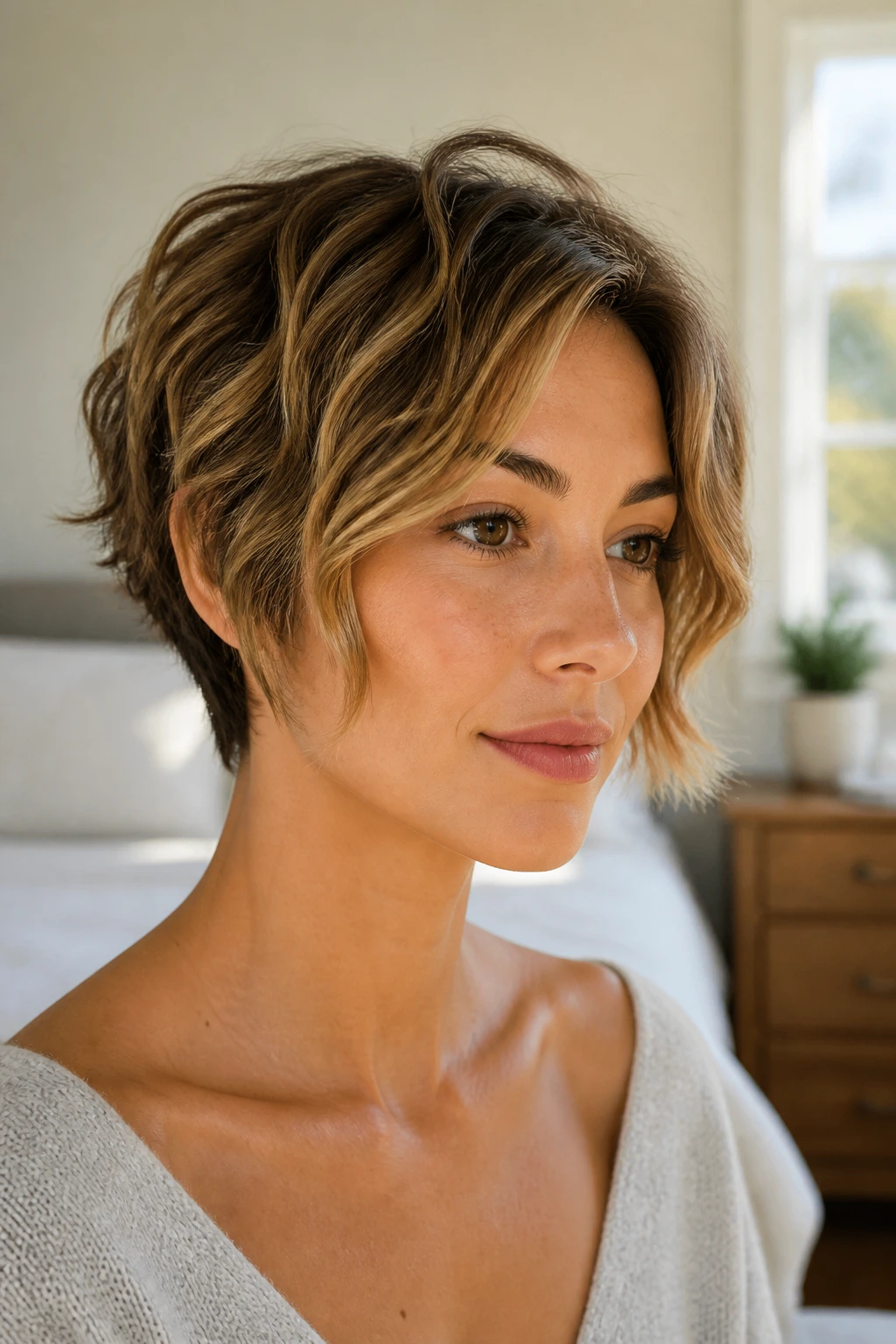
This is the cut I’d choose for someone who wants the freedom of a pixie and the shape of a bob without committing to either extreme. The crown stays short enough to feel light, the sides keep a little length, and the front pieces frame the face in a way that works nicely on oval proportions.
Wavy hair gives this cut its best feature: texture. The pieces separate just enough to show the layers, and the whole shape can be styled forward, side-swept, or swept off the face. If you have fine waves, ask for softness around the perimeter so it doesn’t collapse. If your waves are dense, ask for internal reduction so the bob side doesn’t bulk up.
This is one of those rare cuts that can look neat in the morning and a little mussed by afternoon without falling apart. That’s a useful trait. Hair should be allowed to age gracefully during the day. This one usually does.
How to Choose a Cut That Works With Your Wave Pattern
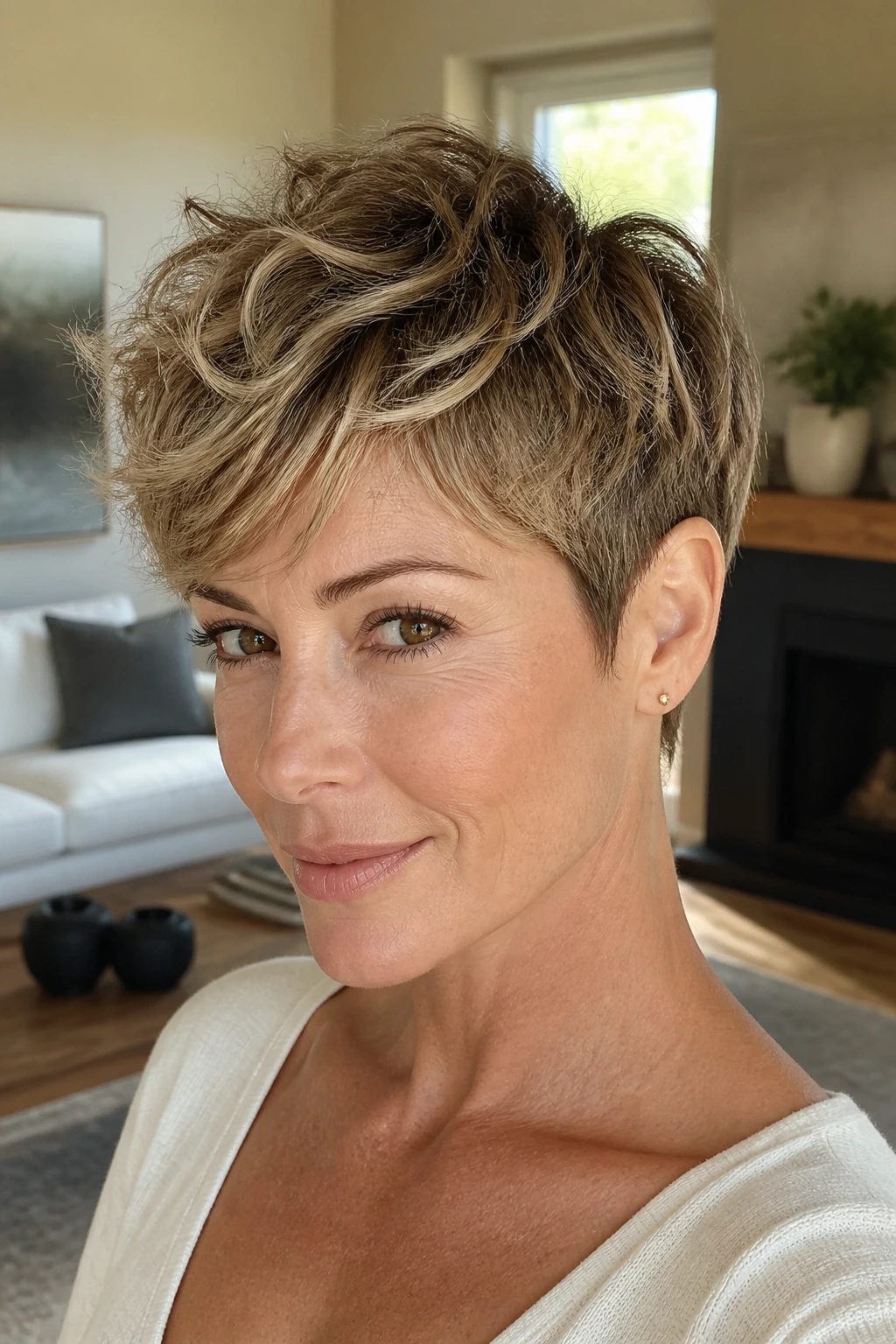
The same haircut can behave like two different styles depending on whether your waves are loose, medium, or dense. Loose waves need less layering because they lose shape fast when too much weight comes out. Stronger waves need more internal removal because the volume piles up at the sides if the cut is too blunt.
Oval faces give you room to play, but that doesn’t mean every short cut is equal. If your face is slightly longer within the oval range, a chin-length bob or side-swept crop can keep the proportions balanced. If your face is softer and slightly broader through the middle, a cut with height at the crown and lightness at the jaw usually reads better.
Hair density changes the picture too. Fine wavy hair often looks fuller in a blunt bob with a little face-framing detail. Thick wavy hair usually needs shape carved inside it, or the bottom can turn square. Coarse wave patterns tend to behave best when the ends are left a touch longer and the texture is softened, not razored to bits.
One more thing. Cowlicks at the crown and temple swirl patterns at the hairline matter more in short hair than in long. A good stylist will cut around them, not against them. If someone ignores those quirks, you’ll be styling the same section every morning and wondering why the cut feels harder than it should.
Essential Tools and Products for Short Wavy Hair
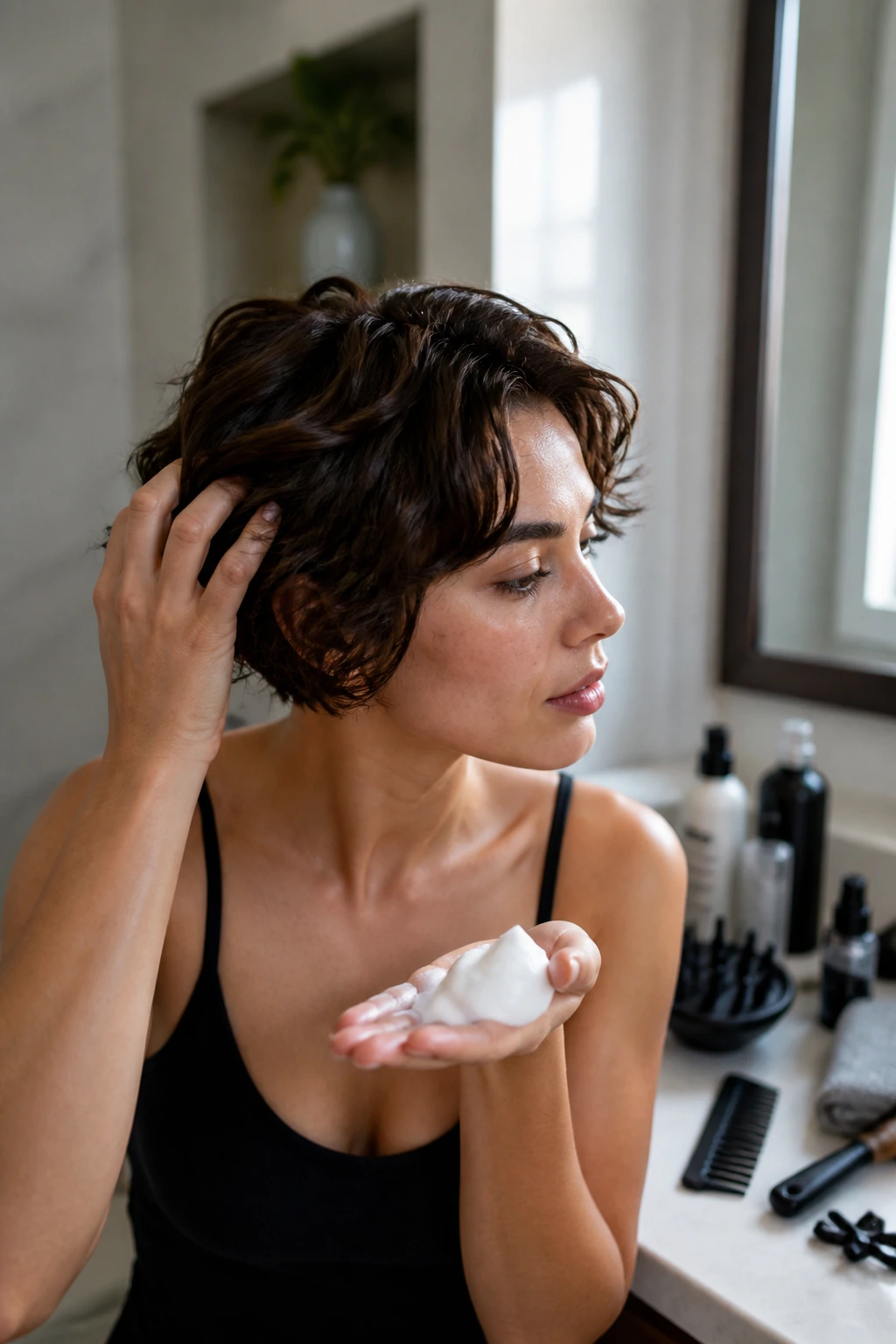
-
A lightweight mousse: Gives the wave enough memory to dry with shape instead of slipping flat by lunch.
-
Curl cream or wave cream: Best for coarse or frizz-prone hair that needs a bit more softness and control.
-
Texturizing spray: Useful on dry hair when the cut needs separation through the ends and crown.
-
Wide-tooth comb: Better than a brush for distributing product without pulling the wave apart.
-
Microfiber towel or cotton T-shirt: Helps remove water without roughing up the cuticle and causing puffiness.
-
Diffuser attachment: Worth using if you want more lift at the roots and a cleaner bend through the mids.
-
Small round brush: Helpful for bangs, side sweeps, and rounded bobs that need the ends nudged under.
-
Sectioning clips: Keep the front pieces out of the way while you dry the rest; short hair gets tangled fast when you rush it.
How to Talk to Your Stylist Without Guessing

Bring photos, but bring the right ones. Three is a good number. One of the front, one of the side, one of the back. And please, choose pictures with hair that looks like yours when it’s not professionally blown out. A cut that only works after a salon blow-dry is not the same thing as a wearable cut.
Say where you want the shortest point to sit. Cheekbone, jawline, nape, under the ear. Those landmarks matter more than vague words like “short but not too short.” If you want the wave to show, say so. If you hate pyramid shape, say that even more loudly. Stylists can shape around those preferences, but they can’t read them off your face.
Ask how often the cut will need trimming. A pixie and a soft bob live on different schedules. Also ask what happens as it grows out. That question weeds out a lot of pretty-looking cuts that turn awkward after four weeks. If the stylist can explain the grow-out without blinking, that’s a good sign.
How to Style Short Wavy Hair Without Fighting It

Short wavy hair usually looks best when it’s about 70 to 80 percent dry before you start touching it too much. That’s the point where the shape has begun to set, but the hair still has enough moisture to respond. If you scrunch too early, you can rough up the cuticle. If you touch it too late, the product sits on top and never really gets in.
A diffuser helps if you want lift without frizz. Keep the heat medium, not hot, and move the dryer around instead of camping in one spot. If you’re air-drying, clip the roots for volume at the crown and leave the front alone until the end. The front pieces are the ones that decide whether a short cut looks stylish or accidental.
On day two, a mist bottle and a fingertip-sized amount of cream can wake the shape up fast. Don’t soak the whole head. Just dampen the flattened areas, re-scrunch, and let the ends find their bend again. If the crown goes limp, lift a few sections and aim air at the roots for 20 to 30 seconds. That tiny bit of attention makes a bigger difference on short hair than on long hair.
Common Mistakes That Flatten the Cut

-
Cutting too many layers into loose waves: The ends start to fray, and the whole shape can puff up instead of falling in clean pieces. Ask for soft removal, not a chopped-up outline.
-
Going too short at the sides on thick hair: The hair widens at the cheek and temple, which makes even a cute crop look bulky. Leave a bit more length where your hair wants to spread.
-
Using too much cream or oil: Short cuts pick up product fast, so one heavy squeeze can make the style collapse. Start small, then add only if the ends still feel dry.
-
Ignoring the fringe line: Bangs that are too blunt or too short can dominate an oval face. Keep them soft enough to move with the rest of the cut.
-
Blow-drying everything straight down: That kills the wave and can make the head look narrower at the crown and wider at the jaw. Dry with a little lift and bend, even if the finish is tidy.
-
Skipping trims for too long: Short wavy cuts lose shape faster than long ones. A bob that has grown half an inch in the wrong place can go from crisp to bulky in a hurry.
Ways to Bend the Style Toward Softer, Sharper, or Messier

Soft Focus Fringe: Keep the front pieces longer and feather them around the brow or cheekbone. This works when you want the cut to feel gentler, especially on days when your waves are doing a lot of volume on their own.
Sharper Edge Crop: Keep the outline cleaner and reduce the fluff through the crown. A little matte paste gives the shape some bite, and the result feels modern without looking severe.
Air-Dry Messy Bob: Let the wave dry with a center part and use only a light cream. The final look is relaxed, a touch undone, and easy to wear when you do not want to spend 20 minutes refining every bend.
Polished Side Sweep: Pull the front across the forehead and smooth the roots while the ends stay wavy. This gives a short cut a more dressed-up feel and works well for dinners, events, or days when you want the hair to look deliberate.
Grow-Out Friendly Shape: Keep the perimeter slightly longer at the jaw or neck. The cut stays wearable longer between trims, which is worth thinking about if you dislike frequent salon visits.
Maintenance, Trims, and Grow-Out Planning
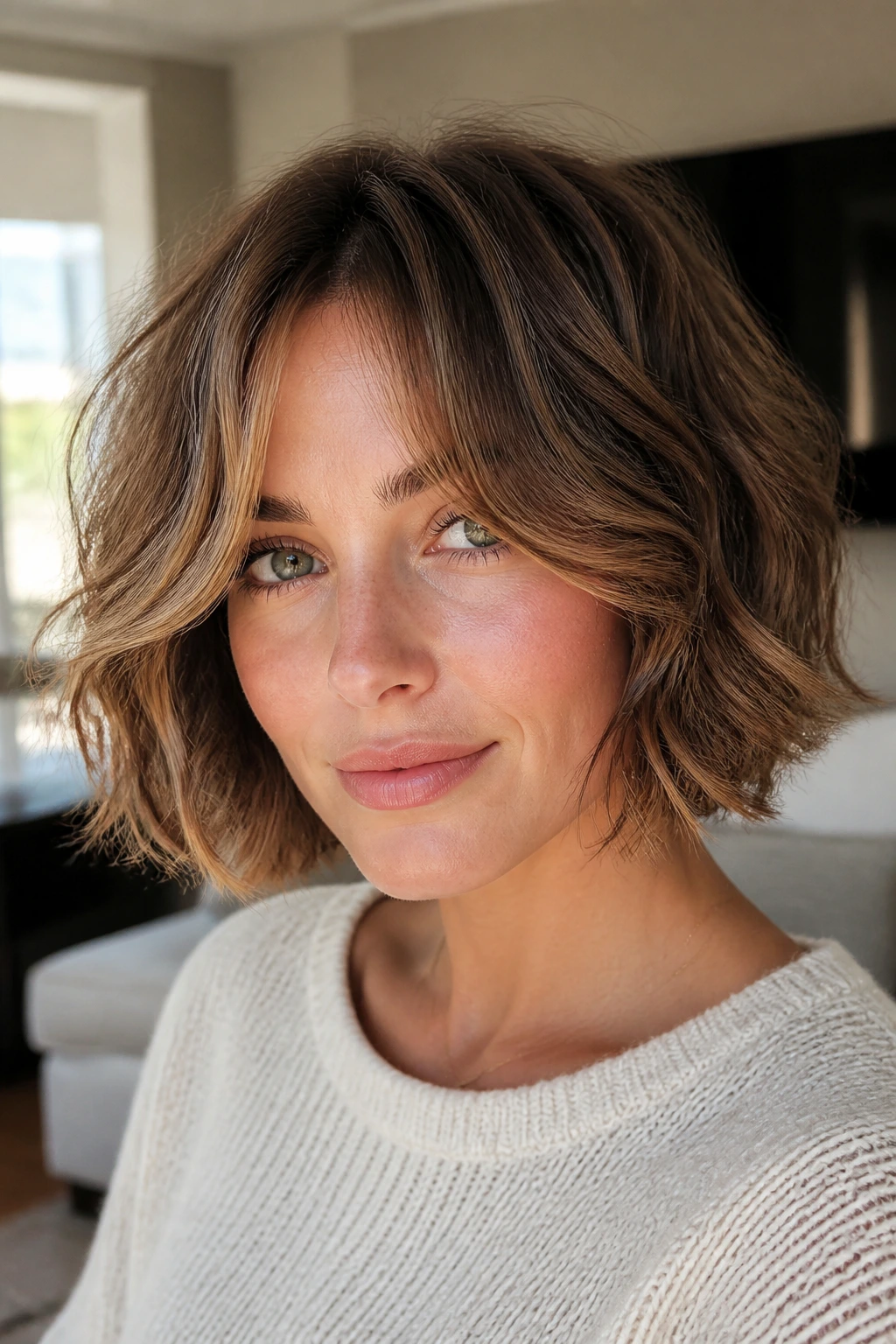
Short wavy hair behaves best when it’s trimmed on schedule. Pixies and crops usually need attention every 4 to 6 weeks if you want the shape to stay crisp. Bobs and bixies can often stretch to 6 to 8 weeks. Lobs give you more breathing room, but they still start to lose their line when the ends get too heavy or the front pieces fall past the intended frame.
The trick with grow-out is planning the second version of the haircut before you leave the salon with the first one. A great short cut should have a clear next stage. A pixie should become a bixie before it becomes a helmet. A bob should soften into a lob rather than hang in a weird half-length stage. If the stylist can map that path out, the grow-out will feel less annoying.
Sleeping on a satin or silk pillowcase helps keep the wave from getting crushed at the crown. On mornings when the shape has flattened, a few sprays of water at the roots and a quick finger-twist through the front can bring it back. Don’t wait until the style is completely gone. Short hair responds faster when you catch it early.
Frequently Asked Questions

What short haircut is most flattering for wavy hair and oval faces?
A layered bob, bixie, or soft pixie usually works well because oval faces can handle a range of lengths and wavy hair brings the movement. The best choice depends on how much styling you want to do and how much width your hair creates at the sides.
Do wavy short hairstyles need layers?
Usually, yes, but not always in a heavy way. The point is to remove enough bulk so the cut doesn’t triangle out, while still leaving enough weight for the wave to form cleanly.
Is a pixie cut too short for wavy hair?
Not if the top is left long enough for the bend to show. A too-short pixie can look fuzzy on waves, but a textured pixie with 2 to 3 inches on top can be sharp and easy to wear.
Should I choose a bob or a lob if I’m nervous about going short?
A lob is the safer starting point because it keeps enough length to pull back or tuck behind the ear. If you like the shape after a few weeks, you can always go shorter next time.
How do I stop short wavy hair from puffing out at the sides?
Keep bulk removal focused below the cheekbone and around the back of the head, not just at the ends. Product choice matters too; lightweight mousse and a small amount of cream usually behave better than heavy oils.
Can I wear bangs with an oval face and wavy hair?
Absolutely. Curtain bangs, soft side-swept bangs, and longer fringe pieces tend to work best because they move with the wave instead of fighting it. Very short blunt bangs need more upkeep and can be harder to control.
How often should I trim a short wavy haircut?
Plan on 4 to 8 weeks, depending on the shape. Pixies need the tightest schedule, while lobs can stretch farther before the outline starts to drift.
What if my waves get frizzy as they dry?
Use less towel friction, not more product. A microfiber towel, a wide-tooth comb, and a light cream or mousse combo usually solve more frizz than a heavy finishing product ever will.
The Short Cut That Lets the Wave Lead
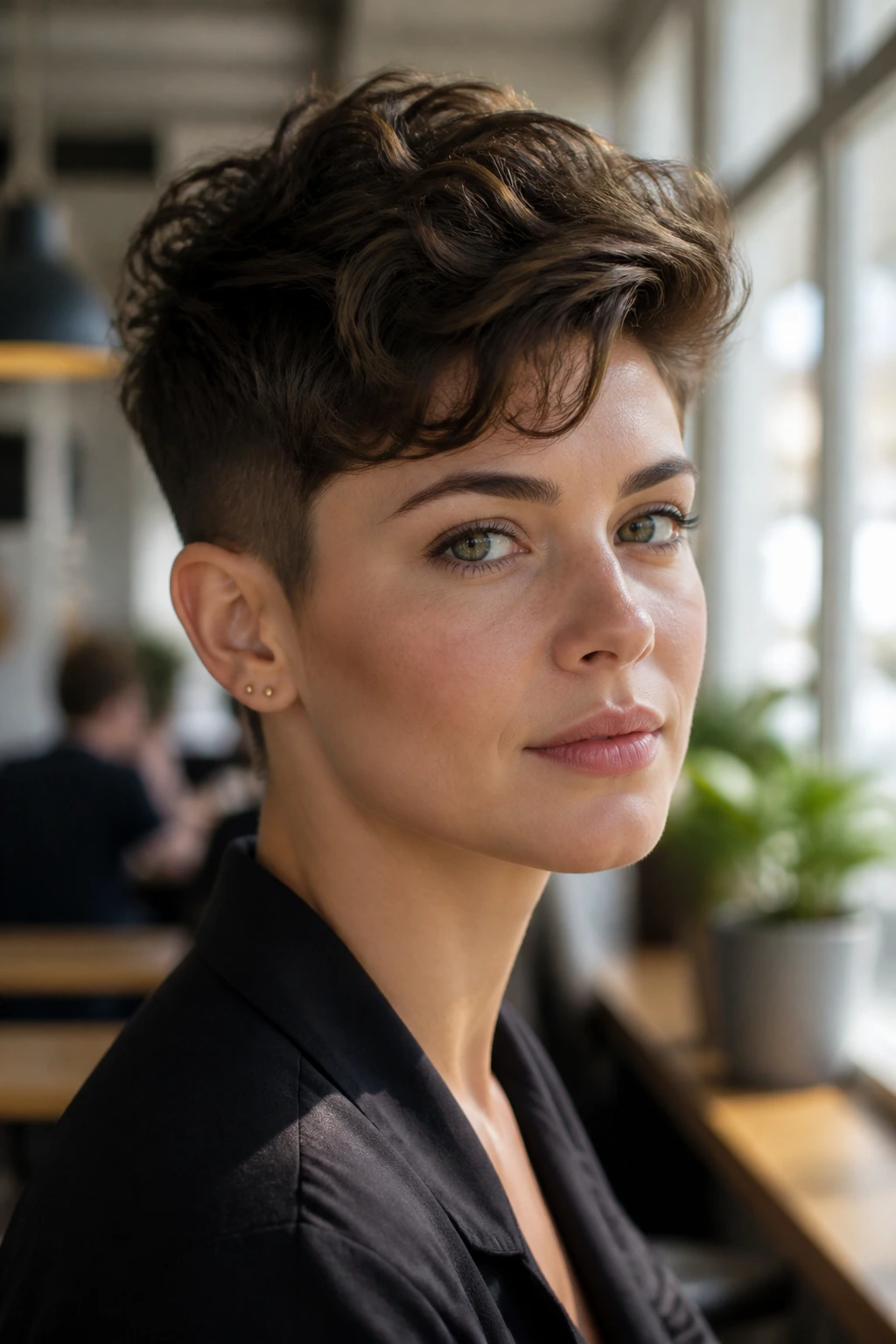
The best short hairstyle for wavy hair and oval faces is the one that makes the wave look intentional on a messy morning and tidy enough on a better one. That’s the real test. Not the salon mirror. Not the first day. The second and third days matter more.
If you keep one thing in mind, make it this: the right shape supports the wave instead of flattening it, and the right length keeps the face open instead of crowded. Once those two pieces are in place, the rest is preference. Soft, sharp, shaggy, polished — they all have a place here.
Pick the cut that matches your maintenance tolerance, not the cut that only looks good in someone else’s photo. Hair grows. The outline changes. And if the first version isn’t quite right, the next trim can usually move it in the direction you wanted all along.