



Thick hair is honest. It shows every bad haircut.
On a round face, the wrong perimeter can make the cheeks look like the widest point in the room, and the whole style starts fighting your features instead of working with them. The fix is not to thin everything into wisps or chop it so short that the sides puff out by noon. The fix is shape. Weight placement. A little bit of strategic restraint.
That is the whole point of the best haircuts for round faces and thick hair: they turn bulk into lines. Lines that drop past the jaw, bend away from the cheeks, or pull the eye upward with height at the crown. When those things line up, thick hair stops behaving like a helmet and starts behaving like a frame.
Why These Haircuts for Round Faces and Thick Hair Work
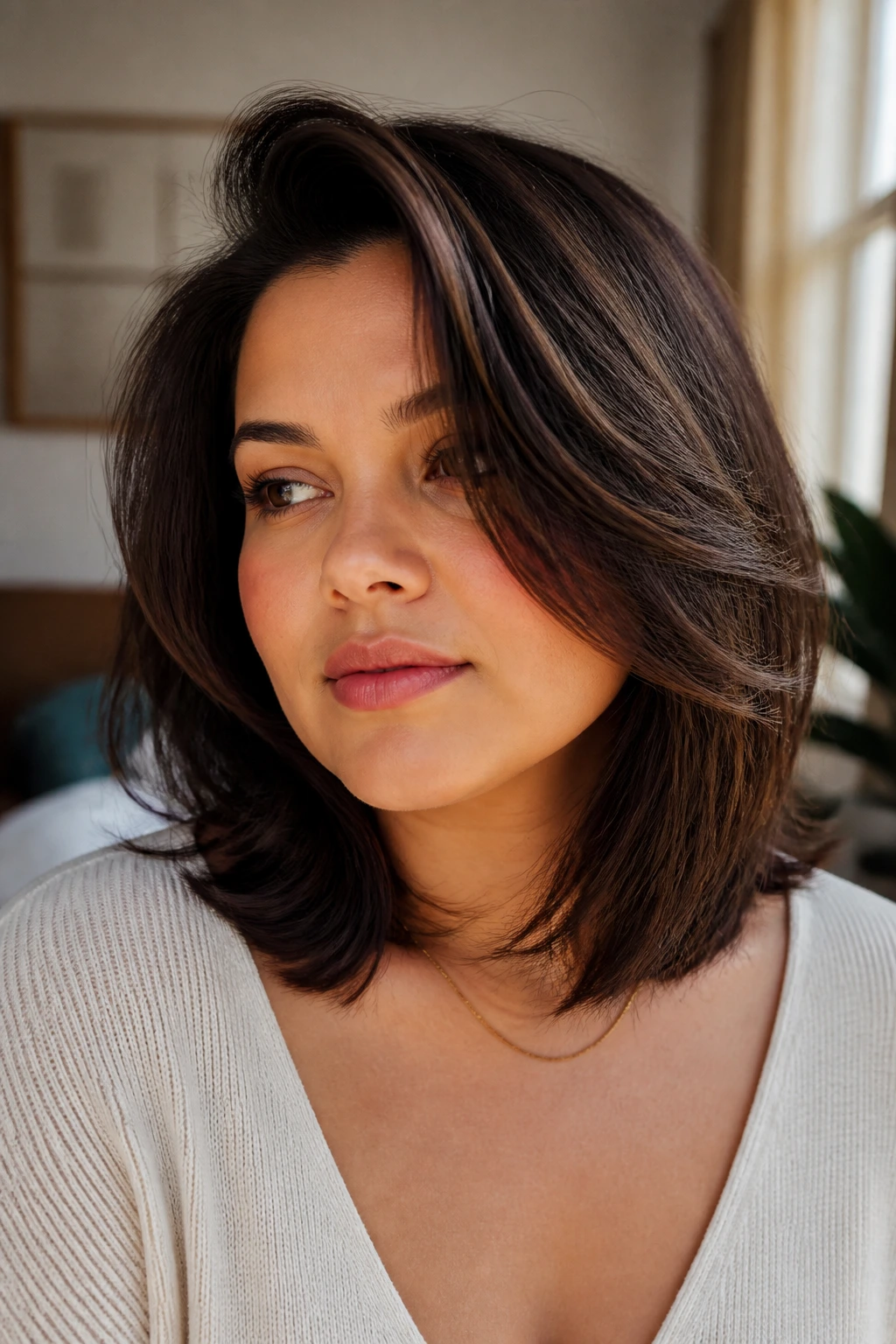
- Length Placement Matters: Cuts that land below the chin or at the collarbone keep the eye moving down instead of stopping at the widest part of the face.
- Bulk Needs Direction: Thick hair looks best when the weight is removed from the inside, not hacked away from the ends, because the perimeter still needs enough density to fall cleanly.
- Parting Changes Everything: A deep side part or a soft off-center part breaks the symmetry that can make a round face read wider.
- Face-Framing Needs to Start Low: Pieces that begin around the cheekbone or lower soften the face without sitting right on the cheeks like a shelf.
- Height Beats Width: Volume at the crown gives the face length; volume at the sides usually does the opposite.
- Movement Should Be Controlled: The best versions leave enough texture for swing and bend, but not so much that thick hair turns fluffy.
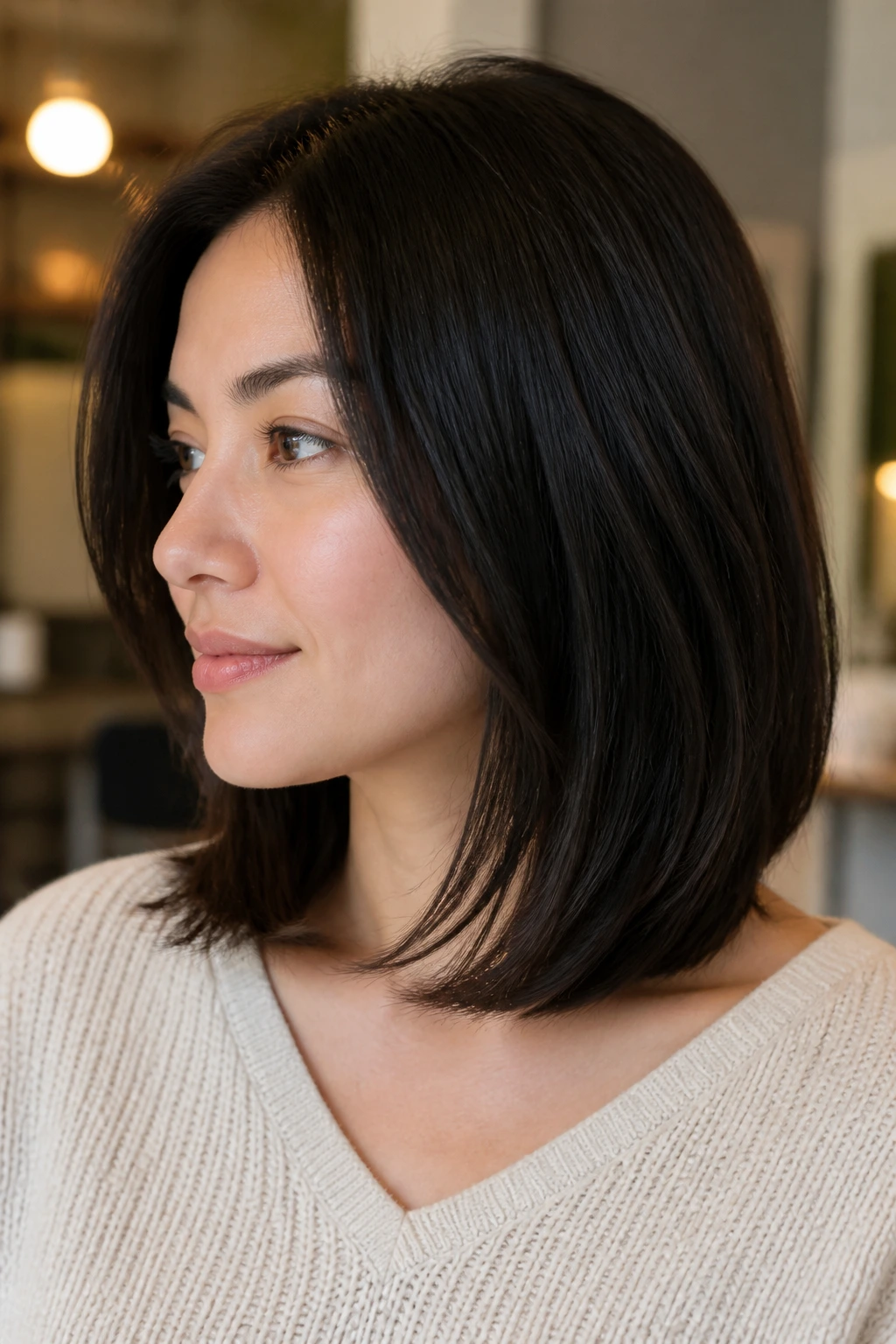
1. Collarbone Lob with Hidden Layers
A collarbone lob is one of those cuts that looks simple until you notice how much work it is doing. The length lands right at that sweet spot below the chin, where thick hair can swing instead of ballooning, and the face gets a little vertical line for free. Hidden layers take the heaviness out of the interior without making the outline look choppy.
Why It Works
The collarbone is a useful landmark because it sits below the cheek line on most round faces. That alone changes the proportions. The cut does not cling to the jaw, and it does not stop at the cheeks like a blunt box.
Ask for soft internal layers rather than short, obvious pieces. Those inner layers remove some of the density that thick hair loves to pile up at the sides, but the outside shape stays smooth. If you air-dry, it will still have enough body to look intentional. If you blow it out, the ends can bend inward just enough to skim the shoulders instead of flaring out.
Quick Details
- Keep the front length at the collarbone or just below it.
- Ask for the shortest layer to live below the cheekbone.
- Skip aggressive thinning shears at the perimeter.
- Works especially well on thick straight or slightly wavy hair.
One-line tip: Tell your stylist you want movement, not chunks—that phrase saves a lot of regret.
2. Long Shag with Curtain Bangs
A long shag is the haircut I reach for when thick hair starts acting like one heavy sheet. The layers break up the mass, and the curtain bangs open the face without chopping straight across it. Done well, this cut feels airy at the front and dense where it needs to be at the ends.
The trick is keeping the shortest fringe pieces long enough to sweep rather than sit flat. On a round face, that matters. A curtain bang that starts too high can widen the center of the face; a curtain bang that starts around the brow and drops toward the cheekbone creates a softer diagonal. The shag itself should not be over-texturized. You want separation, not frizz.
I like this cut best on thick hair that already has some natural bend. It can be air-dried with a little wave cream, or blown out with a round brush if you want the layers to show. Either way, it gives the face a longer line without feeling precious.
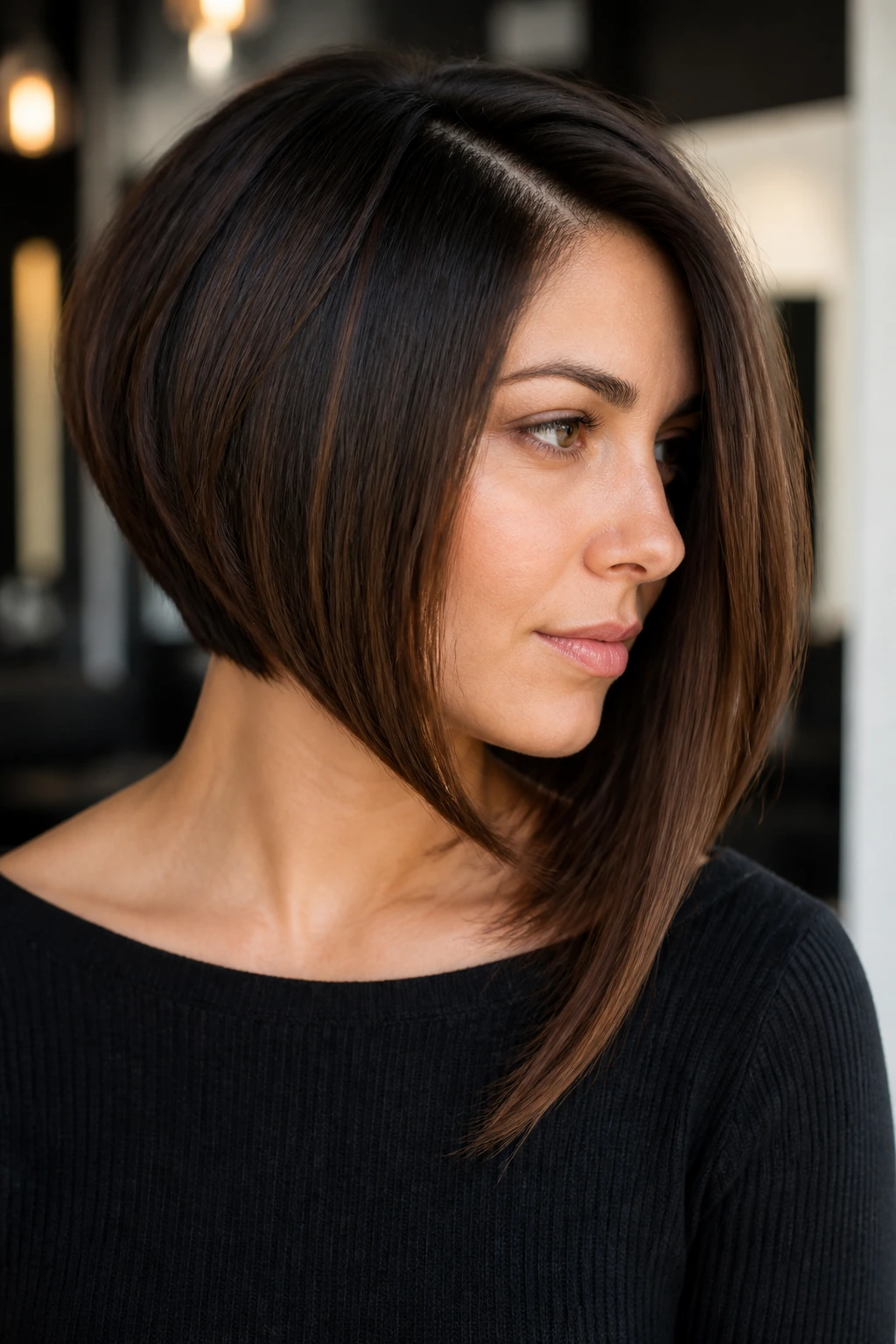
3. Angled Lob with a Longer Front
Can a haircut make your face look longer? Yes. This is one of the cleanest ways to do it.
An angled lob is shorter in the back and a little longer in the front, so the eye reads a diagonal instead of a horizontal line. That diagonal is the whole point. On a round face, a straight-across bob can feel boxy. An angled one breaks that box up before it forms. Thick hair helps here because it gives the angle enough structure to hold its shape.
How to Ask for It
- Keep the front pieces grazing the collarbone.
- Let the back sit about 1 to 2 inches shorter.
- Ask for soft stacking at the nape, not a hard shelf.
- Wear it with an off-center or deep side part if your face needs more length.
This cut is especially good if you like a polished look without a lot of styling drama. Blow it out once, tuck one side behind the ear, and it already looks deliberate.
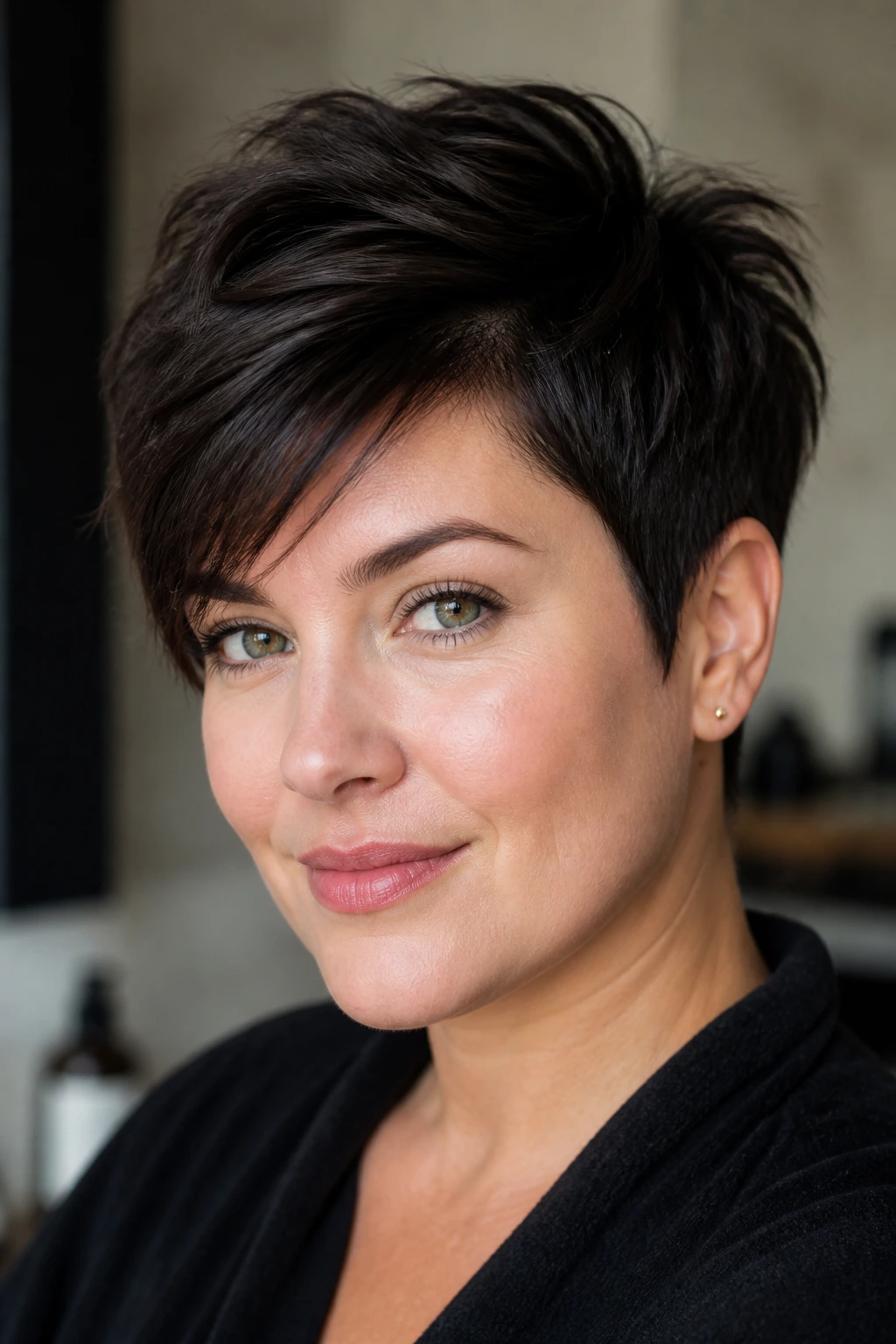
4. Side-Parted Pixie with Height on Top
Short hair on a round face is not the problem. Short hair with no plan is the problem.
A side-parted pixie works because it takes bulk off the sides and puts the emphasis where round faces usually need it most: upward. The top should stay long enough to create lift—think 2.5 to 4 inches, depending on texture—while the sides and nape stay tapered. The fringe should sweep across the forehead rather than sit in a straight line.
This cut is sharp on thick hair because the density gives it body without needing much product. A little paste at the roots, a quick blow-dry in the direction you want the top to fall, and you’re done. The shape can look very sleek or slightly piecey, but the key is keeping the temples and sideburns tidy. Too much width there defeats the point.
If your cowlicks are strong, mention them. A pixie lives or dies by how the crown is cut.
5. U-Shaped Long Cut with Face-Framing Pieces
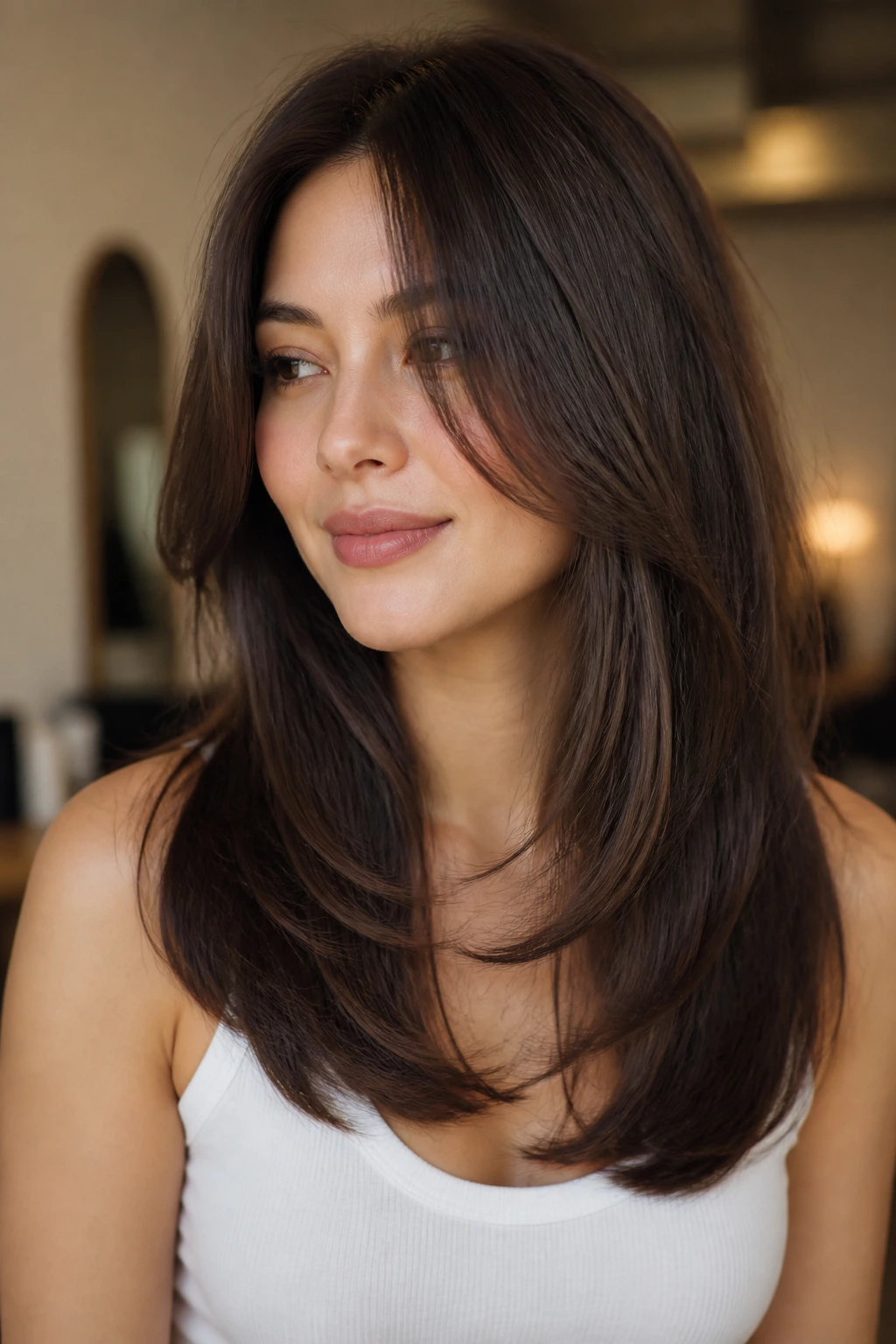
If you want to keep your length, the U-shaped cut is the quiet workhorse of the bunch. The back hangs in a soft curve, a little longer in the center, and the front stays slightly shorter so the hair doesn’t read like one flat curtain. On thick hair, that curve helps the ends fall instead of flaring wide.
The face-framing pieces should start lower than most people expect. Around the chin is often too high for a round face if the hair is very thick. I prefer starting closer to the mouth or lower, then tapering toward the collarbone. That gives the face a vertical line without sitting right on the cheeks.
This cut is nice for ponytails, clips, braids, and half-up styles because it still looks purposeful when tied back. That matters more than people admit. A lot of long cuts only look good down, and that gets old fast.
6. Butterfly Cut with Lift at the Crown
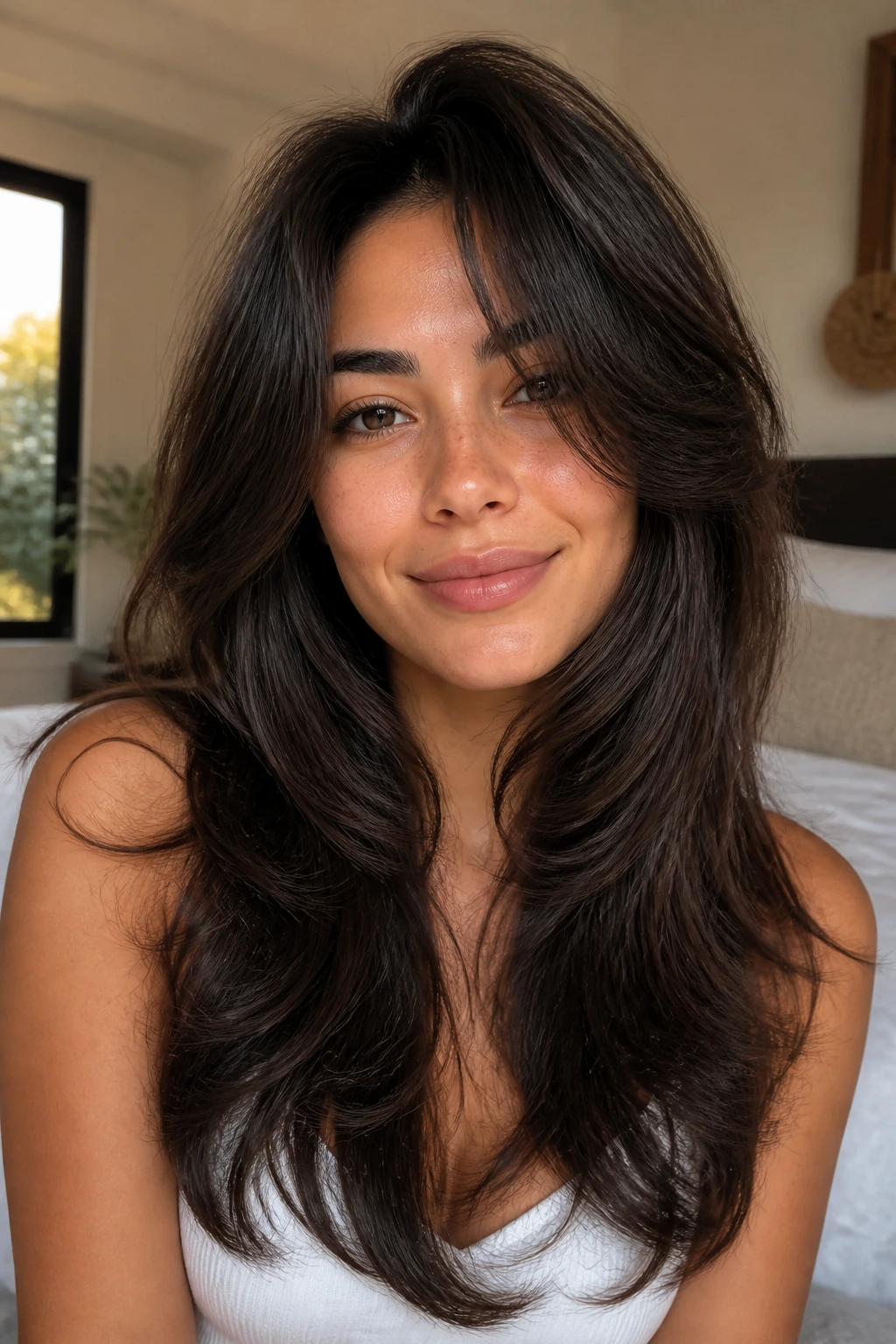
The butterfly cut is the one that gives you the feeling of shorter layers without actually losing all your length. The top layers are cut to create lift around the crown and cheek area, while the bottom layer stays long and heavy enough to hang straight. On thick hair, that split is useful because it removes the bulk that tends to sit at the sides of a round face.
Unlike a full shag, the butterfly cut keeps the lower length intact. That means less triangle shape, less mushrooming, and more movement when you run a brush through it. If you like a bouncy blowout, this cut practically begs for one. If you air-dry, the layers can still separate nicely, but you need enough product to keep the crown from puffing.
It’s best for people who want volume up top, not out wide. That distinction matters. Big difference.
7. Soft Wolf Cut with a Clean Nape

A wolf cut can go wrong fast on thick hair. Too many short layers, too much texturizing, and suddenly the whole head looks wider, not leaner. But softened down, with a clean nape and longer perimeter, it becomes one of the most interesting options for a round face.
The reason it works is the same reason a shag works: it breaks bulk into smaller pieces. The wolf cut does that a little more aggressively near the crown and around the face. The trick is not to let the layers drift too high at the sides. Keep the back tidy, keep the nape tapered, and avoid making the outer edges too fluffy.
This is a cut for someone who likes a bit of edge and does not mind texture. On wavy or coarse hair, a touch of curl cream and diffuser can make the shape feel lived-in instead of chaotic. On straight hair, a rough blow-dry and a matte styling cream keeps it from looking too perfect. Perfect would be wrong here anyway.
8. Blunt Mid-Length Bob with an Off-Center Part
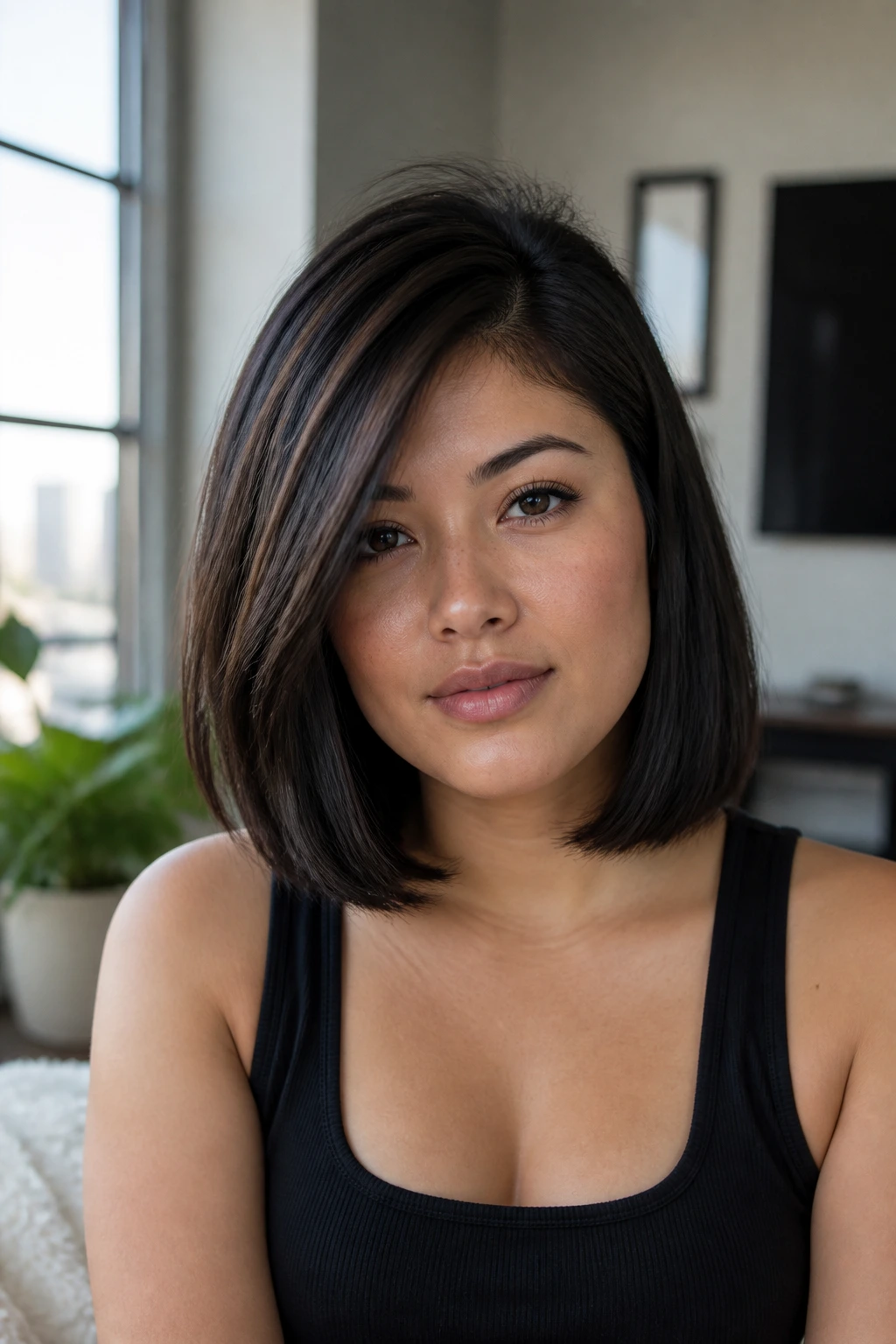
A blunt bob is not automatically a bad idea for a round face. It just needs the right landing spot.
If the line ends right at the cheeks, it can widen the face. If it sits below the jaw, around mid-neck to upper shoulder territory, it can look strong and clean instead. Thick hair gives a blunt bob serious structure, which is useful if you want the hair to fall in one polished shape rather than in airy layers that move too much.
The off-center part matters because it breaks the symmetry. A dead-center part on a round face can sometimes emphasize the fullness of the cheeks; shifting the part just a little changes the balance without making the cut fussy. This one is especially good for straight or slightly wavy thick hair, because the line stays crisp.
Use a flat brush while blow-drying, then bend the ends under just a touch. Not much. You want movement at the edge, not a helmet with a gloss spray.
9. Shoulder-Skimming Cut with Bottleneck Bangs

Want bangs without the heavy wall across your forehead? Bottleneck bangs are the answer more often than people think.
The shape is narrow at the center, then gradually gets longer and softer toward the temples. That makes them easier on round faces than a straight fringe, because the side pieces create vertical lines near the cheekbones instead of stopping the eye in one place. On thick hair, they have enough body to hold the shape without disappearing into the rest of the cut.
The rest of the haircut should land at or just below the shoulders. That length keeps the fringe from feeling too disconnected and gives the face room to breathe. If the bangs are cut too short, they can make the face look shorter. If they’re too dense, they can make the forehead feel boxed in. The sweet spot is lighter at the center, longer at the edges.
This is one of those cuts that looks expensive when it moves well. It also grows out in a way that is less annoying than a blunt bang. Which helps.
10. C-Shaped Layers Around the Jaw

A C-shaped cut wraps around the face instead of sitting straight beside it, and that curve can be a small miracle on thick hair. The layers bend inward from the cheek area to the jaw and collarbone, so the hair follows the face rather than expanding around it.
What I like about this shape is that it gives thick hair definition without making it look sliced up. You still keep a solid perimeter, but the front has a soft arc. That arc pulls attention downward, especially when the front pieces are longer than the chin. If your hair tends to flip outward at the ends, a round brush and a quick inward bend will help the curve stay clean.
This cut is especially smart for someone who wants visible shape but not a shaggy texture story. It is neater than a shag, softer than a bob, and easier to grow out than either. That middle ground is not boring. It is practical.
11. Razor-Cut Midi Shag

A razor-cut shag on thick hair can be beautiful, but it needs the right hair texture or it turns fuzzy in a hurry. On smooth, dense hair or natural waves, the razor softens the ends and makes the layers feel feathered rather than chunked. That softness helps a round face because the shape moves instead of sitting as one solid block.
The midi length—usually somewhere between the collarbone and the top of the chest—keeps the style long enough to stretch the face vertically. The layers should be cut to remove density through the interior, not to make the whole head look shredded. A good razor cut still has intention. You can see the shape. You just do not see the blunt heaviness.
This is not the cut for someone who hates product. A lightweight cream or styling milk helps the ends stay separated without getting crunchy. If your hair is already dry or porous, ask for shears instead of a razor at the most fragile parts. That one request can save you a lot of frizz.
12. Tapered Crop with Texture on Top
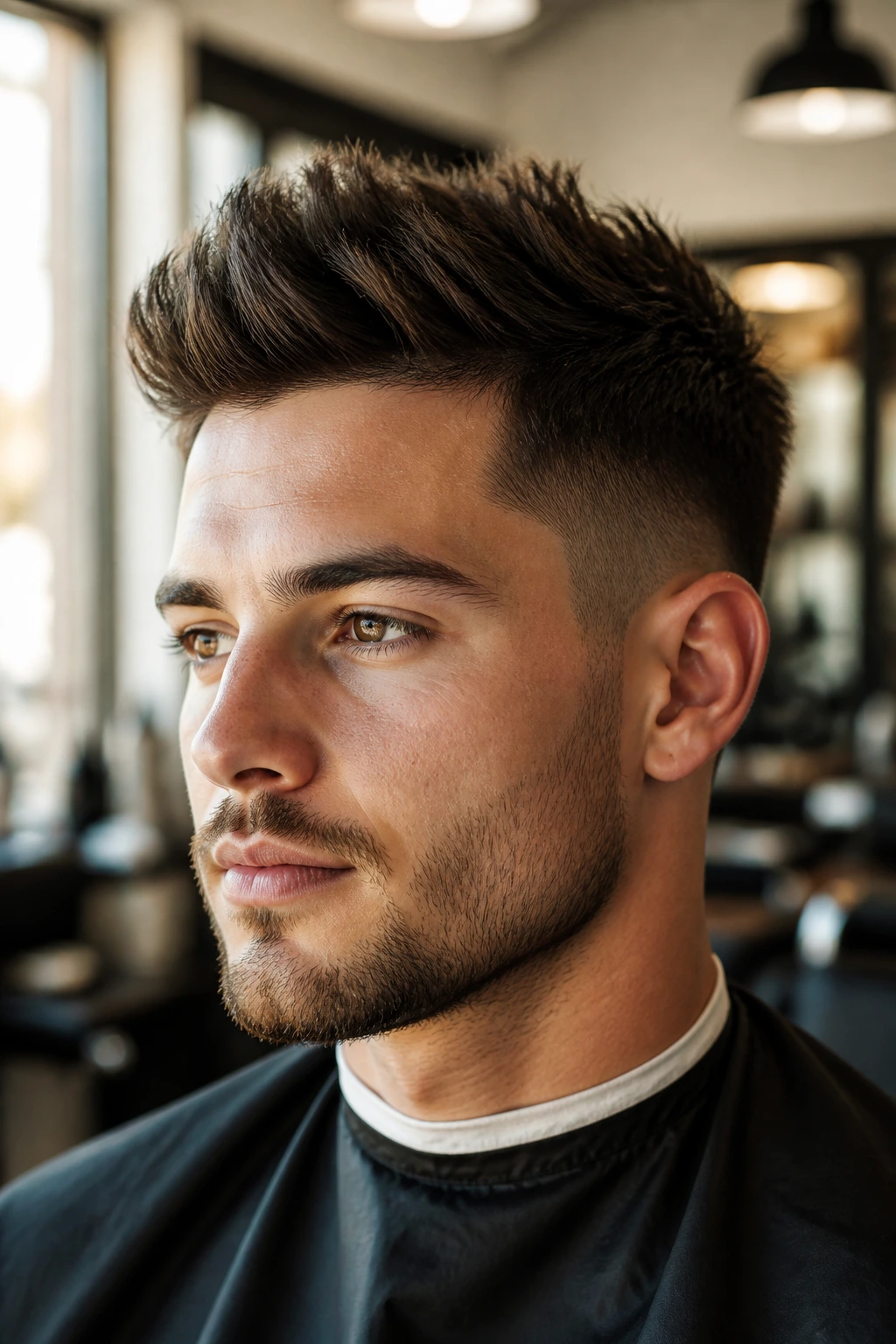
If you want something shorter and easy to wake up with, the tapered crop is the most useful short cut in this group. The sides and back are kept close, which removes the bulk that can make thick hair feel wide around the jaw. The top stays longer and texturized so you can push it up, over, or slightly forward.
That height on top is what helps the face look longer. Without it, short cuts on round faces can flatten out and end up reading wider. With it, the eye goes up first. A matte paste or molding cream is usually enough; you do not need ten products and a blow-dryer marathon.
This cut works best if your hairline is strong and your stylist is comfortable tapering the nape cleanly. It is also a good choice if you like a bit of edge and do not want to spend fifteen minutes styling every morning. Thick hair makes this easier, not harder. The density helps the top stand up where finer hair might collapse.
13. Long Layers with Invisible Debulking
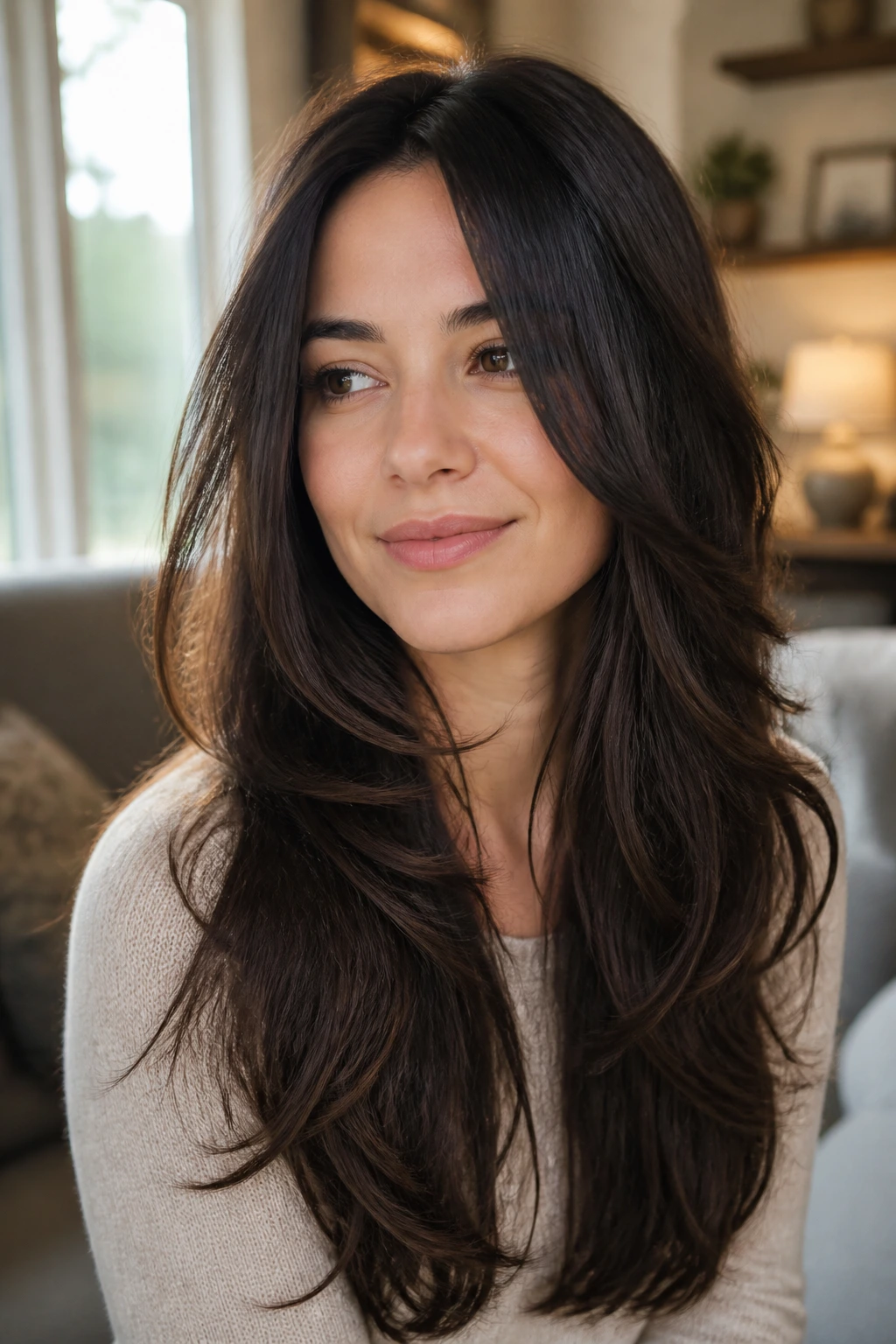
Sometimes the smartest cut is the one that leaves the outline alone and does the work inside the hair. Long layers with invisible debulking do exactly that. The outside length stays long, which helps round faces by keeping a vertical line, while the interior gets just enough weight removed to stop thick hair from ballooning.
The phrase “invisible debulking” sounds fancier than it is. It usually means point cutting, slide cutting, or carving out interior density without making obvious steps. The result should not look choppy. It should look easier to move through. That matters if your hair is coarse, heavy, or both, because too much layering can create a wide halo at the sides.
This cut is a favorite for people who wear their hair half-up, in clips, or in a loose blowout. You still get the sense of thickness, but the shape is calmer. The best version usually starts around the collarbone or lower, so the face-framing pieces do not sit at cheek level.
14. Asymmetrical Bob with One Longer Side
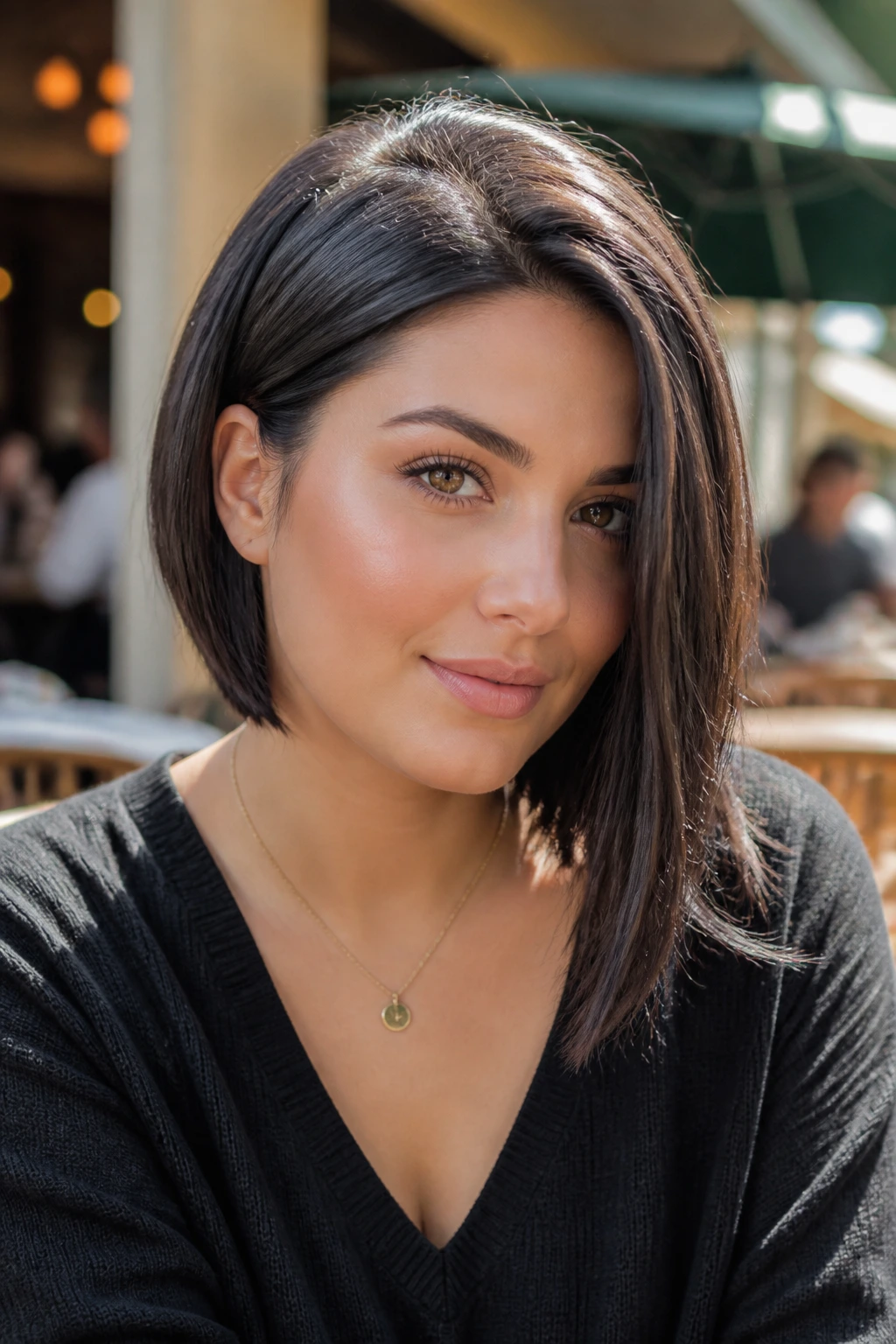
A small diagonal can do more than a big, dramatic style choice.
An asymmetrical bob works because one side sits a little longer than the other, so the eye does not read the face in a perfect circle. The line becomes directional. On a round face, that slight imbalance can be surprisingly effective. Thick hair gives the cut enough weight to hold the angle without flopping back into a bowl shape.
The length should still stay below the chin. If the shorter side lands at the jaw, the cut can feel too wide. I prefer keeping the difference subtle—maybe 1 to 2 inches between sides—rather than turning it into a statement piece that needs daily flat-ironing. The whole point is to shift the geometry, not to make a scene.
This is one of the few bobs that looks even better when one side is tucked behind the ear. The asymmetry shows up, the face opens, and the style looks a touch sharper with almost no extra work.
15. Bouncy Mid-Length Cut with Flipped Ends
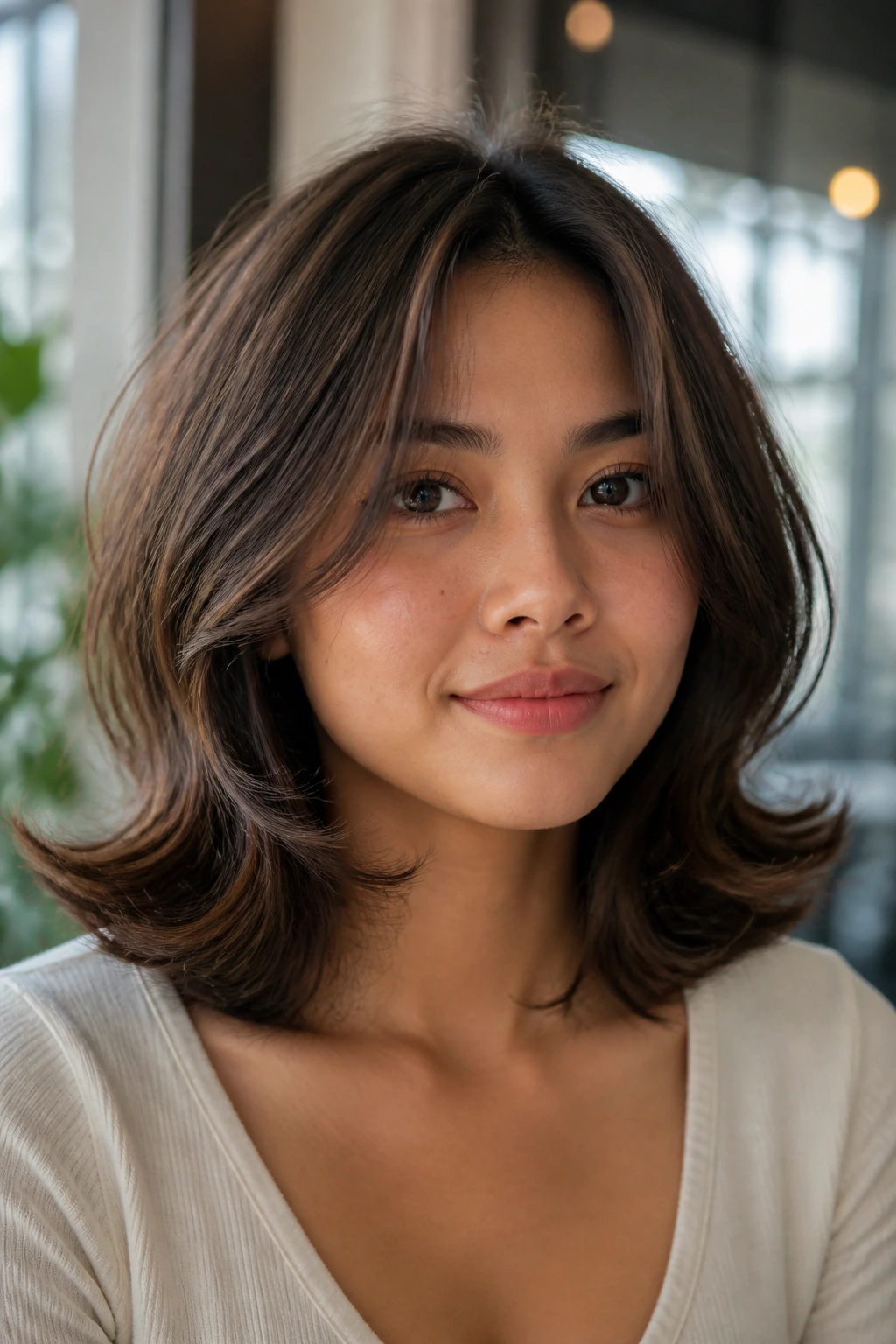
There is a specific kind of mid-length cut that looks like it has been lived in by a good blow-dryer and a round brush. The ends bend under, or slightly away, but always with movement. On thick hair, that bounce can keep the cut from feeling heavy at the sides.
The important part is where the flip happens. If the bend starts too high, around the cheeks, it can widen the face. If it sits below the jaw, the movement becomes a frame instead of a shelf. That tiny shift changes the whole look. The length usually works best around the collarbone or just above it.
This cut is a nice option if you like a little polish but do not want obvious layers. It also plays well with thicker strands that hold shape after styling. Set the ends with a large round brush or a medium curling iron, then brush through the curl while it is still warm so the bend softens. Too tight, and it starts looking dated fast.
16. Curly Shape Cut with a Longer Perimeter

Curly hair deserves its own lane here, because thick curls and round faces have a very different conversation than straight hair. Shrinkage changes the math. A cut that looks long when wet may sit at the jaw once it dries, and that is where many people get surprised.
A curly shape cut should be cut with the curl pattern in mind, usually dry or close to dry, so the stylist can see where each curl actually lives. The perimeter needs to stay long enough to fall below the cheekbone when dry, while the layers should be placed to lift the crown without exploding the sides. If the cut gets stacked too high at the temples, the shape can turn wide in a hurry.
For styling, think curl cream first, then gel or mousse if your curls need more hold. Scrunch, diffuse, and stop touching it before it dries. The less you disturb thick curls, the better the face-framing result tends to be.
17. Modern Pageboy with Soft Edges

A pageboy can look severe on a round face if it is cut too blunt or too tidy. But a modern version—softer edges, a little more length in front, and a bit of internal relief—can be striking on thick hair.
The old-school pageboy shape tends to swing inward in one clean line. That can be useful, but it needs softening. A little length at the front, a very slight off-center part, and some movement through the ends keep it from feeling like a helmet. Thick hair is actually ideal here because it gives the curve enough body to sit well.
This haircut suits people who like a structured shape and do not want a lot of layering around the face. It is especially good with straight hair that likes to hold a bend. Use a round brush or a hot brush to tuck the ends under, and don’t overdo the shine serum. Too much gloss, and the shape can look rigid.
18. Long Cut with a Deep Side Part and Sweeping Fringe
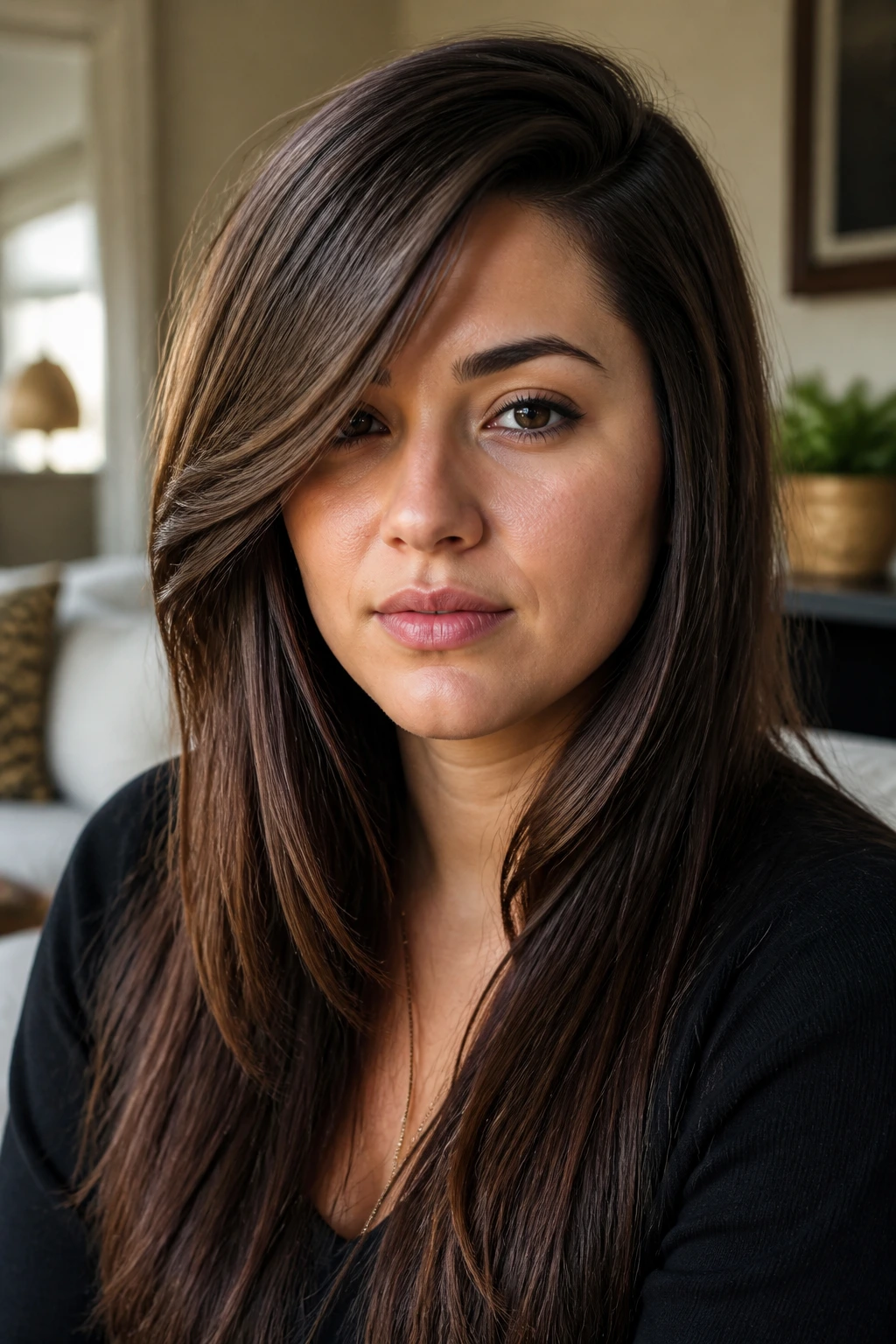
Not every good haircut needs a dramatic chop. Sometimes a strong long cut with the right part and fringe does the job better than layers ever could.
A deep side part shifts the whole visual center of the face. On a round face, that offset line adds length, and the sweeping fringe keeps the forehead soft without cutting it in half. Thick hair helps because the fringe has enough density to stay visible without looking stringy. The rest of the cut can stay long and relatively simple, which is a relief if you like ponytails, buns, or easy braids.
The key is restraint. The layers should be subtle, and the fringe should sweep diagonally across the face instead of sitting bluntly over it. If the front pieces are too short, the cut can widen the cheeks. Keep them long enough to move with the side part, and the shape feels much cleaner.
Why These Shapes Beat One-Size-Fits-All Layers
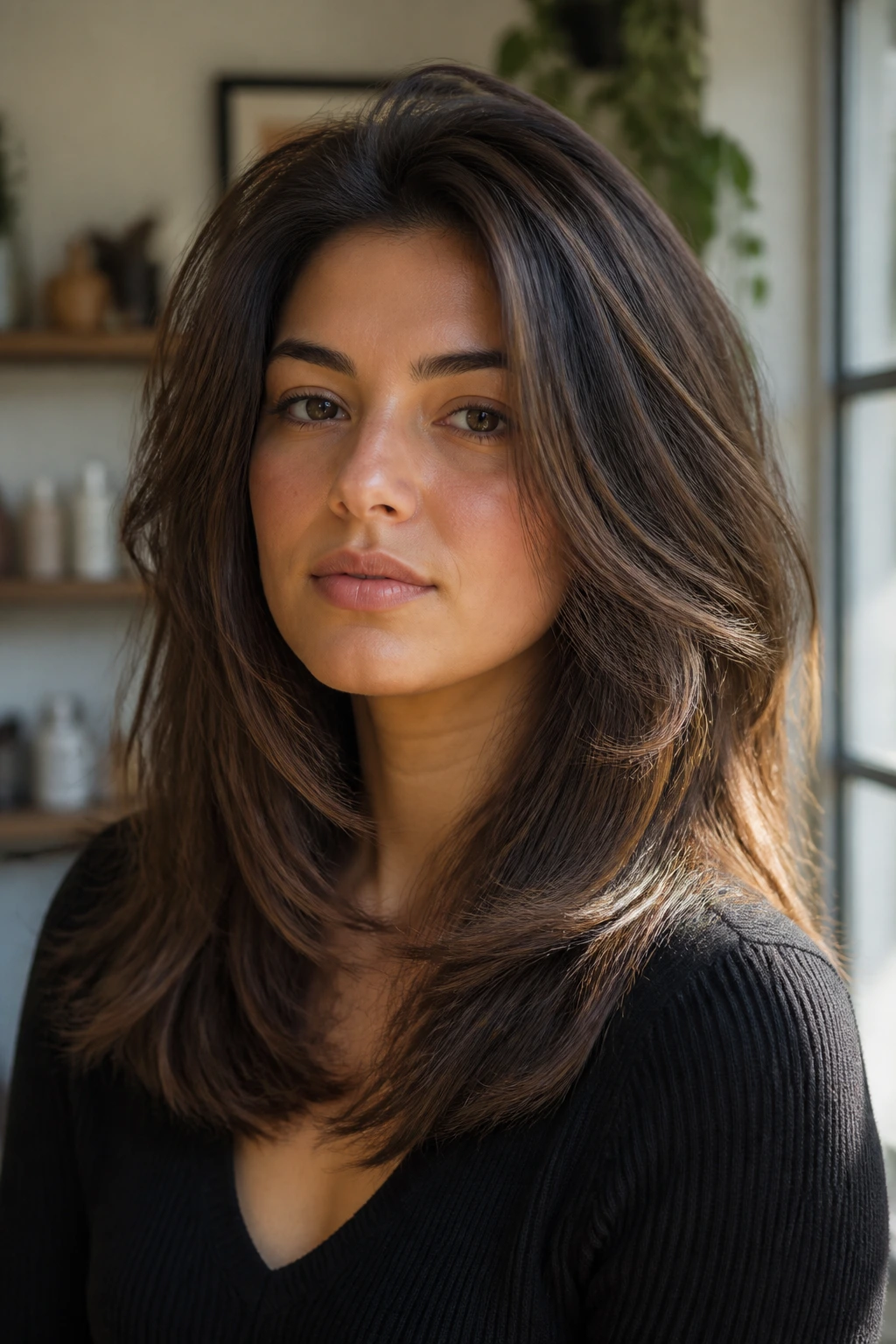
Round faces and thick hair ask for the same thing: a little strategy. That sounds less glamorous than “big change,” but it is the part that saves the haircut once you leave the salon. A shape that drops below the cheekbones, eases bulk at the sides, and keeps some lift on top usually does more for your features than a pile of short layers ever will.
Length placement is the first thing I look at. If the cut ends right where the face is widest, the whole silhouette tends to stop there too. Move the line a little lower, and the face gets room to breathe.
Weight removal is the second piece. Thick hair does not need to be stripped to nothing. It needs density moved out of the wrong places so it can fall. That is a different job, and a better one.
How to Ask for the Cut Without Getting a Boxy Result
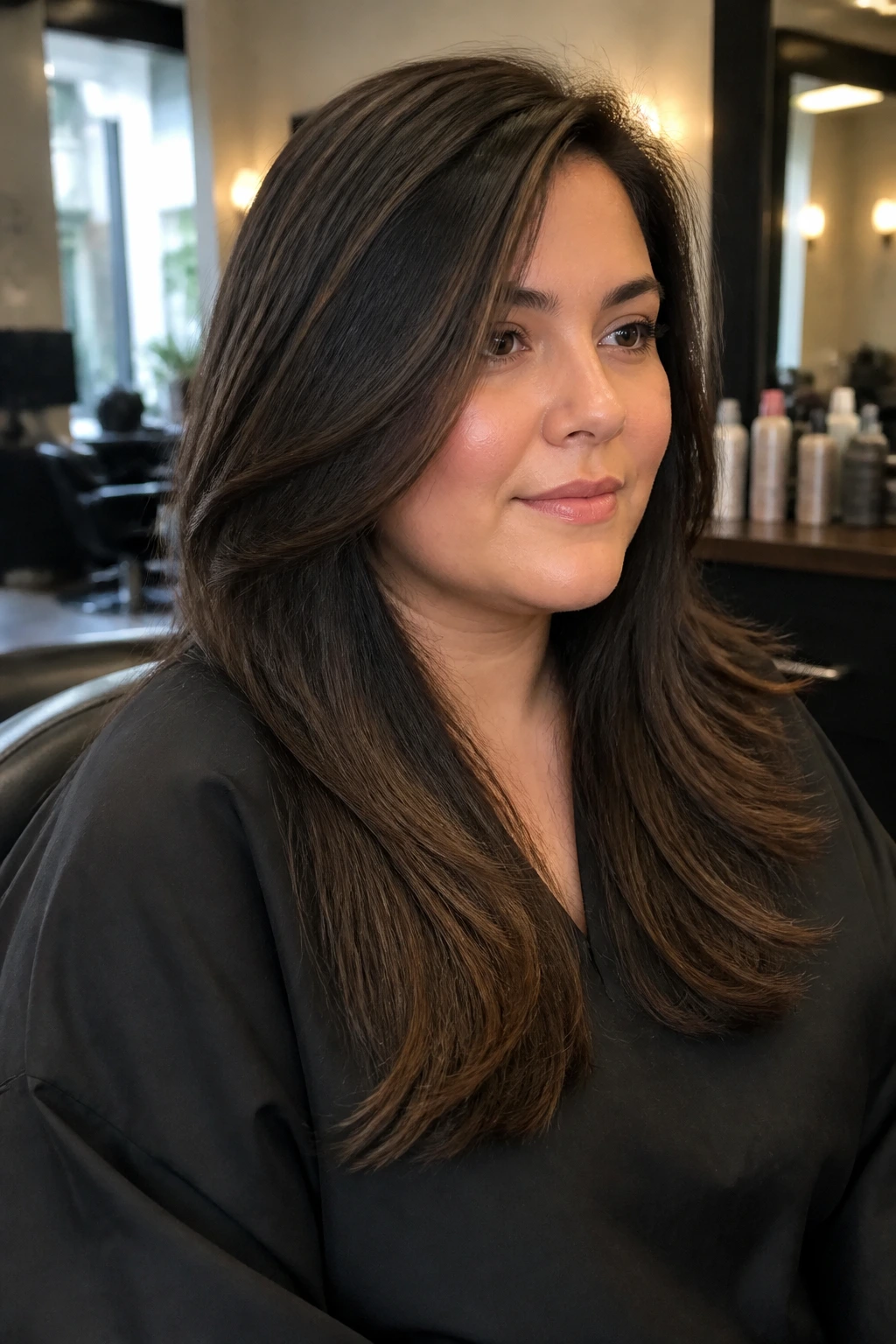
The fastest way to end up disappointed is to walk in with a photo and leave out the part where your hair is thick and your face is round. Stylists can work with both, but they need the details. Say where your hair grows wide. Say whether you air-dry. Say if your crown lays flat or if your sides puff out by lunchtime.
Use landmarks, not vague language. “I want the front to land at the collarbone” is useful. “I want medium length” is not. “Please keep the shortest face-framing layer below my cheekbone” is even better, because it tells the stylist where not to create width.
If you usually wear your hair in a side part, say that. If you flat iron only once a week, say that too. A haircut that looks clean after a fresh blowout but turns into a triangle on day three is not a good haircut for real life. It might look nice in the chair. That is not the same thing.
Styling Moves That Keep Thick Hair from Ballooning at the Sides
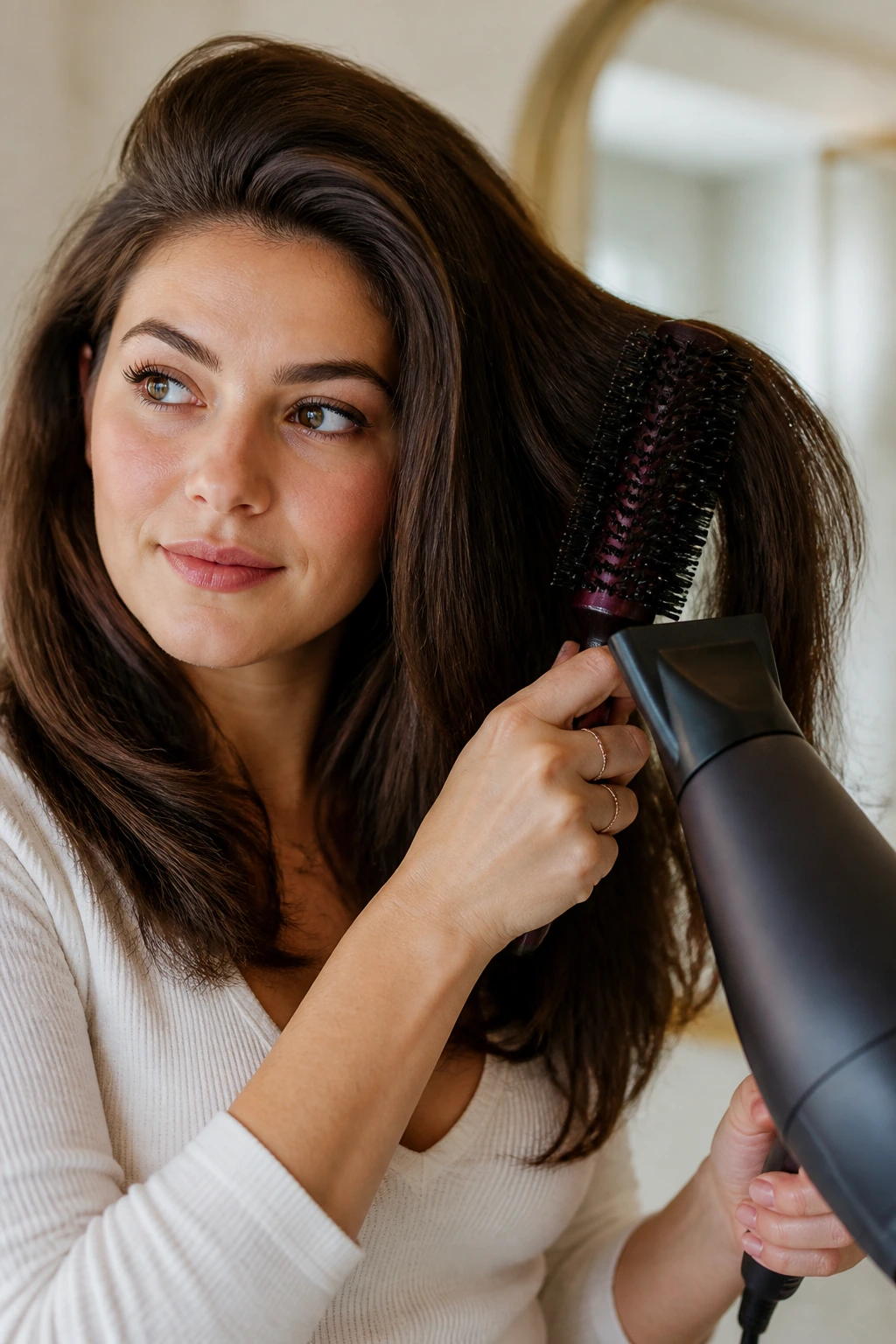
The cut does half the work. The styling does the rest.
For thick hair, I like a directional blow-dry: rough dry until the hair is about 70 percent dry, then use a nozzle and a brush to push the front away from the cheeks and down at the ends. That keeps the sides from drying in a wide fan. If you use a round brush, choose the biggest one your hands can handle comfortably. Small brushes can put too much curl into the ends and make the face look rounder.
A lightweight mousse or cream at the roots can help the crown hold height without turning the sides sticky. A drop of serum at the mid-lengths is enough for most thick hair; more than that starts to collapse the shape. And if your hair tends to swell in humidity, finish with a flexible spray, not a stiff shell. Thick hair already has enough personality.
Common Cutting Mistakes That Make the Face Look Wider
The biggest mistake is putting the shortest layer at cheek level. You can see it right away in the mirror: the eye stops there, and the face feels broader. If you want a softer look, the face-framing pieces should begin lower, usually around the mouth, jaw, or collarbone depending on the style.
Another one is over-thinning the sides. Thin shears can be useful, but on thick hair they can create frizz and a halo effect that sits right where you do not want it. The hair looks lighter for a day, then starts puffing in a way that is hard to control. Interior weight removal is cleaner. It gives shape without roughening the perimeter.
Bangs can go wrong too. A blunt, short fringe on a round face with thick hair can make the upper half of the face feel crowded. If you want fringe, choose curtain, bottleneck, or sweeping bangs that move diagonally. Straight-across bangs can work in some cases, but they need careful placement and a lot of precision.
Finally, do not ignore your daily routine. If you never blow-dry and the cut depends on a smooth bend at the ends, you will not like the result for long. The haircut has to match the way you actually live.
Variations for Wavy, Curly, Straight, and Coily Hair
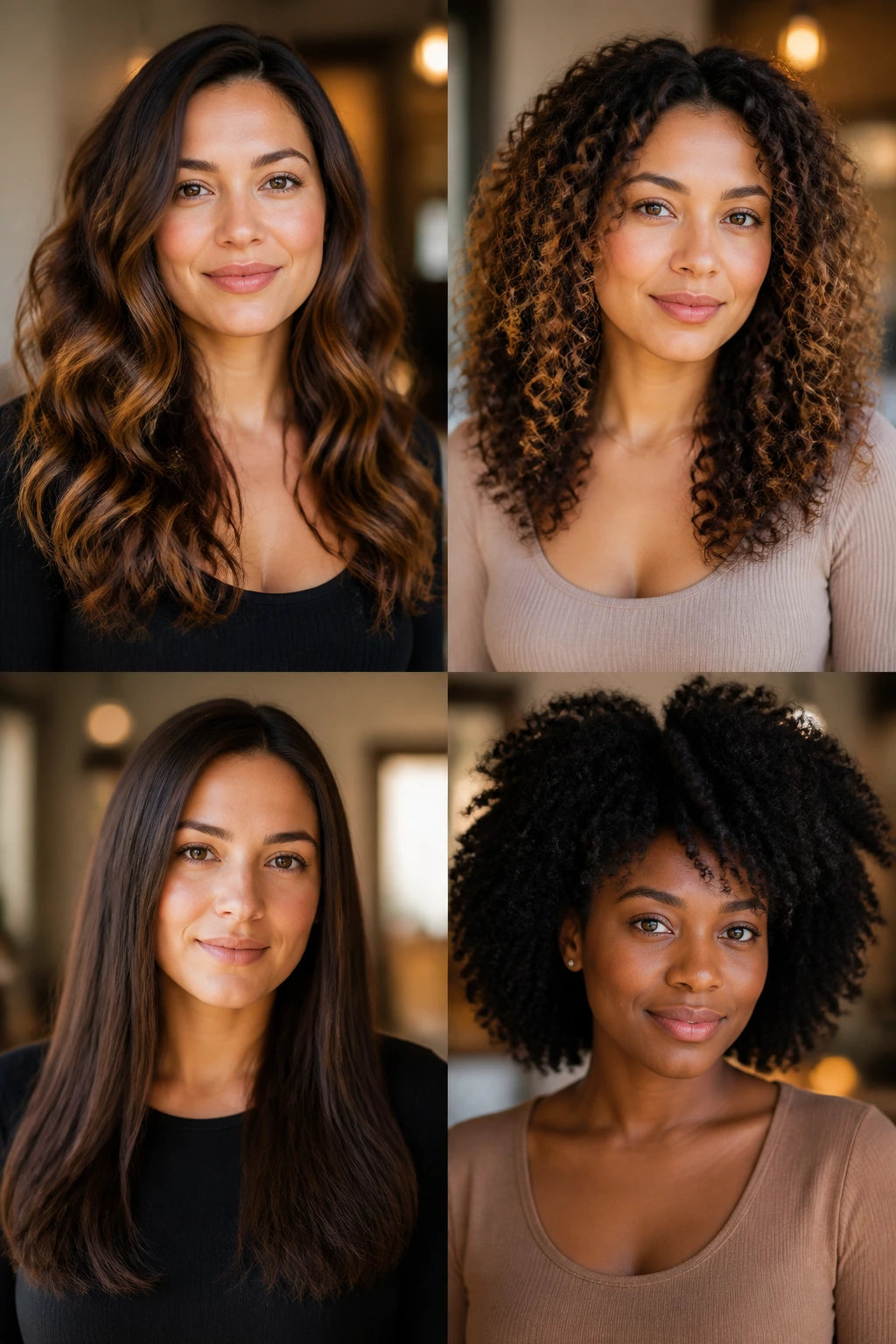
Soft Curl Shape: For wavy or curly hair, keep the perimeter longer and let the layers follow the curl pattern instead of forcing a blunt line. This keeps the face from getting boxed in once the hair dries.
Glass-Straight Lob: Straight hair can handle cleaner lines and a sharper angle at the front. A collarbone lob or angled bob with a deep side part gives the face a long, sleek shape without adding side bulk.
Air-Dry Shag: If you barely touch a blow-dryer, a soft shag with longer layers is the safest bet. The movement has to come from the cut itself, not from a round brush and twelve minutes of heat.
Coily Crown Lift: Coily hair often needs layers cut with shrinkage in mind, so the shape should be planned on stretched or dry hair. Keep the perimeter low enough to lengthen the face, and avoid piling too much volume at the temples.
Low-Maintenance Grow-Out Cut: If you want a style that still looks decent six weeks later, choose a blunt-ish lob or a long cut with soft internal layers. These grow out in a cleaner line than short, heavily textured cuts.
Tools That Make These Cuts Easier to Wear

- Blow dryer with a nozzle attachment: Directs the hair so the sides dry smooth instead of puffing out.
- Large round brush, 1.5 to 2.5 inches: Helps build bend below the jaw without tight curls at the cheeks.
- Sectioning clips: Keep thick hair separated so you can dry the crown and sides in order, not all at once.
- Wide-tooth comb: Good for distributing conditioner and detangling curls without roughing up the cuticle.
- Flat iron or hot brush: Useful for lobs, angled bobs, and sweeping fringes that need a cleaner line.
- Lightweight mousse or styling cream: Gives shape without weighing the front pieces down.
- Flexible-hold spray: Keeps movement in place without turning the hair crunchy.
- Diffuser: A must if your thick hair is wavy or curly and you want the layers to stay defined.
Keeping the Cut in Shape Between Salon Visits
Thick hair grows heavy fast. That is the main thing to keep in mind. Even a clean cut can lose its shape once the ends start pushing outward, so plan trims with the cut in mind rather than waiting until everything feels out of control.
For shorter cuts like pixies, crops, and asymmetrical bobs, a trim every 4 to 6 weeks keeps the lines crisp. Lobs and shoulder-length cuts usually hold up a little longer—about 6 to 8 weeks—before the front starts to lose its angle or the bangs stop sitting where they should. Long layers can often go 8 to 12 weeks if the interior shape is still intact.
At home, a silk pillowcase or loose sleep braid helps thick hair keep its bend. A dry shampoo at the roots can stop the crown from going flat, but do not pile it on at the sides, where it can make the hair feel dusty and wider. If the ends start flipping the wrong way, a quick pass with a round brush or hot brush usually fixes the shape in under five minutes. That is the whole point of getting the cut right in the first place.
Frequently Asked Questions
What haircut is most flattering for a round face with thick hair?
The strongest options are usually a collarbone lob, angled bob, long shag, or long layers with face-framing pieces below the cheekbone. Those shapes lengthen the face visually and control the width that thick hair can create at the sides.
Should round faces avoid blunt bobs?
Not automatically. A blunt bob can work if it sits below the jaw and is paired with a side part or slight angle. The problem is not bluntness by itself; it is a blunt line that ends at the widest part of the face.
Are bangs a bad idea for this face shape?
No, but the wrong bangs can work against you. Curtain bangs, bottleneck bangs, and sweeping fringe usually work better than a heavy straight-across fringe because they keep the face open and create a diagonal line.
How short can I go with thick hair and a round face?
You can go short, but the shape needs height on top and softness at the temples. A pixie or cropped cut works best when the sides are tapered closely and the top has enough length to pull the eye upward.
Do layers make thick hair puffier?
They can, if they are too short or placed too high on the sides. Long internal layers remove weight more cleanly and usually help the hair fall flatter. Short layers around the cheeks tend to add width instead of reducing it.
What if my hair is curly and thick?
Ask for a curl-specific shape cut, ideally done dry or close to dry, so the stylist can see shrinkage. Keep the perimeter longer than you think you need it, because curly hair often rises once it dries.
Will these cuts still work if I air-dry most days?
Yes, but you should choose the softer versions: long shag, U-shape, long layers, or a curly shape cut. Cuts that depend on a super-smooth bend or sharp angle need more styling than most air-dry routines provide.
What should I do if a cut looks too wide after the first wash?
Check where the shortest layer sits. If it lands at cheek level, that is often the reason. A stylist can usually soften the sides, lower the face-framing pieces, or remove a bit more weight from the interior without changing the whole haircut.
A Shape That Works With Your Hair Instead of Against It

The best haircut for a round face and thick hair does not fight the texture or pretend the face is something else. It uses thickness as structure, then places the weight where the eye wants to travel. Downward. Diagonal. Up through the crown. Anywhere except straight out at the cheeks.
That is why these cuts keep showing up over and over in good salons: they are built on proportion, not gimmicks. A collarbone lob, a soft shag, a careful bob, a strong side part—those choices do not just look nice on a photo. They hold up when the hair dries, when the weather shifts, and when you do not have twenty minutes to wrestle with a brush.
Pick the shape that matches your daily routine, not the one that needs a perfect blowout to behave. The right cut should make your hair fall into place before you start chasing it.