



A wavy weave can do something straight, stiff hair rarely manages on a round face: it gives the eye somewhere to travel. Not sideways, where the cheeks already want to draw attention. Downward, diagonally, and a little off-center, which is the whole trick. When the texture bends and the cut keeps its shape from getting too wide at the cheeks, the style reads balanced instead of bulky.
That matters even more with natural hair underneath, because the install has to play nice with your real texture, your braid pattern, and the amount of heat you’re willing to use for blending. A good wavy weave for natural hair and round faces doesn’t try to hide the face. It builds line. It builds lift. It gives you softness without letting the hair sit in one heavy halo around the widest part of the face.
And yes, the details matter. A deep side part cut two or three inches off center behaves very differently from a flat middle part. A 16-inch lob falls differently from a 24-inch install. A soft body wave with feathered ends is not the same thing as dense water waves with blunt ends. Small changes. Big payoff.
Why These 22 Styles Work on a Round Face
-
Diagonal lines change the shape fast: A side part, side sweep, or one-shoulder fall interrupts the circular outline and keeps the hair from sitting evenly across the cheeks.
-
Length below the jaw helps more than extra volume: Once the waves fall past the chin or collarbone, the eye reads length first and fullness second.
-
Layers matter more than people think: Face-framing pieces and feathered ends keep the style from turning into a wide curtain.
-
Crown lift is your friend: A little height at the roots makes the face look longer without needing a ton of hair.
-
Texture creates movement, not bulk: A loose wave or body wave breaks up the surface so the style looks airy instead of packed.
-
Protective choices can still look polished: Closures, low-leave-out installs, and glueless options keep natural hair safer while still giving you shape and softness.
1. Deep Side Part Water Waves That Pull the Eye Diagonally
A deep side part does a lot of work with almost no effort. Water waves already have that soft bend and ripple that round faces tend to wear well, but the side part is what pushes the whole look out of “even” territory and into something sharper. The side closest to your part lays flatter, while the opposite side can fall heavier and longer. That contrast is what makes the face feel longer.
I like this style on installs that have 18 to 22 inches of hair, because the length keeps the wave pattern from sitting right at the jawline. If your stylist leaves the front pieces a touch longer, even better. You want movement that starts near the cheek and drops below it, not a puff of hair parked right at face level.
This is one of those styles that looks expensive when the roots stay neat. Keep the top smooth, keep the part crisp, and let the waves do the talking. The look can go casual or dressy fast.
2. Long Layered Body Waves With Face-Framing Pieces
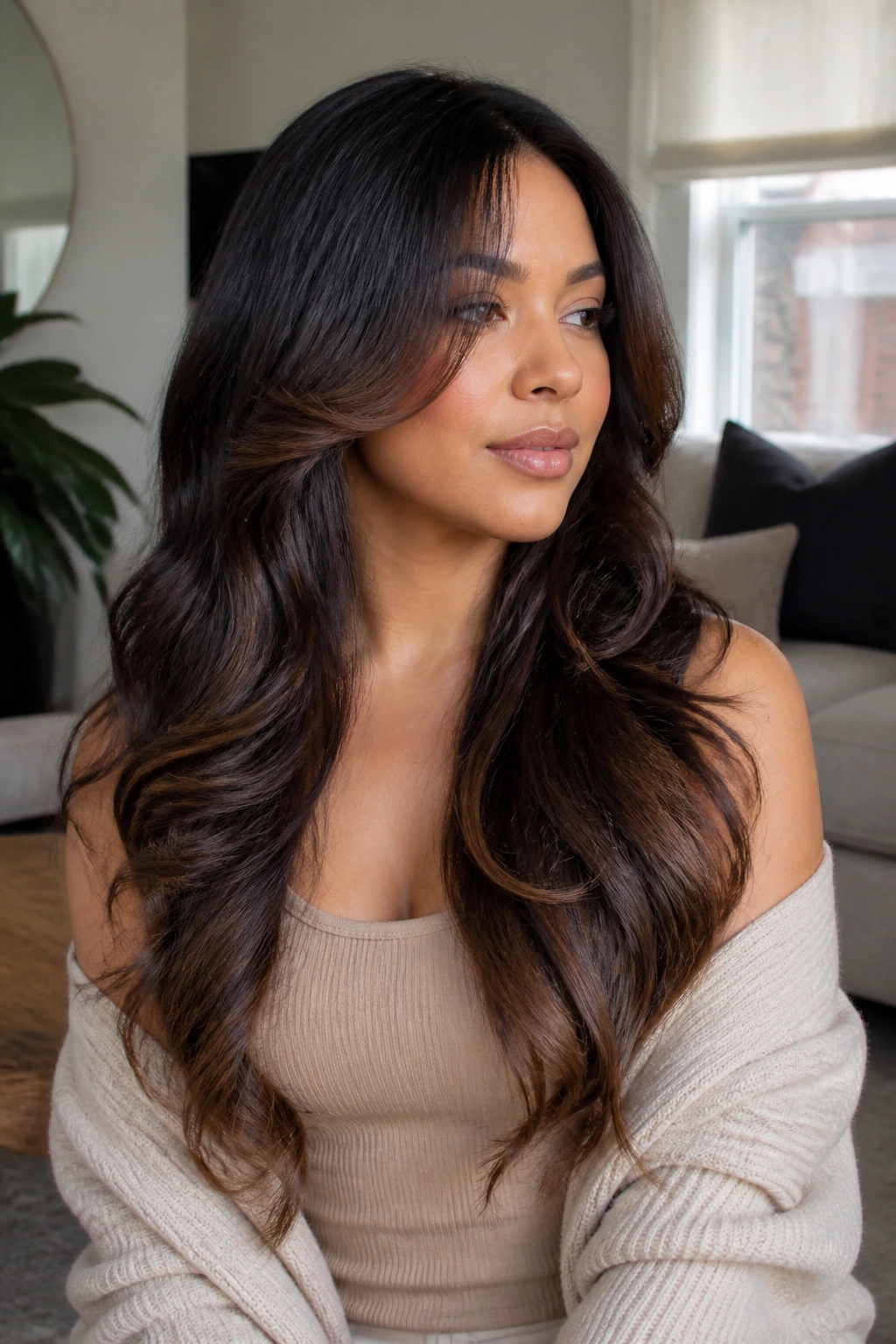
Long layers are the quiet fix for a style that would otherwise feel heavy. A body wave install gives you that soft bend through the middle, but the real magic comes from the cut: pieces grazing the chin, then the collarbone, then the chest. That staggered shape keeps the hair from stacking all its volume across the cheeks.
This is the style I’d pick if you want your natural hair to stay mostly out of the spotlight while still having a weave that looks blended and soft. A 20/22/24 bundle mix works well here, because the different lengths let the layers fall naturally instead of forming one blunt edge. Ask for point-cut ends if the hair looks too solid. Sharp, straight ends can make a round face look wider than it needs to.
If you want a safe bet, start here. It’s one of the most forgiving wavy weaves for round faces because the shape stays long and the texture keeps it from feeling flat.
3. Shoulder-Length Wavy Lob With Soft, Airy Ends
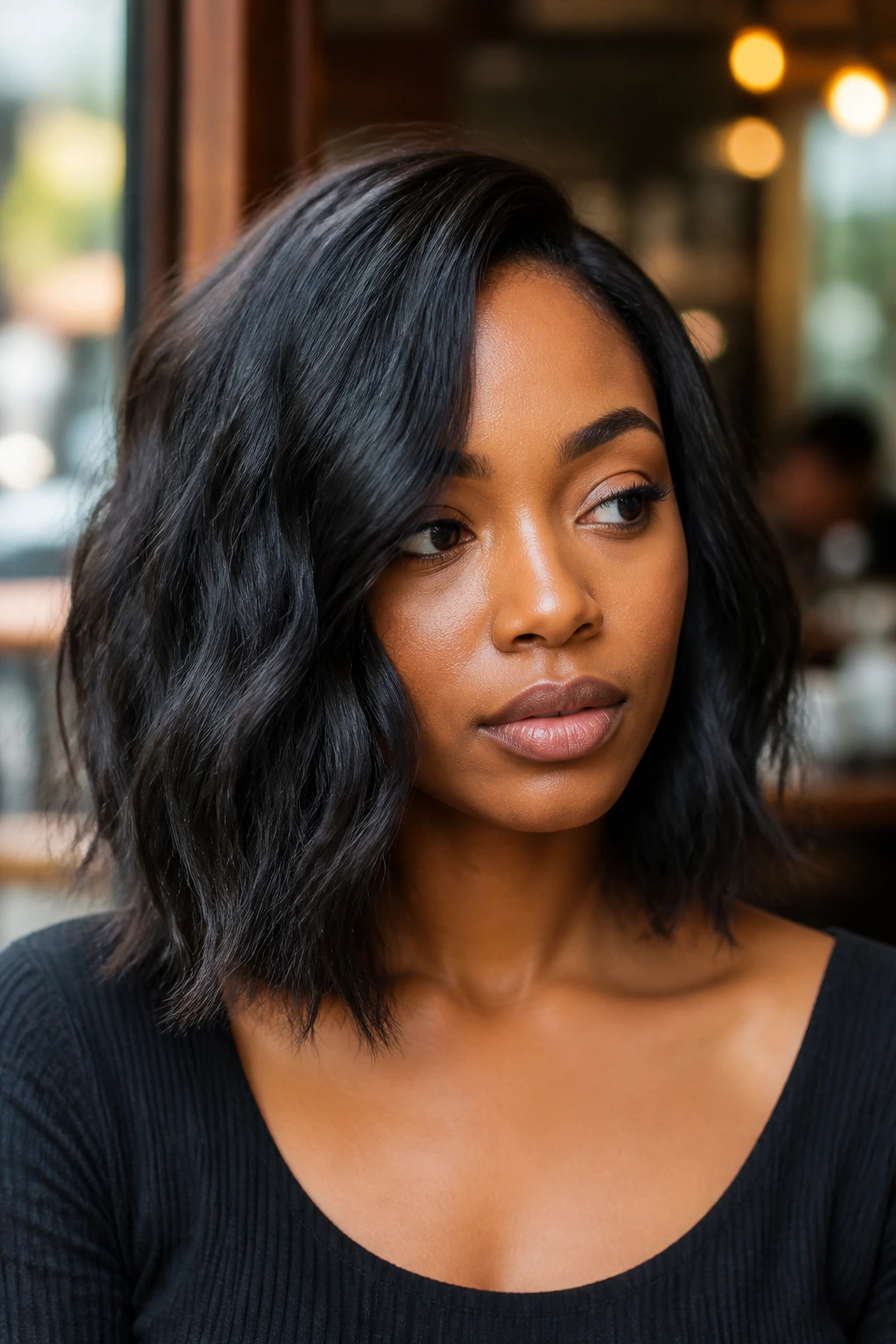
A shoulder-length wavy lob is a nice middle ground when you don’t want all that extra length hanging around your ribs. The key is to keep the ends airy, not boxy. A blunt shoulder cut can sit like a shelf, and a shelf is not flattering on a round face. But a lob with soft ends and a slight front angle reads cleaner.
I prefer this look with an off-center part. Not dramatic. Just enough to break symmetry. The waves should brush the collarbone or sit just below it, which keeps the face open without making the style feel short. If your bundles are dense, have some of the bulk removed through the middle layers rather than hacking into the ends. That preserves movement.
This one works especially well if you want a weave that feels light on your neck and easy to style in the morning. It is polished without looking stiff. That matters.
4. One-Side-Tucked Glam Waves That Open the Cheek Line
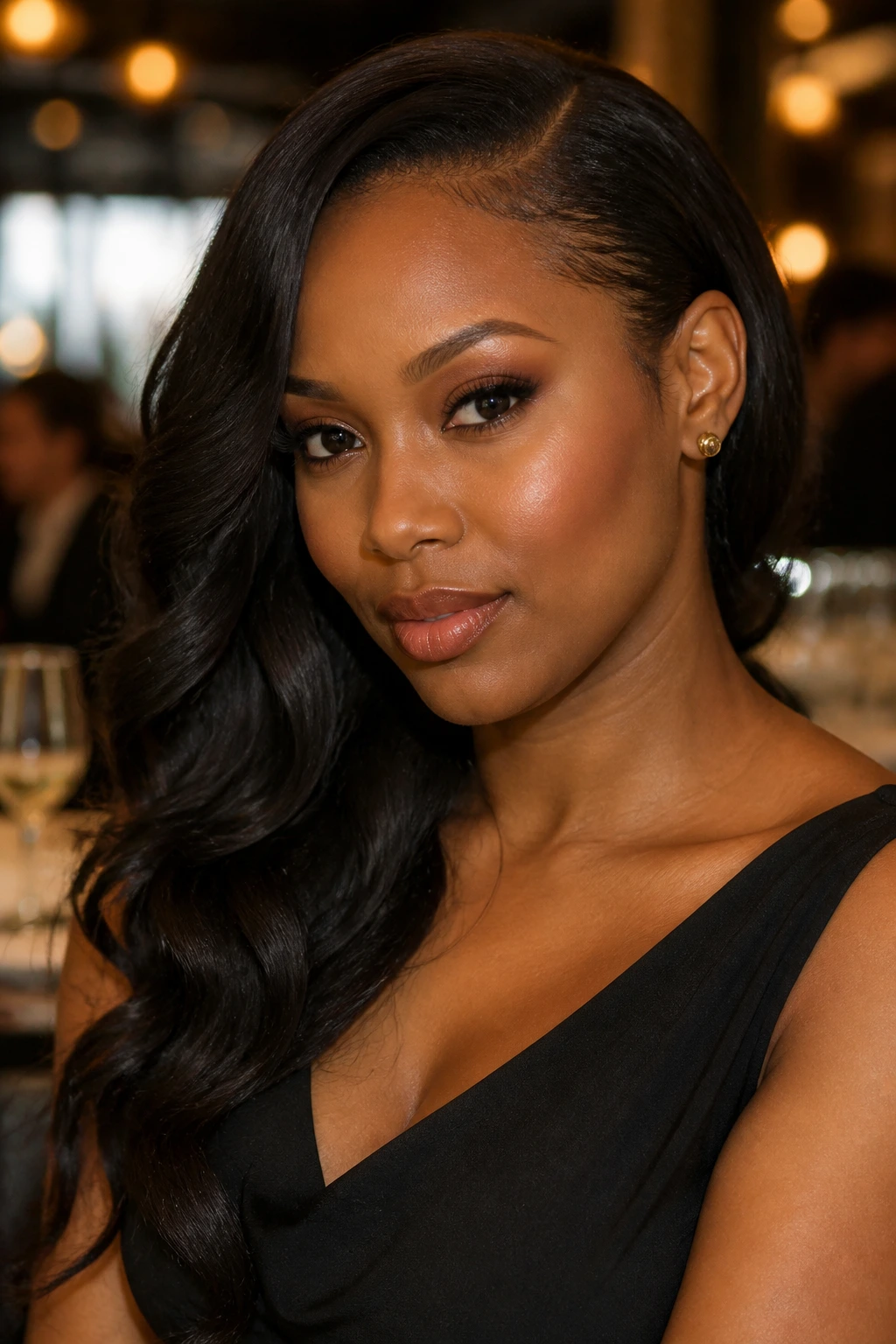
Tuck one side behind the ear and the entire face changes shape. It sounds small. It isn’t. That one move exposes a cheekbone, creates asymmetry, and lets the waves fall in a more intentional cascade over the other side. On a round face, that asymmetry keeps the look from reading too evenly rounded.
This style shines when the untucked side is a little fuller and the tucked side stays sleek. You can use a clip, a hidden pin, or even a little edge control near the temple if the install likes to puff up. Keep the front wave soft; if the front is too stiff, the tuck feels forced instead of relaxed.
I like this for dinners, photos, and anything where you want the weave to look styled without seeming overworked. It gives the face room. That’s the whole point.
5. Half-Up Crown-Lift Waves With Loose Length Below
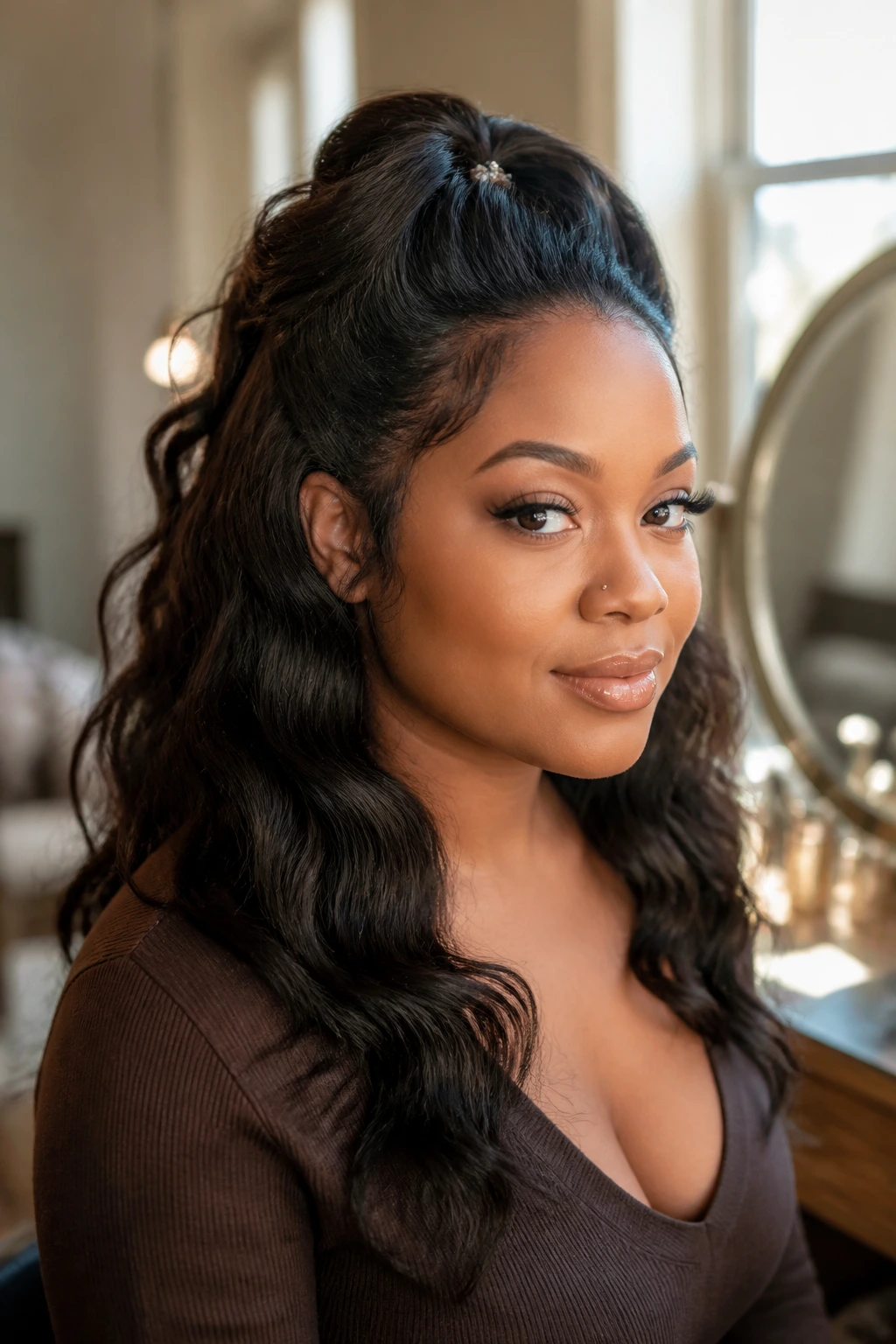
Height at the crown matters more than extra hair. A half-up style lifts the eye upward before the waves fall down the back, which is exactly what you want when the face already reads full through the cheeks. You get a little shape on top and plenty of softness below.
For round faces, the half-up section should sit high enough to make a vertical line, but not so tight that it pulls the front backward. Leave some softness around the temples. A wrapped base, a small claw clip, or a half-up pony with a hidden elastic all work. If your weave is body wave or loose wave, this style gets a nice swing without needing a lot of curling.
It also helps if your natural hair is tucked under a braid pattern that lays flat. The top is the showpiece here, and any lumpiness at the crown will ruin the clean line.
6. Center-Part Waves With Long Curtain Pieces
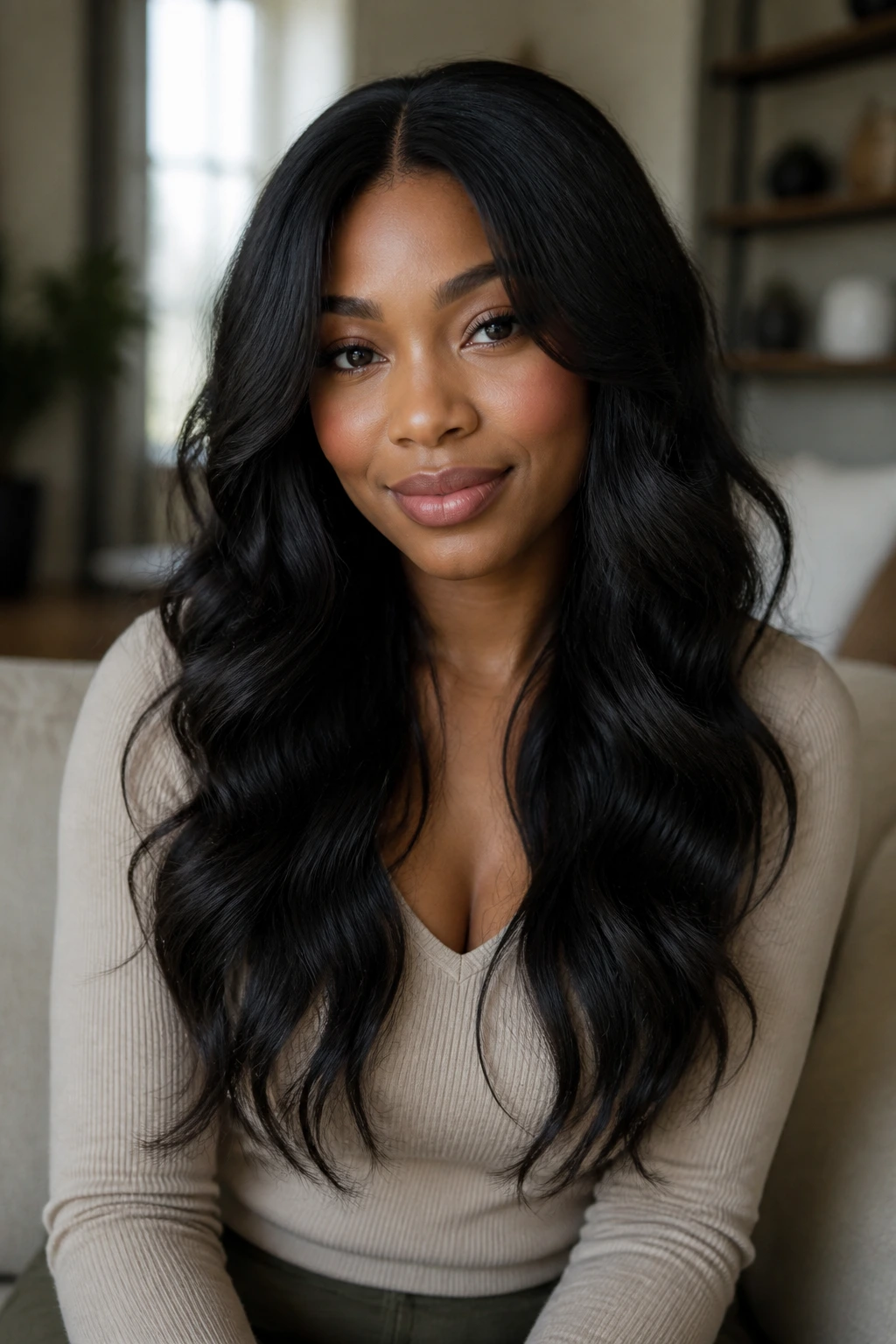
A center part isn’t off-limits on a round face. It just needs help. Long curtain pieces are that help. When the front layers drop to the cheekbone and then taper past the jaw, the center part stops reading severe and starts looking balanced. The trick is to keep the wave pattern soft enough that the hair moves instead of sitting like a curtain wall.
This is best when the length reaches the chest or longer. Short center-part waves can land right at the widest part of the face, which is where trouble starts. If your stylist can build a gentle layer from the front hairline toward the chin, the center part looks far better. I also like a slightly deeper parting at the crown so the top doesn’t go flat.
If you like symmetry but don’t want the face to feel wider, this is the version to try. Calm up top. Soft on the sides. Long enough to drop the eye.
7. Asymmetrical Side-Sweep Waves With Extra Motion
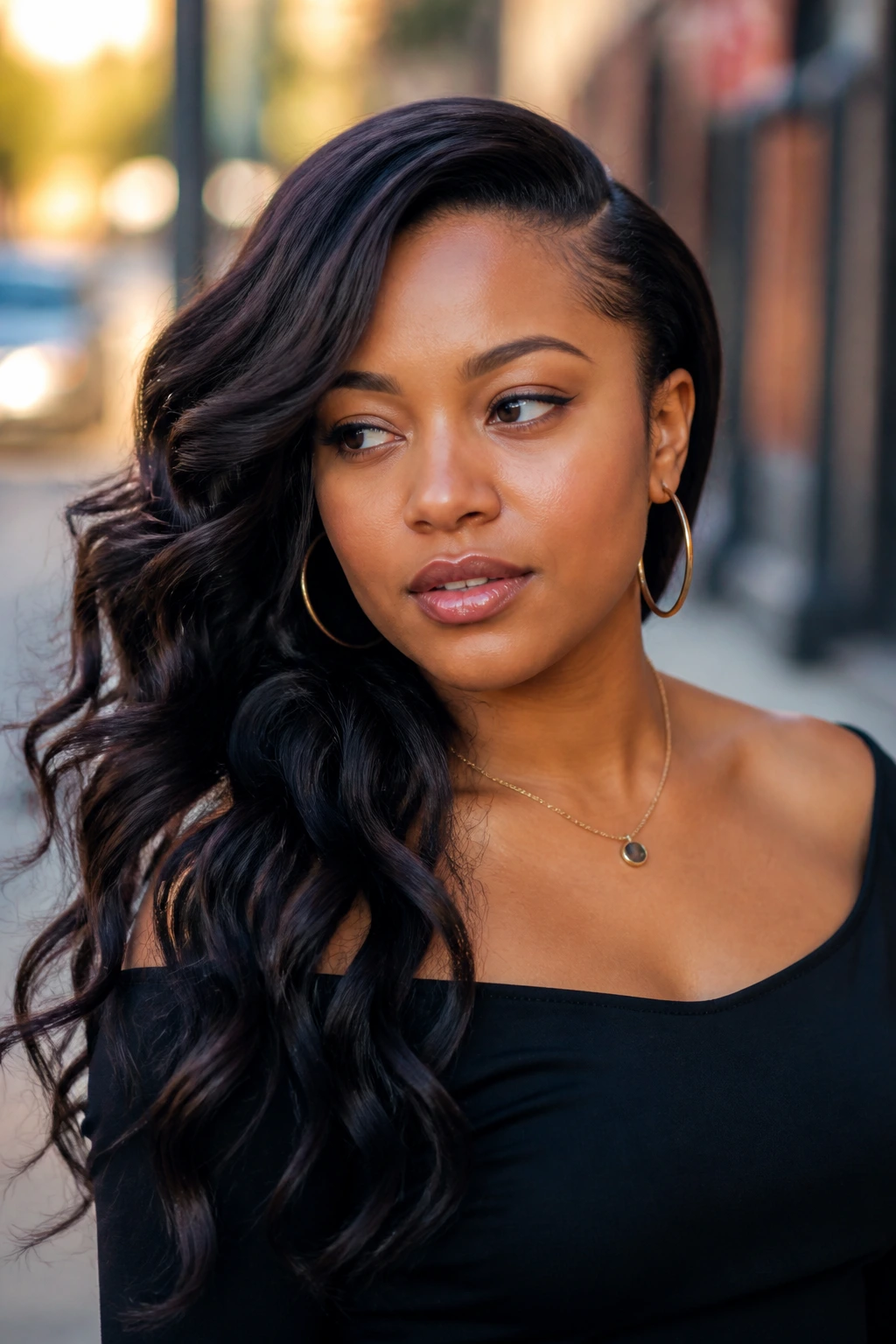
Asymmetry is the whole point here. One side sits fuller, the other side moves back or drops lighter, and the face ends up looking longer because the eye has to follow the unequal line. Round faces benefit from that kind of interruption. It stops the hair from forming a neat circle around the jaw.
This is a good style if you enjoy a bit of drama without going full red-carpet. Keep the heavier side just past the collarbone and let the other side sit a touch higher or be tucked back. If the waves are too uniform, the look loses its edge. You want movement that feels deliberate, not symmetrical for the sake of it.
A side-sweep works especially well with layered bundles, because the texture shows more clearly when the hair can separate and fall in different directions. It’s a little bold. That’s why it works.
8. Feathered V-Cut Waves That Narrow Toward the Ends
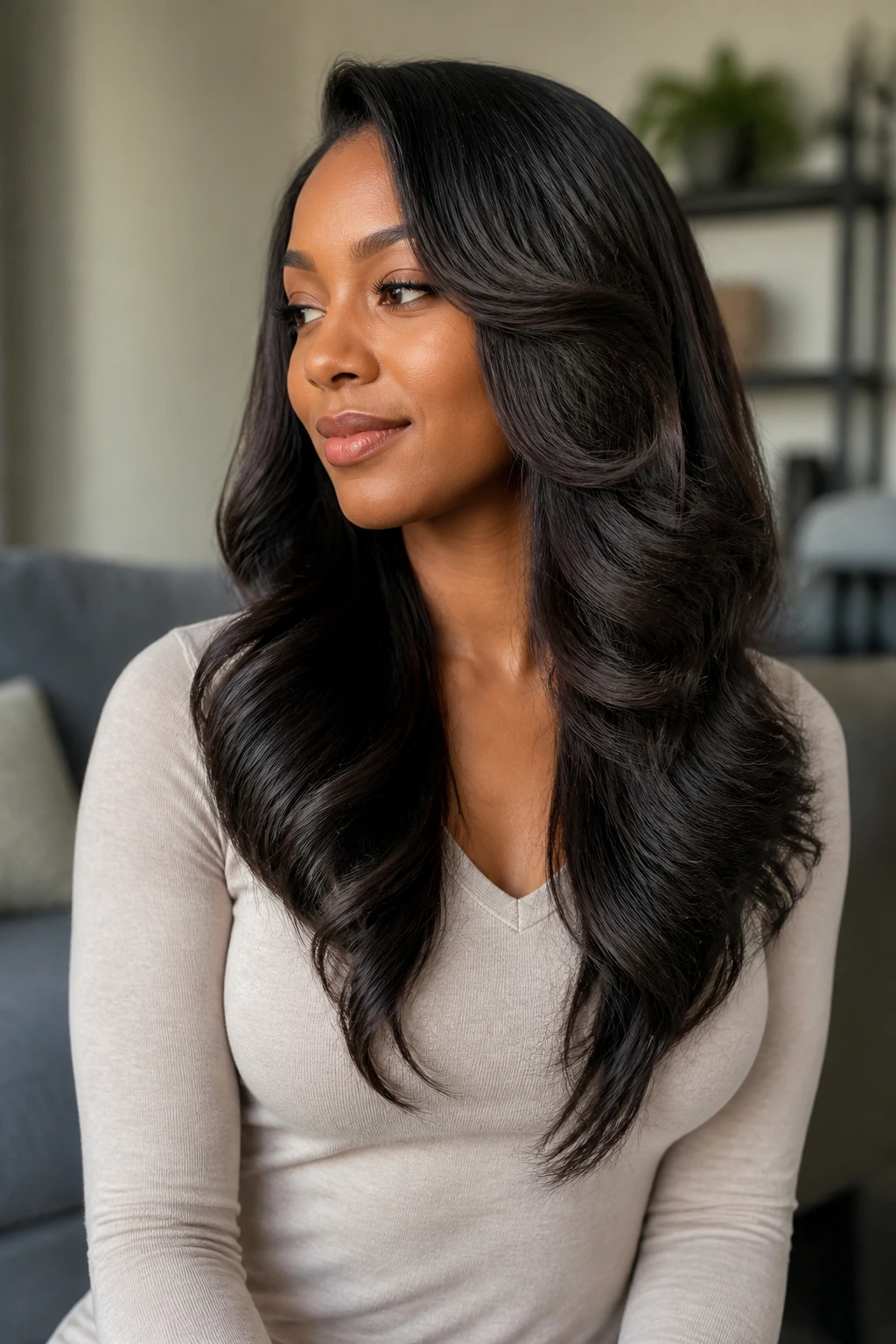
A V-cut gives the waves a taper that a round face can use. Instead of one heavy curtain of hair, the back narrows toward the ends, which creates a vertical point and pulls attention away from width. The feathering keeps the cut from looking harsh.
This style is especially nice when you like long installs but hate the feeling of too much bulk at the bottom. Ask for soft feathering, not aggressive thinning. Too much thinning turns the ends stringy and can make the weave look tired after a few wears. You want the waves to separate a little, not fall apart.
If your natural hair is thick, this shape also keeps the install from feeling like too much hair all at once. The V-cut quietly solves that. No fuss. Just better lines.
9. Shag-Inspired Wavy Weave With Light, Choppy Layers
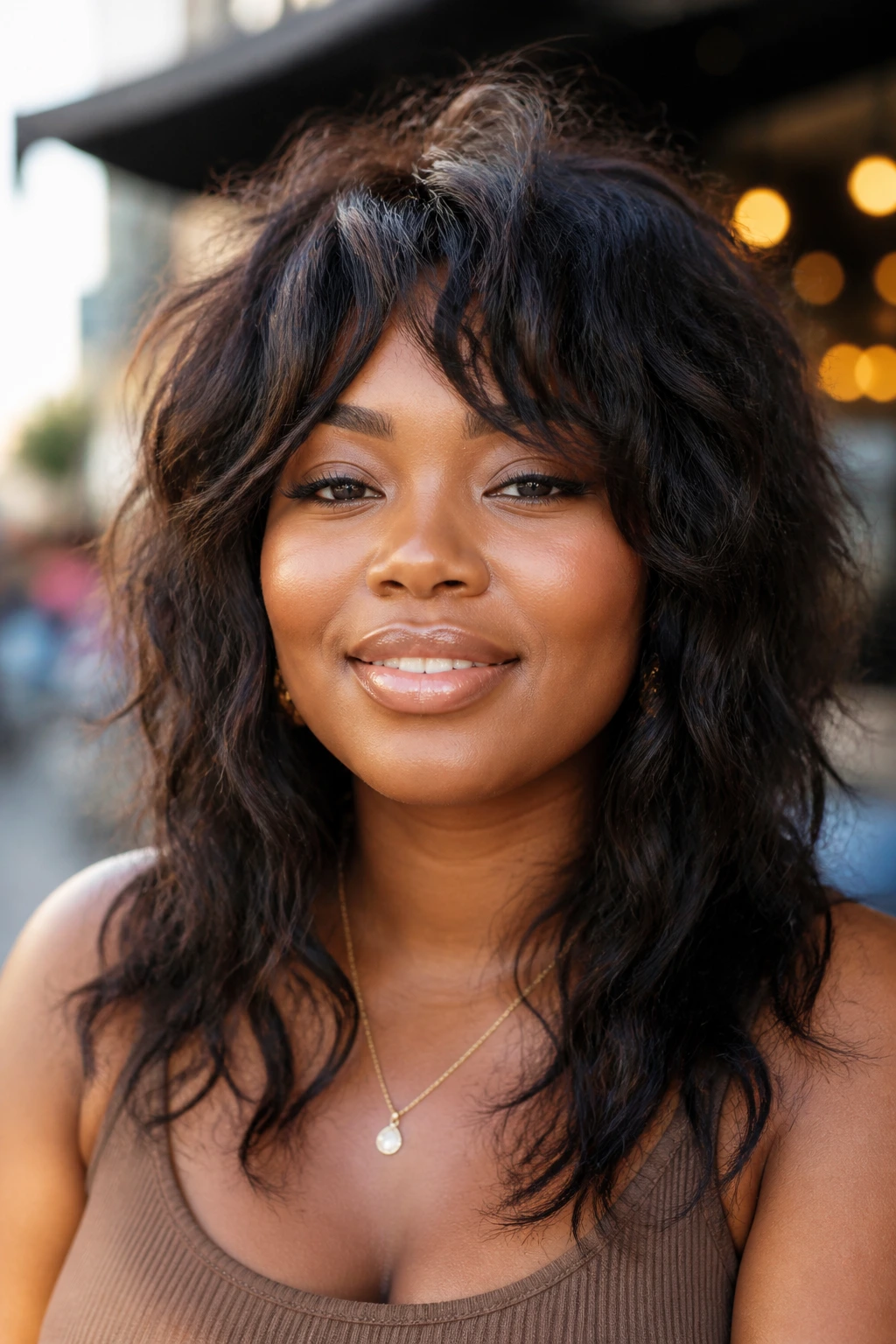
A shag-inspired weave is for the woman who likes movement more than polish. The layers are choppier, the crown has a little lift, and the front pieces often hit at different lengths. On a round face, that kind of irregular shape is useful because it breaks up the outline in a way a one-length install never will.
The danger is overdoing it. If the layers are cut too short around the cheeks, the face can look wider. So keep the choppiness light and the longest pieces below the jaw. A soft shag with a wavy texture gives you that lived-in finish without turning into a helmet of hair.
I like this best on a loose wave or a relaxed body wave, not on an ultra-tight pattern. The cut needs room to breathe. Short. Soft. A little messy, in a good way.
10. Chin- to Jaw-Length Wavy Bob With Hidden Internal Layers
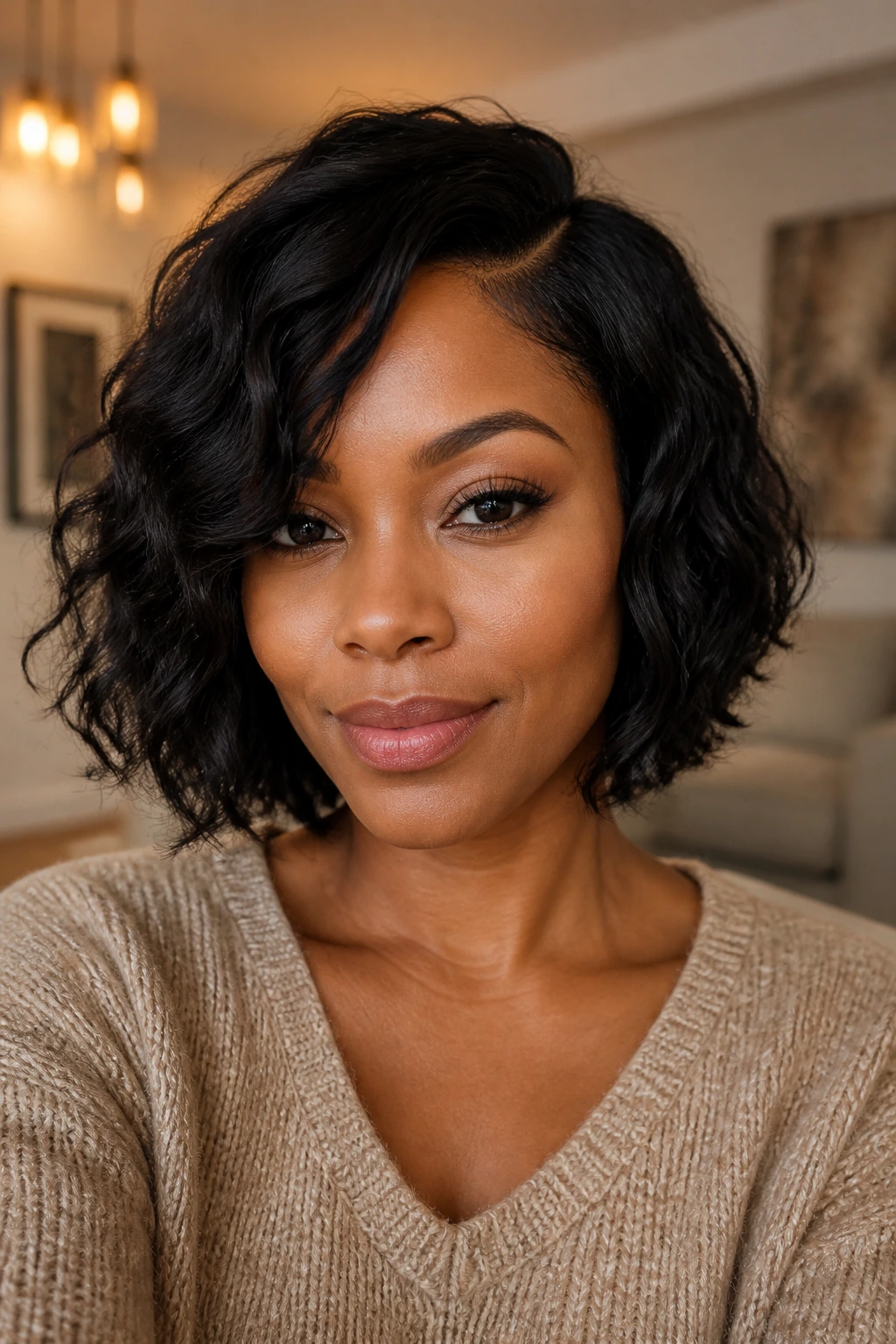
A bob can work on a round face when the cut is smarter than the usual blunt chop. The internal layers matter here. They remove bulk from inside the shape so the outside still looks clean. Keep the front a little longer than the back, and don’t let the hemline sit exactly on the chin.
This style is great if you want shorter hair that still moves. The waves should be loose enough to bend, not puff. A deep side part or an off-center part helps the bob feel less boxy. If the ends flip inward too much, the face can feel compressed, so a little outward bend is usually better.
A lot of people assume short and round is a bad mix. It isn’t. The wrong cut is the problem. This one works because it keeps the silhouette narrow at the lower edge.
11. Glueless Closure Waves for a Clean, Easy Install
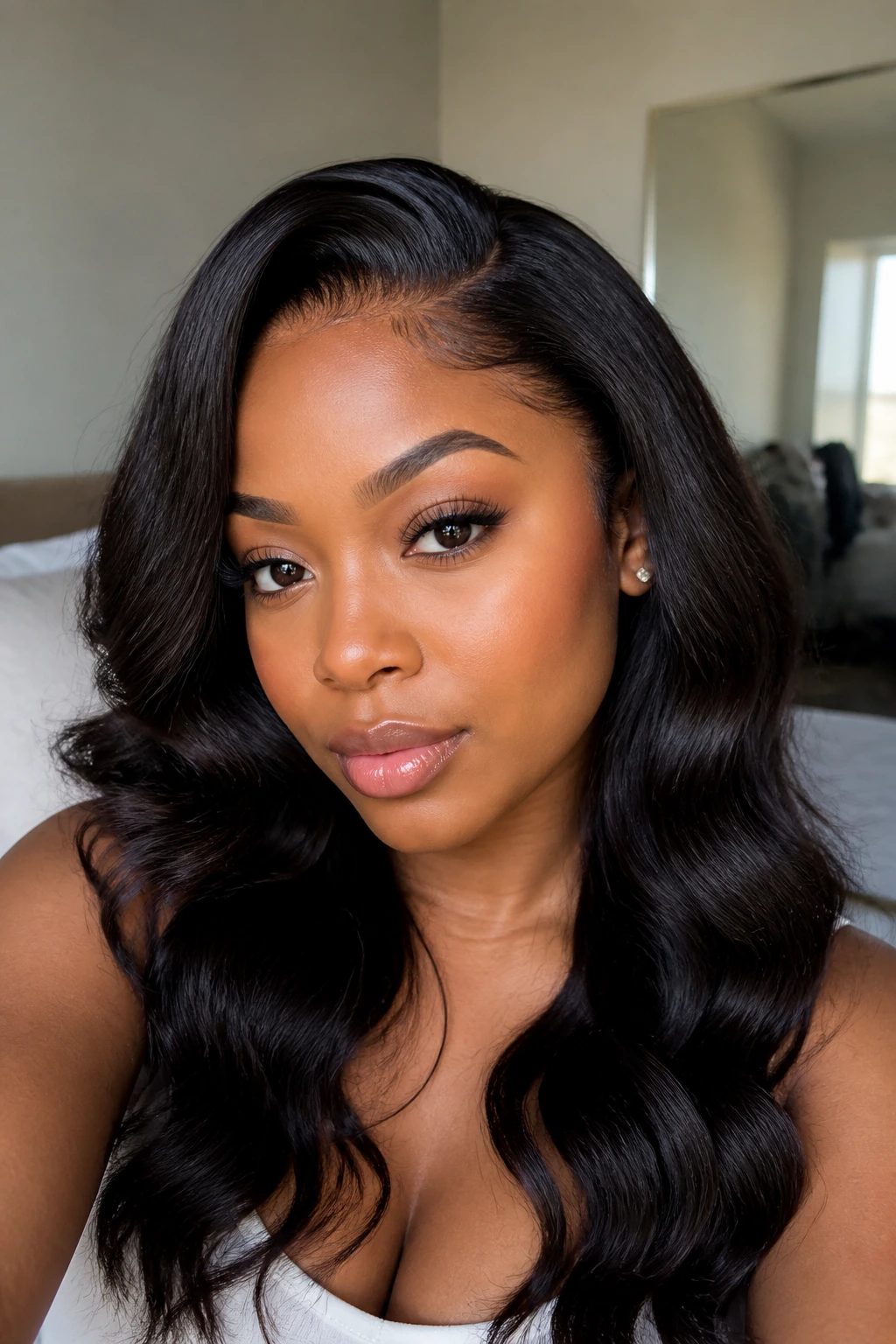
A glueless closure install is the no-drama answer for anyone who wants waves without daily leave-out blending. The closure gives you a neat part and a protected hairline, and on a round face that clean center or side part can be shaped to give more length than you’d expect. A 5×5 or 6×6 closure gives enough space to move the part without looking stiff.
The beauty of this style is that the waves stay the focus. You are not fighting a texture mismatch at the front every morning. If your natural hair is fragile, this setup is kinder too. Less heat. Less blending stress. Less messing with the hairline.
Keep the hair at the crown slightly lifted and the closure plucked lightly so the part doesn’t look like a hard line sitting on the head. A good glueless install should look like a decision, not a compromise.
12. Leave-Out Blend Waves That Match Natural Texture
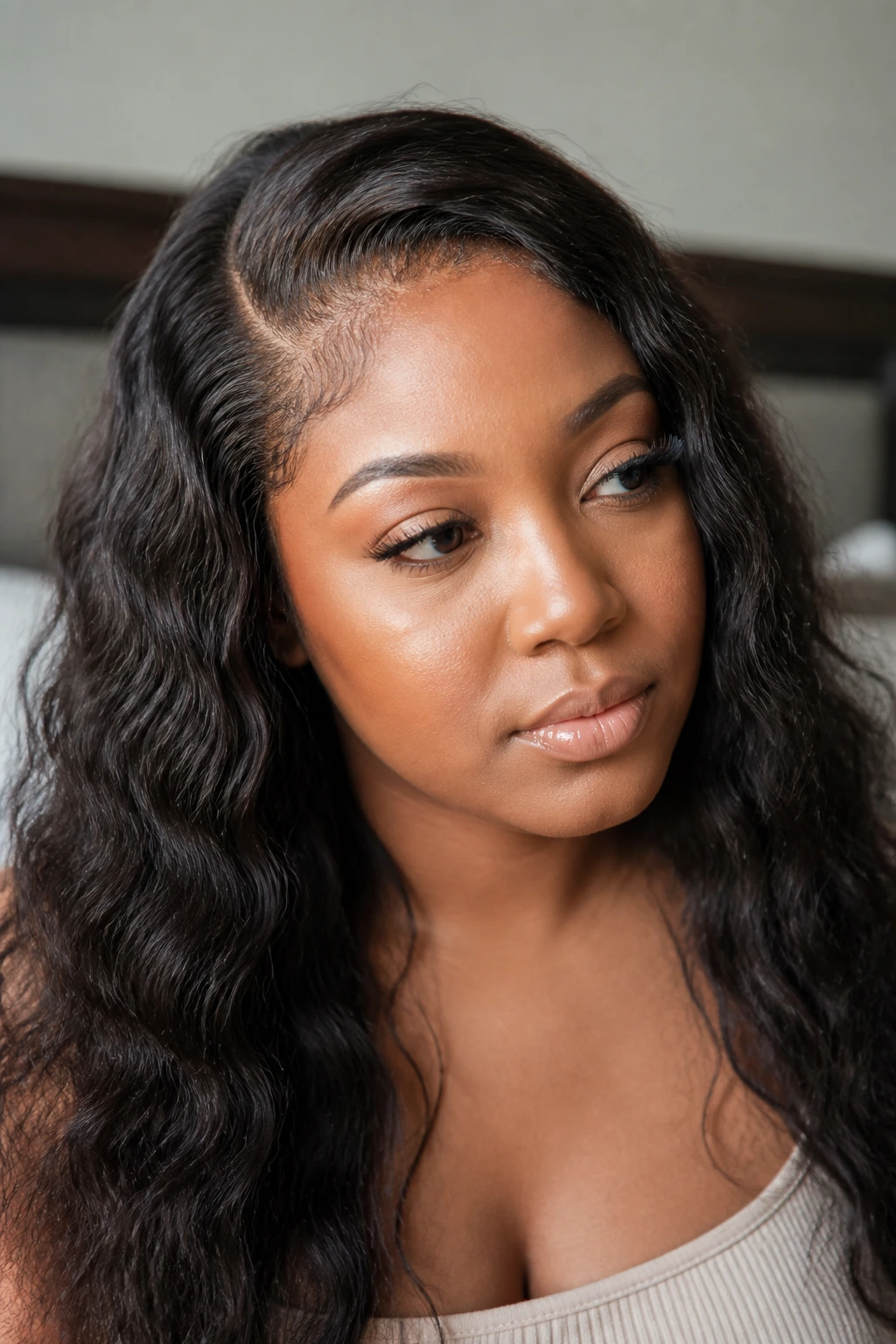
Leave-out can look expensive when the texture match is exact. That’s the key word: exact. If your natural hair is blown out or silk pressed and the weave waves are too silky or too coarse, the transition will shout. Round faces don’t need that extra visual noise near the temples.
This style works best when the wave pattern is close to the stretched texture of your own hair. Body wave or loose wave usually blends more easily than deep wave. Use heat protectant on your leave-out, keep the flat iron around 300°F to 350°F, and don’t keep going over the same section five times. That’s how leave-out gets dry and puffy.
I only recommend this when you’re willing to do the maintenance. If you want a style you can sleep on carelessly, choose a closure instead. Leave-out rewards discipline.
13. High Ponytail Waves With Smooth Sides and Volume Up Top
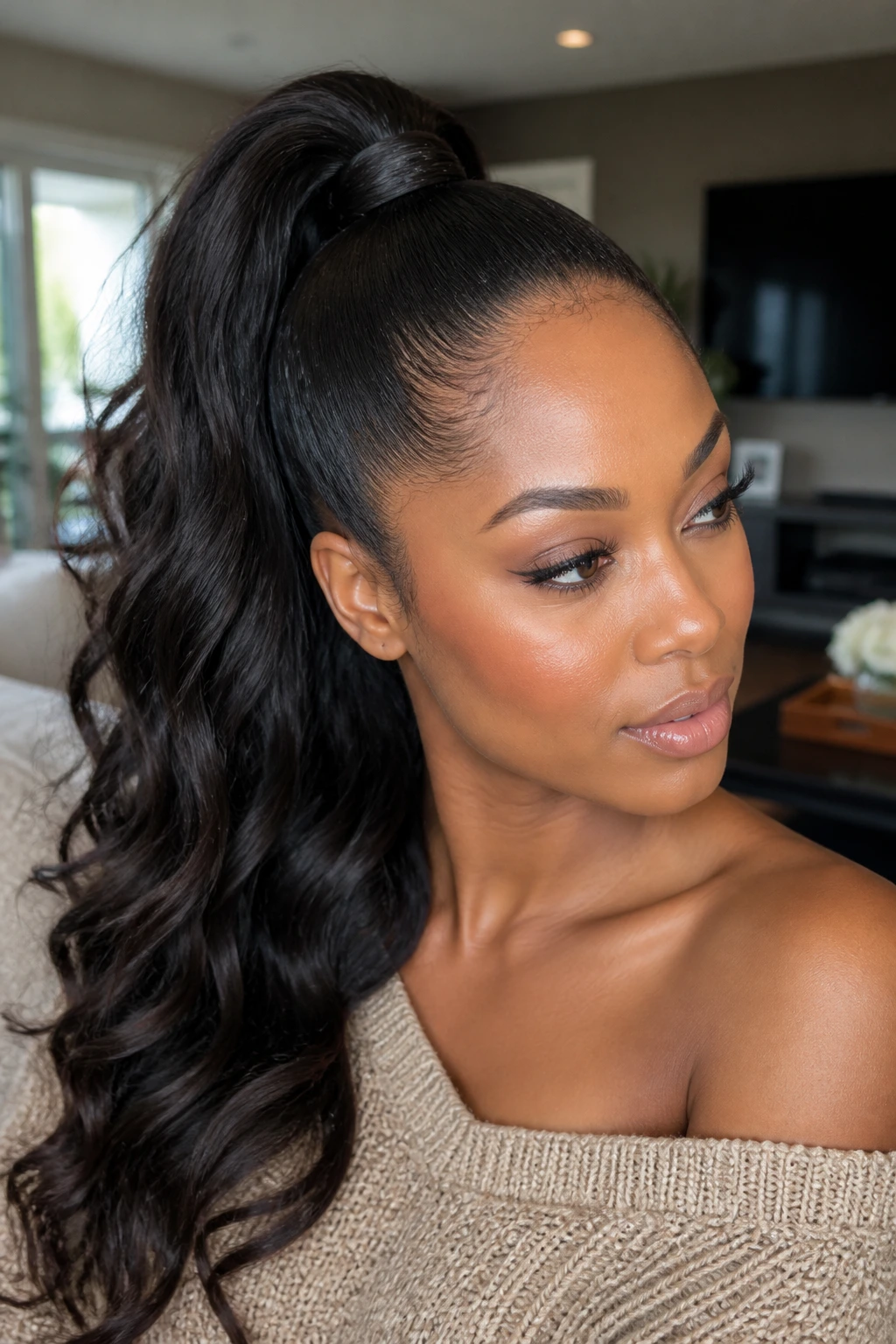
A high ponytail changes the whole line of the face. It pulls the hair upward, which creates height before it drops into long waves. On a round face, that vertical lift matters. A ponytail placed high on the crown can make the face feel longer almost instantly.
The base should be smooth. Not scraped hard enough to hurt, just neat enough that the eye doesn’t get stuck at the temples. The waves can fall over the shoulders or down the back, depending on length. I like a wrapped base here, because it hides the elastic and keeps the style from looking rushed.
This is the sort of style that feels polished without asking for a full install reset. If you have a weave with enough length, it’s one of the easiest ways to switch things up without touching the braid pattern.
14. Low Side Pony Waves That Fall Over One Shoulder
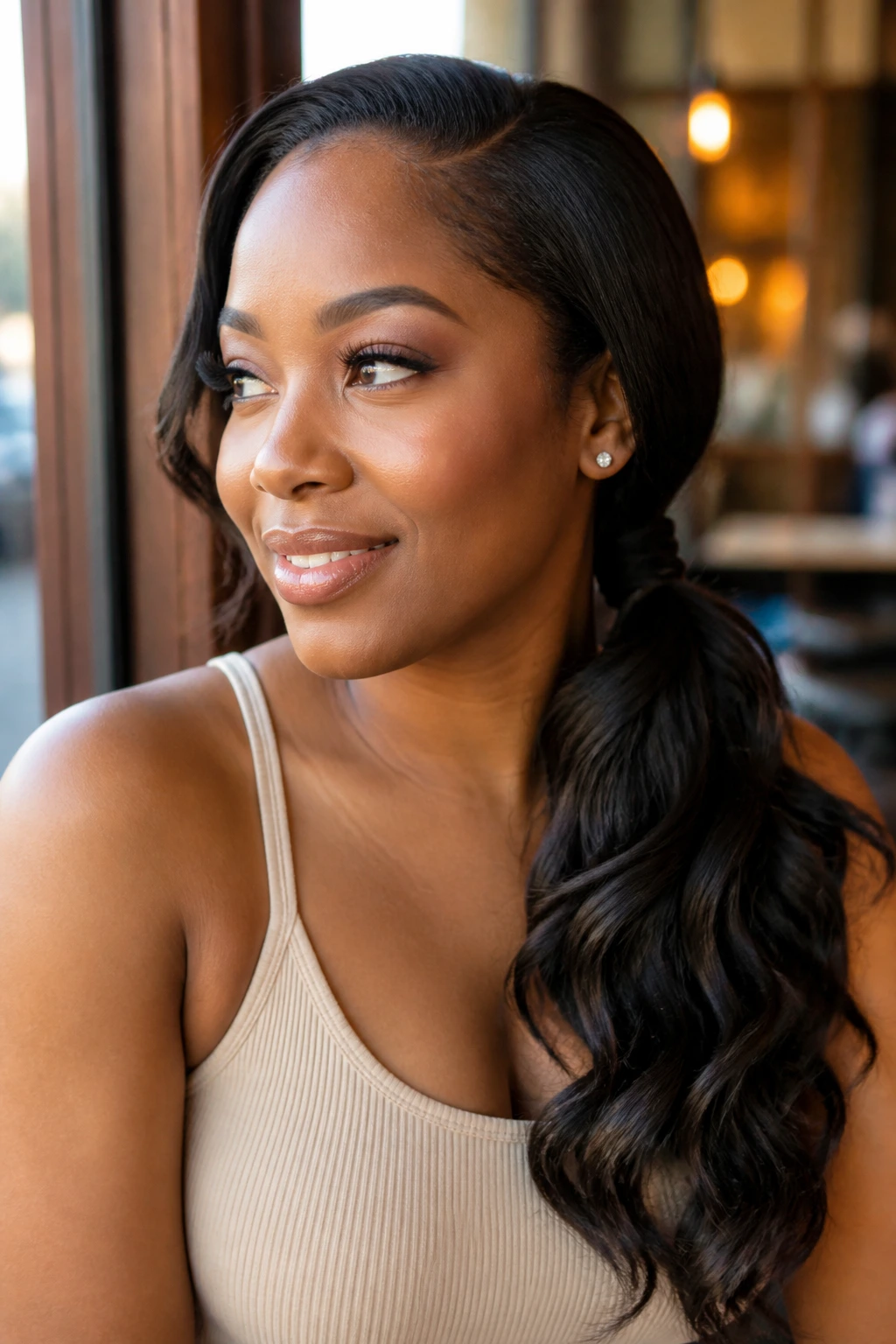
Low side ponytails are underrated. They pull the line of the hair diagonally across the body, which is exactly what a round face needs. A pony that sits low and off to one side creates movement without adding width at the cheeks.
The best version of this style has a little lift at the roots and a soft front section that can sweep back. The pony should hang over one shoulder, not rest flat against the back. If the waves are long enough, this style looks romantic. If they’re medium length, it still reads neat and modern.
I’d skip a dead-center nape pony on a round face. It can feel too round, too symmetrical. One shoulder changes the geometry. That’s the better move.
15. Braided-Crown Waves for a Soft, Lifted Front
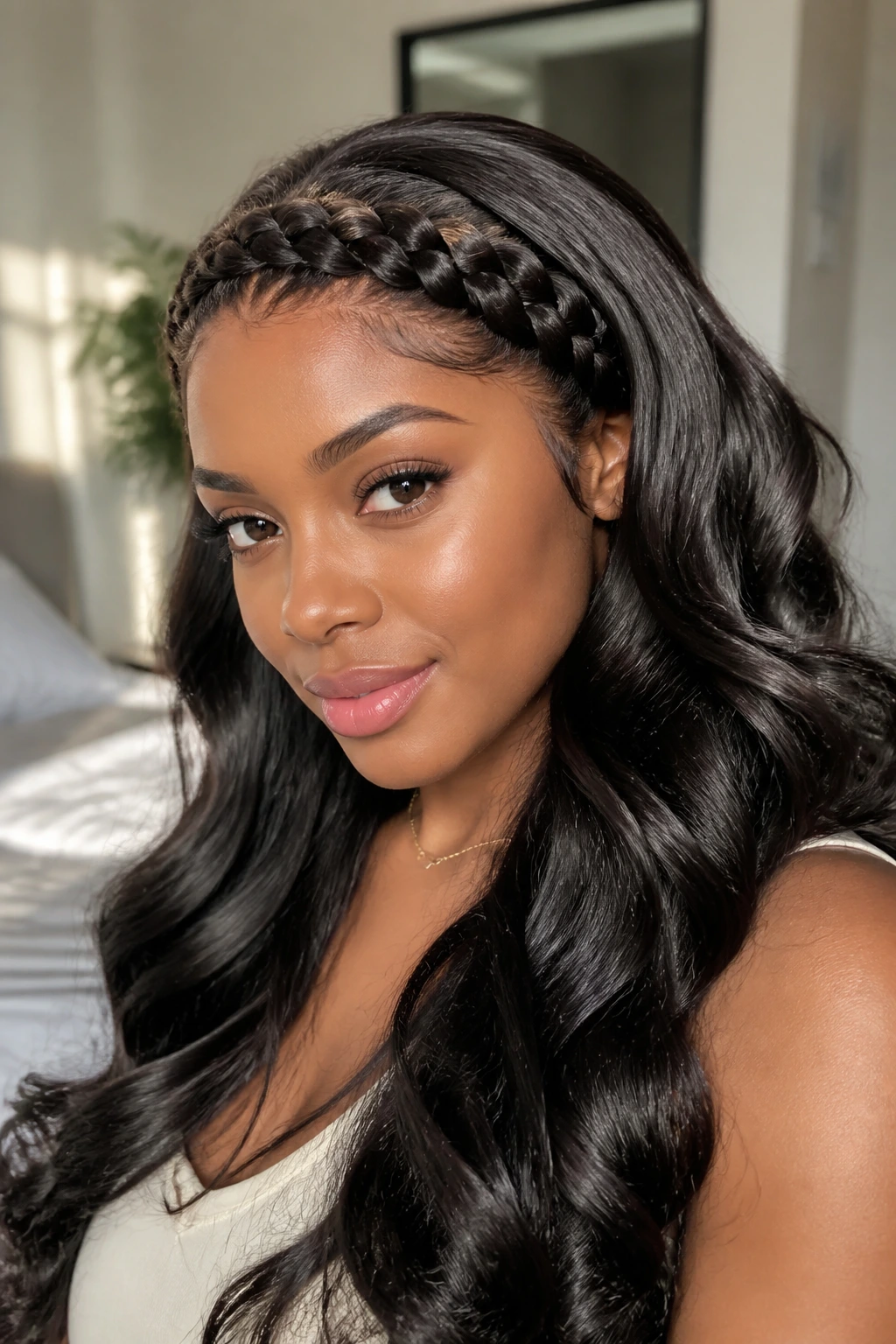
Braided details around the front hairline can change the face shape before the waves even start. A slim braid, a few flat twists, or a braided crown section pushes hair away from the cheeks and adds lift near the temples. That lift is useful. It opens the face and gives the weave a little structure.
This is also a smart choice when your natural hair needs extra protection. The braids keep the front secure and create a neat anchor for the rest of the install. Keep the braids moderate in size; tiny, tight braids can look severe and can tug at the hairline. You want the front to feel soft, not armored.
The waves behind the crown should stay loose and flowing. That contrast between structured front and soft length is what makes the style feel finished.
16. Honey-Highlighted Waves With Built-In Dimension
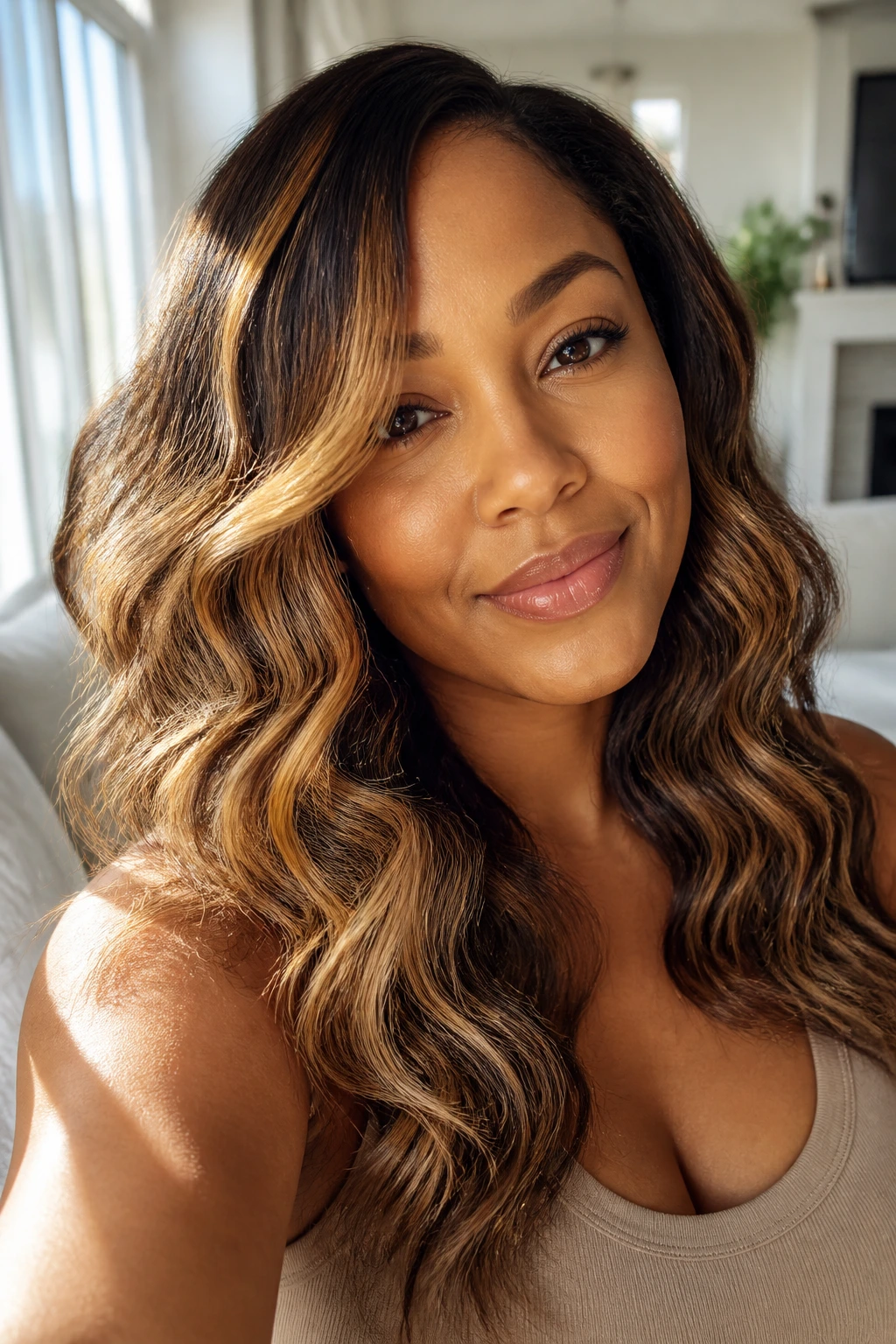
Color can act like a contour kit. Honey, caramel, and warm brown ribbons catch the eye along the front layers and through the mid-lengths, which gives the weave more depth without needing extra volume. On a round face, that matters because the eye starts reading the movement of color, not just the width of the hair.
I like highlights placed where the waves bend — around the face, through the layers, and lightly near the ends. If the brightness is spread too evenly, the style can look busy. Keep the strongest pieces around the front and let the rest stay deeper. That contrast sharpens the shape.
This is a good pick if you want a wavy weave that looks dressed up even when the styling is simple. Color does some of the work. A lot of it, honestly.
17. Wet-Look Defined Waves for a Sharper Finish
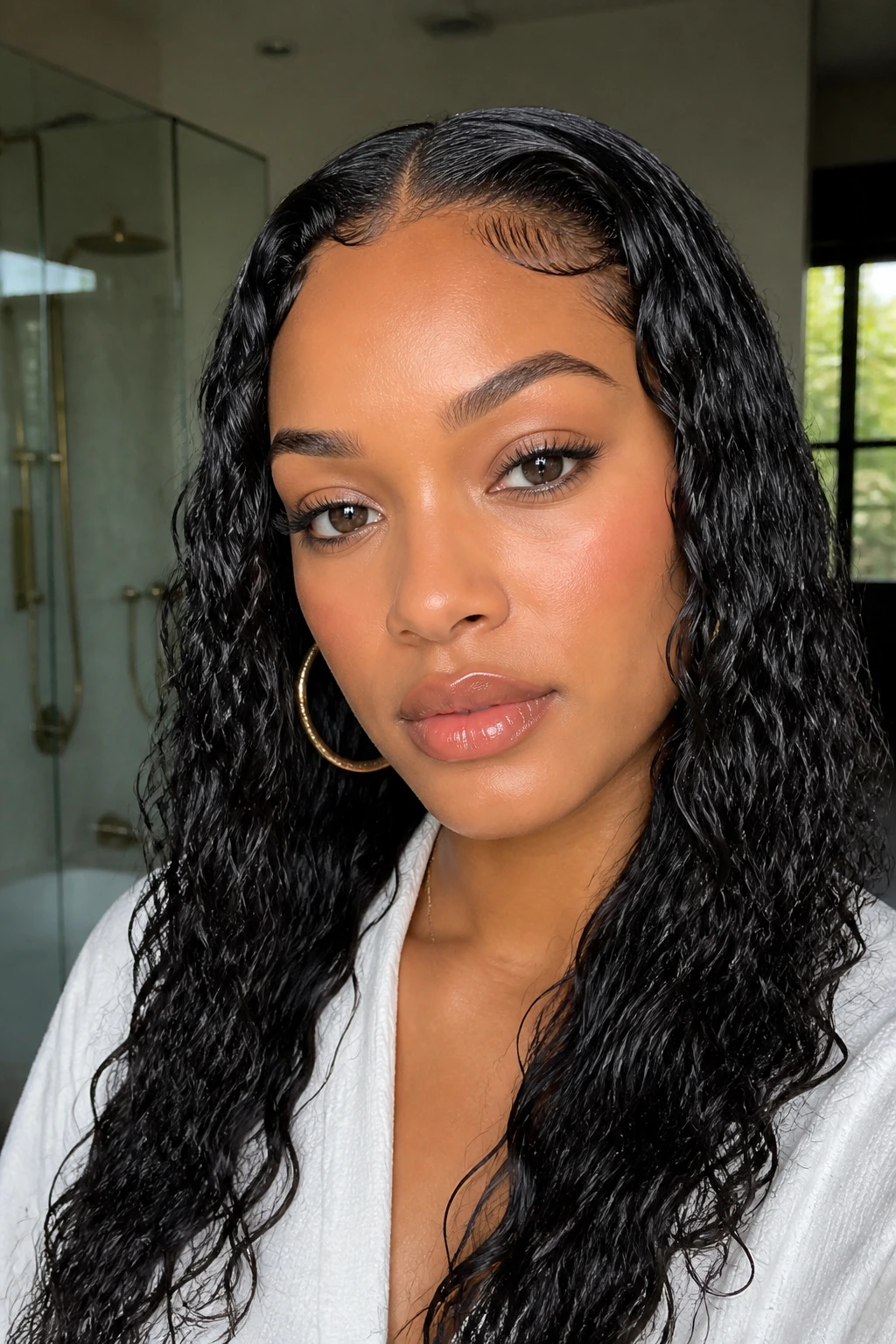
Wet-look waves read sharper than fluffy waves. The shine, the piecey separation, and the controlled top all give the face a cleaner outline. That’s useful on a round face because too much softness around the cheeks can blur the shape. A wet-look finish keeps the style from floating outward.
The trick is not to drown the hair. Start with a light mousse or wave foam, then smooth a small amount of gel over the top layers and hairline only where needed. A diffuser on low heat helps set the shape without puffing the roots. If the texture is too soaked, the waves lose body and go limp.
This style is a little cooler, a little more fashion-forward, and very good when you want a polished finish without big curls. It’s not the easiest everyday look, but it’s one of the best for clean lines.
18. Soft Spiral-End Waves That Polish the Hemline
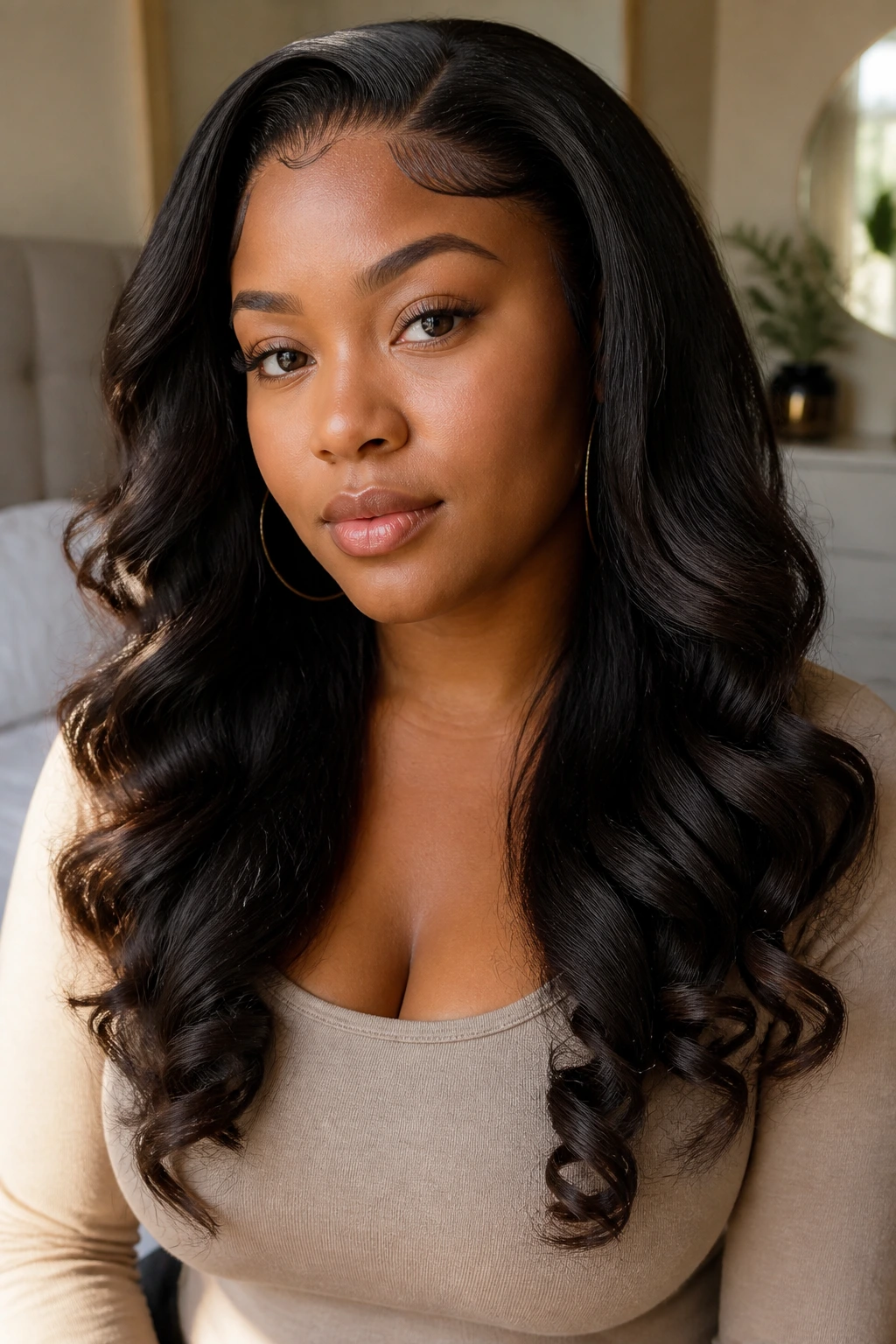
Soft spiral ends give the style a more finished edge. The top stays loose and wavey, then the last three or four inches get a little extra bend from a wand or flexi rods. That contrast draws the eye downward and keeps the hemline from looking flat or blunt.
On a round face, the spiral end trick works because it lengthens the silhouette without making the whole install look curled to death. You want the shape to taper. Not balloon. So keep the spiral only at the bottom, and brush lightly through the upper sections once the hair cools. The result is softer and more controlled.
This is one of my favorite ways to clean up long hair that wants to look too heavy at the ends. A small change. Huge difference.
19. Full-Length 24-Inch Waves for Long Vertical Lines
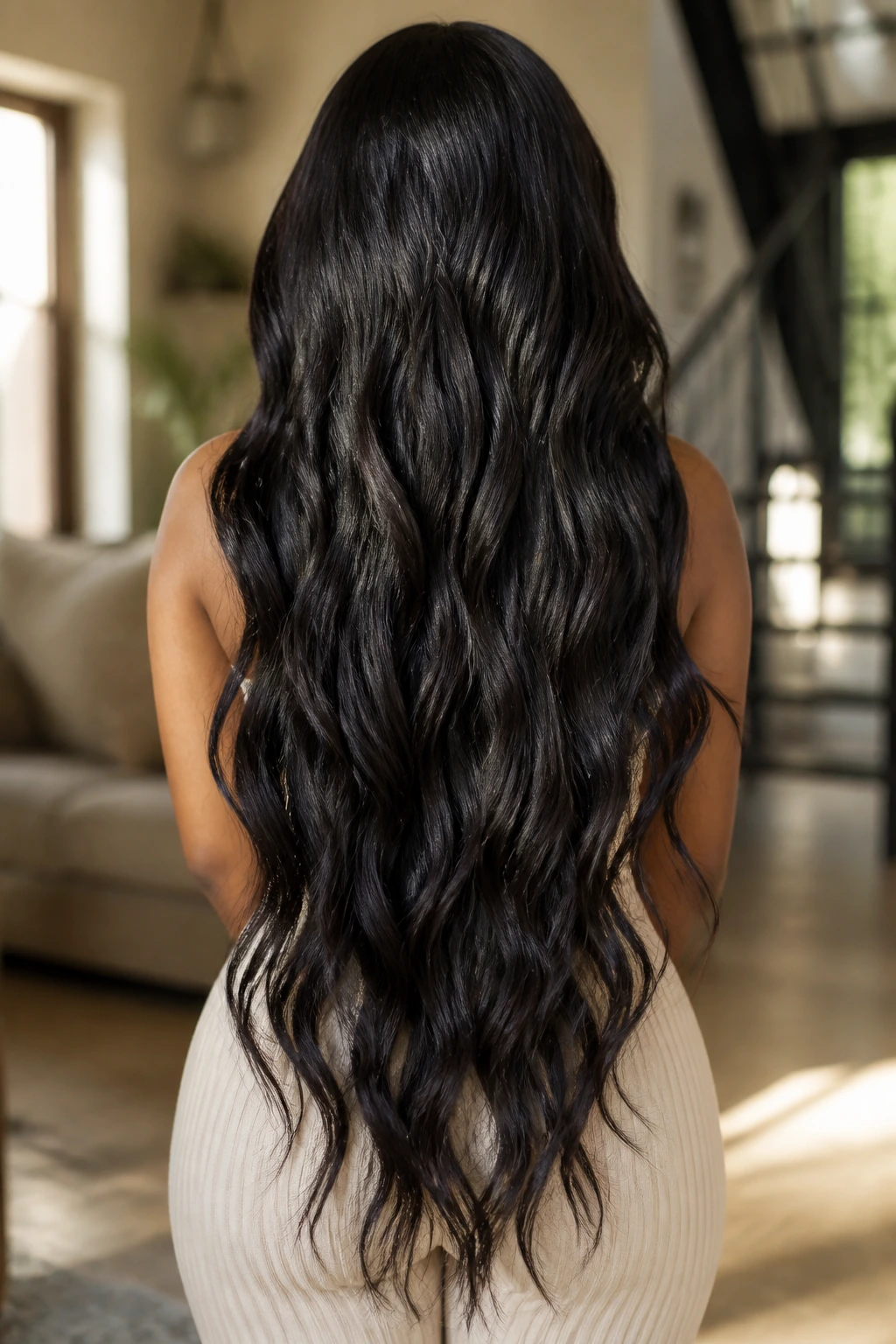
Long 24-inch waves come with a warning: if the cut is wrong, the hair can swallow the face. But when the layers are right, the length becomes the whole point. The eye drops from the face down through the wave pattern, and that vertical line is flattering on a round face because it stretches the silhouette.
This is the style for someone who wants the drama of length without a blunt wall of hair. A side part works best, and the front layers should be feathered enough to avoid a heavy block at the chest. If your bundles are fine, you may need three or four for fullness. If they’re dense, two plus a closure may be enough.
I like this most when the ends are trimmed into a soft curve or V-shape. Straight-across ends at that length can feel cumbersome. Curves are kinder.
20. Low-Density Everyday Waves That Never Swamp the Face
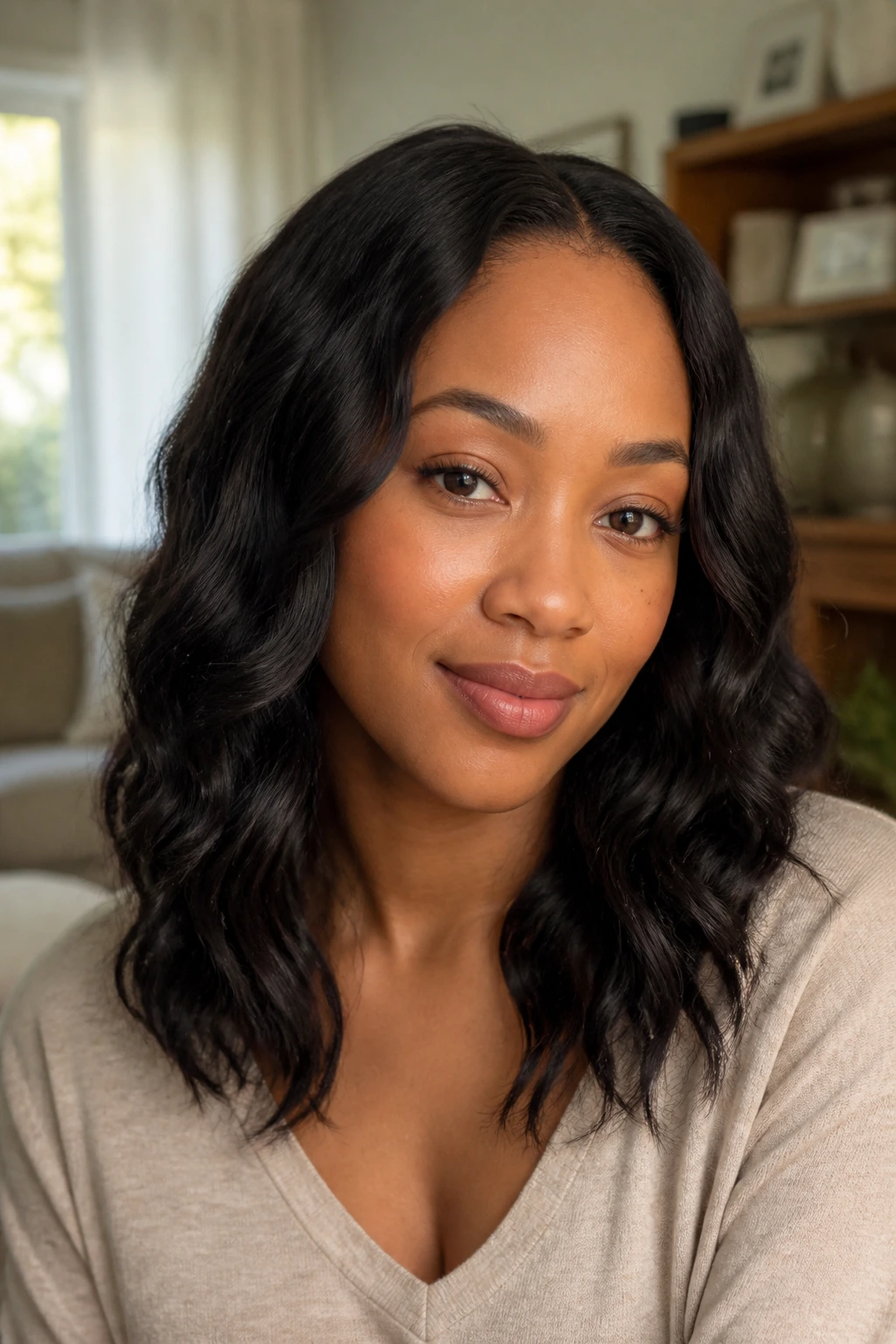
Less density can be the smarter move. A lot of people think round faces need more hair to balance them out. Often, they need less. A 130% to 150% density install with soft waves gives shape without building a wall at the sides.
This is the kind of weave I’d choose for daily wear, especially if you like movement and don’t want to spend ten minutes fluffing the hair every morning. The style should feel light when you shake it out. If the hair hangs like a thick curtain with no swing, there’s too much bulk. Remove some volume or choose fewer bundles.
The nice thing about low-density waves is that they let your features stay visible. You don’t disappear under the hair. That’s the win.
21. Faux Hawk Lifted Waves That Push Height Through the Center
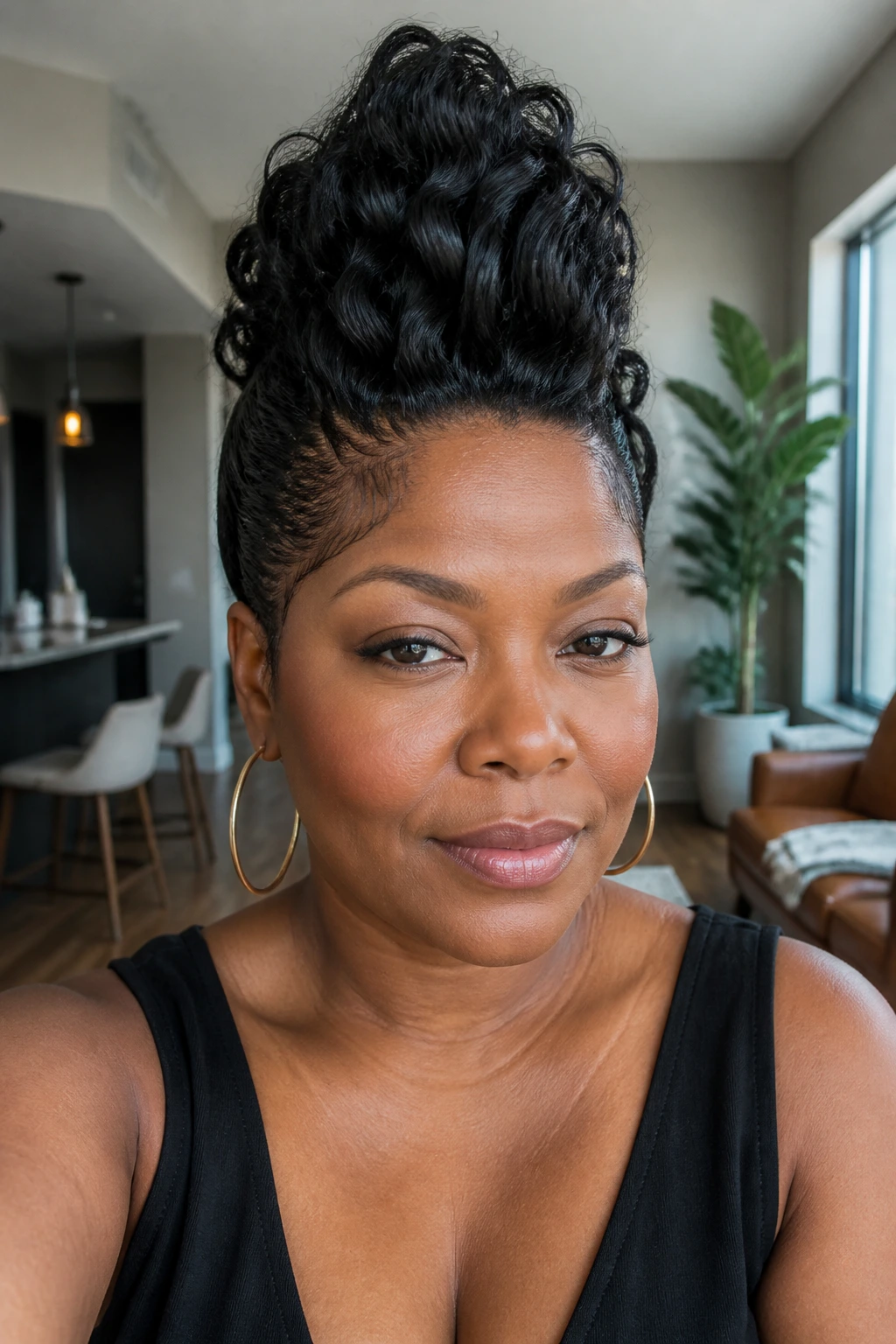
A faux hawk weave is one of the boldest ways to break up a round face. The sides stay closer to the head, while the center strip carries the height and movement from forehead to nape. That central lift creates a strong vertical line. Stronger than a side part. Stronger than a half-up. It has edge.
This style works best when the sides are pinned, braided flat, or sleeked down with minimal product. The middle can stay fluffy, wavy, or slightly teased at the roots, as long as it doesn’t spread outward. If your natural hair is under a braid pattern, the center section should be neat so the volume lands where you want it.
It’s not subtle. That’s fine. Some styles should walk into the room before you do.
22. Long Side Fringe Waves That Soften Without Blunting the Face
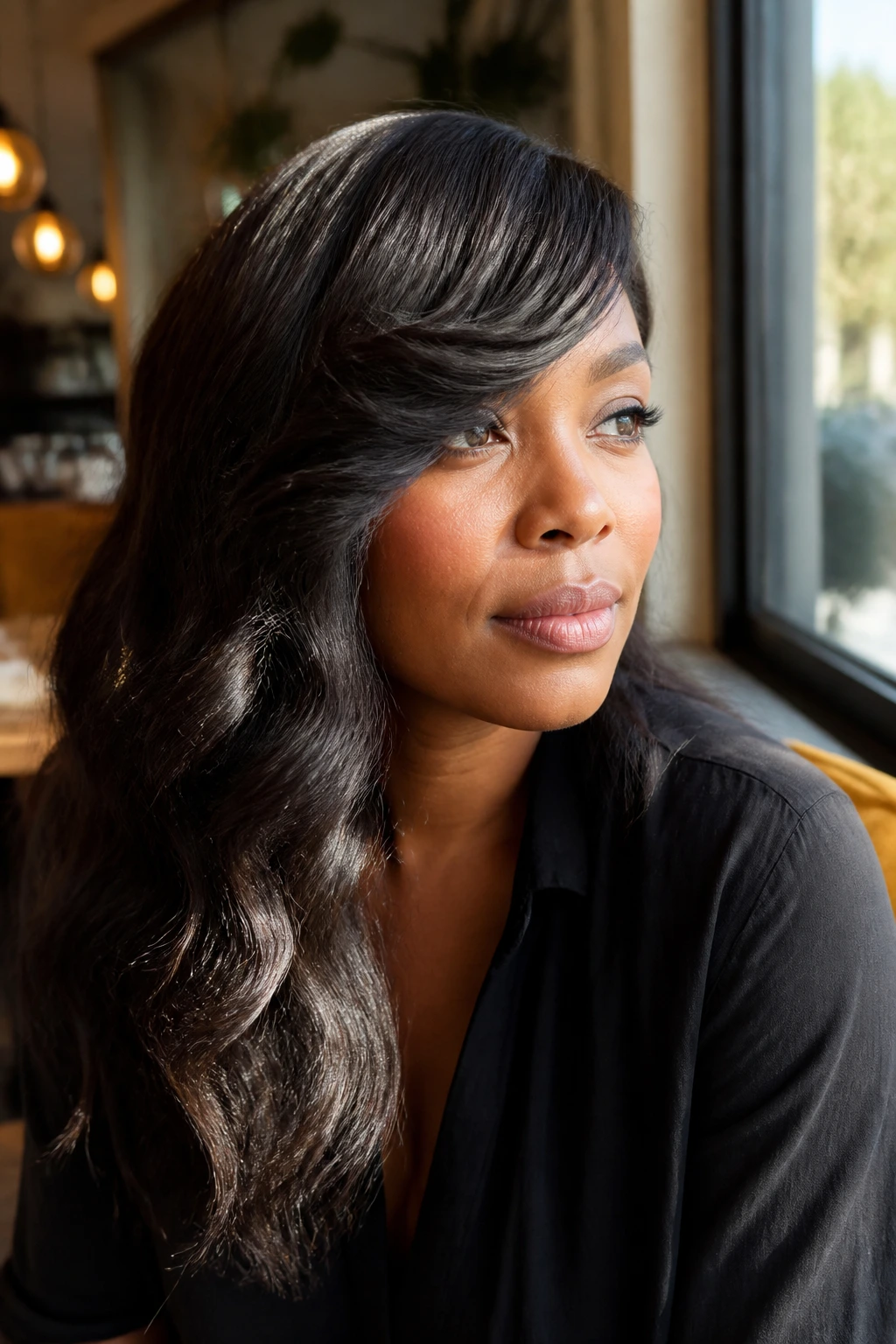
A long side fringe gives you the softness of bangs without the blunt line that can crowd a round face. The fringe should start around the cheekbone and sweep across the forehead in a soft diagonal. Not chopped. Not heavy. Just enough to break the forehead space and guide the eye down.
This style works especially well with long waves because the fringe acts like a frame while the rest of the hair stays open. If the fringe is too short, it widens the upper face. If it’s too thick, it makes the whole look feel closed in. Keep it airy, and let it blend into the front layers.
This is a smart choice if you’ve always wanted some face framing but don’t want a full bang commitment. It softens. It doesn’t box you in.
The Shape Rules That Make Wavy Weaves Flatters Round Faces
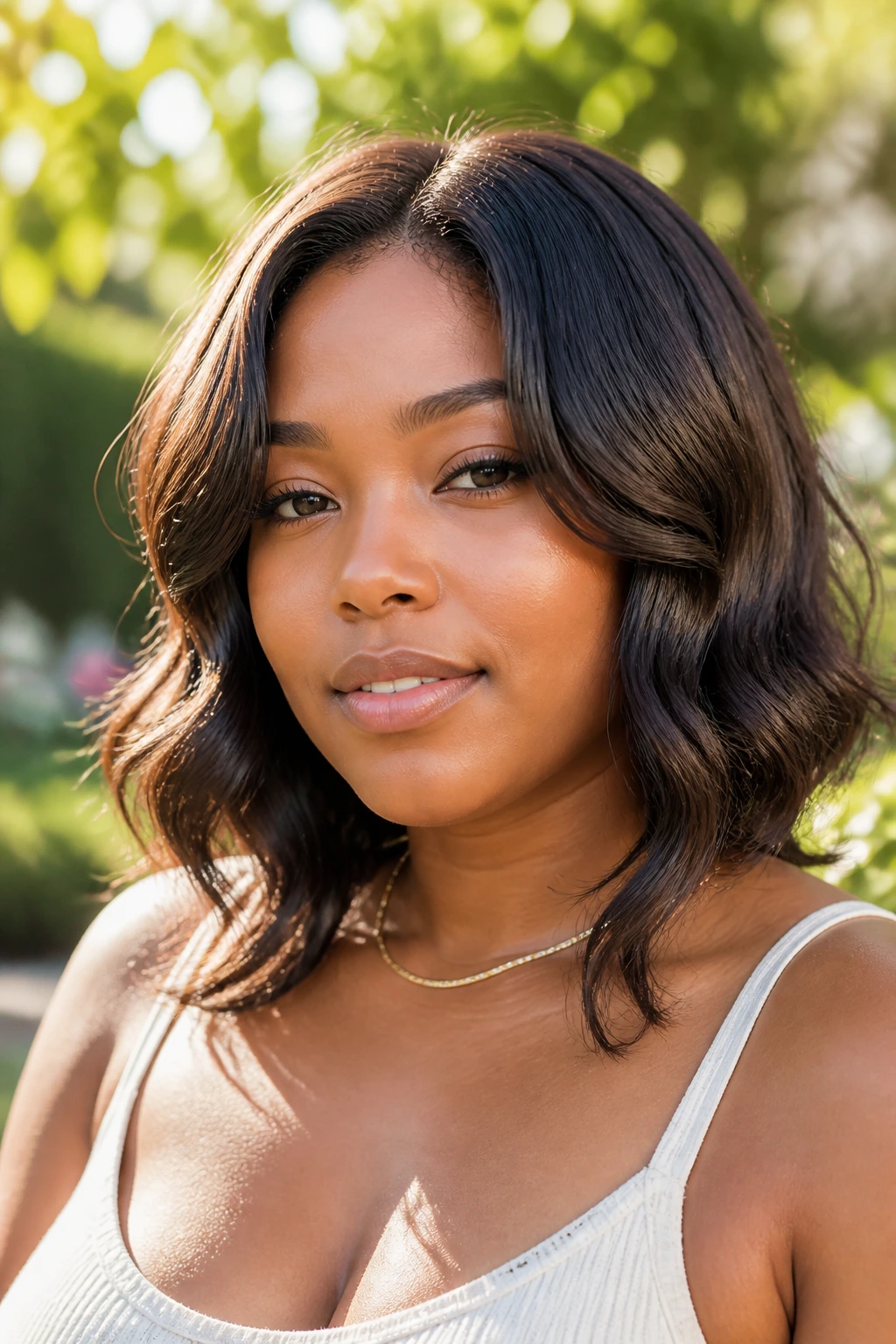
The easiest way to think about a round face is this: don’t let the widest point of the hair sit exactly where the widest point of the face already is. That usually means avoiding one big block of hair at cheek level, and it definitely means thinking hard about how the part falls, where the layers start, and how much fullness sits around the temples.
I’ve always liked styles that create at least two different lengths around the face. A piece at the chin, another at the collarbone, then the rest dropping lower. That staggered line gives the eye something to follow. It works better than trying to hide everything behind one sheet of hair, which usually ends up feeling heavy anyway.
Round faces also handle movement well. Waves, bends, and feathered ends create broken lines, and broken lines are your friend here. A wavy weave doesn’t need to be loud to be effective. It just needs to keep the shape from getting too even.
Picking the Right Length, Density, and Part
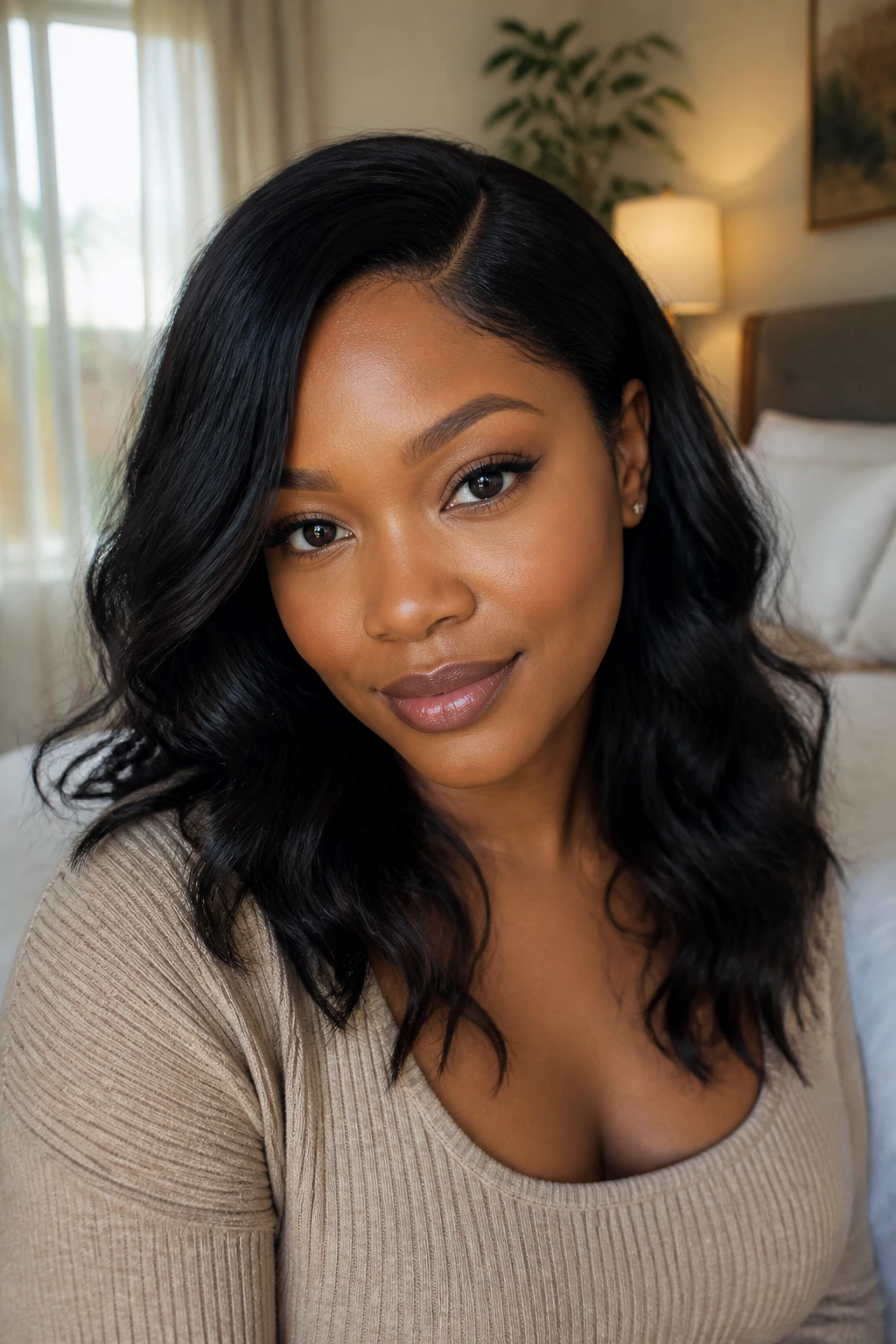
Length is the first decision I’d make. If you want the safest balance, go for hair that lands below the collarbone. That’s where the style stops echoing the cheeks and starts pulling the eye downward. Shorter styles can work, but they need sharper cutting and more shape. That’s a higher-risk choice.
Density comes next. For everyday wear, 130% to 150% often looks cleaner on a round face than very full bundles. Too much density around the cheeks can make the face look more circular, especially when the waves puff up after a few hours. If you want big glamour, you can go fuller, but then the layers need to be cleaner.
Parts matter more than most people admit. A deep side part gives the easiest result. A center part can work if the front layers are long and the length is substantial. Off-center parts are the middle ground. If you’re unsure, start there. It’s a quiet move that almost always behaves.
The Cut That Keeps the Waves Falling the Right Way
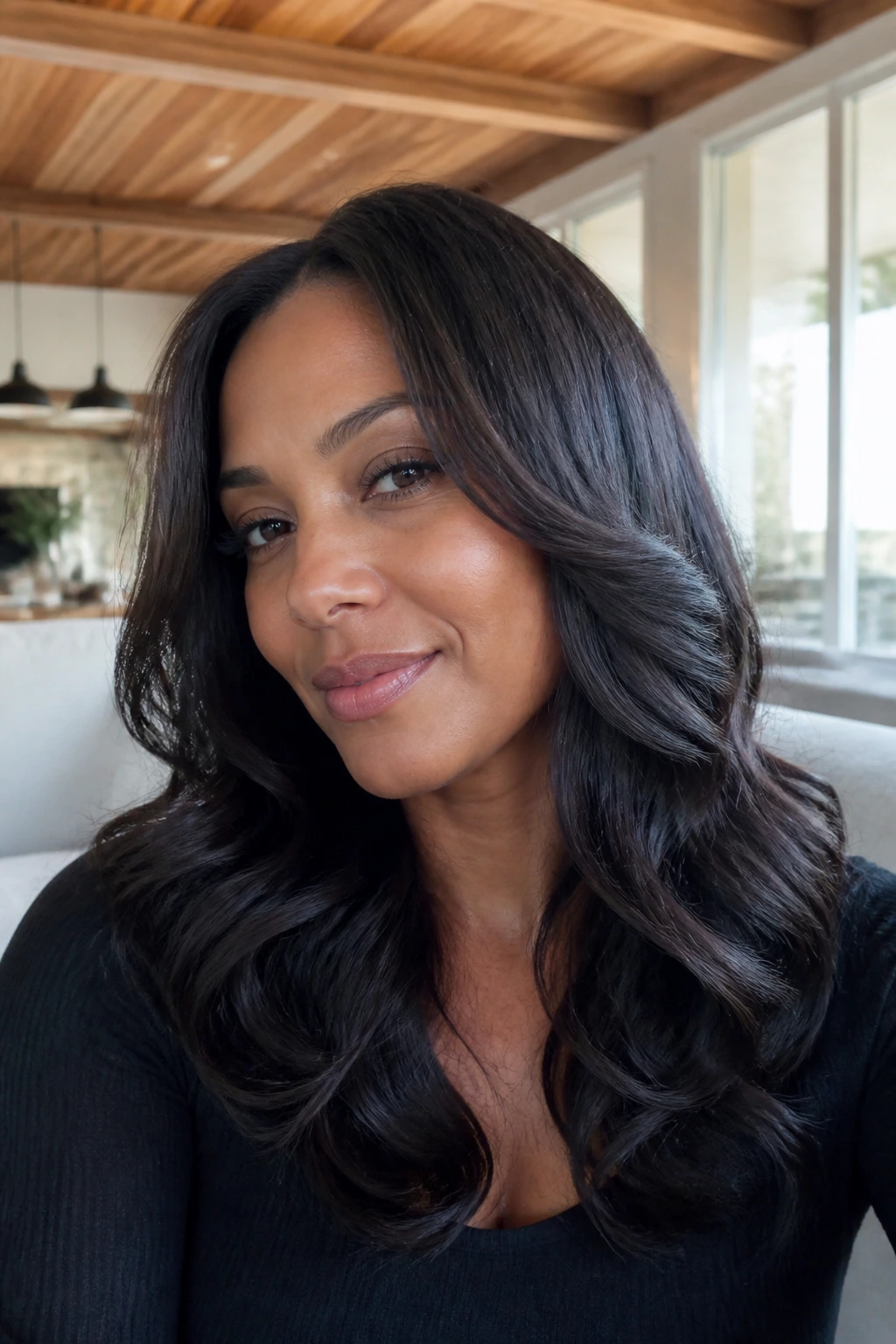
A weave is only as flattering as its cut. That sounds obvious, but people skip it and then wonder why the hair sits like a triangle or blooms out at the cheeks. The cut should remove bulk where the face is widest and preserve fullness where the hair can drop lower.
Face-framing layers are the easiest fix. Ask for pieces that start around the chin or just below, then taper into the collarbone. If the hair is long, a U-shape or soft V-shape keeps the hemline from looking like a block. If the style is shorter, hidden internal layers can do more work than visible choppy ones.
I’m not a fan of over-thinning. You can ruin good bundles that way. A little shaping is enough. Once the ends look wispy and dry, you’ve gone too far. Keep the movement, lose the bulk. That’s the sweet spot.
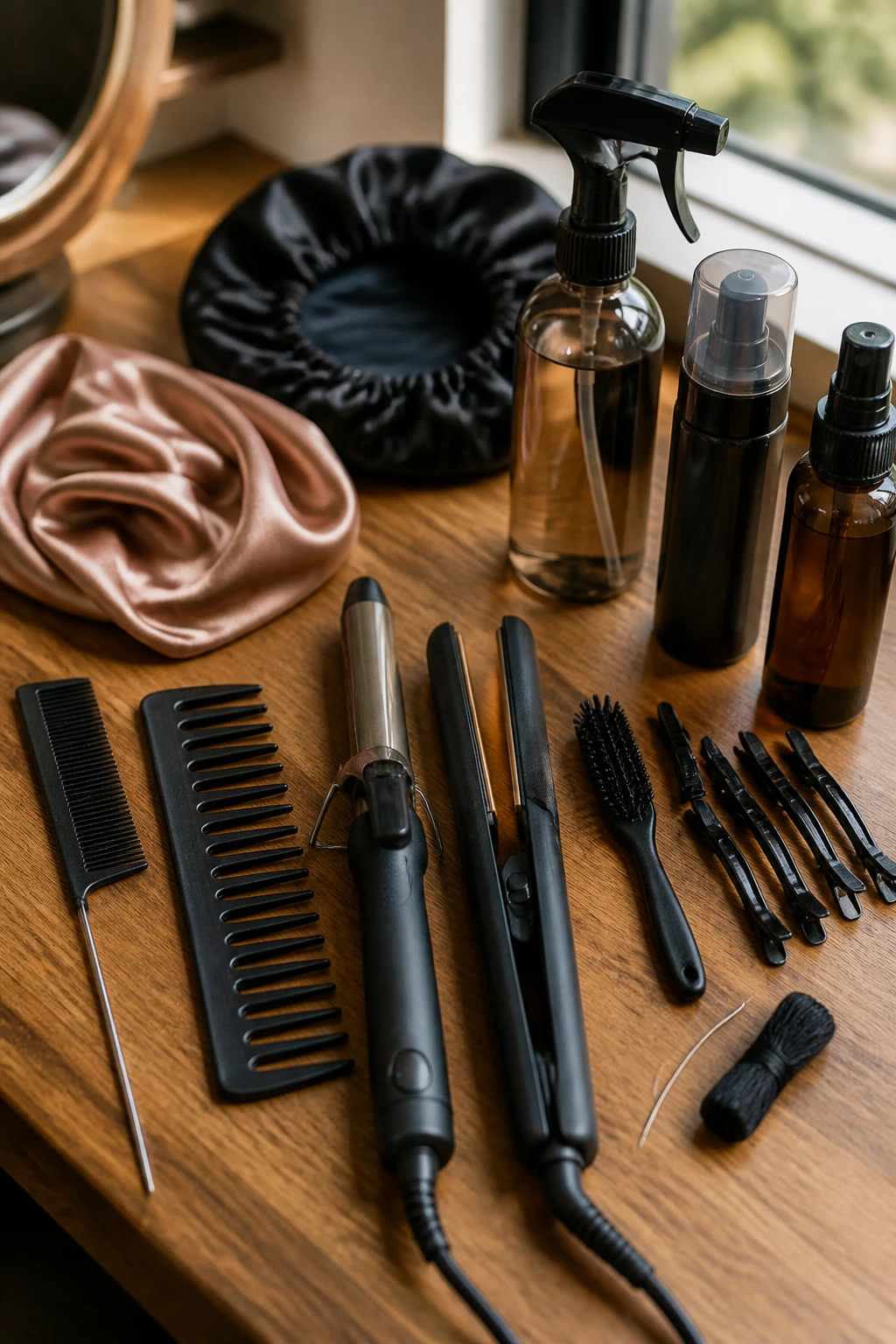
Essential Tools for Installing and Styling
-
Rat-tail comb: Makes parting clean and lets you place the side part or center part exactly where you want it.
-
Wide-tooth comb: Helps detangle the waves without stretching them flat.
-
Braid spray or scalp spray: Useful for keeping the natural hair underneath comfortable between installs or wash days.
-
Foaming mousse: Sets waves, smooths flyaways, and helps the style hold shape without crunch.
-
Heat protectant: Non-negotiable if any leave-out gets touched with a flat iron or blow-dryer.
-
1-inch curling wand or flexi rods: Handy for refreshing soft ends or tightening the bottom of the weave.
-
Silk scarf and bonnet: Keeps the hairline and waves smooth overnight.
-
Edge brush: Good for softening the front without piling on product.
-
Flat iron with adjustable temperature: Needed only if you’re blending leave-out; keep it on the lower side.
-
Clip set: Small sectioning clips save time when you’re styling or setting curls.
-
Sew-in needle and thread, or your preferred install kit: For anyone doing the install at home, this is the backbone of the job.
Smart Shopping for Bundles, Closures, and Leave-Out
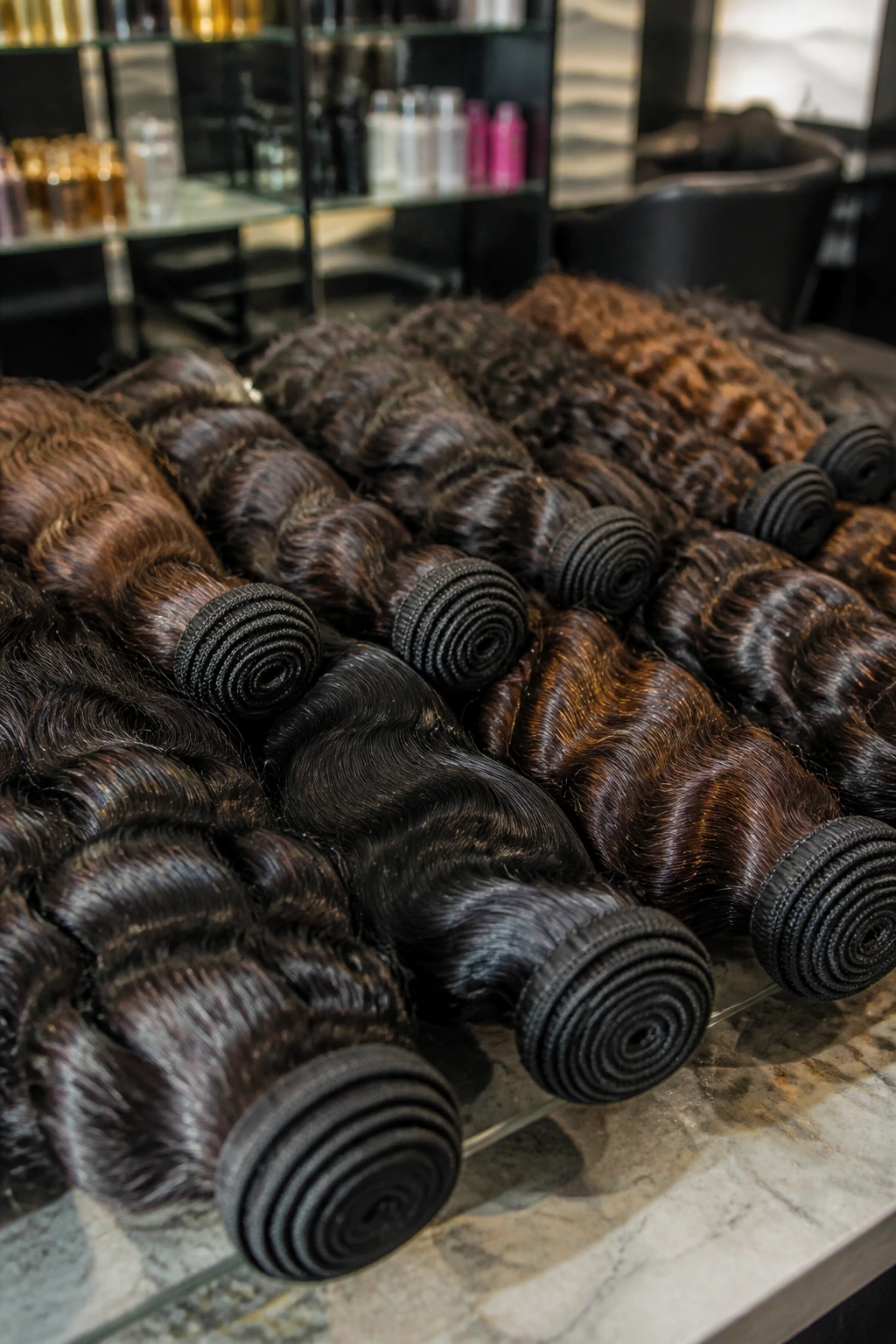
If you want a wavy weave that flatters a round face, shop for the silhouette first and the texture second. I mean that. A beautiful bundle with the wrong cut will still miss the mark. Choose lengths that can be layered, not just hung straight down. A 16/18/20 mix gives a softer taper than three bundles all cut to the same length.
Hair texture matters too. Body wave is usually easier to control and flatter. Loose wave and water wave give more motion, which can be great if the install is shaped well. Deep wave can get fuller faster, so it needs careful handling if your face shape already reads round. If you’re doing leave-out, pick a texture that can blend with your natural hair when stretched, not only when it’s freshly pressed.
For closures, look for a size that matches how much parting room you want. A 5×5 is enough for a simple side or middle part. A 6×6 gives more room for movement. If you’re shopping human hair, check the ends. Full ends matter more than shine. Thin, scraggly ends make the whole install look tired.
How to Wear and Style These Waves
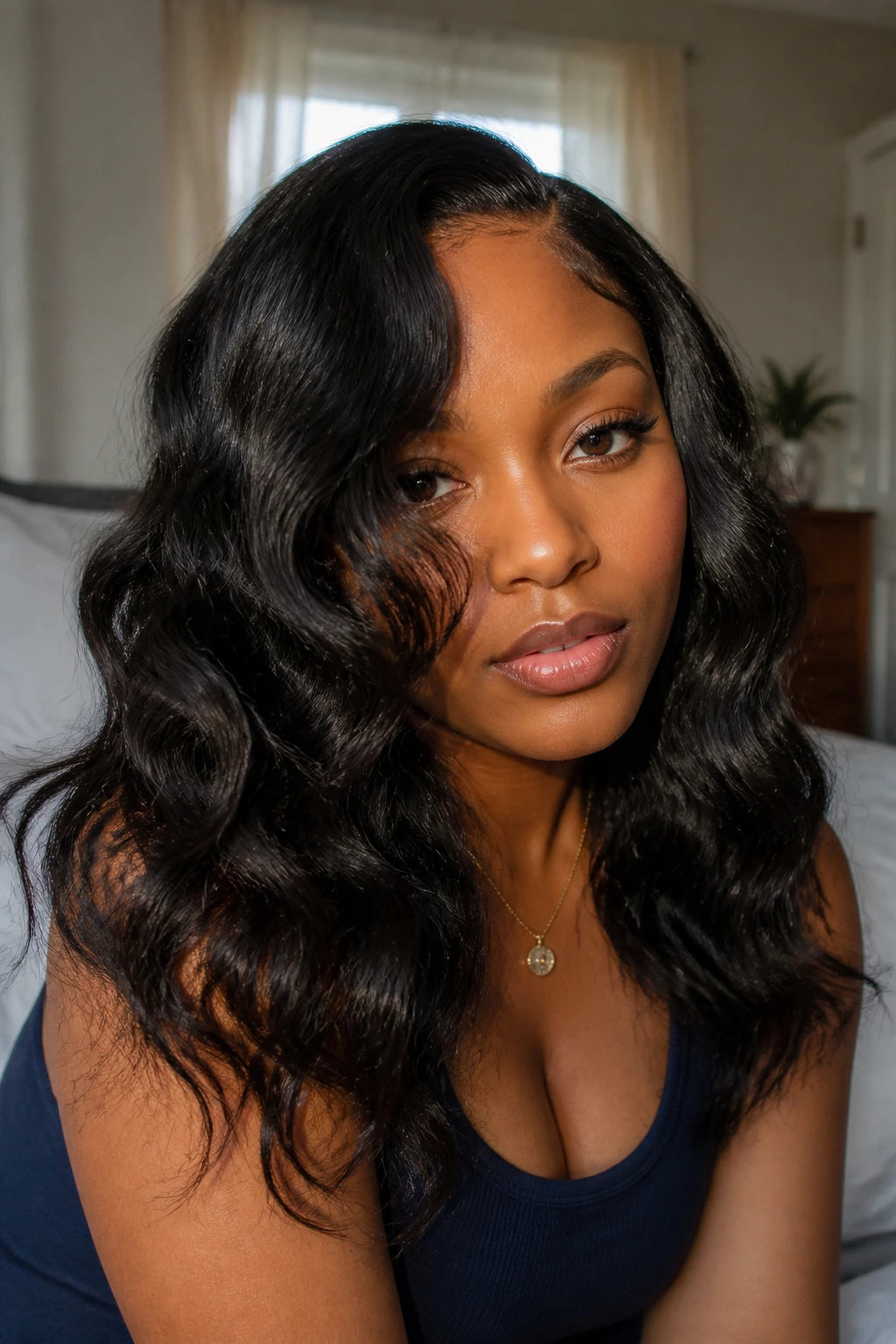
Face Frame: Keep the front pieces long enough to skim the cheekbone or drop below it. That single detail can change how the whole style reads on a round face.
Accessory Match: Medium hoops, slim earrings, and open necklines tend to work better than very wide collars or busy chokers, because they don’t crowd the same space the hair is trying to soften.
Part Choice: If you want the most length visually, go side part or off-center. If you want balance and polish, choose a center part with long front layers.
Event Mood: Tucked side, half-up, or high pony for a sharper look. Loose and feathered when you want softer movement. The hair can do both. It just needs the right shape.
Extra Tips for Better Blend and Longer Wear
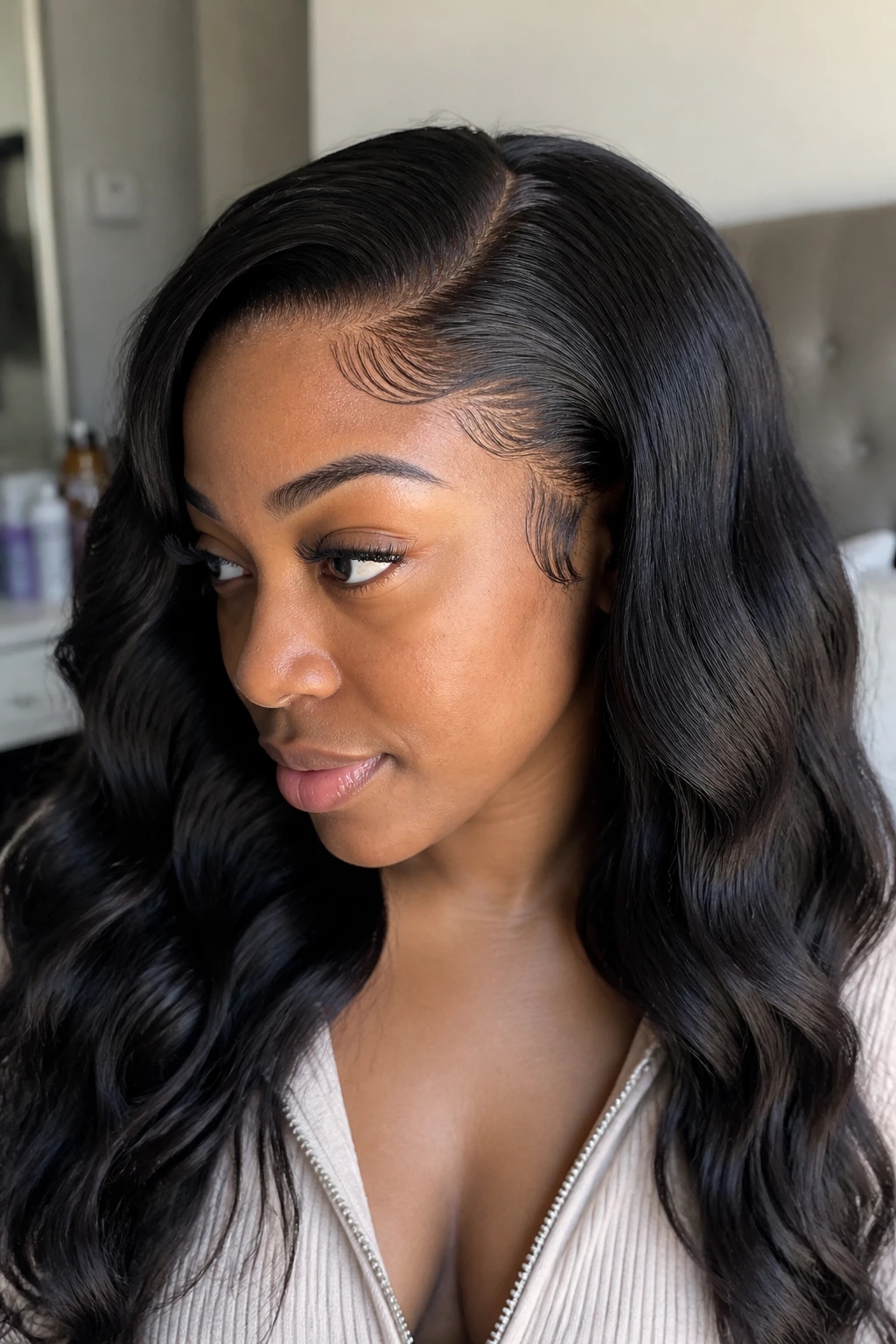
Root Lift: A tiny bit of lift at the crown keeps the style from collapsing into the face. Use a comb at the roots, not a giant amount of product. Too much product makes the top stiff.
Blend Check: If you’re leaving out natural hair, check the match in daylight, not just in the bathroom mirror. The texture mismatch shows faster in natural light, and the fix is usually a better stretch or a softer blend, not more heat.
Finish: Put serum only on the ends and the outermost layer of the weave. The roots need movement, not slickness. Heavy oil near the scalp flattens everything.
Make-It-Yours: For a softer look, choose loose wave and low density. For something bolder, add highlights, extra length, or a stronger side sweep. You do not need all three at once.
Common Mistakes That Make the Face Look Wider
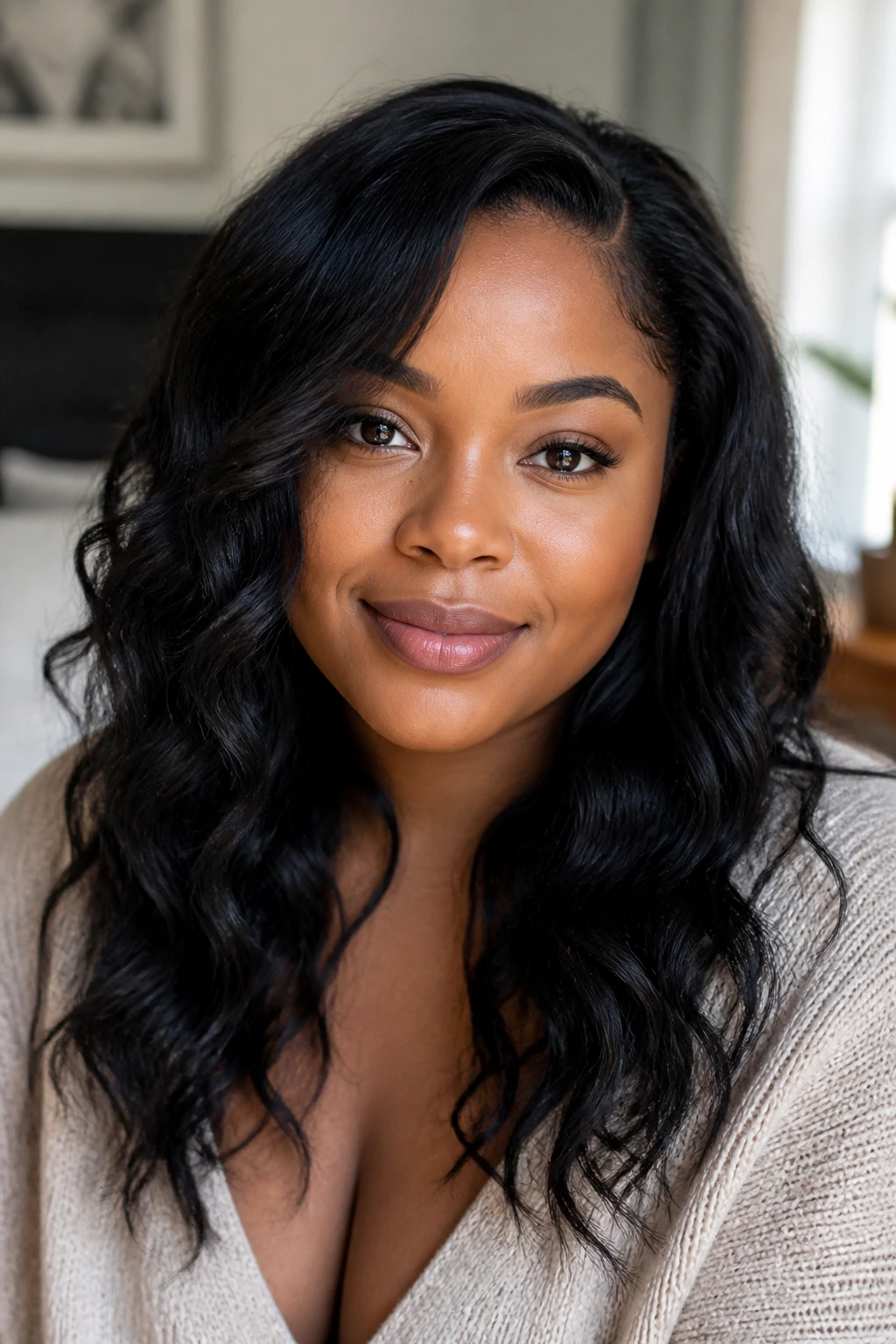
The biggest mistake is putting too much hair right at cheek level. It seems harmless until the style is on your head and the sides balloon outward. The fix is simple: start your layers lower, or shift your part so the front falls diagonally instead of evenly.
Another one is choosing a blunt cut that lands directly at the jaw. That line tends to echo a round face instead of balancing it. Go longer in front, or soften the hemline with layers. A blunt shoulder piece sounds neat in theory and ends up boxy in practice.
Heavy density is a quiet problem. At first, it feels luxurious. A day later, the style looks too packed and sits flat on top. If that’s happening, remove some bulk from the middle or choose fewer bundles next time.
Leave-out that doesn’t match your natural texture is another trouble spot. The blend line near the temples can make the whole install look obvious, especially when the front is the closest part of the style to your face. Use less heat, a better texture match, or a closure.
And then there’s the parting issue. A flat, dead-center part with no height can make the face feel wider than it is. Even a tiny off-center shift makes a difference. Tiny. But real.
Variations and Alternatives to Try
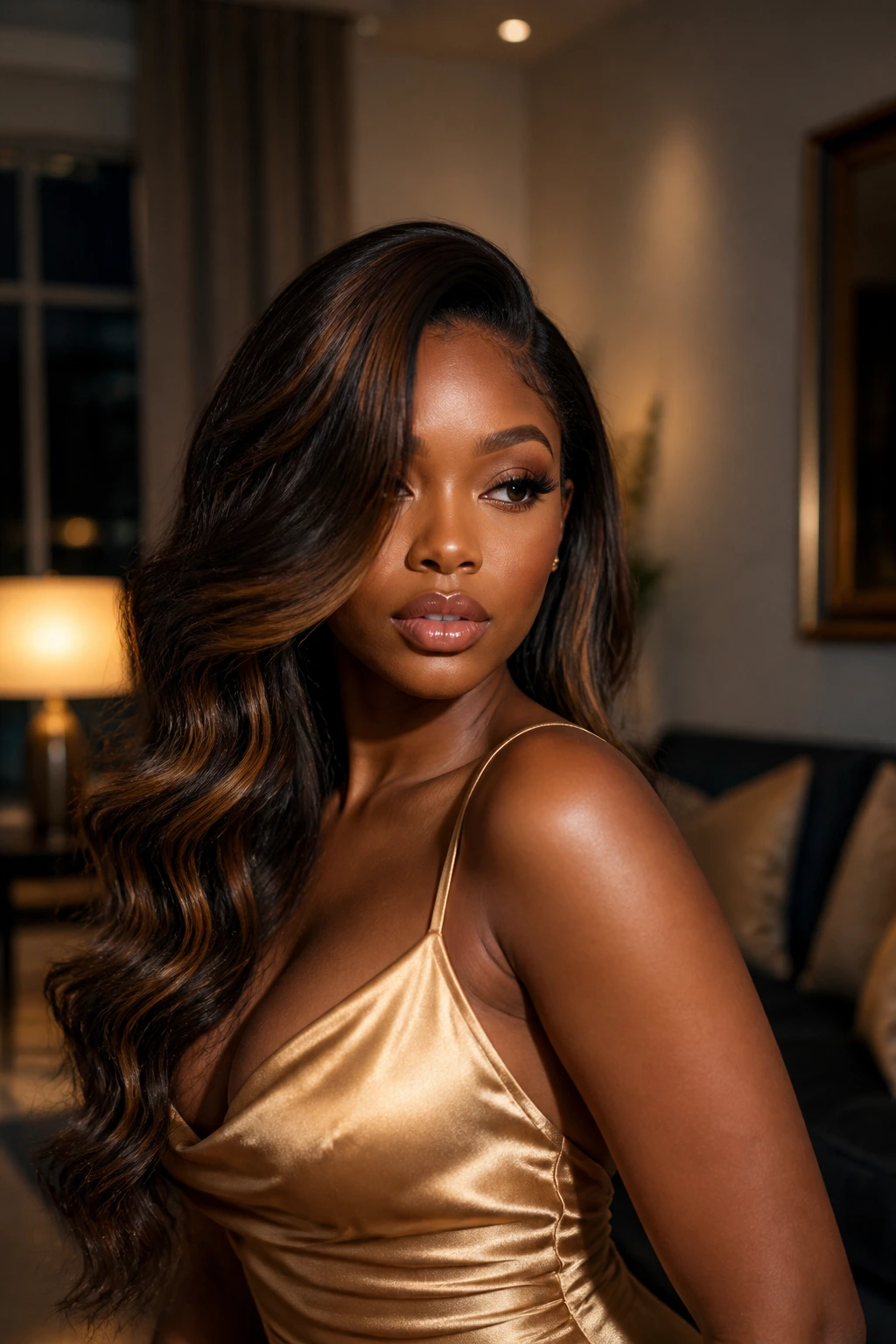
Glueless Weekend Weave: Choose a closure and a low-tension install if you want something easy to remove and kinder to the hairline. It’s a smart pick when you don’t want daily leave-out blending.
Protective-First Blend: Keep leave-out to a minimum, use a texture-matched closure or frontal, and rely on shape instead of heat. This version works well when your natural hair needs a break.
Light-Density Everyday Version: Use fewer bundles, a softer wave pattern, and a shoulder-length cut. The style stays airy and doesn’t crowd the cheeks.
High-Glam Event Version: Add longer bundles, a side sweep, and maybe a few face-framing highlights. The extra length gives you drama without forcing width at the face.
Humidity-Proof Version: Pick a closure install, set the waves with mousse, and keep the top slightly smoother than the ends. That helps the style hold its shape when the air gets heavy.
Maintenance, Night Care, and Reinstall Timing
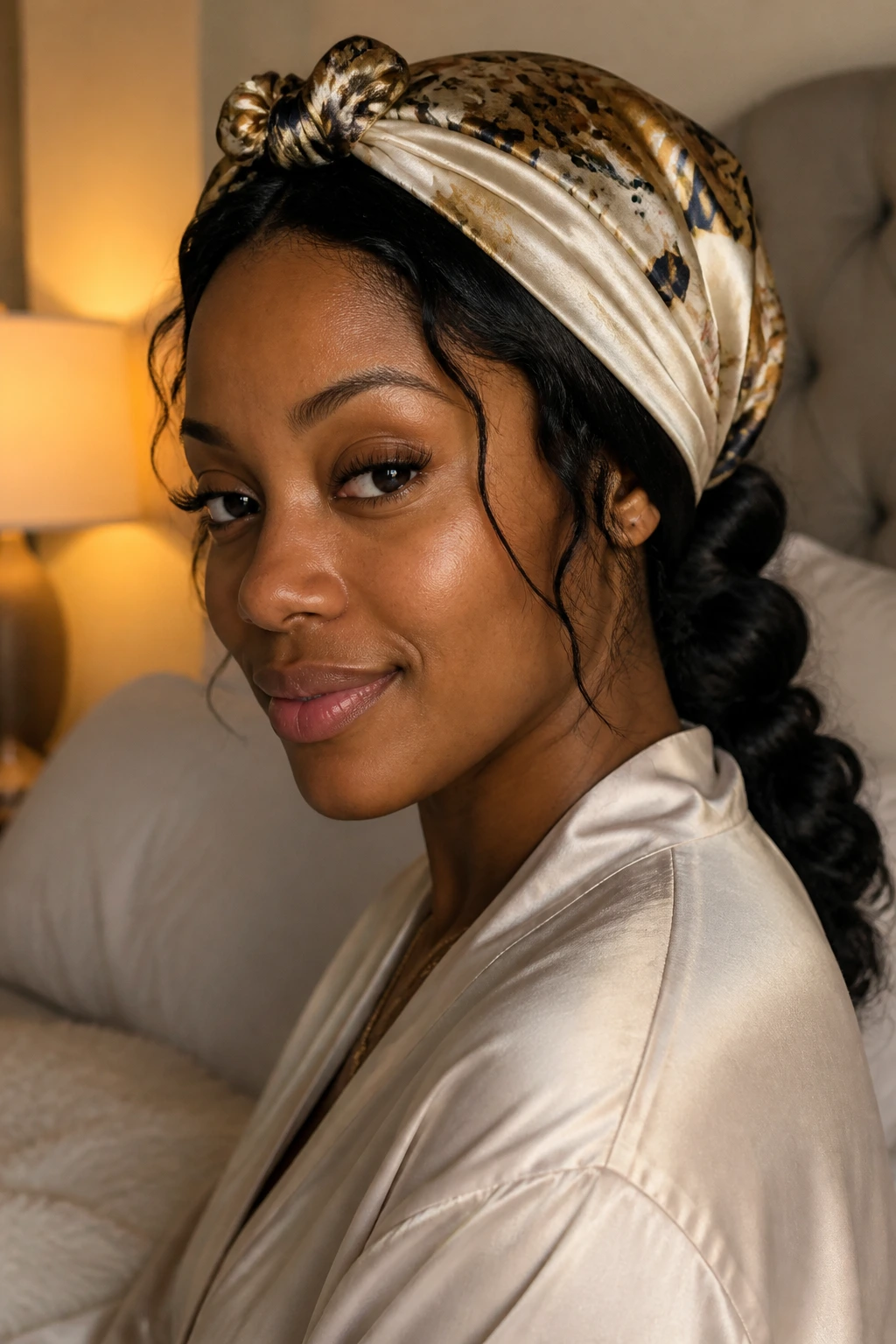
A wavy weave lasts longer when you treat it like a style, not a helmet. At night, wrap the hair with a silk scarf and tuck the lengths into a loose braid or a low pineapple, depending on the cut. If the hair is long, two loose braids often keep the waves better than one giant twist.
For installed weaves, refresh the surface with a little mousse every 2 or 3 days, especially if the waves start to separate in a frizzy way. If you have a closure or frontal, keep the part clean and dry the base fully after any wash. Damp braids under a weave are a bad idea. The smell gives it away before the look does.
Human hair bundles can last a long time with careful washing, gentle detangling, and air drying. But the install itself usually needs a reset sooner. Once the braids loosen, the tracking shifts, or the style starts sitting off-center in a way you cannot fix with pins, it’s time to take it down and reinstall. For most people, that lands somewhere around 6 to 8 weeks. Sometimes a little sooner if you sweat a lot or wear the hair up often.
Frequently Asked Questions
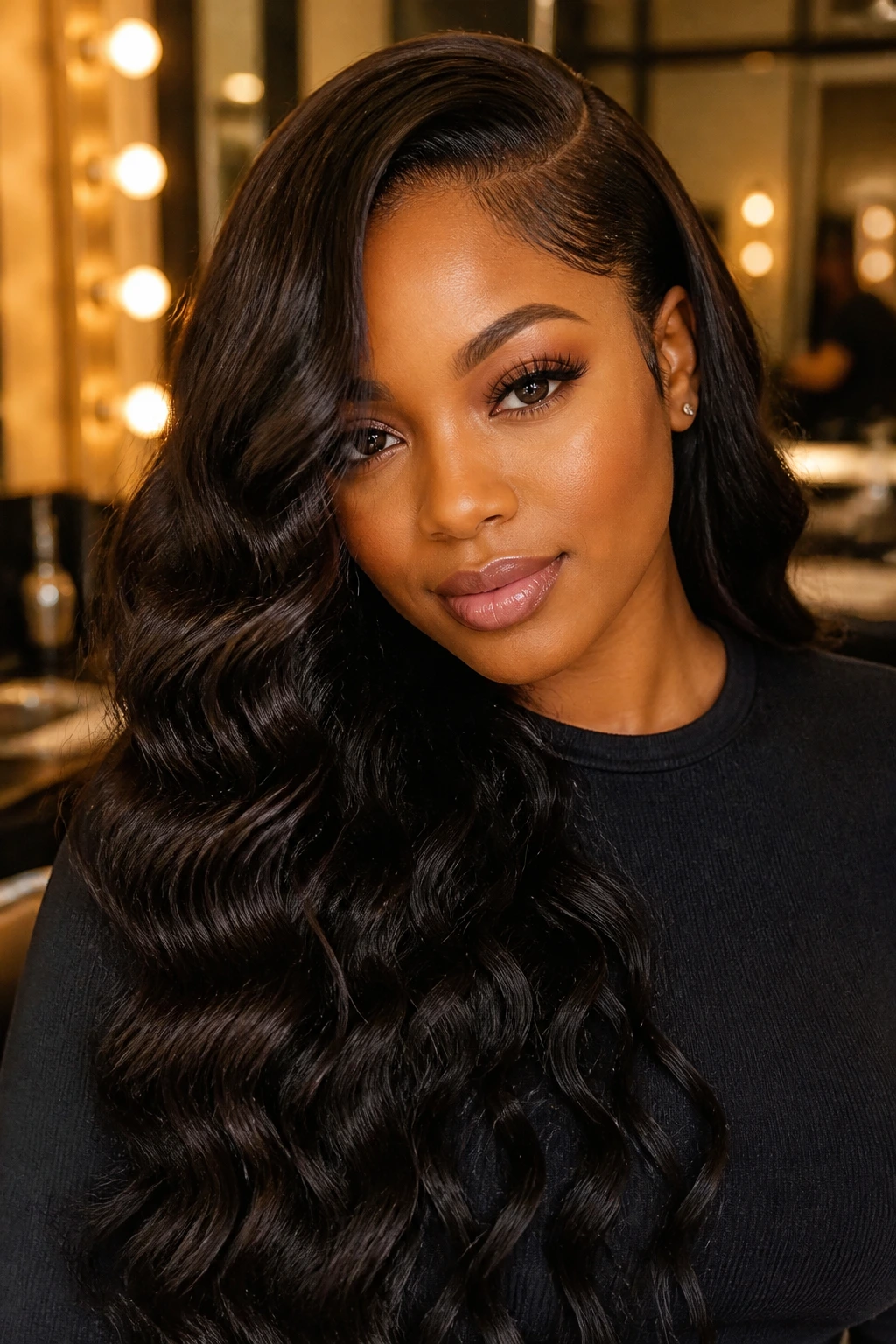
Can a center part work on a round face?
Yes, if the front pieces are long and the waves drop below the jaw. A center part with curtain layers is balanced; a flat center part with no shape usually is not.
What length is safest for a round face?
Hair that lands below the collarbone is the easiest place to start. Shorter lengths can work, but they need better cutting and more care around the cheek area.
Is a bob a bad idea for round faces?
No, but it needs shape. A bob that stops at the chin and sits blunt on the ends can widen the face, while a soft lob with internal layers usually works much better.
Should I choose a closure or leave-out?
Choose a closure if you want lower heat and easier upkeep. Choose leave-out if your natural hair blends well and you don’t mind the extra styling time.
How much density is too much?
If the hair starts pushing outward at the temples or sitting like one thick block, it’s too much. For everyday wear, moderate density usually looks cleaner on a round face.
Can natural hair underneath stay healthy in a weave?
Yes, if the braid pattern is not too tight, the scalp stays clean, and you remove the install before the base gets stressed. Low tension matters more than fancy product.
What if my natural hair is coily and doesn’t blend easily?
A closure or frontal is usually the smarter move. If you do leave-out, the weave texture should match your stretched hair, not your shrunken curl pattern.
How do I keep waves from frizzing out?
Use mousse lightly, wrap the hair at night, and avoid brushing the waves into one big puff. If the humidity is rough, a little serum on the ends and a cleaner top section help a lot.
The Styles That Keep the Shape Open
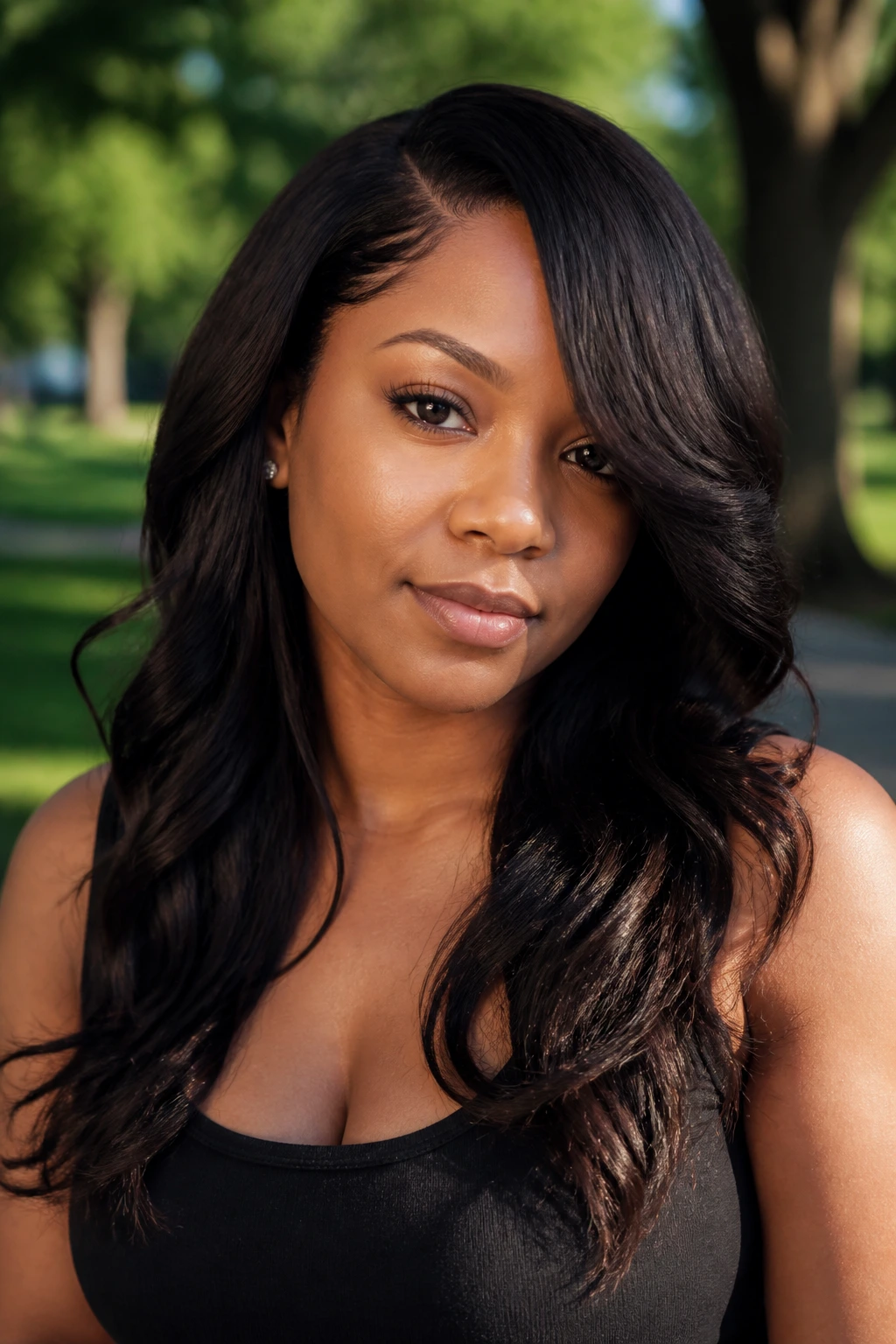
The best wavy weave on a round face is not the one with the most hair. It’s the one that knows where to stop, where to fall, and where to leave a little breathing room. A side part can sharpen the line. A long layer can slim the silhouette. A tucked side or lifted crown can change the whole mood in two seconds.
That’s why these styles keep coming back. They do the practical job first. Then they look good doing it.
If you’re choosing between options, start with the shape you want the face to read, then pick the wave pattern that supports it. Once you do that, the rest gets easier.