



A square face can wear short hair beautifully, but only when the cut stops fighting the jawline. The best wide hairstyles for short hair and square faces don’t pile bulk exactly where the face is already strongest. They spread movement through the temples, cheekbones, and crown, which softens the edges without hiding the bone structure that gives the face its presence.
That distinction matters more than most salon chatter admits. A blunt chin-length cut with no bend can make the lower face look wider and firmer than it really is. Give that same length a side part, a little lift at the roots, and a curve through the ends, and the whole thing changes character. Softer. Easier. Less boxy.
I like short hair on square faces when it looks deliberate, not dutiful. A sharp jaw does not need to be erased; it needs the right company. The styles below do that job in different ways — some with fringe, some with waves, some with asymmetry, some with old-fashioned volume that still works because geometry is geometry.
Why These Cuts Beat a Flat, Boxy Outline
-
Temple Lift: Volume that starts near the temples draws the eye upward, which keeps the jaw from becoming the loudest shape in the room.
-
Diagonal Lines: Side parts, side-swept bangs, and asymmetrical lengths break up the straight sides of a square face in a way a center line never will.
-
Soft Ends: Wispy, bent, or feathered ends soften the edge of short hair; blunt ends that land exactly at the jaw tend to make the face feel wider.
-
Cheekbone Framing: The best short styles for square faces skim the cheekbones, where the face can take width without looking heavy.
-
Texture Over Helmet Hair: A little separation in the strands makes the cut feel airy. A stiff, sprayed-to-death finish can turn even a good haircut into a helmet.
-
Grow-Out Grace: Short cuts with layers or movement still look decent after a few weeks. That matters more than people think.
How to Read a Square Face Before You Chop the Hair
A square face is easy to miss if you only look at one feature. The jaw is the giveaway, yes, but the full picture comes from the balance between the forehead, cheekbones, and jawline. If the sides feel fairly straight and the chin area has corners rather than tapering softly, you’re probably dealing with a square shape or a square-leaning one.
The trick is not to “slim” the face. That word gets tossed around too casually, and it usually leads people to chase the wrong thing. You do not need hair that clings to the head or hides every edge. You need shape. You need a haircut that widens a little higher up — at the cheekbones, the crown, or one side of the forehead — so the lower face doesn’t read as the heaviest part.
Stand in front of a mirror and pull your hair back. Look at where your face already has width. If the jaw and forehead are similar in width, and the face feels stronger than soft, you want short hair that creates motion off-center. If your hair is fine, that usually means lift at the roots and airy ends. If it’s thick, it means removing bulk without carving a hard shelf at the bottom. Small difference. Huge result.
1. Textured Pixie with Side-Swept Volume
A pixie can be a fantastic match for a square face when the top stays soft and the fringe moves diagonally. Straight up-and-down volume is the wrong move; side-swept lift is the good one. It takes the eye off the jaw and gives the forehead and crown something more interesting to do.
Why It Flatters
The side-swept shape breaks the square outline in a clean, easy way. It also works well on fine hair because the layers don’t need much length to show movement. A little root lift at the front — even half an inch — changes the whole silhouette.
Best for fine to medium hair: The texture keeps the style from collapsing by noon.
Styling cue: Blow-dry the front diagonally with a small round brush, then pinch the ends with a pea-sized amount of matte paste.
Skip this look if: You want a smooth, polished finish with no daily styling. This one likes a bit of mess.
2. Deep Side-Parted French Bob
Why does a side part matter so much? Because on a square face, a deep part creates a long diagonal line that interrupts the hard symmetry. That little move gives the hair width on one side of the head and helps the face feel less squared-off.
The French bob version works best when it sits around cheekbone to just above chin length. Too short, and it can land right on the jaw like a ruler. Too long, and it stops feeling like a bob and starts behaving like a grown-out cut with less intention. The sweet spot has a soft bend under the ends and a little fullness near the cheekbones.
A quick blow-dry with a round brush or a hot round brush can give the ends that slight inward curve. Keep the finish loose. If the bob looks too perfect, it can turn severe fast.
3. Chin-Length Wavy Bob with Curtain Bangs
You know the version I mean: chin grazing, a bit undone, waves that fall away from the face, and fringe that parts in the middle and floats off to the sides. On a square face, curtain bangs are useful because they blur the corners of the forehead and direct attention toward the eyes.
The best part is that this cut doesn’t need tight curls. A loose S-wave is enough. Wrap 1-inch sections around a wand, leave the last inch out, and brush the waves once they cool. That softens the line and stops the hair from looking too styled.
How to Wear It
- Part the bangs a little off-center if your face reads very symmetrical.
- Keep the wave starting below the cheekbone, not right at the jaw.
- Use a light cream or spray, not a heavy serum that makes the ends stick together.
4. Rounded Layered Crop
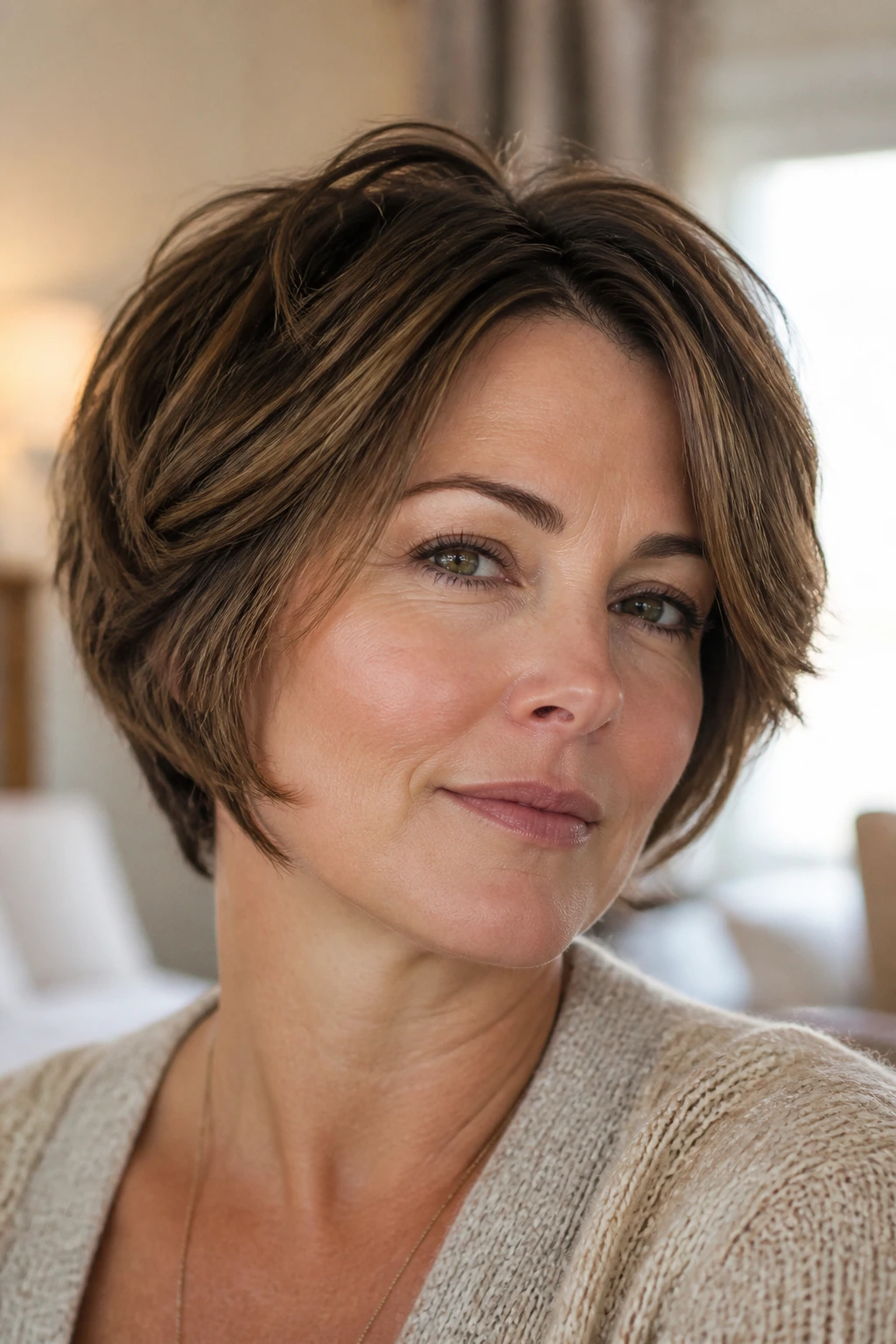
A rounded crop is a sneaky good answer for square faces because it adds width where you want it and avoids straight edges where you don’t. The shape curves around the head instead of stopping abruptly at the jaw. That makes the face feel a little softer without turning it into something unrecognizable.
I like this cut most on hair that has some natural body. The layers should be subtle, not choppy enough to spike out in random directions. Think curve, not chaos. When the silhouette rounds gently at the temples and crown, the jaw stops dominating the whole look.
This is also one of the better options if you wear earrings. The rounded outline leaves enough space around the face for hoops, drops, or a single bold stud to show up properly. Tiny detail. Still matters.
5. Sleek Asymmetrical Bob
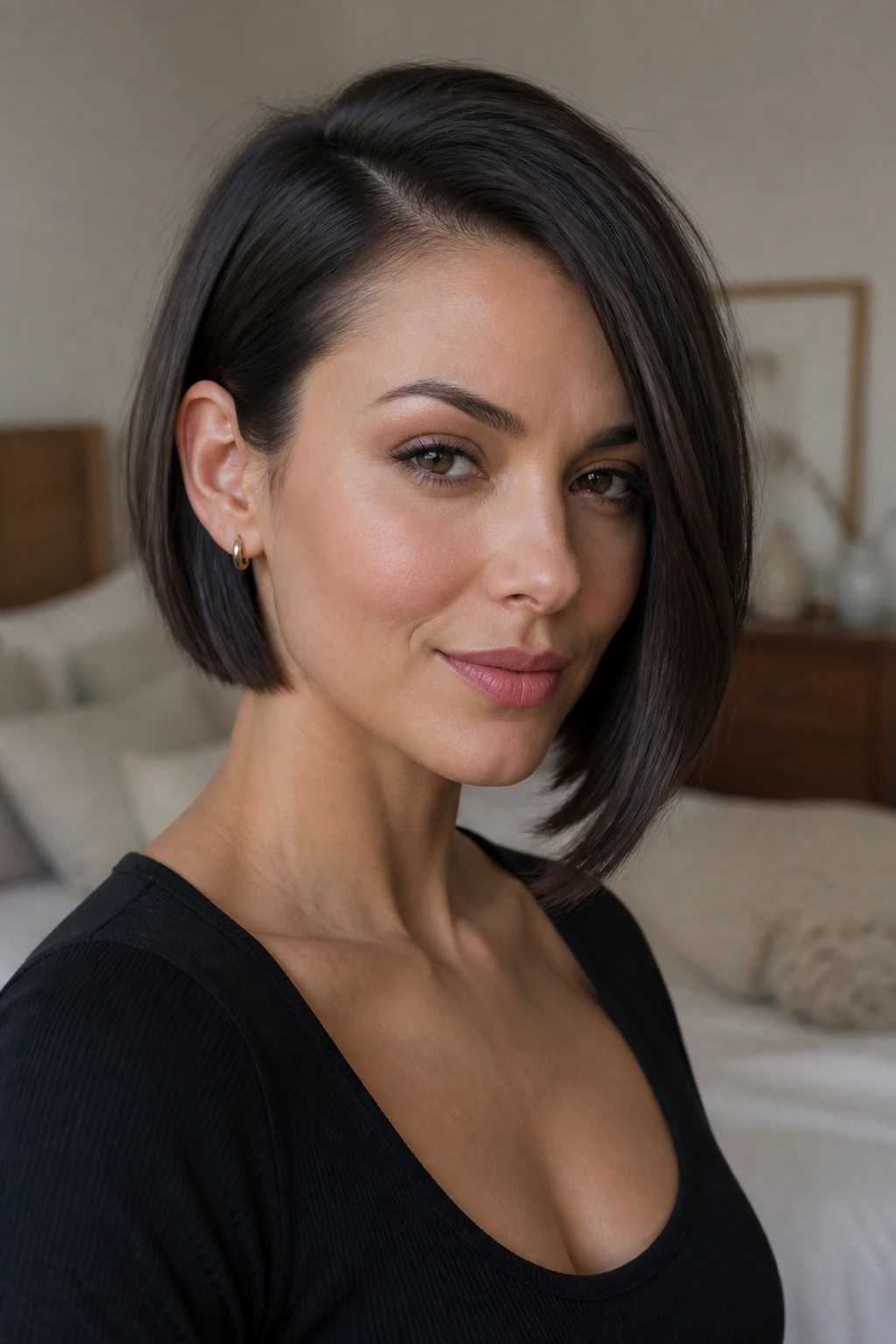
A strong square face can handle a sleek bob, but I prefer it when the line is asymmetrical rather than perfectly even. One side can skim the chin while the other lands a little higher, or one side can be tucked behind the ear to create a visible difference in shape. That diagonal does a lot of work.
The reason it helps is simple: a square face already has a stable, grounded look. A bob with one side slightly longer interrupts that stability in a flattering way. It keeps the eye moving. It also feels more modern than a straight, center-parted cut that ends at the jaw and does nothing else.
Keep the surface smooth, but not flat. A tiny bend under the ends and a soft side part make the asymmetry look intentional instead of accidental. That’s the difference between chic and “I cut my own hair in the bathroom.”
6. Tousled Shaggy Pixie

A shaggy pixie gives square faces the kind of movement that softens the edges without piling on fuss. It works especially well if your hair has natural texture or a little wave. The layers lift away from the scalp, and that keeps the face from reading boxed in.
The shag effect is all about separation. Not frizz. Separation. You want pieces that fall in different directions, especially near the temples and crown. If the layers are too even, the cut loses that relaxed, broken-up look and starts to feel helmet-like.
Best Styling Move
- Rub a small amount of styling cream between your palms.
- Twist a few top sections while the hair is damp.
- Let the front fall slightly across the forehead, not straight back.
This style can look messy in the best way. It just cannot look lazy.
7. Flipped-Out Jaw-Grazing Bob

A jaw-grazing bob sounds dangerous for a square face, and sometimes it is. The version that works keeps the ends light and flipped outward just enough to create motion, not a hard horizontal shelf. The flip makes the bob feel airy instead of blocky.
The key is where the length sits. If it lands exactly on the fullest part of the jaw and stays pin-straight, the whole face can look wider. Shift the cut a touch below the jaw, then add a soft outward bend with a brush or flat iron. That tiny curve changes the reading completely.
I’d choose this cut for someone who wants a little edge without going full asymmetry. It has shape, but not fuss. And if your hair is medium-density, it holds that flipped finish better than very fine strands usually do.
8. Soft Feathered Crop
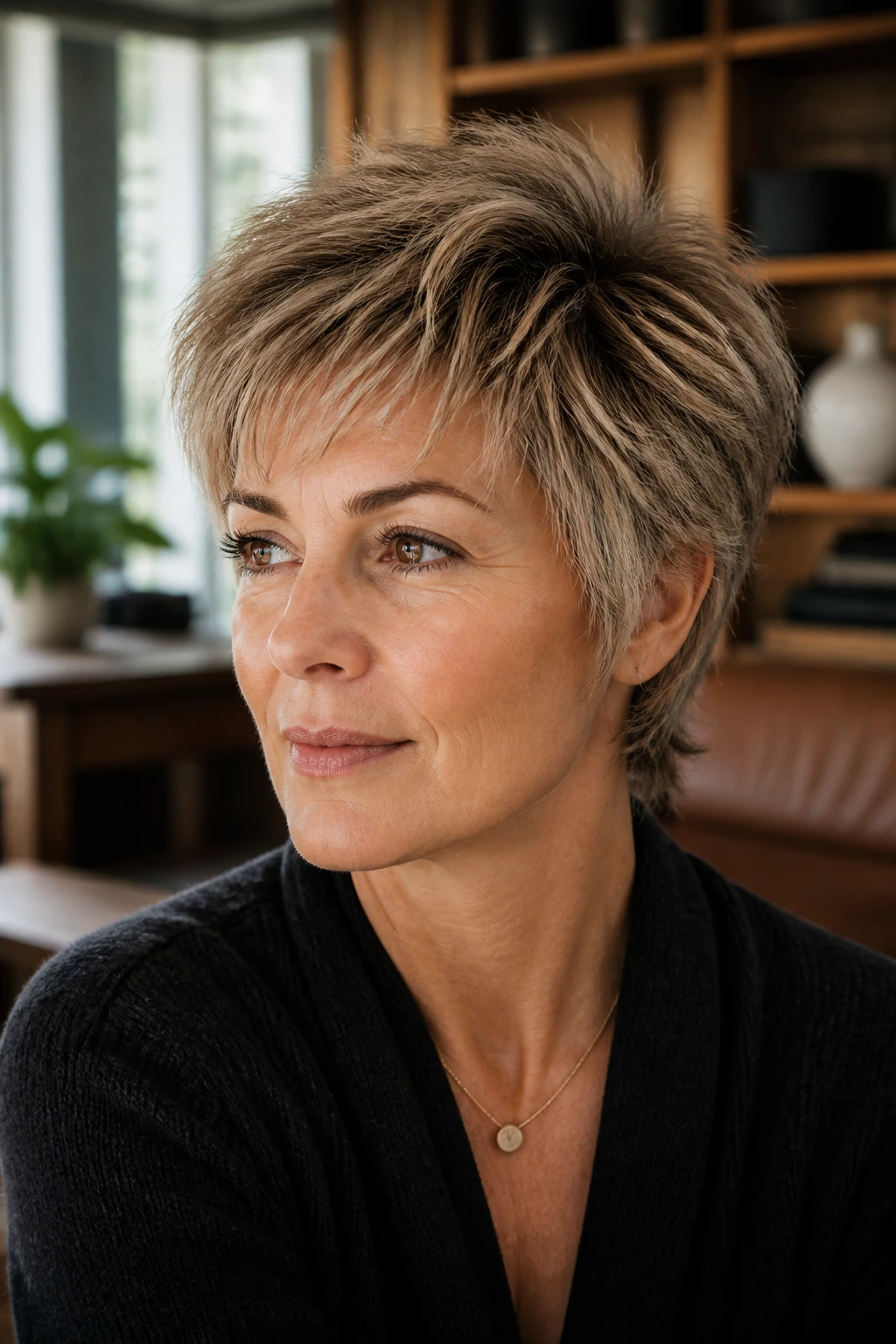
Feathering is one of those old haircut ideas that still works when it’s done lightly. On a square face, feathered pieces around the temples and sides of the face break up the hard line of the jaw without burying the face in hair.
What makes this version useful is the softness at the perimeter. Instead of a blunt edge, the ends taper and slide. That makes the haircut feel lighter around the cheeks and ears, which is exactly where square faces can use a little breathing room.
If you want to wear this with a natural texture, let the hair dry about 80 percent of the way, then bend a few face-framing pieces with your fingers. Don’t overthink it. The style looks better when it moves a little.
9. Curved-In Micro Bob
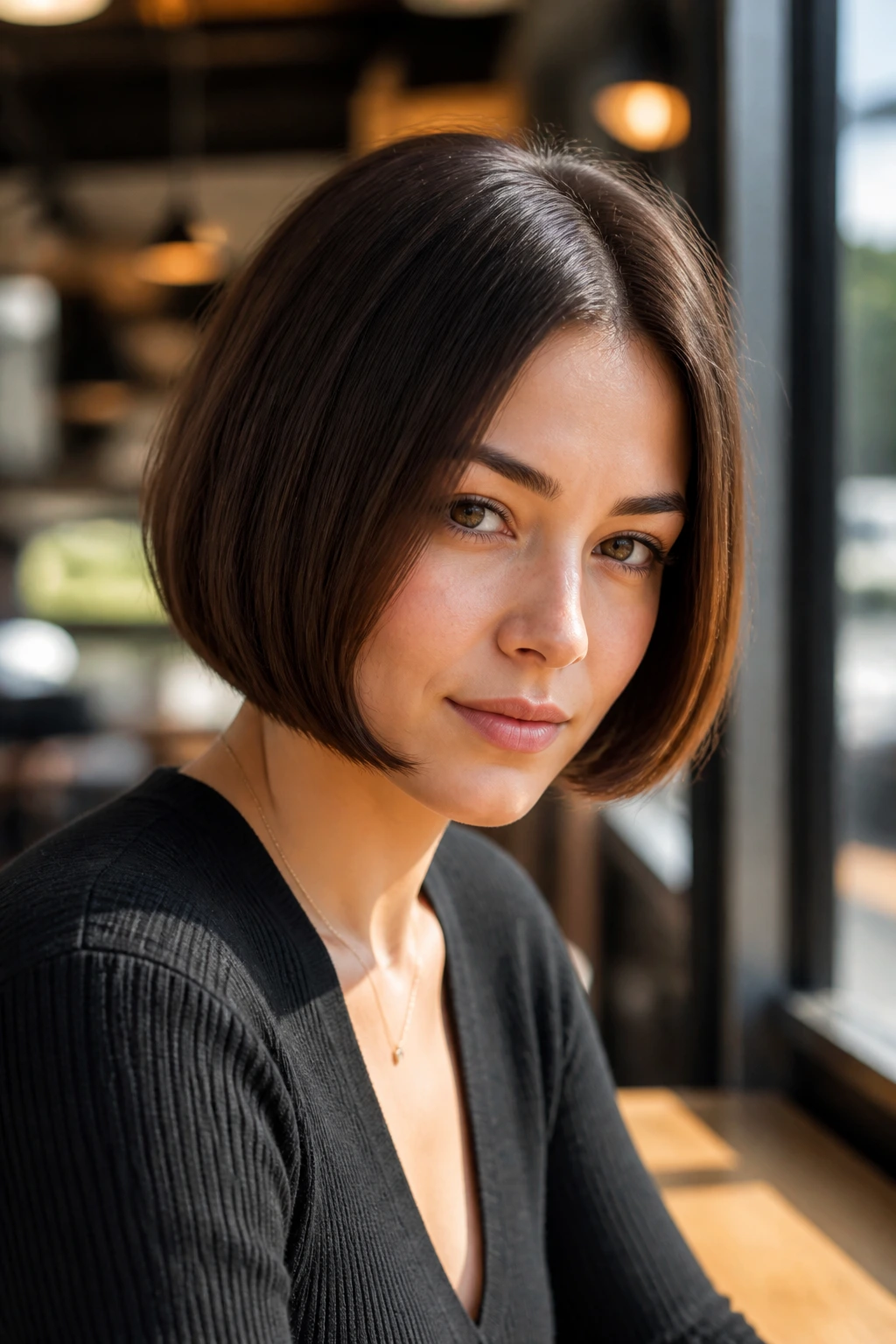
A micro bob can be lovely on a square face if it curves inward instead of stopping as a straight line. The inward bend hugs the face just enough to soften the width. It also keeps the cut from feeling harsh at the bottom.
This is a precise haircut. No room for sloppy ends. Ask for a clean line that sits just under the jaw or a touch above it, then have the ends beveled in slightly so they tuck under. That small curve matters more than extra length.
It’s especially nice if your hair is naturally straight or very slightly wavy. The shape stays visible without much heat styling. If your hair poofs outward at the ends, though, this one needs a good smoothing pass or it can lose its neat outline fast.
10. Piecey Side-Banged Crop
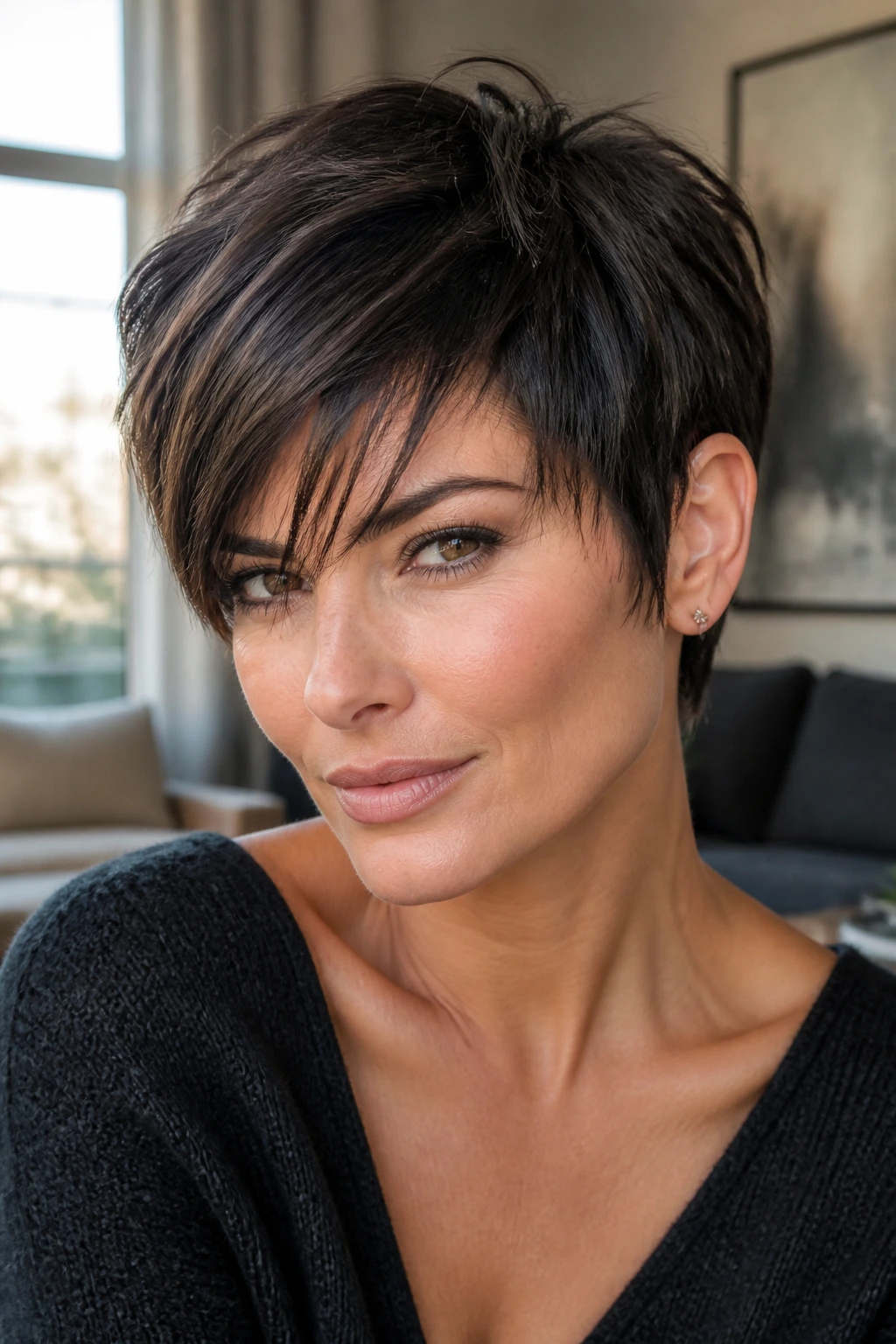
A side-banged crop is one of the easiest ways to soften a square face without overcomplicating the haircut. The fringe creates a diagonal slash across the forehead, which draws attention away from the jawline and gives the whole face a less severe geometry.
The piecey part matters. A solid, dense bang can feel heavy. Piecey bangs leave little gaps of skin and hair, which makes the front look lighter and more modern. I’d ask for the ends to be point-cut, not bluntly chopped, so they separate naturally.
This cut is a good companion for strong brows and sharp cheekbones. It doesn’t hide them; it just frames them better. That’s the whole game here.
11. Short Wolf Cut
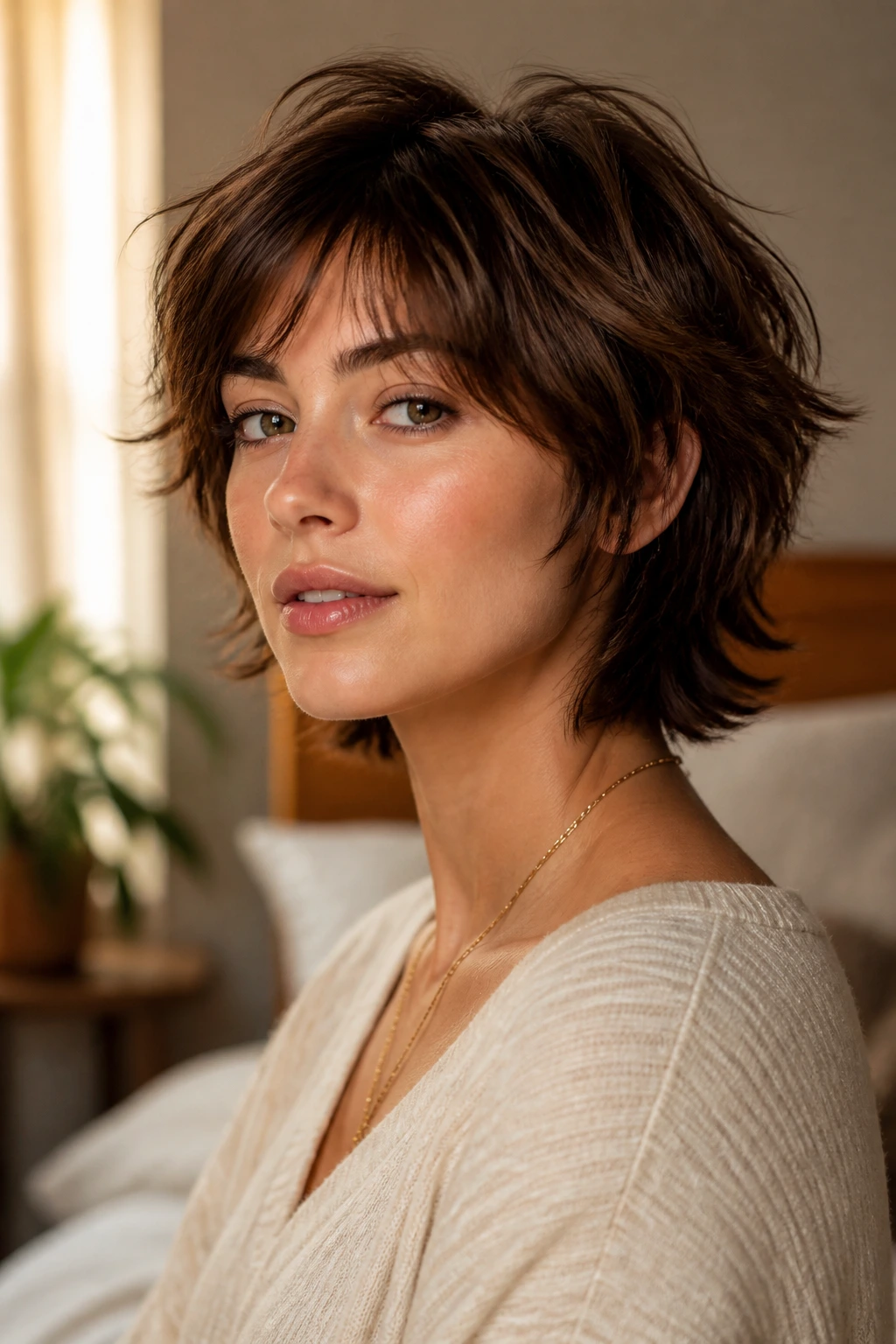
People talk about the wolf cut like it only belongs on long hair, which is nonsense. A short wolf cut can be excellent on a square face if the crown stays airy and the layers are controlled. You want movement, not a mullet with a bad attitude.
The reason it works is the same reason a shag works: the layers keep the eye from locking onto the jaw. But the wolf cut adds a little more wildness at the top and around the sides. That extra texture helps thick or slightly wavy hair sit away from the face instead of clinging to it.
What to Watch For
- Keep the shortest layers near the crown, not stacked at the jaw.
- Ask for soft edges around the face.
- Use a diffuser or rough-dry the top for lift.
Too much length in the back can drag the shape down. Too little softness around the temples can make it look hard. The sweet spot is in the middle.
12. Airy Layered Bob with Root Lift
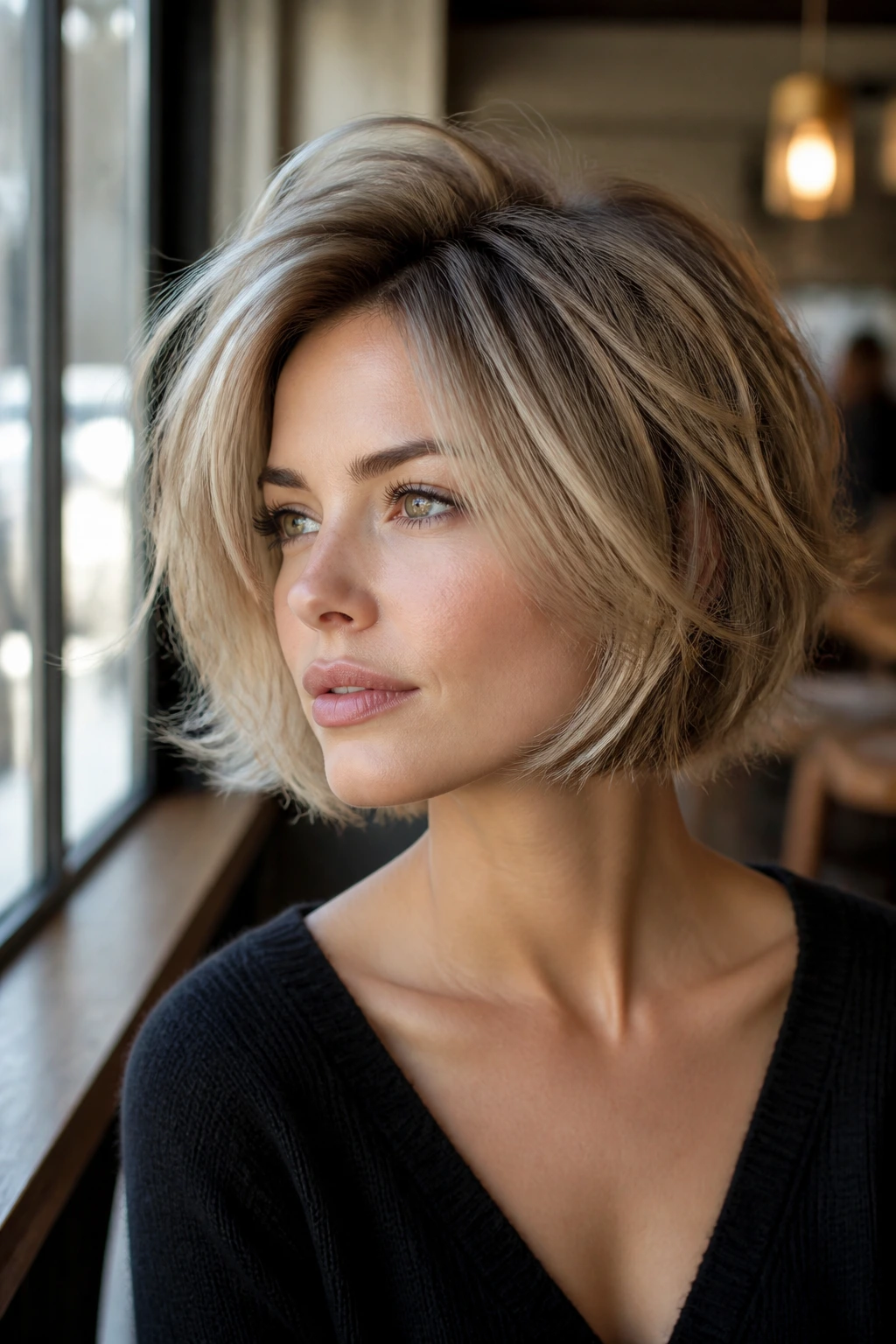
A layered bob gets a bad reputation when the layers are too obvious. The airy version is better. It removes weight in a way that makes the hair fall with space between the strands, which is perfect for square faces because it keeps the silhouette from becoming a rectangle.
Root lift changes the whole story. A little volume at the crown stretches the face visually, while the lighter sides prevent the jaw from becoming the widest point. If your hair falls flat quickly, use a volumizing mousse at the roots before blow-drying and aim the nozzle upward for the first 30 seconds at each section.
This style is one of my favorites for everyday wear because it doesn’t look “done” when it’s done correctly. It just looks like hair with some air in it. Nice difference.
13. Messy Tapered Pixie-Bob
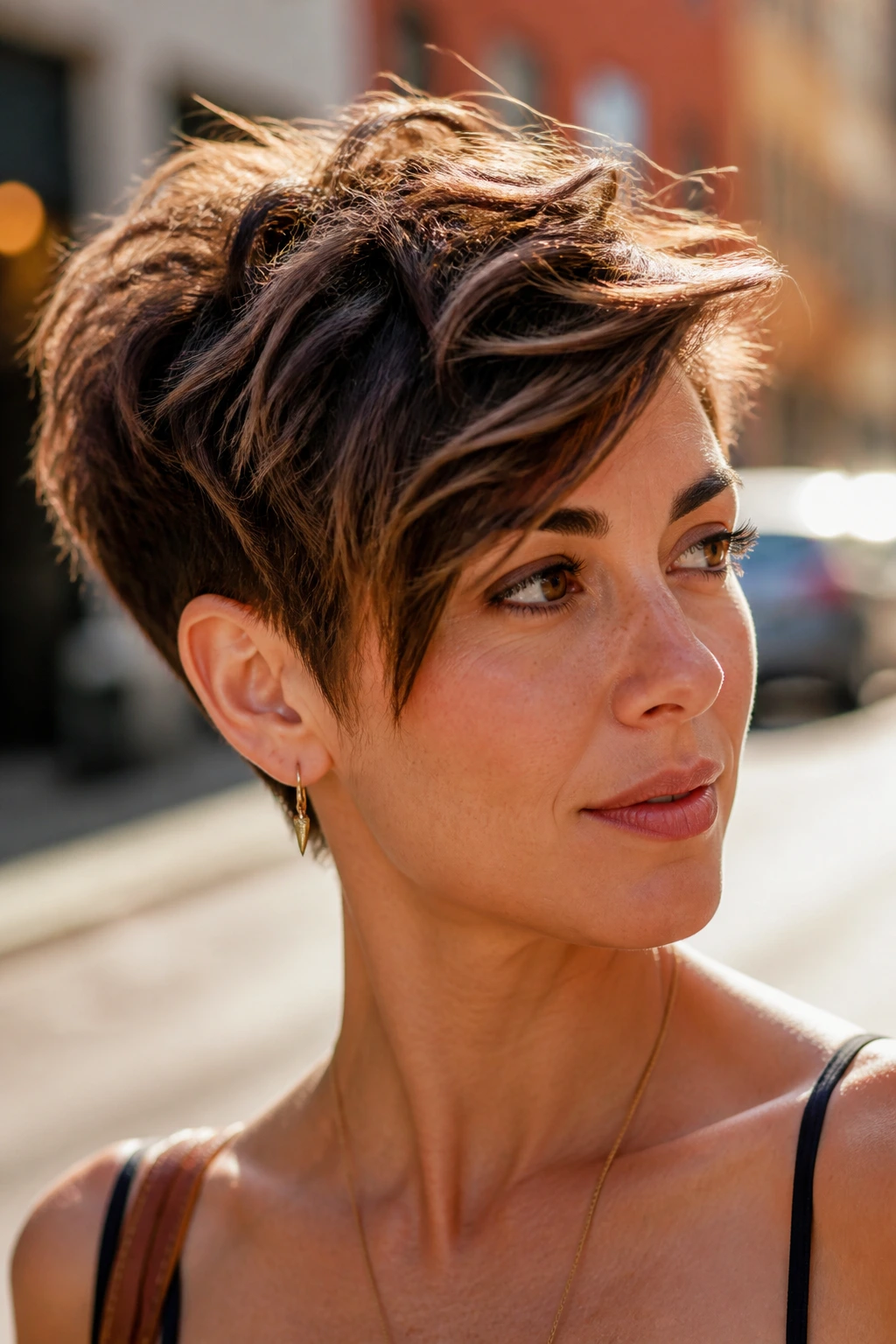
What happens when a pixie grows into a bob with a softer nape? You get this. The tapered pixie-bob is useful for square faces because it keeps the neck neat while letting the top and sides maintain enough width to balance the face.
The messy part is not optional. A rigid tapered cut can read too sharp. The top should have enough length to push forward, sideways, or slightly up, depending on the mood that day. That looseness is what keeps the cut from sitting in a military line around a square jaw.
This style loves a quick finger-dry with a little paste at the ends. It’s not a high-maintenance look, but it does need a bit of movement. Flat hair will flatten the whole idea.
14. Blunt Bob with Wispy Ends
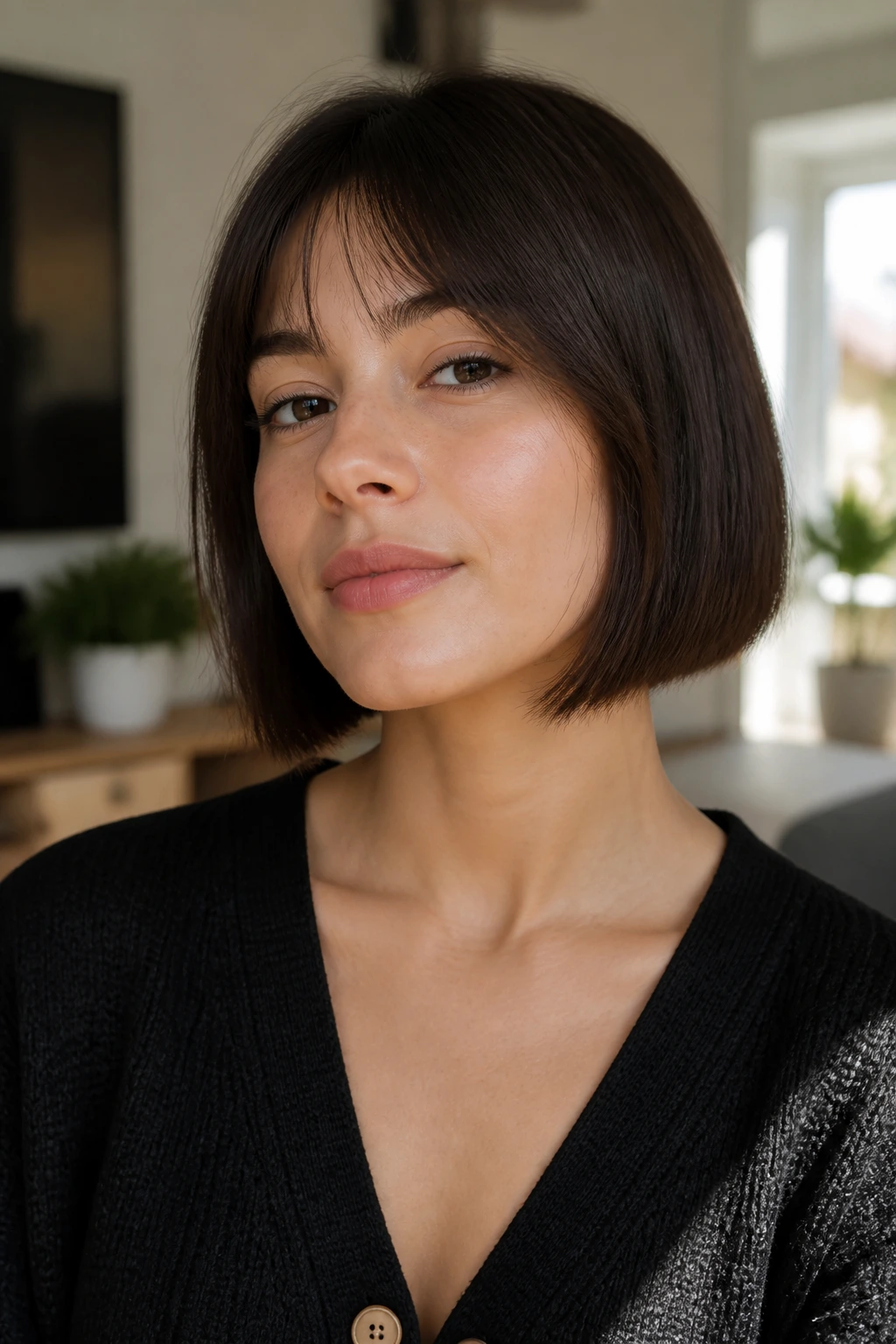
A blunt bob can work on a square face. I know that makes some stylists twitch. But the difference lies in the finish. If the perimeter is blunt and the ends are wispy, the cut keeps its clean shape without becoming a hard block around the jaw.
The safest length is usually just below the jaw or around the mouth area, not directly on the jawline. That keeps the edge from sitting on top of the face’s strongest line. Then the wispy finish softens the bottom so the bob doesn’t feel like a shelf.
This is a good choice if you like polished hair and do not want a lot of layering. It still needs a side part or a little bend at the ends, though. Straight down the middle with dead-straight edges is a different animal, and not the flattering one.
15. Pin-Curled Retro Bob
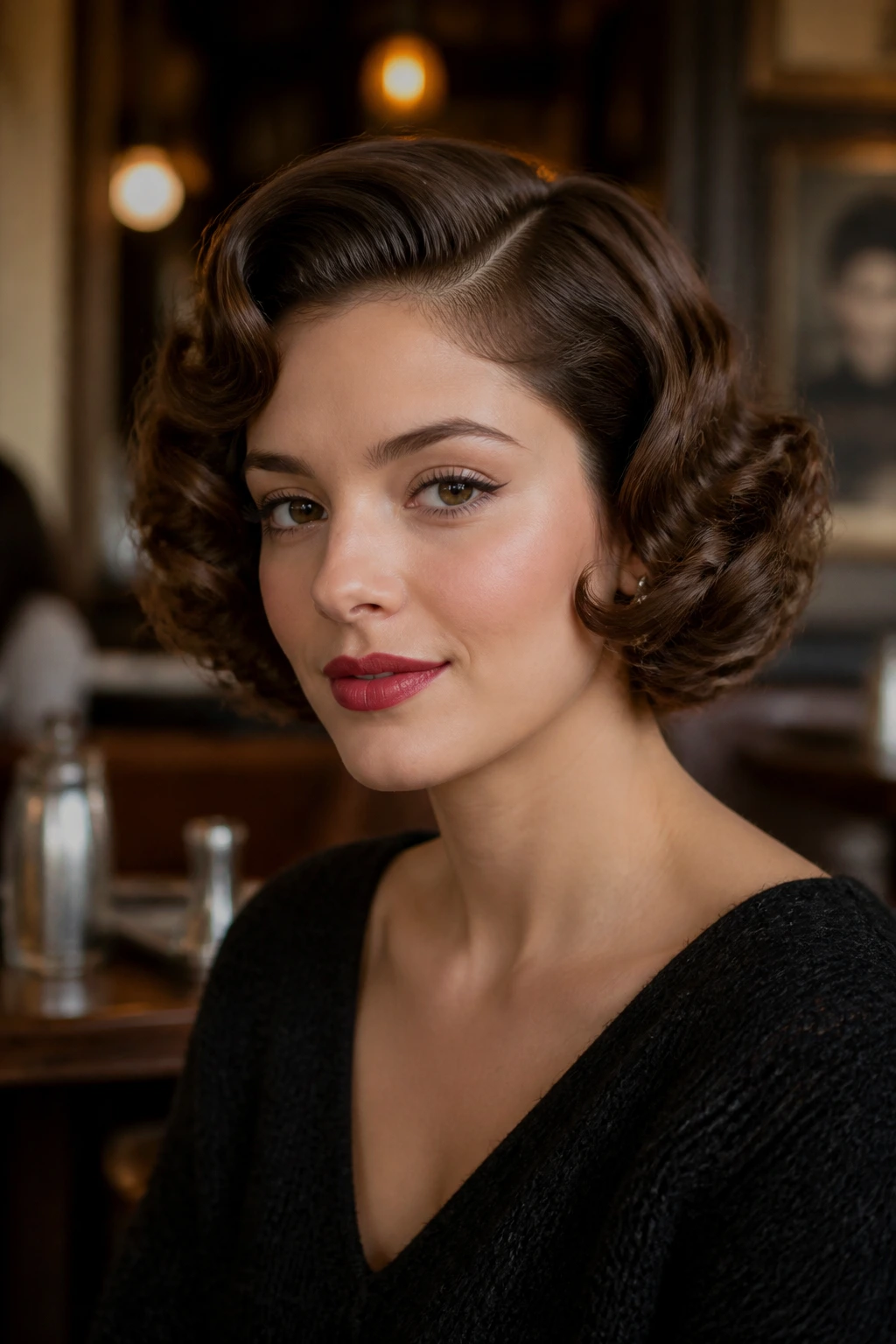
A retro bob with pin curls or brushed-out waves gives square faces a lovely, rounded outline. The old-school part helps here. Deep side parts and soft curls move the eye around the face instead of letting it sit on the jaw.
Pin curls also create width without bulk. That sounds contradictory, but it isn’t. The curl pattern makes the hair occupy space near the cheeks and temples while keeping the length short and controlled. The result is fuller-looking shape with less actual length.
I’d use this style when you want something a little dressed up. It’s the bob that looks good with a crisp collar, lipstick, and a clean neckline. It has structure, but the softness keeps it from feeling severe.
16. Swept-Back Textured Crop
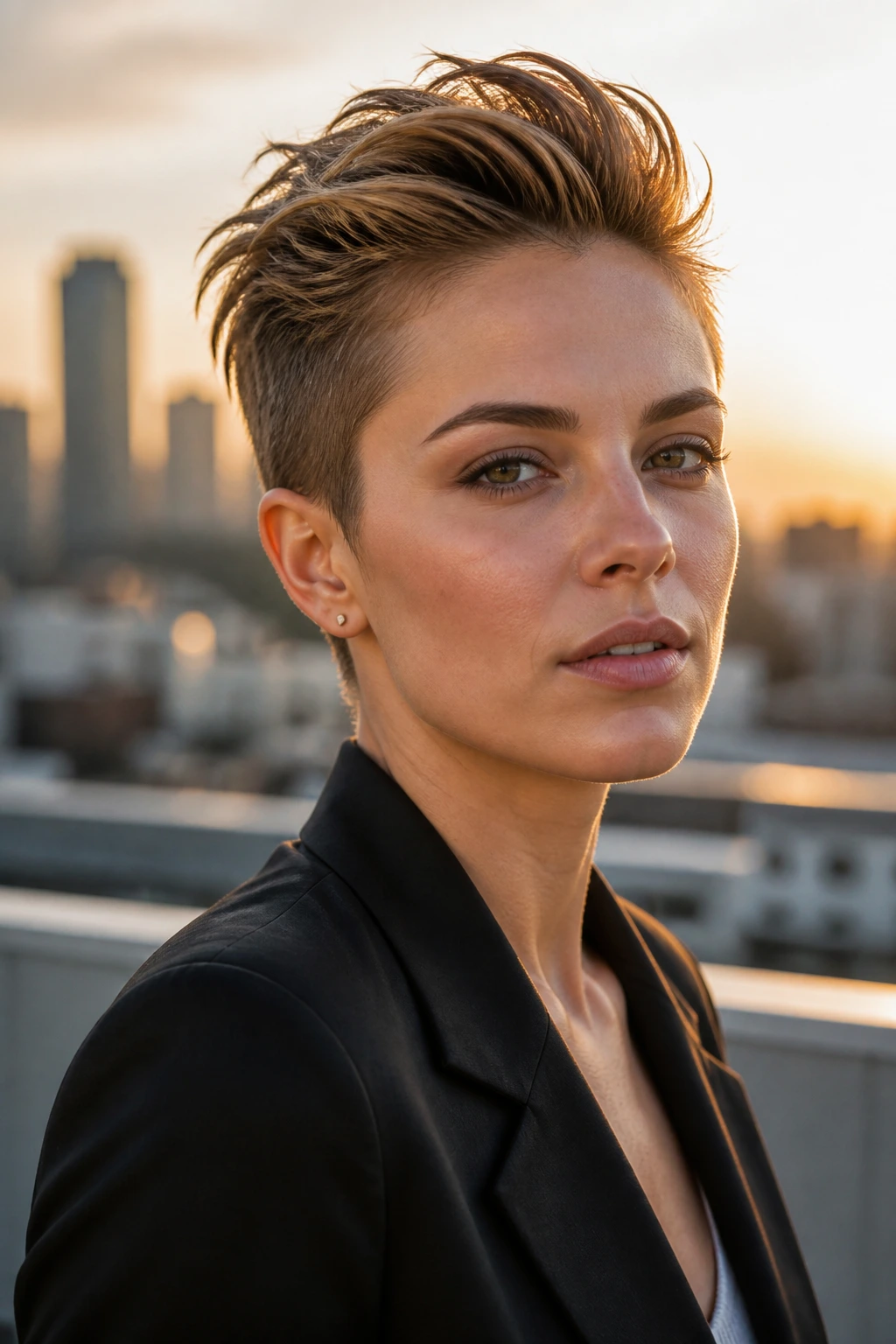
A swept-back crop is a good choice when you want the forehead open and the face framed by side width rather than front fringe. The sweep creates height, and height is useful on a square face because it lengthens the overall read of the face without adding extra width at the jaw.
The texture is doing the real work. If the top is brushed straight back and frozen in place, the haircut can look hard. If the pieces are separated with a little clay or lightweight paste, the shape feels loose and modern. The sides should stay soft, almost brushed, never plastered.
I like this one for people who wear earrings or bold glasses. It gives the face a clean stage. Nothing crowded. Nothing fussy.
17. Grown-Out Pixie with Temple Volume
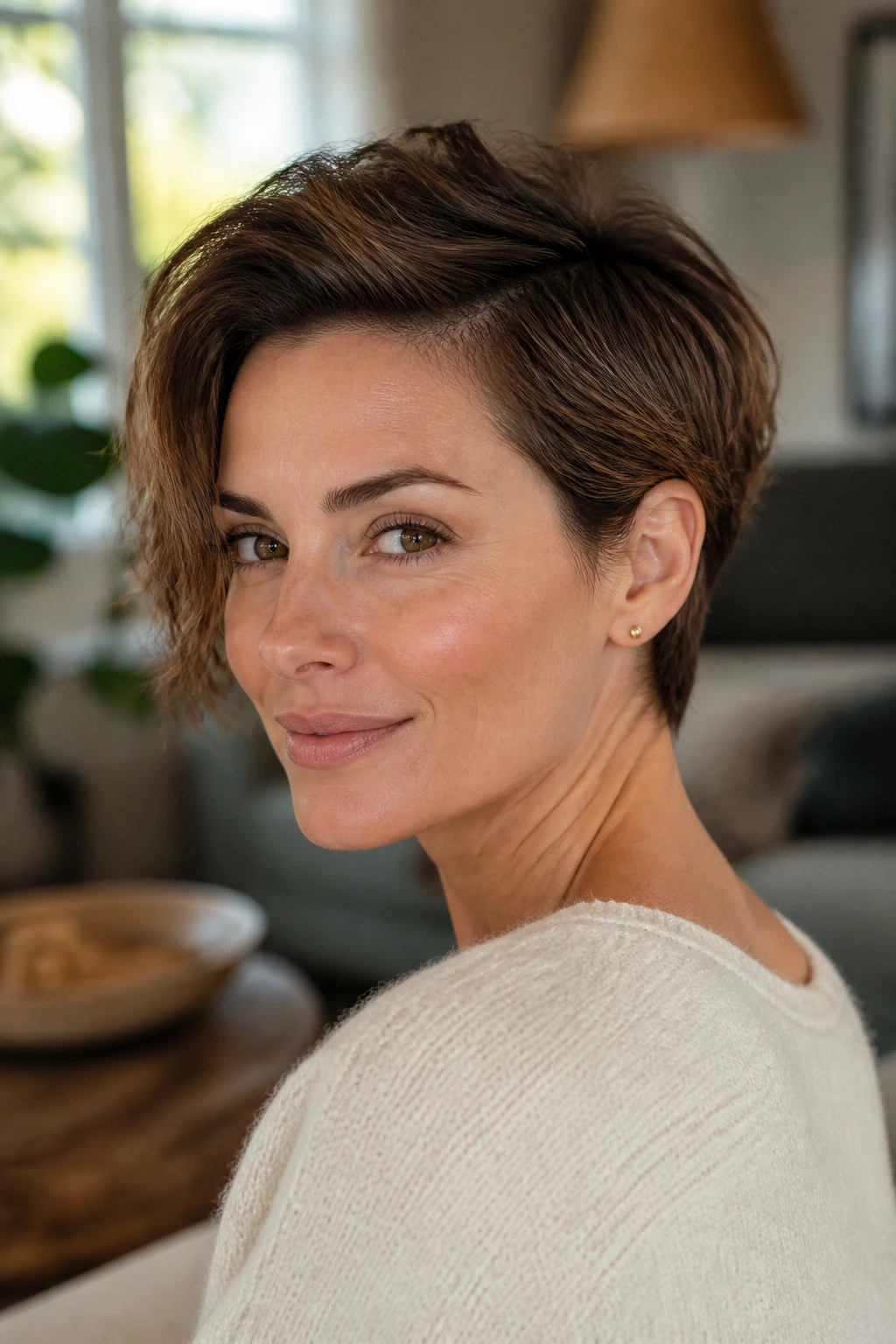
A grown-out pixie can be more flattering than a freshly clipped one on a square face. That extra bit of length around the temples lets the hair widen slightly higher than the jaw, which softens the lower half of the face. It’s a small shift, but it changes the mood.
The temple volume is the point. If the sides are too tight, the cut becomes too severe. If the top gets too long without shaping, it can start to flop. Ask for a soft, grown-in perimeter with enough length to tuck one side behind the ear and leave the other side loose.
This is one of those cuts that looks expensive when it’s slightly imperfect. Too polished, and it loses the charm. Too overgrown, and it stops reading as a cut at all. That narrow middle is where it lives.
18. Side-Swept Fringe with Soft Curls
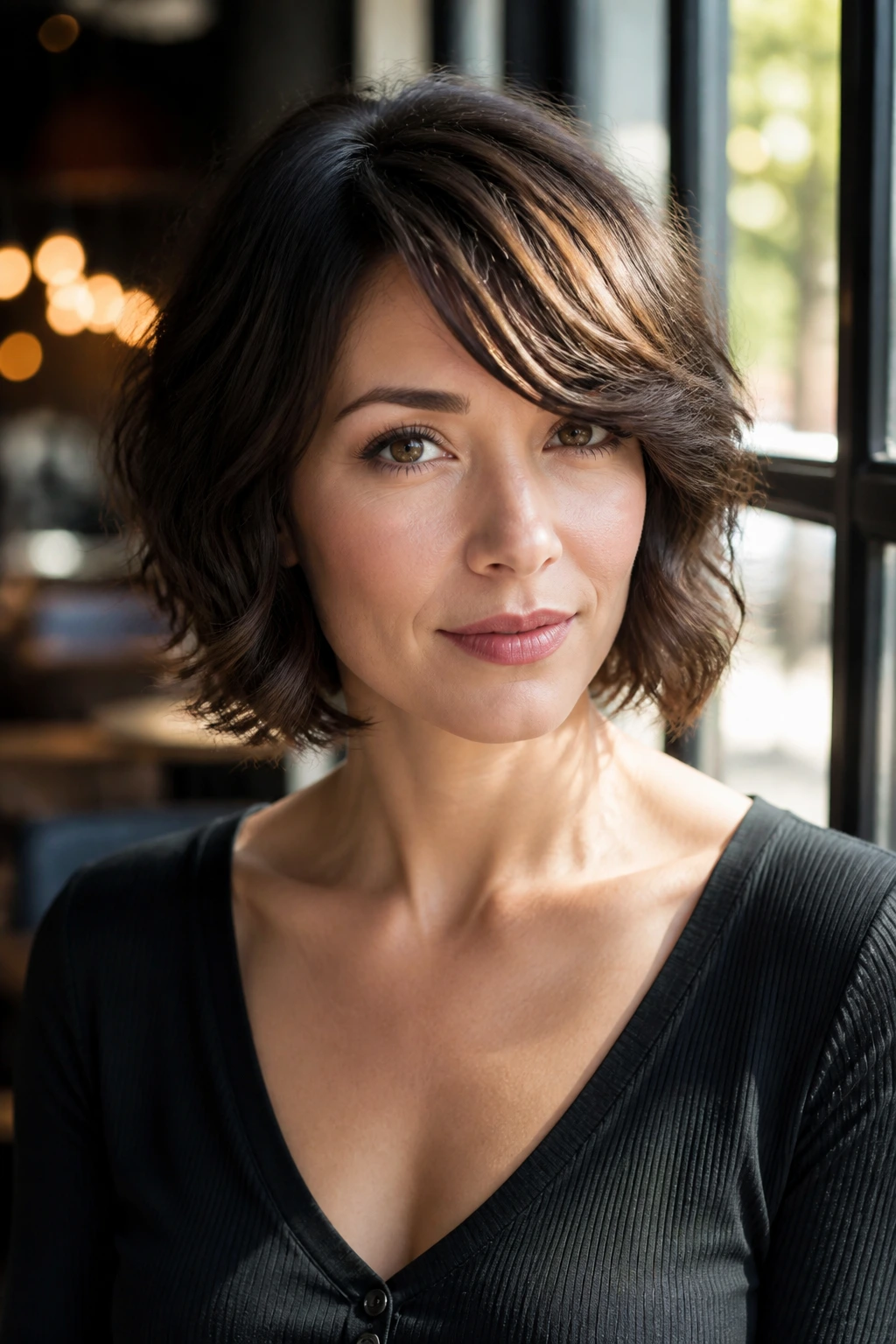
A side-swept fringe does a lot of quiet work on a square face. It softens the forehead, changes the direction of the eye, and gives short hair a little width above the cheeks instead of right at the jaw. Add soft curls, and the whole thing becomes gentler.
How to Style It
- Curl the front sections away from the face with a 1-inch wand.
- Let the curl cool before brushing it out.
- Tuck one side loosely behind the ear for asymmetry.
The result should feel touchable, not ringlet-tight. I prefer this on bob lengths or slightly shorter cuts where the fringe can fall into the rest of the shape without competing with it. It’s elegant in a way that doesn’t need much effort.
19. Choppy Layered Bob with Nape Taper
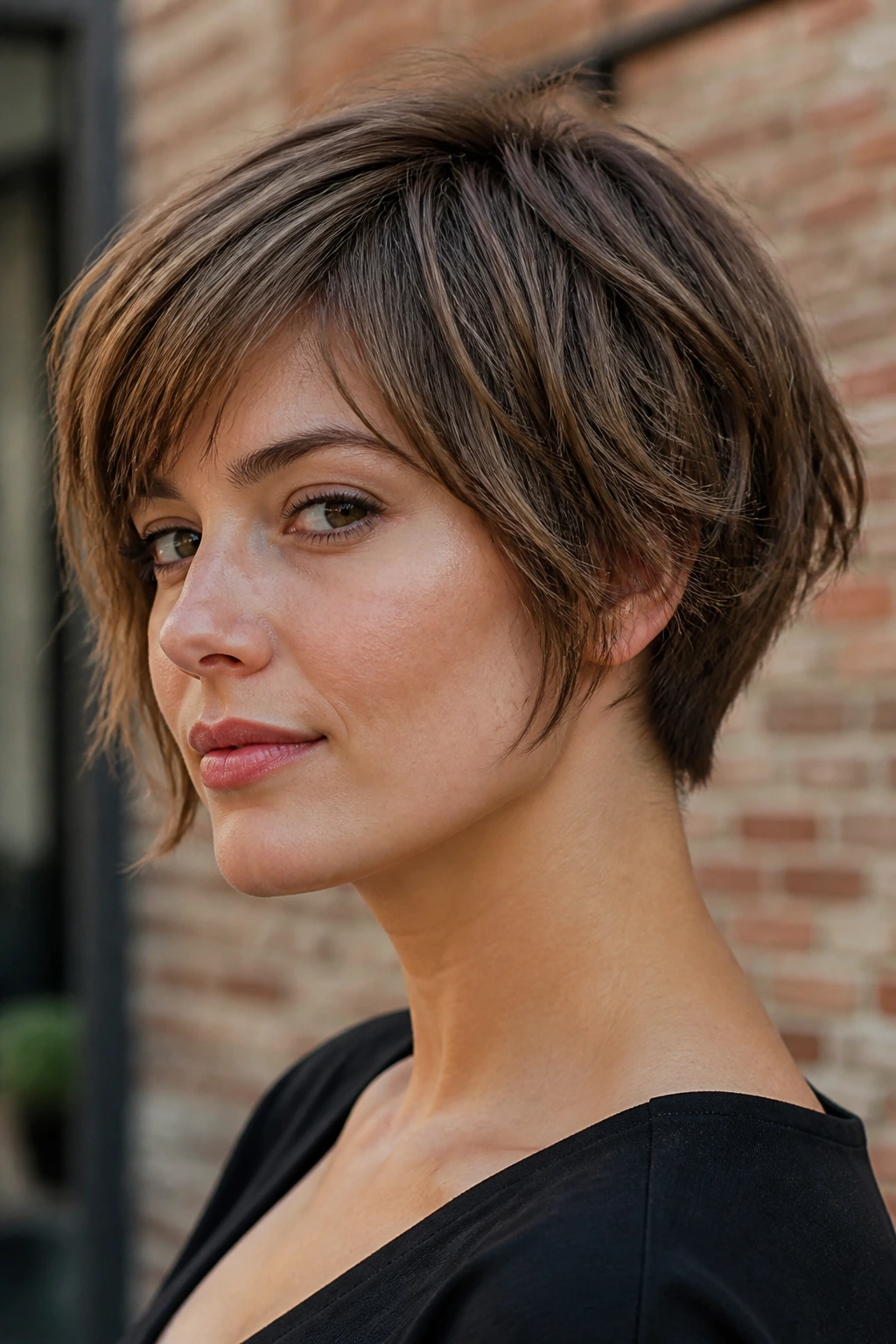
A choppy bob works for square faces when the choppiness is controlled and the nape is tapered cleanly. That combination removes weight from the back while keeping the front lively. The face doesn’t get boxed in, and the neck stays open.
The little irregularities in the layers matter. They stop the hair from forming one hard edge around the face. You get movement instead, especially when the ends are styled with a quick bend or a bit of texture spray.
This style is good for people whose hair wants to puff out at the bottom. The tapered nape keeps the shape tidy, while the choppy top and sides keep the face from looking too strict. It’s practical. It also happens to photograph well, which is not the same thing as looking good in person.
20. Rounded C-Curl Bob
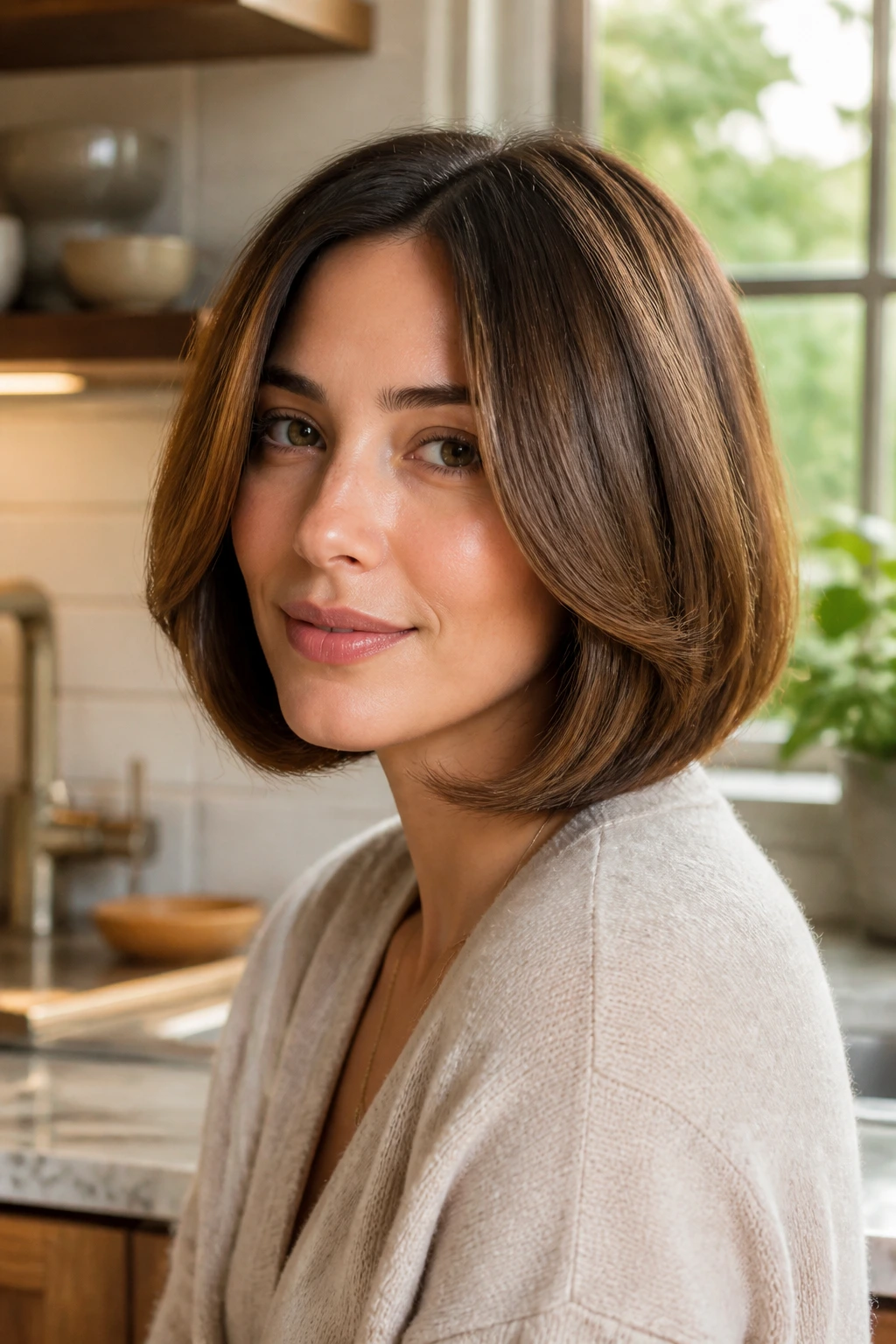
A C-curl bob is one of the nicest solutions for a square face because the ends turn in gently and hug the cheek and chin area. That curved finish softens the straight lines that can make the face feel wider than it is.
The curl does not have to be dramatic. A subtle inward roll is enough. Use a round brush or a flat iron with rounded edges, and turn the ends under in a smooth arc. The shape should look neat, not stiff.
This is a good pick if you like a tidy outline and you don’t want a lot of visible layering. The trick is to keep the length in a flattering zone — not directly on the jawline, not so long that it loses the curve. Somewhere in the middle, where the face can breathe.
21. Side-Parted Tucked Bob
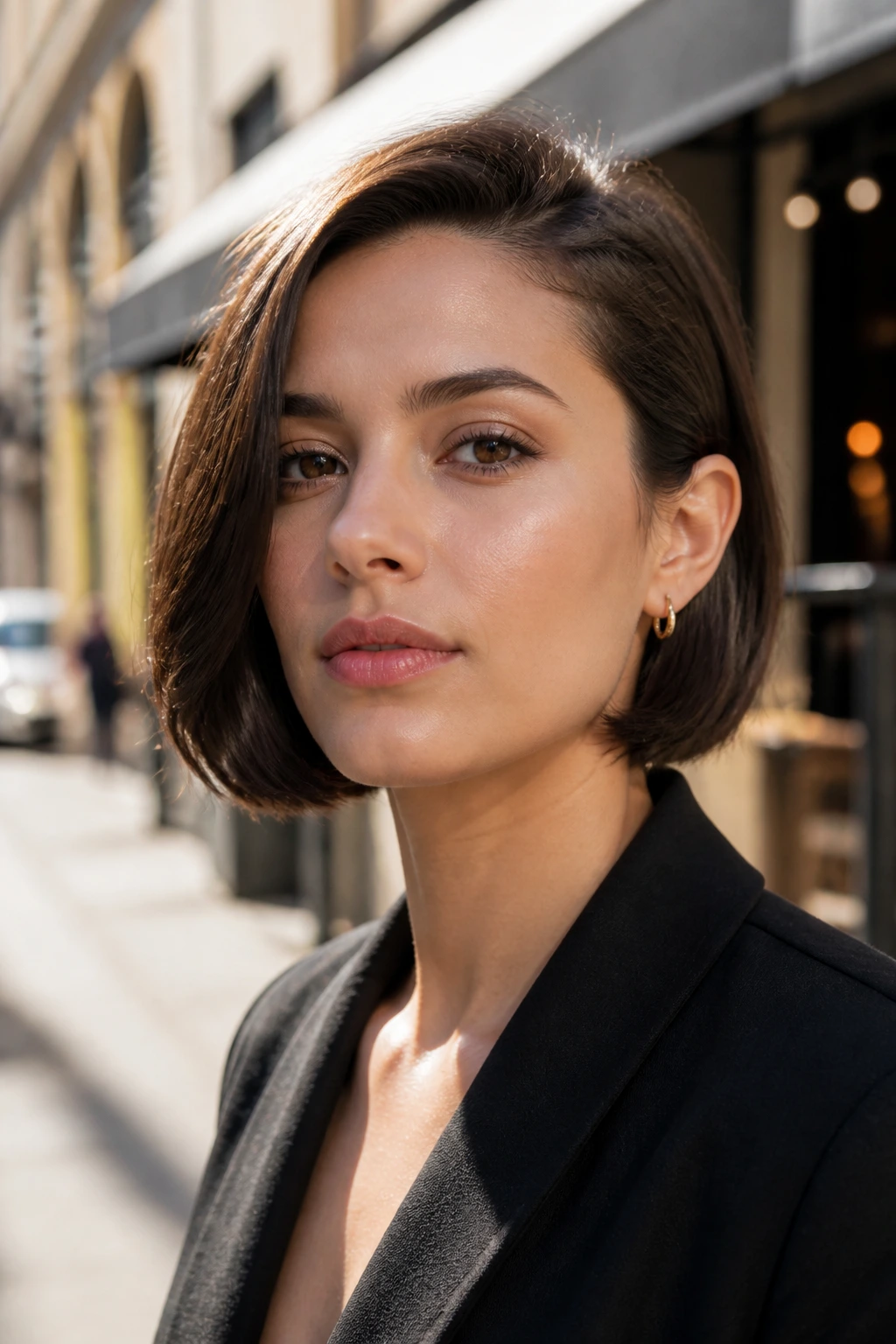
A tucked bob is deceptively useful. One side tucked behind the ear creates an asymmetrical line, while the loose side adds width where the face needs it. That imbalance keeps a square face from looking too perfectly framed, which is usually the problem with shorter cuts.
The side part matters here too. It shifts the weight off the center of the face and gives the bob a little swing. I especially like this style with smooth, glossy hair because the tucked side shows off the jaw just enough without making it the star.
Wear a small earring on the tucked side if you want a sharper finish. The combination looks intentional and keeps the face from feeling flat.
22. Curly Short Cut with Width at the Cheekbones
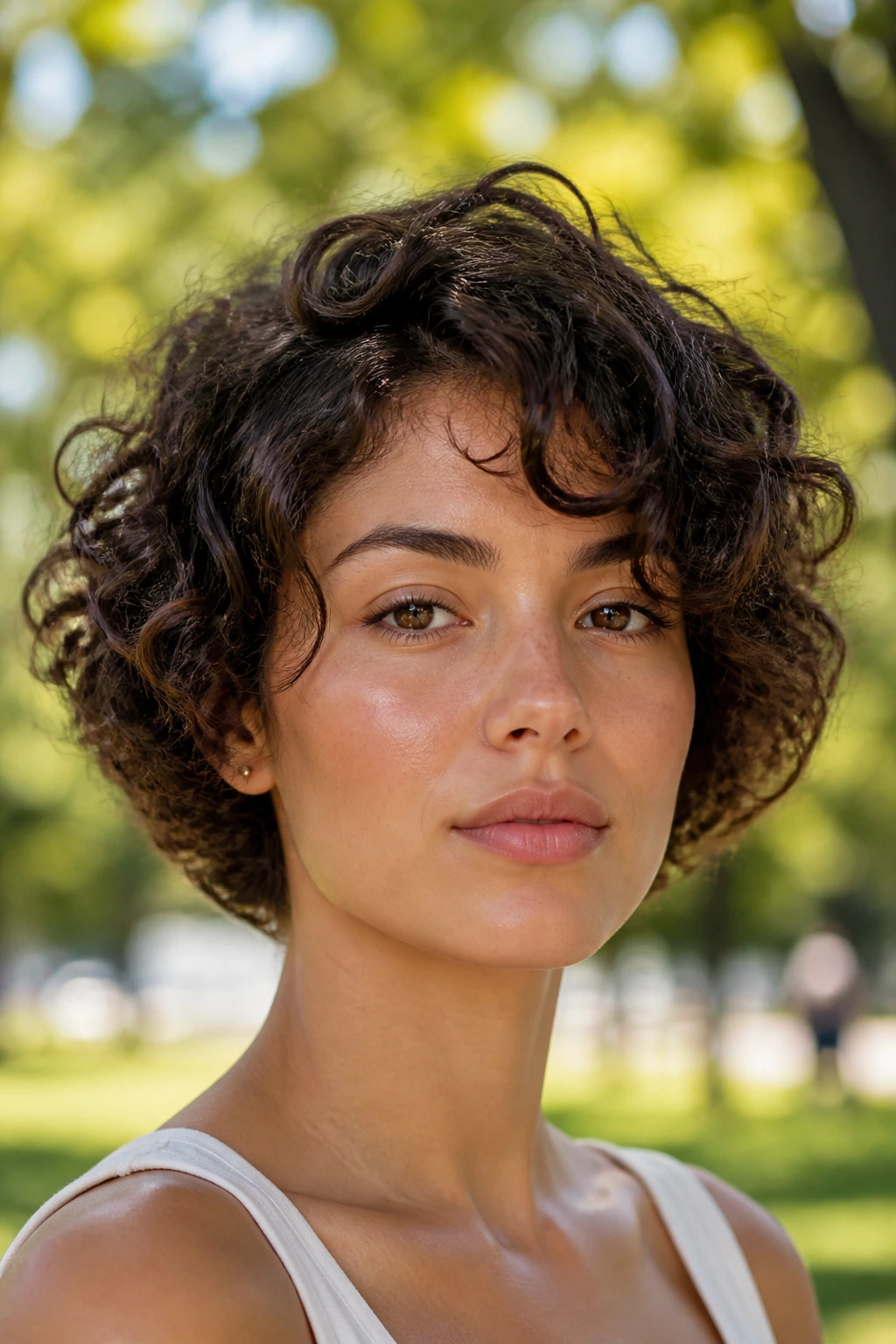
If your hair is curly, the best short shape for a square face usually starts with understanding where the curls want to expand. You do not want all that width sitting low at the jaw. You want it to bloom at the cheekbones and then taper gently underneath.
That means cutting with the curl pattern in mind. Shorter layers at the crown can keep the top from collapsing, while longer face-framing pieces help the sides fall in a way that softens the corners of the face. Dry cutting often helps because curls spring up differently once they dry.
A curly short cut like this can look bold and soft at the same time. That’s the sweet spot. The face keeps its strong structure, but the hair adds movement around it instead of another hard edge.
What to Tell Your Stylist in the Chair
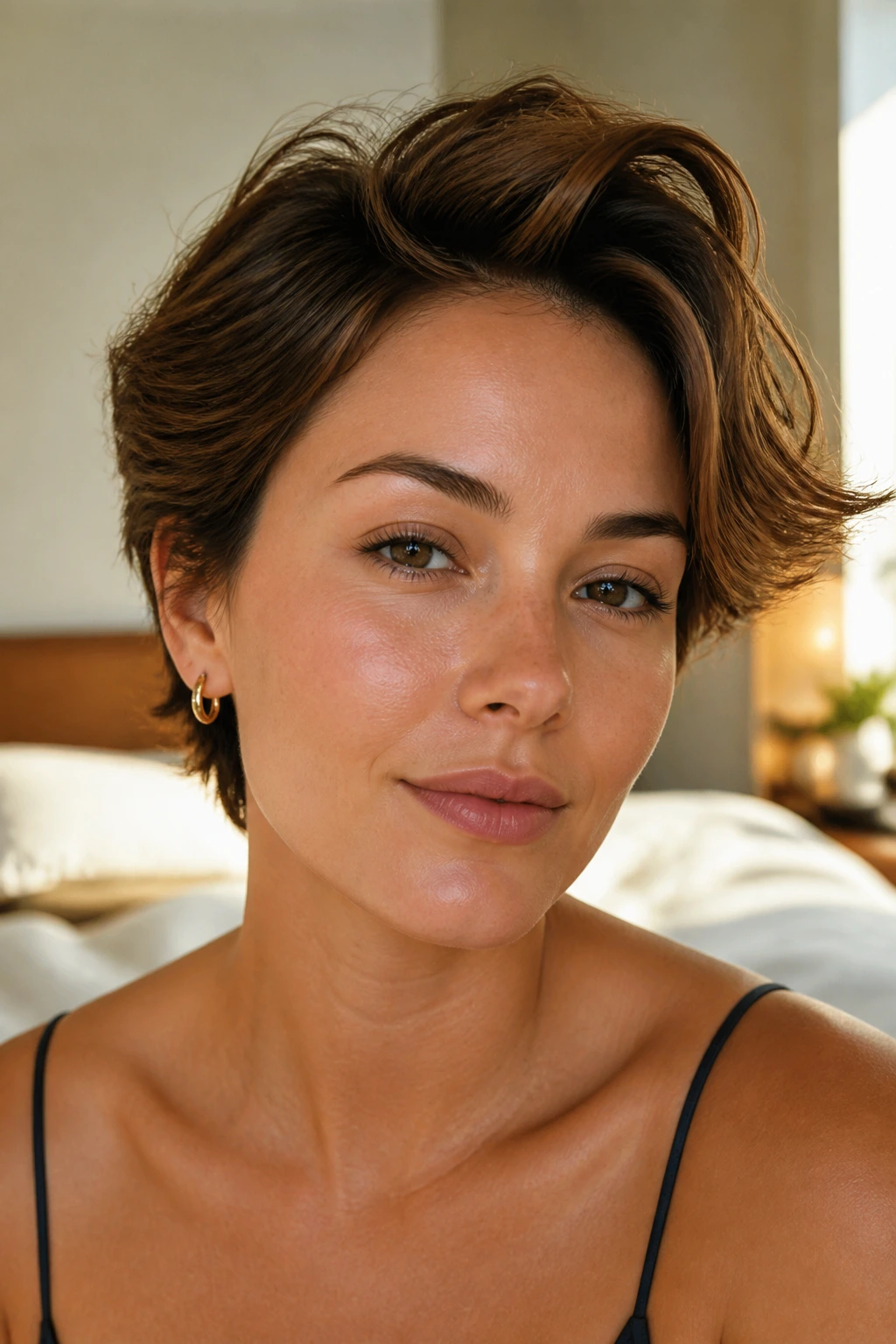
A good short haircut for a square face starts with a clear conversation. Don’t just say “short and flattering.” That phrase means almost nothing once the scissors come out. Say where you want the width to sit, how much time you want to spend styling, and whether you prefer polished or messy texture. That gives the stylist something to work with.
If you want softness, ask for movement around the temples and cheekbones, not bulk at the jaw. If you want fringe, say whether you like side-swept, curtain, or wispy pieces. If you have heavy hair, ask how they plan to remove weight inside the cut rather than slicing the perimeter into a shape that puffs out later. That inner texturizing step matters more than most people think.
Bring a couple of reference photos, but bring the right kind. Look for photos with the same face shape, hair density, and styling habits, not just the same length. A pixie that looks lovely on someone who flat-irons daily can be a bad match for your air-dry routine. Be blunt about that in the chair. It saves everyone a headache.
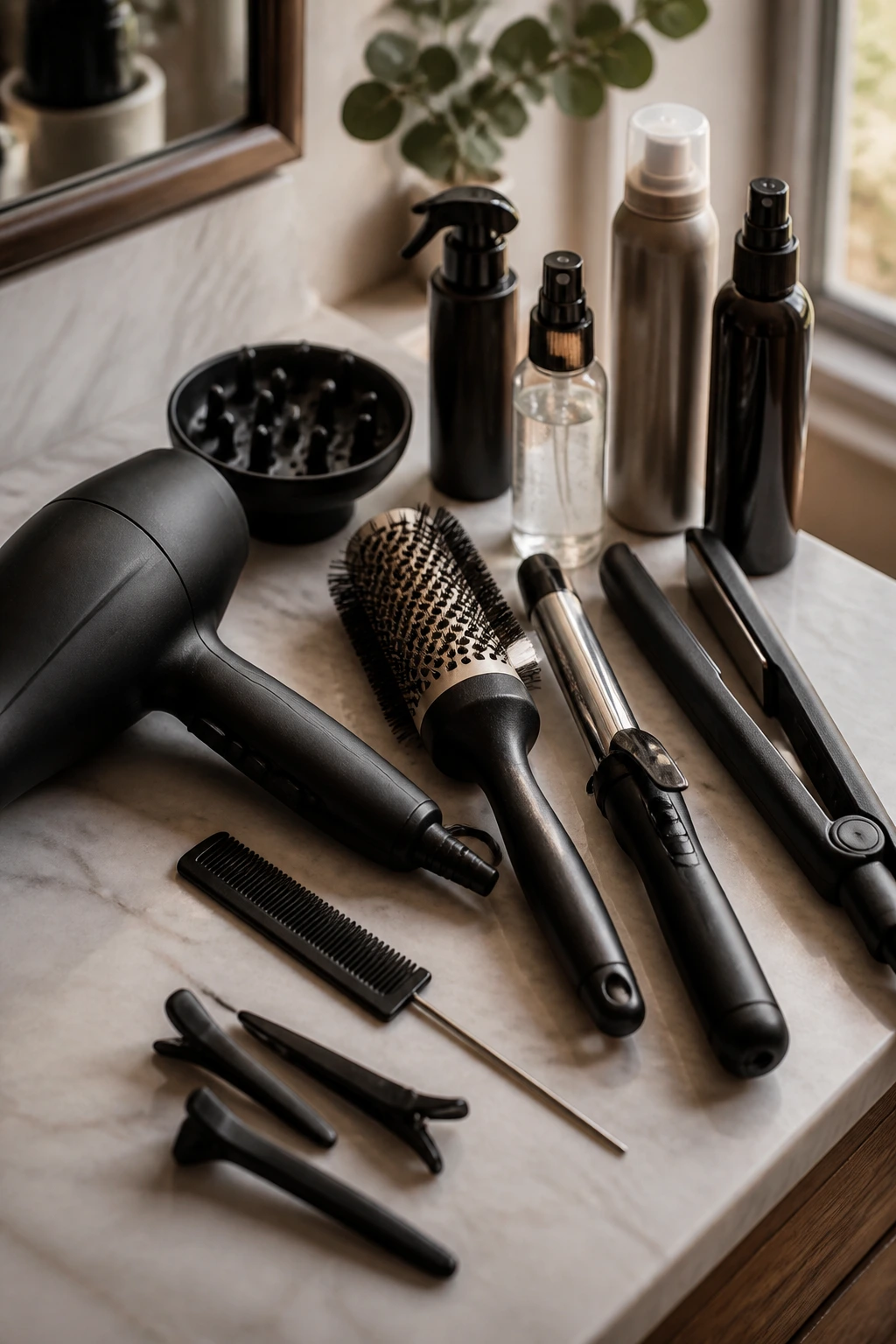
Essential Tools for Styling These Cuts
-
Blow dryer with concentrator nozzle: Helps direct root lift and smooth the front without blasting the whole cut into a frizz cloud.
-
Small round brush, 1 to 1.5 inches: Best for bobs, fringe, and the little inward bend that softens a square jaw.
-
1-inch curling iron or wand: Good for loose bends, curtain bangs, and soft waves that widen the cheekbone area.
-
Flat iron with rounded edges: Lets you curve the ends under or flip them out without leaving a hard crease.
-
Lightweight mousse: Adds lift at the roots without making short hair feel sticky or crunchy.
-
Texturizing spray or dry shampoo: Useful for pixies and shaggy crops that need separation more than shine.
-
Tail comb: Handy for clean parts, sectioning bangs, and lifting a bit of crown volume without mangling the finish.
-
Duckbill or sectioning clips: Make blow-drying and curling less chaotic, especially on layered cuts.
-
Heat protectant: Non-negotiable if you use hot tools more than once a week.
-
Diffuser: Worth owning if your hair is curly or wavy and you want the shape to dry with width in the right place.
How to Wear These Looks With Glasses, Earrings, and Necklines
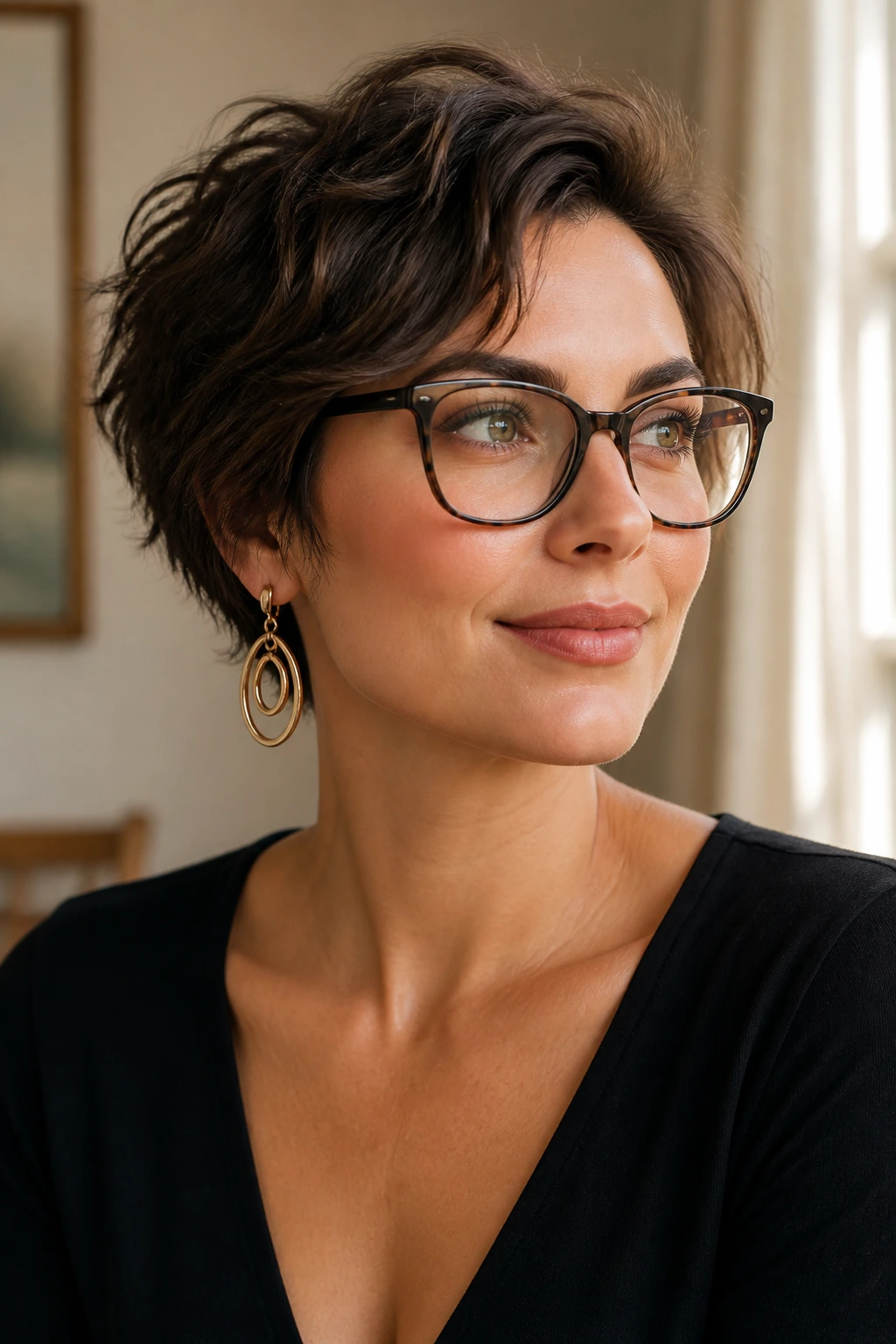
Glasses: If you wear frames, keep your fringe soft enough to clear the top of the glasses or to fall just above the frame line. Hard bangs that crash into your lenses can make a square face feel crowded. Side-swept pieces usually behave better, and they give the glasses room to exist.
Earrings: Short hair opens the whole ear and jaw area, so earrings suddenly matter more. Hoops and drops work well with rounded crops and tucked bobs, while small studs look better with textured pixies or shaggy cuts that already have a lot of movement.
Necklines: A high crew neck can make a square face feel stronger because it repeats the horizontal line of the jaw. A V-neck or scoop neck gives the face a little more vertical breathing room. Not a rule. Just a useful trick when the haircut is short and the neckline is close to the face.
Everyday finish: If the cut leans edgy, soften the clothes. If the clothes are structured, let the hair be a little looser. That contrast keeps the whole look from feeling too hard.
Small Styling Tweaks That Change the Whole Shape
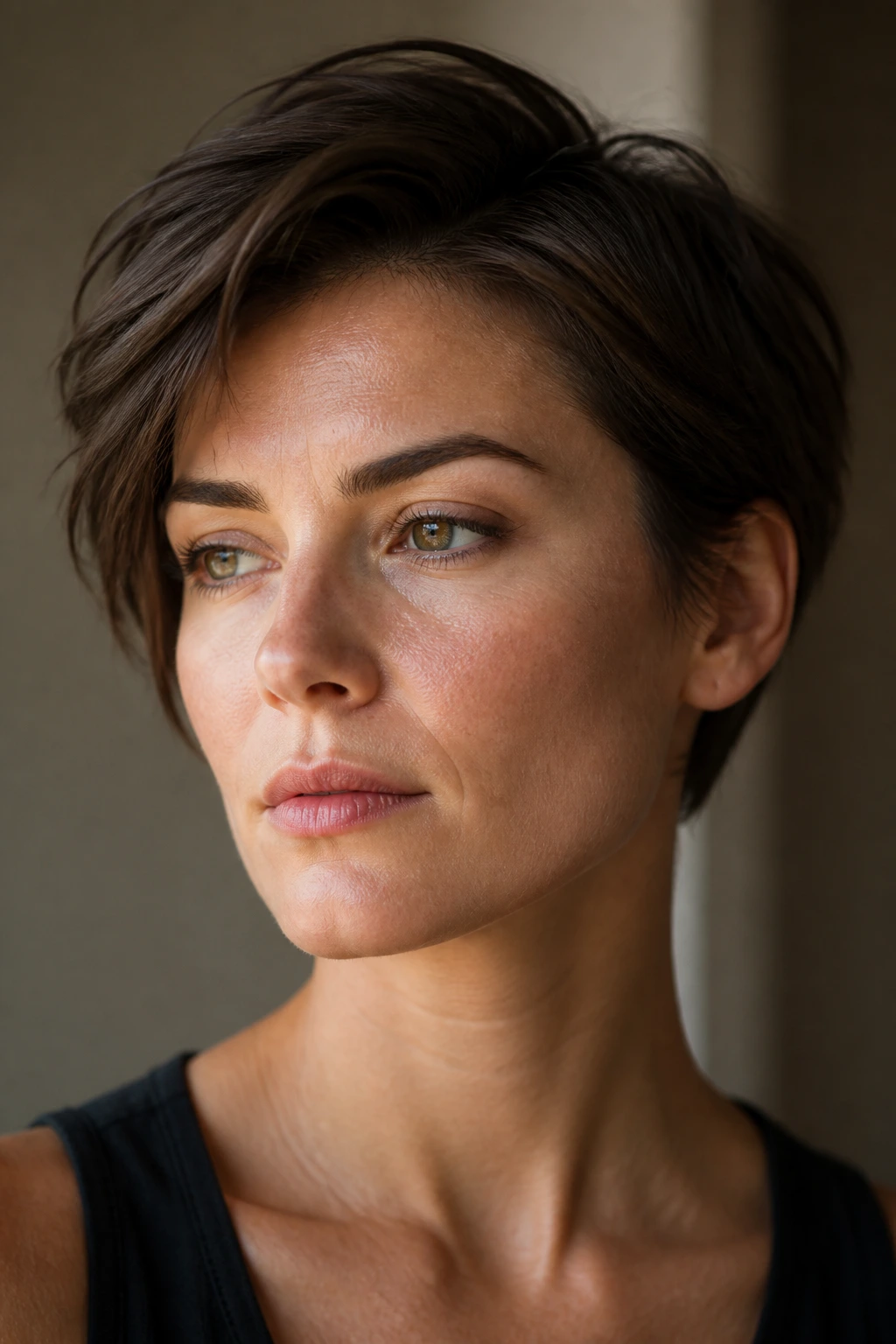
Root Lift: The fastest way to improve a short cut on a square face is to lift the roots at the crown and just off the part line. Use mousse on damp hair, then blow-dry in the opposite direction of the part for 20 to 30 seconds before settling it back.
Face-Frame Bend: A square face often looks best with a bend that starts around the cheekbone and turns away from the jaw. A 1-inch iron or flat iron can do this in seconds. Leave the ends slightly unfinished; perfect curls look too formal here.
Texture Choice: Matte paste gives pixies and crops a little grit. Cream smooths bobs without flattening them. Heavy oil is the thing to watch — a drop too much and the whole cut loses its lift.
Make-It-Yours: If you like a sharper look, keep the fringe cleaner and the silhouette neater. If you want softness, let a few pieces fall loose around the temple and sideburn area. The same haircut can go in either direction.
Common Mistakes That Make Square Faces Look Boxier
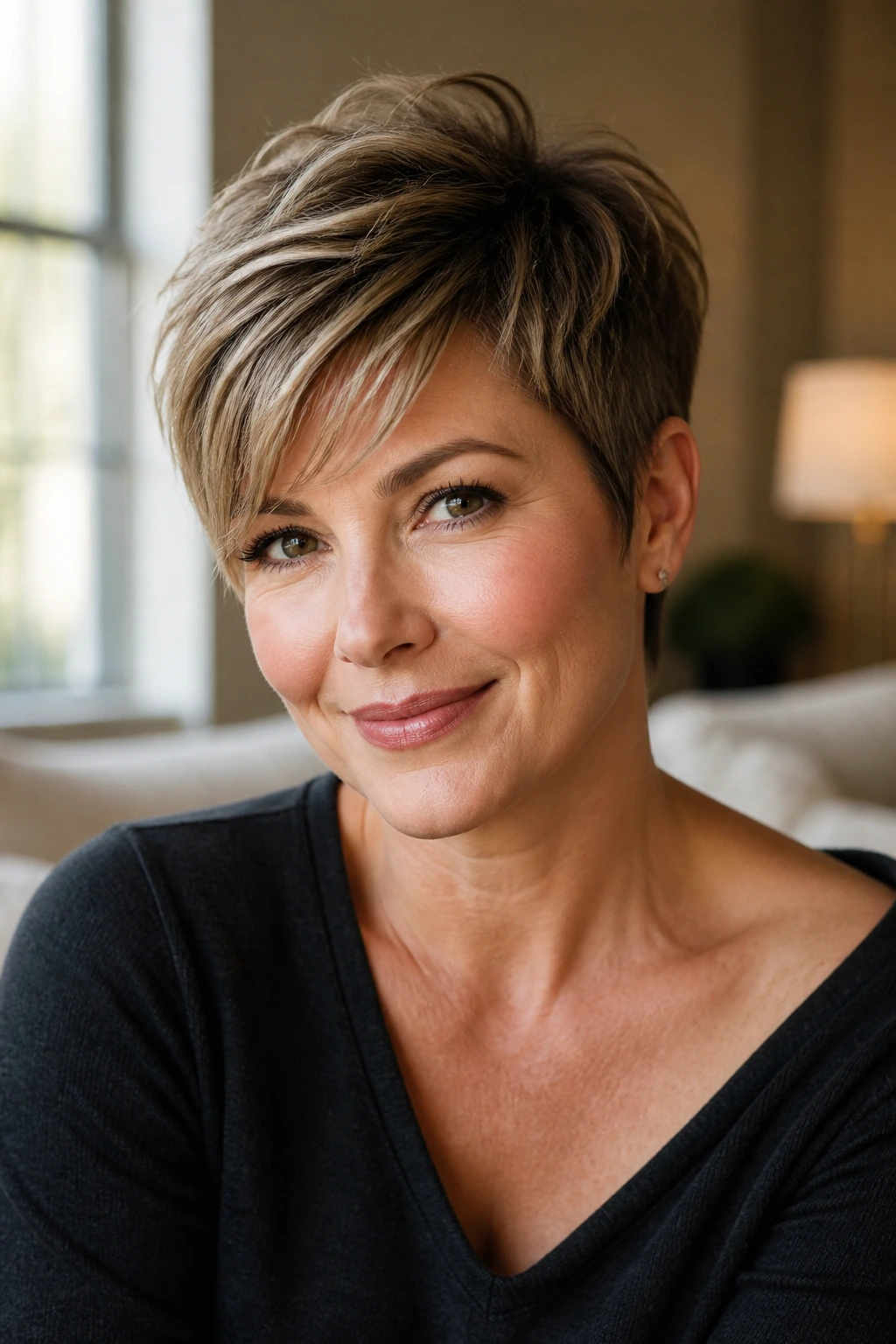
A lot of bad advice for square faces boils down to “hide the angles,” which is lazy thinking. The face is not the problem. The haircut placement is. When the wrong spots get too much weight, the jaw feels heavier than it is.
Mistake 1: Ending the cut exactly at the jaw. The symptom is immediate — the face looks wider and more fixed. Move the length slightly above or below that line, or add a bend so the ends don’t sit like a shelf.
Mistake 2: Loading volume at the jawline. This turns short hair into a triangle and makes the square shape louder. Shift the fullness higher, near the crown or temples, and thin out the lower edge a bit if needed.
Mistake 3: Wearing heavy, straight-across bangs. A dense fringe can make the forehead and jaw feel like two matching blocks. Go for piecey, side-swept, or curtain-style fringe instead.
Mistake 4: Styling everything pin-straight. Straight hair can be gorgeous. But when every line is rigid, a square face can lose softness fast. Even a tiny C-curl at the ends helps.
Mistake 5: Skipping trims. Short hair grows into shape-killers quickly. A pixie that looked airy at week two can feel mushroomy at week seven.
Variations and Adaptations to Try
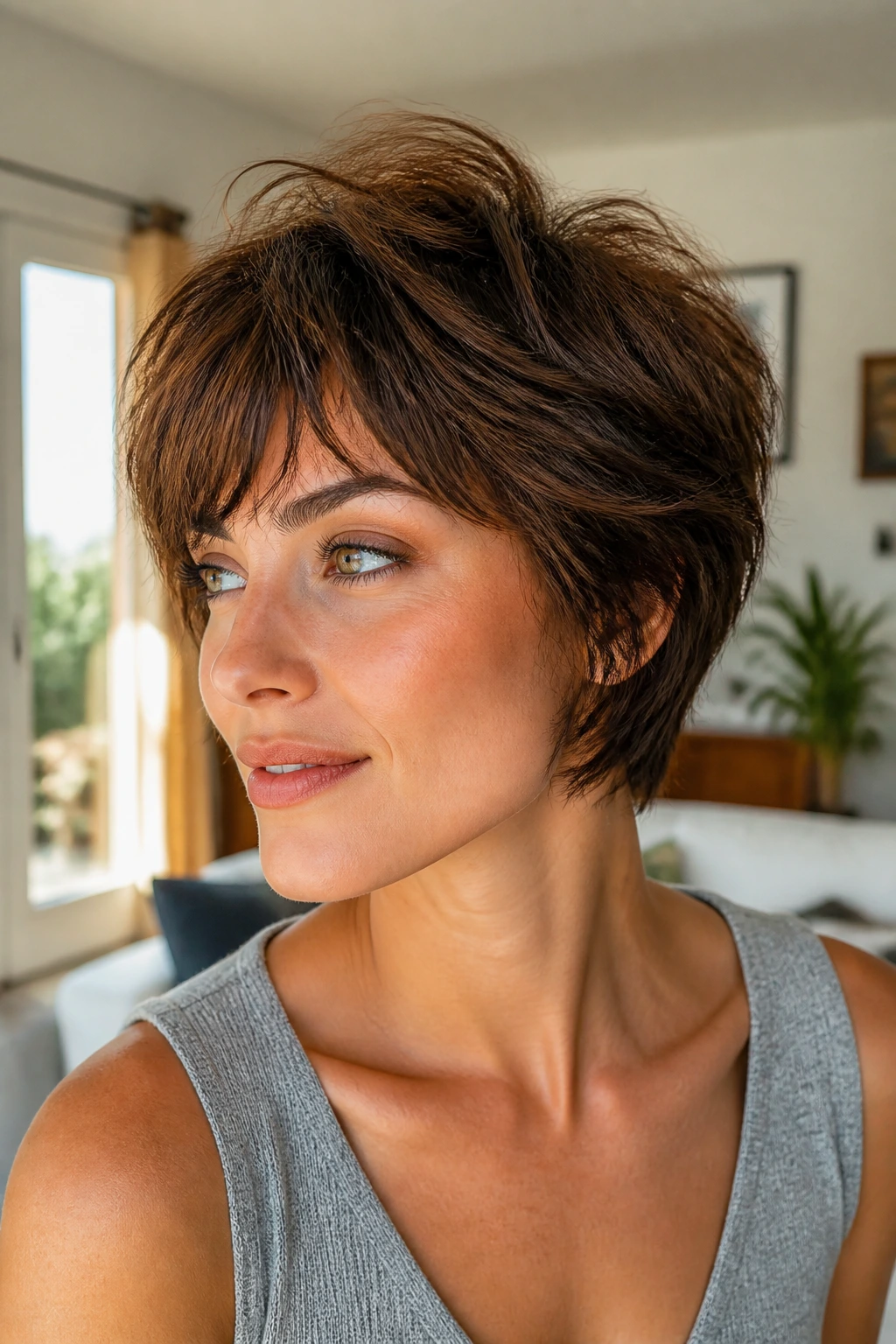
The Fine-Hair Lift Edit: Keep the layers light and the top a touch shorter so the hair doesn’t collapse by lunch. Use mousse at the roots and avoid heavy creams that flatten the silhouette.
The Thick-Hair Taming Edit: Ask for interior weight removal and softer ends around the jaw. Thick hair can take up space fast, so the cut needs room to move without turning into a triangle.
The Curl-Friendly Bend: For wavy or curly hair, leave the length a little longer at the cheekbones and cut with the curl pattern in mind. The goal is width where the face wants softness, not a puffed-out bottom edge.
The Glasses-First Version: Keep fringe off the frame line and make sure the sides don’t crowd the temples. A side part and tucked one side usually help more than blunt bangs ever will.
The Low-Maintenance Air-Dry Version: Choose styles with built-in texture — shaggy pixies, layered crops, and soft bobs. They hold their shape even when you skip the round brush.
The Grow-Out-Friendly Version: If you hate frequent trims, choose asymmetry or layered bobs over precise micro shapes. They keep their character longer while they grow.
Keeping Short Hair Fresh Between Cuts
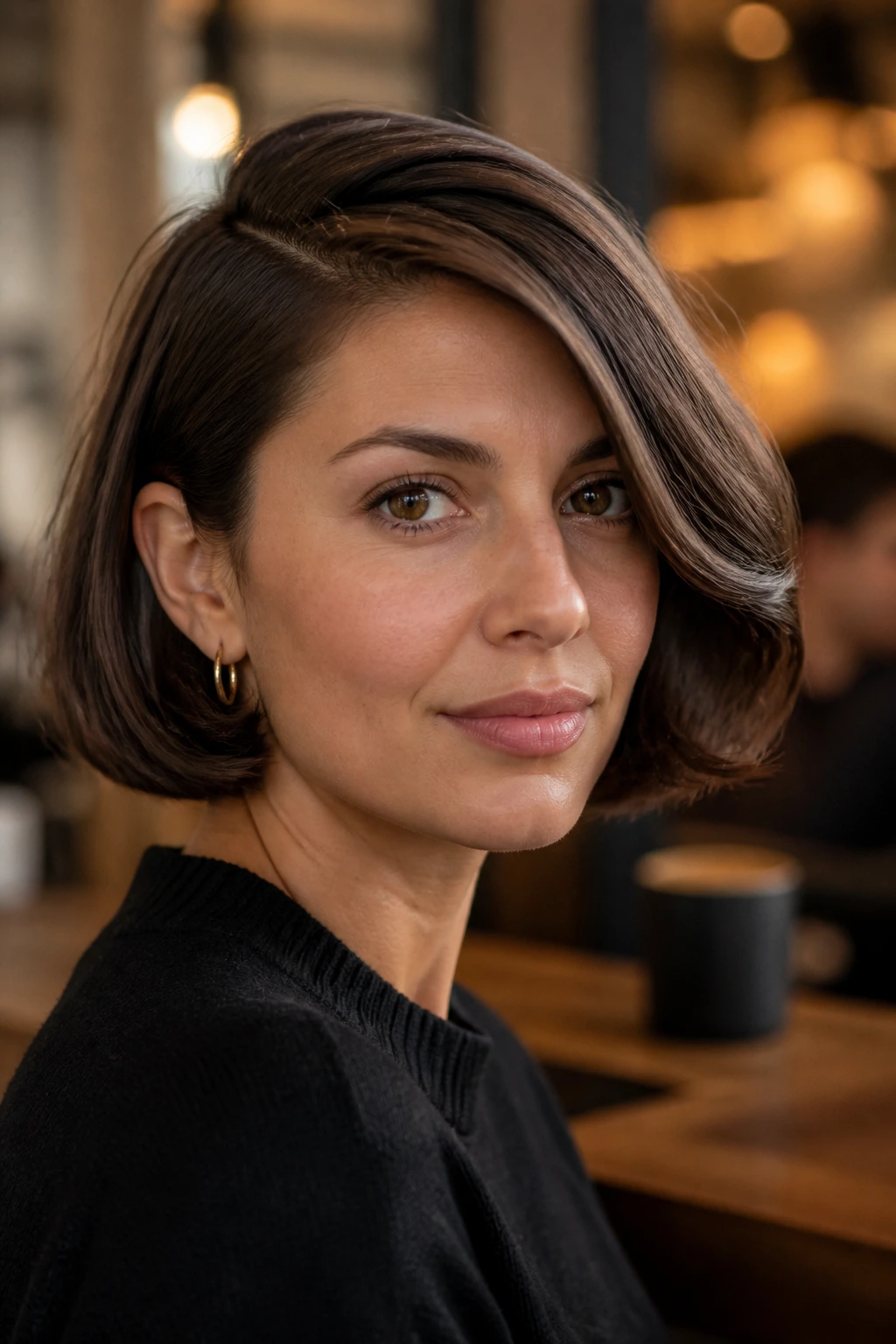
Short hair on a square face needs upkeep, but not the kind that eats your life. The main thing is shape. Once the ends lose their line or the crown flattens, the haircut starts reading boxier than it should.
For pixies and crops, plan on a trim every 4 to 6 weeks if you want the silhouette to stay crisp. Bobs can usually stretch to 6 to 8 weeks, sometimes a little longer if the cut is layered and forgiving. Curly short cuts often need a dry refresh rather than a full trim, because curls show their shape differently when they shrink.
Night care matters more than people admit. A satin pillowcase or bonnet keeps the top from flattening and stops the front from kinking weirdly at the cheek. In the morning, a quick mist of water or a tiny bit of leave-in on the ends usually brings the shape back. If the roots are flat, dry shampoo at the crown is better than piling on more product through the lengths. That just weighs things down.
Frequently Asked Questions
What makes a haircut flattering on a square face?
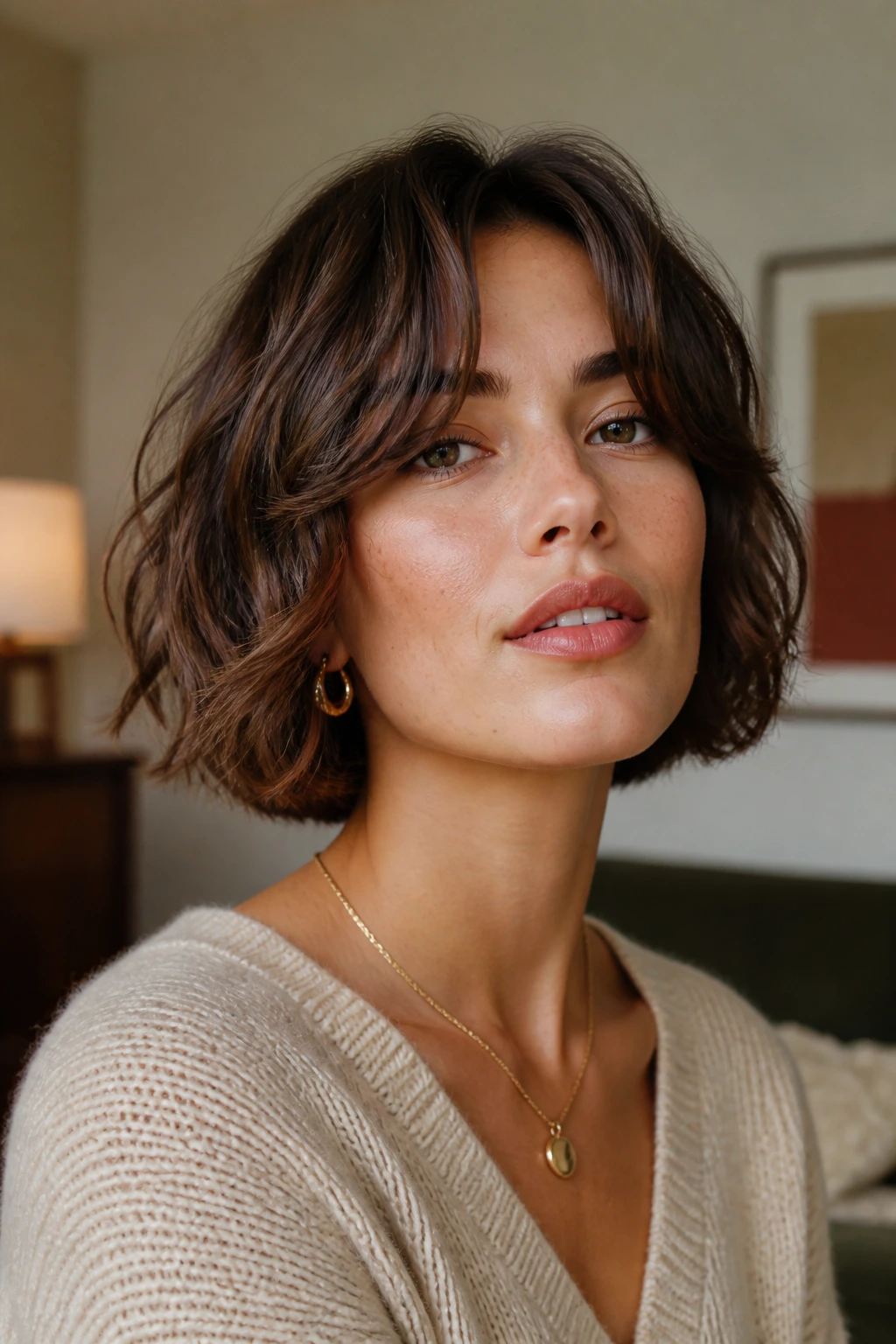
A flattering short cut for a square face usually softens the jaw and adds movement higher up, near the temples or crown. Diagonal lines, side parts, and soft ends do more work than blunt symmetry. If the hair sits straight and hard at the jaw, it tends to emphasize the face shape instead of balancing it.
Can square faces wear bangs?
Yes, but the type of bang matters. Side-swept bangs, curtain bangs, and piecey fringe usually work better than thick straight-across bangs, which can make the forehead and jaw feel visually heavier. The right bang should break the line, not create another one.
Are pixie cuts good for square faces?
They can be excellent. The trick is keeping some softness around the front and temple area so the cut doesn’t feel too severe. A pixie with side-swept volume or textured layers usually flatters a square face far more than a very tight, straight-down crop.
Should the shortest length land above or below the jaw?
Usually a little above or a little below is safer than exactly on the jaw. Hitting the jawline dead-on can make the face feel wider because the haircut and the face’s strongest line are competing in the same place. A small shift makes a big visual difference.
What if my hair is very fine and flat?
Go lighter on the layers and heavier on root lift. Fine hair does well with textured pixies, airy bobs, and side parts that build movement without taking away density. A small amount of mousse at the roots and a quick blow-dry can do more than a lot of product.
What if my hair is thick or coarse?
Ask for internal weight removal so the style doesn’t puff out at the sides. Thick hair can create width in the wrong place if the lower edge is too blunt. Soft layering and a tapered nape help keep the silhouette controlled.
Do curly short cuts work on square faces?
Absolutely, if the curls are shaped to widen at the cheekbones instead of the jaw. The best curly short cuts keep the top balanced and the bottom soft, so the face gets framed rather than boxed in. Dry cutting often helps because curls spring up once they dry.
How often should I trim a short cut like this?
Pixies and cropped styles usually need attention every 4 to 6 weeks. Bobs can often go 6 to 8 weeks, depending on how precise the shape is. If the fringe starts hanging in your eyes or the sides feel puffy, the cut is already drifting.
Can I wear these styles if I have a strong jaw and don’t want to hide it?
Yes. The goal is not to erase your jaw; it’s to keep the haircut from putting all the focus there. A good short style still lets the bone structure show, but it frames it with movement so the whole face feels balanced.
A Softer Finish
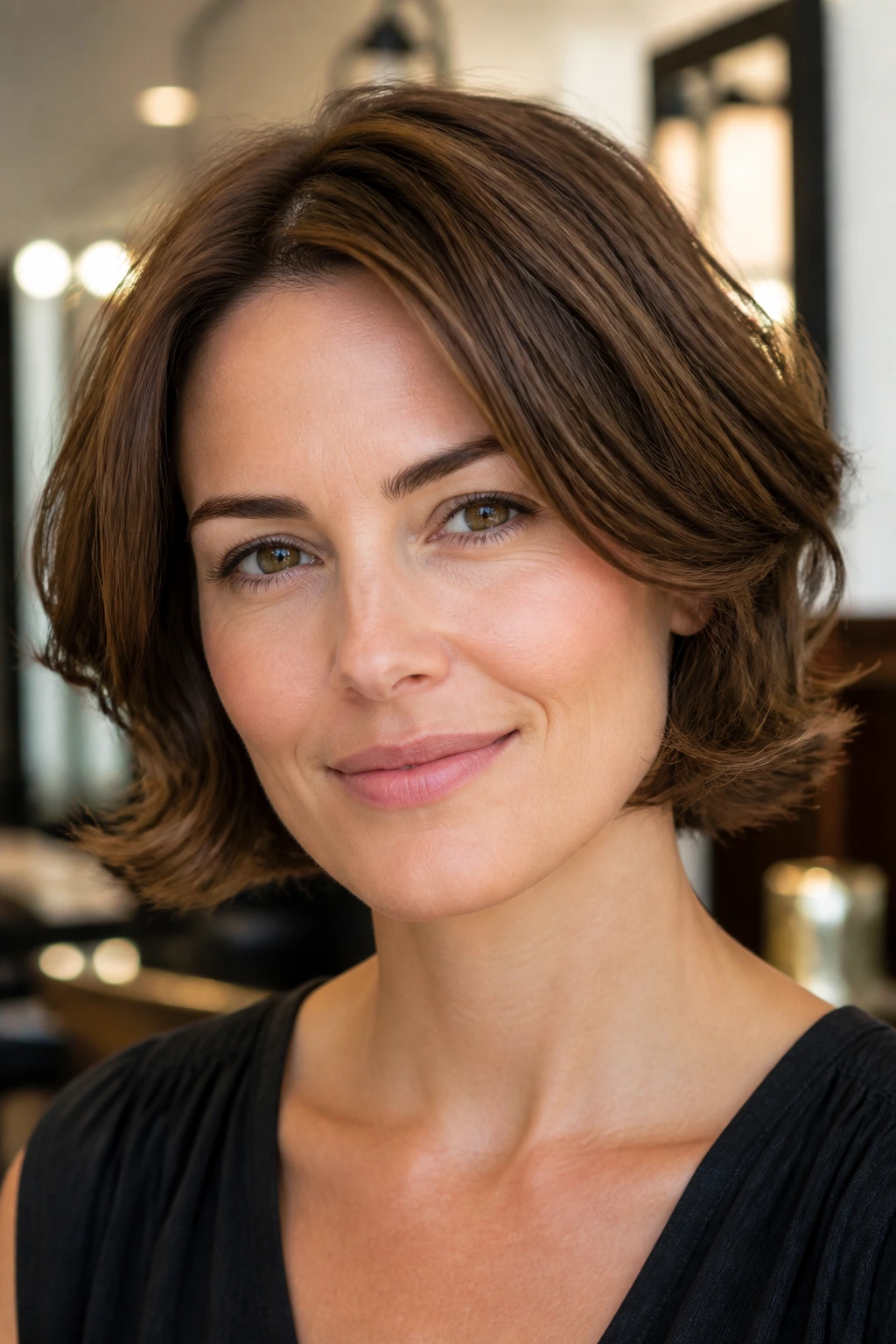
Square faces do not need apologetic hair. They need smart hair. The right short cut can make the jaw look elegant instead of severe, and the difference usually comes down to a few inches of placement, a side part, or a bend in the ends that someone else might dismiss as “small.”
If you want a clean next step, start with the shape that matches your texture first and your face shape second. A cut that works with your hair’s behavior will always beat a pretty photo that falls apart once you wash it. That’s the part most people learn after one or two disappointing trims.
The best short hairstyles for square faces are the ones that know where to stop. Keep the width up high, keep the ends soft, and let the jaw stay strong without making it the only thing anyone sees.