



Round faces and long hair can be a little fussy together. Add a blunt fringe in the wrong place, and the face can look wider; add the right wispy bangs, and the whole shape suddenly feels longer, softer, and much more intentional. That’s the trick with fringe on a round face: you’re not trying to hide anything, you’re steering the eye up and down instead of side to side.
Wispy bangs are especially good at that because they don’t make one heavy line across the forehead. They break up the surface. They leave air between the pieces. They let long hair keep its length and movement while the front section does a quiet bit of shape-shifting around the cheekbones, temples, and jaw. Done well, the cut looks light even when the hair is thick.
I keep coming back to one opinion: the best fringe for a round face is rarely the most obvious fringe. The best one is the one that gives a soft vertical line, lands in the right place, and still lets the rest of the hair do some of the work. That’s where the good stuff lives, and the 22 ideas below are built around that exact balance.
Why These Wispy Bangs Feel Right on a Round Face
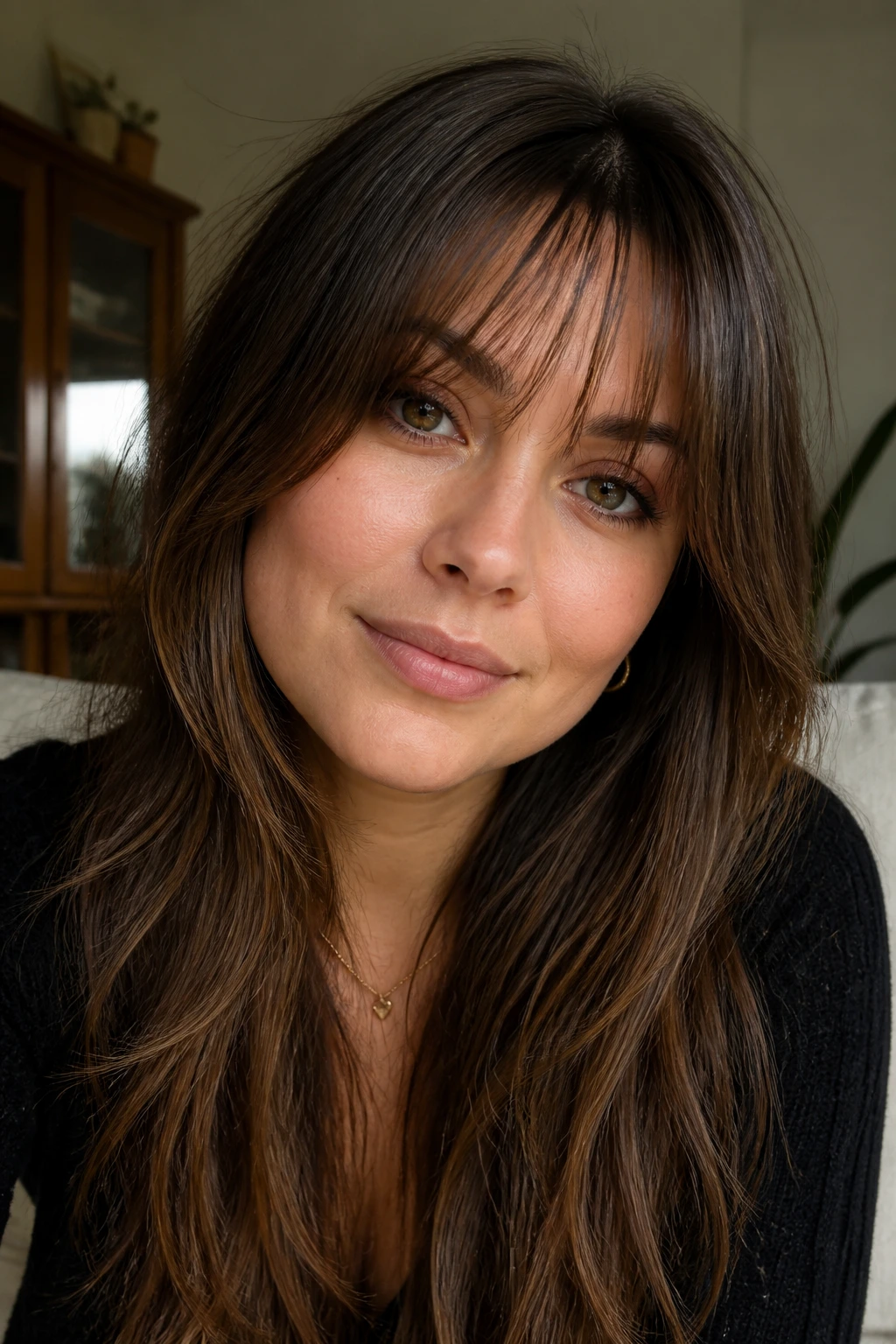
Shape matters more than length. A fringe that’s a little longer in the center or tapered at the sides pulls the eye downward, which helps a round face look more oval. That’s why so many of the best options here are curtain-adjacent, side-swept, or feathered at the cheekbone.
Density is the real secret. Wispy bangs are not thin bangs by accident. They’re usually cut with point cutting, slide cutting, or razor work so the ends look broken up instead of blunt. That soft edge keeps the front of the hair from turning into a hard horizontal bar.
Long hair gives the fringe room to breathe. With short hair, bangs have to do everything. With long hair, they can be a small detail that changes the whole read of the haircut. A few pieces skimming the lashes or cheekbones can be enough.
Round faces need a little asymmetry. Not chaos. Just enough offset to stop the face from reading as one perfect circle. A deep side part, a split bang, or even a slightly longer side piece can make a huge difference.
The wrong fringe is easy to spot. If the bangs stop right at the widest part of the cheeks and sit heavy across the forehead, the face can look shorter and fuller. That’s the thing to avoid.
Why This Collection Is Different
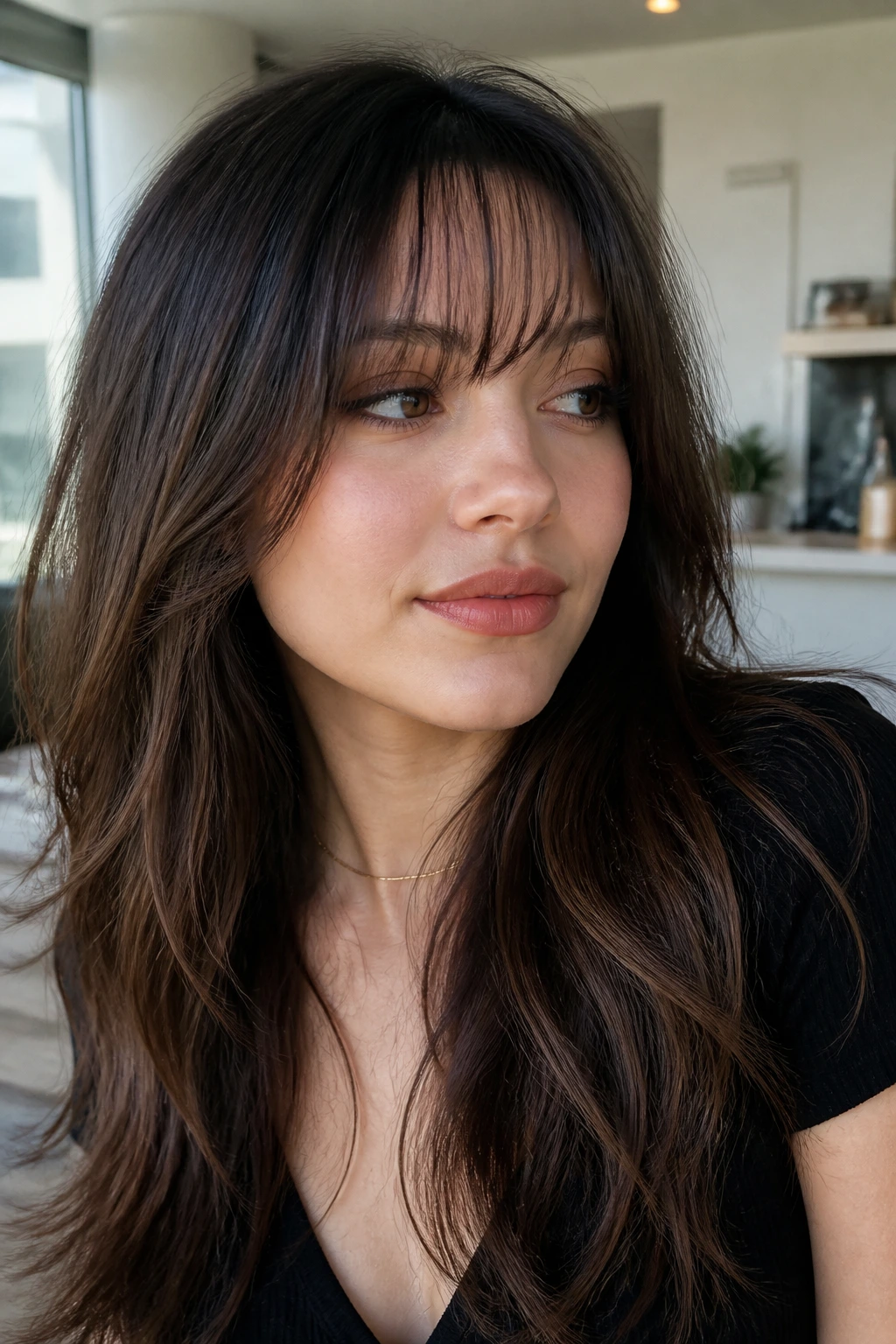
- Shape-first choices: Every option here is picked for the way it stretches a round face, not just for how cute it looks in a salon mirror.
- Long-hair friendly: These bangs are built to work with length, so the haircut still feels flowing instead of chopped up.
- Low-drama movement: The best wispy fringe should move when you move. If it sits there like a helmet, it’s doing too much.
- Salon realistic: Most of these can be described clearly to a stylist without using a page of references and a prayer.
- Grow-out friendly: A lot of the cuts here stay wearable as they lengthen, which matters more than people admit.
- Styleable at home: A round brush, a blow-dryer nozzle, and 3 minutes in the morning can keep most of these looking clean.
1. Feathered Curtain Wispy Bangs
Feathered curtain bangs are the safest place to start if you want fringe without committing to a hard line. The center can open near the bridge of the nose, then fall away toward the cheekbones in soft, broken pieces. On a round face, that diagonal movement is the whole point. It gives the front of the hair a taller shape and keeps the eye from getting stuck in one wide band.
Why It Works
This version is especially good with long layers because the bangs can melt into the front pieces instead of sitting on top of them. Ask for the shortest point to land around the upper brow or just below it, with the side pieces grazing the cheekbone. That tiny shift in length makes the front feel lighter and the face look longer.
What to Ask For
- A center-open fringe
- Point-cut ends, not blunt ones
- Longer side pieces that blend into the front layers
If your hair is thick, this cut can save you from the “bangs look like a shelf” problem. It’s airy, but not wispy in a flimsy way.
2. Side-Swept Breeze Fringe
A side-swept fringe is one of those cuts that looks almost casual, which is exactly why it works so well. The sweep creates a strong diagonal across the forehead, and diagonals are a round face’s best friend. They break the symmetry without making the haircut feel fussy.
The best version stays soft at the ends and doesn’t get over-thinned near the part. Too much thinning and the fringe starts to split in odd ways. Keep the bulk near the root, then feather the ends so the bang still has enough shape to hold when you blow-dry it to one side.
This style is especially nice if you wear long hair loose most days and want bangs that don’t demand a full styling routine. One pass with a round brush. That’s often enough.
3. Bottleneck Bangs with Cheekbone Lift
Bottleneck bangs are sneaky good on round faces because they start a little narrower in the center and widen out before they hit the sides. That shape mimics the contouring trick makeup artists love: narrow where you want height, wider where you want softness.
What makes them work here is the cheekbone landing point. If the side pieces graze the top of the cheek rather than stopping at the center of the face, the whole front section feels lifted. I’d call this one a solid choice for anyone who wants fringe but doesn’t want to babysit it every single morning.
Best for:
- Medium to thick hair
- Long layers
- People who like a styled-but-not-stiff finish
Keep the center wispy and the sides slightly fuller. That balance keeps the bangs from disappearing into the rest of the hair.
4. See-Through Eyelash Fringe
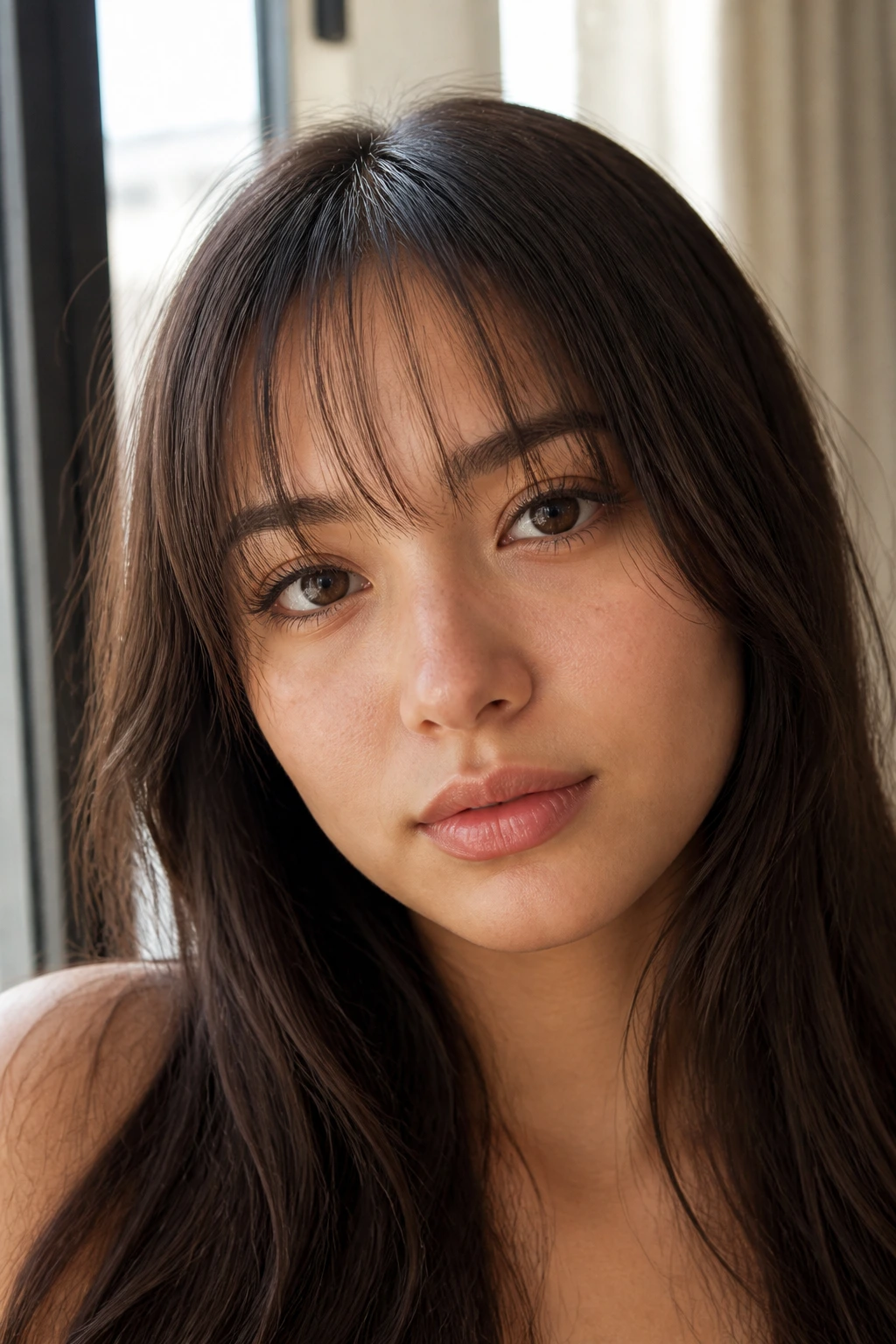
This is the lightest option in the bunch, and it’s not for everyone. A see-through fringe sits close to the lashes but leaves enough spacing between strands that your forehead still shows through. It creates a soft veil instead of a block, which is exactly why it flatters a round face without crowding it.
The key is restraint. The bangs should look broken up, almost piecey, but not stringy. If they’re too sparse, they can read as accidental. If they’re too dense, they stop being wispy at all. A tiny flat brush and a quick bend with a round brush usually keeps this one from sitting flat against the skin.
This cut is best when you want the drama of bangs without losing the openness of a long haircut.
5. Bardot Split Wisps
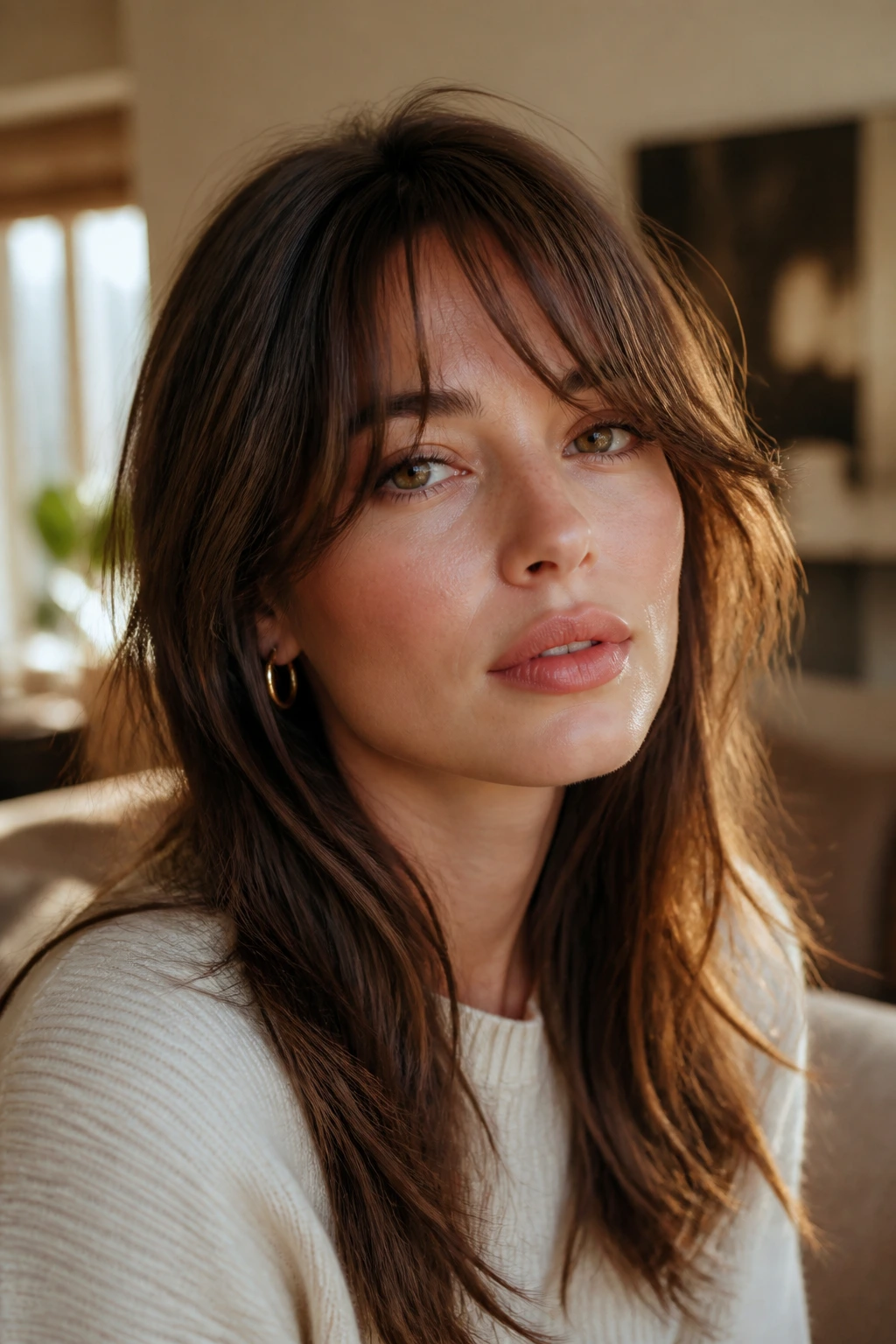
Bardot-style bangs are fuller than curtain bangs but still soft enough to keep the face open. They part slightly off center and fall in long, bendy pieces that frame the eyes and the upper cheeks. On a round face, they work because the split prevents a solid wall of hair from cutting the forehead in half.
The nice thing about this style is that it gets better as it grows. A slightly overgrown Bardot fringe can look almost better than a freshly cut one, especially on long hair with a little wave. The pieces start to live on their own, which is exactly the kind of messiness this look wants.
If your hair dries with some bend already, you may not need much more than a blow-dry and a touch of dry shampoo at the root.
6. Airy Shag Bangs
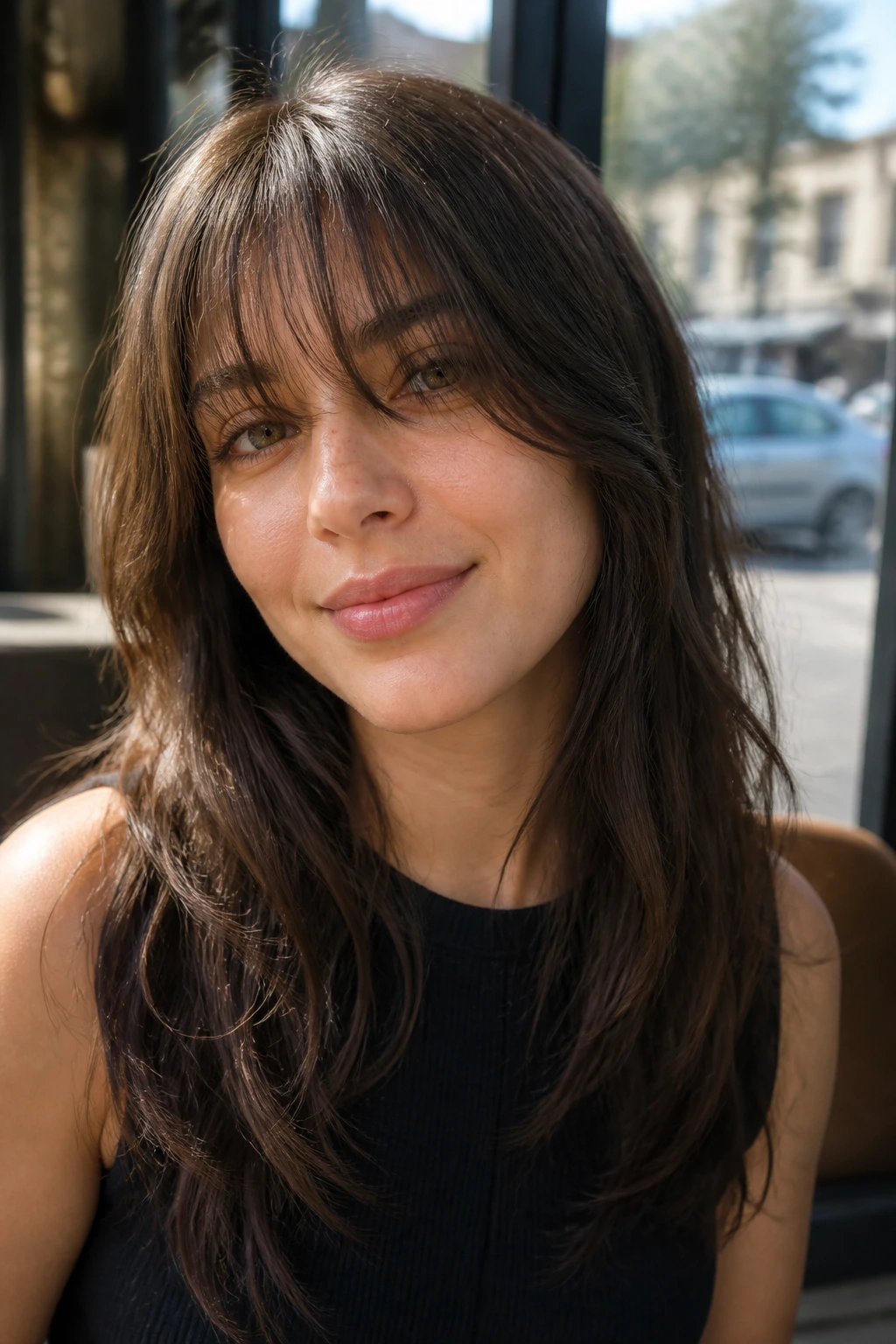
If your long hair has any texture at all, shag-inspired bangs can be a smart move. The front pieces are usually choppy and feathered, with enough irregularity to keep the cut from feeling heavy. For round faces, that slight brokenness helps because it adds vertical energy and a little edge near the eyes.
The biggest mistake with shag bangs is making them too short at the center. Keep the shortest pieces soft and a touch lower than the brows, then let the side bits taper into the rest of the haircut. That way the fringe feels connected to the hair, not pasted on.
This is one of the few bang styles that can look better a bit imperfect. In fact, too much polish can flatten it.
7. Long Center-Part Curtain Bangs
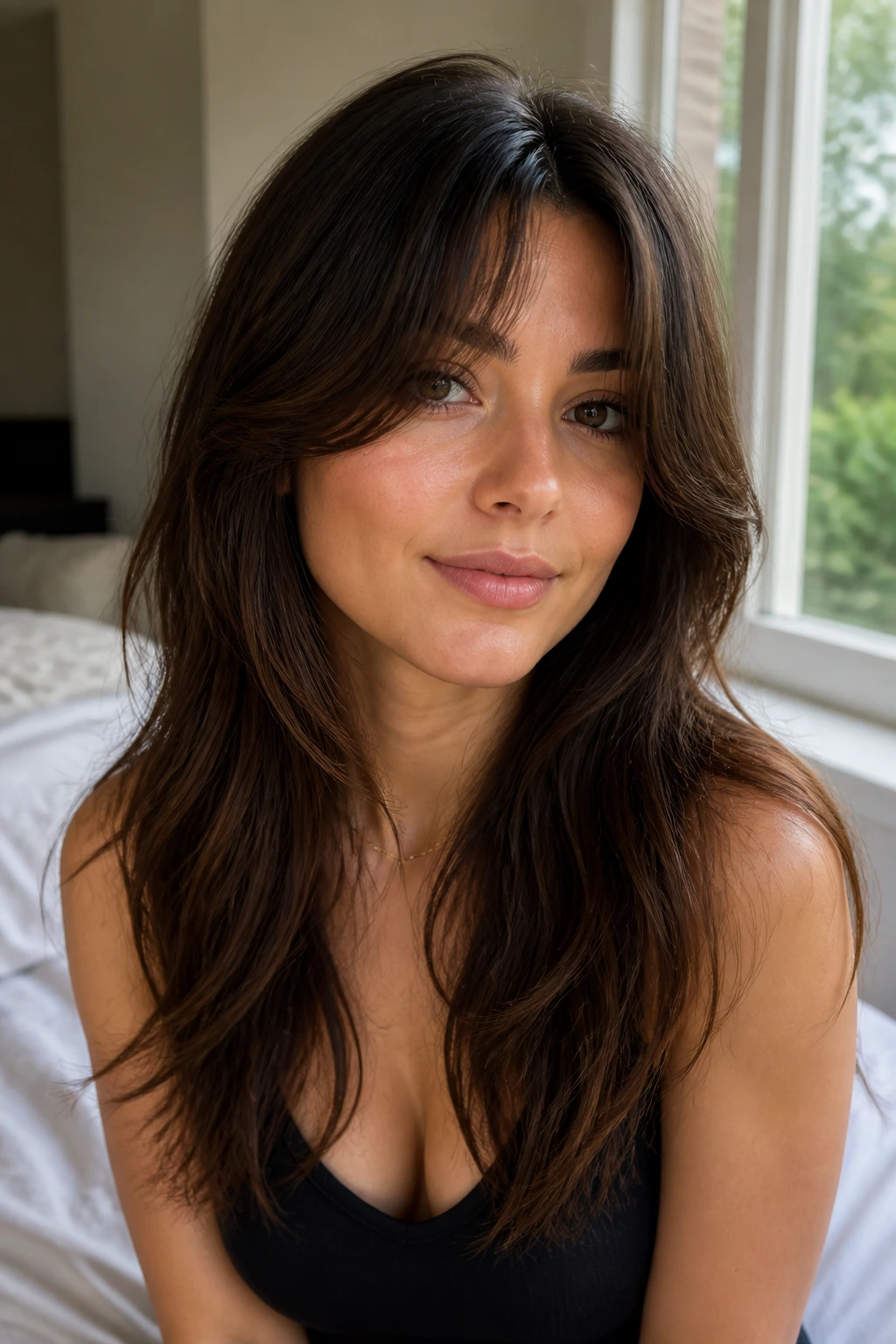
Long center-part curtain bangs are the workhorse of this whole category. They split cleanly in the middle, frame both sides of the face, and keep the forehead open enough that the roundness doesn’t get boxed in. On long hair, they’re especially useful because they can blend into face-framing layers without a visible cutoff.
The length matters. If they stop too high, they can make the face look broader. If they’re too long, they stop behaving like bangs and start acting like front layers. The sweet spot is usually somewhere between the outer brow and the top of the cheekbone, depending on hair density.
A little bend at the ends helps a lot. Straight pieces can feel too rigid here.
8. Razored Arc Fringe
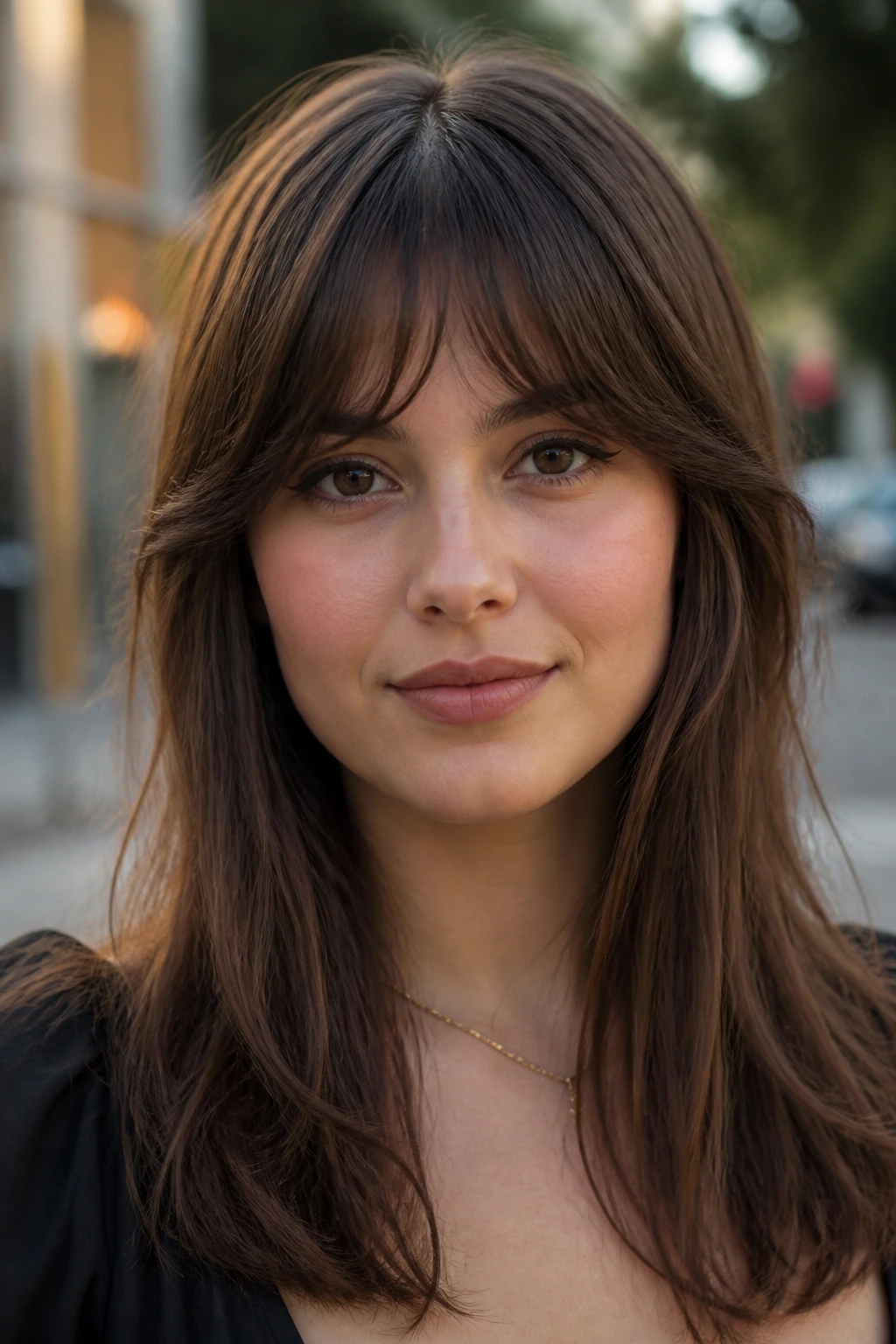
A razored arc fringe curves softly across the forehead, then opens at the sides. It has a little more shape than pure curtain bangs and a little more softness than a blunt fringe. That curve is flattering on a round face because it adds height in the middle without spreading width across the cheeks.
Razor cutting can be gorgeous here, but it depends on hair texture. Fine hair can go wispy fast, which is fine if that’s the goal. Coarser hair often needs a lighter hand so the ends don’t fray in a bad way. I’d trust this style most on hair that already has some movement.
If you like a fringe that looks styled even when you’ve barely touched it, this one deserves a close look.
9. Soft Crescent Bangs
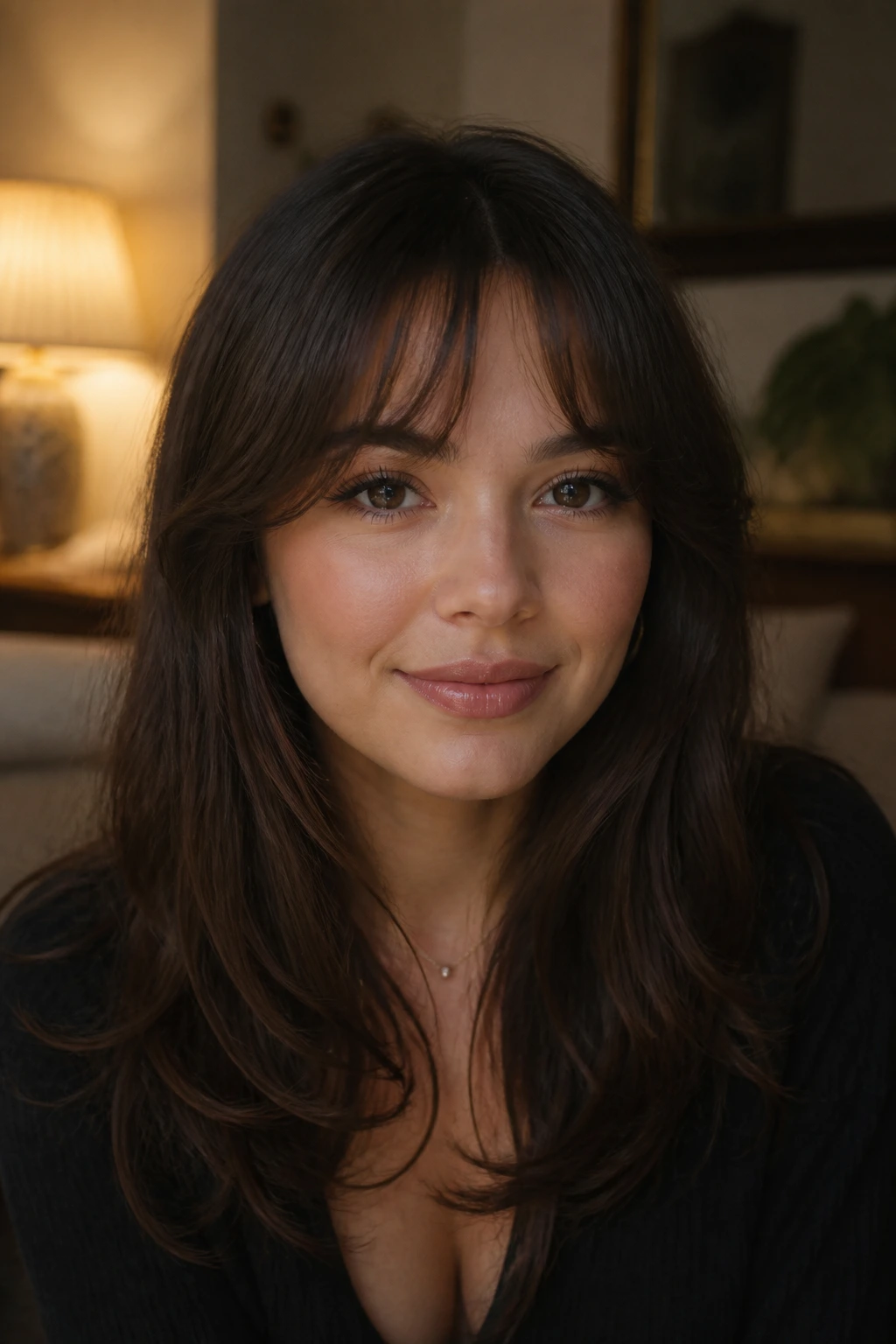
Crescent bangs are gently rounded at the center and taper outward in a smooth, soft curve. They’re not sharp. They don’t have to be. On a round face, that softer arc keeps the forehead from being cut into a hard line while still giving the illusion of structure.
The trick is to keep the center light and the side points longer. The bangs should graze the top of the brows or hover just above them, then drift into the temples. That shape helps long hair look expensive in the old-school sense — not flashy, just balanced and deliberate.
This is a nice option if you don’t want the full curtain look but also don’t want a straight-across bang.
10. Wavy Piecey Fringe

Wavy hair and wispy bangs can be a beautiful match if the fringe is cut with the wave pattern in mind. A piecey bang lets the natural bend show through instead of fighting it. On a round face, those little broken sections create the vertical movement that a heavier fringe would kill.
Do not over-style this one into a perfectly smooth sheet. That’s the fastest way to flatten the texture and make the cut feel stiff. A small round brush, a bit of light mousse, and a shake with your fingers usually looks better than a heavy straightening pass.
This is one of my favorite choices for someone who wants fringe that feels lived-in, not overly neat.
11. Chin-Skimming Face Frame Bangs
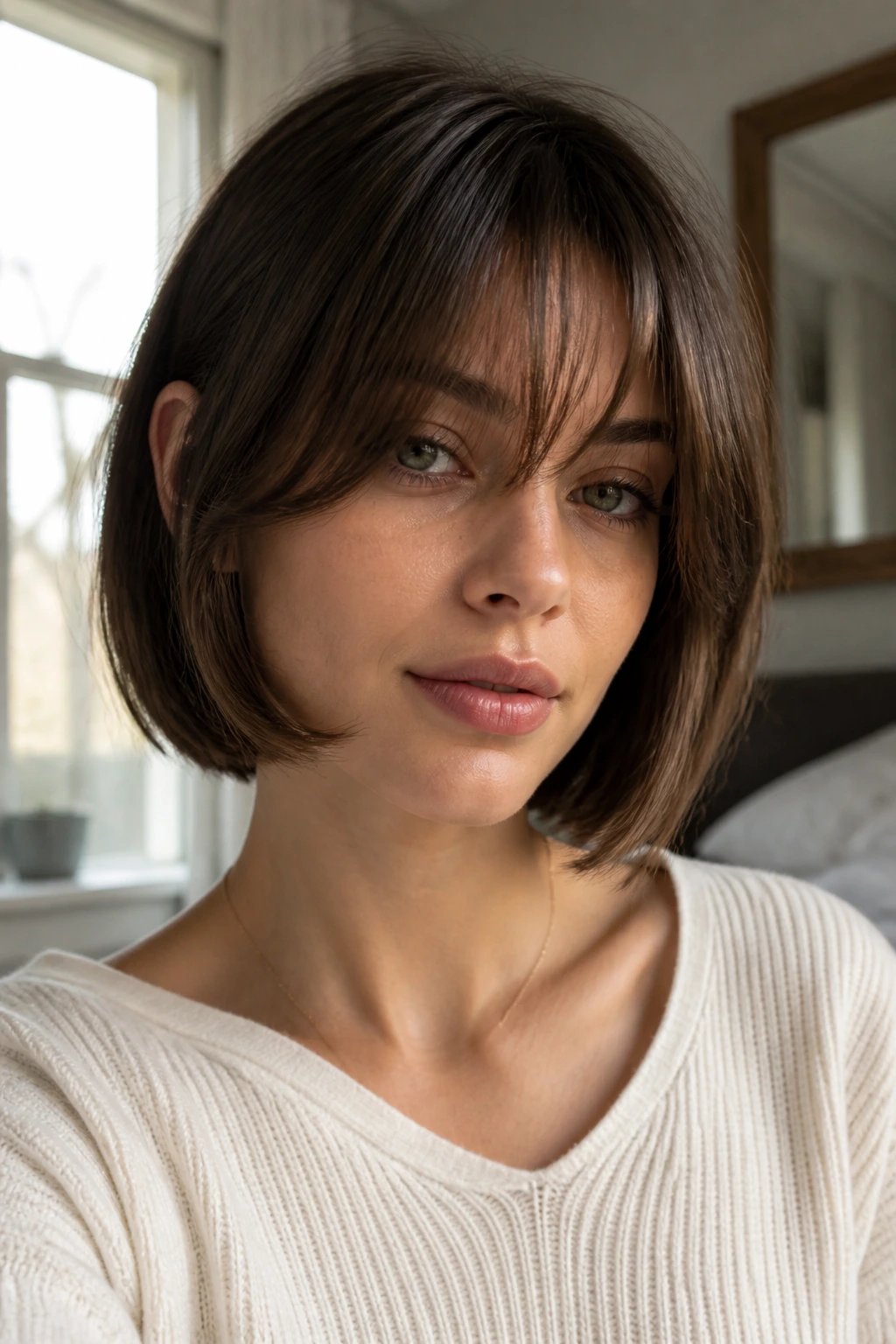
Not every wispy fringe has to sit up on the forehead. Some of the best options for round faces live lower, around the jaw and chin. Chin-skimming front pieces give the face a longer outline and add length where a round shape usually wants it most.
The front hair still behaves like bangs, just longer and softer. It slides around the cheek and jaw instead of sitting on the forehead. That makes it ideal if you like to tuck your hair behind one ear or wear long layers around the shoulders.
Best when you want:
- A softer bang effect
- Less forehead coverage
- A cut that can grow out gracefully
This is a calm choice. No drama. Just a better shape.
12. Deep Side-Part Wispy Fringe

A deep side part can change everything. Pulling the fringe far to one side creates a long diagonal line across the forehead, and that diagonal is especially kind to a round face. It breaks up symmetry, adds lift at the roots, and gives long hair a little attitude without making the front too heavy.
This one works best when the fringe is cut with enough length to sweep back easily. If the pieces are too short, they’ll fight the part and pop up where they want. A slightly longer front section can be tucked, pinned, or swept across the brow depending on the day.
If you want a style that can go from polished to messy in ten seconds, this is a good one to keep in your pocket.
13. Blended Layers with Fringe
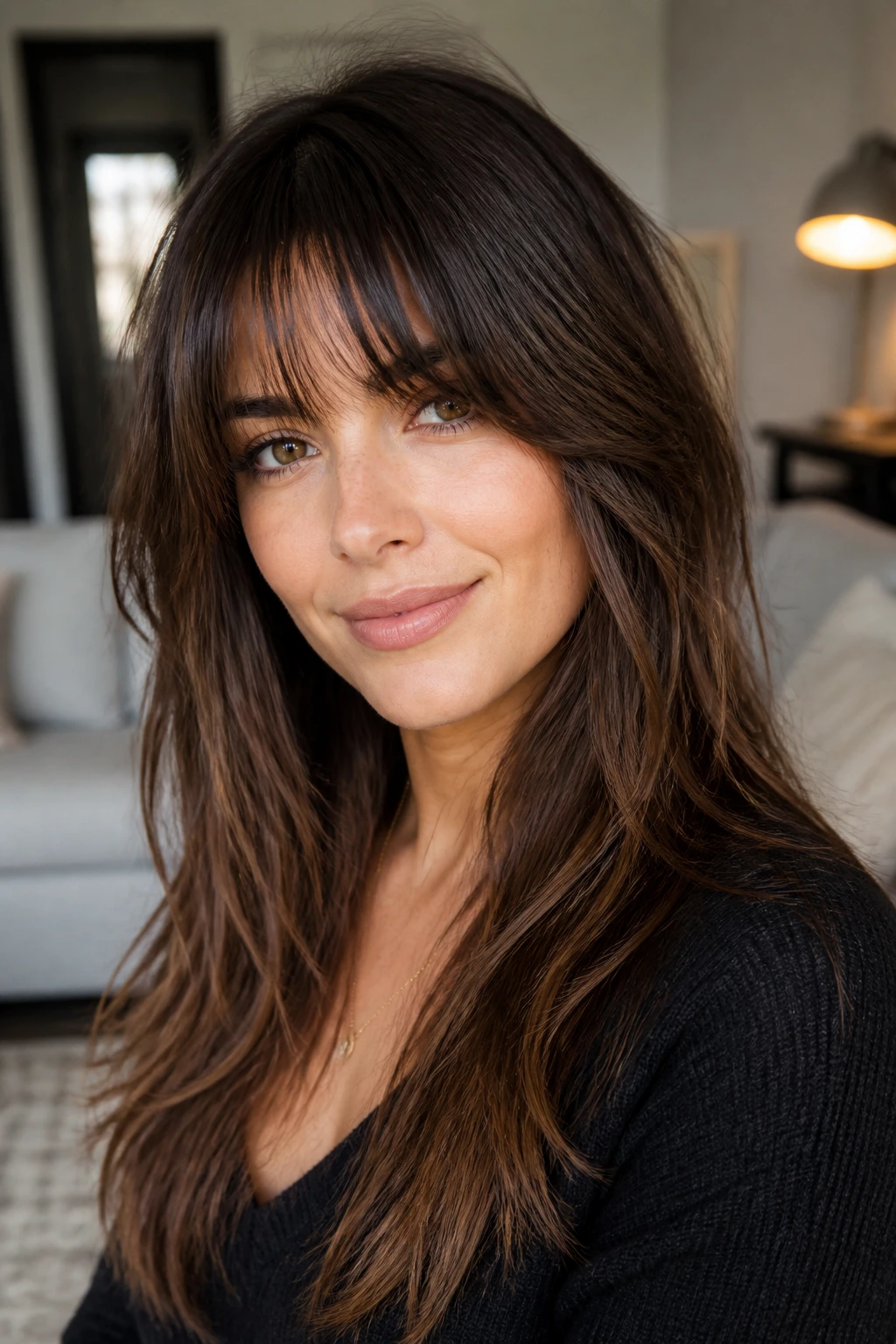
Some bangs are loud. This isn’t that. Blended layers with fringe are for people who want the haircut to feel continuous from crown to ends. The front pieces are cut so they melt into the rest of the layers, which means the bangs do their job without looking like a separate event.
For a round face, this kind of blending is useful because it keeps the eye moving vertically through the haircut. There isn’t a blunt break line around the cheek or forehead. Everything slopes. Everything softens. That gives the face a longer read, especially when the hair is worn down and loose.
This is a smart option if you like bangs but hate the feeling of being “stuck” with bangs.
14. Light French Girl Bangs
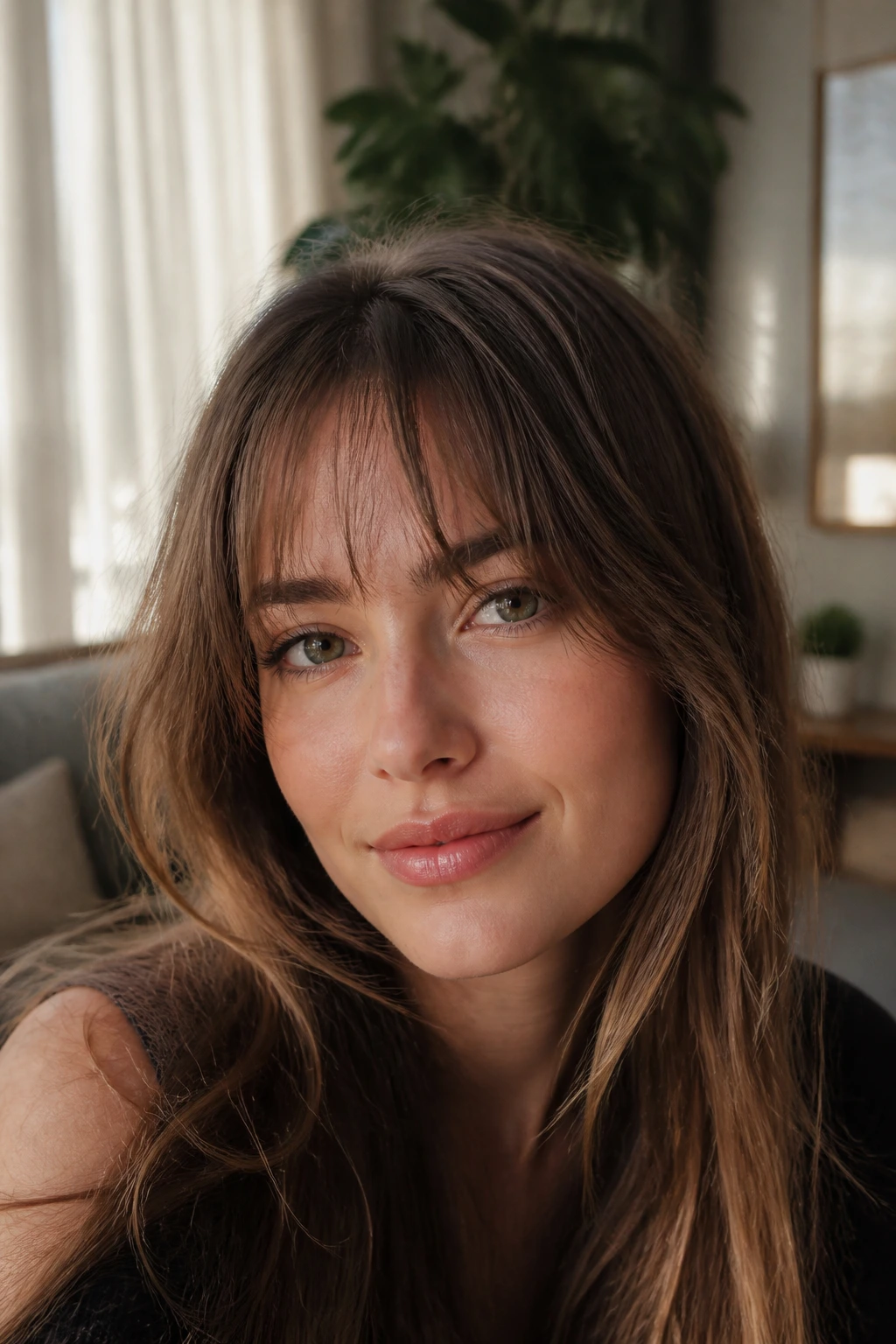
French-girl bangs tend to have that effortless reputation people love to chase, but the real appeal is the texture. They’re usually soft, slightly irregular, and a little shorter in the center than a curtain bang. On a round face, they work when they stay light enough to reveal skin and shadow through the fringe.
The mistake here is weight. If the fringe gets too full, it can sit like a curtain of hair over the forehead and shorten the face. Keep the pieces airy and use point cutting at the ends so the line never gets hard.
This is one of those styles that looks best when the haircut has a bit of movement elsewhere too — long layers, soft waves, or a bend at the ends.
15. Grown-Out Wispy Bangs
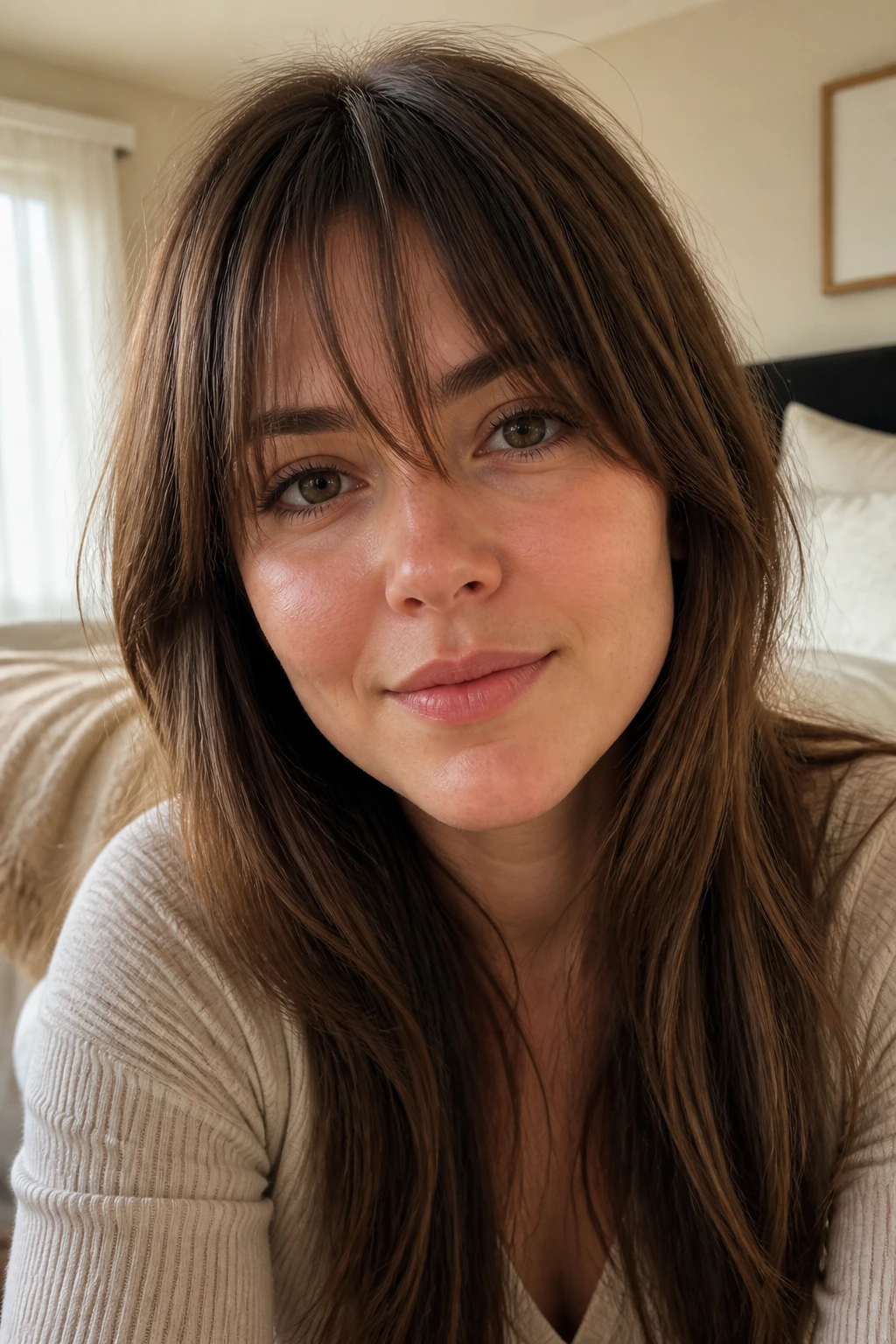
A grown-out fringe is not a failure state. Sometimes it’s the best version. Long, wispy pieces that have passed the brow and settled into the cheekbone zone can be incredibly flattering on a round face because they soften the forehead while keeping the center line long.
The real advantage is flexibility. You can part them in the middle, push them off to the side, or let them fall forward on wash day. They’re forgiving, which is more useful than it sounds. Hair does not always cooperate. This style lets that be okay.
If you’re nervous about bangs, start here. You’ll get the shape without the sharp commitment.
16. Rounded Soft Fringe with Volume at the Crown
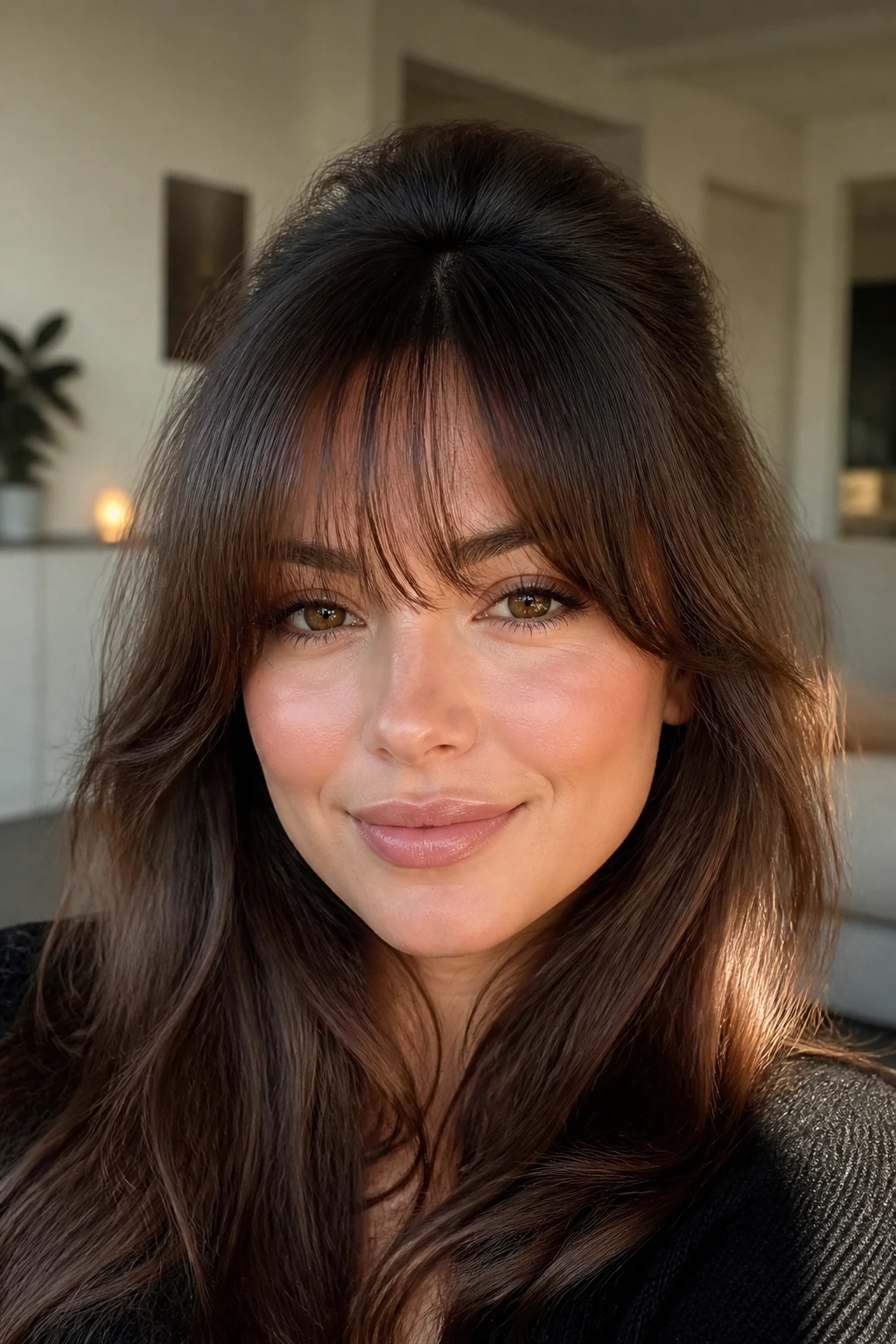
This is a good one for people whose round face is made wider by flat roots, not just by the face shape itself. A little volume at the crown changes the balance immediately. The fringe can stay soft and rounded, but the lift at the top adds height, which stretches the whole silhouette.
The styling matters as much as the cut. Blow-dry the roots forward, then lift them up and back with a round brush or a small roller while the hair cools. That tiny bit of lift can keep the bangs from clinging to the forehead and making the face feel wider.
It’s a bit more styled than some of the other options, but the payoff is real.
17. Collarbone-Length Fringe Blend
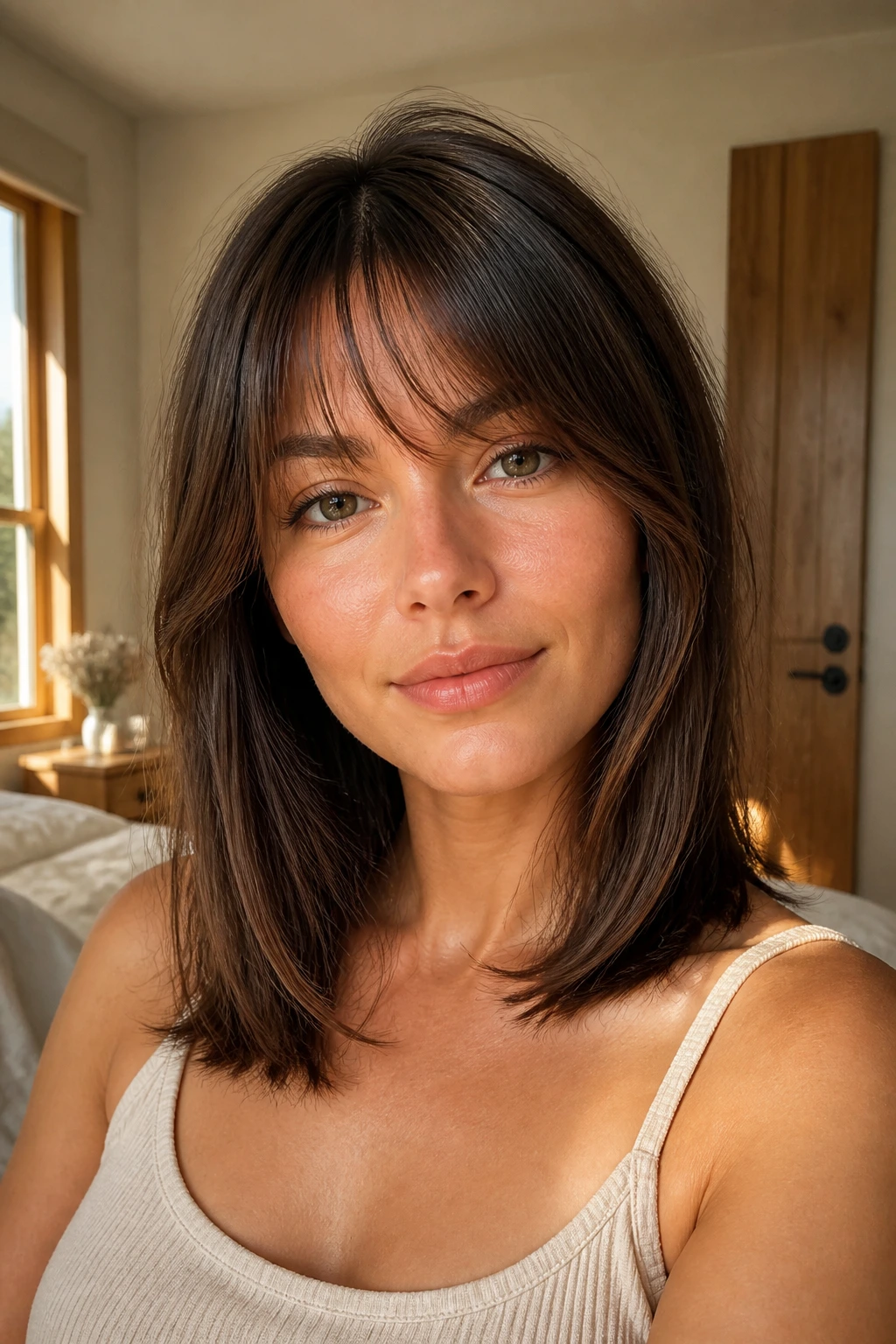
This isn’t a classic bang in the shortest sense. It’s more of a fringe-to-layer blend that starts around the cheek and drifts down toward the collarbone. On a round face, that length is a blessing. It creates a long visual line at the front of the hair, which does a lot of quiet work.
I like this style for people who want the softness of bangs without the daily maintenance of true fringe. The pieces frame the face, but they don’t get in the way. And because they live at a lower point on the face, they help the haircut feel sleek rather than puffed out.
If your hair is very long, this is one of the easiest ways to add shape without sacrificing the length you already love.
18. Curly Wispy Bangs
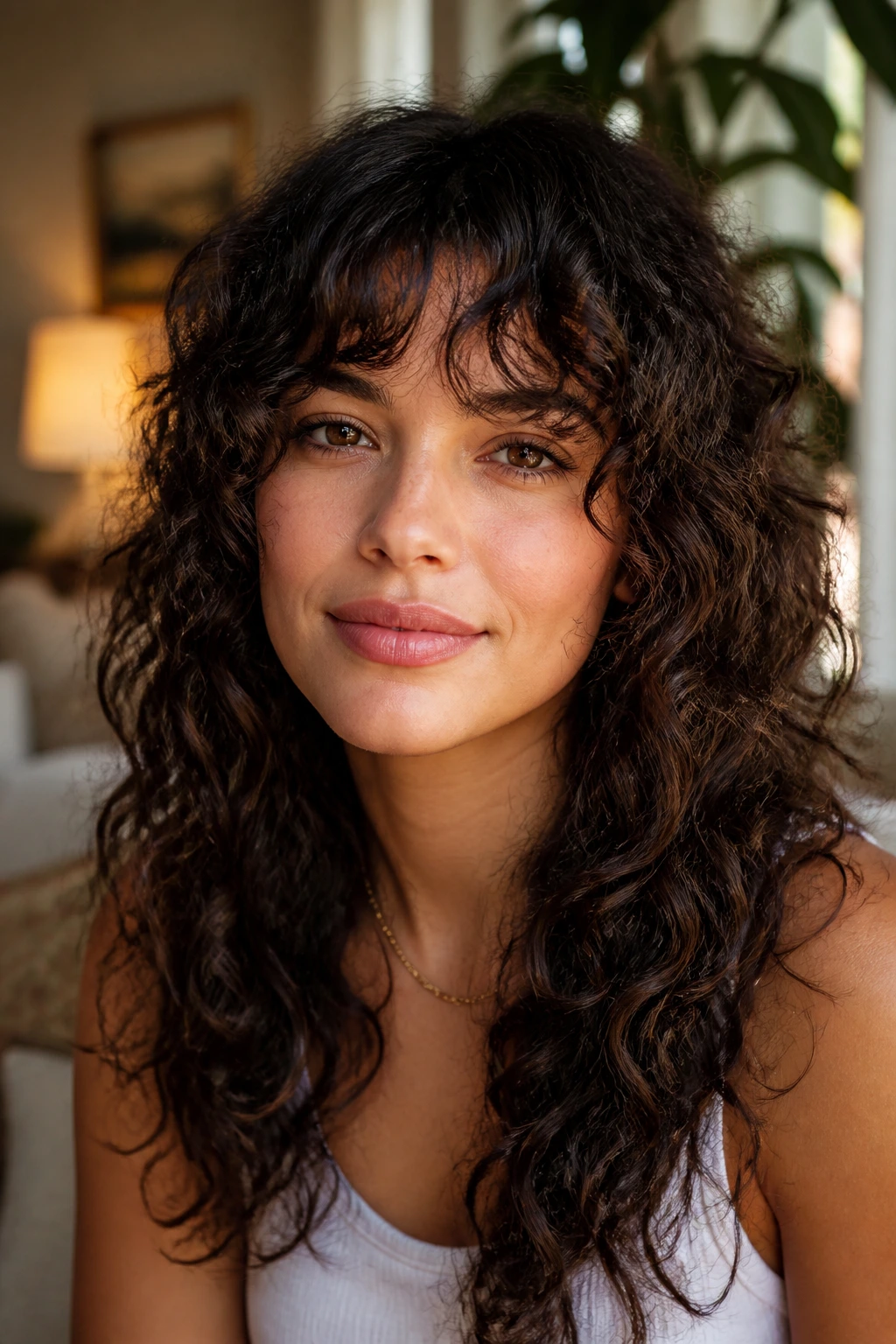
Curly hair with bangs is not a special case. It just needs a different map. Curly wispy bangs should be cut with shrinkage in mind, which means the pieces often look a little longer when wet and land much shorter once they dry. On a round face, those soft curls can add vertical bounce around the eyes and forehead without any hard line at all.
The trick is to avoid cutting them too sparse. Curly bangs need enough density to form real pieces; otherwise they look frayed. A curl-by-curl approach tends to work best, especially if the stylist can see how your hair falls when it’s dry.
This is a strong choice if your texture already brings movement. The fringe should join the party, not fight it.
19. Tucked-Behind-Ears Fringe
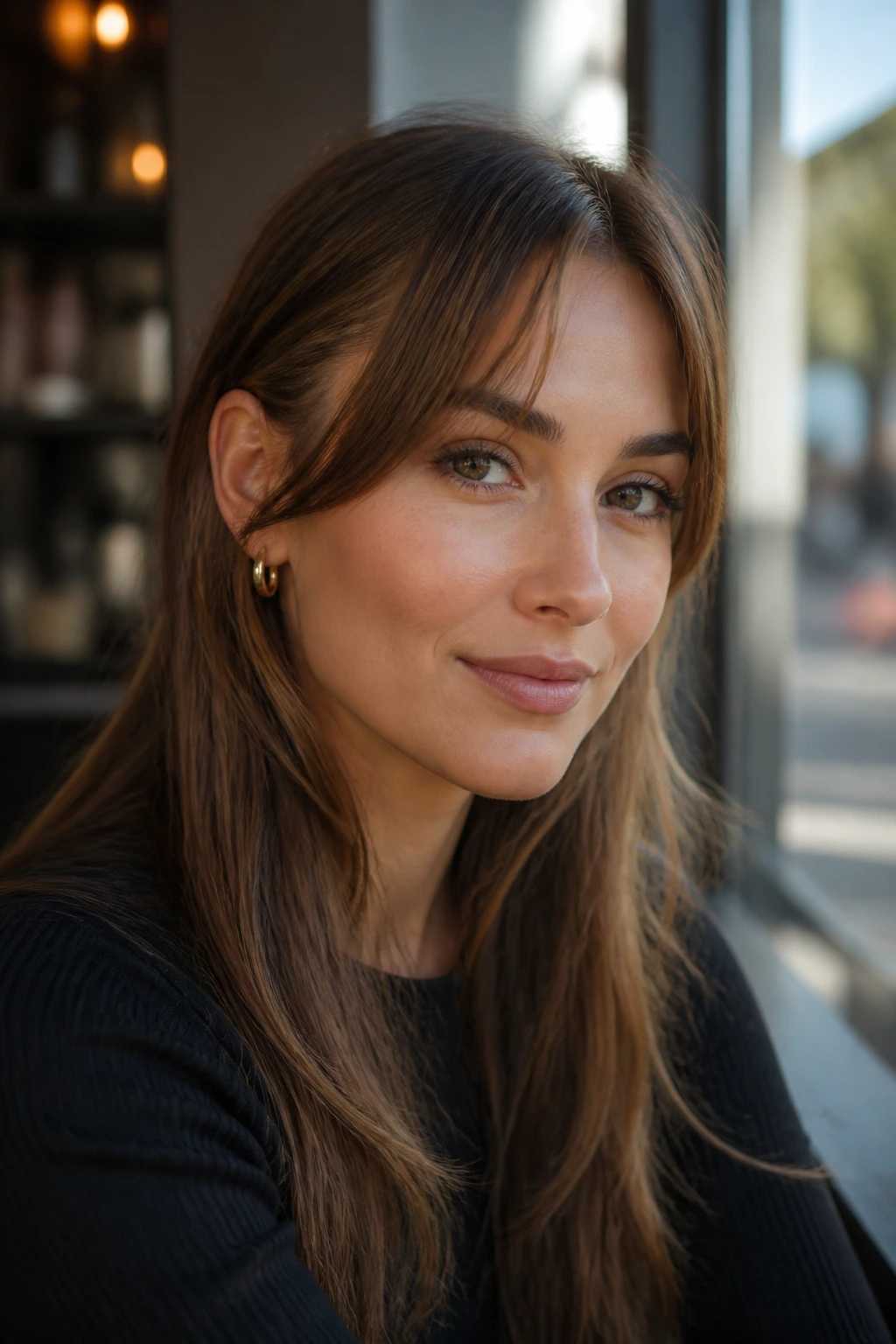
This one is about motion. Long wispy bangs that can be tucked behind the ears or swept back off the face give a round shape room to breathe. The bangs still exist — they just don’t trap the face behind a curtain of hair.
The best part is the easy shift in mood. Wear the fringe forward for softness, then tuck it back when you want more openness around the cheeks. On long hair, that flexibility matters because the whole style can feel different with one small change.
If you live in glasses or earrings, this cut is a practical favorite. It clears space without giving up the bang effect.
20. Feathered Sweep with Side Drop
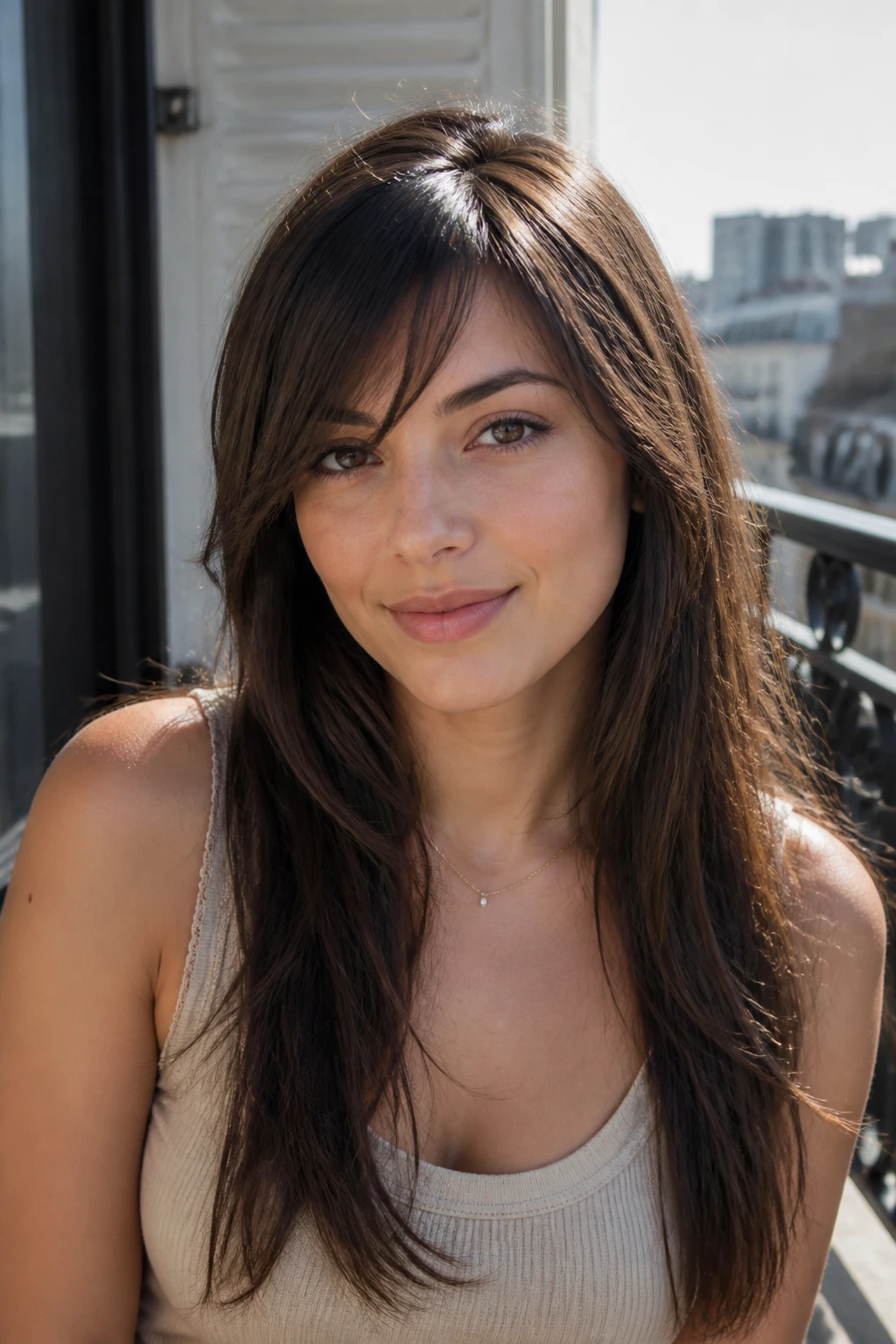
This style starts with a soft sweep across the forehead, then drops longer on one side to create a gentle uneven line. Round faces often do well with that sort of asymmetry because it keeps the face from reading too evenly shaped. One side leads, the other follows.
The feathered ends matter here. If the long side is too solid, it can look heavy and drag the rest of the haircut down. If it’s broken up and airy, it adds just enough interest to feel modern without being loud.
It’s a good pick when you want fringe that feels a little more styled than curtain bangs, but not as committed as a full side-swept bang.
21. Light Micro-Curtain Bangs
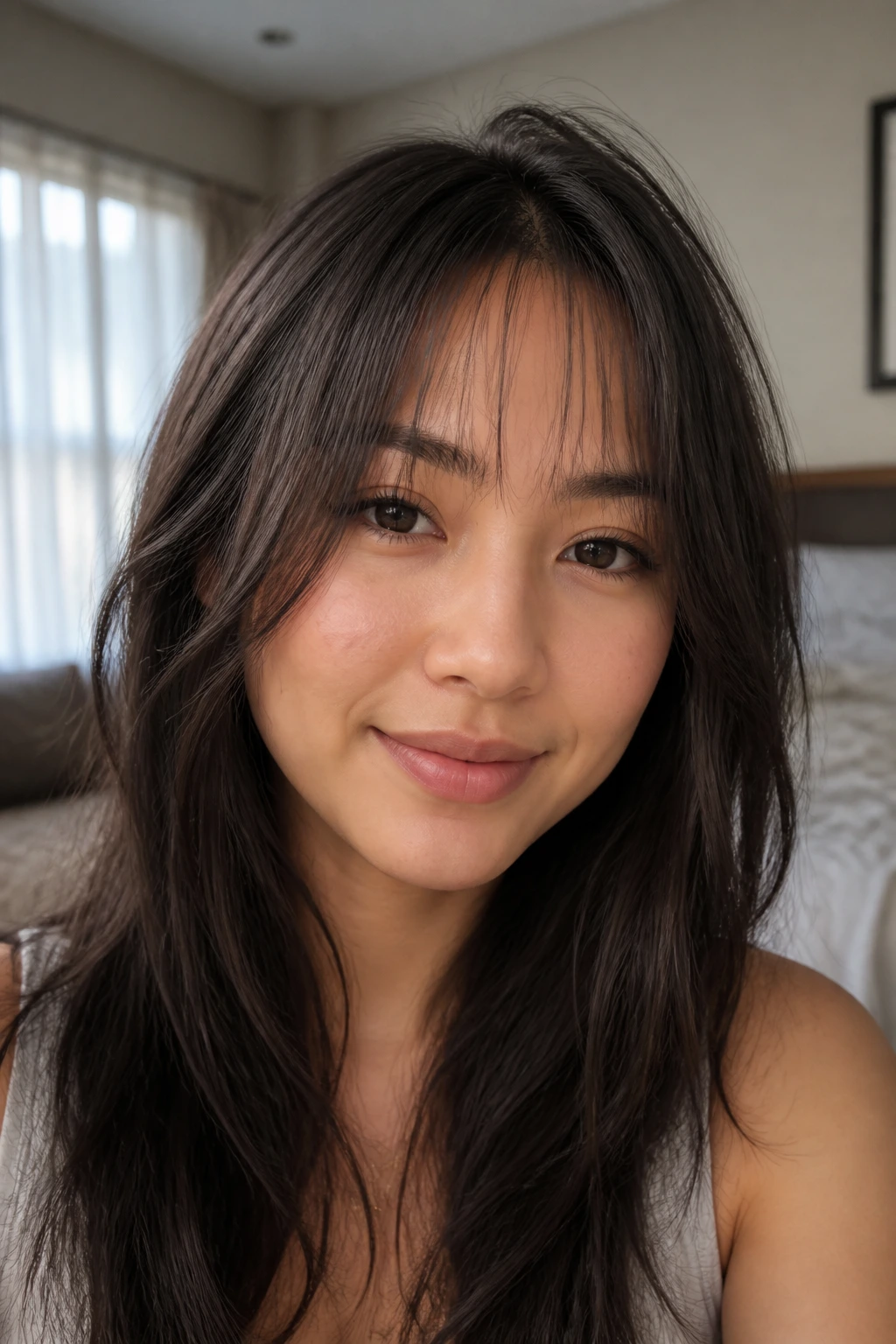
Micro-fringe can be risky on a round face, but a light micro-curtain version is a different story. The center stays short enough to show the forehead, while the sides drop longer to keep the overall shape soft and open. The result is playful without turning the whole haircut into a hard edge.
This works best if your face has a bit of vertical length already or your long hair carries a lot of texture. The fringe should feel intentional and airy, not chopped too high. I’d avoid this if your hair is very dense and straight unless your stylist is good at removing bulk without making the fringe spiky.
Tiny cut, big personality. That’s the appeal.
22. Glassy Blowout Wispy Bangs
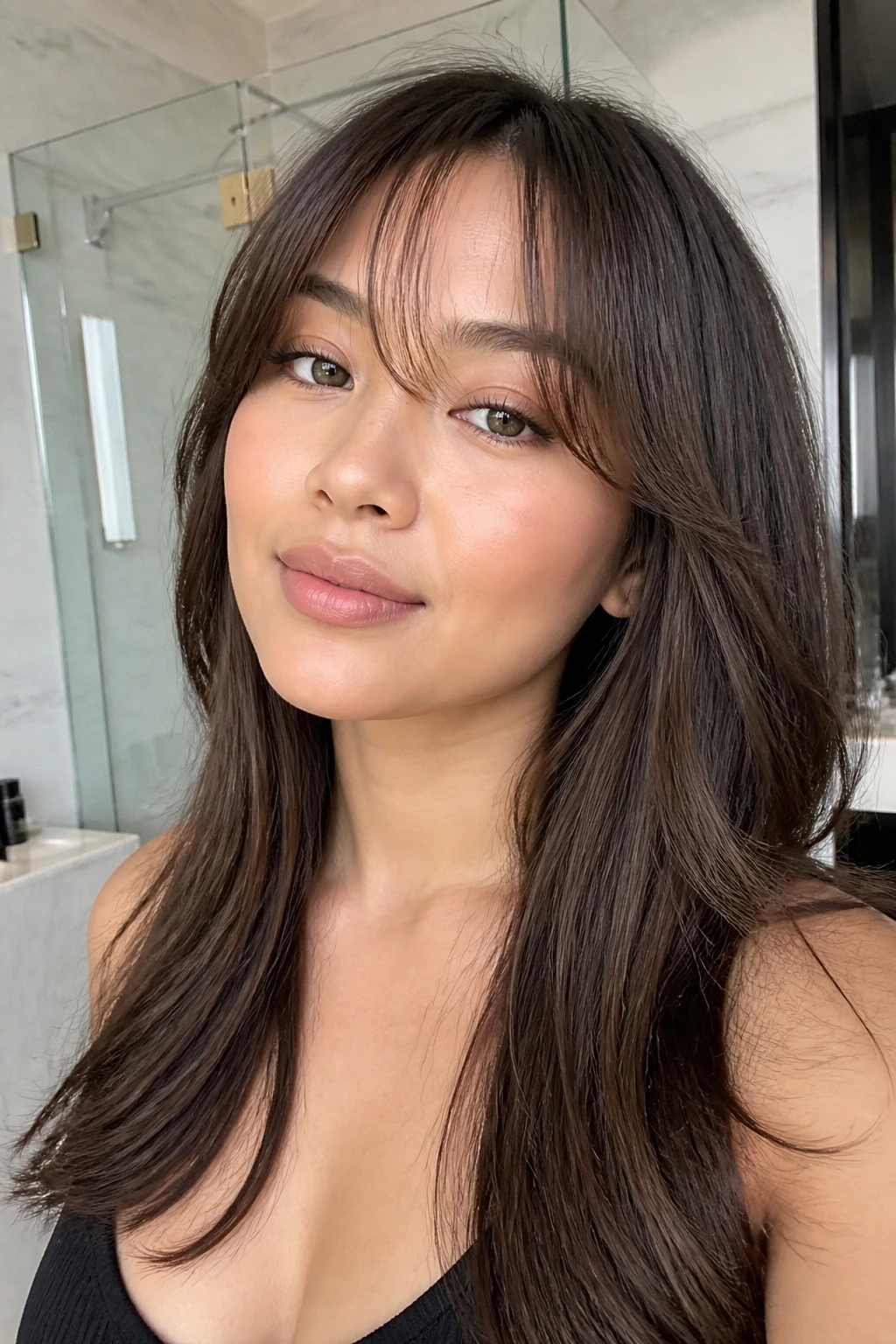
The cut matters, but the finish can make or break the look. Glassy blowout wispy bangs are styled smooth at the root, with a soft bend through the ends so the fringe sits cleanly without sticking to the forehead. On a round face, that polished lift gives the front of the hair height, which helps the whole shape feel longer.
Use a small round brush or a hot brush, but don’t overdo the product. A drop of lightweight serum at the ends is enough. Too much and the bangs clump together, which kills the wispy effect fast.
This is the style for days when you want the fringe to look deliberate, not accidental. It’s neat, but not stiff.
How Wispy Bangs Change the Shape of Long Hair
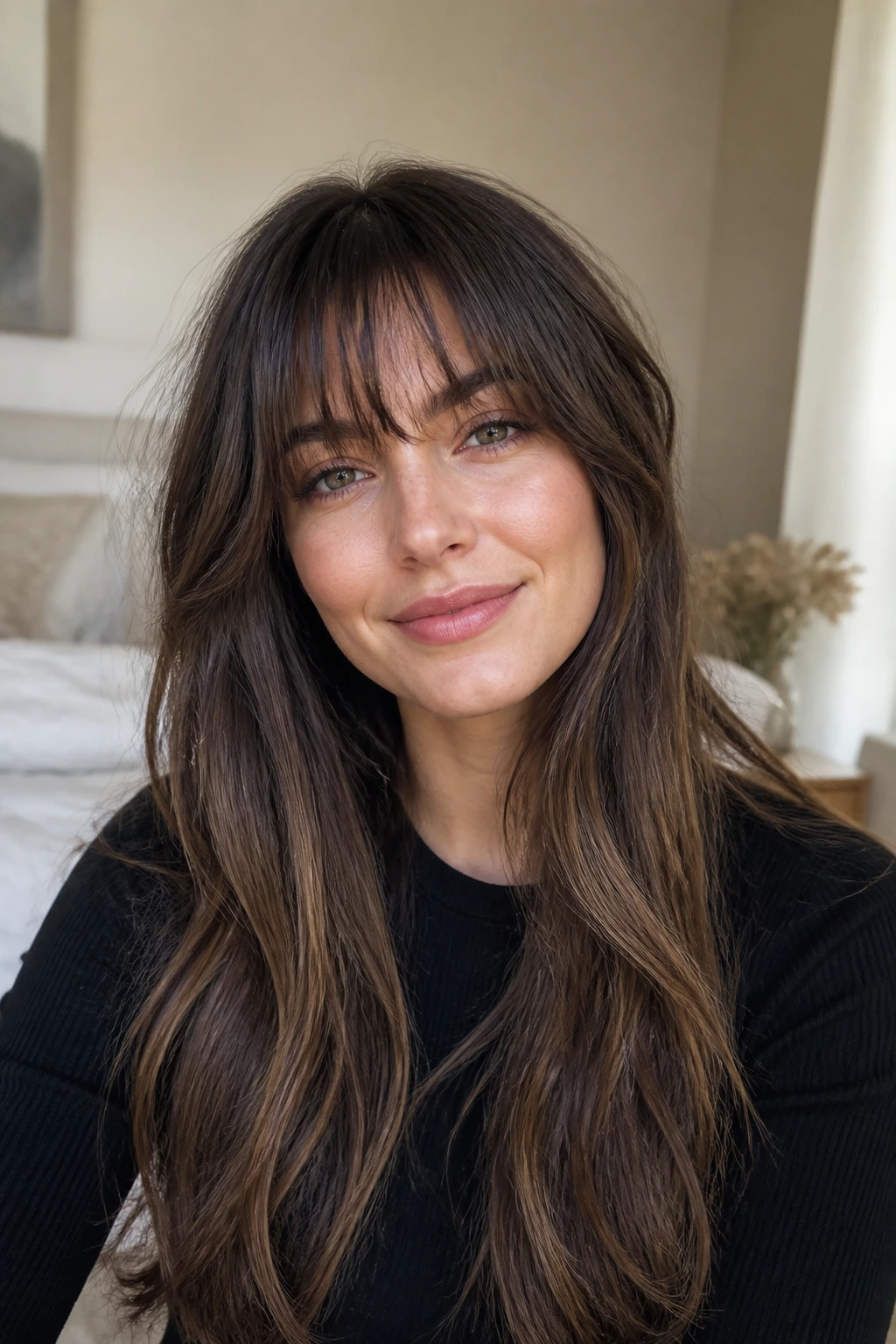
The best thing wispy bangs do is not the fringe itself. It’s the way they alter the read of the whole haircut. Long hair on a round face can sometimes pull the face wider if the front is too full and the length sits straight down with no movement near the eyes. Wispy fringe changes that. It creates a focal point up top, then opens space around the cheeks and jaw.
There’s also a practical reason so many of these cuts work. Long hair can be heavy. Heavy hair can drag the face downward or flatten the crown. A lighter front section lifts the haircut visually, especially when the bangs are cut to taper into face-framing layers. The eye starts at the forehead, drops to the cheekbone, then follows the length. That’s the path you want.
What to Tell Your Stylist Before the First Snip
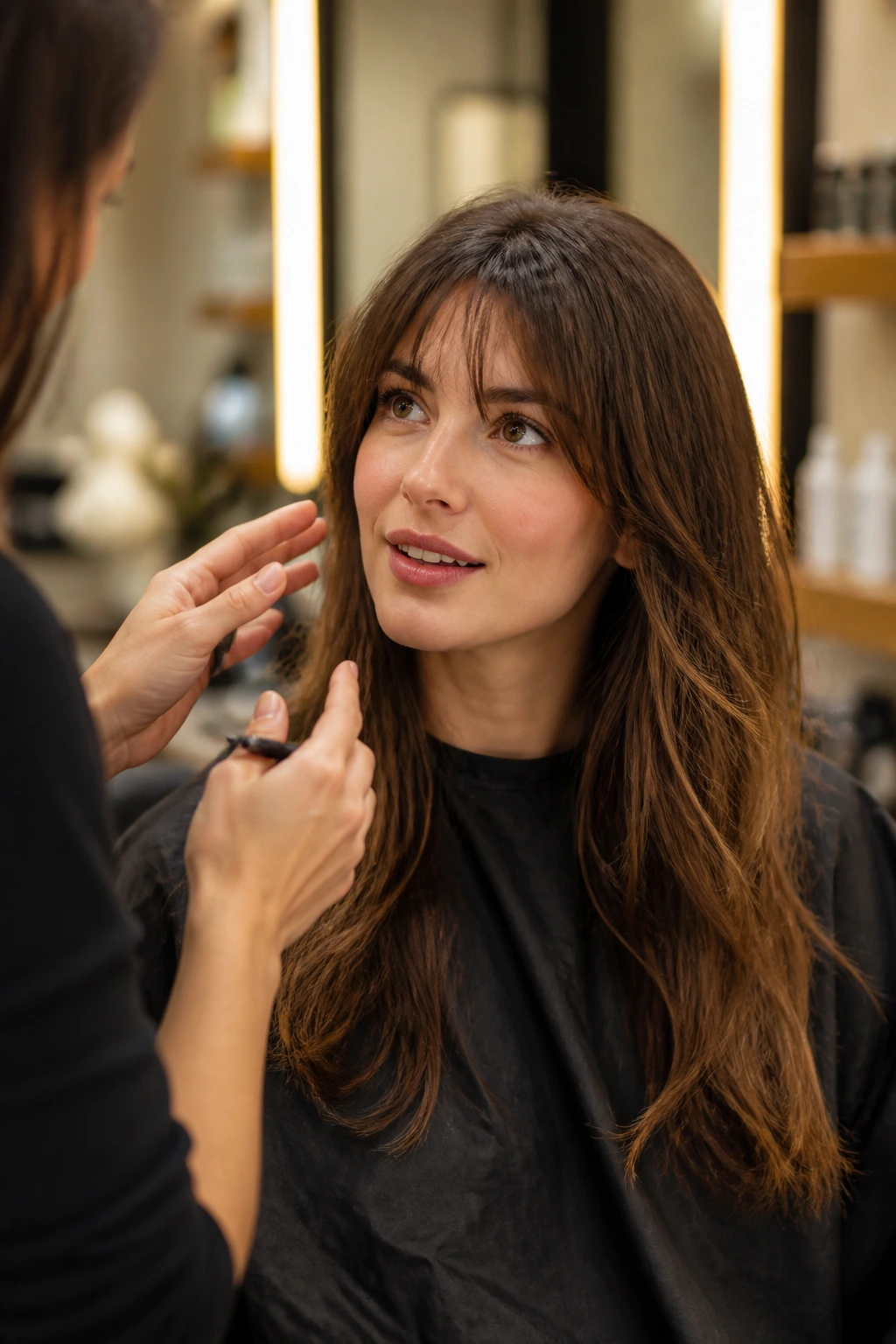
Bring words, not just screenshots. A photo helps, sure, but the useful part is telling your stylist where the shortest piece should land and how much forehead you want to keep visible. For round faces, I’d ask for softness at the center, length at the sides, and a face-framing finish that reaches the cheekbone or lower. That sentence does a lot of work.
Also say whether you style your hair straight, wavy, or with a blowout. The same fringe behaves differently on each texture. A stylist who knows you air-dry 80 percent of the time should not cut the bangs the same way they would for a client who flat-irons every morning. That part gets overlooked all the time.
Essential Tools for Styling Wispy Bangs
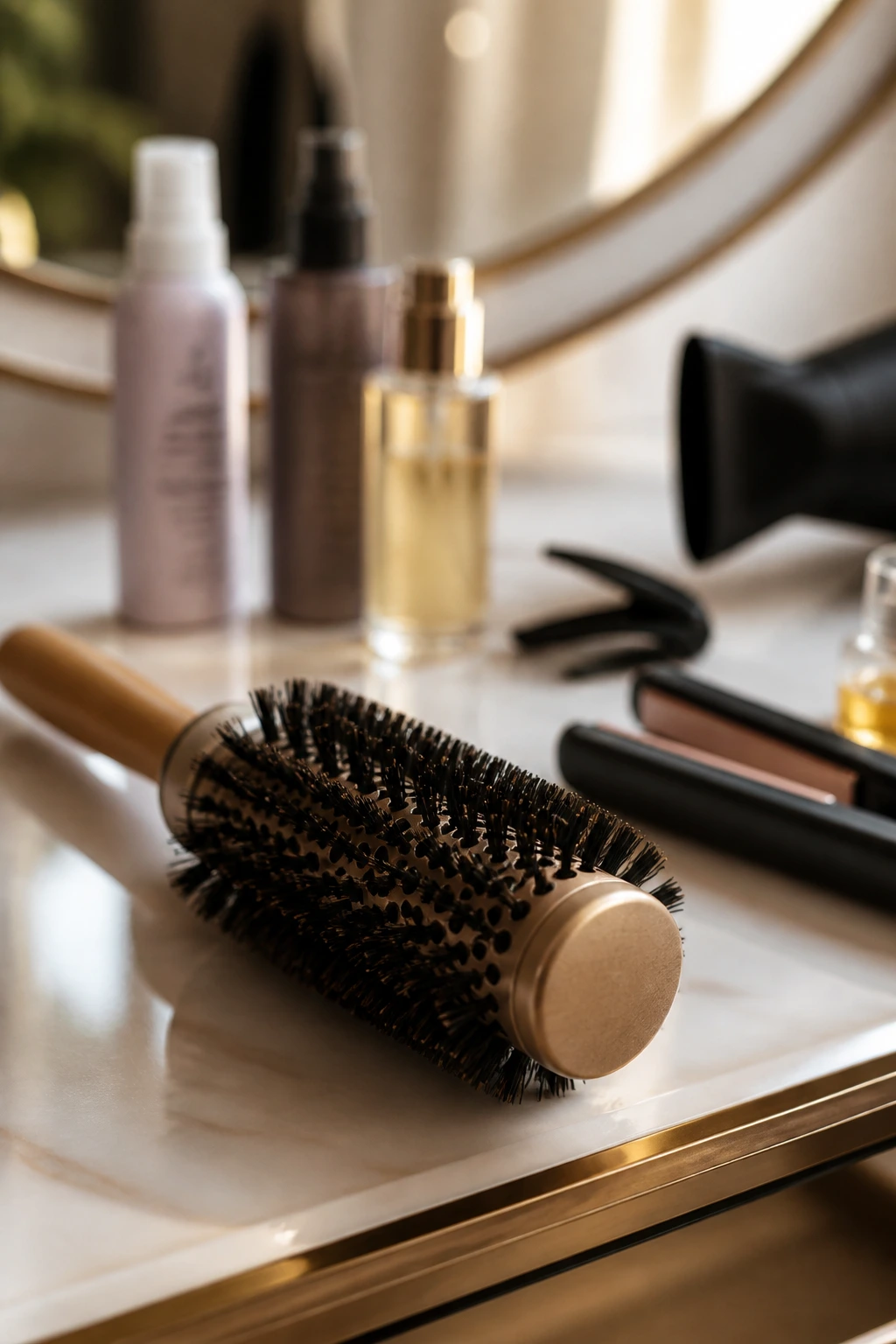
- Small round brush, 1 to 1.5 inches: Best for bending the fringe without puffing it up too much.
- Blow-dryer with a nozzle attachment: The nozzle keeps airflow controlled, which stops the bangs from flying everywhere.
- Lightweight dry shampoo: Useful at the roots when the fringe starts to separate or look oily.
- Texturizing spray or soft-hold spray: Helps keep piecey separation without turning the bangs crunchy.
- Duckbill or sectioning clips: Handy for pinning the rest of the hair away while you dry the front.
- Mini flat iron: Good for correcting a stubborn bend, especially on humid days.
- Light serum or cream: A tiny amount on the ends smooths frizz without weighing the fringe down.
Smart Styling and Salon Tips That Actually Help
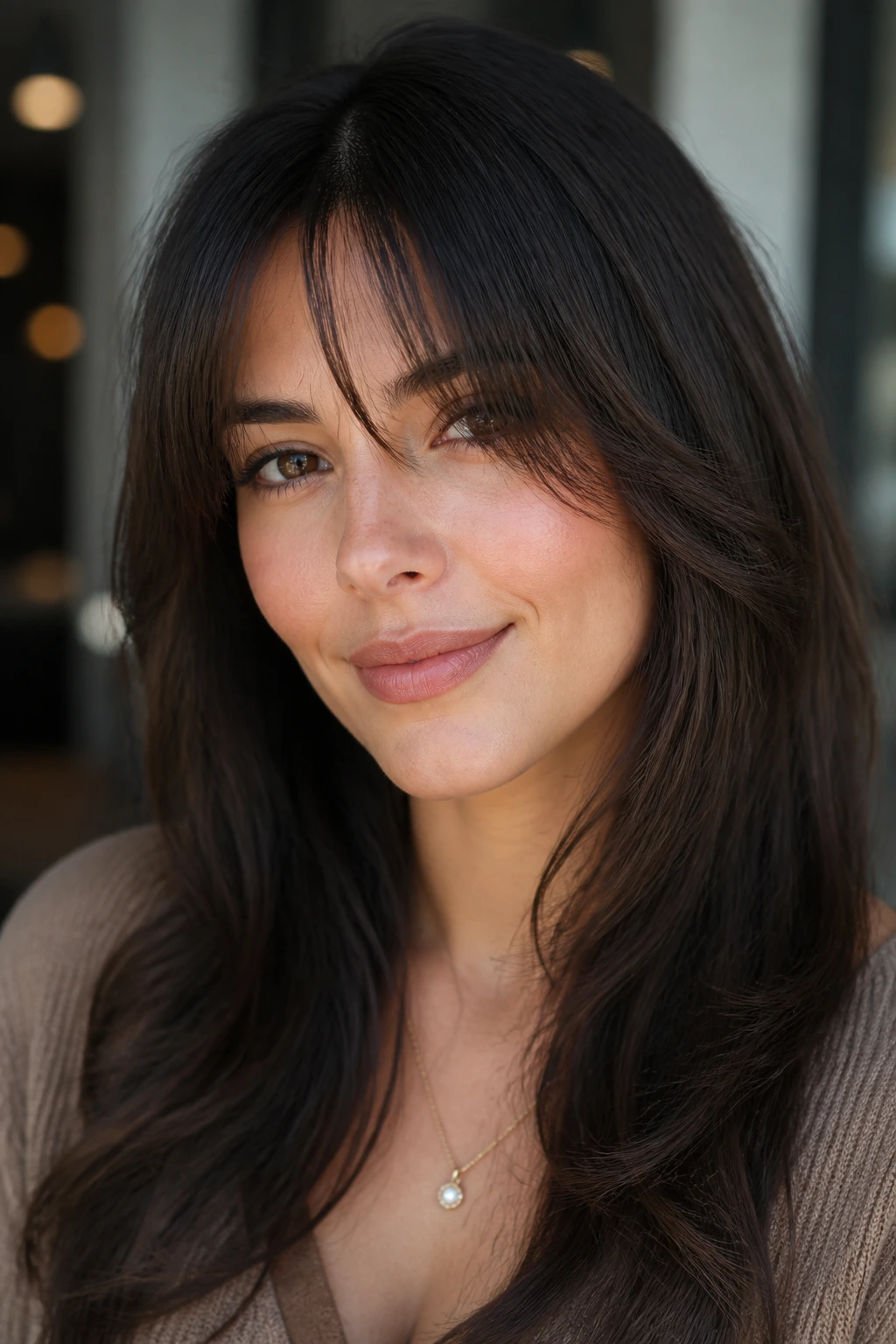
Blow-dry the fringe first. Don’t wait until the rest of the hair is done. Bangs dry fast, and if they set the wrong way, you’ll spend the next ten minutes trying to bully them into place.
Keep product away from the roots. A wispy fringe needs movement near the scalp. If you put cream or oil there, the bangs separate into greasy strings by lunchtime. Start mid-length and use almost nothing.
Trim a little at a time. Wispy bangs can go from soft to choppy fast. Whether you’re maintaining them at home or asking for a salon touch-up, tiny changes matter more than dramatic ones.
Use the face, not the forehead, as the guide. When styling, think about where the fringe meets the cheekbone and jawline. That’s the shape that matters on a round face, not whether every strand is identical.
Common Mistakes That Throw the Shape Off
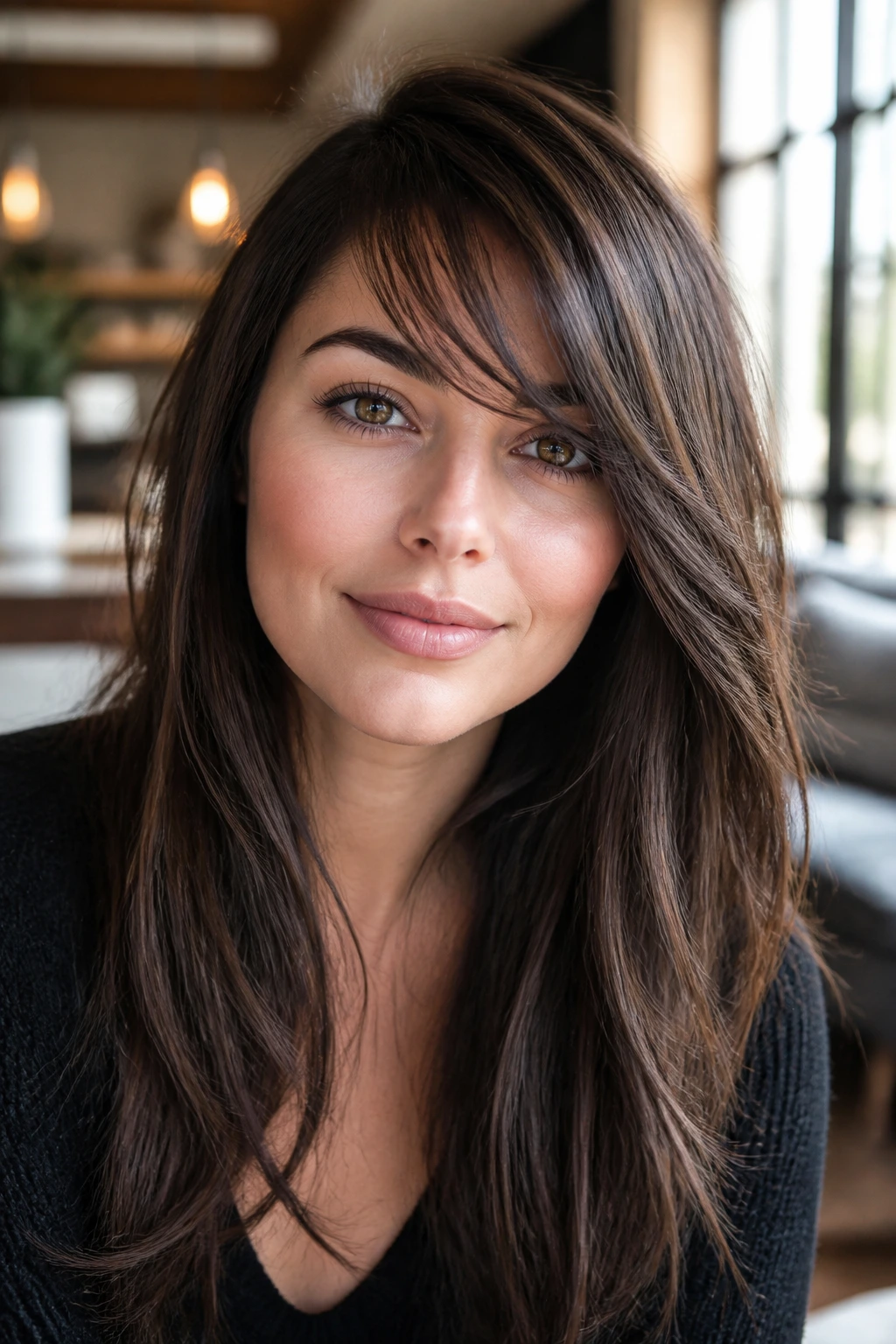
The first mistake is cutting the fringe too dense. The bangs may look nice for one day, then they turn into a curtain that sits heavy on the face. The fix is simple: ask for less bulk and more point cutting so the ends stay broken up.
The second mistake is ending the bangs at the widest part of the cheeks. That’s the zone you want to soften, not emphasize. A better landing point is just above or below the cheekbone, depending on the style.
Third, people often overload the fringe with product. A little spray helps; too much cream, oil, or serum makes the bangs stringy and flat. If the front looks greasy by noon, the product is the problem, not the cut.
Fourth, there’s ignoring cowlicks. Bangs fight back when they want to split in a certain direction. If you have a strong cowlick, bring it up before the haircut starts. That one detail changes the whole result.
Variations and Alternatives to Try
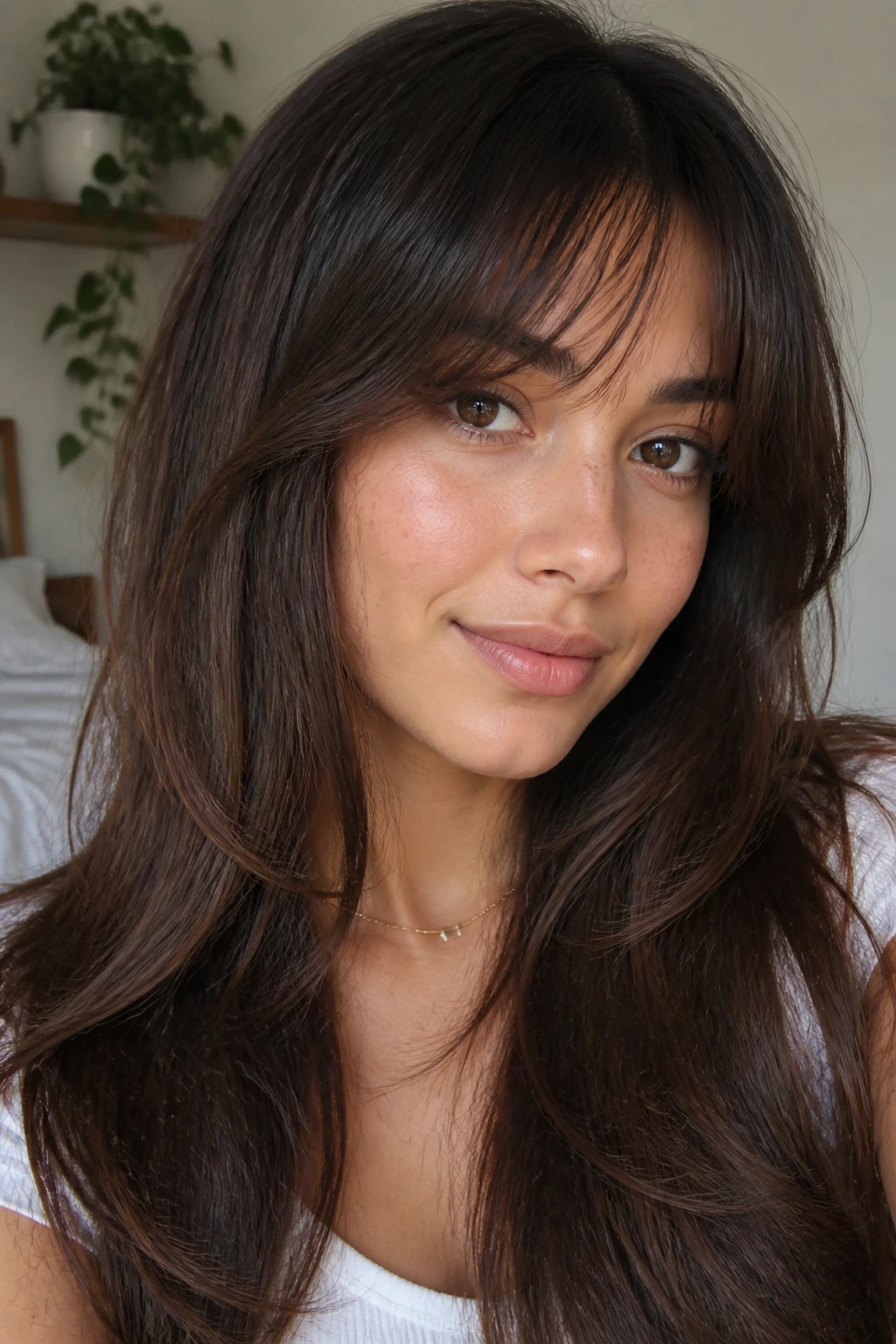
The Softer Side-Sweep: If you like the idea of bangs but want almost no upkeep, keep one side longer and let the fringe drift naturally across the forehead. It’s the easiest shape to grow out, and it works nicely with long layers.
The Textured Blowout Fringe: This version is for people who like a salon finish. The bangs are cut to bend under with a round brush, then styled with a little lift at the roots. It’s a good match for straight or slightly wavy hair that holds a shape.
The Curly Halo Fringe: If your hair is curly, let the fringe live as part of the curl pattern instead of trying to force it into straight pieces. The shape stays airy, and the round face gets softness without losing definition.
The Low-Maintenance Grow-Out: Start with longer bangs that can part in the middle or sweep to the side. This version is ideal if you’re nervous about commitment or if your hair grows fast enough that you’d rather avoid constant trims.
The Face-Frame Switch-Up: Keep the center piece light, but make the side sections longer and more layered. That shifts the attention toward the cheekbones and jaw, which gives the haircut more shape without making the forehead the main event.
Keeping Wispy Bangs in Shape Between Cuts
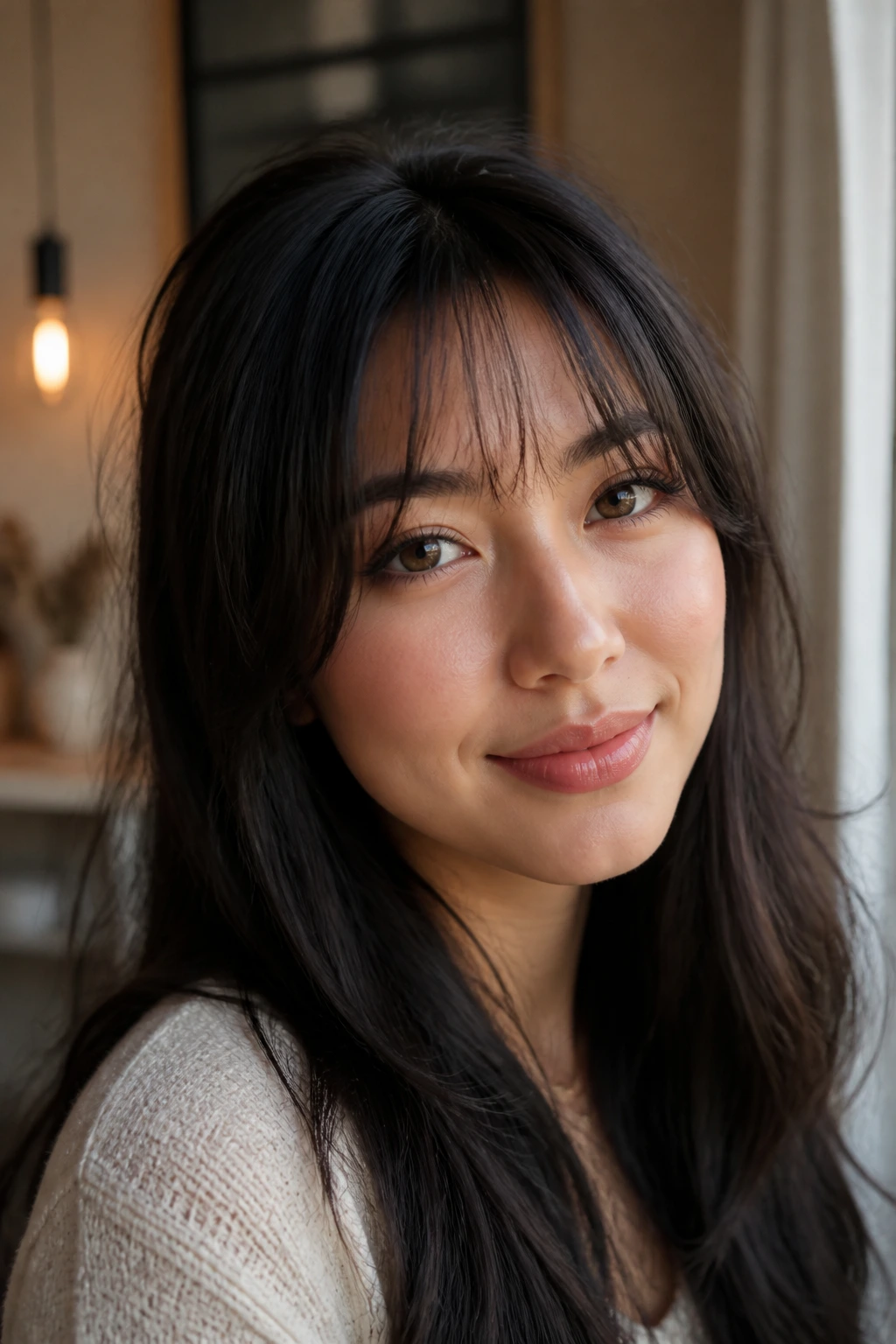
Wispy bangs need more babysitting than the rest of long hair, but not much more. A quick trim every 4 to 6 weeks keeps the shape from collapsing into your eyes or puffing out into a weird half-bang. If you grow them out, you can stretch that longer, though the styling usually gets messier in the middle.
At night, pinning the fringe back loosely or sweeping it off the face helps prevent forehead oil from flattening the front. In the morning, a dry shampoo at the root can buy you another day, sometimes two. If you use a hot tool, keep the heat low enough that the ends stay soft. Overheated fringe gets sharp fast, and sharp is not the goal here.
Frequently Asked Questions
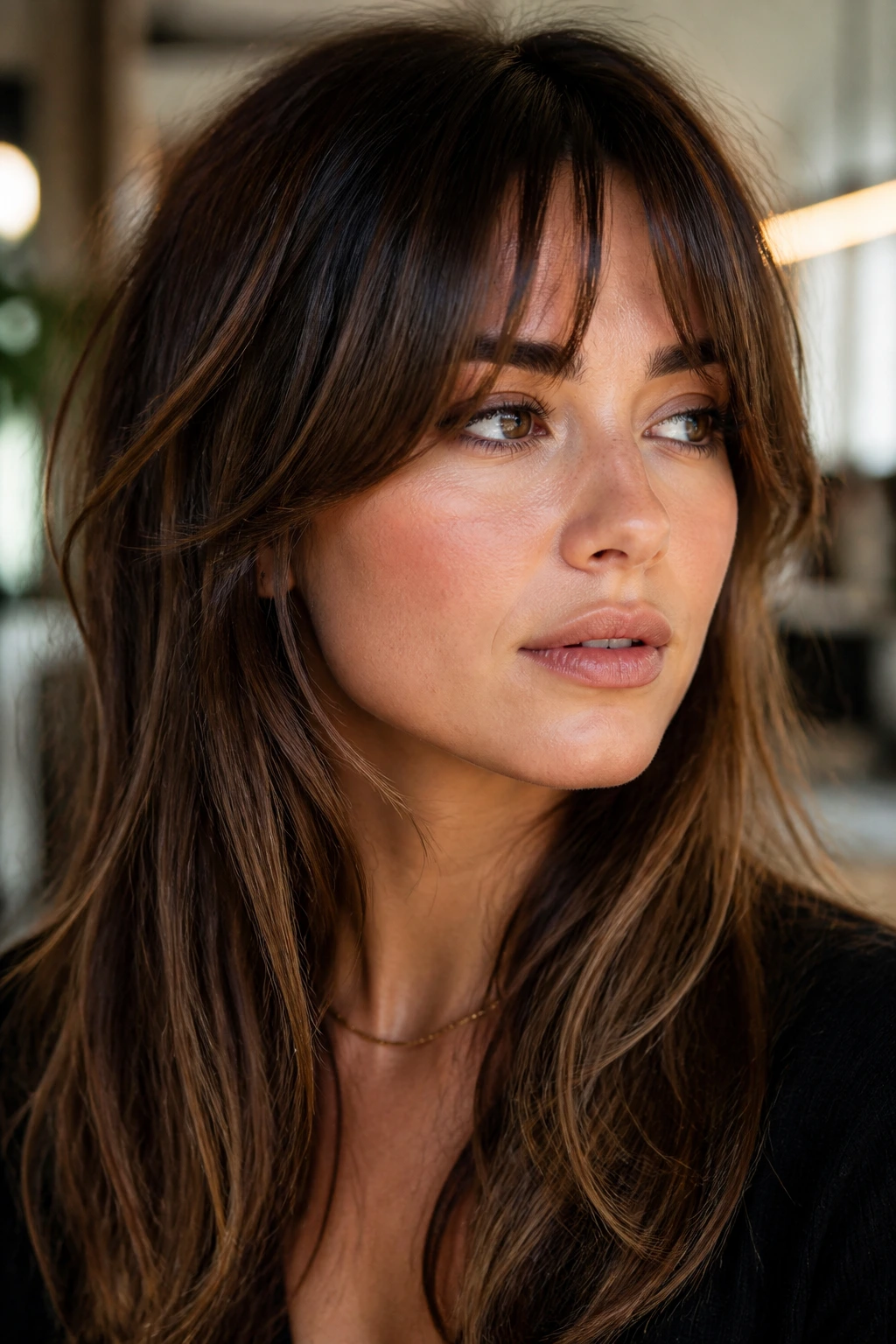
Can round faces wear wispy bangs without looking wider?
Yes, if the fringe is cut with enough softness and length at the sides. The trick is to avoid a straight, heavy line across the forehead and keep the front pieces moving down toward the cheekbones.
Are curtain bangs or side-swept bangs better for round faces?
Curtain bangs usually win for flexibility, while side-swept bangs win for a stronger diagonal line. If you wear your long hair loose most of the time, curtain bangs are easier to blend. If you want more obvious shape control, side-swept fringe can be sharper.
How short should wispy bangs be on a round face?
Most of the time, the shortest point should sit around the brow or just below it, not halfway up the forehead. That keeps the front open while still giving the haircut enough structure to lift the face.
Will fine hair hold wispy bangs?
It can, and sometimes fine hair is easier because the fringe naturally falls lighter. The catch is that it can separate too much, so the cut needs enough density to keep from going stringy.
What if my bangs split apart during the day?
That usually means the roots are oily, the fringe is cut too sparse, or too much product is weighing it down. A little dry shampoo at the root and a quick blow-dry forward can reset them.
Can I air-dry wispy bangs?
You can, but they usually look better with at least a little heat at the root. Air-dried fringe tends to dry in whatever direction it chooses, and that direction is often not the one you wanted.
How do I grow wispy bangs out without looking awkward?
Keep trimming the edges into face-framing pieces instead of letting them turn blunt. Once the shortest pieces reach the cheekbone, the grow-out phase gets easier because the fringe starts acting like a front layer.
Do wispy bangs work with glasses?
Yes, as long as the bangs are cut a little longer so they don’t fight the frames. A soft side sweep or a curtain shape usually plays nicest with glasses because it keeps the center clear.
A Fringe That Keeps the Length
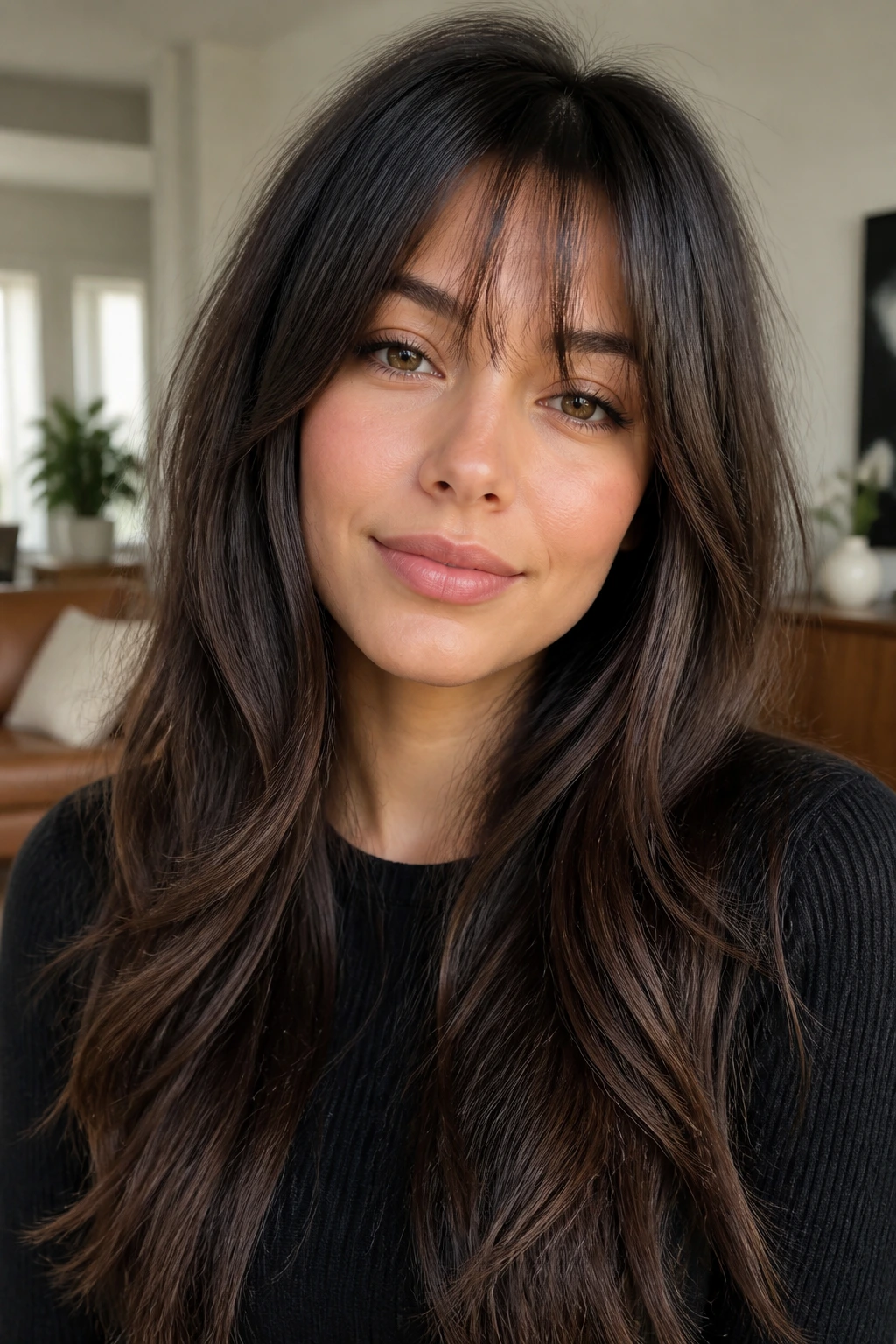
The nicest thing about wispy bangs on long hair is that they change the shape without stealing the show. You still get the length, the swing, the ponytail, the braid, all of it. But the front of the haircut has a little intelligence now — a soft line, a slight lift, some movement around the face that keeps a round shape from feeling too open or too wide.
If you’re choosing between cuts, I’d start with the ones that leave you room to adjust: curtain bangs, side-swept fringe, or a long blended front. Those are the versions that let you test the waters without getting trapped in a heavy line. And if you already know you want the fringe life, go a little bolder with the cheekbone sweep or the deeper side part. That’s where the shape gets interesting.