



Long hair can turn into a blanket faster than people expect. The ends get heavy, the crown lies down, and the front pieces hang there with all the personality of wet rope. Textured layers with bangs for long hair fix that problem by changing where the weight sits, not by taking away the length you actually wanted to keep.
What makes this combo work is the balance. The bangs bring the eye up toward the face, while the textured layers stop the hair from behaving like one dense sheet. A blunt perimeter can be striking, sure, but it also tends to show every flat spot and every sleepy morning. Texture hides a lot. It gives you movement even when the styling is half-hearted, and that matters more than people admit.
The best versions are not about making the hair look “messy.” They’re about making the haircut do some of the work for you. A good fringe should soften the forehead, land at a flattering point near the brows or cheekbones, and still grow out without turning into a crisis. A good layer pattern should keep the length swinging instead of hanging. That’s the sweet spot, and there are far more ways to get there than most salon consultations ever mention.
Why This Collection Feels Different
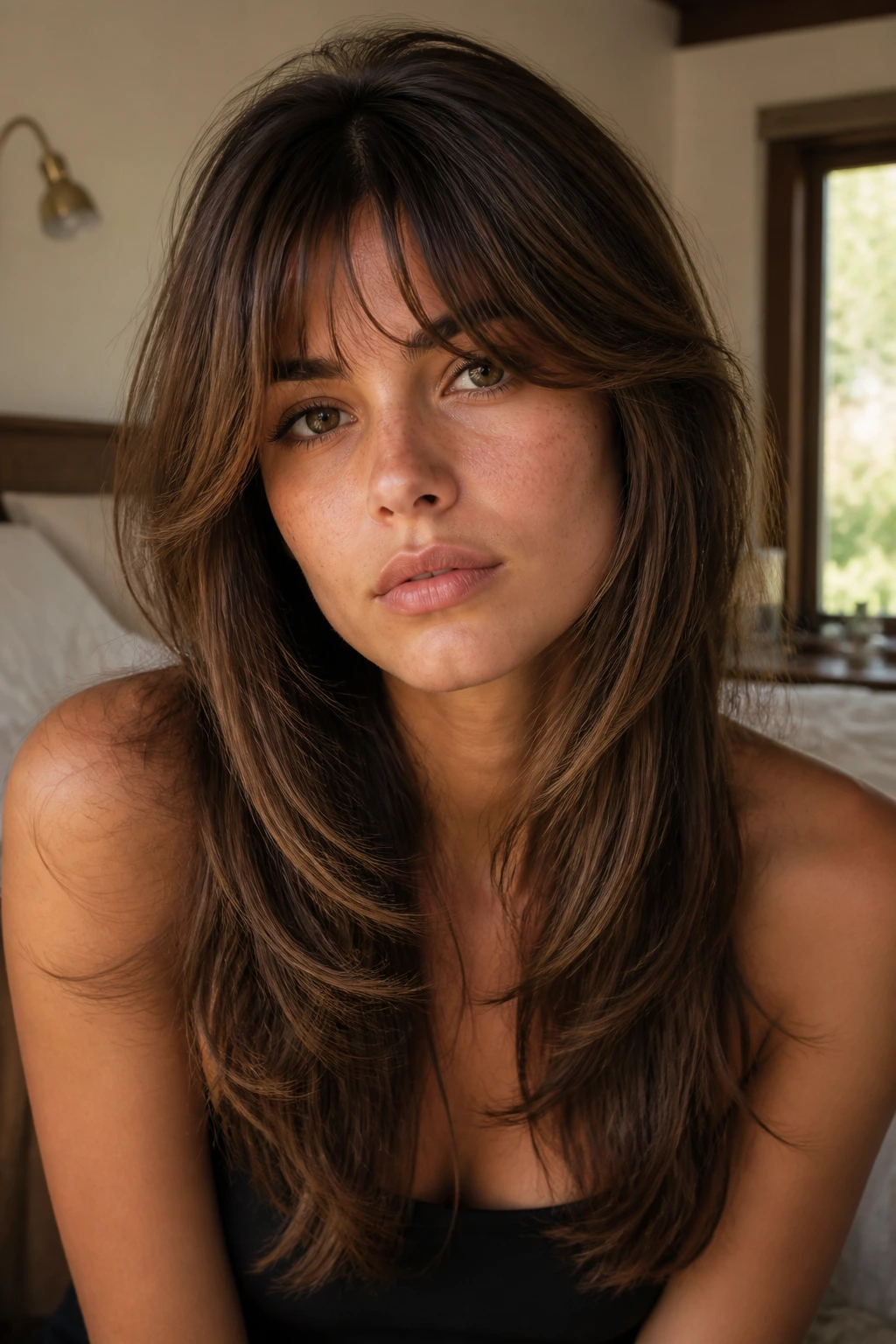
-
Face-framing does the heavy lifting: The right bang shape pulls attention upward, so long hair doesn’t swallow the face whole. That’s why a small shift in fringe length can change the whole cut.
-
Texture keeps the ends from looking blunt and tired: Internal layering and feathered ends add movement through the mid-lengths, which is where long hair usually goes flat first.
-
You can dial the maintenance up or down: Some versions need a fringe trim every 3 to 4 weeks, while others grow out with barely any drama. The shape you choose should match your patience.
-
These cuts work with more than one styling habit: Air-dried waves, a round-brush blowout, and a loose bend from a flat iron all suit different entries in this collection.
-
Density matters more than face shape alone: Thick hair, fine hair, straight hair, and curly hair all need slightly different layer placement. Ignoring that is how people end up with a cut that looks great in one photo and awkward everywhere else.
1. Soft Curtain Fringe with Feathered Ends
Soft curtain bangs are the easiest place to start if you want movement without a sharp edge. They part in the middle, skim the cheekbones, and let the rest of the hair fall in long, airy layers that never feel boxed in. On long hair, that little split at the front keeps the style from looking too solid.
Why It Works
The fringe opens the face instead of closing it off. Feathered layers keep the lower half of the hair from turning into a heavy curtain, especially if your ends tend to feel stale by day two.
- The bangs usually land between the cheekbones and jaw.
- The layers should start around the collarbone if the hair is dense.
- A round brush or hot brush helps the fringe bend away from the eyes.
Best move: ask for point-cutting through the front pieces so the bangs grow out softly, not in one hard shelf.
2. Bottleneck Bangs with Choppy Mid-Length Movement
Bottleneck bangs are sharper than curtain bangs, but they still soften at the edges. That’s why they pair so well with long, choppy layers: the front has shape, and the rest of the cut has enough break-up to stop it from feeling heavy.
The narrow center at the top of the fringe creates a neat opening, then the sides widen around the cheekbones. On long hair, that shape keeps the front interesting without taking over the whole haircut. I like this version when the hair is thick through the mid-lengths and needs something a little more deliberate than a soft split fringe.
The choppy layers should not be random. They need to remove bulk where the hair balloons out — usually around the collarbone and the area just below the chin. If you blow-dry with a nozzle and a paddle brush, the result feels clean but not stiff. If you air-dry, the bend stays piecey and relaxed. Either way, the cut needs movement.
3. Butterfly Layers with Face-Opening Bangs
Why does the butterfly cut keep showing up on long hair? Because it gives you two things at once: a short-looking face frame at the front and length that still falls far down the back. That contrast is the whole point. The top layer lifts, the underlayer stays long, and the bang shape bridges the two.
How to Style It
The front pieces should hit around the cheekbone and slide toward the collarbone. A center part helps the shape show, but a slight off-center part can keep it from feeling too precious.
- Use a large round brush on the front sections only.
- Keep the lower layers loose so they don’t collapse.
- Add a light mist of texturizing spray at the mid-lengths, not the roots.
One thing to avoid: don’t ask for too much shortening through the crown. The butterfly shape needs lift, not a choppy halo that sticks up and fights the length.
4. Shaggy Lengths with Brow-Grazing Fringe
Picture long hair that looks as if it had a good argument with a razor and won. That’s the energy here. The shaggy version of textured layers with bangs for long hair is less polished than curtain fringe, and that’s the appeal: it has edge, and it doesn’t pretend to be smooth.
The fringe sits just at or slightly below the brows, then breaks apart into little pieces instead of one solid line. The layers underneath should be irregular enough to keep the silhouette from feeling too round. This cut works especially well if your hair has a natural bend or if you like a little lived-in texture from day one.
The key is restraint. Too many short layers and the shape starts to balloon. Too few, and the cut loses its bite. A light pomade or styling cream on the ends keeps the piecey look separate instead of fuzzy.
5. U-Shaped Layers with Wispy Bangs
U-shaped layers are a quiet answer for anyone who wants movement without looking like they asked for a dramatic haircut. The length curves gently at the back, so the perimeter still feels long and full, while the wispy bangs keep the front from dragging the face down.
That softness is the trick. Wispy bangs are not heavy; they let a bit of forehead show through, which keeps the look light even on dense hair. The layers should be long enough that the ends still feel substantial, but broken up enough that the hair doesn’t hang in one heavy block.
I reach for this shape when someone wants bangs but is nervous about upkeep. The fringe can be styled with a quick blow-dry and a touch of serum, then forgotten for the rest of the day. The U-shape gives the rest of the hair a neat finish without looking too formal.
6. Long Wolf Cut with Airy Fringe
The long wolf cut is for people who want the haircut to have a little attitude. It has more separation at the crown, more swing through the mid-lengths, and a fringe that usually sits somewhere between curtain and shag. On long hair, it keeps the cut from feeling sleepy.
Unlike softer layered styles, this one leans into contrast. The top can be short enough to create a lift around the crown, while the bottom stays long and loose. That’s what gives the shape its edge. It works best when the hair has natural texture, because the piecey finish is part of the point.
You do need a little styling discipline here. A diffuser helps if the hair is wavy or curly. For straight hair, a touch of bend through the front and a tiny bit of grit spray can keep the fringe from falling flat against the forehead. If you want a neat, polished blowout every day, this probably isn’t your easiest match.
7. Side-Swept Bangs with Lived-In Layers
Side-swept bangs are the old reliable of long-hair fringe. They don’t try to reinvent the face; they soften it, move across the forehead, and tuck easily behind the ear when you’re over styling. Paired with lived-in layers, they give long hair a gentler, less symmetrical feel.
What Makes It Different
The layers here should not be too uniform. Slightly uneven ends and a soft face frame keep the haircut from looking dated. The side-swept fringe can be cut with enough length to blend into the cheekbones, which is especially useful if your hair part shifts during the day.
- Ask for a diagonal fringe that can be worn to either side.
- Keep the shortest point around the brow line.
- Let the front layers connect into the rest of the haircut instead of stopping abruptly.
My opinion: this is one of the best choices for anyone who wants bangs but hates the feeling of hair in the eyes all day.
8. Rounded Face-Framing Layers with Full Fringe
A full fringe on long hair can look sharp in the best way, but only if the layers around it are shaped to support the line. Rounded face-framing pieces soften the transition from forehead to length, so the bangs don’t feel like they were pasted on top of another haircut.
This cut is especially good when you want the front to read clearly. The fringe should sit straight across, but not so thick that it becomes a hard block. The layers near the jaw and collarbone should curve inward a little, guiding the eye down the face instead of letting the hair flare out at the sides.
It’s a strong look. Not loud, but defined. If your hair is fine, keep the fringe lighter so it doesn’t separate into chunks. If it’s thick, ask the stylist to remove bulk underneath the top layer so the bangs don’t feel disconnected from the rest of the cut.
9. Feathered 70s Layers with Split Bangs
Feathered layers from the 70s have made their case: they move, they swing, and they make long hair feel less like a sheet and more like a set of ribbons. Split bangs fit that mood because they part naturally and carry the same airy energy.
The feathering starts higher than in a classic long-layer cut, which helps the hair lift around the cheekbones and shoulders. That means the shape has life even when it’s tucked behind a coat collar or pulled half up. The bangs should be light enough to separate with your fingers, not stiff enough to demand a perfect brush-out.
This version looks especially good on thick or medium-thick hair that can hold shape without collapsing. If your hair is pin-straight, a large-barrel round brush or a quick bend with a flat iron keeps the feathered motion from disappearing by lunchtime. It’s a little glamorous, a little retro, and not at all shy.
10. Piecey Blunt Bangs with Soft Long Layers
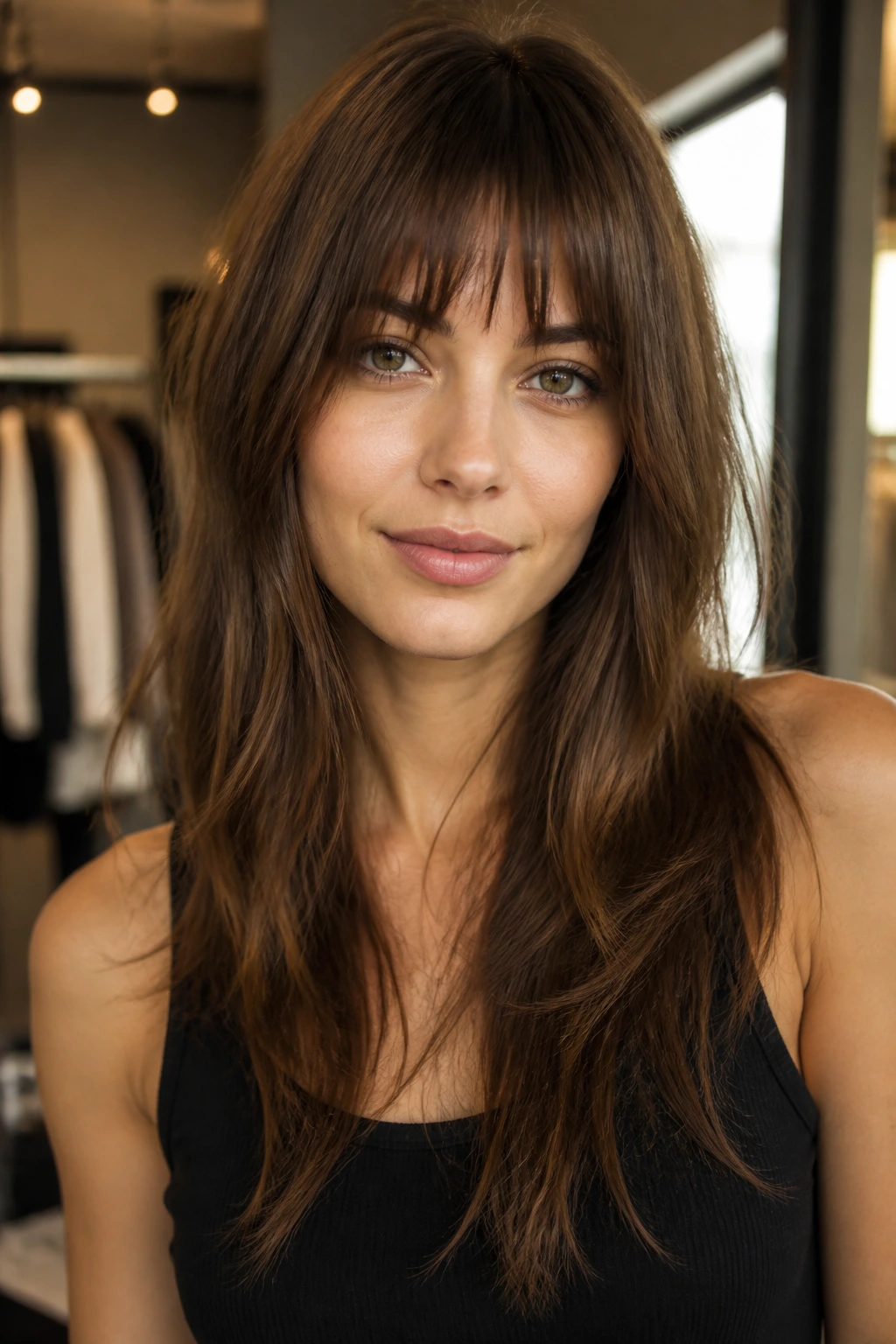
Can blunt bangs work with textured layers? Absolutely, if the rest of the cut stays soft enough to balance them. The fringe gives you a strong front line, while the long layers keep the body of the hair from looking too boxy.
The word here is piecey. The bangs should not sit like a solid helmet across the forehead. Tiny points cut into the ends let the fringe separate just enough to feel modern. The layers beneath should be subtle, mostly there to remove weight and keep the long lengths swinging.
This cut suits people who like contrast. Strong bangs. Soft lengths. It also helps if you prefer a style that still reads clearly when it’s tied back, because the fringe does the visual work even in a ponytail. For upkeep, you’ll need to trim the bangs more often than the layers, or the whole front starts to lose its shape.
11. Curly Long Layers with a Curved Fringe
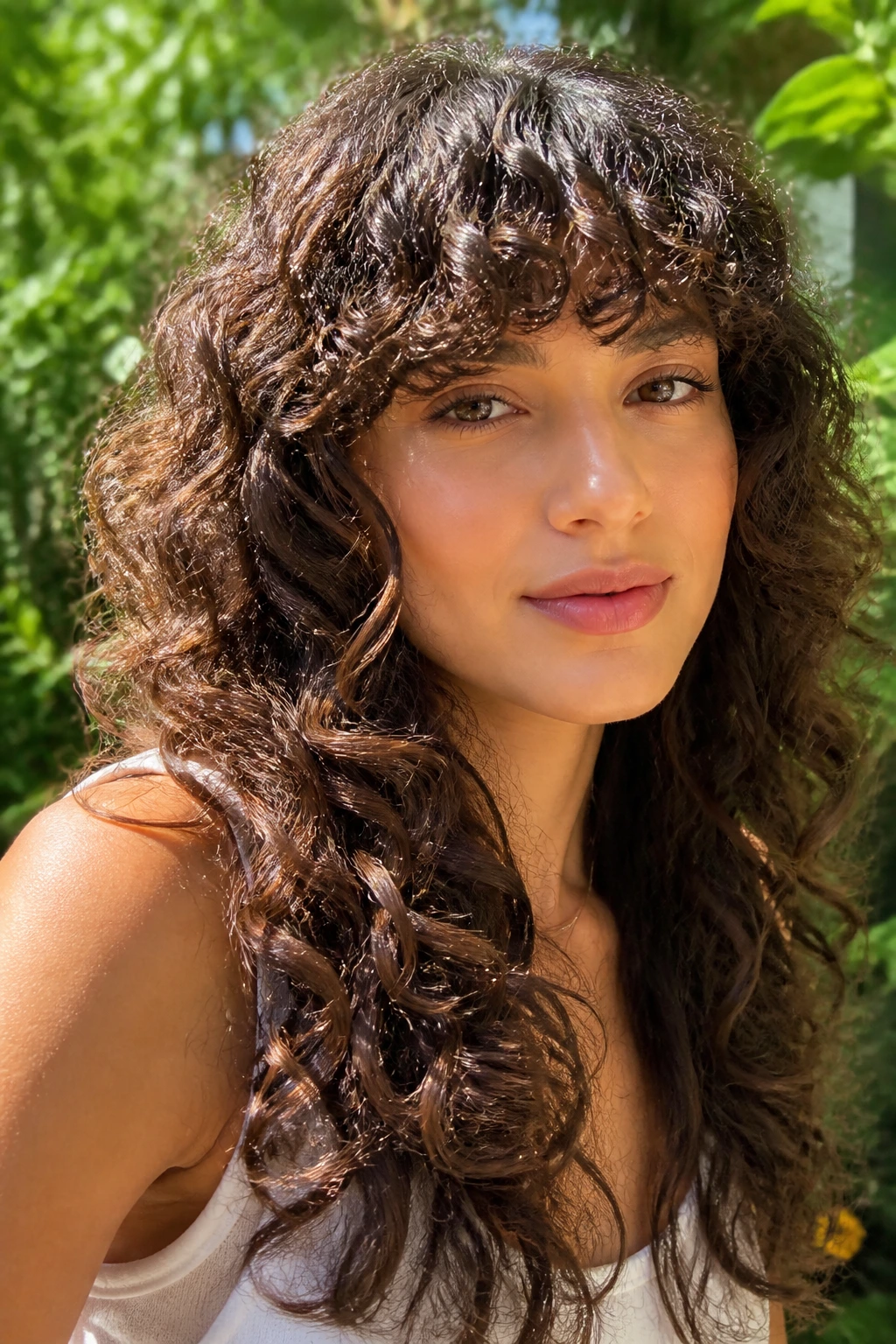
Curly hair and bangs can be a fantastic pairing if the cut respects the curl pattern instead of fighting it. Curved fringe sits a little longer at the sides and shorter near the middle, which helps it blend into long, textured layers without springing into an awkward shelf.
The best curly version is usually cut dry or at least partially dry, because shrinkage changes everything. That fringe should curl up just enough to sit above the eyes, not smack straight across the forehead. The layers underneath need enough room to move, or the cut turns triangular fast.
A diffuser matters here. So does a leave-in cream that keeps the curls clumped instead of frizzing into fluff. If you have tighter curls, ask for a softer fringe with more length than you think you need. Curly bangs always bounce shorter than the mirror suggests.
12. C-Cut Layers with Center Bangs
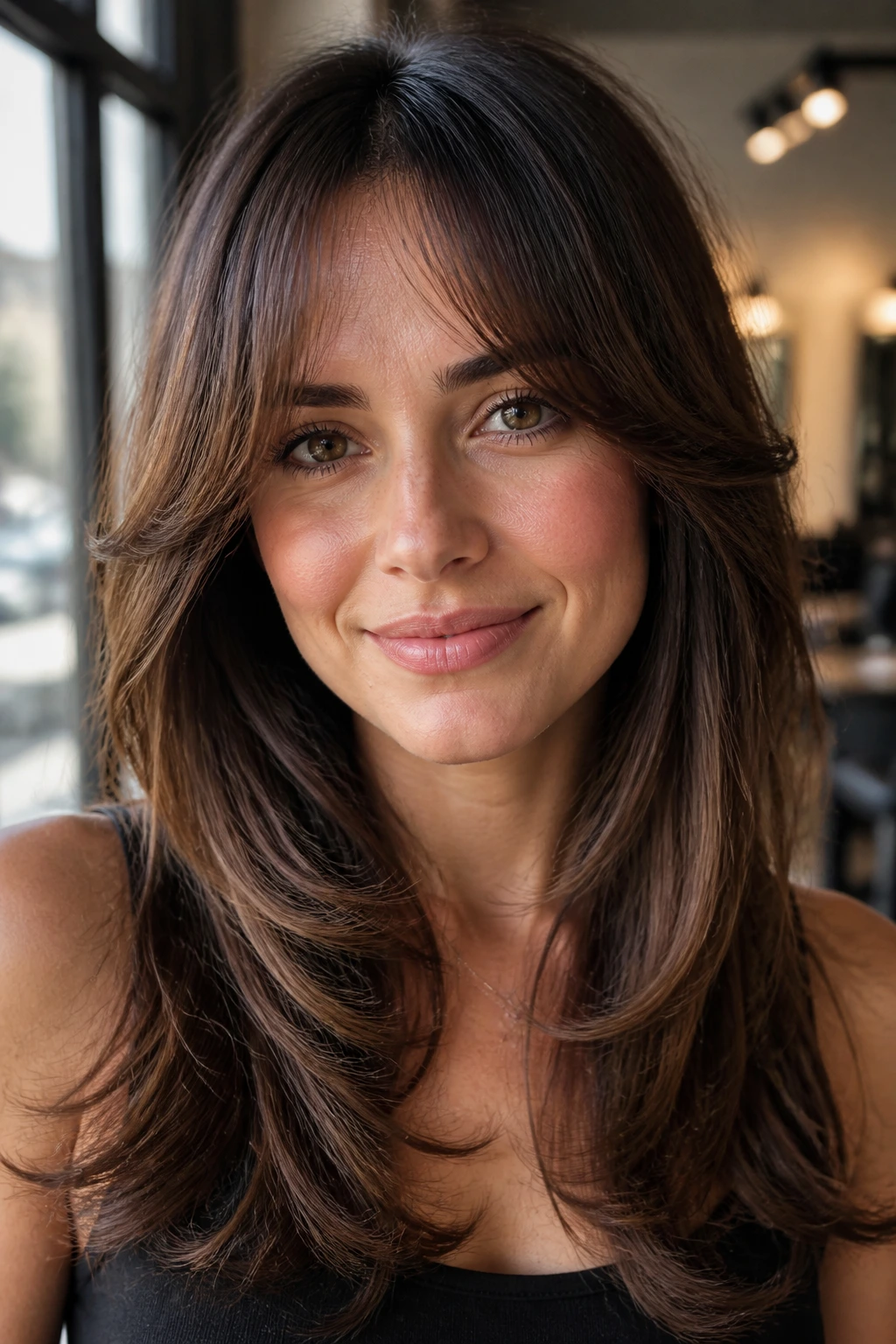
The C-cut is a neat shape for people who want the ends to curve inward toward the face and back again, like a soft frame drawn in one motion. Add center bangs, and the result feels balanced without becoming severe.
This cut is less about drama and more about direction. The layers angle the eye toward the cheekbones, then the longer lengths fall in a clean line. The bangs split in the middle and keep the forehead open, which helps if a full fringe feels too high-maintenance for your day-to-day life.
How to Wear It
Blow-dry the front sections with a medium round brush so the curve lands at the cheek rather than flipping away from it. A touch of serum on the ends keeps the cut looking smooth, not frayed.
If your hair tends to puff out at the sides, the C-shape reins that in. If your hair is very fine, keep the layers longer so you do not lose density at the bottom.
13. Invisible Internal Layers with Delicate Fringe
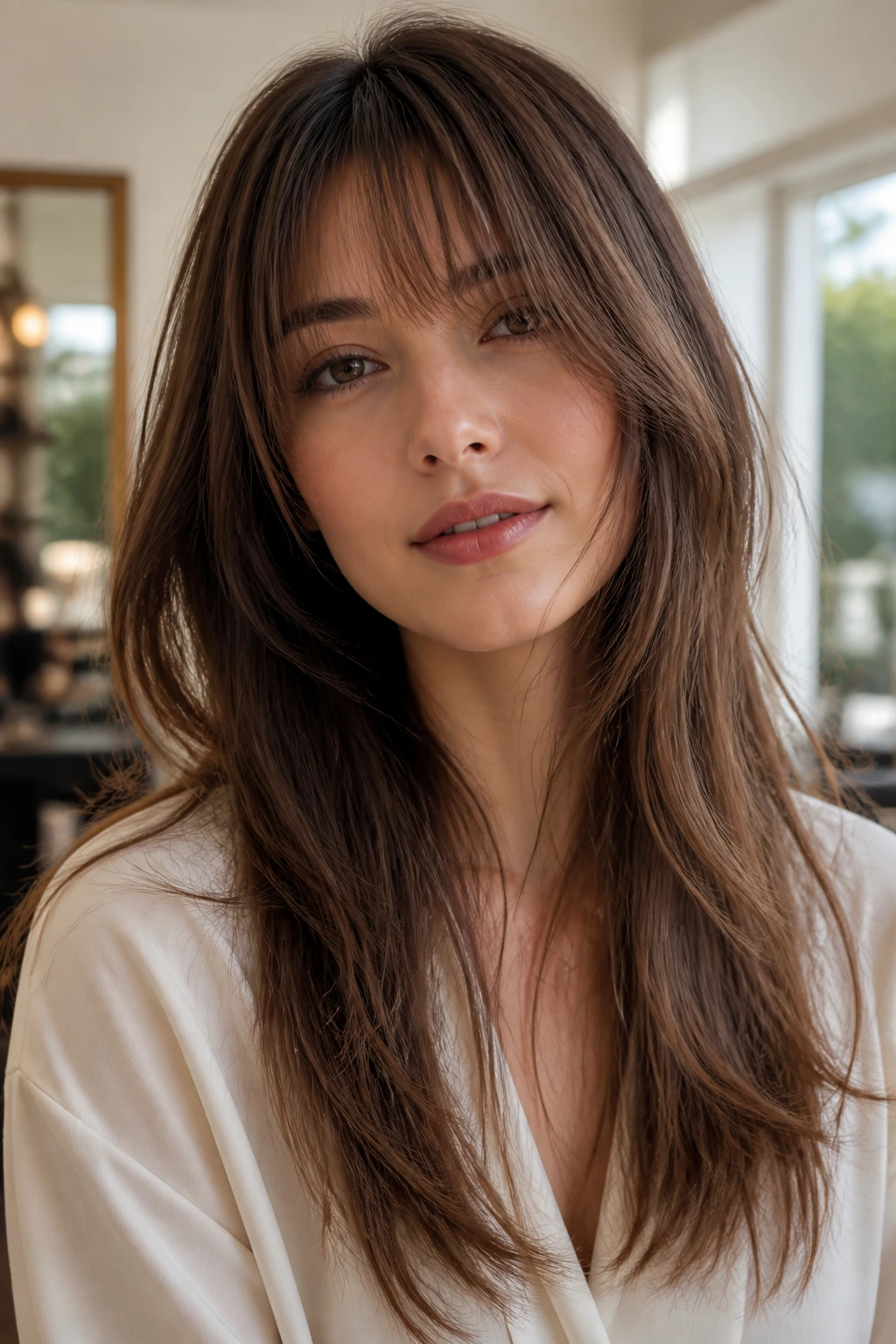
Invisible layers are the quietest kind of shaping, and I mean that in a good way. You don’t see the layer lines jump out, but you do notice that the hair moves better, dries faster, and doesn’t sit like one solid wall. Pair that with a delicate fringe, and you get texture without the chopped-up look.
This is a smart choice for long hair that’s thick at the ends but still needs to look polished. The internal layers remove weight from inside the shape, while the fringe stays soft and narrow instead of heavy. It’s one of the better options if you want bangs that feel grown-up rather than fashion-forward.
Because the cut is subtle, it depends on finish. A light blowout or a quick bend at the ends shows the movement. If you air-dry and walk away with zero styling, the difference is still there, just more understated. That’s the whole point.
14. Heavy Bangs with Razor-Textured Ends
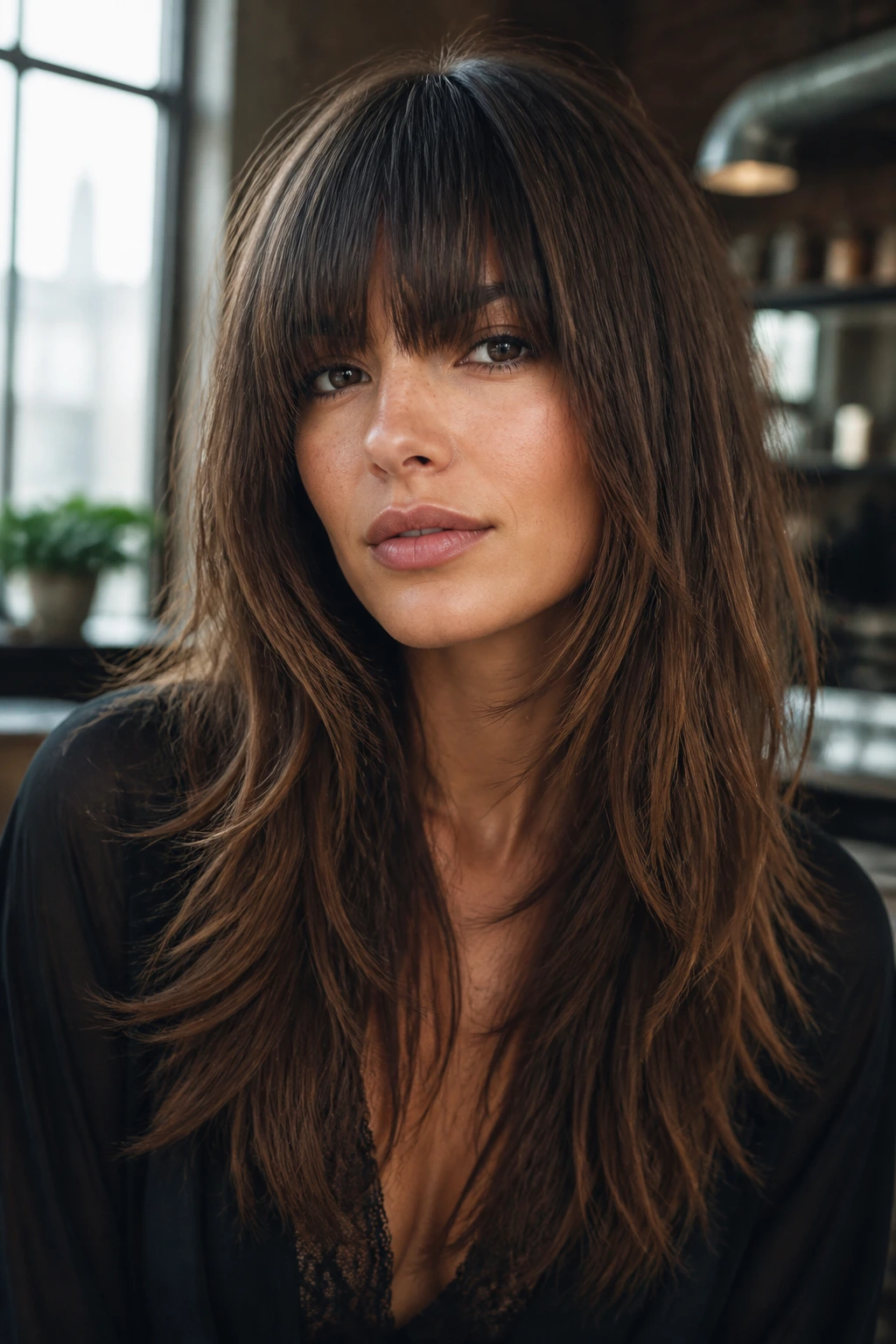
Heavy bangs on long hair can look expensive in the right hands and flat-out wrong in the wrong ones. The line has to be clean enough to make a statement, while the ends need enough texture that the fringe doesn’t sit like a solid plank across the forehead.
The rest of the haircut should be long and slightly broken up, with razor-textured ends that remove the hard edge from the perimeter. That contrast keeps the bangs from feeling too severe. It also gives the long hair some movement, which matters because a dense fringe can make the face feel closed in if the lengths are equally heavy.
This is a better match for straight or slightly wavy hair than for very curly textures, where the bold fringe can shrink too much. Use a flat brush when drying the bangs and bend the ends only lightly. Too much curling defeats the point.
15. Long Mullet-Inspired Layers with Airy Fringe
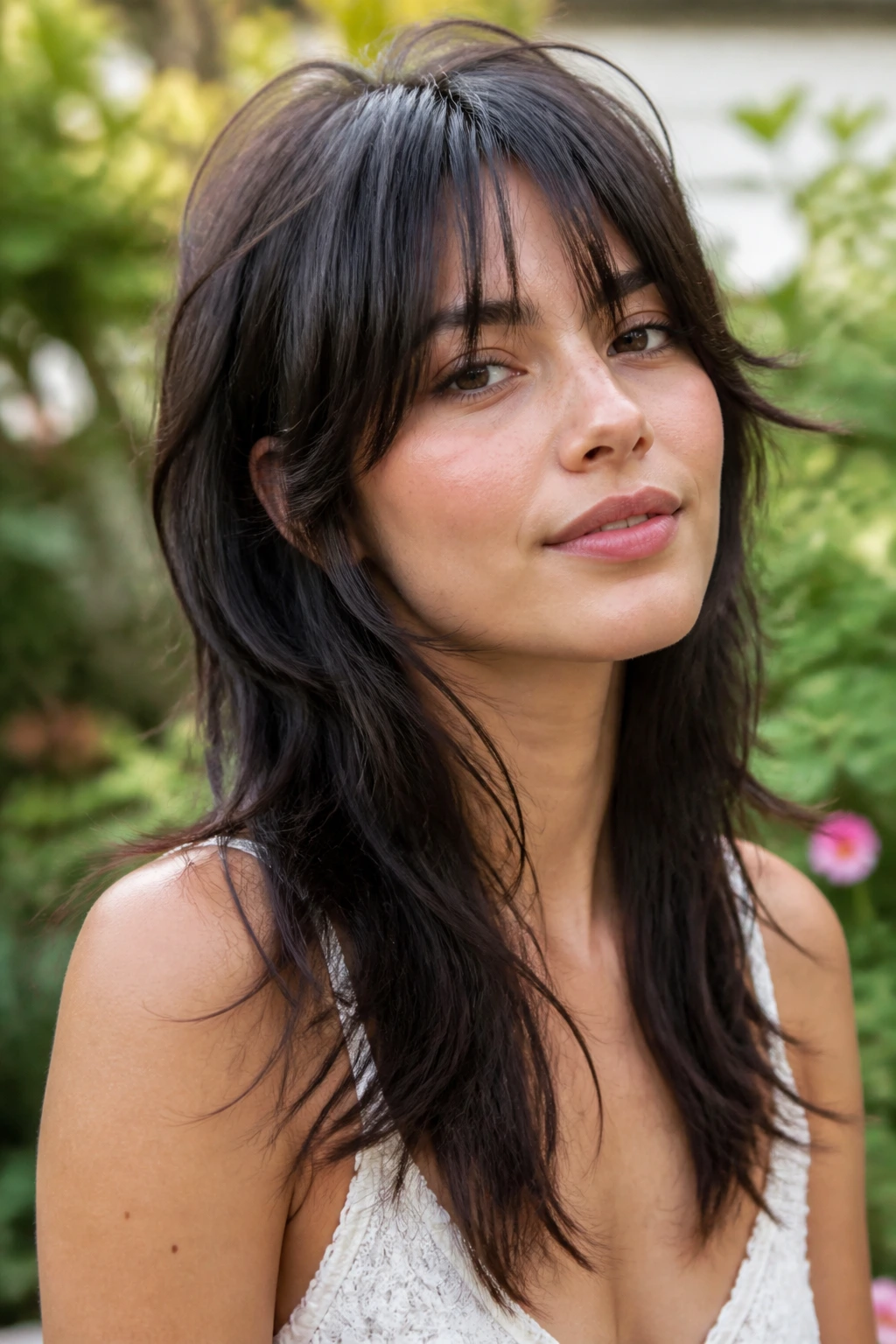
The long mullet-inspired cut is more wearable than the name sounds. The front stays soft and face-framing, the crown gets lifted, and the back keeps its length. It’s basically a controlled version of uneven texture, which is why it works on hair that needs a little edge without giving up the inches.
The fringe should stay airy and broken up, not thick. That helps the top and front connect to the longer back sections. The layers around the jaw and collarbone need enough separation to keep the silhouette from turning into one long cone.
This cut is good when you want shape that survives imperfect styling. A little wave cream, a rough dry, and maybe a few bends from a curling wand are enough. If you like hair that looks slightly undone in a deliberate way, this sits in that lane.
16. Micro Fringe with Length-Preserving Layers

Micro bangs are not shy. They sit high on the forehead, show a lot of face, and put all the attention on the eyes and brows. Paired with long, length-preserving layers, they create a sharp contrast that feels editorial without making the rest of the hair too short.
The trick is keeping the layers restrained. Too much chop through the length and the whole cut loses the long-hair drama that makes micro fringe interesting in the first place. You want the ends to still fall heavily enough to anchor the style, while the front feels almost cropped.
This version is for someone who likes a strong feature and doesn’t mind regular fringe trims. If your forehead is very short or your brow line is busy, micro bangs can be fussy. But if you want a haircut that says something the moment you enter a room, this is a loud little line on a sea of length.
17. S-Curve Layers with Brushed-Out Curtain Bangs
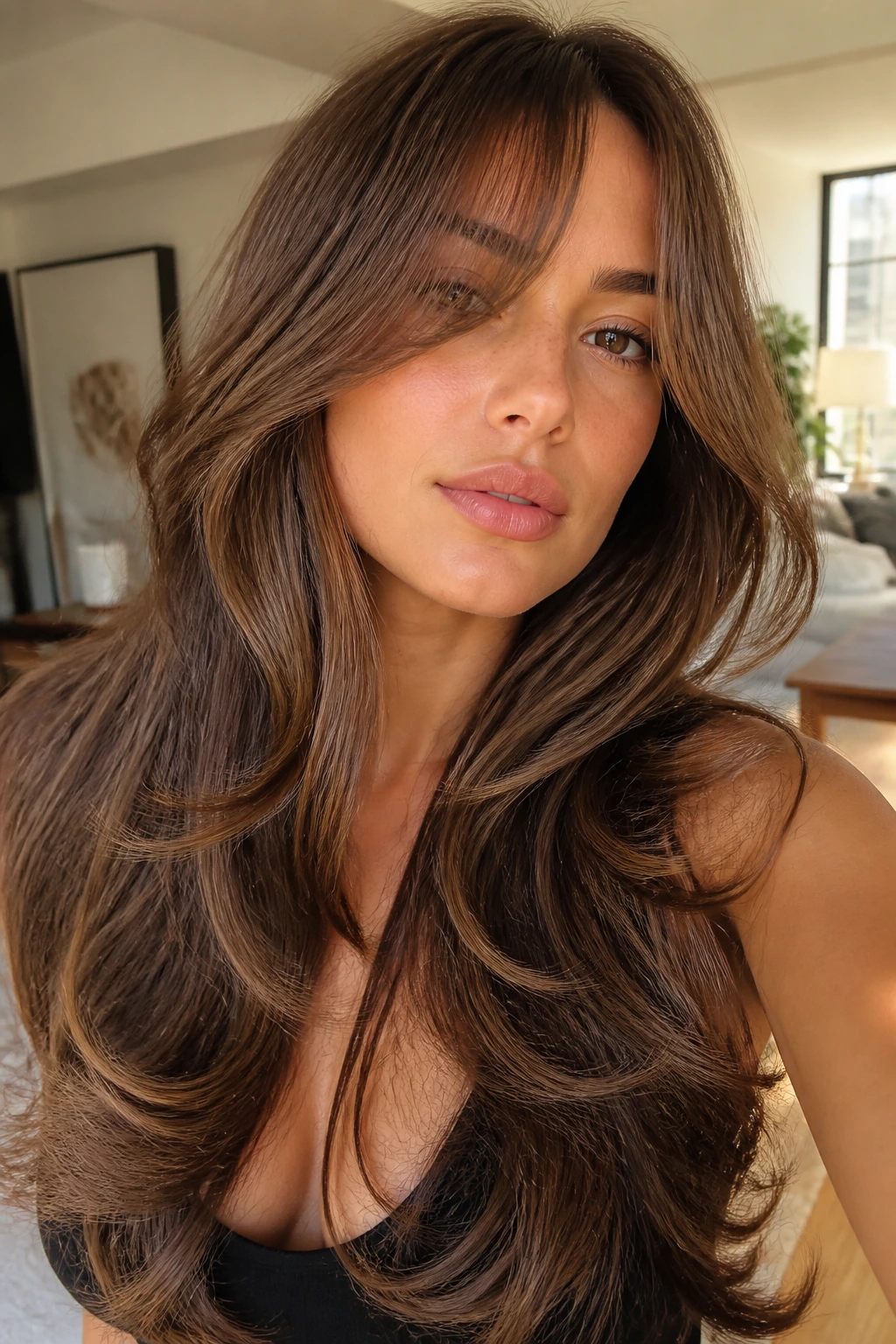
S-curve layers bend in a soft wave from the face through the lengths, which gives long hair a polished motion even before you start styling. Brushed-out curtain bangs fit that shape because they don’t sit flat; they open, curve, and blend into the front pieces with almost no visible seam.
This is one of the nicer choices for thick hair that needs movement without losing body. The curve through the layers helps distribute weight, and the curtain bangs make the front feel light instead of blocked. The whole cut looks especially good after a round-brush blowout, where the ends swing instead of flop.
If you prefer soft glamour over edgy texture, this version lands nicely. It’s not shaggy. It’s not blunt. It sits in the middle, which is often where the most wearable haircuts live.
18. Deep Side Part with Tapered Bangs
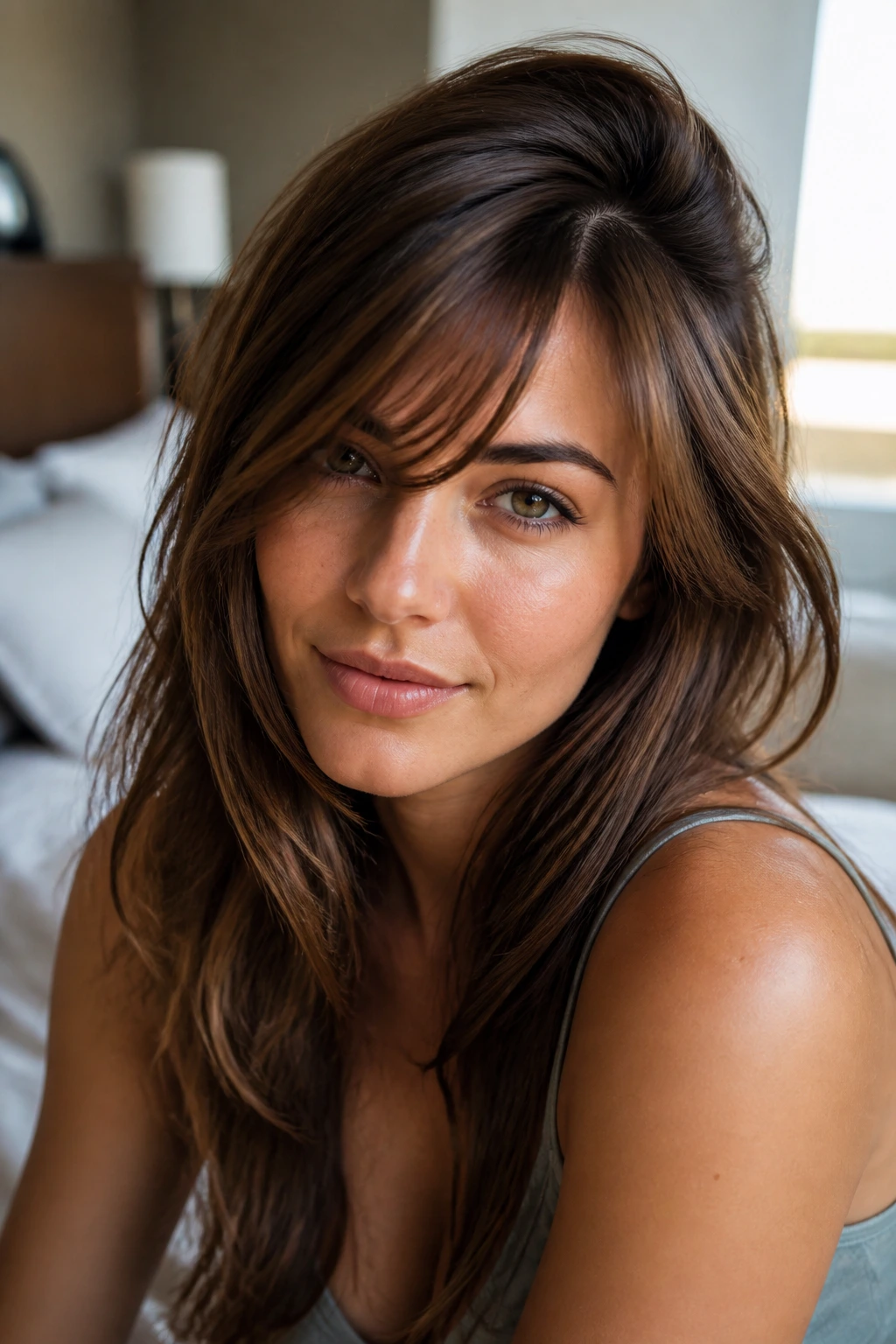
A deep side part changes everything before the scissors even come out. It gives long hair lift at the crown, volume on one side, and a built-in place for tapered bangs to sweep across the forehead. The result feels more dramatic than center-parted fringe, but less severe than a full blunt bang.
Tapered bangs are shorter near the part and longer as they move across the face. That shape softens the transition into long layers and works well if your hair naturally falls to one side anyway. The layers underneath should echo that diagonal movement, not fight it.
This cut also forgives a little styling laziness. If the bangs aren’t perfect, the side part hides some of the imperfections, and the long layers still do enough work to keep the style from going limp. Frankly, that’s useful.
19. V-Cut Layers with Eyebrow-Length Fringe
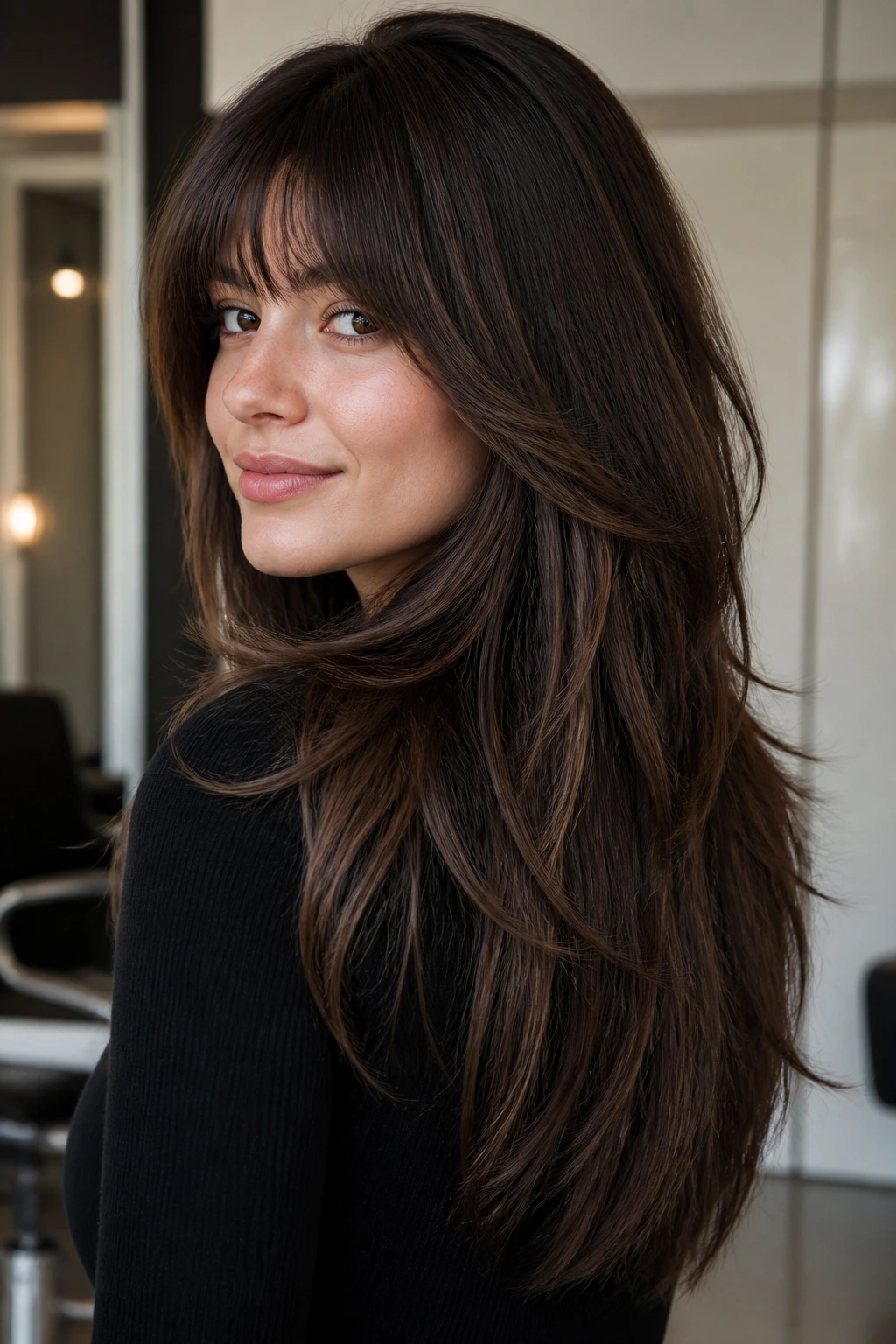
The V-cut is about movement that points down the back. The center stays longest, the sides shorten just enough to create a pointed silhouette, and the whole shape feels a bit more dramatic than a standard U-cut. Add eyebrow-length fringe, and the cut becomes face-forward without losing the long line.
The bangs should be soft, not dense. Eyebrow length leaves room for a slight lift when you dry them, which matters because straight-across fringe can hide the structure of the cut if it’s too heavy. The V-shape at the back helps very thick hair stay light enough to move.
I like this when long hair needs shape but not a full shag effect. It gives definition, especially from behind, and the fringe keeps the front from disappearing. A smooth blow-dry shows the geometry; loose waves soften it.
20. Baby Bangs with Long Shattered Layers

Baby bangs are a bold choice, and I won’t pretend otherwise. They sit well above the brows and create instant contrast against long, shattered layers that break up the length in a sharper way than soft feathering does. The cut lives on contrast.
The layers should be shattered enough to keep the finish from feeling too precious. Think piecey, broken, and a little irregular at the ends. That keeps the fringe from looking disconnected. It also helps the overall shape feel intentional rather than accidental.
This is best for someone who enjoys a haircut with some attitude and doesn’t mind a fringe that needs trimming often. It also rewards styling product: a touch of matte cream or a very light wax on the ends helps the texture show. Without that, the layers can look fuzzy instead of deliberate.
21. Straight Long Hair with Thinned-Out Bangs
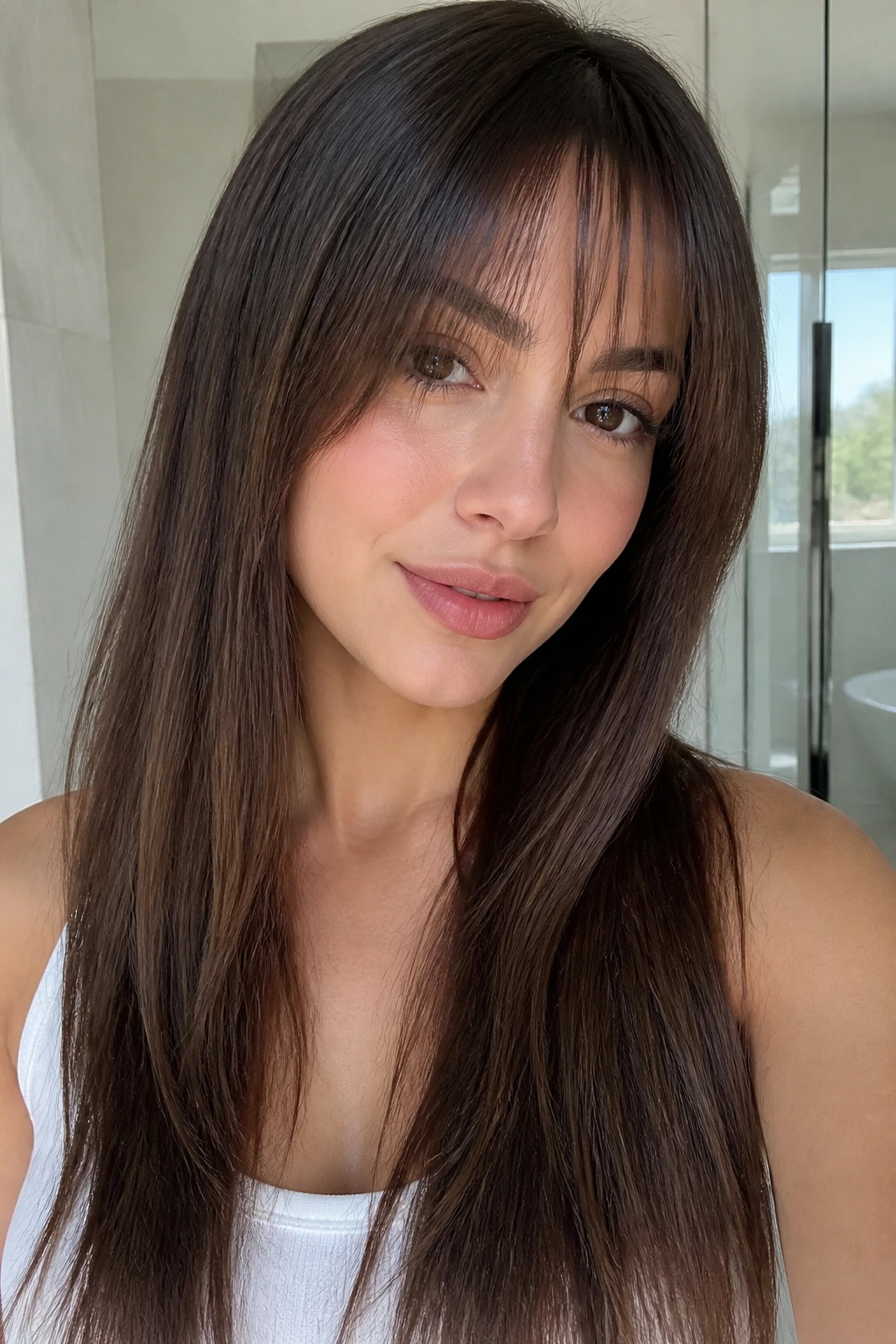
Straight long hair can get heavy fast, and thinned-out bangs are a clean fix when you want movement without a full texture overhaul. The fringe should be light enough to separate at the ends, while the long layers quietly remove bulk through the lower half of the hair.
The important part is where the thinning happens. I prefer it in the inner sections and near the mid-lengths, not right at the perimeter, because over-thinning the ends can make straight hair look stringy. The bangs should stay narrow enough to be brushed down with one pass, but not so sparse that they disappear.
This cut is neat. It behaves. That sounds boring until you realize how useful it is on hair that likes to look flat after a long day. A touch of shine spray on the lengths and a quick fringe reset in the morning usually does the job.
22. Beachy Layers with Face-Framing Bangs
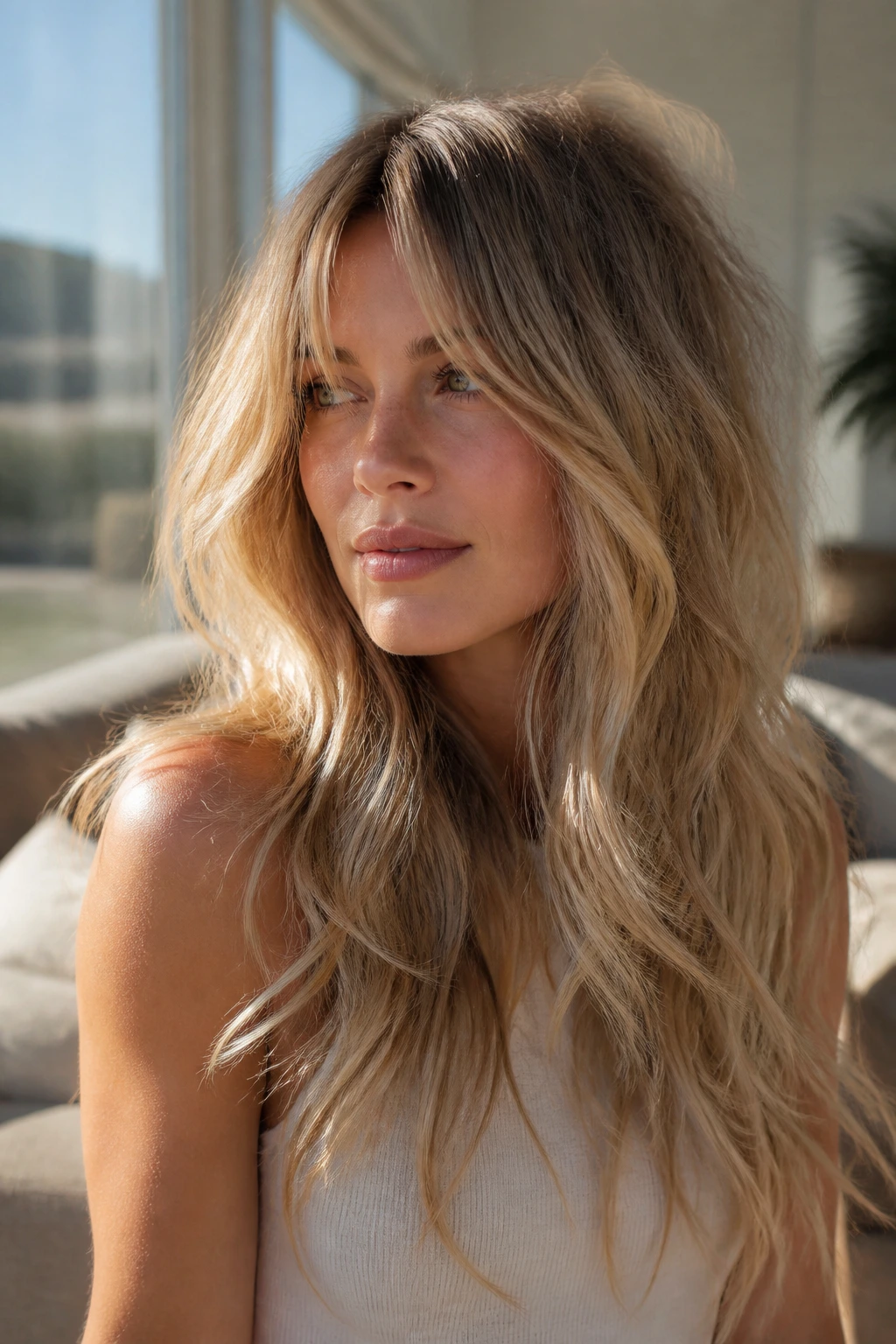
Beachy layers are less about literal waves and more about the kind of broken-up movement that feels easy from a distance and considered up close. The face-framing bangs should start near the cheekbones and soften into the rest of the haircut, so the front never feels like a separate piece.
This version likes texture spray. Not a crunchy amount. Just enough grit to give the layers a bit of hold so they don’t slide into each other. The bangs can be curled away from the face with a medium iron or blown loose with a brush and left slightly imperfect.
If you wear your hair mostly down, this is one of the friendliest shapes in the whole collection. It looks good with volume, but it also survives a rough dry and a half-bent front section. That matters more than people think.
23. Thick-Hair Debulking Layers with Split Fringe
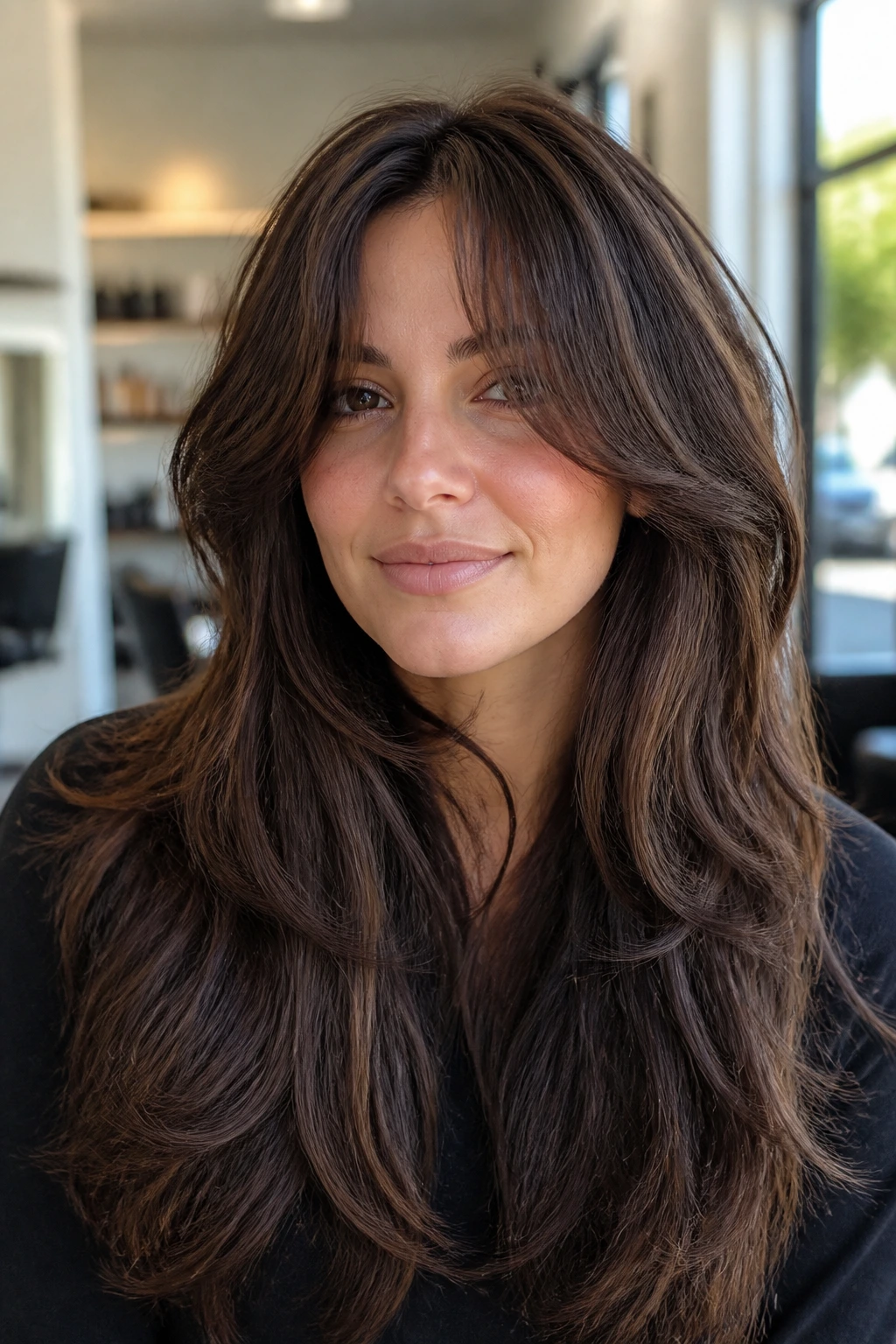
Thick hair needs a cut that respects density instead of pretending it isn’t there. Debulking layers remove weight from the places where the hair balloons out, especially around the sides and lower lengths, while a split fringe keeps the front light enough to move.
The split part of the fringe matters because it stops the bangs from becoming a wall. On thick hair, a full heavy fringe can swallow the face. A center split or a very open curtain shape gives the eyes room and lets the rest of the haircut breathe.
This is one of the more practical entries in the collection. It may not be the flashiest, but it often solves the “my long hair looks like a triangle” complaint better than a fashionable shape alone. If your hair swells in humidity, this is worth considering.
24. Fine-Hair Volume Layers with See-Through Bangs
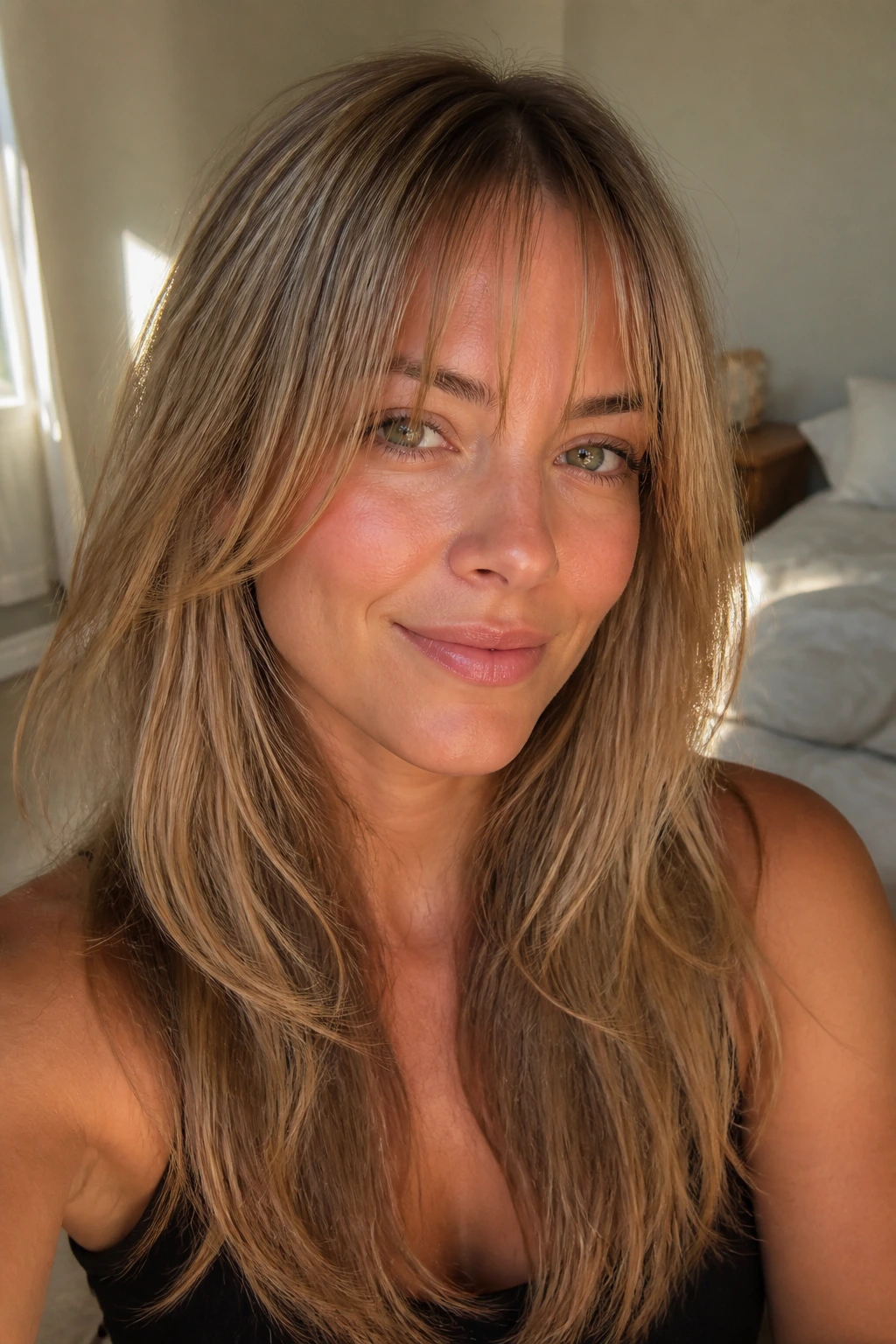
Fine hair needs a different plan. Heavy layers can make it look thin; too few layers make it fall flat. Volume layers solve that by creating lift near the crown and keeping the ends from sitting like a stringy curtain. See-through bangs, meanwhile, give the front a soft frame without stealing too much density.
The bangs should be airy enough that a bit of forehead shows through. That lightness matters because a solid fringe can overpower fine hair in a hurry. The layers should stay long and strategically placed, not chopped all over. You want movement, not gaps.
A root-lifting mousse at the crown and a quick blow-dry with a round brush can make this cut look fuller than it is. A lot of people overdo product on fine hair. Don’t. The whole point is keeping the strands free enough to move.
25. Extra-Long Flowing Layers with a Soft Grown-Out Fringe
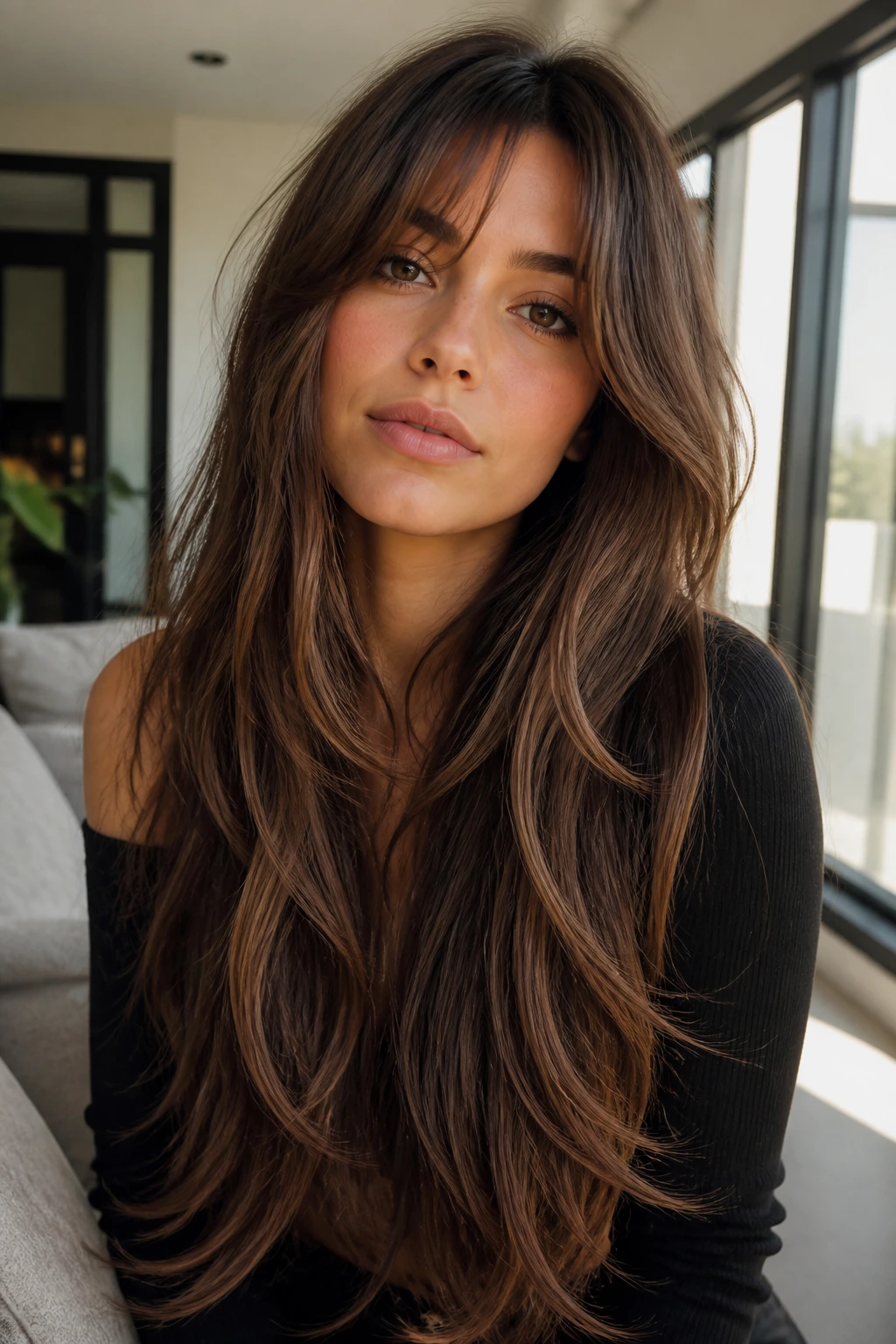
This is for the person who wants long hair to stay long, but not boring. Extra-long layers keep the overall length dramatic, while a soft grown-out fringe frames the face without demanding constant trims. It’s one of the most forgiving versions in the whole lineup.
The fringe should blend into the longest face-framing pieces instead of stopping cleanly. That gives you the feeling of bangs without the hard maintenance line. The layers can start lower, around the chest or even below, which helps preserve the impact of really long hair.
I like this one when somebody says they want shape, but they also say, a minute later, that they do not want obvious layers. Fine. This is the compromise. The shape is there when you move, but it doesn’t shout from across the room.
Why Textured Layers and Bangs Keep Long Hair from Falling Flat
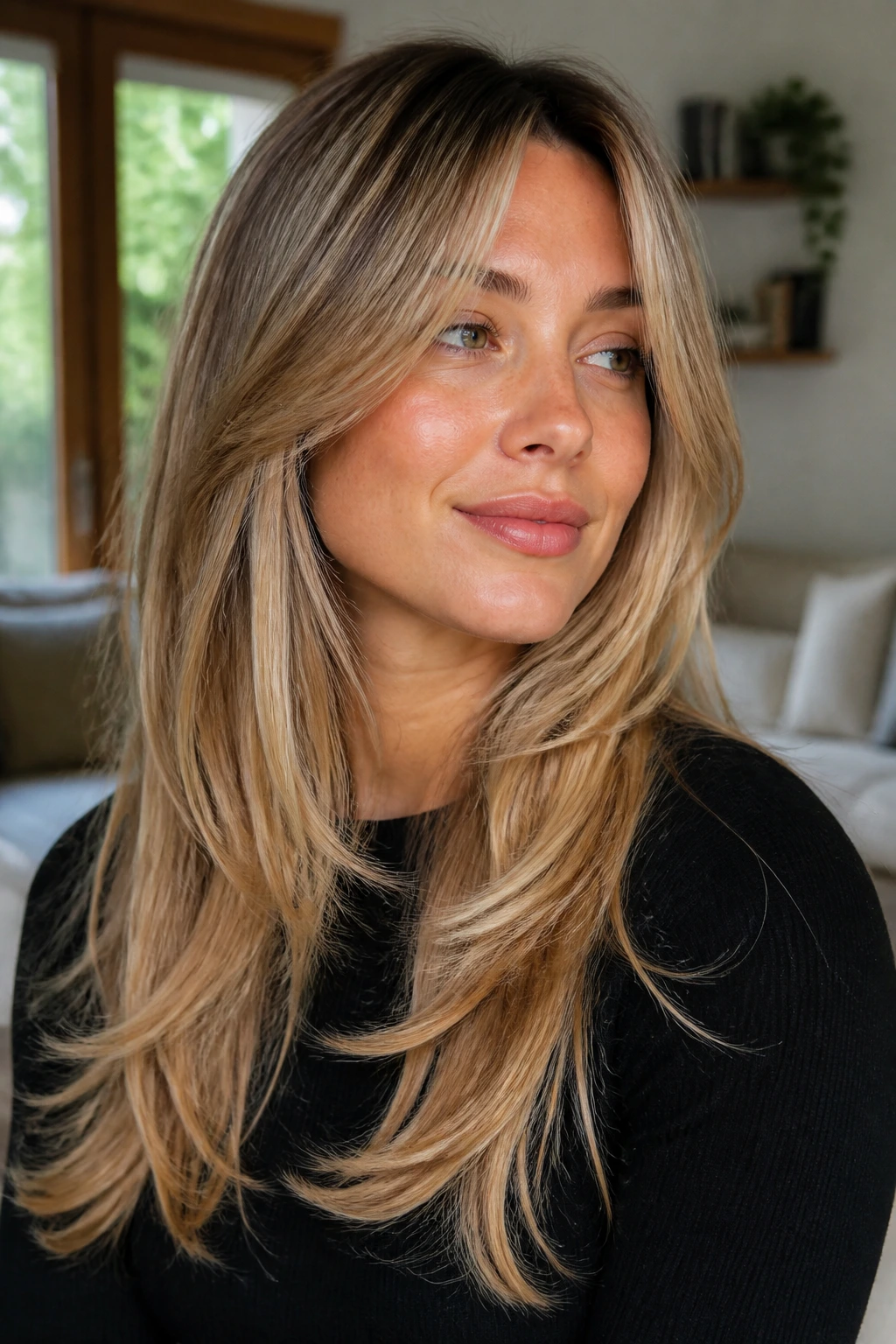
Long hair has a weight problem. That’s not a flaw; it’s physics. The longer the hair gets, the more it pulls straight down, and the more likely the roots are to collapse while the ends hang on in one blunt line. Textured layers interrupt that downward pull. They move some of the bulk upward, break the perimeter, and give the hair places to bend instead of just drop.
Bangs change the front of the haircut, which is where people notice shape first. A fringe can shorten the visual length of the face, show off the eyes, and stop all that hair from disappearing behind you. On a long cut, that matters because the whole style can otherwise read as one giant curtain. The right bangs give the haircut a front door.
Texture also helps the style survive real life. Wind, humidity, sleeping on it, clipping it up for an hour — none of that treats long hair gently. A cut with layered movement and a well-placed fringe comes back from that damage with less effort. That’s why these styles tend to look better after a little wear. They’re not built for perfect stillness. They’re built to move.
Essential Tools and Products for Styling These Cuts
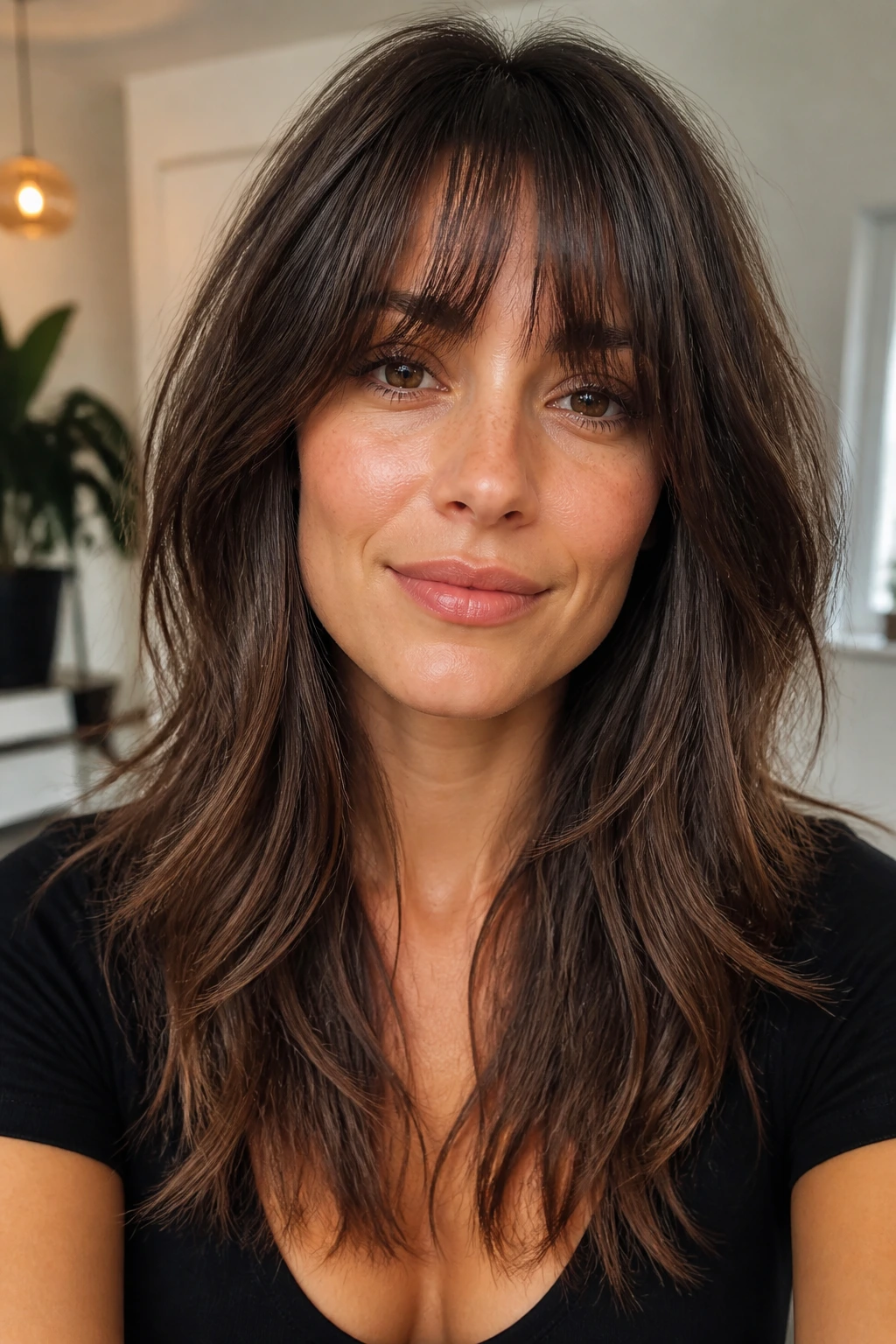
- Blow dryer with a narrow nozzle: Directs airflow at the fringe and roots so the shape doesn’t puff in random places.
- 1.5- to 2-inch round brush: Best for curtain bangs, feathered ends, and soft bends through the face frame.
- Lightweight mousse: Adds root lift on fine hair without making the lengths sticky.
- Heat protectant spray: Non-negotiable if you touch a round brush, flat iron, or curling wand to the front sections.
- Texturizing spray: Good for piecey layers and shaggier shapes; use it on mid-lengths, not the scalp.
- Dry shampoo: Helps bangs survive day two and keeps the crown from separating.
- Wide-tooth comb: Useful for curly or wavy cuts where brushing too hard breaks up the shape.
- Duckbill clips: Great for setting the bangs while they cool after blow-drying.
- 1-inch curling wand or flat iron: Handy for adding a soft bend to face-framing layers.
- Diffuser attachment: A must if your hair is curly or wavy and you want the layer pattern to stay intact.
What to Ask Your Stylist So the Cut Matches Your Hair, Not Just the Photo
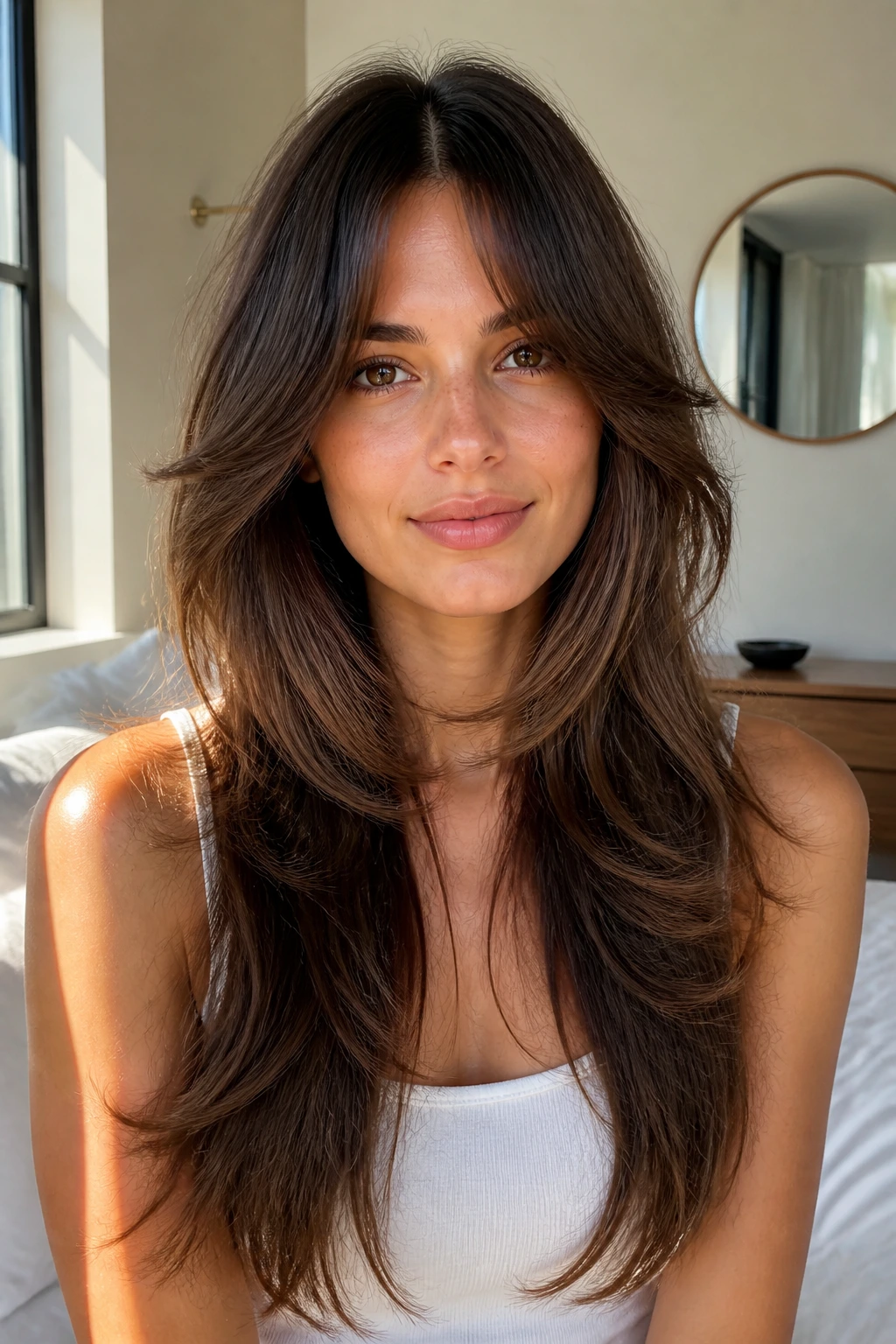
A photo helps, but only if you talk through the mechanics. Show your stylist where your hair is thickest, where it falls flat, and whether you wear it air-dried, blown out, or mostly up. That matters more than the exact picture angle. A haircut that looks right on a person with fine, straight hair can behave very differently on dense waves.
Ask about where the layers should start. Collarbone, chin, cheekbone, and crown are not interchangeable points. On long hair, starting layers too high can hollow out the shape. Starting them too low can leave you with long hair that still feels heavy.
Bangs need even more detail. Say whether you want them to graze the brows, split at the center, sweep to the side, or stay see-through. If your hair has a cowlick, say so before the scissors touch it. If your hair is curly, ask about a dry cut or curl-by-curl shaping. If your hair is fine, ask the stylist to avoid over-thinning the fringe and ends, because that can make the whole style look wispy in the wrong way.
One more thing. Ask how the cut will look on day three, not just at the chair. That question tells you whether the stylist understands how the hair actually behaves.
How to Wear These Shapes Without Fighting the Cut

Shape: Decide where the volume should live before you start styling. Curtain bangs and feathered layers want lift away from the face, while blunt fringe cuts often need a smoother, straighter finish across the forehead. If the silhouette is built right, you won’t need to rescue it with too much product.
Styling: Blow-dry the fringe first. Every time. Bangs set the tone for the whole haircut, and they go weird faster than the rest of the length. Use a round brush or your fingers depending on the cut, then let the front cool before you move on.
Pairing: These cuts play well with necklines and glasses, which people often forget. A soft fringe plus long layers tends to sit nicely with crew necks and open collars. Thicker bangs can fight with oversized glasses if the fringe ends too low, so leave a little space above the frames when possible.
Longevity: On day two, refresh the bangs separately from the lengths. A spritz of water or a tiny bit of dry shampoo at the roots is usually enough. Do not re-wet everything unless you enjoy starting from scratch.
Additional Tips and Style Boosters
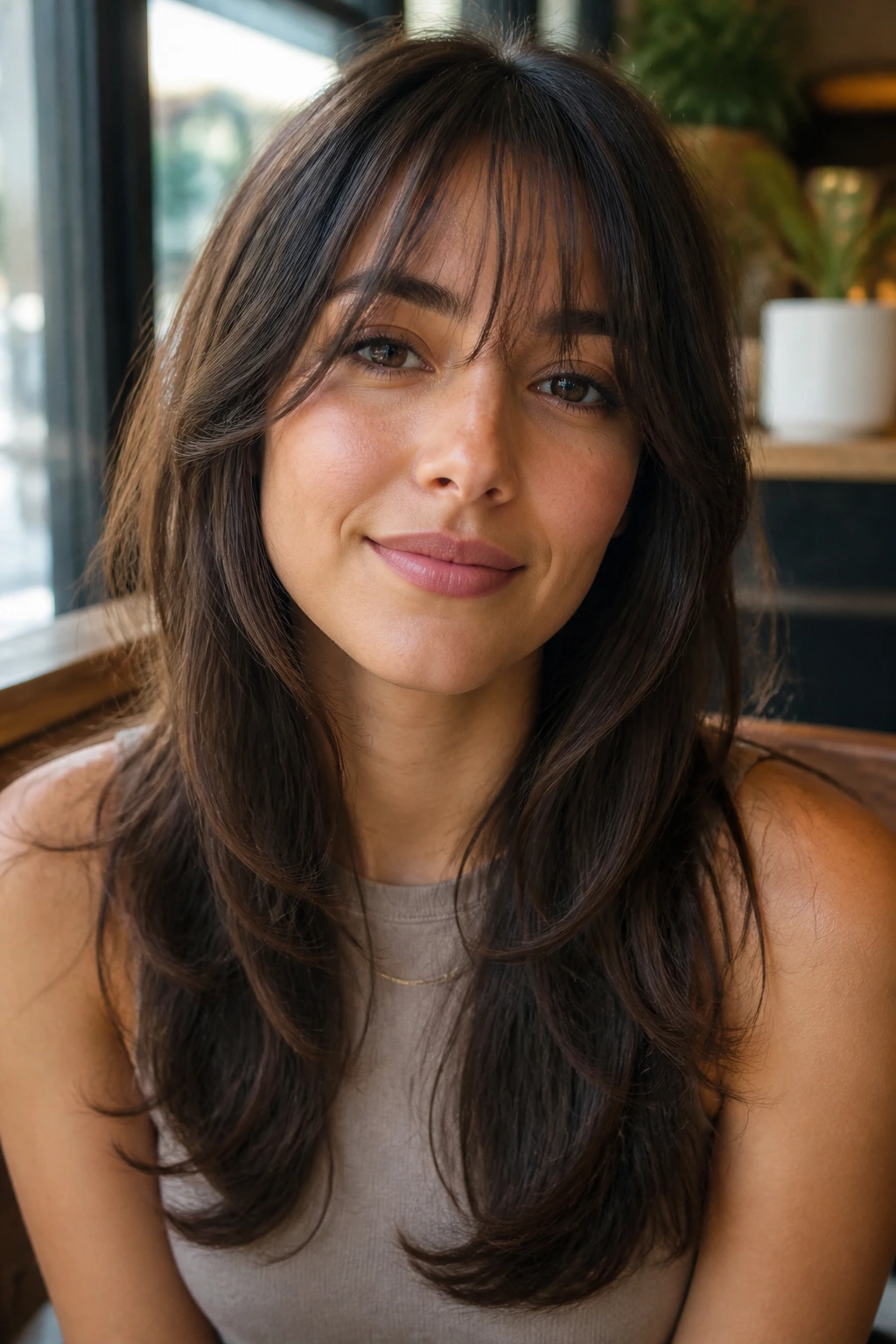
Texture Boost: Scrunch a pea-sized amount of light cream through the mid-lengths when the hair is damp, then dry the roots first and the ends last. That keeps the layers visible instead of letting them clump.
Fringe Tweak: If the bangs feel too blunt, open them with your fingers and dry the center section a little longer than the sides. That one small move softens the line fast.
Volume Trick: Flip the part from one side to the other while the roots are still warm from the dryer. It’s a simple move, but it helps long layered hair lift at the crown without teasing it.
Low-Fuss Version: If you hate daily styling, choose a bang shape that can split naturally — curtain, bottleneck, or side-swept. They grow out with less stress and don’t demand a perfect brush-out.
Polished Finish: Run a tiny amount of shine serum only on the lower third of the hair. Too much near the fringe kills movement and makes the layers look stuck together.
Common Mistakes That Make Long Layers Look Heavy
-
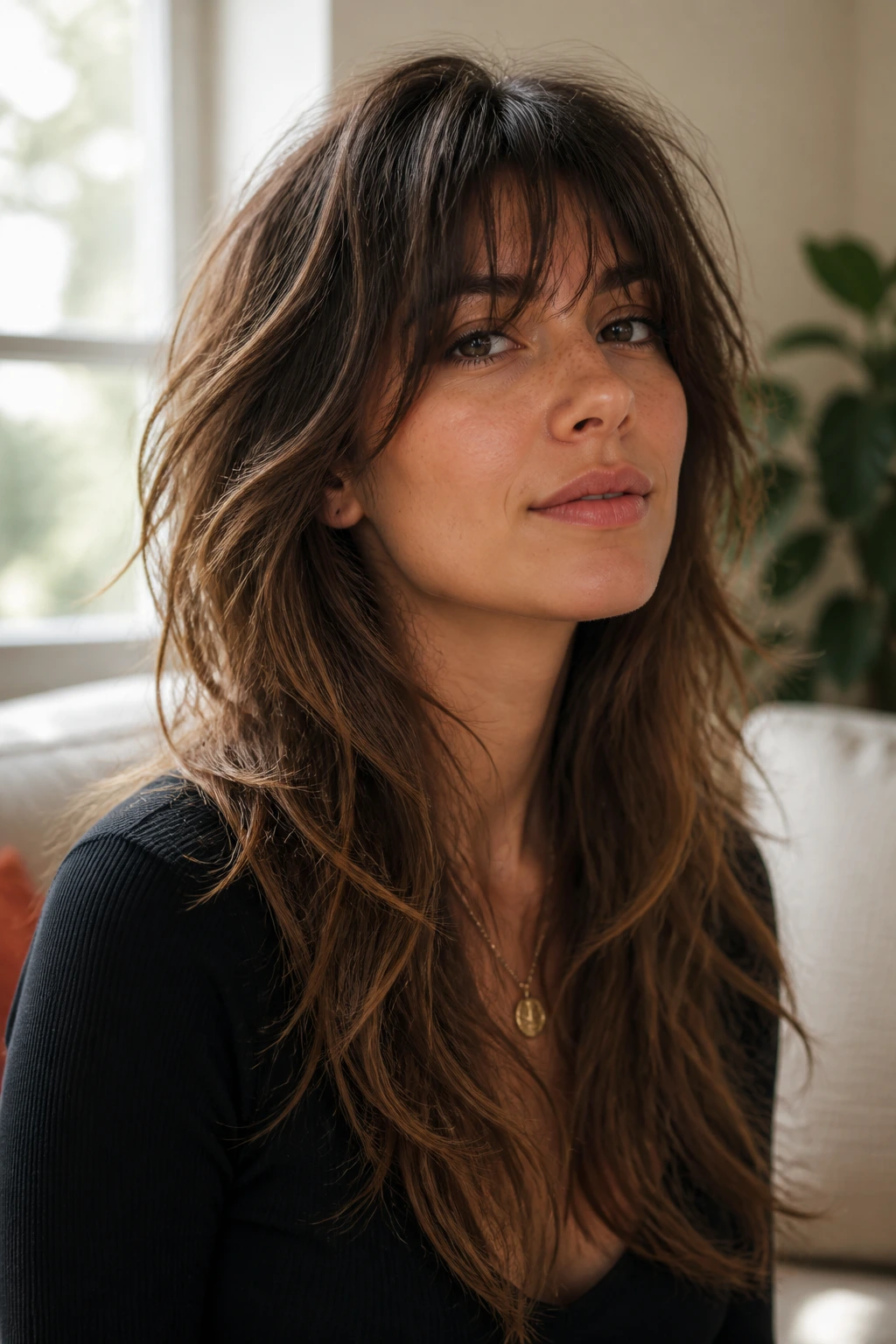
Cutting the fringe too thick: A dense bang line can overpower long hair fast. If the forehead feels hidden and the rest of the cut looks flat, the fringe is probably too heavy. Ask for a softer center or point-cut ends.
-
Placing the first layer too high on fine hair: That can leave gaps and make the hair look thin through the mids. On finer textures, longer layers usually give a better result than aggressive chopping.
-
Thinning the ends on already sparse hair: This is a bad one. The hair loses its shape, the ends fray, and the whole style starts to look see-through in the wrong places.
-
Ignoring the cowlick at the front: Bangs that fight a strong growth pattern will separate, split, or spring up. A stylist can usually work around it, but only if they know it’s there.
-
Skipping the bang trim: Long layers can go a while, but fringe cannot. Once the bangs start poking the eyes or collapsing into one side, the cut loses its clean line.
Variations and Adaptations to Try
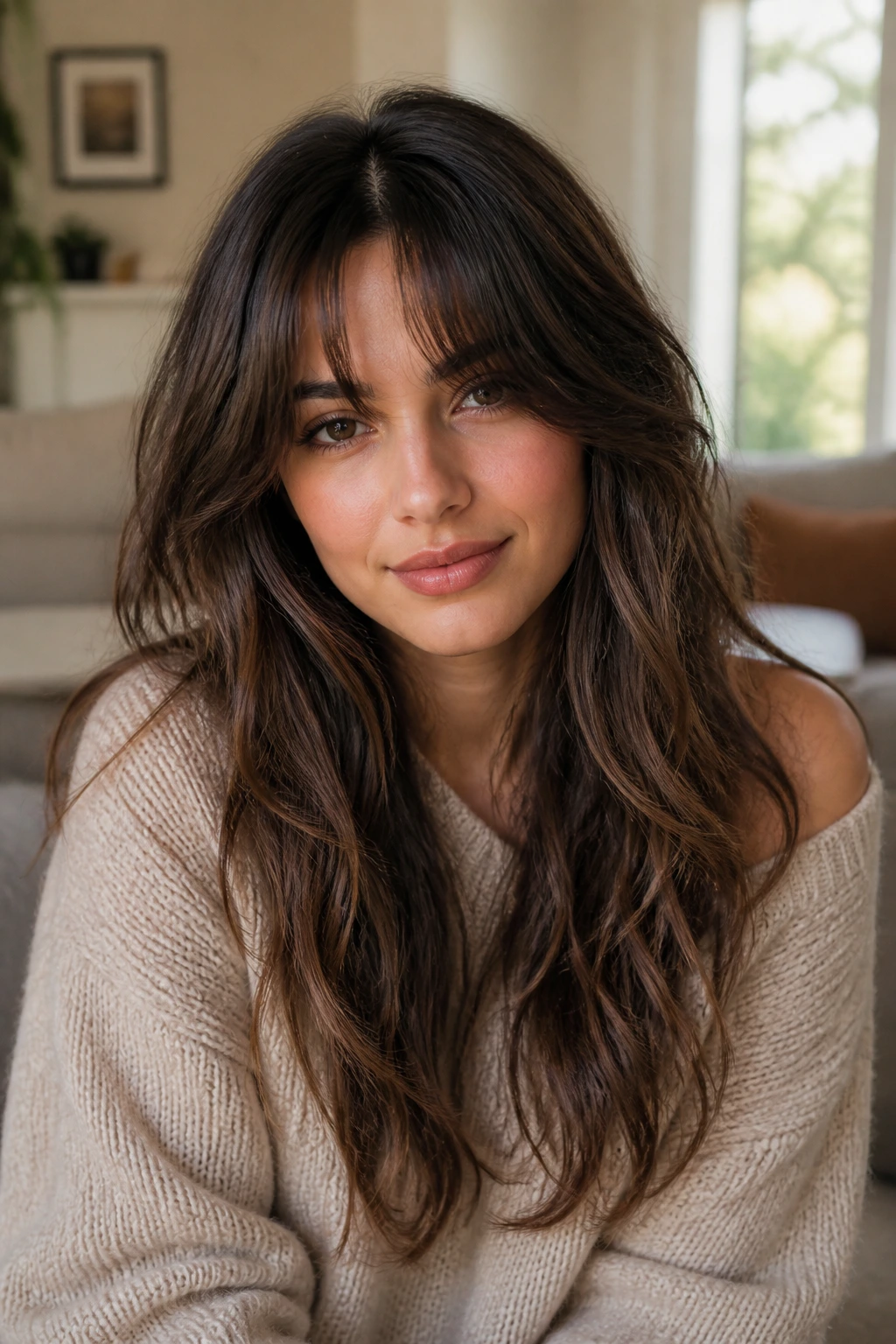
The Fine-Hair Lift: Keep the layers long and shallow, then pair them with see-through bangs that don’t steal density from the front. Use mousse at the roots and stop before the lengths get overloaded.
The Thick-Hair Air-Out: Ask for debulking through the interior and a split fringe that breaks up the front. This version keeps heavy hair from turning triangular and cuts down on the “helmet” effect.
The Curly Respect Cut: Shape the bangs and layers while the hair is dry enough to show its real bounce. That keeps the fringe from shrinking too high and helps the layers follow the curl pattern instead of buckling against it.
The Low-Maintenance Grow-Out: Choose curtain or bottleneck bangs and long face-framing pieces that blend into the rest of the cut. This is the easiest route if you want shape but do not want constant fringe trims.
The Statement Fringe: Go for blunt, micro, or baby bangs with shattered long layers underneath. The contrast is strong, so the rest of the haircut should stay soft enough to keep it from looking severe.
The Soft Office Version: Ask for side-swept or wispy bangs with long U-shaped layers. It reads polished, blends into a ponytail, and survives a day spent at a desk without falling apart.
Maintenance, Trims, and Grow-Out Strategy
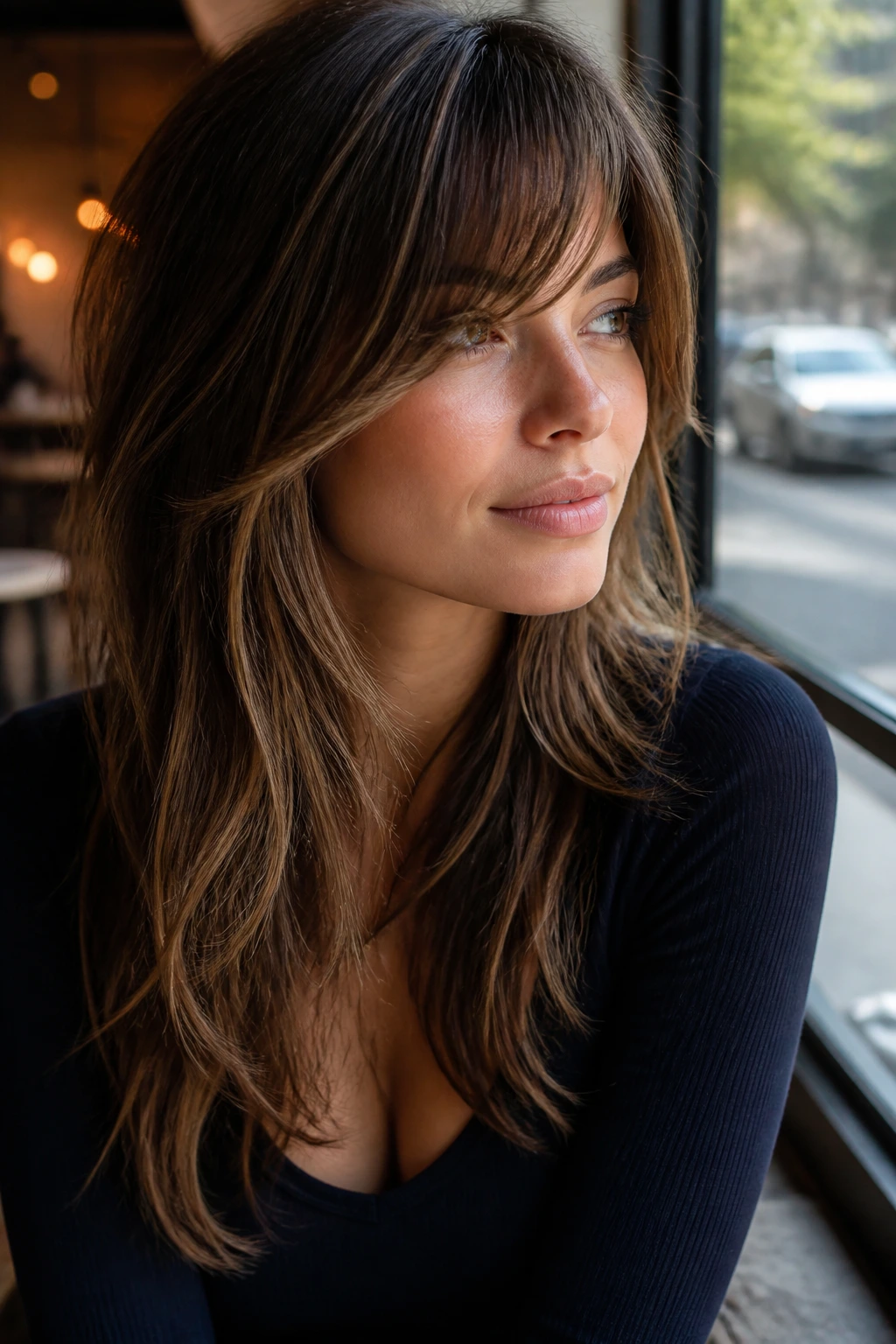
Bang maintenance is the part people underestimate. Long layers can usually go 8 to 12 weeks between shape-up trims, depending on how fast your hair grows and how much the front pieces bother you. Bangs are another story. Curtain, bottleneck, or side-swept fringe often needs a small trim every 3 to 5 weeks if you want the shape to stay clear.
The good news is that many of these cuts age in a useful way. A soft fringe grows into face-framing layers; a blunt bang softens into a curtain shape; a shaggy cut gets a little more lived-in and less obvious. That means you can plan the grow-out instead of fearing it. If you know you travel, forget appointments, or simply hate babysitting your hair, pick a fringe that bends rather than breaks.
Day-to-day upkeep depends on texture. Straight hair usually needs the bang area refreshed more often, because it shows grease faster at the forehead. A small amount of dry shampoo at the roots can buy you another day. Wavy and curly hair often need less frequent washing, but they do need the fringe re-shaped after sleep. A quick mist of water and a finger twirl around the face frame can put the bend back in place.
For overnight care, a loose clip at the root of the bangs or a soft pin curl can keep them from flattening straight across the forehead. That tiny move makes a bigger difference than most expensive products. If your layers lose movement at the ends, a 1-inch iron and two or three bends through the lower half of the hair can wake them up fast.
Frequently Asked Questions About Textured Layers with Bangs for Long Hair
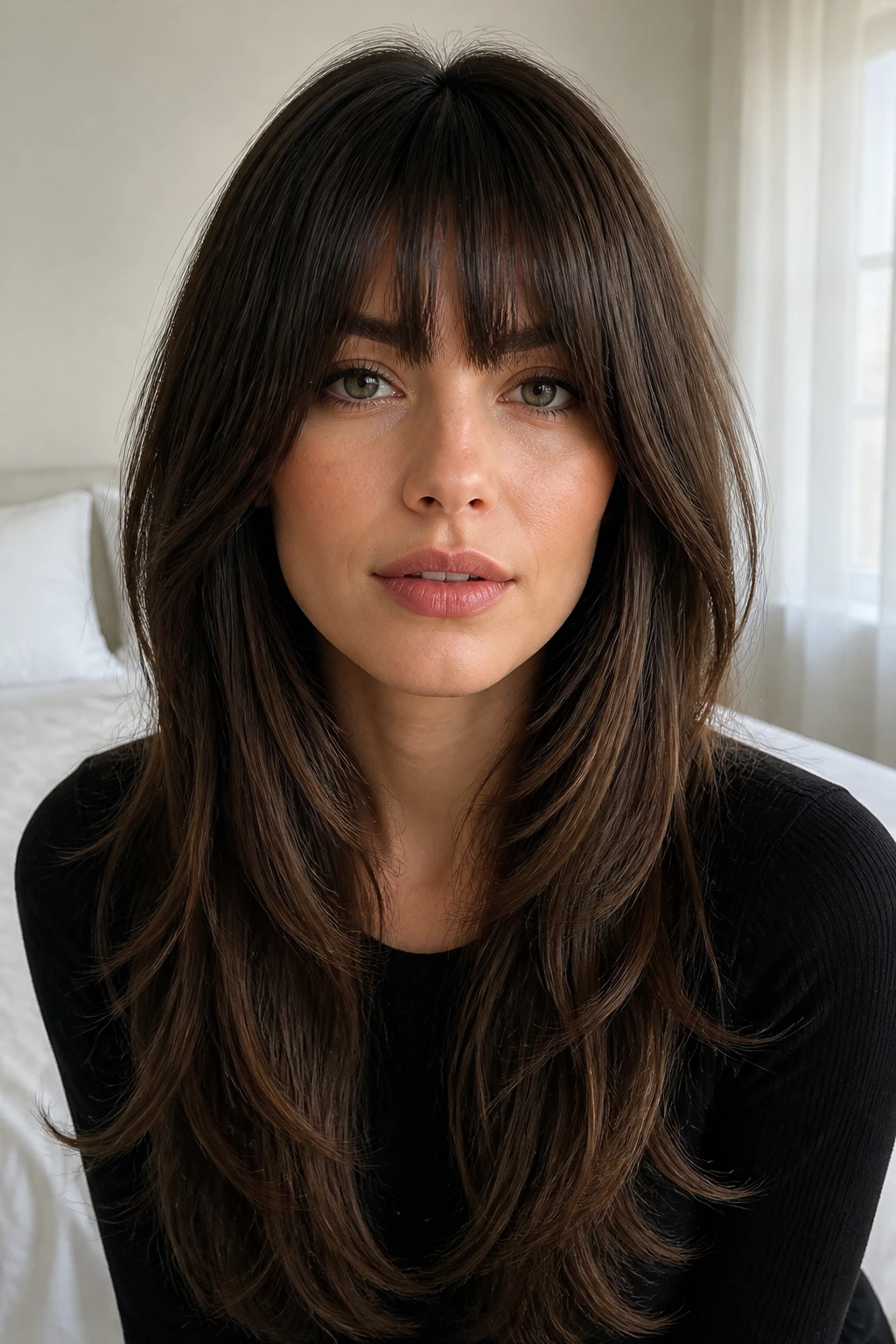
Will textured layers make my long hair look thinner?
Not if the layers are placed well. On fine hair, long layers with subtle movement keep the perimeter full, while on thick hair, texture removes bulk without making the ends look scraggly. The issue is usually over-cutting, not layering itself.
Are bangs a bad idea if I have a cowlick?
Not automatically, but the bang shape has to work with it. Side-swept, curtain, or bottleneck bangs usually cooperate better than a blunt straight-across fringe. Tell the stylist exactly where the cowlick pushes hair, because that changes the drying direction.
Which version is easiest to grow out?
Curtain bangs, side-swept fringe, and soft bottleneck bangs usually grow out with the least drama. They blend into face-framing layers instead of turning into one awkward line across the forehead. Micro bangs and blunt fringe are more demanding.
Can I air-dry this haircut, or does it need a blowout?
You can air-dry many of these cuts, especially shaggy, beachy, or curly versions. The front pieces may still need a quick touch with a brush or fingers, because bangs flatten faster than the rest of the hair. A full blowout is optional, not mandatory.
What should I avoid if my hair is very thick?
Too many short layers, especially near the crown, can make thick hair puff out. Ask for weight removal in the right places, not all over the head. A good stylist will thin the bulk without creating holes.
Do textured layers work on straight hair?
Yes, but the texture has to be built into the cut or added with a tool. Straight hair shows every line, which is why point-cutting and soft internal layering matter. Without that, the shape can look stiff and boxy.
How often do bangs need trimming?
Most fringes need a touch-up every 3 to 5 weeks if you want the shape to stay neat. Some people can stretch it longer, especially with curtain or side-swept bangs, but once the fringe starts hitting the eyes, styling gets annoying fast.
What if I hate styling my hair in the morning?
Pick a fringe that splits naturally and layers that do not depend on a precise finish. Curtain bangs, grown-out fringe, and long feathered layers are the easiest to live with. You’ll still need a little attention at the front, but the cut won’t fall apart if you move fast.
The Shape That Keeps Long Hair Alive
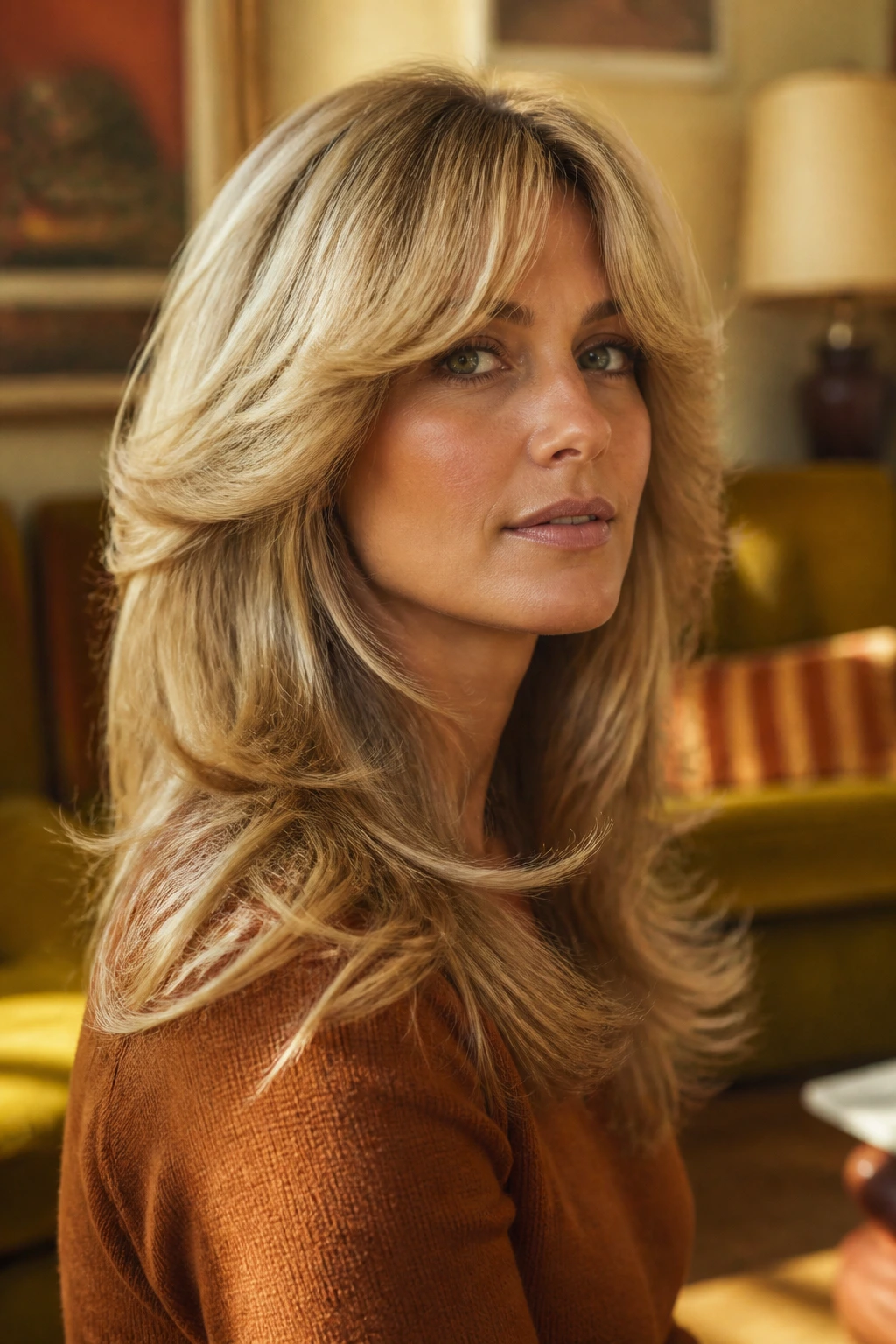
Long hair does not need to mean one flat shape from roots to ends. Once the weight is broken up and the front has some movement, the whole style feels lighter, cleaner, and easier to wear. That’s the real strength of textured layers with bangs: they make length look intentional instead of accidental.
The best cut for you is the one that matches your texture, your morning routine, and your tolerance for fringe trims. Pick the shape that will still make sense after a windy commute, a rough sleep, or a day you barely touch a brush. That’s the test that matters.
And if you’re sitting on the fence, start with a softer fringe and long layers that can grow into something bolder later. Hair has a way of changing its mind for you.