



Square faces can wear curtain bangs well — but the cut has to be soft, not boxy. With thin hair, the whole game changes again: you need enough shape to frame the face, but not so much bulk that the fringe sits like a stiff little shelf across the forehead. The sweet spot is a medium-length curtain bang that opens from the center, bends around the cheekbone, and tapers into the sides with a little air left in it.
That’s the version that does the work quietly. It softens the jaw, trims down the visual width at the sides of the face, and keeps fine strands from looking overworked. I like curtain bangs that disappear into the haircut a bit — not bangs that announce themselves with a hard edge and a lot of product.
There’s a reason this combo keeps coming back in salons. A square face already gives you clean lines: strong jaw, fairly even width through the forehead and cheekbones, and a shape that can look sharper when the hairline is cut bluntly. Thin hair adds another wrinkle, because a heavy fringe can fall flat fast. The right curtain bang solves both problems at once, and when it’s cut right, you don’t have to fight it every morning.
Why These Cuts Hit the Sweet Spot

-
They soften the jaw without hiding it: The longer side pieces pull the eye diagonally instead of stopping it at one hard line, which matters a lot on square faces.
-
They give thin hair a little front-end lift: A lighter curtain fringe keeps the hair from collapsing at the front, where fine strands usually show the most.
-
They grow out cleanly: A good curtain bang can slip into face-framing layers if you skip a trim, which is a lifesaver when you do not want a strict bang schedule.
-
They work with medium-length cuts: Collarbone bobs, lobs, and shoulder-grazing layers all give the fringe somewhere to land, so the shape feels connected.
-
They can be styled fast: A round brush, a blow-dryer, and 30 seconds of direction are often enough to make them look intentional.
-
They leave room for mood changes: You can wear them center-parted, a little off-center, or tucked back at the sides without the haircut falling apart.
1. Cheekbone-Start Curtain Bangs
The cleanest curtain fringe for a square face starts at the cheekbone, not the middle of the forehead. That placement pulls the eye diagonally, which softens the jawline without turning the whole haircut into a cloud of layers. On thin hair, I like the center kept light and the outer pieces left a touch longer so the bang has swing.
Ask for a Soft, Floating Center
Tell your stylist you want the shortest point to graze the brow area and then slide longer toward the cheekbone. Ask for point-cut ends instead of a blunt line. That small detail matters on fine hair — the ends need movement, not a heavy edge that sits like cardboard.
Best with: collarbone haircuts, long bobs, and shoulder-length layers.
Avoid if: your hair splits hard at the center and refuses to move unless you heat-style it every day.
Quick styling note: blow-dry the center forward first, then roll each side away from the face with a 1¼-inch round brush. Let it cool before you touch it. Warm hair lies.
2. Bottleneck Curtain Bangs
Bottleneck bangs are a smart move when you want more shape at the middle and a softer, wider sweep at the sides. The center is a little narrower, then the fringe opens outward like the neck of a bottle — which sounds odd until you see how well it frames a square face. The diagonal lines help break up the boxier jaw and forehead balance.
On thin hair, this shape works because it does not ask the bangs to carry too much width all at once. The front stays light, the sides stay longer, and the whole thing reads as movement rather than a slab of fringe. That’s the real win.
Ask for the shortest section to sit just below the brows, then let the sides drop toward the cheekbones. If your stylist starts over-thinning the ends, stop them there. Bottleneck bangs need shape, not wisps that vanish by lunch.
3. Feathered Side-Sweep Curtains
Why do some curtain bangs look airy while others look like a sad split in the middle? The feathered side-sweep version is often the answer. It leans a little off-center, which gives square faces a softer line through the front and makes thin hair look less like it was parted by force.
How to Wear It
Dry the fringe with a side bias — not a full deep side part, just enough tilt to keep it from sitting dead center every day. Then use your fingers to break up the ends after the brush work is done. A touch of dry shampoo at the roots helps here, especially if your hair goes flat after a few hours.
- Length: brow to cheekbone
- Best cut detail: soft layers, no blunt edge
- Finish: loose, brushed-out bend
- Good for: mornings when you want the front to look fuller with almost no effort
This version is one of my favorites for very fine hair because it never looks over-styled. It just looks like hair that naturally falls that way, which is the whole point.
4. Brow-Grazer Wisps

A brow-grazer gives you the most face opening for the least amount of hair in the bang area. That sounds like a small thing, but on thin hair it matters. Too much density in the fringe steals volume from the crown, and then the whole haircut feels top-heavy.
The wispy version skims the brows, then softens into longer side pieces that sit near the upper cheek. It’s a nice choice if your face shape already feels angular and you want something lighter around the eyes. I would not cut this too sparse, though. See-through is good; patchy is not.
If you wear glasses, this shape can work especially well because it keeps the fringe from bunching against the frames. Ask your stylist to check the bangs both with and without your glasses on. Little detail. Big difference.
5. Collarbone Lob With Curtain Bangs
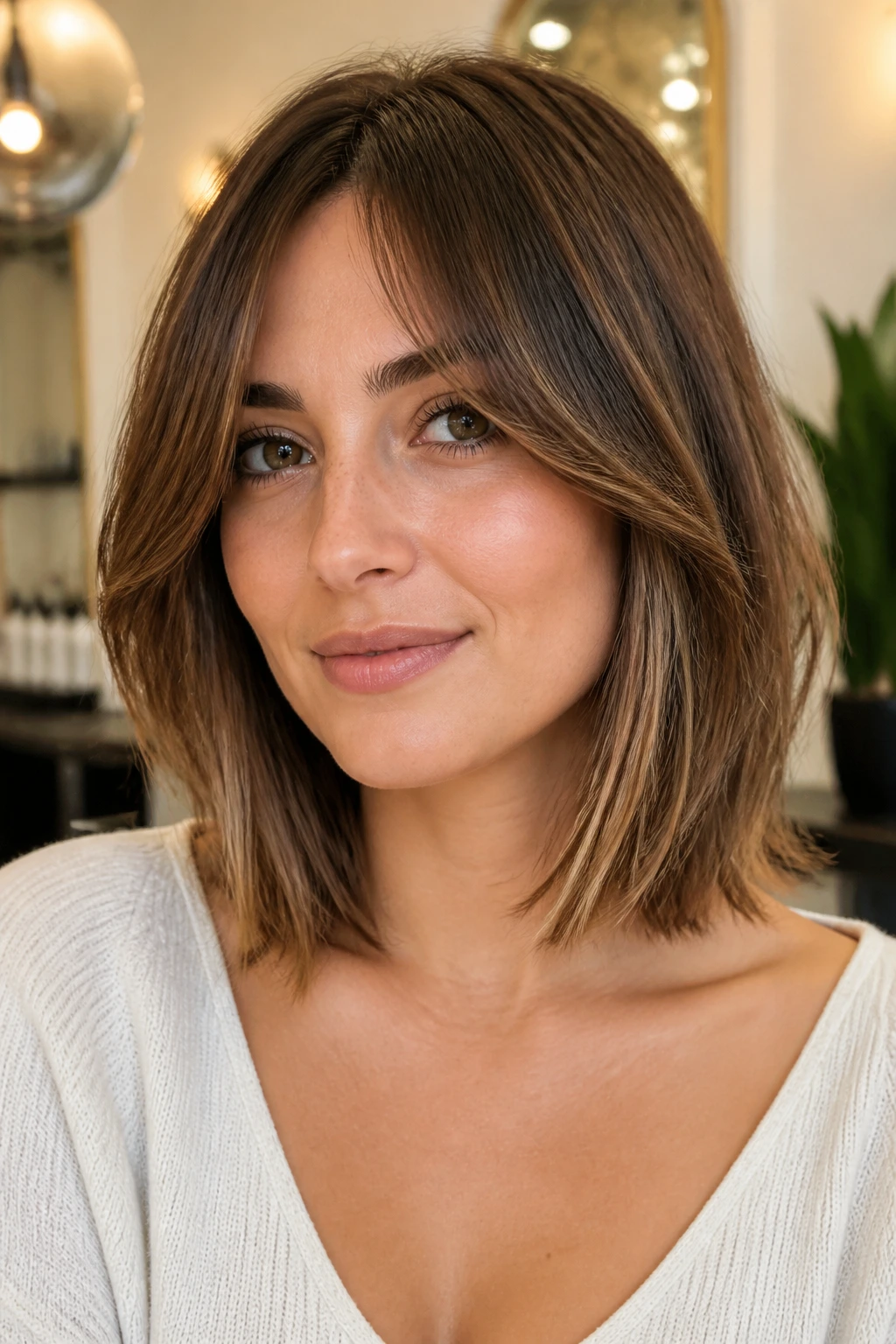
The collarbone lob is one of the best partners for curtain bangs on square faces because it leaves enough hair around the jaw to soften the outline. Thin hair often looks fuller at this length than it does when it’s too long, where the ends start to look stringy. Add a curtain fringe, and the whole cut gets a little swing at the front without losing shape at the perimeter.
This combo works because the bang and the lob talk to each other. The front pieces blend into the cheekbone area, while the base stays clean enough to make the hair look thicker than it is. That clean edge is doing some heavy lifting.
I like this version on hair that bends a little naturally. Straight hair can absolutely wear it, but you’ll want a round brush or a bend from a flat iron so the fringe does not split too sharply.
6. Razored Piecey Curtains
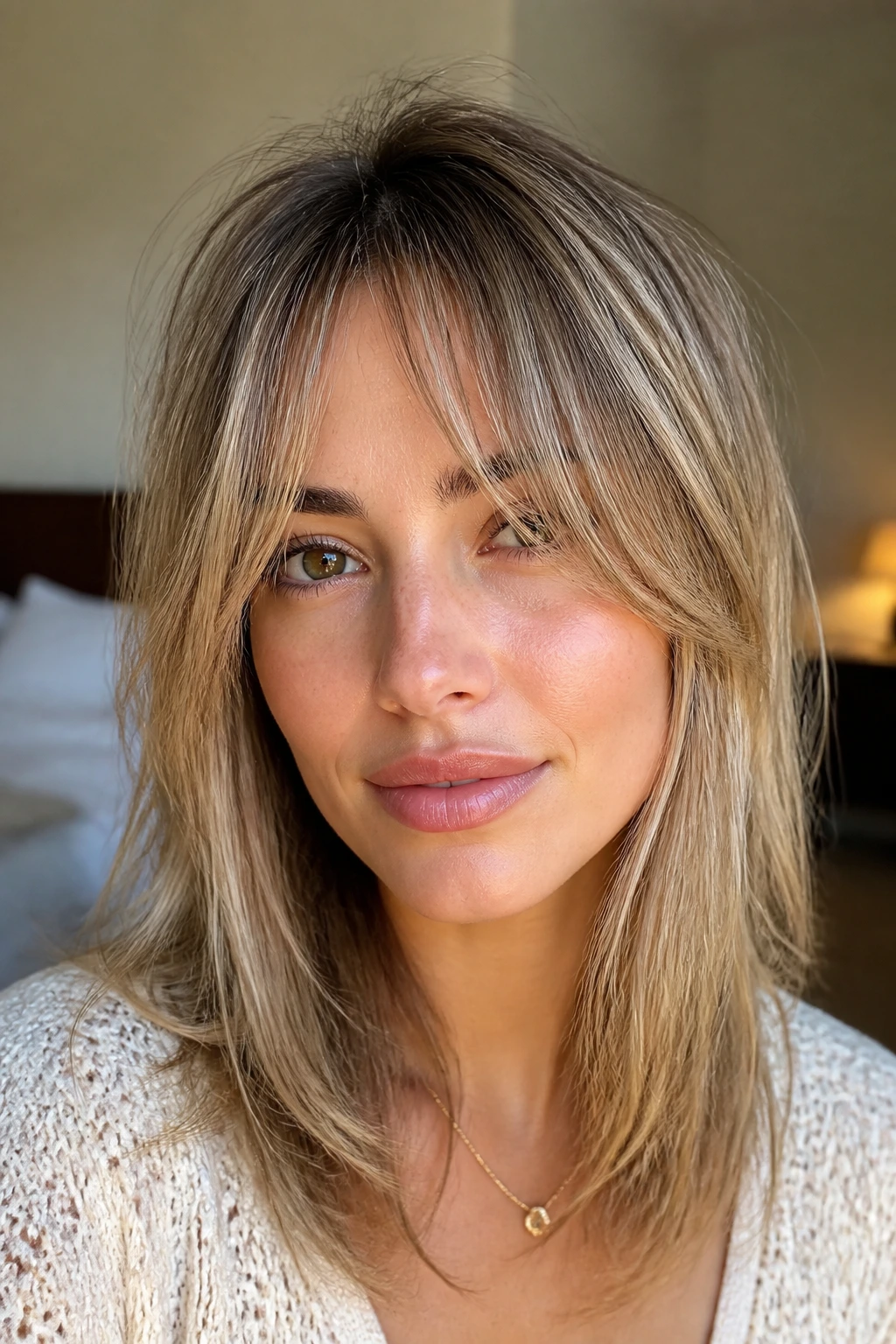
Razored curtain bangs get a bad reputation in some salons, mostly because people overdo the texturizing and leave the ends hollow. Done lightly, though, a razor or point-cut finish can give thin hair a piecey front that moves instead of hanging in one sheet. Square faces benefit because the broken edges soften the straight lines around the forehead and jaw.
This is not the look for hair that is already fragile at the ends. If your strands snag easily or your perimeter is thin, ask for soft point cutting instead of a heavy razor pass. You want separation, not frayed ends.
A small amount of lightweight mousse at the roots helps this style. Then finish with a tiny bit of texture spray on the outer pieces only. Keep the center light. Seriously.
7. Long Blend-In Curtains
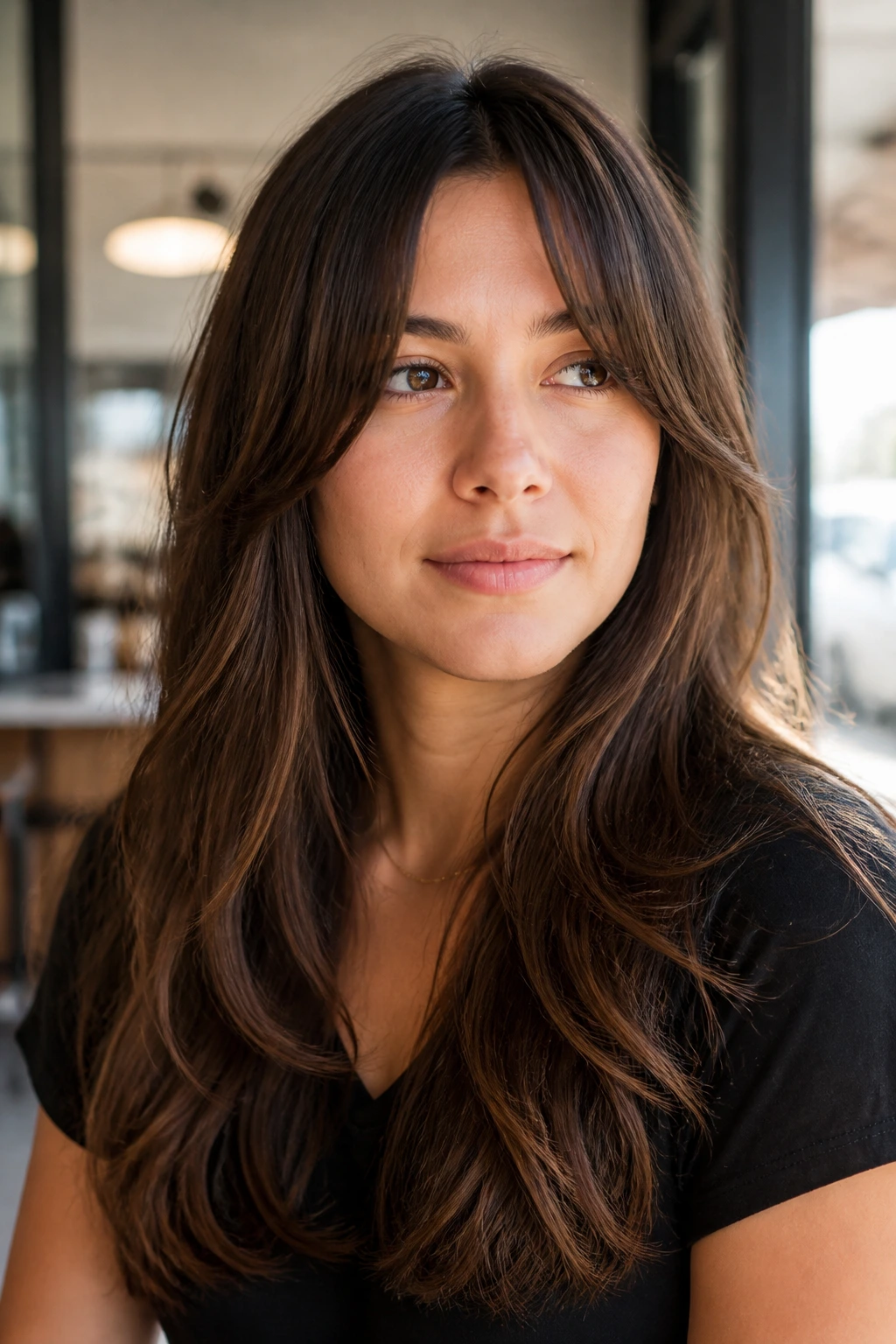
Sometimes the smartest curtain bang is the one that barely looks like a bang at all. Long blend-in curtains start around the cheekbone and drift into the face-framing layers, which makes them ideal if you like the idea of bangs but hate a hard maintenance line. On square faces, this shape blurs the width through the temples and jaw without shortening the face too much.
A few details make this cut work:
- the center stays soft and slightly shorter
- the sides hit near the cheek or upper lip
- the rest of the haircut keeps some weight at the ends
- the layers around the face are blended, not chopped
For thin hair, this is one of the safest bets because the fringe never has to do too much on its own. It blends, which means it grows out better than a tight, high-maintenance bang.
8. Shattered Ends Curtains

Shattered ends are where curtain bangs stop looking polished and start looking lived-in in the best way. On square faces, that bit of irregularity helps because it interrupts the straightness of the forehead and jaw lines. On thin hair, the key is not to over-shatter the fringe until there’s no substance left.
The cut should feel light, yes, but not empty. Ask for broken-up tips and a little internal texture through the last inch or so, not a full thinning all the way through. If the bangs look see-through in the salon chair, they’re probably too thin.
This shape likes a medium-length cut underneath — a lob, a textured bob, or shoulder-length layers. The fringe can be a little imperfect and still look right. In fact, that small unevenness is part of the charm.
9. Rounded Blowout Curtains

What if you want curtain bangs that look finished even when the rest of your hair is not having its best day? Rounded blowout curtains are the answer. They’re cut to hold a soft curve around the face, then styled with a round brush so the center lifts and the sides sweep away from the jaw.
This is especially good for thin hair because the rounded shape creates the sense of fullness at the front. Not fake fullness. Just enough bend to keep the fringe from lying on the skin. A 1-inch or 1¼-inch brush is usually enough; anything bigger can make the bang too loose and a little limp.
The styling rhythm
Dry the roots first.
Then shape the ends.
Let them cool before you touch them.
That cooling step is where the curve sticks. If you skip it, the bangs will drop straight down faster than you expect.
10. Deep-Part Invisible Curtains
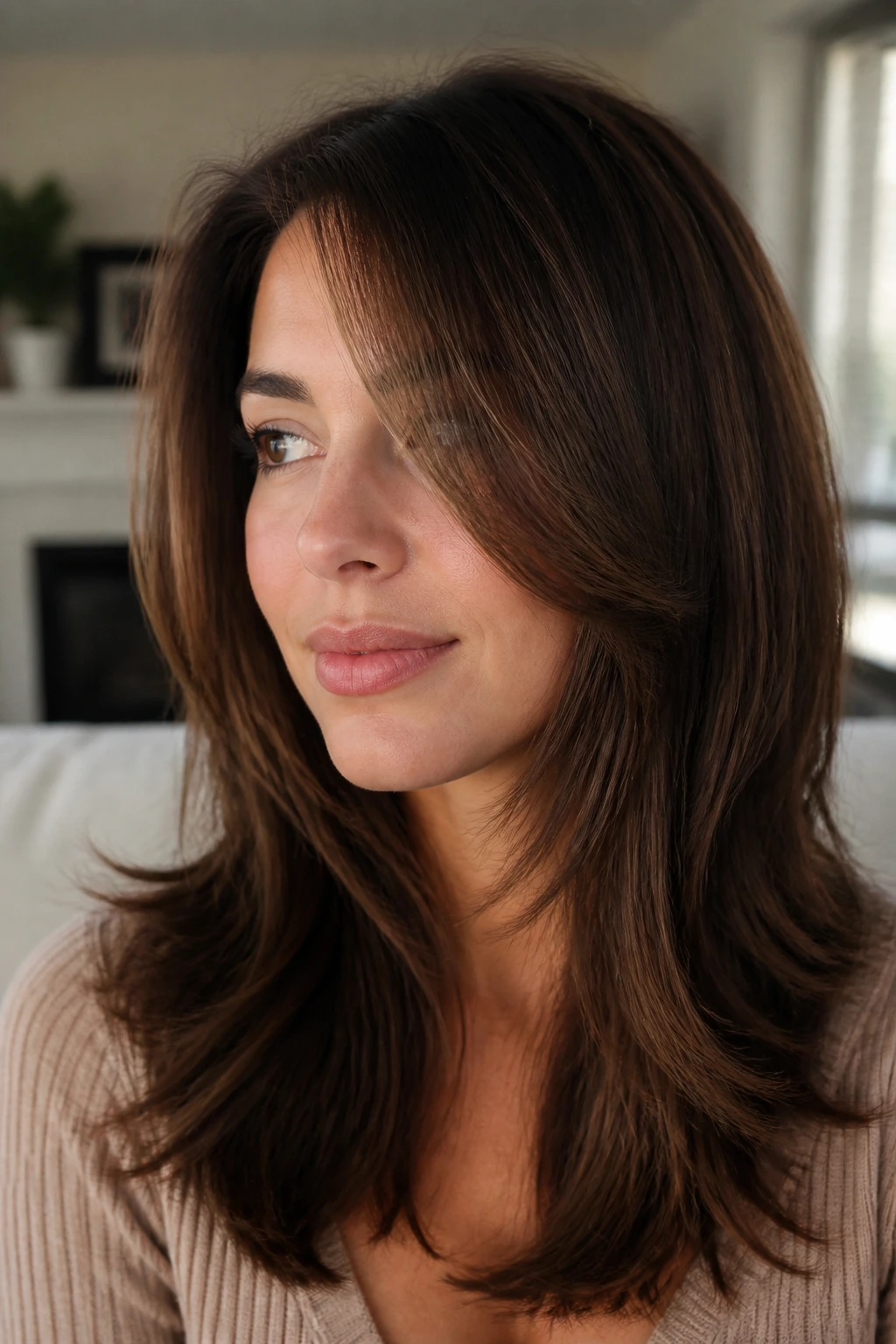
A deep-part curtain fringe is for people who want the softness of curtain bangs without the obvious center split every time they walk into a room. The part sits a little off-center, and the bangs fall diagonally across the forehead before disappearing into the sides. On a square face, that diagonal line is useful because it breaks up all the equal angles.
Thin hair tends to lie flatter on one side anyway, so this shape can feel more natural than a strict middle part. It also gives a little lift near the roots when you blow it dry in the opposite direction first, then let it settle back. That tiny styling trick buys you volume right where you need it.
If your cowlick is stubborn, work with it instead of fighting it. A deep-part curtain can be the easier path.
11. Bardot-Style Soft Curtains
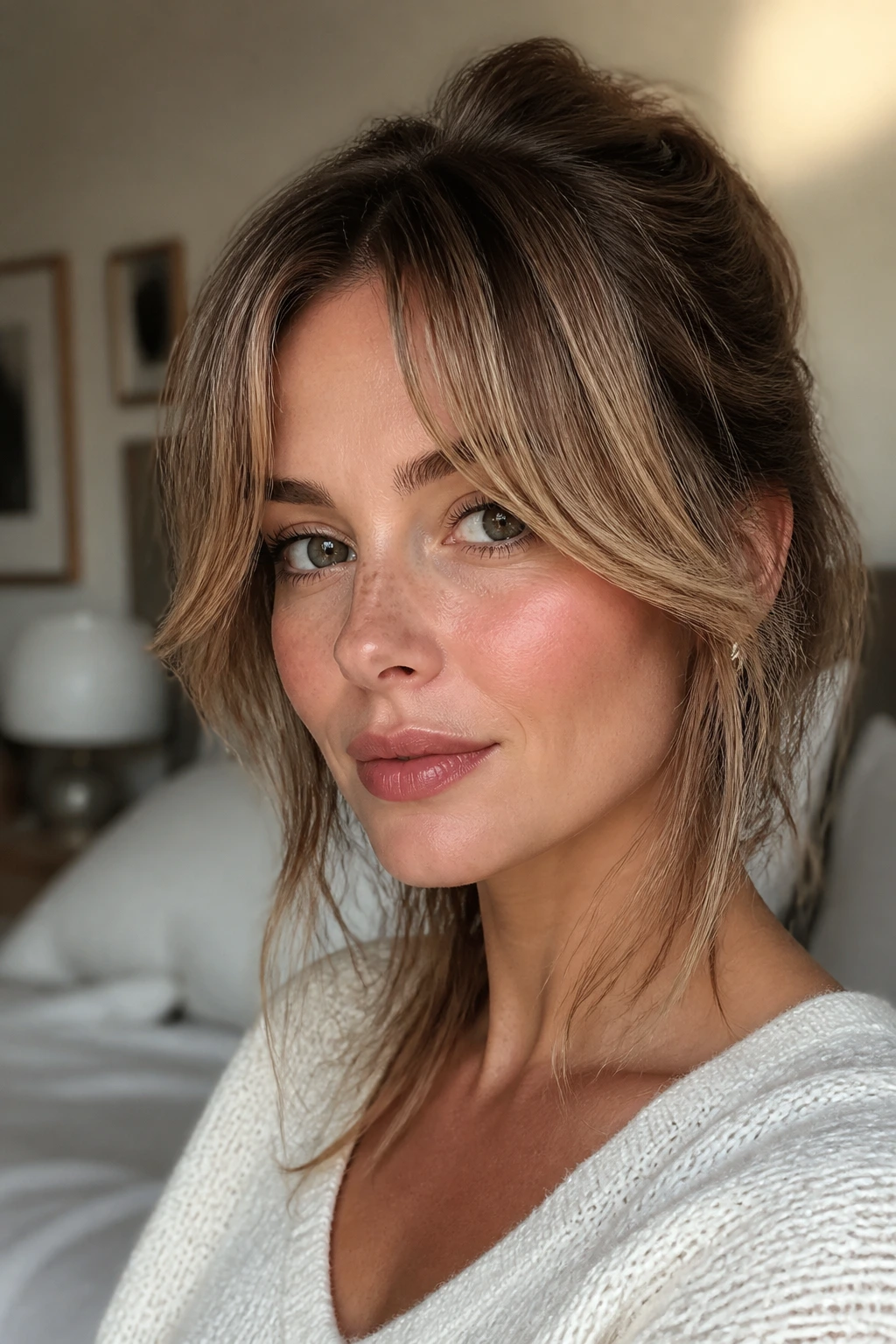
The Bardot-style fringe has a softer, more romantic feel, but the mechanics are practical. The center stays open enough to show some forehead, while the sides sweep down and outward around the cheekbones. That shape can be kind to square faces because it adds softness without putting a hard line across the brow.
For thin hair, the trick is keeping the fringe airy at the top and fuller at the sides. You want the bang to look plush in motion, not bulky when still. A little root lift helps a lot here, and so does a blow-dry that pushes the hair away from the face before the final bend is set.
I like this version when someone wants the haircut to feel a touch more polished. It has movement, but it does not read as messy.
12. Chin-Length Swoop Curtains
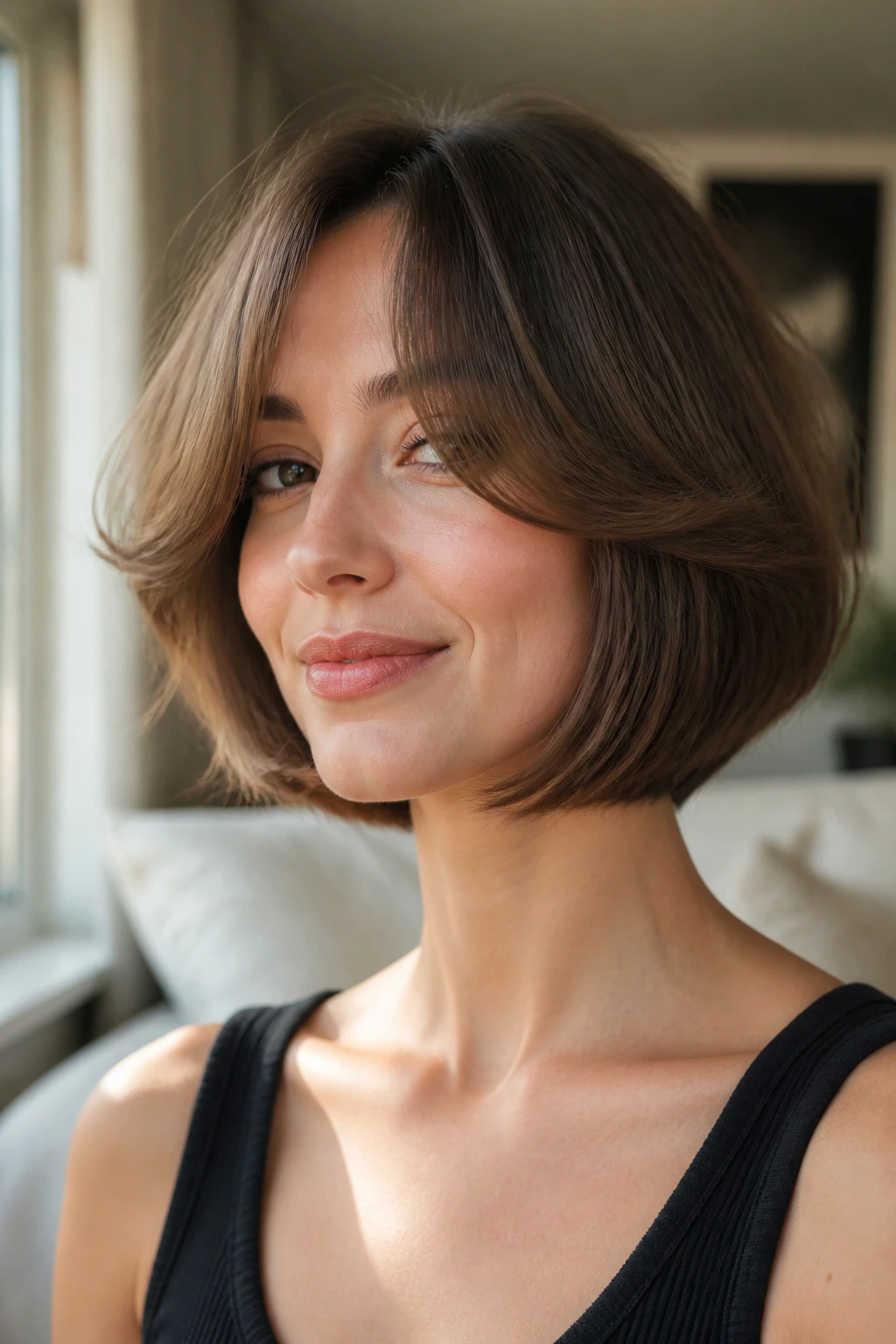
Chin-length curtains are one of the strongest options for a square jaw because they let the hair sweep past the widest part of the face. The outer pieces land near the chin, which softens the jawline and stretches the face visually. That longer line can be especially useful if your square shape feels broad from cheek to cheek.
This cut does ask for a little more styling than shorter bangs, because the length needs direction. A medium round brush or a soft bend with a flat iron keeps the sides from flipping inward too sharply. If they tuck in too much, the jaw can look even wider.
Best for: medium-density hair with a bit of bend.
Less ideal for: very fine hair that refuses to hold shape without a lot of heat.
13. Mini Curtain Bangs

Shorter curtain bangs can work on square faces, but they need a careful hand. The shortest point should stay light and soft, not chopped into a hard shelf above the brows. Thin hair can actually benefit from this shape because there’s less weight sitting at the front, which leaves more lift at the crown.
The catch is simple: if the bang is too short and too dense, the forehead looks boxier. Keep the center wispy and let the sides remain longer than you think you need. That extra length is what saves the shape from feeling harsh.
I’d reserve this version for people who like to style daily. It looks freshest when it’s blown forward with a brush and then gently split in the middle.
14. Curved Cheekbone-Hugging Fringe
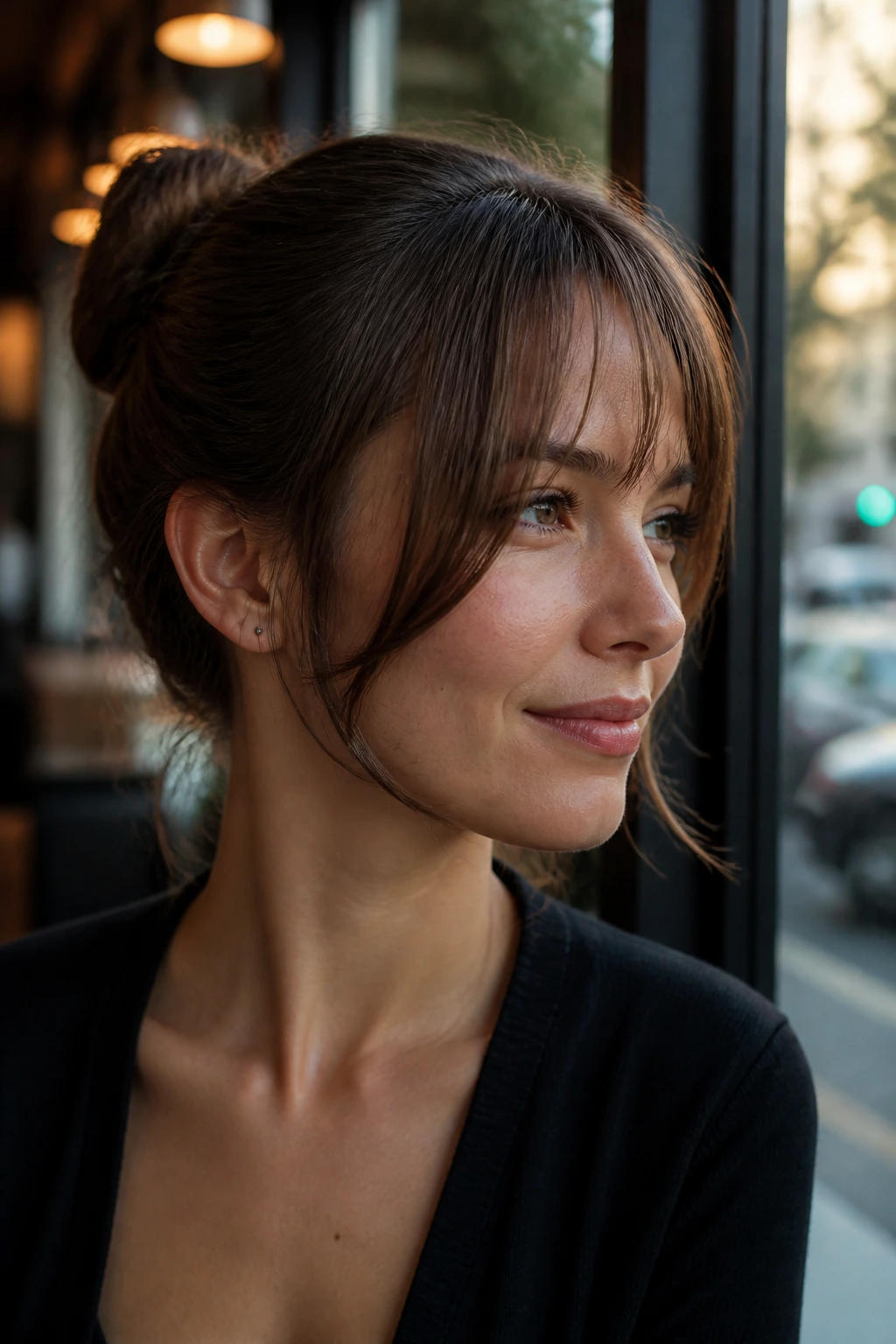
A curved fringe that hugs the cheekbone is one of those cuts that makes a face feel a little softer without announcing itself. The curve follows the natural sweep of the cheek, then trails down toward the jaw. On a square face, that mirrored line helps interrupt the straight edges in a quiet way.
Thin hair benefits because the shape comes from the cut, not from piling on products. The weight stays controlled, the ends stay light, and the fringe moves with the rest of the haircut. If the curve is cut too high, though, it can start to fan out. Keep the lowest point near the cheekbone, not above it.
This one looks especially good with hair tucked behind one ear on one side. That slight asymmetry keeps the fringe from feeling too neat.
15. Air-Dried Bend Curtains
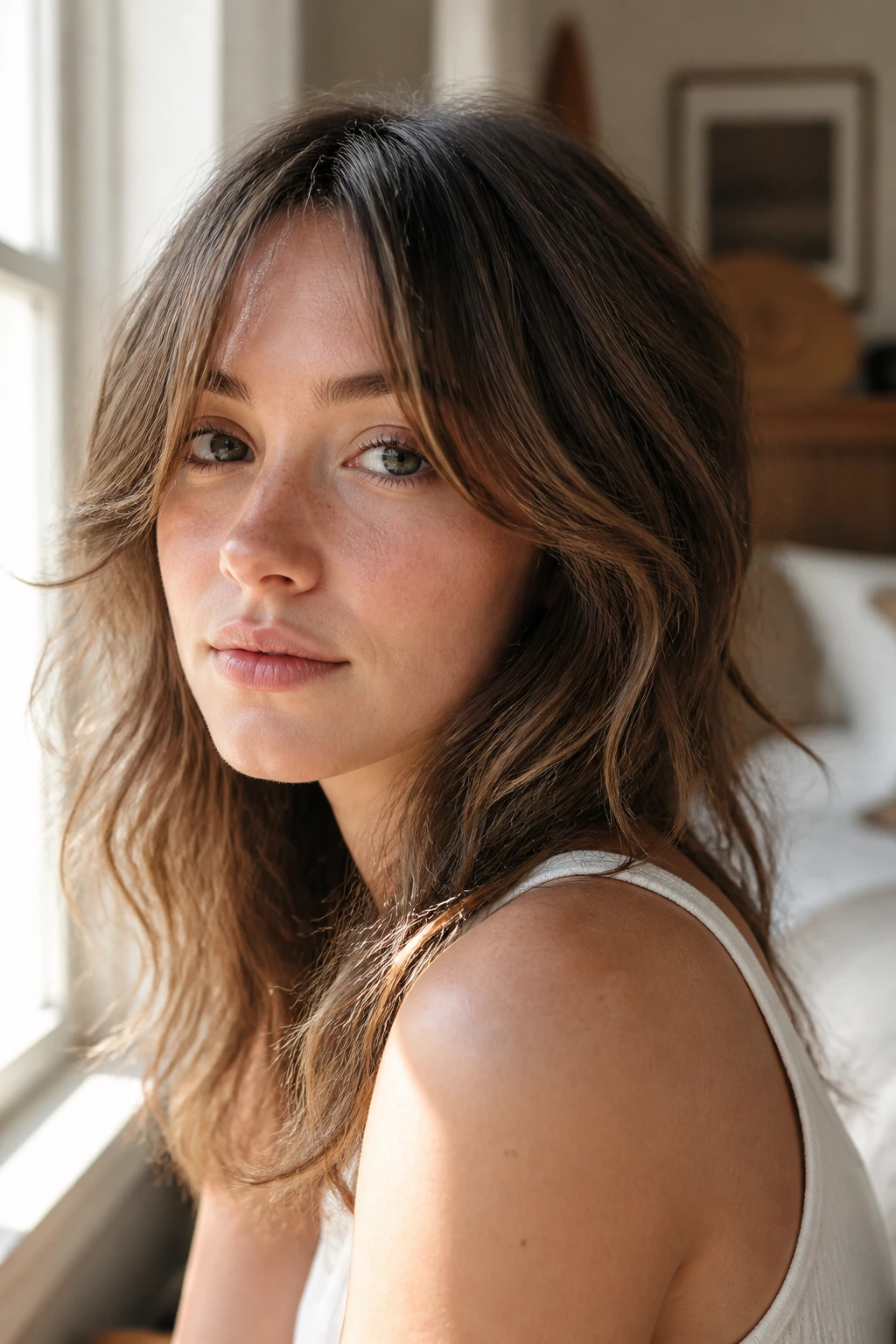
Air-dried curtain bangs are for people who do not want to fight a brush every morning. A little mousse, a pinch of scrunching, and some controlled drying can give the fringe enough bend to sit softly around the face. For square faces, the benefit is obvious: the bangs keep a gentle curve instead of a flat line.
How to make it behave
Work a light mousse through the fringe while it’s damp.
Twist each side away from the face once or twice.
Pin the front up for a few minutes if it dries too flat.
That last part sounds fussy, but it works. Thin hair often needs a little setting time to remember its shape. If you let it dry completely without any direction, the result is usually a flat center and bent ends in the wrong places.
This style is best if your hair has even a little natural wave.
16. Shag-Base Curtains

A shag base gives curtain bangs some structure to sit on. Without that support, thin hair can make the fringe look disconnected from the rest of the cut. With it, the bangs blend into layers around the crown and temples, which can make the face look softer and the hair feel fuller.
The square-face benefit comes from the broken lines. A shagged perimeter cuts down on the hard geometry that can make the jaw stand out too much. But there’s a line here: too many short pieces around the face can create frizz and fray on fine strands. Keep the layering deliberate and avoid over-chopping.
If you like hair that moves when you turn your head, this is a strong pick. If you want a neat, tidy outline, skip it.
17. See-Through Fringe Curtains

Can thin hair pull off a see-through curtain fringe without looking sparse? Yes — if the density is controlled at the center and the sides are allowed to breathe. This version is one of the easiest ways to keep weight off the forehead while still giving square faces some softness.
The fringe should look light enough to notice skin behind it, but not so light that it disappears. That’s a narrow lane, and it’s where good point cutting matters. The ends should feather out rather than land in a single blunt line.
A see-through fringe is a good match for hair that gets greasy quickly at the roots. Less hair at the front means less collapse. You may still need a touch of dry shampoo, but the shape will hold longer than a heavy fringe.
18. One-Length Lob Curtains

A one-length lob with curtain bangs is a cleaner option when you want the fringe to do the softening and the haircut itself to stay simple. The blunt perimeter gives fine hair more visual density at the ends, while the curtain bangs break up the face shape. That contrast is useful on square faces because the cut feels controlled, not busy.
This is one of my favorite combinations for thin hair. Too many layers can drain density fast, and then the fringe has nothing to support it. A strong line at the base gives the hair a little body, and the curtain bang takes care of the face-framing part.
If your hair is poker-straight, this cut can look sharp in a good way. If it bends easily, the result is softer and a bit more relaxed. Either way, the balance is the point.
19. Curly Curtain Bangs
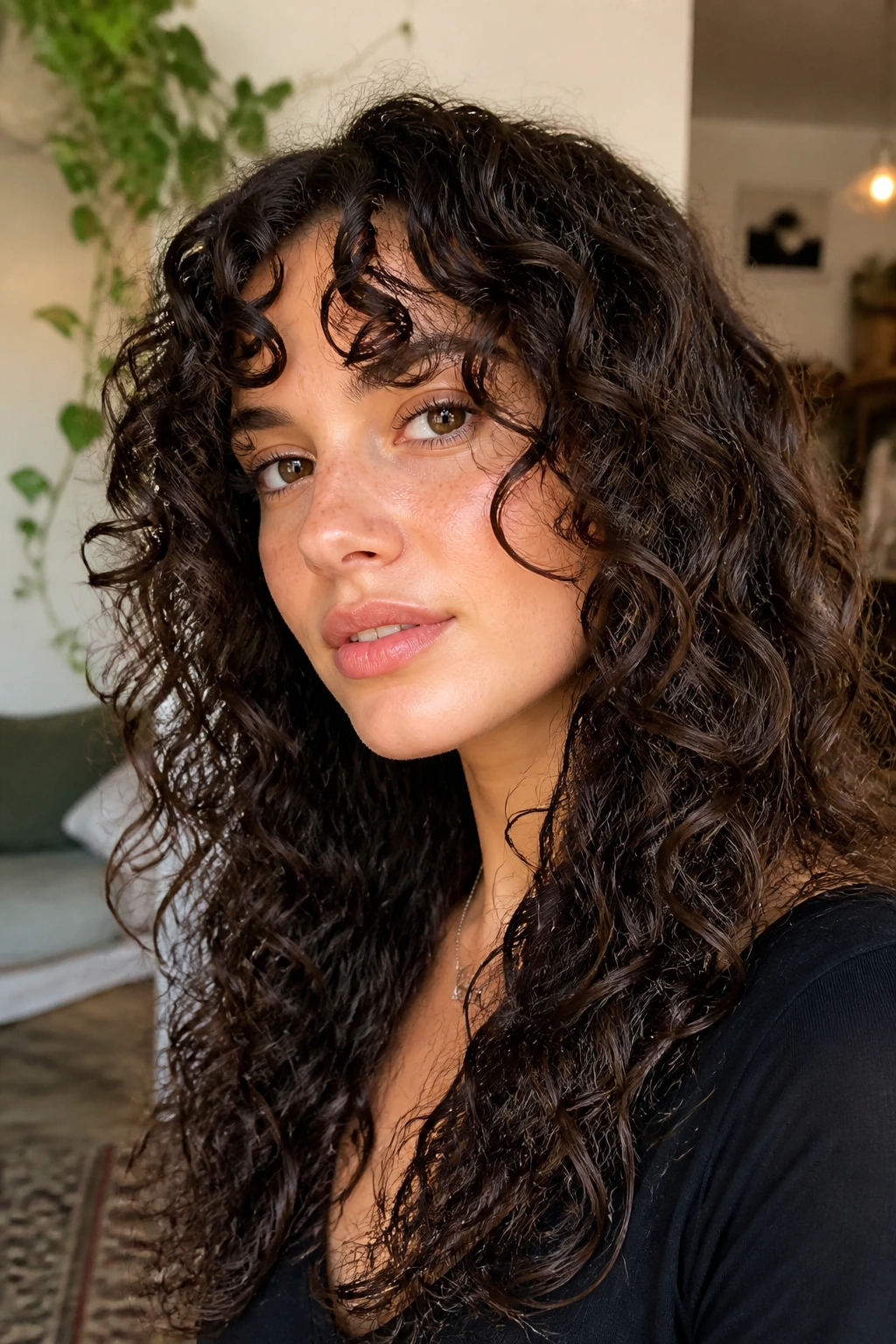
Curly curtain bangs are not a compromise. They’re a different cut altogether, and they can work beautifully on square faces when the curl pattern is respected. The bangs need to be longer than you think because curls spring up, and thin curly hair can shrink even more if it’s cut too short.
The best version keeps the center open and lets the sides drop into the cheekbone area. That gives the face a gentle frame without building a square shape across the forehead. I would strongly favor a dry cut or a cautious wet cut here, because curl behavior changes once it dries.
Skip heavy thinning. Curly thin hair can look frayed fast if too much bulk is removed. Better to leave a little weight and shape the curl in motion.
20. Internal-Layer Curtains
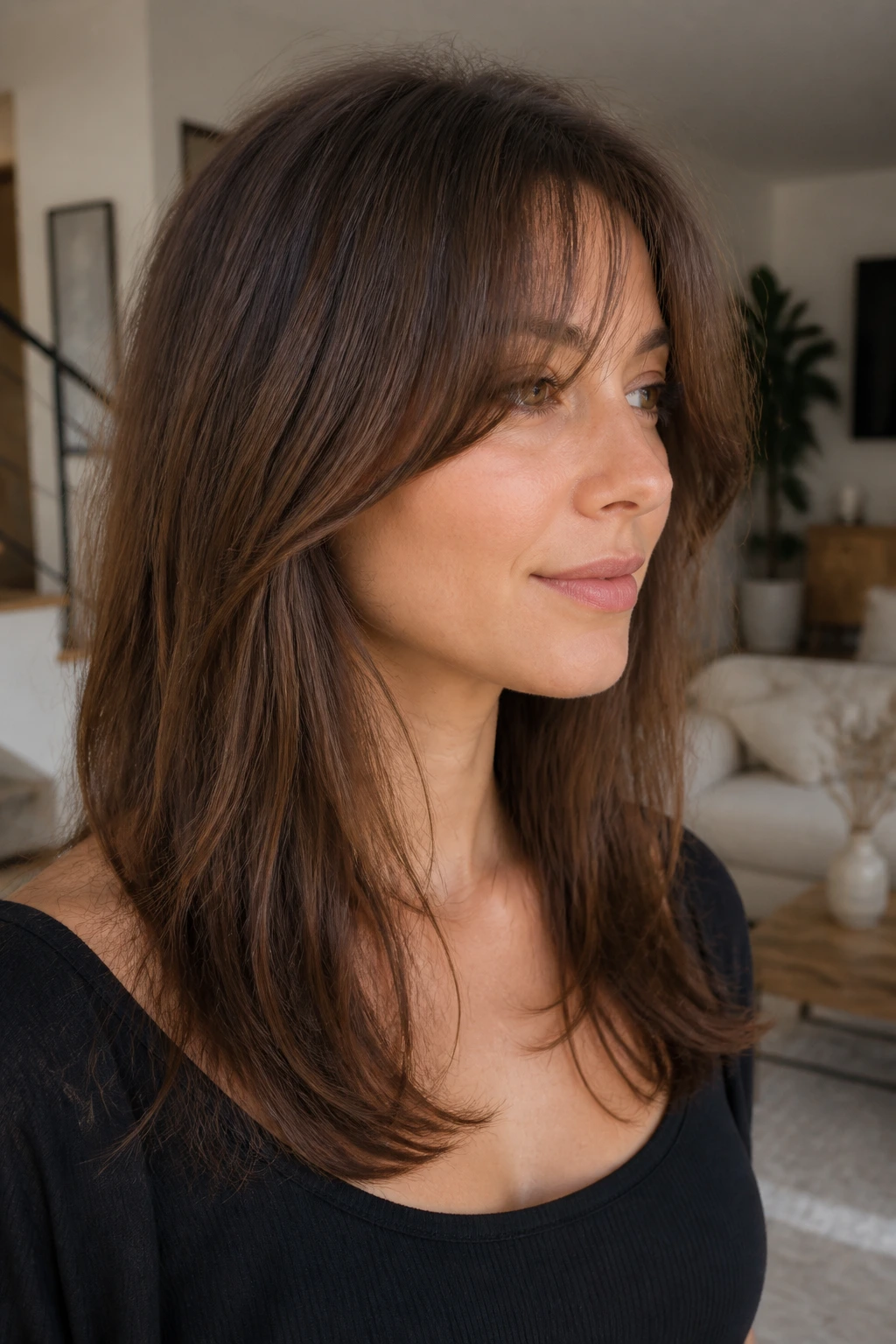
Internal layers are the quiet fix when you want more movement without losing perimeter thickness. They hide inside the haircut, which means the outside line still looks full. For thin hair, that’s a smart trade. You get lift where the curtain bangs need it, and you keep the ends from looking scraped out.
Square faces benefit because the internal layering helps the fringe bend instead of hanging straight down. The front softens the forehead, the sides taper into the face, and the shape never gets too rectangular. Ask for subtle internal layering only. If the stylist goes hard with the thinning shears, the bang will lose its weight faster than you want.
This is one of those cuts that looks ordinary in the chair and better after the first real blow-dry. That’s usually a good sign.
21. Low-Maintenance Grow-Out Curtains
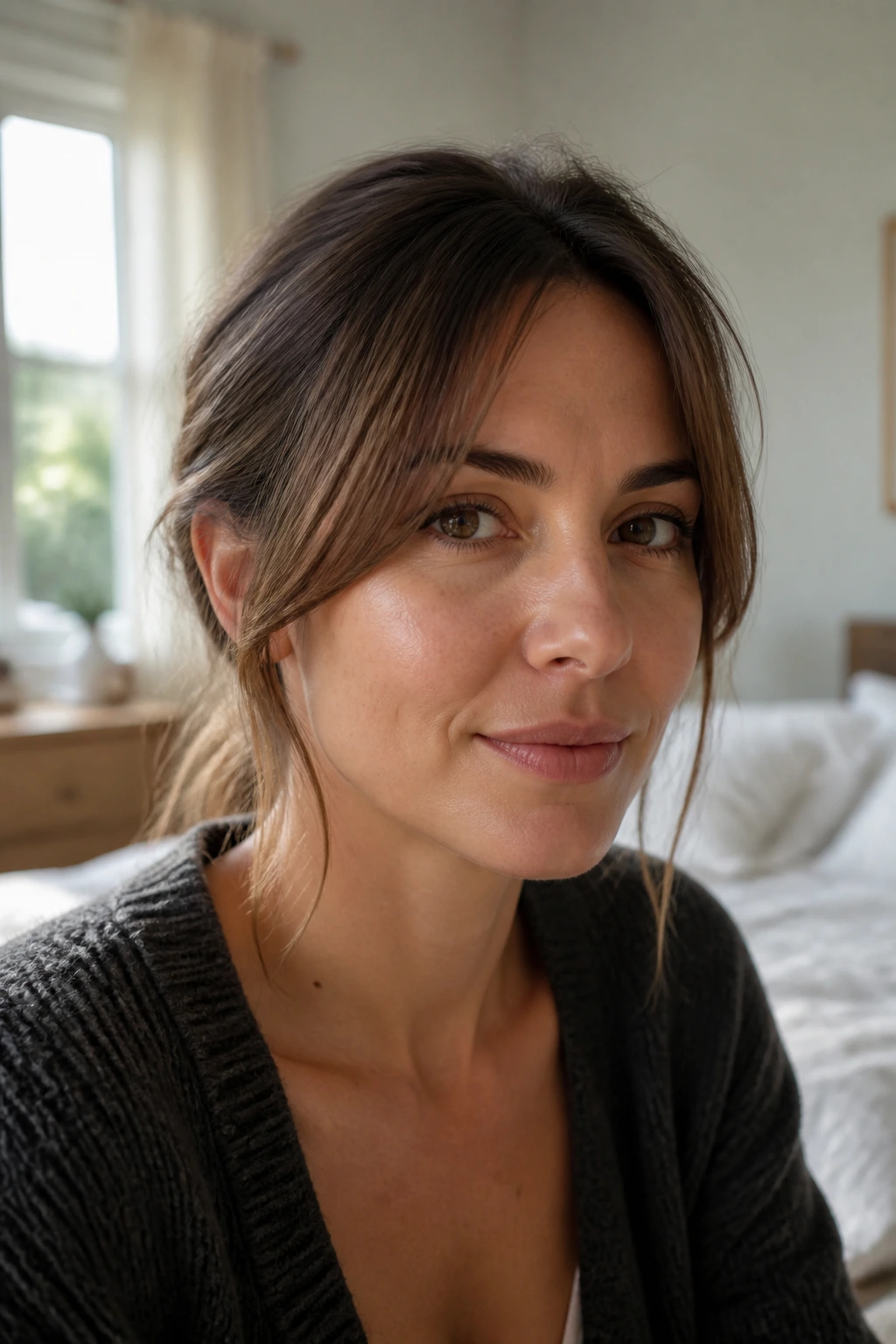
The best low-maintenance curtain bangs are the ones that still look like a haircut when they get a little longer. This grow-out version keeps the center soft and the sides long enough to tuck behind the cheekbone area. On a square face, that length keeps the jaw from feeling boxed in, even when the fringe isn’t freshly trimmed.
Thin hair likes this version because it does not demand dense coverage across the forehead. You can part it slightly wider one day, narrower the next, and it still looks deliberate. It’s also easier to refresh with a quick bend from a flat iron if you skip wash day.
If you hate strict maintenance, this is probably the smartest lane to live in. The cut keeps working even when it starts to grow out.
22. Face-Opening Flick-Out Curtains
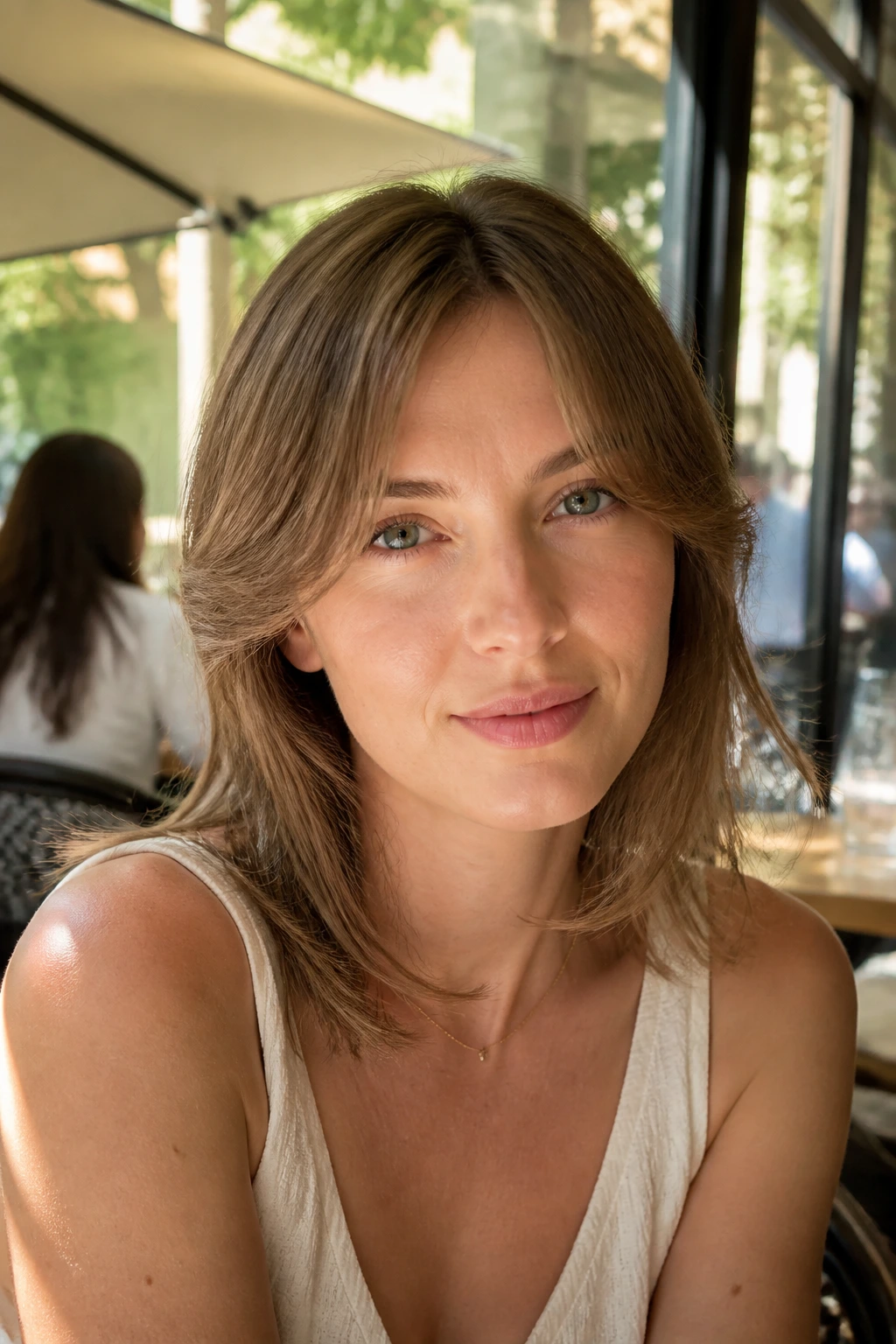
A soft flick-out curtain bang is a nice finish for square faces because the ends turn away from the jaw instead of sitting on top of it. That outward movement pulls the eye up and out, which makes the whole front of the haircut feel lighter. On thin hair, the flick helps the fringe look styled without needing a lot of density.
The shape should be subtle. You do not want Farrah levels of flip unless that is the look you love. Just enough bend to keep the sides from hanging straight down is enough. A small round brush or a flat iron twist at the last inch of hair does the job.
This style is especially useful if your hair lies flat in humid air. A little outward bend gives the cut some memory, and that memory buys you an extra few hours of shape.
Why Curtain Bangs Work on Square Faces with Thin Hair
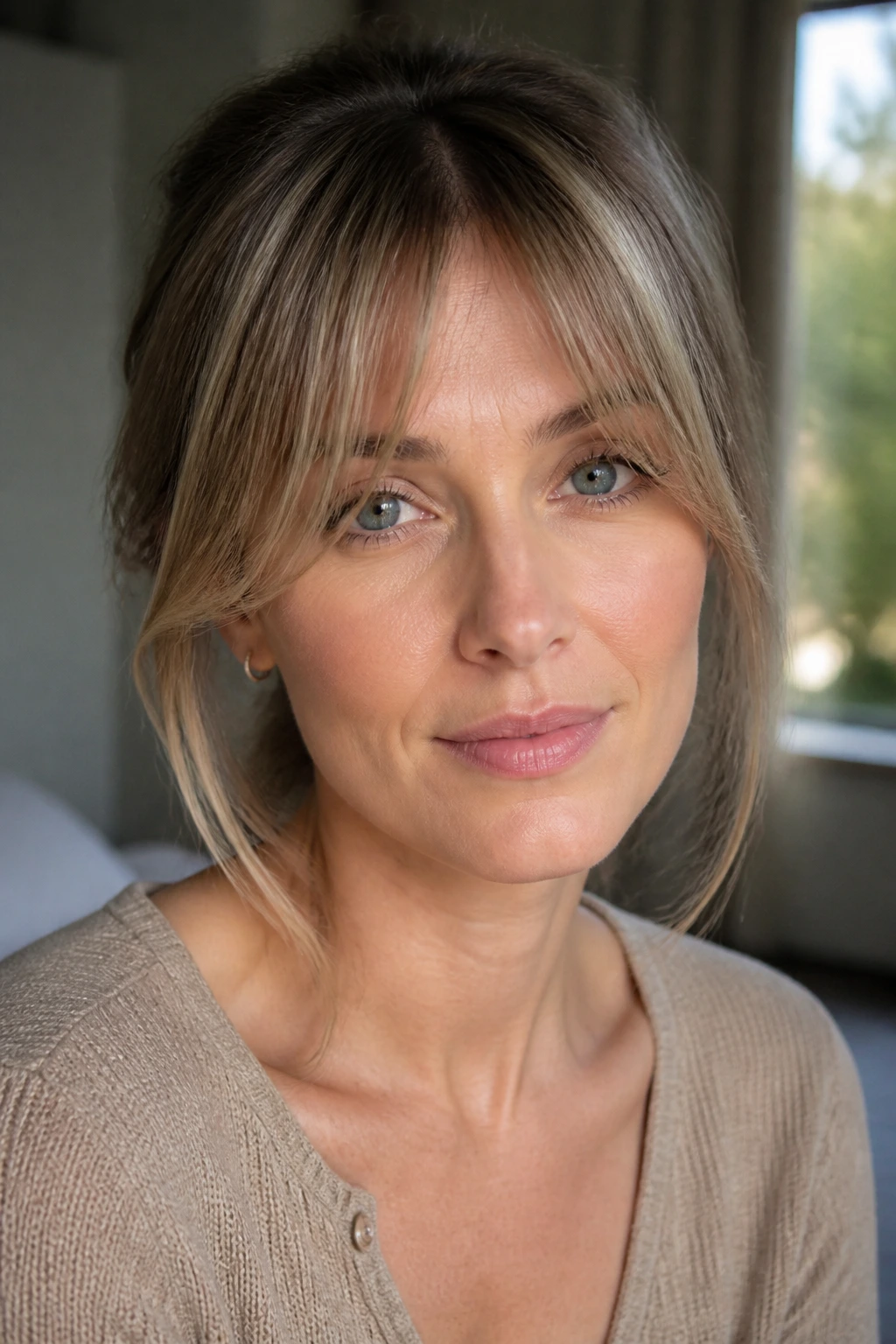
The reason this haircut works has less to do with trend and more to do with geometry. Square faces carry clean, strong lines through the jaw and forehead, so a curtain fringe helps by breaking those lines into diagonals and curves. The eye reads softness where the fringe opens, which takes some pressure off the width at the sides of the face.
Thin hair adds another layer. A blunt, dense bang can make fine strands look flatter because it piles too much weight at the front. A softer curtain shape keeps the volume distributed. The center can stay light, while the outer pieces carry the visual frame.
The best versions do two things at once: they slim the face visually and they preserve the illusion of body in the hair. That’s why cheekbone length, point-cut ends, and a little root lift matter so much. One bad haircut here can make the whole front look heavy. One good one can make the hair seem fuller than it really is.
Smart Reference Photos and Salon Language

Bring photos, but bring the right photos. A picture of thick, blowout-heavy bangs on dense hair will not help you if your strands are fine and your face is square. Look for examples where the fringe is soft at the center, longer at the sides, and worn with a medium cut — a lob, collarbone layers, or shoulder length hair. That combination gives the stylist a better map.
What to say in the chair
- “Keep the center soft and light.”
- “Let the outer pieces hit around the cheekbone or a little below.”
- “Please point-cut the ends instead of making a blunt line.”
- “I want movement, not a thick shelf.”
- “Can we keep enough density at the front so it does not look see-through?”
That last line matters more than people think. Thin hair can be over-texturized fast, and once the density is gone, it’s gone. If your stylist reaches for thinning shears, ask what problem they’re solving before they use them. Sometimes the better answer is a softer cutting angle, not less hair.
If you wear your hair tucked behind one ear a lot, say that. If your part changes from day to day, say that too. A good fringe should still make sense on a messy morning.
The Tools That Keep Thin Hair from Falling Flat
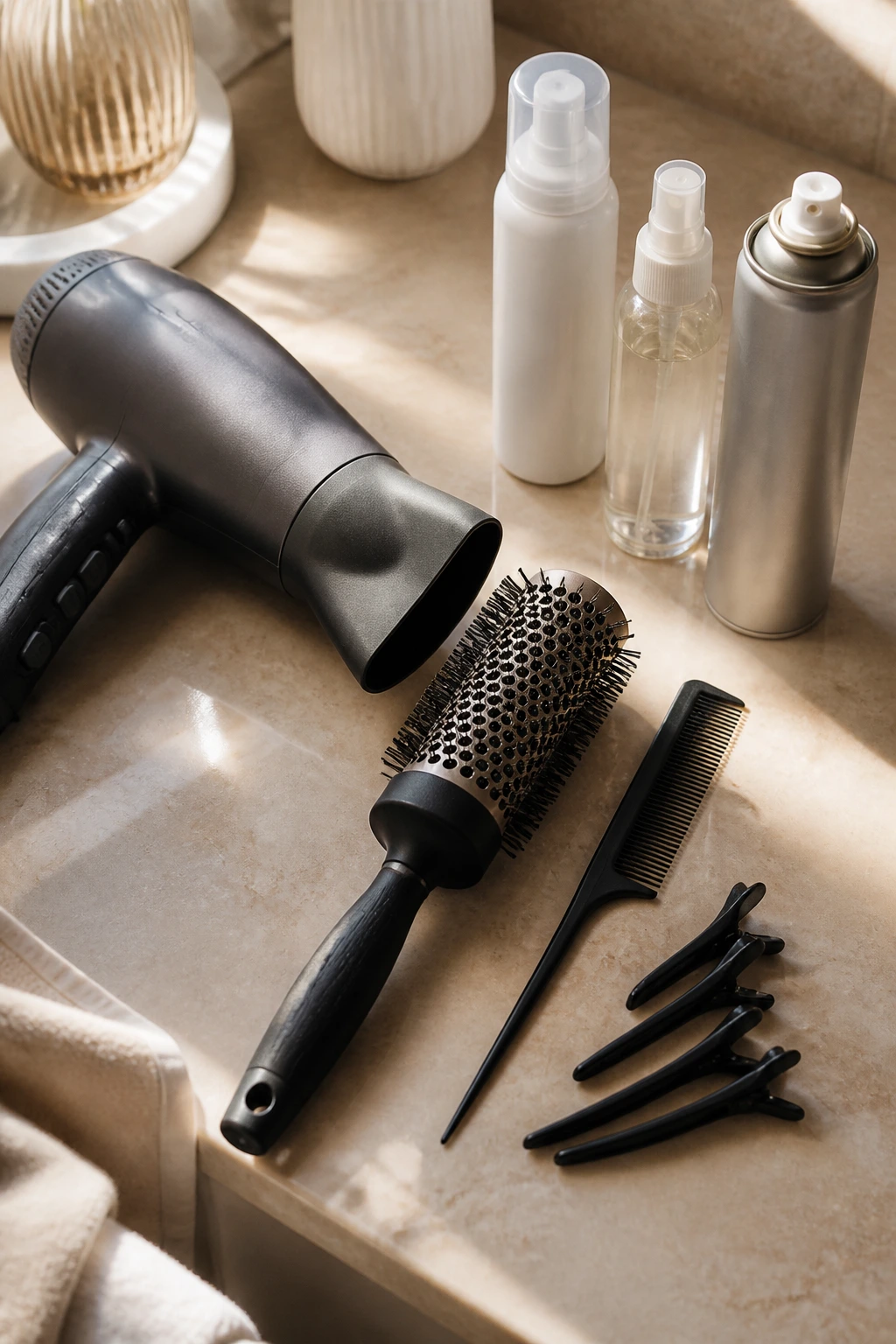
You do not need a bag full of gadgets. You need a few things that work hard.
-
A blow dryer with a concentrator nozzle — This gives you control at the roots and keeps the fringe from frizzing while you shape it.
-
A 1-inch to 1¼-inch round brush — Small enough to lift the front, large enough to create a soft bend instead of a hard curl.
-
A fine-tooth tail comb — Helpful for separating the bang section cleanly and changing the part without tearing at the roots.
-
Lightweight mousse — A small amount at the roots gives thin hair some memory and keeps the bangs from collapsing.
-
Heat protectant spray — Fine hair can get scorched fast, especially around the front where people keep re-styling the same pieces.
-
Dry shampoo — Not for the ends. For the roots. That’s where the fringe usually goes flat first.
-
Duckbill clips or small rollers — Great for setting the bang while it cools. Cool hair holds shape better. Annoying truth, but true.
How to Style Curtain Bangs So They Don’t Collapse

Parting: Start with damp hair and decide where the fringe wants to live before you dry the rest of the head. If your hair splits down the center by habit, work with that. If it wants a soft off-center part, let it.
Lift: Blow-dry the roots first, aiming the air up and away from the face. Then wrap the fringe around the round brush and direct each side outward. Don’t rush this part. The root shape is what keeps thin hair from laying flat by noon.
Texture: For a softer finish, let the bangs cool in a clip or a small roller for 2 to 4 minutes. If you want a smoother look, use the brush to polish the ends, then stop. If you keep brushing after the hair has cooled, you can flatten the bend you just made.
Finish: Use a tiny bit of texture spray or dry shampoo near the roots, then stop touching it. Thin hair gets greasy fast when people keep running their hands through the front. Less fuss. Better shape.
Best pairing: A curtain fringe looks best when the rest of the haircut has some movement too — not a perfectly flat, dead-straight perimeter with a very active fringe on top. That contrast can feel lopsided.
Additional Tips and Texture Boosters
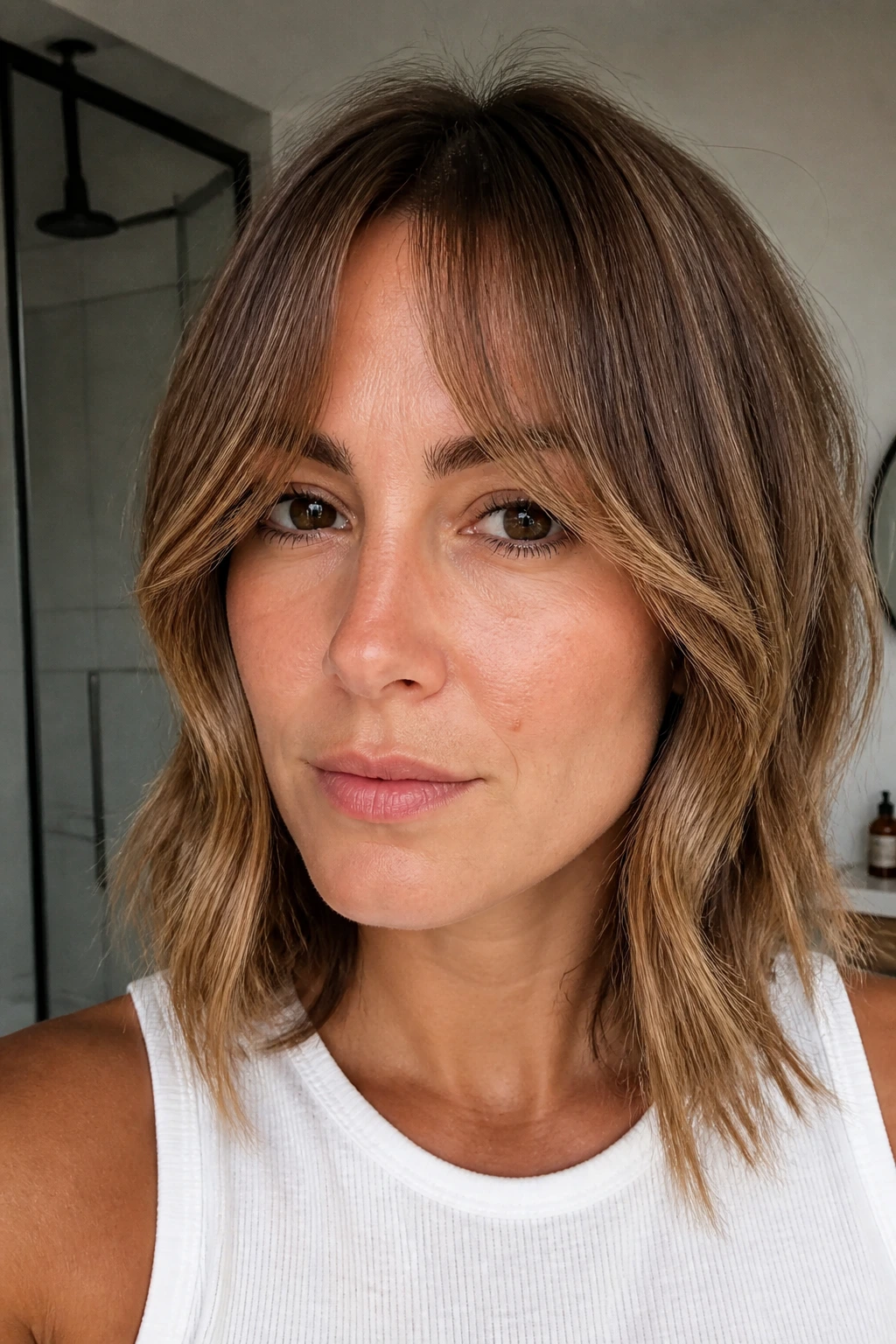
Root Lift: Put mousse only where the bangs meet the scalp, not through the ends. That gives the front some grip without turning the fringe sticky.
Softness: If the bangs feel too crisp after blow-drying, warm a single drop of lightweight serum between your fingertips and tap it onto the outer third only. Keep it away from the center or the fringe will separate.
Customization: If you tuck one side of your hair behind your ear more than the other, ask for that side to be a touch longer. The extra length keeps the cut balanced when you wear it your usual way.
Face Shape Balance: On a square face, the longest pieces should graze past the widest part of the cheek, not stop right on top of it. That tiny shift changes how the whole face reads.
Make-It-Yours: If you wear glasses, keep the center a little shorter and the side pieces a little softer. If you do not, you can let the fringe sit longer and more open. Small adjustment. Big effect.
Common Mistakes That Make Curtain Bangs Look Heavy
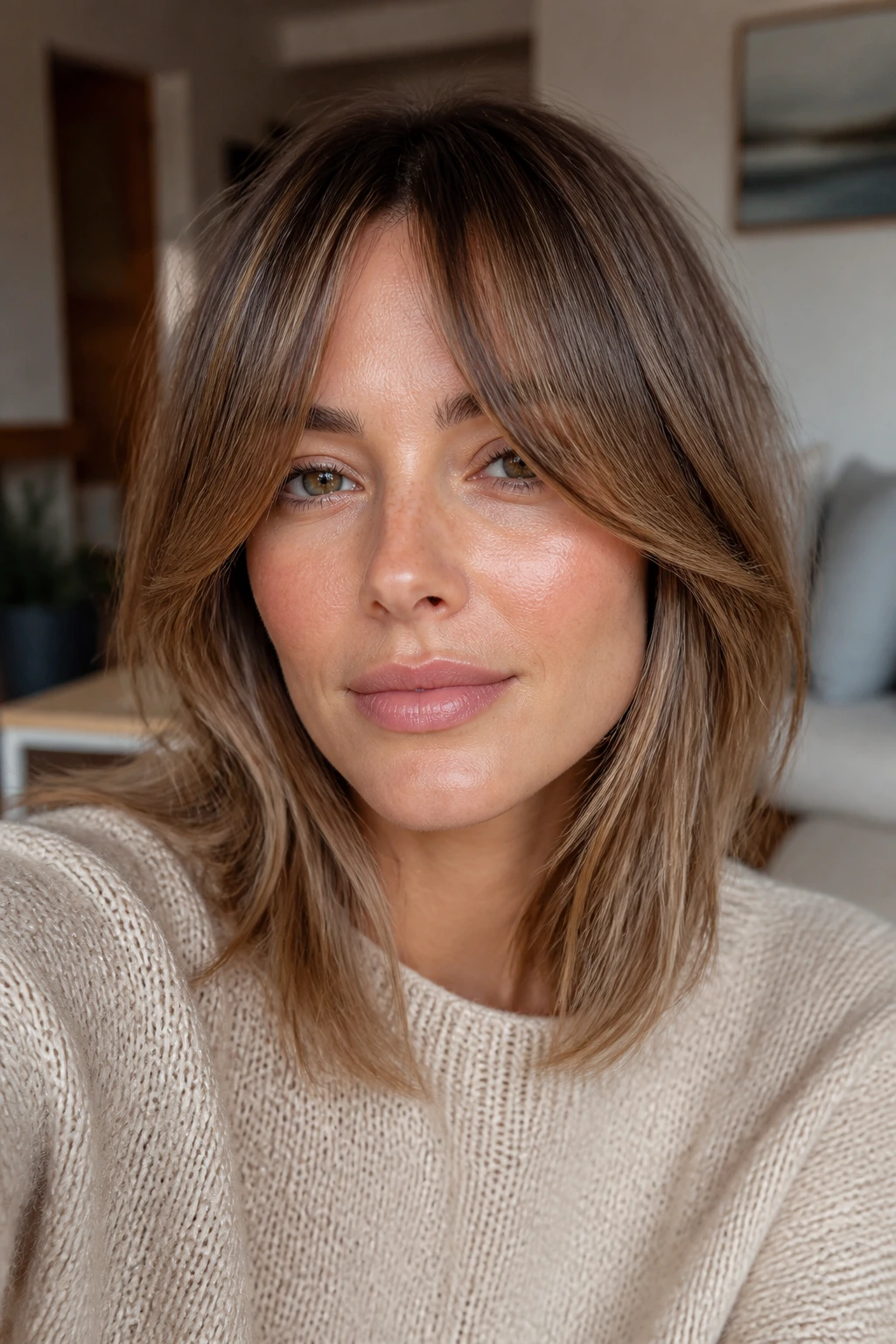
The most common problem is cutting the fringe too dense at the center. That gives you a thick little panel of hair right where thin hair needs air the most. The fix is simple: keep the center lighter and let the sides carry the frame.
Another mistake is over-thinning the bangs with a razor or thinning shears. On paper it sounds like a way to reduce bulk, but on fine strands it often creates gaps and frayed ends. Ask for point cutting, and ask how much texture the stylist plans to remove before they start.
A third issue is styling the bangs flat against the forehead. If the roots are pressed straight down, the face looks wider and the fringe loses its lift. Direct the roots forward and slightly up, then bend the ends away from the face. That extra direction gives the cut its shape.
Heavy creams and oils cause trouble too. They make the front piecey in a bad way, then flat. A little product goes a long way on thin hair. Use less than you think.
And one more: cutting the outer pieces too short. If the side sections stop too high, the square jaw gets more attention, not less. Length around the cheekbone or below it usually softens the outline better.
Variations and Adaptations for Different Hair Textures

The Airy Straight-Hair Version: Keep the center soft and use a round brush to create a loose bend at the sides. This version suits square faces because the diagonals stay visible, even when the rest of the hair is sleek.
The Wavy Bend Version: Let the waves do half the work and shape the fringe while it is damp. A little mousse plus a twist away from the face gives you movement without a lot of heat.
The Curly Halo Version: Cut longer than you think, keep the center open, and let the curl pattern land naturally. This keeps the fringe from springing up into a boxy shape around the forehead.
The Extra-Fine Hair Version: Ask for more perimeter weight and less texturizing. Thin hair needs the illusion of density, so a blunt-ish base with soft fringe can work better than a heavily layered one.
The Grow-Out Version: Leave the sides long enough to tuck behind the cheekbones. As the bangs grow, they blend into face-framing layers instead of looking like a mistake you need to fix next week.
Keeping the Shape Between Cuts
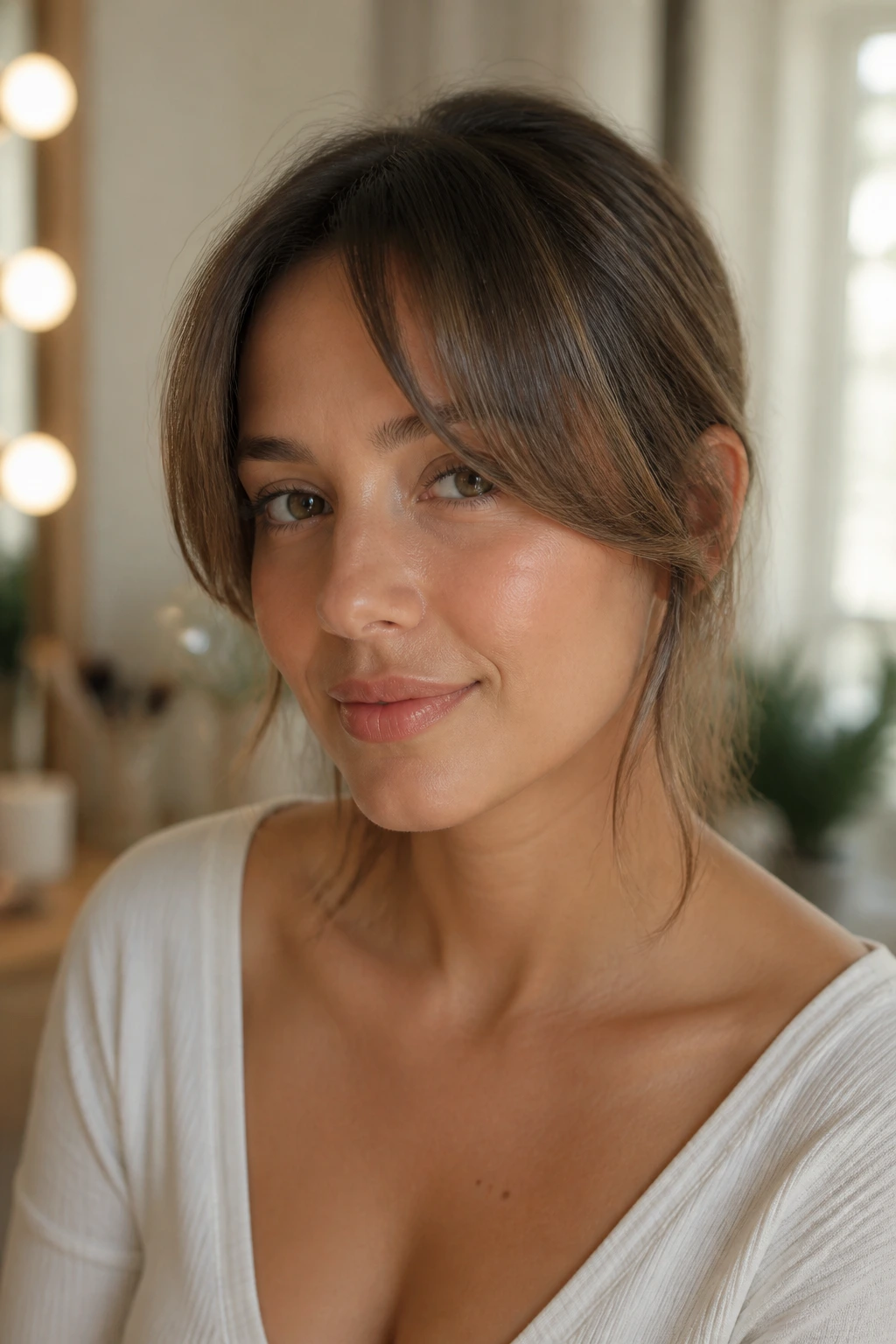
Curtain bangs on thin hair usually need a fringe trim every 4 to 6 weeks if you want the shape to stay crisp. The rest of the haircut can go longer — often 8 to 10 weeks — especially if the layers are soft and the perimeter is medium length. If you push past that, the fringe starts to lose its opening shape and the outer pieces can crowd the cheek.
On off days, dry shampoo at the roots is more useful than a heavy restyling session. A quick lift with a brush, a 30-second blast of warm air, and a few minutes clipped away from the face can reset the front without a full wash. If the bangs split too hard at the center, dampen only the roots, reshape, and let them cool before you move on.
At night, a loose clip or a very soft roller can keep the fringe from bending into a weird crease. That sounds fussy until you wake up with a bang line that actually behaves. Worth it.
Questions People Ask Before Cutting Curtain Bangs
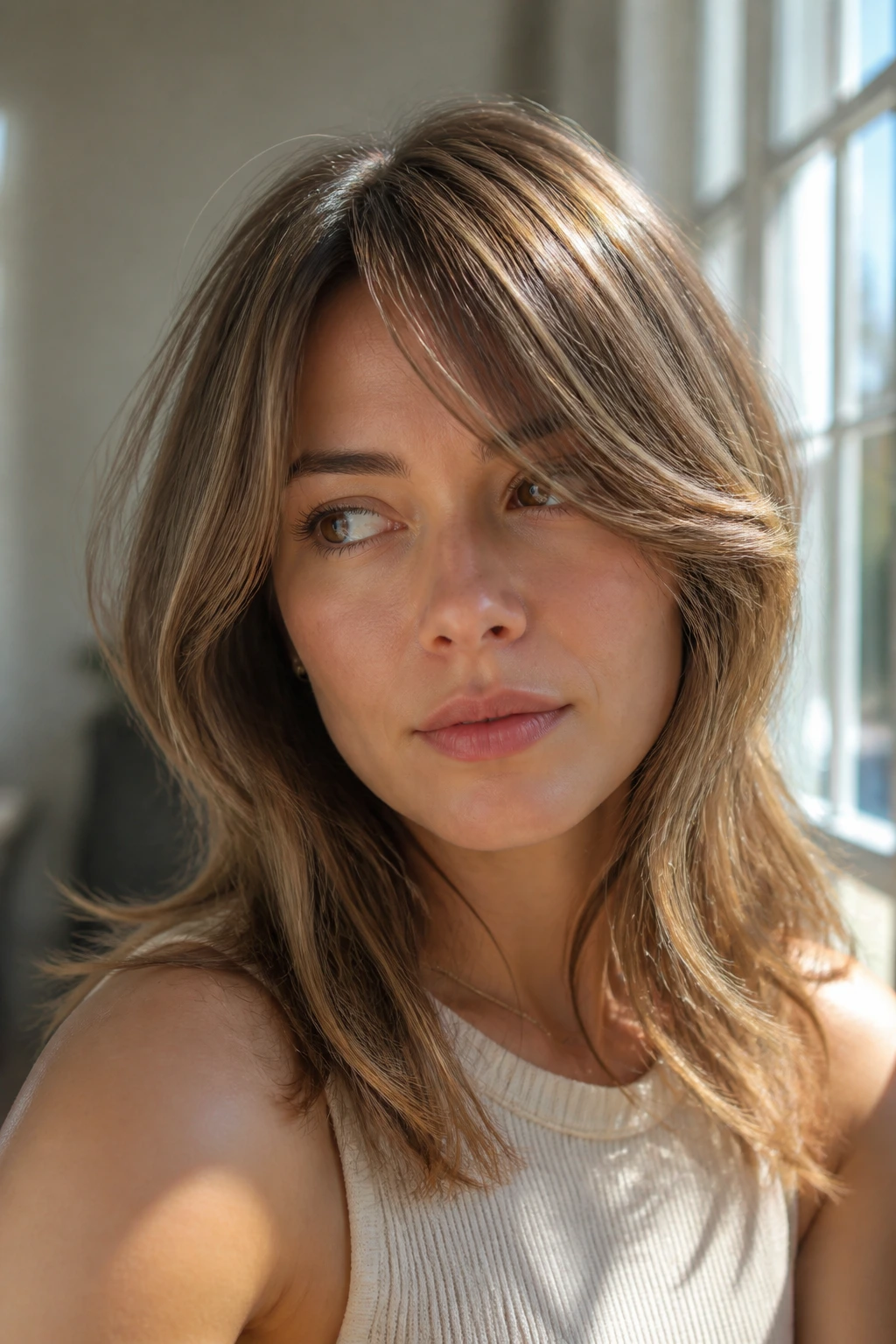
Can square faces really wear curtain bangs?
Yes, and the right version can flatter a square face more than blunt bangs ever will. The key is keeping the sides longer than the center so the fringe softens the jaw and forehead instead of adding another hard line.
Are curtain bangs good for thin hair?
They can be, if the cut is light and the bangs are not over-thinned. Thin hair usually looks best when the fringe has a little air and the haircut underneath keeps some weight at the ends.
Should curtain bangs start at the brows or the cheekbones?
For most square faces, a brow-to-cheekbone transition works well. If the center is too short, the forehead can look wider; if it’s too long, the bangs may lose the face-opening effect.
Do I need layers with curtain bangs?
A few soft layers help the bangs blend, but too many layers can steal fullness from thin hair. A collarbone lob or a softly layered medium cut usually gives the best balance.
What if my bangs separate too much in the middle?
That usually means the center is too heavy or the roots need more lift. Use a little mousse at the roots, blow-dry the center first, and set it with a clip until it cools.
Can I air-dry curtain bangs?
Yes, if your hair has a little bend or wave. Straight, very fine hair usually needs at least a quick blow-dry at the roots or the fringe will dry flat and split oddly.
How often should I trim them?
Most curtain bangs need a refresh every 4 to 6 weeks, though the exact timing depends on how fast your hair grows and how much shape you want to keep. If you like a looser, grown-in look, you can stretch that a bit longer.
What should I avoid if my hair is very fine?
Avoid heavy texturizing, chunky razoring, and too much product at the roots. Those three things can make the front look thinner than it is and turn the fringe stringy fast.
The Soft Frame That Does the Work
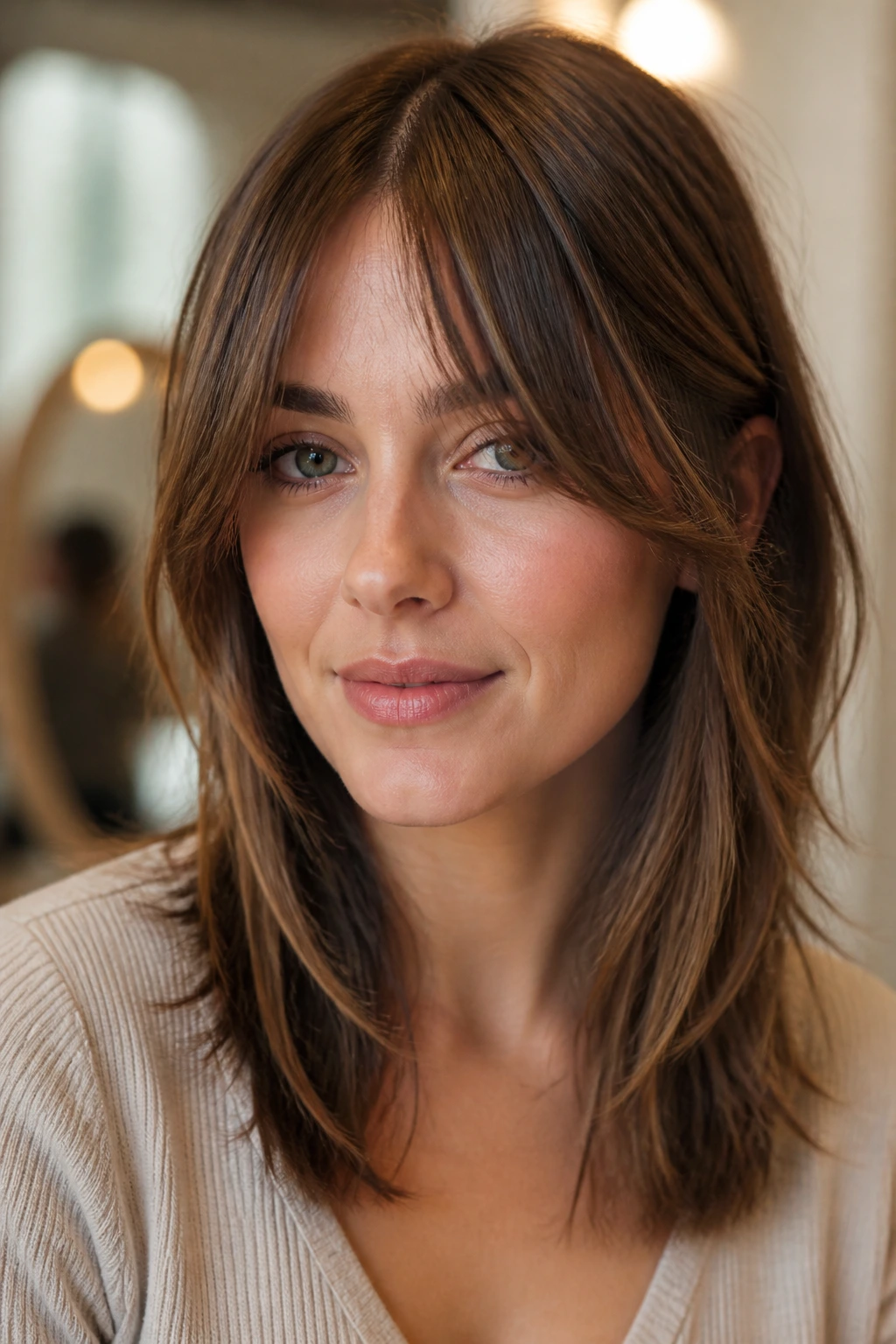
The best curtain bangs for a square face with thin hair do not fight the features you already have. They soften the edges, open up the front, and give the haircut a little movement without asking fine strands to carry too much weight. That’s why the cheekbone lengths, soft centers, and lightly feathered sides keep showing up — they solve real problems instead of just looking pretty in a photo.
If you’re sitting in a salon chair with a square jaw and finer hair, the request is not complicated. Ask for softness, ask for movement, and ask the stylist to leave enough density that the fringe still exists when you leave the blow-dryer behind. The right cut should make your hair easier to live with, not give you a morning job.
Start with the version that fits your texture and your patience level. Then let the bangs grow into the rest of the haircut a little. That’s where this style gets really good.