



A heavy, straight-across fringe can make a round face feel wider than it is. Sweeping bangs do the opposite, but only when the cut is honest about where the shortest piece lands and how the front flows into the rest of the hair. On long hair, that diagonal line has room to breathe, which is why sweeping bangs for long hair and round faces can look soft instead of severe.
The best versions do three things at once: they break the horizontal line across the forehead, they pull the eye toward the cheekbone or jaw, and they keep the crown from going flat. Miss one of those, and the whole style can wobble. The bang itself may be cute; the face-shape math will not cooperate.
Some of the looks below are polished and blowout-heavy. Others are loose, piecey, and a little undone. All of them use the same trick in different ways, and the details are where the good cuts live.
Why Sweeping Bangs Earn Their Place on Round Faces
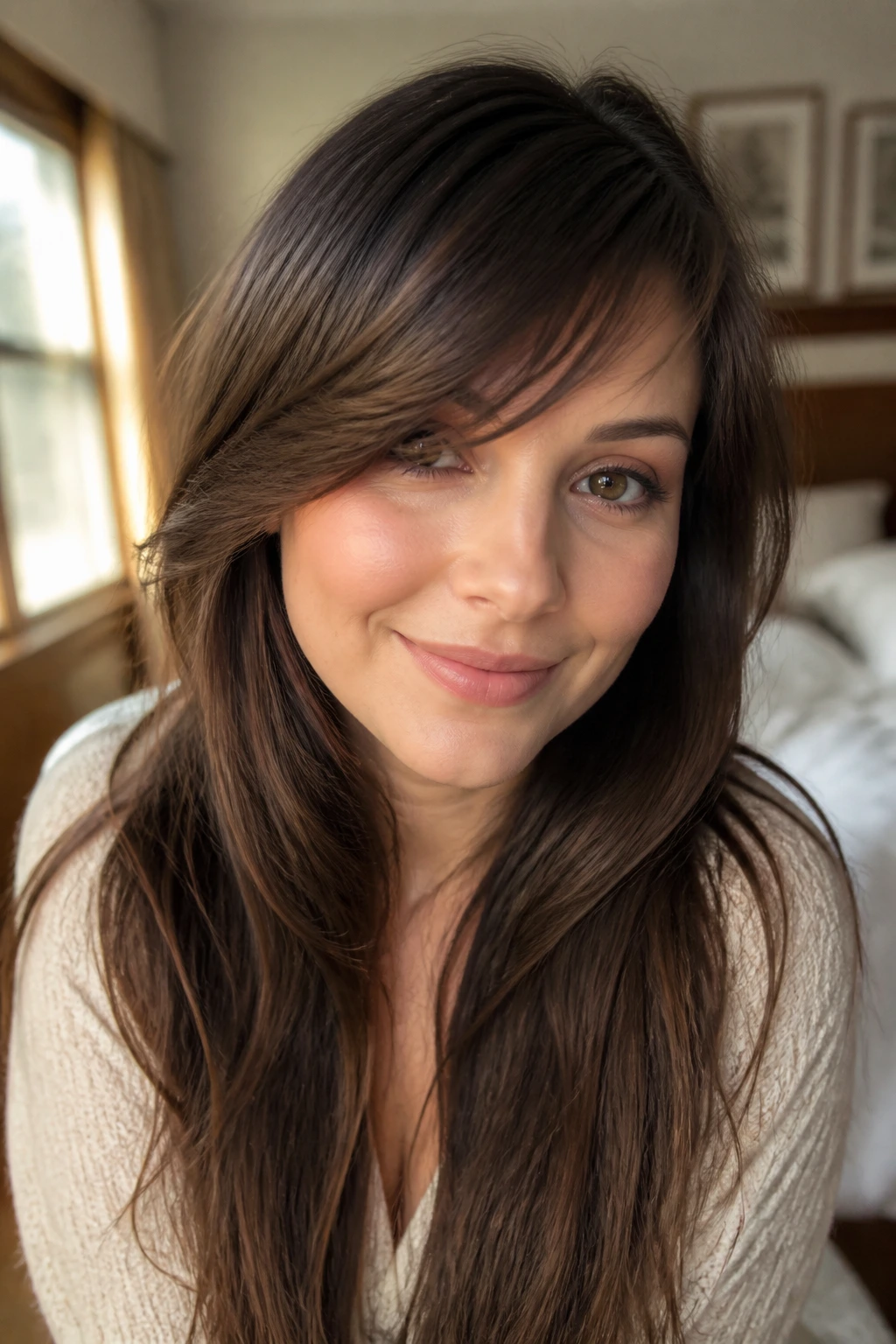
Face-Lengthening Angle: A diagonal fringe draws the eye upward and then down, which is exactly what softens the width of a round face without hiding it behind hair.
Less Harsh Than a Blunt Line: A straight fringe can stop the eye cold across the forehead. A sweep keeps the front moving, so the cut feels lighter even when the hair is thick.
Works With Long Lengths: Long hair gives the front pieces somewhere to blend, so the bang does not look pasted on or cut off from the rest of the style.
Easy to Style in More Than One Way: The same front can be blown smooth, bent with a flat iron, tucked behind one ear, or set with a roller and still keep its shape.
Grows Out Gracefully: A good sweeping bang can slide into face-framing layers instead of turning into that awkward, in-between mess people dread.
1. Deep Side Sweep with Brow-Opening Part
A deep side part does a lot of quiet work. The shortest piece sits just below the brow tail, the longer side drifts toward the outer cheek, and the whole shape makes the face read a little taller without looking stiff. This is one of the safest places to start if you want sweeping bangs for long hair and round faces without a lot of drama.
Why It Works
- Part the hair about 2 to 3 inches off center.
- Keep the shortest point around the brow tail or eye socket, not high on the forehead.
- Blow the roots up and away from the face before sweeping them across.
- Let the rest of the hair fall in long, soft layers so the front does not feel isolated.
One good rule: if the fringe sits flat at the crown, the sweep loses its lengthening effect.
This cut is clean, controlled, and easy to live with on straight or softly wavy hair. It also behaves nicely when you pull the rest of the hair back into a low ponytail, which is a small thing until you actually need it.
2. Curtain Bangs That Skim the Cheekbones
Can curtain bangs work on a round face? Yes — if the center split stays narrow and the outer pieces land low enough to brush the cheekbone instead of stopping at the brow. That lower endpoint matters. A curtain bang that ends too high can puff out at the widest part of the face and undo the whole effect.
The sweet spot is a center that opens the forehead and sides that taper toward the jawline. I like this version on long hair because the rest of the length keeps the bang from feeling too retro or too heavy. It just moves.
How to Style It
- Dry the center pieces first with a round brush, directing them away from the face.
- Bend the outer sections toward the cheekbone so the ends curve instead of flipping hard.
- Use a light mist of texture spray only on the mid-lengths, not the roots.
- Rework the part with your fingers after the hair cools.
The best curtain version on a round face is not wide and fluffy. It is narrower at the top, longer at the side, and softly split like the hair is opening on its own.
3. Feathered Side Fringe with Long Layers
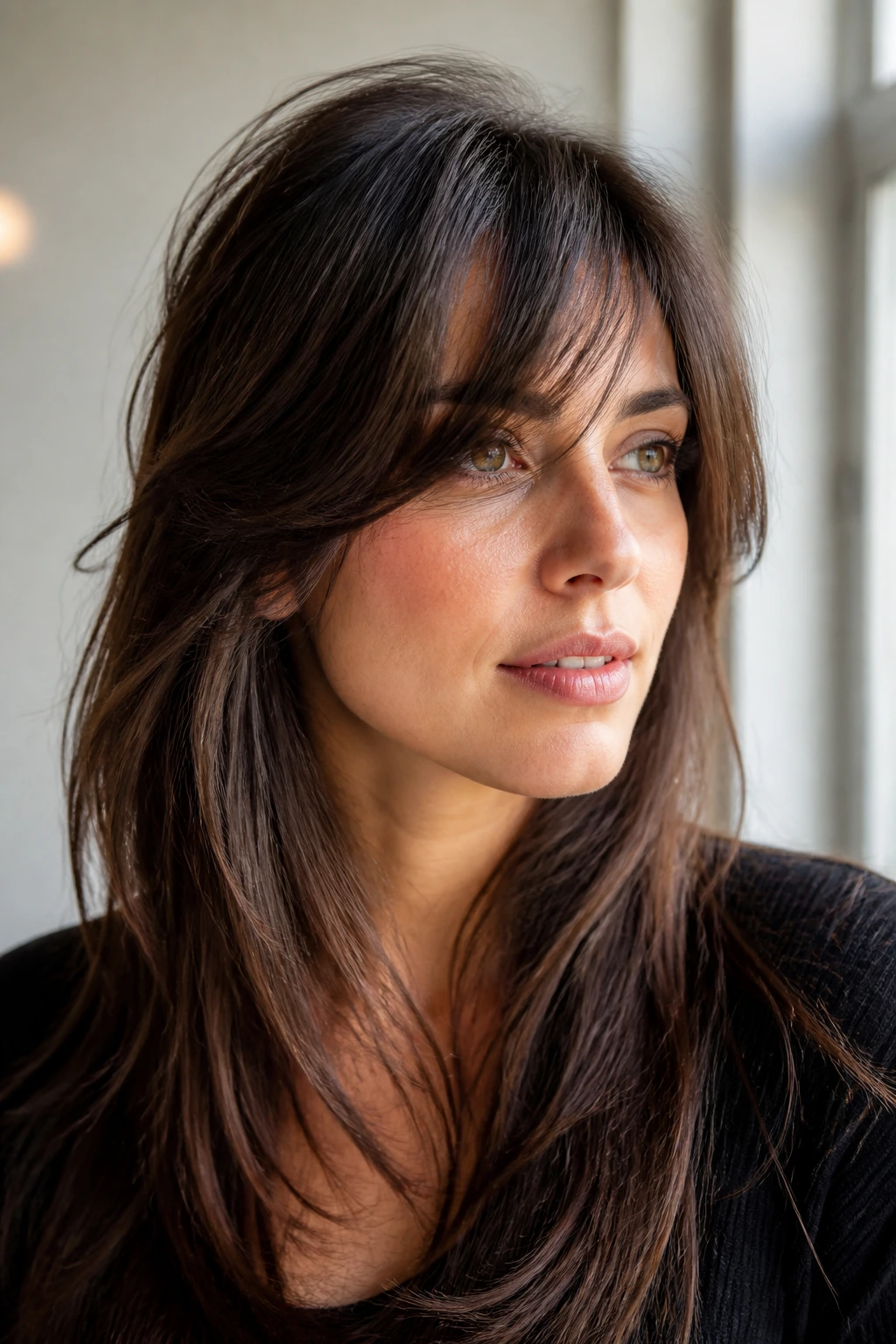
A feathered side fringe can look dated in the wrong hands. With the right density, it looks airy instead of stiff. The trick is to keep the line broken, so the eye never lands on one solid block of hair across the forehead.
This version works especially well when the long hair underneath is cut with long layers that start below the chin. That way the front has somewhere to dissolve. If the rest of the style is one blunt sheet, the feathered bang can feel like a separate attachment.
The finish should look light at the ends, not wispy in a weak way. I mean pieces that move when you turn your head, not strands that disappear. Ask for soft point-cutting instead of a hard edge, and keep the sweep aimed toward the cheek rather than straight down.
4. Bottleneck Bangs with a Soft Center Split
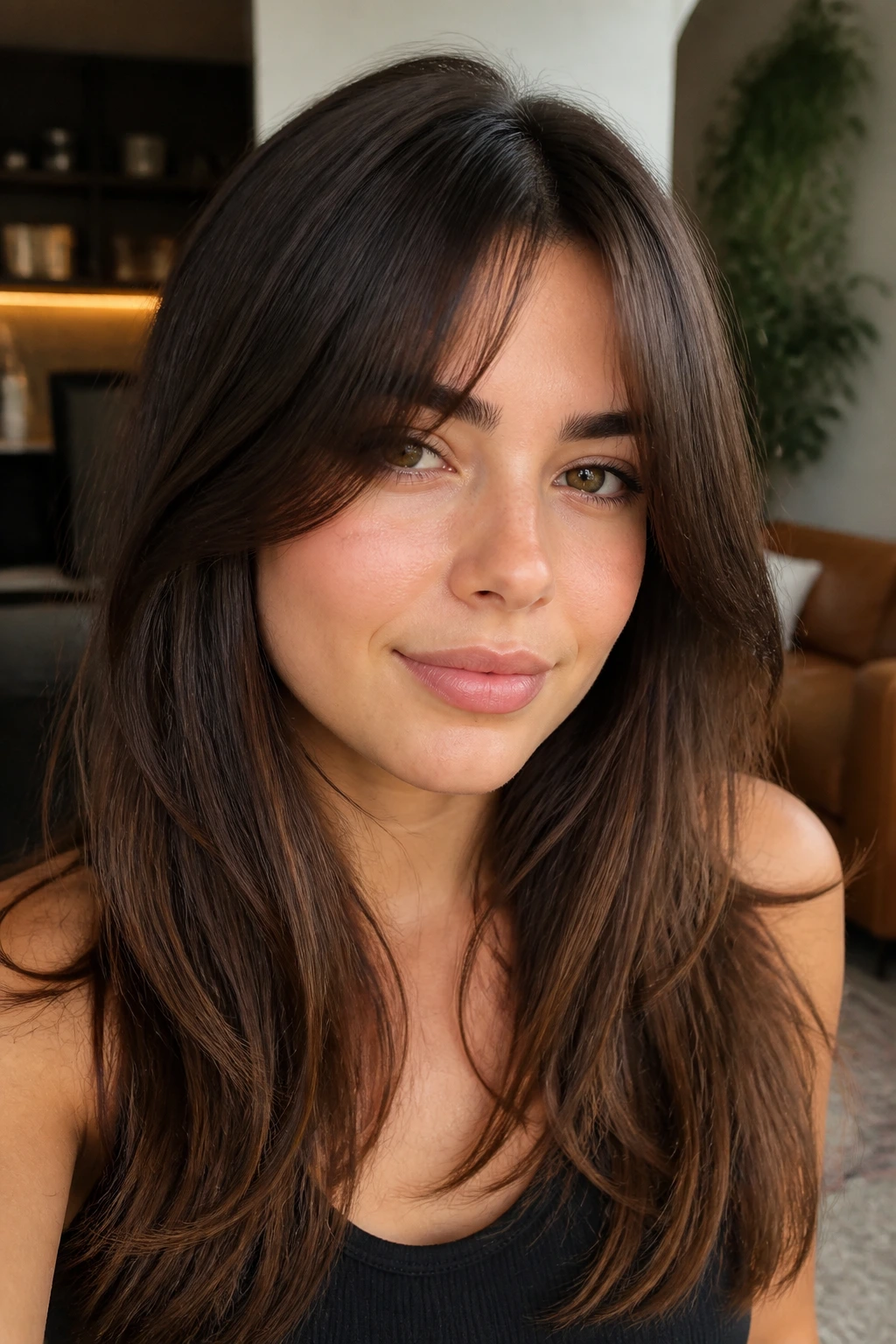
If you want forehead coverage without the commitment of a full fringe, bottleneck bangs are a smart middle path. The center stays shorter and narrower, then the sides drop longer around the temples and cheekbones. On a round face, that narrow center opening keeps the face from getting boxed in.
The shape is especially useful if your hair has some bend, because the longer sides can settle naturally. I like it more than a wide curtain bang for fuller cheeks, mainly because the center stays tidy instead of spreading across the whole forehead. It feels more edited.
The cut should not be bulky. If the sides are too heavy, they can drag down around the jaw and make the face look wider. Keep the inner pieces soft and the outer pieces long enough to skim the cheekbone or lip line.
5. Long Peekaboo Bangs That Tuck Easily
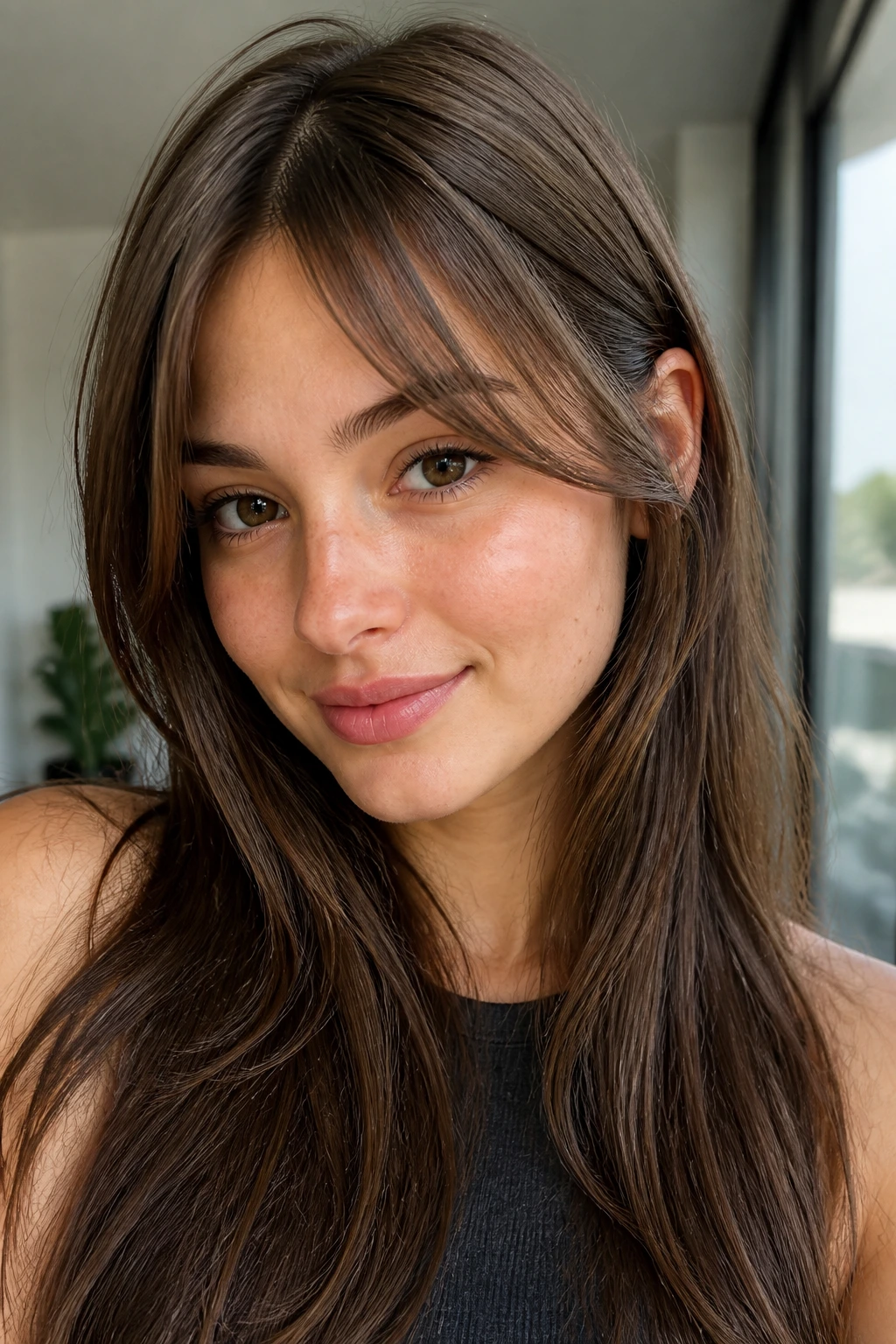
These are the bangs you barely notice until they fall across one eye. They start around the cheekbone and slide long enough to tuck behind the ear, which gives you a lot of control on days when you want the front out of your face. That flexibility is the whole point.
For round faces, the magic is in the length. Short peekaboo bangs can sit too high and widen the forehead; longer ones create a clean diagonal and let the eye travel downward. They also work well with glasses because the front can clear the frame instead of fighting it.
Good for:
- People who like to change the part often
- Hair that needs a little face-framing without a hard bang line
- Long layers that already have movement
- Days when you want the fringe pinned back in ten seconds
The best peekaboo version is soft enough to slip into the rest of the haircut. If the ends are cut blunt, the illusion disappears fast.
6. Razor-Cut Swoop with Piecey Ends
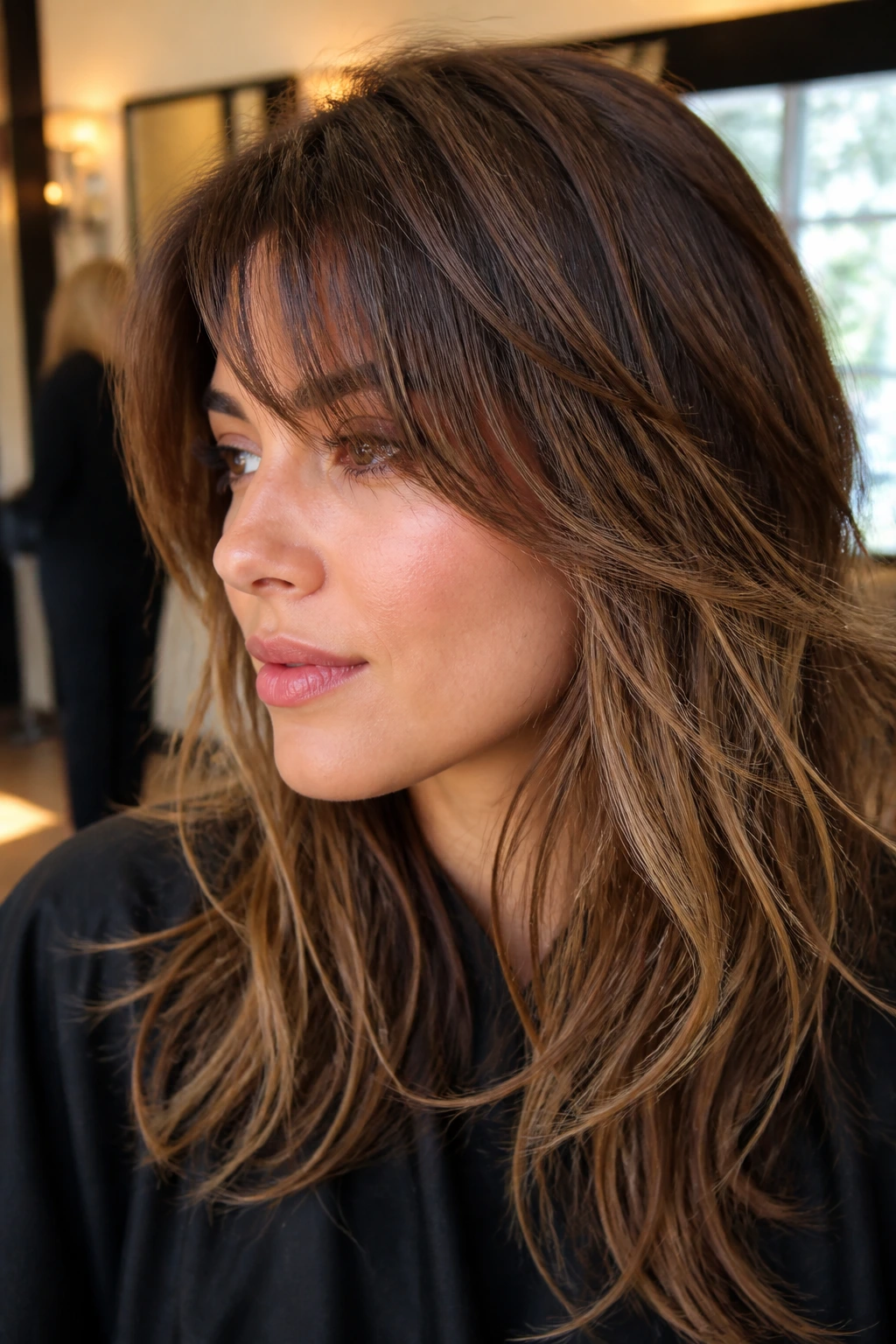
If your hair is thick, a blunt side sweep can look like a helmet. A razor-cut swoop fixes that by removing some of the visual weight from the ends. The result is broken-up, piecey, and far less bulky across the forehead.
This version likes movement. It is not the bang for someone who wants a crisp, polished line every morning. It works better on medium to dense hair with some natural wave, because the strands separate into small ribbons instead of one solid sheet. That separation is what keeps the sweep from swallowing a round face.
Be careful with fragile or overly processed hair. A razor can make those ends look fuzzy if the cut is too aggressive. Ask for a light razor finish or point cutting if your hair already feels delicate. The goal is movement, not fraying.
7. Round-Brush Blowout Bangs
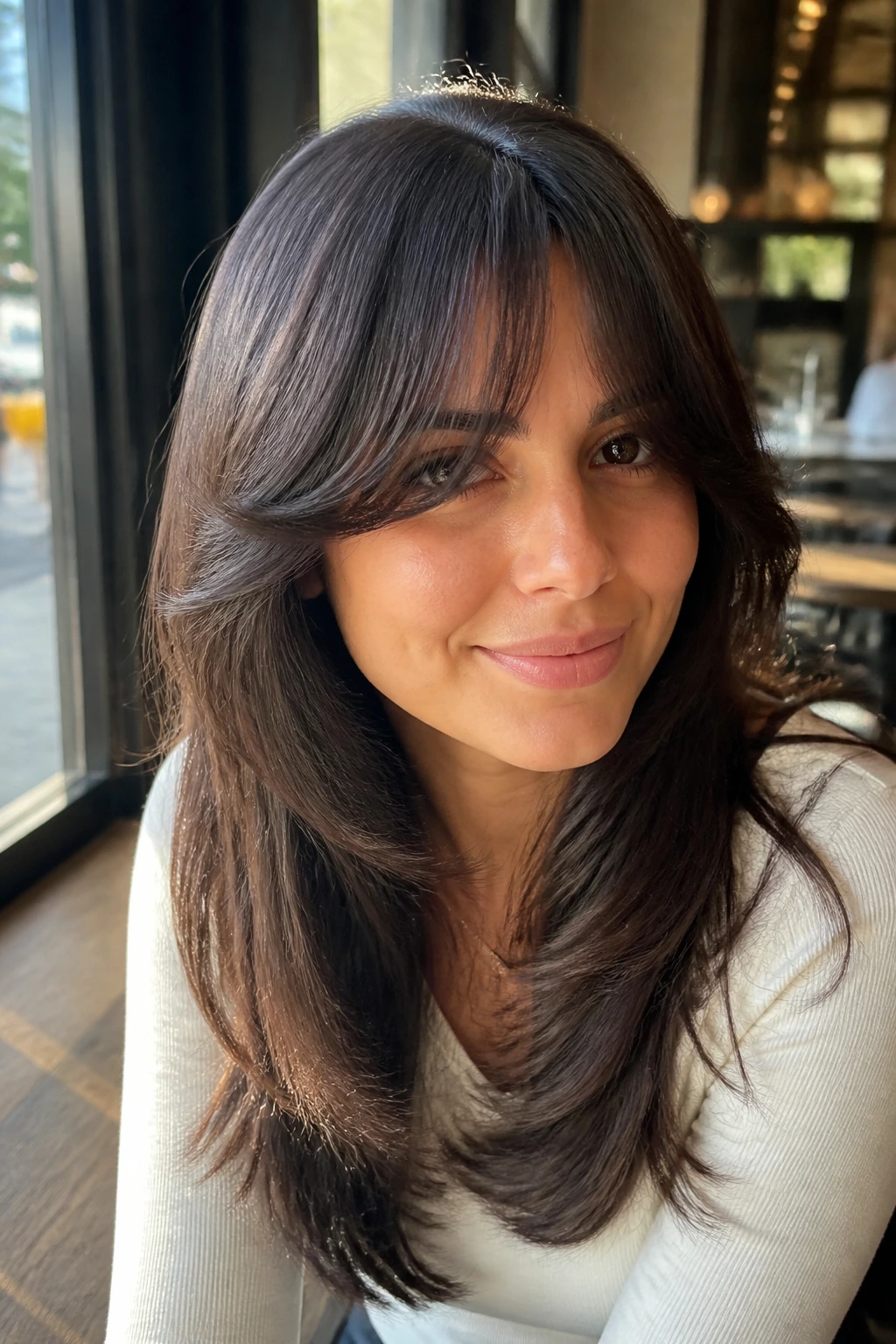
Why do some bangs look expensive even before the rest of the style is done? Because they were meant to bend. Round-brush blowout bangs curve away from the face, hold a little body at the roots, and land with that smooth swoop that never seems to sit flat.
What Makes Them Work
The round brush matters more than the product here. A brush that is too large will not give the front enough bend, and a brush that is too small can make the ends curl under in a stiff way. I like a medium barrel for long hair because it gives the sweep shape without making a tight ring at the ends.
How to Style It
Dry the bang section until it is about 80 percent dry, then roll it over the brush and direct the hair away from the face. Hit the roots with warm air, then finish with the cool shot while the hair is still wrapped around the brush. That last bit sets the curve.
On a round face, the extra root lift matters. Flat bangs draw the eye sideways. Lifted bangs pull the eye up.
8. Side-Swept Fringe with a High Crown
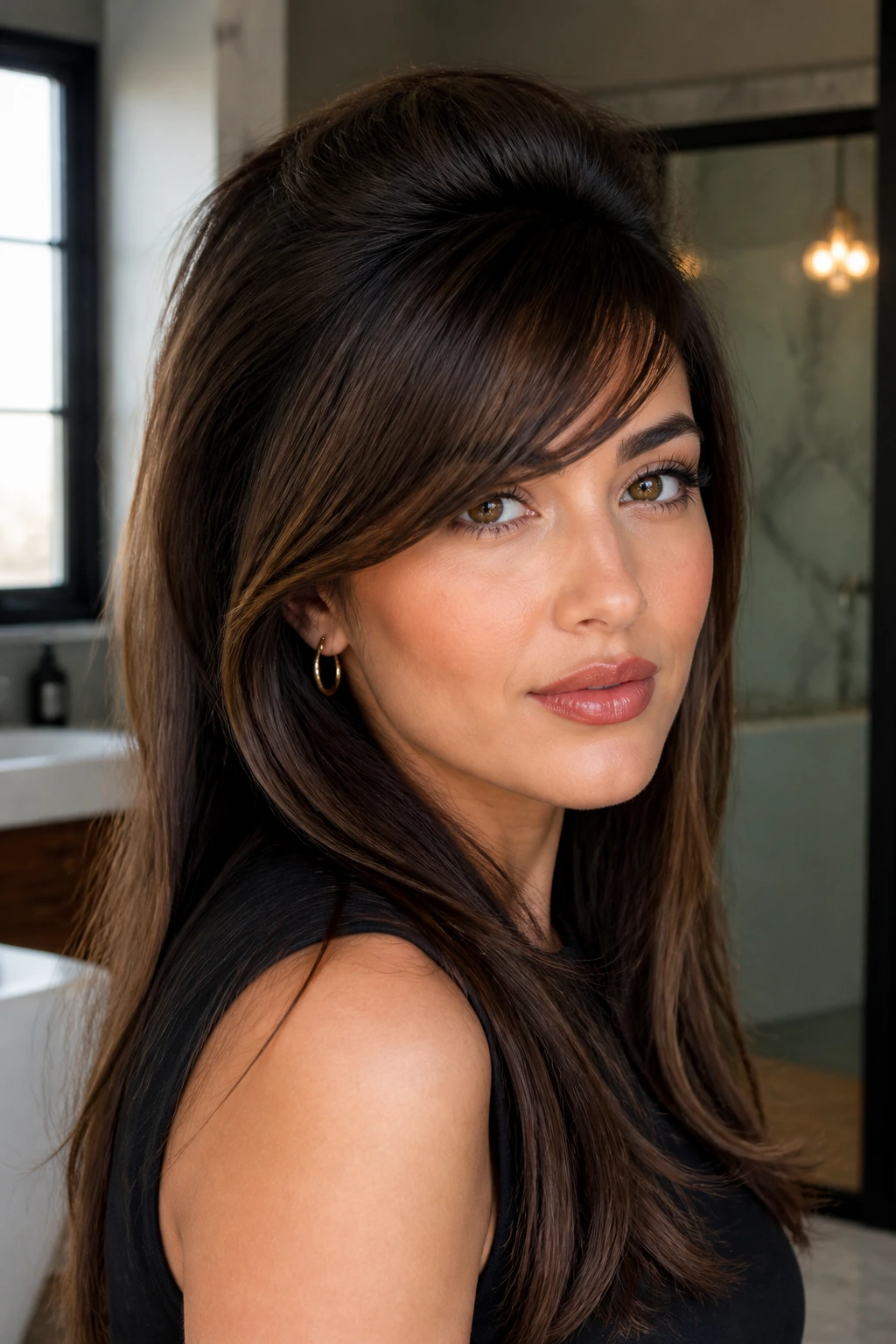
Height at the crown changes everything. A side-swept fringe paired with a little lift at the top gives a round face a longer line from hairline to chin, which is why this cut often looks more sculpted than people expect.
The front should start with enough length to sweep, not stick. Then the crown gets the volume. Think of the two as a team: the top rises, the fringe angles, and the long lengths stay smooth so the style does not turn puffy everywhere at once.
This is one of my favorite choices for finer hair because the crown volume makes the whole cut feel fuller. Use root spray at the base, blow the top section up with a round brush, and pin the front to cool for a few minutes if it keeps collapsing. Small moves. Big difference.
9. Face-Framing Bangs That Blend into U-Layers

Unlike a classic fringe, this version lives halfway between bangs and front layers. The shortest pieces still sweep across the forehead, but they melt into U-shaped layers that keep going through the lengths. That blend is useful on round faces because it avoids one hard break line.
The haircut works best when the front pieces are cut deliberately, not left to grow into a shag by accident. You want the shortest point to sit around the brow or just below it, then the layers should fall away toward the cheek and collarbone. The line should feel intentional, not random.
This is the choice for someone who wants the idea of bangs without the daily bang routine. It air-dries well, tucks neatly, and still gives you face shape even when you skip a blowout.
10. Wispy Bangs with Airy Ends

Less hair. More shape. That is the whole appeal of wispy bangs on a round face. They keep the forehead from looking boxed in, but they do it with broken, soft ends instead of a heavy curtain.
The danger here is going too thin. If the bangs are over-thinned, they start to look stringy and disconnected from the rest of the haircut. Keep enough density so the fringe shows up in a photo and in real life, then ask for point-cutting at the tips to soften the line.
Wispy bangs like a little movement at the root. A tiny bit of root lift spray and a quick bend with the fingers is often enough. They are not fussy, which is part of the appeal. They also work better on hair that already has some volume, because the pieces need support to look airy rather than sparse.
11. Heavy Side Sweep for Thicker Hair
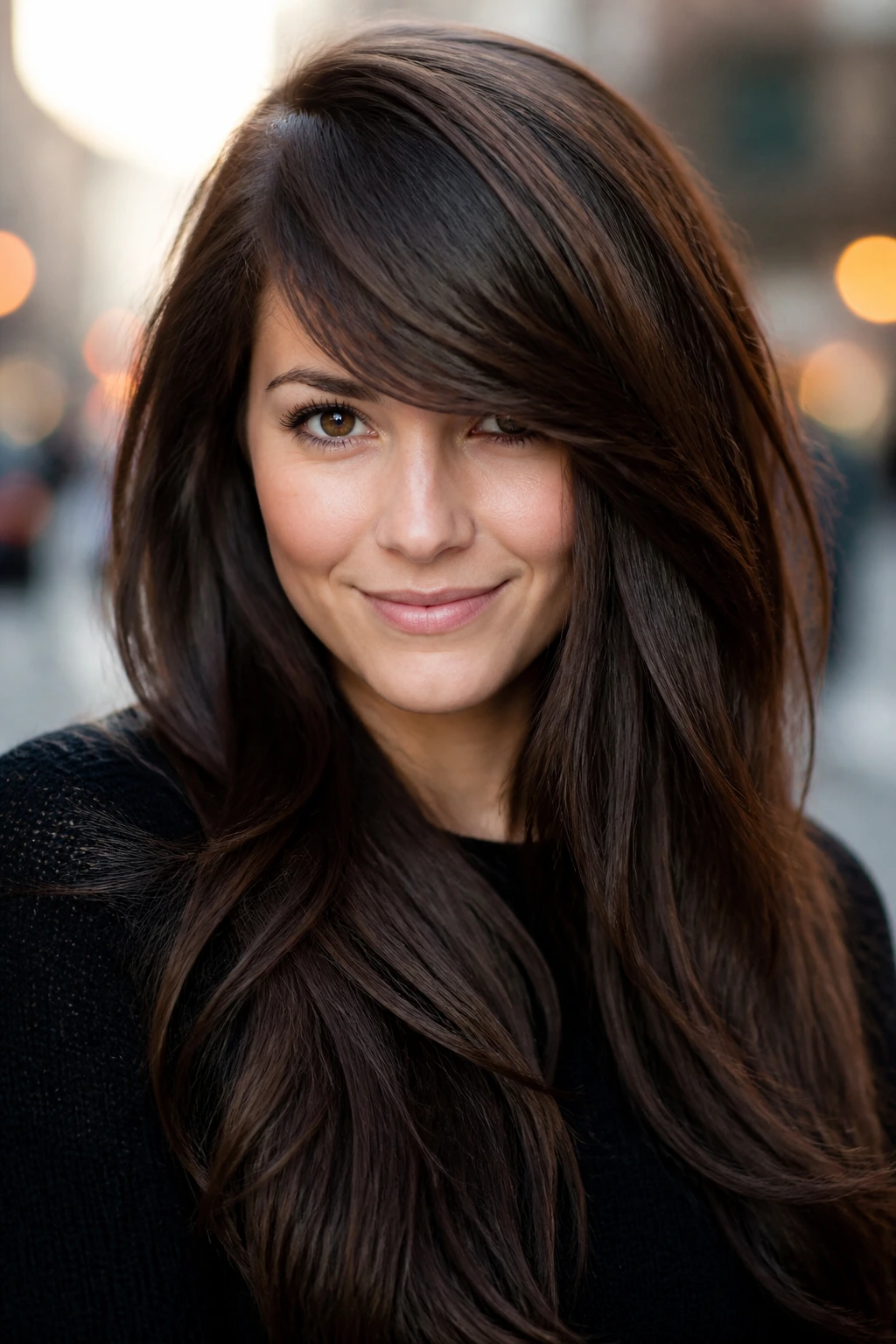
Got dense hair that refuses to lie flat? Then the heavier side sweep is the move. Instead of trying to thin the front into submission, this version keeps enough weight to control the bulk and still uses the diagonal line to flatter the face.
The mistake people make with thick hair is over-thinning the bang until it frizzes out by lunch. Better to keep the front substantial and remove weight through internal shaping, not by shredding the ends. Ask for long layers in the face frame, then sweep the fringe across in one clean direction.
This cut is especially good if your hair has a little wave. Thick hair with too much texture can puff at the temples, so the extra weight helps anchor the shape. It is not delicate. That is why it works.
12. Curved Bangs That Start Near the Temple
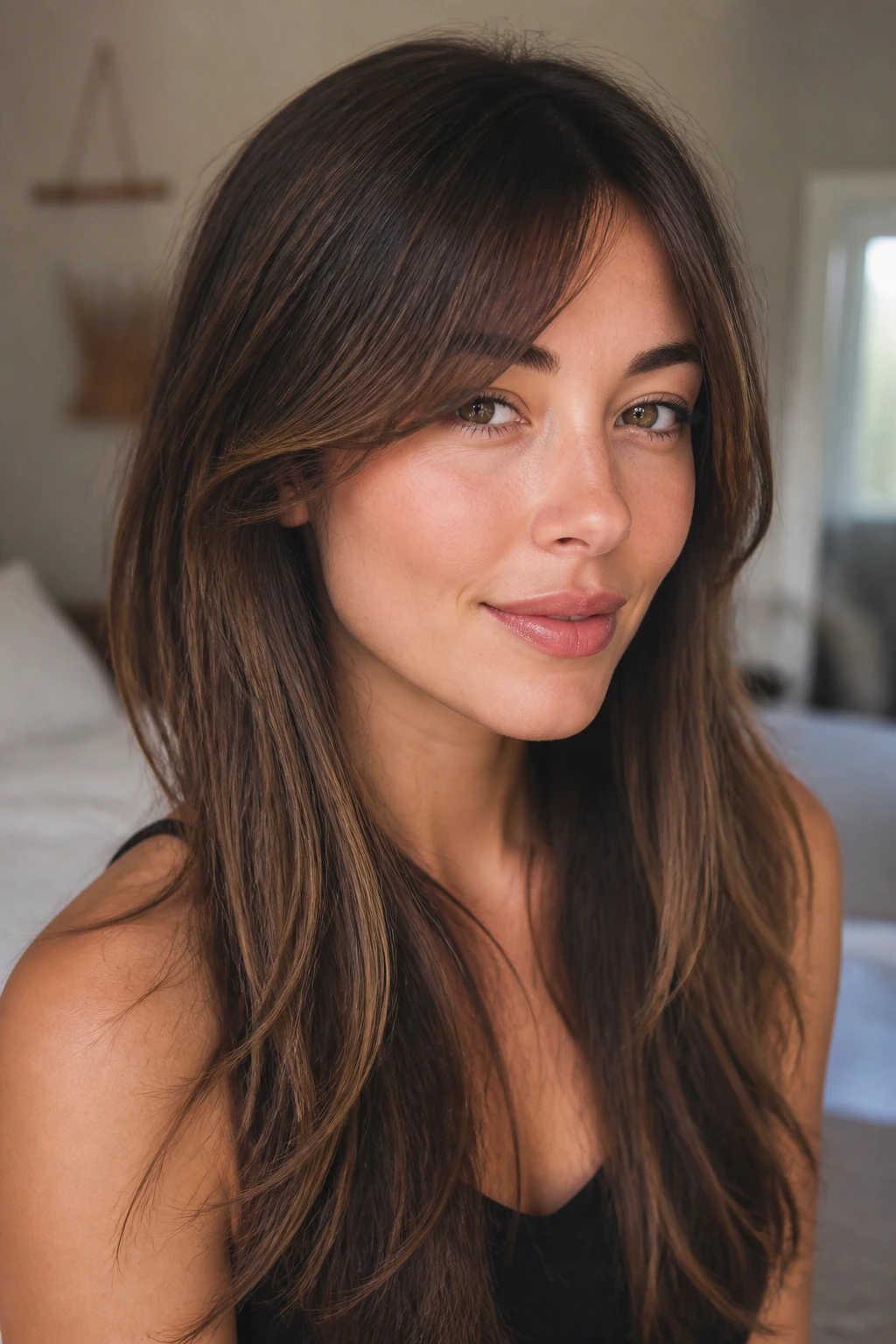
The temple is an underrated starting point. A curved bang that begins there and arcs down toward the cheek opens the face in a way a centered fringe never will. On round faces, that curve creates a longer vertical feel without taking too much hair off the forehead.
Where the Curve Starts
The shortest piece should sit just to the side of the center, not dead center. From there, the line should bend outward and downward, almost like the front half of a soft crescent. If the curve is too sharp, the cut can feel theatrical. Keep it gentle.
The cut pairs well with long layers that are already moving away from the face. It gives you a front shape that looks planned even when you let the hair air-dry a bit messy. That matters more than people admit.
13. Soft Shag Fringe on Long Lengths
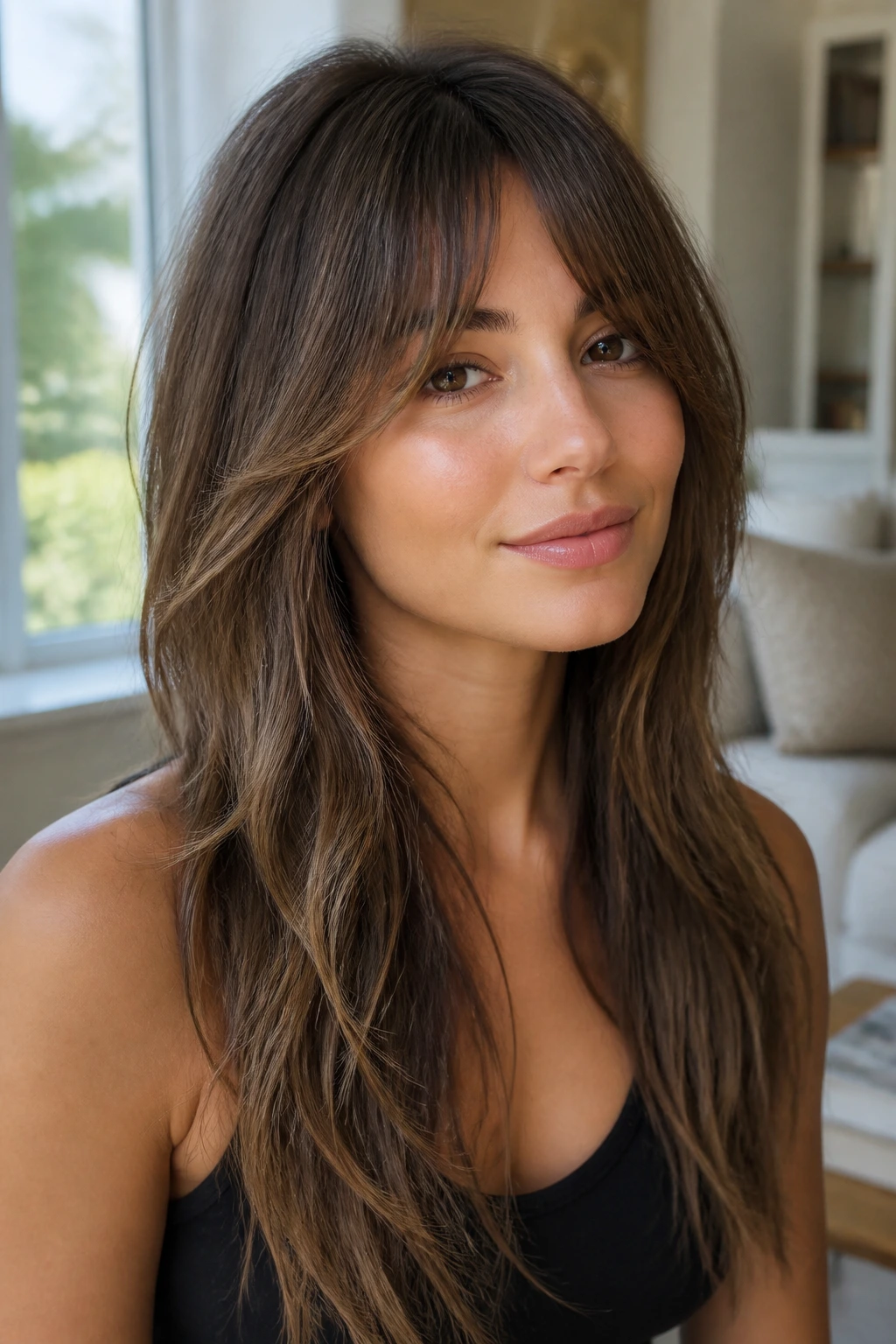
If your long hair feels too neat, a shaggy fringe brings it back to life. The front is broken into little pieces, the edges are softened, and the whole cut gets a bit of edge without turning into a full shag haircut.
This version is best when you want movement first and polish second. It works on wavy hair, especially if you like air-drying or a diffuser. A little texture spray through the mid-lengths will help the front separate into soft pieces instead of falling into one flat sheet.
I would not push this shape too short on a round face. Keep the shortest piece long enough to bend across the forehead and let the outer pieces graze the cheekbone. The fringe should suggest motion, not fight for attention.
14. Glossy Hollywood Sweep with Big Volume
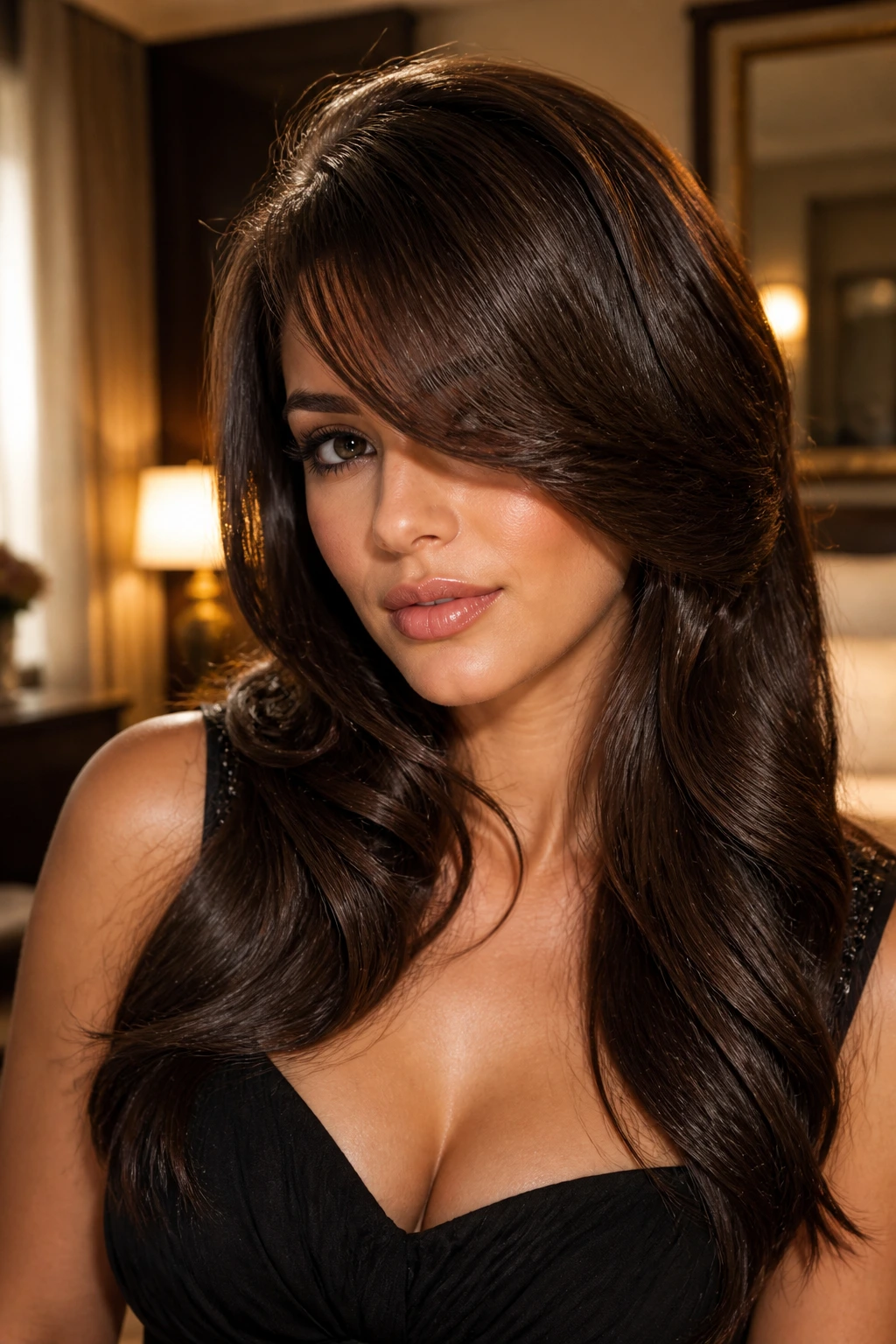
This is the most dramatic version in the bunch, and yes, it still flatters a round face. The reason it works is simple: the eye sees height at the crown, a deep side sweep through the front, and long length falling below the jaw. That combination stretches the shape.
Use a large round brush or Velcro rollers to build that smooth, lifted curve. The bang should be glossy, not crunchy. A little serum at the ends is enough; too much product at the root will collapse the volume you worked for.
Best for:
- Formal events
- Thick, medium, or coarse hair
- Ovalish round faces that can handle extra glamour
- Anyone who likes a big blowout rather than air-dried texture
This is not the fastest style on the list. It is the one you choose when the front needs to look deliberate from every angle.
15. Long Bangs with Hidden Highlights
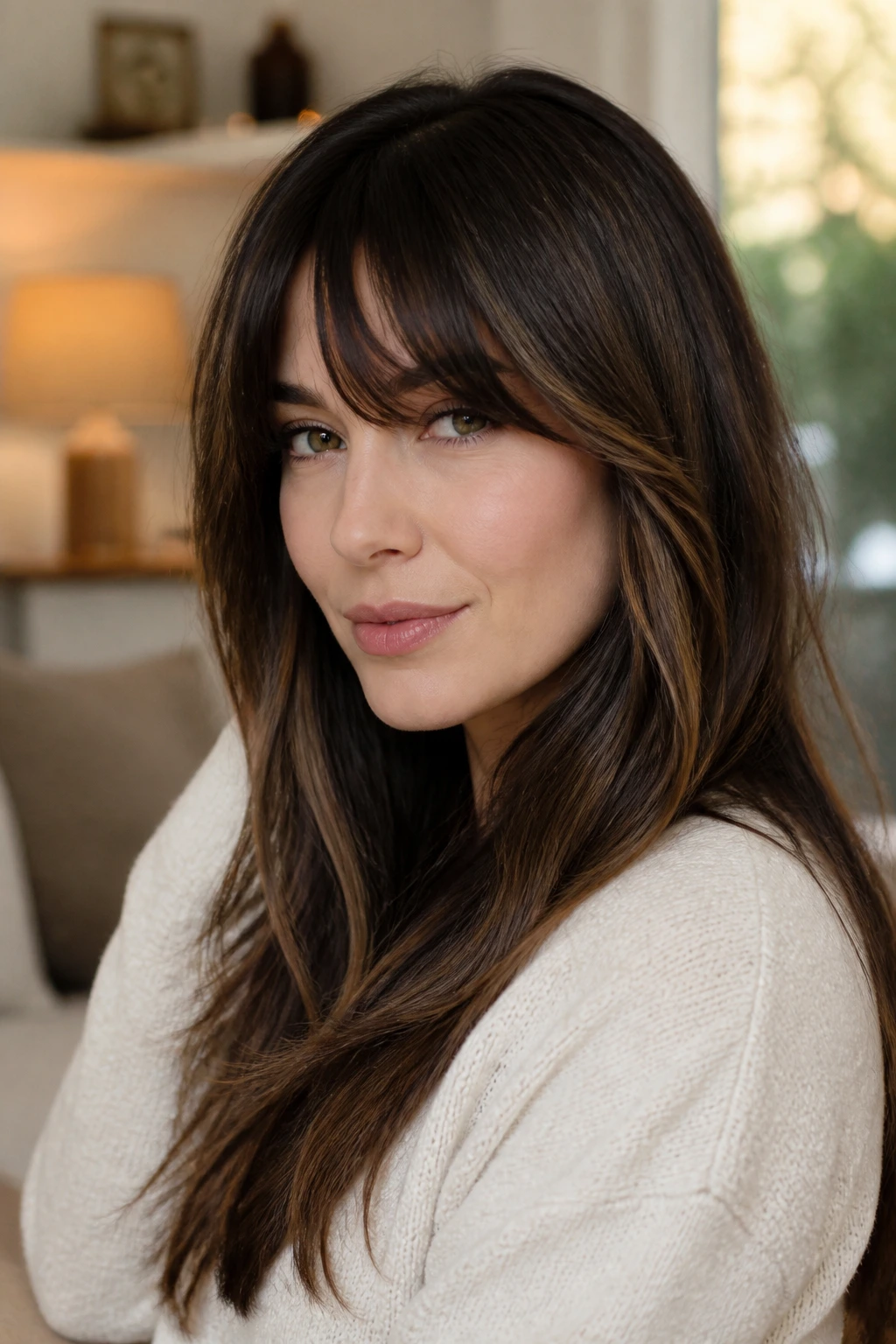
The real secret here is the color work. Long bangs with subtle highlights and lowlights create shadow and light around the face, which makes the sweep read as softer and more dimensional. On a round face, that depth can be a lot more useful than extra length alone.
Keep the brightest pieces near the outer sweep, not right in the center of the forehead. That pushes the eye outward and down, which helps the face feel longer. A few lighter ribbons around the cheekbone can also keep the front from disappearing into the rest of the hair.
This is a good one if your haircut is already in place and you want the fringe to look fuller without changing the cut. Color can do a surprising amount of shaping. Not magic. Just smart placement.
16. Grown-Out Sweeping Fringe
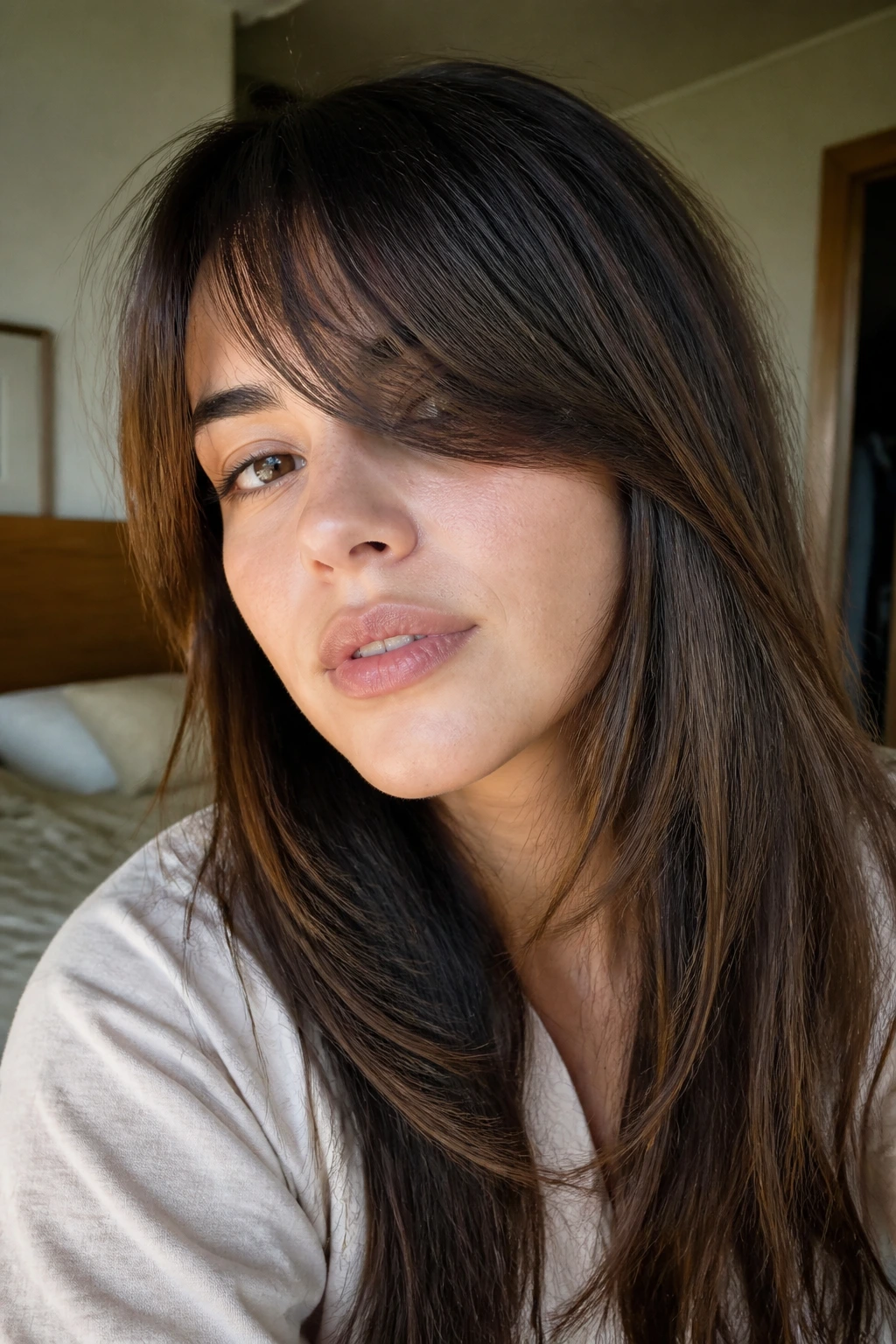
A grown-out fringe is made to survive the awkward stage. The shortest pieces sit longer than a fresh bang, the sides blend into layers, and the whole thing feels like a cut that knows how to live between appointments.
This is a strong choice if you hate the feeling of monthly bang trims. The shape should start around the brow line and drift toward the lip or chin, depending on how much coverage you want. On a round face, that extra length helps keep the face open instead of boxed in.
The trick is to keep it intentional. Grown-out should not mean neglected. A little shaping around the temples every few weeks keeps the sweep from turning into a blunt, heavy drape.
17. Wavy Sweep with Bend and Texture

Round faces and waves get along better than people think when the front is cut long enough. A wavy sweep uses the natural bend in the hair to create movement across the forehead, and that movement does a lot of the flattering work by itself.
Why Waves Help
Waves break up the line of the fringe. Instead of a single flat edge, you get soft bends that move the eye across the face and down through the hair. The result feels relaxed, not rigid.
How to Wear It
Let the front dry with a little root lift, then twist the ends around your fingers while they are still warm. A small amount of mousse or foam at the root gives the sweep enough support without making it stiff. If your wave pattern is strong, you may not need a brush at all.
I like this version because it does not fight the hair’s natural pattern. It works with the bend instead of forcing the front into something that collapses by lunchtime.
18. Side Bangs with Straight, Sleek Lengths
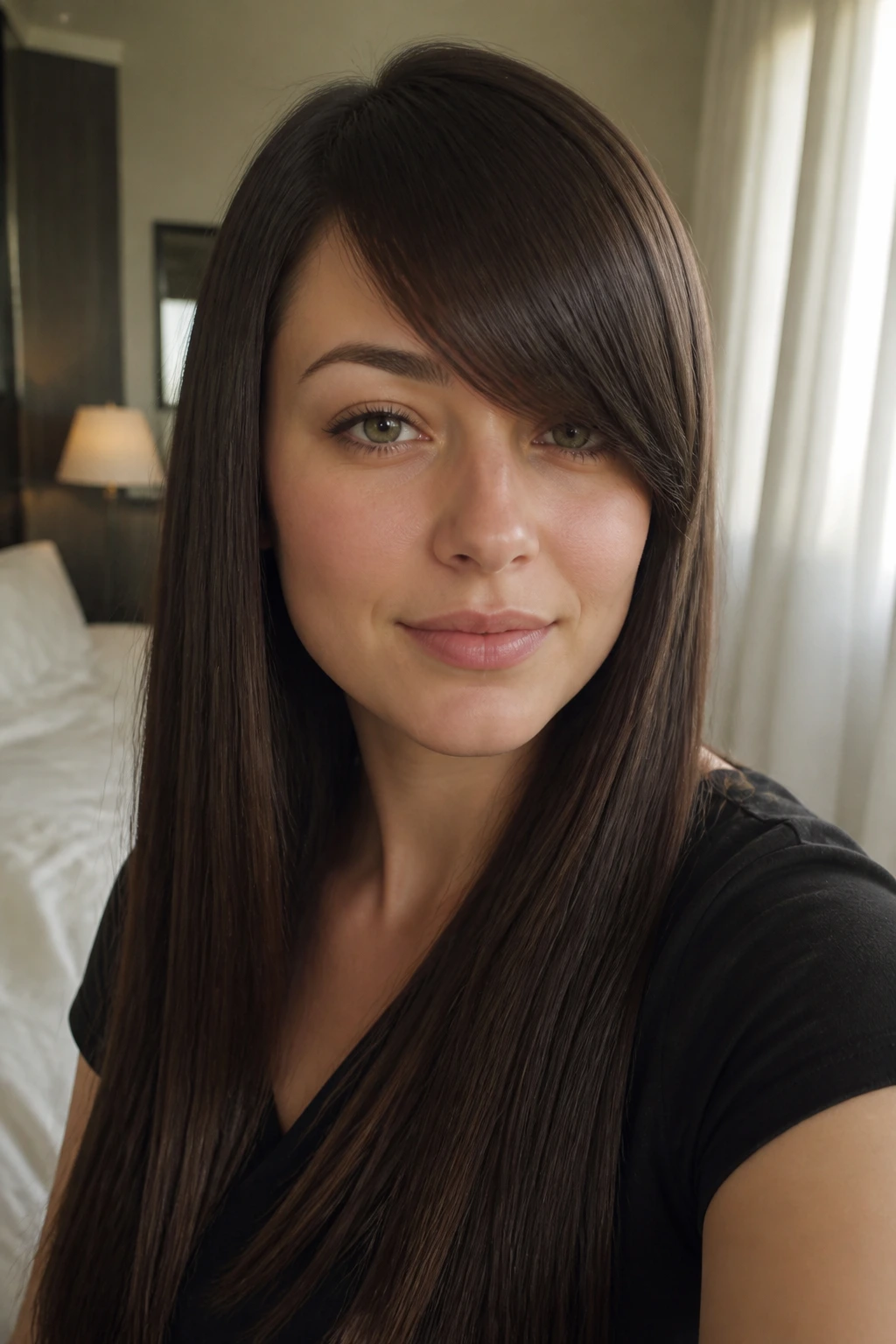
Can poker-straight hair wear sweeping bangs without looking flat? Yes, if the front has a slight bevel and the part is deep enough to create a real diagonal. Straight lengths can look severe on a round face when the front is cut too bluntly, so the tiny bend at the ends matters.
Keep the sweep smooth, not stuck to the forehead. A 1-inch flat iron can create a soft C-bend at the ends if your hair does not hold round-brush shape well. Use only a light touch of smoothing cream; too much will weigh the front down and erase the movement.
This style is especially good for people who want clean lines with almost no fuss. It is neat. It is controlled. And it still gives the face the shape it needs.
19. Layers-and-Bangs Combo for Fine Hair
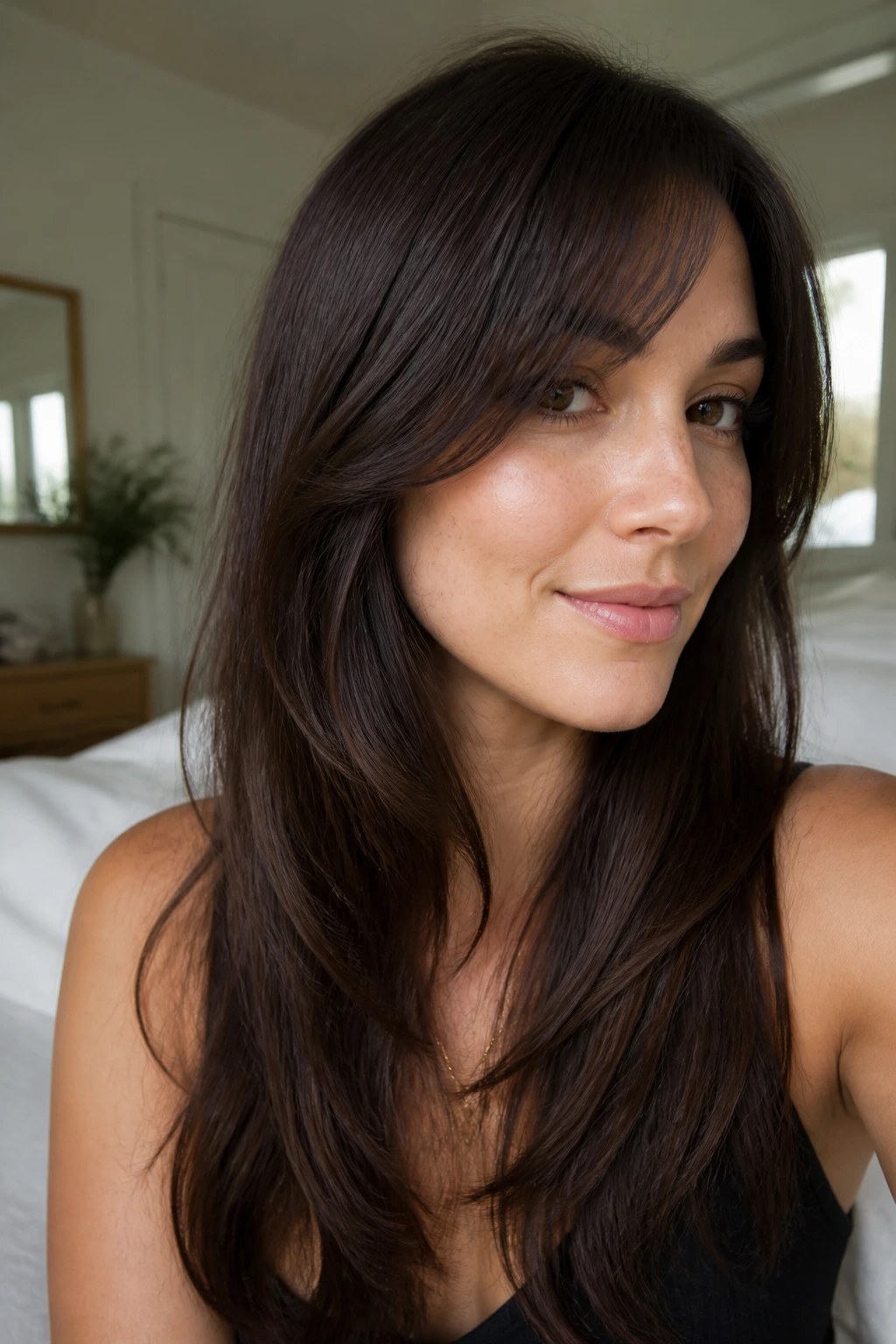
Fine hair needs a little strategy, not a lot of bulk. The best way to make sweeping bangs work is to keep the front narrow enough to avoid gaps, then build the rest of the haircut with long layers that support the shape without stealing all the density.
The bang itself should not be over-thinned. That is the fastest way to make fine hair look sparse around the forehead. Ask for soft internal layering and a sweep that sits closer to the cheekbone than the brow so the style has some presence.
This one is good if your hair tends to collapse by noon. A root-lift spray, a quick blow-dry at the scalp, and a light dusting of dry shampoo can keep the front from separating into flat strings. Fine hair loves a shape that is simple and deliberate.
20. Off-Center Sweep with Ear-Tuck Freedom

Some of the best bangs are the ones you can hide in five seconds. An off-center sweep that can tuck behind one ear gives you that flexibility without losing the face-framing line. It is practical, and I mean that in the best way.
The key is to keep the shortest point long enough to sweep, not stick. Once the front reaches the cheekbone or just below, it can move from bang to layer in a second. That is useful on windy days, gym days, or any day your hair needs to cooperate with life.
This version also plays nicely with glasses and earrings because the sweep stays out of the way instead of sitting right on top of everything. The line is there when you want it. It disappears when you do not.
21. Soft Arched Bangs with Blended Ends

What if you want the face to look longer but not severe? Soft arched bangs are a nice answer. The center sits a touch shorter, the sides curve longer, and the whole line opens the forehead without drawing a hard stripe across it.
The Shape in Practice
The arch should feel gentle, almost like the fringe is bowing away from the center and melting into the sides. On a round face, that subtle lift at the center keeps the style from flattening out visually. It gives the eye a place to travel.
This works well on hair that has a little body. If the texture is too limp, the arch can collapse into a straight line. A round brush and a touch of root spray usually fix that. The finished result is soft, but it still has structure.
22. The Most Forgiving Sweep for Round Faces
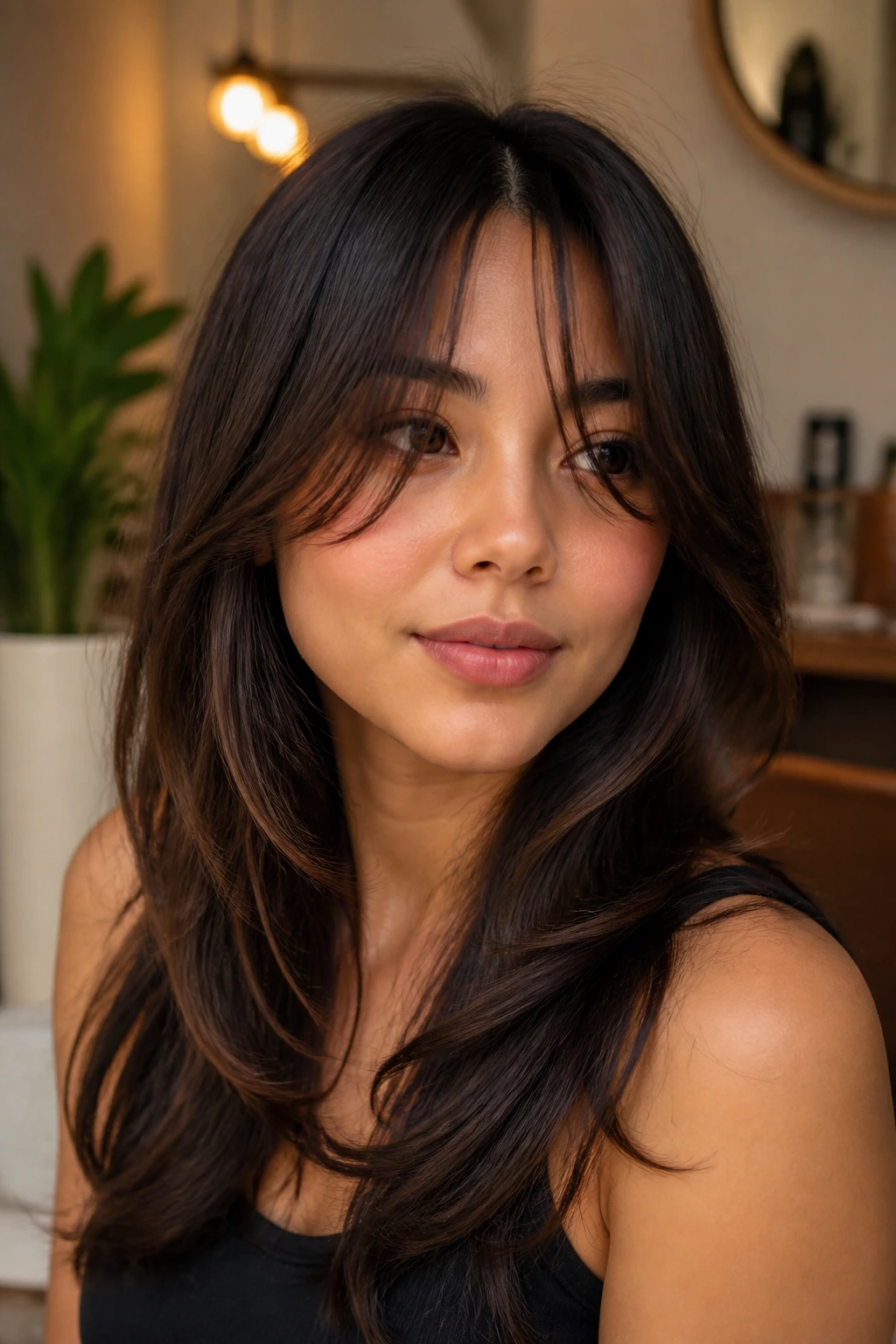
If you only want one version to show your stylist, make it the hybrid: a narrow center opening, long side pieces, and enough length to tuck, bend, or wear across the cheekbone. It borrows the best parts of curtain bangs and side-swept bangs without leaning too far into either camp.
This shape is forgiving because it has range. One day it can be brushed open like a curtain. The next day it can sit as a deep side sweep. When the front is cut with that flexibility in mind, it grows out better and works with more face shapes than people expect.
I like this version for anyone who is nervous about committing. It does not trap you in one styling habit. That matters. Hair should have some room to misbehave and still look like you meant it.
Why the Angle Matters More Than the Fringe Length
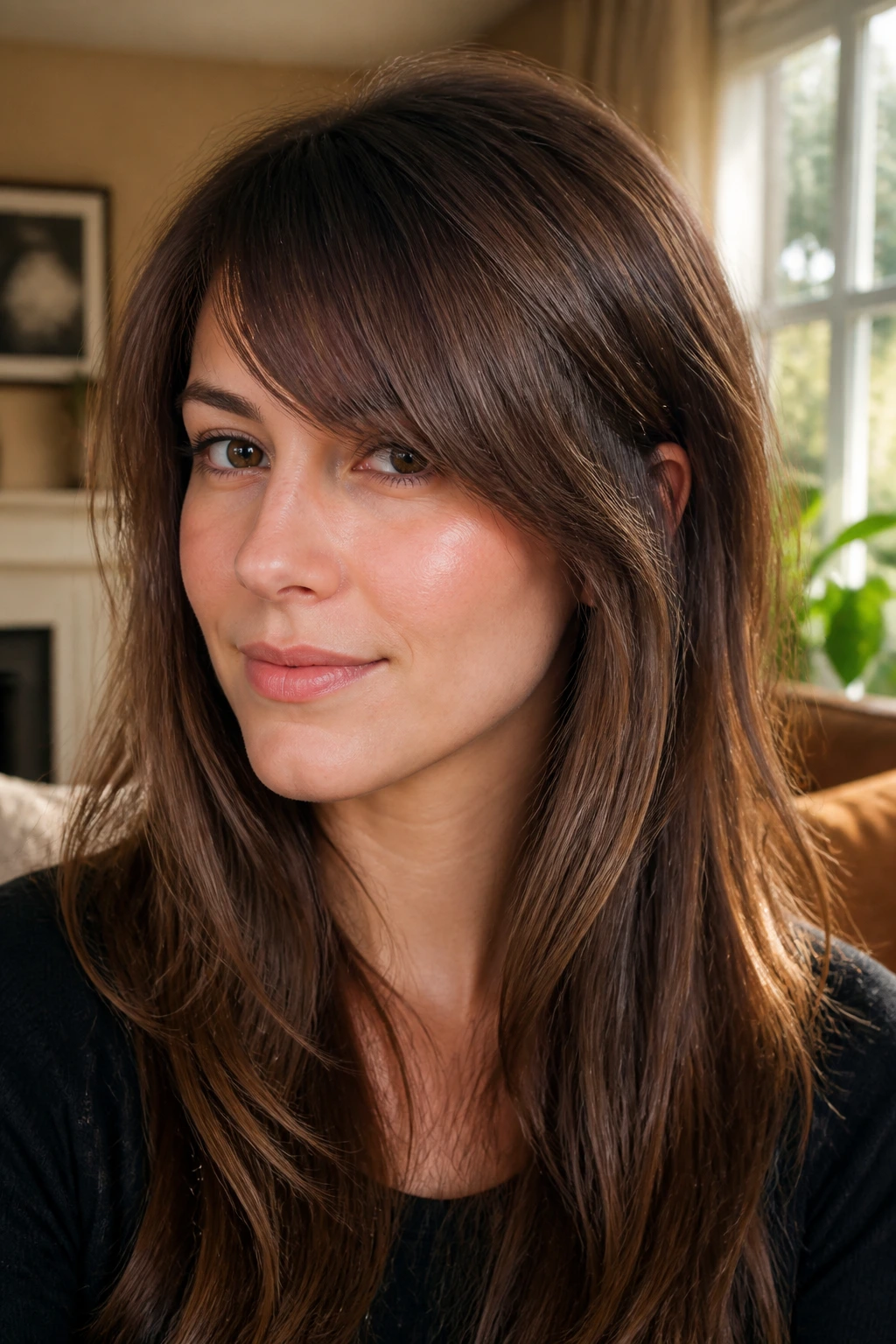
The strange part about bangs is that length is not the only thing that changes the face. Angle does a lot of the heavy lifting. On a round face, a straight horizontal line cuts the forehead in a way that can make the cheeks feel wider. A diagonal line does the opposite. It pulls the eye across and down, which gives the face more stretch.
Long hair helps because it gives that diagonal someplace to land. If the front pieces stop too high, the sweep can look like a small hat brim. If the front pieces go long enough to graze the cheekbone or lip, the shape feels intentional and grounded. That is why the same bang can look flat on one person and flattering on another. The cut is not the only variable; the relationship between front, crown, and length matters just as much.
Crown height is the sneaky detail people miss. A little lift at the root makes the face look longer, even if the bang itself is soft. Flat roots do not help. A flat fringe sitting over full cheeks can shorten the face faster than most people expect, and that is usually why a cut that looked fine in the salon feels off at home.
I also like the way long sweeping bangs work with movement. Hair does not stay in a single position all day. A good cut should still make sense when the front shifts, when you tuck one side back, or when the part softens after a few hours. That kind of flexibility is worth more than a fringe that only looks right in a single mirror angle.
The Tools That Make a Sweep Behave
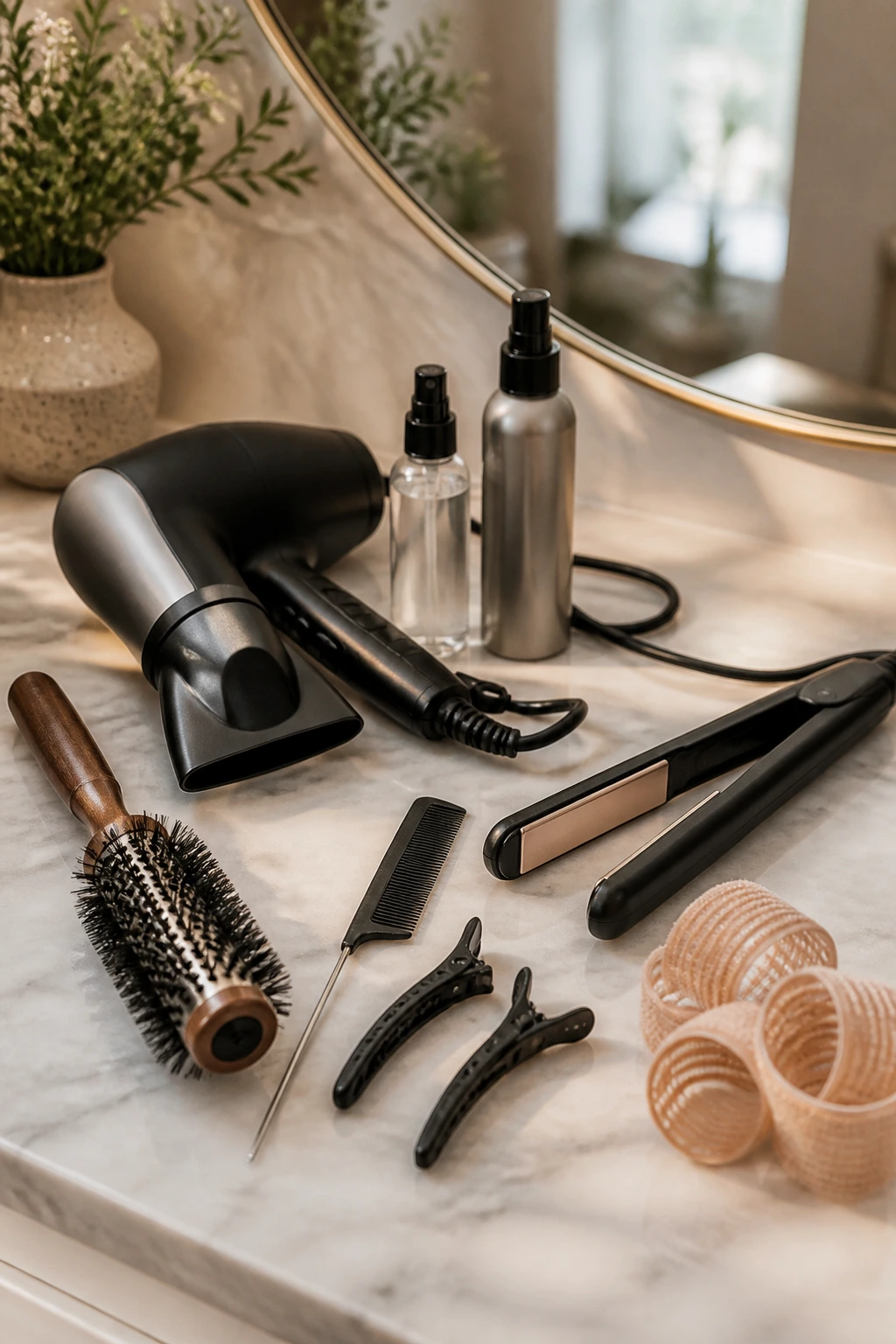
You do not need a drawer full of gadgets, but the right few tools make sweeping bangs far easier to live with.
- Blow dryer with a concentrator nozzle: The nozzle helps direct air at the roots so the front bends instead of frizzing.
- 1 to 1.5-inch round brush: Small enough to create lift, large enough to keep the curve soft rather than curled under.
- Tail comb: Useful for setting a precise side part and lifting the front section cleanly.
- Duckbill clips: These hold the bang in place while it cools, which matters more than people think.
- Lightweight root-lift spray or mousse: Keeps the crown from going flat without making the fringe sticky.
- Heat protectant: A must if you use a blow dryer or flat iron on the front every day.
- 1-inch flat iron: Helpful for adding a gentle bend to straight hair or correcting a stubborn cowlick.
- Dry shampoo: Best on day two or three when the roots need a reset.
- Velcro rollers or a small roller set: Great for building that soft swoop while the hair cools.
If you only buy two things, get a good round brush and a nozzle attachment. The rest helps, but those two shape the front faster than anything else.
How to Style the Front in Five Minutes or Less
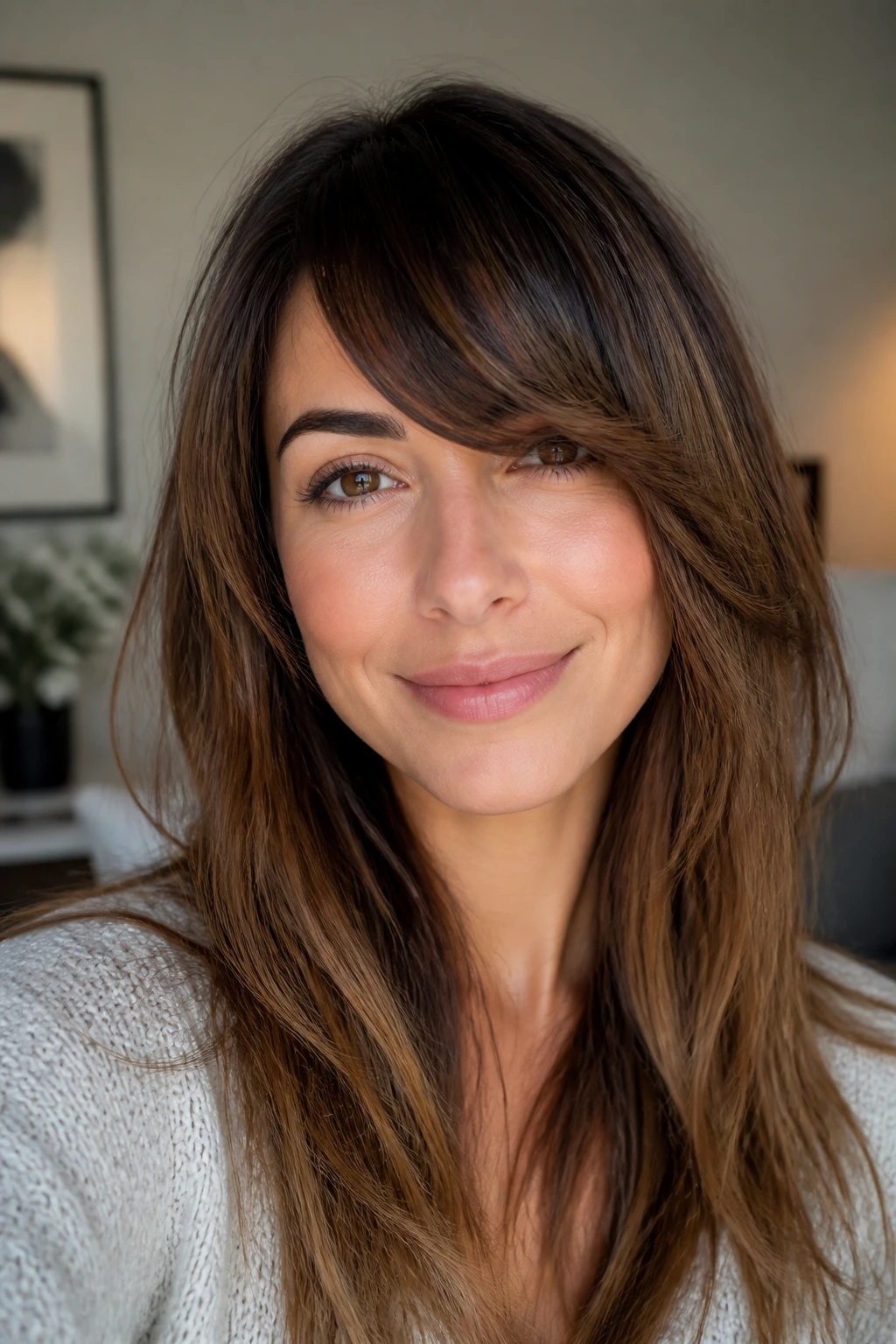
The fastest way to make sweeping bangs look intentional is to start at the roots, not the ends. Wet or damp front sections need lift before they need shape. Blow the roots in the opposite direction from where the bangs will finally sit, then guide the hair back across the forehead while it is still warm.
Root lift first: Use a small amount of mousse or root spray at the base, then dry the section with your fingers lifting at the scalp. If the roots stay flat, the front will sink into the face and lose that lengthening angle.
Set the bend while warm: Wrap the fringe around the brush or clip it into place for a few minutes while it cools. That short cooling window makes a bigger difference than another pass with the dryer.
Keep product light: Heavy creams and oils at the fringe can make the hair separate in greasy chunks by lunch. Use the tiniest amount, and keep it away from the scalp.
Work with the cowlick, not against it: If the front insists on splitting, dry it back and forth for a minute before deciding where the part lives. Most cowlicks calm down once they are warm and directed the same way a few times in a row.
Use the eyebrow as your guide: The shortest point usually looks best near the brow tail or just below it. That keeps the face open without cutting the front too high.
Common Mistakes That Make Sweeping Bangs Fight Back
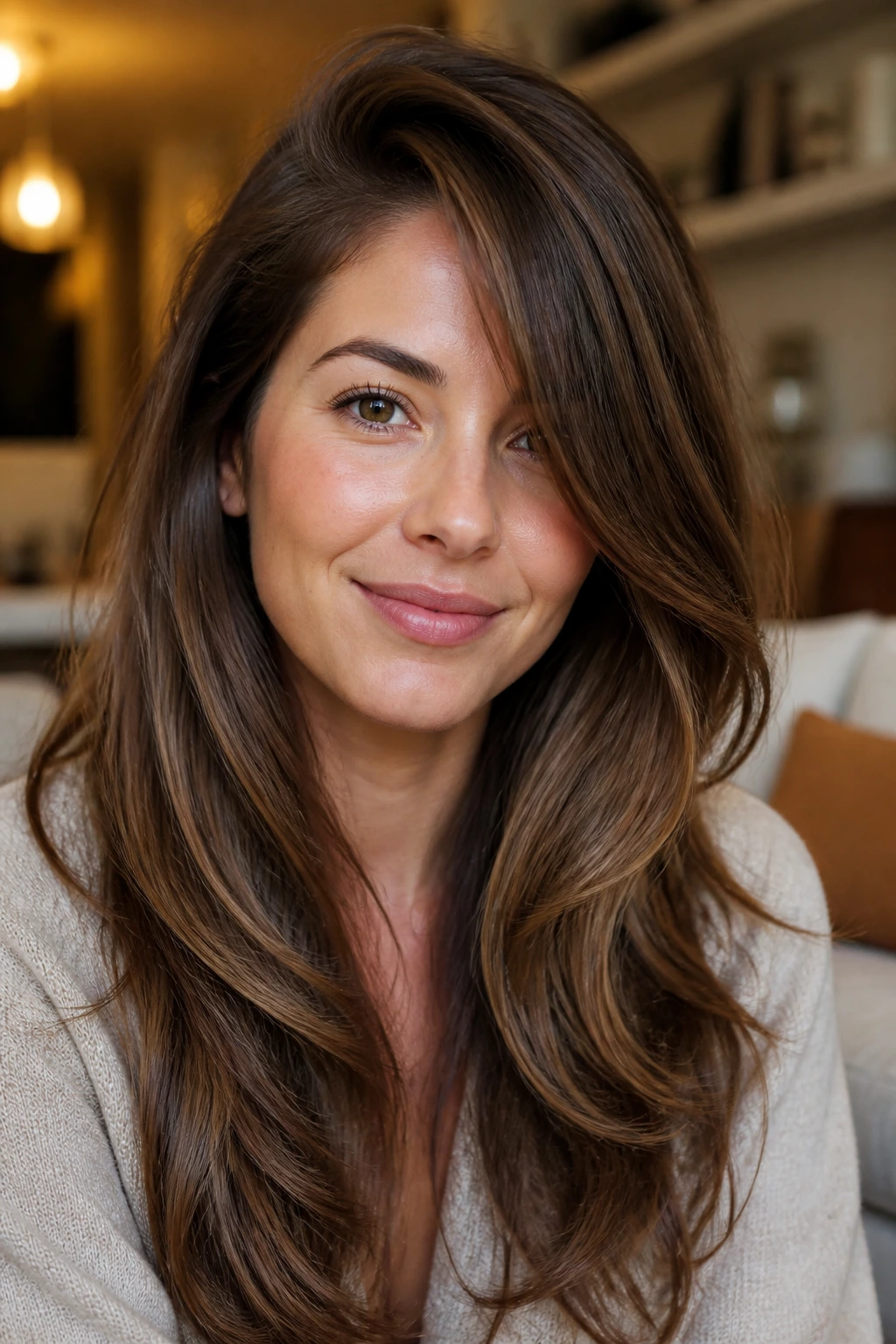
The first mistake is cutting the shortest point too high. The fringe can look cute for ten minutes, then the round face feels wider and the bang starts to crowd the forehead. Keep the shortest piece lower, near the brow or eye line, and let the sides do the framing work.
Another problem is overloading the front with product. A heavy cream, too much oil, or a thick smoothing balm can turn a sweep into a greasy strip that clumps by noon. Use a small amount and keep it mostly through the mid-lengths and ends.
The third mistake is skipping crown volume. A sweep without lift at the top tends to collapse into the widest part of the face. Even a little root spray or a quick blow-dry with a lift at the scalp changes the silhouette.
Cowlicks cause trouble when they are ignored. If the hair naturally splits in one direction, a cut that fights the pattern will keep popping open. Dry the section in both directions first, then decide where the part should sit.
Over-thinning thick hair is another classic error. Too much texture removal can leave the fringe fuzzy, see-through, or hard to control. Keep the weight, then soften the edges instead.
Ways to Change the Look Without Losing the Shape
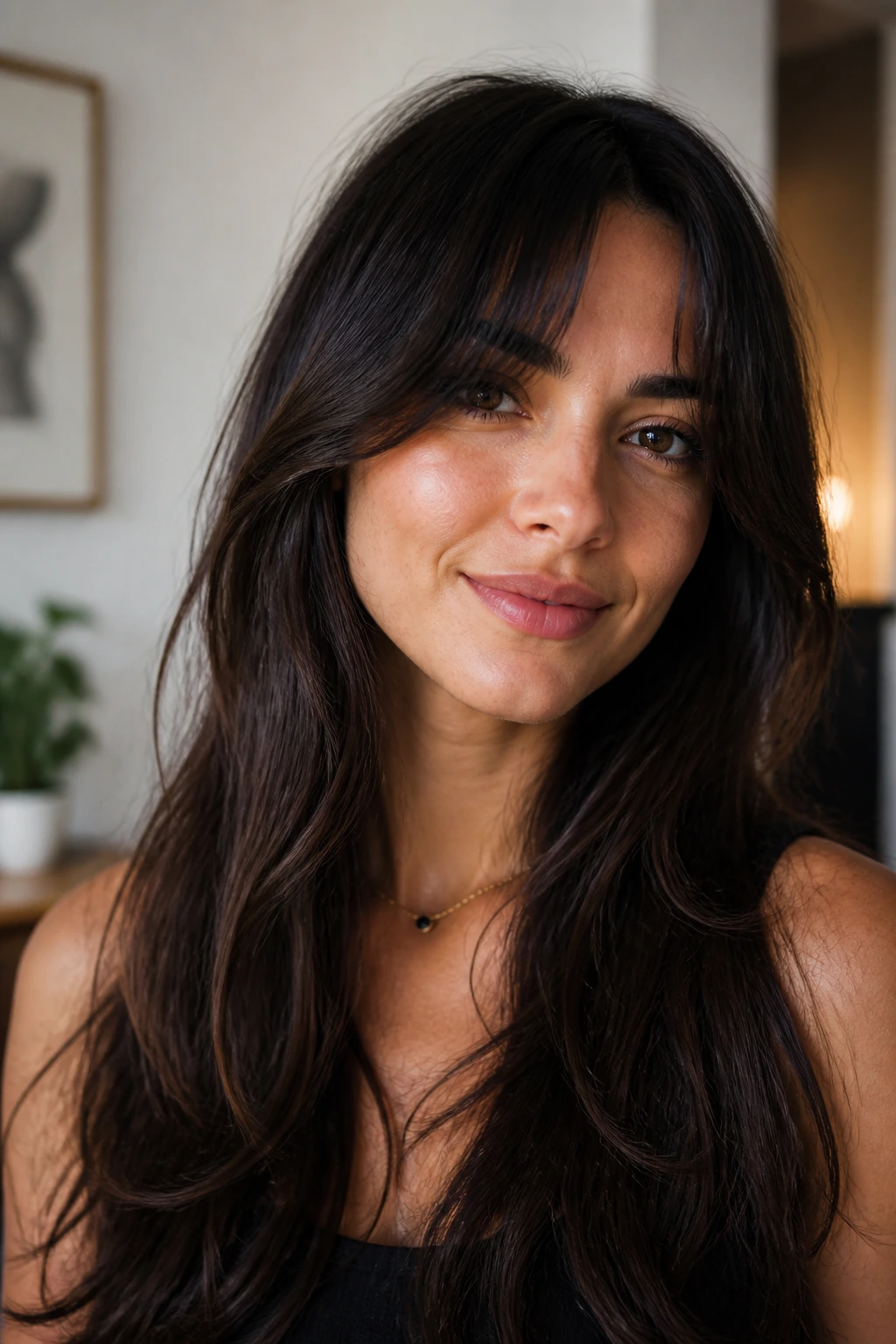
Soft Curtain Swap: Keep the center split narrow and the outer pieces long. This version is gentler than a deep side sweep and gives you more flexibility if you like to change the part during the week.
Glossy Blowout Version: Use a round brush, roller set, and a touch of serum on the ends. This one is for dressier days when you want the front to move as a single smooth curve.
Texture-First Air-Dry Version: Let the fringe dry with a little mousse and a few finger twists. The result is piecey, relaxed, and better for wavy hair that refuses to stay perfectly smooth.
Glasses-Friendly Sweep: Keep the shortest pieces long enough to clear the frame, then let the side pieces drift past the cheekbone. It stops the bang from sitting right on top of your glasses.
Grow-Out Sweep: Let the front sit longer, around lip length, and blend it into the layers. This is the one to choose when you want to stretch salon visits without losing the shape.
Keeping the Fringe in Shape Between Trims
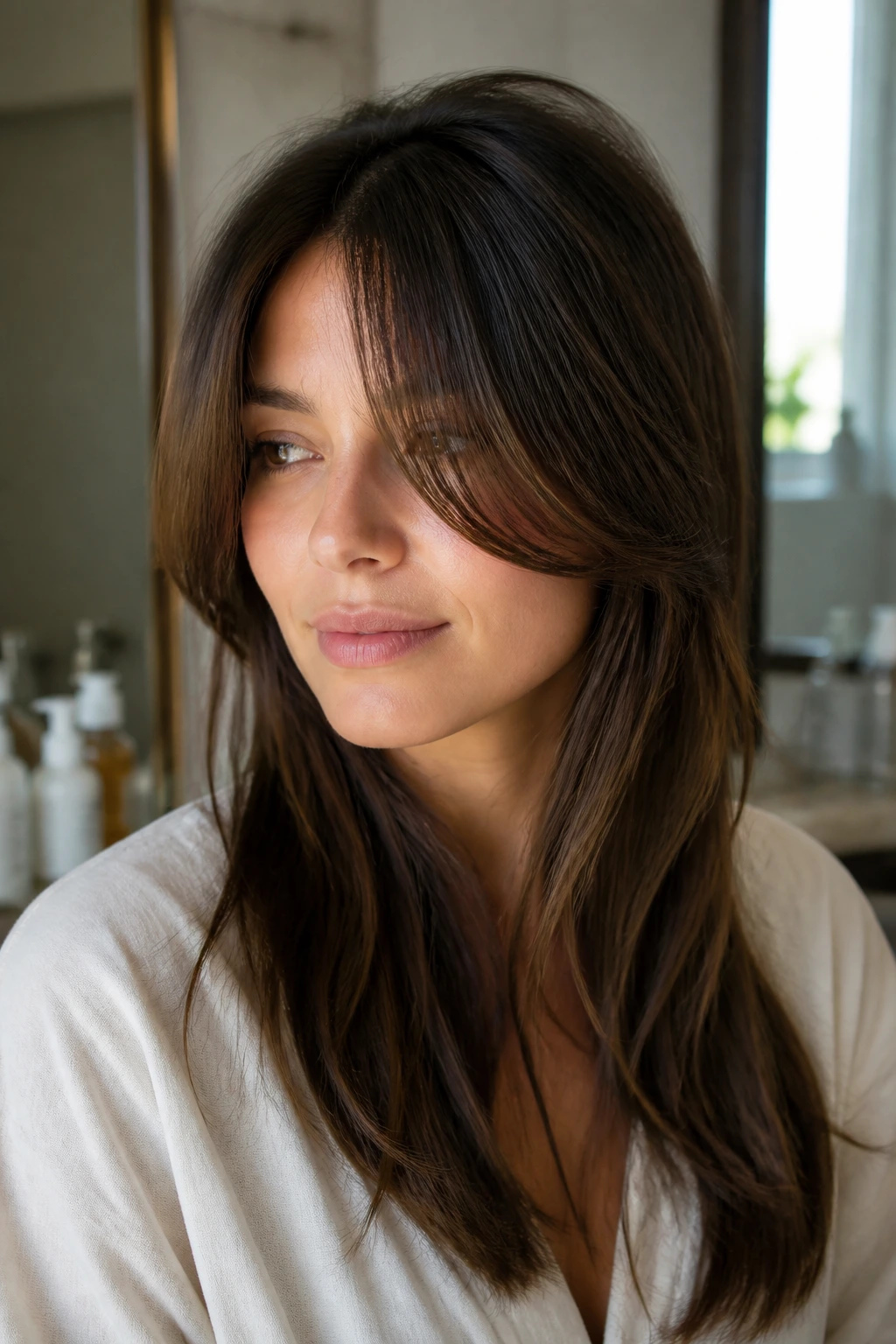
Sweeping bangs grow out faster than the rest of the haircut because they sit in your face all day and show every millimeter of change. A trim every 4 to 6 weeks keeps the shortest pieces where you want them. If you like a more curtain-like version, you can often stretch that to 6 to 8 weeks before the shape starts to slip.
The front also gets greasy faster than the rest of the hair. Dry shampoo helps, but use it with restraint. Hold the can about 8 inches away, spray the roots lightly, wait a minute, then massage it in with your fingertips. If you pack too much powder into the front, the bangs start looking dusty and stiff.
Sleeping habits matter more than people want to admit. If the fringe bends weird overnight, clip it back loosely or pin it with a soft flat clip before bed. Going to sleep with damp bangs is a good way to wake up with a crooked front that needs a full re-style.
If your hair is fine or gets oily quickly, wash the bang section separately in the sink and dry it in a few minutes instead of doing a full shampoo. That tiny reset can make the whole haircut look fresher.
Frequently Asked Questions
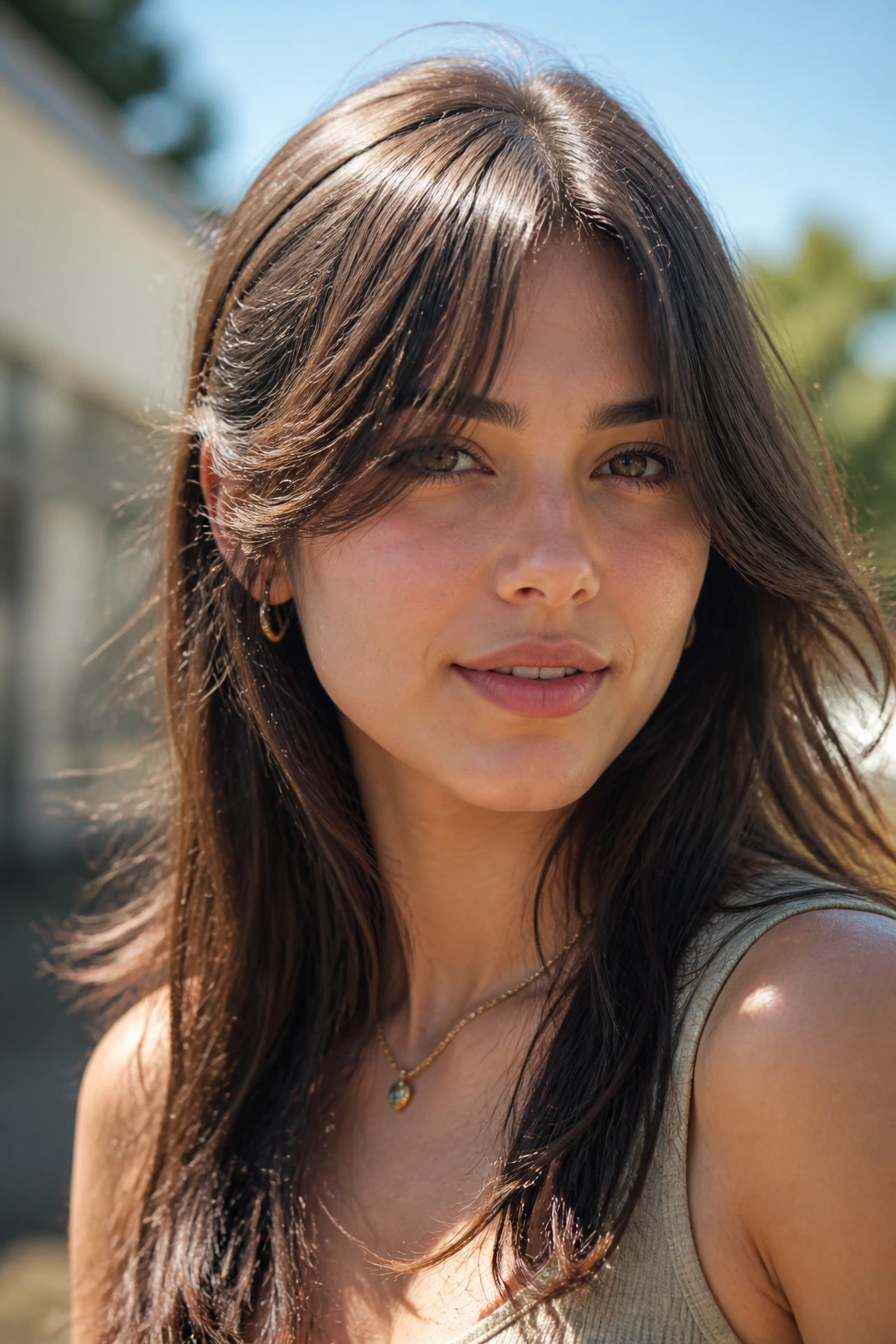
Which sweeping bangs are best for a round face?
The safest bet is a long side sweep or a narrow curtain bang that opens at the center and lands near the cheekbone. Both create a diagonal line, which helps a round face read a little longer and keeps the forehead from looking boxed in.
Do sweeping bangs make a round face look thinner?
They can, but only when the cut has the right angle and a little crown lift. If the fringe is too short or too blunt, it can do the opposite and emphasize width around the cheeks.
Can curly or wavy hair wear sweeping bangs?
Yes, and wavy hair often gives the nicest shape because it naturally bends away from the face. Curly hair needs extra length in the front so the shrinkage does not pull the bang too high after it dries.
How often should I trim sweeping bangs?
Most versions need a trim every 4 to 6 weeks. If you are wearing a longer, grown-out sweep, you can usually stretch that a bit farther before the shape feels off.
What if my cowlick keeps splitting the bangs apart?
Dry the front in the opposite direction first, then switch it to the side you want while it is still warm. If the split is strong, ask your stylist to leave a little more length at the shortest point so the hair has weight to stay in place.
Will sweeping bangs work with glasses?
Yes, but keep the shortest pieces long enough to clear the frames. Styles that stay around the cheekbone or outer eye area usually behave better than short fringe that sits right on the top edge of the lens.
Can I grow out blunt bangs into a sweeping shape?
You can, and that in-between stage is easier if the front is trimmed into a soft diagonal rather than left to grow straight. Have the stylist blend the sides into face-framing layers so the fringe turns into a shape instead of a problem.
What product helps the sweep hold without looking stiff?
A light root-lift spray or a small amount of mousse at the scalp works better than heavy wax or oil. If you need more hold, set the front with a round brush or clip it while it cools instead of piling on product.
A Fringe That Keeps Moving
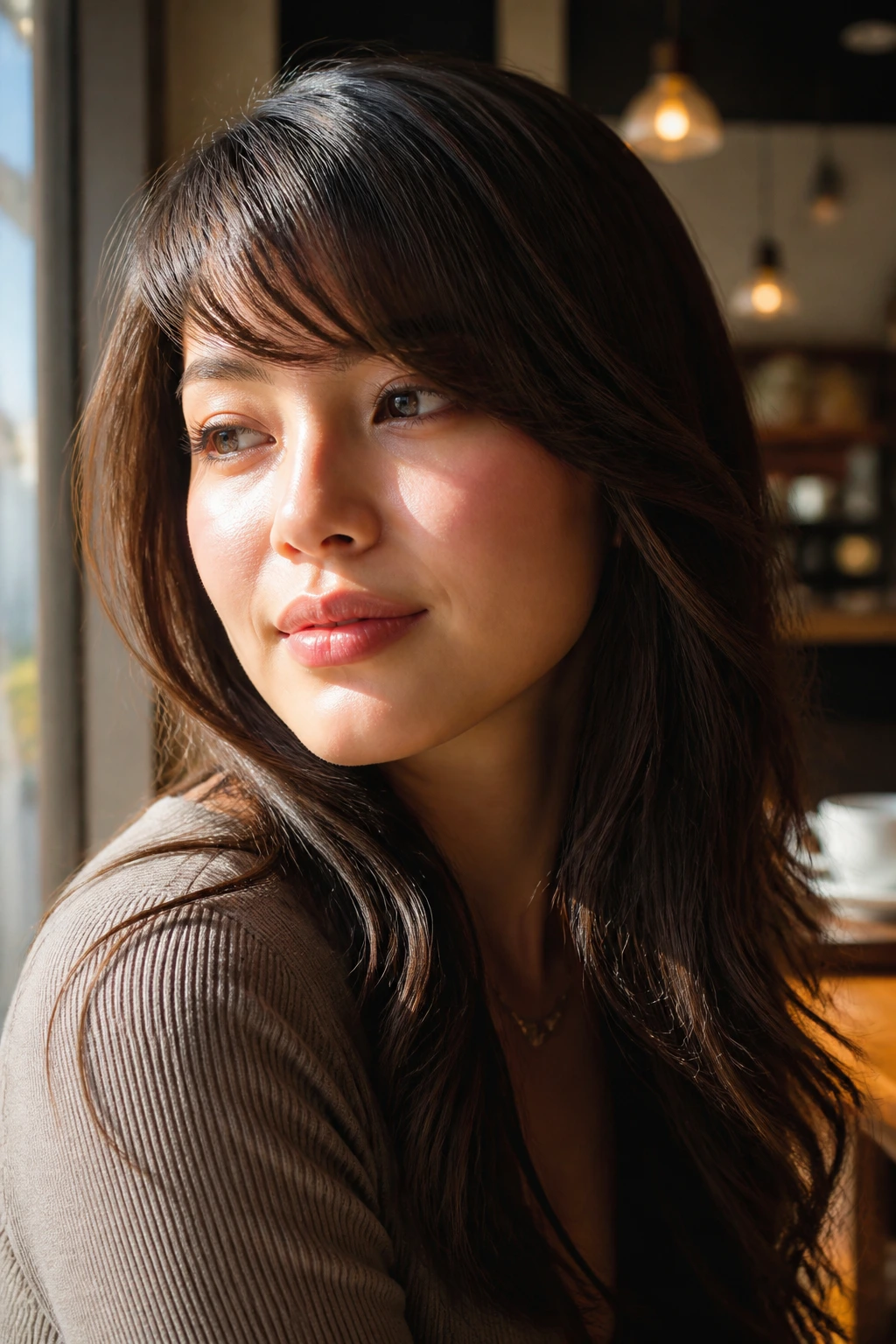
The best sweeping bangs do not freeze the face in place. They steer it. That is the real appeal here: the cut gives a round face a little more length, then leaves enough softness so the hair still feels like hair and not architecture.
If you are unsure where to start, pick the version that lets you tuck, bend, and grow out the front without panic. That usually means a longer sweep, a thoughtful side angle, and a little crown lift. The shiny, high-drama versions are fun, sure, but the best haircut is the one that survives a windy day, a lazy morning, and one too many times running your hand through it.
Bring a photo or two to the stylist, then talk about where the shortest point should sit when the hair falls naturally. That one detail changes everything.