



Fine hair has a way of telling on a bad cut. One blunt layer too high and the ends start looking see-through; one heavy fringe and the whole forehead seems boxed in. Put that on a heart-shaped face — broader through the brow, narrower through the chin — and the wrong shape can make the top half of your face do all the talking.
The fix is not more volume everywhere. That usually backfires. What works is a little softness near the forehead, some movement around the cheekbones, and enough density left at the ends to keep the outline from collapsing. Fine hair likes structure. Heart faces like a little visual weight lower down. Those two things can work together beautifully when the cut is doing the heavy lifting.
So the sweet spot is pretty specific: keep the crown from puffing up like a triangle, keep the jawline from disappearing, and keep the perimeter of the hair full enough that it reads as intentional, not wispy. The styles below do that in different ways — some with length, some with bangs, some with a blunt line, and a few with smart styling tricks that make fine hair look like it has more body than it really does.
Why This Collection Feels Different for Heart Faces and Fine Hair
-
Jawline Balance: These styles place visual weight closer to the chin and neck, which helps soften the wider upper half of a heart-shaped face without hiding it.
-
Fine-Hair Friendly Perimeters: A clean edge at the ends matters more than aggressive layering here, because fine hair needs a shape that stays visible when the air gets humid or the roots go flat.
-
Forehead Softness: Several of these cuts and styles use curtain pieces, side parts, or cheekbone-length fringe to take pressure off a broad forehead area.
-
Low-Lift Styling: Most of the looks can be built with a round brush, a 1-inch curling iron, or a quick bend at the ends — no elaborate salon finish required.
-
Grow-Out Grace: These cuts keep their shape for weeks, not days, which matters when fine hair starts to lose lift the minute it gets overhandled.
-
Flexible Enough for Real Life: You can wear these sleek, wavy, tucked, or pinned back, and they still keep the face shape in mind instead of fighting it.
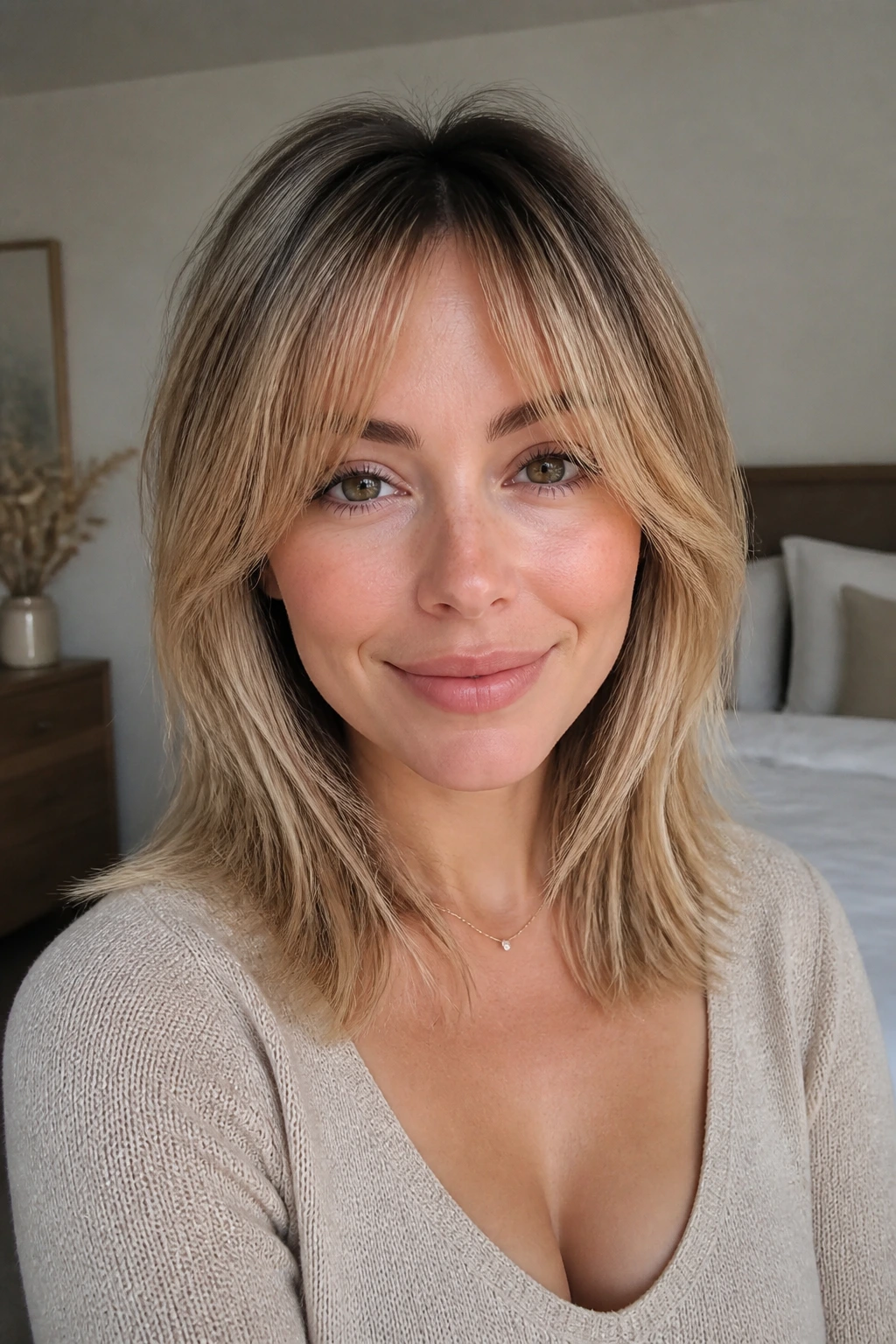
1. Collarbone Lob With Soft, Airy Ends
A collarbone lob is one of those cuts that earns its keep on fine hair because the line stays visible even when the strands are a little flat. The length skims just below the chin and above the chest, which is exactly where a heart-shaped face tends to like some visual weight. Nothing feels crowded. Nothing feels bottom-heavy either.
What Makes It Work
The trick is keeping the perimeter clean and the layers long. Ask for soft internal movement, not choppy layers that steal density from the ends. On fine hair, that’s the difference between “light” and “thin.”
A center part can work, but I like a soft off-center part here better. It breaks up the forehead width and gives the hair a little swing when it falls around the cheekbones.
What to ask for in the chair:
- Length: collarbone grazing, or a touch longer in the front.
- Layers: long and subtle, starting below the cheekbone.
- Finish: soft ends, not razor-thinned edges.
A quick bend with a 1.25-inch iron at the ends is enough. Don’t curl the whole head into a ringlet situation. That’s too much motion for a cut that’s strongest when it looks easy.
2. Chin-Length Bob With a Deep Side Part
A chin-length bob sounds bold because it is. That’s the point. On a heart face, this cut brings the eye downward and gives the narrower lower half of the face some company. On fine hair, the blunt edge makes the whole thing look thicker than a wispy layered bob ever will.
The deep side part is doing quiet work here. It softens the forehead, adds asymmetry, and stops the haircut from feeling too neat. That matters. Heart-shaped faces can look a little top-heavy with a strict center part and no movement at the crown.
If your hair is very fine, keep the line at the chin or just below it, not above. A too-short bob can float upward and make the face look wider through the cheek area. You want it to land. Hard. Clean lines help.
A flat iron bend at the ends keeps the cut from looking helmet-like. One slow pass is enough. Let the ends curve in a touch or turn out slightly, depending on what your jawline needs that day.
3. Curtain Bangs With Long Layers
Curtain bangs are popular for a reason, and on heart faces with fine hair, the reason is structural. They take some attention off the forehead, open up the center of the face, and blend into long layers without eating up too much density.
The key is length. Short curtain bangs that stop high on the forehead can make a heart face feel wider up top, which is exactly what you’re trying to avoid. Keep the shortest piece around the cheekbone or just below it. That gives the fringe room to part naturally and sweep outward.
Where the shape matters
Long layers should start low. Really low. If they begin at the temple, the hair can lose its backbone fast. If they begin at the cheekbone or lip, the hair still moves but the ends stay fuller.
Fine hair also needs a little help in the fringe area. Blow-dry the bangs first, side to side, with a round brush and a light mist of volumizing spray at the root. Let them cool in the direction you want. Warm hair forgets faster than cold hair does.
4. Textured Pixie With a Swept Fringe
A pixie can be a brilliant move for fine hair, and heart faces often wear it better than people expect. The reason is simple: fine strands don’t have to carry a lot of weight, and a swept fringe keeps the forehead from feeling too exposed.
The mistake people make here is going too short on top and too spiky everywhere else. That’s the fast track to a style that looks airy in a bad way. Keep enough length on top to brush forward or diagonally across the forehead. The sides should be soft, not clipped to the scalp.
A tiny bit of paste through the ends is enough. Use your fingertips, not your palms. You want piecey separation, not a shellacked helmet.
This cut is strongest when it looks slightly imperfect. A clean side sweep, a little lift at the crown, and a flat piece tucked near the ear can make the face look open without exposing every angle of the forehead.
5. Jaw-Grazing French Bob

The French bob is one of those cuts that either works or doesn’t, and on a heart-shaped face with fine hair, the jaw-grazing version is the one to trust. It adds width exactly where many heart faces need it most: around the lower half of the face.
The blunt edge matters. This is not the place for heavy thinning. A little density at the ends makes the haircut look expensive even if the styling takes five minutes. Fine hair loves that kind of honesty.
If you want bangs, keep them soft and a little broken up. A straight, dense fringe can overwhelm the face and steal too much space from the eyes. A lighter fringe, or no fringe at all, keeps the bob crisp.
One good rule: if your jaw is very narrow, let the front pieces sit a fraction longer than the back. That tiny angle gives the face some width without turning the bob into a triangle.
6. Long Layers That Start at the Cheekbones
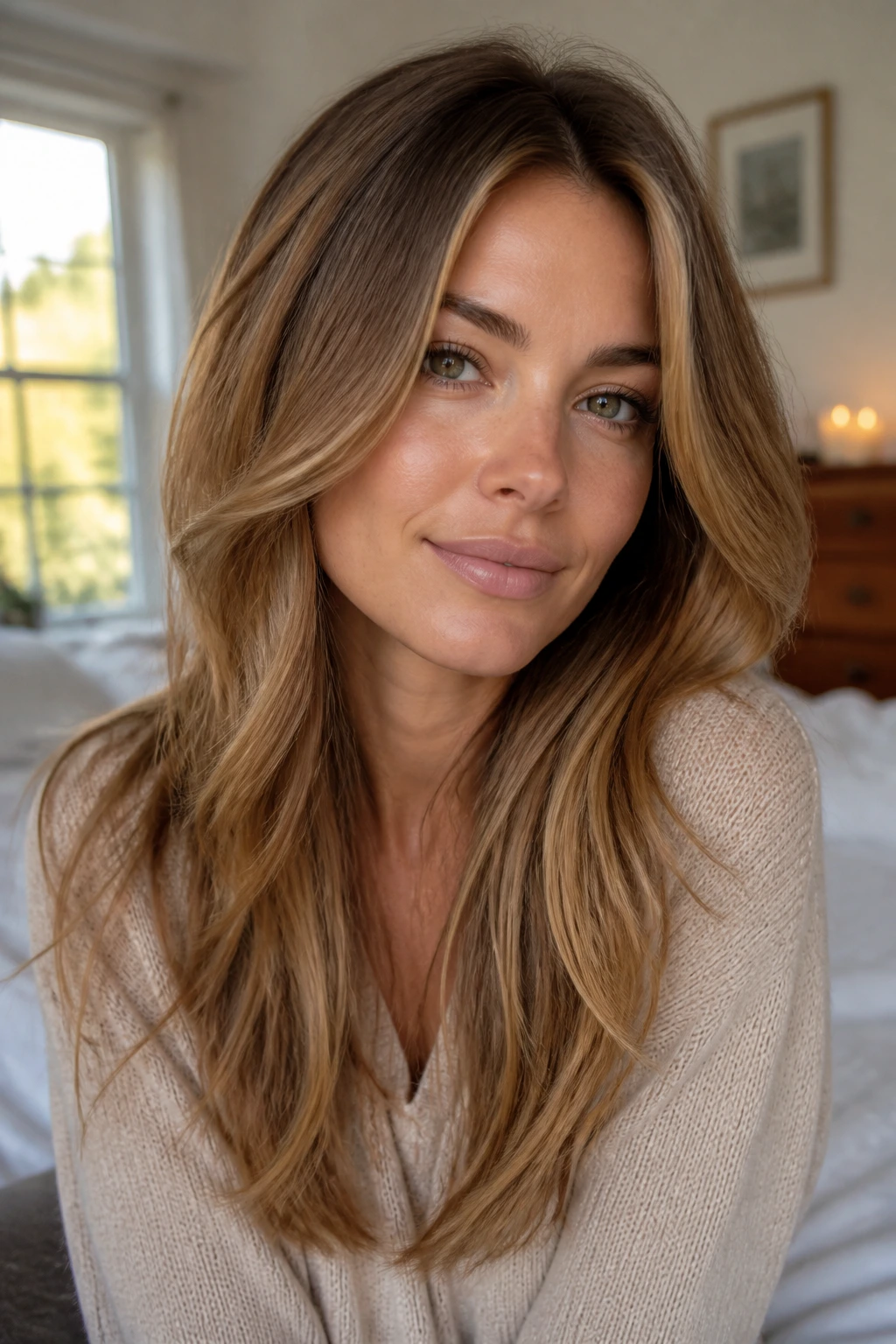
Not everyone wants shorter hair, and they do not have to. Long layers can work for fine hair and heart-shaped faces as long as they start in the right place and stay long enough to protect the ends.
Cheekbone-length is the magic zone. That’s where the layers can frame the upper face without making the crown feel hollow. If the layers begin too high, the hair loses mass too quickly and the lower half starts to look stringy. If they start too low, the face can look longer than it is.
The safe version of long layers
- Layer start: cheekbone or below.
- Face frame: angled softly toward the jaw, not the temple.
- Texture: light bend, not heavy feathering.
This cut is especially good if you wear your hair half-up or loose with a soft wave. The layers catch movement around the face, but the rest of the length still gives the hair weight. That balance matters when fine hair goes limp by midday.
7. Wavy Lob With Invisible Layers
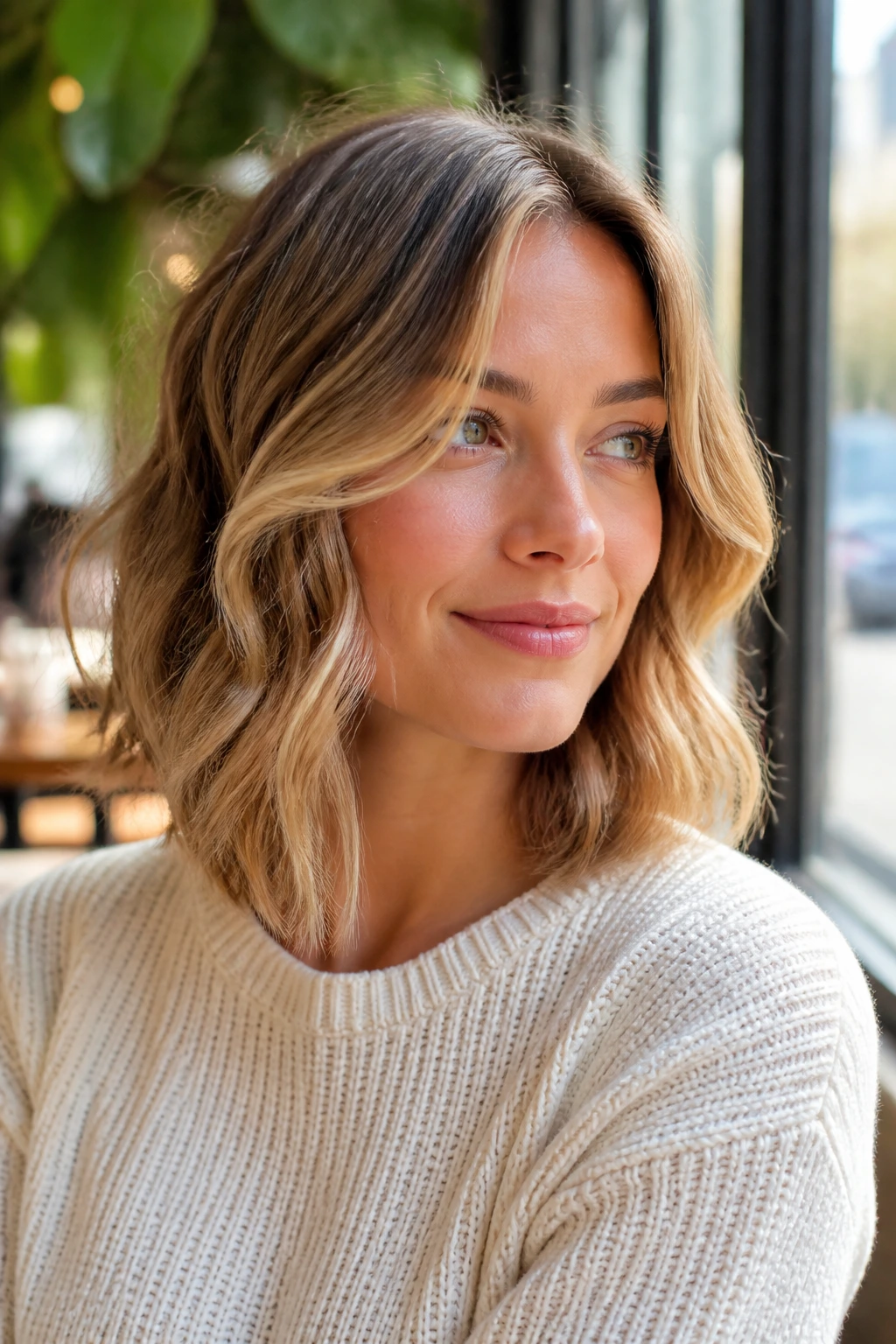
Invisible layers are one of my favorite fixes for fine hair because they remove bulk without screaming “layers” every time the hair moves. On a wavy lob, they make the wave pattern look softer and more expensive, not shredded.
For a heart-shaped face, the wave should sit low and loose around the cheekbones and jaw. You don’t want a lot of height right at the crown. That’s where the face already has enough width. Keep the wave flatter at the top and fuller at the bottom third of the hair.
A 1-inch curling iron works well here. Wrap sections away from the face, but leave the ends out for the last inch. Then rake the curls apart with your fingers. If you brush them, they’ll expand too much and fine hair can start to look fuzzy.
A little texturizing spray at the mids and ends helps the style hold shape through the day. Put it near the roots and you’ll get crunch. Not ideal.
8. Blunt Bob With a Barely-Bent Finish
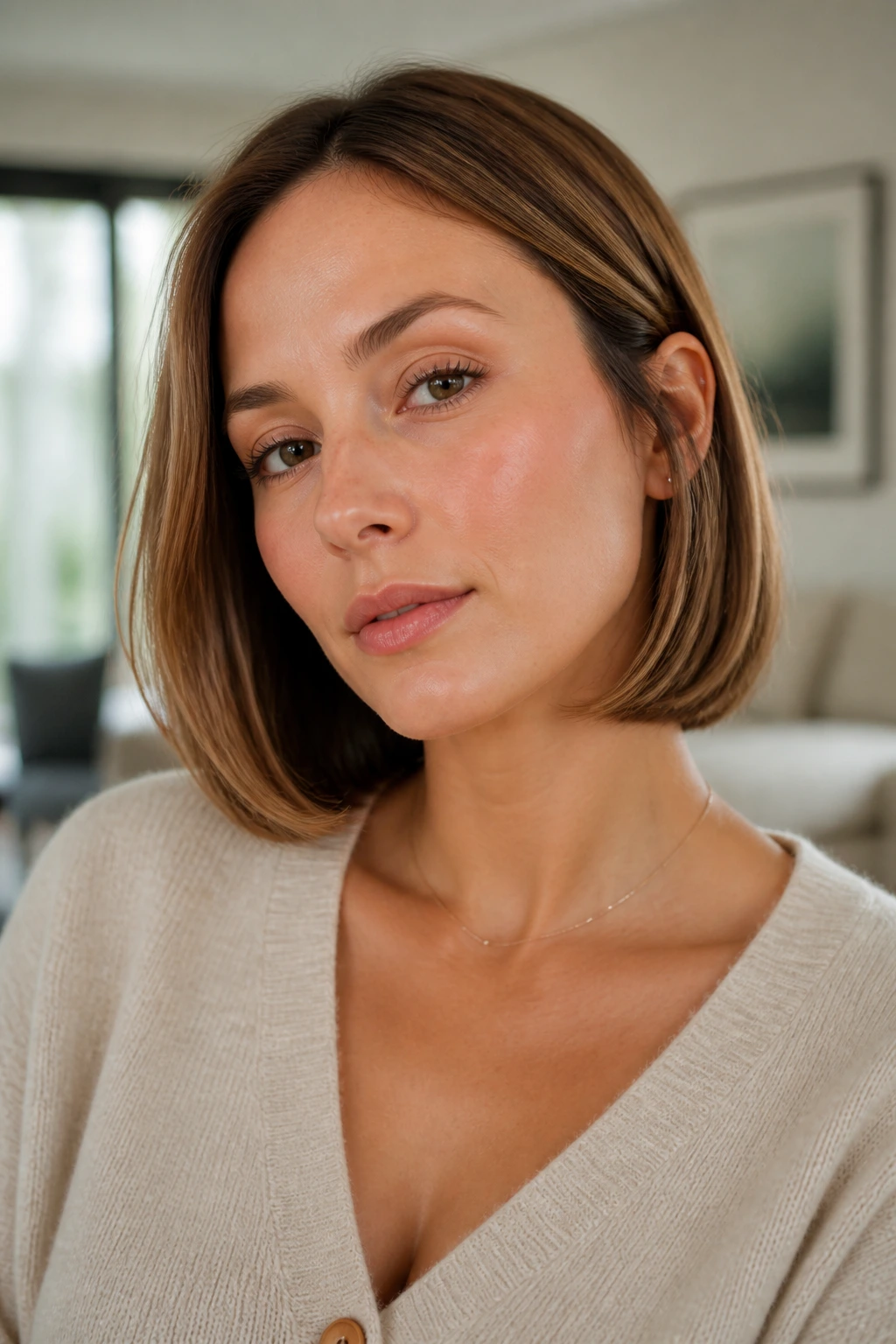
Fine hair often looks better in a blunt bob than in a heavily layered one, and heart faces can absolutely wear it when the finish is soft instead of rigid. The blunt edge gives the ends a thicker visual line. That line is doing the work.
What keeps this cut from feeling severe is the finish. A slight bend in, or even a tiny tuck behind one ear, keeps the shape from sitting like a box around the face. It also creates a little asymmetry, which softens a broader forehead beautifully.
This is a good pick if you like clean hair. It does not need much. A smoothing cream the size of a pea, a round brush, and a medium-hold spray are enough for most days. More product tends to flatten fine hair and make the bob lose the crisp edge that makes it flattering in the first place.
If your face is especially narrow at the chin, keep the line just below chin length rather than right at it. That extra half inch makes a difference.
9. Shoulder-Length Cut With Flipped-Out Ends

A shoulder-length cut with flipped-out ends has a little old-school charm, and it does something practical for a heart face: it widens the lower half of the silhouette without making the top of the head look bigger. Fine hair usually appreciates that sort of targeted help.
The flip should start low, near the shoulder line. If you flip the ends too high, the whole cut can look bubbly and dated in a bad way. Keep the movement at the bottom, where it can add shape without chewing up density.
A medium round brush works better than a tiny one here. You want a soft curve, not a curl. If you’re using heat, pass the iron only through the last two inches and bend the ends outward for a few seconds.
This style also plays nicely with earrings and open necklines. It doesn’t crowd the face. It frames it.
10. Soft Shag With a Tapered Crown

A shag can be tricky on fine hair. Too many layers and it turns airy in the wrong places. Too much volume at the top and a heart-shaped face starts to look top-heavy. But a soft shag, with a tapered crown and longer ends, can work beautifully.
The crown should be lightly shaped, not razored to bits. That’s the main distinction. You want movement, not holes. The sides should still carry enough weight to keep the cut from floating.
For styling, rough-dry the roots first, then hit the mids with a small round brush or a diffuser if you have wave. A light mousse gives the cut some memory without stiffness. And yes, you can wear this cut straight. It doesn’t have to be beachy every day.
Where it lands best
- Best for: fine hair with a little natural wave.
- Avoid if: your hair is ultra-straight and refuses texture unless you heat-style daily.
- Ask for: soft face framing starting around the cheekbone, not the temple.
11. Deep Side-Part Blowout
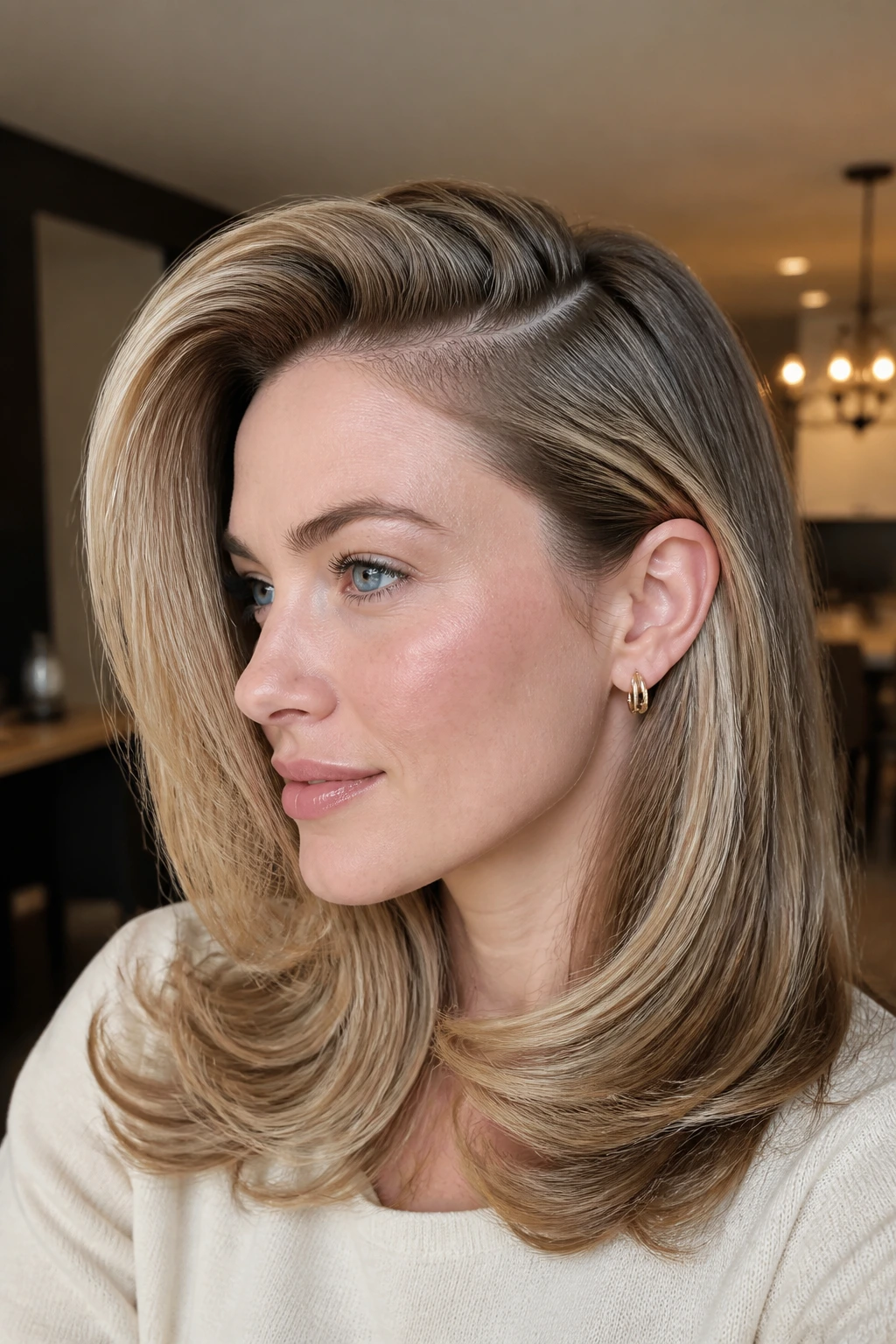
A deep side-part blowout is not a cut. It’s a styling move that can rescue a lot of ordinary cuts. On a heart-shaped face, the deep part shifts attention away from the forehead and gives the style a diagonal line, which almost always reads softer than a straight center split.
Fine hair benefits from the lift at the root, but only on one side. That asymmetry keeps the style from looking puffy. Blow the hair in the opposite direction first, then flip it into the side part while it cools. That extra step matters. Hair holds shape better when you set it against its natural fall.
Use a volumizing mousse at the roots and a large round brush through the mids. The ends should curve under just a little. If the brush is too small, the style starts looking too round and loses the sleekness that makes it useful.
This is a good option for dinners, events, or any day when you want more polish without changing the cut.
12. Tucked-Behind-Ear Bob
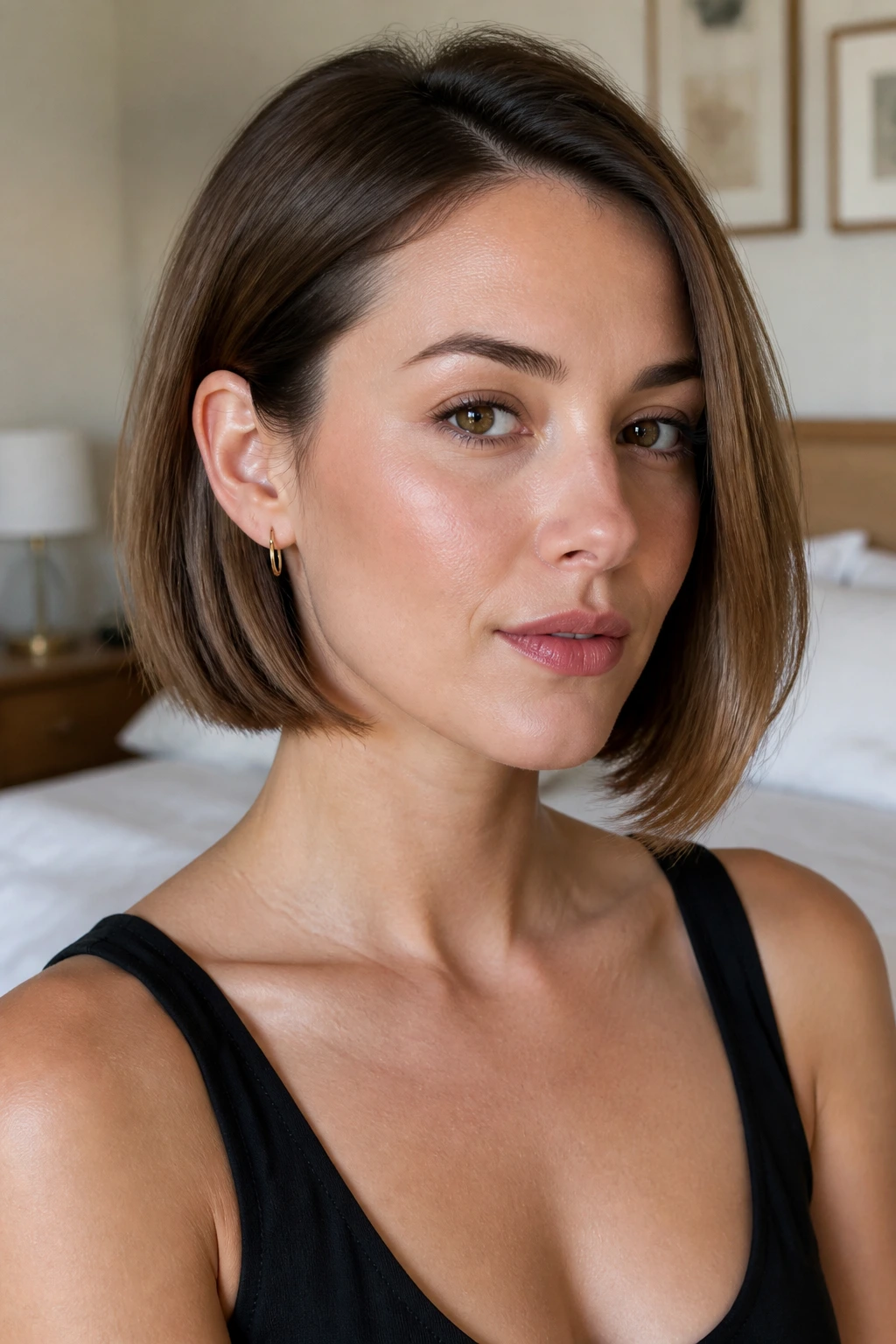
A tucked-behind-ear bob is one of those deceptively simple styles that can fix the whole face shape in a few seconds. The tuck opens up one side, shows the cheekbone, and keeps the forehead from feeling too dominant. It’s a clean, sharp line, which fine hair tends to handle well.
The bob itself should still have some softness through the ends. If it’s too blunt and too short, the tuck can make the face look boxy. A chin-to-jaw length is usually the safest zone.
You only need a little styling product here. A drop of lightweight cream on the tucked side keeps flyaways down near the ear, and a tiny pin can hold a stubborn side in place if your hair slips. Nothing fancy.
This style is also a gift on second-day hair. Fine hair often needs a reset, not a full wash, and the tuck hides a lot of root flatness without pretending the hair has more volume than it does.
13. Butterfly Cut Lite
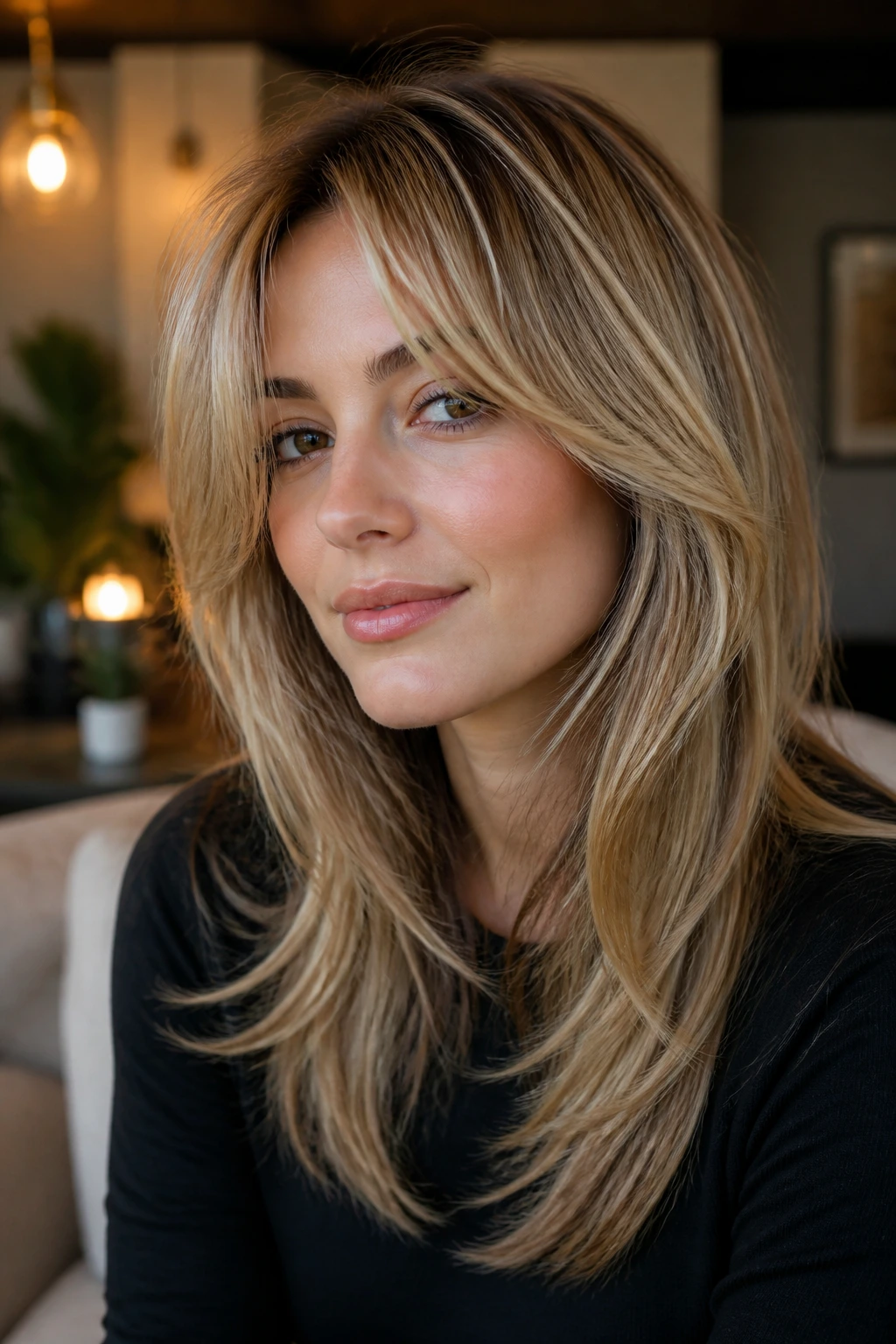
The butterfly cut gets a lot of attention, but on fine hair it needs to be the lite version. Too many short top layers and the whole crown can look transparent. Too much face framing and the lower lengths stop doing their job. The lighter version keeps the shape but cuts the drama.
For a heart-shaped face, the shorter layers should hover around the cheekbone or just below, where they soften the upper face without widening it. The long length underneath stays intact, which gives the hair some actual weight.
What to keep in check
- Shortest face frame: cheekbone, not eye level.
- Top layers: soft and blended.
- Bottom length: keep as much density as possible.
This cut is best when blown out with a round brush and clipped at the crown while it cools. That gives you shape without hot-air fluff. And if you wear it waved, keep the waves loose. Tight curls make the layers look busier than they need to be.
14. Short Crop With a Piecey Top
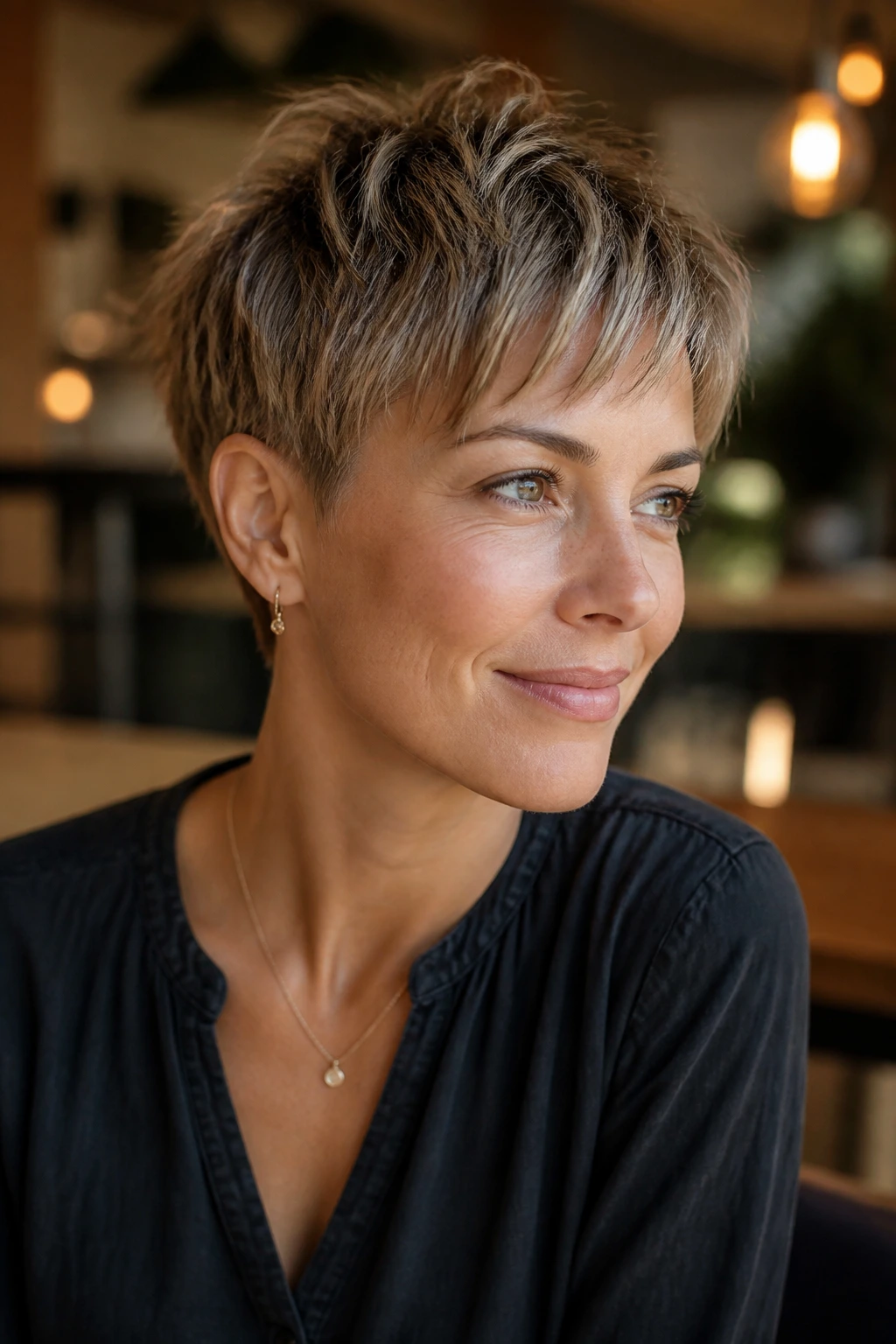
A short crop can look incredibly fresh on a heart face, especially when the top stays piecey and the sides don’t get shaved down too hard. Fine hair likes this because the cut doesn’t ask it to pretend it has more bulk than it does. It works with the hair’s texture instead of against it.
The fringe should be soft and movable. A hard, heavy bang can overwhelm the forehead. A light, broken-up top section gives the cut a little lift without turning the head into a helmet. The sides should taper gently into the ears rather than stopping abruptly.
This is the place for a very small amount of styling paste. Warm it between your fingers, tap it into the top, and twist a few pieces into place. That’s enough. Too much product turns fine hair into a greasy-looking mess fast.
If you like earrings, this cut is a good one. It keeps the neck open and the face visible, which makes the whole look feel deliberate.
15. Old Hollywood Side Sweep
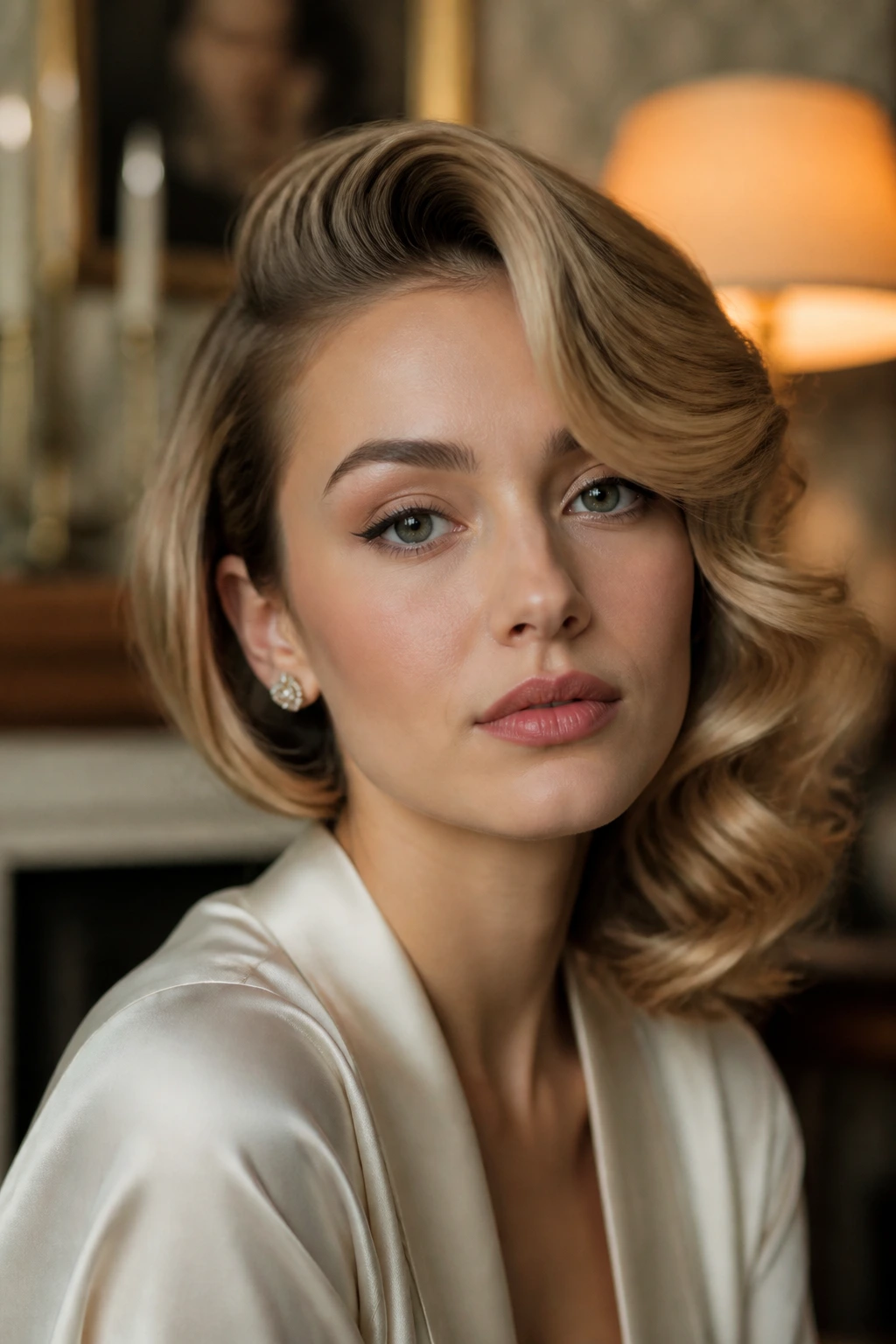
A side sweep is one of the oldest tricks in the book, and it still works because the geometry is right. The diagonal line softens the forehead, the volume sits to one side instead of on top, and the whole style guides the eye downward and outward. Heart faces love that.
Fine hair needs support to hold the sweep. Set the front section with a large roller, pin curl, or a round brush while it cools. A light mist of flexible hairspray is enough. Heavy spray makes the sweep stiff, and stiff hair snaps flat faster than people expect.
This style works especially well on shoulder-length hair and longer lobs. It gives movement without requiring a lot of density through the ends. If you want a more formal finish, tuck the heavier side behind one ear and let the sweep curve over the brow. Very little effort. Big payoff.
16. Clavicle-Length Cut With Bottleneck Bangs

Bottleneck bangs are a smart middle ground for heart-shaped faces. They’re lighter in the center and widen slightly as they move toward the cheekbones, which means they soften the forehead without dumping a heavy wall of hair across it. Fine hair gets a break too, because the fringe doesn’t have to be dense to look intentional.
Clavicle length is the other half of the equation. It gives the hair enough body to look full while staying out of that awkward in-between zone where the ends flip weirdly at the shoulders. The cut feels polished, but not precious.
Dry the bangs forward first, then split them with your fingers once they’re almost dry. That little switch makes them fall in the right shape. If you dry them straight down and hope for the best, they tend to stick to the forehead in a flat sheet.
This is one of the best choices if you want fringe but don’t want the maintenance of blunt bangs. It grows out with less drama.
17. Razored Lob With Airy Texture
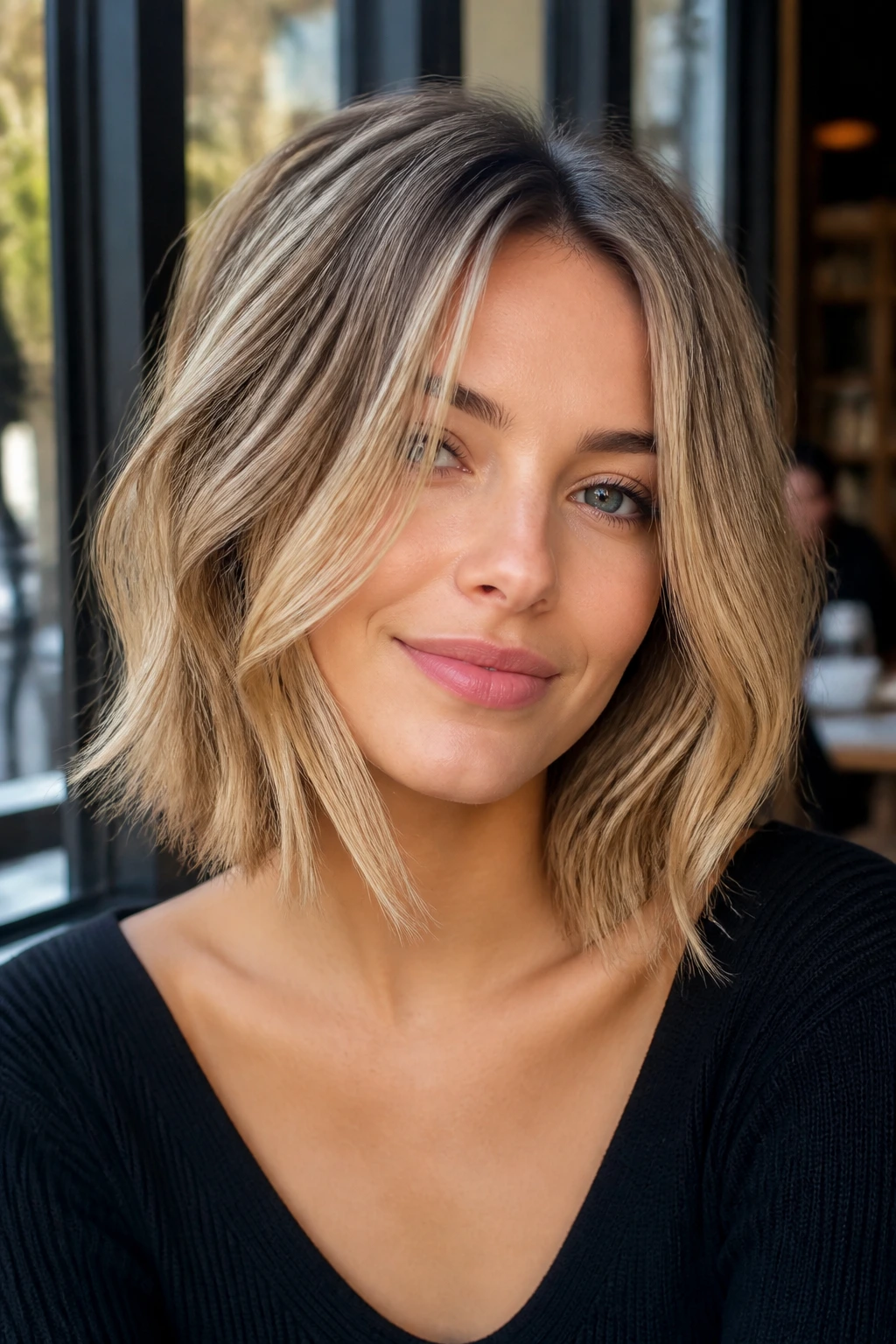
A razored lob is a tricky recommendation, and I’m saying that because fine hair can get shredded if the razor work is too aggressive. But when the texture is light and the perimeter stays strong, the cut can look soft and modern without losing shape.
Heart faces usually benefit from the movement around the jaw and cheekbones. A razored lob can do that well, especially if the layers are kept low and the ends aren’t thinned into nothing. Think airiness, not fray.
Best uses for this one
- For: hair that’s fine but plentiful.
- Skip if: your ends already look sparse.
- Style with: a soft wave and a bit of shine spray at the ends.
This cut has a casual feel that suits people who don’t want a polished blowout every day. The line still matters, though. If the outline gets too broken up, the cut starts looking tired instead of textured. That’s the line to watch.
18. Half-Up Crown Lift Style
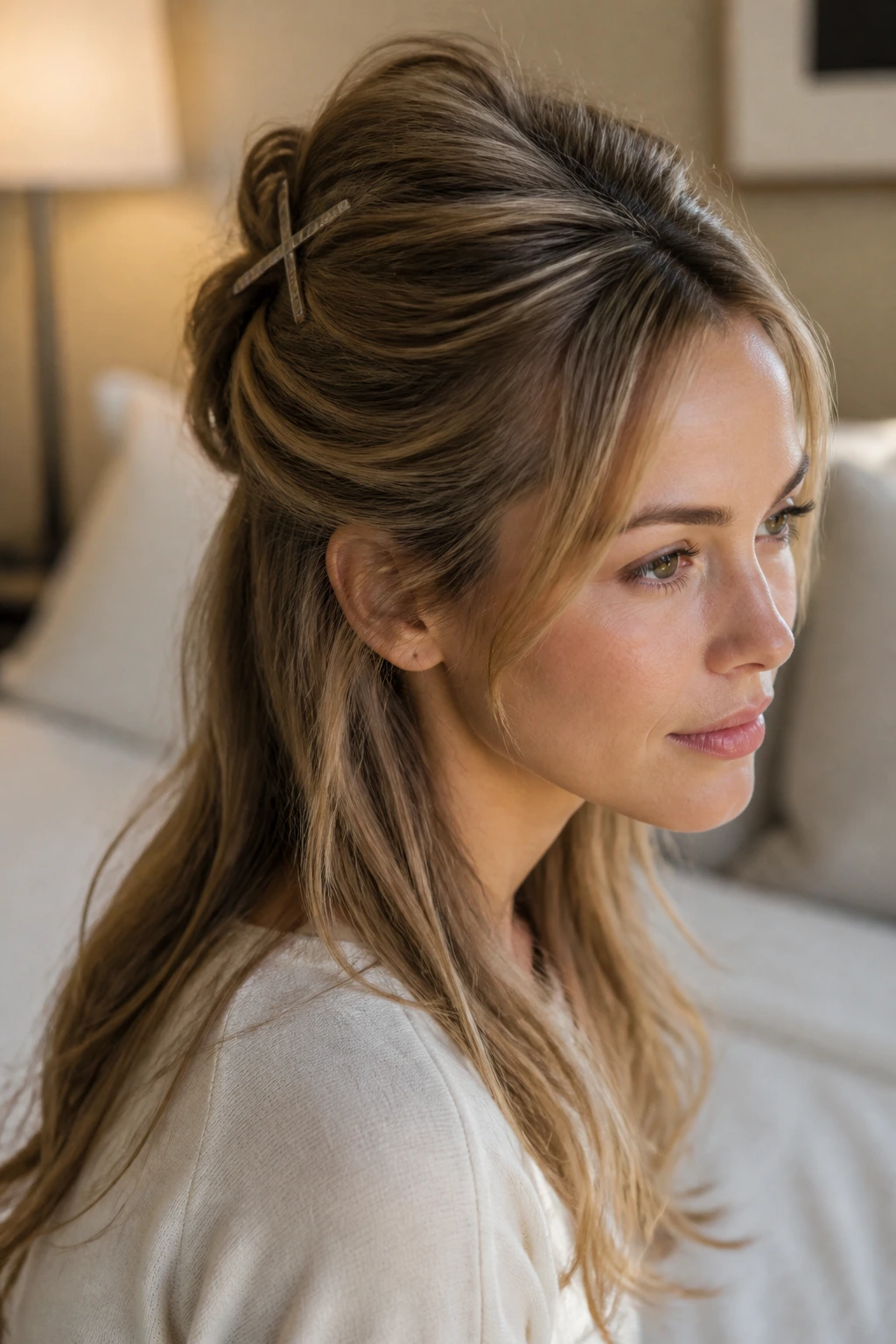
The half-up style is a quiet hero for fine hair because it gives lift at the crown without making the whole head look big. On a heart-shaped face, the trick is leaving soft pieces at the temples and around the cheekbones so the forehead stays relaxed. Pull everything back too tightly and the upper face takes over again.
Use a small clip or two bobby pins crossed in an X. That’s usually enough to hold fine hair in place without creating a lump. If you tease the crown, keep it light. One or two gentle backcombs at the root are enough. You’re building shape, not a nest.
This is a useful style for growing out bangs, too. A few face-framing pieces left out keep the forehead soft, while the lifted top gives fine hair some height. It’s a nice compromise when the hair is in that awkward between-cut stage.
19. Sleek Center-Part Lob With Root Volume
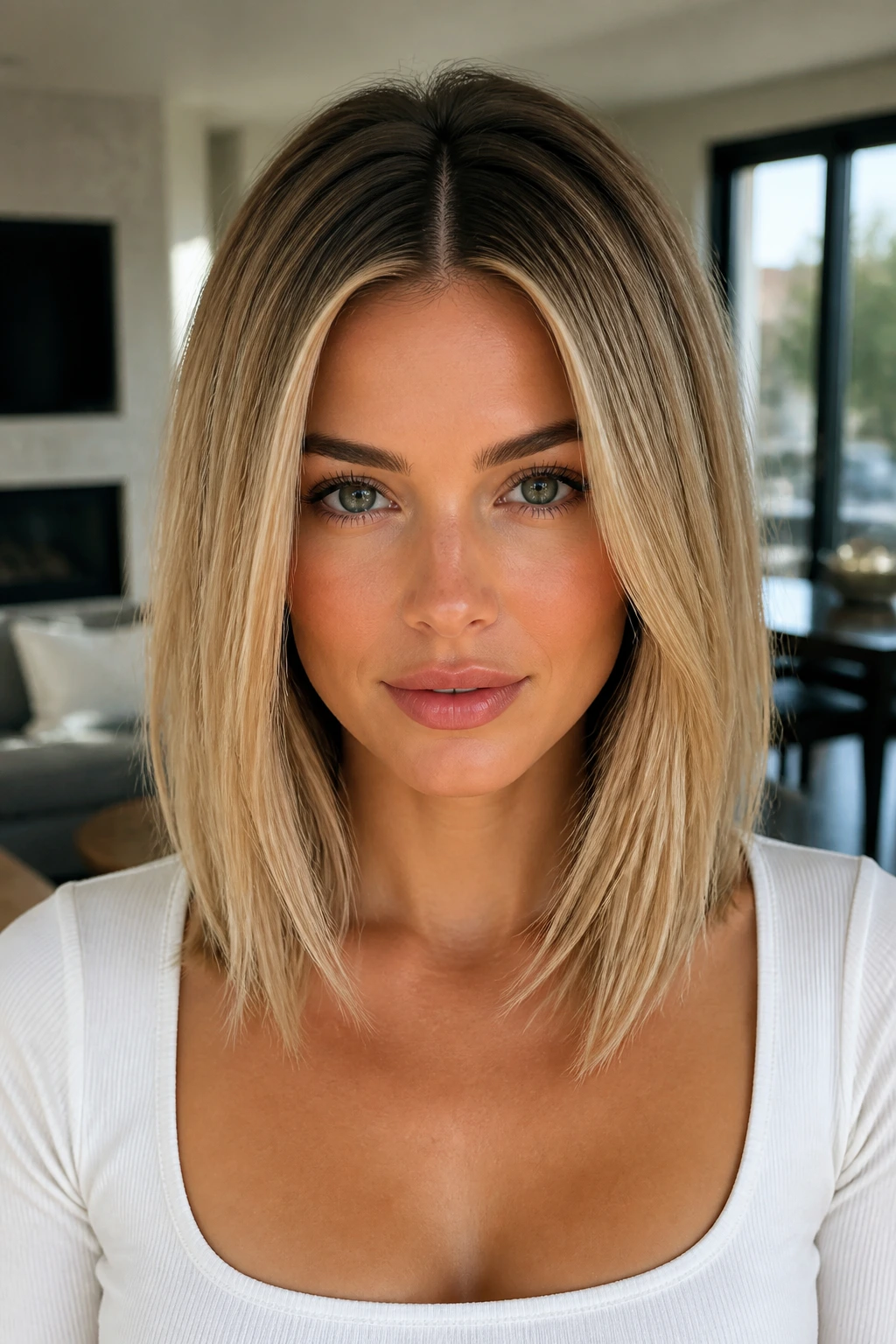
A center part can work on a heart-shaped face, but only if the hair has enough root lift and the line is balanced by some softness around the face. Fine hair can pull this off because the sleekness makes the ends look denser. The key is not letting the top go flat against the scalp.
Blow-dry the roots with a round brush or a lift at the crown before settling the part. If you part the hair first and let it dry that way, it often lays too flat and makes the forehead feel wider. A little prep changes the whole effect.
The lob should sit around the collarbone or just below it. That length keeps the look grown-up and holds the line. If you go too short with a center part, the face can feel wide at the cheeks. Too long, and the hair can drag the style down.
This look is clean, straightforward, and better than people give it credit for.
20. Layered Midi Cut With Feathered Ends
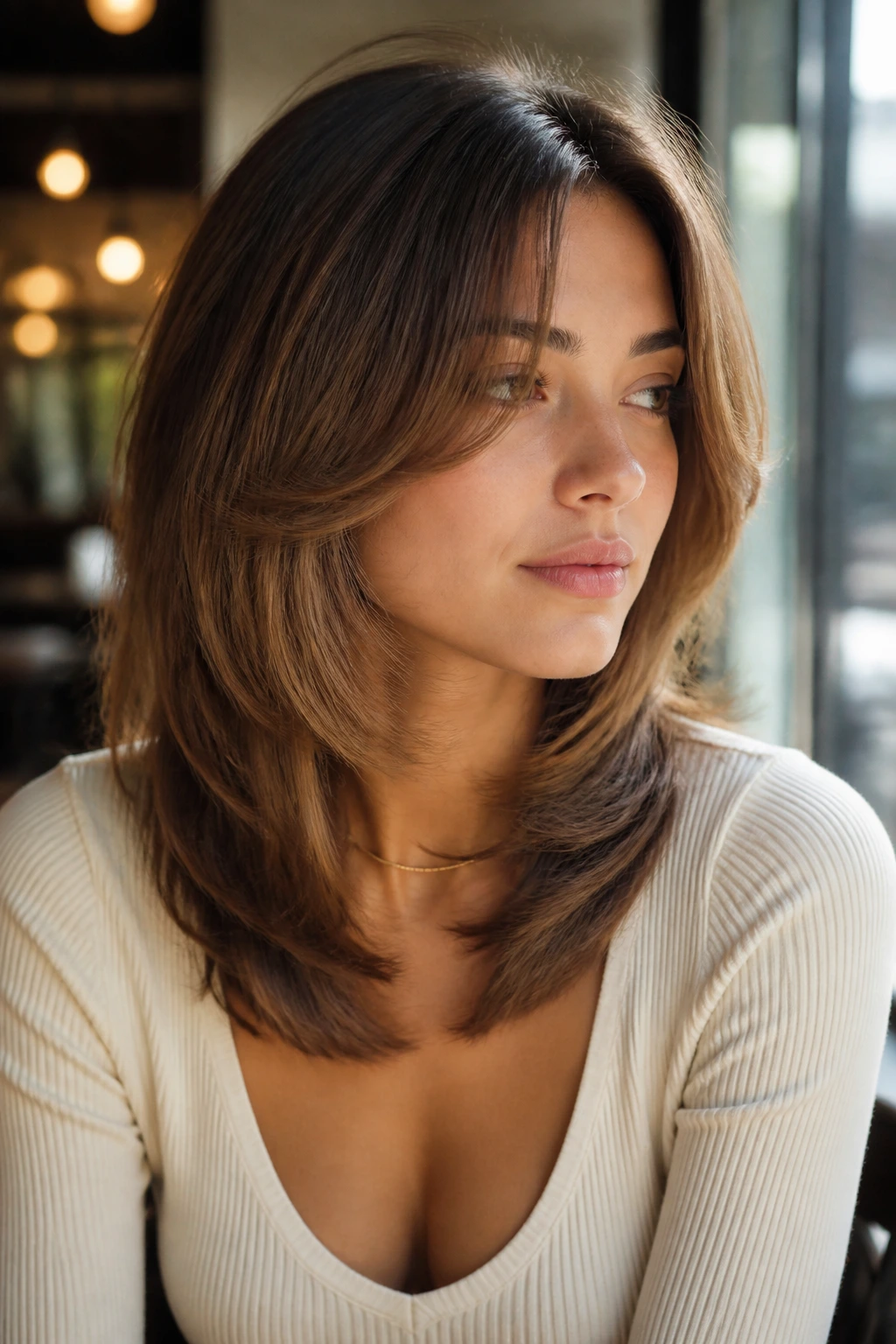
A midi cut lives in that sweet spot between shoulder and chest, which gives fine hair enough weight to behave while still leaving room for movement. For heart-shaped faces, feathered ends can soften the lower face without making the haircut disappear.
The layers should be long enough to preserve fullness. That matters more than people think. If you feather the whole head, the texture can start looking skimpy. Keep the feathering mostly through the final few inches and around the front.
This cut is nice for people who like to wear hair half-up, clipped back, or lightly waved. It has enough length to style in different ways, but not so much that it goes flat under its own weight. If your hair tends to sit limp at the roots, a midi cut can be easier than longer lengths that drag.
A side part works well here, though a soft middle part is fine if the layers around the face are long enough.
21. Messy Low Bun With Face-Framing Pieces
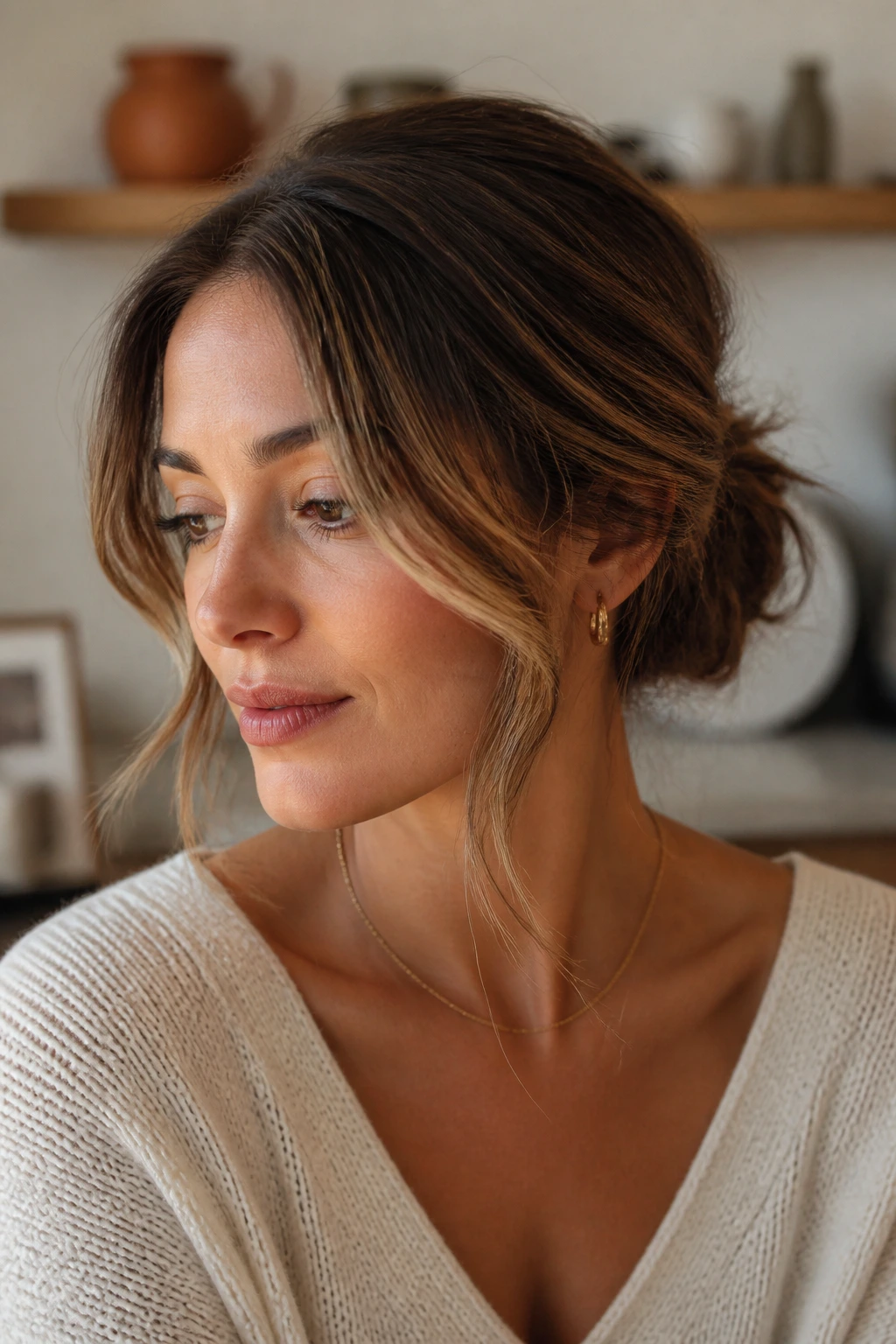
Some days, the best hairstyle isn’t a haircut at all. It’s a low bun with a couple of face-framing pieces left loose and a little texture at the crown. On a heart-shaped face, that shape keeps the forehead soft and puts attention lower, near the jaw and neck.
Fine hair usually behaves better in a low bun than in a towering knot. The bun has less weight to support, and you can build it with a small twist, a few pins, and maybe a tiny elastic. Don’t smooth every strand into submission. A little texture makes the style look fuller.
Leave two slim pieces around the cheekbones or just in front of the ears. Those pieces matter. They break up the width of the forehead and keep the style from feeling severe.
This is the kind of look that saves you on oily roots, between wash days, or when your hair refuses to cooperate. It’s casual, but not lazy.
22. Shoulder-Length Waves With Subtle Money Pieces
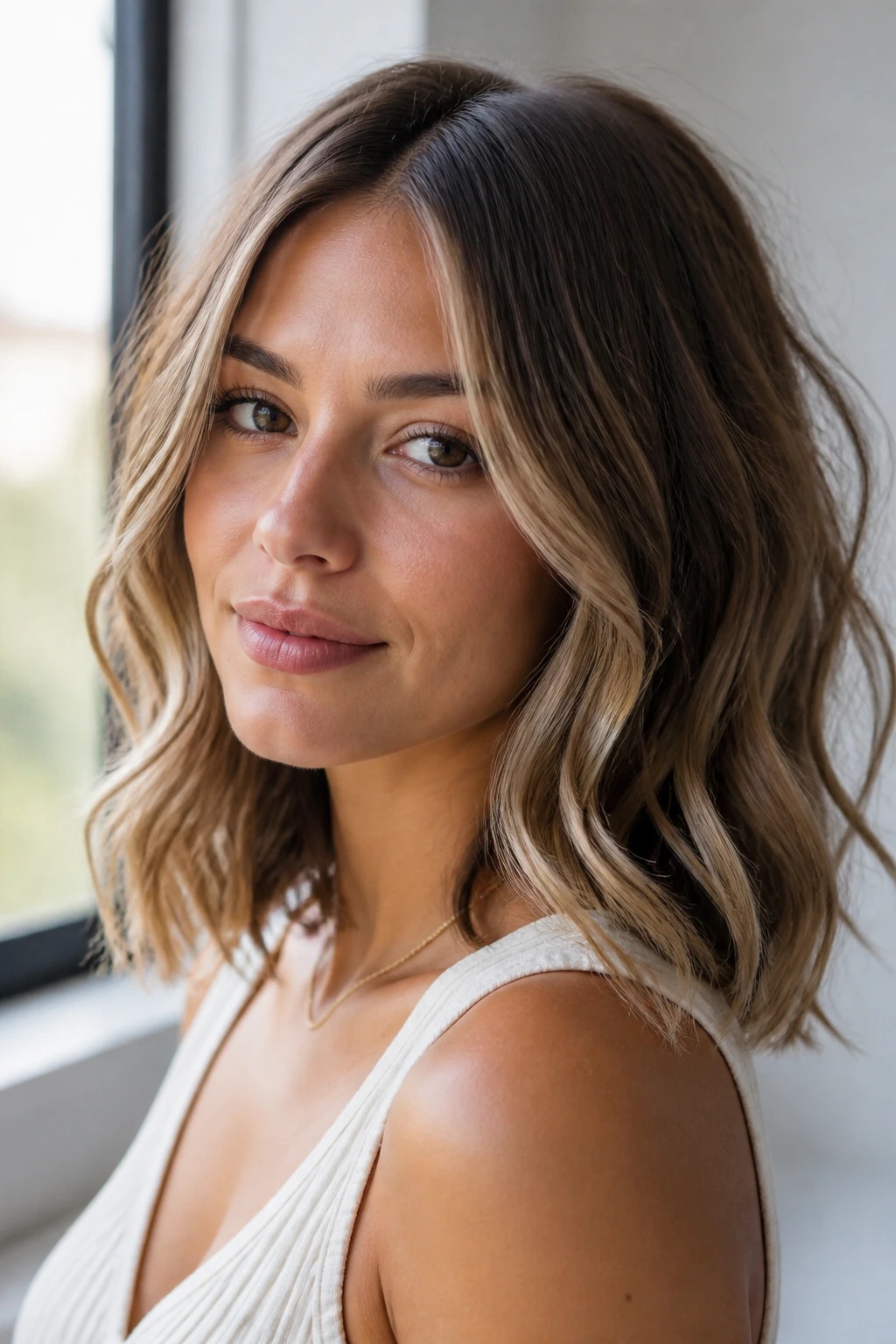
Shoulder-length waves with subtle money pieces give heart-shaped faces a soft frame without turning the hair into a color project that needs constant correction. The waves create movement around the jaw, while the lighter pieces near the face pull the eye outward and downward. That can be useful when the forehead is the strongest part of the shape.
Keep the lighter pieces soft. Two chunky front strips can look harsh on fine hair and make the top half of the face feel busier than it needs to be. A gentle brightness around the cheekbones or the first few inches of the front layers is enough.
The waves themselves should be loose and uneven, not tight and uniform. A few bends with a flat iron or a 1-inch wand will do more for the silhouette than a full head of curled spirals. Break the wave with your fingers and stop before the hair starts to fluff.
This style is especially good if you want a little dimension without giving up length.
Why Heart Faces and Fine Hair Need Different Rules
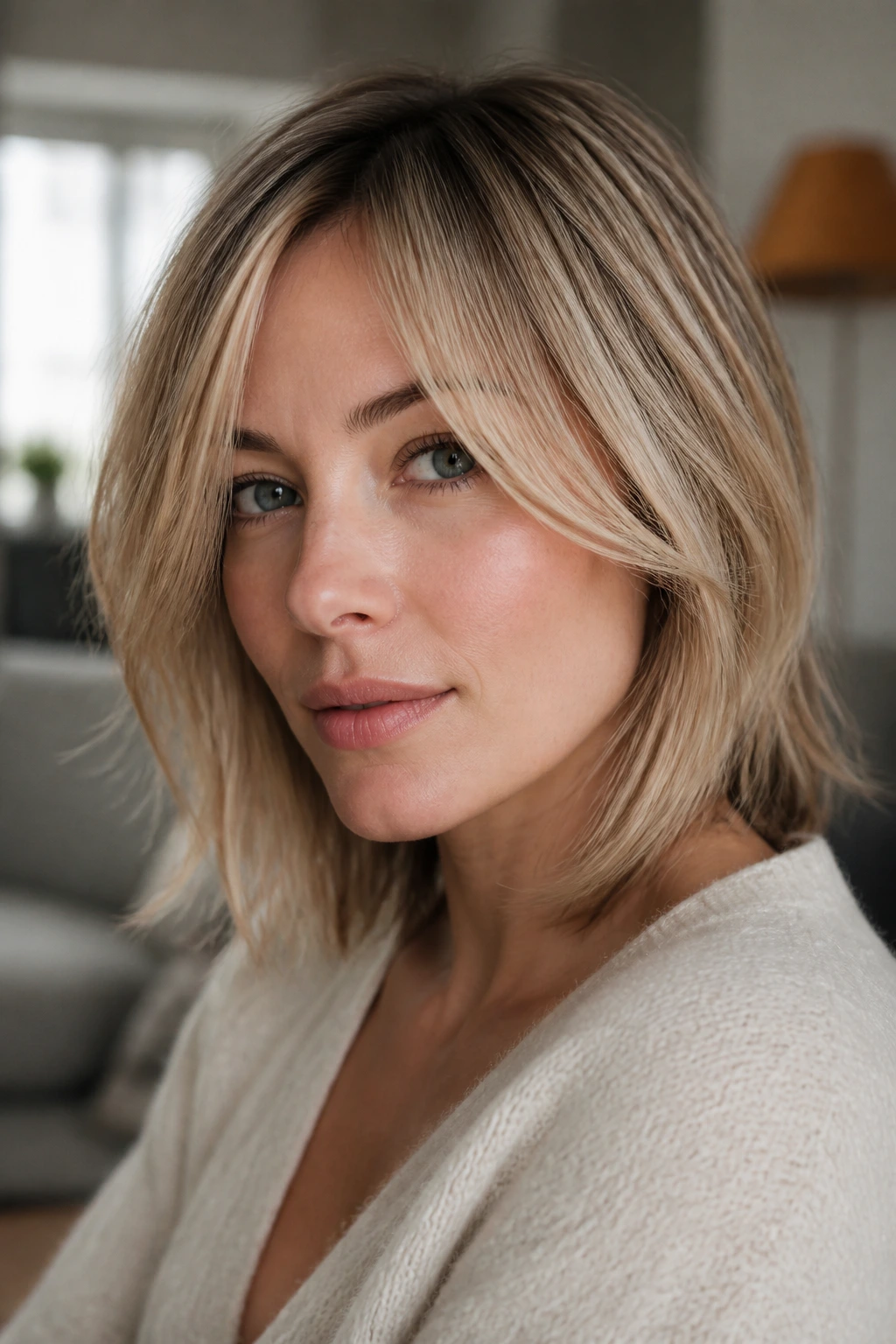
A heart-shaped face and fine hair ask for different things, which is why so many standard haircut ideas miss the mark. The face wants softness around the forehead and some balance near the chin. The hair wants structure, a solid perimeter, and fewer layers than most people think. Pull those needs apart, and the style falls apart with them.
The easiest mistake is treating fine hair like thick hair with less density. It isn’t. Fine strands break up faster, collapse faster, and show every poor layer cut in a flash. That’s why blunt edges, low-starting layers, and controlled movement matter so much. They keep the hair from looking sparse.
Heart faces also don’t need every ounce of volume at the crown. A little lift there is fine. Too much and the forehead starts to dominate the whole shape. The better move is to place movement around the cheekbones and jaw, then let the top stay softer and cleaner.
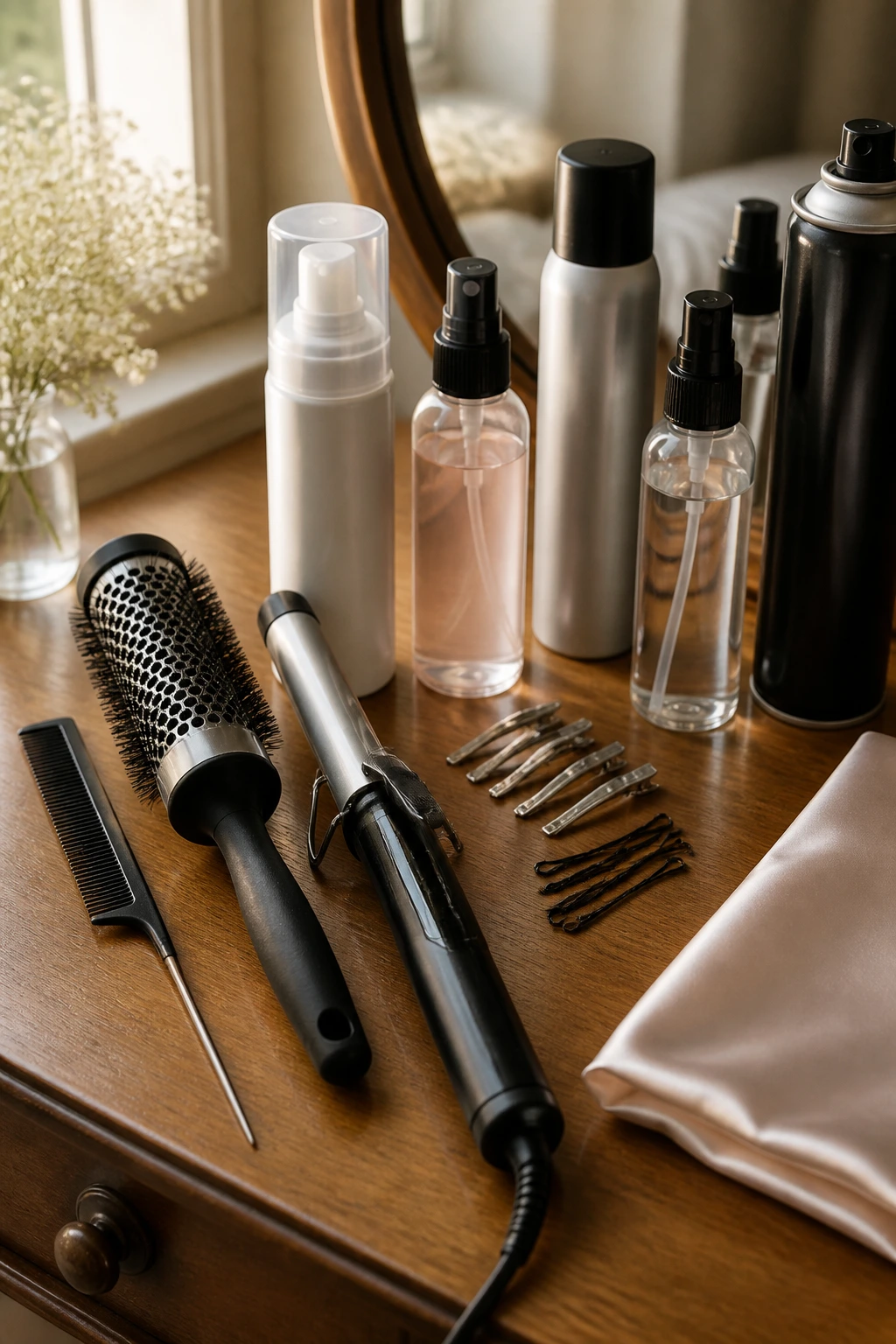
Essential Tools for These Hairstyles
-
Tail comb: Useful for getting a clean side part or center part when you want the shape to sit exactly where it should.
-
Round brush, medium to large size: The workhorse for lobs, curtain bangs, and soft bends at the ends.
-
1-inch curling iron or wand: Best for loose waves, face-framing bends, and the kind of movement that doesn’t swallow fine hair.
-
Volumizing mousse: A root-friendly foam gives fine hair memory without the greasy drag heavy creams cause.
-
Heat protectant spray: Use it before any blow-dry, flat iron, or curling tool. Fine hair shows heat damage fast.
-
Lightweight dry shampoo: Helps freshen roots and adds a little grip for second-day styling.
-
Texturizing spray: Good for piecey pixies, lobs, and waves, as long as you keep it off the roots.
-
Small clips and bobby pins: Needed for half-up styles, side sweeps, and setting the crown while hair cools.
-
Flexible-hold hairspray: Keeps movement alive without turning the hair rigid.
-
Silk or satin pillowcase: Not flashy, but it cuts down on friction and helps fine hair stay smoother overnight.
How to Pick the Right Cut Without Losing Density
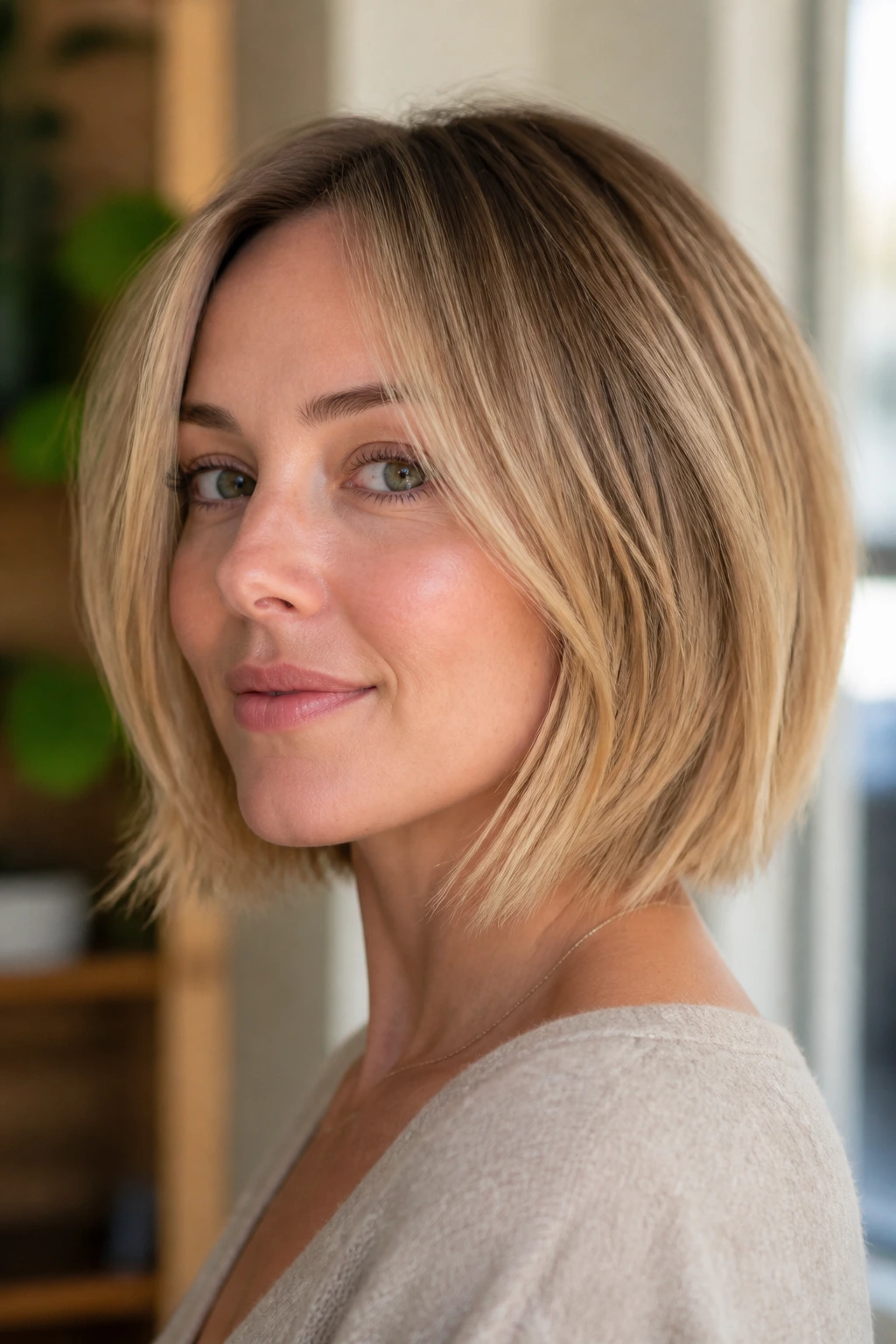
If your hair is fine, the first question is not “What looks trendy?” It’s “Where does the hair keep its weight?” That’s the detail that changes everything. A cut can be gorgeous in a photo and still be a disaster on a head of fine hair if the layers eat too much of the perimeter.
Heart-shaped faces do well with styles that widen slightly around the jaw or collarbone. That can come from length, from a blunt line, or from a bend that sits lower on the face. What usually fails is too much volume at the crown and too much lightness at the ends. Those two together make the face top-heavy and the hair fragile.
Bring photos to the salon, but bring the right ones. Look for examples on hair that matches your density and texture, not just the same face shape. A thick-haired model with a blunt bob can trick you into thinking the style is fuller than it will be on your head. That’s a hard lesson, and one people keep relearning.
Smart Product and Salon Tips for Fine Hair
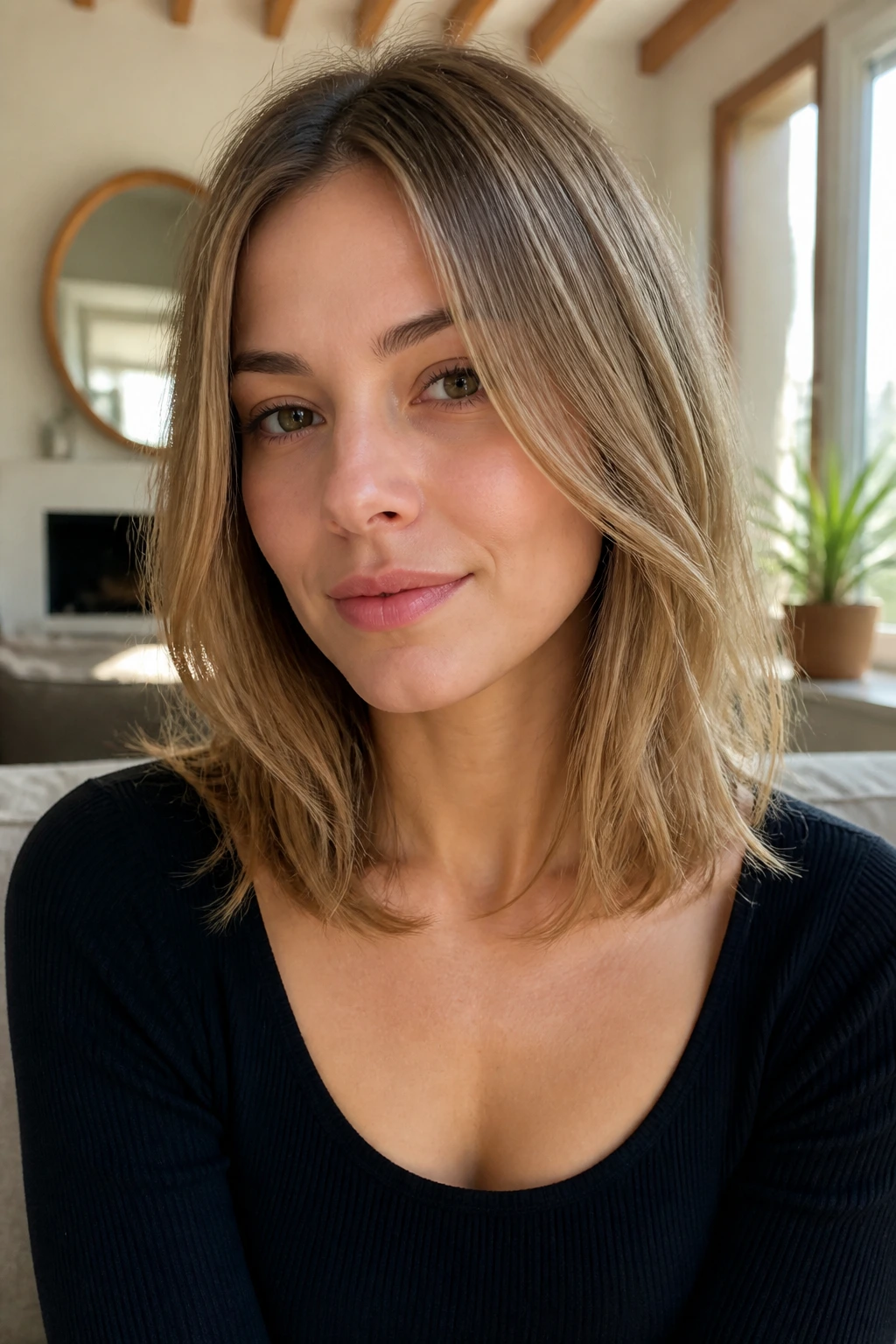
The product aisle can do a lot of damage if you’re not careful. Fine hair does not want rich creams everywhere, no matter how shiny the bottle looks. Those products often drag the roots flat and make the ends stringy by noon. A lighter hand works better.
At the salon, ask where the shortest layer begins. If the stylist says “around the temples” and your hair is fine, I’d push back unless you’re after a very soft shag. Cheekbone-level face framing is usually safer. Ask for the perimeter to stay full, especially if the cut is short or collarbone length.
When you buy products, think in categories:
- Mousse for damp roots and mids
- Lightweight leave-in only on the ends
- Dry shampoo for day-two lift
- Flexible spray instead of stiff lacquer
If you air-dry a lot, look for products that give grip without coating the hair in residue. Fine hair gets weighed down fast, and once it’s coated, no amount of brushing brings the lift back cleanly.
How to Wear These Styles in Real Life

Everyday Wear: The styles that need the least fuss are the collarbone lob, the blunt bob, the low bun, and the shoulder-length wave. They look finished with a quick blow-dry or a bend at the ends, and they survive a long day without needing a full reset.
For Glasses: Anything with soft fringe or side pieces works especially well, because the hair doesn’t fight the frames. Curtain bangs, bottleneck bangs, and side-part styles sit nicely around glasses without crowding the face.
For Dressier Days: A deep side-part blowout, an Old Hollywood sweep, or a polished lob gives you shape fast. These styles look better once the hair has cooled in place, so plan for a few extra minutes.
For Necklines and Earrings: Shorter cuts open the neck for hoops and strong collars. Longer cuts with face-framing pieces are better if you like V-necks or small drop earrings. The trick is to let the hair and the outfit share the attention, not compete for it.
Additional Tips and Texture Boosters
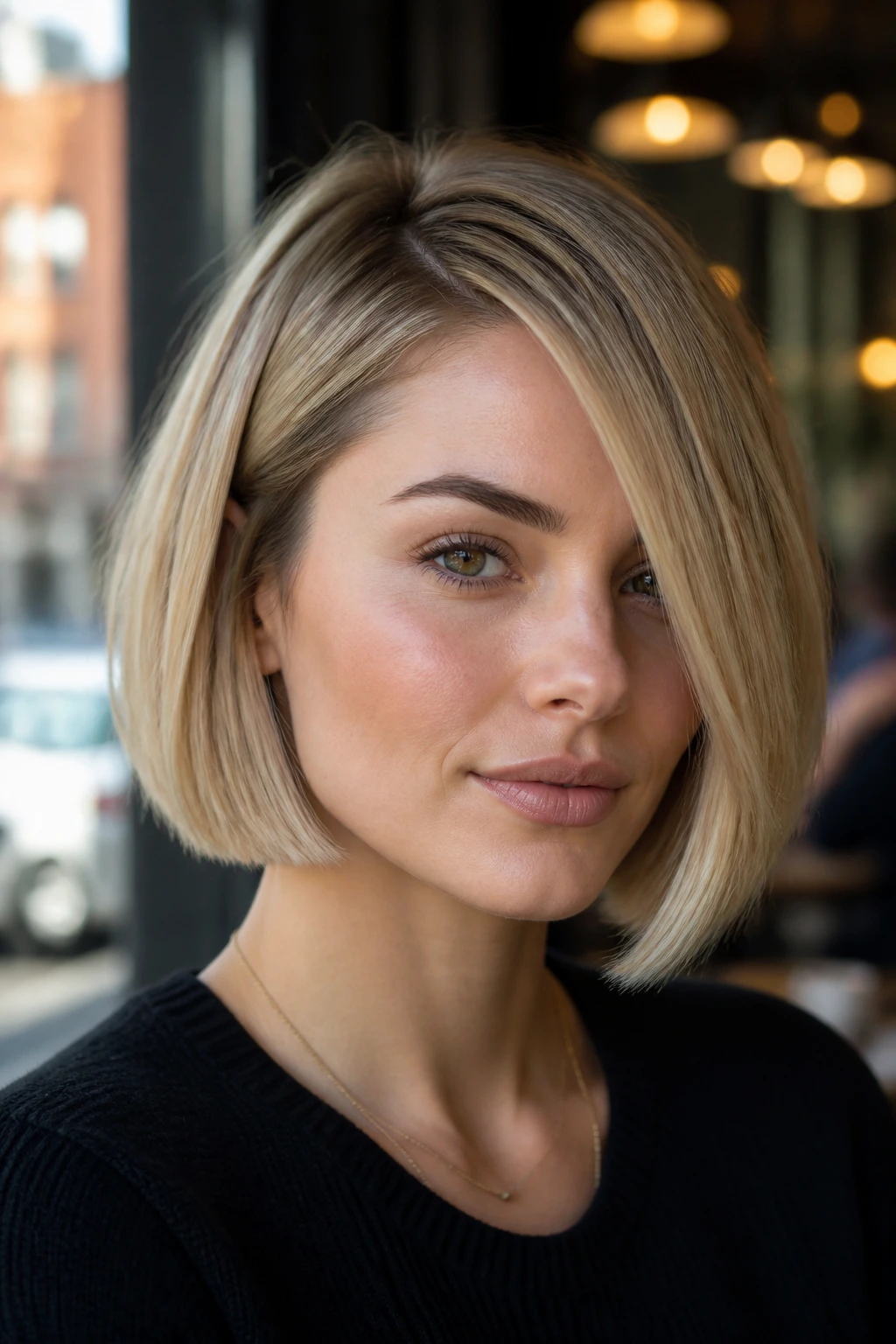
Volume Boost: Blow-dry fine hair upside down for the first minute or two, then finish with the head upright and a round brush at the roots. That tiny reset makes the crown lift last longer without making the whole head puffy.
Texture Boost: If the hair is flat, add a light mist of texturizing spray from mid-length to ends, then scrunch once or twice with your hands. Fine hair needs a little grip before waves will stay put.
Shine Boost: A drop of serum rubbed only over the ends can make a bob or lob look cleaner. Do not spread it near the scalp. Fine hair punishes that mistake fast.
Make-It-Yours: If your face is very broad at the forehead, lean into side parts and soft fringe. If your chin is a little longer, keep the shortest face-framing pieces a touch lower so the shape stays balanced. If you wear your hair up most days, prioritize a cut that leaves enough length around the face for loose pieces.
Keeping the Shape Between Washes
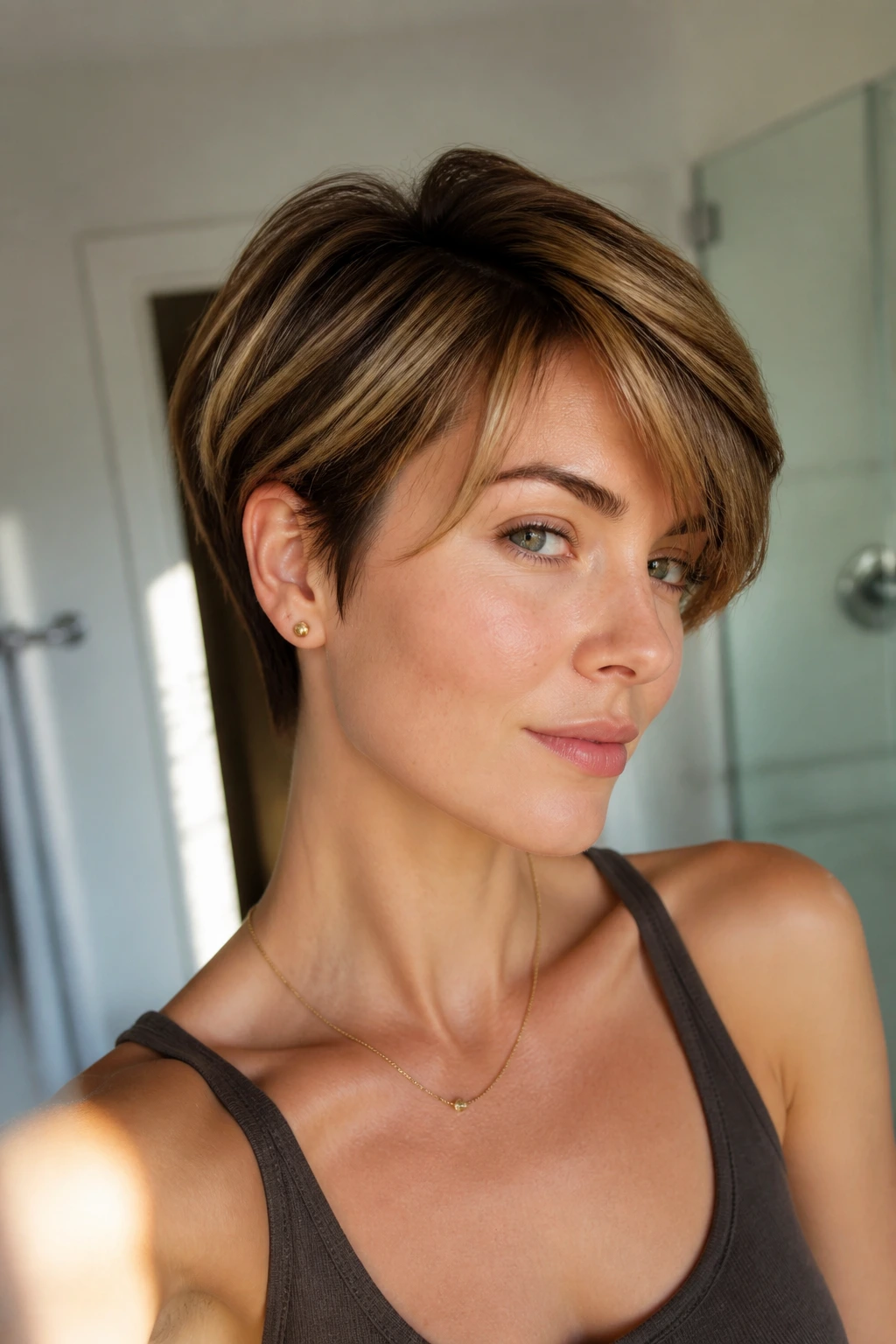
Fine hair often looks best on day one, then slowly loses its nerve. That doesn’t mean the style failed. It means the maintenance needs to be a little smarter. Shorter cuts like pixies and bobs usually need a trim every 4 to 6 weeks if you want the shape to stay clean. Lobs and longer layered cuts can go 6 to 8 weeks, sometimes a bit longer if the ends are still full.
Dry shampoo is useful, but use it before the hair is greasy enough to look dull. A small amount at the roots on day two or three gives better lift than dumping half the can on a flat crown. Brush it through after 30 seconds so it doesn’t sit chalky.
For sleep, a silk pillowcase helps more than people expect. Fine hair tangles less, and the ends don’t get roughed up as badly. If you wear hair up at night, use a loose clip or a soft tie. Tight elastics bend fine strands into odd creases that stick around until the next wash.
Common Mistakes to Avoid
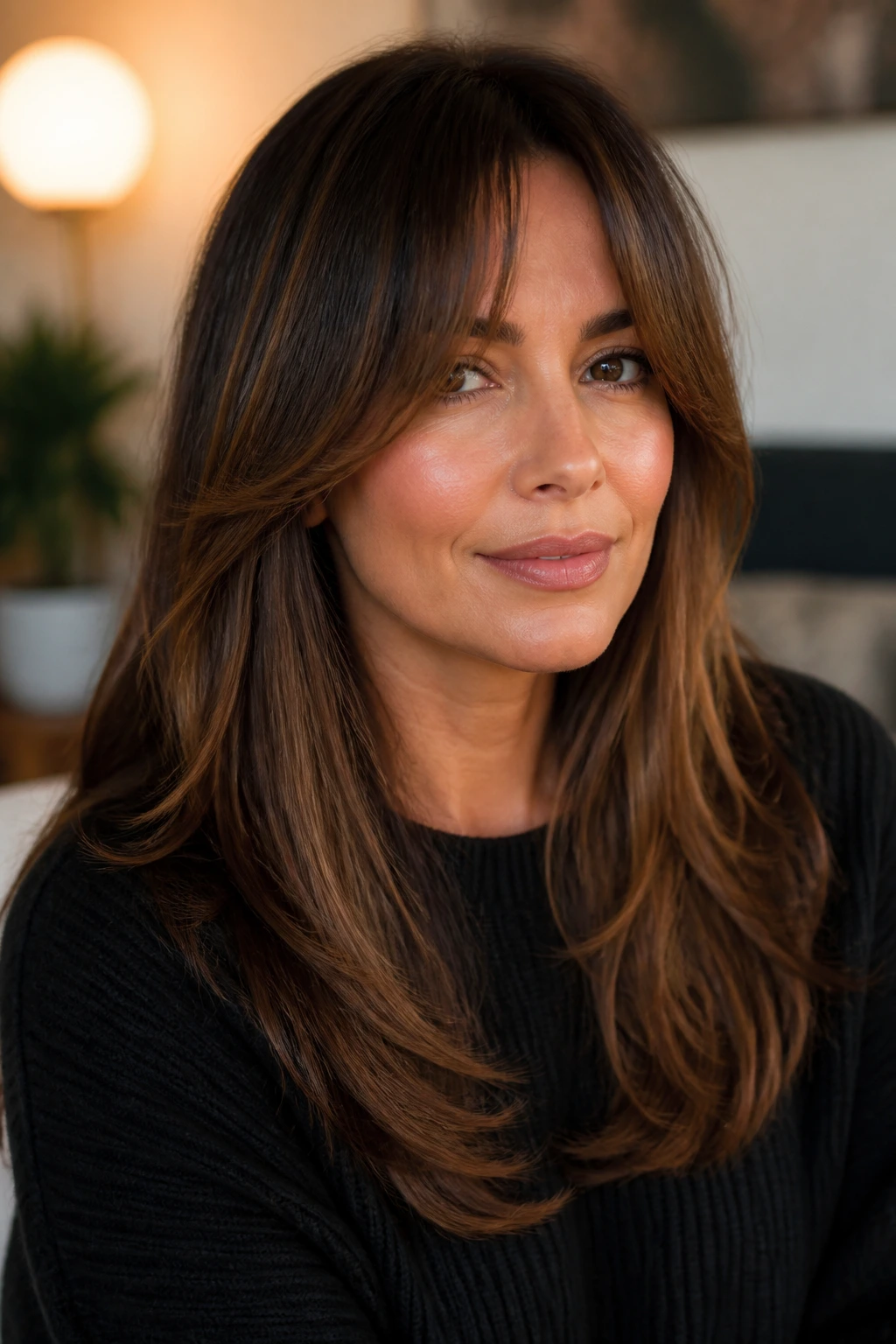
Over-layering the crown: If the top gets too chopped up, fine hair starts to look see-through and the forehead looks wider by contrast. The fix is a lower layer start and a stronger perimeter.
Going too short at the chin with no balance: A chin-length cut can be lovely, but if the front is too short and the sides are too flat, the face can look boxier. Keep a little length in front or add side-swept movement.
Using heavy cream all over the hair: Rich leave-ins and oils can make fine hair hang like wet string. Put heavier products only on the last inch or two of the ends, and use a lighter foam or mist near the roots.
Making the bangs too dense: Thick, blunt bangs can swallow the forehead and make a heart face feel compressed up top. Softer, pieceier fringe usually works better because it lets some skin show through.
Curling everything the same way: Uniform curls look stiff and dated on fine hair. Alternate directions, leave out the ends, or soften the wave with your fingers so the style has movement instead of a rigid shell.
Skipping the part adjustment: The same haircut can look off if the part is pinned in one place forever. A tiny shift to the side can change the whole balance on a heart-shaped face.
Variations and Adaptations to Try

For Extra-Fine Hair: Keep the perimeter blunt and the layers long. A collarbone lob, blunt bob, or uncluttered midi cut will usually look thicker than a highly textured style.
For Hair That’s Fine But Dense: You can get away with more movement. A soft shag, razored lob, or butterfly-cut lite works better when there’s enough hair overall to support the shape.
For Glasses Wearers: Curtain bangs, bottleneck bangs, and tucked-back bobs are useful because they keep the frames from competing with a heavy fringe. Leave a little softness around the temples.
For Heat-Free Styling: Choose a cut that already carries shape when air-dried — a lob, midi cut, or low bun base. A little mousse and a twist while damp can do more than you think.
For Grow-Out Friendly Maintenance: Long layers, a collarbone lob, or shoulder-length waves are easier to live with if you only want trims a few times a year. They move even when the cut grows.
For a More Polished Finish: Go for the deep side-part blowout, the sleek center-part lob with root lift, or the blunt bob with a soft bend. These have cleaner lines and feel more deliberate without needing a lot of product.
Frequently Asked Questions About Heart Faces and Fine Hair
Should heart-shaped faces avoid center parts?
Not automatically. A center part can look clean and elegant on a heart face if the hair has some lift at the roots and softness near the cheekbones. The problem is a flat crown with no face-framing pieces, because that tends to make the forehead feel wider than it is.
Are curtain bangs good for fine hair?
Yes, if they’re cut with restraint. The shortest pieces should sit around the cheekbone or slightly below it, and the fringe should blend into the rest of the hair instead of sitting as a thick block. Heavy curtain bangs can swallow fine hair fast.
What length is best for fine hair and a heart-shaped face?
Collarbone, jaw, and chin length are all strong choices, depending on how much density you have. Collarbone cuts are the safest all-around option because they keep enough weight at the ends while still softening the upper face. Very short cuts can work too, but they need clean structure.
Do layers make fine hair look thinner?
They can, if they’re too high or too aggressive. Long, low layers are usually fine because they add movement without stealing the line from the ends. The real danger is over-thinning, especially around the crown and front.
What if my fine hair won’t hold a wave?
Start with a volumizing mousse on damp hair, then set the wave with a smaller section size and let the curls cool before brushing them out. A little dry shampoo or texturizing spray at the mids and ends can help the style last. Heat without setting time tends to fall out fast.
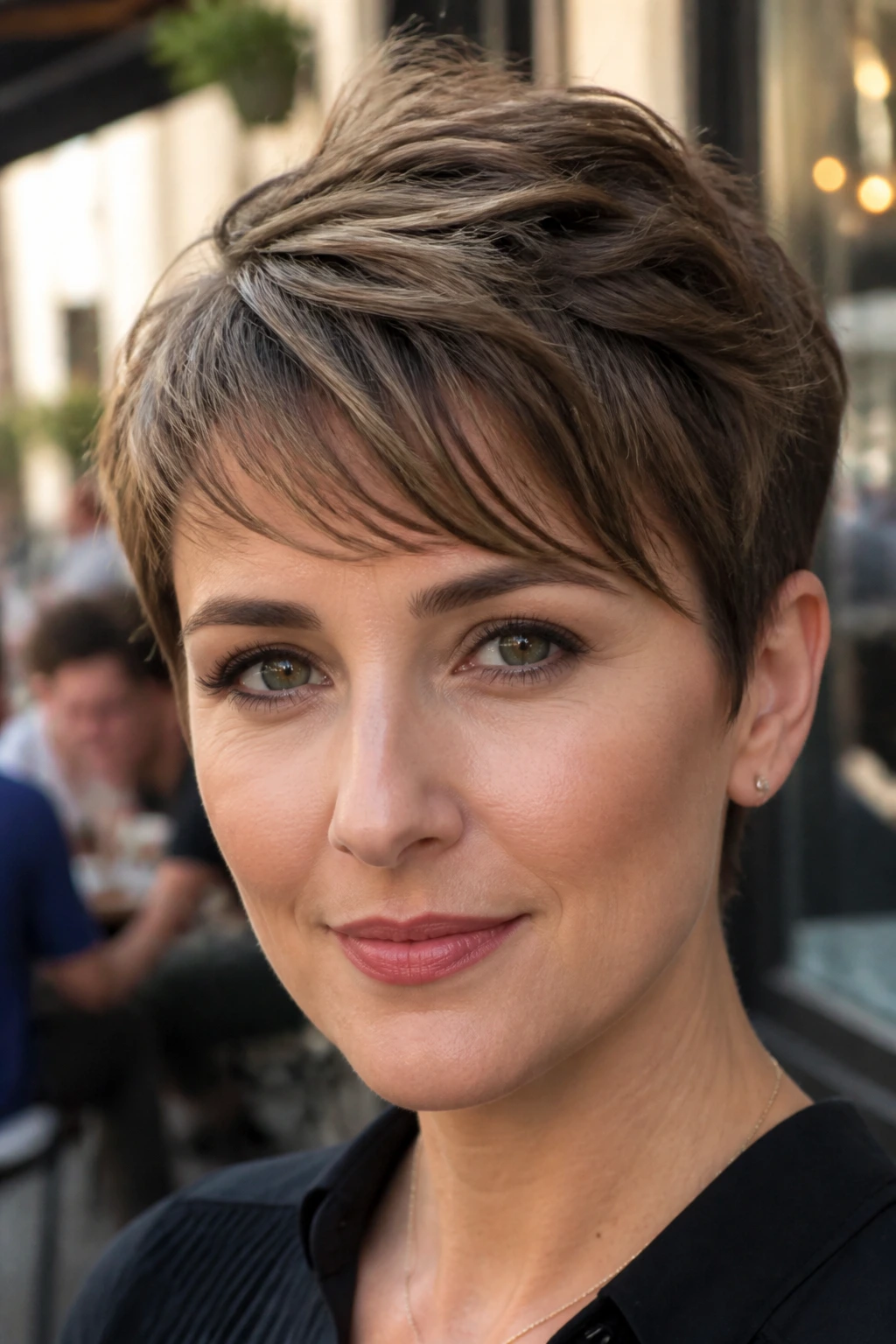
Can a pixie work on a heart-shaped face?
Absolutely, if it keeps softness through the fringe and sides. A swept fringe or piecey top helps balance the forehead, and a tiny bit of height at the crown keeps the cut from feeling flat. The sides should taper gently instead of being clipped too tight.
How often should I trim fine hair if I want the style to stay sharp?
Short cuts usually need a refresh every 4 to 6 weeks. Lobs and longer layered cuts can often go 6 to 8 weeks before the ends start looking tired. Fine hair shows split ends quickly, so trimming on time matters more than people expect.
What should I tell the stylist if I’m nervous about losing too much hair?
Say you want to keep the perimeter full, keep layers long, and avoid heavy thinning at the ends. That gives the stylist a clear lane. Bring at least one photo of a person with similar density, because texture changes the whole result.
The Shapes That Do the Heavy Lifting

The best hairstyles for heart faces and fine hair do the same quiet job over and over: they keep the forehead soft, give the lower face some visual weight, and leave enough density in the ends that the hair still looks like hair when the day gets long. That sounds simple. It isn’t. It’s a matter of placement, not just length.
If you remember one thing, make it this: the right cut should make your hair look fuller without asking it to become something else. That’s where the collarbone lob, the soft bob, the long fringe, and the smarter layered styles earn their place. They don’t fight your shape. They work with it.
Bring that logic to the salon, keep your products light, and stop trusting every layered haircut you see online. Fine hair and a heart-shaped face can wear a lot of styles — but the good ones know exactly where to stop.