



The best short haircuts for fine hair and square faces do two jobs at once: they make the hair look denser and they keep the jaw from reading like a hard edge. That second part matters more than people think. Fine hair can collapse the second you ask too much of it, while a square face can look wider when a cut stops dead at the jaw and refuses to move.
The trick is not hiding the face. Square faces hold structure well. What they need is interruption — a side part, a wispy fringe, a bent end, a little lift at the crown, anything that gives the eye a diagonal path instead of a straight wall across the lower face. On fine hair, the best short cuts also avoid over-layering. Too many snips and the ends look see-through. Too few and the hair lies flat like it has somewhere else to be.
I keep coming back to that balance because it’s where most bad haircuts go sideways. You want enough shape to make fine strands look fuller, but not so much chopping that the outline disappears. The 22 cuts below stay in that narrow lane, and each one handles the square-face geometry in a slightly different way.
Why These Cuts Earn Their Place
-
Diagonal movement changes everything: Side parts, off-center fringes, and asymmetrical fronts keep a square face from looking locked in place.
-
Density needs to be faked, not chased: Fine hair usually looks best when the edge is clean and the top has a little lift, not when every inch is heavily thinned.
-
The jawline should not be the landing strip: The best cuts either skim above the jaw or fall just past it, so the face doesn’t read boxy.
-
Crown height stretches the face: A small amount of volume on top gives square features a longer line without turning the hair into a helmet.
-
Styling should stay light: These cuts hold up with a round brush, a pea-size paste, or a mist of texture spray — not a full production every morning.
1. Soft Side-Part Pixie
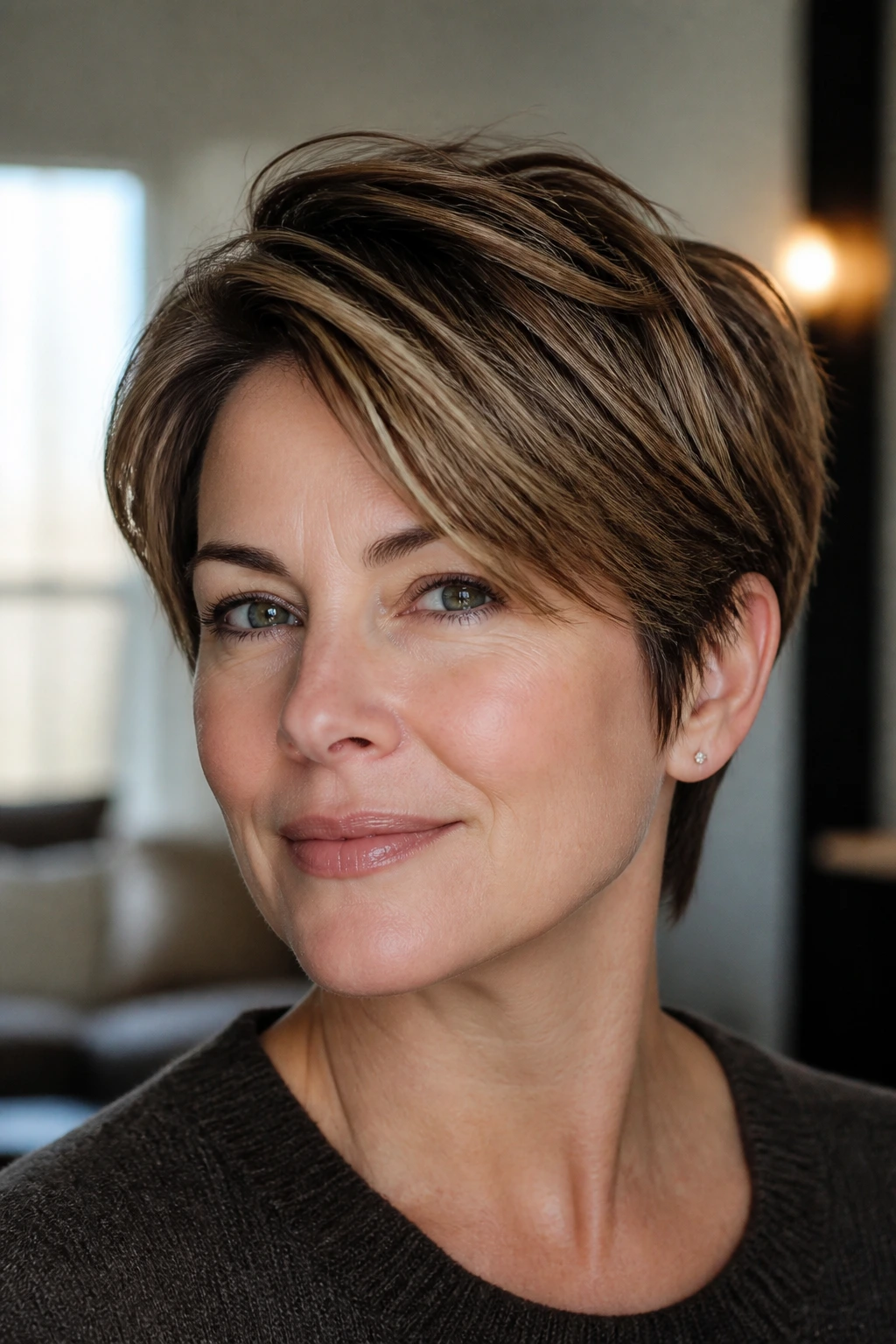
A soft side-part pixie is the haircut I reach for when fine hair needs lift and a square face needs a little diagonal movement. Keep the top around 2½ to 3 inches, taper the sides close to the head, and let the front sweep across one eyebrow so the face reads as angled, not boxed in.
That side part does the heavy lifting. It breaks the symmetry that can make a square face look broader, and it gives fine hair somewhere to build a little height without asking for much density. Ask for point cutting around the fringe and temples. A blunt line here looks too neat in the wrong way.
A pea-size dab of matte paste is enough on dry hair. Push the crown up with your fingers, then smooth the side part into place. If it falls flat by lunch, a quick blast at the roots fixes it faster than adding more product.
2. Feathered Crop With Wispy Fringe
Can a fringe make fine hair look fuller? Yes — if it’s wispy, not chopped into a ruler-straight line. A feathered crop with a soft fringe keeps the front light while still giving the forehead some coverage, which helps square faces feel less wide across the top.
The feathering matters because it breaks up the perimeter. Fine hair can look sparse when every strand is forced into one hard edge, but short feathery pieces create the illusion of movement and count. I like this cut especially when the hair grows straight and stubborn; the wisps make it feel deliberate instead of stiff.
What to ask for
- Fringe that lands just above the brows or grazes them
- Light feathering through the sides, especially near the temples
- No aggressive thinning shears through the ends
A small round brush and a quick bend away from the face are enough. Keep the finish soft. If the fringe gets too perfect, the cut loses its air.
3. Bixie With Crown Lift
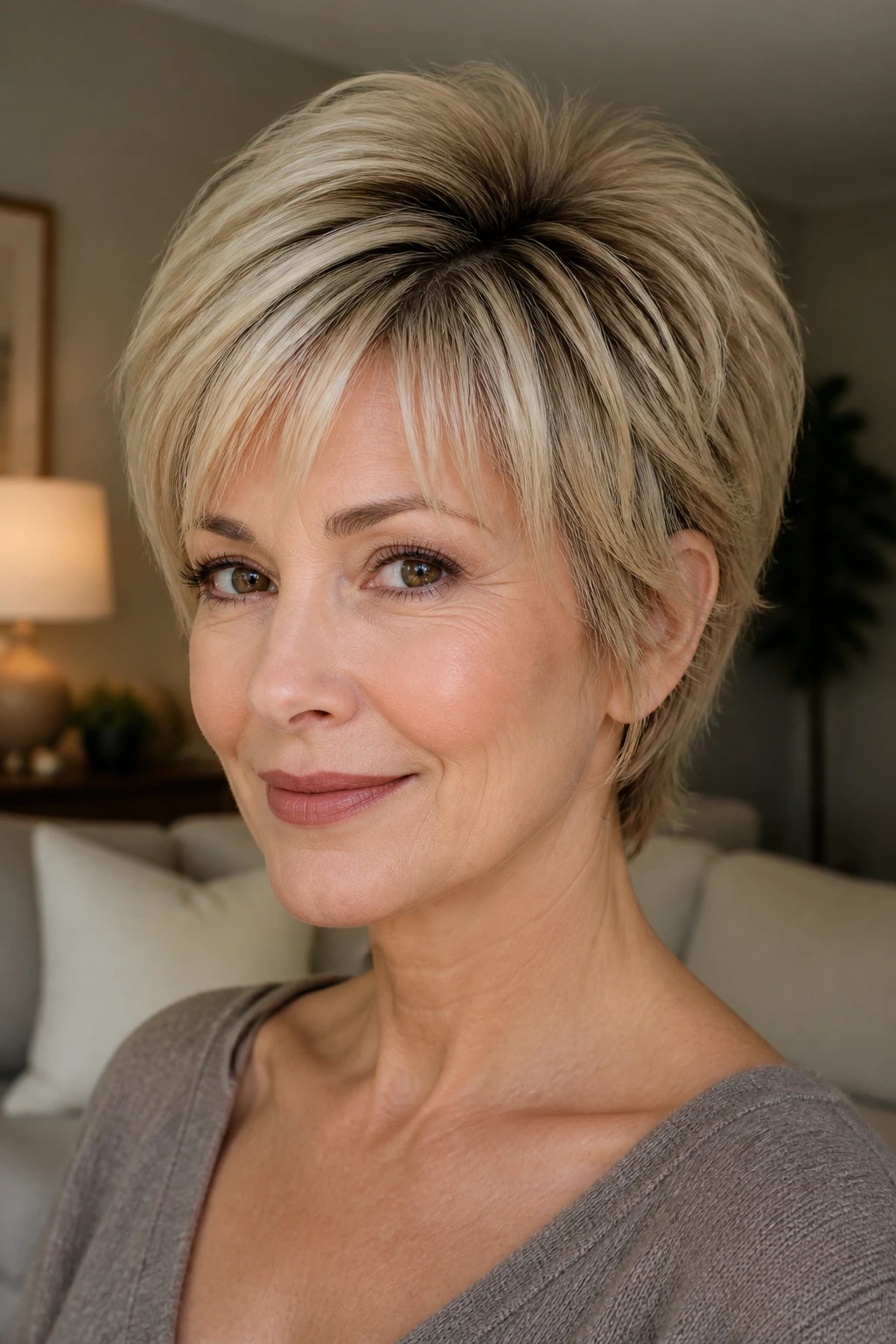
The bixie lives in the space between a bob and a pixie, and that middle ground is exactly why it works here. It gives fine hair a little more body than a full pixie, but it doesn’t drag the sides down the way a longer bob can.
The crown is the point. Ask for a touch of lift there — not a teased-up bump, just enough internal shape so the top doesn’t collapse. Around the ears, keep the length soft and slightly broken. If the shape gets too round and tidy, a square face can start looking wider.
I like this cut for anyone who wants ears mostly covered but not hidden. It feels neat, but not severe. A bit of mousse at the roots and a rough-dry with the fingers usually do the job. No brush marathon required.
4. French Bob With Bendy Ends
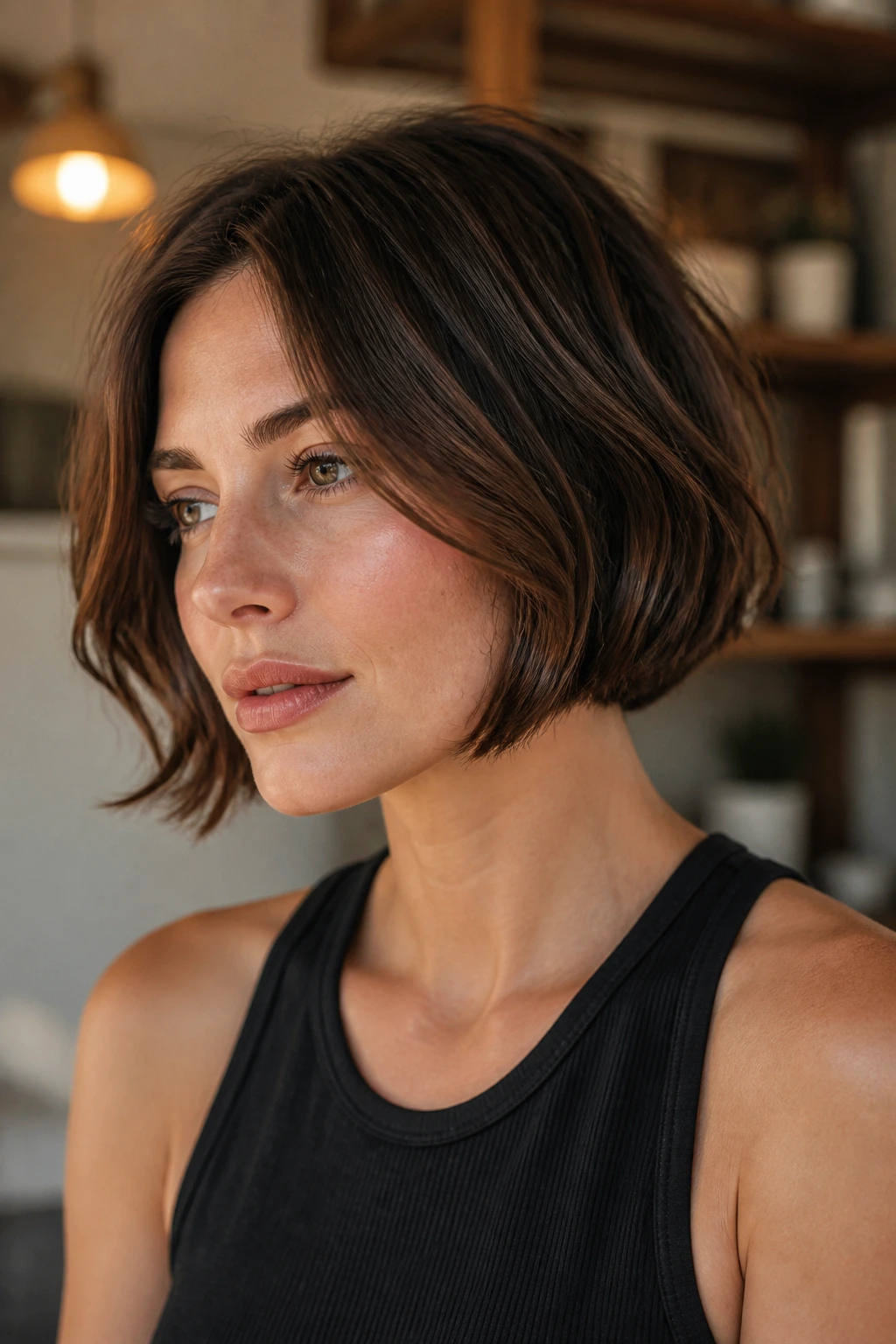
A French bob sounds blunt on paper. On square faces, it works best when the ends bend and the part slides off-center. That tiny adjustment changes the whole mood of the cut.
Keep the length near the chin, but do not let it stop as a hard horizontal line right at the jaw. That is the part that can make the face look wider. A chin-skimming length with a slight tuck under — or a loose flip out, if your hair has the nerve for it — softens the edge and gives fine hair some shape.
This cut loves a 1-inch round brush. Dry the roots first, then bend the bottom 1 to 2 inches inward for a few seconds before letting it fall. It should look touched, not shellacked. That’s the whole point.
5. Rounded Chin-Length Bob

The rounded chin-length bob is one of the more forgiving choices if your hair is fine and your jaw is square. The silhouette curves in softly instead of stopping flat, which takes some of the sharpness out of the lower face without making the cut feel floppy.
It also gives fine hair a clean outline. That matters. When hair is thin, too many ragged layers can make the ends look scarce. A rounded perimeter keeps the edge full, and a slight graduation through the back gives just enough support so the shape doesn’t cave by noon.
This is a good cut if you like polishing your hair with a brush. Set the ends under, not over, unless your hair naturally flips. The line should feel smooth and calm. Not rigid. Calm.
6. A-Line Bob With Tucked Nape
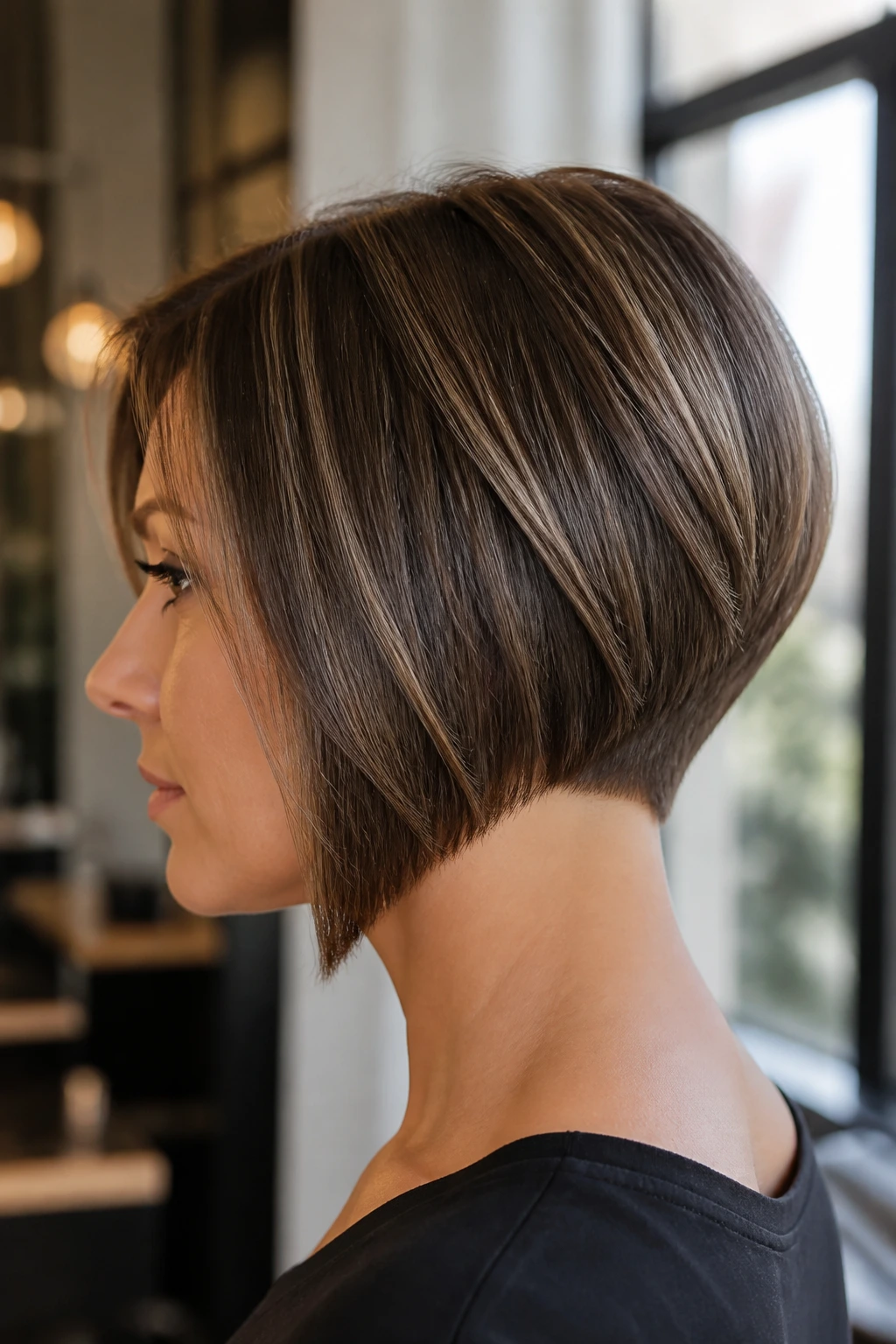
If you want a bob that leans a little sharper without turning harsh, the A-line is the move. Shorter in the back, longer in the front — usually by about 1 to 1½ inches — it creates a diagonal that subtly lengthens a square face.
Fine hair benefits from the extra architecture in the back. That slight stack helps build volume where the hair usually goes limp, and the front pieces give the jaw some breathing room. Just don’t let the angle get too steep. Once the difference between back and front becomes dramatic, the cut starts to feel dated fast.
A tucked nape makes this shape feel neat, especially if your hair is straight. Use a round brush or flat brush to direct the ends inward. If your neck gets warm or your hairline is strong, this is one of those cuts that looks more expensive than it is.
7. Choppy Jaw-Grazing Bob
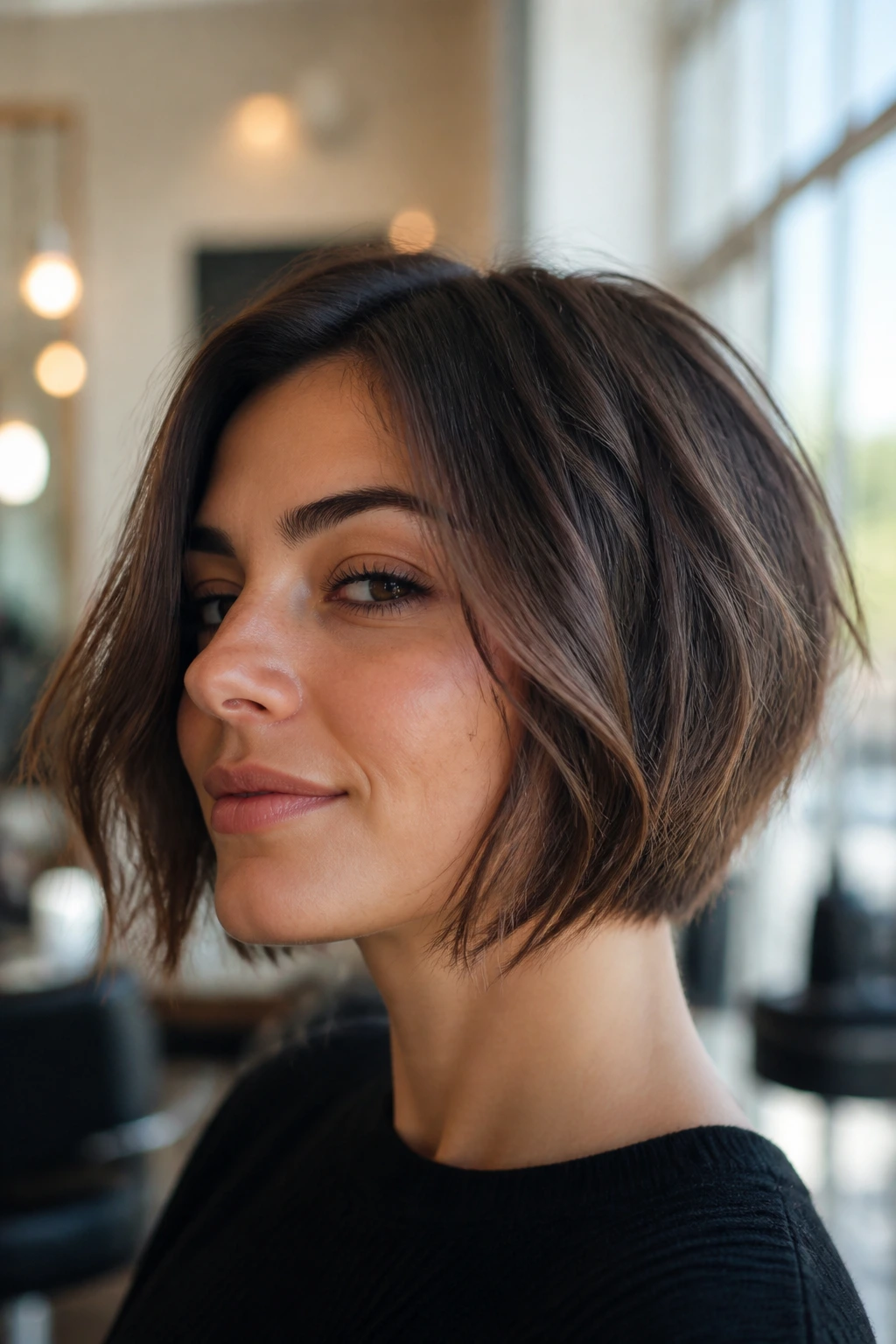
The choppy jaw-grazing bob is for people who want texture to do the work. The ends are broken, not shredded, and the overall length sits just around the jaw rather than forcing a strict line.
That broken edge matters on fine hair. It keeps the perimeter from looking heavy while still giving the illusion of density, because the eye sees movement instead of one flat sheet. For square faces, the trick is to keep the front pieces a touch longer than the back so the jaw doesn’t become the widest point in the cut.
This one loves point cutting. A lot of stylists will say “texture,” but what you actually want is controlled texture — pieces that separate, not wisps that vanish. A little dry texture spray at the ends makes the shape pop without making the hair crunchy.
8. Tapered Pixie Bob
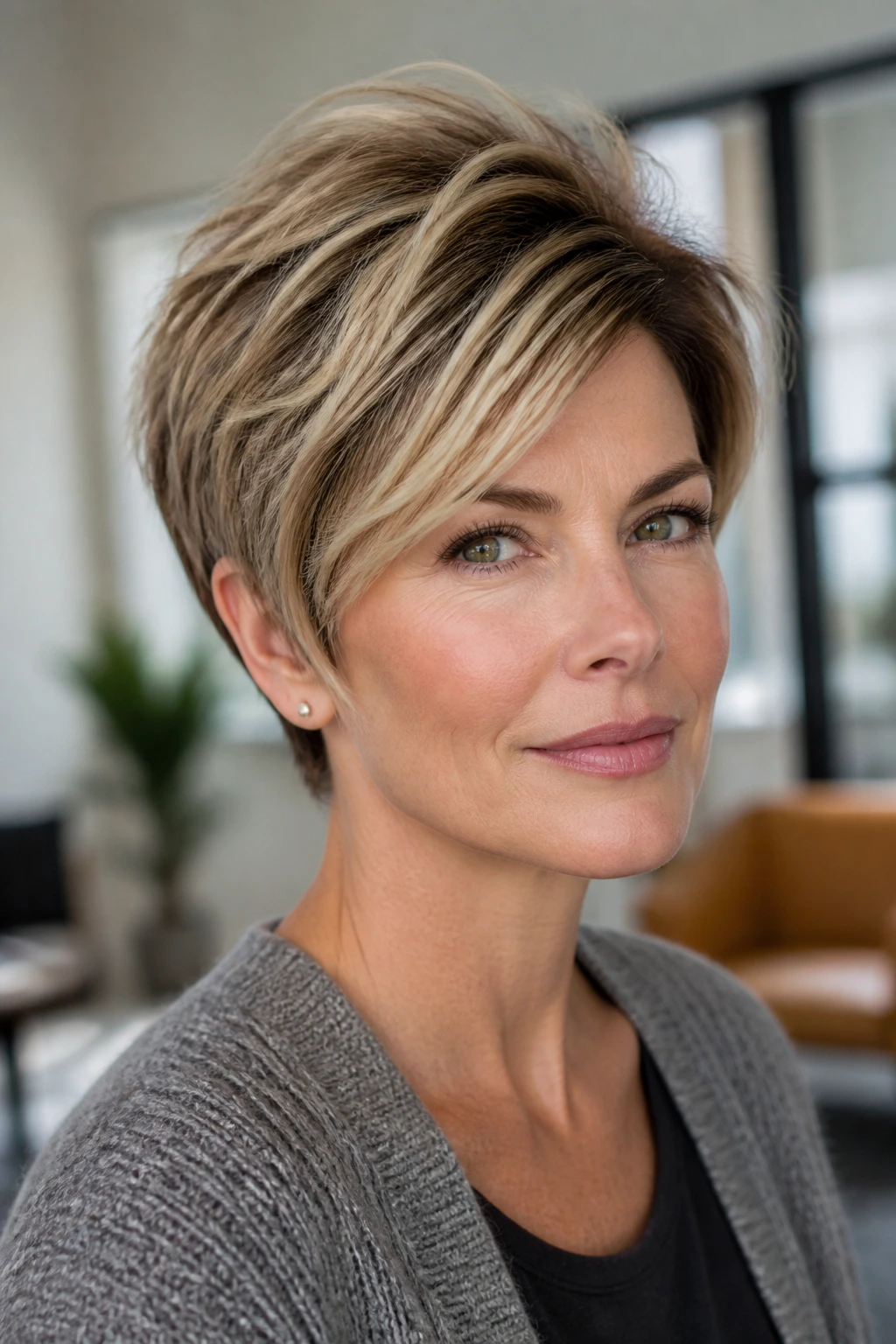
The tapered pixie bob is the compromise haircut for people who want short hair but not a full crop. It gives the crown and top some length, keeps the sides close, and tapers the neckline so the whole shape looks slimmer and more lifted.
That taper helps square faces because it keeps weight away from the lower edge of the face. Fine hair also likes the controlled top length. A few inches on top can look fuller than a shoulder-length cut that’s been over-layered and thinned to death.
If you like wearing earrings or glasses, this cut plays nicely with them. The hair stays out of the way without looking severe. A little root foam before drying is enough to keep the top from lying flat against the scalp.
9. Curtain-Bang Bob

Curtain bangs are not only for longer hair. On a short bob, they soften a square forehead, move the eye away from a broad jaw, and give fine hair a front section that does some visual work even when the rest of the hair is having a lazy day.
The bangs should start a little farther back on the crown and fall open around the cheekbones. If they’re cut too short, they can sharpen the face instead of softening it. That is the mistake. You want the bang line to melt into the rest of the cut, not sit there like a separate object.
This is a smart option if your hair grows out fast. Curtain bangs are forgiving for a few weeks longer than a blunt fringe, and they can be pushed aside on days when you want less face framing. That flexibility is worth a lot.
10. Micro-Layered Crop
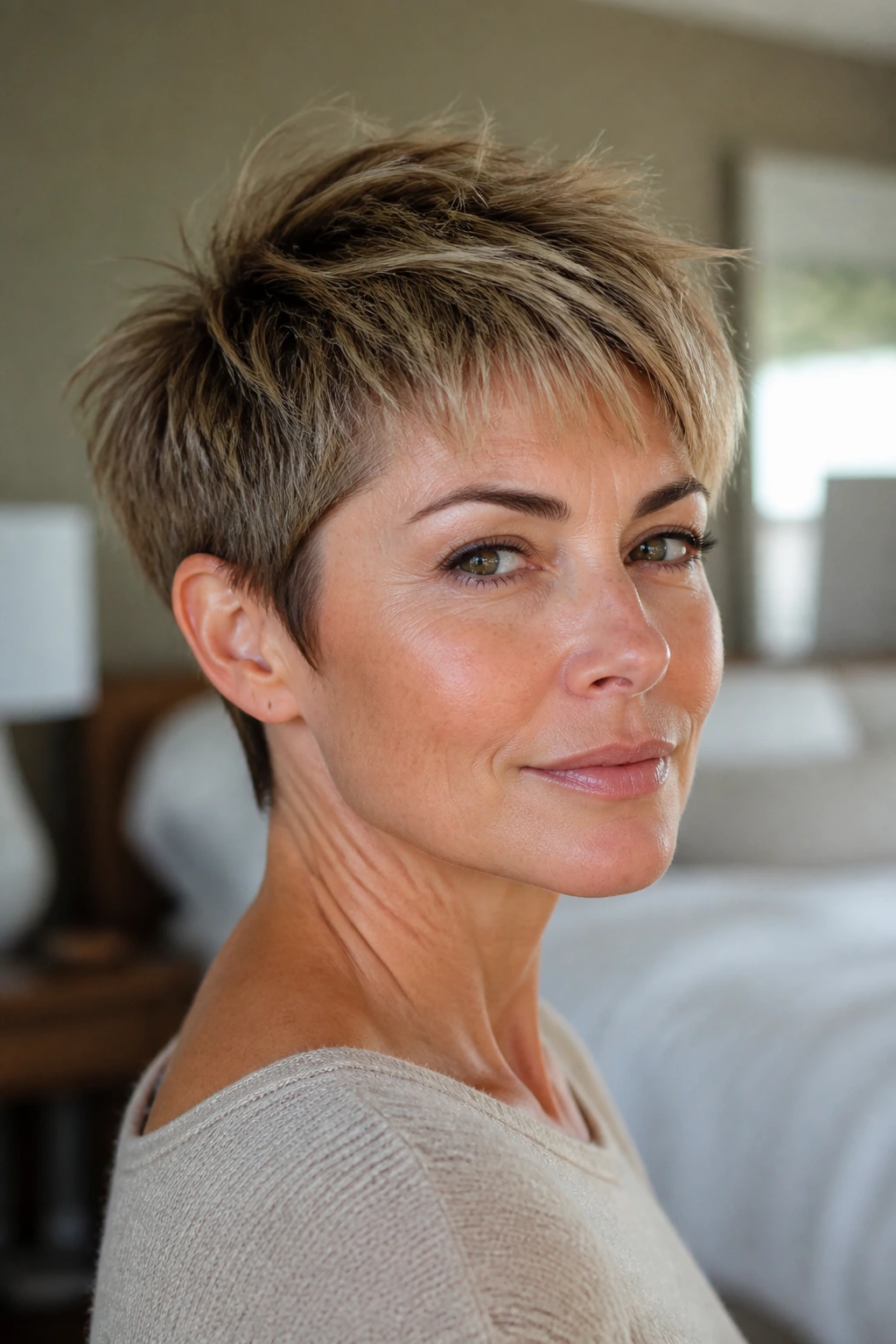
A micro-layered crop is one of those cuts that looks simple until you get close. The layers are tiny and controlled, placed where the hair needs movement without sacrificing the outline. That makes it useful for very fine hair, which tends to lose shape fast when the layers get too eager.
For square faces, the key is to keep the side sections soft and the crown a little lighter. A crop that’s too boxy on the sides can mirror the face shape in a bad way. A crop with tiny internal layers, though, breaks up the outline and keeps the whole thing from reading flat.
I’d choose this for someone who likes a short, easy shape and doesn’t want to spend much time with hot tools. A matte cream or lightweight paste is enough. You’re not building drama here. You’re building structure.
11. Asymmetrical Bob With Long Front Piece

An asymmetrical bob is pure geometry, and that’s why it flatters square faces so well. One side sits a little longer — usually by 1 to 2 inches — and that diagonal line pulls the eye down instead of out.
The long front piece gives fine hair a sense of purpose. Even if the hair itself is not thick, the shape looks intentional because the cut does something visible. Keep the shorter side around cheekbone level, not up at the ear, or the contrast can get too sharp.
This is one of the cuts I’d recommend if you like wearing one side tucked behind the ear. It gives you a clean profile on one side and a soft swing on the other. A light blow-dry with a paddle brush keeps the line crisp without flattening it.
12. Shaggy Mini Cut
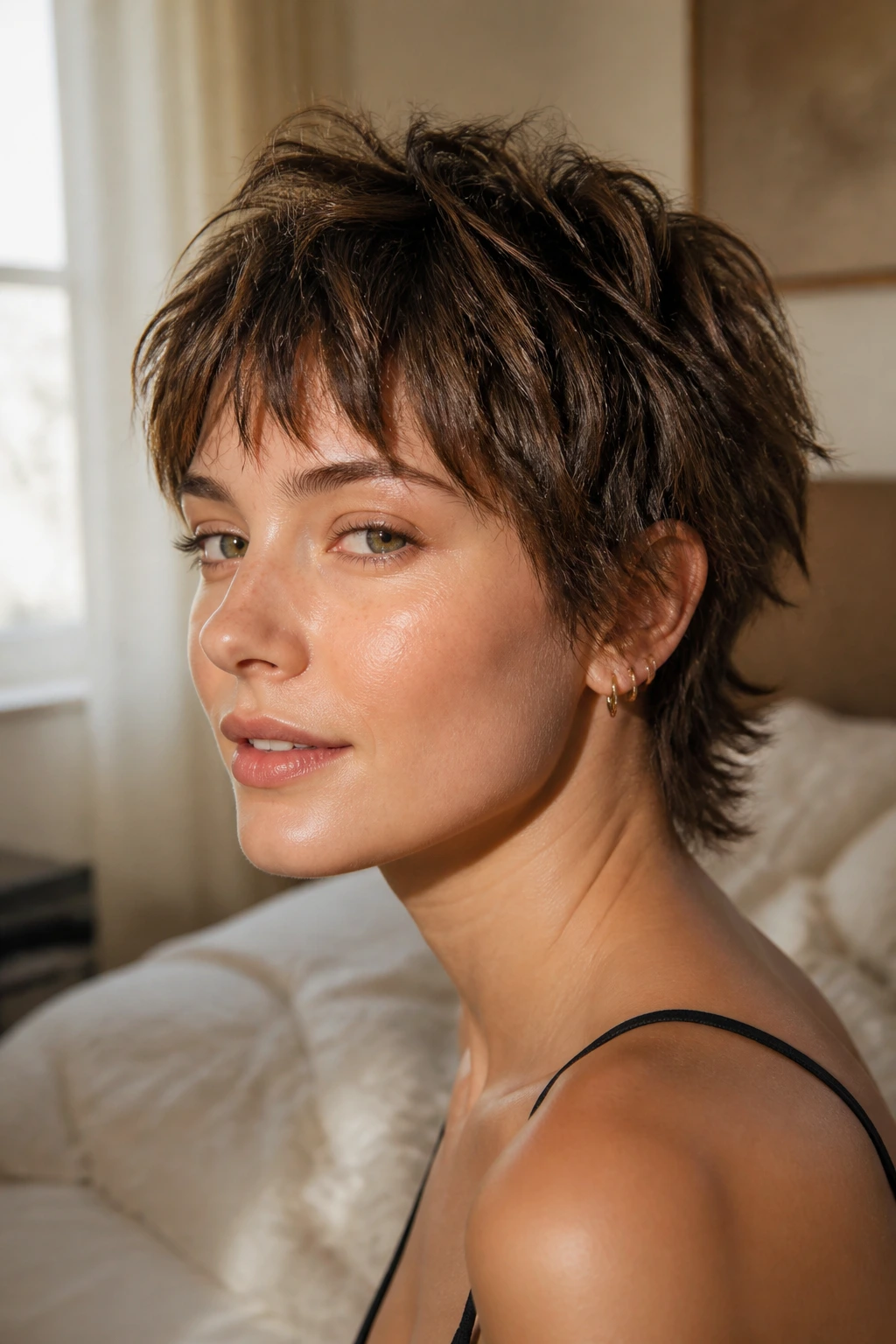
A shaggy mini cut is a good answer when fine hair has some natural bend and you don’t want to fight it. The crown gets a little height, the fringe is broken up, and the sides move instead of sitting in one place.
That movement is what helps square faces most. A shaggy shape cuts through the width at the jaw and cheekbones, so the face stops feeling so boxy. But this only works if the texture is controlled. If the layers are too choppy, fine hair can disappear. There’s a difference between airy and sparse. A big one.
Use a texture spray, not a heavy cream. The spray gives separation and a bit of grit, which is what the cut needs. The cream usually just drags fine hair down.
13. Razor-Cut Crop
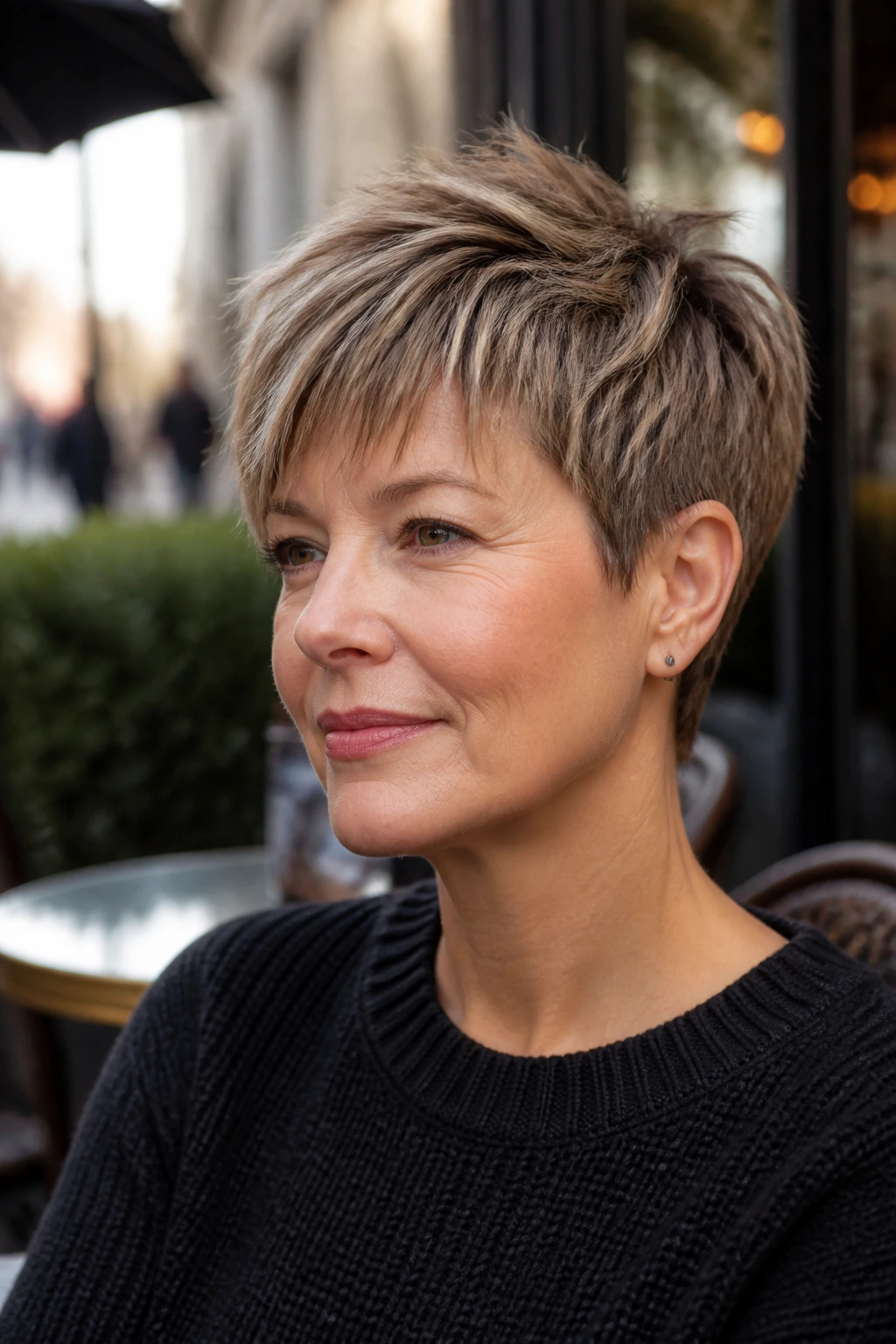
A razor-cut crop has a lighter edge than a scissor-cut crop, which can be useful when fine hair needs movement more than bulk. The blade takes the ends down in a soft way, so the finish feels airy instead of blocky.
Square faces usually benefit from that softness around the temples and cheeks. A razor crop can interrupt the straight lines that make the jaw look stronger. The caveat is obvious: if your hair is already fragile, over-razoring can make the ends look wispy in a bad, too-thin way. I’d only ask for this on healthy fine hair with a stylist who knows how to stop before it gets ragged.
If the crop feels a little too neat after drying, use your fingers to separate the top. One or two tiny bends with a small iron are enough. No need to curl the whole head into submission.
14. Stacked Bob With Soft Crown
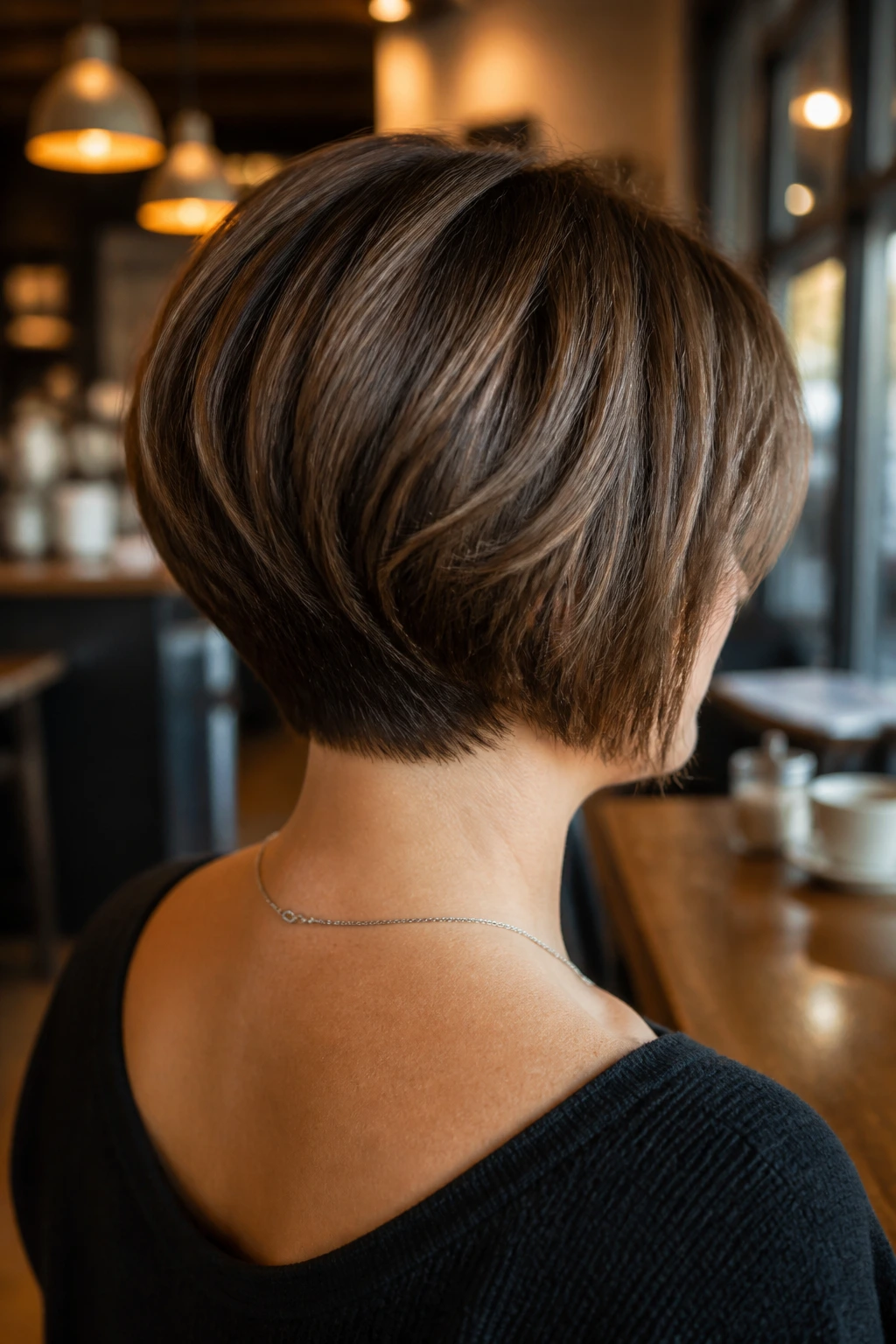
The stacked bob earns its place here because fine hair often needs help at the back of the head. The stacking builds internal support, which creates the look of fullness without making the cut balloon out.
On a square face, the shape needs one adjustment: keep the crown soft. Too much height in one perfect bump and the style starts to feel dated or helmet-like. A little lift is enough. You want movement at the back and a clean front line that doesn’t stop at the jaw.
This is the bob I’d pick for someone whose hair collapses when it’s past the ears. The stacked back gives you a shape to hold onto, even on day two. A round brush at the crown and a touch of dry shampoo at the roots usually keep it alive.
15. Side-Swept Blunt Bob

A blunt bob can work on fine hair because the denser edge makes the ends look thicker. The problem is the face shape. On a square jaw, a dead-center blunt bob can feel too boxy. A side-swept part changes that instantly.
That side part breaks the horizontal line, and a slight bend through the ends keeps the shape from feeling heavy. I like this cut when the hair is straight and naturally sleek. It looks polished without asking for much styling, and the blunt outline gives fine hair more visual weight than layers usually do.
The key is not to over-soften it. You still want the clean edge. Just don’t let that edge land exactly where the jaw does. A half-inch above or below matters more than people realize.
16. Pixie With Long Sideburns
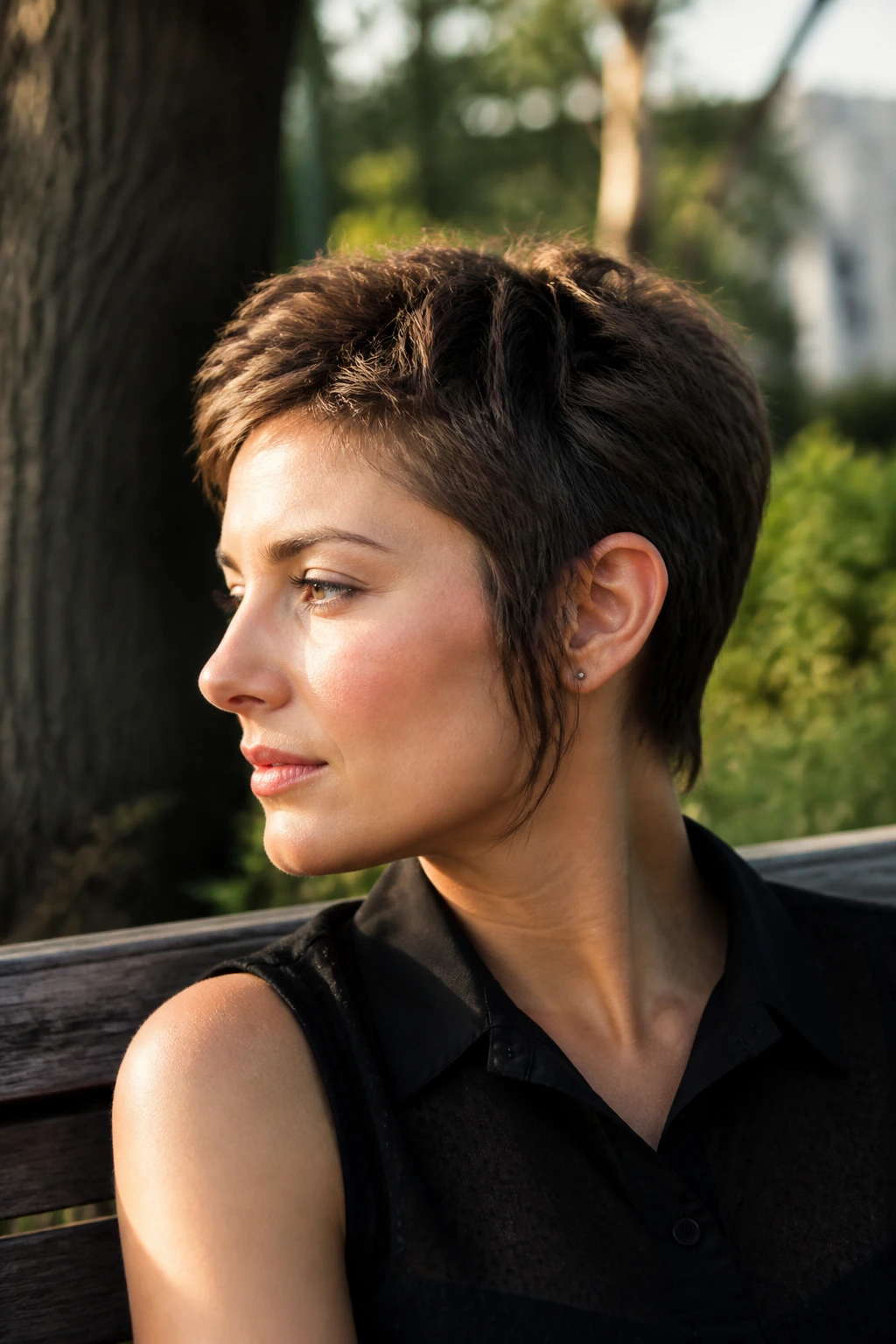
A pixie with long sideburns works because the sideburn area quietly softens the temples and the upper jaw. That sounds minor. It is not. Square faces read width fast, and those slim vertical pieces guide the eye downward.
Keep the top short enough to stay light, but leave the sideburns a bit longer than you think you need — maybe half an inch to an inch past the ear opening. That extra length makes the whole cut feel less abrupt. Fine hair benefits too, because the longer side pieces give the illusion of more total hair.
This is one of the easiest cuts to personalize. You can wear it neat, messy, tucked, or with a little lift on top. It also grows out in a controlled way, which is more than I can say for some pixies that turn into shapeless fuzz in two weeks.
17. Layered Pageboy
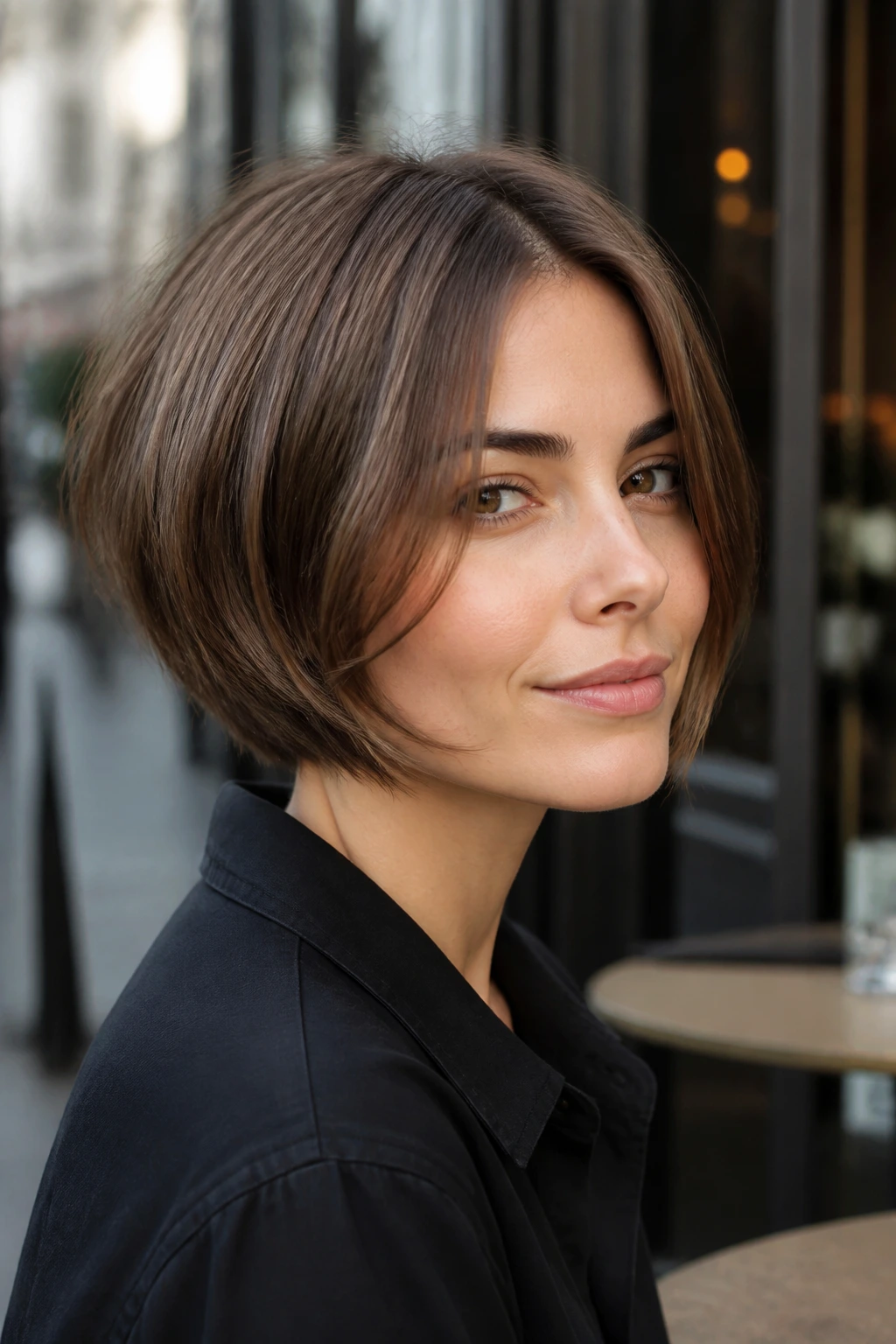
A modern pageboy is not the old helmet cut people remember from vintage photos. The good version is softer, shorter at the back, and curved around the face with enough layering to keep fine hair from looking heavy.
Square faces like this cut when the perimeter is broken slightly at the front. Keep the front pieces around cheekbone level, not exactly at the jaw, and let the layers soften the curve. That keeps the shape polished without boxing in the face.
I like this for someone who wants a short haircut that still feels a little classic. It can be sleek or slightly bent under, depending on your mood. Fine hair tends to behave well with this outline because the shape is built into the cut, not dependent on thickness.
18. Textured Crop With Cropped Nape
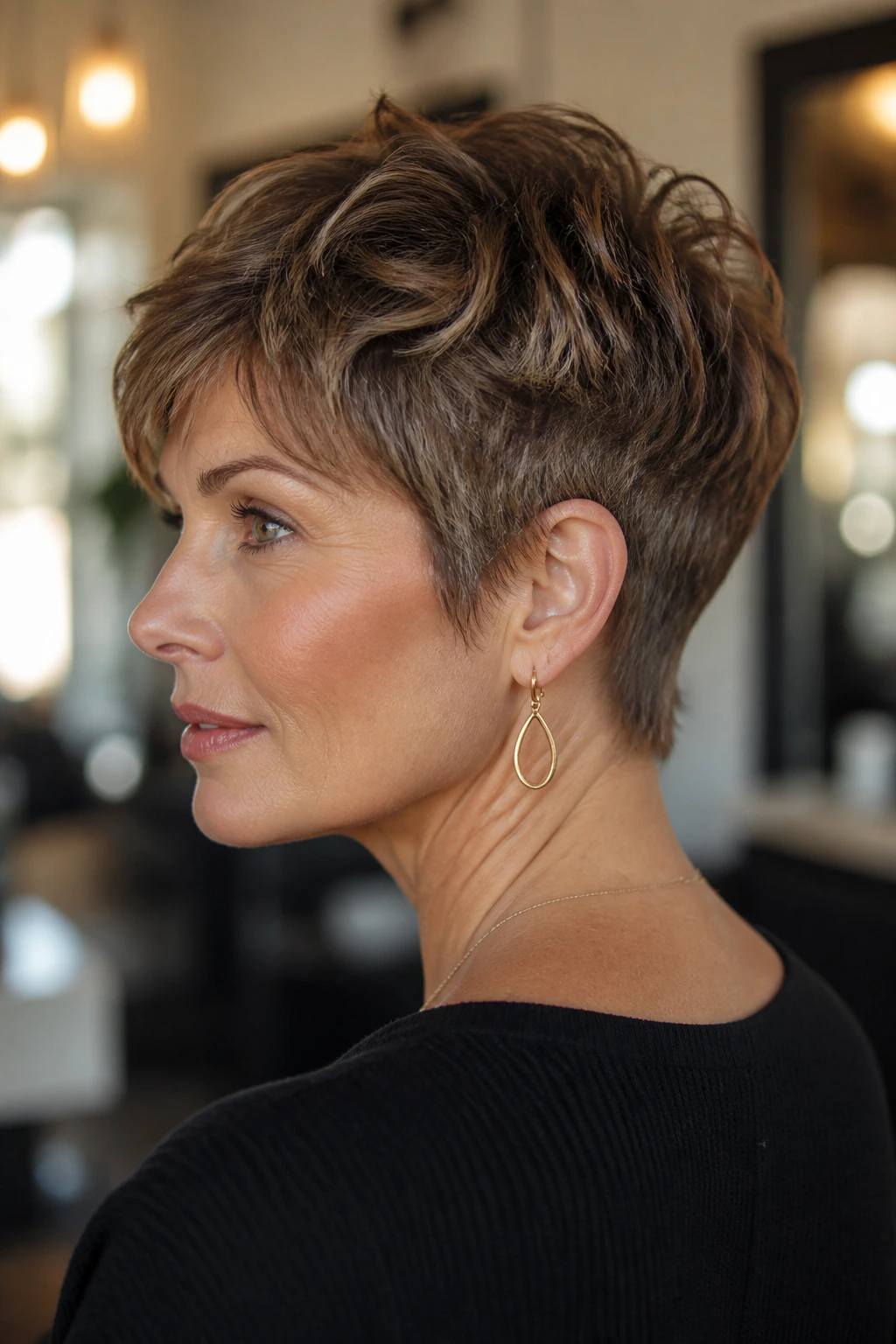
A textured crop with a cropped nape gives you two different moods in one haircut: neat in back, piecey on top. That contrast is useful on fine hair because it lets the top look fuller while the neckline stays clean and controlled.
The square-face benefit comes from the broken texture around the front and temples. If the top is a little loose and the sides aren’t too blunt, the face doesn’t feel trapped by the haircut. It reads sharper, but not harsh. That distinction matters.
This is a very practical cut if you wear collars, hoodies, or jackets that rub the nape. The cropped back stays tidy longer than a longer bob. Use a little matte product at the crown and the tips, not the roots, so the lift stays soft instead of stiff.
19. Wavy Italian Bob

If your fine hair has a natural wave, the wavy Italian bob can be a lovely place to let it do its thing. The shape usually sits around the chin or just below it, with enough fullness in the middle that the hair doesn’t go stringy at the ends.
Square faces get a break here because the wave interrupts the strong edges of the jaw and forehead. The cut should not be over-layered; that’s the trap. Fine hair with too many layers turns frizzy and thin at once. A heavier, slightly undone outline actually makes more sense.
I’d use this cut if you like a softer finish and don’t mind a little bend in the morning. A diffuser or a quick twist with a brush can bring out the shape. It looks best when the wave is allowed to move instead of being flattened into submission.
20. Airy Mushroom Bob
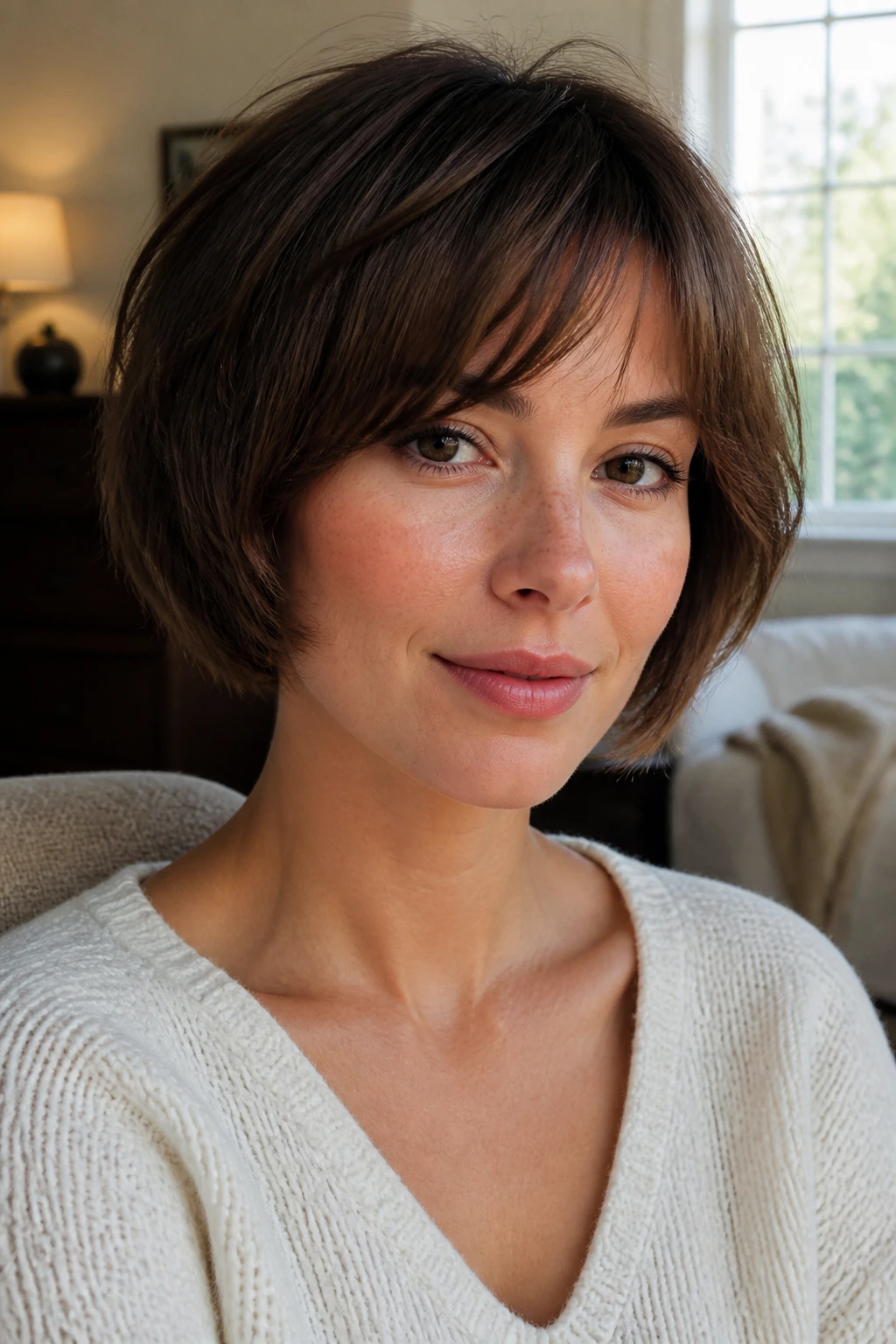
A mushroom bob is risky on some faces. On a square face with fine hair, it can work if the shape is kept airy and broken rather than round and solid. That means softer fringe pieces, lighter sides, and ends that don’t sit in one perfect circle.
The reason it can work is that fine hair often needs an outline more than it needs weight. A carefully edited mushroom bob gives that outline. It can also make the hair look fuller around the head, which is useful if your strands are fine but numerous.
The warning is simple: don’t let it become too symmetric. A tiny off-center part or a few longer face-framing pieces keep the style from looking like a helmet. If the shape feels too neat, it probably is.
21. Collarbone Bob With Broken Ends
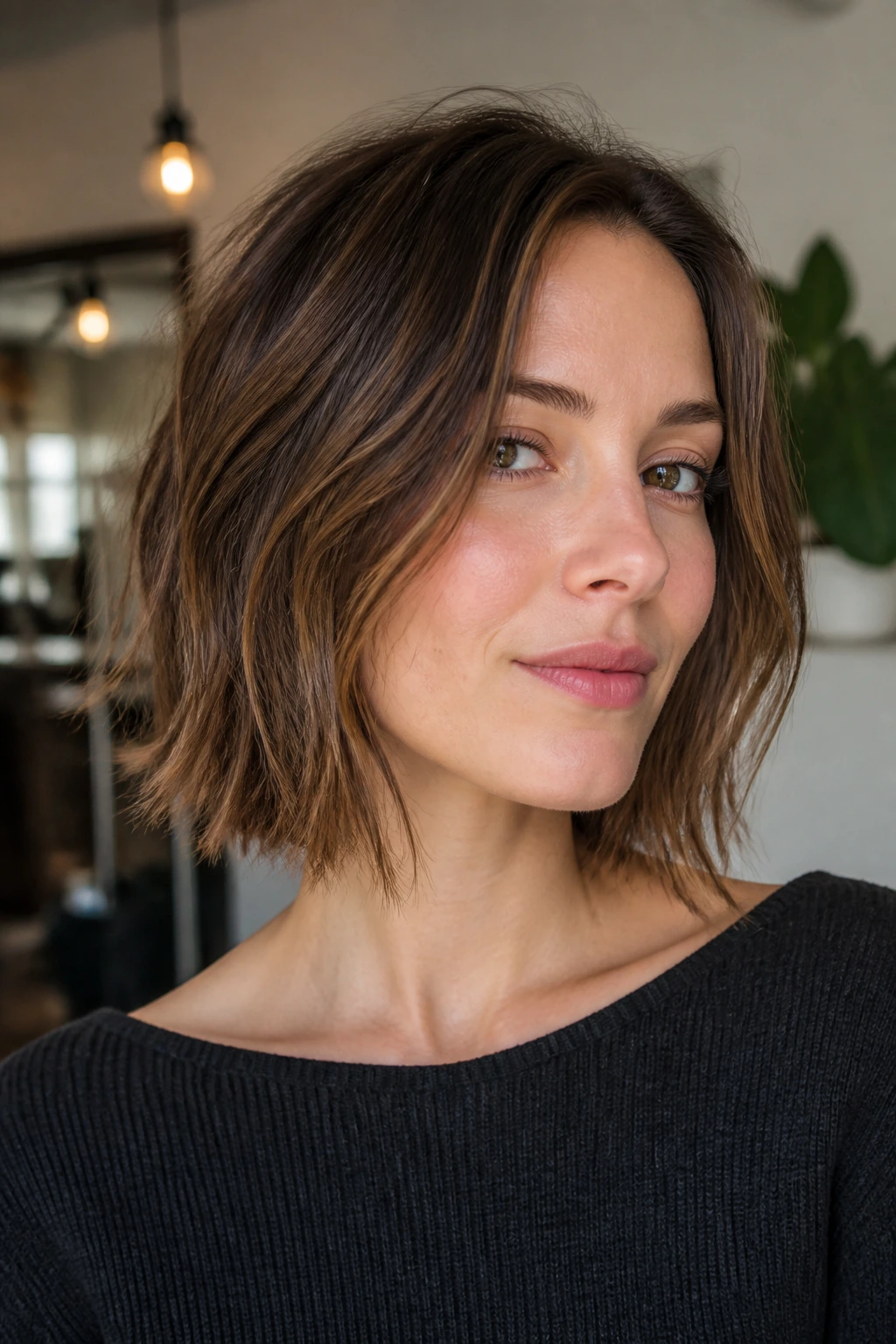
This is the grow-out option that still counts as short enough to matter. A collarbone bob with broken ends gives fine hair extra visual length, which can make it look thicker simply because the strands have more room to fall.
Square faces benefit from the longer front pieces, especially when they skim the cheekbones. That softens the width at the jaw and gives the eye a downward path. The broken ends are the trick. A blunt collarbone bob can be too clean; a softly shattered edge keeps the hair from looking heavy.
If you’re nervous about going short, this is the safest entry point. It grows out well, it can be tucked, waved, or blown straight, and it gives you a lot of styling room. Some days that matters more than drama.
22. Soft Undercut Pixie
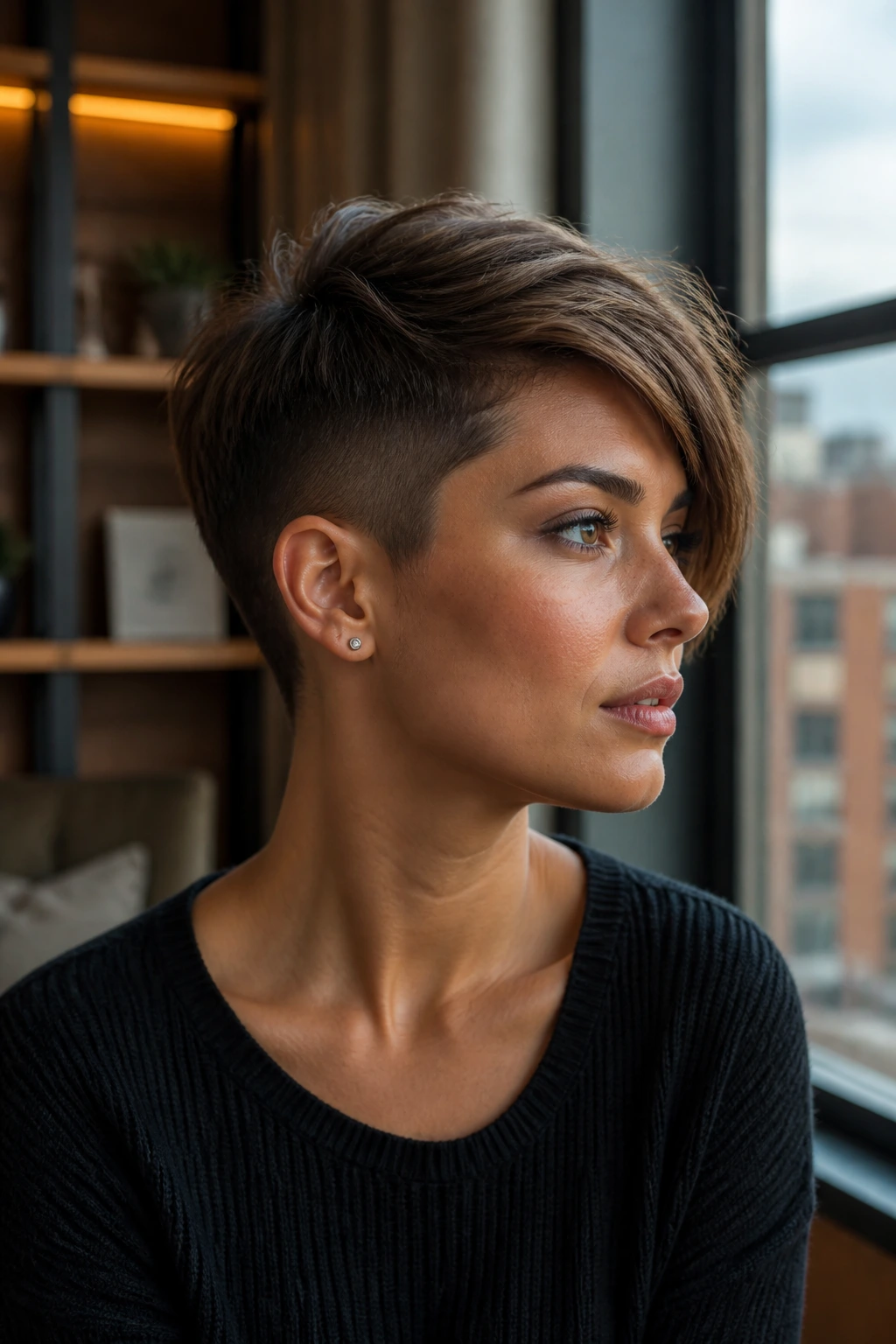
A soft undercut pixie is for the person who likes short hair with a little attitude. The undercut removes bulk underneath, which helps fine hair sit closer to the head without puffing at the nape. The longer top then sweeps up and over, giving the face that diagonal line square faces love.
This cut is especially useful if your hair tends to stick out at the sides or if your crown collapses while the back gets fluffy. The hidden undercut solves both problems without making the whole cut look shaved down. The top still feels feminine, sharp, or whatever word you want to use for a shape that knows what it’s doing.
You do need maintenance. This one looks best when the sides are cleaned up before they start to blur. Four to six weeks is the sweet spot.
Why These Short Haircuts Work for Fine Hair and Square Faces
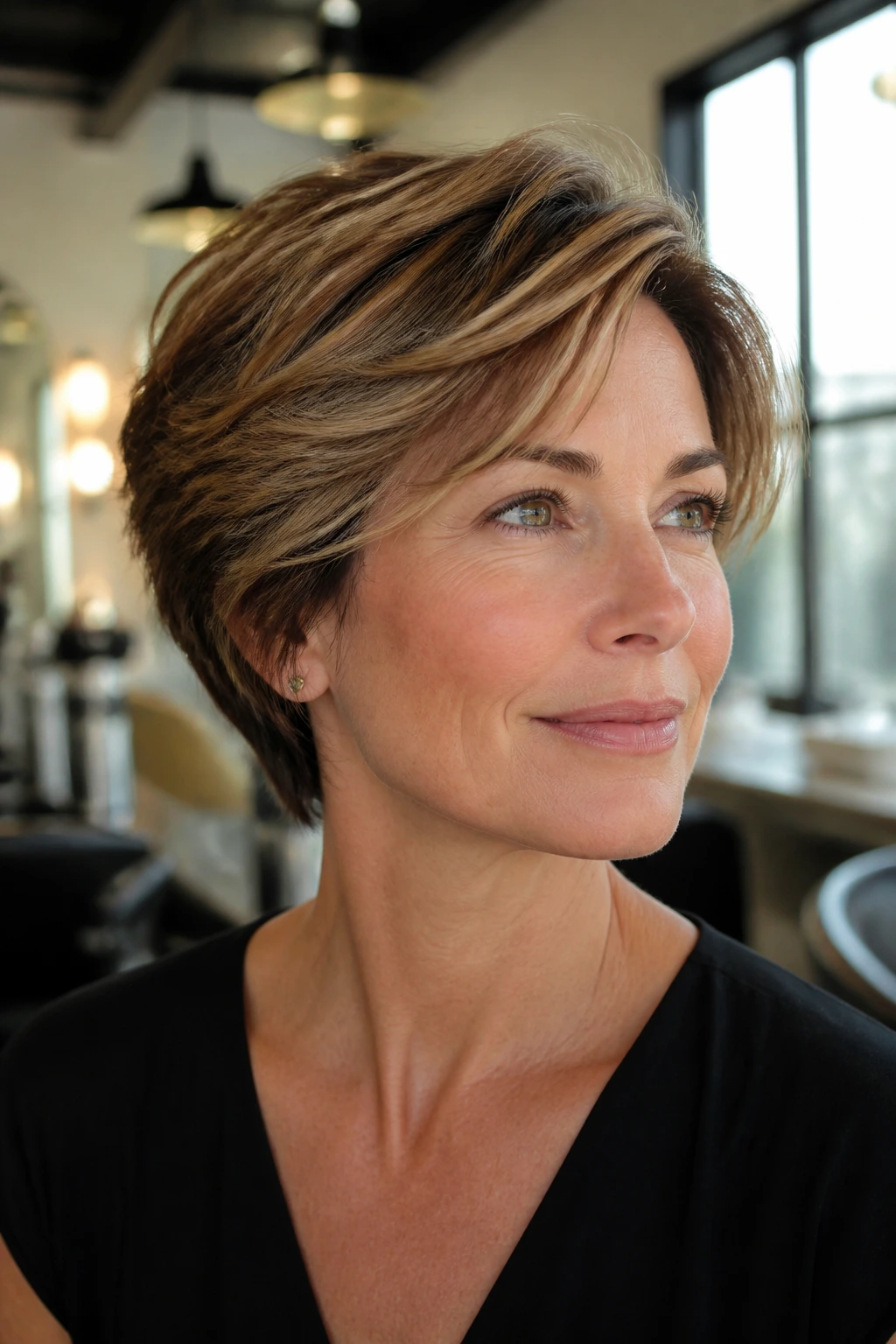
Fine hair and square faces ask for the same thing in different languages: shape that moves. Fine strands need structure so they don’t sink into the scalp by noon. Square faces need softness at the jaw and a little distraction at the forehead so the whole outline feels less rigid.
That’s why these cuts keep showing up with side parts, crown lift, broken ends, or a little extra length in the front. They are not trying to erase the face. They’re trying to guide it. A short cut that ends exactly at the jaw and sits there in a straight line usually does the least for a square face. A cut that lands slightly above or below that point, or bends away from it, usually does more with less effort.
There’s also the density problem. Fine hair can look thinner when it is too long because the weight pulls everything down. Shorter shapes fix that, but only if the perimeter stays clean. Over-layering is where a lot of people get burned. You lose the edge, the hair goes wispy, and suddenly the cut looks smaller than the face instead of balancing it.
What to Tell Your Stylist Before the First Snip
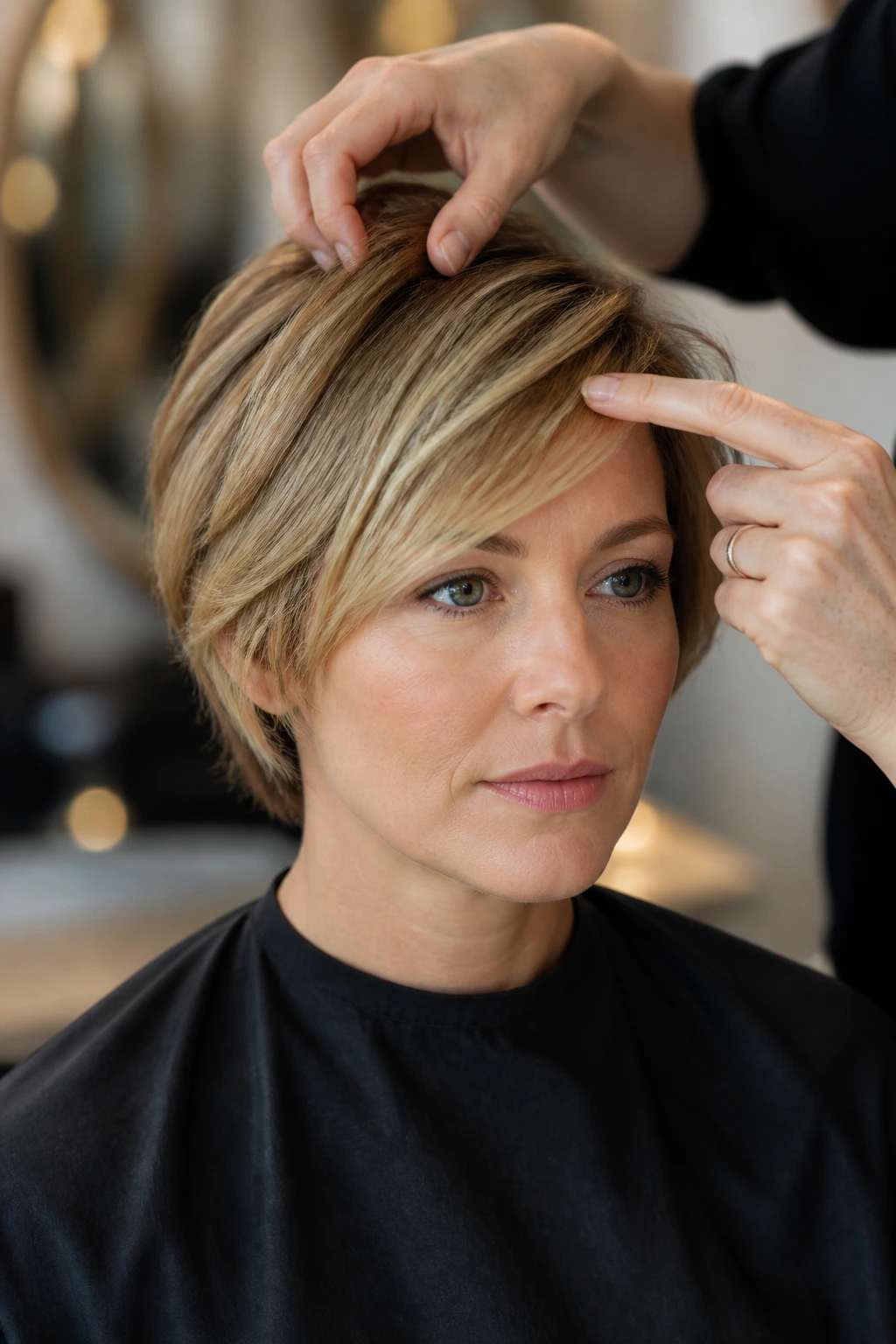
Bring a reference photo, then point to the two places that matter most: where you want the hair to hit in front, and how much lift you want at the crown. Those two decisions shape almost every cut on this list. A stylist can work with that. “I want a bob” is far less useful than “I want the front to skim the cheekbones and the top to stay airy.”
Length landmark: Tell them whether you want the shortest point to sit above the jaw, at the jaw, or just below it. That one detail changes how square the face reads.
Parting plan: Say where you naturally part your hair now. If you force a middle part on a cowlick-heavy head, you’ll spend your mornings fighting the mirror.
Texture request: Ask for point cutting, soft layering, or internal shaping. Those keep fine hair from looking chopped to bits. Heavy thinning shears should be used carefully, if at all.
Growth plan: Be honest about how often you’ll trim. A pixie that needs cleaning up every month is a different deal from a bob that can go eight weeks.
Essential Tools for Styling Fine Short Hair
-
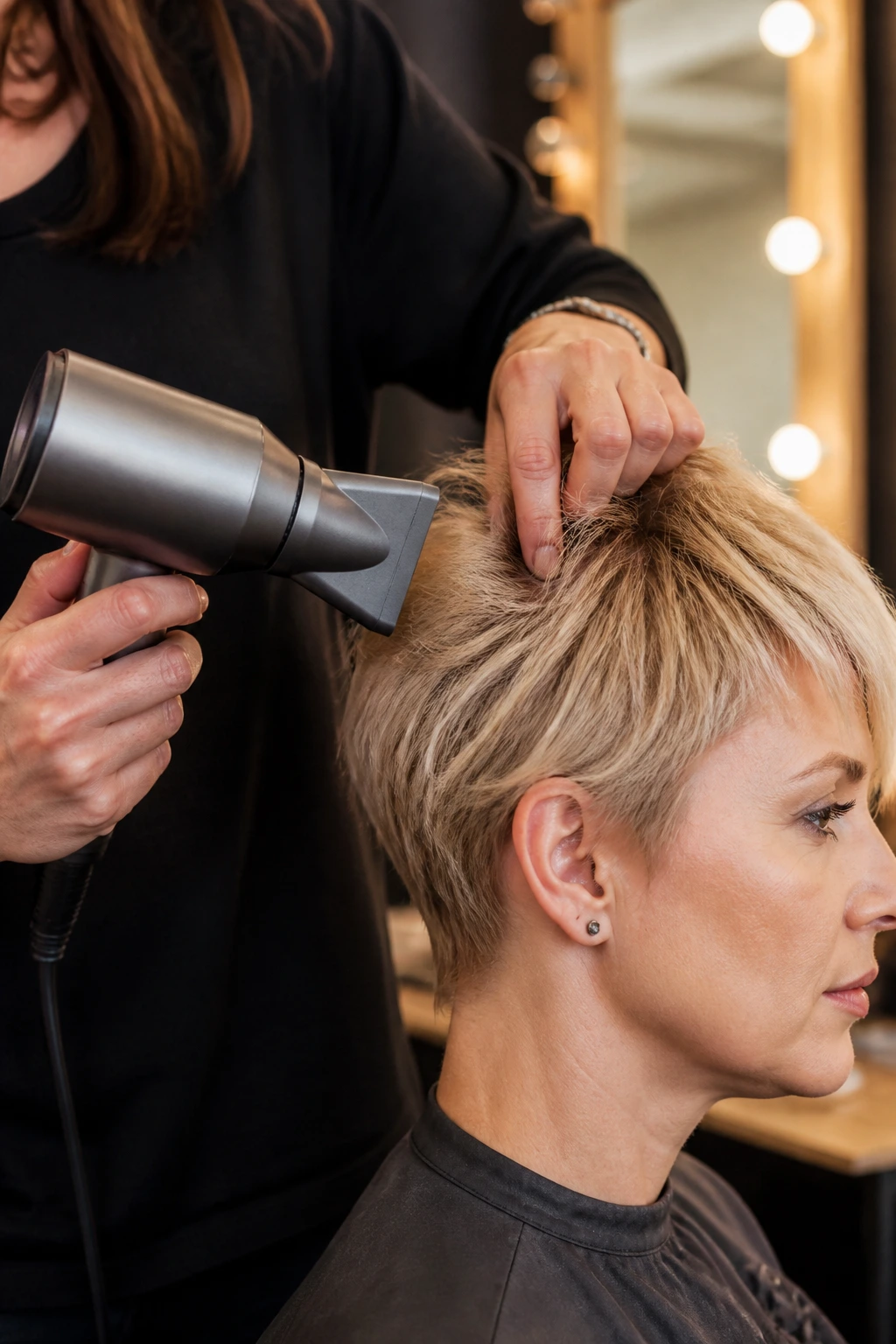
Blow dryer with a narrow nozzle: Directs heat at the roots so the cut gets lift instead of puff.
-
1-inch to 1¼-inch round brush: Small enough to bend short sections without making the ends curl into a ring.
-
Tail comb: Useful for making a clean part and lifting the roots in tiny sections.
-
Root-lifting mousse: Gives fine hair support before drying; a walnut-size amount is usually enough.
-
Light texturizing spray: Adds separation to pixies, crops, and shaggy bobs without weighing the hair down.
-
Dry shampoo: Keeps the crown from going limp and helps day-two hair hold its shape.
-
Matte paste or cream wax: Best for pixies and crops when you want piecey definition, not shine.
-
Small flat iron: Handy for bending just the front pieces or taming a stubborn cowlick.
-
Duckbill clips: Good for setting the crown while it cools after blow-drying.
-
Satin pillowcase: Reduces friction overnight, which matters when the cut is short enough to show every bend and kink.
How to Style These Cuts So They Frame the Face Correctly
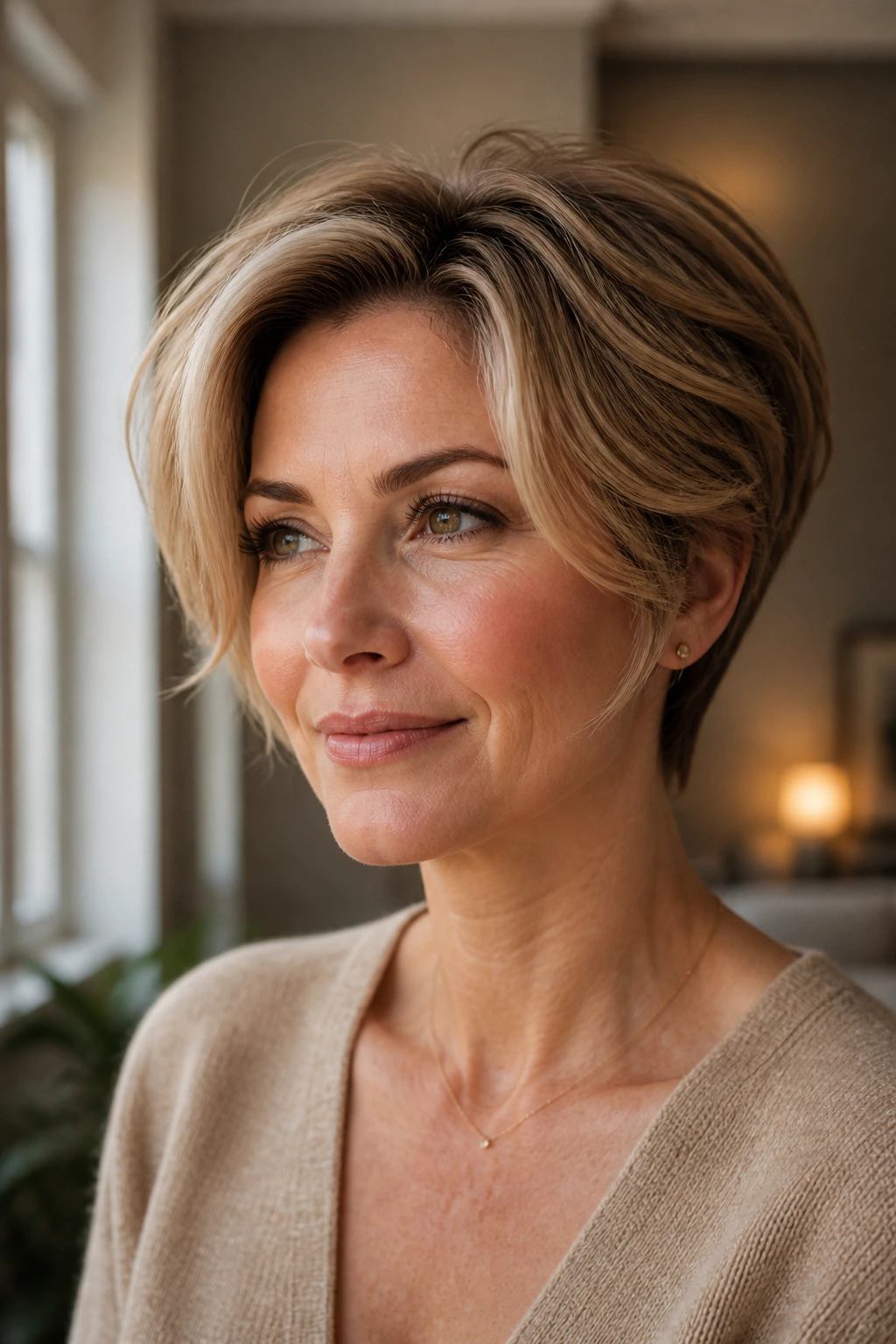
Short hair on fine strands usually looks best when you dry the roots first, then worry about the ends. That order matters. If the roots collapse, nothing you do later can fully rescue the shape. Start with a little mousse at the scalp, then rough-dry until the hair is about 80 percent dry. After that, switch to a brush only where the shape needs help.
Lift: Aim the dryer at the crown and flip the part slightly opposite of how you’ll wear it. That tiny trick gives the roots memory.
Bend: Use the round brush or a flat iron to curve the front pieces away from the face, then back in. You want softness, not a full curl.
Separation: Stop brushing once the hair has shape. Fine hair looks fuller when you can still see a few defined pieces.
Finish: Use texture spray or a grain of wax on the midlengths and ends, not all over the roots. Too much product at the scalp makes the hair look greasy faster than you’d like.
Small Styling Moves That Make Fine Hair Look Fuller
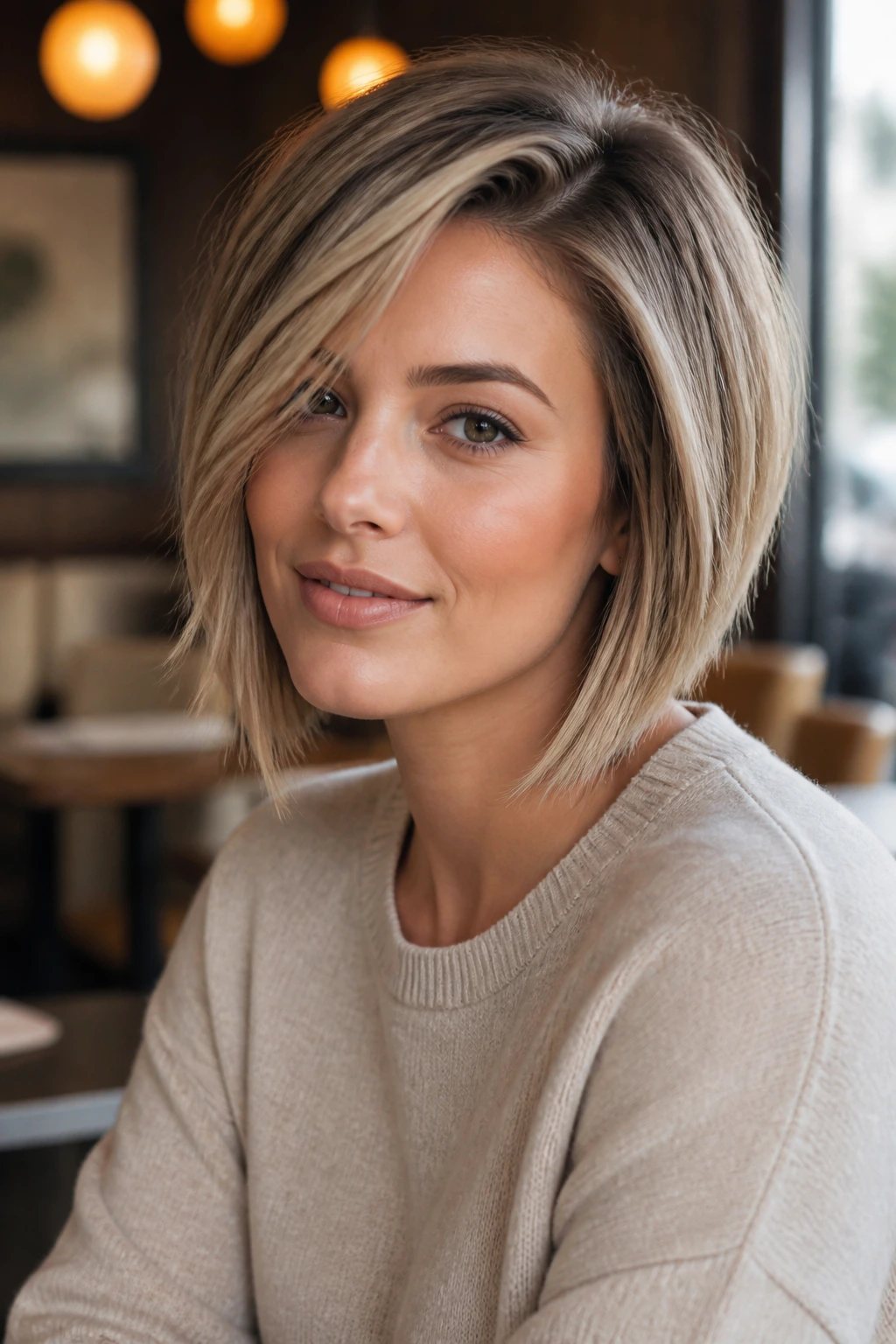
The fastest upgrade is a side part that sits a little off center. Even half an inch matters. It creates a line that feels less flat and gives fine hair a place to lift from.
Another smart move is keeping the front pieces slightly longer than the rest of the cut. On a square face, those face-framing pieces soften the jaw and cheekbones. On fine hair, they also make the haircut look more deliberate because the front does the visual work.
Color placement can help too, but only when it’s subtle. A few lighter pieces around the face or crown make short layers easier to see. Heavy stripes or chunky color blocks do the opposite. They make the cut look louder, not fuller.
If you wear glasses, a crop or bob with softer temples tends to sit better than a hard, blunt shape. The frame, the jaw, and the haircut all compete for attention if everything is sharp at once. That’s a lot of geometry for one face.
Keeping the Cut Sharp Between Trims
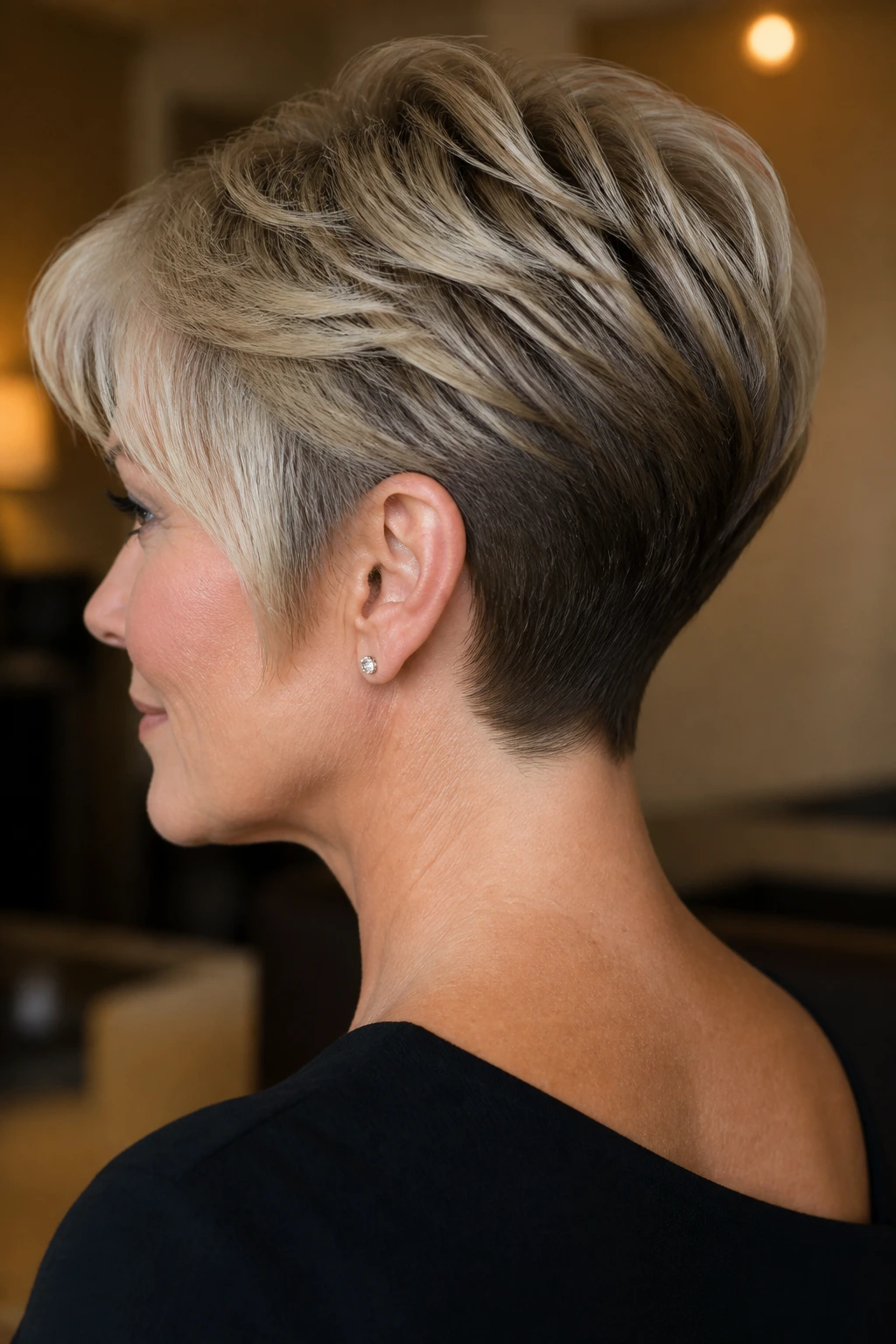
Pixies need the most frequent clean-up. Four to five weeks is usually the point where the nape starts to blur and the sideburns lose their line. Bixies and short crops can often go a little longer, around five to seven weeks, before they stop looking intentional. Bobs usually buy you six to eight weeks, sometimes a touch more if the shape is forgiving.
At home, the trick is not to overload fine hair on day two or day three. Dry shampoo at the roots is useful, but use it with a light hand and let it sit for a minute before brushing through. If you spray too close, you get white patches and flat roots in the same breath. Not ideal.
If the front starts falling into your eyes, wet just the fringe and the crown, then re-dry those sections with a brush. You do not need to wash the whole head every time the shape softens. That habit strips fine hair fast and makes the ends feel even thinner.
A satin pillowcase helps more than people expect. So does clipping the front loosely if you want to preserve a bend overnight.
Variations and Alternatives for Different Hair Textures

The Ultra-Fine Version: Choose the soft side-part pixie, the blunt-but-bent bob, or the stacked bob with a little crown support. These shapes keep the edge fuller and avoid over-layering, which can make ultra-fine hair disappear.
The Wavy Version: The French bob, shaggy mini cut, and wavy Italian bob love a natural bend. Ask for enough length to let the wave show, then keep the layers soft so the hair does not explode into frizz.
The Straight-and-Sleek Version: The A-line bob, side-swept blunt bob, and layered pageboy give straight hair a clean line. They rely on shape rather than texture, which is a good deal when your hair wants to lie flat anyway.
The Low-Styling Version: Pixies with long sideburns and soft undercut pixies are the least fussy. They need a bit of product, sure, but they don’t demand a round brush every morning.
The Grow-Out Version: Collarbone bobs with broken ends are the easiest if you want to start short without feeling trapped. They can move from bob to lob without looking awkward in the middle.
Common Mistakes That Make the Face Look Wider or the Hair Look Thinner
-
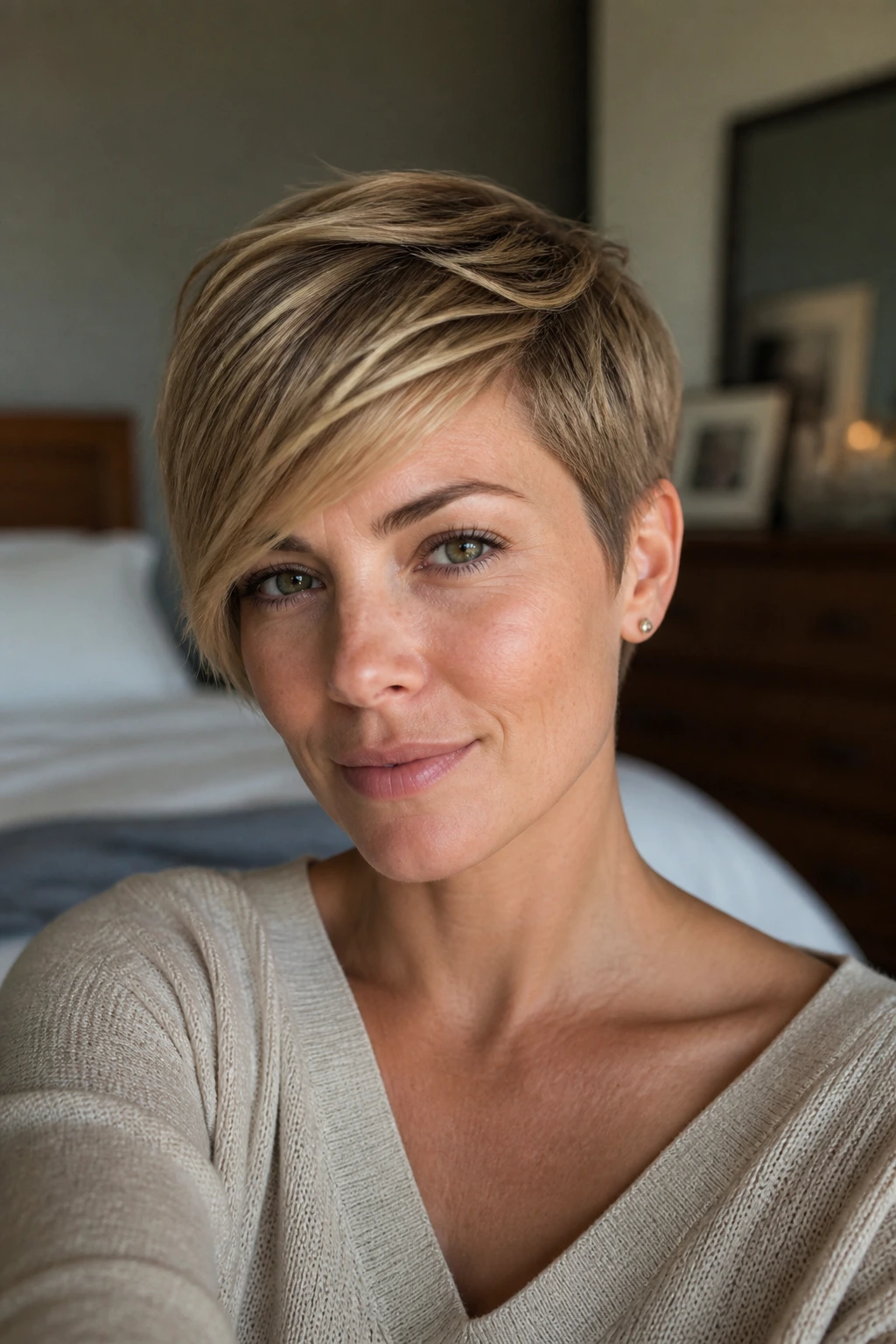
Cutting the line exactly at the jaw: That hard stop can make a square face look broader. Shift the length a bit above or below the jaw, or break it up with angle and texture.
-
Over-thinning the ends: Fine hair already lacks density. If the stylist removes too much weight with thinning shears, the ends look stringy and the cut loses its shape fast.
-
Choosing a dead-center part with no lift: A center part can be lovely, but on a square face it needs crown height or a soft fringe. Flat roots plus a center part tend to widen the face visually.
-
Using heavy cream or oil everywhere: Fine hair drinks product fast, and too much of it makes the cut limp. Keep richer products away from the roots and use them only on the very ends if needed.
-
Letting the cut grow too long between trims: Once the silhouette collapses, the face shape starts to dominate again. The line loses its softness and the hair stops looking intentional.
Frequently Asked Questions About Short Haircuts for Fine Hair and Square Faces
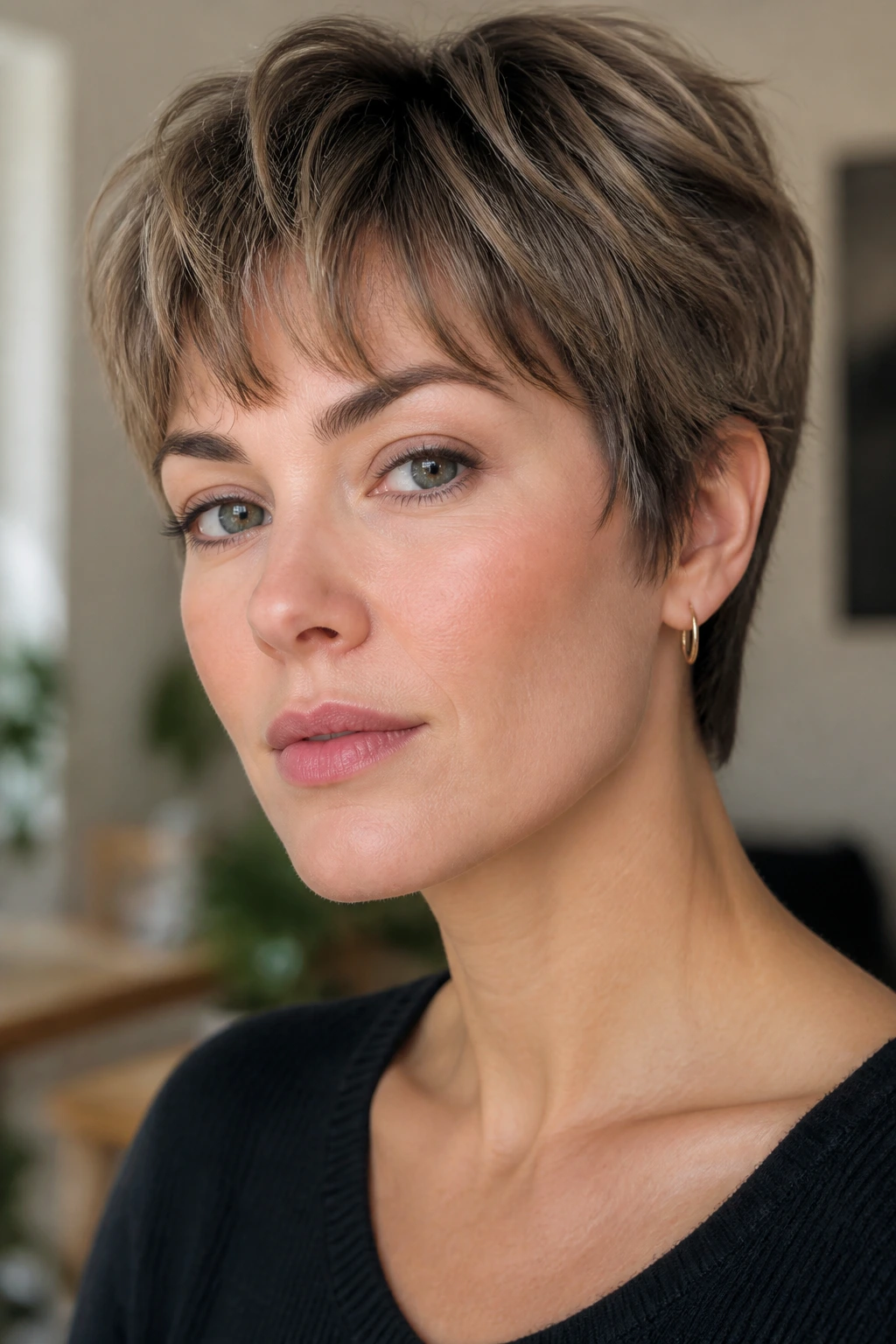
What short haircut is most flattering for fine hair and a square face?
A soft side-part pixie, a French bob with bent ends, or an A-line bob usually gives the best balance. Each one adds either lift or diagonal movement, which is what square faces need most.
Should square faces avoid blunt bobs?
Not always. A blunt bob can work on fine hair because the edge looks denser, but it needs a side part, a slight bend, or a length that doesn’t stop exactly at the jaw.
Are bangs a good idea?
Yes, if they’re wispy, side-swept, or curtain-style. Heavy, straight-across bangs can make a square face feel broader and make fine hair look flatter at the front.
Can I wear a middle part with a square face?
You can, but the cut needs enough crown lift and soft face-framing pieces to keep the face from reading wide. If the hair is very flat, an off-center part usually looks better.
Is layering good for fine hair?
Light internal layering is good. Too much layering at the ends is not. The goal is to create movement while keeping enough edge weight that the cut still looks full.
How often should I get it trimmed?
Pixies usually need cleanup every 4 to 5 weeks. Bobs and bixies can often go 6 to 8 weeks, depending on how fast your hair grows and how sharp you want the shape to stay.
What if my hair is pin-straight and refuses to hold volume?
Choose a cut with built-in shape, like an A-line bob, stacked bob, or soft undercut pixie. Then use root-lifting mousse and dry the roots first; that gives straight hair a fighting chance.
What if the cut makes my face look wider than I expected?
Move the part off center, soften the front edges, and avoid a hard jaw-length stop. Often the fix is only a half-inch change in length or a little more bend at the front.
The Cuts That Keep Their Shape
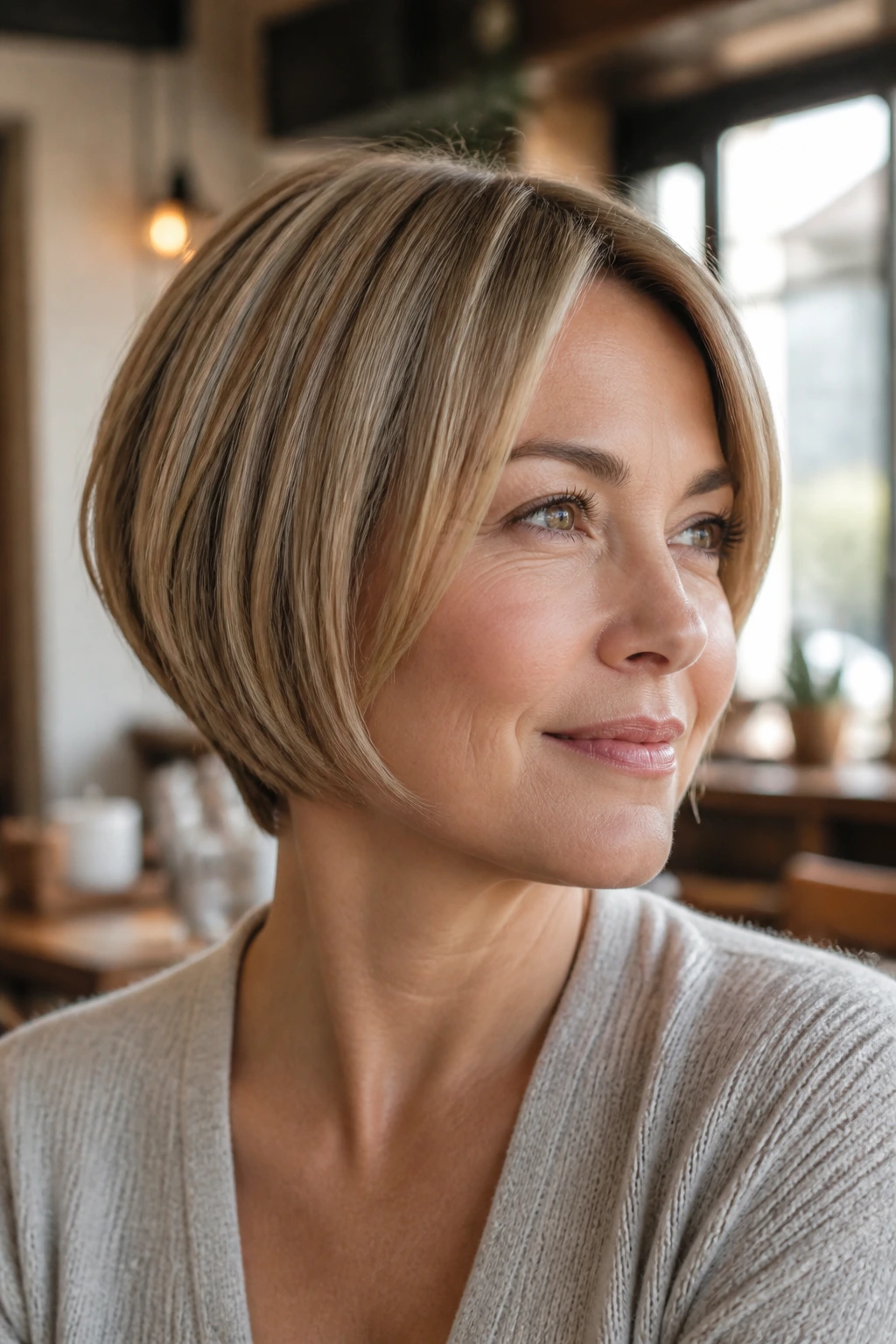
Square faces do not need to be hidden, and fine hair does not need to be overcomplicated. The best short cuts respect both truths. They add lift where the hair collapses, softness where the jaw hardens, and enough edge weight that the whole thing still looks like hair, not an idea.
What I like most about these cuts is that they do not ask for drama every morning. They ask for the right shape, a little product, and a stylist who knows when to stop cutting. That’s a better deal than chasing volume with a heavy hand and hoping for the best.
Bring one of these shapes to the salon, ask for the details that matter — length, part, fringe, crown — and the rest gets easier. The right short haircut can make fine hair look considered instead of fragile. That’s the sweet spot worth aiming for.