



A good set of wavy haircuts for medium hair and round faces changes the way your cheekbones read from across the room. Put the shortest layer too high and the whole shape blooms sideways; let the length fall to the collarbone and the eye starts traveling down instead of across.
That difference is not small. Medium waves need a haircut that leaves space around the cheeks, gives the crown a little lift, and lets the ends do the talking. I’m partial to cuts that bend softly under the chin or just below it, because they keep the hair moving without building a halo of width right where a round face is already fullest.
The best versions are not fussy. A side part, a curtain fringe that starts lower than you think, or a blunt edge that sits below the collarbone can all work if the internal shape is right. And if you wear your hair natural most days, the cut matters even more — a well-placed layer can do more than a barrel of product.
The 20 options below take different routes to the same goal: soften the sides, stretch the face, and keep the wave pattern from swelling outward. Some lean polished. Some lean shaggy. A few are very quiet, which is usually the smartest move.
Why These Cuts Keep the Shape Balanced
-
They use the collarbone as a visual stop line: when the ends land below the cheek area, the eye drops instead of sitting on the widest part of the face.
-
They avoid the “puffed at the ears” problem: the better versions remove weight inside the haircut, not from the outline, so medium waves move instead of ballooning.
-
They still work when air-dried: a round face doesn’t need a hard, stiff style; it needs a shape that keeps its lines even when you scrunch in mousse and walk away.
-
They leave room for styling changes: a deep side part, a center part, or a tuck-behind-the-ear moment all look different on the same cut, which gives you more than one way to wear it.
-
They grow out cleanly: long layers and softer fringes buy you time, and I’ll always take a haircut that still behaves six weeks later.
What a Round Face Needs From Medium Wavy Haircuts
A round face usually has a fuller cheek area, a soft jawline, and not much visible angle from cheek to chin. That does not mean you need to “hide” anything. It means the haircut should create a longer line where the face naturally reads widest.
Put the Bend Lower
The smartest layers start at or below the cheekbone. If the first wave sits right at the cheeks, the eye stops there. Drop that line an inch lower, near the mouth or collarbone, and the whole look feels longer.
Keep Volume Out of the Sides
Medium waves can get wide fast. A good cut leaves the crown a little lift and lets the movement fall forward or downward, not outward. That’s the difference between soft and puffy. Not subtle on camera, either.
Let the Front Do the Framing
Face-framing pieces should act like parentheses, not brackets. Long curtain bangs, side pieces, and tapered front lengths all work because they create a vertical path. Short, blunt pieces at chin level tend to do the opposite.
1. The Collarbone Lob With Soft Waves
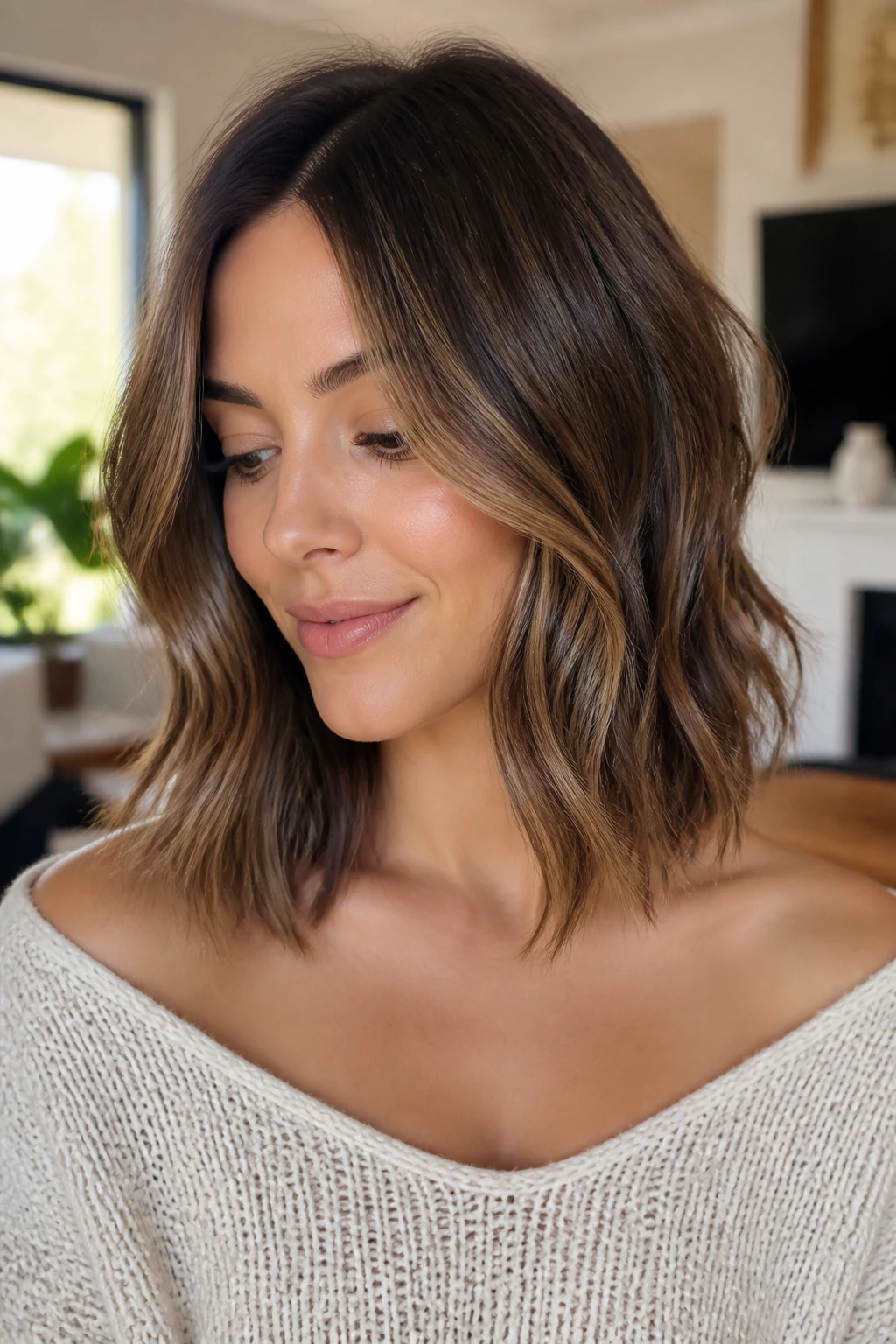
A collarbone lob is the safest bet on this list, and I mean that in the best possible way. It sits low enough to stretch the face, but not so long that the wave loses shape and hangs flat. On a round face, that extra inch or two below the cheeks matters a lot.
Why It Flatters
The length lands below the widest point of the face, which keeps the overall shape from widening at the cheeks. Ask for the perimeter to hit right at or just below the collarbone, with long, light layers that begin under the chin. That keeps the movement soft instead of floaty.
Quick fit notes:
- Best for medium density hair
- Works with a center part or a slight off-center part
- Looks good with loose bends, not tight curls
- Needs only a small amount of texturizing at the ends
Pro tip: keep the front pieces a touch longer than you think you need. A lob that kisses the collarbone when it’s straight will usually sit a little higher once the wave dries.
2. Long Curtain Bangs With Feathered Ends
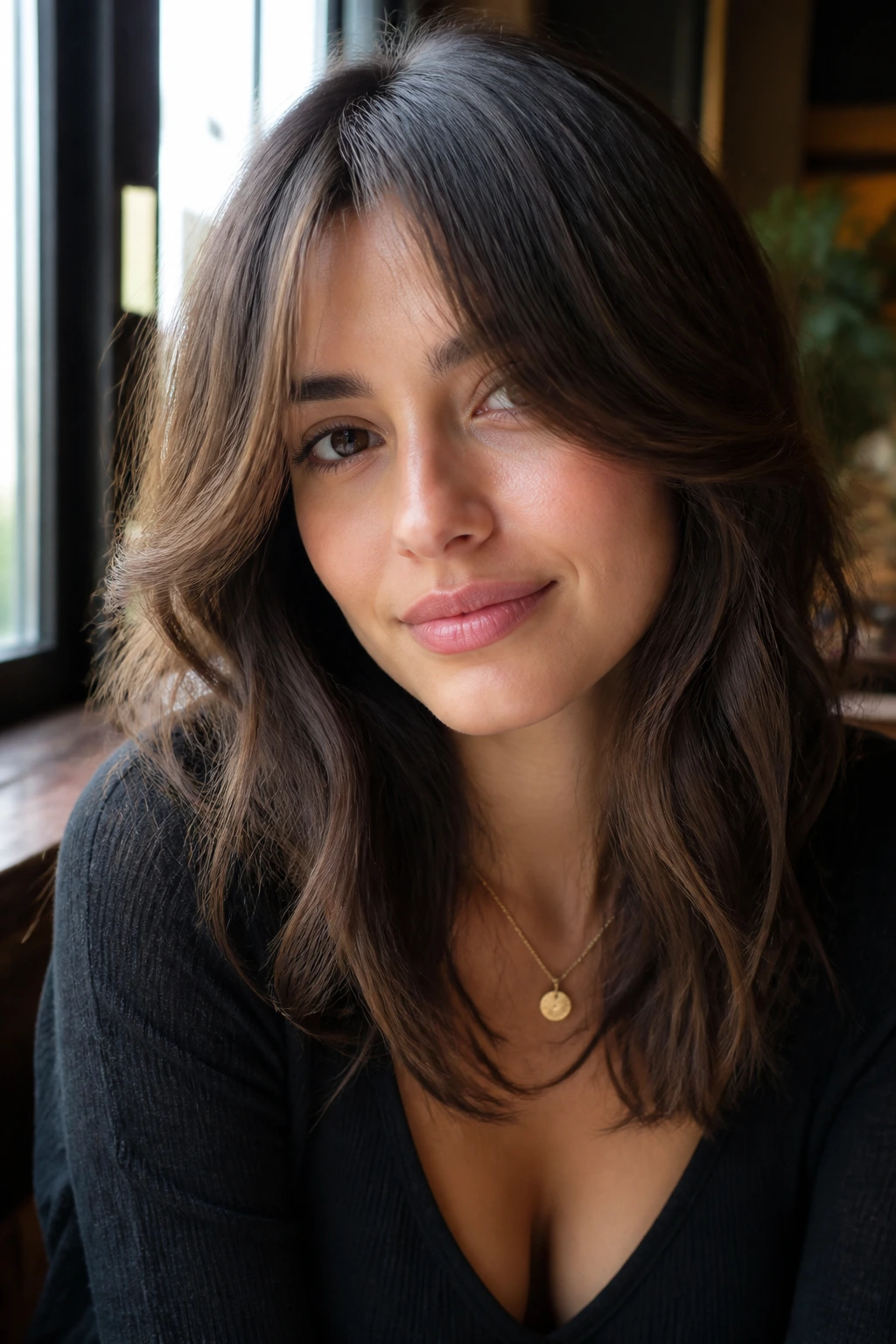
Curtain bangs are one of the cleanest fixes for a round face, but only when they stay long enough to open the face instead of closing it in. The sweet spot is usually somewhere between the brow and the cheekbone, blending into lengths that hit below the chin.
If you’ve ever seen curtain bangs that made a face look wider, the issue was almost always the starting point. Too short, too blunt, too much bulk at the center. When the fringe is feathered and the ends are soft, it slices the face into pleasing vertical sections. The eye moves down, not across.
A lot of stylists rush this shape. Don’t let them. Ask for the shortest bits to fall near the bridge of the nose or just above the cheekbone, then taper the sides longer. That gives the bangs room to swing away from the face instead of sitting on top of it.
3. The Deep Side-Part Lob With Root Lift
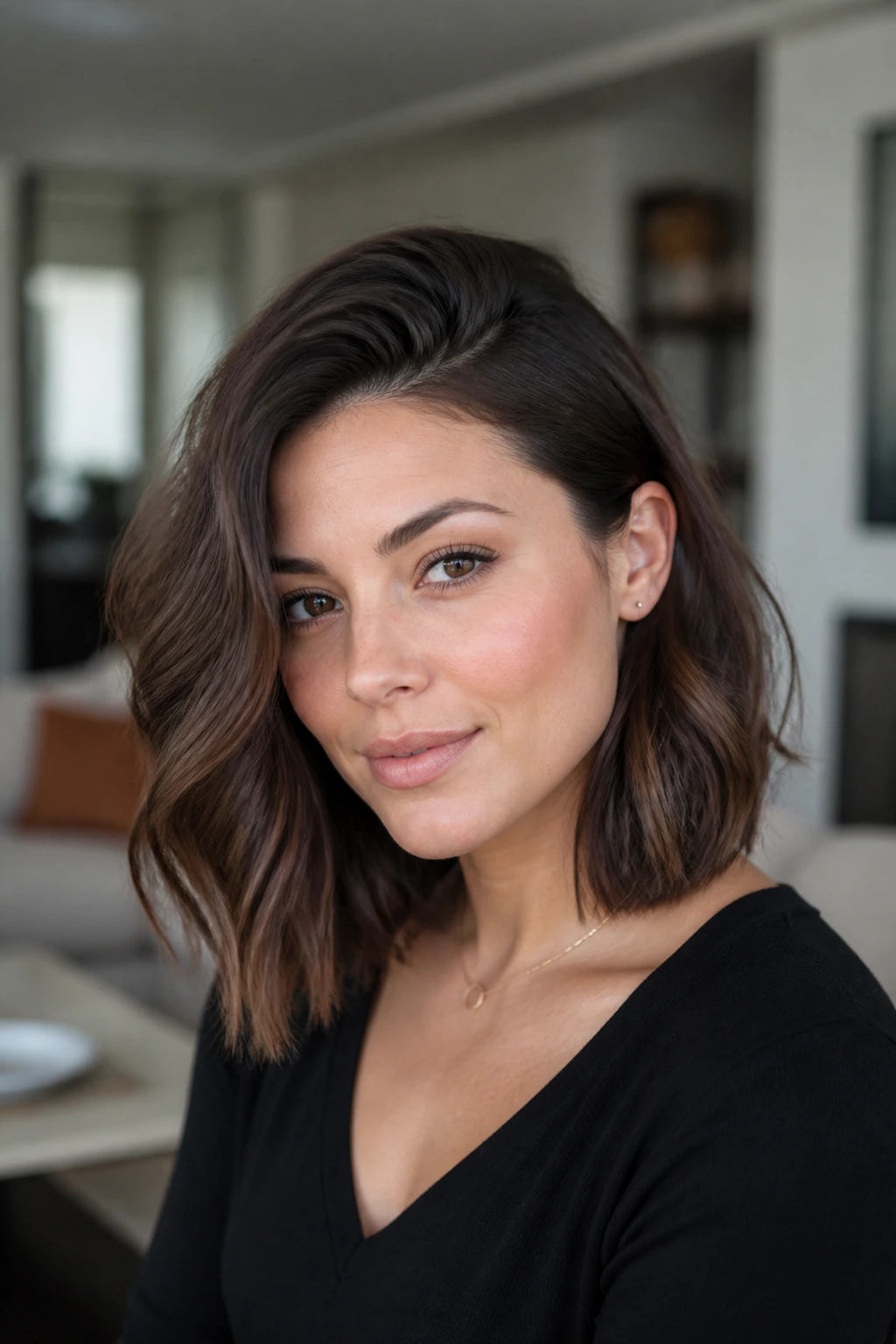
Want a haircut that takes width out of a round face without looking severe? A deep side-part lob does that job fast. The off-center line breaks symmetry, and symmetry is often what makes a round face feel wider than it is.
The trick is not just the part. It’s where the volume lives. Lift the roots at the crown and keep the side nearest the part sleek enough to tuck behind the ear. The other side can carry more wave and movement, which gives the face a diagonal line. Diagonal lines are your friend here.
How to Wear It
- Shift your part about 1.5 to 2 inches off center
- Blow-dry the roots up and away from the scalp
- Keep one side smoother and the other side fuller
- Use a loose bend, not a uniform curl
This cut works especially well if your hair is fine to medium and tends to lie flat around the temples. The side part gives you instant shape. No drama. Just a better line.
4. The Soft Shag With Cheekbone Layers
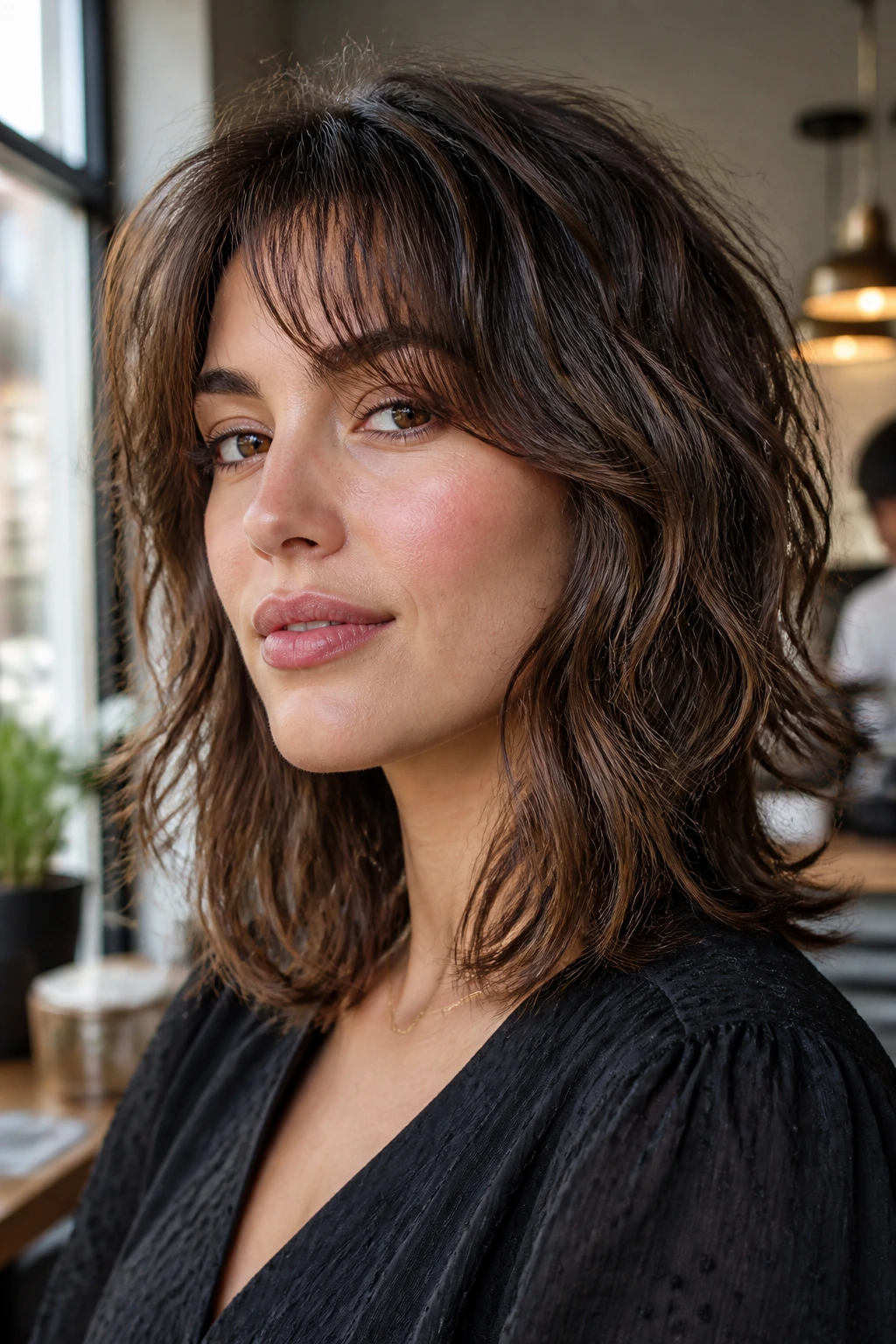
A shag can be magic on waves, but only if it’s softened for the face shape. I’m not talking about the chopped-up, heavy-at-the-sides version that can make a round face look broader. I mean the kind with airy crown texture, long side pieces, and enough length left at the bottom to keep the silhouette from ballooning.
The reason it works is simple: the shag gives movement where medium hair wants to sit still. When those layers start above the ear and fall longer toward the collarbone, the haircut feels light without turning into a triangle. That’s the part people get wrong. Too much bulk at the cheek, and the whole thing goes sideways.
Ask for point-cut ends and a gentle internal texture, not a razor job that frays the outline. On loose waves, this cut looks easy and a little lived-in. On denser waves, it keeps the shape from getting boxy.
5. The Butterfly Midi With Long Front Wings
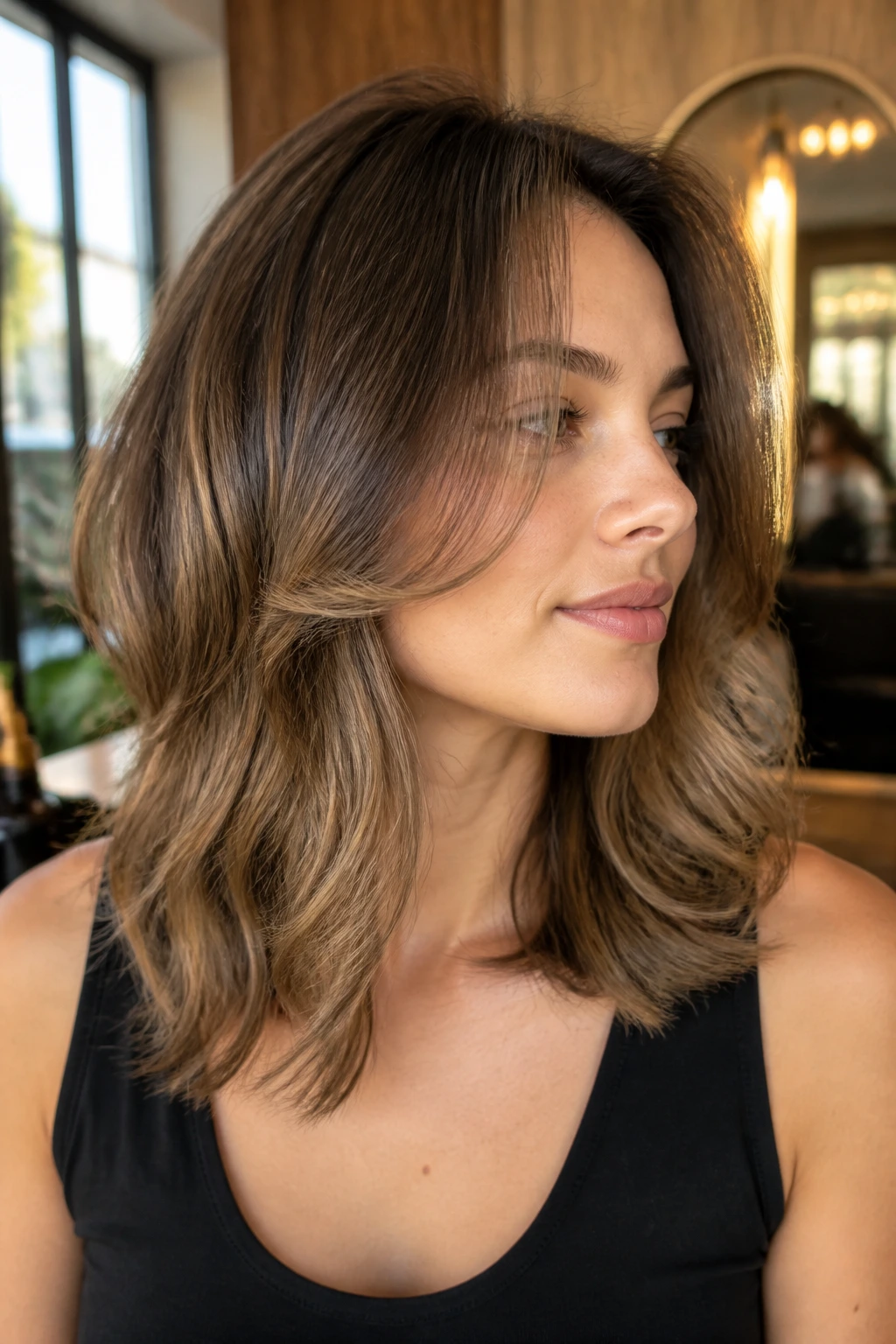
The butterfly cut can be a little too eager around a round face if the shortest layers start too high. The version that works keeps the front “wings” long enough to skim past the cheekbone and fall toward the collarbone, while the upper layers stay light and movable.
That gives you volume at the top without building width at the sides. Good trade. Very good trade. The whole cut depends on that balance. If the front pieces start at the lip line or just below it, the face opens nicely; if they start at the cheeks, the shape can feel crowded.
What to Ask For
- Long front layers that start near the lip or chin, not the cheek
- Soft crown lift, not stacked side volume
- A length that still clears the collarbone
- Blowout-friendly shaping if you like a round brush finish
This is one of my favorite options for medium hair that can hold a bend but still wants movement. It looks dressed up without needing a stiff style.
6. The Blunt Medium Cut With Hidden Internal Layers
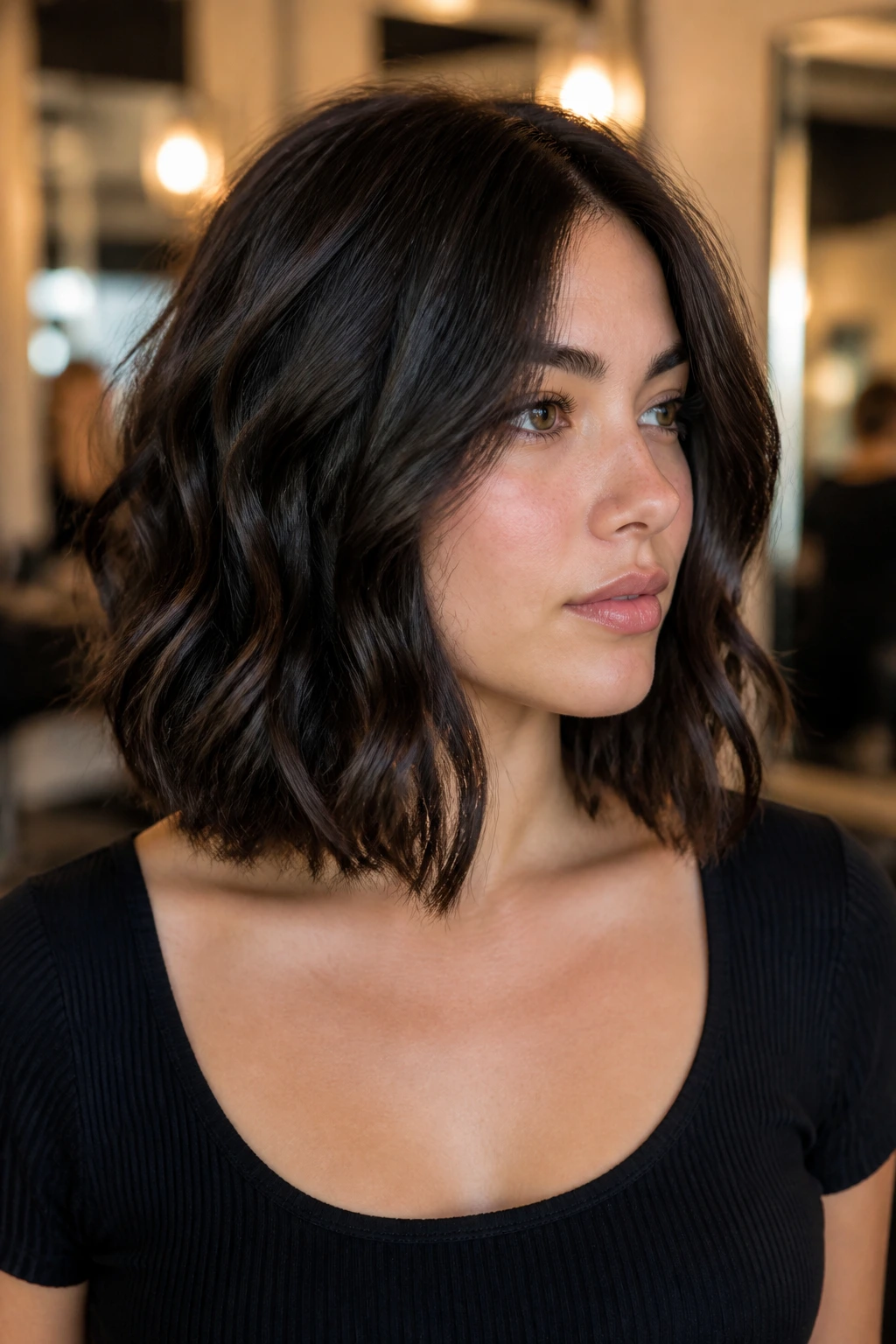
A blunt medium cut can flatter a round face more than people expect, especially if the hair is thick enough to carry a strong outline. The blunt perimeter gives the haircut a clean bottom line, and the hidden internal layers keep the wave from turning into a block.
That combination matters. Without the internal work, dense waves can spread outward at the sides and make the face look wider. Without the blunt edge, the cut can go wispy and lose all structure. This version lives in the middle, and that’s why it works.
Ask the stylist to preserve weight at the outer edge while removing bulk inside the shape. If your hair is medium to thick, this one can be a dream. If your hair is fine, too much internal cutting may make the ends look thin, so stay conservative.
7. The Wolf-Lite Cut With Soft Tapered Sides
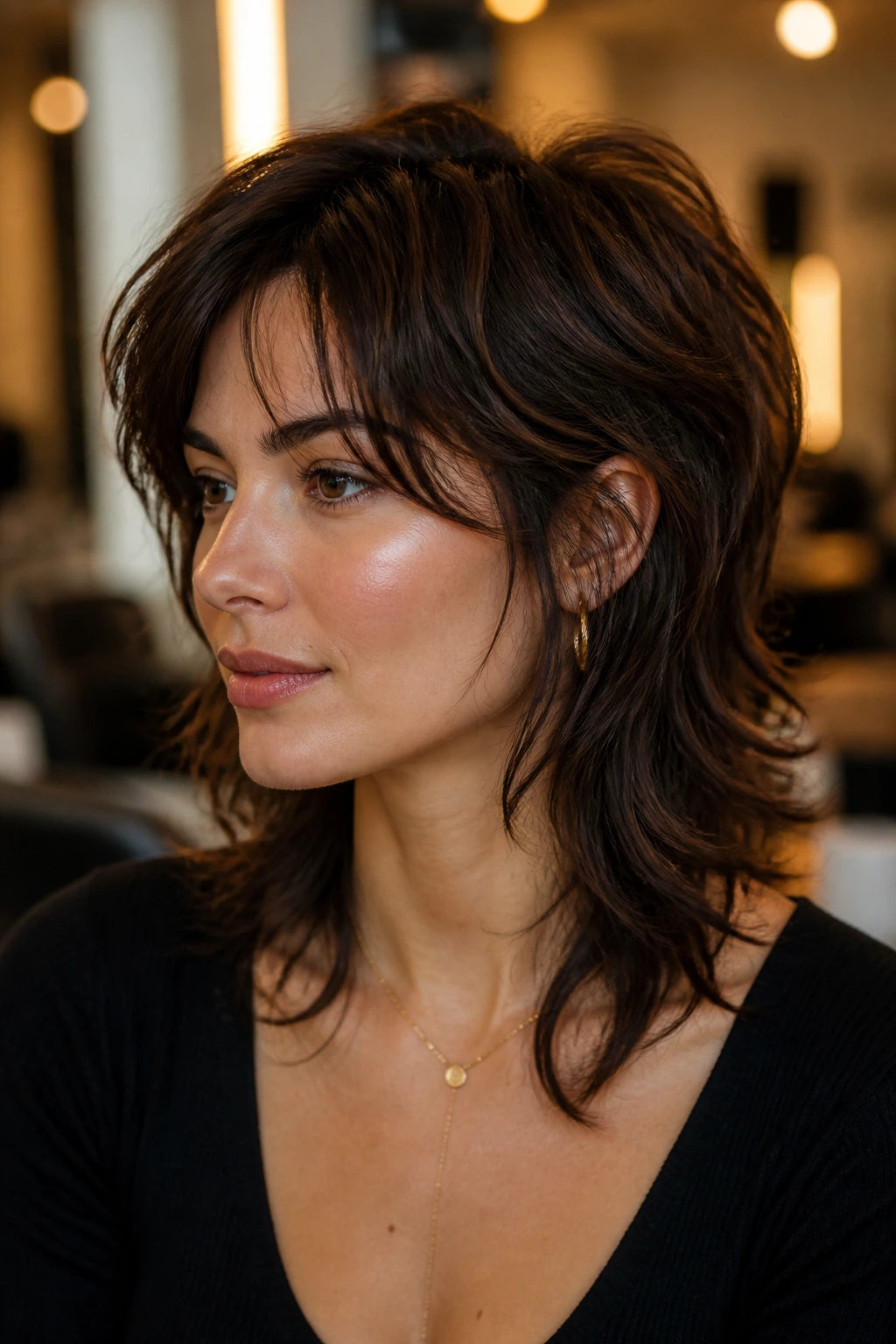
A wolf cut can absolutely work on a round face. The mistake is making it too short at the sides and too heavy at the top. A wolf-lite version keeps the attitude but softens the geometry.
The crown gets a little lift. The front stays long. The sides taper gradually so the wave doesn’t puff right at the cheeks. That taper is the whole point, really. Without it, the cut turns into a round cloud. With it, the shape feels deliberate and a little edgy without making your face look wider.
This cut is best if your waves are loose to medium and your hair has enough density to hold a piecey finish. I would not push this too hard on very fine hair. It can lose its shape and look stringy. On fuller hair, though, it has a nice, easy movement that behaves well with texture spray.
8. The Shoulder-Grazing Cut With Invisible Layers
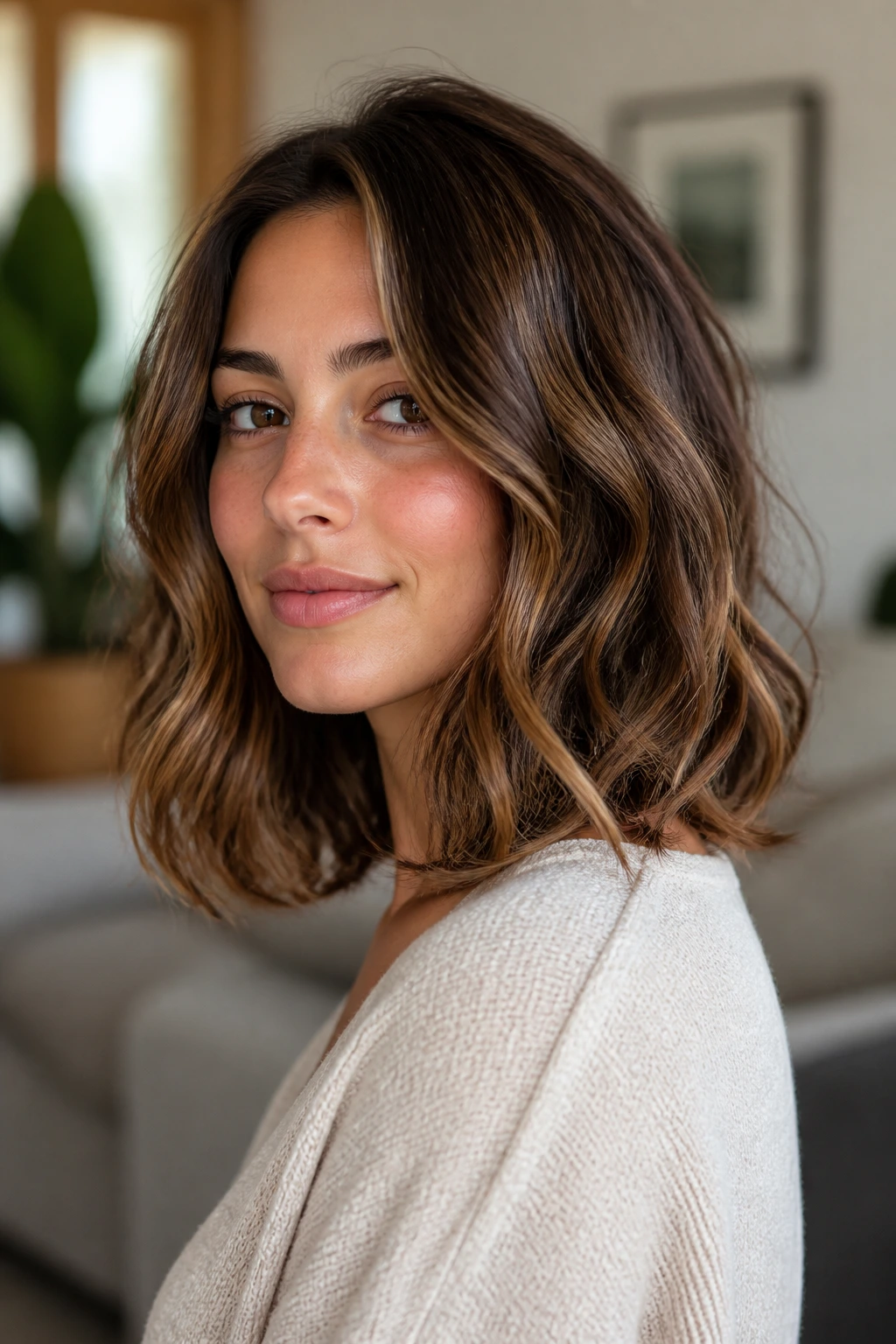
Sometimes the smartest haircut is the one that looks almost simple. A shoulder-grazing cut with invisible layers gives medium waves a soft landing zone without showing off every cut mark. It is neat, low-maintenance, and much kinder to a round face than a chin-length shape.
The invisible layers remove weight from the inside, so the waves can bend instead of bulking up. Because the perimeter stays smooth, the eye reads one long shape rather than a wide one. That’s useful if you do not want a cut that announces itself from across the room.
This is a strong choice for someone who air-dries a lot, because the shape doesn’t depend on perfect styling. A little mousse, a quick scrunch, and you still get a neat silhouette. No fuss. No helmet effect.
9. Bottleneck Bangs With A Gentle Wave

Bottleneck bangs are a quieter, more polished answer than full curtain bangs. The center is a little narrower, and the sides open up more gradually, which means the forehead gets a soft frame instead of a wide curtain.
On a round face, that opening matters. It pulls attention upward and then down through the length of the hair. The wave can stay gentle — not beachy-chaos gentle, just a slight bend that starts below the cheekbone. That keeps the fringe from fighting the rest of the cut.
If you wear glasses, this is a good one to watch. Bottleneck bangs sit neatly without bulldozing your frames. Ask for the center to stay light and the side pieces to blend longer than a classic fringe. The shape should look intentional even when the hair is tucked back.
10. The Rounded U-Shape Cut With Floating Ends
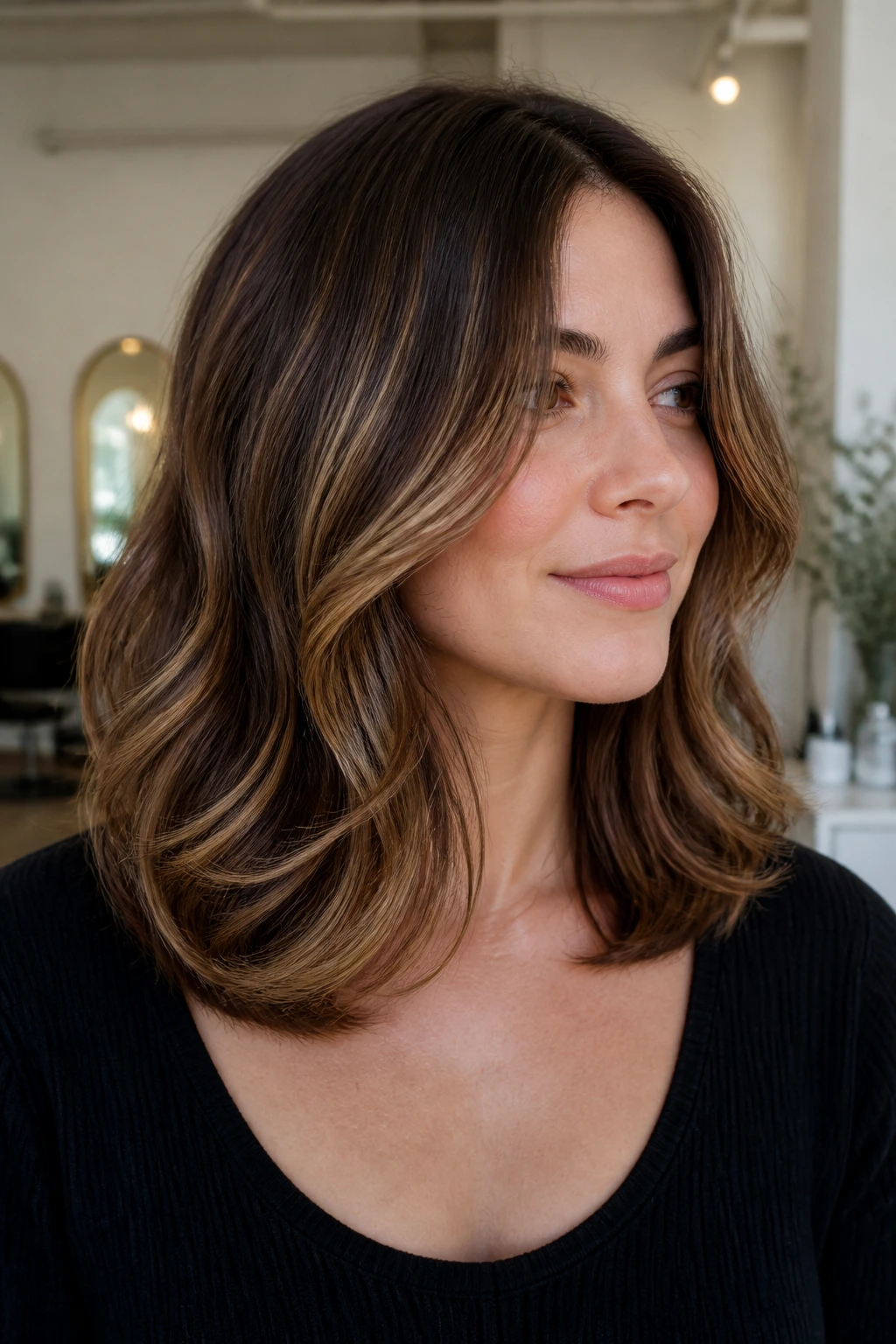
A U-shape cut is a nice middle ground between blunt and layered. The back keeps a little more length, the sides curve forward, and the whole outline softens without losing weight. On medium waves, it gives motion without the shaggy mess some people dread.
For a round face, the curve matters because it narrows the visual line at the bottom. The hair falls in a gentle arc instead of a box, which makes the face read a bit longer. Keep the shortest pieces below the cheeks, though. If the front corners stop too high, the width lands in the wrong place.
This cut is especially good if your hair is medium-thick and you like a smooth finish with a few loose bends. It does not need a lot of layering to look good. Sometimes shape beats texture. Sometimes that’s the entire story.
11. The Slightly Asymmetrical Lob
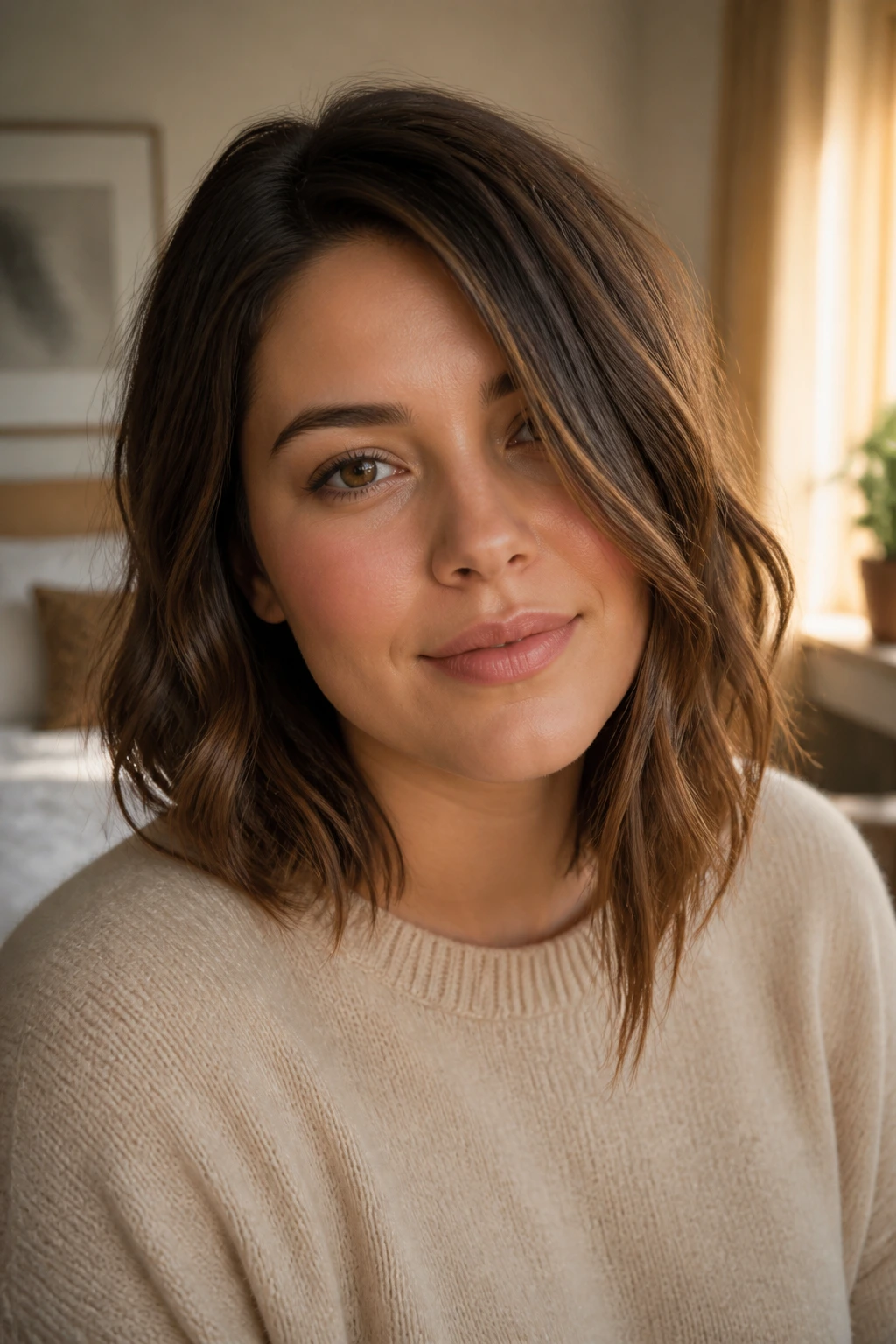
A small asymmetry can do a lot for a round face. One side of the lob sits a little longer than the other, and that slight diagonal line cuts across the face in a way that feels modern without being loud. I like this when someone wants shape but doesn’t want bangs.
The difference should be subtle — maybe 1 to 2 inches, not a dramatic slant. Too much asymmetry starts to look like a fashion stunt. Too little and you’ll barely notice it. The sweet spot is somewhere in the middle, where the eye catches the change but the cut still reads clean.
Wear it with a side part or a deep tuck on the shorter side. That lets the longer side drape forward and creates a nice stretch through the jawline. It’s a strong option if one side of your hair tends to lie flatter than the other.
12. The Razored Midi For Dense Waves

Dense wavy hair can turn into a wall if it’s cut too bluntly. A razored midi softens the bottom two or three inches so the wave can separate instead of stacking up. On a round face, that separation helps because it keeps the sides from becoming too wide.
This is not a cut for everyone. Razor work on fine or fragile hair can leave the ends looking frayed. But on healthy, thick, or coarse waves, it can take a bulky cut and make it swing. The shape still needs a collarbone or just-below-collarbone length to keep the face looking longer.
Ask for controlled razoring, not aggressive thinning. You want movement, not fuzz. If the stylist’s hands move like they’re sanding wood, walk away. If they’re cutting just enough to release the wave, you’re in better territory.
13. The Side-Swept Fringe With Face-Framing Length
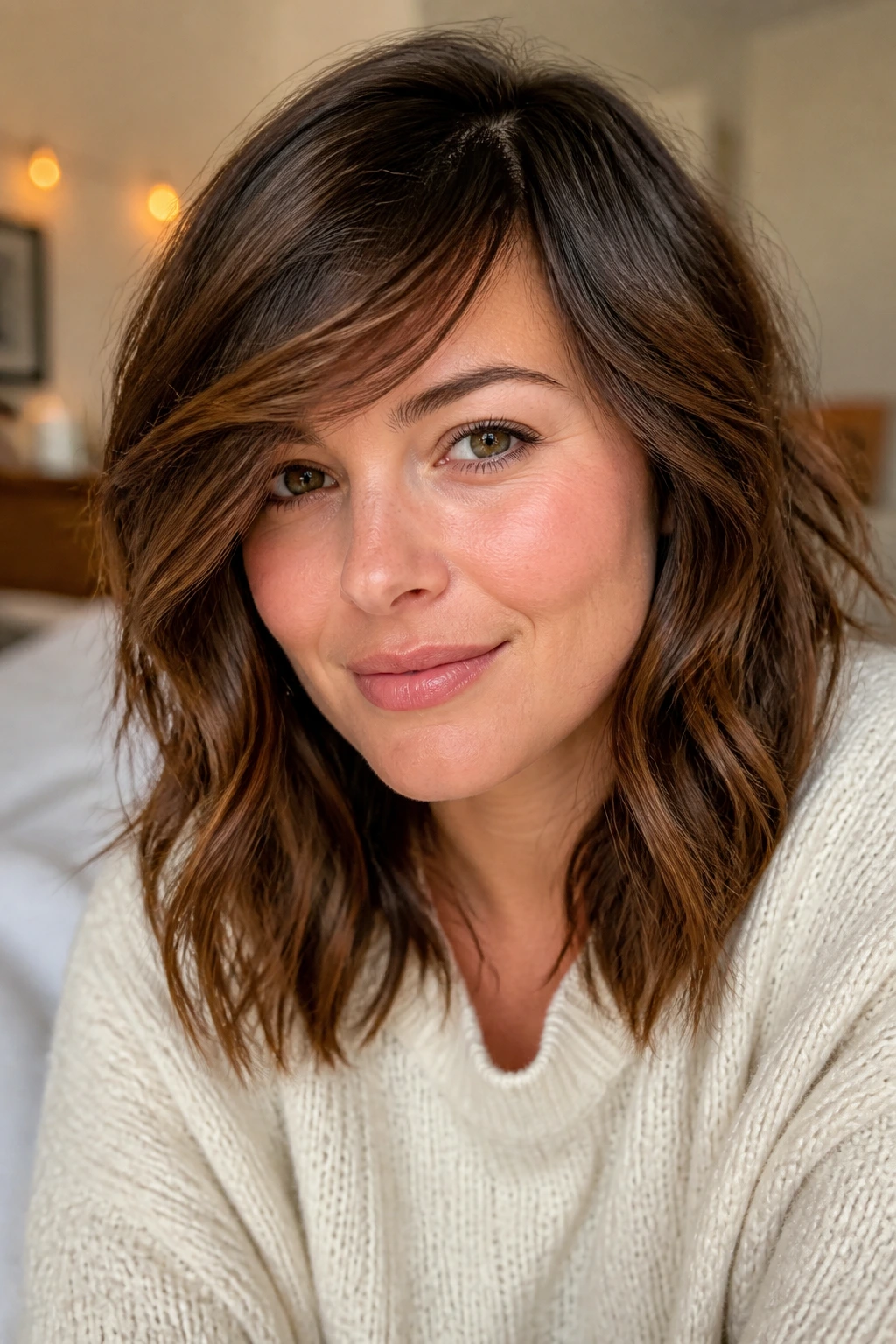
A side-swept fringe is one of the easiest ways to add angle to a round face without committing to full bangs. It lets a little forehead show, pulls the eye diagonally, and blends into the rest of the medium cut without creating a hard line.
The key is length. Keep it long enough to graze the eyebrow or cheekbone, then let the side pieces drop into the main shape. Short, heavy side bangs can feel dated and clunky. Long, soft ones look much better with medium waves because they move when you move.
Best Pairings
- Works well with a collarbone cut
- Good for people who wear glasses
- Easier to grow out than blunt bangs
- Nice if one side of your hair has a strong cowlick
This is the kind of fringe that quietly does its job. It doesn’t shout. It just makes the whole cut sit better.
14. The Tapered Ends With A Narrowing Perimeter
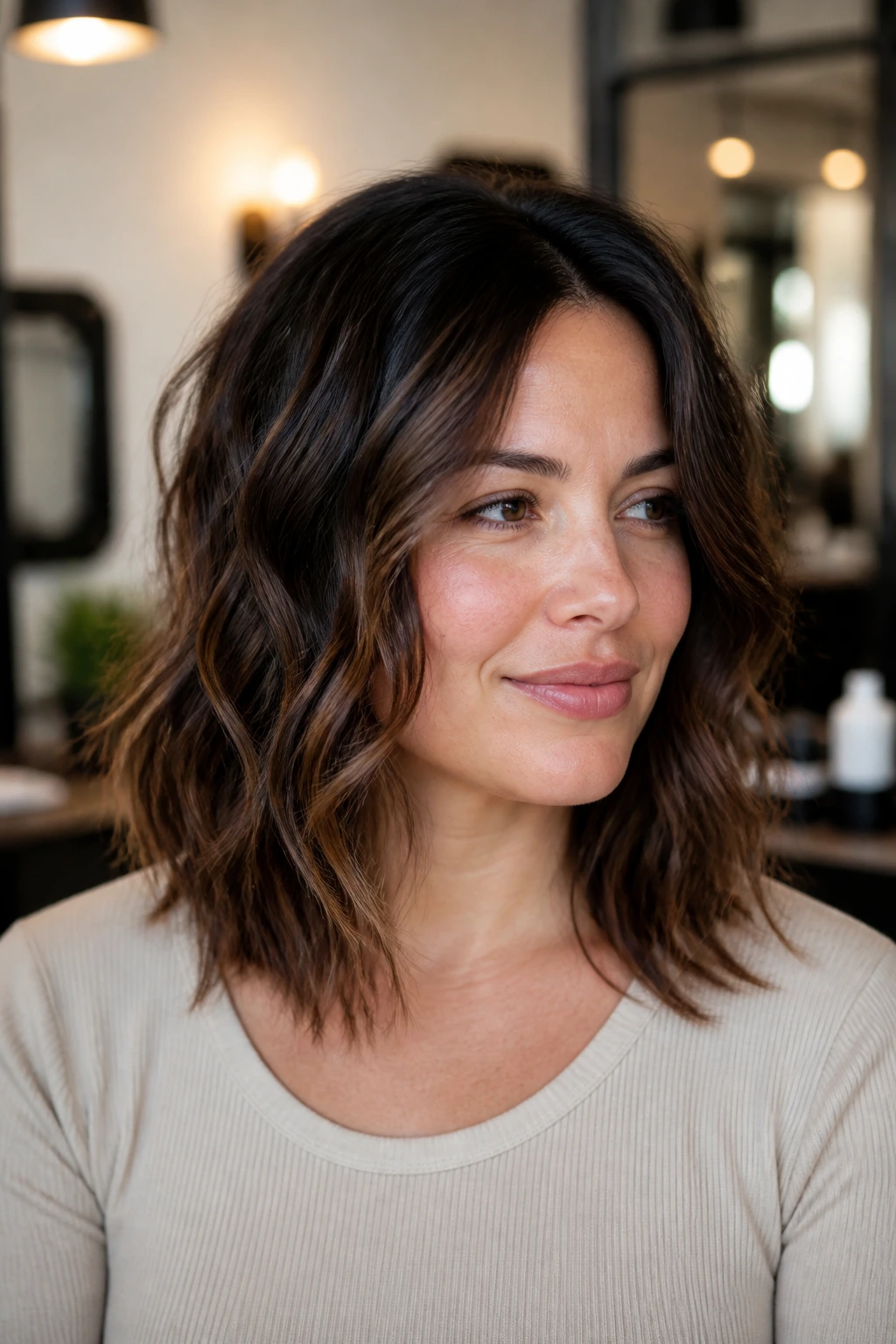
A tapered perimeter changes the shape more than most people realize. Instead of ending in a wide block, the hair narrows slightly toward the bottom, which makes medium waves look lighter and more directional. On a round face, that narrowing helps the whole haircut move downward.
The effect is subtle, which is why I like it. You still keep the density where you need it, but the outer line doesn’t spread outward at the cheeks. Ask the stylist to taper the ends gently and keep the face frame longer than the rest. That keeps the silhouette sleek without turning it severe.
This works especially well if your hair tends to flip out at the sides. A tapered finish controls that little outward kick. It also grows out in a forgiving way, which is more useful than people admit.
15. The Quiet Glam Lob With Polished Bends
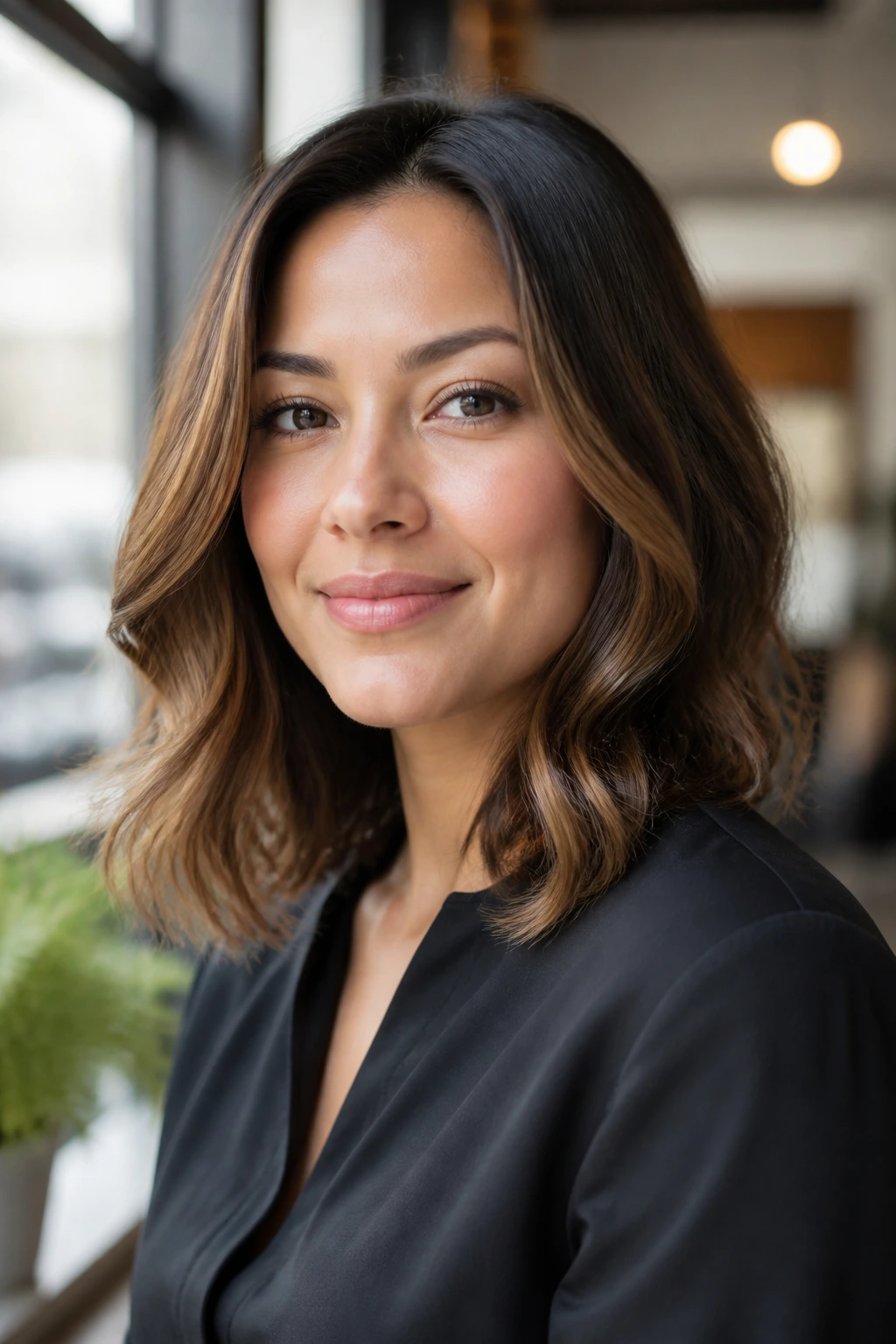
Some medium cuts look best with a little polish, and this is one of them. The quiet glam lob is blunt enough to feel intentional, with long bends that sit below the cheekbone and brushed-out waves that look smooth rather than crimped.
The reason it flatters a round face is the same reason a good blazer does: clean lines. The wave gives movement, but the outline stays controlled. That prevents the sides from exploding outward, which is the usual problem with softer medium cuts.
This one is a favorite if you like a blowout finish or you wear your hair for work and want it to look neat by noon, not just at home in your bathroom mirror. Use a round brush or large rollers, keep the front pieces long, and let the bend live around the mouth to collarbone zone.
16. The Air-Dry Midi With Minimal Layers
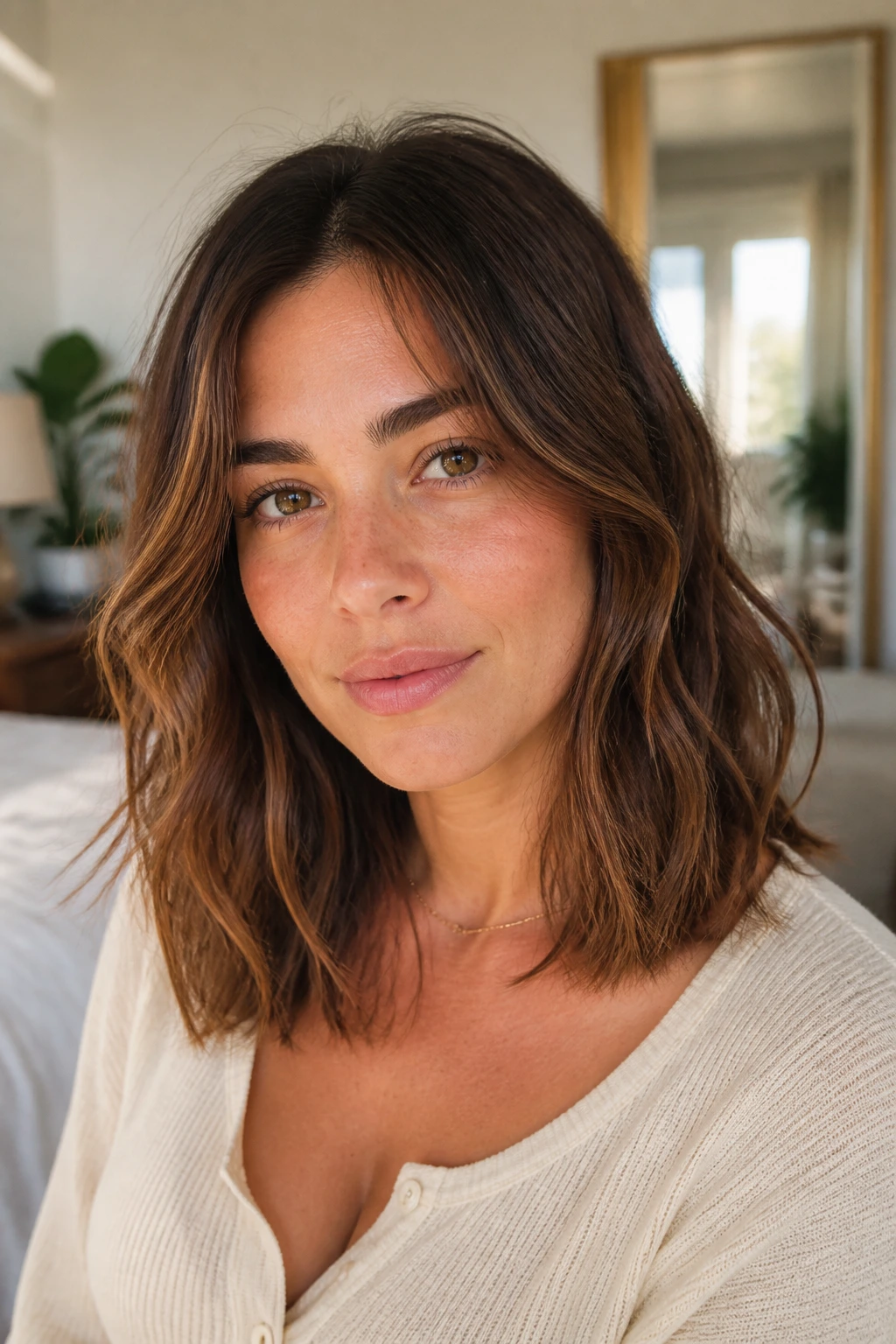
If you want your hair to look good without a hot tool in your hand, a minimal-layer midi is the sensible choice. The perimeter stays clean, the layers stay light, and the natural wave pattern gets room to form without turning into a triangle.
On a round face, that restraint helps. Too many layers on air-dried wave can puff out around the cheeks. Too few, and the shape goes flat. This cut splits the difference by keeping the longest parts at the collarbone and using only enough internal shaping to stop the ends from dragging.
How to Wear It
- Work mousse through damp roots and mid-lengths
- Scrunch, then let the hair dry without touching it too much
- Keep the front pieces longer so they frame instead of crowd
- Add a tiny bit of cream only to the last 2 inches if the ends frizz
This is the cut for people who want their waves to look like waves, not a blown-out project.
17. The Center-Part Cut With Long Cheekbone Curtains
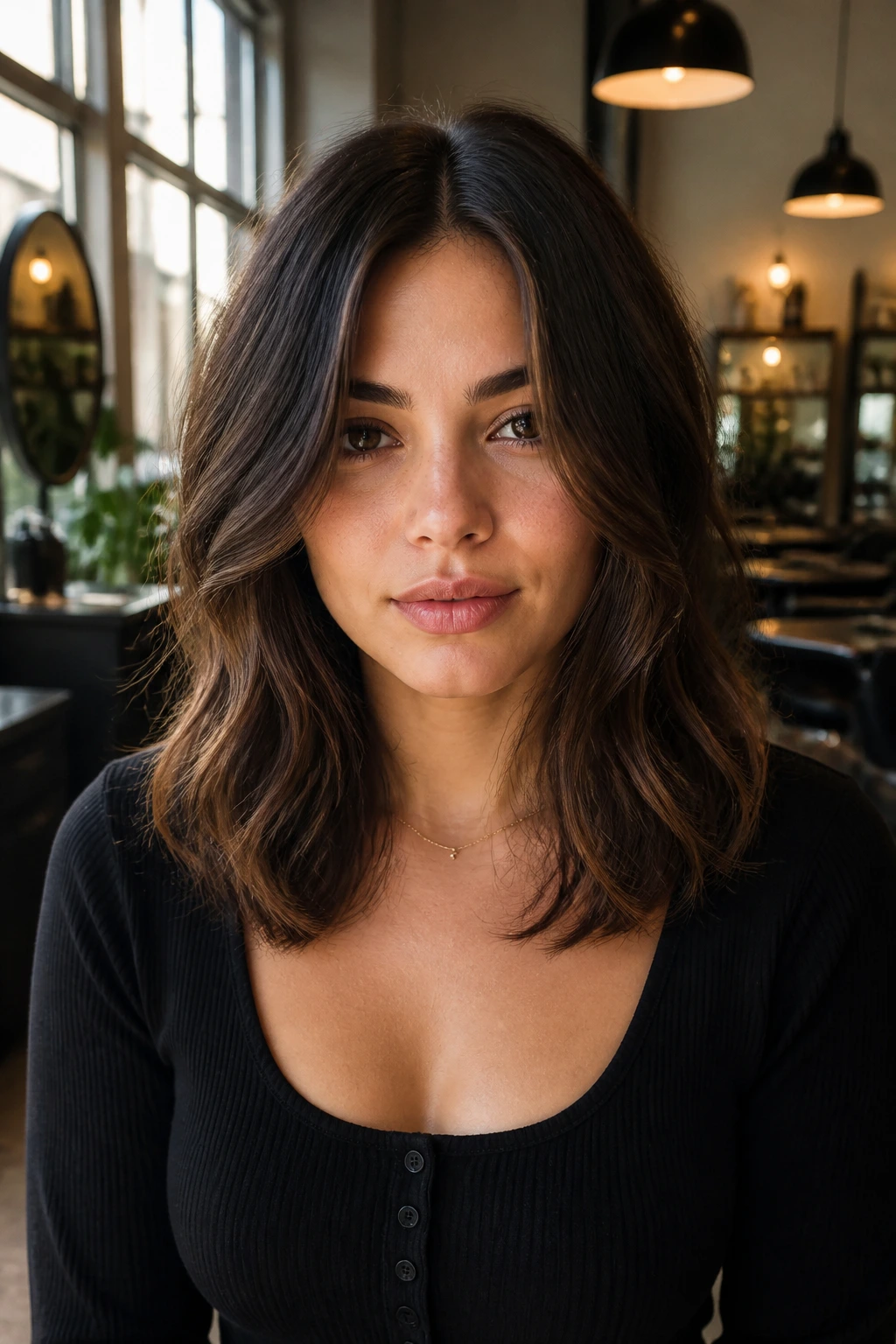
A center part can work on a round face. It just needs the right company. The problem is not the part itself; it’s the width created when the front pieces stop too high and flare at the cheeks.
The answer is long cheekbone curtains that fall below the widest part of the face before they open out. That keeps the center line visible and gives the sides a vertical drop. It is a tidy, balanced look when done well. If your hair naturally splits in the middle, this can be an easy win.
Keep the front lengths soft and a little longer than the chin if your wave has a lot of bounce. If your hair is straighter near the roots, add a root lift or a quick blow-dry at the front so the part doesn’t lie flat against the scalp.
18. The Soft Flip Cut With Curved Ends
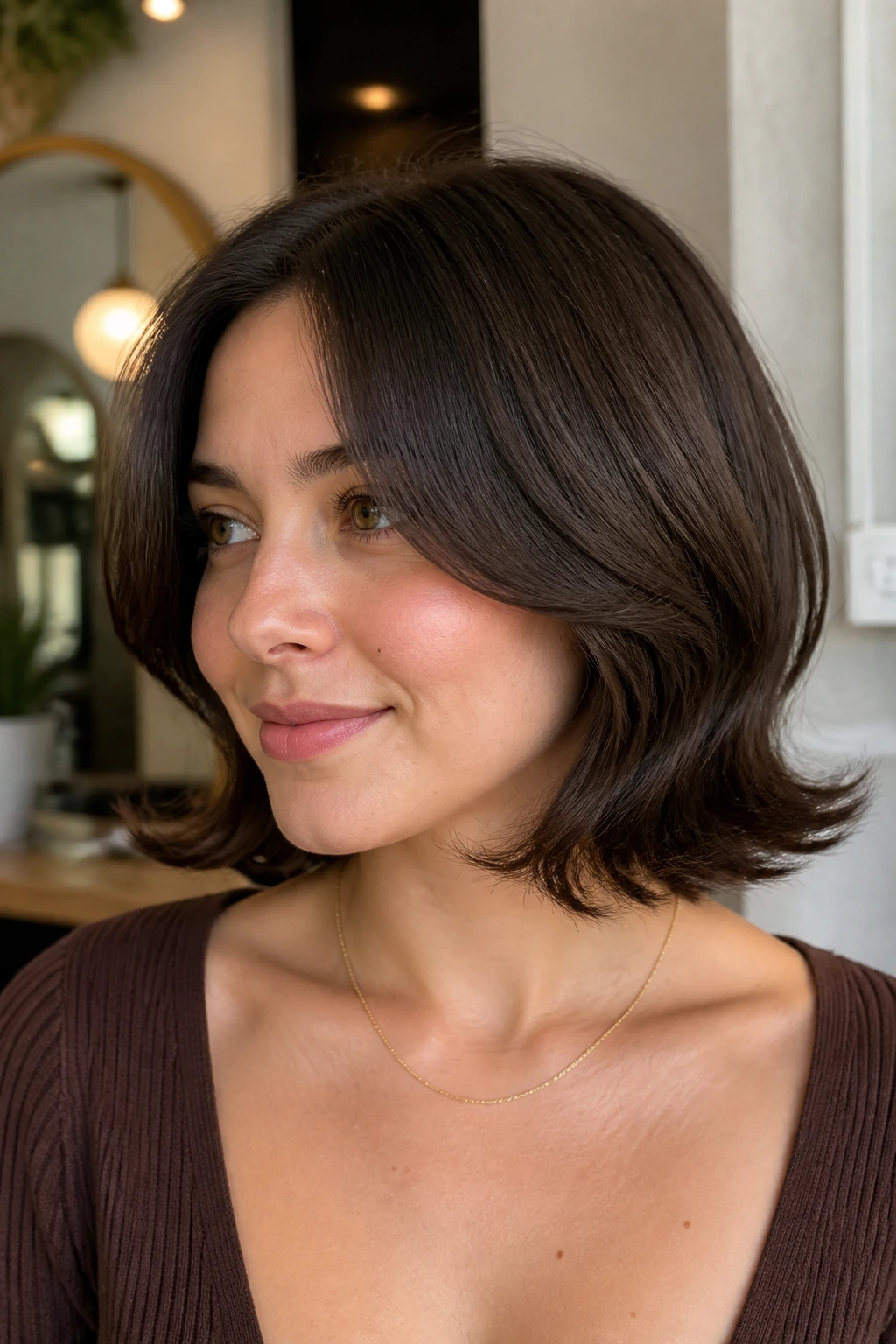
A soft flip sounds retro, but in the right medium length it feels fresh. The ends curve away from the face just enough to create movement, then settle back below the jawline so they don’t widen the cheeks. That detail matters a lot on a round face.
The flip should happen low. Not at the chin, not at the cheekbone. Lower. If the bend sits too high, it creates the exact width you’re trying to avoid. A good stylist will keep the curve loose and place the lift at the lower end of the haircut.
This style works well if you like a little bounce in the finish. It also looks nice with subtle face-framing highlights, because the curved shape shows off the movement. A medium round brush and a cool shot from the dryer help the bend stay where you put it.
19. The Glossy Blowout Lob
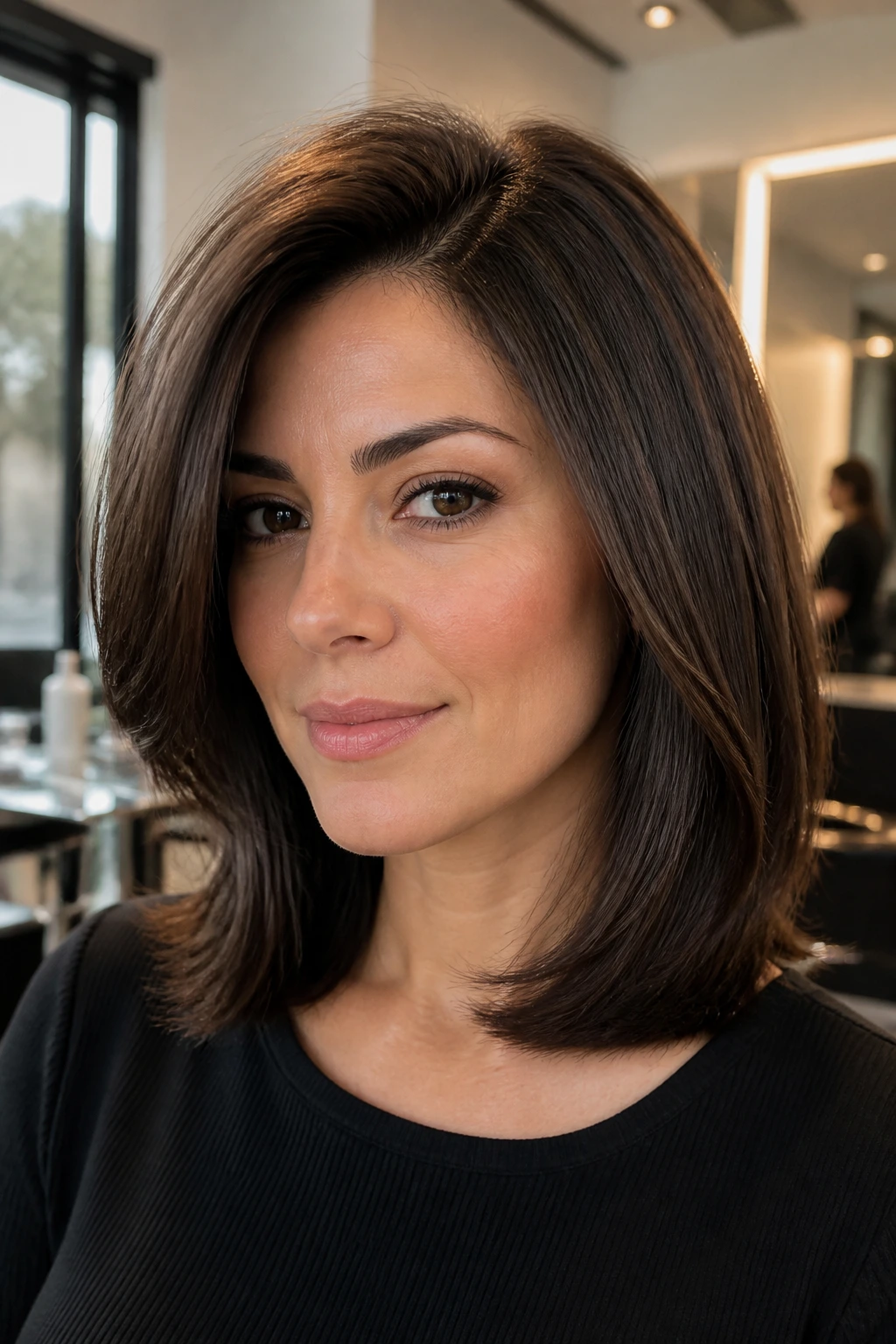
This is the haircut for anyone who likes waves with a smooth, salon-polished finish. The glossy blowout lob uses a clean outline, long internal layers, and a bend that starts lower on the hair shaft so the ends sit soft and shiny.
On a round face, the value is in the structure. The top stays lifted, the sides don’t puff, and the perimeter stays long enough to stretch the face. If your hair is medium or thick, this shape can look especially sleek because the weight helps the bend fall in a controlled way.
I’d call this the dressier cousin of the collarbone lob. It wants a round brush, a heat protectant, and a little patience. The payoff is a haircut that looks finished without feeling stiff.
20. The Low-Maintenance Grow-Out Cut
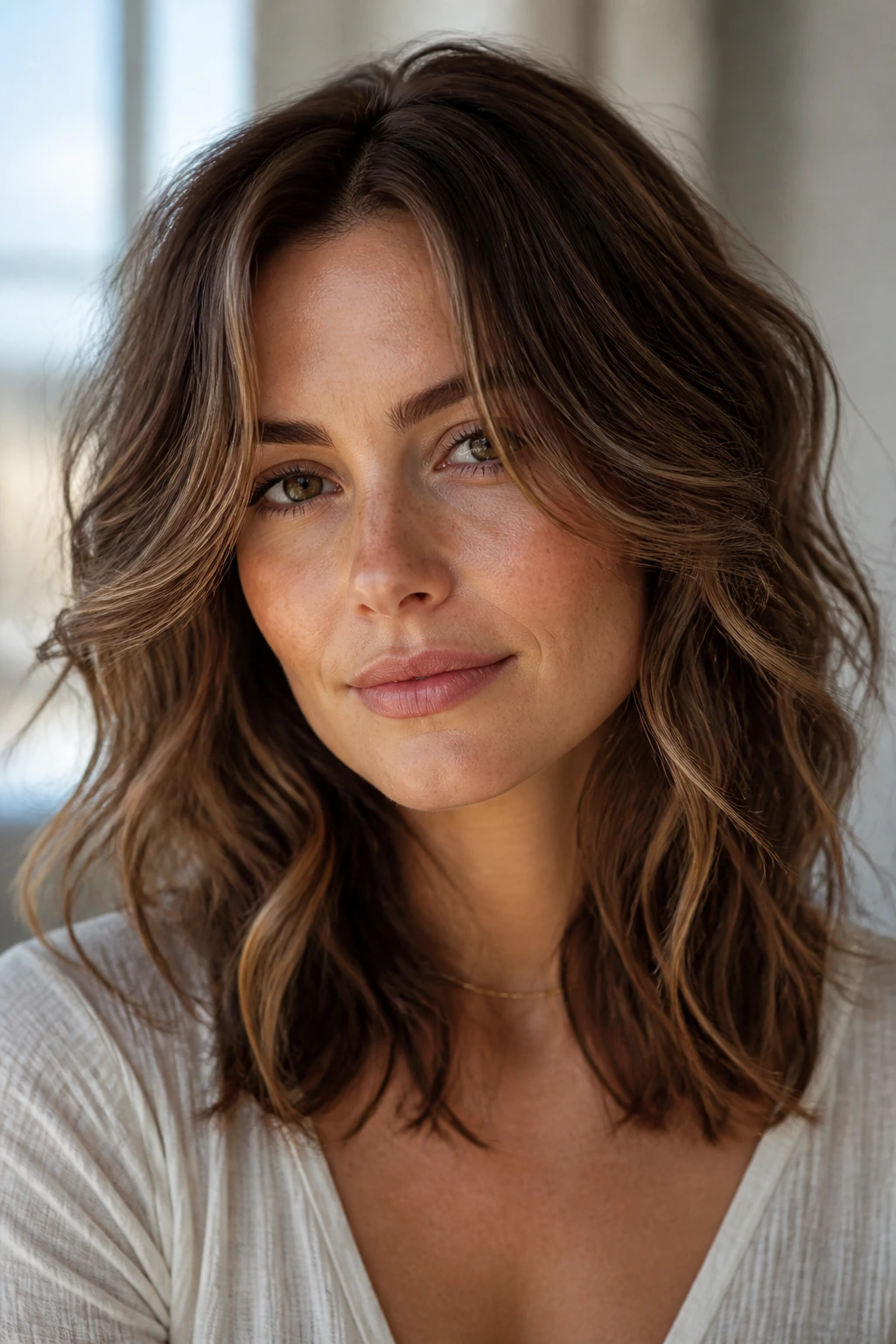
A good grow-out cut is not lazy. It’s smart. It keeps the shape looking deliberate even when you push the next trim a little longer than planned, which is more realistic than most haircut advice wants to admit.
For a round face, that means long layers, a collarbone-length perimeter, and a face frame that starts below the cheekbone. No hard shelf at the chin. No heavy fringe that will grow into your eyes in two weeks. This is the cut that forgives a busy month.
It also plays nicely with medium waves because the shape still has movement when the ends soften. If you hate feeling trapped by a haircut, this one gives you room to breathe. Bring that to your stylist: “I want it to look good on day one and still make sense when it’s grown out an inch.” That request is more useful than a picture of a cut that only works fresh out of the chair.
How to Ask for Wavy Haircuts for Medium Hair and Round Faces
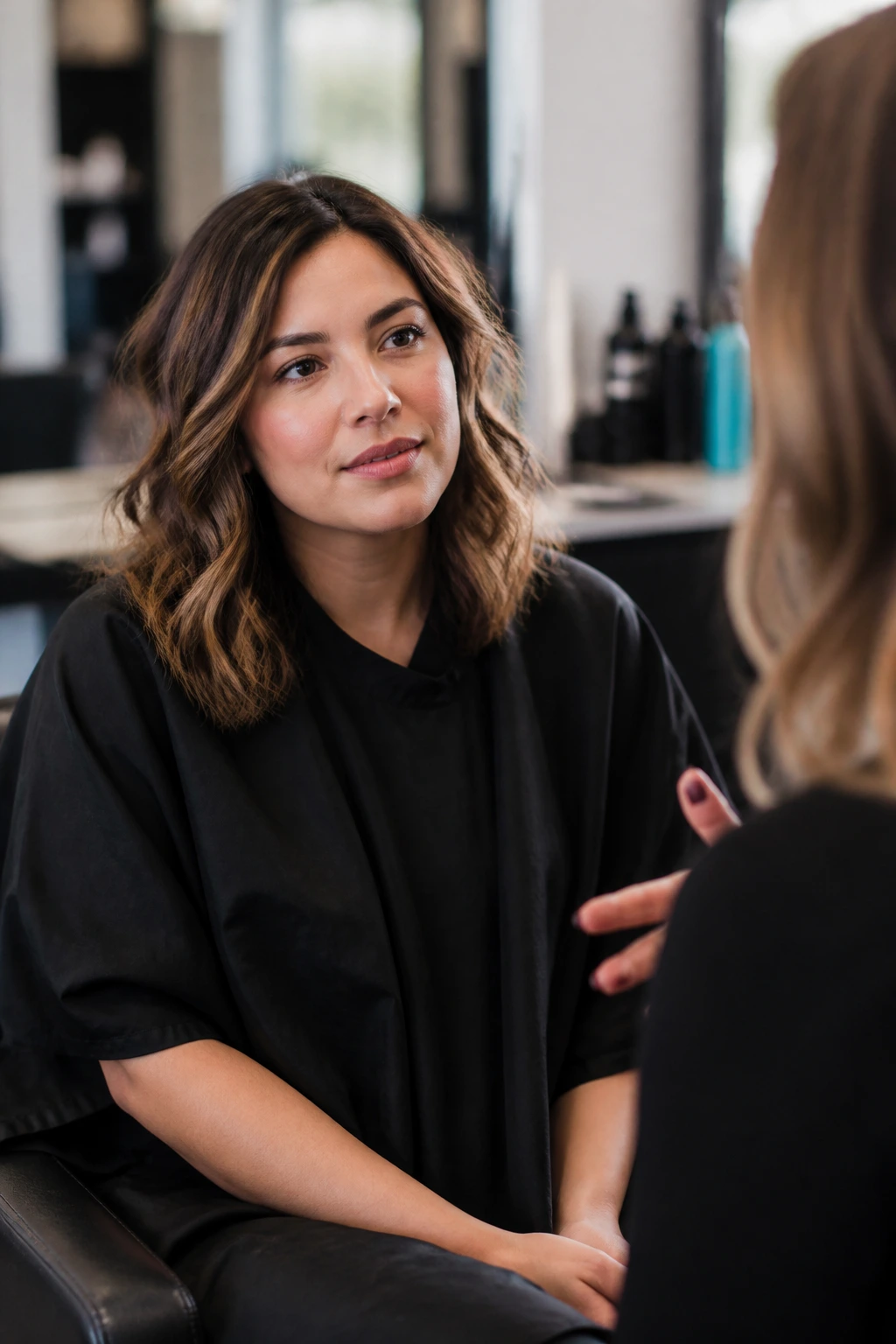
A good cut starts with a better conversation. Bring two photos if you can: one that shows the front and one that shows the side. A lot of haircuts look fine head-on and fall apart from the profile, and the profile matters more than people think for a round face.
Say Where You Don’t Want Bulk
Point to the cheek area and say you don’t want the shortest layers landing there. That one sentence saves a lot of bad layering. If your stylist knows you want the first face-framing piece to start below the cheekbone, the cut usually moves in the right direction fast.
Tell Them How You Wear It
Air-dried, diffused, wand-curled, brushed out, side-parted, center-parted — all of that changes the final shape. If you usually wear your waves natural, ask for a cut that looks good without a lot of heat. If you blow-dry, ask where the bend should start so the hair doesn’t puff at the sides.
Mention Shrinkage and Density
Waves can spring up a full inch or more when dry. Thick hair can swell. Fine hair can collapse. A stylist who understands those differences will cut with more caution and less guesswork. If your hair behaves differently on day one than it does after a wash, say so before the first snip.
Styling Tools That Keep Waves From Puffing Out
-
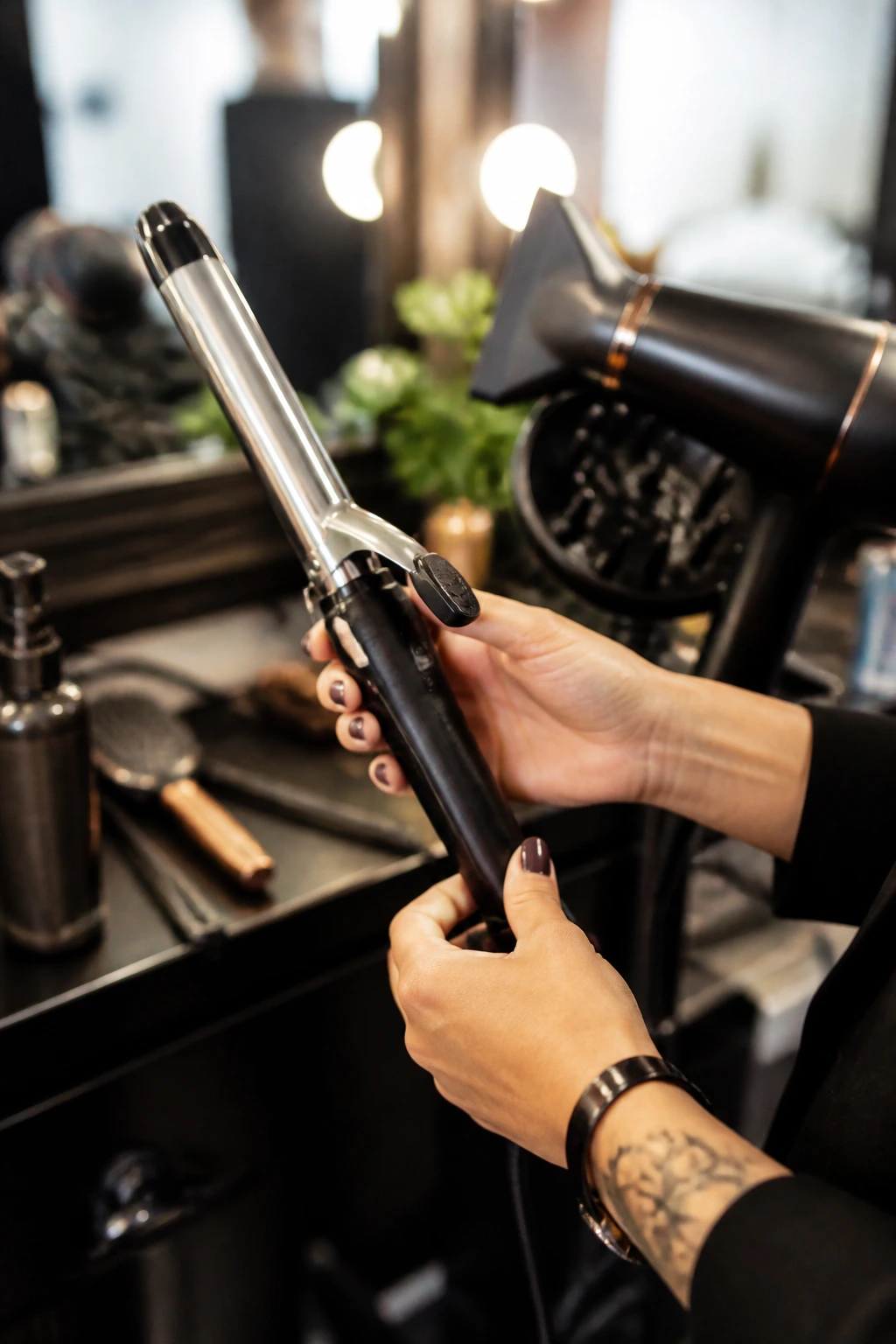
A 1.25-inch curling iron or wand: the size gives you a bend, not a ringlet, which is what medium waves usually need.
-
A blow dryer with a nozzle attachment: the nozzle keeps airflow controlled so the roots don’t get blasted outward around the cheeks.
-
A large round brush: useful for adding lift at the crown and smoothing the front pieces away from the face.
-
A diffuser: the best friend of air-dried waves when you want texture without frizz.
-
Sectioning clips: they help you keep the top lifted while the bottom dries, which matters more than people think.
-
Heat protectant: if you use hot tools, spray it on every time. Skipping this is a bad bargain.
-
Light mousse or foam: gives medium waves shape at the roots without sticky crunch.
-
Dry texture spray: good for separation on the ends when a cut starts to look too soft.
-
Flexible-hold hairspray: keeps the bend in place without freezing the hair into a helmet.
-
A wide-tooth comb: better than brushing out waves when you want the ends to stay soft.
How to Wear These Cuts Day to Day

Presentation: Keep the crown a little lifted and let the longest pieces fall below the cheeks. A tuck behind one ear can sharpen the line instantly, while both sides down creates a softer frame.
Accessories: Small hoops, narrow clips, and glasses with a gentle upsweep tend to sit well with these shapes. Heavy headbands or very wide frames can compete with the face-framing pieces and make the haircut work harder than it needs to.
Parting: A slight off-center part is a reliable middle ground if you don’t want the flatness of a center part or the drama of a deep side part. A center part can still work if the front pieces start low and stay long.
Finish: Brush out tight bends with your fingers or a soft boar-bristle brush once the hair cools. You want movement, not a series of obvious curls. That softer finish keeps the style from widening the sides.
Extra Lift, Shine, and Movement Without Changing the Cut
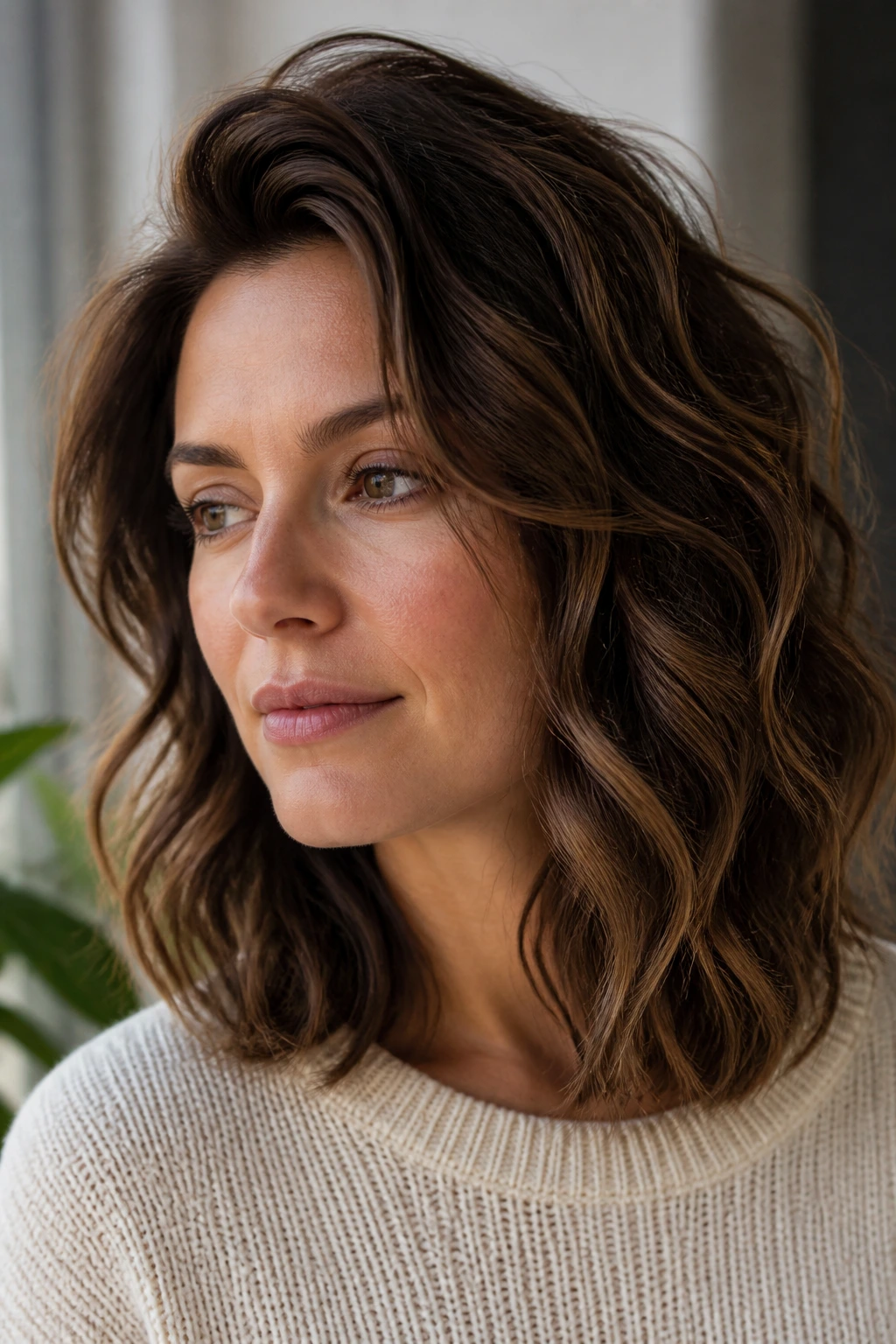
Lift: Clip the crown while the hair is still warm, then let it cool before releasing. That tiny pause gives medium waves a little more height without swelling the sides.
Shine: Put one drop of serum between your palms and press it only into the last 2 inches of hair. If you run serum up near the cheeks, the front can collapse and look greasy by lunchtime.
Movement: Alternate curl directions on the mid-lengths and brush the bend out once it cools. That gives the hair an S-shape instead of a uniform curl pattern, which looks softer on a round face.
Make-It-Yours: Fine hair usually needs mousse and a cleaner perimeter. Thick hair usually needs internal debulking and a little more length. If you wear glasses, a longer fringe or side sweep usually keeps the frame from fighting the haircut.
Maintenance, Grow-Out, and Day-Two Survival
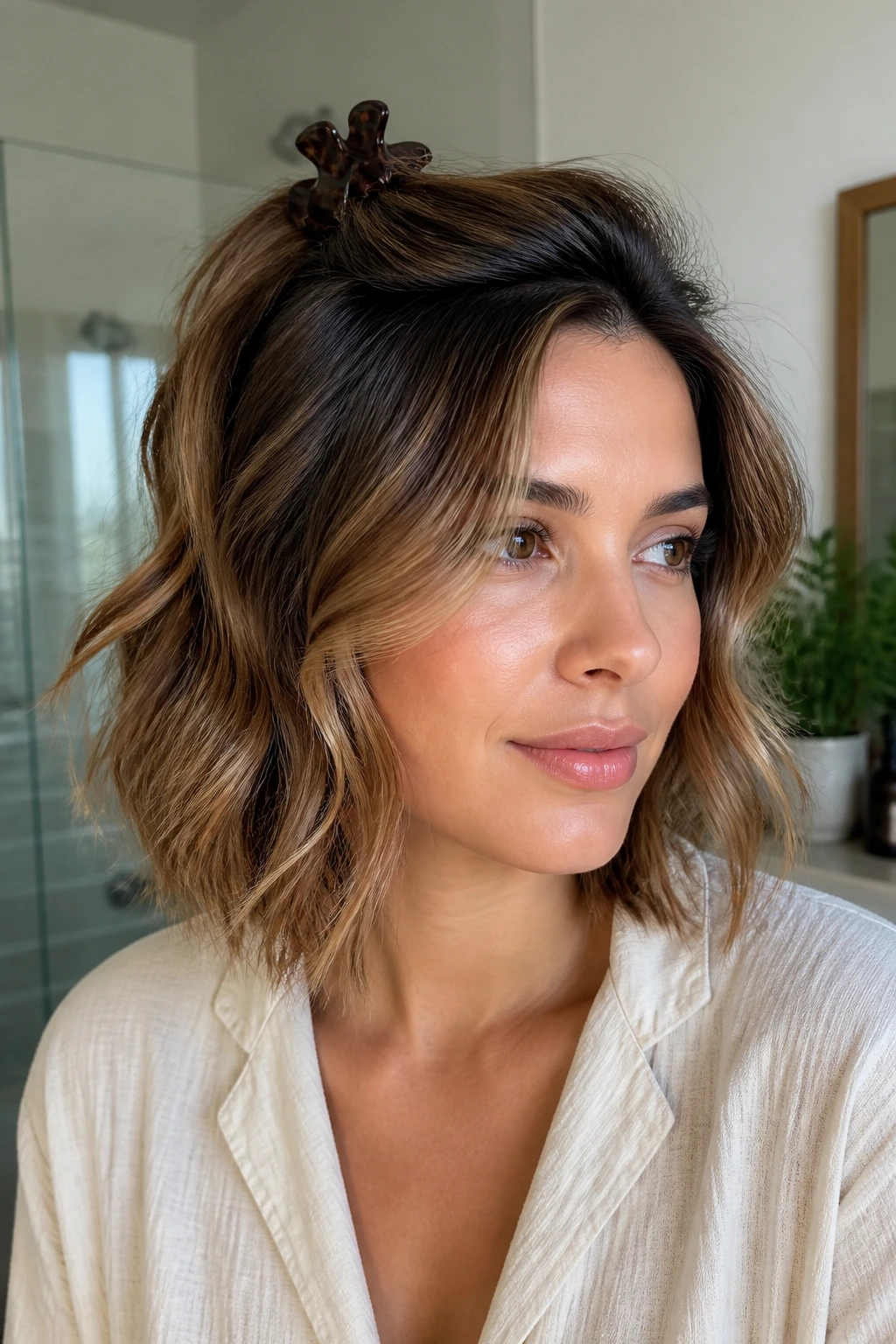
A medium wavy cut can look good for weeks, but only if you keep a few small habits going. A blunt lob usually needs a trim every 8 to 10 weeks if you want the shape to stay crisp. Shags, curtain bangs, and side fringes often want a touch-up closer to 6 to 8 weeks, mostly because the front pieces start to lose their line.
Day two is where the haircut proves itself. If the roots are flat, mist them lightly with water or a leave-in spray, clip the crown for 5 to 10 minutes, then hit it with a cool blast from the dryer. If the ends look fuzzy, use a pea-sized amount of cream or serum and stop there. More product solves nothing once the hair starts to go limp.
At night, a silk pillowcase helps, but the bigger win is keeping the wave from getting crushed. A loose clip, a low loose bun with a scrunchie, or simply sleeping with the front pieces pinned back a little can save you from rebuilding the shape in the morning. And yes, that matters. Good hair is often just less wrestling.
Variations and Adaptations to Try

Fine-Hair Lift Version: Keep the layers long and the perimeter blunt. Fine hair on a round face usually looks best when the outline stays clean and the roots get the lift, not when the whole cut is shredded into wisps.
Thick-Hair Softening Version: Ask for internal debulking, not a heavy razor pass. Thick waves need room to move, but they still need weight at the edge so the sides don’t puff out.
Glasses-Friendly Fringe Version: Curtain bangs that start lower and split softly around the frames work better than short straight bangs. Keep the side pieces long enough to skim past the glasses arm without getting trapped.
Heat-Free Wave Version: Minimal layers, collarbone length, and a mousse-friendly shape. This version should look good with a scrunch and air-dry, not only after a full styling routine.
Grow-Out-Friendly Version: Long face-framing pieces, no sharp cheekbone shelf, and a perimeter that sits below the collarbone. This is the version you want if you hate booking trims on a strict schedule.
Soft Glam Version: Add a polished bend, a center part, and a little shine cream on the ends. It’s still a wavy cut, just with a smoother finish that reads more dressed up.
Common Mistakes That Make Medium Waves Widen a Round Face
-
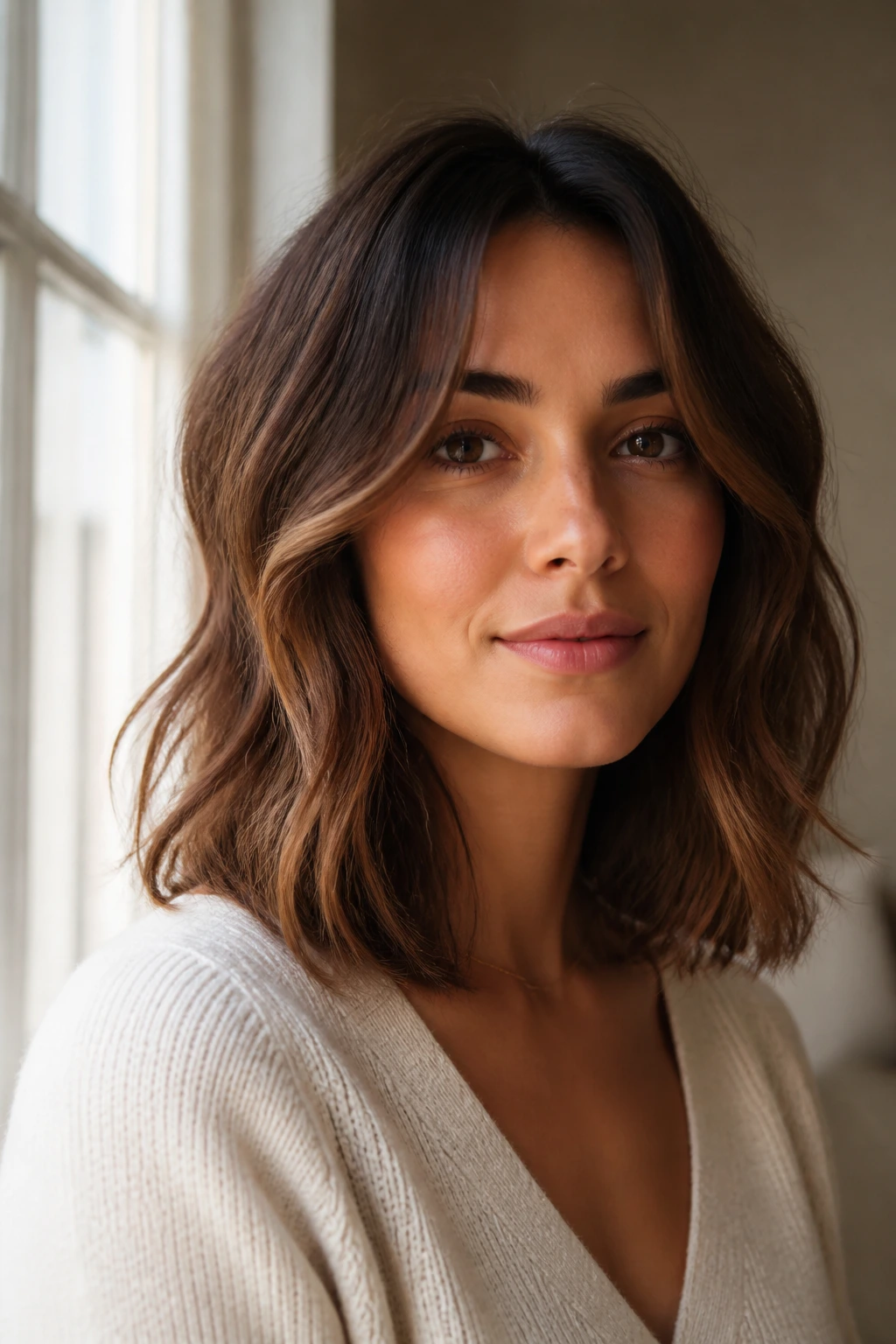
Starting the shortest layer at the cheek: the symptom is a cut that feels full right where your face is already widest. The fix is to move the first face-framing layer lower, usually below the cheekbone.
-
Cutting bangs too short and too straight: the fringe sits like a shelf and can make the face look broader. Ask for curtain, bottleneck, or side-swept pieces that open rather than block.
-
Removing too much weight from thick hair: the hair fluffs out around the sides and loses its line. Keep some perimeter weight and take bulk out from the inside instead.
-
Ignoring shrinkage: waves spring up after drying, and a cut that looked perfect wet can turn into a chin-length puff once it dries. Tell your stylist how much your hair bounces so they can leave extra length.
-
Adding all the volume at the sides: if the root lift sits near the ears, the face reads wider. Put the height at the crown and let the shape fall downward.
Frequently Asked Questions About Wavy Haircuts for Medium Hair and Round Faces
What length is most flattering for a round face with waves?
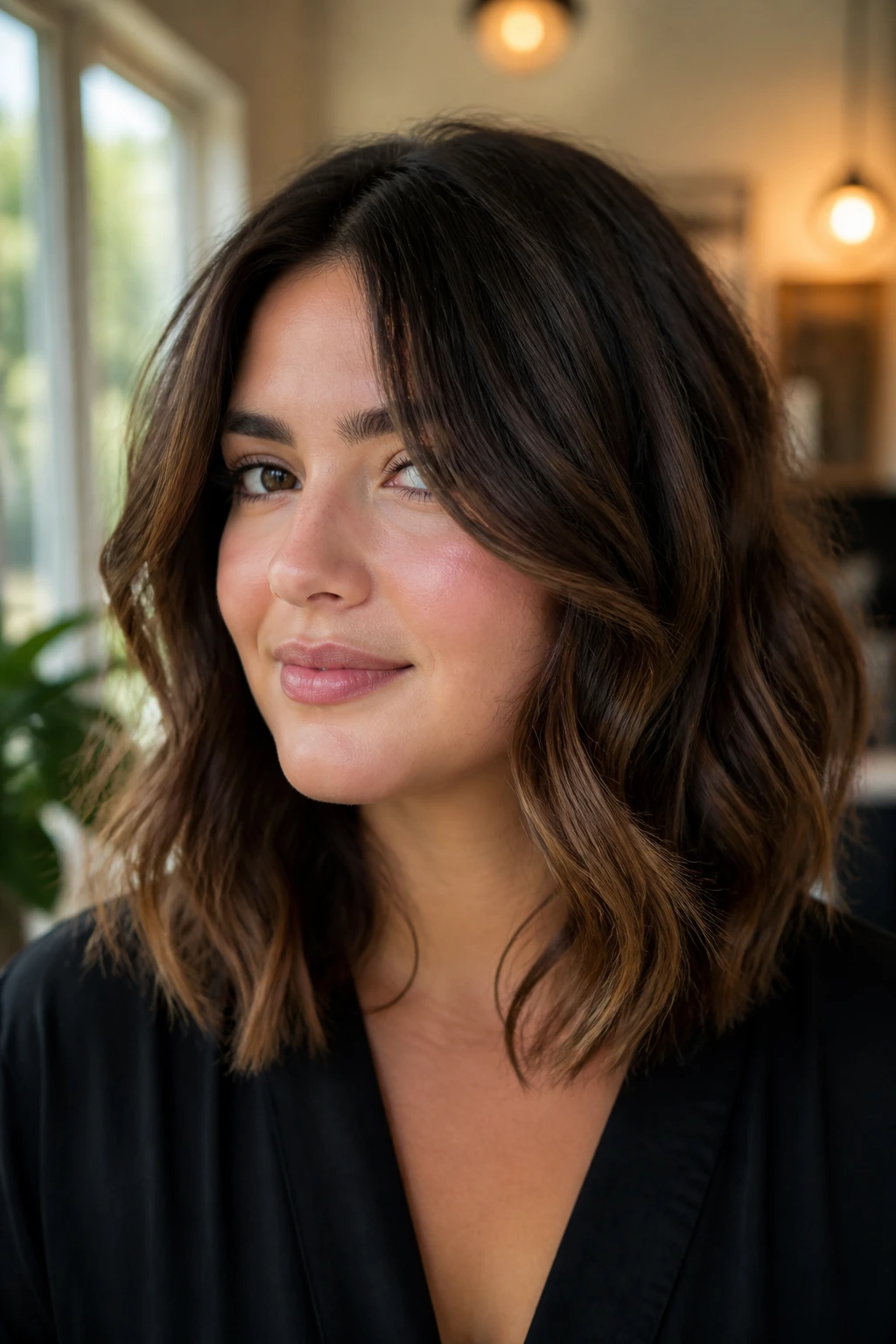
Usually collarbone to just below the collarbone is the sweet spot. That length stretches the face a bit and gives the waves enough room to move without building width at the cheeks.
Are curtain bangs good for round faces?
Yes, if they’re long enough. Keep the shortest part below the brow or near the bridge of the nose, then let the sides taper down past the cheekbone so they open the face instead of boxing it in.
Can a blunt cut work on a round face?
It can, especially if the hair is medium to thick and the blunt line sits low enough. A blunt outline with hidden internal layers often gives the cleanest shape because it keeps the bottom line narrow and the movement controlled.
Should layers start above or below the cheekbones?
Below the cheekbones is usually safer. Layers that begin too high can make the face feel wider, while lower layers create a longer line and keep the emphasis away from the cheek area.
What if my waves are fine and fall flat?
Keep the perimeter solid and use lightweight lifting products at the roots. Fine waves often look best with fewer short layers, because too much texturizing can make the ends look stringy.
What if my hair is thick and poofy?
Ask for internal debulking and a longer face frame. Thick wavy hair needs weight control, but not so much thinning that the ends frizz out and spread.
Can I wear a center part with a round face?
Yes, if the front pieces are long enough to drop below the cheeks before they open. A center part becomes flattering when the haircut creates length around it instead of width.
How often should I trim this kind of haircut?
Most medium wavy cuts stay in shape with trims every 6 to 10 weeks, depending on bangs and layer placement. If you have a shag, fringe, or a very precise lob, you’ll usually want the shorter end of that range.
The Shape That Gives Your Waves Room
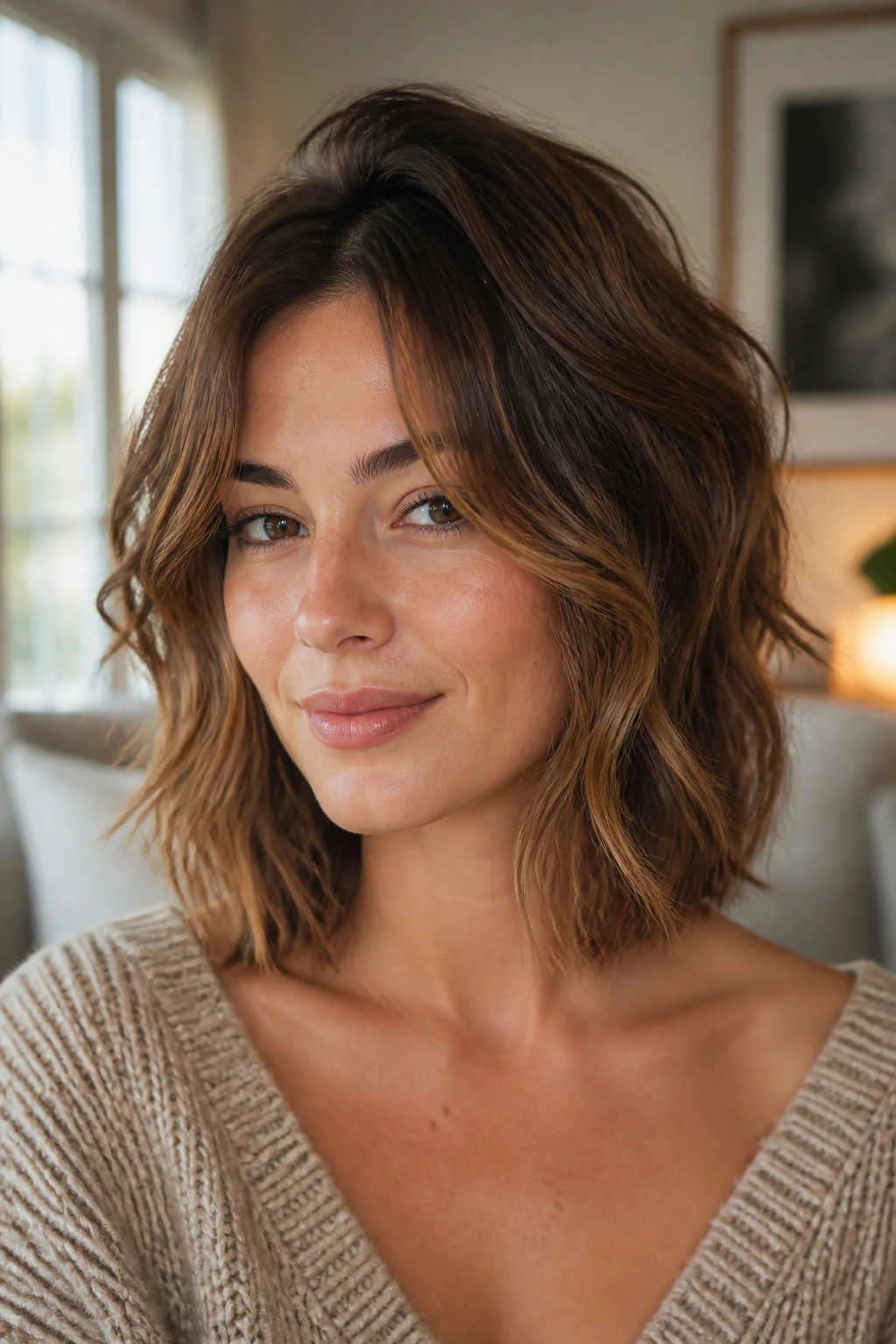
The best medium wavy haircut for a round face is usually the one that understands restraint. Not every section needs movement. Not every layer needs to shout. A clean line below the cheeks, a little lift at the crown, and front pieces that open the face instead of pinching it — that’s the pattern that keeps showing up for a reason.
Some of these cuts feel polished. Some lean messy in a good way. A few are nearly invisible until you notice that the face suddenly looks a touch longer and the waves sit where they should.
Bring the photo, point to the cheekbone, and say where you want the shortest layer to land. That one detail changes the whole haircut.