



An oval face can wear a lot of cuts. Wavy hair makes that both easier and trickier. It bends, swells, flips, and shrinks in ways that can turn a neat bob into something puffier than you meant the second it dries, which is exactly why the best short haircuts for oval faces and wavy hair are the ones that work with the wave pattern instead of trying to flatten it into obedience.
The mistake I see most often is not choosing a short style. It’s choosing the wrong kind of short style. If the weight line sits in the wrong place, waves bunch at the cheeks, the ends stick out at the jaw, or the crown goes flat while the sides explode outward. One inch matters. Sometimes half an inch does.
Oval faces have a useful advantage: the proportions are already balanced, so the haircut can focus on movement, texture, and where you want the eye to land. That means you can go crisp, shaggy, rounded, cropped, or a little off-center without fighting your bone structure. The real question is where the bulk should live, and where it absolutely should not.
Why These Cuts Work So Well Together
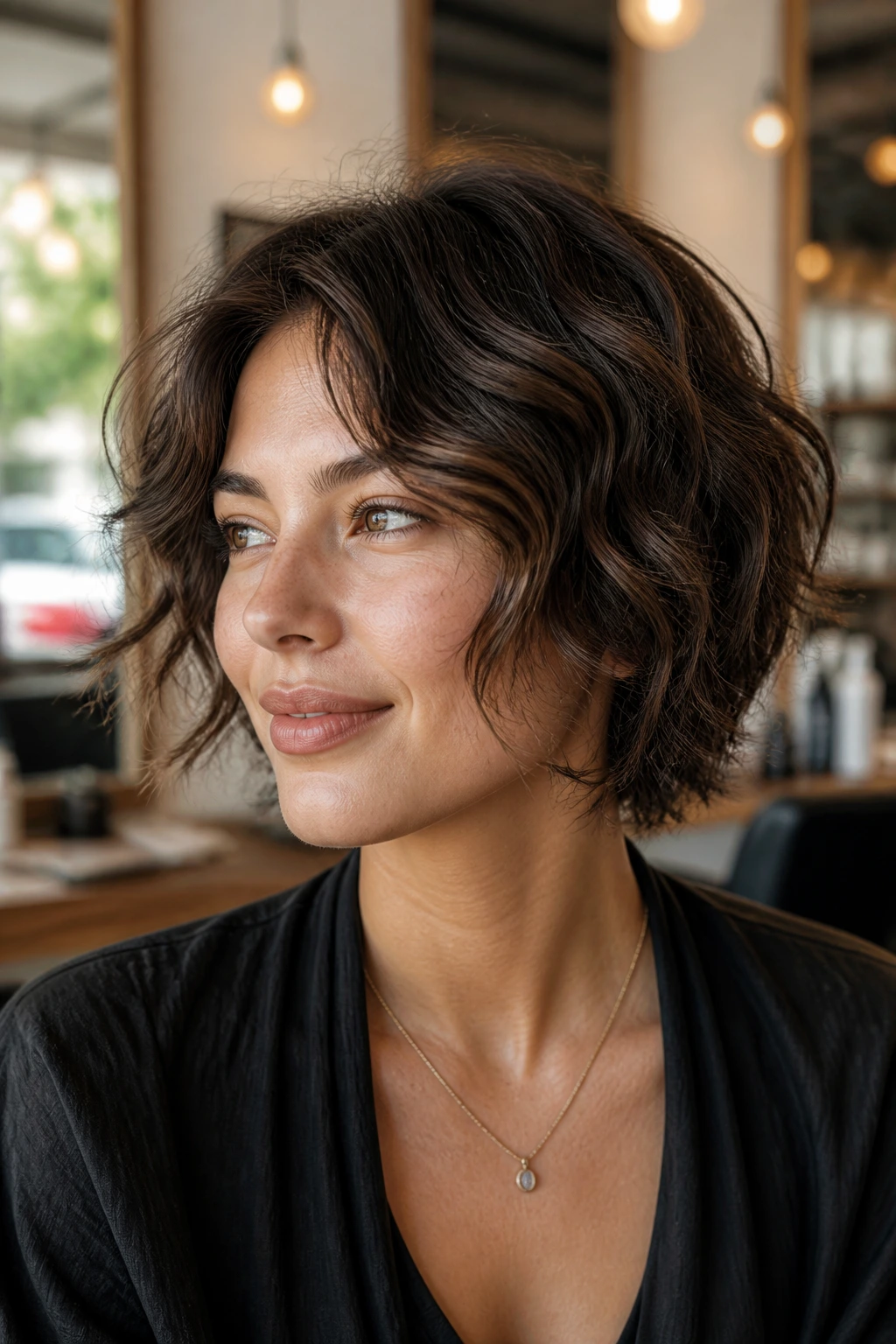
- Oval faces leave room for shape: You can wear cheekbone-skimming bangs, a chin-length edge, or a tighter crop without the face feeling crowded.
- Waves bring built-in texture: A little bend keeps short hair from looking stiff, especially around the jaw and crown.
- The right cut controls width: These styles place volume on purpose instead of letting it balloon at the sides.
- Most of them air-dry well: A mousse, a diffuser, and a bit of scrunching go a long way when the cut already has movement.
- Grow-out is kinder: When the length shifts by 3/4 inch, these shapes usually still look intentional instead of unfinished.
- There’s a version for every density: Fine waves need different weight removal than coarse waves, and the styles below account for that.
1. Jaw-Grazing Wavy Bob
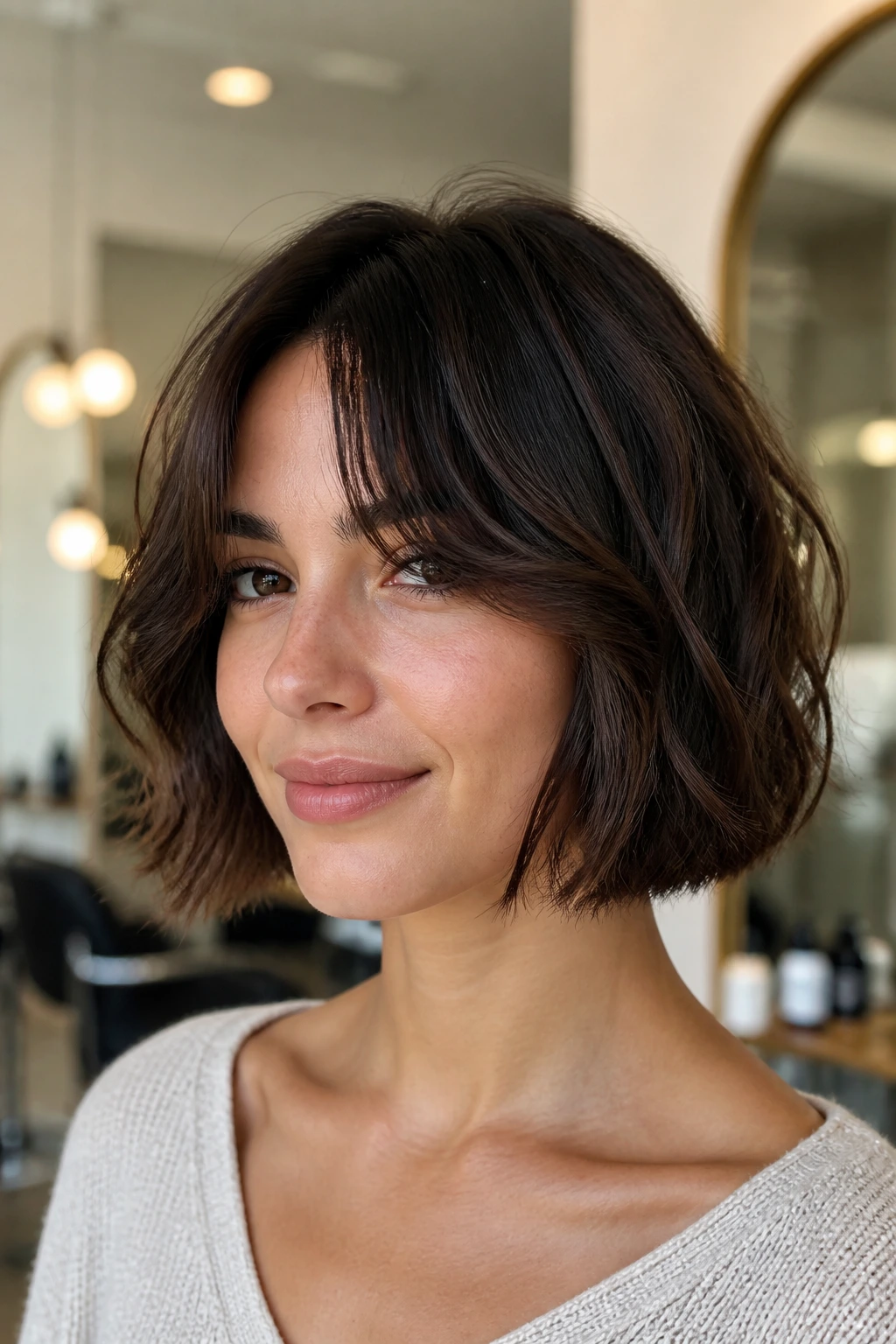
This is the cut I reach for when somebody wants short hair that still feels easy to wear on a random Tuesday. The hemline sits just below the jaw, which keeps the face open and lets the wave pattern do the visual work instead of the length.
Why it works on an oval face
A jaw-grazing line keeps attention around the lower half of the face without making the cheeks look wider. With wavy hair, that length gives the bend room to form without turning the ends into little flip-outs.
Ask for soft point-cutting through the perimeter and only light internal layering. Too much layering here turns the bob into a fuzzy cloud.
A quick side part helps the hair fall around the face instead of straight down it. That matters.
2. French Bob With Curtain Bangs
Short, cheeky, and a little undone. That’s the appeal here. A French bob usually lives around lip to chin length, and the curtain bangs break in the middle before sliding out toward the cheekbones.
The trick is that the bangs are not a separate event. They should fold into the rest of the cut, not sit on top like a shelf. On wavy hair, that softness stops the fringe from looking hard or helmet-like.
If your waves are loose, this cut dries with a clean bend and a nice little flick at the ends. If they’re stronger, it gets more personality, which is a polite way of saying it looks better the less you overwork it.
3. Textured Pixie With a Longer Crown
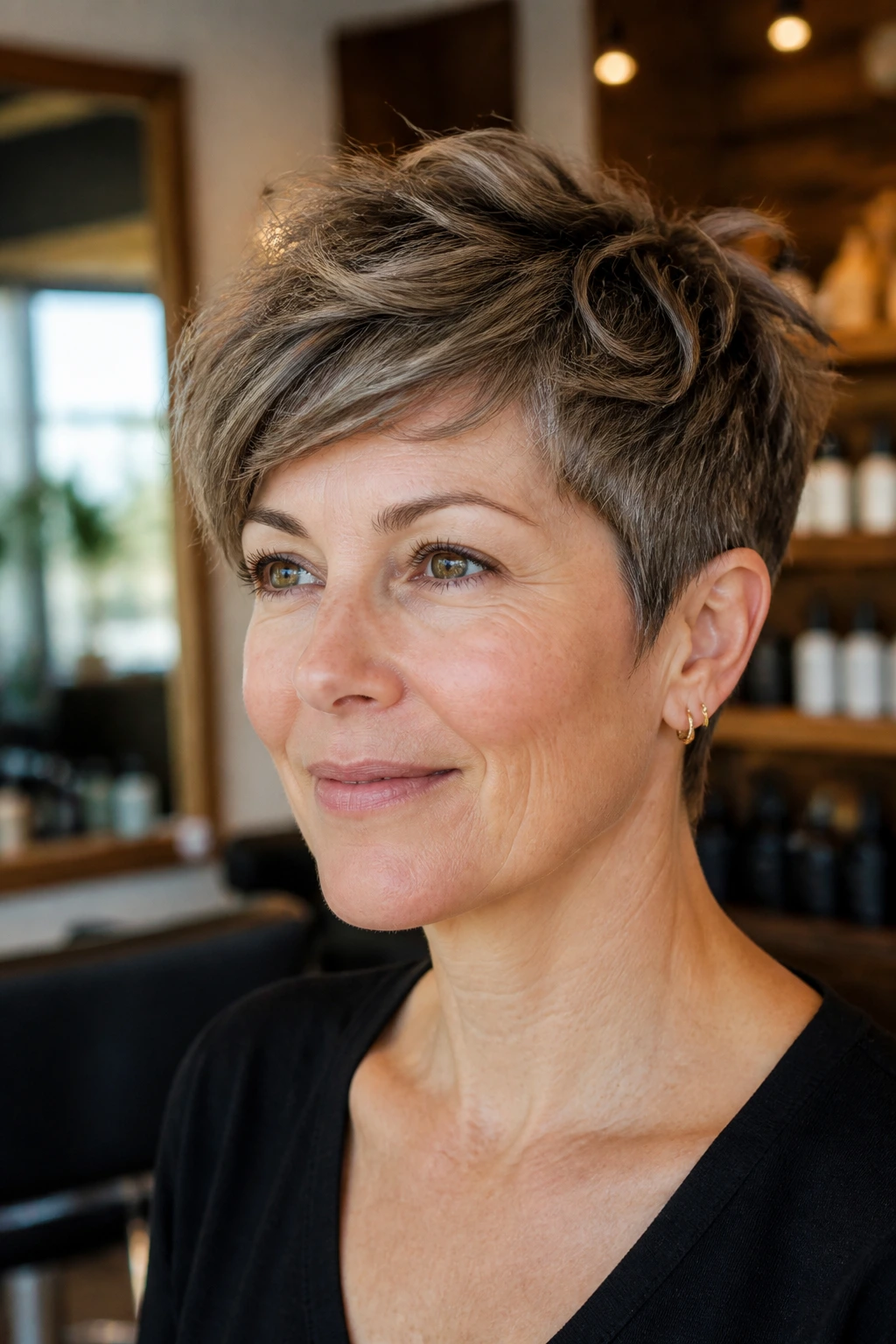
A pixie can look severe on the wrong head shape. This version avoids that by keeping the top longer — usually about 2.5 to 3 inches — and tapering the sides close to the head.
What to ask for
- Keep the crown long enough to scrunch, bend, or piece out with paste.
- Taper the sides so they hug the temples instead of standing away from them.
- Leave enough fringe to sweep across the forehead or tuck back.
Oval faces can take that lift at the top without getting stretched out. Wavy hair keeps the pixie from looking flat, which is the entire point. A tiny dab of styling cream on damp hair is usually enough; if you need more than that every day, the cut is probably too short in the crown.
4. Collarbone Lob With Invisible Layers
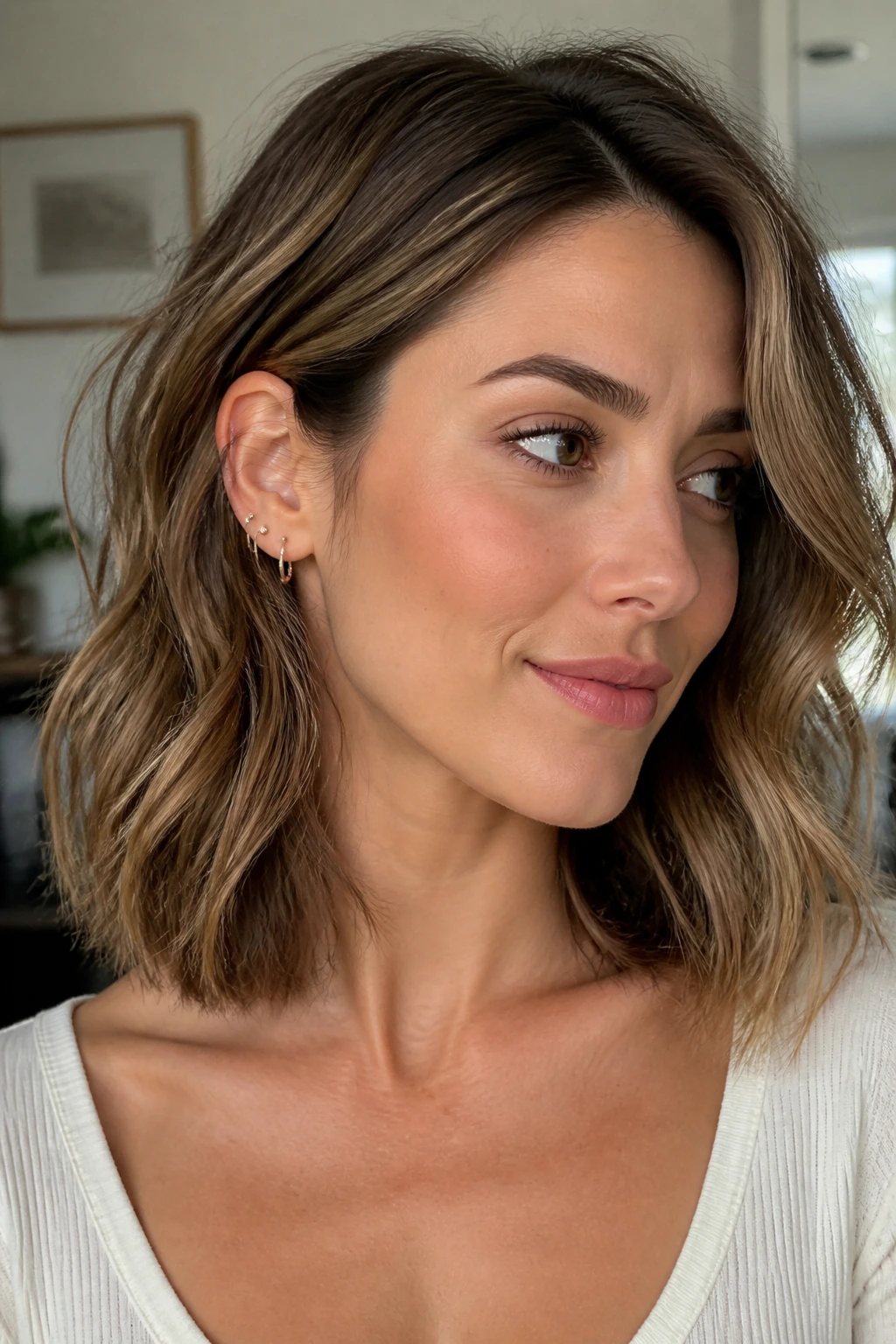
Not every short cut has to shout. Some just need to sit in the right place and move well when you turn your head. A collarbone lob does exactly that, especially on an oval face where the length can hover without dragging features down.
Invisible layers are the reason this cut works on waves. They’re tucked underneath the outer shape so the surface still looks clean, but the bulk gets removed where the hair would otherwise puff. You get motion without fray.
This is the cut for people who want to tuck hair behind one ear, throw it into a small clip, and still have something decent left over when it falls out. It’s practical in a quiet way.
5. Soft Shag Bob
The soft shag bob is what happens when you want short hair with a little attitude, but not so much attitude that you have to fight it every morning. The layers start higher than a classic bob, usually around the cheek or upper lip, so the waves land in separate pieces instead of one thick block.
Best for medium to coarse waves
If your hair has body and tends to expand when it dries, this shape removes enough weight to keep the sides from bulking out. An oval face can take the extra movement near the temples because the proportions stay balanced.
Use a light mousse on soaking-wet hair, scrunch from ends to roots, and stop touching it. That last part matters more than people think.
6. Bixie With a Side-Swept Fringe
A pixie can feel too bare. A bob can feel too much like homework. The bixie lives between the two, and that middle ground is useful when your waves need a little length up top but not much elsewhere.
The side-swept fringe gives the haircut its shape. It softens the forehead, breaks the line across the face, and keeps the oval shape from looking too long in the middle. The back stays short enough to feel easy; the top stays long enough to show movement.
Good to know
- Keep the top piecey, not fluffy.
- Ask for a tapered nape.
- Let the fringe fall diagonally, not straight down.
This one looks best when it’s a little messy. Clean, polished bixies can happen, but they’re not the point.
7. Rounded Italian Bob
This is the polished one in the lineup. Instead of ending in a boxy line, the bob curves inward very slightly, which gives the shape a softer outline and keeps waves from kicking outward at the jaw.
Unlike a blunt square bob, the rounded Italian version uses the head shape. That matters on oval faces because the curve sits close to the cheekbones without making the lower face look heavy. It also makes wavy hair behave with less effort; the bend of the cut mirrors the bend of the hair.
If you blow-dry, use a small round brush and direct the ends under for 20 to 30 seconds per section. If you air-dry, clip the front pieces inward while they set. Old trick. Still works.
8. Asymmetrical Wave Bob

This one has a little edge, but it does not need to look dramatic to work. One side is usually about half an inch to an inch longer than the other, which gives wavy hair a diagonal line to fall against.
That diagonal is the whole point. Oval faces can handle imbalance because the face itself is already balanced. The haircut gets to be the interesting part. Waves make the asymmetry look softer than straight hair would, so the result feels sharp without looking severe.
I like this cut on hair that grows outward at one side or naturally parts off-center. Instead of fighting the pattern, the shape lets the pattern set the mood.
9. Choppy Crop With Micro Fringe

Can an oval face wear a micro fringe? Yes, but only if the crop under it has enough softness to keep the whole thing from looking severe. The fringe sits short — usually well above the brows — and the rest of the cut stays broken up and airy.
The danger here is shrinkage. Wavy hair loves to spring upward once it dries, and a micro fringe can end up shorter than intended if you let the stylist cut it too tight when wet. Ask to keep a little extra length in the front and check it dry before taking more off.
This cut looks best with paste, not cream. Rub a pea-size amount between your palms, press it into the crown and fringe, and leave the ends a little piecey. That dryness is part of the look.
10. Wavy Wolf Cut Bob

The wolf cut can go theatrical fast, so the bob version is the one I prefer for most people. It keeps the shorter crown and layered sides of the wolf shape, but the length stops around chin or just below, which keeps it wearable.
The reason it flatters wavy hair is simple: it removes bulk where waves tend to swell and lets the crown rise a little without turning the sides into triangles. On an oval face, the extra lift at the top and the choppier line around the jaw create movement without dragging the face shape down.
If your hair is coarse, this cut can be a relief. It takes the pressure off the perimeter.
11. Stacked Bob With a Soft Nape
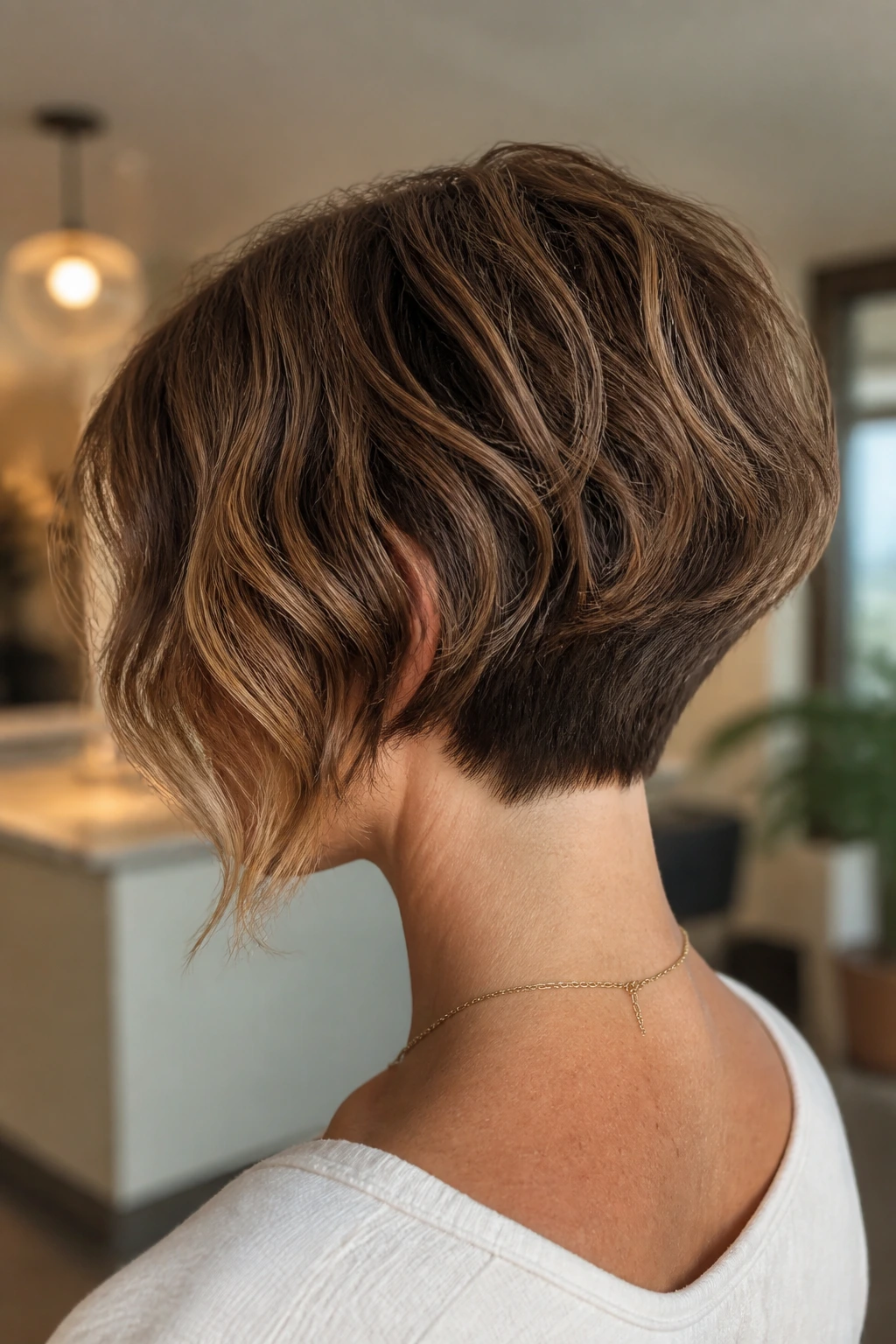
Stacked bobs get a bad reputation when they’re too stiff, too round, or too 2009. A softer version avoids that by keeping the graduation subtle at the back and leaving the front pieces longer and less polished.
The stacked shape lifts the nape and keeps the back from collapsing, which helps if your waves get flat underneath. On an oval face, that little bit of rear height adds structure without widening the cheeks. The front still frames the face; the back just does the quiet support work.
What to ask for
- Soft graduation at the nape, not a sharp shelf.
- Longer front corners that skim the jaw.
- Interior weight removal so the bob doesn’t balloon.
If you like clean lines but hate a severe finish, start here.
12. Ear-Grazing Crop With Tucked Sides
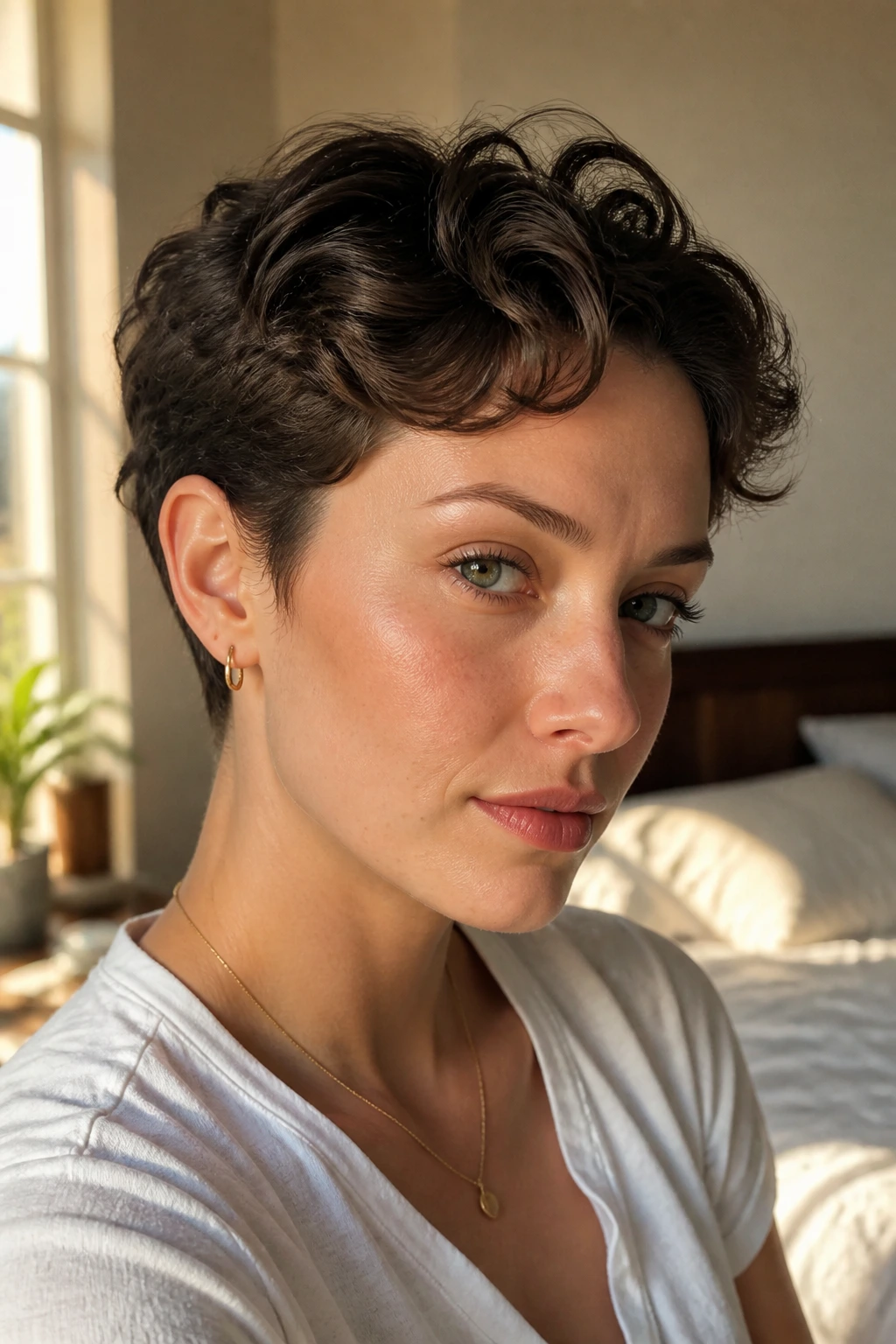
This is a sharp little cut that lives close to the head and shows off the ears, jaw, and cheekbones. The sides are short enough to tuck neatly, while the top keeps enough length — usually 3 to 4 inches — to show wave pattern.
It works on oval faces because it opens the whole side of the face instead of hiding it. With wavy hair, the texture adds softness so the crop doesn’t feel harsh. That contrast is the good part.
Wear it with a deep side part if you want more drama, or push it forward for a slightly sweeter look. Either way, the crop stays modern because the sides are clean and the top is doing the visible work.
13. Layered Lob With a Deep Side Part

Want something short without giving up every last bit of length? The layered lob gives you room to breathe. It lands around the collarbone, but the deep side part and internal layers keep it from feeling heavy.
Why the side part matters
A deep side part builds root lift right where wavy hair can get flat. It also changes the line of the face in a useful way, letting the front pieces sweep across the forehead and cheekbone instead of falling straight down.
This is one of the easiest cuts to live with if you air-dry a lot. It still looks intentional when it bends irregularly, which is more than I can say for some blunter lob shapes.
14. Curved Pageboy Bob

The pageboy shape is underrated. The ends curve under, the line stays smooth, and the whole cut has a rounded, tucked-in look that works well when you want order without stiffness.
Wavy hair benefits from that inward finish because the wave gets a direction. Instead of kicking out at the jaw or puffing at the temples, the hair follows the curve. On an oval face, the pageboy keeps the eye moving around the features instead of stopping at one hard edge.
Ask your stylist for a soft bevel through the ends, not a blunt shelf. If the line is too square, the whole thing turns boxy once the waves dry.
15. Tousled Tapered Pixie
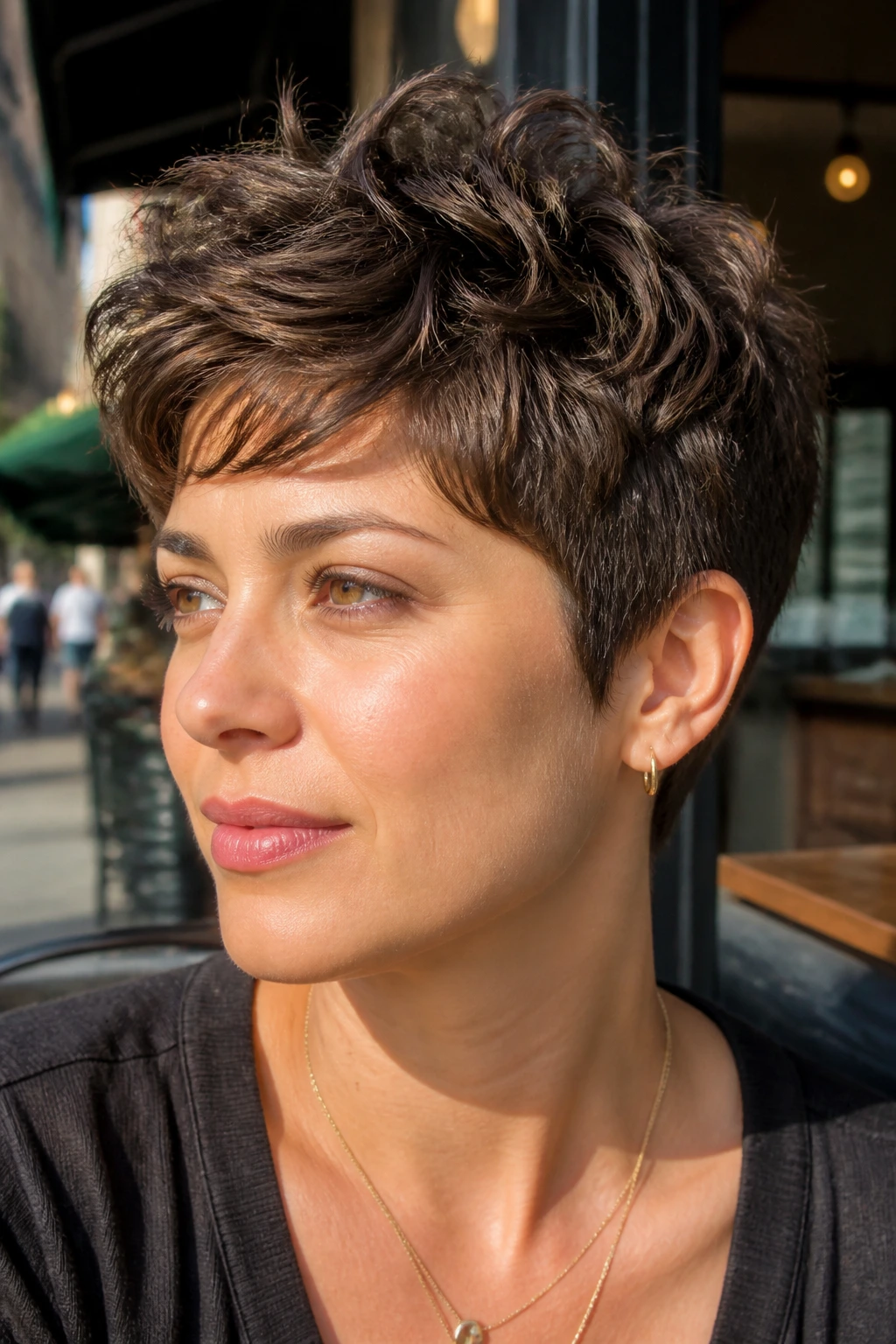
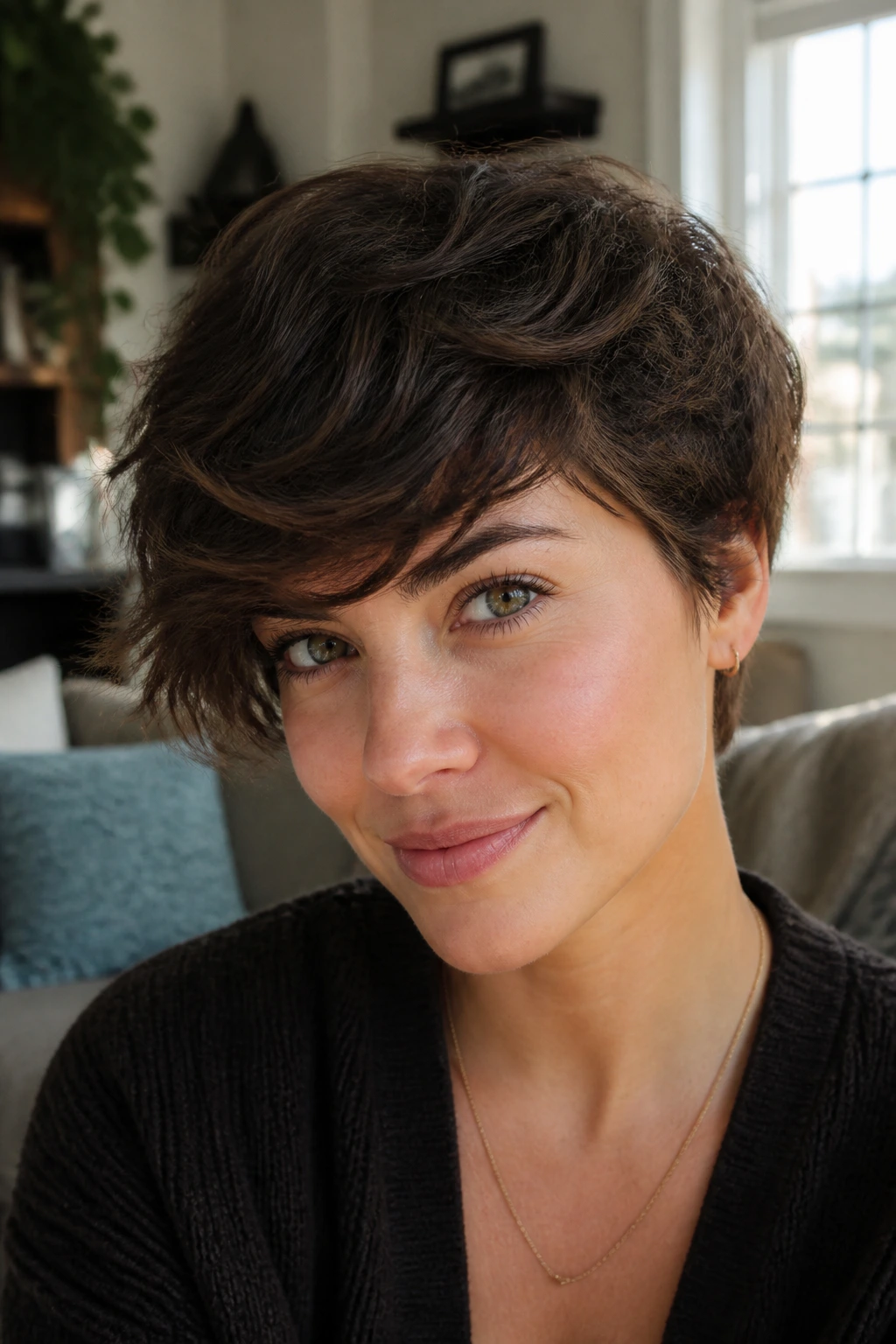
A tapered pixie is for the person who wants the sides close, the neck clean, and the top loose enough to mess with in the morning. The taper at the nape keeps the back neat, while the longer top pieces let the wave pattern show.
This cut is a nice match for oval faces because the height stays controlled. You can push the top forward, sweep it to one side, or let it lift at the crown. It never needs to be perfectly flat.
I like this one on people who wear glasses. The shape keeps the face open, which means the frames can do their thing without hair fighting them.
16. Chin-Length Bob With Piecey Ends
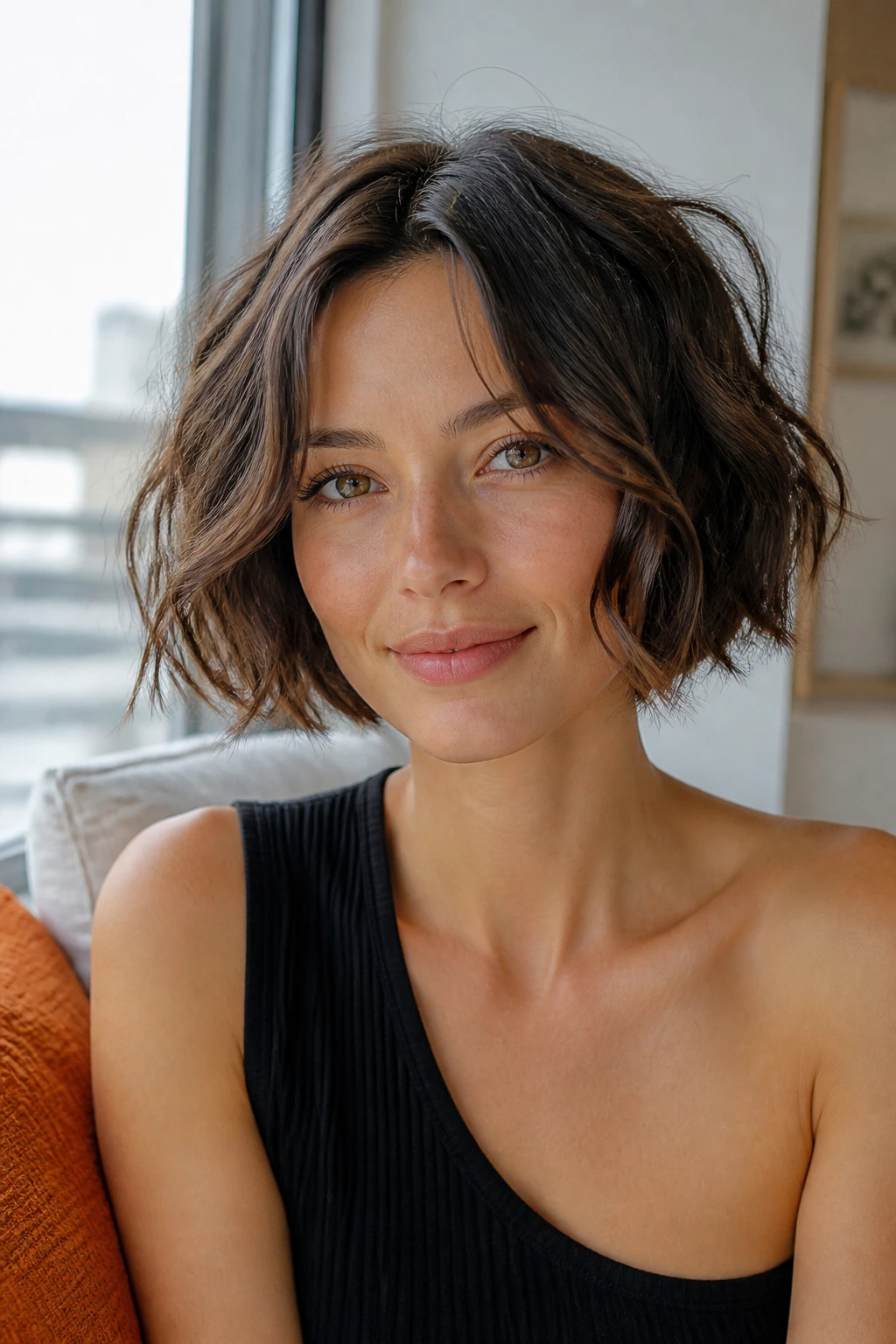
Chin length is one of those zones that sounds simple until you see it on wavy hair. Then it gets interesting. The cut lands right at the jaw, which can make the face look more defined and the waves look more deliberate.
The difference is in the ends. Ask for piecey point-cutting so the perimeter breaks up a little instead of sitting as one heavy line. That softens the bob just enough to stop it from reading blocky, especially if your waves clump in thicker sections.
This is a good choice if your hair is medium density and you want visible movement without a shag’s extra layers.
17. Modern Mullet Bob
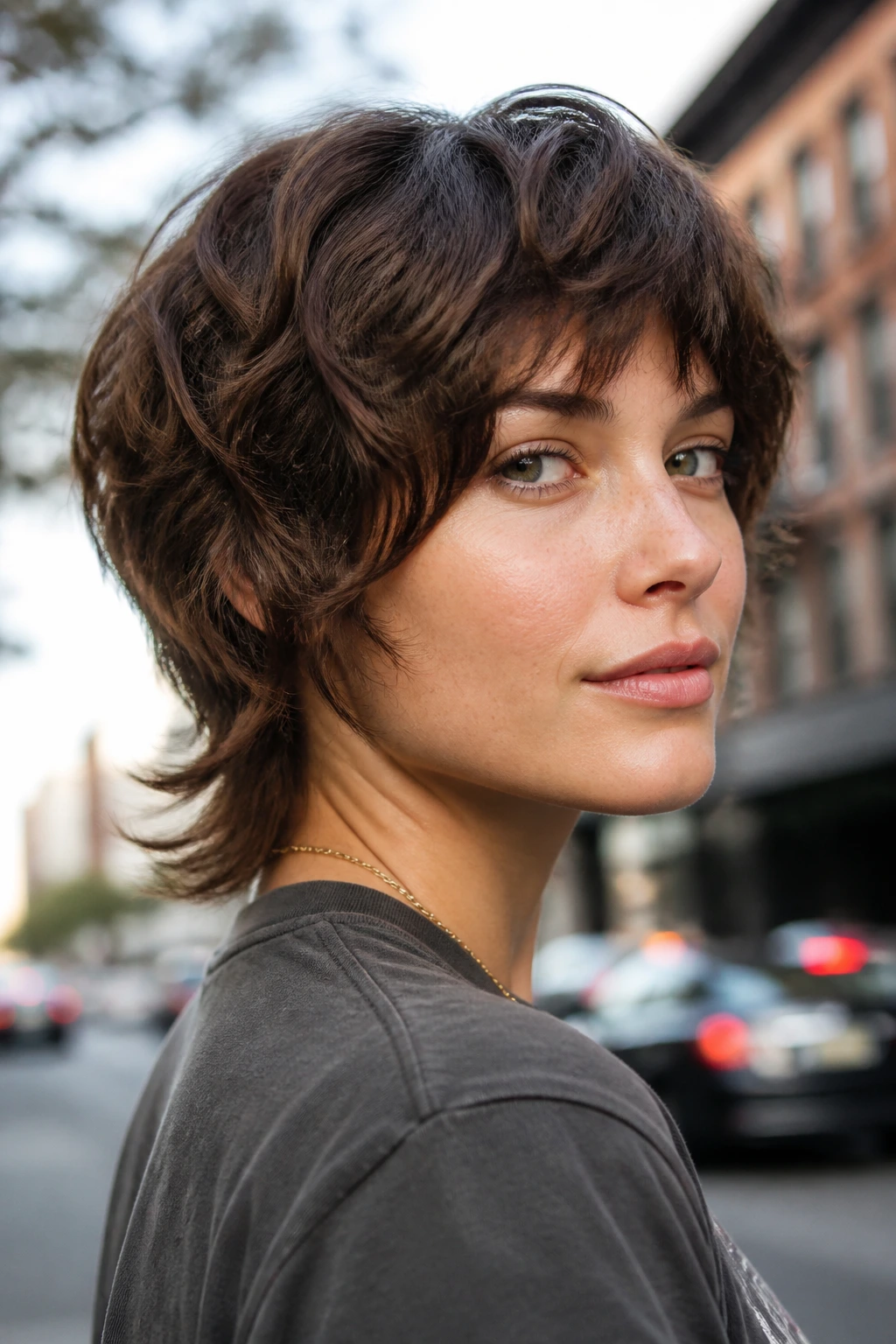
A modern mullet bob sounds bolder than it often is. The front stays bob-like, usually around chin length, while the back hangs a little longer and the crown keeps extra lift. The result is a soft edge, not a costume.
If your waves are thick, this shape can be a lifesaver because it removes weight from the sides and lets the back fall cleanly. Oval faces can carry the slightly longer back without looking bottom-heavy, especially when the front pieces are kept light and a little broken up.
This one does not need to be wild. In fact, the best version is controlled enough to look stylish in daylight, which is a better test than some salon-photo fantasy.
18. Blunt Bob With Airy Ends
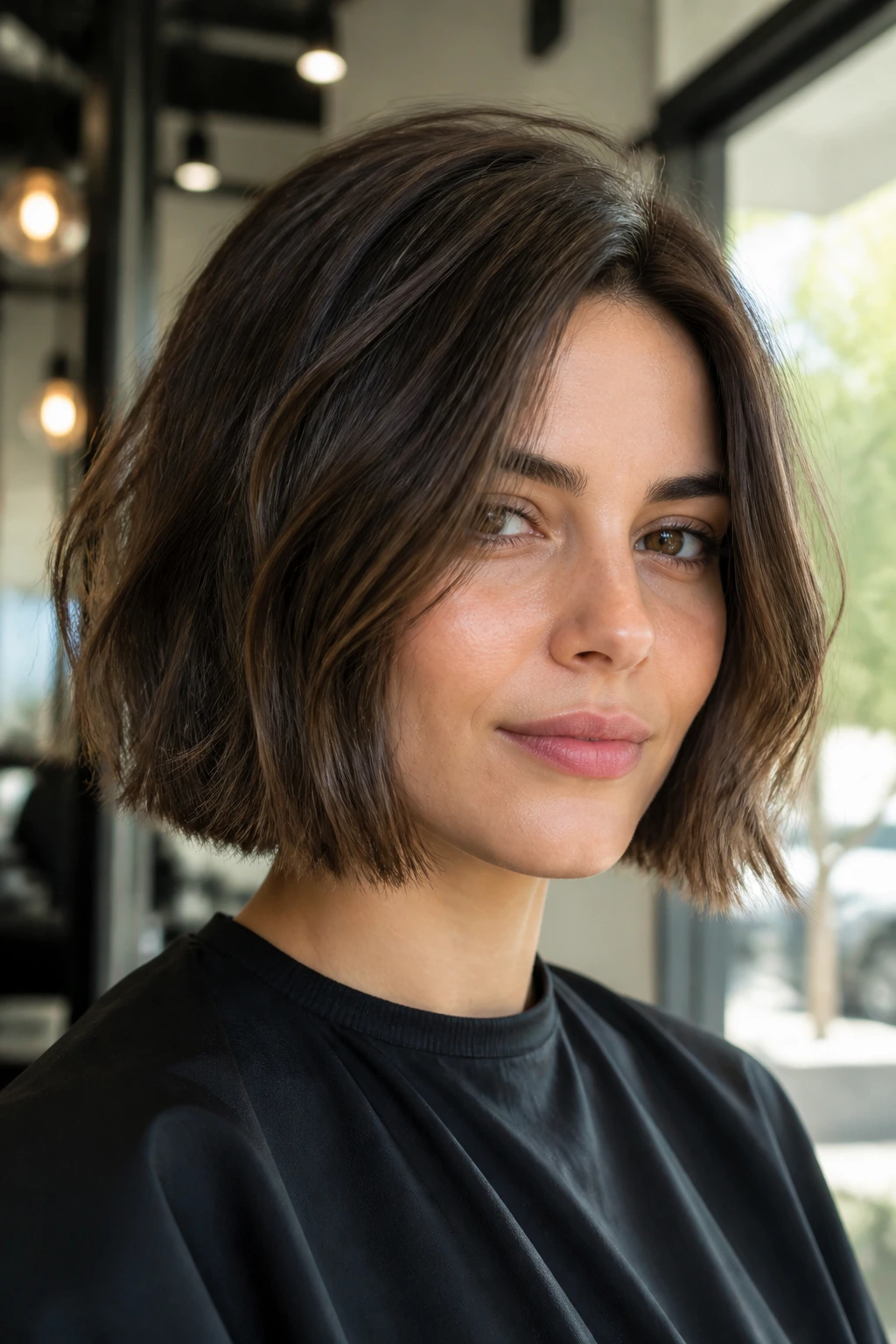
Can wavy hair wear a blunt bob? Yes, but only if the ends are softened enough to keep the line from turning into a shelf. The perimeter stays clean, but the very ends get point-cut so the waves can settle.
That bluntness can look great on oval faces because the shape feels decisive. There’s no extra width at the cheekbone, no soft distraction around the jaw. The face stays open, and the hair acts like a frame rather than a curtain.
This cut loves fine to medium waves. If your hair is coarse, ask for a bit more interior removal so the bob doesn’t expand at the sides.
19. Sweeping Fringe Bob
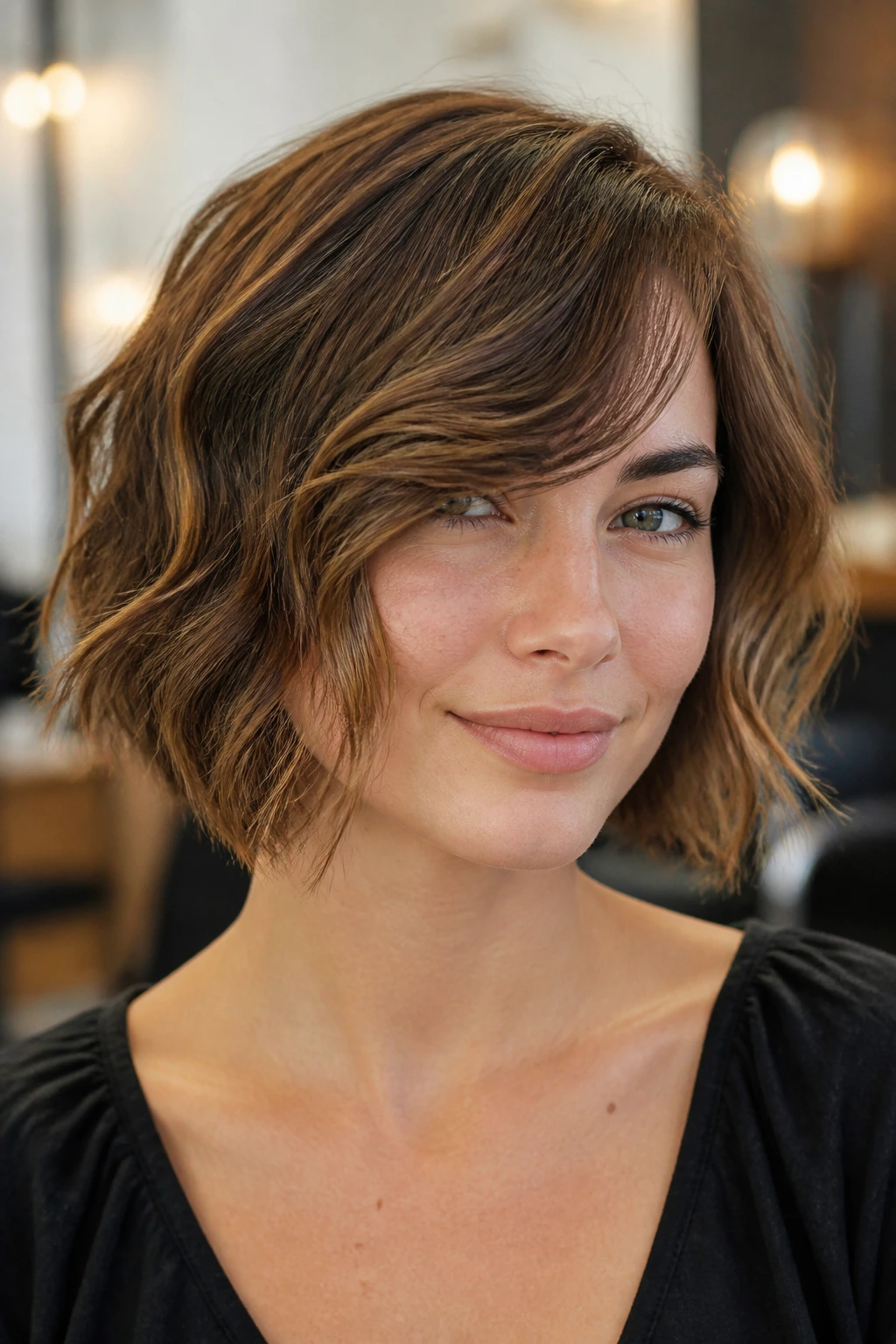
This is the friendlier version of a fringe-heavy bob. The bangs sweep from a side part and blend into the front pieces instead of sitting straight across the forehead. For people who like bangs but hate the maintenance of perfect curtain bangs, that matters.
The diagonal line flatters an oval face by bringing attention to the eyes and cheekbones without boxing the forehead in. Wavy hair helps here because the fringe bends naturally; you’re not forcing a straight sheet of hair to behave like one.
A small round brush can help at the roots, but you do not need a full blowout. A little bend at the front is enough.
20. Soft Curly Crop With Face-Framing Pieces
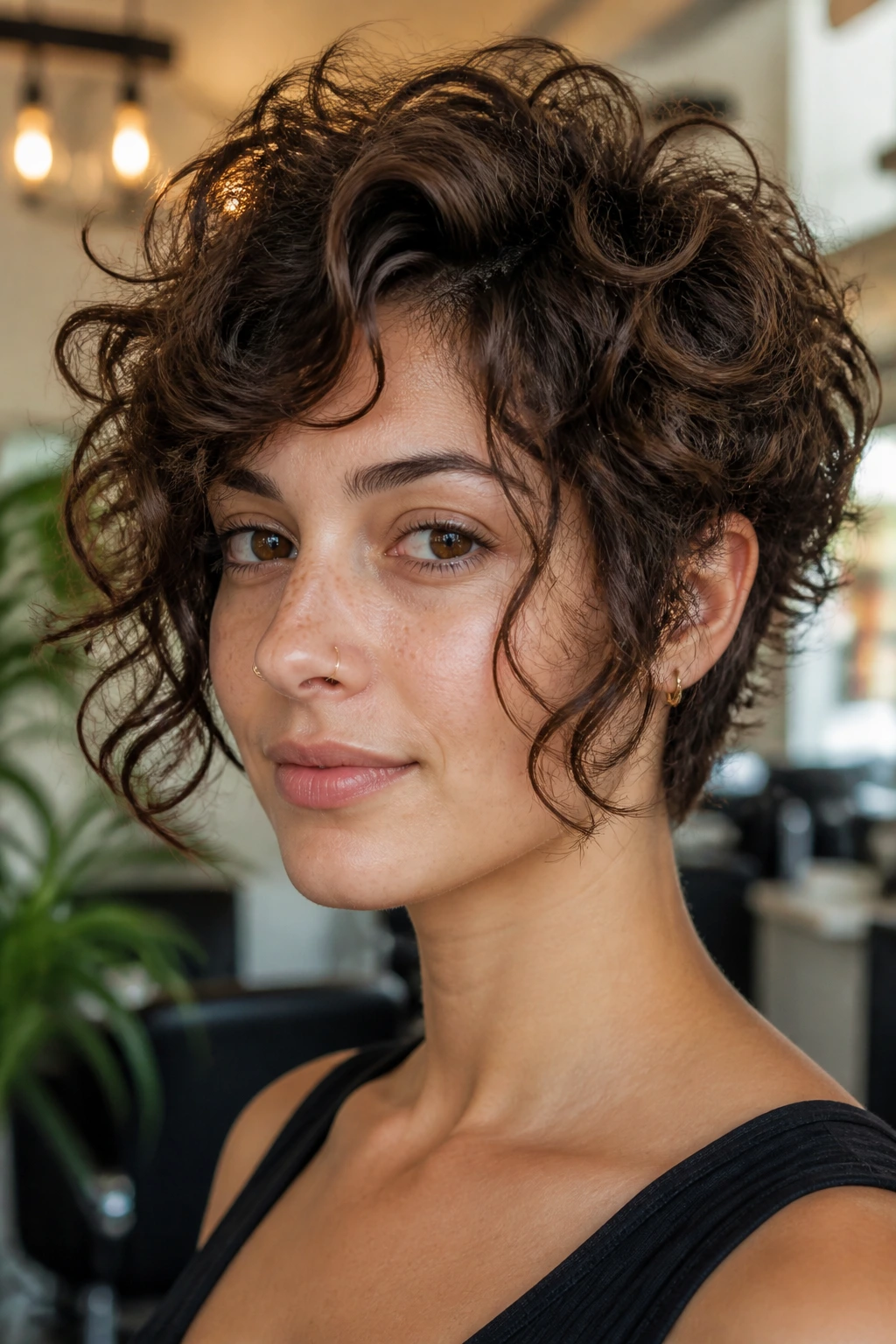
If your waves lean close to curls, this is one of the easiest ways to go short without losing shape. The crop stays compact, but the face-framing pieces are left long enough to sit around the cheekbones and mouth.
That front length is the balancing act. Oval faces do well with a little movement around the front, and waves that border on curls need room to spring. Too short, and the cut can balloon. Too long, and the shape loses its lift.
I’d choose this cut for someone who wants texture first and polish second. It looks best when it’s a little imperfect. Which, thankfully, is where wavy hair usually lives anyway.
Why Oval Faces and Wavy Hair Give You More Room Than Most Pairings
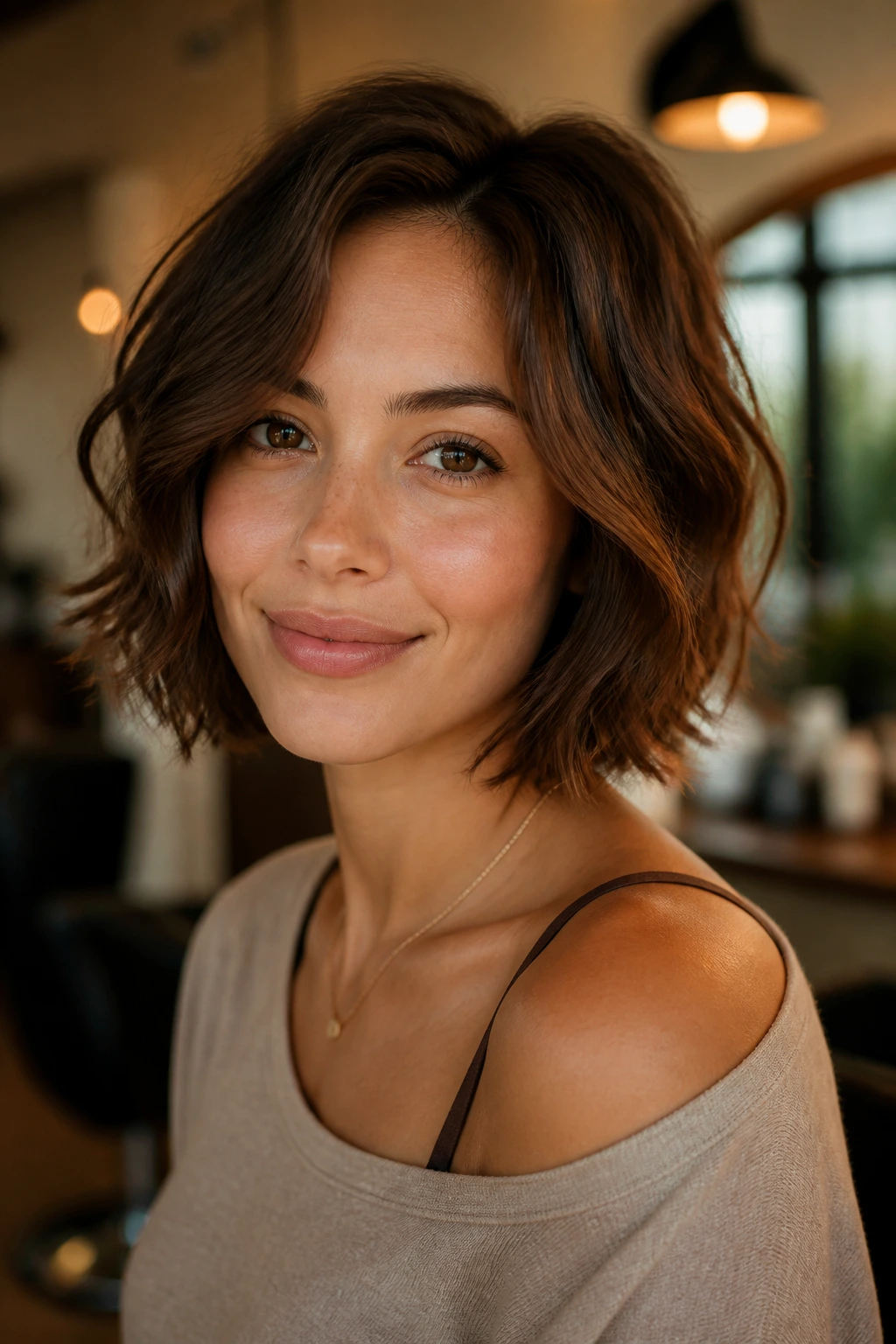
Oval faces are forgiving, but that word gets used lazily. What it really means is that the forehead, cheekbones, and jawline already sit in a balanced ratio, so the haircut does not have to correct anything before it starts. That gives a stylist room to decide where to place width, lift, or softness without throwing the proportions off.
Wavy hair adds a second layer of choice, and a second layer of trouble. A wave pattern can support a shape beautifully when the cut respects its movement. It can also puff, bend away from the neck, or collapse into weird flat spots if the layers start too high or the perimeter gets too blunt.
Where the face shape helps
Oval faces can handle length around the cheeks, fringe across the forehead, or shorter corners at the jaw. That means a bob can lean rounded, a pixie can go airy, and a lob can sit a touch longer in front without making the face look shorter or wider than it is.
Where the wave pattern complicates things
Shorter waves shrink. They also show bulk fast. A cut that looks neat on wet hair may end up sitting half an inch shorter and noticeably wider once it dries. That’s why a good consultation matters more than a trendy name on a mood board.
The smartest short cuts for this pairing place the weight line on purpose: at the jaw, under the cheekbone, around the crown, or through the nape. The haircut should decide where the eye lands. If it does not, the wave pattern will decide for you, and it is less polite about it.
The Tools That Make These Cuts Behave
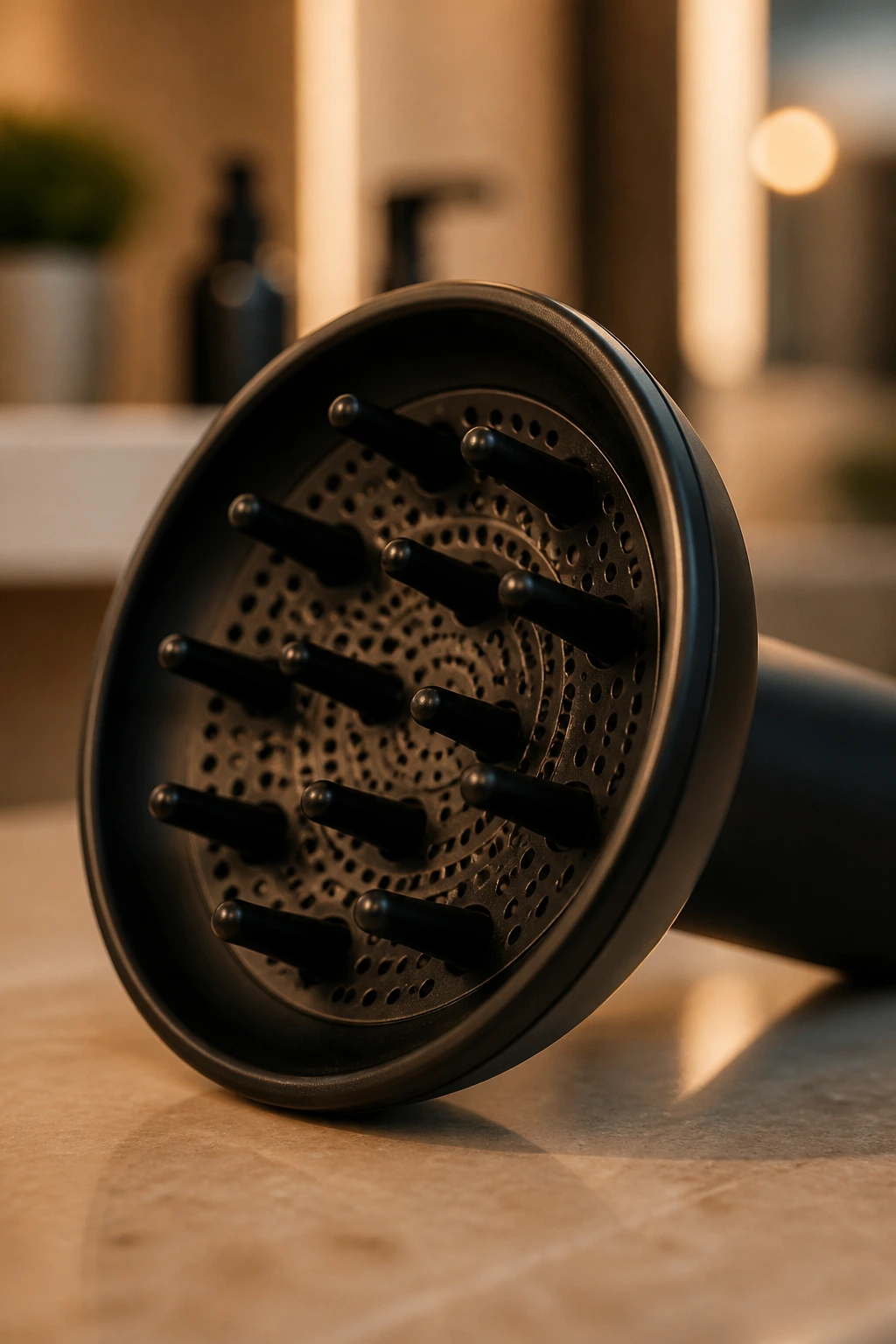
- Diffuser attachment: A diffuser keeps wave clumps together and dries the roots without blasting the whole shape apart.
- Lightweight mousse: Use this on damp hair for lift and hold without the sticky helmet effect that heavy creams can cause.
- Curl cream or wave cream: Best for medium to coarse waves that need smoother definition through the mids and ends.
- Texturizing spray: A few sprays at the crown or ends adds separation when the cut needs a little grit.
- Wide-tooth comb: Better than a brush for distributing product through wavy hair without breaking the pattern.
- Small round brush: Handy for bending a bob under or lifting a fringe at the roots.
- Duckbill clips: Useful for root clipping while hair dries, especially on crown-heavy or flat-rooted cuts.
- Heat protectant: Use it before any blow-dry or touch-up iron; short hair gets batted around enough without extra heat damage.
- Satin pillowcase: Helps keep short waves from getting mashed into weird angles overnight.
- Light serum: One or two drops on the ends can calm frizz, but too much will flatten the shape fast.
How to Talk to Your Stylist Before the First Snip
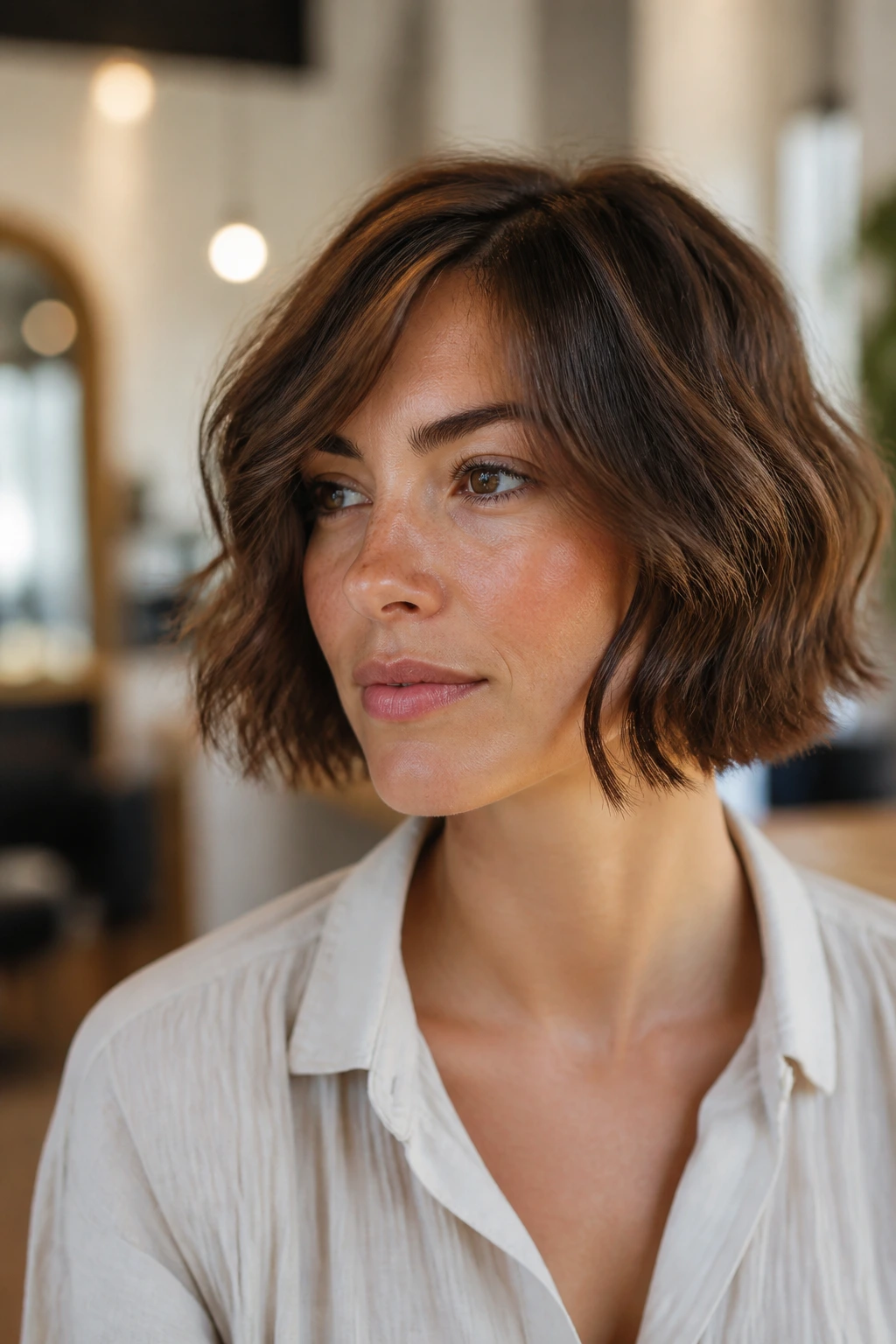
Bring photos, yes, but bring the right kind of photos. One picture should show the silhouette you want from the front. Another should show the side, because a bob that looks cute head-on can turn bulky at the ear if the side view is wrong.
Be specific about where the length should sit. Say “jaw-grazing,” “chin-length,” or “collarbone,” and pair that with a note about how your waves behave dry. If your hair shrinks a full inch, say so. If it puffs at the sides, say that too.
Ask your stylist where they plan to remove weight. That sounds technical, because it is. Internal layers matter more on wavy hair than a vague promise of “texture.” You want to know whether the bulk is coming out at the crown, through the sides, or under the perimeter.
Fringe is another place to be blunt. If you want bangs, say how much forehead you want left visible and whether you wear them swept, split, or tucked. A good stylist can work with that. A rushed one will guess.
How to Style These Cuts on Real Mornings
Short wavy hair does not need a 20-minute production to look good. It needs the right amount of product in the right spot.
Air-dry routine: Work mousse or wave cream through soaking-wet hair, scrunch from the ends upward, and leave it alone until it’s 80 to 90 percent dry. Touching it too early breaks up the wave clump and makes the cut look frizzier than it is.
Diffuser routine: Dry the roots first on low heat and low speed, then cup the ends for 20-30 second bursts. Don’t hover the dryer too close to the scalp, or the crown goes fuzzy. That’s the part people often mess up.
Smoother finish: For bobs and lobs, bend the front pieces with a round brush or a 1-inch iron, then leave the rest natural. Mixing smooth front pieces with wavy mids keeps the cut from feeling overdone.
Day-two refresh: Mist the hair lightly with water, add a pea-size amount of leave-in or mousse, and scrunch once. If the roots collapsed, clip them up for 10 minutes while the hair resets.
Additional Tips and Styling Boosters
Root Lift: If your waves lie flat at the crown, use duckbill clips at the roots while the hair dries. Two clips on each side can change the whole shape without adding product.
Frizz Control: Put your styling cream on soaking-wet hair, not towel-dried hair. Wavy hair that starts drying before product goes on tends to frizz at the ends first, which is where the haircut looks most tired.
Texture Boost: For bob and pixie shapes, a tiny amount of texturizing spray at the mids can make the layers separate without turning crunchy. Spray into your hands first if the nozzle is heavy; you want mist, not a wet spot.
Glass-and-frames move: If you wear glasses, keep the side sections shorter or tuckable. Hair that keeps brushing your frames gets annoying fast, and the annoyance starts showing in how you style it.
Grown-out grace: Most of these cuts stay better-looking if the nape is cleaned up before the whole shape gets shaggy. A small trim there can buy you two extra weeks of decent shape.
Common Mistakes to Avoid
- Cutting too short at the jaw: Wavy hair can spring up and flare out right where the face is widest. The fix is to keep a little extra length and check the cut dry before taking more off.
- Too many high layers: When layers start too high on coarse waves, the top can frizz while the bottom goes thin. Ask for controlled internal removal instead of a chopped-up surface.
- Using heavy cream on fine waves: Fine hair gets stringy fast under rich styling cream. Swap to mousse or foam, which gives lift without dragging the cut flat.
- Ignoring fringe shrinkage: Bangs that look perfect wet can bounce way above the brow once dry. Leave them longer than you think you need, then refine in tiny snips.
- Letting the line go stale: Short bobs and pixies lose shape when the nape and sideburns grow out first. If the silhouette starts to puff at the edges, the whole haircut reads messy instead of relaxed.
Variations and Adaptations to Try

The Fine-Wave Float: Keep the perimeter blunt and the layers minimal. This version gives fine waves a fuller outline and keeps the ends from looking see-through.
The Bulk-Relief Shag: If your waves are thick or coarse, ask for more internal removal around the sides and crown. The cut will sit closer to the head and dry with less triangle shape.
The Fringe Switch: Swap curtain bangs for a side-swept fringe if you want less forehead commitment. The diagonal line is easier to grow out and usually behaves better on humid days.
The Low-Heat Air-Dry Cut: Ask for a shape that still looks good when air-dried flat against the head. That means soft ends, controlled layering, and no ultra-short fringe unless you love styling it every morning.
The Grow-Out Bob: Keep the front just under the chin and the back slightly shorter. As it grows, it turns into a lob instead of becoming an awkward in-between length.
How to Keep the Shape Between Salon Visits
Pixies and bixies need the most attention. Plan on a trim every 4 to 6 weeks if you want the nape clean and the top pieces from falling into your eyes. That’s not vanity; that’s shape maintenance.
Bobs usually hold for 6 to 8 weeks before the perimeter starts slipping. If you like a crisp jaw line or a neat fringe, don’t push past that too far. A clean edge loses its point once the corners start dragging.
Lobs and longer shags can stretch to 8 to 10 weeks, but the face-framing pieces still matter. If the front starts to turn into one long curtain, the shape loses the reason you chose it in the first place.
Wash frequency depends on scalp oil, not haircut trend. Most wavy short cuts do better with 2 to 4 washes a week and a dry shampoo refresh at the crown between washes. Sleep on a satin pillowcase, and do not go to bed with dripping-wet roots unless you enjoy waking up to dents.
Frequently Asked Questions

Can oval faces wear a pixie with wavy hair?
Yes, and the trick is keeping some length on top. A wavy pixie with a longer crown preserves softness and keeps the face from looking too stripped down.
Is a blunt bob a bad choice for wavy hair?
Not at all, but it needs a soft edge. A blunt line with point-cut ends works much better than a sharp shelf, because the latter can flare out once the wave dries.
How short can wavy hair go before it starts puffing out?
That depends on density, but chin length and jaw length are usually safer than anything tighter if your waves are broad or coarse. The shorter you go, the more the sides need weight control.
Should I get bangs with an oval face?
If you want them, yes. Oval faces can wear fringe well, but the style should match your wave pattern; curtain bangs and side-swept fringe are easier than a blunt straight line.
What if my waves are fine and limp?
Keep the layers minimal and the perimeter cleaner. Fine waves need support from the outline, not a lot of internal chopping, or the cut starts to look stringy by day two.
What if my waves are coarse and thick?
Ask for bulk removal at the sides, crown, or nape, depending on where the shape balloons. Coarse wave patterns usually need more internal shaping than fine ones.
How often should I trim these cuts?
Pixies every 4 to 6 weeks, bobs every 6 to 8, and lobs around 8 to 10 works for most people. Fringe often needs a smaller trim sooner because it shows shrinkage first.
Can I air-dry all of these cuts?
Most of them, yes, but the result depends on the cut and your wave pattern. Air-drying works best when the shape was built to leave room for bend instead of forcing everything into one blunt outline.
What should I say if I want low maintenance?
Tell the stylist you need a cut that still looks good with mousse and an air-dry, not a daily round-brush routine. That one sentence will save you from a shape that only behaves in the salon chair.
A Cut That Moves With You

Short hair on an oval face should not feel like a test. Wavy hair should not feel like a problem to solve. The sweet spot is the cut that gives the bend somewhere useful to land, then keeps the outline clean enough that you’re not fighting it every morning.
The best part is how flexible these shapes are. A jaw-grazing bob can look neat and polished. A bixie can look a little rebellious. A lob can buy you some breathing room while still taking weight off your shoulders. Pick the one that matches your wave pattern, not the one that looks easiest in a flat studio photo, and the grow-out will be kinder than you expect.