



Fine hair has a sneaky habit of giving up halfway through the day. Round faces have a different trick: they make every bit of width at the cheeks feel louder than it looked on the way out the door. Put those two together, and a style that seems fine in the mirror can flatten fast, widen the face, or do both at once.
That is why easy hairdos for round faces and fine hair need a slightly different playbook. You want height where the eye first lands, softness where the face needs it, and enough structure that the style still looks awake after a commute, a breeze, or an hour spent bending over a laptop. The good news: you do not need a thousand pins or salon-level blowouts to get there.
Most of the styles below lean on one simple idea: shape beats volume. A deep part, a lifted crown, a diagonal braid, a bit of bend away from the cheeks — those small choices do more than a heavy wave ever will. And yes, a few of them are so fast you can do them with one eye on the clock and one hand holding your coffee.
Why These Easy Hairdos Earn Their Keep

- Crown lift: A little height at the top pulls the eye upward, which makes a round face look longer without needing extra inches of hair.
- Diagonal lines: Side parts, side braids, and swept bangs break up the widest point of the face instead of spotlighting it.
- Controlled softness: Loose pieces near the temples soften the edges, but keeping the cheeks mostly open keeps the silhouette slimmer.
- Texture over bulk: Fine hair holds shape better when you build bends, twists, and braids rather than trying to puff it into a big round cloud.
- Fast styling: Most of these looks work best on slightly lived-in hair, which means less fighting with clean hair that refuses to stay put.
- Low-tool commitment: A tail comb, a few elastics, and a small claw clip can cover most of the lineup.
1. Deep Side Part With a Soft Bend
A deep side part is one of those boring-sounding moves that does a ridiculous amount of work. On a round face, that diagonal line changes the whole shape of the frame, and on fine hair, it gives the roots a place to lift instead of lying flat and polite.
Why It Works
A center part can split fine hair into two thin curtains that sit right beside the cheeks. A deep side part does the opposite. It creates asymmetry, and asymmetry is your friend when you want the face to read a little longer.
Add one soft bend through the mid-lengths, not a tight curl at the cheeks, and the style stays airy instead of puffy. That bend should live below the cheekbone line. Above it, you risk building width where you do not need any.
A 1-inch curling iron or a flat iron wave is enough. You are not trying to make ringlets. You are trying to build a curve that looks accidental, then keep it from collapsing.
Quick tip: Flip the heavier side behind one ear. It opens one side of the face and gives the whole style a cleaner, taller shape.
2. Crown-Lift Half-Up Clip
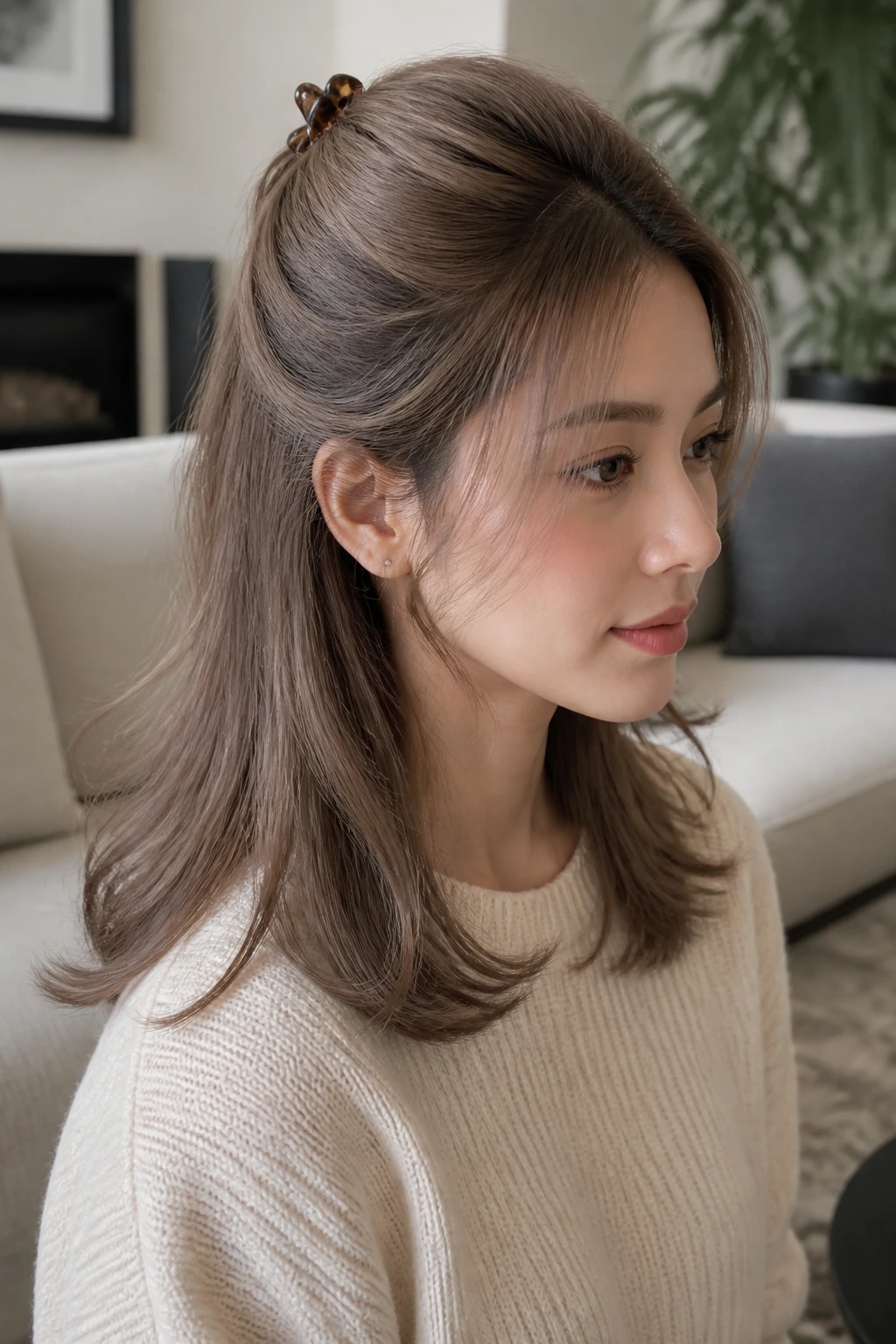
Why does a tiny half-up clip work so well on fine hair? Because it puts the lift right where people look first. The crown is the sweet spot for round faces, and even a small bump there makes the whole face feel a touch longer.
Take the top section from temple to temple, tease the underside once, and clip it loosely so the lift stays rounded instead of pinched flat. Leave the lower half loose and lightly bent through the ends. That contrast — lifted top, softer bottom — is what keeps the style from looking heavy.
Use less hair than you think in the clipped section. If you grab too much, the clip drags the crown down and the style starts to sag by lunch. Two bobby pins can work better than one bulky clip if your hair is especially fine.
And yes, this is a strong second-day style. Day-one clean hair can slide out of the clip. A little texture gives the pins something to hold.
3. Low Ponytail With Cheekbone Pieces
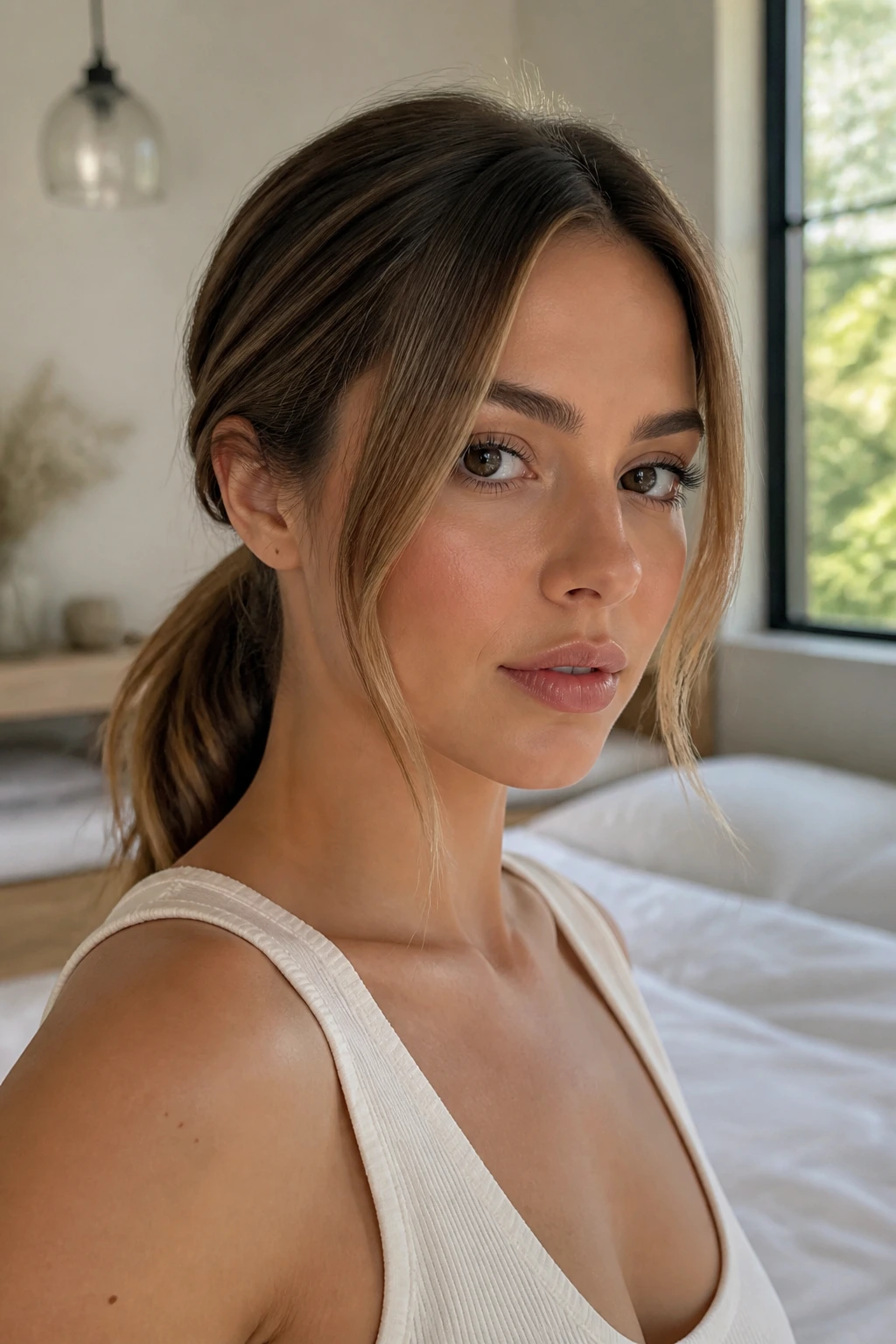
You know that morning when your hair looks too flat to be a “style” and too messy to be left alone? This fixes that. A low ponytail at the nape gives the eye a vertical line, while two slim face-framing pieces soften the cheeks without widening them.
Keep the pony low and smooth at the top, but not tight enough to pull the hairline back. A tight pony on a round face can make the head look more circular, especially if every side piece is scraped flat. Leave the front pieces free, then bend them away from the face with a 1-inch iron or a round brush.
Small Details That Matter
- Tie the pony at the nape, not the middle of the head.
- Wrap a thin strand around the elastic so it looks finished.
- Spray the crown lightly and smooth with your palms, not a brush.
- Leave the face-framing pieces thin enough to move.
A low pony is one of the easiest styles to dress up or down. A clean center part makes it sharper; a side part makes it softer. Either way, the nape anchor keeps the shape long instead of wide.
4. Messy Top Knot With Lift at the Crown
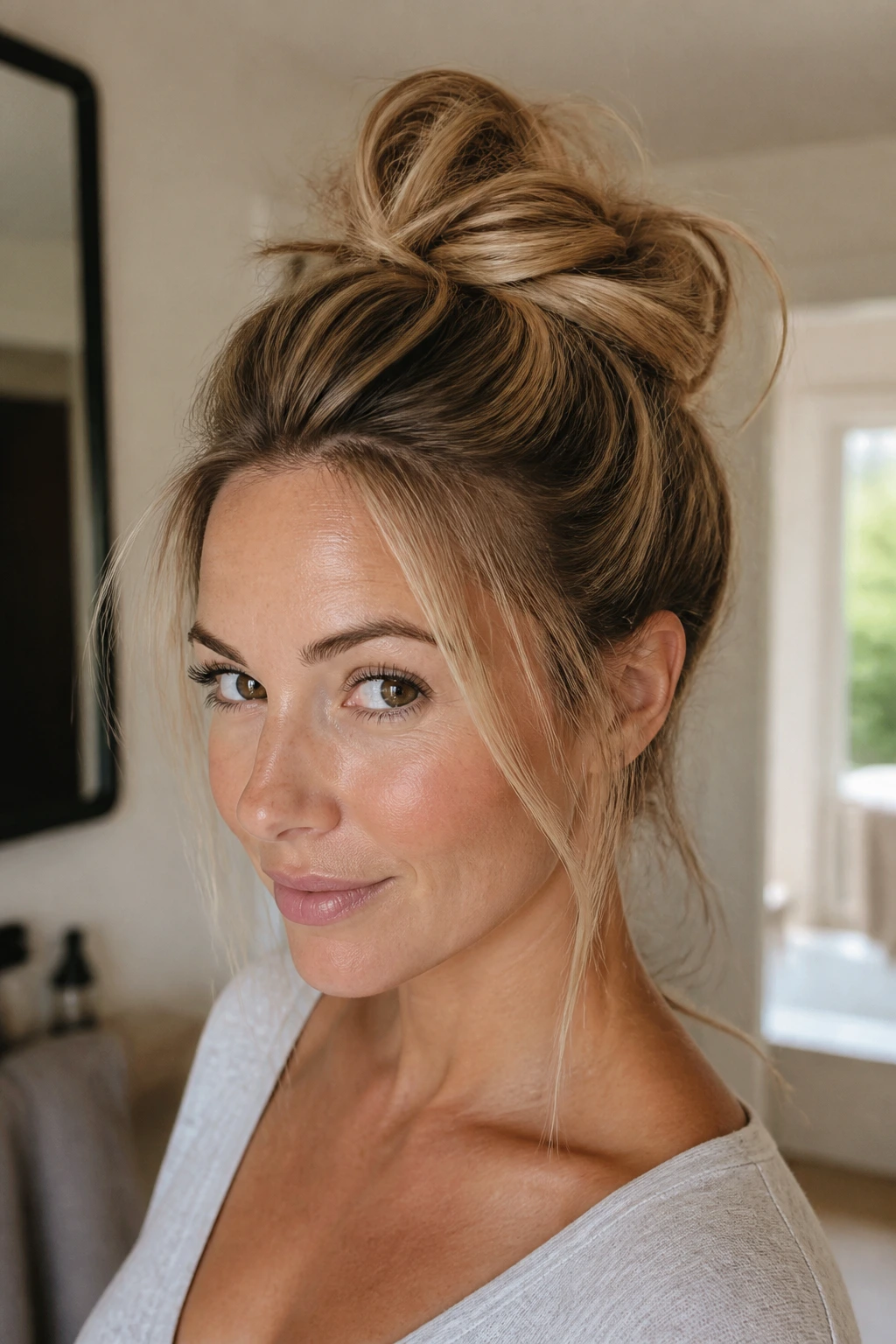
A top knot can go very wrong on fine hair if you pile it high and tight. Done right, though, it gives a round face the vertical line it wants and hides the fact that your hair is not operating at full density.
The trick is to keep the knot loose enough that it looks airy, not squeezed. Pull the hair up only after you’ve added a little lift at the crown, then twist the length into a knot that sits slightly forward, not dead-center on top like a peanut. Leave a few soft pieces near the temples if your face needs that break in the outline.
This works especially well on day-two hair with a little dry shampoo at the roots. The texture gives the knot grip, and the knot gives the hair structure. Freshly washed fine hair tends to slip out too cleanly.
If your hair is too short to make a full knot, twist the length and pin it into a small bun with bobby pins crossed in an X. A tiny knot that stays put beats a bigger one that sags.
5. Twisted Low Bun With a Side Sweep
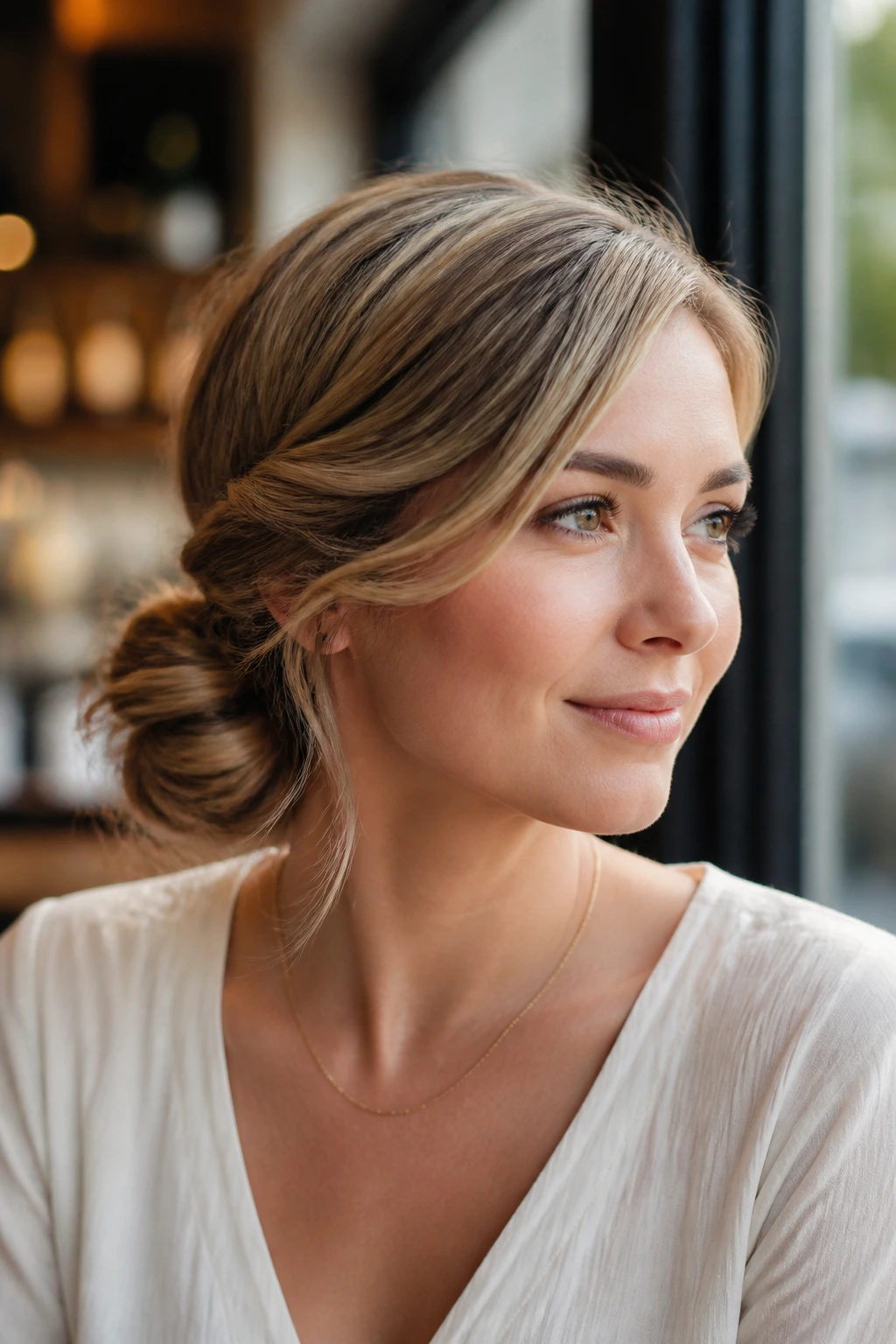
A centered bun can make a round face feel even rounder. A twisted low bun with a side sweep changes that story fast. The side sweep pulls the eye diagonally across the face, and the bun stays low enough to keep the silhouette long.
Start with a deep side part, then twist the heavier side back toward the nape. Gather the rest into a low bun just off center rather than directly in the middle. That slight offset matters more than people think. It stops the style from looking like a uniform ball sitting at the back of the head.
What Makes It Worth Doing
A bun does not need to be big to look intentional. In fact, with fine hair, a smaller bun often looks cleaner. If you want more body, gently tug the outer loops after you pin the bun so it looks fuller without becoming wide.
Keep the bun low and tucked. A high bun can pull the whole profile upward in a way that feels too top-heavy for a round face, while the low version draws the eye down and back.
6. Claw-Clip French Twist
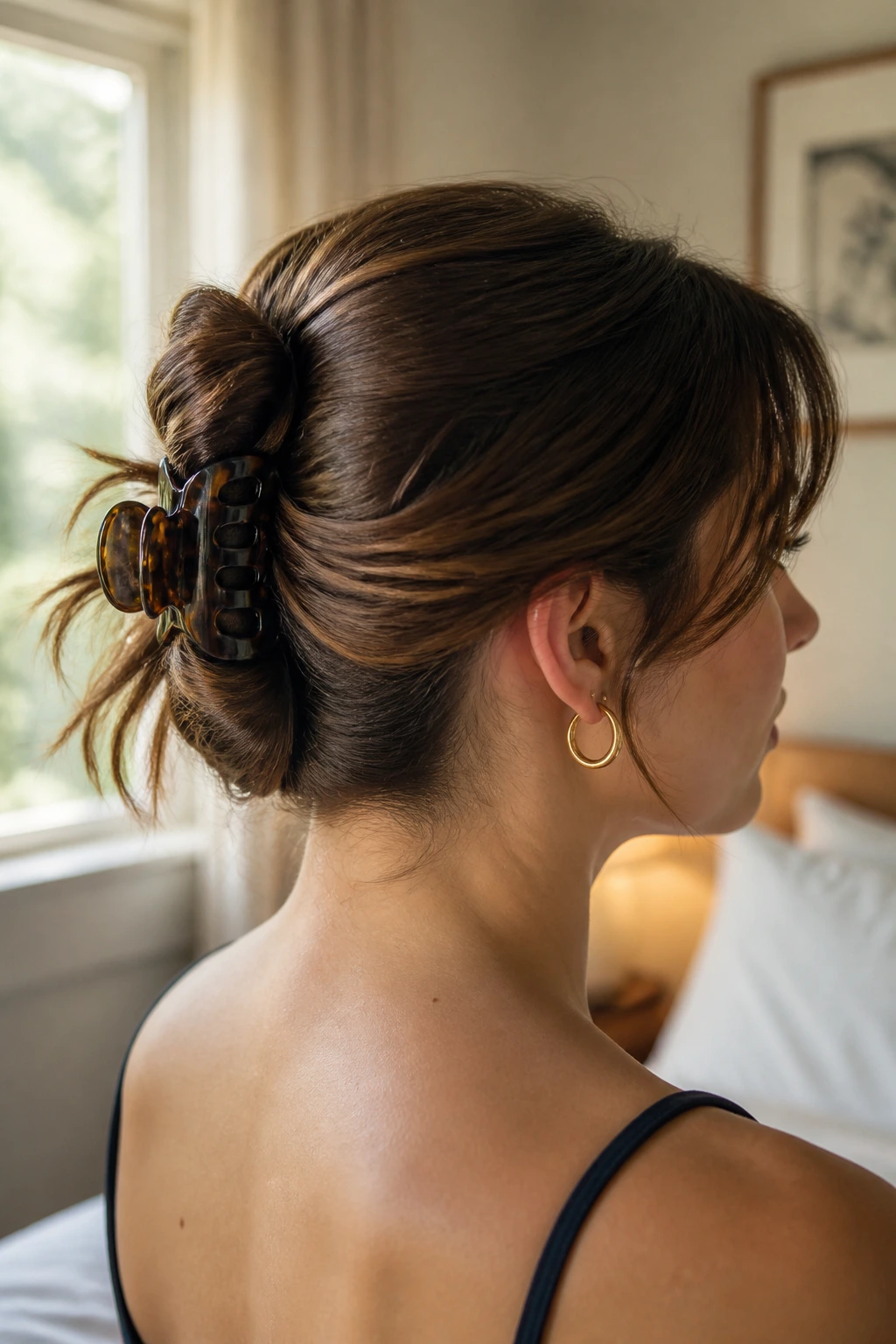
The claw-clip French twist is the style I reach for when the hair is flat, the schedule is ugly, and I want something that looks more deliberate than a simple clip-and-go. The twist itself adds a clean vertical line, and the clip keeps fine hair from spreading sideways.
Why the Twist Wins
Instead of gathering the hair into a wide shape, you fold it upward and inward, which keeps the sides narrow. That narrowness is the whole point. Round faces usually look best when the hair does not flare out at cheek level, and this style avoids exactly that.
A medium claw clip works better than an oversized one for fine hair. Big clips can swallow too much hair and slide. Smaller clips grip more cleanly, especially if you twist the hair first and let the ends poke out on purpose.
How to Keep It Soft
Leave a few ends loose at the top or bottom of the twist. Perfectly tucked hair can feel stiff around the face, especially if you wear glasses or a strong lip. A little looseness makes the whole thing more wearable.
And if the twist feels too severe, pull one temple section forward after the clip is in. That tiny bit of softness changes the tone immediately.
7. Bubble Ponytail With Narrow Sections
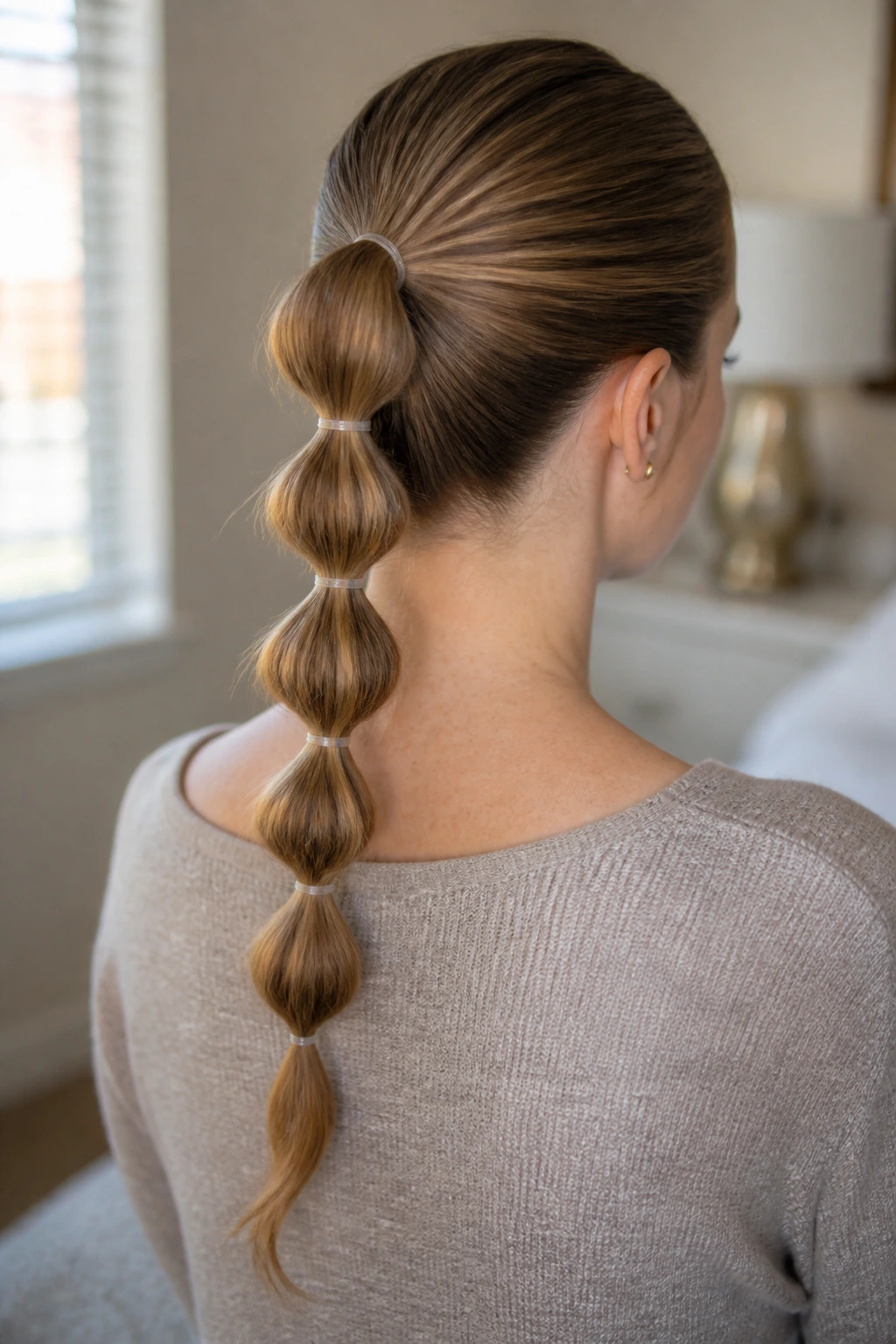
A bubble ponytail gives fine hair a trick it rarely gets on its own: the look of fullness without needing more hair. The sectioned “bubbles” create the illusion of thickness down the length, while the crown stays relatively smooth and narrow.
Tie the ponytail first, then add small elastics every 2 to 3 inches down the tail. Gently tug each section outward until it rounds into a bubble. Don’t yank so hard that the hair fans wide at the cheeks — keep the volume lower on the length, not near the temples.
The style works because it builds interest vertically. A round face benefits from that upward-and-downward rhythm more than from side-to-side bulk. And fine hair, which often looks skinny in a plain ponytail, suddenly has shape.
Use clear elastics or thin silicone bands if you want the bubbles to be the focus. If you want a softer, more casual finish, wrap tiny strands around a few bands and pin them under the tail.
8. Half-Up Mini Top Knot
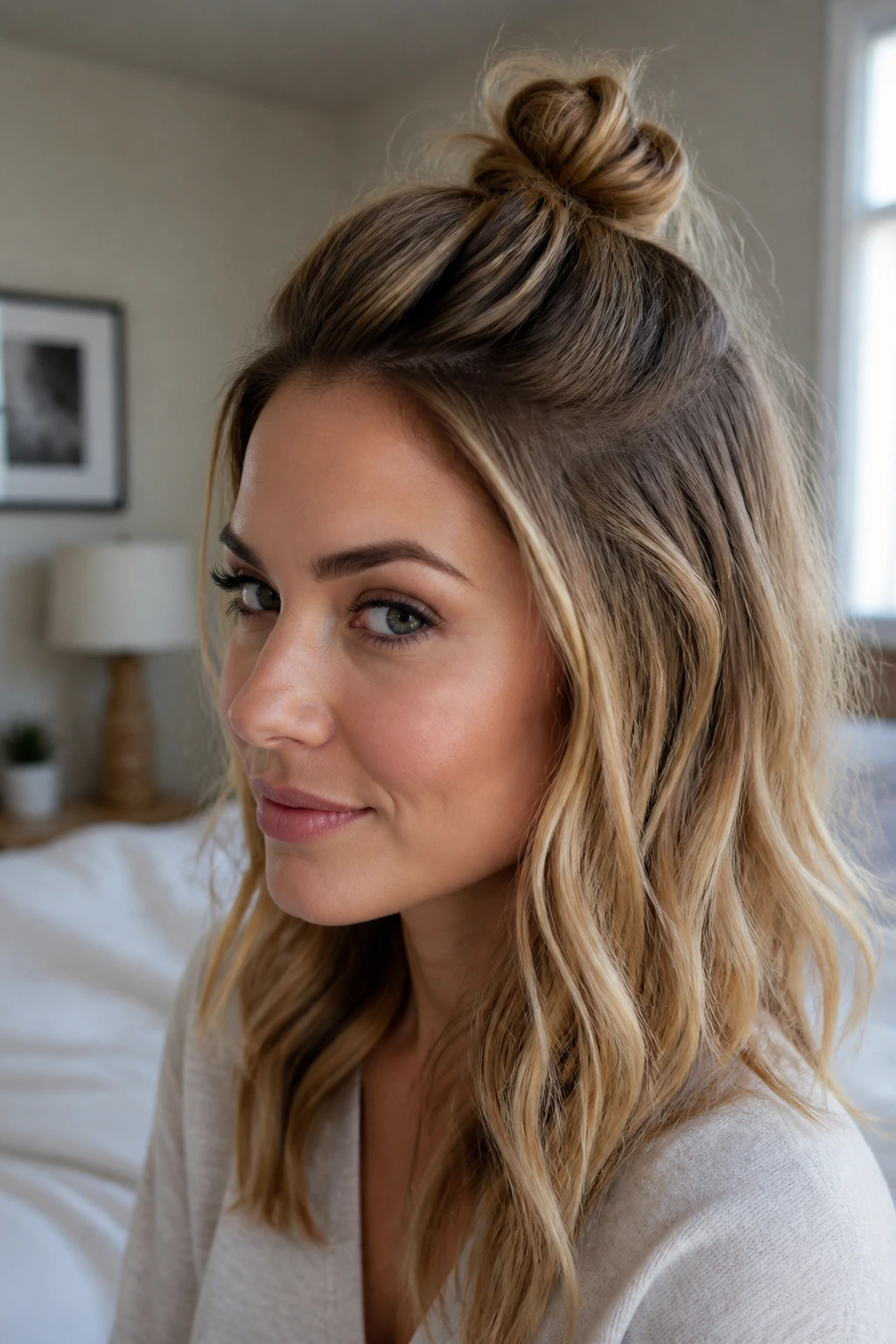
There’s something smart about a half-up mini top knot on fine hair. It gives you height without asking the whole head of hair to do the heavy lifting. For round faces, that little knot at the top breaks up the widest part of the face and leaves the rest loose and softer.
Take only the top third of the hair. Twist it once, pin or tie it into a tiny knot, and let the bottom half hang loose with a little movement through the ends. If you try to make the knot too large, it gets bulky fast and starts pulling the eye outward instead of upward.
This one is at its best when the bottom section has texture. A few bends with a flat iron, or even overnight braids undone with fingers, keep the hair from falling into a flat sheet. If your hair is straight and slippery, mist the roots with dry shampoo before you start.
A small piece of hair wrapped around the elastic makes the knot look more finished. It’s a tiny move, but it keeps the whole style from feeling thrown together.
9. Curtain Waves With a Soft Center Split
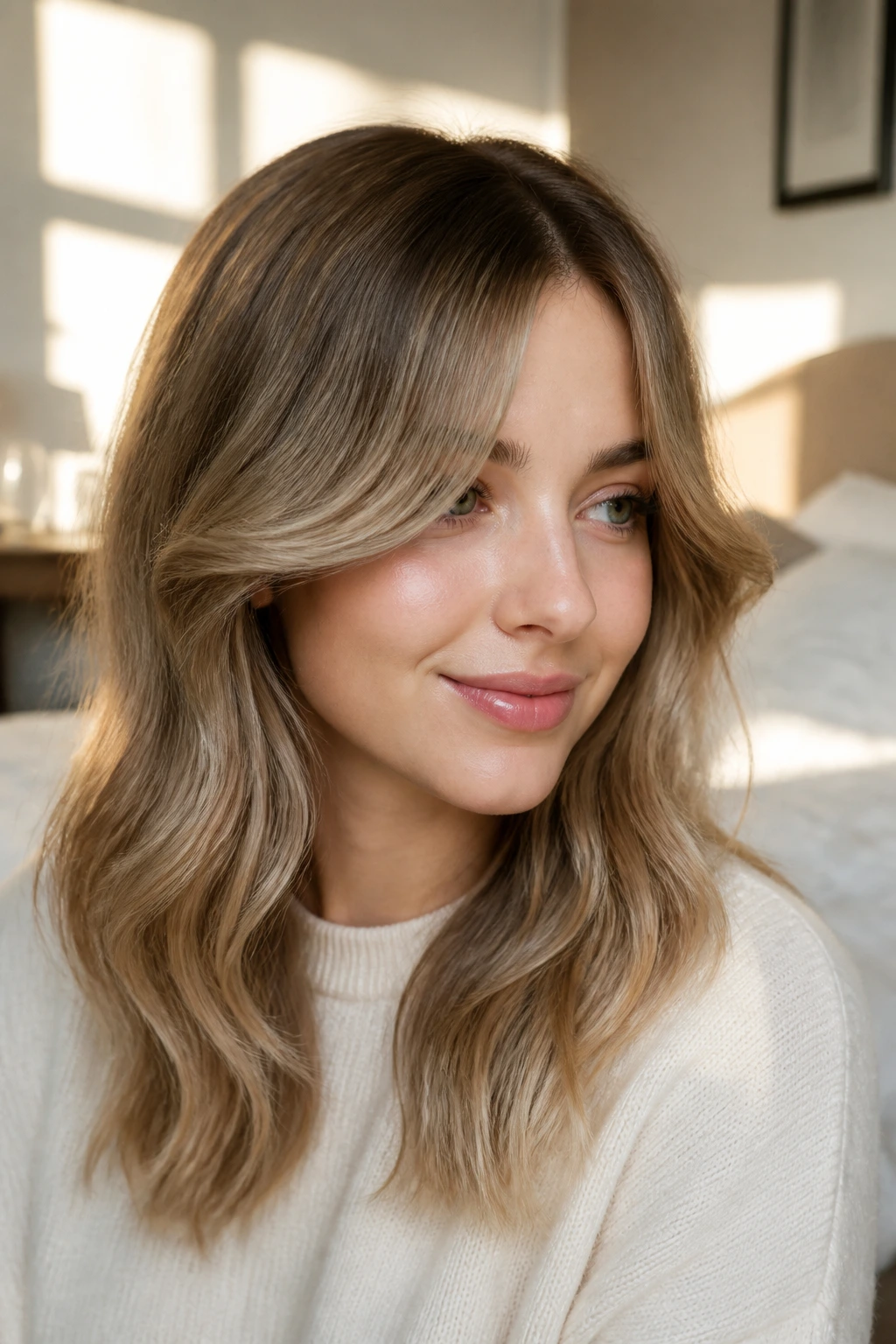
Curtain waves can be a little controversial on round faces, mostly because people confuse “center part” with “flat center part.” Those are not the same thing. A soft center split with lift at the roots and bend away from the cheeks can be one of the best shapes for fine hair.
The Part Matters
Start with a clean center line or a slightly off-center split. Then blow-dry the front sections away from the face, not straight down. That small directional change keeps the hair opening like curtains instead of collapsing like drapes with no rod.
A 1-inch barrel or a round brush will create enough bend through the front pieces. Keep the curve soft and start it below the cheekbone line so the face doesn’t look wider. That’s the real trick. The wave should frame, not hug.
How to Keep It Loose
Fine hair can turn curtain waves into stringy curls if you overdo the product or the heat. Use a light mousse at the roots, a heat protectant through the mids, and stop once the front pieces can arc gently around the cheekbones.
If you want the style to last, pin the front bends while they cool. That setting time makes the wave hold shape longer, and fine hair needs that extra nudge.
10. Sleek Low Ponytail With a Wrapped Base
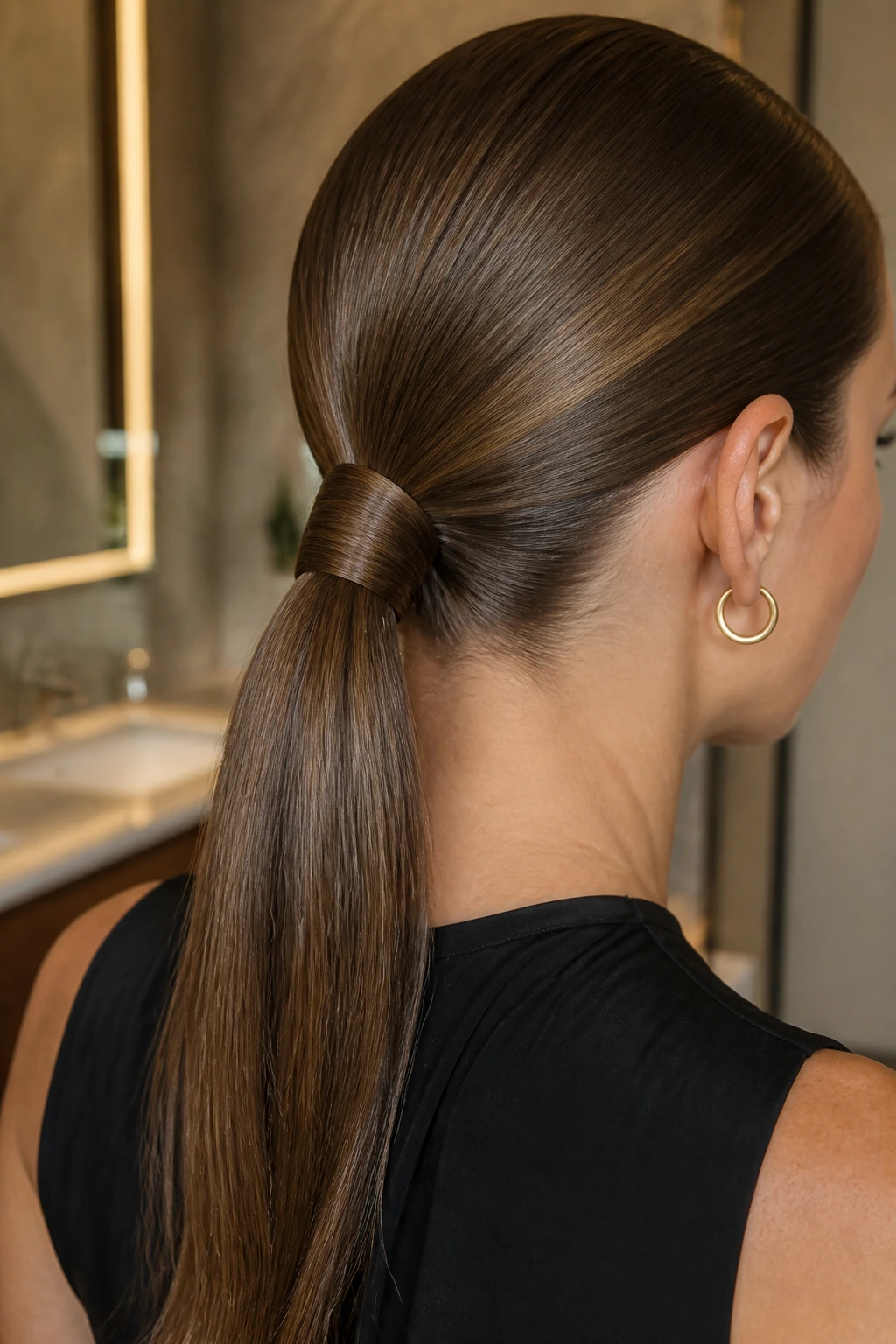
A sleek low ponytail sounds plain until you wear it on a round face and realize how clean the line feels. The smooth crown and low anchor pull the eye downward, which is exactly what helps balance width through the cheeks.
This is the style to choose when your hair is frizzy at the root or too soft to hold a lot of shape. Instead of trying to force volume, you use control. Brush the hair back gently, keep the crown smooth, and tie the pony at the nape with a small elastic. Wrap a piece of hair around the base so it looks polished rather than last-minute.
Use a tiny amount of smoothing serum on the ends only. If you put it near the roots, fine hair goes limp fast and the whole style starts to look greasy. That’s the line worth protecting.
The wrapped base matters more than most people think. It turns a basic pony into a style that reads deliberate, even when it took five minutes.
11. Side-Swept Braided Crown
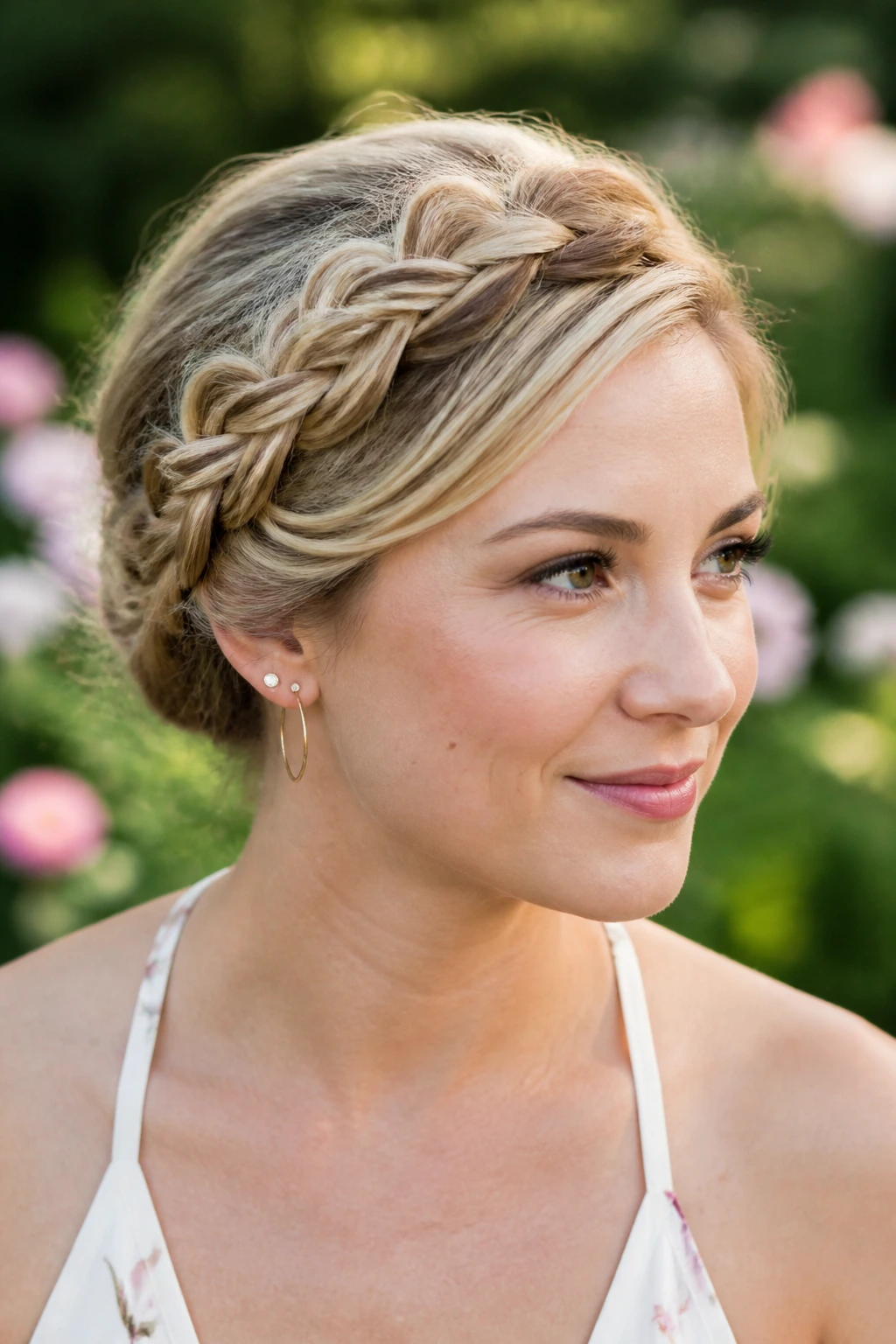
Want height without teasing? A side-swept braided crown is one of the easiest answers. The braid creates a diagonal line across the top of the head, and that line breaks up the roundness of the face while giving fine hair a little texture to hold on to.
Start the braid on one side at the front hairline and work it toward the back, keeping it loose enough to puff slightly. Pin it behind the opposite ear or let it merge into the rest of the hair. Either way, the braid should sit high enough to lift the eye, not low enough to widen the temples.
A loose braid works better than a tight one here. Tight braids can expose scalp in fine hair and make the section look thinner. A slightly fuller braid, gently pulled apart after you secure it, gives you better shape.
This one is especially good on humid days because the braid gives the hair a plan. It does not need perfect smoothness to look finished.
12. Rope-Braid Ponytail
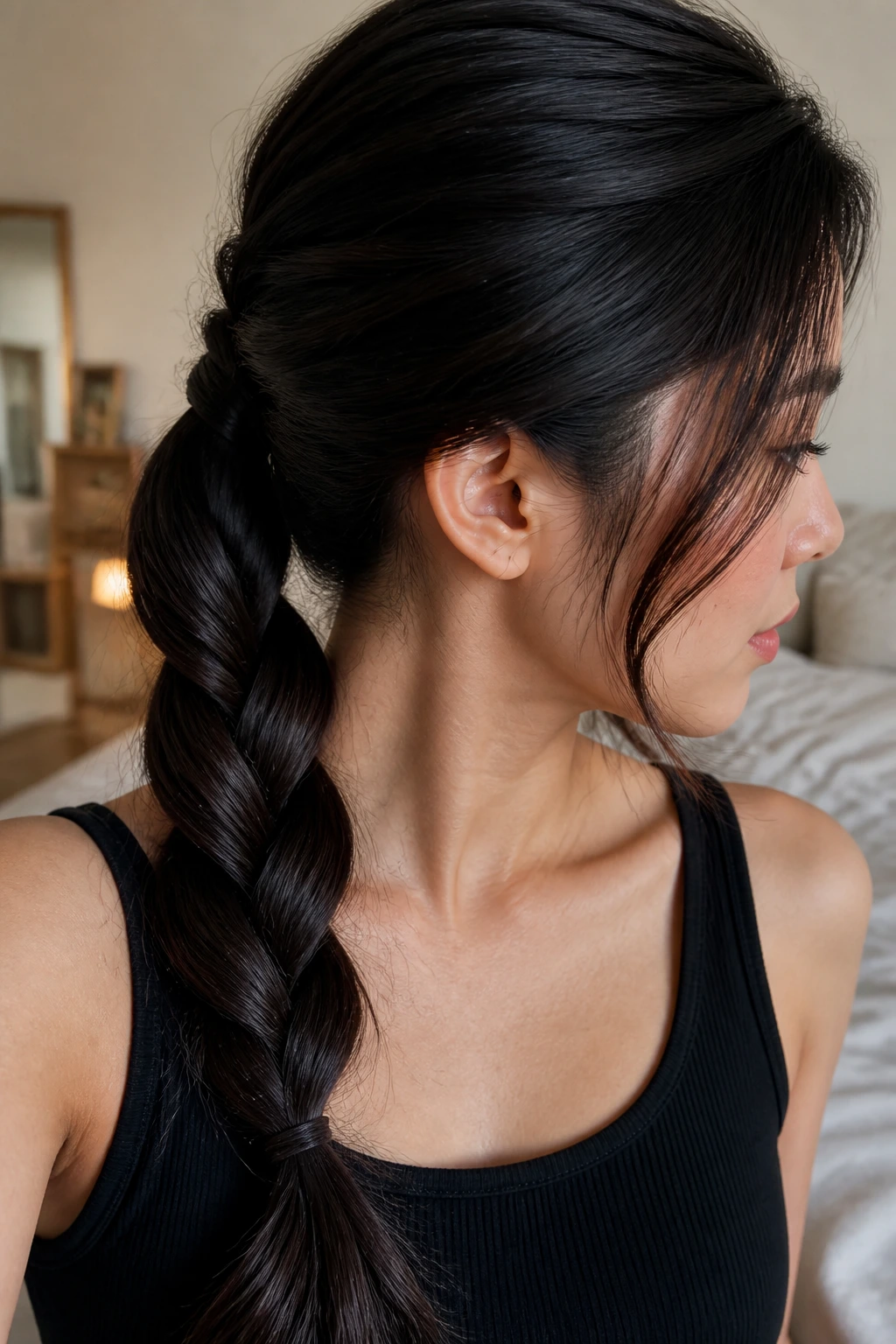
A rope braid is one of my favorite cheat codes for fine hair. Two twisted sections often look thicker than a regular braid, and the twist gives the hair a shinier, more compact finish that suits round faces.
Pull the hair into a low or mid ponytail, split the tail into two sections, twist each section in the same direction, then wrap them around each other in the opposite direction. Secure the end with a small elastic. That opposite-direction move is what makes the rope hold together instead of unwinding.
The style reads clean but not severe. It keeps the sides of the face fairly open and makes the length of the ponytail feel more interesting. If your hair is very fine, you can pancake the twist a little — tug it gently at the sides to make it look fuller.
Good For
- Day-two hair that needs structure.
- Hair that won’t hold a standard braid.
- A quick style that still looks intentional.
- Fine hair that needs a thicker-looking tail.
A tiny bit of texture spray before you start helps the twist stay in place.
13. Flipped-Out Lob
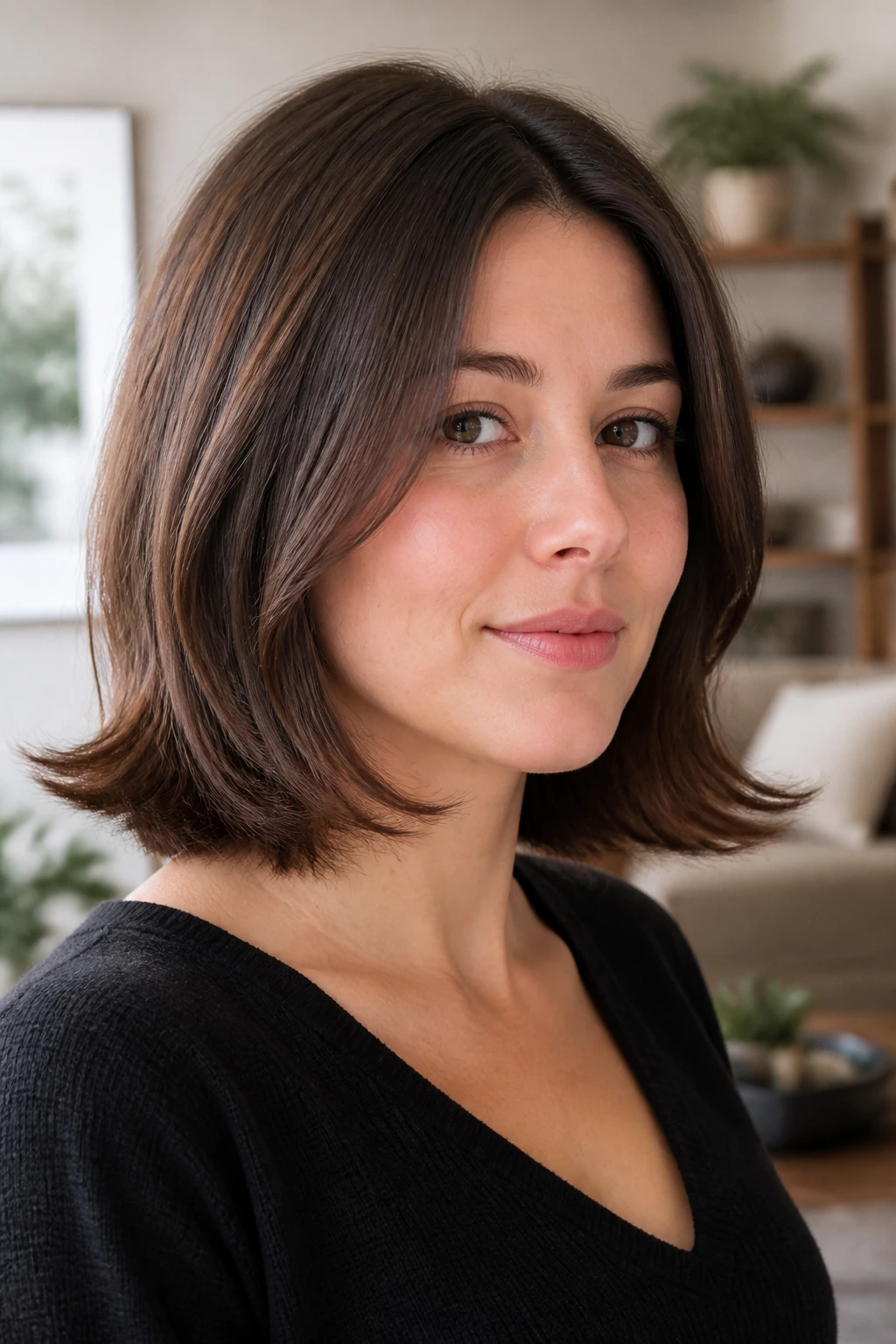
A flipped-out lob is one of those cuts-and-styles combos that flatters round faces without making a fuss. The outward flip at the ends pulls the eye down and away from the cheeks, which keeps the lower half of the face from feeling boxed in.
Unlike inward curls that hug the jaw, the flipped ends open the silhouette. That matters a lot on fine hair, because too much inward bend can make the hair cling to the sides of the face and show every narrow strand. A little outward kick adds movement without turning the whole style into a puff.
Use a round brush, a flat iron, or a 1-inch curling iron to flick the last 1 to 2 inches of the hair outward. Keep the root area smooth. The lift should happen through the mid-lengths and ends, not right at the cheeks.
This is a strong choice if your hair sits around collarbone length. Shorter than that, the flip can look too stubby. Longer than that, it may need more product to hold the shape.
14. Double Twists Pinned Back
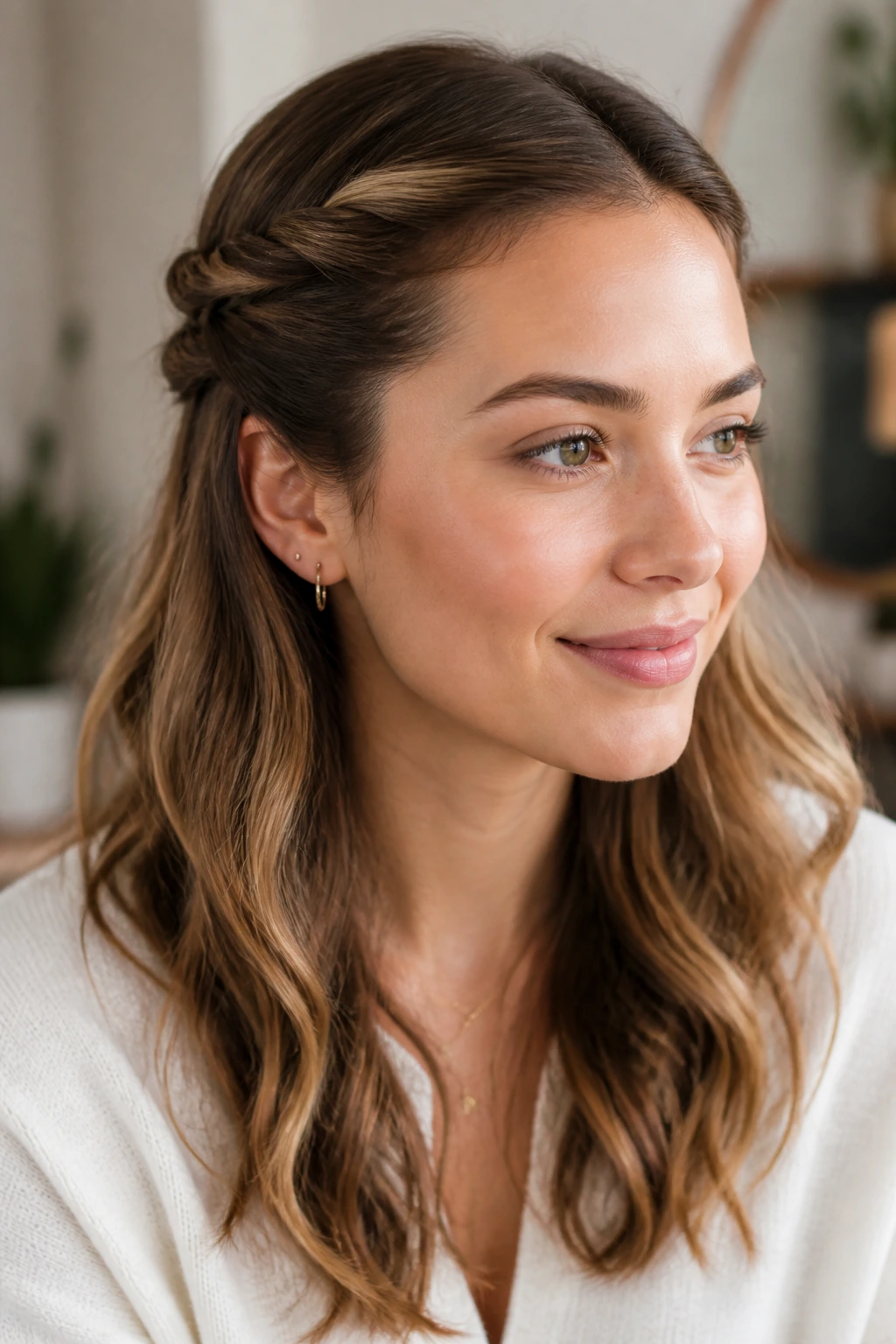
Double twists pinned back are the hairdo version of taking a breath. They clear the face, keep the sides controlled, and give fine hair a little bit of structure without needing heat.
Take a section from each temple, twist each one back toward the ears, then pin them together or separately behind the head. Leave the rest loose, wavy, or even straight if that is where your hair wants to be. The important part is that the twisting starts near the temples, not lower down at the cheeks.
That upper placement keeps the face open. If you start the twist too low, you accidentally build width right where a round face needs less of it. Fine hair also tends to look better when the twist is narrow and tidy, rather than oversized and fluffy.
A pair of small pins hidden under the twists usually holds better than one large decorative clip. The style looks even better if you add a slight bend to the loose length.
15. Fluffy Pixie With Side-Swept Fringe
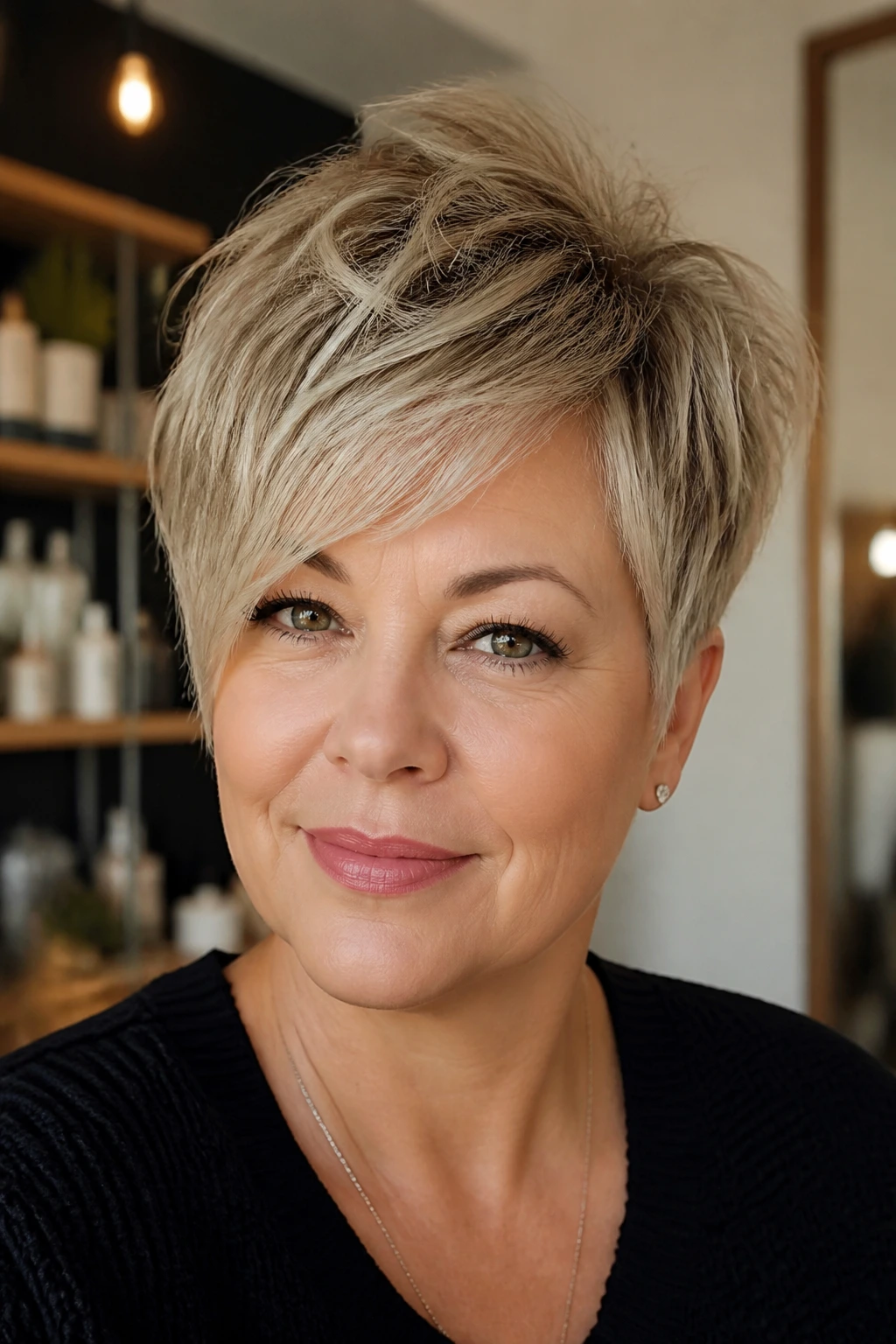
Short hair can be a friend to a round face if you stop trying to make it sit flat. A fluffy pixie with a side-swept fringe gives height on top, softness through the front, and a shape that does not stop at the widest part of the cheeks.
Why Short Hair Can Still Flatter
The key is not volume everywhere. It is lift at the crown and a fringe that moves diagonally instead of straight across. A straight-across fringe can shorten the face fast. A side-swept one cuts through the roundness and keeps the whole cut from feeling boxy.
Fine hair benefits from a light wax spray or a pea-sized amount of paste worked through the ends. Too much product, and the pixie turns greasy in an hour. Too little, and it falls flat before you reach the door.
How to Style It Fast
Finger-dry the roots upward, then sweep the fringe across the forehead in a soft line. If the sides puff out, flatten them with your palms while the hair is still warm. That small bit of direction is enough.
This style looks best when the top has a little separation. It should feel airy, not helmet-like.
16. Halo Braid With Loose Volume
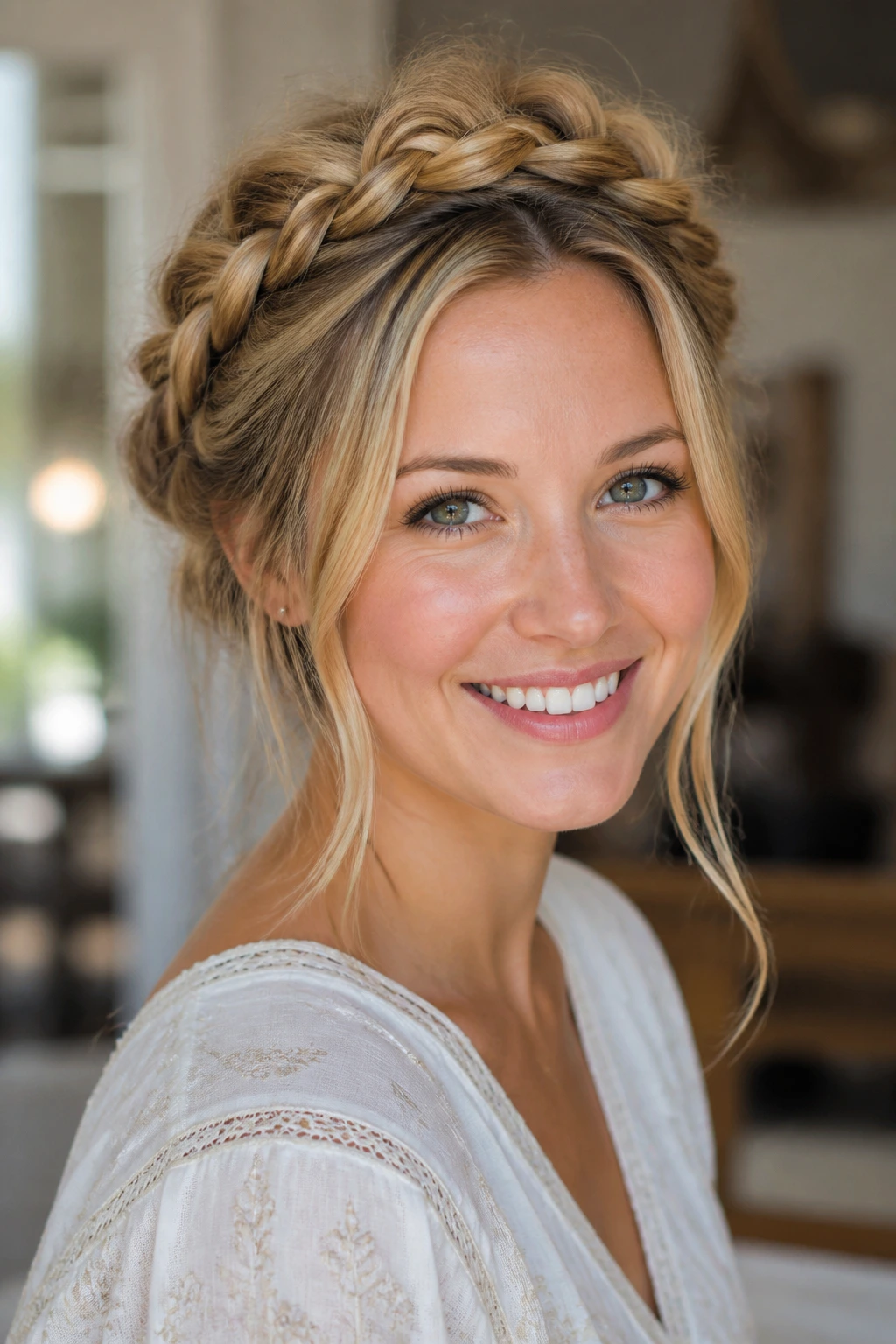
A halo braid can be romantic or fussy. On round faces and fine hair, the loose-volume version wins. It keeps the braid high, which helps elongate the face, and it avoids the low, wide frame that can make cheeks seem fuller.
Braid the hair along the crown rather than hugging it tightly around the hairline. That higher placement is the whole game. Then pull the braid apart gently to widen it just enough that it reads fuller without becoming bulky.
Fine hair usually needs a little grip before braiding, so start with dry shampoo or a touch of texturizing spray. Freshly washed hair can be too slippery and the braid slips flat. If you have layered hair, pin the shorter pieces under the braid rather than fighting them into the weave.
This one works beautifully when you want your face open but still want some texture around the head. It’s a little more effort than a ponytail. Worth it.
17. Lifted Ponytail With a Soft Crown Puff
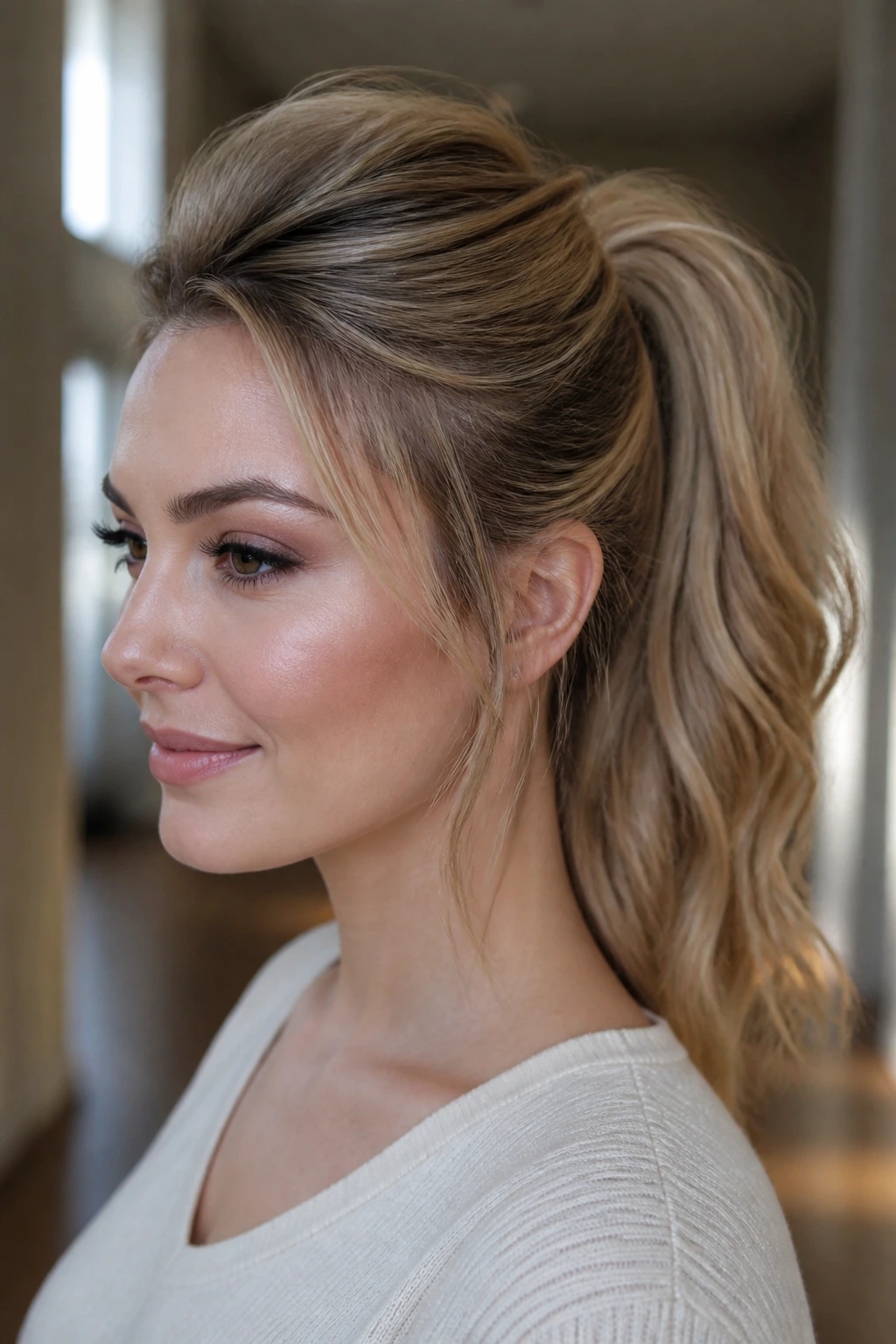
A lifted ponytail with a soft crown puff is the style I reach for when the hair looks limp and I want an immediate reset. The crown puff gives the face length, the pony keeps the back neat, and the whole thing feels cleaner than a low pony but less formal than a bun.
How Much Lift Is Enough
You do not need a giant bump. A small amount of teasing or root padding at the crown is enough to change the line of the head. Too much height, and the style starts to look dated or costume-y. Aim for rounded lift, not a hard ridge.
Gather the pony a little higher than the nape — somewhere between mid-head and crown height usually works best. Then smooth the top layer over the lift so the shape looks soft, not stiff. A wrapped elastic base helps the pony read more polished.
Best Use Case
This is the style for flat roots, long days, and hair that needs to stay off the neck. It also works well when you want earrings to show, because the pulled-back sides open the face.
If your hair is very fine, a small spritz of flexible hairspray on the crown before you lift it can make a big difference.
18. Headband Tuck
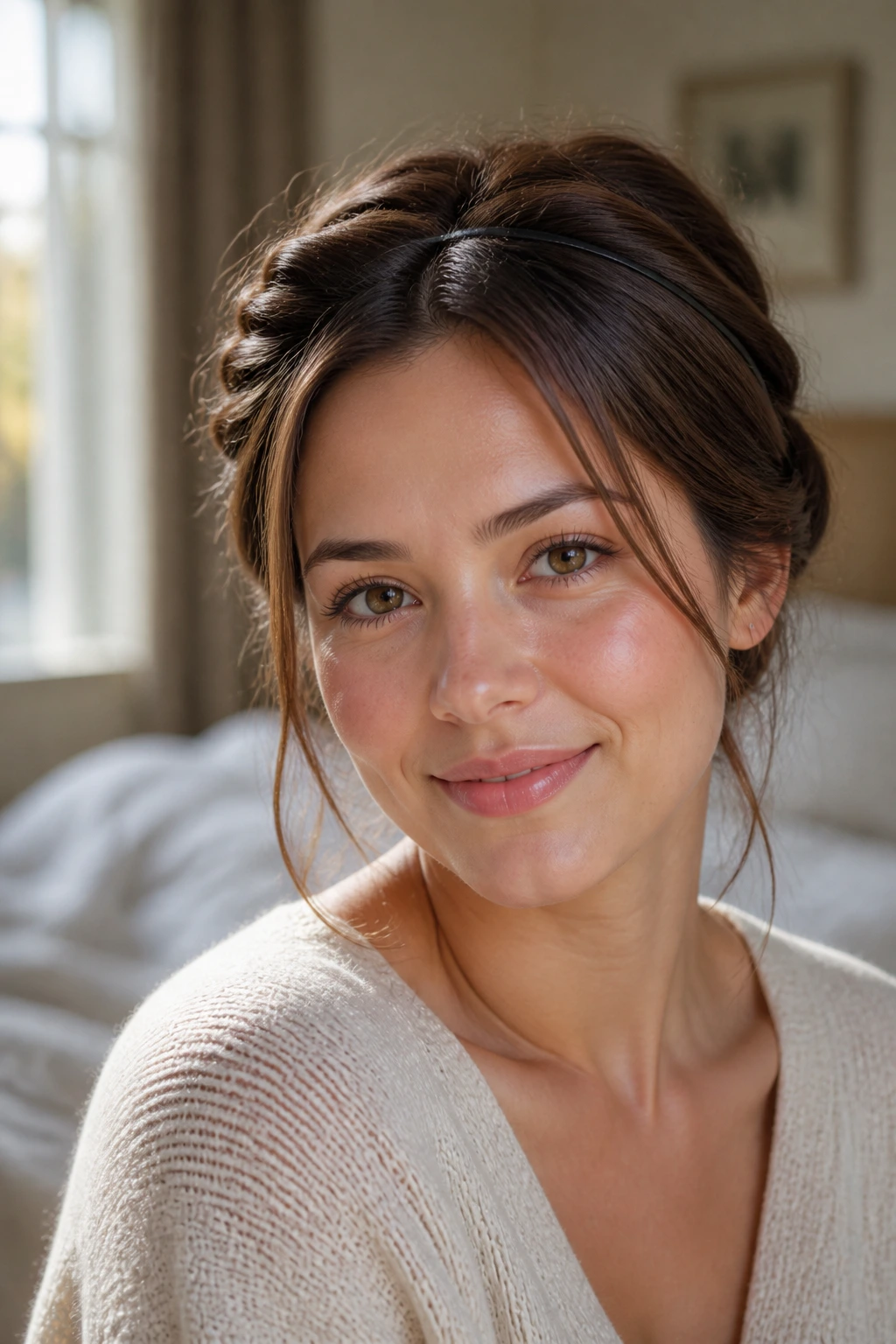
What if your hair refuses to hold anything? A headband tuck is the escape hatch. It works especially well on fine hair because the band gives you a shape to build around, and the tuck keeps the sides close instead of puffy.
Put on a stretchy headband, then tuck the hair ends up and under the band in sections until the length folds into a soft roll. Leave a little looseness at the front if you want the style to feel gentle instead of severe. The tucked shape keeps the face open and the head shape tidy.
A narrow headband usually flatters a round face more than a wide padded one. Wide bands can widen the head visually, especially if the hair is already fine and the band becomes the loudest thing in the room.
This is a strong style for second- or third-day hair when the ends are a bit dry and the roots need control. It takes less time than a braid, and it does not need heat.
19. Side-Parted Pin Curls
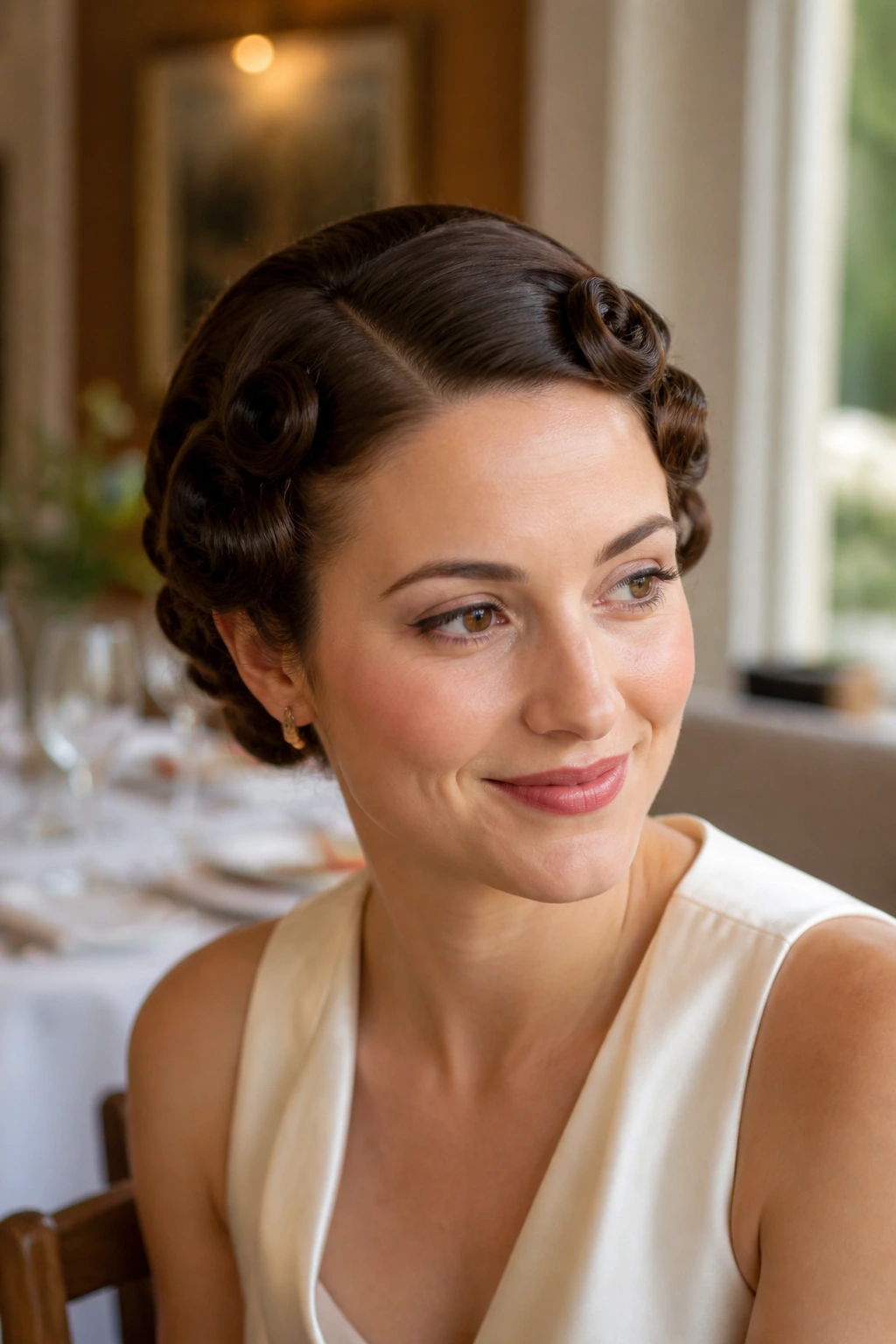
Side-parted pin curls can look fancy, but they are not complicated if you keep them small and soft. The side part helps round faces by breaking symmetry, while the pin curls add controlled shape that fine hair rarely manages on its own without help.
Set small sections with a curling iron, pin each curl flat against the head while it cools, then brush or finger-comb them apart once they’ve set. That cooling time matters. If you skip it, the curls drop into nothing and the style loses the structure that makes it work.
Keep the curls away from the cheeks. The bend should start lower, closer to the jawline or below, so the face stays open. If every curl sits right beside the face, the style starts to feel circular again.
This one is lovely for dinners, photos, or any day when you want fine hair to look deliberate. It is also a good reminder that “easy” does not always mean casual. Sometimes it means clean, controlled, and done in half the time you feared.
20. Low Chignon With Tendrils
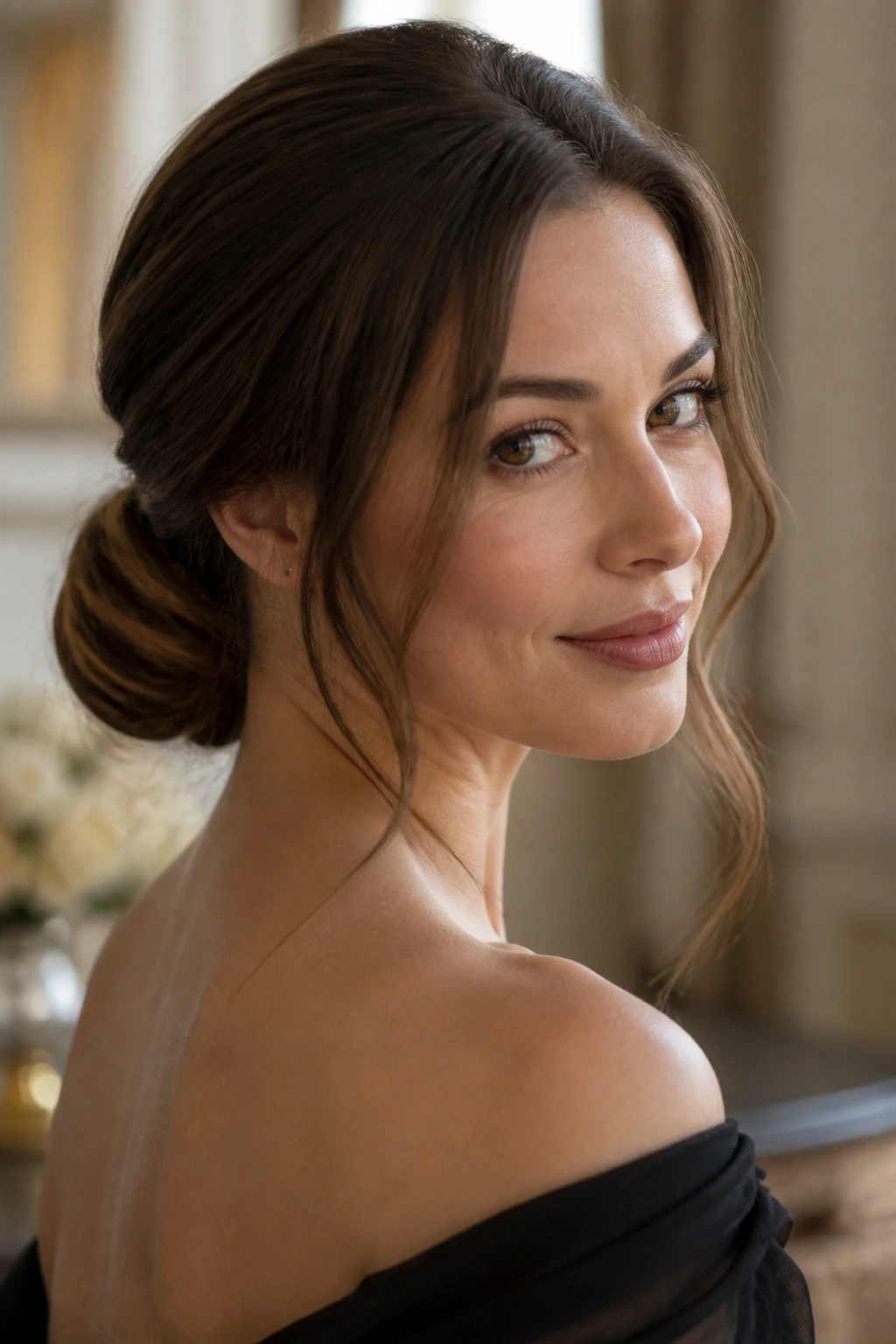
A low chignon with tendrils gives you polish without the hard edge of a tight bun. The low placement keeps the silhouette long, and a couple of loose tendrils at the temples soften the roundness of the face without turning the whole style messy.
The important part is restraint. Leave out only a few pieces, and keep them slim. If you leave too much hair free at the cheeks, you build width instead of softness. The tendrils should be there to soften the frame, not to create a curtain.
Fine hair often needs the bun to be pinned in a slightly flatter shape so it does not look tiny. A few extra pins or a small hair donut can help if your bun keeps shrinking. Just hide the support well. You want the bun to look like hair, not hardware.
This style works for weddings, work events, and any day when you want your hair out of the way but still want the face to look open and clean.
21. Asymmetrical Bob Tuck
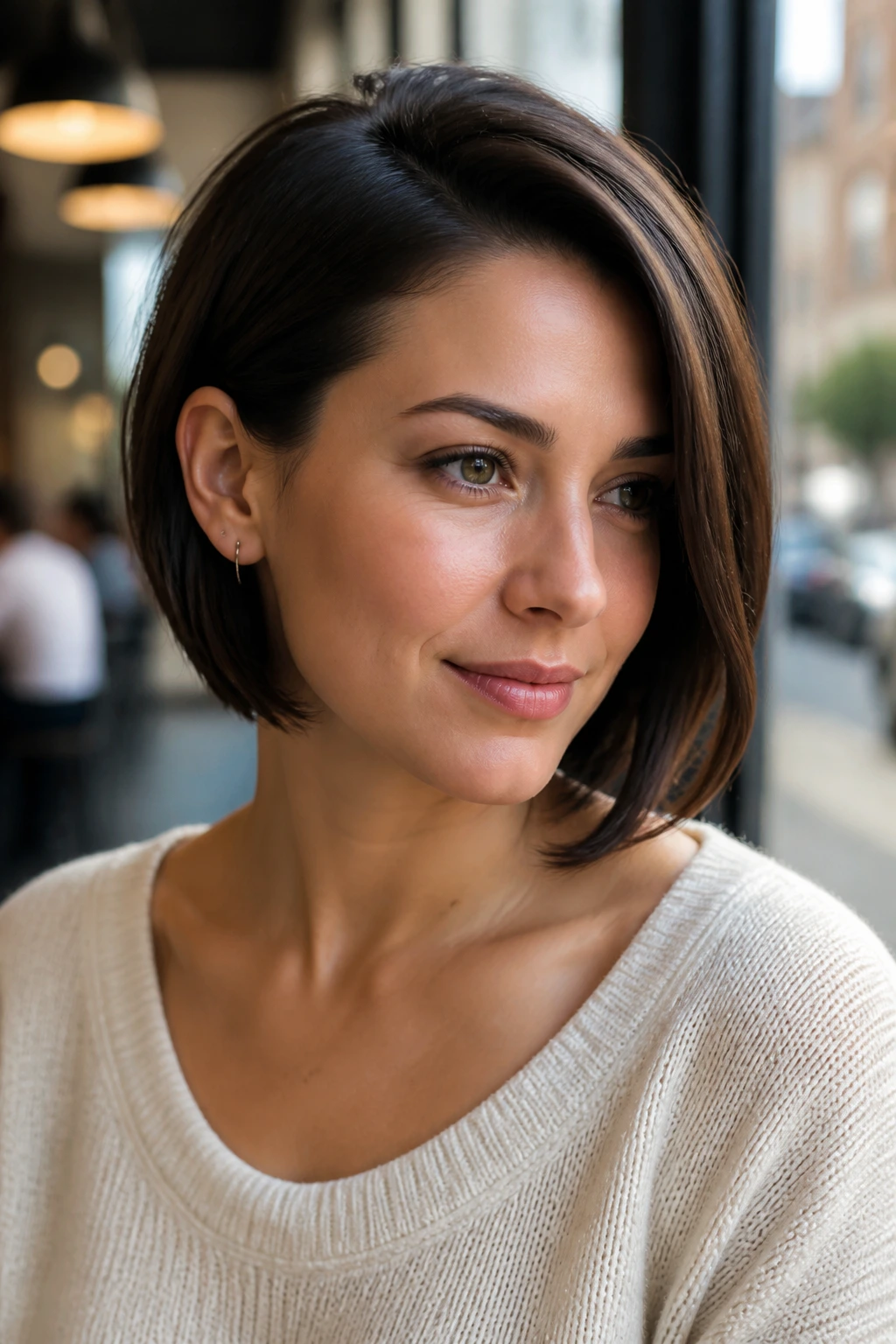
Short hair needs different tricks, and the asymmetrical bob tuck is one of the easiest. Tuck one side behind the ear, let the other side skim the jaw, and the whole face suddenly reads longer and less wide. It’s a tiny adjustment, but on a round face, tiny is often enough.
The asymmetry keeps the eye moving. Fine hair likes that because it can look too uniform when it falls in a straight line. A soft bend at the ends helps even more, especially if the bob sits right at the chin or just below it.
Small Moves, Big Payoff
- Tuck only one side behind the ear.
- Add a light bend to the front pieces.
- Keep the part deep or slightly off-center.
- Use a touch of texture spray, not heavy cream.
If you wear glasses, this style is especially useful because it keeps the temples from feeling crowded. A clean tuck around the ear makes the whole face look more open.
22. High Ponytail With a Soft Flare
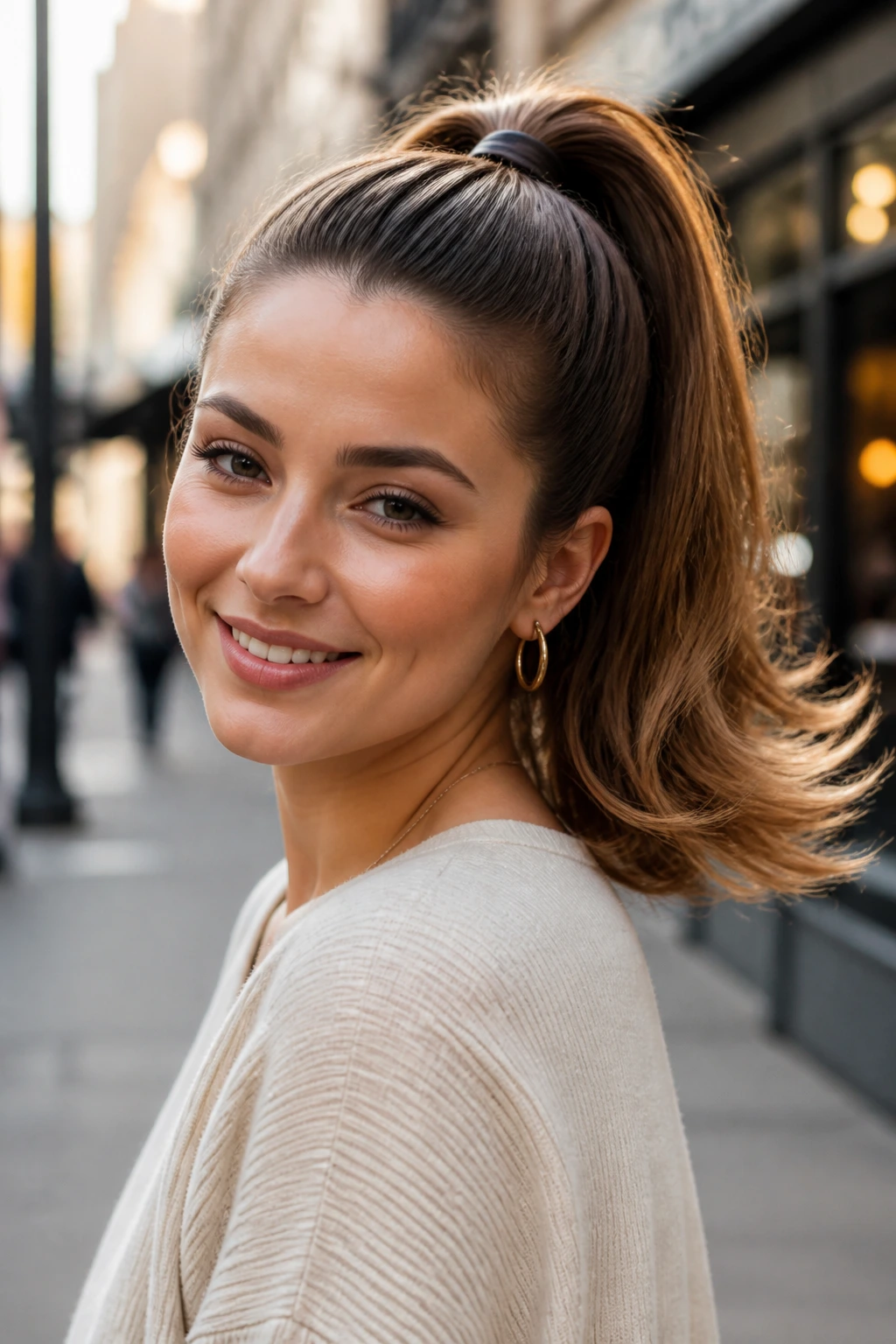
A high ponytail can be harsh on a round face if it’s pulled tight and slicked flat. Add a soft crown lift and a little flare at the ends, though, and it turns into one of the most face-lengthening styles in the book.
The Angle Matters
The pony should sit high enough to raise the eye line, but not so high that it feels severe. Once the base is secure, gently loosen the crown with your fingers. That tiny puff at the top softens the front and gives fine hair a fuller profile.
Keep the tail itself smooth, then add a soft bend or outward flare near the ends. That keeps the style from looking skinny and gives the pony a little swing. A wrapped base finishes it off cleanly.
This is the style for days when you want an obvious lift. It opens the face, shows off cheekbones, and makes earrings do more work than usual. If your hair is particularly fine, a small amount of texturizing spray at the roots before tying it up can help the pony stay where you put it.
Why Round Faces and Fine Hair Need Different Styling Rules
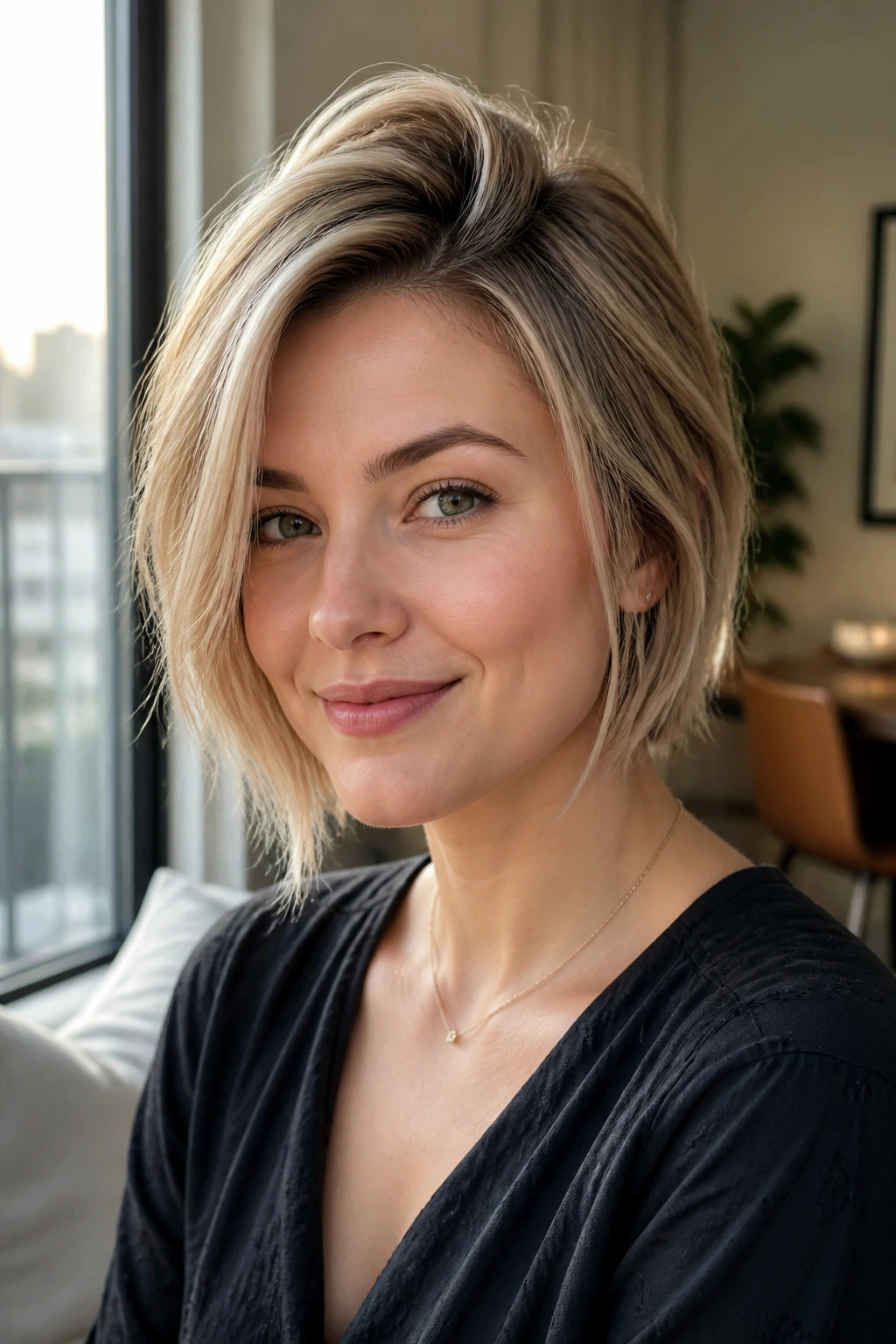
Round faces and fine hair each come with their own little set of annoyances, and they tend to stack. A round face reads wider when the hair sits flat and wide at the cheeks. Fine hair goes limp when it is overloaded with product, which means the one thing you do not want — width at the sides — can show up almost by accident.
The fix is not to chase big volume everywhere. That usually backfires. The better move is to move the eye upward with crown lift, break the face with side parts or diagonal lines, and keep fullness lower on the length rather than beside the cheeks. That shape work matters more than the exact style name.
Fine hair also behaves better when you think in sections. Roots need grip. Mid-lengths need bend or texture. Ends need just enough control to keep the whole thing from looking stringy. If you treat every inch the same, the style often falls flat in the middle and puffs in the wrong places.
And a round face does not need to be hidden. It just needs a frame that does not stop at the widest part of the face. That’s the whole game. Once you start seeing that silhouette, the rest gets easier fast.
The Tools That Make These Hairdos Hold
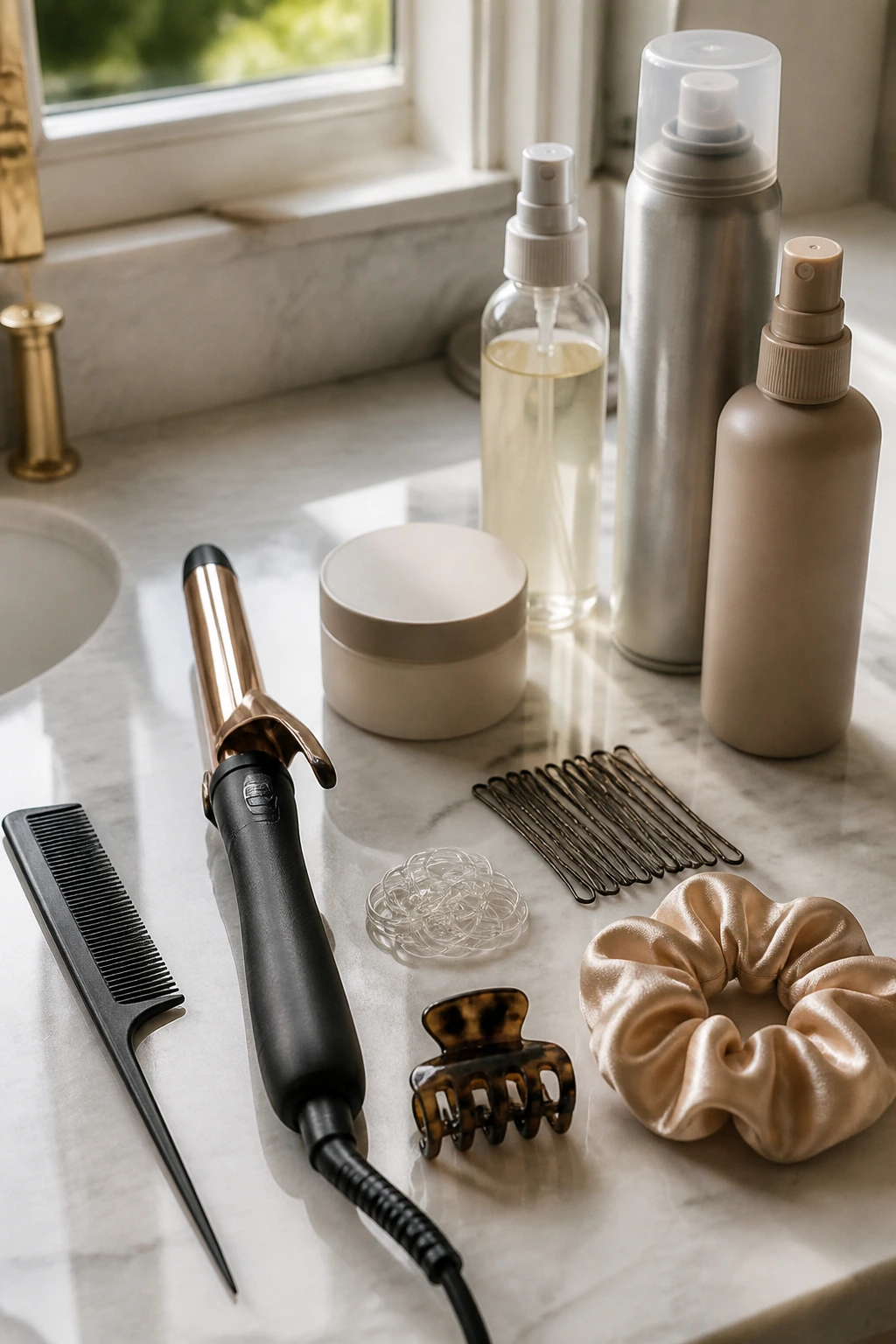
- Tail comb: The pointed end makes cleaner parts, and a clean part gives fine hair a sharper outline.
- 1-inch curling iron or flat iron: Small barrels and plates create bends that look natural on finer strands; oversized tools usually make waves fall out too fast.
- Small clear elastics: These hold ponytails, twists, and bubbles without adding bulky visual weight.
- Long bobby pins: Longer pins grip fine hair better than tiny ones that slide out after ten minutes.
- Mini claw clip: A medium or small clip often works better than a giant one on fine hair because it grips without dragging the style down.
- Texturizing spray: Use it for grip before braids, twists, and half-up styles; it helps hair hold shape without feeling sticky.
- Dry shampoo: This is not only for dirty roots. A light dusting adds friction and makes clean fine hair behave.
- Light mousse or root lift spray: A little at the roots before blow-drying can stop the style from collapsing right at the scalp.
- Silk scrunchie: Gentler than a tight elastic and less likely to leave a dent in fine hair.
- Heat protectant: Fine hair burns or dries out fast, so this is not optional if you use hot tools.
Product Picks That Keep Fine Hair from Falling Flat
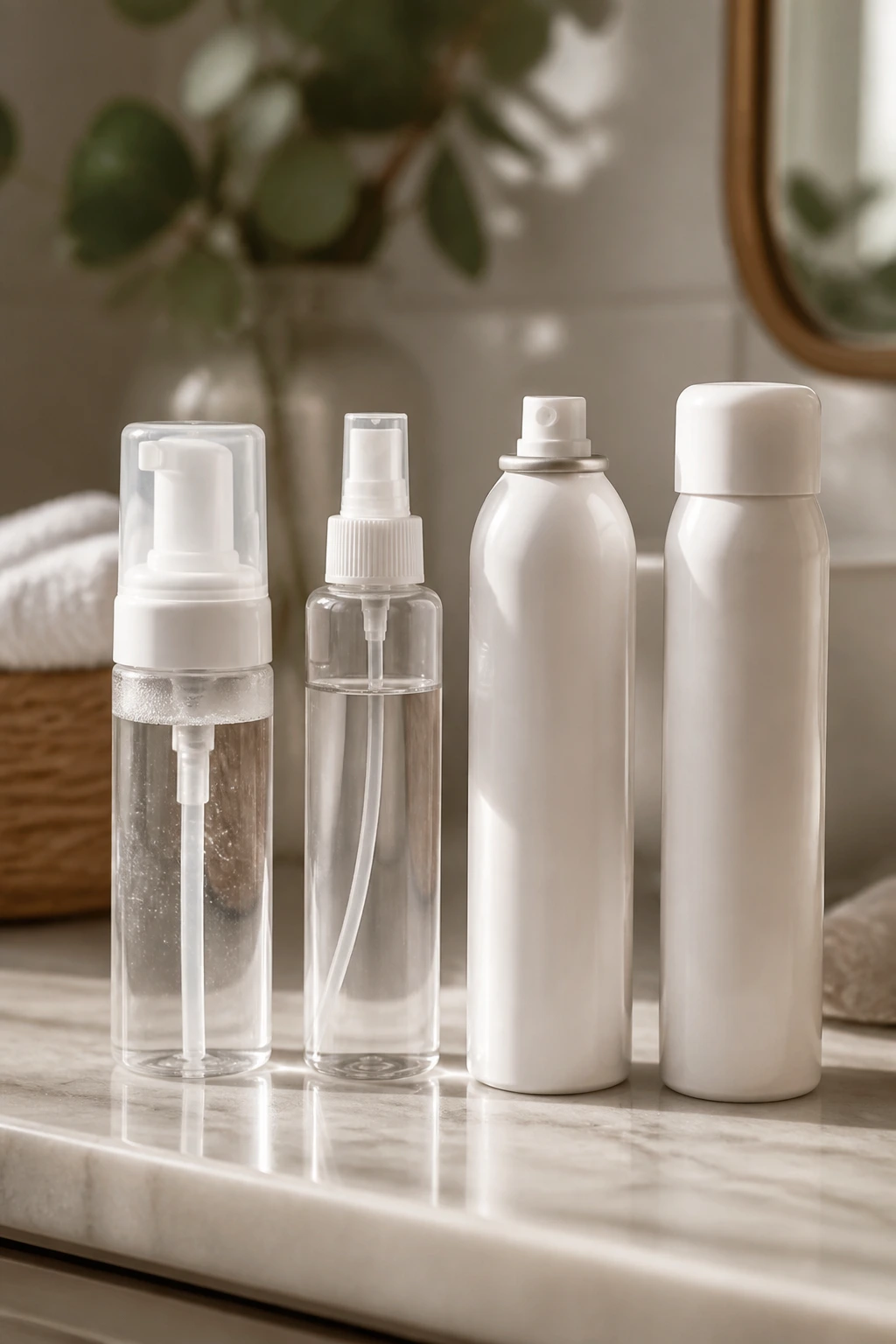
Fine hair needs products that add friction, not weight. That’s the line I keep coming back to because it matters so much. Heavy creams, thick oils, and rich smoothing serums can make the strands slide against each other, which sounds nice until the style drops two inches.
Look for lightweight mousse at the roots, texturizing spray through the mid-lengths, and a flexible hairspray with a soft finish. If the label talks about root lift, memory hold, or lightweight texture, that is usually the lane you want. If it promises glossy, sleek, and ultra-smooth in one go, it may be too much for very fine strands.
A dry shampoo with a fine powder texture is also useful, especially on clean hair. A tiny amount at the roots gives the style some grip and takes away that slippery, newly washed feeling. You do not need to cake it on. A few short sprays, then a quick massage at the scalp, is enough.
Heat protectant matters more than most people think. Fine hair can look healthy one day and fried the next if you rely on hot tools without protecting it. A light mist before curling or blow-drying keeps the ends from turning brittle, which is the fastest route to a style that looks thin.
If you want a single product category to prioritize, choose root lift over shine. Shine can come later, on the ends, and in tiny amounts.
How to Wear Them Without Fighting Your Face Shape
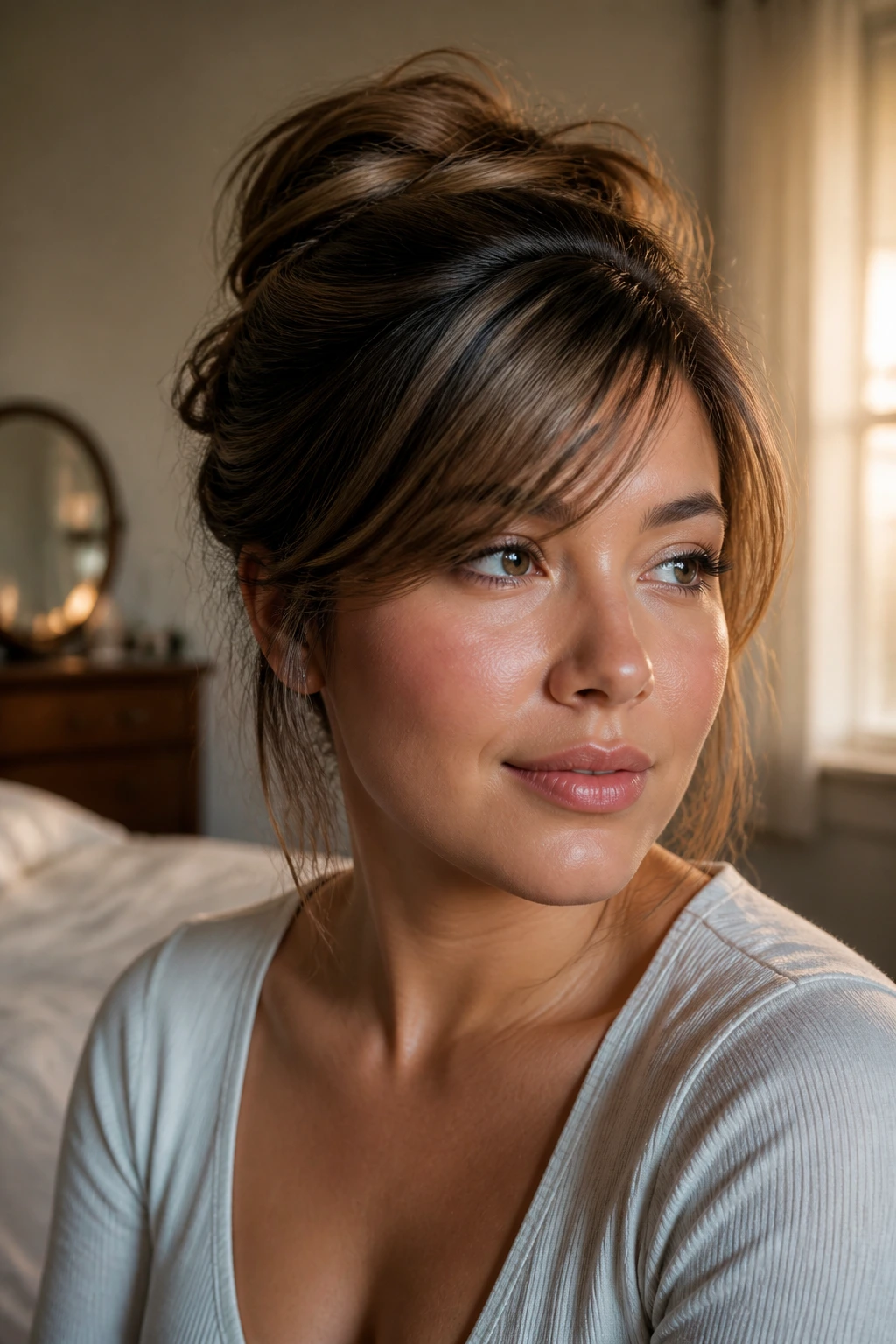
Presentation: Keep the lift above the cheeks whenever you can. Styles that rise at the crown, sweep across the forehead, or sit low at the nape tend to flatter round faces more than looks that stop and swell out at cheek level.
Accessories: Thin headbands, small clips, and narrow barrettes usually work better than thick padded bands or oversized ornaments. Big accessories can add width where you’re already working to keep the outline narrow.
Outfits: V-necks, open collars, and scoop necks echo the vertical line these styles create. High necks can work too, but they usually pair better with sleek ponytails, buns, or tucked styles than with big side volume.
Best Setting: A high pony or halo braid fits busier days. A soft bun or pin-curl look leans dressier. A headband tuck or double twist sits in the easy middle ground — enough control to look finished, not so much that it feels fussy.
Scale: If your hair is very fine, keep sections small and shapes compact. Tiny curls, slim braids, and modest crown lift usually read fuller than big shapes that collapse before you leave the house.
Additional Tips and Style Boosters

Root Lift: Blow-dry the roots in the opposite direction of your part while the hair is still damp. That little bit of lift at the scalp gives the whole style more staying power than a pile of product ever will.
Texture Trick: Mist the mid-lengths with texturizing spray before you braid, twist, or clip. Fine hair holds these styles better when it has a little grit, and you only need enough to make the strands cooperate.
Accessory Move: If a style looks too flat, add one small clip or pin at one temple instead of more volume everywhere. A tiny asymmetrical detail changes the line of the face without making the style bigger.
Finish: Put shine spray or a drop of serum only on the last 2 to 3 inches of hair. That keeps the roots light and keeps the ends from looking dry, which matters a lot on fine hair.
Shortcut: Sleep in loose braids or a soft low bun if you know you want texture the next morning. Fine hair often styles better on hair that is not freshly washed, and a night of gentle shaping can save you ten minutes.
Common Mistakes to Avoid

Putting the part dead center and leaving it flat. On a round face, that can make the width feel louder and turn fine hair into two thin panels. Fix it with a side part, or give the crown some lift if you want to keep the center split.
Adding volume at the cheeks instead of the crown. This is the most common bad habit I see. The hair gets fluffy right where the face is widest, which works against you. Put the height higher up or lower down the length.
Using too much cream or oil. Fine hair does not need much help looking glossy. Heavy product makes the strands separate and slide, and the style collapses fast. Use a light mousse or texturizer first, then a tiny finish of serum only on the ends.
Tightening every front piece back. A scraped-tight hairline can make a round face feel more circular, not less. Leave a few soft pieces near the temples or create a side sweep so the face keeps some shape.
Curling everything the same direction and letting the bend hit at the cheeks. That can widen the face fast. Start the bend lower, vary the direction a little, and keep the cheek area open when possible.
Choosing giant accessories. Oversized clips and wide headbands can overpower fine hair. Smaller pieces often look more balanced and stay put longer.
Variations and Adaptations to Try
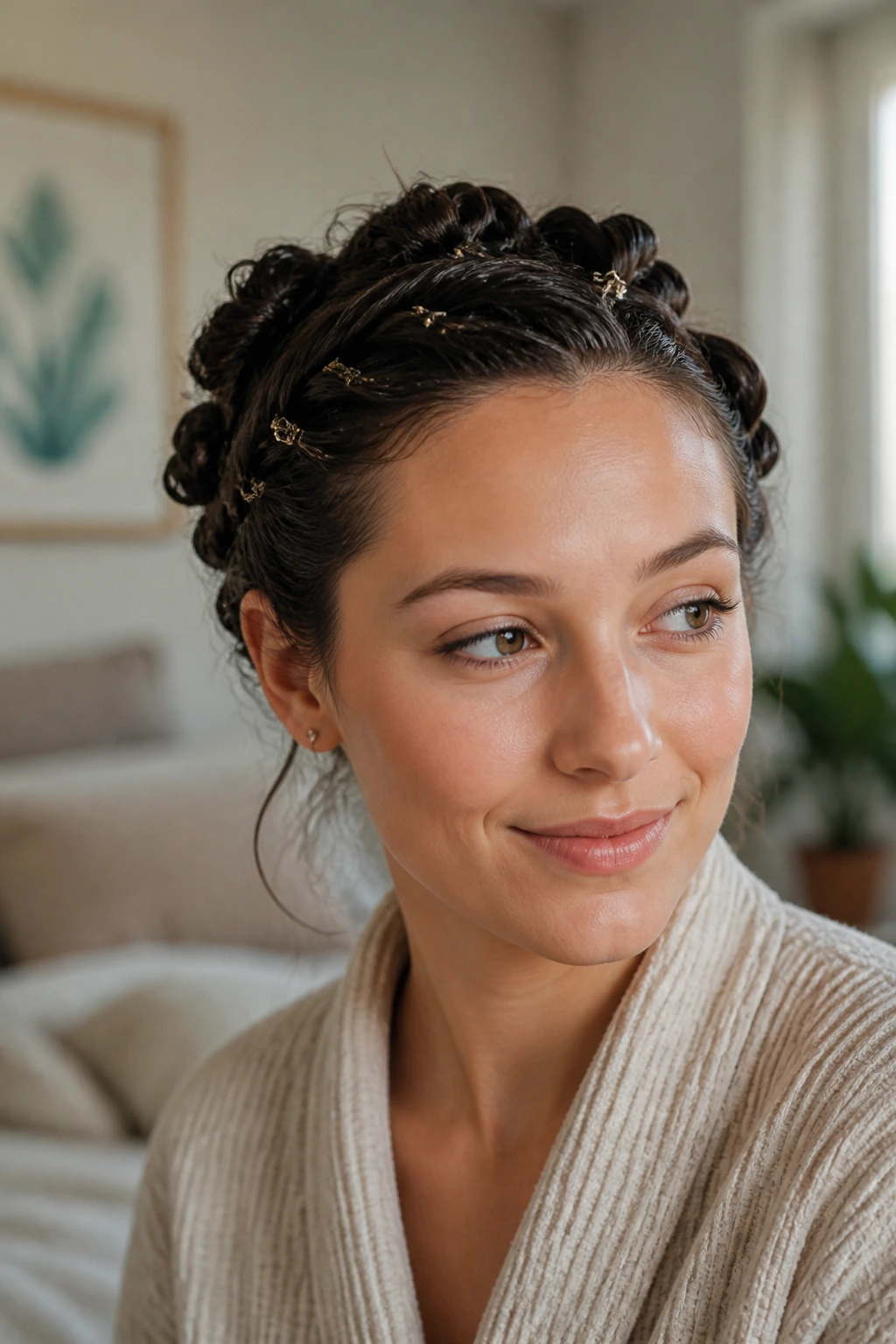
Heat-Free Twist Set
Skip the curling iron and work with damp hair instead. Add a little mousse, twist the front sections back, and let the hair dry in the shape you want. This works well when you want some lift but do not want to fight heat damage.
Short-Hair Edit
If your hair is above the shoulders, lean into tucks, side parts, mini twists, and pin curls instead of big buns or ponytails. Short fine hair usually looks better with a little direction than with a lot of manipulation.
Soft Glam Version
Use curtain waves, a polished low pony, or a low chignon with two slim tendrils. These styles keep the face open while giving the whole look a bit more finish for events or dinner.
Rain-Ready Version
Choose a braid, twist, or tucked style and keep the crown smooth. Fine hair frizzes easily in wet air, so styles that rely on structure rather than loose bends hold up better.
Curly or Wavy Fine Hair Version
Let the natural texture do part of the work. Shape the crown with a side part, define the curls lightly, and avoid heavy creams that turn the top flat. A diffused, piecey finish usually flatters round faces better than overly fluffy sides.
Office-Safe Version
Keep the silhouette neat: low pony, French twist, wrapped bun, or half-up clip. The goal here is not drama. It is a clean outline that survives meetings, headsets, and one too many hair tucks.
Keeping the Style Fresh from Morning to Night
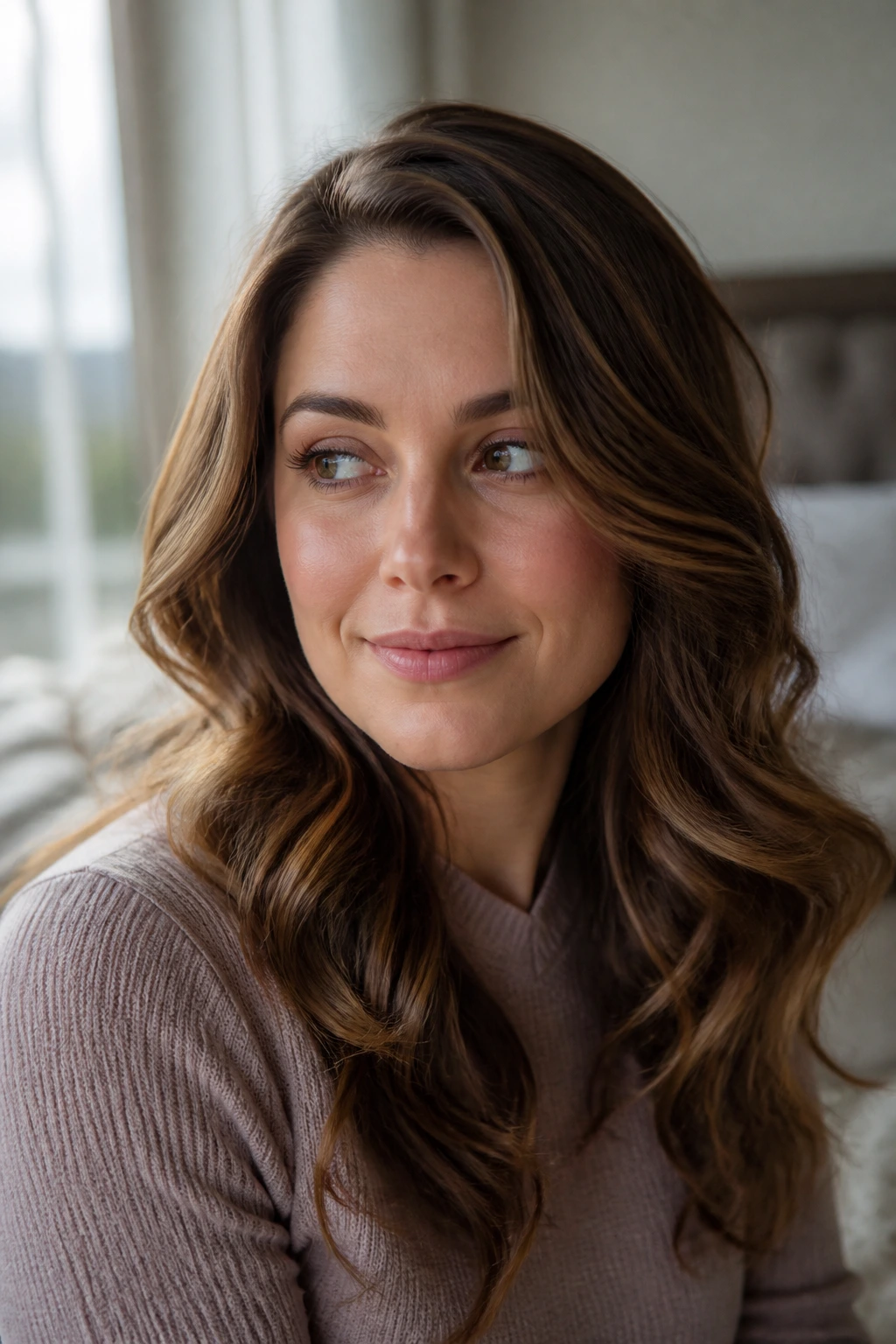
Most of these styles hold well for a full day if you start with some texture and do not drown them in product. A side-part wave or low ponytail usually lasts 6 to 10 hours before it starts to soften. Braids, twists, and pinned styles can often make it into the next morning if you sleep carefully and avoid smashing the crown flat.
For overnight care, use a silk pillowcase or wrap the style loosely with a silk scarf. A low pony, chignon, or twist should stay loose rather than tight while you sleep; tight elastics leave dents and can pull fine hair flat at the root. If you want to wear the style again the next day, a few spritzes of dry shampoo at the roots and a 30-second blast of cool air is often enough to wake it back up.
Refreshing is about shape, not starting over. Fluff the crown with your fingers. Re-bend the front pieces if they have gone limp. Add one pin where the style starts to fall apart instead of redoing the whole thing. Fine hair usually needs smaller interventions than people expect.
If a style is especially soft — curtain waves, a half-up knot, a side-swept braid — plan for the front pieces to relax by evening. That is not a failure. It is fine hair being fine hair. A little nighttime pinning or a quick morning touch-up keeps it usable for another round.
Frequently Asked Questions
Can round faces wear a center part?
Yes, but it works best when the crown has some lift and the sides do not puff out at cheek level. A flat center part with wide volume beside the face usually adds width. A lifted center part with soft bends can look clean and balanced.
Should fine hair avoid layers?
Not automatically. Layers can help if they are cut with purpose, but too many short layers can leave the ends looking thin and wispy. For styling, the bigger issue is usually how the hair is finished, not the cut alone.
Do bangs make a round face look wider?
Straight blunt bangs often do, especially if they sit heavy across the forehead. Side-swept bangs or curtain fringe usually work better because they break the face diagonally and keep the shape from feeling boxy.
What is the best way to make fine hair hold a style longer?
Start with a little texture at the roots, use smaller sections, and let curls or twists cool before you touch them. Fine hair holds shape better when you build grip first and keep product light.
How do I keep bobby pins from slipping out?
Insert them with the wavy side facing down toward the scalp, and use pins that match your hair color so you can place more than one if needed. A little texture spray on the section before pinning also helps.
Can these styles work without heat?
Absolutely. Braids, twists, claw-clip styles, and headband tucks are some of the best no-heat options for round faces and fine hair. If you want wave without heat, set the hair while it is damp and let it dry fully before unwrapping.
What if my hair is too short for ponytails and buns?
Use side parts, pin curls, temple twists, and tucked sections instead. Short fine hair often looks best when it is guided into a shape rather than forced into a style meant for longer lengths.
How do I stop the style from going flat by lunch?
Keep the crown light, use dry shampoo or root lift spray before styling, and avoid smoothing every strand into place. A little texture at the roots and less product near the scalp usually makes the biggest difference.
A Soft Frame, Not a Heavy One

The smartest styles for round faces and fine hair do not fight the face or the texture. They work with both. A little lift at the crown, a side sweep, a low anchor, or a narrow braid can do more than a big, loose shape that flops by noon.
That’s the pattern worth remembering: height up top, softness where you want it, and width kept away from the cheeks. Once you start styling with that shape in mind, the options get easier, not narrower. Pick one look for rushed mornings and one for days when you have ten extra minutes, and you’ll stop guessing at the mirror.