



The wrong haircut on fine hair can make a square face look harder, not softer. A blunt line that lands right at the jaw can sit there like a shelf. Too many short layers can do the opposite damage, making the ends look wispy while the crown goes flat by lunchtime. Fine strands need shape, but they also need their weight preserved. Square faces need a little curve, a little break in the line, and enough movement that the jaw doesn’t feel boxed in.
That’s the tightrope. And it’s a very real one.
The best cuts for this face-shape-and-texture combo don’t try to “hide” anything. They work with the natural geometry. They keep the perimeter full, avoid over-thinning, and place softness where the face tends to feel strongest: around the jaw and the sides of the forehead. If you’ve ever left a salon with a cut that looked airy for about twelve hours and then collapsed into stringy ends, you already know why this matters.
The sweet spot is usually somewhere between structure and softness. Not shellacked, not shredded. A good cut for fine hair and square faces gives you lift at the crown, movement near the cheekbones, and ends that still look like hair, not smoke.
Why These Haircuts Work So Well Together

-
They break up hard lines: Square faces already have definition, so the best cuts add curves, angles, or movement that keep the jaw from looking even sharper.
-
They keep density where fine hair needs it most: Over-layered fine hair often looks thinner at the ends, which is a bad trade. These cuts preserve weight at the perimeter.
-
They build lift without a lot of product: A side part, a bit of graduation, or a face-framing bend can do more than a full shelf of styling cream.
-
They avoid the chin trap: Any cut that lands exactly at the widest part of the jaw deserves caution. Length just below or above that point usually reads better.
-
They grow out without turning boxy: That’s the part people forget. A cut can look lovely on day one and awkward by week six. The better choices keep their shape longer.
1. Soft Collarbone Lob with a Side Part
A collarbone lob is one of the most forgiving shapes for fine hair and a square face, mostly because it lands in that sweet zone just below the jaw. It gives the hair enough length to fall with a little swing, but not so much length that the strands get dragged down and see-through at the ends.
Why the Shape Works
A side part matters here. It shifts some of the visual weight away from the center line and gives the crown a better chance to lift, which is half the battle with fine hair. Ask for a blunt perimeter with only the last half-inch softly point-cut, not a heavily razored finish. That keeps the edge looking full in daylight.
- Best length: collarbone to upper chest
- Best part: deep or soft side part
- Best finish: loose bend at the ends
- What to avoid: a chin-level stop point
Quick tip: if your hair falls flat at the roots, flip the part while it’s damp and set it with clips for 10 minutes. That small shift can change the whole line.
2. Chin-Grazing Bob with Airy Ends
A chin-length bob can work on a square face, but only if the ends move. If the line is too sharp, it can make the lower half of the face feel wider. If it’s soft, slightly broken up, and styled with a bend instead of a board-straight finish, the bob starts to look chic rather than severe.
The key is restraint. You do not want a thick helmet shape or a bob that hits exactly on the jaw’s broadest point. You want the ends to hover, not park themselves. A tiny bit of texture at the edge makes the difference. So does a deep side part.
Fine hair does well with this cut when the inside is left mostly intact. Too much thinning at the interior makes the bob collapse. Too little and it can feel blunt in the wrong way. The sweet spot is a line that still looks dense from the side.
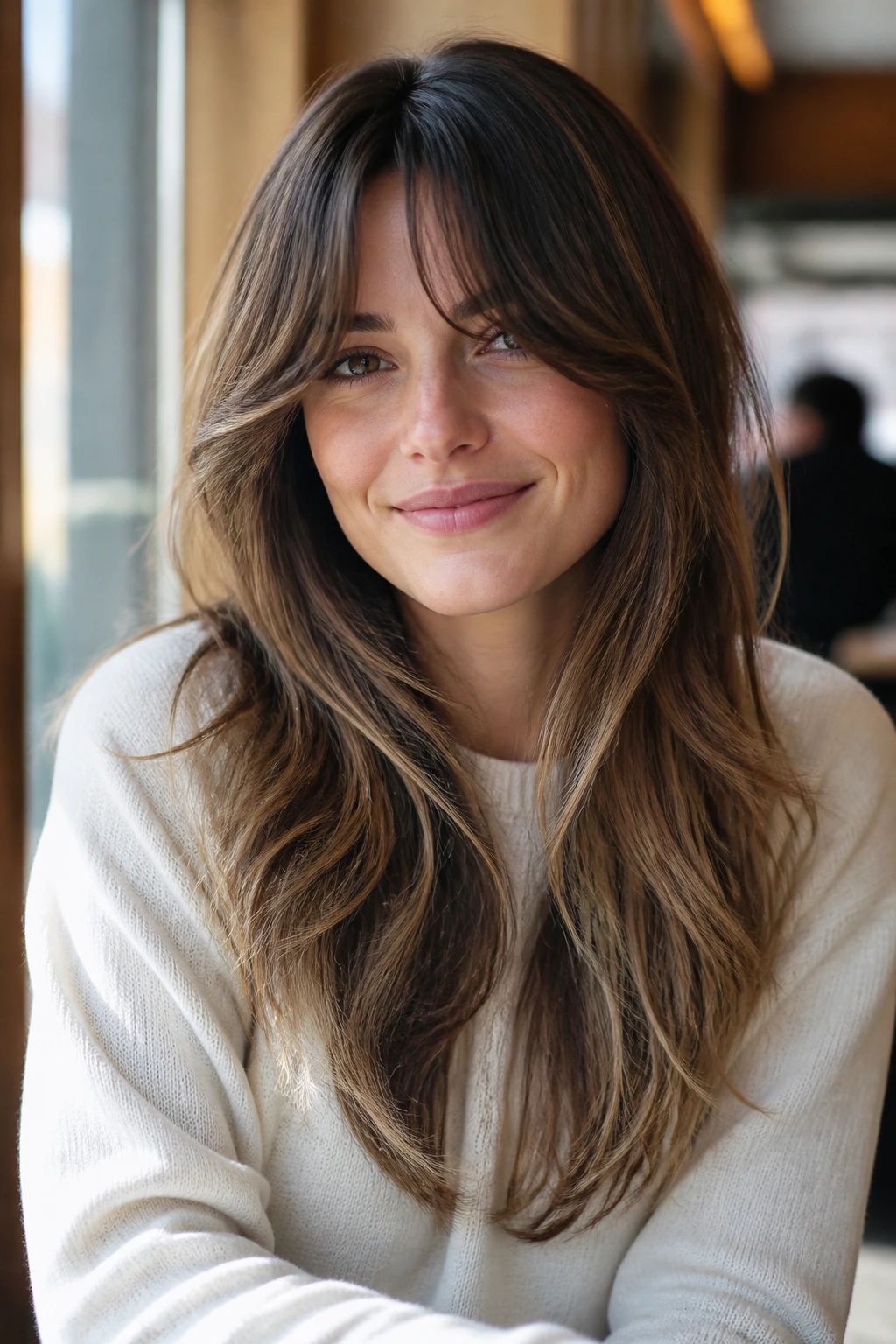
3. Long Layers with Curtain Bangs
Can long hair look full enough when the strands are fine? Yes, if the layers behave themselves. Long layers keep the weight down low, which helps preserve the look of thickness. Curtain bangs soften the square outline by breaking up the width across the forehead and drawing the eye toward the cheekbones.
How to Wear It
The mistake people make here is asking for layers that start too high. On fine hair, that can leave the mid-lengths weak and the ends see-through. Keep most of the movement below the cheekbone, and let the bangs open gradually instead of snapping short in the center.
Curtain bangs should feel like a frame, not a curtain rod. If they’re too heavy, they’ll sit like a shelf. If they’re too wispy, they disappear. The best version skims the brow in the middle and drops toward the jaw on the sides.
For styling, a medium round brush and a bit of root-lift mousse are enough. You want the bangs to bend, not freeze.
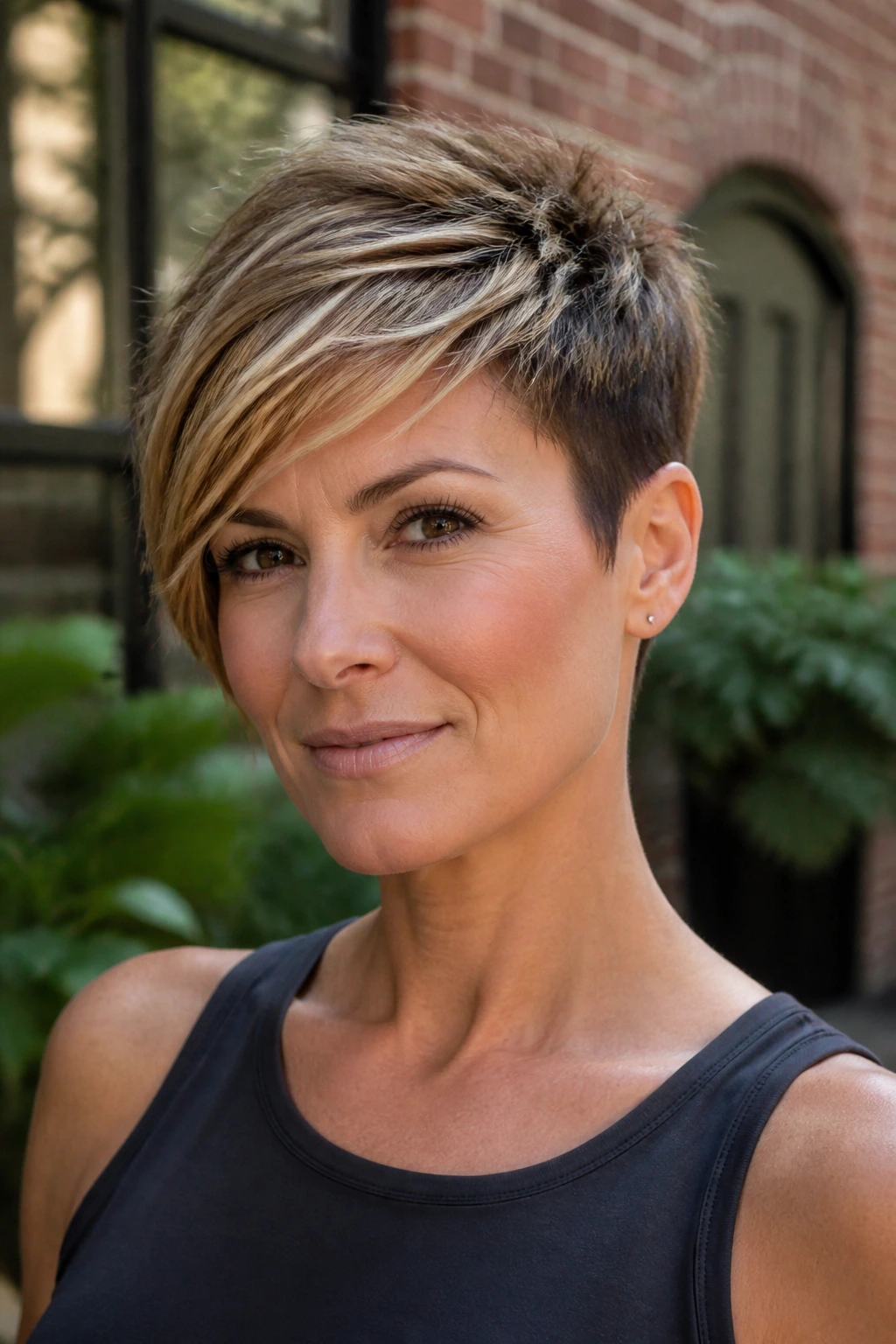
4. Textured Pixie with Side-Swept Fringe
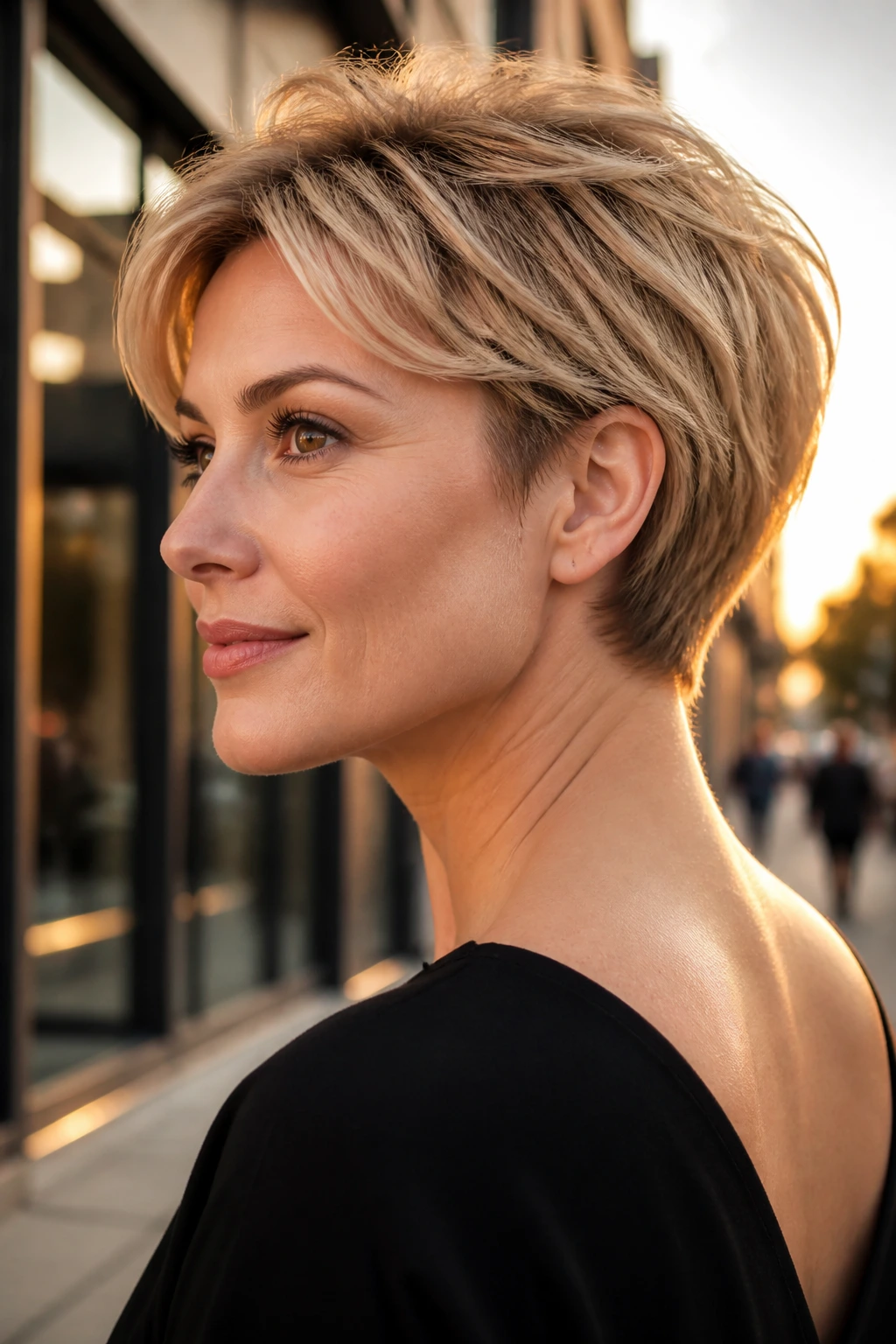
Picture fine hair that refuses to hold volume, a square jawline, and a morning that doesn’t leave much room for styling. A textured pixie can be a very smart answer, as long as the top stays longer than the sides and the fringe sweeps across, not straight down.
The side-swept piece is the thing that keeps this cut from feeling too geometric. It breaks the forehead line and gives the face a soft diagonal. That matters a lot on square faces, where straight-across shapes can feel severe.
- Top length: about 2 to 3 inches, depending on texture
- Sides: tapered, not shaved tight
- Fringe: side-swept, with movement
- Best styling product: lightweight mousse or paste
The nice part? Fine hair often looks thicker in a pixie because all the density stays concentrated in a small space. Less length, yes. More visual body, often also yes.
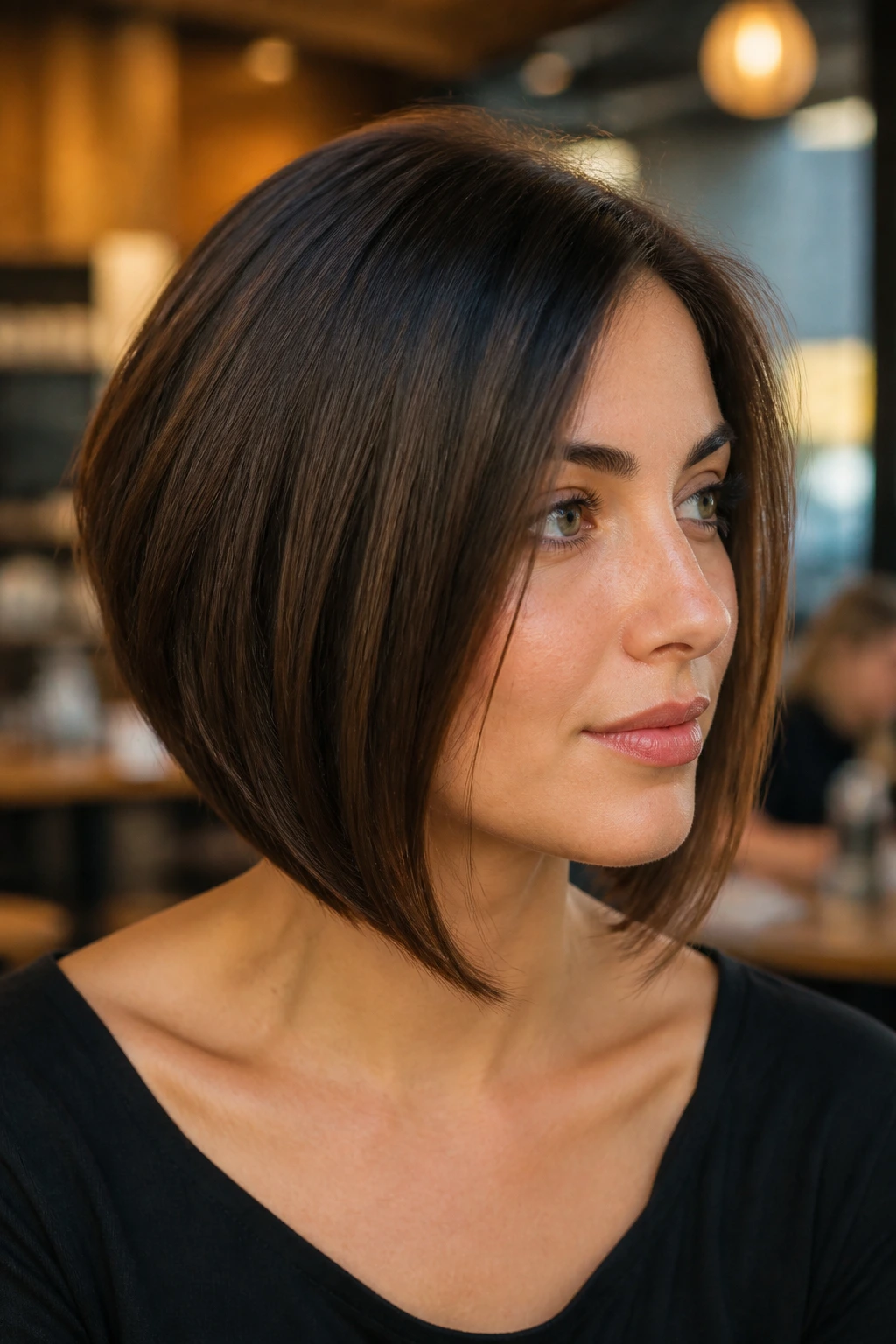
5. Angled Bob That Stops Below the Jaw
An angled bob can be a clever cut for a square face, but the angle has to be subtle. If the front pieces flare too dramatically, the whole thing starts shouting at the jawline. If the back is slightly shorter and the front slips past the widest part of the jaw, the eye follows the diagonal instead of sitting on the face’s width.
This is one of those cuts that looks simple in a chair and slightly smarter once you move. A good angled bob should feel clean from the front and tidy from the back, with enough length up front that it doesn’t land exactly at the jaw. That extra inch matters more than most people think.
Fine hair likes the structure of this cut because it gives the illusion of density. The trick is to keep the line crisp without making it blunt enough to look blocky. Ask for soft internal beveling at the ends rather than lots of texturizing. Too much slicing makes the tips look ragged by the second day.
6. Butterfly Cut with Face-Framing Pieces
Unlike a heavy shag, the butterfly cut keeps length in the lower half while lifting the top with shorter layers. That’s why it works so well on fine hair: you get movement up top without sacrificing the look of fullness at the bottom. On a square face, the face-framing pieces help blur the jaw and cheekbone edges.
What makes this cut different is the contrast. The shorter layers sit around the crown and cheekbones, while the bottom length stays longer and more grounded. That contrast gives you volume without making the ends sparse. It also plays nicely with a round brush, which is convenient if you enjoy a blowout shape.
This cut is best for medium-to-long hair and for people who don’t mind using heat. Air-drying can leave the shorter layers doing odd things if your wave pattern is unpredictable. If you like your hair to look polished but not stiff, this is a strong choice.
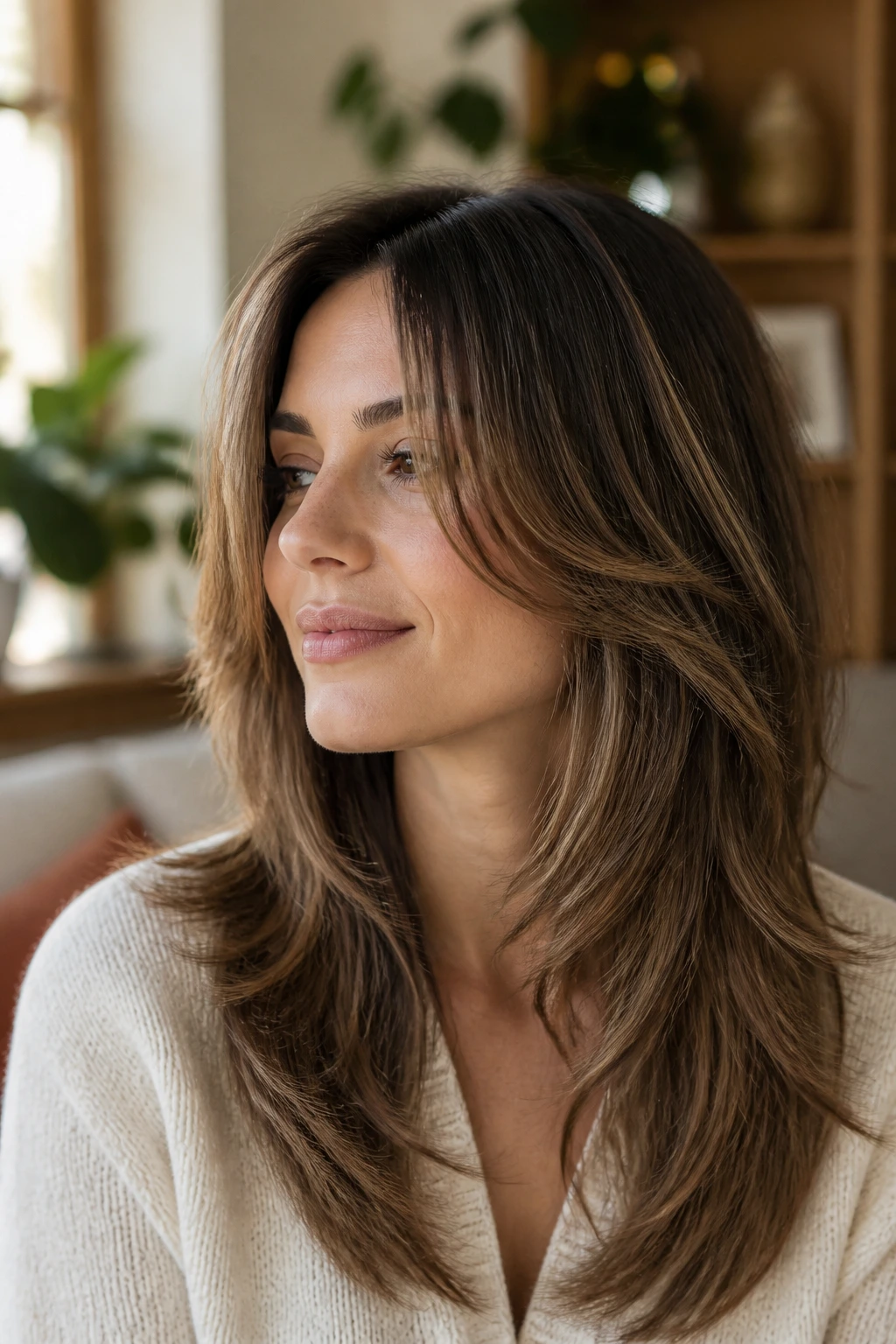
7. Shoulder-Length Shag with Light Curtain Fringe
A shag can be a disaster on fine hair if it’s overdone. The good version is softer. The layers are long enough to keep the ends intact, and the curtain fringe opens the face without cutting a hard line across the forehead.
What to Ask For
- Layering: soft and internal, not choppy from root to tip
- Length: around the shoulders, not above them
- Fringe: light curtain bangs that blend into the sides
- Finish: piecey texture, not feathered to the point of see-through ends
Square faces benefit from the little breaks in the shape, especially around the temples and jaw. Fine hair benefits because the layers create movement without completely removing weight. The only real danger is over-texturizing. Once the ends get too thin, the whole cut starts looking tired instead of lived-in.
If you like a little edge but not a lot of drama, this is a nice middle road. It has personality without demanding a blowout every single morning.
8. Wavy Lob with Invisible Layers
Invisible layers are the quiet fix for fine hair that goes limp by noon. They remove a bit of bulk from inside the cut so the outer line still looks full, which is exactly what you want when you’re trying to keep a square face from looking boxed in.
This cut depends on movement, but not messy movement. The lob length gives the hair enough weight to swing. The hidden layers stop it from hanging in one heavy curtain. If you have a slight wave, even better. A rough bend in the mid-lengths makes the whole shape look fuller than a straight blow-dry ever could.
The face shape piece is simple: the length sits below the jaw, so it doesn’t widen the face, and the loose wave softens the edges. It’s one of those cuts that looks casual on purpose, not accidental. That’s a useful distinction.
9. Bixie with a Tapered Neckline
Can a pixie be flattering when your face already feels angular? Absolutely, if the pixie leans into softness up top and keeps the neckline neat. A bixie — the halfway point between a bob and a pixie — gives you a little more length around the ears and forehead, which helps a square face feel less boxed in.
How to Wear It
The neckline should taper cleanly so the shape doesn’t puff at the back. The top needs enough length to tuck, sweep, or mess up with your fingers. If the fringe is too short, the face can feel more open than balanced. Leave enough length to sweep across the forehead and down toward one eye.
This cut suits fine hair because it doesn’t ask the strands to carry too much weight. It also doesn’t hide the hair’s texture, which can be a blessing if your hair has a little grit to it. Use a light foam or root spray. Heavy cream will flatten the top fast.
10. French Bob with Soft Bend
A French bob looks best on a square face when it sits a touch below the cheekbone and bends under at the ends. Too short, and it can emphasize the jaw. Too perfectly straight, and it starts to feel severe. The sweet spot is tiny but important.
This cut has a strong personality. Fine hair can handle that, because the short length can make the ends look thicker than they would in a longer style. The soft bend keeps it from becoming graphic in the wrong way. A small round brush, a bit of mousse, and a clean center or slight off-center part are usually enough.
There’s a nice honesty to this shape. It doesn’t pretend to be soft everywhere. It just softens the right spots. If you like a little polish and a little attitude, this one has both.
11. Long Blunt Cut with Rounded Ends
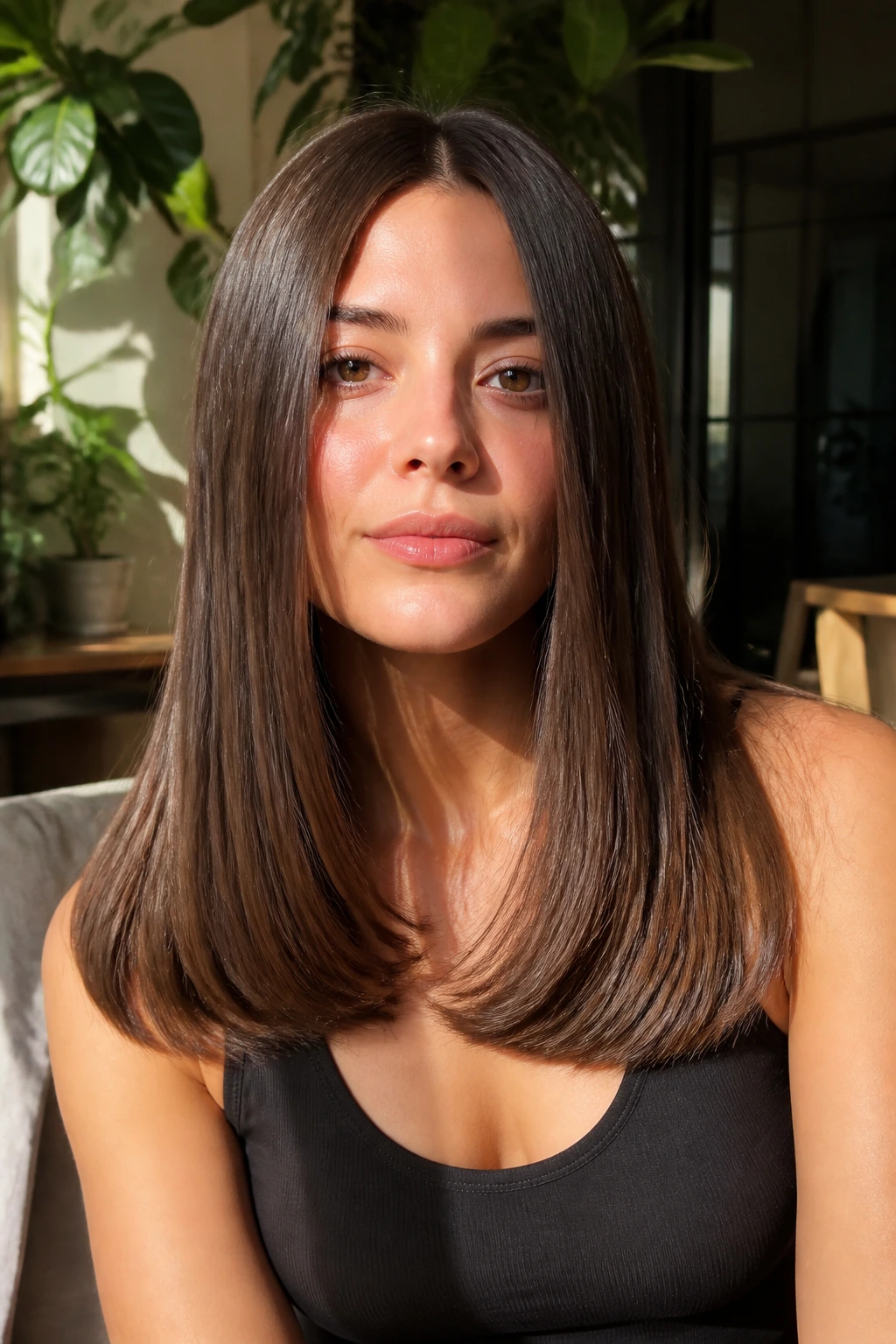
A long blunt cut is one of the few styles that can make fine hair look more substantial without asking for a lot of layering. The clean edge creates the illusion of thickness, which is useful when the strands themselves are fine. On a square face, the rounded ends matter just as much as the blunt line.
That rounding keeps the cut from drawing a hard horizontal band at the jaw. Instead, the hair curves gently inward, which changes the whole feeling of the shape. It still looks tidy. It just doesn’t feel rigid.
This is a smart choice if you like hair that behaves. You won’t need much styling beyond a smooth blow-dry or a quick pass with a flat iron. The price you pay is flexibility; blunt cuts don’t mask a bad trim the way shaggy cuts do. When they’re off, they’re off. When they’re right, they’re clean and crisp.
12. Layered Mid-Length Cut with Bottleneck Bangs
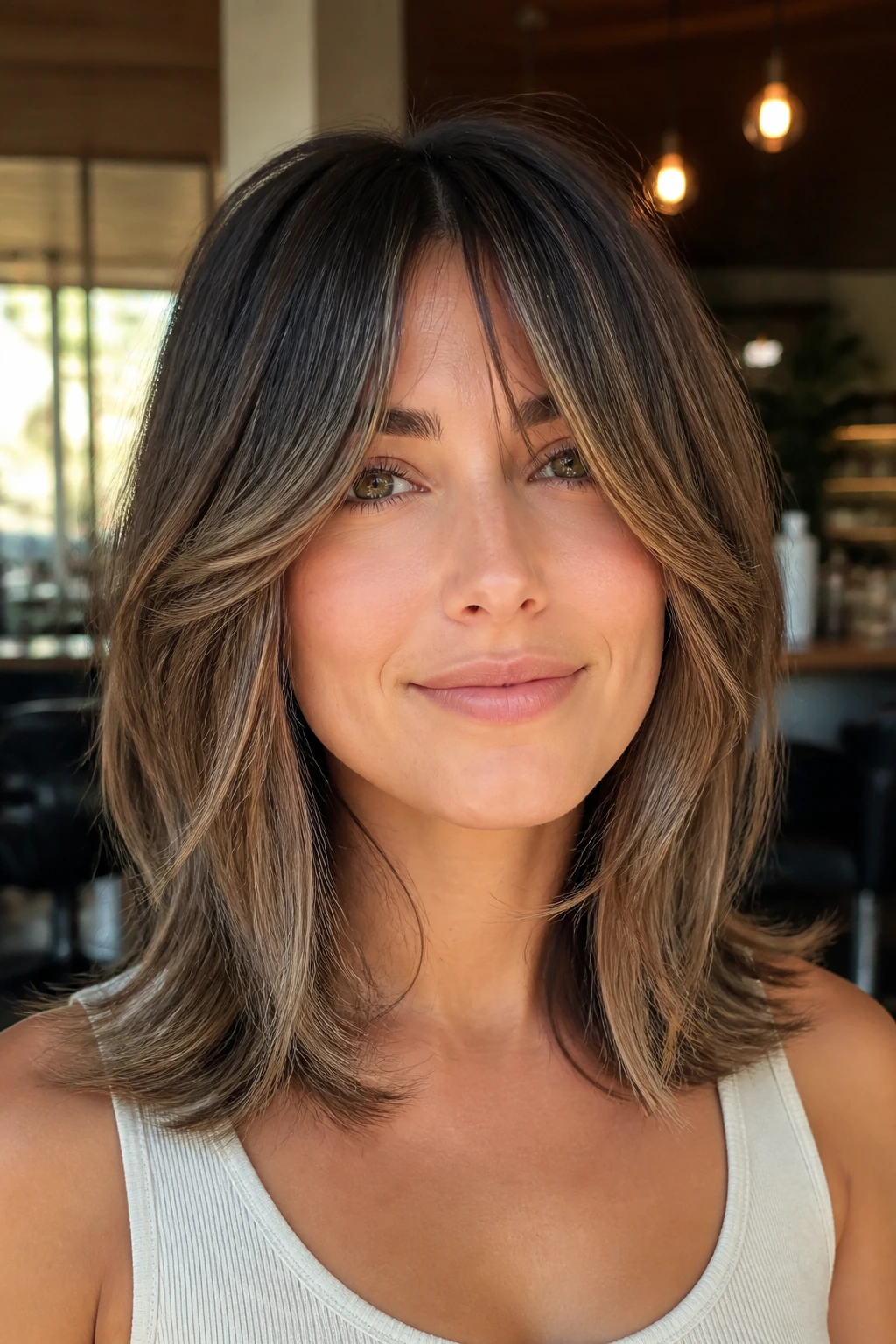
Bottleneck bangs are a neat trick for square faces. They start narrower at the center of the forehead and open wider as they move out toward the temples and cheekbones. That shape softens the face without dropping a full curtain across the brow.
Compared with curtain bangs, bottleneck bangs feel a little more tailored. They work well with layered mid-length cuts because the rest of the hair can stay fairly light and mobile while the fringe gives structure up front. Fine hair likes this because it doesn’t have to carry too much layered weight all over the head.
This cut is best for someone who wants fringe without the maintenance of a heavy bang. It grows out in a readable way, too. You won’t hit that awkward “bang shelf” quite as fast. If your face tends to read wide across the jaw, the soft opening of the bangs helps pull the eye upward.
13. Soft Mullet with a Modern Wolf Edge
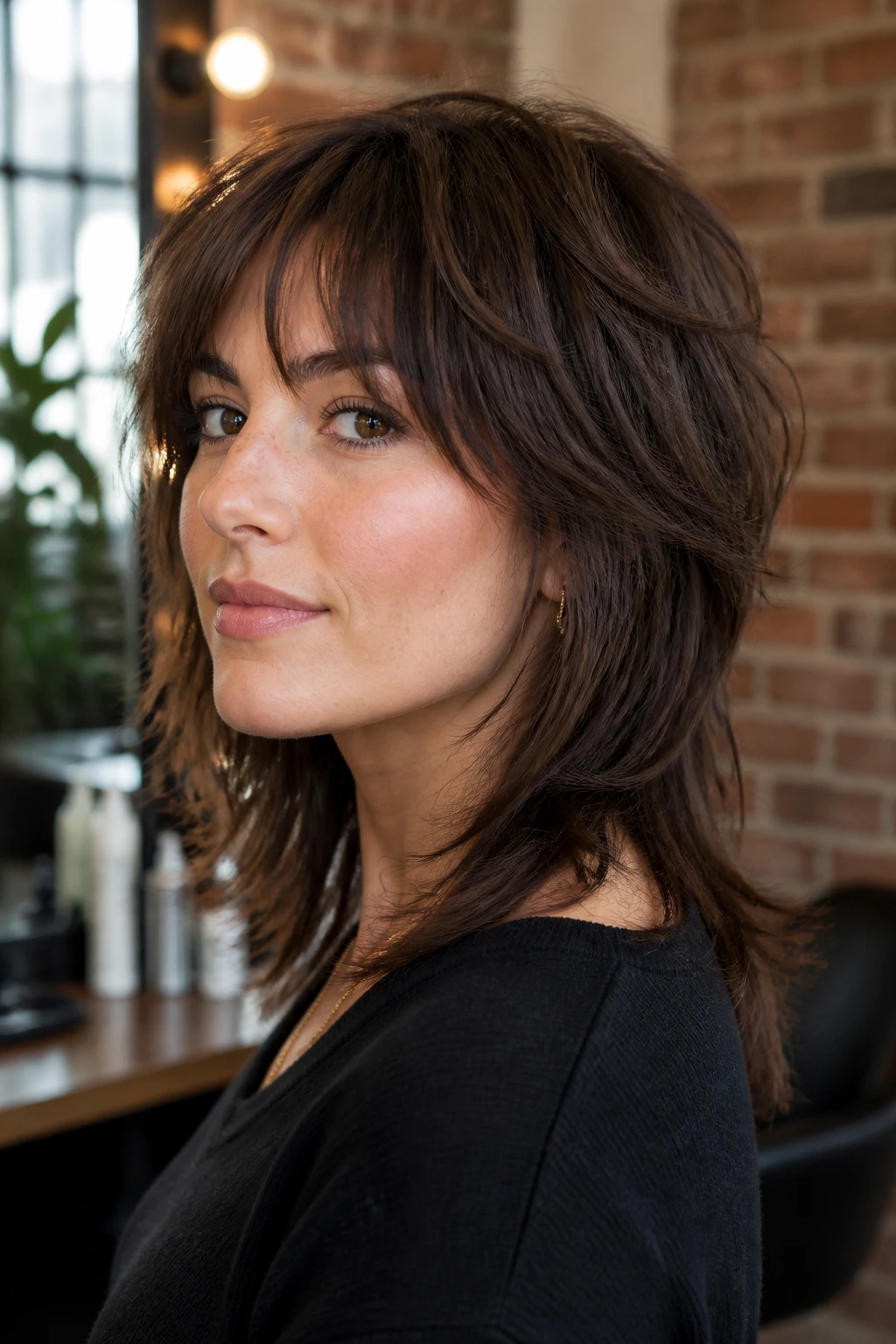
A soft mullet sounds riskier than it is. The modern version keeps the perimeter intact enough to avoid that ragged, over-thinned look that can happen on fine hair. The crown gets some lift. The sides get movement. The back stays soft and wearable.
Why It Works
The point is balance, not rebellion for its own sake. Square faces benefit from the broken lines around the temples and jaw. Fine hair benefits because the cut adds texture without asking the hair to fake volume all over the head.
- Crown layers: shorter, but not choppy
- Sides: soft and movable
- Back: longer than a classic shag, shorter than a lob
- Avoid: heavy razor work that leaves the ends see-through
This is one of those cuts that looks best on hair with a little natural bend. Straight fine hair can still wear it, but you’ll probably want a root-lift spray and a loose wave in the mid-lengths. It’s not the most conservative option here. It is, however, one of the most personality-filled.
14. Sliced Pixie Bob
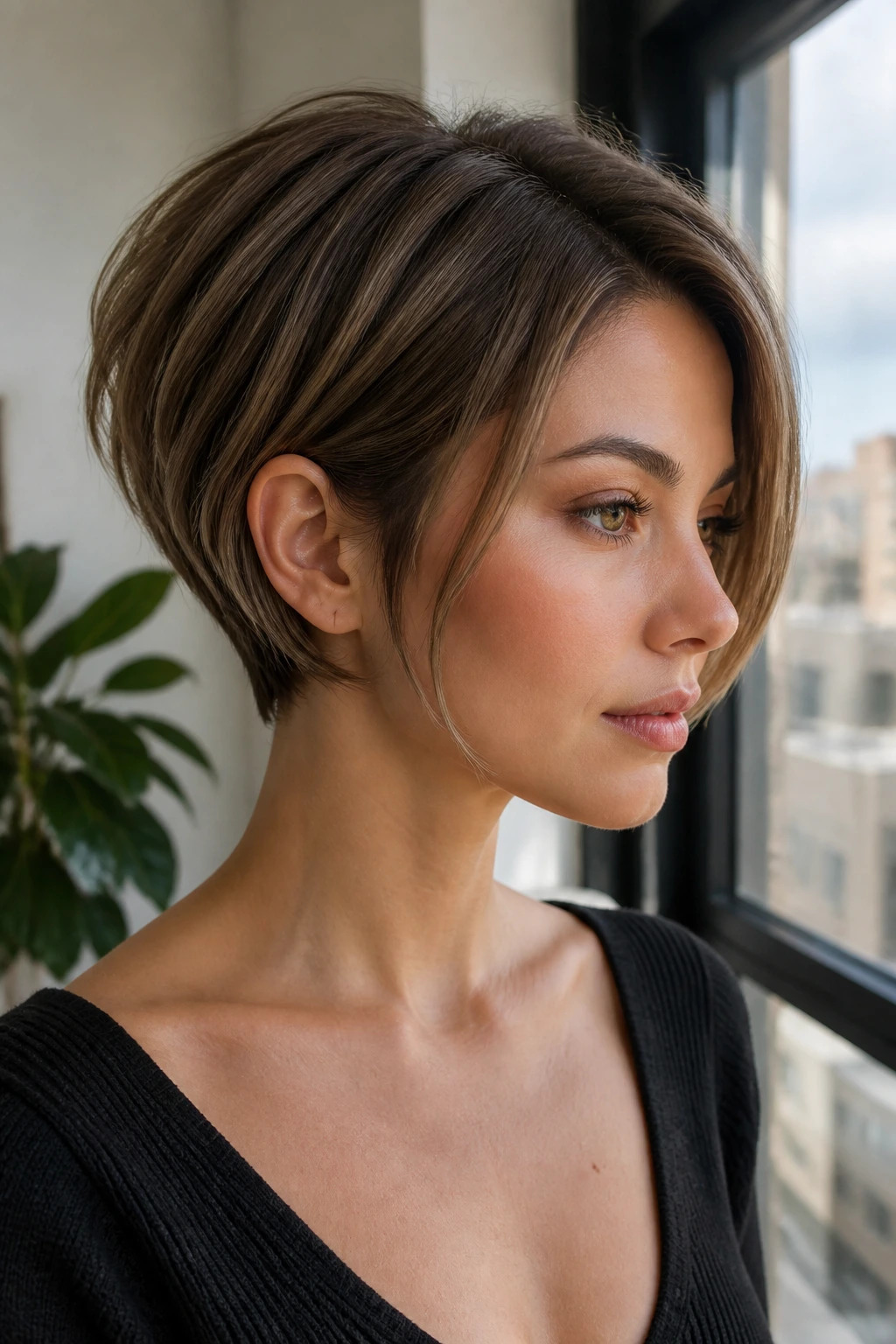
A sliced pixie bob gives you the clean neck of a short cut and the movement of a bob. The slicing is done in a controlled way, which is the important part. You want lightness, not gaps. Fine hair can carry this shape because the cut removes weight strategically instead of everywhere at once.
The front pieces should stay long enough to tuck behind the ear or sweep across the cheek. That keeps the square face line from feeling too exposed. The back stays tidy and close, which gives the illusion of lift at the crown.
This is a good cut for straight hair in particular. Straight fine hair can go flat fast, and a pixie bob gives it a shape that still reads even when the styling is minimal. You’ll want trims more often than you would for a lob. The shape depends on precision.
15. U-Shaped Long Cut with Internal Layers
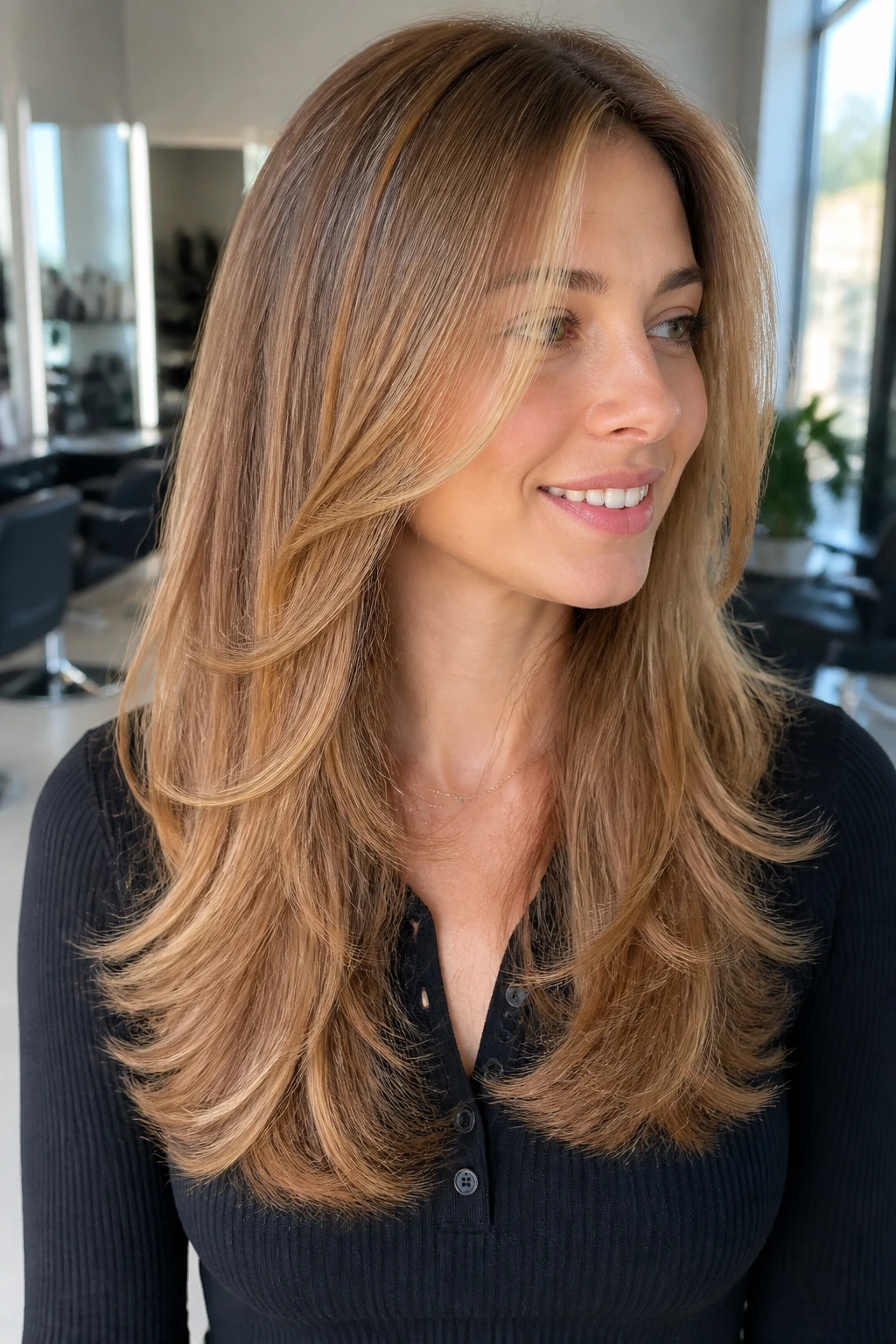
Does long hair have to feel heavy to flatter a square face? Not at all. A U-shaped cut keeps the center length a little longer than the sides, which creates a softer silhouette than a blunt line. On fine hair, internal layers keep the interior from falling into one flat sheet.
How to Wear It
The front pieces should start around the cheekbone or slightly below, then melt into the longer lengths. That keeps the square jaw from getting boxed in. If your hair is fine but plentiful, this cut can be a good compromise between length and movement.
The U-shape matters because it changes how the hair falls over the shoulders. Instead of ending in a straight block, it rounds out a little. That’s a subtle thing, but subtle is often the whole game with square faces. Style it with a loose bend at the ends and a soft off-center part.
16. Collarbone Shaggy Lob with Razored Ends

If your hair tends to go limp the moment you step outside, this cut has the right kind of mess. A collarbone shaggy lob keeps enough length to avoid the chin trap, but the razored ends and light layering stop the shape from going heavy.
The face shape benefit is simple: the cut doesn’t sit squarely on the jaw. It falls below it, and the little pieces around the face make the outline less boxy. The texture is where this style lives or dies. Ask for razoring only at the last inch or so if your hair is very fine. Too much slicing and the ends disappear.
This cut usually looks best with a bit of lived-in wave. Air-dry it if your hair allows, or use a medium curling iron just on the front and top layers. It doesn’t need perfection. It needs movement and a perimeter that still has presence.
17. Side-Parted Shoulder Cut with Tucked Layers

A shoulder-length cut can be tricky on square faces because the shoulder line itself can make the hair puff out in odd places. The fix is a side part and layers that tuck inward rather than kick out. That creates softness where you need it and keeps fine hair from looking triangular.
This is one of the easiest cuts to live with if you don’t love styling every day. The length gives you enough hair to tie up, clip back, or wear down without feeling too short. The side part keeps the top from going flat and helps soften the forehead width.
Ask for layers that are cut to move with the shoulders, not bounce off them. That tiny detail changes how the shape behaves in a coat, on a windy day, or after a few hours at a desk. It’s a practical cut, which is underrated.
18. Curly or Wavy Shoulder-Length Cut for Fine Texture

A curly or wavy pattern changes the rules a little. Fine curls and waves can look fuller than straight fine hair, but they also shrink and frizz in ways that can steal shape. A shoulder-length cut gives enough room for the texture to do its thing without piling too much volume at the jaw.
Unlike straight hair, this cut often works better when it’s shaped dry or with the curl pattern in mind. The face-framing pieces should sit a bit longer than you think, because waves spring up. Square faces benefit from the soft movement around the jaw and cheekbones, especially when the outer edge isn’t cut too bluntly.
This is one place where too many short layers can backfire. They can create a halo at the sides while the bottom goes sparse. Keep the layers long, let the texture do part of the work, and use a light curl cream rather than a heavy butter or oil.
19. Jaw-Skimming Bob with a Deep Side Sweep
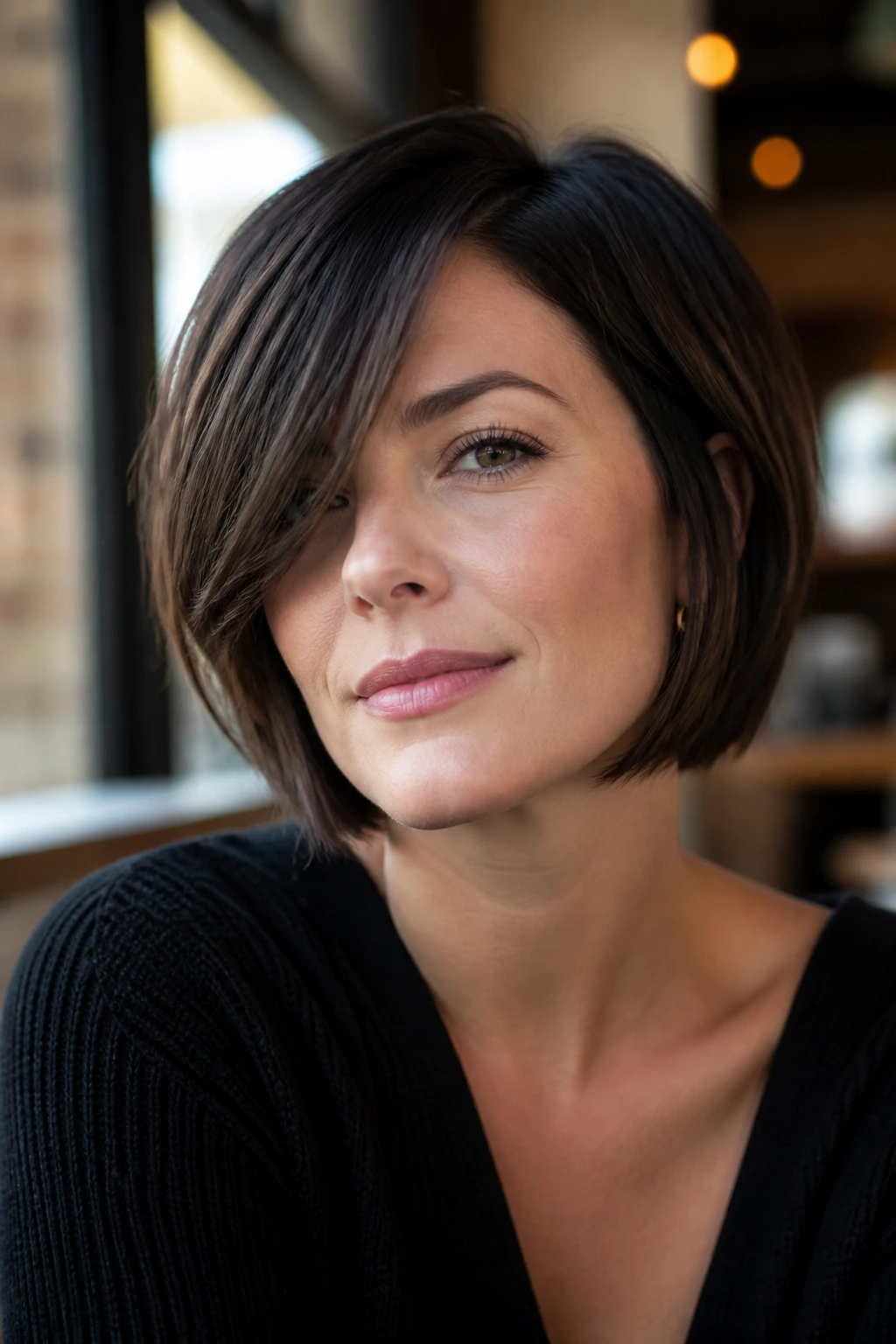
A jaw-skimming bob sounds dangerous, and sometimes it is. The version that works on a square face needs a deep side sweep to break the horizontal line, plus a slight asymmetry so the hair doesn’t sit evenly across the jaw. If the bob is too precise, it can feel boxy in a hurry.
Key Details to Ask For
- Length: just touching or slightly below the jaw, never sitting directly on the widest part
- Part: deep side part to create diagonal movement
- Ends: softly beveled, not razor-thin
- Styling: smooth root lift with a bend through the ends
This cut suits fine hair better than people expect because the short length gives the illusion of thickness. The deep sweep makes it feel less architectural. Still, this is not the easiest bob to carry if your hair refuses to hold shape. It works best with a little heat styling and a regular trim schedule.
20. Feathered Midi Cut with Volume at the Crown

Feathering belongs on fine hair when the layers are soft, not when they’re carved too sharply. A feathered midi cut keeps the length around the mid-back or upper chest while adding lift at the crown and softness around the face. On a square face, that crown volume helps the silhouette feel longer and less flat across the sides.
This cut is especially good if you like the look of a blowout. The feathered pieces catch a round brush nicely and curve away from the jaw. Just don’t let the feathering get too light near the ends. That’s where fine hair starts to lose its shape and look transparent.
The result can be elegant without feeling stiff, which is harder to find than it sounds. You get movement, but not the sort that turns stringy by the end of the day.
21. Graduated Bob with Longer Front Pieces
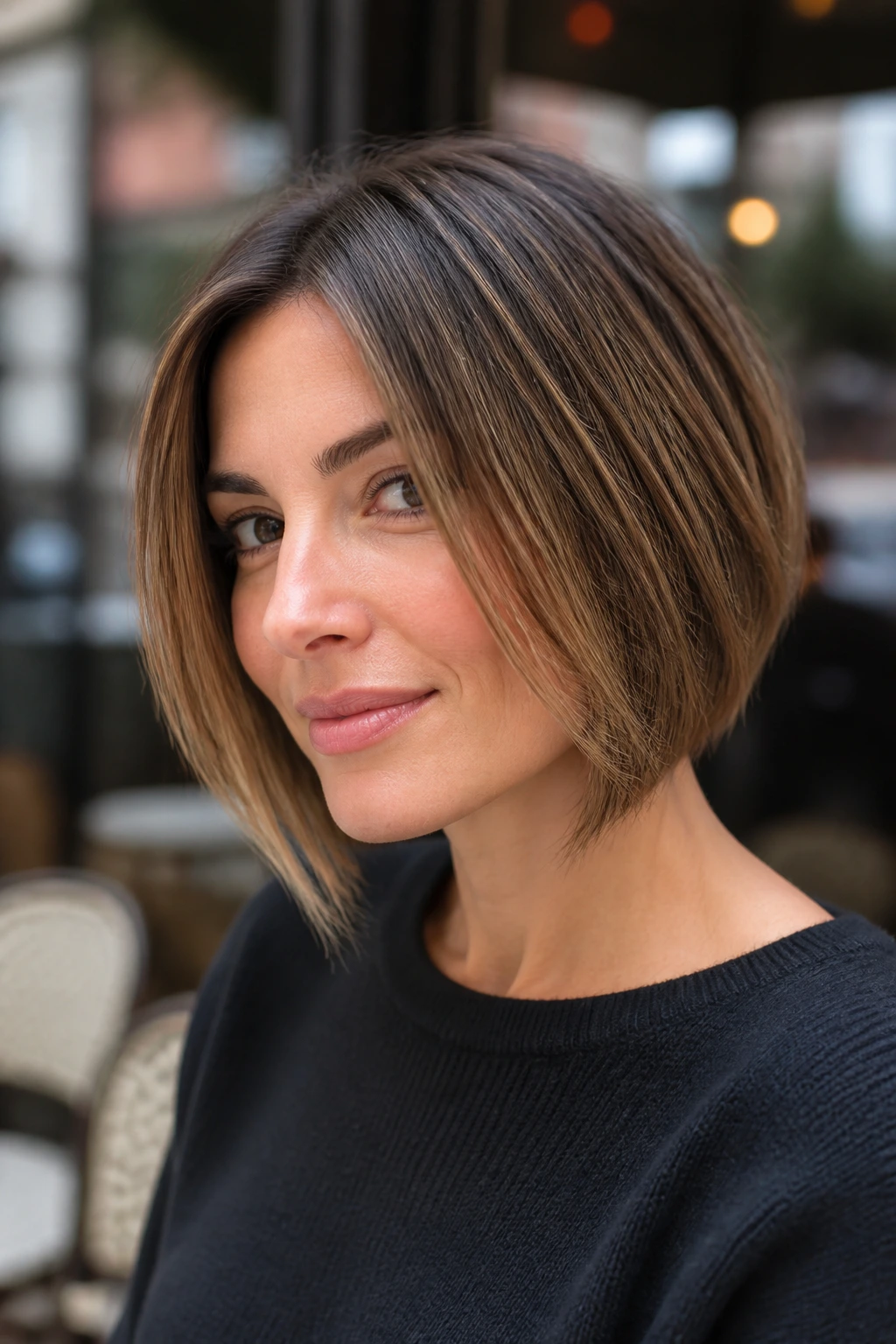
A graduated bob can add real body to fine hair, but only if the stacking in the back stays controlled. Too much graduation makes the crown look narrow and the front look too sharp. The right version gives lift at the back and length in the front, which helps a square face feel softer around the jaw.
How It Works
The shorter back creates a little internal push, so the hair doesn’t collapse against the neck. The longer front pieces keep the eye moving downward instead of across the widest part of the face. If you’ve got straight hair that hangs limp, this cut can wake it up.
It does need precision. Ask for a subtle stack, not a dramatic wedge. Style it with a round brush or a quick bend through the front lengths. If the ends get too fuzzy, the shape loses its clean line fast.
22. Smart Grow-Out Cut with a Soft Face Frame
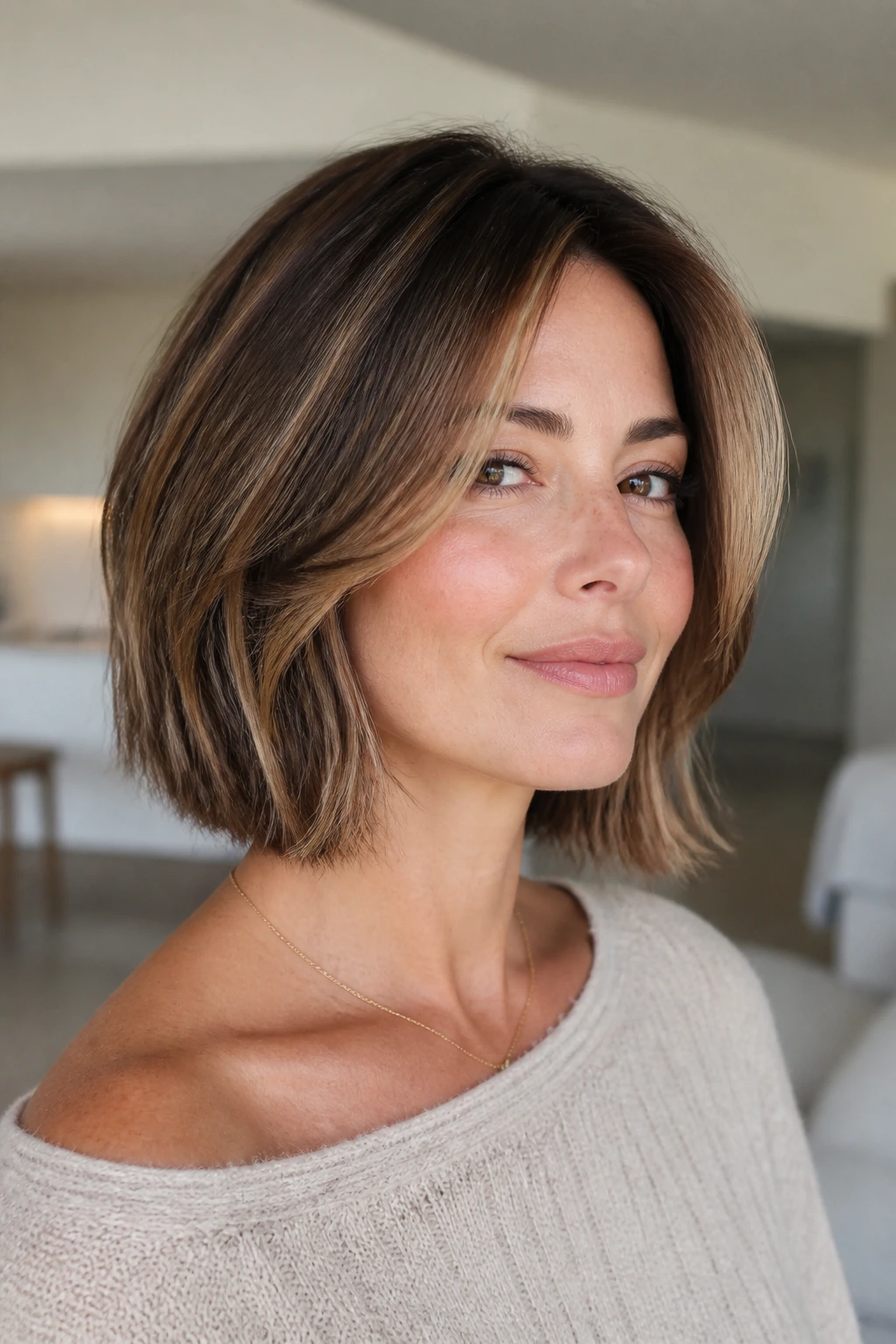
If you hate returning to the salon every five weeks, this is the practical choice. A smart grow-out cut is built to stay decent as it lengthens: the face frame is soft, the perimeter is not too blunt, and the overall shape doesn’t turn square the moment it grows an inch.
That matters on square faces because some cuts only look good when freshly cut. This one should look acceptable at week six, then still make sense at week ten. Fine hair benefits because the shape stays light without being stripped bare. The face frame should begin around the cheekbone and drift down toward the jaw, which keeps the outline soft even as the length changes.
It’s the haircut for people who want to stop thinking about their hair every morning. Not boring. Just sensible. And there’s a lot to be said for sensible when the alternatives are a shelf-like bob or a thinned-out shag that behaves like straw.
What Makes These Cuts Work on Fine Hair and a Square Face

Square faces have structure you can actually use. The jawline is defined, the forehead often carries width, and the overall shape tends to look strongest when the hair adds curve or vertical movement rather than more horizontal lines. Fine hair, meanwhile, needs help looking thick without being overloaded with layers that carve away the little fullness it has.
That’s why so many of the cuts above lean on one of three ideas: length past the jaw, a side part, or controlled movement through the mid-lengths. Each one changes where the eye lands. A side part shifts symmetry. A length that falls below the jaw keeps the lower face from feeling wider. Soft layers or bends break up the square outline without making the ends look thin.
The big mistake is confusing “texture” with “more layers.” Those are not the same thing. Fine hair usually needs the opposite of aggressive layering. It needs a shape that keeps the perimeter intact while adding motion inside the cut. If the ends look see-through in the mirror, the haircut is doing too much.
You can also think about this as a balance of light and weight. Fine hair often needs weight at the bottom to look full. Square faces often need lightness around the jaw. The best cuts manage both. That’s the whole trick, really. Everything else is just hairdressing vocabulary around it.
Tools That Make These Cuts Easier to Wear
-
Blow dryer with concentrator nozzle: Directs air where you want lift instead of blasting the whole head flat.
-
Small to medium round brush: A 1- to 1.5-inch brush is useful for bending ends under and lifting the root without overcurving the hair.
-
Lightweight volumizing mousse: Best for roots and mid-lengths on damp hair; skip the heavy creams that make fine strands droop.
-
Root-lift spray: A few sprays at the crown can change the silhouette, especially for lobs, bobs, and pixies.
-
Heat protectant: Non-negotiable if you use a flat iron or curling iron more than once a week.
-
Dry texture spray: Gives fine hair a little grip through the mid-lengths so it doesn’t slide into one flat sheet.
-
Velcro rollers: Useful for setting the front pieces or fringe while you do makeup or get dressed.
-
Duckbill clips: Handy for pinning the crown up while it cools after blow-drying.
-
Small flat iron: Better than a huge iron for shaping ends on shorter cuts and adding a soft bend near the jaw.
-
Dry shampoo: Not just for oily roots; it also adds a bit of roughness that helps fine hair hold shape.
What to Tell Your Stylist Before the First Snip
The exact haircut matters, but the instructions matter almost as much. Fine hair and square faces need a stylist who understands where to keep weight and where to release it. Say something like: “I want softness around the jaw, but I do not want the ends thinned out.” That sentence does a lot of work.
Be specific about length. If you’re asking for a bob or lob, point to where you want the hair to land when it’s dry, not just wet. Fine hair shrinks visually when it dries, and a cut that seems “below the chin” at the sink may end up sitting right on the jaw once it settles.
Talk about the layers too. Internal movement is different from surface layers. Internal movement lightens the inside of the cut while keeping the outside line fuller. Surface layers can create a prettier photo and a worse grow-out. If your hair is very fine, that distinction matters more than people like to admit.
Fringe is another place to be careful. Curtain bangs, bottleneck bangs, and side-swept fringe can work beautifully. Heavy straight-across bangs can make a square face feel broader unless they’re tailored with some softness at the edges. Bring photos, yes, but also say what you don’t want. That part is often more useful.
How to Style These Cuts Without Flattening Them
Root lift first. That part is non-negotiable if your hair lies close to the scalp. Put mousse or root spray at the crown and front roots while the hair is damp, then rough-dry until it’s about 80 percent dry before you bring in a brush.
Keep the ends soft. Whether you’re using a round brush or a flat iron, bend the bottom inch under or out just a little. A dead-straight end can look severe on a square face, while a tiny curve makes the whole cut feel finished.
Use less product than you think. Fine hair gets weighed down fast. A pea-sized amount of cream can be too much, especially near the roots. Keep serums and oils on the last few inches only.
Set the front while it cools. This is the easy fix people skip. Clip the front pieces up for a few minutes after blow-drying or wrap them around a roller. That little cooling period helps the shape hold longer.
Don’t chase perfect volume everywhere. You want lift at the crown and shape around the face. You do not need a giant halo. Too much volume at the sides can make a square face read wider, which is the opposite of the goal.
Common Mistakes That Make These Cuts Work Against You
The first mistake is cutting exactly at the jawline. It seems neat, but on a square face it can make the lower half feel wider and heavier. If you’re going short, go above it with intention or below it with enough length to clear the line.
The second mistake is over-thinning fine hair. This happens all the time with razors and aggressive point-cutting. The ends look fluffy in the chair, then they go see-through in daylight. Ask for controlled texture instead.
Third: bangs that start too short and too blunt. On a square face, a short hard fringe can emphasize the width across the forehead. Softer fringe shapes usually do a better job because they break the line without adding another horizontal edge.
Fourth: using heavy oils, creams, or masks near the roots. Fine hair doesn’t need much help to collapse. Save the richer products for the mid-lengths and ends. The root area should stay light.
And one more, because it matters: ignoring the parting pattern. A center part can look sleek, but it can also make a square face read flatter and wider if there’s no softness around it. A side part is not magic, but it often helps more than people expect.
Easy Variations and Different Ways to Wear the Same Cut

The Air-Dry Version: Best for wavy fine hair and busy mornings. Ask for soft internal layering, then scrunch a light mousse through damp hair and let the shape dry with a natural bend.
The Straight-and-Sleek Version: Works for blunt lobs, angled bobs, and long blunt cuts. Keep the line clean, use a flat iron only on the last inch or two, and finish with a light shine mist, not a heavy oil.
The Soft-Volume Version: Good if you want a little glamour without a full blowout. Use root-lift spray, set the crown with clips, and brush the hair away from the face while it cools.
The Low-Maintenance Version: Best for grow-out cuts, U-shapes, and long layers. Keep layers longer, avoid sharp bangs, and choose a length that still looks intentional at eight weeks.
The High-Definition Version: For people who like shape and contrast. This version leans into stronger angles, deeper side parts, or a more visible fringe, but the ends still stay soft enough to keep the face from feeling boxed in.
Keeping the Shape Between Salon Visits

Fine hair does not forgive bad grow-out as quickly as thick hair does, so trims matter. Bobs, pixies, and bixies usually need a cleanup every 4 to 6 weeks if you want the line to stay crisp. Lobs and shoulder-length cuts can often go 7 to 10 weeks, and longer cuts sometimes stretch a little more if the perimeter stays healthy.
Bang trims are their own thing. Curtain bangs and bottleneck bangs usually need a touch-up sooner than the rest of the cut, often around the 3- to 4-week mark, because they live right in the face and show their growth fast.
At home, keep the style simple. Wash only as often as your scalp needs, then reset the shape with a round brush or quick bend at the ends. Dry shampoo can buy you a day or two, but it works best when you use it before the roots collapse completely. A little on clean hair at night can help, too.
Sleeping on a silk pillowcase or tying the hair in a loose topknot can save you from waking up with flattened sides. Not glamorous. Very practical. And on fine hair, practical usually wins.
Frequently Asked Questions
What length is most flattering for fine hair and a square face?
Collarbone-length lobs are the safest starting point for most people because they keep enough weight in the hair while sitting below the jaw. That said, a good pixie, bob, or longer cut can work just as well if the line is placed carefully.
Are layers bad for fine hair?
Not inherently, but heavy layers can make the ends look sparse fast. Fine hair usually does better with internal layering, soft face-framing, or longer layers that keep the perimeter full.
Do curtain bangs make a square face look wider?
Not when they’re cut with a soft opening and enough length at the sides. The problem comes from bangs that are too blunt or too short, which can add another strong horizontal line across the face.
Is a bob or a lob better for this face shape?
A lob is usually easier because it avoids the chin line and gives fine hair a little more weight. A bob can still work if it’s cut above the jaw or placed with enough softness and movement.
Can I get a pixie if my hair is very fine?
Yes, and fine hair often behaves well in a pixie because the density stays concentrated. The important part is keeping the top long enough for movement and the fringe soft enough to balance the face.
What if my hair goes flat even after a good cut?
Then the cut is only doing half the job. Use a root-lift spray, set the crown while it cools, and avoid heavy conditioner near the scalp. Sometimes the fix is styling, not another haircut.
How often should I trim a cut like this?
Shorter cuts need more frequent trims, usually every 4 to 6 weeks. Lobs and longer layered cuts can go longer, but fine hair starts to lose shape faster than thick hair once the ends fray.
Should I avoid blunt cuts if I have a square face?
Not completely. A blunt cut can make fine hair look thicker, which is a real advantage. The trick is to soften the edge slightly and place the length above or below the jaw instead of right on it.
A Shape That Keeps Moving

The best haircut for fine hair and a square face is the one that gives you a little softness without stealing the hair’s body. That’s the whole balancing act. You want enough structure that the cut holds its shape, but not so much that it turns into a hard frame around your face.
That’s why the strongest options here all pay attention to the same few details: where the ends land, how the part falls, and whether the layers preserve density or chew through it. Get those right, and your hair starts doing the work on its own.
The smart move is usually the one that looks good on day one and still makes sense when it grows out a little. That’s the kind of haircut worth asking for.