



A round face doesn’t need to be “fixed.” It needs shape.
That sounds like a small distinction, but it changes everything when you’re choosing medium length hairstyles for round faces. A cut that ends at the cheek, puffs out at the sides, and sits like a little helmet can make the face feel wider than it is. A cut that drops below the jaw, bends away from the cheeks, and gives the eye a reason to travel up and down instead of straight across? That’s the good stuff.
The best medium lengths do one of three things: they carve in a little vertical line, they shift fullness below the widest part of the face, or they add texture in places that keep the shape from going boxy. Collarbone length, in particular, has become a kind of sweet spot for this face shape because it gives movement without turning into a blunt chin-length line that can sit hard on the cheeks. You’ll see that idea show up again and again here, because it works.
Why These 22 Medium Length Hairstyles Work on Round Faces
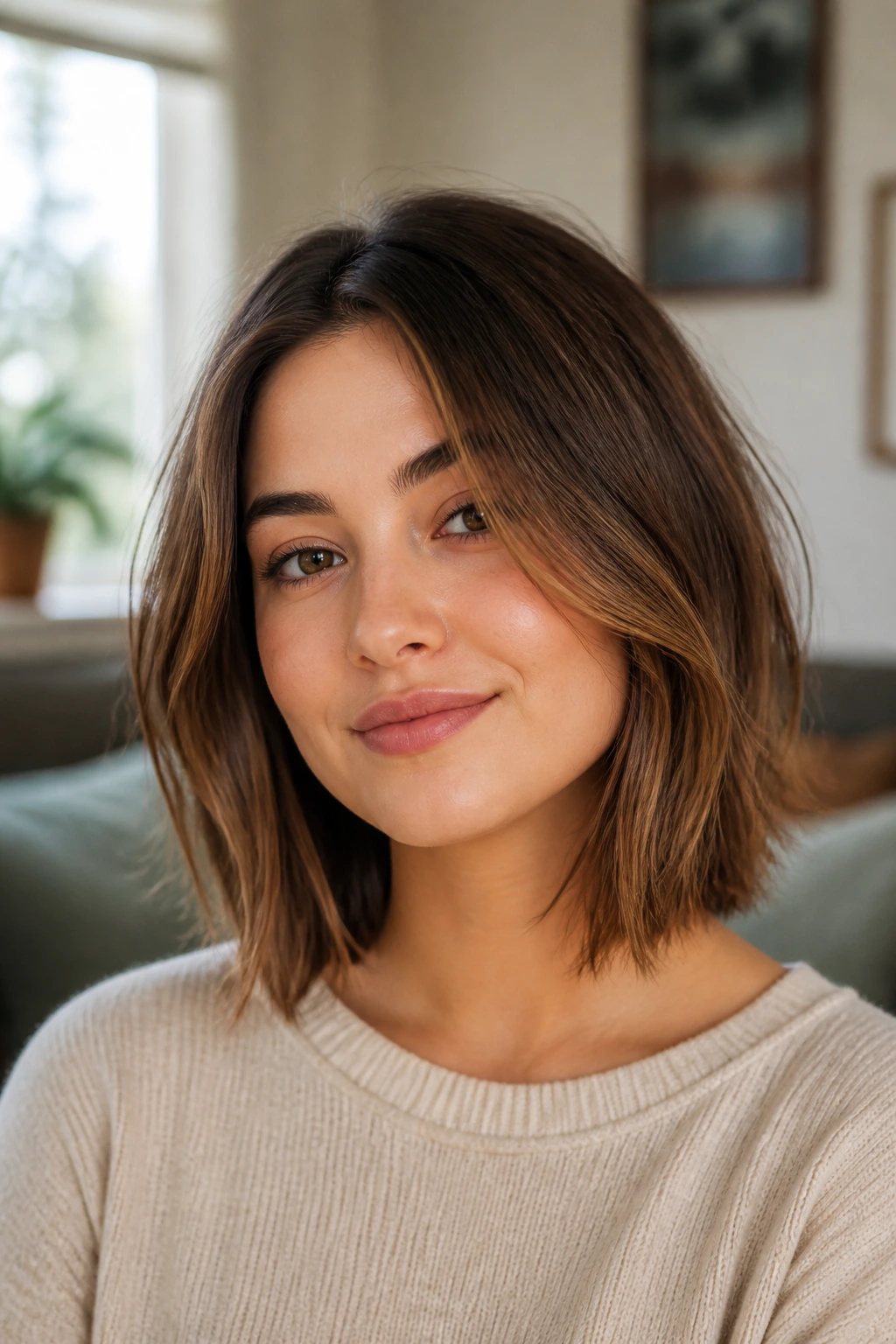
-
They make the eye travel downward: Hair that falls past the jawline creates a longer visual line, which helps a round face read a little leaner and less horizontally wide.
-
They keep volume away from the cheeks: The cheek area is already full on a round face, so the smartest cuts build lift at the crown, texture through the ends, or movement below the chin.
-
They give you parting options: A deep side part, soft off-center part, or a middle part with face-framing pieces changes the whole balance of the face with almost no effort.
-
They work with different textures: Straight, wavy, curly, thick, and fine hair all need slightly different shape control, and medium length gives you enough room to tailor the cut.
-
They can be styled two ways: The same cut can look polished with a brush and dryer or softer with air-dried texture. That kind of flexibility matters more than a trend ever will.
-
They stay wearable: Medium lengths are long enough to tuck, twist, pin, or wave, but short enough that they don’t collapse into dead weight at the ends.
What a Round Face Needs From Medium Length Hair
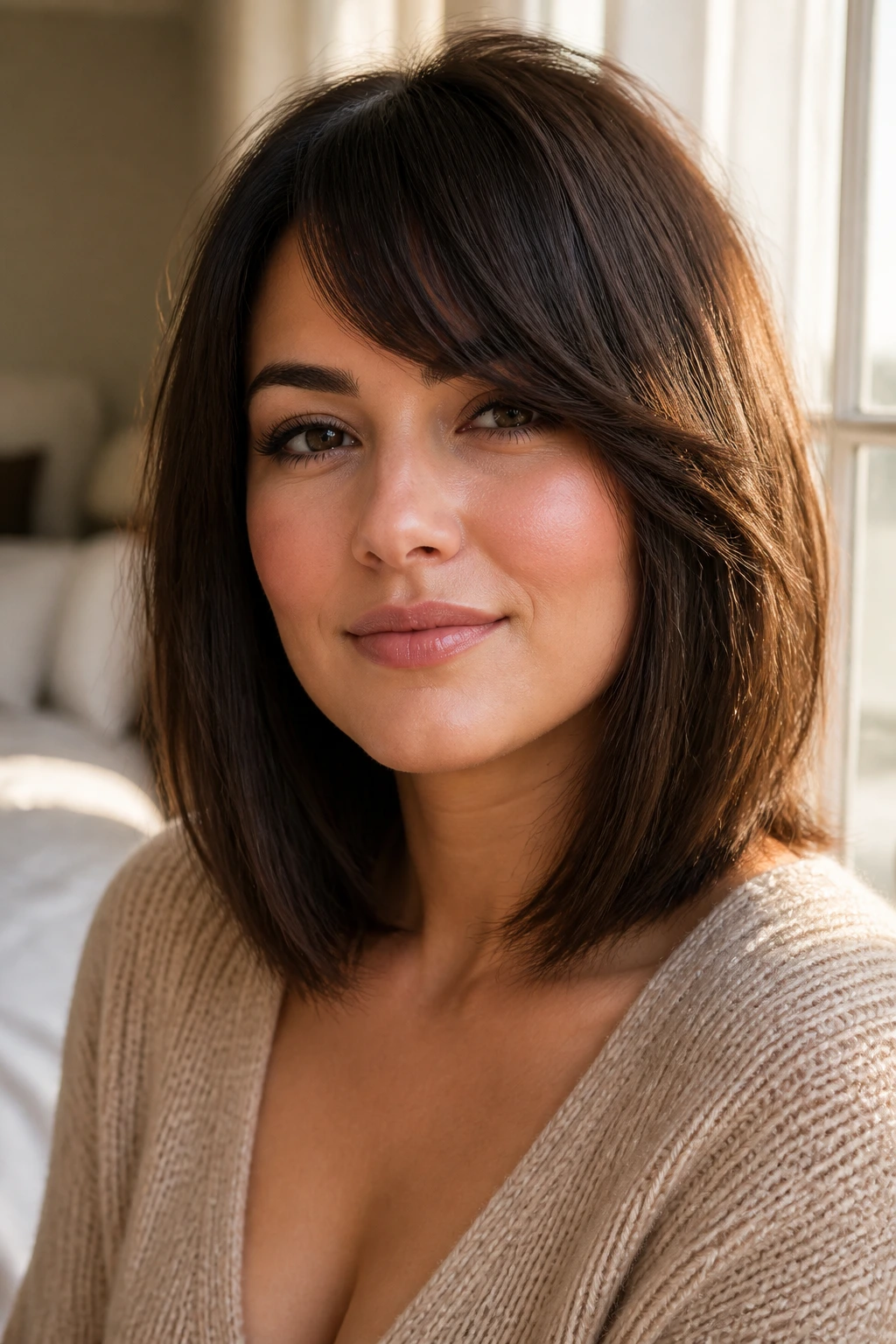
Round faces are broadest around the cheeks, with a softer jaw and roughly equal width and length. That means the haircut has to do a little quiet geometry work. Nothing dramatic. Just enough to break up the circle.
The simplest rule is this: avoid letting the main visual weight sit right at cheek level. If the ends of the hair stop there, the face can look wider. If the shape drops lower — collarbone, upper chest, just past the shoulders — the line starts helping you instead of fighting you.
Texture matters too. Heavy, uniform fullness all around the head can puff the face outward. A little internal layering, a side-swept fringe, or an angled perimeter changes that fast. And no, you do not need to hide your face shape. You need to place the hair where it flatters the bones instead of echoing the widest part.
1. Collarbone Lob With a Deep Side Part
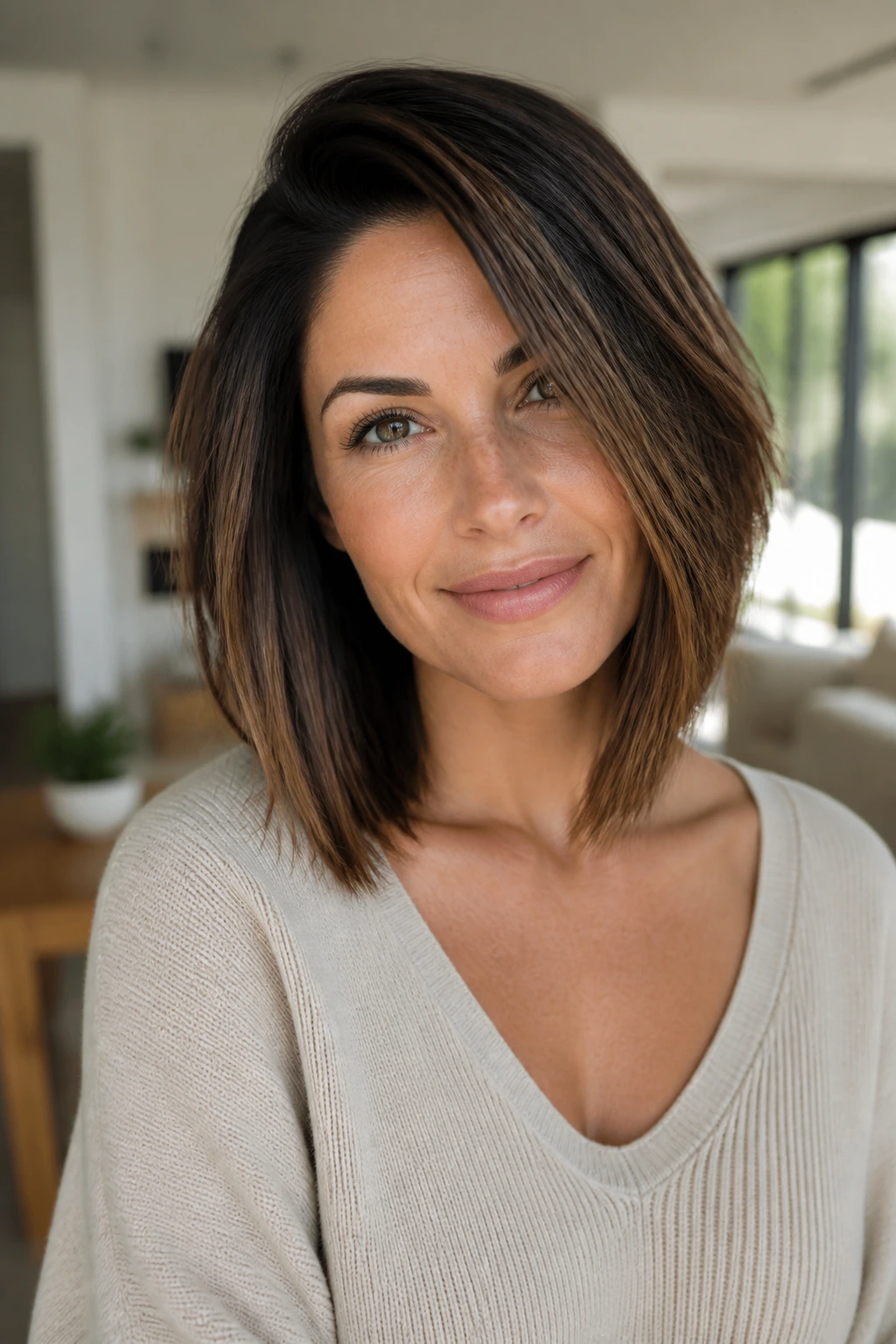
A collarbone lob is one of the cleanest options for a round face because it gives you length without dragging hair so far down that it feels heavy. The deep side part adds instant asymmetry, and asymmetry is your friend here. It breaks up the roundness in a way that looks intentional, not fussy.
Ask for the front pieces to graze the collarbone, with the back sitting only a touch shorter if you want a slight forward angle. When you style it, give the roots on the heavier side a quick lift with a round brush or a velcro roller. That little bit of height keeps the hair from lying flat across the widest part of the face.
Why it works
The side part creates a diagonal line across the top of the face, which feels longer than a center part alone. The collarbone length also keeps the ends below the jaw, so the cut doesn’t stop at the exact point where a round face is most open. If you want a polished everyday cut that still moves when you turn your head, this is a very safe bet.
A soft bend through the ends is better than tight curl here. Tight curl can balloon at cheek level. Soft bend is cleaner.
2. Blunt Collarbone Cut With a Center Part
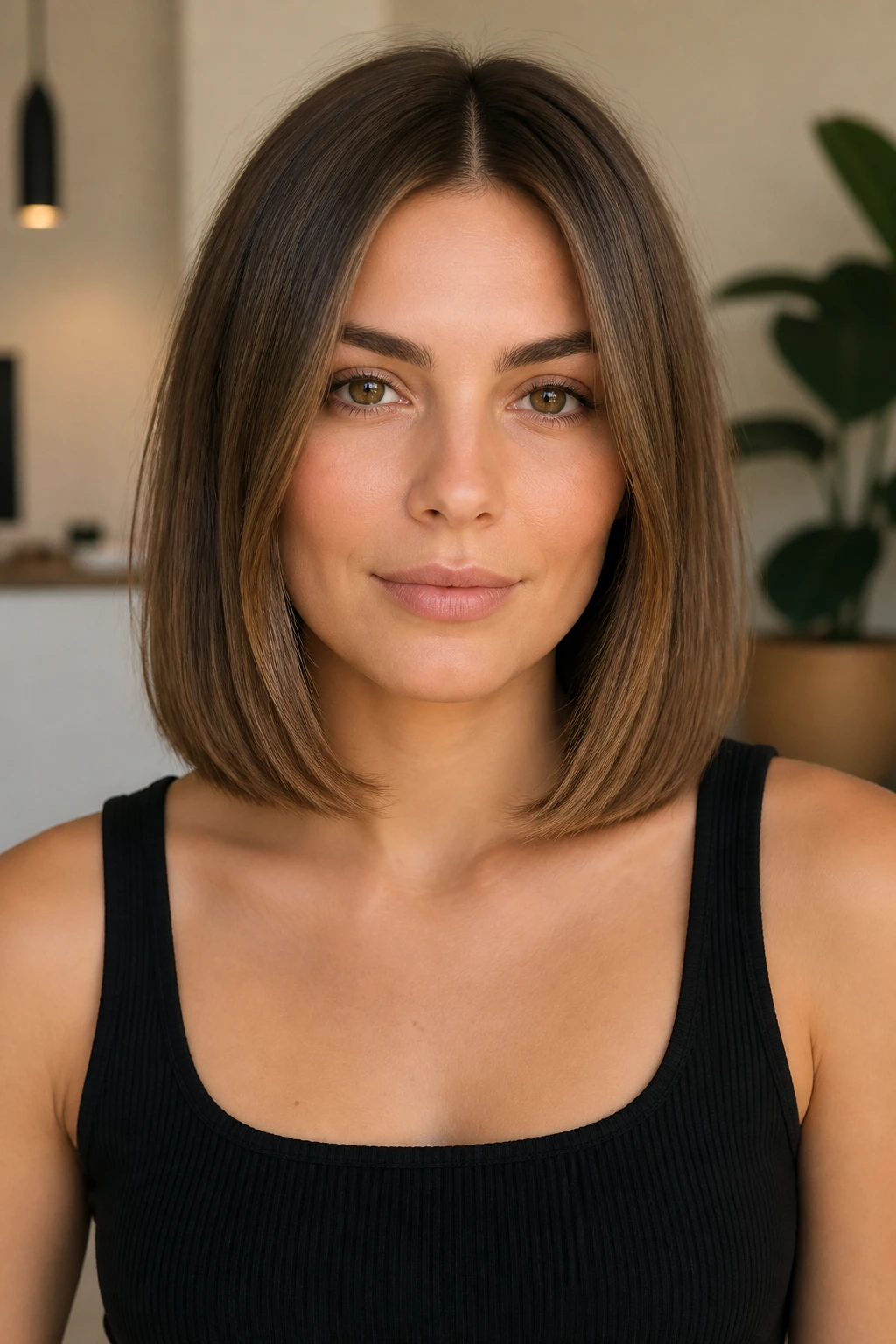
A blunt cut can work on a round face, but only when the length is smart. Collarbone or just-below-collarbone is the sweet spot. Too short, and the line can sit right on the cheeks. Too long, and you lose the clean shape that makes this version feel sharp.
The center part keeps the style modern, but the rest of the cut needs restraint. Ask your stylist to keep the perimeter blunt and to soften only the very front pieces if needed. Then style it straight with a slight under-bend at the ends, not a curl. That tiny bend stops the hair from looking rigid.
This cut is especially good if you like a polished finish and don’t want layers flying everywhere. It looks expensive in the plainest sense of the word: neat, deliberate, and a little architectural. If your hair is fine, keep the density in the ends so the shape doesn’t look stringy. If it’s thick, ask for subtle interior debulking, not obvious layers.
3. Curtain Bangs With Shoulder-Length Layers
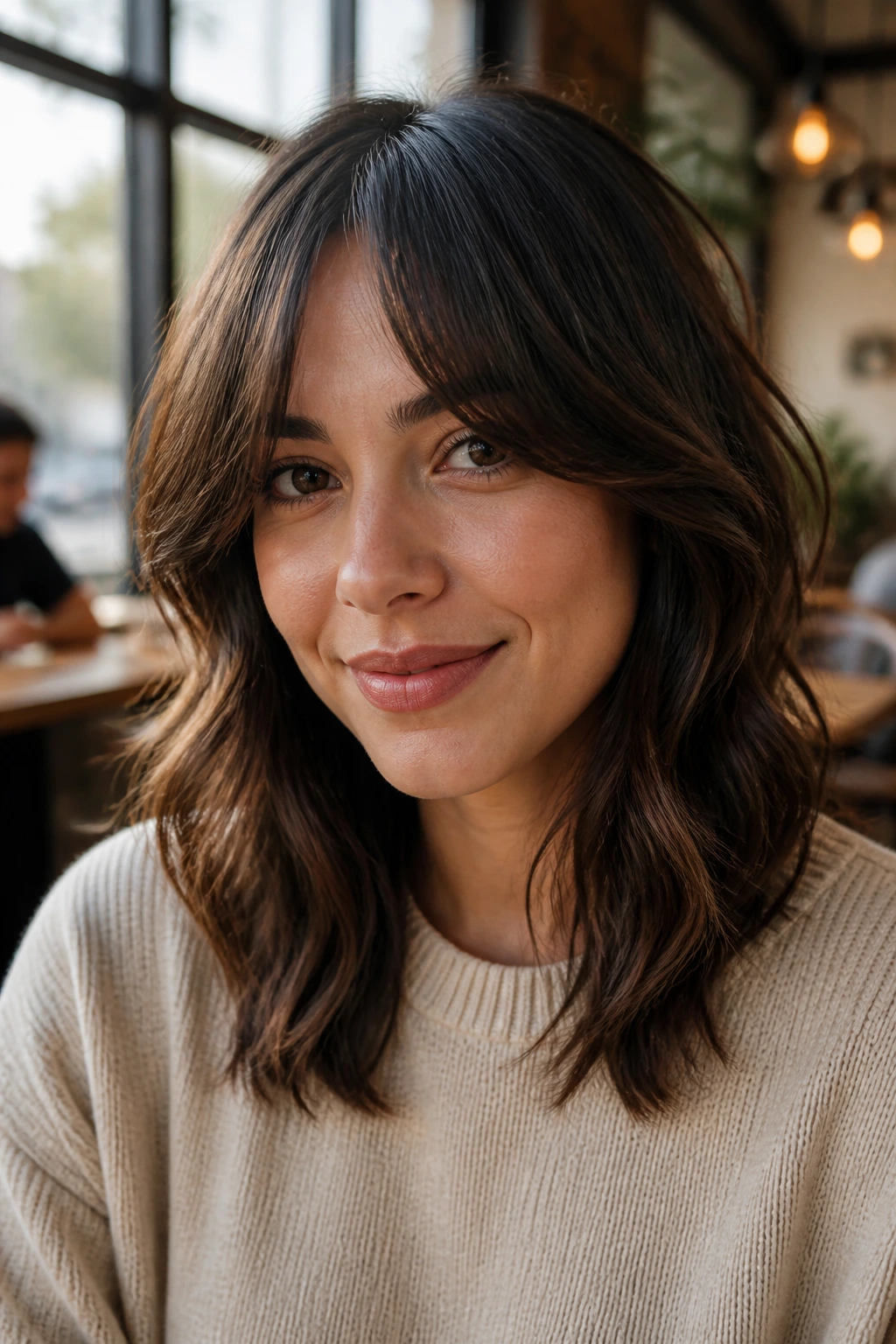
Curtain bangs can be one of the nicest things you can put on a round face, but only when they’re cut with enough length to sweep away from the cheeks. Short, choppy bangs that end right at the cheekbone can widen the face. Longer curtain bangs, split softly in the middle and blended into shoulder-length layers, do the opposite.
Think of them as a frame, not a curtain in the old movie sense. The pieces should start around the brow or upper cheek area and fall past the widest part of the face as they open out. That gives you movement near the front without crowding the cheeks.
This style is strong when you wear your hair in loose waves or a soft blowout. It’s also forgiving on days when your roots are not cooperating, because the fringe gives the style some structure even when the lengths are calmer. If you’ve always wanted bangs but were nervous about roundness, this is the version I’d point you toward first.
4. Angled Lob That Drops Longer in Front
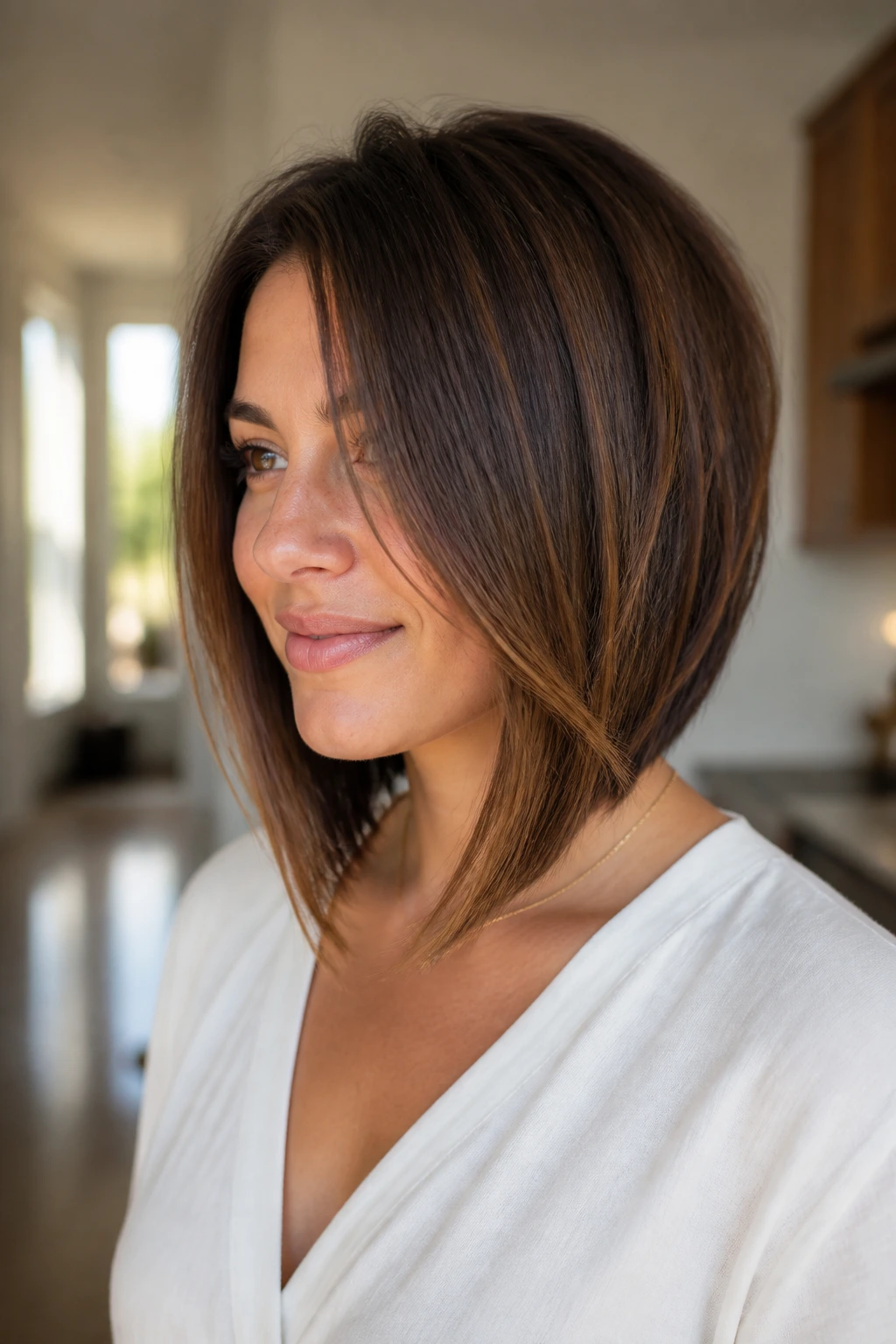
An angled lob has a built-in advantage for round faces: the front is longer than the back, so the shape naturally pulls the eye down. That forward line can be subtle or obvious. I prefer subtle. Too much angle can look dated fast.
Ask for the nape to stay tidy and the front to fall an inch or two past the collarbone. The angle should read when the hair moves, not scream at you from across the room. This is one of those cuts that looks best when the ends are smooth but not pin-straight. A little swing gives the angle life.
It’s a smart option if your face feels widest around the cheeks and you want the haircut to create a visual slope. Wear it with a side part for more drama, or a soft off-center part if you want the shape to stay calmer. Either way, this cut does a lot of the face-lengthening work for you.
5. Tousled Shag at Collarbone Length
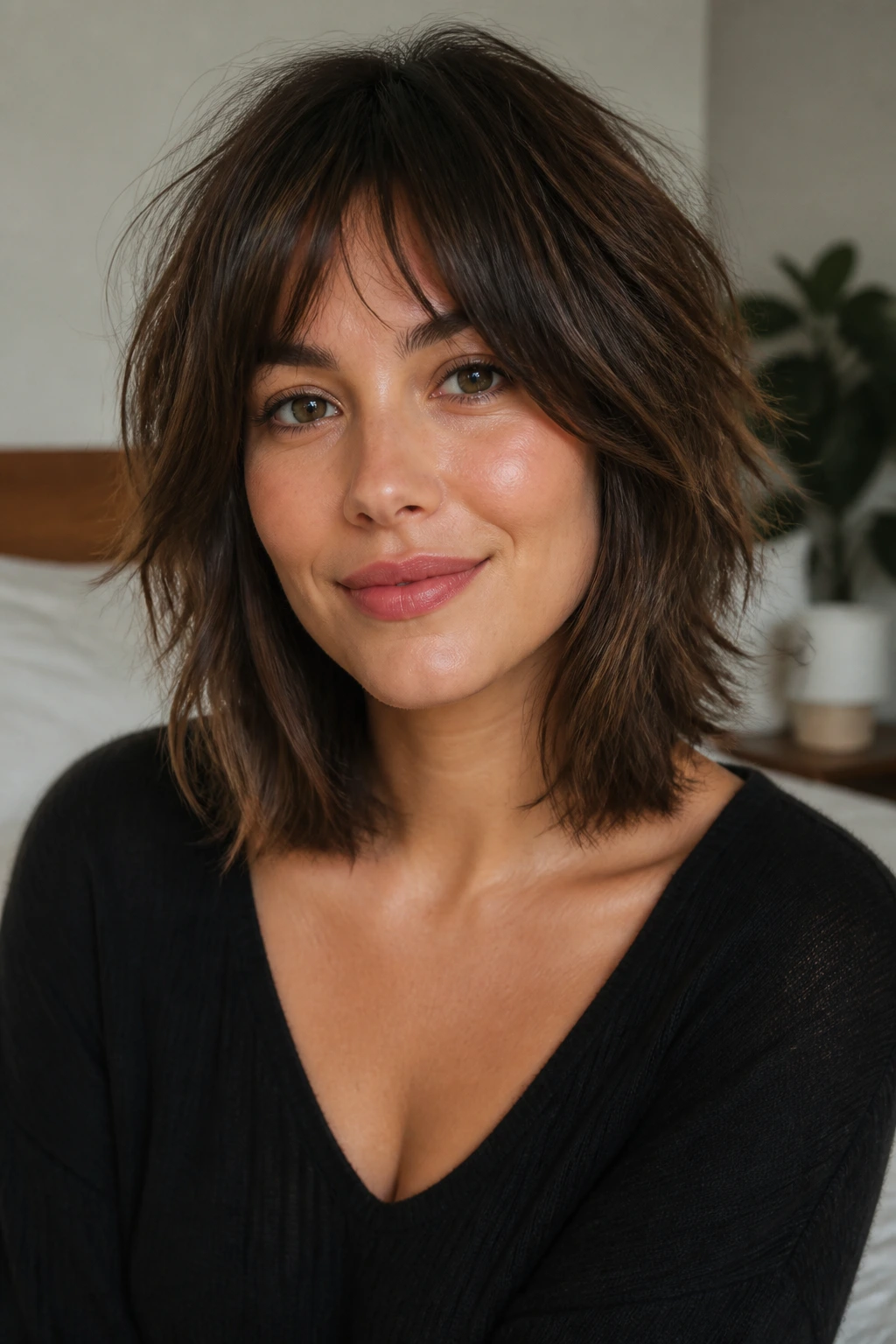
A shag at medium length can be a gift on a round face, but the layers need judgment. You want texture and lift, not a puffball. The best version lives around the collarbone with broken-up ends and enough shape around the top to keep the crown from collapsing.
This cut suits people who don’t want a sleek finish every day. The shag gives you movement even when the hair is air-dried, which is useful if your mornings are chaotic or your texture naturally likes to bend. The trick is to keep the widest layer from sitting right on the cheek. Let the movement start lower or much higher, not smack in the middle.
A little sea-salt spray or lightweight mousse can wake this cut up fast. I’d skip heavy creams unless your hair is coarse and dry; they can make the shag fall flat and drag the whole shape down. The best shag on a round face has a lived-in edge, not a bulky one.
6. Face-Framing Waves That Start Below the Cheekbones
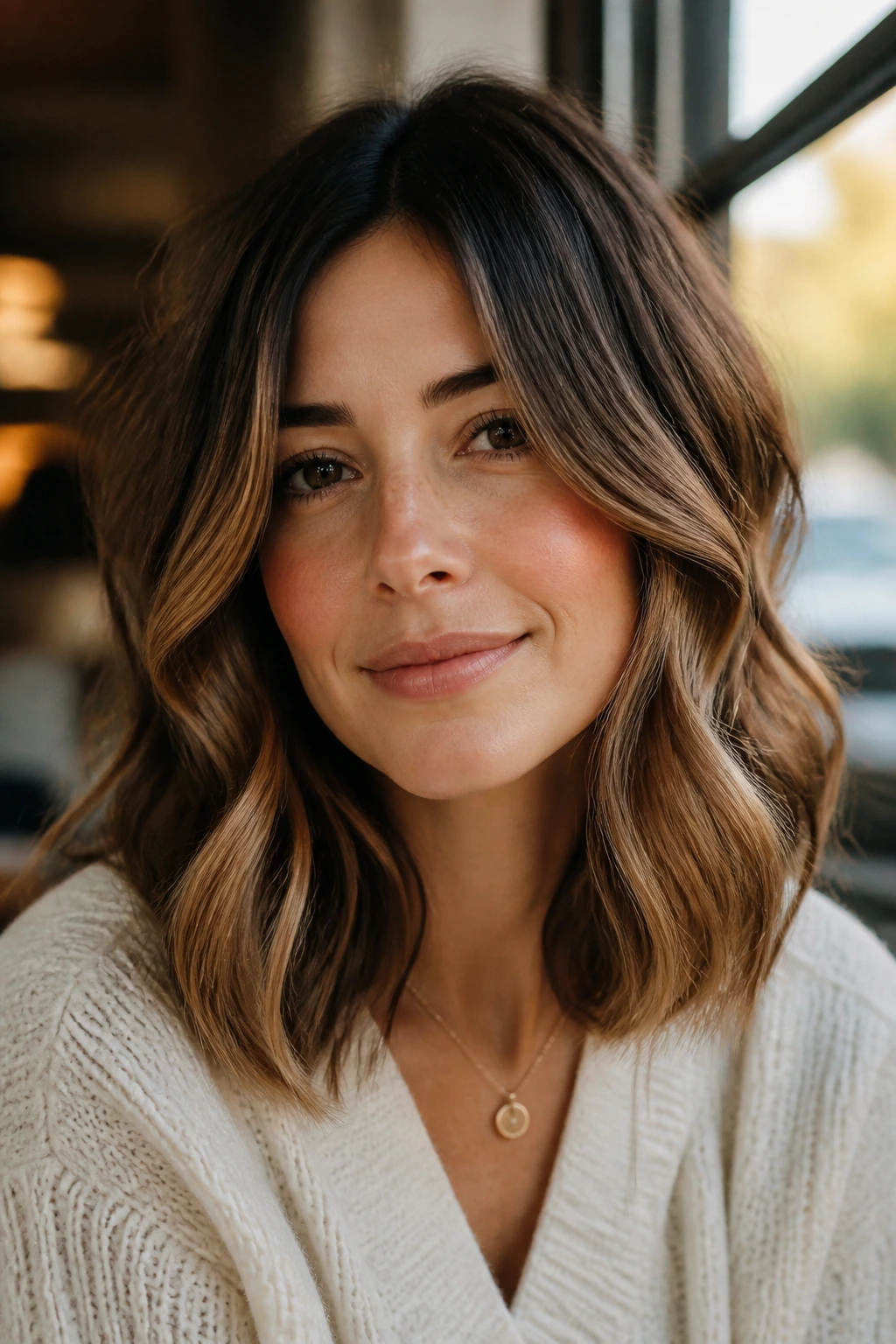
This is one of the simplest wins in the whole list. If the face-framing pieces start below the cheekbones, the hair doesn’t cut across the fullest part of the face, and that matters. The waves then fall in a way that lengthens rather than widens.
The cut itself can be as plain as shoulder-length hair with long layers. What changes the whole look is where the movement begins. Ask for the front pieces to be carved so they open below the cheeks, not above them. Then style with a 1-inch curling iron, wrapping away from the face and leaving the last inch out for softness.
This look is nice because it doesn’t depend on perfect styling. Even a slightly messy wave pattern still works, which is more than I can say for some of the over-layered cuts people get talked into. If your hair is fine, keep the layers long. If it’s thick, take enough weight out so the waves don’t turn into a triangle.
7. Feathered Shoulder Cut With a Side Sweep
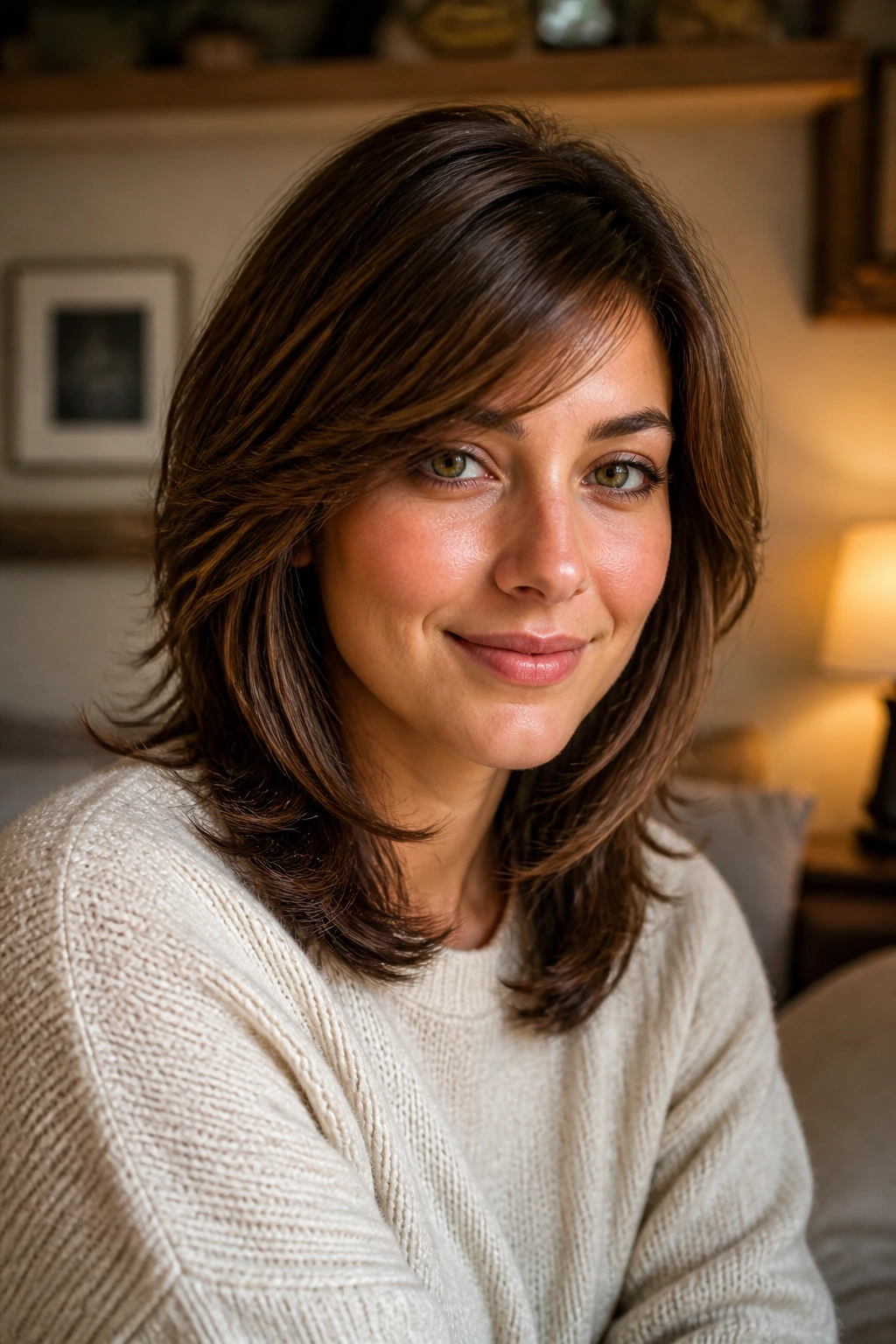
Feathering has a bad reputation because some people remember the wrong version of it. The good version is softer, lighter, and much better for round faces than one hard, compact line at the shoulders. Feathered ends move instead of stacking out.
A side sweep across the forehead can help here too. It doesn’t have to be a full fringe. Even a front section that bends across and opens to one side gives the face a more oval read. The style works particularly well on hair that wants to flip a little naturally, because feathered layers already have that motion built in.
If you want a flattering medium cut without looking too “done,” this is a smart place to land. It has shape, but it doesn’t shout. The movement feels old-school in the best way, like a haircut that knows what it’s doing.
8. Choppy Midi With Piecey Ends
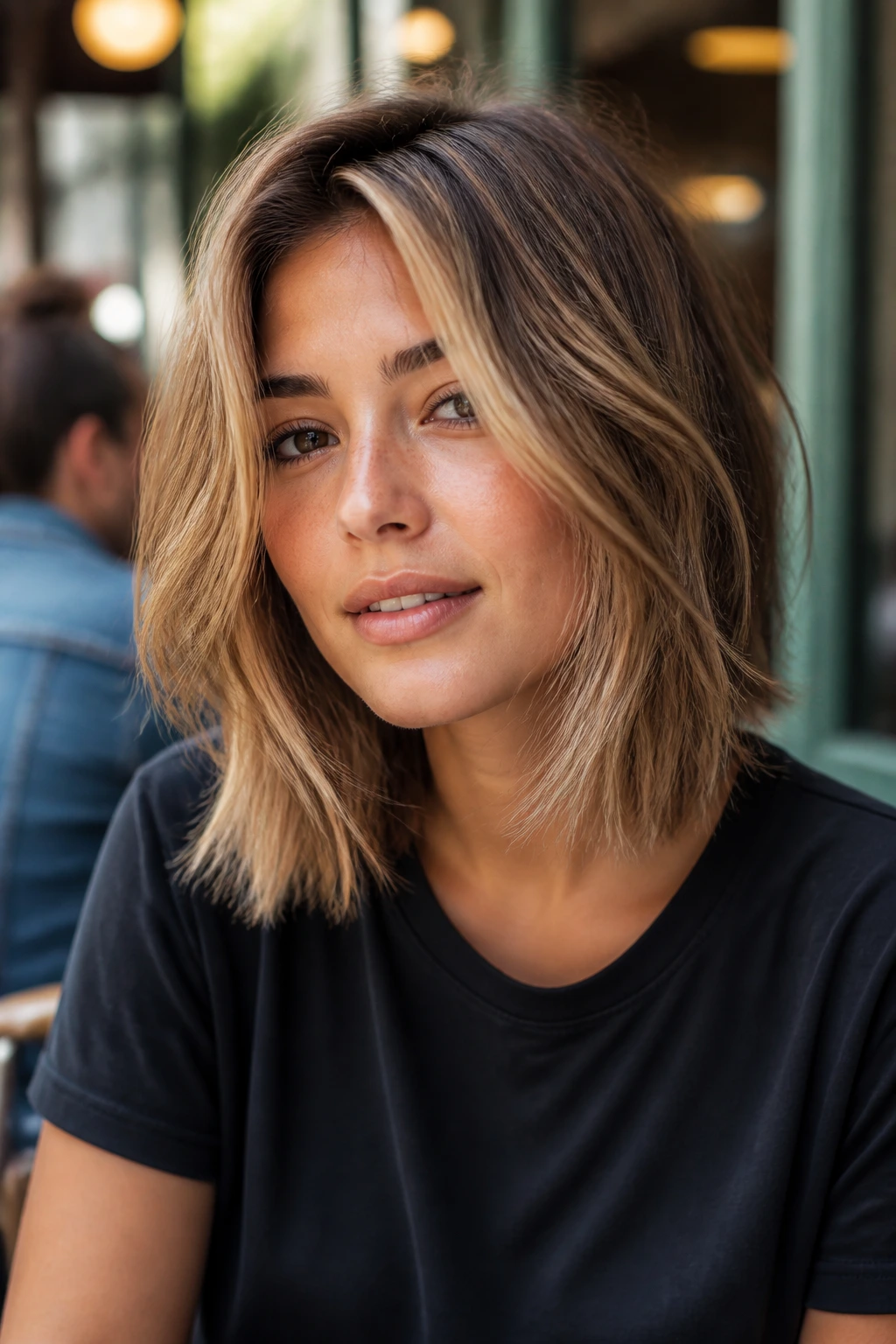
A choppy midi can be a very good friend to a round face as long as the ends stay piecey, not bulky. The whole point is to break the shape into fragments so the eye doesn’t see one big round edge. Pieces, irregular lengths, and a little separation all help.
I like this cut for hair that naturally has some bend. Straight hair can wear it too, but you’ll need texture spray or a light wave to keep the edges from looking too boxy. If your stylist uses a razor, make sure the ends still feel clean. Too much razor work can fray the hair and make the silhouette fuzzy.
This style feels a little more modern than a classic lob. It’s casual, easy to toss around, and good when you want movement without a lot of layers climbing up the head. Round faces do well with that broken perimeter because it stops the cut from echoing the cheeks.
9. Soft U-Cut With Long Layers
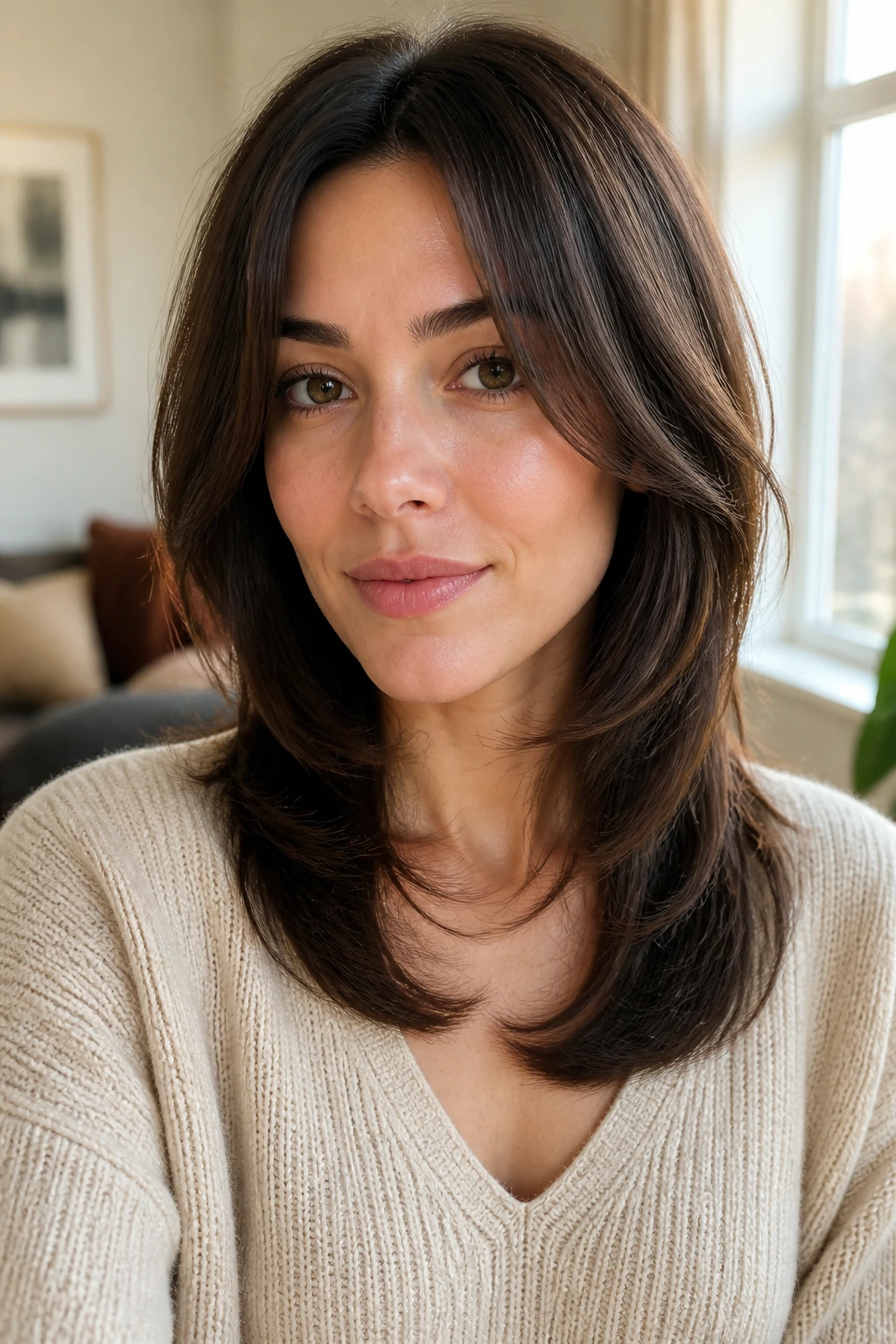
A U-cut is underrated. The back drops slightly lower than the front, which creates a gentle, rounded shape that doesn’t flatten the face. On a round face, the softness of the U matters more than people realize. It gives movement without that sharp blocky edge you get from a squared-off one-length cut.
Long layers inside the U prevent the shape from feeling heavy. You still want enough weight at the bottom to keep the cut looking healthy, but the inside should move. That’s especially useful for thicker hair, which can turn into a shelf if it isn’t shaped well.
This is a good option if you want hair that looks nice loose, half-up, or curled. It’s also one of the easiest medium cuts to grow out gracefully. I like that about it. A lot.
10. Blunt Midi With Hidden Texture
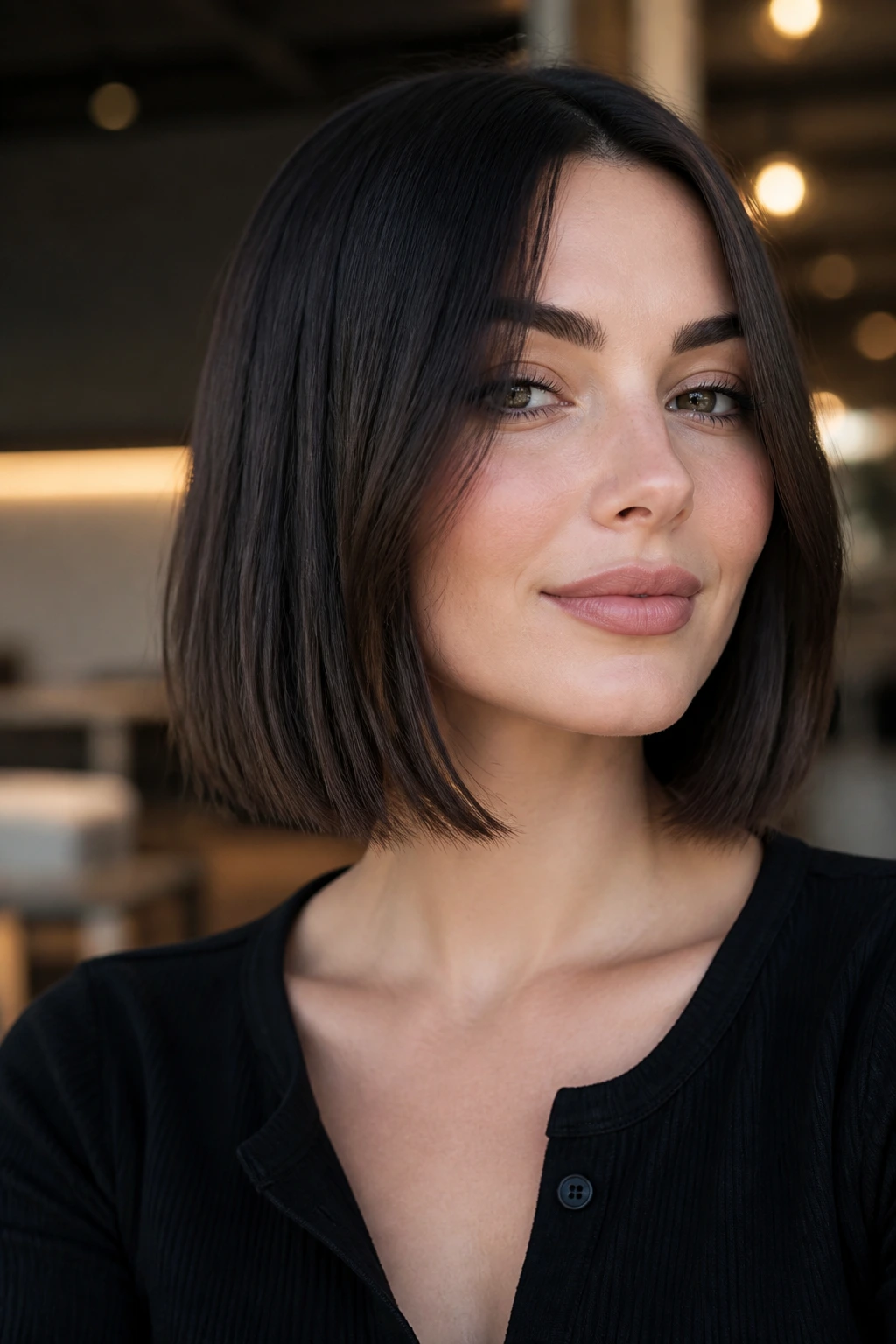
Not every round face needs wispy ends and obvious layers. Sometimes a blunt midi, cut just below the collarbone, gives the face the cleanest line. The catch is that the texture has to stay hidden inside the cut, not piled on top of it.
That means your stylist trims the outline straight, then removes a little bulk internally if your hair is thick. The eye sees a crisp edge, but the hair still moves. On a round face, that clean downward line can be more flattering than a bunch of uneven layers that stop right at the cheeks.
This is the version I’d choose if you like straightening your hair or wearing a smooth blowout. It’s elegant without trying too hard. If you prefer texture, you can still add a soft bend at the ends, but keep it controlled. A wild wave pattern can undermine the very thing that makes this cut work.
11. Blowout Layers With a Lift at the Crown
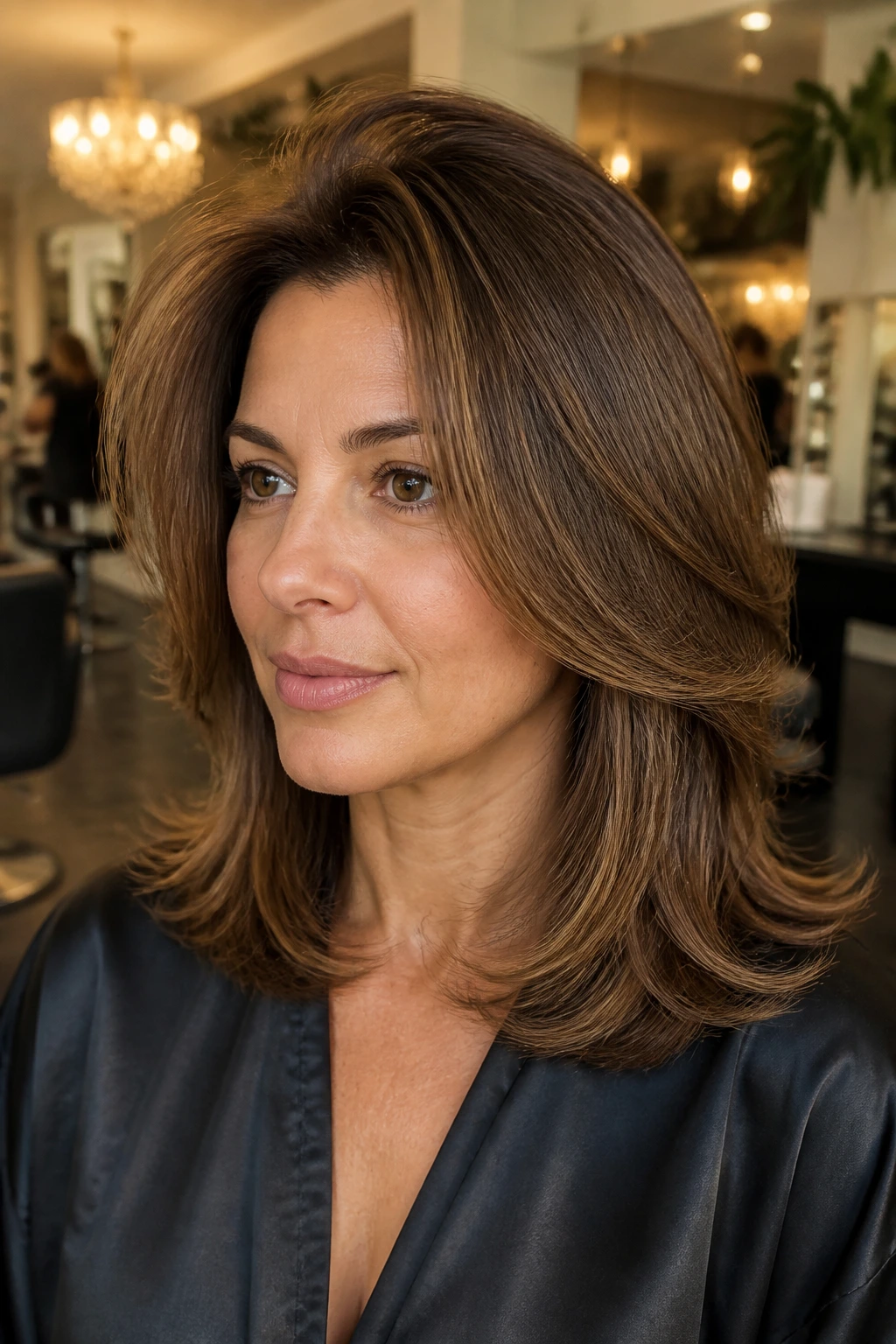
A round face often looks best when the volume sits a little higher than the cheeks, and a blowout with crown lift does exactly that. The root height gives the face vertical energy, while the layers fall around the shoulders instead of ballooning at the sides.
This style needs a medium round brush, a blow dryer with a nozzle, and a little patience. Dry the roots first, lifting the top sections away from the scalp. Then curve the ends under or out just enough to keep the cut airy. If the bottom starts to expand too wide, the whole shape loses its line.
I like this look for a round face because it feels balanced without being severe. It’s softer than a poker-straight cut and more intentional than loose air-drying. If you want a salon finish that still feels wearable, this is one of the strongest options on the list.
12. Modern Wolf Cut at Medium Length
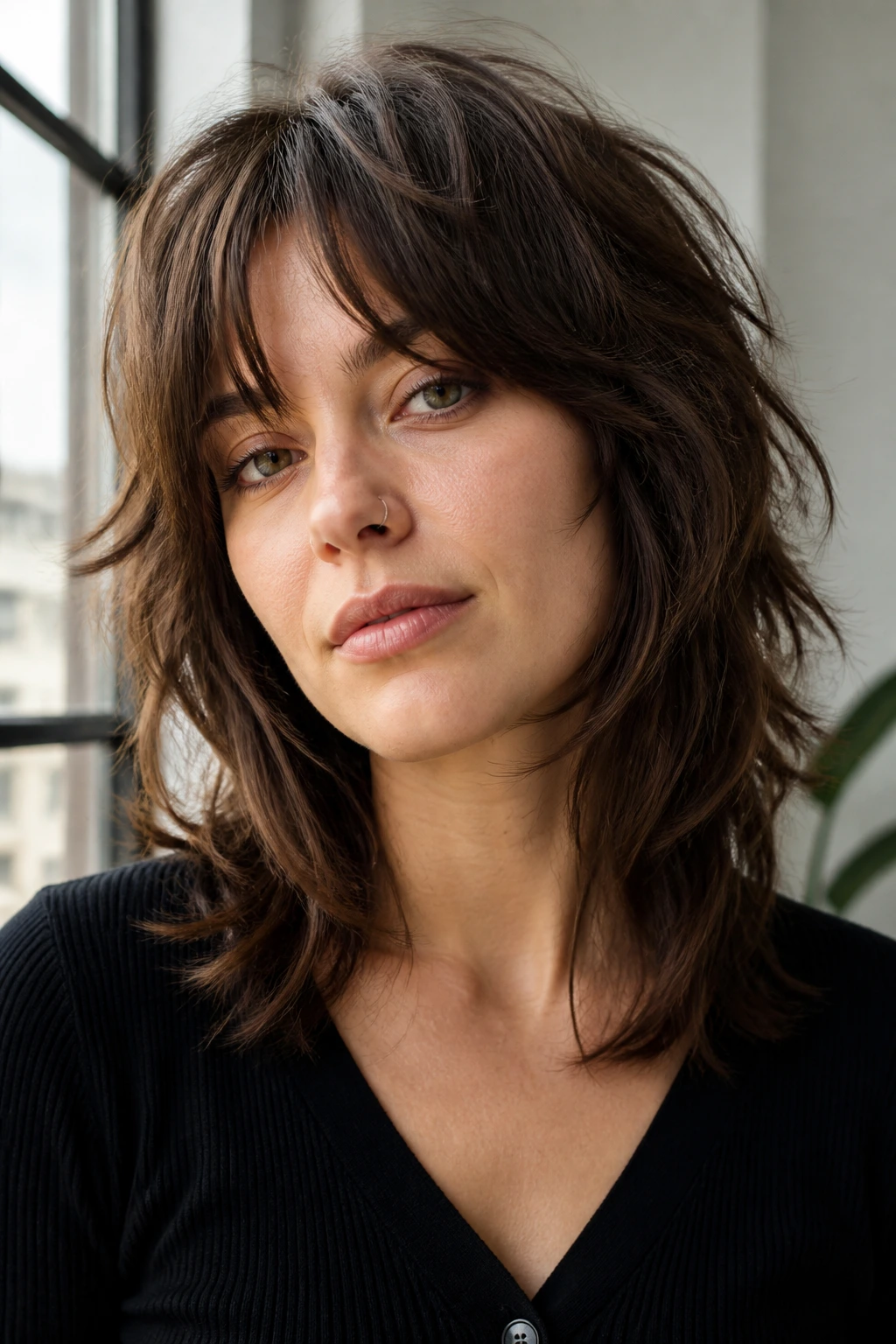
The modern wolf cut gets tricky on round faces when the layers become too short and too wide. Done right, though, it can be excellent. The crown gets some lift, the perimeter stays long enough to keep the face from widening, and the texture breaks up the roundness nicely.
What makes it “modern” is restraint. Keep the top layers soft, not spiky. Let the longest pieces fall to the collarbone or just below. That way the cut keeps its edge without turning into a mushroom shape around the ears.
This is a better choice if you like hair with personality. It is not the cut for someone who wants a smooth, polished outline every day. But if your texture has some grit and you enjoy a little mess, the wolf cut can add enough direction to make a round face look longer and sharper.
13. Side-Swept Bangs With Straight Ends

Side-swept bangs are a quiet classic for a reason. They cut across the face on a diagonal, which instantly softens roundness without boxing the features in. Pair them with straight, medium-length ends and you get a shape that feels controlled but not stiff.
The bangs should be long enough to blend into the sides, not sit as a separate little wall. If they’re too short, they can widen the forehead. If they’re too thick, they can swallow the face. The right version angles from a deeper part and falls softly toward one cheek.
This works especially well if you wear straight hair and want a cut that still has some movement. Keep the ends clean and the bangs a little airy. The contrast between those two things gives the style a nice tension. Not too soft. Not too rigid.
14. Loose Curly Midi With a Side Part

Curly hair on a round face does not need to be flattened into obedience. It needs shape. A loose curly midi with a side part can be one of the most flattering medium styles out there because curls already bring lift and texture; the side part stops the curl mass from sitting symmetrically around the cheeks.
The key is length. Keep the curls long enough to drop below the jaw and ideally toward the collarbone. If the curl is springy, that may mean cutting a little longer than you think. A dry cut is often the smartest move here because curls lie about their real length when they’re wet.
This style looks best when the curls are defined but not crunchy. A light gel or curl cream gives shape, then you break the cast once the hair dries. Round faces often benefit from curls that stack a little higher at the crown and taper lower around the jaw. That taper is doing useful work.
15. Half-Up Twist With Loose Length
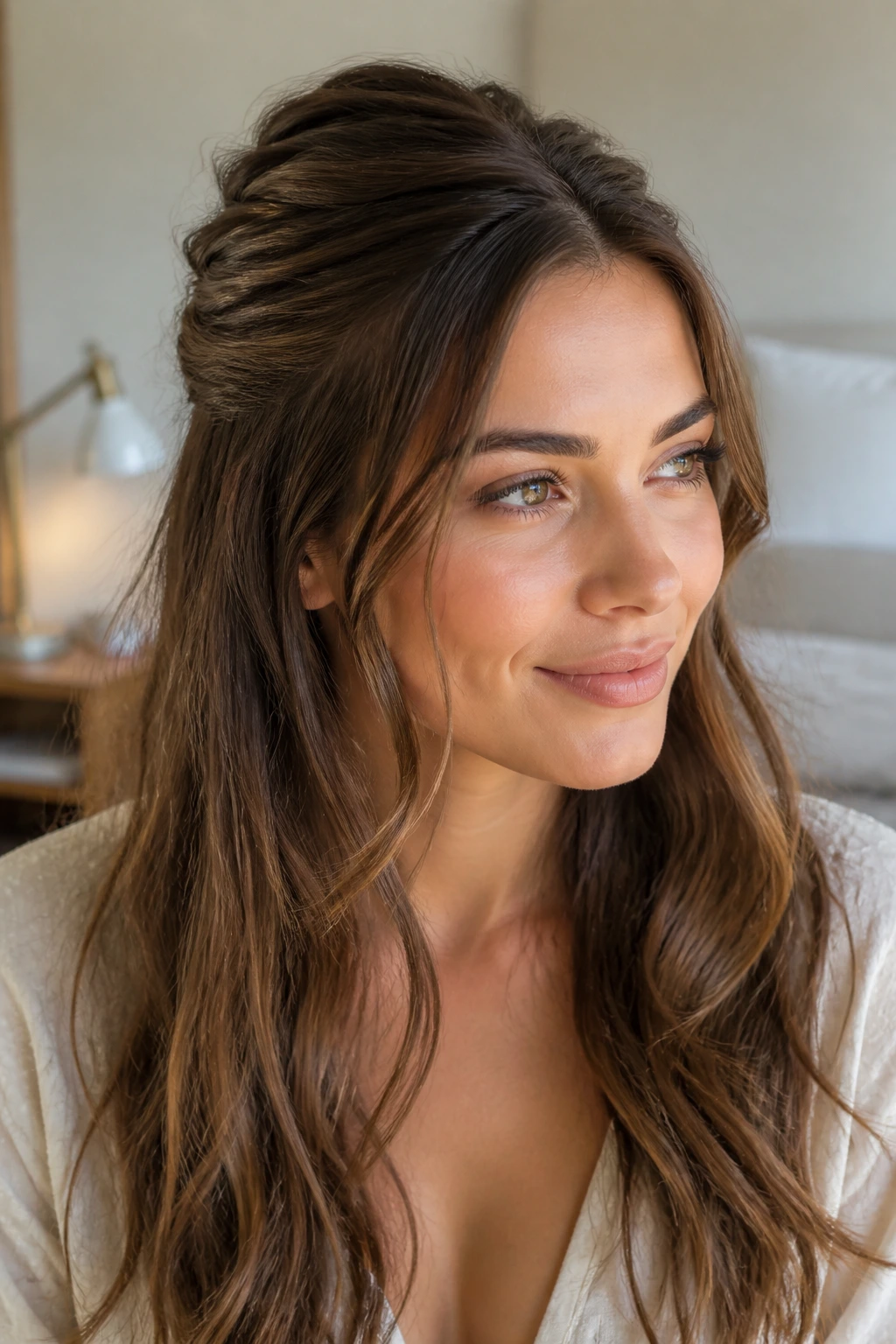
Sometimes the most flattering thing you can do for a round face is move hair up and away from the sides, but not all the way off the head. A half-up twist keeps the crown lifted and the sides cleaner, which creates a longer shape through the middle of the face.
This is especially useful on second-day hair, when the roots have a little grip and the lengths need direction. Pull the top section back loosely, twist or pin it, and let the lower lengths stay soft around the shoulders. The trick is not to over-tighten the top. A severe pull-back can make the face look wider, not slimmer.
I like this style because it works on waves, curls, and straight hair alike. It’s also one of the easiest ways to make a medium cut feel more polished without a full blowout. The finished shape reads upward at the crown and downward at the ends. That’s the whole game.
16. Asymmetrical Shoulder Sweep
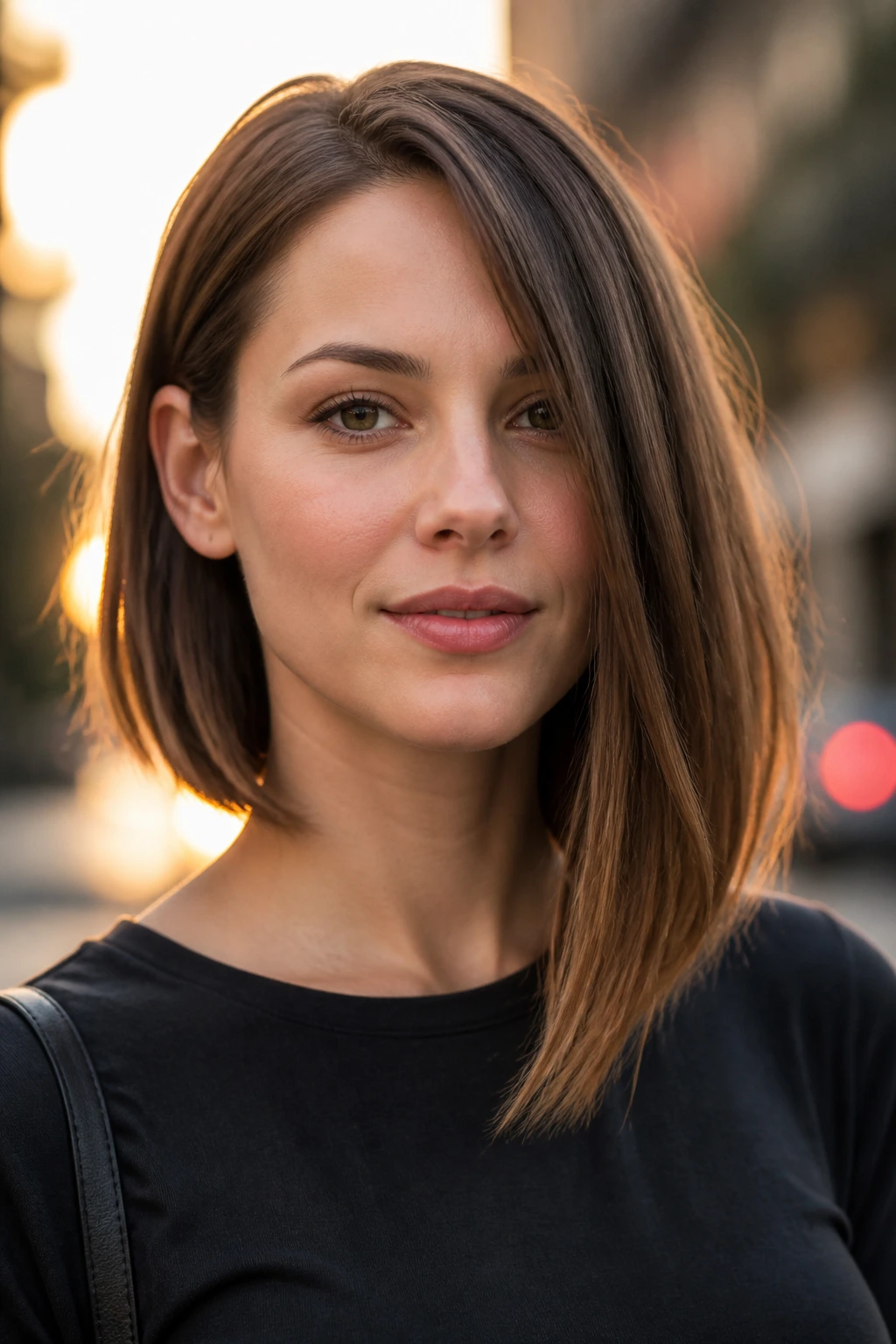
An asymmetrical cut has one side slightly longer than the other, and that tiny imbalance can be enough to change the way a round face reads. The eye doesn’t settle on a single center point. It moves.
The shoulder sweep version keeps one side grazing the collarbone while the other sits a touch shorter. You can wear it straight, with soft bends, or tucked behind one ear on the shorter side. If you want something that feels modern but not extreme, this is a nice middle ground.
This style needs clean lines. If the asymmetry gets too subtle, it disappears; too dramatic, and it becomes the only thing anyone sees. The sweet spot is a cut that feels intentional when you look in the mirror, but doesn’t require constant explanation. That’s where the shape starts doing real work.
17. Flicked-Out Ends With a Round Brush
Flicked-out ends can look retro in a good way when the flick starts below the shoulders and doesn’t puff at the cheeks. That’s the part that matters for a round face. The ends should turn away from the face just enough to create motion, not so much that they widen the silhouette.
A round brush and blow dryer are the tools here. Wrap the last inch or two of hair outward and let it cool in that shape. The result feels light, lively, and a little polished, especially if the top stays smooth. It’s a good move for people who wear medium length hair and want it to feel styled without taking forever.
This look is also easier to wear with a side part or off-center part. That gives the flicked ends somewhere to go. Straighten the roots if needed, but leave the movement at the bottom. That contrast keeps the style from looking flat.
18. Air-Dried Waves With Internal Layers
Air-dried waves can be gorgeous on a round face if the haircut does the right work first. Internal layers remove bulk and create bend without leaving a frizzy shell. The result is hair that looks soft and alive instead of triangular.
This is one of the easiest styles to live with because it doesn’t demand perfect heat styling. Scrunch in a lightweight mousse, let the hair dry, and encourage the front pieces to fall away from the cheeks. If your waves swell outward at the sides, you probably need the layers moved lower or the ends thinned a bit.
I’m biased toward this style for people who hate spending 30 minutes with a curling iron. You get movement, shape, and a little polish from the haircut itself. That’s a useful combination, and on a round face it keeps the silhouette from becoming too round in the wrong places.
19. Tucked-Behind-One-Ear Lob

Tucking one side behind the ear sounds almost too simple to matter. It matters.
That small move opens one side of the face and creates asymmetry, which immediately makes a round face look less centered and more elongated. The rest of the hair can stay loose and soft, with the tucked side showing a clean jawline or earring line. It works especially well with a collarbone lob or soft shoulder-length cut.
The haircut itself should have enough length to tuck without springing back out. If your ends are too short, the tuck gets fussy. A smooth finish, a little bend at the bottom, and a side part or off-center part make this style easy to wear. It’s one of the best “I didn’t do much” looks in the entire collection.
20. Soft Braided Crown on Medium Hair
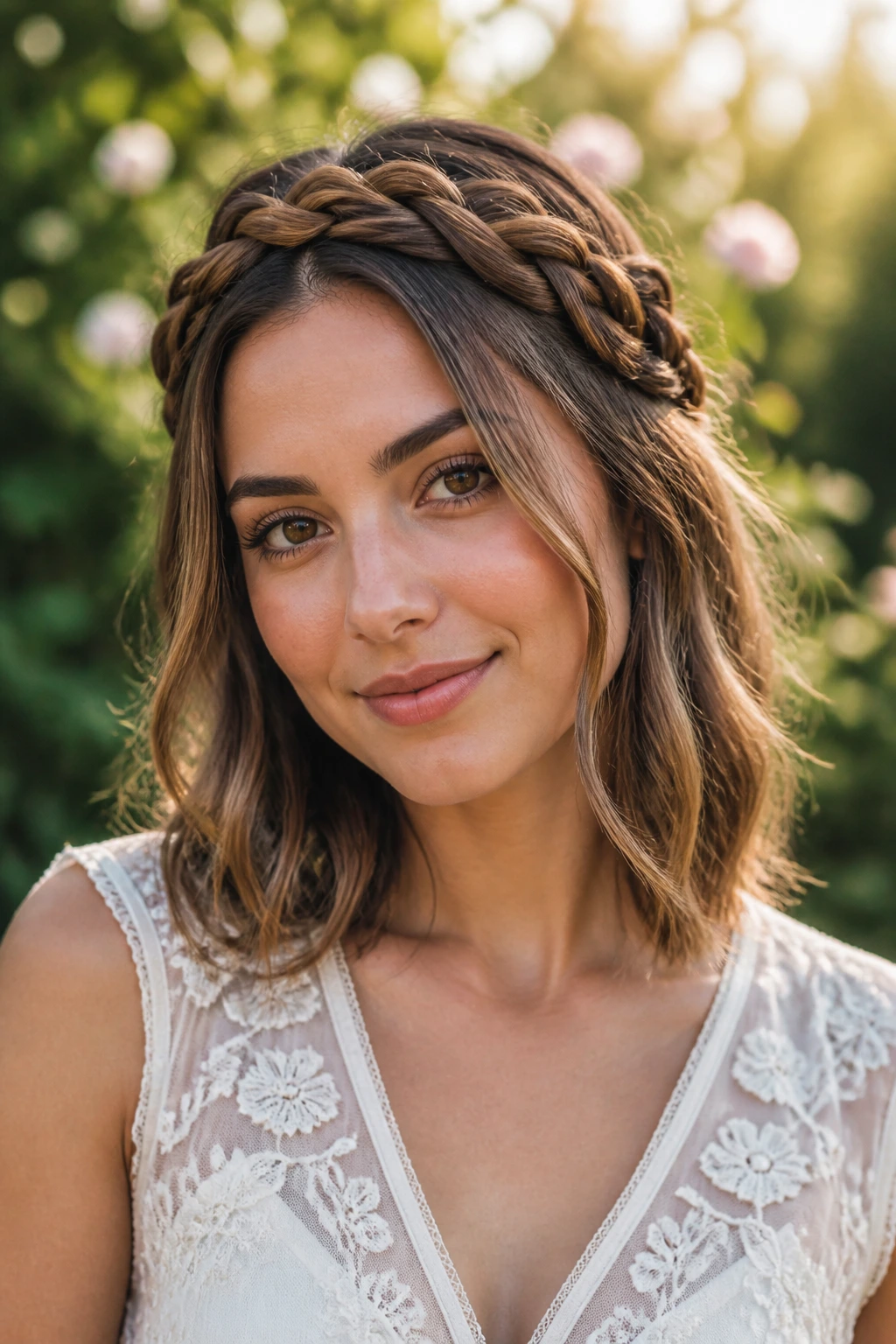
Braids on a round face can go wrong when they sit too wide across the temples. A soft braided crown avoids that by keeping the braid slightly back from the hairline and letting the rest of the hair fall below the face. It adds interest without building bulk where you do not want it.
This works especially well on medium length hair with waves or texture. You don’t need a tight, polished braid. A looser crown braid, pinned back and softened at the edges, keeps the face open and the silhouette balanced. Let a few front pieces fall free if you want even more softness.
It’s a nice choice for days when you want the hair off your face but do not want to sacrifice shape. The braid gives structure at the top, the loose lengths give length below, and the combination is far more flattering than a wide, all-around puff.
21. Low Twist With Face-Framing Pieces
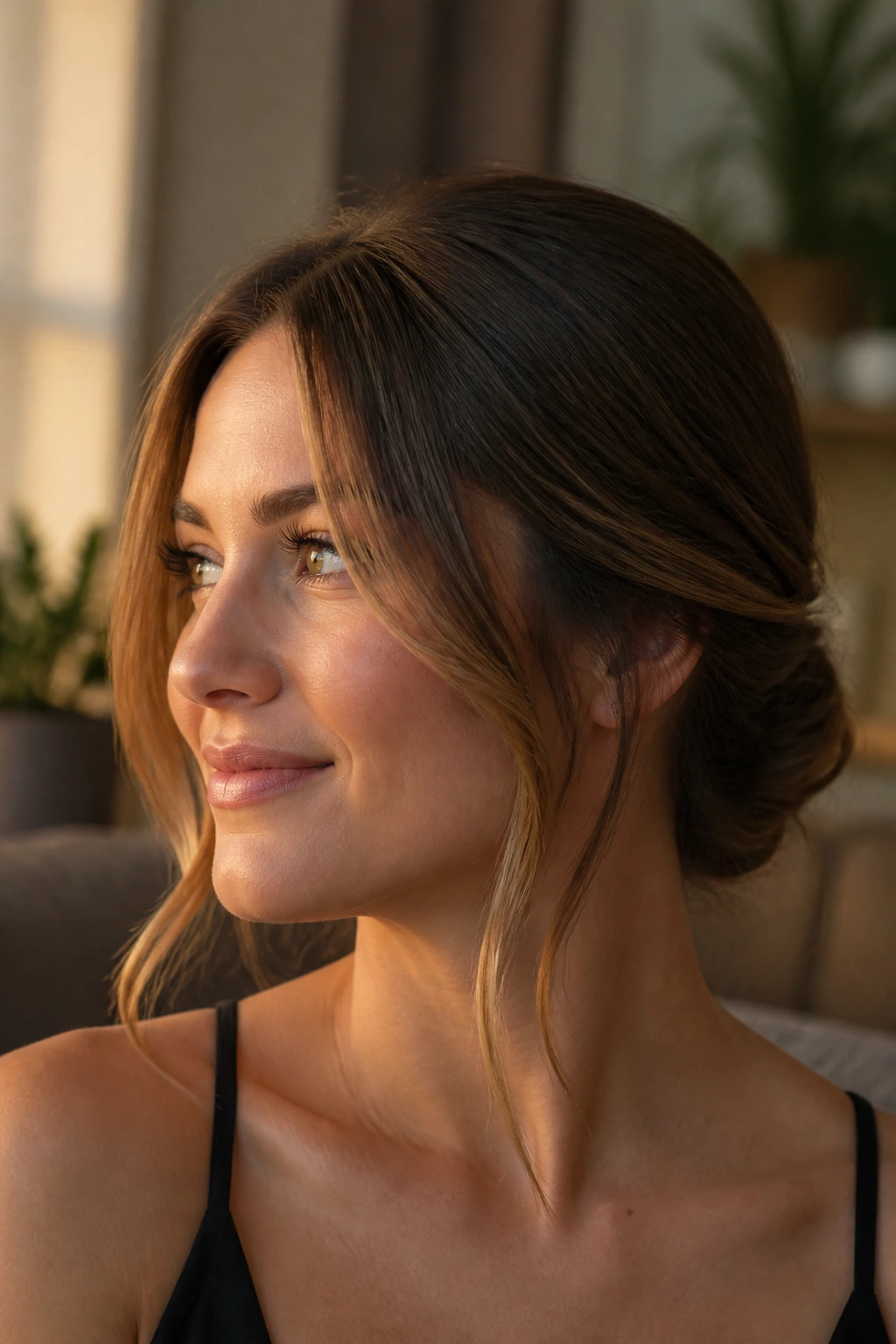
A low twist sounds formal, but on medium hair it can be relaxed and flattering when you leave out a few pieces in front. Those face-framing strands matter. They interrupt the roundness and bring the eye down the sides of the face instead of across the middle.
The twist itself should sit low enough to keep the crown smooth and controlled. If it rises too high, it can make the face look shorter. Keep the front pieces soft and narrow, not thick and curled into little tubes. The point is to outline the face, not build a frame that fights it.
This style is useful for dinners, events, or any day when you want your hair mostly up but still need the shape to read softly. It’s one of those looks that makes a round face feel more open around the cheekbone and jaw, which is the whole reason it works.
22. Glossy Straight Midi With Long Fringe
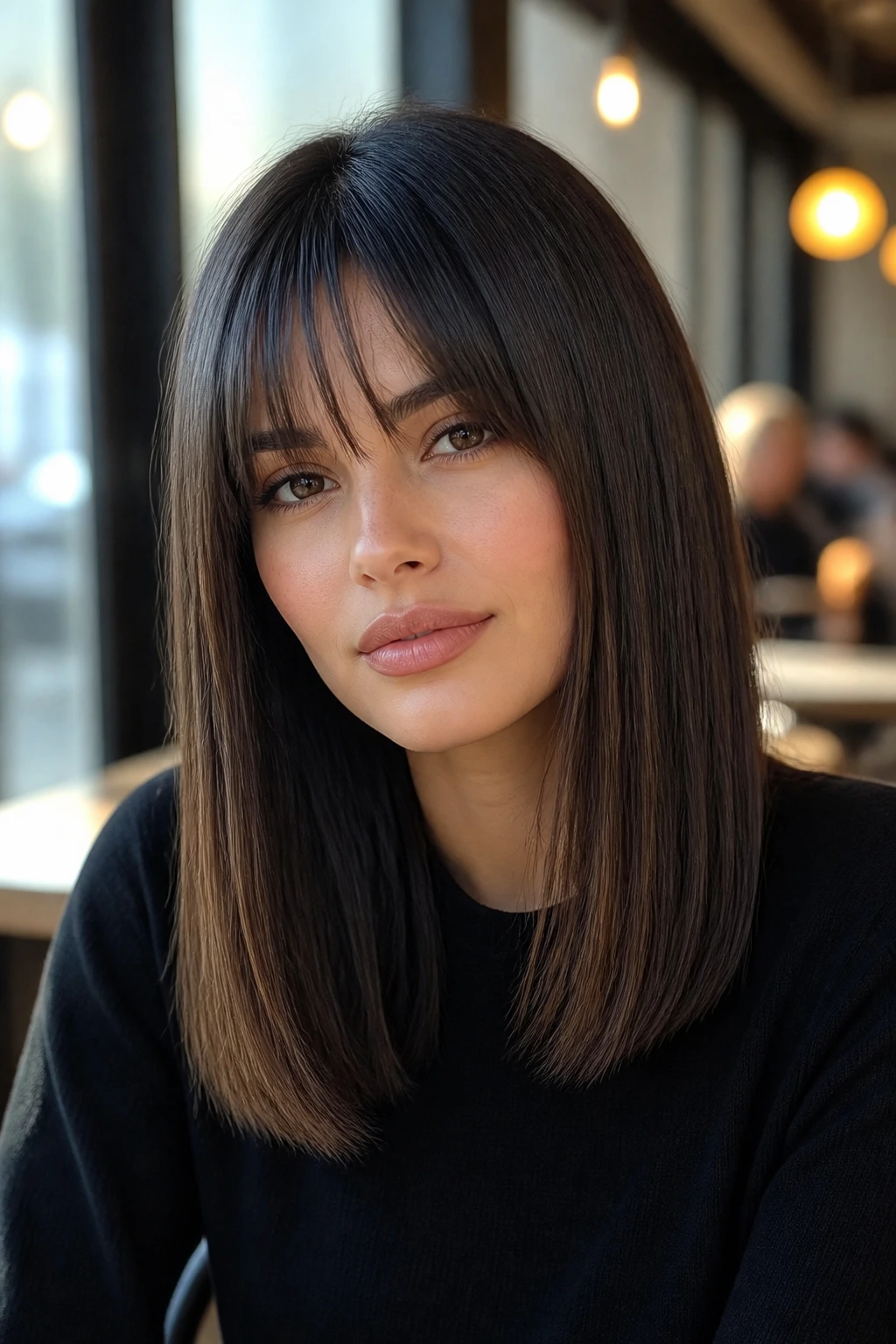
A glossy straight midi with a long fringe is the closest thing to a sleek answer on this list. The shine gives the hair a clean vertical line, and the long fringe — not short bangs, long fringe — keeps the front from cutting the face in a wide block. It’s a sharp look, but not a harsh one.
The fringe should skim the brow or cheekbone and blend into the sides. If it ends too bluntly, it can make the face feel wider. Keep the ends of the midi smooth and a little beveled so the whole shape falls downward. If your hair is naturally straight, this one is easy to maintain. If not, you’ll need a smoothing cream and a quick pass with a flat iron.
This is a good choice if you like clean lines and low visual clutter. The face stays open, the hair stays sleek, and the long fringe gives you a little softness without sacrificing that lengthening effect.
How Medium Length Haircuts Change the Shape of a Round Face
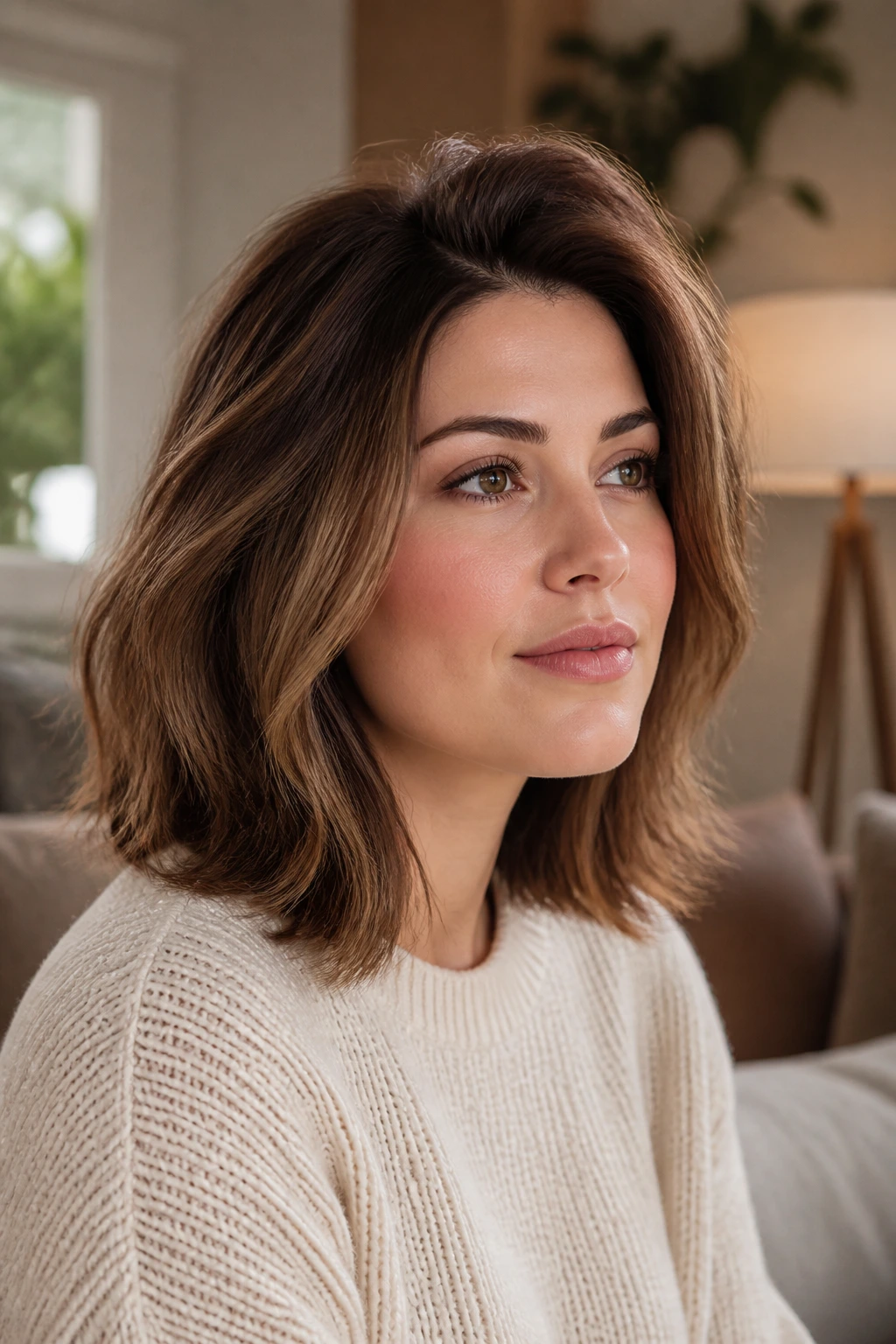
A good medium cut on a round face is never random. It changes the way the viewer reads width, length, and movement.
The most useful trick is placement. Put volume too low and the face looks wider. Put it too high and you can make the head feel top-heavy. Aim for lift at the crown, shape below the jaw, and movement that slants or drops instead of spreading outward. That’s the shape game in one sentence.
There’s another thing people miss: the ends matter as much as the layers. A blunt edge that stops right at the jaw can be too literal. A softer edge that falls lower, bends slightly, or angles forward tends to read better. Haircuts are shapes first and trends second. Hair that obeys geometry tends to age well.
Essential Styling Tools for These Looks
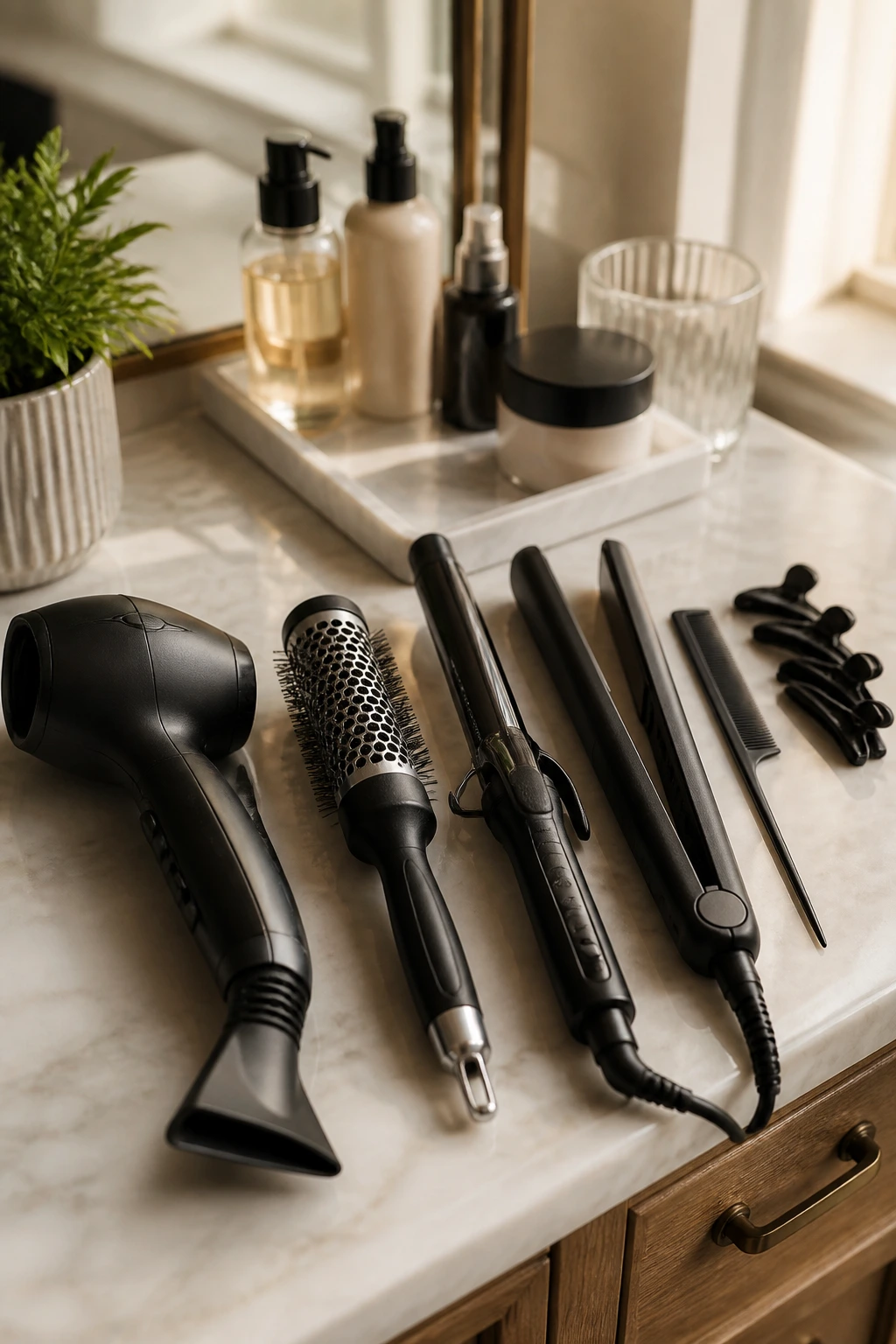
-
Blow dryer with a nozzle: Controls the airflow so you can lift the roots without frizzing the ends.
-
Medium round brush: Best for collarbone bends, flicked ends, and soft crown volume.
-
1-inch curling iron or wand: Gives loose waves and face-framing bends without building too much width.
-
Flat iron: Useful for sleek lobs, long fringe, and subtle beveling at the ends.
-
Tail comb: Helps place a deep side part or clean center part with precision.
-
Sectioning clips: Keep the hair organized while you blow-dry or curl in sections.
-
Heat protectant spray: Non-negotiable if you use hot tools more than once a week.
-
Lightweight mousse: Adds lift and memory to waves and blowouts without turning the hair stiff.
-
Texturizing spray: Good for shaggy cuts, choppy midi lengths, and second-day volume.
-
Smoothing cream or serum: Helps glossy straight styles stay neat, especially around the fringe and ends.
How to Choose the Right Version for Your Hair Texture
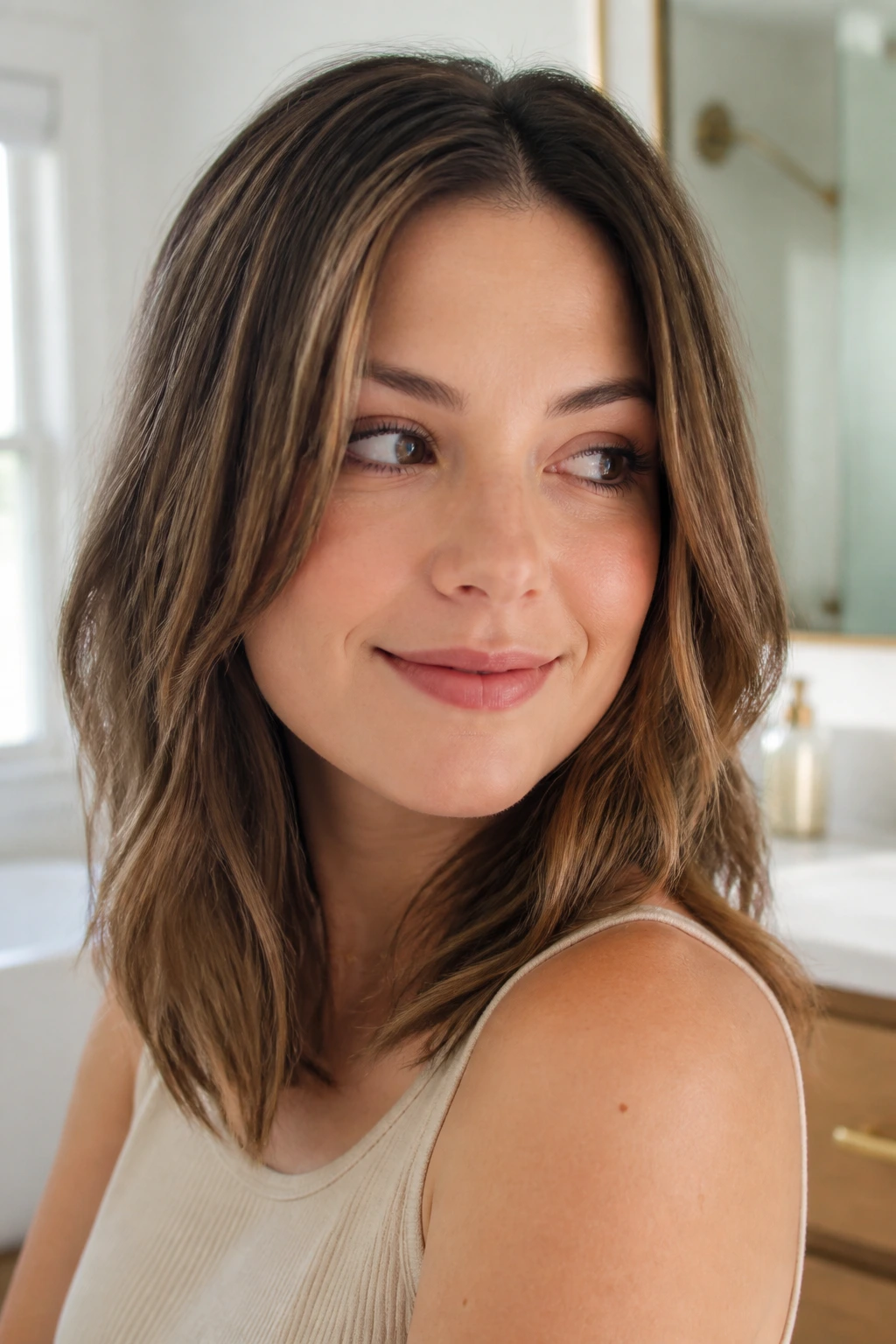
Texture changes everything. A cut that looks airy on fine hair can feel flimsy on thick hair, and a shape that looks balanced on straight hair can turn bulky on curls if you don’t plan for shrinkage.
If your hair is fine, look for blunt edges with subtle layering rather than lots of choppy movement. Fine hair usually needs weight in the perimeter so the ends don’t look sparse. If you want texture, keep it near the front and the crown, where it can create lift without thinning out the whole shape.
If your hair is thick, ask for internal removal of bulk and longer layers that keep the silhouette from ballooning at cheek level. Thick hair can hold beautiful shapes, but it can also create a wide shelf if the cut is too even. And if you have a lot of density, don’t let anyone rake out too much with thinning shears near the top. That can make the hair frizz instead of fall.
If your hair is wavy or curly, work with the bend instead of trying to erase it. A dry cut or curl-aware shaping session is worth seeking out if you can. Curls on a round face usually look best when they drop lower and taper around the jaw rather than puffing evenly around the whole head.
If your hair is straight, you can lean harder on parting, angles, and ends. Straight hair shows every line, which is useful. It also means the cut has to be precise, because there’s nowhere for a bad shape to hide.
Small Styling Moves That Make the Face Look Longer
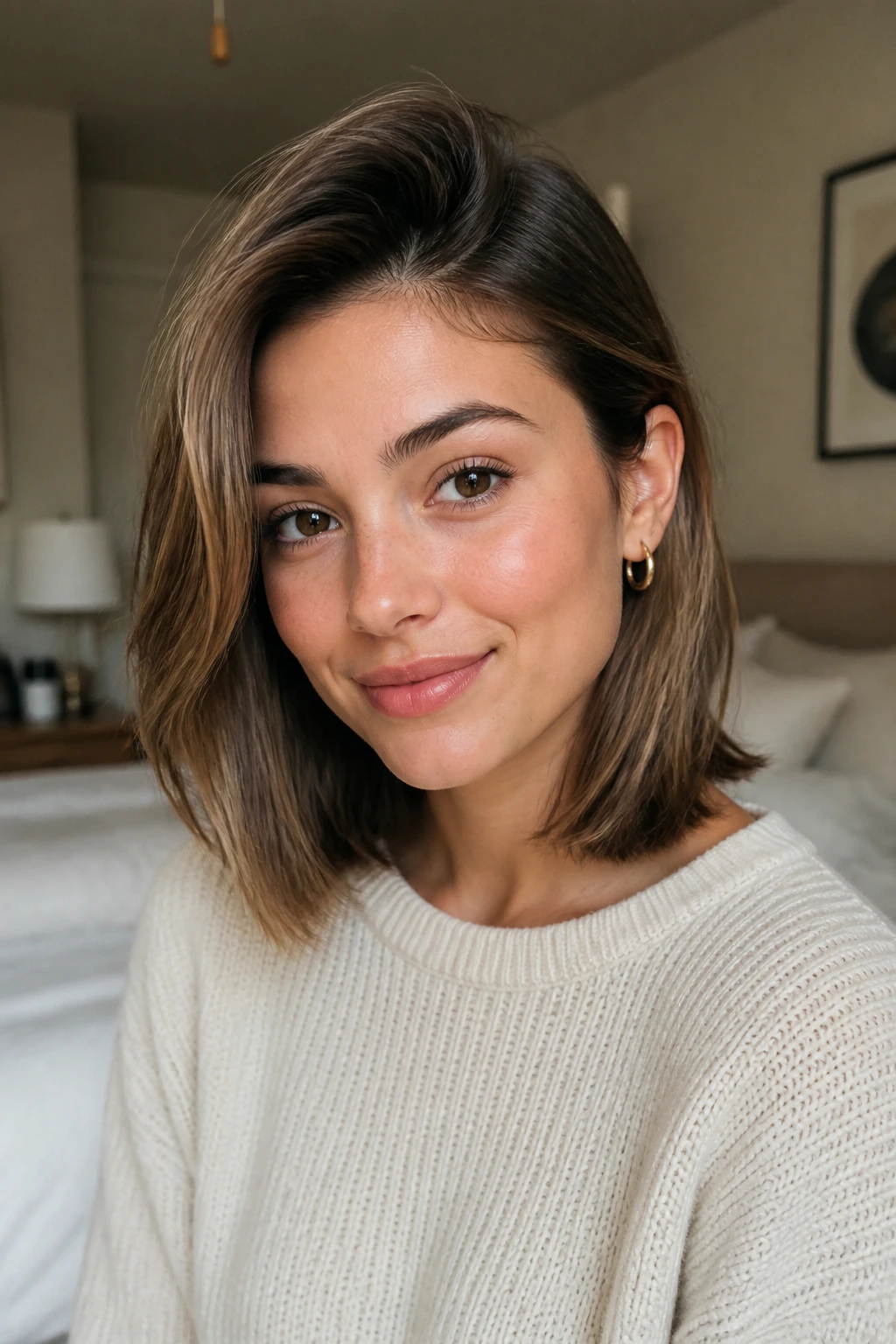
A haircut does part of the work, but styling can either help or ruin it in two minutes flat.
Parting: A center part can work, but if the hair is very flat at the roots, a slight off-center part often looks better on a round face. It gives the forehead a little asymmetry and keeps the style from feeling too symmetrical.
Root Lift: Put volume at the crown, not the cheeks. A little lift near the part line or crown adds vertical length. Cheek-level puff does the opposite. Simple, but people forget it all the time.
Ears and Neckline: Tucking one side behind the ear, leaving one front piece out, or choosing earrings that draw the eye downward can all help the haircut read longer. The hair does not live alone; it sits next to your clothes, jawline, and accessories.
Ends: A slight inward or outward bend at the ends is enough. You do not need a perfect curl pattern. Too much side-to-side movement at the bottom can widen the silhouette, which is the last thing you want when the face is already soft.
Common Mistakes That Add Width Instead of Shape
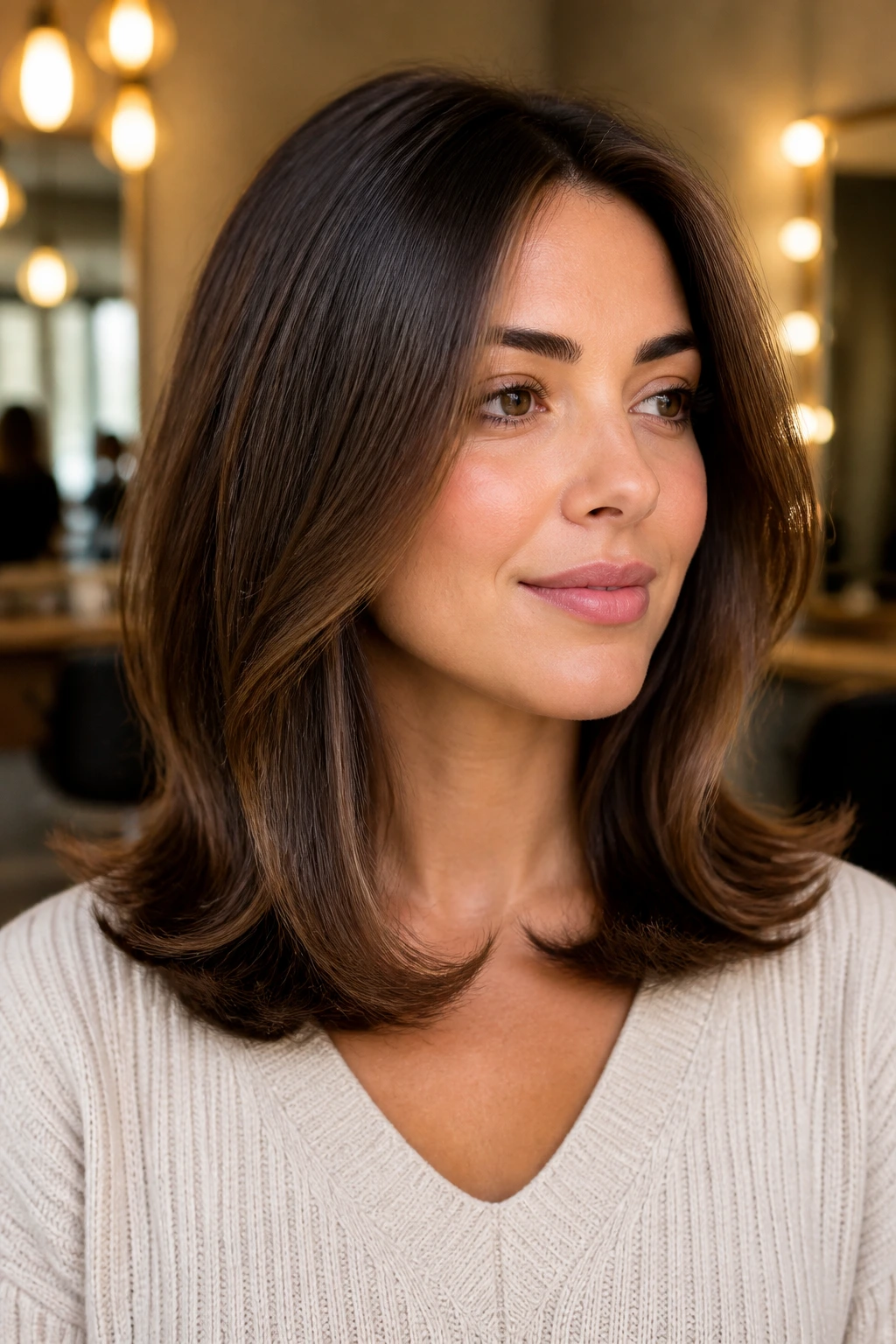
The easiest mistake is cutting the hair so it ends right at the cheek or jaw. It seems neat in the chair. Then you get home and realize the shape is echoing the widest part of your face. The fix is simple: keep the front pieces lower or angle them forward so they don’t sit flat on the cheeks.
Another common problem is too much side volume. Big waves that expand outward at cheek height can make a round face look broader, even if the haircut itself is good. If that happens, reduce the curl pattern near the face and keep the lift at the crown instead.
Heavy, blunt bangs are another trap. Full bangs can work, but they need length and softness. If they stop too high or cut across the face in a thick line, they shorten the face and pull the eye sideways. Longer curtain fringe or side-swept pieces usually behaves better.
Over-layering fine hair is a sneaky one. People ask for “movement” and end up with see-through ends that make the face feel larger because the haircut loses its structure. Fine hair often needs a stronger perimeter, not more slicing.
And then there’s the old problem of flat roots. Hair that lies completely flat on top and puffs out at the sides is bad geometry for a round face. A little crown lift solves more than most people think.
Variations to Try for Different Hair Types and Routines
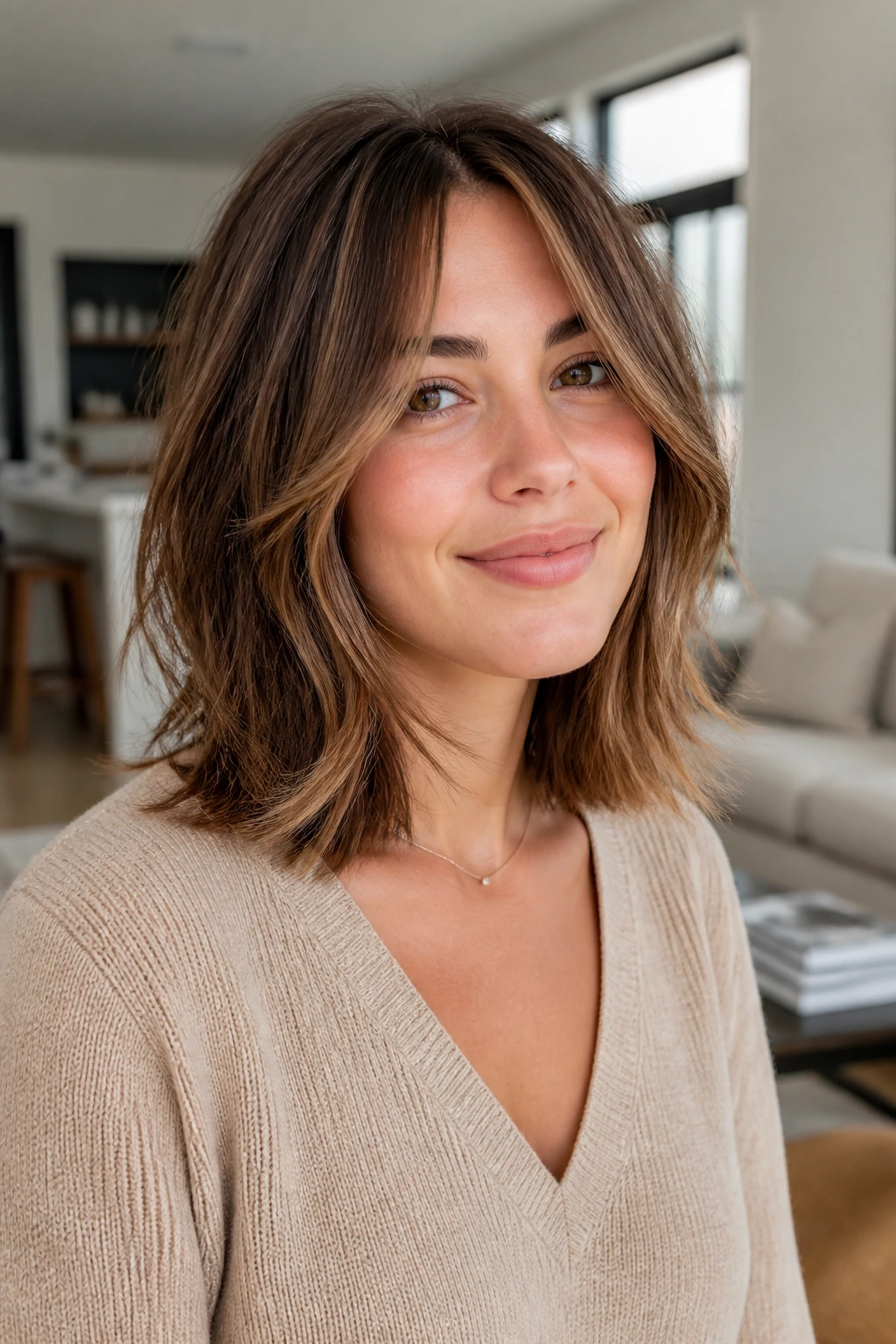
Airy and Light: If your hair is fine or you want something low effort, go for a blunt collarbone cut with minimal internal layering. The shape stays clean, and you can add one bend at the ends with a flat iron if you want more movement.
Thick-Hair Control: For dense hair, choose an angled lob, U-cut, or long layered midi with weight removed from the inside, not the edges. That keeps the silhouette from bulking out near the cheeks. Thick hair needs shape control more than it needs thinning.
Curl-Friendly Shape: If your hair curls on its own, pick a medium cut with length below the jaw and a side part or off-center part. Keep the front pieces long enough to stretch past the cheek. A curl-by-curl trim can make the difference between a rounded halo and a flattering frame.
Low-Styling Version: If you want to wash, scrunch, and go, a shag, air-dried wave cut, or feathered shoulder cut is your lane. These styles rely on the haircut’s texture, not daily hot tools. That matters on weeks when you cannot be bothered.
Sleek and Polished: For straight hair people who like a clean finish, try a blunt midi, long fringe, or glossy lob. These cuts are excellent when the line is crisp and the ends are controlled. They make a round face look longer by refusing to fan outward.
Keeping a Medium Cut in Shape Between Salon Visits
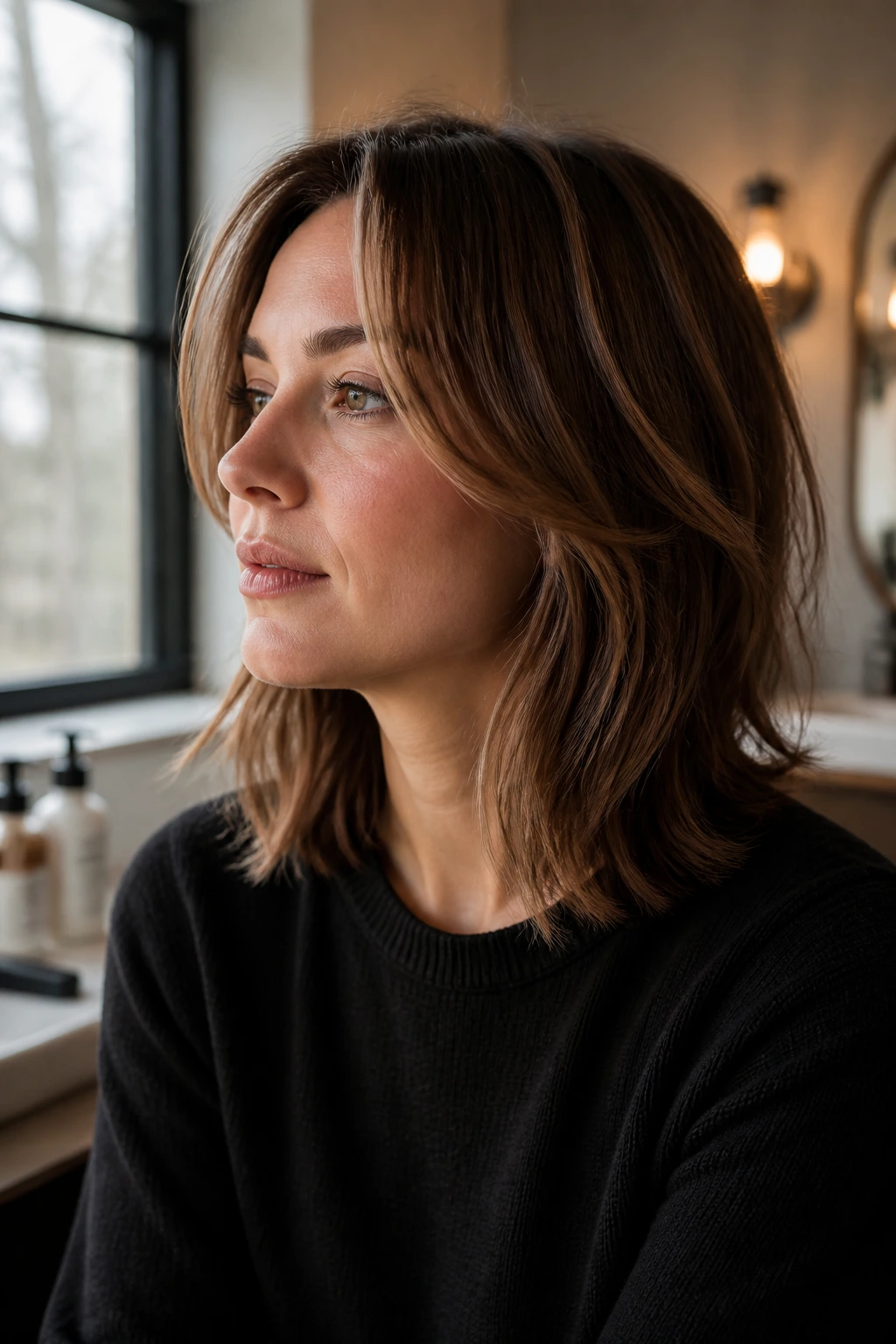
Medium cuts look best when the shape stays fresh. Once the ends start flipping into weird directions or the fringe drops into the eyes, the whole balance can slip.
A blunt or angled cut usually needs a trim every 6 to 8 weeks if you want the line to stay clean. Layers can stretch a little longer, around 8 to 10 weeks, depending on how fast your hair grows and how much shape the front needs. Bangs are their own animal. If you wear curtain bangs or side fringe, plan on a light tidy-up more often, sometimes every 3 to 5 weeks.
At home, wash enough to keep the roots from getting greasy and dragging the hair flat, but not so much that the ends dry out and puff. A light conditioner on the mid-lengths and ends is usually enough. If your hair loses shape overnight, a quick re-bend with a blow dryer or large iron can bring it back fast. No need to start over every morning.
And if your haircut depends on parting or face-framing pieces, keep a tail comb in the bathroom. Tiny adjustments matter more than people think.
Frequently Asked Questions
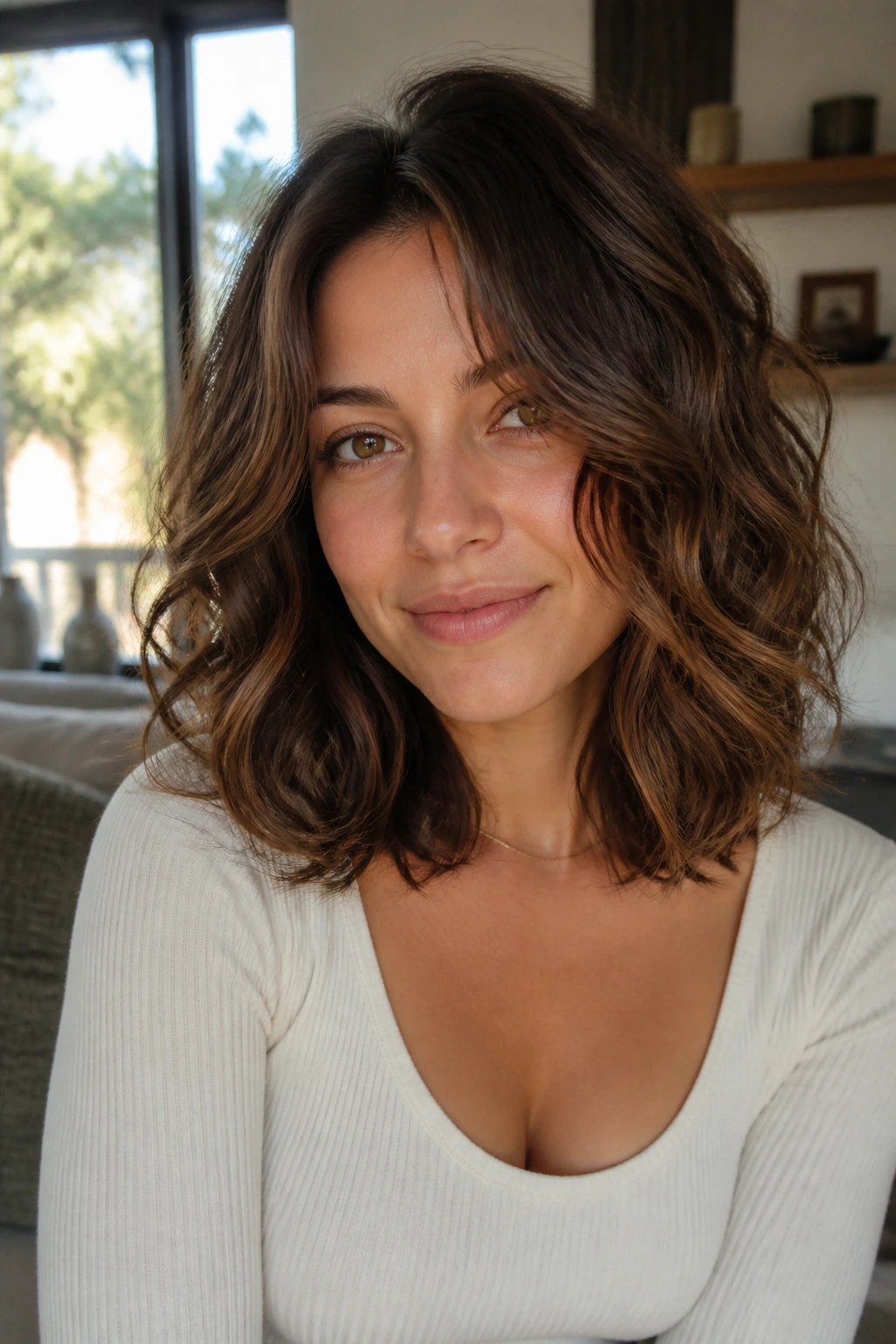
What is the most flattering medium length for a round face?
Collarbone length is usually the safest starting point because it gives you movement below the jaw without dragging the whole shape down. If you like a cleaner look, a slightly longer lob with a soft side part can be just as flattering.
Are curtain bangs good for round faces?
Yes, if they’re long enough to sweep past the cheeks. Short curtain bangs can make the face feel wider, but longer, blended curtain pieces help create a diagonal line that softens the roundness.
Should round faces avoid center parts?
Not automatically. A center part can work beautifully on a round face when the hair has enough length, movement, or face-framing pieces to keep the shape from feeling flat. If the hair is very full at the sides, though, a slight off-center part often looks better.
Do blunt cuts work on round faces?
They do, but placement matters. A blunt cut that lands at the chin can be tricky, while a blunt collarbone lob or midi below the jaw can look crisp and balanced. The line has to sit in the right place.
What if my hair is thick and poofy?
Ask for internal shaping, not layers that explode at the cheeks. Thick hair usually looks better when the perimeter stays strong and the bulk is removed from inside the cut so the shape falls instead of puffing out.
Can curly hair suit a round face?
Absolutely. Curly hair can be gorgeous on a round face when the shape is cut with enough length and the curls are directed so they don’t widen the cheek area. A side part and some vertical lift at the crown help a lot.
How often should I trim a medium hairstyle?
Plan on a trim every 6 to 10 weeks, depending on how structured the cut is. Bangs and blunt ends need more frequent cleanup; softer layers can stretch a little longer before the shape starts to drift.
What if my hair keeps flipping out at the sides?
That usually means the layers or the ends are sitting at the wrong length for your texture. Ask for the front pieces to be pushed lower, or style with the bend directed under instead of out so the shape doesn’t widen at cheek level.
The Cuts You Can Wear on Repeat

The best medium length hairstyles for round faces don’t try to erase the face. They work with it. A good lob, a smart fringe, a soft angle, or a little crown lift can change the whole balance without making the cut feel like a costume.
That’s the part I always come back to: the most useful haircut is the one that still looks like you after it’s been washed, air-dried, tucked behind one ear, or hit with a blow dryer on a rushed morning. If the shape keeps its line in real life, not just in the salon mirror, you’ve got the right one.
Pick the cut that gives your face some length, your hair some movement, and your routine a break. The right medium length has a way of settling in and staying useful.