



Fine hair looks its best when the cut does half the styling for you, and medium shag haircuts with beachy waves do exactly that. The layers keep the shape from collapsing into one flat curtain, while the waves break up the see-through ends that fine strands can get when they’re left too blunt. The sweet spot is usually somewhere from the collarbone to the tops of the shoulders — long enough to swing, short enough to keep the lift.
I’m partial to this length because it behaves. It doesn’t demand a salon blowout every time you leave the house, but it also doesn’t wander into the awkward zone where the ends drag down the whole shape. That matters with fine hair. A heavy haircut can make even healthy strands look tired by noon, and no amount of dry shampoo fixes a shape that’s too boxy or too thin at the perimeter.
Beachy waves are the trick that makes the whole thing click. Not perfect curls. Not pageant hair. Soft bends, slightly uneven texture, a little grit at the roots, and ends that turn in different directions instead of marching in a line. That’s the look that gives a medium shag its body, and once you know how to ask for it, you can make the cut work in a hundred different ways.
Why These Shag Shapes Work So Well on Fine Hair
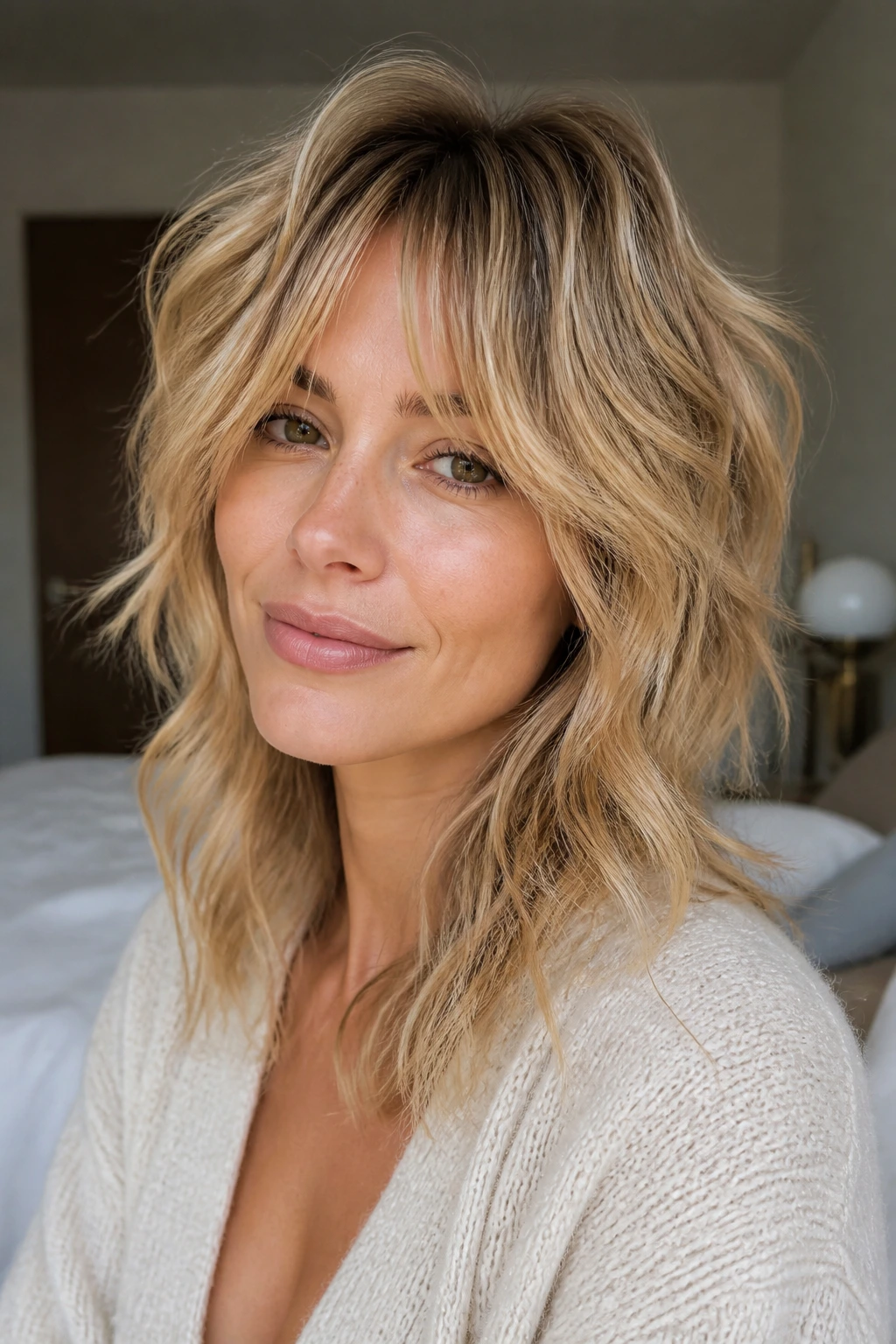
Built-in lift: Shorter layers around the crown stop fine hair from lying flat against the scalp, which gives the cut a fuller shape before you even pick up a styling tool.
Beachy movement hides sparse ends: Soft bends and piecey texture break up the see-through look that can happen when fine strands fall in one straight sheet.
The length stays useful: Medium hair still goes into clips, half-up styles, and low buns, but it’s short enough that the weight doesn’t drag the wave pattern down too fast.
The cut does not need perfection: A shag looks better with a little mess in it. That’s good news when your hair refuses to hold a sleek blowout for more than an hour.
Face framing carries the whole look: Curtain pieces, bottleneck fringe, and cheekbone layers can make fine hair look more deliberate, even when the rest of it is air-dried and barely touched.
1. Collarbone Curtain Shag
This is the cut I’d hand to someone who wants movement without looking like they tried too hard. The length lands right at the collarbone, which gives fine hair enough weight to swing, but not enough to slump. Curtain bangs open the face, and the layers around the cheeks make the whole shape feel airy instead of boxy.
Why It Works on Fine Strands
The curtain fringe gives you instant structure at the front, which is where fine hair often looks the flattest. Because the layers are kept soft and graduated, the cut doesn’t chew up too much density through the ends. That matters more than people think. Too many short layers can leave the lower half looking wispy before the top has enough lift to balance it out.
What to Ask For at the Salon
- Collarbone length with soft internal layers, not a heavily razored bottom.
- Curtain bangs that start around cheekbone level and blend into the front layers.
- A little shorter crown piece for lift, but nothing so short it pops up on its own.
- Point-cut ends for movement rather than a blunt edge.
Styling Note
Wrap the front pieces away from the face with a 1-inch wand, then leave the ends loose. That half-formed wave is what keeps the style from looking too polished.
Best for: Oval, heart, and long faces that like a little softness around the jaw.
2. Razor-Cut Airy Shag
A razor-cut shag has a more feathered feel, and on fine hair that can be a gift or a disaster depending on how hard your stylist goes. Done well, it makes the ends look light and broken up in a good way. Done badly, it thins the perimeter until it looks like the haircut has already grown out.
The Sweet Spot
You want the razor used mostly on the surface and the face-framing pieces, not hacked through every section from root to tip. The point is to create a soft edge that bends easily into beachy waves. That edge catches texture spray in a way blunt hair won’t, which is why this cut takes on that lived-in, piecey look so quickly.
How to Wear It
Wear it with a slightly messy middle part and a salt spray finish. If you use a curling wand, alternate directions every other section so the waves don’t clump into one big curl. That little mismatch is what makes the style look natural.
Watch For
If the bottom starts looking stringy after the cut, the razor work was too aggressive. Fine hair needs movement, yes, but it still needs a visible edge.
Best for: Straight-to-wavy hair that goes flat when left in one long line.
3. Bottleneck Bang Shag

Bottleneck bangs sit in that nice middle ground between curtain bangs and a full fringe. They’re narrow at the center, then open a little wider as they hit the cheekbones. On fine hair, that shape gives you interest up front without taking too much density from the rest of the cut.
The reason I like this with beachy waves is simple: it looks intentional even on a lazy styling day. You can let the fringe dry with a soft bend, tuck one side behind the ear, and the haircut still reads as styled.
How It Changes the Shape
The bottleneck fringe pulls focus upward, which helps if the hair around your ears tends to go limp. It also gives the illusion of more fullness at the top of the head because the eye has somewhere to land besides the ends. That’s useful when the rest of your hair is medium length and lightly layered.
Styling Cue
Use a round brush only at the roots of the fringe, then bend the ends with your fingers. If you over-brush it, the piecey part disappears and the bangs start to look like a mini blowout from another era.
Best for: Longer foreheads, narrow faces, and anyone who wants fringe without a heavy line.
4. Feathered Flip-Out Shag
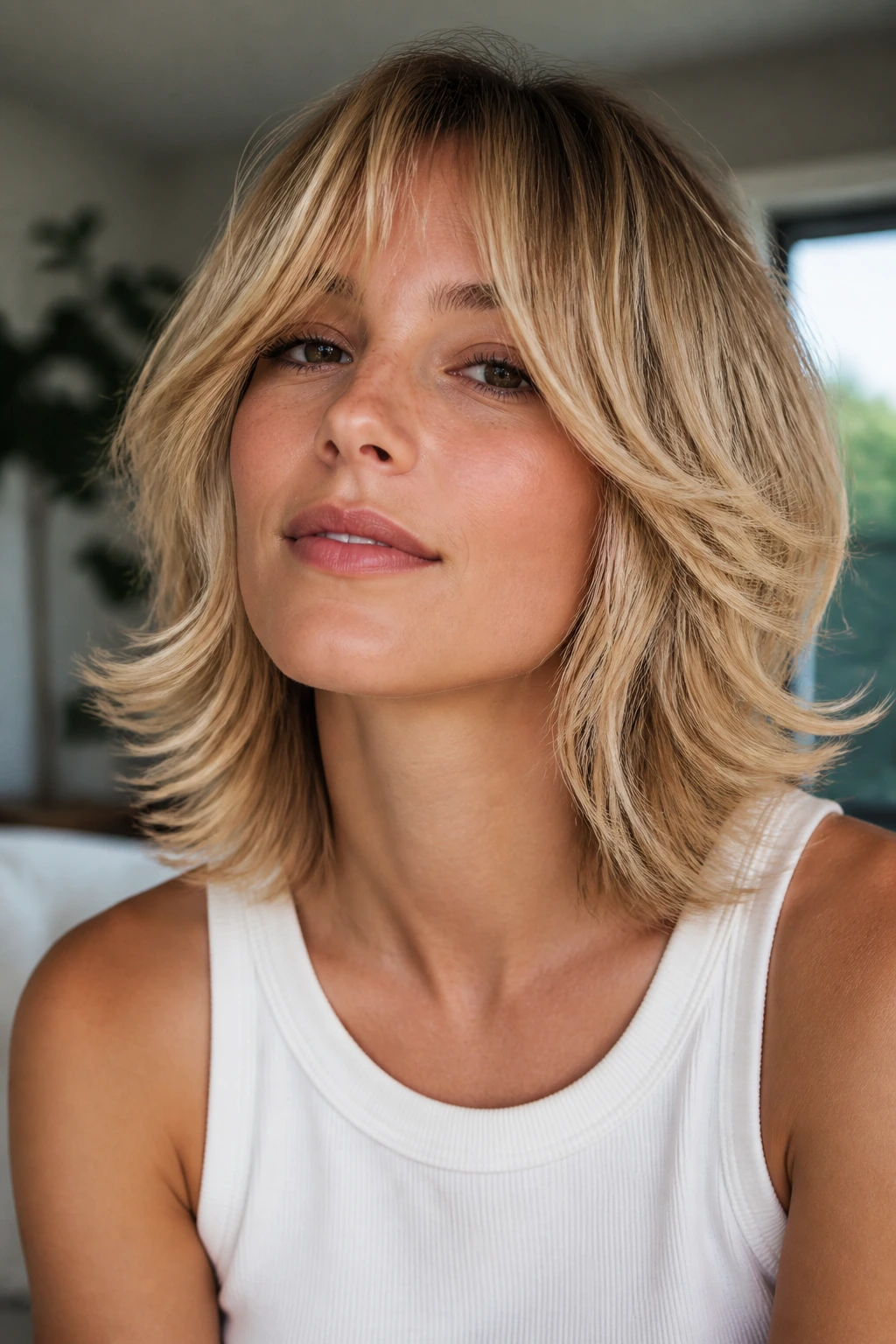
This one has a bit of retro attitude, and I mean that in the good sense. The ends are cut so they naturally want to flip outward instead of tucking under, which gives fine hair a lighter silhouette. The effect is especially useful if your hair tends to hug the neck and look stringy when it’s too long.
A flip-out shag works because it makes the perimeter feel active. The ends aren’t dead weight. They move. They kick out a little when you shake your head, and that tiny bit of lift keeps the haircut from sinking into a flat sheet by midafternoon.
What Makes It Different
- The bottom layers are feathered enough to bend away from the neck.
- The crown is kept soft so the top doesn’t puff up like a triangle.
- It works best with a blow-dry directed slightly outward at the ends.
Styling Tip
Use a medium round brush and roll only the bottom 2 inches of the hair away from the face. That’s enough. Anything more and you’ll end up with a style that looks like it’s trying to time-travel.
Best for: People who want a playful edge without going full retro.
5. Side-Part Volume Shag
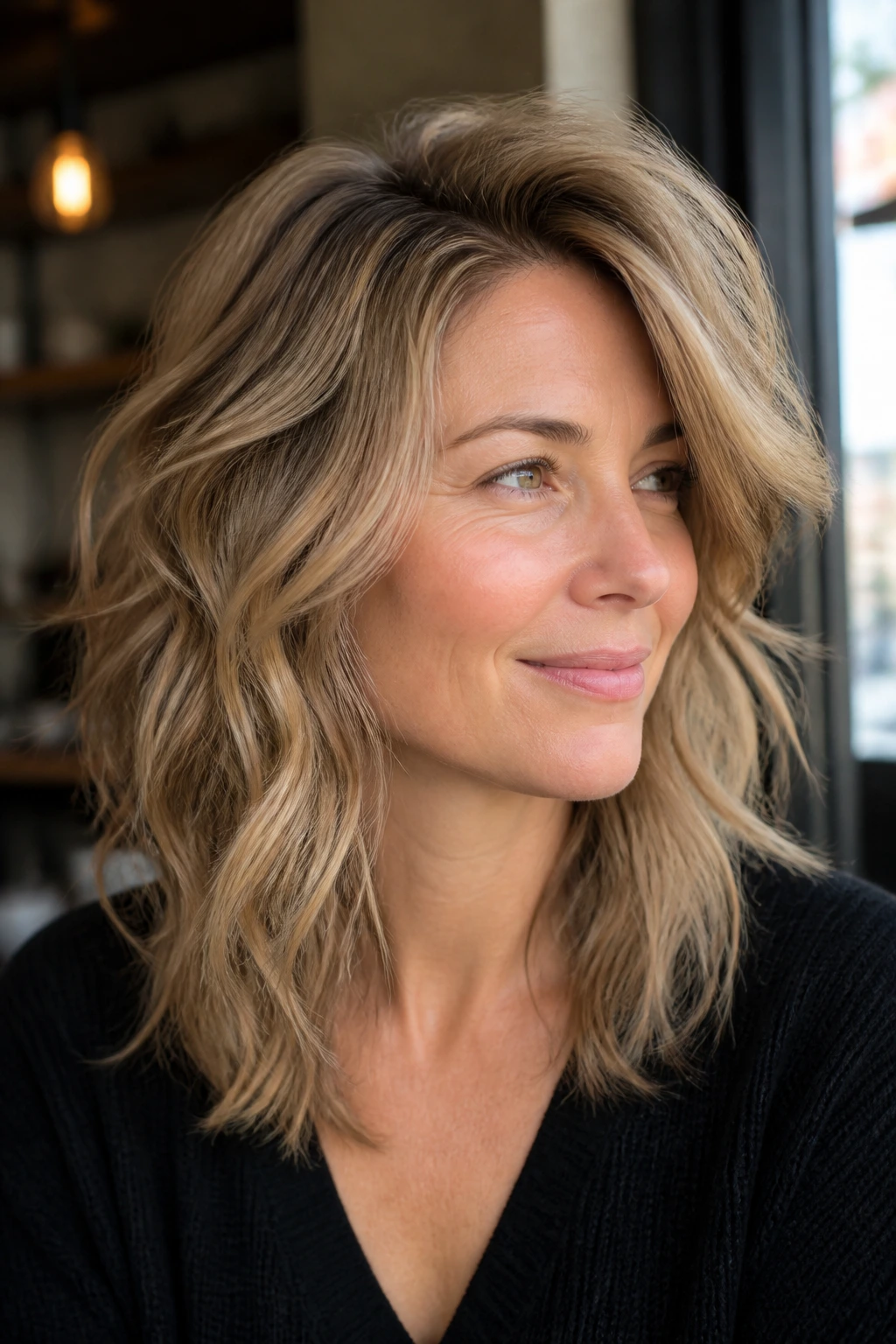
A side part can do more for fine hair than a shelf full of products, and this cut leans into that. The asymmetry lifts the roots on one side, pushes the fringe across the forehead, and gives the illusion that the hair has more density than it really does. It’s a very simple trick. Also, a very good one.
The layers here are usually kept soft and long enough to fall in bendy pieces, not choppy chunks. That makes the side part feel grown-up rather than fussy. If your hair refuses to cooperate with a middle part, this is the one that settles it down.
Where It Shines
This look is especially good if one side of your hair naturally wants to lie flatter than the other. A side part gives you a built-in lift zone at the root, and the shag layers keep the shape from looking too severe. Finish with a light texture spray at the roots, not the ends. The ends already have enough movement.
Quick Visual
Think of a soft wave sweeping from one temple into a collarbone-grazing layer. Clean, but not stiff.
Best for: Round faces, flat crowns, and anyone who likes a little asymmetry.
6. Wolf-Lite Shag
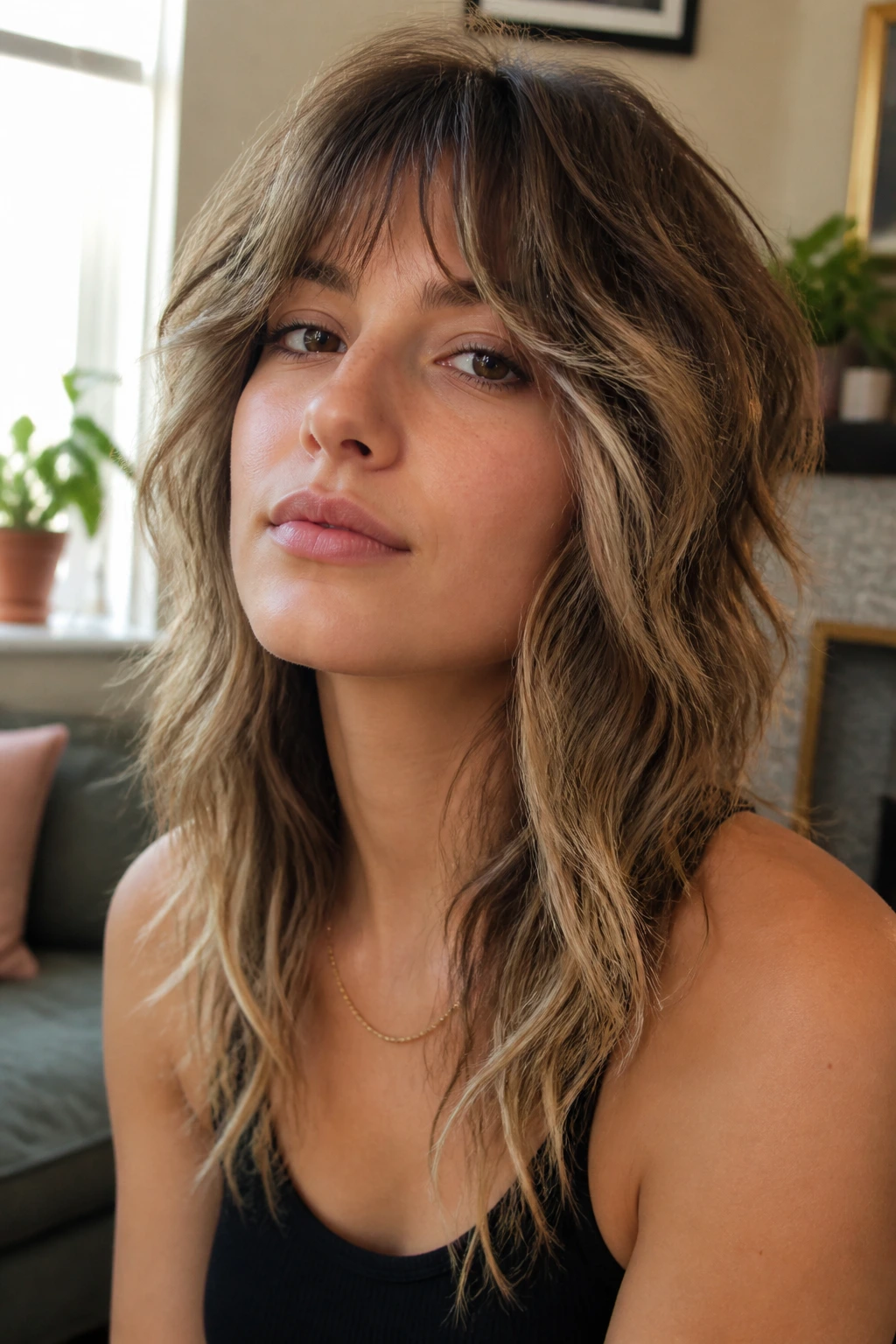
A full wolf cut can be too much for fine hair if the layers get too short and the outline loses density. Wolf-lite is the gentler version. You still get that slightly edgy, crown-heavy shape, but the layers stay longer and more wearable, with enough length at the bottom to keep the haircut from disappearing.
The key is restraint. You want the suggestion of a wolf cut, not the full dramatic disconnect. On fine hair, that makes a huge difference. Too much contrast between the top and the ends can leave the lower half looking threadbare.
How to Wear It
Let the crown be a little wild and keep the lengths softly waved. The style looks best when the top has lift and the ends are piecey, not curled into neat spirals. A matte texture spray helps here because it gives the layers something to hold onto.
My Take
I like this cut on people who want their hair to look cool without making it the only thing in the room. It has edge, but it still feels practical.
Best for: Fine hair that needs attitude but not a dramatic chop.
7. Beach-Lob Shag
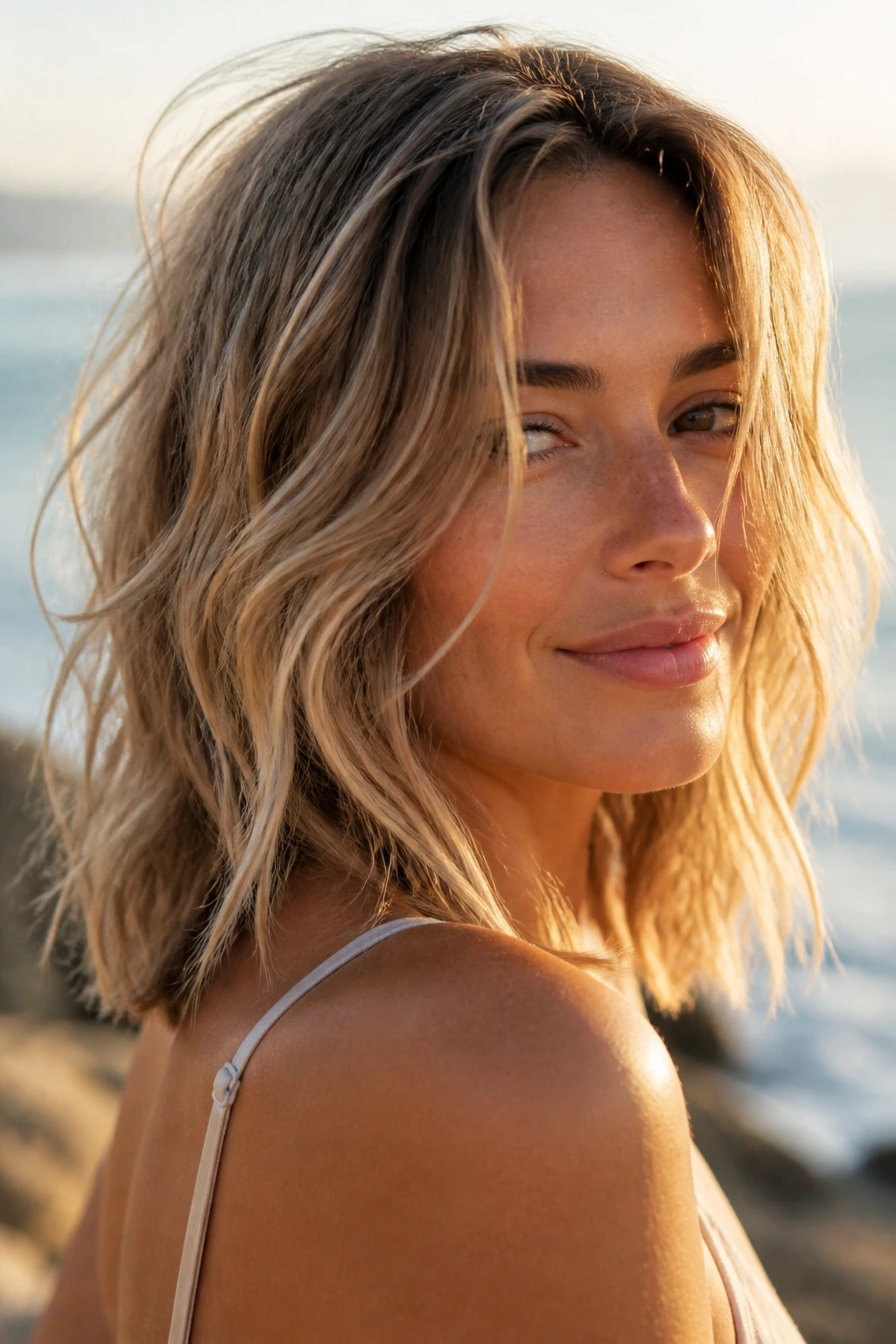
If you’re nervous about going too layered, start here. A beach-lob shag sits between a long bob and a shag, with enough structure to look polished and enough internal movement to avoid that helmet shape a blunt lob can get on fine hair. It’s one of the most forgiving shapes in the whole group.
The length gives you a little safety net. If you style it badly, it still looks like a haircut. That sounds small, but it isn’t. Medium fine hair can go strange fast when the cut is too short in the wrong spots.
The Texture Story
This version depends less on dramatic layers and more on bend. Think soft S-waves, not polished curls. The edge should graze the shoulders or land just above them, with the wave pattern doing the work of creating fullness.
Good to Know
If your ends are fragile, this is one of the kinder options. It lets you keep more hair while still getting lift around the face and crown.
Best for: People who want a safer shag with easy grow-out.
8. Highlighted Dimension Shag
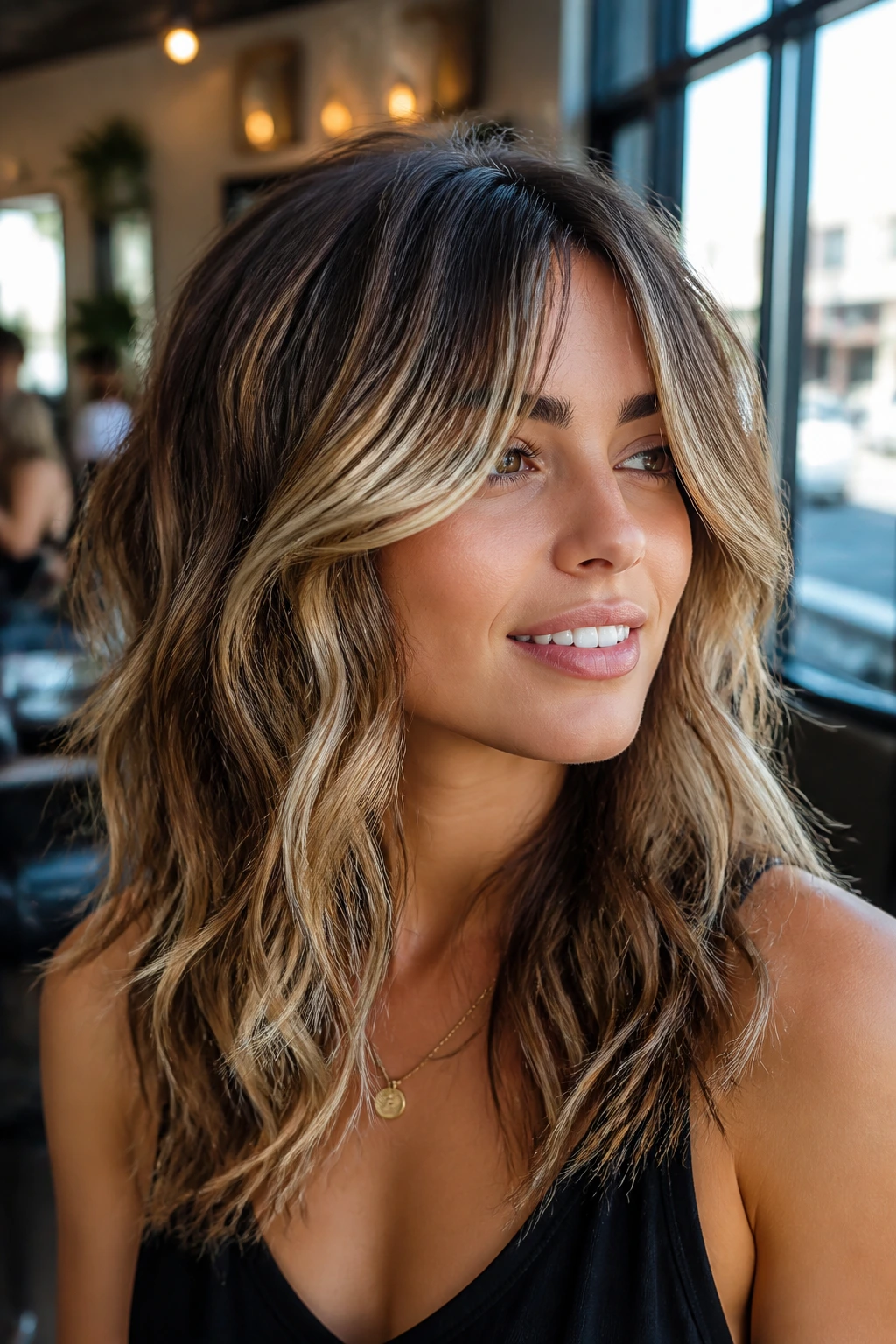
Color changes the way a shag reads, and fine hair loves a little dimension. Highlights, lowlights, or even a soft balayage can make the layers look more separate, which gives the cut extra visual thickness. A single-tone finish can be pretty, but it also makes every thin spot more obvious.
This is the haircut I’d pair with fine hair that has good density at the roots but loses visual body through the mid-lengths. The color helps the wave pattern show up. It’s almost cheating, and I mean that as praise.
Placement Matters
Ask for lighter pieces around the face and crown, with deeper tones underneath. That contrast makes the beachy waves pop without needing a ton of product. If the highlights are too chunky, though, the effect gets noisy fast. Soft placement is the whole point.
Styling Habit
A little shine spray on the mid-lengths is enough. Heavy oils will flatten the dimension and make the hair look stringier than it is.
Best for: Fine hair that needs more visual density, not just more layers.
9. Micro-Layer Lift Shag
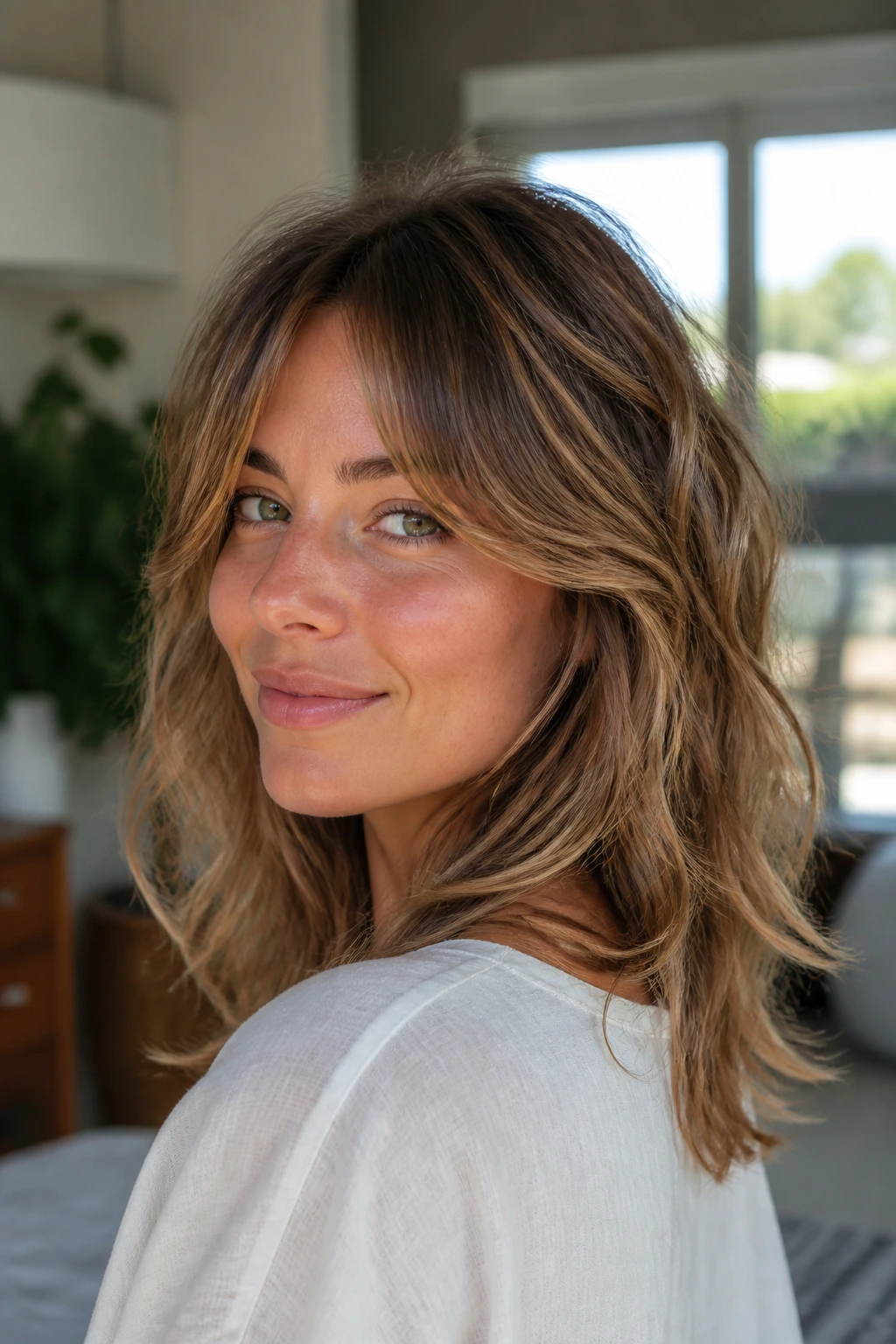
Micro-layers are for people who want movement without visible chunkiness. Instead of a big, obvious step between lengths, the layers are tucked in close and spread through the interior of the cut. That means the surface still looks full while the inside gets enough air to bend and lift.
This works especially well on fine hair that gets weighed down the minute a stylist takes too much off the perimeter. The haircut keeps its outline, but it doesn’t sit there like one heavy block. You can feel the difference when you scrunch it. The hair springs a little instead of hanging.
How It Looks
The best version has a smooth top line, soft front pieces, and internal layers that don’t announce themselves until the hair moves. That’s the secret with fine strands: movement counts more than drama.
When to Choose It
If you like subtlety and hate a chopped-up finish, this is your lane.
Best for: Straight, fine hair that needs lift without looking layered to death.
10. Cheekbone Frame Shag
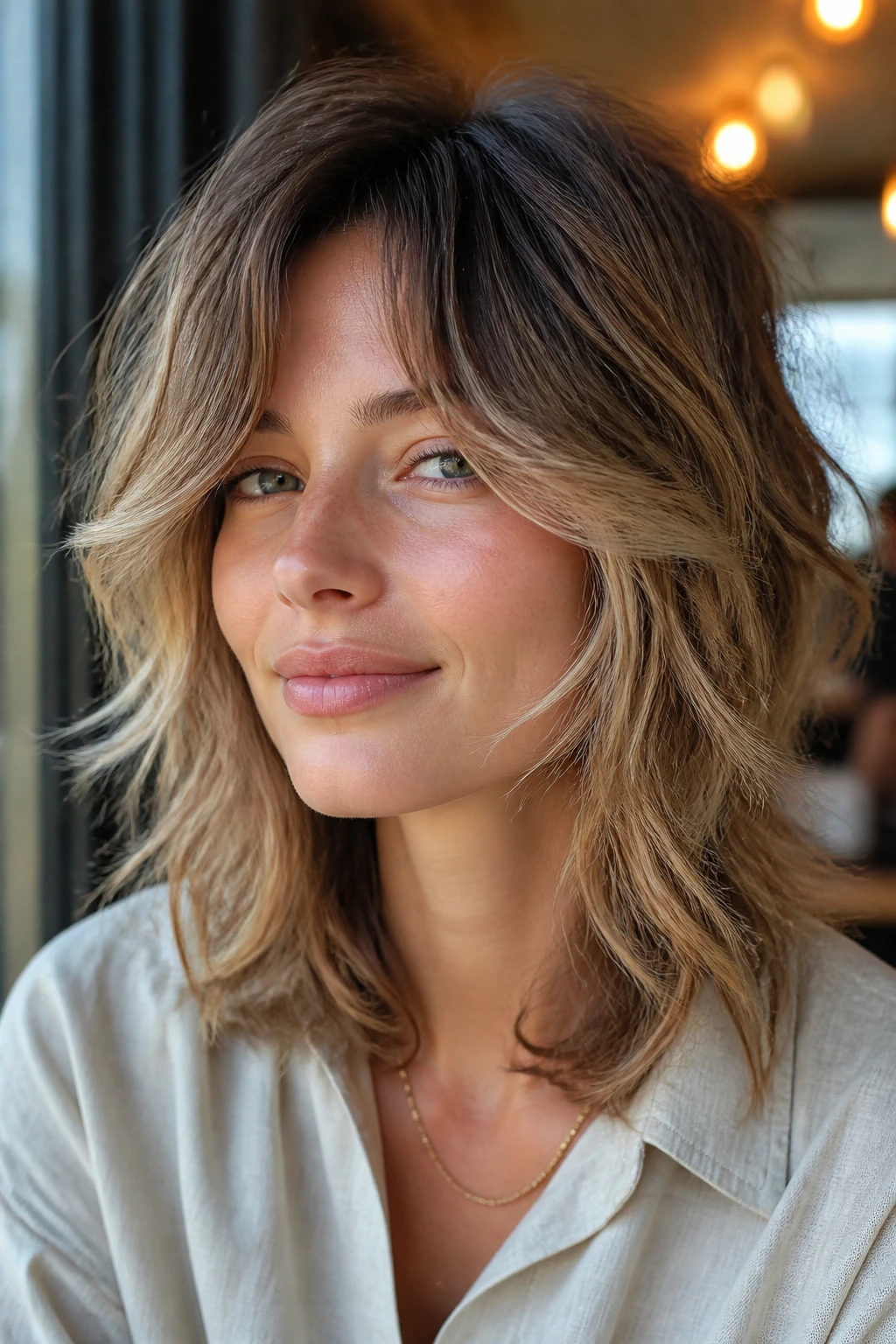
Some haircuts pull attention to the ends. This one pulls it to the face. The front layers are cut to land around the cheekbones, then taper softly into the rest of the medium length. That gives the whole style a lifted, open feel, and it can make fine hair look fuller because the eye keeps moving around the face instead of settling on the perimeter.
The look is especially useful if your hair loses body near the temples. A cheekbone frame gives that area structure. It’s a small move with a big payoff.
Good Pairings
- Soft side part for extra lift.
- Beachy bends away from the face.
- Light fringe or no fringe, depending on how much forehead you want to show.
Why I Like It
It flatters without trying to disguise the hair. That’s a better strategy than most people use. Fine hair does not need to pretend to be thick; it needs a shape that keeps it from collapsing.
Best for: Heart and oval faces, especially with a flatter temple area.
11. Air-Dry Bend Shag

This is the cut you want if you refuse to sit under a dryer every time you wash your hair. The layers are planned to fall into bends on their own as the hair dries, which means the haircut has to be balanced from the start. You’re not chasing a perfect blowout. You’re letting the shape do the work.
The trick is asking for soft, longer layers that encourage natural wave rather than short layers that flip out randomly. Fine hair can be fussy when air-dried, so the cut needs enough direction to keep the ends from spreading thin.
How to Style It
Scrunch in mousse on damp hair, twist a few front pieces around your fingers, and leave it alone. Seriously. Touching it too much while it dries is the fastest way to make the wave pattern frizzy and weak.
Worth Knowing
If your hair dries nearly straight, this still works — it just leans more on bend spray and a few wand touches at the front.
Best for: Low-maintenance routines and anyone who hates brush-heavy styling.
12. Salt-Spray Shag

A salt-spray shag has a little grit in the cut and a little grit in the styling. The layers are meant to catch texture, and the product helps the hair hold onto that piecey, undone finish. On fine hair, that can be a very good thing because slippery strands often need something to cling to.
The downside is obvious: too much salt spray can make hair feel crispy. So the cut needs to do part of the job. If the shape is right, you won’t need to drown it in product.
How to Wear It
Mist the spray onto damp hair, scrunch from the ends upward, then rough-dry the roots with your fingers. Once the hair is almost dry, twist a few random sections around a wand for that beach-bent finish. Random is the key word. Uniform waves look too planned.
My Opinion
This is one of the best looks for vacation hair, but it also works on a Tuesday if you keep the application light.
Best for: Naturally wavy fine hair that needs texture, not gloss.
13. Curtain Fringe Lob Shag
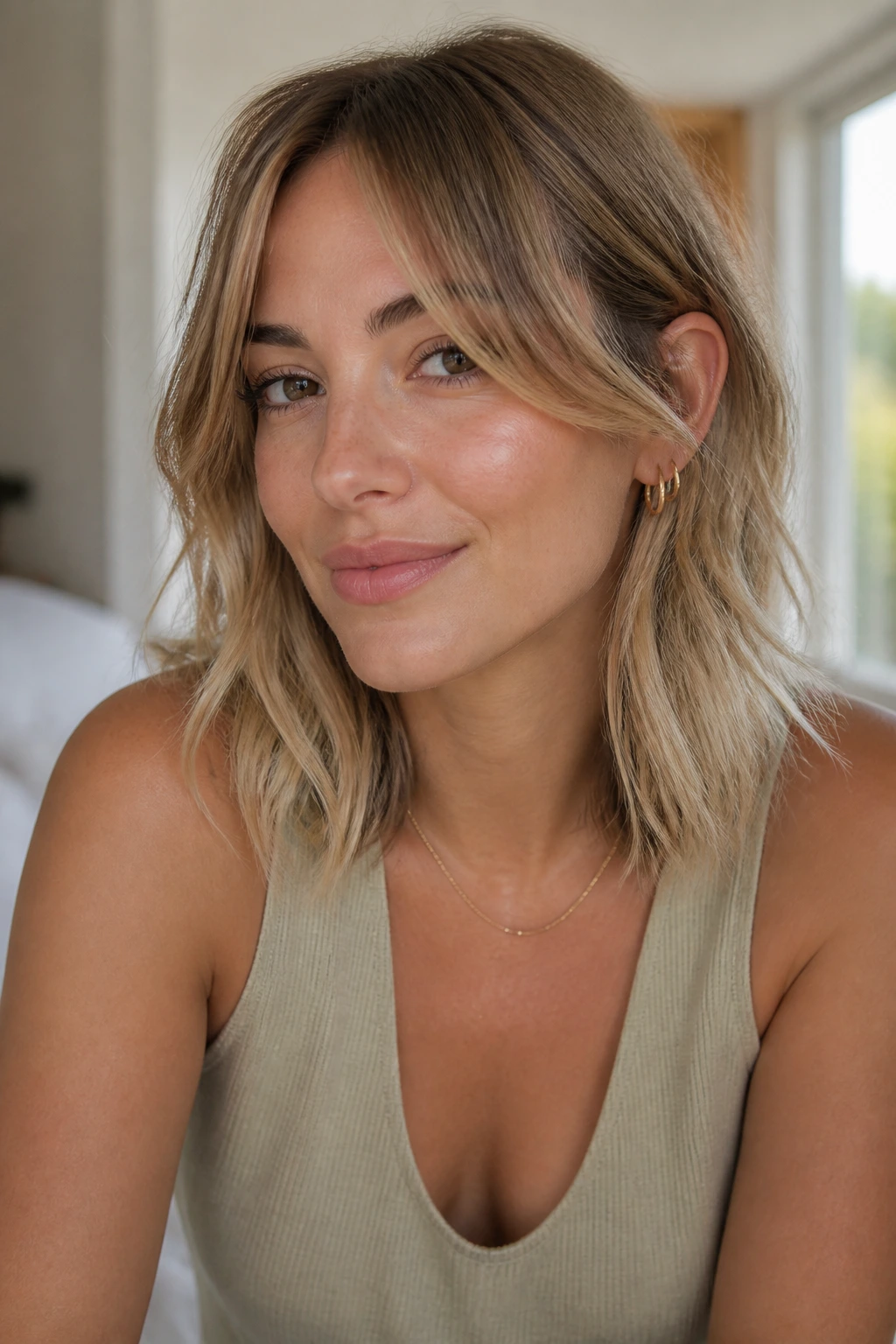
This is the sibling of the collarbone curtain shag, but with a cleaner lob base. The line is a touch more controlled, which gives the cut a little more polish. The curtain fringe softens the front, while the lob length keeps the hair thick-looking at the bottom.
That bottom line matters. Fine hair can get flimsy if the cut is too shattered through the ends. A lob shag keeps enough mass in place that the waves feel plush instead of sparse.
What Sets It Apart
The front pieces are usually the stars here. They’re the bits that tuck behind the ears, fall into your cheekbones, and make the style look styled even when the rest is barely touched.
Styling Cue
Blow-dry the fringe first. If you wait until the rest of the hair is dry, the bangs will sit weird and the whole shape starts fighting itself.
Best for: People who want a cleaner version of the shag with an easy face frame.
14. Side-Swept Fringe Shag
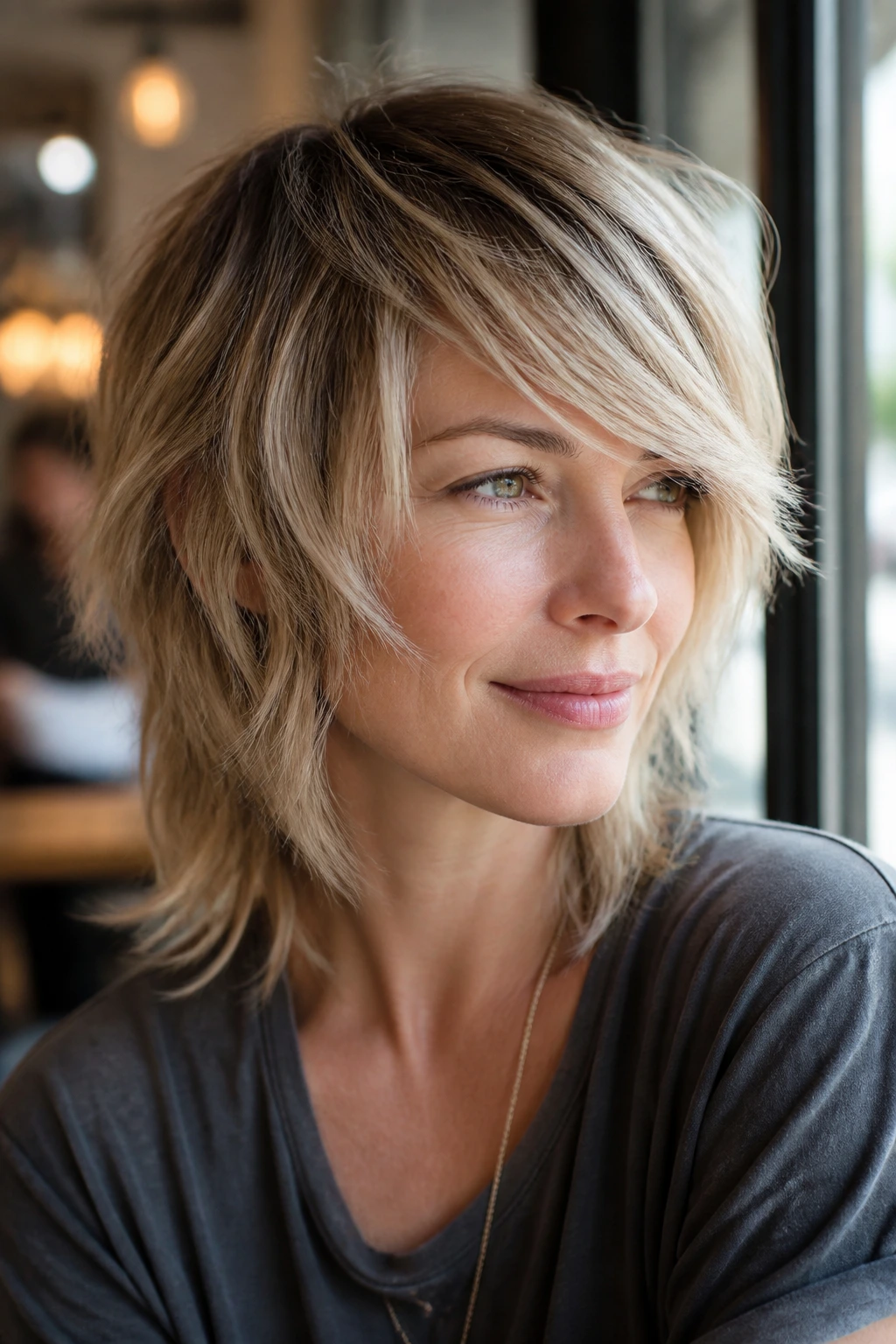
A side-swept fringe can be a relief if curtain bangs feel too trendy or too centered for your face. Swept diagonally, the fringe gives movement without creating a hard line across the forehead. On fine hair, that softness is useful because it keeps the front from looking sparse.
The cut works best when the fringe blends into longer layers through the temple and jaw. That helps the hairstyle look connected, not like three different ideas sitting on one head. I’m picky about that. Disconnected bangs can look sharp on dense hair, but on fine strands they can read as patchy.
Styling Habit
Set the fringe with a small round brush or a quick pass of a blow dryer nozzle, then let the rest dry in soft waves. Avoid over-curving the bangs. A gentle sweep is enough.
Who It Flatters
It’s especially nice on faces that want a little length near the cheekbone and less bulk straight across the forehead.
Best for: Side-part lovers and anyone who wants softer forehead coverage.
15. Tapered Ends Shag

A tapered hemline sounds small, but it changes everything. Instead of a blunt bottom or an over-shattered one, the ends narrow gradually so the hair keeps a fuller outline while still moving freely. Fine hair usually looks best when the edge is soft but not thin, and that’s exactly what this cut does.
The taper also helps the waves land more cleanly. When the ends are too square, beachy bends can bunch up. When they’re too wispy, they disappear. Tapered ends sit in the middle, which is where the useful haircut lives.
What to Notice
The hair should still look like hair at the bottom. Not strings. Not fluff. Hair. That sounds blunt, but it’s the real test with fine shags.
Styling Tip
Use a light cream on the very ends only if they feel dry. Keep anything heavier off the root zone.
Best for: Fine hair that needs polish more than edge.
16. S-Wave Shag
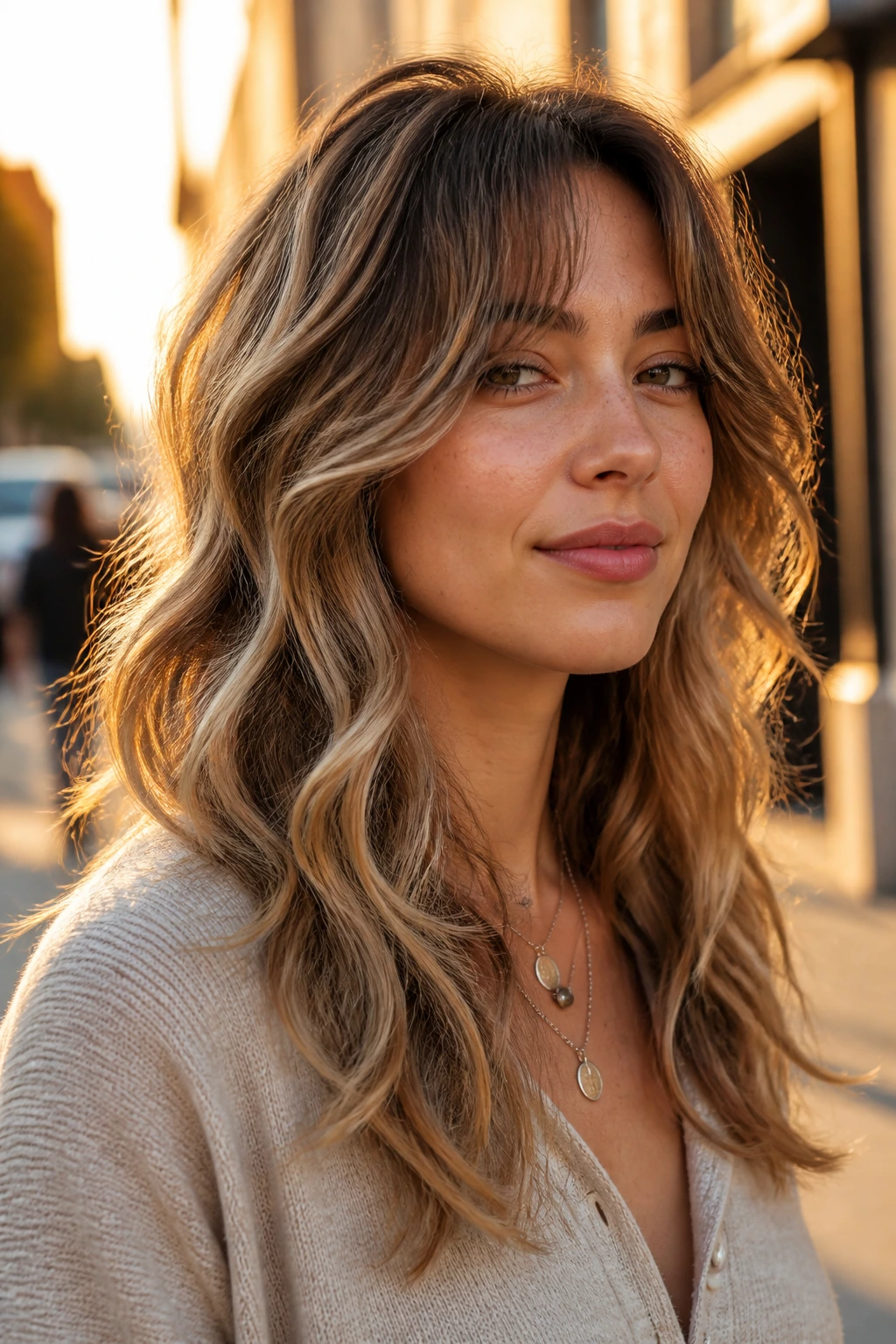
The S-wave shag is about bend, not curl. The waves move in soft, loose curves that look like they’ve been flattened and roughed up in a good way. That matters because S-shapes create more visible width than tight ringlets on medium-length fine hair.
This version usually works best with longer internal layers and a front section that falls away from the face. If the layers are too short, the S-waves start to separate too much and the cut can look busy. Keep the shape flowing.
Why It Feels Different
It has a cleaner, more effortless finish than a heavily tousled shag. The movement is still there, but it’s smoother around the crown and cheekbones.
Styling Note
Wrap hair around the wand, release it while it’s still warm, then pin a few sections for ten minutes before shaking them out. That keeps the bend from drooping too fast.
Best for: People who want soft motion without visible curl pattern.
17. Seventies Feather Shag
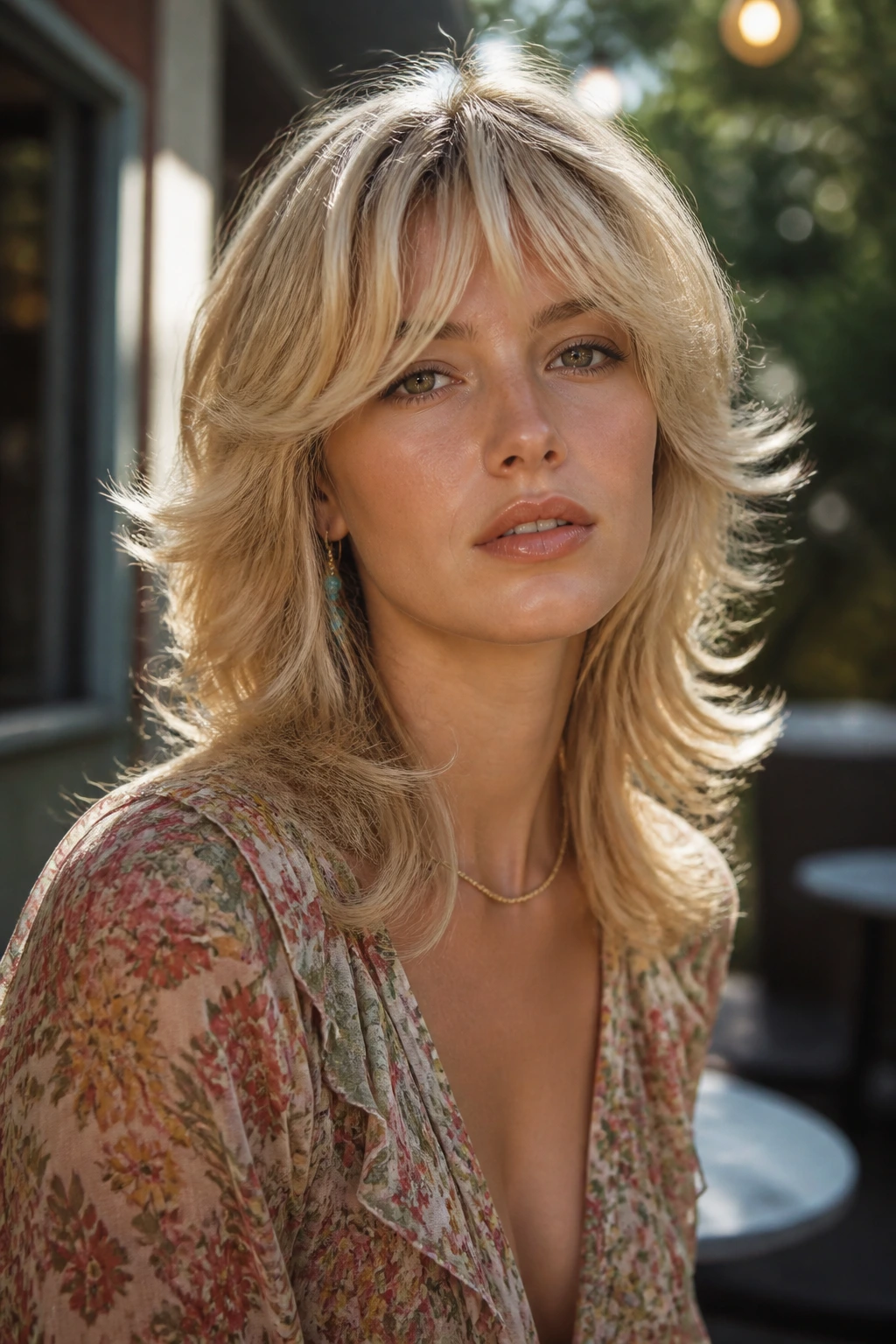
This one leans into the original shag spirit, and I’m happy to let it. Feathered ends, face-framing lift, and a little swing through the mid-lengths all play well with fine hair. The trick is keeping the retro references soft enough that the haircut doesn’t feel costume-y.
The beauty of a feathered finish is that it gives the illusion of more strands. Each section separates just enough to catch the light and look fuller than it is. That’s not magic. It’s shape and movement doing their job.
When It Works Best
If your hair naturally bends away from the face, this style falls into place fast. If it doesn’t, a round brush at the roots and a small amount of mousse will get you there.
Styling Verdict
I like this cut with a soft side part and a few flipped pieces around the jaw. It has personality without needing much effort.
Best for: Anyone who likes retro hair that still feels wearable.
18. Hidden-Weight Shag
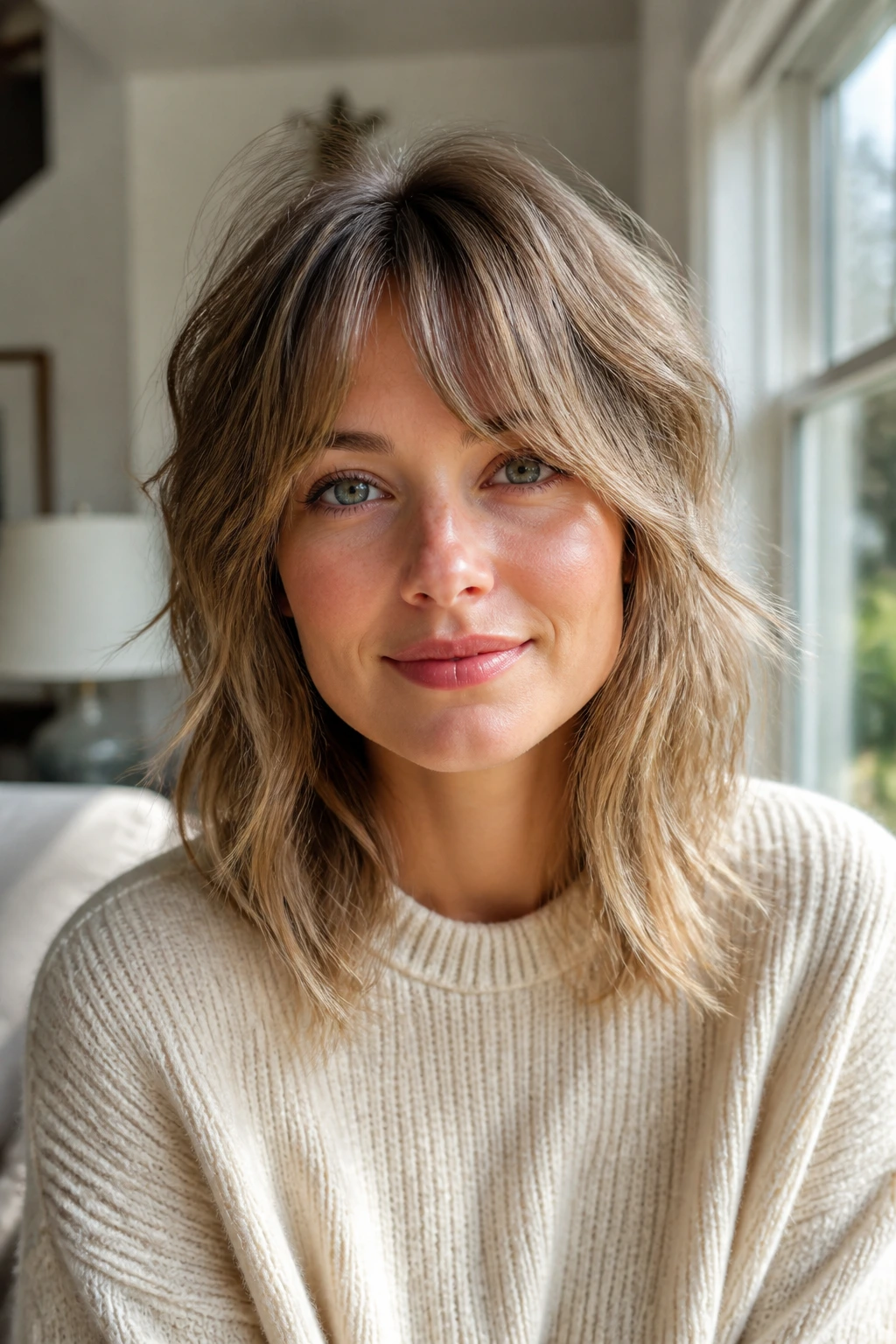
This is a smart cut for fine hair that needs support underneath. The outer layers stay soft and active, but some of the interior weight is preserved so the haircut doesn’t collapse. That hidden weight helps the hair hold shape while the top layers move.
People often assume fine hair should always be aggressively layered. I don’t agree. Sometimes the smartest move is keeping more substance in the lower half so the whole style has something to sit on. This is that haircut.
The Payoff
You get movement around the face and crown, but the length still looks like it belongs together. Beachy waves have more structure when there’s enough density left in the middle and bottom of the cut.
Best Styling Choice
Use a light wave spray and stop there. Heavy creams take away the very support this cut is trying to preserve.
Best for: Fine hair that feels fragile or overly thinned by past cuts.
19. Crown-Lift Shag
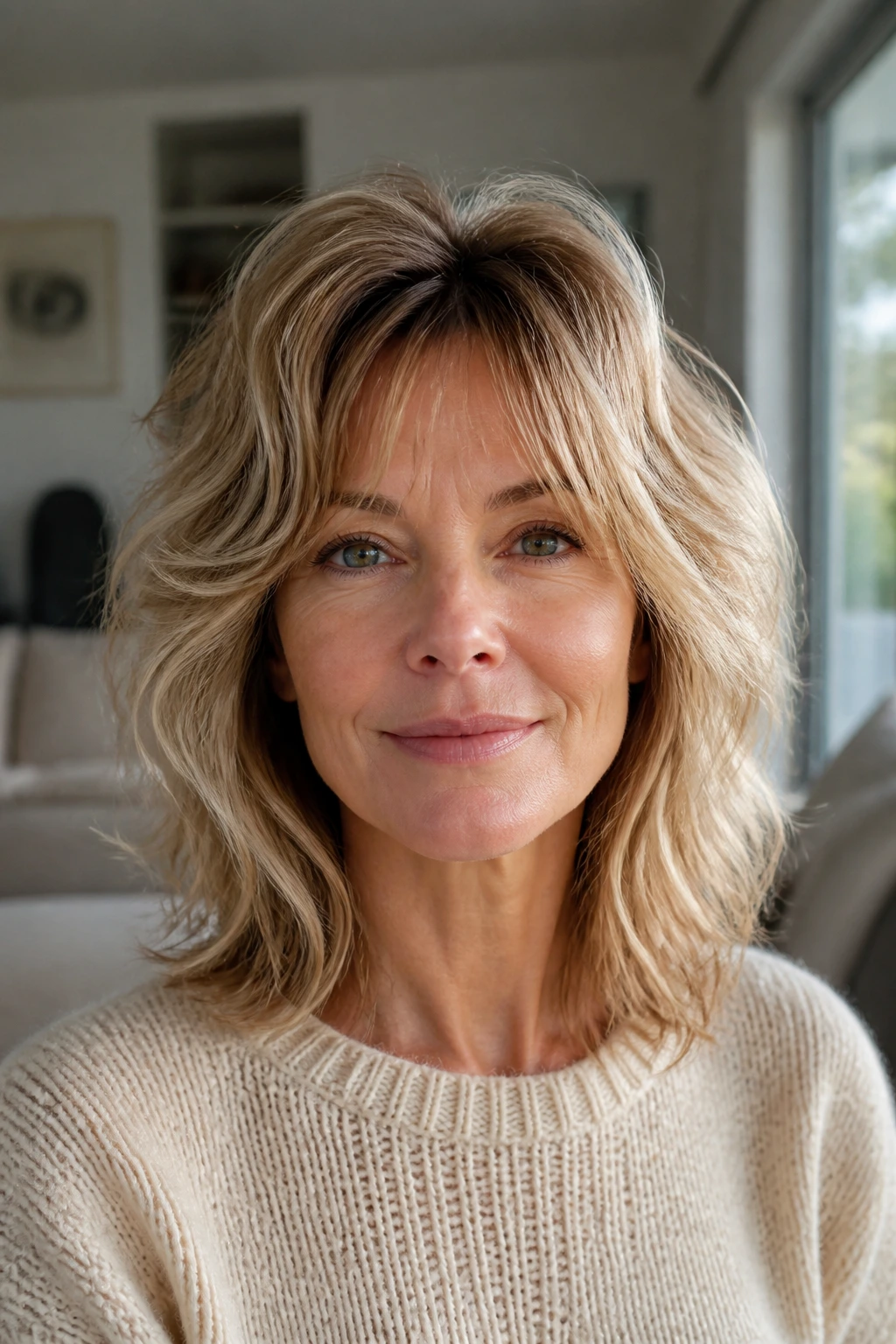
If your biggest complaint is a flat top, this is the cut. The crown layers are placed to create height right where the head starts to go flat, and the rest of the medium length flows down more softly. It’s a very practical shape.
The key is not overcutting the sides. If the crown is short and the sides are too thin, you get a puffy mushroom effect. Nobody wants that. A good crown-lift shag still keeps the weight distributed evenly enough that the head shape looks natural.
Styling Shortcut
Dry the crown first with a clip at the roots or by lifting the hair with your fingers while blow-drying. Then leave the lengths alone until the very end. That order matters more than most people think.
Best Pairing
It’s especially effective with a loose middle part and a few face pieces bent away from the cheeks.
Best for: Flat roots, fine hair that hugs the scalp, and soft wave patterns.
20. Bob-Shag Hybrid
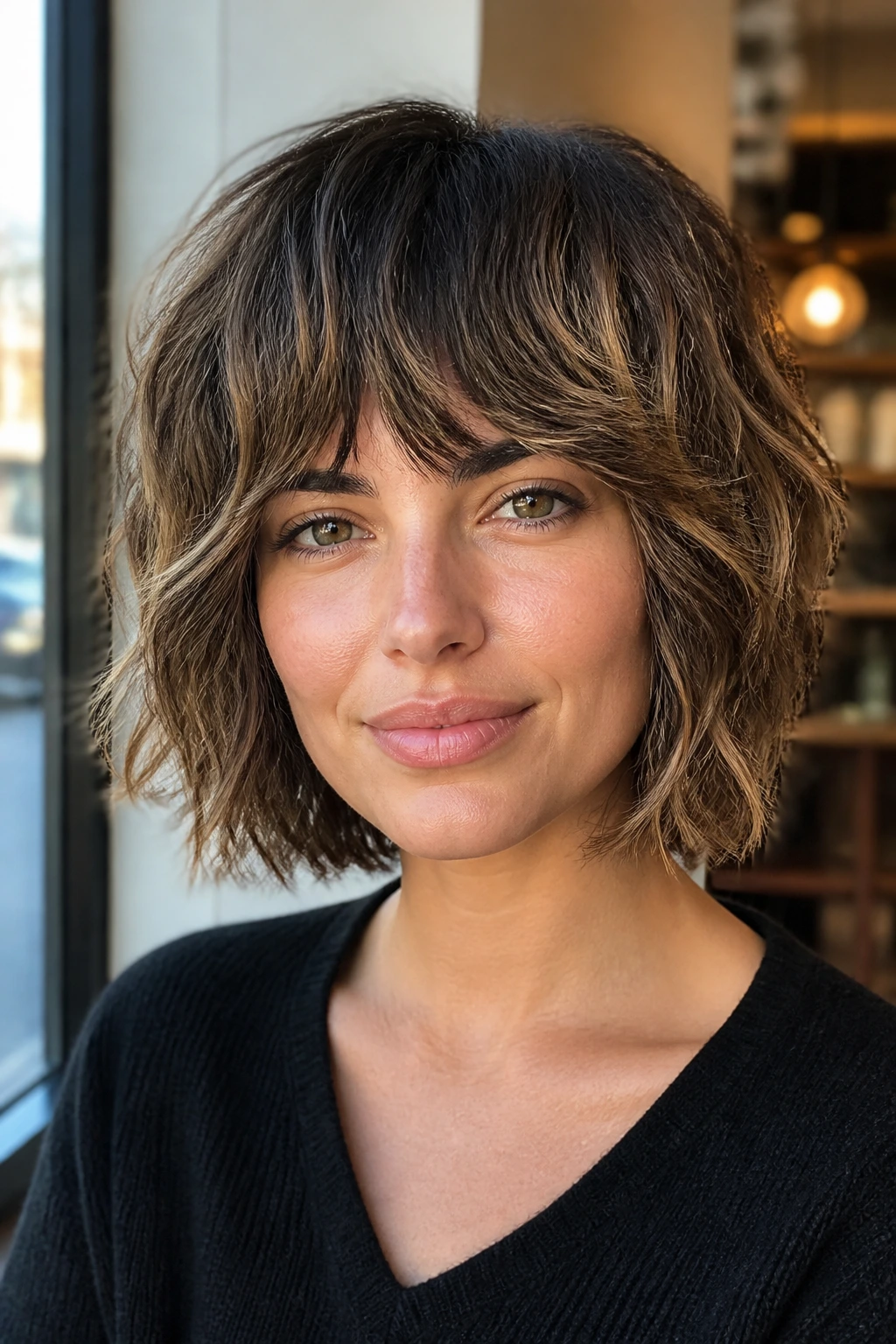
This cut sits in a nice middle zone between a bob and a shag. The bottom line is cleaner than a typical shag, but the top and front have enough texture to keep the style from looking too serious. On fine hair, that balance is often the difference between chic and limp.
I like it because it doesn’t overcomplicate the silhouette. The shape stays readable, which helps fine hair look fuller. The waves then add the looseness, and you don’t need much else.
How It Differs
A full shag can look airy but a little wild. A bob-shag hybrid keeps a firmer frame, which is helpful if your hair needs a bit of visual structure to look dense.
Styling Cue
Curl only the middle section of each strand and leave the ends a touch straighter. That keeps the haircut modern rather than ringleted.
Best for: People who want shag texture without losing bob-like polish.
21. Broken-Hem Shag
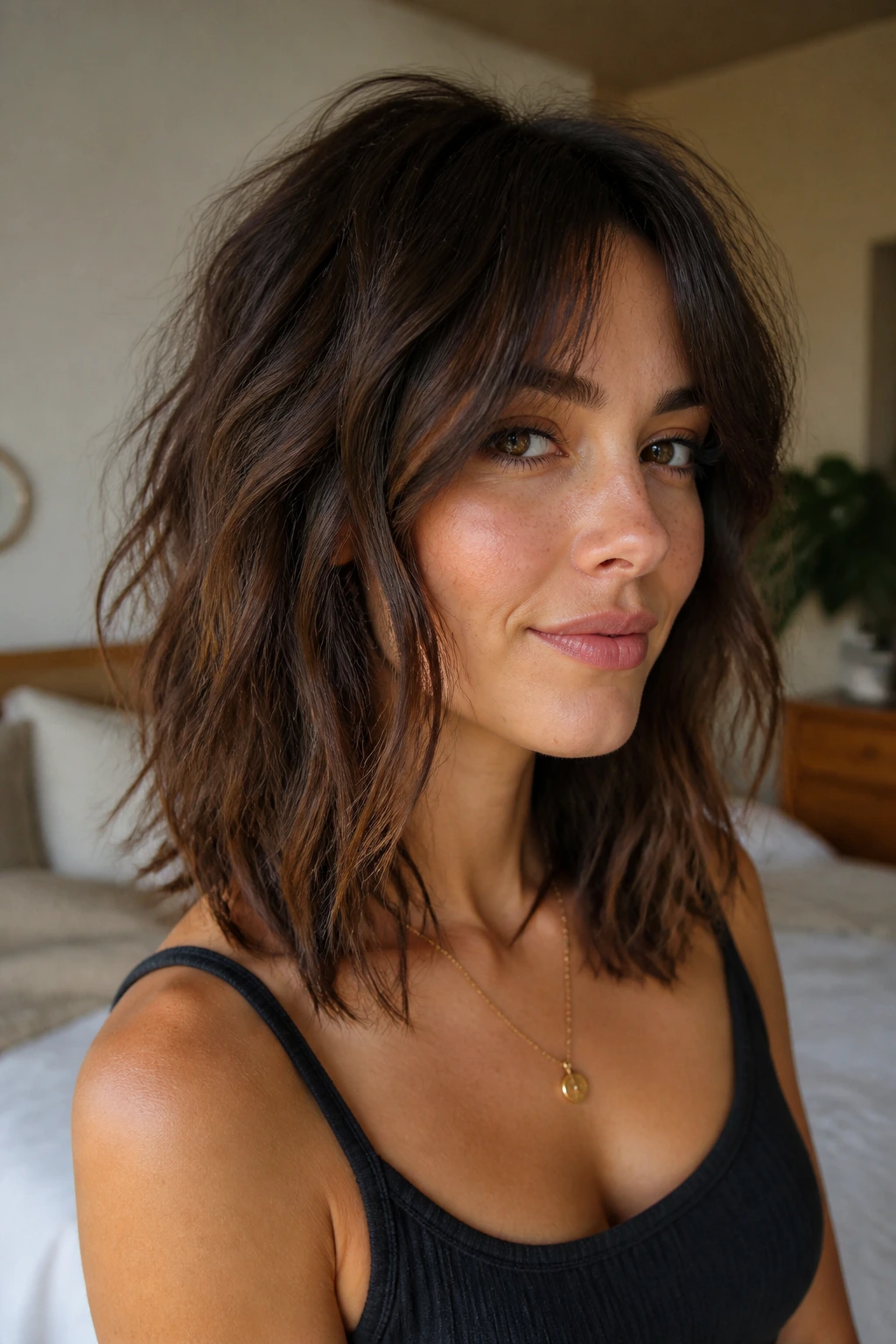
A broken hemline sounds harsher than it is. In practice, it means the bottom edge is slightly uneven and piecey, with some strands landing a little longer or shorter than others. That irregularity helps fine hair look fuller because a perfectly even edge can expose the thinness at the very ends.
The haircut should feel soft, not choppy. That’s a hard line to walk, and a good stylist knows it. Too much breakup at the hem can make the cut look frayed. Too little and the shape goes flat. The sweet spot sits right in the middle.
When to Choose It
If your hair grows out quickly and you hate visible root-to-end contrast, this can be a nice middle ground. The uneven edge keeps the shape from looking too neat as it softens.
Styling Note
A few bends at the bottom go a long way. You do not need every piece curled.
Best for: People who like a lived-in shape that still feels controlled.
22. Low-Upkeep Grown-Out Shag
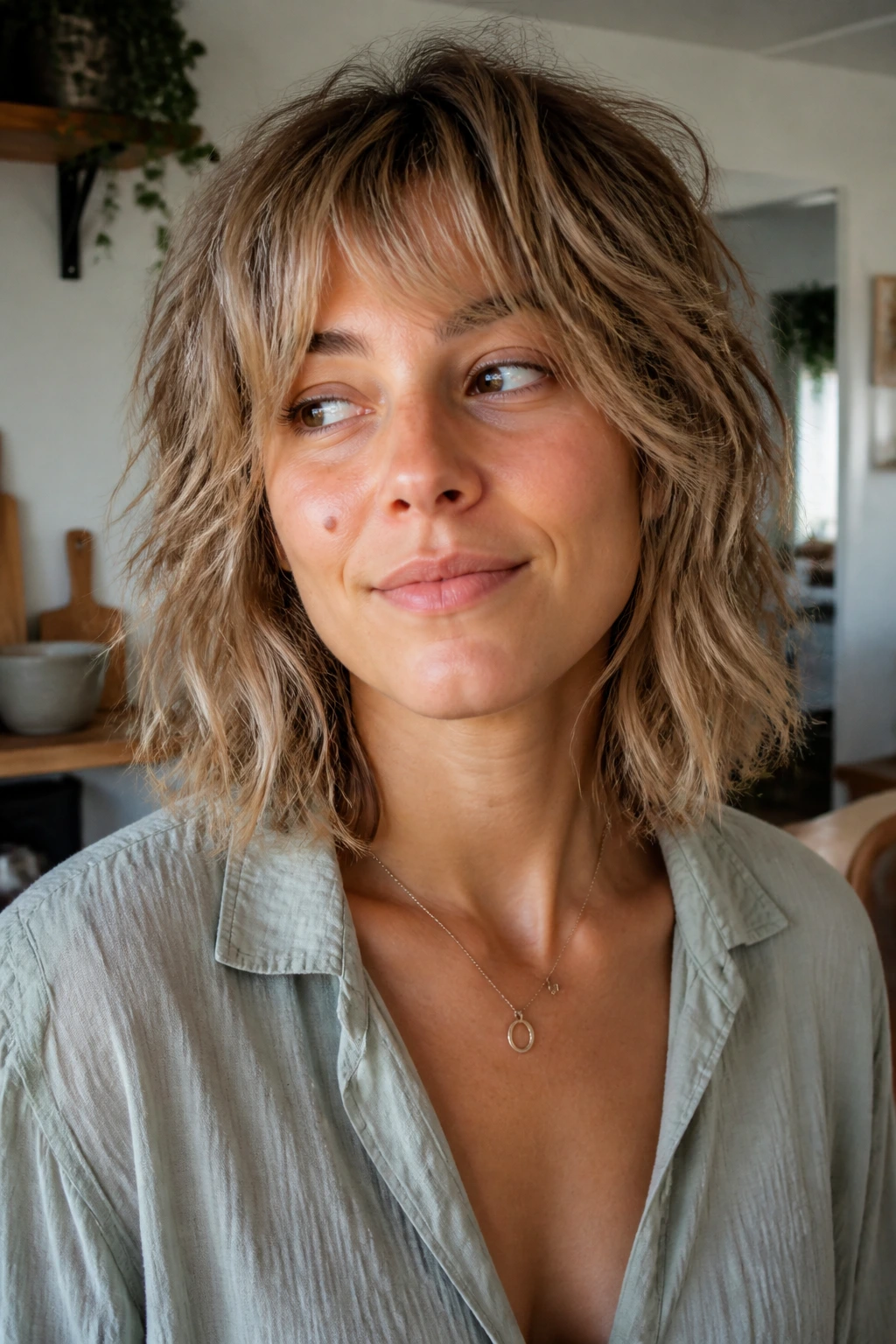
This is the haircut for people who want a style that doesn’t panic the second it grows half an inch. The layers are softer, the perimeter is forgiving, and the beachy finish helps disguise the fact that the cut is meant to evolve. Fine hair often looks better with a little softness anyway, so this one feels honest.
It’s the least fussy shape in the bunch, and that’s not a knock. Some haircuts are designed to make a statement. This one is designed to keep looking good as real life happens — sleeping on it, missing a wash day, throwing it up for errands, all of it.
Why It Lasts
Because the layers aren’t razor-short, the shape holds together as it grows. Because the texture is loose, a little mess doesn’t ruin it. And because the length stays around the collarbone, it never loses all its body at once.
My Take
If you’re the type who likes hair that forgives you, this is the one to bookmark.
Best for: Busy routines, frequent grow-outs, and fine hair that hates strict maintenance.
How to Choose the Right Medium Shag for Your Fine Hair

The best shag haircut for fine hair is the one that matches how much styling you’ll actually do. A collarbone curtain shag can look great with five minutes and a diffuser. A razor-cut airy shag might need a bit more texture spray and finger work. If you know you’ll only touch your hair on wash day, pick the softer shapes with longer layers and less dramatic bangs.
Face shape matters, but not in the rigid way salon clichés make it sound. What matters more is where your hair naturally collapses. Flat at the crown? Go for crown lift or a side part. Thin at the ends? Keep more weight in the perimeter and use softer layers. Big forehead? Try curtain or bottleneck fringe. Strong jaw? Cheekbone framing and side-swept pieces can balance it without hiding your face.
Bring photos that show the texture you want, not just the cut line. That’s the part people skip, and it causes a lot of bad results. A shag with smooth, blown-out waves behaves differently from a shag with rough air-dried bends. The silhouette can be the same, but the feel is not.
Tools and Products That Actually Help This Cut
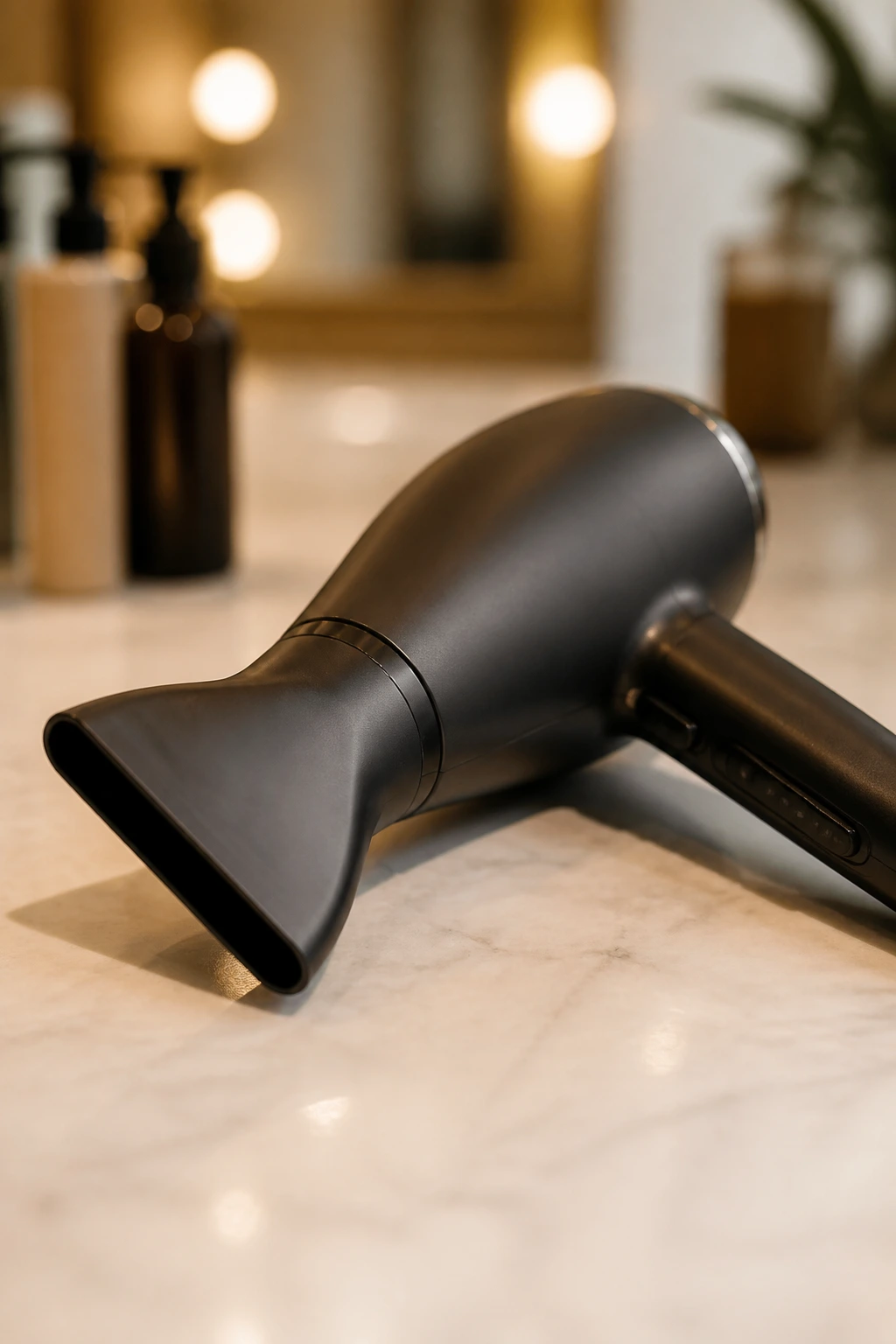
Blow dryer with nozzle: A concentrator nozzle gives you more control at the roots and around the bangs, which matters when fine hair collapses easily.
1-inch curling wand or iron: This size makes loose, beachy bends that don’t overpower medium-length layers.
Light mousse: A golf-ball-sized amount through damp roots and mid-lengths gives the hair something to hold onto without making it sticky.
Texture spray or dry finishing spray: Use this after styling for separation and a little grit at the ends.
Dry shampoo: Best used at the roots on day two or day three, not as a substitute for volume on clean hair.
Sectioning clips: They keep front pieces out of the way while you style the back, which saves a lot of fuss.
Wide-tooth comb or fingers: Better than a fine brush when you want to keep the wave pattern intact.
Light heat protectant: Fine hair burns easily under direct heat. Don’t skip this one.
Optional round brush: Useful for the fringe and crown if you want a softer blowout finish.
Why a Shag Helps Fine Hair Hold Its Shape
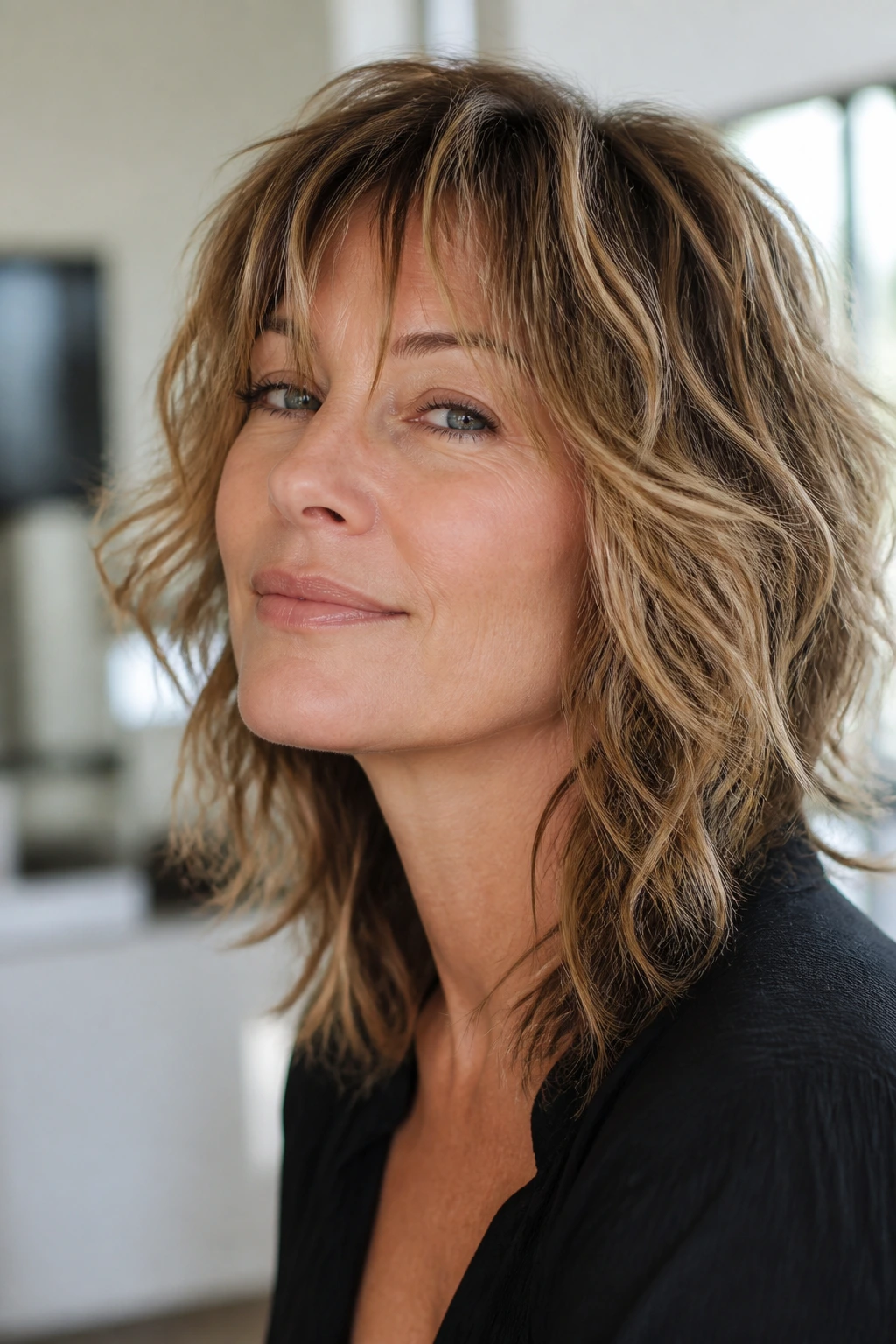
Fine hair usually has two problems that show up together: not enough visible bulk at the ends, and not enough lift at the crown. A medium shag tackles both by moving some weight around instead of leaving it all in one long line. The crown layers give the top some air. The face-framing pieces stop the front from going flat. The slightly broken perimeter keeps the bottom from looking see-through.
That’s why beachy waves matter so much here. The wave pattern creates little shadows and bends that make the hair look denser than it is. Straight, fine hair often exposes every gap. Wavy texture softens that, and a shag gives the waves somewhere to live.
The cut also buys you flexibility. If you wear it sleek one day and wavy the next, it still looks intentional because the shape already has movement built in. That’s a real advantage. Some haircuts fall apart the moment you stop styling them. A good shag just changes character.
How to Style These Cuts for the Most Lift
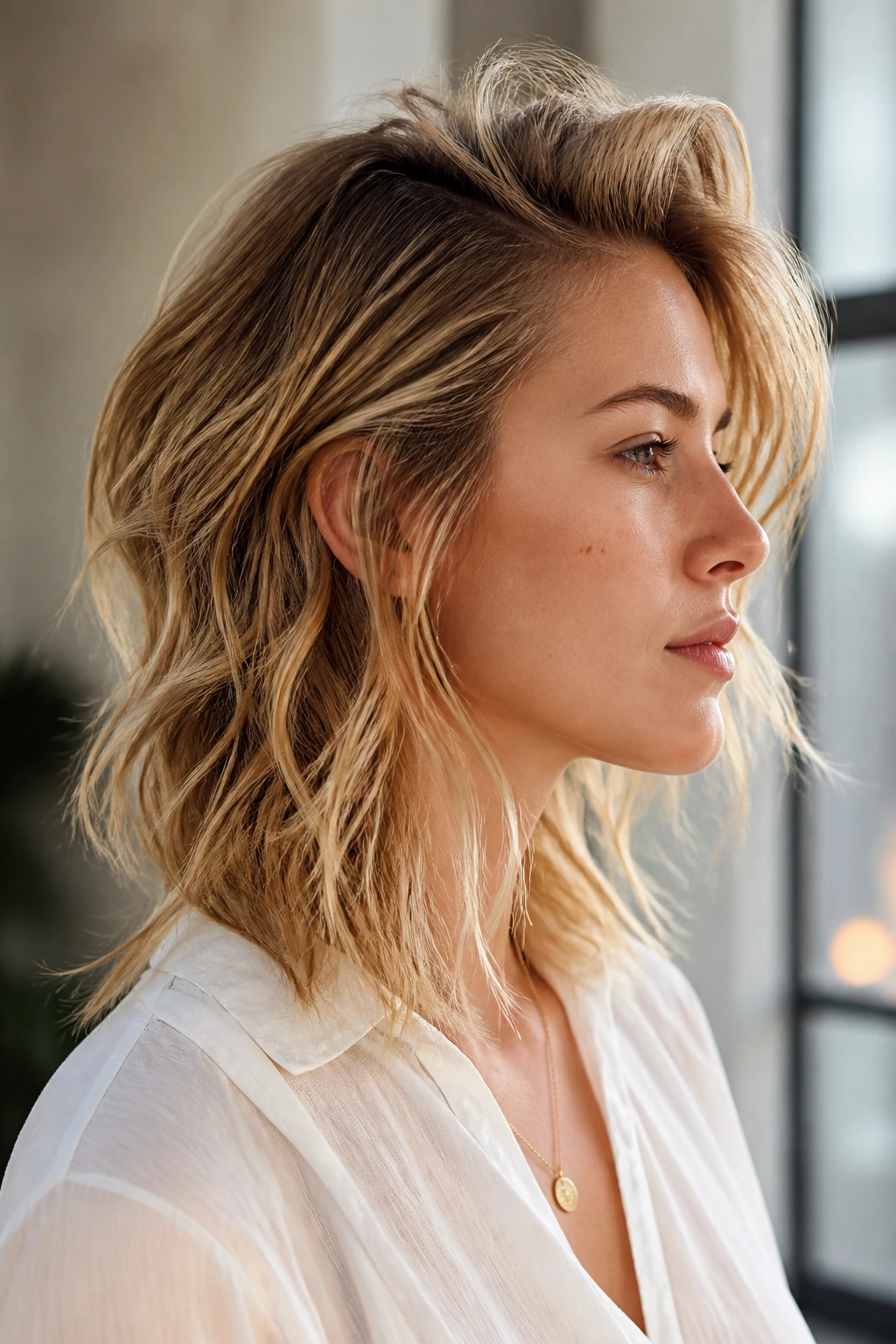
Parting: Start with the part your hair likes most, then move it a half-inch off center if you want more root lift. A hard middle part can look chic, but it also exposes flatness faster.
Roots: Blow-dry the crown first or clip it while it cools. Fine hair remembers tension and heat more than people expect, so a little root elevation goes a long way.
Wave pattern: Alternate curl directions through the mid-lengths, then leave the last inch or two out for a softer beachy finish. Uniform waves can make the style look too formal.
Finish: Scrunch in a small amount of texture spray and break up any obvious curl clumps with your fingers. You want separation, not crunch.
Day-two reset: Mist the front and crown with water, add a touch of mousse, and re-bend only the pieces that lost shape. Don’t start over unless you have to. Most fine hair only needs a small reset.
Small Styling Tweaks That Change the Whole Look
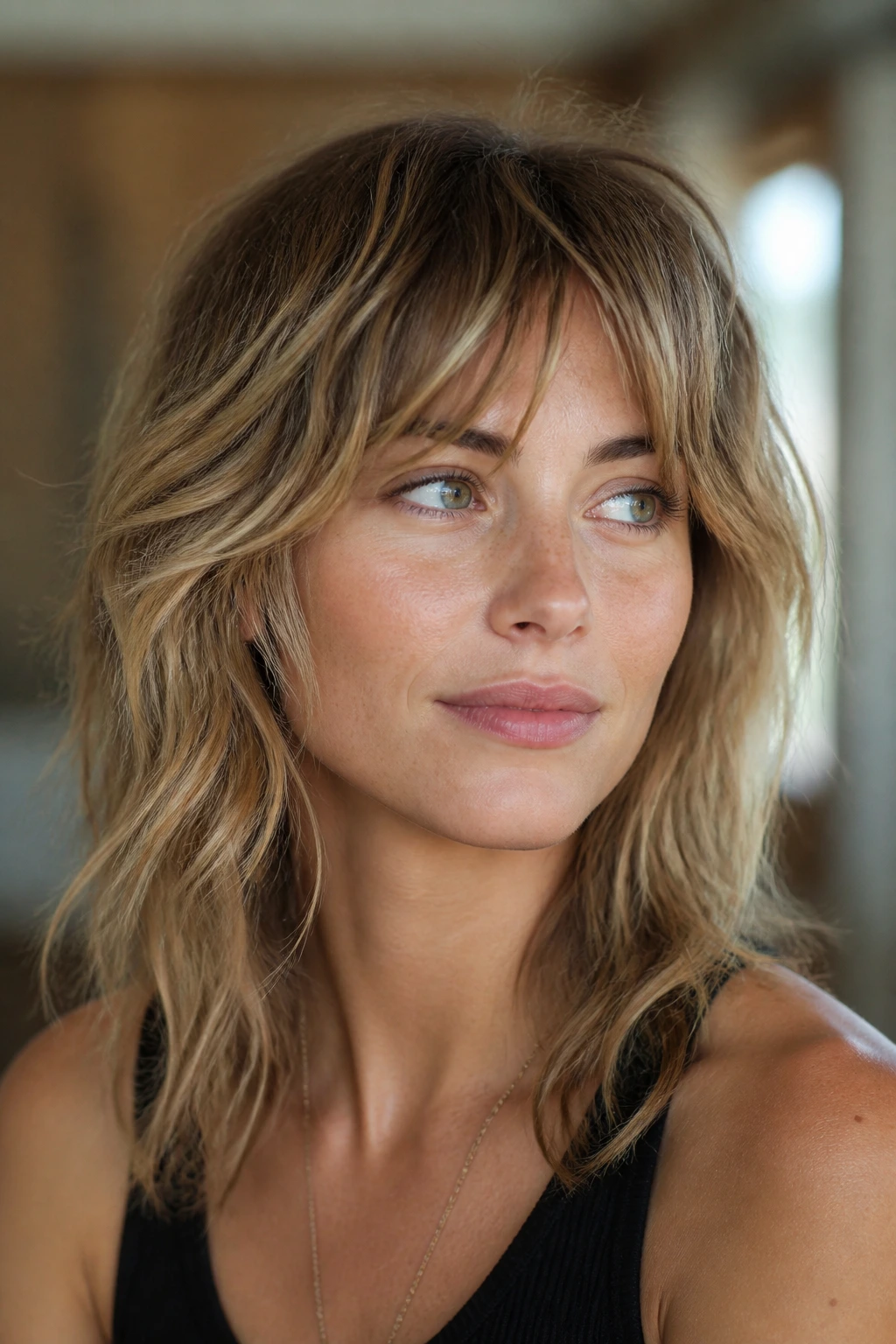
Root Clip Lift: Clip the crown while the hair cools after blow-drying. Ten minutes is enough to give the root a memory that lasts through lunch.
Mixed Wave Direction: Turn some sections away from the face and some toward it. That tiny inconsistency keeps the cut from looking like a curling iron demo.
Finger-Raked Fringe: Let curtain or bottleneck bangs dry mostly on their own, then separate them with your fingers instead of a brush. The pieces stay softer.
Dry Ends, Damped Roots: If the top of your hair is flat on day two, mist only the roots and leave the ends alone. Over-wetting the length can erase the bend you already have.
Salt Spray Only in the Mid-Lengths: Put texture where the wave needs grip, not on the scalp, or the hair can feel dirty before lunchtime.
Mistakes That Make a Fine-Hair Shag Fall Flat
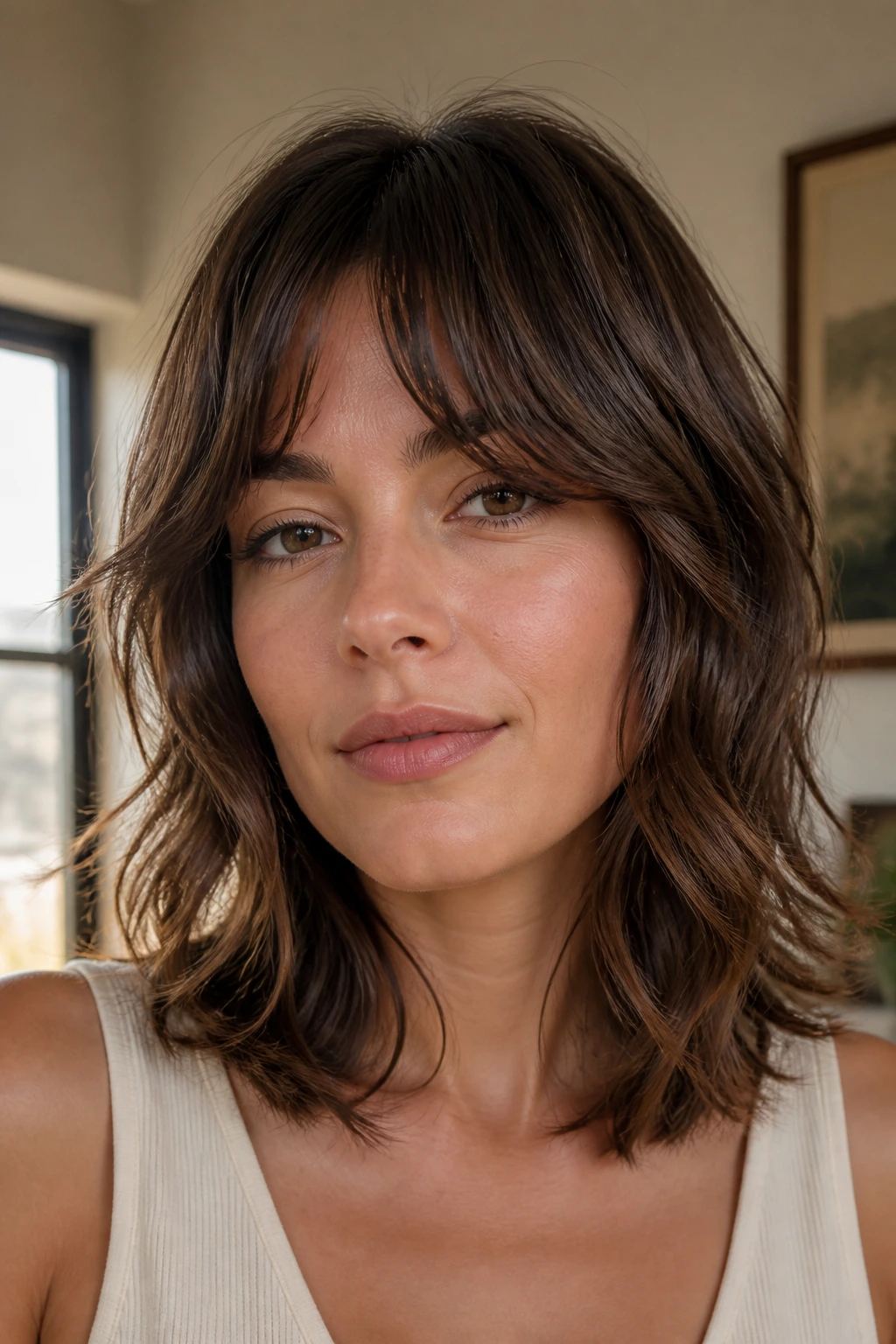
Over-thinning the ends: This is the big one. If the bottom gets razored too hard, the haircut looks stringy once the styling wears off. Ask for soft movement, not aggressive removal of weight.
Keeping the length too long: Medium hair should still have bounce. If it slips past the shoulders and the layers are light, fine hair often loses the lift that makes a shag work.
Using heavy cream everywhere: Fine hair does not need a palmful of smoothing cream from root to tip. That just flattens the crown and turns the texture greasy-looking.
Curling every piece the same way: Uniform curls flatten the shag effect. Alternate directions and leave the ends slightly undone.
Skipping the crown: A shag without root lift is just layered hair with a nice name. Dry the top first or clip it up while it cools.
Cutting the fringe too short: Micro-bangs can be fun, but on fine hair they can also open up the whole forehead too much and make the rest of the cut feel unbalanced.
When to Ask for More Layering and When to Hold Back
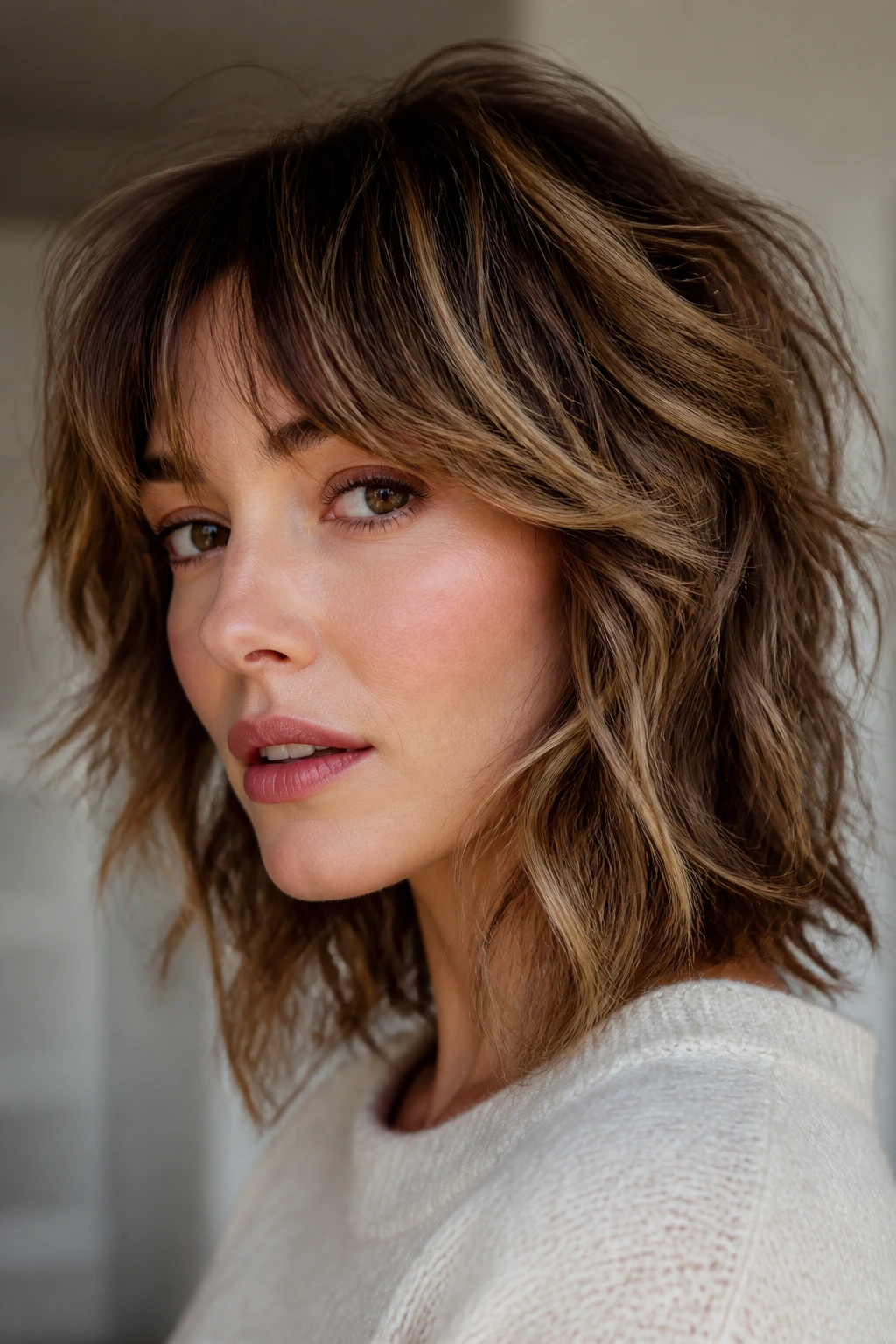
Some fine hair wants more texture. Some does not. If your hair is limp and dense enough to hold a bend, you can probably take a little more layering through the interior. If your hair is sparse, fragile, or prone to looking wispy at the ends, keep the layers longer and let styling create the movement.
That difference is easy to miss in salon conversations. People often ask for “more layers” when what they really need is better placement. Layers at the crown and cheekbones can be enough. You do not always need the whole head cut to pieces.
If you’ve had a bad layered haircut before, ask your stylist to leave the perimeter fuller and do the movement mostly on the surface and front pieces. That small request changes the result more than any trendy adjective ever will.
Make-It-Work Variations for Different Hair Habits
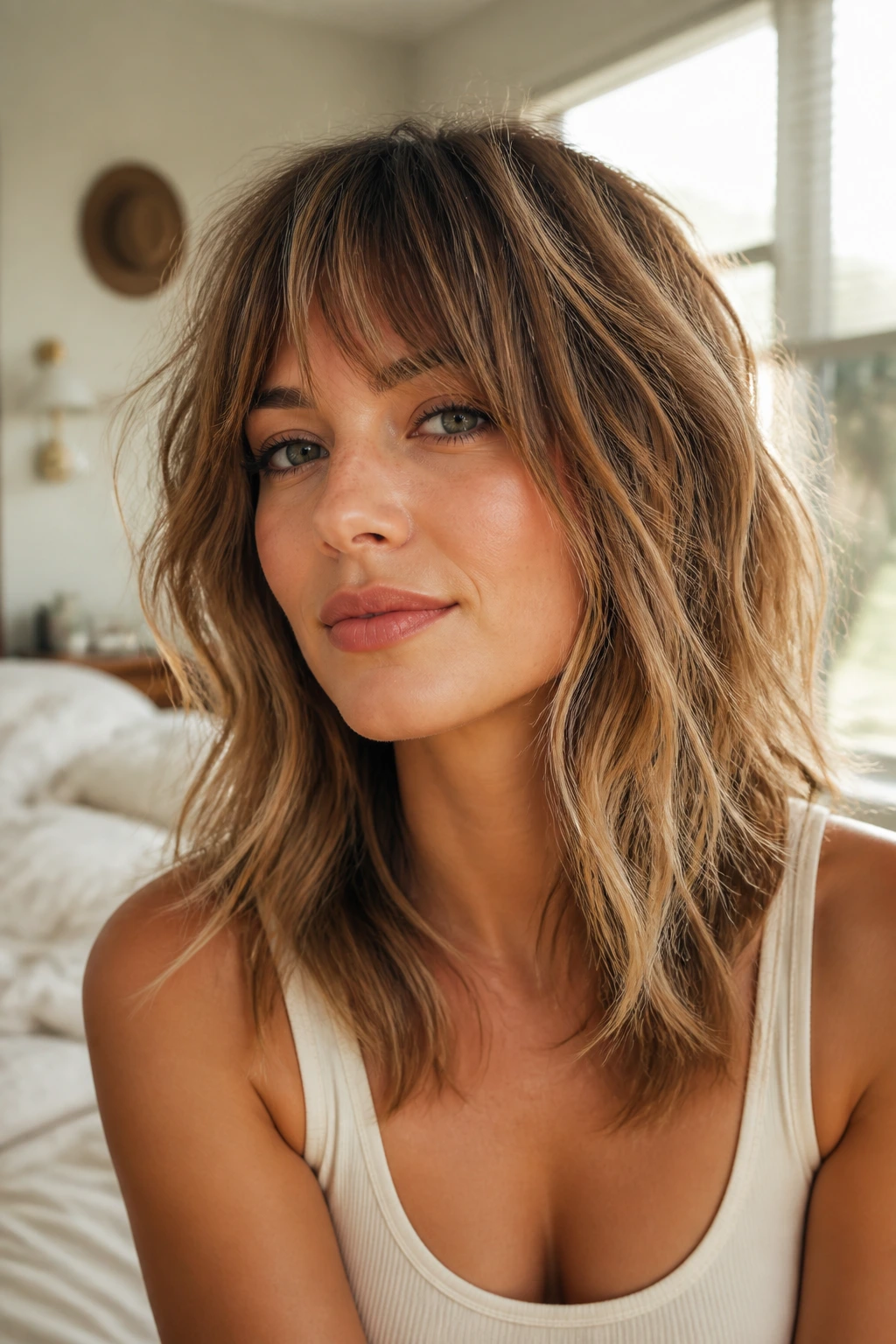
The Air-Dry Friendly Version: Keep the layers longer, the fringe soft, and the face frame subtle. Add mousse to damp hair and leave the rest alone.
The Blowout Version: Ask for a little more crown shape and a cleaner perimeter, then style with a round brush and loose bends. This one looks sharper on day one.
The Humidity-Ready Version: Choose slightly heavier ends and use a light anti-frizz spray only on the mid-lengths. Too much smoothing product will collapse the cut.
The Fringe-Light Version: Skip bangs altogether and let the front layers do the work. Good if you like flexibility and hate maintaining fringe.
The More-Texture Version: Ask for extra point cutting and a slightly messier finish at the ends. Useful if your hair is very straight and needs help holding wave.
How to Keep a Medium Shag Looking Good Between Washes
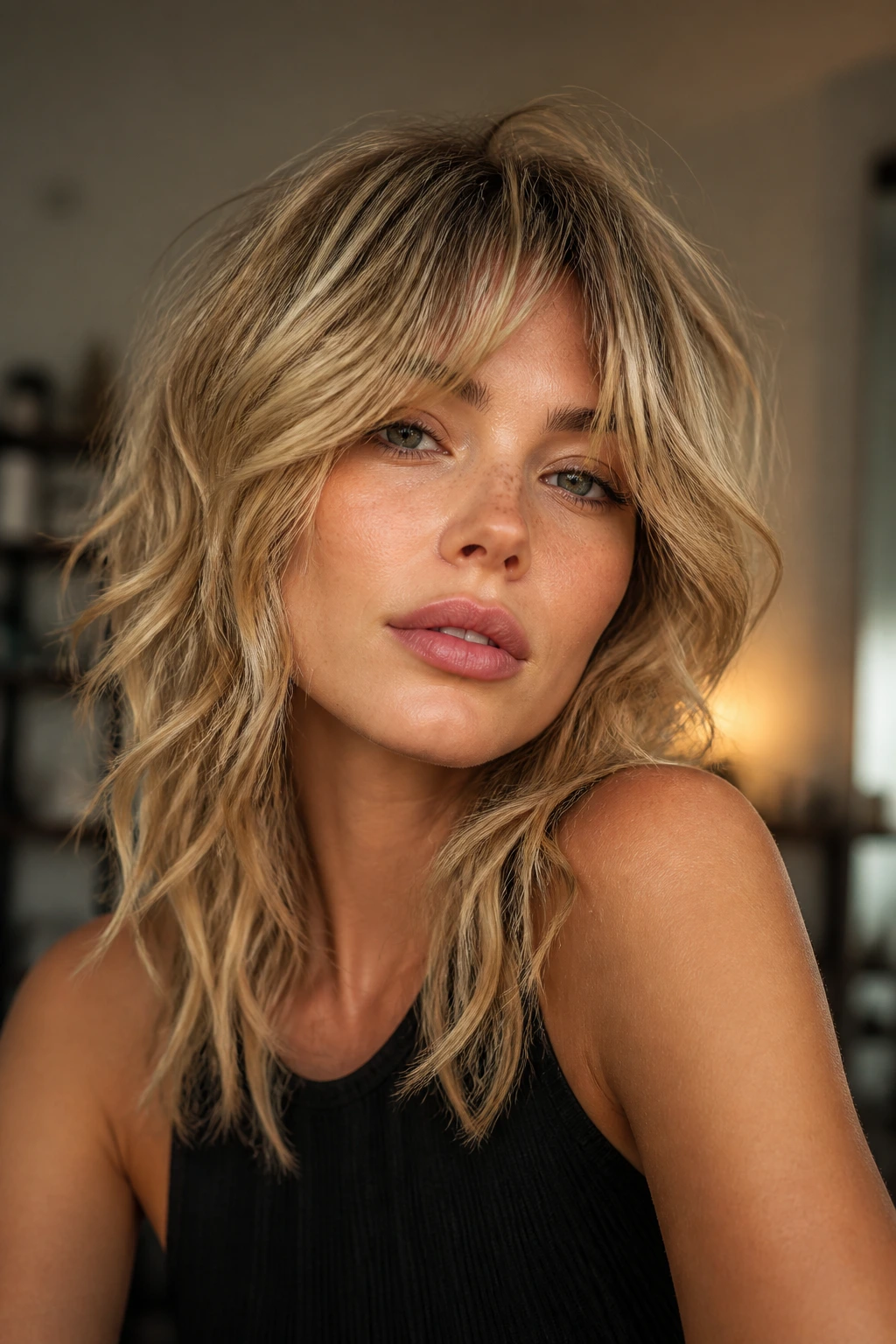
Fine hair usually holds a shag best for two to three days if you treat the roots with a little respect. Day one is fresh and bouncy. Day two is often the sweet spot, because the roots have settled just enough to add body. By day three, dry shampoo and a few re-bent pieces around the front usually do the trick.
At night, don’t smash the hair into a tight ponytail. Use a loose silk scrunchie or a very soft twist at the crown so the waves don’t flatten into dents. If the front pieces are especially important — curtain bangs, bottleneck fringe, side-swept pieces — pin them back loosely or let them rest across the pillow in the direction you want them to fall the next morning.
If the scalp starts looking oily at the roots, use dry shampoo before bed instead of only in the morning. It has more time to absorb the oil that way, and the hair usually wakes up with a bit more lift. That tiny timing choice matters more than most people realize.
Trim the shape every 8 to 10 weeks if you want the layers to stay clean. Go longer if you like a softer grow-out, but once the ends start hanging too heavily, the shag loses its whole point.
When This Cut Grows Out Gracefully and When It Does Not

A medium shag can age well if the layers were placed with some discipline. The best versions blur into a softer, more lived-in shape as they grow. The worst versions start looking mullet-ish in the wrong places — too much weight at the bottom, too much emptiness through the middle, and the front pieces no longer connect.
That’s why I keep coming back to balance. Fine hair does not need the haircut to do everything at once. It needs the right jobs in the right places. A little lift here, a little movement there, and enough length left at the edge to keep it from going see-through. That’s the formula.
If your hair tends to change a lot between salon visits, choose one of the softer shags from this set and ask your stylist to protect the perimeter. You’ll get more mileage out of the cut, and the grow-out will feel like a version of the style instead of a problem to hide.
Frequently Asked Questions About Medium Shag Haircuts for Fine Hair
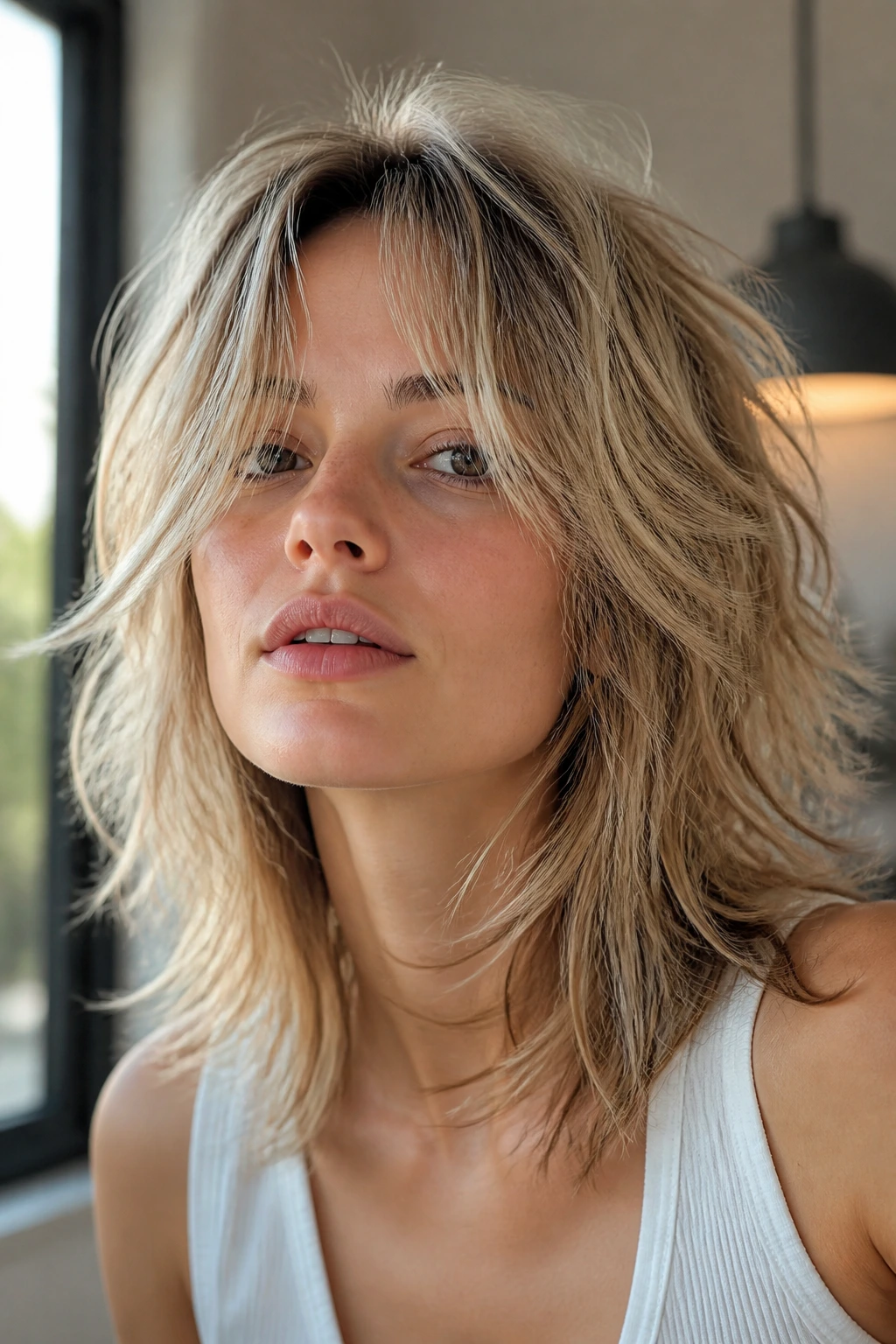
Will a shag make my fine hair look thinner?
It can, if the layers are cut too aggressively. A good medium shag keeps enough weight at the ends and uses shorter layers mainly where lift is needed, especially around the crown and face.
Are curtain bangs or bottleneck bangs better for fine hair?
Curtain bangs are easier if you want softness and flexibility. Bottleneck bangs work better if you want a little more shape in front without committing to a full fringe. Both can work; the difference is how much forehead coverage you want and how much styling you’ll do.
Can I air-dry a shag and still get beachy waves?
Yes, if the layers are cut with air-drying in mind and you use a light mousse or wave cream. Scrunching helps, but don’t over-handle it. Fine hair frizzes faster than it waves when it’s touched too much.
What length is safest for fine hair if I want a shag?
Collarbone to shoulder length is the safest zone for most people. It gives you movement without taking away too much density at the bottom, which is where fine hair often starts to look sparse.
Should I ask for a razor cut?
Only if your stylist knows how to use one lightly on fine hair. A soft razor on the surface can create airy movement, but heavy razor work through the whole head can leave the ends stringy.
What styling product is most useful for this kind of cut?
A light mousse usually does the most work because it lifts the roots without coating the hair. Texture spray is the next useful one for separation and piecey ends. Heavy cream is the one to use sparingly.
How do I keep the crown from going flat?
Dry the roots first, lift them with clips while they cool, and avoid putting conditioner or styling cream too close to the scalp. Fine hair remembers root direction better than people expect.
Will this haircut still work if my hair is straight, not wavy?
Yes. Straight fine hair may need a wand, salt spray, or a little finger-bending to get the beachy finish, but the shag shape itself still helps create body and movement.
How often should I trim it?
Every 8 to 10 weeks keeps the layers from sagging and the fringe from losing shape. If you like a more grown-out look, you can stretch that a little, but the cut will lose some lift.
The Shape That Keeps Fine Hair from Falling Flat

The reason these medium shag haircuts keep showing up on fine hair is not fashion fluff. It’s physics. The cut moves weight away from the places that drag hair down and puts shape where the eye needs it most — crown, cheekbones, fringe, and the ends that would otherwise disappear.
That’s why beachy waves are such a smart match. They make the layers visible without turning the hair into a stiff curl set. The result feels light, but not sparse. Soft, but not vague. That balance is hard to fake with one blunt cut and a can of spray.
Pick the version that fits your real routine, not the one that looks most dramatic on someone with twice your density. A good shag should make your hair easier to live with, not more precious.