



Thick, medium-length hair has a way of acting like it pays rent on your head. Leave the bottom too blunt and it sits heavy; cut the layers too timidly and you get a triangle with ambition. Rockstar shag haircuts for medium hair with thick hair solve that problem by taking weight out where it matters — around the crown, through the mid-lengths, and just enough at the face to keep the shape alive.
That balance is what separates a good shag from a random pile of layers. The best versions don’t just add “texture.” They change how the hair falls when you tuck it behind one ear, when you bend over, when the wind catches the ends on the walk from the car to the door. With thick hair, that movement has to be earned. If the layers are wrong, the haircut turns puffy at the sides and flat at the roots, which is the exact opposite of the rockstar energy most people are after.
Some of these cuts lean feathered and soft. Some go full razor-choppy and loud. A few are really wolf-cut cousins wearing better clothes. The point is the same: keep the bulk under control, keep the ends interesting, and make medium-length hair look like it has a personality instead of a helmet. Start with the cuts that handle density best.
Why These Shags Earn Their Place on Thick Medium Hair
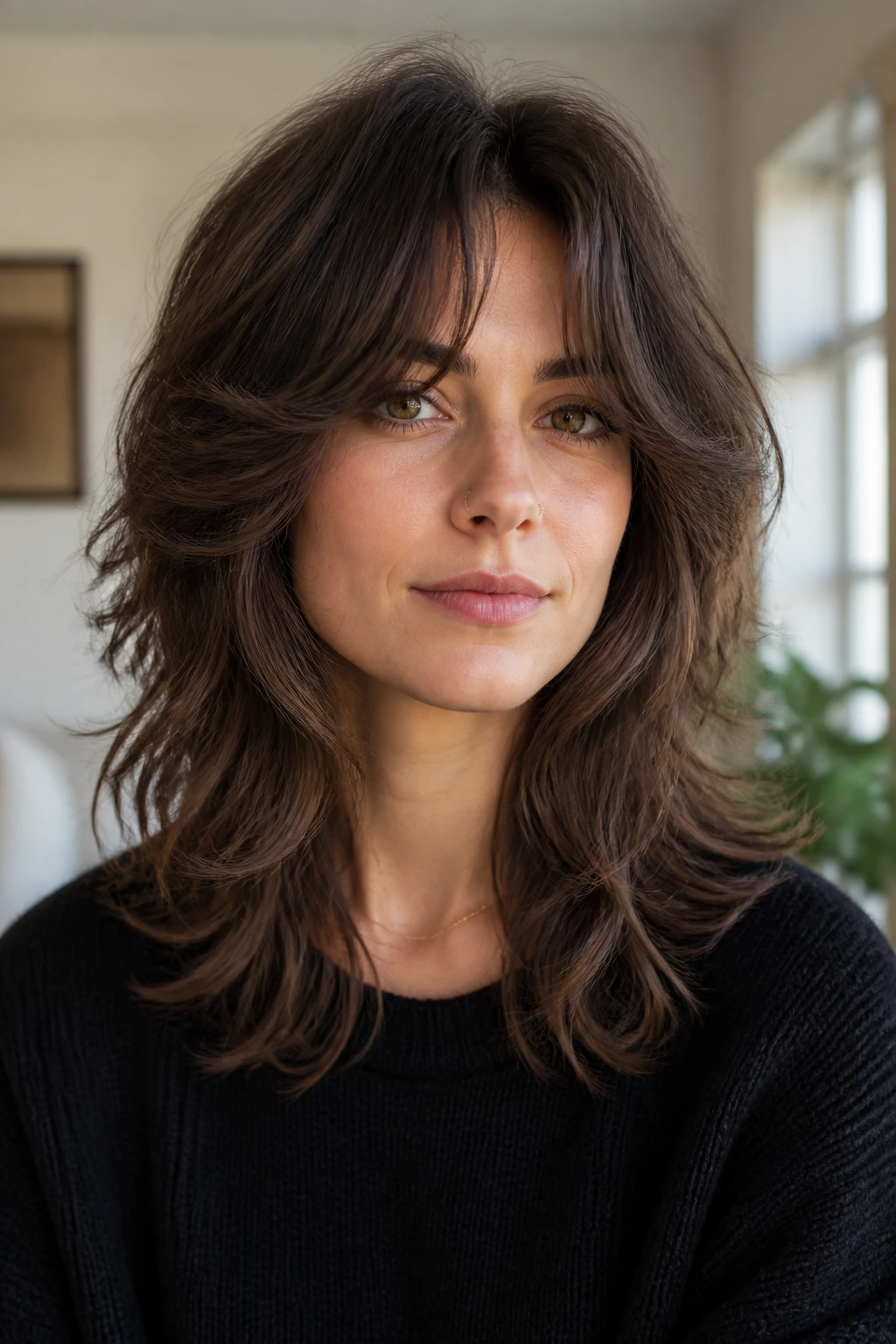
- They remove weight without gutting the shape: Thick hair needs internal layering, not a random thinning shear attack that leaves ends see-through and flyaway.
- They keep medium length from looking boxy: A clean perimeter at the bottom with broken-up layers above it stops the haircut from sitting like one heavy slab.
- They work with air-drying and blowouts: The same cut can read soft and piecey with mousse or big and glossy with a round brush, which is why they earn repeat visits.
- They make bangs less scary: Curtain bangs, bottleneck bangs, heavy fringe, and even micro bangs all behave better when the rest of the cut has enough movement to balance them.
- They grow out with more grace than blunt layers: A shag usually looks intentional for longer because the layers can soften into each other instead of turning into one awkward shelf.
- They let thick hair keep its body: The best shag for dense hair doesn’t flatten it. It redirects it.
1. Razor-Soft Curtain Shag
This is the shag I’d hand to someone who wants movement first and edge second. The silhouette stays medium and wearable, but the inside of the cut gets enough razored texture to keep thick hair from ballooning around the cheeks.
What makes it click
Ask for the shortest face-framing pieces to hit around the cheekbone, then let the longest layers land near the collarbone. That little shift keeps the front light without making the back disappear. The curtain fringe should split cleanly at the center and taper long enough to sweep into the sides without sitting like a heavy curtain over the eyes.
Salon notes
- What to ask for: slide-cut layers through the crown, soft face frame, and a perimeter that still has enough weight to look full.
- What to avoid: over-thinning the ends. Thick hair needs shape, not holes.
- Styling cue: blow dry the bangs forward first, then bend them away from the face with a round brush or a large Velcro roller.
- Best if you like: a shag that reads polished in daylight and a little wild after an hour in humid air.
This version works because the internal layers take pressure off the sides. Without that, thick medium hair tends to puff wide before it ever falls forward. Here, the shape stays narrow enough at the cheeks and loose enough at the ends to move when you do.
2. Heavy Fringe Rock Shag
Can thick hair carry a full fringe without turning into a box? Yes — if the bangs are cut with enough density to hold their line and the rest of the cut gives them room to breathe.
The trick here is weight balance. The fringe should sit straight or slightly broken, usually just brushing the brows, while the side layers start a little lower so the front doesn’t become one giant wall of hair. If the bangs are too wispy, thick hair splits them apart and you spend all day nudging them back together. Dense fringe solves that.
This one has attitude. It’s the cut that looks best when it’s not over-styled, which sounds lazy until you realize the styling is in the shape itself. A little root lift at the crown, a flat iron bend at the ends, and a dab of texture paste through the fringe are enough. If your hair is coarse, ask for the bangs to be thinned with a light hand and mostly from underneath, not sliced to pieces on top.
3. Shoulder-Grazing Wolf Shag
A shoulder-grazing wolf shag is what happens when a shag and a wolf cut stop arguing and decide to share a haircut. It’s sharper than a classic feathered shag, but it doesn’t swing into full mullet territory unless you want it to.
This one shines on thick medium hair because the density keeps the short layers from going stringy. The back can stay a little longer and chunkier, while the crown gets enough lift to break up the bulk. If your hair naturally kicks outward at the ends, this cut uses that instead of fighting it.
How to ask for it
Tell your stylist you want visible layering through the top and sides, a tapered nape, and a front section that still connects into the rest of the cut. The shortest layers shouldn’t live so high that the haircut looks disconnected from every angle. You want motion, not a dramatic staircase.
A matte texture spray or a light mousse on damp hair is usually enough. Let it dry with a little chaos. That’s part of the appeal.
4. Rounded Shag with Cheekbone Layers
This is the softer, more controlled sister of the rougher rocker shags. The outline stays rounded, which is a relief if your thick hair tends to flare at the sides.
The real work happens in the cheekbone area. Layers there pull the eye inward and keep the haircut from feeling like a pyramid. That matters a lot on medium hair, where the wrong layer placement can make the whole thing sit wider than it should. I like this version when someone wants shag movement but still needs the haircut to behave in real life — office, errands, dinner, repeat.
The best rounded shag doesn’t look “done” in a stiff way. It looks like the hair has been cut to bend. That’s the distinction. If your stylist reaches for a razor, fine; if they use scissors, also fine. The important part is the curve through the sides and the way the face frame drops gently instead of chopping off at the jaw.
5. Midi Shag with Bottleneck Bangs
Bottleneck bangs are the sweet spot for thick medium hair when you want fringe but don’t want your forehead swallowed by it. They’re narrower in the center, then gradually widen toward the temples, which makes them easier to live with than a blunt heavy bang.
This shag keeps the overall length in that collarbone-to-upper-chest zone, where thick hair still feels substantial but can move. The layers should be soft enough that the cut doesn’t look jagged when it air-dries, but broken enough to stop the ends from bunching together. That balance is what makes the style feel modern without looking fussy.
A small round brush or even a bend from a straightener at the front is enough here. Don’t load the fringe with thick cream. It collapses fast and thick hair does not need help looking heavy. Use a light mousse at the roots, then a touch of cream only through the mid-lengths if the ends feel dry.
6. Piecey Air-Dried Shag
If you want a shag that doesn’t beg for a blow dryer, this is the one. Medium thick hair has enough body to hold its own shape once it’s cut correctly, and this version leans into that.
The key is to build texture without scattering the hair into frizz. A lightweight mousse at the roots, a curl cream or lotion through the mids, then a few deliberate scrunches while the hair is damp will do more than a dozen random sprays. Let it dry mostly on its own, then use a diffuser for the last 10 minutes if the crown collapses or the ends dry in one solid chunk.
This cut usually looks best when the layers are not too short at the sides. Thick hair can puff if you overdo the elevation around the ears. Keep the internal layers airy, yes, but let the perimeter stay strong enough to frame the face. That gives the finished shape a little gravity.
7. Deep Side-Part Shag
A deep side part changes everything. It gives thick medium hair instant lift on one side and a little swing on the other, which is useful if your root area is flat but the lengths carry a lot of bulk.
The cut itself should have long face-framing layers that can fall into the side part without fighting it. The crown can be lightly layered for volume, but the real drama comes from how the hair moves once it’s dried. If one side always falls flatter than the other, this is one of those cuts that turns the problem into the point.
What to watch for
- Keep the shorter side layers soft enough to tuck behind the ear without sticking out.
- Ask for the longest layers to connect below the chin so the part doesn’t feel chopped in half.
- Use a root clip or a quick blast with the dryer at the heavy side to build lift.
- A side part is especially useful if your face feels shorter and you want a little vertical stretch.
It’s a small change on paper. In the mirror, it can feel like a different haircut.
8. 70s Feathered Shag
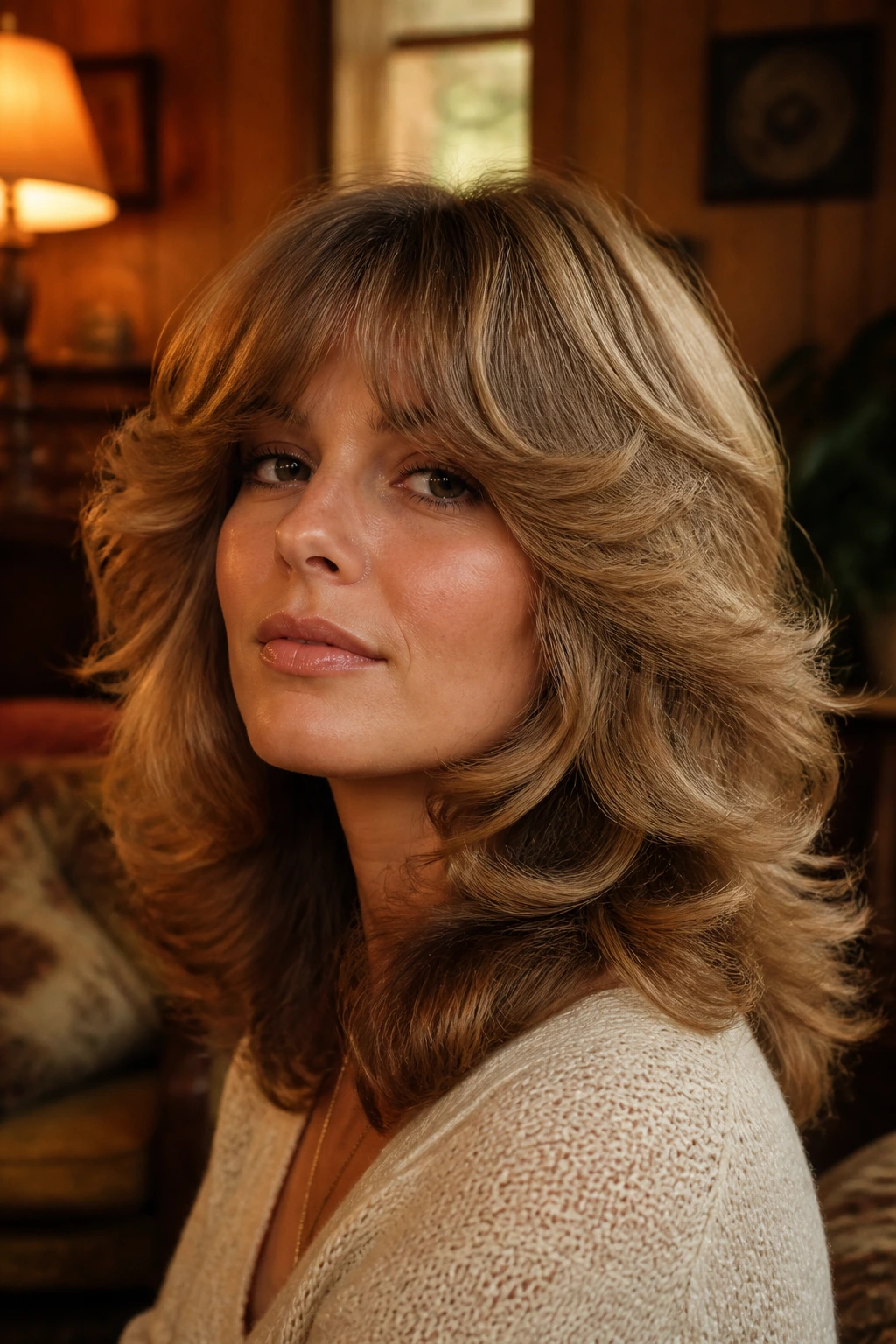
This is the glam one. The feathered shag has that brushed-out, swingy finish that looks right with thick hair because thick hair can hold the curve and the bounce.
The layers are softer than a harsh razor shag, but they’re still directional. They’re meant to be blown away from the face, not mashed flat. A medium round brush, a nozzle on the dryer, and a little patience go a long way. Roll the front pieces away from the face, clip them while they cool, and the whole shape opens up. Without the cool-down, the hair forgets the bend by lunch.
This cut is good when you want medium hair to feel expensive without pretending it’s effortless. It takes more styling than an air-dried shag, but the payoff is obvious. The ends turn soft. The crown lifts. Thick hair suddenly looks lighter without losing the body that made you keep it long in the first place.
9. Disconnected Razor Shag
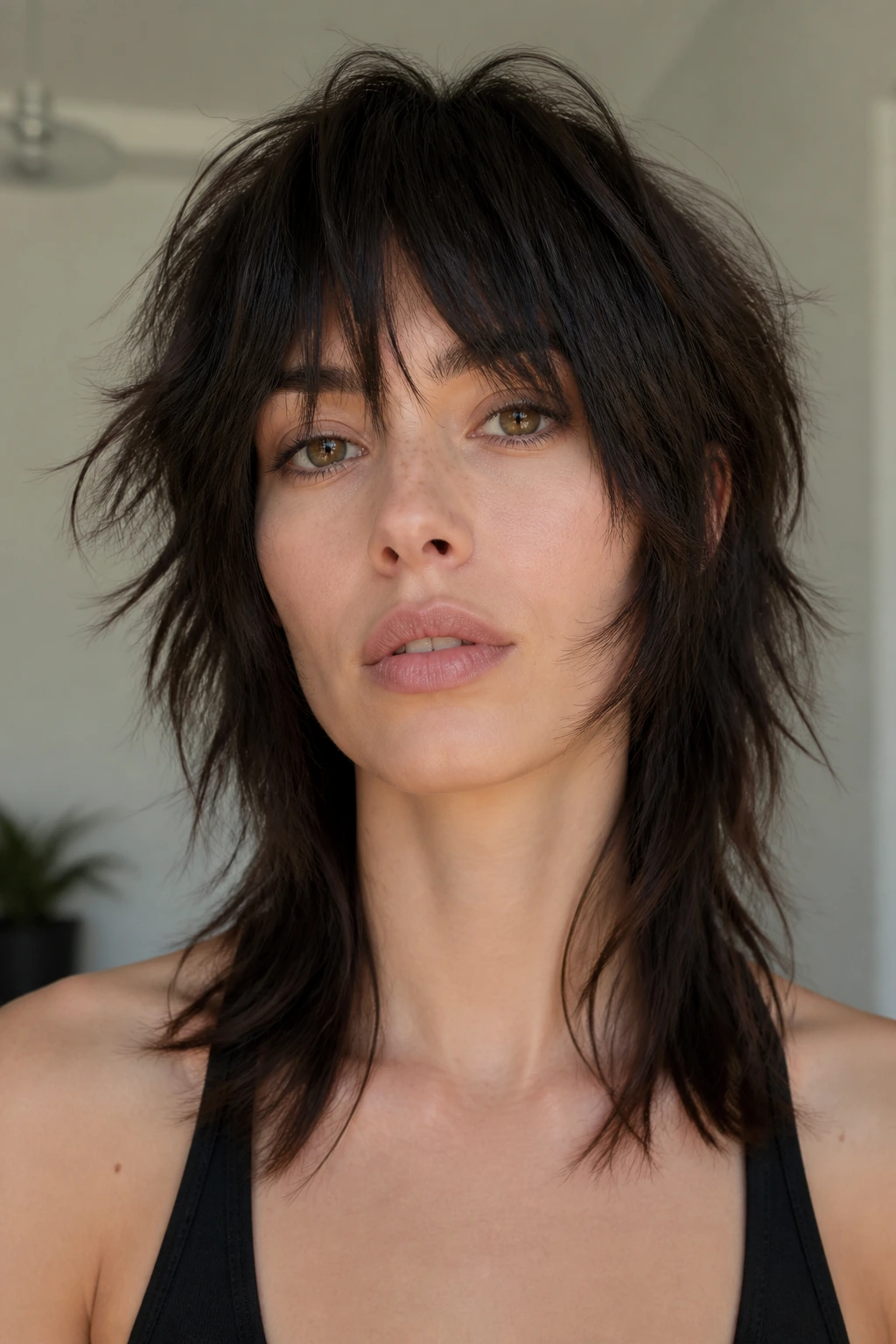
This is the choppier, sharper cousin in the family. The disconnected razor shag isn’t trying to be subtle, and that’s part of its charm.
The layers are visibly separated, especially around the face and crown, which gives thick medium hair a jagged, editorial edge. On dense hair, that disconnection reads as shape instead of stringiness. If the hair is naturally straight or only slightly wavy, the lines show up beautifully. If your hair expands in humidity, you need a stylist who knows how much to remove and where to stop.
Don’t let anyone razor the entire head into fluff. That’s how you end up with ends that look hungry. A better version leaves some weight in the perimeter and uses the razor only where you want visible movement. Think front pieces, crown, and a little break-up at the sides.
10. Tousled Shag Mullet
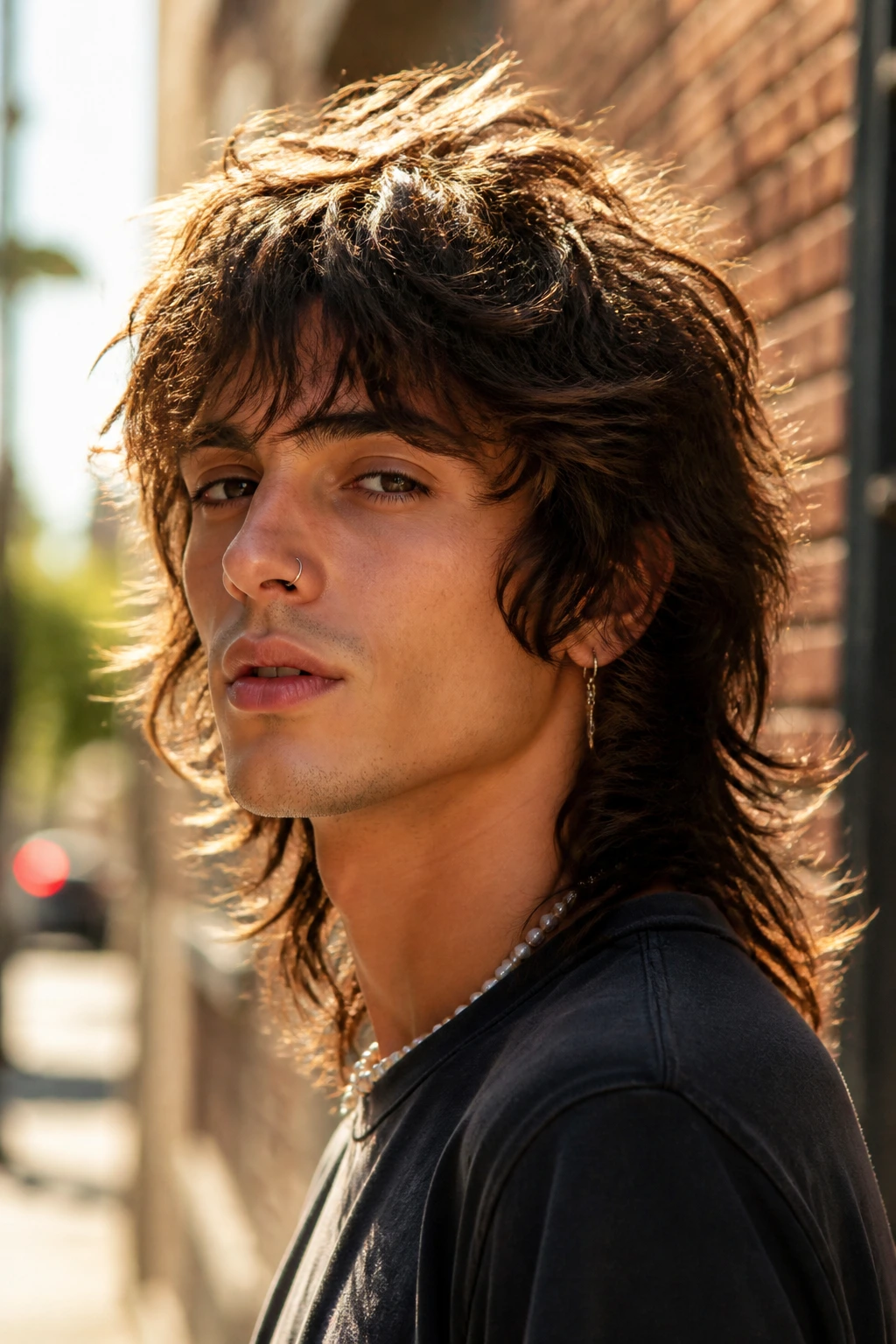
The shag mullet lives on the line between playful and full-on rebellious. On medium thick hair, that line can be a good thing.
The back keeps a little more length, which helps the haircut hang properly and prevents the crown layers from taking over. The front and sides get enough shaping to soften the transition, but the silhouette still has that swept-back, slightly longer rear end that makes the style feel bolder than a classic shag. If you’ve ever wanted your haircut to look like it has a soundtrack, this is it.
It’s not the best choice if you want neatness. It is the best choice if you want a cut that looks interesting from every angle. Ask for the nape to stay controlled, not fuzzy, and keep the face frame strong enough to connect to the rest of the haircut. That connection matters. Without it, the shape can look accidental.
11. Collarbone Chop with Internal Layers
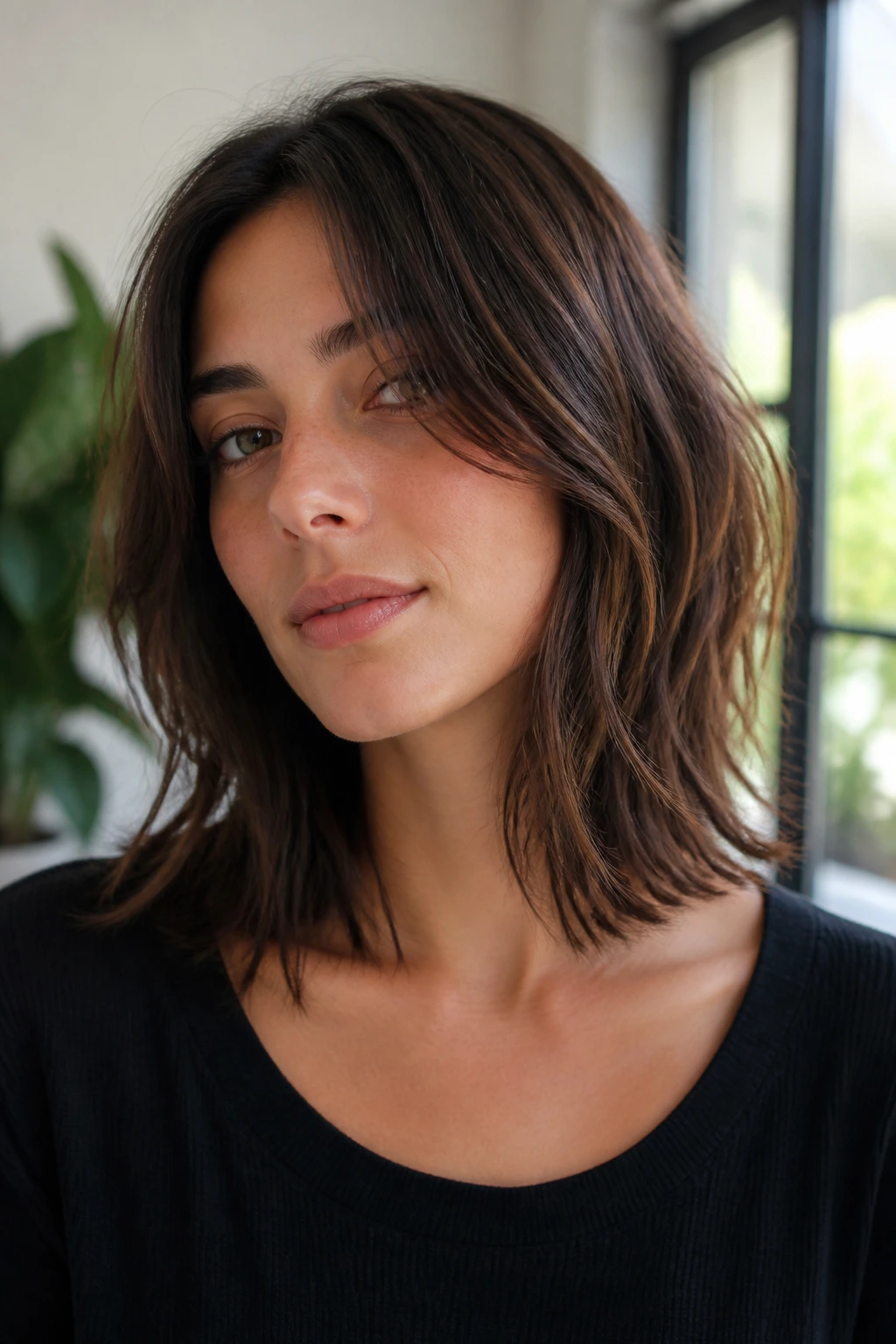
This is the most practical version in the bunch, and I mean that as a compliment. It keeps the collarbone length, which thick hair often needs for weight, while sneaking in internal layers to prevent the bottom from turning into a shelf.
The outer shape stays clean. The movement lives inside the cut. That makes it a good pick if you want a shag haircut but don’t want strangers to label it from across the room. It grows out well, tucks behind the ear without fuss, and can be worn sleek on workdays or bent up with a flat iron on weekends.
Ask your stylist to keep the perimeter fairly solid and remove weight in the midsection of the hair instead of carving up the ends. That gives thick hair a slimmer profile without robbing it of density. It’s a quiet haircut. Not boring. Quiet.
12. Curly-Wavy Thick-Hair Shag
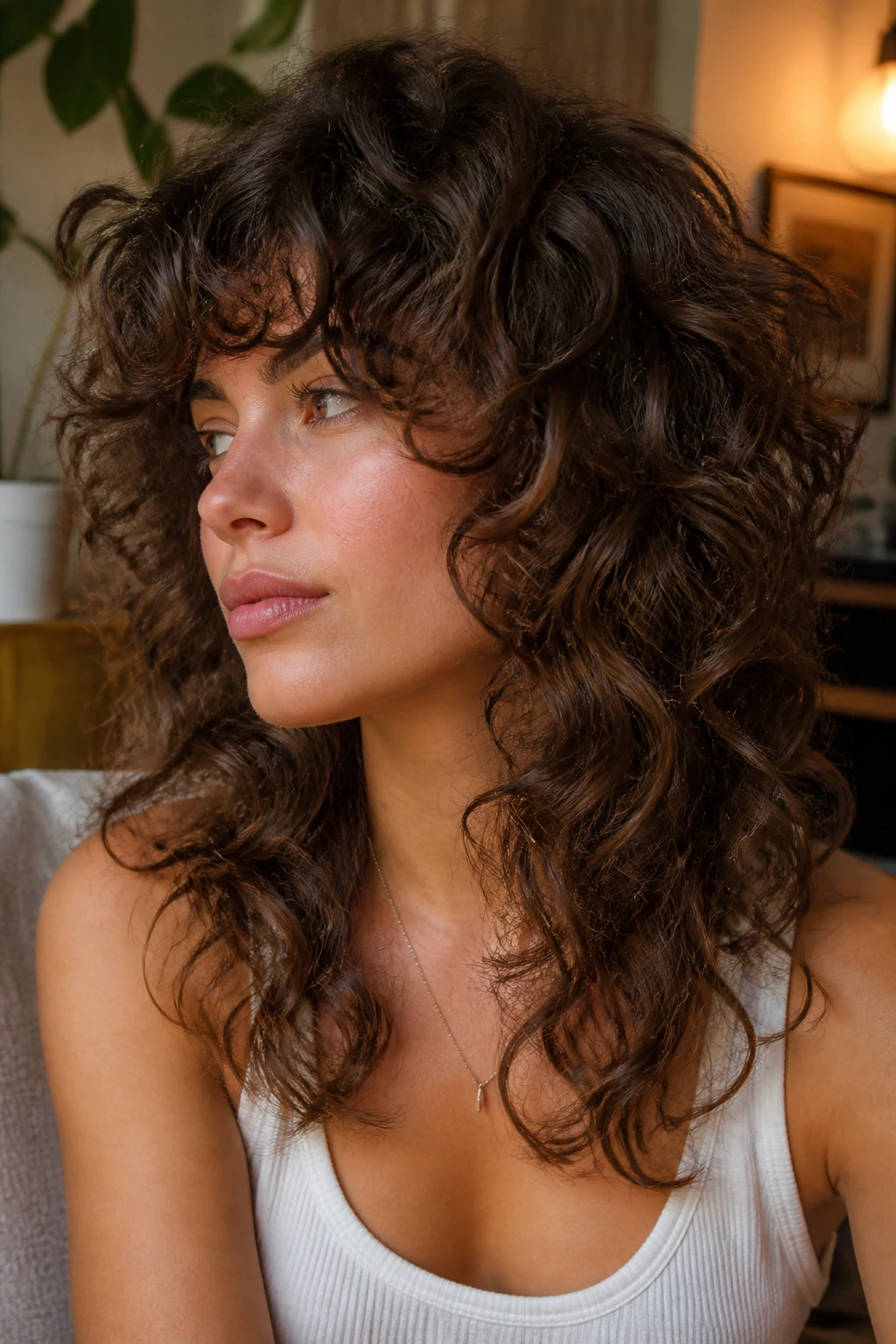
This is the cut that finally lets natural texture do some of the work. Thick wavy or curly medium hair can become a triangle fast, and a shag helps redistribute the bulk so the curls sit in layers instead of a single puff.
The biggest rule here: cut with the curl pattern in mind. Dry cutting or a careful cut on barely damp hair usually gives a better read on where the shape lives. A stylist who understands how your hair springs up needs to see the natural bend, not just the wet length. If the layers are too short, curls bounce higher than expected and the crown can go wild. Keep the shortest layers strategic, not random.
For styling, a curl cream plus a medium-hold gel gives a better result than a pile of heavy leave-ins. Scrunch, diffuse on low heat, then don’t touch it until it’s dry. That last part matters more than people want to admit.
What to tell your stylist
- You want the curl pattern to stay visible.
- You do not want heavy thinning at the ends.
- You need the face frame to land where the curls won’t spring into your eyes.
- You want shape first, frizz control second.
13. Bottleneck Bang Shag with Soft Ends
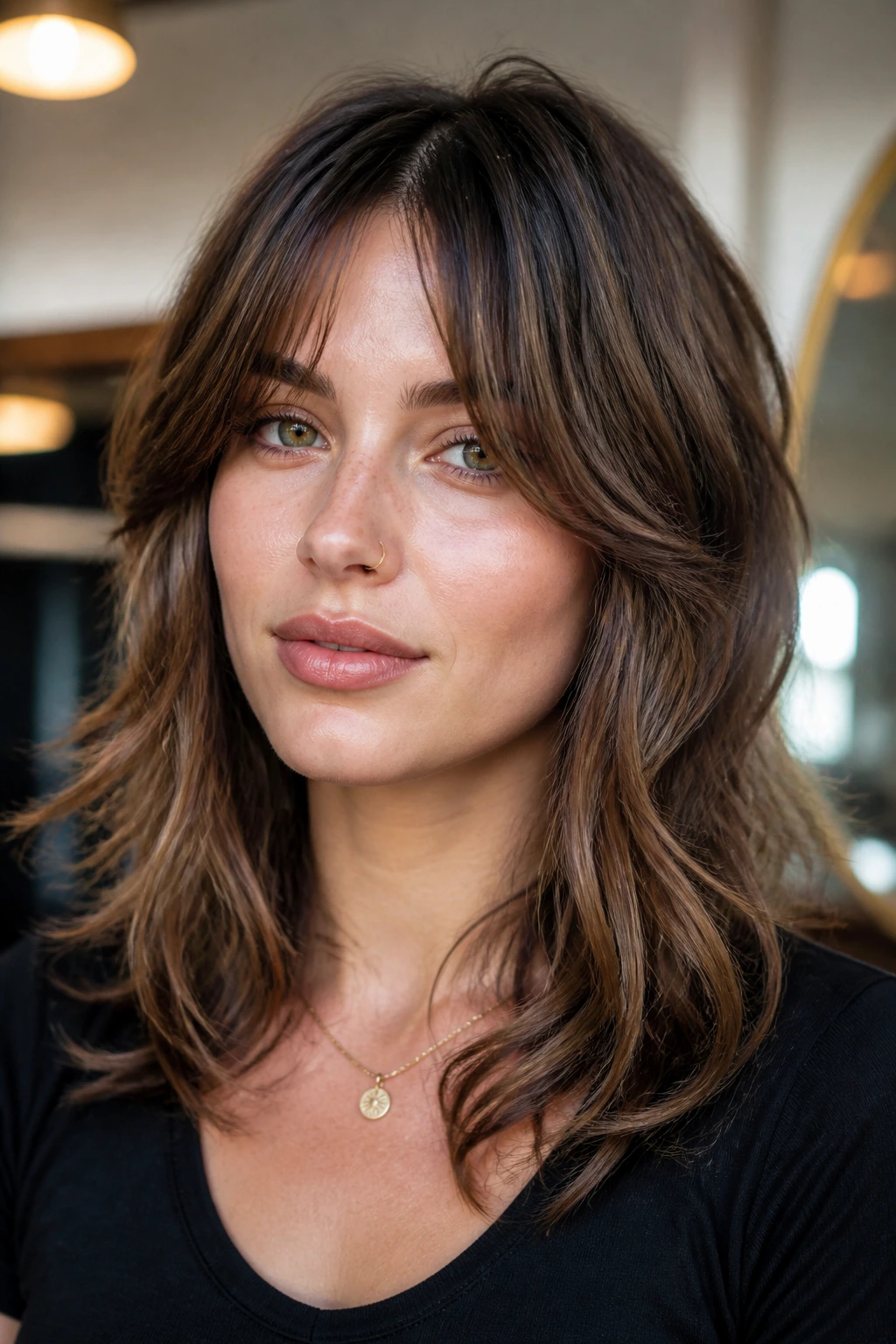
This is the gentler fringe version for people who like the idea of bangs but don’t want a blunt commitment. Bottleneck bangs taper into the side layers, which is a smart move on thick medium hair because the fringe doesn’t fight the rest of the cut.
The ends stay soft, not shredded. That keeps the whole look from tipping into too much texture. It’s a good option if your hair is dense but not coarse, or if you like to wear it half-air-dried and half-blown out. There’s enough shape here to look styled, even when you only spend 10 minutes on it.
A round brush helps the fringe settle. Use it to lift at the root and curve the side pieces slightly away from the cheekbones. If you want a little more edge, a light texture spray at the very ends gives the haircut that broken-in feel without making it crunchy.
14. Choppy Layered Shag with Micro Bangs
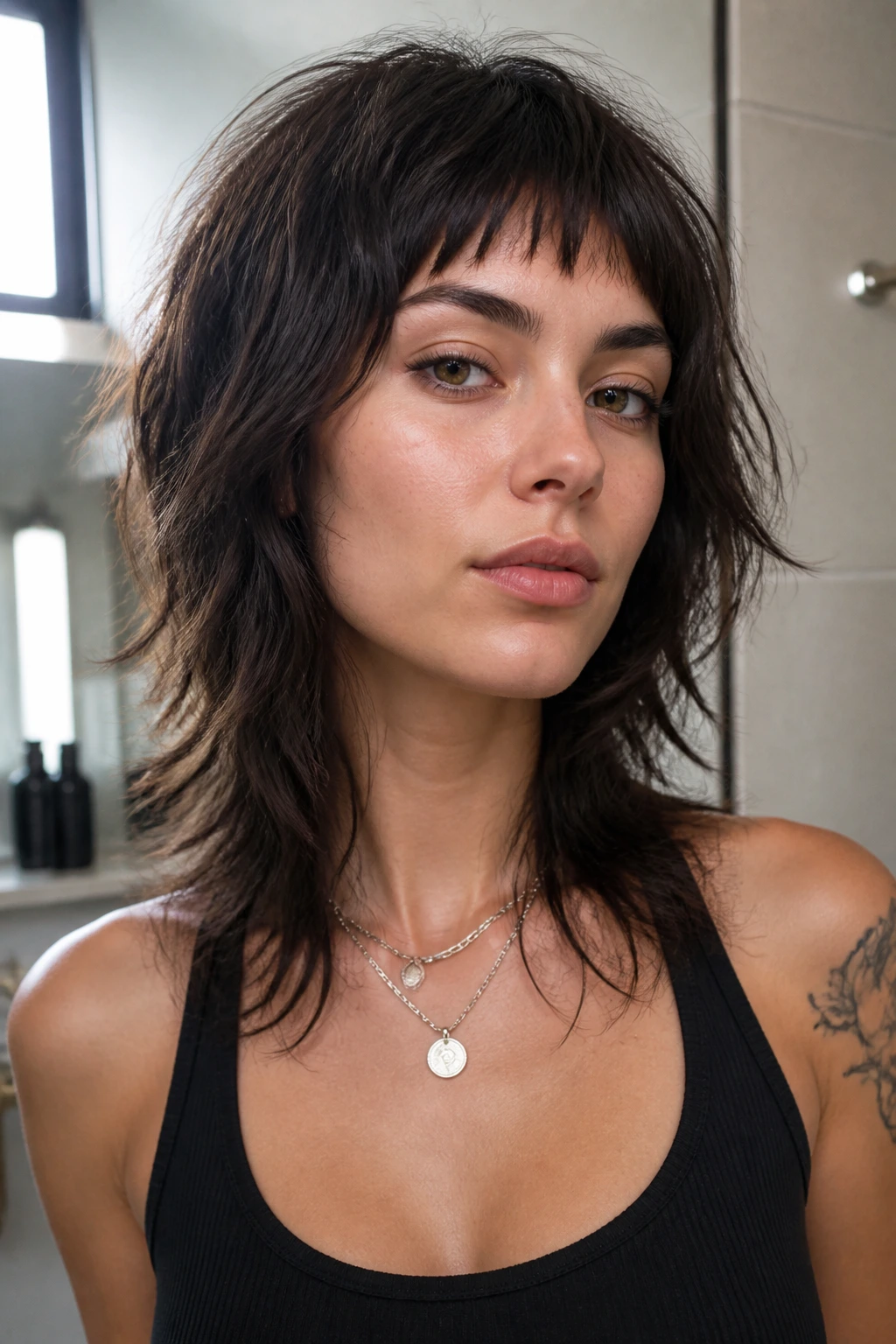
Micro bangs are not a timid choice, and that’s the point. On thick medium hair, they can look sharp and deliberate because the density behind them keeps the haircut from feeling sparse.
The rest of the shag should be choppy enough to match the fringe. If the bangs are dramatic but the layers are soft, the haircut gets confused. Keep the texture consistent from the brow line down to the face frame. That means visible pieces, a little separation, and enough length around the temples to keep the style from turning into a helmet with a tiny top edge.
This one suits someone who likes contrast. The bangs sit high and blunt enough to make a statement, while the rest of the cut stays lived-in. It does ask for more upkeep, though. Bang trims come around fast, and if your hairline has strong cowlicks, this can turn into a daily negotiation.
15. Glam Blowout Shag
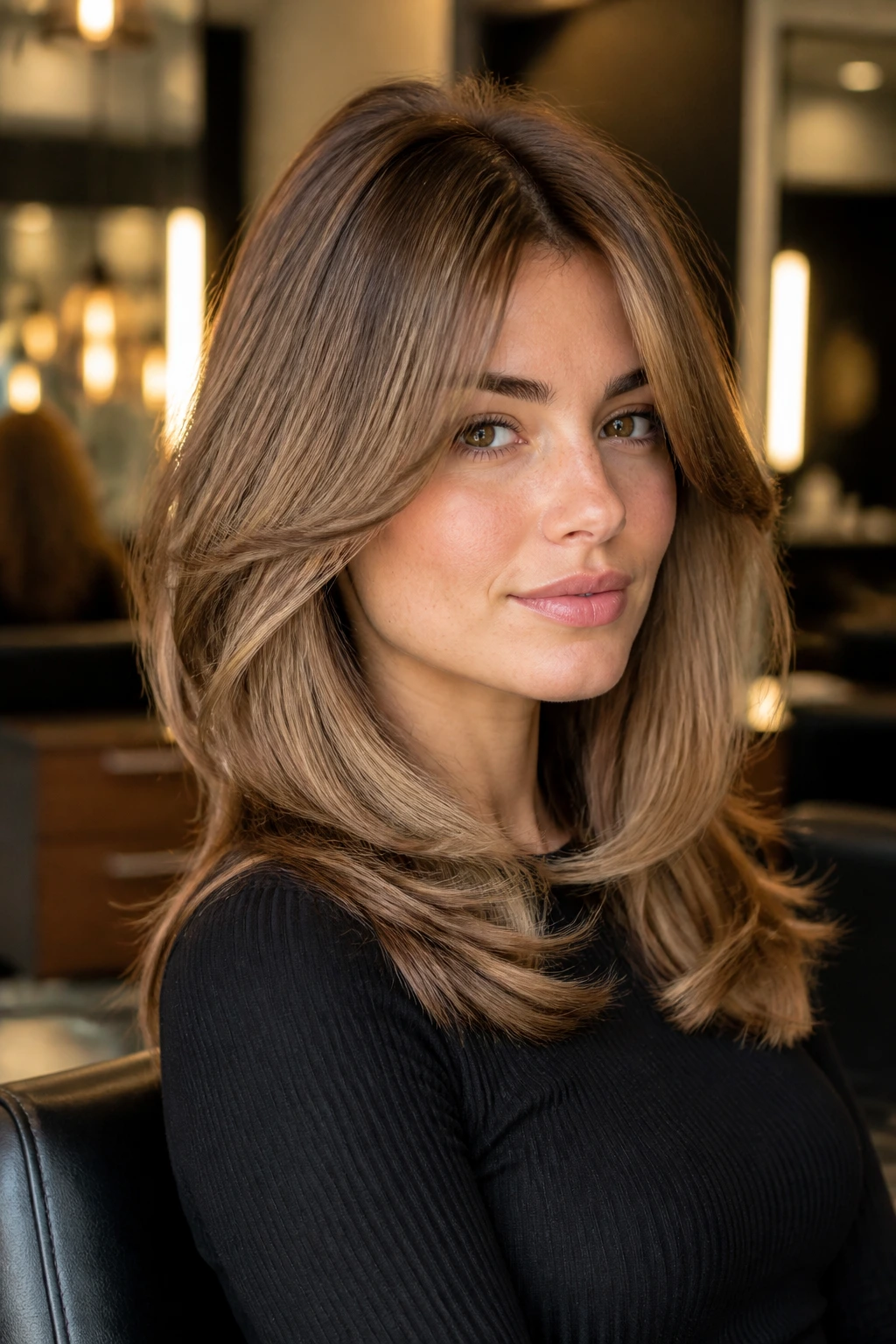
If your idea of a shag includes volume at the crown and ends that swing when you turn your head, this is the cut. It keeps the rockstar part and trims away the messier punk edge.
The layers are longer and smoother than in a razor-heavy shag. That matters for thick hair because you still want body after a blowout, not a cloud of choppy pieces that refuse to cooperate. Use a large round brush or a blowout brush, pull the front layers away from the face, and cool each section before letting go. That cooling step is the boring part, and it’s the part that makes the shape hold.
This haircut is especially good if you like the look of salon hair but don’t want a high-maintenance cut. On day two, the roots usually soften into a nice bend. A little dry shampoo at the crown and a brush-through at the ends is usually enough.
Styling cue
Clip the top layers at the crown while you finish the rest. Even 10 minutes of extra root lift changes the whole silhouette.
16. Textured Lob-Shag
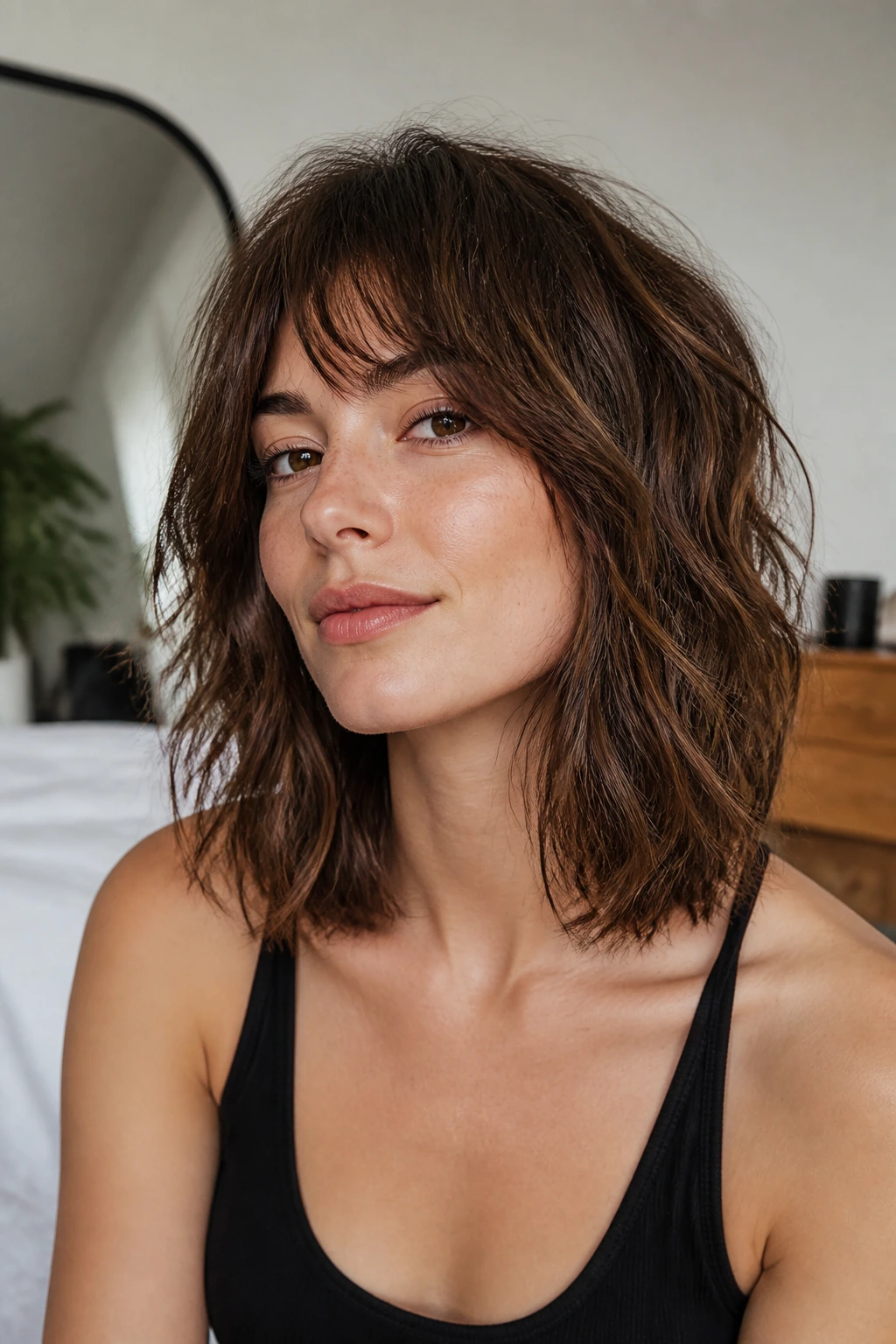
This is the shag for people who want to keep the cleaner outline of a lob but add enough texture that the hair stops behaving like one heavy sheet. On thick medium hair, that’s often the sweet spot.
The length sits near the collarbone, maybe a touch above or below depending on your neck and shoulder line. The internal layers should remove bulk through the middle, but the perimeter stays tidy enough that you can wear it straight without it looking chopped up. It’s one of the easier shags to live with because it can read conservative or cool depending on how you style it.
If you straighten it, the haircut looks sleek with a bit of edge. If you bend the ends with a curling iron, it looks more relaxed. That flexibility is what makes the textured lob-shag worth considering. It doesn’t demand one personality.
17. Long Shag with U-Shaped Perimeter
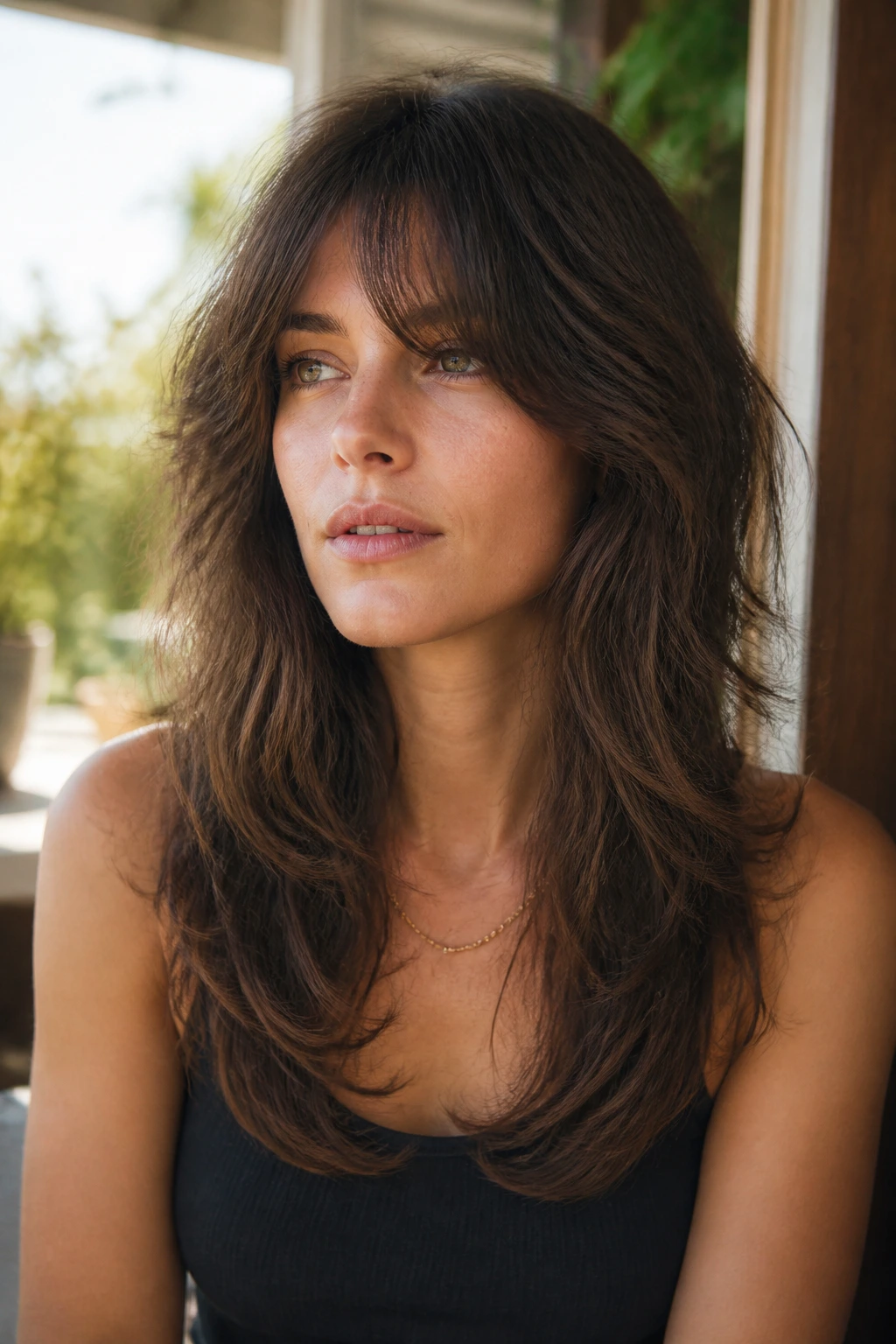
This version gives you more length at the back and sides, which is useful if thick hair gets frisky when it’s cut too short. The U-shaped perimeter keeps the overall line soft while the layers inside create movement.
The silhouette matters here. A U-shape prevents the bottom from looking blunt and wide, especially if your hair is very dense at the ends. The longest pieces in the back help the haircut hang naturally, while the shorter front pieces keep the face frame from disappearing into the rest of the hair.
This is a smart choice if you want the shag idea without sacrificing much length. It also grows out in a forgiving way. The layers soften, the line stays readable, and you won’t feel like you need a correction the moment it’s two inches longer.
18. Shag with Hidden Crown Layers
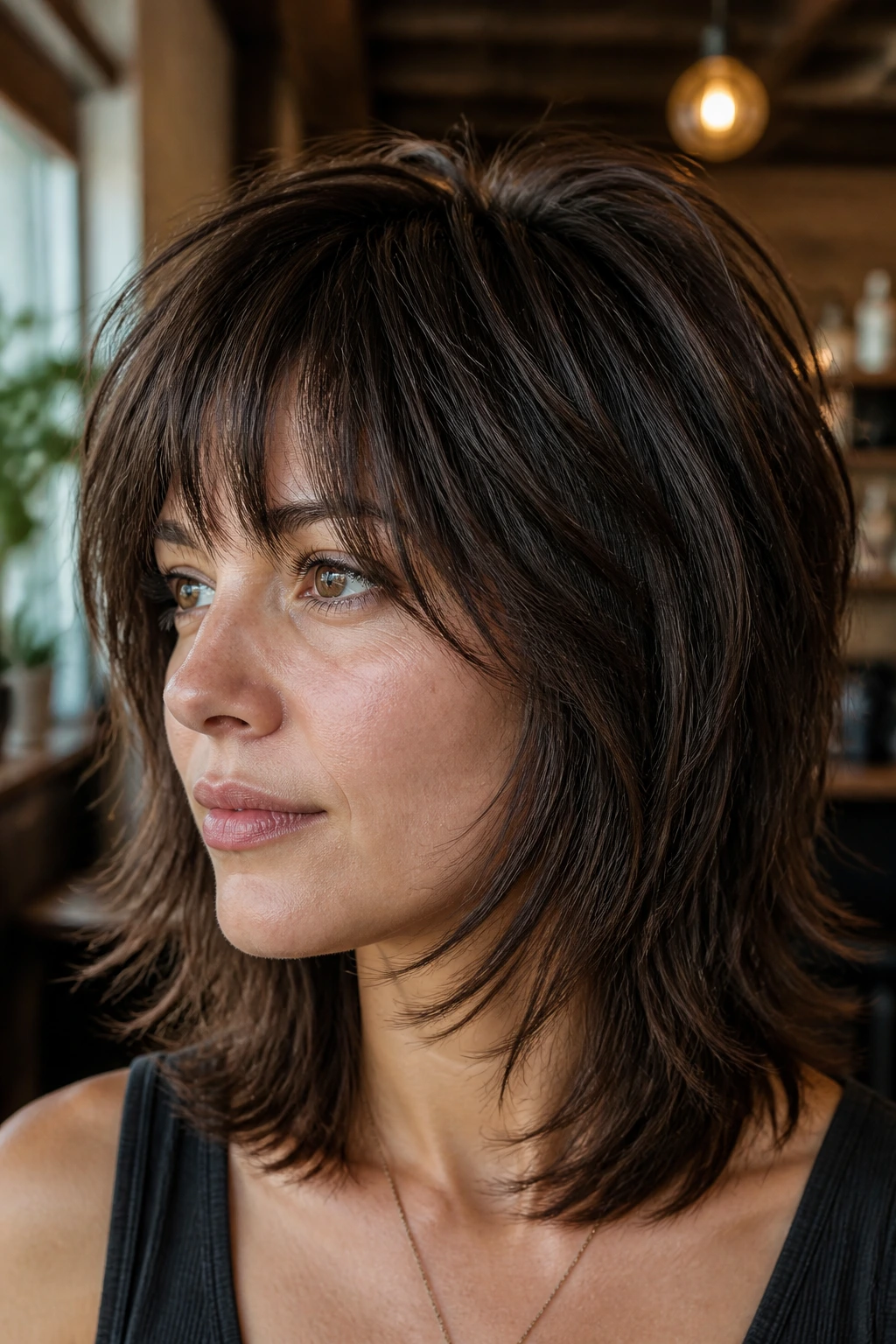
This cut is sneaky in the best way. From the outside, it can look fairly smooth. Underneath, there’s real engineering happening.
The crown layers are where the lift lives. Thick hair often feels heavy at the roots and bulky through the midsection, so taking weight from the top while keeping more density lower down gives the style a cleaner fall. You get height where you need it and body where you want it. That’s the trick.
Ask for subtle internal layering concentrated around the crown and upper back of the head. Keep the surface layers long enough that the haircut still reads polished when you wear it straight. If your hair tends to lie flat on top, this is one of the best options in the whole lineup. It gives the root area a little architecture.
19. Soft Wolf Cut for Medium Length
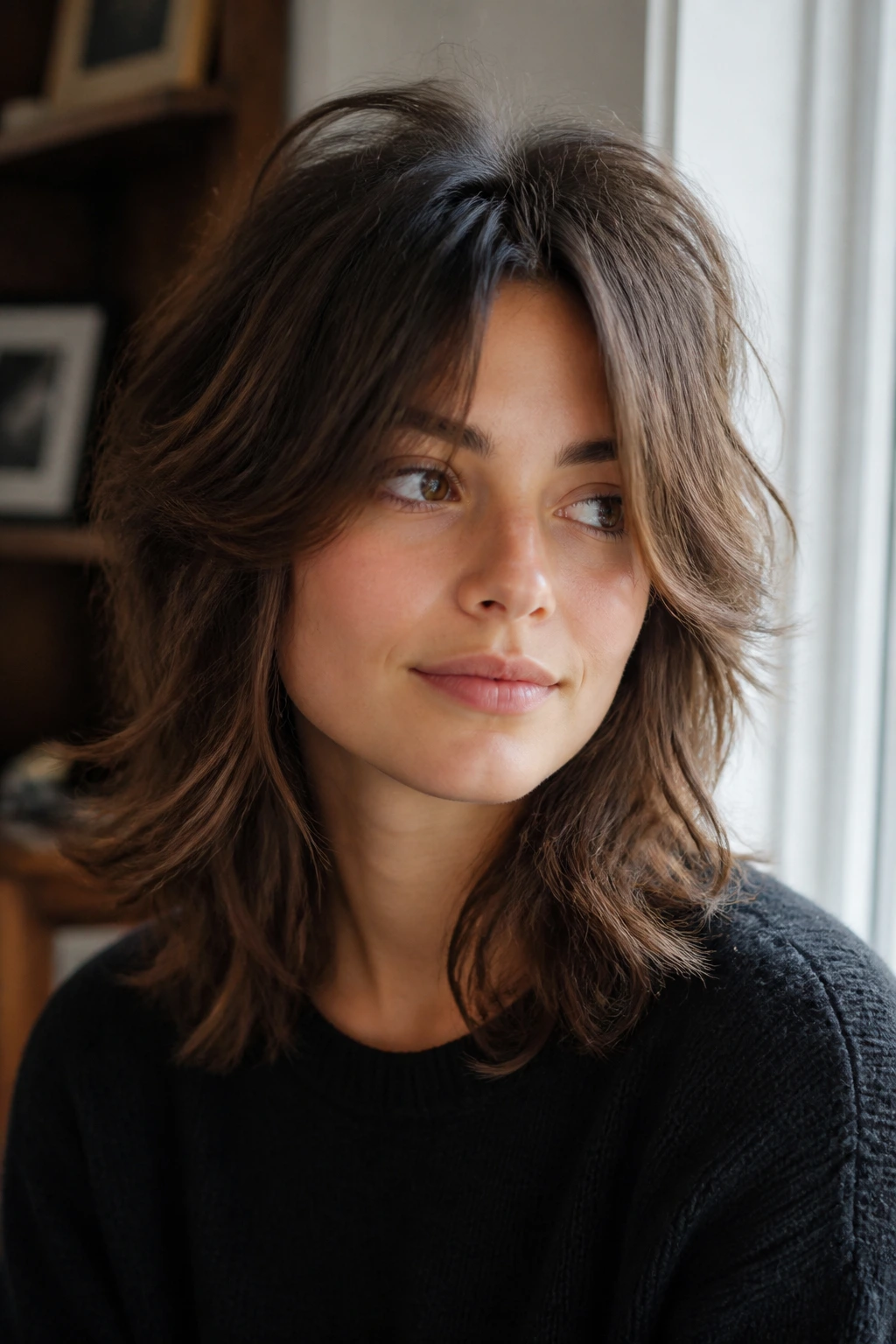
This is the version for people who like the wolf-cut idea but don’t want the sharper, more rebellious shape. The layers are still shorter on top and longer toward the bottom, but the transition is slower and more blended.
On thick medium hair, that softness keeps the haircut from puffing at the sides. It also helps if you want to wear the hair half-up; the crown layers give lift without making the ponytail look awkward. If you want something a touch modern but not too loud, this is one of the easiest bets.
The best soft wolf cut still needs a strong face frame. That’s what stops it from looking flat around the cheeks. Ask for pieces that connect around the jaw and then slide into the rest of the cut. No hard shelf. No hard line. Just enough edge to keep it interesting.
20. Fringe-Forward Indie Shag

This cut puts the fringe in the spotlight. The rest of the layers support it, but the bangs are the main event.
That works well on thick hair because the fringe has enough density to sit with intention, not feather out into nothing. The side layers should be lighter and a bit longer so they don’t fight the bangs for attention. You want the front to feel full but not boxed in. That’s a narrow target, and it looks especially good when the hair has a slight bend rather than being pin-straight.
Styling is straightforward: dry the fringe first, then shape the rest of the haircut around it. If you wear glasses, pay attention to where the fringe lands when the frames are on. That one detail can make or break the whole cut.
21. Airy Minimal-Shag
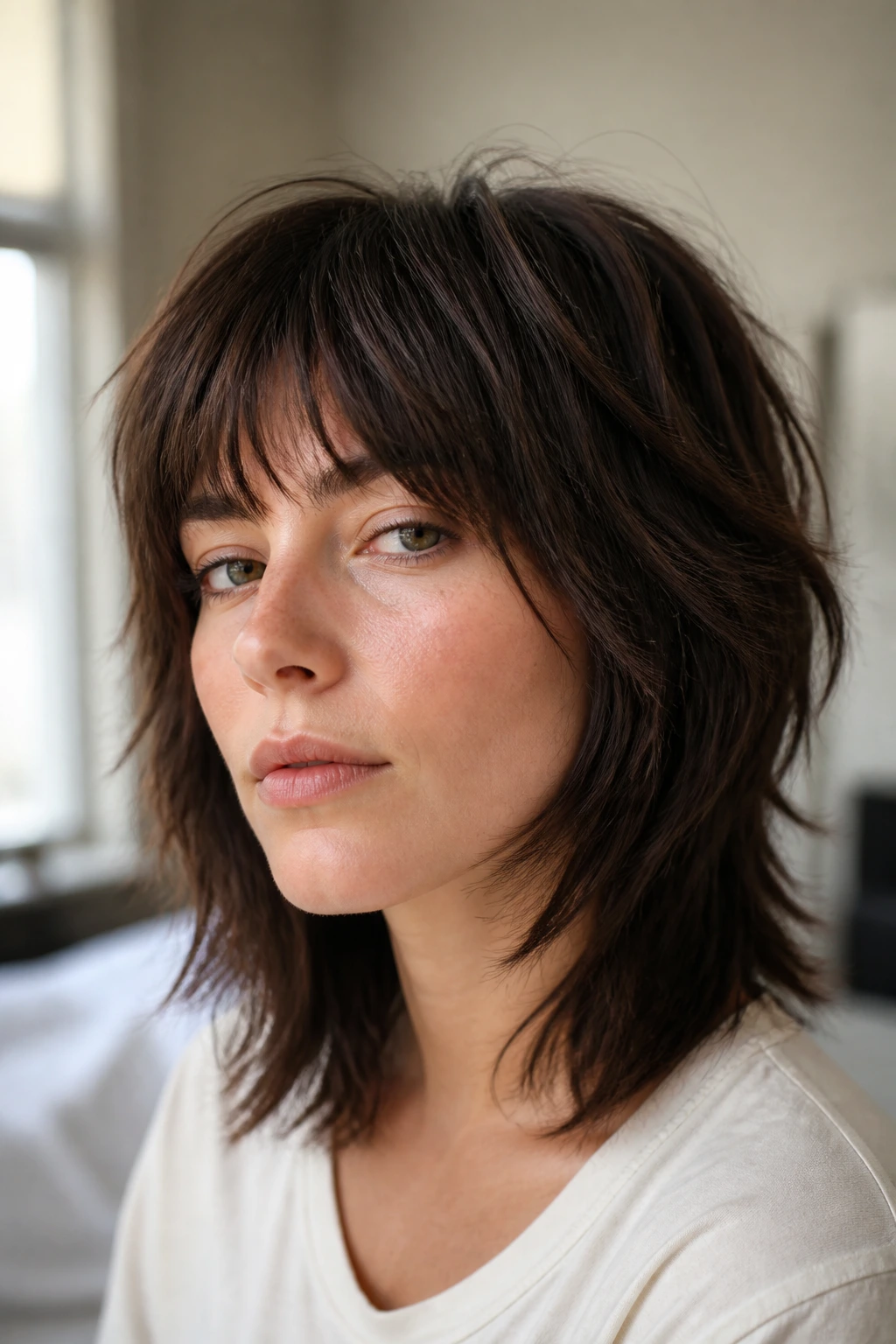
Not every shag has to shout. This one whispers, which sounds less exciting until you realize how often you just want thick hair to stop fighting you.
The layers are there, but they’re subtle. The perimeter stays clean, and the internal texture does the heavy lifting. It’s a good fit for people who work in conservative spaces or just don’t want their haircut to become the loudest thing in the room. Medium hair keeps enough length for weight, while the light layering prevents the ends from looking like a shelf.
This version is especially nice if you like wearing your hair naturally but hate the look of a blunt blunt cut. It moves. It softens. It grows out with grace. And it doesn’t ask for daily drama.
22. High-Volume Rocker Shag
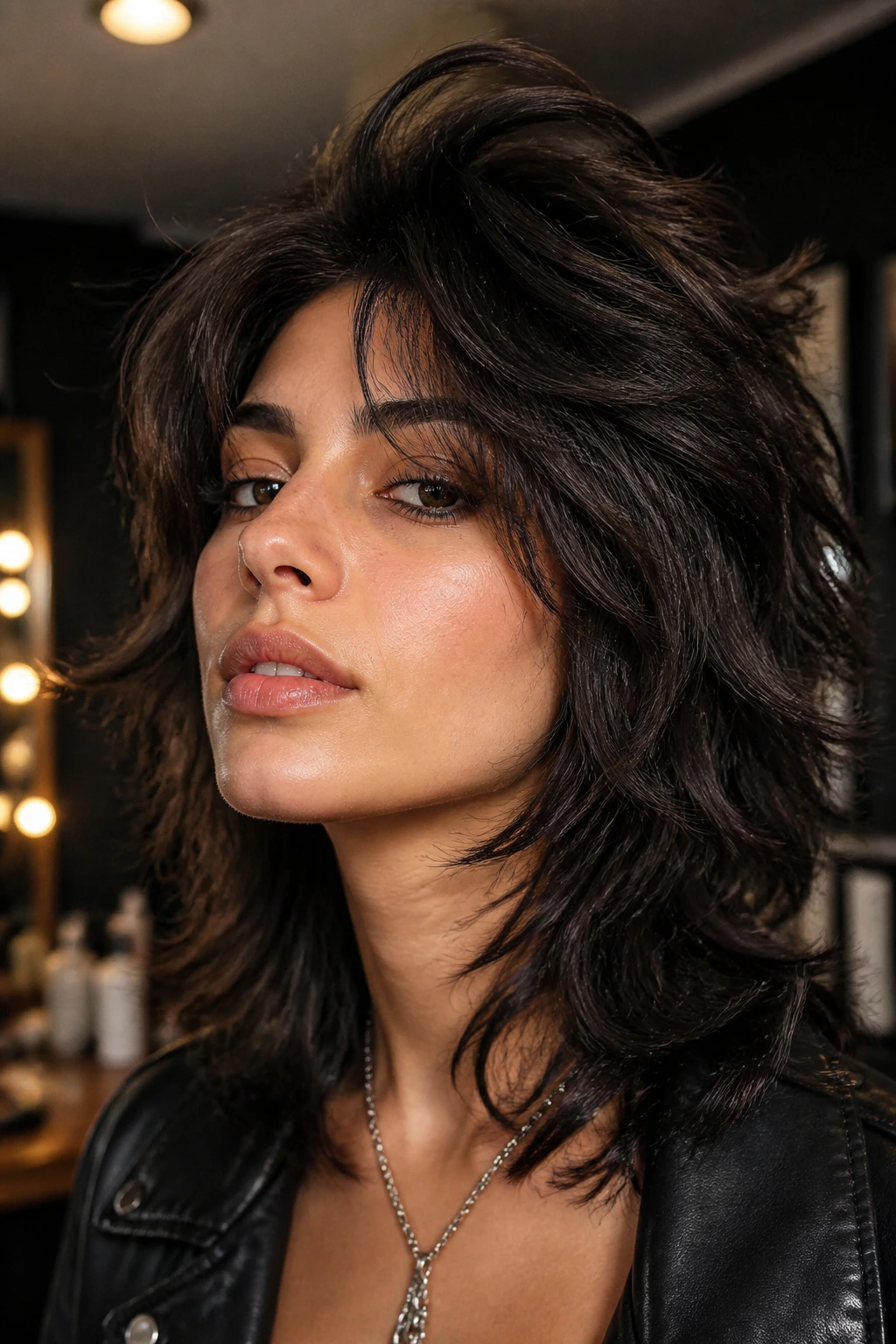
This is the most stage-ready version in the set. The crown gets lift, the sides get movement, and the ends stay broken up enough to look lively without falling apart.
Thick medium hair can hold this shape beautifully because there’s enough density to support the volume. The important part is direction. Blow the top up and back, the front pieces away from the face, and the side layers slightly forward before they cool. That gives the haircut its rocker bend instead of a generic blowout. A root-lifting spray or a light mousse at the scalp helps, but don’t drown it in product. Too much and the volume collapses into tacky heaviness.
This cut looks especially good on days when you want your hair to do the talking. It’s the loudest of the bunch, and it earns that volume by keeping the layers deliberate, not random.
Why Thick Medium Hair and Shag Layers Get Along So Well
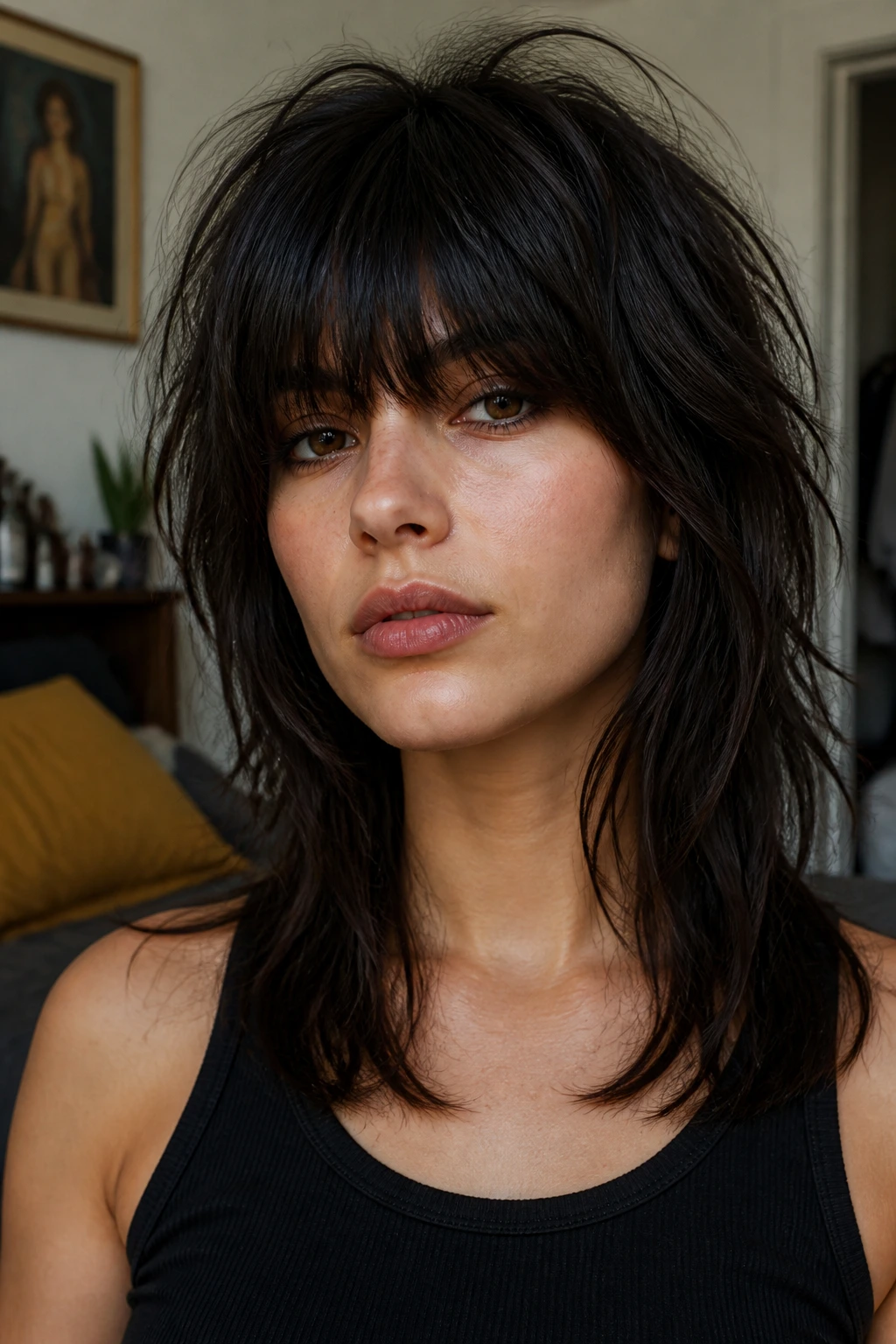
Thick hair isn’t hard to cut. It’s hard to finish. That’s the difference most people miss. If you leave all that density in one block, the hair drops heavy at the bottom and puffs where it shouldn’t. A shag solves that by moving weight around instead of just removing it.
The best shag for medium hair works in three zones. The crown gets lift so the roots don’t lie flat. The mid-lengths get internal layering so the hair doesn’t look like a sheet. The perimeter keeps enough strength that the whole cut still looks full from the side. That balance is why a shag can feel cooler than a blunt cut without being fussy.
There’s also a practical reason thick hair loves these cuts. The grow-out is friendlier. Dense hair can hide a lot for a while, but once the shape goes stale, it goes stale fast. Shag layers soften that transition. Even when the haircut starts to relax, it still looks intentional because the layers already live at different lengths.
The Styling Tools That Actually Matter
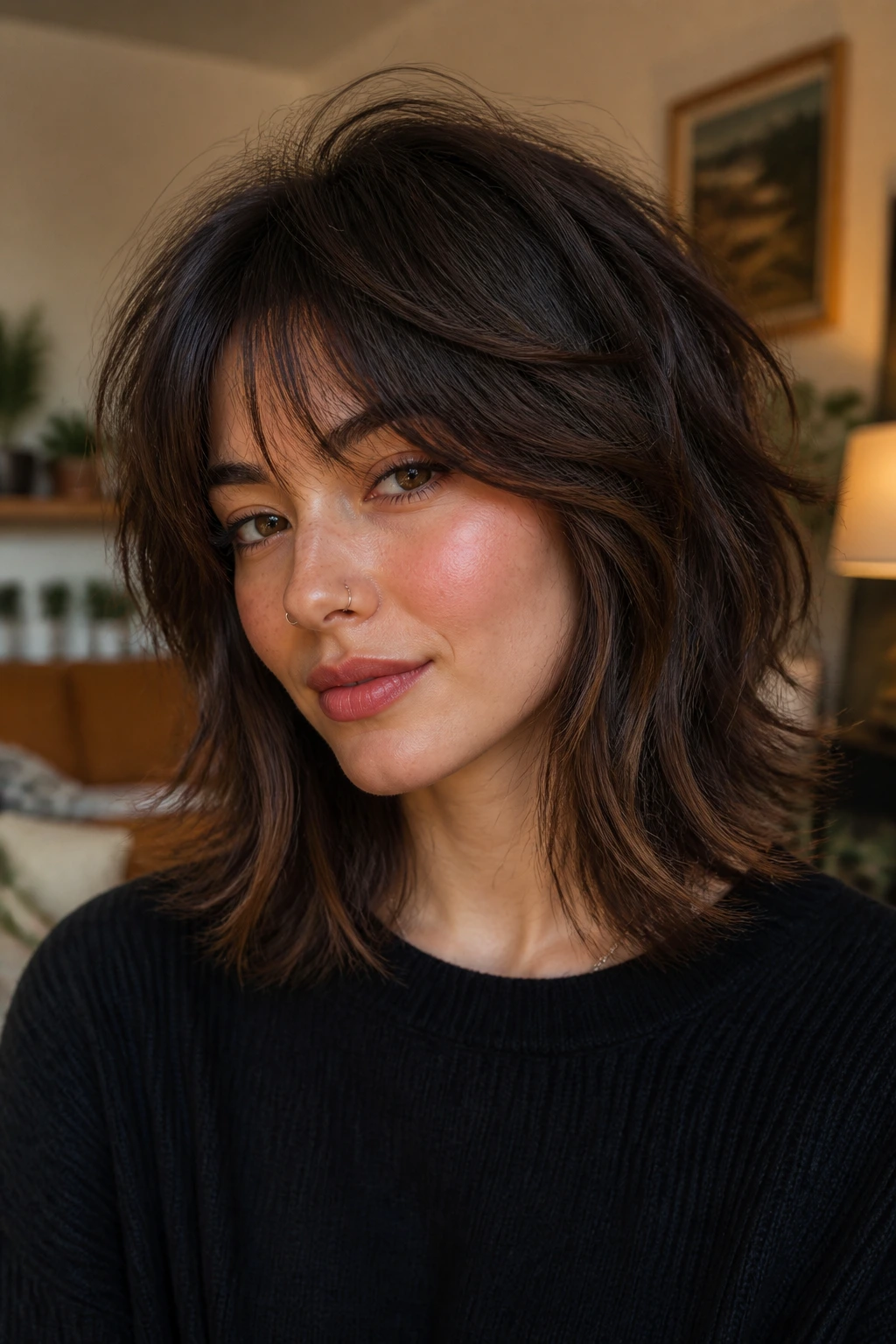
You do not need a drawer full of gadgets. A few solid tools will get you farther than a pile of random products.
- A blow dryer with a nozzle: The nozzle matters. It directs heat and helps the crown lay where you want it instead of frizzing outward.
- A medium round brush: Perfect for curtain bangs, feathered layers, and the front sections of a shag. A brush that’s too small makes thick hair frizzier, not softer.
- A diffuser: Essential if your hair has wave or curl and you want shape without blowout volume turning into fuzz.
- A wide-tooth comb: Good for detangling without stretching wet thick hair out of shape.
- Texture spray: Use it on dry hair at the mids and ends, not the roots. That’s where the piecey effect comes from.
- Mousse: Best on damp hair if you want hold without stiffness. A golf-ball-sized amount is enough for medium length.
- Heat protectant: If you use a dryer, iron, or hot brush, this is not optional.
- Sectioning clips: Thick hair needs sections. Fighting it in one giant batch wastes time and misses the shape.
A small flat iron can help on the ends, especially for the rocker and feathered versions. Use it to bend, not clamp flat. The goal is movement, not crisp right angles.
How to Ask for a Rockstar Shag at the Salon
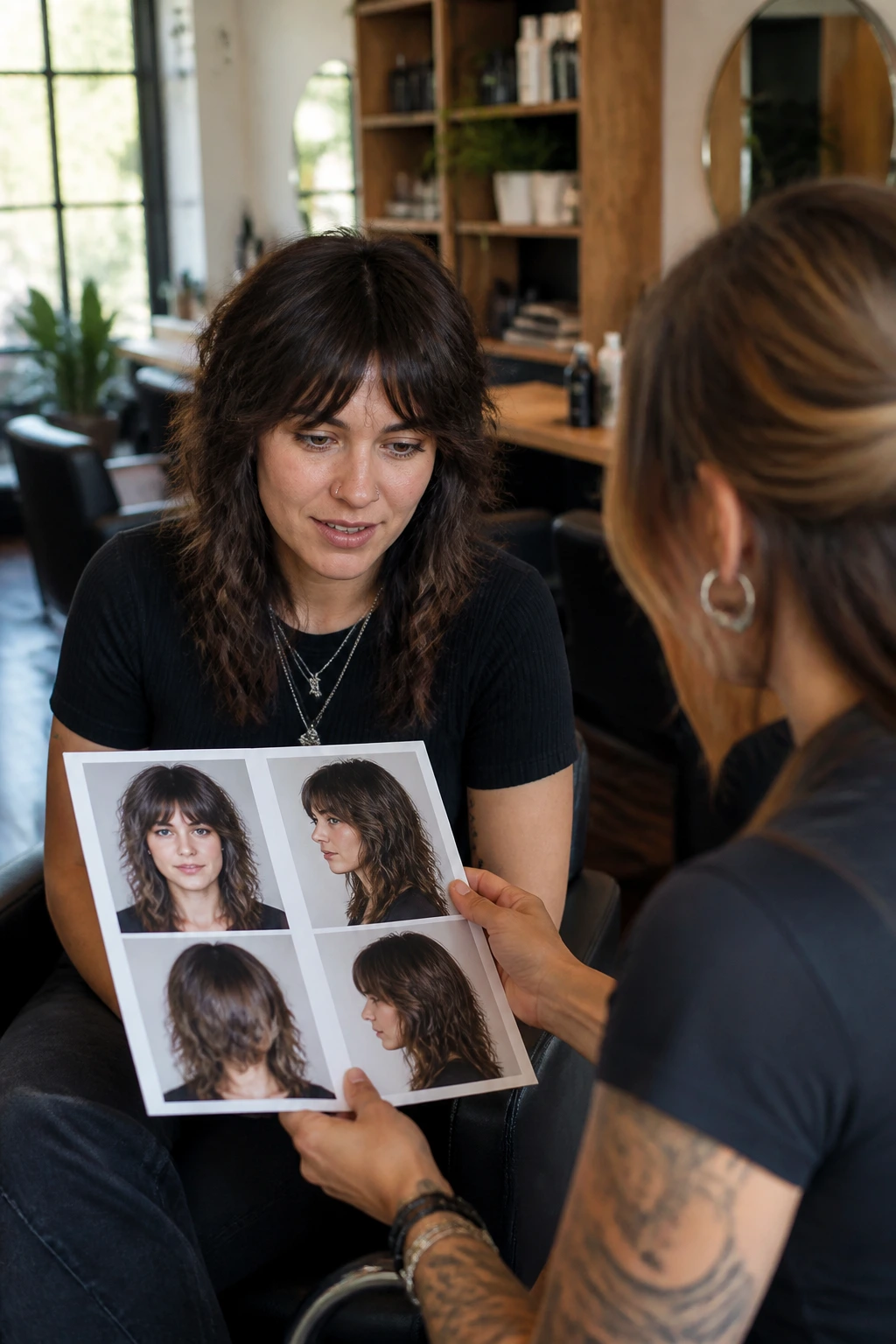
Bring photos. More than one. One front view, one side view, and one that shows the kind of fringe or face frame you like. Thick hair changes shape fast from different angles, and a single flattering photo rarely tells the whole story.
Say how you actually wear your hair. Air-dried? Blow-dried? Curled? Flattened with a brush? That matters more than a vague request for “layers.” A stylist can cut a much better shag if they know whether you live in mousse and a diffuser or you’re more of a round-brush person.
Use specific language about weight. If the hair is dense at the sides, say so. If the ends look bulky, say that too. If you want to keep the perimeter strong, say it plainly: “I want movement, but I don’t want the bottom to get wispy.” That line is worth more than a dozen trend words.
One more thing: ask where the shortest layer will sit. Cheekbone? Jaw? Chin? Crown? That single detail changes the whole haircut. A shag can be soft, edgy, round, or wild depending on where that shortest layer lives.
How to Style a Rockstar Shag Without Fighting Thick Hair
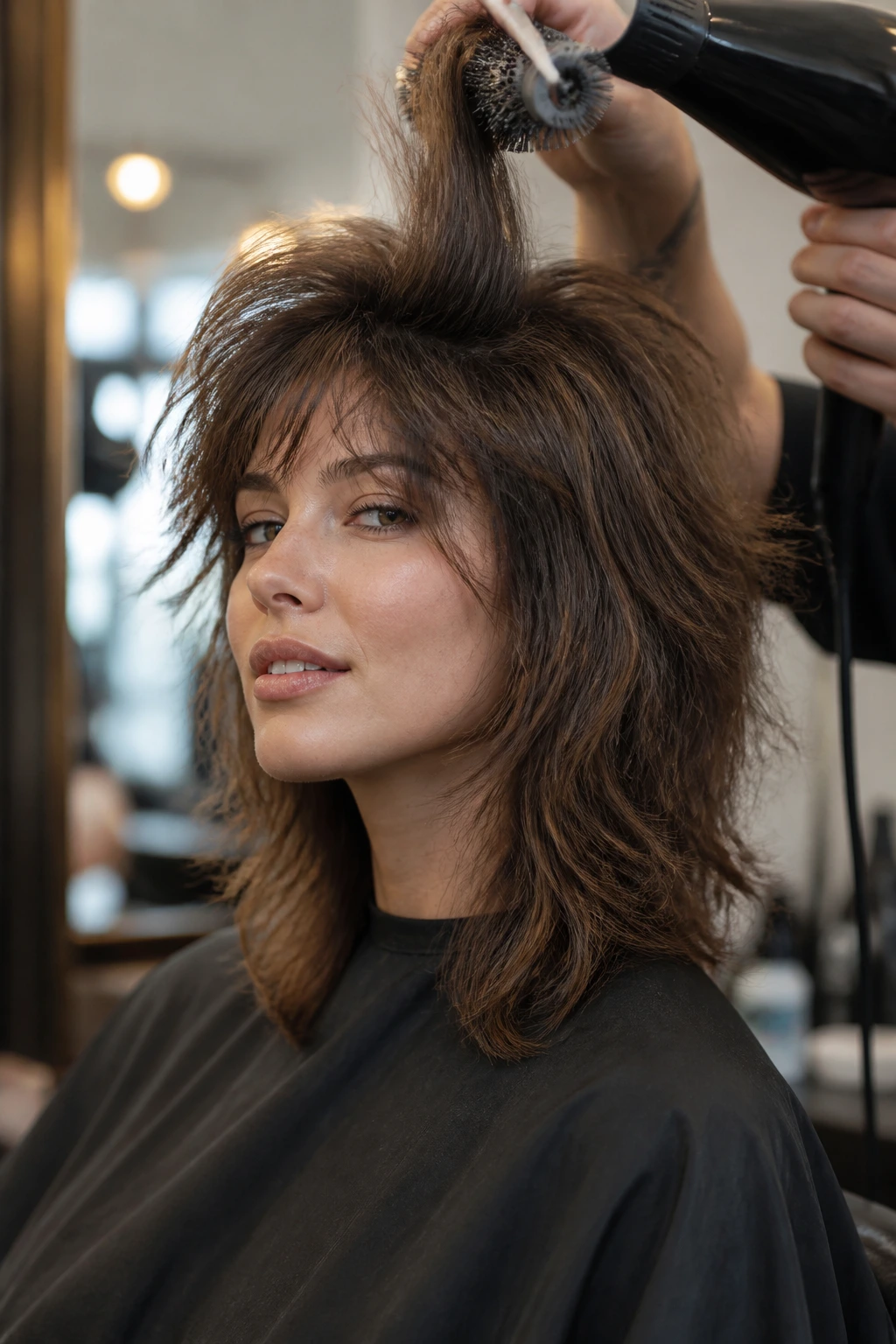
Thick medium hair usually behaves best when you stop trying to make every section do the same thing. The cut already gives you movement; styling should just wake it up.
Fastest route: rough dry the roots about 70%, then use a round brush or blowout brush on the front pieces and crown. Focus on lift at the top and bend at the cheekbones. You don’t need to polish every strand. In fact, that often kills the shag shape.
Best for air-drying: work mousse into damp roots, then a small amount of cream through the mids and ends. Scrunch once, maybe twice, then leave it alone. If the crown goes flat, clip it up while drying. That tiny bit of root lift helps more than another layer of product.
Best for a glam finish: dry the hair in sections, using a round brush to roll the ends under or away from the face depending on the cut. Cool each section before releasing it. Thick hair holds heat longer than people expect, so if you drop the brush too early, the bend disappears fast.
Best finishing move: a dry texture spray on the mid-lengths, then a few finger-combed pieces around the face. Skip the scalp unless your hair is fine at the roots. Thick hair usually doesn’t need more product near the base; it needs separation through the body.
Common Mistakes That Make a Shag Look Choppy in the Wrong Way

The first mistake is taking too much weight from the ends. Thick hair often looks better with strategic internal layering than with aggressive thinning at the perimeter. If the ends start looking see-through, the haircut loses its shape and turns frayed.
Another common one is placing the shortest layers too high on the head. That can make the crown stand up like a cap while the lower lengths sit heavy. You want a gradual drop, not a sudden shelf. The shortest layer should usually connect to the face or crown in a way that looks intentional, not accidental.
People also ask for too much texturizing at once. A little pieceiness is good. Too much can make thick hair expand into fuzz, especially if the strands are coarse. If your hair already has natural body, the haircut should control it, not shred it.
Then there’s ignoring your styling habit. If you air-dry every time, a heavily blowout-based shag may not give you the shape you want. If you never use a round brush, don’t ask for a front-heavy feathered cut that depends on one. The cut has to match the routine.
Last, don’t forget bang maintenance. Thick hair can turn bangs heavy fast. If you want fringe, be honest about trims. A gorgeous curtain bang that sits in your eyes all the time is not low maintenance. It’s just long bangs with better PR.
Named Variations and Alternatives to Try

The Soft Stage Cut: Keep the shag shape but leave the layers longer and smoother through the sides. This is a good choice if you want movement without visible choppiness, and it works especially well when you wear your hair blown out.
The Air-Dry Rebel: Ask for a looser shag with more internal texture and less styling dependence. It leans on mousse, a diffuser, and natural wave, so it’s a solid pick if you hate round brushes and hot tools.
The Fringe-Heavy Edit: Put the focus on bangs — curtain, bottleneck, or dense brow-grazing fringe — and keep the rest of the layers softer. This version makes the front the star while the rest of the haircut supports it.
The Quiet Office Shag: Keep the perimeter cleaner, the layers longer, and the texture subtle. You still get movement, but the haircut reads polished enough for conservative settings or anyone who wants a little edge without looking styled.
The Full Wolf Edge: Push the crown shorter and the back a touch longer. This one has the strongest personality and the clearest contrast between top and bottom, which is why it works best when you want the haircut to feel deliberate and a little wild.
Keeping a Rockstar Shag in Shape Between Trims
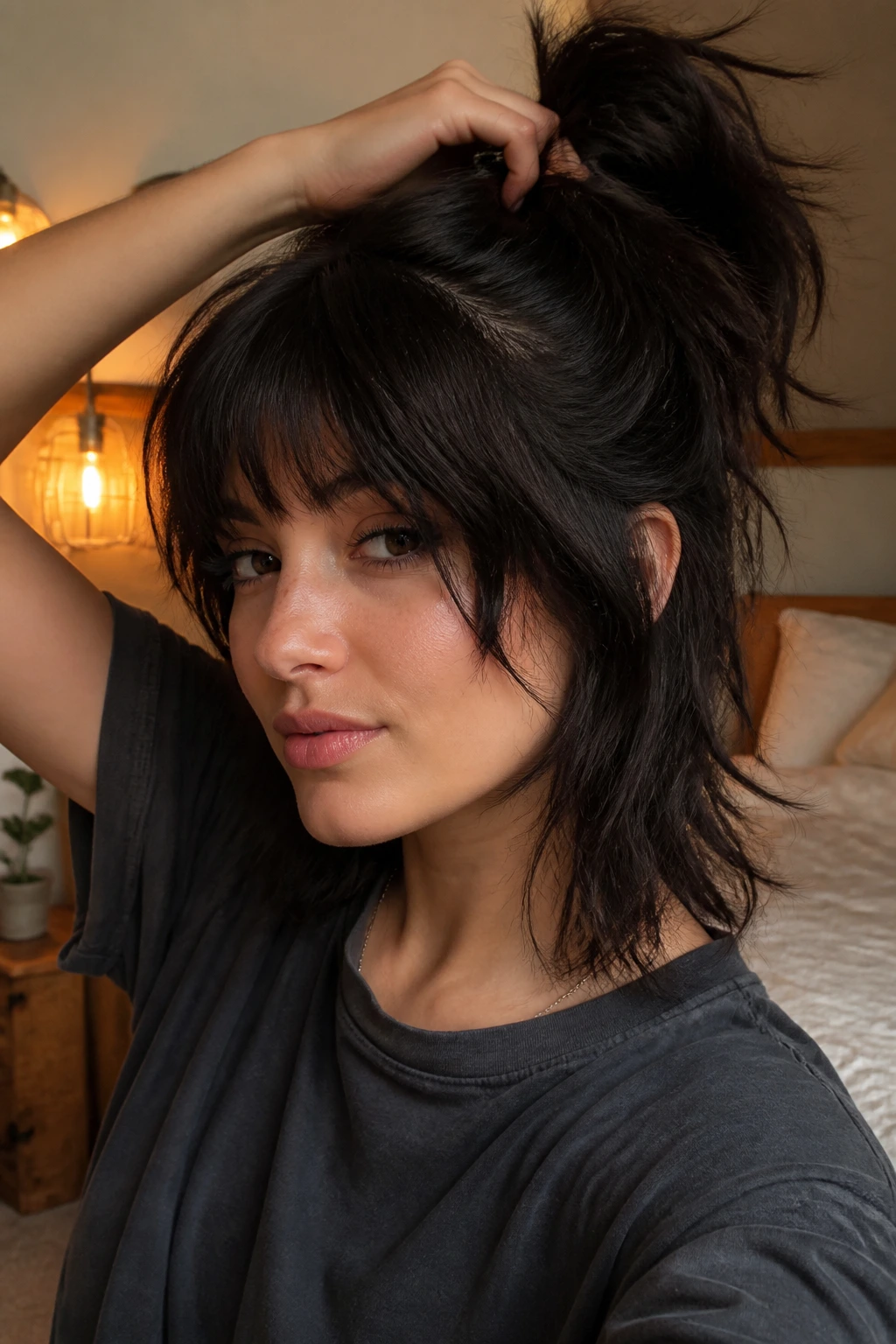
Thick hair forgives a lot, then suddenly it doesn’t. The shape can look good for weeks, and then one day the sides start sitting wide, the crown goes flat, and the ends feel crowded. That’s when the shag needs a reset.
Plan on a trim every 8 to 12 weeks if you want the shape to stay clean. If you wear bangs, that front section may need a touch-up every 3 to 5 weeks, especially with heavy fringe or bottleneck bangs. Bangs grow fast in thick hair because they show every half-inch.
At home, don’t overload the hair with oil. Thick hair often needs less than people think, and too much product at the ends makes the shag collapse into a heavy curtain. Use a lightweight shampoo when the roots feel coated, then condition mainly from mid-length to ends. That keeps the crown from going limp.
Sleep habits matter more than most people want to admit. A loose topknot, a silk pillowcase, or even clipping the fringe out of your face can save a morning of repair work. If your hair gets bent flat at the sides overnight, a quick root mist and five minutes with a dryer usually brings the shape back.
The key is simple: do small resets before the haircut becomes a rescue mission.
Frequently Asked Questions
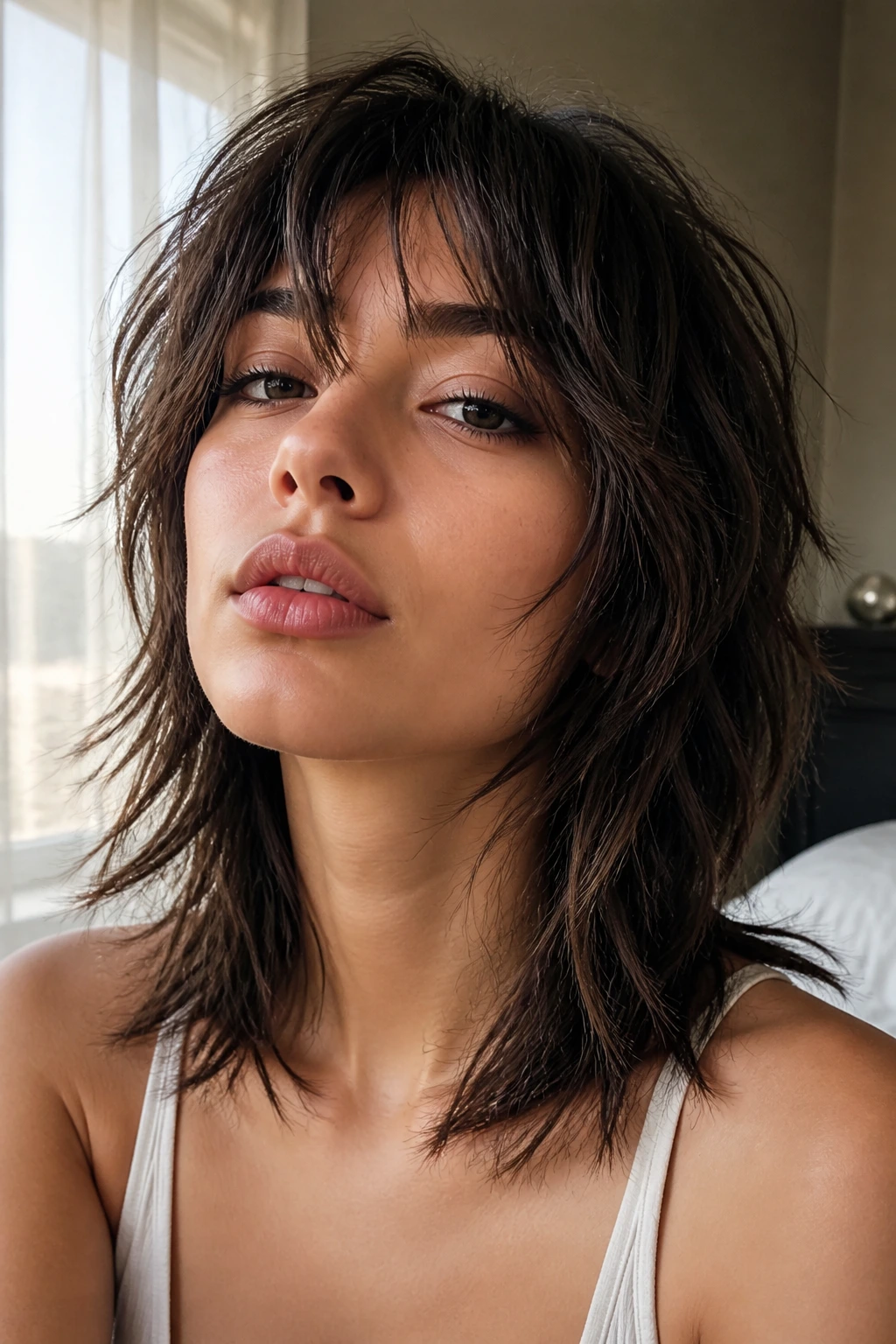
Will a shag make thick hair look thinner?
It can, but only in the right way. A good shag removes bulk from the inside while keeping enough perimeter weight to avoid see-through ends. If the haircut is too aggressively thinned, it can look airy in a bad, stringy way.
Is a shag good for straight thick hair?
Yes, though the finish changes. Straight thick hair shows the layers more clearly, so you get a sharper outline and more visible movement at the ends. If you want softness, ask for slide-cut or feathered layers rather than blunt choppy steps.
How often should I trim a medium shag?
Every 8 to 12 weeks is a safe range for most thick hair. Fringe-heavy versions may need a quicker bang trim because the front loses shape before the rest of the cut does. If the crown feels flat and the sides start to widen, that’s usually your cue.
Can I wear a shag without bangs?
Absolutely. Some of the best shag cuts on thick medium hair use a long face frame instead of full fringe. That keeps the forehead open while still giving the haircut movement around the cheeks and jaw.
What’s the difference between a shag and a wolf cut?
A shag usually feels softer and more blended, while a wolf cut has more obvious contrast between the short crown and longer lengths. Think of the wolf cut as the louder cousin. If you want subtle movement, go shag. If you want sharper edge, ask for more wolf influence.
Should thick hair be cut with scissors or a razor?
Either can work. Scissors give cleaner control, while a razor can create softer edges and more broken texture. On very coarse or frizz-prone hair, a heavy razor cut can be risky if the stylist is too aggressive.
Will a shag work if I air-dry my hair most days?
Yes, as long as the cut is shaped for it. Ask for layers that still fall well without a blowout, and use mousse or curl cream so the shape doesn’t dry flat at the roots. Air-dried shags usually look best when the layers are not too short at the sides.
What if my hair has strong cowlicks?
Tell your stylist before the scissors come out. Cowlicks can change how the fringe and crown sit, especially in thick hair. Sometimes the fix is as simple as shifting the part or leaving a little extra length in the trouble spot so the hair can settle instead of springing up.
The Cut That Keeps Its Shape
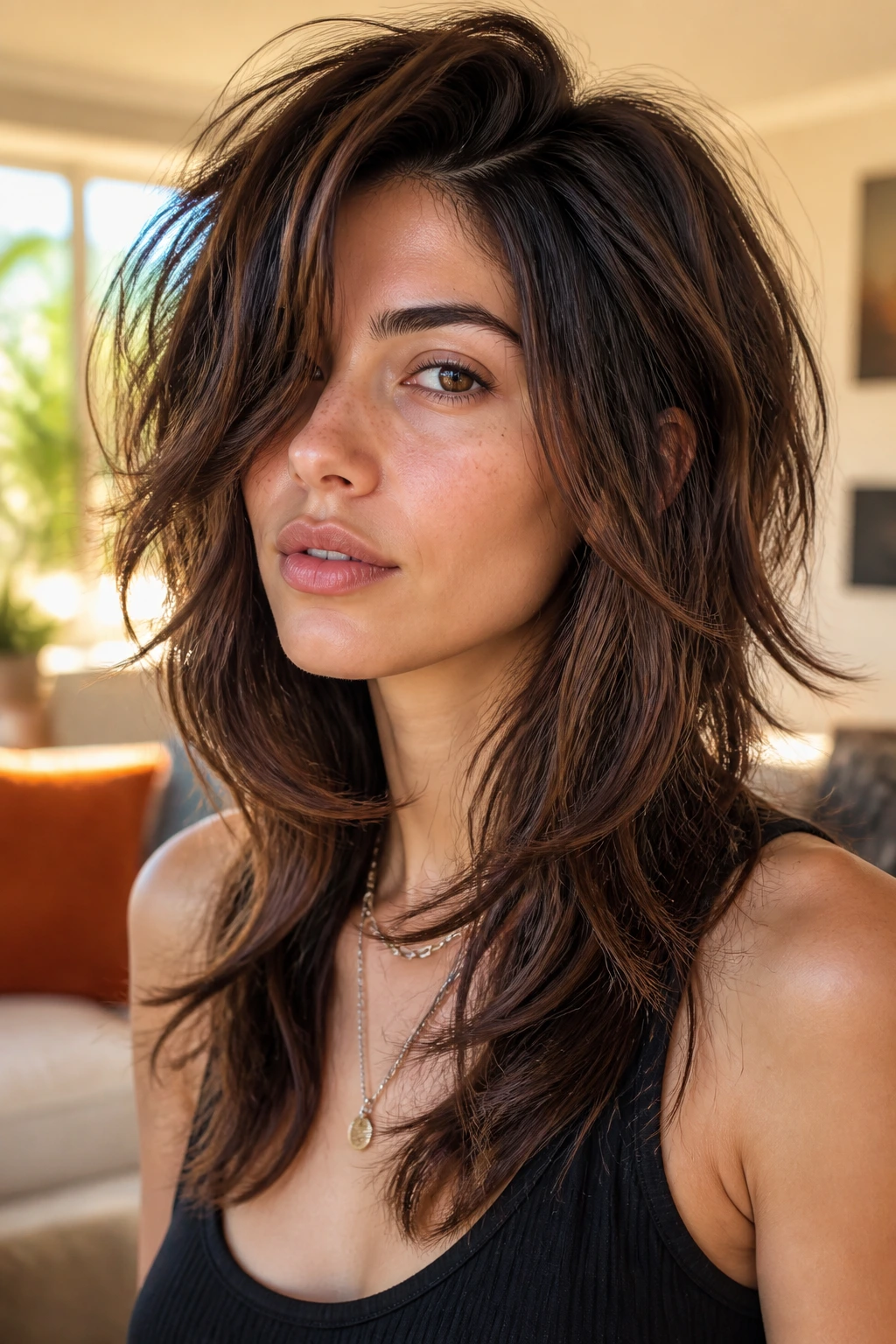
A good shag on thick medium hair doesn’t fight the density. It uses it. That’s why the best versions feel alive instead of overworked — the crown lifts, the sides move, and the ends keep enough weight to stay intentional.
Pick the version that matches how you live, not just how it looks in a photo. If you blow-dry, lean feathered or glam. If you air-dry, keep the layers softer and the fringe lighter. If you want attitude, go for the wolf or the razor cut. If you want something quieter, the layered lob-shag or hidden-crown version will do more work than it first appears.
Bring the right reference photos, say where you want the weight removed, and be honest about how much styling you’ll actually do. That’s the part that makes the haircut land.