



A curly wig can save a morning or waste money in one glance. The difference is rarely the price tag alone. It’s the curl pattern, the parting space, the cap fit, and whether the hairline looks soft or like it was stamped out of plastic.
The best affordable wigs for curly hair do one thing well: they respect texture instead of fighting it. A cheap straight wig can sometimes be rescued with a flat iron and a decent blowout. Curly hair is less forgiving. If the ringlets are too shiny, too dense, or too tidy in the wrong way, the whole thing looks off from three feet away.
That’s why budget curly wigs deserve a smarter lens. You’re not just buying length. You’re buying curl memory, movement, shape, and enough realism at the front that people notice your earrings before they notice your lace.
Why These Curly Wig Picks Are Worth Your Money
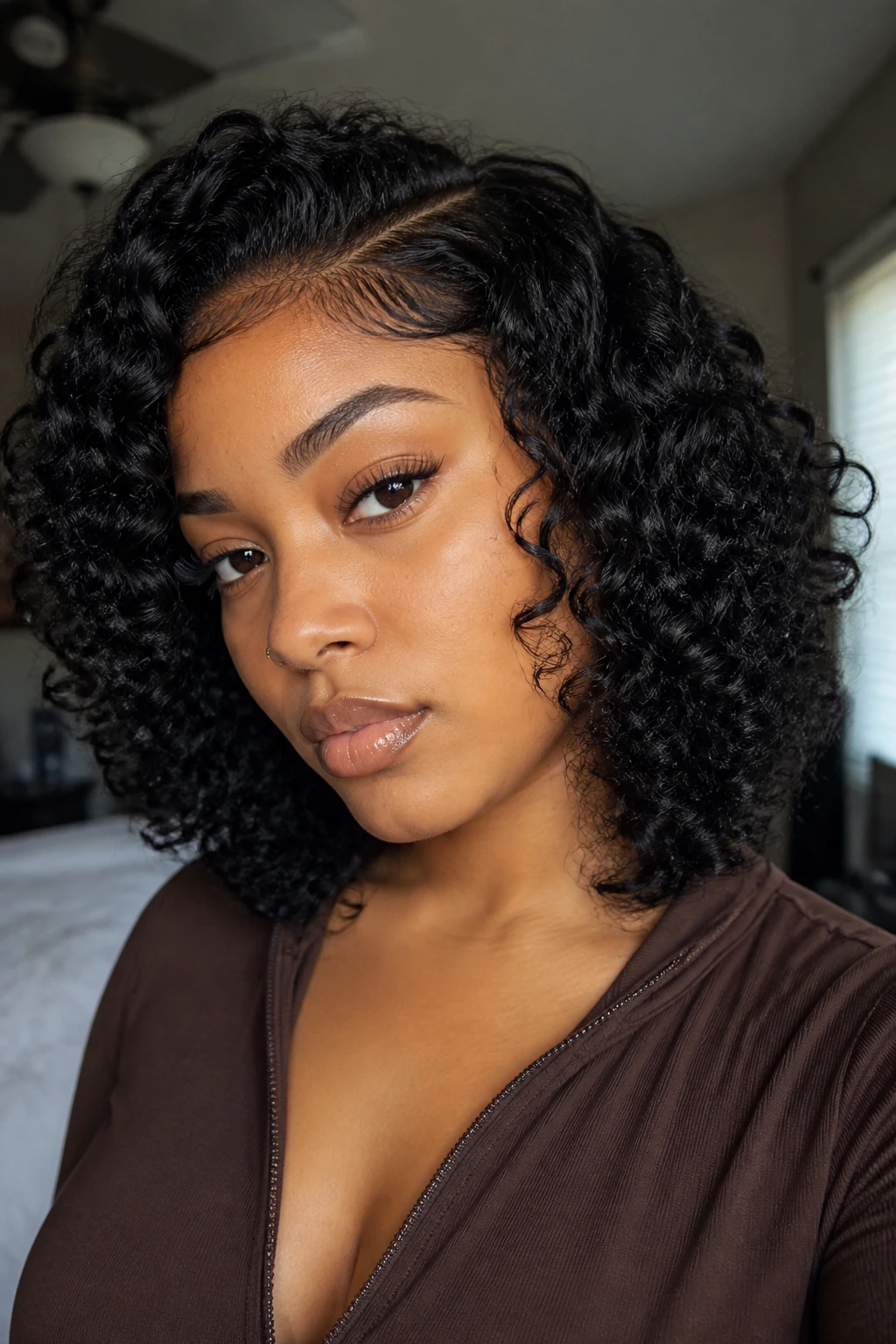
-
Texture-first choices: These are the wig types that already look good in curl form, so you are not paying extra for a style that needs constant rescue.
-
Better value at shorter lengths: Shoulder-length and bob-length curly units usually hold shape better, tangle less, and cost less than long curl cascades that eat up hair and patience.
-
Cap construction matters more than hype: A decent closure, a real elastic band, and sane density often beat a flashy listing with no clear cap details.
-
Realistic volume wins: The most convincing curly wigs are rarely the fullest ones; they’re the ones with enough body at the crown and lighter ends that move when you turn your head.
-
Lower-maintenance by design: A smart budget pick should still look decent after finger-combing, a mist of water, and a little mousse. If it only looks good in a product photo, I’d pass.
-
More ways to style them: The best curly units can handle a middle part, side part, half-up style, or a scarf day without collapsing into a frizzy lump.
1. Shoulder-Length Curls That Don’t Fight You
Shoulder-length curls are the sweet spot for a lot of people, and I say that with a lot of confidence. You get enough length to frame the face, but not so much that the ends start snagging on every collar, car seat, and crossbody strap you own.
A good shoulder-length unit usually sits around 12 to 14 inches, depending on curl tightness. That sounds short on paper. In ringlets or coily curls, it rarely looks short once it’s on your head, and that’s exactly why it feels like such a smart buy.
What to look for
- Length: 12 to 14 inches, especially if the curls are 3C or tighter
- Density: 130% to 150% if you want believable movement
- Parting: a 4×4 closure or a modest 13×4 lace front
- Best fiber: matte synthetic or a human-hair blend if you like touchable ends
The reason this category works so well is simple: curly hair needs breathing room. Once you push past the shoulders, the friction rises fast. Ends rub jackets. Napes frizz. Brush-outs turn into puff balls if you blink wrong.
This is the wig I reach for mentally when someone says, “I want curls, but I do not want a full-time project.” It’s also the easiest shape to tuck behind one ear, pin back, or throw under a clip without the front looking lopsided.
2. A Curly Bob With a Side Part That Does More Than It Seems
Why do curly bobs often look better than longer cheap units? Because the cut does half the work for you. A chin-to-neck-length bob gives the curls a shape to live in, which means less bottom-heavy volume and fewer triangular surprises.
The side part matters more than people think. A deep side part can soften a square face, make the hairline look less symmetrical in a good way, and hide a closure that is doing its best under budget lighting. I like this option for glasses wearers too, because the length stops before it starts competing with the frames.
The trick is to avoid a bob that is too blunt at the bottom. Curly bobs need a little rounding at the ends, even if it’s subtle. A straight-across cut on curls can look shelf-like fast.
If you see a bob in the 10 to 12 inch range with 130% density and a side part photo taken in daylight, that’s usually the sweet lane. No drama. No shaggy pyramid. Just shape.
3. Water-Wave Hair That Stays Soft After You Finger-Comb It
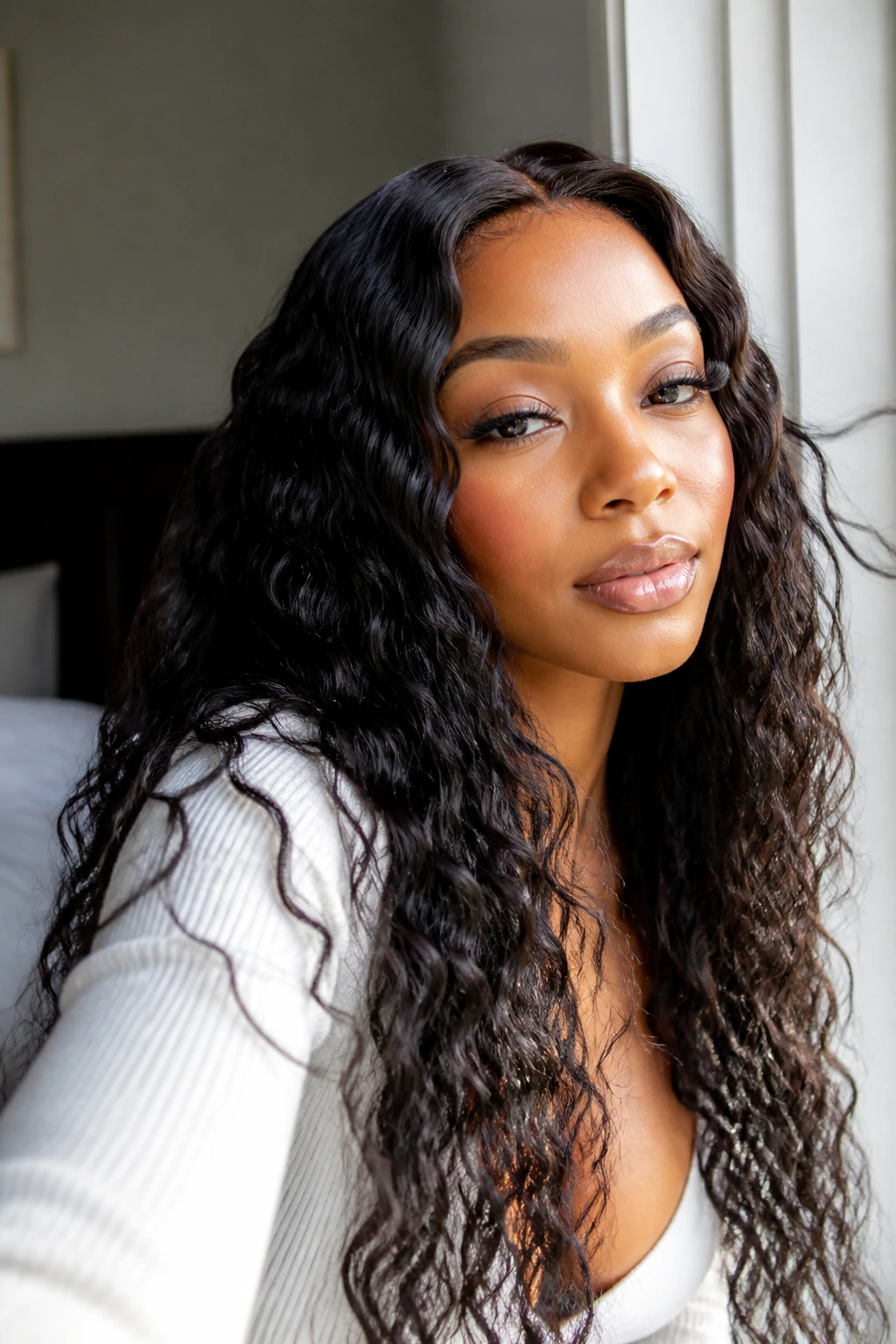
Water-wave texture is one of the best budget cheat codes in wigs, and I mean that in a good way. It has enough movement to look lived-in, but the pattern is looser than a tight curl, so it is less likely to explode when you run your fingers through it.
Why it earns a spot in the cart
Water-wave wigs are forgiving. You can mist them, scrunch them, pin one side back, and still have a shape left at the end of the day. That matters if you hate spending ten minutes defining curl clumps every morning.
They also tend to look less “costume” than ultra-perfect ringlets. A little irregularity helps. The fiber should bend, not gleam like nylon rope.
Best fit for this style
- People who want softness without a big silhouette
- Anyone who likes middle parts or loose side parts
- Buyers who need a wig that photographs nicely in indoor light without heavy styling
If the listing shows the hair brushed to a fluffy cloud, skip the fantasy and look for the raw curl pattern instead. The right water-wave unit should still show a clear S-shape when it’s dry. That’s the point. You want curl memory, not stiffness.
4. Kinky-Curly Volume for Days You Want Real Texture
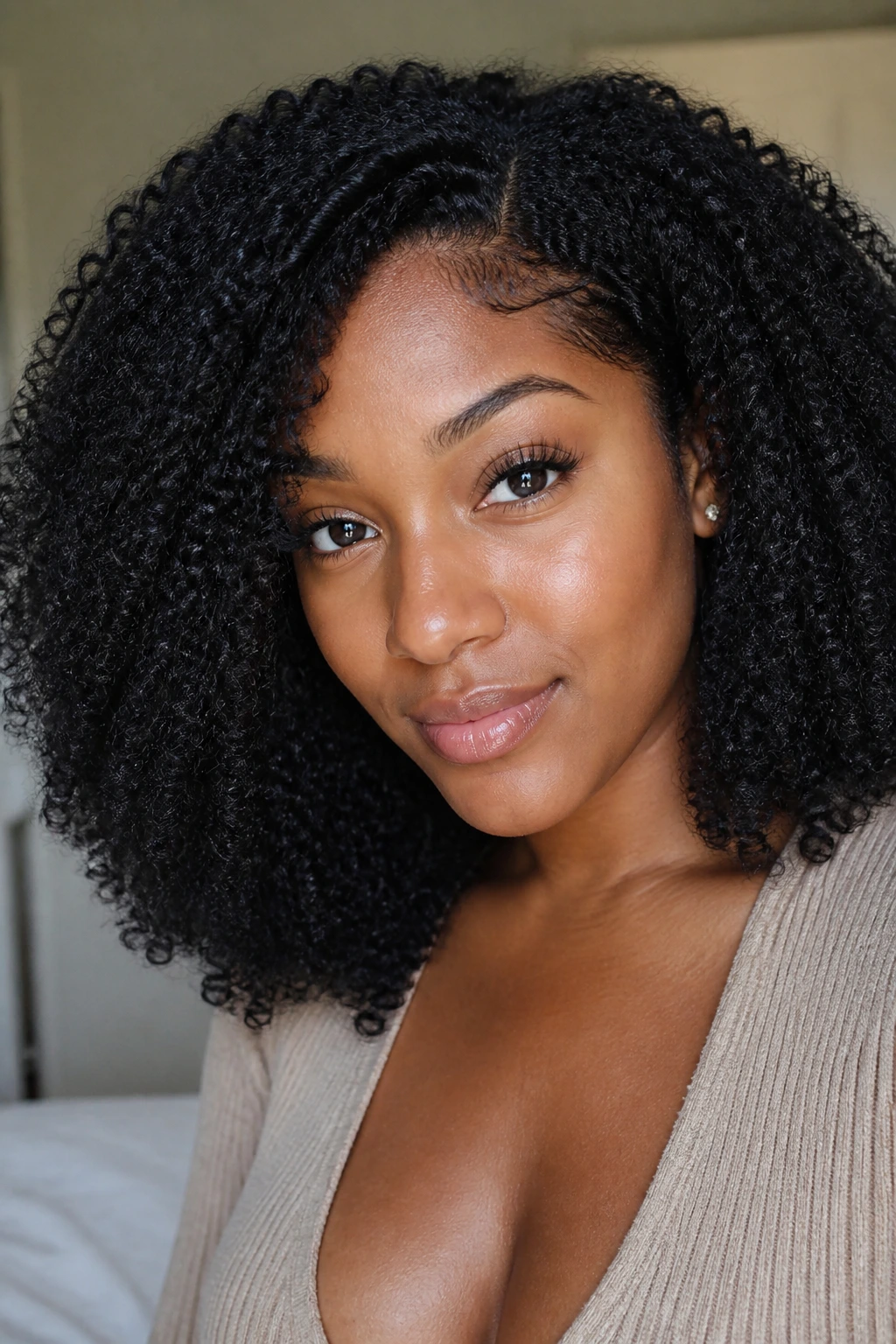
Kinky-curly wigs are a different animal. They don’t need to pretend to be sleek, and that is half their charm. When the texture is right, even a modest budget unit can look rich because the tight curl pattern naturally hides the cap better than loose waves do.
This category is where density becomes a real decision, not a marketing buzzword. A 150% density kinky-curly wig in a medium length can look lush and believable. Push the length too far without enough density and the ends start to look thin. Tight texture shrinks, but it also exposes weak construction if the tracks are sparse.
I like kinky-curly units when the goal is shape, not shine. They suit people who want a fuller profile around the temples and crown. They also work well if you leave a little frizz alone instead of trying to smooth every strand into obedience.
The best version has matte fiber, a soft hairline, and a little lift at the root. Too much uniformity kills it. Curls should breathe a little.
5. Glueless Lace-Front Hair for Fast Mornings
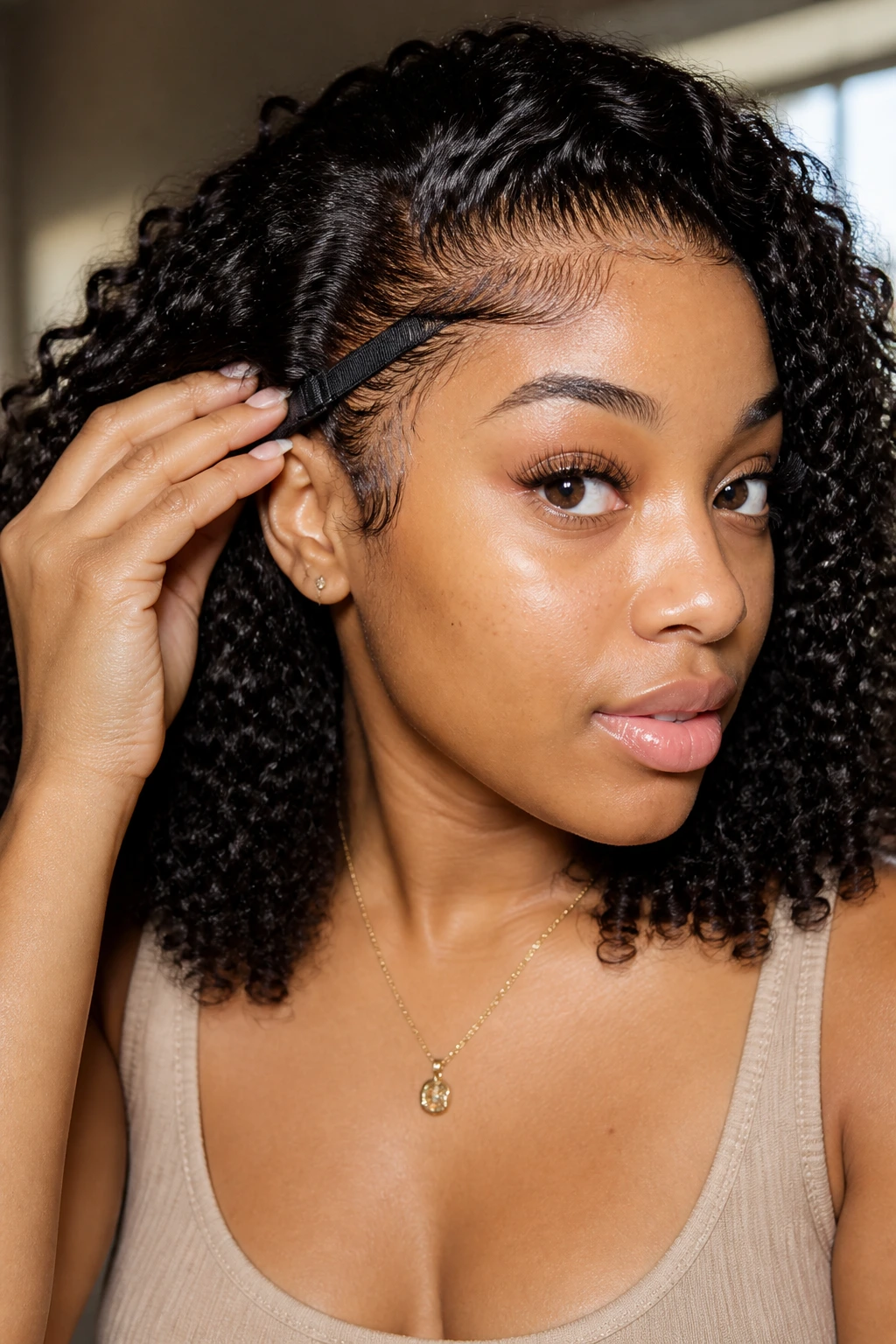
A glueless lace-front wig is the budget pick that keeps its dignity even when you are late. The whole point is security without adhesive: adjustable straps, combs if you want them, and often an elastic band that does the heavy lifting.
What I like here is the balance between convenience and realism. You still get a lace front, which helps the hairline melt better than a full cap, but you skip the glue mess. That means fewer tools, less cleanup, and no panic if you decide to take it off early.
The front is the part to inspect most closely. Look for pre-plucked density at the hairline, not a straight hedge. A tiny bit of irregularity matters. A glueless wig should sit flat enough that the lace disappears once you tint or powder it, but it should not feel fragile the first time you adjust the band.
This is a strong buy for people who wear wigs often. The price per wear usually makes sense fast.
6. A Headband Wig for Zero-Fuss Wear
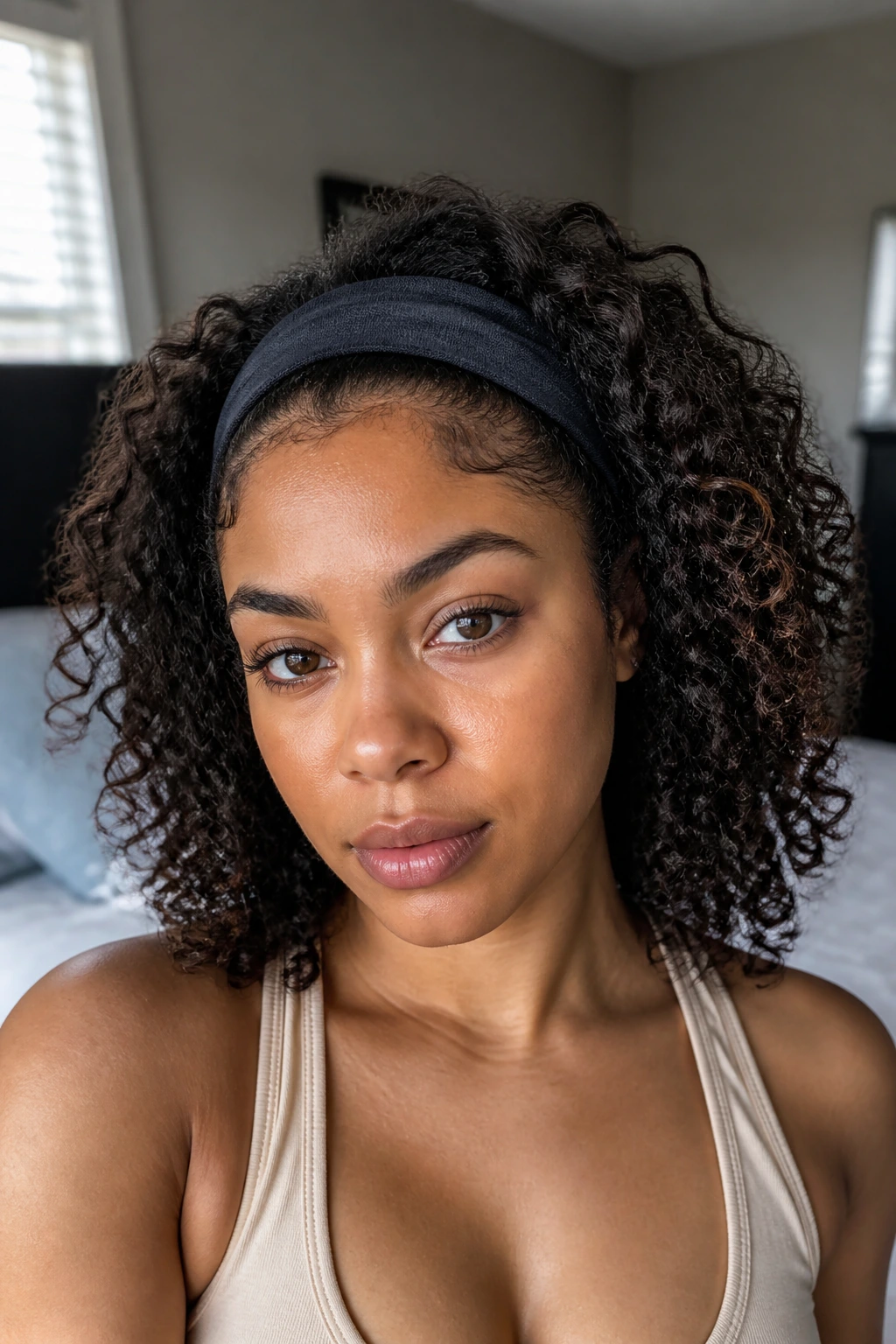
A headband wig is the no-nonsense answer to a lot of wig problems. No lace to trim. No glue. No ceremony. If you want curly hair on your head in two minutes or less, this is the category that keeps showing up for a reason.
It works especially well with curly textures because the fabric headband gives you a built-in frame. The curls do not have to fake a perfect hairline, which is where many budget units start falling apart. You can leave a little of your own hair at the edges, or hide everything under a wide satin band and call it a day.
This is not the wig you buy for a dramatic transformation. It is the wig you buy because your life is busy and your patience is finite. That matters more than people admit. A style you actually wear beats a prettier one that stays in the drawer.
If your curl pattern is tighter, a headband wig can look especially good pulled back slightly off the face. Let the front puff a little. It makes the texture look intentional instead of overworked.
7. Curly Bangs That Hide a Less-Than-Perfect Hairline

Curly bangs are underrated, and I’ll defend that opinion. Bangs do something useful that a lot of lace-front units cannot: they cut the eye away from a hairline that doesn’t need to be perfect to look believable.
They also help balance the face. A curly fringe can soften a long forehead, pull attention toward the eyes, and make a budget wig feel styled instead of simply worn. The main thing to remember is shrinkage. Curly bangs almost always sit shorter than they look in the listing photo, so I prefer a fringe that looks a little longer and fluffier out of the box.
Watch for these details
- Slightly longer bang pieces that can be shaped
- Soft layering around the temples
- Enough density at the front so the bangs do not separate into thin strands
Some people are nervous about bangs because they think they lock you into one look. They don’t, really. Curly fringe can be pushed to one side, pinned back, or blended into a fuller front if you want it out of the way.
8. Long Layered Ringlets Without the Triangle Shape
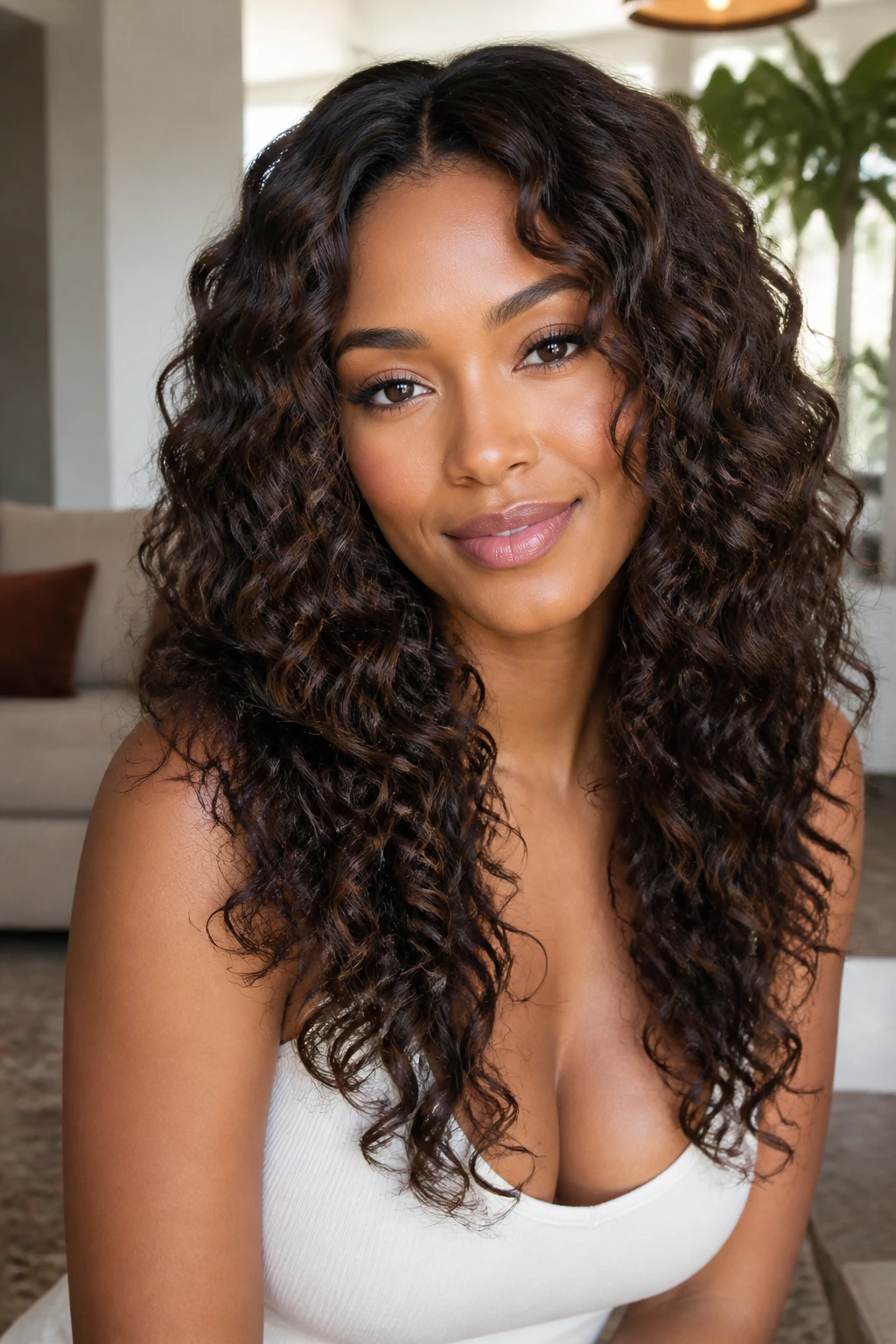
Long curly wigs can be beautiful, and they can also be a terrible idea if the cut is wrong. The triangle shape is the usual problem. All the bulk sits at the sides, the ends look sparse, and the whole unit starts resembling a cone in a hurry.
Layers fix that. Good layers break up the bulk and keep the hair moving instead of ballooning out. On a budget wig, layers are not a luxury. They are the difference between “long curls” and “a lot of hair with a problem.”
I prefer long ringlets when the fiber is soft enough to clump and the density is high enough to support the length. If you’re shopping around 20 to 24 inches, 150% density may be too light unless the unit is very well made. Once curls dry, they shrink and tighten, which can make the hair look thinner than the length suggests.
This is the pick for people who want glamour but not stiffness. It needs more care than a bob, though. No pretending otherwise.
9. Short Tapered Curls for Lightweight Wear
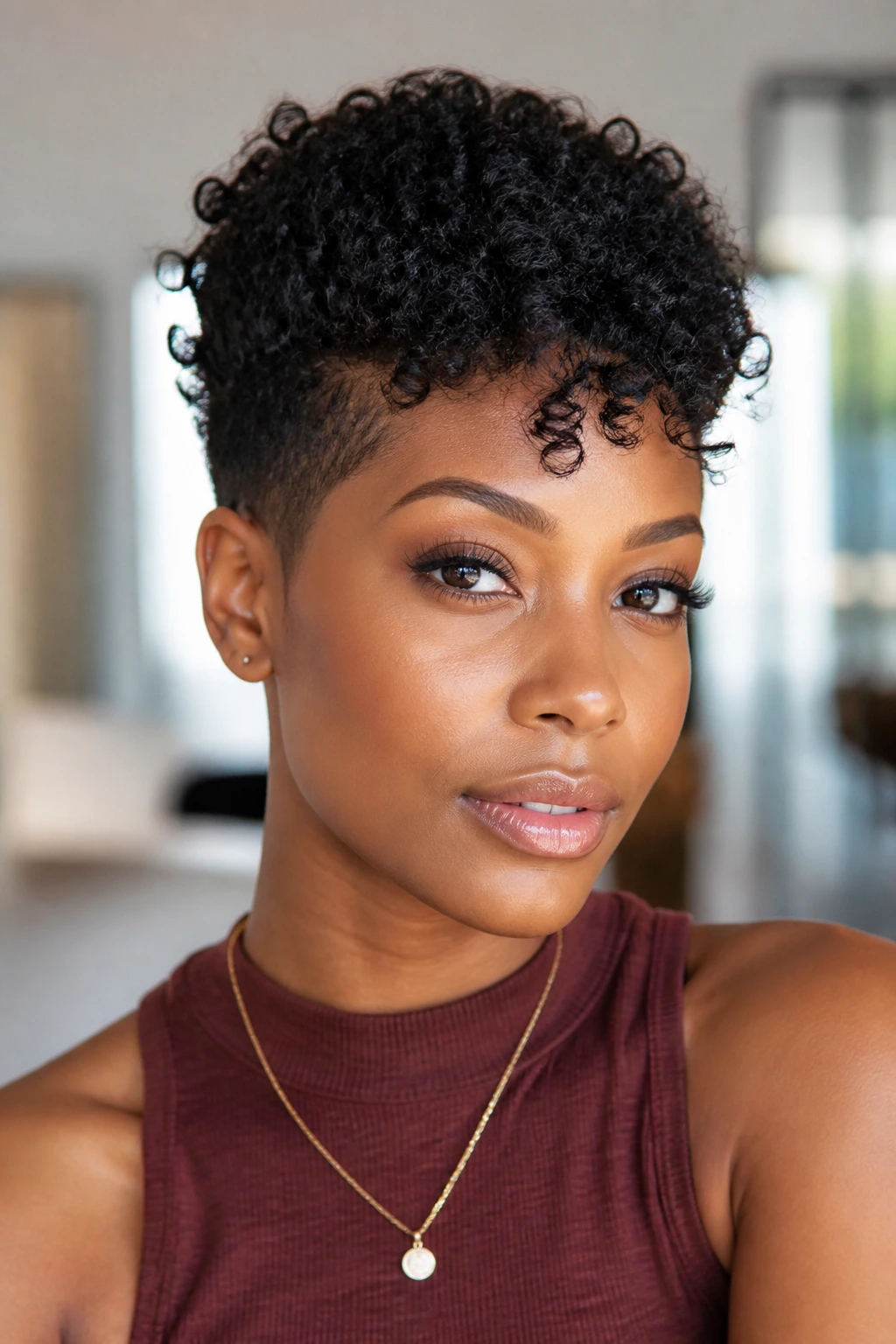
Short tapered curly wigs are one of those styles people overlook until they try one on and realize their neck is not being eaten by hair anymore. The cut is close at the sides and fuller on top, which gives you shape without weight.
I like this style because it solves two budget problems at once. It lowers the amount of fiber you need, and it hides a less expensive cap more easily because the texture is concentrated where the eye goes first. The silhouette feels modern, not plain.
It’s also one of the best choices if you hate tangles. Shorter curls do not rub together as much, and the ends stay cleaner longer. That sounds boring until you have spent twenty minutes picking out a matted nape on a long unit.
A tapered curly wig works especially well with earrings, bold lipstick, or a clean neckline. It looks done even when you have only spent five minutes on it. That’s not a small thing.
10. A Deep-Part Closure Wig That Looks More Expensive Than It Is
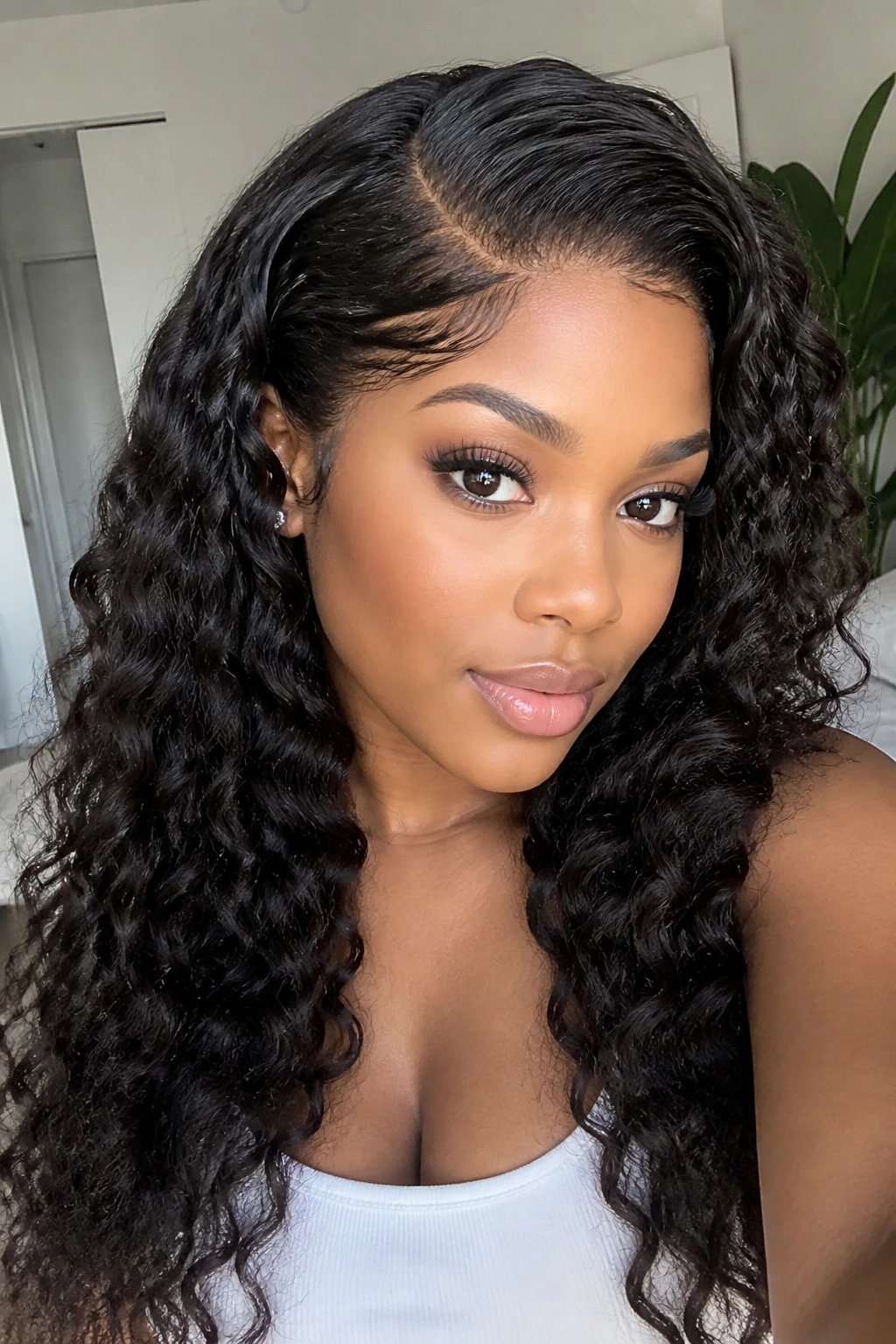
A deep-part closure wig is a smart buy when you want a neat part without paying for a full lace front. A 5×5 closure gives you more room than a tiny 4×4, and that extra space matters on curly hair because the front needs a little freedom to sit naturally.
The part is the star here. If the part is flat, wide enough, and not too shiny, the whole wig reads as calmer and more expensive. Curly hair does not need a runway-perfect center line. It needs a part that looks like a part.
I think this is one of the best places to save money, honestly. You can spend less than you would on a full lace front and still get a front view that feels polished. Just do not buy a closure wig with a part that looks like a pencil mark in a wig cap. That is where the illusion dies.
This style is especially good if you like one favorite part and do not plan to change it constantly. Simplicity can be a feature.
11. HD Lace Curves That Blend Better at the Front
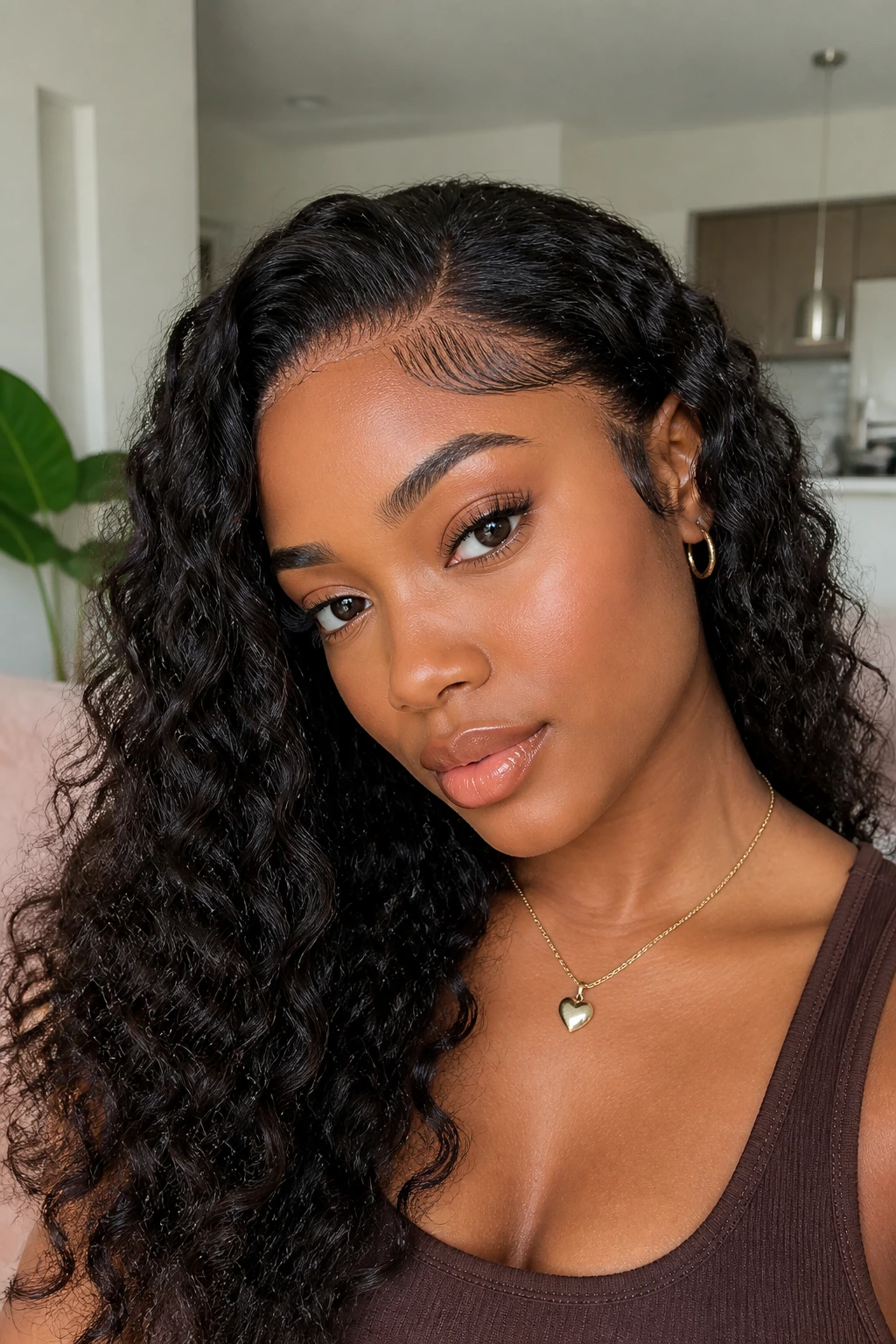
HD lace gets talked about like magic, and it isn’t magic. It is just thinner, finer lace that disappears more easily against the skin when it is installed well. On a curly wig, that softer front can be worth the extra few dollars because the texture already brings the drama; the hairline should stay quiet.
The catch is durability. Thin lace can fray if you are rough with it, and cheap HD lace can still look too pale if the tint or makeup match is off. I would rather buy a decent lace front with a believable color than chase paper-thin lace that tears the second I adjust the wig.
This is a good category if you wear your part close and want the front to blend instead of announce itself. The best versions have modest baby hairs, not those thick little swoops that look pasted on with a glue stick. A little hairline work goes a long way.
If you like curling up front pieces away from the face, HD lace gives you a little more room to do that without the edge showing so much.
12. Heat-Friendly Synthetic Curls You Can Re-Shape
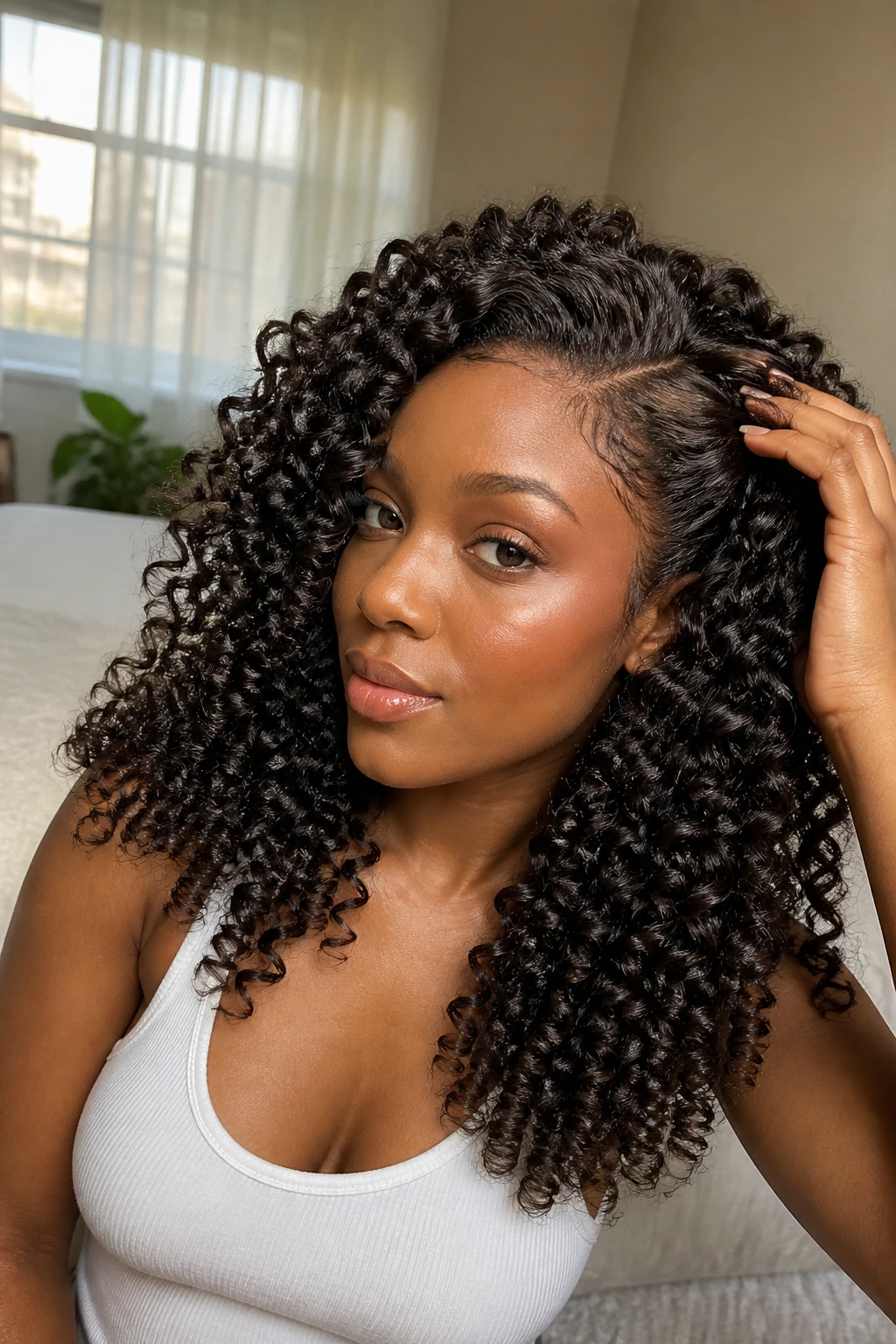
Heat-friendly synthetic wigs are for people who want budget pricing but still want some control. A standard synthetic curly unit gives you a fixed pattern, which is fine if you like it. Heat-friendly fiber adds a bit of flexibility, as long as you stay inside the safe temperature range listed by the maker.
Usually, that means low heat. I’d think in the 250°F to 300°F range unless the product says otherwise, and even then I’d be cautious. Too much heat can melt the curl pattern into a limp shine that does not come back.
The real appeal here is rescue value. If the ends get weird, you can reset them. If you want to loosen a curl just a little, you can. That makes this category useful for people who like to tweak rather than commit.
It does cost a bit more than standard synthetic, but not so much that it stops being affordable. If you like changing your shape now and then, the extra money is easier to justify than spending on a second wig.
13. Petite Cap Fits That Stop Slipping and Poking
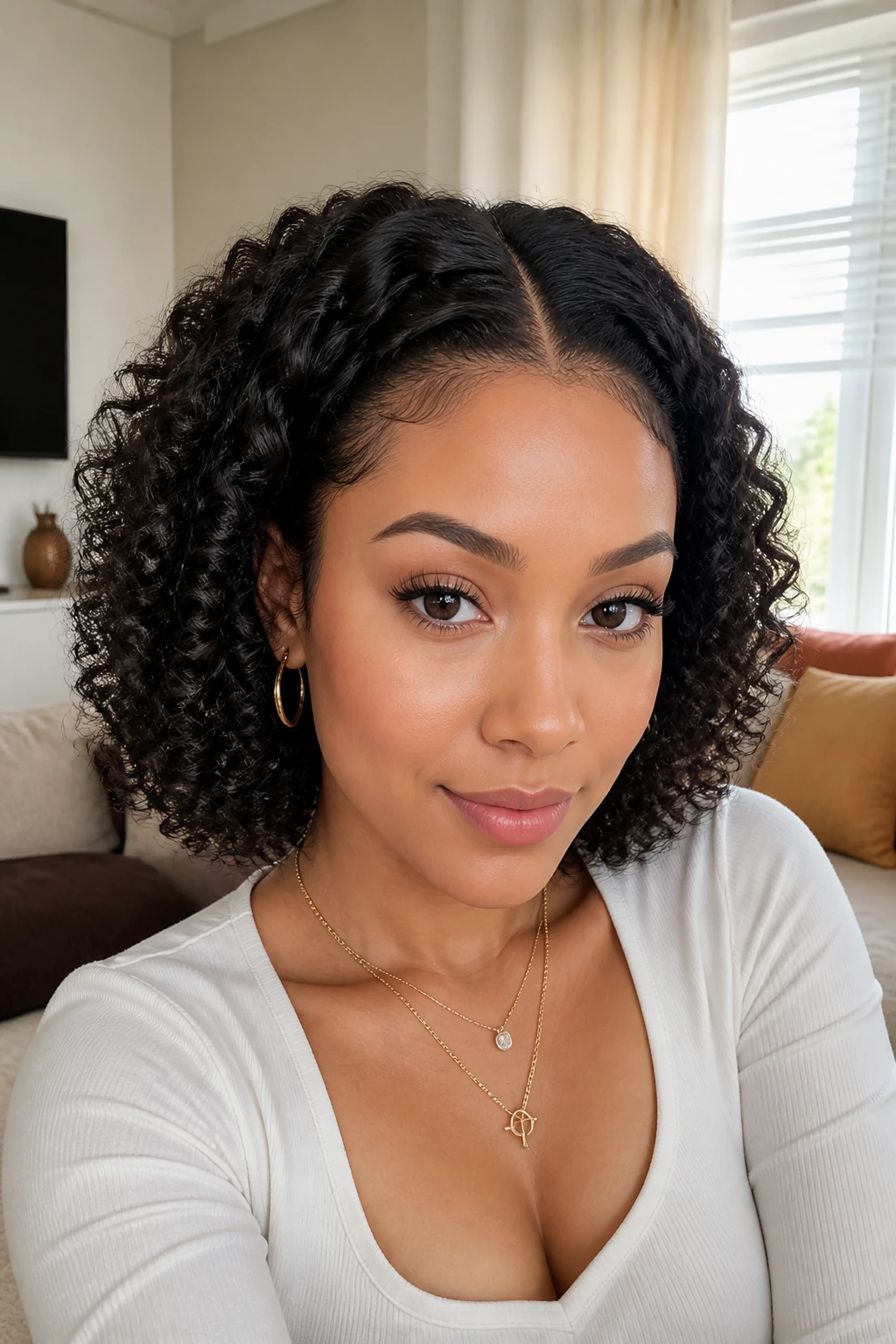
A bad cap fit can ruin a decent wig faster than a bad curl pattern. Petite cap options matter because not everybody has the same head circumference, and a loose wig slides, lifts, and starts looking bulky at the sides no matter how nice the fiber is.
I wish more budget listings were honest about cap size. They should be. If your head measures around 21 to 21.5 inches, a petite or petite-average fit is worth seeking out. If the wig is too big, you spend the whole day nudging it back into place. That gets old.
Look for adjustable straps, a secure nape, and ear tabs that actually sit where they should. The best petite units feel snug without squeezing. If you get a headache after twenty minutes, the fit is wrong, not you.
This category is not glamorous, but it saves money by keeping you from buying three wigs when one properly sized one would have done the job.
14. High-Density Curls for Big, Full Hair
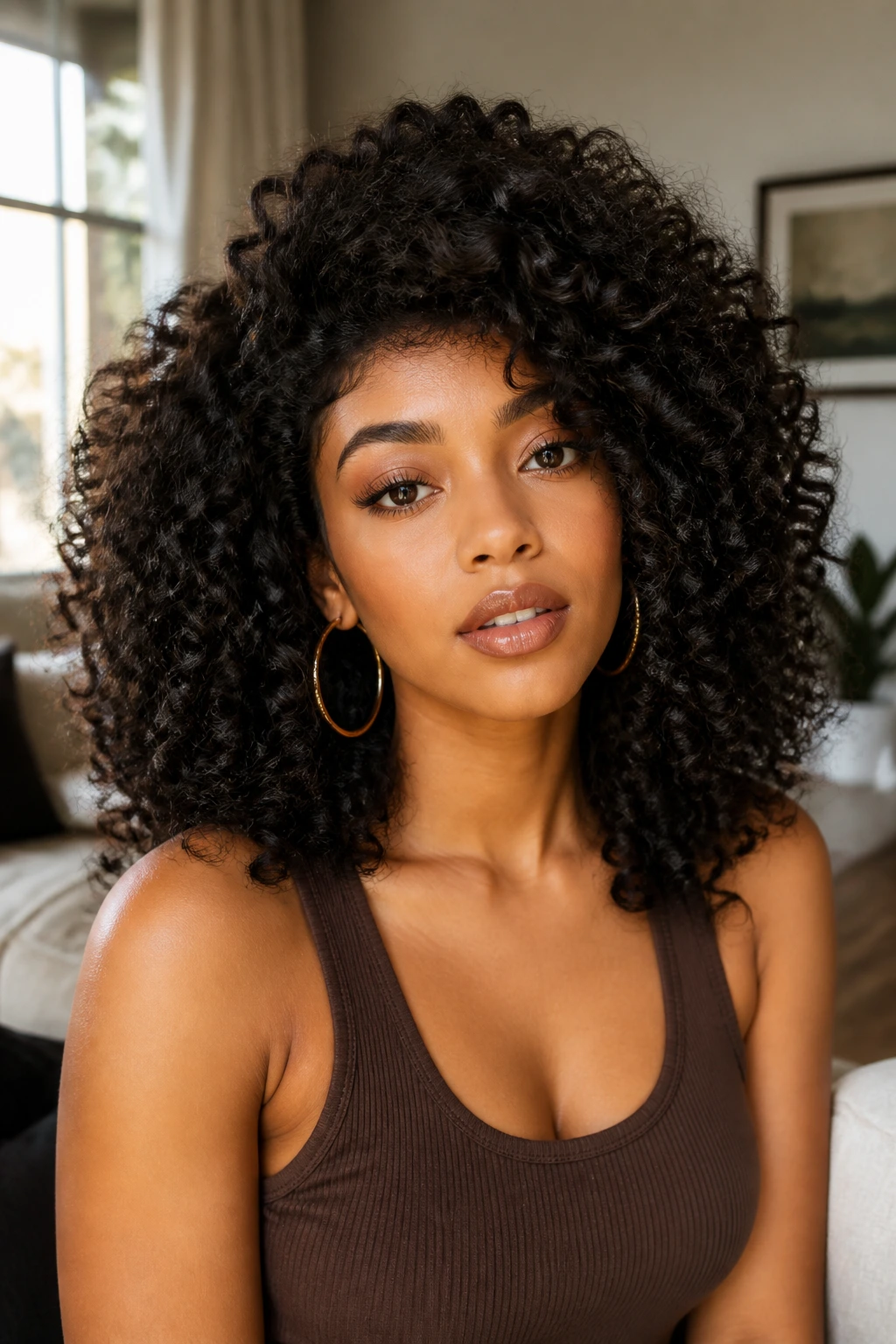
Sometimes you want the volume. No apology needed. High-density curly wigs can look rich, dramatic, and full-bodied in a way lighter units cannot, especially if you prefer a styled silhouette that reads from across the room.
The key is moderation in the length. High density makes the most sense in medium lengths, roughly 14 to 18 inches, where the curls can stay buoyant instead of drooping. A very long, very dense wig can feel heavy on the scalp and look like too much hair unless the cut is carefully layered.
I like this pick for nights out, photo days, and people who enjoy a fuller outline around the face. If your personal style leans bold, this is worth the money. If you want something that blends into everyday life, it might be too much unless you tame it with water and a soft brush at the crown.
Dense curls need room to live. Let them.
15. Low-Density Natural-Look Units That Don’t Read as “Too Much”
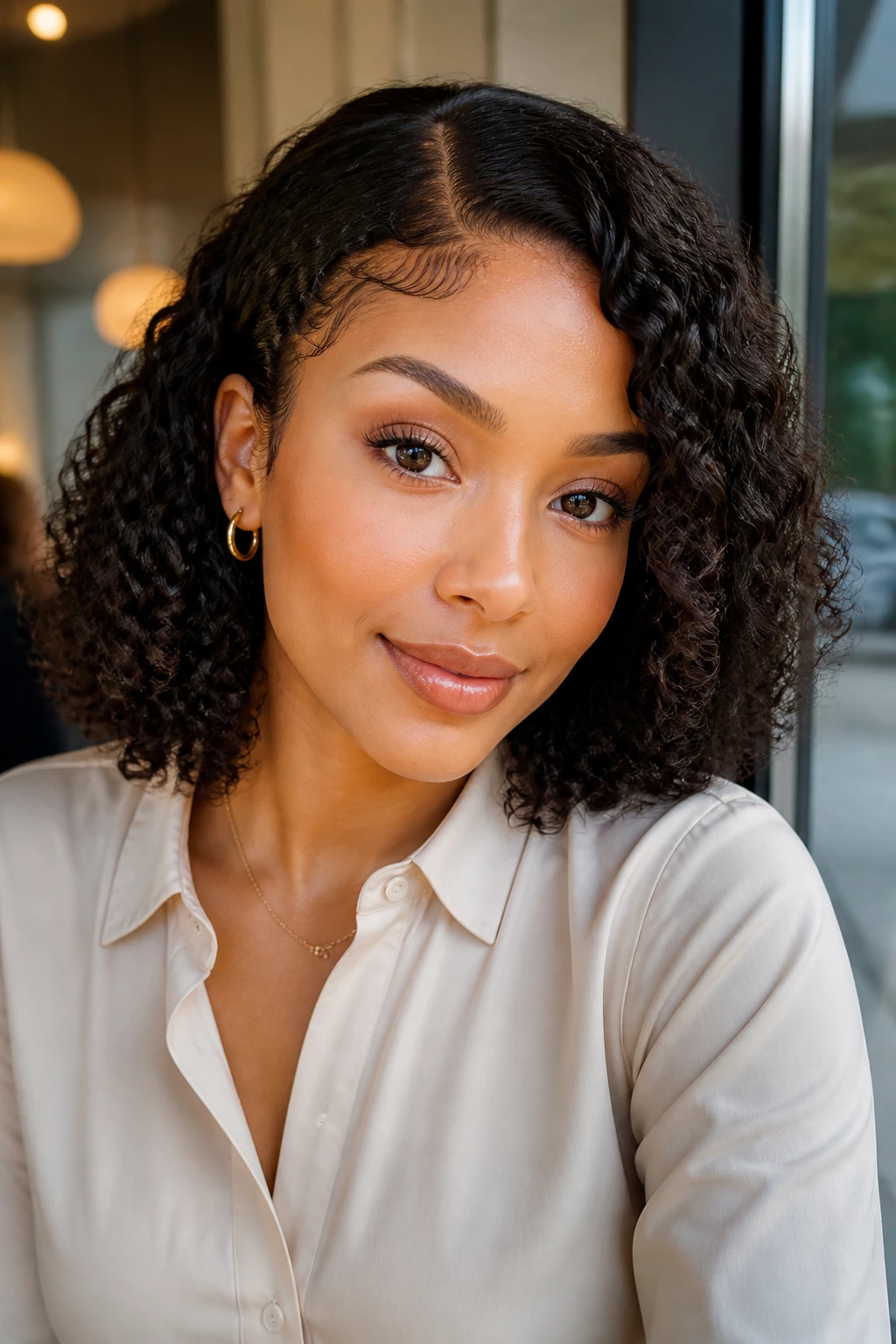
Not everybody wants a wall of hair. Low-density curly wigs, usually around 130% to 150%, can look more believable because they let the cap move with your head instead of sitting like a helmet.
This is one of my favorite lanes for office wear or for anyone who feels swallowed by volume. The curls still look full enough to be curly, but the overall effect is lighter and calmer. The face stays visible. The wig does not enter the room before you do.
Lower density also helps with tangling. Fewer fibers rubbing together means less friction, especially at the nape. That matters more than people think when they are comparing “full” on a product page to “full” in actual daylight.
If you want a wig that people assume is your hair on a good day, this is the category to watch. It’s quiet in the best way.
16. U-Part Curls That Blend With Your Leave-Out
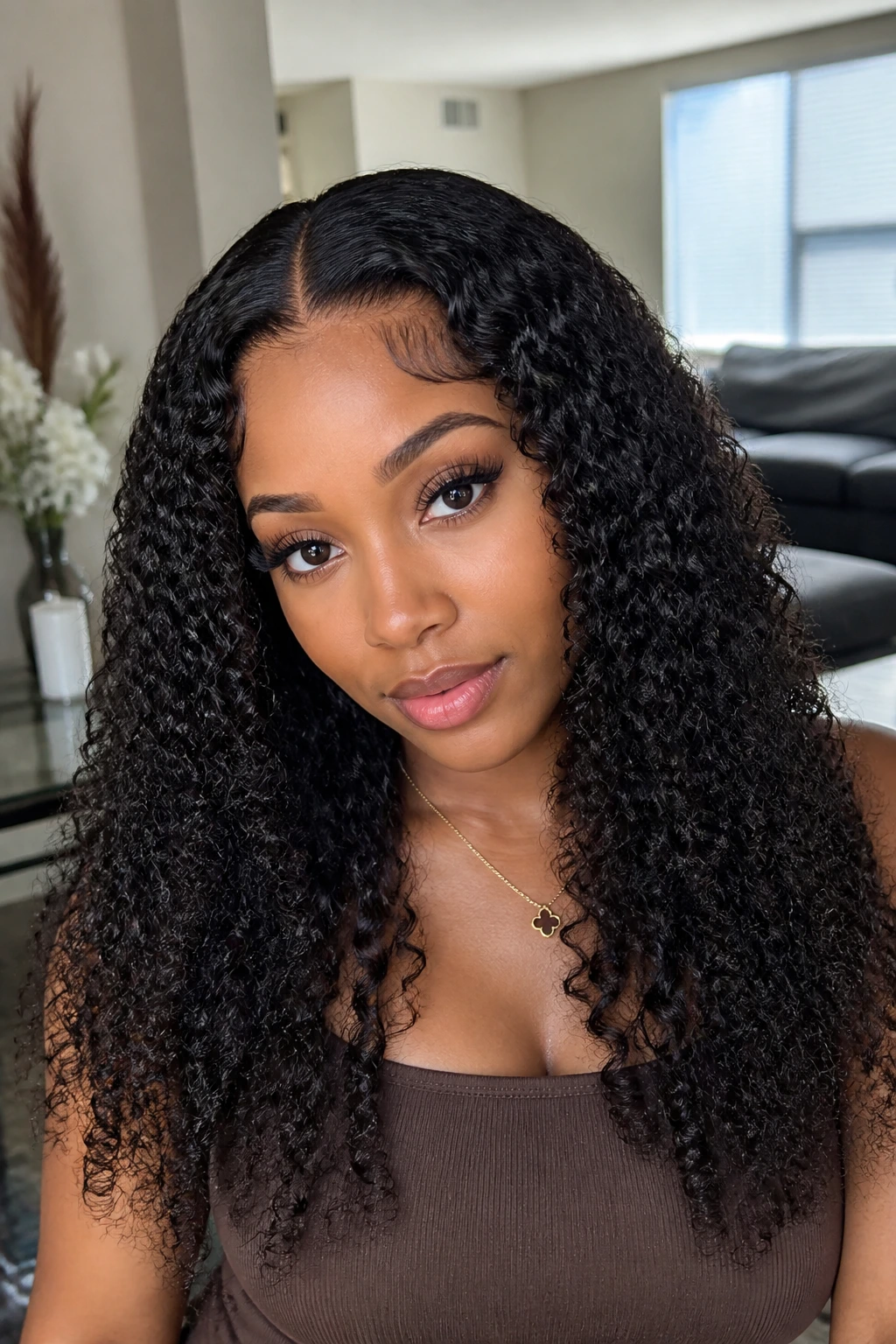
U-part curly wigs are for people who want a little of their own hair in the mix. The opening lets your leave-out cover the crown or part, which can make the style look more personal and less wig-like when blended well.
The upside is realism. The downside is maintenance. Your natural hair has to match the unit’s curl family or at least cooperate with it. If your leave-out is straight and the wig is a tight ringlet texture, you’ll spend more time blending than you probably wanted.
I like U-part units when the wearer already knows their own hair behaves decently under heat or product. They can look especially good with curly or coily leave-out because the seam disappears faster. Just keep the opening neat and do not overload it with product, or you’ll end up with a sticky little patch at the top.
This is a smart buy if you want a more integrated finish and don’t mind doing a bit more work in the front.
17. Half Wigs That Give You Hairline Coverage Without the Glue
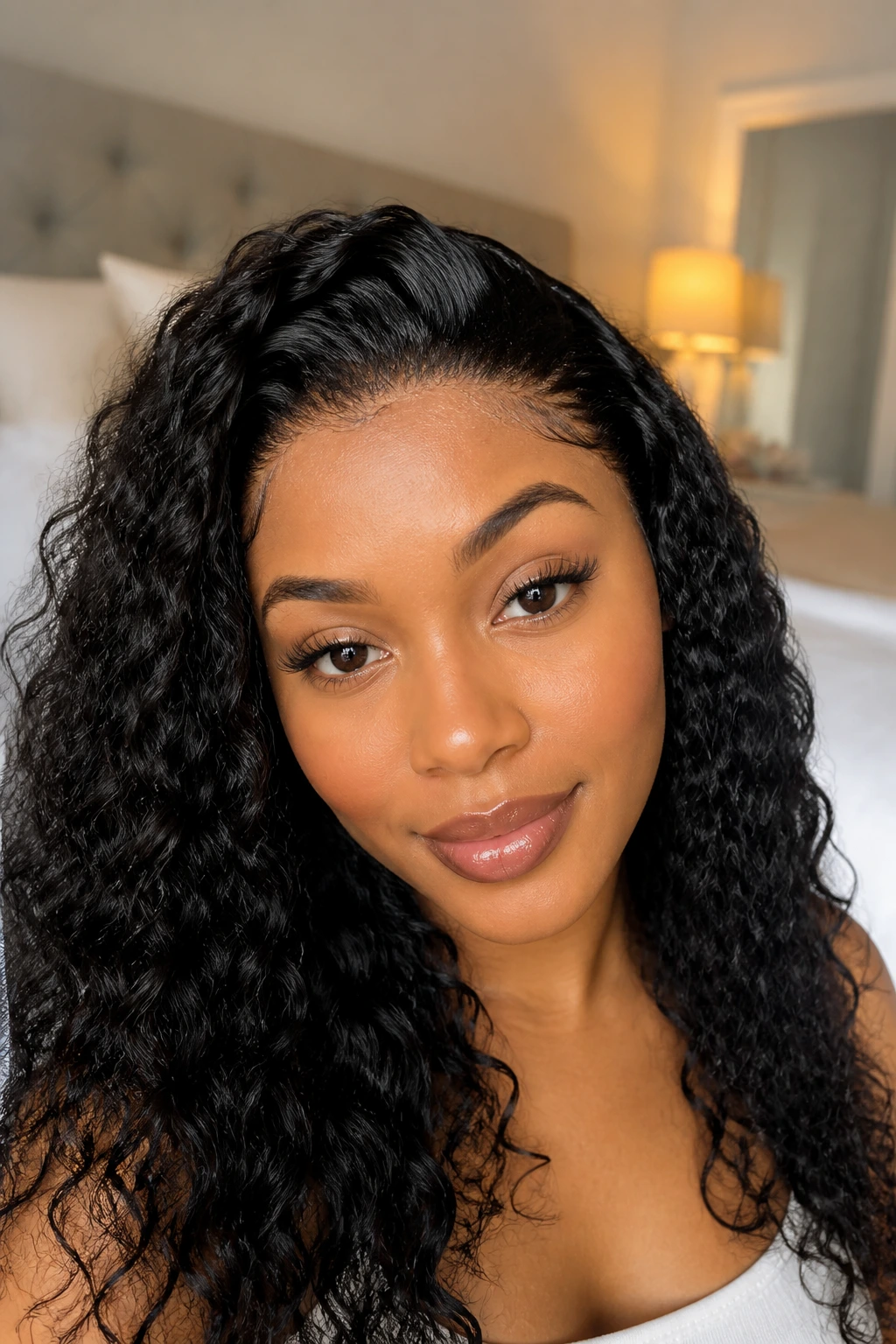
Half wigs are the practical cousin in the curly wig family. They cover most of the head, but they leave the front open enough that you can blend or accessorize without worrying about lace tint, adhesive, or front plucking.
The value here is speed. Half wigs go on fast, stay secure with combs and a grip band, and often cost less than full lace constructions with similar fiber quality. They are especially nice for people who like a scarf, a puff, or a front section of their own hair showing.
Curly half wigs work best when the transition area is soft. If the seam is harsh, it looks like two hairstyles meeting under stress. Keep the front line smooth, choose a texture that matches your own as closely as possible, and you’re in much better shape.
This is one of the easiest places to spend less without looking cheap, which is rare and useful.
18. Mid-Length Loose Curls for the Most Wear Per Dollar
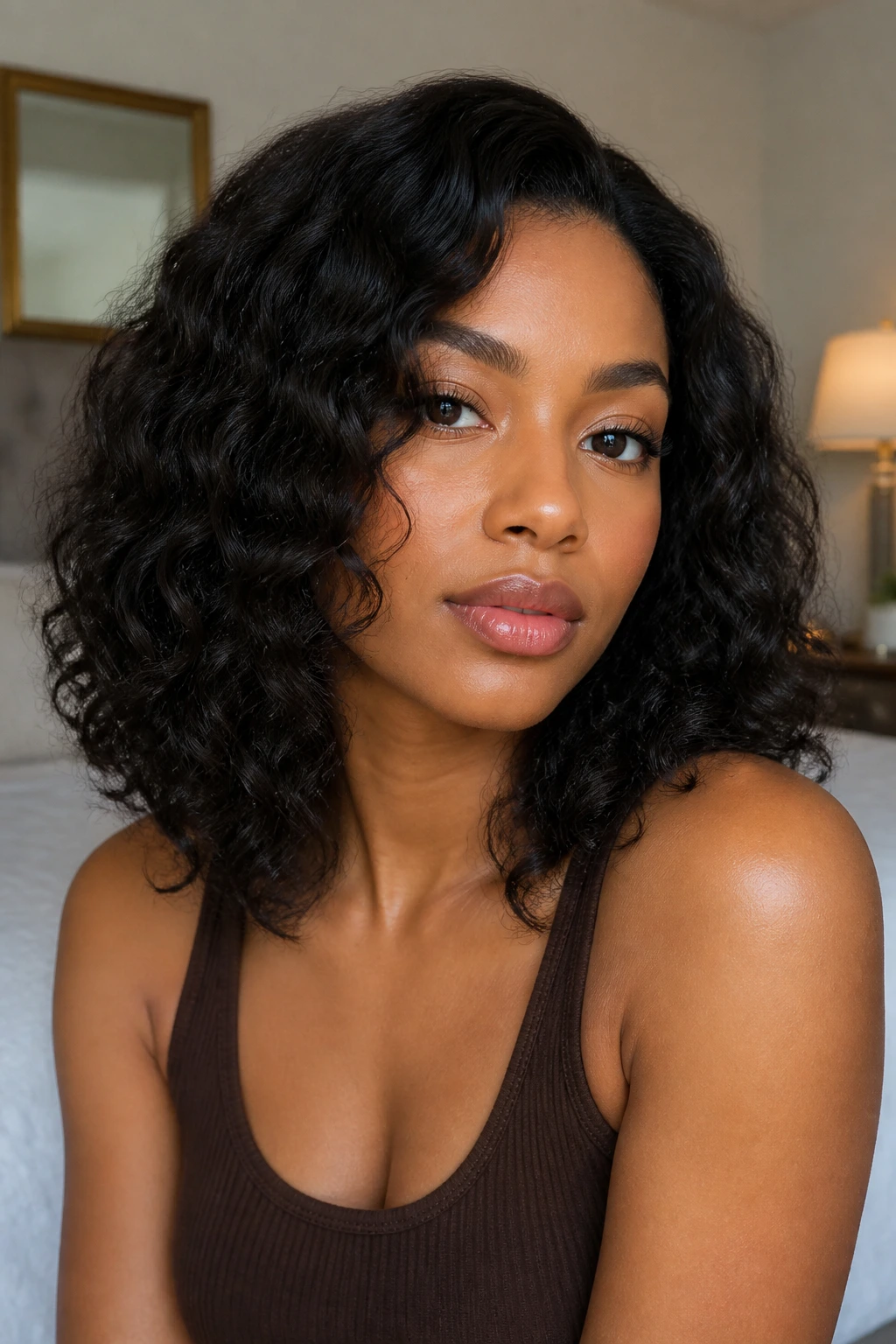
Mid-length loose curls are the sensible finale here, and I mean that in the most flattering way. They usually sit around 14 to 18 inches, which is long enough to feel styled but short enough to avoid the worst tangles and the worst price jumps.
Loose curls also age well. That’s the honest advantage. When a longer unit starts to fray at the ends, it can look tired fast. A mid-length curl wig often just looks softer. The silhouette stays tidy even after a few wears, which makes the cost-per-wear hard to beat.
I like this length for people who want one curly wig that can do school runs, dinner, errands, and a nicer outfit without needing a complete restyle. Add a side part one day, a clip the next, maybe a satin scarf on the weekend. It stays flexible.
If I were picking only one budget curly wig for a first buy, this would be one of the strongest contenders. It does not try too hard. That’s the point.
What Makes Curly Hair Wigs Cost More or Less
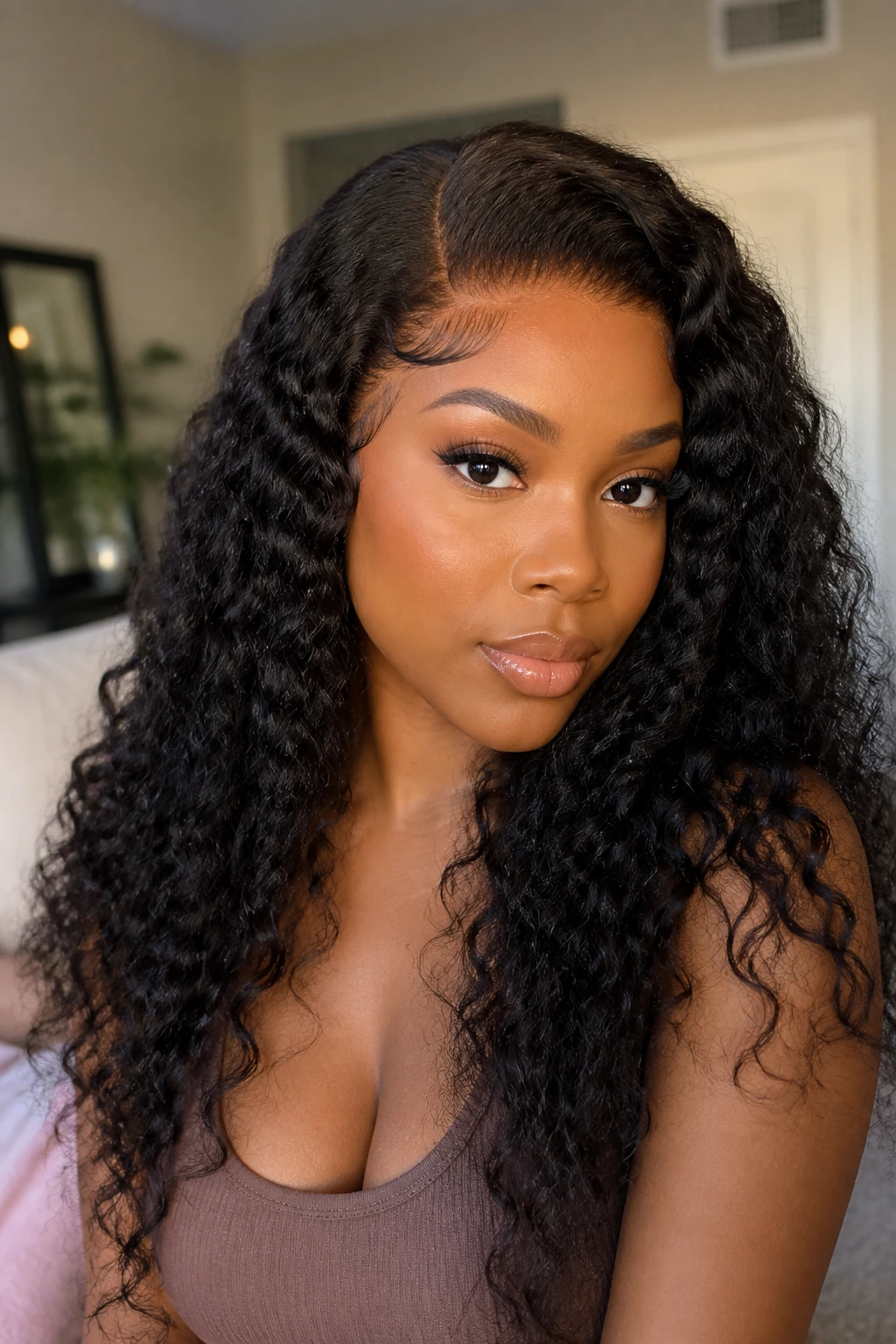
Curly wigs are priced by more than length, and the weird part is that a lot of shoppers get stuck comparing only inches. That’s a mistake. Two 16-inch units can sit in completely different price bands because one has better lace, denser hair at the front, a more believable part, or a cap that fits cleanly without glue.
Curl pattern matters too. Tighter curls often hide construction flaws better, which is helpful for value, but they can also require more fiber to look full. Looser curls show the front more clearly, so the lace and hairline have to do more work. That’s why a cheap loose-wave wig can look fussy while a cheaper kinky-curly unit looks surprisingly rich.
Synthetic fiber lowers the price fast, and in curly hair that often makes sense. Curls already have built-in style. If the fiber is decent and the sheen is controlled, you don’t always need human hair to get a good result. Human hair offers more heat freedom and a different feel, but it also asks for more money and more maintenance.
The hidden cost is cap construction. A wig with a weak cap can feel cheap even if the fiber is fine. I would rather buy a slightly shorter unit with a better front than chase extra inches and end up with a wig that needs constant correction.
Essential Tools for Buying, Fitting, and Refreshing Curly Wigs
-
Wig stand or canvas head: Keeps the shape upright between wears and helps the curls dry without flattening at the crown.
-
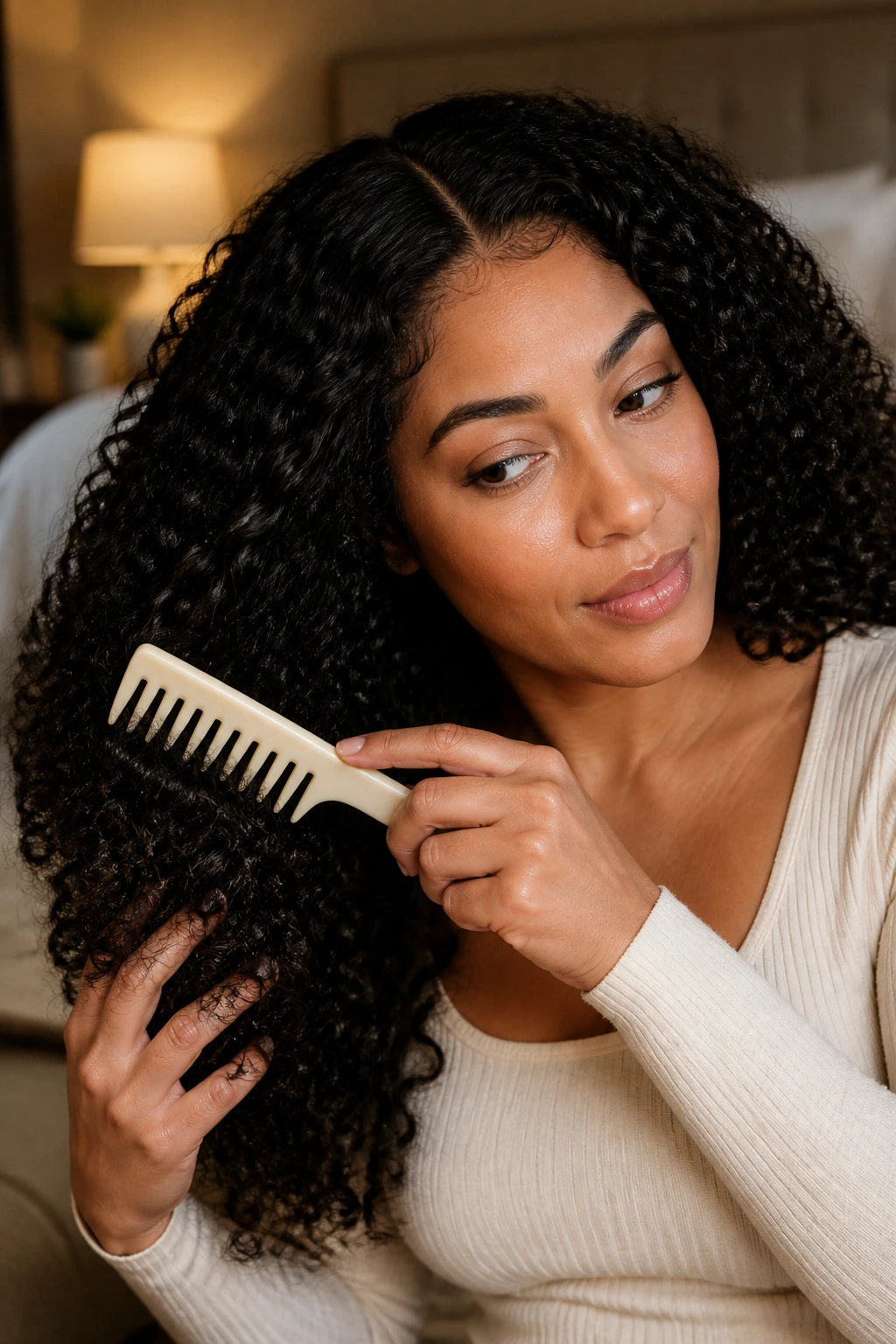
Wide-tooth comb: Good for gentle detangling on looser curls or after a wash; use it sparingly and always from ends to roots.
-
Detangling brush: A loop brush or flexible detangler is safer than a stiff paddle brush on curly fibers.
-
Spray bottle with cool water: The fastest way to revive curl clumps without drowning the unit.
-
Foaming mousse or wig-friendly styling foam: Helps reset shape and tame flyaways on both synthetic and human-hair curls.
-
Wig grip band: Saves your edges, reduces slipping, and can make a marginal cap fit feel much better.
-
Rat-tail comb: Useful for parting, gentle lifting, and cleaning up the front without roughing up the texture.
-
Tweezers: Only for tiny, careful plucking at the hairline if the wig needs it. A heavy hand will wreck a budget unit fast.
-
Lace tint spray or powder: Helpful if the lace arrives too pale against your skin tone.
-
Silk or satin scarf: Good for nightly storage, flattening the front, or keeping the curls from getting crushed in a drawer.
-
Wig stand travel bag or satin bag: Keeps dust off the fiber when you’re not wearing the unit for a while.
Smart Shopping Notes That Save You From a Bad Curl Pattern

Read the density before you fall for the photo. Long curls with low density are one of the most common budget disappointments because the ends look stringy once the style is on your head. If you’re shopping longer than 18 inches, I’d want to see either layered construction or a density that doesn’t feel skimpy.
Check the cap size with the same care you’d give shoe size. Head circumference, ear-to-ear, and front-to-nape measurements matter more than people want to admit. A curly wig that is slightly too big can shift around and create a puff at the temples; one that is too small can flatten the curls in weird places and leave you with pressure behind the ears.
Inspect the front photos in daylight if you can. Harsh studio lighting hides shine, lace color issues, and over-plucking. A listing that only shows glam angles from one side usually means the product is doing some hiding of its own.
Spend on the hairline and part before you spend on extra inches. Those are the places people actually look first. If the lace melts well and the part looks like it belongs there, the rest of the wig gets more forgiveness than you might expect.
And one more thing: if the product description is allergic to details, I get suspicious. Good sellers tell you cap type, lace size, density, and fiber type. Vague listings tend to hide problems behind curls.
How to Make an Affordable Curly Wig Look Like It Grew From Your Head
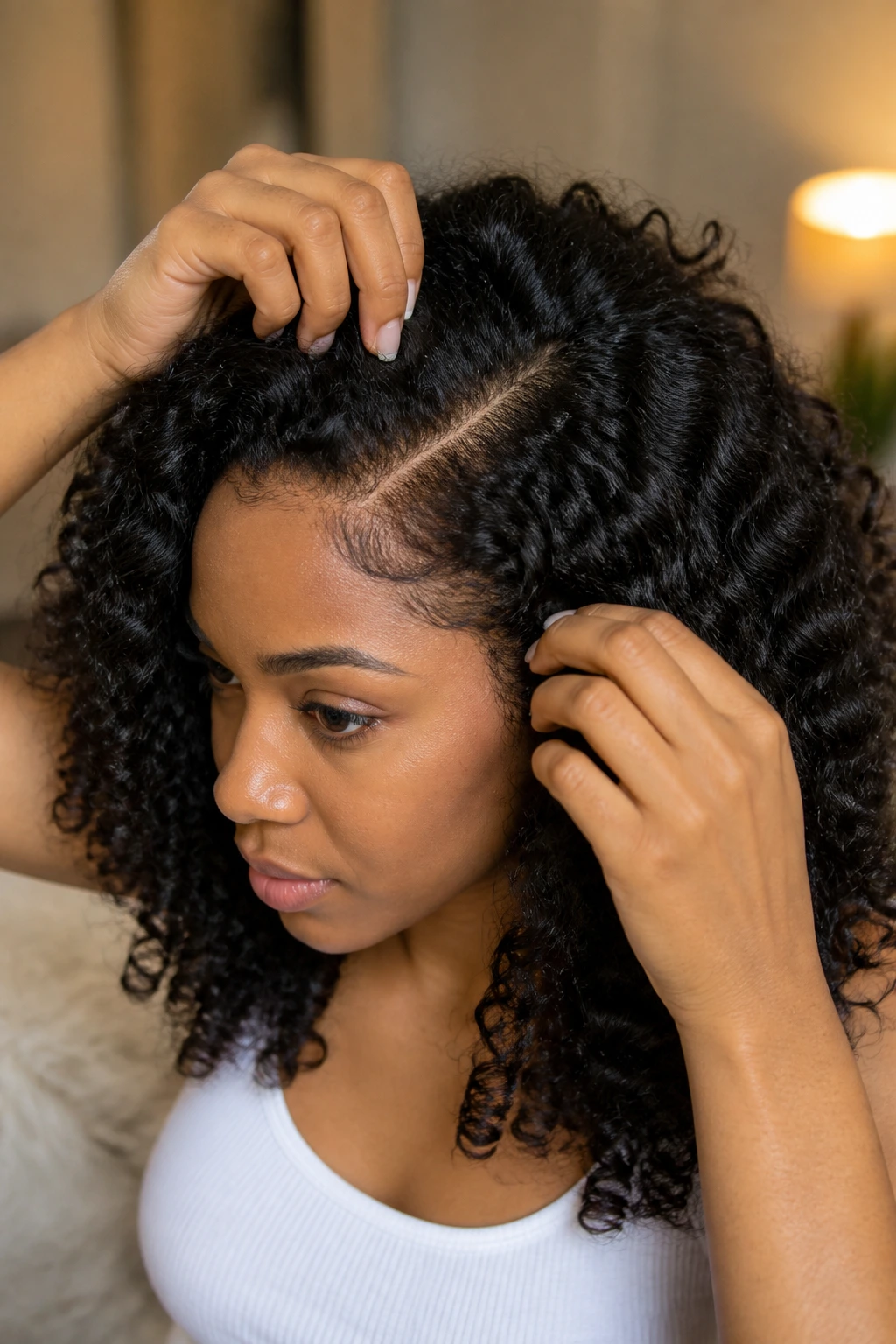
Presentation: Start with a clean base. A wig grip, a snug cap, and a part that follows your natural growth pattern do more for realism than ten minutes of edge work. If the wig has a front lace, pluck only a few hairs at a time and stop before the hairline starts looking patchy.
Accessories: Small hoops, satin headbands, matte clips, and simple scarves all help curly wigs look deliberate. I avoid giant shiny accessories on very dense curls because they compete with the texture instead of framing it.
Proportion: Shorter curly wigs suit higher necklines and glasses better. Mid-length units tend to be the easiest all-rounder because they frame the face without crowding it. Long curls can look stunning, but only if the front and crown are balanced and the density does not turn the whole shape into a curtain.
Finish: Mist the curls lightly with water, scrunch in a small amount of foam, and let the unit air-dry for 10 to 20 minutes before heading out. That little wait makes a difference. The texture settles, the shine softens, and the curls stop looking freshly unpacked.
Small Styling Tweaks That Punch Up the Finish
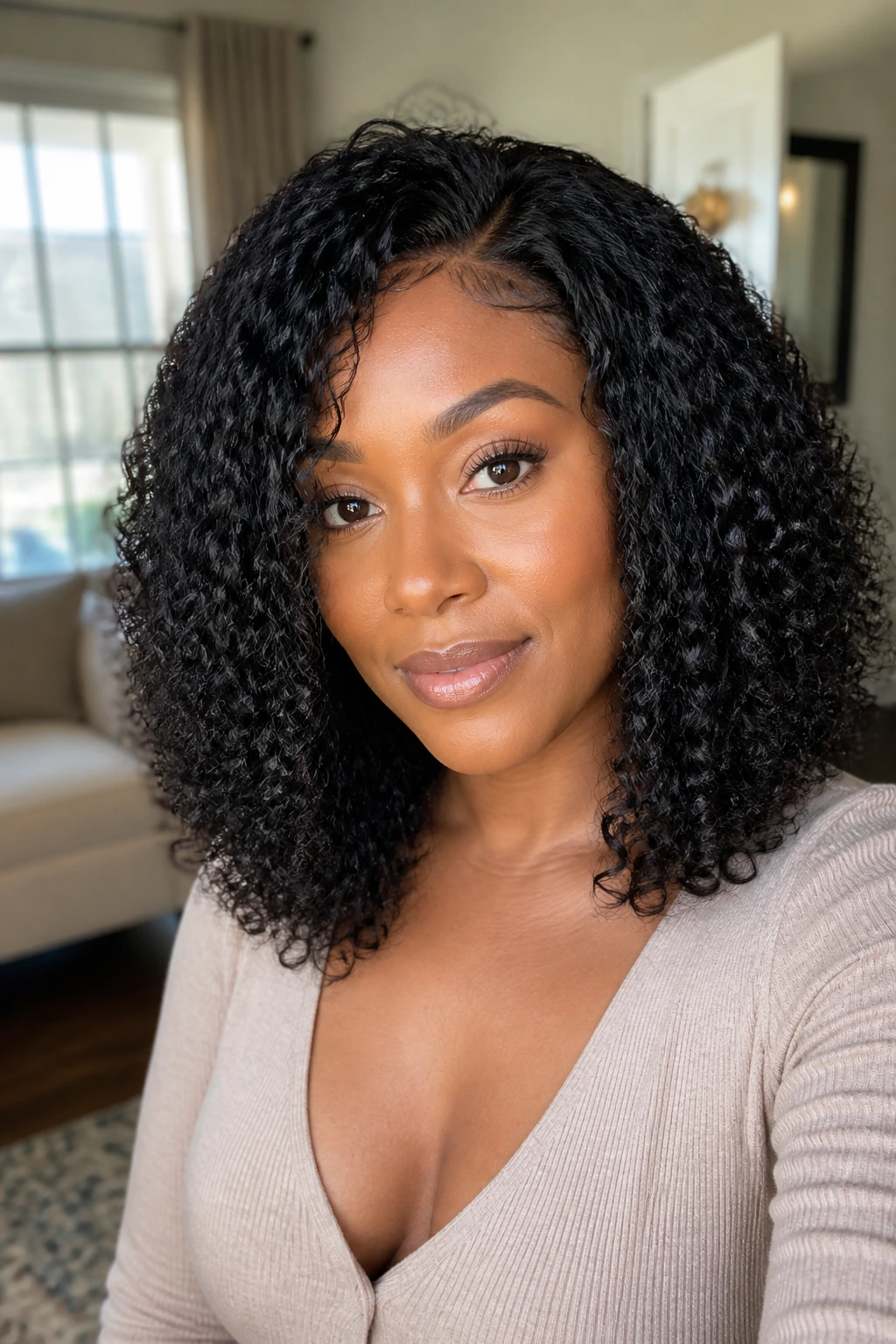
Shape: If the crown feels flat, lift a few strands at the root with a rat-tail comb and a tiny mist of water. Don’t tease it hard. You want a little air, not a bird’s nest.
Shine: A pea-size drop of lightweight serum rubbed between your palms and pressed only onto the ends can calm frizz without coating the whole wig. Too much product is worse than a little frizz. Every time.
Edge Control: Keep baby hairs sparse and short. A thick, drawn-on edge pattern looks fake on most curly wigs and turns the hairline into a stage prop.
Refresh Hack: Mix cool water with a small bit of mousse in a spray bottle, shake it well, and mist the curls from mid-length down. Then scrunch gently and let the wig sit on a stand until it’s dry to the touch.
Make-It-Yours: If the part feels too strict, shift it by half an inch or add a side sweep. That tiny move can change the whole mood of the wig without cutting anything.
Common Mistakes That Make Curly Wigs Look Cheap
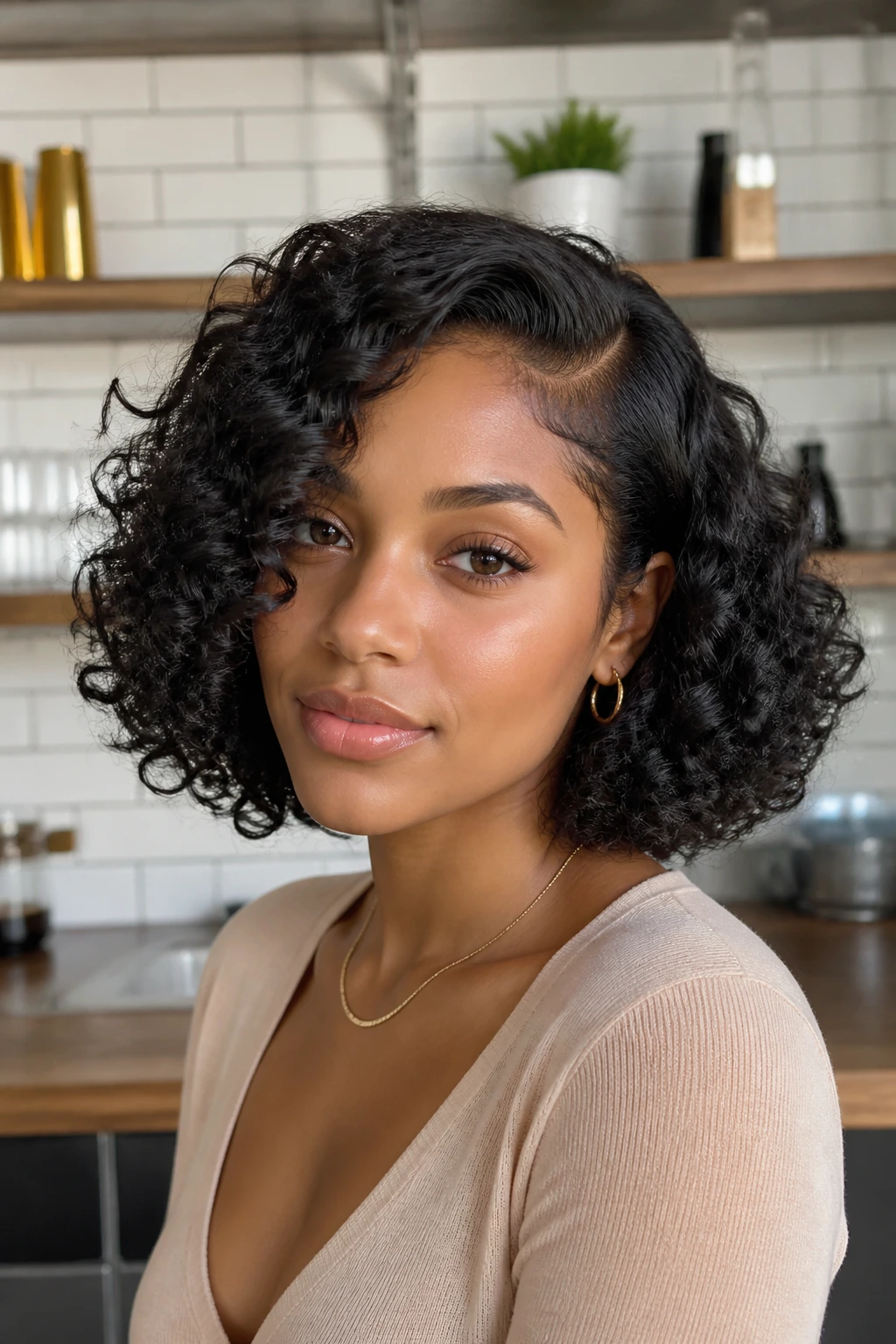
Buying extra length and skimping on density: This is the classic trap. A long curly wig with thin ends can look stretched out and sad, not glamorous. If you want length, make sure the density and layering can support it.
Brushing curls dry: Dry brushing blows apart the pattern and leaves the whole unit frizzy, puffy, and thirsty-looking. Finger-detangle or use a wide-tooth comb only when the curls are lightly damp.
Ignoring cap size: A wig that sits too high or too low ruins the front instantly. If the ear tabs are floating or the nape keeps shifting, the fit is wrong no matter how good the fiber is.
Over-cutting the lace: A straight, aggressive cut can leave a hard line at the front. A tiny bit of irregularity is safer. You want it to disappear, not look trimmed by a kitchen knife.
Using too much shine product: Budget curly wigs already have enough risk of looking glossy. Heavy oils and silicone drops can make synthetic fiber look greasy fast. Use the smallest amount possible, and keep it to the ends.
Treating synthetic curls like human hair: Hot tools, aggressive washing, and rough towel drying can wreck curl memory. Synthetic curls need a gentler hand and lower expectations around heat.
Variations and Adaptations to Try
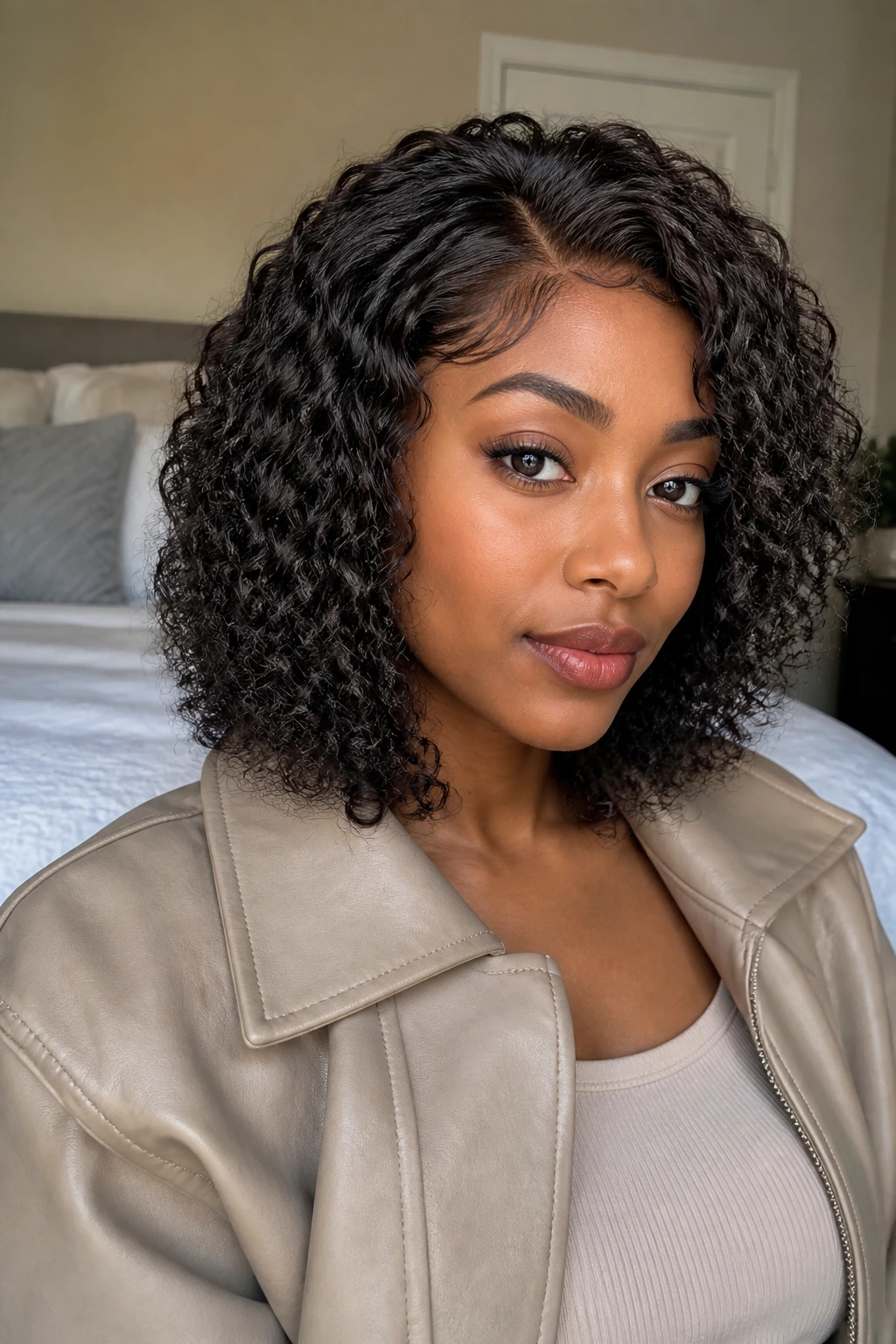
The Low-Key Daily Driver: Choose a shoulder-length synthetic wig in the 130% to 150% density range, with a closure or glueless front. It looks calm, wears well under jackets, and rarely needs more than water and a little mousse.
The Big-Hair Edit: Go for a high-density kinky-curly or layered ringlet unit in a medium length. This version is for people who want body first and subtlety second. The key is layering; without it, the volume can tip into boxy fast.
The No-Glue Shortcut: Swap any lace-front pick for a headband wig or glueless closure unit. This keeps the front clean without adhesive and is the easiest route for beginners who care more about wearing the wig than perfecting it.
The Heat-Changeable Option: Choose a heat-friendly synthetic or human-hair blend if you know you like to reshape curls with a wand or flexi rods. Keep heat low and use it sparingly. The point is flexibility, not turning the whole wig into a science project.
The Petite-Fit Fix: If most wigs slide on you, focus on petite caps, adjustable bands, and shorter lengths. A properly sized curly wig looks better from every angle because it sits where it should instead of fighting gravity.
Storage, Washing, and Long-Term Wig Care
Curly wigs last longer when you stop treating them like a scarf. After each wear, let the unit dry completely before putting it away. That usually means 12 to 24 hours on a wig stand, depending on how much product you used and how dense the curls are.
For daily refreshes, a light mist of cool water and a small amount of foaming mousse is enough for most synthetic and human-hair curl patterns. Do not soak the unit unless it needs a proper wash. Wet curls hold shape better when they’re re-clumped, not wrung out.
Wash synthetic curly wigs every 8 to 12 wears if you use light product, sooner if the front gets sticky or dull. Human-hair curly wigs usually need washing every 6 to 8 wears if they’re worn regularly, because product buildup and body oils can flatten the texture. Use cool or lukewarm water, shampoo gently in the direction of the curls, and condition the ends only if the fiber allows it.
Never store a wet wig in a drawer. That’s how you get odor, frizz, and in some cases a shape that never comes back. For travel, use a satin bag or wrap the hair loosely in a silk scarf and keep the curls from being crushed under shoes or cosmetics.
If the wig is long, braid it loosely or separate the curls into two soft sections before storage. That keeps the nape from matting and makes your next wear a lot easier.
Frequently Asked Questions
How do I know which curl pattern will look most natural on me?
Start with the curl pattern that resembles the texture you already wear most comfortably. If your own hair is tight and voluminous, a kinky-curly or coily wig usually blends more easily than loose ringlets. If you like a softer finish, water-wave and layered loose curls tend to be easier to wear without heavy styling.
Are synthetic curly wigs worth buying?
Yes, if you want shape, affordability, and lower daily maintenance. Synthetic curls keep their pattern well, which is a big deal for textured styles; the tradeoff is that they don’t forgive heat abuse the way human hair does. For many people, that’s a fair bargain.
What density should I choose for curly hair?
For short to medium lengths, 130% to 150% often looks believable. If the wig is longer or you want a fuller look, 180% can work, but only if the cut is layered enough to avoid a bulky triangle shape. Too little density on long curls is one of the fastest ways to make a wig look tired.
Is a lace front or closure better for curly wigs?
Closure wigs are easier and usually cheaper, while lace fronts give you more parting freedom and a softer hairline. If you wear one favorite part and want less fuss, a closure is a smart buy. If you like changing the part or pulling the front back, lace front wins.
Can I wear glasses with a curly wig?
Absolutely, but shorter or mid-length curls usually sit better around frames. A side part or layered bob keeps the temple area from feeling crowded. Long dense curls can work too, but they need a little shaping away from the face.
Why do curly wigs tangle so much at the nape?
Friction. Curls rub against collars, jackets, seats, and each other, especially when the hair is long or dry. A light mist before wear and a satin scarf at night make a real difference, and shorter lengths always tangle less.
Can I cut bangs into a curly wig?
You can, but do it slowly and leave the bangs longer than you think you need. Curly hair shrinks after cutting, and a fringe that looks perfect while wet can jump inches shorter once it dries. Tiny trims are safer than one big snip.
What should I do if the curls arrive flattened from packaging?
Shake the wig out, mist it lightly with cool water, and scrunch the sections with your fingers. Put it on a stand and let the curl pattern reset before judging it. Most flattened curls are tired from shipping, not ruined. A little water and patience usually brings them back.
Picking the Curl That Fits Your Life

The best curly wig is the one you can wear without negotiating with it every morning. That sounds simple, but it’s the whole game. If the cap fits, the curl pattern suits your routine, and the front looks believable in normal light, the wig stops being a purchase and starts being part of your wardrobe.
I’d still pick substance over spectacle every time. A mid-length unit with honest density and a decent hairline will serve you longer than a dramatic long wig that tangles if you look at it sideways. Curly hair has enough personality on its own. It does not need a gimmick.
If you’re choosing one today, start with length, then cap size, then curl pattern. Get those three right, and the rest gets much easier.