



Short shaggy haircuts have a way of making hair look awake. Not “done” in the stiff, sprayed-to-death sense. Awake. And when you pair that movement with curtain bangs, you get something especially useful for older women: softness around the face, lift where hair often goes flat, and a shape that doesn’t collapse the second the weather gets humid or your roots decide to misbehave.
The best part is how forgiving this family of cuts can be. A shag does not ask for perfect symmetry. Curtain bangs do not need to sit like a ruler line across the forehead. Together, they blur the little things that people tend to worry about — a wider forehead, thinning at the temples, a jawline that feels sharper than it used to, hair that lost some body at the crown. The right version of the cut makes those changes work in your favor instead of trying to hide them under one heavy block of hair.
What I like most is that these haircuts can look polished without looking precious. A good shag has movement at the ends, lift through the top layers, and enough face-framing to make glasses, earrings, and cheekbones all do a little bit of work. Curtain bangs are the quiet hero here. They open the face, then slide away instead of sitting there and demanding daily attention.
Why These Short Shaggy Cuts Hit the Sweet Spot
-
They create lift at the crown: Short layers push hair upward instead of letting it hang flat against the scalp, which is useful when density has thinned a bit over time.
-
Curtain bangs soften the forehead without boxing it in: The split center and longer outer pieces keep the look airy, so the fringe frames the face instead of covering it.
-
They play nicely with gray, silver, and salt-and-pepper hair: Those shades can look especially sharp in feathered layers because the color changes catch along the texture.
-
They do not need a perfect blowout to look intentional: A little bend at the ends and some separation through the layers usually looks better than an over-smoothed finish.
-
They can be tuned for fine, thick, straight, wavy, or curly hair: The basic shape stays the same, but the layer depth and bang length can change the whole mood.
-
They age with the hair instead of fighting it: That matters. Hair texture shifts over time, and a cut that allows movement usually grows out with more grace than a blunt shape.
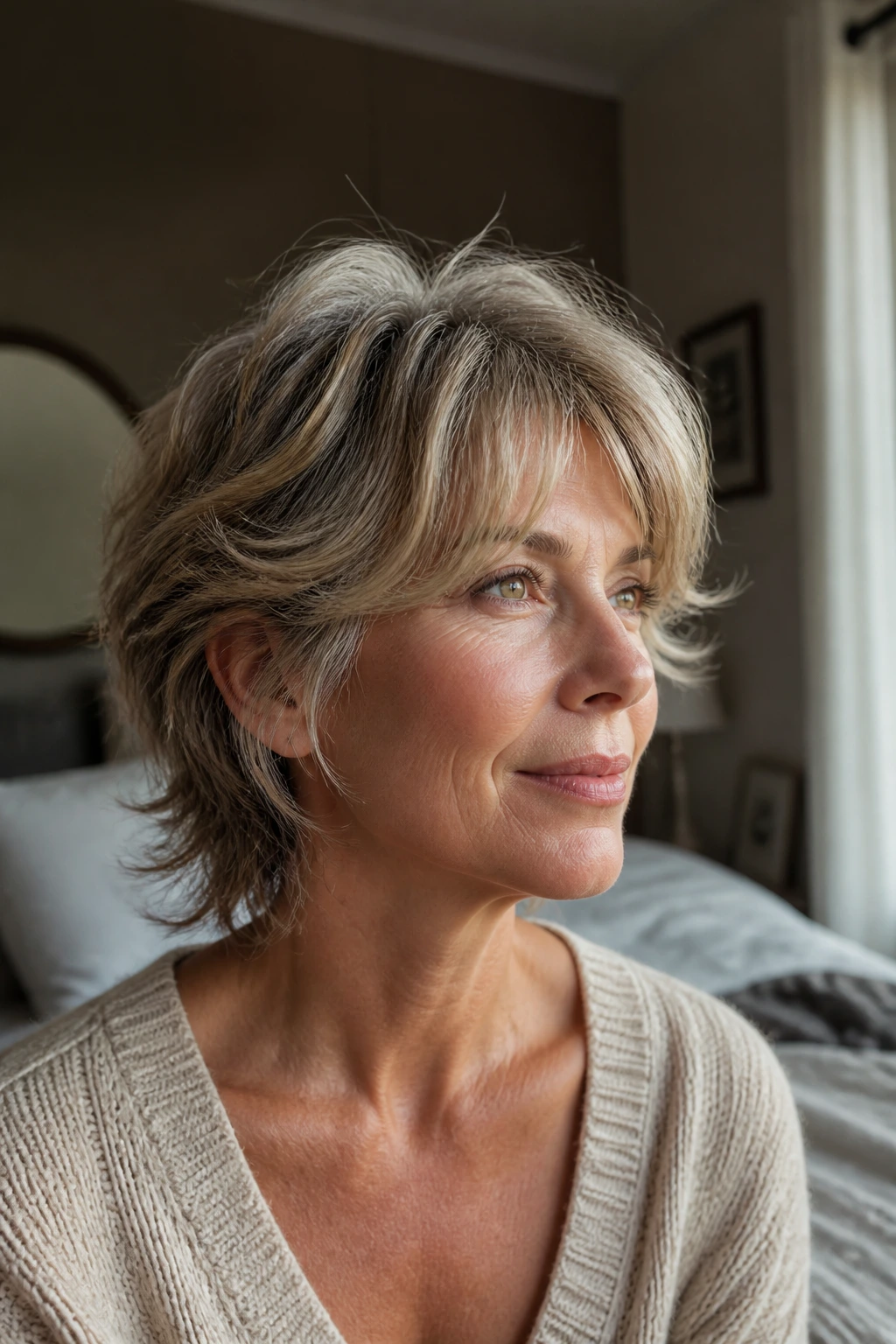
1. Feathered Crown Shag with Brow-Grazing Curtain Bangs
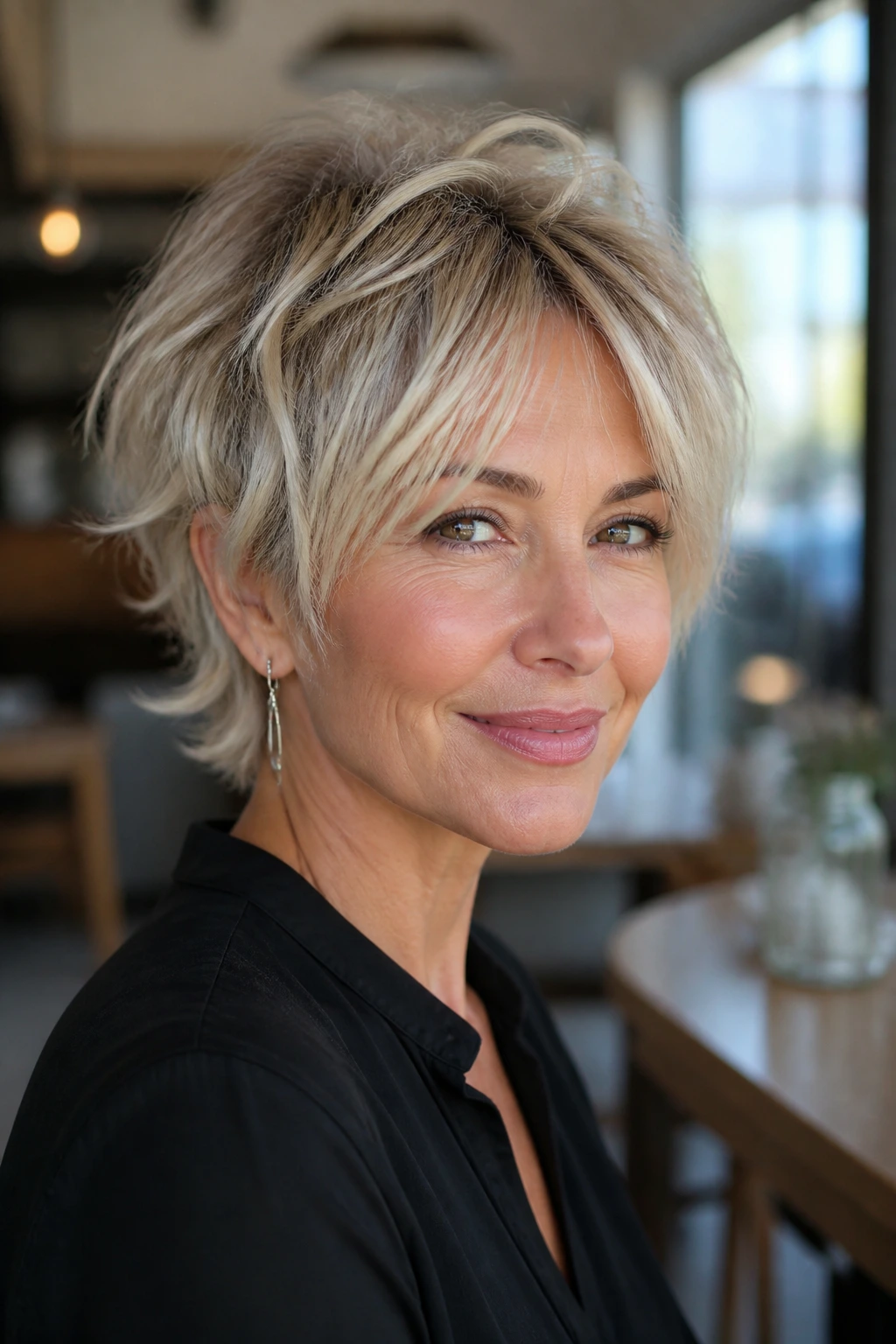
This version is all about lift where you need it most. The crown gets soft, feathered layers that rise away from the head, while the curtain bangs skim the brows and melt into the cheekbones. It is a good cut when your hair looks a little too polite on top and a little too wide at the sides.
The magic is in the spacing of the layers. They are short enough to create air, but not so short that the cut turns spiky or dated. If you’ve got fine hair that tends to sit flat after lunch, this shape gives it some backbone without making you wrestle with it every morning.
A round brush can polish it, but you don’t need a salon-level blowout. A touch of mousse at the roots, a rough-dry to about 80 percent, then a quick bend through the bangs usually does the job. Keep the outer fringe pieces longer so they slide along the face instead of stopping dead at the cheekbones.
2. Piecey Pixie Shag with Soft Split Fringe
This one is for women who want shorter hair but do not want a crisp pixie that feels severe around the ears and nape. The top stays airy and choppy, the sides stay soft, and the curtain bangs split open just enough to break up the forehead line. It has a little edge, but not the kind that makes you feel like you need sharp lipstick to keep up.
What I like here is how little bulk it carries. If your hair is dense but coarser than it used to be, a piecey pixie shag can remove that heavy triangle shape without making you look over-layered. The trick is to keep the perimeter clean enough that the cut still reads as a shape, not a cloud.
Wear it with a light paste or cream, not a stiff wax. You want pieces that separate when you rake your fingers through them, not spikes. And if you wear glasses, let the bangs land just above the frame or sweep softly around it — that small detail keeps the whole thing from feeling crowded.
3. Chin-Length Shag Bob with Tapered Curtain Bangs
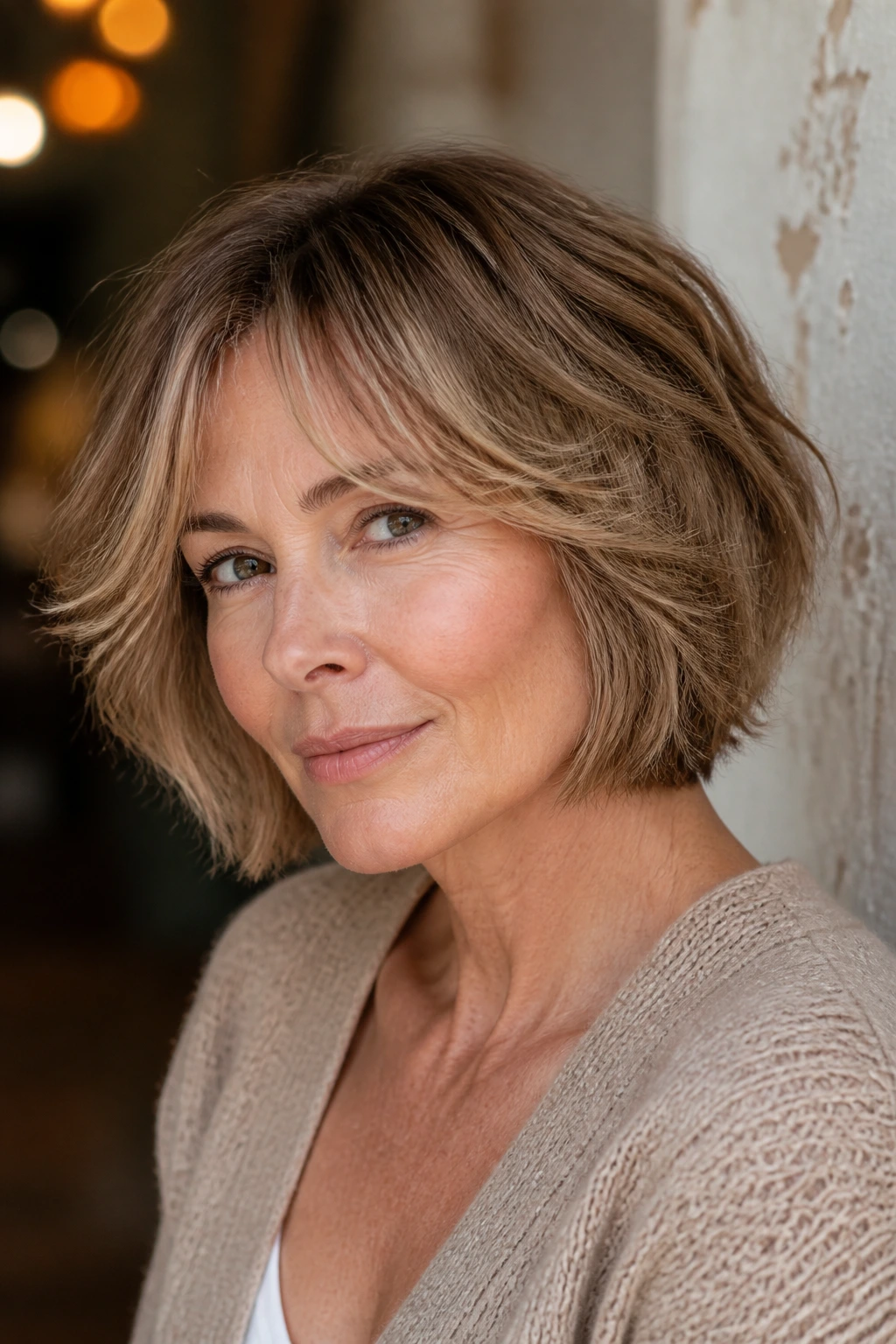
A chin-length shag bob gives you the clean outline of a bob, but the interior layers keep it from feeling boxy. The curtain bangs taper longer toward the edges, which means they can slide into the jawline and make the cut feel softer from every angle. It is one of the easiest ways to wear texture without committing to a full wolf-cut look.
This shape is especially kind to faces that want a bit more framing around the mouth and chin. The shorter length makes the ends look fuller, which can be useful if your hair has thinned enough that long layers start to look wispy instead of airy. Here, the weight sits closer to the face, so the cut feels deliberate.
If you ask for this in the salon, say you want the interior to be layered but the outline to stay controlled. That’s the whole balance. Too many people ask for “shaggy” and end up with hair that is all movement and no structure. This cut keeps the structure.
4. Collarbone Shag with Airy Face Framing
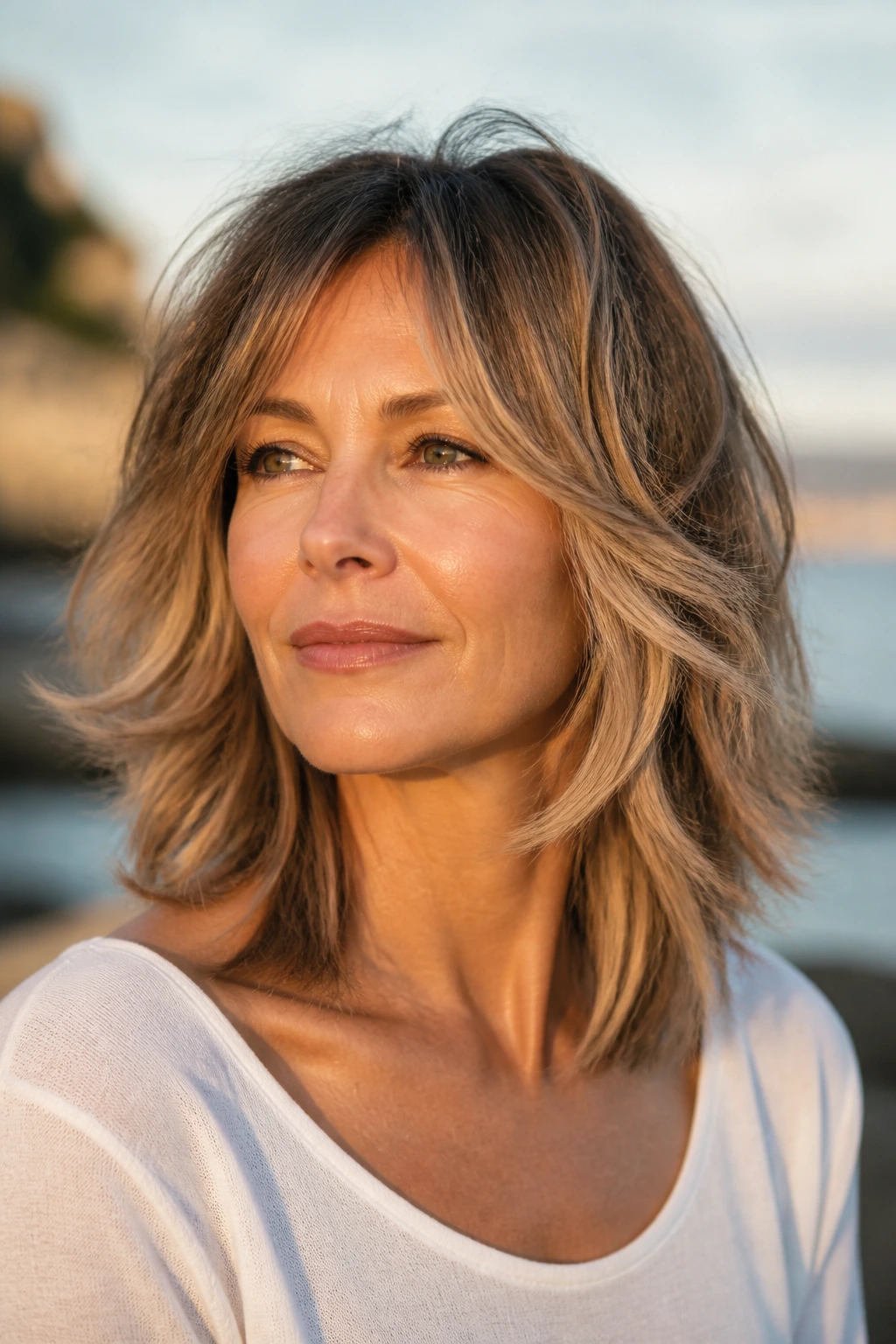
The collarbone length is where a lot of hair starts to behave better. It is long enough to tuck behind the ears, long enough for a half-up style, and short enough that the layers still bounce. Add curtain bangs, and you get a cut that softens the front without swallowing your features.
This is a smart choice if you want movement but are not ready to go above the jawline. The face-framing pieces should start near the cheekbone and curve down toward the collarbone, which creates a vertical line that visually lengthens the neck. That matters more than people think.
It also grows out well. A lot of shaggy cuts look great for three weeks and then fall apart. This one usually stays in range for longer because the longer perimeter holds the silhouette together while the layers do the expressive part. That is the thing to ask for if you hate returning to the salon every month.
5. Curly Shag with Long, Loose Curtain Bangs
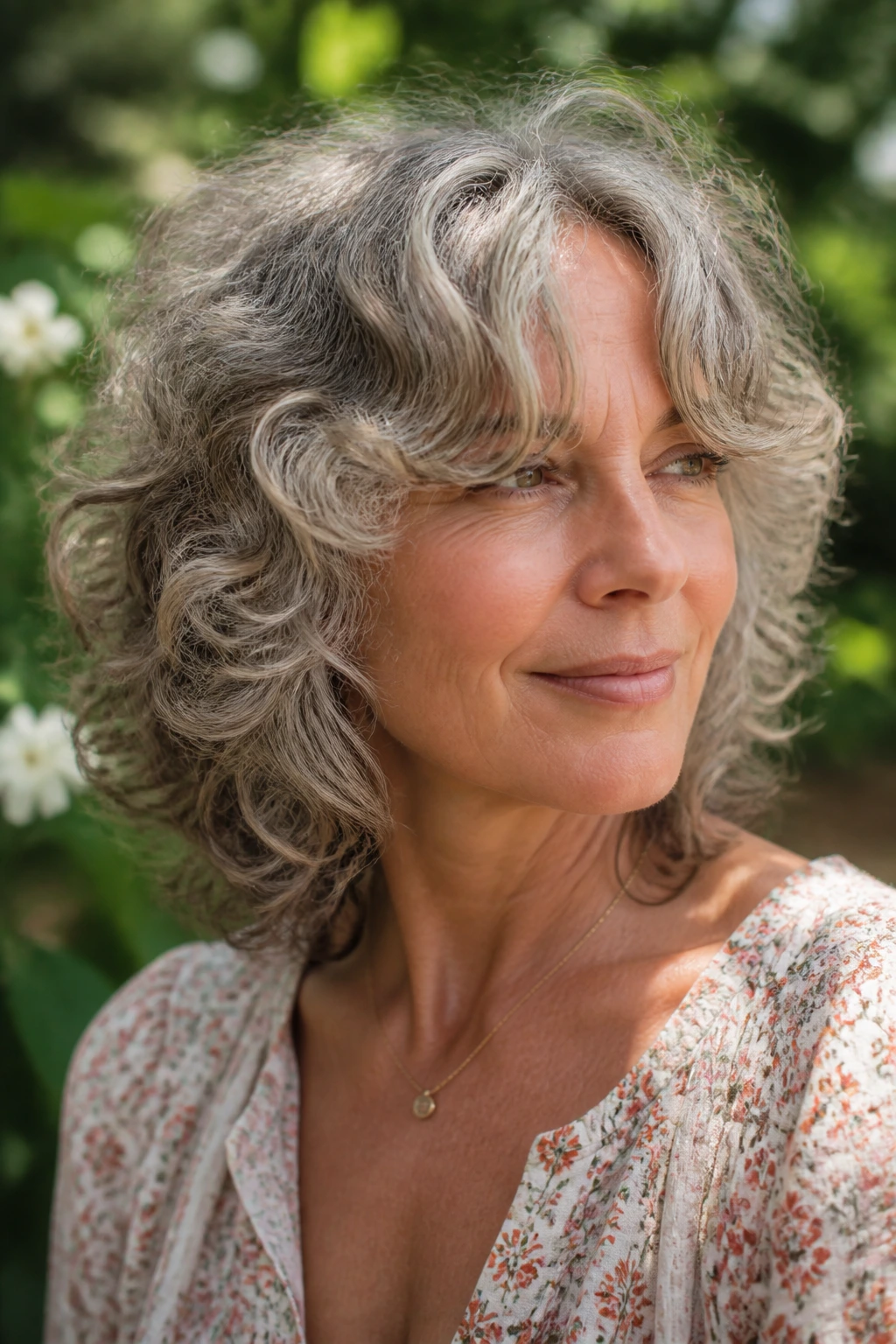
Curly hair and curtain bangs can absolutely get along, but the cut needs room. This shag keeps the layers soft and rounded so the curl pattern can spring rather than puff out. The bangs are left longer and looser, which lets them split naturally instead of fighting the curl at the center part.
If your curls are 2C to 3B, this shape can be a lifesaver. The top stays lifted, the sides don’t balloon out too much, and the fringe gives the face shape without forcing a hard line across the forehead. I prefer this version when the curls have some spring but not so much that a short fringe would bounce too high.
Dry-cutting often helps here, especially if your curl pattern changes a lot once the water is gone. A stylist who understands curls will keep the curtain bangs a little longer than you think you need. Good call. Shrinkage is rude. It always is.
6. Silver Fox Wolf Cut Lite
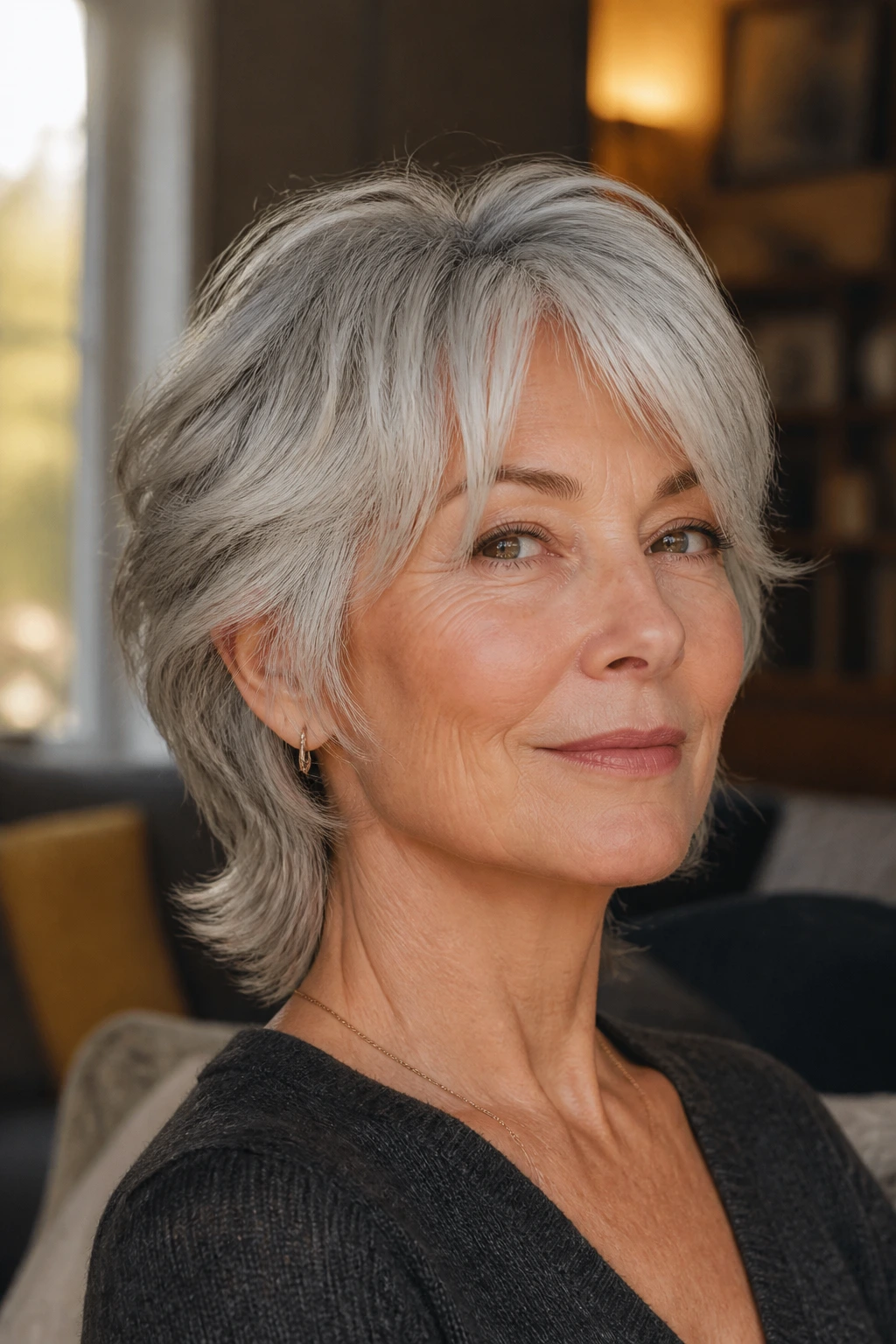
A full wolf cut can get a little wild if you want a softer look, so I like the “lite” version for older women who still want the attitude but not the drama. The layers are shorter around the crown and softer around the neck, and the curtain bangs drift into the sides instead of making a blunt statement.
Silver, white, and salt-and-pepper hair show this shape well because the layered pieces catch the light in different places. The whole cut starts to look dimensional without needing dye to fake depth. That’s one reason gray hair often looks sharper in this kind of texture than in a heavy one-length bob.
The key is restraint. Ask for movement, not choppiness. Ask for separation, not punk. The difference is in the edges — point cutting and soft texturizing, not aggressive slicing. You want the haircut to feel grown-up with a little bite, not like it borrowed a teenager’s attitude and forgot to give it back.
7. Sleek Lob Shag with Side-Parted Curtain Bangs
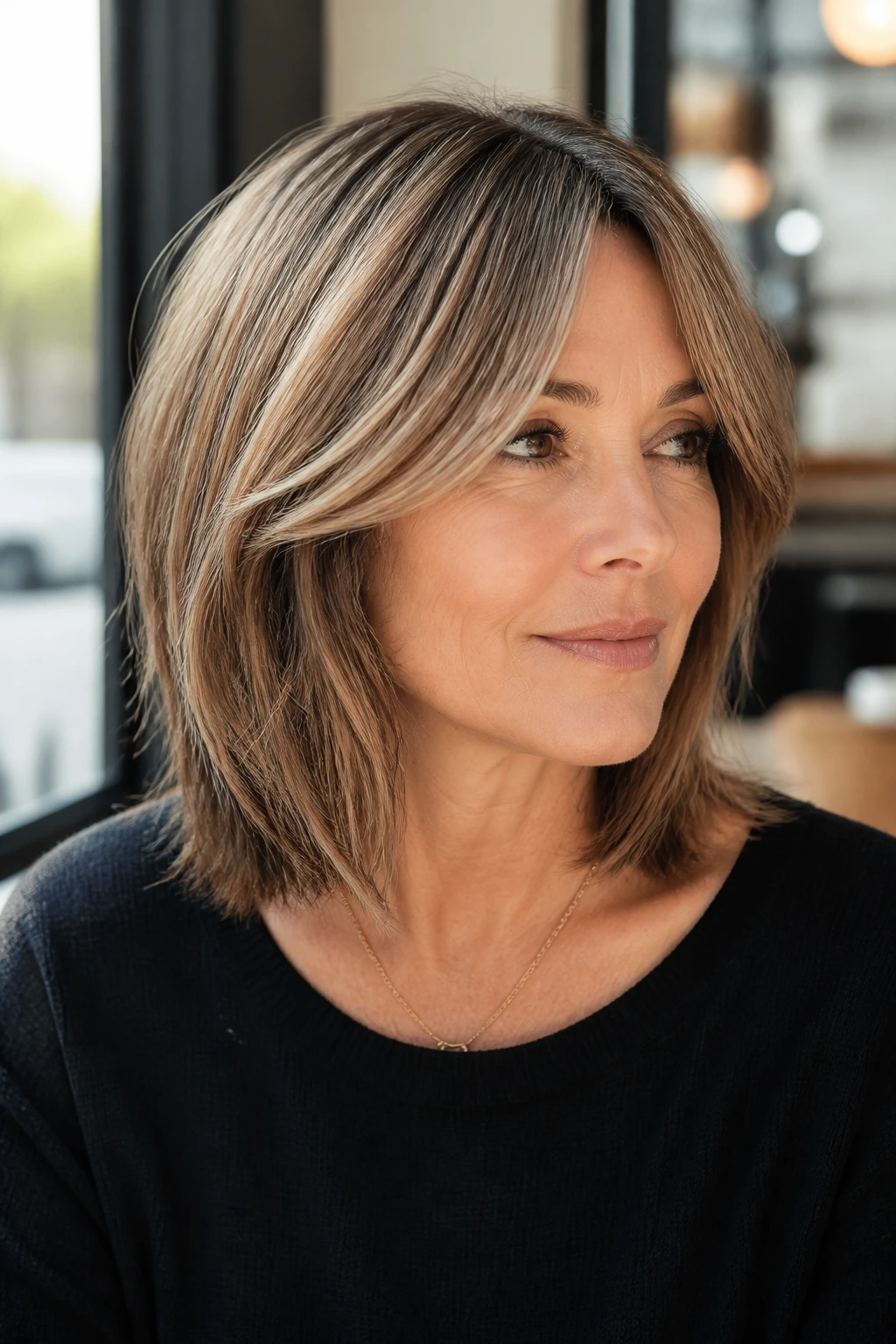
Here’s the quiet one in the bunch. A sleek lob shag keeps the length around the shoulders, but the layers break up the surface so it does not look flat. The curtain bangs are parted a touch off-center, which gives the face a softer asymmetry and avoids the too-perfect middle part some people dislike.
This works well if you still like a cleaner silhouette but want something less rigid than a standard lob. The ends can be lightly razored or point-cut, just enough to keep them from looking heavy. The bangs should be long enough to swing across the forehead, then open near the eyes. That little bit of movement matters more than a big dramatic fringe.
If your hair is straight and tends to go limp, this cut gives you a shape without asking for curls or waves that aren’t there. A flat iron bend at the ends can be enough. Seriously. Sometimes two minutes with a brush and a quick turn of the wrist beats twenty minutes of overstyling.
8. Rounded Volume Shag for Fine Hair
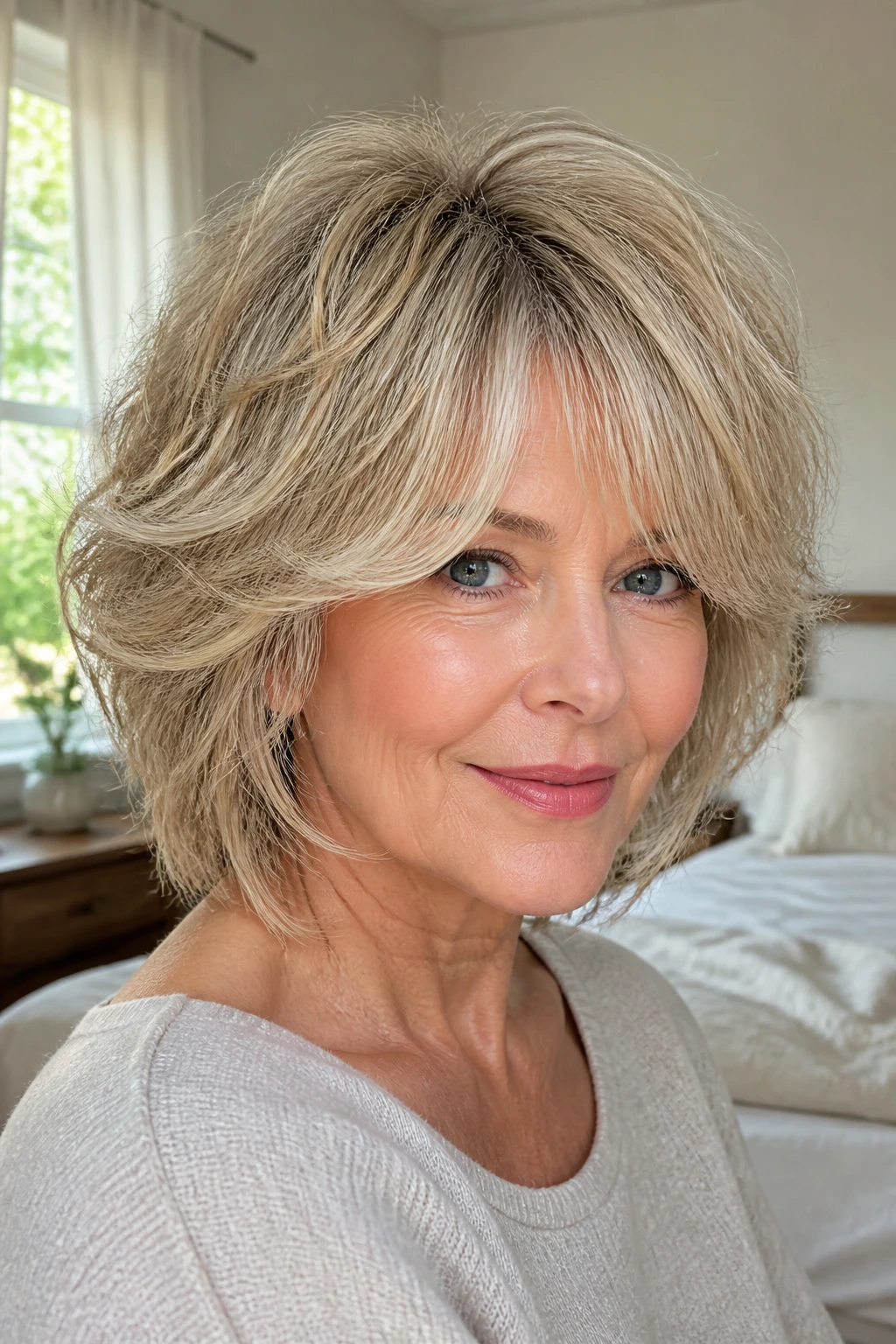
Fine hair often needs a cut that understands its limits. This rounded shag does that well. The shape stays fuller through the crown and temples, with curtain bangs that blend into the sides so there isn’t a visible “bang shelf” sitting on top of delicate ends.
What makes it work is the balance between removal and retention. Too much layering on fine hair and you get frayed ends. Too little, and the hair lies down like silk paper. Here, the stylist should keep enough weight around the perimeter to make the style look plush while still carving internal layers for lift.
A volumizing mousse at the roots helps, but don’t pile on heavy oils or thick creams. They can make fine hair collapse by noon. I’d rather see a light spray, a quick blow-dry with the head tipped forward, and a soft round-brush pass over the bangs. That combination gives the cut enough body to hold its shape.
9. Grown-Out Pixie Shag with Soft Curtain Bangs
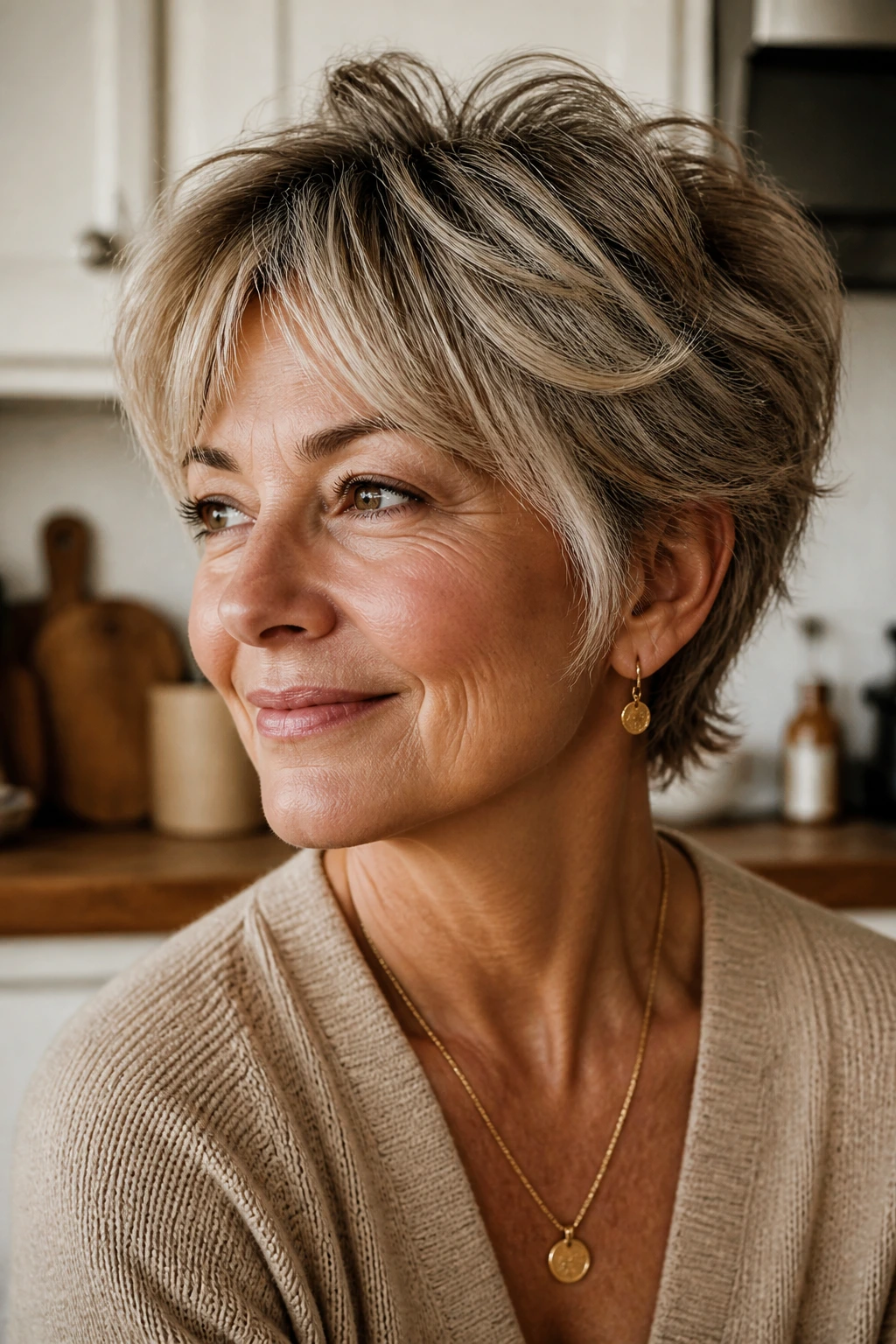
This is the cut for someone who likes short hair but not the hard outline that comes with a tidy pixie. The top grows out into a shaggy, lightly layered shape, while the curtain bangs keep the front from feeling too exposed. It has that nice “I didn’t try too hard” quality, but with structure underneath.
The grown-out length around the ears and nape matters. It keeps the style from looking too severe, which can happen fast on mature faces if the sides are clipped too tight. You want a little softness there — enough to move when you turn your head, enough to skim a scarf collar without sticking out in all the wrong ways.
This cut is good for women who want low-maintenance hair but still like a bit of personality. It can be finger-styled in under five minutes. A pea-sized amount of styling cream, a quick blast of air, and a few finger-twists around the fringe are usually enough.
10. French Shag with Wispy Fringe
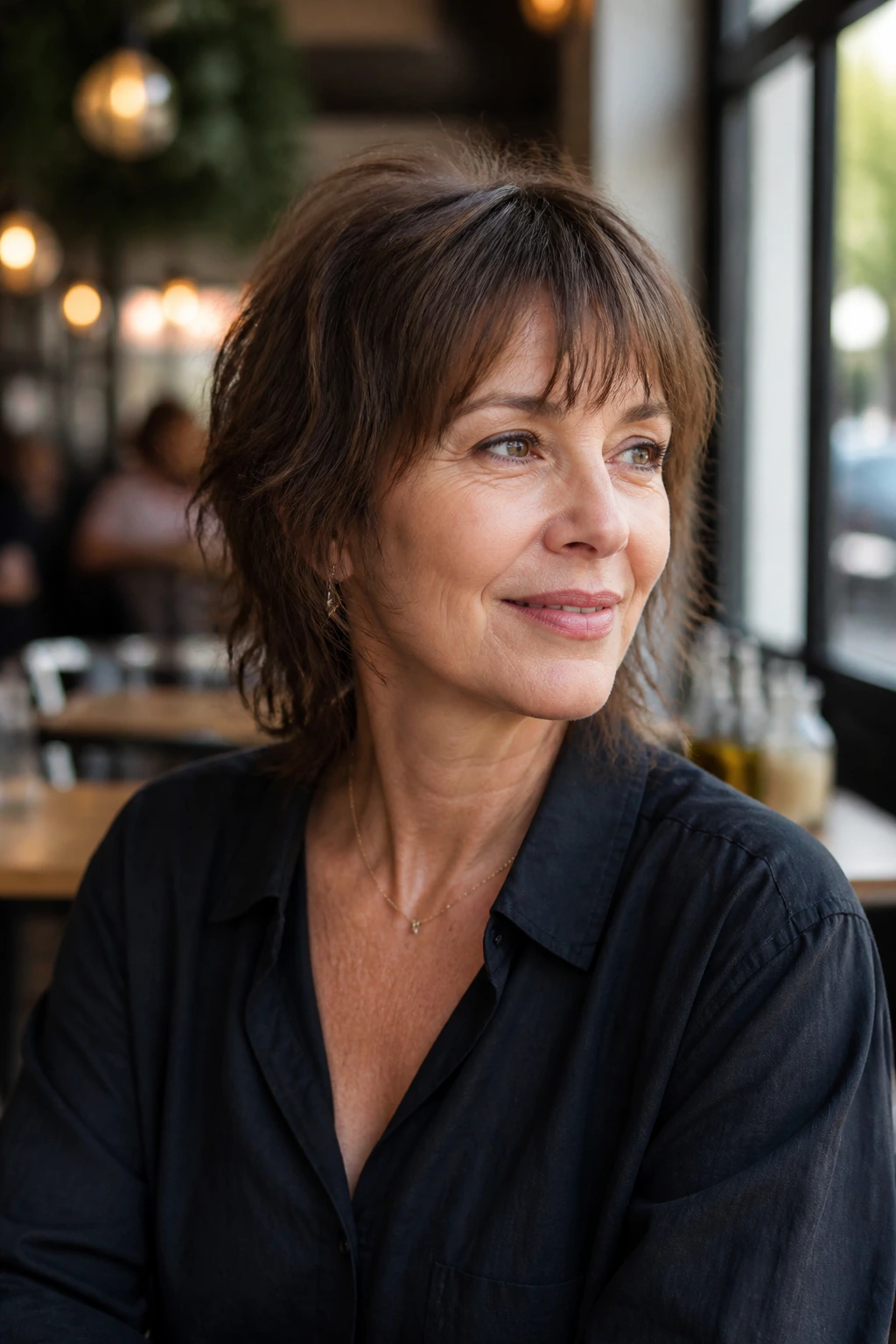
The French shag has that easy, slightly undone feel people always try to fake with a curling iron and too much texturizing spray. The curtain bangs are lighter here, almost wispy, and the layers sit close enough to the head to create movement without making the style too fluffy.
It flatters women who like softness around the face but do not want a lot of visible separation. The trick is that the bang area stays light while the ends are broken up just enough to keep the haircut alive. You get the impression of volume instead of a helmet of it.
A little dry shampoo at the roots can help this style keep its shape between washes. Not because it is dirty hair magic — because the grit gives the layers something to hold onto. That’s the practical side of a French shag. It looks effortless, but it still likes a little help.
11. Soft Mullet Shag with Gentle Curtain Bangs
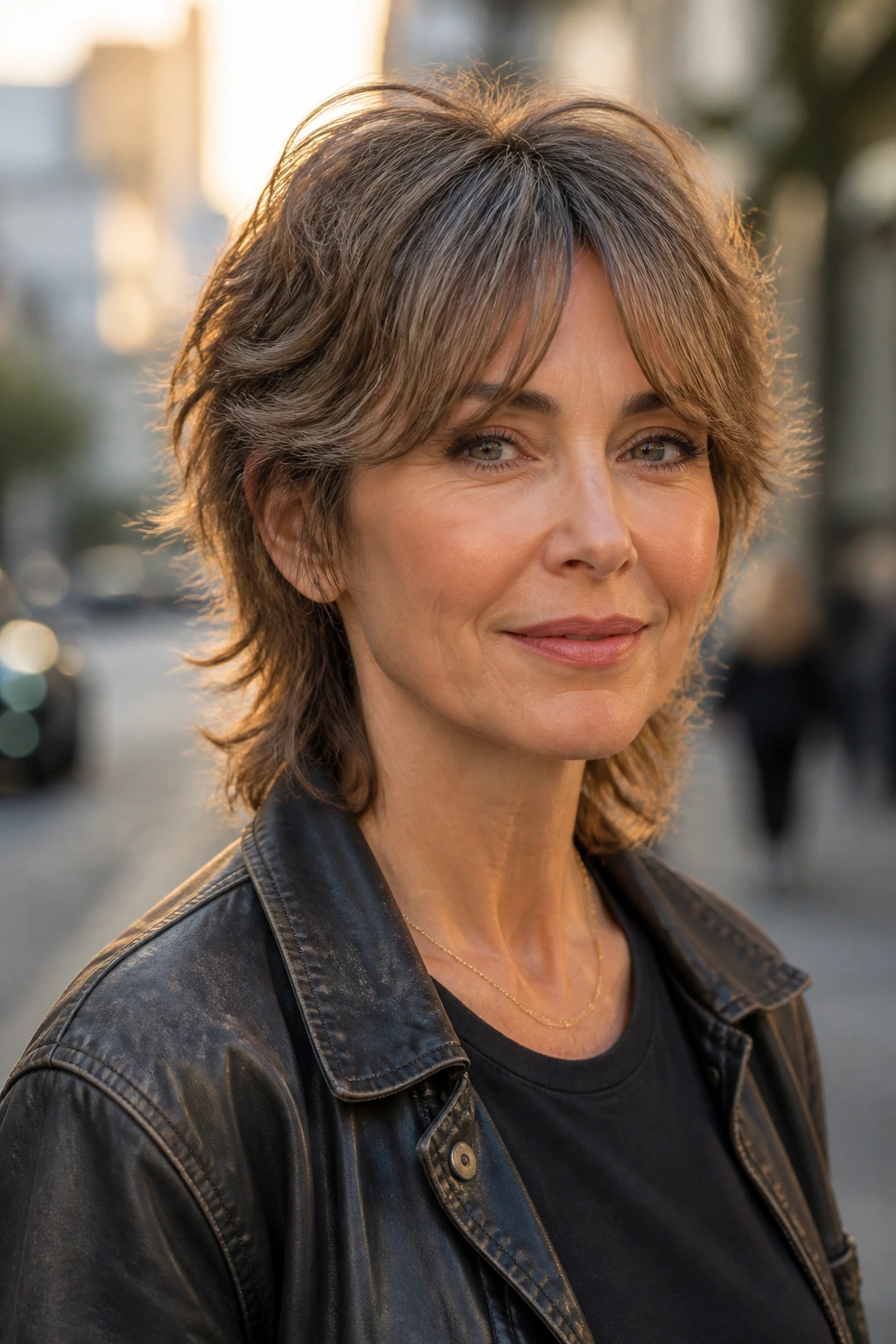
If the word “mullet” makes you flinch, relax. This version keeps the neckline softer and the length transition gradual, so the result reads as modern texture rather than a hard throwback. The curtain bangs help bridge the front and back of the shape, which is why the cut feels more wearable than it sounds.
I like this one on women who want a little edge without the commitment of a very short cut. The crown gets lift, the sides are kept lighter, and the back has enough shape to be interesting from behind — which matters more than people admit. Hair is seen in motion, not only in a mirror.
Ask for a soft perimeter and point-cut ends. That keeps the shape from turning sharp or mullet-y in the unflattering sense. There’s a fine line here, and the line is mostly about restraint. The shorter the cut, the more important that restraint becomes.
12. Layered Bob with Swept-Apart Bangs
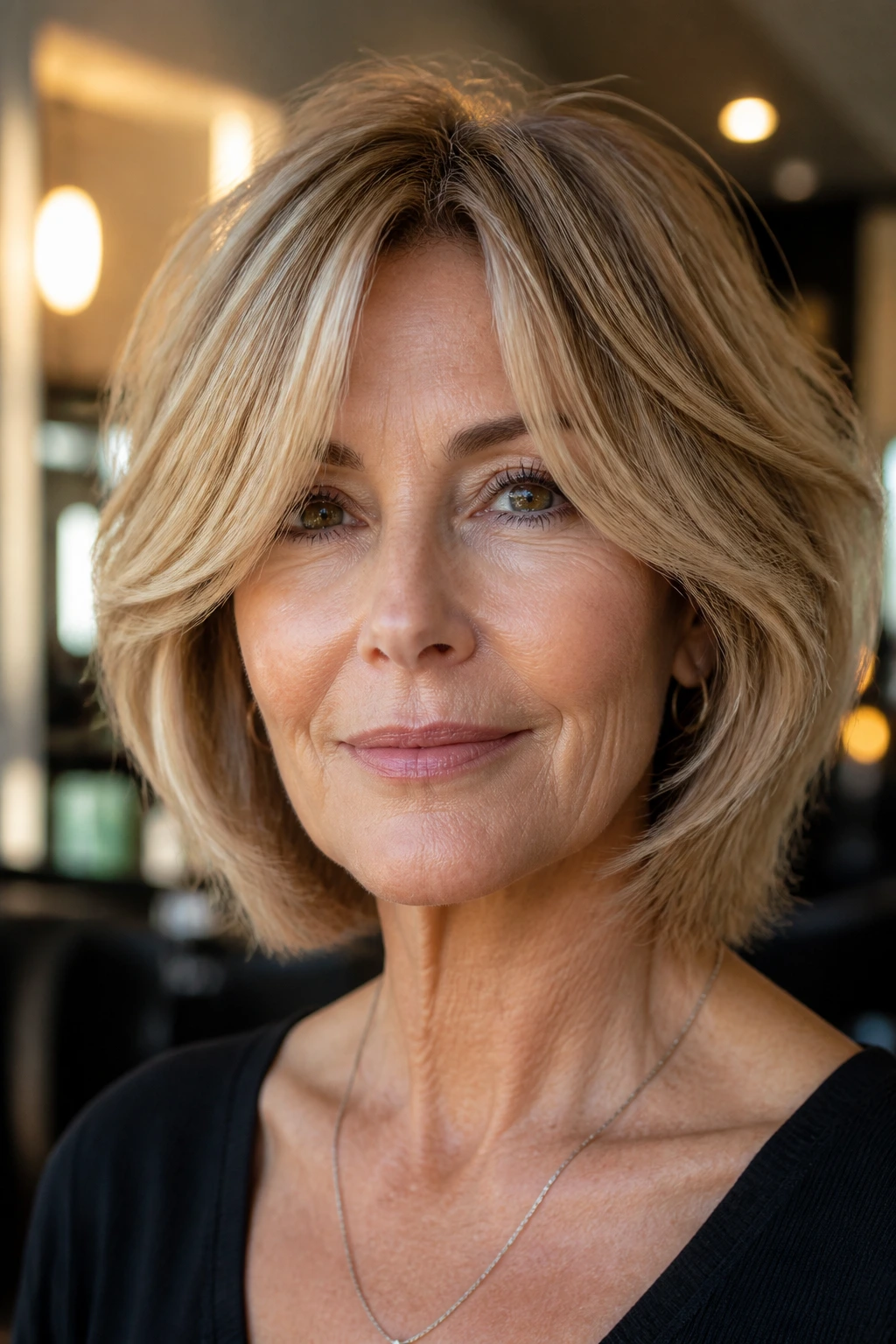
A layered bob can look plain if the layers are lazy. This version avoids that by keeping the bob line intact while opening up the front with bangs that split and sweep away from the center. The result is neat, face-friendly, and a little more relaxed than a classic bob.
The beauty of this cut is its versatility. You can wear it smooth, tuck one side behind the ear, or rough it up with a sea-salt spray if you want texture. The curtain bangs help it work in both modes because they soften the front whether the rest of the hair is polished or piecey.
This is a smart cut if you want something salon-friendly that still grows out without looking neglected. The layers keep the shape moving, but the bob line holds the whole thing together. That’s the kind of haircut that makes life easier without shouting about it.
13. Shoulder-Skimming Shag with Piecey Ends
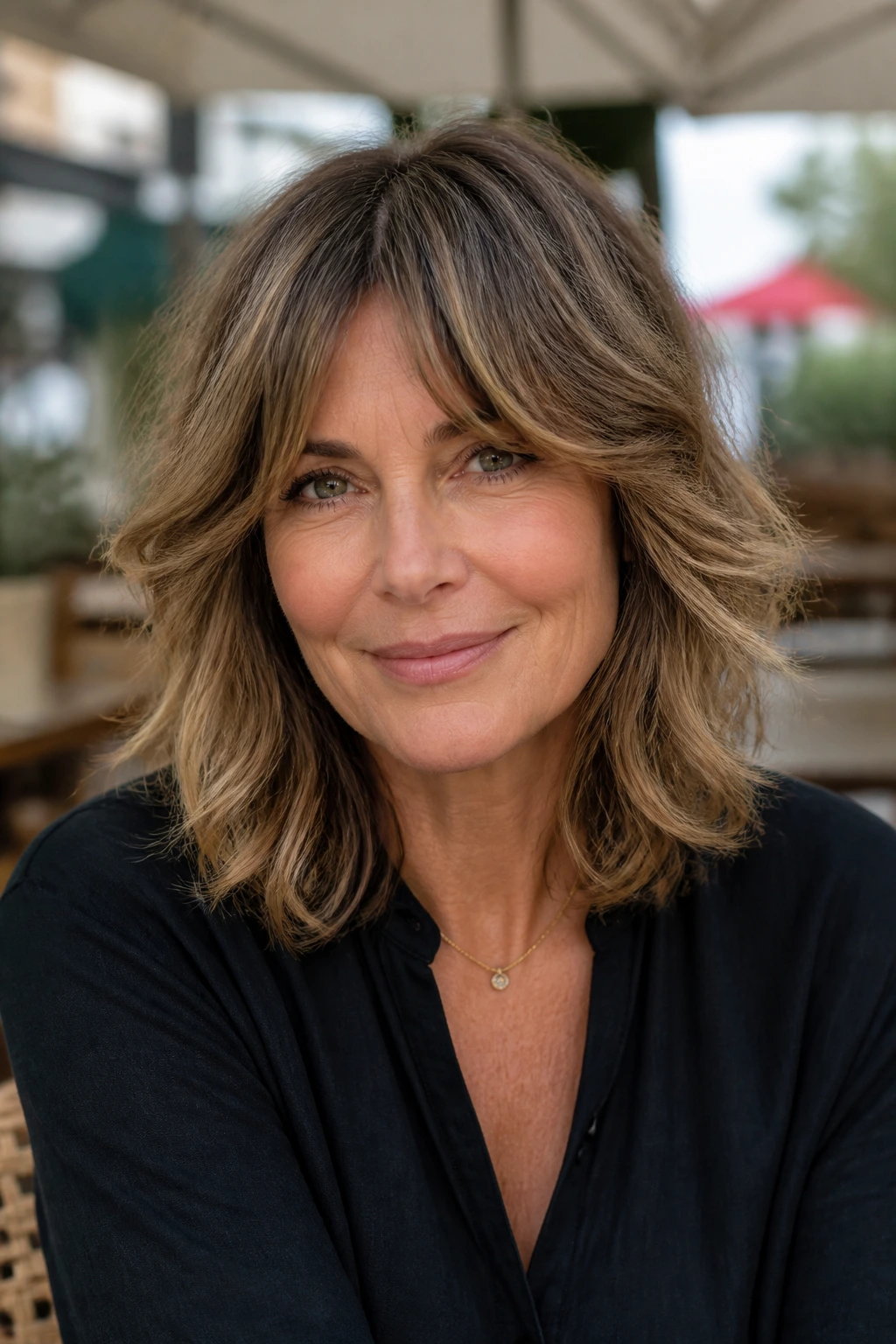
Shoulder length is a sweet spot for a lot of women because it gives enough hair to play with while staying light enough to move. This shag keeps the ends separated and feathery, and the curtain bangs taper into the length so the front doesn’t feel chopped off.
It’s especially good if your hair is thick enough to need weight removed but not so thick that you want a huge amount of layering at the crown. You get a shape that feels alive when you walk, which sounds dramatic until you see how dead hair can look when it just sits on the shoulders in one block.
I’d ask for piecey ends rather than razor-thin ends. There’s a difference. Piecey means textured; fragile means over-thinned. One looks modern. The other looks like the haircut ran out of steam halfway through.
14. Heavy-Textured Shag for Thick Hair
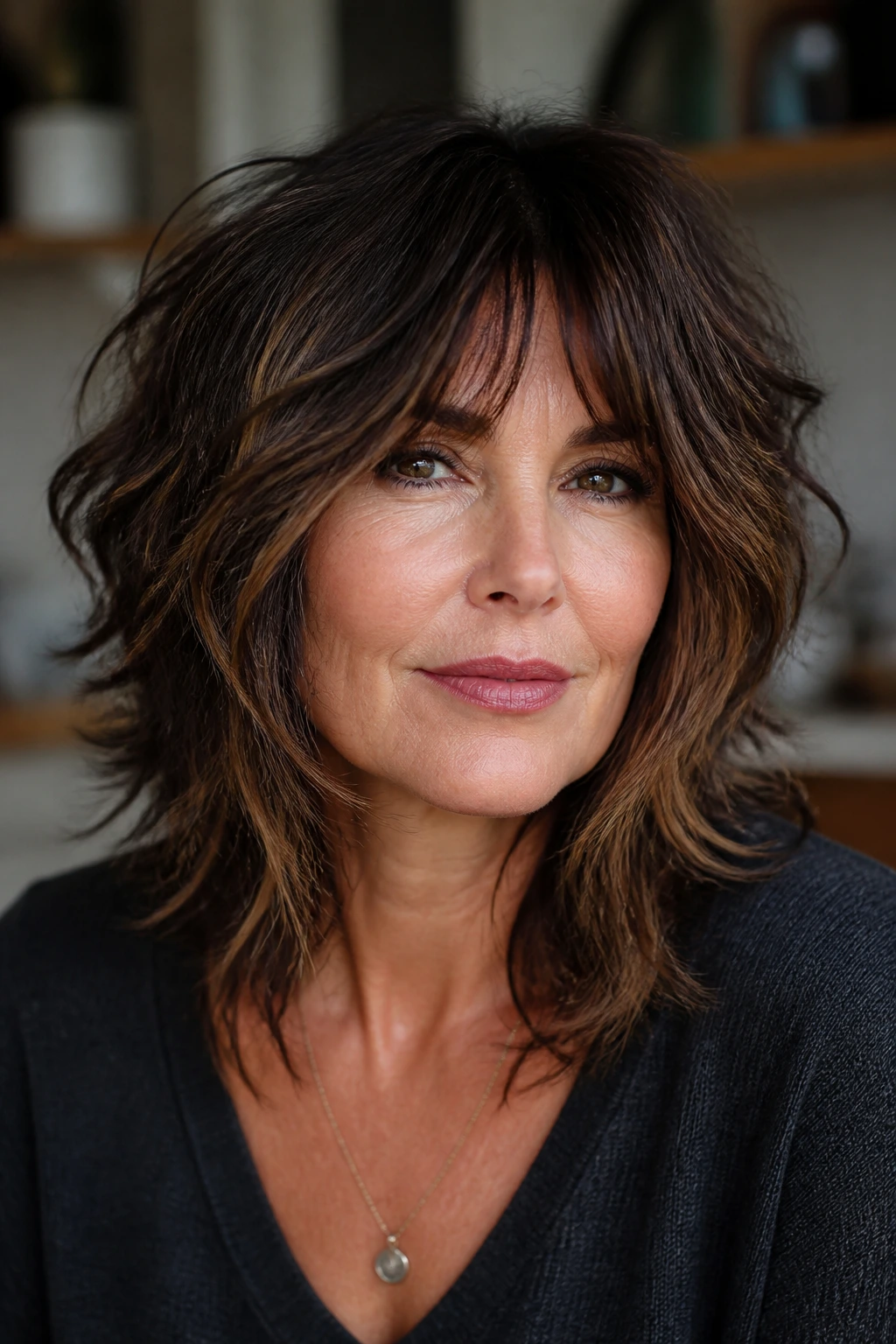
Thick hair needs a stronger hand. If the layers are too timid, the whole cut puffs up and sits like a shelf. This shag uses deeper internal layering to remove bulk while keeping the curtain bangs long enough to blend with the sides and soften the forehead.
The point here is movement without mushrooming. Thick hair can hold a beautiful shag shape, but it needs a stylist who knows where to remove weight and where to leave it alone. If you take too much out of the perimeter, the ends look stringy. If you leave too much in, the head shape goes wide.
A good version of this cut will feel lighter at the ends and flatter at the crown. That sounds backwards, but it’s the whole trick. The hair should no longer feel like it has to be wrestled into place every morning.
15. Air-Dry Shag for Natural Waves
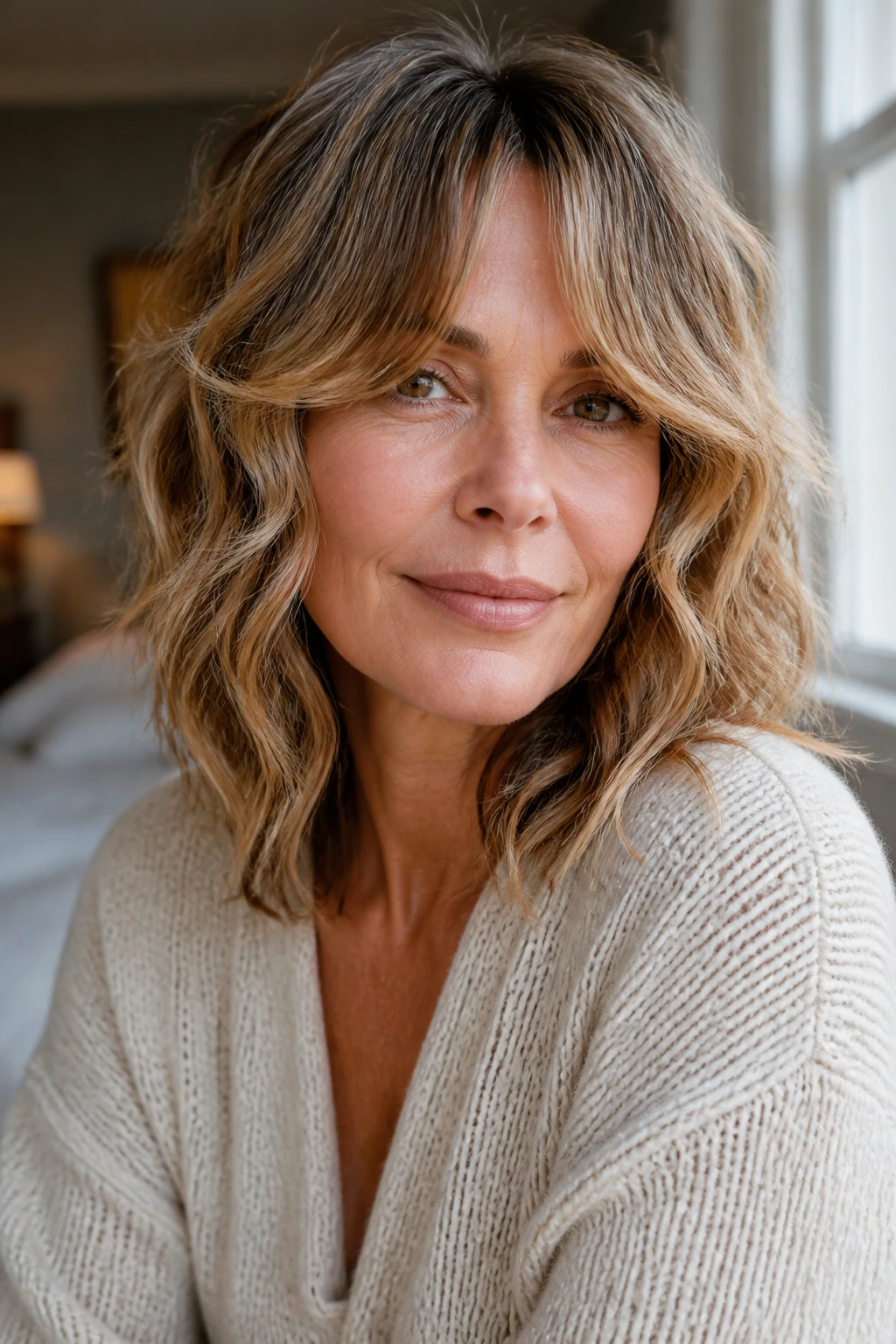
This cut exists for people who do not want to drag out a blow dryer every day. The layers are placed to let waves fall into their own pattern, and the curtain bangs are long enough to split and dry without forming a hard crease. It is one of the most practical short shaggy haircuts for older women with curtain bangs if your hair has a natural bend.
The best air-dry shags do not fight the hair’s real texture. They work with it. That means less forcing, less brushing once the hair starts drying, and more attention to where the layers land when wet. If the bangs are cut too short, they can spring up and lose the curtain effect. Longer is safer.
A curl cream or lightweight mousse can help the waves stay clumped rather than frizzed apart. Scrunch it in, leave it alone, and let it dry with the parts where they naturally fall. The cut should do the heavy lifting, not your hands.
16. Inverted Shag Bob with Nape Lift
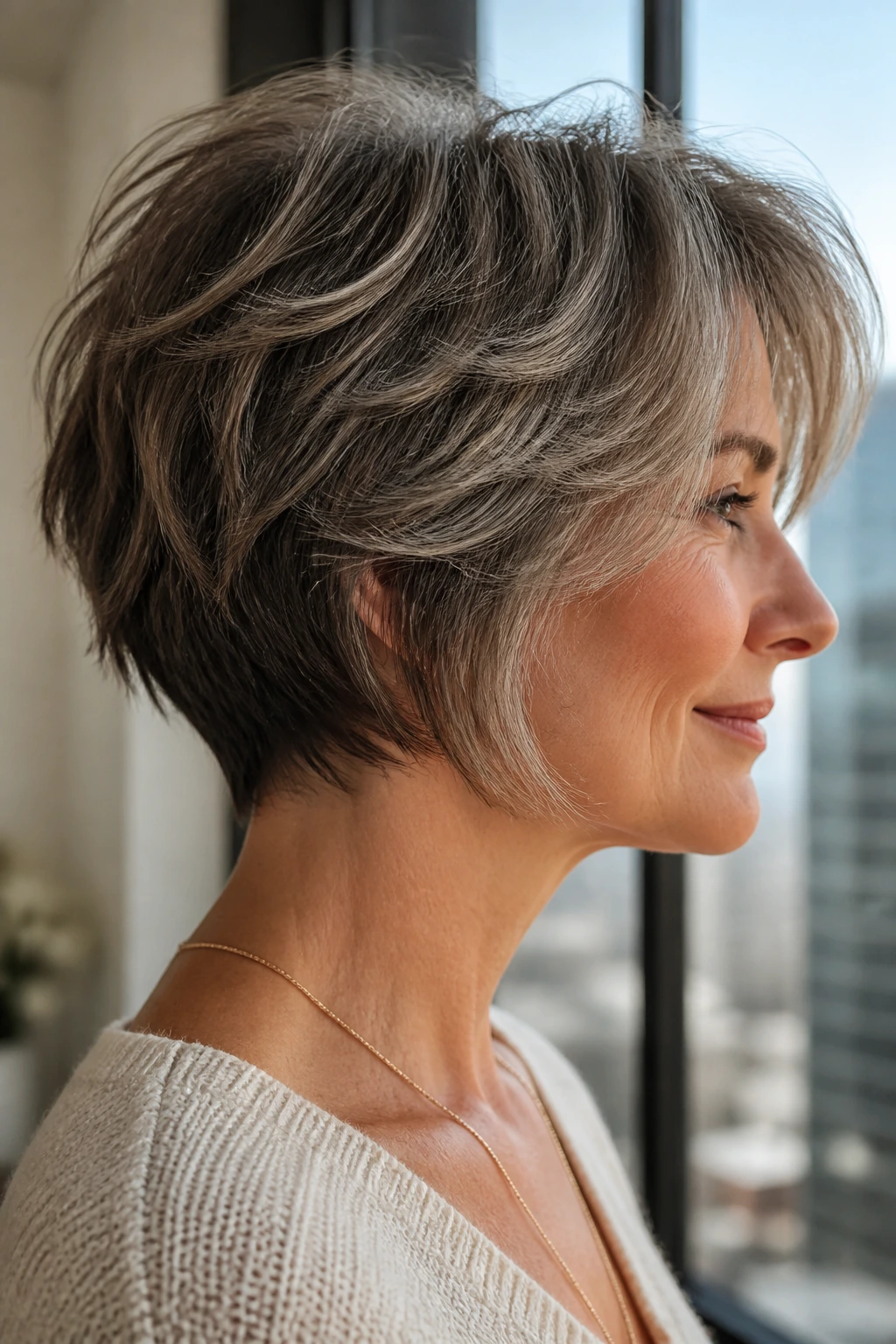
This cut has a little architecture to it. The back sits higher and hugs the nape, while the front falls longer and softer with curtain bangs that open the face. That contrast creates shape without the stacked-bob stiffness some people remember from older salon styles.
It works well if you want the neck area to feel neat but not severe. The lifted back gives the cut energy, and the longer front keeps it from looking too cropped. I especially like it when the hair around the temples has thinned a bit, because the front layers can help fill that space visually.
The trick is to keep the inversion subtle. You want a slope, not a cliff. The cut should angle, not shout. That difference is small on paper and huge in the mirror.
17. Razor-Cut Crop with Cheekbone Bangs
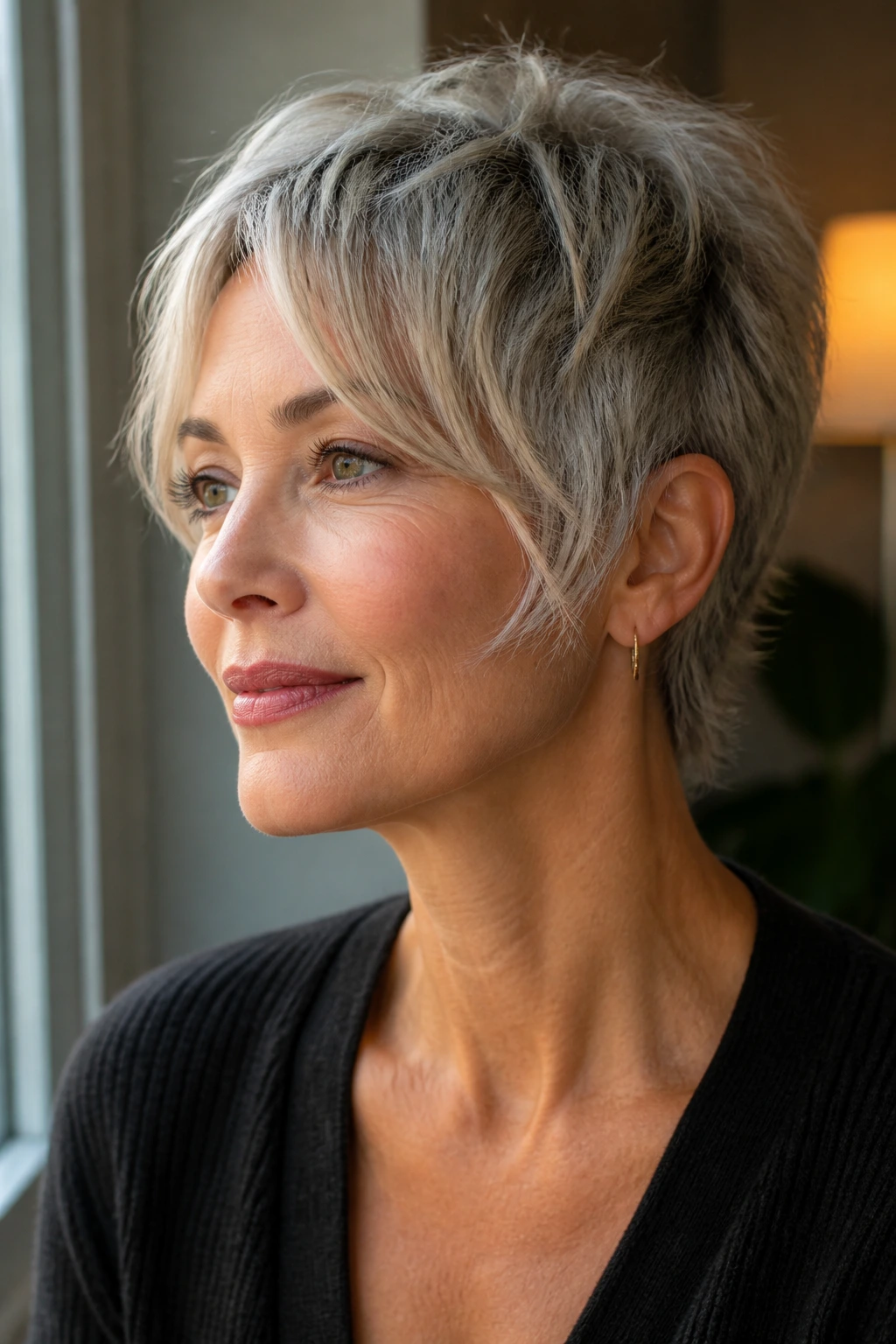
This one has the sharpest edges in the group, but it can still look soft if the bangs are handled well. The crop is short, the ends are razored for movement, and the curtain bangs land right near the cheekbones so they draw attention upward and inward.
It’s a good choice if you like a slightly modern, slightly artsy feel. The cut is short enough to dry fast, which is a gift if you’re tired of fighting your hair. The razored edges keep it from looking heavy, especially around the ears and neckline.
Be careful with this one if your hair is very fine and fragile. Razor cutting on weak ends can make them look wispy in the wrong way. A good stylist should adjust the technique based on the hair’s condition, not just the picture you brought in.
18. Glam Blowout Shag with Big Curtain Bangs
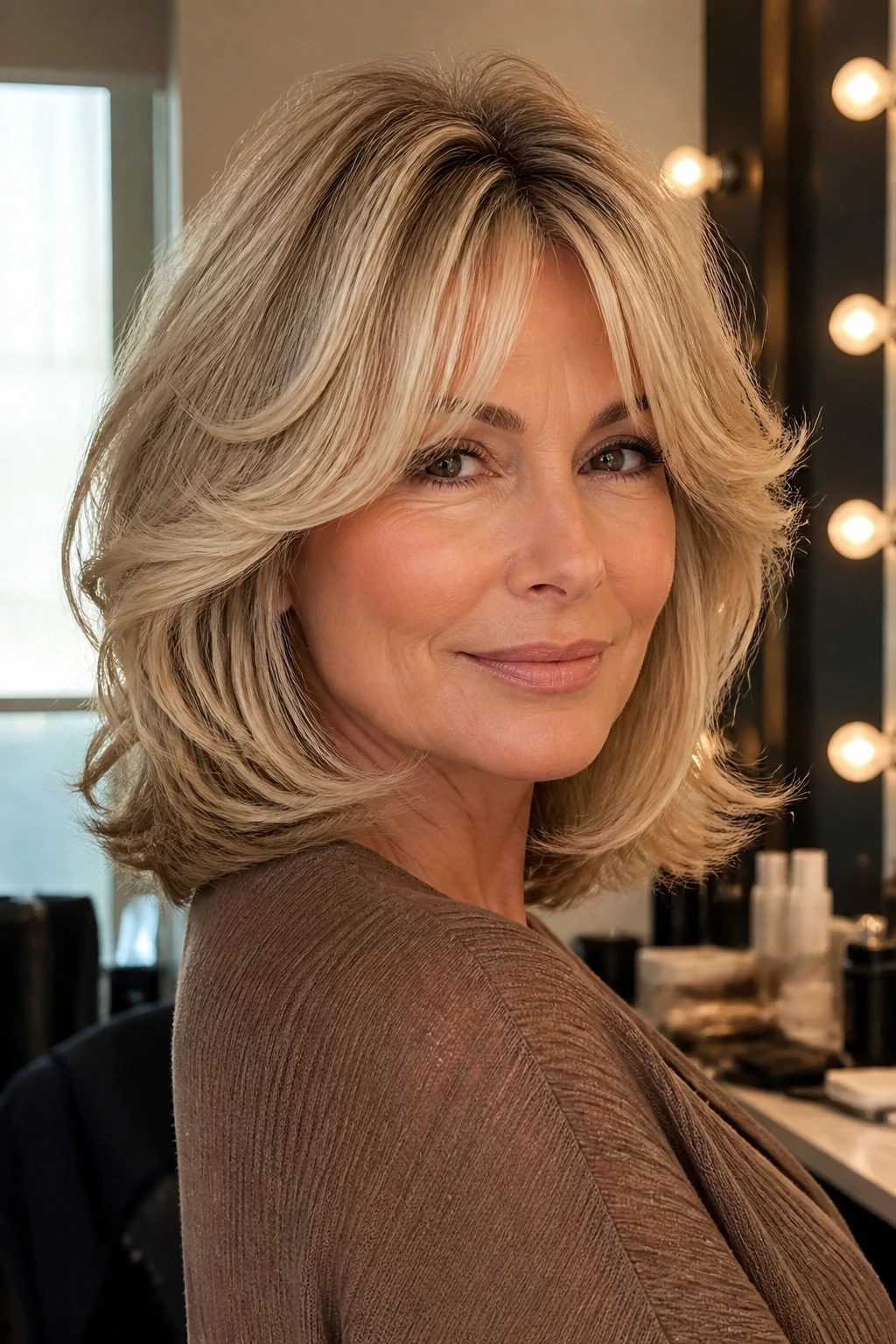
This is the most polished version of the bunch. The layers are still shaggy, but the styling leans smooth and rounded, with curtain bangs that get a little lift at the roots and a soft bend through the ends. It has the drama of a blowout without the stiffness that sometimes comes with a very structured salon finish.
If you like earrings, lipstick, or a bit of shine in your hair, this cut gives those details a stage. The bangs frame the eyes beautifully when they’re brushed away from the center and tucked just enough to show the cheekbones. It’s a nice option for events, dinners, or any day you want your hair to look a notch more dressed up.
You do need a brush and a dryer for this one, at least if you want the full effect. But it does not need to be perfect. A rounded curve and some bounce at the crown are enough. The cut is doing the work; the blowout just makes it speak louder.
19. Salt-and-Pepper Shag with Light Layers
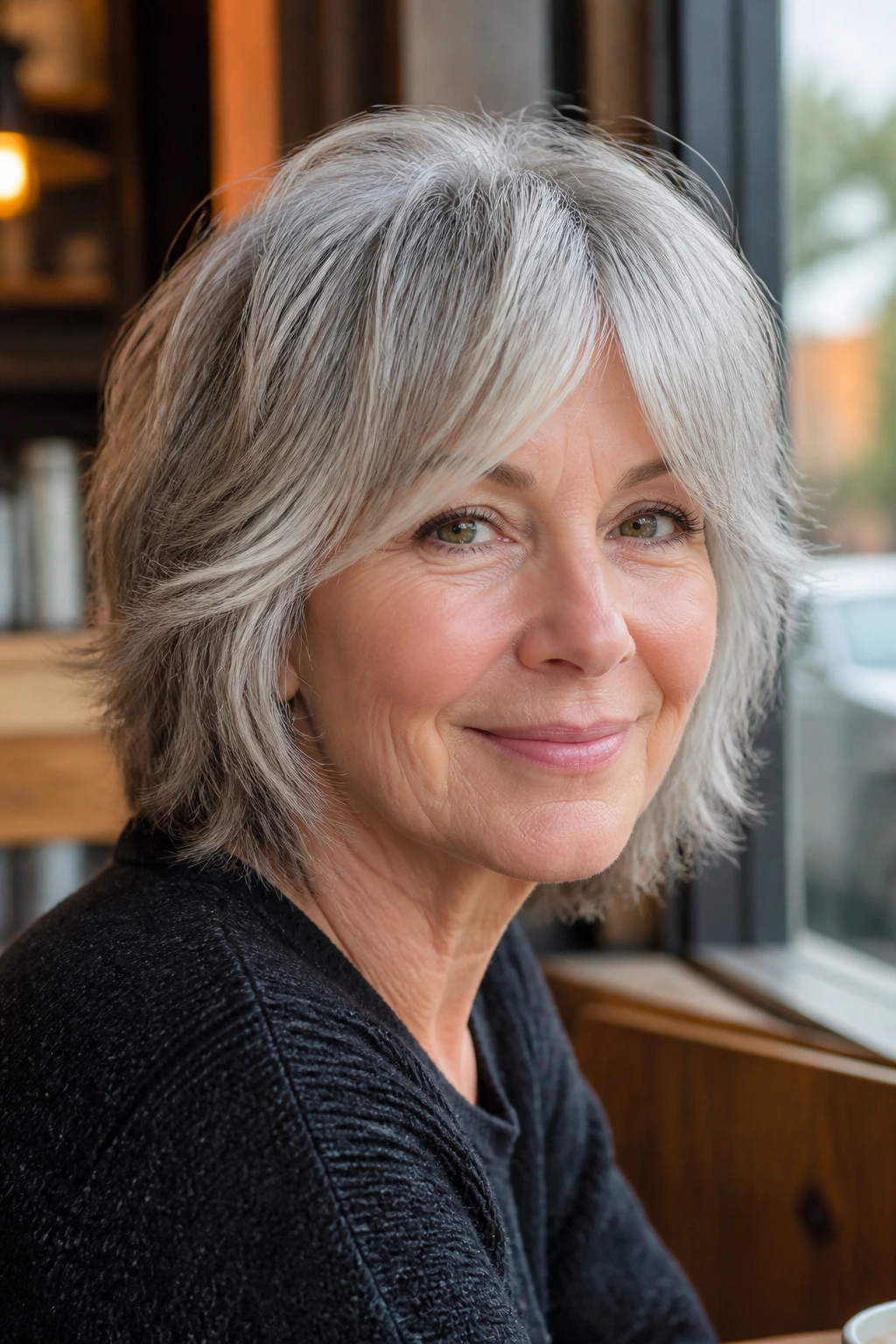
Salt-and-pepper hair has a texture all its own. The contrast between white, silver, and darker strands gets especially interesting in a cut with light layers and curtain bangs, because the color bands show movement as the hair shifts. That can make a short shag look more expensive than a blunt shape ever could.
I like light layers here rather than aggressive ones. The goal is to let the color pattern show, not break it apart. The bangs should be long and soft, with enough length to blend into the side layers so the front still feels connected to the rest of the cut.
This is one of those styles that can look better after a little wear. Freshly cut, it may seem almost too neat. After a few washes, the texture opens up. Good salt-and-pepper hair has a bit of swagger when it’s not over-managed.
20. Low-Maintenance Wash-and-Go Shag
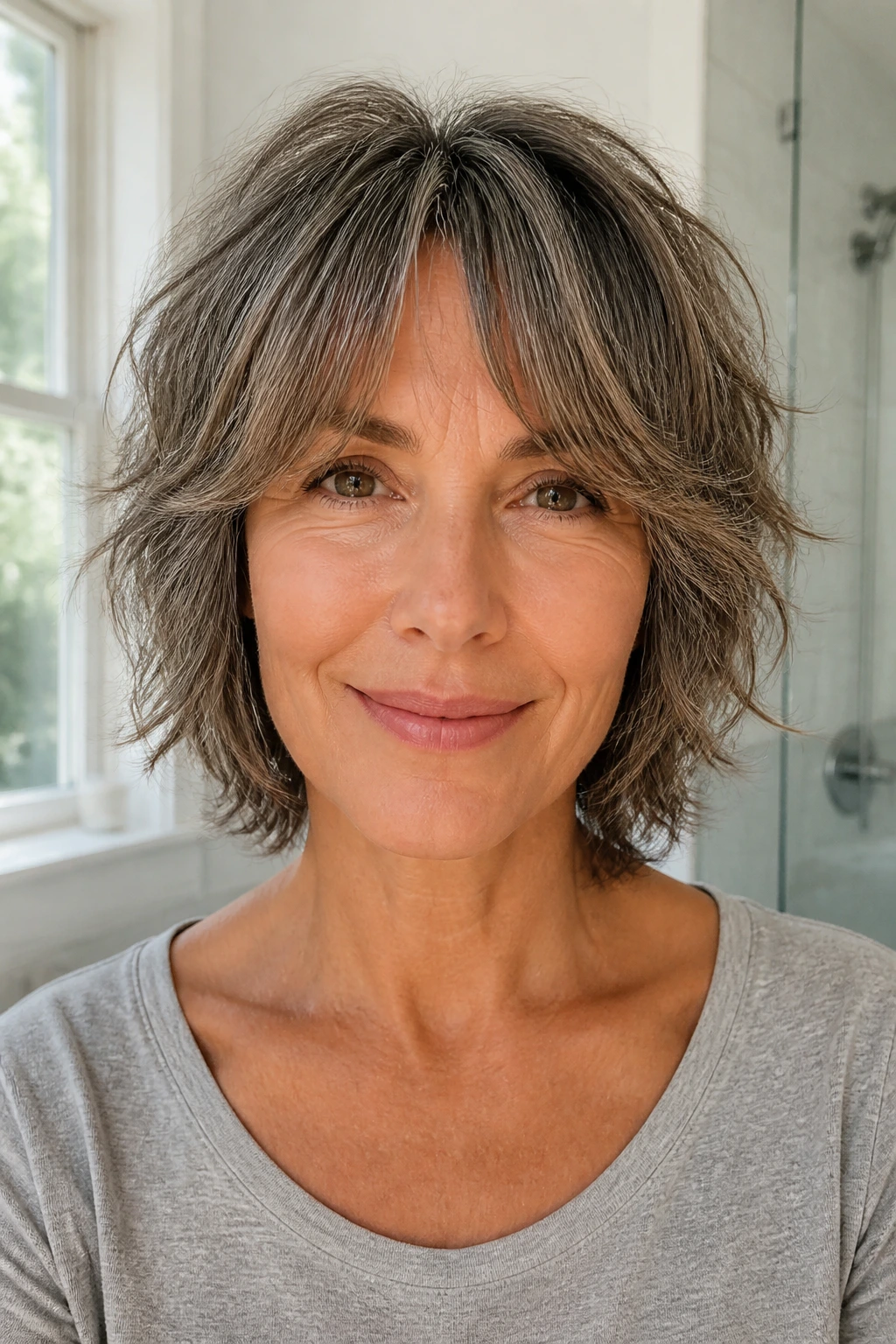
Some cuts want a full styling routine. This is not one of them. The wash-and-go shag relies on strategically placed layers and a curtain bang that falls into shape with very little help. It’s a strong option for women who want to spend their time elsewhere.
The secret is in the cut itself. If the layers are balanced, the hair should dry into a natural bend instead of a flat curtain or a puffball. The fringe should be long enough to split on its own, and the overall shape should be loose enough that you can scrunch and leave.
This one is practical, but not boring. That’s the part people forget. “Low maintenance” does not have to mean plain. It can mean a haircut that still has movement at 4 p.m. even if you did almost nothing to it at 8 a.m.
21. Polished Modern Shag with Face-Framing Flicks
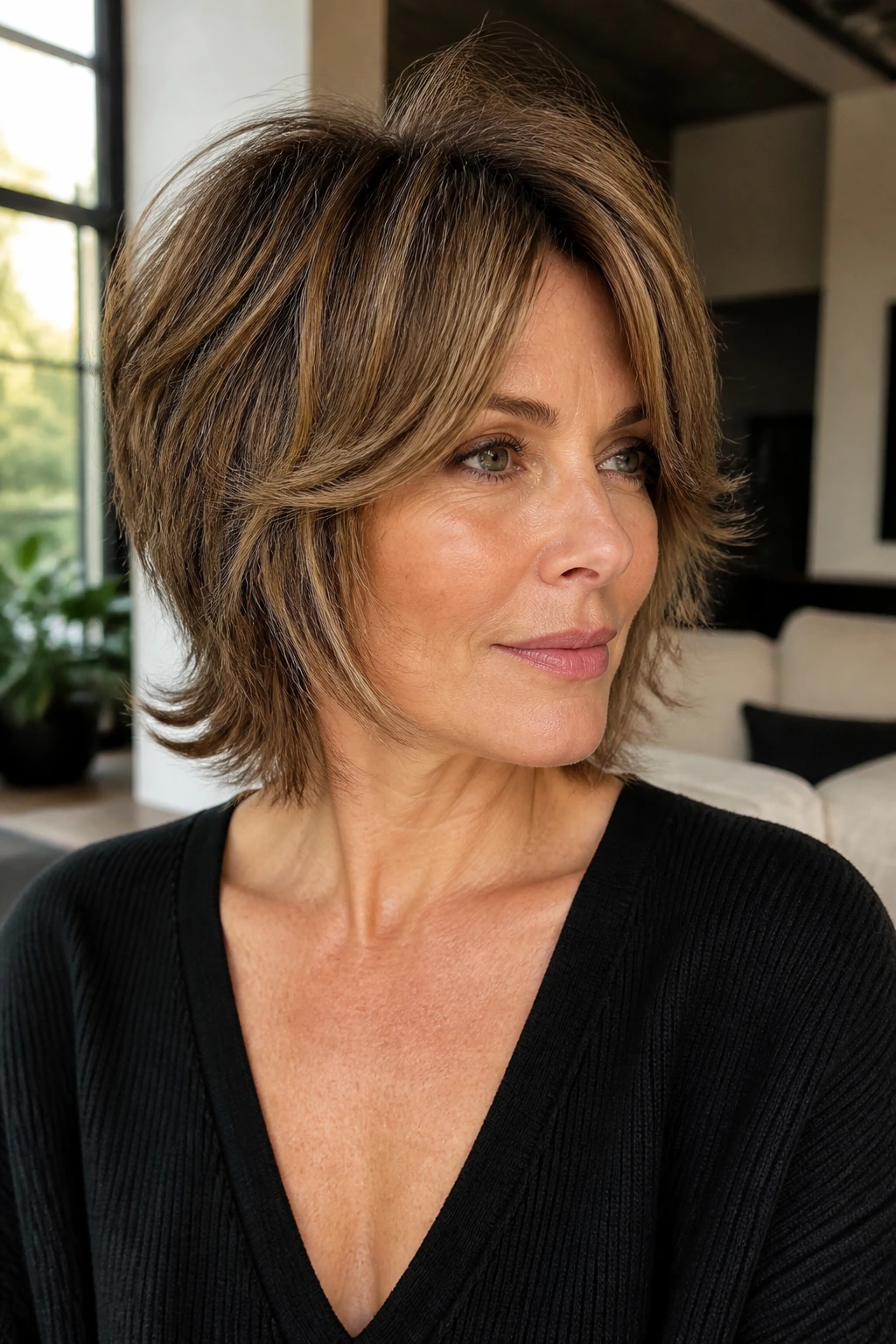
This version sits in the middle between salon-sleek and undone. The ends flick out a bit, the curtain bangs curve softly away from the center, and the overall shape stays controlled. It’s a nice choice if you want to look put together without looking overstyled.
The face-framing pieces should land at different points — some at the cheekbone, some a little lower near the jaw — so the cut has that broken-up finish that makes shag styles feel current. The longer pieces near the front can also help soften a stronger jaw or draw attention away from a neck area you’d rather not emphasize.
I like this for women who still wear structured clothes or sharper eyeglasses. The haircut keeps up. It does not get swallowed by a tailored blazer or a neat collar. That matters more than a lot of salon advice admits.
22. Tapered Neck Shag with Long Curtain Bangs
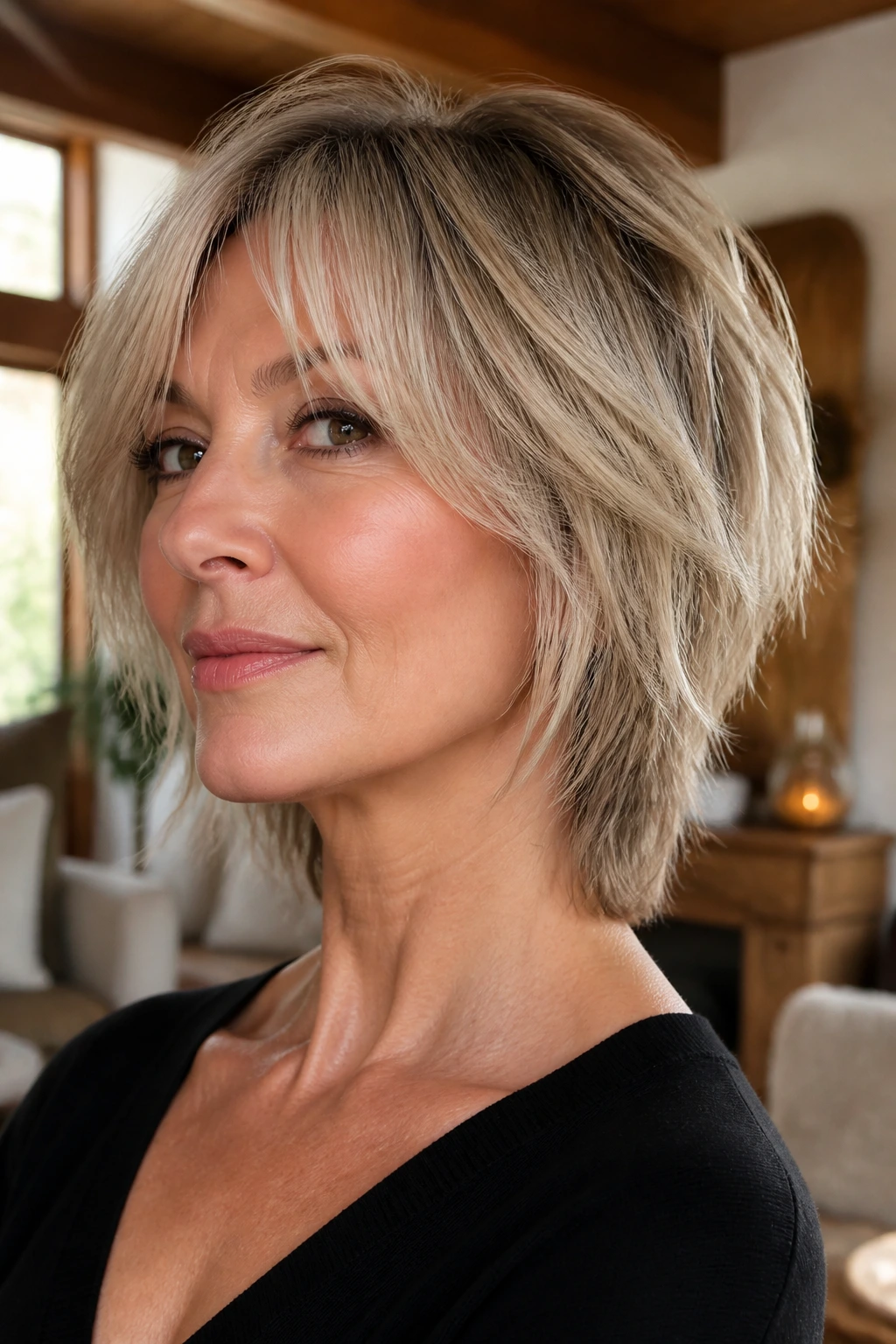
The neckline is the quiet detail that changes everything here. The back tapers in neatly, which makes the cut feel clean from behind, while the long curtain bangs keep the front soft and face-friendly. It is a smart finish if you want short hair that still moves like hair, not like a cap.
This shape works especially well when you want to show the neck a bit without exposing every edge of the haircut. The taper gives you neatness, the layers give you lift, and the bangs do that useful framing job that older women often appreciate most. You see the eyes first. Then the cheekbones.
It is also one of the easiest shags to grow out. The long bangs can be pushed sideways or parted wider, and the tapered back can lengthen without losing its outline. That makes the cut less fussy between visits, which is a small but honest pleasure.
Why This Cut Pairing Works So Well on Real Hair
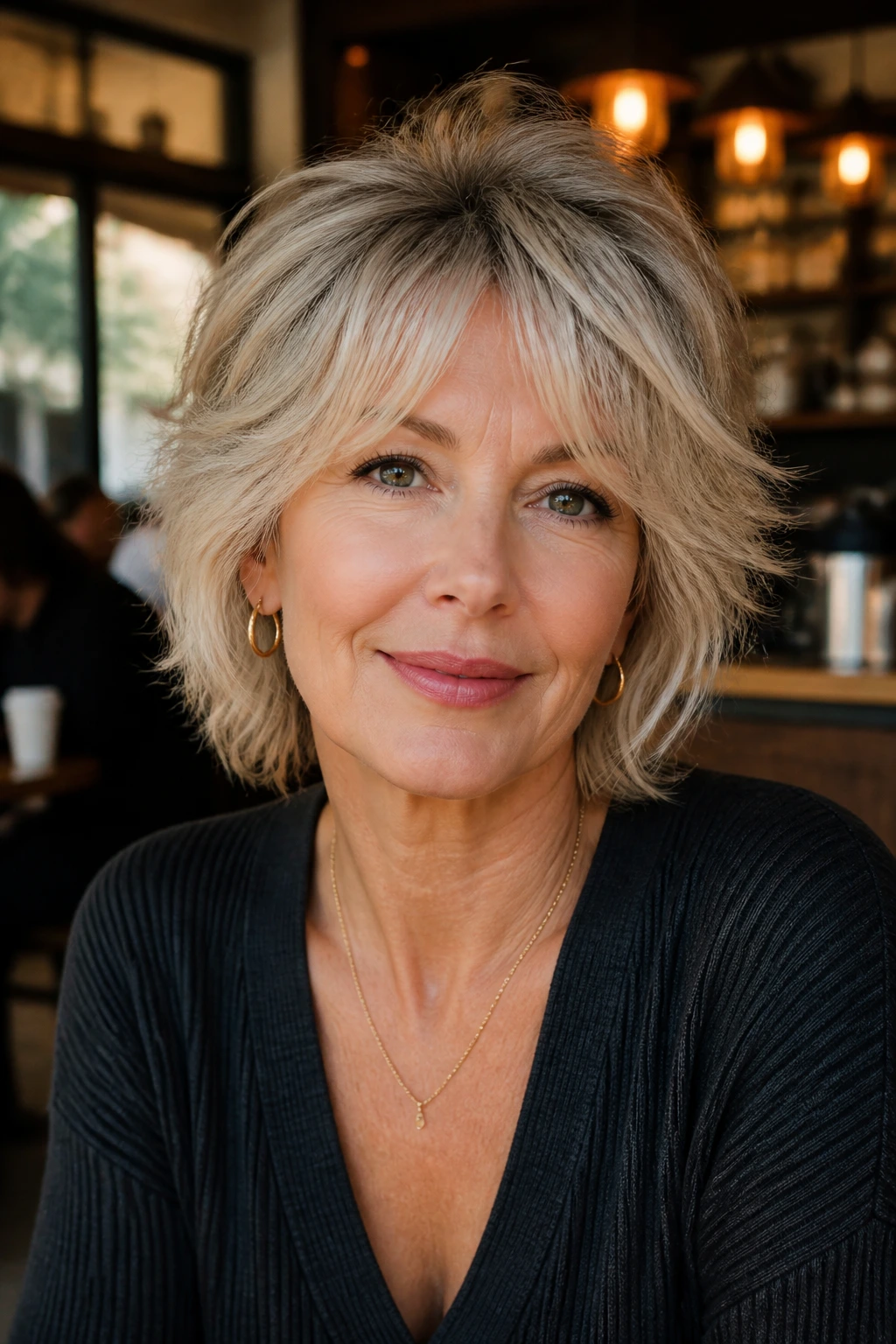
Short shaggy haircuts and curtain bangs solve two problems at once. The shag keeps hair from lying flat and lifeless, while the bangs break up the forehead area without forcing a hard line across the face. That combination is especially useful when hair starts to lose density at the crown or around the temples, because the cut creates the feeling of fullness where the eye wants to see it.
The layers also give hair a chance to move. That sounds simple, but it changes how the whole style behaves. A blunt bob can look great, then go heavy the minute humidity kicks in. A shag tends to recover better because the texture is built into the cut. It is less fragile. Less precious.
Curtain bangs deserve more credit than they usually get. They are not a trendy afterthought here. They do actual face-framing work — softening the forehead, opening the eyes, and leading the gaze down toward the cheekbones and jaw. For older women, that can be a useful bit of visual balance, especially if the haircut needs to make glasses, earrings, or a strong lip color feel more at home.
How to Ask for the Right Shape in the Salon
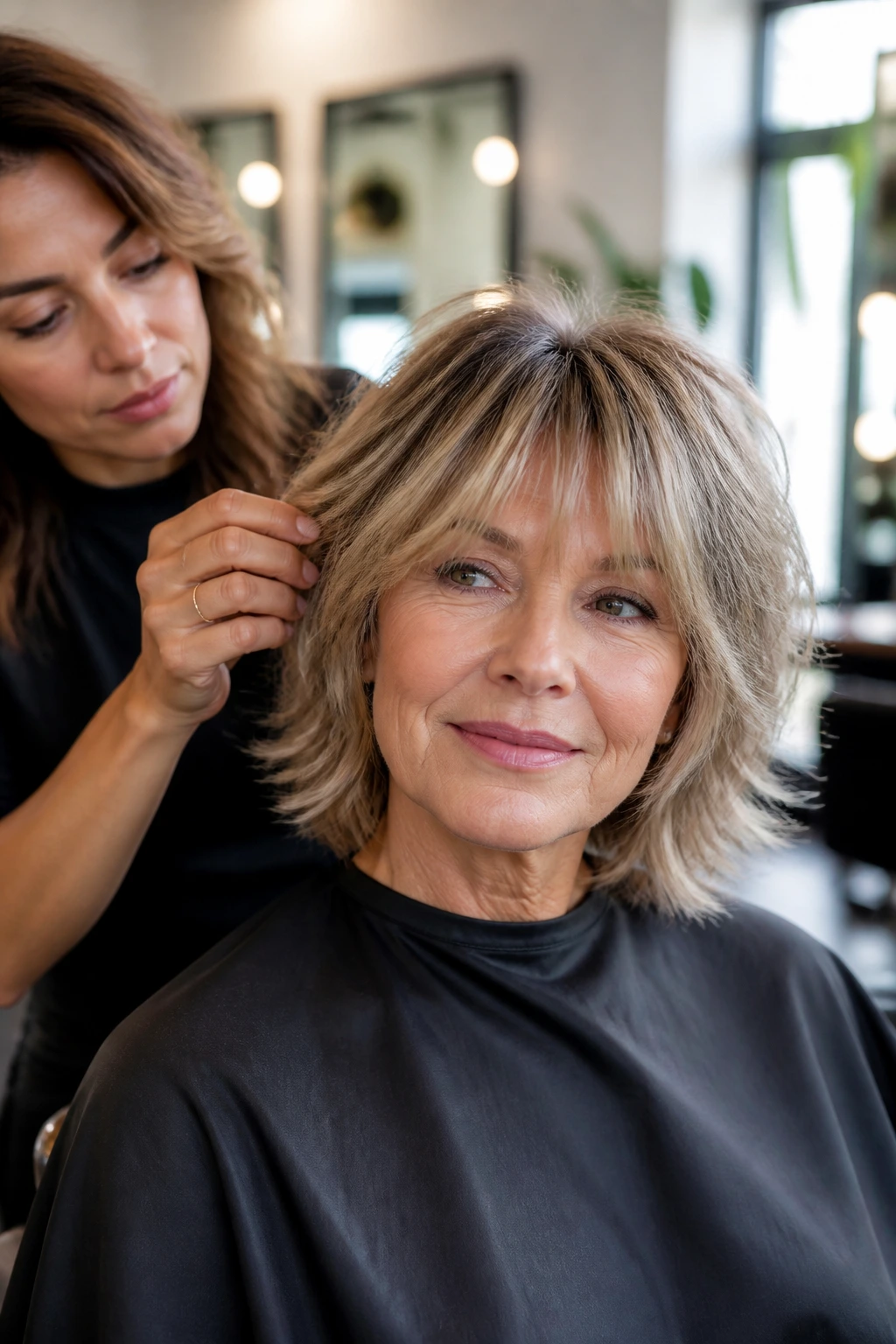
Bring photos, yes, but bring the right kind. One photo of a model with thick, wavy hair and another of a woman with fine, straight hair can send a stylist in two different directions if you don’t say what you actually want. Talk about length at the chin, mouth, cheekbone, or collarbone — not just “short” or “shaggy.”
The biggest phrase to use is this: I want movement, but I want enough length in the front to wear curtain bangs softly. That sentence does more work than a pile of vague adjectives. If you like volume at the crown, say so. If you hate triangular sides, say that too. If your hair flicks outward at the ends, mention it; that detail changes how the layers should be cut.
Ask whether the stylist prefers to cut shags wet, dry, or a mix of both. Curls and strong waves often need more dry cutting. Fine, straight hair may need a different approach so the layers do not vanish. And if you wear glasses every day, bring them to the appointment. The bang length should be planned around them, not guessed.
Tools and Products That Make These Cuts Behave
-
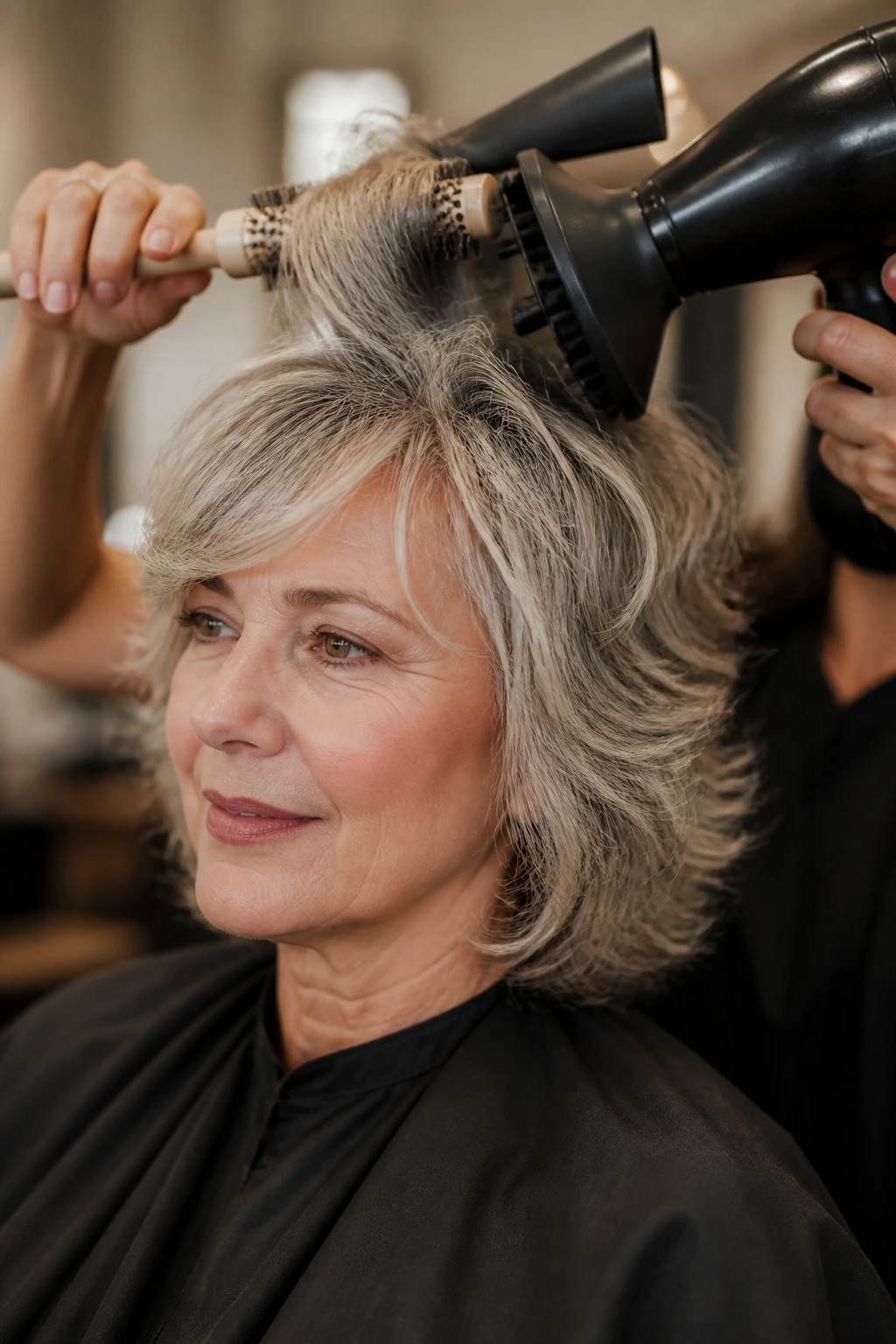
Blow dryer with a concentrator nozzle: The nozzle helps direct the airflow along the fringe and crown instead of puffing the layers everywhere.
-
Round brush, 1 to 1.5 inches: This size gives enough bend in curtain bangs and short layers without making the ends curl under too much.
-
Lightweight mousse: Good for adding root lift and giving fine hair some memory without making it stiff.
-
Texture spray or dry shampoo: Useful on second-day hair when the shag needs grit to hold the piecey finish.
-
Small flat iron: Handy for refining the curtain bang bend or smoothing a stubborn side section around the face.
-
Diffuser: A must if your shag is curly or wavy and you want to keep the natural pattern without frizzing it out.
-
Duckbill clips or sectioning clips: These make styling easier, especially when you want the bangs and crown to dry in the right direction.
-
Wide-tooth comb or vent brush: Good for detangling without stripping the shape you just built.
How to Style It Without Babysitting It All Morning
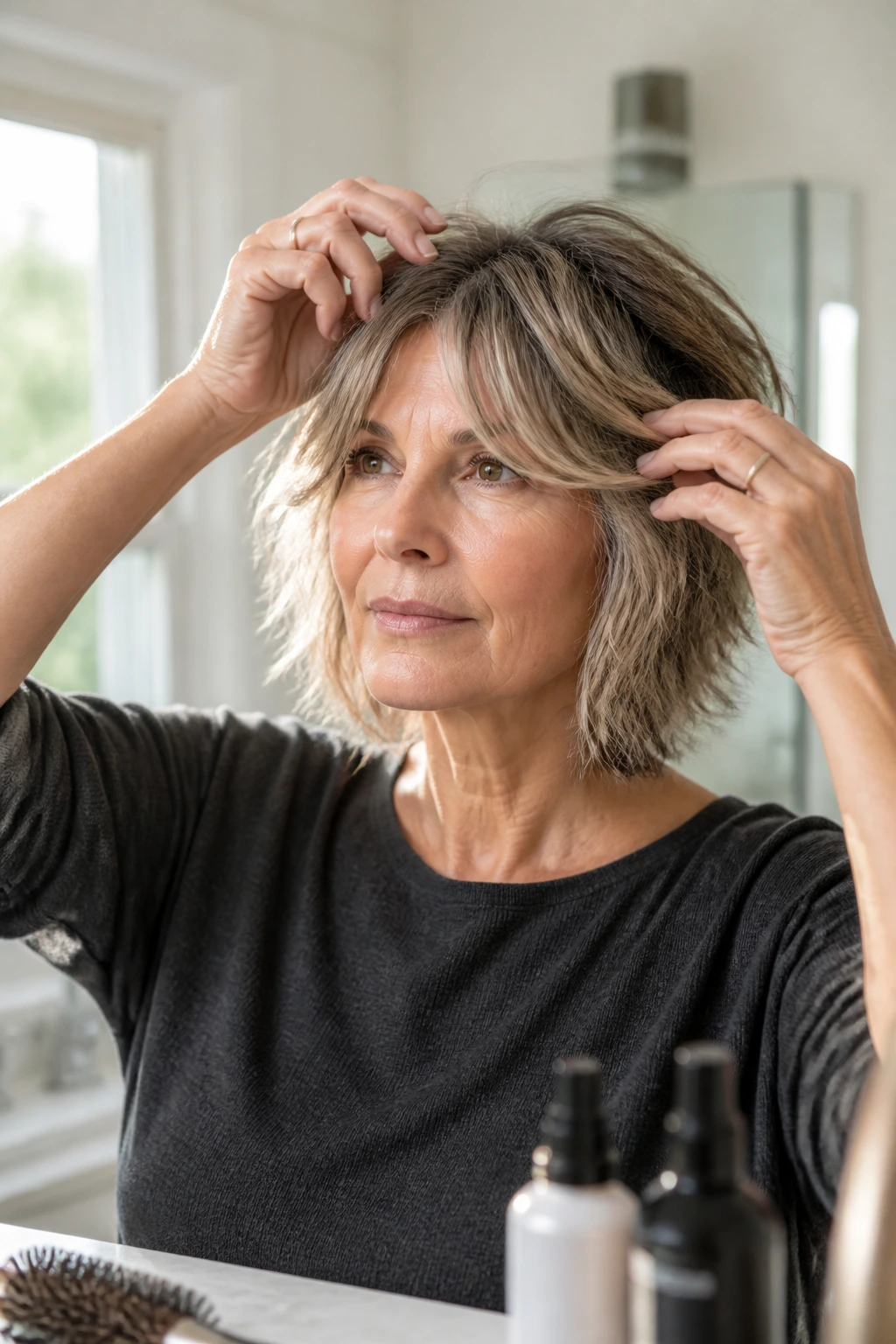
The simplest styling pattern is the one that gets reused. Start with a light mousse or root spray on damp hair, then rough-dry until the roots are mostly set. After that, work the curtain bangs with a round brush or your fingers, depending on how polished you want the finish to look. If you keep fiddling while the hair is still wet, the layers can collapse into odd bends.
For fine hair, less product usually works better. A little mousse at the roots and a puff of texture spray after drying is enough. For thick hair, start with a smoothing cream on the mid-lengths and ends so the shag does not expand outward. Curly hair needs the opposite discipline: stop brushing once the curl pattern starts clumping, or you’ll pay for it with frizz.
Second-day hair is where this cut often looks best. A quick mist of water at the fringe, a finger twist at the front pieces, and a shake at the crown can revive the shape in under five minutes. If you want more polish, bend just the last inch of a few layers with a small iron. Do not curl every piece. That usually makes the cut look too styled and loses the whole point.
Keeping the Shape Between Salon Visits
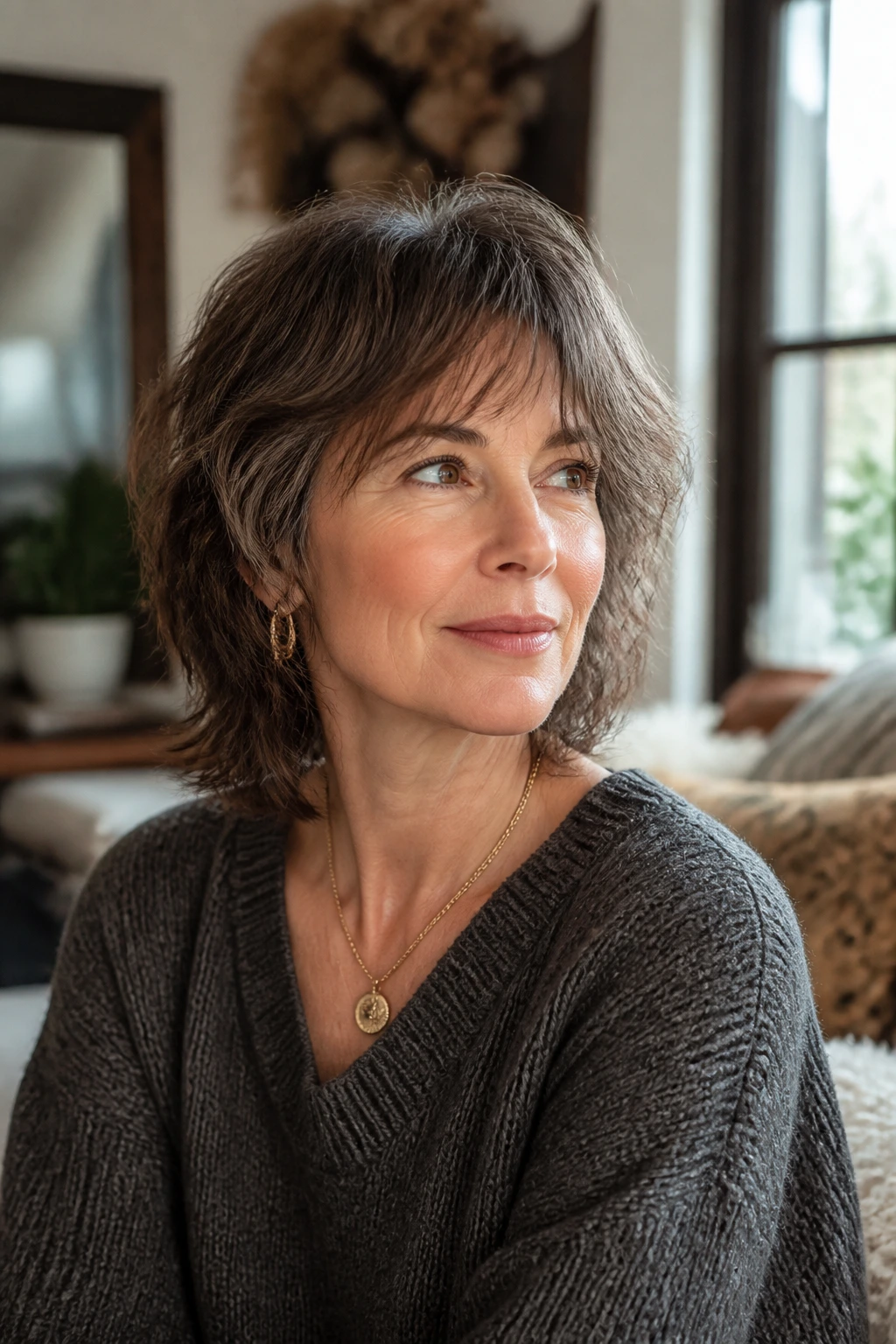
Short shaggy cuts grow out better than blunt ones, but they still need some care. Curtain bangs usually want a trim every 3 to 5 weeks if you like them to sit just right. If you’re happy letting them graze the cheeks and fold into the layers, you can stretch that a little longer. The back and sides typically hold their shape for 6 to 8 weeks before the outline starts looking soft in the wrong way.
A good dry shampoo can buy you time if the crown starts to fall. So can a quick root lift with a blow dryer after you dampen the top lightly. Avoid heavy serums near the roots; they flatten the very part of the haircut you paid to lift.
Trim schedule matters more than people think with a shag. Let it go too long, and the bangs grow into the cheeks while the layers lose their separation. You do not need a whole haircut every time. Sometimes you only need the fringe and the front edges cleaned up. That tiny maintenance visit can keep the style looking sharp for weeks longer.
Common Mistakes That Make a Shag Look Messy in the Wrong Way
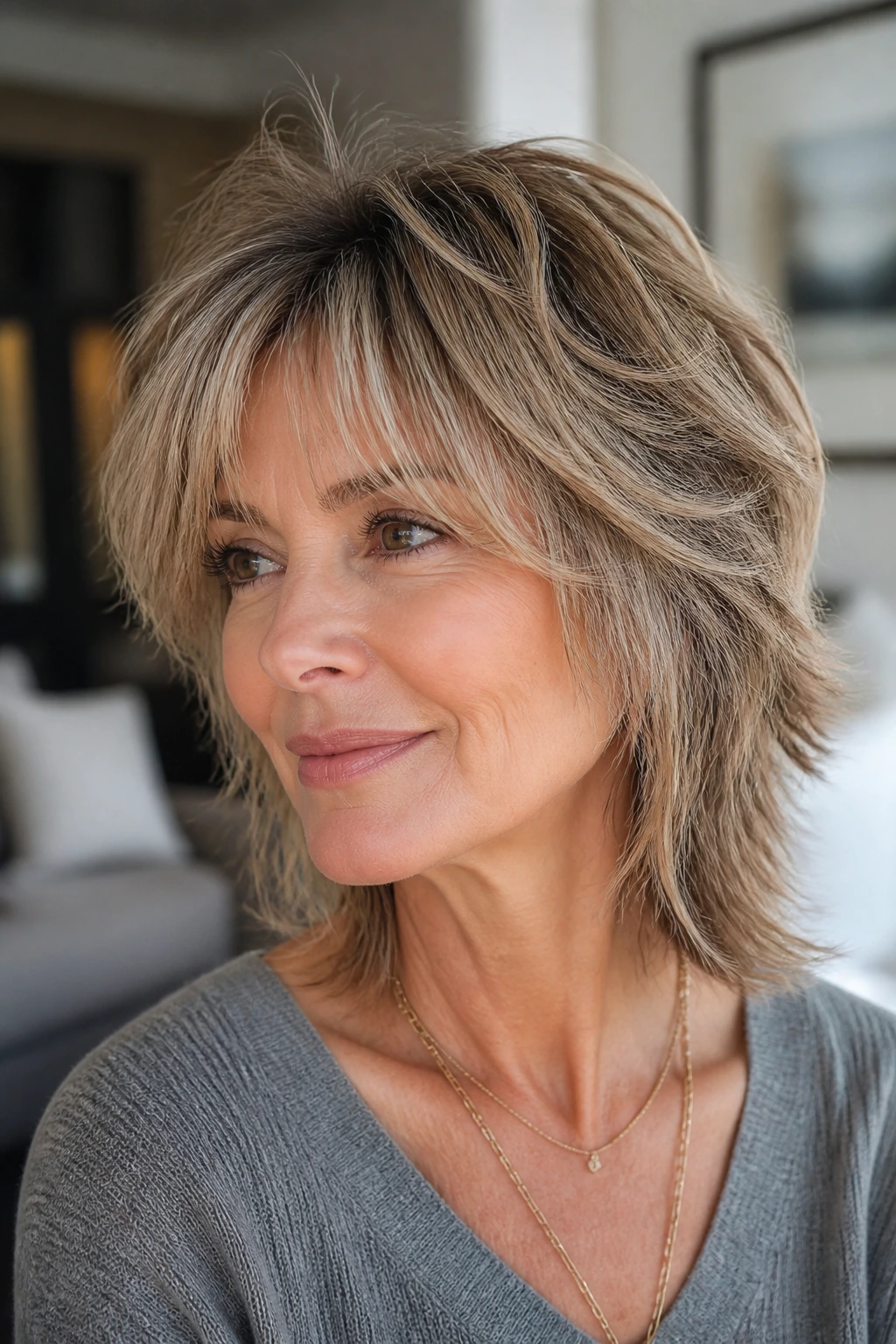
The first mistake is going too short in the fringe. Curtain bangs need length to split and frame. If they sit too high on the forehead, they can flip strangely or look blunt, which defeats the whole softness of the cut.
Another problem is over-thinning the ends. People hear “shag” and assume more layering is always better. It isn’t. If the stylist removes too much weight from fine or aging hair, the ends become see-through and weak instead of airy. You want motion, not fray.
A third trap is styling every day like it needs a full blowout. It doesn’t. The cut is built to look good with a little bend and natural irregularity. Too much heat and too much brushing can smooth away the separation that makes the shag interesting.
Last one: ignoring your hair texture. A shag that looks gorgeous on a wavy model can behave like a squirrel tail on very straight or very curly hair if it’s cut the same way. The layers should be adjusted to what your hair already wants to do. Fight the hair, and it wins. Every time.
Ways to Adapt the Shape for Fine, Thick, Curly, or Straight Hair
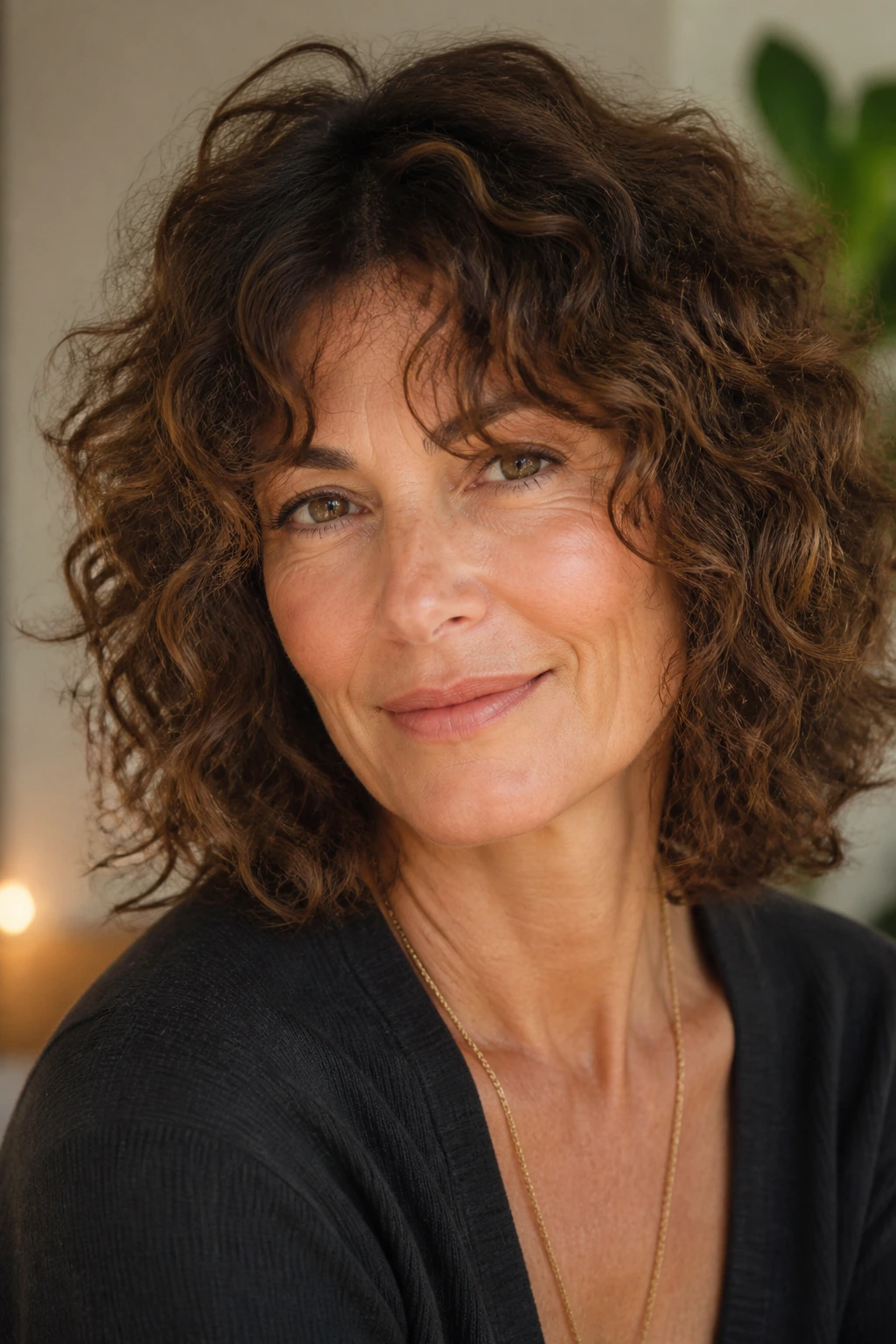
Fine hair: Keep the layers soft and the perimeter a little stronger. A shorter crown with longer curtain bangs can make the top look fuller without exposing the scalp too much.
Thick hair: Ask for internal weight removal and longer layers through the sides. That keeps the haircut from ballooning outward while still letting the bangs open the face.
Curly hair: Leave the bangs longer than you think, and cut with the curl pattern in mind. The curtain effect comes from the split and the bend, not from forcing the hair into a flat center part.
Straight hair: Add a little more texturizing around the front pieces and ends so the cut does not fall into one smooth block. A slight bend at the bang tips helps a lot.
Glasses wearers: Make the bangs land just above or around the frame, not on top of it. That small adjustment prevents the haircut from crowding your face.
Frequently Asked Questions
Will curtain bangs work if my hair is thinning at the temples?
Yes, if they’re kept a little longer and blended into the front layers. The key is to avoid a heavy center chunk and instead let the bangs open softly from the part, which helps disguise thinner spots without exposing them.
Do short shaggy cuts make fine hair look thinner?
They can, if the layers are too aggressive. A well-cut shag keeps enough weight in the perimeter to make the hair look fuller while using internal layers to create lift.
How often should curtain bangs be trimmed?
Usually every 3 to 5 weeks, depending on how precise you want the shape. If you prefer a softer, grown-out look, you can stretch that longer and let the bangs blend more into the layers.
Can I wear this cut if my hair is straight and slippery?
You can, but the layers need enough texture to hold shape. Ask for soft point cutting and plan on a light mousse or texture spray so the ends do not fall flat by midday.
Is a shag a bad idea if I wear glasses?
Not at all. The trick is to keep the bangs from sitting directly on the frame. A good stylist will place the fringe so it opens around the glasses instead of competing with them.
What if I don’t want a messy look?
Then ask for a polished shag, not a rough one. You can keep the layer pattern and curtain bangs while styling the hair smooth with rounded ends and a cleaner finish.
Can I air-dry a shag and still have it look intentional?
Yes, if the cut was made for your natural texture. Wavy and curly hair often air-dries well in a shag, and even straight hair can look good if the layers are balanced and the bangs are left long enough to move.
What should I say to avoid ending up with a mullet?
Ask for softness through the neckline and a blended perimeter. If you want the wolf-cut energy without the sharp edge, use words like “feathered,” “soft,” and “face-framing” rather than “dramatic” or “edgy.”
The Shape That Keeps Its Edge
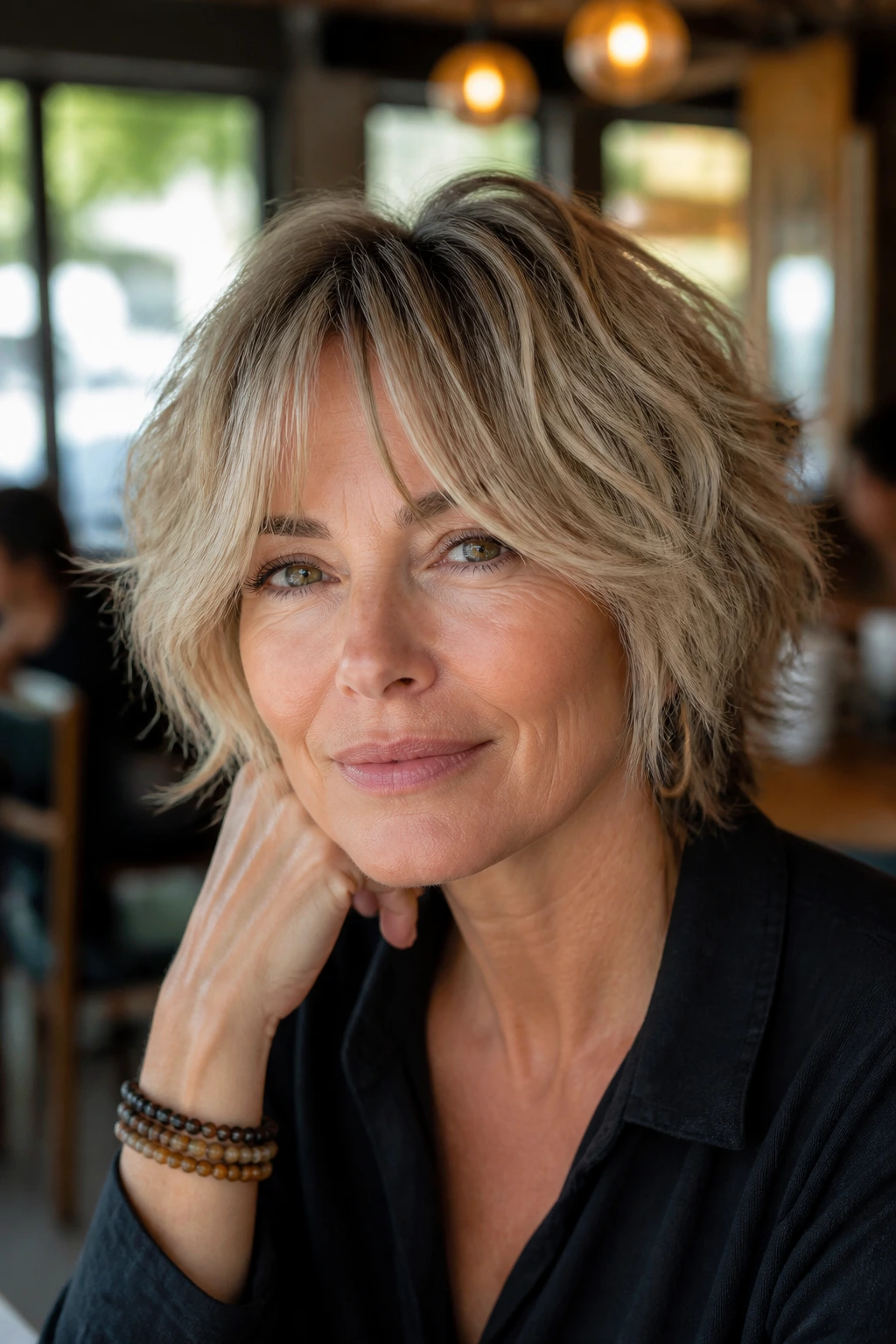
The best short shaggy haircut with curtain bangs does something most haircuts try and fail to do: it gets better when it has a little life in it. That means it can handle a grocery run, a windy day, a lunch out, or a salon blowout without looking like a different head of hair every time.
For older women, that matters. Hair changes, faces change, routines get busy, and the right cut should make room for all of it. A good shag with curtain bangs gives you shape, softness, and enough movement to keep the style from feeling stiff on day one or dull on day twenty.
If you’re taking this to a stylist, bring a few photos and a clear opinion about how much fringe you want near the cheekbones. That one detail changes the whole mood of the haircut.