



Fine hair and square faces can work together, but they punish lazy haircut choices. Fine strands go flat fast, and a square face brings clear angles at the forehead, cheeks, and jaw. Put a blunt line in the wrong place and the whole look can turn boxy in a hurry.
The fix is not more hair. It’s better shape.
A side part can break up the straight lines. A curve at the ends can soften the jaw. A little lift at the crown can make delicate hair look denser than it really is, and no, that does not require a helmet of mousse or a daily blowout that eats half your morning.
The cuts that work best here are the ones that know where to stop. Some skim past the jaw. Some keep the perimeter full so the ends don’t look wispy. Some use fringe and face-framing pieces to pull the eye upward instead of letting it sit on the widest part of the face. Get those details right, and the haircut starts doing half the styling for you.
Why These 22 Cuts Keep Square Angles Soft and Fine Hair Looking Fuller
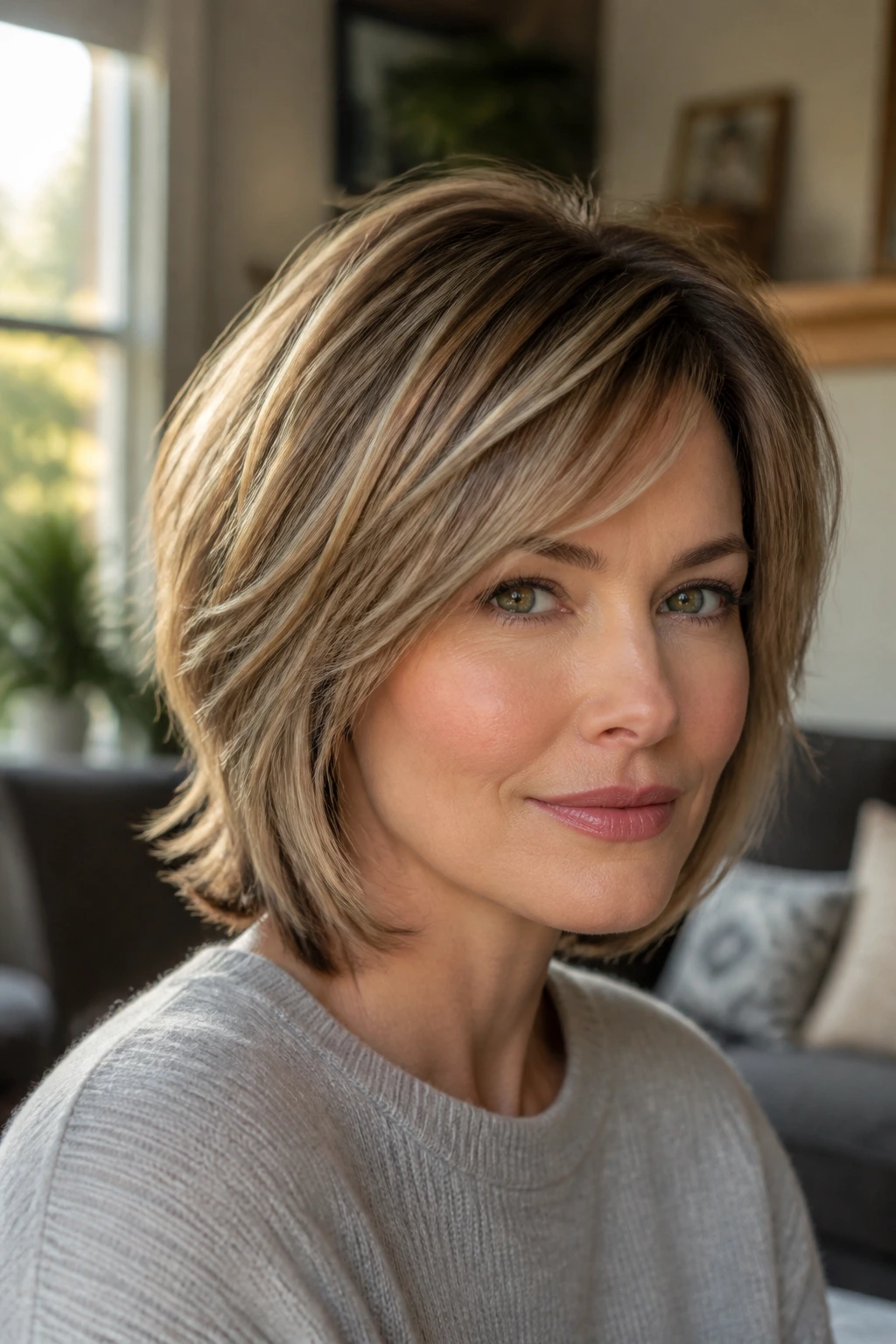
-
Softness at the jaw: The best styles either miss the jawline or blur it with movement, so the face doesn’t feel boxed in by a hard edge.
-
Lift where fine hair needs it: A little root volume at the crown makes a bigger difference on fine hair than a pile of product ever will.
-
Controlled layers: The strongest cuts here keep enough weight at the ends to look dense, instead of stripping out so much hair that the perimeter turns see-through.
-
Diagonals beat straight lines: Side parts, curtain bangs, swept fringes, and asymmetrical pieces all interrupt the square shape in a flattering way.
-
Flexible styling: These cuts can be worn sleek, tucked, waved, or air-dried, which matters when your hair won’t hold a giant style all day.
-
Grow-out friendly: Several of these shapes still look deliberate six to eight weeks later, which is a small mercy if you hate constant salon trips.
1. The Chin-Grazing Soft Bob With a Deep Side Part
A chin-length bob can be a trap on a square face if the line lands too neatly on the jaw. Soften that edge, slide in a deep side part, and the whole thing changes. The eye moves diagonally instead of straight across, and fine hair suddenly looks cleaner and fuller at the same time.
Why the side part matters
A square face already gives you strong horizontal cues. A deep side part cuts across that geometry and keeps the cut from feeling rigid. If the bob sits a half inch below the jaw and the ends are point-cut just enough to take away the bluntness, the shape looks intentional, not severe.
For styling, a 1.25-inch round brush or a flat iron bend at the ends is enough. You want the front pieces to skim the cheek, then tuck slightly inward or outward — not stick out like corners.
- Keep the longest point just below the jaw.
- Ask for soft point-cutting, not heavy texturizing.
- Tuck the heavier side behind one ear for a quick lift.
- Use root spray at the part, not a thick cream through the ends.
Best move: keep the perimeter full and let the part do the softening.
2. The Feathered Pixie With Lifted Crown Volume
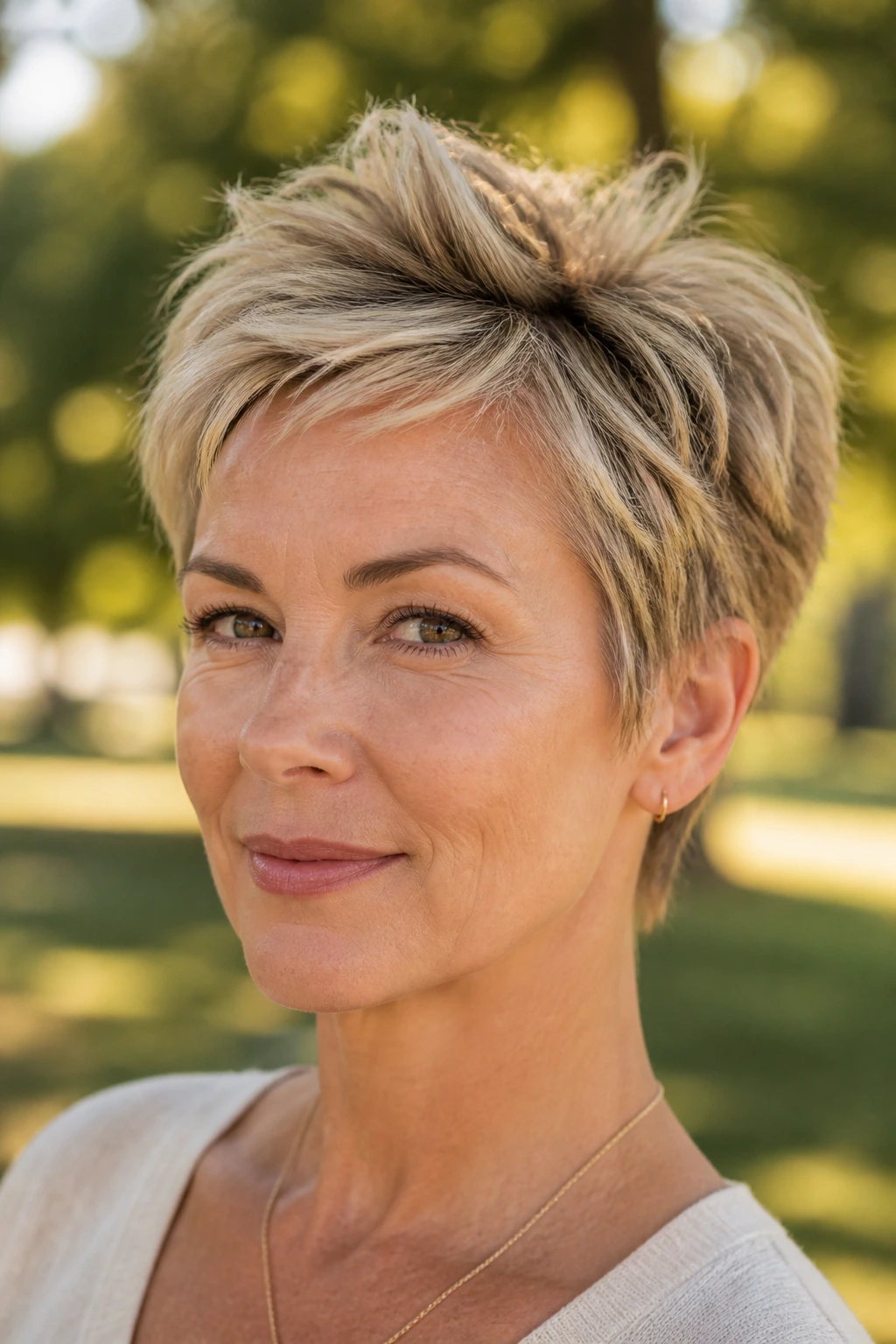
A pixie can absolutely flatter a square face, but only when the top keeps enough length to bend and the sides stay tidy. The feathered version works because it builds height where fine hair usually disappears: right at the crown.
That crown lift changes the visual line of the face. Instead of emphasizing the jaw, the haircut pulls the eye upward, and the feathering around the temples keeps the transition soft. I like this cut best when the top has at least 2.5 to 4 inches to work with, depending on how fine and straight the hair is.
Short napes are fine here. What you do not want is a buzzed, tight side that makes the jaw feel even wider by comparison. Leave a little softness around the ear, and keep the fringe swept, not chopped straight across.
A small amount of mousse at the roots and a quick blow-dry with fingers is often enough. If you add wax, use it only on the very ends of the top layers.
3. The Collarbone Lob With Invisible Layers

Why does a collarbone lob work so often on fine hair and square faces? Because it lands below the widest part of the jaw without dragging the hair so long that it collapses. The length does some quiet face-lengthening, and the invisible layers keep the ends from looking like one flat sheet.
This is one of my favorite “looks like I did almost nothing” haircuts. It is not actually no-work; it just hides the work better than a choppy cut does. Ask for interior layers that start low — around the collarbone or just below — so the perimeter still looks full from the front.
Ask for these details
- Length that skims the collarbone.
- Internal layers that stay below the chin.
- Ends that are softened, not shredded.
- A side part or a soft off-center part.
If your hair is especially fine, this cut plays nicely with a subtle bend at the ends and a little root clip while it cools. The shape stays clean even when the style drops a bit by afternoon.
4. The Curtain-Bang Shoulder Cut That Softens the Jaw

If you wear your hair up half the week and down the rest, this is the cut that keeps both modes looking polished. Curtain bangs soften the forehead, but the real trick is how they travel down toward the cheekbones and open away from the face.
That opening matters on a square face. It breaks the straight line between forehead and jaw, and it gives fine hair a bit of built-in lift around the front without thinning the whole head. I prefer this cut at shoulder length or just past it, because shorter can turn too square and longer can start to lose the shape.
The bangs themselves should stay airy. Not thick. Not blunt. If they’re too dense, they sit like a curtain rod. If they’re too wispy, they vanish. The sweet spot is a thin, blended fringe that can be round-brushed away from the face in under a minute.
This cut also grows out well. That matters more than people admit.
5. The Textured French Bob With Airy Ends

A French bob can work on fine hair, but only if it does not sit like a helmet. The magic is in the air at the ends — enough softness to move, not so much thinning that the perimeter looks weak.
For square faces, I like this cut when the line sits just above or just below the jaw, never exactly on it. A tiny bit of bend through the ends and a side-swept or lightly parted front keeps the face from feeling boxed in. A blunt micro-fringe can work on some people, but on square features I usually prefer a softer fringe or no fringe at all.
This is not a cut that needs a lot of fuss. A light mousse, a quick rough-dry, and a short pass with a small round brush usually get it there. The shape should look a little undone, but not messy. There’s a difference, and it’s bigger than the haircut itself.
My rule with this one: if the ends are too perfect, keep softening them.
6. The Side-Swept Shag With Light Interior Layers
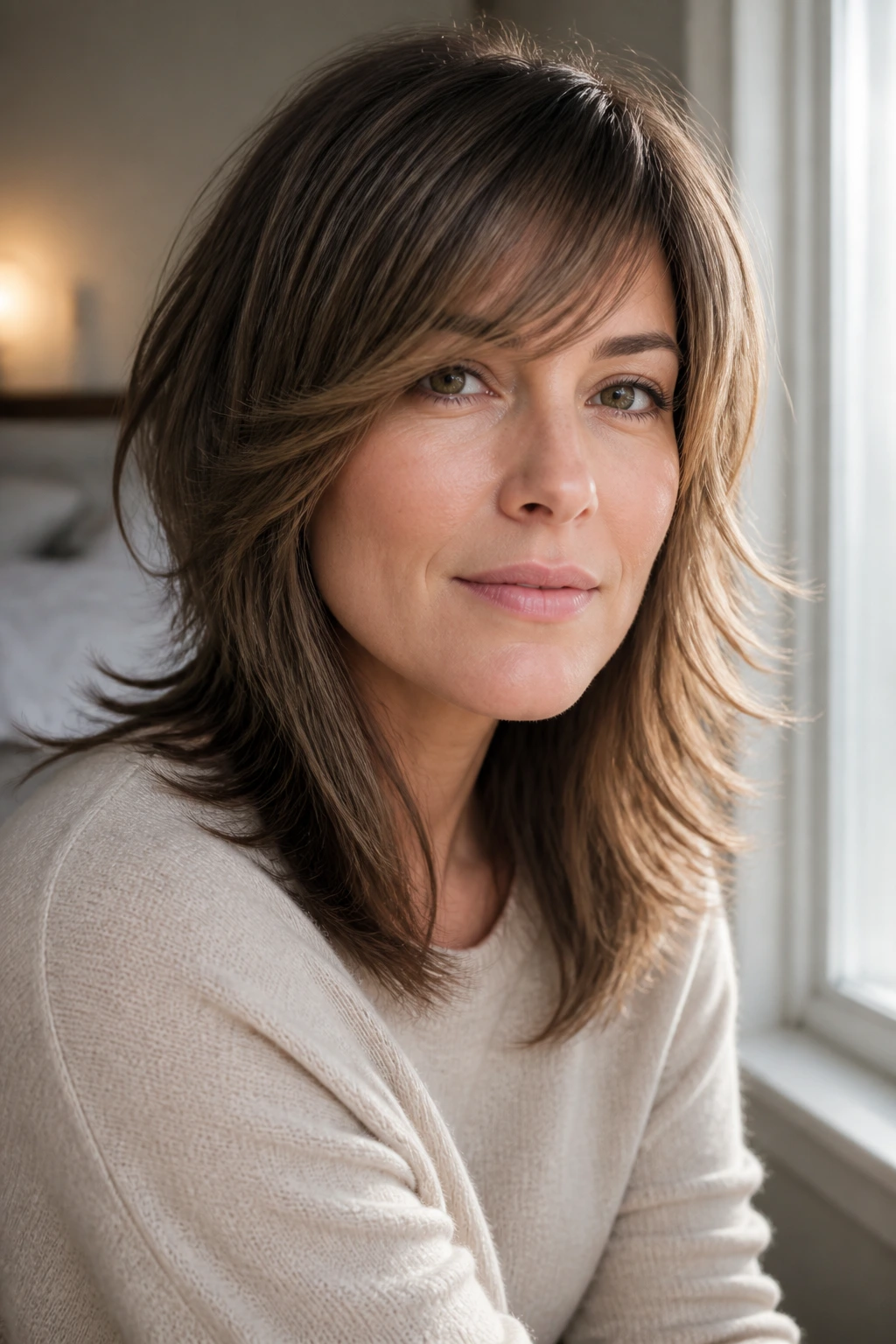
A shag on fine hair turns messy fast when the layers start too high. That’s why the lighter version is the one to pick. Let the layers begin below the cheekbone, keep the fringe swept to one side, and leave enough weight at the bottom so the hair still reads as full.
Square faces like the side sweep because it breaks up the forehead and draws the gaze diagonally. Fine hair likes the restrained layering because the ends don’t get chewed up into nothing. You still get movement, but you don’t get that airy, over-thinned finish that can look stringy after the first wash.
A little texture spray can help, but don’t drown it. Shags are easy to overdo, and fine hair pays the price faster than thick hair does. I’d rather see a soft bend and a little root lift than three kinds of spray fighting each other.
This one is for people who want a little edge without looking like they wrestled with a razor.
7. The Bixie Cut With Tapered Sides
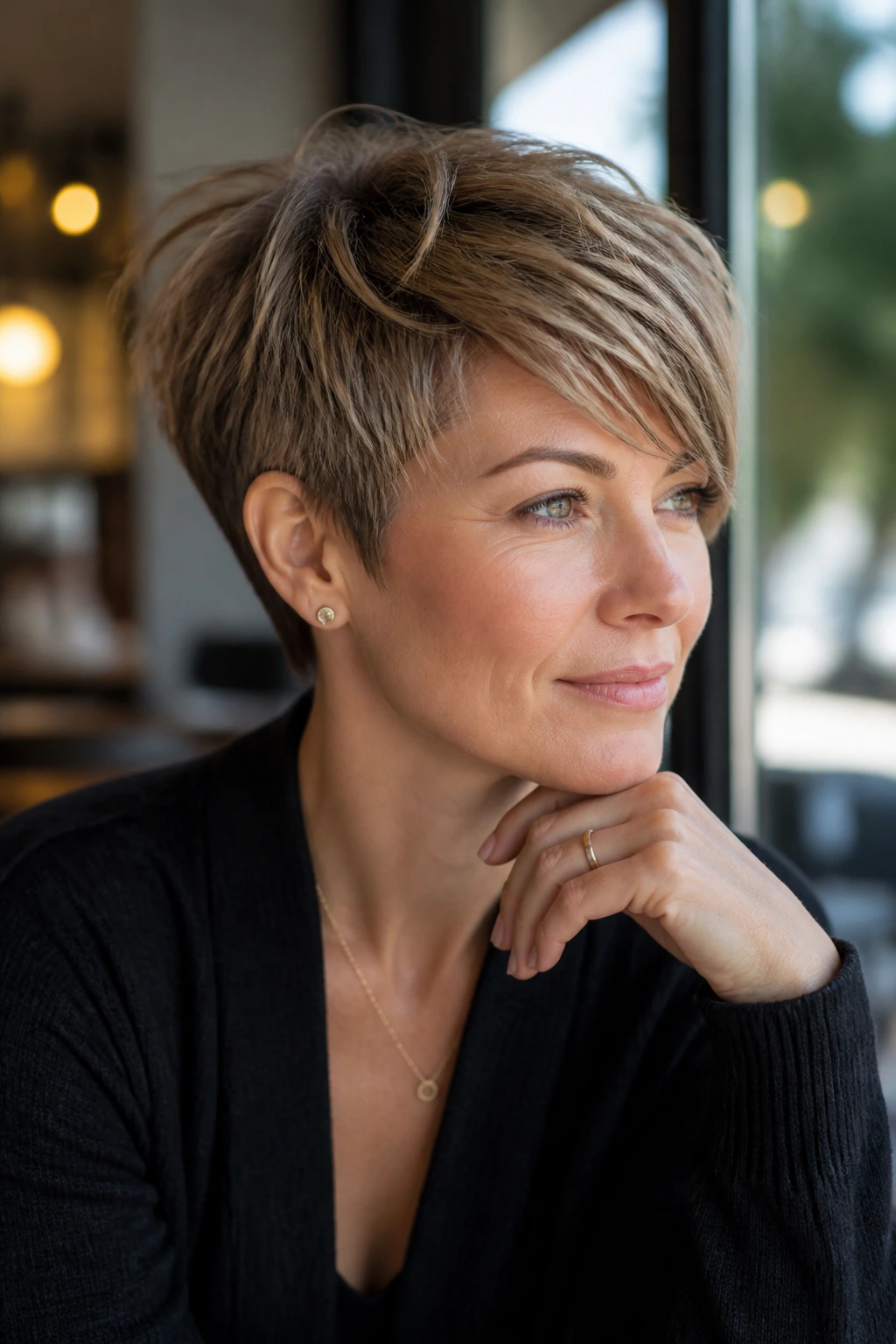
The bixie sits between a bob and a pixie, which is exactly why it flatters square faces that need softness but not too much width. The tapered sides keep the shape close to the head, while the longer top and fringe add movement where fine hair needs it most.
What to ask for
- A tapered nape that stays neat.
- Longer top layers, usually around 3 to 4 inches.
- Side-swept fringe that can brush across the forehead.
- Softness at the temples instead of sharp corners.
That combination stops the haircut from getting bulky around the jaw. It also keeps the head shape from looking too round or too flat, which happens quickly with very fine hair. I like the bixie when someone wants short hair but still wants some styling options — tucked behind the ears one day, airy and tousled the next.
Use a light cream or mousse, not a heavy paste. Fine hair needs hold, not weight.
8. The Blunt Lob With Tucked-In Ends
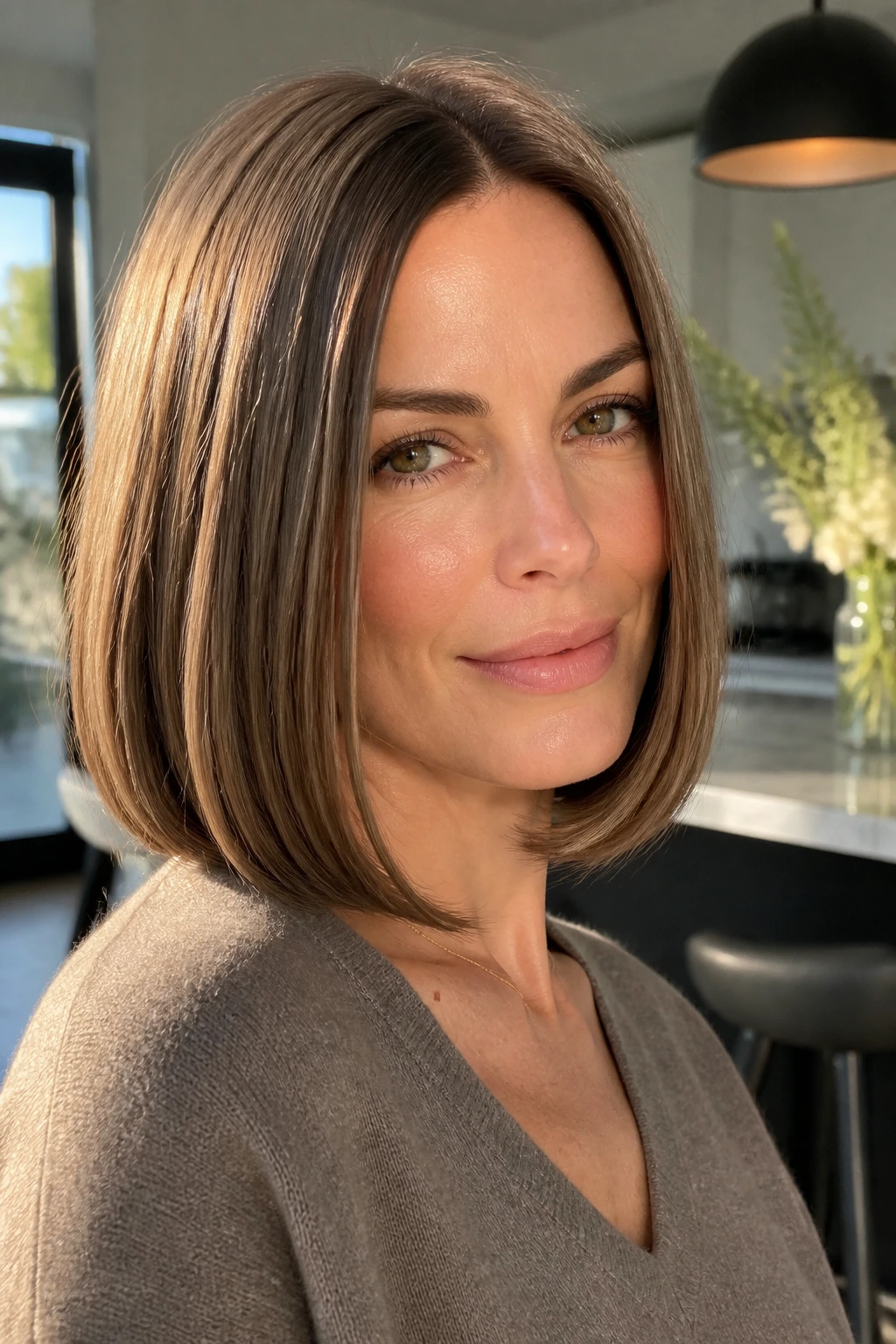
Not every fine-hair cut needs layers. In fact, some of the best-looking ones are blunt. A clean lob that stops at the collarbone and tucks in softly at the ends can make fine hair look denser than a stack of sliced layers ever will.
On a square face, the length matters as much as the line. Keep the lob below the jaw, and it takes pressure off the angles. Add a side part or even a slight off-center part, and the haircut suddenly feels softer without losing its crisp outline.
I like this cut for people who want low drama in the chair and a reliable shape every morning. A quick blow-dry with a round brush and a touch of bend at the ends is enough. If the hair is too straight and flat, a tucked-under finish keeps the line from looking severe.
This is the haircut I’d send someone to when they say, “I want it to look thicker, but I do not want it layered to death.”
9. The Long Layers That Start Below the Cheekbones
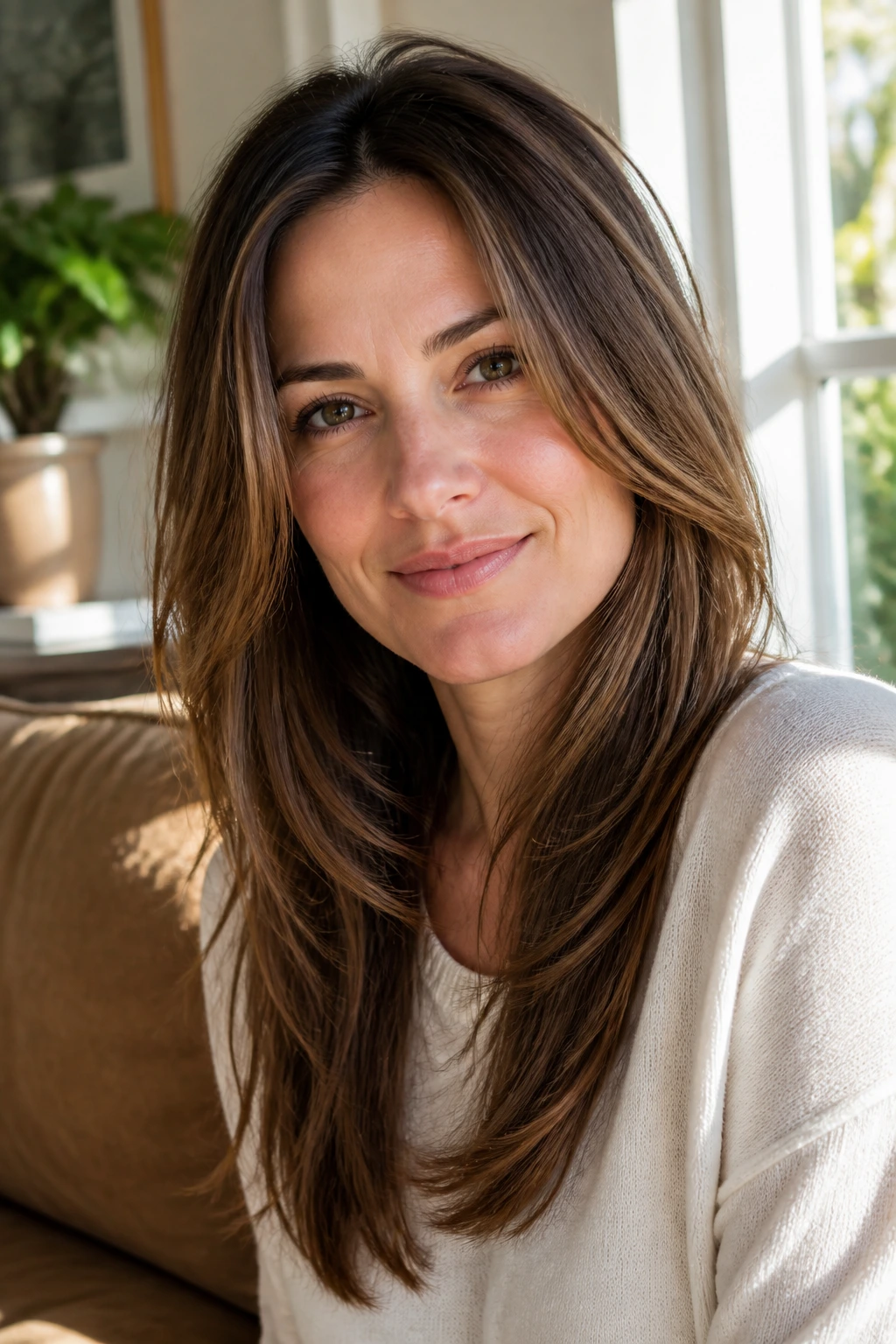
Can long hair still look full when the strands are fine? Yes, but the layers have to behave. If they start too high, the ends fray and the face gets wider in all the wrong places. If they begin below the cheekbones, the shape stays soft and the jaw keeps its space.
This cut works best when the shortest front pieces stay out of the way of the chin. Let the movement begin lower, around the collarbone or just under it, and keep the length long enough to create a vertical line. That vertical line is a friend to square faces. It lengthens without trying too hard.
The long version also gives you room to wear the hair in a low ponytail or clip it back without losing shape around the face. That matters. Some styles only look good when fully styled; this one can still behave when life gets busy.
A tiny bend through the bottom inch is enough. Fine hair rarely needs more.
10. The Flipped-Out Lob With a Round-Brush Finish
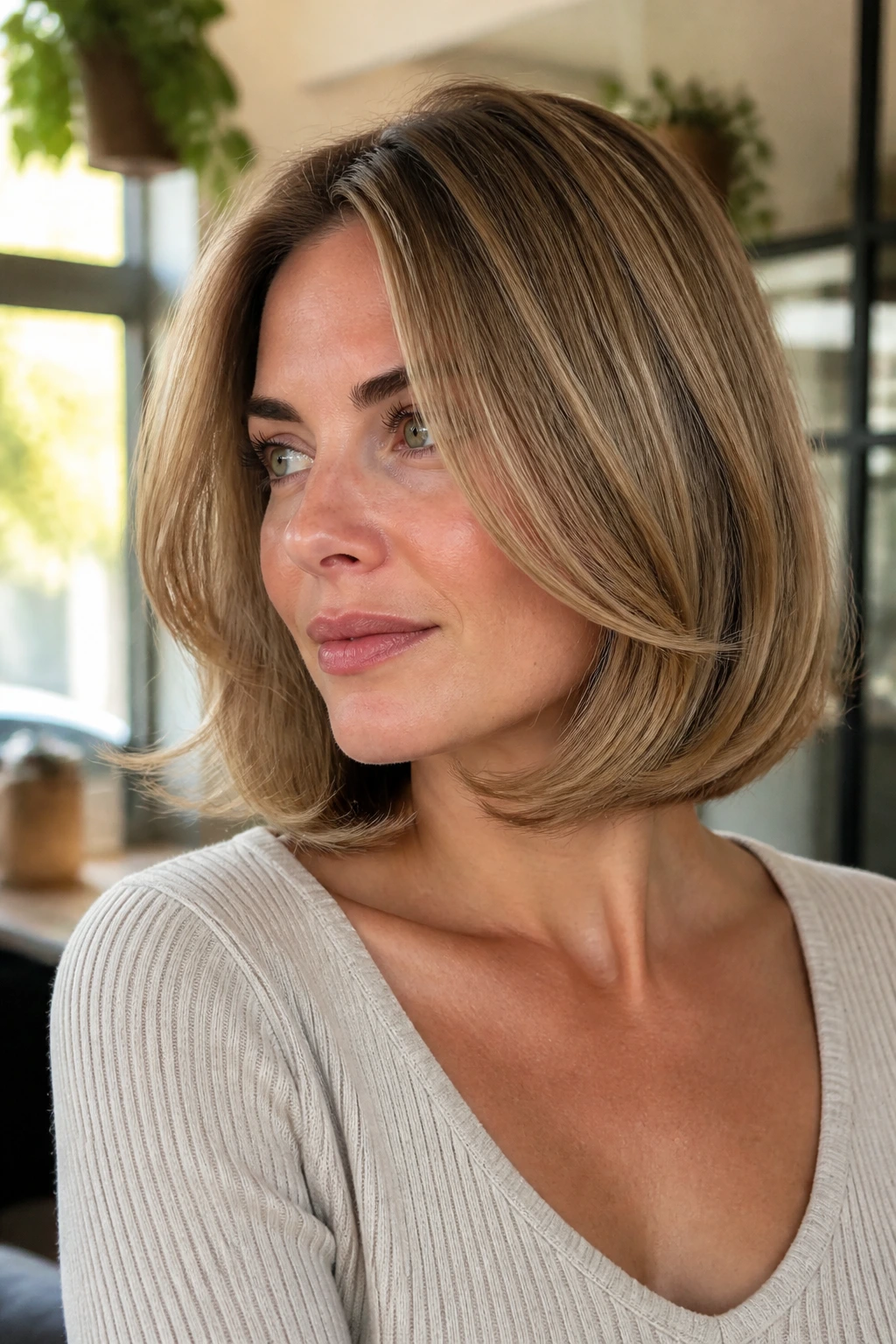
The little kick at the ends changes the face more than people expect. When the lob flips away from the jaw, it breaks the straight line that can make a square face look harder. The movement is subtle, but the effect is not.
This cut is especially good if your hair has a naturally smooth texture and resists curl. You are not trying to make it wavy. You’re just asking the ends to bend out slightly so they don’t hang straight down beside the jaw. A 1.25-inch round brush or a quick pass with a flat iron can do the job.
I like this on hair that falls somewhere between fine and medium-fine, because the flip adds life without making the cut look busy. The trick is to keep the bend at the last inch or so. If the whole head flips out, the shape gets cute in a way that fights the face.
A side part or soft center part both work here. I lean side part, because it buys a little more softness across the forehead.
11. The Layered Crop With Extra Lift at the Crown
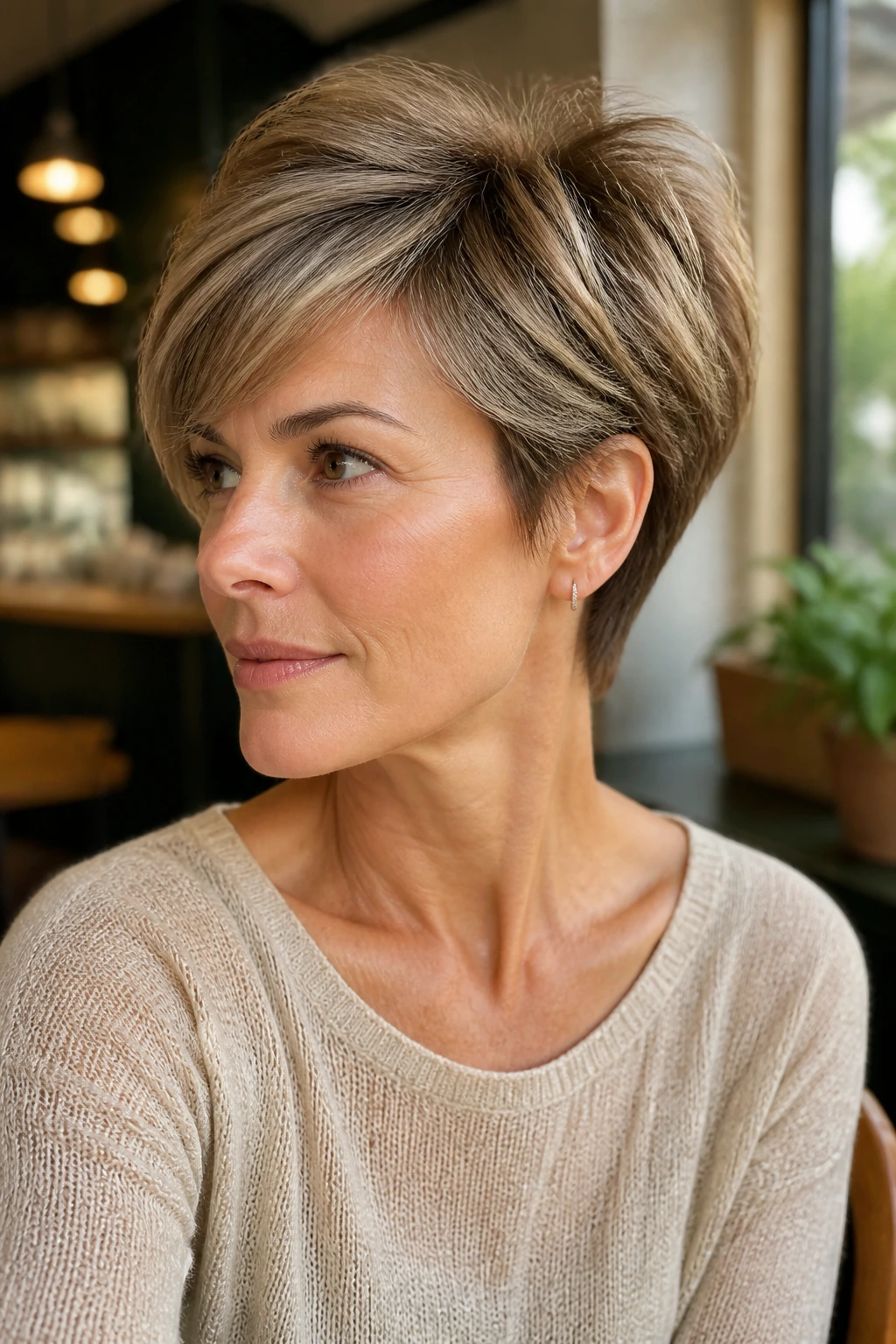
A cropped cut only helps fine hair when the crown is built, not teased to death. That’s the real line here. Keep the sides controlled, let the top carry the shape, and use soft layering to create lift where the hair usually settles flat.
Square faces need this balance. If the sides are too wide, the jaw looks wider. If the crown is too flat, the whole haircut loses shape. A little height up top gives the face a longer read, and a side-swept fringe keeps the forehead from feeling too open.
This cut usually wants a small amount of root spray or mousse worked into damp hair before drying. I would avoid sticky products here; they make short, fine hair clump and show scalp in strange places. A quick blast with the dryer, fingers lifted at the roots, and a cool shot at the end is usually enough.
It is neat, not fussy. That is the appeal.
12. The Wavy Bob With a Broken-Up Perimeter
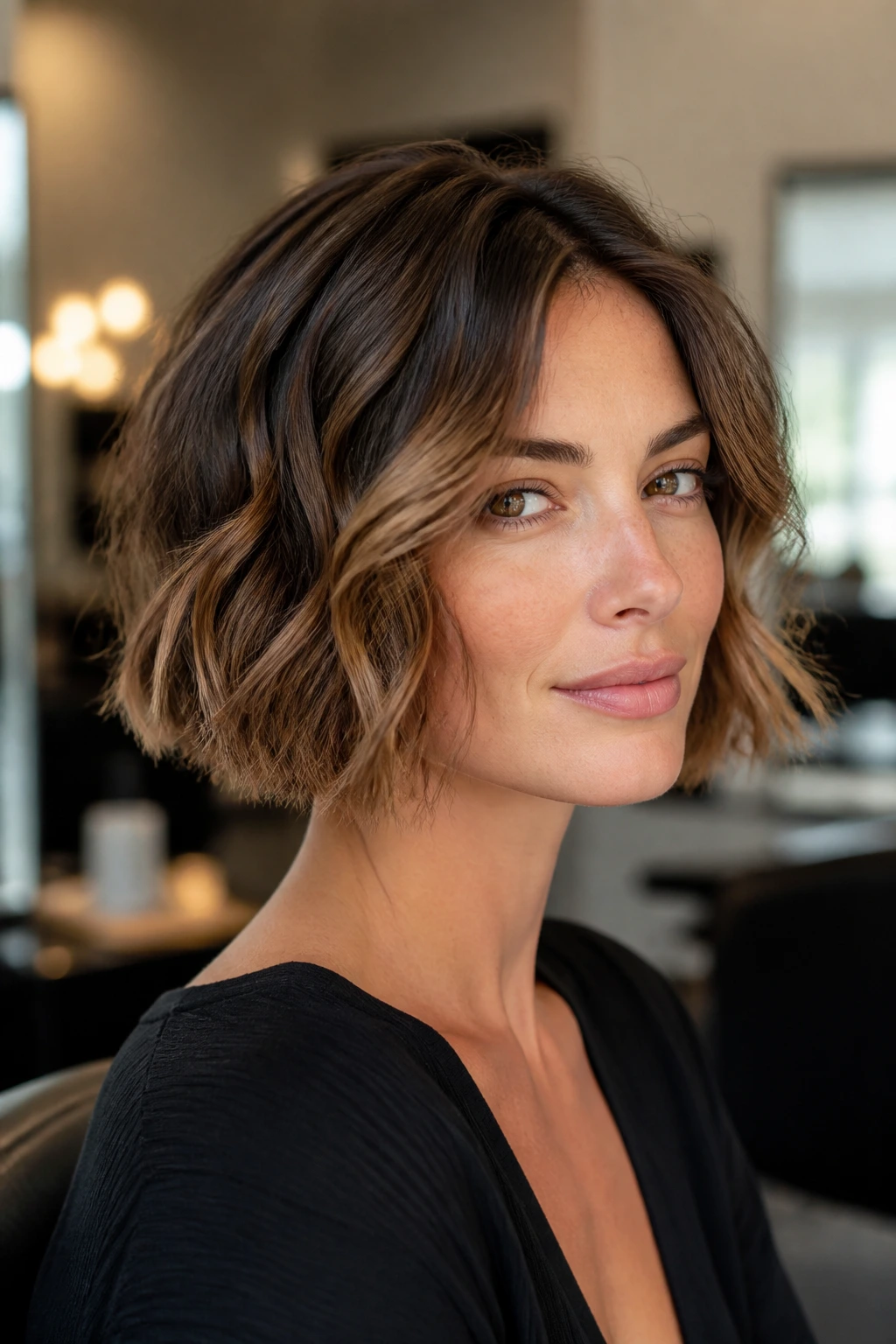
A wavy bob can be lovely on fine hair, but only if the perimeter has a little life in it. A broken-up edge means the ends are softened with point-cutting or careful texturizing, not hacked away with a razor until they look frayed.
For square faces, the waves should start around the cheekbone or lower. Too much wave right at the jaw can widen the lower half of the face. A slightly uneven bend, especially if it sits a bit lower on one side, creates movement without looking styled to within an inch of its life.
What makes it different
The shape still needs enough weight to look full. That is the part people skip. Fine hair does not need every inch of the bob thinned out. It needs the ends to move just enough that the face shape feels softened.
A light wave spray and a diffuser on low heat can give this cut a bit of texture without turning it fuzzy. If your hair already bends on its own, even better. You’re just helping it behave.
13. The Shoulder-Length Cut With Bottleneck Bangs

Want bangs without the blunt line that can square off the forehead? Bottleneck bangs solve that neatly. They start narrow in the center, then widen as they move toward the cheekbones, which is exactly where square faces usually want more softness.
Shoulder length gives the rest of the cut room to breathe. It keeps the hair from stopping right at the jaw, and it gives the bangs a longer runway to blend into the sides. Fine hair benefits here because the fringe creates the look of density in front without forcing the whole head into heavy layers.
This cut needs a little styling on the bangs. A small round brush or even a Velcro roller while the hair cools helps the fringe open away from the face. Skip the heavy serum around the front. It collapses the bangs faster than people expect.
If you want a cut that feels current without being trendy, this is one of the cleaner answers.
14. The Sleek Mid-Length Cut With Face Framing
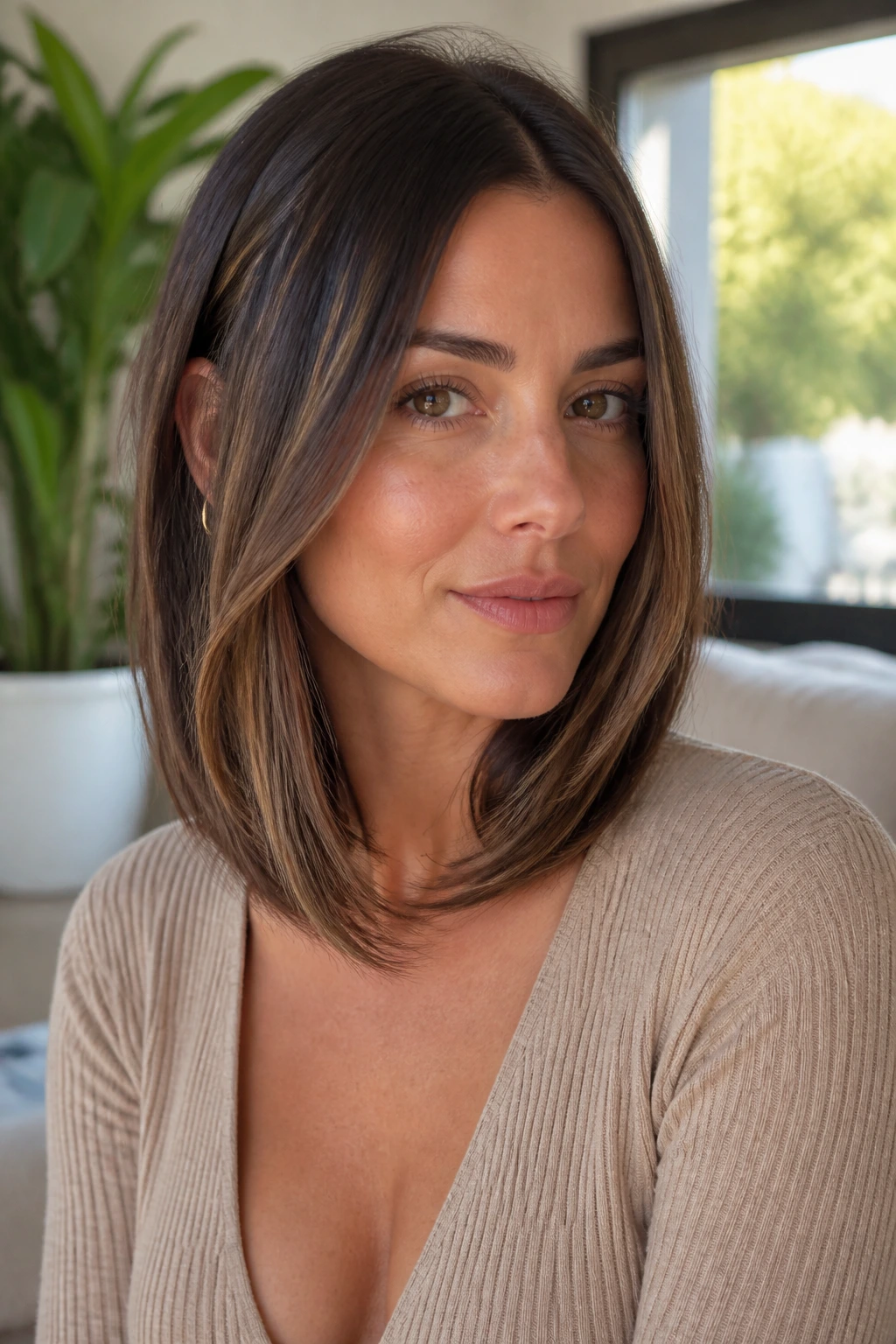
Sometimes the cleanest answer is the most polished one. A sleek mid-length cut with just a few face-framing pieces can flatter square features without adding extra movement everywhere else. That restraint is useful on fine hair, because too much layering can make the ends see-through.
I like this shape when the hair falls between the collarbone and the top of the chest. The front pieces should start below the cheekbone and angle gently toward the collarbone, not toward the jaw. That gives the face a soft frame without building a hard line at the widest point.
The finish matters more than the cut here. A smooth blow-dry, a light heat protectant, and a tiny drop of serum on the ends are enough. If you pile on product, the line goes limp. If you keep it airy, the haircut looks expensive even when it’s a plain shape.
This is a good choice for people who want structure without losing movement.
15. The Asymmetrical Bob With a Longer Front
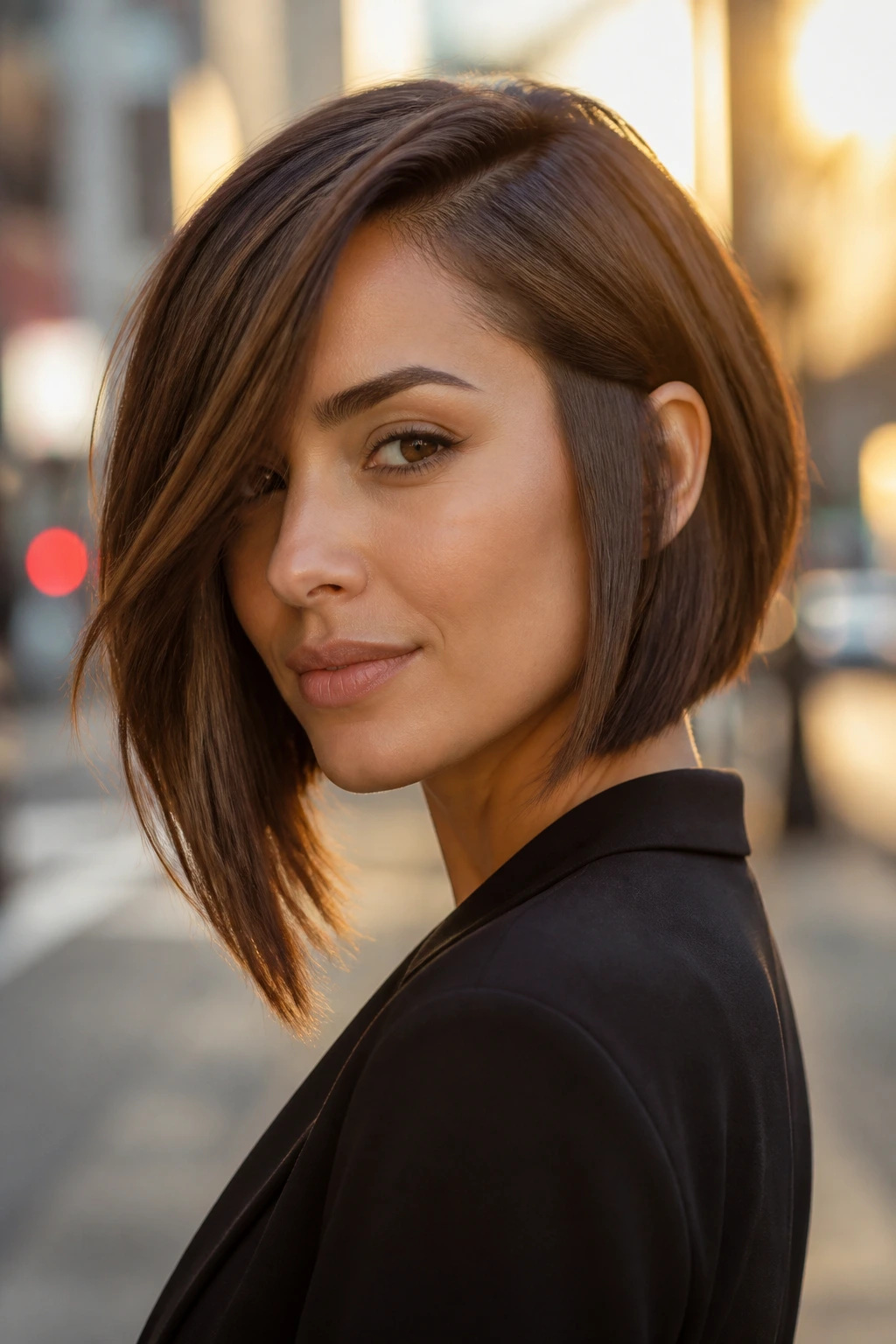
If your face reads strong and you like a little edge, a subtle asymmetrical bob can work without shouting. The longer front piece draws the eye downward and forward, which softens the square jaw. The shorter side keeps the shape interesting, but the difference should stay modest — an inch, maybe a little less.
For fine hair, asymmetry can be a gift because it creates the impression of design even when the hair itself is not dense. The trick is to keep the outline clean. Too many layers and the cut starts to look accidental. Too much length difference and it starts to look like a statement for the sake of a statement.
This one works well with one ear tucked and the other side left loose. It also looks good with a low bend at the ends, especially if the longer front piece kisses the collarbone. That soft diagonal is doing the work.
If you like a sharper look but still want softness around the face, this is a strong pick.
16. The Rounded Pixie Bob With Side Bangs
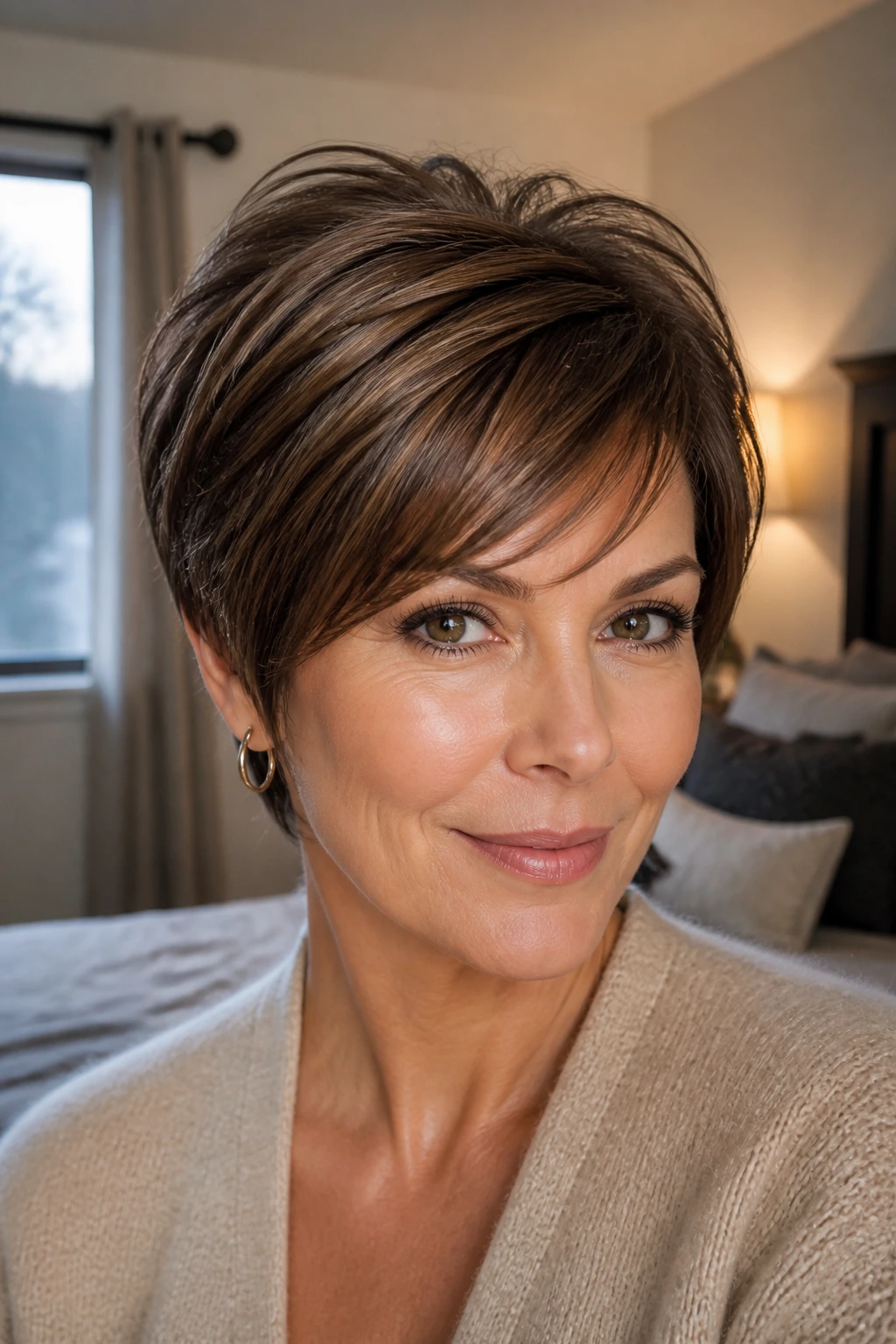
A rounded pixie bob keeps fullness where fine hair needs it and removes the sharp corners that can make square faces feel more angular. The rounded back helps the hair sit with body, while the side bangs soften the forehead and skim the brow.
Why this shape works
The curve at the back gives the head a fuller outline. That matters more than people think. If the cut is too flat through the crown or too tight around the sides, the face can dominate the whole look. A rounded shape creates a better ratio between face and hair.
Side bangs are the other useful piece. They give the face a diagonal line, which is always welcome on square features. Keep them long enough to move — short side bangs can feel harsh unless the rest of the cut is very soft.
This style benefits from a small round brush or even finger-drying with a touch of mousse. The goal is lift, not fluff.
17. The Airy Wolf Cut Lite

The full wolf cut can be rough on fine hair. Too many short layers and the ends start to look ragged. The lite version keeps the lift and loses the shred, which is exactly where a square face and delicate strands can meet halfway.
Ask for length that stays around the shoulders or collarbone, then let the layers start low enough that the perimeter still holds weight. The crown can have movement, but the ends should not be stripped out. That balance matters more than the name of the cut.
A square face gets relief from the softness around the temples and cheekbones. Fine hair gets relief from the fact that the cut still looks full when the styling wears off. You can air-dry this shape with a little mousse and get a workable result, which is more than I can say for many shag-inspired cuts.
The rule here is simple: keep the attitude, lose the fray.
18. The Long Pixie With a Swept Fringe

Want short hair without committing to a tight crop? The long pixie is the safer, softer answer. It keeps enough length on top and at the fringe to style around the face, while the nape stays neat and close.
For square faces, the swept fringe is the useful part. It creates that diagonal line across the forehead and keeps the cut from widening the face at the temples. On fine hair, a longer pixie also helps because the top can hold a little lift without looking overworked.
I like this cut when the top stays layered but not chopped. If the hair is too short all over, it can go flat and expose the head shape too much. If the fringe is left a bit longer, it can be brushed across the forehead or tucked back, which makes the cut more flexible.
This is one of the easiest short styles to live with if your hair is fine and your face is angular.
19. The Collarbone Cut With Soft U-Shaped Layers

A U-shaped cut keeps the back slightly longer and the front pieces a touch shorter, which lets the hair move without sacrificing density. On fine hair, that shape can be a small miracle. It preserves the look of fullness at the ends while still taking away the blocky feeling that a blunt line can create.
Square faces benefit because the front pieces do not stop at the jaw. They fall lower, often brushing the collarbone, and that length gives the face a softer frame. The U shape also works well if you like to wear the hair down most of the time and still want it to pull into a low ponytail without awkward shorter layers popping out everywhere.
A tiny bit of bend through the front pieces is enough. You do not need a big curl pattern. You need the lines to move away from the jaw and settle around the shoulders.
This is one of those cuts that looks calm in a good way. Not boring. Calm.
20. The Half-Up Friendly Mid-Length Layers
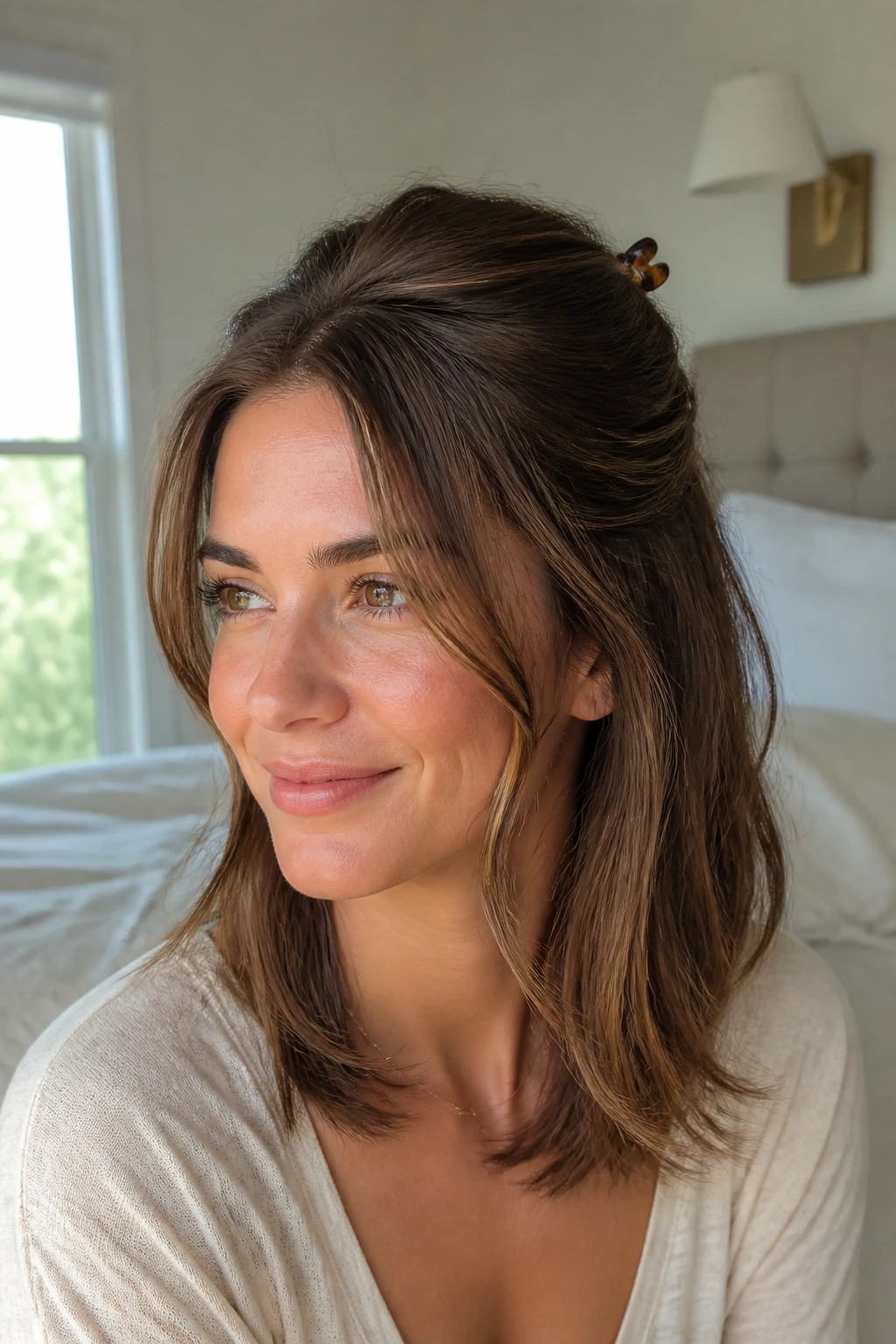
If your week involves clips, mini ponytails, and half-up knots, the haircut should be built for that. Mid-length layers can do it, but the layers need to support the style instead of fighting it. Keep the front pieces long enough to soften the face when worn down, and keep the crown area light enough to gather neatly when pulled back.
Square faces do well with this cut because the face-framing pieces stay below the cheekbone and the length keeps the jaw from taking over. Fine hair does well because the style does not depend on huge volume. A little root lift at the top and some soft movement through the ends are enough.
This cut is especially practical if you alternate between polished and undone. It won’t look strange in a clip. It won’t collapse the second you take the clip out. That alone makes it worth considering.
If you want one cut that behaves in both directions, this is a strong candidate.
21. The Polished Side-Part Blowout Layers
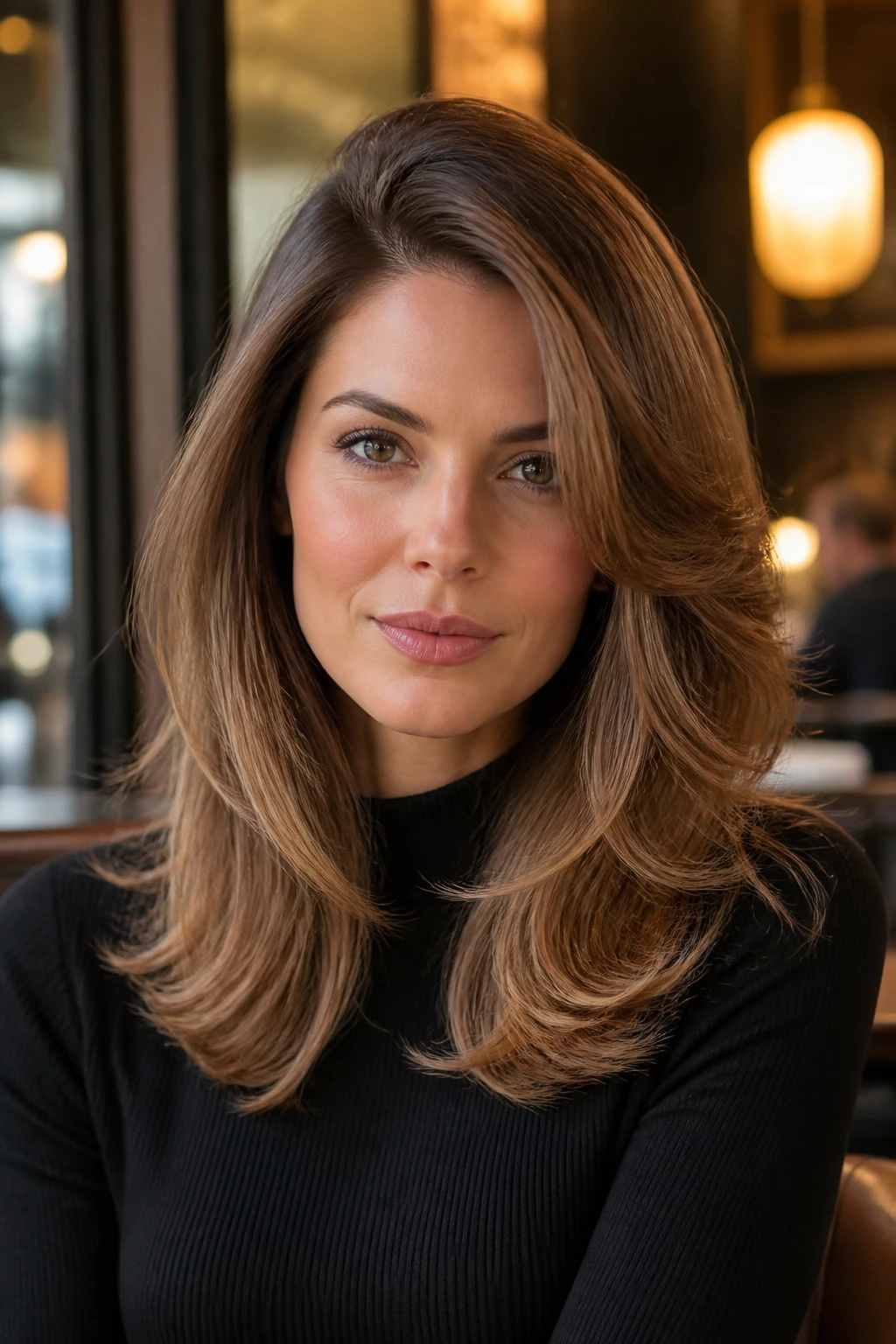
A side-part blowout is less a single haircut than a way of wearing the hair, but the cut underneath matters a lot. Mid-length layers, placed carefully, let the ends swing while the side part builds height at the crown. On fine hair, that crown lift is the whole story.
Square faces benefit because the part creates a diagonal sweep across the forehead, and the blowout bends the ends away from the jaw. It’s a neat little trick. The face looks longer, the hair looks fuller, and the style doesn’t need to be huge to work.
What helps this look hold
- Root clips at the crown while the hair cools.
- A round brush with enough tension to bend the ends.
- Heat protectant that does not weigh the hair down.
- A light mist of hairspray from below, not a cloud from above.
This one is good when you want the hair to look finished without feeling stiff. The movement should swing, not freeze.
22. The Soft-Edge Shaggy Lob
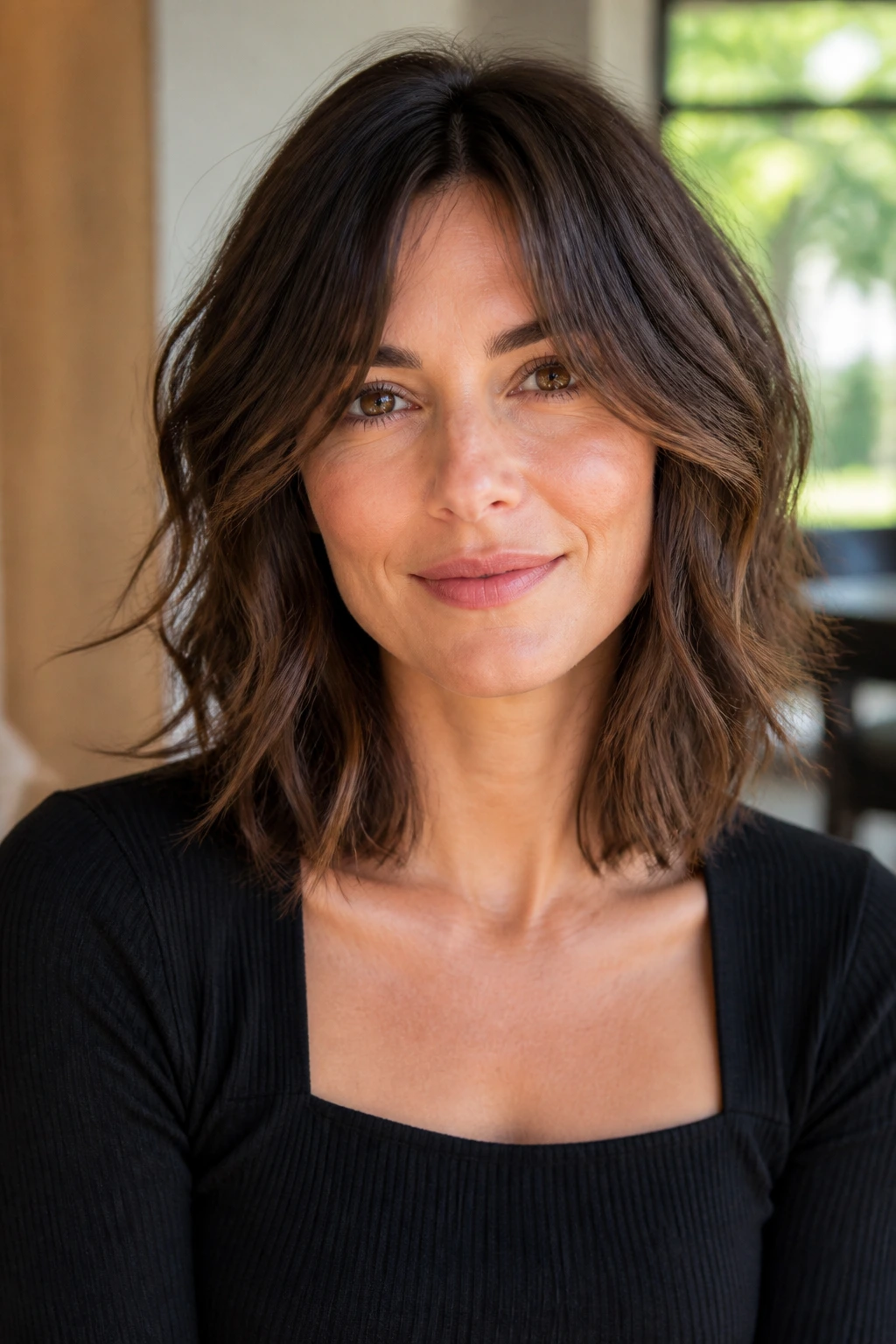
If I had to pick one cut that rarely misbehaves on fine hair and square faces, this would be it. The shaggy lob keeps enough length to soften the jaw, enough layers to create movement, and enough weight at the ends that the hair still looks like hair.
The word here is soft-edge. Not shredded. Not choppy for the sake of it. The layers should feel feathered, and the perimeter should stay intact. That combination keeps the face from reading too square while preventing the ends from disappearing into wisps.
This cut also wears well on busy days. Air-dry it with a bit of mousse and a side part, or round-brush the front for a cleaner line. Either way, the shape holds up because it was built with balance. That’s the part many layered cuts miss.
If you only try one style from this list, I’d start here. It gives the most room to breathe.
Why the Cut Shape Matters More Than the Hair Length

Length gets all the attention, but shape does the real work. A square face doesn’t need to be hidden. It needs relief at the edges. Fine hair doesn’t need to be made into more hair. It needs a shape that makes the density you have look deliberate.
That’s why the same bob can look soft on one person and boxy on another. If the line lands on the jaw, the face can feel wider. If the volume sits too low, the whole style drops. If the front pieces stop at the cheekbone and move away from the face, the eye reads the haircut as softer, even if the actual length barely changes.
The best styles on this list share one quiet habit: they move the eye. Sometimes that means a side part. Sometimes it means a fringe that opens at the cheekbones. Sometimes it means keeping the ends full enough that the hair does not look threadbare. None of that is glamorous. It just works.
And that, honestly, is the point.
Tools and Products That Help Fine Hair Hold Shape
-
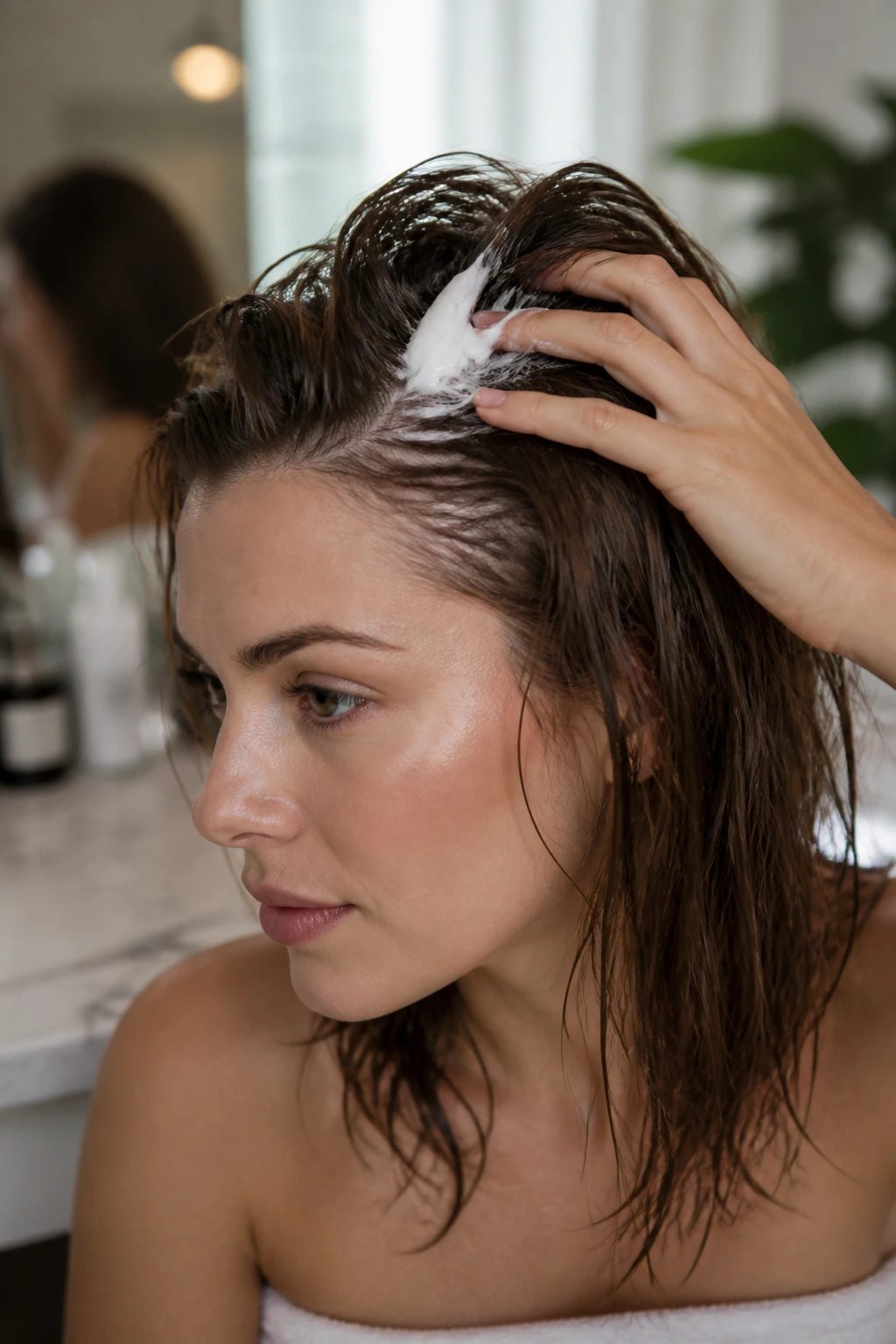
Lightweight volumizing mousse: A golf-ball-sized amount on damp roots gives fine hair lift without making it crunchy.
-
Root-lifting spray: Useful at the part and crown, especially for bobs, pixies, and side-part blowouts.
-
Heat protectant mist: Fine hair burns and frays fast, so this is not optional if you use a dryer or iron.
-
1- to 1.25-inch curling iron or wand: Good for soft bends, flipped ends, and face-framing movement.
-
Medium round brush: A brush around 1.5 to 2 inches helps create lift without over-curving the ends.
-
Blow dryer with a concentrator nozzle: The nozzle matters; it keeps airflow tidy and helps polish the shape.
-
Velcro rollers or setting clips: Great for crown lift while hair cools, especially on lobs and layered mid-length cuts.
-
Dry shampoo: Best used at the roots on day two, not as a substitute for clean hair.
-
Light-hold hairspray: Enough to keep the style in place, not enough to glue the strands together.
-
Tail comb: Handy for clean parts and for lifting sections at the crown without roughing up the hair.
How to Ask for the Right Cut at the Salon
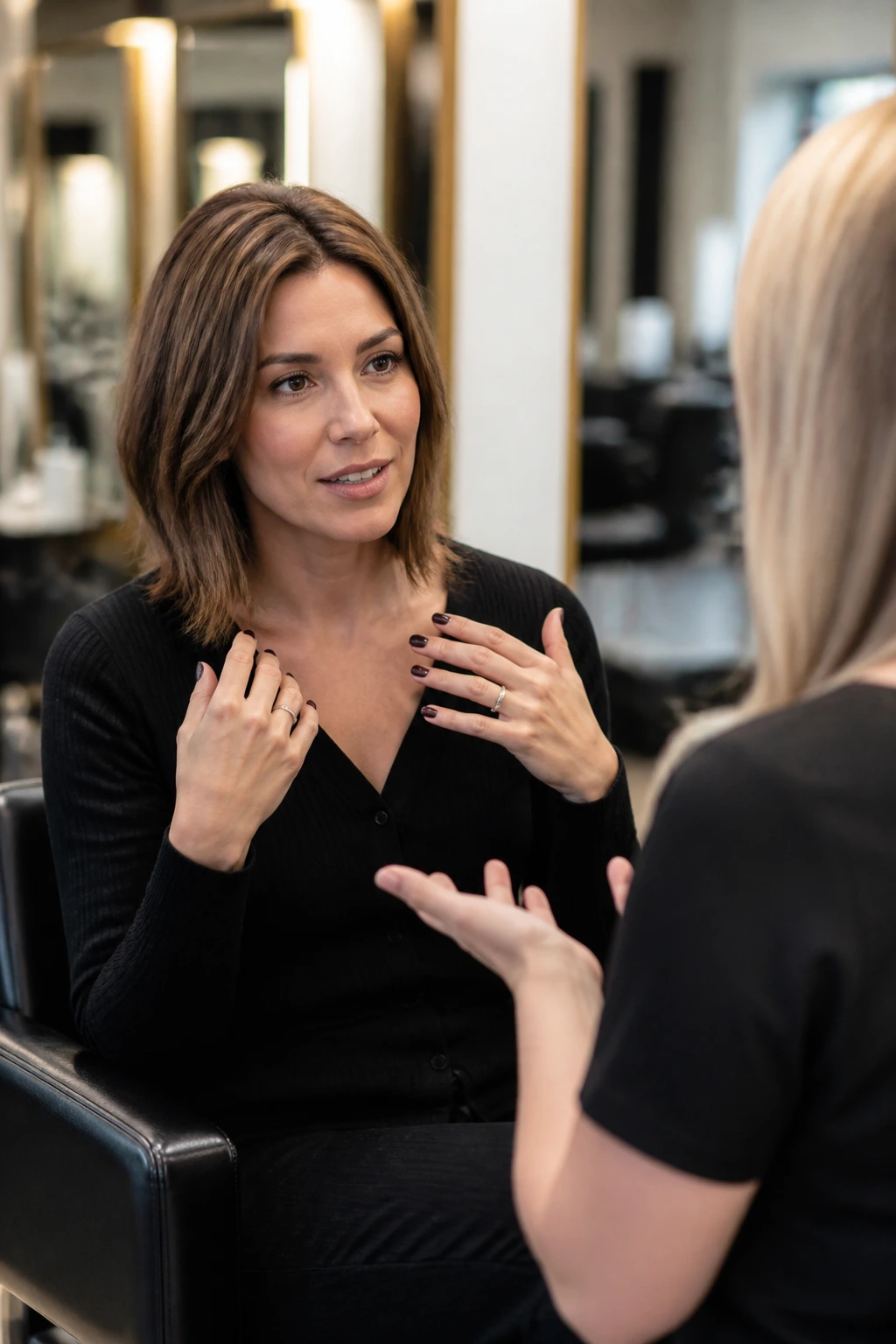
Bring photos, but bring the right photos. A picture of a haircut you love is helpful only if the density, texture, and face shape are in the same neighborhood as yours. If the model has thick hair and an oval face, the result can drift fast. I’d rather see one photo of the shape you want and one photo that shows the length you want.
Use landmarks, not adjectives. Say, “I want the front to miss my jaw by at least half an inch,” or, “I want the shortest layers to start below my cheekbones.” Those numbers help more than “soft” or “modern,” which mean different things to every stylist in the chair.
Tell them how your hair behaves when it’s left alone. Does it fall flat at the crown by noon? Does one side kick out? Does the front split around a cowlick? That information matters more than whether you can name the haircut on Pinterest.
One more thing: ask about grow-out. A good cut for fine hair and a square face should still look decent when it’s six weeks old, not only on day one. If it starts losing shape in the first week, it was cut too aggressively.
How to Style Fine Hair Without Piling on Product

Start with less product than you think. Fine hair goes limp the second it gets overloaded. On damp hair, a mousse or root spray at the crown is usually enough for most of these cuts. Put heavier creams only on the very ends, and even then, use a pea-sized amount.
Dry the roots first. That’s where the shape lives. Flip the part into place, lift sections at the crown with your fingers or a brush, and aim the dryer at the base until it’s about 80 percent dry before you fuss with the ends. That little bit of lift tends to last longer than trying to build volume after the hair is already flat.
Shape the front, not every strand. If you have curtain bangs, side-swept fringe, or face-framing pieces, spend your time there. The rest of the hair can be rough-dried or lightly smoothed. People waste so much time trying to curl every inch, and the result often looks smaller, not bigger.
Finish with air, not armor. A light mist of hairspray or dry shampoo at the roots can help, but if the hair feels stiff, you’ve gone too far. Fine hair needs movement to look full.
How to Keep the Shape Between Salon Visits

Short cuts need trims sooner. Pixies and bixies usually need a shape check every 4 to 6 weeks, because the crown and fringe change fast. Bobs and lobs can usually go 6 to 8 weeks before they start losing the line that makes them work. Long layers are the most forgiving and can often wait 8 to 12 weeks, depending on how fast your hair grows.
Night care matters more than most people think. A silk or satin pillowcase cuts down on frizz, and a loose clip or soft scrunchie keeps the front from bending awkwardly overnight. If you have bangs or a fringe, pinning them out of your face while they’re damp can save you from that weird crease that shows up by breakfast.
Day-two refreshes are simple. Mist the roots lightly, add a touch of mousse if needed, and warm the front sections with your hands or a small brush. A full rewash is not always necessary. Sometimes you just need to wake the cut back up.
If your ends start feeling wispy, that’s your signal to trim sooner, not to add more layers.
Common Mistakes That Make Fine Hair Look Thinner or Square Faces Look Sharper
-
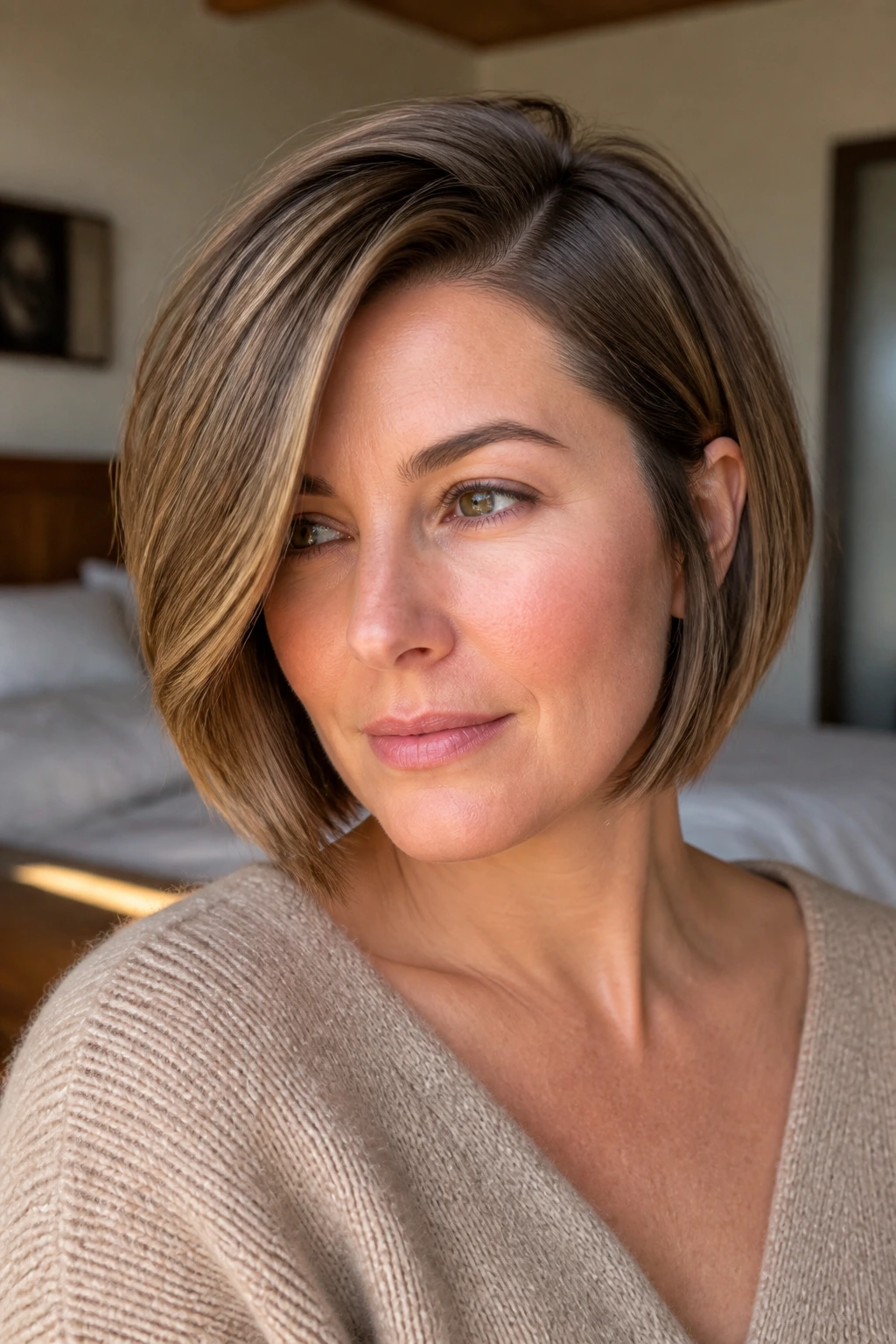
Letting the cut land right on the jaw: This is the fastest way to make a square face look boxier. Move the line slightly below the jaw or soften it with bend and texture.
-
Over-layering the ends: Too many layers at the bottom can make fine hair look see-through. Keep some weight at the perimeter so the cut still reads full.
-
Using thinning shears too aggressively: Fine hair does not need to be stripped down. If the ends start feeling wispy or airy in a bad way, the cut was thinned too much.
-
Choosing a thick, blunt fringe without softening the sides: A heavy bang can sharpen the face instead of softening it. Curtain bangs or bottleneck bangs usually work better.
-
Piling on oil and cream: Fine strands get greasy fast, and heavy product makes the hair collapse at the roots. Use light formulas and keep them off the scalp.
-
Ignoring your part and cowlicks: A beautiful cut can still misbehave if the part fights your growth pattern. Work with the natural part, then tweak it slightly if needed.
Variations and Adaptations to Try

The No-Heat Version: Choose a collarbone lob, a soft bob, or the U-shaped cut and let the hair air-dry with a little mousse. Clip the front pieces away from the face while they dry so they keep a soft curve instead of sticking flat.
The Five-Minute Morning Version: Go with a blunt lob or a chin-grazing bob. These shapes need only a quick brush, a bend at the ends, and a mist of dry shampoo at the roots to look finished.
The Full Blowout Version: Pick a side-part blowout cut, a layered lob, or a long pixie with enough top length to round-brush. Velcro rollers or root clips at the crown can keep the lift alive while the hair cools.
The Curly or Wavy Version: If your fine hair has natural bend, keep the layers lower and ask for soft shaping instead of heavy texturizing. The goal is movement, not frizz. A diffuser on low heat usually works better than a rough towel dry.
The Grow-Out-Friendly Version: A soft-edge shaggy lob or a collarbone cut with invisible layers gives you shape that survives longer between trims. That’s useful if you do not want to chase a salon schedule every month.
Questions People Ask Before Choosing One of These Cuts

Which haircut makes fine hair look thickest on a square face?
A blunt lob, a collarbone cut with invisible layers, or a soft bob usually gives the best density. The perimeter stays full, and the side part or face framing softens the jaw.
Are bangs a good idea for square faces with fine hair?
Yes, if they’re soft. Curtain bangs and bottleneck bangs usually work better than a heavy straight fringe, because they open at the sides and keep the forehead from looking boxed in.
Should square faces avoid center parts?
Not always, but a strict center part can emphasize symmetry and make strong angles feel stronger. A slight off-center part often gives more softness without looking fussy.
Do layers make fine hair look thinner?
They can, if the layers start too high or the ends get thinned out too much. Fine hair usually does better with controlled, low layers that preserve weight at the perimeter.
How often should I trim a short cut?
Pixies and bixies usually need trimming every 4 to 6 weeks. Bobs and lobs can stretch to 6 to 8 weeks if the shape stays intact.
Can I keep my hair long if it’s fine and my face is square?
Absolutely. Just keep the first layers low and the front pieces below the cheekbone or collarbone so the hair doesn’t widen the jaw.
What if my hair goes flat by midday?
Focus on the crown and root zone, not the ends. Root spray, a small round brush, and a quick cool-shot finish often help more than adding extra product.
Which of these is easiest to style on busy mornings?
The blunt lob, the soft bob, and the collarbone U-shape tend to be the least demanding. They work with quick bend, minimal product, and a part that does some of the shaping for you.
The Shape That Makes the Difference
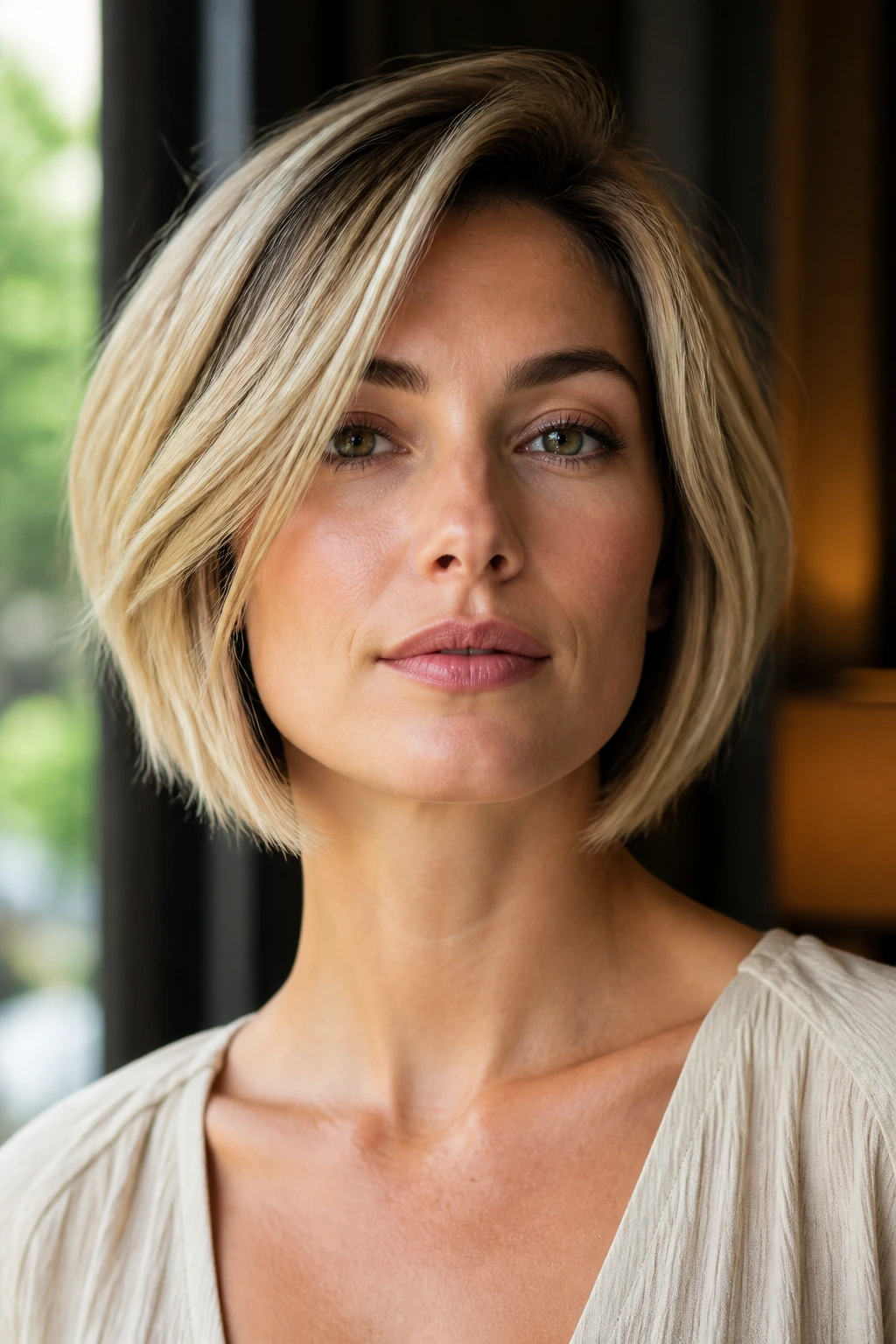
The right haircut does not hide a square face or force fine hair to act thicker than it is. It gives both things a better shape to live in. That is a quieter promise, but a better one.
If you’re torn between two styles, choose the one that keeps the ends full and puts the softness around the jaw where it belongs. That combination tends to hold up in real life, which is the part that matters once you’ve walked out of the salon and the mirrors stop being so forgiving.