



Thick hair and a round face can be a dream pairing, but only if the cut knows where to lose weight and where to keep a little grit. Choppy haircuts for thick hair and round faces work because they stop the sides from ballooning out at the cheeks and give the eye a line to follow downward.
A blunt line at the jaw can make thick hair look like a helmet. A broken perimeter, a few face-framing pieces that start below the cheekbone, and a little lift at the crown do something much smarter: they shape the head instead of merely covering it.
The part that gets missed most often? Thick hair does not need “more hair.” It needs the right hair left in the right places. Some cuts below are short, some go to the collarbone, and some keep the length long on purpose. What they share is simple: they keep round faces from reading wider at the middle, and they keep dense hair from looking like one solid block.
Why These Cuts Earn Their Keep
-
They remove bulk where thick hair tends to puff out: The best versions thin the interior, not the ends, so the shape stays light without turning wispy.
-
They give round faces a vertical line: Off-center parts, longer front pieces, and angled edges pull the eye down instead of across the cheeks.
-
They still leave enough weight for control: A good choppy cut doesn’t strand you with flyaway ends and no shape; it keeps some structure so the haircut falls on purpose.
-
They work with real styling habits: If you air-dry, blow-dry, or throw your hair in a quick bend with a brush, these cuts can still behave.
-
They grow out better than a hard blunt line: The broken edges and internal movement keep the shape from turning into a square helmet by week six.
1. Collarbone Lob with Piecey Ends
A collarbone lob is the safe place to start, but “safe” does not mean boring. When the ends are chipped and the front sits a little longer than the back, thick hair moves instead of sitting there in one hard line. On a round face, that extra length below the jaw helps the eye travel downward, which is the whole game.
Why the length matters
A lob that lands right at the widest part of the cheeks can make the face feel broader. Let it skim the collarbone instead, and it suddenly gives the whole shape some breathing room. The piecey ends matter too; they keep dense hair from turning into a blunt shelf.
- Best parting: A slight side part or a soft off-center part.
- Best finish: A bend at the ends, not a full curl.
- Best texture: Medium to very thick straight or wavy hair.
- Best mood: Clean, polished, but not stiff.
Tip: Ask for the perimeter to be point-cut, not carved into a straight wall. The difference is small in the chair and obvious at home.
2. Soft Wolf Cut with Longer Ends
A wolf cut can work on a round face, but only if the stylist keeps the bottom length honest. Too much chopping around the cheeks and it balloons. Keep the layers high at the crown and the ends longer through the shoulders, and the shape gets that messy, broken outline thick hair is good at holding.
The best part is the attitude. Thick hair gives a wolf cut enough natural body that you do not have to force texture with a mountain of product. A little mousse, a diffuser, or a rough dry at the roots is usually enough.
If your hair has a bend to it already, this cut is a gift. If your hair is stick-straight and stubborn, ask for softer internal layers rather than aggressive razoring. That keeps the top from frizzing out while the ends still feel loose.
3. Chin-Length French Bob with Side-Swept Fringe
Can a short bob work on thick hair and a round face? Yes—when it sits below the widest part of the cheek and the fringe moves diagonally instead of cutting straight across the forehead. That diagonal line is doing real work. It narrows the visual width of the face without making the cut look severe.
A French bob gets risky when it’s too blunt and too boxy. The version I like for thick hair keeps the perimeter soft, with a little air taken out underneath so it hugs the jaw rather than poofing beside it. The fringe should be light enough to separate into pieces, not a thick curtain pasted flat to the forehead.
How to wear it
Use a round brush only on the front sections and let the back fall a little less perfect. That small imbalance keeps the shape from reading helmet-like. If you wear glasses, leave the side pieces long enough to tuck without fighting the frames.
4. Shoulder-Grazing Face-Framing Layers
Picture thick hair that reaches the shoulders and refuses to sit down. Now picture the same hair with the shortest face-framing pieces starting below the cheekbone, not at it. That single change is what makes this cut work on a round face.
The longest layer should keep some weight through the bottom so the hair does not look see-through. The front pieces do the shape work. They break up the width, skim past the cheeks, and give the cut a path downward. No drama. Just better geometry.
- Ask for: Long, blended face-framing pieces that start under the cheekbone.
- Avoid: Short layers that end right beside the fullest part of the face.
- Style with: A large round brush or a quick bend from a flat iron.
- Best for: Thick straight, thick wavy, or coarse hair.
One useful detail: If the layers are too evenly spaced, the cut becomes mushy. Uneven, broken layering looks more alive.
5. Bixie Cut with Tapered Sides
The bixie is the short haircut I reach for when someone wants less hair but not a harsh crop. It sits between a bob and a pixie, which means you get lift at the crown and softness around the ears. On a round face, that crown height matters more than people think. It stretches the silhouette upward.
Thick hair makes this cut easier to wear because the top can hold a shape without collapsing by noon. The key is tapering the sides and leaving enough length around the temples to avoid that mushroom shape. Shorter nape, longer top, piecey sideburns. That’s the formula.
This cut is especially good if you hate spending twenty minutes on a blowout. A dab of styling cream, a little finger-drying, and maybe a mist of texturizing spray is often enough. It looks best when it does not look too finished.
6. Razor Shag with Brow-Skimming Bangs
A razor shag is not for everyone, and that’s fine. On thick hair, though, it can be brilliant if the hair has any wave at all. The razor breaks the ends so they move; the brow-skimming bangs break up the forehead line; the whole cut feels lighter without losing its spine.
What makes it work on a round face is the way it refuses to stop at one single width. The bangs draw the eye up, the shaggy layers keep the body away from the cheeks, and the length—usually around the shoulders—stays long enough to avoid puffing out beside the jaw. You want disconnection, not chaos.
If your hair is coarse and dry, I would not razor every inch of it. Use scissors for the heavier sections and let the stylist add texture in controlled spots. That keeps the cut from getting fuzzy at the ends, which is a real problem on dense hair.
7. Angled A-Line Bob with Interior Debulking
An A-line bob gives thick hair a clean shape, but the angle has to be obvious enough to matter. Shorter in the back, longer in the front, and softly hollowed out inside—that’s the version that helps a round face. It gives the profile a line, which is exactly what you want when the cheeks are full.
What makes the angle do the work
The front corners should hit below the jaw, not inside it. If they stop too high, the width lands right where you do not want it. Interior debulking matters too; without it, the bob stacks into a heavy triangle and starts shouting instead of flattering.
- Best part: Side part or deep side part.
- Best hair type: Thick straight or barely wavy hair.
- Best styling move: Blow the front corners slightly forward, then tuck one side.
- Best caveat: Too much stacking at the back can make the head look rounder, not slimmer.
My take: This cut looks smartest when the front is longer than you expect. Resist the urge to bring it up to the chin.
8. Butterfly Cut with Floating Face Pieces
If you want to keep length but lose the heavy curtain effect, the butterfly cut is hard to beat. The top layers are shorter and feathered; the lower length stays long and deliberate. On thick hair, that split in the structure makes the haircut feel lighter at the crown and around the face without gutting the bottom.
A round face benefits from the floating front pieces because they start high enough to add shape, then drop past the cheeks instead of ending right on them. The whole haircut moves when you turn your head. That’s the point. It should feel like air got under the layers.
This cut does ask for some styling. Not a full salon blowout every morning—just enough lift at the roots and a bend through the front sections. If you air-dry, use a small amount of mousse at the crown and twist the front away from the face while it dries.
9. Clavicut with Broken, Textured Ends
A clavicut is the haircut people ask for when they want to keep things low-key and still avoid the thick-hair triangle. It lands at the collarbone, which gives a round face a long line to work with, and the broken ends keep the perimeter from feeling heavy. The simplicity is the appeal.
You do not need dramatic layers here. In fact, too many layers can make this cut lose the whole point. What it needs is interior movement and enough softness on the ends that the hair falls in sections instead of one sheet.
This is a good choice if you wear your hair down most days and want a cut that survives second-day styling without turning puffy. A quick pass with a brush through the front, a touch of dry shampoo at the roots, and you’re done.
10. Curly Shag with Rounded Layers

Curly thick hair has its own rules, and a shag can either respect them or turn into a triangle with a bad attitude. The rounded-layer version is the one I like. It keeps the curls stacked in a shape that lifts the crown while releasing some of the bulk from the sides.
For round faces, curly hair needs height, not width. A curly shag gives you that by letting the curls spring upward and by keeping the front pieces long enough to curve past the cheekbones. When the shortest curl lands at the cheek, the whole cut can look wider. When it lands above or below, the face gets room.
Dry cutting helps here. Wet curls lie. They look longer, flatter, and less springy than they really are. A stylist who understands that can place the layers where they belong.
11. Long Pixie with Swept-Over Fringe
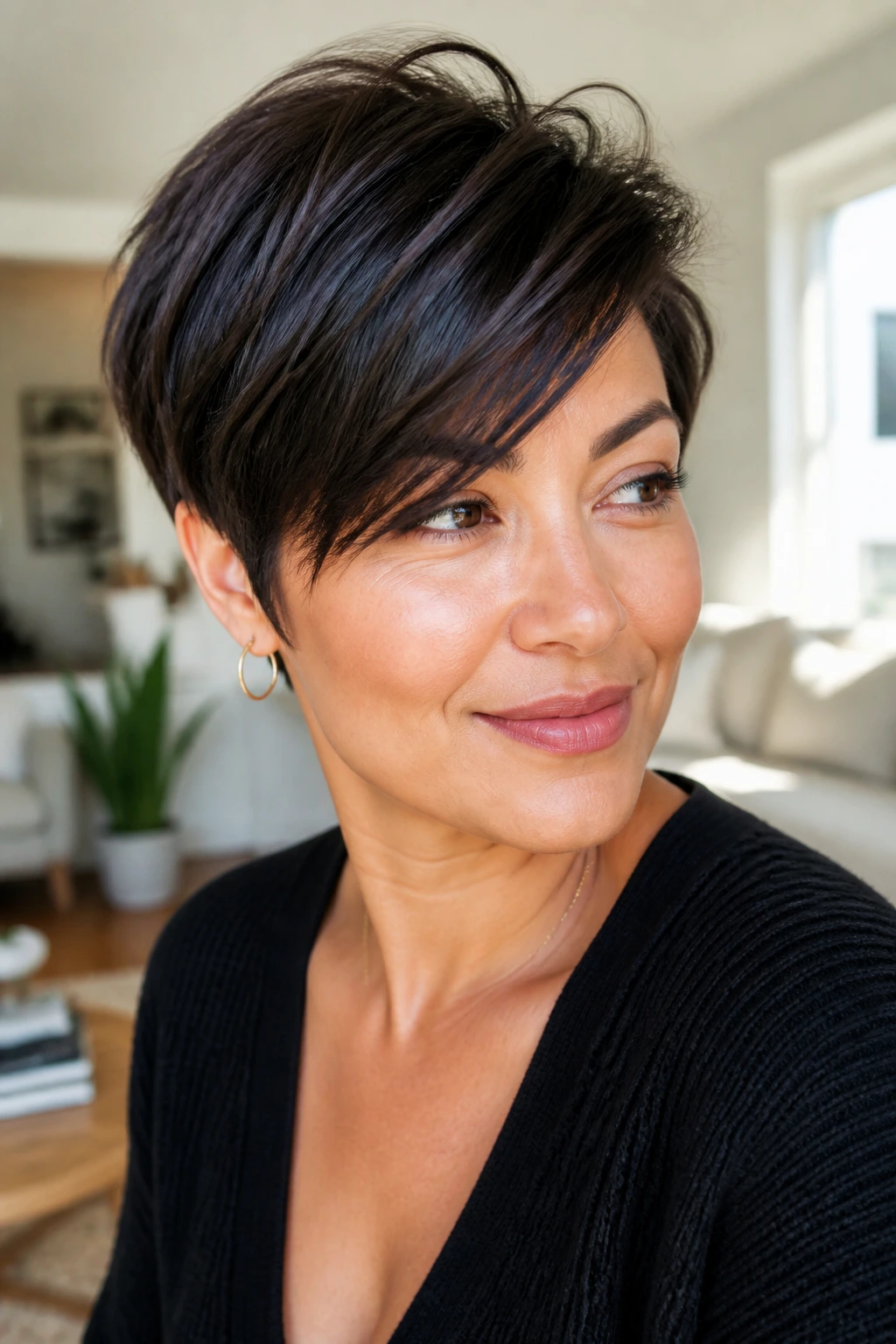
A long pixie is short hair for people who still want a little softness at the front. The swept fringe matters more than the back length. That fringe gives a round face a diagonal line, and the short sides keep thick hair from sitting like a cap around the ears.
The shape should feel tucked in at the nape and piecey at the top. If the crown is flat, the cut loses energy. If the sides are too puffy, it can widen the face. So the balance is narrow sides, lifted top, and enough fringe to create movement across the forehead.
This cut loves a little paste or pomade worked through the ends. A pea-size amount is usually enough. Too much product and the pieces clump; too little and the pixie loses the texture that makes it interesting.
12. Graduated Bob with a Lifted Back
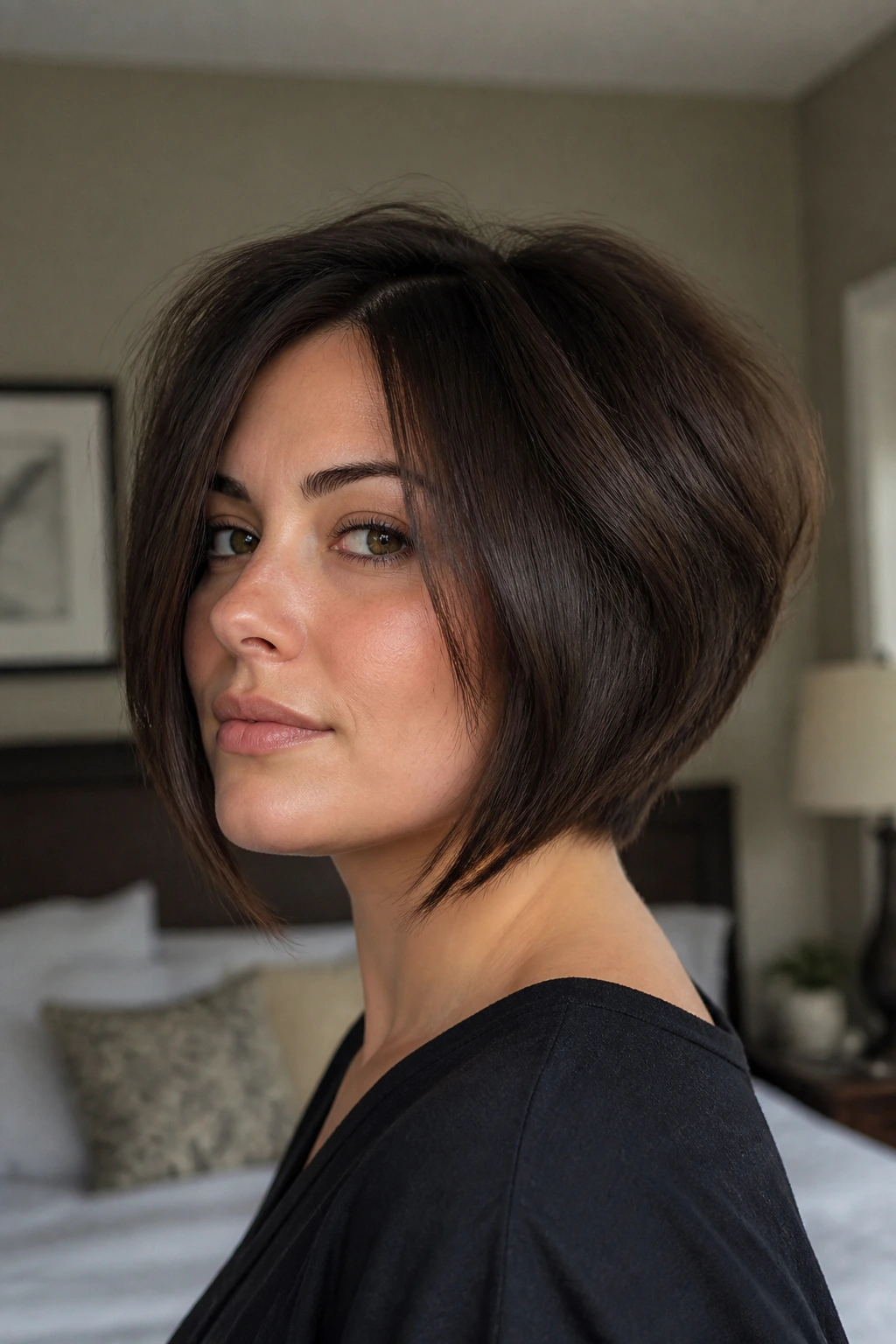
The graduated bob is a serious haircut. It has structure, and thick hair gives it the muscle to hold that structure. With a round face, the trick is keeping the back lifted just enough to create shape without building a shelf that pushes width outward.
The front pieces should still stay longer than the back. That length gives the face a narrow line to follow, while the stacked back keeps the overall look from collapsing. Done well, it feels neat and a little sharp—not stiff.
If your hair grows fast at the nape, this cut needs regular cleanup. Otherwise the graduation gets muddy and the whole shape starts to lose definition. It is a strong choice for someone who likes a clean outline and does not mind a little maintenance.
13. Midlength Chop with Bottleneck Bangs

Bottleneck bangs are one of the smartest fringe choices for a round face because they do not cut straight across the forehead. They start narrow in the middle and get wider as they move toward the temples, which softens the top of the face without adding bulk at the widest point.
On thick hair, a midlength chop keeps the overall silhouette manageable. The bangs add interest without forcing the rest of the cut to do all the work. I like this shape on people who want something softer than a blunt fringe but still want the face to feel framed.
How to make the fringe behave
Dry the bangs first, before the rest of the hair gets too damp. Use a small round brush or your fingers to bend them away from the cheeks, not directly onto them. That tiny shift keeps the face from looking wider.
14. U-Shaped Long Cut with Hidden Layers
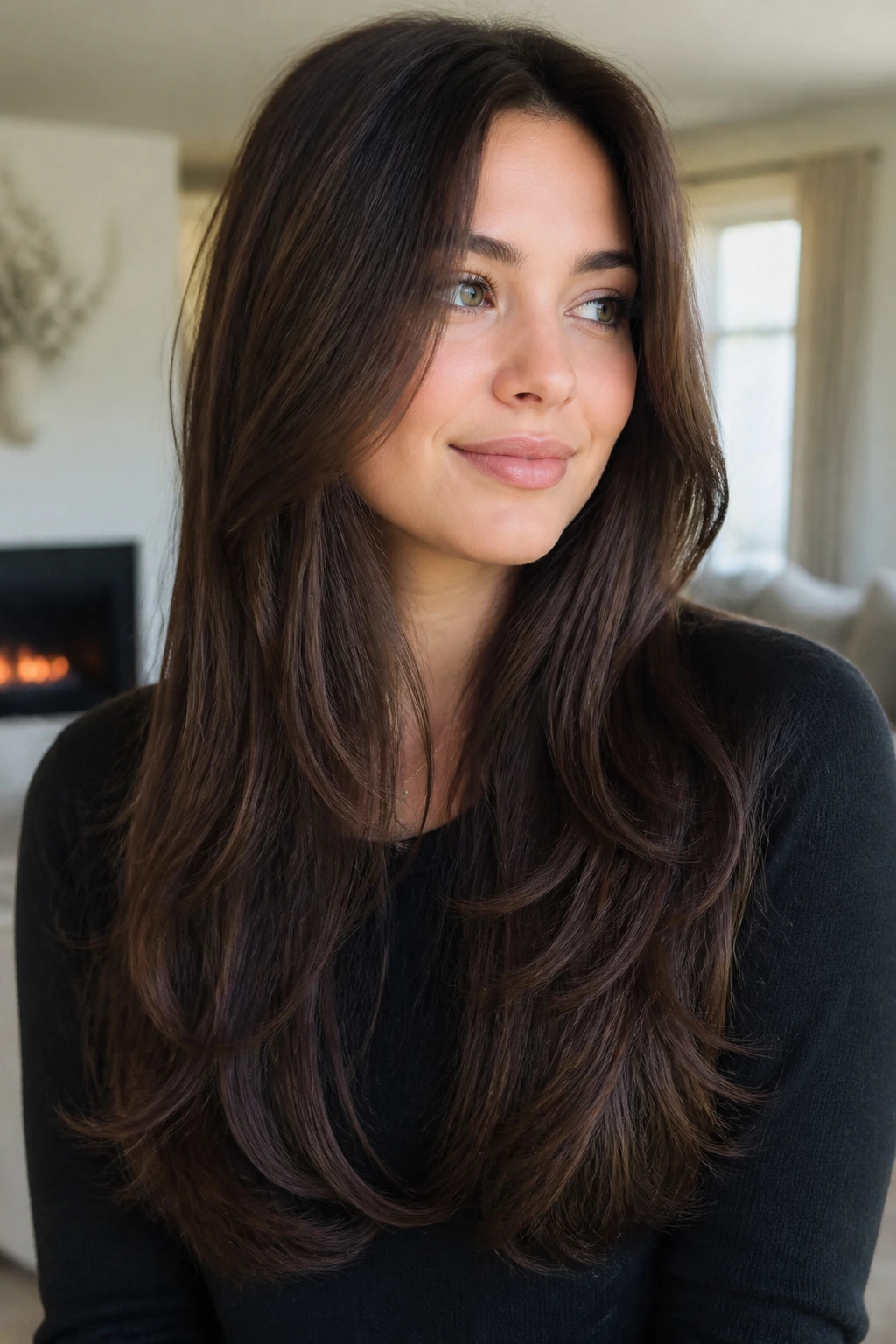
This is the long-hair answer for people who do not want to sacrifice length. A U-shaped perimeter keeps the outline soft, and hidden interior layers take weight out of the middle without turning the ends into a scraggly mess. Thick hair needs that hidden room to breathe.
For a round face, the face-framing pieces should start lower than people expect. Around the chin or below the chin is usually safer than the cheek. The U-shape itself also helps because it lets the front appear longer and the back keep its density.
The beauty of this cut is that it still looks like a long, full haircut. It just stops sitting like a blanket. You can wear it straight, wavy, or in loose bends, and it keeps the same basic outline.
15. Feathered Mullet Crop with Soft Edges
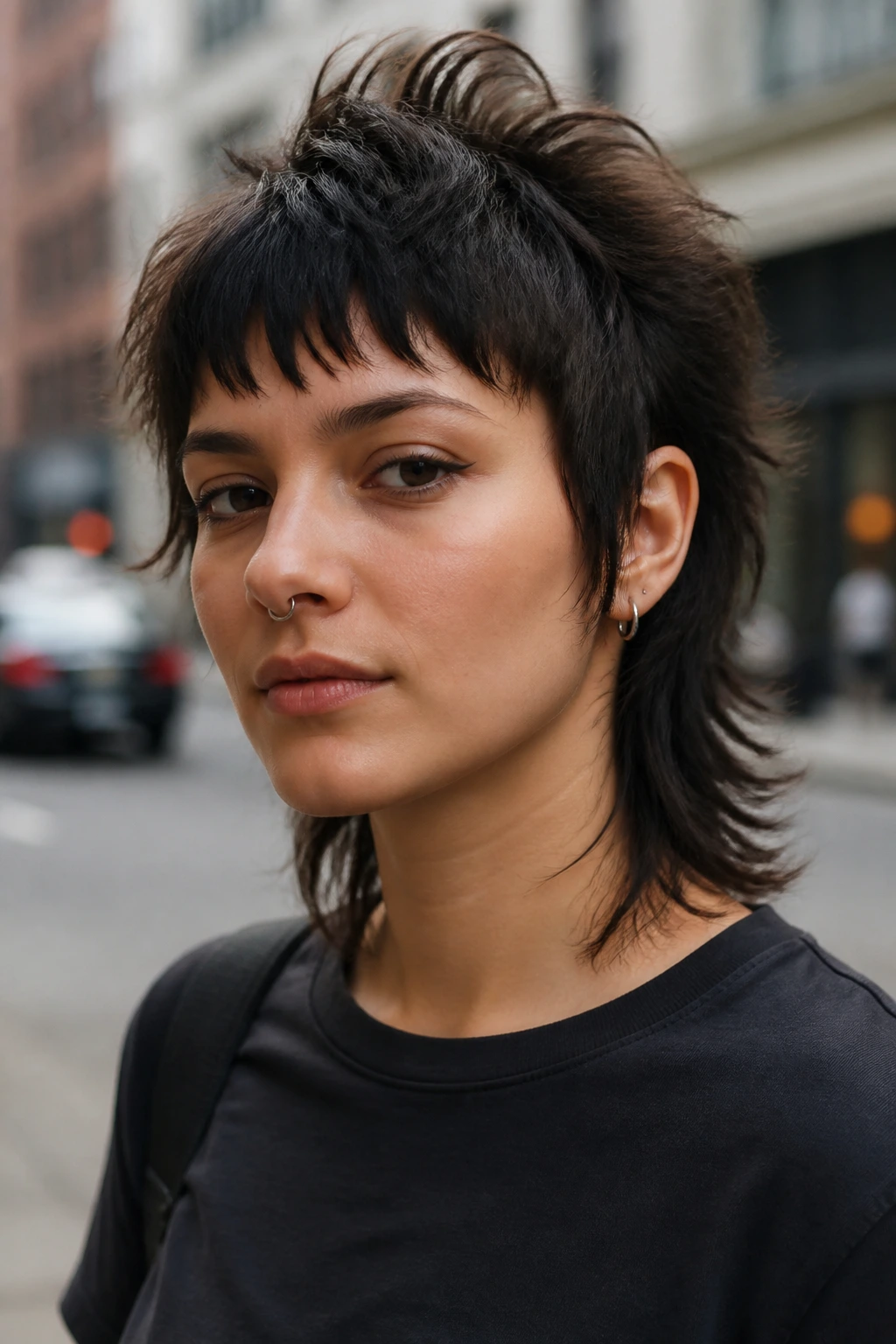
A feathered mullet crop is bold, but it earns its place here. The front stays soft and broken, the crown gets lift, and the length hangs in the back just enough to keep the whole shape from feeling too short at the sides. Thick hair gives this cut texture without much coaxing.
Round faces benefit from the way the top gets longer and the sides stay lighter. The cut does not wrap the face in a wide line. Instead, it leaves openings around the cheeks and temples, which helps the face read a little narrower and a little longer.
This is not the haircut to request if you want invisible maintenance. It needs regular shaping to keep the feathered pieces from losing their edge. But if you like a little attitude and you want something that does not look like every other bob in the room, it delivers.
16. Shoulder-Length Chop with a Deep Side Part

Some haircuts look plain on paper and turn out quietly excellent in real life. This is one of them. Shoulder length gives thick hair enough room to move, and a deep side part changes the whole balance of a round face in one swing.
The part creates height at the top and a falling line across the forehead. That diagonal line is doing more than most people realize. It narrows the width across the face, gives the crown some lift, and lets the hair drape instead of puff.
Keep the ends broken up, not blunt. If the perimeter gets too solid, the shoulder-length shape can sit wide at the sides. With a little texture through the bottom, it becomes one of the easiest cuts in this list to live with.
17. Broken Blunt Lob with Point-Cut Ends
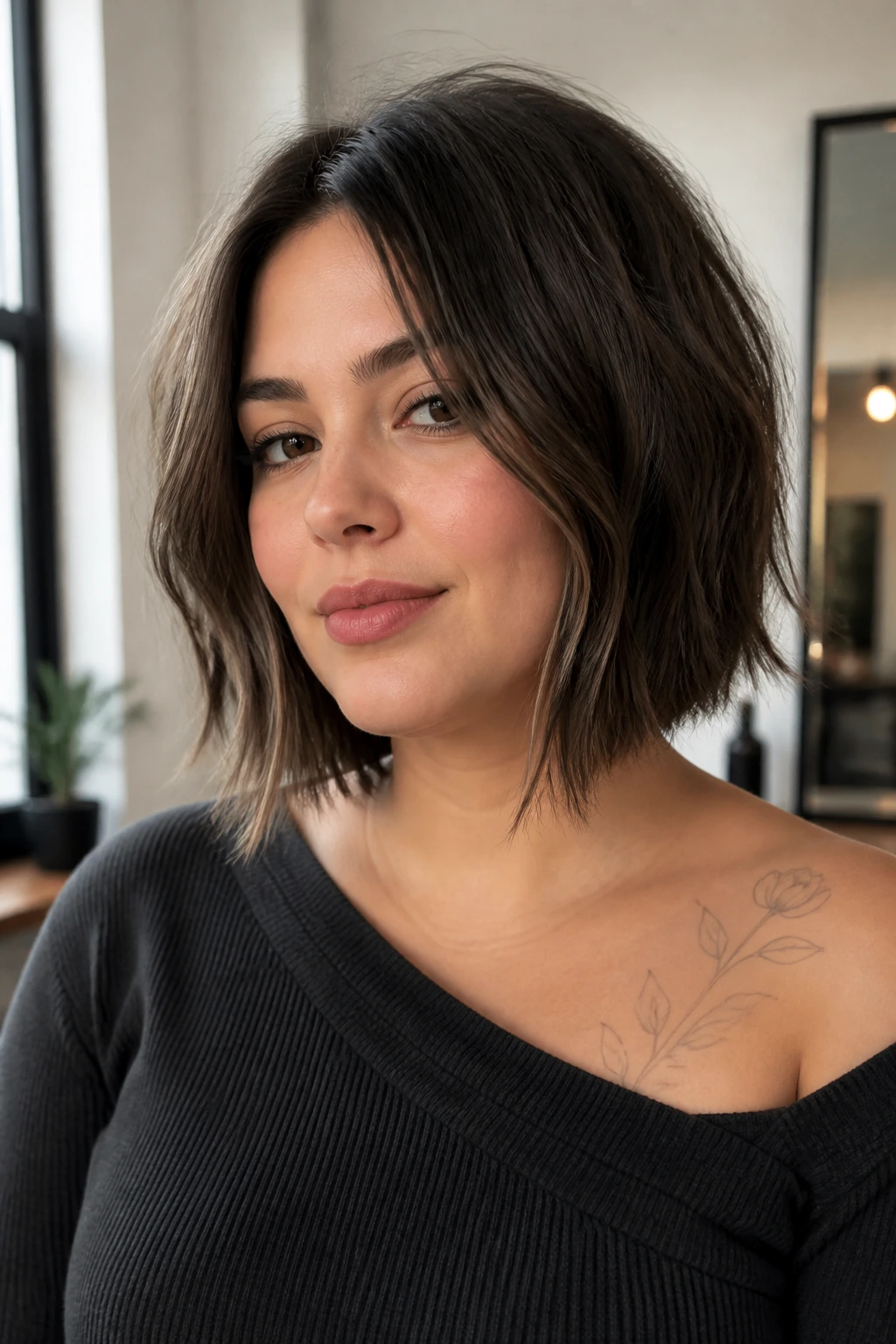
A blunt lob sounds wrong for thick hair and a round face, and usually it is. But if the edges are point-cut and the interior is cleaned up just enough to remove weight, the cut keeps the crispness of a blunt shape without the heavy shelf effect.
That broken line matters. It lets the lob sit close to the neck and collarbone without fanning out at the cheeks. On straight, dense hair, this is one of the cleanest options around because it still gives shape but does not ask for layers all over the place.
The styling is simple. A flat iron bend through the front, a slight tuck behind one ear, and you have enough asymmetry to keep the face from feeling too round. It’s a smart choice if you like the look of a straight line but hate the bulk that usually comes with it.
18. Pixie Bob with Longer Front Corners
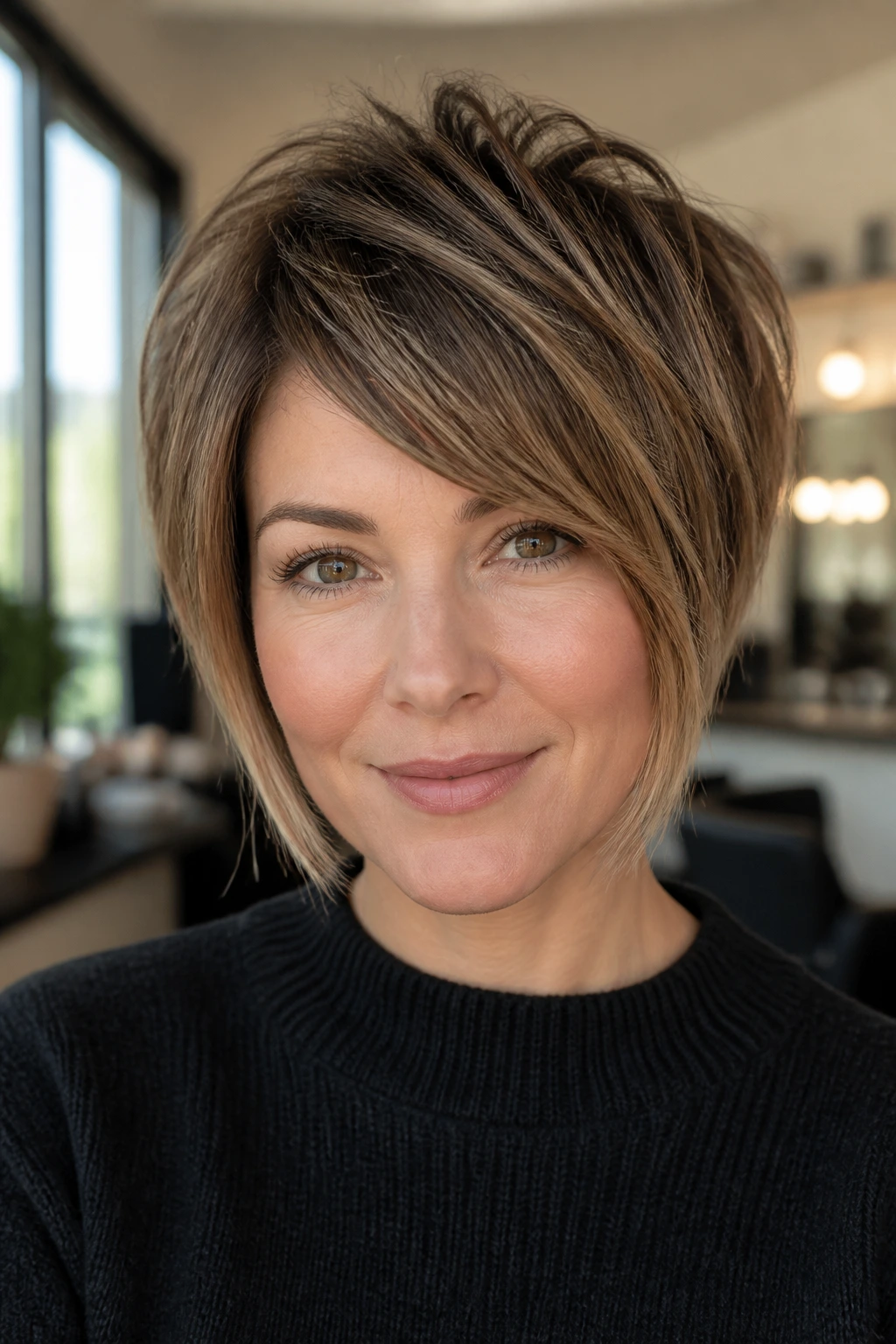
A pixie bob is the sweet spot for someone who wants short hair with a little softness left in the front. The longer corners near the face keep a round face from feeling boxed in, while the short back clears out the nape and removes a lot of the heaviness thick hair tends to carry.
The shape should be close at the back and slightly open at the front. That contrast is what gives it its charm. You get the ease of a short cut, but the front still bends downward enough to lengthen the profile.
If your hair grows out fast, this cut can start to lose its shape around the ear area before the back does. A trim every few weeks keeps it crisp. Let it go too long and the front corners can drop into awkward territory.
19. Long Layers with Wispy Side Bangs

Long layers can work on thick hair and round faces, but only if they are placed with a little discipline. The wispy side bangs make the top part of the cut feel softer, and the longer layers stop the length from turning into one heavy curtain.
What I like here is the quietness of it. It does not scream “layered haircut.” It just behaves better. The side bangs move the eye diagonally, the layers open up the hair through the mids and ends, and the round face gets a slimmer visual line without losing length.
This is a strong choice for people who are attached to long hair and want the smallest possible shift. It also plays nicely with waves, because the layers help the bend show up instead of hiding inside a dense sheet of hair.
20. Midback Cut with Cheekbone-Length Pieces
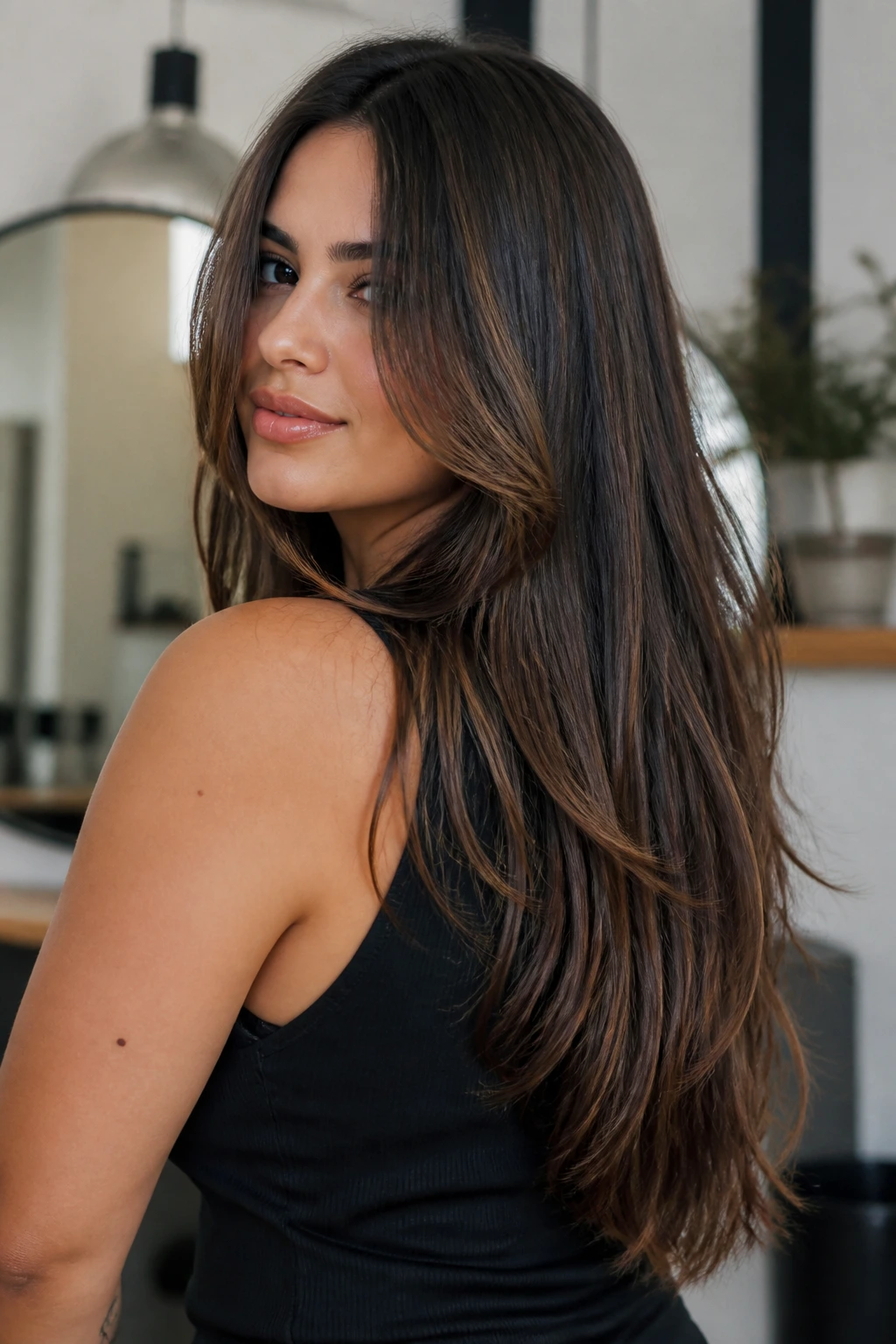
If you want to keep the length and still get the face-shaping effect, this is the move. The back stays midback, which keeps the haircut feeling full, but the front pieces start around the cheekbone and descend from there in soft, broken steps. That keeps the face from looking boxed in by long, heavy sides.
The cut works because it splits the job in two. The back keeps the drama of long hair. The front does the narrowing and lifting. Round faces need that kind of split-screen approach more than another blunt layer job.
I like this option for someone who is not ready to lose length but knows the current shape is too wide. It is also one of the easiest cuts to grow into something else later, because the face-framing pieces can be reshaped without touching the length much.
Why Thick Hair Loves a Broken Outline
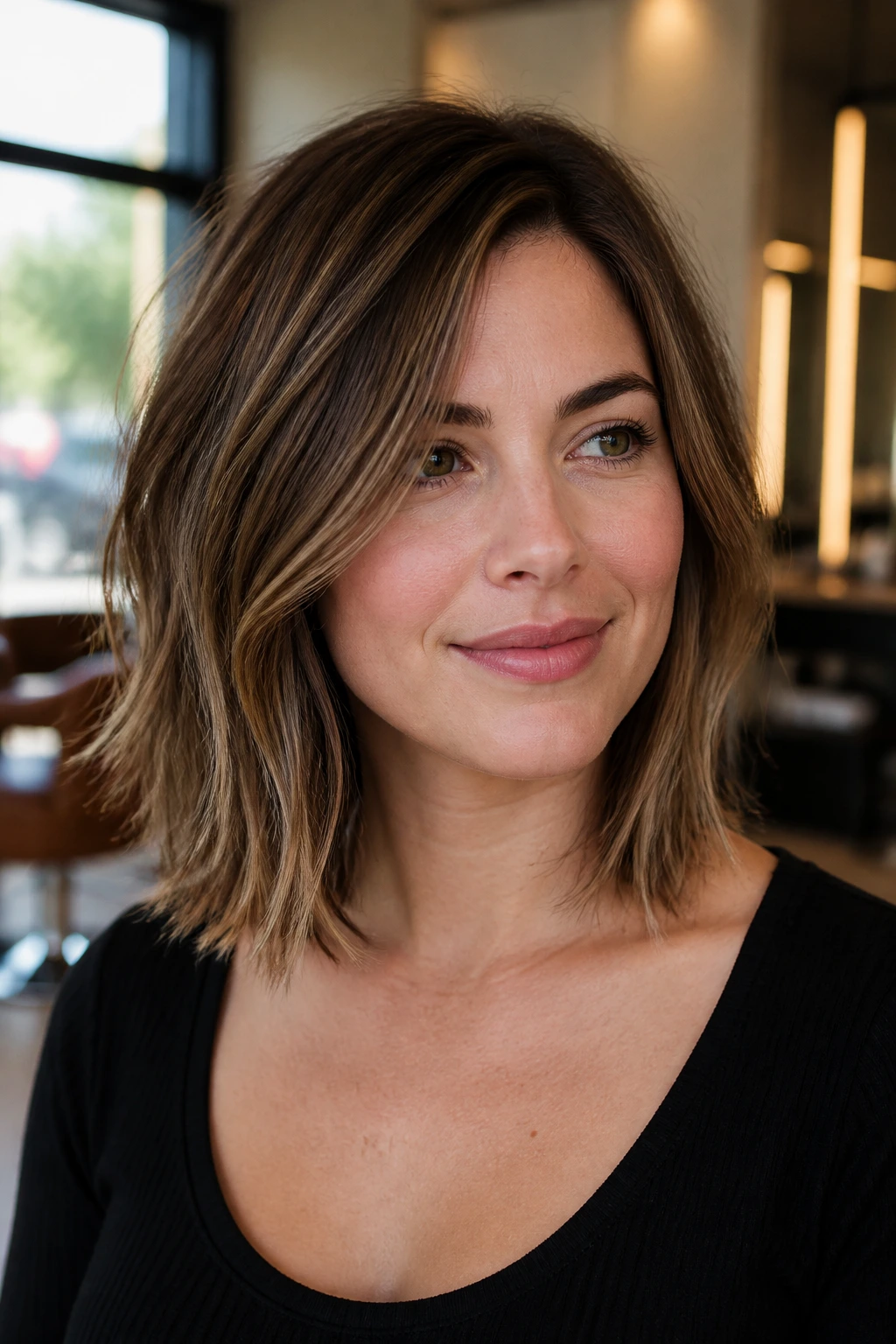
Thick hair is not the enemy here. It is the raw material. What it needs is a shape that tells it where to live. A broken outline—one that uses point-cut ends, controlled interior layers, and a bit of asymmetry—keeps the bulk from gathering at the cheek and jawline, which is where round faces tend to read widest.
The other trick is the weight line. In a blunt cut, the weight sits in one continuous band, and thick hair can make that band look solid and heavy. When the weight is moved with layers or length shifts, the silhouette starts moving again. That movement matters more than people think.
A choppy cut is not the same as “just add layers.” Random layers can create puff. Choppy structure removes bulk where it counts and leaves enough hair in the perimeter to keep the cut from collapsing. That’s the difference between a haircut that looks styled and one that looks like it fought with the scissors.
What to Tell Your Stylist Before the First Snip

Bring photos, yes, but bring the right kind. One photo for the front shape, one for the side, and one that shows the fringe or face-framing area up close. A single perfect-angle photo can hide the things that matter most, especially when thick hair is involved.
Say where your hair gets wide. Around the cheeks? At the jaw? At the sides when you air-dry? That detail is more useful than saying you want “layers.” A good stylist will place weight removal to answer the problem, not just follow a trend picture.
If your hair has a cowlick, a strong side part, or a curl pattern that changes when it dries, say so before the cape goes on. And if someone reaches straight for thinning shears all over your head, ask what they’re trying to solve. Sometimes those shears help. Sometimes they make thick hair fuzzy at the ends and frizzy by lunch.
Essential Tools for Styling These Cuts
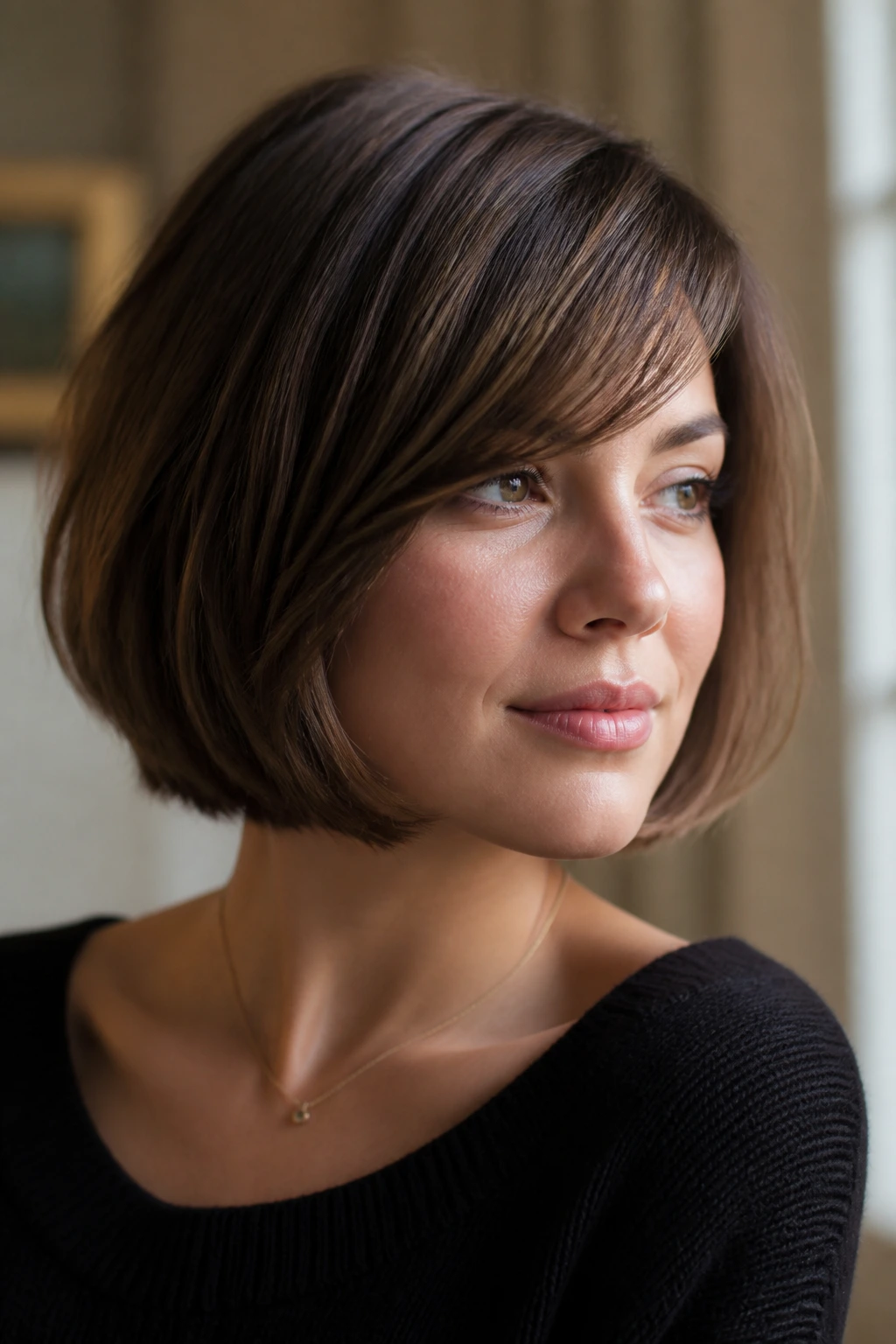
-
A blow dryer with a nozzle: The nozzle gives you direction, which matters when you’re trying to keep the sides from puffing out.
-
A medium round brush: Use this on the front pieces and crown; it helps bend the hair away from the cheeks.
-
A wide-tooth comb: Good for detangling thick hair without pulling the texture apart too hard.
-
Texturizing spray: A light mist at the ends makes piecey layers separate instead of clumping.
-
Volumizing mousse: Best at the roots on lob, shag, and butterfly-cut shapes.
-
Dry shampoo: Handy for the crown and temples when thick hair starts to flatten.
-
Flat iron or curling wand: Optional, but useful for shaping the front corners or adding a bend to the ends.
-
Hair clips: They make sectioning easier, which matters more with thick hair than with fine hair.
What to Tell Your Stylist Before the First Snip
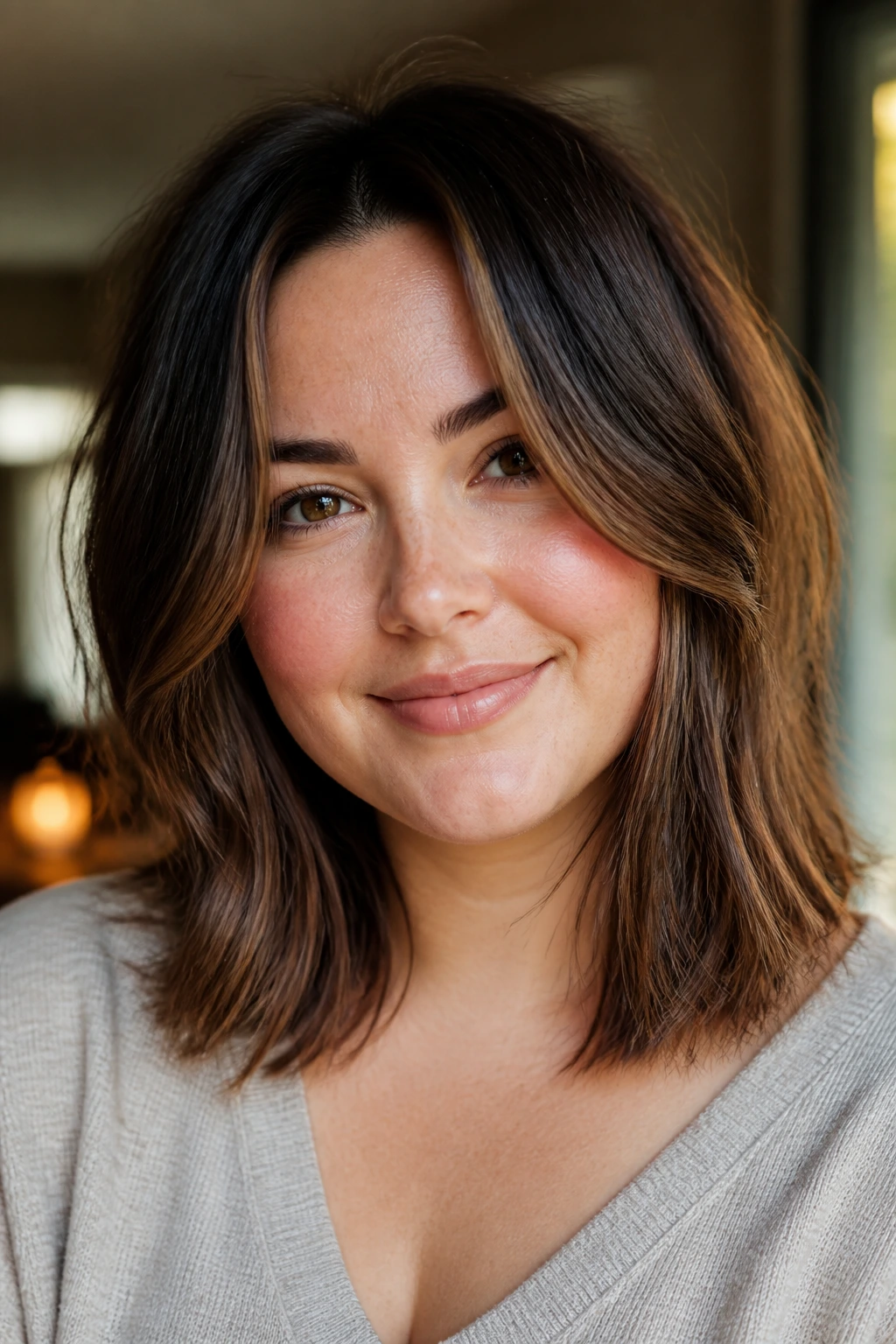
The chair conversation should be about where the bulk lives, not just how short you want it. Start with your part, your drying habit, and the spots that feel widest. That gives the stylist a map.
A few useful phrases: “I want movement through the sides, not thinning at the ends,” “I need the front to start below the cheekbone,” and “My hair puffs at the temples when I air-dry.” Those are the details that lead to a better cut.
If you wear your hair up half the time, say that too. Some cuts look lovely down and turn awkward in a claw clip. A good stylist will leave enough around the face and nape so the haircut still makes sense when you pull it back.
How to Wear These Cuts on a Normal Morning
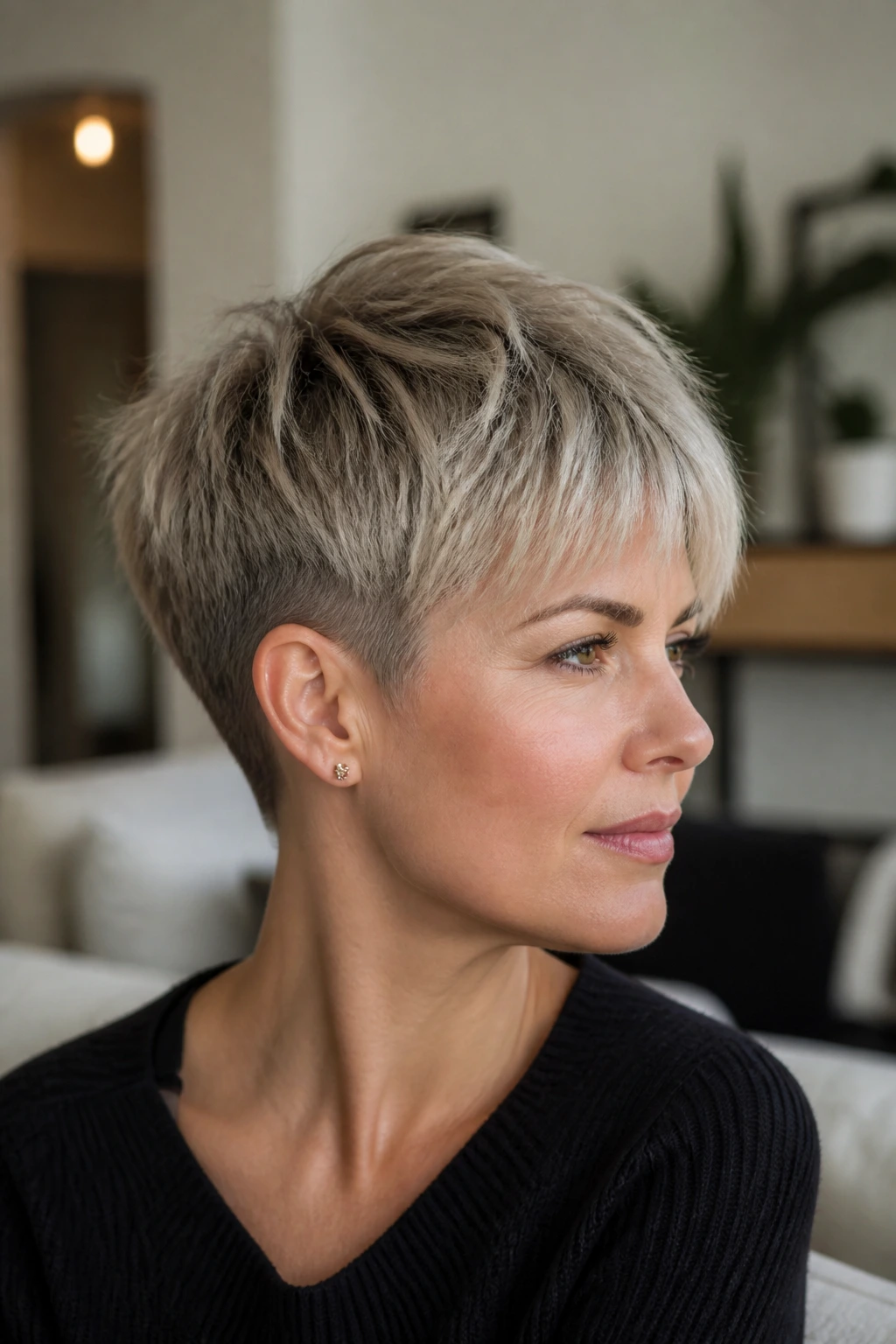
Air-Dried: Work a small amount of mousse or curl cream through damp roots and mids, then scrunch or twist the front pieces away from the face. Thick hair usually needs less product than people think—too much leaves the ends sticky and dull.
Blow-Dried: Rough dry the roots until they’re about 80 percent dry, then use a round brush only where you want direction: the front, the crown, and the ends. Keep the ends bent slightly inward or outward so the cut looks intentional rather than puffy.
Quick Refresh: Mist the hair lightly with water, re-wet the face-framing pieces, and rework them with fingers or a brush. A drop of light cream on the last two inches can bring back separation without weighing the whole head down.
Short Hair Day-Two Fix: For bixies, pixies, and pixie bobs, a tiny bit of paste at the crown and around the fringe is enough. Don’t pile on product. Thick hair needs control, not coating.
Small Styling Moves That Change the Whole Shape
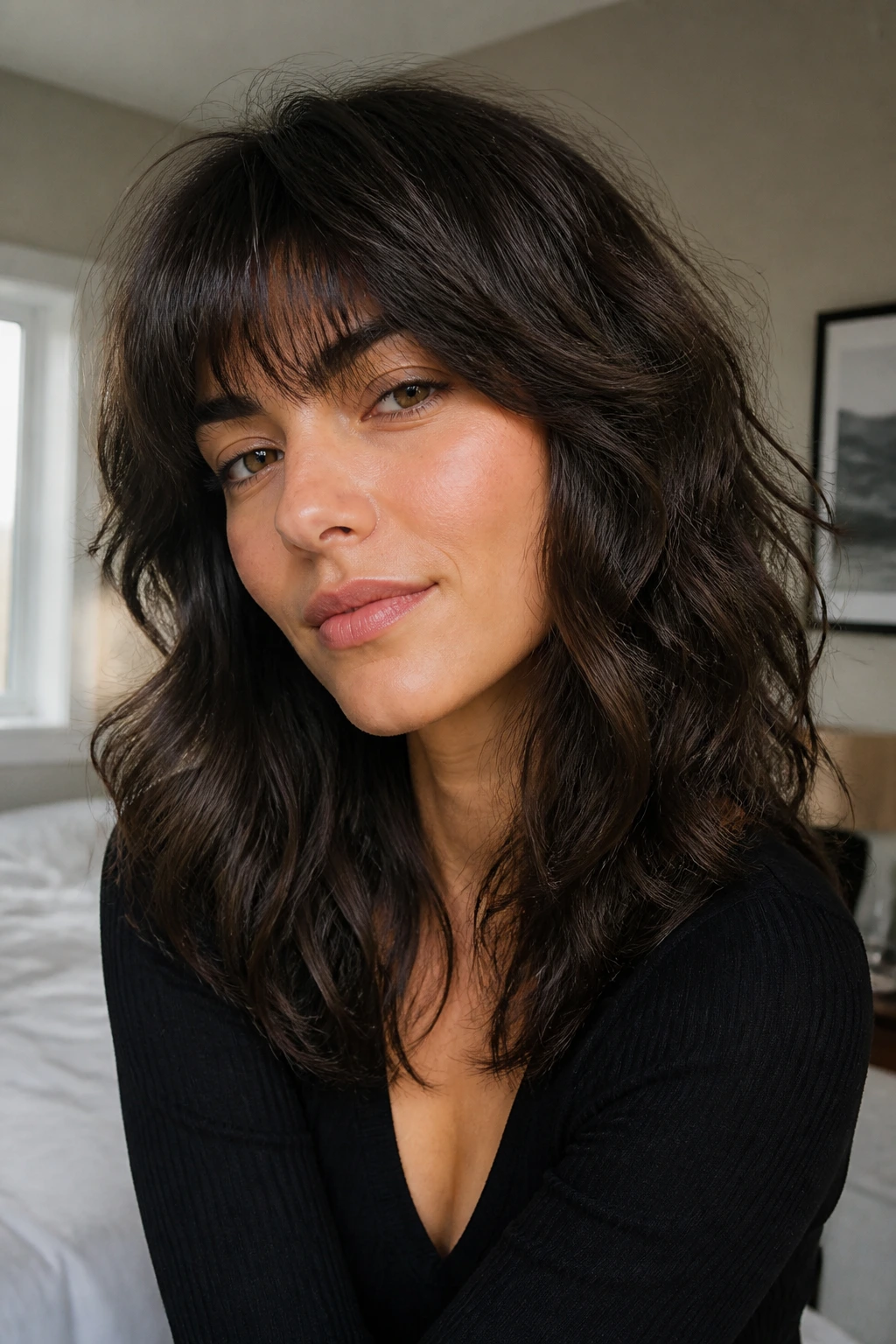
Lift at the crown: Blow-dry the roots opposite your part for 20 to 30 seconds, then flip them back. That little trick makes a round face look longer without touching the length.
Break the cheeks: If the front pieces keep landing right at the fullest part of the face, bend them forward with a brush and then away at the end. One or two inches of change can matter more than a whole new cut.
Choose a light hand at the ends: A pea-size amount of cream or oil is usually plenty for thick hair. If the ends look wet, the cut starts to look heavy again.
Use the part as a tool: A center part is not banned, but a soft side part or a zigzagged off-center part can move the visual weight around in a way that helps round faces immediately.
Grow-Out, Wash Days, and Trim Timing
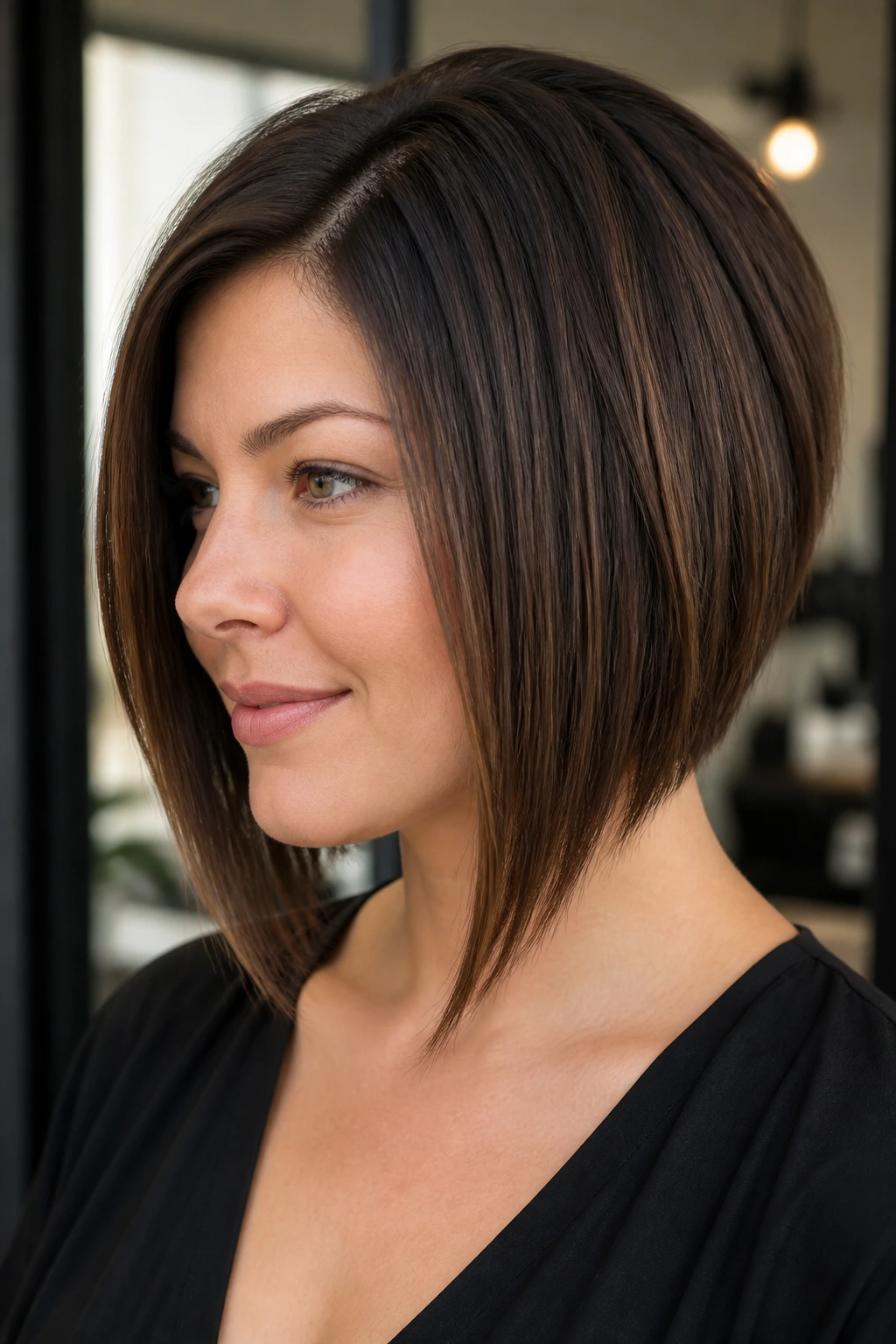
Shorter cuts need more babysitting. A bixie, pixie bob, or French bob usually wants a trim every 4 to 6 weeks if you want the corners and fringe to keep their shape. Leave it much longer and the outline starts to blur, which is especially obvious on thick hair.
Lobs, shags, and clavicut-length styles can usually stretch to 8 or 10 weeks before they start losing their edge. Long layers and U-shaped cuts often hold for 10 to 12 weeks, though bangs may need a small cleanup in between. If you wear bottleneck bangs or side fringe, a tiny trim on the fringe alone can keep the whole cut from feeling overgrown.
Wash-day timing matters too. Thick hair can handle a little extra product on the first day, but if you load up too much, the shape gets heavy fast. On day two, dry shampoo at the roots and a quick mist of water at the front usually does more than starting over. If your cut depends on crown lift, do not let the roots dry flat against your scalp for three days in a row. That’s how a good shape turns tired.
Variations and Adaptations to Try

Soft-Air Dry Lob: Keep the collarbone length but ask for fewer face-framing layers and more broken ends. This version is good if you want a low-fuss shape that still keeps thick hair from reading as one solid block.
Curly-First Shag: Ask for the layers to be placed while the hair is dry or nearly dry, especially if your curl pattern changes a lot. The result is less triangle, more bounce, and a better chance that the face-framing pieces land where you want them.
Shorter and Sharper Pixie Bob: Keep the back tight and the front corners longer for a cut that feels neat instead of soft. This one suits people who like shape more than softness and do not mind a trim schedule.
Long-Length Butterfly Sweep: Keep the overall length but move the shortest layers high enough to open the crown and break up the cheeks. It gives you movement without giving up the ponytail length.
Side-Bang Reset: If you love your current haircut but the face feels too open, swap blunt fringe for a long side sweep or bottleneck bang. It is a smaller change than a full cut, and it often fixes the proportion problem faster than a new length.
Common Mistakes to Avoid
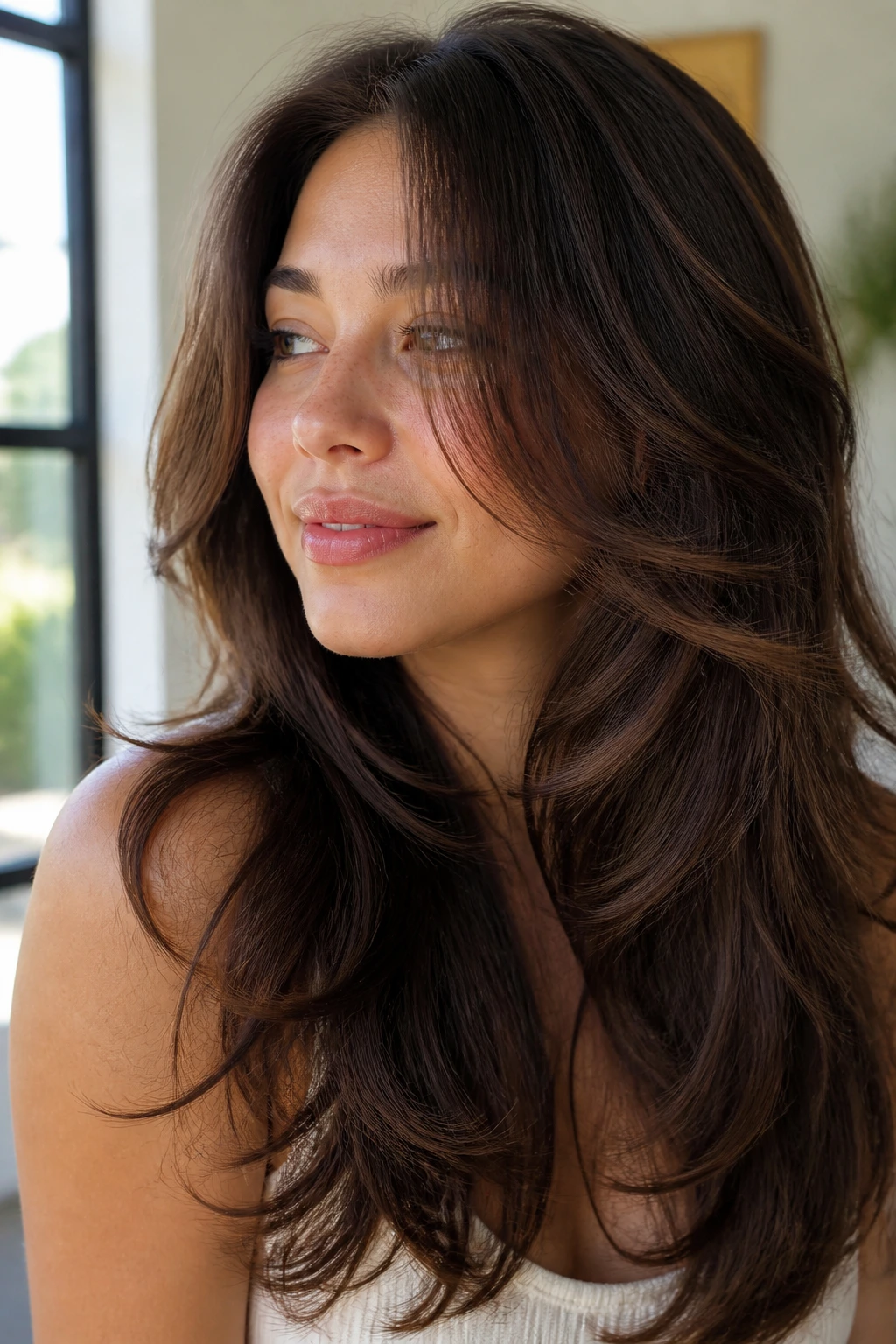
Putting the shortest layer at cheek level: That is the fastest way to make a round face look wider. Keep the shortest front pieces above the cheekbone or below the jaw instead.
Thinning the ends to death: Thin ends make thick hair look fuzzy, especially in dry air or humidity. Ask for controlled internal removal, not a shredded perimeter.
Going blunt at the widest point of the face: A hard line at the jaw or cheeks can turn thick hair into a box. Angle it, break it up, or move it lower.
Skipping the styling plan: A good cut still needs a direction. If you never rough-dry the crown or bend the front pieces, even a smart haircut can settle into a wide shape.
Ignoring your part and cowlicks: If your natural part fights the cut, the haircut will look off no matter how well it was layered. Work with the growth pattern, not against it.
Frequently Asked Questions
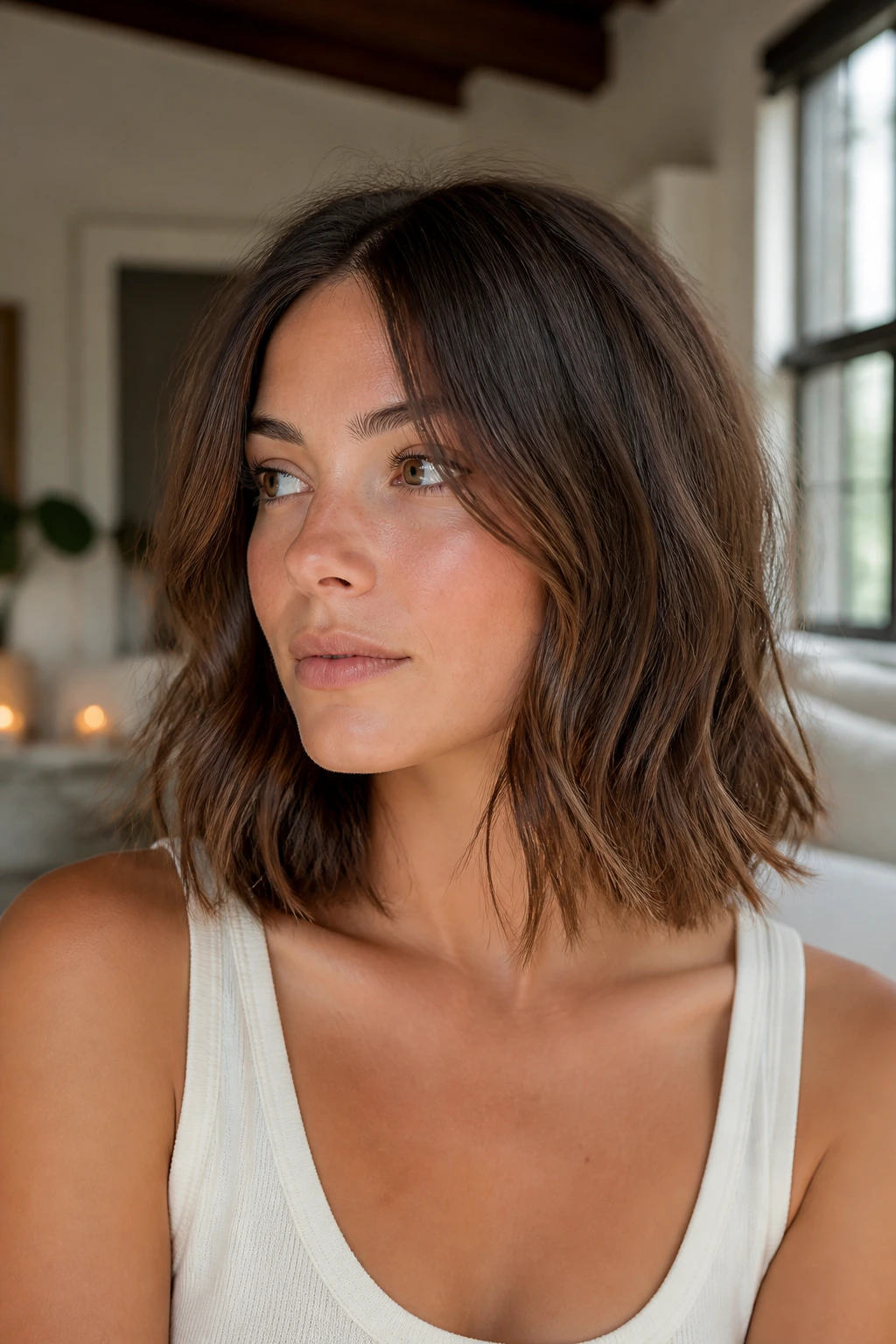
Can a middle part work on a round face with thick hair?
Yes, if the rest of the cut creates vertical movement. A middle part on a blunt bob can feel wide, but a middle part on a butterfly cut, long layers, or a shag often works because the front pieces still fall past the cheeks.
Are bangs a bad idea for round faces?
Not at all. The wrong bangs are the problem, not bangs themselves. Bottleneck bangs, side-swept fringe, and soft curtain pieces can all help, while a heavy straight fringe that sits too low can make the face feel shorter and wider.
Will a choppy haircut make thick hair frizzy?
It can, if the stylist over-razors the ends or if the layers are cut too aggressively. A smart choppy cut removes bulk inside the shape and leaves the perimeter intact enough to stay smooth.
What length is safest if I’m nervous about my face looking wider?
Collarbone to shoulder length is usually the easiest starting point. That zone gives you enough length to fall below the cheeks while still letting the hair move around the jaw.
Does thick, curly hair need the same kind of choppy layering as straight hair?
No. Curly hair usually needs the layers placed with the curl pattern in mind, often with less razoring and more dry cutting. The goal is shape, not aggressive texture.
How often should I trim a short choppy cut?
Pixies, bixies, and French bobs usually need shape-ups every 4 to 6 weeks. Once the corners and fringe start losing their lines, the round face benefit starts fading too.
What if my hair puffs out at the sides when I style it?
That usually means the weight line is sitting too high or the cut is too blunt around the cheeks. Ask for more internal removal lower in the shape, then blow-dry the front away from the face instead of letting it air-dry straight out.
Can I ask for these cuts if my hair is very coarse?
Yes, but be careful with thinning shears and over-razoring. Coarse hair often needs a cleaner perimeter and fewer aggressive texture cuts so the ends stay controlled.
A Better Shape for Dense Hair
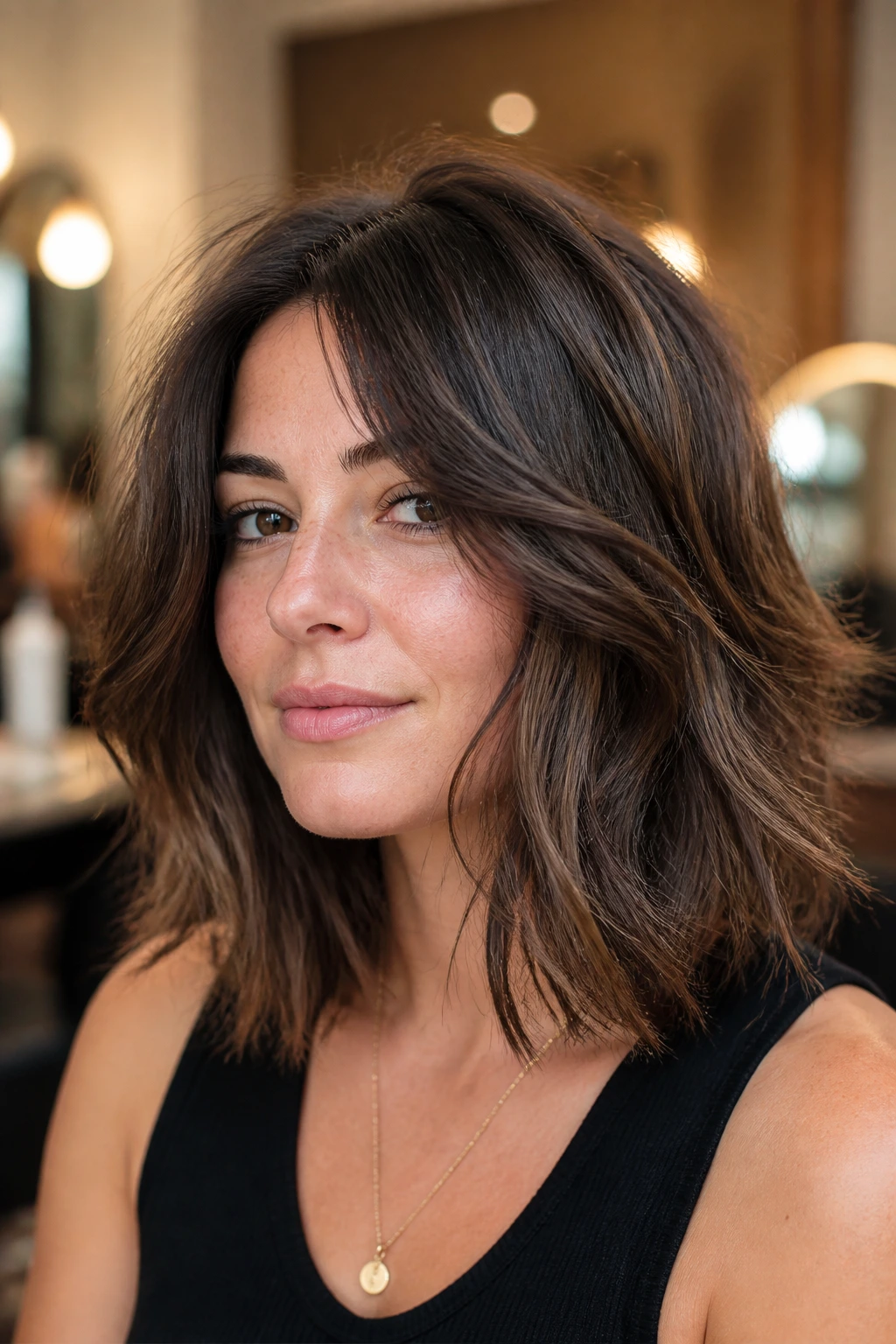
The smartest cuts here do one quiet thing well: they turn thickness into shape instead of bulk. Some lean on angles, some lean on height, and some simply stop the hair from sitting at the widest point of the face. That is the whole trick.
If your round face and thick hair have been arguing with every blunt cut you’ve tried, start with the collarbone lob, the butterfly cut, or the shoulder-length side-part chop. Those three are forgiving, easy to style, and honest about how thick hair actually behaves when it leaves the chair.
Bring a photo, talk about where your hair gets wide, and ask for movement in the right places. That small conversation usually changes the cut more than another inch off the ends ever could.