



A round face does not rule out short hair. It rules out the lazy version of short hair.
If the cut ends exactly at the cheek’s widest point, or if every layer curves inward like a helmet, the face gets wider on sight. But put the weight a little higher, cut a diagonal line through the cheeks, or leave one side longer than the other, and the whole shape changes. Suddenly the haircut looks deliberate instead of sweet.
That is why the right short haircut can feel sharp, grown-up, and a little unruly in the best way. A good round-face cut does not hide the face; it edits it. The best ones make the eyes move up, then out, then down — never sitting in one horizontal line long enough to flatten the look.
Why These Cuts Keep Round Faces Looking Sharp
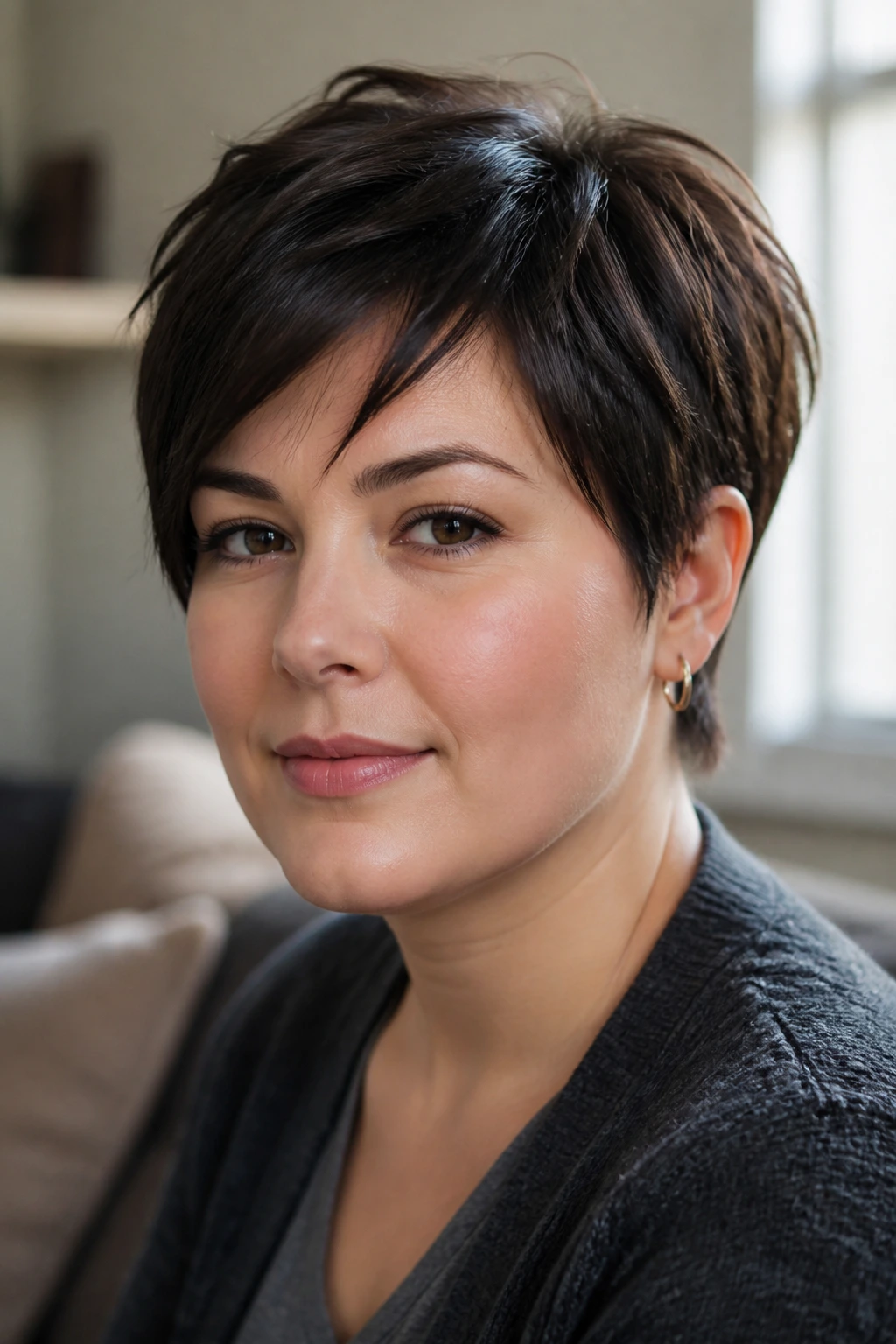
- Diagonal lines do the heavy lifting: A side sweep, asymmetrical front, or forward angle breaks up the soft curve of a round face and keeps the eye moving.
- Height at the crown matters: A little lift on top gives the face a longer read, especially when the sides stay neat instead of puffing out.
- Texture keeps short hair from looking helmet-like: Choppy ends, piecey layers, and razor work stop a crop or bob from sitting in one heavy shape.
- Most of these cuts grow out well: That matters more than people admit. A short cut that still looks intentional after six weeks saves a lot of regret.
- You can make one haircut read soft or edgy: The part, the finish, and the fringe can change the whole mood without changing the basic shape.
1. Side-Swept Pixie With Longer Top Layers
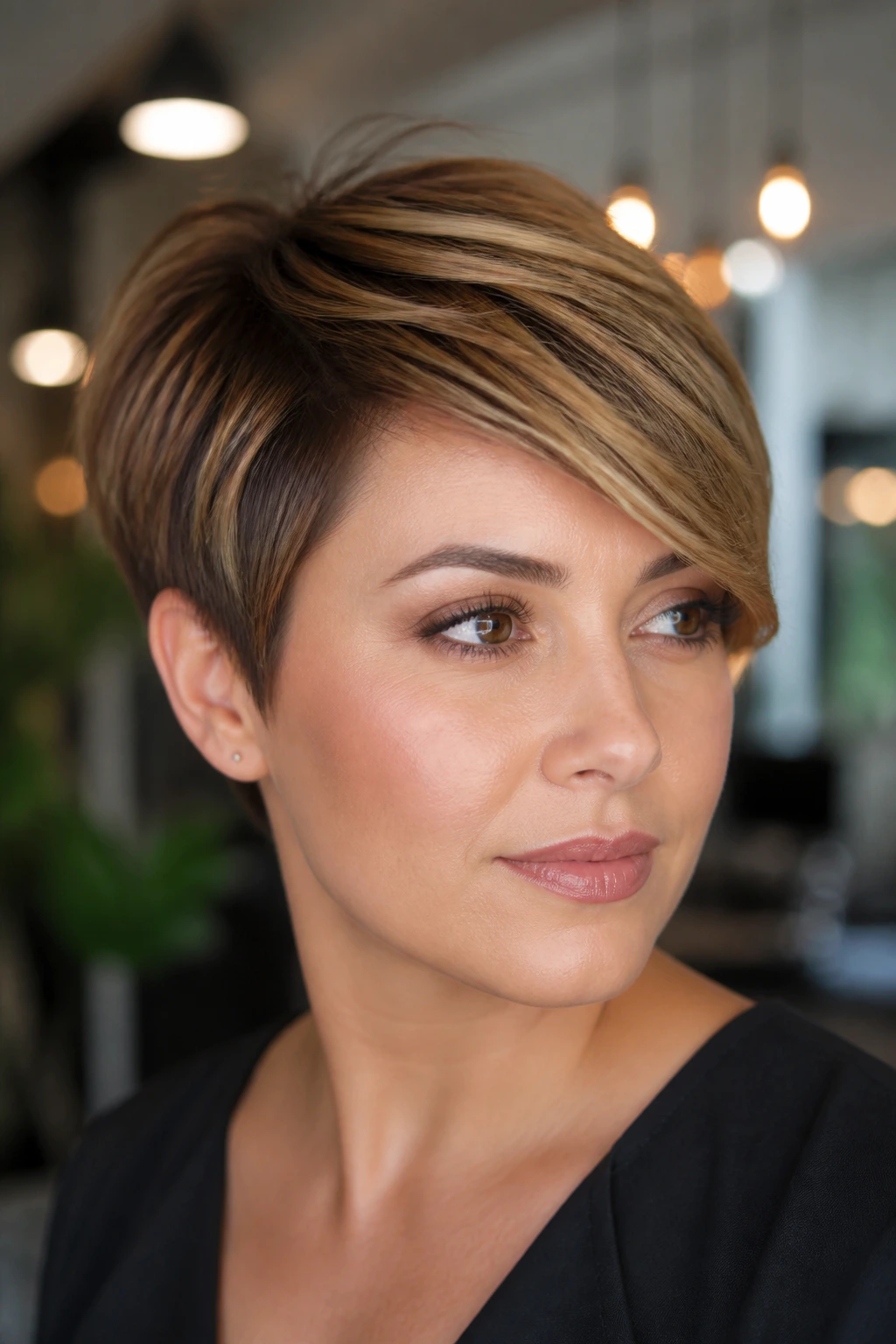
A side-swept pixie with a little extra length on top is one of the easiest ways to make a round face look less broad through the cheeks. The longer top gives you vertical lift, while the sweep across the forehead cuts the face on a slant instead of a straight line. That slant matters. A lot.
Why it flatters a round face
Ask for 2 to 3 inches on top and a tighter taper around the ears and nape. You want the longest point to fall just off center, not straight down the middle. That creates a clean diagonal over the forehead and keeps the cut from blooming out at the widest part of the face.
The best styling move is a little matte paste worked into dry hair, then pushed upward at the roots before sweeping to one side. Do not over-slick it. A flat pixie can look harsh; a tiny bit of piecey movement makes the whole thing feel sharper and more modern.
Quick reality check: if your hair grows straight out at the crown, this cut needs a blow-dry or a quick pass with a vent brush. It will not do the work by itself.
2. Angled Bob That Dips Forward
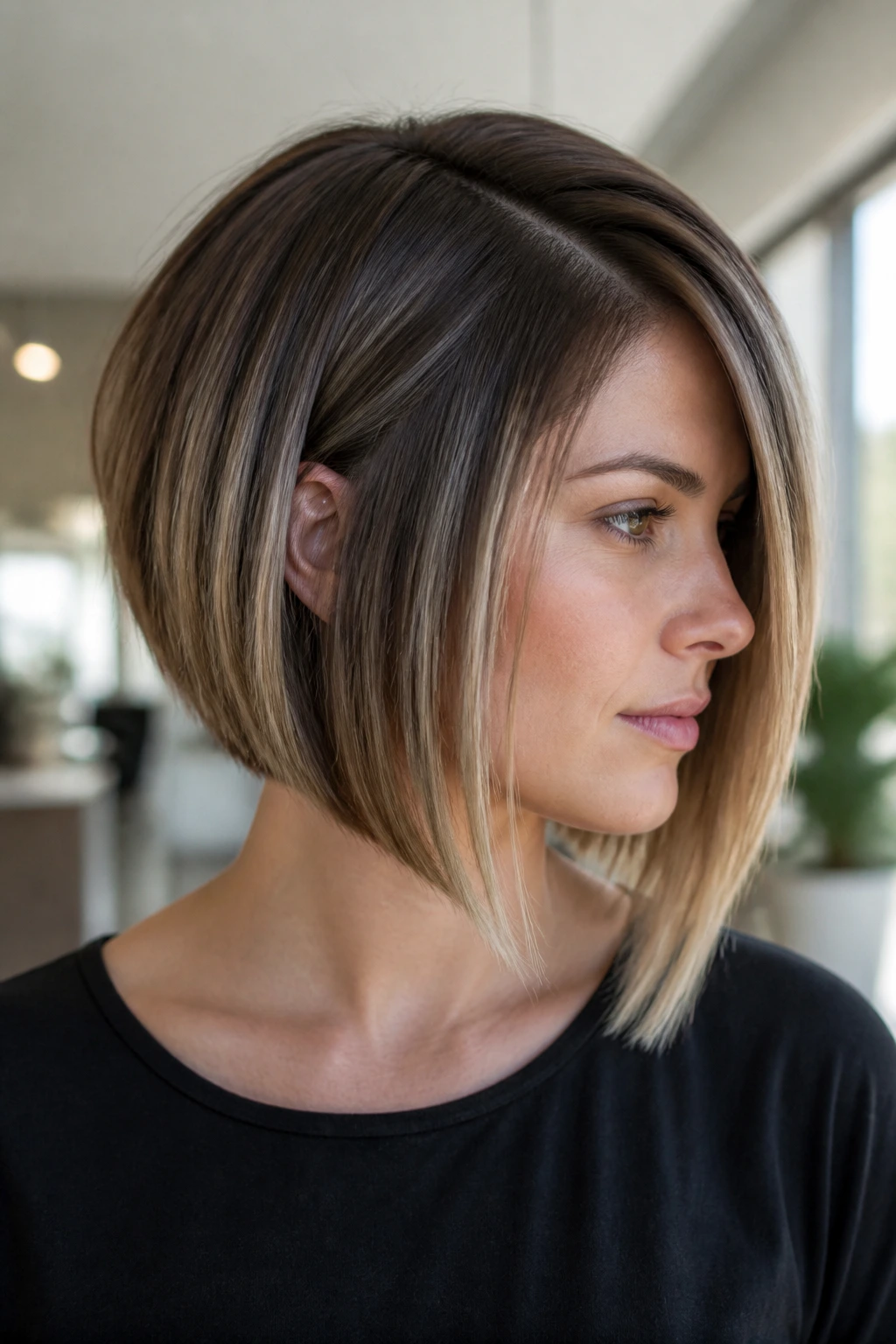
An angled bob is the kind of haircut that does half the contouring for you. The back sits a little shorter, the front drops past the jaw, and that forward line pulls the eye down instead of letting it linger at the cheeks. It is neat, but not boring. That balance is the whole point.
This cut works best when the front pieces hit just below the jawline. If they stop right on the cheekbone, the face can look wider. If they drop too low, you start losing the sharpness that makes the shape feel clean. The sweet spot is a front that skims, not clings.
A side part makes the angle look even better. Straight hair shows the line most clearly, but wavy hair can wear it too, especially if the ends are lightly beveled with a round brush. Skip the heavy curl-under finish that turns the bob into a bubble. That’s the wrong mood.
3. Choppy Bixie With Crown Lift
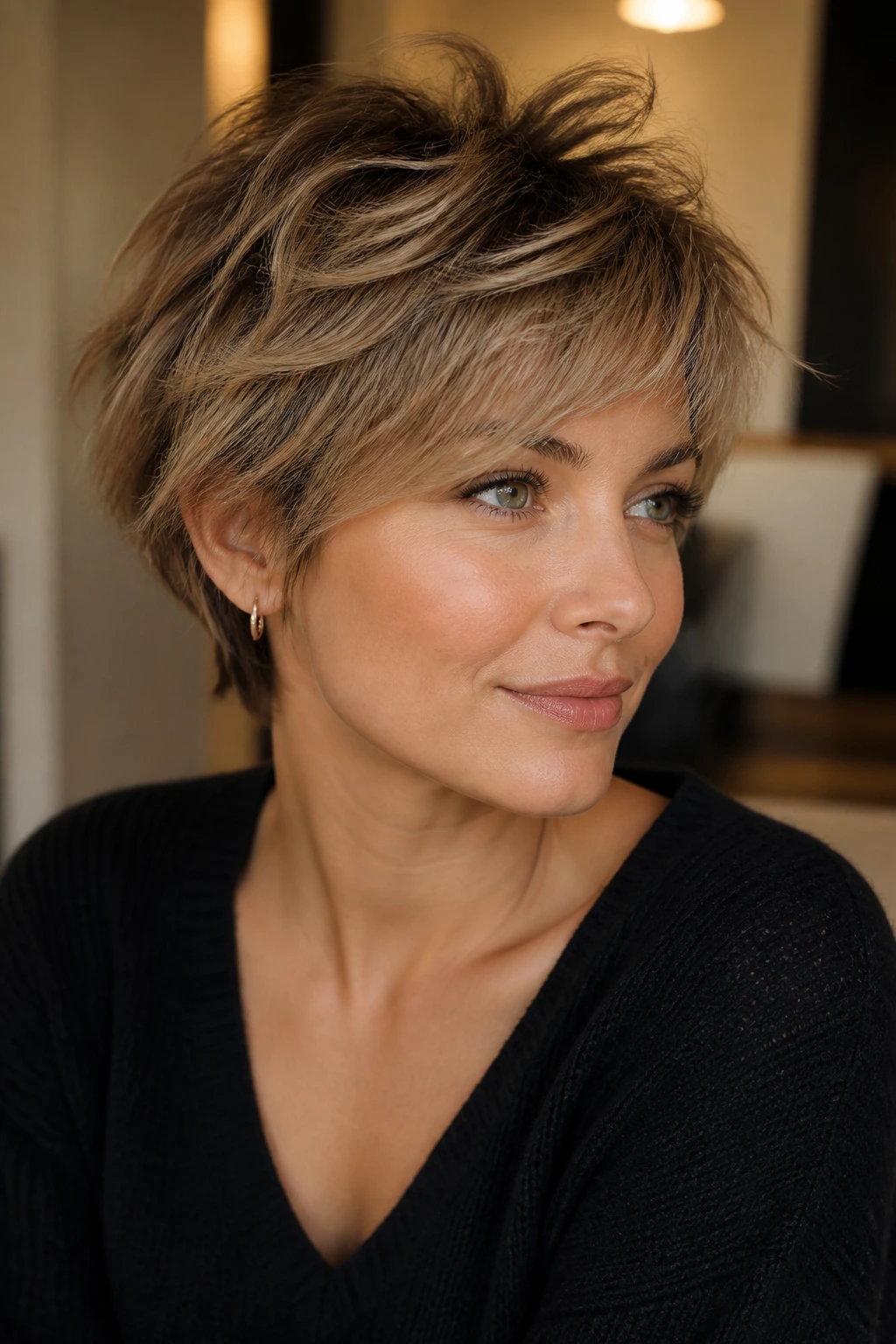
Why does a bixie work so well on a round face? Because it borrows the best parts of a bob and a pixie without getting stuck in either one. The crown has enough length to give lift, the sides stay close enough to the head to avoid extra width, and the choppy ends keep everything from going soft around the edges.
The shape that makes it work
Ask for piecey top layers with a slightly tapered nape. The front can sit around the cheekbone or a touch lower, but the interior layers need some air. That air is what keeps the haircut from reading as one solid block.
Best styling move: root lift spray at the crown, then rough-dry with fingers first and finish with a small round brush only where you need polish. If your hair is fine, this cut gives you volume without asking for a lot of length. If your hair is thick, it removes enough weight to keep the sides from ballooning.
A bixie is for people who want a little bite. It should look touched, not precious.
4. French Bob With Airy Fringe

A French bob can be a gift to a round face, but only when it stays airy. The old, blunt, chin-hugging version can feel too boxed in. The better version sits around the jaw, has a soft fringe that does not eat the forehead, and moves a little when you walk.
That fringe is the key. It should graze the brows or split lightly at the center so the face keeps some vertical space. Heavy bangs cut the face in half and often make the cheeks look fuller. A wispy fringe does the opposite. It frames without trapping.
This cut looks especially good when the ends are slightly bent under with a round brush, just enough to feel finished. Not too much. If the curve gets rounder than the face itself, the silhouette starts working against you. A French bob should feel crisp at the line and loose at the fringe.
5. Textured Crop With Piecey Bangs
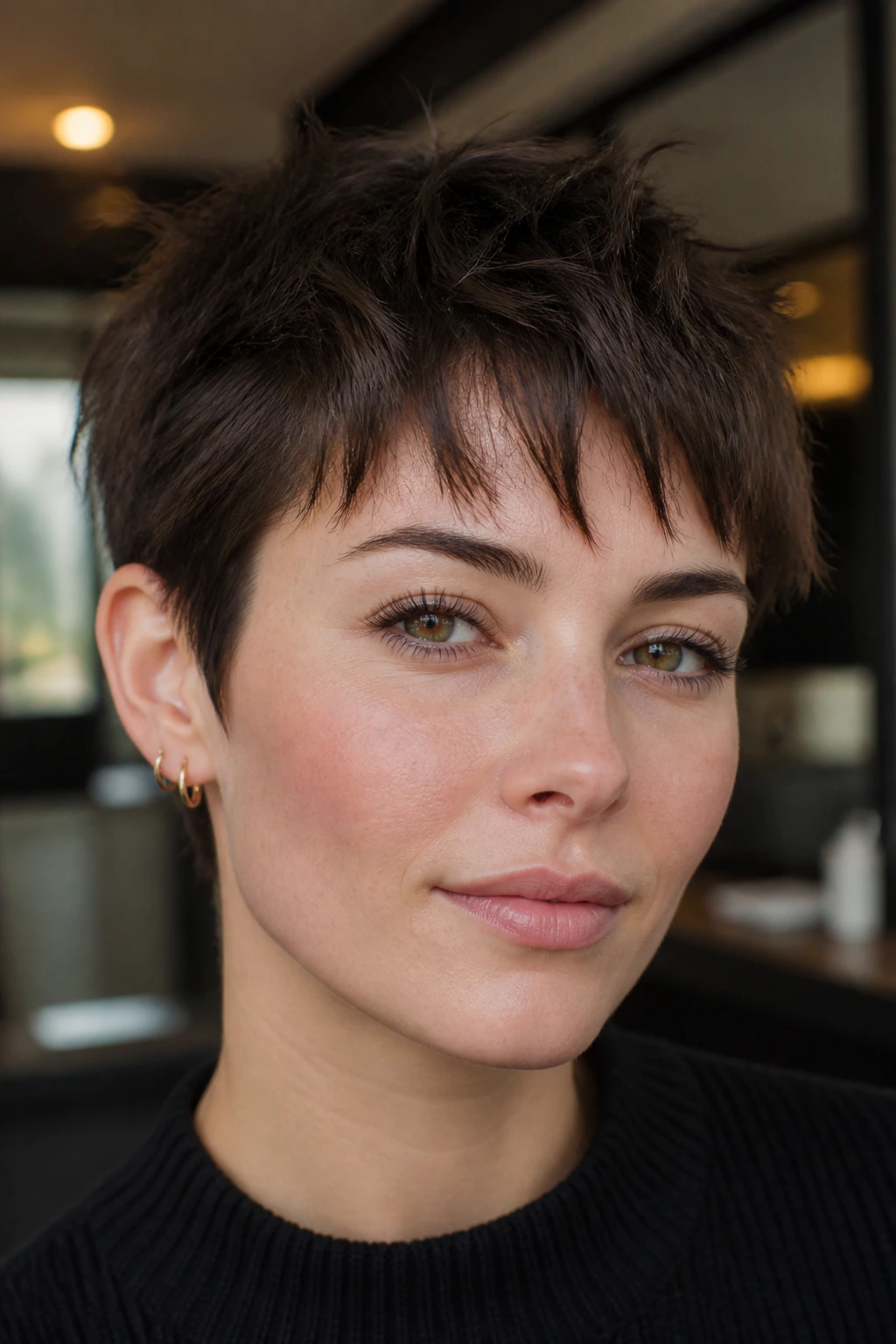
A textured crop is one of those short haircuts that looks casual in a way that is actually very controlled. The little broken ends matter. They stop the silhouette from turning into a tidy cap, which is exactly what round faces do not need. You want movement, not symmetry for symmetry’s sake.
The piecey bangs are doing a lot here. They interrupt the width of the forehead and pull the eye up in tiny, uneven little steps. That unevenness is the charm. A perfectly even fringe can feel too blunt on a round face, especially if the hair is thick and the bangs sit heavy.
This cut is a nice one for people who do not want to spend fifteen minutes with a round brush every morning. A touch of texturizing spray, a quick bend with fingers, and you are done. If your hair is very fine, ask for slightly shorter interior layers so the top does not collapse by lunchtime.
6. Asymmetrical Bob With Deep Side Part
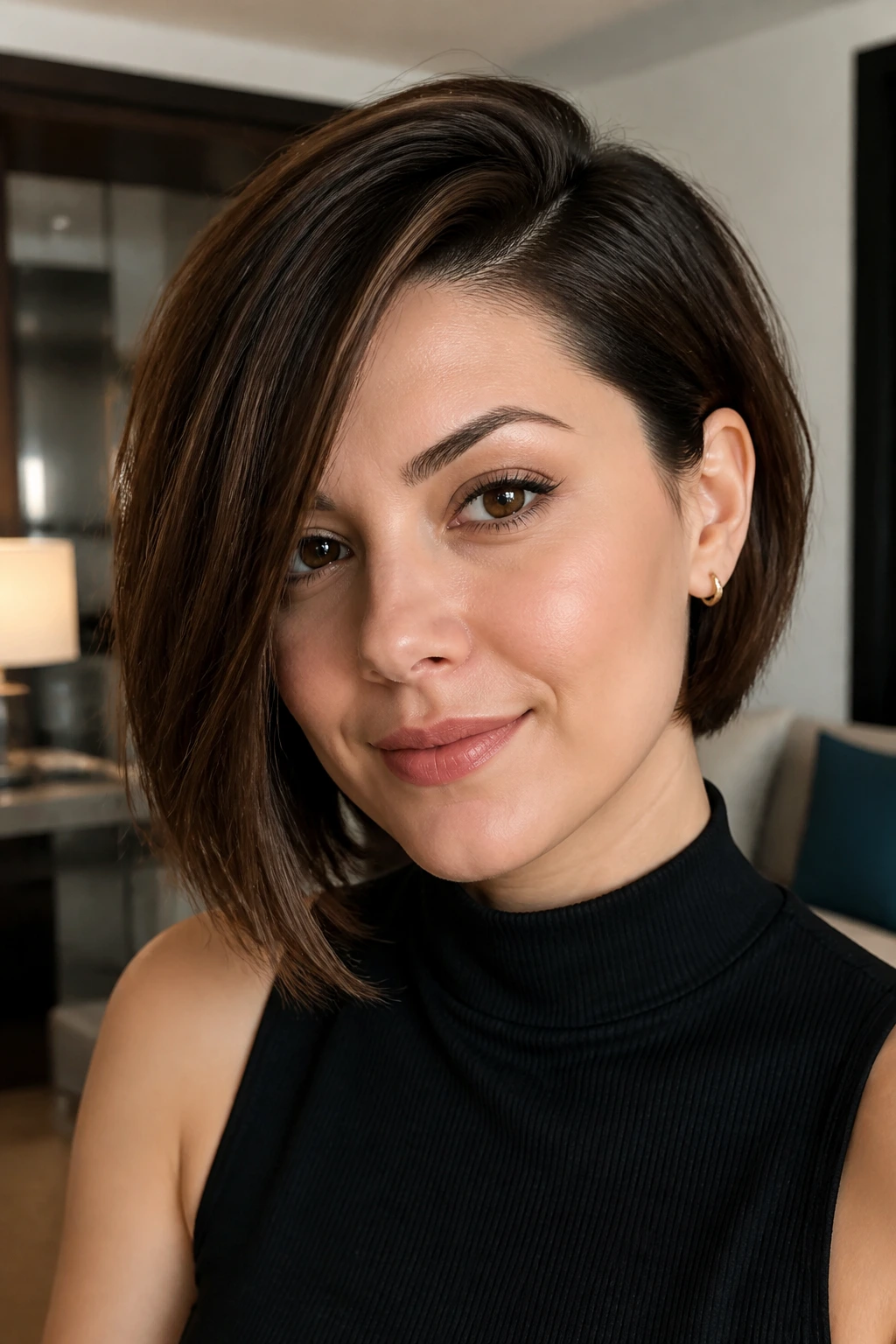
A straight-across bob sits very differently on a round face than an asymmetrical one. The asymmetry makes the front line slant, and that slant changes everything. One side skims the jaw or collar area, the other side stays a little shorter, and the face gets a cleaner frame.
The deep side part is not a small detail. It gives you a strong line over the top and creates a little shadow across one temple, which keeps the face from looking too open and round. If your hair is pin-straight, this cut can look almost architectural. If it is wavy, the movement softens it without losing the shape.
Ask your stylist to keep the shortest side from stopping at cheek level. That’s the trap. You want the length either above it, with lift, or below it, with purpose. Anything in the middle can make the widest part of the face feel louder than you want.
7. Layered Shaggy Bob

A shaggy bob brings in movement fast. The layers are not there to make the hair fluffy; they are there to break up the outline so the face does not sit inside one round, even curve. On a round face, a little mess is often better than perfect polish.
The trick is to keep the top soft and the ends light. Too many layers around the cheeks can create a halo of width, which is not the goal. You want the texture to live mostly from the crown down through the mid-lengths, where it can create shape without crowding the face.
This is the cut for people who like a bit of grit in their style. Air-dry it with mousse, scrunch it, and let some pieces fall where they want. If you straighten it bone-flat, you lose half the point. A shaggy bob wants a bit of slip, a bit of bend, a bit of disorder.
8. Tapered Pixie With Feathered Nape
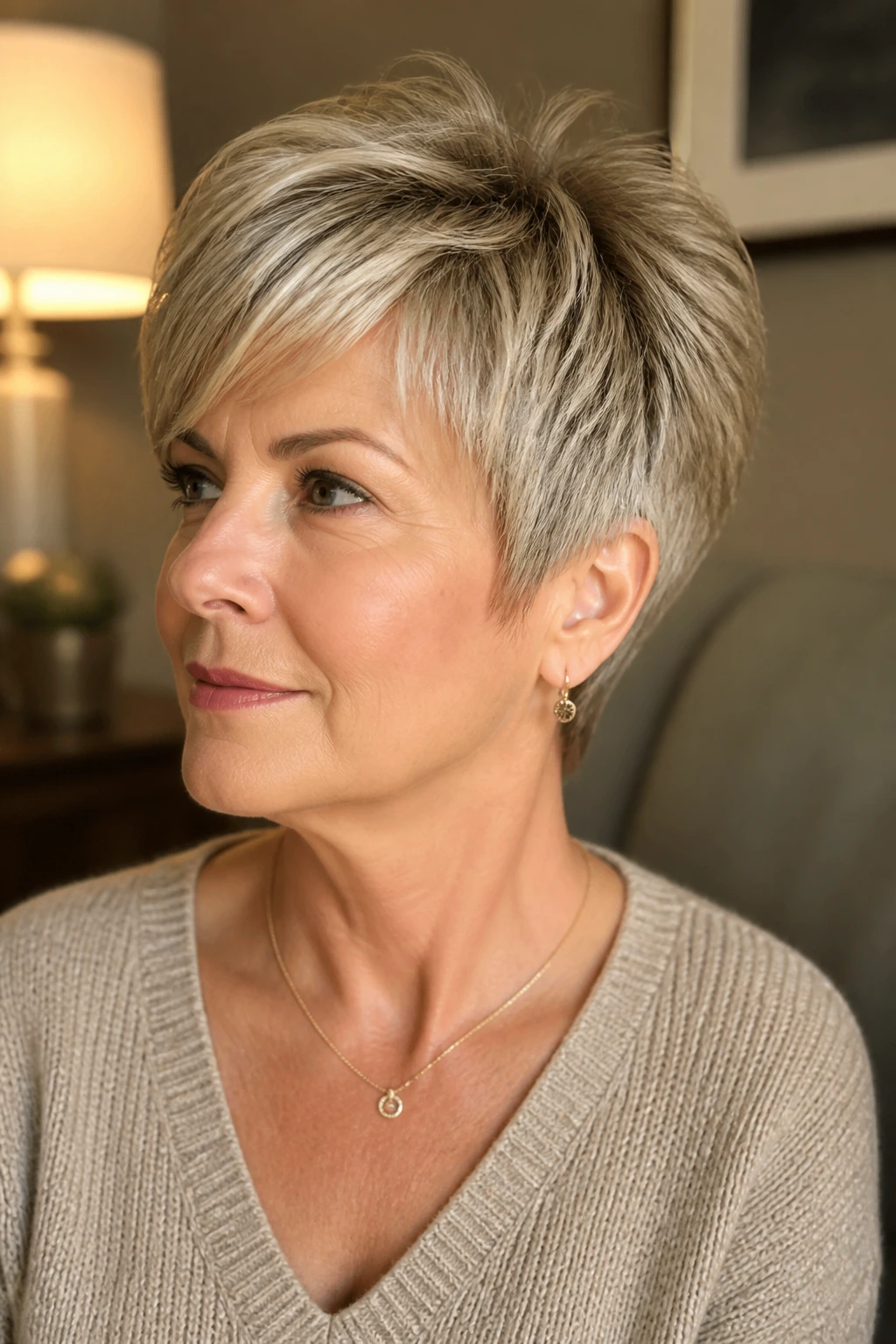
A tapered pixie is clean in the back and airy on top, and that combination is hard to beat on a round face. The nape hugs the neck, which keeps bulk away from the lower face, while the feathered top gives just enough lift to lengthen the overall shape.
The best version of this cut does not puff around the ears. That part matters more than people think. If the sides kick out, you are back to a wider silhouette. The taper should feel neat, almost tailored, and the top should fall in soft, feathered bits rather than hard spikes.
This one is especially good if you like short hair but hate a severe pixie. It has polish, but not stiffness. A pea-sized amount of styling cream is usually enough. Work it through damp hair, lift at the crown with your fingers, and let the top settle in a slightly broken line.
9. Jaw-Length A-Line Bob

Why stop at the jaw? Because that line can sharpen the whole face. A jaw-length A-line bob is shorter in the back and a touch longer in front, which gives the face a slanted frame instead of a circle of hair sitting at the cheeks.
The best part is how simple it looks from the front and how useful the shape is in profile. The hair falls forward just enough to graze the jaw, and that forward drop makes the lower half of the face feel more defined. It is a clean cut, not a soft one.
If your hair is thick, this cut needs a little internal weight removal so the ends do not kick out too hard. If your hair is fine, keep the outline blunt. A razor-thin A-line can lose its shape fast. This is a cut that likes precision.
10. Curly Crop With Sculpted Volume
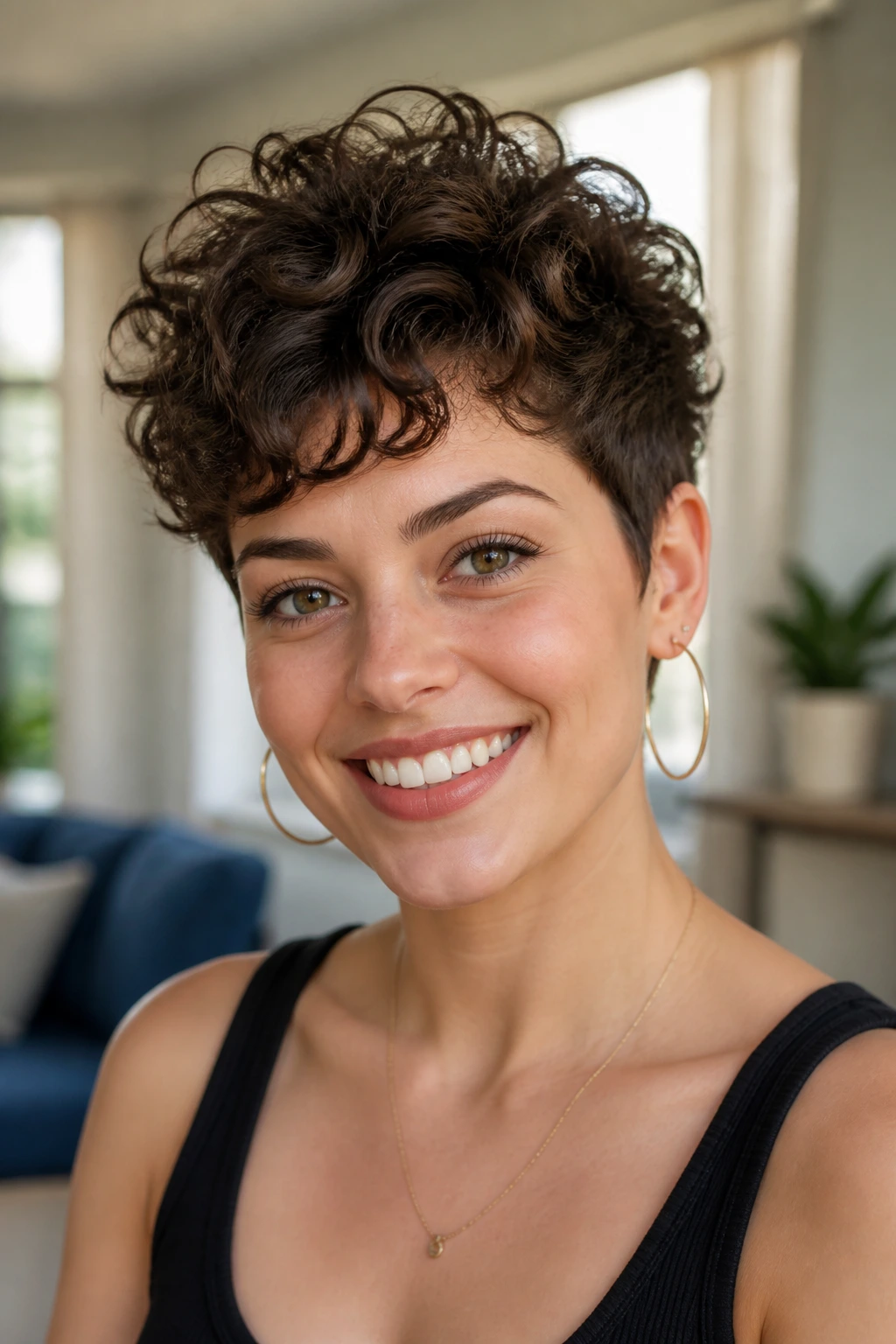
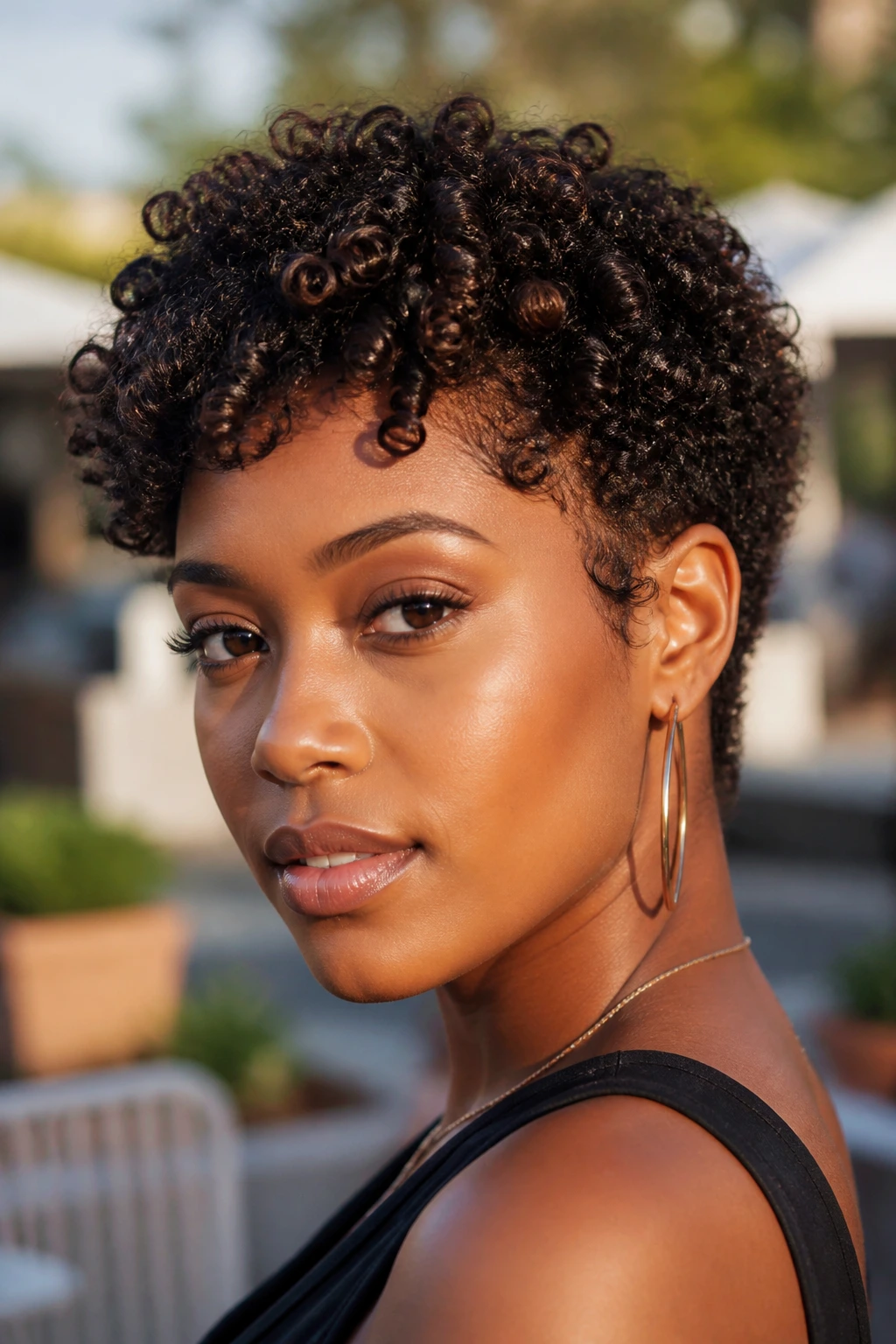
Curly hair changes the whole equation. A short curly crop on a round face works when the curls have room to stack upward, not outward. That means the sides stay closer, the top gets height, and the shape looks lifted instead of puffy.
How to keep it from turning triangular
Ask for the curls to be shaped while dry or nearly dry. That lets the stylist see where the curl actually lands, which matters a lot with shrinkage. If the shortest point sits right at the cheek, the roundness gets louder. If the curls are shaped above and below that spot, the face reads longer.
Use a light gel or curl cream and diffuse with your head tipped forward for a little root lift. Then stop touching it. Seriously. The more you rake through the curls once they set, the more the shape spreads sideways. A sculpted curly crop should look springy, not brushed out.
11. Undercut Pixie With Soft Top
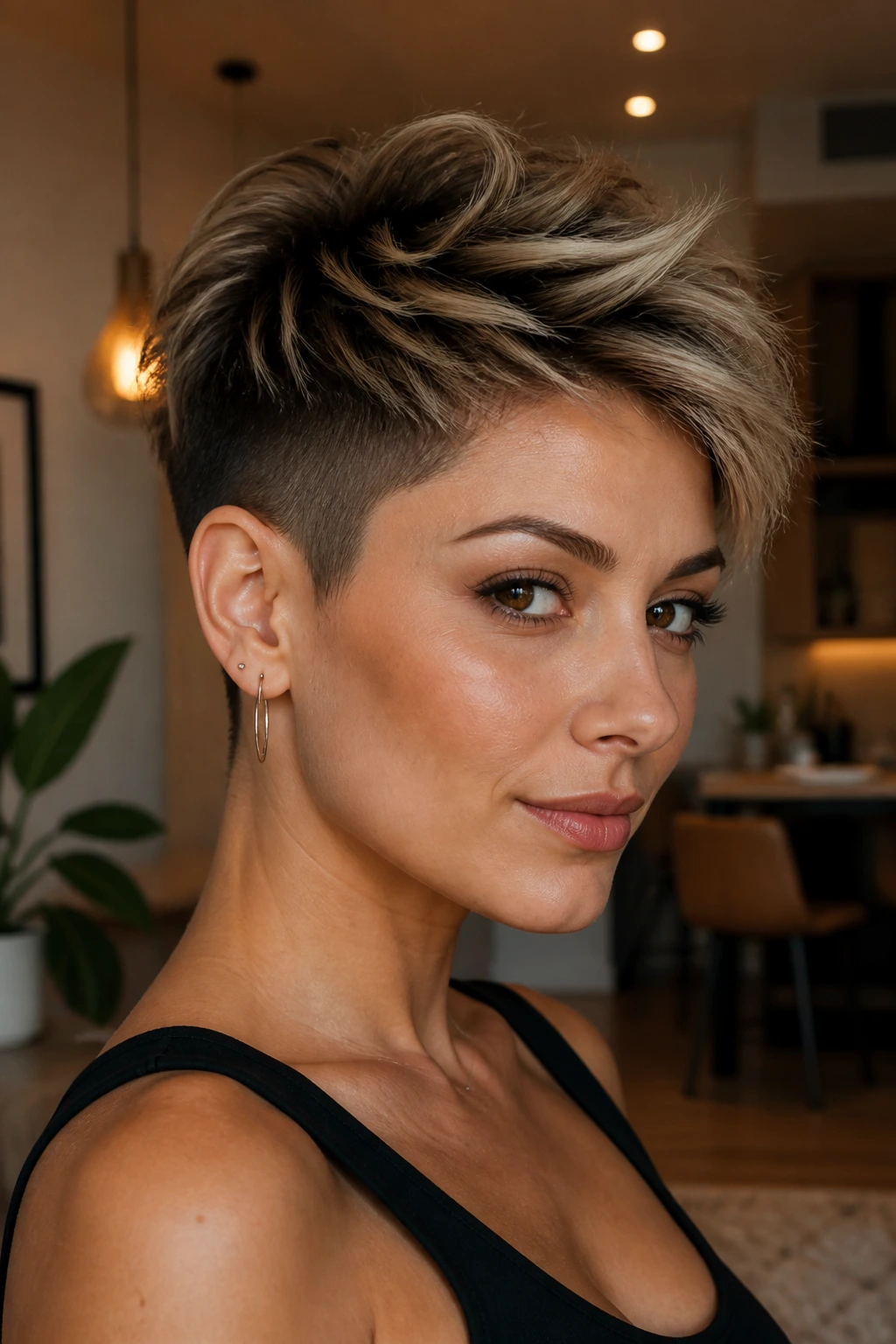
An undercut pixie is a sharp move, and on a round face it works because it removes bulk exactly where you do not want it. The sides and back stay tight, the top keeps softness, and the face gets room to breathe around the temples and jaw.
This cut is a strong choice if your hair is thick, coarse, or stubborn at the nape. Without the undercut, that kind of hair can stack up and make the lower face look heavier. With it, the top can be longer and more playful without turning into a helmet.
The word is soft top. You want texture, not a stiff brush-up. A small amount of paste or cream, worked from mid-length to ends, is enough. If you like a side part, this cut takes one beautifully. If you want volume straight up, it can handle that too.
12. Neck-Length Blunt Bob With Tucked Ends
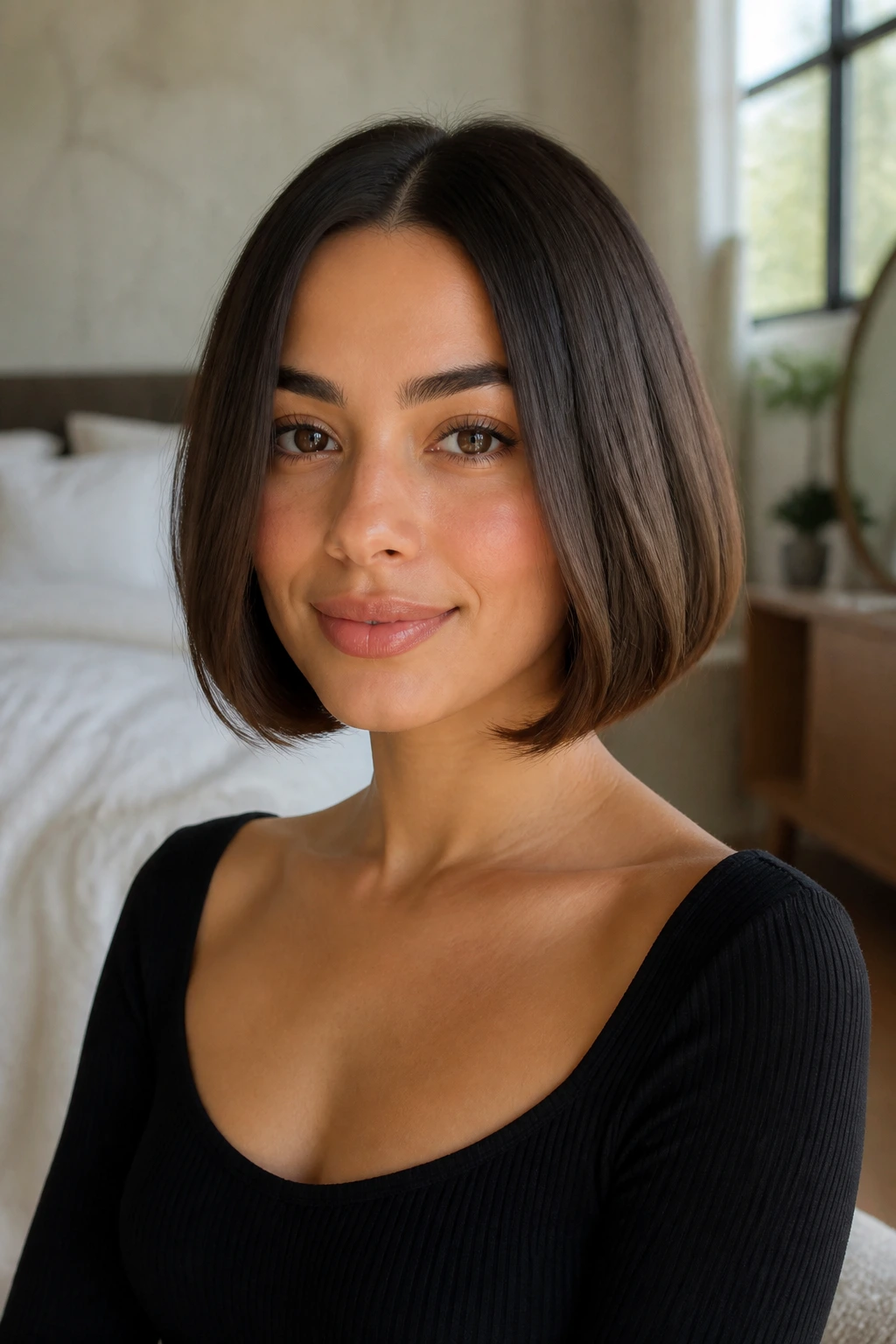
A neck-length blunt bob can be excellent on a round face when it stays disciplined. The length sits below the cheeks, which keeps it from puffing at the widest point, and the blunt edge gives the hair a strong finish instead of a fluffy outline.
The best version does not curl in hard toward the chin. It should fall clean and then be tucked just a little at the ends — enough to show shape, not enough to build a ball. A center part can work if the hair is sleek. A slight off-center part is safer if you want the face to look a touch longer.
This is the cut for someone who likes clean lines and can commit to a quick blow-dry. It does not need a lot of product, but it does need intention. If the ends flip every which way, the blunt line loses its point.
13. Modern Mixie With Cheekbone Layers

The mixie is the haircut for someone who wants a little mischief. It blends pixie shortness with mullet-like length at the nape and cheekbone-skimming layers up front, which is exactly where a round face can use some interruption.
What makes it different
The front pieces should land around the cheekbones or just below, not squarely on them. That keeps the widest part of the face from feeling boxed in. The back can stay shorter and a bit messy, which gives the cut movement when you turn your head.
Use a light wax or texturizing balm to pinch the ends. The goal is broken shape, not perfect separation. This cut looks better when it has a little edge to it — think artist’s apron, not salon helmet. If you want something polite, skip it. If you want something with a pulse, this one has it.
14. Razor-Cut Pixie Shag
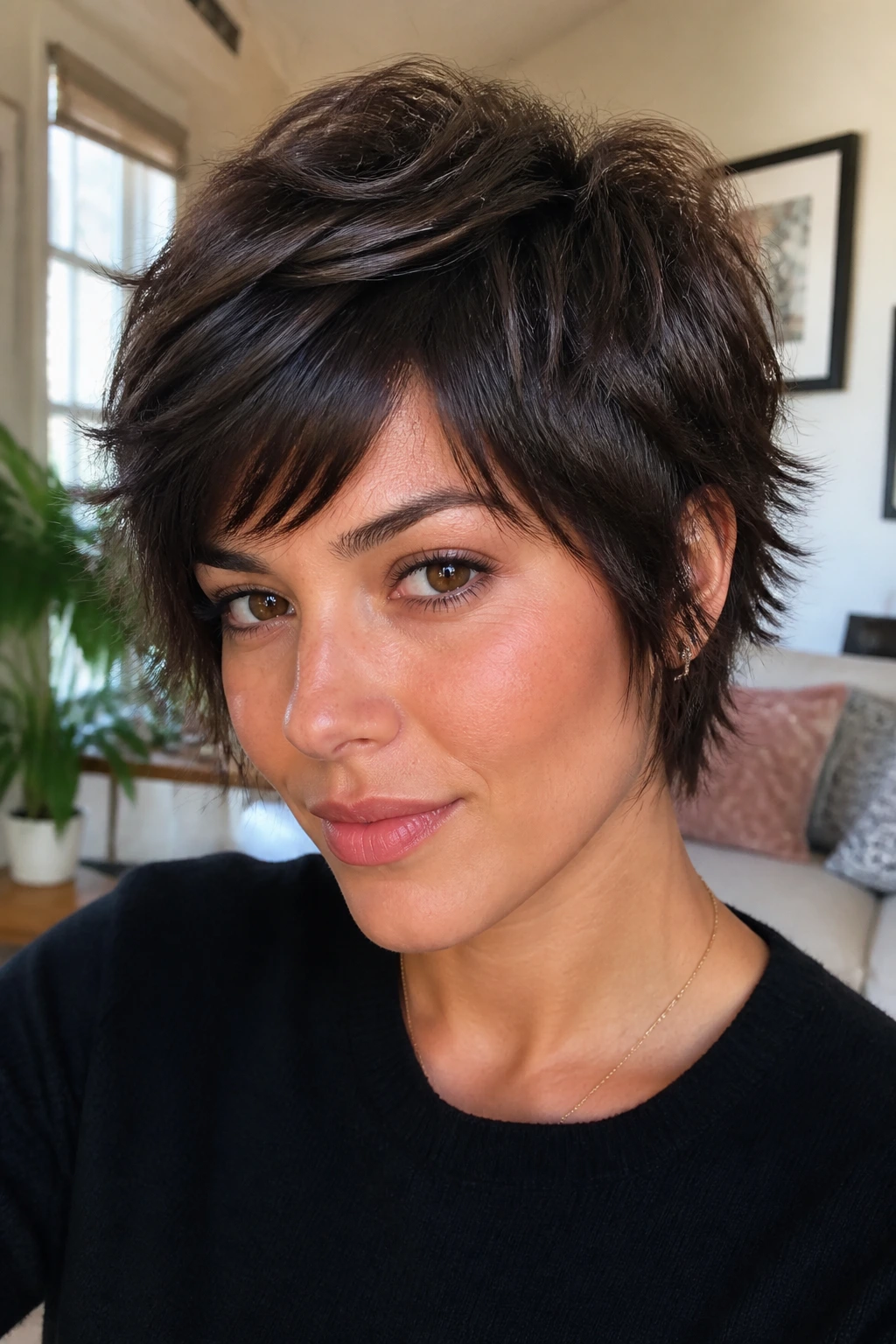
A razor-cut pixie shag has a different feel from a scissor-cut crop. The ends go softer, thinner, and a little airy, which makes the whole cut move instead of sitting still. On a round face, that movement helps the hair avoid sitting as one wide shape around the cheeks.
It is especially good for thick hair because the razor removes some of the heaviness. The layers can flip lightly at the edges without looking choppy in a bad way. There is a fine line here. Too much razoring and the cut gets frayed. Just enough and the shape looks lean.
This one loves a matte product. Work it through the roots and mid-lengths, then scrunch the top with your fingers. If you flat-iron it pin-straight every day, you lose the point of the cut. The charm is in the broken edges.
15. Side-Parted Chin-Length Bob With Flipped Ends

A little bend changes everything.
A chin-length bob with a side part and flipped ends can soften a round face while still giving it shape. The side part breaks up the forehead, and the ends flick away from the cheeks instead of wrapping around them. That small outward turn is doing real work.
The length should sit right at or a touch below the chin, never higher. If it lands at the cheekbone, the bob can widen the face. If it lands too low, the effect starts to feel less crisp. The sweet spot is the jaw line, where the face can use a stronger boundary.
This cut is a good match for straight hair that needs a little polish. A flat iron bend at the ends is enough; you do not need a full blowout. Keep the root lift modest and the finish clean. The haircut should look like it knows exactly where it is going.
16. Sculpted Coily Taper
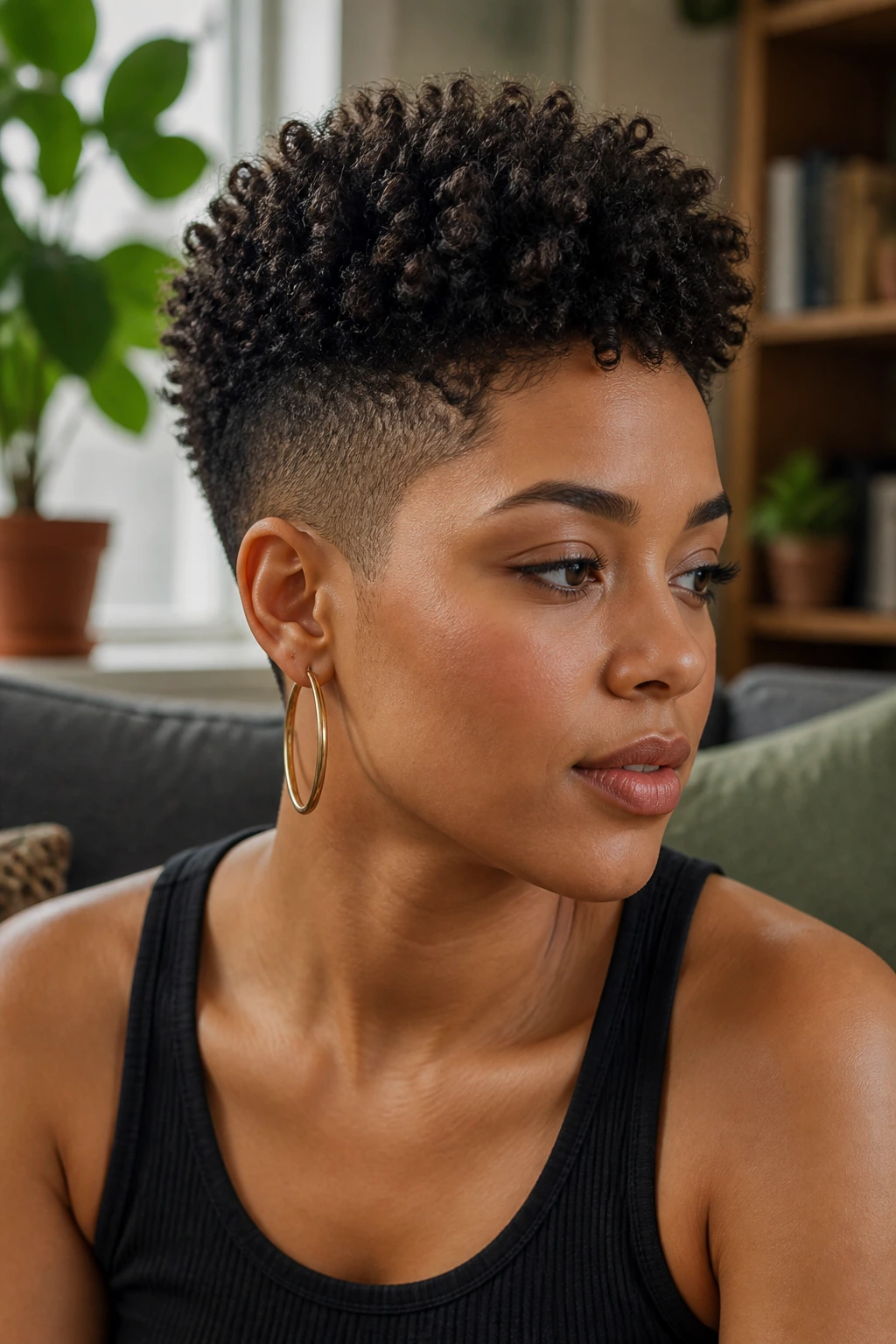
Coily hair can make a round face look beautifully balanced when the cut is shaped with height at the top and neatness at the sides. A sculpted taper keeps the volume where you want it — upward, not outward — and lets the curls form a strong crown.
The temples and nape usually need to stay tighter than the top. That contrast creates the cleanest shape. If everything is left the same length, the silhouette can spread. With a taper, the cut looks intentional and the face gets a more vertical read.
Use a rich curl cream or butter on damp hair, then shape with fingers or a pick at the roots once it dries. The goal is definition, not a cloud. If your coils shrink a lot, cut them with that in mind. Shrinkage can turn a tidy taper into a much bigger shape fast.
17. Messy Crop With Long Side Fringe
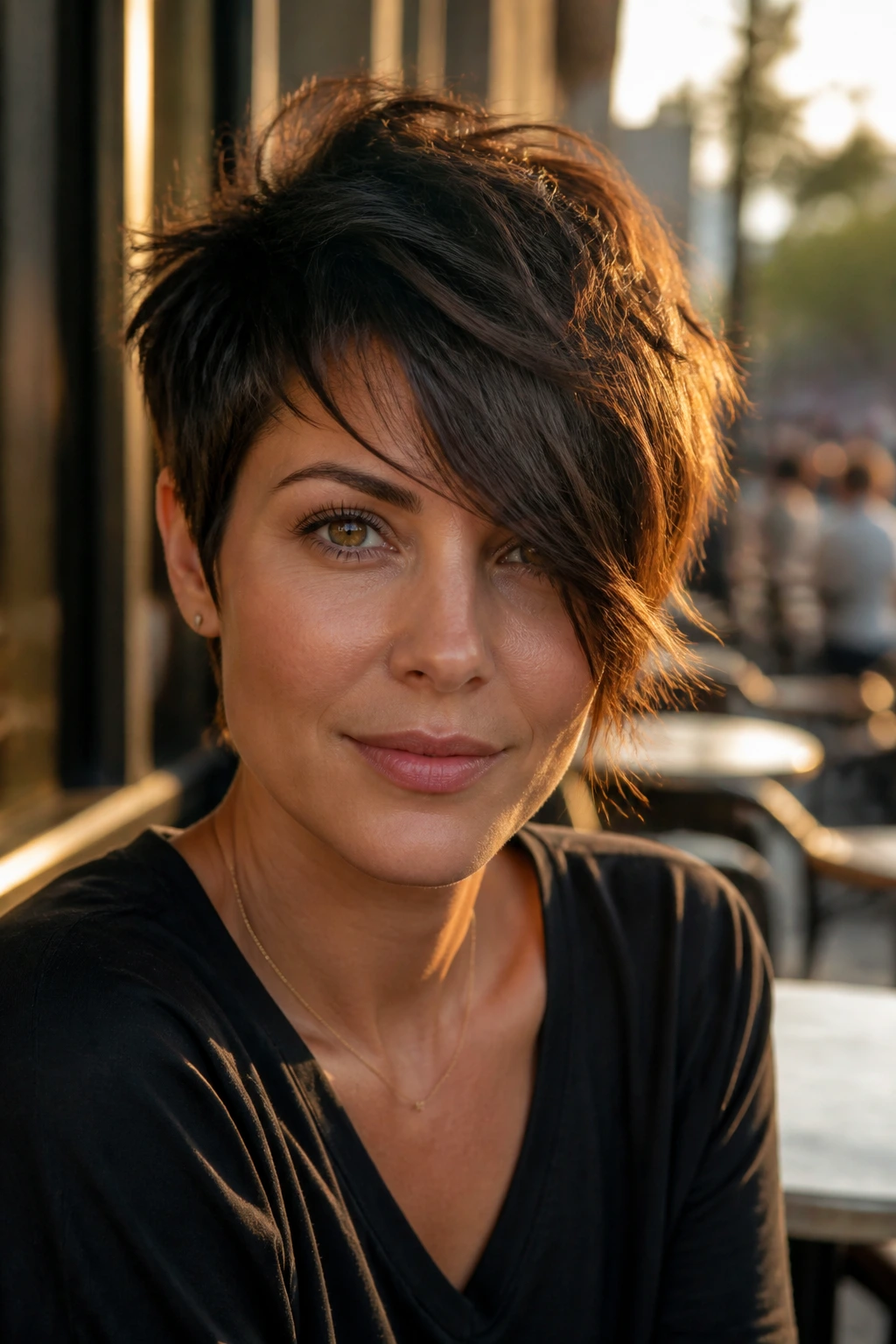
A messy crop with a long side fringe is the short haircut equivalent of a sharp jacket thrown over a plain tee. It looks easy, but the line is doing a lot. The fringe crosses the face on a diagonal, which keeps the roundness from feeling too open.
The crop itself should stay close enough to the head that it does not puff at the sides. The fringe is the part that gives the style its attitude. Let it fall across one eye, brush it forward, or tuck it behind one ear after it dries. Any of those moves breaks up the width nicely.
This one is low fuss if your hair has a little bend already. If it is straight, a quick blast with a dryer and some dry texture spray will give it the grit it needs. The cut should never look too tidy. Clean, yes. Fussy, no.
18. Soft Mullet Bob
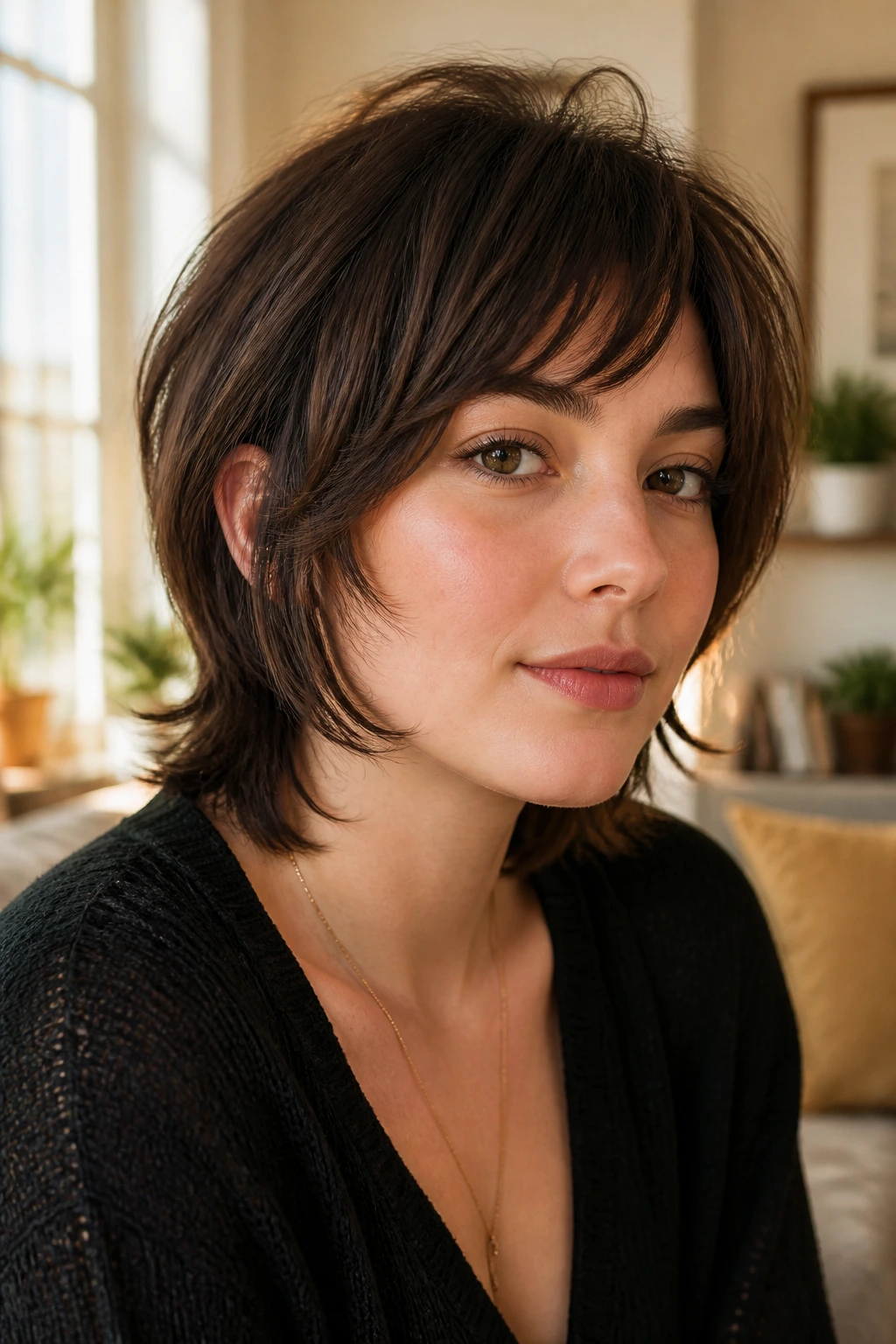
A soft mullet bob sounds more dramatic than it looks. The front stays shorter and face-framing, the back keeps a little extra length, and the layers blend instead of screaming for attention. On a round face, that longer back helps the eye travel downward while the front pieces shape the cheeks.
The key is softness. Hard mullet lines can feel disconnected. The better version has feathered layers and a little movement around the crown, so the cut reads modern rather than costume-y. Think of it as a shag with a little more backbone.
This is a good choice if you like short hair but want it to feel a bit rebellious. A sea-salt spray or texturizing mist gives it enough separation to look intentional. If you wear it too smooth, the whole point disappears.
19. Ear-Length Bob With Micro Layers
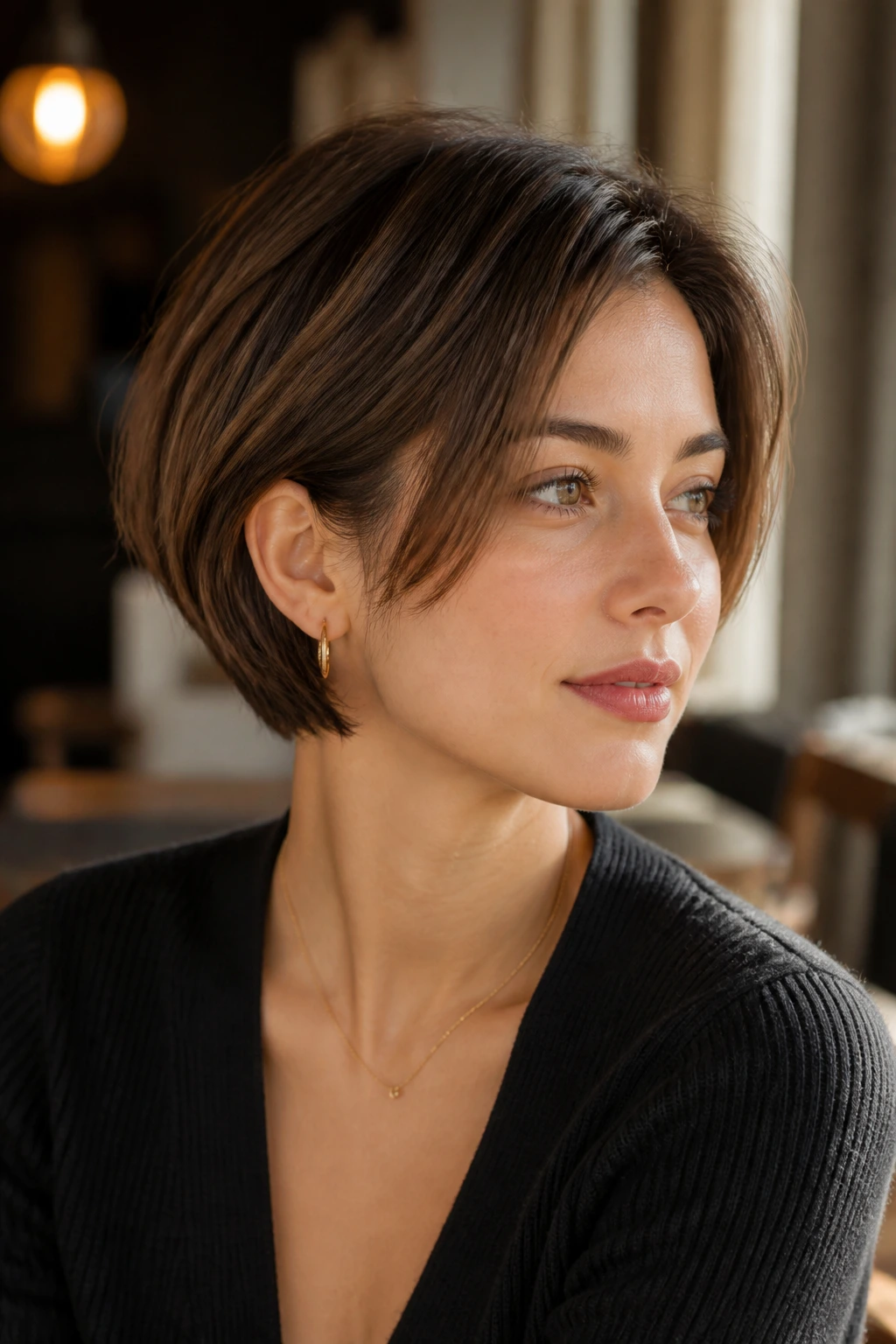
An ear-length bob is short enough to feel fresh, but it needs precision on a round face. The trick is in the micro layers. Just a little internal movement keeps the sides from puffing, while the short length opens up the neck and jawline.
Best for
Fine to medium hair usually does very well here. If the hair is thick, the cut can get too boxy unless the stylist removes weight inside the shape. The perimeter should stay clean, but not stiff.
The styling is simple: a blow-dry with a small round brush and a touch of smoothing cream at the ends. If you like a sharper look, tuck one side behind the ear. That little asymmetry keeps the cut from sitting too evenly across the face.
20. Feathered Crop With Sideburn Detail
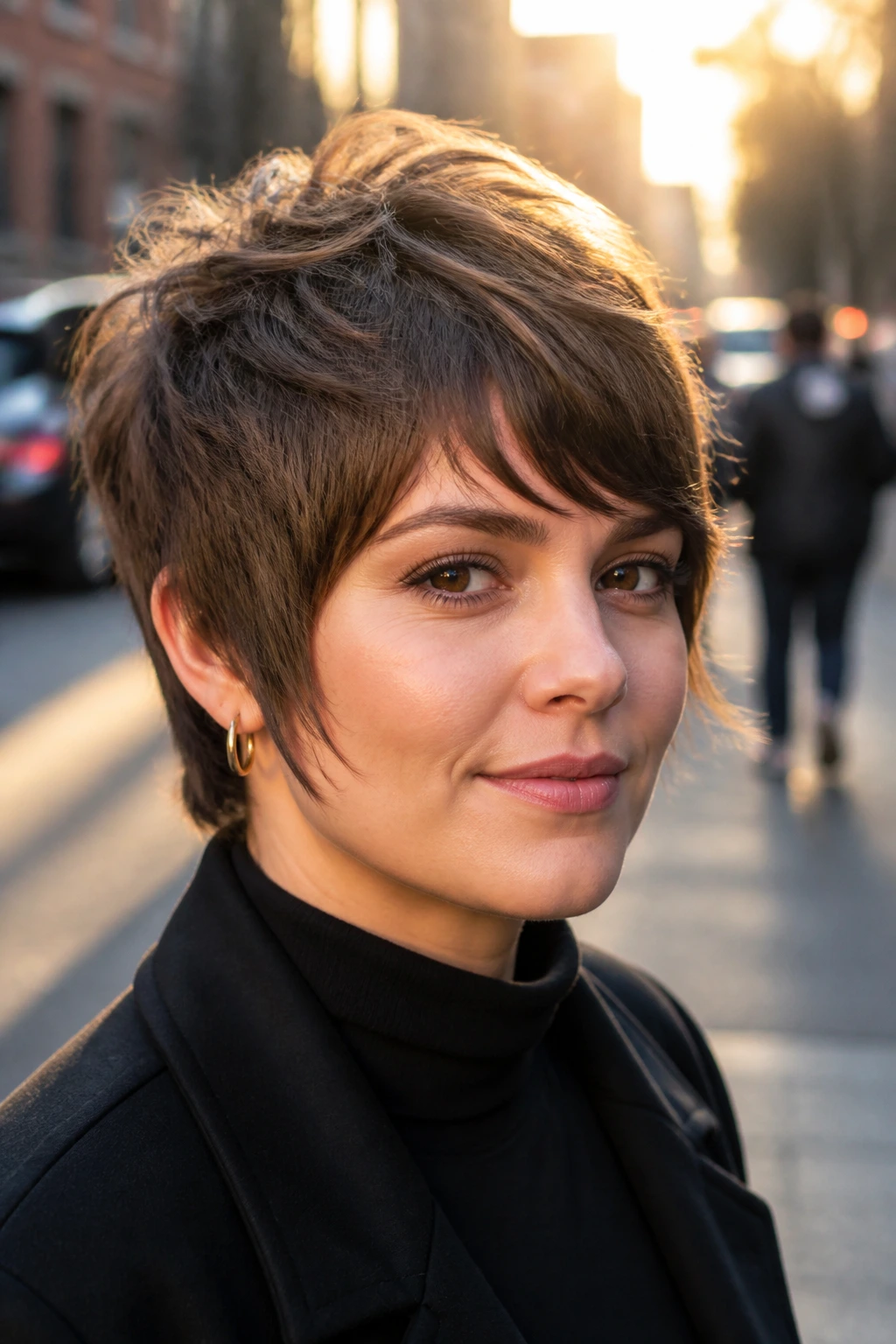
A feathered crop with a bit of sideburn length gives a round face a nice frame right where it needs one. The longer pieces near the temples and cheeks soften the widest part of the face, while the feathered top keeps the cut lifted and airy.
This works because the shape is broken up in layers. The sideburn detail gives you a vertical line near the jaw, and the top keeps the overall cut from sinking flat. It is a small thing, but small things matter a lot with short hair.
If your hairline is strong or your temples feel wide, this style can be especially useful. Ask for the side pieces to be left long enough to tuck or flick, not cut off too high. That one choice changes the whole silhouette.
21. Curly Pixie With Height at the Crown
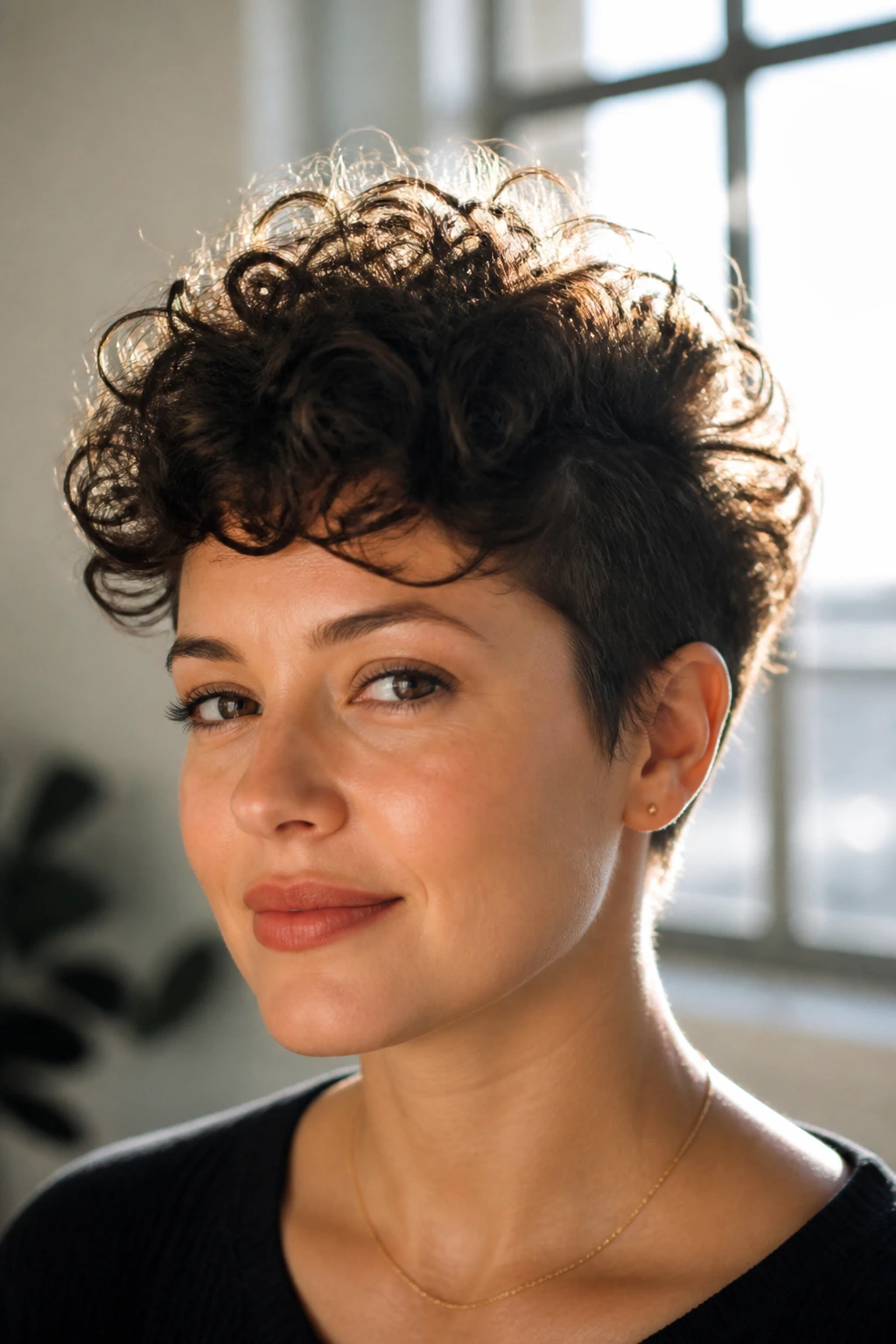
Curly pixies can be gorgeous on round faces when the curls are shaped to live up top. The crown needs a little extra length so the curls can stack and lift, while the sides stay tighter and less bulky. That keeps the face from reading as one big rounded shape.
How to wear it
Use a curl cream on damp hair, then diffuse the crown first so it sets with lift. A pick at the roots can help, but only after the hair is dry. If you go in too early, the curls collapse and the shape spreads sideways.
A curly pixie is not the cut to fight with every morning. It wants a predictable routine and a good stylist who understands shrinkage. If the curls are cut too evenly, the face gets wider. If the crown is given more height, the whole look sharpens up fast.
22. Short Wolf Cut With Wispy Curtain Fringe

A short wolf cut brings a bit of wildness without losing shape, and that is exactly why it works on a round face. The layers are choppy at the top, a little longer around the nape, and broken up by a curtain fringe that opens the center of the face.
The fringe should not be dense. Wispy is the word. Heavy curtain bangs can pull the face down and inward, while lighter pieces split around the forehead and let the cheeks breathe. The layered top keeps the silhouette from sitting in one soft circle.
This cut loves texture spray and a quick scrunch. If you air-dry it, you get a softer version. If you rough-dry it, the layers kick out with more attitude. Either way, it should feel a little undone, like the haircut has things to do.
What Makes Short Hair Work on a Round Face
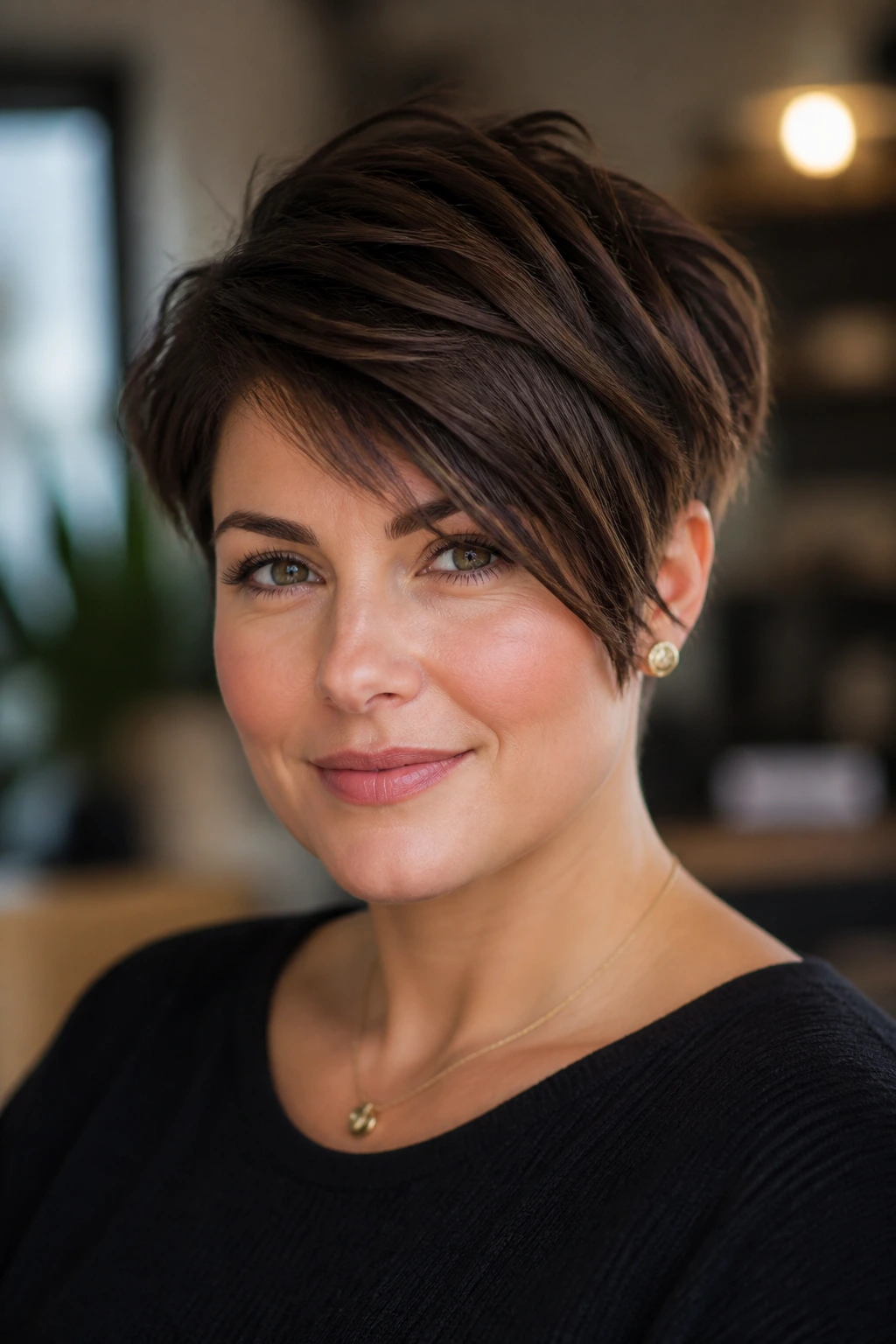
The geometry matters more than the name of the haircut. A round face usually has fuller cheeks, a softer jawline, and similar width and length, so the job of a short cut is to create direction. Straight-across lines can make the face feel wider. Diagonal lines, lift at the crown, and pieces that drop below the cheek line do the opposite.
That is why so many of the strongest options above are angled, layered, or offset. A side part can matter more than another inch of length. A feathered fringe can matter more than a dramatic color change. Hair is weirdly honest that way. It shows you where the weight sits.
There is also a reason some very short cuts look better than medium cuts on round faces. A clean pixie or a high crop exposes the face instead of sitting on its widest point. Once you know where your cheeks sit and where your crown wants to lift, the haircut stops being a guess.
Tools That Keep Short Hair Looking Intentional
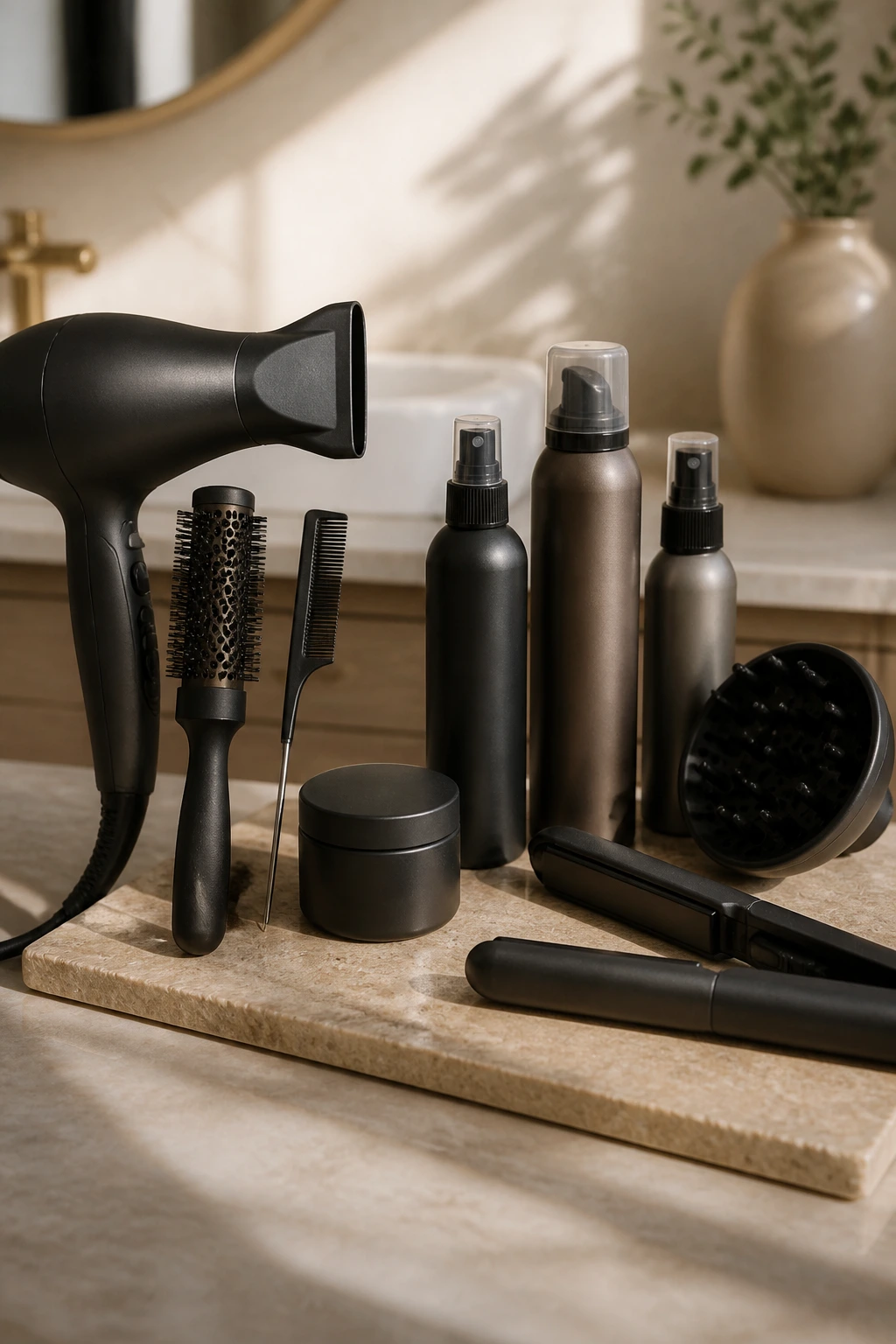
- Blow dryer with a concentrator nozzle: This helps direct the airflow at the roots so you can build lift instead of puff.
- Small round brush, about 1 to 1.25 inches: Best for bending bobs inward or outward without making the ends too round.
- Tail comb: Handy for precise parts and for lifting the crown a little before drying.
- Matte paste or styling cream: Good for pixies, crops, and bixies when you want piecey separation.
- Texturizing spray: Adds grit to shaggy cuts, wolf cuts, and messy crops without making the hair sticky.
- Light mousse: Useful for fine or wavy hair that needs support at the roots.
- Flat iron: Best for asymmetrical bobs, chin-length bobs, and a small bend at the ends.
- Diffuser: A must for curly pixies and sculpted coil cuts. It keeps curl shape without blasting it apart.
- Heat protectant: If you use heat on short hair, use this. The shorter the hair, the more often the same pieces get styled.
How to Brief Your Stylist Without Guessing
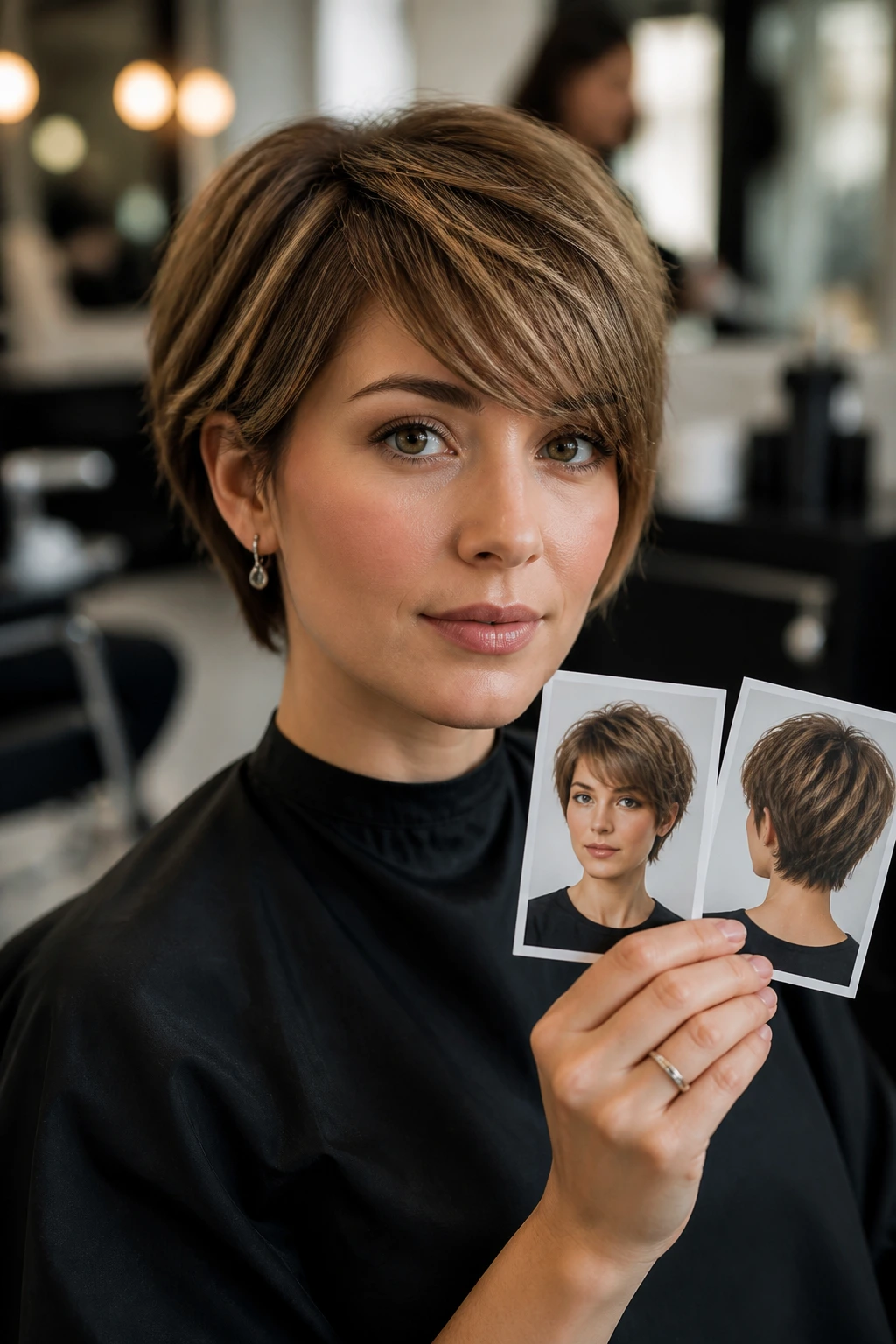
Bring photos, but bring the right photos. One front view is not enough. A side angle and a back view tell your stylist a lot more about where the weight sits, how short the nape is, and whether the fringe is doing the work or just sitting there.
Say where your face feels widest when you look straight ahead. That single detail helps more than vague talk about “flattering.” If your cheeks are the widest point, your stylist can keep the perimeter below them or break it up with layers. If your hairline has a stubborn cowlick, mention it early. Same with a strong crown, a flat crown, or a nape that flips out no matter what you do.
Be honest about your styling patience. If you do not want a blow-dry every morning, do not ask for a cut that depends on one. Short hair can be easy, but only if the shape matches the way you actually live. Ask what it looks like at four weeks, not only on day one. That’s where the truth lives.
How to Style These Cuts Without Fighting the Mirror
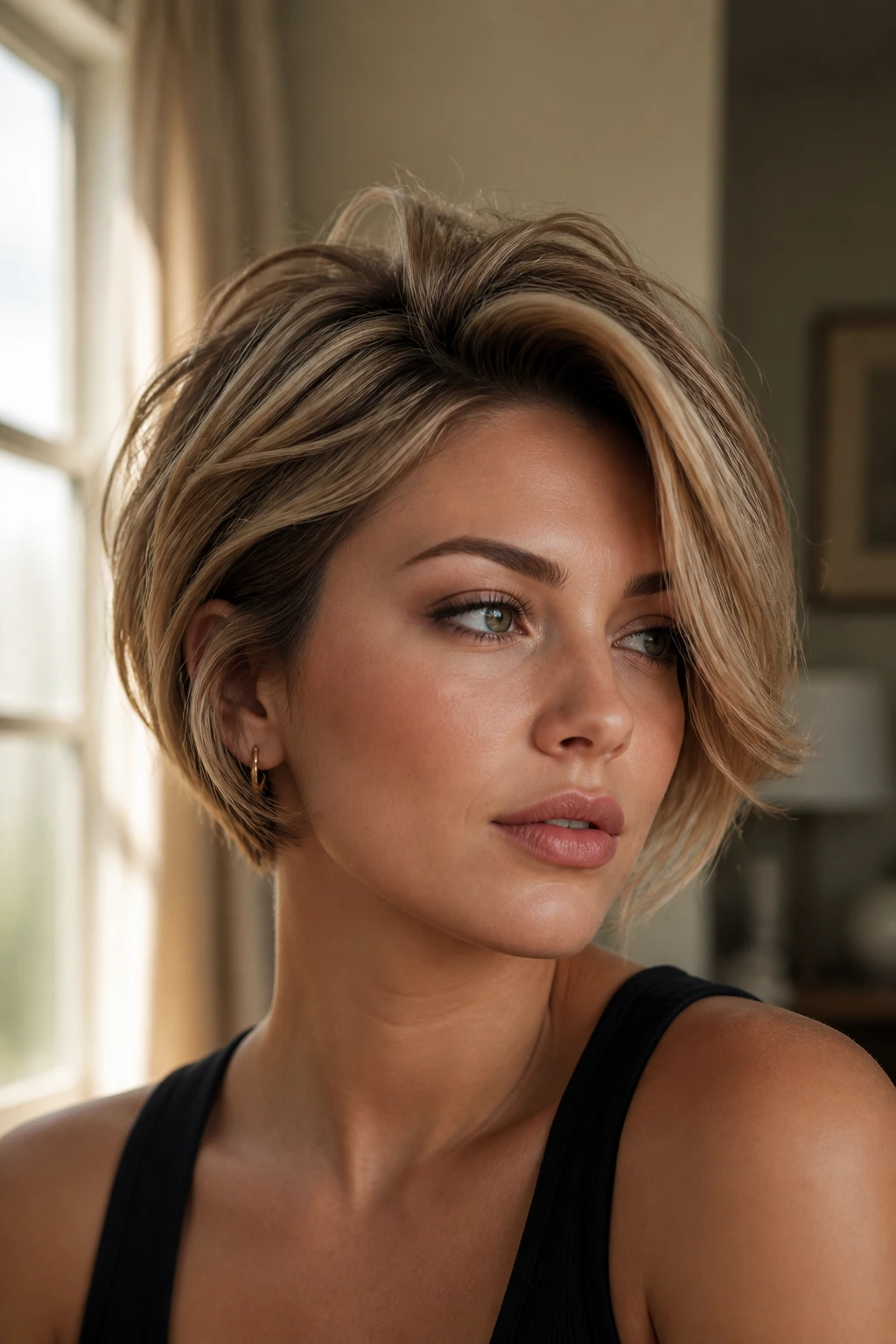
Root lift: Start at the crown. Always. A little volume up top keeps short cuts from sitting squarely across the cheeks, and you do not need a huge blowout to get it. A round brush or even finger-drying can do the job if you aim the airflow at the roots first.
Part placement: Side parts are useful, but they are not magic. The trick is to keep the part slightly off center so the haircut creates a diagonal line through the face. Center parts can work on some bobs, though they usually need a little extra height or texture elsewhere so the face does not read too round.
Finish: Matte and piecey usually flatter these cuts more than glossy and stiff. Gloss can look chic, but a little texture often breaks up the outline in a better way. If the ends need movement, use a tiny bit of paste on the last inch only.
Second-day rescue: Dry shampoo at the roots and a quick finger shake can bring the shape back fast. Short hair tends to lose lift overnight, especially at the crown. A five-minute reset is usually enough.
Small Tweaks That Change the Whole Look
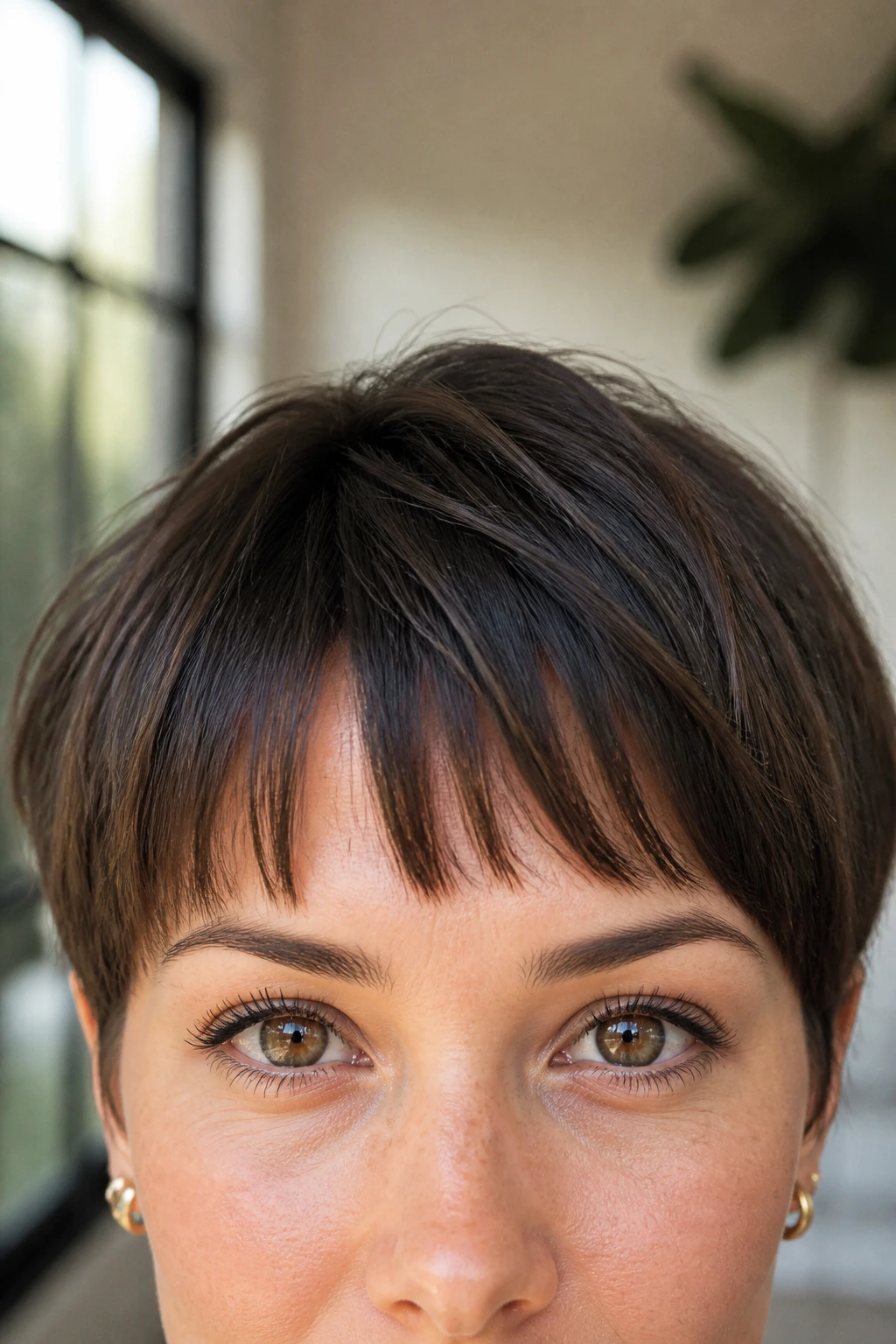
Bang Length: A fringe that lands too low can shorten the face. One that starts higher and falls lightly across the forehead keeps the top open and the cheeks from feeling boxed in.
Color Placement: Tiny highlights around the crown or top layers can make the haircut look lighter and more lifted. A blunt light band at cheek level can do the opposite, so placement matters.
Weight Removal: Thick hair needs internal debulking in many of these styles. Without it, the sides spread out and the face reads wider than it is. Ask for weight removal, not just “layers,” because those are not the same thing.
Sideburn Length: Short side pieces can be neat, but a little length near the temples often helps round faces more. It gives the eye a vertical line to follow and softens the transition from hair to jaw.
Keeping the Cut Fresh Between Salon Visits
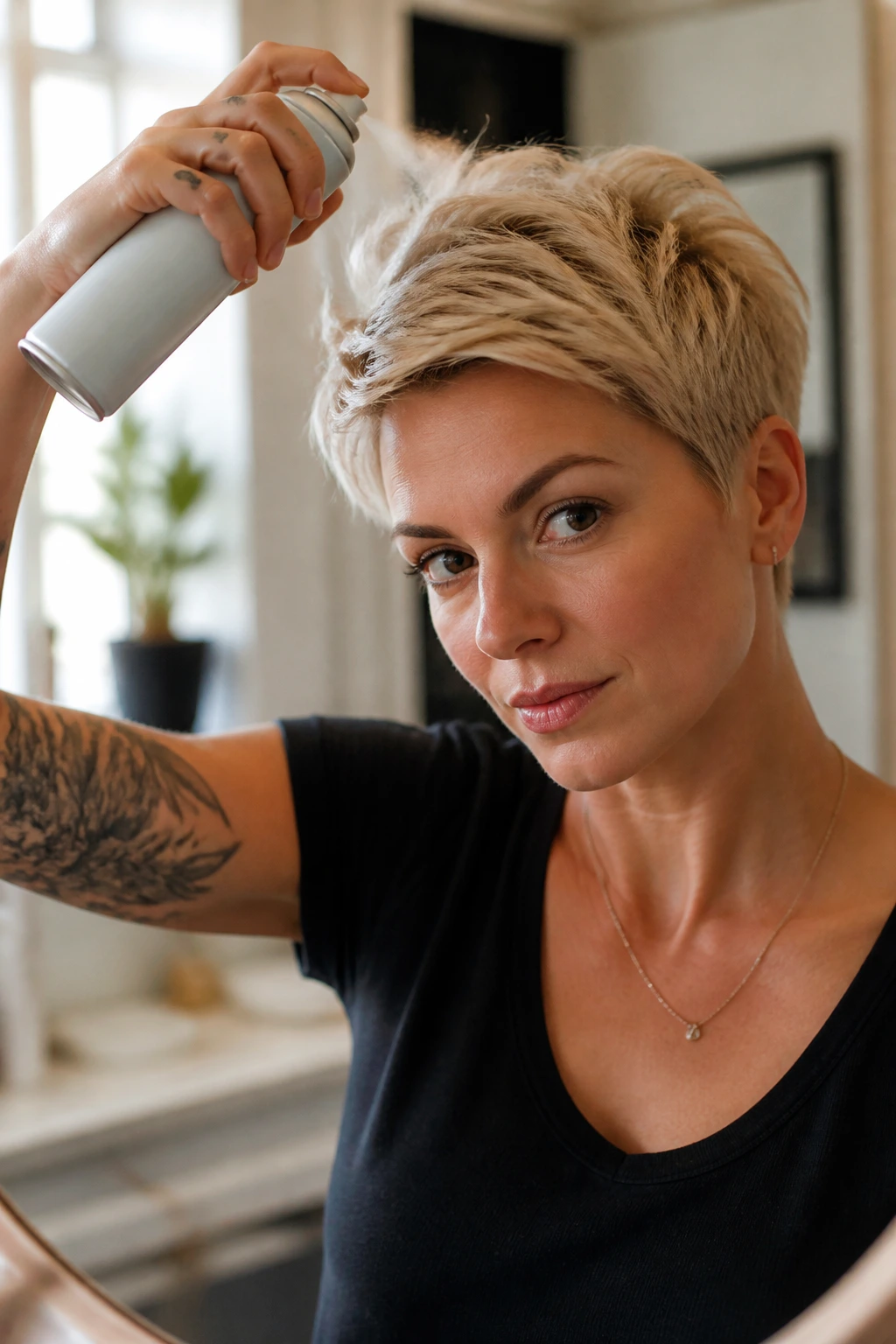
Pixies and cropped styles usually need a trim every 4 to 6 weeks if you want the shape to stay crisp. Bobs can stretch to 6 to 8 weeks, though the fringe or the neckline may need a tiny cleanup before the whole cut grows out. Once the outline loses its sharpness, the face shape effect gets weaker.
At home, sleep on a satin or silk pillowcase if your hair frizzes fast. It does not make the haircut do magic, but it cuts down on flattening and weird bends at the crown. A small amount of dry shampoo at the roots on day two can also keep the top from collapsing.
If you style with heat often, use a clarifying shampoo every couple of weeks so product buildup does not weigh the hair down. That buildup shows fastest on short cuts. One greasy crown can ruin a whole silhouette.
Growing out a short cut is easier if the original shape was planned with that in mind. If you think you may want more length later, ask for a softer nape and a little extra length in the front so the haircut can shift instead of turning awkward overnight.
Variations and Adaptations to Try
Fine-Hair Lift Version: Choose the pixie, bixie, or ear-length bob with a light mousse at the roots and blunt ends that make the hair look denser. Fine hair usually loses width fast, so the best version keeps the outline clean and the crown lifted.
Thick-Hair Weight-Removal Version: Go for the undercut pixie, razor-cut shag, or angled bob with internal debulking. Thick hair needs room to move, or it creates the wide halo effect that round faces do not need.
Curly Definition Version: Pick the curly crop, curly pixie, or sculpted taper and ask the stylist to cut with shrinkage in mind. Use a diffuser and a gel or cream that keeps the curl clumped instead of spreading sideways.
Low-Maintenance Air-Dry Version: The shaggy bob, messy crop, and soft mullet bob work well here because they look better with a little texture and a little imperfection. If you want a cut that can survive a rushed morning, these are safer bets than a super-sleek blunt bob.
High-Drama Side-Part Version: The asymmetrical bob, side-swept pixie, and chin-length bob with flipped ends all lean on a strong part line. They give a round face a more sculpted edge without asking for a huge change in length.
Mistakes That Make Short Hair Look Wider
- Letting the ends hit the cheeks: That is the big one. If the perimeter sits right at the widest part of the face, the haircut can make the roundness feel louder. Push the line either above it with lift or below it with purpose.
- Adding too much width at the sides: Big, fluffy sides can turn a short cut into a helmet. The fix is usually tighter sides, more crown height, or a cleaner taper around the ears.
- Choosing bangs that are too blunt and heavy: Dense fringe can shorten the face and crowd the forehead. Softer, side-swept, or wispy bangs usually work better.
- Ignoring your texture: A cut that looks neat on straight hair may balloon on wavy or curly hair. Ask how the style behaves in your own texture, not the one from the photo.
- Skipping the grow-out plan: Short cuts change shape fast. If you do not know how the hair will look at four or six weeks, you might end up with a shape that widens the face once the crisp lines soften.
Questions People Ask Before Going Short
What short haircut makes a round face look slimmer?
The ones with diagonal lines, height at the crown, and length that falls below the cheeks usually work best. An angled bob, side-swept pixie, or asymmetrical cut can all change the way the face reads without needing more length overall.
Are bangs okay on a round face?
Yes, but the bang shape matters. Wispy bangs, side-swept fringe, or curtain pieces that open in the middle usually look better than thick, blunt bangs that sit straight across the forehead.
Can curly hair go short on a round face?
Absolutely, as long as the curls are shaped to stack upward and not spread sideways. A curly crop or curly pixie with a lifted crown can look balanced fast.
Should I avoid chin-length bobs?
Not automatically. A chin-length bob can work if it has an angle, an off-center part, or ends that do not sit right at the cheek. A straight, rounded bob at cheek level is the version that usually causes trouble.
What if I do not want to style my hair every day?
Then stay closer to textured crops, shaggy bobs, or soft pixies that look good with a little mess. A sleek blunt bob usually asks for more effort than people expect.
How often should I trim a short haircut?
Most short cuts need shaping every 4 to 8 weeks depending on how sharp you want them to stay. Pixies grow out fast around the ears and neck; bobs hold longer, but the silhouette still blurs if you leave them too long.
Do side parts always work better than center parts?
Not always, but they often help break up roundness. A center part can still work when the cut has enough lift at the crown or enough length below the jaw to keep the face from looking too even.
What should I do if the cut looks too round after styling?
Add root lift at the crown, shift the part, and soften the sides with texture instead of brushing them outward. If the shape still feels too soft, a stylist can thin the sides or adjust the fringe length on the next visit.
A Short Cut With Real Shape
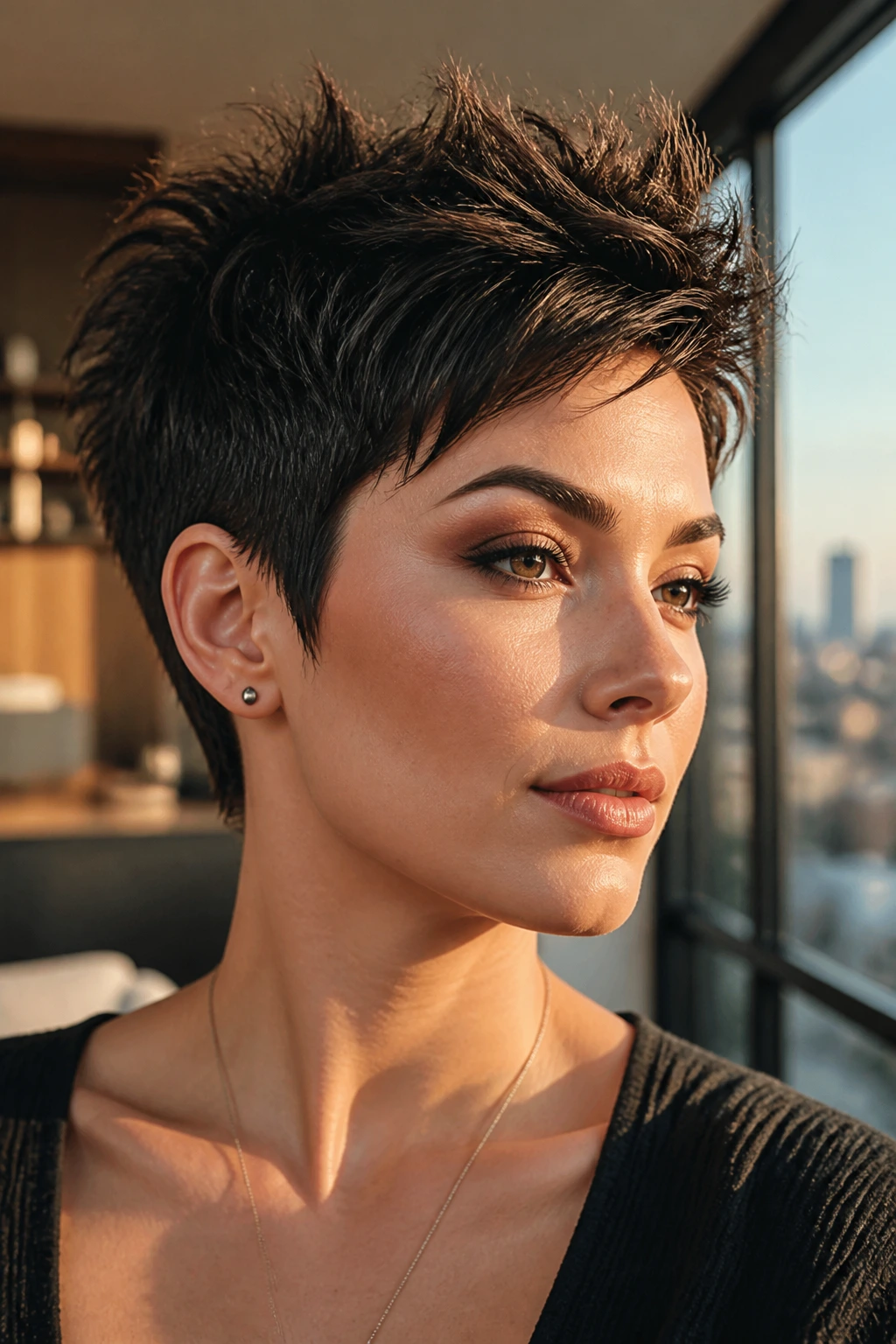
The best short haircuts for round faces do not try to hide the face. They give it angles, lift, and a little attitude. That is why the sharpest looks in this lineup feel more edited than decorative. They change the way the eye moves.
If you are taking one idea from all of this, make it this: avoid width where your face is already widest, and spend your styling energy where the haircut needs direction. A good part, a little crown height, and the right perimeter do more than another inch of length ever will.
Pick the shape that matches your texture, your patience, and your taste for a little edge. The right short cut should feel like it was made for your face the moment you look in the mirror.