



Round faces and long hair can work together beautifully, but only when the cut has some discipline. A flat sheet of length dragged straight down the sides can make the face look wider than it is, especially when the hair sits right at the cheeks and jaw. Haircuts for long hair and round faces should do the opposite: guide the eye downward, create lift in the right places, and leave enough movement that the shape still feels soft.
The best cuts here don’t rely on one trick. Some use layers that begin below the chin. Some use a side part to break the circle. Others use bangs that open at the temples instead of chopping straight across the forehead like a ruler. The difference is subtle on the hanger, obvious in the mirror.
And that’s the part most people miss. It’s not just about having long hair. It’s about where the weight sits, where the first bend starts, and whether the front pieces skim the face or sit on top of it like a shelf. Get that right, and long hair stops feeling heavy. It starts looking intentional.
Why This Collection Works on Long Hair and Round Faces
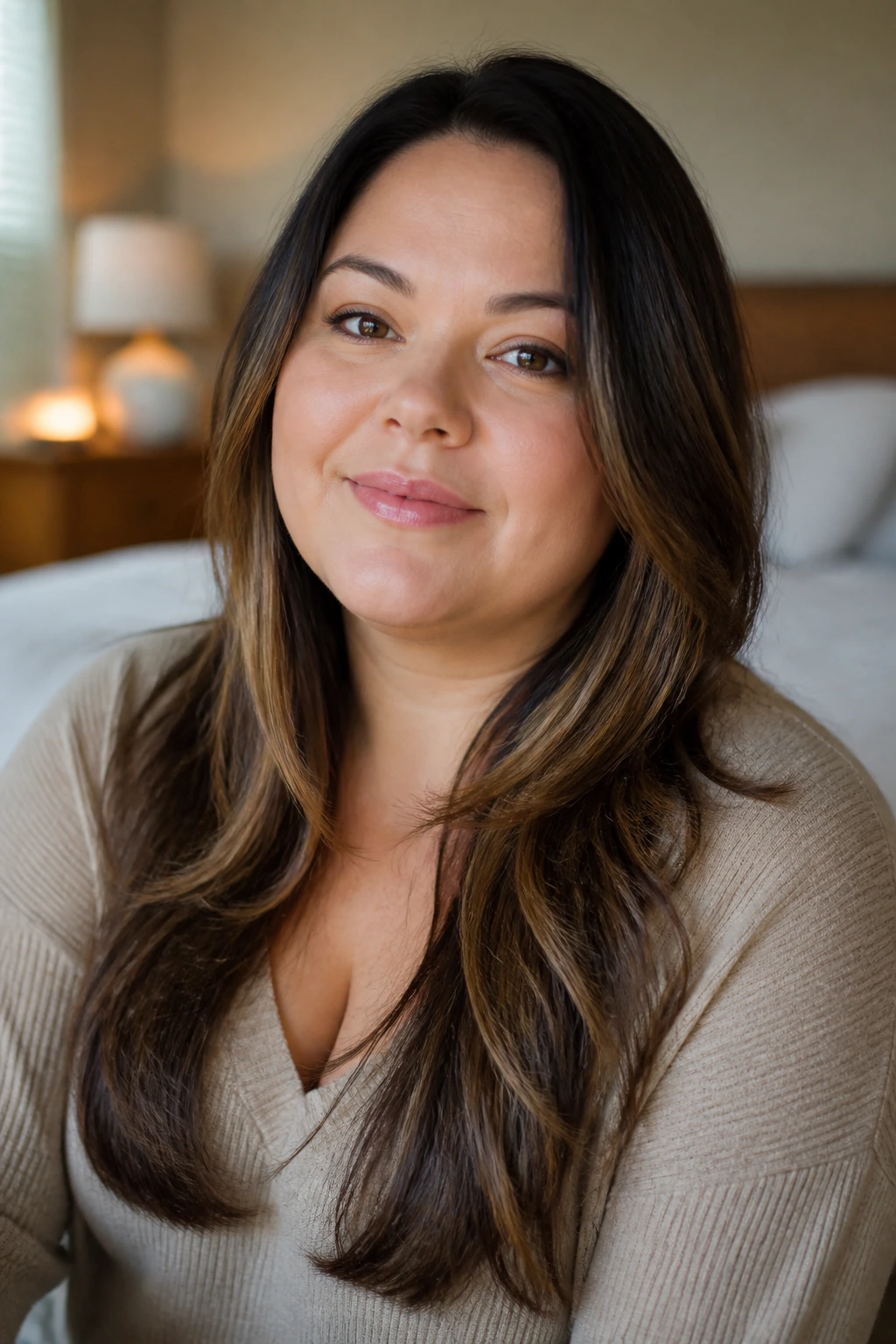
-
Longer front pieces change the silhouette: When the shortest face-framing layer starts below the chin, the eye keeps moving downward instead of stopping at the cheeks.
-
Asymmetry helps more than people think: A deep side part, a soft sweep, or a slightly off-center fringe breaks up the roundness without making the style feel severe.
-
Texture can be your best friend: Waves, bends, and feathering keep the hair from reading as one wide curtain, which matters a lot on fuller cheeks.
-
The right cut respects your density: Fine hair needs light shaping without over-thinning; thick hair needs bulk removed in the interior so the perimeter doesn’t flare out.
-
A good long cut still moves: The goal isn’t to freeze hair into a helmet shape. It’s to let it fall with purpose, then shift when you turn your head.
-
Styling stays flexible: These cuts can be blown smooth, air-dried, or curled, which matters when you do not want a haircut that only behaves after 40 minutes with a round brush.
1. Long Layers That Start Below the Chin
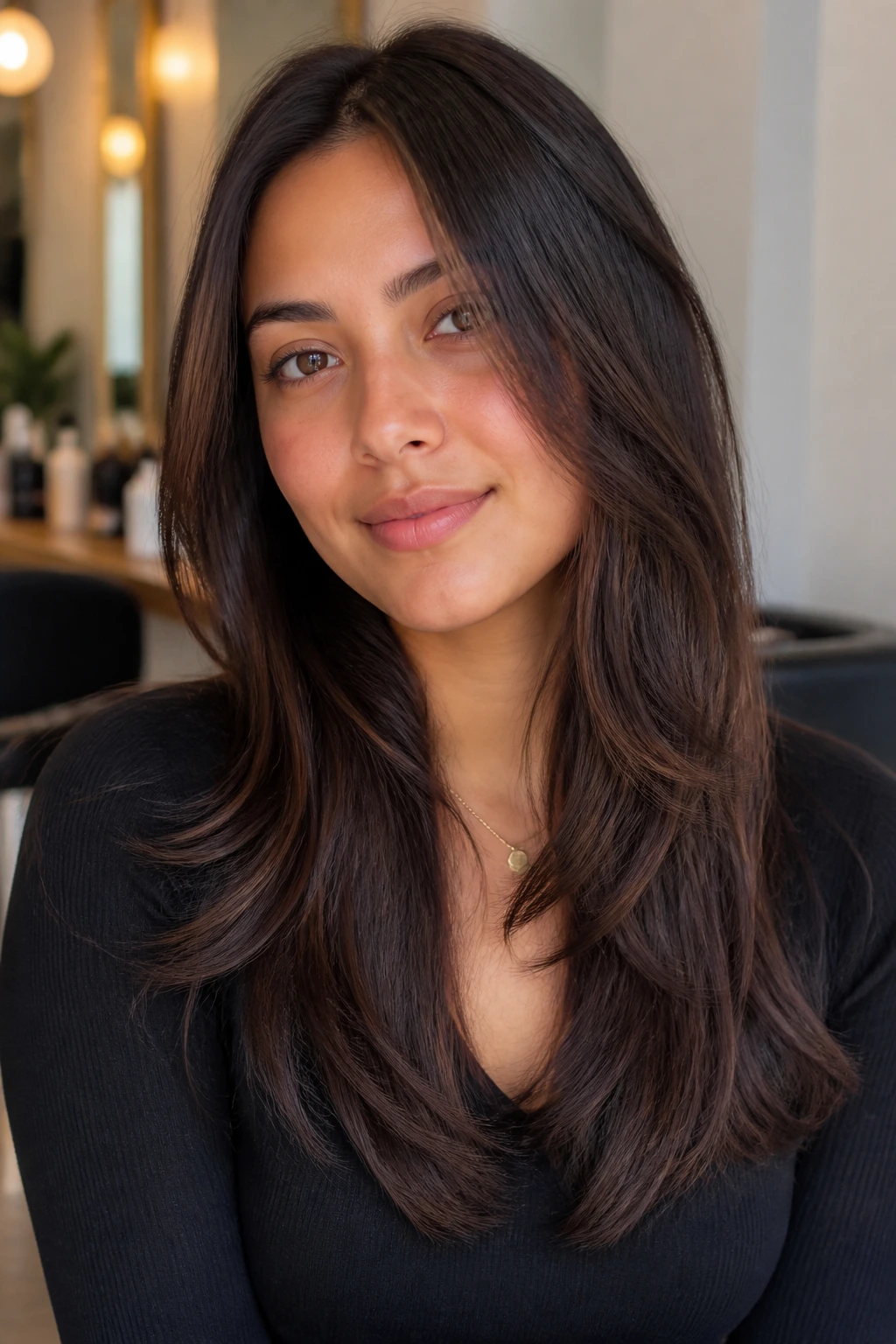
Long layers that begin below the chin are the quiet workhorse of flattering long-hair cuts. They keep the length you want, but they stop the sides from puffing out at the widest point of a round face. That small shift matters. A lot.
Why it works
The shortest layer should land somewhere between the collarbone and upper chest if you want the face to look longer. Anything higher tends to widen the middle of the face, especially when the hair is thick or has a natural bend. This cut keeps the shape vertical, which is exactly what long hair on a round face usually needs.
Ask for soft, blended layers rather than choppy steps. The finish should look like the hair was shaped, not hacked apart. On straight hair, the layers create movement without losing polish. On wavy hair, they stop the lower half from turning into one heavy block.
Good for: medium to thick hair, oval-ish round faces, and anyone who wants long hair without the heavy triangle shape.
Style it like this: bend the front pieces away from the face with a 1.25-inch iron or a round brush. Keep the ends smooth, not flipped out.
Best detail to request: the first face-framing piece should hit below the chin, not at the cheekbone.
2. Butterfly Cut with Long Curtain Pieces
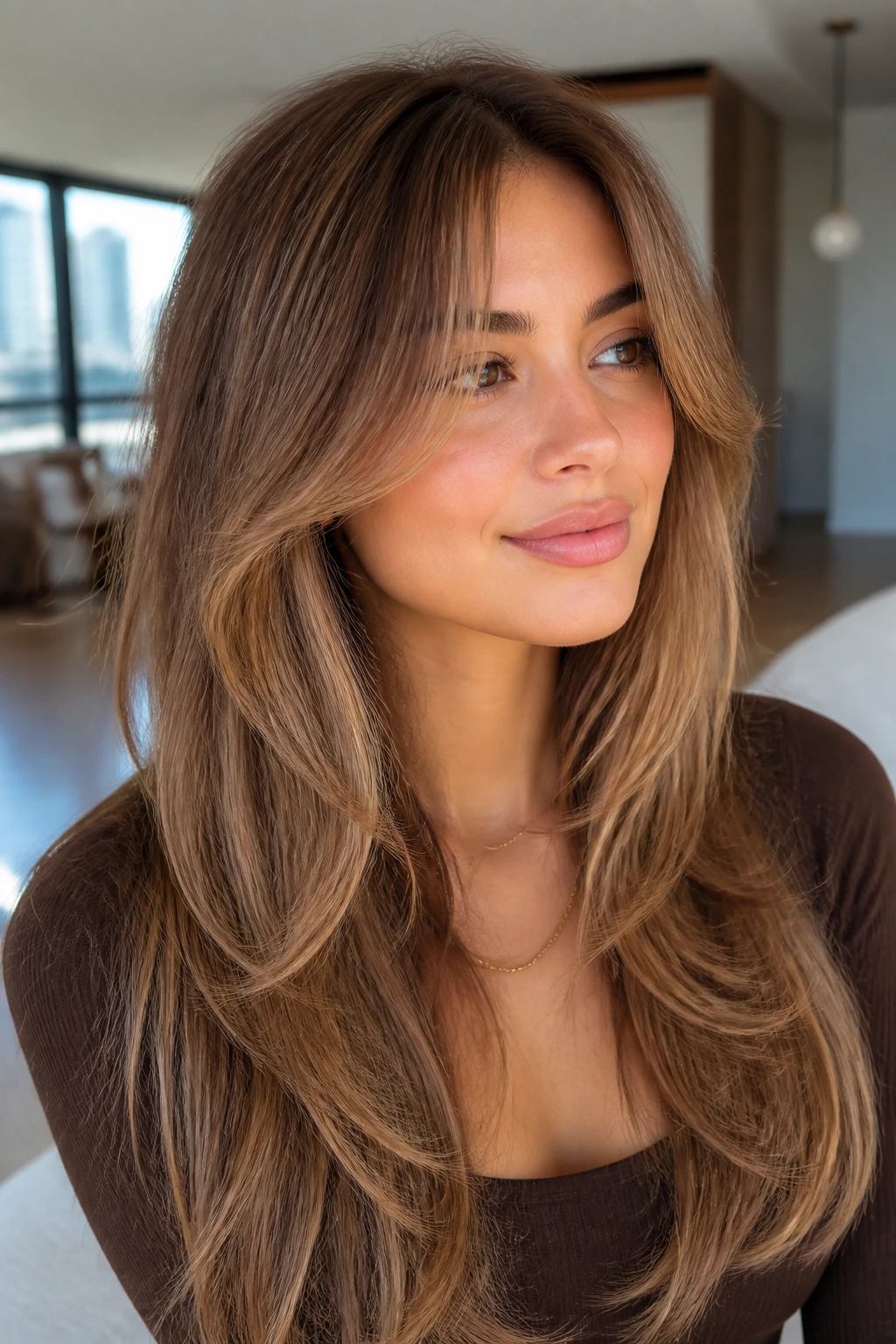
Does a butterfly cut work on a round face? Yes — if the shortest pieces stay long enough to open the face instead of boxing it in. The butterfly cut gives you that lifted, airy crown shape without forcing you into a short haircut, and the long curtain pieces keep the overall length feeling luxe rather than chopped up.
The magic is in the contrast. Shorter layers around the top and front create movement near the crown, while the bottom stays long and full. That push-pull makes the face read longer because the volume sits higher and lower, not directly beside the cheeks. It’s a clever cut, honestly. A little dramatic, but not fussy.
This one shines when you like a blown-out look. The layers show best with a round brush and a bend away from the face. If you air-dry it and let everything collapse straight down, the shape gets lost. Give it lift at the roots, and it turns into one of the prettiest long styles for round faces.
3. Deep Side Part with Soft Beveled Ends
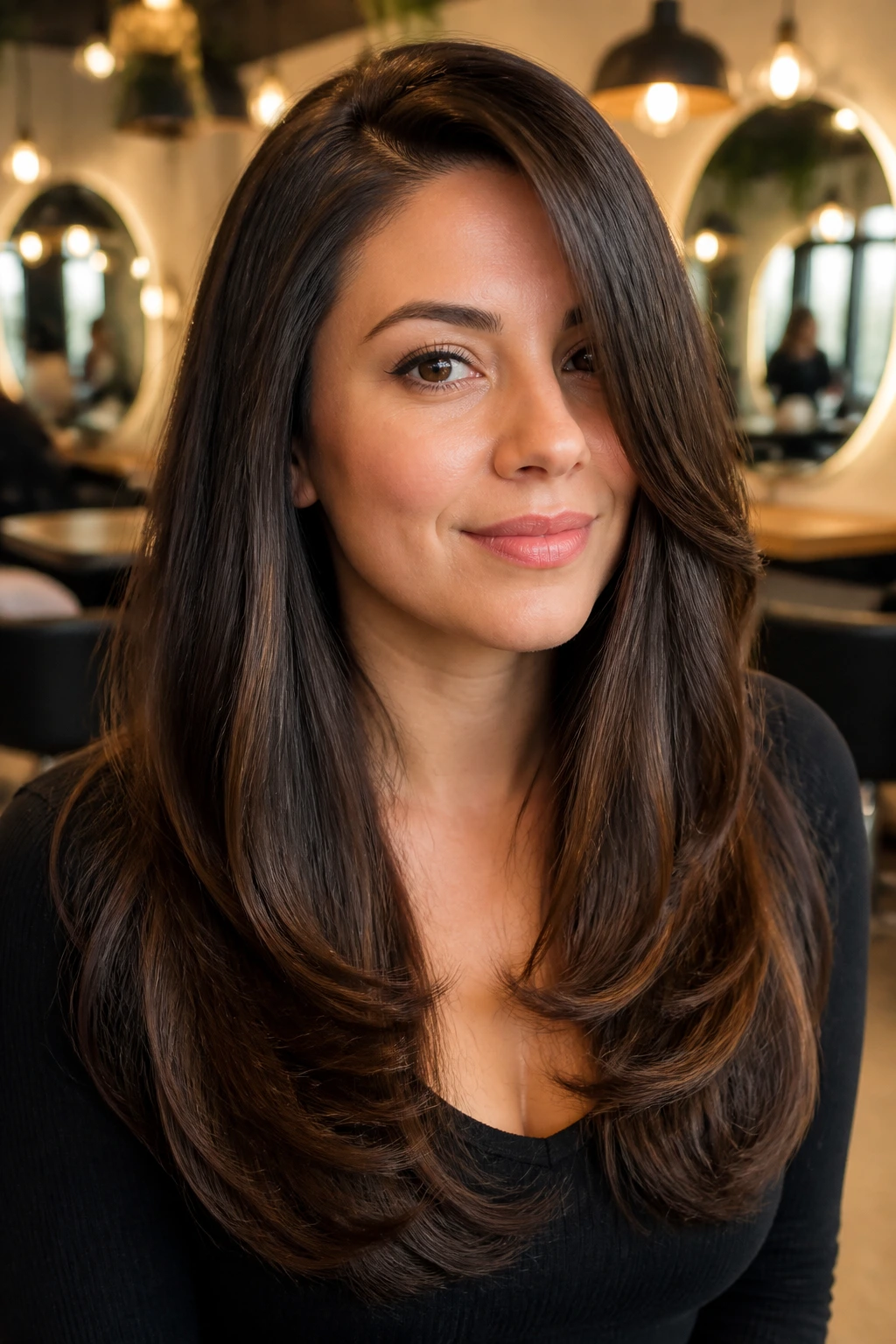
A deep side part changes the whole conversation. Instead of letting hair split evenly and widen the face on both sides, it creates a strong diagonal line that interrupts the roundness. Pair that with soft beveled ends — not blunt, not wispy, just gently curved under or away — and the result feels cleaner and longer.
This is the cut I’d point to if you like long hair but hate anything too layered. It keeps the perimeter intact, which is helpful if your hair is fine or tends to fray at the ends. The side part adds the visual lift; the beveled ends keep the length from looking flat or stale.
How to wear it
Wear the heavier side with a little bend over the cheek and tuck the lighter side behind the ear if you want the face to open up more. That tiny tuck gives the style breathing room. It also keeps the cut from swallowing your jawline.
The off-balance line does more work than most people expect. Simple. Clean. Very effective.
4. U-Shaped Cut with Hidden Internal Layers
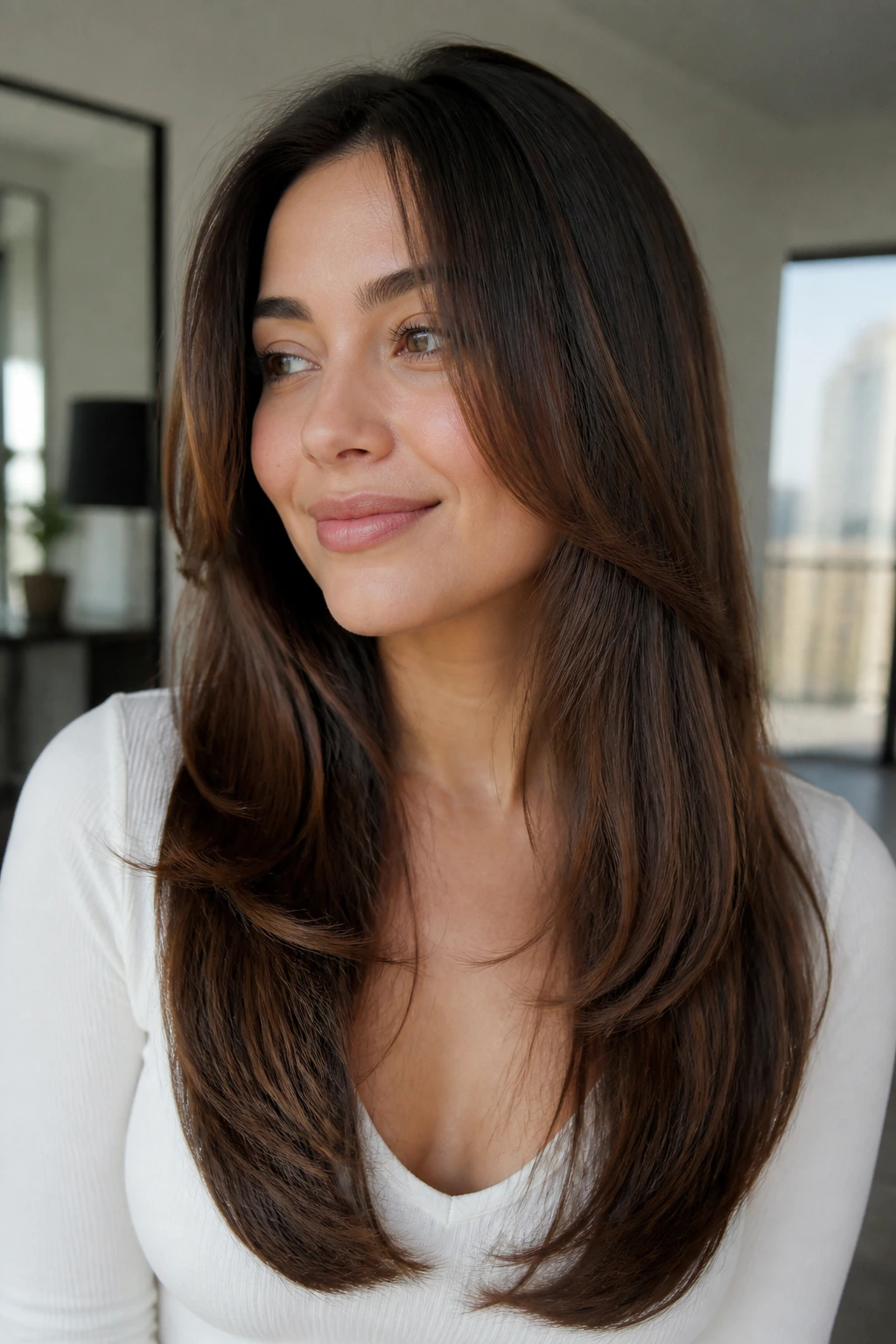
The U-shape is one of those cuts that looks almost too easy until you see it in motion. The back stays fuller and rounds gently under, while the front pieces drop longer toward the chest. On a round face, that shape helps because it keeps the width lower and away from the cheeks.
Hidden internal layers are what keep the cut from feeling heavy. They take weight out from the inside without turning the outside edge into a choppy mess. That’s a useful trick if you like long hair that still swings when you walk. Thick hair especially benefits here, because the style controls bulk without making the ends look thin.
Best for: hair that grows bulky around the sides, dense straight hair, and anyone who wants a polished look that still has movement.
Avoid this if: you want a very obvious, piecey finish. A U-shape is softer and more blended.
Ask your stylist for: a longer front frame that begins below the jaw and a rounded back line rather than a straight shelf.
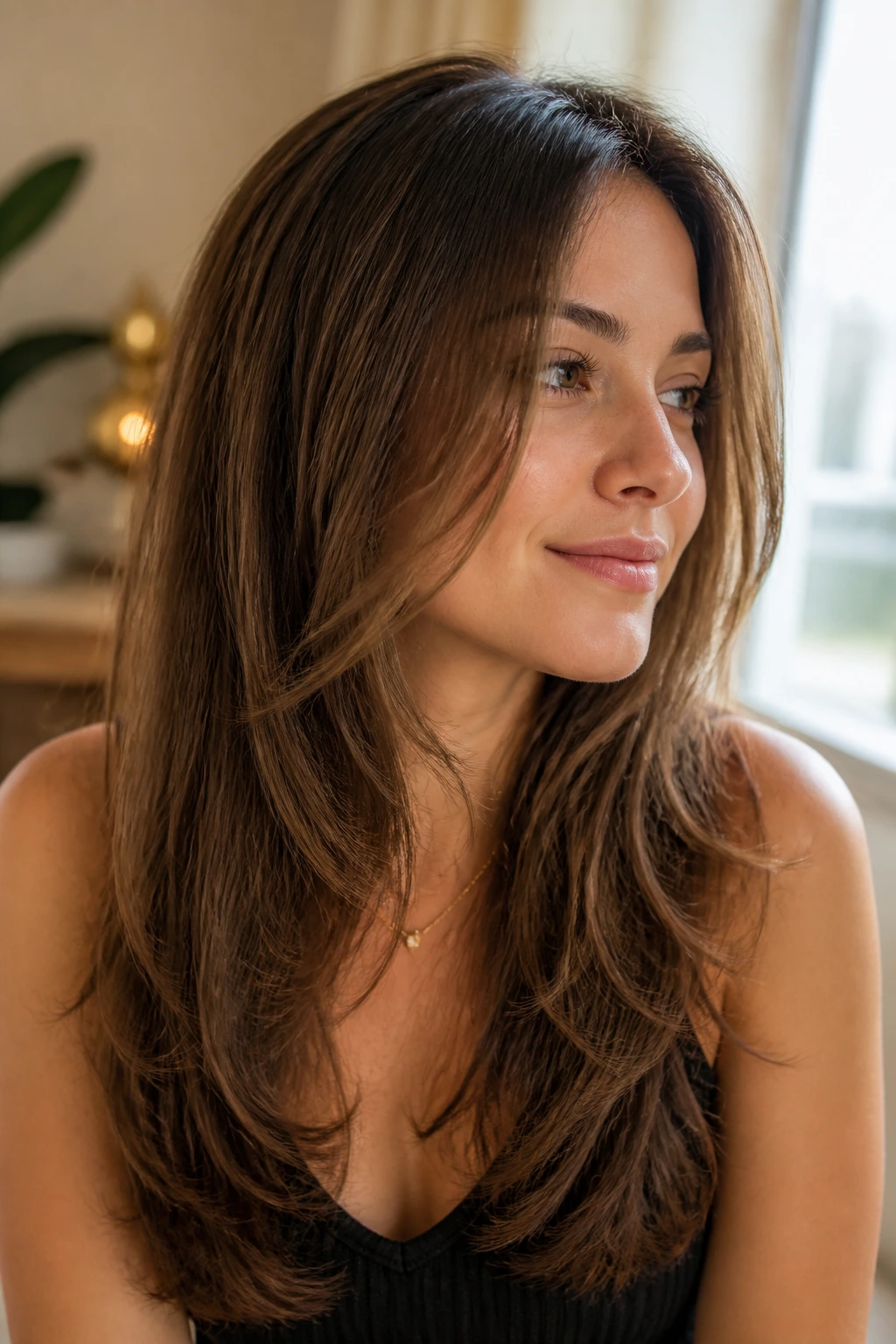
5. Long Shag with Soft Crown Texture
A long shag should feel airy, not ragged. That distinction matters. On round faces, the wrong shag gets too choppy around the cheeks and starts pushing outward like a fan. A good long shag keeps the crown soft, the fringe loose, and the ends textured enough to move without puffing.
The reason it works is simple: volume moves upward and inward rather than out to the sides. The crown gets a little lift, the mid-lengths break up the width, and the ends stay long enough to preserve that vertical line. If your hair is wavy, this cut can look very alive. If it’s straight, you’ll need a bit of bend or mousse to keep it from falling flat.
There’s a fine line between shag and mess. Stay on the soft side. The best version of this cut looks slightly undone, but the shape is still deliberate.
6. Curtain Bangs with Waist-Length Layers
Curtain bangs are one of the few fringe styles that consistently behave well on round faces, provided they’re cut with enough length. The sweet spot is usually at or below the cheekbone on the shortest edge, then tapering longer as they open toward the temples. That creates a diagonal frame instead of a hard horizontal line.
Waist-length layers make the whole look feel balanced. The bangs draw attention to the eyes and brows, while the long layers keep the rest of the hair from collapsing into one solid mass. If the bangs are too short, the face looks shorter. If they’re long and soft, the face gets a little lift without losing openness.
How to style them
Blow the bangs with a small round brush or your fingers, pushing them away from the center and slightly off the face. Do not let them dry in a straight curtain if your hair tends to split awkwardly — they’ll sit there and do nothing. A little curve makes all the difference.
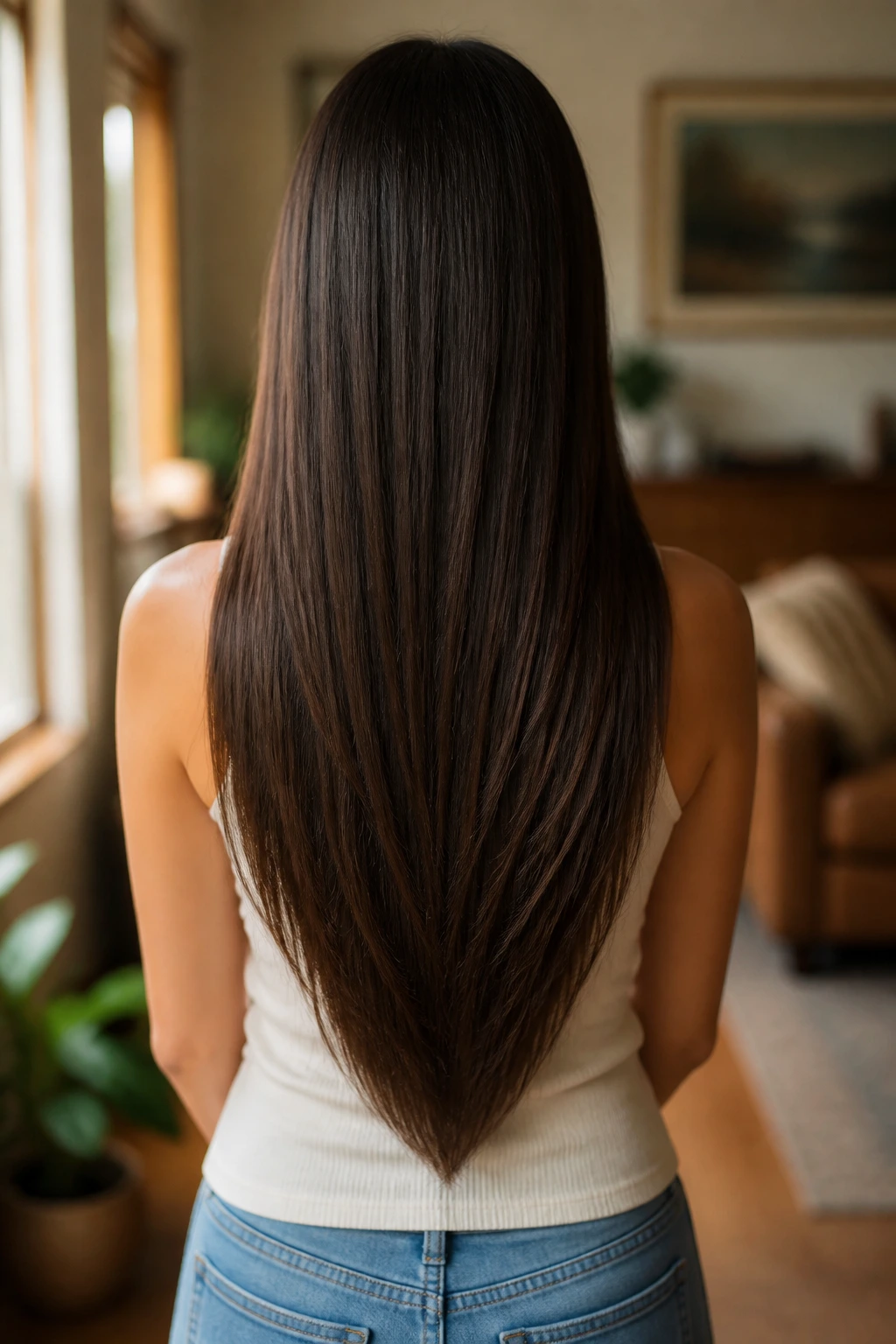
7. V-Cut That Narrows the Silhouette
A V-cut earns its place here because the point at the back pulls the eye downward. That sounds almost too basic, but it works. Long hair can look wider on a round face when the hemline is blunt and wide. A V-shape trims that visual width and gives the length a leaner feel.
The key is keeping the point soft, not sharp like a tail. If the back gets too extreme, the cut can start looking dated. A gentle V keeps the sides from spreading out while still giving the hair some shape when it’s worn loose. On thick hair, it also helps the ends feel lighter. On finer hair, keep the point subtle so the tail doesn’t look stringy.
Best for: straight or wavy hair with decent density.
Not ideal if: your ends are already thin. A harsh V can make the last six inches look sparse.
Styling note: wear it with loose waves or a smooth blowout so the line stays clean.
8. Invisible Layers for Fine Hair
The least visible layers often do the most for fine hair. That’s the whole point of invisible layering: remove just enough weight to create movement, but keep the outside shape looking full. On a round face, that matters because fine hair can go limp around the cheeks and exaggerate width if the cut is too blunt or too short at the front.
This cut is about restraint. The stylist snips interior sections so the hair moves, but the perimeter still feels solid. You get lift without that wispy, over-thinned look that fine hair so often falls into. If you’ve ever left the salon with hair that looked great for 15 minutes and then collapsed into strings, this is the fix.
The face-framing pieces should stay long. That’s non-negotiable here. Ask for soft front angles that start below the chin, then let the rest of the hair hold the shape.
9. Feathered Blowout Cut
The feathered blowout cut is what happens when you want movement without mess. The layers are sliced and blended so they lift away from the face in a soft arc, which gives long hair a little old-school glamour without the helmet effect that comes from too much round-brush volume at the sides.
On a round face, feathering helps because it moves the bulk upward and downward at the same time. The front opens around the eyes, the mid-lengths soften the cheeks, and the lower half keeps swinging. It’s especially nice if you wear a blowout often, because the haircut and the styling are working together instead of fighting each other.
What to ask for
- Layers that begin below the cheekbone.
- Soft feathering through the front, not aggressive razoring.
- A smooth perimeter that still feels thick at the ends.
If your hair is coarse, this cut can be a relief. It takes the edge off without stealing the shape.
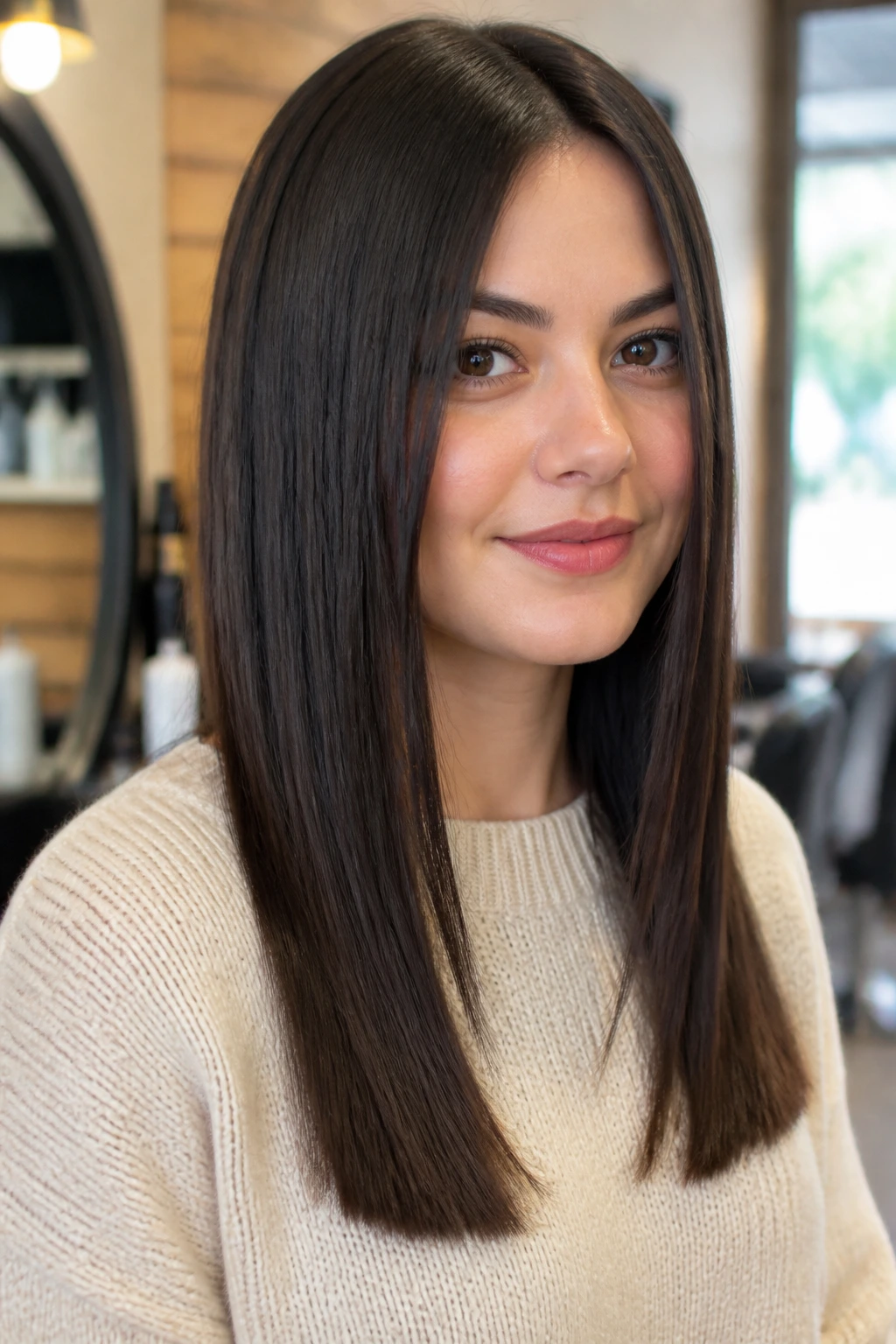
10. Blunt Length with an Off-Center Part
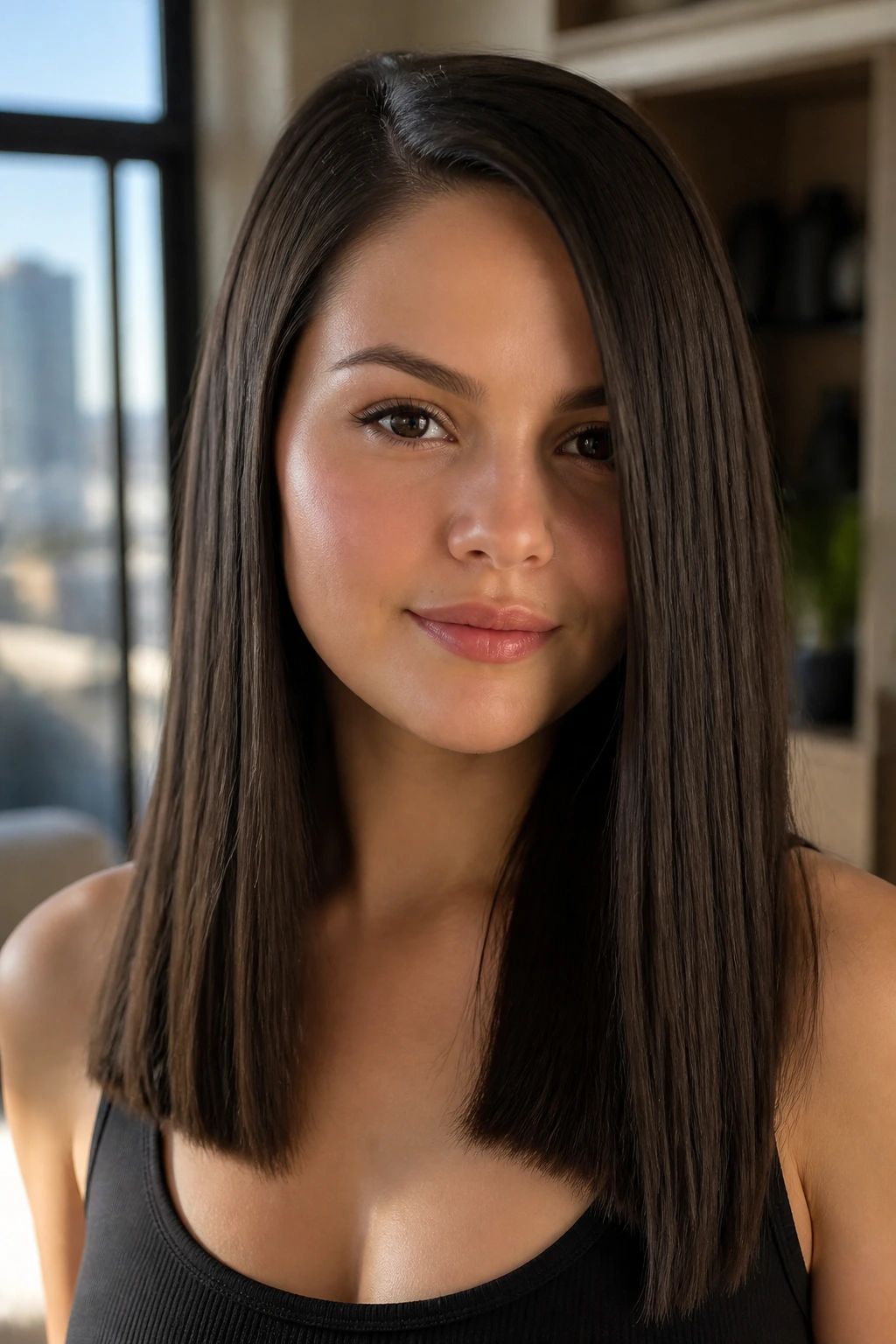
People think blunt cuts are off-limits for round faces. Not true. The mistake is usually the part, not the length. A dead-center part on long, blunt hair can make the face feel too symmetrical, which is where the roundness shows up. Shift the part a little off-center, and the whole style gets more angle and less width.
This cut works because the clean hemline keeps the hair dense at the bottom, which is flattering if your hair is fine-to-medium and you want fullness. The off-center part gives enough break in the line that the style doesn’t feel boxy. If you like glossy, straight lengths, this is one of the sharpest options on the list.
Keep the front pieces long. Really long. You want the edge to fall past the chin so the cut doesn’t stop right at the widest part of the face. A tiny tuck behind one ear can help too. Small move, big payoff.
11. Side-Swept Fringe and Cascading Layers
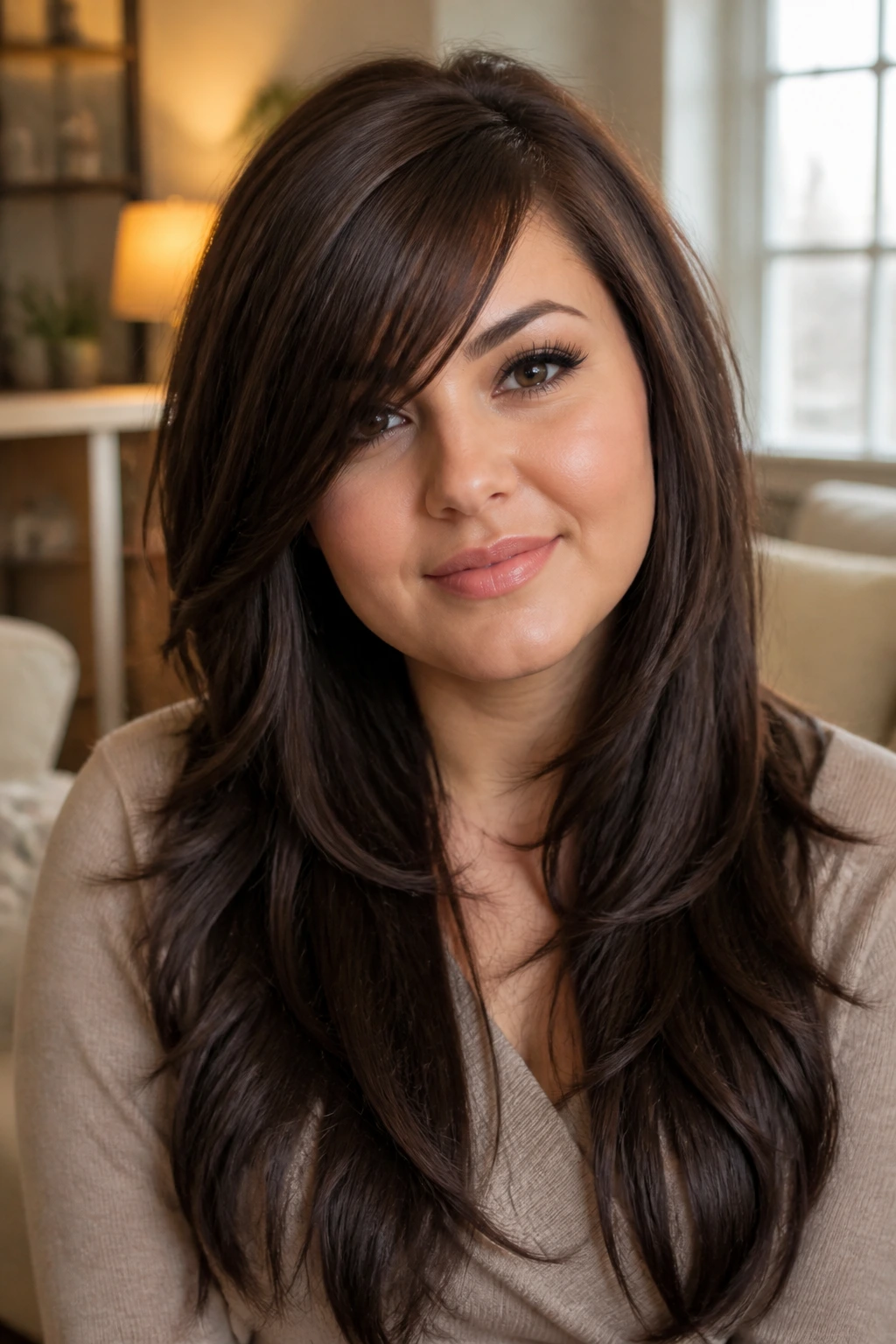
A side-swept fringe does something a straight fringe cannot: it cuts diagonally across the face. That diagonal line keeps the eye moving, which is exactly what round faces need from hair. Add cascading layers that fall from the cheekbone down into the chest, and the style starts feeling soft rather than bulky.
This is a good choice if you want bangs but not the commitment of a full curtain fringe. The sweep can be light or dramatic depending on how much forehead you want to show. The important part is keeping the fringe long enough to blend into the front layers. Short side bangs tend to kink awkwardly and can make the face read wider.
Best when
- You like a side part.
- Your hair has a little wave or bend.
- You want bangs that grow out gracefully.
The whole cut has a little movement in it, which helps. Static hair and round faces are rarely best friends.
12. Razor-Cut Layers for Thick Hair
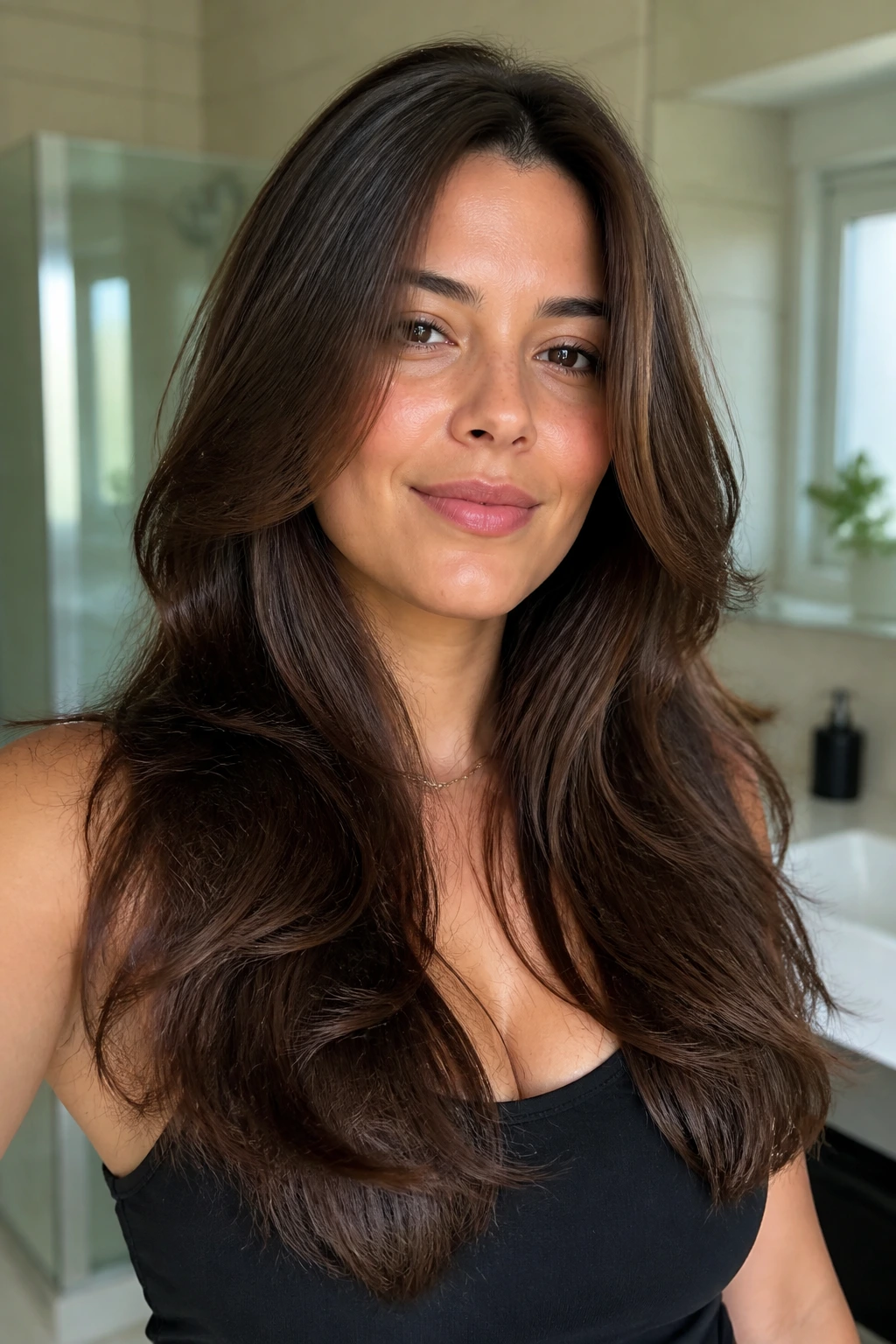
Thick hair needs control, not punishment. Razor-cut layers can be useful here because they remove bulk from the interior and let the hair fall with less width around the cheeks. Used carefully, the result is lighter, softer, and easier to wear long.
Carefully is the important word. A heavy-handed razor job can leave thick hair frayed at the ends, and that is not the vibe. You want glide, not shredding. The best version of this cut keeps the bottom edge strong while taking weight out from the middle so the hair doesn’t fan out like a triangle.
If your hair is dense, this may be one of the most practical choices on the list. It helps the shape of the hair match the shape of the face instead of fighting it. Wear it with a bend or a smooth blowout. Either way, the movement should feel controlled.
13. Soft Wolf Cut with Rounded Edges
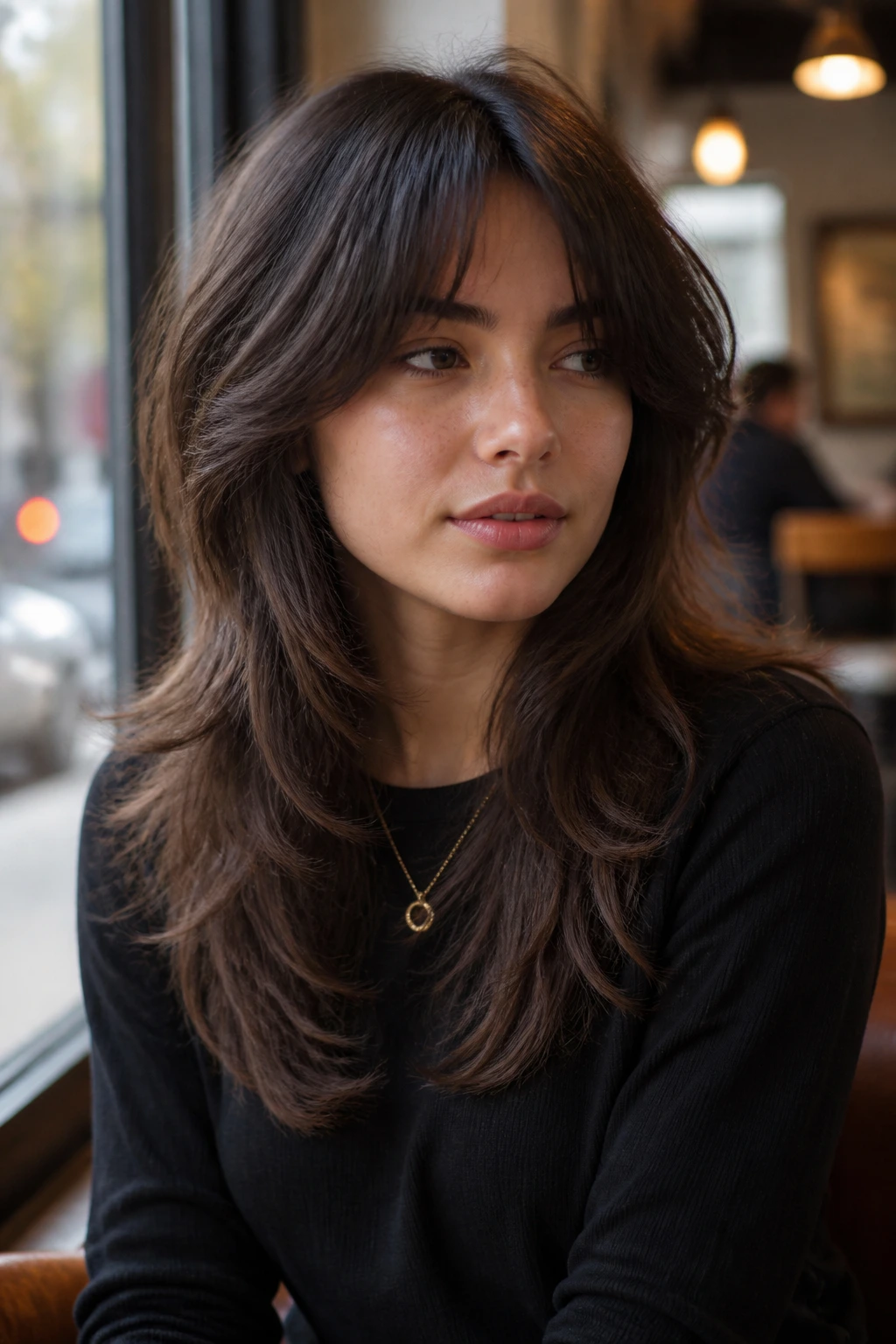
A wolf cut can work on a round face, but only when the edges are softened. The hard, choppy version can add width at the sides and make the whole head look bigger than the face wants. So go softer. Keep the top textured, let the middle breathe, and round out the ends so they don’t stick out.
What saves this cut is the balance between short and long. The crown gets a lift, the front gets some broken-up movement, and the ends stay long enough to keep the profile vertical. It’s edgy, yes, but not in a way that needs constant defending in the mirror.
This is a better choice if you like texture and don’t want hair that lies flat by midday. It looks best with a bit of bend and a little separation in the layers. Too polished, and it loses its charm. Too rough, and it turns noisy. There’s a sweet spot in the middle.
14. Collarbone-Starting Face Framing
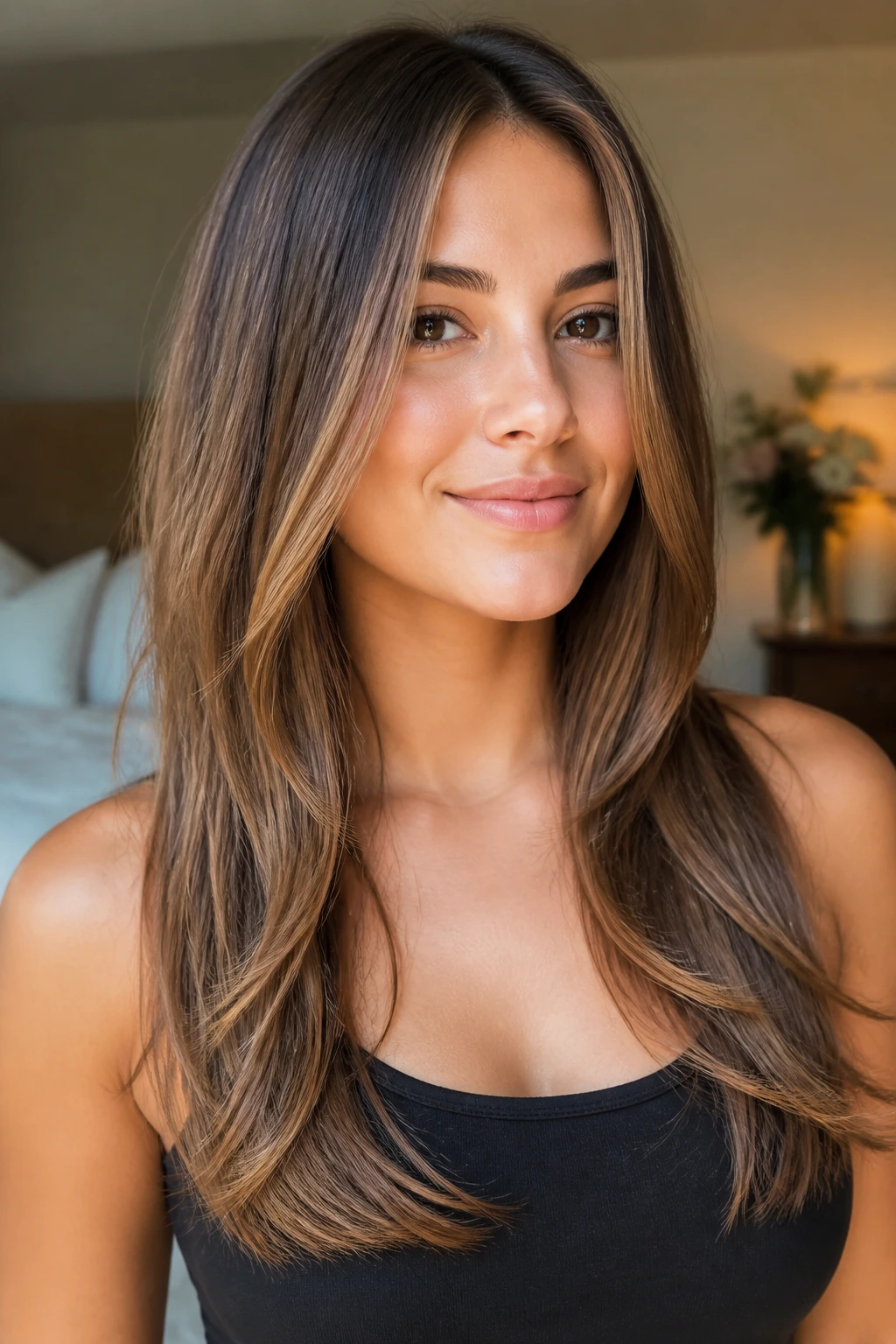
If you only change one thing about a long haircut for a round face, change where the front framing starts. When those shortest pieces begin at the collarbone instead of the cheekbone, the hair no longer sits directly on the widest part of the face. That’s the whole trick.
This cut works especially well if you want a low-maintenance shape. The hair can be mostly long and simple, but the front angles guide the eye down and inward. It gives the illusion of length without asking for a mountain of layers. Nice deal, frankly.
Good details to request
- Longest face-framing layer should skim the collarbone.
- Keep the sides slightly longer than the jawline.
- Maintain enough density at the perimeter so the ends don’t look thin.
That little front angle can do a lot more than people expect. It’s subtle. It’s smart. It grows out well.
15. C-Shaped Layers Around the Face
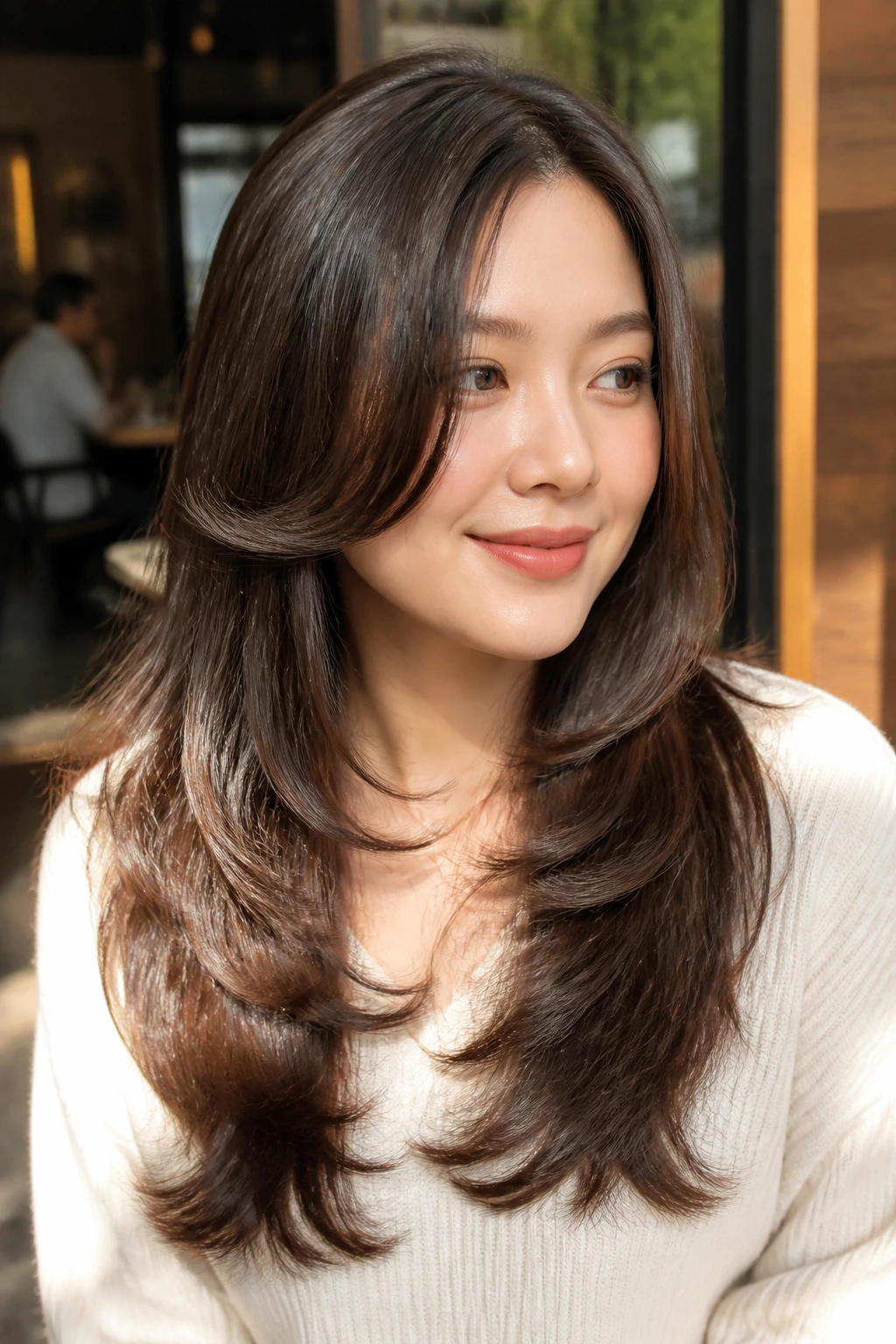
A C-shape around the face sounds tiny, but it changes the profile in a big way. The curve runs from the brow area down toward the jaw and then back into the chest, which keeps the line soft and vertical. On a round face, that arc makes the midsection feel less wide because the eye never gets stuck on a flat horizontal edge.
I like this shape for hair that needs polish without stiffness. It works on straight hair, of course, but it really comes alive with a little bend. The curve should feel natural, almost like the hair has been tucked around the face rather than cut into a stiff frame.
The important part is not to carve the layers too short near the cheeks. That turns the C into a shelf, and shelves are not flattering here. Keep the curve long and flowing, and the whole cut feels more expensive, even if the styling is minimal.
16. Dry-Cut Layers for Curly Long Hair
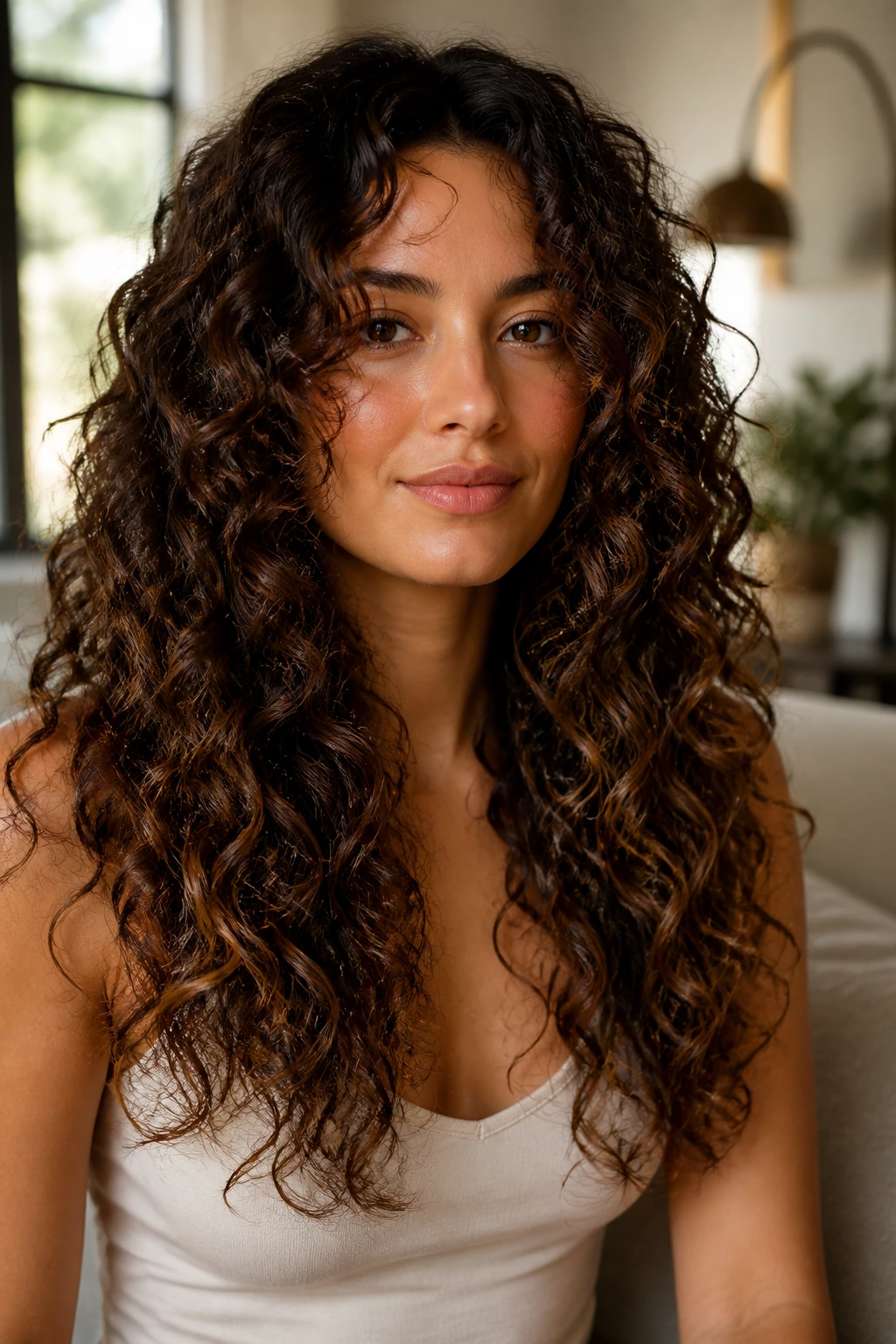
Curly hair and round faces need honesty from the cut. Wet hair lies. Dry hair tells the truth. That’s why dry-cut layers are such a good match for long curls: the stylist can see where the curl falls, where it shrinks, and where the shape starts to widen.
The goal is to keep the curls from building too much volume at the sides while preserving length and bounce. If curls are cut wet into a round face shape, they often spring up and sit right at the cheeks. A dry cut lets the curl pattern set the shape first, then the scissors refine it.
What to ask for
- Dry cutting or curl-by-curl shaping.
- Long face-framing pieces that drop below the chin when dry.
- Minimal thinning at the ends unless your hair is very dense.
This cut can look gorgeous when the curls stack gently around the head instead of puffing outward. The silhouette stays long, not wide. That’s the target.
17. Mermaid Layers with Whisper-Soft Ends
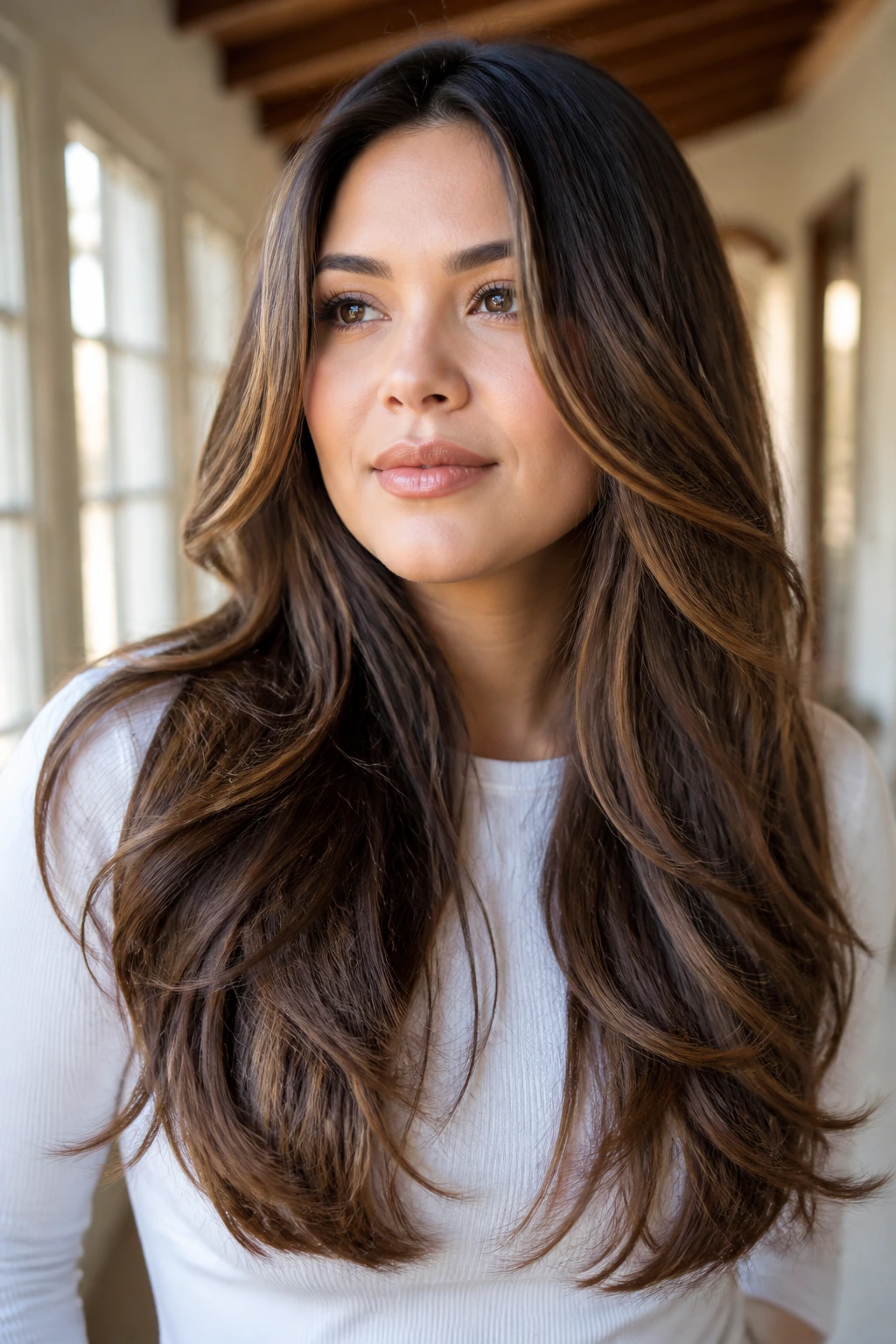
Mermaid layers are all about length that feels weightless. The layers are long, the transitions are soft, and the ends taper just enough to keep the hair moving. On a round face, that works because the hair looks romantic without building extra width at the sides.
This is a good cut if you hate obvious layering. The shape is there, but you don’t see every step. The hair falls in a smooth cascade, which is exactly why this style still looks stylish after it grows out a bit. It keeps its grace longer than sharper cuts do.
If your hair is very thick, ask for a little more internal removal. If it’s fine, keep the ends fuller so they don’t disappear against the shoulders. The whole point is softness, not hollowness. Let the hair drape.
18. Wispy Bangs with Sleek Length
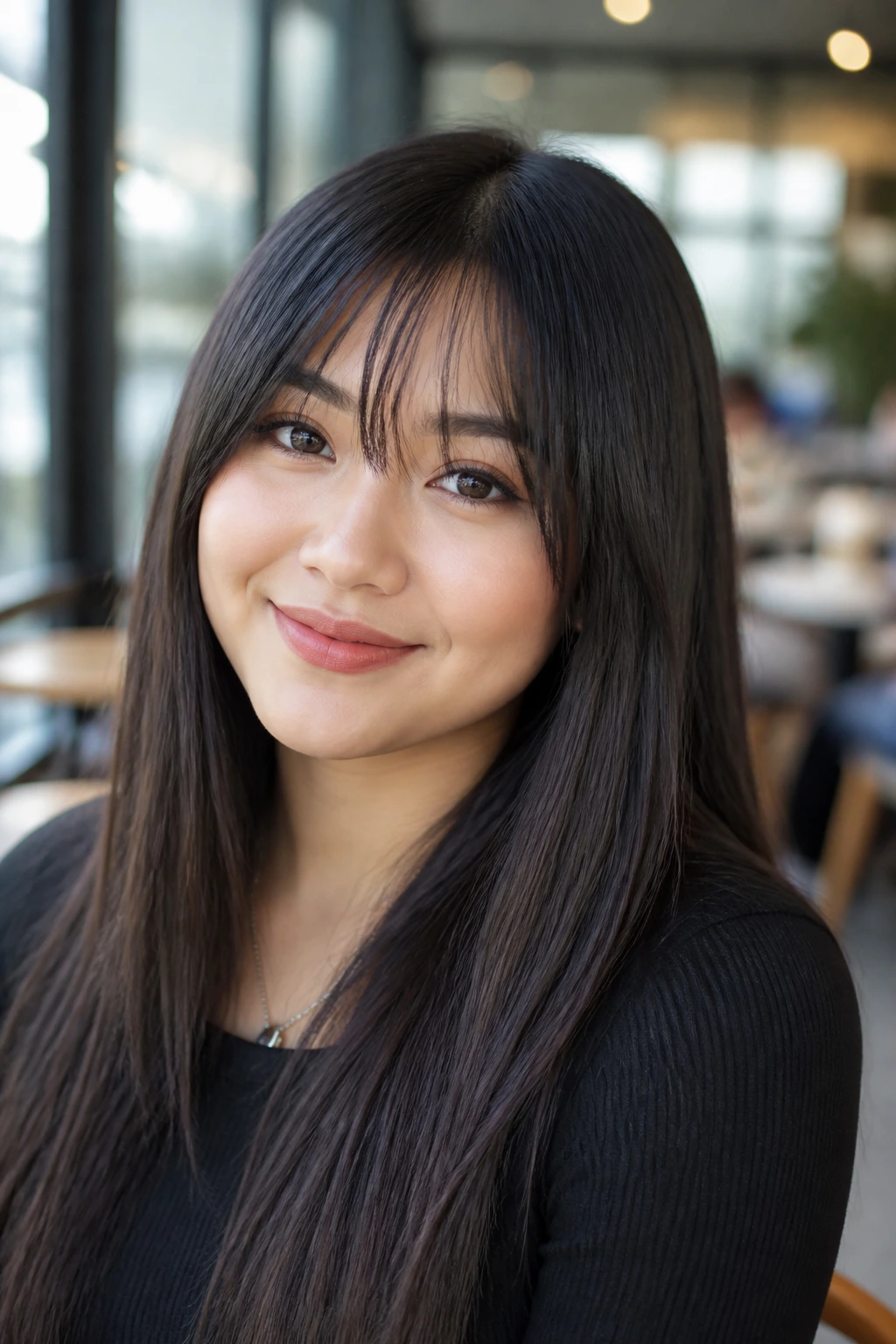
Wispy bangs can flatter a round face when the rest of the hair stays long and sleek. The lighter fringe breaks up the forehead without creating a hard line across it, and that means the face doesn’t get chopped into a shorter shape. The bangs should feel airy, not sparse.
This is one of the better options if you want a fringe but fear full curtain bangs. The wispy version is softer and less committal. It works best when the long hair underneath stays smooth, because the contrast between light fringe and clean length keeps the face open.
Maintenance note
Wispy bangs need regular trims. They lose their shape faster than the rest of the cut, and once they grow into your eyes, they stop looking wispy and start looking unfinished. Trim them every 3 to 5 weeks if you want them to stay light and intentional.
A sleek finish helps here. If the lengths are puffy, the fringe gets lost.
19. Airy Lived-In Layers with Natural Bend
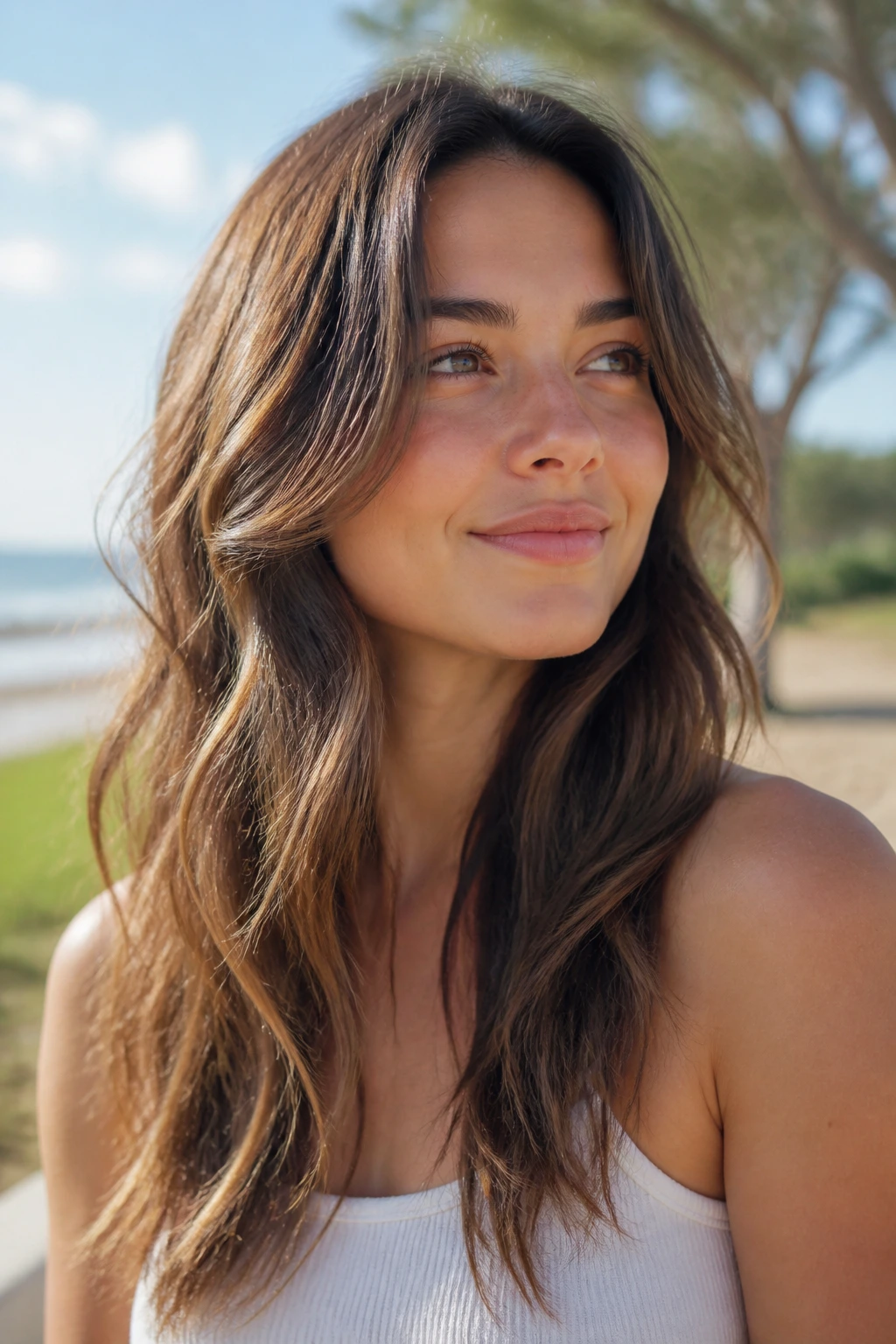
No blowout required. That’s the appeal here. Airy lived-in layers are cut so the hair can dry with some natural bend and still look shaped. For round faces, the trick is keeping the layers long enough to move, but not so short that they puff out around the cheeks after an air-dry.
This is a smart choice if you live in hair that refuses to obey hot tools. The cut should work with your natural pattern, not against it. The layers give the hair room to bend, while the length keeps the silhouette vertical. That balance matters more than perfect symmetry.
A little sea-salt spray or lightweight cream can help the ends separate without getting crunchy. The style should look touched, not styled to death. That relaxed finish suits long hair very well, especially when you want the face to stay softly framed.
20. One-Length Cut with Subtle Front Angles
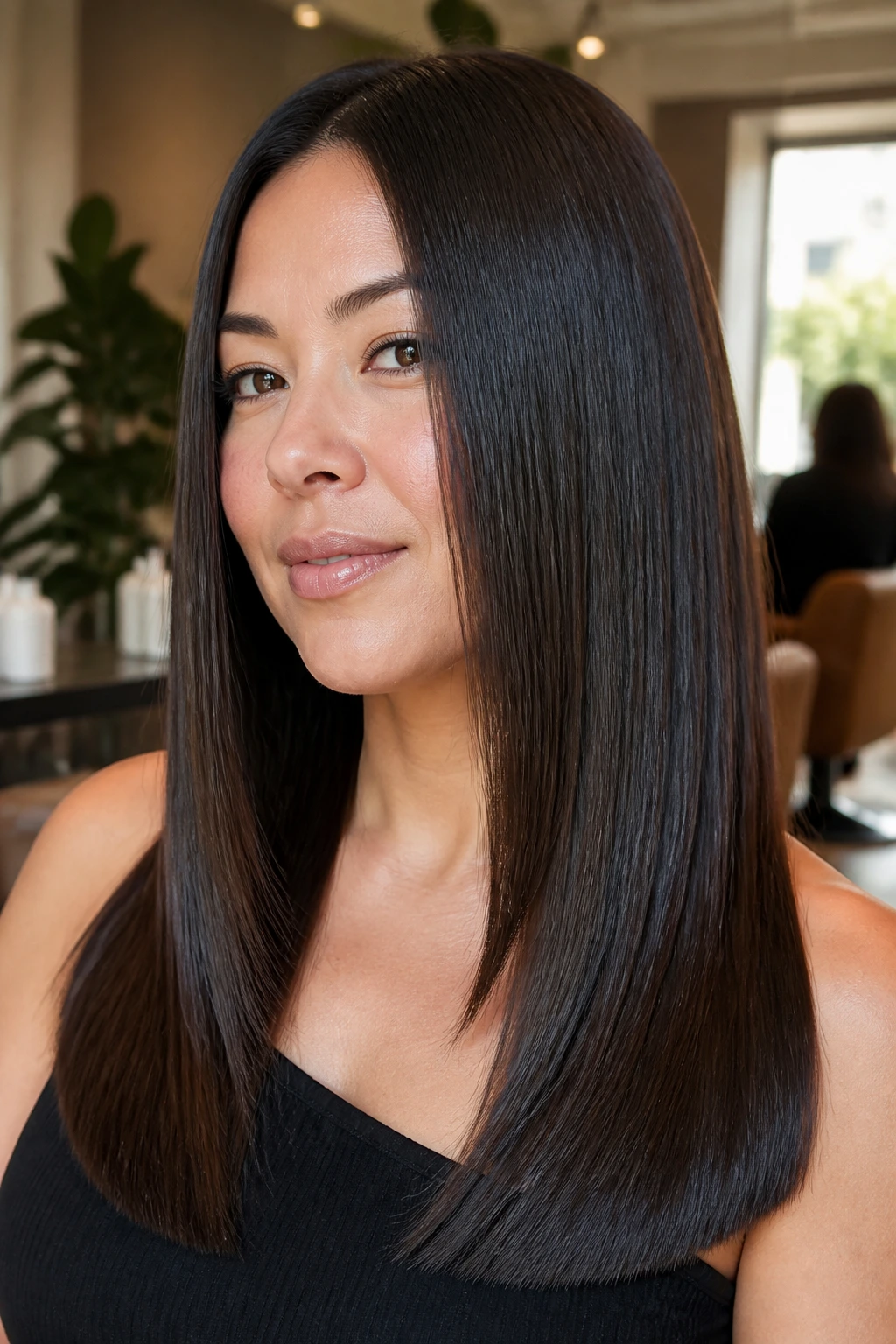
Sometimes the cleanest answer is the simplest one. A long one-length cut can flatter a round face if the front is nudged into a subtle angle, just enough to avoid the blunt wall effect. The length keeps everything elegant, and the tiny front framing keeps the hair from sitting like a curtain.
This is the cut for someone who likes weight and shine. Too many layers can make long hair look busy, especially if it’s fine. A strong perimeter feels modern and expensive, but the slight front angle keeps the face from looking wider than it is. That angle matters more than a lot of people realize.
It also grows out nicely. The shape remains readable for a long time, which is handy if you don’t want a haircut that needs rescuing every six weeks. Ask for the front pieces to begin just below the jaw, then taper slowly into the length. Clean. Simple. Useful.
Choosing Haircuts for Long Hair and Round Faces Without Widening the Cheeks
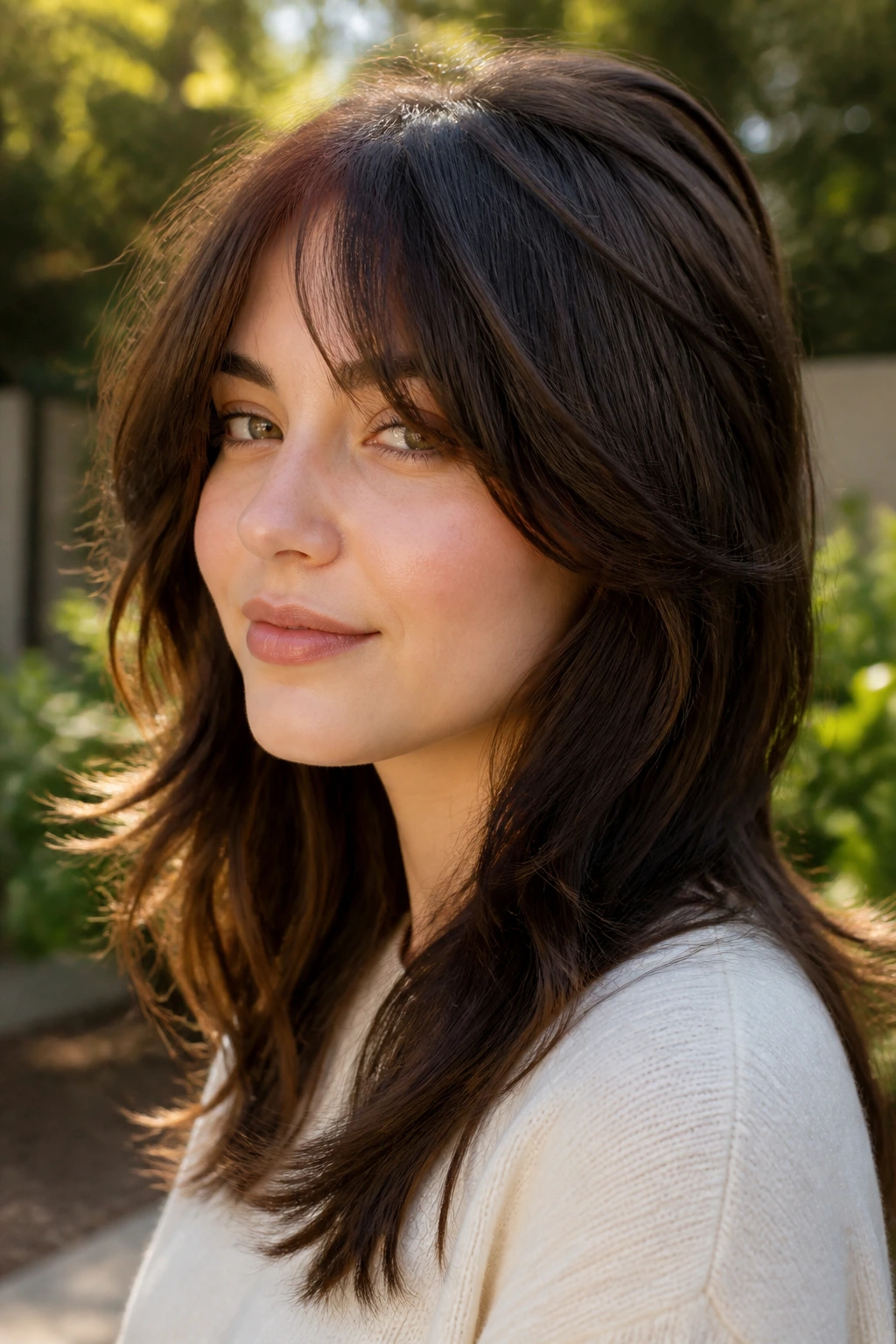
The main thing to understand is that face shape is not about hiding volume everywhere. It’s about placing volume where it helps the eye move. On a round face, hair that flares at the cheeks or ends at the jawline can make the face look fuller than it is. Hair that starts its movement below the chin works with the shape instead of sitting on top of it.
A side part, a long fringe, or a soft face frame can all do real work here. So can the absence of those things. A blunt one-length cut can still be flattering if the front is angled and the styling stays smooth. That’s the part people forget: the haircut and the styling are partners, not rivals.
The chin line is the trouble spot
If the shortest layer ends at the chin or cheekbone, the eye stops there. That’s why so many “cute” long cuts end up widening the face in photos. Push that first layer lower, and the face gets room to read longer.
The forehead is not the problem
A round face can wear bangs. The trick is keeping them soft, narrow enough at the center, and long enough at the sides to blend instead of box. Heavy bangs cut across the face like a stripe. Light bangs open it up.
Density changes everything
Fine hair needs fullness preserved at the bottom. Thick hair needs bulk removed from the middle so the sides do not balloon. Curly hair needs shape where it lives, not where it looks after a wet comb.
How to Choose the Right Version for Your Hair Texture
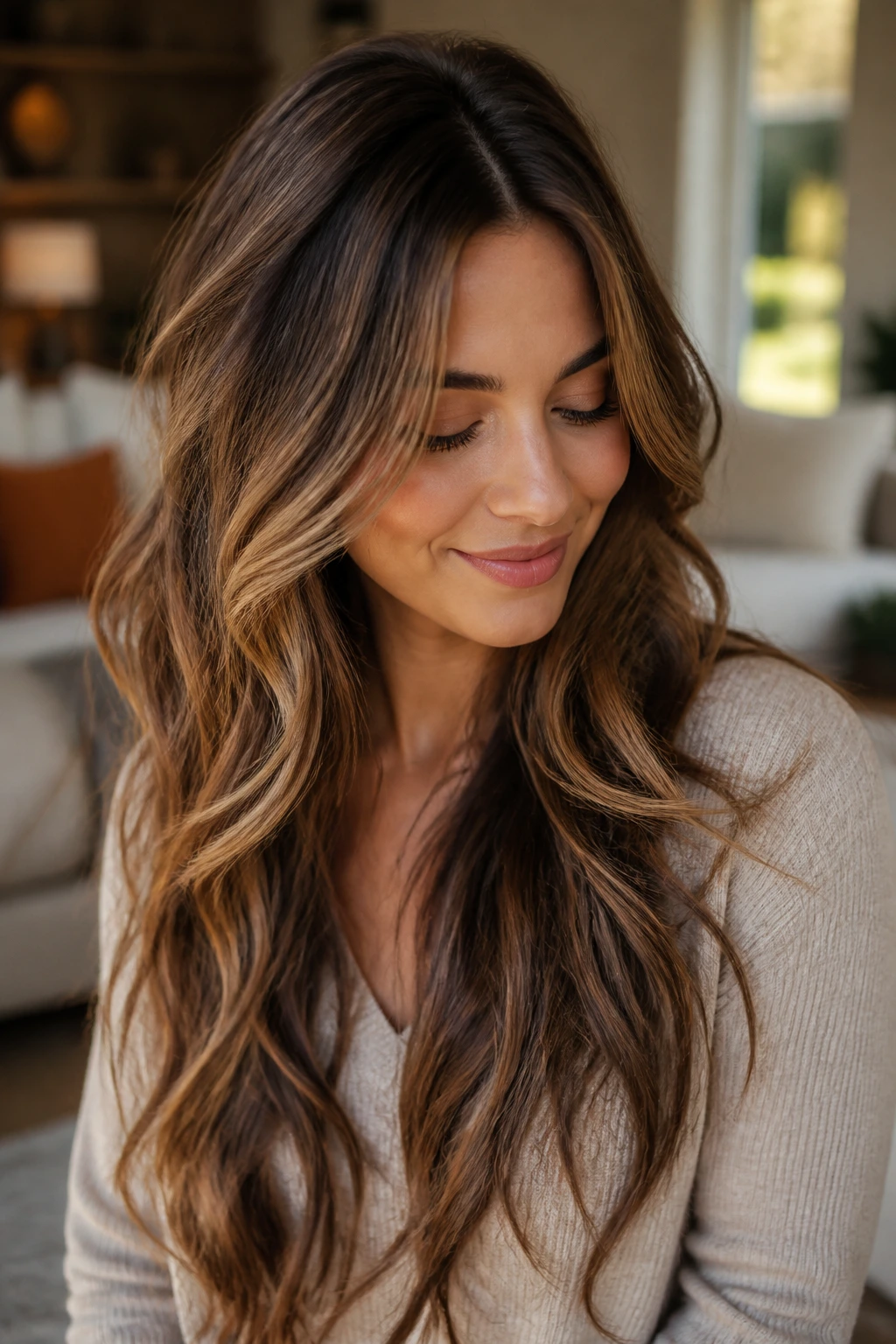
Fine hair: Go for long layers, invisible layers, or a blunt length with a subtle front angle. Keep the shortest front piece below the chin and avoid over-texturizing the ends. Fine hair gets stringy fast if too much weight is removed.
Thick hair: Ask for internal layers, a U-shape, a V-shape, or carefully done razor work. Thick hair can handle shape, but it needs bulk removed in the right places so the sides do not spread. If you want curtain bangs, keep them long.
Wavy hair: Butterfly cuts, long shags, and airy lived-in layers work well because they let the wave pattern do the styling. The trick is preventing the hair from puffing out at the widest part of the face. Keep the front longer than you think.
Curly hair: Dry cutting matters here. So does patience. Curls shrink, and shrinkage can move the shortest pieces right up to the cheek if nobody plans for it. Ask for the front to be cut where the curl lands dry, not wet.
What to Tell Your Stylist Before the First Snip
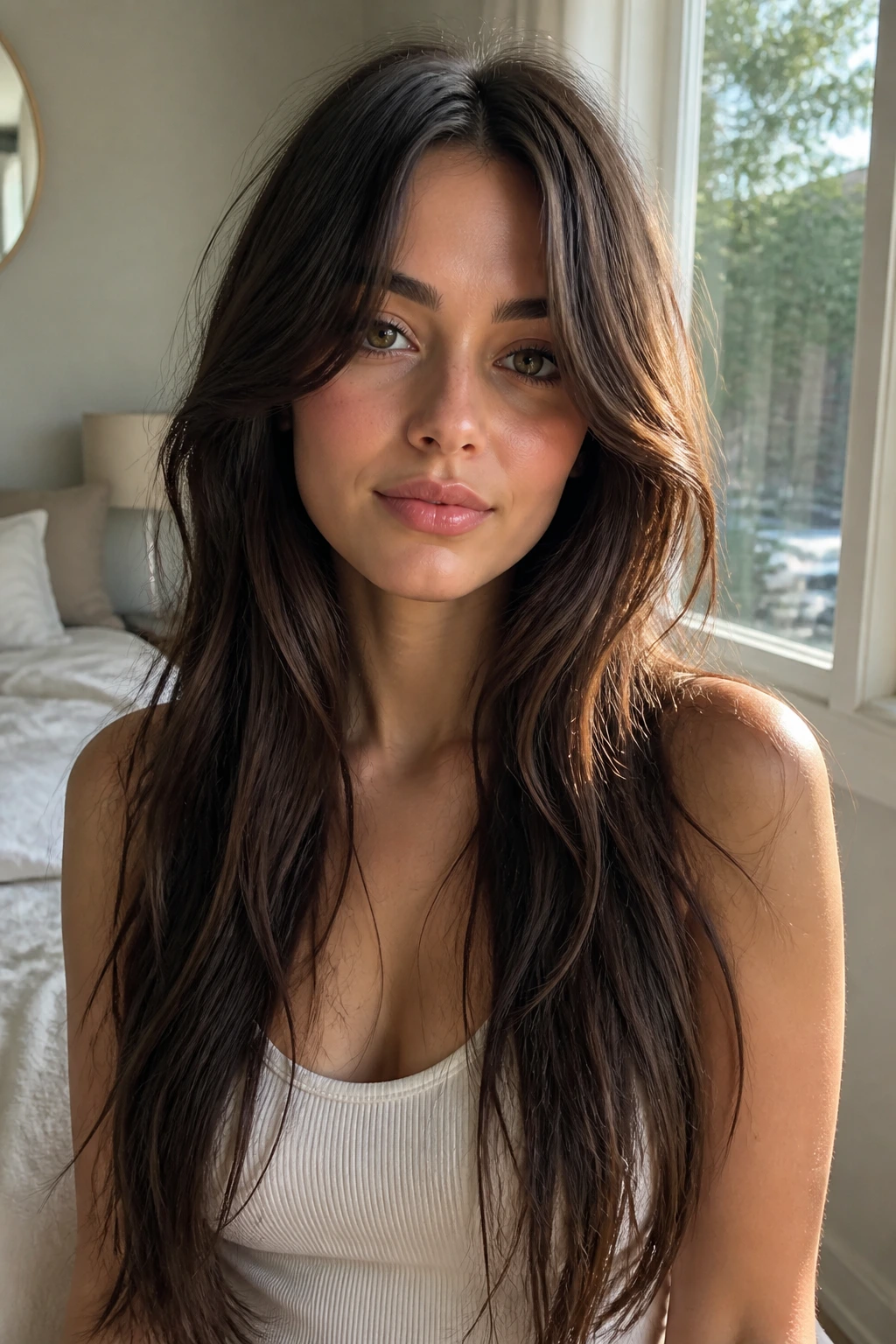
Bring photos, yes, but bring the right photos. Show one from the front, one from the side, and one that catches the back of the cut if you can. A front photo alone lies by omission. The back shape matters more than people think, especially on long hair.
Say where you part your hair most often. Tell them how long you actually wear it up. If you live in a ponytail, a cut that looks gorgeous loose but falls apart tied back is going to annoy you in a week. Mention whether you air-dry, blow-dry, or heat-style most days. That changes how the layers should sit.
And be specific about the shortest front piece. That is the detail that saves the whole haircut. Tell them where you want the first layer to fall — chin, collarbone, upper chest — instead of saying you want “face-framing.” That phrase is too vague. Everyone means something different by it.
Essential Tools for Styling These Haircuts
-
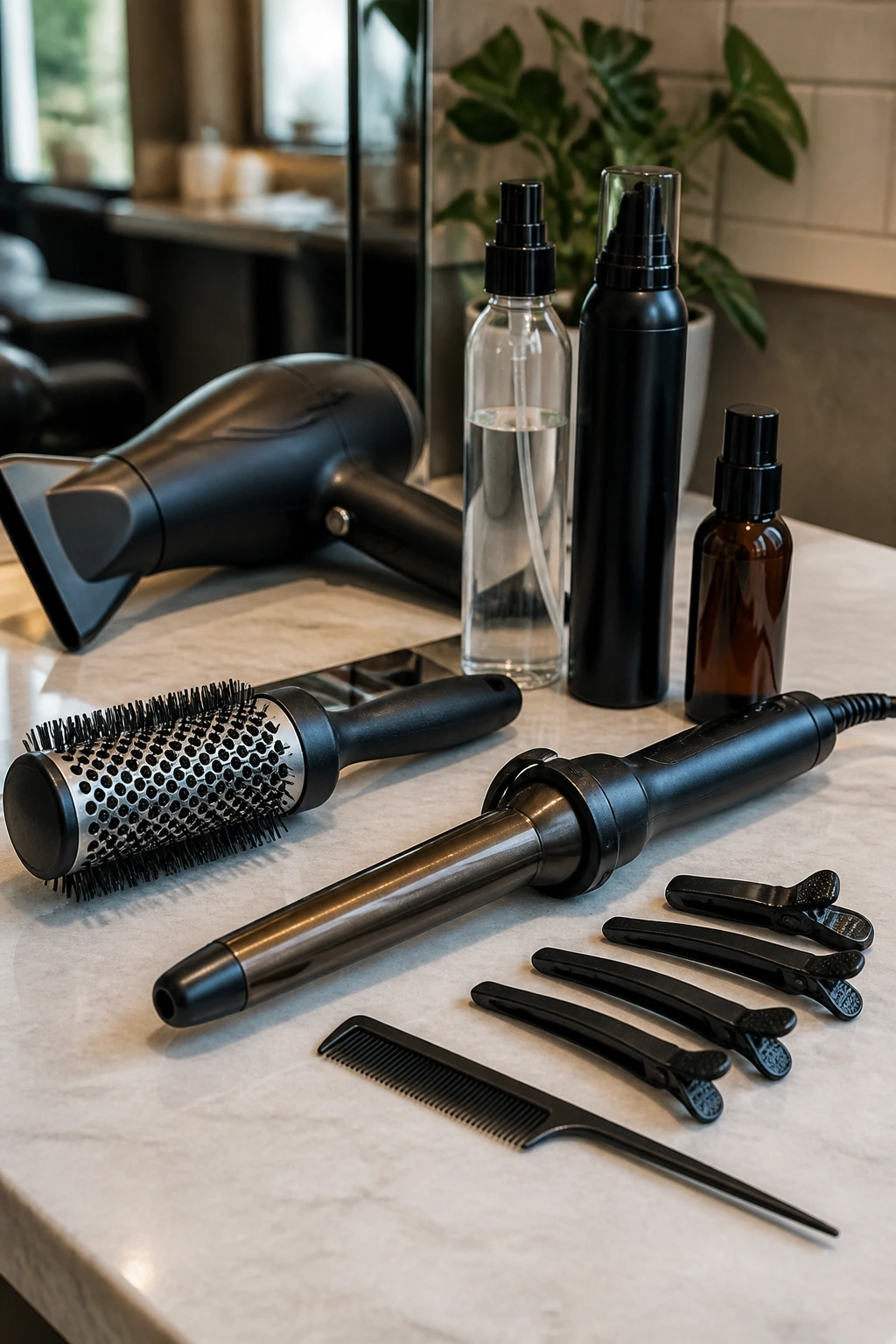
A blow dryer with a nozzle attachment: Directs airflow down the hair shaft and keeps the shape smoother at the ends.
-
A 1.25-inch curling iron or wand: Useful for bending the front pieces away from the cheeks without making the whole style curly.
-
A round brush, 1.5 to 2 inches: Helps lift layers at the crown and add that soft bevel around the face.
-
Sectioning clips: Keep long hair organized while you dry or style it in pieces instead of blasting the whole head at once.
-
A tail comb: Handy for fixing a part cleanly and drawing precise front sections.
-
Heat protectant spray: Non-negotiable if you use hot tools more than once a week.
-
Lightweight mousse or root spray: Gives fine or flat hair a little lift where the round face needs it most.
-
A smoothing cream or serum: Use a pea-sized amount on the mid-lengths and ends so layered cuts do not look frayed.
How to Wear These Cuts Day to Day
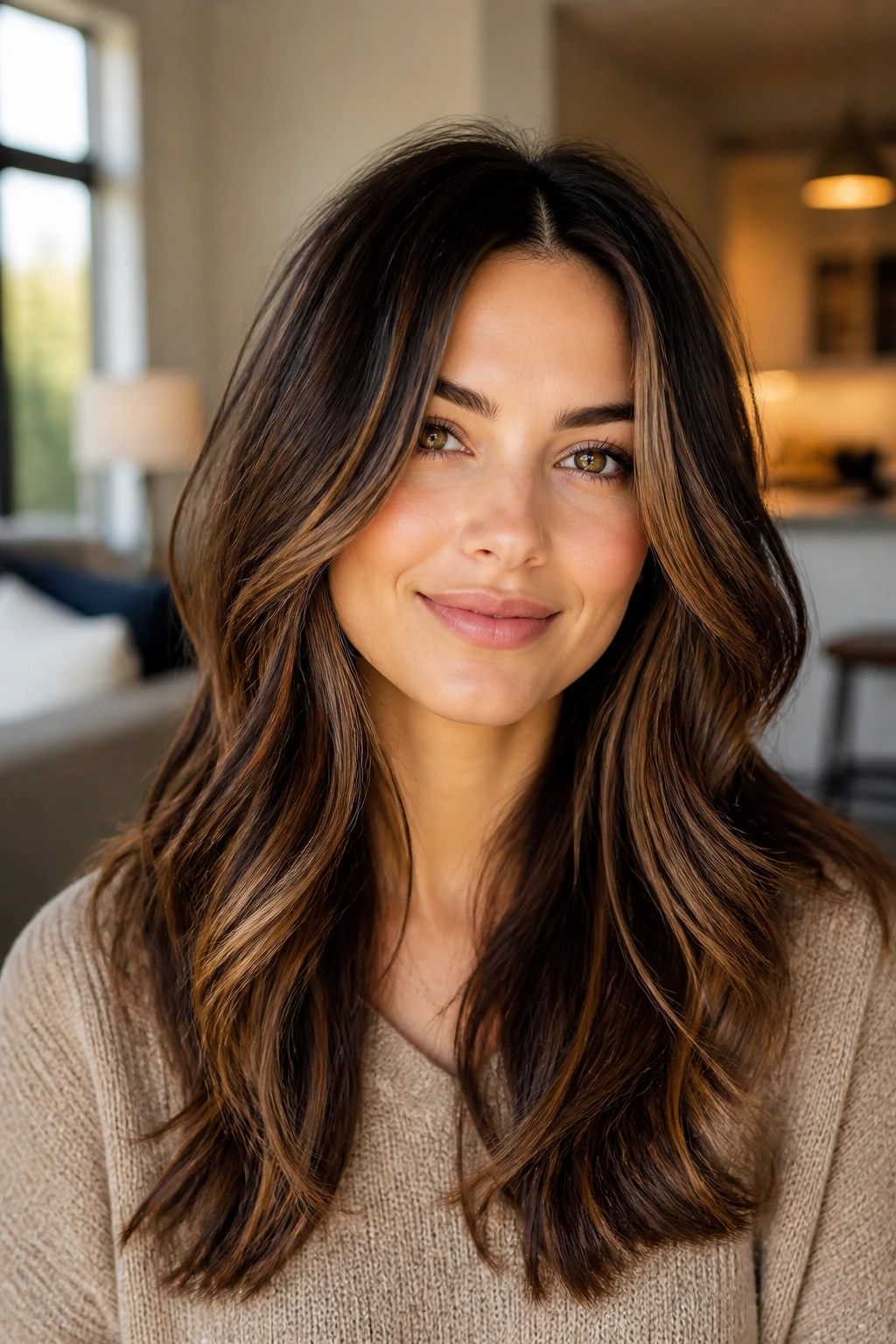
Blowout finish: Use a round brush to lift the crown and bend the front pieces away from the cheeks. This suits butterfly cuts, feathered layers, and curtain bangs best. Keep the ends smooth so the cut reads polished, not poofy.
Air-dried texture: Work in a light cream or foam, scrunch gently, and leave the roots alone until they’re dry. This is where long shags, lived-in layers, and curly cuts earn their keep. If the front wants to fall into the face, clip it back while it dries for 10 minutes.
Sleek finish: A paddle brush and a low-heat pass from roots to ends can make blunt cuts, U-shapes, and long one-length styles look especially sharp. Tuck one side behind the ear if you want to open the face a little more.
Second-day refresh: Mist the mid-lengths, re-bend the front pieces, and lift the crown with dry shampoo or root spray. Long hair on a round face can go flat overnight, and once the crown collapses, the face looks wider. Two quick minutes fixes that.
Common Mistakes That Make Round Faces Look Wider
-
Starting layers at the cheekbone: The hair lands right on the widest part of the face and makes it look broader. Fix it by pushing the shortest front layer down to the jawline or collarbone.
-
Cutting bangs too short and too thick: Heavy fringe creates a horizontal line across the face. Ask for curtain bangs, side-swept fringe, or wispy bangs that blend into the sides.
-
Over-thinning the ends: Hair can start to look hollow and wide at the top, then stringy at the bottom. Keep the perimeter full enough to hold shape.
-
Ignoring the natural part: Forcing a center part on hair that wants to live off-center can make the cut sit awkwardly. Cut and style with the part you actually wear.
-
Adding width at the sides with big outward curls: A curl that flips out at cheek level can make the face read wider. Bend the hair away from the face or keep the curve lower and looser.
-
Going too short around the ears: That creates bulk at the sides and steals length from the silhouette. Keep the area near the ears soft and blended.
Variations and Adaptations to Try
The Fine-Hair Lift: Choose invisible layers or a blunt long cut with subtle front angles. This keeps the hair looking full while still giving the face a narrow, vertical line.
The Thick-Hair Release: Ask for internal layers, a U-shape, or soft razor work through the mids. The goal is to remove bulk without exposing the ends.
The Curly-Safe Shape: Use a dry cut with long front framing that respects shrinkage. The curls should land below the cheekbone when dry, not spring up into the face.
The Bang-Free Frame: If bangs are not your thing, ask for collarbone-starting front pieces that angle toward the chest. You still get face shaping without the maintenance of fringe.
The Low-Maintenance Air-Dry Version: Pick long shags, lived-in layers, or soft butterfly layers and keep the shortest pieces long. These cuts still look styled when they dry with a little natural wave.
The Sleek Photo-Friendly Version: Go with blunt length, beveled ends, or a V-cut and pair it with a deep side part. The shape looks crisp in photos and holds a neat outline.
Keeping the Shape Between Salon Visits
Long hair is forgiving, but the shape around a round face can drift faster than the length itself. The shortest front pieces grow out first, and once they drop past the sweet spot, the cut can lose its angle. For layered cuts, a trim every 8 to 12 weeks usually keeps the shape honest. If you wear bangs, you may want a tiny bang trim every 3 to 5 weeks.
Curly cuts need a little more attention than straight cuts because shrinkage changes the face frame as the hair dries and stretches over time. Ask your stylist to cut with your styling habits in mind, not just the day you sit in the chair. If you usually air-dry, say so. If you hot-tool only on special occasions, say that too.
One more thing: long hair that’s grown past its shape can quietly add width back to the face. The ends get blunt in the wrong place, the front pieces lose their angle, and suddenly the cut feels heavy. That’s not a sign you need to go shorter. It usually means you need a clean reshape.
Frequently Asked Questions
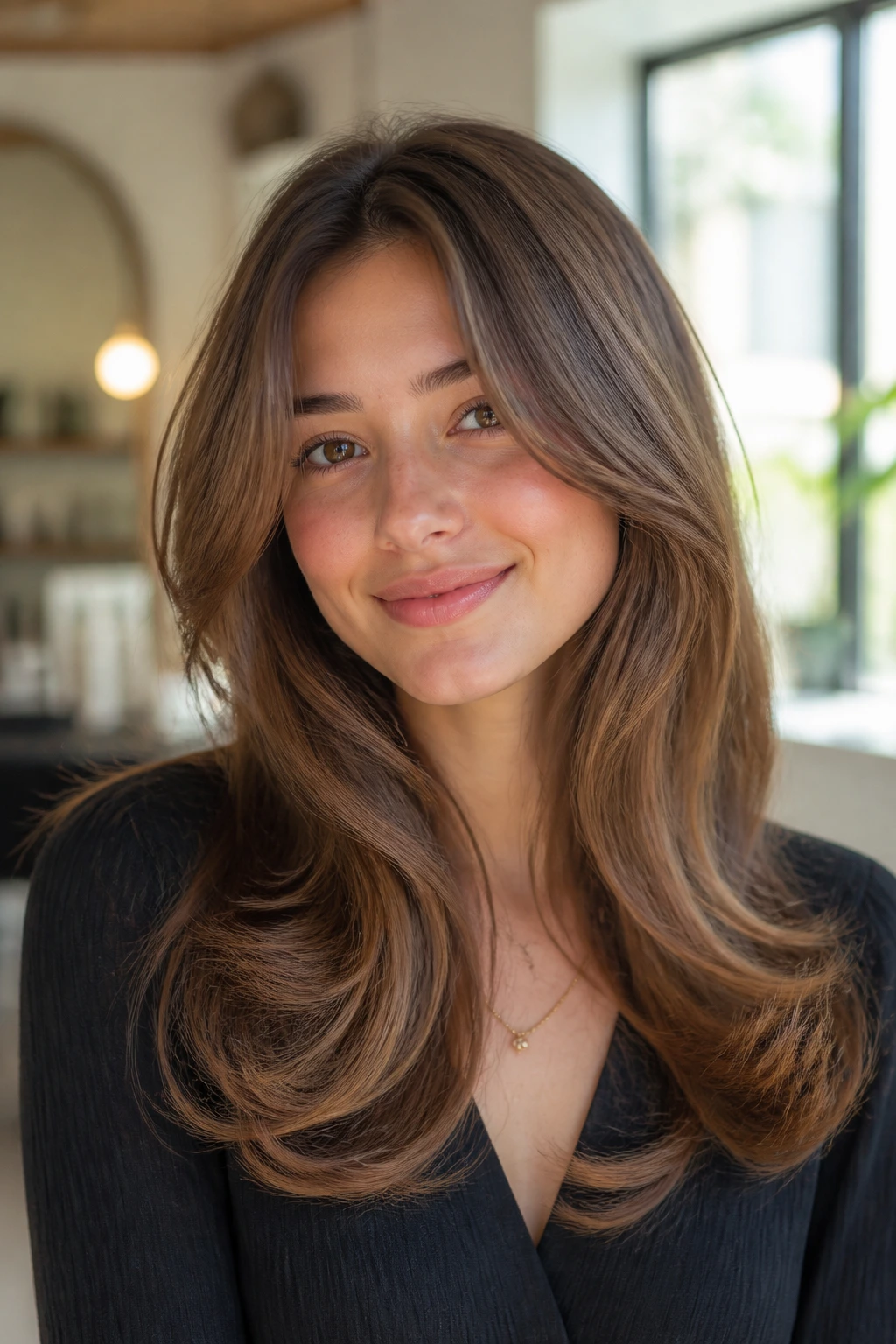
What haircut makes a round face look slimmer with long hair?
Long layers that start below the chin, a soft butterfly cut, or a deep side part all help because they move the eye down instead of across. A little length near the collarbone does more than a lot of dramatic layering at the cheeks.
Are curtain bangs good for round faces?
Yes, as long as they’re cut long enough to open at the temples. Short, dense curtain bangs can feel boxy; longer, softer ones create a diagonal frame that flatters the face.
Should round faces avoid blunt haircuts?
Not entirely. A blunt long cut can look very good if the part is off-center and the front has some subtle angle. The problem is usually a flat, straight-across shape that sits at the cheekbone.
Do layers make a round face look wider?
They can, if the layers start too high or flare outward at the sides. Long, blended layers placed below the chin usually do the opposite and make the face feel longer.
What if my hair is fine and flat?
Choose invisible layers, a blunt long cut, or a soft butterfly shape with the shortest pieces kept long. Heavy texturizing can make fine hair go see-through at the ends, which is the last thing you want.
What if my hair is thick and bulky?
Ask for internal layers or a U-shape so the hair loses bulk inside the shape rather than at the perimeter. That keeps the ends looking full while stopping the sides from ballooning.
Are side parts better than center parts for round faces?
Often, yes, because they add asymmetry and break up the roundness. A center part can still work if the layers are long and the front pieces stay below the chin.
Can curly hair pull off these cuts?
Absolutely, but the cut should be shaped around the curl pattern when dry or nearly dry. Curly hair can spring up several inches, so the front pieces need to be planned with shrinkage in mind.
How short can the front pieces be?
For most round faces, the safest range is below the chin, with collarbone length being especially forgiving. Cheekbone-length front pieces often create more width than you bargained for.
The Cuts Worth Saving
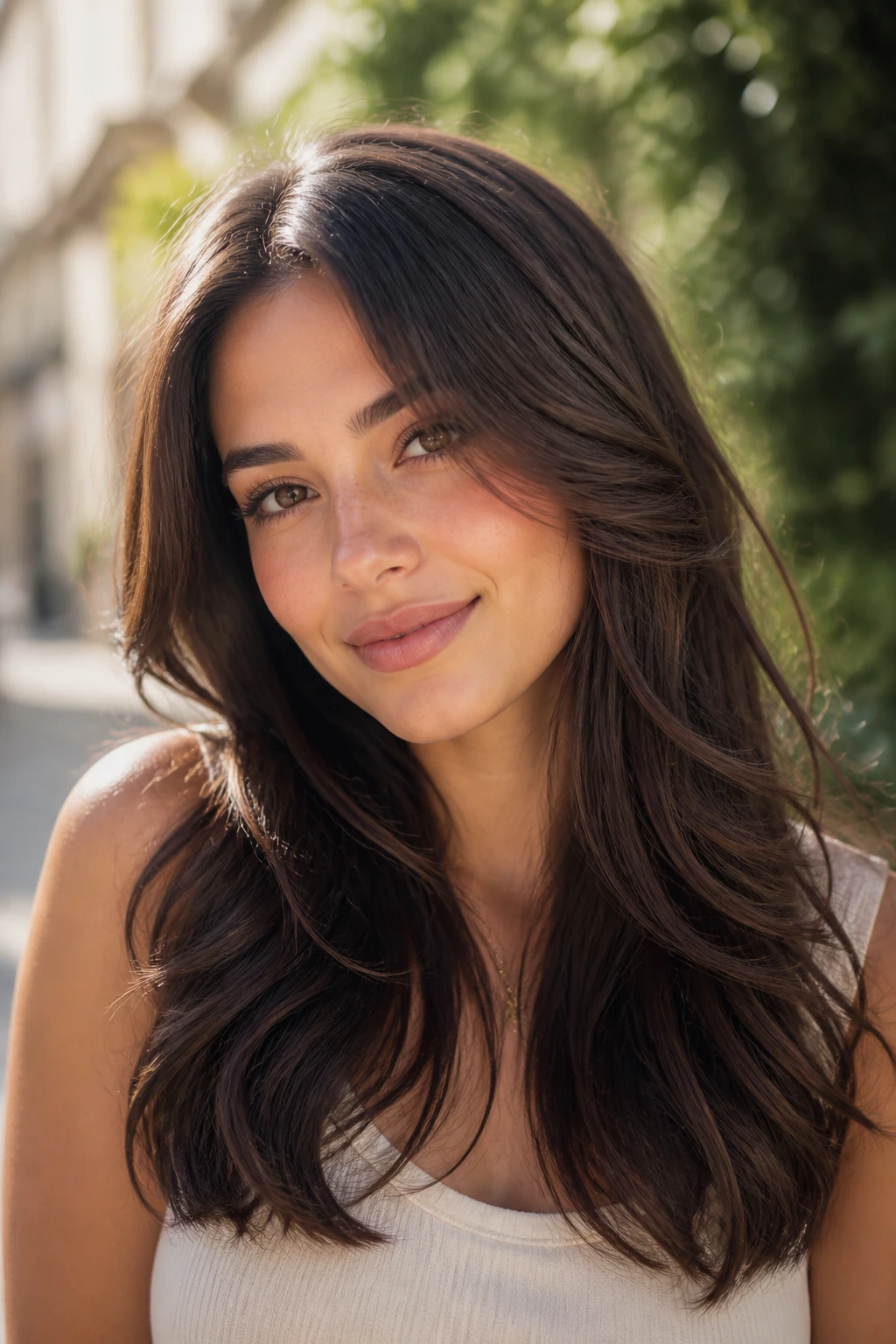
Long hair on a round face can look soft, elegant, and clean when the shape is doing real work. The best cuts here are not the loudest ones. They’re the ones that place weight in the right places, keep the front from stopping at the widest part of the face, and let the length fall with intention.
If you’re taking anything to a stylist, take the idea of where the cut starts, not just what it’s called. That detail changes everything. A butterfly cut, a U-shape, a blunt long cut, or a shag can all flatter a round face if the front frame and layer placement are handled with care.
Bring one photo for the vibe, one for the front, and one for the back. Then talk about where you want the first layer to land. That’s where the good haircut lives.