



Straight hair and oval faces are a useful pairing for one simple reason: the hair shows the cut exactly as it was made. No curl pattern blurs the line. No wave hides a wonky angle. If the shape is clean, it looks sharp; if it’s off by half an inch, you’ll see that too.
That’s why haircuts for straight hair and oval faces can be such a good place to experiment. Oval faces can handle a center part, a side part, fringe, a crop, a bob, or length that skims the chest. Straight hair gives you the cleanest possible read on all of it. A blunt edge at the jaw says something different from a layered collarbone cut, and a soft curtain bang changes the whole balance of the face without asking for a dramatic chop.
The trick is not “What haircut is trendy?” The trick is “What shape will still look intentional after your second day of wear?” Straight hair tends to fall exactly where it wants to fall, which is both a gift and a little test. If the silhouette works on day one, it usually keeps working. If it doesn’t, you’re stuck watching it go limp in real time.
So let’s get into the cuts that make straight hair look deliberate, polished, and a little more interesting than a plain length drop. Some are blunt and crisp. Some soften the cheekbones. Some give you movement without turning the ends into wisps. All of them are worth a serious look.
Why You’ll Love This Collection
-
Straight hair makes the shape visible. A blunt bob, an A-line line, or a soft shag reads cleanly because the strands don’t hide the scissors’ work.
-
Oval faces can wear more lengths than most. You can go short, shoulder-length, or long without fighting your proportions, which means the haircut gets to be the main event.
-
There’s a cut here for low effort and high polish. Some styles need a five-minute blow-dry; others look good after a quick flat-iron pass and a tuck behind one ear.
-
Fine and thick straight hair both get options. The right cut can fake fullness at the ends or take weight out of dense hair so it stops hanging like a curtain.
-
Bangs are not off limits. Curtain fringe, bottleneck bangs, micro bangs, and soft face-framing pieces all work when they’re placed with the face shape in mind.
-
The maintenance is honest. You’ll know which cuts need trims every six weeks and which ones can grow a little longer before they start looking fuzzy.
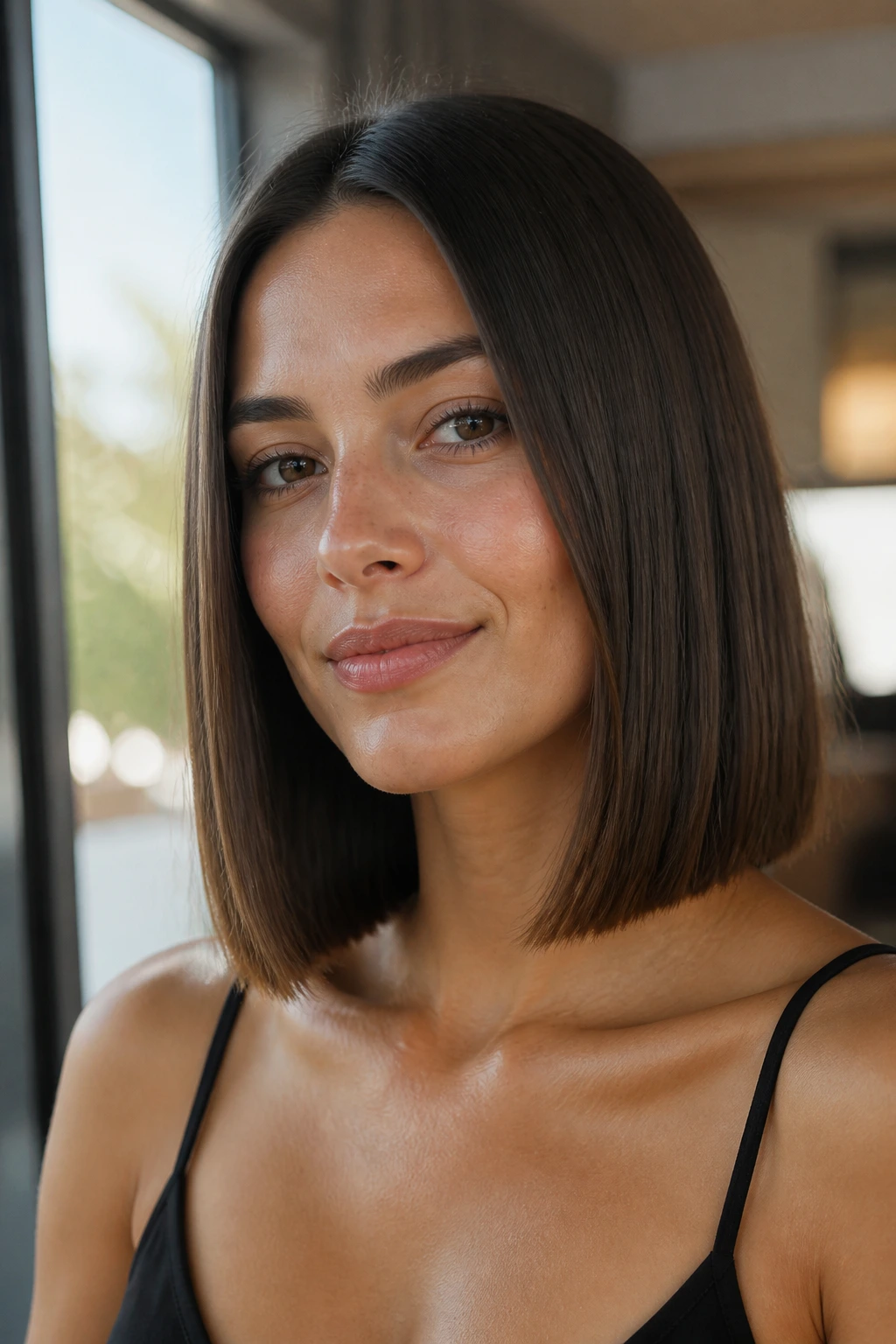
1. The Collarbone Lob
The collarbone lob is the haircut I’d put on the shortlist first. It lands in that sweet spot where straight hair still has enough length to move, but the line stays clear enough to feel purposeful. On an oval face, the length is especially forgiving because it sits near the widest part of the face without crowding the jaw.
Why It Works
A straight lob is all about the edge. If the perimeter lands right at or just below the collarbone, the cut looks crisp instead of droopy. That matters with straight hair, because there’s no texture to break up a bad shape.
Ask for a mostly blunt line with only the lightest internal shaping if your hair is dense. If your hair is fine, keep the ends as solid as possible. Too many layers here and the cut starts to look like it lost its nerve.
A little bend at the ends helps. Not a curl. Just a soft inward turn with a flat iron or round brush. That tiny motion keeps the cut from looking like it was clipped and forgotten.
What to Ask Your Stylist For
- A collarbone length that grazes, not passes, the clavicle
- A blunt or near-blunt perimeter
- Very light face framing, if any
- No heavy texturizing through the ends
Best for: straight hair that needs structure, not fluff.
Watch for: if your hair flips outward at the ends, keep the length a touch longer than the collarbone so it doesn’t kick up awkwardly.
2. The Jawline French Bob
A jawline bob is a bold little cut, and straight hair makes it look even cleaner. Oval faces can wear it without feeling boxed in, because the face shape already has balance. When the line hits the jaw just right, the whole face looks more defined.
Why It Works
This bob is about exposing shape, not hiding behind length. The edge sits near the jaw, which means your cheekbones get a chance to speak up. On straight hair, that line reads sharp instead of soft and fuzzy, which is half the appeal.
I like this cut best when it’s slightly tucked under rather than stick-straight. That tiny bit of curve keeps it from looking severe. If the hair is thick, a little internal removal can stop the ends from puffing outward like a triangle.
The French bob also works well with a natural side part. A deep center part can make the face look a little longer, which may be fine if you want that effect, but the side part usually gives this cut more life.
Tip: keep the neckline clean. A fuzzy nape ruins the crisp little rectangle of this cut fast.
3. The Glass-Hair One-Length Cut
If your hair is truly straight and you like a sleek finish, this one is hard to beat. The glass-hair cut is a one-length shape with a glossy, uninterrupted surface, and it depends on precision. Oval faces can wear it because the symmetry complements the face instead of fighting it.
Why It Works
Straight hair loves a blunt line. It makes the ends look denser, the shape look neater, and the whole head look intentional with almost no extra work. The one-length cut also gives you a great base if you wear your hair tucked behind the ears or clipped back on one side.
The catch is upkeep. Split ends show quickly on a clean line, so this is not the cut to forget for six months. Keep the ends trimmed before they start looking wispy.
How to Wear It
- Center part for a severe, polished look
- Deep side part when you want a little lift
- Flat iron only the top layer if you need extra sheen
- Finish with a tiny amount of serum on the last two inches
No heavy products here. Straight hair gets greasy fast when you pile on too much shine cream.
4. Curtain Bangs with Shoulder-Length Ends
Curtain bangs are one of the easiest ways to change straight hair without losing length. On an oval face, they’re especially useful because they open at the cheekbones and let the face keep its natural balance. Shoulder-length ends keep the whole thing from feeling too short or too cute.
Why It Works
The key with curtain bangs is where they start and where they fall. If the shortest piece lands around the cheekbone and the sides sweep back toward the jaw, the fringe frames the face instead of closing it in. Straight hair keeps that shape from frizzing into a cloud.
This cut is also kinder than blunt bangs if you’re unsure about fringe. It grows out more gracefully. The bangs can be parted in the middle, pushed to the side, or blended back into the rest of the hair on lazy days.
A Good Styling Habit
Blow-dry the bangs first, before the rest of the head gets too dry. Use a round brush or even a medium velcro roller while they’re still damp. That keeps the bend soft instead of stiff.
If your forehead is shorter, ask for a slightly longer curtain shape so it doesn’t eat up too much vertical space on the face. Small adjustment. Big difference.
5. The Long U-Shape
A U-shaped cut is one of those quietly smart shapes that works better than it sounds. The back stays a little fuller, the front pieces taper gently, and straight hair keeps the curve visible. Oval faces like it because the length keeps the face from looking overexposed while the shape still has movement.
Why It Works
Straight hair can go heavy at the bottom in a bad way. A U-shape solves that without chopping everything off. It gives the hair a little arc, which is enough to stop long lengths from hanging in a flat rectangle.
This is a good answer if you want long hair but hate the look of a blunt sheet. The curve softens the visual weight around the chest and shoulders. It also makes ponytails look better, which sounds minor until you try living with a blunt long cut every day.
What to Tell the Stylist
Keep the shortest front pieces around the clavicle or just below it. If the curve starts too high, you lose the fullness that makes this cut work. On very thick straight hair, subtle internal shaping near the back can help the silhouette move.
A tiny note: the U-shape is better than long layers if your hair is fine and straight but not abundant. Too many layers there can make the bottom look see-through.
6. The Soft A-Line Bob
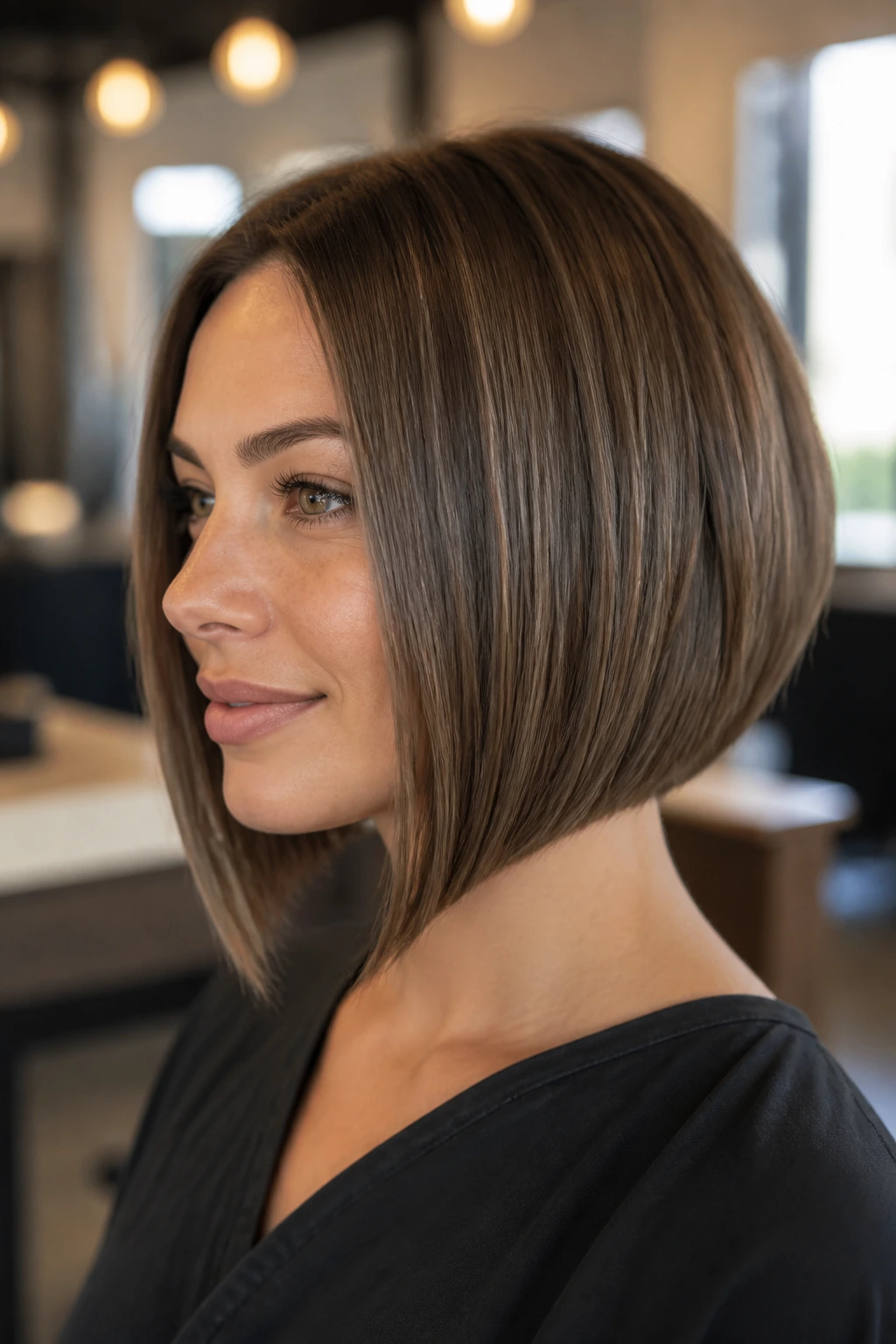
The A-line bob is a little sharper than a classic bob, with the front pieces longer than the back. Straight hair shows the angle beautifully. Oval faces can carry the slant without looking top-heavy, especially when the front lands near the chin or just below it.
Why It Works
A good A-line bob creates motion without relying on loose layers. That matters on straight hair because the angle is enough to create interest on its own. The back sits tidy, the front swings a touch, and the whole thing looks deliberate from every side.
Go too steep, though, and the cut starts to feel dated fast. I prefer a soft angle — enough to read in profile, not enough to shout. That way the bob still feels modern and easy to style.
A slight side part tends to flatter this shape more than a dead-center part. The side part gives the front section a bit of lift and keeps the line from feeling too rigid.
Best for: anyone who wants structure with a little movement at the jawline.
7. The Asymmetrical Sleek Bob
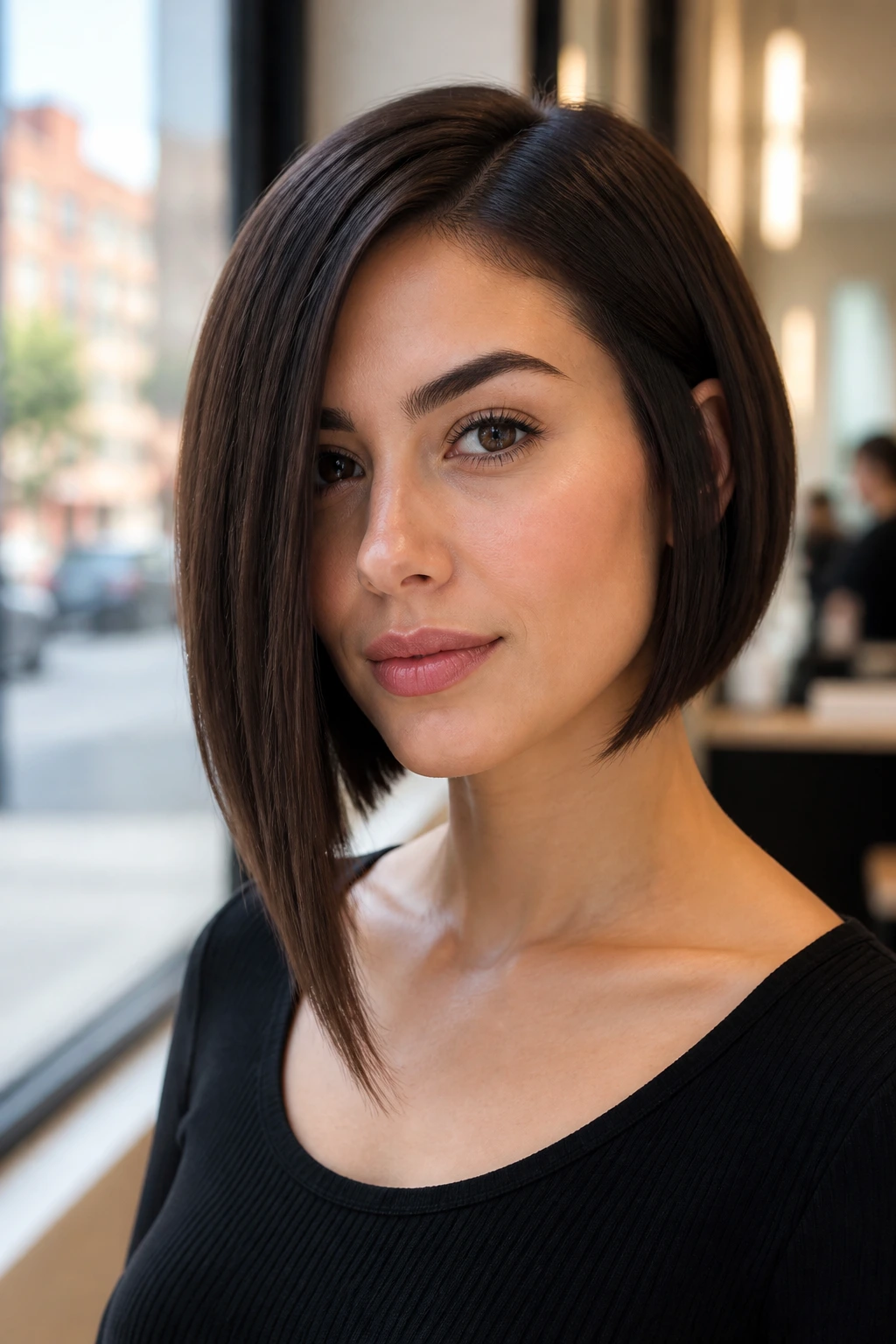
A sleek asymmetrical bob is not shy. One side is longer than the other, and straight hair makes the difference easy to see. On an oval face, the cut feels balanced even though it isn’t symmetrical, which is why it works so well here.
Why It Works
The haircut does the visual work for you. Straight hair lays down the angle cleanly, so the asymmetry looks purposeful rather than accidental. That’s useful if you want something sharp but not fussy.
This cut needs a clear part and regular trims. If the line grows out unevenly, the whole point gets muddy. It also looks best when the ends are polished, not frayed, so the bluntness has to stay intact.
What Makes It Feel Fresh
A subtle asymmetry is usually better than a dramatic one. You want a difference that registers in profile and in photos, not a cut that feels like a stunt. Keep the longer side just a couple of inches below the other unless you want a much more obvious statement.
Good for straight hair. Very good for people who wear simple clothes and want the haircut to do the talking.
8. The Face-Framing Layer Cut
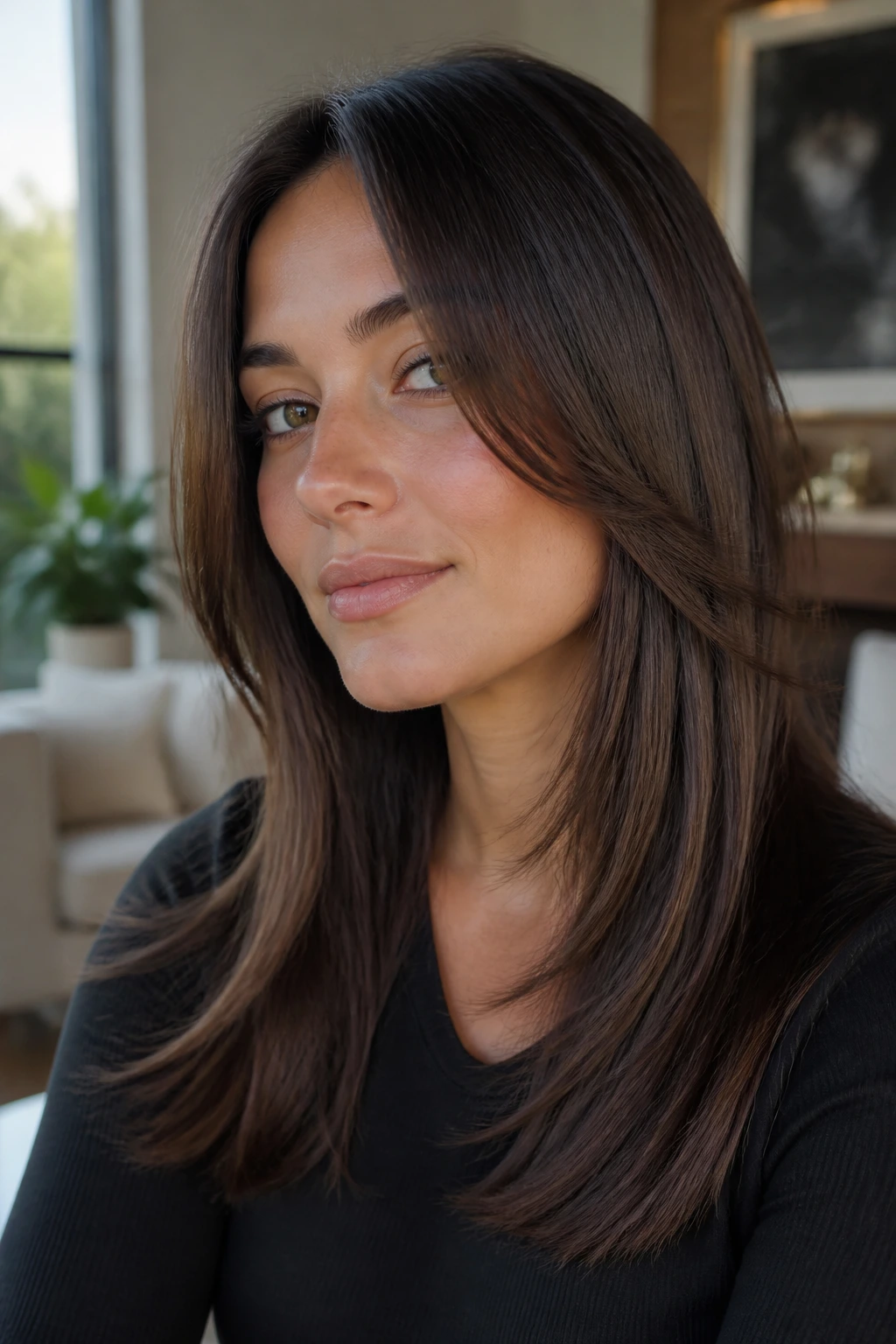
This is the haircut for someone who wants movement without losing the line of the perimeter. The layers stay light and strategic, usually starting around the cheekbone or just below the chin, which makes them especially friendly to oval faces and straight hair.
Why It Works
The mistake with layers on straight hair is going too high and too heavy. Then the ends start to look ragged. Face-framing layers avoid that by keeping the bulk where it belongs and trimming only around the face.
That light shaping can make the cheekbones pop without adding too much softness. It also helps long hair feel less like a single sheet, which is a real problem when hair hangs straight and heavy.
If your hair is fine, keep the layers long and sparse. If it’s thick, you can go a little more generous with the front pieces. Either way, the goal is to create a frame, not a feather duster.
Pro tip: ask for the shortest face-framing piece to sit where your cheekbone begins, not much higher.
9. The Italian Bob
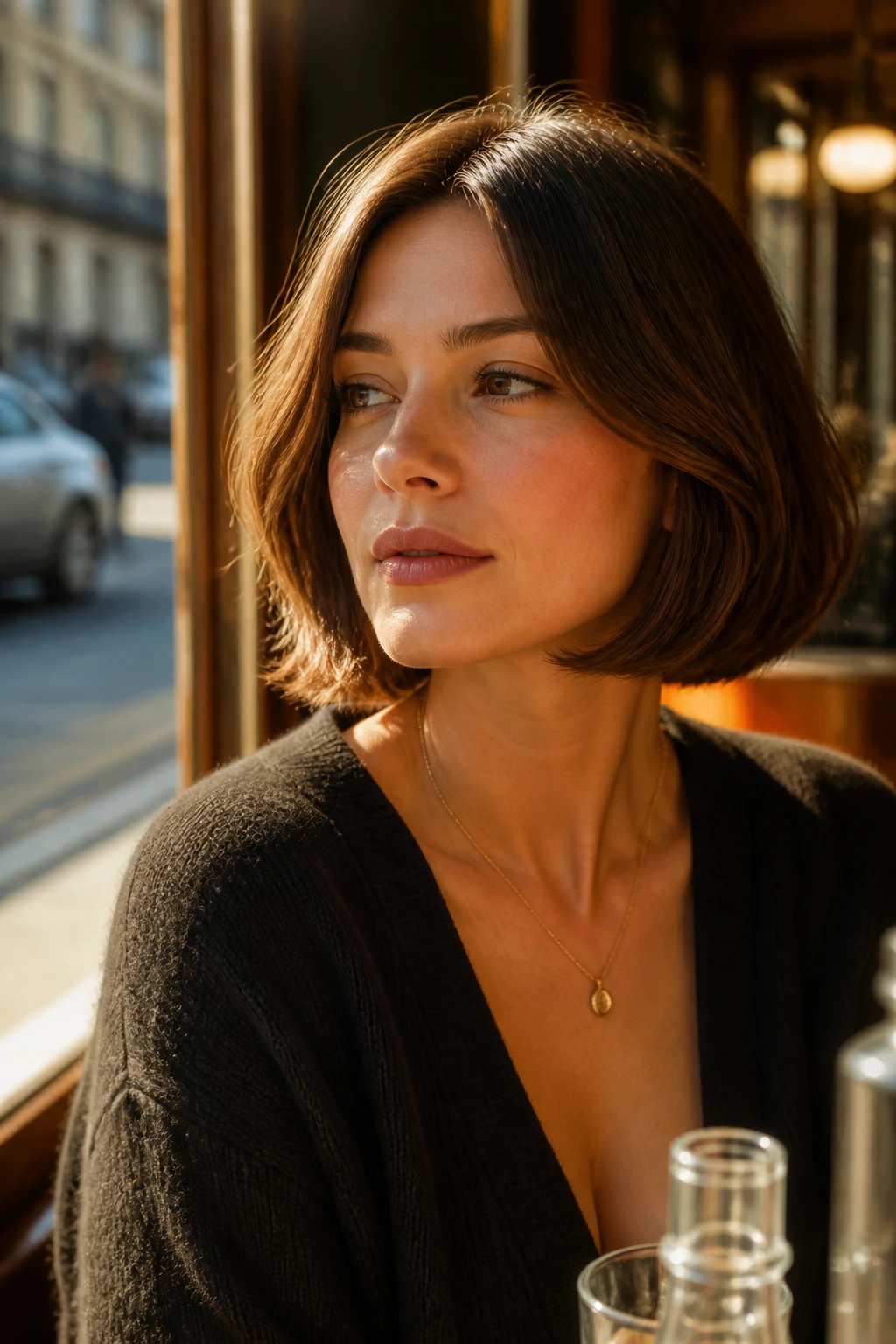
The Italian bob has a little more body than a French bob and a little more polish than a shag. Straight hair gives it a neat surface, while oval faces can handle the rounded volume around the cheeks and jaw. It’s the kind of bob that looks expensive even when it’s not trying very hard.
Why It Works
This cut usually sits around the jaw to upper neck, and the shape is fuller through the mid-lengths. On straight hair, that extra fullness keeps the bob from collapsing into a flat line. It’s especially good if your hair is medium to thick and you want the edges to feel plush.
The Italian bob also plays well with a soft bend under the ends. That inward curve gives it the rounded, lived-in finish that makes the style feel richer than a plain chin-length bob.
Not a fan of a severe line? This is your bob. It still has structure, but it’s less clipped and more shaped.
A side part can soften the face a little more, while a center part makes the whole thing look cleaner and more graphic.
10. The Long-Top Pixie
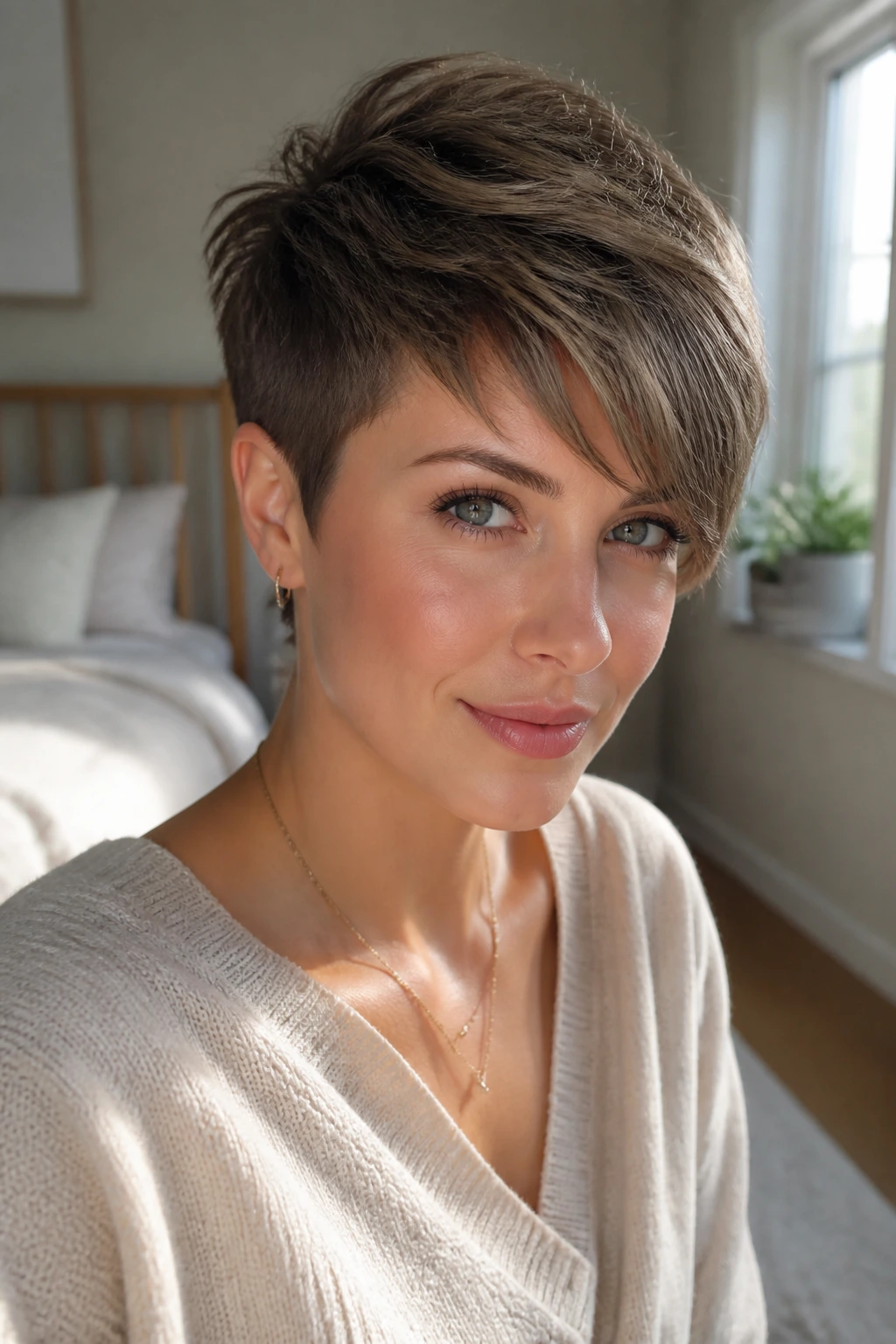
Short hair on straight strands can look extremely crisp, which is either exciting or terrifying depending on your mood. A pixie with a little extra length on top gives straight hair room to show texture without losing the shape. Oval faces are one of the easiest face shapes to pair with a pixie because the proportions stay balanced.
Why It Works
The top length matters here. Too short and the cut can feel severe; too long and it starts to collapse. Keeping the top around two to three inches gives you enough room to sweep, lift, or part it.
Straight hair also makes the outline of the pixie easy to read. The sides can stay neat, the nape can stay clean, and the top can be styled forward or up with a tiny amount of paste. No guessing. No hidden curls puffing up where you don’t want them.
Things to Ask For
- Softly tapered sides
- Enough length on top to sweep forward or sideways
- A clean nape, not a fuzzy one
- Light texture through the crown only
If you want low maintenance, this is not the low-maintenance myth people love to sell. Pixies need trims. They just pay you back with shape.
11. The Bixie Cut
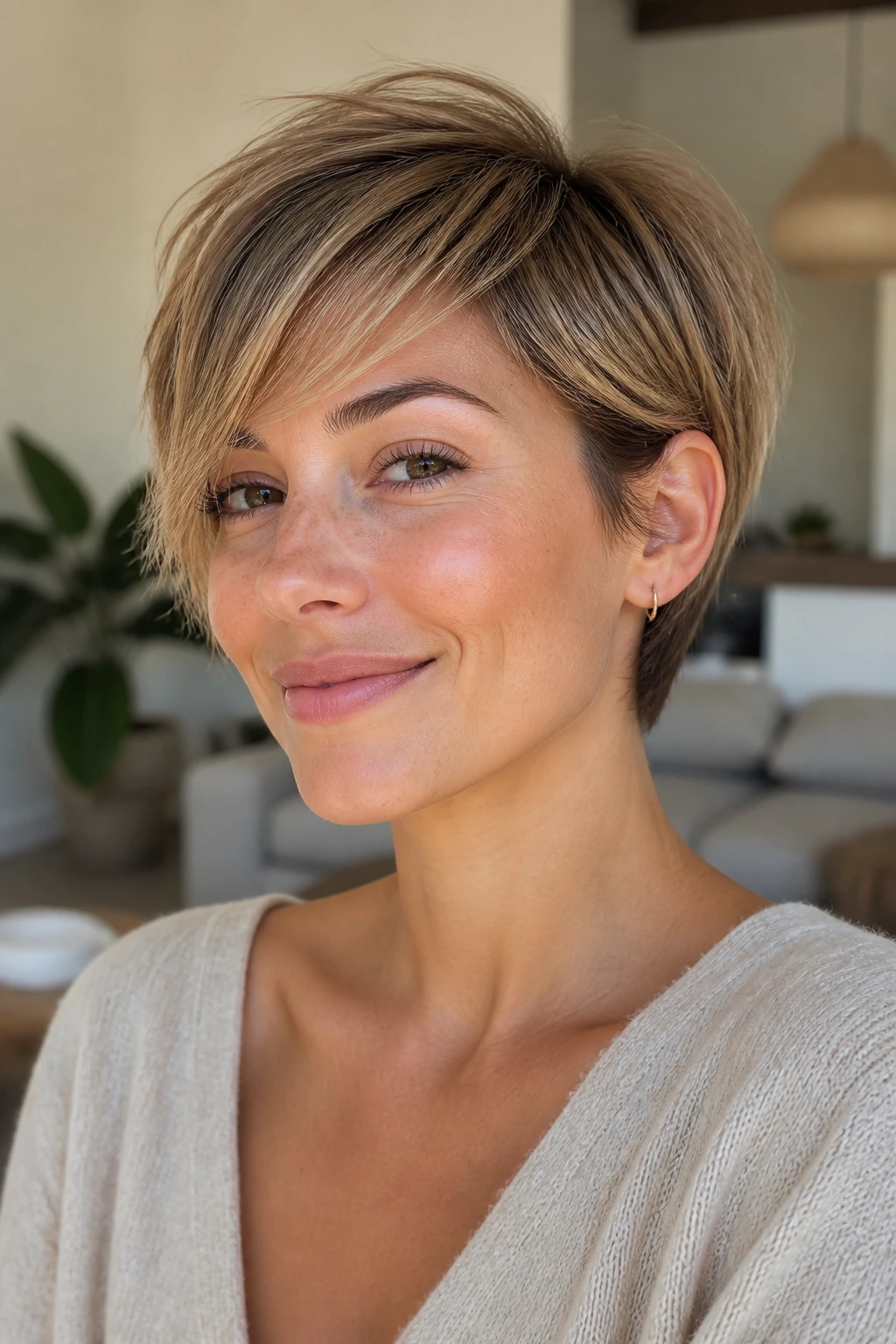
The bixie sits between a bob and a pixie, which is why it’s so useful. Straight hair keeps the shape neat, and oval faces can handle the shorter length without the cut overpowering the face. It’s a nice middle ground if you want something shorter but aren’t ready to commit to a true crop.
Why It Works
A bixie works because it has edges but not too many of them. The back usually sits a little shorter, the top has some lift, and the sides skim around the ears or cheekbones. Straight hair keeps those zones clean, so the cut reads as intentional rather than messy.
I like this shape when someone wants movement and wants out of the grow-out awkward zone at the same time. It’s a smart in-between cut. You get enough length to tuck, clip, or flatter a jawline, but not so much that the whole style goes flat by lunchtime.
It’s also a good cut for people whose hair has enough density to hold a little shape without collapsing.
12. The Rounded Pageboy
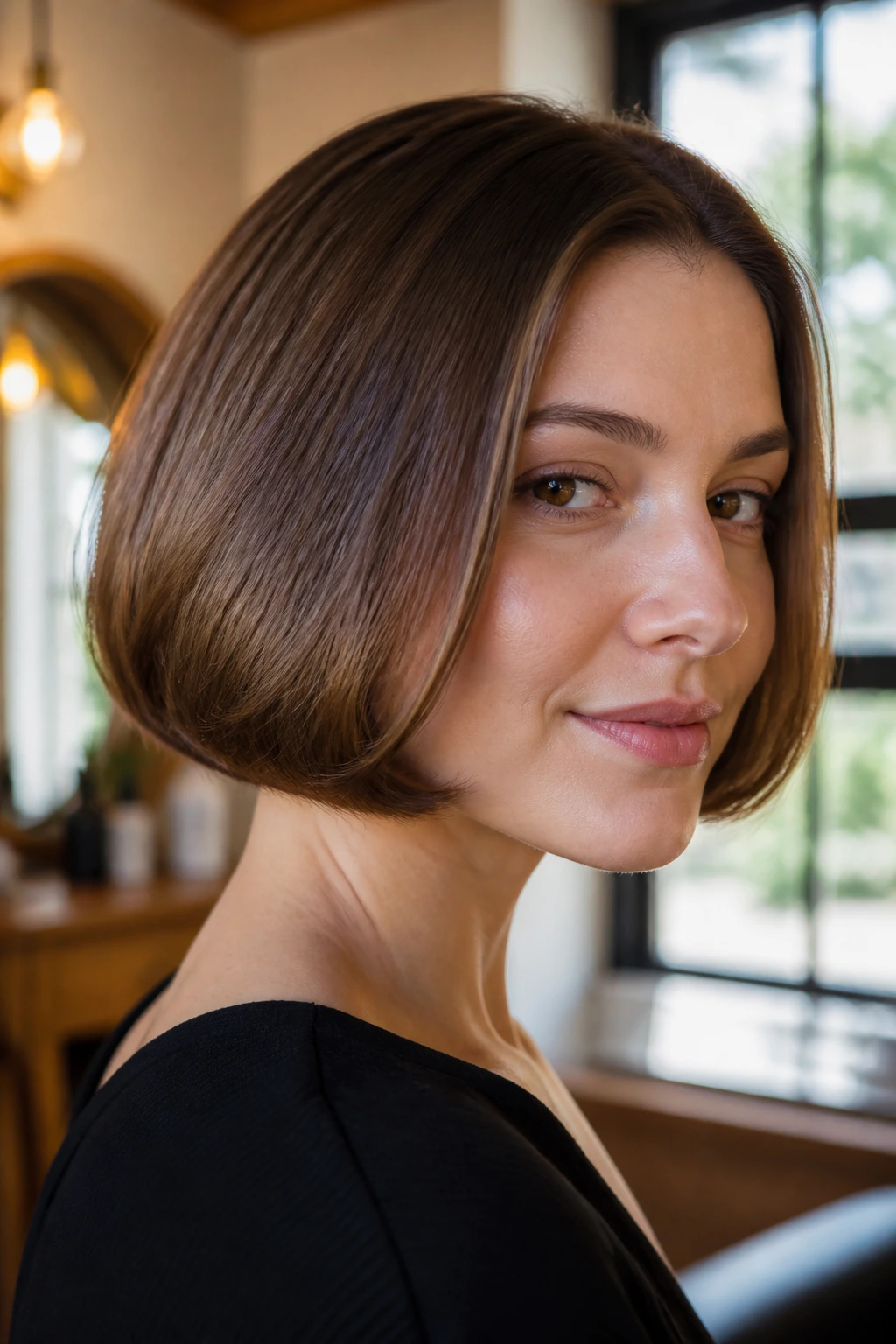
The pageboy is making a quiet return in a lot of salons because it solves a real problem: straight hair that hangs too bluntly. The rounded form gives the cut a tucked-under edge, which oval faces can wear easily because the curve mirrors the face without crowding it.
Why It Works
Straight hair naturally wants to fall straight. A pageboy shape gives it a reason to bend. That makes the haircut look more finished, especially if the ends are brushed under with a round brush or clipped into shape while they cool.
This cut likes density. Very fine hair can lose some of the plushness that makes a pageboy look good. Medium to thick straight hair usually wears it better because the rounded silhouette stays visible.
There’s also something nice about the nape on this style. When the back is clean and the sides curve toward the jaw, the haircut looks neat from every angle, not just the front.
Best styling move: blow-dry the ends under, then leave them alone. Too much fiddling breaks the shape.
13. The Center-Part Tucked Lob

Some haircuts whisper instead of announce themselves. The center-part tucked lob is one of them. It uses clean symmetry, length around the collarbone, and the simple habit of tucking the front behind the ears to show the face properly. On an oval face, that center part feels natural rather than corrective.
Why It Works
Straight hair is made for this cut. The line stays smooth, the part stays visible, and the tucked sides give the whole style a little shape without needing a lot of product. If you want a haircut that looks calm, this is it.
The trick is to keep the ends healthy. Once the perimeter starts to fray, the neatness disappears. A blunt edge or a soft bevel at the bottom keeps the line from looking tired.
This cut is also friendly to earrings, which sounds small until you realize how often a haircut and jewelry are trying to share the same space. Tucking the hair shows the neck, the jaw, and whatever you’re wearing around your ears.
A tiny bit of root lift at the crown helps if your hair is very flat at the top. Not big volume. Just enough to stop the part from lying like a ruler.
14. The Soft Straight Shag
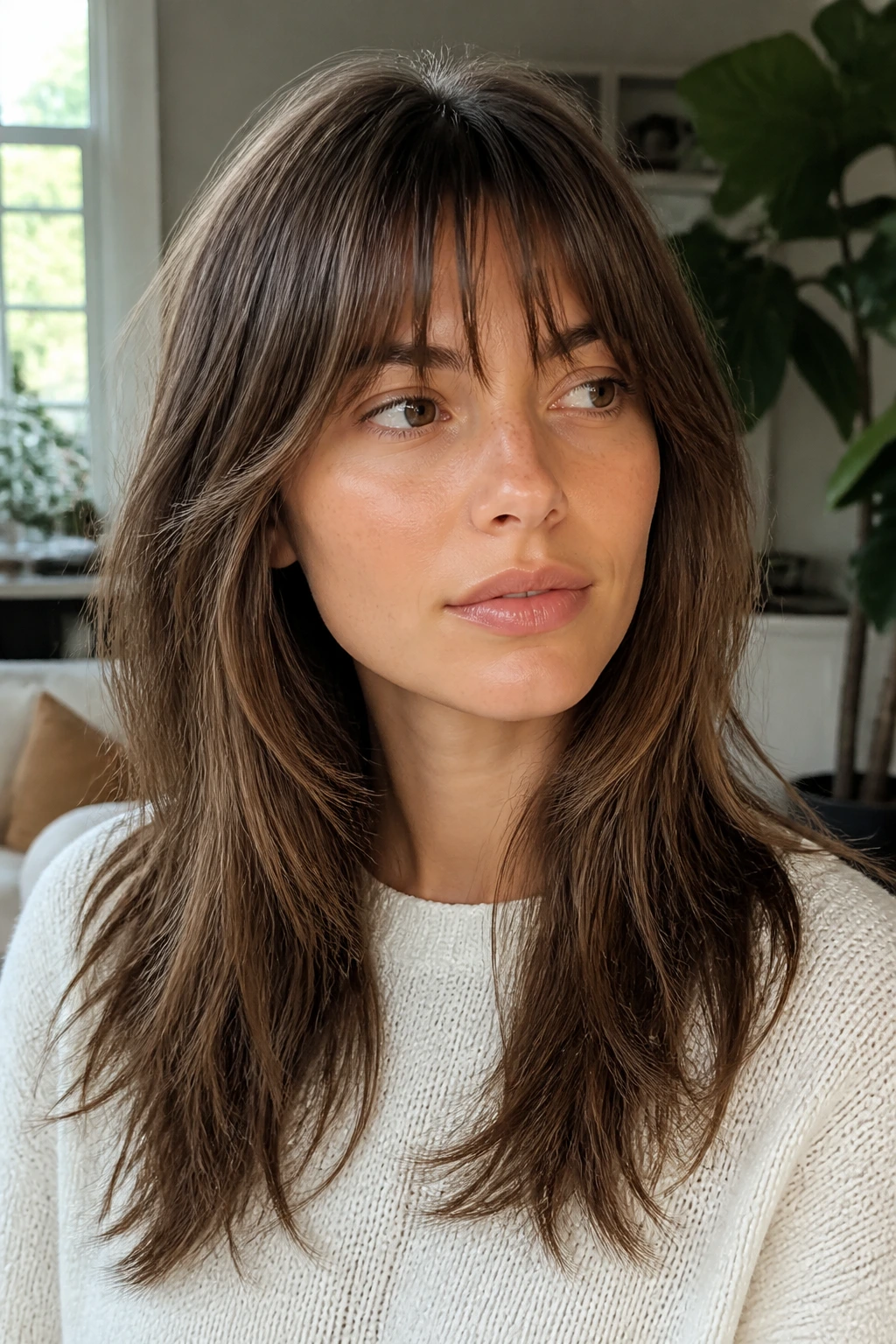
A shag on straight hair can go wrong fast if the layers are too choppy. But a soft straight shag — with long, subtle layers and a fringe that doesn’t try too hard — can be excellent on oval faces. It adds movement without turning the head into a pile of disconnected pieces.
Why It Works
Straight hair doesn’t blur the layer lines, so the shag has to be handled carefully. Keep the layers long enough to blend and soft enough to move. That gives you the slightly undone shape people want from a shag, without the thin, stringy ends that show up when the cut goes too far.
Oval faces can take the fringe because it breaks up the length in a useful place. If the bangs are kept light and piecey, the cut opens around the eyes instead of closing the face off.
What to Avoid
Do not ask for aggressive choppiness unless your hair is dense and you genuinely like a stronger shape. On fine straight hair, a heavy shag can look like the haircut got bored halfway through.
A touch of texture spray at the ends is enough. If you need more than that, the cut probably needs more structure.
15. The Micro Fringe Crop

A micro fringe is a decision. A real one. On straight hair, it creates a clean horizontal line that looks sharp and intentional, and oval faces can usually wear it because the face shape doesn’t need heavy correction. Pair it with a cropped bob or short shape and the whole look feels strong.
Why It Works
The short fringe pulls attention upward. That can be excellent if you want the eyes and brow line to lead, and straight hair keeps the edge crisp. If the fringe is cut blunt and the rest of the hair stays simple, the contrast does the work.
This is not the haircut for someone who wants to hide much. It shows the forehead. It shows the brow shape. It also requires more frequent trims than people expect, because even a quarter inch of growth changes the whole balance.
That said, it’s one of the most effective ways to make straight hair look edgy without using a lot of styling steps. A quick flat-iron pass at the front and you’re done.
Use it if: you like clean lines and don’t mind keeping the fringe tidy.
16. The Razor-Edge Lob
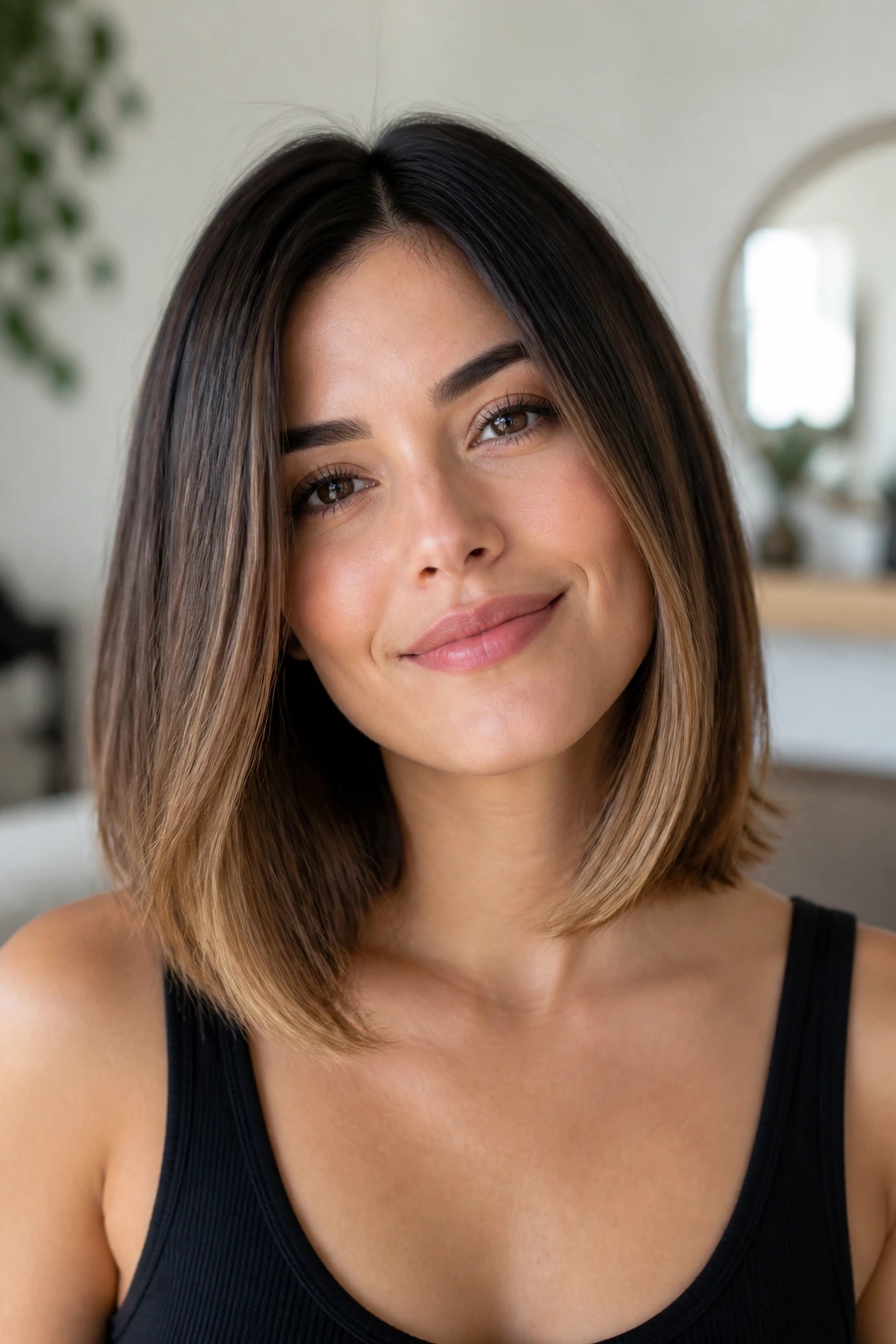
A razor-cut lob has a softer edge than a blunt one, but it still keeps enough shape to matter. Straight hair can wear this cut well because the ends gain a little air and movement without becoming fluffy. Oval faces get a gentle frame, not a hard line.
Why It Works
The razor technique thins the edges just enough to keep the lob from looking like a block. That’s useful when your hair is medium to thick and you want less bulk around the ends. The result is lighter, but not see-through.
I would not do this aggressively on very fine hair. Razor cutting can take away too much density and leave the ends looking pale. If your hair is fine, ask for a softer slide-cut effect instead of a heavy razor finish.
This cut looks especially good when the ends are bent in slightly, not flipped outward. That tiny inward turn makes the whole shape look cleaner and more finished.
17. The Bottleneck Bangs and Length Combo

Bottleneck bangs are a smarter version of fringe for a lot of people. They start narrower near the center of the forehead, then open out around the cheekbones. On straight hair, they lie neatly. On oval faces, they add interest without boxing in the upper half of the face.
Why It Works
The shape is subtle enough to feel modern but not so dramatic that it overwhelms the rest of the cut. Straight hair helps because the bangs stay controlled and the longer side pieces blend into the lengths more naturally.
This works especially well with long or collarbone-length hair. You get the softness of fringe without the commitment of full blunt bangs. The cut also gives the eyes a little frame, which is useful when the rest of the hair stays sleek.
Styling Note
Blow-dry the center short and the sides away from the face. That keeps the bottleneck opening visible instead of collapsing into a straight curtain. A small round brush or a flat brush and a finger twist both work fine.
If your hairline is low, keep the shortest part a touch longer so the fringe doesn’t eat your forehead.
18. The Invisible-Layer Collarbone Cut
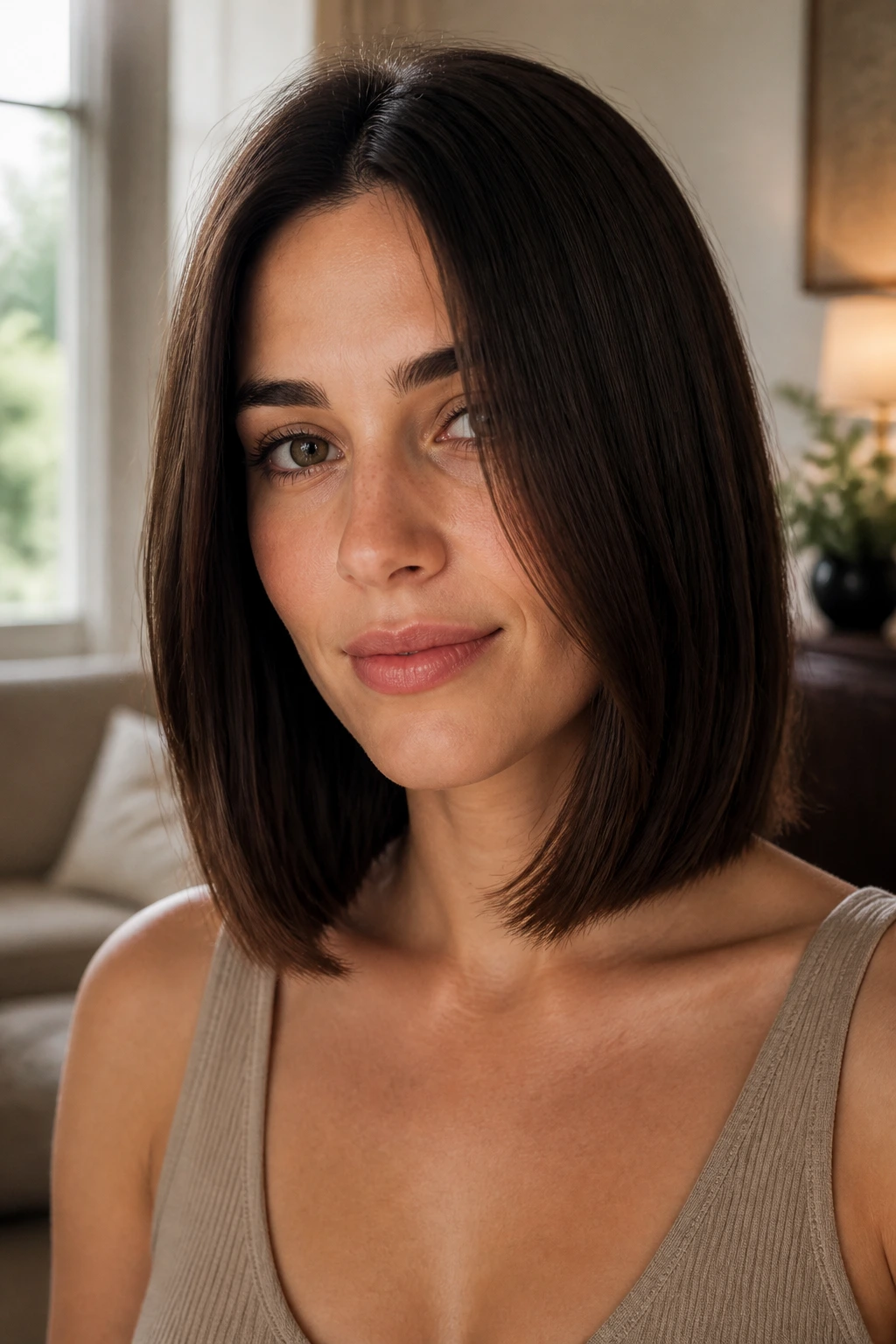
This is one of my favorite answers for people who want movement without a lot of obvious layering. The perimeter stays clean, but the inside gets just enough shaping to stop the hair from sitting like a solid panel. On straight hair and oval faces, that balance is gold.
Why It Works
Invisible layers are called invisible for a reason. You don’t see the chop; you see the way the hair falls. Straight hair benefits because the length still looks full, but it gains a softer swing around the shoulders and collarbone.
Oval faces like this cut because it doesn’t interfere with the face shape. No heavy fringe, no strict angle, no aggressive layering around the cheeks. It’s simple. In a good way.
If you want a cut that works for office days, casual days, and days when you can’t be bothered, this is one of the safest bets.
Tiny bonus: it grows out neatly. That matters more than people admit.
19. The Side-Part Shoulder Cut

A side part can change the entire feel of straight hair in one move, and a shoulder-length cut is the best place to use it. Oval faces can wear a side part easily because the proportions are already even. The result is polished but not stiff.
Why It Works
The side part adds lift at the front and gives the cut a little asymmetry without asking for a full dramatic haircut. Straight hair keeps the line smooth, so the side part becomes the design element.
This is a strong choice if your hair tends to fall flat at the crown. A deep side part creates instant volume at the roots, which can save you from trying to invent lift with product alone. It also works well with one side tucked behind the ear and the other left loose.
Ask For This
- Shoulder length or just past it
- A clean side part that follows your natural growth
- Light shaping around the front, not layers all over
- Ends kept blunt or softly beveled
If you want a haircut that doesn’t scream for attention but still looks considered, this one earns its keep.
20. The Soft Wolf Cut
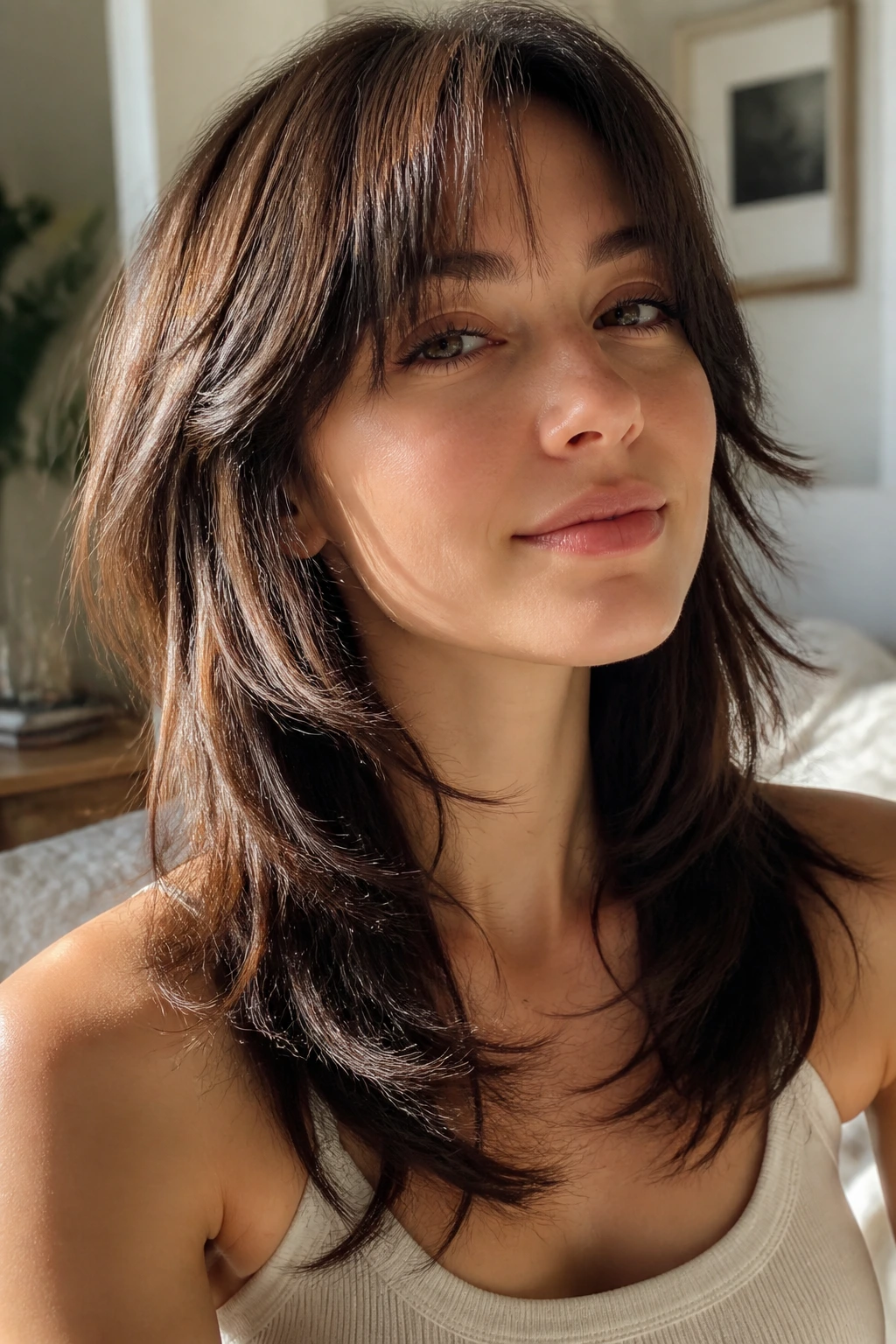
A wolf cut on straight hair needs a gentler hand. The obvious, choppy version can look too shredded when there’s no wave to soften it. But a soft wolf cut — with longer layers, a slightly lifted crown, and a fringe that blends instead of shouting — can look excellent on oval faces.
Why It Works
Straight hair gives the wolf cut a cleaner edge than people expect. The shape can read more modern and less messy if the layers are controlled. Oval faces can wear the extra volume around the crown or sides without looking overloaded.
The important part is restraint. Keep the top layers long enough to blend into the lengths. If the shortest pieces are cut too short, the whole style can drift into mullet territory fast, and not the intentional kind.
This works best for someone who wants movement and isn’t afraid of a little styling. A bit of mousse at the roots, a rough dry, and a small amount of texture spray can keep it from looking flat.
Why Straight Hair and Oval Faces Give Stylists Room to Play
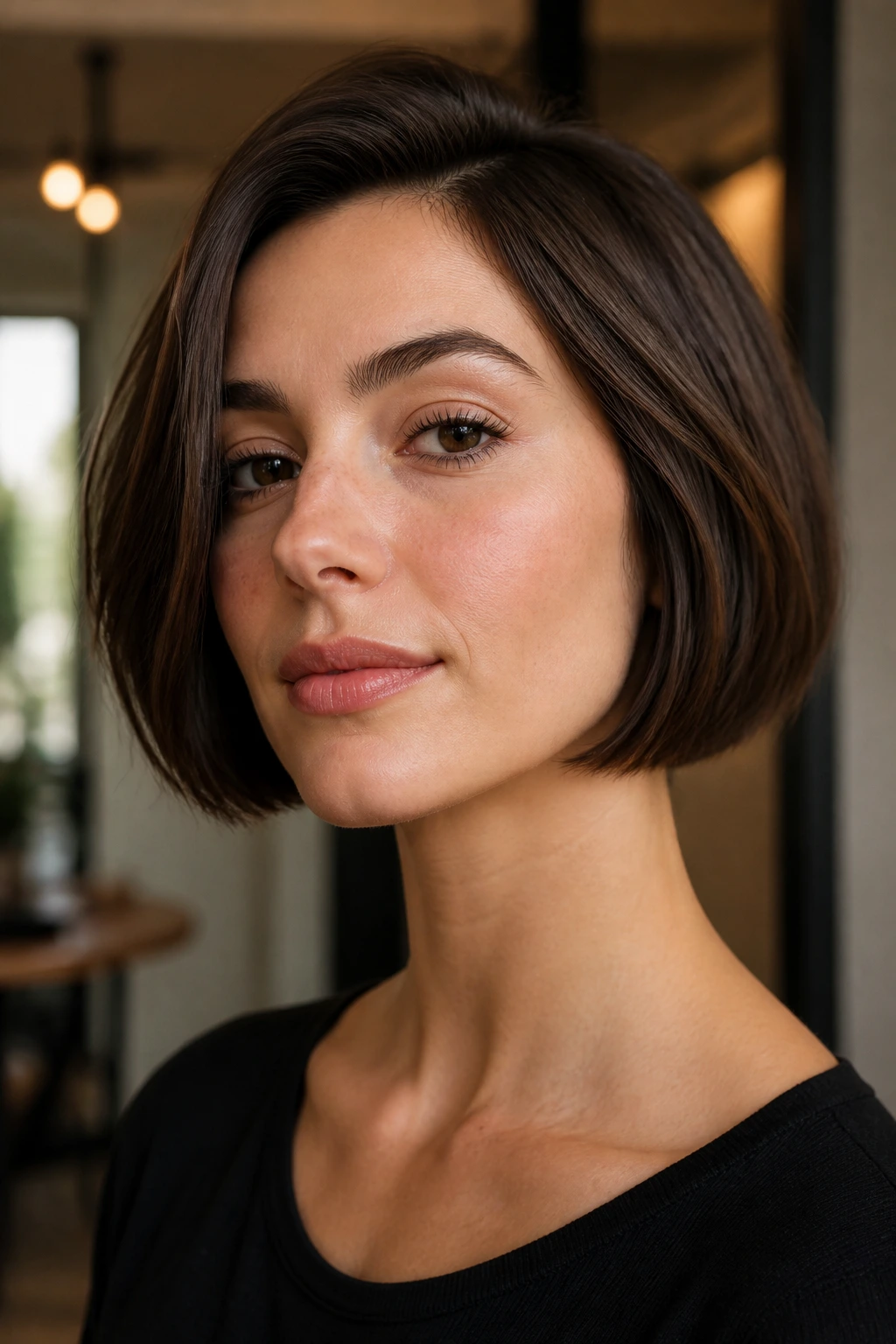
Straight hair shows the haircut in plain daylight. That sounds obvious, but it changes everything. A blunt edge will look sharper, a layer will read more clearly, and a fringe will land exactly where it was cut instead of getting softened by a wave. If the line is wrong, there’s nowhere for it to hide.
Oval faces are useful in a different way. The proportions are balanced enough that most lengths, parts, and fringe choices can work. That doesn’t mean every haircut is equal. It means the face shape usually won’t fight the style, which gives the haircut more room to carry the personality.
What Actually Matters More Than the Face Shape Alone
Hair density. Cowlicks. Where your part naturally sits. Whether your hair flips outward at the ends or folds inward with a blow-dryer. Those details matter a lot more than people think, and they’re the reason one straight bob looks neat while another one looks half-finished.
A good haircut for straight hair and oval faces should behave well on ordinary days. Not just salon day. Ordinary days are where the truth shows up.
The Best Cuts Respect the Hair’s Weight
Straight hair has weight. Sometimes that’s lovely. Sometimes it’s why your ends collapse by lunch. The best shapes either keep that weight in a clean line — blunt bob, one-length lob, glass cut — or release it in a controlled way — invisible layers, a soft shag, a U-shape.
If the haircut ignores weight, you notice it. If the haircut works with weight, the whole thing looks calmer.
Essential Tools for Keeping the Shape Clean
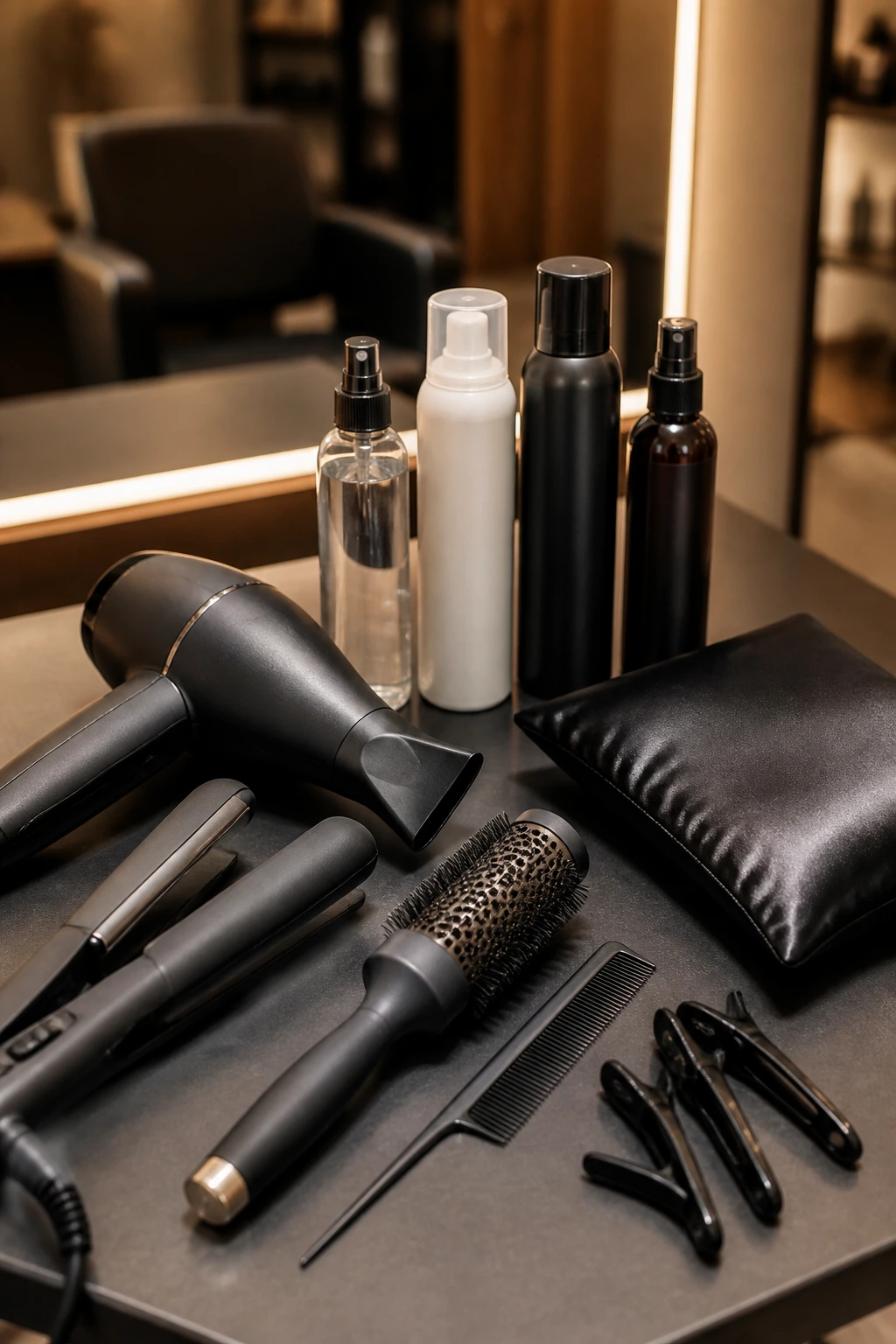
-
A blow dryer with a concentrator nozzle — Keeps the airflow controlled so you can smooth the cut without blasting it apart.
-
A 1 to 1.5-inch flat iron — Small enough to bend the ends and polish bangs without creating giant creases.
-
A medium round brush — Useful for collarbone lobs, curtain bangs, and any cut that needs a soft inward turn.
-
A tail comb — Helps you place a straight part or a deep side part with more precision than fingers alone.
-
Sectioning clips — Not glamorous, but they keep the top layer out of the way while you smooth the bottom.
-
Heat protectant spray — Straight hair still needs it. Especially if you’re touching the same section with a flat iron more than once.
-
Lightweight mousse — Gives roots a little lift without making straight hair sticky.
-
Dry shampoo — Best on day two or three when the roots start to fall together.
-
Small texturizing spray — Handy for adding a bit of grip to pixies, bixies, and soft shags.
-
A silk pillowcase or bonnet — Keeps the ends from getting crumpled and bent overnight, which straight hair shows very fast.
What to Tell Your Stylist Before the First Snip
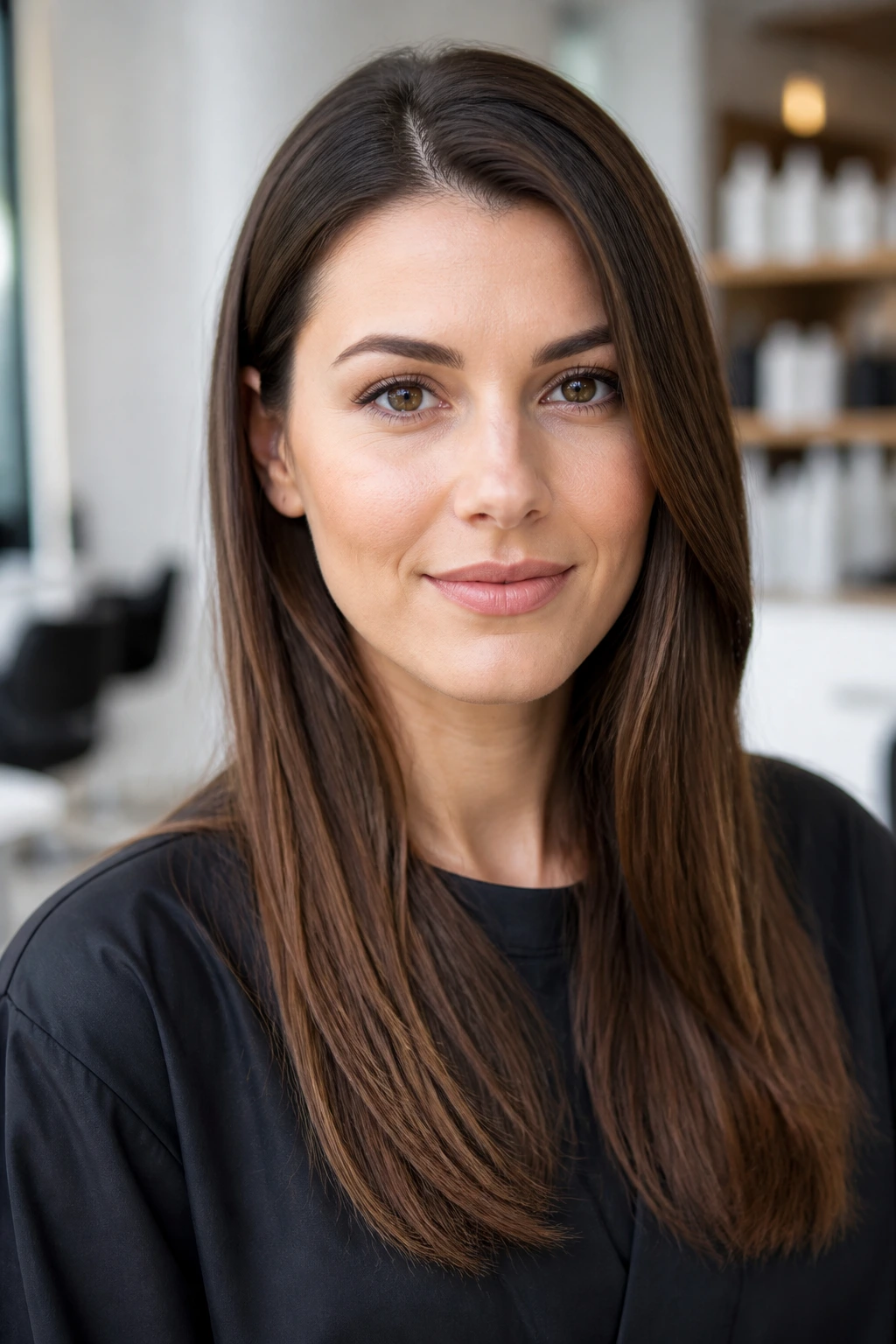
Bring pictures. Not one. Three. Front view, side view, and if possible a back view too. Straight hair is brutally honest, and photos help your stylist see how the cut behaves from every angle instead of guessing based on one flattering shot.
Say how much time you want to spend styling it. A sharp bob and a soft shag can both look good on straight hair, but they ask for different routines. If you air-dry and leave, say that. If you like a polished blowout, say that too. The cut should match the routine, not the fantasy version of your life.
Tell them where your hair parts naturally, whether you have a cowlick at the crown, and whether your hair flips outward at the shoulders. Those details shape the cut more than people expect. A lob that looks elegant on someone else can sit awkwardly on your head if your growth pattern pushes it the wrong way.
Useful salon language
- “Keep the perimeter blunt.”
- “Start the face framing at the cheekbone.”
- “I want movement, but not lots of short layers.”
- “Please keep enough weight at the ends.”
- “I need this to grow out cleanly.”
That last one matters. A cut that grows out well is often better than a cut that only looks great the first week.
How to Style These Cuts Without Overworking Straight Hair
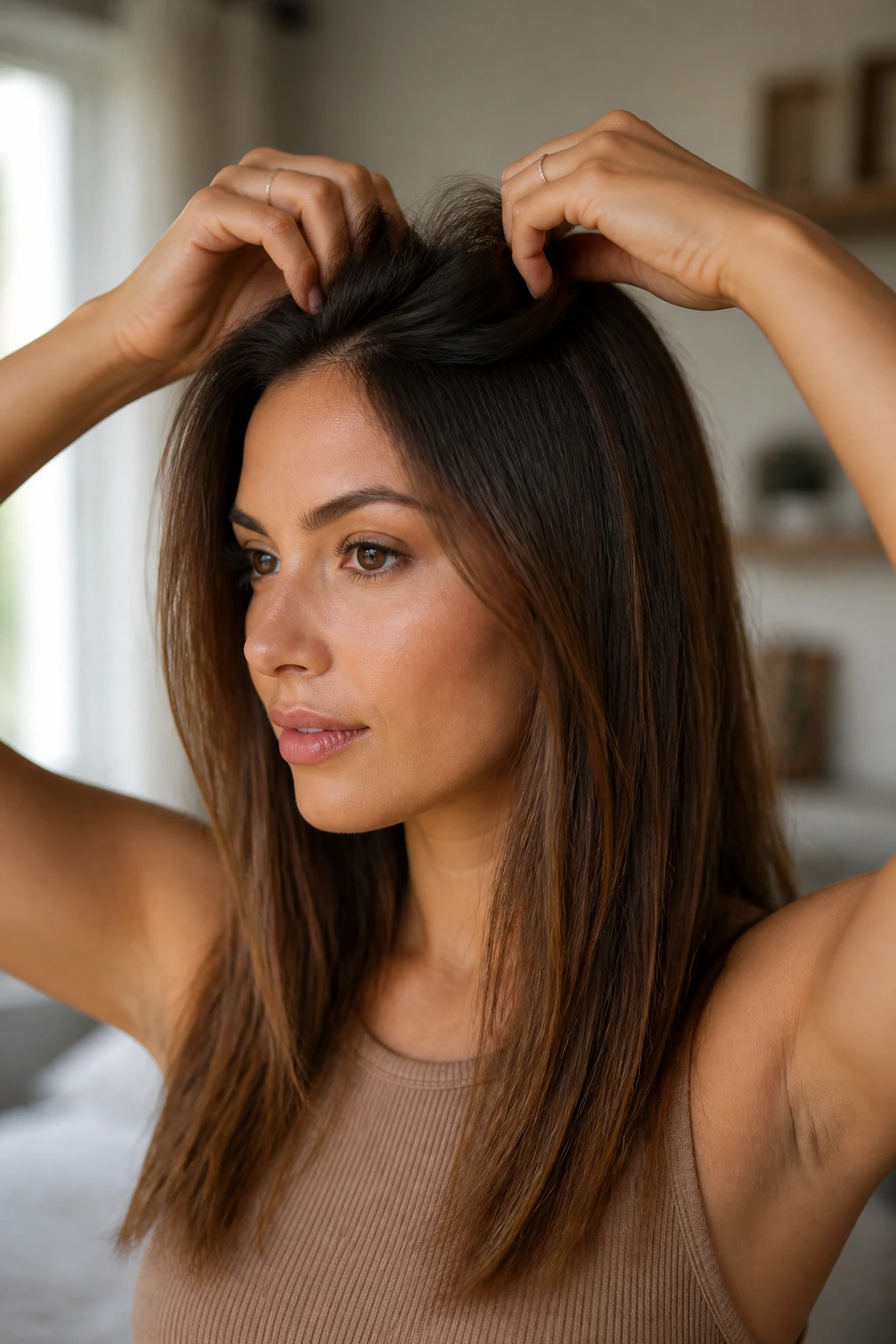
Straight hair can turn greasy, flat, or stringy fast if you pile on too much product. The goal is not to fight the texture. The goal is to nudge the shape in the right direction and then stop.
Root Lift: Apply a small amount of mousse to damp roots, then blow-dry with the nozzle pointed down the shaft. Lift the top section with your fingers or a round brush for a few seconds at the crown. You do not need huge volume. You need enough lift that the part doesn’t lie like a paint stripe.
End Shape: For bobs, lobs, and shoulder-length cuts, bend the last inch of hair under with a flat iron or round brush. One pass is usually enough. Straight hair looks best when the ends look clean, not overworked.
Parting Trick: Use a center part when you want calm symmetry. Use a side part when the cut needs a little lift or the crown looks too flat. A deep side part can rescue a blunt cut that feels too severe.
Heat Rule: Fine straight hair usually does best around 300°F to 330°F. Thick straight hair can handle a bit more, but don’t crank the heat just because the hair is straight. Straight hair often needs less heat, not more.
Low-Effort Refresh: Mist the mid-lengths lightly with water, smooth in a pea-sized amount of cream, and re-bend only the front pieces. That keeps the shape from getting puffy without making the whole head greasy.
Maintenance That Keeps the Silhouette Sharp
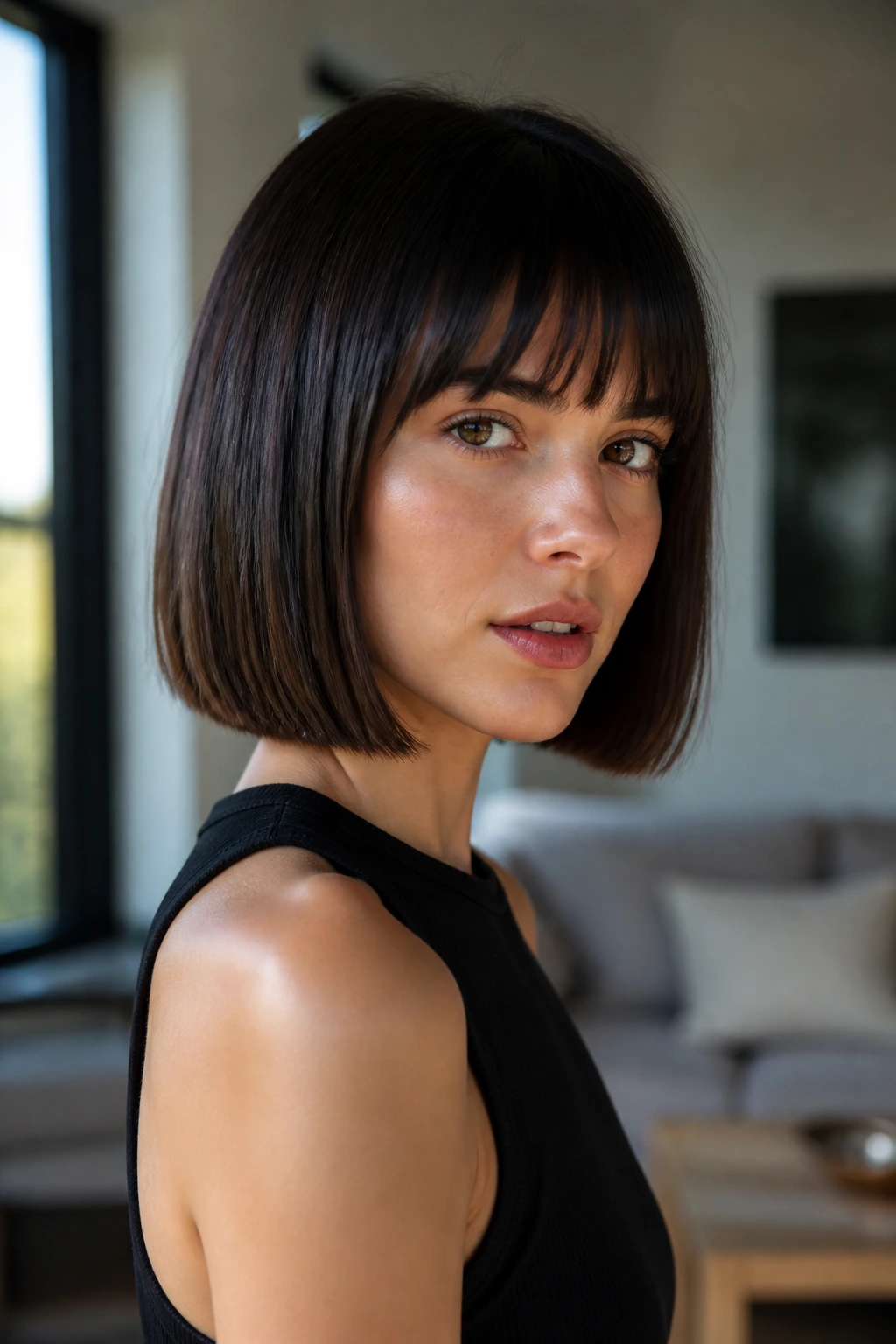
Straight hair shows grow-out faster than textured hair, especially on blunt shapes. A bob that looked precise at the salon starts to lose its edge when the ends split or the line drifts below the intended length. That’s not a flaw. It’s just how clean shapes behave.
Short cuts need more frequent trims. Pixies and bixies usually want a cleanup every four to six weeks. Bobs and lobs can often stretch to six to eight weeks, depending on how much precision you want to keep. Long layers and U-shapes can go longer, but once the ends start fraying, the whole style looks tired.
Bangs need their own schedule. Curtain bangs and bottleneck bangs often need a touch-up every three to five weeks. Micro fringes can want a trim even sooner. If you’re doing it yourself between salon visits, trim less than you think. The difference between “fresh” and “oops” is small.
Sleeping habits matter too. A silk pillowcase helps straight hair keep its surface smooth. For longer cuts, a loose low braid or a soft clip at the nape can stop the ends from bending oddly overnight. For bobs, just keeping the hair from being mashed flat under your head can make day-two styling much easier.
Common Mistakes That Make the Wrong Shape
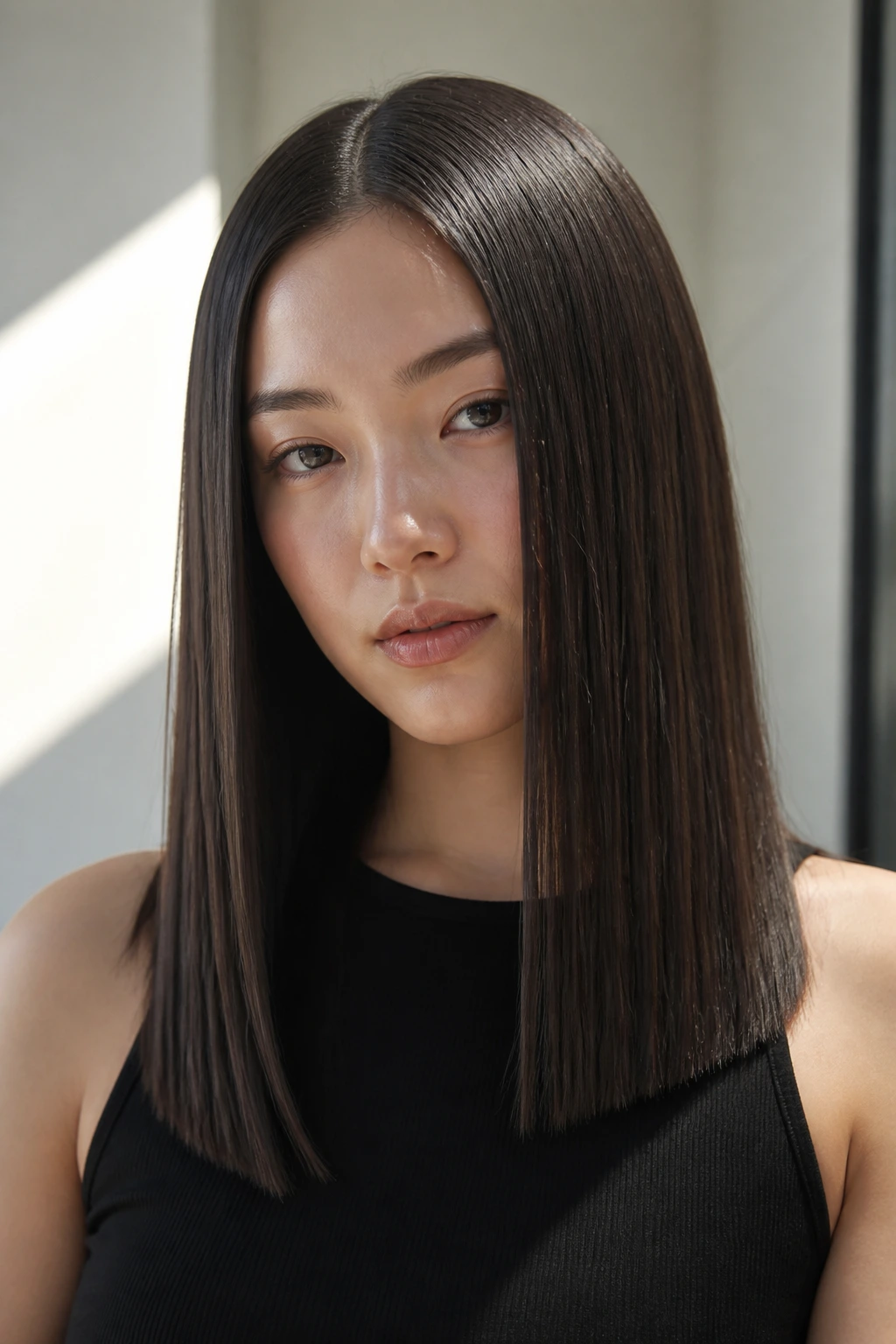
Too many layers too high up. Straight hair can handle layers, but not the kind that start near the cheekbones and keep going all through the head. The symptom is ends that look thin and disconnected. The fix is a longer perimeter with softer internal shaping.
Choosing fringe without checking your brow and forehead length. A micro fringe or heavy bang can throw off the balance if it sits too short for your face. The symptom is a cut that looks cute in theory and awkward in motion. Ask for a longer first pass and adjust from there.
Ignoring where your hair naturally wants to fall. A center part on a stubborn crown or a blunt bob that flips outward at the shoulders can fight your daily reality. The symptom is constant restyling. The fix is to cut with the growth pattern in mind, not against it.
Overloading straight hair with heavy oils or creams. Straight strands show product quickly. The symptom is flat roots and greasy ends by noon. Use the lightest possible amount, and keep rich products on the last third of the hair.
Letting precision cuts grow too long. A blunt bob or glass-hair cut looks deliberate only while the line stays clean. The symptom is a shape that starts to look fuzzy and accidental. Keep your trim schedule tighter than you think.
Picking a dramatic photo without translating it to your density. A chin bob on dense hair does not behave like the same cut on fine hair. Ask how the shape will look on your actual texture, not just the model’s photo.
Variations and Adaptations to Try
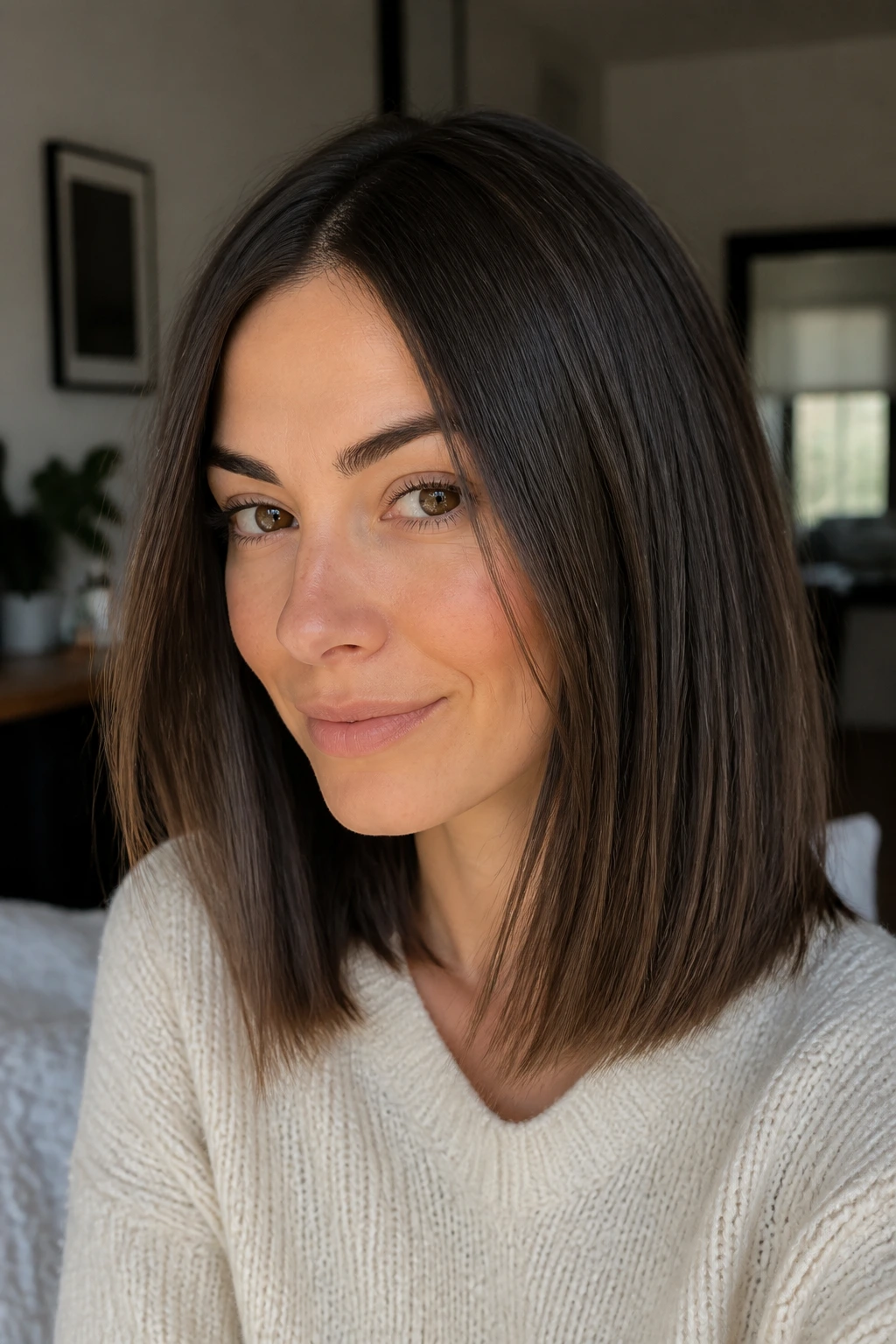
Fine-Hair Clean Line
Choose a blunt lob, collarbone cut, or shoulder-length one-length shape. Keep layers minimal and ask for clean ends that make the hair look fuller. This version is the best bet if you want density, not movement.
Thick-Hair Weight Release
Go for a U-shape, invisible layers, or a soft A-line bob with just enough internal removal to keep the bulk under control. Thick straight hair can look heavy fast, and these shapes keep it from turning into a helmet. The finish stays neater with less puff at the bottom.
Low-Maintenance Grow-Out
Curtain bangs with a collarbone lob, or a soft side-part shoulder cut, will grow more gracefully than a micro fringe or sharp asymmetrical bob. If you know you won’t trim often, choose a shape that still looks intentional when the edges shift a little.
Short-and-Sharp Reset
A pixie, bixie, or rounded pageboy gives straight hair a strong outline and keeps the face open. This works best when you want a clear style change and you’re willing to visit the salon more often. The upside is enormous shape with very little daily fuss.
Fringe Without the Full Commitment
Bottleneck bangs and face-framing pieces give you the feeling of fringe without a heavy curtain across the forehead. That’s a good middle path if you like softness but don’t want to lose versatility. The cut still works tucked back on lazy days.
Frequently Asked Questions
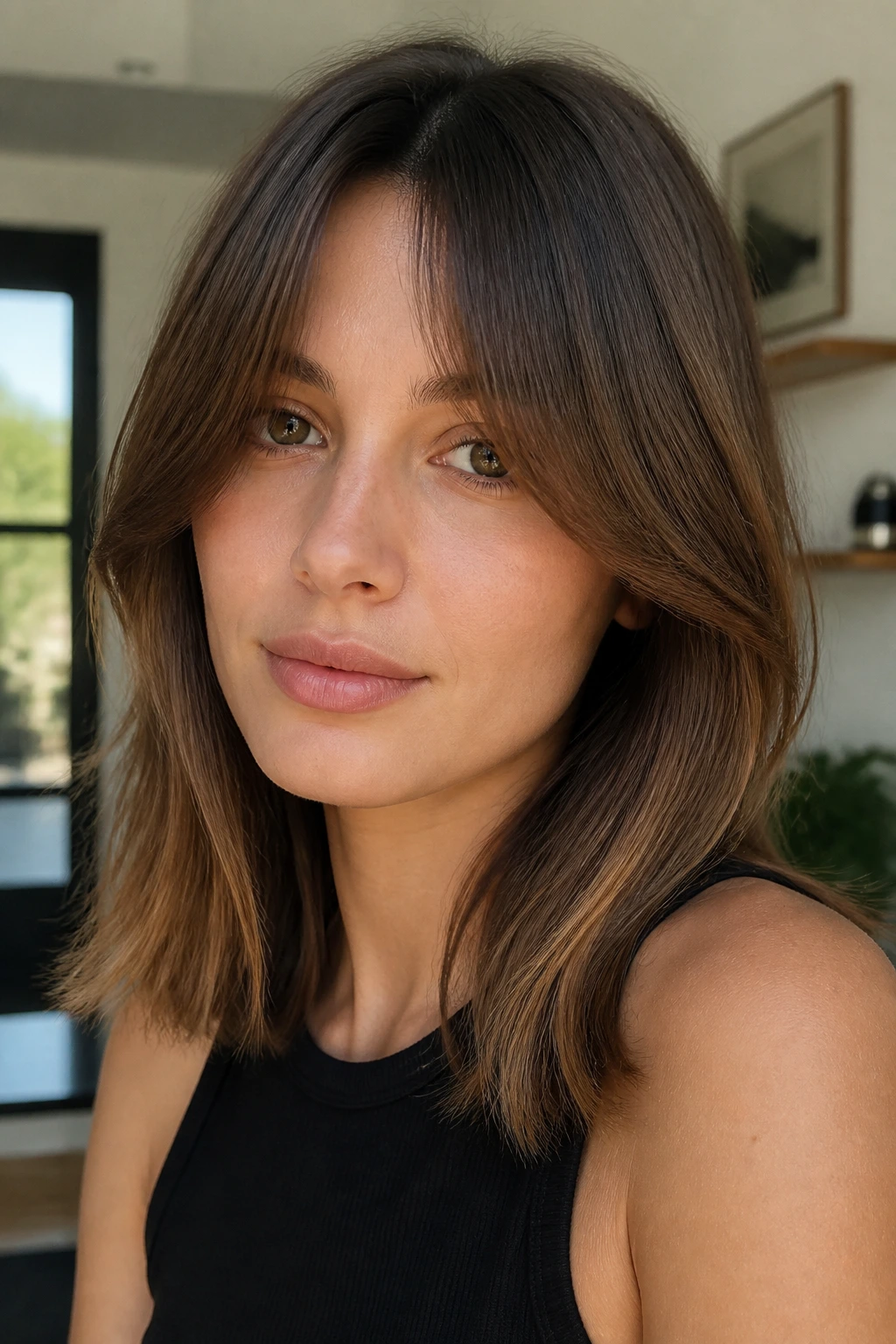
Which haircut is best if I want the lowest-maintenance option?
A collarbone lob or an invisible-layer shoulder cut usually asks for the least fuss. Both can air-dry without looking broken, and both grow out better than short, highly precise cuts. If you want even less effort, skip heavy fringe.
Can straight hair really wear layers without looking thin?
Yes, if the layers are long and controlled. The problem is not layers themselves; it’s layers that start too high or get cut too aggressively. Straight hair needs shape, not shredding.
Are bangs a good idea for oval faces?
They can be, and oval faces have the room to handle them. Curtain bangs and bottleneck bangs are the easiest place to start because they frame the face without trapping it. Micro bangs are more of a statement and need regular trims.
What length is most flattering on straight hair and oval faces?
There isn’t one single answer, which is annoying but true. Collarbone, chin, and long chest-skimming lengths all work well. The real question is how much structure you want the cut to have.
How often should I trim a blunt bob or lob?
Every six to eight weeks is a good range if you want the line to stay clean. If the ends split quickly or the cut is very precise, closer to six weeks keeps it looking intentional. Long, layered shapes can usually stretch longer.
Should I choose a center part or side part?
Oval faces can wear both. A center part gives symmetry and a clean line; a side part adds lift and can soften a sharp bob. Pick the one that works with your growth pattern and your styling habit.
What if my straight hair flips outward at the ends?
Then length matters. A cut that lands right at the shoulder often flips more than one that sits just above or just below it. Ask for the line to be placed with your shoulder hit point in mind, and shape the ends under with a brush while they cool.
Is a pixie too risky for straight hair?
Not at all, but it does show every detail. If you like clean edges and you’re okay with trims, a pixie can look excellent on straight strands and oval faces. If you want to hide growth between appointments, pick something longer.
The Shape That Stays Interesting
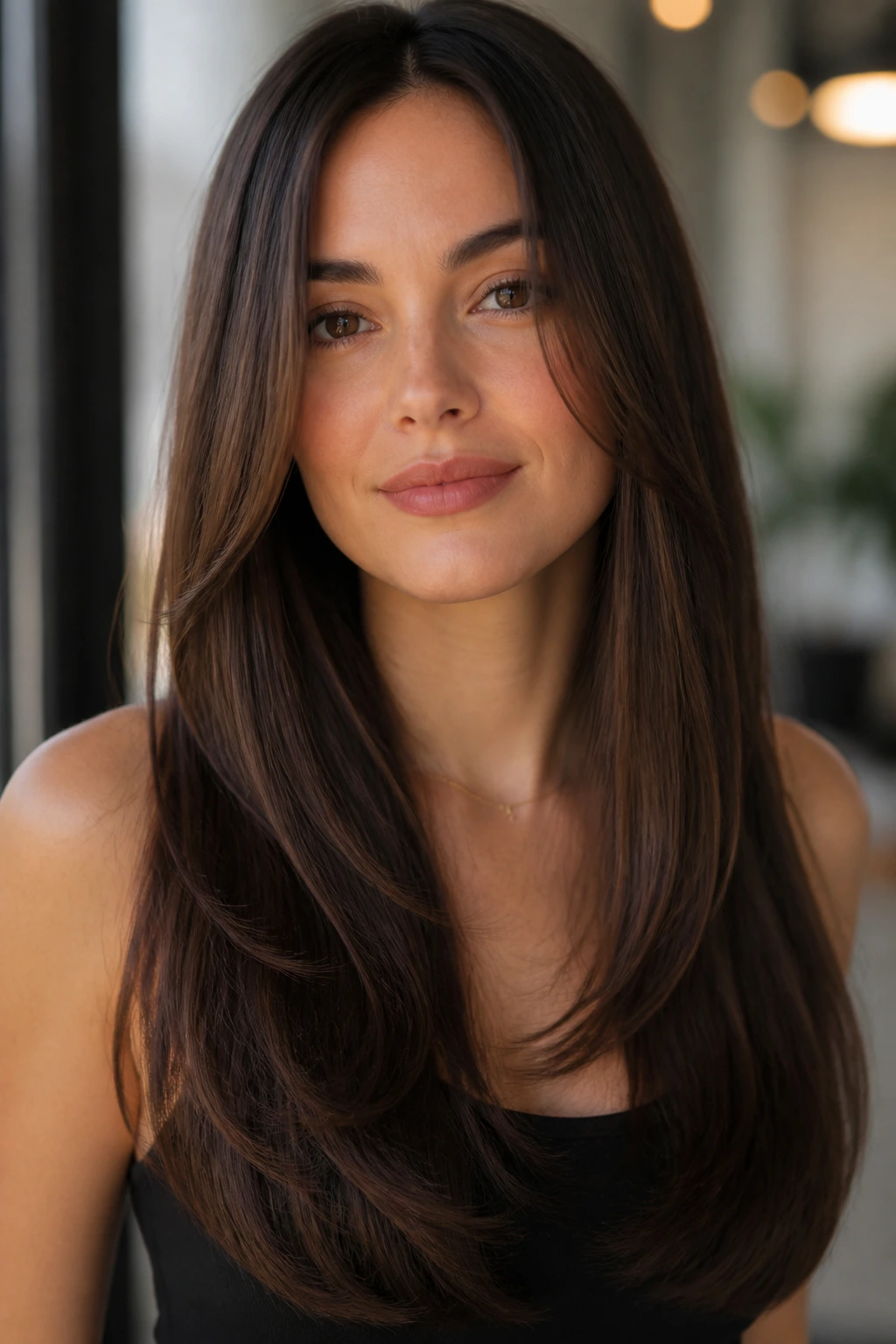
The best haircuts for straight hair and oval faces do not try to overpower the texture. They use it. Straight hair gives the cut a clean edge; oval faces give the cut room to breathe. That combination is why a blunt bob can look sharper here, why curtain bangs sit so well, and why a long one-length cut can feel far more elegant than it sounds on paper.
The smartest choice is the one that matches your routine, your density, and how much you want the haircut to speak. If you want crisp lines, go blunt. If you want movement, keep the layers long and light. If you want a little edge, let fringe do the work.
Pick the shape that still looks like itself when you wake up on day three. That’s the one worth keeping.