



A wedge haircut can do something a lot of short styles can’t: it can keep the back neat and sculpted while the front still softens the face. That combination matters more than people think, especially when hair has changed texture, lost a little density, or started behaving differently around the temples and crown. A good wedge haircut for women over 50 with face-framing layers doesn’t shout. It shapes. It lifts. It quietly fixes the parts most people complain about after a blow-dry has lost steam.
The best versions have a clean, tapered nape and front pieces that graze the cheekbones or jawline instead of hanging there like afterthoughts. That’s the detail that makes the cut feel current rather than dated. Too much stacking and you get helmet hair. Too little layering and the whole shape collapses into a bob that needs constant fussing. The sweet spot sits in the middle, where the back gives the structure and the front gives the softness.
There’s also a practical reason this cut keeps earning its keep. It works with gray hair, dyed hair, thick hair, fine hair, straight hair, and a fair bit of natural wave if the layering is handled with some judgment. The face-framing pieces are the part I’d never skimp on. They’re what keep the cut from looking severe, and they’re what make a wedge feel flattering instead of just efficient.
Why These Wedge Cuts Are Worth a Close Look

-
Shape without heaviness: A wedge keeps lift at the crown and nape, which helps hair look fuller without piling everything on top of the head.
-
Face-framing that actually frames: The front layers are cut to land near the cheekbones, jawline, or lips, so the shape softens expression lines instead of drawing a hard edge around the face.
-
Works with changing texture: Hair that used to fall straight may now kink, flatten, or flip in different places. These cuts handle that better than one-length styles because the structure does some of the work.
-
Short, but not строг: A wedge can be cropped and neat without looking tiny. That middle ground is useful if you want shorter hair but don’t want a close crop.
-
Easy to tailor: A good stylist can make the same wedge look sharp, airy, or softly layered just by shifting the weight line and where the face-framing pieces start.
-
Better grow-out than many short cuts: When the perimeter and layers are planned well, the cut doesn’t collapse after two weeks. It changes shape, yes, but usually in a usable way.
1. The Classic Stacked Wedge
The classic stacked wedge is the version most people picture first: tight through the nape, fuller through the crown, and softly curved around the sides so it doesn’t feel boxy. Done well, it has that tidy, lifted back view that makes the whole haircut look intentional from every angle. The face-framing layers should hit around the cheekbone or just below the ear, where they can soften the edges without swallowing the face.
Why It Works
The stack creates built-in body at the back, which is a gift if your hair goes flat between washes. The front layers stop the cut from feeling too architectural. That matters. A wedge without softness can look brisk in a way most people do not want.
This version is especially good when you want a cut that behaves with a round brush and a five-minute blow-dry. It holds shape because the weight has been removed in the right places, not hacked out randomly. If your hairline is a little denser at the nape, this is one of the cleanest ways to control it.
Best For
- Fine or medium hair that needs a visual lift
- Oval, heart, and soft square faces
- Women who like a polished outline without a lot of daily styling
Tip: Ask for the front pieces to stay slightly longer than the back side layers. That one decision keeps the cut from tipping into severe territory.
2. Soft Feathered Wedge
A feathered wedge looks less carved and more air-kissed. The difference is in the edges. Instead of a blunt shelf around the sides, the layers taper into each other, which gives the haircut a lighter feel and a little movement when you turn your head. It’s one of those cuts that looks like it’s doing very little, when in fact it’s doing a lot.
The face-framing pieces should feather away from the cheekbones, not stop abruptly at the jaw. That small shift changes the mood of the whole haircut. It becomes gentler, which is often exactly what people want when they’re easing into shorter hair after years of wearing it longer.
This version plays especially well with soft gray growth or highlighted strands because the layered ends catch light in a way a blunt line can’t. If your hair has a bit of natural bend, even better. You’ll get that airy finish without having to force the shape with a lot of product.
3. Chin-Grazing Wedge Bob
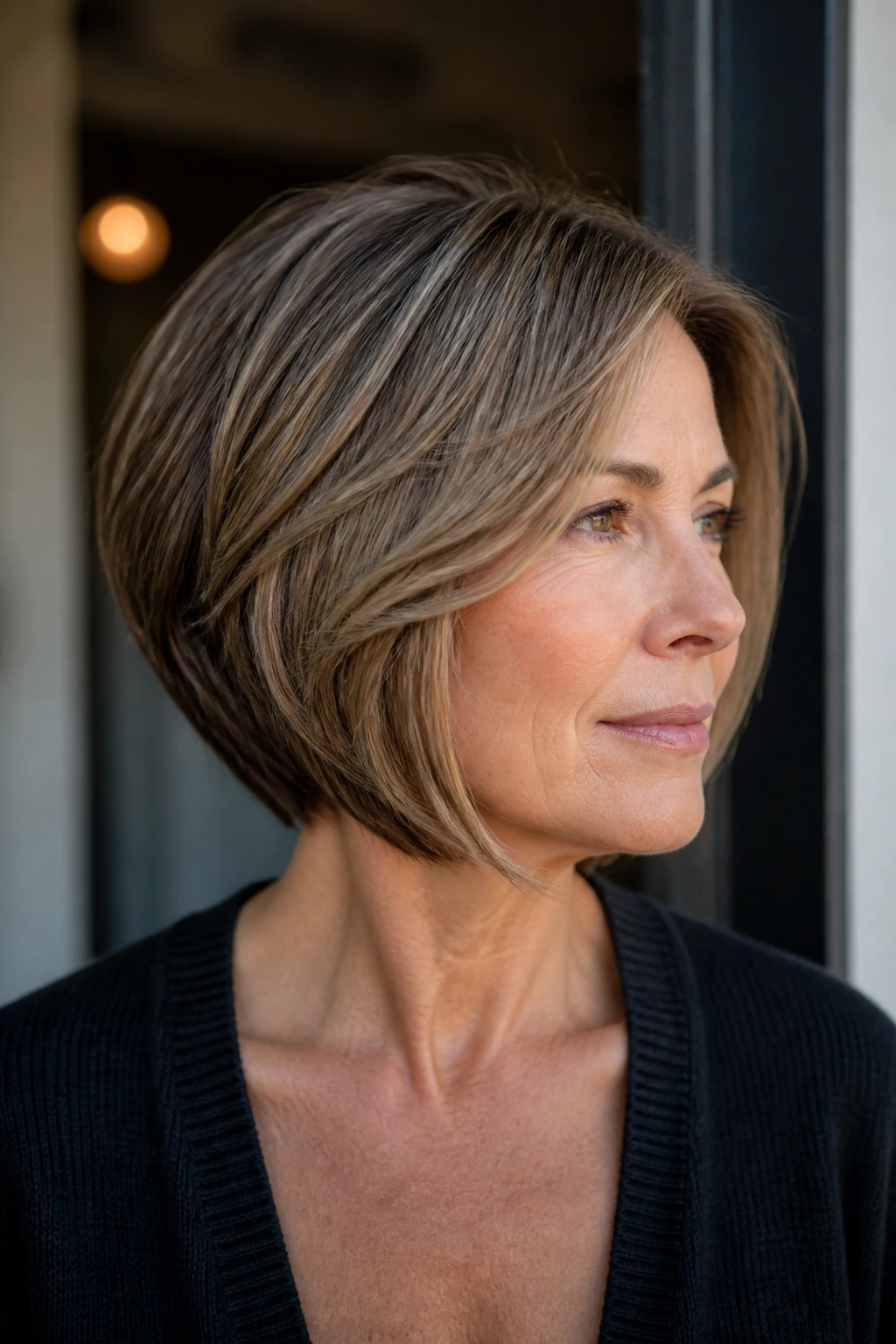
Why does this one work so often? Because it borrows the structure of a wedge and the softer outline of a bob, then stops right where the jawline gets a little interesting. The chin-grazing length gives you enough coverage around the face to feel comfortable, but the stacking in the back keeps the haircut from drooping into a plain bob.
The face-framing layers matter most here. They should curve toward the chin, not hang straight down from it. That keeps the shape from looking square and helps the haircut move when you tuck one side behind the ear or wear glasses. Glasses, by the way, sit nicely with this cut if the front layers are trimmed with that in mind.
For women who want a shorter look without exposing the neck too much, this is one of the neatest options. It gives you shape, not severity. That’s the whole trick.
4. Silver Wedge with Curtain Layers
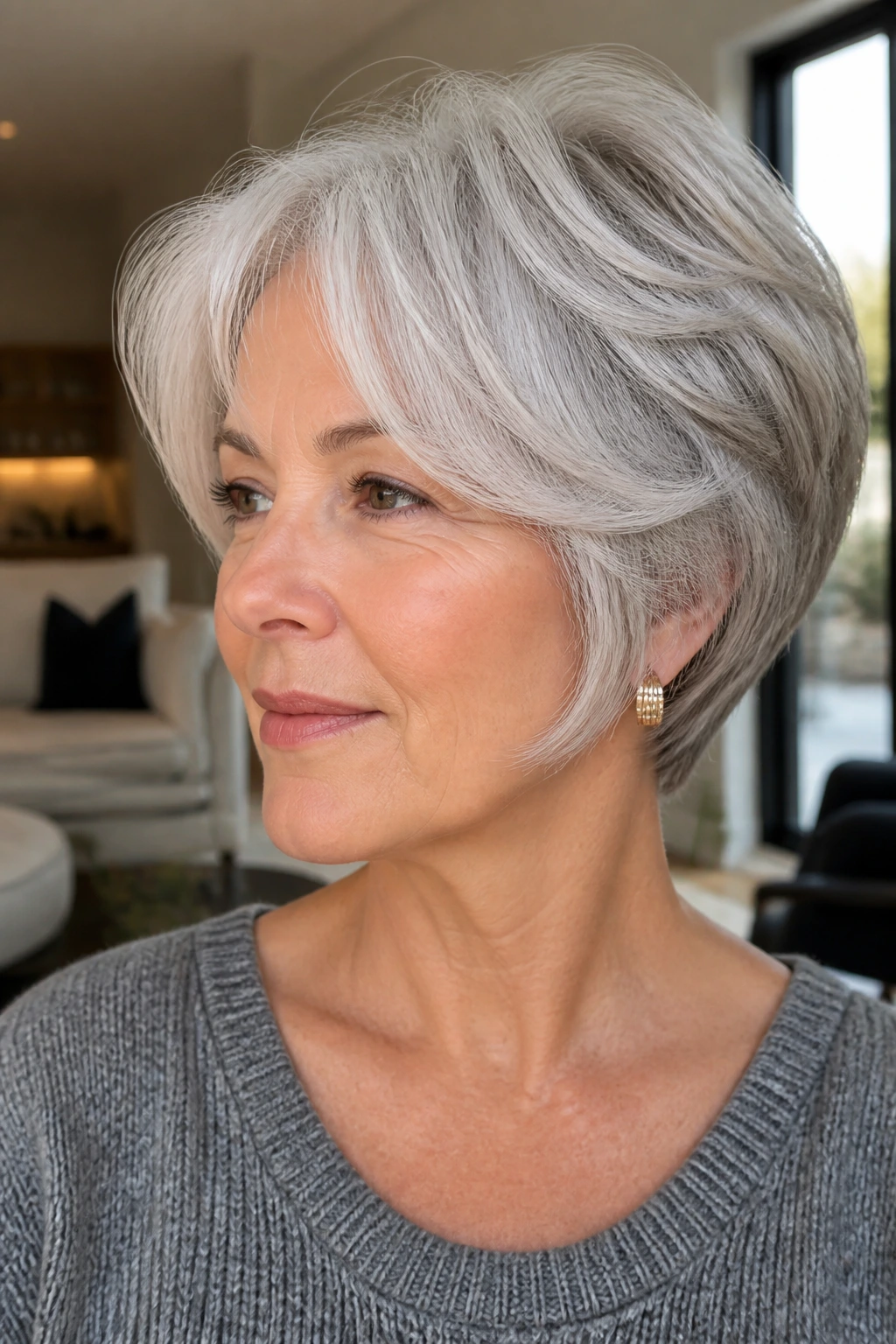
Silver hair likes a wedge when the cut respects its texture instead of fighting it. A silver wedge with curtain layers opens the front just enough to show the cheekbones and soften the temples, while the back stays tapered and tidy. On straight gray hair, this can look crisp. On wavy gray hair, it can look almost brushed-out and expensive without needing much work.
The detail that makes it sing
The curtain-like front layers should part or sweep away from the face rather than sit heavy against it. That creates a little breathing room around the eyes and keeps the haircut from feeling closed in. If the hair is porous or a bit coarse from graying, a light cream or serum on the ends helps the shape stay smooth without turning greasy.
I like this version when someone wants to lean into silver instead of disguising it. The cut gives the color a proper frame. Otherwise, the tone can vanish in a shape that’s too blunt or too layered.
5. Asymmetrical Wedge Cut
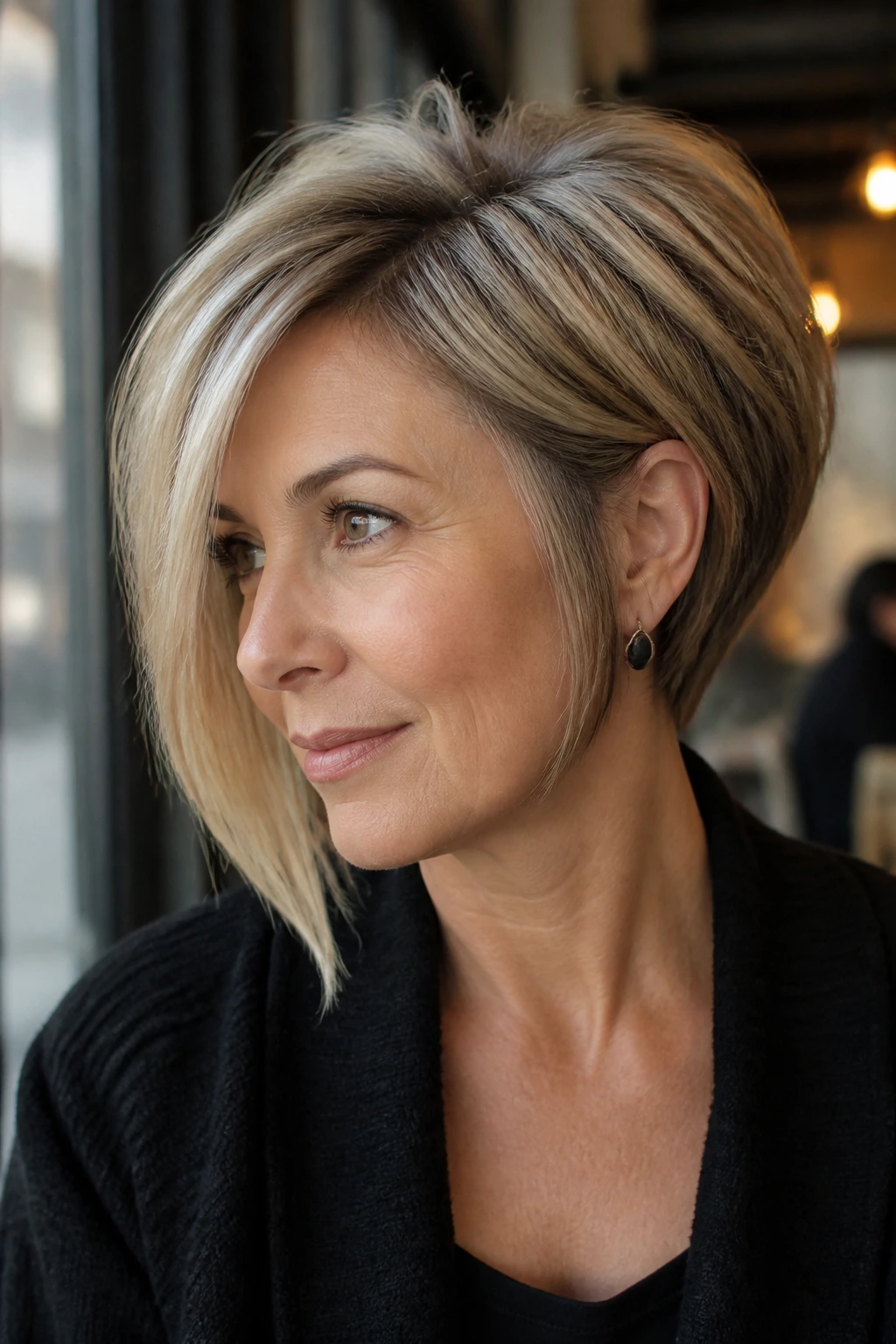
An asymmetrical wedge has a little attitude, but it does not need to shout about it. One side is kept slightly longer, which pulls the eye diagonally across the face and breaks up roundness or softness around the jaw. If your features feel broad or you want the haircut to do a bit of optical lifting, this is a smart choice.
The front layers should still be face-framing, not just uneven for the sake of it. That means the longer side needs a deliberate line that sweeps past the cheekbone or collarbone, depending on how short you go. The shorter side can sit tucked in a little closer to the ear. The contrast is the point.
This cut tends to look best when it’s styled with a side part and a touch of bend through the front. Pin-straight can work, but only if the ends are kept sharp. Otherwise the asymmetry can feel accidental, and no one wants that.
6. Textured Pixie Wedge
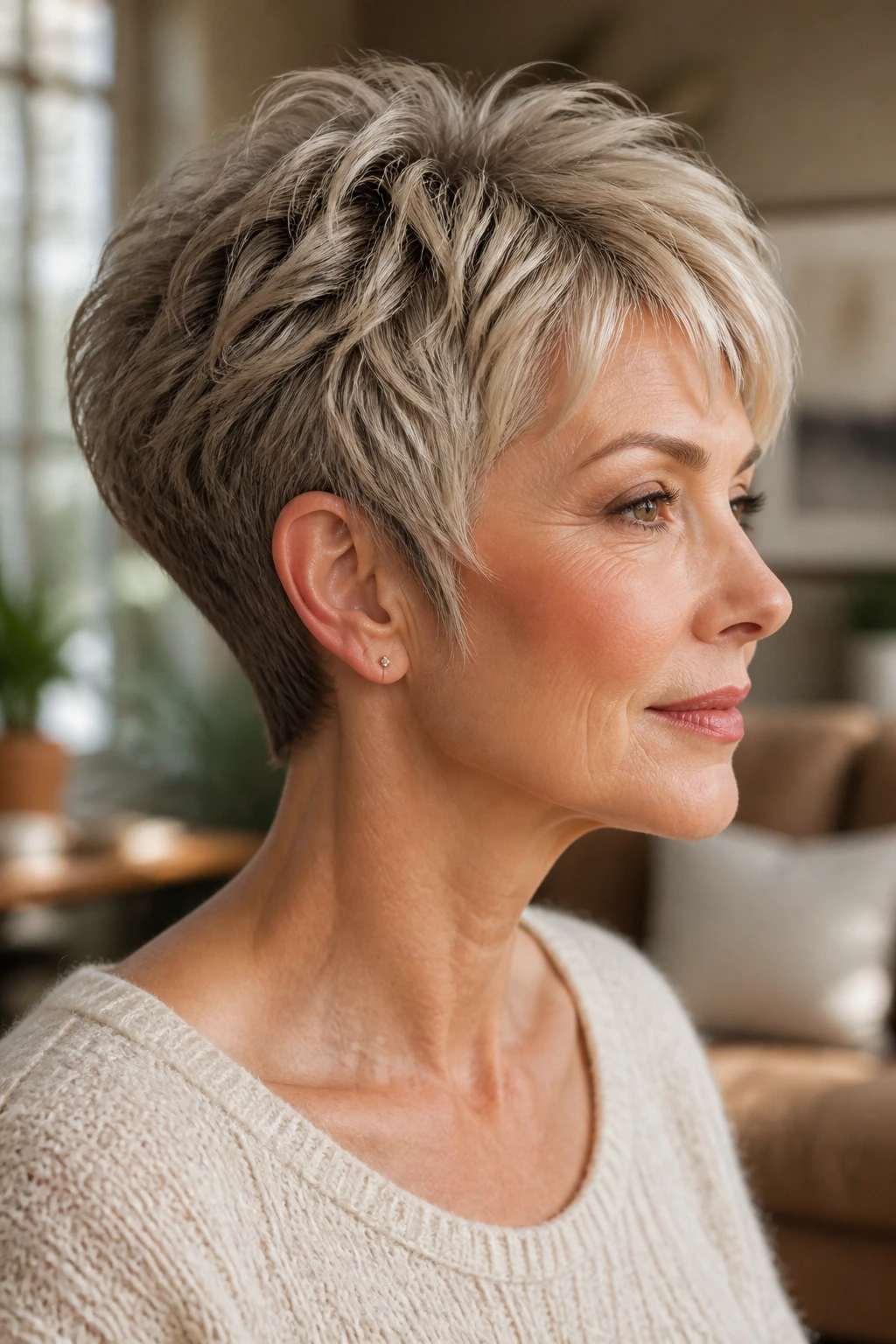
A pixie wedge is what happens when a wedge gets cropped down and made a little more playful. The nape stays tapered, the crown keeps some lift, and the top layers are cut short enough to create piecey separation rather than a smooth helmet shape. It’s a good move if you want short hair that still has direction.
The face-framing layers here are tiny but important. They usually sit at the temples or just in front of the ears, where they can soften the transition from the short top to the face. Without that little fringe-like motion, the cut can feel abrupt.
Use this one if your hair is fine and you’re tired of it lying flat no matter what you do. A small amount of styling paste rubbed through the ends goes a long way. Too much product ruins the texture fast.
7. Longer Wedge with Side-Swept Fringe
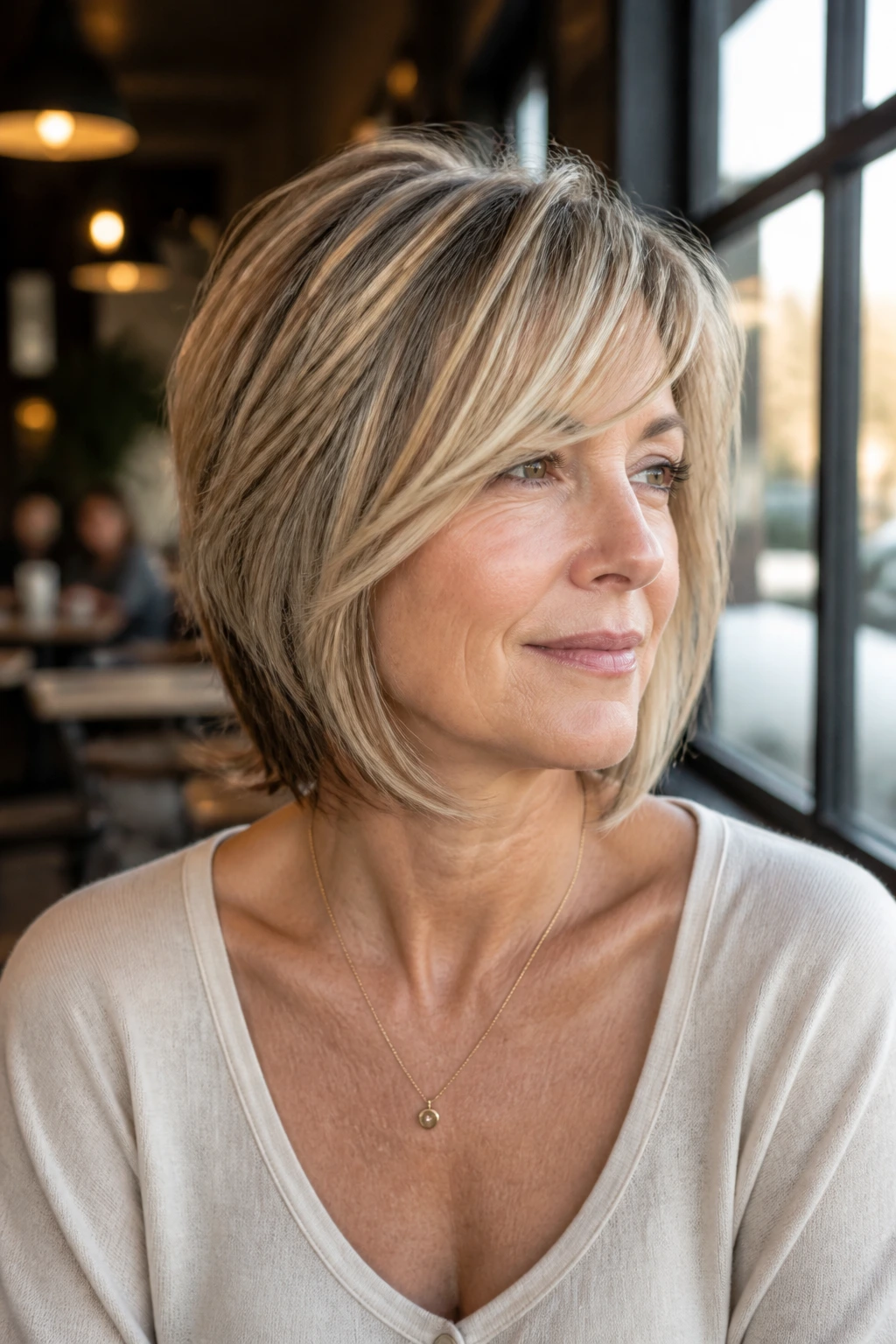
This version keeps more length through the front and side, which makes it friendlier if you’re not ready to go very short. The side-swept fringe does most of the face-framing work, sliding across the forehead and into the cheek area so the haircut feels soft from the front. From the back, you still get the neat wedge shape.
The longer perimeter gives you more room to play. Tuck one side behind the ear. Let the fringe fall over the brow. Push it all forward for a round-brush blowout. The cut doesn’t need to be obedient to look good, and that’s part of its charm.
Styling note
This is a solid pick if your hair grows a little unpredictably around the temples. The side sweep hides that without looking like camouflage. It also works well if you wear earrings you actually want people to notice.
8. Curly Wedge with Lifted Crown
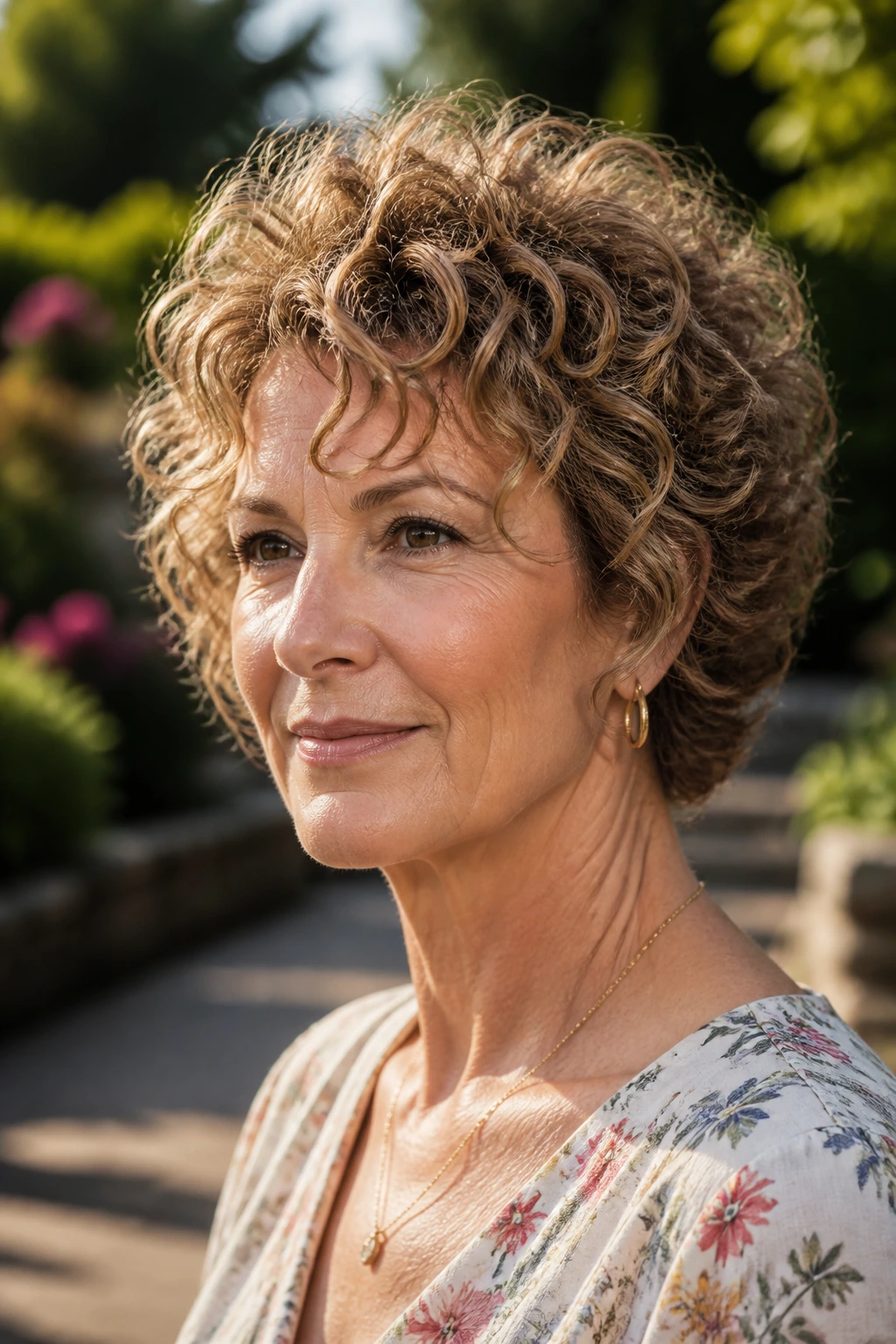
Curly hair in a wedge needs planning, not guesswork. The crown should be shaped to keep lift, while the back is cut to respect shrinkage so the nape doesn’t puff out like a triangle. Face-framing layers are the piece that ties the whole thing together, and they should be cut dry or nearly dry if your curl pattern is stubborn.
A lot of curly wedges go wrong because the stylist removes too much bulk in the wrong place. Then the cut looks wide instead of sculpted. The better approach is to keep the perimeter controlled and let the curls stack where they naturally want to live.
This shape is lovely when your curl pattern has some spring but not a ton of frizz. A diffuser helps. So does a leave-in that doesn’t get crunchy. The goal is shape with softness, not a shell.
9. Blunt Wedge with Airy Front Pieces
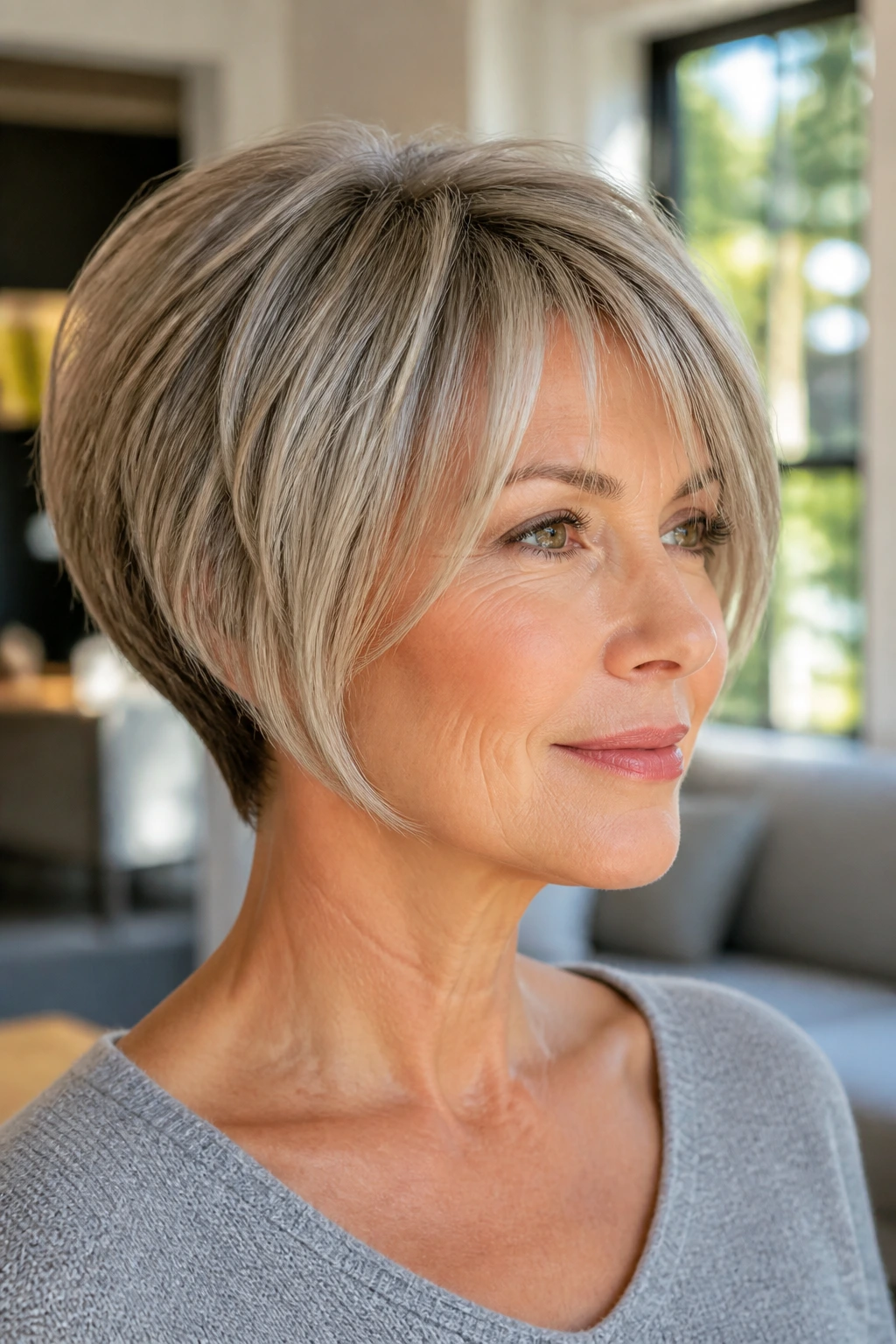
A blunt wedge sounds severe on paper, but the airy front pieces change the whole story. The back and sides stay crisp, which gives the haircut a clean outline, while the face-framing layers are softened just enough to keep the front from looking hard. Think of it as tailored, not stiff.
The bluntness works well for women who like clean lines and don’t want a lot of flutter around the face. The airy front saves it from looking too boxy. That contrast is what makes the cut interesting.
It’s especially strong on straight hair because the shape stays readable even on day two or day three. If your hair is dense, ask for internal weight removal rather than a lot of surface layering. You want the ends to sit neatly, not spring out.
10. Tapered Nape Wedge
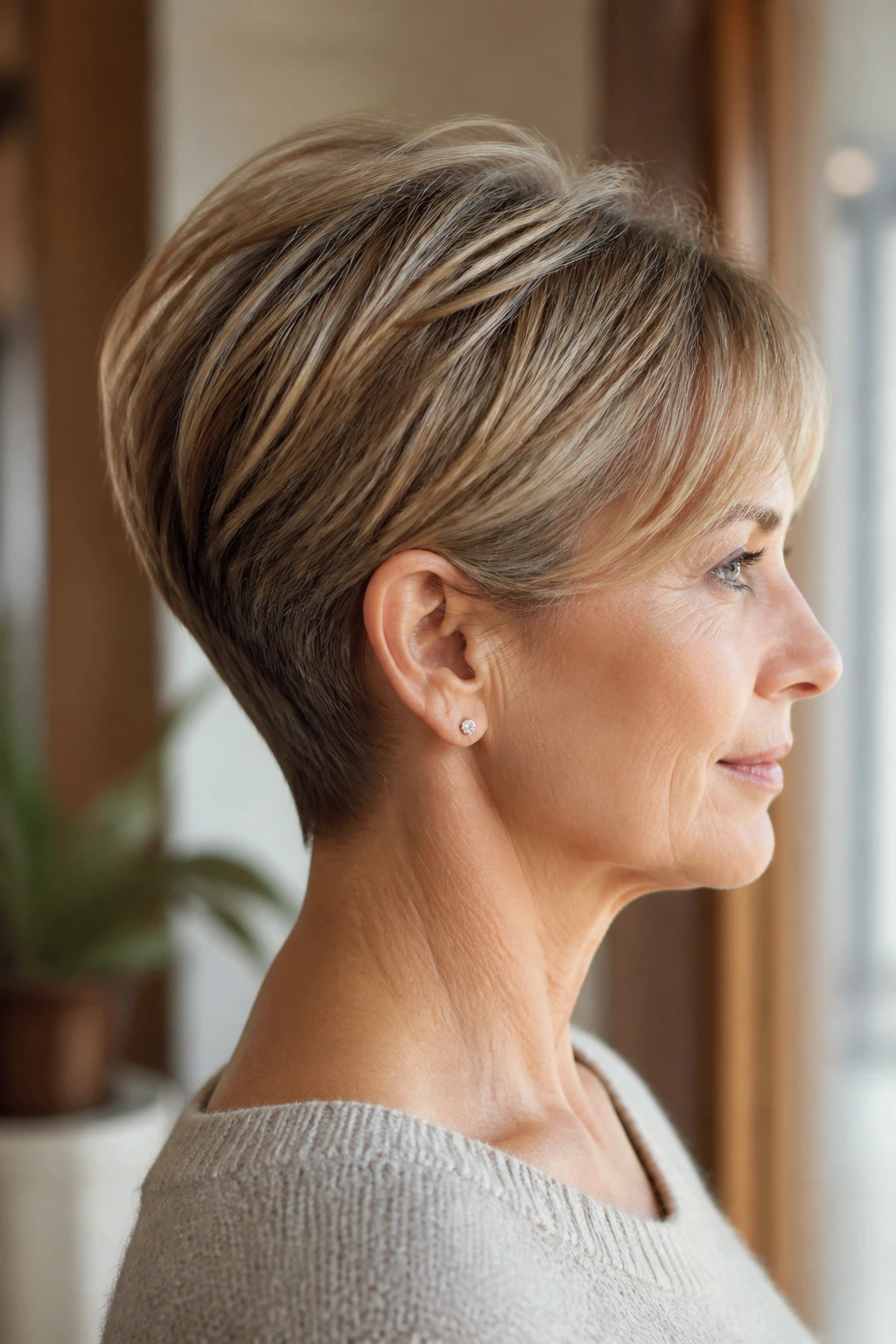
What I like about a tapered nape wedge is that it looks tidy even when the rest of your life isn’t. The neckline is closely tapered, almost tucked into the head, while the upper layers expand just enough to create a clean wedge profile. The face-framing layers are usually modest here, but they matter because the cut can turn severe if the front is ignored.
The best version follows the head shape. Not every wedge needs dramatic stacking. Sometimes a tighter nape and a soft side front are enough. That’s especially true if you wear scarves, collars, or jackets with built-in volume around the neck.
If your hair grows thick at the nape, this cut stays neat longer than softer short styles. It does need trims, though. You can stretch it for a while, but the back eventually starts to lose its shape in a very obvious way.
11. Highlighted Wedge with Dimension
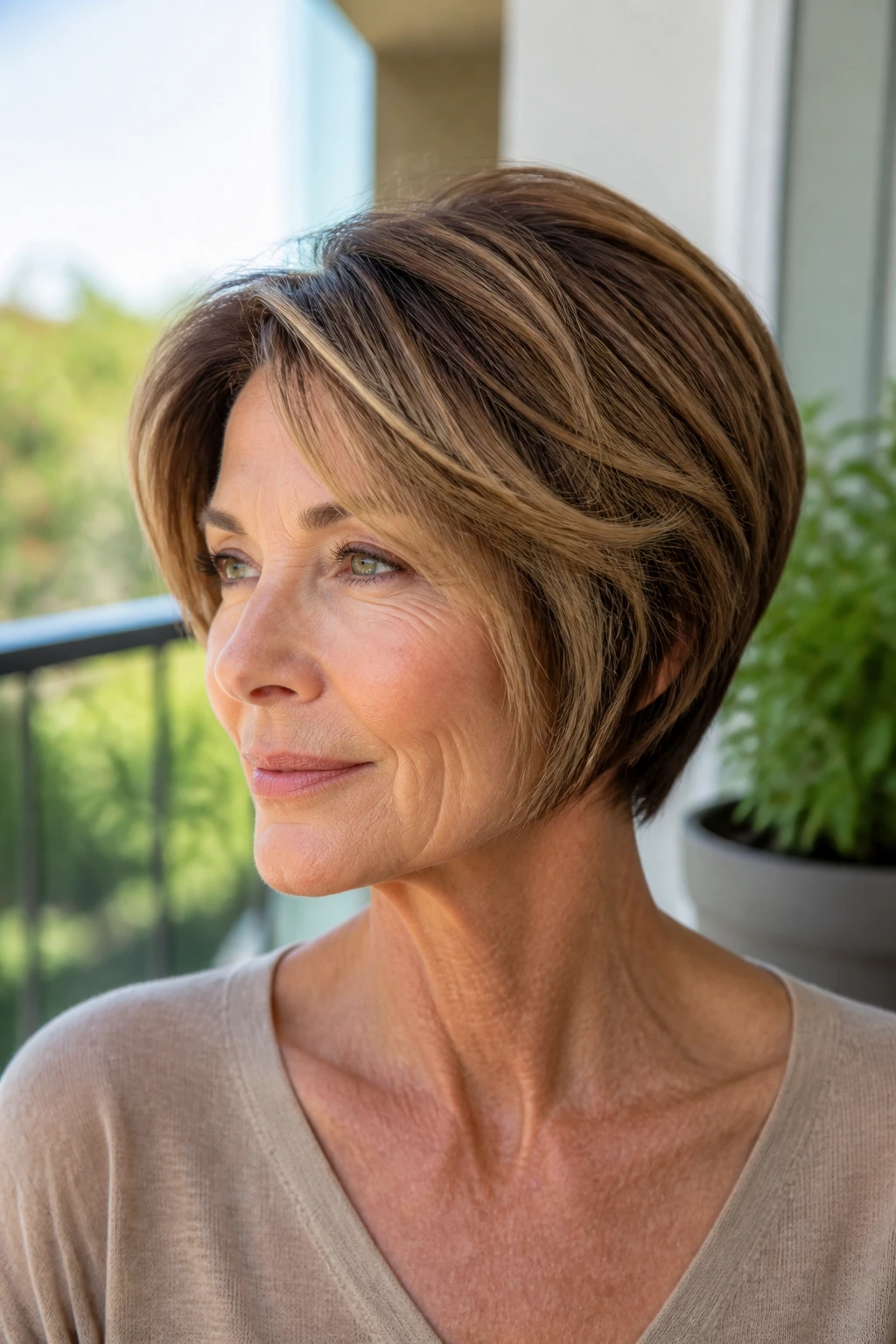
Highlights change a wedge more than people expect. Because the haircut relies on shape, the color can either flatten it or make every layer visible. A few well-placed lighter strands around the face and crown can separate the layers without making the cut look striped or busy.
The front pieces are the best place for brightness. Place light where the face-framing layers fall, and the haircut starts doing double duty: structure and softness. That’s especially helpful if your base color is medium brown, dark blonde, or silver with lowlights.
A wedge with dimension looks best when the highlights follow the cut, not fight it. Put brightness on the top layers and around the temples. Leave the nape darker if you want the stack to read clearly.
12. Rounded Wedge with Soft Edges
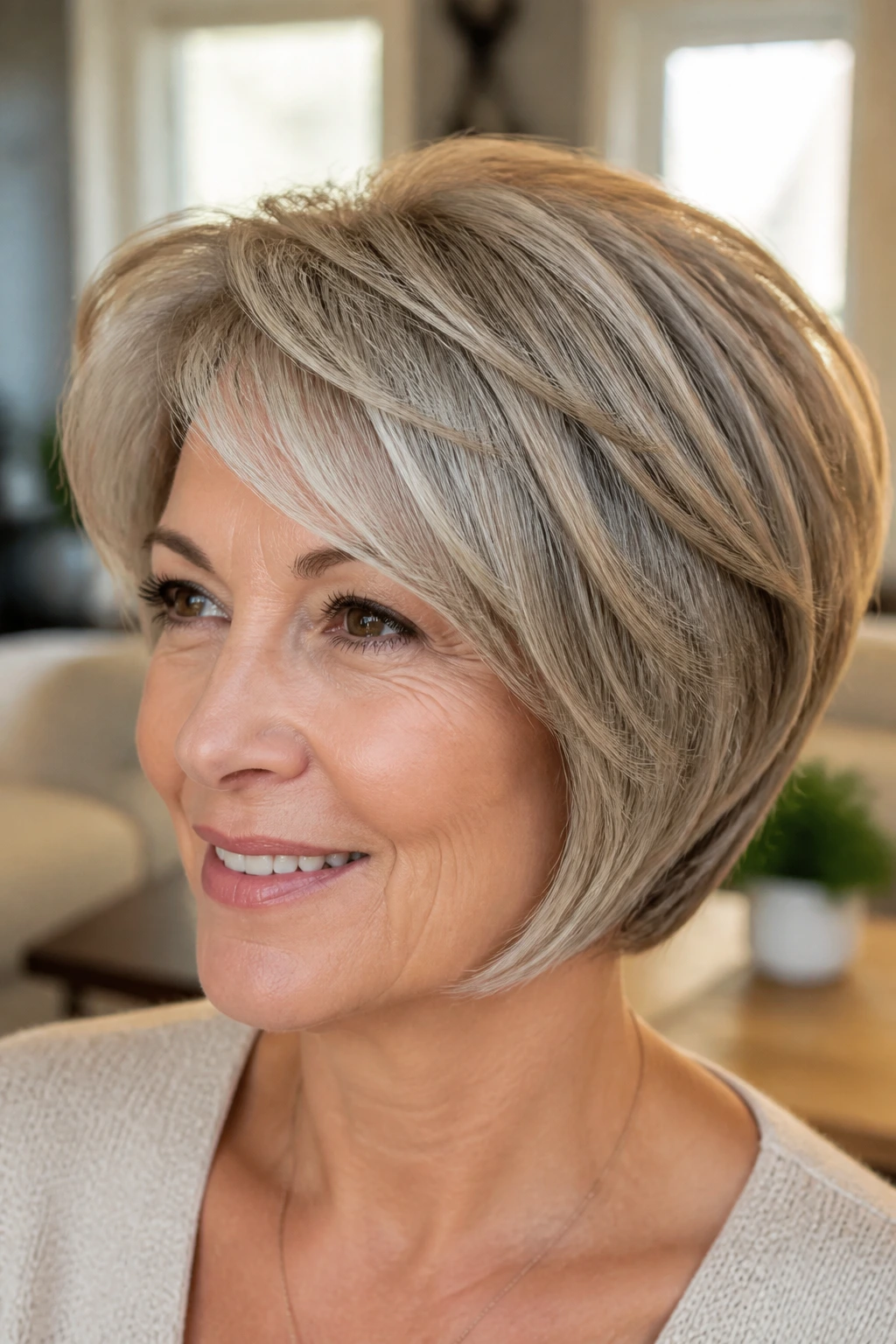
The rounded wedge is all about curve. Instead of a sharp angle from back to front, the silhouette bends gently so the cut feels cushioned rather than cropped. This is one of the easiest wedge shapes to wear if you like softness around the cheeks and don’t want a strong geometric edge.
Quick notes
- Best on medium-density hair that can hold a round shape
- Works well with side parts or a slight off-center part
- Needs a round brush or large hot brush to keep the curve visible
The face-framing layers should arc into the sides of the face, not fall flat against it. If they stop too low, the curve gets lost. When they’re placed correctly, the haircut has a calm, polished feel that’s useful for everyday wear.
13. Side-Swept Volume Wedge
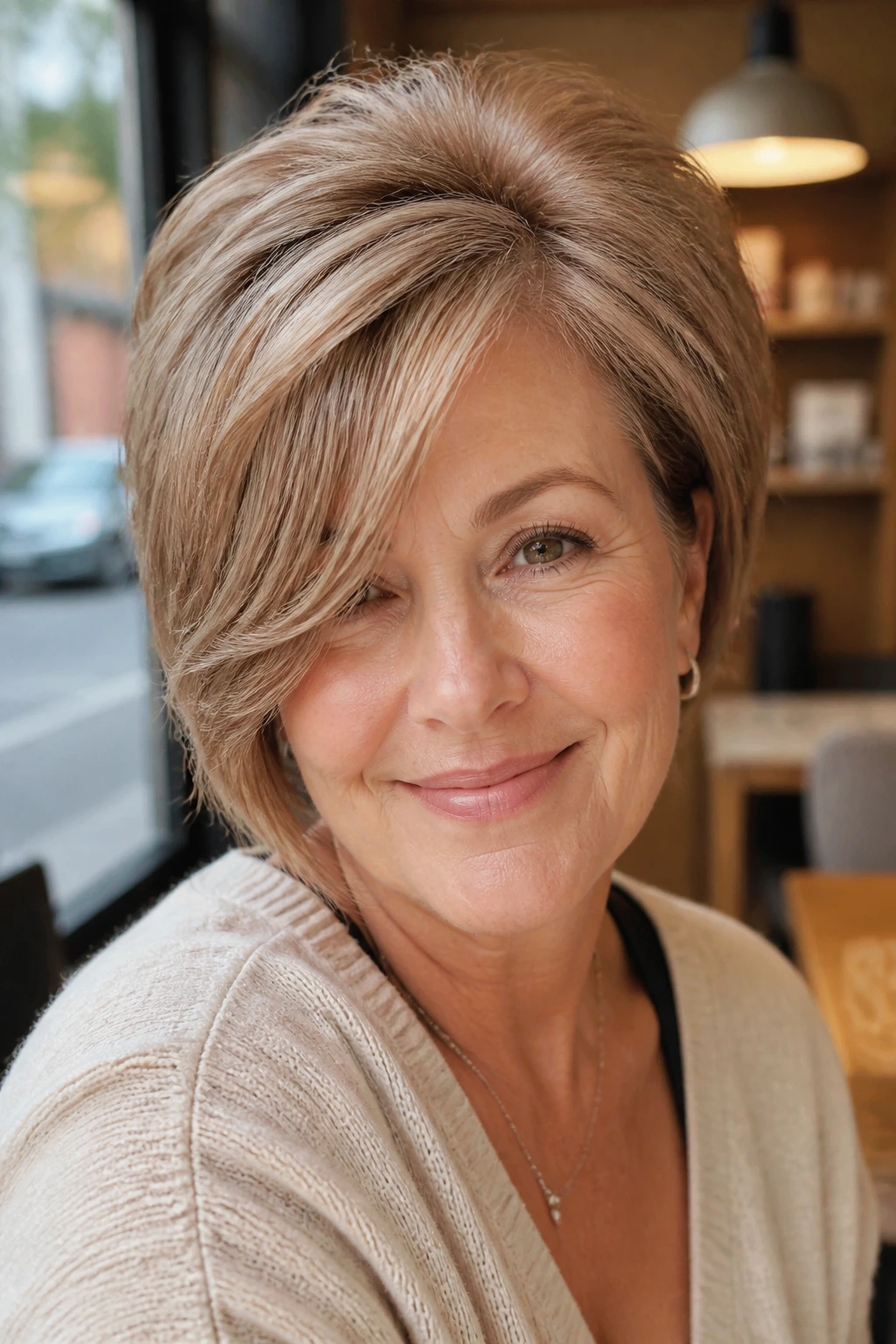
Can a short haircut feel airy and full at the same time? Yes, if the side-swept volume is built in the right places. This wedge keeps lift at the crown and sweeps the front across one side of the face, which is a good move when you want movement without a lot of visible layering.
The sweep matters because it breaks up symmetry. Straight-on short hair can sometimes feel a little blunt, especially after 50 when the face benefits from softer lines around the eyes and jaw. A side sweep changes the whole rhythm of the cut.
This version is friendly to women who wear glasses or have a stronger brow line. The front layers can stop just above the frame or glide over it, depending on the length. Either way, the result feels planned.
14. Shaggy Wedge
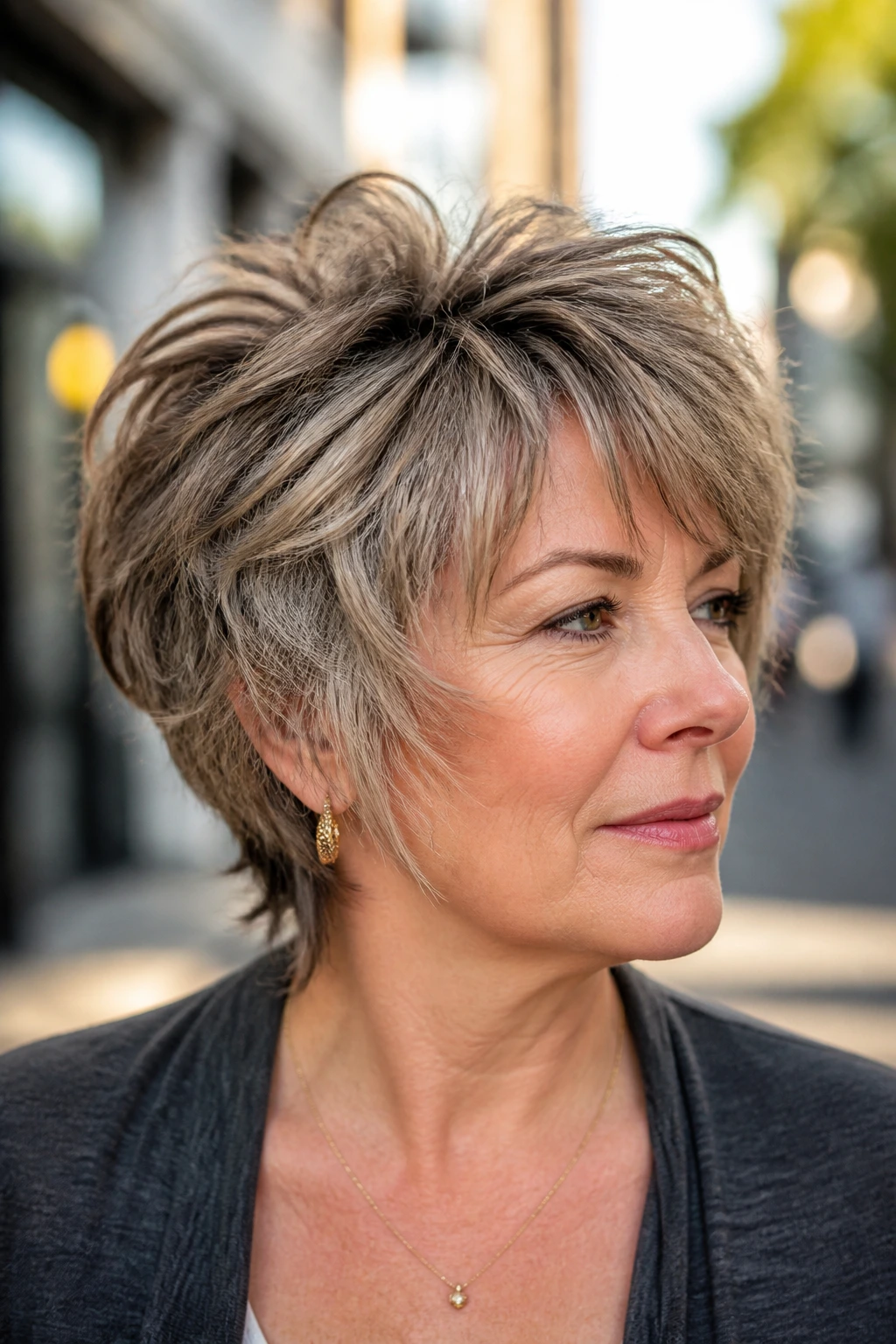
A shaggy wedge is for the woman who wants the shape of a wedge but not the fuss of a formal blowout. The layers are broken up a little more, the ends are less exact, and the face-framing pieces drift into the haircut instead of landing on a hard line. It’s casual without looking sloppy, which is a useful distinction.
You do need a stylist who understands where to stop. Too much shag and the wedge disappears. Too little and you’ve got a regular layered crop with a confused back. The balance is in the top and front layers staying light while the nape still holds the wedge outline.
This cut shines when hair has natural wave or a little grit to it. A salt spray or mousse can wake it up fast. If your hair is baby-fine, use less texture and more lift at the roots.
15. Ear-Length Wedge
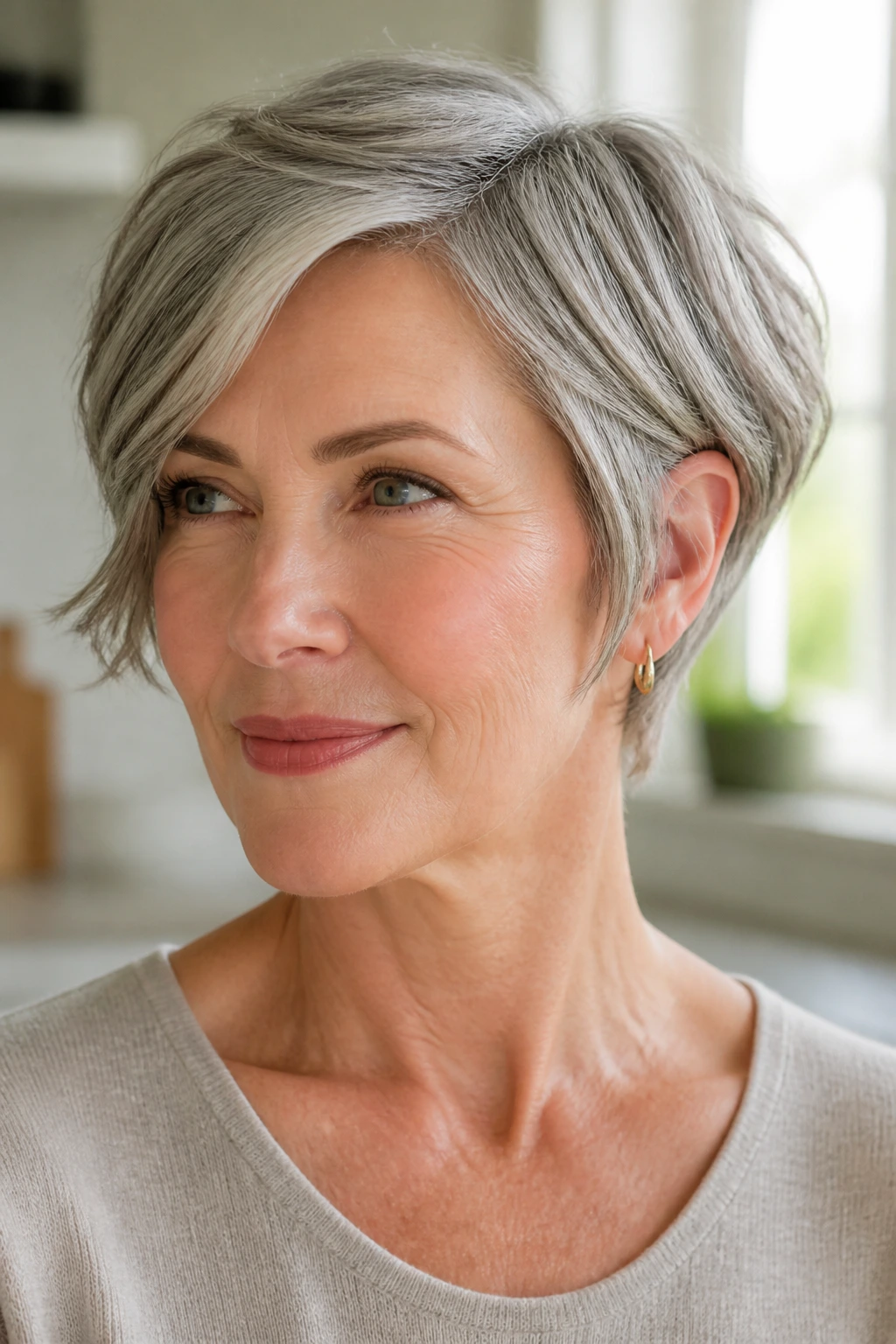
Ear-length wedges are short enough to feel fresh, but not so short that they demand constant touch-ups. The line around the ear keeps the haircut light, while the stack in the back gives it a shape that a plain cropped cut often lacks. Face-framing layers here are minimal, but the little side pieces are what keep the haircut from looking severe.
This is one of the easiest cuts to tuck behind the ear on one side and leave fuller on the other. That asymmetry is subtle and useful. It gives you an instant styling option without changing the haircut itself.
If you wear earrings, this length is worth a look. The cut doesn’t bury them. It actually leaves room for them, which sounds small until you realize how many short cuts swallow that whole area.
16. Feathered Bob-Wedge Hybrid
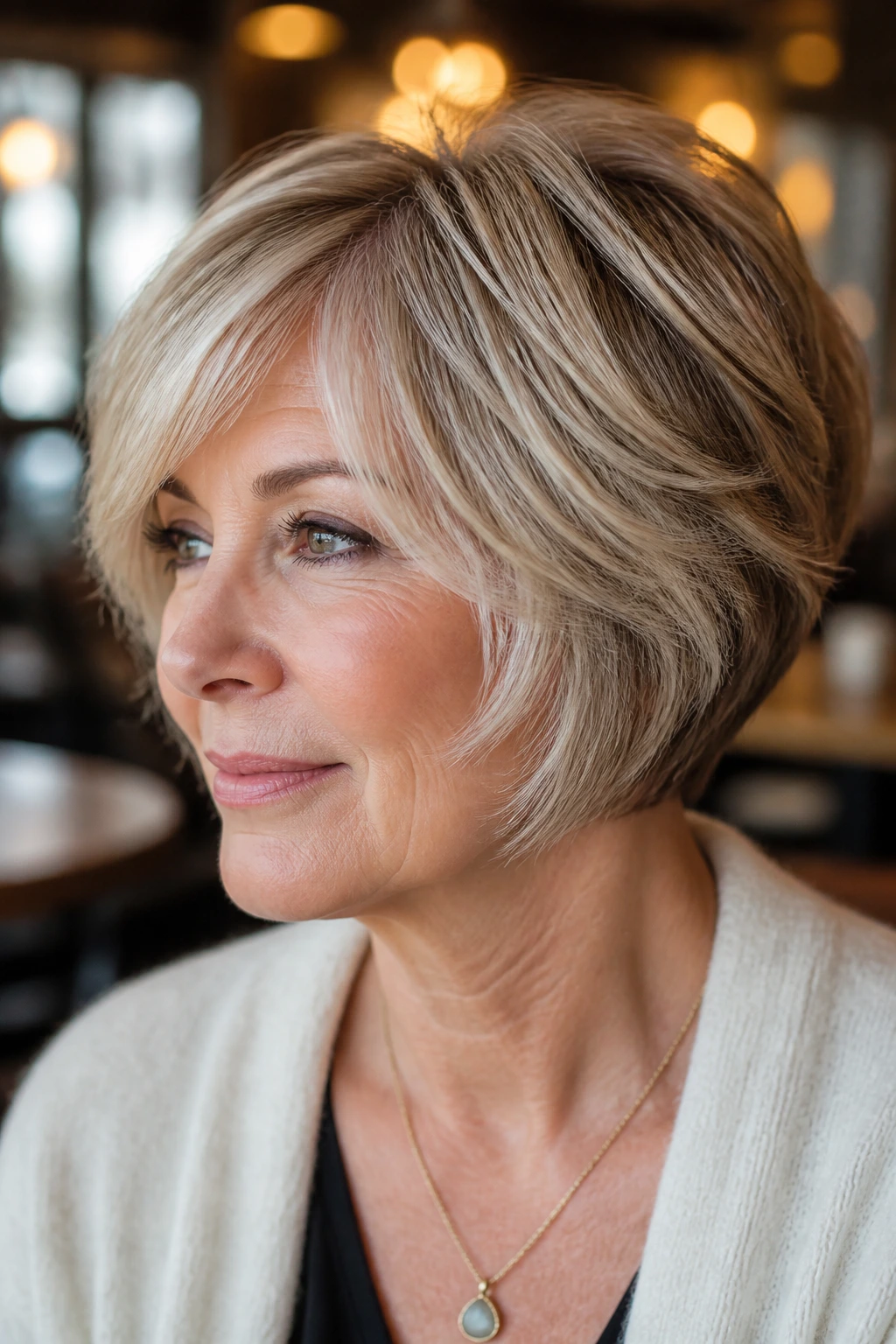
A bob-wedge hybrid sits between a classic bob and a more sculpted wedge. The perimeter is a bit longer and rounder than a true wedge, but the back still lifts and tucks in enough to keep the shape alive. That makes it a good bridge haircut if you’re not ready for something dramatically shorter.
The face-framing layers are the key here. They should start high enough to matter, usually near the cheekbone, and fall into the longer front sections so the haircut feels blended. Without that, the style can end up looking like two separate cuts fighting each other.
This one is especially good for people who want a softer grow-out. When the layers loosen, it still reads as intentional. Not every short haircut does that.
17. Sleek Straight Wedge
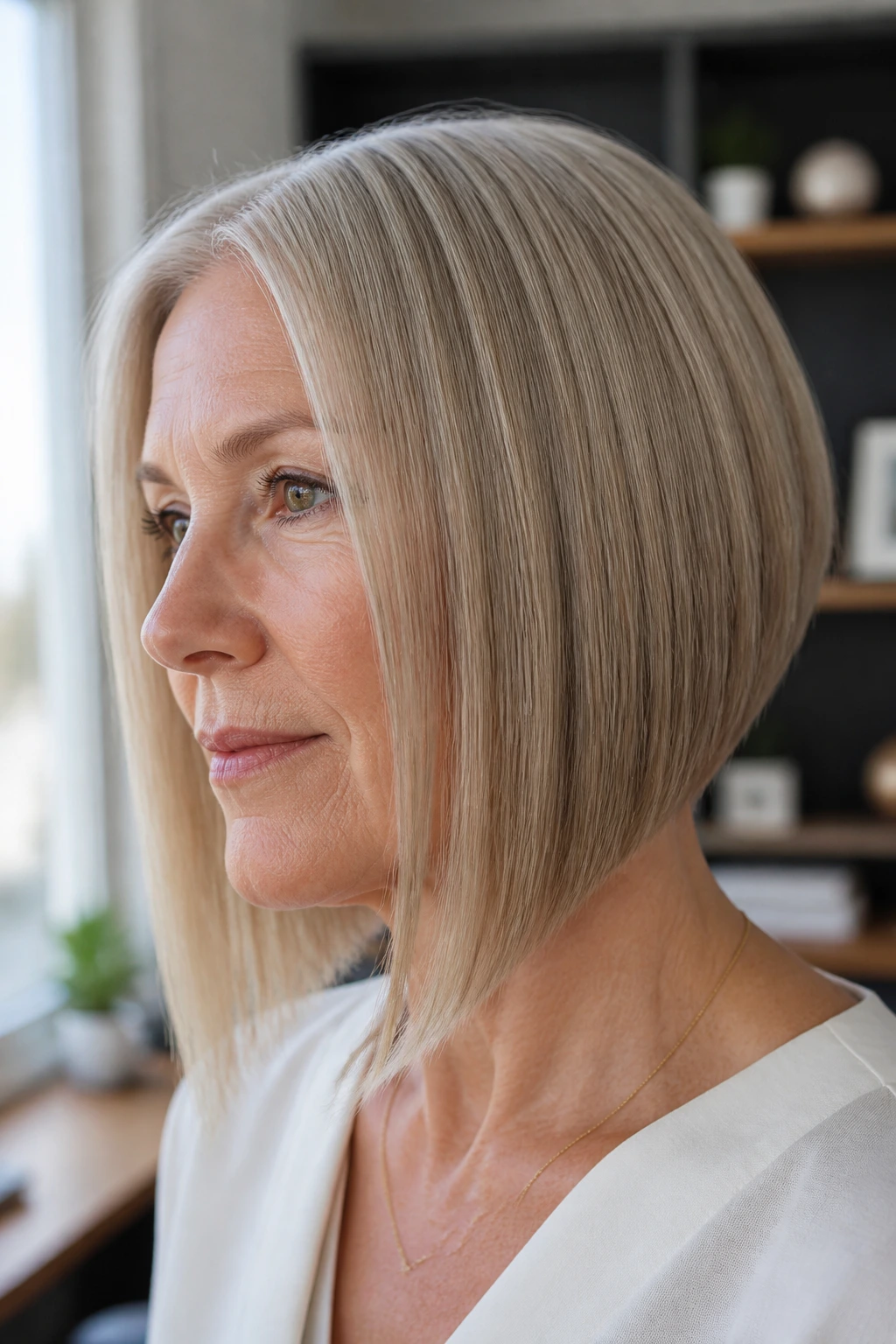
A sleek straight wedge works when the cut itself is disciplined. The lines are clean, the layers are subtle, and the face-framing pieces are kept narrow enough to lie smoothly against the cheek without flaring out. There’s no point in pretending this is a wash-and-walk-away style. It wants some polish.
If your hair is naturally straight or only slightly wavy, this can look elegant in a very plain-spoken way. The shine matters here more than texture. A flat iron pass over the front pieces and a drop of serum on the ends can make the whole cut look more expensive than it is.
The trick is to avoid ironing the life out of it. A little bend near the front gives the cut shape. Pin-straight all the way through can make the face-framing layers vanish.
18. Salt-and-Pepper Wedge
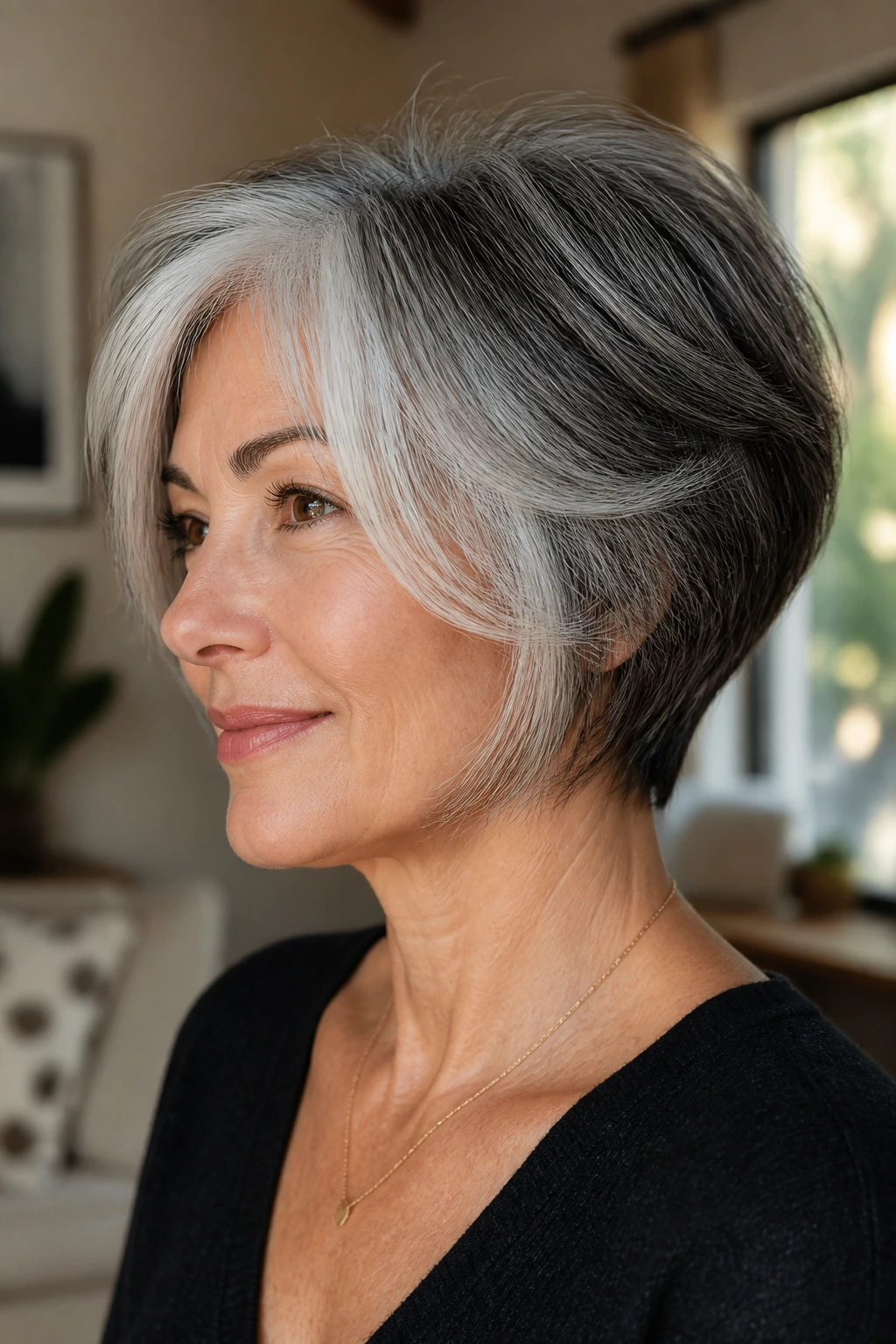
Salt-and-pepper hair shows line better than most colors do, which is why a wedge can look so crisp in it. The darker pieces define the stack, and the lighter strands around the face soften the edges almost by accident. That contrast gives the haircut movement even when the style itself is simple.
The face-framing layers should be placed to catch the lighter pieces near the front. That way the haircut doesn’t just look shorter; it looks dimensional. If the color is a mix of silver, charcoal, and white, the right layer placement can make the cut feel alive instead of flat.
This is one of my favorite combinations for women over 50 because it doesn’t try to disguise age. It uses the color as part of the design. There’s a difference.
19. Layered Wedge for Fine Hair
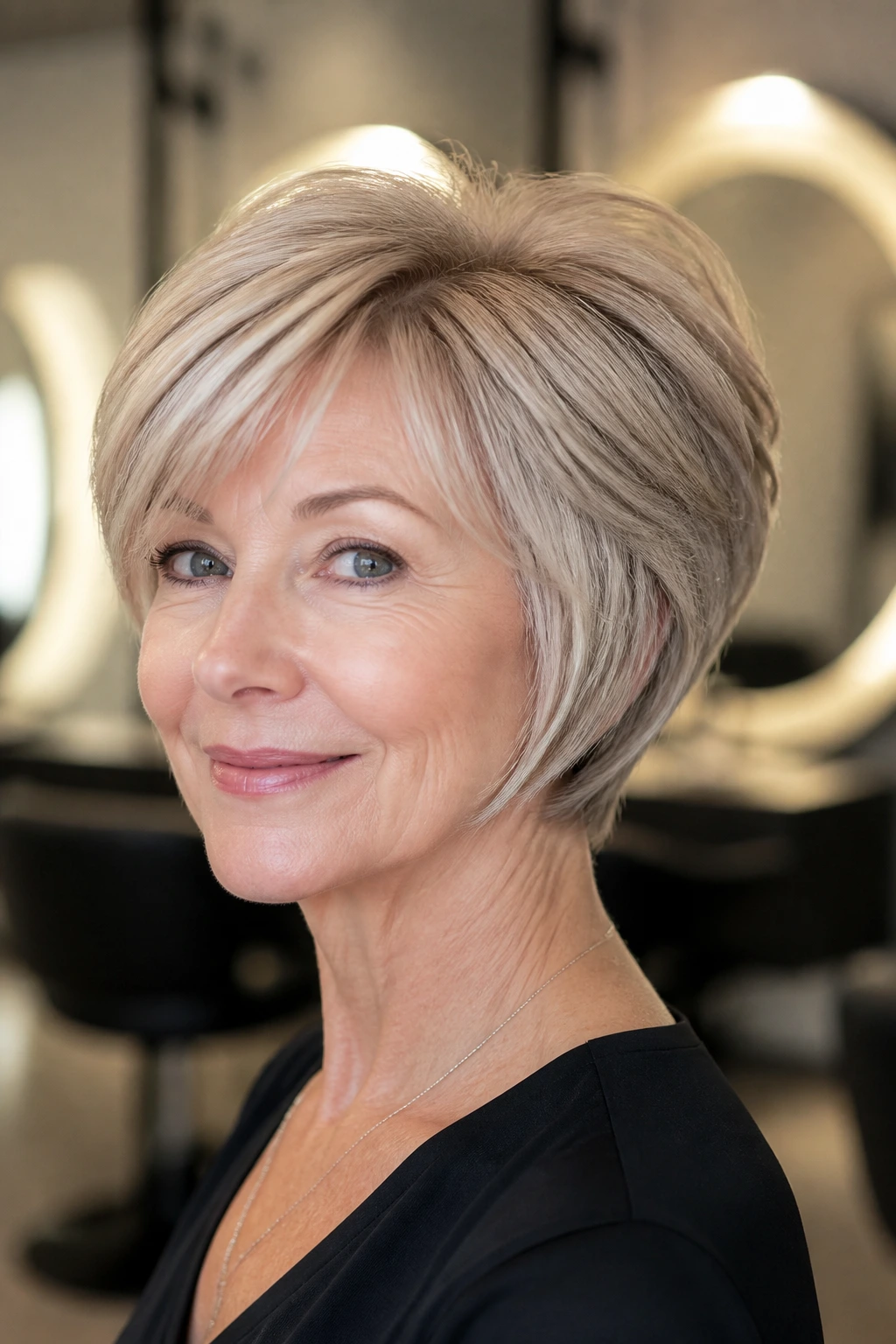
Fine hair needs a wedge that respects weight. Too much texturizing and the ends go wispy; too little and the whole cut hangs there like it’s waiting for volume that never arrives. A layered wedge solves that by building lift at the crown and keeping the face-framing layers light enough to move.
The secret is in the stack. It should be compact, not choppy. Short, controlled layers create the illusion of thickness better than long, see-through pieces. Around the face, the layers should stop just long enough to soften the jaw without dragging everything down.
If your hair collapses by noon, this is one of the best short shapes to try. It gives you a little architecture. That’s usually more useful than another round of bulky products.
20. Piecey Wedge for Thick Hair
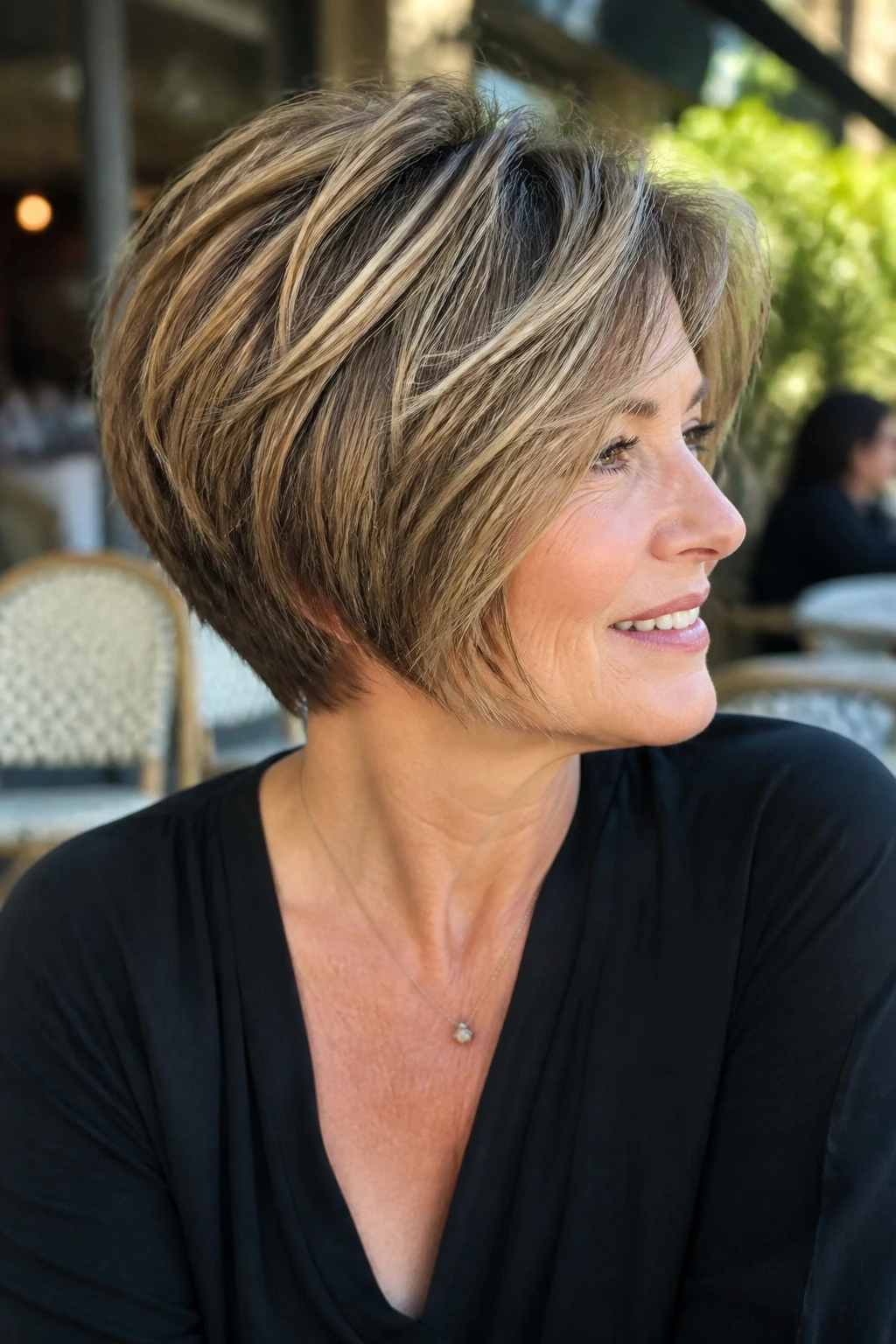
Thick hair can take a wedge, but only if the weight is removed with some care. Otherwise the back swells, the sides puff out, and the whole shape starts to resemble a triangle no one asked for. A piecey wedge keeps enough structure to stay recognizable, then breaks the surface into separated sections so the hair moves instead of sitting in one block.
The front layers should not be too short. Thick hair has a way of springing upward once it dries, and face-framing pieces that looked tame in the chair can turn into chin-skimming flares at home. Longer is safer.
Use this style if you like texture and don’t mind a little product. A matte cream or paste can split the layers just enough to show the cut. Heavy oils are the wrong choice here. They make thick hair collapse into a sheet.
21. French-Inspired Wedge with Long Fringe
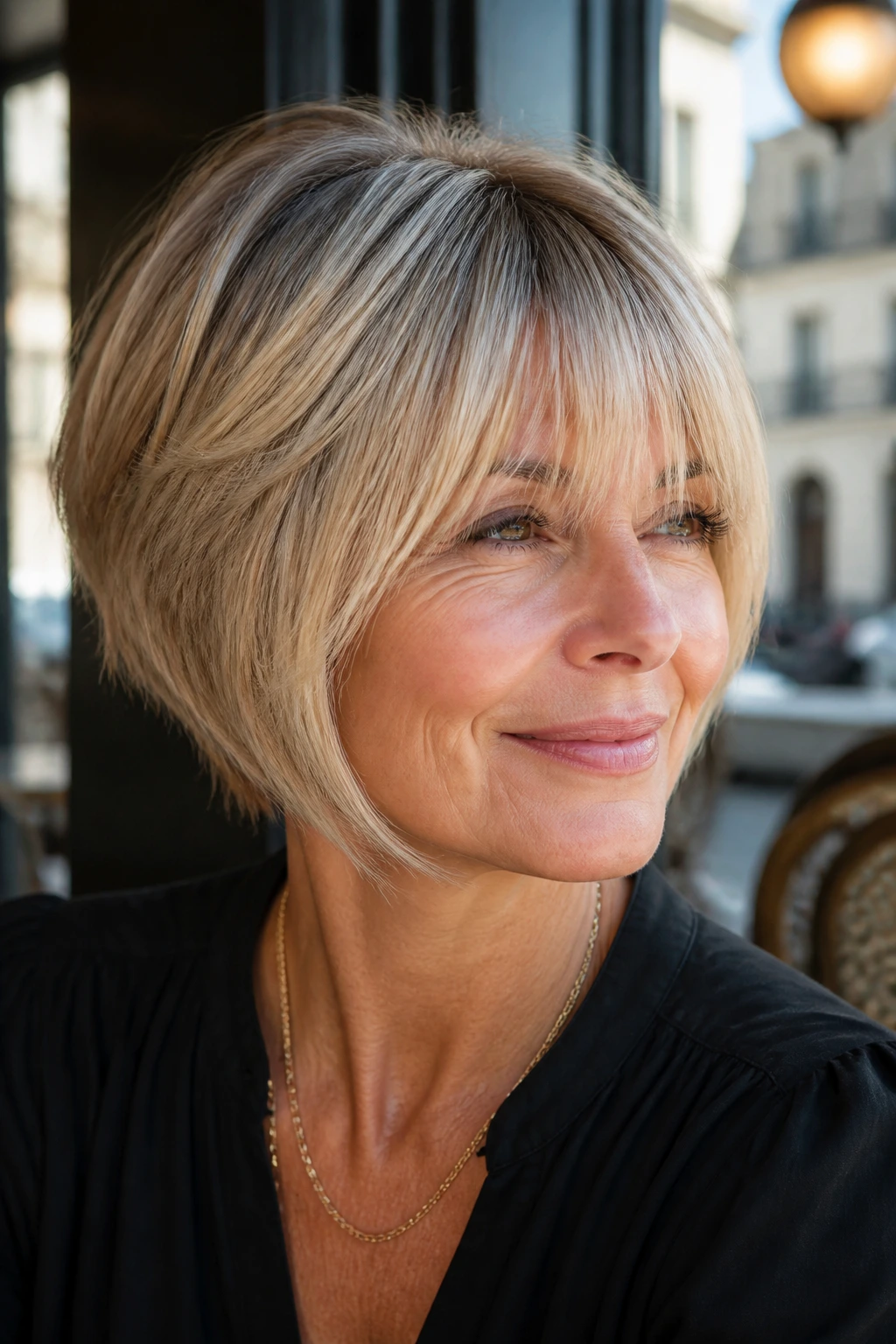
This cut borrows the ease of a French bob but keeps the wedge’s shaped back. The long fringe is the difference. It falls forward softly, skimming the brows or cheekbone, while the back stays tucked and refined. The result feels a little artsy, a little neat, and a lot less fussy than many polished short cuts.
The face-framing layers blend into the fringe instead of competing with it. That’s what makes it work. If the fringe is too blunt, the style starts looking theatrical. Keep the edges soft, and it reads as chic without trying too hard.
This one suits women who want the front of the haircut to carry more personality than the back. That’s a fair preference. Not everyone wants the nape to be the star.
22. Modern Wedge with Wispy Bangs
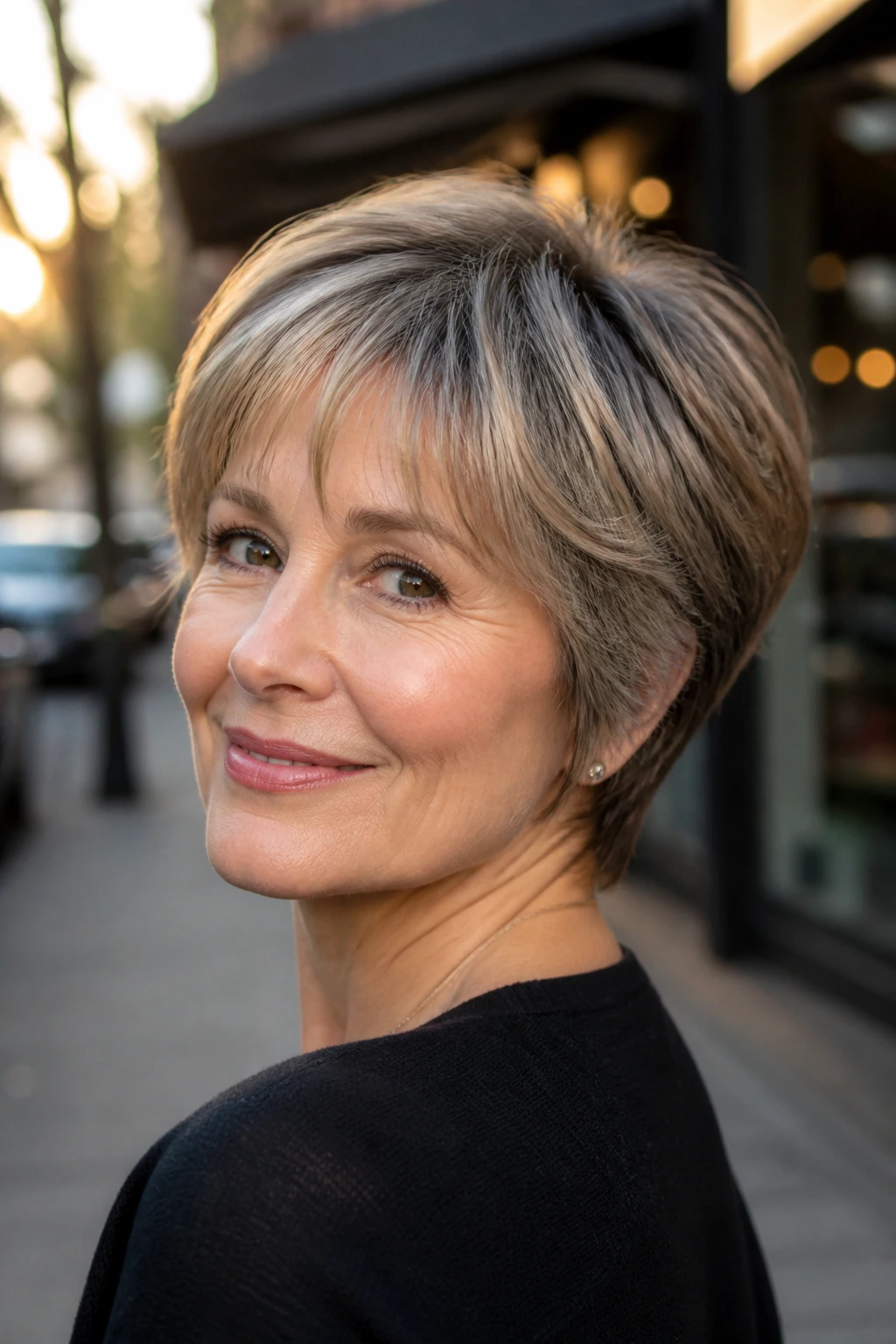
A modern wedge with wispy bangs is the cut I’d point to if someone wanted softness first and structure second. The bangs are broken up and light, so they don’t close in the forehead or make the haircut feel heavy. The wedge shape still gives the back its tidy outline, but the front does the flattering work.
Wispy bangs are useful if your forehead feels a little wider than you’d like, or if you just want the eyes to stand out more. They also help if you wear glasses, because they sit lightly instead of crowding the frame. Keep them too thick and the whole cut loses that easy, modern feel.
It’s a good ending point for this collection because it shows the wedge isn’t stuck in one era. The shape can be sharp, soft, playful, polished, or airy. It just needs the right balance of back structure and front softness.
Why the Wedge Shape Still Flatters Mature Hair
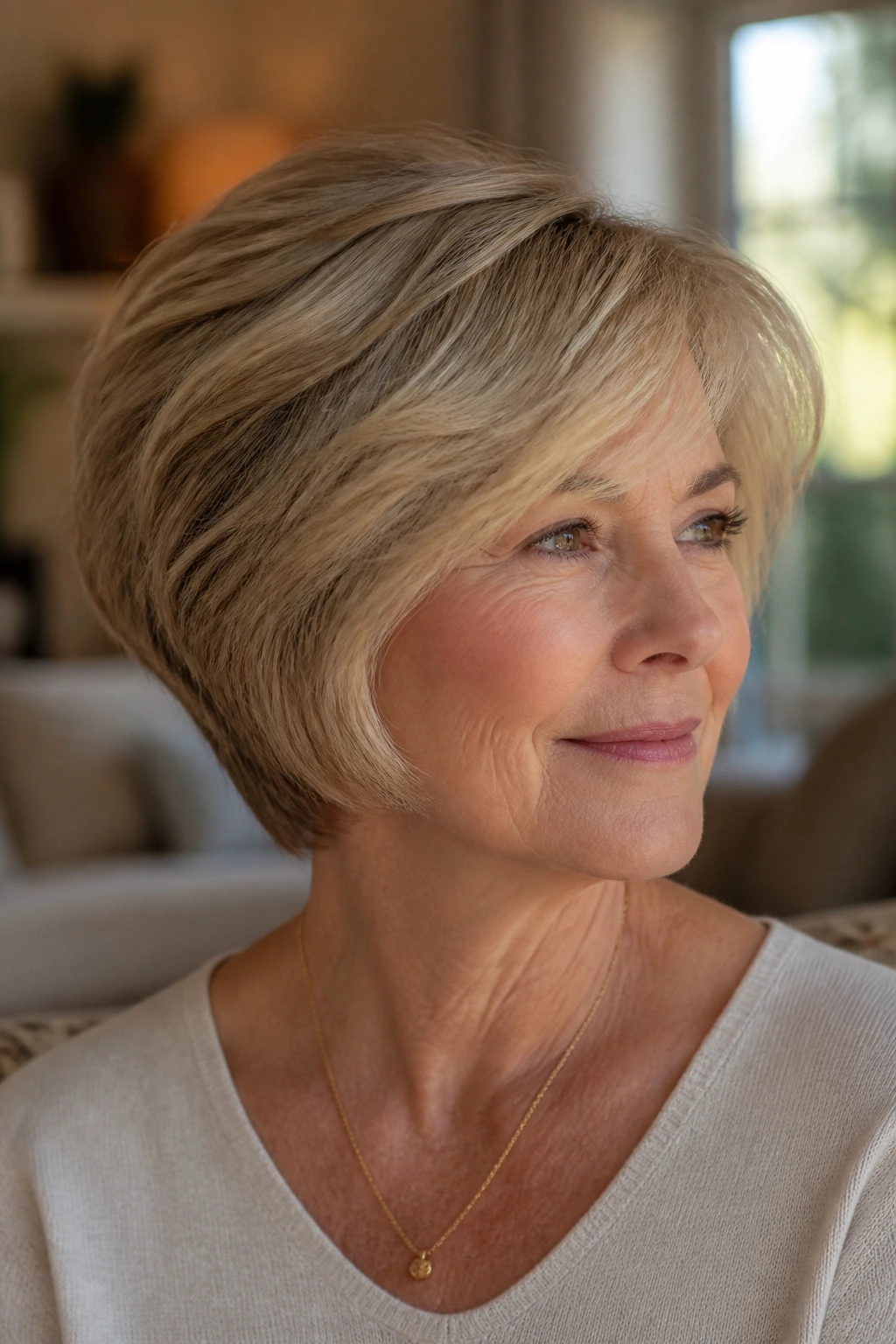
The wedge cut earns its keep because it solves three common problems at once: flat crown, heavy back weight, and a face that needs a little softness around the edges. That combination is hard to beat. You can take a wedge short and neat, or keep enough length to tuck it behind the ear, but the shape still does the heavy lifting.
What makes it especially useful for women over 50 is the way it handles change. Hair thins in some places, grows coarse in others, and starts behaving differently around the temples and nape. A wedge gives you a controlled outline without demanding that every strand sit still. The face-framing layers matter because they keep the cut from feeling severe, especially when you want the haircut to sit a little closer to the cheekbone or jawline.
The best versions don’t hide the head shape. They work with it. That’s why a good wedge can feel cleaner and more flattering than a lot of longer layers that seem easier on paper but take more work in real life.
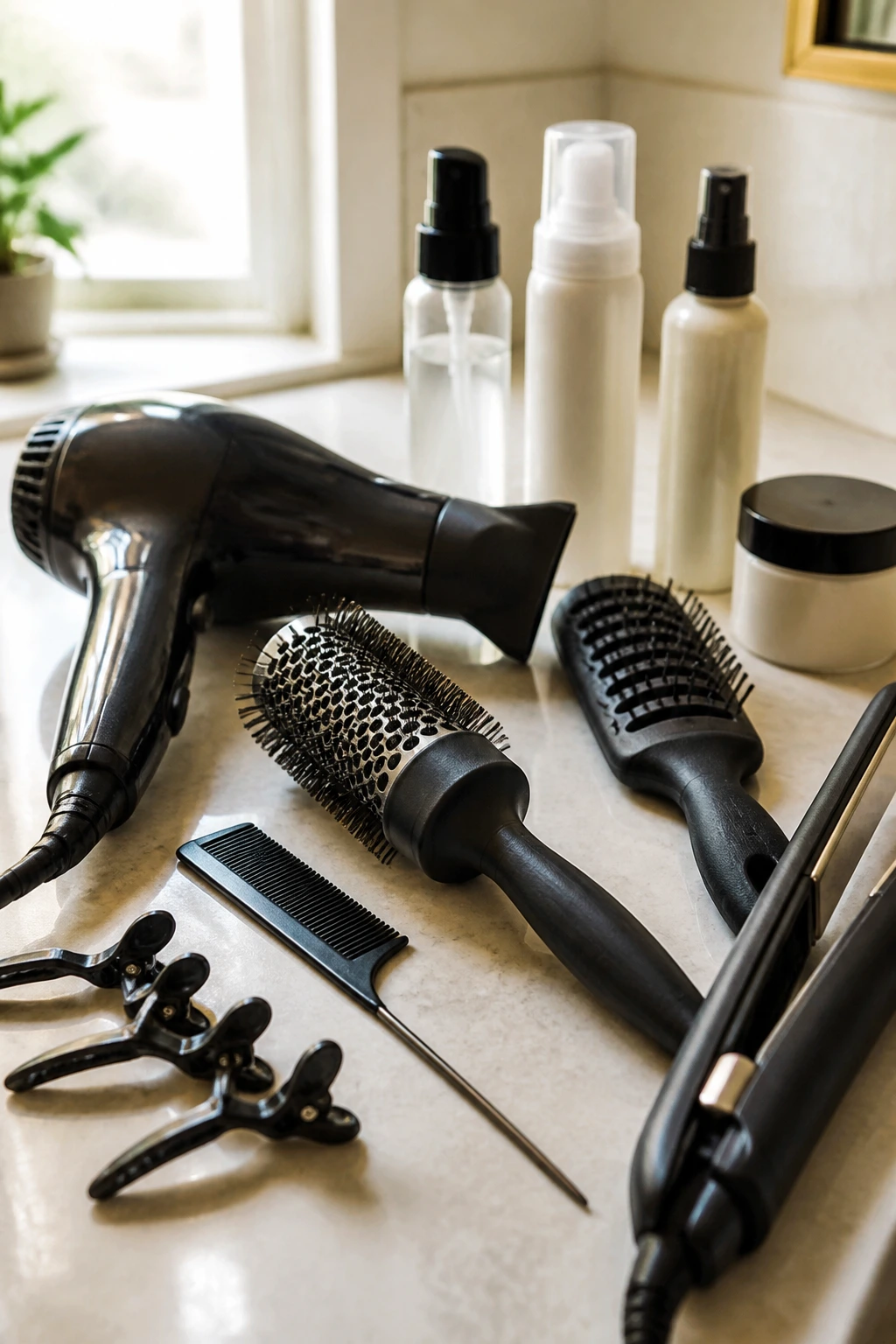
Essential Tools for a Clean Wedge at Home
-
Blow dryer with a concentrator nozzle: This helps direct the back and side sections into the wedge shape instead of blasting the layers apart.
-
1 to 1.25-inch round brush: A smaller brush gives you control around the face-framing layers and helps build lift at the crown.
-
Vent brush or paddle brush: Good for rough-drying the back quickly before you start shaping the front.
-
Tail comb: Useful for clean parting and for lifting sections at the root before drying.
-
Section clips: Short hair still needs sectioning. A few clips make the cut much easier to style neatly.
-
Heat protectant spray: Skip this and your ends will eventually show it. A light spray keeps the front layers from getting crisp.
-
Light mousse or root lift spray: Best for adding body at the crown without making the cut stiff.
-
Texturizing spray or lightweight cream: Choose one based on hair type; fine hair usually wants spray, thick hair usually wants a cream.
-
Flat iron, optional: Handy for smoothing the face-framing pieces or flipping the ends under on a blunt wedge.
How to Choose the Right Wedge and Bring the Right Photos
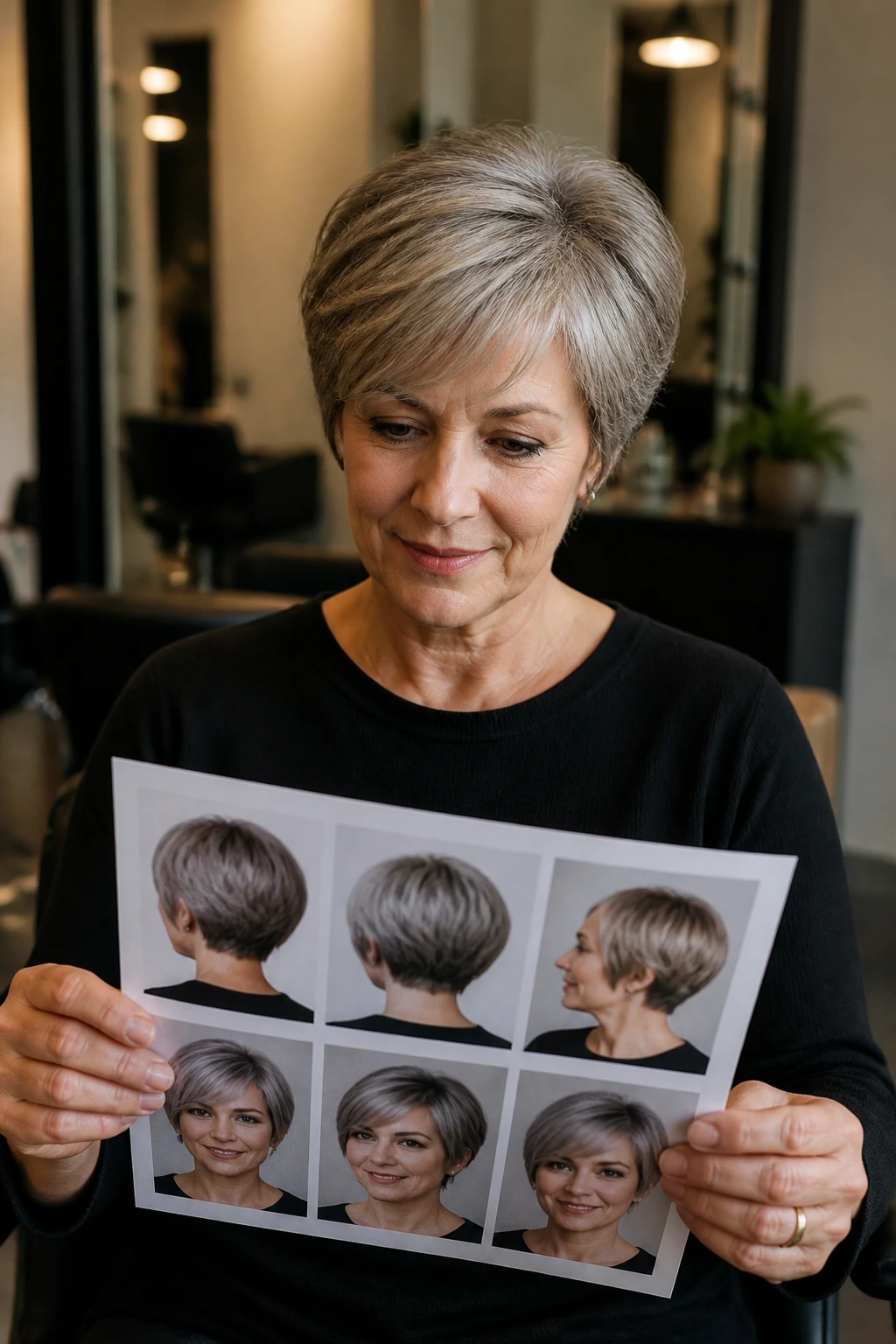
A good salon consultation starts with the part people skip: where your hair actually lives on your head. Cowlick at the crown? Strong growth at the nape? A swirl near one temple? Say it out loud. A wedge can work around those things, but only if the cut is placed with them in mind.
Bring photos that show the back as well as the front. That back view matters more for a wedge than for a lot of other cuts, because the stack and taper are the whole point. If a photo only shows the front, you’re guessing. And guessing is how people end up with a cut that looks fine from the mirror and odd from the side.
Talk length in plain terms. Tell your stylist whether you want the front to hit the cheekbone, jawline, or just below the ear. Mention if you wear glasses every day, because that changes where the face-framing layers should land. If your hair is fine, ask how much weight will stay at the crown. If it’s thick, ask how much bulk will come out around the nape. That conversation saves a lot of awkward growing-out later.
How to Wear These Cuts So They Work with Your Face and Wardrobe
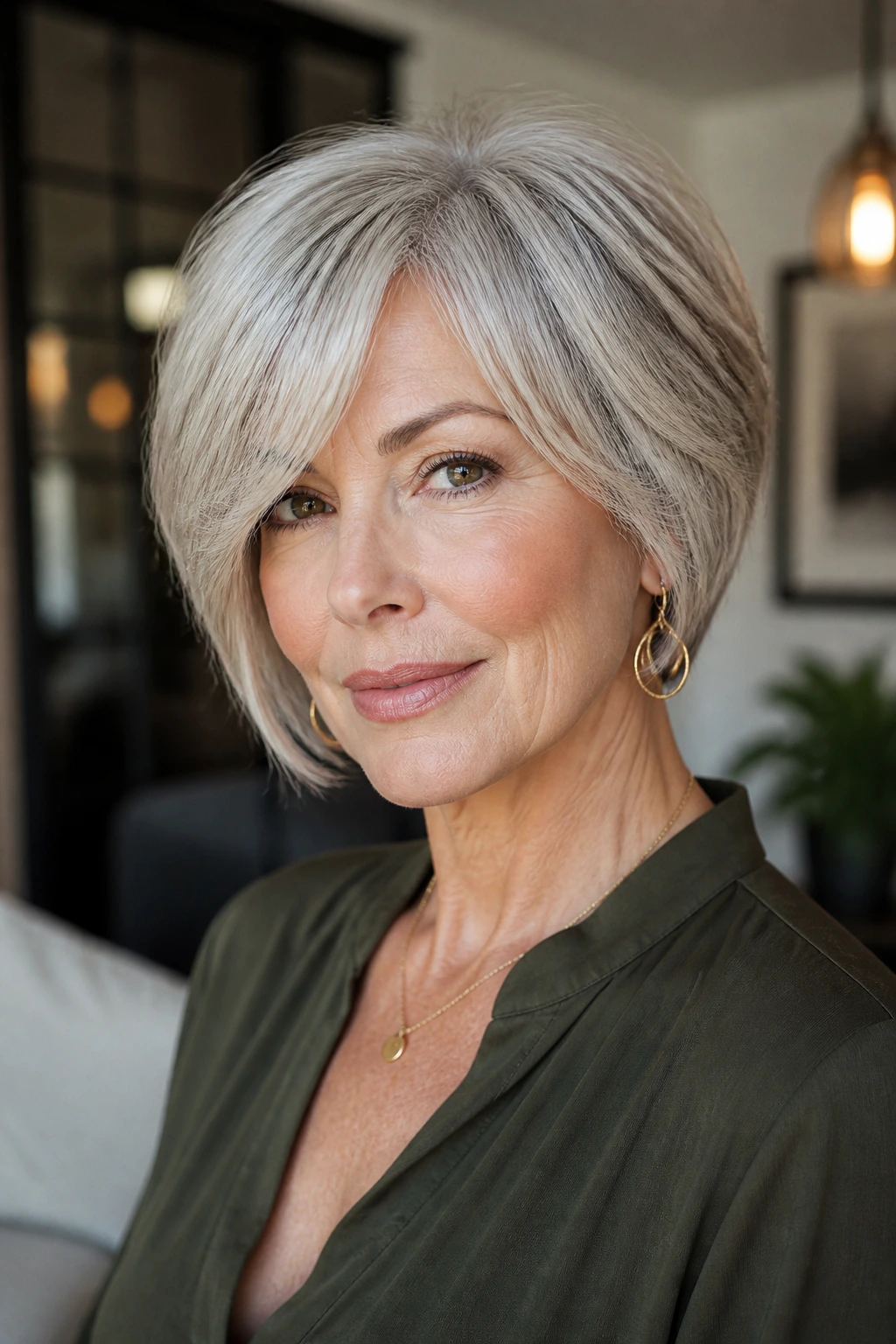
Presentation: A wedge looks best when the silhouette is clear. Keep the back neat, give the front a little bend, and don’t drown the layers in heavy cream that kills movement. The style can be sleek, piecey, or softly blown out, but it should always show the shape.
Accompaniments: Short wedges sit nicely with earrings, glasses, scarves, and collared shirts because they leave the jawline open. If your frames are chunky, a softer face-framing layer usually helps. If your necklaces are the thing you want noticed, choose a cleaner front line so the hair doesn’t compete.
Portions: Go shorter at the nape if you want maximum lift and easy neck clean-up. Leave more length through the front if you want the haircut to feel gentler or if you’re easing into shorter hair for the first time. A chin-length front is a safe middle ground. So is a long side fringe.
Beverage Pairing: Not this time. What you really want is a styling pairing: a root-lift product at the crown and a smoothing cream on the ends. That combination keeps the top lively while the face-framing layers stay soft instead of fuzzy.
Additional Styling Tips and Finishing Moves
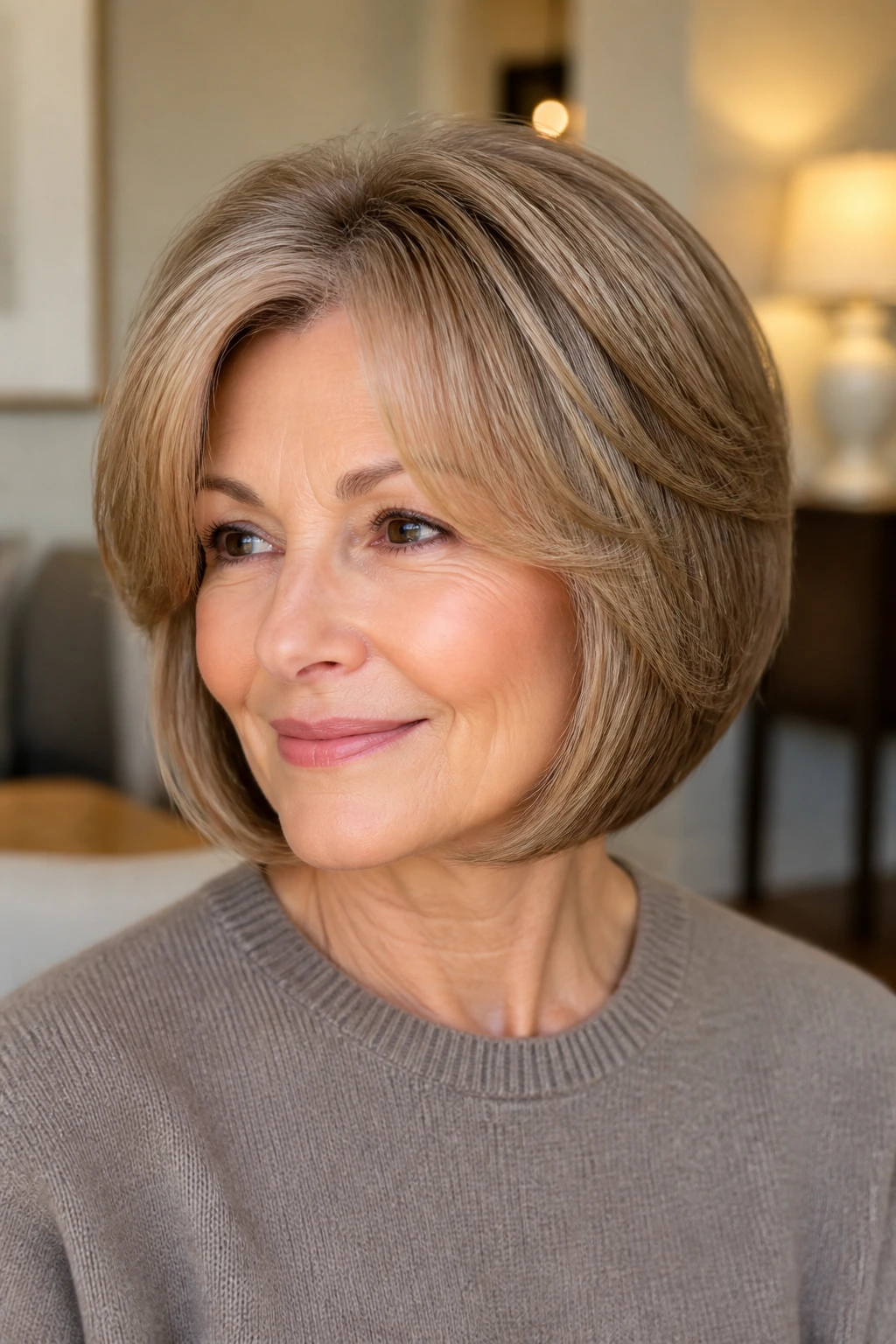
Flavor Enhancement: A tiny bit of shine spray on the outer layer can make a wedge look freshly cut even on day two. Use a light hand. The mistake is overdoing it and turning the crown flat.
Customization: If your face-framing layers feel too blunt, ask for point-cutting at the ends. If they feel too wispy, ask for a slightly denser line that still bends softly around the face. Tiny changes matter more than people expect.
Serving Suggestions: Tuck one side behind the ear, leave the other side forward, and let the asymmetry do the work. That’s an easy styling trick for a wedge that keeps the cut from looking too fixed in place.
Pro Move: Dry the front layers first when your hair tends to collapse. Once they’re set, the back is easier to shape around them. It sounds backwards, but it helps the style hold its outline.
Keeping the Shape Between Salon Visits
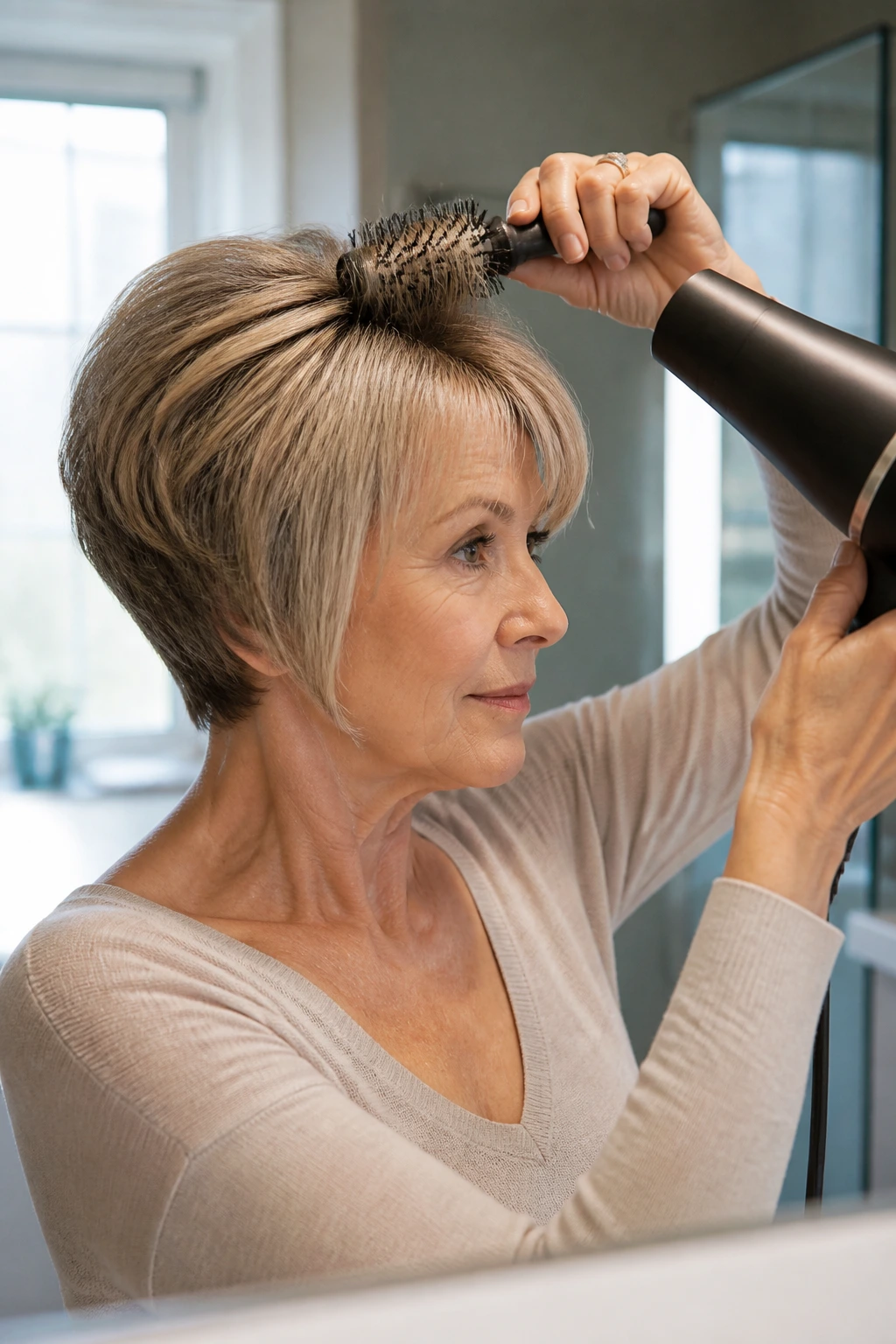
A wedge grows out in a way that announces itself fast. The back loses its taper first, then the sides start to widen, and before long the face-framing layers stop framing anything at all. That’s why trims every 4 to 6 weeks make such a difference. You can stretch it a bit longer if your hair grows slowly, but the shape is the thing to watch, not just the calendar.
Dry shampoo helps at the crown, but don’t use it as a crutch for a cut that has already lost its structure. Once the nape starts looking bulky, no product can fully fake the line. A quick neck clean-up or trim around the ears is often enough to bring the shape back without taking much length off.
At home, a few minutes with a round brush and blow dryer beats a lot of random fluffing. If you style the front pieces with intention, the whole haircut reads cleaner. That is usually the difference between a wedge that looks expensive and one that looks like it’s half asleep.
Variations and Adaptations to Try

The Soft Grow-Out Wedge: Ask for a slightly longer perimeter and less aggressive stacking. This version grows out more gently and works well if you do not want a hard maintenance schedule.
The Glasses-Friendly Sweep: Keep the front layers long enough to clear the frames and avoid a bang line that sits right on top of the glasses. It reduces bulk around the temples and keeps the face open.
The Gray-Blend Wedge: Add lowlights or soft silver blending near the back and nape so the stack doesn’t look flat. This is useful if your color has a big contrast between gray roots and colored ends.
The Curly-Control Version: Leave more length where the curl springs up and cut the crown to keep height without puff. Best for waves and curls that need shape, not straightening.
The Air-Dry Wedge: Ask for softer interior layering and a less dramatic nape taper. This keeps the haircut from collapsing when you skip blow-drying and let it dry on its own.
The Bold Fringe Swap: Replace a standard face-frame with a longer side fringe or wispy bang. It changes the whole mood of the cut without changing the core wedge structure.
Common Mistakes to Avoid
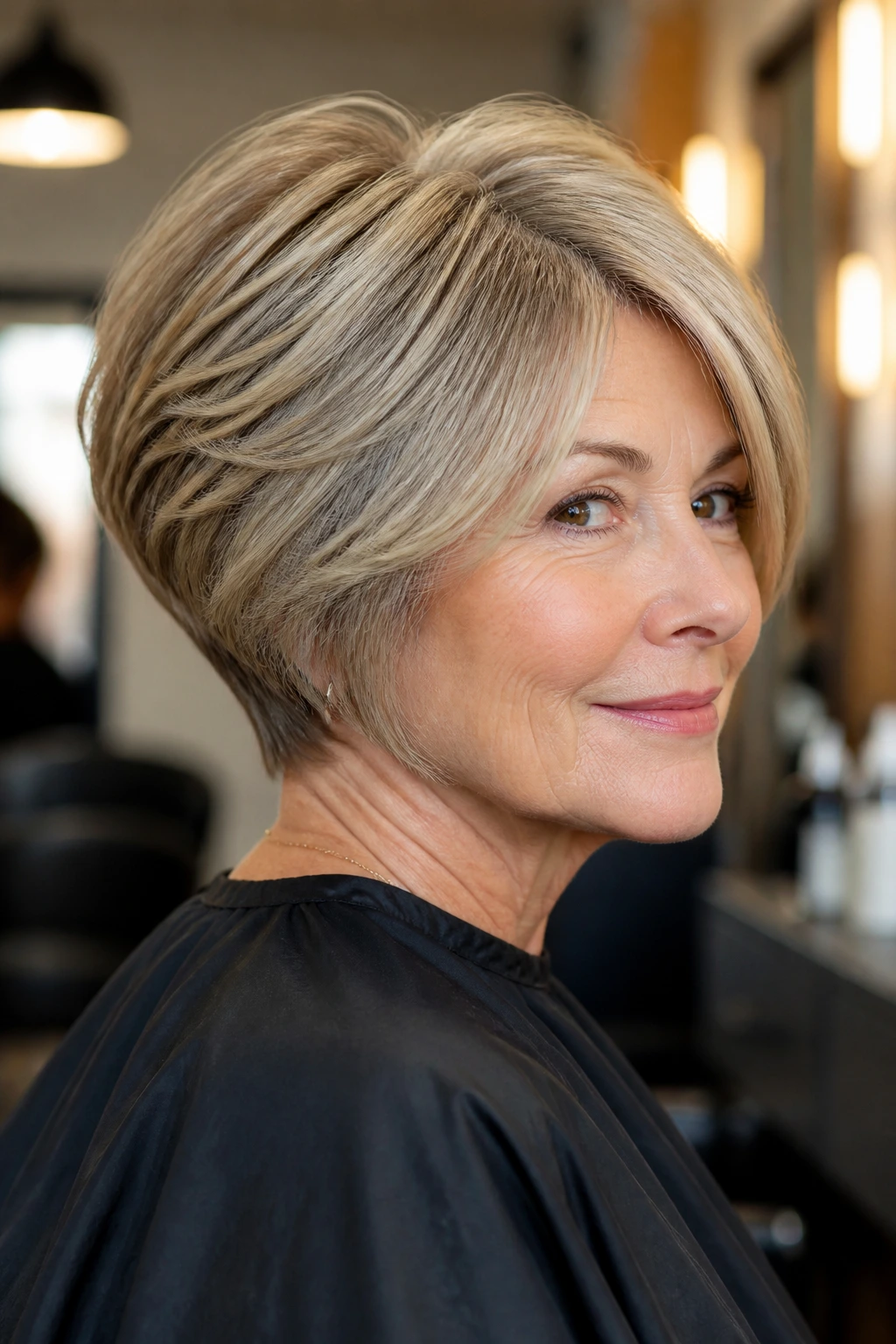
A wedge can go wrong in a few predictable ways, and they usually start with overconfidence in the back. If the nape is stacked too high, the haircut can look dated fast. The fix is simple: keep the taper clean, but leave enough length so the head shape still feels natural.
Another mistake is placing face-framing layers too low. When the shortest front pieces land below the jaw, they don’t frame the face; they just sit there. Ask for cheekbone or ear-level starting points instead, then let the longer front pieces carry the softness.
Heavy product is a quiet problem. Too much cream or oil will flatten the crown and erase the shape you paid for. Fine hair shows this fastest, but thick hair turns limp too. Use less than you think you need.
Then there’s the “it’ll style itself” assumption. Some wedge cuts do air-dry nicely, but most look better with a little root lift and direction. If you ignore the front and just rough-dry the back, the whole haircut loses its point.
Frequently Asked Questions
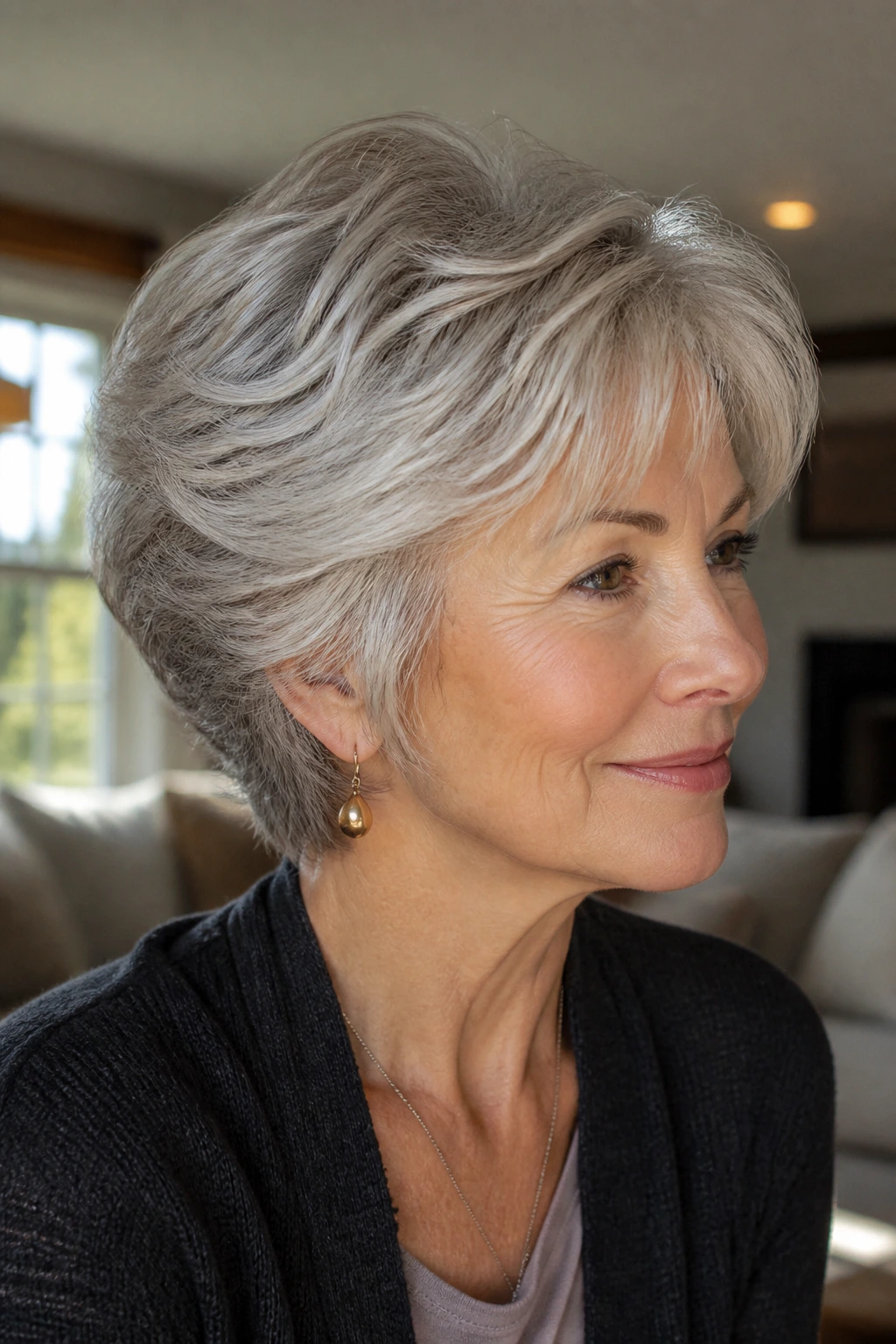
What face shape suits a wedge haircut best?
A wedge can work on several face shapes, but it’s especially strong on oval, heart, and soft square faces. The face-framing layers can be adjusted to soften a wider jaw or open up a narrower forehead, so the real answer is less about face shape and more about where the front layers land.
Are wedge haircuts good for fine hair?
Yes, provided the stack is controlled and the layers are not over-thinned. Fine hair often looks fuller in a wedge because the shape builds lift at the crown and keeps the back from falling flat against the neck.
Can I wear a wedge if I have curly or wavy hair?
You can, but the cut should be shaped with shrinkage in mind. Curly and wavy hair need a wedge that respects how much the length bounces up when dry, especially around the nape and temples.
How often should a wedge be trimmed?
Most wedge cuts need cleanup every 4 to 6 weeks if you want the silhouette to stay crisp. If your hair grows slowly or you prefer a softer grow-out, you can push a little longer, but the back will usually tell you when it’s time.
Will a wedge haircut work with glasses?
Yes, and some versions work very well. The best ones keep the front layers long enough to avoid crowding the frames, while the side pieces stay soft instead of bulky around the temples.
What if I don’t want a haircut that looks too severe?
Ask for softer face-framing layers, less dramatic stacking, and a slightly longer front perimeter. That combo keeps the wedge shape while taking the edge off the outline.
Can I style a wedge without a round brush?
You can, but it’s harder to get the shape right. A vent brush or even a small paddle brush helps, though a round brush still does the best job of lifting the crown and curving the front layers inward.
How do I stop the back from getting bulky as it grows?
A quick trim at the nape usually fixes it before the rest of the haircut needs a full reshaping. Between appointments, keep the back smooth with a blow-dryer nozzle and avoid overloading it with heavy product.
A Shape That Still Earns Its Keep
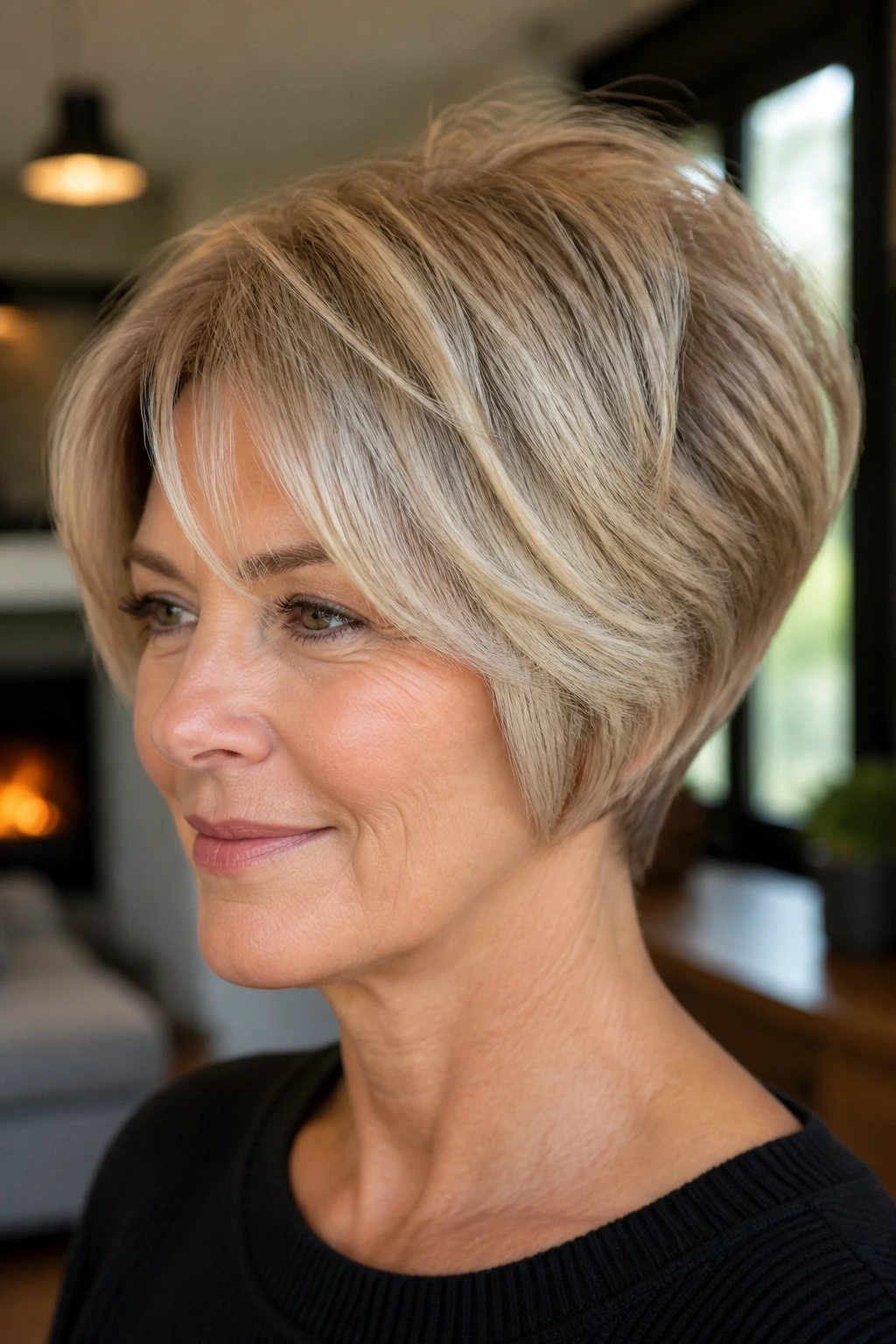
A good wedge haircut doesn’t try to hide the face or fight the hair. It gives both of them a cleaner outline. That’s why the best versions in this collection feel modern without chasing trends: the back stays controlled, the front stays soft, and the layers do the real work.
If you’re choosing between shapes, look at where the front pieces fall and how much weight stays at the nape. That’s the part that decides whether the cut looks crisp, soft, or fussy. Get that balance right, and a wedge becomes one of those rare short cuts that can feel practical in the morning and polished by lunchtime.