



Long hair can do a strange thing on a heart-shaped face. If the cut hangs too straight, the hair starts reading like a frame that’s a little too tall at the top and a little too narrow at the bottom. The forehead gets extra attention, the chin looks smaller than it is, and all that length turns into a curtain instead of a shape.
Short layers fix that when they’re placed with intent. The best versions don’t hack up the length just for the sake of movement. They lift the eye to the cheekbones, soften the sides of the face, and give the lower half of the face a little more visual weight so the whole thing feels balanced. That’s the whole game here.
And yes, the phrase short layers for long hair and heart-shaped faces sounds narrow until you see how much range it actually has. You can go airy, shaggy, polished, feathery, piecey, or softly undone and still stay inside the same flattering shape. The difference is where the shortest pieces land, how much internal movement you build, and whether you keep the ends blunt enough to hold the length together.
Why These 22 Cuts Keep Long Hair Light Around a Heart-Shaped Face
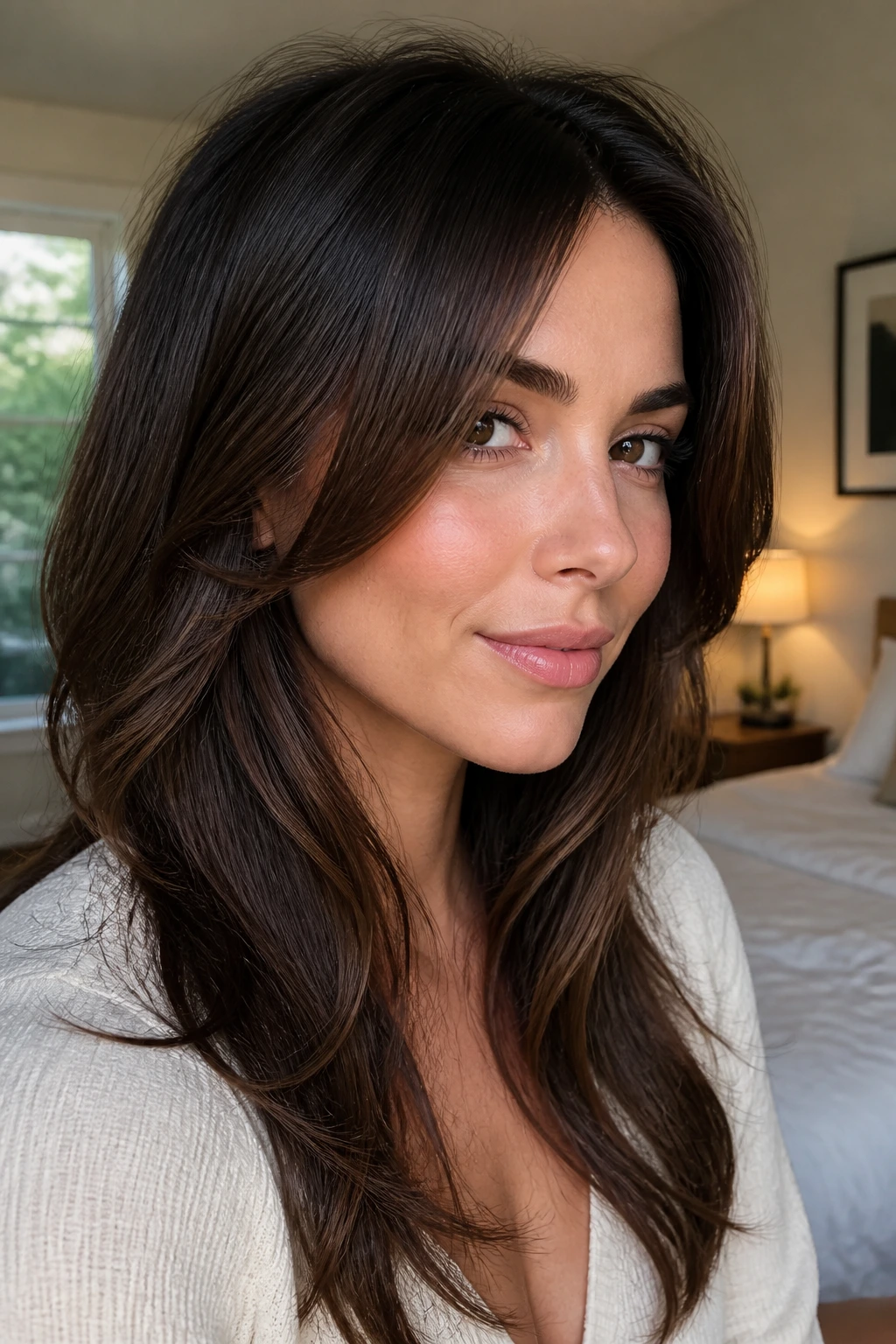
- They shift attention away from the forehead: Shorter front pieces land near the cheekbone or jaw, which keeps the upper face from doing all the work.
- They keep the length, but stop the drag: The long base stays in place, while the top and front layers move so the hair does not feel heavy or stuck.
- They add shape where heart-shaped faces need it most: A bit of softness around the jaw and chin helps balance a narrower lower face.
- They play well with parts and bangs: Center parts, side parts, curtain fringe, and bare foreheads all have a place here.
- They grow out without turning ugly fast: The best versions still look planned when the shortest pieces slip an inch lower.
Why Short Layers and Heart-Shaped Faces Click Together
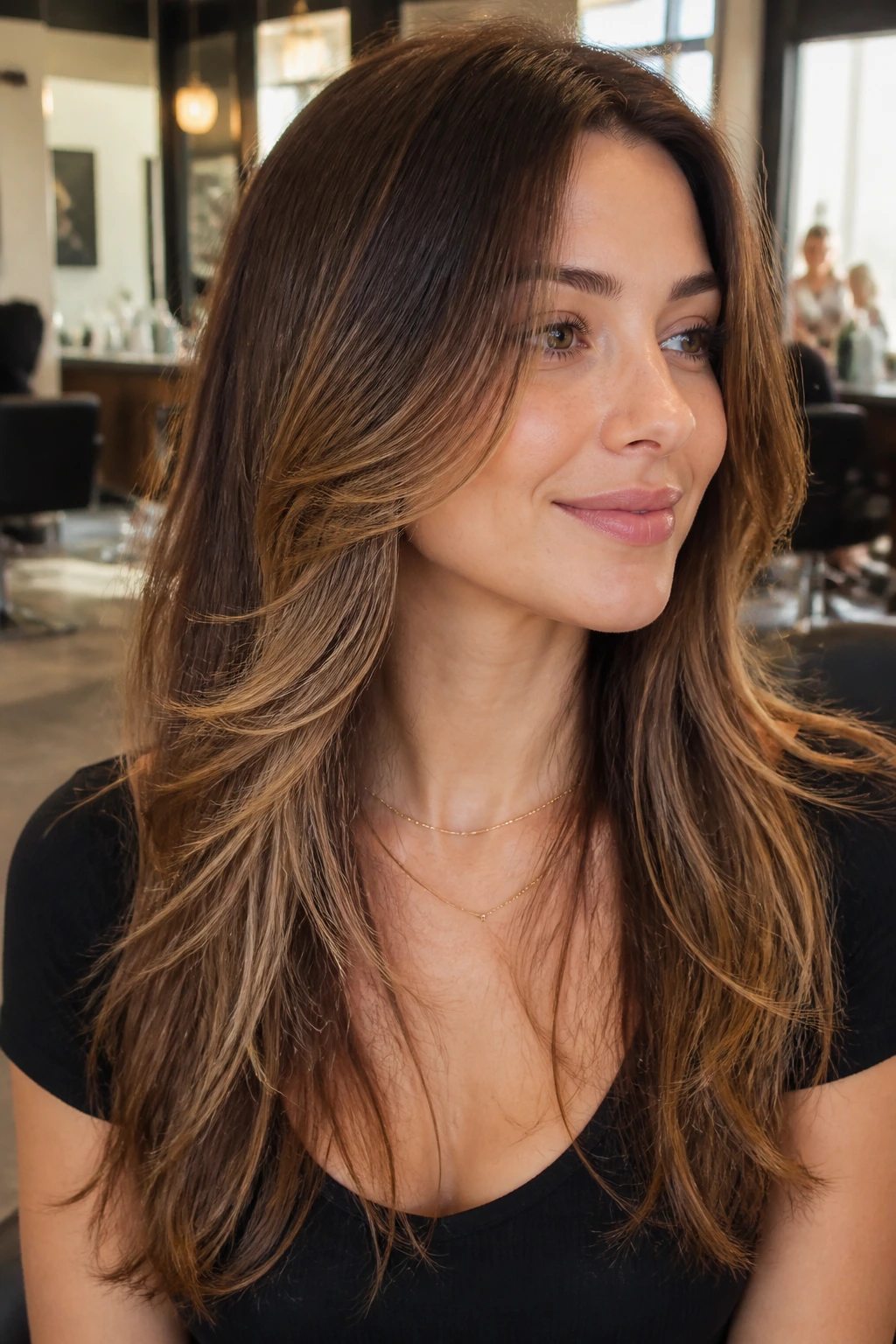
A heart-shaped face usually gives you a wider forehead, prominent cheekbones, and a narrower chin. That shape is already interesting. The problem starts when hair copies the same geometry. Long, straight, all-one-length hair can make the top half feel wider and the bottom half feel thinner, which is why some cuts end up looking a little top-heavy even when the hair itself is gorgeous.
Short layers help because they interrupt that outline. If the shortest pieces start around the cheekbone, they pull the eye toward the middle of the face instead of the hairline. If they soften around the jaw, they create a little visual width where the face narrows. That is the part too many salon consultations skip. People talk about length, but the real question is where the movement begins.
I also like that short layers let long hair stay long. You do not need a dramatic chop to get shape. Sometimes the smartest cut is just a better distribution of weight—less bulk at the ends, less flatness at the crown, and a front that doesn’t sit there doing nothing. The right layer map can make long hair feel lighter without sacrificing the swing and drama that made you keep it long in the first place.
The sweet spot for the shortest layer
For most heart-shaped faces, the most flattering shortest layer lands somewhere between the cheekbone and the top of the collarbone. Go too high, and the cut can puff out the temples. Go too low, and you lose the face-framing lift that makes the whole thing work. There is a reason stylists keep coming back to that cheekbone-to-jaw zone. It’s where the face usually needs a little help.
1. Short Layers That Brush the Cheekbones
This is the easiest place to start if you want movement without drama. The shortest pieces skim the cheekbone, then melt into longer lengths that stay well below the shoulders. That gives long hair a lifted front and a softer outline without turning the whole cut into a shag.
Why it flatters
The cheekbone is the hinge point on a heart-shaped face. Put motion there, and the eye stops racing straight to the forehead. Put it too high, and the face can look wider on top; put it too low, and you miss the balance point. This cut lands in the middle and behaves.
A round brush or large hot roller makes these layers even better. Bend the front pieces away from the face for a cleaner outline, or tuck them inward if you want the cheekbones to look a little fuller. It’s a small shift, but small shifts matter here.
Best for: Straight to wavy hair that wants shape without losing length.
Styling note: Blow-dry the shortest front pieces first. If they dry flat, the rest of the style has to work harder.
2. Curtain Face Frame with a Long Center Part
If you like symmetry, this is the calm, polished option. The center part opens the face, while the shortest pieces start near the nose or cheekbone and drift down on both sides like two soft rails. It reads relaxed, but it is built with a lot of intention.
What makes this version smart for a heart-shaped face is the way it balances the forehead without boxing it in. Curtain-style face framing can be blunt if the shortest pieces start too high. Keep the cut soft and let the layers turn outward a little at the ends, and the face stays open without looking exposed.
A little wave helps, but it is not required. On straight hair, this cut looks sleek and deliberate. On wavy hair, the pieces around the face move on their own, which is half the appeal.
Best if you want a softer forehead line
A lot of people with heart-shaped faces think they need to hide the forehead. I don’t buy that. The better move is to make the top half feel connected to the rest of the cut. Curtain face framing does that without forcing the issue.
3. Chin-Skimming Angles That Add Width Where It Counts
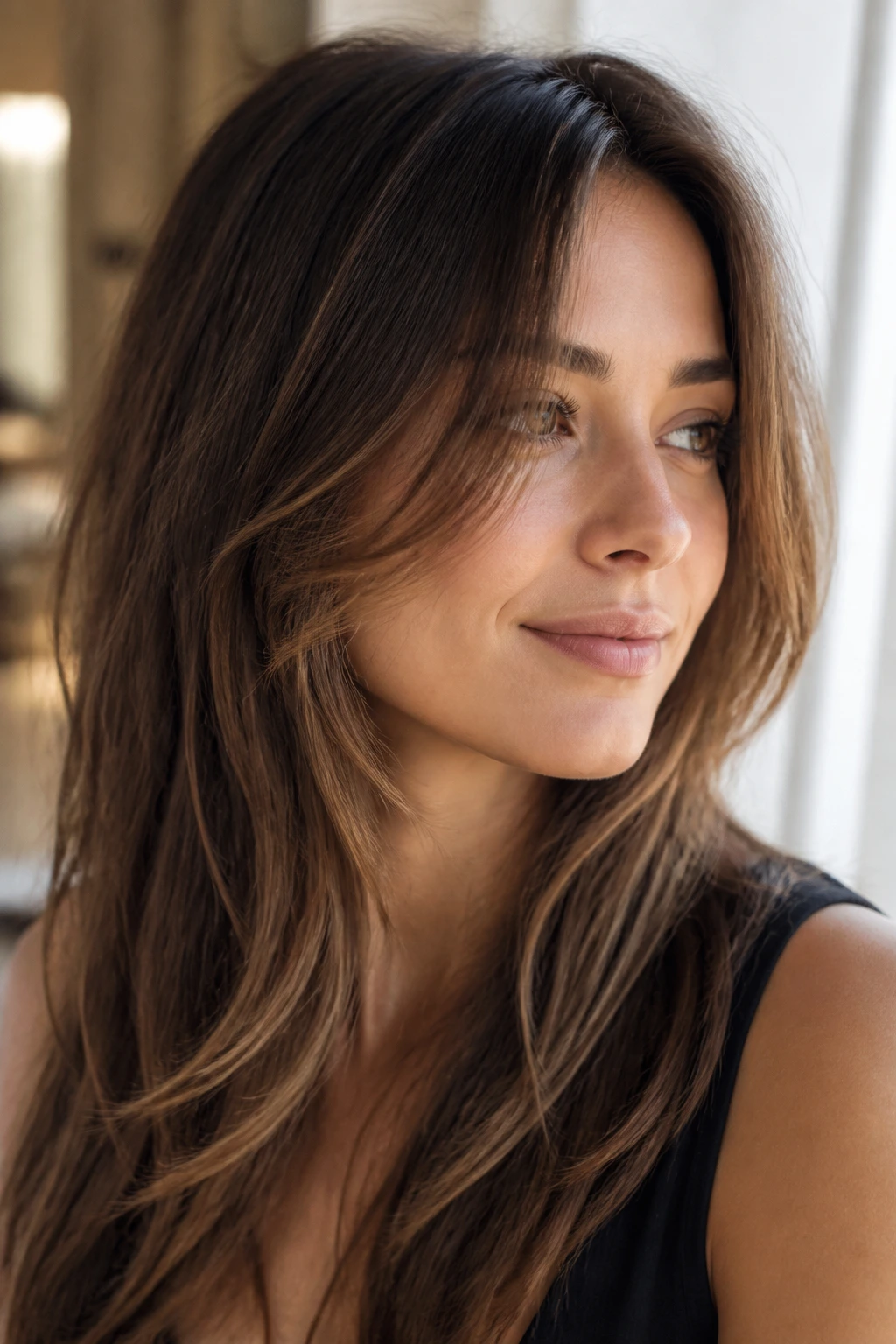
This one is sneaky. The front angles start high enough to matter, then land right around the chin, which is where a heart-shaped face can use a little extra visual support. The rest of the hair keeps its length, so the cut still feels feminine and long, not chopped.
It’s especially good if your jaw is narrow or slightly pointed. Those chin-skimming angles create a gentle shelf of hair that makes the lower face feel a touch fuller. Not bulky. Just balanced. That subtle difference is why this cut looks expensive when it’s done well and awkward when it’s done badly.
If you wear your hair wavy, the angles soften even more. If you wear it straight, ask the stylist to keep the transition smooth instead of razor-sharp. Sharp angles can look cool, but they can also make the jaw line feel too hard.
- Best on: Medium to thick hair that can hold the line.
- Avoid if: Your hair flips out hard at the ends and refuses to sit still.
- Styling trick: A flat wrap-dry around the face keeps the angles clean.
4. Soft Shag Layers With Crown Lift
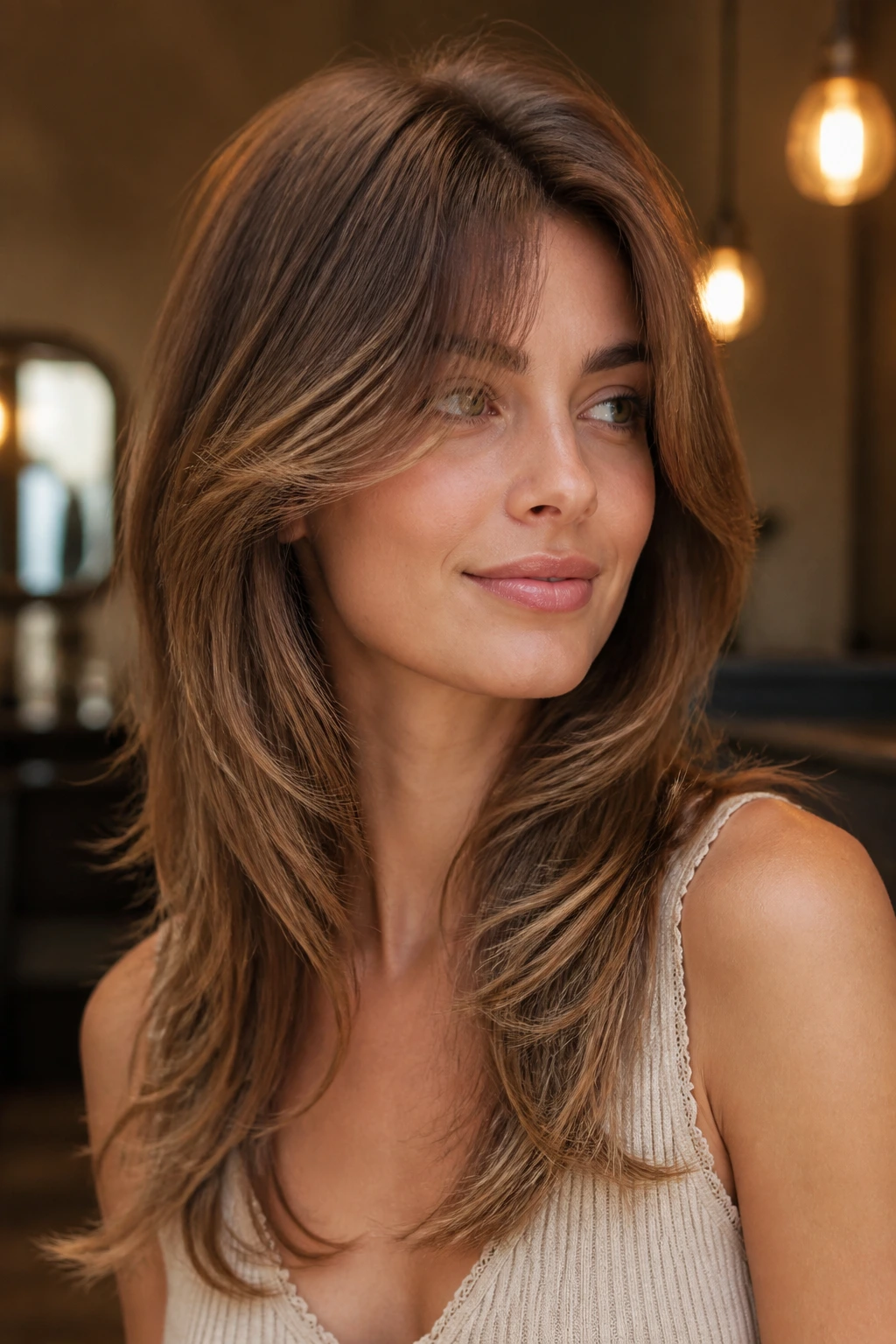
A soft shag is a strong choice if your hair tends to fall flat at the roots and puff out at the ends. The shorter layers sit higher through the crown, then get longer toward the perimeter, so the whole cut feels airy and lived-in. On a heart-shaped face, that crown lift helps the top of the head look balanced without overloading the temples.
The key is soft. Not choppy for the sake of being choppy. You want movement, not a haircut that looks like it lost a fight with thinning shears. Keep the ends a little ragged and the top layers feathered, and the cut gains personality without losing the long-hair shape.
This is one of the few options here that looks better with a little bend and mess. If you like hair that looks touched, not overworked, this one is a keeper. If you want sleek and precise every day, skip it.
5. C-Shape Layers That Wrap the Face
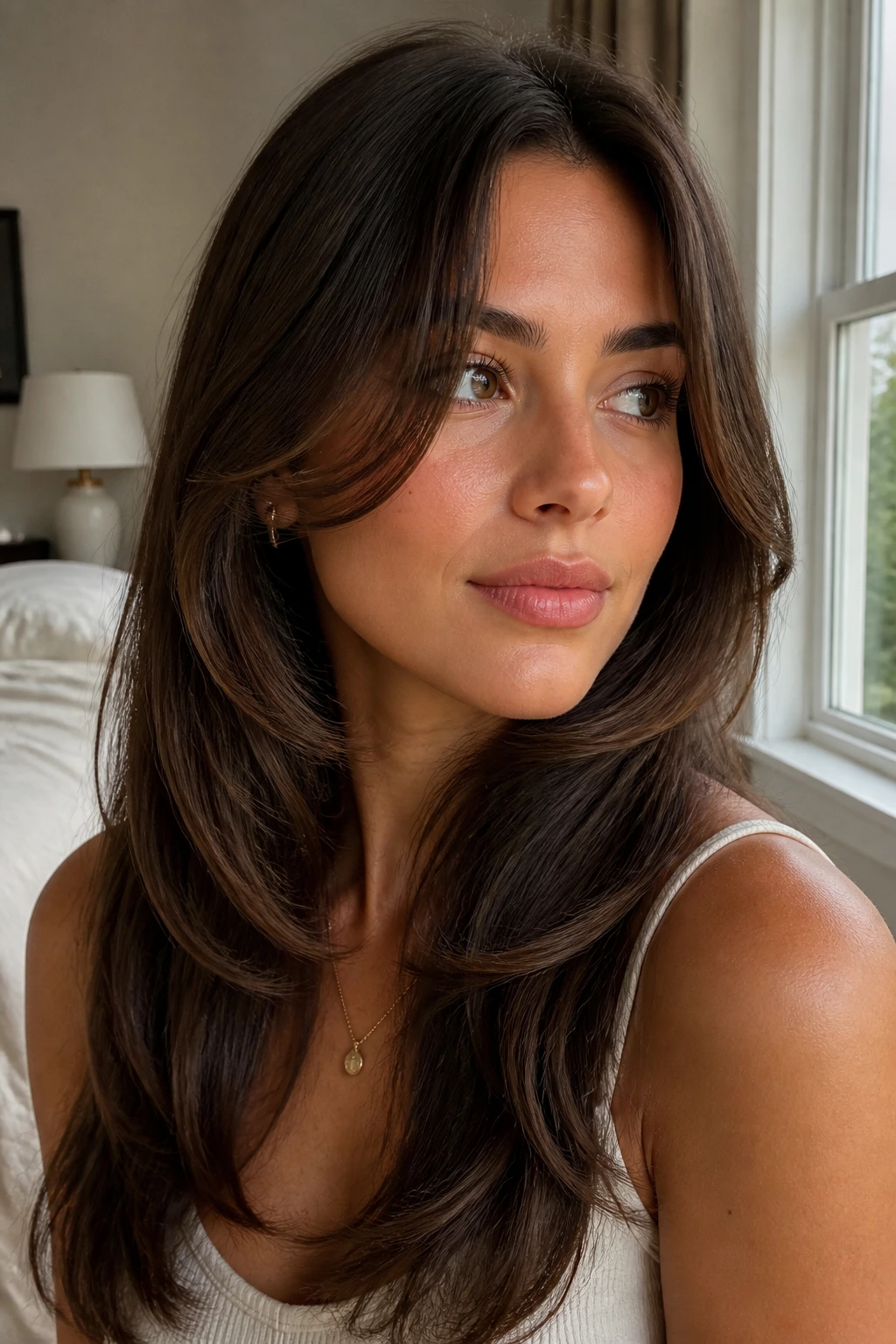
C-shape layers curve inward at the front and sweep around the face in one soft arc. On a heart-shaped face, that curve is useful because it frames the cheekbones and chin without stopping abruptly at the widest part of the forehead. The shape feels deliberate, but not stiff.
I like this cut on long hair because it keeps the perimeter clean. You still get swing at the bottom, and the front pieces do the visual work. It’s one of the most useful versions if you want a cut that looks good tucked behind the ears, pulled half-up, or left loose after a quick blow-dry.
What makes it different
Unlike a shag, this is not about disconnection. Unlike a blunt long cut, it is not about one heavy line. The C-shape gives you flow. That matters when the face itself already has a strong angle from forehead to chin.
6. Side-Part Sweep Layers for a Lifted Front
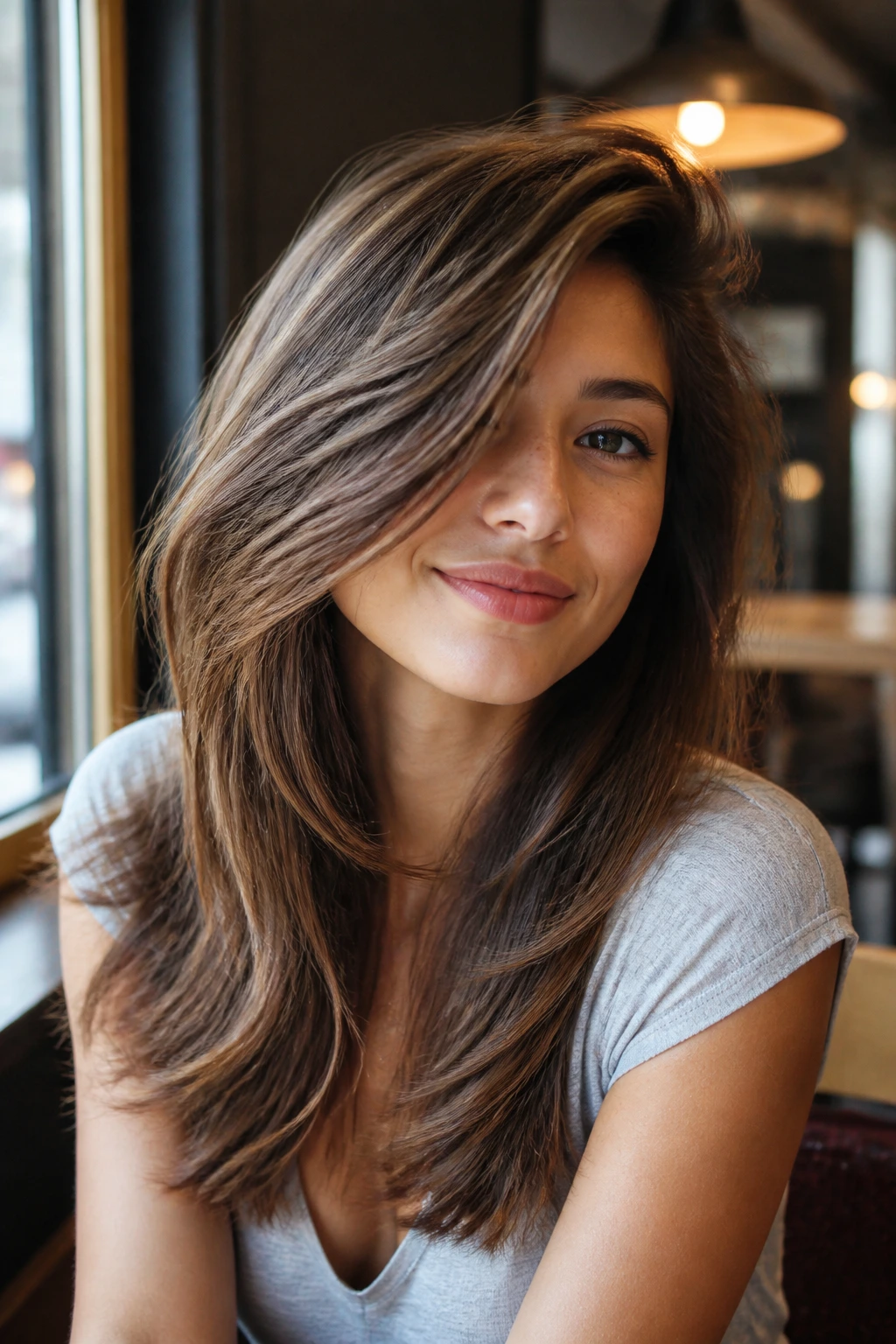
A side part changes the whole conversation. It creates lift over one eye, softens forehead width, and lets the layers fall in a diagonal instead of a straight line. For heart-shaped faces, that diagonal can be a lifesaver when the hair is very straight or very dense at the top.
The shortest front pieces should still stay below the temple. That’s the part that matters. If the side part is dramatic but the layers are too high, the face can look top-heavy anyway. Keep the lift near the crown and the softness near the cheekbones, and you get that nice, swept effect without the mushroom problem.
This is one of my favorites for work hair because it looks intentional in five minutes. Brush the front away from the face, set it with a little mousse, and you’re done.
7. Bottleneck Fringe and Long Body Layers
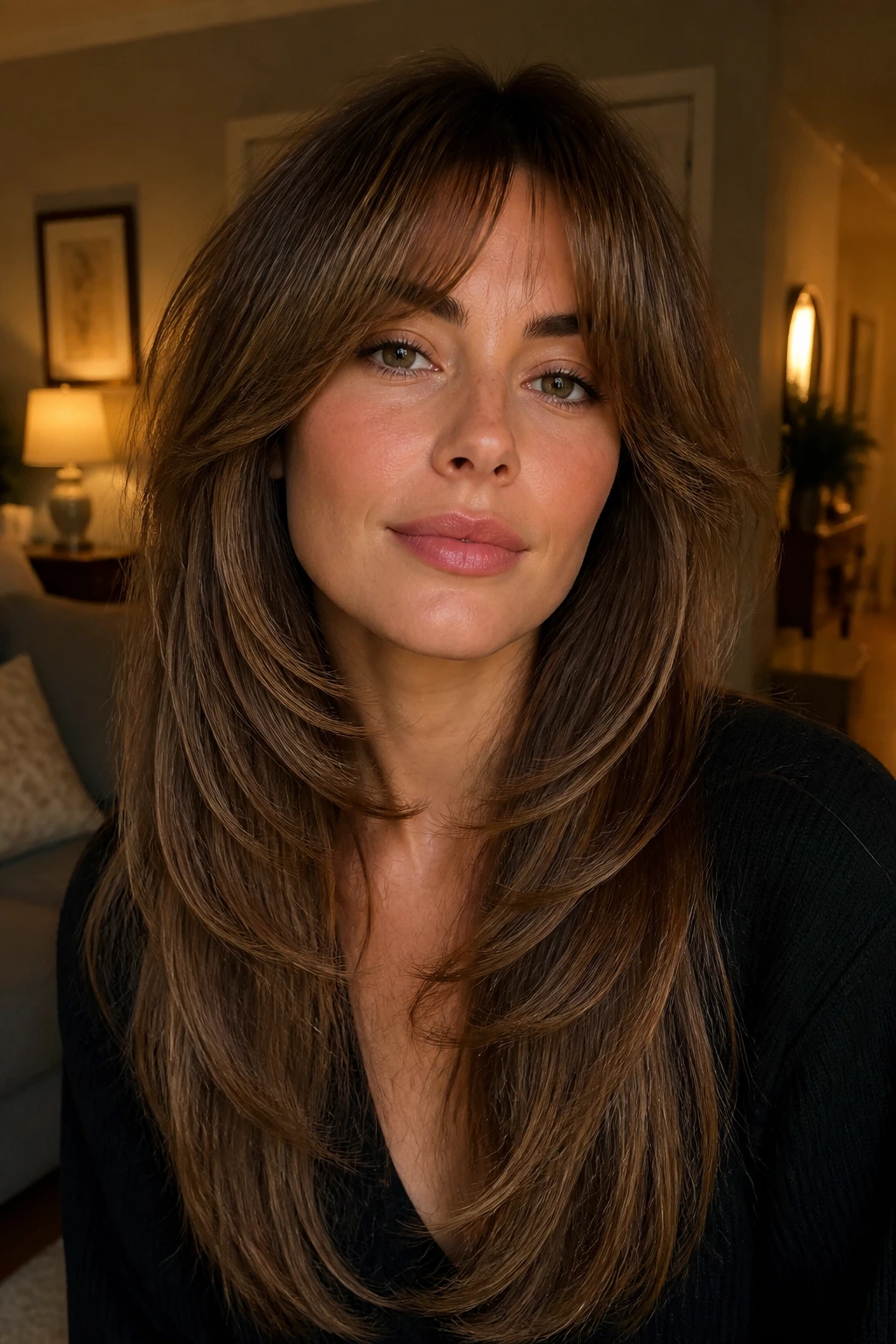
A bottleneck fringe gets narrow near the center and opens wider as it meets the sides, which makes it a useful partner for long layers. On a heart-shaped face, it helps break up the width of the forehead without drawing a hard line straight across it. The long body layers keep everything from collapsing into a haircut that lives only at the front.
This cut has personality. A little bit of old-school cool, a little bit of softness. The fringe should not sit so heavy that it blocks the eyes, and it should not be so sparse that it looks like an afterthought. The best version brushes the brows, then disappears into the face frame.
If you like wearing sunglasses, this shape is handy. The fringe and layers don’t fight the frames. They sit beside them.
8. U-Shaped Length With Internal Lift
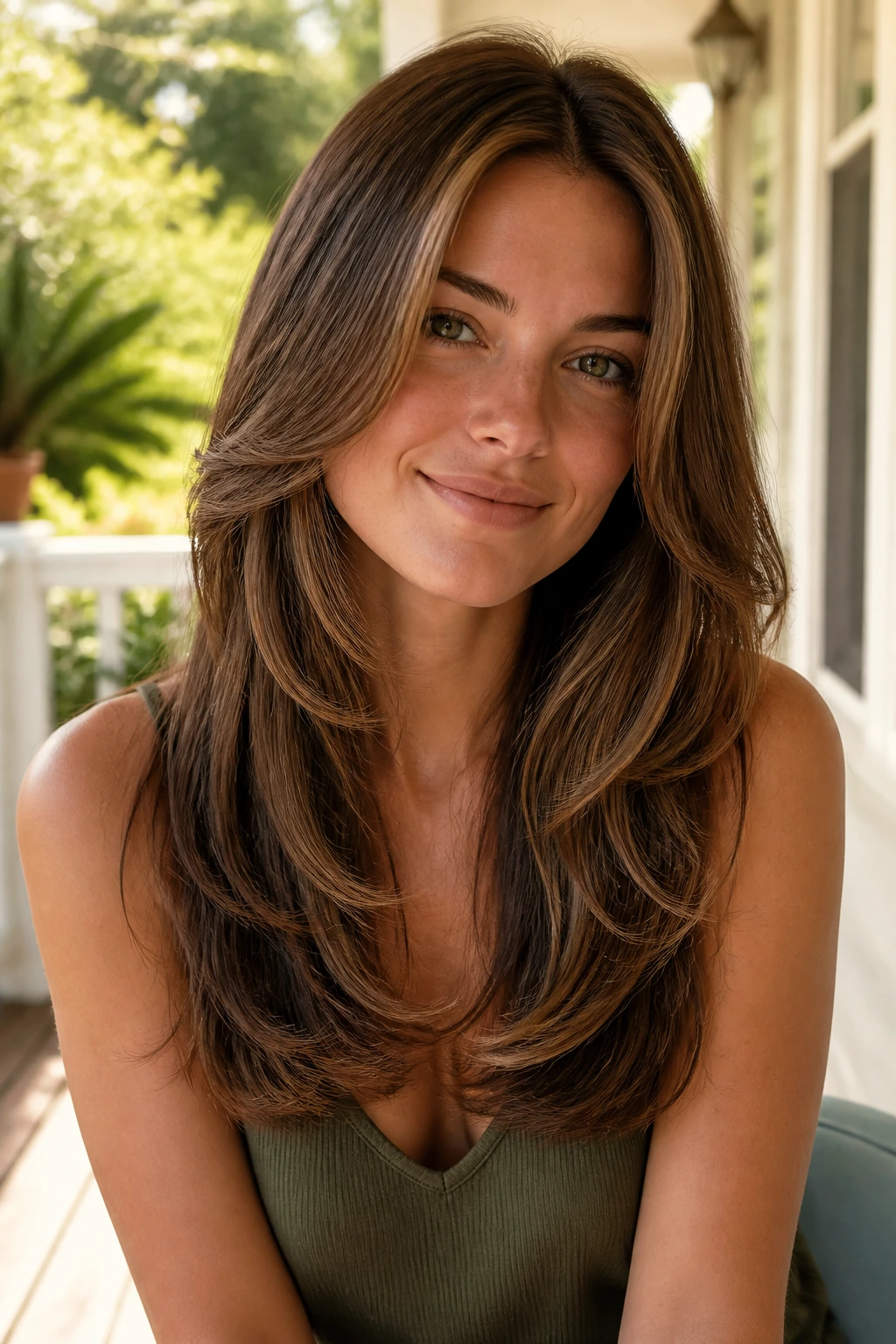
A U-shape keeps the perimeter rounded at the back, which is a nice counter to a heart-shaped face’s sharper upper-half emphasis. The interior layers do the quiet work. They remove weight from the center and top without making the cut look chopped from the outside.
That’s the appeal here: nothing screams for attention. The cut moves because the hidden layers are doing their job, and the silhouette still looks lush when you wear it straight. If you have thick hair, this can make the length feel lighter without losing the rich curtain effect in the back.
Use this one if you want long hair that sways rather than slumps. It is not flashy. It just behaves.
9. Feathered Ends With a Razor-Light Finish
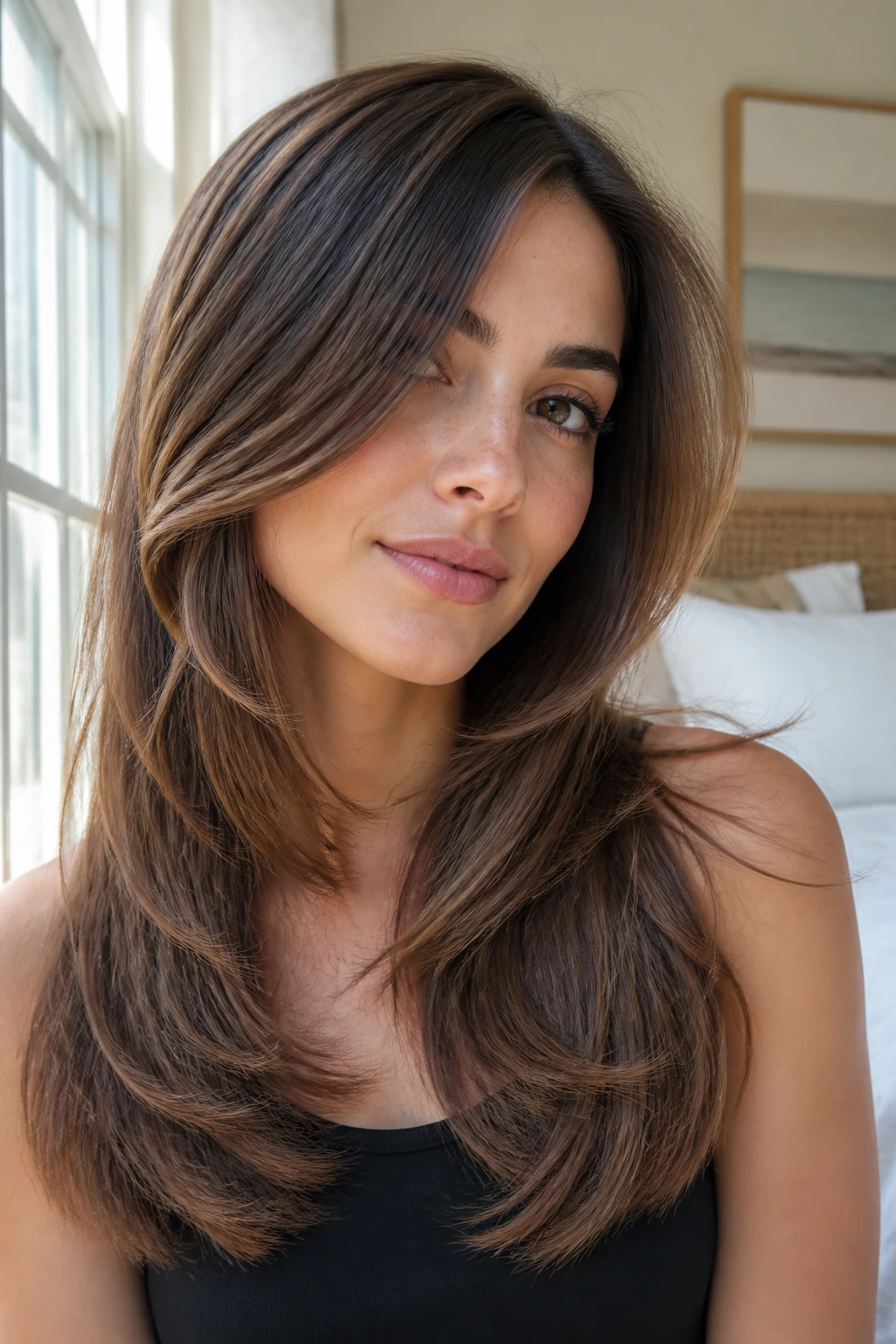
Feathering is old-school in the best way when it’s done with restraint. The ends get softened so they don’t sit like one blunt shelf, and the face-framing pieces get that airy, almost brushed-out finish. On heart-shaped faces, feathering takes some pressure off the forehead because the movement becomes part of the entire cut, not just the front.
A razor can help here, but only in skilled hands. Too much razor work and the ends fray. Too little, and you lose the softness that makes feathering worth doing. The goal is a clean edge that still catches movement when the hair swings.
This cut is especially good if you wear your hair straight most of the time. The feathered finish keeps straight hair from looking severe.
Styling note
A medium round brush and a light serum are enough. Skip heavy creams. They make feathering collapse.
10. Short Layers Built for a Round-Brush Blowout
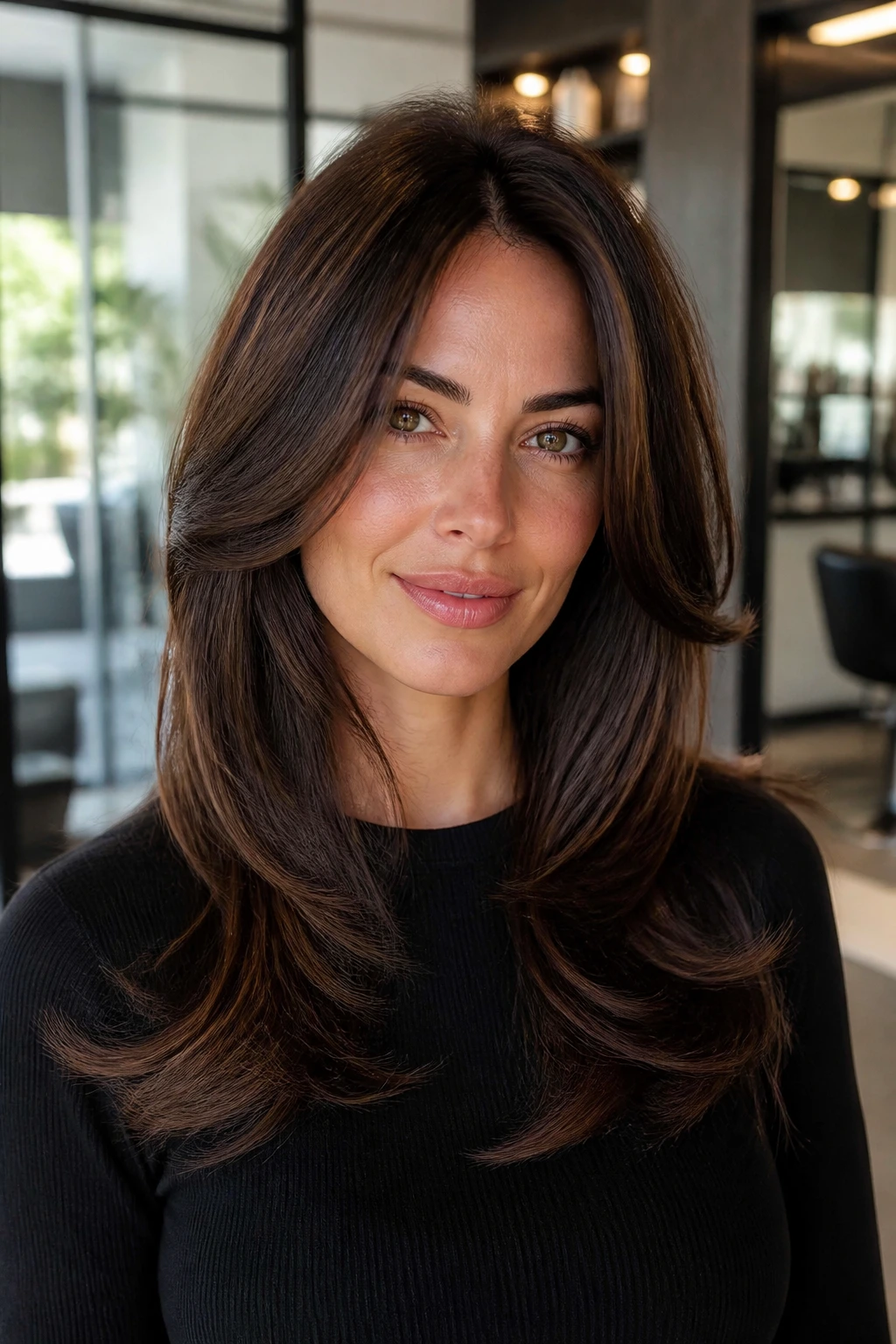
This is the salon blowout haircut. If you love hair that turns under at the ends and lifts at the crown, this cut gives you the shape to do it. The shortest layers are placed to catch the brush, which means they flip, curve, and bend instead of sticking flat.
For a heart-shaped face, that blowout bend is useful because it softens the upper width and builds body around the jaw. The hair does not need to be curly to look finished. A smooth bend at the front and a little volume through the mid-lengths can be enough.
You will want a round brush in the 1.25- to 2-inch range, depending on density. Smaller brushes give a tighter bend. Bigger ones give a softer sweep. Pick the one that matches your texture, not the one you saw on a shelf once and never used.
11. Wavy Mermaid Layers With Hidden Short Pieces
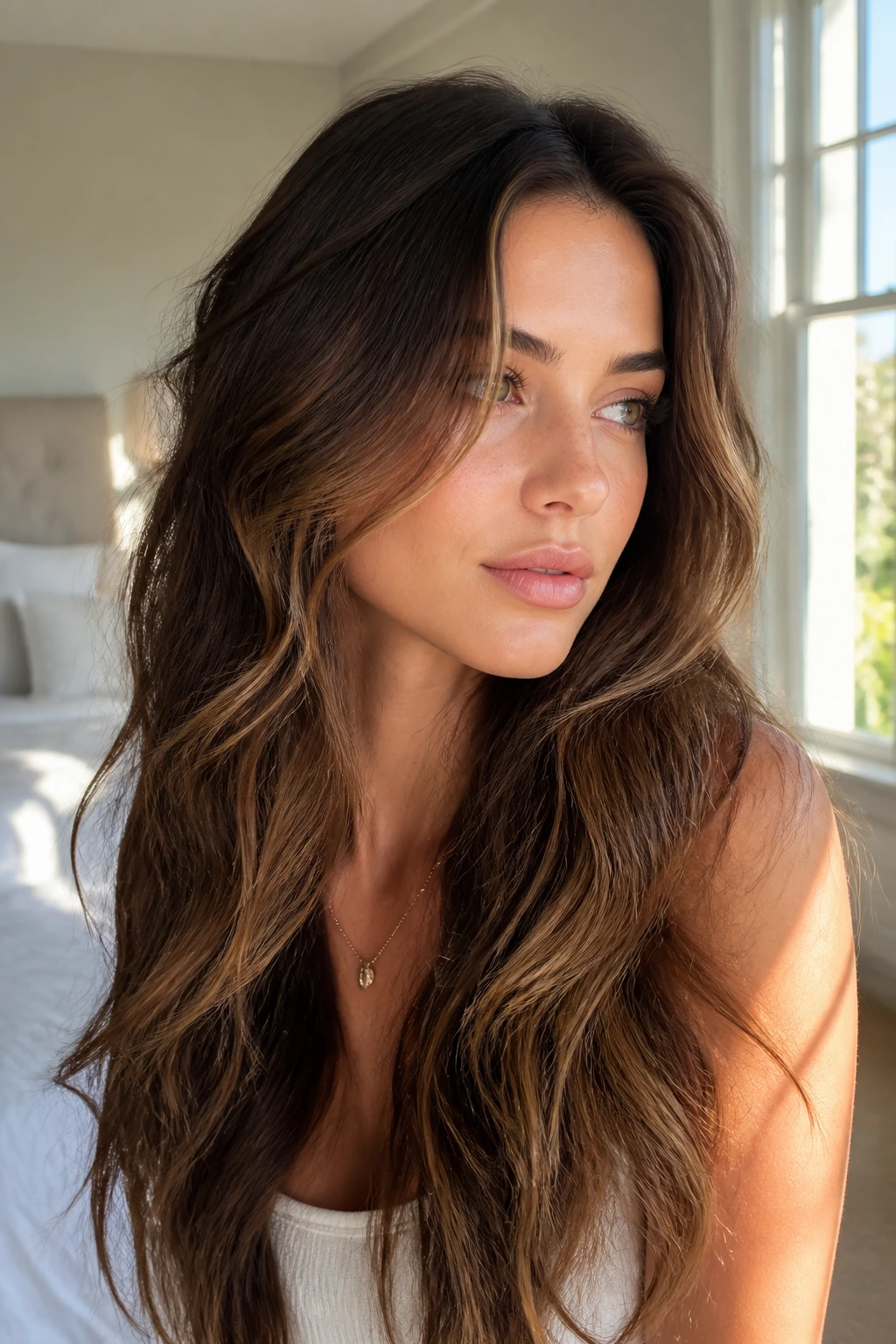
Mermaid hair can turn into a lot of same-length heaviness if the layers are too shallow. Hidden short pieces solve that. They’re tucked into the structure of the cut so the waves can fall in sections instead of one sheet, which gives long hair more movement without obvious chopping.
For a heart-shaped face, the hidden layers matter because they stop the width from sitting only at the forehead and shoulder line. The shape becomes more even from top to bottom. Waves start to break up the outline in a way that feels soft, not busy.
This one is for people who like hair that looks a little romantic and a little expensive without needing a precise finish. If your hair naturally forms a wave, don’t fight it. Let the hidden pieces help.
12. Invisible Layers for Fine, Long Hair
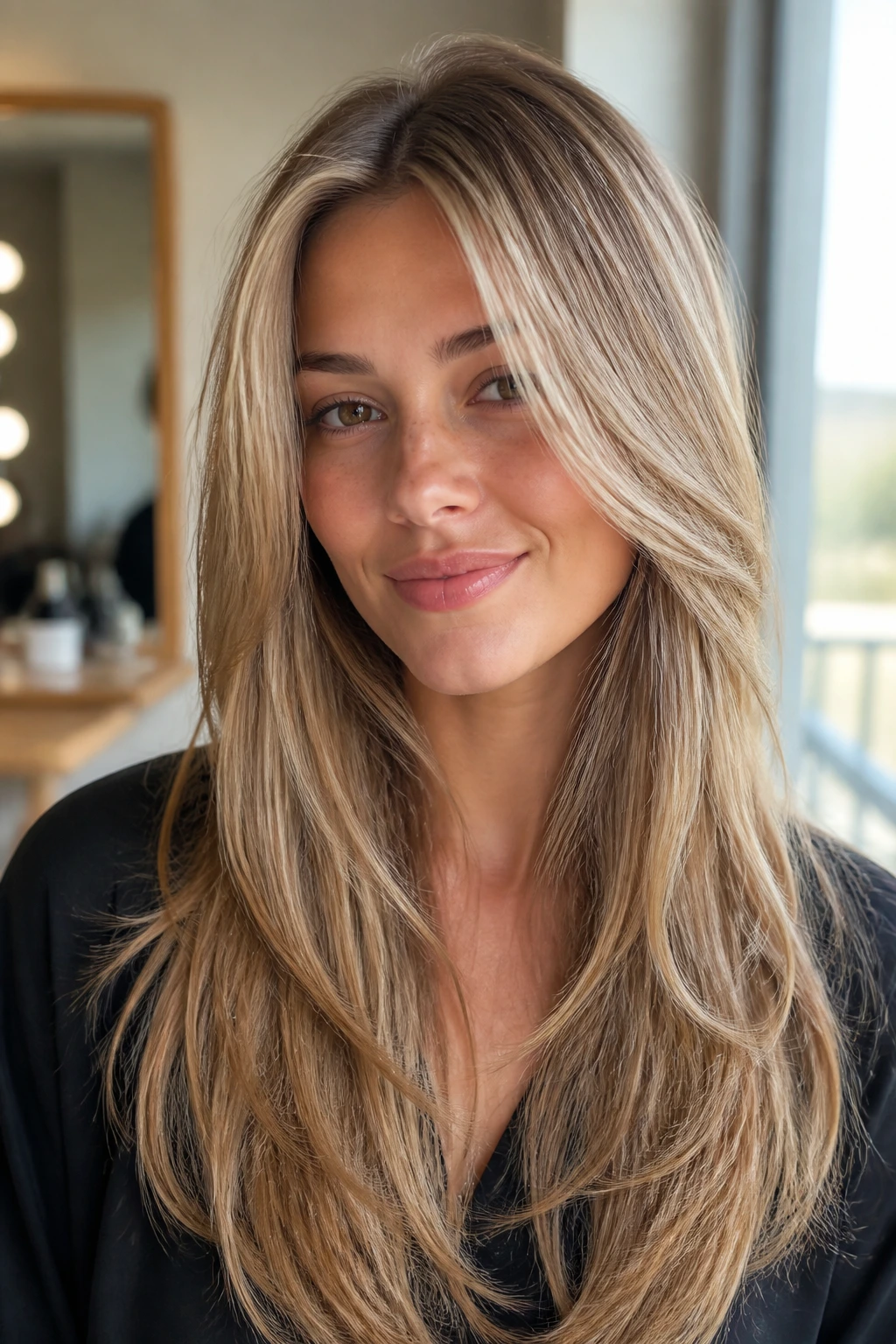
Fine hair and short layers can be tricky. Go too high or too sparse, and the hair starts to look stringy. Invisible layers are the fix I reach for first, because they remove weight without declaring themselves from across the room.
The point is to build movement inside the cut, not on the surface. That means the face frame stays soft, the ends keep enough density to look full, and the overall line still reads long. On a heart-shaped face, this prevents the upper half from looking too heavy while still protecting the fullness people with fine hair are always trying to keep.
A root-lifting spray and a quick blow-dry at the crown make this style pay off. Without that lift, invisible layers can disappear in a flat sheet.
13. Chunky Layers for Thick Hair That Needs Release
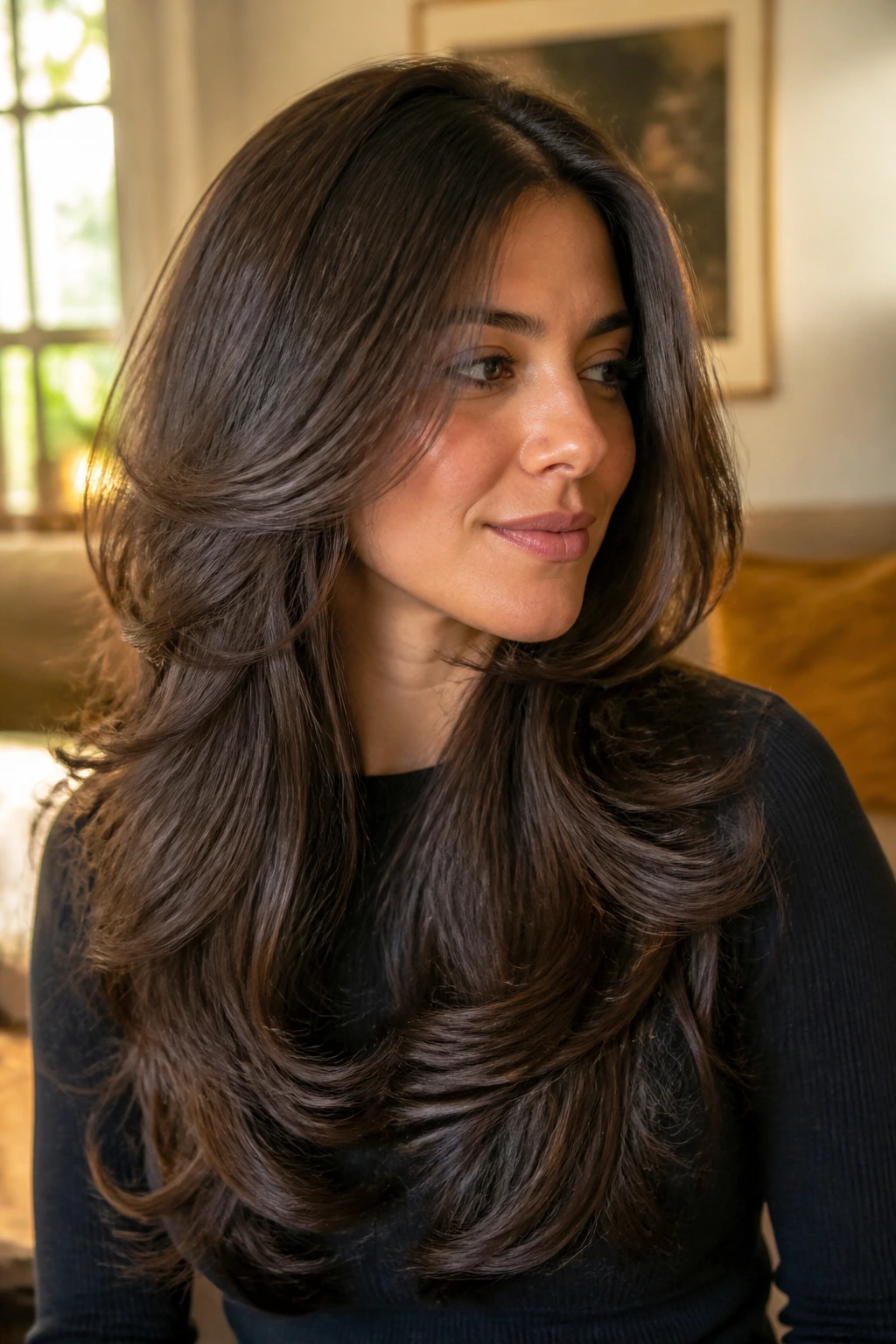
Thick hair often needs a stronger hand. Not a ruthless one. Just stronger. Chunky layers give the hair somewhere to go so the bottom doesn’t turn into a dense block that drags the face down. For heart-shaped faces, that release is useful because too much bulk near the ends can make the face look narrower below the cheekbones.
The shortest pieces should still be blended, but the layer steps can be more visible than they would be on fine hair. That’s not a flaw. It’s the point. Thick hair can carry structure without looking fragile, and this cut uses that to its advantage.
If you’ve ever had thick hair cut too softly, you know the result: a shapeless triangle with good intentions. Chunky layers keep that from happening.
14. Curly Halo Layers Around the Face
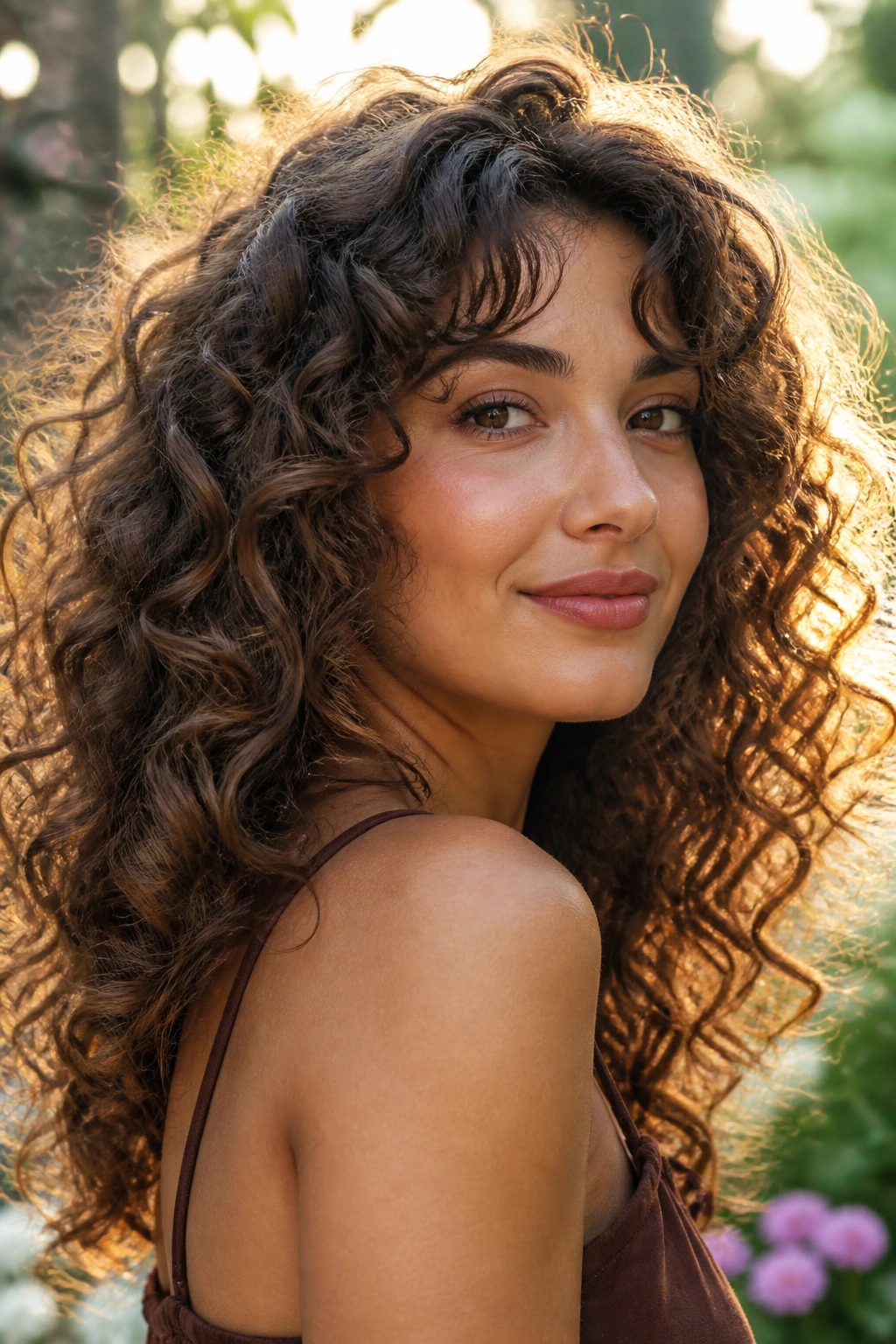
Curly hair needs its own logic. The shortest pieces have to land where the curl pattern can hold them, not where a flat iron picture says they should. Halo layers create a soft frame around the face and let the curls stack without building a wedge shape at the sides.
Heart-shaped faces benefit because the curls can widen the lower half of the face a little while softening the top. The trick is to cut the hair in a way that respects shrinkage. A curl that looks chin-length when wet may land at the cheekbone once dry. That gap is where bad haircuts are born.
A dry cut or curl-by-curl shaping is usually the smarter move here. Curly hair does not owe anyone a straight-line map.
Why it works
The face gets softness. The curl pattern gets room. And the long length stays long enough to keep the silhouette elegant instead of puffing out like a halo with no center.
15. A Soft Wolf Cut for Long Length
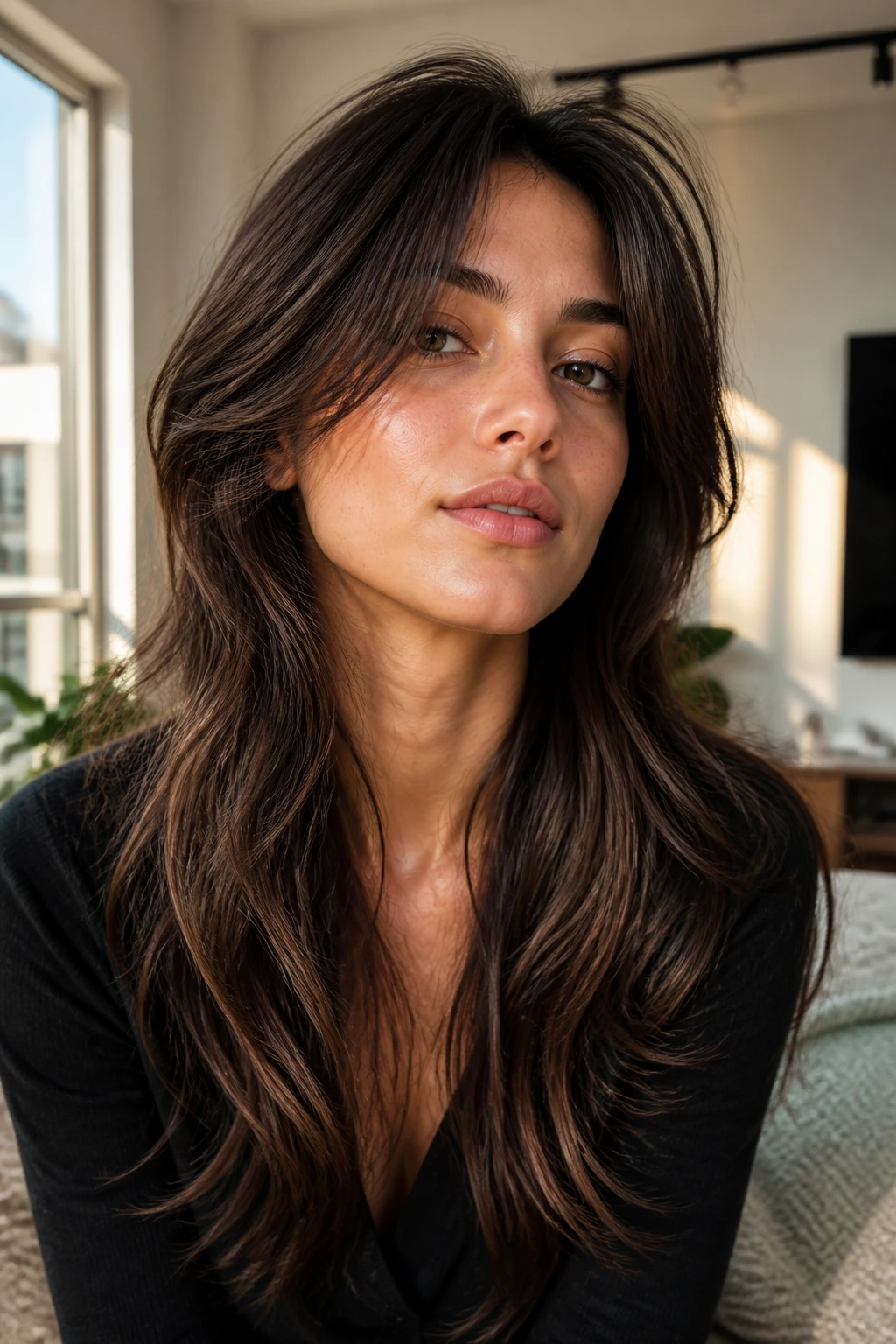
A soft wolf cut can work on heart-shaped faces if you keep the layers controlled. That means enough crown lift to create attitude, but not so much disconnection that the forehead feels even wider. The best versions have a shaggy top, soft edges, and a long base that still reads feminine rather than punk.
I like this option for hair that wants texture more than polish. The layers are shorter, yes, but the line is still loose. The face frame should taper gently into the rest of the cut instead of ending in a hard notch near the chin.
If you like air-dried texture, this one earns its keep. If you want every strand to behave, it may fight you a little.
16. Collarbone Anchor Layers
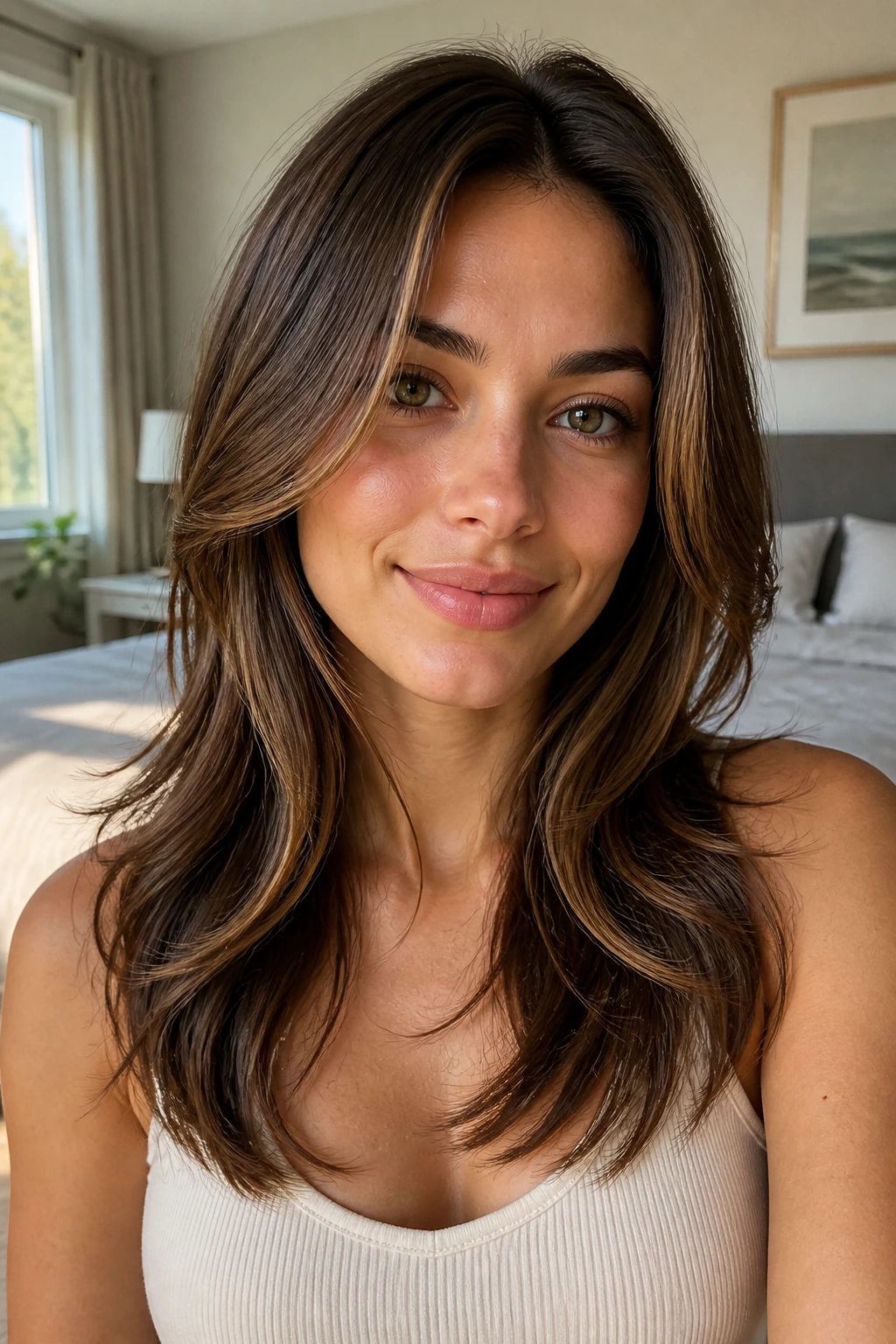
The collarbone anchor is a useful place to think about when you want the front of the hair to feel grounded. The shortest visible pieces settle near the collarbone, which gives the cut a clean resting point and stops the long hair from looking like it’s floating away from the face.
For heart-shaped faces, that anchor matters because it creates balance lower down. The face has a stronger upper half, so the cut should give the eye a place to land below the chin. Collarbone layers do that without shortening the look too much.
This is one of the safer choices if you’re nervous about short layers. It still counts as layered, but it won’t surprise you every time you look in the mirror.
17. Flicked-Out Retro Layers
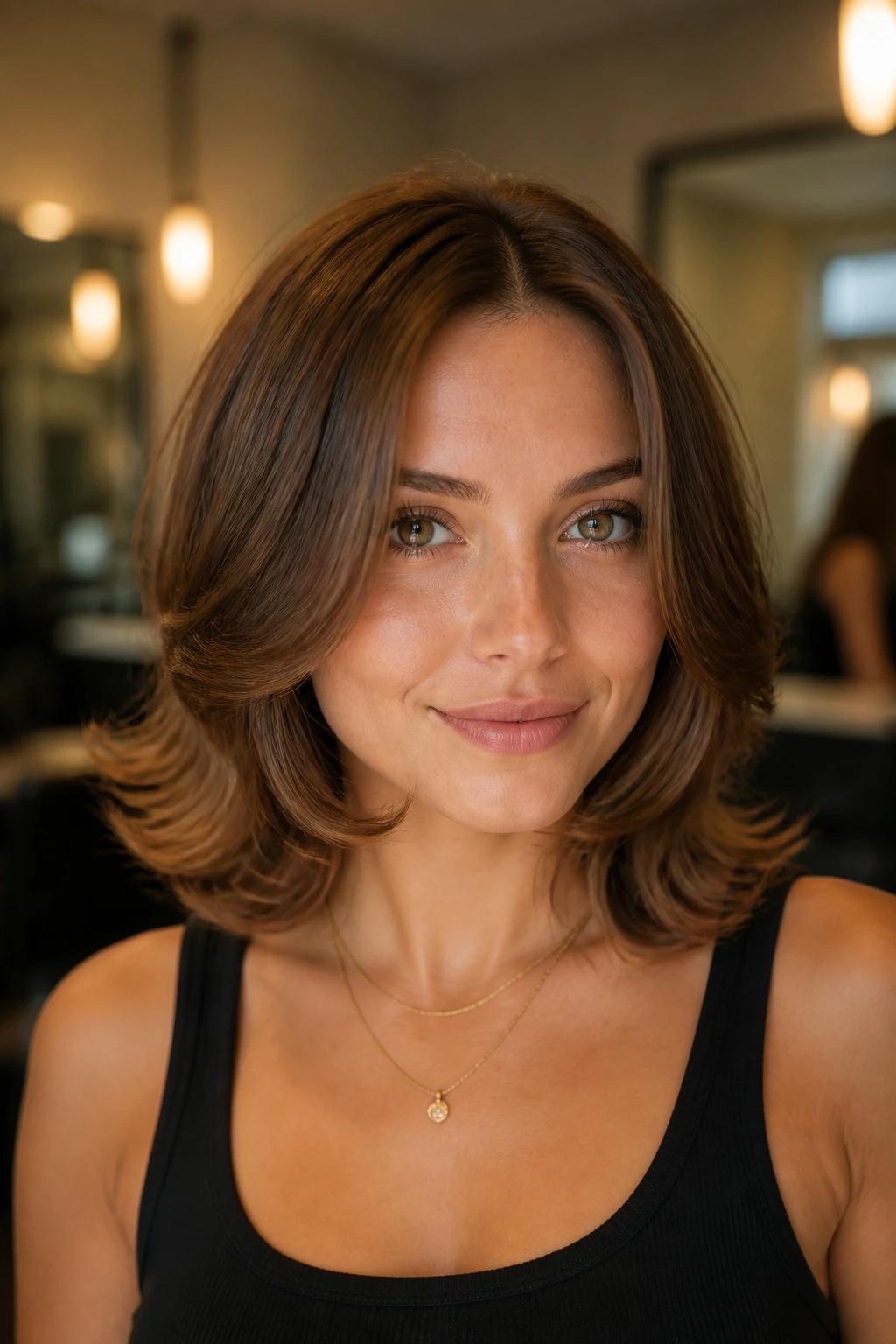
There’s something satisfying about a cut that knows how to flick. These layers are cut so the ends kick outward instead of hiding inside the rest of the hair. On a heart-shaped face, that outward finish adds width near the lower half, which is exactly where a narrow chin can benefit from a little shape.
The key is moderation. You want a soft retro nod, not a cartoon blowout from three decades ago. The layer starts should stay controlled, and the flip should happen mostly at the ends and around the cheekbone.
This one shines with a blow-dryer and a small round brush. Air-drying usually won’t give you the right edge. Sometimes a haircut really does ask for a little styling. Fair enough.
18. Deep Side-Part Piecey Layers

Piecey layers and a deep side part are a strong pair if you want a cut with more attitude. The part creates diagonal tension, and the shorter pieces break up the forehead line so the face feels less wide at the top. For a heart-shaped face, that angle can be more flattering than trying to force the hair into neat symmetry.
This cut works best when the pieces are defined but not crunchy. A light texture spray, not a heavy paste, is usually enough. You want separation, not spikes. The front should move when you walk, not freeze in place.
Best for
Anyone who wants a little edge without going full shag. It’s polished enough for straight hair, but it gets better when the hair bends slightly through the mid-lengths.
19. Hidden Crown Layers That Add Lift
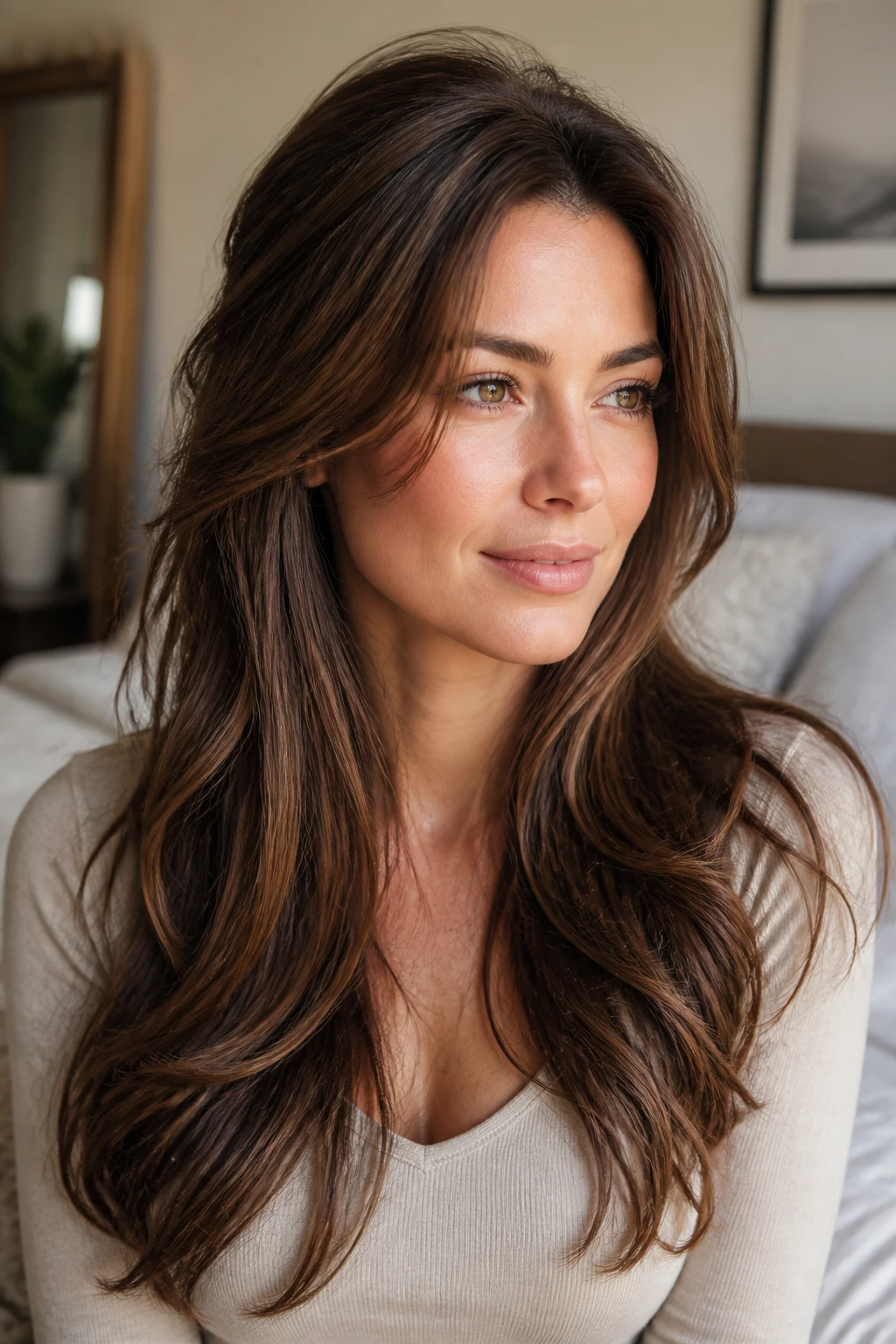
If your hair sits flat at the roots, hidden crown layers can change the whole mood of the cut. The shortest pieces live higher up, tucked just enough under the surface that you notice the lift more than the layers themselves. On a heart-shaped face, that helps create balance without flooding the temples with volume.
This is a quiet haircut. People often think the difference is styling, but it is really structure. The crown has to be cut to support air, or the long hair will pull downward and widen the face in the wrong places. Hidden crown layers keep the top light while the rest of the length stays steady.
A root mousse and rough-dry technique make this style behave. If you blow-dry it smooth without lift, you lose the point.
20. Tapered Ends With a Low Weight Line
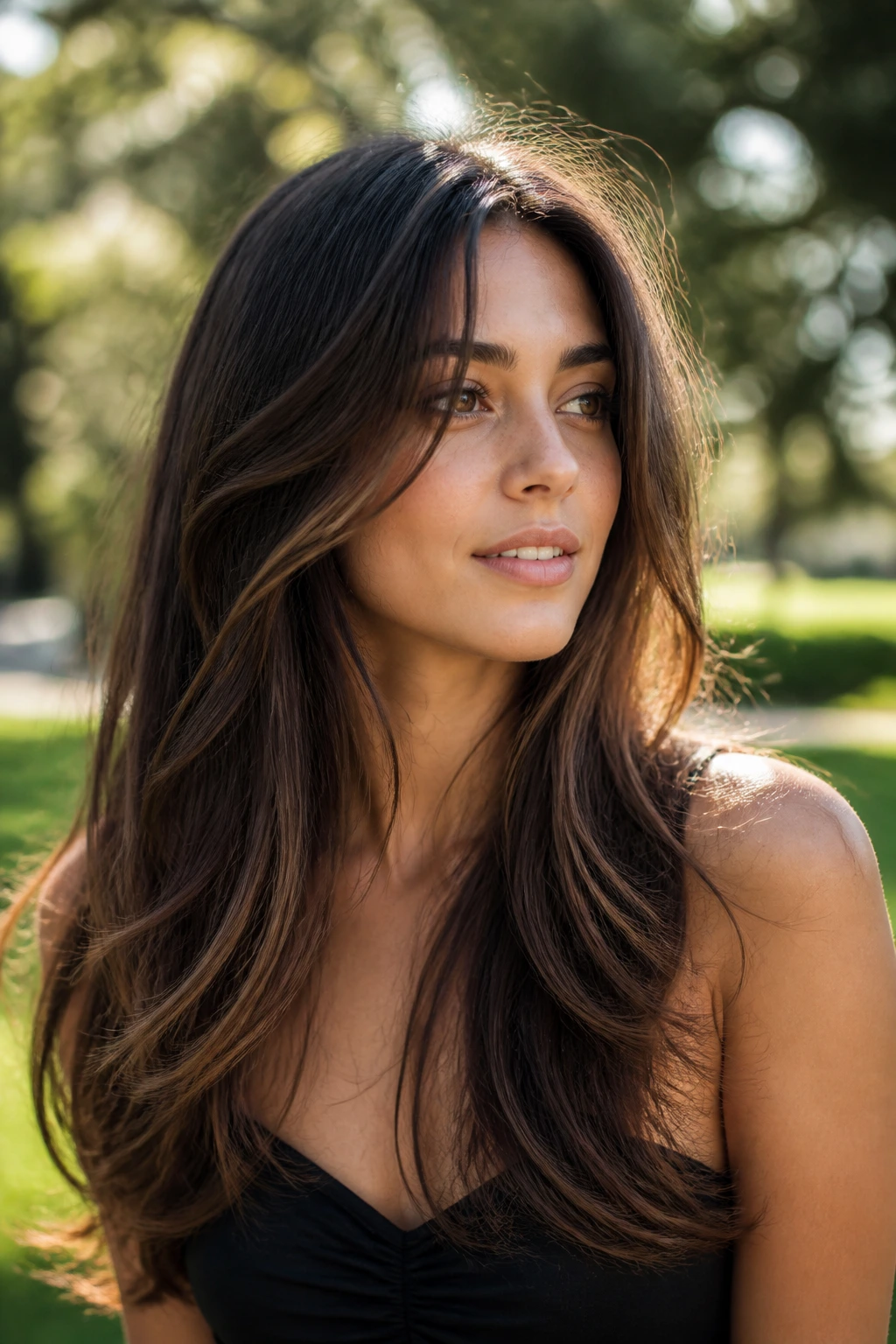
A tapered weight line keeps the ends from looking blunt and heavy. It’s a smart move when long hair tends to collect at the bottom and make the whole cut feel dragged down. For heart-shaped faces, tapering can lighten the lower half without taking away too much fullness from the front.
What I like here is the restraint. The taper should be gentle, not wispy. You still want the hair to feel like hair, not like a thin veil. The shortest layers stay lower than they would in a shag or butterfly cut, so the look stays calm and easy to wear.
This is one of the best choices if you want long hair that looks edited but not styled within an inch of its life.
21. Long A-Line Front Pieces
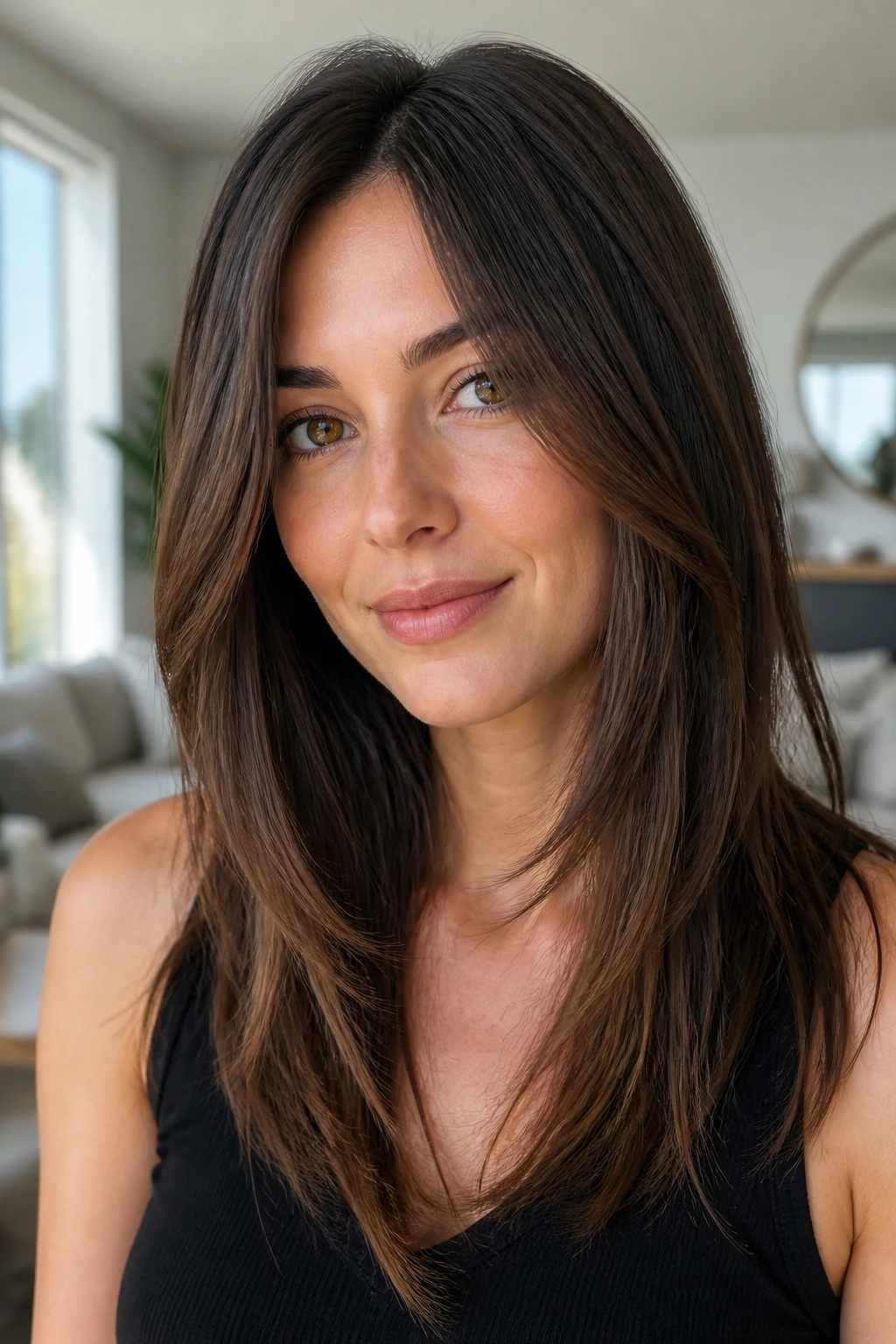
The A-line front drops slightly longer toward the chin and neck, which gives the face a softer downward line. That matters on a heart-shaped face because it helps lengthen the lower half a little without stealing from the length in the back.
The shape is more visible when the hair is straight, but wavy hair makes it gentler. Either way, the front pieces guide the eye downward. That keeps the forehead from feeling like the star of the show.
It’s a smart compromise if you want face-framing layers but don’t want an obvious shag or a high layer line. Clean, easy, and not fussy. Some days that’s exactly what you want.
22. Short Layers That Stay Soft as They Grow Out

Some cuts look good only for about two weeks. This is not one of them. The shortest pieces in this version start low enough that, as they grow, they still frame the face instead of sticking out like a mistake. That matters if you do not want to live at the salon.
For heart-shaped faces, a soft grow-out is practical because the face frame keeps its balance even when the layers stretch down. The cheekbone zone remains the anchor, and the overall shape keeps working. I like this as a long-term option for anyone who likes the idea of short layers but hates the maintenance bill.
If you want low drama and long hair that keeps moving, this is the cut to ask about.
What to Tell Your Stylist Before the First Snip
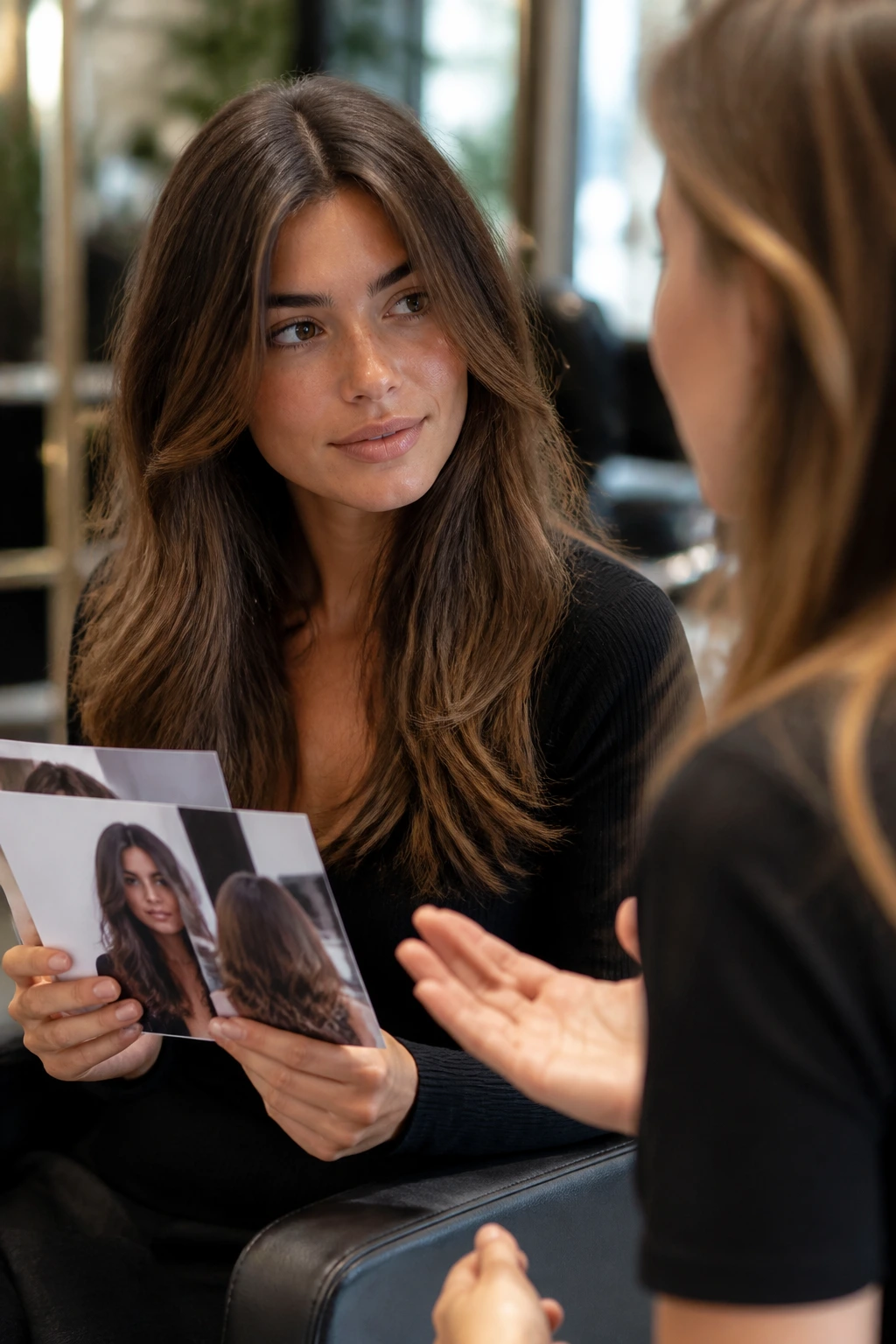
A good consultation saves hair. Bring photos, yes, but bring the right photos: one of the front, one of the side, and one with the hair in the finish you actually wear. A picture of a model with curled-out blowout hair tells you almost nothing if you air-dry and own one flat iron with a sticky plate.
Say where you want the shortest layer to live. That one sentence changes everything. For a heart-shaped face, I’d usually ask for the first face-framing piece to start somewhere between the cheekbone and the top of the collarbone, depending on how strong the forehead and jawline are. If you want more softness, go lower. If you want more lift, go a little higher—but not all the way up to the temples unless you like a lot of volume at the top.
Mention your part, your texture, and your daily effort level. A stylist can work with almost anything. What they cannot work with is mystery.
What matters most
- Natural part: center, off-center, or side.
- Texture: straight, wavy, curly, dense, or fine.
- Styling habit: blow-dry, air-dry, hot tools, or a mix.
- Maintenance tolerance: trim every 6 weeks or every 12.
Tools and Products That Keep the Shape Honest
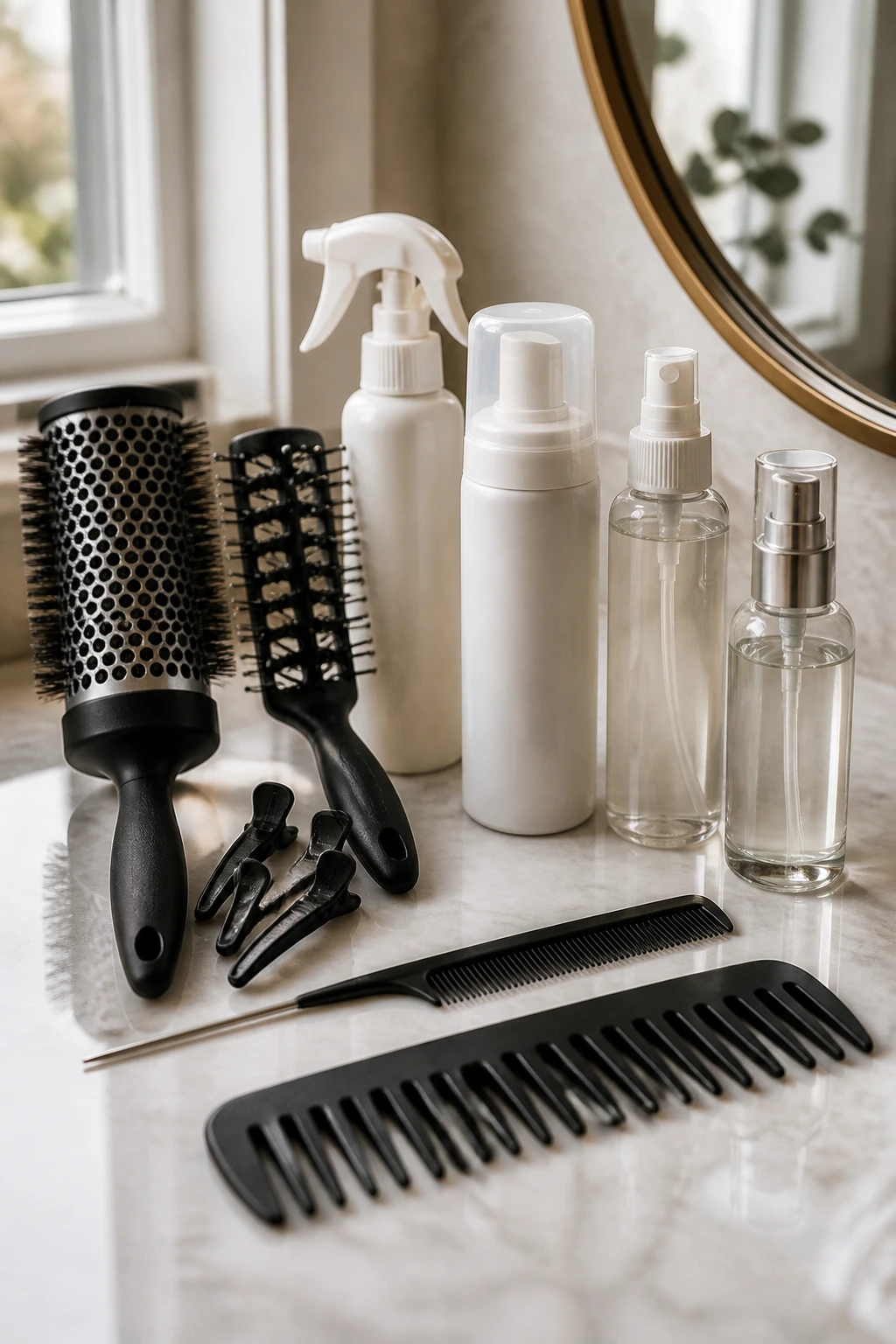
You do not need a drawer full of gadgets. You need the few things that help long layers sit where they’re supposed to sit.
- 1.25- to 2-inch round brush: Gives the face frame bend and keeps the shortest pieces from collapsing.
- Vent brush: Good for fast blow-drying when you want root lift, not a polished curl.
- Sectioning clips: Small, boring, useful. They keep the front layers separate while you dry them.
- Heat protectant spray: Use it every time you heat-style, especially on the shortest pieces, which get the most direct heat.
- Light mousse or root foam: Helps hidden crown layers hold their shape without crunch.
- Texturizing spray: Best for piecey cuts, shags, and wolf-cut versions.
- Light serum or smoothing cream: A pea-sized amount keeps feathered or feather-light layers from frizzing out.
- Tail comb: Useful for making a clean part and lifting the crown without over-teasing.
- Wide-tooth comb: Better than a brush when you’re detangling long lengths without stretching the shape.
How to Wear the Cut Without Fighting It
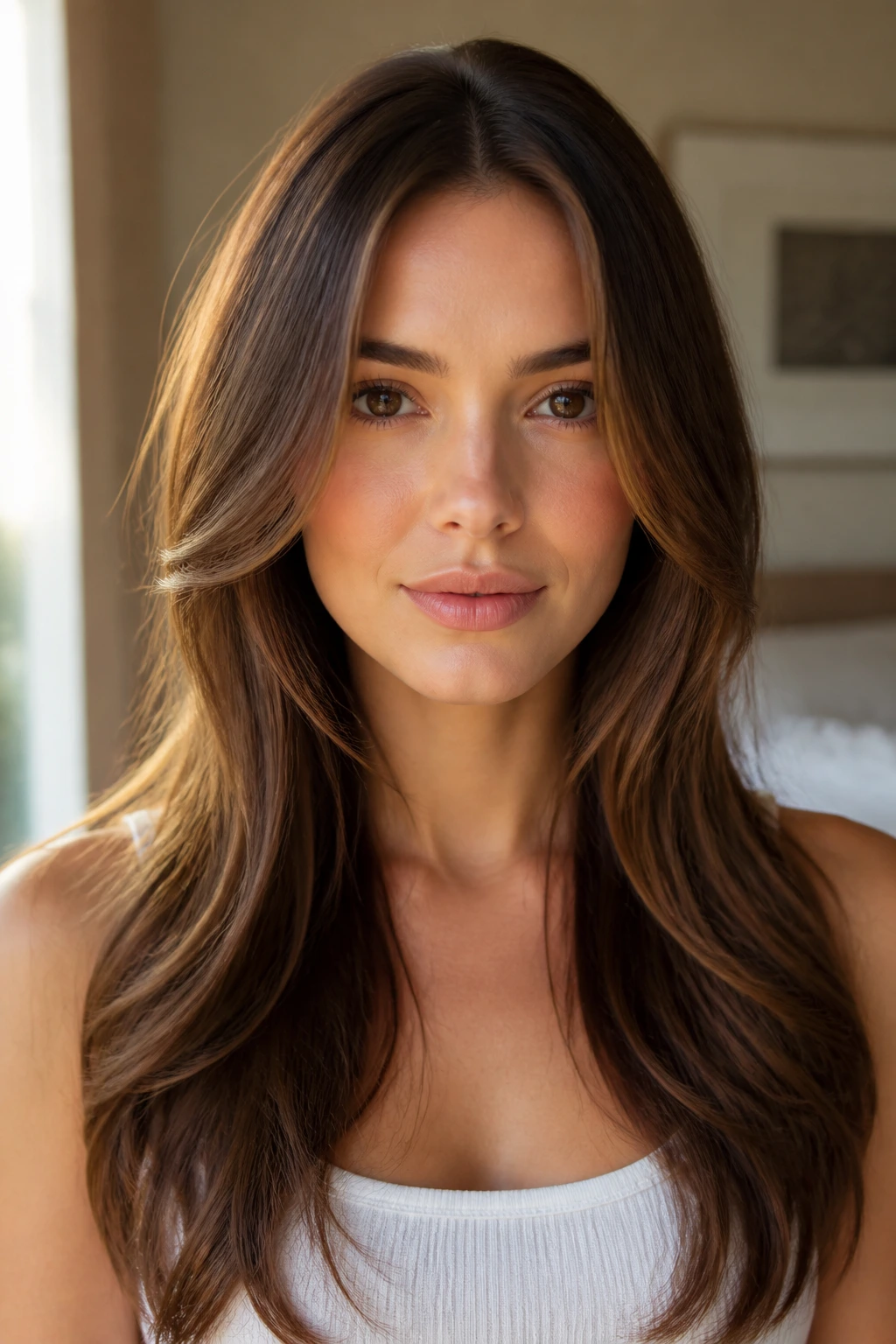
Presentation: If you want the cleanest look, keep the shortest layers smooth around the cheekbones and let the lengths hang with a soft bend at the ends. If you want something looser, push the face frame away from the face and let the lower half stay a little undone. The cut should look intentional either way; that’s the point.
Best styling finish: A subtle wave, not a tight curl. Tight curls can shrink the face frame too much and make the forehead feel wider than it is. A soft bend from mid-length to ends keeps the long hair moving while the front pieces do the real balancing.
Accessories: Side clips, slim headbands, and low half-up styles work well because they show off the layers instead of hiding them. Big, bulky accessories can swallow the front pieces and flatten the shape. If you wear earrings, this is one of those cuts that makes the neckline and jaw look cleaner when the hair is tucked behind one ear.
Quick wear rule: On busy days, just fix the front. If the shortest pieces sit right, the rest of the hair can be a little messy and still look deliberate.
Additional Tips That Make These Layers Work Harder
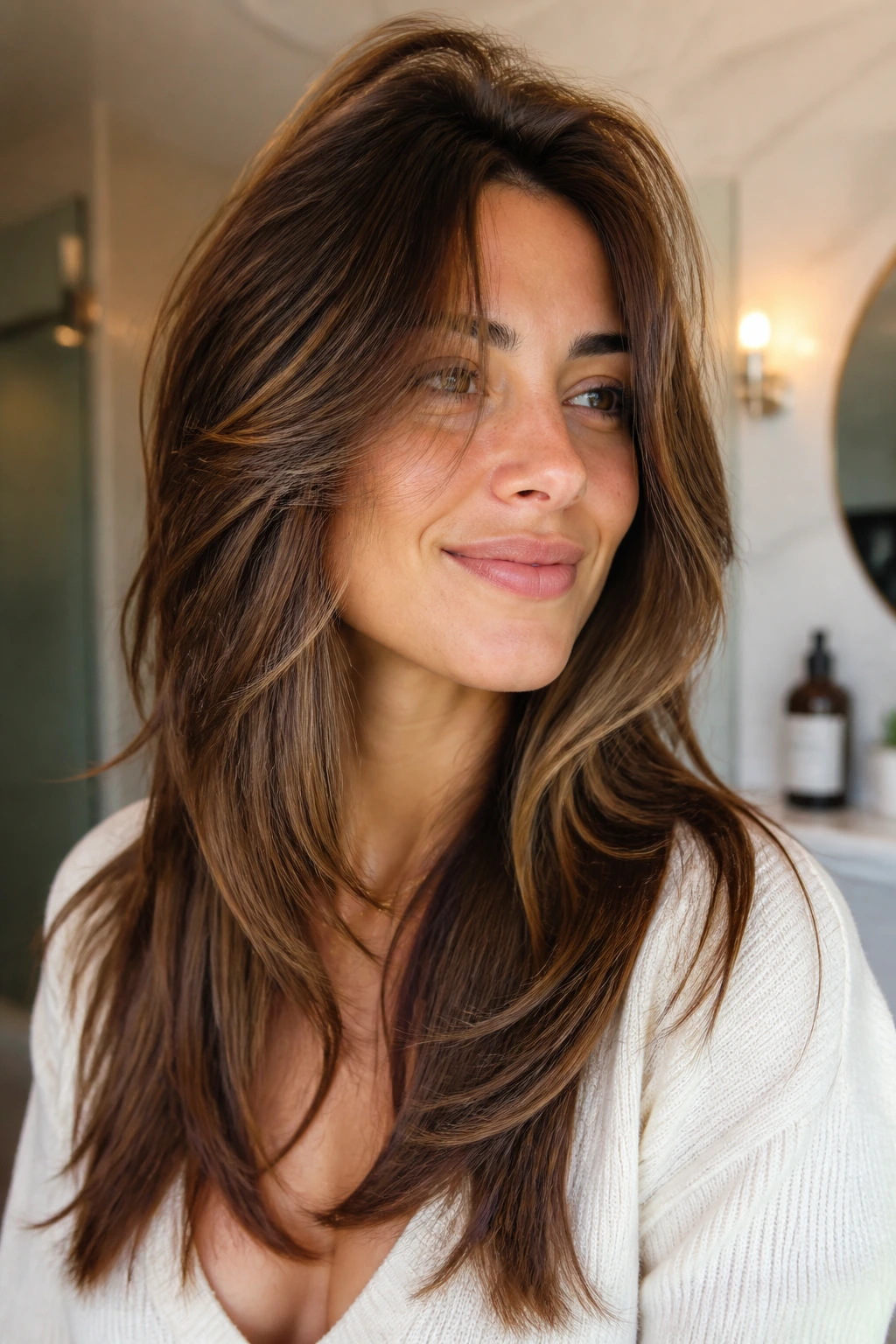
Lift Boost: If the crown falls flat, use a root mousse at the roots and blow-dry that section first. The front layers will sit better when the top has a little air under it.
Texture Boost: For straight hair that feels too slick, a few passes with a large curling iron on the mid-lengths—leaving the ends out—can wake up the cut without turning it curly.
Customization: Fine hair usually needs cleaner, more invisible layering. Thick hair can take stronger steps and more visible shape. Curly hair needs the layers placed according to shrinkage, not stretched length.
Make-It-Yours: If you love a polished look, keep the ends beveled and smooth. If you want a lived-in feel, let the layers break up a little more and use a texture spray at the mid-lengths, not just the ends.
Common Mistakes That Flatten a Heart-Shaped Face
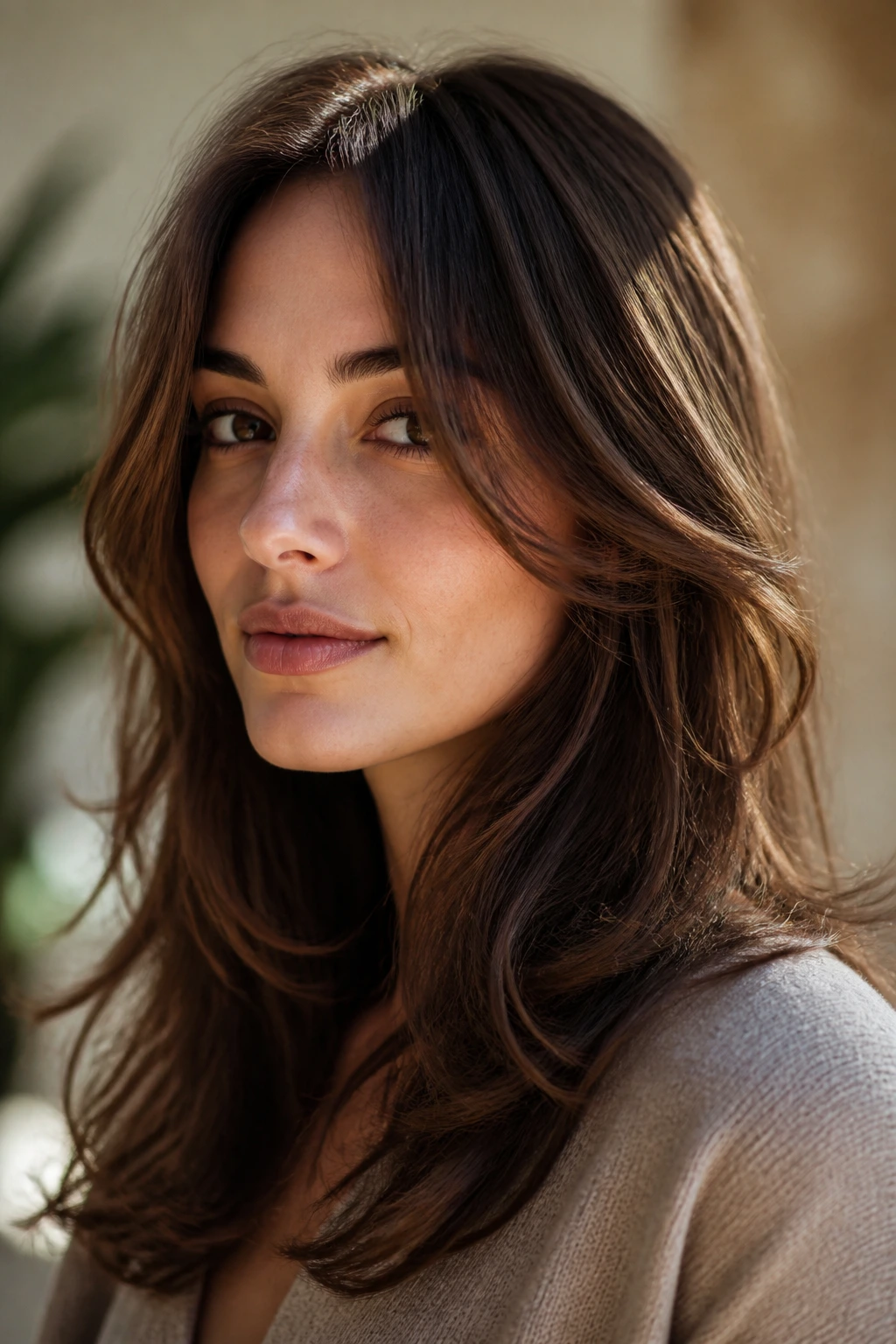
The biggest mistake is placing the shortest layers too high at the temples. That tends to widen the top half of the face, which is already the broadest area on a heart-shaped face. The fix is simple: keep the shortest visible face frame lower, usually around the cheekbone or just below it.
Another one is over-thinning the ends. Hair can go from airy to flimsy in about ten seconds if too much weight gets removed from the bottom. You want movement, not see-through ends. If the perimeter starts to look wispy after a blow-dry, the cut may have gone too far.
People also forget about the part. A cut that looks balanced with a side part can feel too open with a center part, and the reverse is true too. Decide how you actually wear your hair before the scissors come out.
-
Mistake: Cutting for a photo, not for your texture.
Fix: Ask how the style behaves on your hair type, not someone else’s. -
Mistake: Building all the volume at the crown.
Fix: Shift some movement to the cheekbone and jaw. -
Mistake: Ignoring grow-out.
Fix: Ask where the shortest layer will sit three months later, not just day one.
Ways to Adapt the Same Shape for Different Hair Types
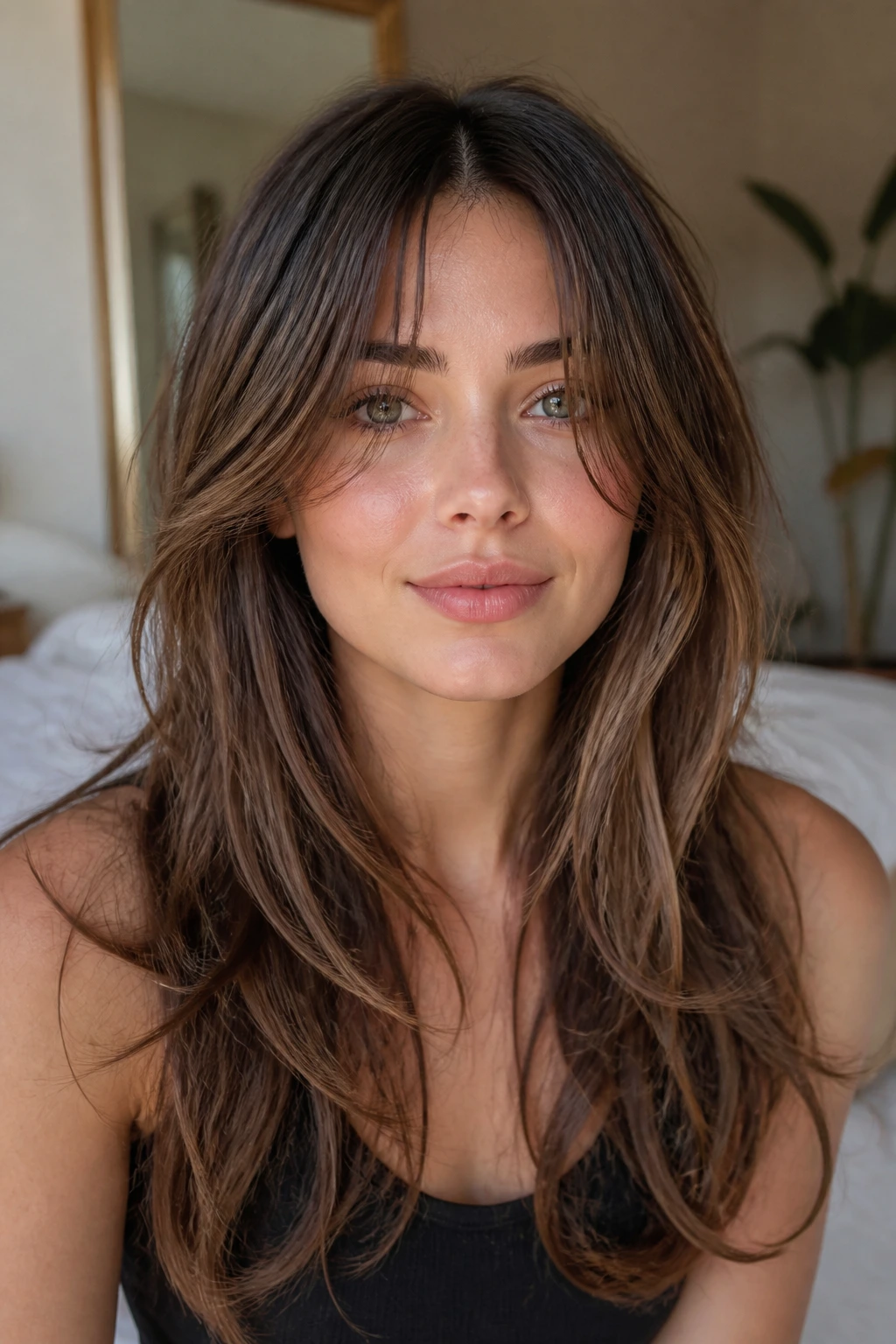
The Fine-Hair Airlift: Keep the layers lighter and fewer, with the shortest pieces just grazing the cheekbone. Add root mousse and a soft round-brush bend, but skip anything that strips too much density from the ends. Fine hair looks better with controlled movement than with a lot of chopped-up pieces.
The Thick-Hair Weight Release: Ask for stronger internal layering and a cleaner perimeter. Thick hair can carry shape, so it does not need to be over-thinned to move. The goal is to stop the base from bulking out like a triangle.
The Curly Coil Map: Cut with shrinkage in mind, preferably when the hair is dry or nearly dry. The shortest pieces should land where the curls can sit after they spring back. This version is all about respecting the pattern instead of forcing a straight-line shape.
The Straight-Hair Ribbon Cut: Keep the outline smooth and add a few face-framing layers that bend with a flat iron or round brush. Straight hair needs structure, not frizzed-out texture, or the layers disappear.
The Fringe-Forward Version: If you want more forehead balance, add curtain or bottleneck fringe and keep the layers soft around the jaw. That gives the cut a little more attitude without changing the whole silhouette.
How to Keep the Shape Between Trims
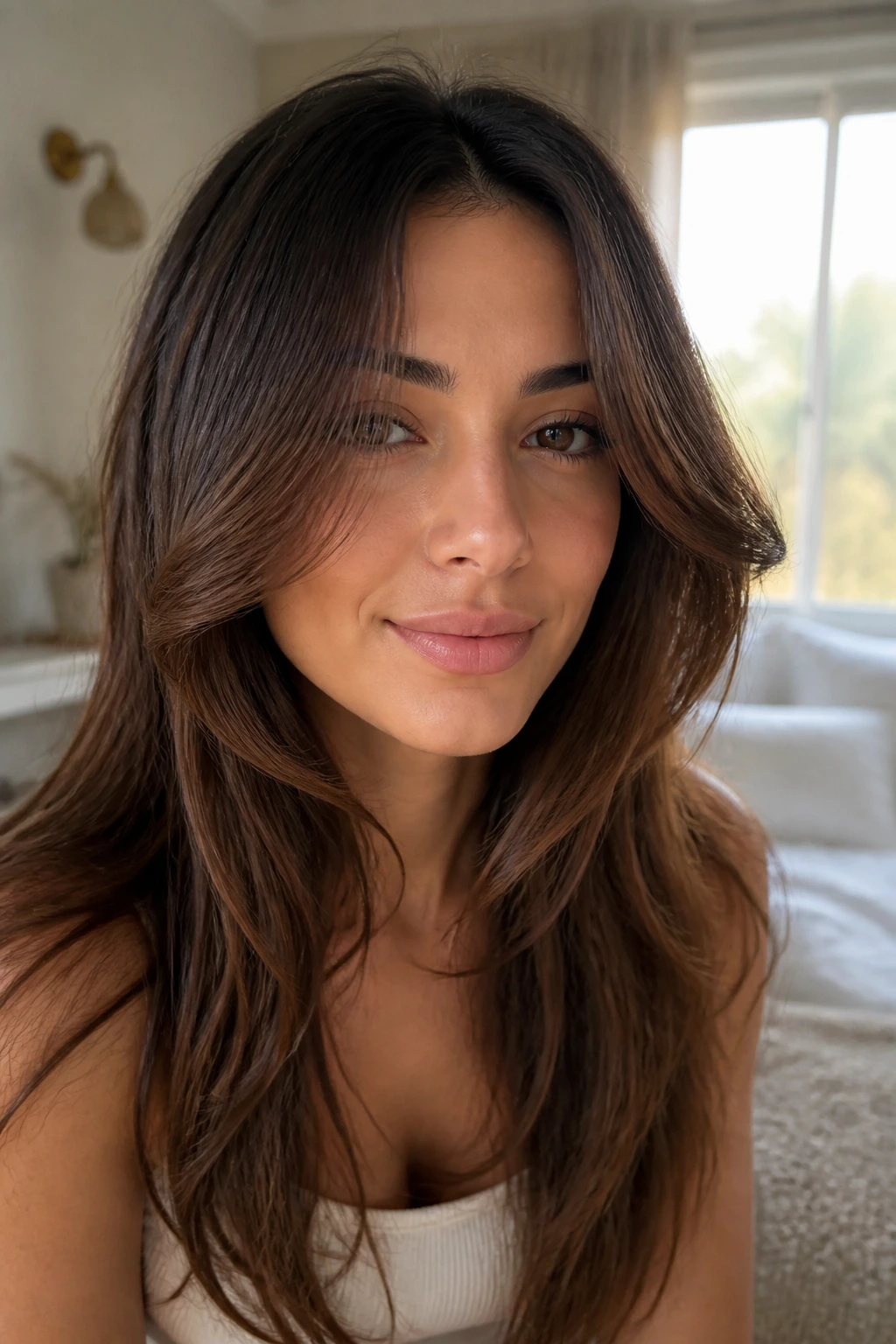
Short layers live or die by maintenance. If the shortest pieces sit at the cheekbone, plan on a trim every 6 to 8 weeks to keep the shape crisp. If you like a softer grow-out, 10 to 12 weeks can still work, but the front will drift lower and the balance will relax a little. That is fine if you want a less precise look. It is not fine if you expect the original outline to stay put forever.
Wash-day habits matter too. Heavy oils, dense creams, and too much dry shampoo can make layered hair sag. Use enough product to control frizz or give grip, but not enough to glue the layers together. A light mousse at the root and a small amount of serum on the ends is usually enough.
Sleep care helps more than people think. A loose braid or a satin pillowcase keeps the shortest pieces from getting bent into odd angles overnight. If you wake up with a front layer sticking straight up, mist it lightly, wrap it around a brush, and warm it with the dryer for 15 to 20 seconds. That beats re-washing the whole head for one stubborn bend.
Questions People Ask Before They Cut
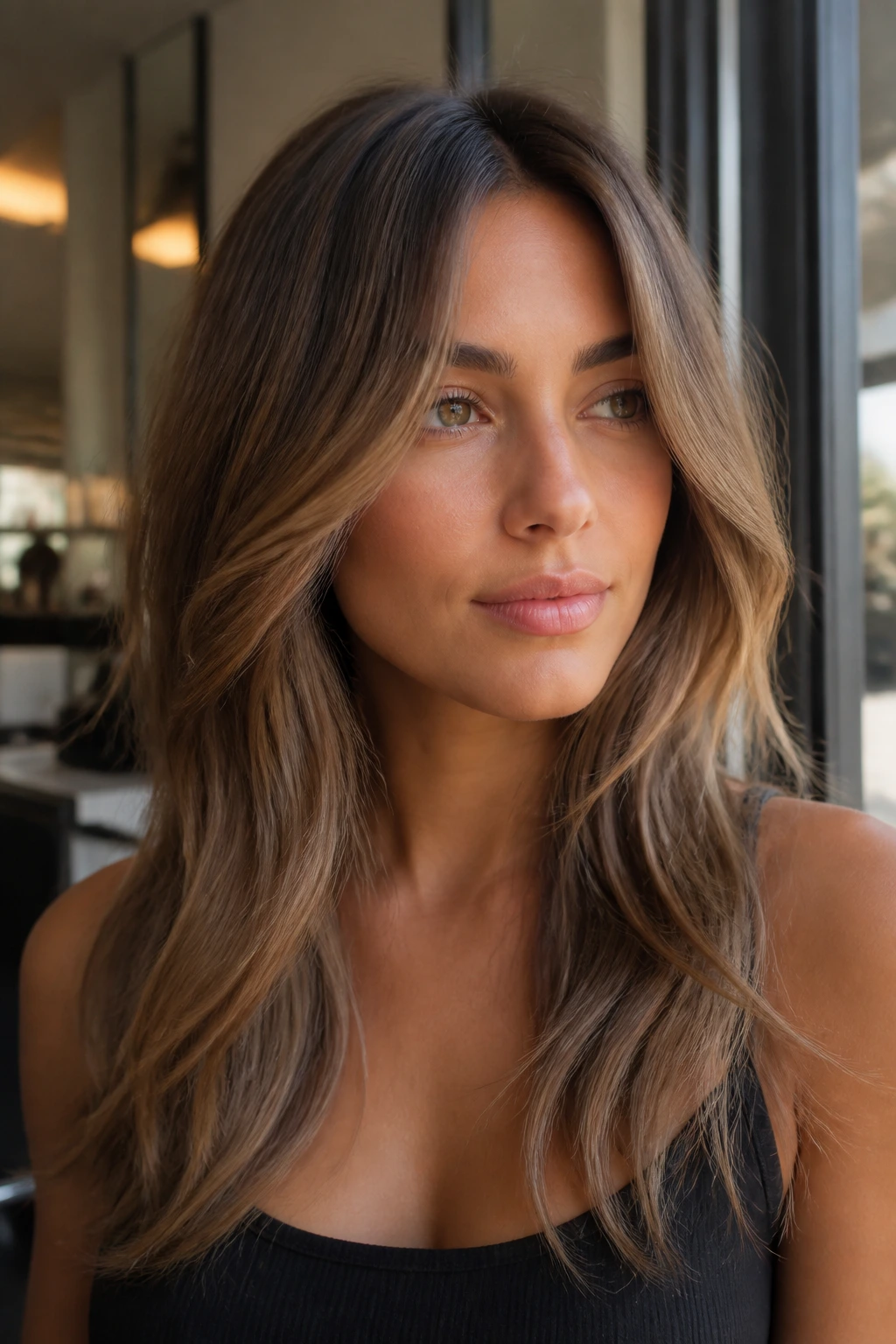
Will short layers make my long hair look thinner?
Not if the cut is done well. The trick is to remove movement inside the shape, not to carve away all the density at the ends. Fine hair needs lighter layering, while thick hair can handle more structure.
How short is too short for a heart-shaped face?
If the shortest visible layer starts up near the temples, that’s usually too high for most people with this face shape. Cheekbone to collarbone is the safer zone. The face still gets lift, but the forehead doesn’t get extra width.
Do curtain bangs count as layers?
They can, and they often work beautifully with long layers. Curtain bangs should blend into the face frame instead of sitting like a separate piece. If they’re cut too bluntly, they stop looking like part of the haircut.
Can I keep my hair in a ponytail with these cuts?
Yes, but the shorter front pieces will escape. That’s not a problem; it’s the point of the cut. If you want a neat ponytail, keep a few bobby pins nearby or ask for layers that start lower.
What if my hair flips out weirdly at the ends?
That usually means the layer line or the weight line isn’t balanced for your texture. A round brush or a flat wrap-dry can calm it down, but if the flip is extreme, the cut may need a cleaner bevel.
Is this good for curly hair?
Yes, if the layers are cut with curl shrinkage in mind. Curly hair should not be layered the same way as straight hair. That’s how you end up with lopsided sides and a front that shrinks too much.
How often do I need to style it?
The shorter the layer, the more it benefits from a little styling. Even two minutes with a round brush or a blow-dry on the front pieces can make the whole haircut look deliberate.
The Shape That Keeps the Length
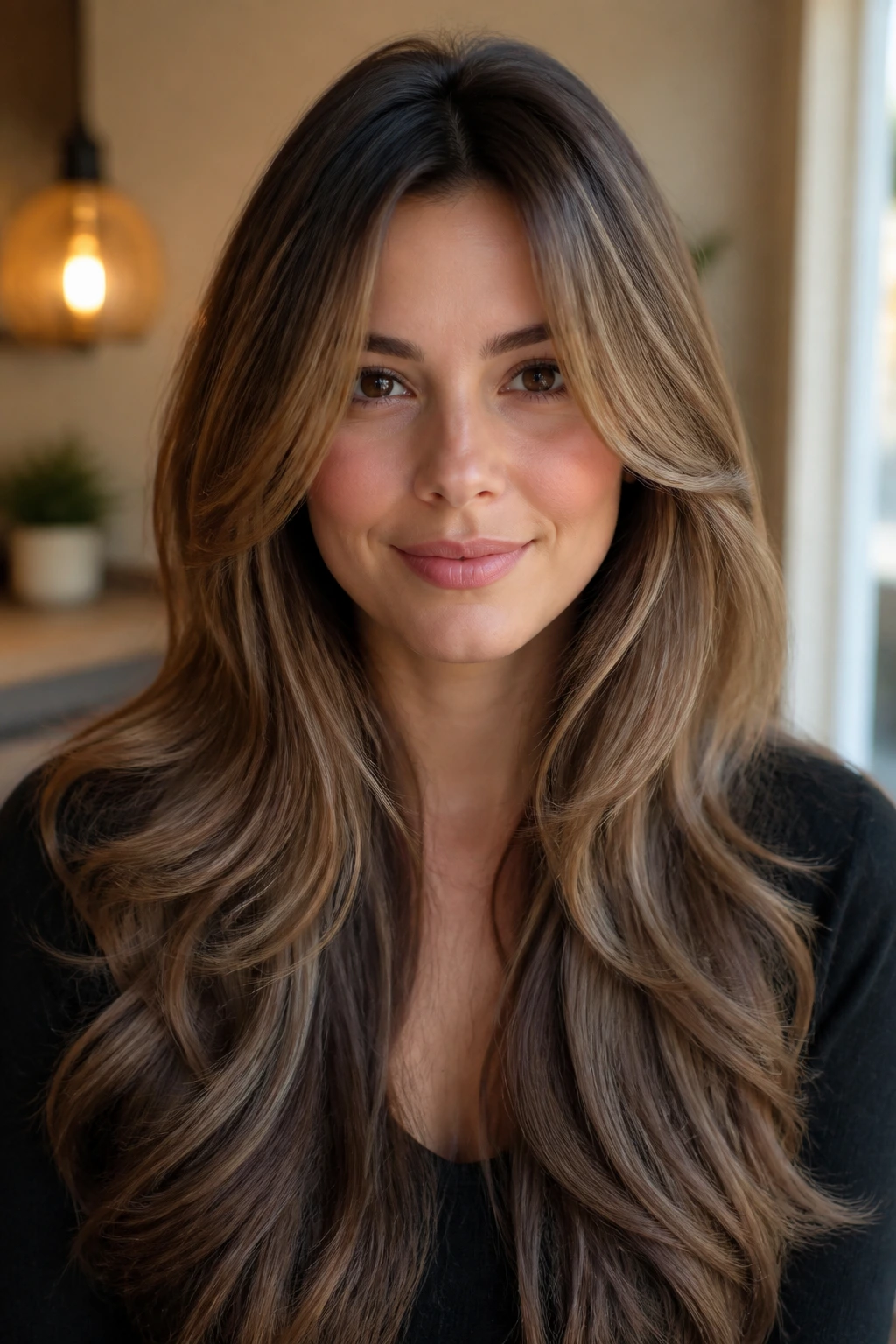
The reason these cuts work is not mystery. It’s placement. Put the shortest pieces in the right zone, keep enough weight in the lower lengths, and the hair starts working with a heart-shaped face instead of against it. That balance is what makes long layers feel expensive instead of accidental.
If you’re keeping your hair long, you do not have to choose between movement and shape. You can have both, and the better versions of these cuts prove it. A good stylist will know where to start the shortest layer; a good reference photo will show the finish you actually want; and a good trim schedule will keep the whole thing from drifting into fluff.
Start with the face-framing zone, stay honest about your texture, and keep the length intact. The rest is just choosing whether you want soft, shaggy, polished, or piecey—and long hair has room for all of it.