



Short haircuts for heart-shaped faces live or die on one thing: proportion. Get that right, and the whole face settles into place. Get it wrong, and the forehead feels louder than the rest of you, the chin disappears, and the cut starts wearing you instead of the other way around.
The best versions don’t hide the face. They steer it.
That usually means a little movement near the forehead, some weight or width around the jawline, and enough texture to keep short hair from looking like a helmet. A blunt chin-length bob can do that. So can a side-swept pixie, a bixie with feathered layers, or a curly crop that keeps its shape away from the temples. The details matter more than the label. A pixie can flatter one heart-shaped face and fight another if the fringe sits too high or the crown gets too puffy.
Why These Cuts Earn Their Keep
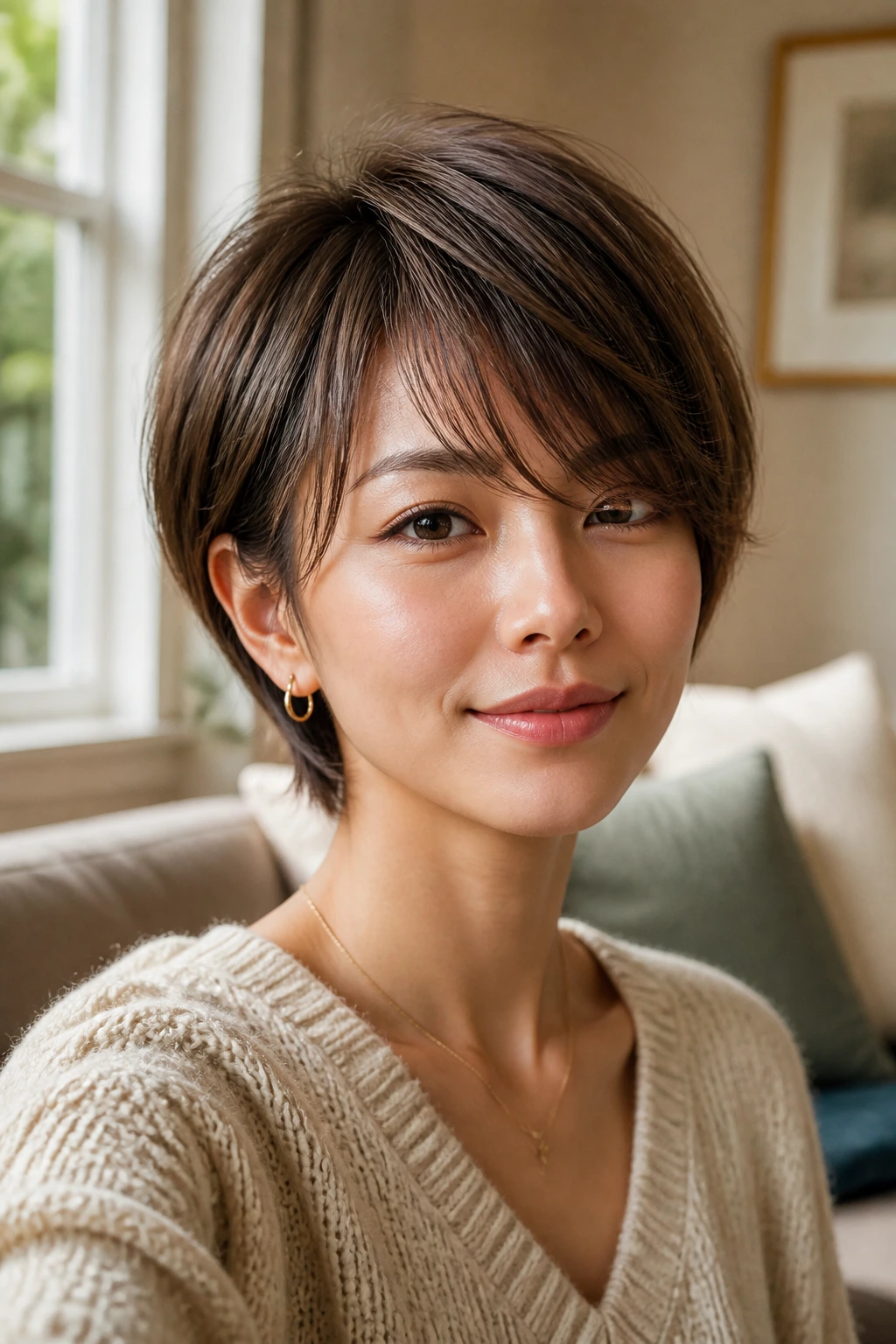
- Softened foreheads: Side-swept fringe, curtain bangs, and wispy front pieces break up the widest part of a heart-shaped face without covering it like a curtain.
- Jawline support: Cuts that land at the chin or just below it give the lower face more visual weight, which keeps the face from tapering too sharply.
- Better balance with texture: Choppy ends, feathering, and controlled layers keep short hair from looking stiff at the top and empty at the bottom.
- More than one styling path: The same cut can look sleek one day, messy the next, and air-dried the day after that if the shape is built well.
- Room for real-life hair: Fine, thick, straight, wavy, and curly hair all need different handling, and these cuts cover that spread instead of forcing one shape onto everyone.
- Fast grow-out: The better short cuts don’t fall apart in week three. They shift into a slightly longer version of themselves and still look intentional.
1. Soft Side-Swept Pixie
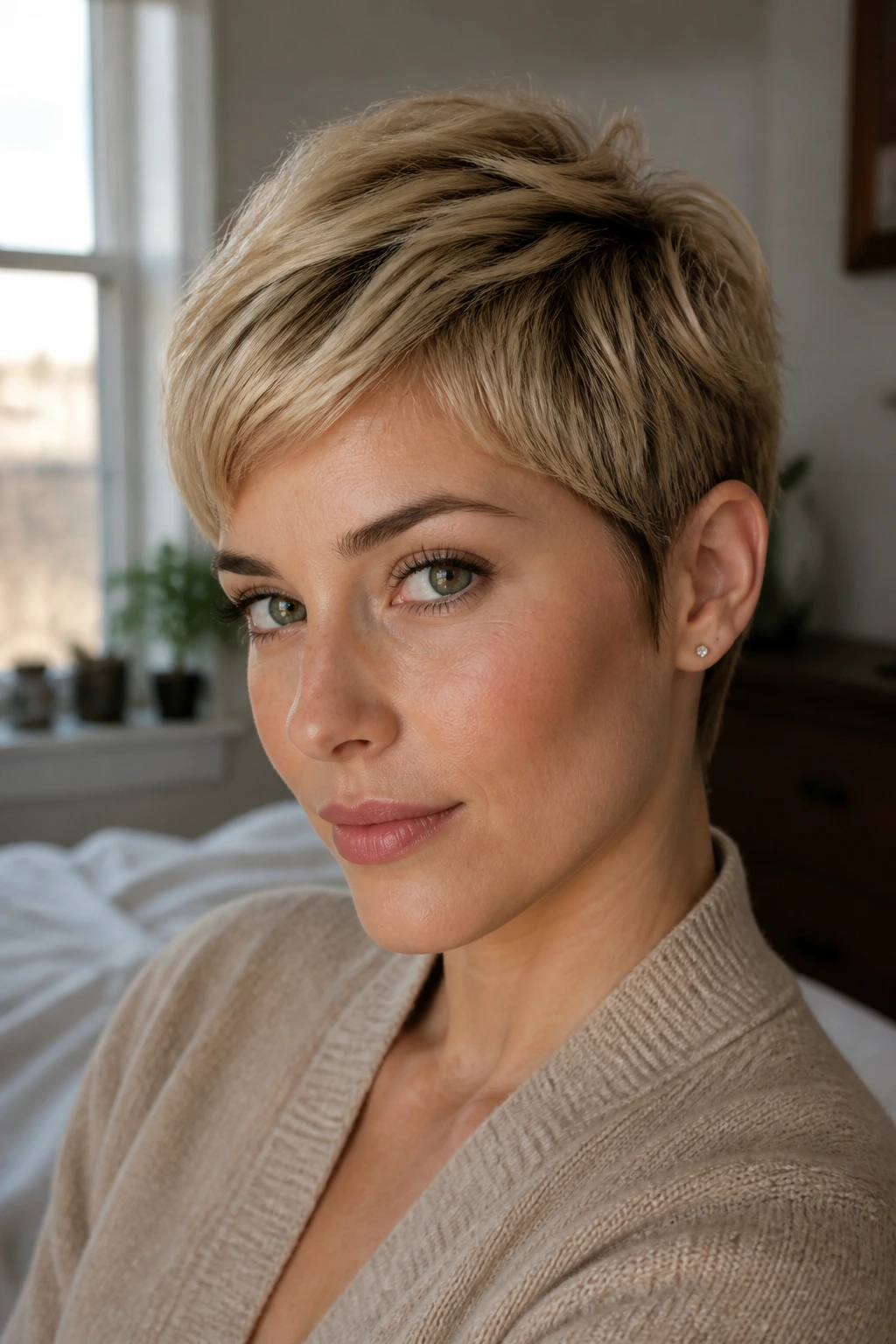
This is the pixie I reach for when someone wants short hair but does not want the forehead to do all the talking. The long, side-swept fringe keeps the top soft, and the close sides stop the whole shape from puffing out at the temples.
Why it flatters a heart-shaped face
The trick is direction. A side-swept pixie pulls the eye across the face instead of straight up and down, which takes pressure off a broad forehead. The longer top gives you room to work with a blow dryer or a little paste, but the cut stays neat around the ears and neckline.
Keep the fringe long enough to graze the brow or sit just below it. Shorter than that, and the forehead starts to feel wider again. Ask for the top to stay around 2.5 to 3.5 inches so you can bend it forward or over without it sticking straight up.
- Top length: 2.5 to 3.5 inches keeps the fringe flexible.
- Side shape: Taper the sides, but don’t shave them so tight that the cut turns severe.
- Best finish: A pea-sized amount of matte paste gives piecey movement without shine overload.
One small detail matters a lot here: ask for the fringe to angle from the deeper side part, not from the dead center of the forehead.
2. French Bob with Curtain Bangs

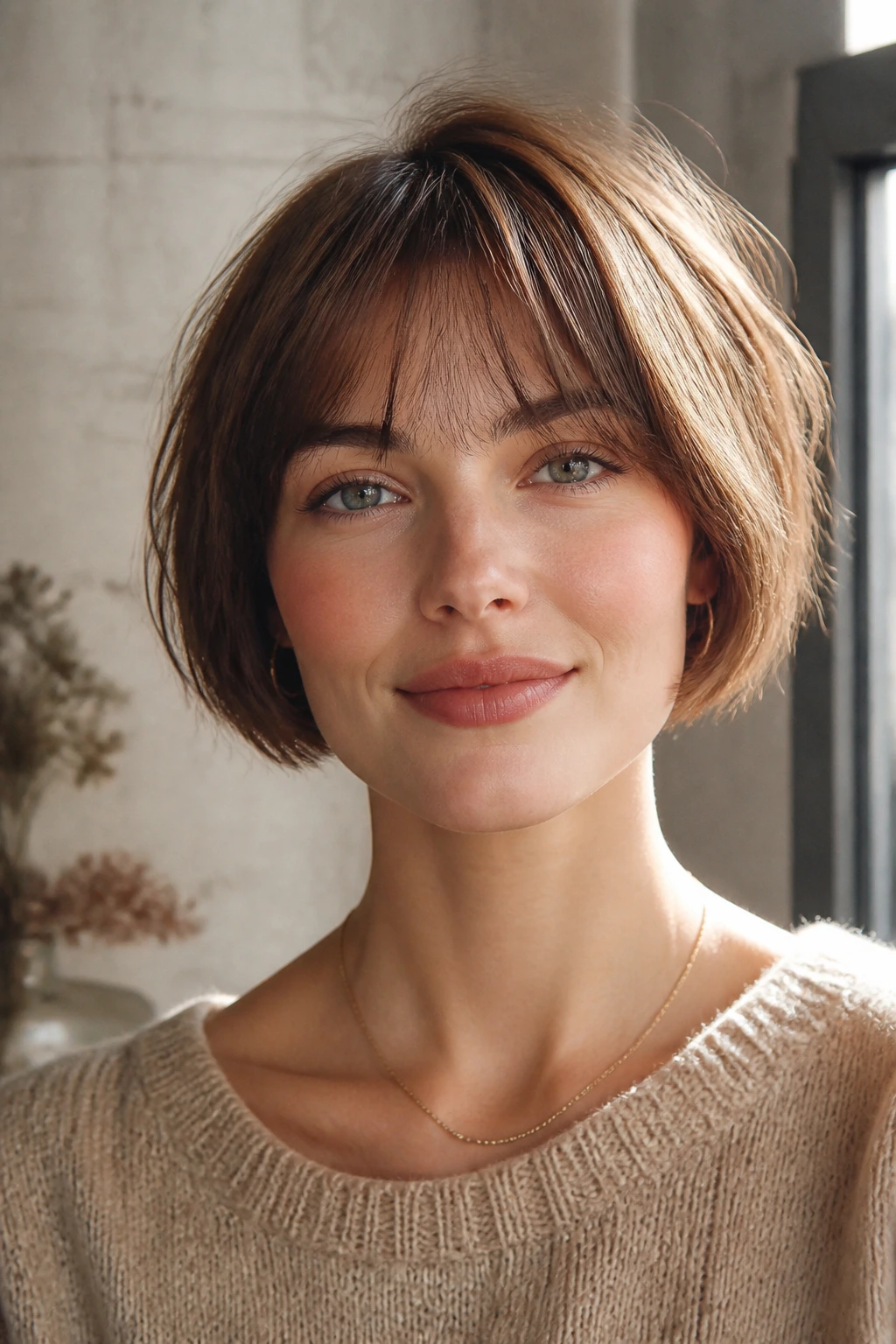
A French bob lands where a heart-shaped face often needs it most: right around the mouth and jaw. Add curtain bangs, and the whole cut stops feeling boxy or heavy. It reads relaxed, but not lazy. That’s a useful difference.
The line should sit around the jaw or just above it, depending on how much fullness you want at the lower face. I prefer a version that kisses the jaw rather than stopping high on the cheek. Too short and the face can start to look top-heavy; too long and it slips out of short-hair territory.
Curtain bangs are doing quiet work here. They split the forehead in the middle, then soften outward toward the cheekbones, which gives the upper face a little less width without flattening the style. If your hair is straight, keep the ends blunt. If it bends naturally, a tiny bit of internal layering helps the curve sit better.
3. Jaw-Length Blunt Bob
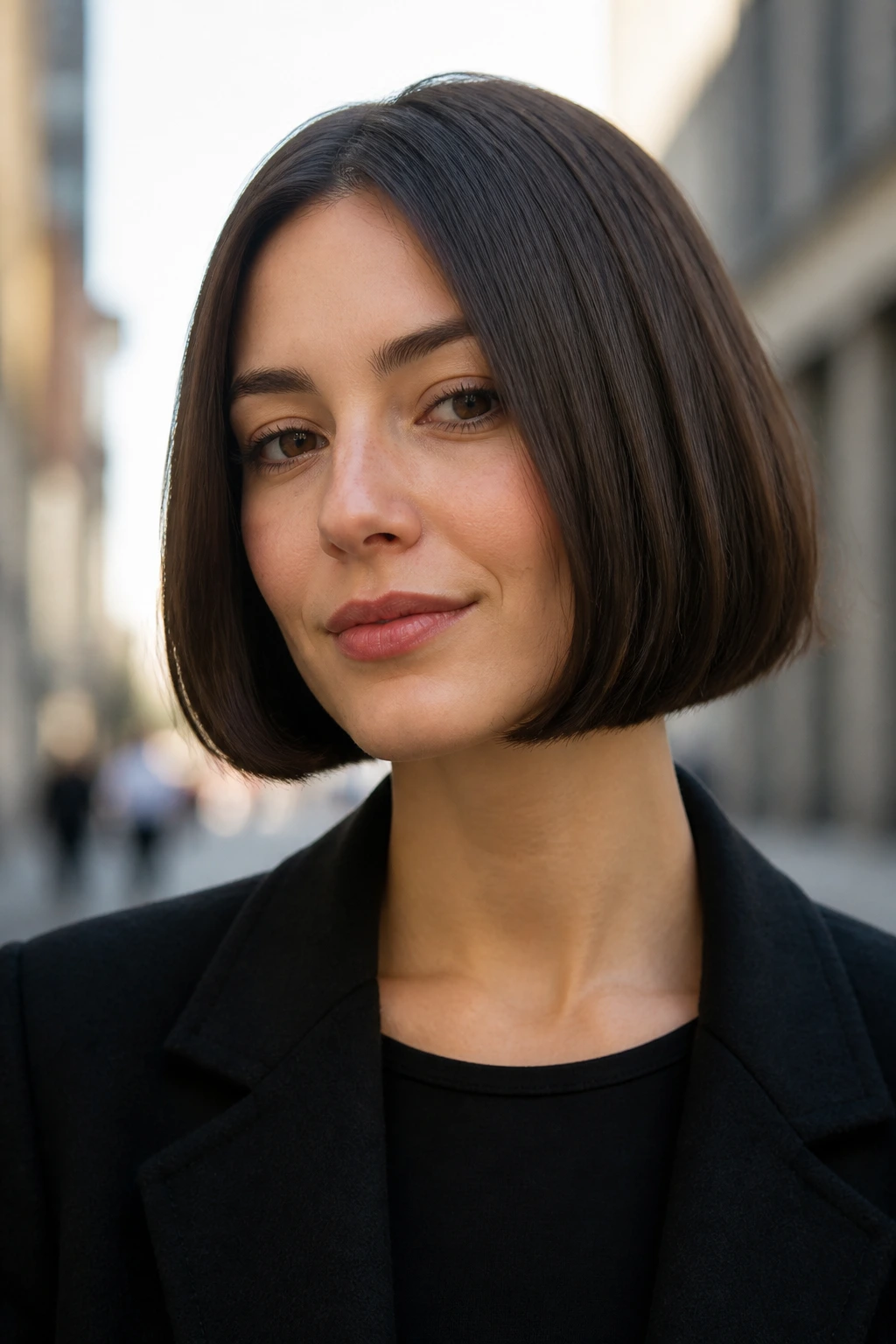
If your face shape feels a little top-heavy, a blunt bob at the jaw is one of the cleanest fixes. The straight edge gives the narrower lower face more presence, and the cut looks calm even when your hair is having a stubborn morning.
The shape that matters
The blunt line should hit at the jaw, not float above it. That’s the whole thing. A bob that ends too high leaves the chin looking smaller. A bob that lands right on the jaw gives the lower half a clear edge, which balances the wider forehead without making the face look stiff.
This cut is especially good if your hair is fine and tends to lie flat. The one-length perimeter gives it thickness at the ends, and a quick bevel under the bottom with a flat iron keeps it from looking like a school uniform haircut. It can be sleek or slightly tucked behind the ears; both work.
- Cut line: Ask for the ends to sit right at the jawbone.
- Parting: Side part if you want a softer look, center part if you want crisp symmetry.
- Styling note: A small bend under the ends keeps the bob from splaying outward.
4. Bixie with Feathered Layers
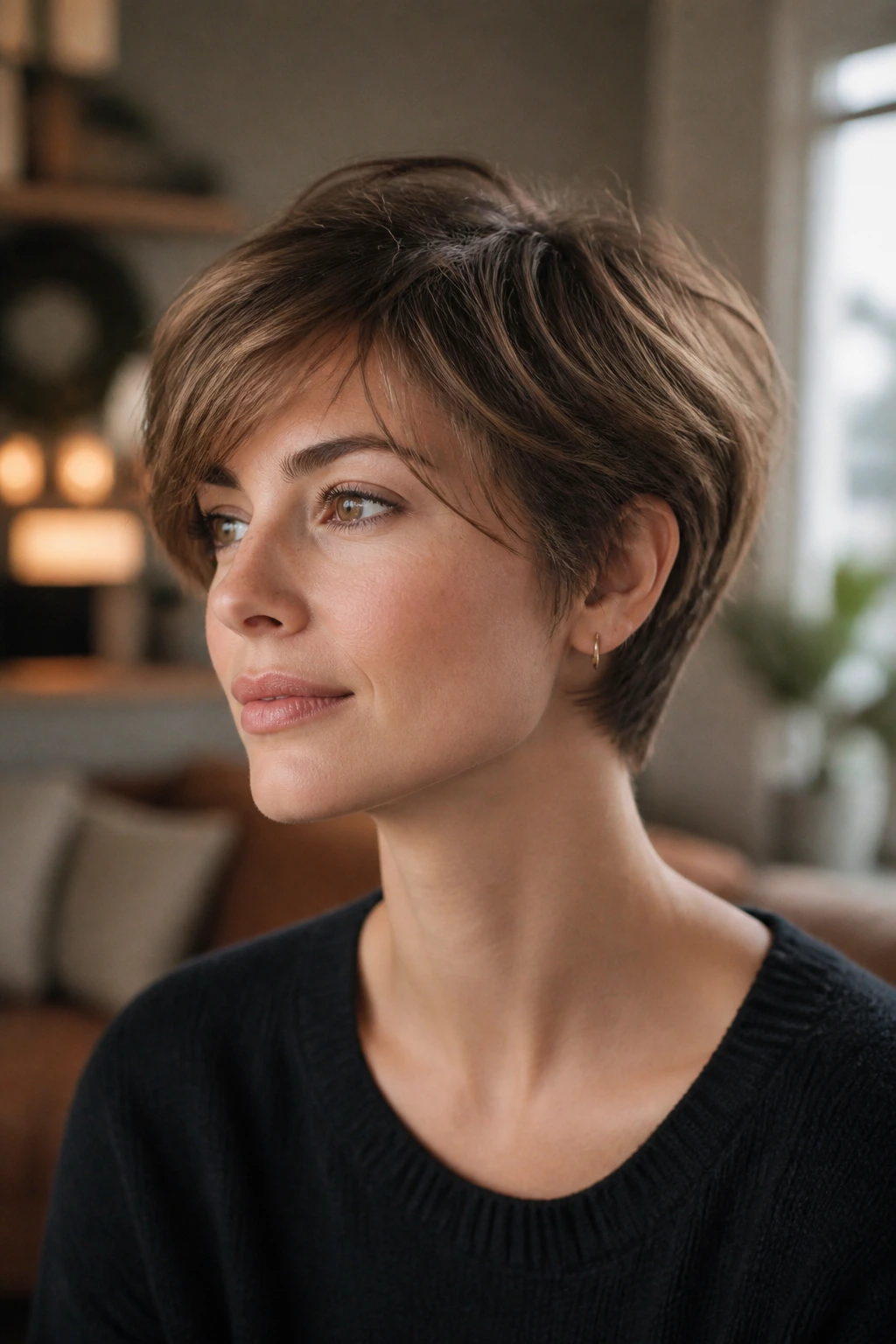
The bixie lives between a pixie and a bob, and that awkward little space turns out to be very useful. On a heart-shaped face, it brings softness to the sides without swallowing the cheekbones. Feathered layers keep the shape moving instead of turning it into a hard cap of hair.
This cut works well if you like short hair but don’t want a strict crop. The top stays long enough to sweep, the sides stay short enough to feel light, and the back usually tapers closer to the neck. That balance keeps the forehead from feeling exposed while still letting the face breathe.
I like a bixie most on medium-density hair. Fine hair can wear it too, but you’ll want the layers handled carefully so the ends don’t thin out too much. Thick hair needs internal removal, not just surface texture, or the crown can swell up fast. A little wax or cream through the front pieces keeps the shape from going fuzzy by noon.
5. Choppy Crop with Micro Fringe
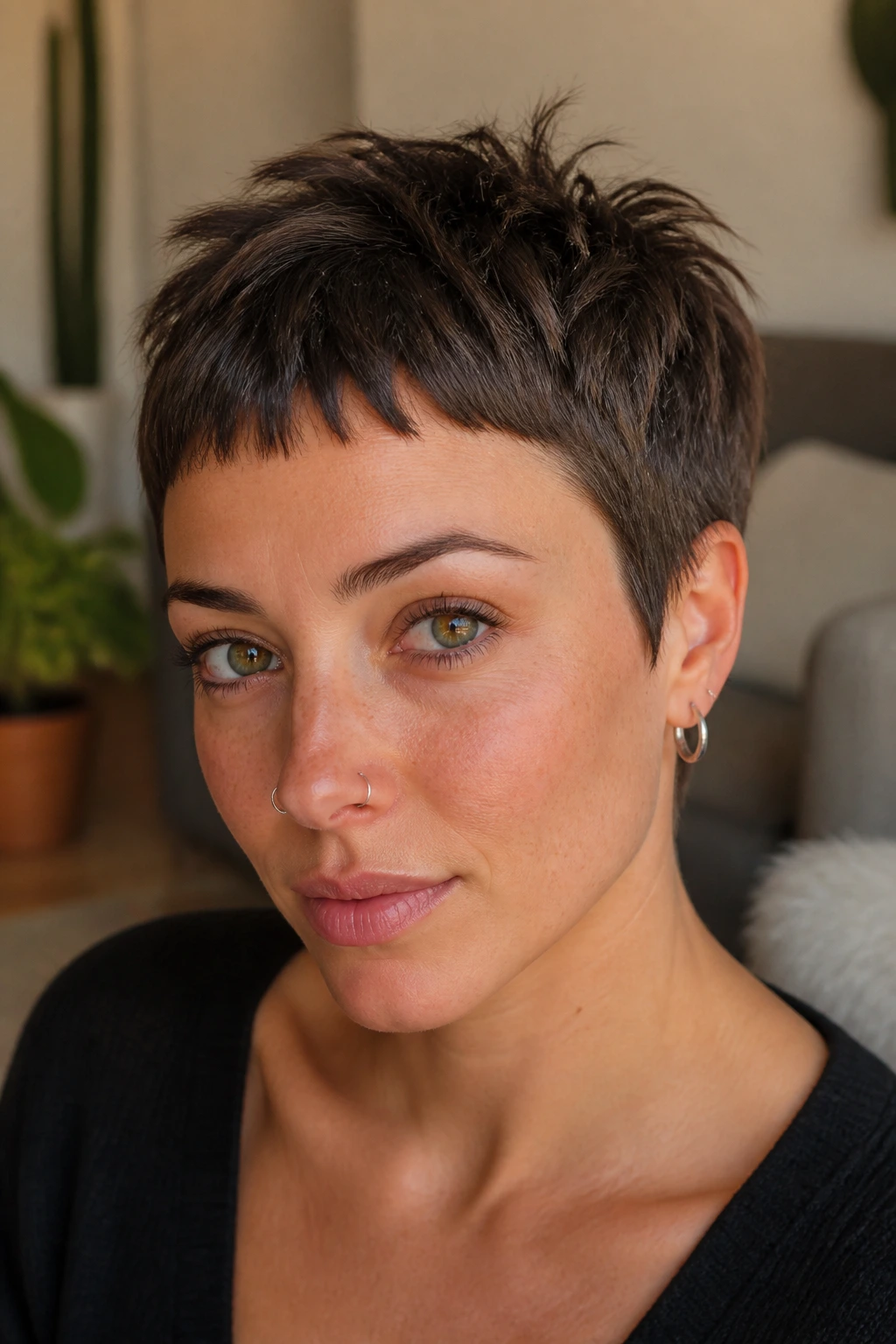
Can baby bangs work on a heart-shaped face? Yes — but only when the rest of the cut carries some softness. A choppy crop with a micro fringe can look sharp and modern, or it can look severe. The difference is in the balance.
The fringe should be tiny, yes, but not stiff. I’d keep it wispy or slightly uneven, with texture in the rest of the crop so the forehead isn’t framed by a hard line and nothing else. That way the eye sees movement around the temples and cheekbones, not a blunt bar sitting alone at the top of the face.
How to wear it without hardening the face
Let the top sit a little piecey, and keep the crown flat enough that the cut doesn’t climb upward. Heart-shaped faces already carry visual width at the top; if you add height and a hard fringe together, the shape can start fighting itself. A tiny amount of styling cream, rubbed between the palms first, is usually enough.
6. Asymmetrical Bob with a Deep Part

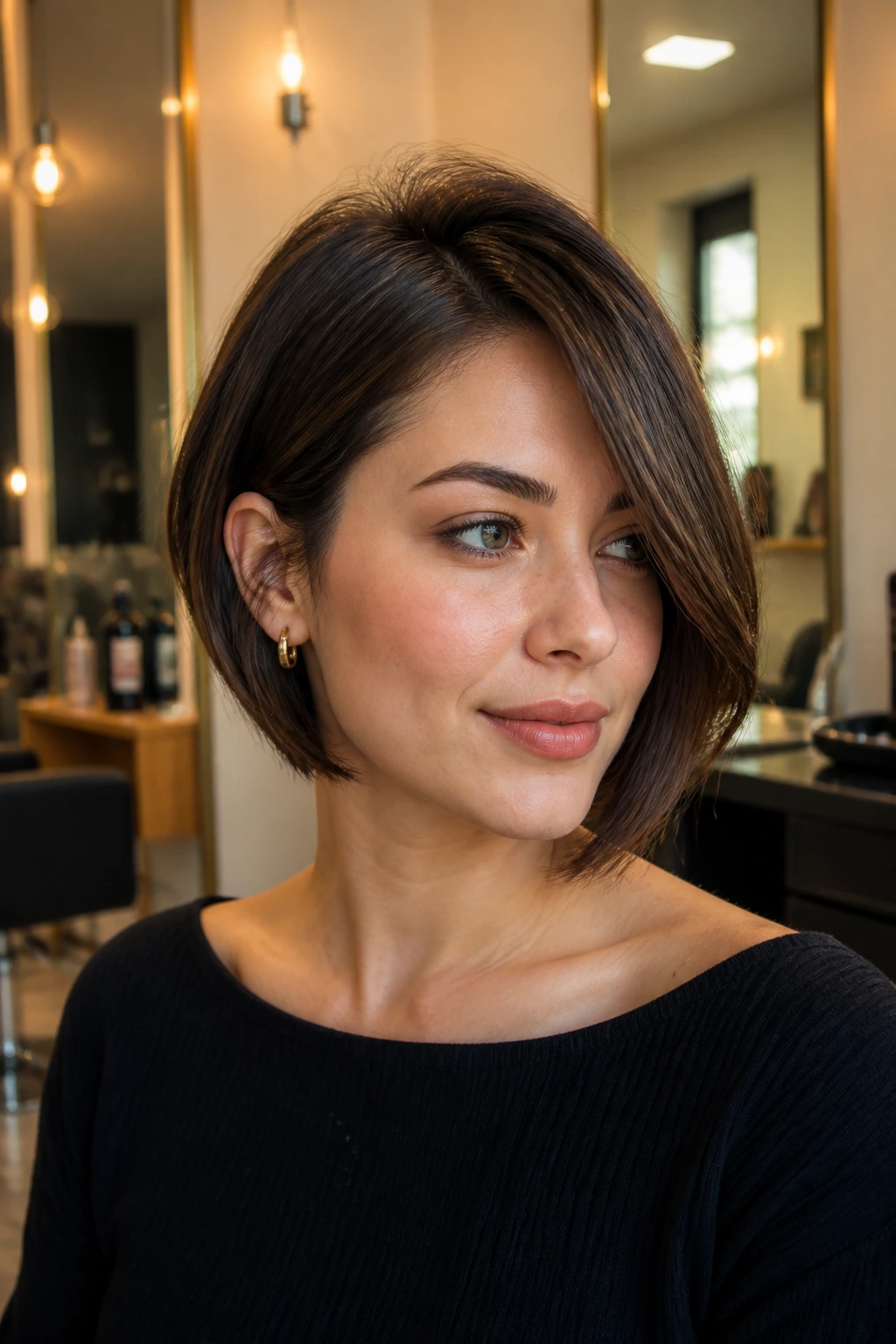
Unlike a one-length bob, this cut uses a diagonal to change the face. That diagonal is the whole point. A deep side part and one slightly longer side create movement across the forehead, which softens a heart shape without hiding the bone structure.
The longer side can graze the chin while the shorter side sits just above it. You don’t need a dramatic angle to get the effect; even a subtle difference in length changes the line of the face. I like this cut on straight hair because it shows the shape cleanly, but wavy hair can wear it too if the ends are lightly beveled.
It’s a good choice if you like short hair that feels a little sharper than a classic bob. The cut has attitude, but not the kind that bosses your face around. Wear it tucked on the shorter side, or push the longer side behind one ear and let the part do the talking.
7. Shaggy Bob with Wispy Ends
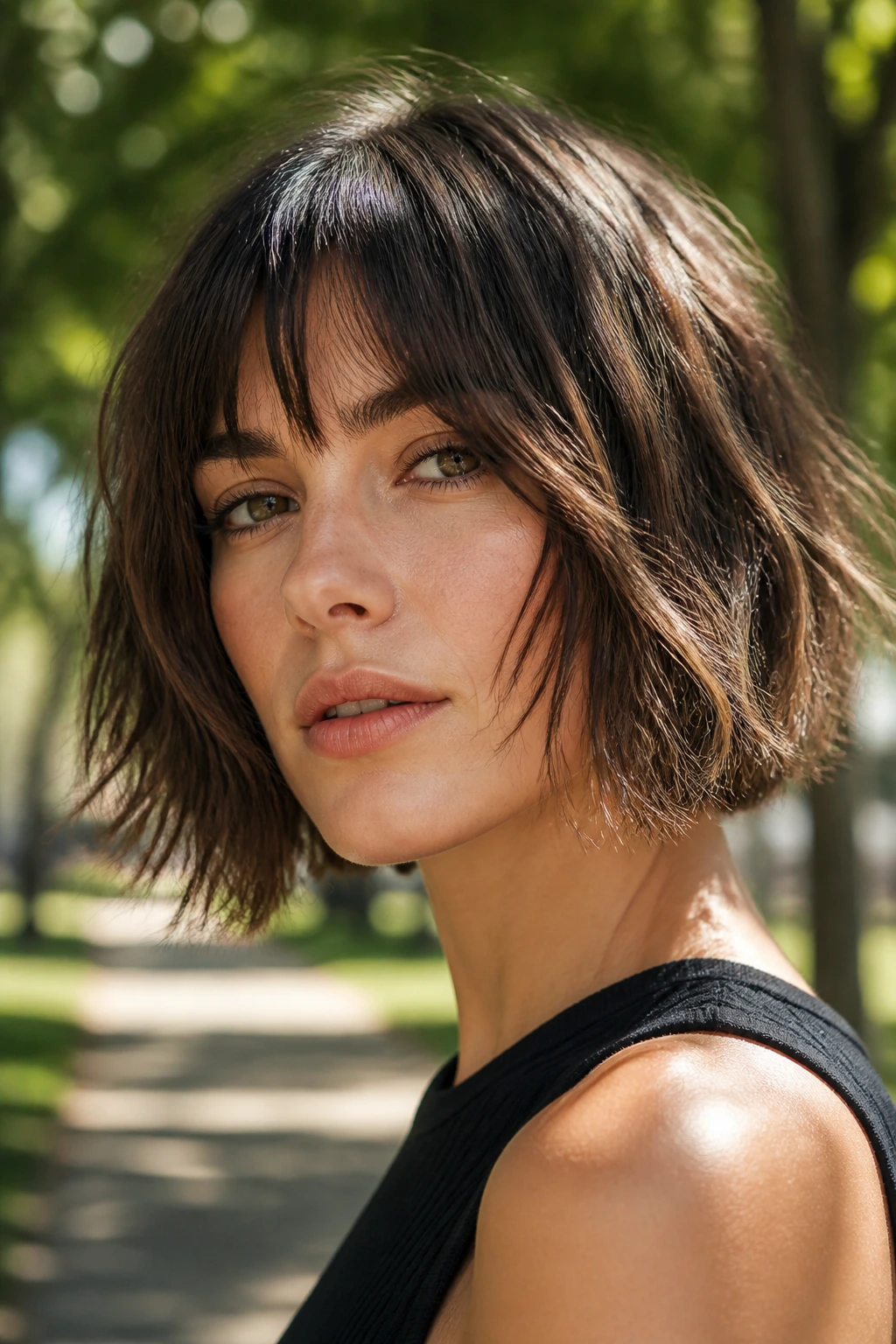
A shaggy bob is one of those cuts that looks easy only after somebody has done the hard part in the chair. The layers need to be placed with some care, especially on a heart-shaped face, or the top can get too fluffy and the lower face can still feel light.
The version I like lands somewhere between the jaw and the top of the collarbone, with wispy ends that keep the shape from feeling blocky. The key is that the texture should show around the cheekbones and jaw, not just at the top of the head. That’s where the face needs a little softening.
- Layer placement: Keep the strongest texture through the sides, not only at the crown.
- Best texture: Wavy hair wears this cut with almost no fight.
- Styling note: Scrunching with a small amount of mousse gives the ends some grip without making them crunchy.
The shaggy bob is for people who like a little mess in a controlled way. Not chaos. Just enough looseness that the haircut looks lived in.
8. Tapered Pixie with Long Top
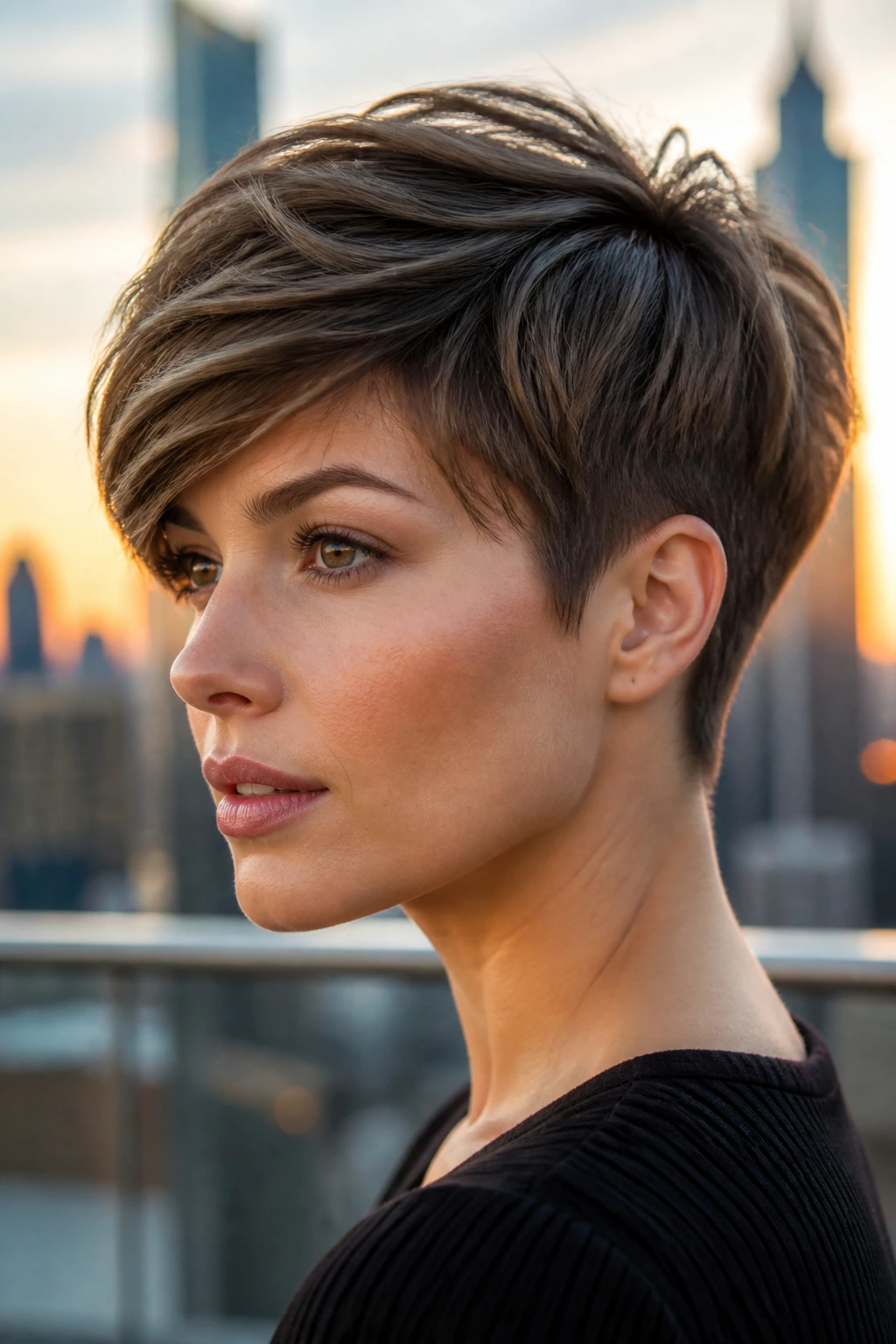
The trick isn’t height on top. It’s direction.
A tapered pixie with a longer top can work beautifully on a heart-shaped face if the fringe and crown are pushed forward or sideways rather than lifted straight up. The taper at the nape and around the ears keeps the cut clean, while the top gives you enough length to break up the forehead line.
I think this version is especially useful for thick hair. Without tapering, thick short hair can mushroom out fast, and that creates the exact kind of width you don’t want at the top of a heart-shaped face. A good taper removes bulk where it’s not helping and leaves the upper front soft enough to style into a sweep.
This cut has a sharp outline when it’s fresh from the salon, but it can also be pushed into a softer shape with a finger-dried finish. A little paste through the front, then a quick comb to one side, keeps it from reading as too stiff.
9. Chin-Length Bob with Side-Swept Fringe
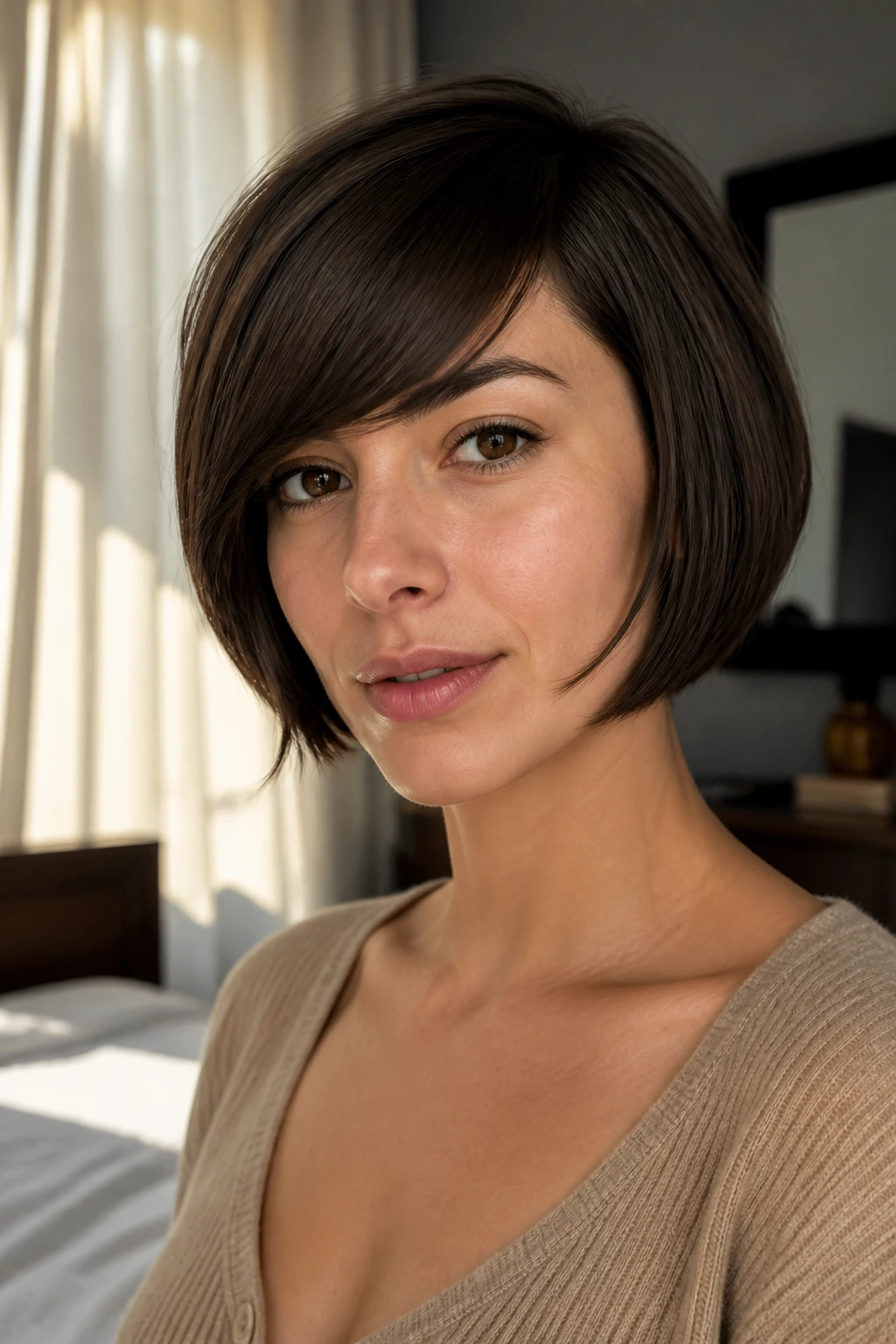
If you like a cut that survives air-drying, this is one of the safest bets. A chin-length bob gives the lower face some structure, and the side-swept fringe keeps the forehead from feeling too wide or too exposed. It’s practical in the best way.
The fringe should start deeper than you think, then sweep across the forehead and stop near the outer brow or cheekbone. That longer diagonal matters more than a full fringe here. It keeps the face from feeling cut in half. The bob itself can be blunt or slightly layered, but I’d avoid too much feathering if your hair is fine; the whole point is to keep enough line at the jaw.
- Best for: Medium hair, fine hair with a bit of bend, or thick hair that needs weight removed only underneath.
- Easy styling: Blow-dry the fringe first so it does not dry into a stubborn split.
- Wear it with: A tuck behind one ear or a loose bend at the ends.
The result is tidy without being severe. That’s a nice place to be.
10. Curly Crop with Tapered Sides
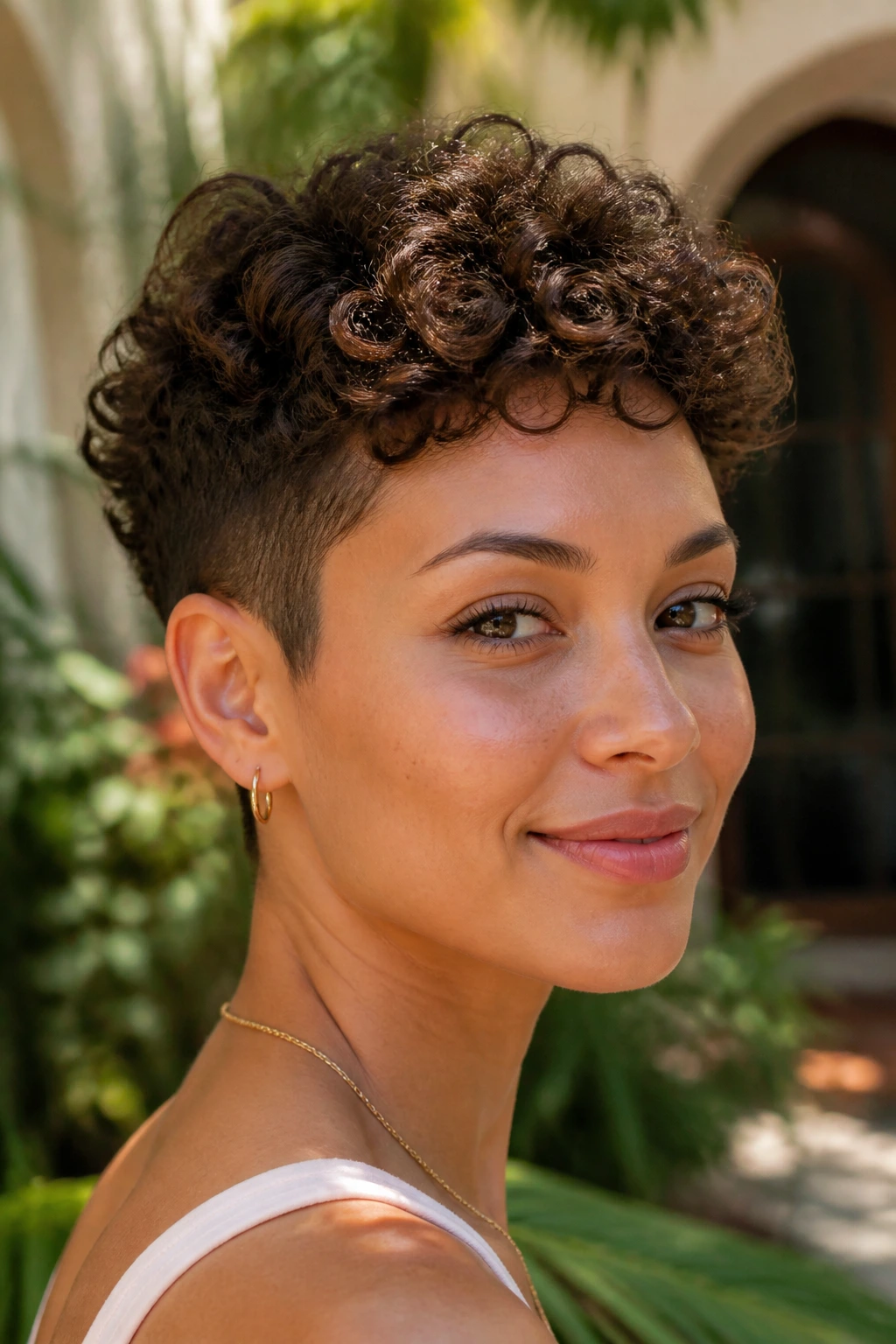
Curly hair changes the math, and it should. On a heart-shaped face, curls can be your best friend if they’re cut to widen the lower half a little and not explode at the temples. A curly crop with tapered sides does exactly that.
The shape should be built dry or near-dry so the stylist can see where the curl lands. That matters. Wet curls lie about their future, and short cuts punish guesswork. Keep the top rounded and let the curl pattern sit a little farther down the face so the cheekbones and jaw get some company. Tapered sides keep the sides from ballooning out and making the forehead feel even broader.
A curl cream and diffuser are enough for most days. If the top is getting too tall, scrunch the roots with your hands while the hair cools. Don’t pile on heavy oil; short curls show grease faster than longer ones, and the definition disappears.
11. Undercut Pixie with Sweeping Length
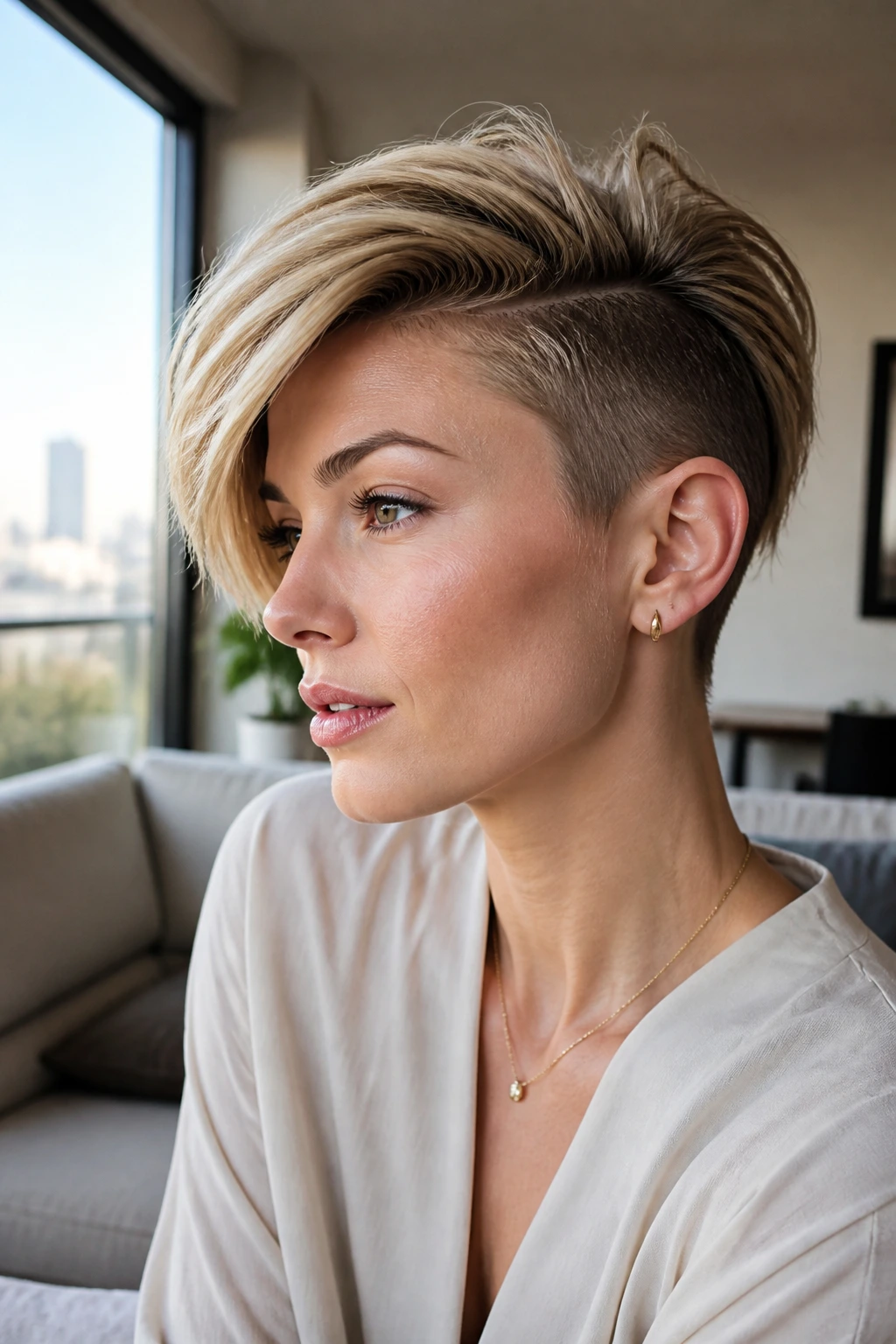
Want less bulk without exposing every line on your head? An undercut pixie is the blunt answer. It removes weight where short hair can get puffy — at the nape and under the sides — and leaves the top long enough to sweep across the forehead or toward the cheek.
Where this cut earns its keep
On a heart-shaped face, the long top becomes the visual softener. The undercut keeps the shape close and tidy, which is useful if your hair is thick or grows out fast around the ears. The front pieces should stay long enough to bend over one eye or brush the brow line; that keeps the forehead from looking too open.
This is not a cut for someone who wants zero maintenance. The undercut itself needs regular cleanups, and the top needs a little direction each morning. But if you like contrast and a cut that feels light around the neck, it’s hard to beat.
A tiny amount of styling balm through the top keeps it from flipping into little spikes. That’s the line between edgy and messy.
12. Rounded Pageboy Bob

The pageboy had a long life before it got trendy again, and the shape makes sense. Rounded edges hug the face in a way a heart-shaped face can use. The bob’s curve around the cheekbone and jaw gives the lower half more presence without adding weight to the temples.
Unlike a straight bob, the rounded pageboy bends inward at the ends. That inward curve keeps the line soft. If your hair is straight or only slightly wavy, this cut sits neatly and doesn’t need much fuss. If your hair is thicker, the inside layers need to be handled carefully so the shape doesn’t puff.
I like this bob on people who want short hair that still feels polished. Not rigid. Just clean. It’s one of those cuts that looks better with a sweater and a lip balm than with a whole styling routine. A light blow-dry with a round brush is usually enough.
13. Micro Bob with Soft Face Pieces
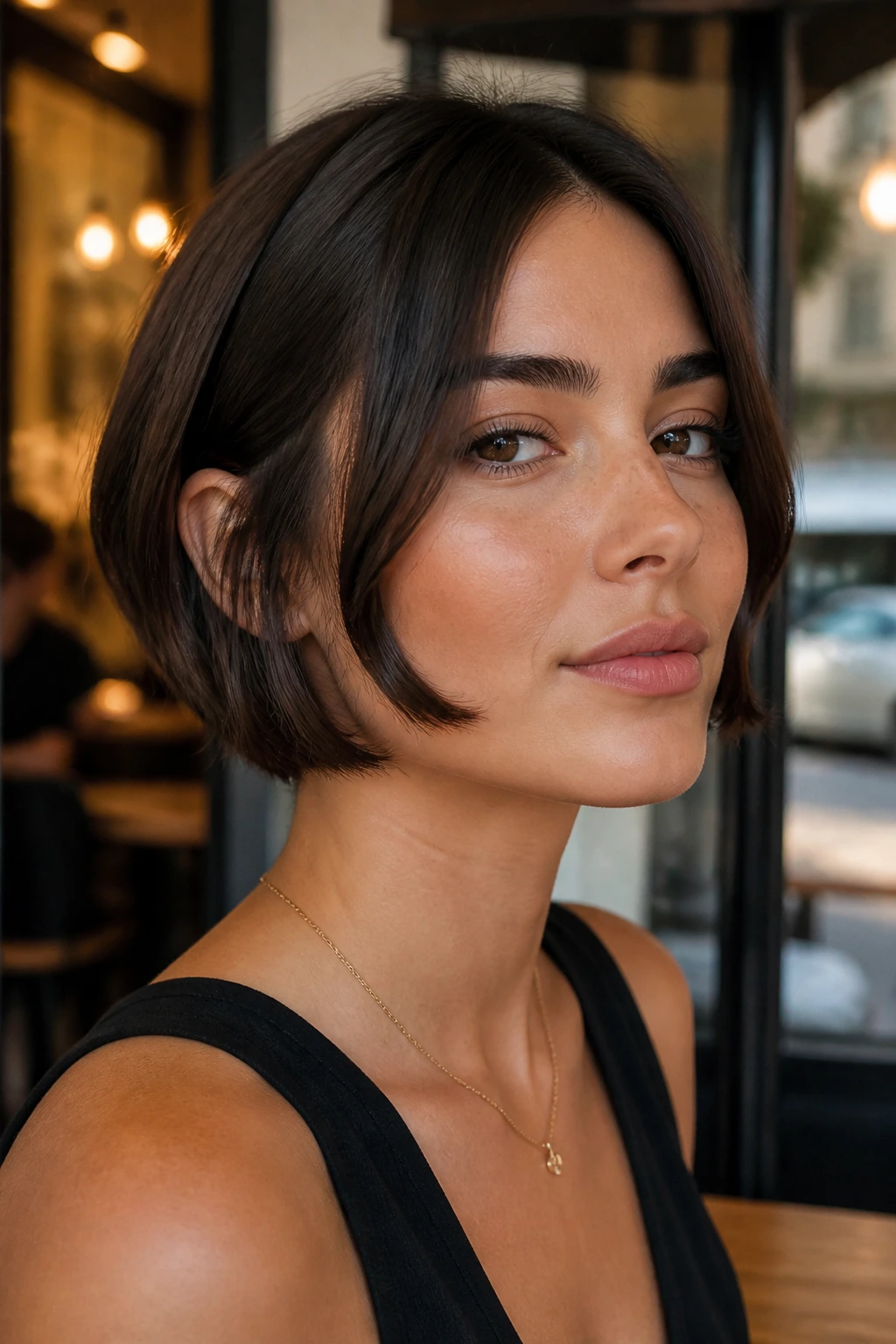
A micro bob can sound severe on paper. In practice, the right version is all about the soft pieces around the face. The length usually sits between the ear and the jaw, which gives the lower face some shape, while the little front pieces stop the cut from turning boxy.
What makes the face pieces matter
Those front strands should land around the cheekbone or just below it. That gives the eye a place to rest and breaks up the width at the forehead. Keep them narrow and slightly irregular, not thick and heavy. A micro bob is already a statement; it does not need a loud fringe on top of that.
This cut works especially well if you like tucking hair behind the ears or wearing earrings that deserve some room. It can look sleek, but it also looks good with a bit of bend at the ends. If the length is cropped too close to the cheek, it can make the chin look smaller, so I prefer a version that leaves just enough room for the jaw to show.
14. Short Wolf Cut with Tapered Crown
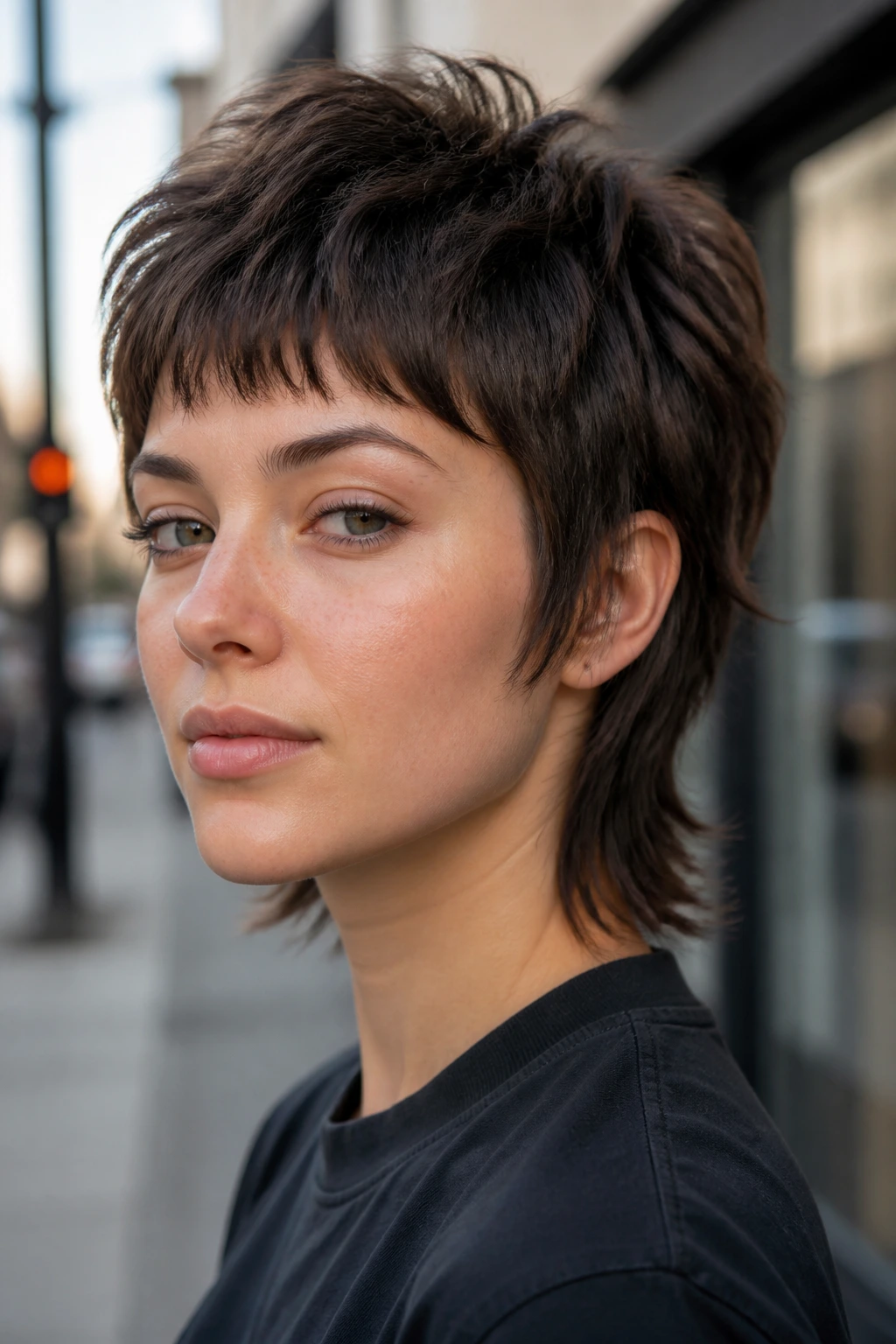
A short wolf cut is the least precious option in this group, and that is exactly why it works. The layered top and tapered crown give the style movement, while the longer, messier perimeter keeps the lower face from looking bare.
For a heart-shaped face, the main job is to avoid piling too much volume straight on top. Keep the crown textured, not puffy. Let the longer bits around the ears and jaw stay a little shaggy so the face gets some width where it needs it. The wolf cut can look very modern, but it can also tip into too much texture if the layers are overdone.
I’d recommend this most to someone with medium to thick hair who likes a lived-in finish. It grows out with attitude, which means you don’t have to fight every awkward stage. A bit of texturizing spray and finger-styling is usually enough. If you want a haircut that looks better a little imperfect, this is the one.
15. Stacked Bob with Lift at the Nape
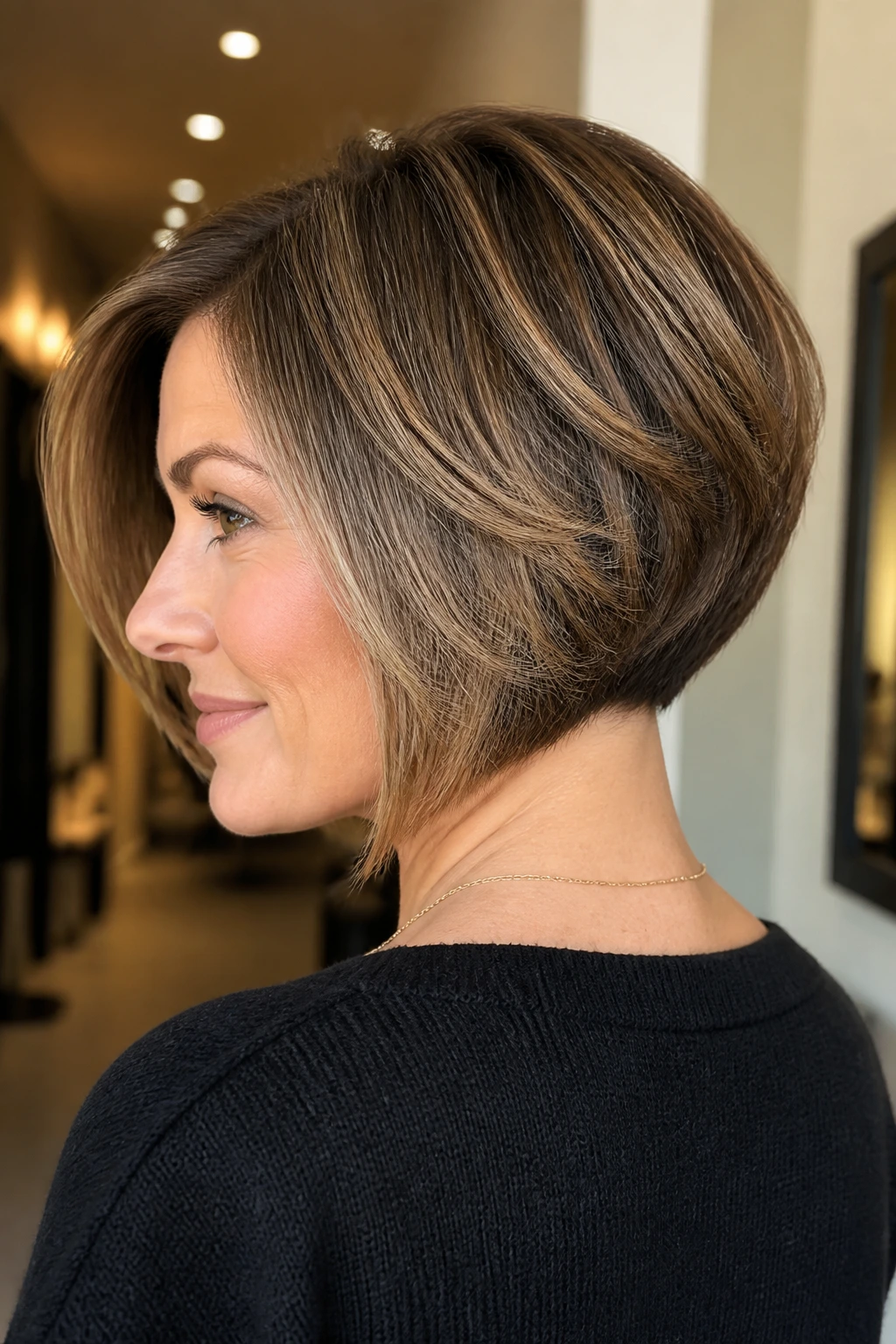
A stacked bob can be excellent on a heart-shaped face, as long as the stacking stays controlled. The lift happens at the back, close to the nape, while the front remains long enough to graze the chin. That keeps the shape from collecting all its volume at the top.
The back layers give the cut a neat curve, which helps if your hair tends to collapse flat at the crown. The front should not get too thin. That’s the trap. A stacked bob that shreds the front pieces can leave the chin looking exposed. You want the bottom half to feel anchored, not stripped.
- Best length: Chin to jawline for the front pieces.
- Best texture: Straight or slightly wavy hair shows the stack cleanly.
- Styling note: Blow-dry the nape first so the curve sets in the right direction.
This is a smart choice if you like structure and order. It looks tailored without trying too hard.
16. Grown-Out Pixie with Piecey Bangs
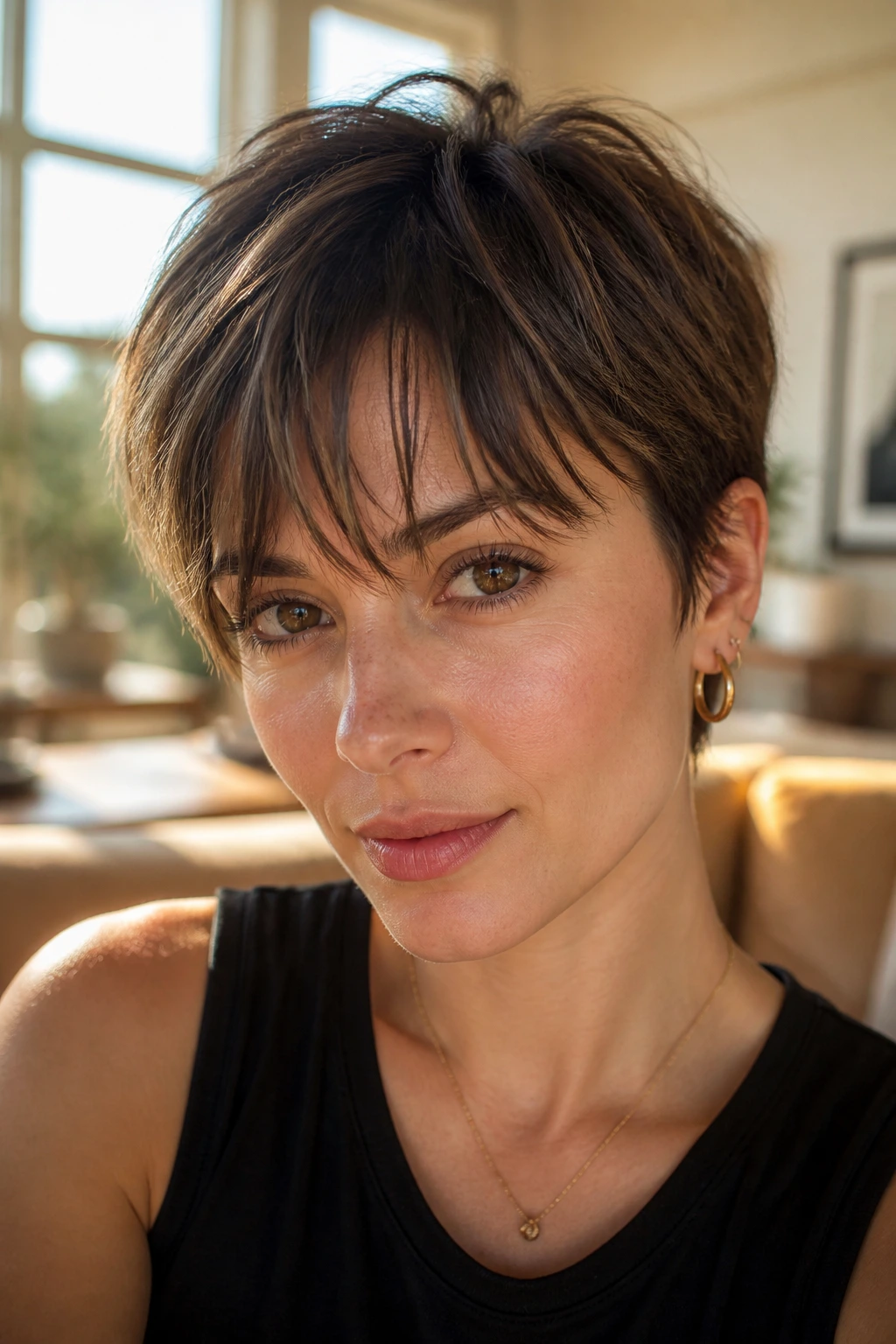
There’s a sweet spot between a pixie and a short bob, and a grown-out pixie lives there. On a heart-shaped face, it’s especially useful because the bangs can stay piecey and soft while the sides hover around the ears and cheekbones.
This cut is for people who are tired of the constant, sharp maintenance that a very short crop demands. The fringe can brush the brows or split a little off-center, and the top can sit loose instead of lifted. That softness helps balance a broader forehead without making the haircut feel styled to death.
I like this shape because it grows out with manners. It doesn’t suddenly become a bad haircut; it becomes a slightly longer one. Add a dab of cream to the bangs, pinch a few pieces near the cheek, and move on. That’s the appeal.
17. Tousled Crop with Texture at the Cheekbones
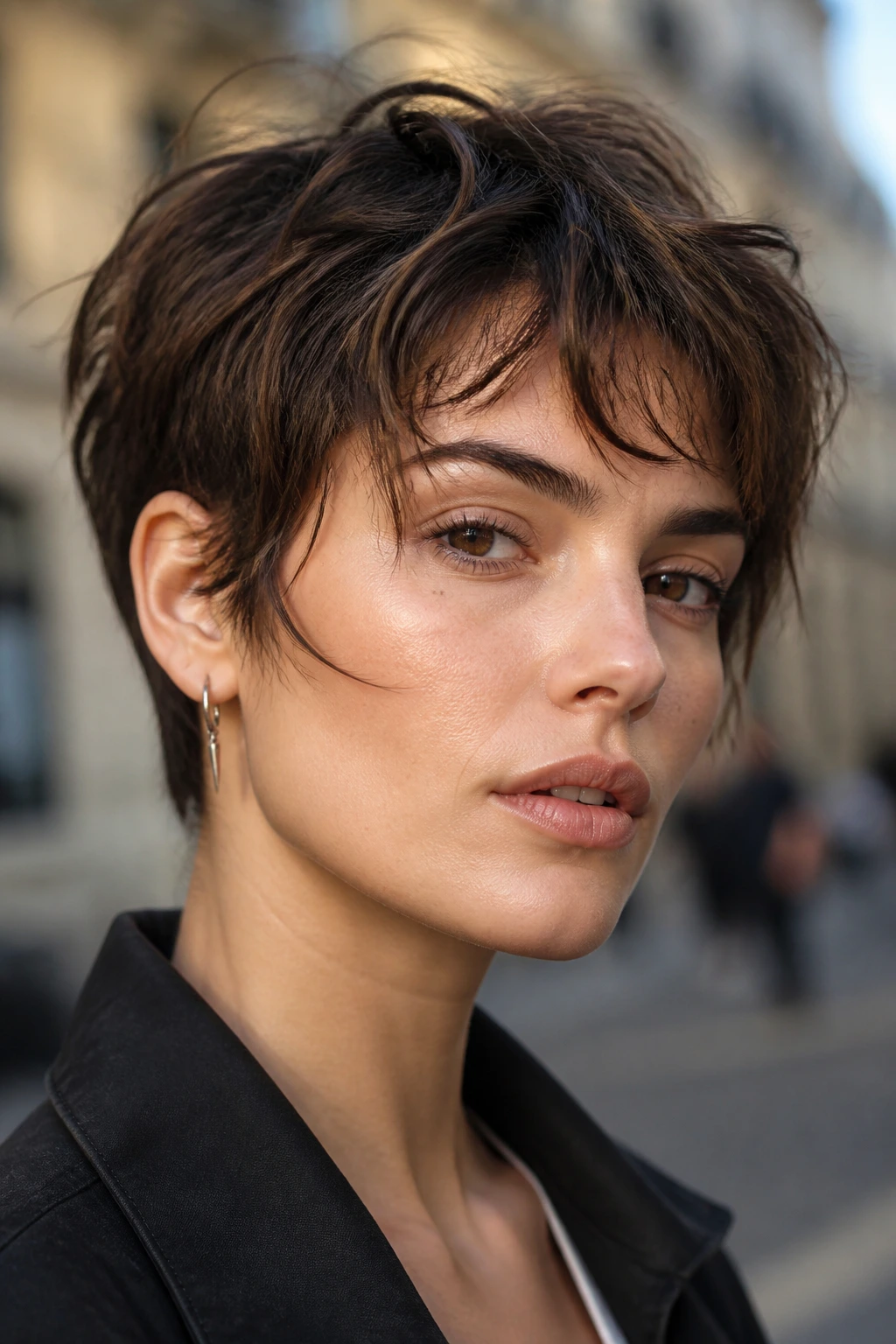
What if you want short hair that doesn’t read too severe? Then the texture has to sit in the right place. A tousled crop with movement around the cheekbones softens the middle of the face, which helps a heart shape feel less top-heavy.
The ends should be broken up just enough to catch light and movement, but not so much that they look shredded. I prefer a cut where the shortest layers stay away from the center of the forehead and the longer bits skim the sides of the face. That keeps the eye moving down and outward.
A styling note that helps
Use texture spray on dry hair, not wet hair, and pinch the pieces apart with your fingers. Short hair can turn sticky fast if you overload it. A little matte finish works better here than anything glossy. Gloss tends to show every strand, and on a cropped cut that can feel busy.
18. Deep Side-Part Crop
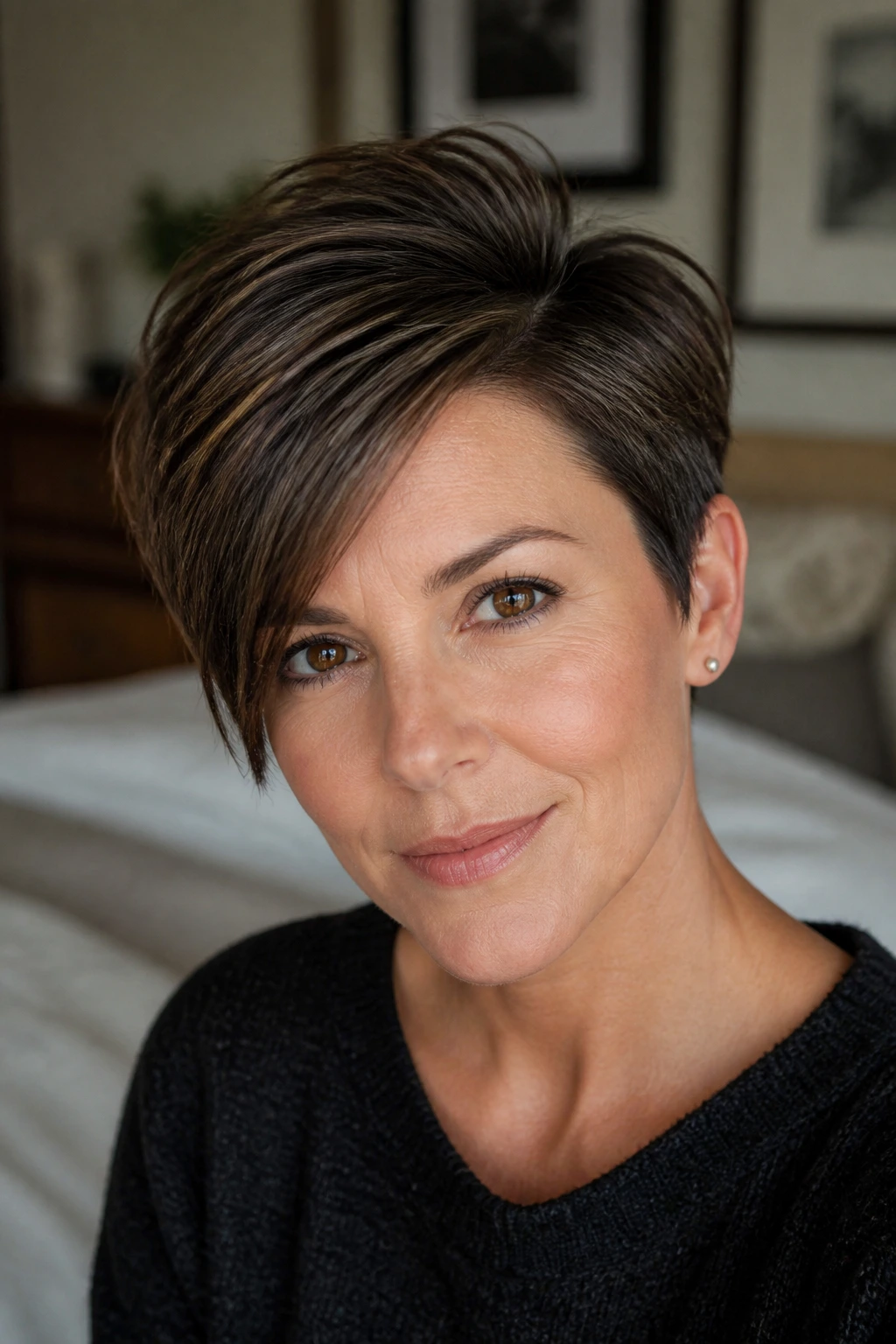
A deep side part changes the whole story before the cut even moves. It throws a diagonal line across the forehead, which is useful when the upper face is the widest part. The crop itself can be soft, choppy, or neat; the part does the heavy lifting.
Unlike a center-part short cut, this one creates asymmetry on purpose. That asymmetry is flattering because it keeps the face from looking too open at the top. It also gives fine hair a little built-in lift, since the hair on the heavier side has somewhere to fall.
If you want a cut that feels modern without asking for much styling, this is one of the smarter choices. You can wear it smooth, tuck one side back, or rough it up with fingers and a small amount of cream. The part should be deep enough to matter, not merely a slight nudge off center.
19. Curly Bob with Brow-Skimming Fringe
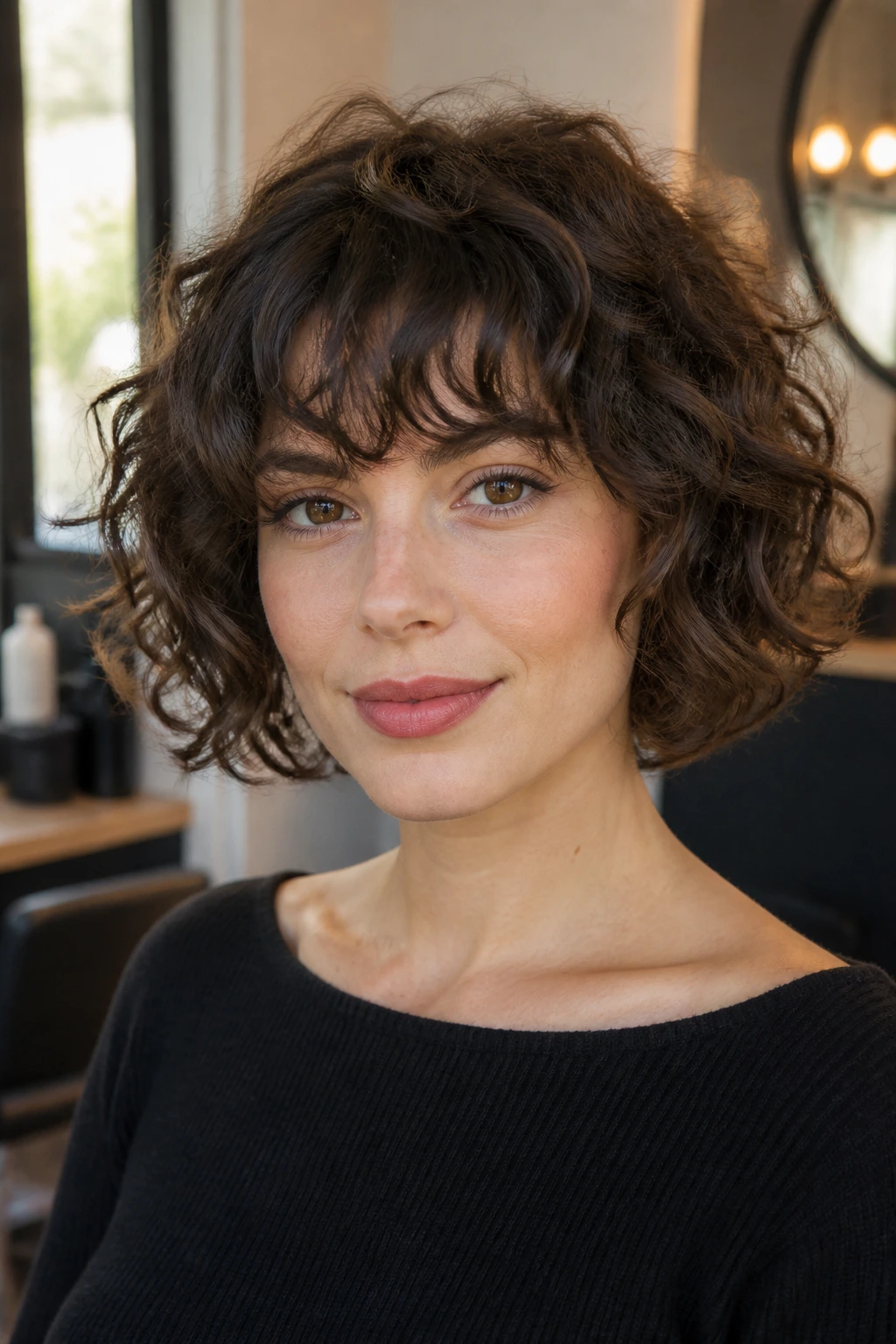
A curly bob with fringe only works when the fringe is cut for curls, not borrowed from straight hair. The difference matters. On a heart-shaped face, the curly bob can bring softness to the jaw, while the fringe takes some attention off the forehead without flattening the curl pattern.
The fringe should hit the brows when dry, not when wet. That usually means leaving it a touch longer than feels safe in the chair. Curls shrink, and short bangs can spring up into a much smaller shape than you planned. The bob itself should sit around chin length or a little below, so the curls have room to settle into a rounded frame.
- Cutting note: Dry cutting makes the fringe length make sense.
- Styling note: A diffuser keeps the curl shape from collapsing at the root.
- Best result: Soft, springy fringe instead of a blunt curtain of curls.
This cut has personality, but it needs a stylist who respects curl behavior. That part is non-negotiable.
20. Sleek Chin Bob with Blunt Ends
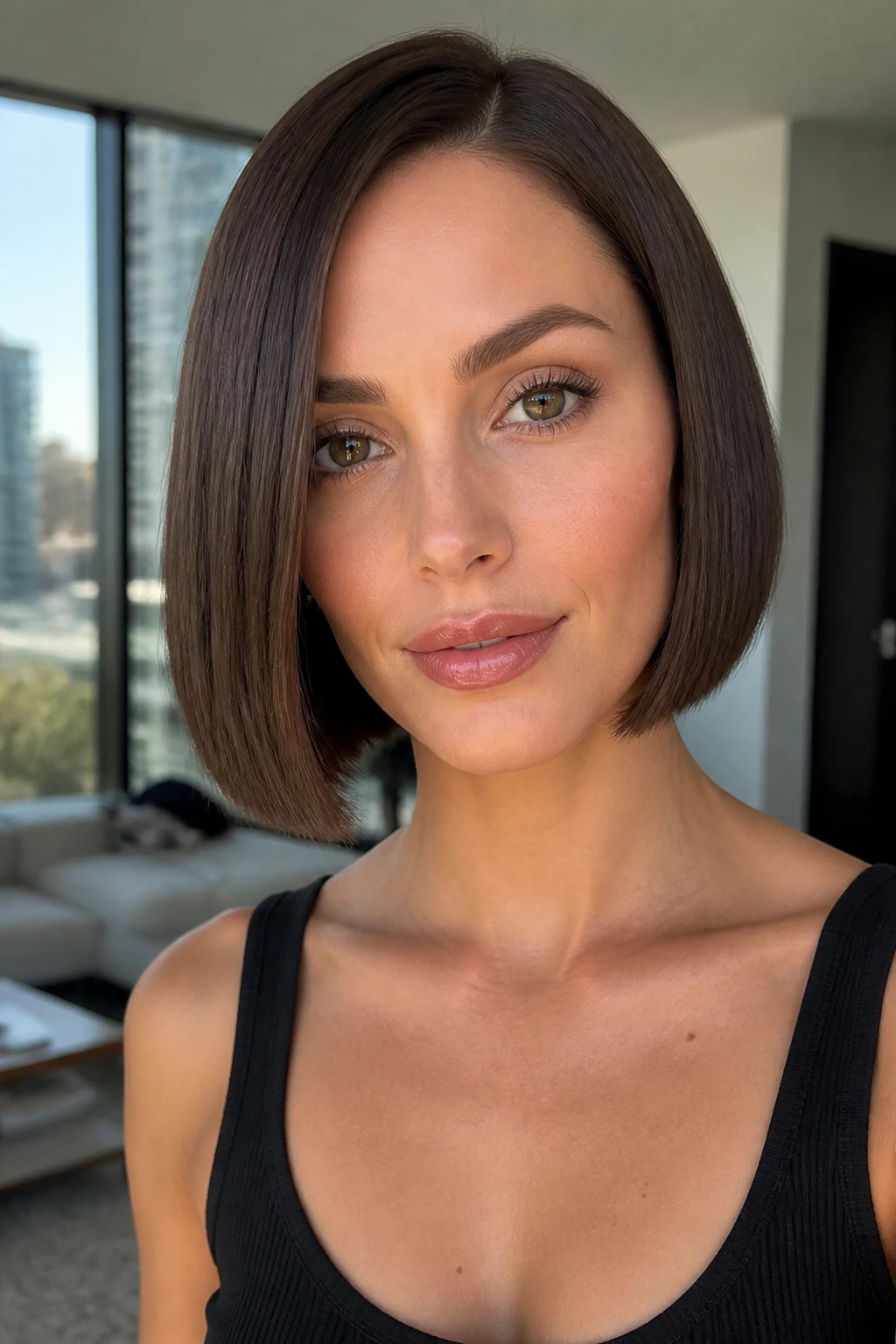
A sharp chin bob can look stronger on a heart-shaped face than a softer one. Clean lines at the chin give the lower face some authority, and that keeps the forehead from dominating the whole picture. The blunt ends make the shape feel deliberate.
This cut is best when the hair is smooth and the perimeter is precise. If the hair has too many layers, the line loses its point. I like a side part with this bob when the forehead feels especially wide, but a center part can work if the ends are very clean and the hair is glossy.
It’s one of the easier cuts to style in a hurry. Blow-dry with a nozzle, brush the ends in a slight bend under, and stop there. Don’t overwork it. The power of this bob is in the edge, and too much fuss softens the whole point.
21. Modern Bowl Cut with Soft Edges

Old bowl cuts were severe. The softened version is different. It keeps the rounded outline but opens the corners, trims the edges with more air, and lets the fringe fall with less weight. On a heart-shaped face, that can be a smart move because the shape adds width where the face narrows.
The best version sits between cheekbone and jaw, with enough texture that the cut does not read like a cap. The fringe should not sit like a hard line across the forehead. It should break a little, move a little, and let some skin show through. That keeps the style from crowding the top half of the face.
This is not the haircut for someone who wants invisibility. It’s for someone who likes a clean shape with a bit of edge. If you want something modern but not overworked, a softened bowl cut can be more wearable than people expect.
22. Textured Ear-Length Crop
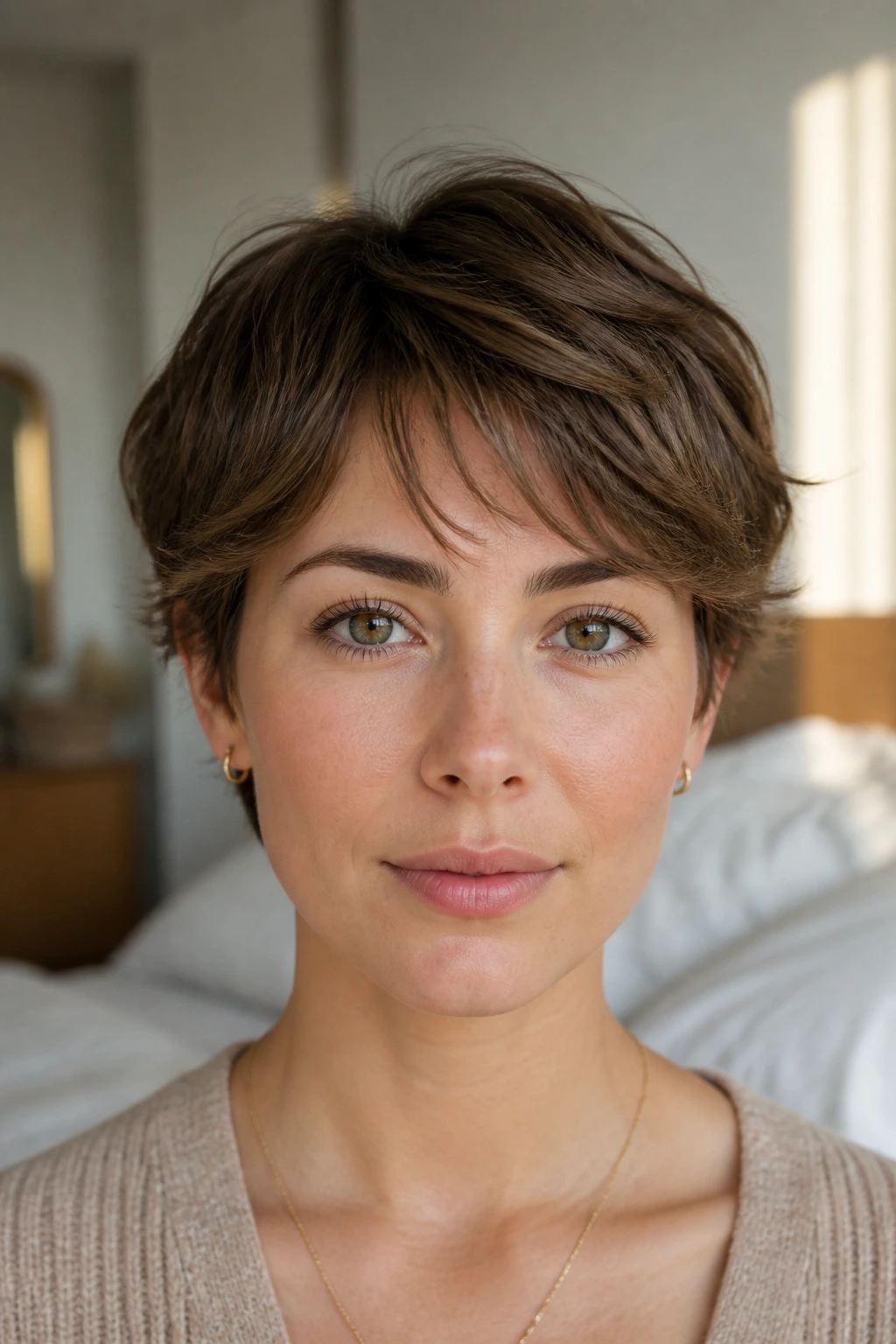
Ear-length hair can sound tiny, but when the texture is right, it opens the face instead of closing it in. A textured ear-length crop gives a heart-shaped face some air around the jaw and cheekbones while the top stays loose enough to sweep or separate.
I like this cut for strong features. It lets the eyes, brows, and earrings do more of the work. The shape should not be too square, or the face can look boxed in. Instead, keep the edges a little broken and the top piecey, especially near the temples. That gives the cut movement and keeps it from sitting like a solid block.
It’s a useful option if you want very short hair but still want softness. The maintenance is lighter than a pixie with a heavy fringe, and the grow-out can move toward a bixie or a rounded bob without a strange in-between stage. That flexibility is half the reason it works.
What Makes a Short Cut Flatter a Heart-Shaped Face

A heart-shaped face usually carries its widest point at the forehead, then narrows through the cheeks into a smaller jaw and chin. That does not mean the goal is to “hide” the upper face. It means the haircut should give the lower half a little more visual presence and stop the top from taking over the whole frame.
The easiest tools are simple ones: a side part, some fringe, a line that lands at the jaw, and texture that sits where the face needs softening. A cut that ends above the cheekbones can look lively, but it can also make the chin feel tiny if the forehead is left too open. A cut that stops at the jaw or just below usually creates a calmer balance.
Think about three things before you pick a style:
- Where does the fringe land? Brow, cheekbone, or nowhere at all changes the whole reading of the face.
- Where does the perimeter sit? Ear, jaw, or chin length sends a different message.
- Where is the bulk? Top-heavy, side-heavy, or evenly balanced hair needs different handling.
Fine hair usually benefits from cleaner lines. Thick hair often needs internal removal so the crown does not balloon. Curly hair needs length left in the right places, because curls shrink and lift in ways straight hair does not. The face shape matters, sure. Texture matters just as much.
How to Brief Your Stylist Without Guessing
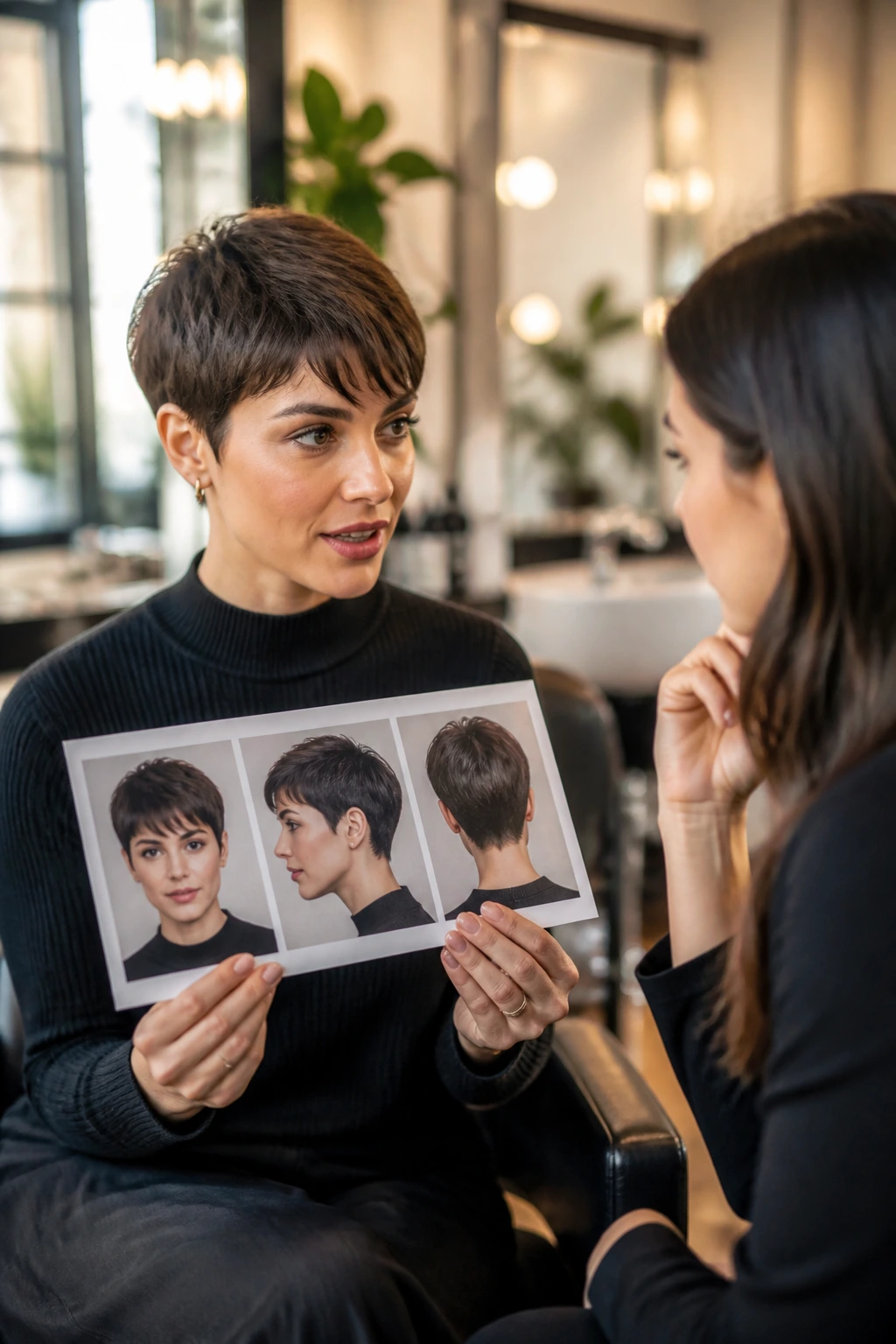
A good haircut starts before the scissors come out. Bring photos, yes, but bring the right kind. Show a front view, a side view, and if possible one that shows the back or the neckline. A single perfect photo from the front can hide the parting, the length at the jaw, and the amount of texture hiding under the top layer.
Say where you want the shortest point to land. Say whether you want your forehead softened or shown. Those are different goals, and they lead to different cuts. If you wear glasses, tuck your hair behind your ears, or never blow-dry in the morning, say that too. The haircut has to survive your real life, not the version where you spend twenty minutes with a round brush.
Helpful phrases in the chair:
- “Keep the fringe long enough to sweep across the forehead.”
- “Let the longest front pieces hit at the jaw or just below it.”
- “I want movement at the sides, not a big triangle on top.”
- “My hair grows flat at the crown, so I need the top to stay soft.”
If your hair is curly or very wavy, ask whether the cut should be done dry. That one question can save you from a bang line that looks right in the sink and wrong after it dries.
The Tools That Keep Short Hair from Flipping Out
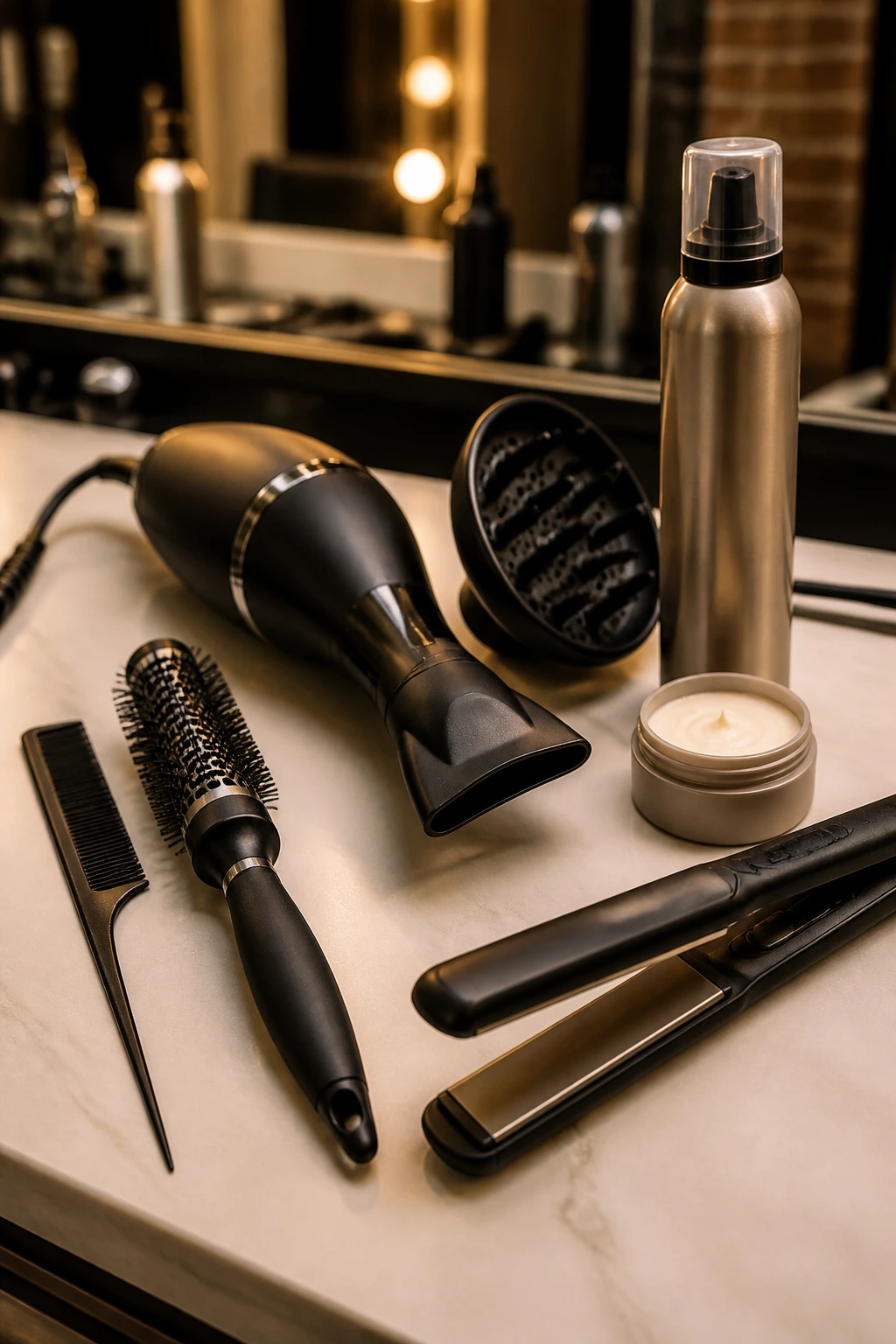
Short hair looks simple until it refuses to behave. Then you find out which tools earn their spot on the counter.
- Tail comb: Best for clean parts and sectioning the fringe without dragging the hair.
- Small round brush, 1 to 1.25 inches: Useful for shaping front pieces, bangs, and a slight bend under the ends.
- Blow dryer with a nozzle: Gives you direction at the roots instead of blasting the cut into chaos.
- Diffuser: The easiest way to keep curls and waves from puffing into a triangle.
- Flat iron: Handy for a soft bevel on bobs or a bend in a pixie fringe.
- Light mousse: Good for root lift and gentle hold on fine or wavy hair.
- Texturizing spray: Helps piece out crops and bixies without making them greasy.
- Wax stick or light pomade: Best for tiny flyaways and defining the ends of a pixie.
- Duckbill clips: Great for setting bangs or pinning sections while they cool.
- Silk pillowcase or bonnet: Not glamorous, but it keeps short hair from getting bent and fuzzy overnight.
Daily Styling Moves That Change the Silhouette
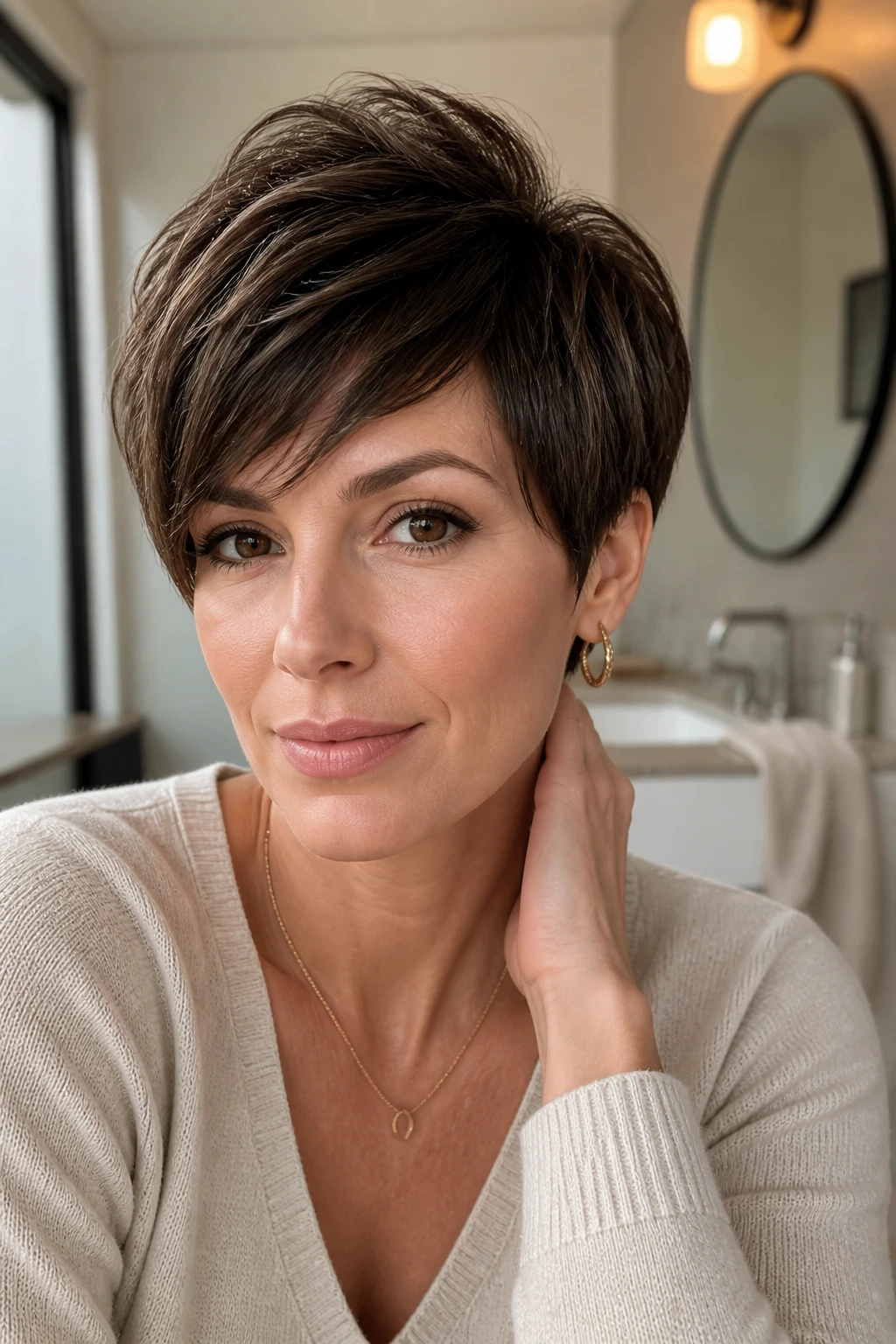
Short hair does not need ten products. It needs the right direction. Start with the roots and fringe, because that is where the shape either works or collapses. If the front dries wrong, the whole cut feels off, even if the back looks perfect.
Fringe direction: Dry bangs or front pieces first, moving them side to side with a brush or your fingers until they sit where you want them. Let them cool there. Hot hair forgets less than you think.
End shape: On bobs, bend the ends under with a round brush or flat iron so the perimeter looks deliberate. On crops, use a tiny outward flick only if you want a little edge; too much flick can make the jaw look busy.
Root lift: Put volumizing mousse or spray at the crown and back, not all over the hairline. A heart-shaped face usually benefits from some lift, but lift at the wrong point can make the forehead feel bigger. Keep it mostly behind the top front hairline.
Air-dry plan: If you air-dry, clip the front pieces where you want them while they’re damp. A single clip at the side part can stop the fringe from splitting in a weird place. It sounds fussy. It isn’t. It’s faster than fixing it later.
Small Tweaks That Shift the Whole Shape
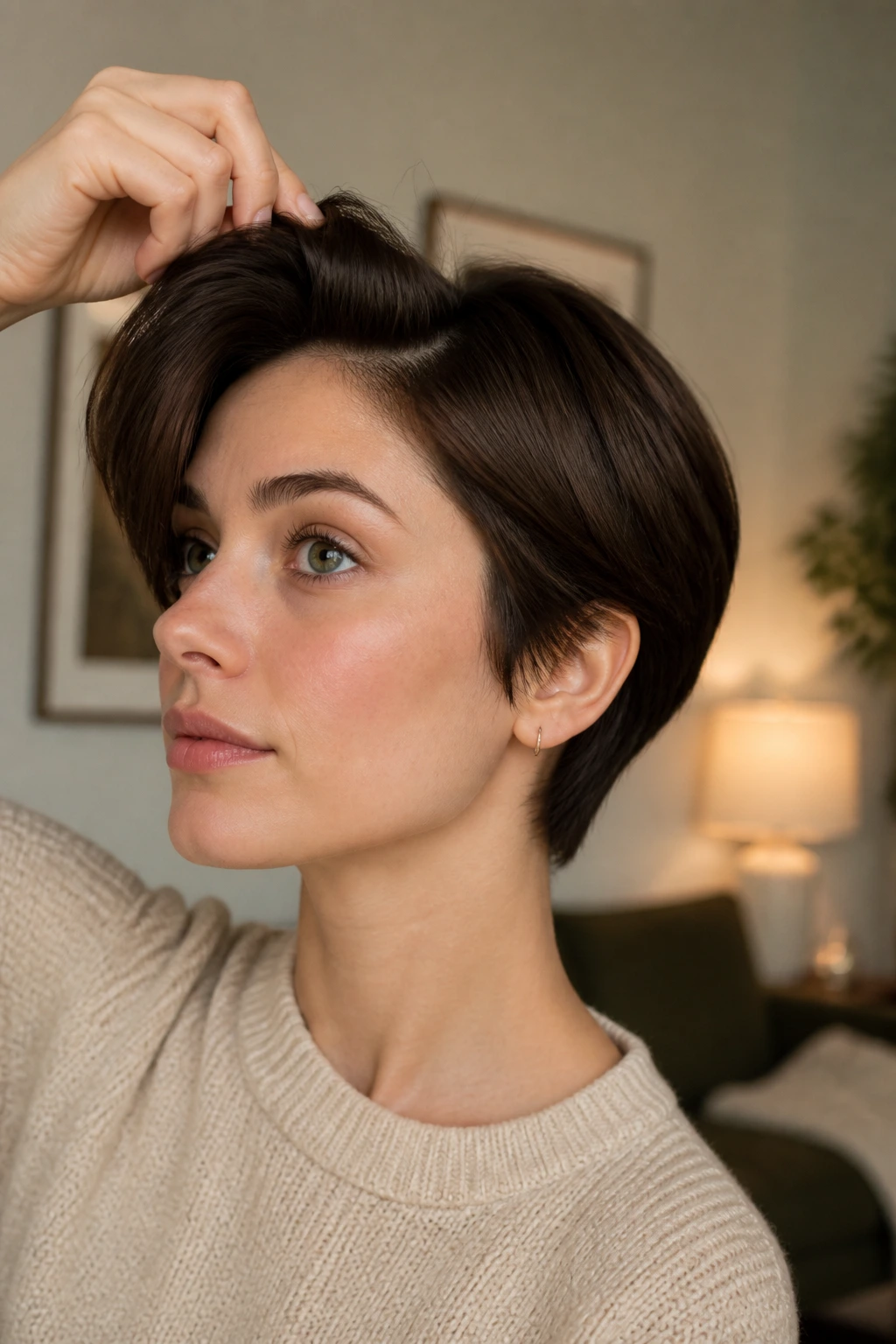
A small adjustment can change whether a short cut feels balanced or not. One inch on the part. Half an inch on the fringe. A little more weight at the jaw. Those tiny shifts matter more than people expect.
Part line: Move the part a touch deeper if the forehead feels too open. That one change can soften the entire upper half of the face.
Face-framing length: Keep the shortest front pieces around the cheekbone or jaw instead of cutting them too high. That gives the lower face some company.
Nape clean-up: A clean nape keeps pixies and crops from looking puffy from the back. It also makes the neck look longer, which is a nice side effect.
Texture choice: Fine hair usually wants lighter, more selective texture. Thick hair wants hidden weight removal. Curly hair wants shape placed where the curl will actually land, not where it seems to land when wet.
Accessory trick: A tuck behind one ear or a small clip at the temple can change the balance of a haircut in ten seconds. Short hair loves that kind of intervention.
Common Mistakes That Make the Cut Fight Your Face
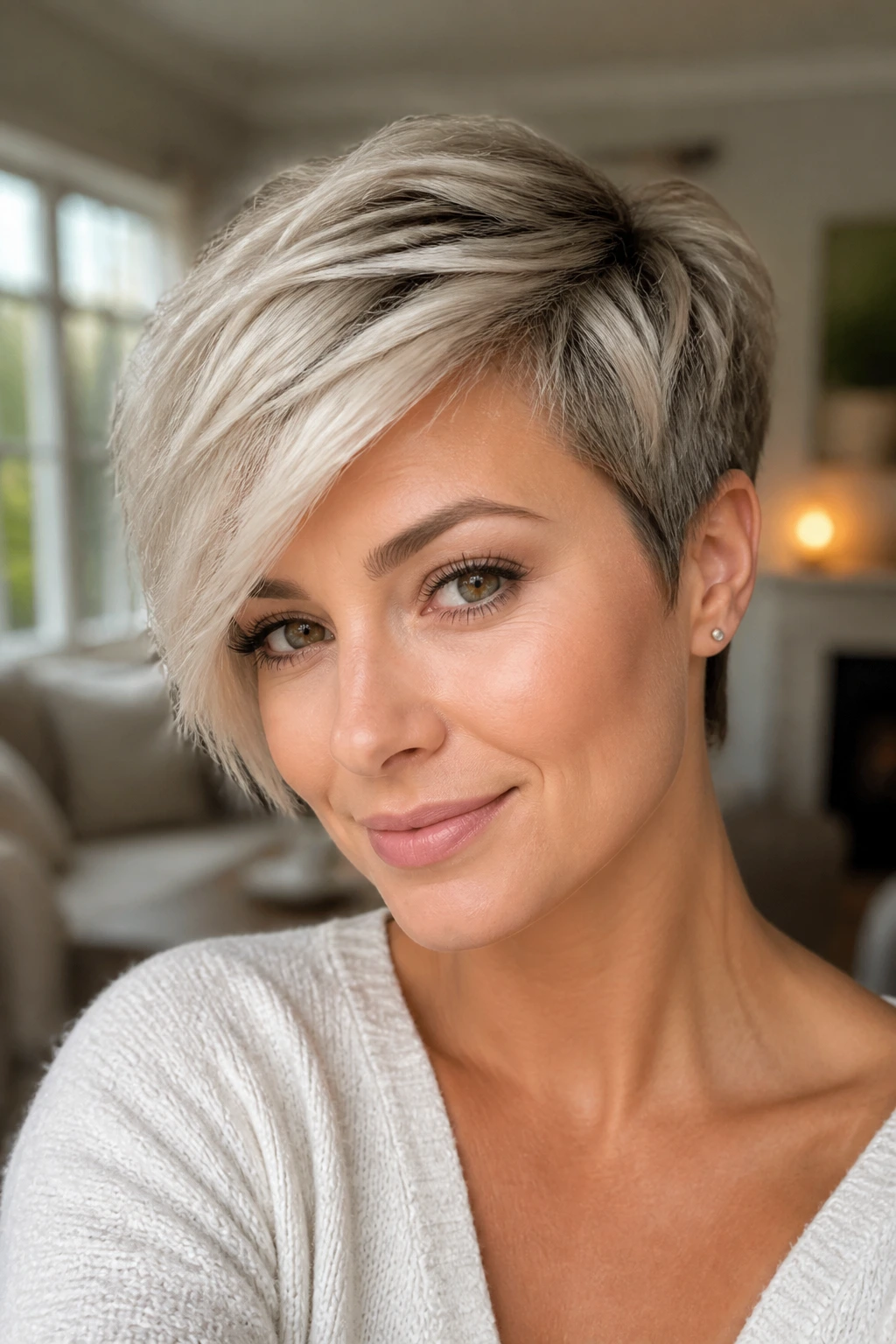
The most common mistake is too much height at the crown. On a heart-shaped face, that can make the forehead feel even wider and the whole silhouette more top-heavy. The fix is simple: ask for forward movement or side sweep, and use root lift lower on the head instead of straight up top.
Another one is bangs that are too short and too blunt. Baby bangs can work, but they need texture and the right amount of edge everywhere else. If the fringe is hard and the rest of the cut is tight, the forehead becomes the only thing people notice. Keeping the fringe a little longer, or softer at the edges, usually solves that.
A third mistake: the sides are cut too tight or too bare. That can make the chin look smaller and the face feel unbalanced. Leaving a little width through the jaw or cheekbone area gives the lower half some visual weight.
Texture mismatch causes trouble too. Fine hair with too many layers can look see-through. Thick hair with not enough internal removal can mushroom. Curly hair cut like straight hair will bounce somewhere unexpected and usually not in a flattering way.
Heavy product is the quiet saboteur. Too much wax, oil, or pomade clumps short hair together and shows the scalp. Use less than you think — then cut that amount in half.
Ways to Adapt These Cuts for Different Hair Types
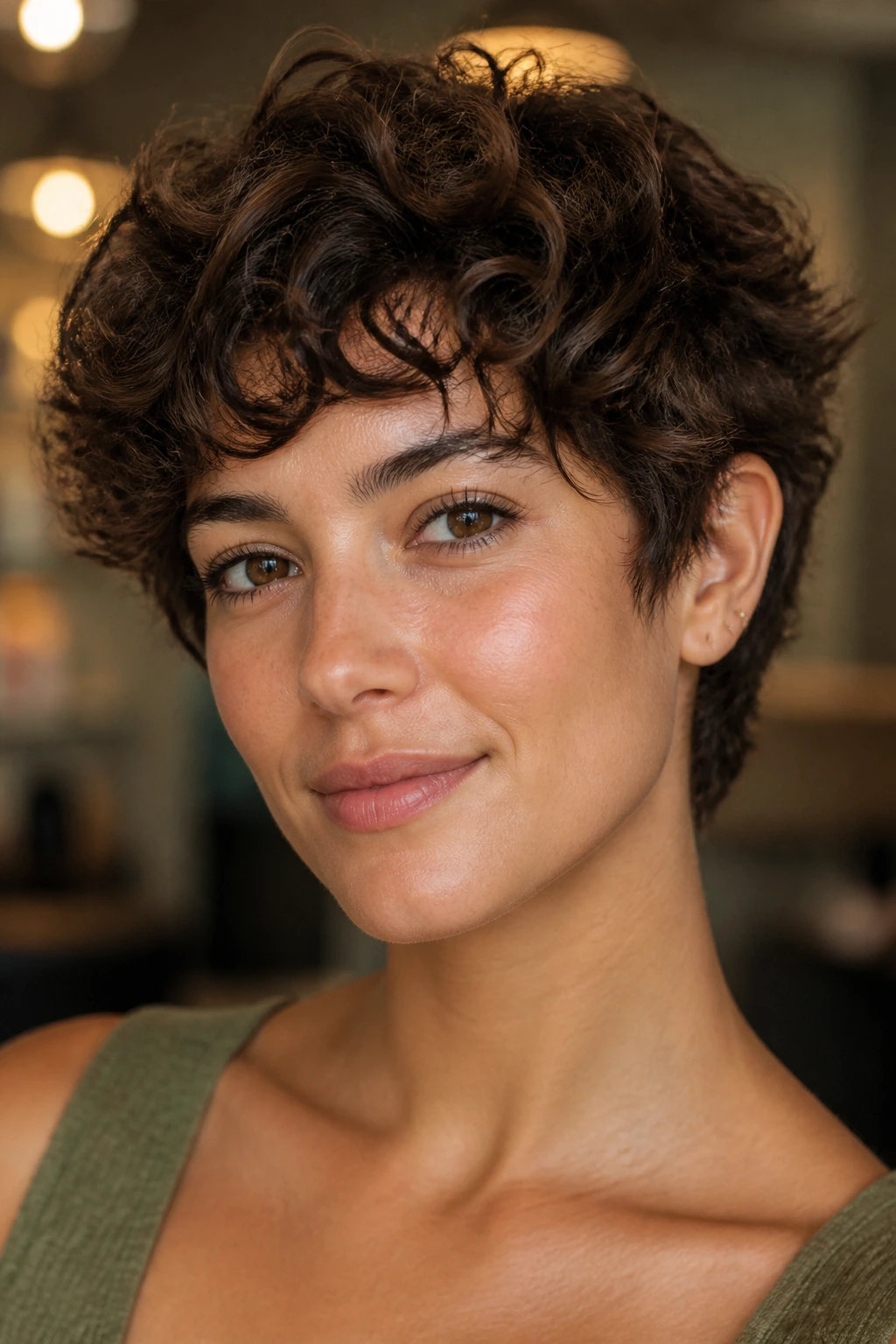
Fine-Hair Float: Choose blunt edges, minimal internal layers, and a perimeter that sits clearly at the jaw or cheekbone. Fine hair needs shape, not shredding. Too many layers can make the cut disappear by lunchtime.
Thick-Hair Breakup: Ask for internal weight removal, especially through the crown and behind the ears. Thick hair can handle more shape, but it needs room to move or the top starts to puff up.
Curl-First Version: Let the cut be built around the curl pattern, not around a blow-dried fantasy. Dry cutting or curl-by-curl shaping helps, and the fringe should always be left longer than it looks in the chair.
Low-Maintenance Grow-Out: If you want fewer appointments, choose a bixie, a grown-out pixie, or a shaggy bob. These shapes soften as they grow instead of turning into a mess of disconnected pieces.
Bold Fringe Edit: Micro bangs, curtain bangs, or a deep side-swept fringe can all work, but they send different messages. Micro bangs are the loudest choice. Curtain bangs are the softest. A deep sweep sits in the middle and is usually the easiest to live with.
Keeping the Shape Between Trims
Short hair asks for more upkeep than long hair, but not all short cuts need the same schedule. Pixies and crops usually need a cleanup every 4 to 6 weeks if you want the shape to stay crisp. Bobs can go about 6 to 8 weeks before the line starts to wander. Fringe trims often need attention sooner — around 3 to 4 weeks — if you keep bangs.
At night, the goal is not to overmanipulate the hair. A silk pillowcase helps. So does clipping a front section gently away from the face if your fringe bends in one direction every time you sleep. Heavy oils before bed are a bad idea on short hair; they sit at the roots by morning and flatten the whole cut.
If the style gets flat after sleeping, a mist of water on the front pieces and a quick blow-dry with a small brush usually fixes it in under two minutes. Dry shampoo can save the roots, but use it sparingly. A cloud of powder on short hair tends to look dusty. A little goes a long way.
For bobs and longer crops, a light heat protectant matters if you’re using a flat iron every day. Ends on short hair show damage quickly, and once the perimeter gets fuzzy, the whole cut loses its clean line.
Questions Worth Asking Before the Cut
Do I need bangs to flatter a heart-shaped face?
No. Bangs help because they soften the forehead, but a side part, a jaw-length line, or a strong diagonal can do the same job. If you hate fringe maintenance, pick the cut shape first and skip the bangs.
Is a bob better than a pixie for this face shape?
Neither is automatically better. A bob usually gives the lower face more weight, while a pixie can look cleaner and lighter if the fringe is long enough. The better choice is the one that matches your hair texture and morning routine.
Can curly hair wear these short cuts?
Absolutely, but curly hair needs length left in the right place. Dry cutting helps, and the shortest pieces should be longer than they look when wet. A curly bob or curly crop can be excellent on a heart-shaped face if the curls are shaped around the jaw.
Will a center part work?
Yes, if the rest of the cut softens the forehead. A blunt bob with a center part can still flatter if the fringe or front pieces curve inward and the ends sit near the jaw.
How short is too short?
Too short is when the cut removes all the visual weight from the jaw and leaves the crown doing all the work. If the top gets tall and the sides disappear, the face can feel unbalanced. Keeping some length at the front usually solves it.
What if my forehead feels very wide?
Choose a cut with movement across the forehead — side-swept fringe, curtain bangs, or a deep part. The goal is not to hide the forehead. It’s to stop it from being the only area with visual weight.
How often should I trim a short haircut?
Pixies and crops need more frequent trims, usually every 4 to 6 weeks. Bobs can stretch a little longer, but once the ends start flipping out or the line loses shape, the cut stops looking intentional.
Can I still tuck short hair behind my ears?
Yes, and on heart-shaped faces that can look good because it opens the cheekbones. Just keep some softness in the front so the tuck doesn’t make the forehead feel too exposed.
The Cut That Stays in Balance
Short hair on a heart-shaped face works best when it feels like a conversation between the top and bottom halves. If the forehead is the loudest part, give the jaw some help. If the crown gets too much volume, take some away. If the front feels bare, bring in fringe or a deeper part. It’s all small stuff. And small stuff is where the difference lives.
The smartest choice is rarely the loudest one on a mood board. It’s the cut that looks good on a clean hair day, a rushed hair day, and the day you don’t feel like touching it at all. Bring the right photo, talk about where the fringe lands, and ask your stylist to think in lines, not just lengths. That’s where short hair starts looking made for you.